
Last updated on June 29, 2026

Starting Town | Illustration by Hristo D. Chukov
Magic is full of war-torn battlescapes, treacherous terrain, and sprawling metropolis cities like Ravnica. But even the denizens of the MTG universe need to take a vacay every now and then, or retire to a quiet, peaceful town somewhere far away from the multiverse’s many dangerous hellscapes.
Well, Final Fantasy isn’t exactly part of the multiverse, so towns aren’t quite canon to Magic lore yet, but the card type is now available to the game and could easily expand out of Universes Beyond.
Turns out this town is big enough for the two of us, so let’s get to it.
What Are Towns in MTG?

Adventurer's Inn | Illustration by Allen Morris
Town is a land type, plain and simple. It doesn’t carry any inherent meaning; it exists for flavor reasons and to interact with a specific set of cards that mention towns by name. They’re essentially gates for a different subset of payoffs.
Towns were billed as a subtheme of the Simic () ramp archetype in Final Fantasy Limited.
How Many Towns Are There in MTG?
There are 23 towns in Magic, all of which are linked to the Final Fantasy set or its Commander decks.
There aren’t any plans to errata previous townlike cards. Sorry Gavony Township and Port Town.
Note that Planar Nexus counts as a town now (in all zones), and the everything counter from Omo, Queen of Vesuva adds the town subtype to the land it modifies.
Do Towns Have Basic Land Types?
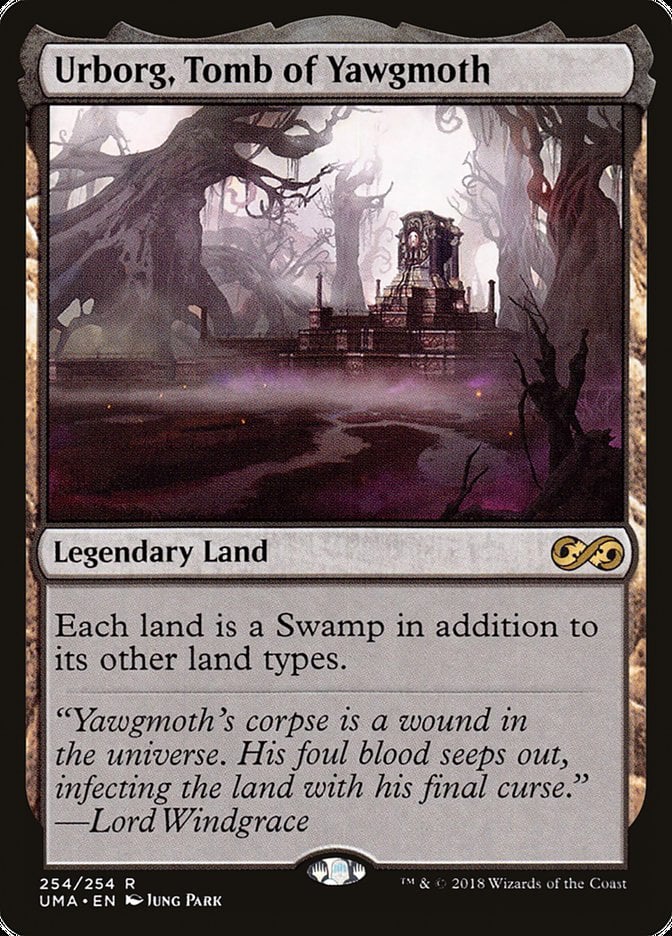
None of the towns printed so far have a basic land type, though there’s nothing saying a town can’t have one. For example, having an Urborg, Tomb of Yawgmoth in play adds the swamp land type to all your towns, and future town cards might have basic land types as well.
Can Towns Be Fetched?
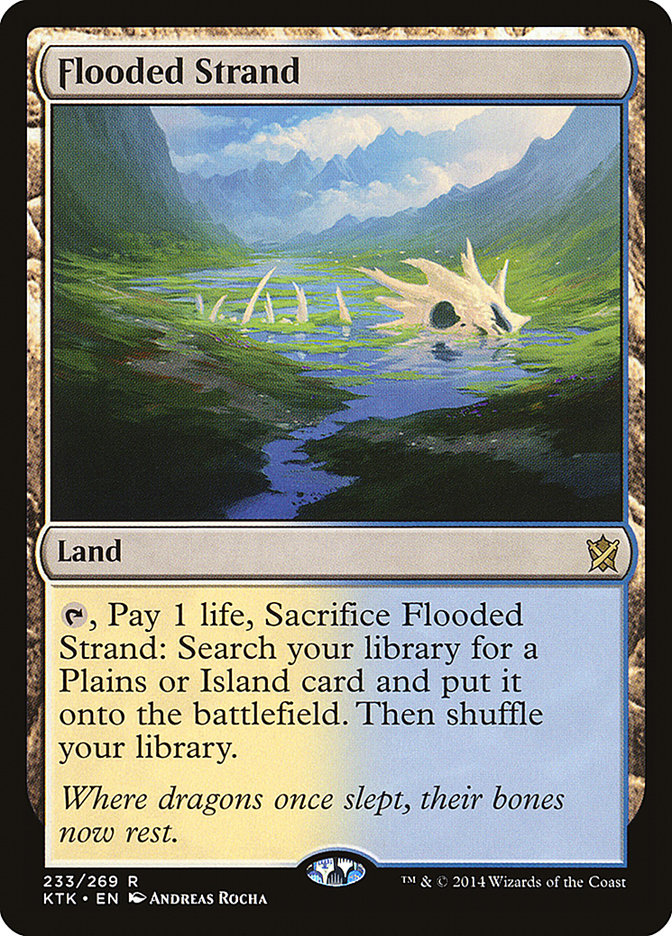

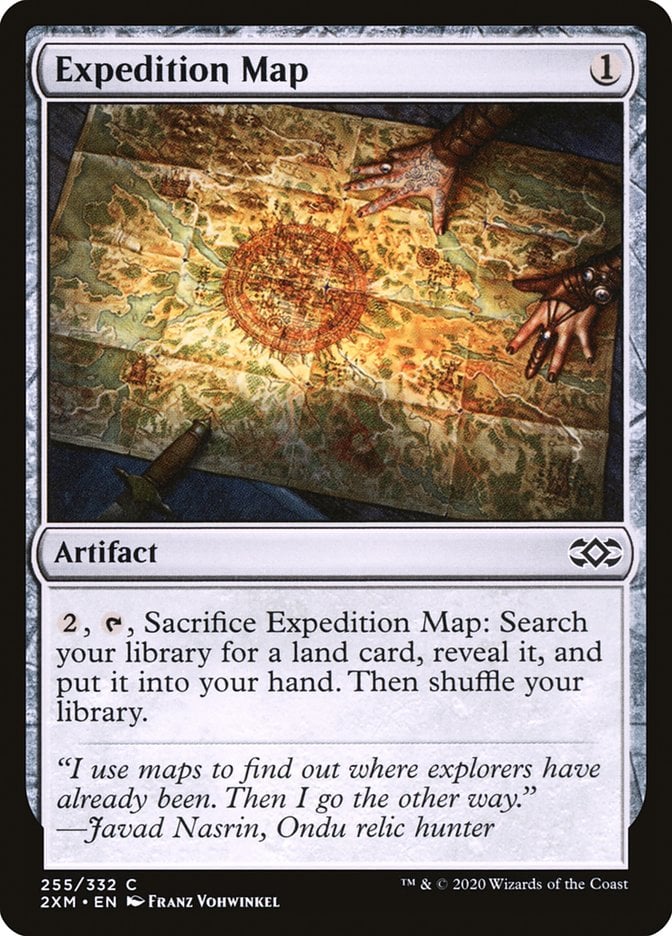
You can only search for towns out of your library with cards that specifically tutor up non-basic lands. None of the existing towns have land types, so they’re not viable targets for traditional fetch lands like Flooded Strand, even if they have a matching color identity. But a general land searcher like Urza's Cave or Expedition Map could fetch a town.
What Is the Color Identity of a Town?


Towns have a combined color identity of every colored mana symbol that appears in their rules text.
For example, Rabanastre, Royal City has and mana symbols in its text, so it has a Boros or red and white color identity. Generic lands like Adventurer's Inn and Capital City don’t have any colored mana symbols in their rules text, so they have a colorless color identity, and you can play them in any Commander deck.
What Other Cards Interact With Towns?


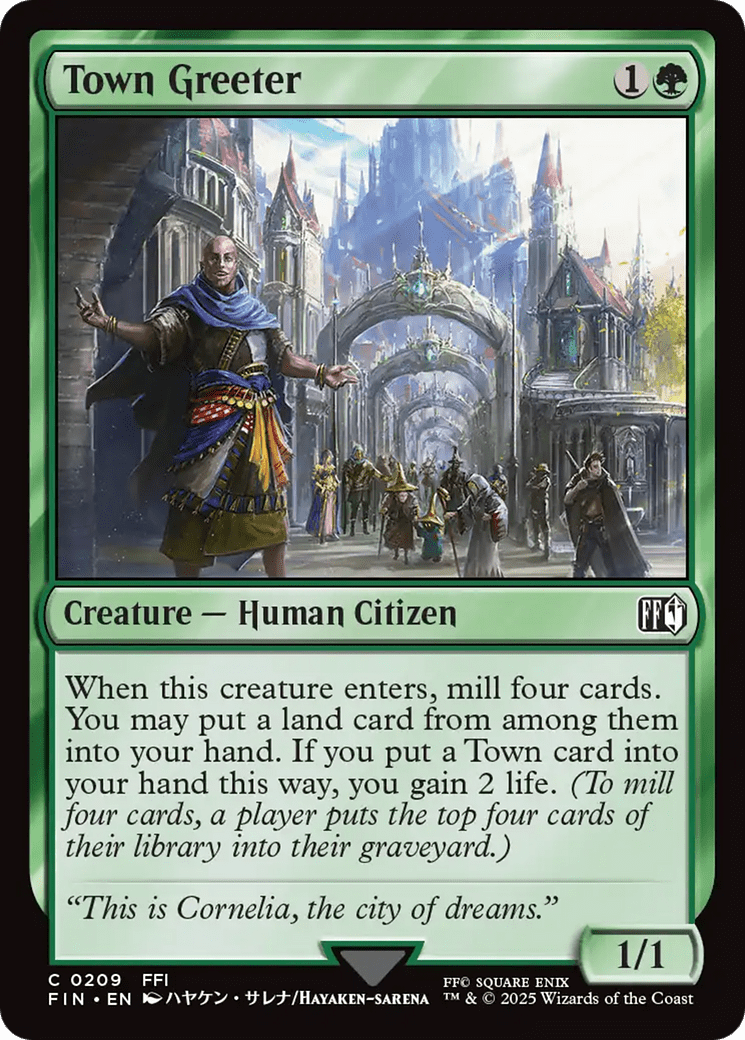
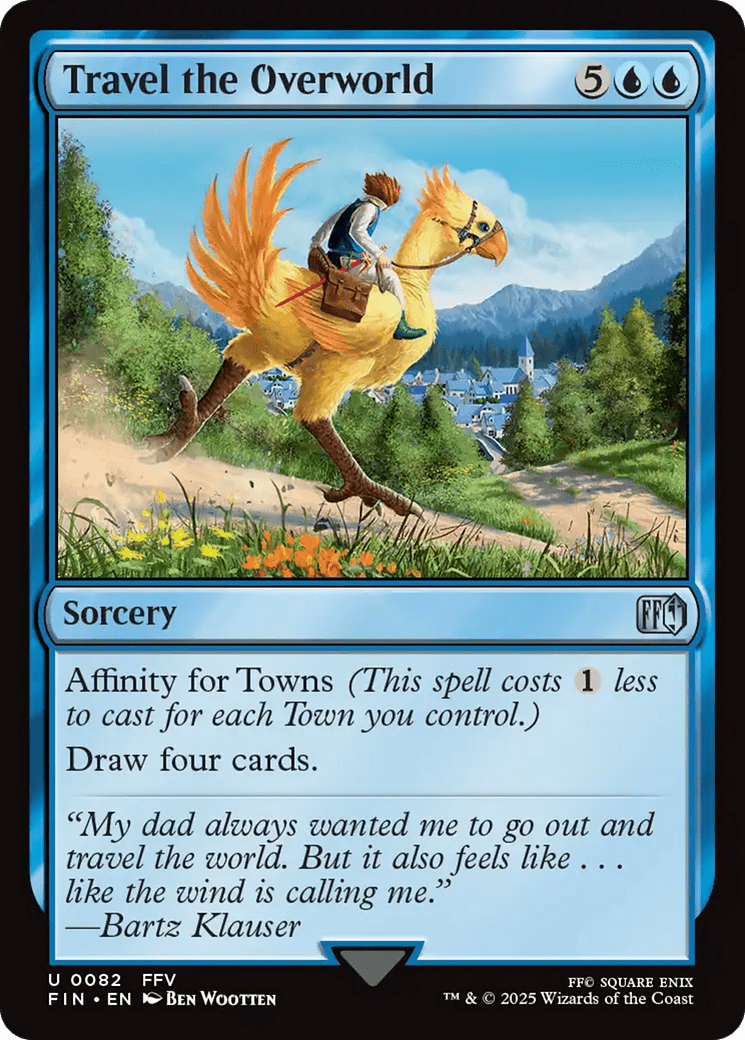
The following non-town cards mention towns in their rules text:
- Prishe's Wanderings
- PuPu UFO
- Qiqirn Merchant
- Reach the Horizon
- The Wandering Minstrel
- Town Greeter
- Travel the Overworld
How Do the Adventure Towns Work?

The cycle of adventure towns from Final Fantasy work like any other adventure, with the exception that the main card is a land instead of a non-land card.
That means you can either play them like normal as a land drop, or you can alternatively cast the adventure part of the card. Putting it on an adventure places the card in exile upon resolution, after which you can play the land from exile. This counts towards your one land drop per turn.
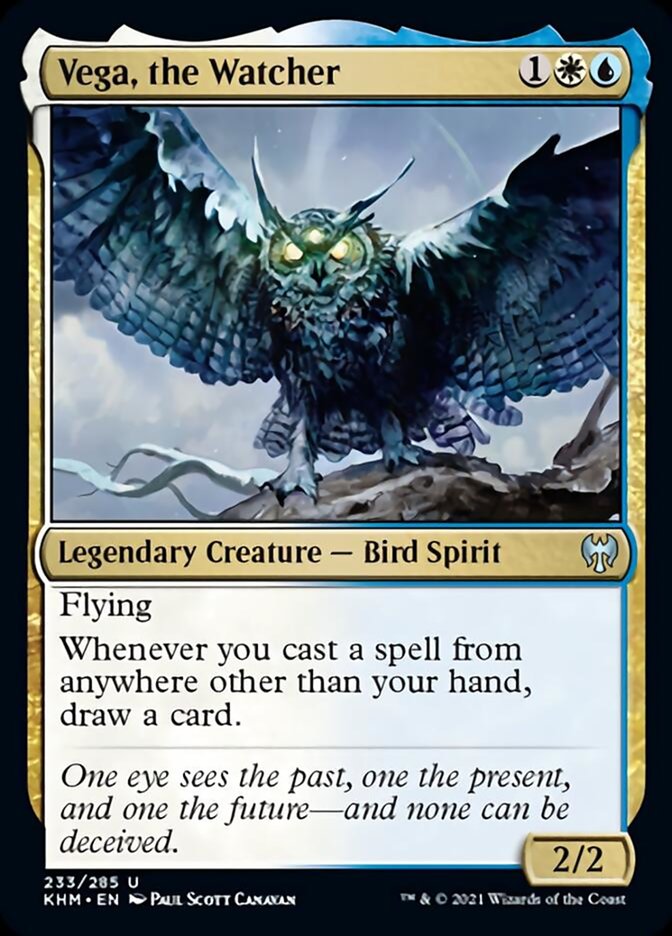
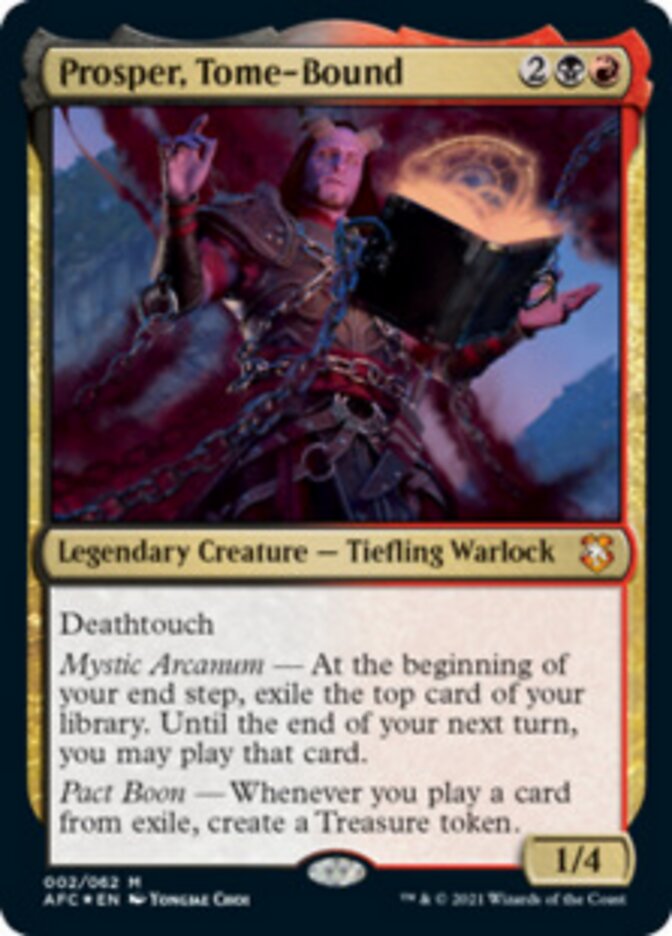
One difference here is that the lands are played from exile, not cast from exile like most adventures, so cards that key off of casting from exile specifically won’t trigger. For example, Vega, the Watcher triggers off most adventures coming out of exile, but not doesn’t trigger when you play one of these towns from exile. However, a card like Prosper, Tome-Bound that triggers when you play a card from exile still triggers.
Towns vs. Gates
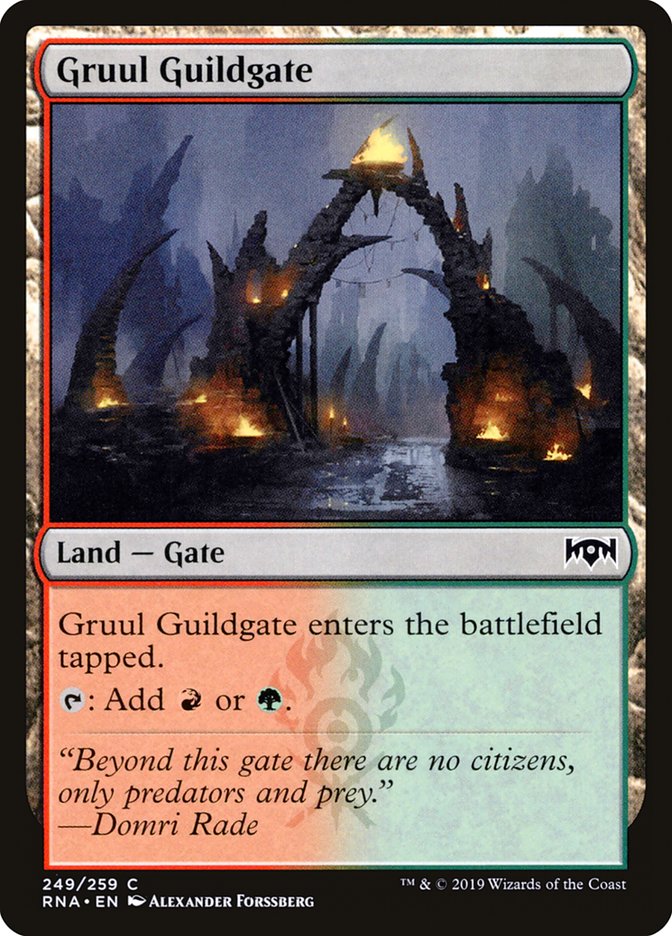

There’s functionally no difference between towns and gates outside of the cards that specifically interact with them. “Town” and “gate” have no inherent rules text, and they just exist as land types for other cards to reference.
Gates have been around for over a decade, and they have significantly more support across multiple sets. However, there are just as many towns as gates, with 23 total gates as of Final Fantasy.
Does Magic Have Towns Outside of Final Fantasy?
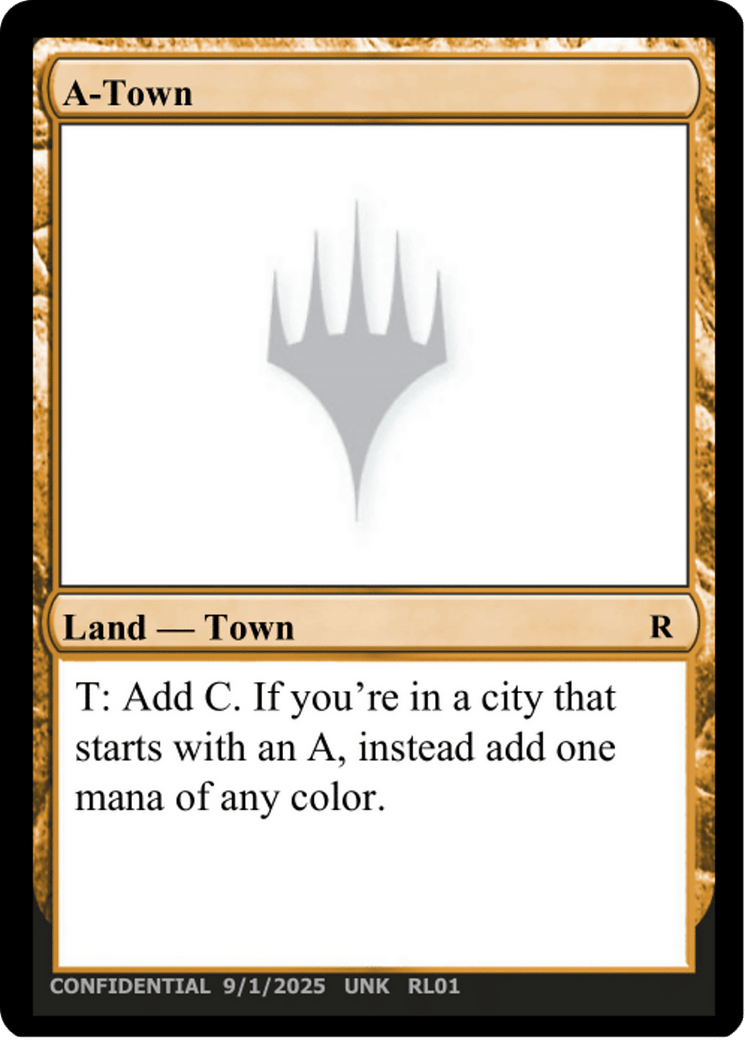
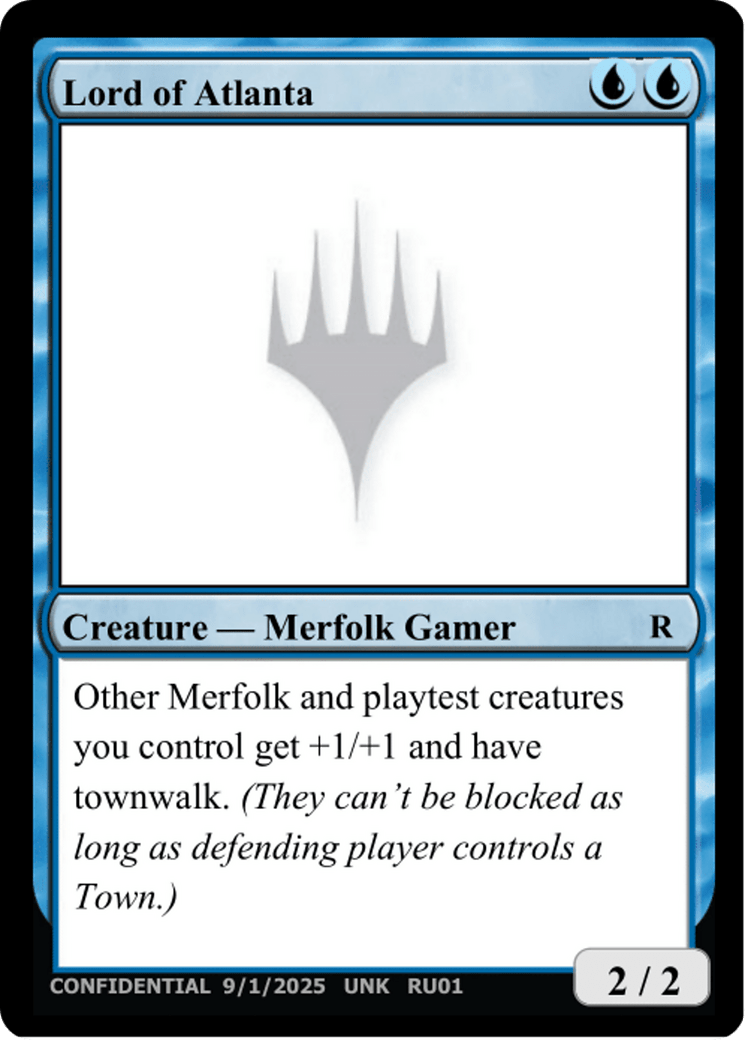
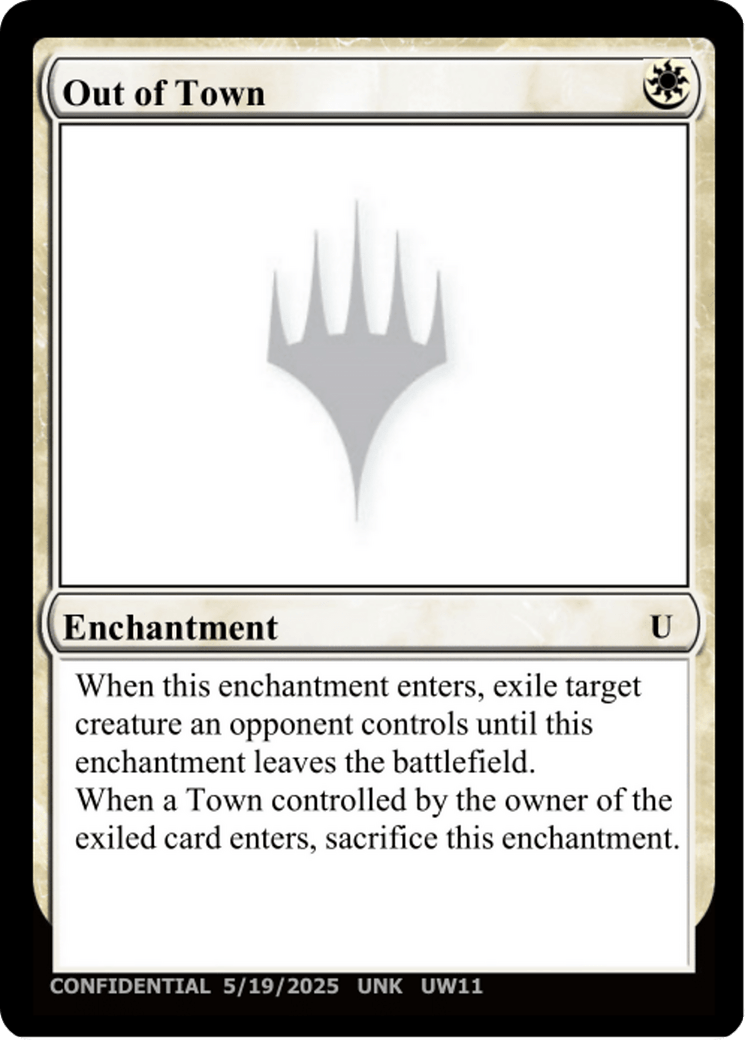
Yes, a few Unknown Events have used towns as well, but these are playtest cards that are not legal in any official formats.
Gallery and List of Town Cards


- Adventurer's Inn
- Balamb Garden, SeeD Academy / Balamb Garden, Airborne
- Baron, Airship Kingdom
- Capital City
- Clive's Hideaway
- Crossroads Village
- Eden, Seat of the Sanctum
- Gohn, Town of Ruin
- Gongaga, Reactor Town
- Guadosalam, Farplane Gateway
- Insomnia, Crown City
- Ishgard, the Holy See
- Jidoor, Aristocratic Capital
- Lindblum, Industrial Regency
- Midgar, City of Mako
- Rabanastre, Royal City
- Sharlayan, Nation of Scholars
- Starting Town
- The Gold Saucer
- Treno, Dark City
- Vector, Imperial Capital
- Windurst, Federation Center
- Zanarkand, Ancient Metropolis
Best Town Cards
#8. The Gold Saucer
Coin flippers love flipping coins, so anything that has those fabled words on it is an immediate head-turner for Zndrsplt/Okaun fans. It’s also the only card in the main set (plus Setzer, Wandering Gambler in the precons) that flips a coin, making use of the trinket text on Edgar, King of Figaro. If you look closely, you might even see Sai, Master Thopterist taking a ride at the The Gold Saucer.
#7. Balamb Garden, SeeD Academy / Balamb Garden, Airborne
The sauciest town in town is Balamb Garden, SeeD Academy. It’s a Simic Guildgate that eventually becomes a card advantage machine… literally! This thing costs an effective eight mana to transform (less if you control other towns), and you still need to crew it once it becomes airborne, but that’s a nice card advantage vehicle hiding on the back half of the land.
#6. Zanarkand, Ancient Metropolis
There’s nothing flashy about Zanarkand, Ancient Metropolis; it’s either a bad Forest or a pretty tame vanilla creature for 6 mana. It’s reminiscent of a Turntimber Symbiosis that’s just kind of worse on both ends, but getting a big creature out of a land is fine late-game utility, especially when you get the land back anyway.
#5. Jidoor, Aristocratic Capital
It’s not actually all that great, but the adventure on Jidoor, Aristocratic Capital is the type of effect that makes Bruvac the Grandiloquent players swoon. Also weird to see aristocrats mentioned on a mono-blue card, but that’s Universes Beyond for ya.
#4. Lindblum, Industrial Regency
Lindblum, Industrial Regency reads pretty terribly, but spellslinger decks just wanna sling spells, so repurposing a land as basically anything that gets a spell on the stack is useful in dedicated spells decks. Think of it like an MDFC: It’s a tapland on one side, or a nerfed Guttersnipe that draws your next land on the back.
#3. Ishgard, the Holy See
Card advantage in white is always welcome and this has less restrictive requirements than Axgard Armory. Of course, you miss out on the adventure if you have to just run this out as a land first, but that’s nothing a good ol’ Kor Skyfisher can’t help with.
#2. Starting Town
Starting Town is a riff on City of Brass or Mana Confluence. It’s a 5-color pain land with a colorless buyout, and it even comes in untapped for the first three turns of the game. It’s a big deal for Constructed more than Eternal formats, but certain Commander decks will welcome another 5-color fixer.
#1. Midgar, City of Mako
Of all the adventure towns, I like Midgar, City of Mako the most. It’s overcosted in comparison to analogs like Village Rites and Deadly Dispute, and being a sorcery takes away a lot of interplay that cards like this usually have. But I expect those downsides from what’s effectively an MDFC land. Think about it: It’s a tapped black source on one half, nerfed Village Rites on the other.
Except here’s the kicker: The Reactor Raid adventure actually draws you three cards, not two. Two to your hand and the land that you can play from exile. That’s net positive on an effect that’s almost always card neutral. Don’t underestimate this one: It looks dinky, but MDFCs have taught us the power of attaching meager effects to lands.
Decklist: The Wandering Minstrel in Casual Commander

The Wandering Minstrel | Illustration Thanh Tuấn
Commander (1)
Creature (34)
Aesi, Tyrant of Gyre Strait
Avenger of Zendikar
Coiling Oracle
Courser of Kruphix
Dryad of the Ilysian Grove
Emeria Angel
Freestrider Lookout
Gladiolus Amicitia
Greensleeves, Maro-Sorcerer
Icetill Explorer
Iridescent Vinelasher
Lotus Cobra
Mina and Denn, Wildborn
Mole Man, Moloid Master
Moraug, Fury of Akoum
Omnath, Locus of Rage
Omo, Queen of Vesuva
Oracle of Mul Daya
PuPu UFO
Rampaging Baloths
Reckless Pyrosurfer
Risen Reef
Rootpath Purifier
Sabotender
Sakura-Tribe Elder
Scute Swarm
Sporemound
Springheart Nantuko
Tannuk, Memorial Ensign
Tatyova, Benthic Druid
The Necrobloom
Tiller Engine
Tireless Provisioner
Tunneling Geopede
Instant (7)
Artifact Mutation
Aura Mutation
Crop Rotation
Growth Spiral
Harrow
Heroic Intervention
Swords to Plowshares
Sorcery (5)
Explore
March from Velis Vel
Reach the Horizon
Scapeshift
Travel the Overworld
Enchantment (11)
Beastmaster Ascension
Case of the Locked Hothouse
Chocobo Racetrack
Dragonback Assault
Druid Class
Felidar Retreat
Khalni Heart Expedition
Retreat to Emeria
Retreat to Hagra
Spelunking
Valakut Exploration
Artifact (5)
Amulet of Vigor
Arcane Signet
Chromatic Lantern
Fellwar Stone
Sol Ring
Land (37)
Adventurer's Inn
Balamb Garden, SeeD Academy
Baron, Airship Kingdom
Capital City
Command Tower
Crossroads Village
Eden, Seat of the Sanctum
Evolving Wilds
Forest
Gohn, Town of Ruin
Gongaga, Reactor Town
Guadosalam, Farplane Gateway
Insomnia, Crown City
Ishgard, the Holy See
Island
Jidoor, Aristocratic Capital
Lindblum, Industrial Regency
Midgar, City of Mako
Mountain
Path of Ancestry
Plains
Planar Nexus
Rabanastre, Royal City
Reflecting Pool
Sharlayan, Nation of Scholars
Simic Growth Chamber
Snow-Covered Forest
Snow-Covered Island
Snow-Covered Mountain
Starting Town
Swamp
Thespian's Stage
Treno, Dark City
Vector, Imperial Capital
Vesuva
Windurst, Federation Center
Zanarkand, Ancient Metropolis
This isn’t the most creative role for The Wandering Minstrel but rather a golden oldie. I classify it as a very causal Bracket 1-2 deck, though the presence of Crop Rotation unfortunately means it’s technically Bracket 3 (why is Crop Rotation a Game Changer again?).
The deck jams in pretty much every town from Final Fantasy, minus one or two of the truly non-synergistic colorless lands. It also features several ways to copy lands (Vesuva, Copy Land) to artificially up the town count.
Outside of the obvious town theme, this is a typical landfall deck featuring many of Magic’s landfall favorites, with an emphasis on ones that make tokens or deal direct damage. The idea is to use ramp effects to power out your towns, triggering landfall effects along the way to grow your board, and closing out with The Wandering Minstrel’s activated ability. In some cases, a single activation is enough to end the game. The secondary gameplan lets you fall back on wincons like Rampaging Baloths and Avenger of Zendikar to do what they’ve been doing for centuries.
Time to Leave Town

The Gold Saucer | Illustration by Anthony Devine
Well thanks for stopping by. Hope your stay in town has been pleasant.
I gotta admit, I’m a little let down by the execution of towns in Final Fantasy. It felt like introducing a new land type with very little support, even less than what caves got in The Lost Caverns of Ixalan. It’s just enough for Limited, but there’s very little excitement factor for the payoffs, and it feels like a rehash of gates with less support. There was also an opportunity to do something interesting with the common 2-color taplands, but they’re just guildgates with different names. A town is a town is a town, by any other name would be just as lame.
Here’s to hoping they revisit towns in future sets and expand what the card type is capable of. Right now, they’re more flavor than function, but as we’ve seen with gates, there’s demand for novel card types like this. If you plan on using towns, let me know in the comments or over in the Draftsim Discord.
Thank you for making Draftsim your #1 town for all things Magic!
Follow Draftsim for awesome articles and set updates:










Add Comment