

Nova Hellkite | Illustration by Raymond Swanland
Magic has many ways to change what you actually pay for a spell. Sometimes you get a discount, sometimes you pay extra for an additional bonus, and sometimes you just ignore the printed mana cost and pay something completely different.
This article is about that last category: Alternative costs. We’ll go through what they are, how to recognize them, how they interact with additional costs, what happens when you copy them, etc.
Let’s jump in; I’ll do my best to make it worth the cost!
What Is an Alternative Cost in MTG?

Mulldrifter | Illustration by Eric Fortune
An alternative cost is a cost you may pay instead of paying a spell’s mana cost when you cast it. That alternative cost can itself be mana, or be something else (like paying life, discarding a card, etc.)
How to spot them? In some cases, the spell’s own text will be very clear about it, saying something like “You may cast this spell for [cost] rather than pay its mana cost.”
In other cases, alternative costs are sneakier and partially hidden behind a keyword like flashback, evoke, or warp. The phrasing is the same; it’s just that, unless there’s reminder text, the keyword’s description is in the Comprehensive rules, not on the card.
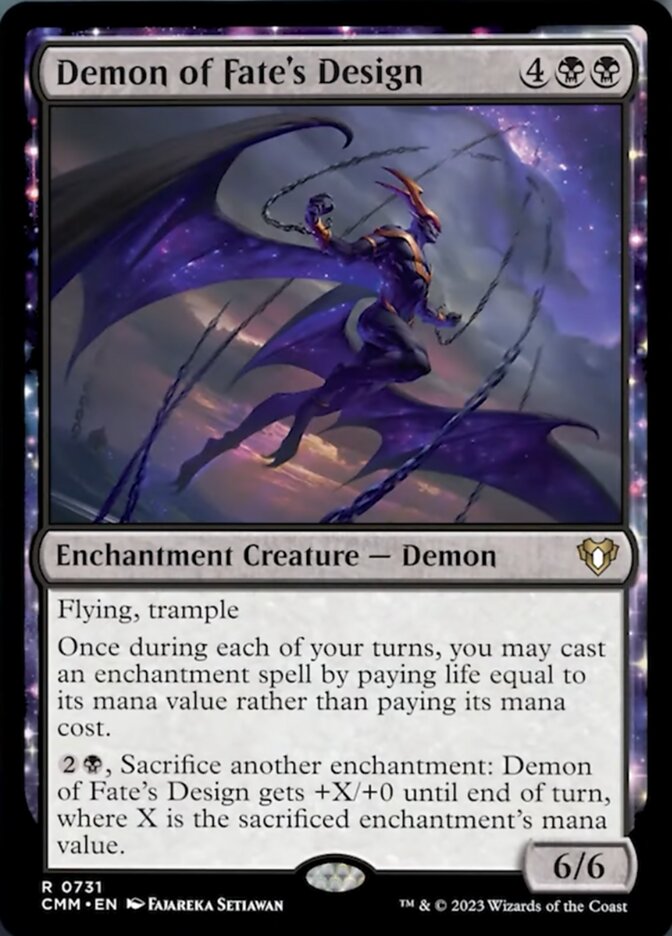

Sometimes one card lets you cast other cards for an alternative cost. Demon of Fate's Design lets you pay life rather than mana for casting an enchantment, and The Infamous Cruelclaw lets you discard a card from your hand to pay for a card you exile from the top of your library after Cruelclaw hits one of your opponents.
In all cases, the card or effect will say something along the lines of “You may cast this spell for [cost] rather than pay its mana cost,” or “You may cast this card from [zone] for [cost] instead of paying its mana cost.”
In other words: An alternative cost is something you can pay rather than paying the spell’s mana cost. Only one alternative cost can apply when you cast a spell.
History of Alternate Costs
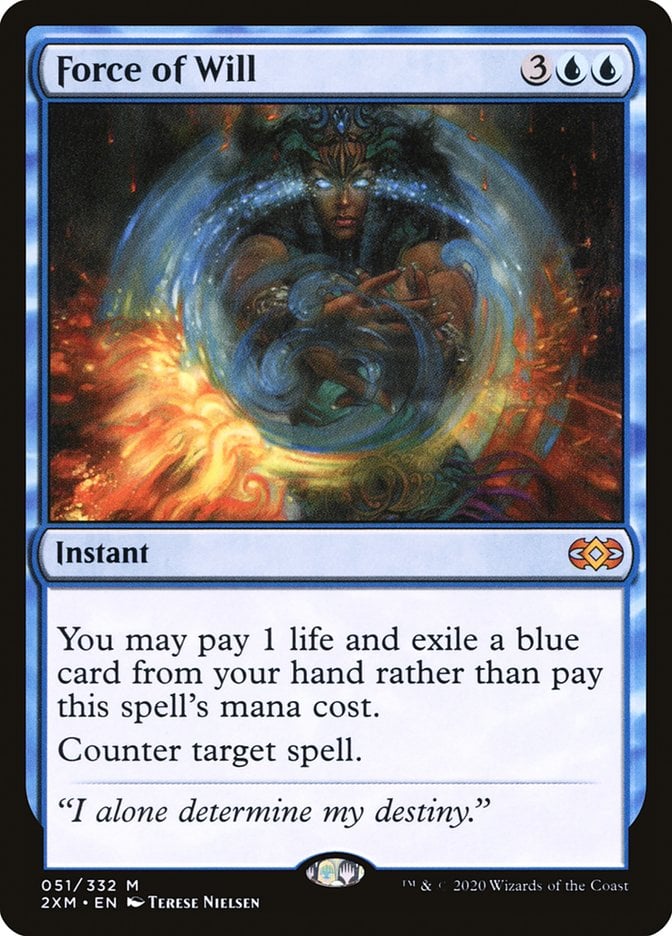
Alternative costs first showed up in Alliances with the famous “pitch” cycle, most famously Force of Will. This counterspell literally tells you that you may pay 1 life and exile a blue card from your hand instead of paying its mana cost; that’s the canonical alternative cost template.
Since then, MTG designers have revisited the idea dozens of times, including keywords that are alternative costs:
- The Odyssey block leaned hard into flashback on instants and sorceries.
- Lorwyn gave us evoke on creatures like Mulldrifter.
- Return to Ravnica added overload on cards like Cyclonic Rift.
- More recently, Edge of Eternities brought us warp.
All of these are just different ways to say “you can cast this for something other than what’s printed in the top-right corner.”
Examples of Alternate Costs
Let’s look at a few major mechanics that are alternative costs.
Evoke
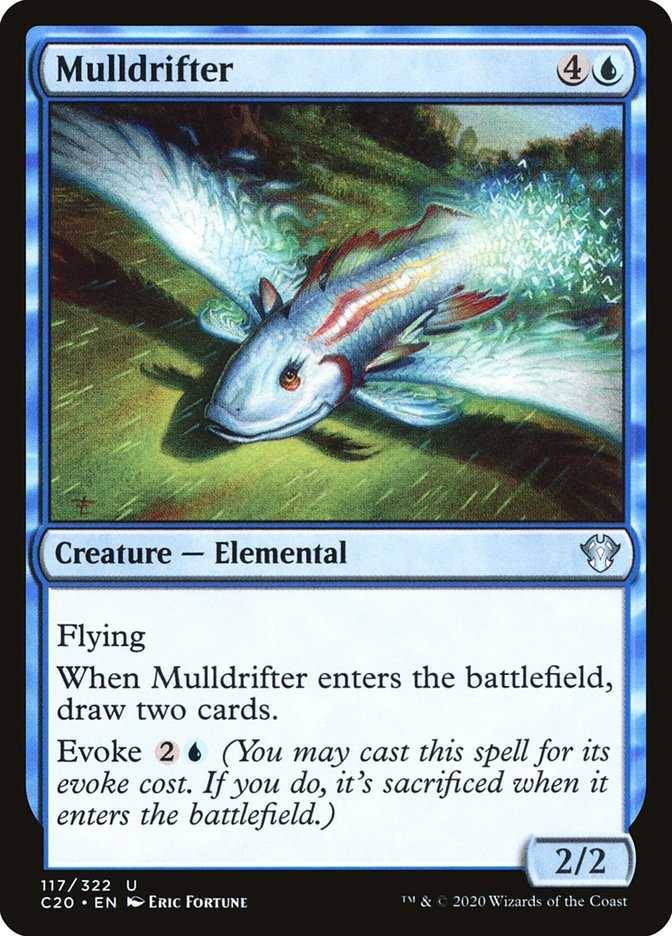
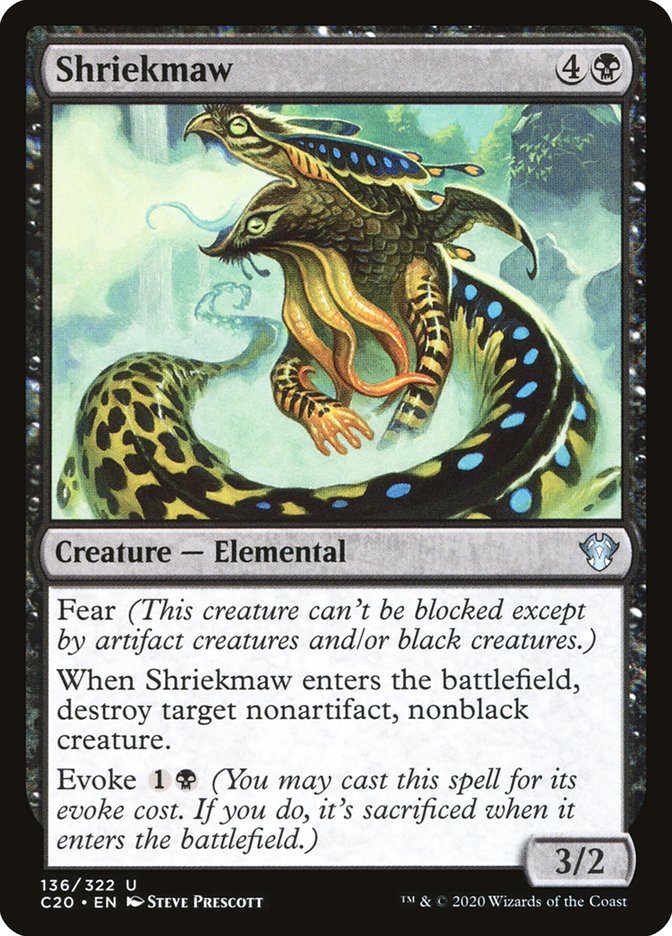
Evoke is one of the cleanest examples of alternative costs: It lets you cast evoke creatures for cheaper, but you have to sacrifice them as soon as they enter.
Evoke appears on creatures like Mulldrifter or Shriekmaw. While in practice you can think of it as a cost reduction, technically speaking it’s an alternative cost (we’ll dig deeper into the difference between alternative cost versus cost reduction in a bit).
Overload
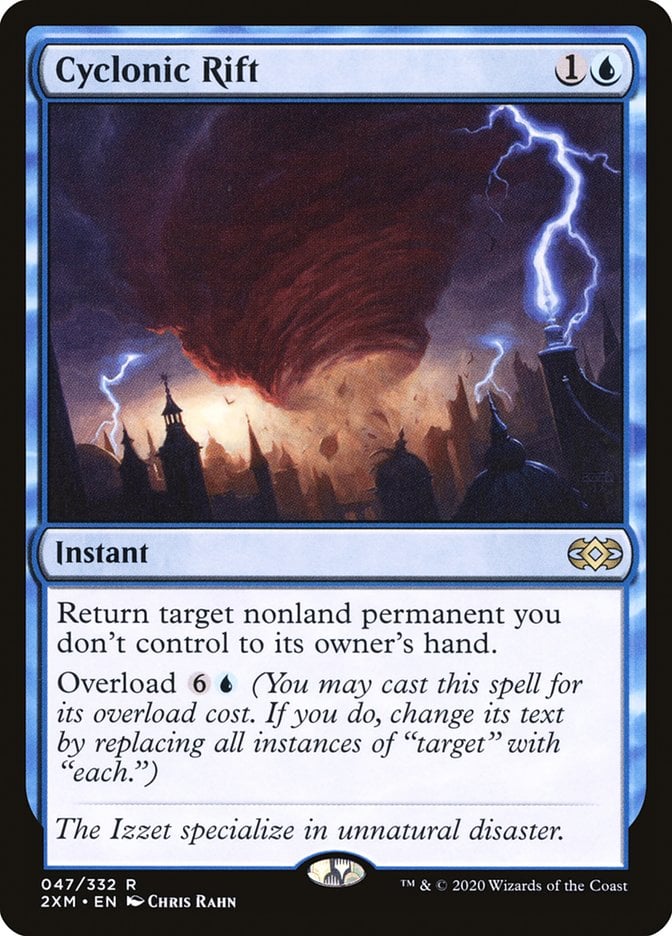
Overload is another very simple example of alternative costs, and Cyclonic Rift is the poster child.
Overload gives you an optional alternative cost; if you pay it, you replace “target” with “each” in the spell’s text. So, in practice, it’s like paying extra and getting a bonus… just remember that, technically speaking, there are important differences between an alternative cost (like evoke and overload) and an additional cost (like kicker).
Flashback
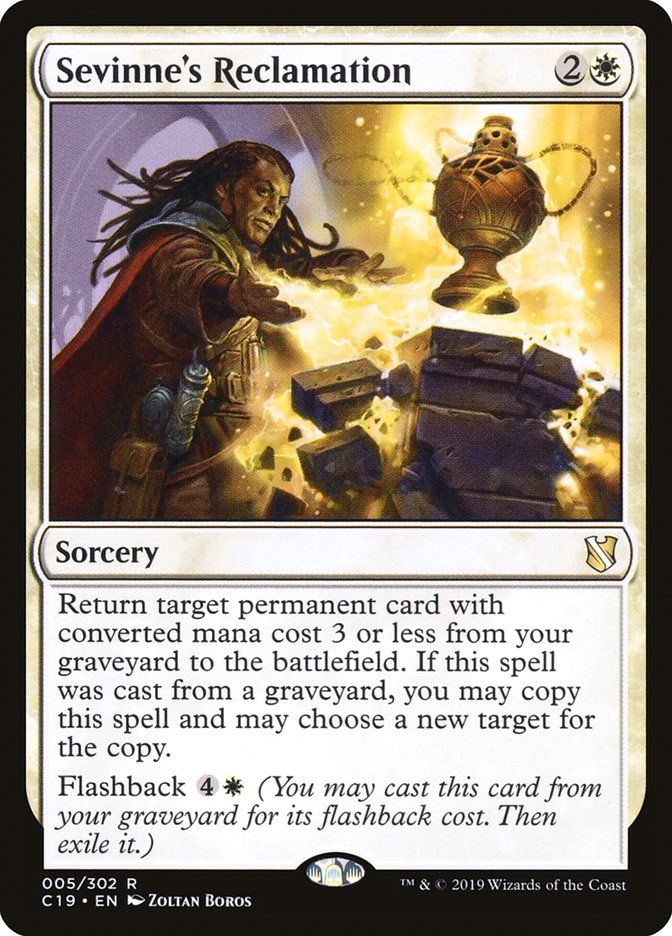
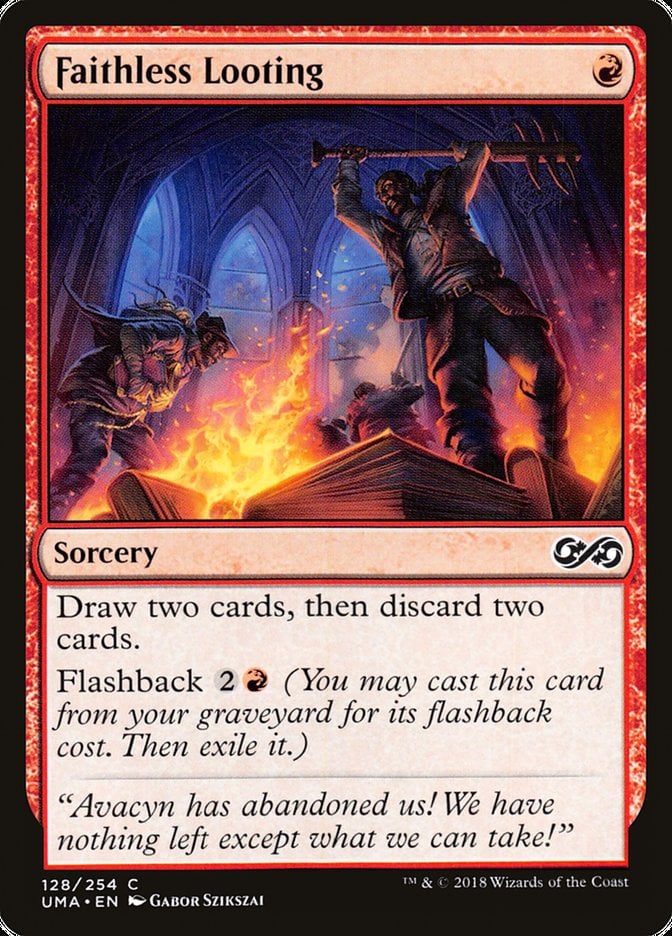
Flashback is another very common example of alternative costs, but there’s a hoop you have to jump through: The instant or sorcery has to be in your graveyard (rather than in your hand) for you to be able to flashback it.
Cards like Sevinne's Reclamation and Faithless Looting are classic flashback examples, and it showcases a typical quirk: Alternative costs usually come with some conditional (in this case, be in your graveyard) that you have to fulfill if you want to cast the spell for its alternative cost.
Warp

Warp is similar to evoke in that you get to cast the spell from your hand for much cheaper, but then you have to exile it at the next end step (usually yours). Warp is also a bit of a “reverse flashback” in that, if you warped a creature and then exiled it, you can cast it for its normal cost from exile.
So, in Quantum Riddler‘s case, you can:
- Cast it normally from your hand (by paying ),
- Cast it for its alternative cost () from your hand, and exile it at the end of your turn,
- If you warped and exiled it, then you can cast it for its normal cost () from exile.
Madness

Madness, as seen in Emrakul, the World Anew, is on the more “let’s jump many hoops” end of the spectrum when it comes to complexity.
If you want to cast this legendary Eldrazi for its alternative madness cost, you have to discard it. Madness makes Emrakul go to exile rather than the graveyard, the madness trigger goes onto the stack, and when it resolves, you have the opportunity to pay the alternative cost right away if you want to cast it, else our Eldrazi friend will be moved from exile to the graveyard (as if it had been discarded normally).
As these examples show, the complexity of paying an alternative cost can range from very simple (pretty much like casting the creature normally from your hand, like when evoking, warping, or overloading), to requiring a bit of work (like flashback requiring the spell to be in your graveyard), to demanding very precise timing (such as madness).
But in all cases, alternative costs follow a simple template: “[If you meet the proper conditions], pay N instead of this spell’s mana cost [and then these other things happen, too].”
Alternate Costs vs. Additional Costs
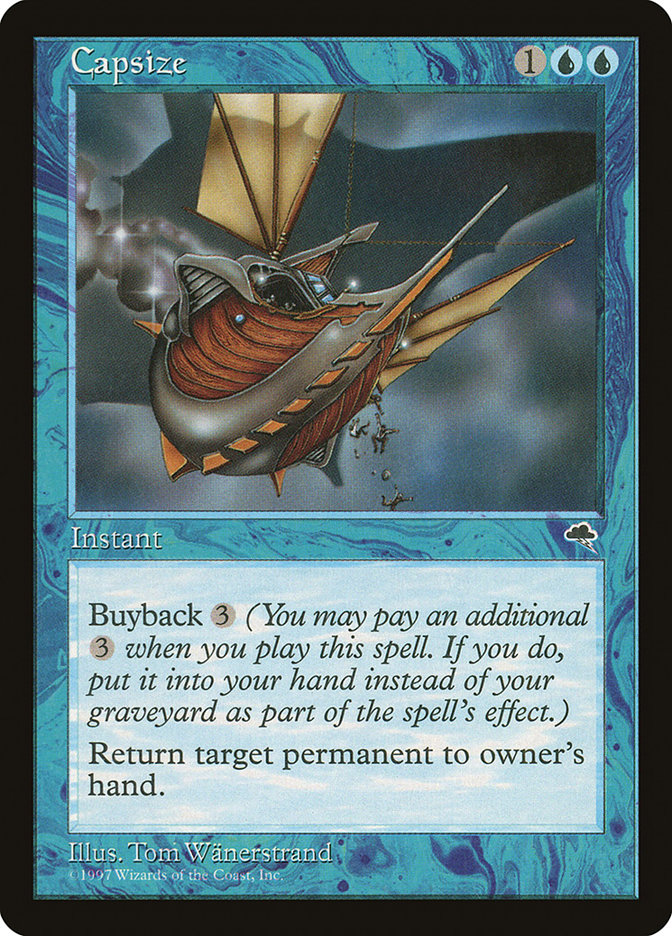
Now we need to distinguish alternative costs from additional costs, which can get a bit confusing. The gist of it is:
- An alternative cost replaces the spell’s mana cost. You pick either the mana cost or one alternative cost.
- An additional cost is something you pay on top of whatever base cost you’re using (mana cost or alternative cost). Typical examples are kicker, buyback, bargain, phrases like “As an additional cost to cast this spell, sacrifice a creature,” and commander tax.
The main practical difference is that you can choose exactly one alternative cost, while you can pay as many additional costs as you want (and can pay for, of course).
In other words, the mana cost and the alternative cost are the starting point, and then commander tax, kicker, delve, cost reducers, etc. all modify that starting point. You can’t have more than one starting point (just one alternative cost), but you can add potentially infinite extras.
Can You Pay an Alternate Cost and an Additional Cost at the Same Time?
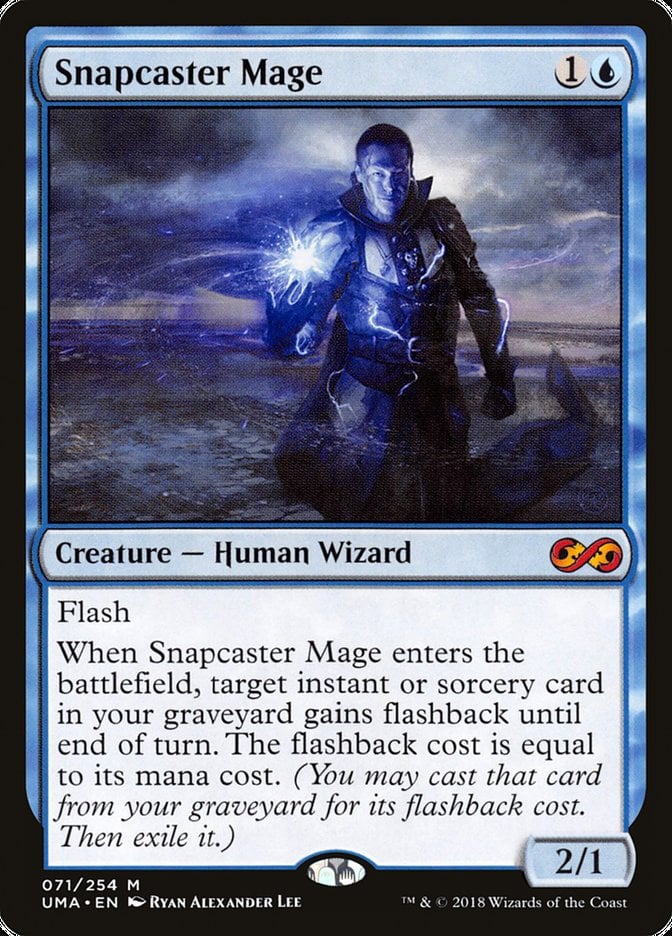
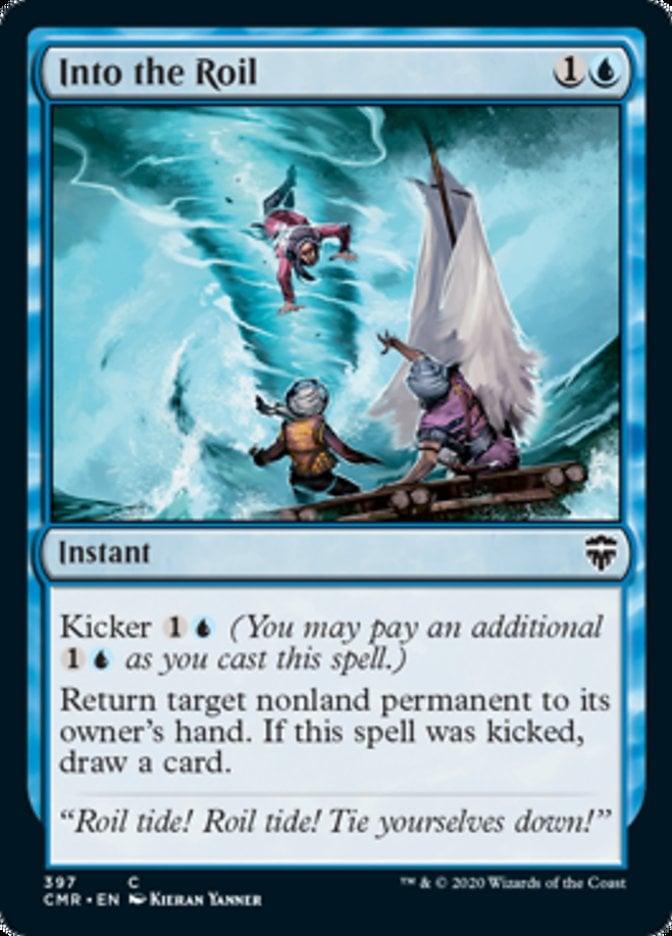
Yes, absolutely! This is one of the biggest places players get confused, but the rules are clear: You can combine one alternative cost with any number of additional costs.
Example:
- You play a Snapcaster Mage, targeting Into the Roil in your graveyard.
- Into the Roil has kicker . Snapcaster gives it flashback with a cost equal to its mana cost (also ).
- When you cast Into the Roil from your graveyard, you have to pay its flashback alternative cost .
- In the same step, you can also choose to pay its kicker additional cost .
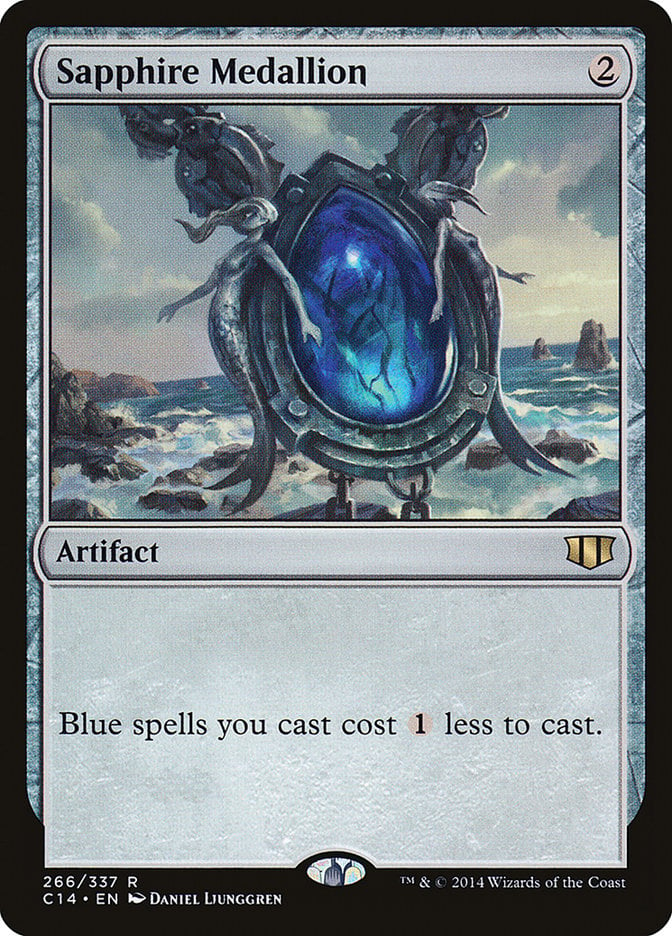
Your total cost in this example becomes ; if there are other effects that increase or reduce a spell’s cost, you add or subtract from to reach the final cost. If you have a Sapphire Medallion in play, your flashbacked-and-kicked Into the Roil now costs .
When Can You Pay an Alternative Cost?
Alternative costs don’t magically ignore timing rules. You still need to follow the usual timing rules unless the effect says otherwise.
For example, flashback lets you cast instants or sorceries from your graveyard. You can cast instants whenever you have priority, but a sorcery with flashback still has to follow the “sorcery speed” timing (in your main phase, whenever you have priority and the stack is empty).
Madness, on the other hand, loves turning things on their head: In this case, you’re casting during the resolution of a triggered ability. The rules specifically carve out that you cast it as part of that resolution, so you don’t care about sorcery speed there: If you discard Emrakul, the World Anew at instant speed during your opponent’s turn, you can cast it right then and there for its madness alternative cost.
In short: Alternative costs are a different price tag, but in general with the same timing rules… unless the card or keyword explicitly says otherwise.
Can You Pay Multiple Alternative Costs at Once?
No. Full stop. Both rule 601.2b and 118.9a say you can’t apply two alternative costs to a single spell.
If a card somehow has multiple alternative costs available, you pick one. For example, let’s say you play Snapcaster Mage while Force of Will is your graveyard.
Snapcaster gives Force of Will flashback, with an alternative cost equal to its mana cost, . Flashback is already an alternative cost that lets you cast an instant from your graveyard; that’s your alternative cost and your only way to cast it from the graveyard. You do not also get to apply Force of Will’s “pitch” alternative cost on top of that.
What Happens If You Copy a Spell Cast with an Alternative Cost?
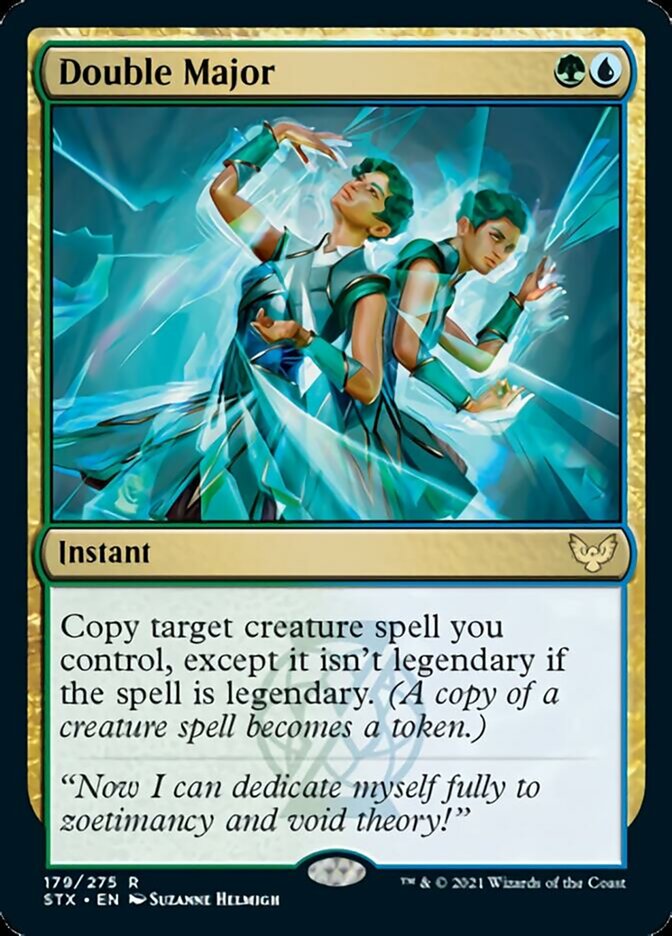
When you copy a spell on the stack, the rules say the copy copies “the characteristics of the spell or ability and all decisions made for it, including … additional or alternative costs.”
That means that, if you cast Mulldrifter for its evoke cost and then you copy the spell with Double Major, the copy is treated as if its evoke cost was paid as well.
In this example, both the original spells and the copy resolve, both Mulldrifters enter the battlefield, and both will see “its evoke cost was paid” and be sacrificed. You still get all the enter-the-battlefield triggers, but you don’t get to keep either creature.
Notice that this is not the same as copying a creature on the battlefield – in the example above we’re copying spells on the stack. Copying a spell (e.g., Double Major, Fork) copies all your casting decisions, including which alternative cost you used, and those decisions matter for “if [this cost] was paid” clauses.
On the contrary, creating a token copy of a permanent that’s on the battlefield (e.g., Riku of Two Reflections, The Jolly Balloon Man) doesn’t involve casting at all. The token was never cast; no alternative or additional cost was paid for it, so “if its [alt cost] was paid” checks will be false for that token.
Does an Alternate Cost Change a Spell’s Mana Value?
No. This is probably one of the most confusing rules in Magic, but a spell’s mana cost is not the same as what it actually costs to cast it.
The mana cost is whatever the upper right corner says. It’s the mana symbols printed there; it’s a characteristic of the card. A card’s mana value is equal to the total amount of mana in its mana cost, regardless of color.
Force of Will has a cost of , and a mana value of 5. And the mana value doesn’t change, ever. You can cast it by paying its alternative cost (pay 1 life and exile a blue card from your hand), but the mana value is still 5. You could be forced to pay all sorts of additional costs and end up paying or whatever, but it doesn’t matter, the mana cost is still , and the mana value is still 5.
Same for warp, foretell, madness, freerunning, and any other alternative cost that ever gets printed: What you actually end up paying does not change the mana cost or the mana value.
Can You Counter an Alternative Cost?
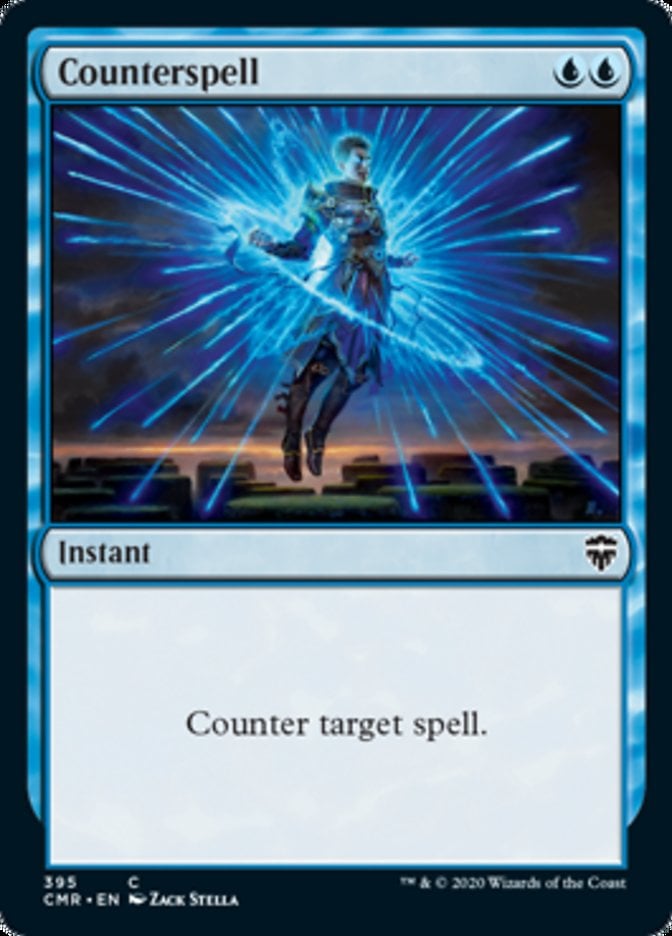
Yep, sure can!
An alternative cost doesn’t make a spell special or uncounterable in any way. It still uses the stack, and you can still counter it as if it was cast normally. A flashbacked sorcery, an evoked Mulldrifter, an overloaded Cyclonic Rift, or a warped creature spell are all spells on the stack like any other. You can point Counterspell at them as normal.
Do Cost Increases and Cost Reductions Apply to Alternative Costs?
Indeed they do! The alternative cost is the starting point. Your starting budget, if you will. You add cost increases to it, and subtract cost reductions from it, to arrive to the final cost. Any additional costs, cost increases, and cost reductions that would normally affect that spell, are applied to that alternative cost.
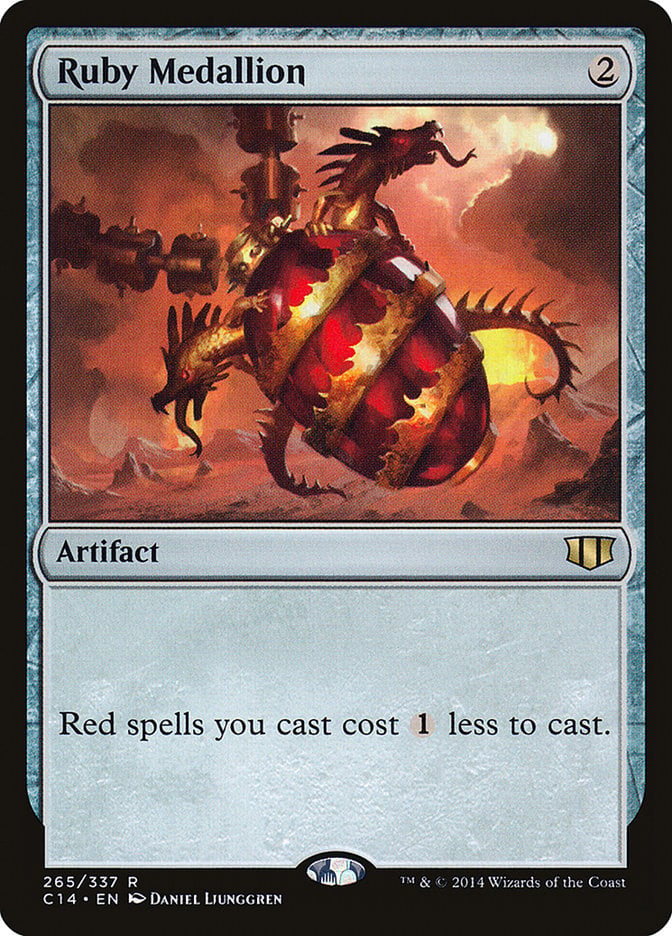

Say you control Ruby Medallion and Tannuk, Steadfast Second, and you warp a red creature spell. The warp cost is the base alternative cost, and Ruby Medallion reduces that cost by .
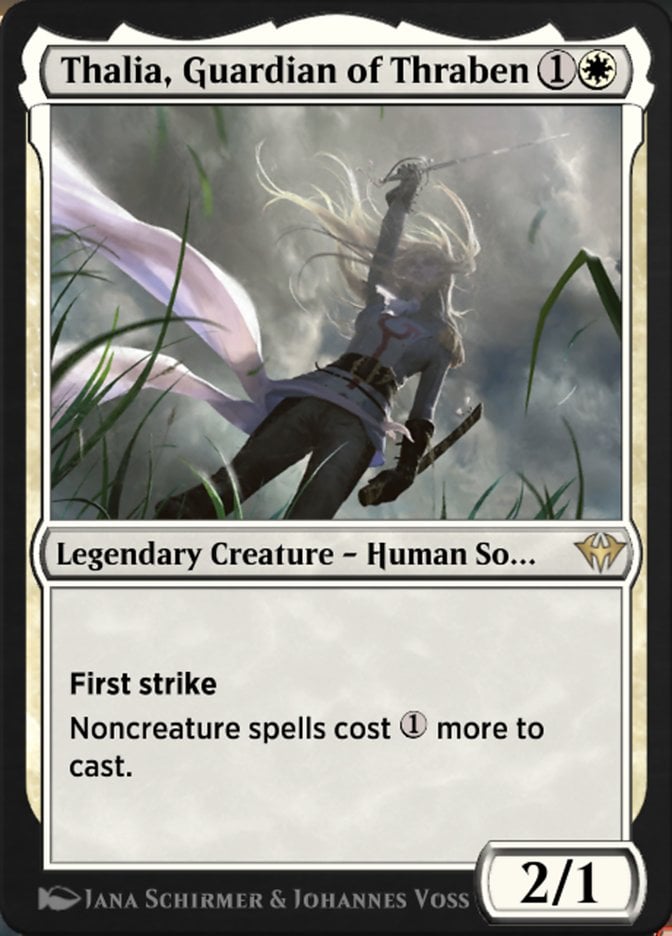
If your opponent controls Thalia, Guardian of Thraben and you cast a noncreature spell via flashback, you still pay Thalia’s tax on top of the flashback cost.
Are Channel and Cycling Alternate Costs?
No, they are not!
This is a very common misconception, because they feel similar (“I can pay this cost instead of normally casting the spell”), but they are activated abilities.
When channeling and cycling, you’re activating an ability, not casting a spell. It so happens that they are abilities that you can activate from your hand, and that’s why they feel like you’re casting a spell… but you aren’t, so alternative costs have nothing to do here.
Can You Delve Alternate Costs?
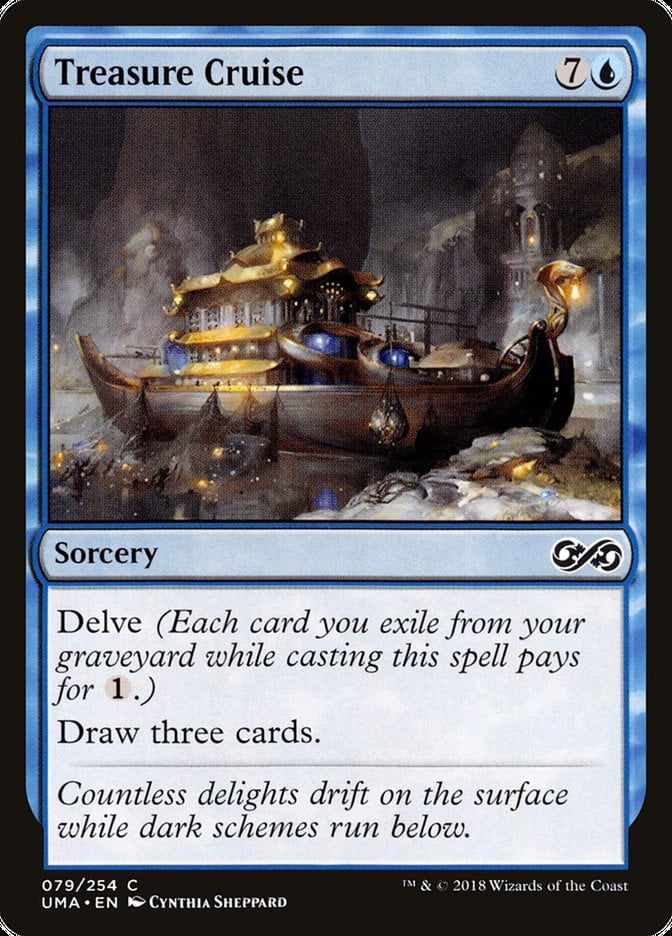
Yes, but with a couple of important caveats. First, delve itself is not an alternative cost. It’s an “alternative payment method”, if you will.
Delve applies only after the total cost is determined. First, you start with either the normal or an alternative cost. Then, you tally all the additional costs, cost reductions, and/or cost increases, if any. Delve comes into play only after you calculate the final cost, as an alternative payment method that lets you exile cards from your graveyard instead of paying the generic mana cost.
So, yeah, there’s a “Rather than paying the mana cost, do this other thing” clause involved, and that seems very close to what an alternative cost is. The key difference is that delve gets to work after the total cost is calculated.
In other words: Alternative costs are the starting point; delve is the cashier asking you how you’re gonna pay the spell, and offering you a different payment method.
Can You Convoke Alternate Costs?
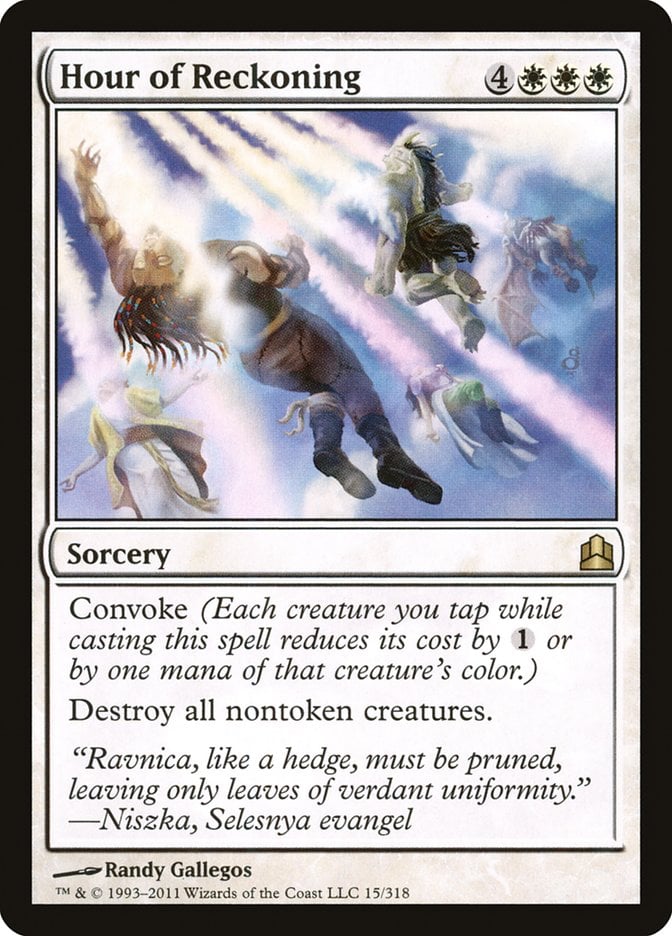
Same deal as with delve: Convoke is an “alternative payment method”, not an alternative cost.
While the “…rather than pay…” part of convoke sounds very close to alternative costs, the key words are “total cost.” Like delve, convoke gets to work after the total cost is calculated, whereas alternative costs are the starting point of the cost calculation.
If your Snapcaster Mage gives flashback to your Hour of Reckoning, you can convoke it from the graveyard, no problem.
Do Alternate Costs Get Around Commander Tax?
Nope, they don’t!
Commander tax is defined as an additional cost: Each time you cast your commander from the command zone, you pay more for each previous time it’s been cast from there. And as we saw earlier, additional costs stack on top of whatever base cost (mana or alternative) you’re paying.
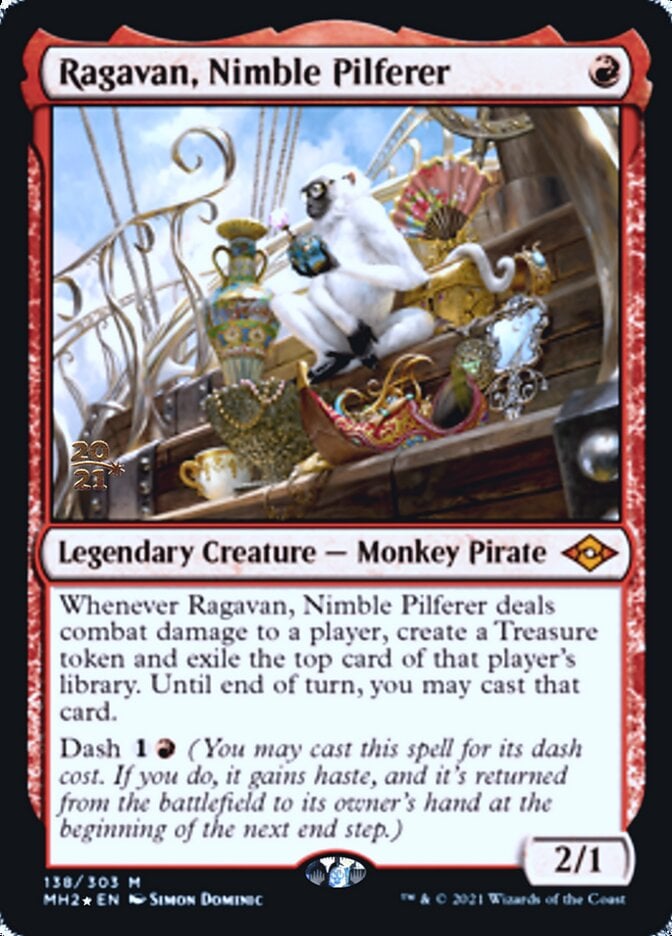
So, suppose Ragavan, Nimble Pilferer is your commander.
- First time you cast it from the command zone with dash, you pay its dash alternative cost of .
- Second time, you pay (dash) + commander tax = .
- Third time, + commander tax = , and so on.
It’s what Franklin said about death and taxes: Ain’t no way around them. If you’re casting your commander from the command zone, the “+ per previous cast” is always an additional cost you must pay on top of the chosen base cost.
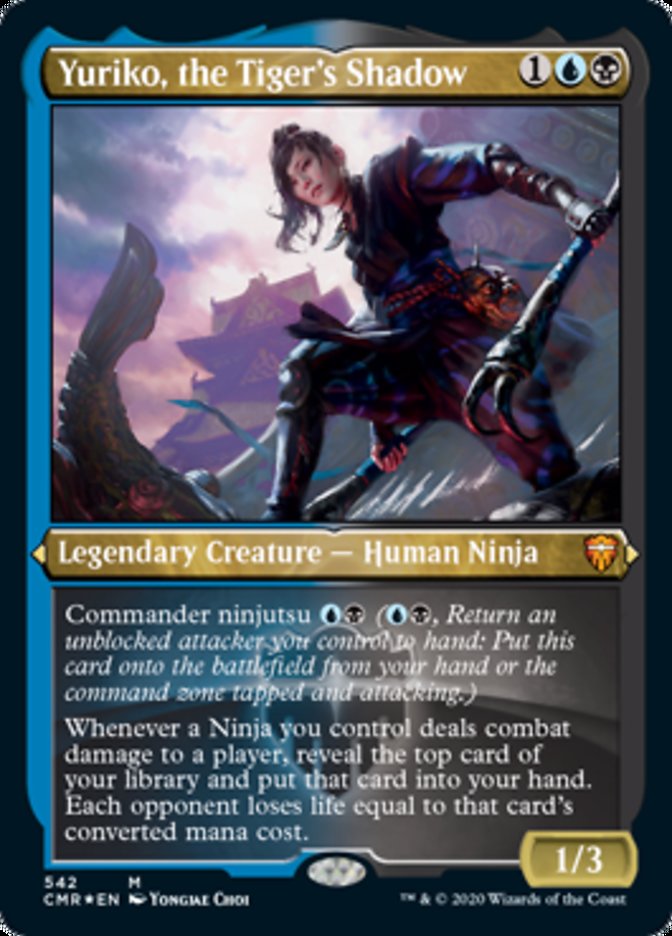
Then again… if you were wondering why Yuriko, the Tiger's Shadow gets to evade taxes here, that’s because commander ninjutsu is not an alternative cost: It’s an activated ability. Yuriko is not being cast, so stuff that increases the costs of casting them (like the commander tax) are irrelevant.
Notice that Yuriko’s ninjutsu lets them evade taxes twice: It doesn’t pay commander taxes, and since you’re not casting them then you don’t increase the tax you should pay next time. But, again: Nothing to do with alternative costs.
Wrap Up

Snapcaster Mage | Illustration by Volkan Baga
I hope reading all that didn’t cost too much!
The rules for alternative costs are actually pretty tight: You either choose a spell’s normal mana cost or one alternative cost, never more than one. Additional costs (kicker, commander tax, etc.) are added on top of that base cost. Cost increases and reductions also apply to whichever base cost you chose.
Activated abilities (channel, cycling, commander ninjutsu) aren’t alternative costs at all; they’re activated abilities. Delve and convoke are not alternative costs, but rather alternative payment methods.
I hope you enjoyed this actuarial deep dive into how alternative costs work in Magic! If you have comments or questions, please drop a comment below or stop by the Draftsim Discord for a chat.
And good luck out there!
Follow Draftsim for awesome articles and set updates:









Add Comment