
Last updated on October 24, 2025

Tidechannel Pathway | Illustration by Grady Frederick
Ever since Innistrad introduced double-faced cards to resounding success, MTG designers knew that they could push the envelope further and throw in some wild innovations. After all, if people loved a card with two different faces, what else could be done? Double-faced cards previously had a limitation though, which was always to play the front face of the card and then transform into the back face. But not anymore, with the introduction of Modal Double-Faced land cards, or MDFCs that are at least half land.
These are basically a split card between a land and a spell (such as instants, sorceries, or creatures), and you can cast or play either side. MDFC lands are deceptively powerful, allowing you to increase your number of lands in a Commander deck, or your EDH deck's removal count at the same time.
Let’s rank all the MDFC lands ever released in MTG and see which ones you should consider for your Constructed decks. These modal lands are incredibly helpful and forgiving when it comes to your Limited deck building too. Though you don't need to drastically change your land strategies for Sealed and Draft, a few MDFC lands help reduce your number of non-games when your regular lands don't come out of the library.
What Are MDFC Lands in MTG?

Glasspool Mimic | Illustration by Johan Grenier
MDFC (Modal Double-Faced Cards) lands are a small variation on the double-faced cards that appeared as a theme in Innistrad sets. The difference here is that you can choose which side to play instead of having to play the front face and transform it into the back face.
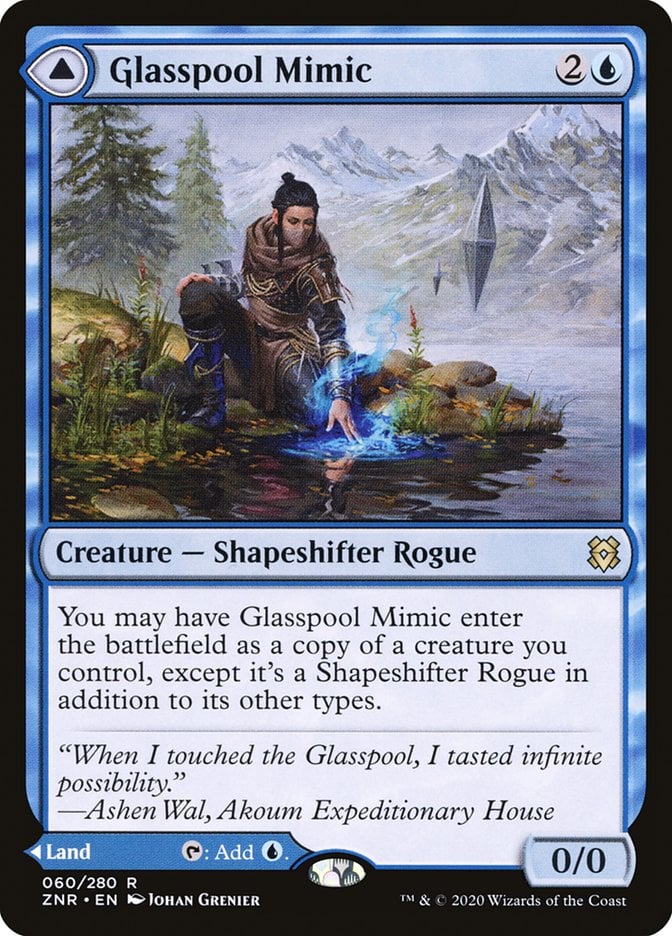
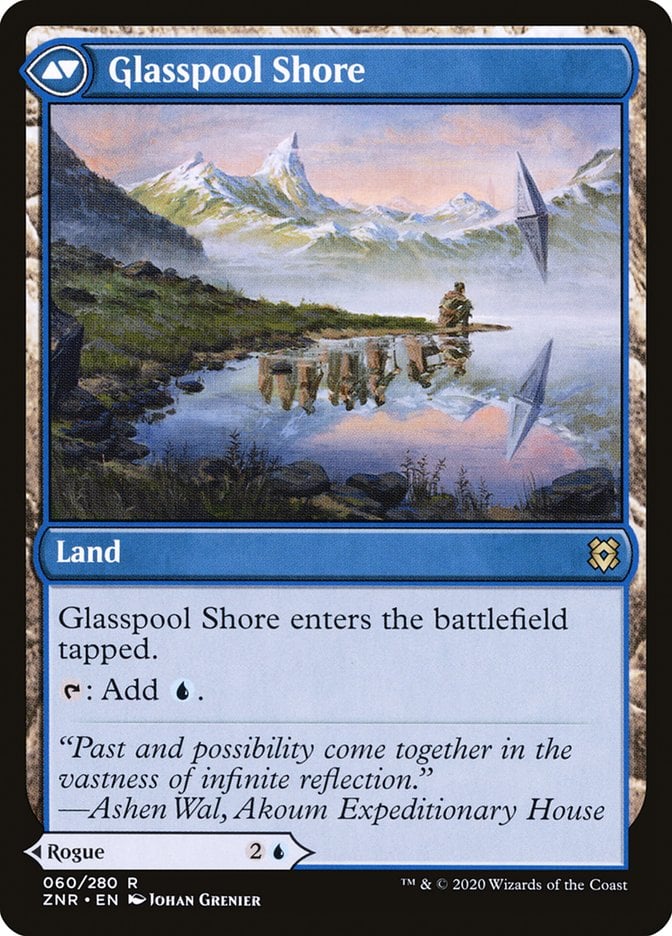
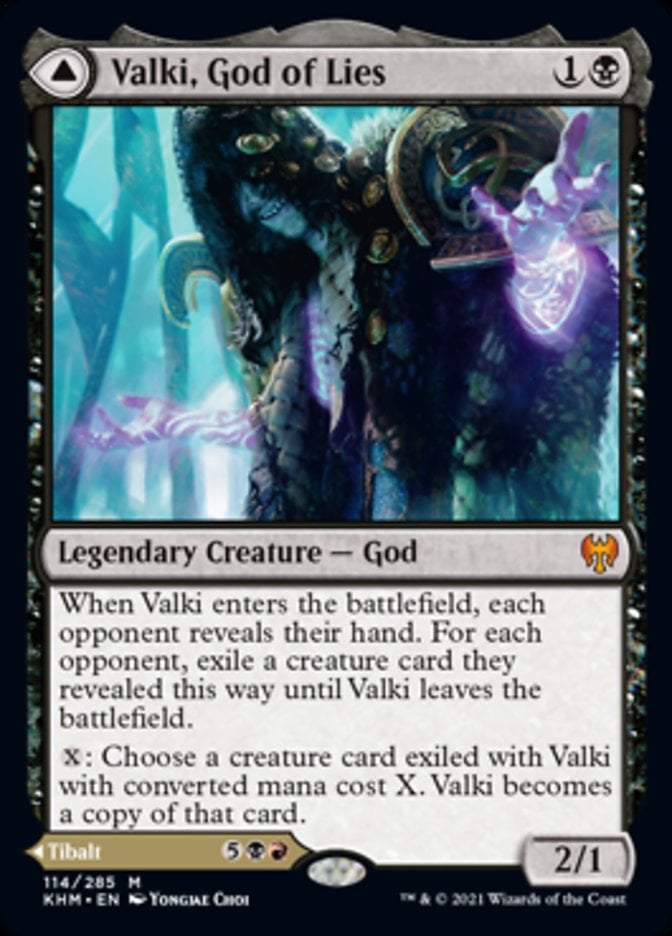
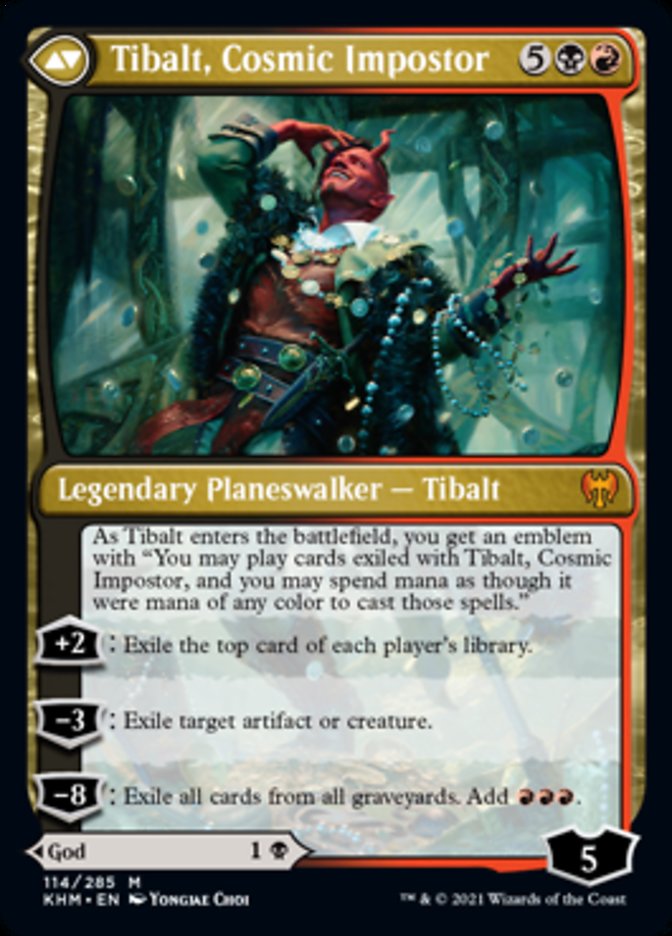


MDFC lands were the first MDFCs ever released in Zendikar Rising. The back face is always a land, hence MDFC land cards. Other MDFC cards are a bit different like Valki, God of Lies / Tibalt, Cosmic Impostor, a card that has a planeswalker on the back face, or MDFCs that are two creatures, or a creature and an instant.
MDFC lands are present in all five colors of MTG, and represented equally. There’s a mythic cycle in all colors, some rare cycles, and some uncommon cycles. Many of the land sides enter the battlefield tapped, so there’s this more upside to land untapping effects like Spelunking and The Wandering Minstrel.
Bolt Lands and Cycles
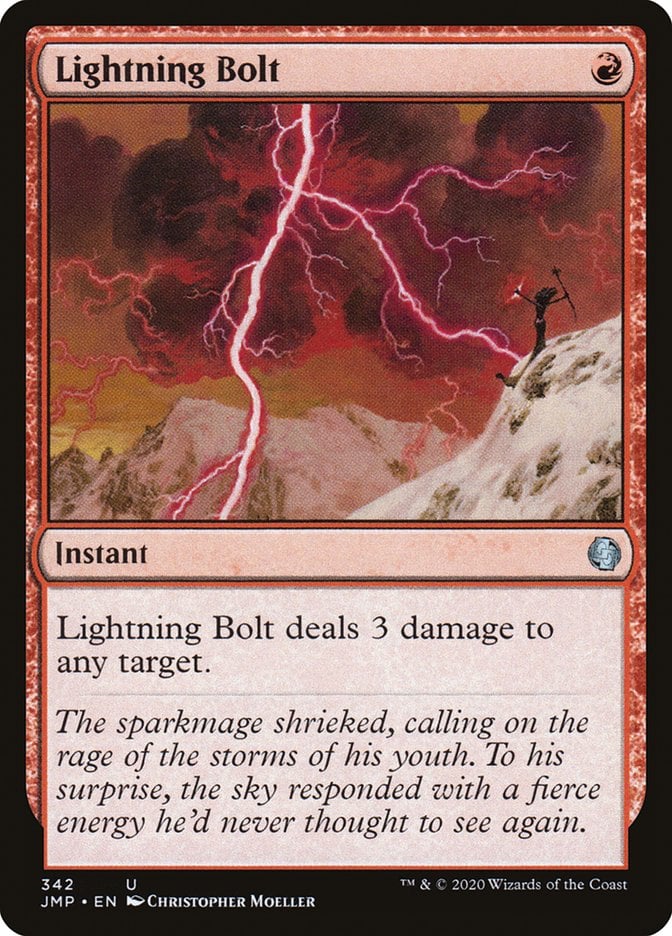

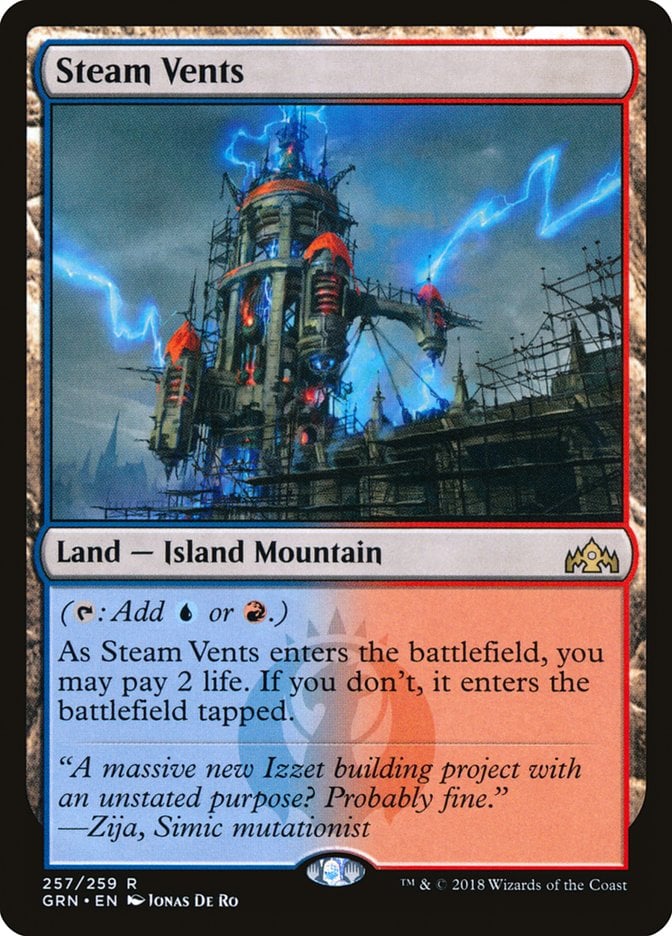
In several cards, you can pay 3 life to make the land enter untapped, like the Ravnica shock lands. Some refer to these as bolt lands, as if you needed to point a Lightning Bolt at yourself to get access to the land that turn.
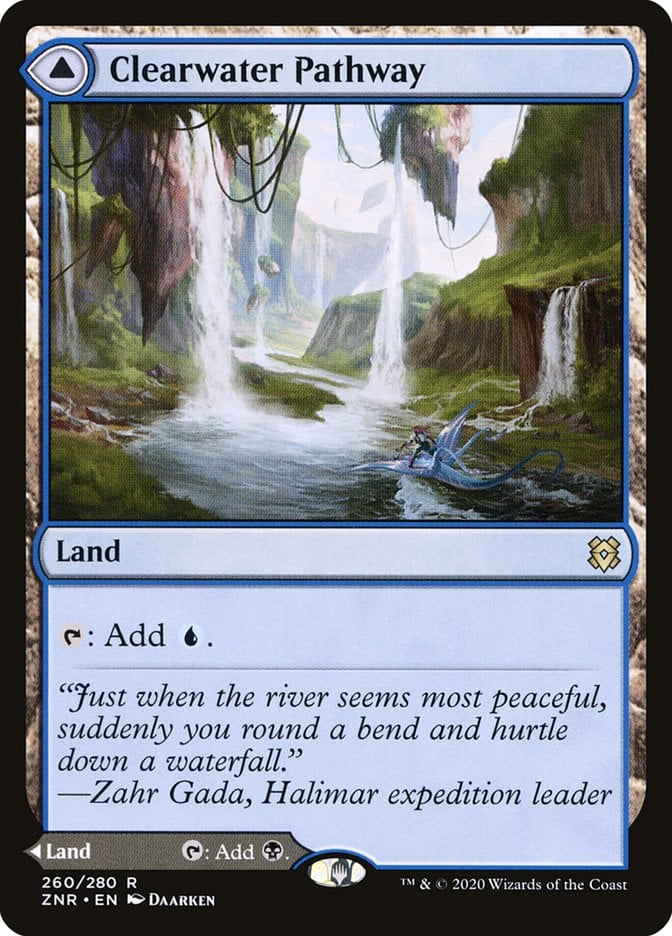
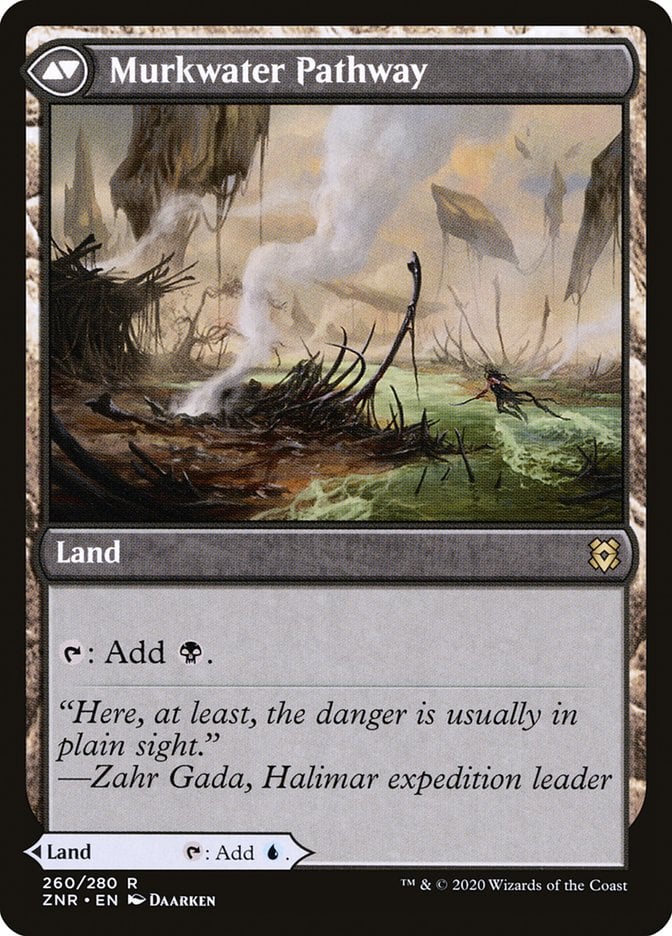
There’s also the rare Pathway cycle, 10 cards that are different because they have different lands on both sides of the card, each entering the battlefield untapped.
Of course, not all MDFCs are equally playable or even good, and that’s why we’re ranking them all!
#51. Beyeen Veil / Beyeen Coast
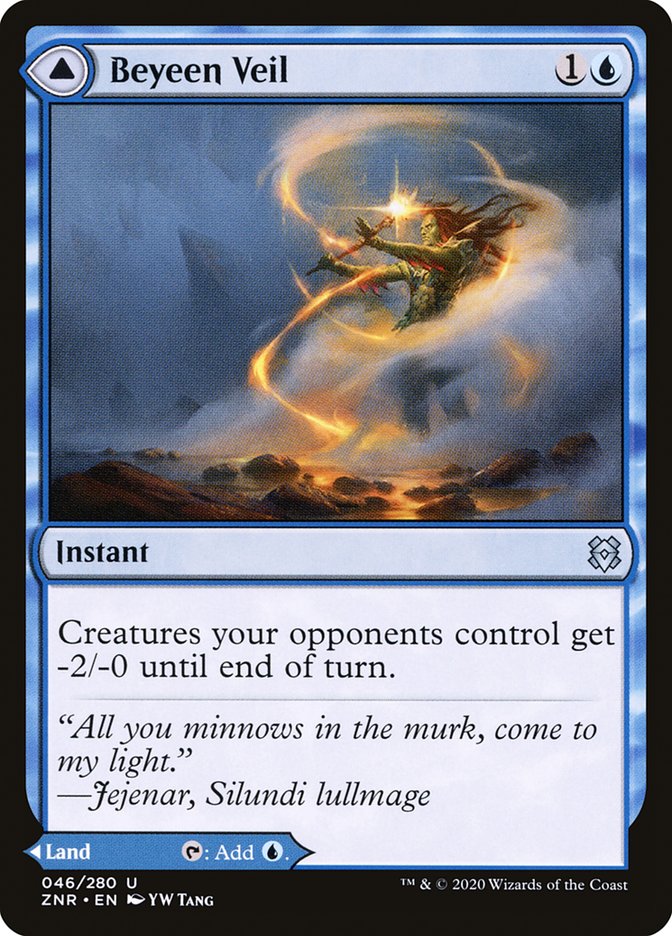
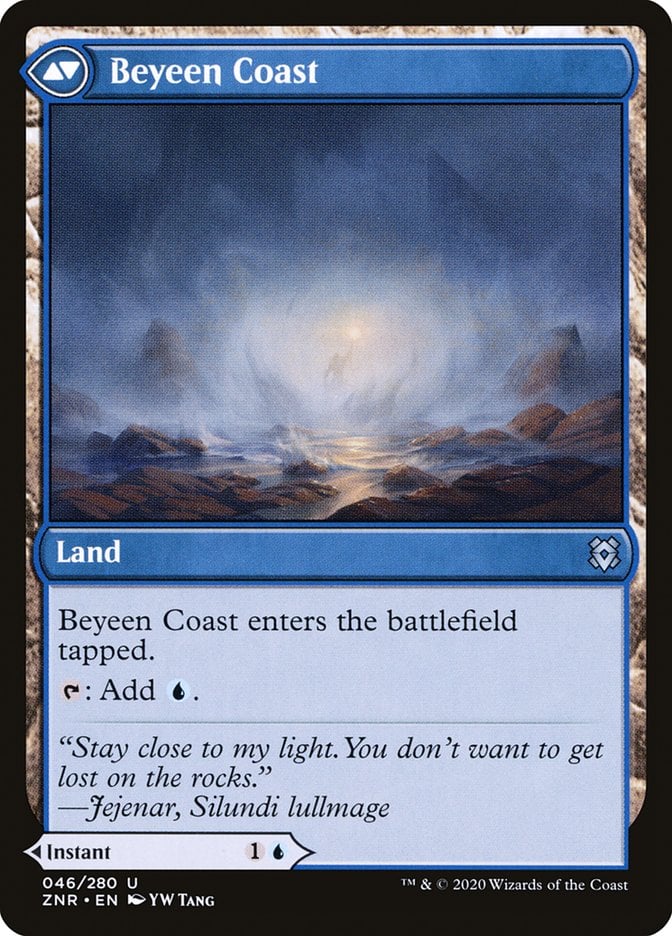
Beyeen Veil is a nice trick for Limited and that’s all. Nothing spectacular. Since it's uncommon, maybe your opponents won’t expect it and you’ll get a profitable attack or defense.
#50. Zof Consumption / Zof Bloodbog
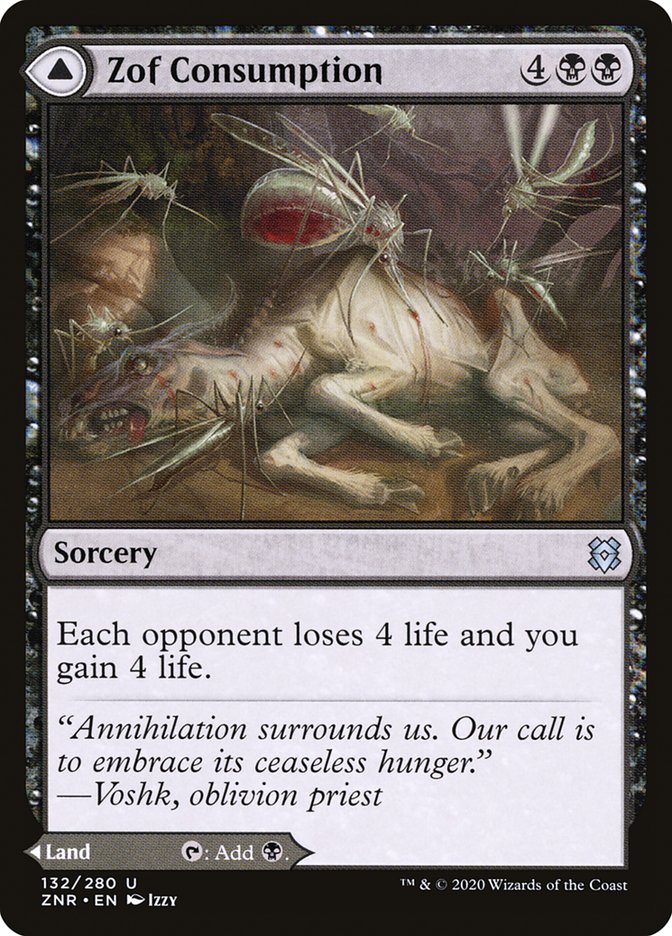
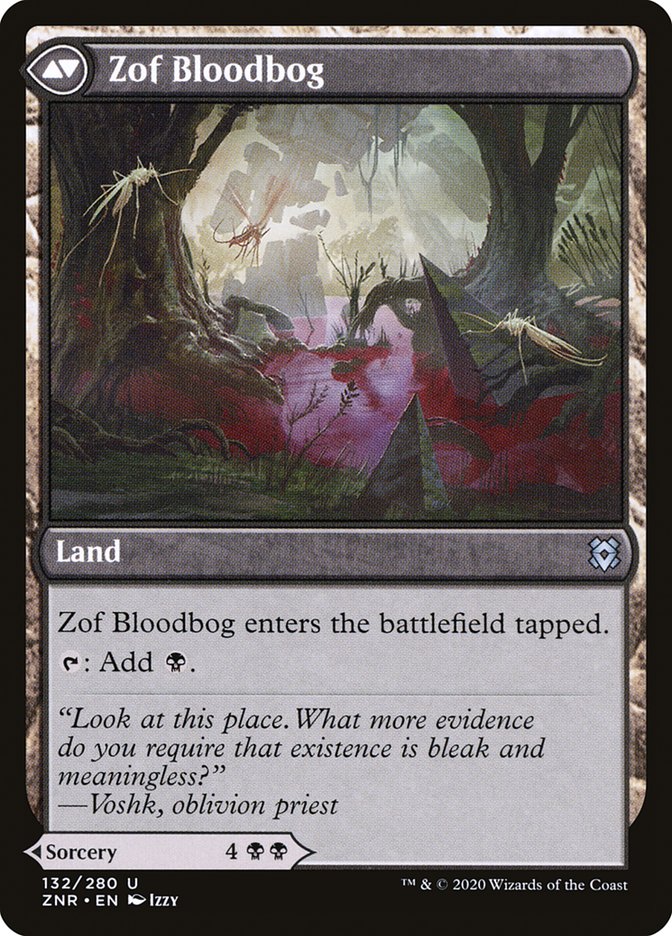
Zof Consumption is something that you can play in a black life gain / life drain EDH deck replacing a Swamp, or in decks that care about your opponents losing life like a Rakdos, Lord of Riots EDH deck.
#49. Akoum Warrior / Akoum Teeth
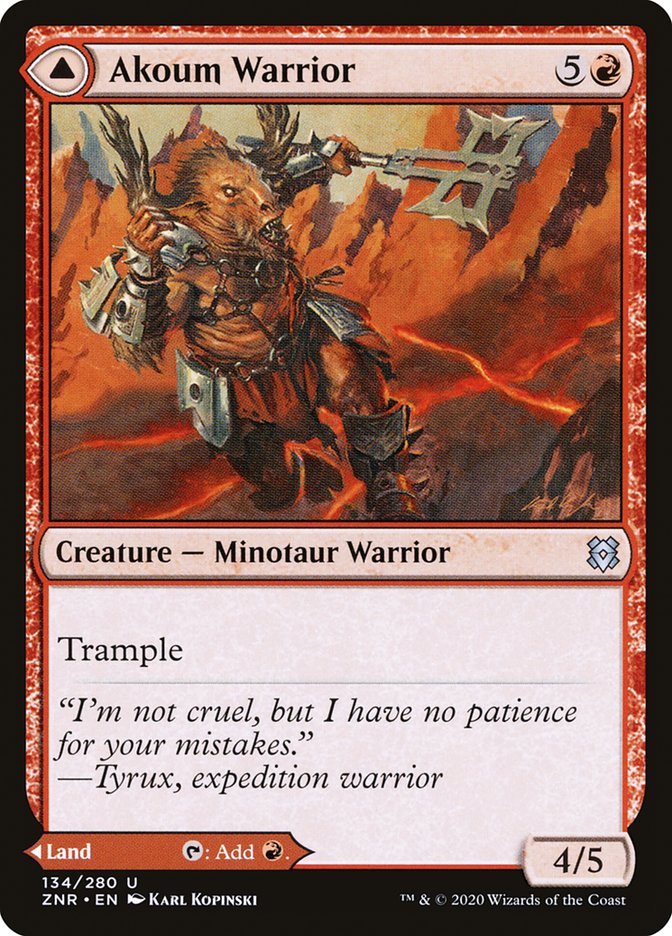
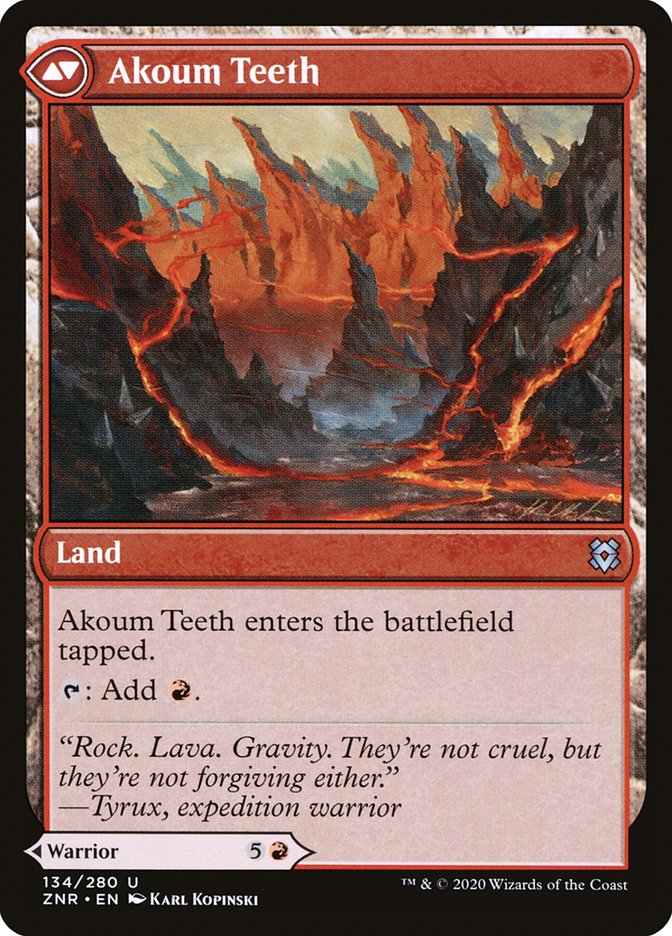
In this day and age, a 4/5 creature with trample needs to cost around 4 mana and have some significant upside to see play. The interesting part here is that Akoum Warrior is a nice alternative mode as a land, making this card extremely useful in Limited. And it’s an extra warrior if you care about that. A few cards let you blink the land part (Akoum Teeth) when you don’t need it anymore, and you’ll get an extra body.
#48. Vastwood Fortification / Vastwood Thicket
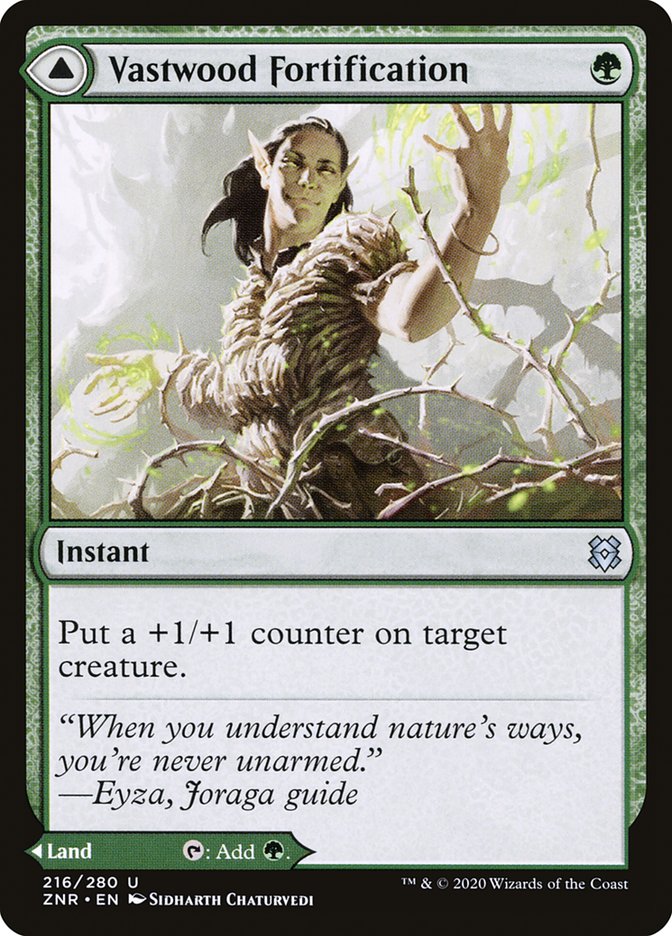
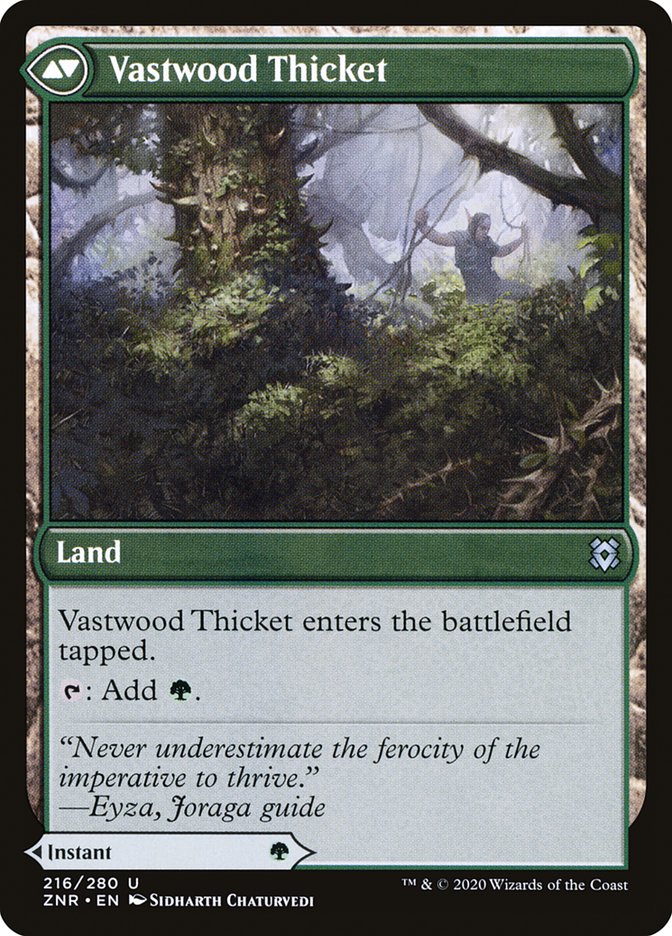
We’re still in Limited territory, and being able to give a +1/+1 counter is a very small upside on a land card. I could see Vastwood Fortification being played in green decks that care a lot about +1/+1 counters, but even so, you’ll be playing the land part much more since it’s a weak effect.
#47. Makindi Stampede / Makindi Mesas
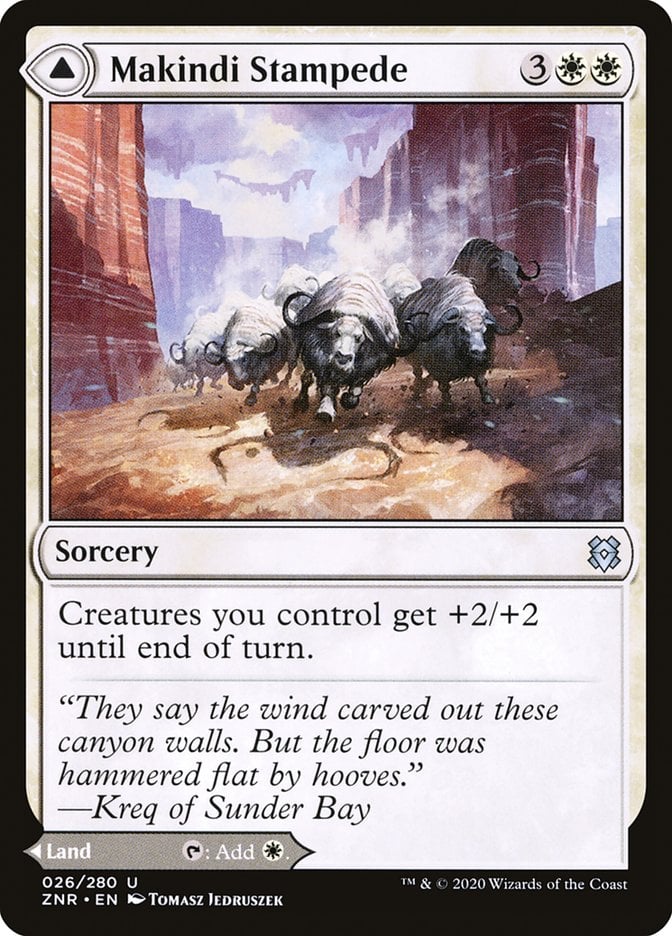
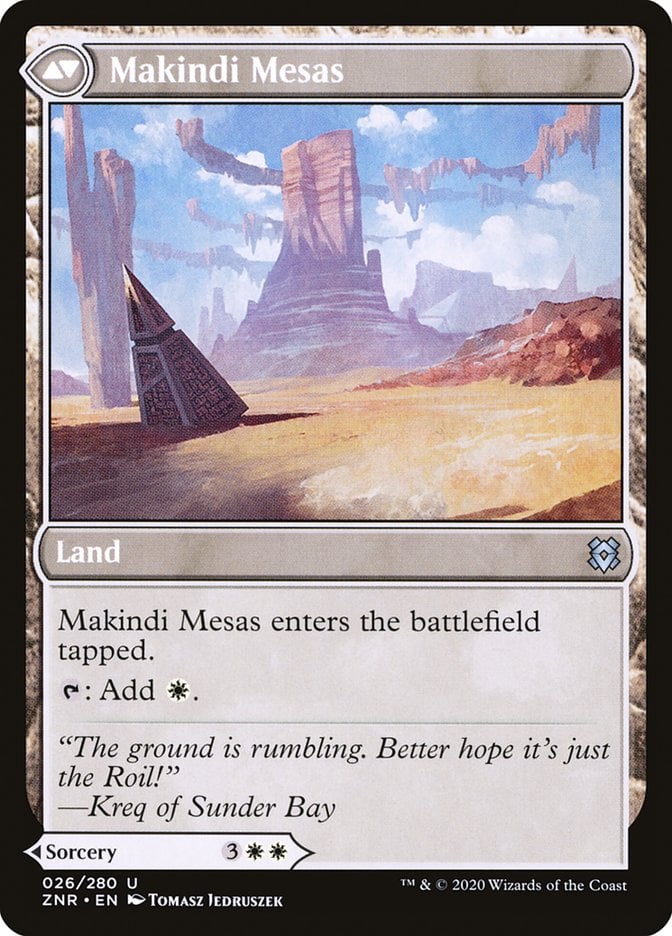
The worst part about playing cards like Overrun is that it doesn’t do a thing if you were the victim of a one-sided board wipe and don’t have creatures. In Makindi Stampede, we have a card that’s useful if you’re going wide but can also be a backup land.
#46. Khalni Ambush / Khalni Territory
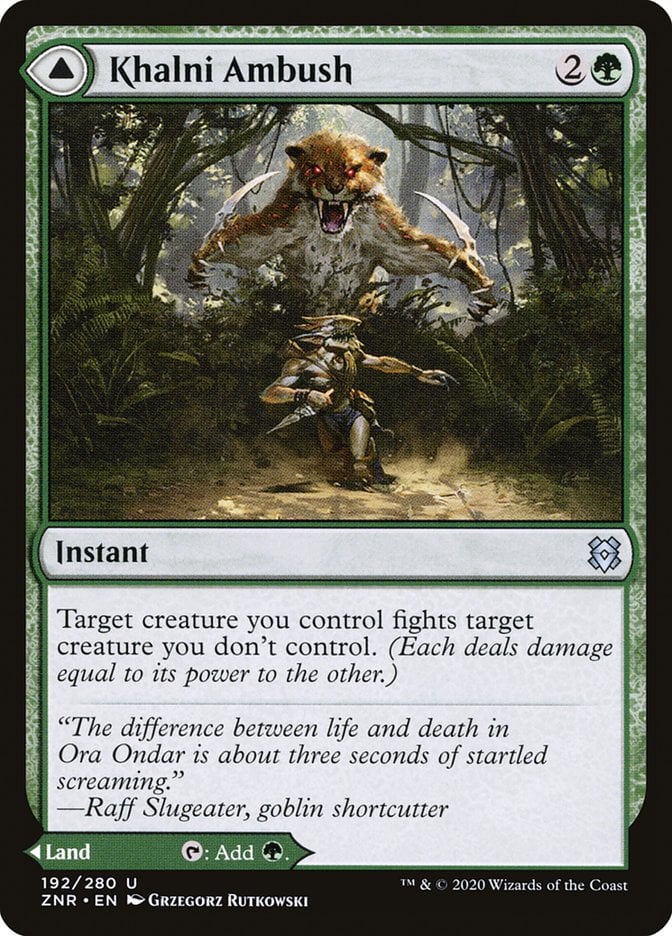
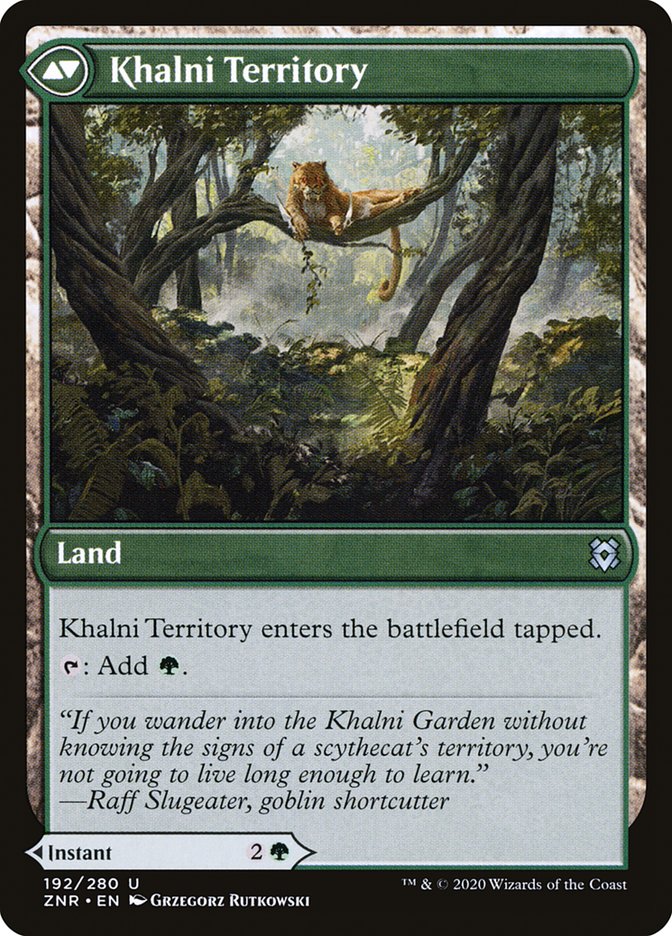
Khalni Ambush is an instant speed fight effect that’s usually good in Limited, and in Constructed it’s easier to splash another color that has removal. I’m rating this above other cards simply because green decks usually play fight effects as ways to interact, and this is a slightly overpriced one.
#45. Song-Mad Treachery / Song-Mad Ruins
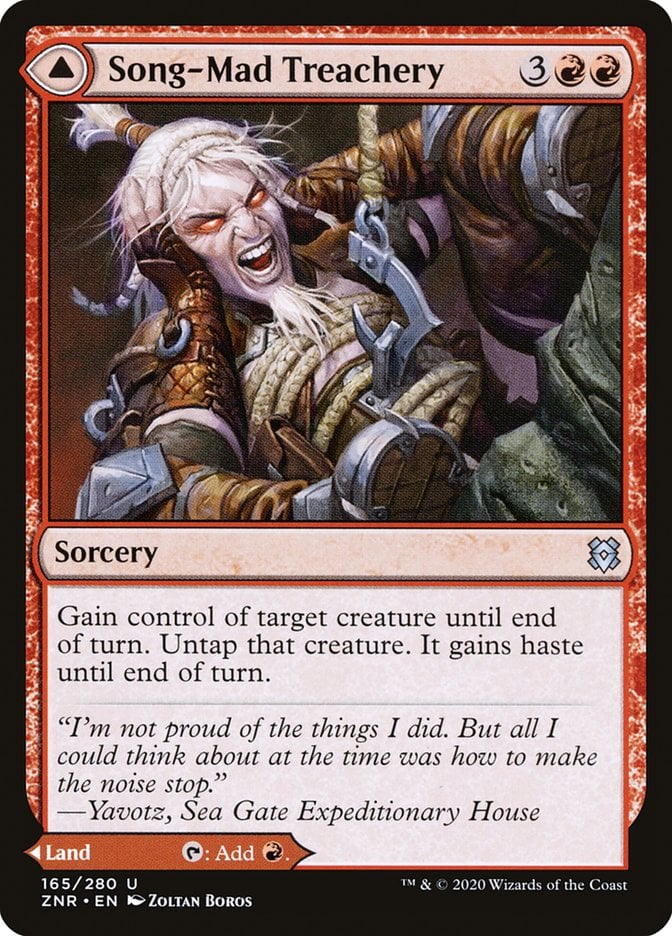
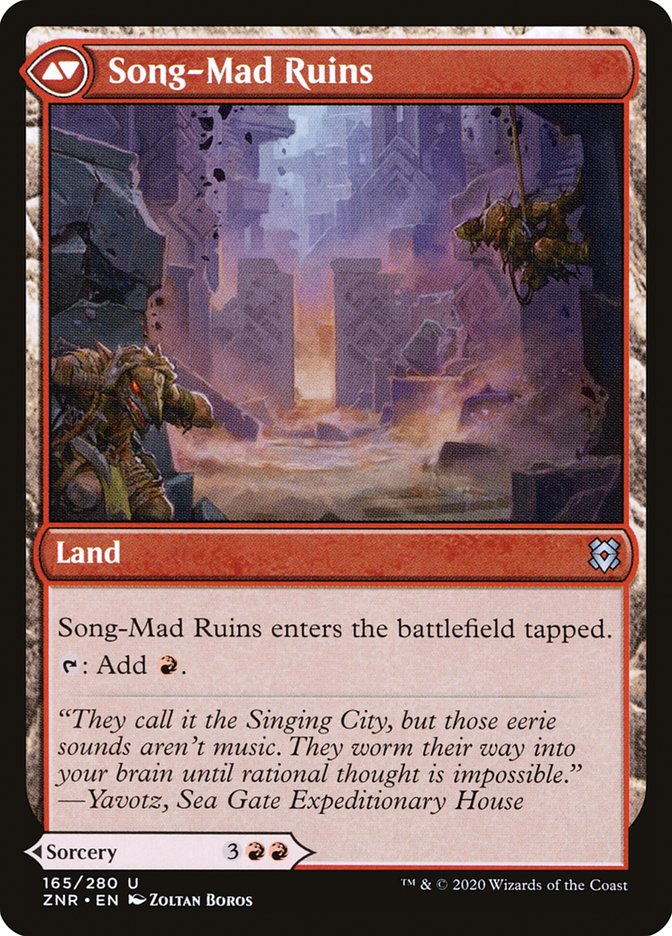
Song-Mad Treachery is your typical threaten effect, and you can play this card with “Steal and Sac” commanders that require more redundancy in steal effects. It’s a bread-and-butter effect in EDH decks like Brion Stoutarm that can fling the stolen creatures at will.
#44. Umara Wizard / Umara Skyfalls
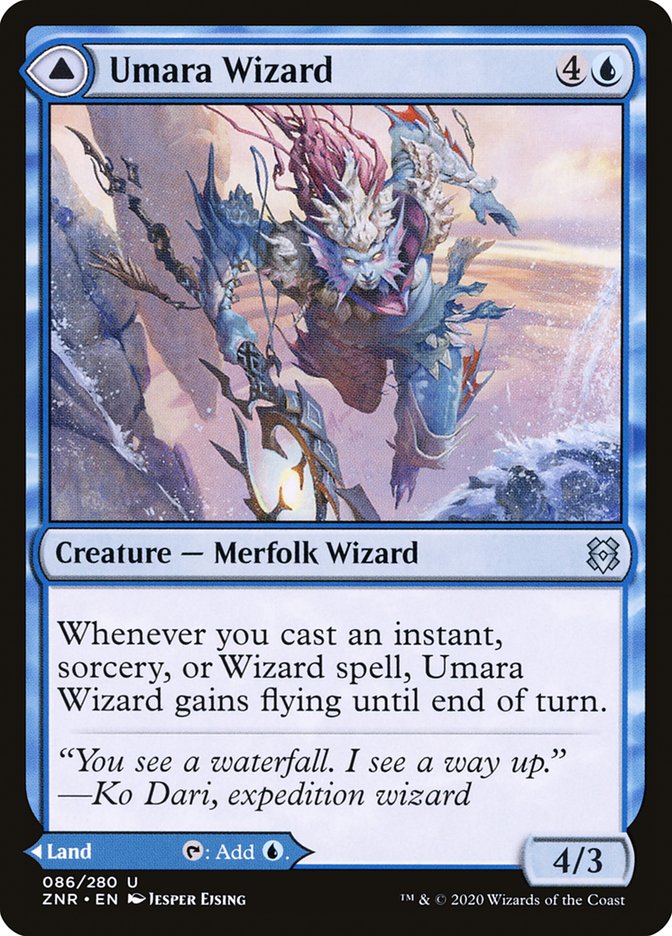
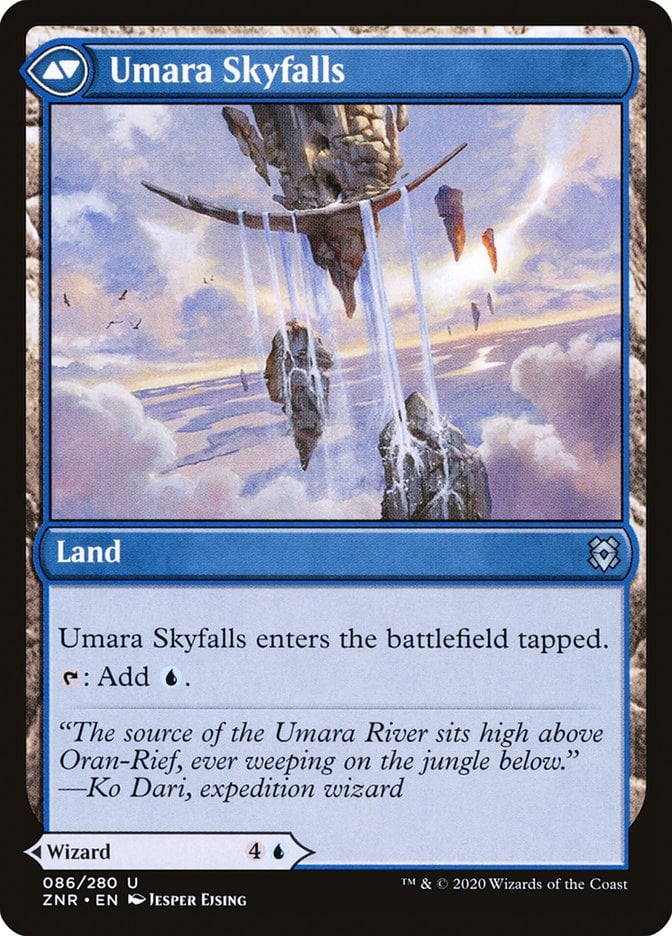
In Umara Wizard, we have a 4/3 merfolk wizard that cares about instants, sorceries, and wizard spells being cast. If you can give it flying consistently it’s good, and there are some Commander decks like Azami, Lady of Scrolls that wouldn’t mind replacing a basic Island for this.
#43. Blackbloom Rogue / Blackbloom Bog
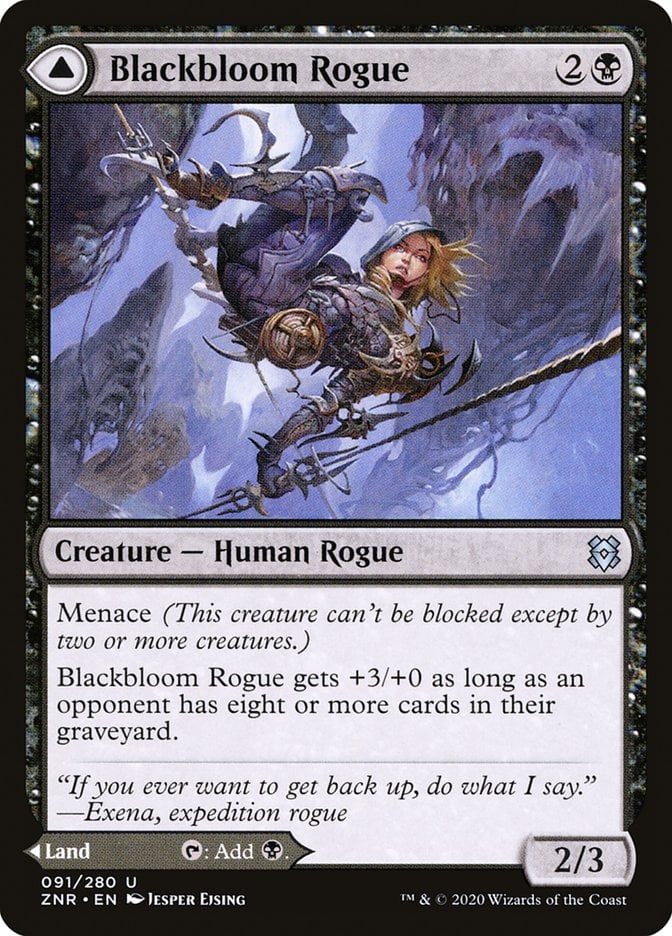
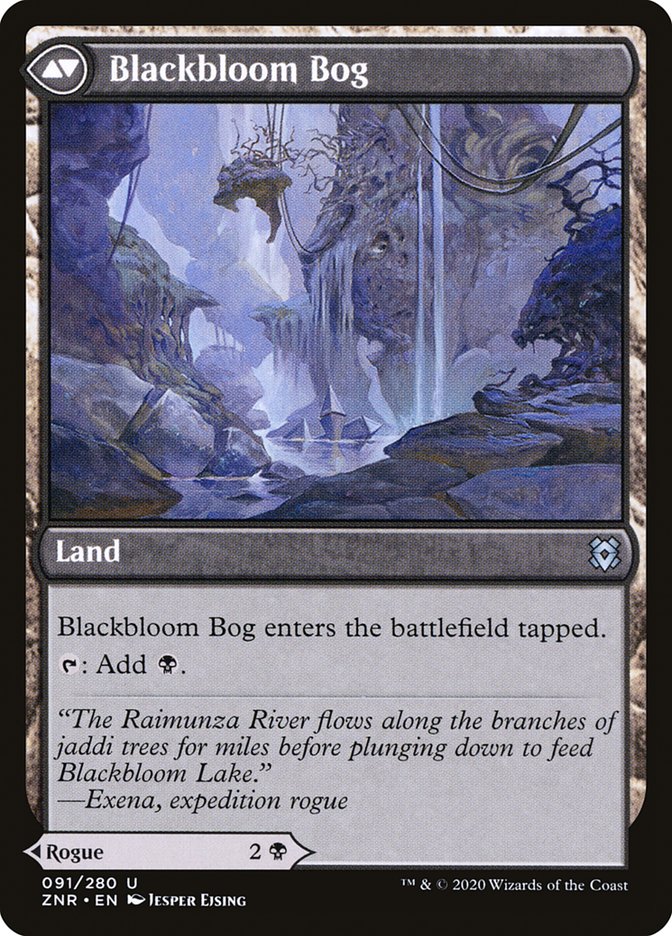
Blackbloom Rogue is a rogue creature that also cares about mill decks, as many rogue tribal decks do. In rogue decks this creature is usually a 5/3 menace or stronger for only 3 mana, and decks that want as many rogues as they can get, like Anowon, the Ruin Thief EDH decks, love playing these cards.
#42. Kazuul's Fury / Kazuul's Cliffs
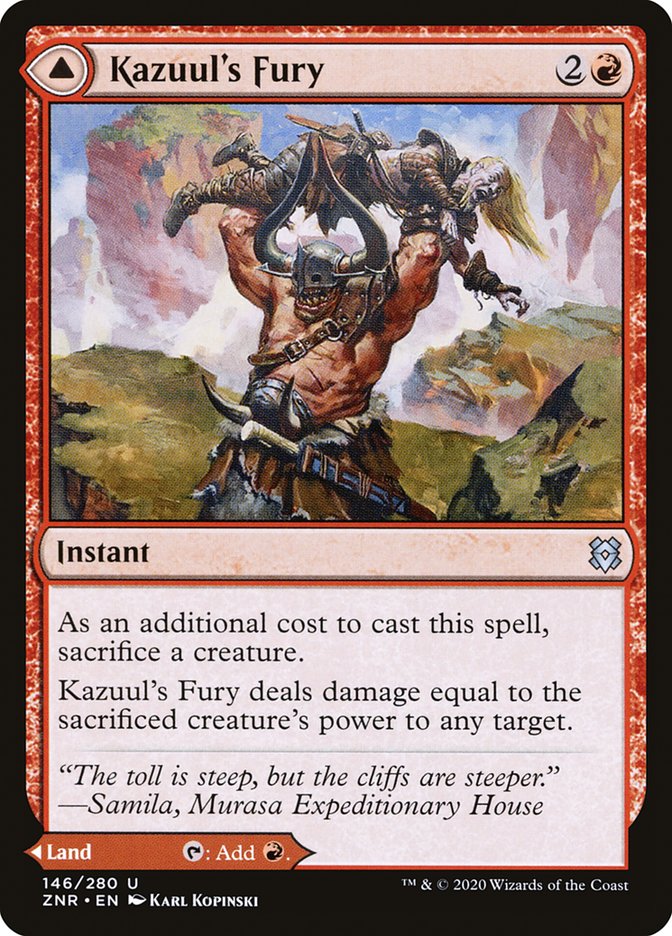
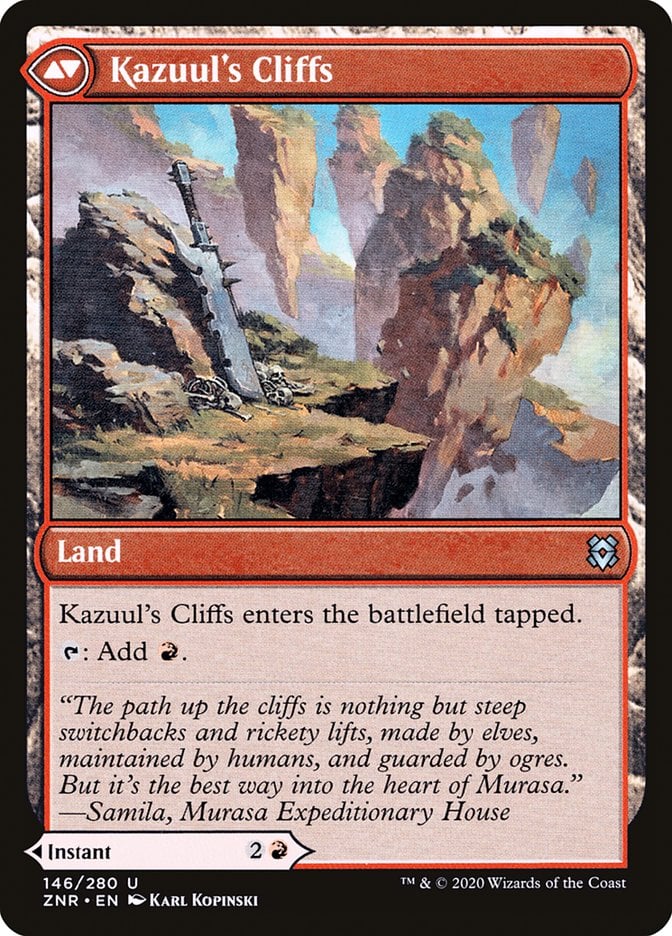
Kazuul's Fury is a Fling variant. Like Act of Treason, Fling is a very situational card and goes into very specific decks, so it’s nice to have a land disguised as this effect. Decks that want this type of cards are usually sacrifice-oriented commanders, and I’ve seen a Kazuul's Fury + Body of Research combo deck in its Standard format as a viable option.
#41. Skyclave Cleric / Skyclave Basilica
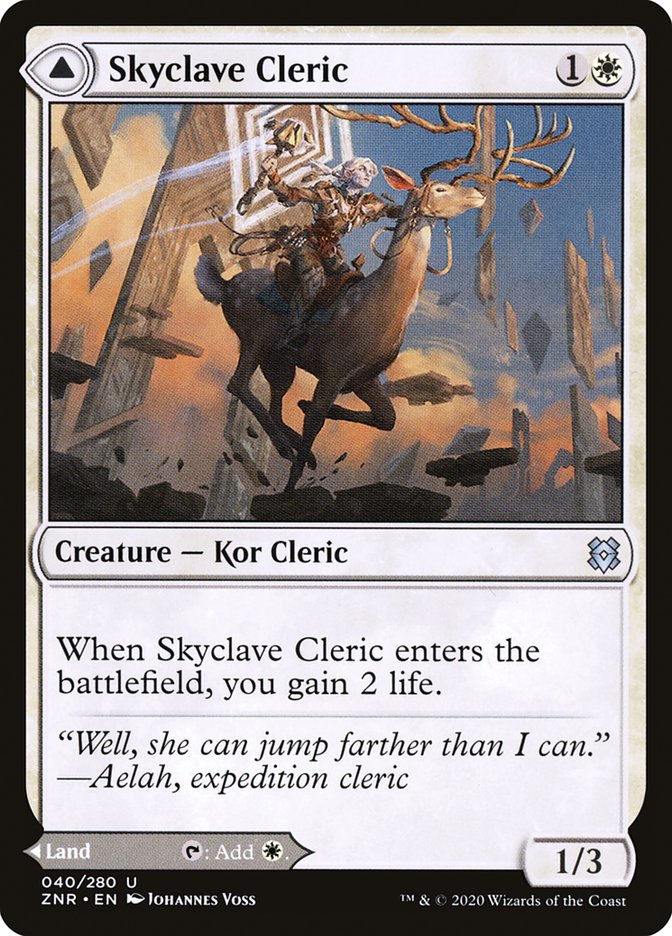
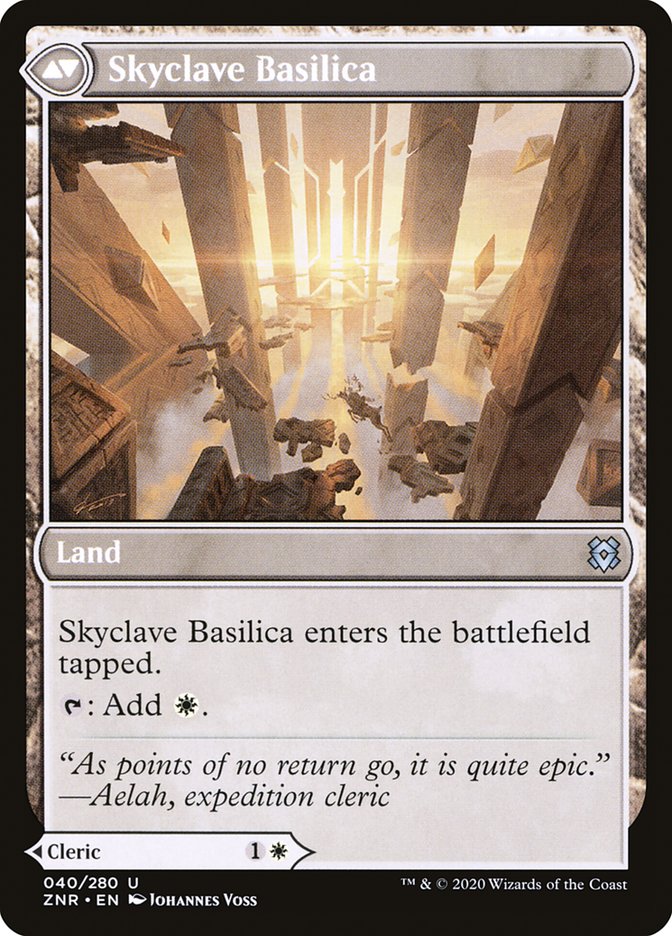
Skyclave Cleric saw some play in its Standard as a cleric that’s also a good defender. Cleric decks usually have lifegain synergies, and this card is interesting in cleric decks or decks that want as many lifegain triggers as they can get.
#40. Hydroelectric Specimen / Hydroelectric Laboratory


With a name like Hydroelectric Specimen I want this card to be cooler, but do you want to pay three to nullify removal or a pump spell? Hydroelectric Laboratory is far less situational, and can still offer your deck a bit of fluidity which isn't too wierd.
#39. Rush of Inspiration/ Crackling Falls


The whole discard a card at random bit is exciting for your opponent, unless you have recursion or discard payoffs. The instant speed is an important factor that raises the ceiling on Rush of Inspiration which could have been Divination in energy decks, plus an option of Crackling Falls as your Izzet Guildgate.
#38. Legion Leadership / Legion Stronghold


To be honest, the situations to play Legion Leadership are few, and Boros () wants you to think it's for a soldier, but you really want it on the biggest trampler you have which is probably green. I do love the Leadership ability to protect your creature in combat that will always be valuable. As for Legion Stronghold, it is an important representative in colors that are hyper-efficient with their mana, so each colored and pip can mean a lot.
#37. Razorgrass Ambush / Razorgrass Field


There was a time when I thought Razorgrass Ambush was premium removal, it certainly can be efficient. It really needs the right deck, and thanks to the option of Razorgrass Field, it is almost never a dead card. Since it's very possible you hang back as a control deck, you can expect to save your life and not pay three life for the land.
#36. Waterlogged Teachings/ Inundated Archive


The bad taste in my mouth from Waterlogged Teachings is that I must reveal the surprise. It's important to have access to your colors, so Inundated Archive is fine, but let's face it, if you want to tutor for Pongify or Village Rites then you don't care too much if they know what's coming.
#35. Sundering Eruption/ Volcanic Fissure


For three, you would think Sundering Eruption could get away with not providing a replacement after destroying a land. That makes it so the value most likely comes from making your opposing blockers falter. Volcanic Fissure can be a Lightning Bolt to yourself, if you need to cast, say a Lightning Bolt.
#34. Suppression Ray/ Orderly Plaza


I have to think through the gameplay situations to be sure I cast Suppression Ray at the right time. I really want to maximize it with energy counters, then I consider better options for their use. I don't think this is worth losing Sleep, unless you really want the flexibility that Orderly Plaza provides.
#33. Revitalizing Repast / Old-Growth Grove


It's alarming how many cards care about +1/+1 counters. It is good work to offer a 1-mana combat trick that is both protection and pump, or a land, in Revitalizing Repast / Old-Growth Grove.
#32. Witch Enchanter/ Witch-Blessed Meadow


Which enchanter? “Dis Enchanter.” Which enchantment? Disenchant.
This is a taste of the dialogue you hear with Witch Enchanter. In all seriousness, as much as it kills artifacts, Rambunctious Mutt is not great, but made for a similar blink target with let flexibility.
#31. Pinnacle Monk/ Mystic Peak

Blue loves its Archaeomancer and Izzet Chronarch. Red loves to tack on prowess. So while it'd be amazing to have Pinnacle Monk come out earlier, it had to climb to the top of a pinnacle, give the monk a break! Of course, the flipside is you could pay 3 life and get a mountain out of Mystic Peak.
#30. Glasswing Grace / Age-Graced Chapel


The swing from a buffed creature that gains flying and lifelink can essentially nullify any crackback attack from a few creatures. Glasswing Grace does not need to be in an aggro mirror or have a voltron commander to be a stalemate breaker. It's possible you won't run into removal and just win with this on your 2/2 turned into a big unblockable lifelinker. Age-Graced Chapel helps in colors that are poor at fixing their mana.
#29. Drowner of Truth/ Drowned Jungle


Unless you need the mana from Drowned Jungle, Drowner of Truth makes a fine late game eldrazi, to prep for your biggest eldrazi. The truth is, I have a soft spot for 7-power creatures.
#28. Bridgeworks Battle/ Tanglespan Bridgeworks


Play Tanglespan Bridgeworks if you need to, but my biggest beef with Bridgeworks Battle is that it is expensive at . The +2/+2 pump is solid, especially if you remove their last blocker and send the full power boost to the face.
#27. Strength of the Harvest/ Haven of the Harvest


I had to reread Strength of the Harvest to realize this counts enchantments and creatures, not artifacts. So an enchantment creature contributes +1/+1 since it is one permanent, and importantly, the aura counts tokens, including those cool role tokens from Wilds of Eldraine. Haven of the Harvest is especially great for the heavy-white decks since fixing can be tough outside of green.
#26. Boggart Trawler / Boggart Bog


If you haven't played Bojuka Bog to disrupt someone's artifact recursion, reanimation, or flashback cards, you haven't hated on a graveyard much. What's impressive is that the Bog has so many reprints, maintains its common rarity, and regularly goes for more than $1. I think it's safe to say the Boggart Trawler and Boggart Bog have plenty of work to do.
#25. Sejiri Shelter / Sejiri Glacier
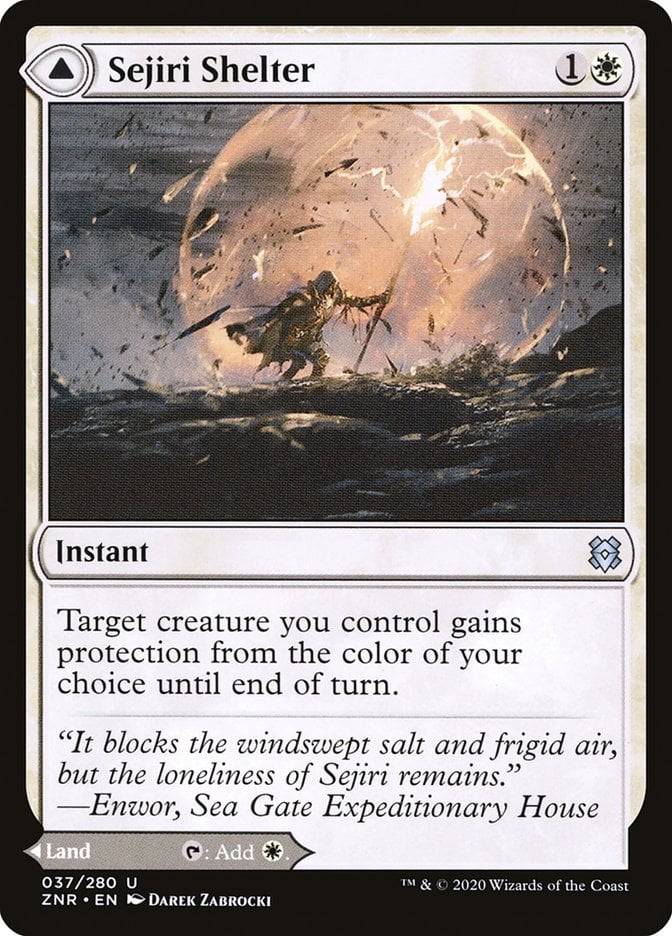
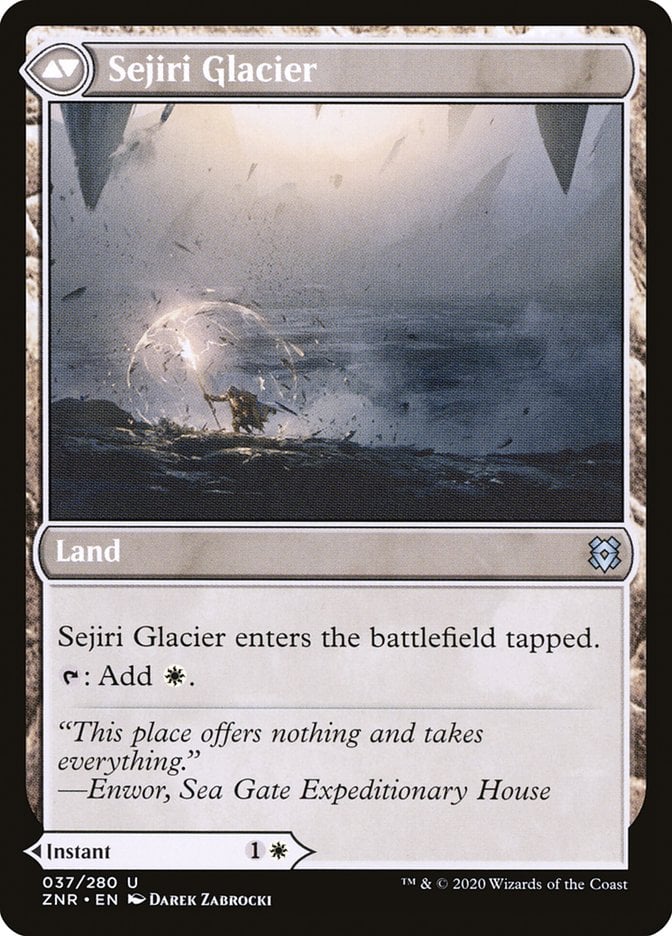
Sejiri Shelter is a protection variant that, as an MDFC land, you can easily include in your Voltron decks, or decks that care about combat tricks like Feather, the Redeemed.
#24. Bloodsoaked Insight / Sanguine Morass


I love me a cost-reduced card. Plus there's the flexibility of hybrid mana. I do not think it's a coincidence that Rakdos Scam is a powerful deck and the Bloodsoaked Insight fits the theme nicely. For these black and red decks the colored mana costs can be thick, so Sanguine Morass is important for providing colored mana.
#23. Tangled Florahedron / Tangled Vale
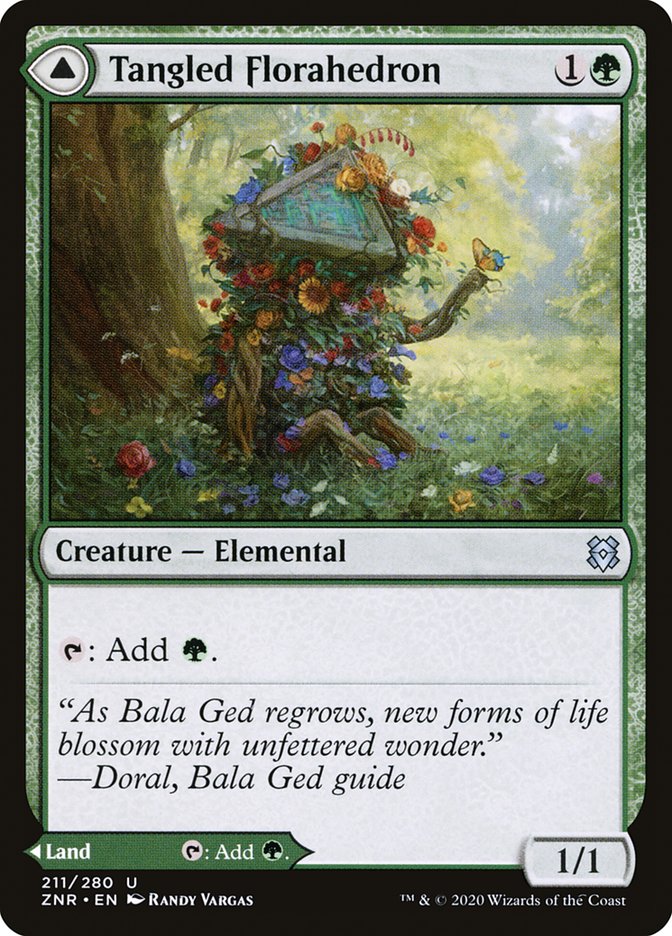
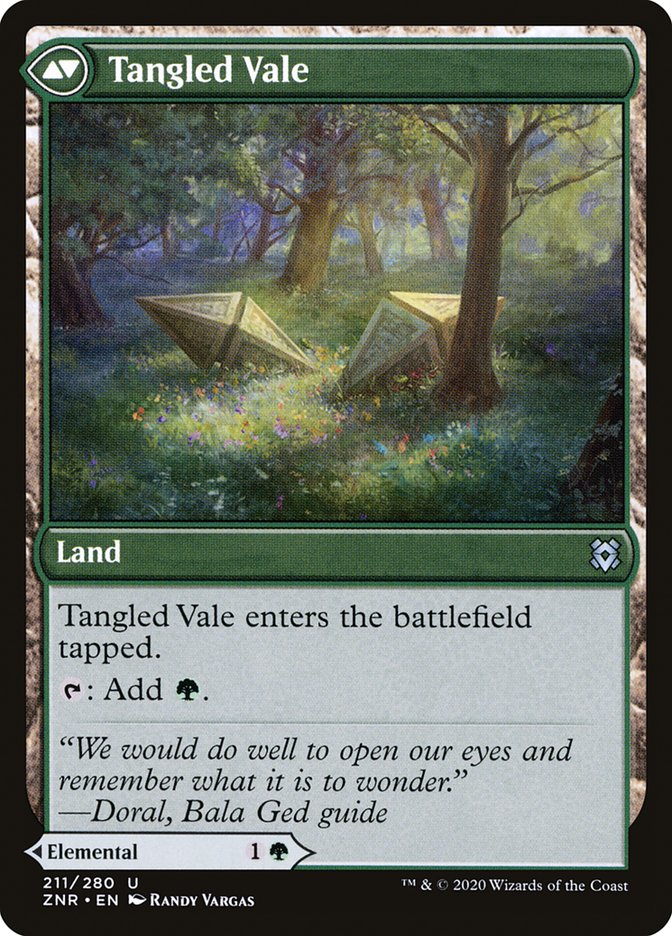
Here’s a Tangled Florahedron, a mana dork that’s also a land. Neither of the two sides is very exciting, but you’ll play it in decks that need consistent ramping or decks that care about it being an elemental. This card saw plenty of Standard play in its time.
#22. Disciple of Freyalise / Garden of Freyalise


To have three power is important if you play Glorious Sunrise, Garruk's Packleader, or Elemental Bond. But likely the real reason you play Disciple of Freyalise is because you need to draw cards. It's not unheard of to attack with your Colossal Dreadmaw and then turn it into six new cards and a healthy chunk of life. The Garden of Freyalise is fine if you're looking for those payoffs for putting lands into play.
#21. Malakir Rebirth / Malakir Mire
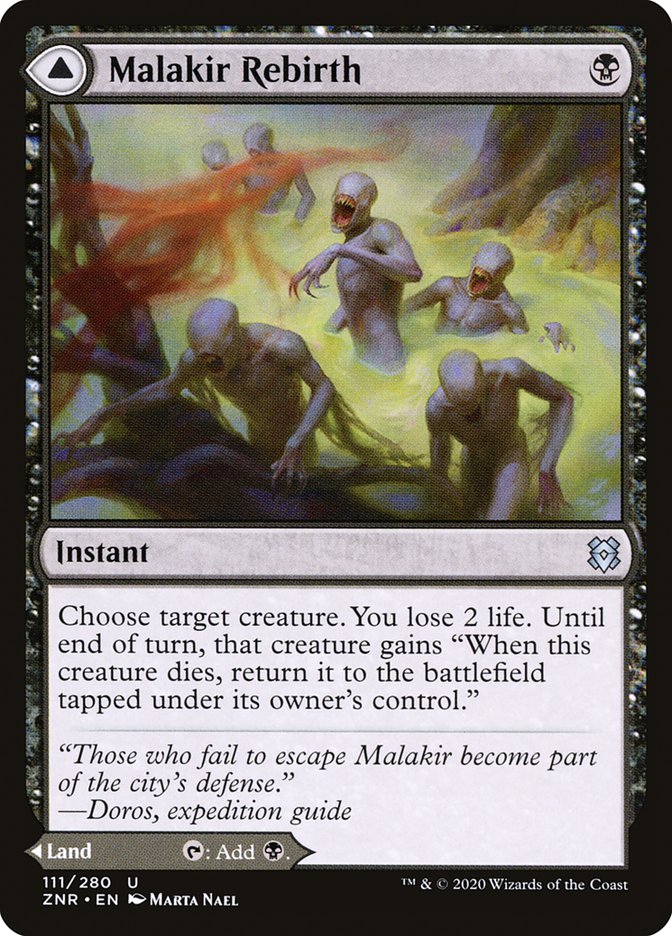
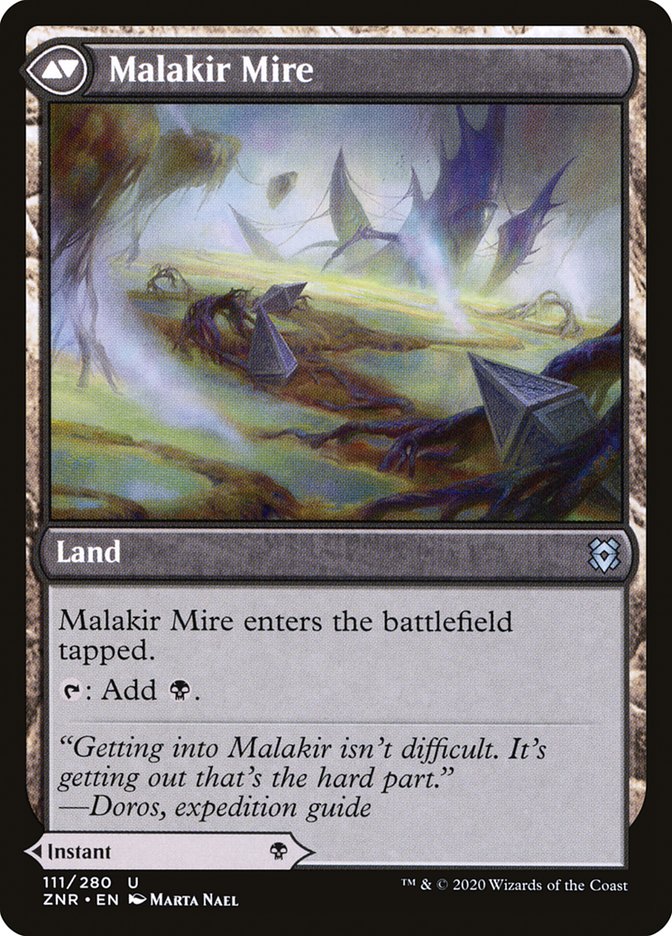
Malakir Rebirth is a very cheap way to prevent your commander from certain death. This card adds redundancy to cards like Undying Malice. It costs just 1 mana, and you can play it in sacrifice decks that abuse ETB or death triggers.
#20. Kabira Takedown / Kabira Plateau
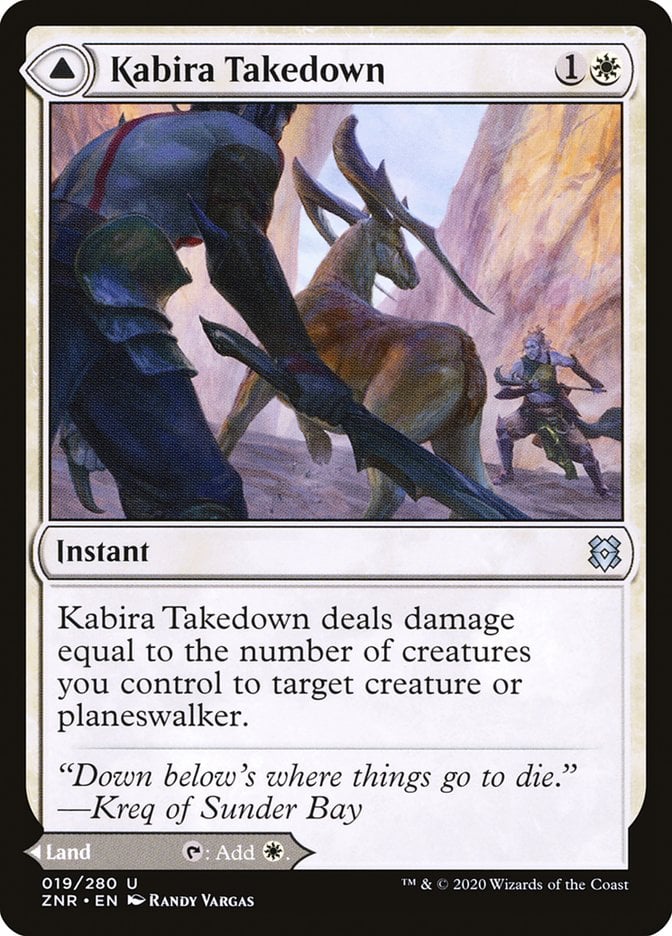
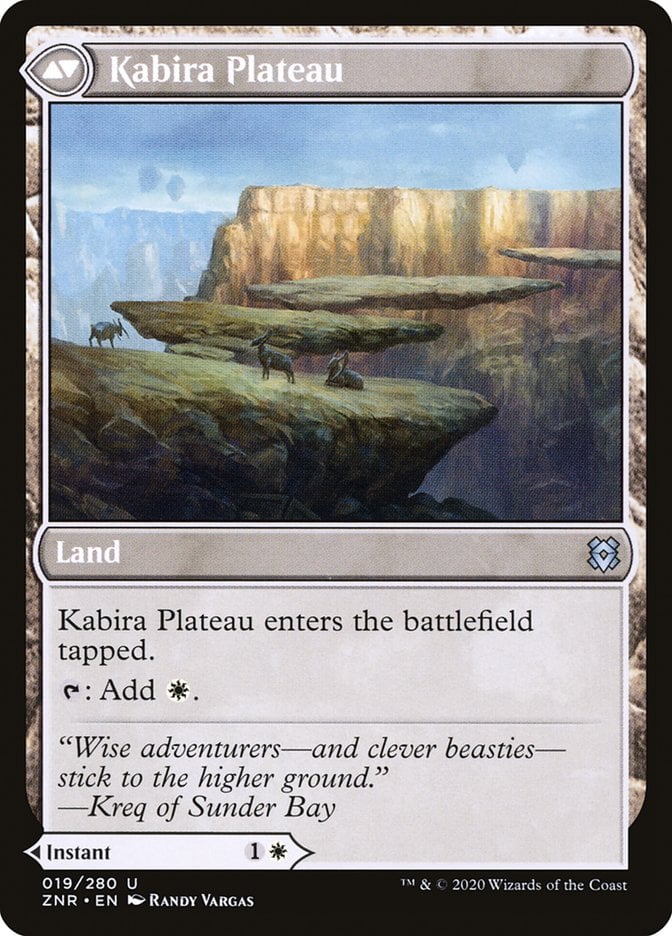
Kabira Takedown can be a nice instant speed removal spell in decks that go wide with tokens. It’s very conditional because you’ll need to have some creatures around, so if you don’t have creatures, just play an extra land.
#19. Pelakka Predation / Pelakka Caverns
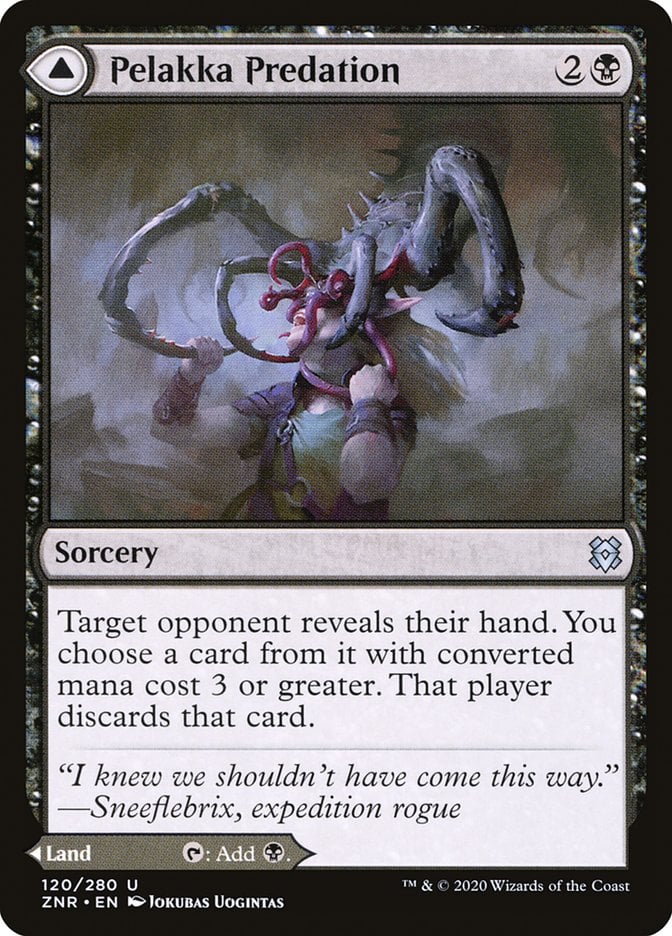
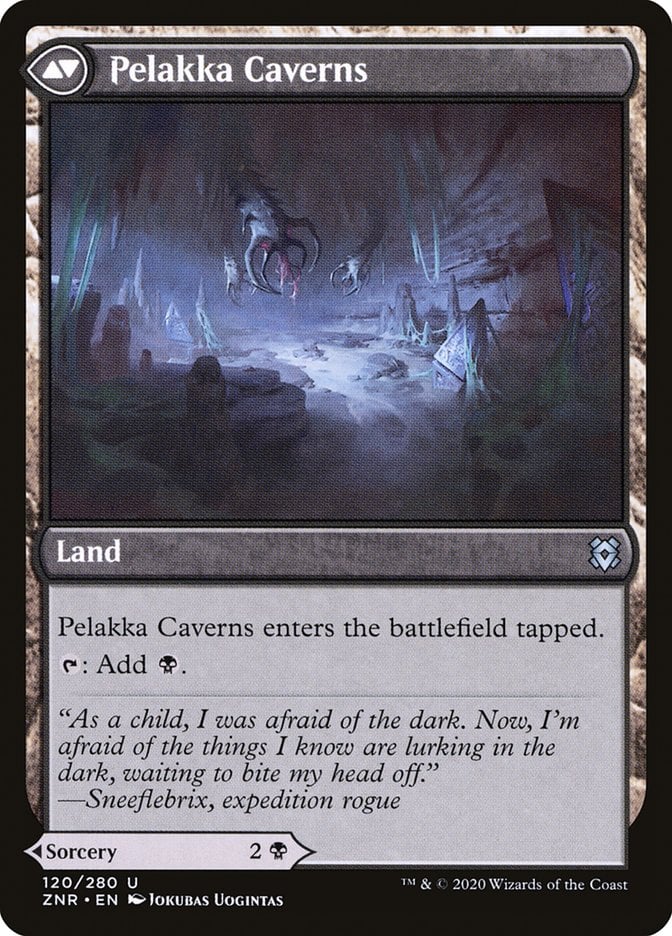
I’m rating Pelakka Predation more because it saw some Standard play as a discard spell that can be played even when your opponent is in top-deck mode.
#18. Stump Stomp/ Burnwillow Clearing


The biggest knock against Stump Stomp is being a sorcery, but my Gruul () decks often play cards in my main phase anyway. Several little key parts of this card are positives, Burnwillow Clearing can be your land drop, which is sometimes more powerful in landfall and lands-matter decks that are prevalent in these colors. You could think of it as a Timber Gorge with a very useful upside.
The bite spell can hit creatures or planeswalkers and is not a 2-way street for damage like fight spells. Then there's the hybrid mana in the cost. I think this qualifies as strictly better than Rabid Bite.
Lastly, WotC smiles when you say you have Stump Stomp in your Stompy deck.
#17. Sink into Stupor / Soporific Springs


Sink into Stupor might not be a permanent answer to a problem, but setting one opponent back a turn or bouncing any nonland is powerful flexibility and likely a big mana advantage. Speaking of mana, Soporific Springs can be an untapped blue land, and those are well worth 3 life, just ask your opponents how much they like holding that zombie combo piece in their hand.
#16. Ondu Inversion / Ondu Skyruins
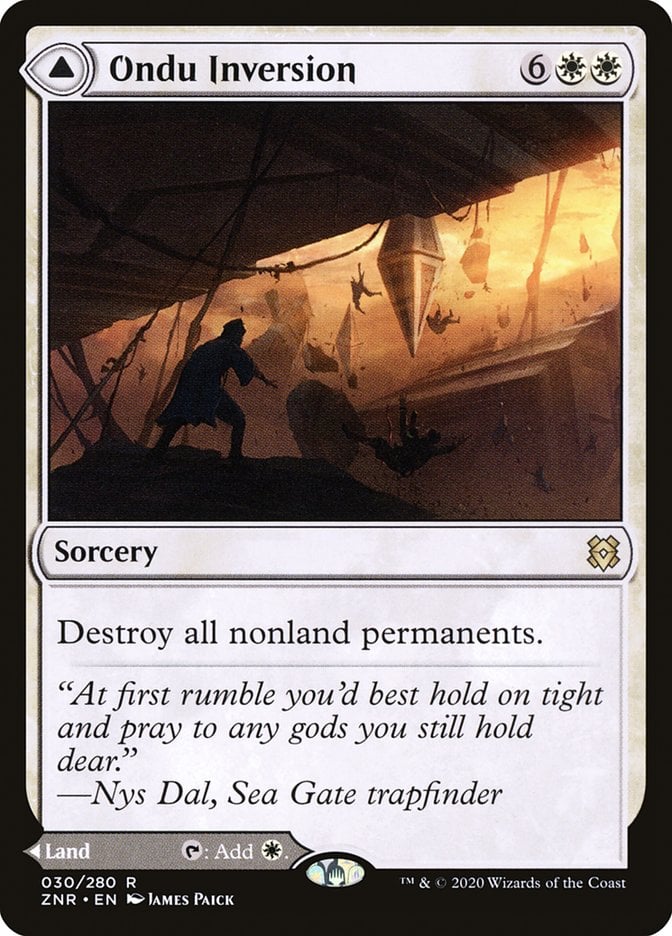
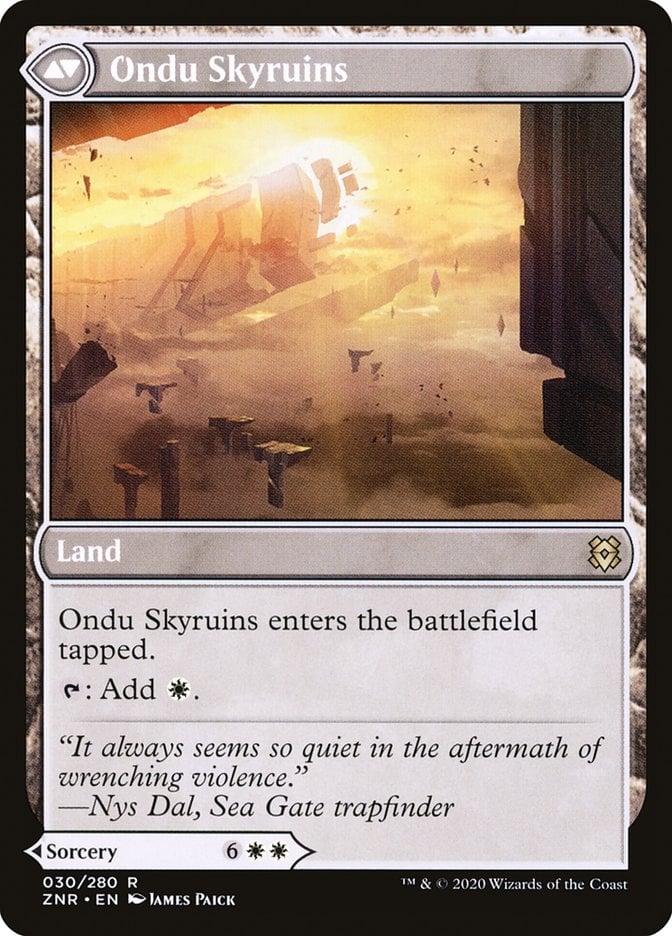
Ondu Inversion is a nice one-of in white control decks simply because you’ll never know when you truly need to reset the board. After all, Farewell is a heck of a sweeper but it doesn’t get battles or the best planeswalkers.
#15. Spikefield Hazard / Spikefield Cave
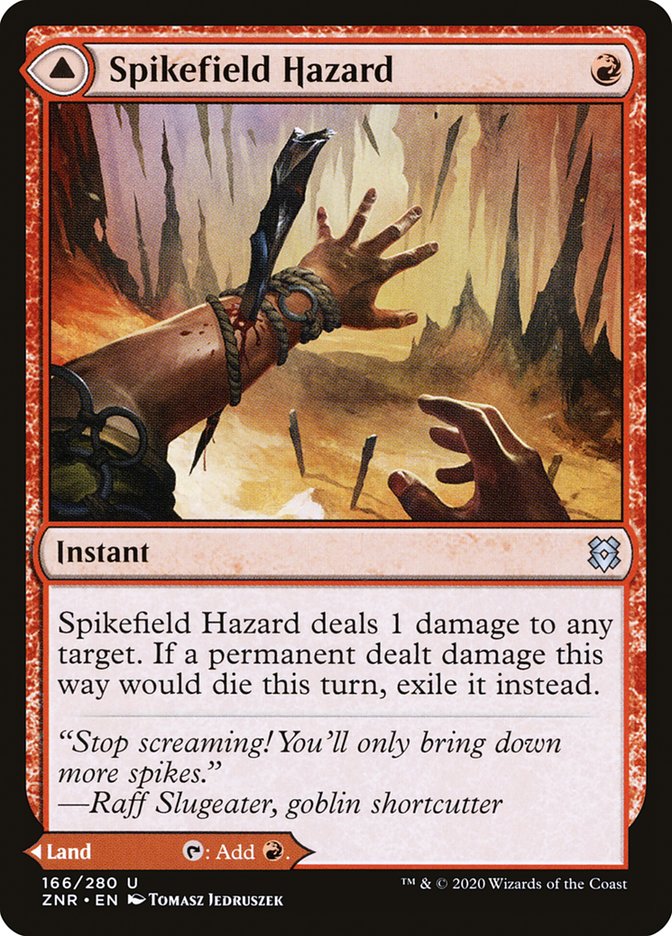
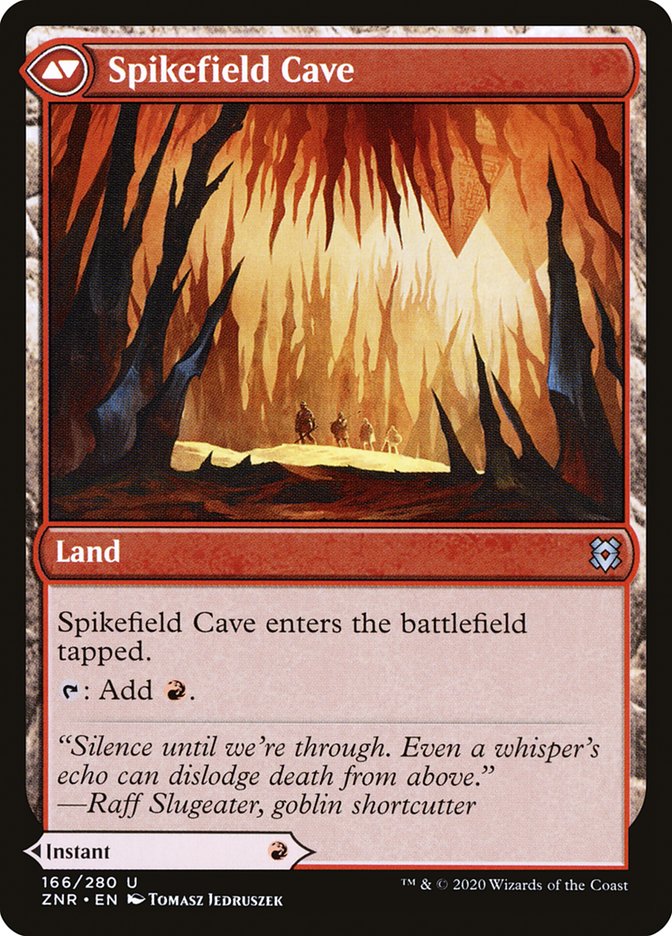
During its stay in Standard, the best application of Spikefield Hazard was to deal damage to escape creatures like Kroxa, Titan of Death's Hunger, this way exiling them when they were sacrificed. It’s a way to include more burn in your deck, and depending on the meta, it can kill many important creatures like mana dorks or Thalia, Guardian of Thraben.
#14. Kazandu Mammoth / Kazandu Valley
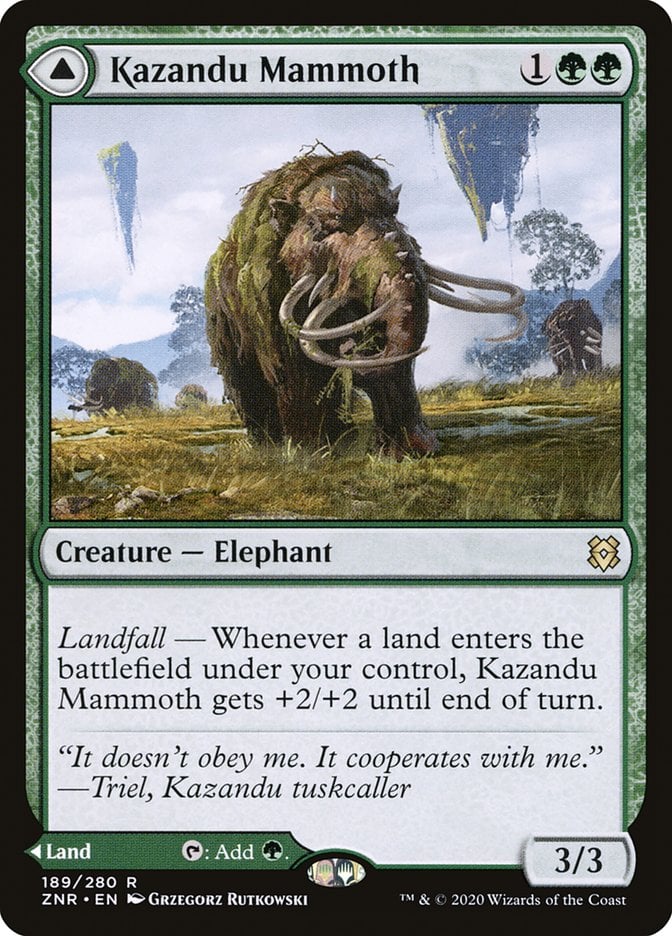
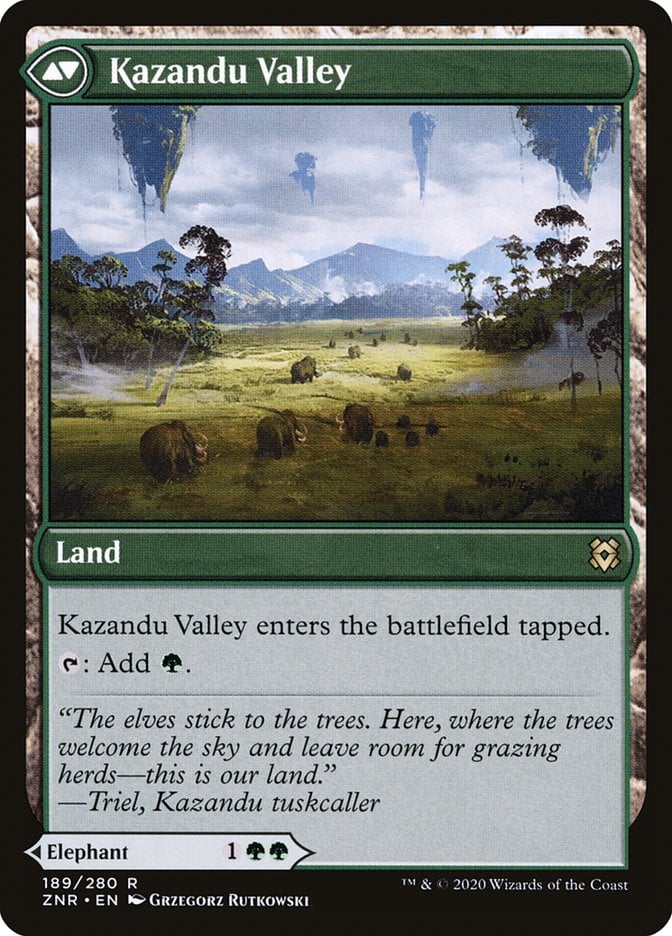
Kazandu Mammoth is a beefy creature played in stompy decks, and together with fetch lands, you can have a 7/7 attacking on turn 4. Its best use is in decks that care about creature power like a Ghalta, Primal Hunger EDH deck or together with cards like The Great Henge. It was a green staple in its Standard time, and it works very well with ramp spells that put lands into play tapped.
#13. Silundi Vision / Silundi Isle
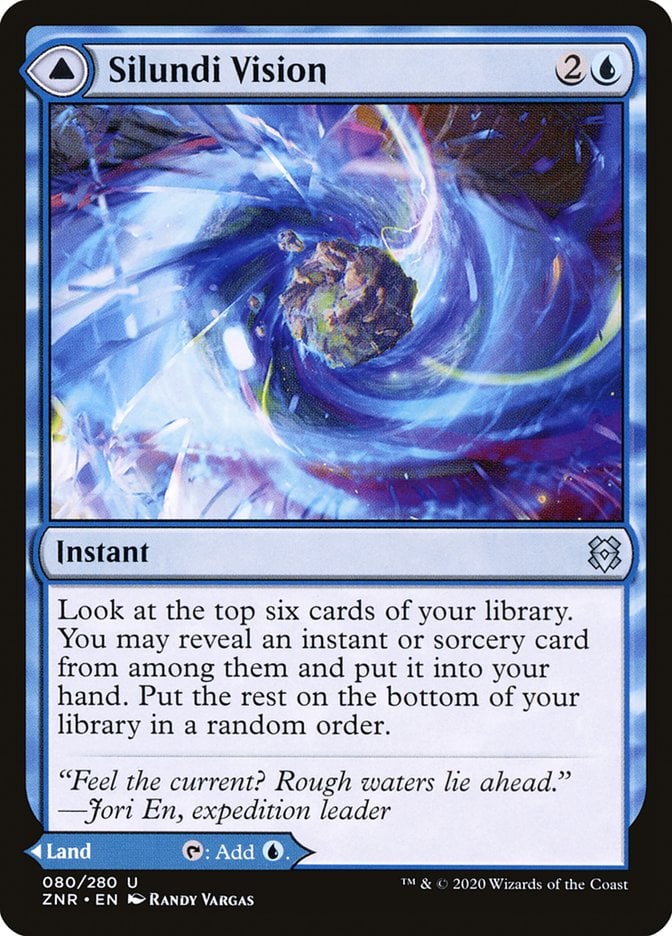
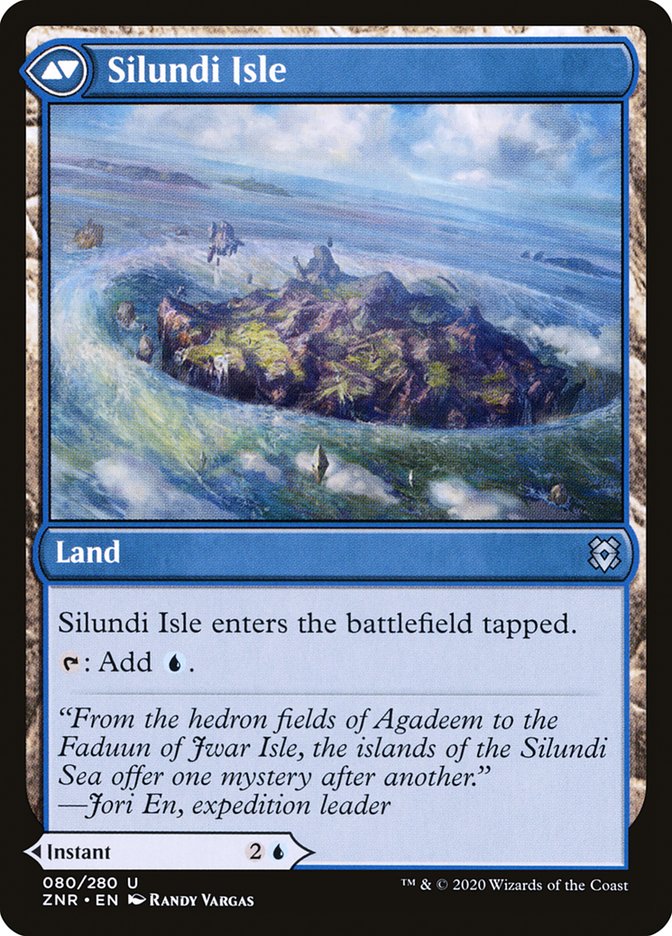
When you’re looking for a given instant or sorcery in your deck, looking at the top 6 cards yields a nice chance to find what you’re looking for. Silundi Vision does that, and you can find a counterspell, an infinite combo piece you need, a tutor, or a removal spell.
#12. Bala Ged Recovery / Bala Ged Sanctuary
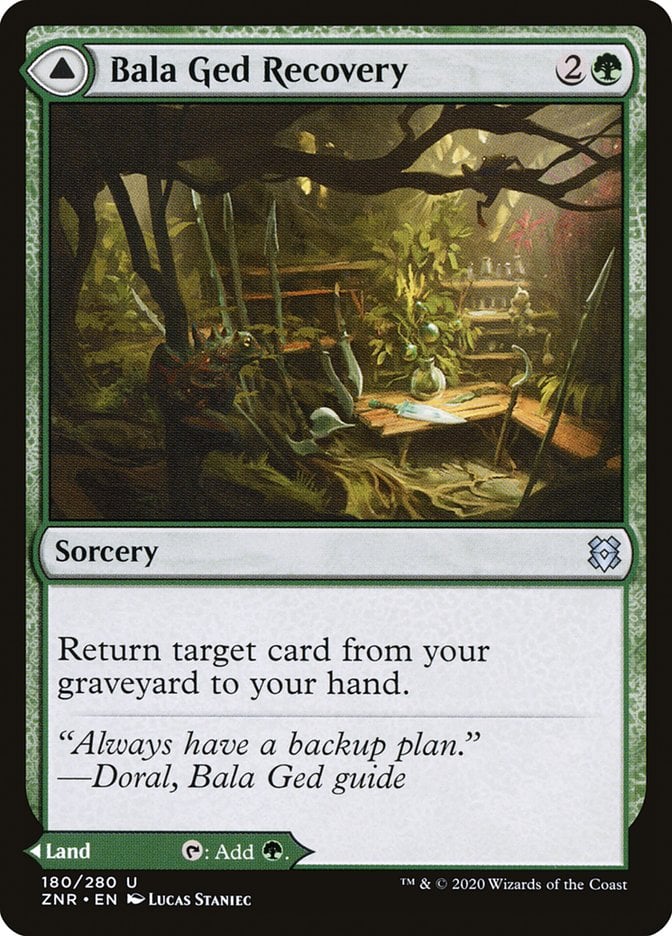
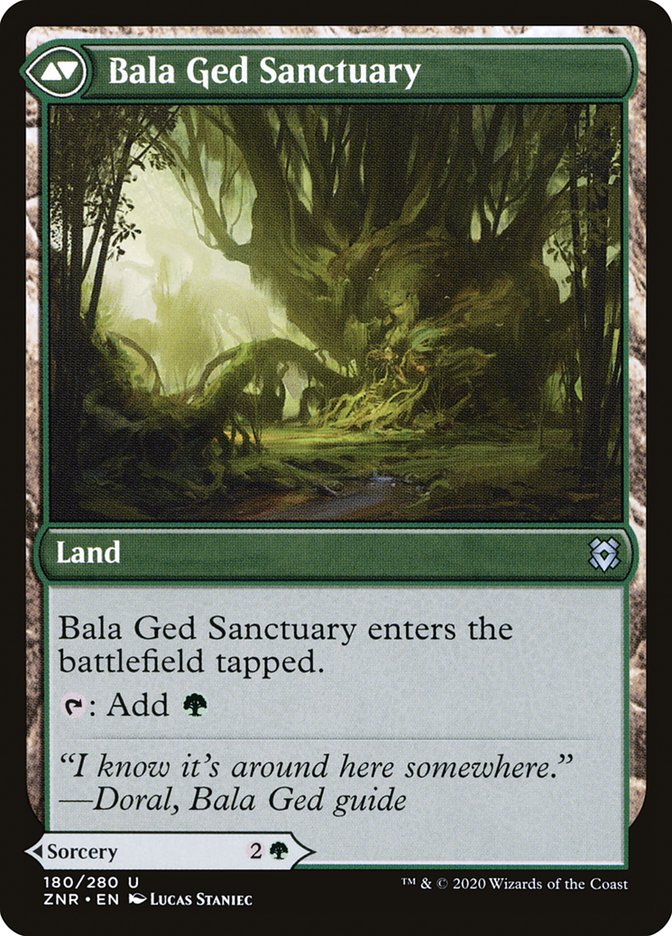
Bala Ged Recovery is a card that interests many green decks or Golgari decks with self-mill components. It’s a more flexible Regrowth effect that costs only 1 more mana, and it’s used in lots of infinite recursion loops.
#11. Turntimber Symbiosis / Turntimber, Serpentine Wood
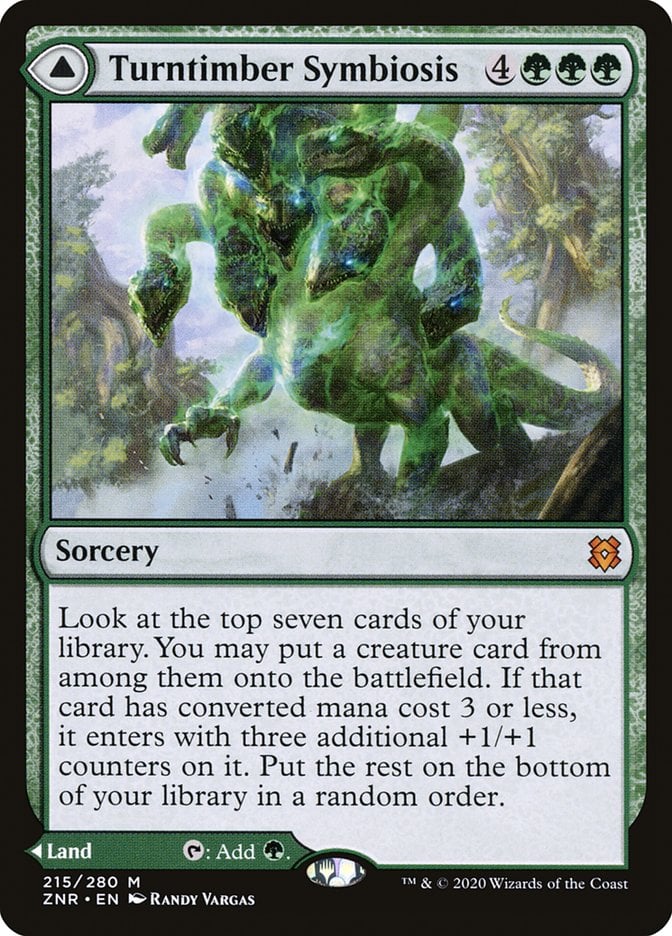
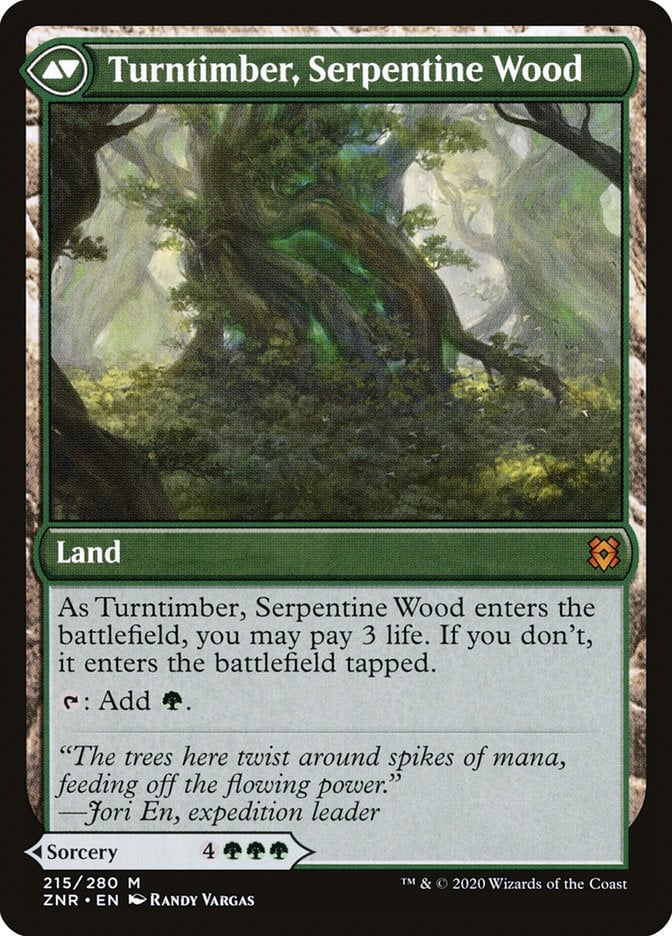
Turntimber Symbiosis is a big green sorcery for ramp decks that have mana floating around. You can even play the land to avoid falling behind, and it’s a nice top deck in the late game. You’ll either cheat a nice creature into play or put a small creature and make it huge. It also has synergies with +1/+1 counters or decks that care about high power or toughness.
#10. Hagra Mauling / Hagra Broodpit
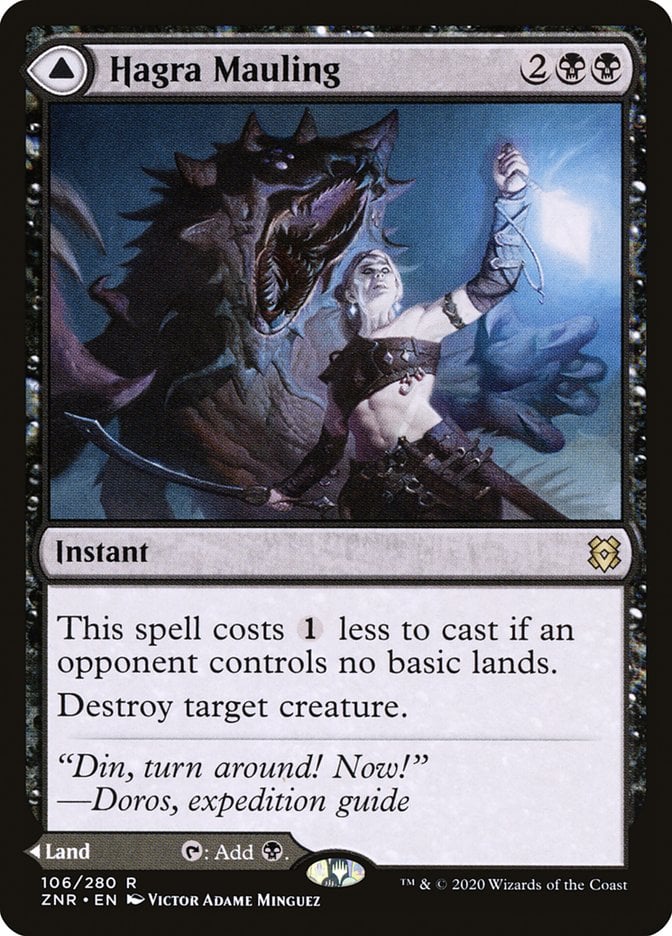
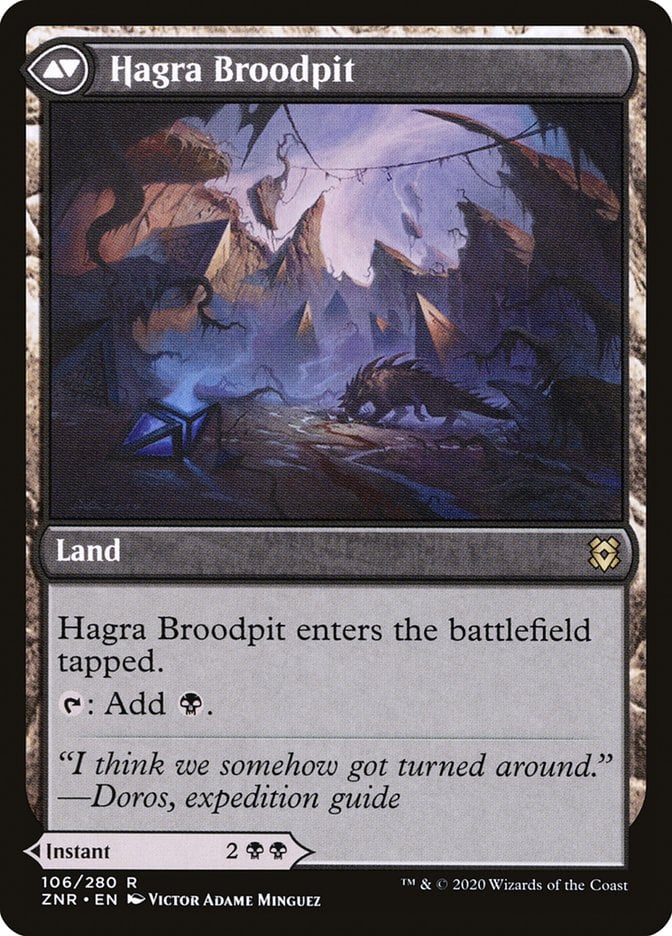
Hagra Mauling is a little expensive for a Murder effect at 4 mana, so here the playability is 100% tied to it being an MDFC land card. When people tell you to play more interaction in your decks, you can easily shave off a Swamp in your deck for this unconditional black removal, and in most games, you won’t regret it.
#9. Sea Gate Restoration / Sea Gate, Reborn
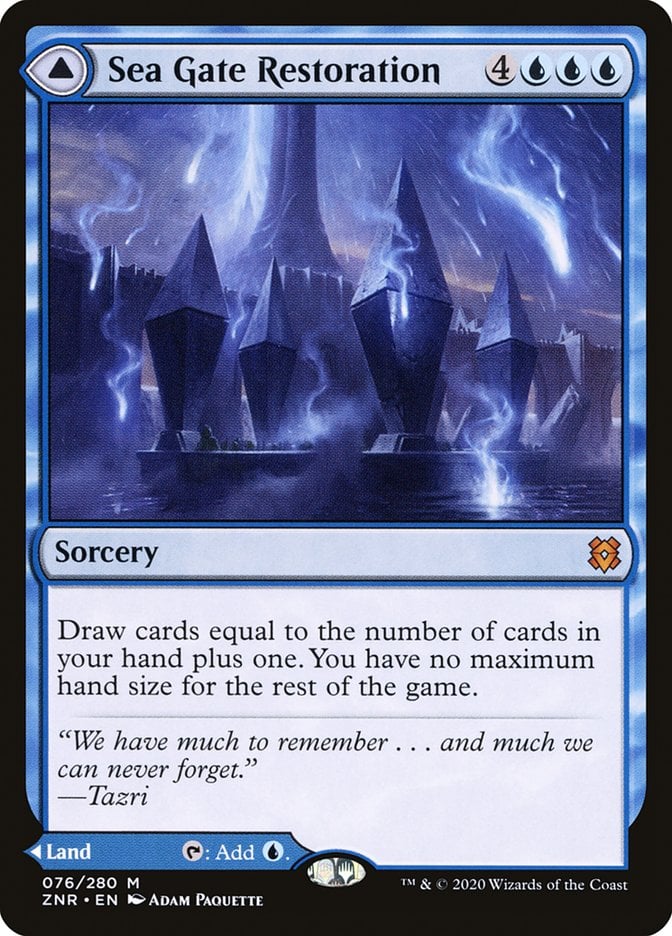
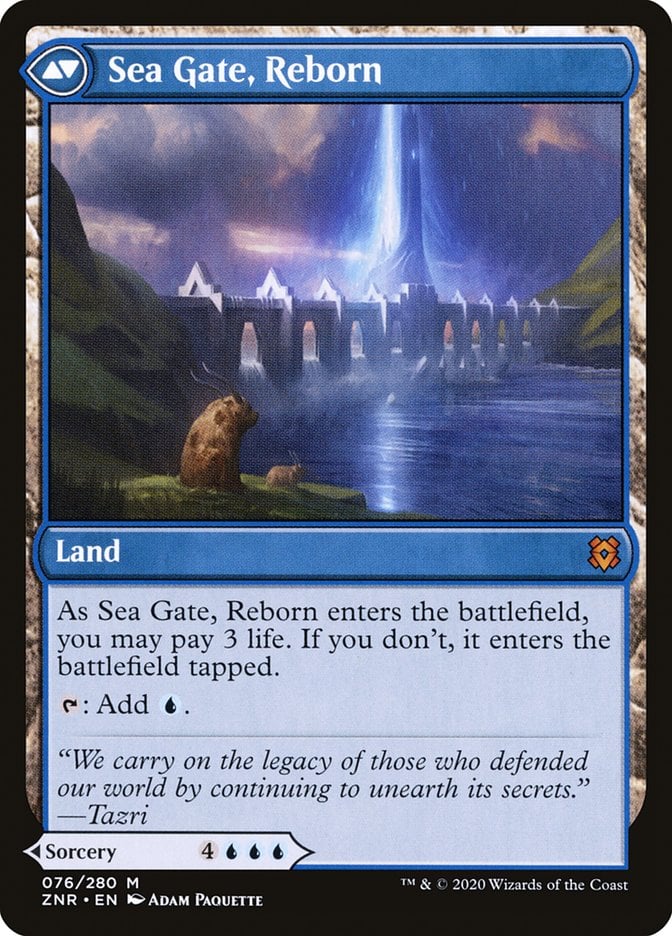
Drawing a lot of cards and not having a maximum hand size is something that many blue decks aim to do. Like all the cards from this list, the failsafe for Sea Gate Restoration is a land, and there are all sorts of Commander decks willing to cast this because they have draw synergies or because they have ways to cheat on the spell cost.
#8. Shatterskull Smashing / Shatterskull, the Hammer Pass
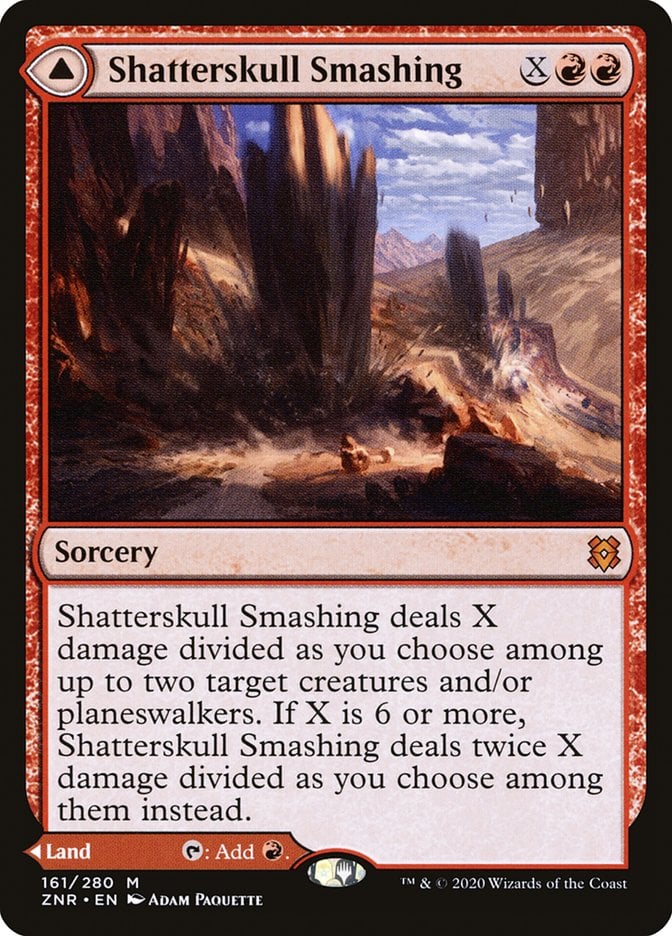
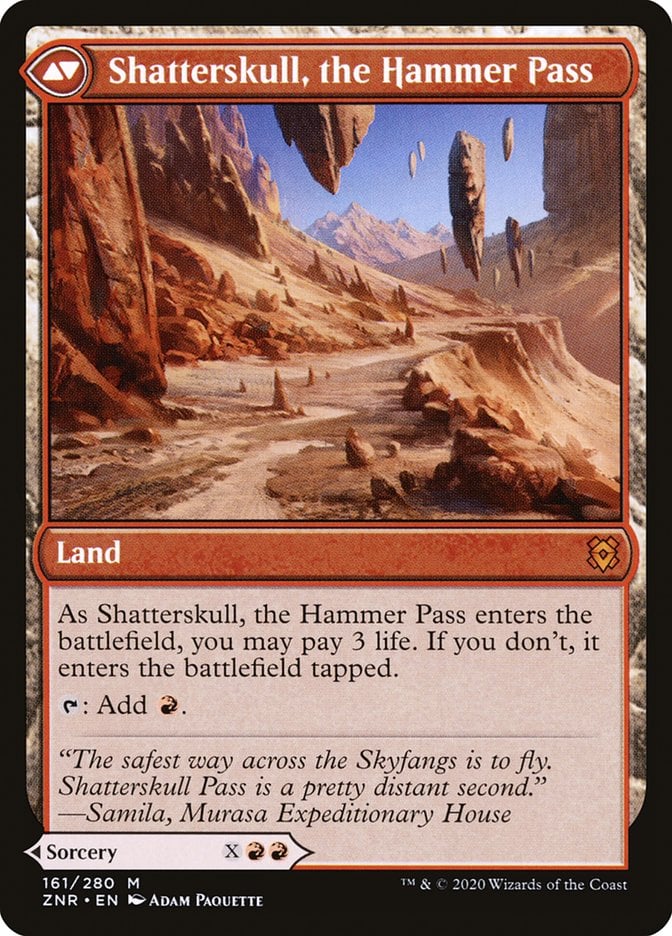
This is a two-for-one removal spell attached to a land. Shatterskull Smashing isn’t the best red wipe or the most efficient one, but it’s one of the easiest to include in decks. Be sure to include this in EDH decks that care about the damage dealt to creatures like Toralf, God of Fury or decks like Rosheen Meanderer that produce 4 mana for X spells.
#7. Emeria's Call / Emeria, Shattered Skyclave
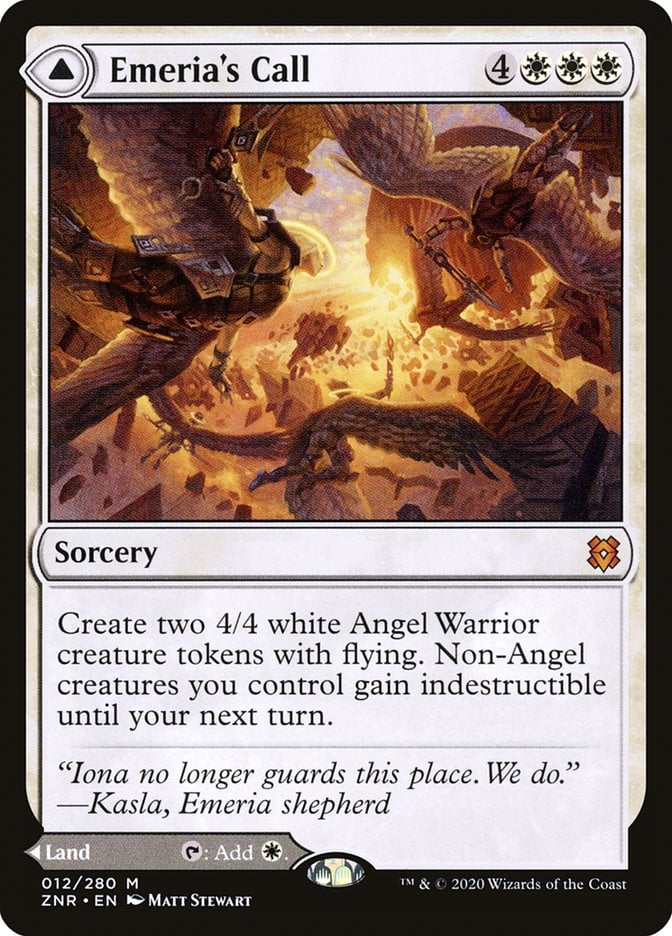
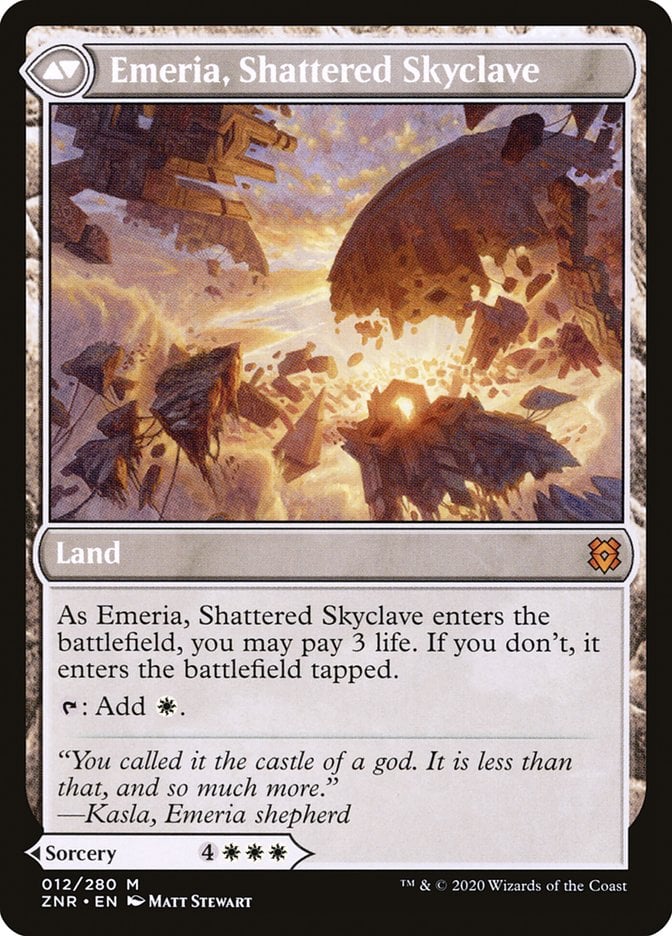
Making two 4/4 flying tokens for 7 mana is somewhat pricy, but that's just the icing on top for the backside, which is a Plains that can come into play untapped. Emeria's Call is at worst a land drop and at best a flying sky force. It gets better with commanders that care about angels or flying creatures and ways to double the tokens created. In Standard, some decks used this card as one of just a few win conditions.
#6. Fell the Profane/ Fell Mire


There are some very popular cards that are both planeswalkers and commanders. Sometimes you have to reset an attacking commander or deal with one that has an end step trigger. Fell the Profane can take care of that. Sure you might need the black mana that same turn, so occasionally it's worth it to bolt to yourself for Fell Mire. I estimate that 80% of the time it's a kill spell, and another 10% of the time it's fine to be played tapped. I see this slotting into almost all of my decks.
#5. Valakut Awakening / Valakut Stoneforge
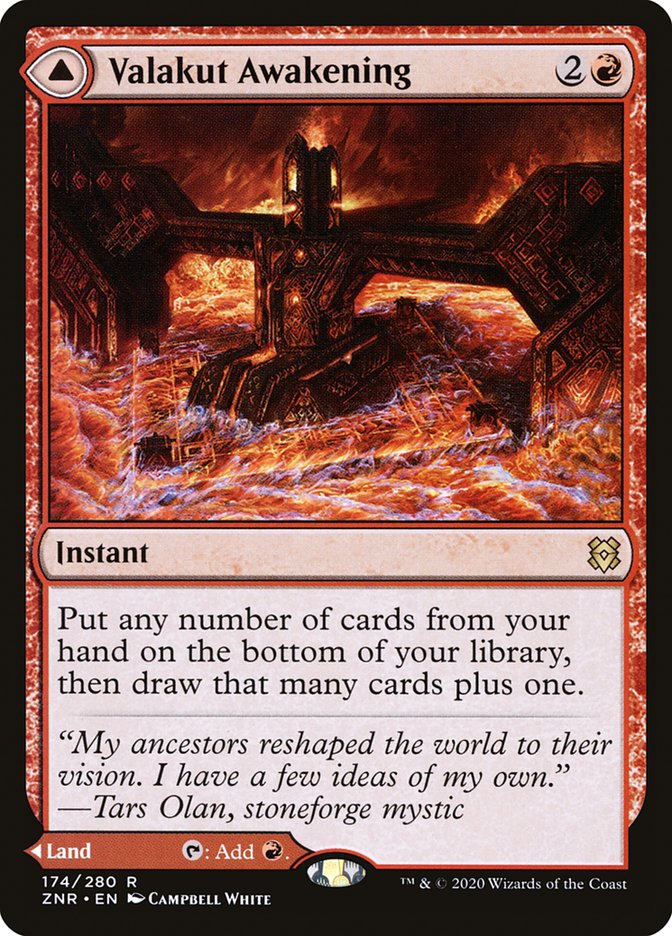
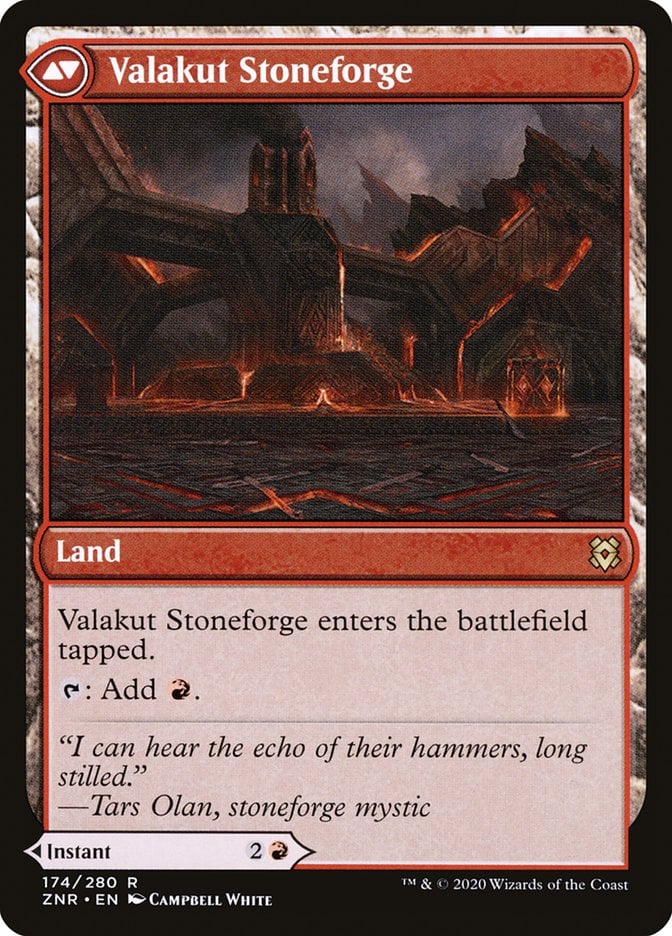
Valakut Awakening sees a lot of play in EDH combo decks as a filter card selection piece that allows you to fix bad hands or to get rid of some redundancy you might have. As a bonus, there are some commanders like Grenzo, Dungeon Warden that care about the card you just put at the bottom of your library.
#4. Glasspool Mimic / Glasspool Shore
Cloning your creatures with Glasspool Mimic already has lots of implications, especially in cloning EDH decks like Keiga, the Tide Star or Sakashima of a Thousand Faces. These decks usually run all the clone variants they can get, and having one tied to a land doesn't hurt at all.
#3. Jwari Disruption / Jwari Ruins
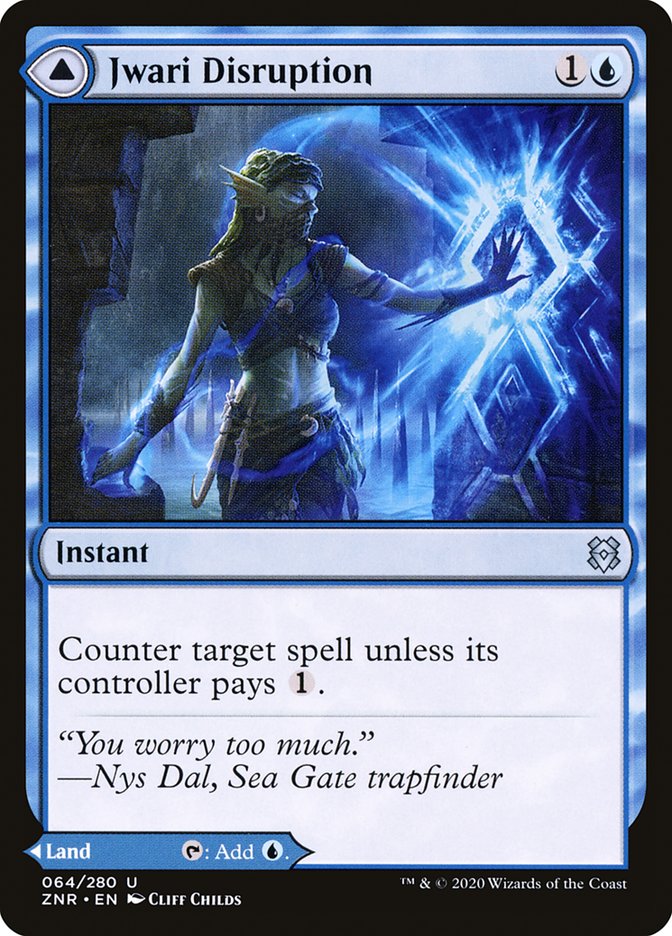
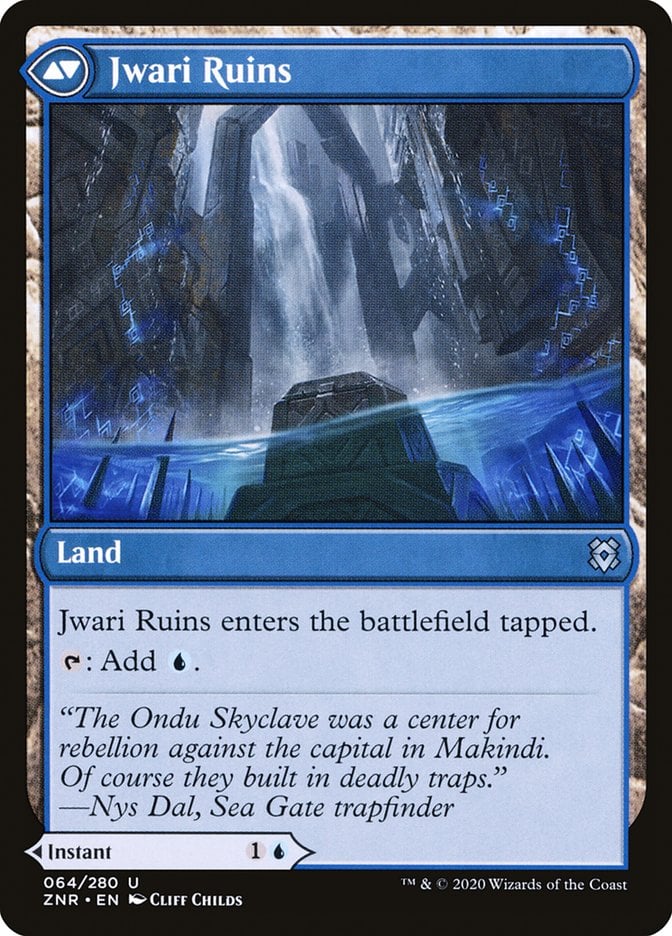
Jwari Disruption sees plenty of play in formats like Pioneer since it’s a fine option in the early game as a Censor-type card and another land drop. Blue control decks usually already run a high land count, and with MDFCs lying around, you can play even more lands.
#2. Agadeem's Awakening / Agadeem, the Undercrypt
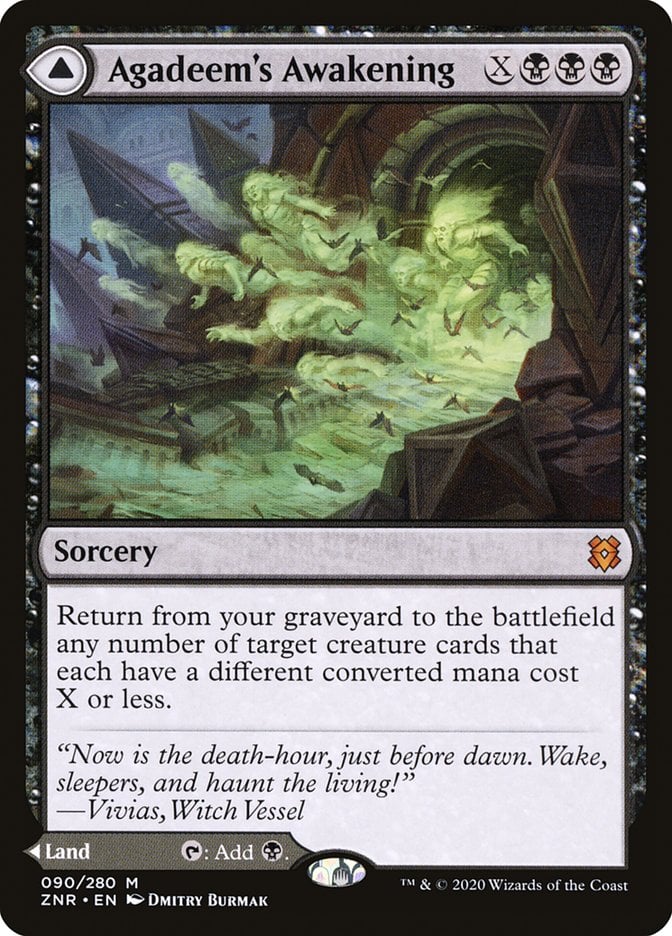
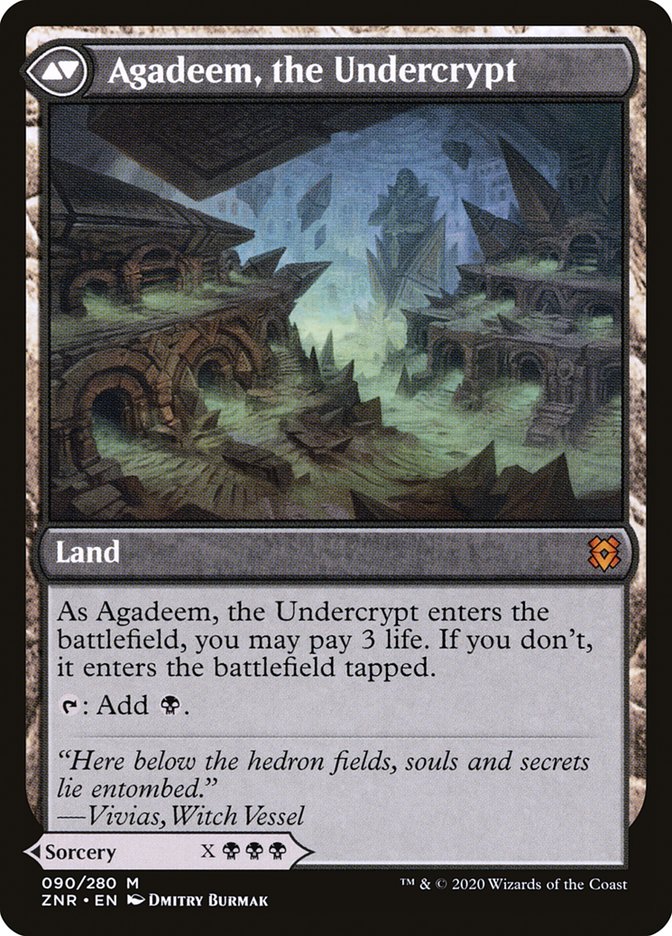
Agadeem's Awakening saw plenty of Standard play in black decks as a value card. It’s not unusual to get two or three creatures back straight to the battlefield, and in black EDH decks, you can get half your graveyard back with some mana lying around. The downside is pretty negligible: this is one of the best bolt lands and can come into play untapped.
#1. The Cycle of 10 Pathways
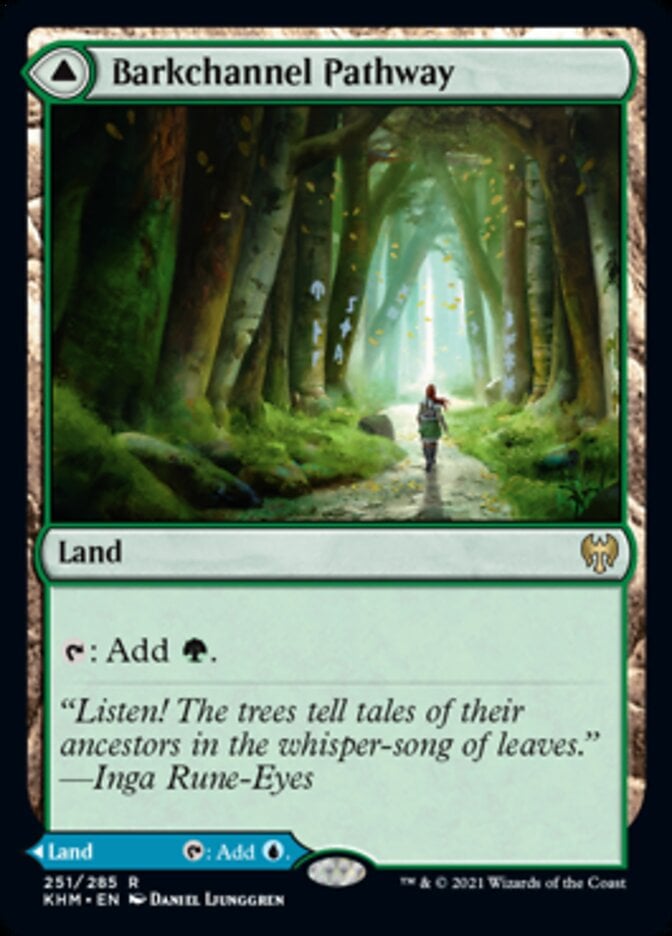
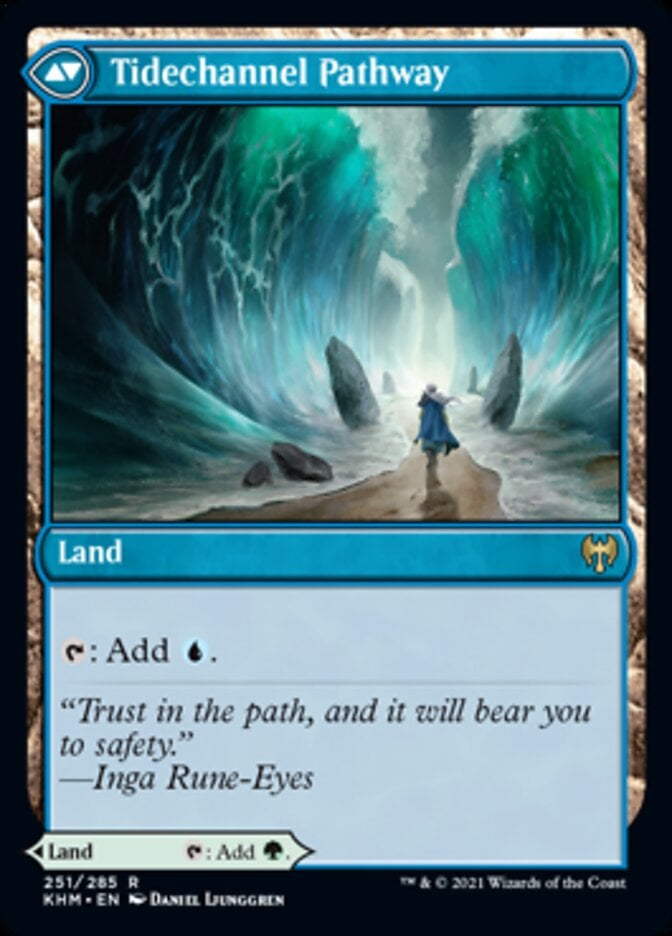
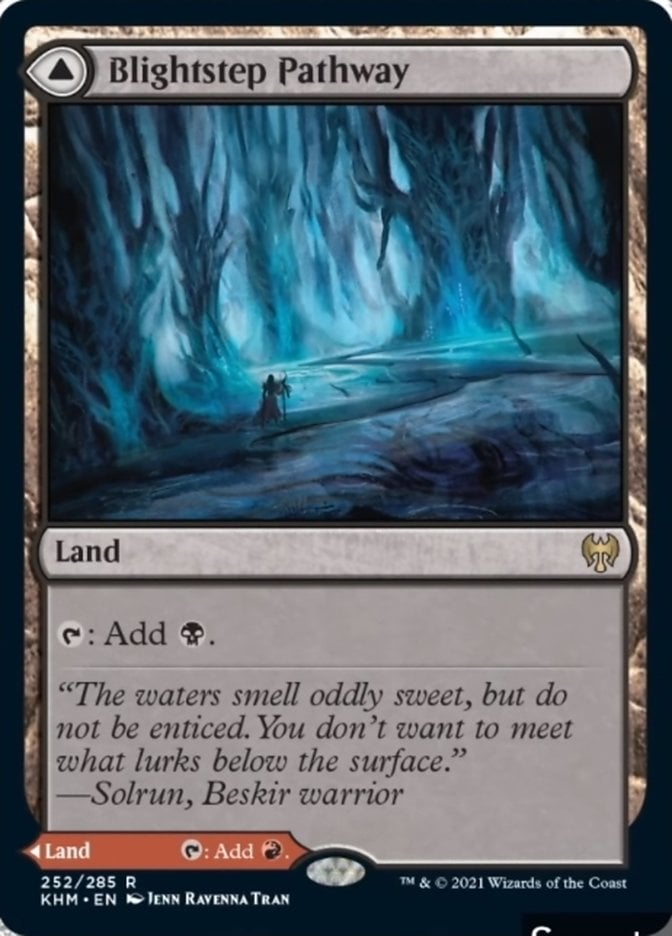
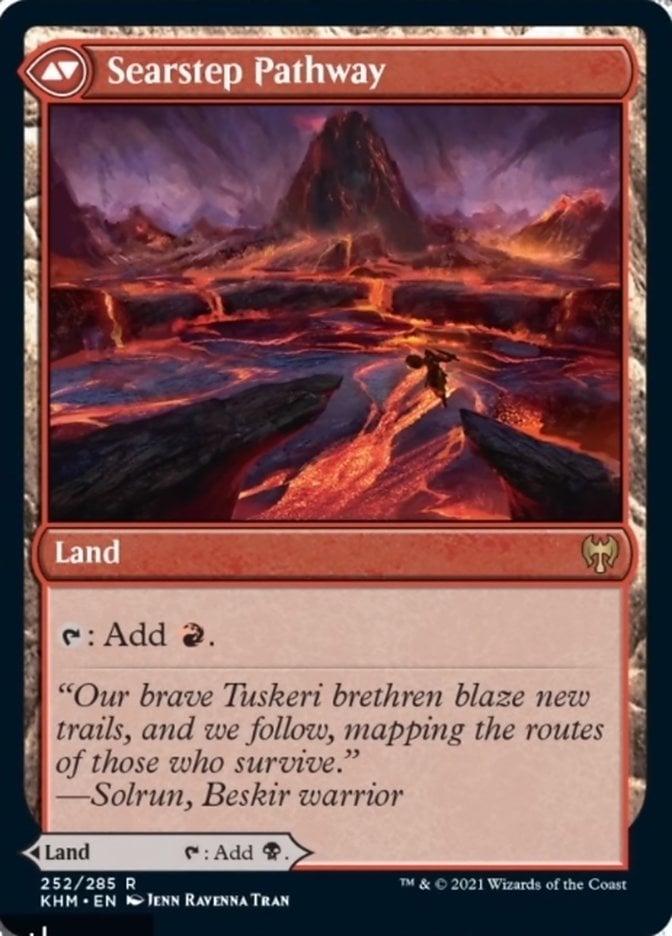
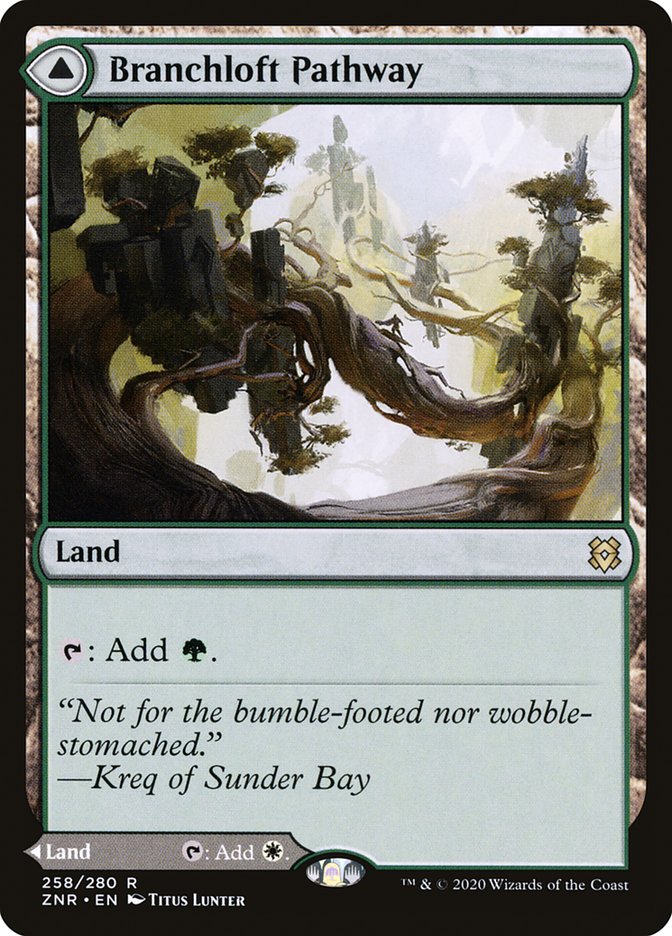
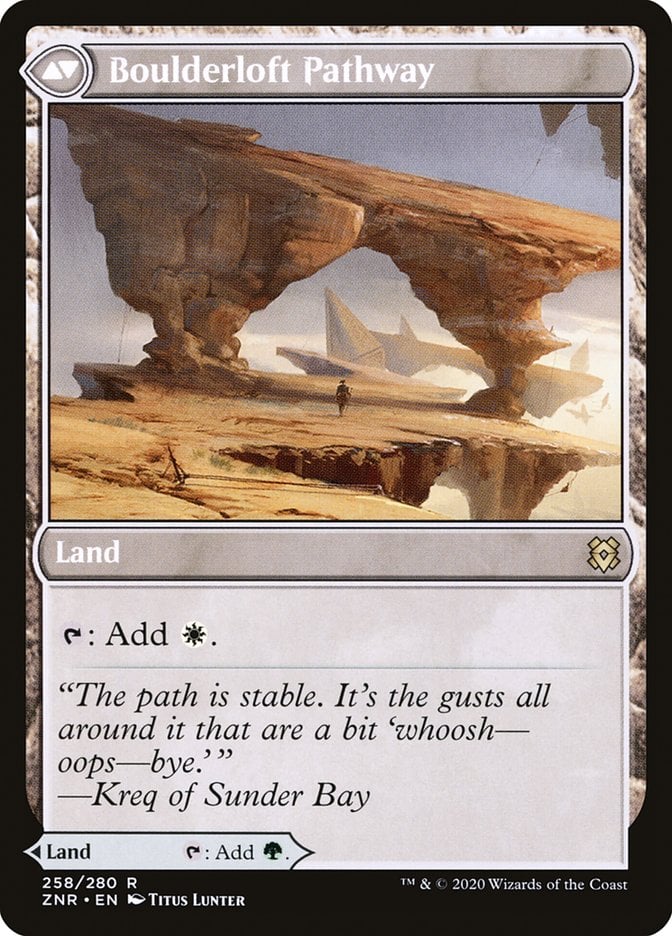
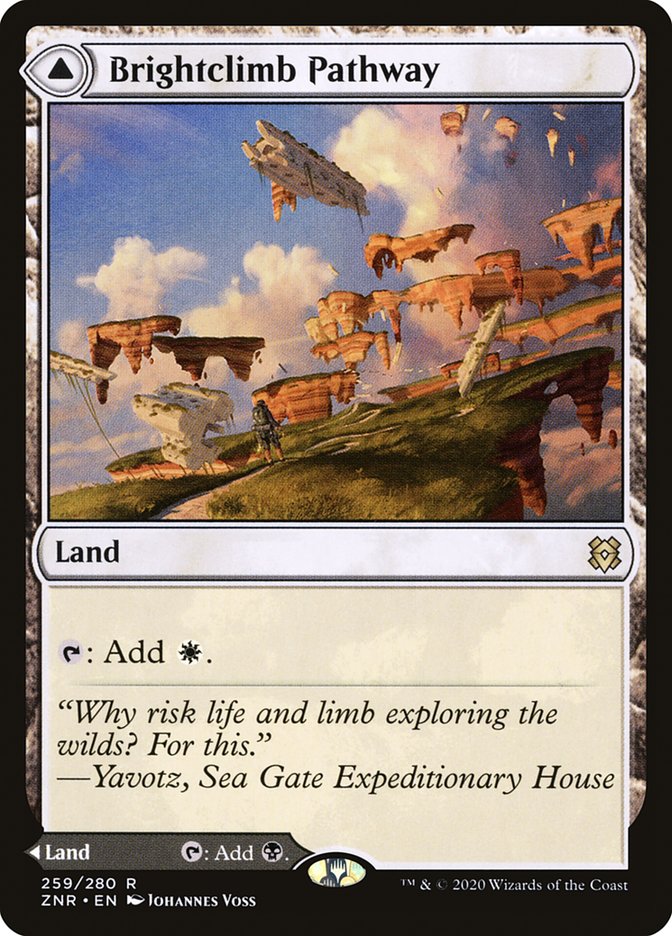
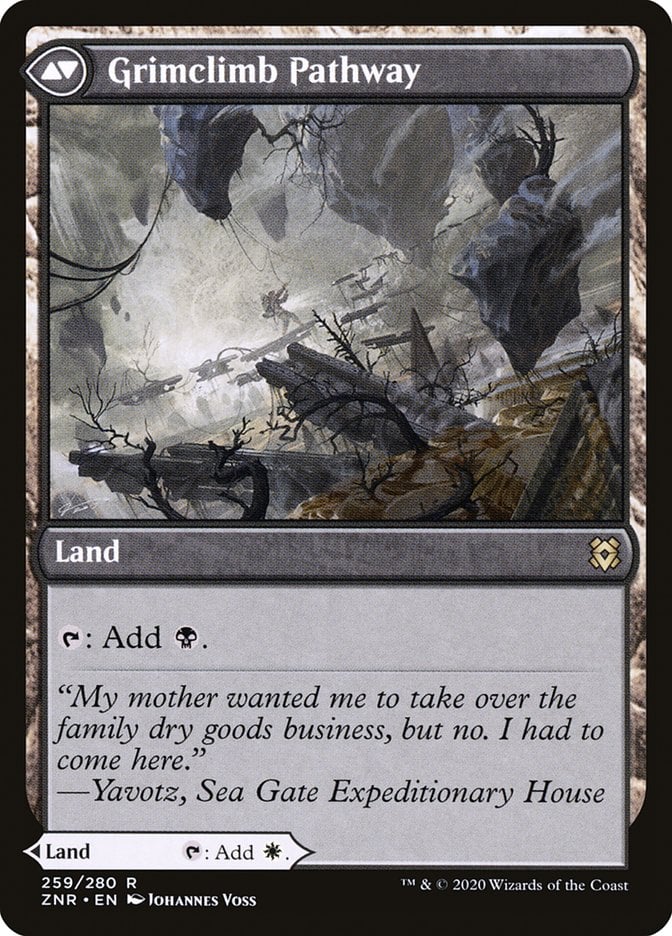
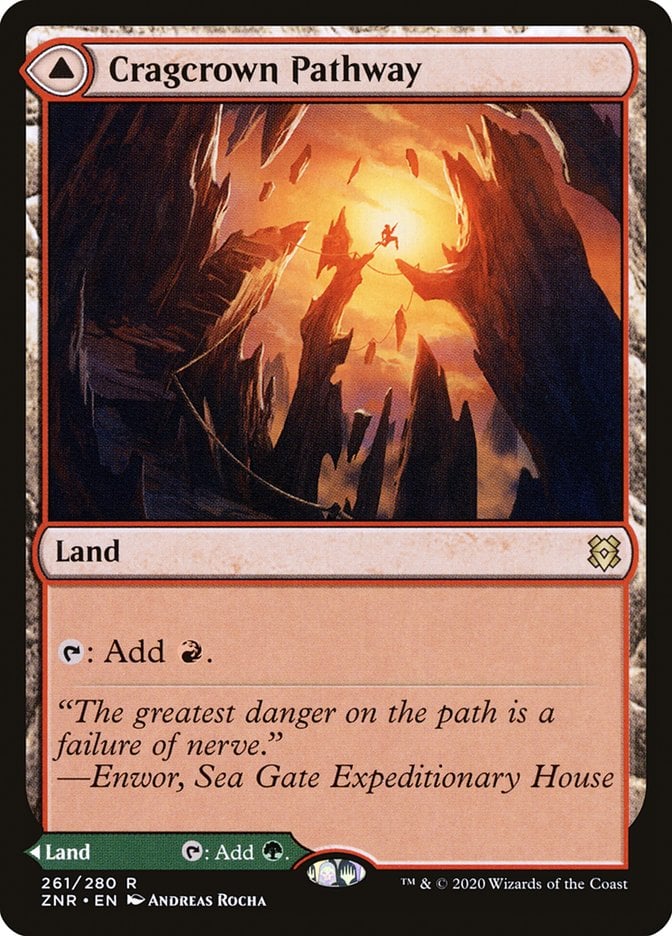
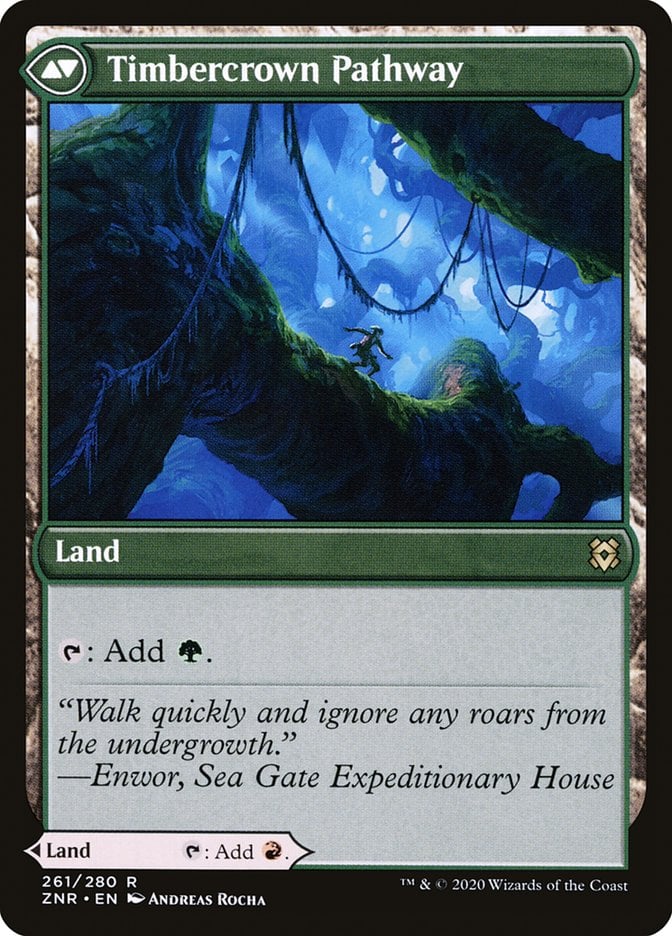
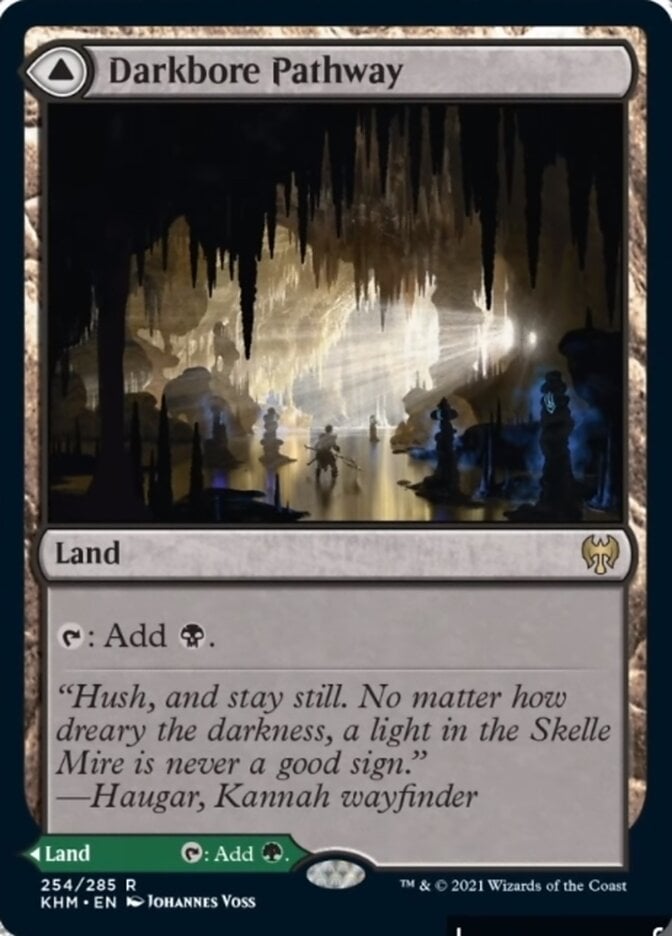
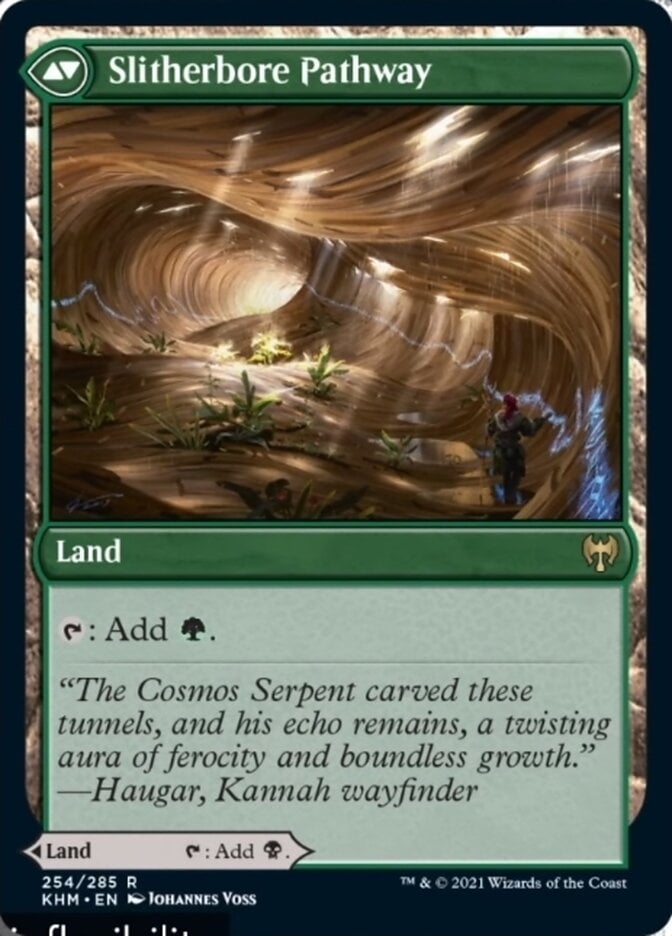
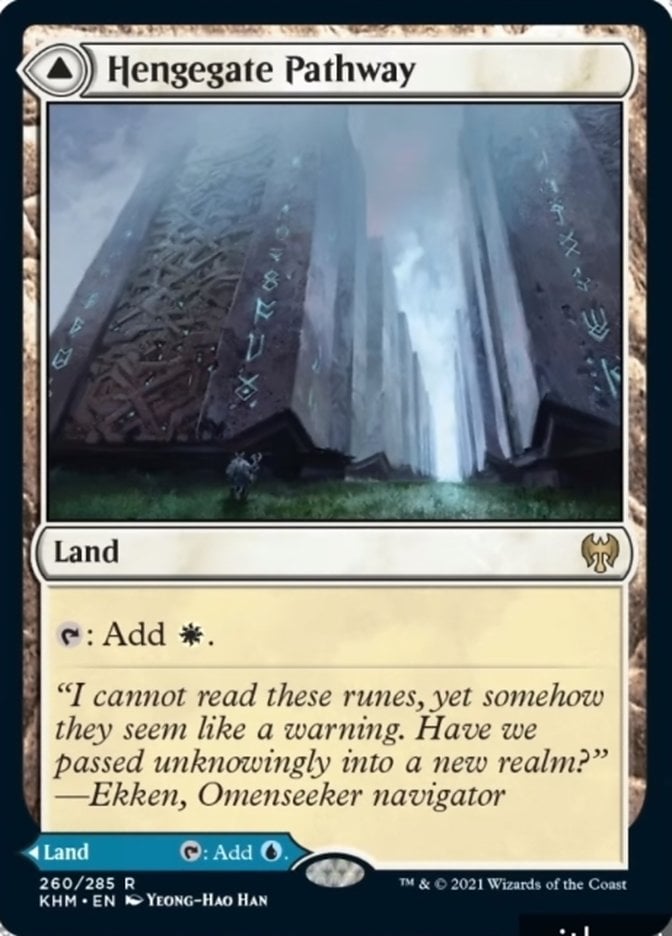
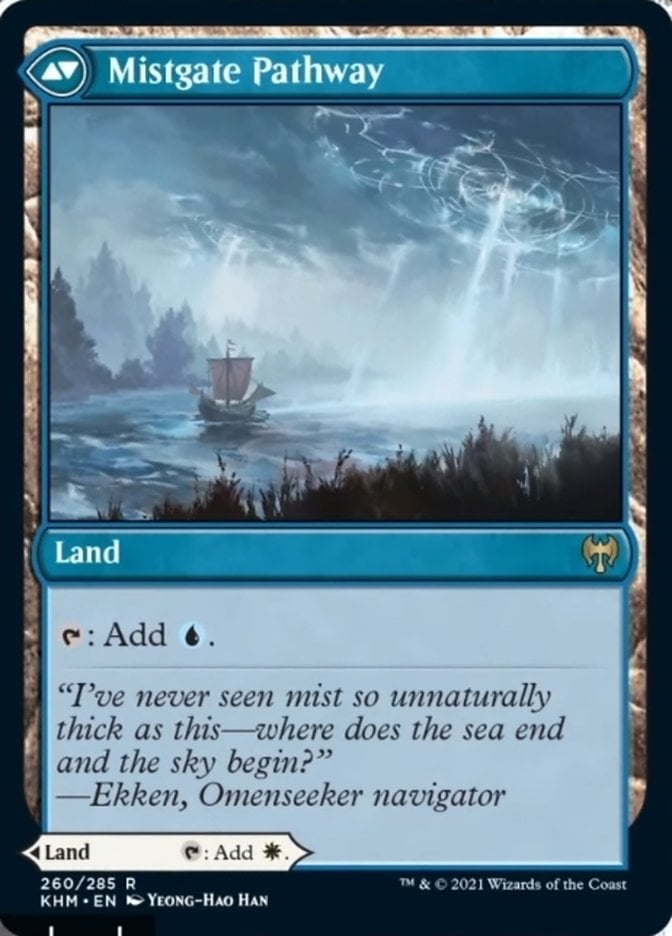
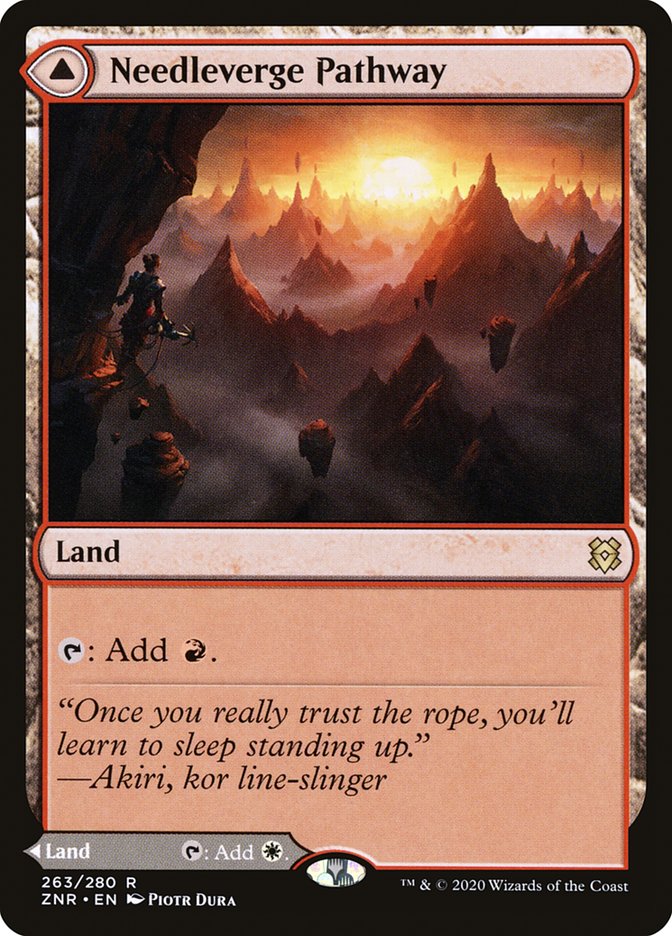
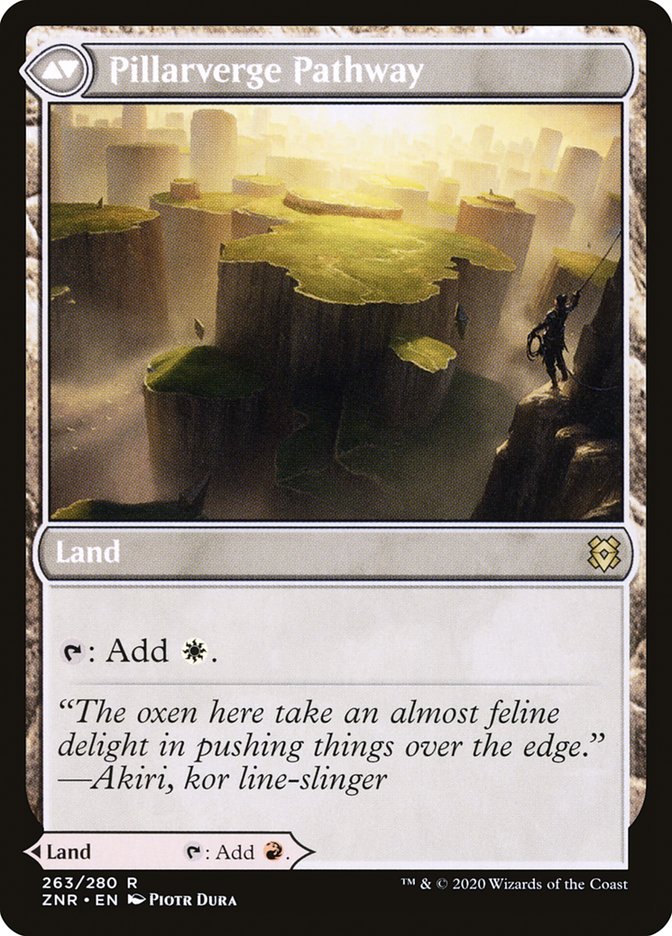
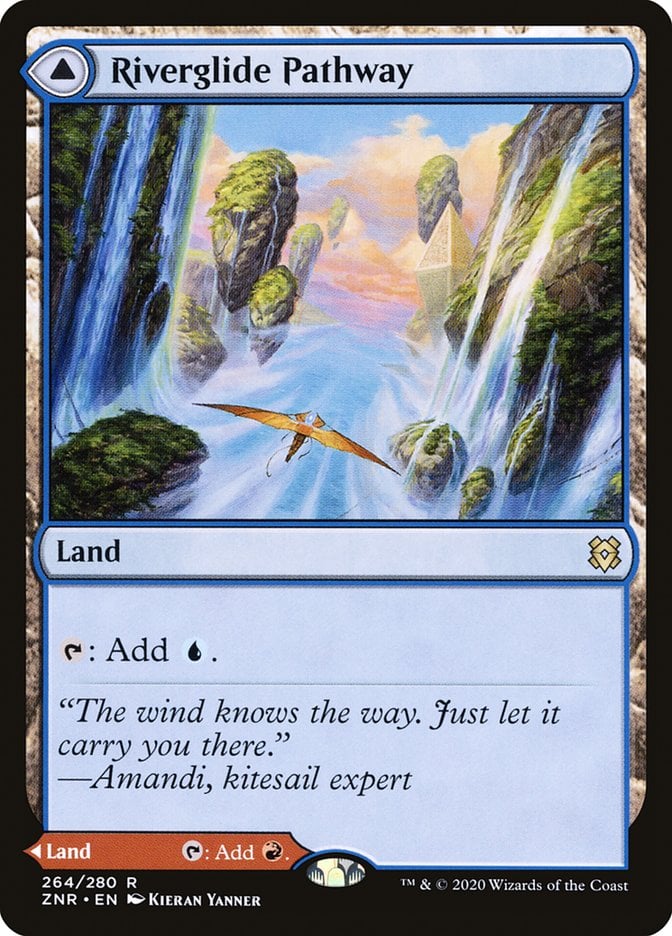
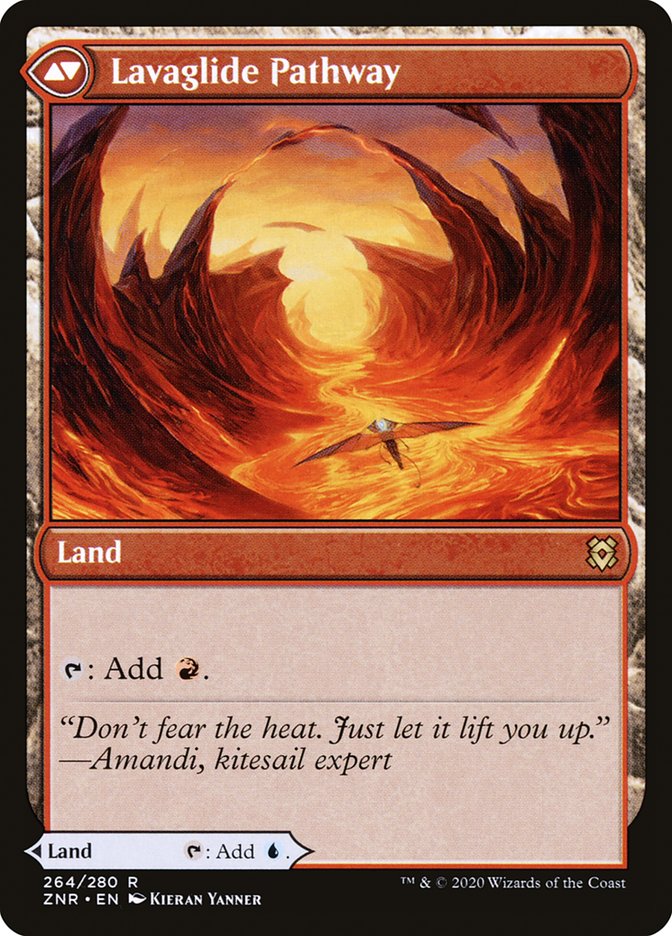
The pathways are your traditional cycle of 10 rare dual lands, except that they don't generate two colors of mana at once. You can play one of these either as a Clearwater Pathway and be able to generate blue mana, or as Murkwater Pathway, a land that generates black mana. But not both.
These are also the only MDFC lands that don't have a spell attached to any side. It's like they've glued the backside of a basic Island and a basic Swamp. The pathways don't have any downside, they don't come into play tapped or require life payment, and they fit almost any dual-colored deck.
Pathways are also perfect for light splashes, like when you have a mono-black deck with lots of Swamps and Phyrexian Obliterator and want a light green splash to play fight spells like Bushwhack. Although I prefer the and versions of the Pathways due to my deck preferences, it's impossible to rank them individually, and I'd say that the best Pathway is the one that fits your deck.
Best MDFC Lands Payoffs
The best aspect of the MDFCs is their flexibility. One of the better and weirder payoffs for this mechanic is to help with deck-building restrictions.
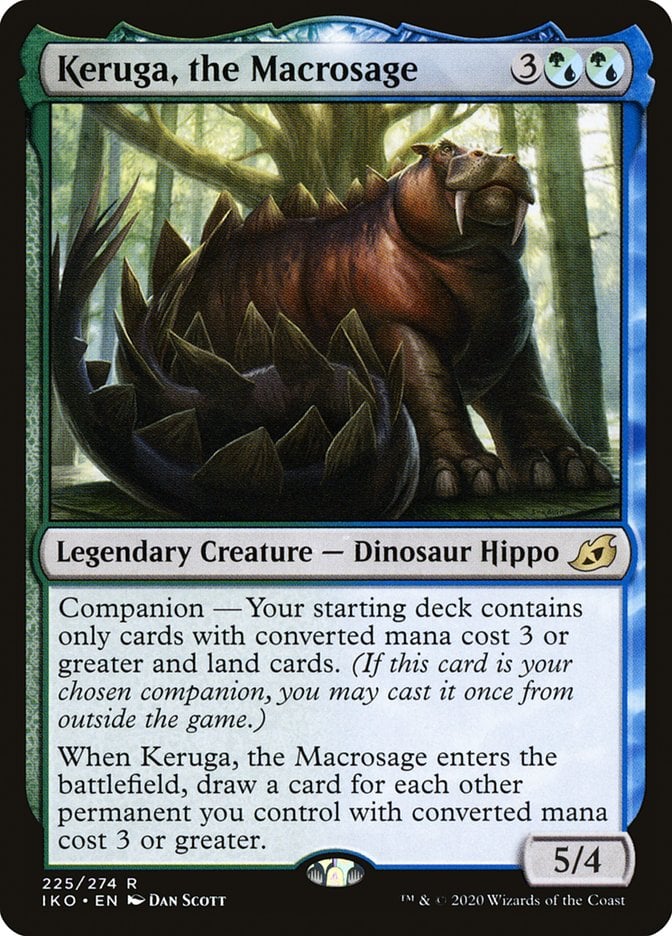
Play them in companion decks like Keruga, the Macrosage because you can have lots of cards with mana value of 3 or more that are also lands, thus fulfilling the companion condition.
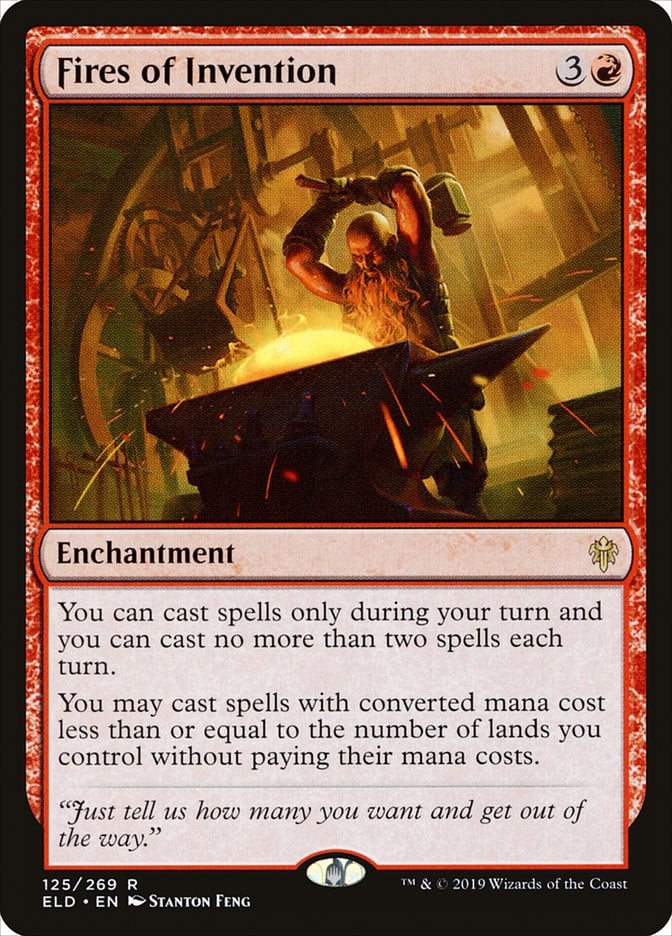
Fires of Invention decks can play the MDFCs as lands or cast them as spells, whatever is more convenient.
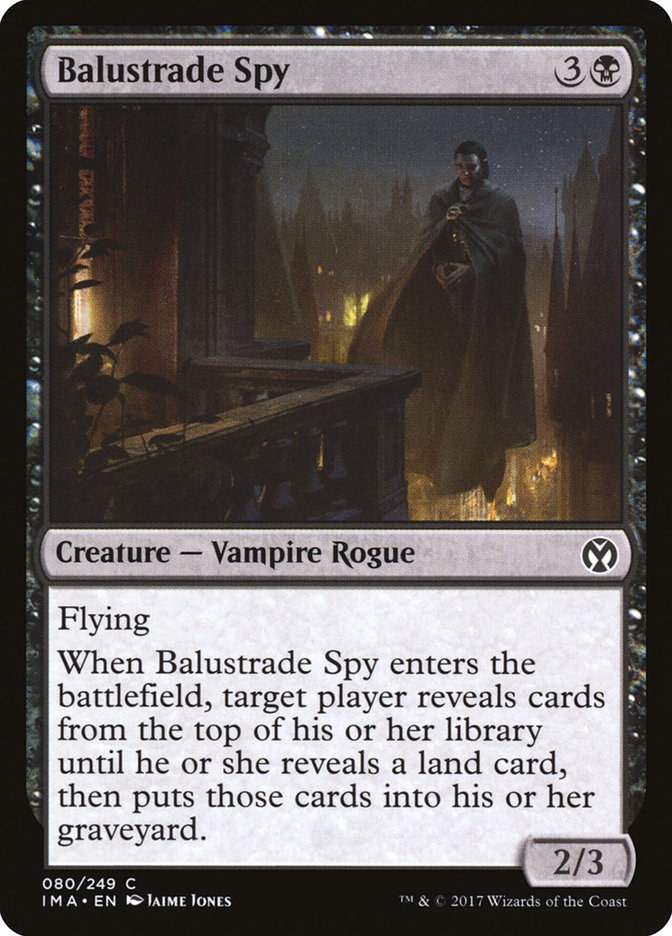
“Oops, all Spells” decks usually play very few lands. With MDFC lands, they can cheat by playing more lands in the deck, and when a Balustrade Spy enters, you’ll reveal the top card of your library and it will care about the front face of the MDFC.
Ramp decks that have plenty of “you can play an additional land each turn” effects like to include lots of MDFC lands because it’s good in the early game when you need to ramp and okay in the late game when you don’t need extra lands and need something to do with your mana.
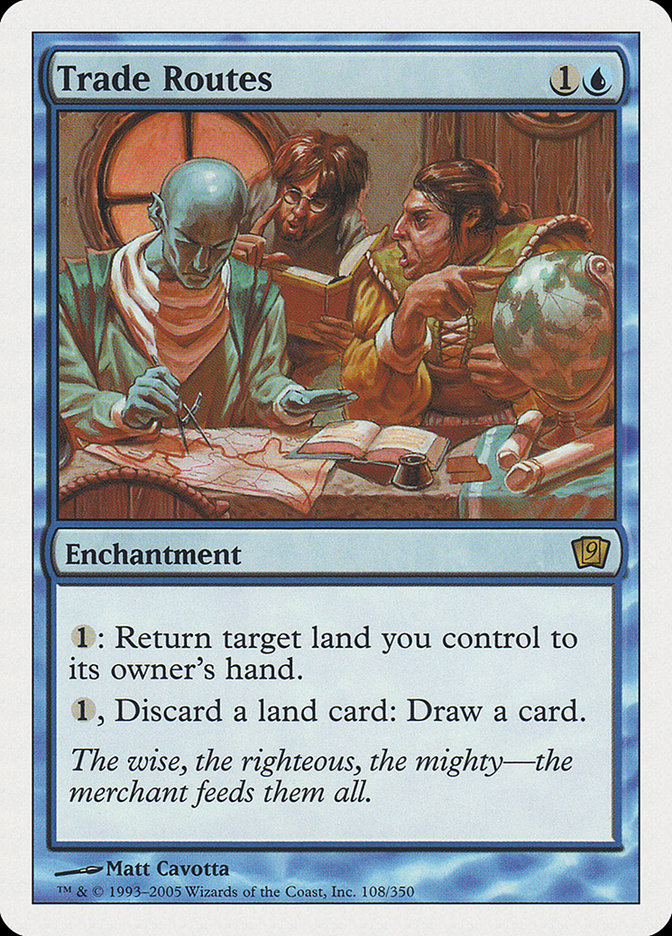
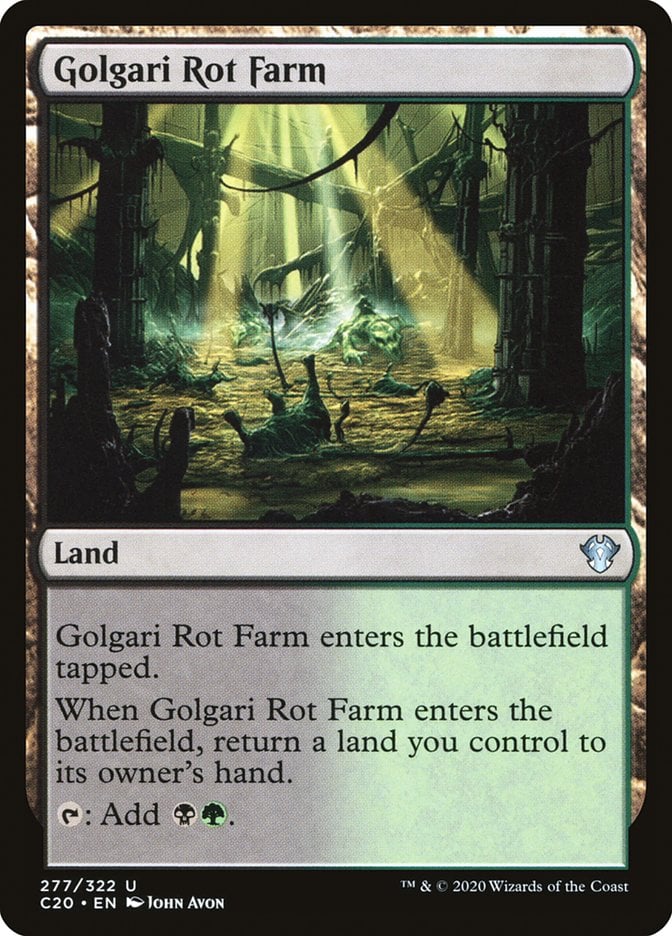
If you needed the land drop early, return the MDFC land to your hand with an ability like on Trade Routes or a bounce land like Golgari Rot Farm to cast the spell later.
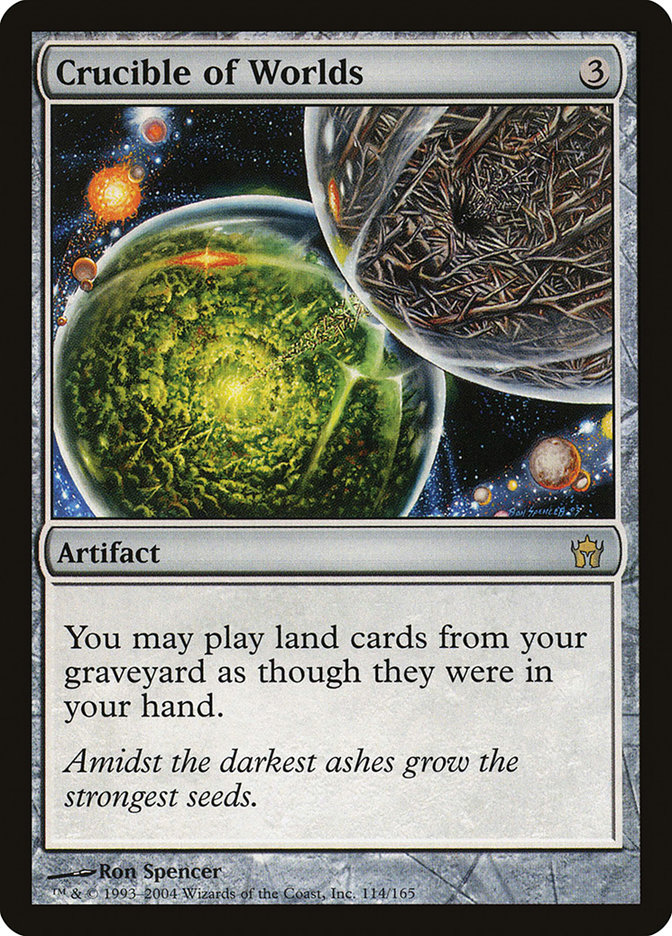
There are also lots of possibilities with land recursion. You can play lands again using Crucible of Worlds. or
Are MDFC Cards Lands When They’re in Your Hand?
In your hand, the MDFC card is always the type on the front side of the card. Aside from the Pathway cycle, the other MDFC cards are nonlands on the front side, and lands on the backside.
Can You Play MDFC Cards With Crucible of Worlds?
With Crucible of Worlds, you can only play the land side of the MDFC card because Crucible allows you to play lands in your graveyard. If Stump Stomp / Burnwillow Clearing is in your graveyard, you can play Burnwillow Clearing from there, even if it’s considered a sorcery card in your graveyard.
What Happens When You Blink an MDFC?
If you blink a MDFC, it’s always going to return to the battlefield with its front side. The backside has a different frame from the front side, and it also has different arrows on the left side of the card name. The front side has an arrow pointing to the top, while the backside has a top arrow and a bottom arrow. All MDFC land cards are lands on the backside, so if I play Boggart Bog and blink the land, it returns as Boggart Trawler. If I blink Boggart Trawler, it returns as the creature and not the land. If the front side is a sorcery or instant, nothing happens. Official rulings state that “If that front face can't be put onto the battlefield, it doesn't enter the battlefield. For example, if an effect exiles Sejiri Glacier and returns it to the battlefield, it remains in exile because an instant can't be put onto the battlefield.”
Can You Look at Both Sides of an Opponent’s MDFC Land?
You can, but only when the game rules allow you to do so. To quote MTG’s comprehensive rules:
“711.2. Players who are allowed to look at a double-faced card may look at both faces.”
So, if a MDFC land is in any public zone (battlefield, graveyard, exile) you may look at both sides. If an effect allows you to look at your opponent’s cards in hand, you may also see both faces of the card. According to rule 711.3, players that play double-faced cards must use opaque sleeves or something similar to prevent showing their cards.
Wrap Up

Glasswing Grace | Illustration by Craig Elliott
MDFCs look weak but are actually very strong. It may not look like much, but how many times have you played a game and got stuck on two lands with lots of 3-drops in hand? It’s a very quick road to defeat, that I’ll tell you. Also, kudos for WotC on the design of these cards, because most of the “spells” are conditional spells.
Topdecking an MDFC land in the late game is awesome, be it in Limited or Constructed, and it gives you more possibilities of sequencing the lands in the early game, while not being overpowered like some adventure cards.
Now I want to hear from you: Which MDFC land is your favorite? Which ones do you usually play? Please leave your comments in the comments section, or let’s discuss it in Draftsim Discord.
Thanks for reading everyone, and may you all choose the best use of a modal card in future games.
Follow Draftsim for awesome articles and set updates:










Add Comment