
Last updated on December 27, 2024

Chandra, Flameshaper | Illustration by Mark Winters
Greetings planeswalkers! We’ve had about a solid two weeks of Foundations drafts so far, and there’s an Arena Open coming this weekend, too. The core question I want to answer here is: How do you play the latest Magic set? Is there anything unexpected about this new Core Set? Or is it mostly just stock MTG?
By the end of this guide, you should be well prepared to battle this weekend.
Brief Recap on Foundations

Valkyrie's Call | Illustration by Scott Murphy
Foundations is the latest Core Set product that isn’t called a Core Set. It was designed as a solid introduction to the game that would function as Standard‘s backbone, and it’s hands down the best MTG set to draft for beginners. Foundations cards will be legal for a full five years, which is more than twice as long as most Standard sets. The set is half new cards and half reprints and focuses on communicating tried and true MTG concepts to new players.
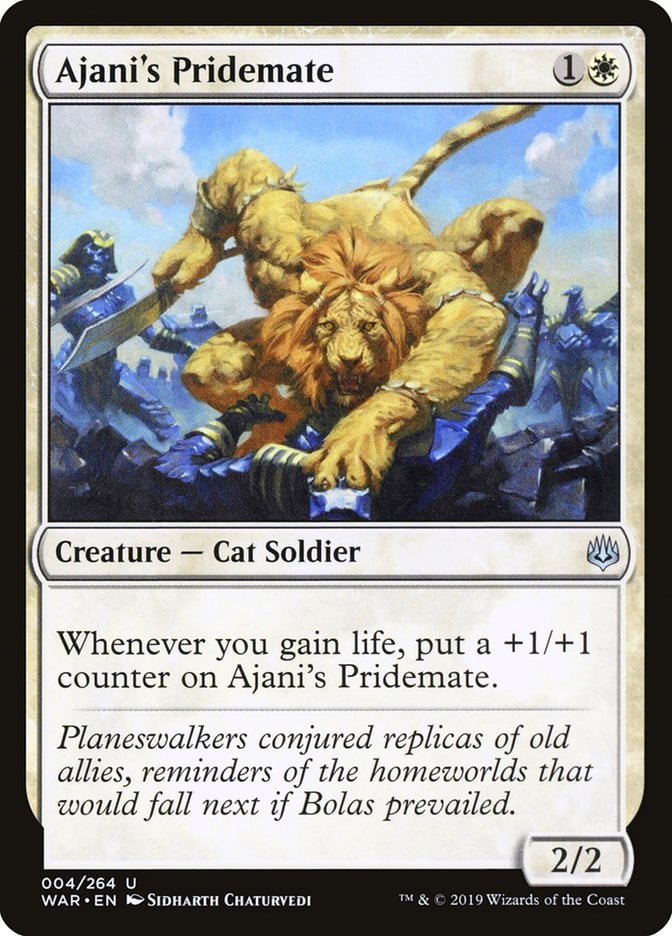

A focus of the set seems to be hooking new players with combos like Hungry Ghoul + Involuntary Employment, Ajani's Pridemate + Dazzling Angel, or perhaps even Marauding Blight-Priest + Bloodthirsty Conqueror (baby’s first infinite combo!). As someone who first tried MTG over a decade ago, I can still remember my earliest “aha!” moments when drafting and building decks. These are the types of gameplay loops that can create lifelong players.
Foundations’ Draft environment is fairly straightforward too. While I’ll be covering each archetype in detail as usual, I was correct in the Foundations Sealed Guide when I asserted that they’re softer archetypes than previous sets. Synergy cards like Inspiring Call are often traps in Foundations, even in their “perfect” archetype (GW counters, for Inspiring Call). The archetypes also play every color pair close to the vest, with each one doing just about what an experienced player would expect them to do. Here’s WotC’s handy archetype mini guide if you need a refresher:

Colors Ranked
- White
- Red
- Blue
- Black
- Green
The color balance in Foundations is decent, though in my opinion there’s a clear best color (white) and worst color (green). White cards include excellent removal, three quality fliers at common (Healer's Hawk, Dazzling Angel, and Vanguard Seraph), and some excellent ground creatures like Helpful Hunter and Felidar Savior. It has the highest overall card quality of any color at common, with Armasaur Guide and Hare Apparent (without multiples) being the only “bad” ones.
Red cards include the best overall common in the set (Burst Lightning), some good high end like Gorehorn Raider and Sower of Chaos, and lots of passable aggressive filler. Its stinkers are mostly Involuntary Employment (which is basically a BR gold card) and Crackling Cyclops (also a “gold card,” this time UR).
Blue cards include some big hits (Bigfin Bouncer, Refute, Think Twice) but blue lacks the solid all-around cast that white has. Commons like Tolarian Terror, Erudite Wizard, and Strix Lookout can excel in the right deck, but they aren’t universally good. It also has the classic problem of blue removal not being great, as Witness Protection is clearly outclassed by white and black options.
Black’s strengths are black’s removal spells, Infestation Sage, Burglar Rat, and Hungry Ghoul. Its expensive plays at common are definitely below average, which means it looks to other colors to provide 5s like Icewind Elemental.
Green cards include Llanowar Elves, Bite Down, Bushwhack, and some decent early creatures like Beast-Kin Ranger and Wary Thespian. Its fatties and ability to splash are below par compared to green in most other MTG sets; Grow from the Ashes in particular is just terrible compared to past versions like Dance of the Tumbleweeds and They Went This Way. Green relies primarily on Llanowar Elves and its many strong uncommons, so try to avoid the color if you aren’t seeing those.
Top Commons Revisited
I made predictions when reviewing the top commons and uncommons in Foundations, so let’s see how I did and revise as needed.
White
My top 4 white commons were:
After playing more of the set, I’d revise my top 4 to:


Good removal is very important in Foundations – there are a lot of big dumb creatures that require answers, like High-Society Hunter, Drakuseth, Maw of Flames, Serra Angel – and white removal delivers. Luminous Rebuke is often discounted but is even acceptable at full retail when killing cards. Felidar Savior isn’t far off this list by any means, but removal is just too crucial for your success.
Blue
My top 4 blue commons were:
After playing more of the set, I’d revise my top 4 to:


Think Twice is the best practical enabler for cards like Erudite Wizard and Homunculus Horde in Foundations. Beyond that, it provides some stable card advantage at affordable increments, which can be crucial in smoothing out your draw (as Foundations lacks many other cards for this purpose). Uncharted Voyage has overperformed once again due to the set’s density of swingy, expensive creatures, and it’s often a core removal spell for WU and UR decks.
As for the cards I removed, Tolarian Terror requires a lot of support and won’t excel in most decks. Icewind Elemental is a great curve topper, but it’s also replaceable enough that you should prioritize cheaper cards first.
Black
My top 4 black commons were:
After playing more of the set, I’d revise my top 4:


Two important things here. Firstly, Infestation Sage and Burglar Rat are very close in card quality and go in similar decks. Secondly, you should always adjust your pick order based on how your deck/draft is going! This list is a rough guide for card quality, but cards like Eaten Alive have diminishing returns; you’d generally rather have one Eaten Alive, one Infestation Sage, and a Burglar Rat than three of any one of these cards. Either way, removal and fodder are great, and the rest of black, well, not so much!
Red
My top 4 red commons were:
After playing more of the set, I’d revise my top 4 to:


Gorehorn Raider was the main one I missed, as there are so many good x/2s for it to kill and so little good competition for it at 5. Other than the Raider and Burst Lightning, I’d actually say that red is a rather flat color; the gap in quality between cards like Courageous Goblin, Sower of Chaos, Goblin Boarders, Fanatical Firebrand, etc. is pretty small, so focus on your mana curve first and foremost. Lastly, while Goblin Surprise has definitely been better than Mishra's Onslaught, it’s still mediocre enough as a creature that you’ll only want it in decks that can use the Trumpet Blast mode.
Green
My top 4 green commons were:
After playing more of the set, I’d revise my top 4 to:


I think I got the gist of green right, though I overrated Bushwhack a tad. If you aren’t splashing with it, you probably only want a copy or two, as Prey Upon + Lay of the Land isn’t always the right card for every situation. It also wants you to be base green (9+ Forests ideally), which can be risky in a set where green is the worst color. The rest are pretty straightforward; Llanowar Elves is the best reason to be green at common, Bite Down is efficient green removal that can blow out combat tricks, and Beast-Kin Ranger is overstatted for its cost. Do note that green’s badness is only relative to other options; it certainly isn’t Battle for Zendikar levels of awfulness!
Top Uncommons Revisited
I also listed 13 (mono-colored) uncommons I thought would be particularly strong. I want to focus less on the numbering here and more on the cards I selected, though I’m still laying them out in numerical order. For reference, those cards were:
- Elvish Regrower
- Vampire Nighthawk
- Affectionate Indrik
- Overrun
- Tragic Banshee
- Arbiter of Woe
- Arcane Epiphany
- Needletooth Pack
- Fiery Annihilation
- Hero's Downfall
- Battlesong Berserker
- Strongbox Raider
- Mischievous Mystic
While not a single one of these is bad, I overrated some and underrated several uncommons more deserving of a spot on this list. Let’s go over these plus some new cards that you should prioritize as premium.
Overrated Uncommons

Elvish Regrower is definitely a good uncommon, but it’s and the 2-for-1 is limited to only what has died early on unless you play it very late into the game.

Best case scenario Affectionate Indrik is as good as I said it was, but in practice it struggles with certain matchups like green mirrors. It’s also inherently replaceable as a 6-drop, as you’ll only want 1-2 of those in most decks.

Believe it or not, Overrun isn’t quite as good as advertised! While it’s definitely powerful, is rough, and Overrun can be a liability if you’re forced to trade off creatures early. Llanowar Elves is a crucial card for making Overrun work.

Morbid in general is just a hard mechanic to use consistently, although Tragic Banshee is still the best morbid card in the set.
Stab, Eaten Alive, Bushwhack, or power-slanted creatures like Ambush Wolf are your best bet for making it work. It’s definitely an above average card, but it’s too inconsistent and expensive to be among the very best uncommons.

Controlling a wizard is easier in theory than in practice, and Jace's Ingenuity is merely good rather than exceptional. I still like Arcane Epiphany, but I might prefer Think Twice to it, especially since Think Twice can help you hit your crucial 3rd and 4th land drops.

Morbid once again disappoints, though Needletooth Pack is a reasonable 5-drop at worst. I prefer it to a card like Elfsworn Giant in most decks, but the difference between this and Icewind Elemental in abstract quality isn’t all that high.

and a poor body make Strongbox Raider a less exciting 2-for-1 than I thought, even if raiding it isn’t all that hard. I’m still happy to play it in base red decks, but it’s not a top uncommon.
Underrated Uncommons

Mischievous Mystic is messed up! Great initial stats + powerful payoff for drawing your second card that’s easy to use makes for a must-kill threat that can snowball the game starting on turn 2. One of the best blue cards in the entire set.

“Most Valuable Slayer but even better” was how I advertised Battlesong Berserker, but what I was missing is Foundations’ lower power level in general. You also have Burst Lightning to finish games, making every point of damage even more brutal.

I didn’t rate Hero's Downfall poorly or anything, but premium removal is crucial in Foundations. I’ve lost to enough mythic planeswalkers that the upside here also feels relevant!
Unmentioned Uncommons

Vampire Gourmand is another premium 2-drop that can snowball early, though the base rate here is a bit worse if you don’t have support. It works best with black commons like Infestation Sage and Burglar Rat.

There are so many good 1-mana spells that Micromancer is consistently excellent. Look for Burst Lightning, Stab, Eaten Alive, or even Fleeting Distraction and try to include 3+ targets for your Micromancer to grab.

On its own, Cat Collector is a 3/2 that makes a Food token at worst. It can also be a 5-mana 3/2 gain 3 + make a 1/1. But it’s just not hard at all to gain life in this set between Dazzling Angel, Healer's Hawk, and common duals, which all make Cat Collector one of the best uncommons in Foundations.

Faebloom Trick swings races in a big way while also having a fair rate of two fliers for 3 mana. A dangerous card that’s good at any point in the game.

A 3/1 lifelink creature for 2 is already above average, so getting a powerful kicker on top of that just makes Sun-Blessed Healer incredible. Works best in decks that have some equipment to force it through cards like Burglar Rat and Helpful Hunter (Goldvein Pick does the job nicely).

Infernal Vessel is kind of a souped Infestation Sage of sorts. Great with all the cards that go well with Infestation Sage, and among the best 3s you can have in a black deck.

Spectral Sailor is an annoying blue creature that pecks in for minor damage and makes flooding out impossible. It’s also great with Refute as the passive threat of its activated ability can force your opponent to make plays so as not to get buried in cards.

Sorcery speed is well worth the permanent boost in sizing that Felling Blow provides. If you’re careful with this green sorcery, this is a decisive removal spell that can often swing games. For example, one of my recent matches involved using this to kill Scavenging Ooze with my Strix Lookout. I not only removed my opponent’s bomb but also upgraded a mostly useless body to a very relevant one!
Bombs Revisited
This simple section is a companion to the checklist from my Foundations Sealed guide. After playing the set, did I overrate/underrate anything? Let’s take a look!
Overrated Bombs

Ajani, Caller of the Pride is excellent in creature-heavy white decks of course, but it’s not among the very best rares in Foundations like an 8 would imply.

Archmage of Runes is similar to Tolarian Terror in that there won’t be many optimal decks for it. It’s worth playing in most cases, but it’ll only feel like a true bomb in certain shells.

Rune-Scarred Demon is probably more of an 8 than a 9 due to costing 7, though it’s still amazing and worth building a controlling deck around. It doesn’t stabilize or win you the game quite as much as a 10 like Koma, World-Eater or Chandra, Flameshaper does.

Etali, Primal Storm can brick if you’re unlucky, and it’s also quite killable. Axgard Cavalry is a great pairing if you have it. Obviously powerful, but the clunkiness and inconsistency keep it below other bombs.

Loot, Exuberant Explorer is a solid blocker, but you won’t always have six lands when you need them which can make it a bit inconsistent. Loot is clearly above average, but not at the level of cards like Scavenging Ooze and Spinner of Souls.

It’s rough when your opponent bounces your Mossborn Hydra, as it starts out very small and really needs two land drops before it feels like a rare. I don’t hate this hydra, but it’s far too inconsistent to be a true bomb.

Quilled Greatwurm is similar to Etali, Primal Storm in that your opponent will almost always have a one-turn window to answer this before it does anything. The recursion mode is cute but has never come up in practice. It’s strong, but too fair for the rating I gave it.
Underrated Bombs

Sire of Seven Deaths is another 10 that I called a 7 for flavor reasons. Goes in every deck, impossible to beat in combat, and removal is only an option if things are going well.

Celestial Armor is a miserable card to play against. I’d describe it as “the combat trick from hell.” Worth splashing if you can.

I somehow missed that High-Society Hunter draws from all creatures. Though fragile, this is an outright comical card to untap with. Try to pair it with Macabre Waltz and Vampire Soulcaller if you can.

I’m sorry red Plague Wind. I didn’t respect you enough! Chandra, Flameshaper is just obscene and almost as good as Koma, World-Eater.

Koma, World-Eater is just about unbeatable. It’s a 10 and basically forces you into these color pairs if you open it.

“You scooze, they lose,” as the saying goes. Scavenging Ooze is an incredibly efficient creature that hates on threshold, hates on Macabre Waltz effects, and even makes your curve better.

If Spinner of Souls doesn’t die, combat is just hopeless for your opponent. It also punches hard and walls just about every flier in the format.

It’s easy to miss that Alesha, Who Laughs at Fate can get back a 2-drop even if it didn’t attack this turn! This approximates “enters” value on a creature that attacks as a 3/3 first strike for just , grows every turn, and gets back other creatures. Suffice to say Alesha, Who Laughs at Fate is more of a 9 than a 7!

You shouldn’t play Raise the Past in most Limited decks, but Draft has a way of making the improbable possible with enough repetition. This sweet trophy list by oppa shows that Raise the Past can legitimately be great if you have 9+ 2-drop creatures.

Archetypes
Foundations isn’t a set with particularly hard archetypes. Card quality in a vacuum and mana curve often matter more than synergy.
The best Draft synergies in Foundations are often simple two-card combos (treason + sac, Ajani's Pridemate + lifegain, Tatyova, Benthic Druid + Evolving Wilds). You’ll rarely have a cohesive deck where everything is on-theme, like a deck with Inspiring Call and 15 creatures that get +1/+1 counters, so keep this in mind and draft accordingly.
Here’s how I’d rate the archetypes:
Tier 1
- WU Fliers
- RG Stompy
- UB Threshold
Tier 2
- WB Lifegain
- RB Raid
- RW Aggro
- GW Midrange
Tier 3
- GU Ramp
- UR Spells
- BG Morbid
The tiers here aren’t that far apart; a great BG deck is preferable to a bad WU one, for instance. They’re a useful guidepost though, so keep them in mind early if you’re unsure which lane to take. Every archetype can be viable in Foundations, but the higher-tier ones are easier to put together more often.
WU Fliers

Ah, good old skies. WU is a really simple deck in Foundations that wants to curve out with fliers, ideally boosted by Empyrean Eagle. Removal like Banishing Light and Uncharted Voyage clears reach blockers like Treetop Snarespinner out of the way and keeps the pressure up. The archetype doesn’t have much of a focus on walls in this set; the more birds you have, the better!
Key Cards/Payoffs

Empyrean Eagle is the only direct one, though playing a bunch of good fliers is a payoff in its own right. Key cards are Healer's Hawk, Dazzling Angel, and the usual collection of high-quality commons/uncommons in this color pair. Very little synergy is needed beyond efficient creatures + removal for this one. Assemble an effective mana curve, play your best interaction, and take to the skies!
Playing Against It
Reach is obviously useful, as are fliers of your own. It’s difficult to rely on something like Shivan Dragon or Elfsworn Giant to block though thanks to WU’s quality interaction. If you’re aggressive, simply punching WU faster and harder often does the trick. Controlling decks need a higher density of cheap spot removal spells (Stab, Burst Lightning, etc.) to succeed. One saving grace is that Bushwhack and Bite Down tend to do the trick here, as WU’s creature sizing is below average.
RG Stompy

One straightforward archetype deserves another, and RG answers the call with a classic return to form. Play big dudes, play some Giant Growths and removal spells, and smash face. Even better, play them ahead of schedule with Llanowar Elves!
Key Cards/Payoffs


RG has a high number of direct payoffs relative to most archetypes in the format. There are several cards that care about 4+ power creatures, and Ruby, Daring Tracker, Sylvan Scavenging, Nessian Hornbeetle, and Garruk's Uprising are just a few examples. Those plus 4+ power staples like Gorehorn Raider and Ambush Wolf often make up the meat of your deck.
Throw in some Llanowar Elves and Burst Lightning, and you’ve got pretty much the ideal green-red configuration! Just note that more dedicated payoffs like Garruk's Uprising should be limited only to decks with 9+ creatures to trigger them. It’s possible to have success in RG even if such cards don’t make your deck, so always adjust on a draft-to-draft basis.
Playing Against It
You won’t have to worry about flying much at least, but you are definitely in store for a beating if you aren’t careful. Deathtouch blockers like Treetop Snarespinner and Gutless Plunderer punch above their pay grade here. Blue and black decks usually want to drag games out and go over the top of RG, which is often prone to flooding since it often has mana creatures + little direct card advantage. More aggressive shells like BR and RW hopefully win the die roll and put RG on the backfoot immediately.
UB Threshold


UB is a controlling archetype with one of the very best signposts in the set: Dreadwing Scavenger. Threshold is often more of an afterthought though, as it’s limited to just five cards with only one weak common (Crypt Feaster).
Key Cards/Payoffs

Dreadwing Scavenger is amazing, both on its own and as an enabler for anything graveyard related (other threshold cards, Zombify, etc.). Billowing Shriekmass also overperforms here, but in general I wouldn’t worry too much about specific threshold synergies. Focus on drafting efficient removal, bombs, a curve to block with, and card advantage spells. Think Twice is at its best here since you can discard it to Dreadwing Scavenger for extra value!
Playing Against It
You’re in for a grind, generally. You won’t always lose to UB’s late game (especially if a bomb goes unanswered), but keep in mind that’s generally where the archetype is trying to go. Card advantage is your best friend if you have any. This is also a great matchup for graveyard hate effects like Angel of Finality and Scavenging Ooze, which can pick up extra value against threshold.
WB Lifegain
Another simple, iconic strategy for a color pair. WB has a better synergy/payoff loop in Foundations than most color pairs, with several good payoffs and enablers.
Key Cards/Payoffs


Your payoffs are obviously cards that say “whenever you gain life” like Fiendish Panda, Exemplar of Light, and Ajani's Pridemate. You can combine these with Healer's Hawk, Dazzling Angel, Joust Through, and gain lands to great effect. Beyond lifegain payoffs and enablers, you’re looking for removal spells and staple commons like Helpful Hunter. Felidar Savior is even better here than usual thanks to lifelink.
And don’t forget that you can always play off-color dual lands here to enable synergies! I wouldn’t get carried away doing so (taplands aren’t 100% free), but I’d happily play 1-3 off-color duals if I had the right payoffs.
Playing Against It
Removal is essential to tag their payoffs or enablers depending on the situation. Beyond that, WB is a pretty straightforward midrange deck that can be aggressive/controlling depending on their draw/gamestate. Be mindful of potential sweepers here as this is the color pair that’s most likely to have true wrath effects (Day of Judgment and Blasphemous Edict).
BR Raid
BR is an aggressive deck in Foundations and also sports some of the best removal spells in the format. Drafting a good curve enables powerful raid payoffs like Gorehorn Raider and Alesha, Who Laughs at Fate.
Key Cards/Payoffs


A good curve is a must, and it’s among your highest priorities. Raid payoffs like Perforating Artist, Searslicer Goblin, and Gorehorn Raider can obviously be a part of this, though! Raid is pretty straightforward but plays extra well with disposable creatures (i.e., Infestation Sage) and combat tricks like Fake Your Own Death, which can punish your opponent for trying to prevent you from freely raiding.


Beyond raid, I’d be remiss not to mention Involuntary Employment + Hungry Ghoul and/or Eaten Alive, which gives BR its classic threaten effect plus sacrifice gameplay loop. I generally like one copy of Involuntary Employment for every three sacrifice effects I draft, though I’d be willing to play the first copy with just two outlets.
Playing Against It
If you can thwart RB’s early aggression, you can really slow down the deck! Hitting your curve early backed up by Stab, Luminous Rebuke, etc. is a great idea. You’ll also want to block carefully around Gorehorn Raider if you can, though sometimes that’ll mean blocking aggressively to prevent your opponent from freely sniping a 2/2. Deducing which tricks your opponent has (if any) can be game winning in this matchup, so stay vigilant.
RW Aggro

Another MTG set, another Boros () aggro deck! Heroic Reinforcements returns to teach new players what it means to live in the red zone. RW is among the most straightforward decks in a set that’s almost nothing but straightforward decks.
Key Cards/Payoffs


Heroic Reinforcements is awesome, and Swiftblade Vindicator is a dream with pump spells and Goldvein Pick. Beyond those, you’ll just want a classic curve full of cheap creatures and efficient removal. I often aim for 16 lands here since you have little interest in dragging games out. Fliers are also recommended since ground creatures like Axgard Cavalry and Firebrand Archer tend to “expire” (i.e., get walled off by bigger things) faster.
Playing Against It
As with RB, cheap removal and a curve are key. You should still expect to see Gorehorn Raider, so it’s not all that different. Heroic Reinforcements means that leaving back extra blockers is often worth it, even if it means killing your opponent more slowly. The ideal way to defeat a RW opponent is one Icewind Elemental attack at a time, while never letting Refute down in case Heroic Reinforcements comes rolling off the top.
GW Midrange / ”Counters”
I’ve dragged on GW quite a bit, so you might be surprised to see it so high. The truth is it’s a fine color pair, but it’s just not particularly great at doing “the thing” it was advertised to do. You can draft completely serviceable GW decks just by focusing on good commons/uncommons and a curve.
Key Cards/Payoffs


If you wish to try the +1/+1 counter theme, I can’t blame you! Ideally, you’d have multiple copies of Good-Fortune Unicorn, a fragile but powerful enabler. Getting counters from other cards is tricky; barring bombs like Sylvan Scavenging and Ajani, Caller of the Pride, you’re mostly limited to Felidar Savior and a handful of combat tricks like Fleeting Flight and Snakeskin Veil.
Some direct payoffs if you get there include Inspiring Paladin, Inspiring Call, Quilled Greatwurm, and Gnarlid Colony (which is also solid curve filler). It just won’t come together in most drafts, so be prepared to settle for merely good cards and a Good-Fortune Unicorn or two.
Playing Against It
You don’t have to worry about Inspiring Call much, so instead you’re usually just playing against a pretty typical creatures plus combat tricks/removal strategy. Your opponent’s exact composition may vary too; GWx can actually be an excellent configuration for a greedy control deck, for instance, thanks to its fixing and white removal.
GU Ramp
GU does classic Simic () things in this set, ramping into large payoffs and drawing lots of cards when things go its way. It can of course struggle with early aggression, fliers, and cards like Uncharted Voyage which punish it for being so ponderous.
Key Cards/Payoffs


Tatyova, Benthic Druid is an elite signpost card, but it’s often splashed by other decks and sometimes too slow. If you’re drafting GU, you shouldn’t be worried about being “too slow”; that’s a problem for Llanowar Elves and Grow from the Ashes to solve. Since you’ll often be playing 16+ lands with multiple extra mana sources, raw card draw like Icewind Elemental, Think Twice, and Arcane Epiphany is essential so you don’t flood out. I’ve also enjoyed Apothecary Stomper here more than in most archetypes, though it’s still replaceable since you only want so many 6s.
Playing Against It
You’ll usually have an early advantage against GU, so the key is to leverage that head start to keep them off balance and beat their big payoff turns. That often requires Banishing Light, Uncharted Voyage, Refute, or other interaction lined up with whatever threat they ramped into. The deck is also liable to land flooding if you can keep Tatyova, Benthic Druid off the table. Don’t be surprised if your opponent has bombs, as casting and splashing bombs is pretty much why you should be GU!
UR Spells


I feel like a broken record, but we have yet another archetype that’s pretty much textbook for its color pair! What makes UR spells interesting (even for 10-year veterans!) is how tricky it is to balance creatures and spells in practice. Cards like Balmor, Battlemage Captain have an inherent tension of wanting both creatures and spells, and there aren’t many cards like Goblin Surprise that function as both.
Key Cards/Payoffs


Balmor, Battlemage Captain, Archmage of Runes, Tolarian Terror, Rite of the Dragoncaller, and a few other cards are what I’d call direct payoffs. UR also tends to do a better job of making use of Homunculus Horde and Erudite Wizard than other color pairs, as these overlap with spell incentives to make cards like Thrill of Possibility and Fleeting Distraction appealing. Beyond payoffs and cantrips, you’re going to go absolutely out of your way here for premium interaction like Burst Lightning and Uncharted Voyage. I can’t give an exact recommendation on creature count as it’ll vary from deck to deck, but I recommend Lightshell Duo, Elementalist Adept, Tolarian Terror, and Bigfin Bouncer as some of the better common ones.
Playing Against It
Well-timed removal spells can cause UR some serious problems, as it lacks the creature density of most archetypes. Without the right payoffs in play, you may find your opponent pointlessly spinning their tires with cantrips until they flood out and lose! One important part of this matchup is assessing your opponent’s build, as some builds are very controlling (i.e. Tolarian Terror + removal + bombs), while others will have more creatures, Balmor, Battlemage Captain, and aggressive cards like Sure Strike and Goblin Surprise.
BG Morbid
The final archetype suffers from being built around an inconsistent, demanding mechanic with only a handful of payoffs. Morbid really likes it when things line up a particular way, and it often relies on your opponent’s willingness to trade on your turn. Given that BG is hardly the fastest or most aggressive deck, this can create some serious problems for its gameplay loop.
Key Cards/Payoffs

There are a trio of solid morbid payoffs at uncommon, though Cackling Prowler at common is pretty unremarkable. More than payoffs, you really just want as many premium removal spells as possible. Note that Eaten Alive misses morbid triggers unless you sacrifice your own stuff to it, thanks to exile. You can also make use of Hungry Ghoul and Infestation Sage to get morbid.
Given that morbid is only on a handful of cards, you’ll often find yourself playing BG as a fairly underpowered midrange deck. BG’s main problems seem to be that Foundations doesn’t have the best expensive creatures in either color (barring bomb rares of course), and the ones that exist trade poorly with common interaction like Banishing Light and Bake into a Pie. It’s not an existential crisis for the color pair or anything, but definitely worth keeping in mind.
Playing Against It
BG is a slow midrange deck that often struggles against fliers. Treetop Snarespinner is often their best hope for staving this off. A good BG deck is generally one with 6+ good removal spells. If they can successfully slow the game down against you, it’ll often come down to card advantage, bombs, and your own answers to their fatties/bombs.
Format/Sealed Tips
Relevant to the Arena Open is Foundations Sealed – which you’ll be required to play Day 1 to advance to the Draft portion Day 2 – so I wanted to briefly comment on some things I’ve learned upon playing a ton of Sealed last weekend (via the Arena Direct).
I played about 45 Sealed Bo1s, spent one grand, and won 30 boxes of Foundations total. So here are my pointers for Saturday, though some of this advice should serve you well in Draft, too!

Mana fixing is limited in Foundations; the most appealing options are usually Bushwhack, dual lands, and Evolving Wilds.
Other fixing options like Campus Guide, Grow from the Ashes, and Goldvein Pick are generally mediocre. Goldvein Pick wants cheap evasive creatures while Grow from the Ashes wants landfall creatures and a high curve, and Campus Guide is just filler that often becomes a soft mulligan against cards like Infestation Sage and Helpful Hunter.
Foundations also has a lot of double-pipped cards relative to a set like Duskmourn. This can punish careless splashes heavily, so you should limit your splashes to the best bombs/removal with 3+ sources for that color. Oftentimes, whether you splash is a function of how many lands/Bushwhacks you open.
The format is slow… until it isn’t. You really don’t want to miss your 2-drops in Foundations, but matching your opponent’s pace often leads to a stalemate. Missing your 2-drop can force you to spend removal spells out of order, leaving you dead later to a fattie like Quilled Greatwurm or Bloodthirsty Conqueror.

Fliers are excellent in Foundations Sealed, as ground creatures often have similar sizing and trade/stall each other out. Treetop Snarespinner is a card that keeps going up and up in my estimation, since it’s one of the set’s few effective checks to Empyrean Eagle and friends.

Mana sinks like Treetop Snarespinner, Sower of Chaos, and Squad Rallier have been overperformers. These are the superior common 4s to alternatives like Cackling Prowler and Crypt Feaster, as having something to do while you and your opponent flood out can win games.


You can’t play around everything, but sweepers are definitely a concern in Foundations. You have Day of Judgment, Blasphemous Edict, and Slagstorm at rare. If you can sniff out a Day of Judgment, you can sometimes force your opponent’s hand with a mana sink like Squad Rallier.


Speaking of playing around things, deducing Aetherize and specific combat tricks can be very rewarding in this set. There are only so many things your opponent could have when they make strange attacks so think about the basic tricks first (Giant Growth, Sure Strike, Fleeting Flight, Fleeting Distraction, Stab).

Mass pumps can be a concern in board stalls, with Goblin Surprise, Claws Out, and (gulp) Overrun as options in the format. Blocking to survive Overrun is usually an unaffordable luxury in races, but if you’re ahead enough feel free to try. Simple math for doing so is their total power, plus 3 for each creature, minus your total toughness. If that number is equal to or higher than your life total, you’re either dead to Overrun or need to leave more creatures back.
Aggression and Overrun are a double-edged sword for the Overrun player. Attacks can lower your life total into Overrun range, but trading obviously doesn’t favor the player looking to amass creatures for +3/+3 trample purposes. Your opponent’s hesitation or willingness to trade can often be a tip off to the kind of cards they have in hand.
Tilt is a concern in this Sealed format. The sheer number of non-games in Sealed is impressive; fast curve outs, unbroken synergies, bomb rares that go unanswered, etc. often put one player hopelessly further ahead of the other. Don’t let it get to you if you run into some rough variance and consider taking a break before firing another Arena Open attempt.
Wrap Up

Cackling Prowler | Illustration by Christopher Burdett
And with that, the “foundation” for your success in this set has been laid. I sincerely thank you for reading this (and any other articles of ours), and wish you success this weekend.
Which archetypes do you enjoy playing in Foundations Draft? Which cards are you happiest to have passed to you in this set? Let me know in the comments below or over on the Draftsim Discord.
Until next time, may you always open a p1p1 bomb rare!
Follow Draftsim for awesome articles and set updates:










Add Comment