
Last updated on August 15, 2025

Curse of Oblivion | Illustration by Jana Schirmer & Johannes Voss
Bonafide Magic players are aware that aura cards usually enchant creatures, sometimes even other types of permanents. However, there are some auras that can also be attached to players, either giving you a benefit, or cursing someone else.
There are enough of these auras across all colors that you could even build a 5-color Commander deck combining all the best ones together! Let’s go over all the enchant player cards, from the absolute cursed to the truly fantastic.
What Are Enchant Player Cards in Magic?

Curse of the Forsaken | Illustration by William Wu
Enchant player cards in Magic are auras that attach to a player, whether that’s you or an opponent. The majority of these are curses that you’re meant to attach to an opponent for a persistent, detrimental effect.
Since these cards are always auras, they sit on the battlefield under your control, regardless of whom they’re enchanting. Some of the more powerful curses even incentive opponents to attack the cursed player, so a few of them can even play in the political spaces of Commander.
Honorable Mention

Volrath's Motion Sensor is a dexterity card from Unglued and reminds you how hard it is to play this tabletop game with one hand. At best it slows the game down and is a one-time Bump in the Night.
#46. Curse of Vengeance
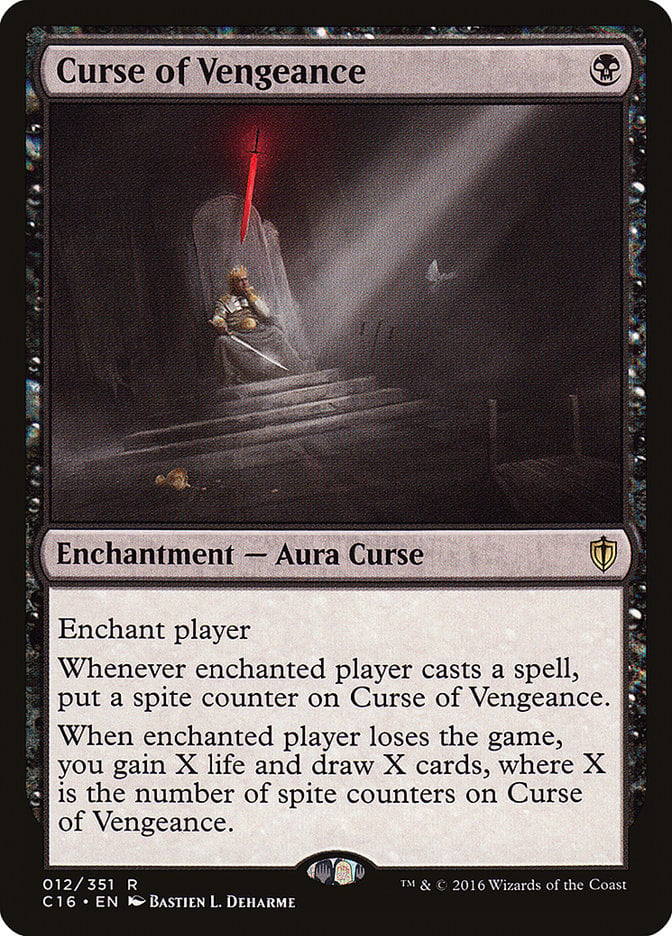
Curse of Vengeance has no effect. I mean, it has words on the card, but I’m never giving a card credit for having a “when a player loses the game” trigger. It’s also a stone-cold blank in any 1v1 match, and the effect’s not even that impressive when it does happen.
#45. Curse of the Forsaken
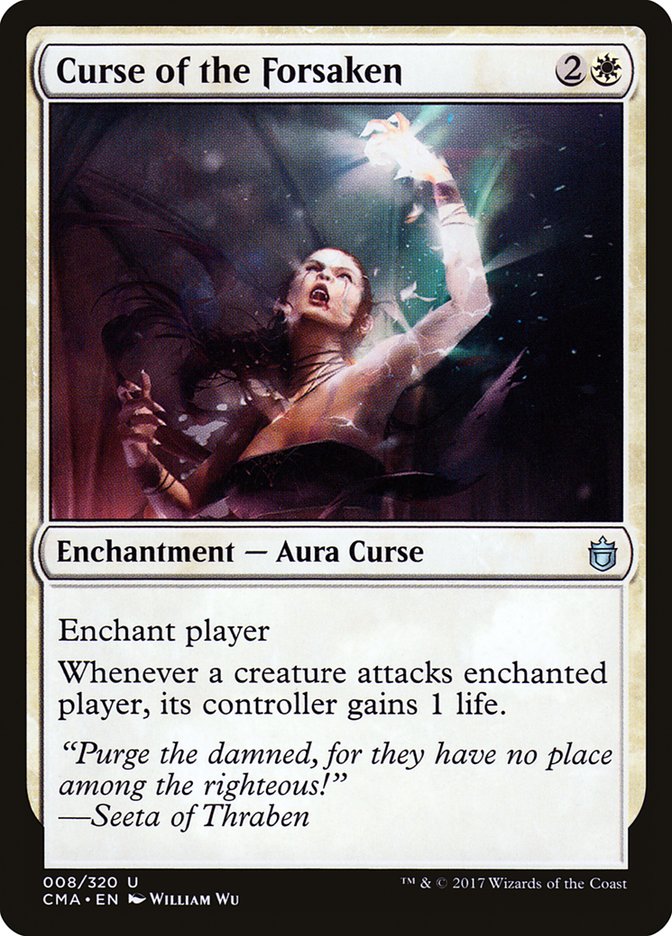
Curse of the Forsaken is not only a terrible lifegain card that sometimes doesn’t work (if you’re not in a position to be attacking), but also isn’t even the best lifegain curse on this list. Next please.
#44. Curse of Chaos
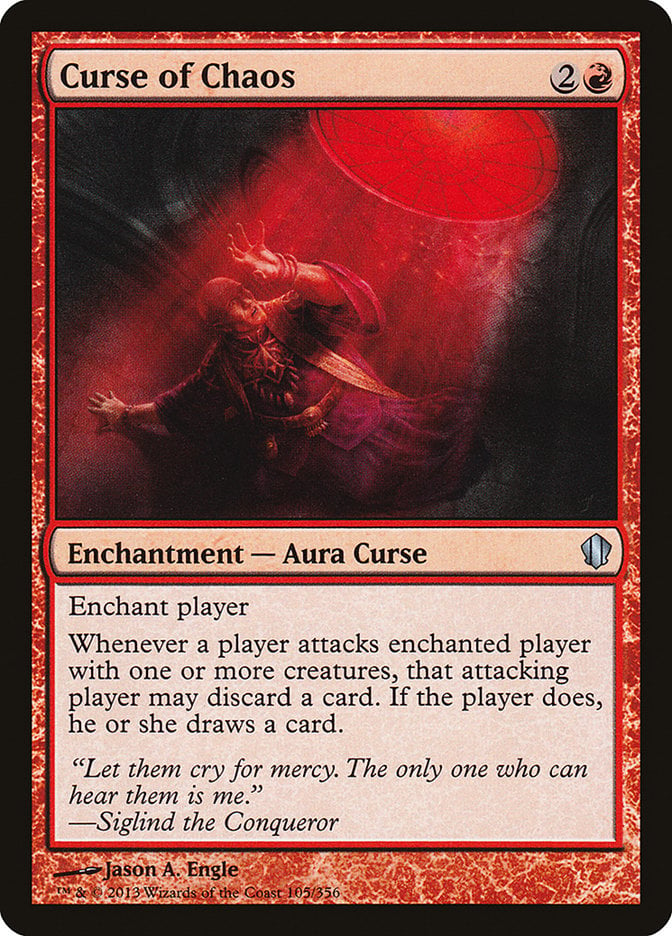
Curse of Chaos is an expensive rummage effect that benefits other players as well. It’s not even a strong enough incentive to draw attention away from you. Pass.
#43. Curse of Oblivion
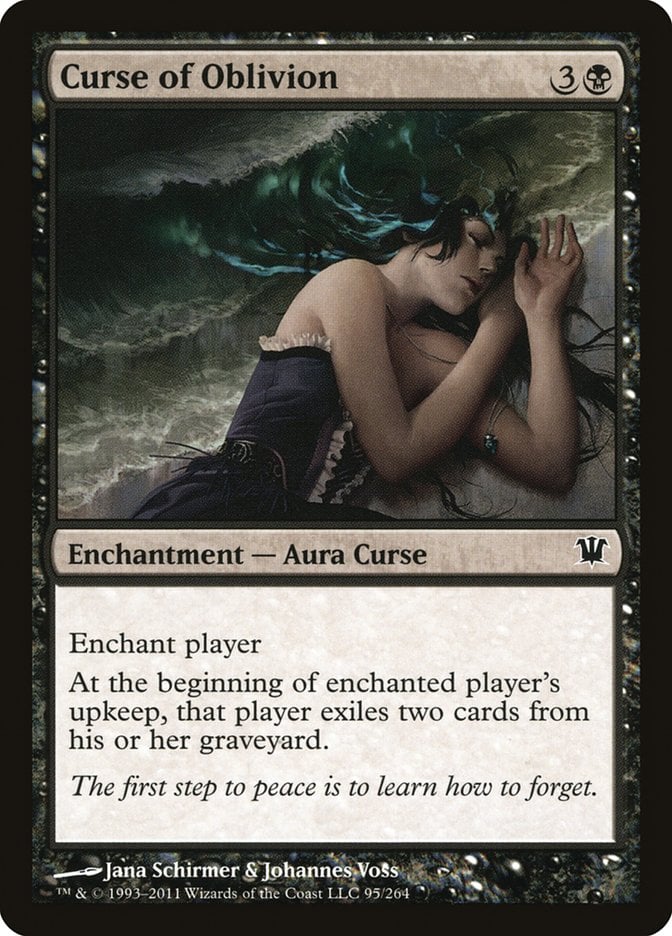
Curse of Oblivion provides annoying, persistent graveyard hate, but at a rate that’s too much worse than other effects. Avoid this in anything but actual curse decks.
#42. Accursed Witch / Infectious Curse


Accursed Witch / Infectious Curse is more suitable for Limited, but the design is cool enough. It’s easier to kill than the average creature due to the tacked on cost reduction ability, but it transforms into a curse that makes it easier to target the enchanted player. It’s overall very tame, but very cool.
#41. Curse of the Nightly Hunt
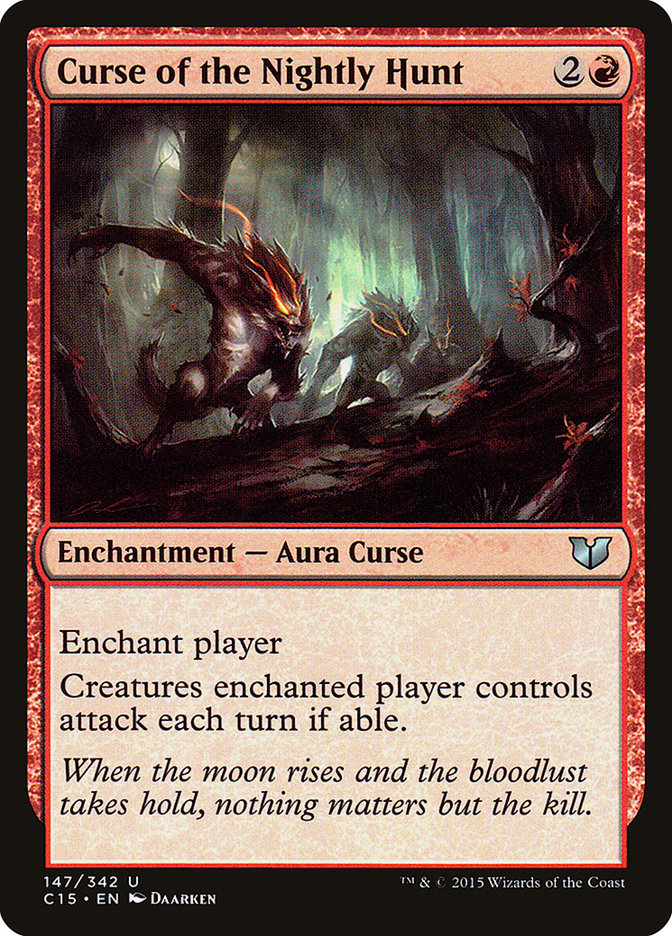
Curse of the Nightly Hunt essentially goads all of the enchanted player’s creatures to attack on every one of their combat steps. This card took a hit with the influx of newer goad cards like Disrupt Decorum, to the point where you basically never see this in play.
#40. Curse of Bloodletting
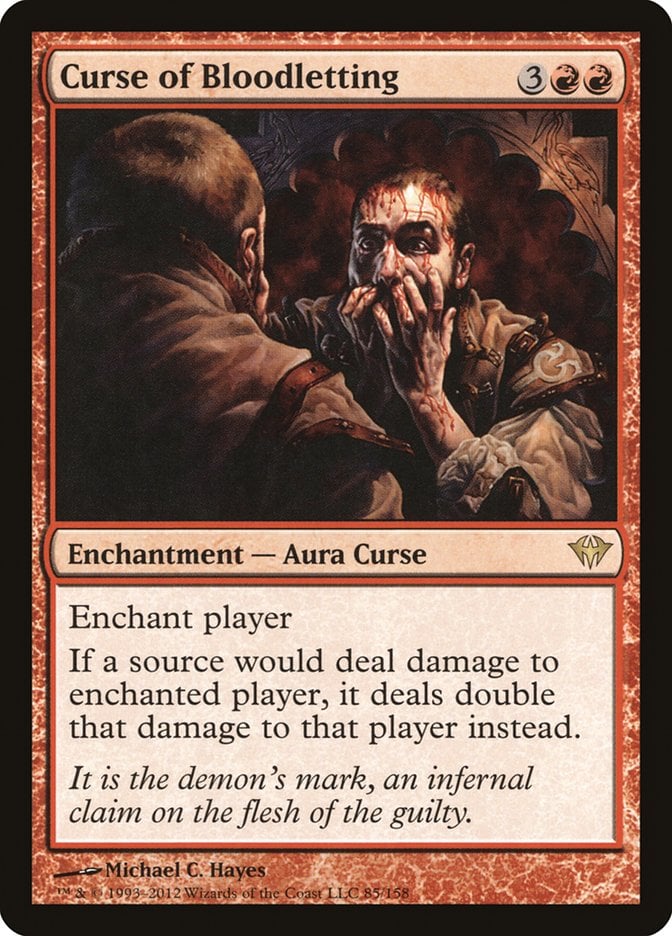
Curse of Bloodletting is especially ruthless against the cursed player, since it doubles all damage dealt to them from any source, not just your own. You can do so much better for damage doublers though, with cards like Dictate of the Twin Gods and Fiery Emancipation synchronizing the damage across multiple players.
#39. Radiant Grace / Radiant Restraints


Radiant Grace / Radiant Restraints is first a creature aura before transforming into an aura curse. It provides a very minor effect on the front, and an effect on the back that’s dwarfed by the existence of things like Authority of the Consuls and Blind Obedience. Maybe there’s an aura Voltron deck that’s interested in the front half enough to play the whole package.
#38. Wheel of Sun and Moon
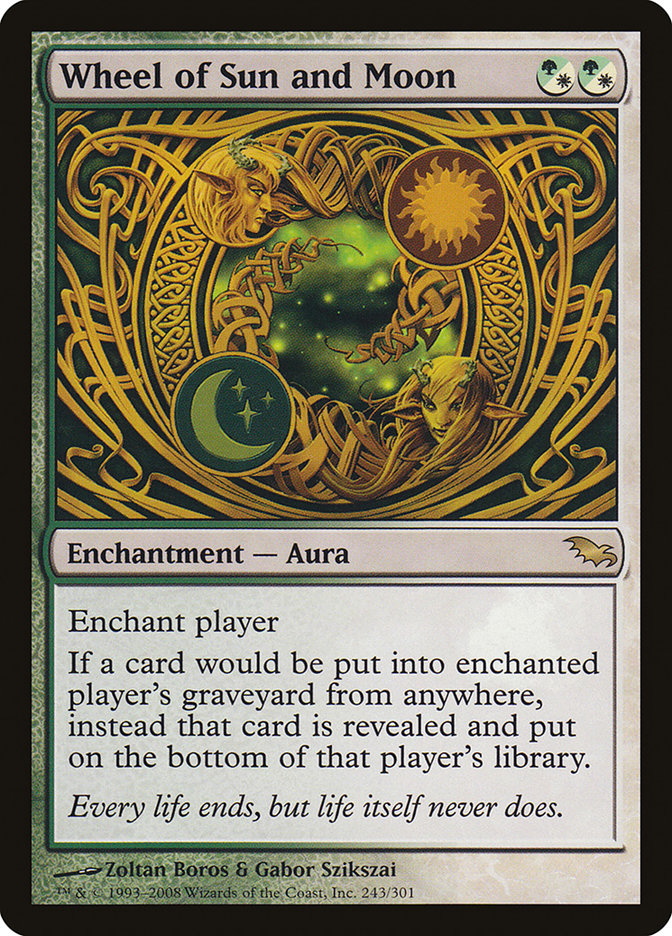
Wheel of Sun and Moon has two main uses. You can enchant yourself as an anti-mill measure, though there are better ways to do that. It’s more effective to enchant an opponent who relies on grabbing resources from their graveyard, ruining whatever graveyard-based value engines they have in place.
#37. Curse of Clinging Webs
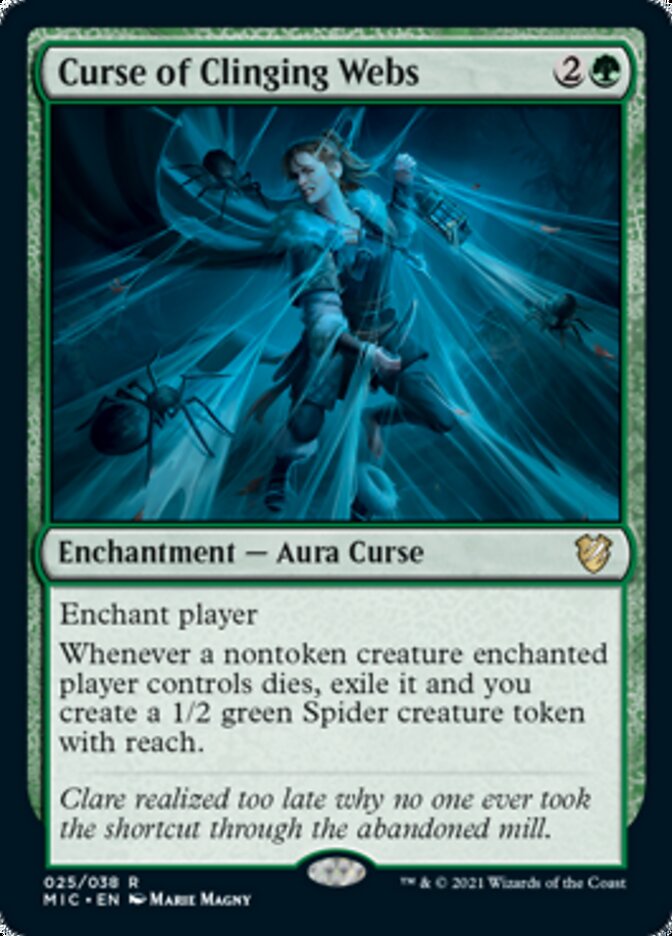
Curse of Clinging Webs is a great fit for decks forcing opponents to sacrifice creatures via cards like Grave Pact. Staging a board wipe can also trigger Curse of Clinging Webs en masse, leaving you up an army of Spider tokens and exiling the cursed player’s creatures.
#36. Curse of Shallow Graves
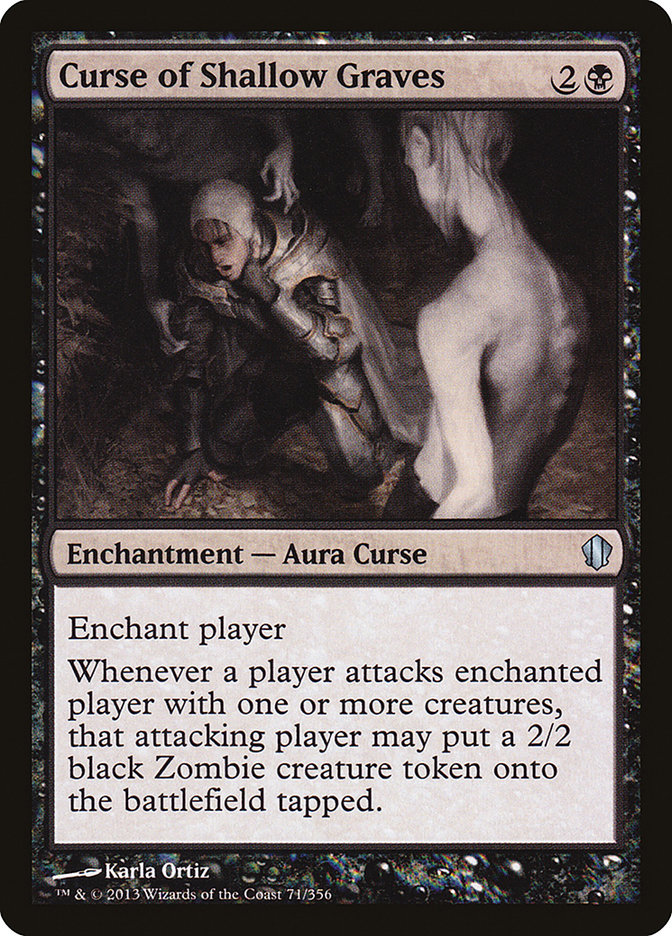
Curse of Shallow Graves benefits you and your opponents by rewarding anyone who attacks the cursed player with a creature token. Zombie typal decks could benefit from accumulating the extra body, and it’s not a bad political maneuver to get everyone focused on someone other than you.
#35. Curse of Death’s Hold
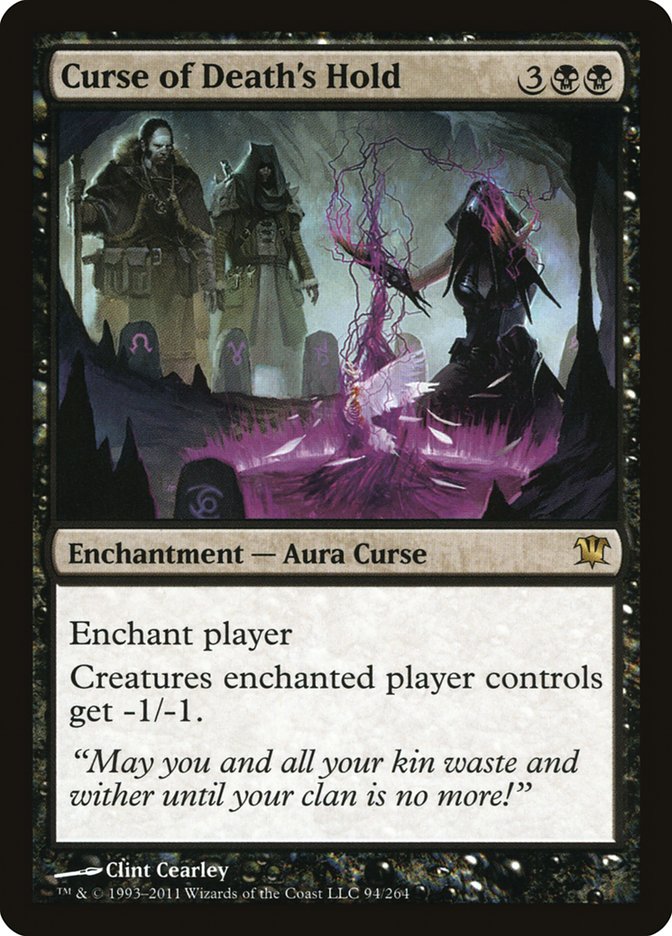
Curse of Death's Hold can be cumbersome for an opponent operating a creature token deck as many of them are 1/1s. There’s usually someone at the table that this curse will put a damper on, even if it’s not very effective against your other opponents. It skyrocketed to must-play status with the addition of Maha, Its Feathers Night from Bloomburrow.
#34. Curse of Conformity
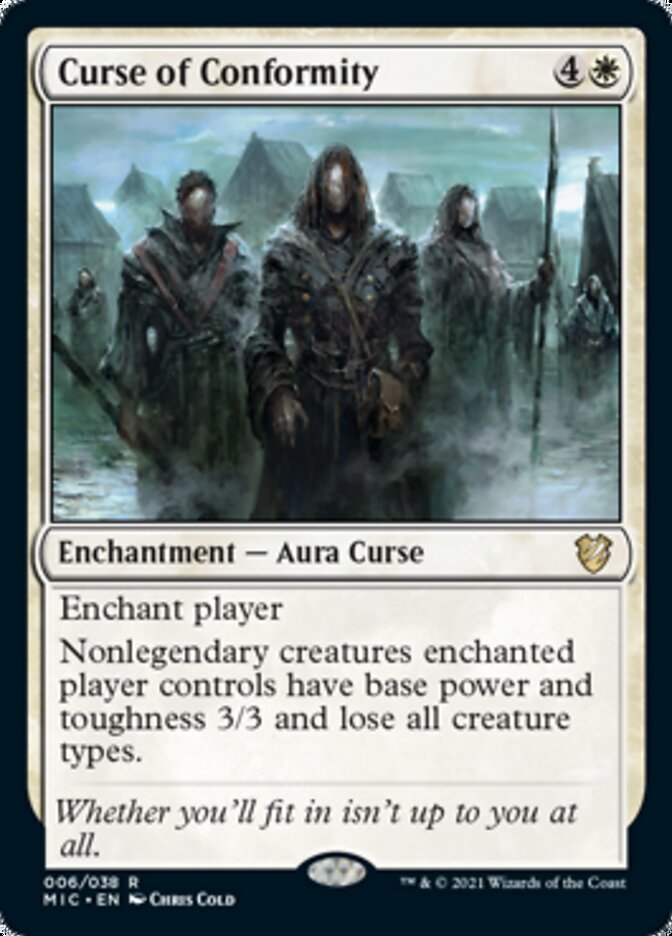
Curse of Conformity is another twofold curse. You can either enchant yourself as a sort of anthem effect to buff smaller creatures, or curse an opponent to shrink a larger board. It’s particularly devastating against typal decks, since it strips creatures of their creature types, too.
#33. Curse of Silence
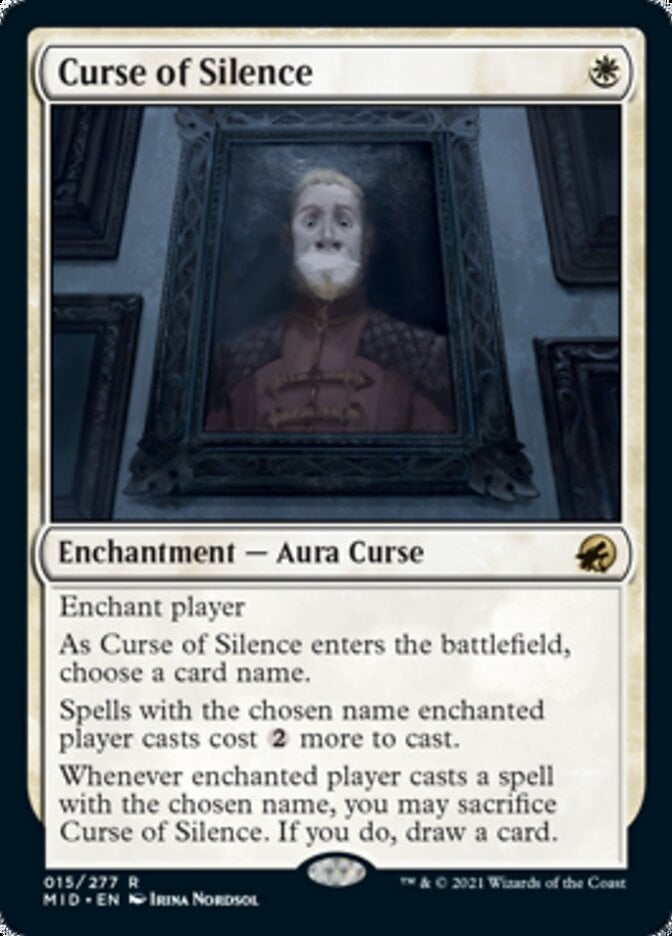
Curse of Silence is most effective in formats like Pioneer, Modern, and Legacy. You can tax an important piece of your opponent’s gameplan if you know the metagame well enough, and there’s a change your curse is actually affecting more than one card in your opponent’s hand at a time. In the Commander format, players usually target another’s commander to hinder their value engine.
#32. Curse of Leeches / Leeching Lurker
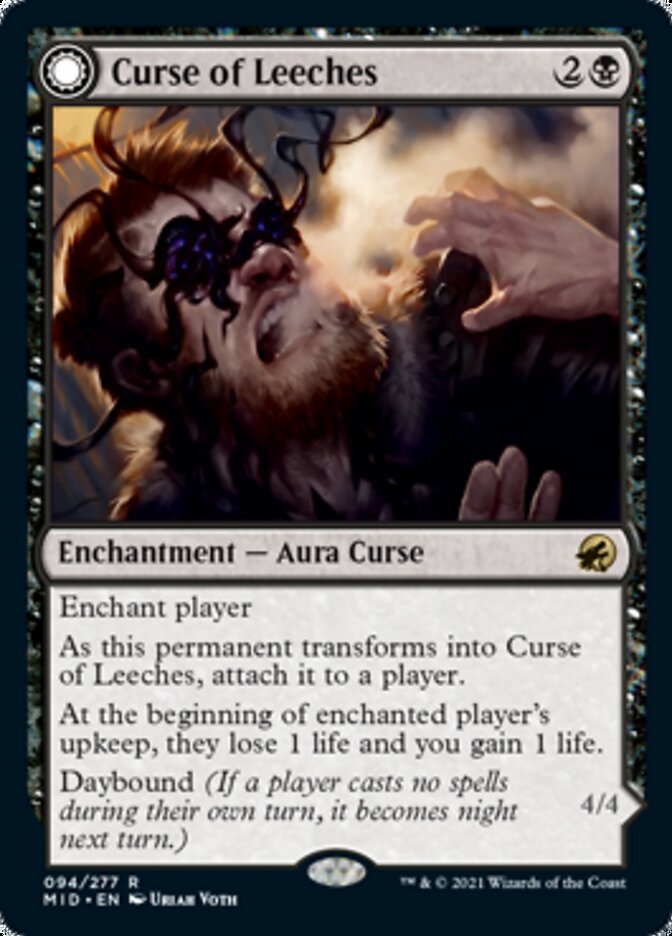
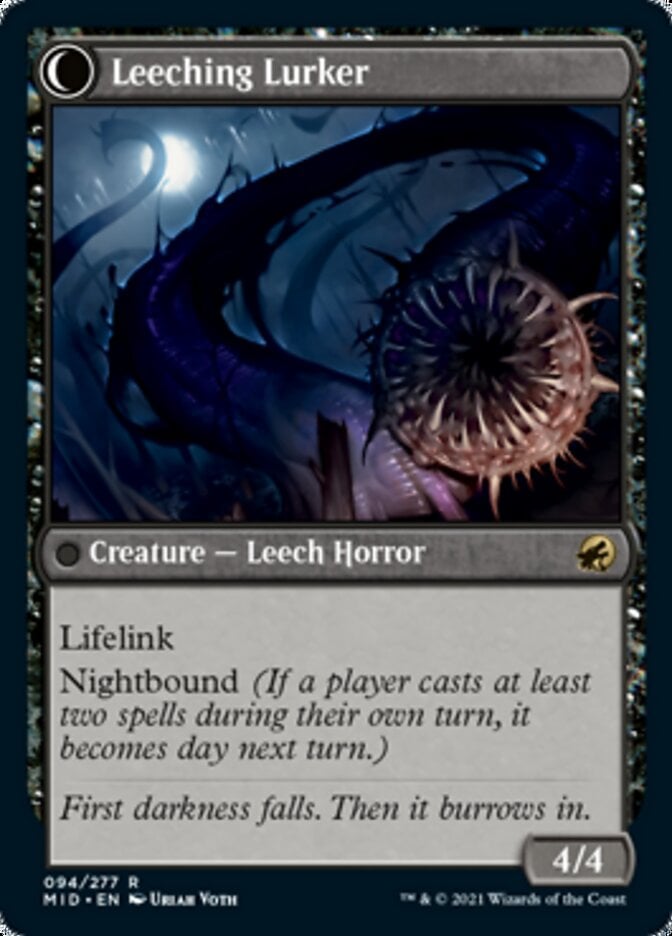
Curse of Leeches / Leeching Lurker is a strange hybrid of a drain effect and a decently-statted lifelink creature. It’s hindered by the use of the atrocious daybound/nightbound mechanic, which isn’t something most people appreciate having introduced into their Commander games.
#31. Curse of the Pierced Heart
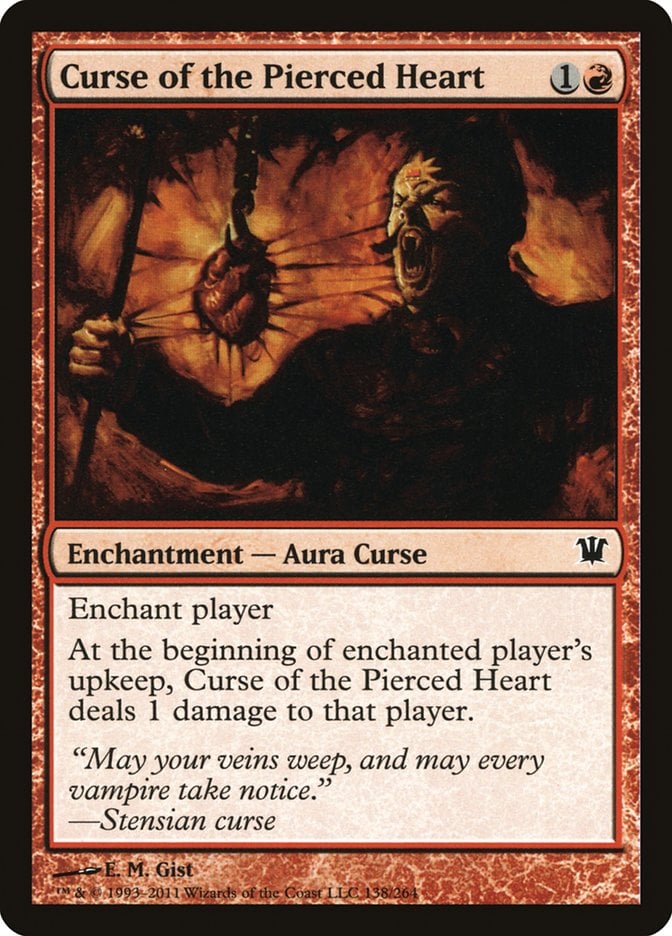
Curse of the Pierced Heart is a bit of a no-go in Commander, since it only ever affects one opponent, but it has a place in Constructed formats, and saw a healthy amount of play in Pauper Burn decks. It benefits from being surrounded by extra copies of itself, and puts in extra work with damage doublers/amplifiers.
#30. Trespasser’s Curse
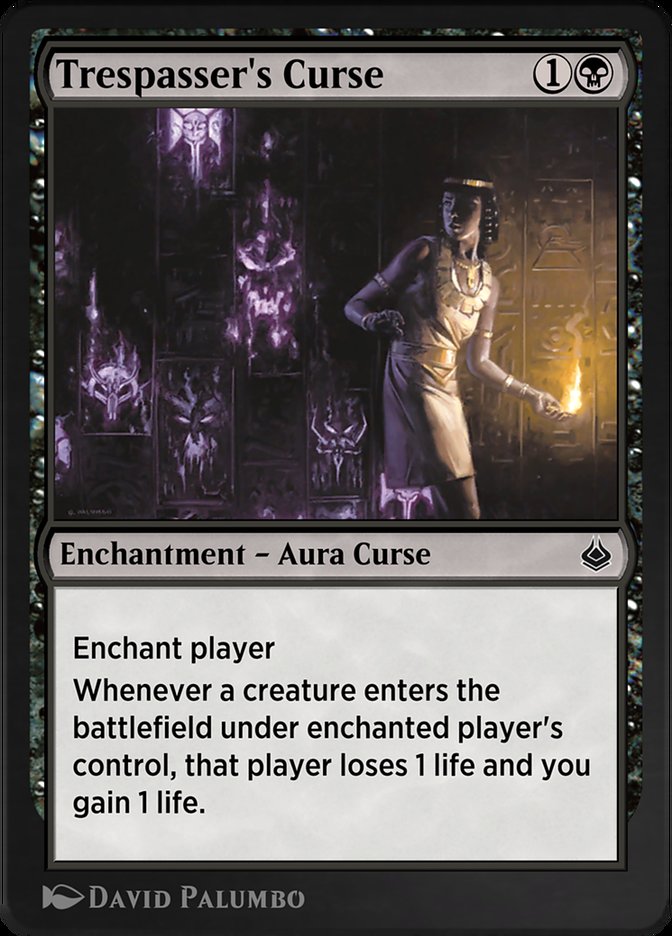
Trespasser's Curse is like a reverse Impact Tremors. Instead of dealing damage when you play a creature, it punishes the overzealous token deck who keeps dumping 1/1s on board. It only ever affects one player at a time though, so its uses are limited.
#29. Fraying Sanity
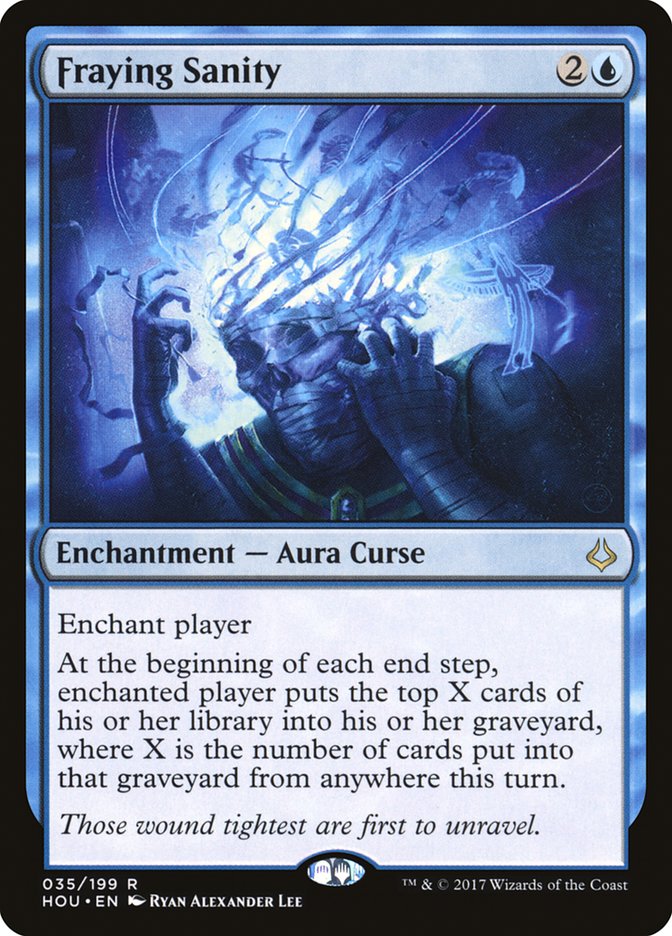
Mill decks use Fraying Sanity as a means to double the effectiveness of their mill cards, though it’ll also count permanents that hit the graveyard due to board wipes, combat, etc. Fraying Sanity triggers on every end step. If you cast an instant spell like Countermand on an opponent’s turn to have the enchanted player mill four cards, they’d have to mill another four cards on their end step. It’s also usually an auto-kill with a card like Traumatize.
#28. Torment of Scarabs
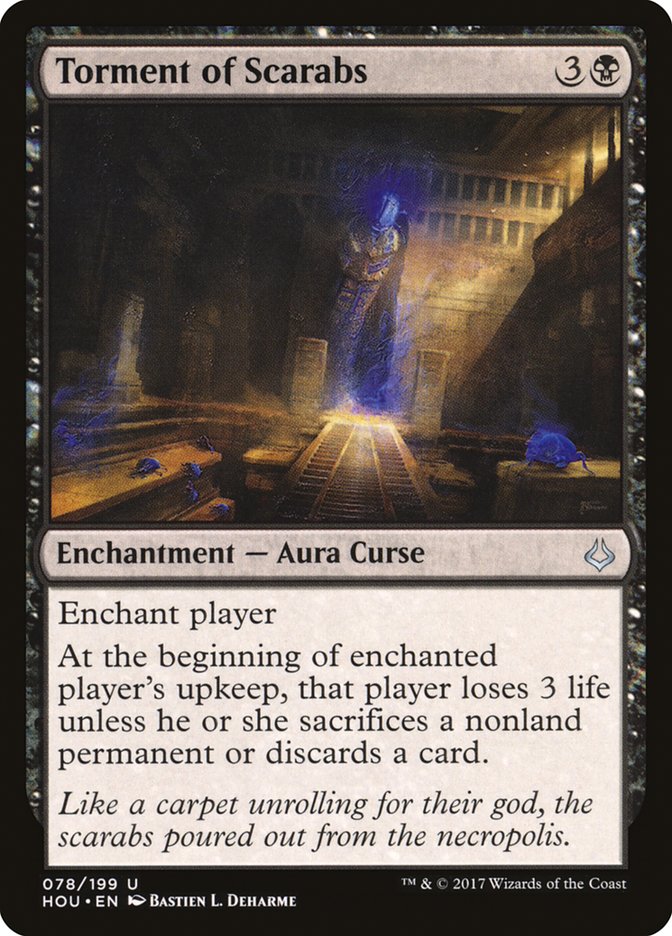
Torment of Scarabs can dock an opponent’s life totally fast if they run low on alternate resources. This Hour of Devastation card is essentially a Torment of Hailfire for X=1 every turn, which is a smallball, soft edict, but adds up when combined with other similar effects.
#27. Curse of the Bloody Tome
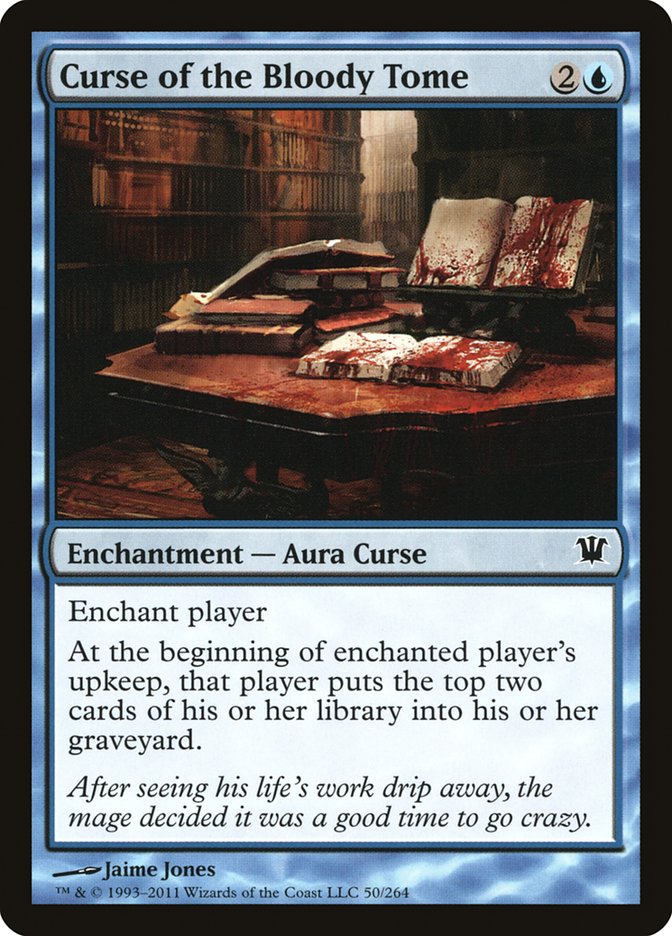
Curse of the Bloody Tome’s job is to help support mill decks by slowly milling out the enchanted player’s library. Having Bruvac the Grandiloquent on the field simultaneously can cause the enchanted player to mill four cards per upkeep instead of two. Think of this like the mill version of Curse of the Pierced Heart.
#26. Curse of Stalked Prey
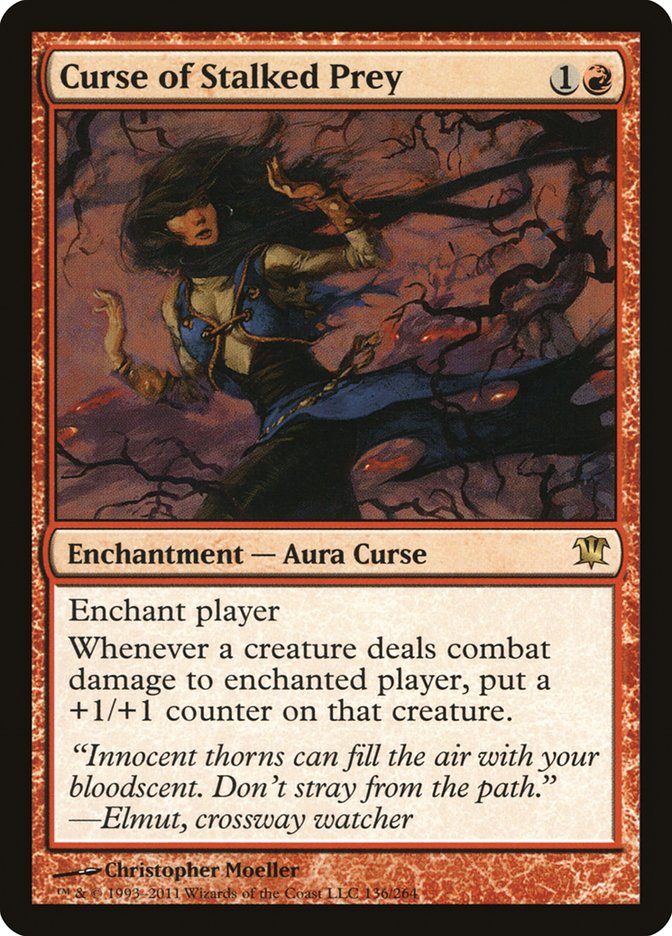
Curse of Stalked Prey is almost like Curse of Predation except you have to land combat damage to get a +1/+1 counter on that creature. You need to be an assertive red aggro deck before you’d consider this, and even then you probably want some sort of +1/+1 counter theme to your deck.
#25. Curse of Predation
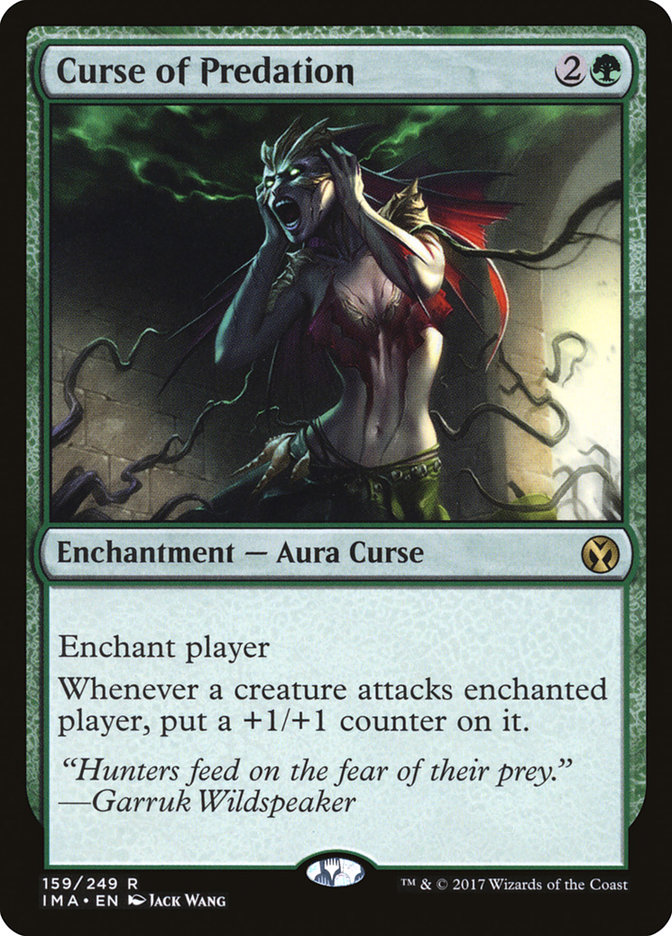
A pretty big upgrade over Curse of Stalked Prey. Even if you don’t care much about +1/+1 counters specifically, Curse of Predation is an easy way to amass a board of large creatures, and the effect works the turn you play it. Be careful it doesn’t backfire, since it’ll pump creatures you don’t control if they’re attacking the cursed player.
#24. Curse of Vitality
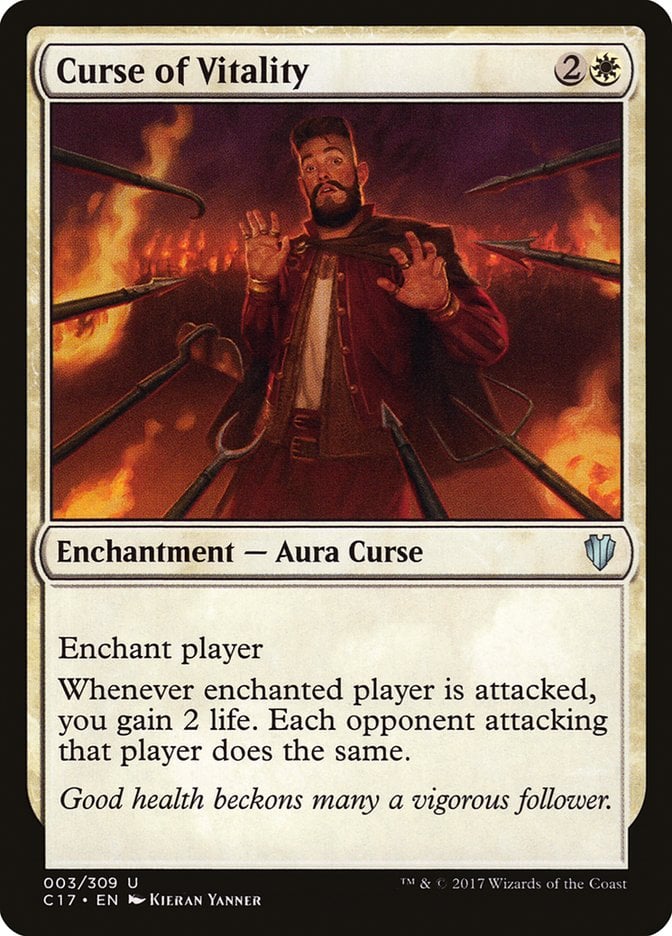
You might consider Curse of Vitality for decks with a lifegain theme, or political decks trying to control the sway of combat. Popular lifegain commanders like Trelasarra, Moon Dancer and Heliod, Sun-Crowned could benefit from Curse of Vitality in the 99.
#23. Curse of Inertia
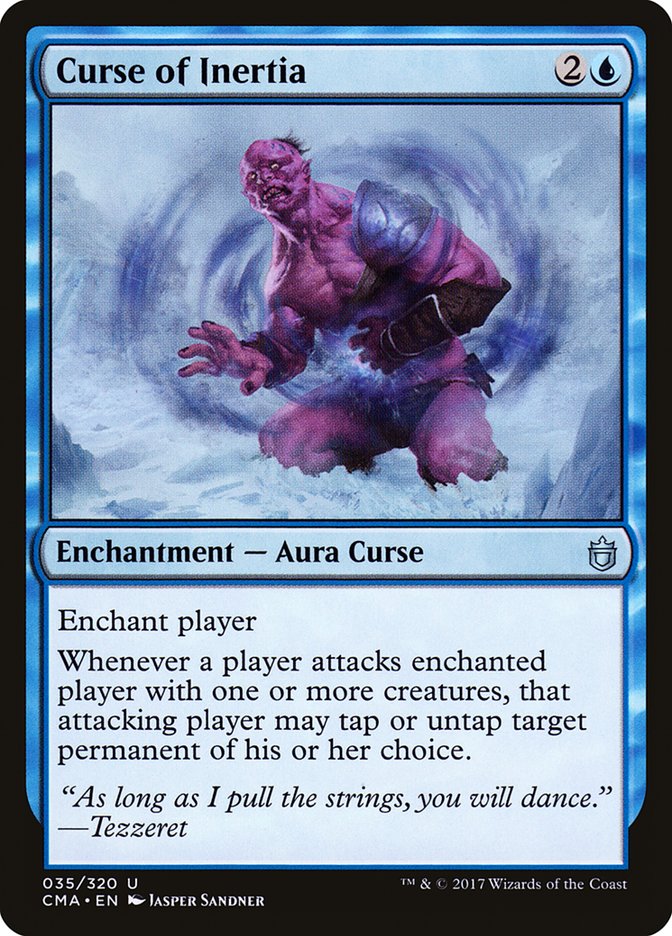
Curse of Inertia can allow you and opponents attacking the enchanted player control over that person’s board state and ability to interact in certain ways during combat. You can tap down one of the enchanted player’s biggest creatures so that they can’t block with it, or untap one of your own permanents with a good tap ability. Wait a minute, is this blue ramp?
#22. Curse of Obsession
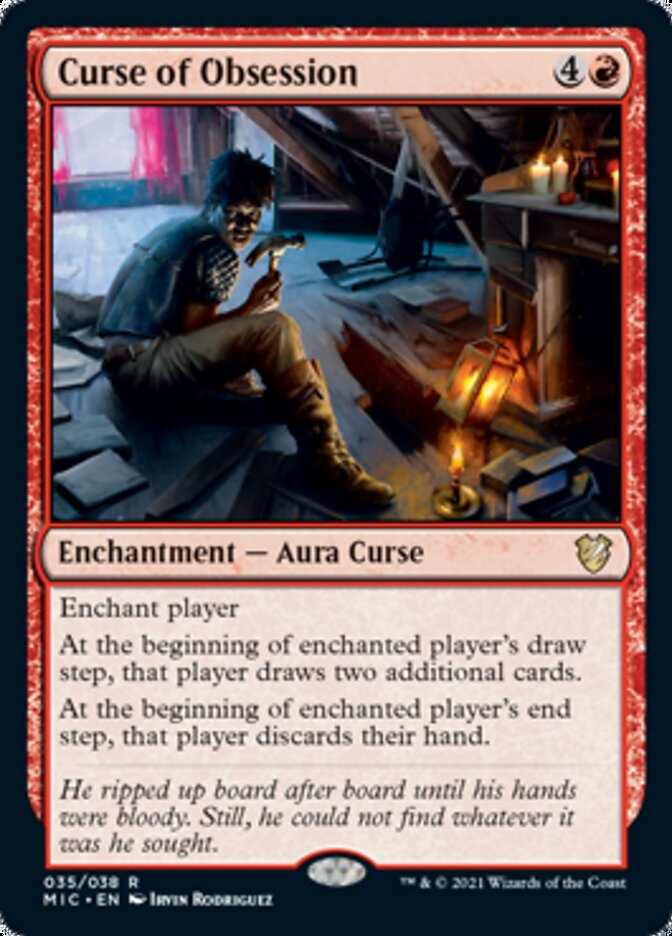
While the enchanted player can draw three total cards on their draw step when enchanted with Curse of Obsession, having to discard their entire hand on their end step means they won’t have access to those recently drawn resources for long. Play them or lose them, and no hoarding cards in your hand. There’s a chance you might even curse yourself with this, if you tend to empty your hand out quickly.
#21. Curse of Shaken Faith
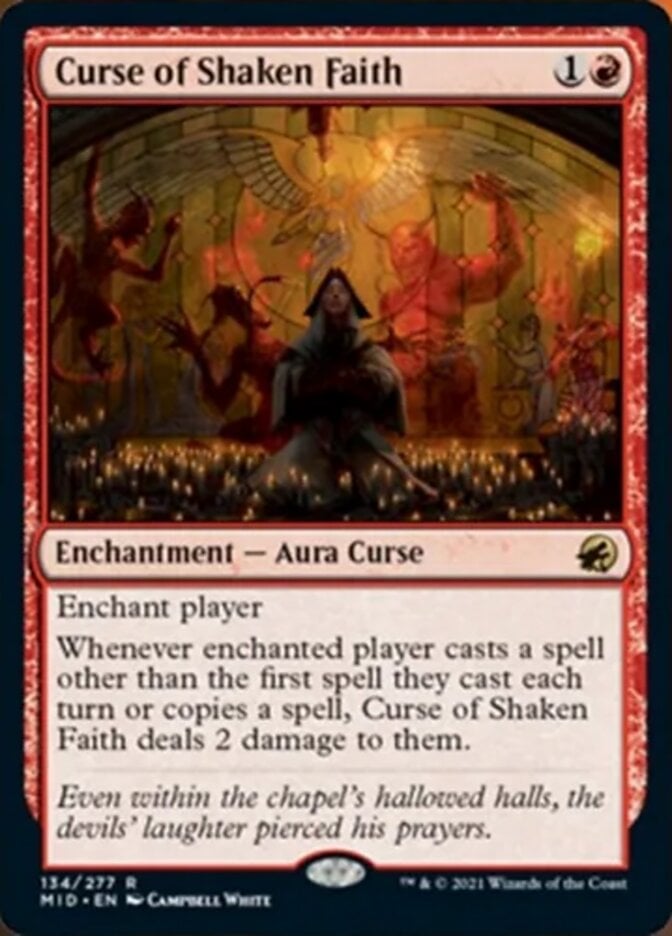
Curse of Shaken Faith warns the cursed player not to get too carried away with their spells. This is essentially an anti-storm and anti-magecraft card, though the types of decks it hoses aren’t always going to pop up at your table.
#20. Curse of Verbosity
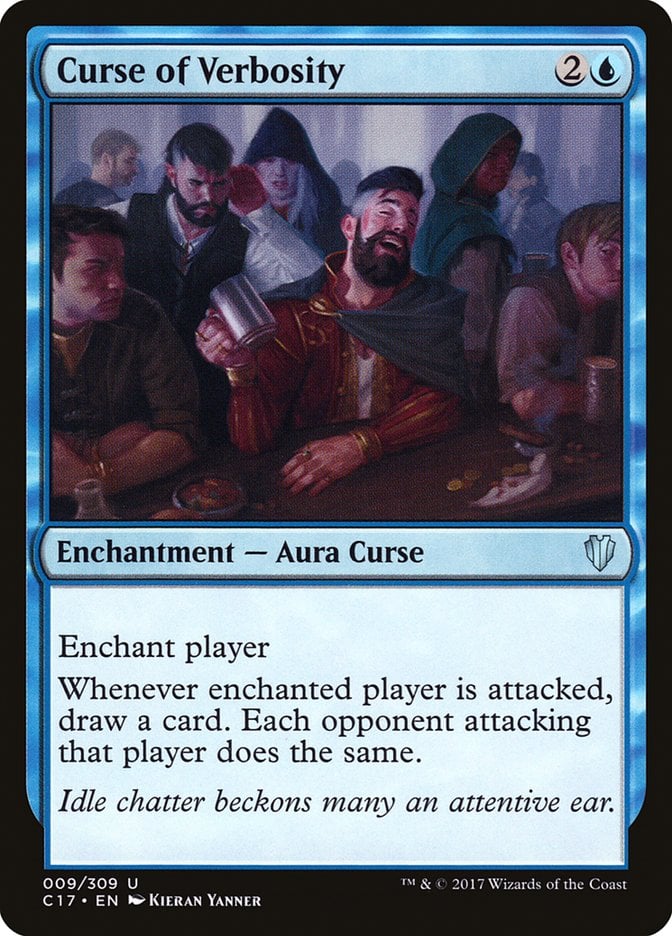
Curse of Verbosity can give you and your opponents card draw whenever the enchanted player is attacked. It’ll take a calculated decision from your opponents, but at the very least you always get one card when you attack during your own turn.
#19. Curse of the Restless Dead
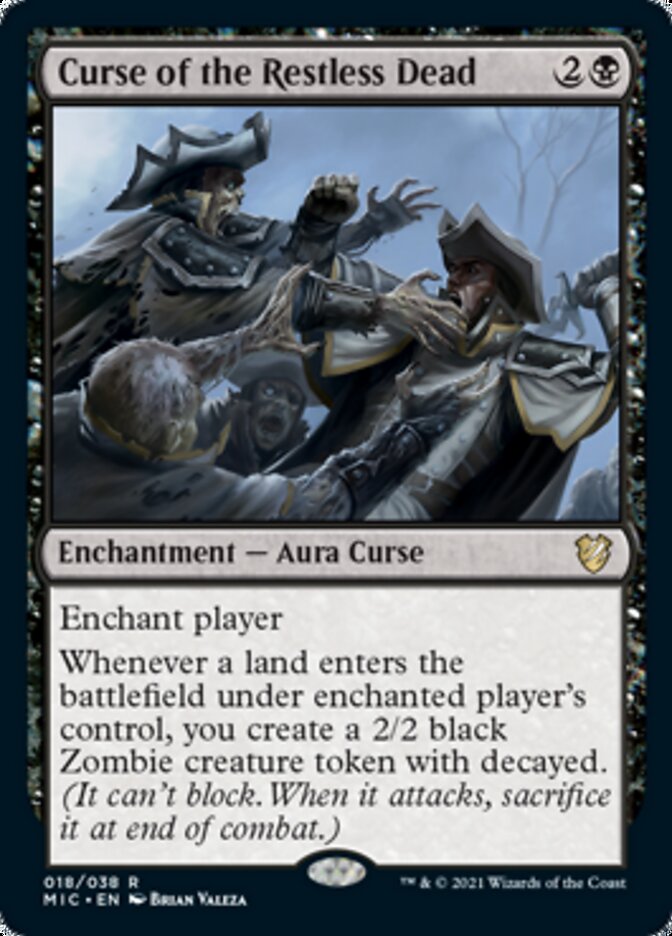
Curse of the Restless Dead punishes heavy landfall decks, and creates expendable fodder for your aristocrats strategies. Decayed zombies don’t stick around for long, so put them to good use while you can.
#18. Shadow of the Second Sun

Remember “reading the card explains the card?” Well not anymore.
Shadow of the Second Sun gives you an extra beginning phase, which translates to another untap, upkeep, and draw phase, though positioned awkwardly right before the end of your turn. Think of it like an extra card draw and an untap for all your lands each turn, and don’t go sticking this on an opponent.
#17. Curse of Fool’s Wisdom
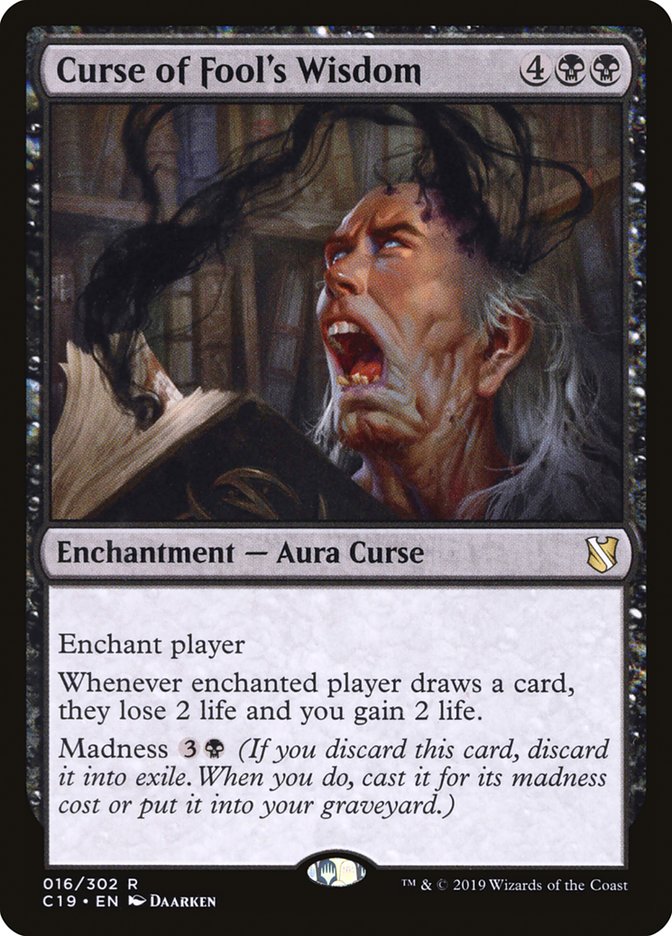
Curse of Fool's Wisdom is potent card draw punishment in the same vein as Sheoldred, the Apocalypse. You want to be able to cast this for its madness cost, which makes it more suitable for self-discard decks.
#16. Curse of Unbinding
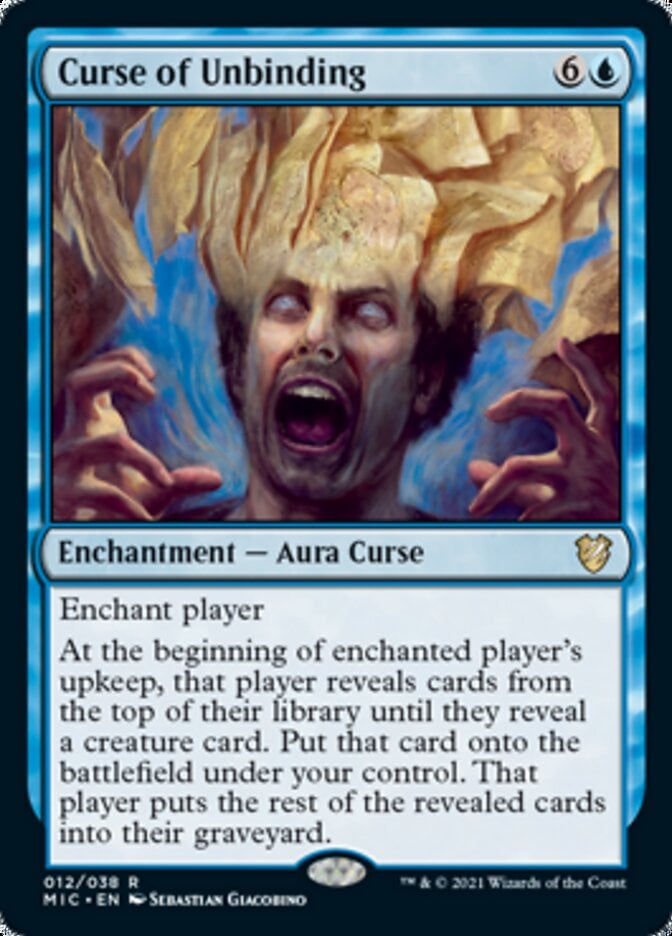
Curse of Unbinding can get out of hand almost immediately, provided you curse the player with the biggest creatures. Maybe that’s you, and you’re just trying to cheat your threats into play, but more likely than not you’re enchanting some Naya () player and hoping for the best. Seven mana’s not doing this card any favors though.
#15. Curse of Exhaustion
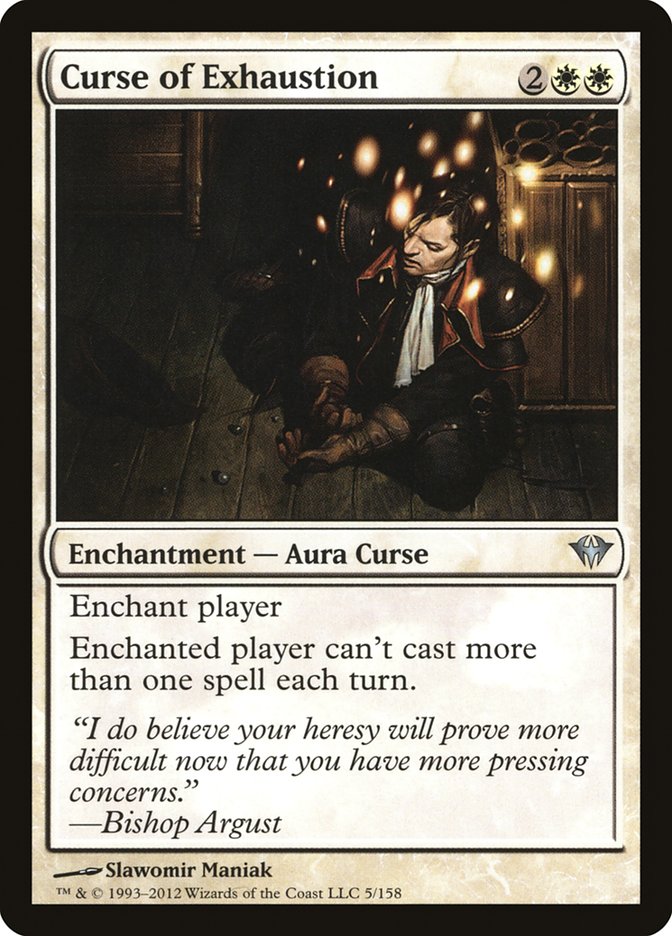
Curse of Exhaustion is a one-sided Rule of Law, which can be especially mean against spellslinger decks. The cursed player can still cast up to one spell on each player’s turn, but they’re likely going to have to get rid of this curse before they can set up a proper win.
#14. Curse of Hospitality
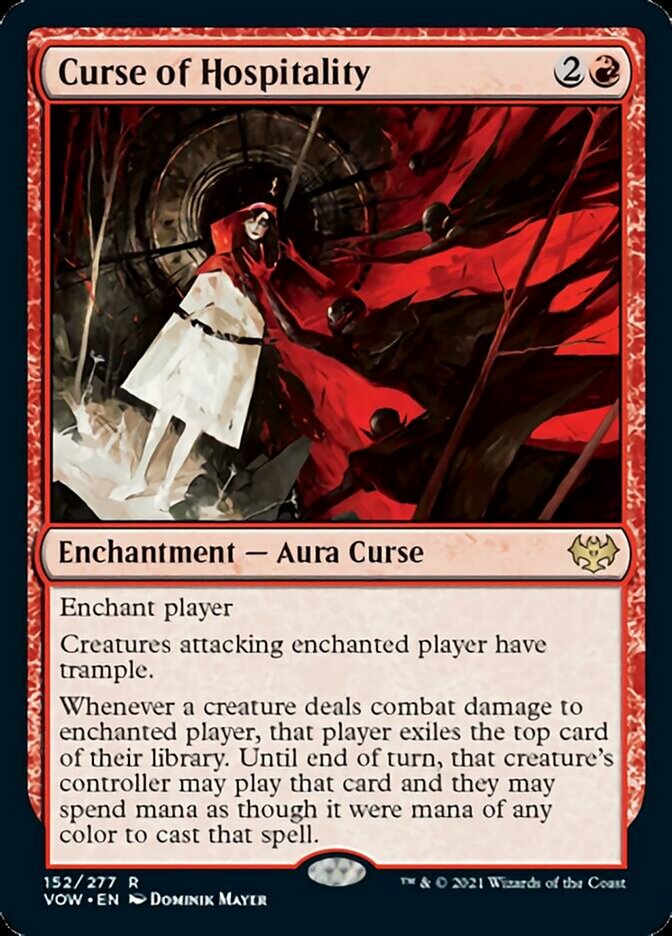
Curse of Hospitality is great for “cast-from-exile” decks, but it can give opponents attacking the enchanted player great card advantage too, depending on how many of their creatures land combat damage. Being cursed by this card feels especially bad, since people will go out of their way to attack you for extra cards, and trample makes it hard to stave off the damage.
#13. Curse of Surveillance
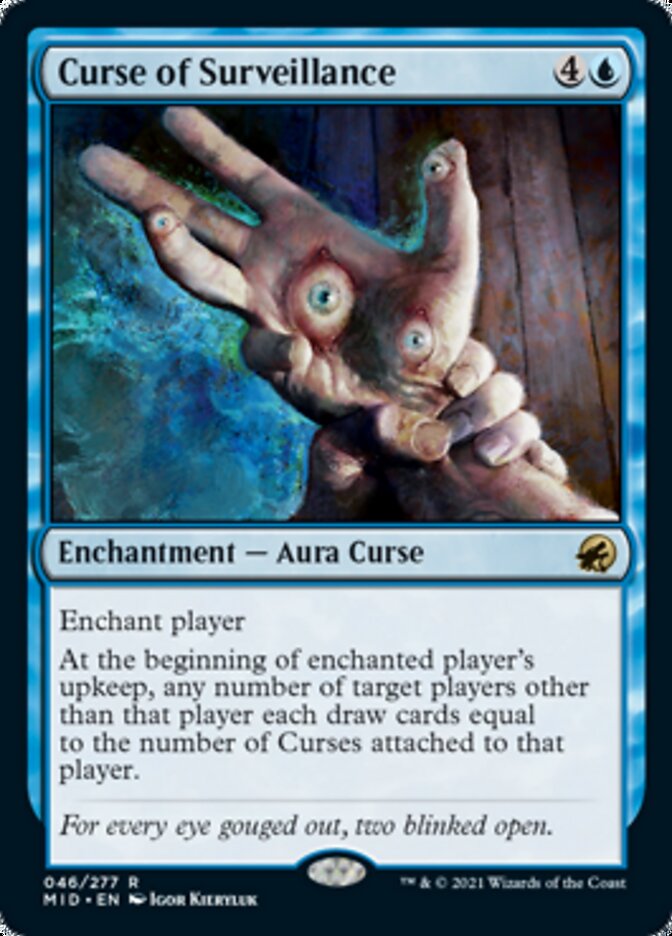
Curse of Surveillance cares about all the curses attached to the same player, giving you more cards on the enchanted player’s upkeep. If you’re feeling generous, you can even run this as a group hug card and target other players to draw cards too.
#12. Curse of Thirst
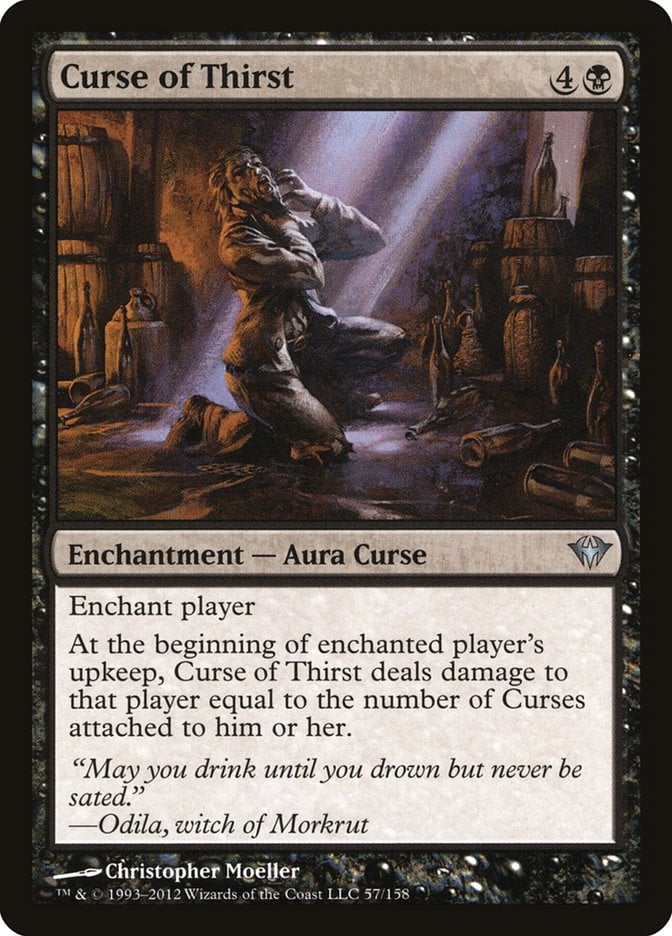
Curse of Thirst is an all-in curse card, which means its only real home is a Lynde, Cheerful Tormentor deck. It’s unplayable anywhere else, but likely one of the draws to build around the curse archetype.
#11. Grievous Wound

Grievous Wound is disrupting for a number of decks since it stops lifegain. The target grows big time with the half-life effect that is just brutal combined with pingers, or being ahead on the board.
#10. Cruel Reality
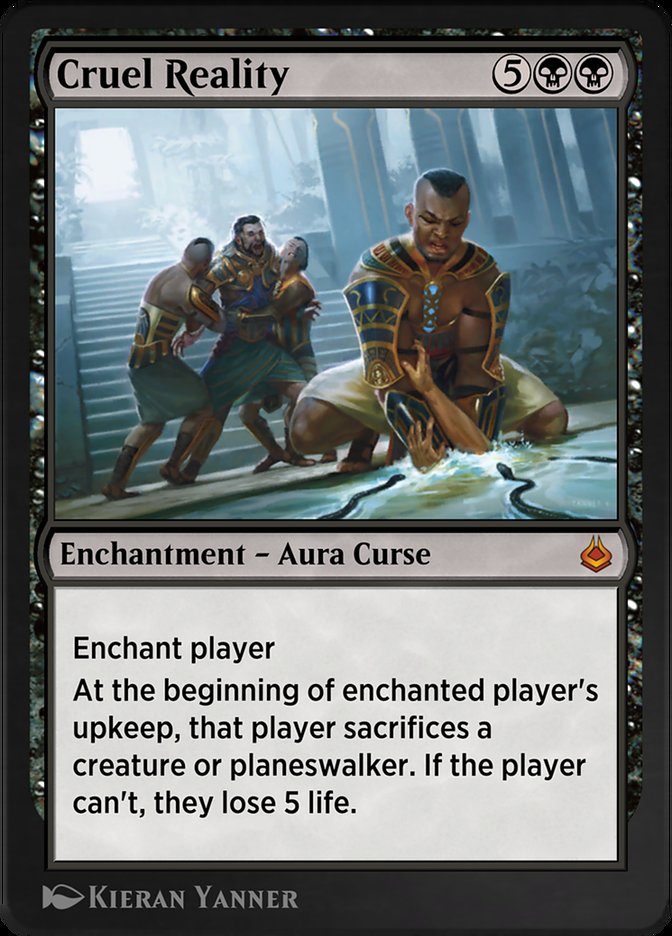
Cruel Reality gets ugly fast. Your opponent must sacrifice a creature or planeswalker each turn, and they only start losing life once they’ve exhausted those permanent types. If you cast this aura curse after a creature board wipe, it’ll be difficult for the enchanted player to keep up with the persistent triggers from this card.
#9. Curse of Disturbance
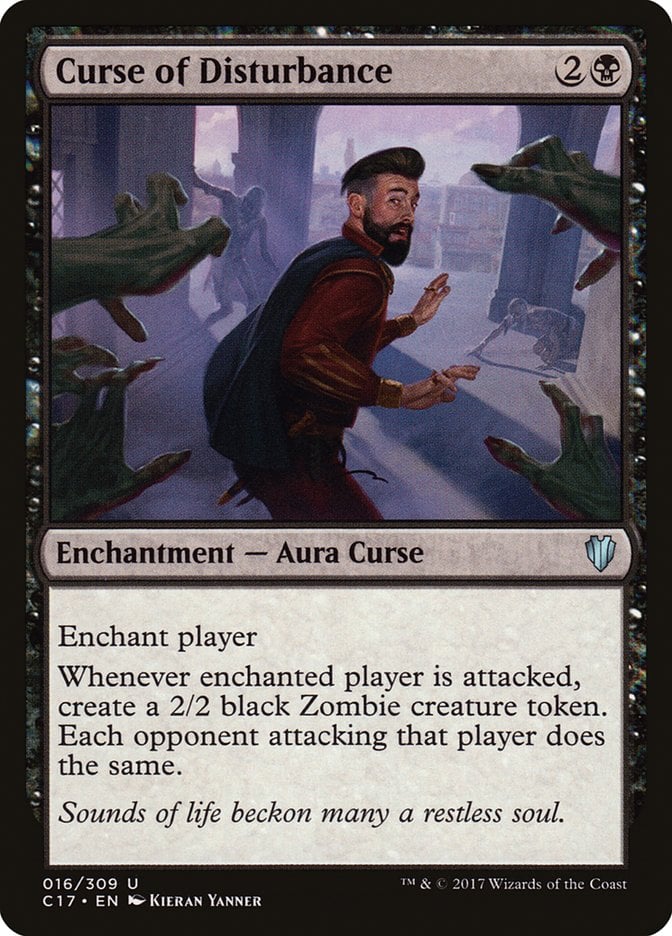
Curse of Disturbance gives everyone zombies! Well, except the poor sap who got cursed. Just like the rest of the cards in this cycle, your opponents might think twice about attacking if it means you get extra tokens, but you’re almost always guaranteed a token on your own turn.
#8. Curse of Echoes
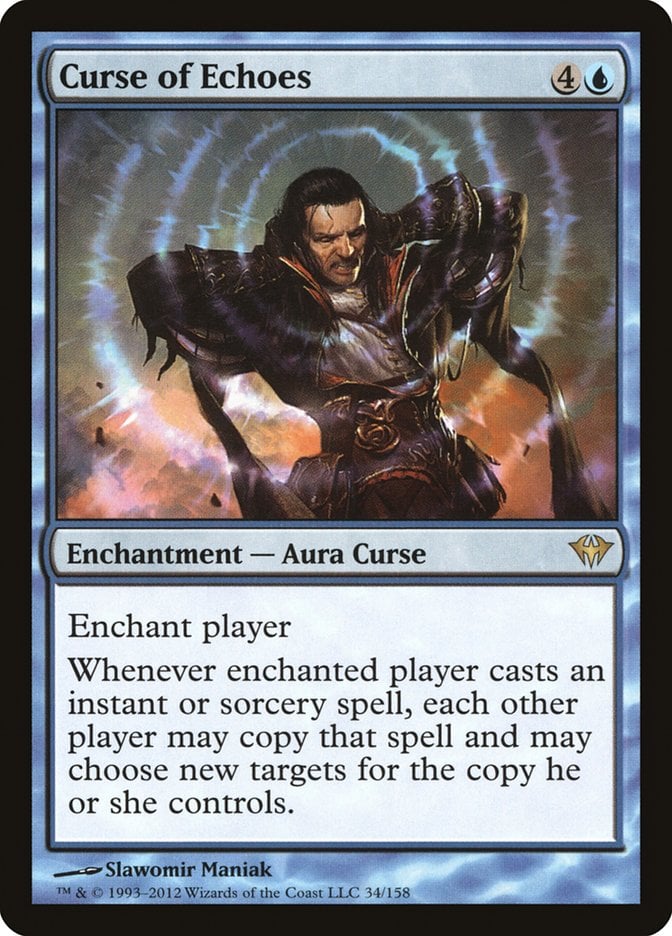
Expensive but annoying, Curse of Echoes burdens a spellslinger player with their own personal Hive Mind. That’s usually enough to shut off most of their spellslinging shenanigans. You could also try to stick this against a control player. Casting a counterspell while cursed with this card gives all your opponents free counterspells to fight back with.
#7. Maddening Hex
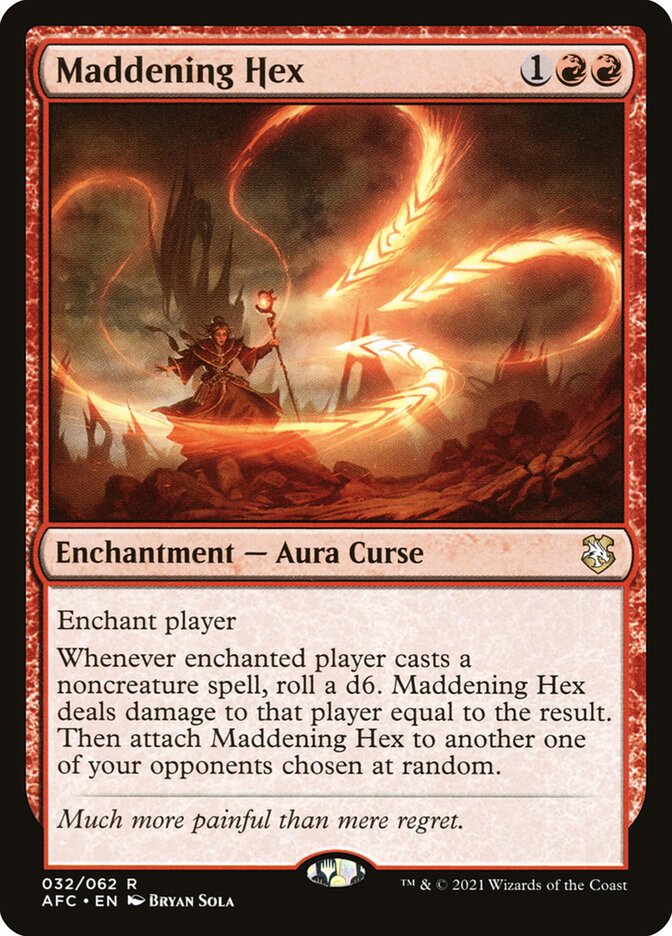
Maddening Hex sends a continuous wave of burn damage at your opponents. Either that, or severely limits their willingness to cast noncreature spells. It’s also one of the few strong die-rolling cards, which popped back up in demand with the release of Mr. House, President and CEO.
#6. Paradox Haze
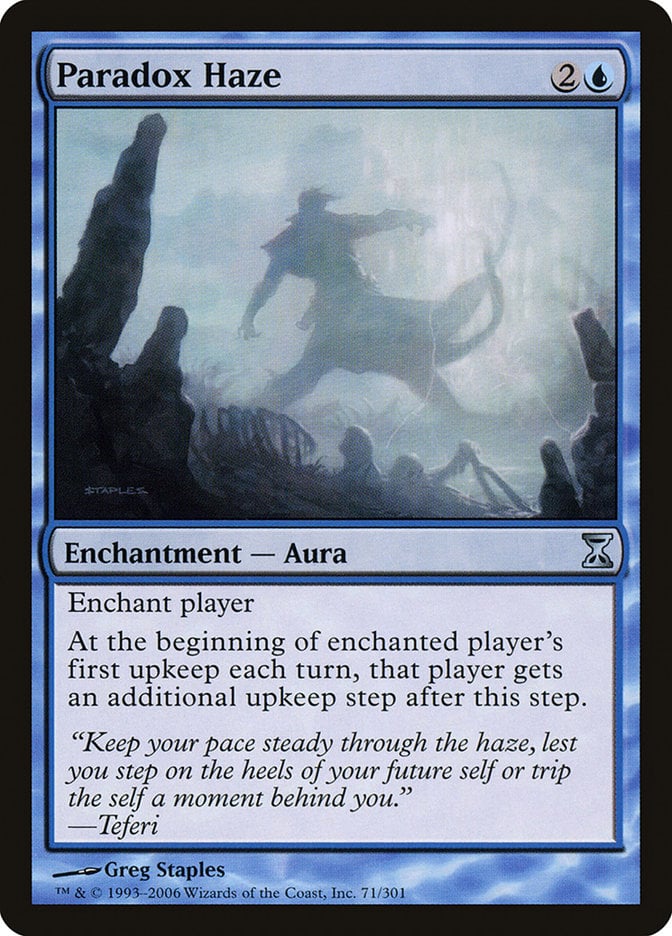
You’re usually planning to enchant yourself with Paradox Haze for extra upkeep triggers. Obeka, Splitter of Seconds never leaves home without this card, and you’d be surprised how effective an extra upkeep step can be.
#5. Faithbound Judge / Sinner’s Judgment
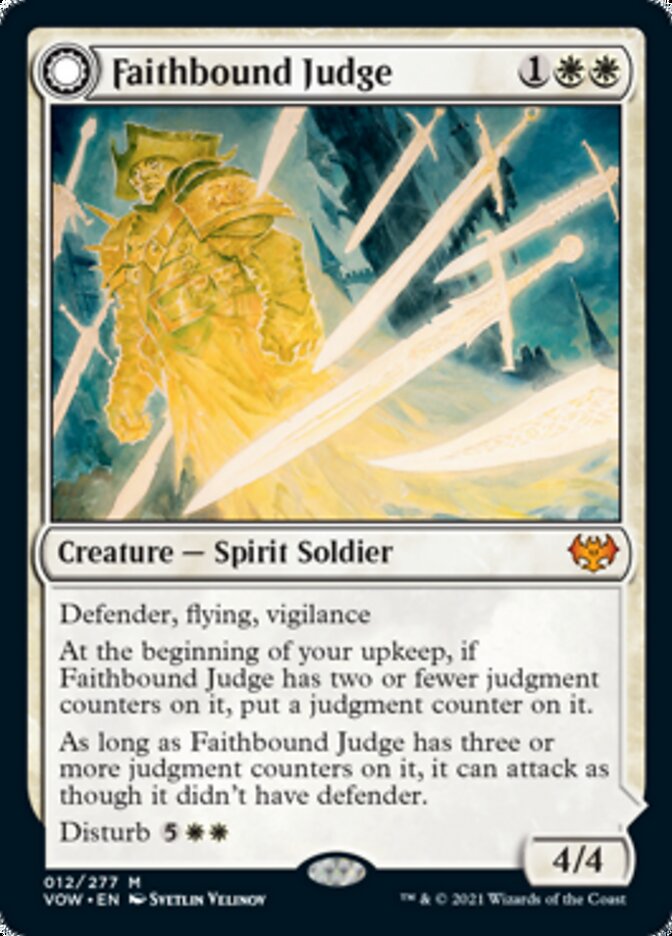

Faithbound Judge / Sinner's Judgment is an interesting alternate win condition for any deck including white. Once you pay the disturb cost, the spirit soldier transforms into an aura curse. From their it’s just a matter of buying time or proliferating to speed things up.
#4. Curse of Bounty
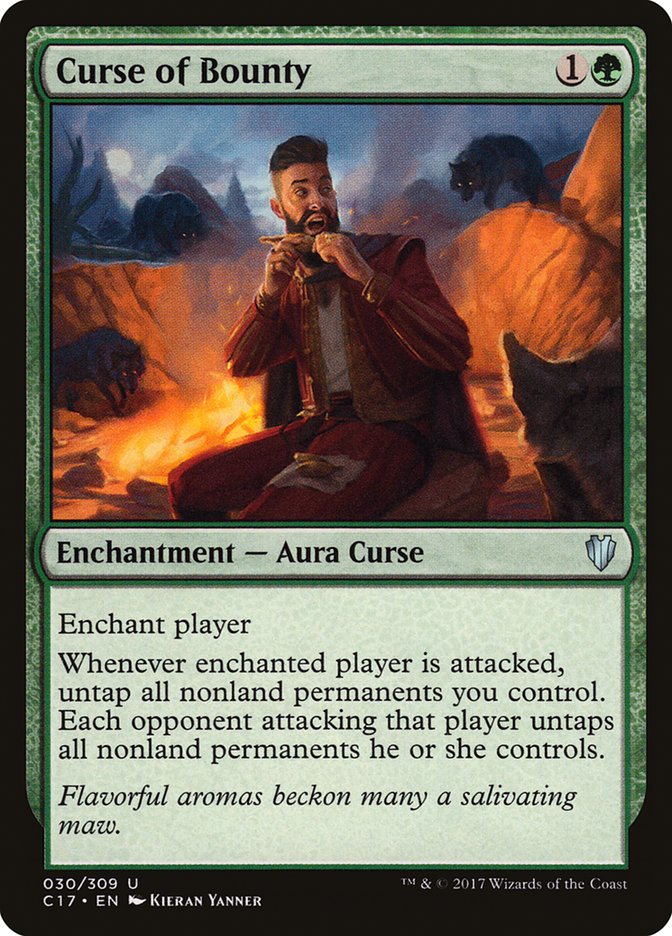
Curse of Bounty is a dangerous card to play with. It gives you a shot at untapping all your nonlands every turn, but offering that same effect to some of your opponents can get ugly. It’s a high-upside, high-risk card, and bad news for the cursed player.
#3. Curse of Misfortunes
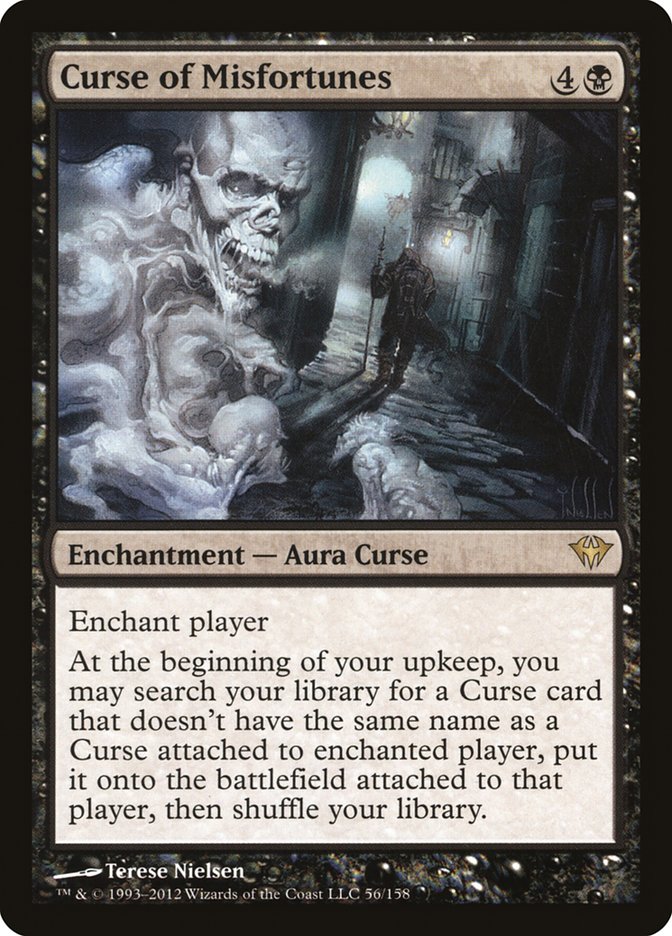
Curse of Misfortunes isn’t the most inherently powerful curse in Magic, but it’s one of the only reasons curse decks actually exist. Any time new curses get printed, this card gets better, and it’s such a hallmark staple in its respective strategy that I give it a high grade.
#2. Overwhelming Splendor
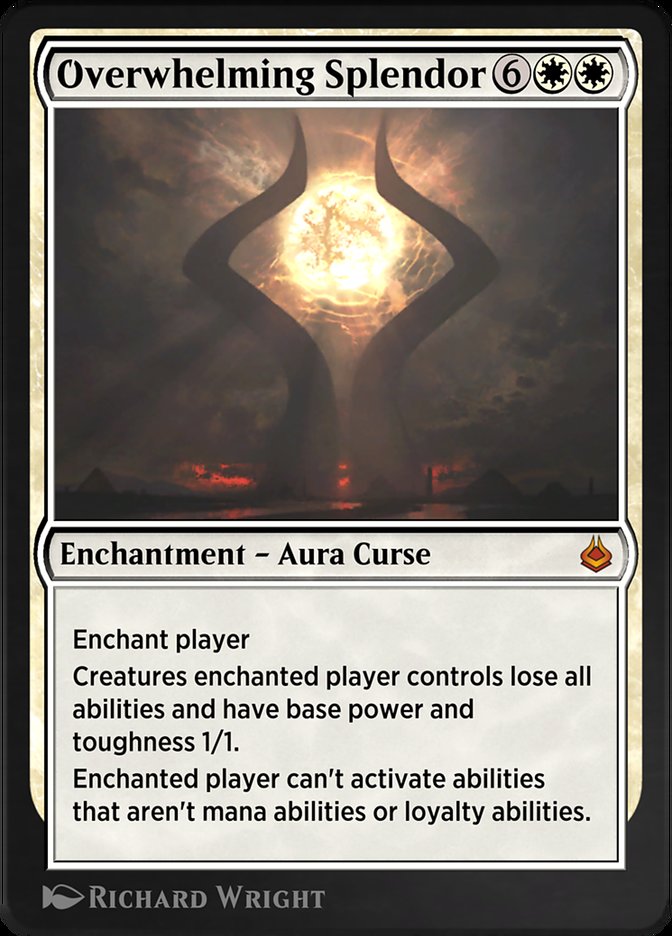
Overwhelming Splendor puts a complete stop to one player’s creatures. They’re left with no abilities and marginal stats, and they can’t even get out from underneath it with a Reclamation Sage. This can be especially backbreaking against a flicker deck if their only source of enchantment removal comes from creature ETBs.
#1. Curse of Opulence
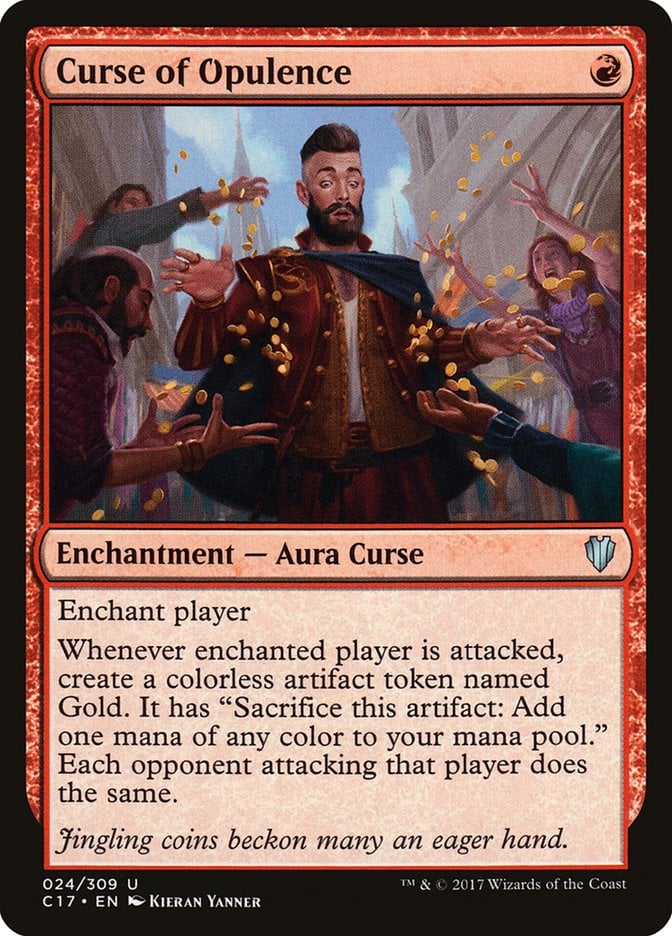
Curse of Opulence is one of the more popular enchant player cards, which gives you and non-enchanted opponents access to ramp via Gold tokens. Attacking the enchanted player can get you that much closer to casting the spells you want.
Best Enchant Player Payoffs
Enchant player cards are mostly operational in enchantment decks, primarily with an aura curse theme. Attaching as many curse cards with the enchant player ability as possible to the same opponent helps to remove them from the game quicker.
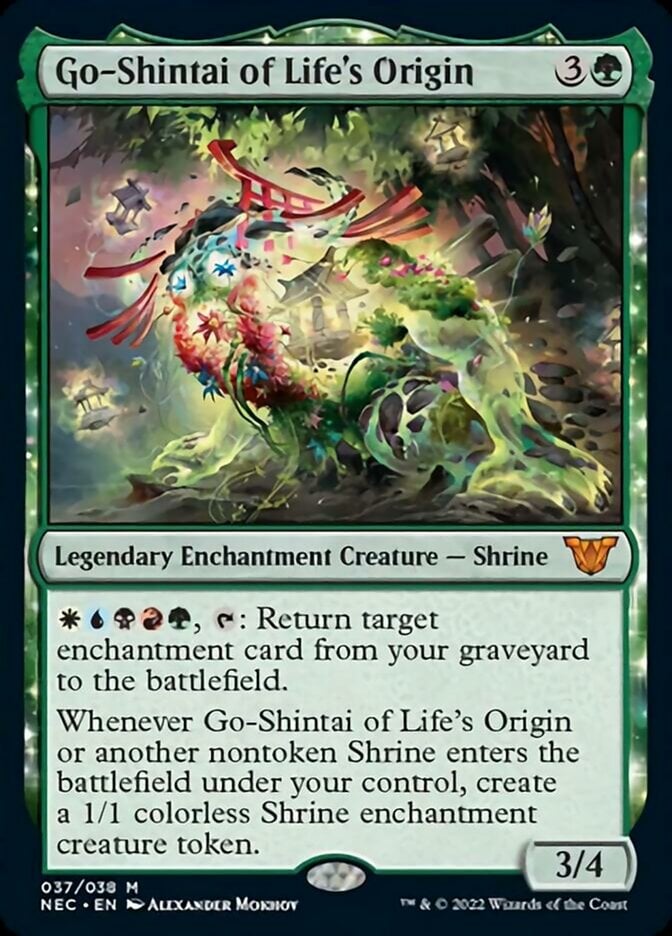
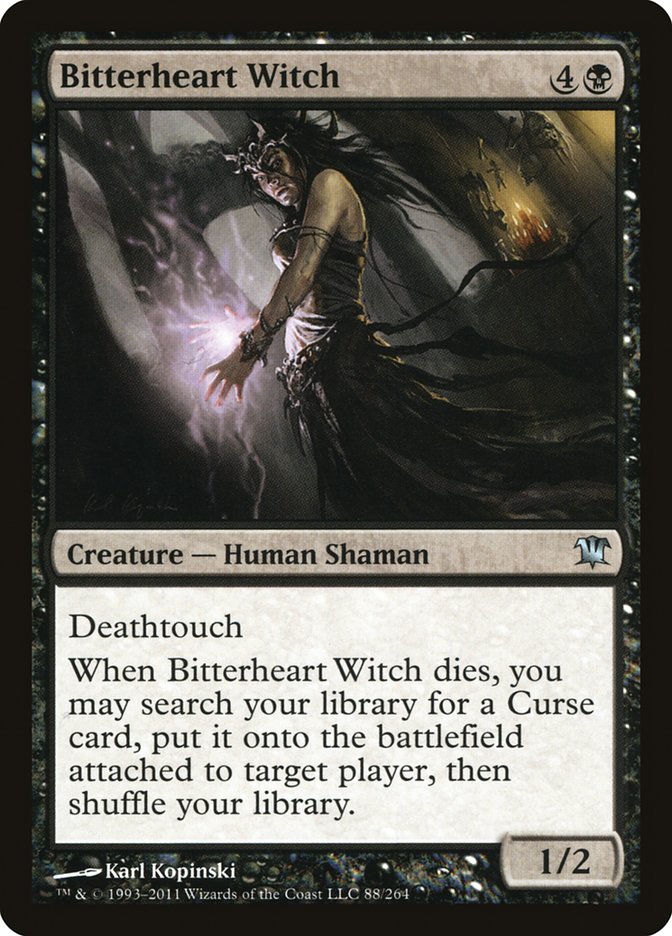
Go-Shintai of Life's Origin can include any and all curse spells of your choosing as it has a 5-color identity. Plus, its activated ability allows you to return curse spells from graveyard to the battlefield because they’re enchantments. Bitterheart Witch just needs to be sacrificed to play a curse directly from your library.
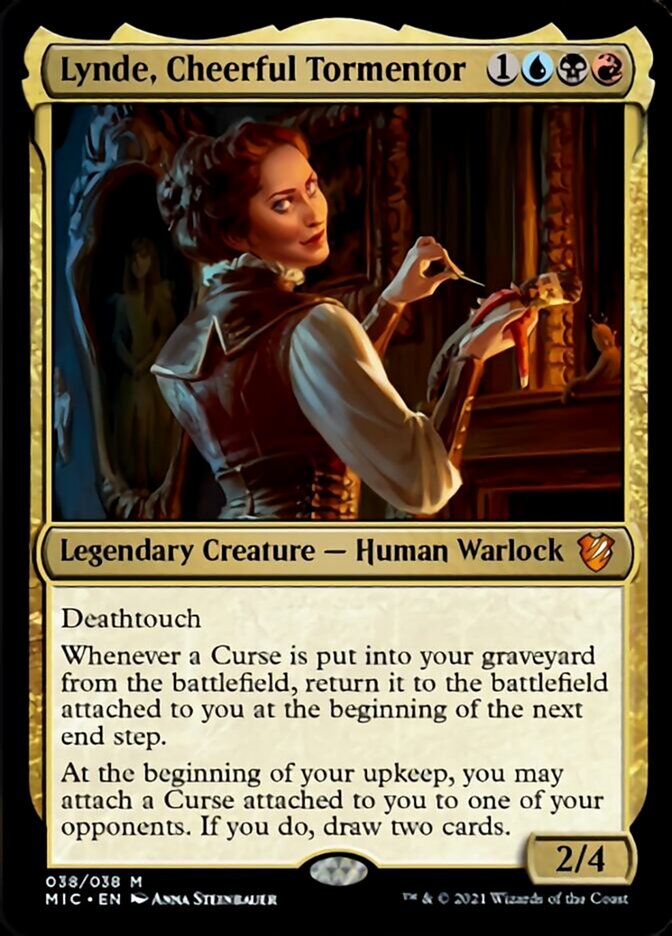
Lynde, Cheerful Tormentor can utilize black, blue, and red curse spells as its main value engine revolves around Grixis cards. Its ability allows you to automatically return curse cards from graveyard to the battlefield under your control, and then you can move the aura curse to a player of your choosing on your upkeep and be rewarded with card draw when you do so.
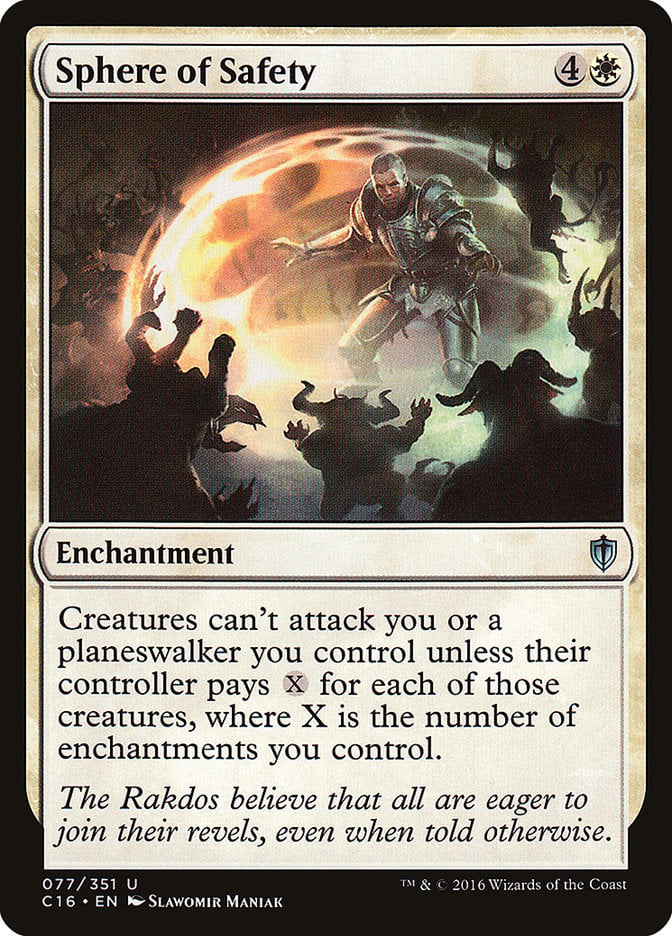
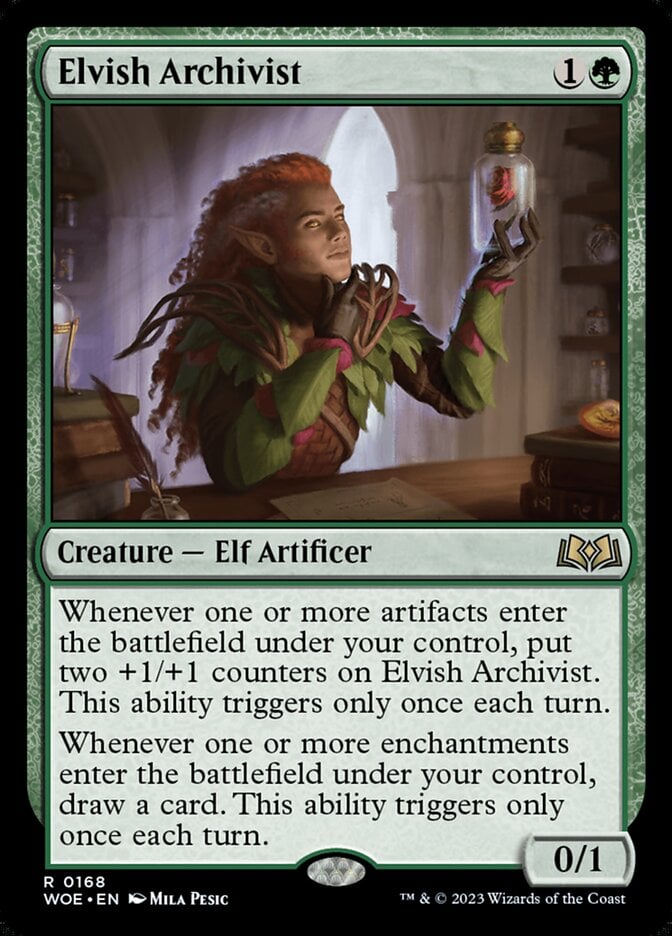
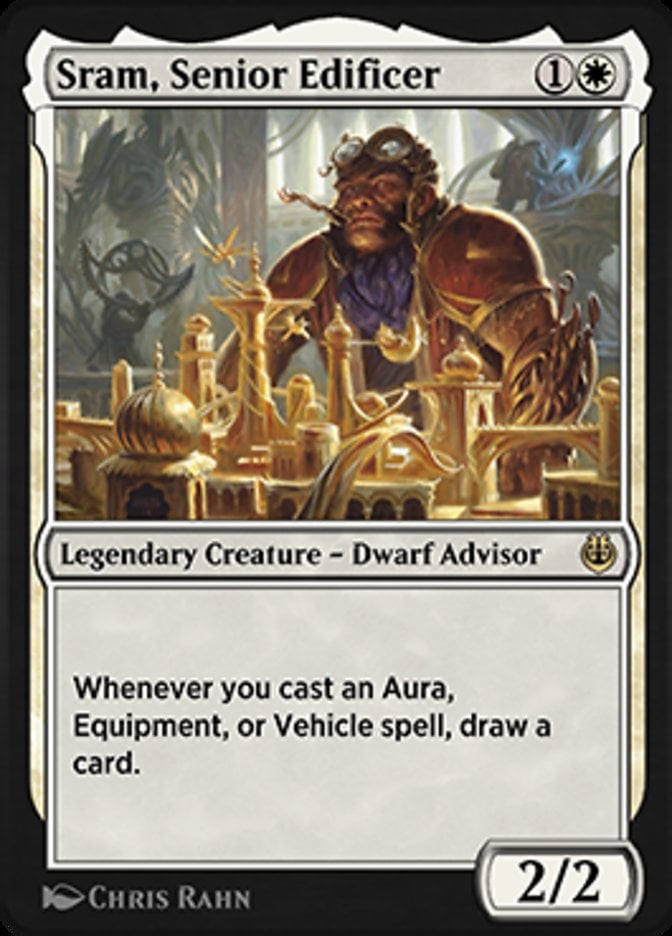
Don’t forget that enchant player auras are still enchantments you control, and so Sphere of Safety, Elvish Archivist, and Sram, Senior Edificer each reward you for playing cards on this list.
Can You Enchant Any Player?
Yes, you can enchant any player with these cards. Since these cards just state “player,” this means you can choose yourself if it benefits you directly, or choose an opponent that the aura becomes attached to.
Does Enchanting a Player Count as a Target?
Yes, you need to target a player to enchant one. Enchanting a player can be considered a crime. A card like Crystal Barricade shields you from curses, and you have hexproof effects stop enchant player cards.
What if the Enchanted Player Dies?
If the enchanted player dies, auras enchanting that player will go to the graveyard as a state-based action, the same way an “enchant creature” aura goes to the graveyard if the creature it’s attached to dies.
Wrap Up

Curse of Bloodletting | Illustration by Michael C. Hayes
Enchant player cards are primarily, but not always, aura curse cards that cause negative effects for that opponent during the game, or benefit you in some way. There are some interesting designs that clearly want you to enchant yourself, while others clearly go on an opponent.
Are you ready to learn more about other card types in Magic? Take a read through some of the Draftsim blog posts to learn more! When you are not reading the blog, be sure you follow the Draftsim Facebook page to stay up-to-date on the latest Magic content from us.
Until next time, stay enchanted… if it benefits you!
Follow Draftsim for awesome articles and set updates:










Add Comment