
Last updated on May 18, 2026
Uro, Titan of Nature's Wrath | Illustration by Vincent Proce
August 2024 was Modern’s 13th birthday, and the format has a long and storied history. I remember playing in the first-ever sanctioned Modern tournament held in the UK, a side event at the 2011 National Championships. I of course lost spectacularly, though a friend of mine won using the other deck I’d built, so I clearly just chose the wrong deck.
One of the ways that WotC keeps Modern under control is by periodically banning cards that have become too powerful for the format to keep in check. Today I share some stories behind the banning of every card on Modern’s banlist and why they deserve their spots on it.
Ready? Let’s get started!
The First Modern Bans
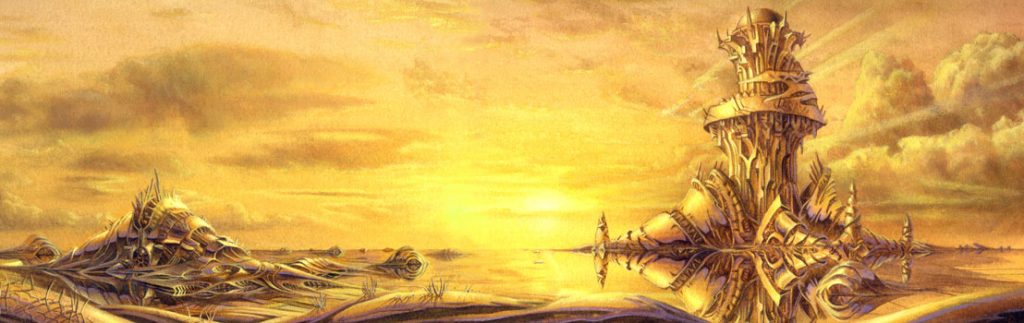
Ancient Den | Illustration by Rob Alexander
Modern came about as a replacement for Extended. Extended was a rotating format with over three times as many legal sets as Standard. It was never very popular since keeping up with two formats that periodically rotated just wasn’t great for players. So Modern was born in the summer of 2011. Modern was just as big as Extended at the time but it never rotated which was a big hit with players. Extended had a sizable banlist at the time so it was obvious that Modern needed one too.
WotC was very forthright with their plans for the format’s banlist when Modern was announced. While they were obviously concerned about the power levels of certain cards, their main concern was making sure the format didn’t get too fast. They publicly said that Modern should be a “turn 4 format,” meaning that no deck should be able to consistently win before turn 4. Many of the banned cards in Modern were banned because of this very rule, though 10 years later the rule has become more and more of an afterthought.
The first Modern tournament in history happened in early June 2011 before Modern became a sanctioned format. The 2011 Community Cup was a contest between a team of WotC employees and Magic Online community representatives. They’d play a series of often wacky formats to determine a winner and that year their job was to test the waters and see what powerful decks they could come up with for the format.
The banlist for this event was very small, and it was these decks that formed the basis of the first Modern banlist. While some of those initial cards, like Stoneforge Mystic and Jace, the Mind Sculptor, have since been unbanned, many of them are still banned today and have never seen the inside of a Modern tournament since that first event up at Wizards HQ.
If you want to get a holistic understanding of the format macro-archetypes and dynamics that frame Modern's banlist, I recommend checking out Reid Duke's course on Modern.

OK, now it’s time to go alphabetically down the whole Modern banlist card by card and explain a bit on why they deserve the ban hammer.
Amped Raptor

Amped Raptor is too many energy drinks concentrated onto one card. As an enabler and a payoff for doing fast energy things, this card got the ban in part because it primarily fit with Boros Energy.
Artifact Lands of Mirrodin
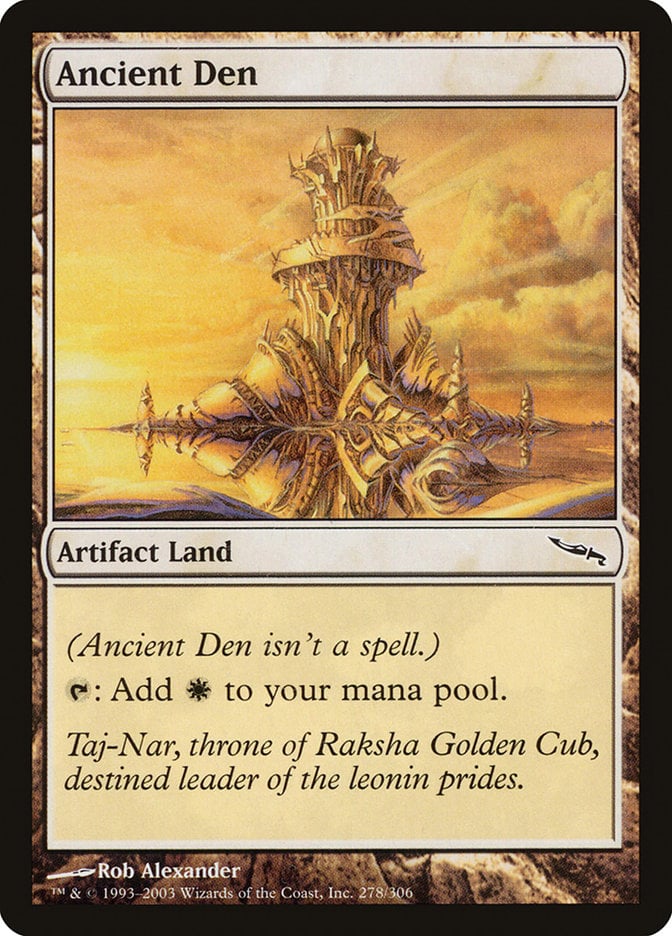
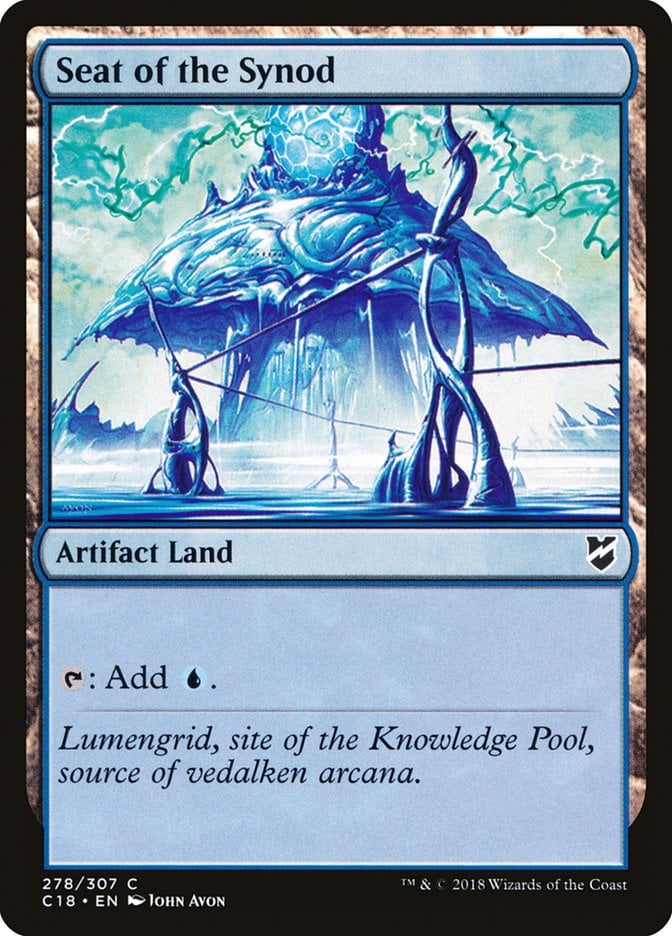
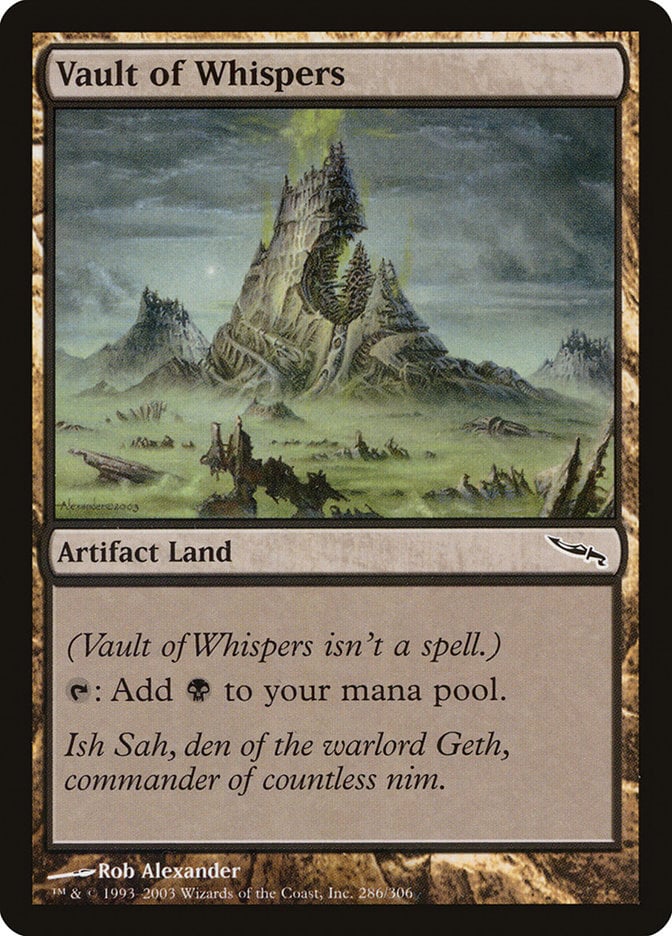
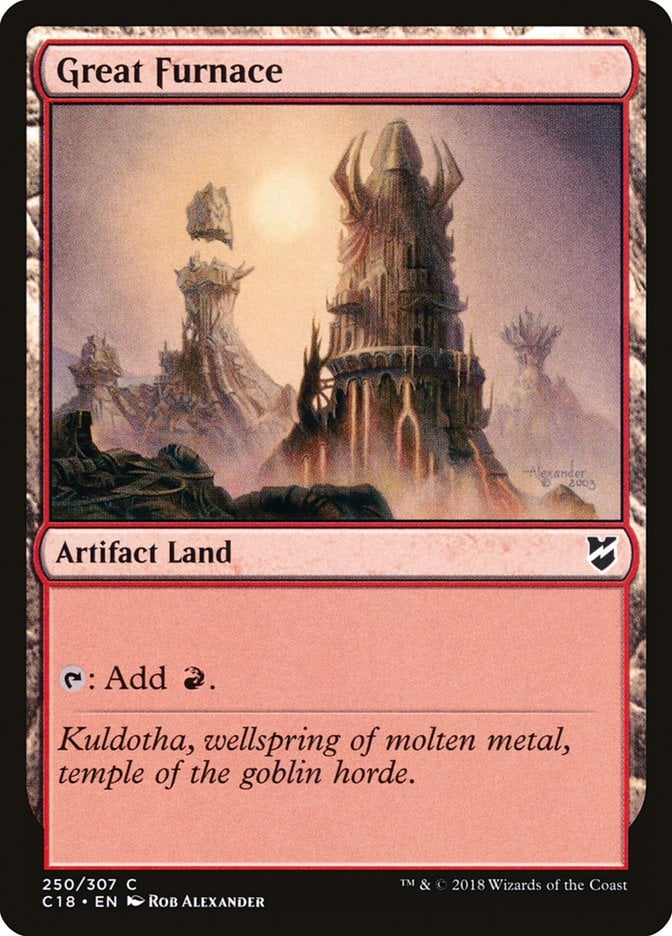
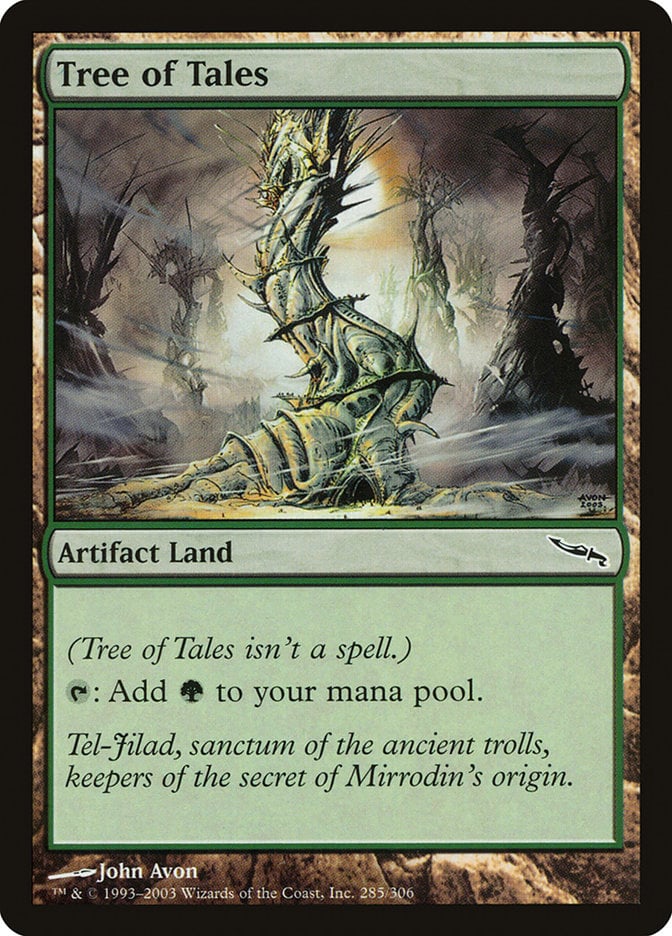
The original artifact lands (Ancient Den, Seat of the Synod, Vault of Whispers, Great Furnace, and Tree of Tales) have never been allowed in Modern, for mostly good reason.
Affinity decks have been a part of Modern’s metagame since day one, and that’s without access to these OG lands from Mirrodin. While the number of actual affinity cards has gone up and down over the years, every version of this deck greatly benefitted from having more free artifacts available. There are now several artifact lands of varying value, including a few that do not enter the battlefield tapped like (Treasure Vault).
While affinity gets boosted from each new artifact land, it’s still nowhere near the best deck in the format. Affinity was so powerful and oppressive in its time that it’s easy to see why WotC would want to leave these lands banned. They work especially well nowadays with Urza, Lord High Artificer and Urza's Saga, two cards you don’t exactly want to make stronger.
I think the data we’ve gotten from the artifact land printings tells us it might be okay to unban these at some point. It’s just very dangerous to do that and be wrong.
Arcum's Astrolabe
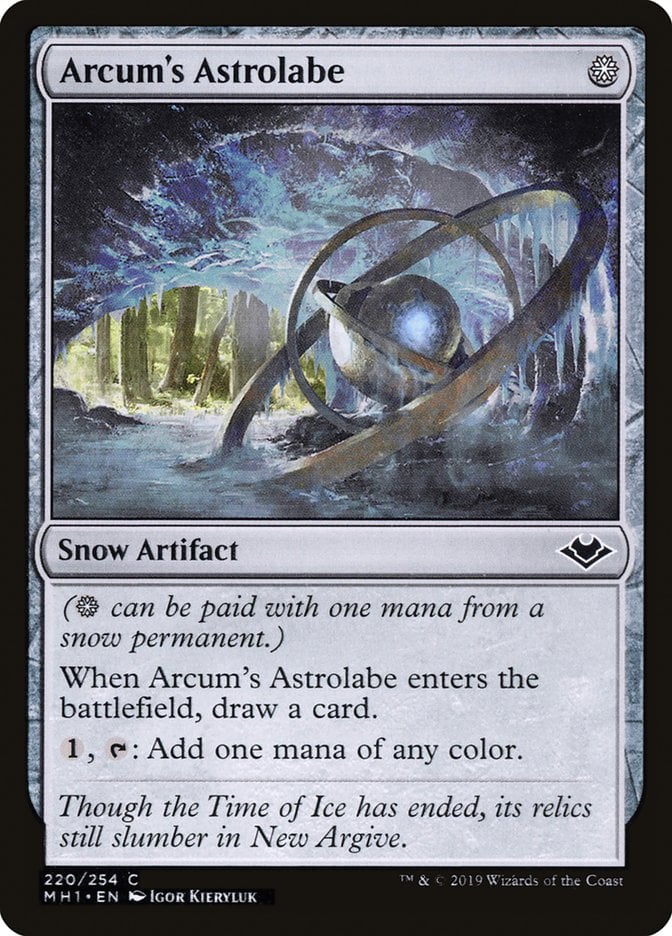
Arcum's Astrolabe was ridiculous for the format. For just one mana you get an artifact that replaces itself and fixes all your colors for the rest of the game. Once again, it’s just one mana! Costing snow mana turned out to be trivial since your deck didn’t even need to run as many dual lands any more. You could trim duals for more snow basics and fetch lands to make casting Astrolabe more consistent, and then it fixed your colors for you anyway.
On top of that it had the hidden mode of being a cantrip-ing artifact, meaning that even mono-color artifact-based decks like Whirza wanted it. The card was just ridiculous, and while it’s strange to think how an innocuous common could warp a metagame, it did just that under the hammer came down.
Birthing Pod
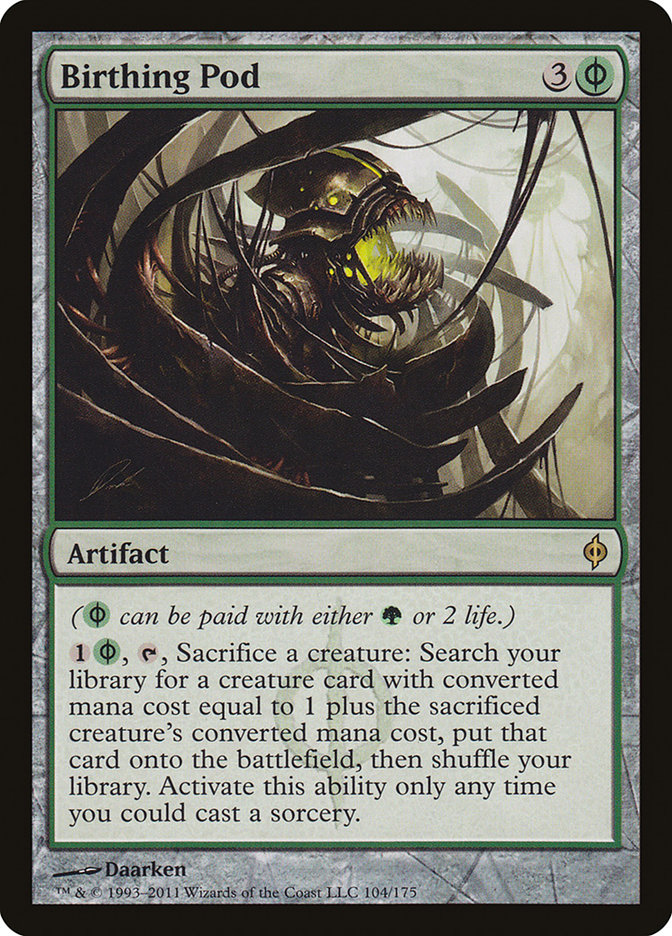
One of my favorite cards to play with on this list, Birthing Pod had an entire deck centered around it until it got hit by the hammer. Pod decks used a curve of silver bullet creatures to grab for their abilities at just the right times along with the infinite combo of Viscera Seer plus Melira, Sylvok Outcast with a persist creature, allowing the it to persist back over and over again and not receive a -1/-1 counter each time.
You got infinite life with Kitchen Finks and infinite damage with Murderous Redcap. Both combos also got you infinite scrys with Viscera Seer, letting you perfectly set up the combos. It also helped that persist creatures were exceptionally strong when sacrificed to Birthing Pod.
The biggest problem with Pod decks is that they naturally keep getting stronger and stronger. The more cards that get printed, the more options these decks had access to. If Pod didn’t get banned when it did, odds are it would needed to have been banned down the line anyway.
Blazing Shoal
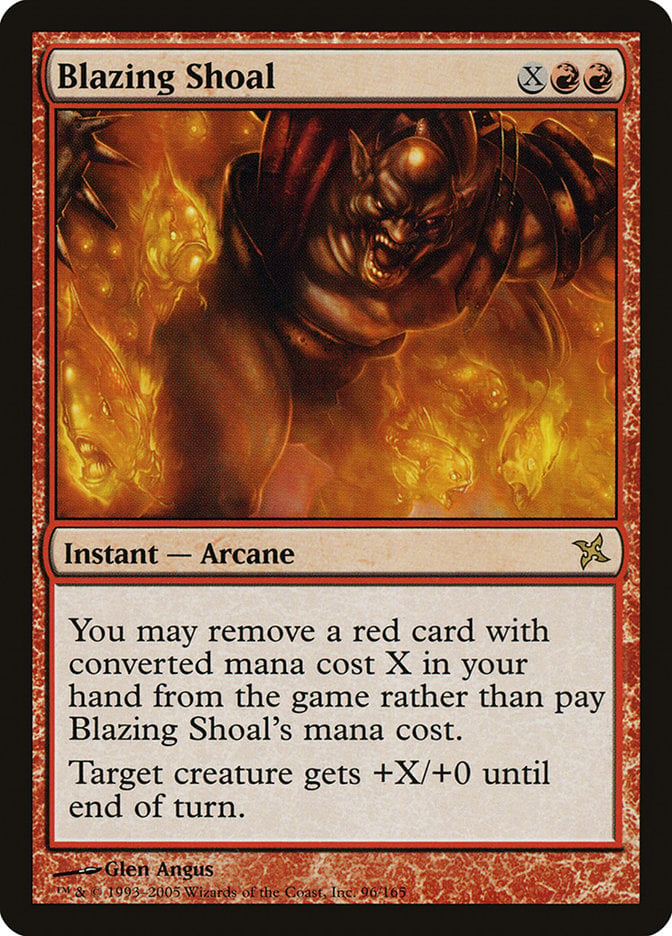
Blazing Shoal only lasted until the first banlist update in September 2011. This card was one of the more dominant showings at the first Modern Pro Tour in Philadelphia. This deck wasn’t known before the tournament if I remember correctly, so when Sam Black showed up with an incredibly powerful and fine-tuned list, it took him all the way to the finals.
The idea was that if you pitch Progenitus or Dragonstorm to Blazing Shoal, then your infect creature can deal lethal damage in a single hit. Sam Black’s deck was a mono-blue list designed to do exactly that, attacking with Blighted Agent or Inkmoth Nexus.
The list didn’t really have a lot of time to get going and it was arguably not the most powerful thing to do in the format, but the ability to win as early as turn 2 thanks to Blazing Shoal being a free spell meant that it broke WotC’s fundamental rule of the format: that no deck should be able to consistently win before turn 4. As such, the card was immediately banned.
Bridge from Below
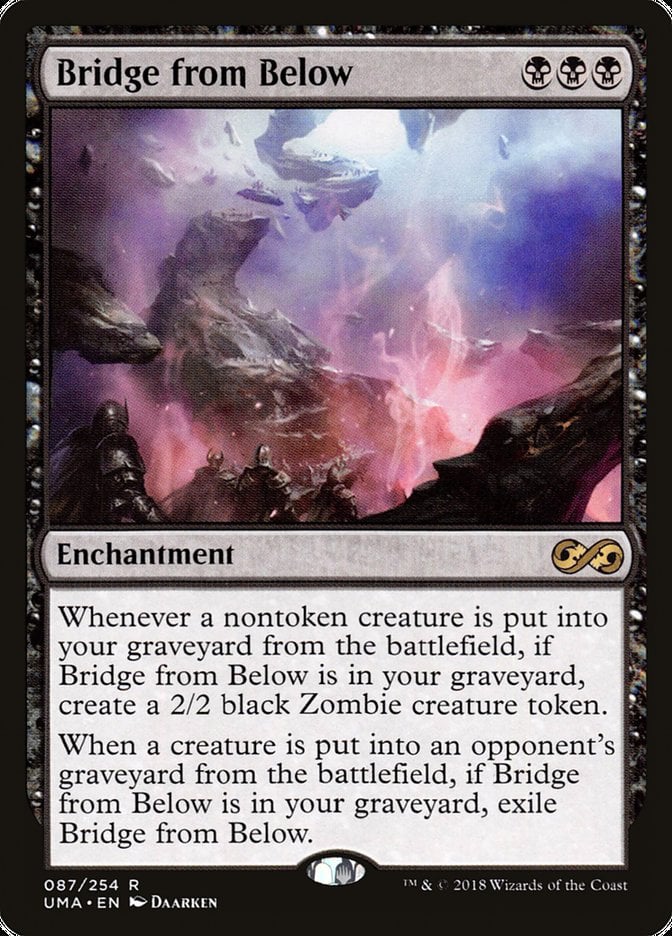
Bridge from Below has always been an unfair card, only being playable in one specific category of unfair decks like Dredge. It was pushed over the top in the summer of 2019 by the printing of Hogaak, Arisen Necropolis.
The Hogaak decks were oppressively powerful in the format and while WotC was very resistant to banning Hogaak itself since it had only just been printed, they decided that banning a key piece from the deck was necessary at least. They banned Bridge in an attempt to curb the power of the deck in July of that year.
I’ll talk about Hogaak itself in a bit and go over if that ended up being a good idea.
Chrome Mox
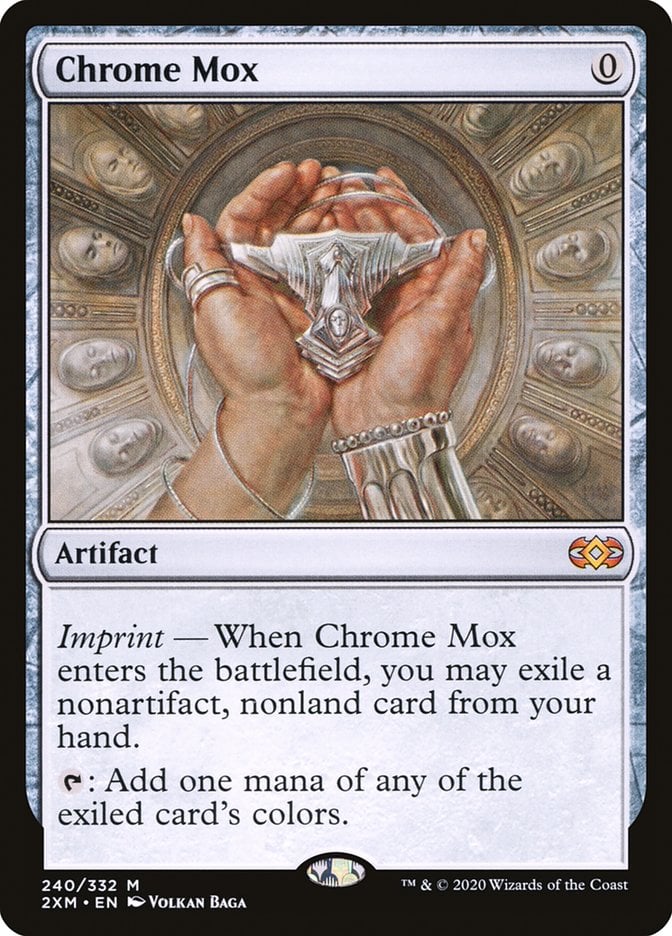
The most broken cards in Magic’s history have been easy-to-play fast mana cards. Chrome Mox did a lot of work in powering out 2-drops on turn 1 in the old days of Extended. It didn’t matter what they were (though Bitterblossom and Dark Confidant were usually strong choices), they were too good if they came down on turn 1 unopposed and under counterspells.
This play pattern is one that WotC wanted to avoid in Modern from the get-go, so Chrome Mox, one of the best imprint cards in the game, has never been allowed in the format.
Cloudpost
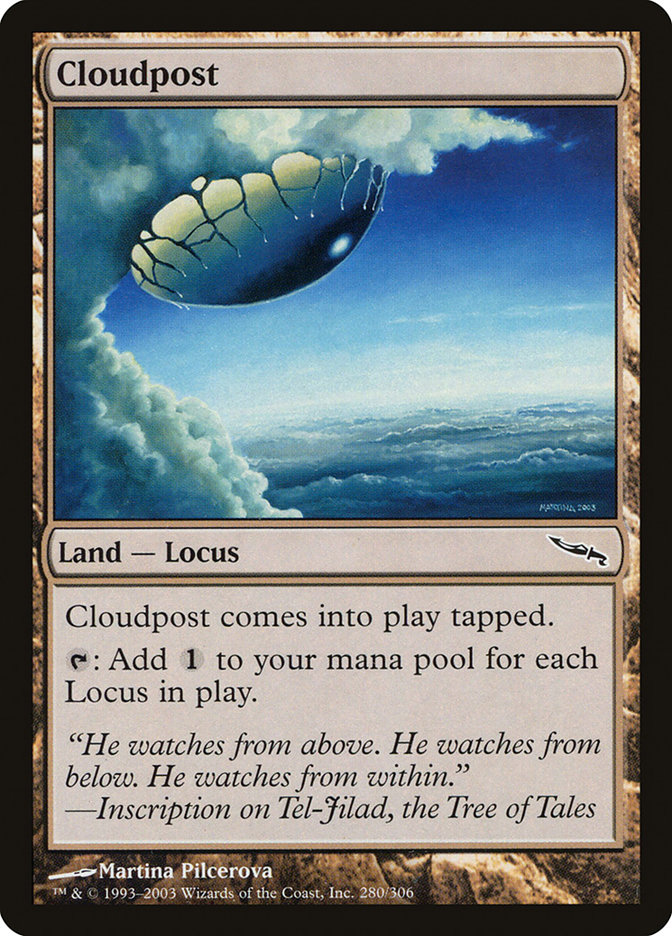
Another card that only made it as far as one tournament before getting axed, Cloudpost is the card that asks the question, “what if Tron was ridiculously broken?” It generates more mana based on the number of Locus permanents you control. The Cloudposts themselves are Locuses (Loci?), as are your Glimmerposts and Vesuvas when they copy your others.
12-post is a very powerful deck in Legacy that functions similarly to a green Tron deck in Modern, except it can cast much bigger threats thanks to its absurd quantities of mana. We only got the chance to scratch the surface of what Cloudpost was capable of in Modern , but that was more than enough to ban this obviously broken card as soon as possible.
Dark Depths
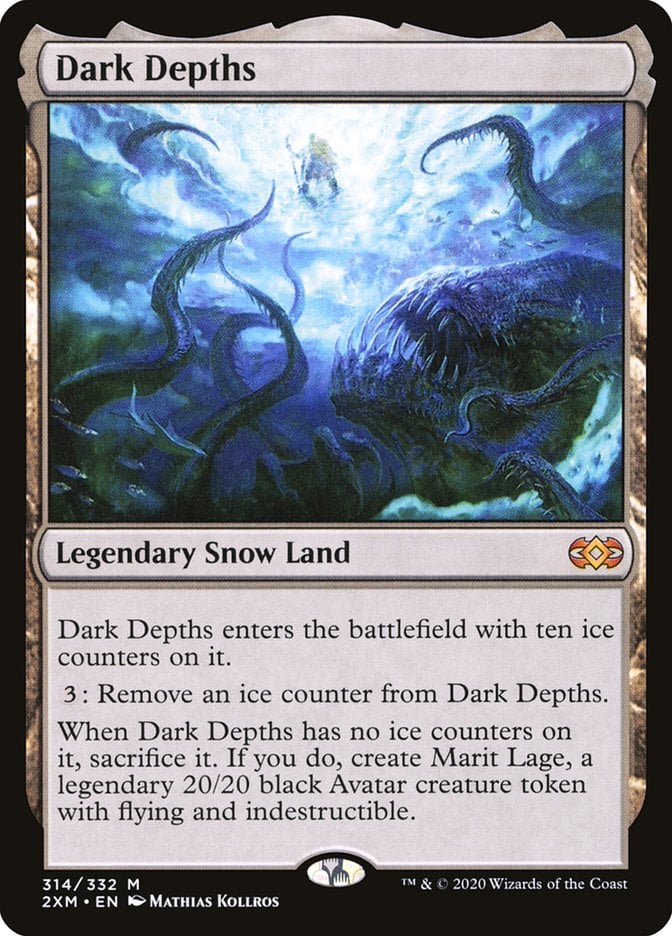
Dark Depths has never been legal in Modern, with good reason. You can combine it with Vampire Hexmage to remove all of its counters in one go, or Thespian's Stage to make a copy of it with no counters on. Both of these combos result in an immediate Marit Lage token, which doesn’t need any help winning the game by itself.
This combo was legal for a while in the old Extended format following the printing of Vampire Hexmage, where it was nothing short of dominant. The most annoying curve was a turn 1 Urborg, Tomb of Yawgmoth into Thoughtseize to clear the way. Urborg lets your turn 2 Depths tap for black mana, casting Hexmage and giving you a Marit Lage on turn 2.
Given the power level of this combo in Legacy, this is one ban that I don’t see being overturned any time soon.
Deathrite Shaman
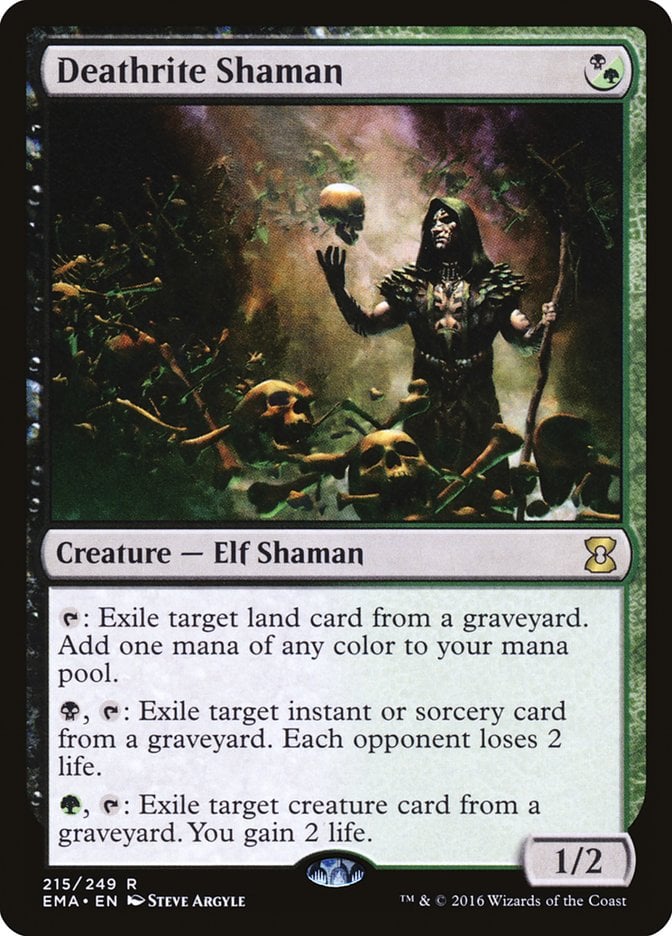
I often call Deathrite Shaman the best 1-drop of all time since any 1-drop capable of getting me a Pro Tour invite has to be the best of all time.
DRS is an obnoxious creature that does everything you could expect a 1-drop to do. It’s a mana dork when combined with fetch lands. It hates on the graveyard, it keeps you alive, it’s a win condition that wins without attacking, it’s randomly an Elf for tribal shenanigans, at 2 toughness it survives hate like Gut Shot, and it can even be cast with black mana. Card advantage is about the only thing it doesn’t give you but exiling the right cards out of the graveyard is good enough against right the decks.
DRS gave Jund midrange a huge boost and catapulted it into the top tiers of the format, most notably in the hands of Yuuya Watanabe and David Ochoa at Pro Tour Return to Ravnica (though many other players, including Willy Edel, hadn’t discovered how good the card was yet). In the weeks following that Pro Tour, DRS solidified itself as one of the most powerful creatures in both Modern and Legacy and eventually earned itself a ban along with Bloodbraid Elf as a bit of collateral damage.
Dig Through Time + Treasure Cruise
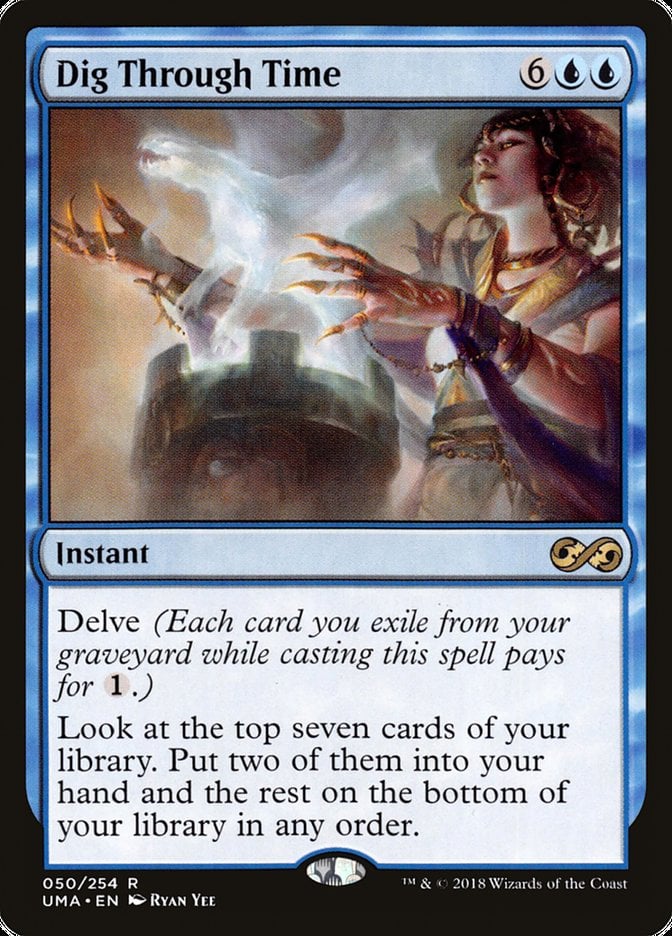
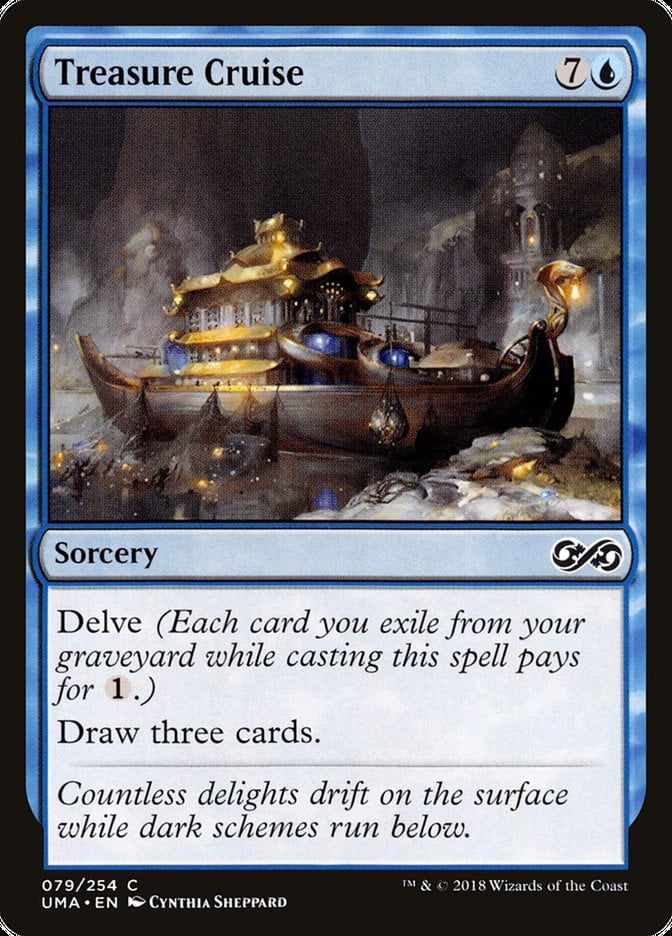
When WotC first created delve back in Future Sight, they only made two cards with it, and they were both reasonably fair cards. How could they have possibly known that making it a theme in a set and printing blue cards with delve was ever going to be a problem?
As it happens, mechanics designed to make cards cost a lot cheaper than they ought to is always going to be problematic. The big problem, as it turns out, was that Dig Through Time and Treasure Cruise were trivially easy to cast for just and respectively. Fetch lands, cantrips, and cheap removal fill your graveyard incredibly quickly and you don’t even need to give it that extra push with a card like Thought Scour most of the time. Not to mention that most decks that took advantage of these cards didn’t even use the graveyard for anything else, so you could exile anything and it wouldn’t matter.
Dig and Cruise were banned very quickly in both Modern and Legacy and are also restricted in Vintage. They were huge mistakes that really need to be avoided in the future. There was even talk at the time that Treasure Cruise was a better card in Vintage than Ancestral Recall. After all, Cruise didn’t get countered by Mental Misstep and it wasn’t affected by Misdirection.
Dread Return
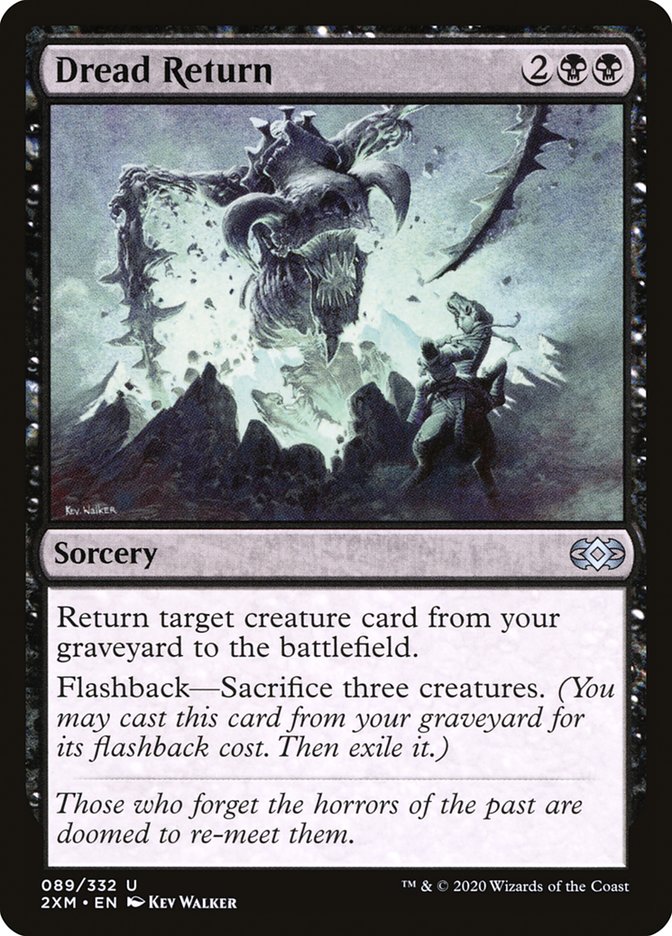
A theme you’ll see very often with this list is that free spells are too powerful. Not to mention free spells that do something you’d happily pay four or five mana for. Dread Return has long been a key piece of the puzzle for Dredge decks, and one that WotC didn’t want to give a chance; this card has never been legal in the format.
Narcomoeba comes straight out of your graveyard for free when milling your deck, giving you the perfect fodder to pay the flashback cost on a Dread Return and get you all sorts of powerful threats. Either grab an Iona, Shield of Emeria to lock your opponent out of the game or Flame-Kin Zealot to give you the push you need if you have a board full of creatures. Whatever you’re getting, it’s a bit too powerful for Modern if you’re getting it for no mana.
Eye of Ugin
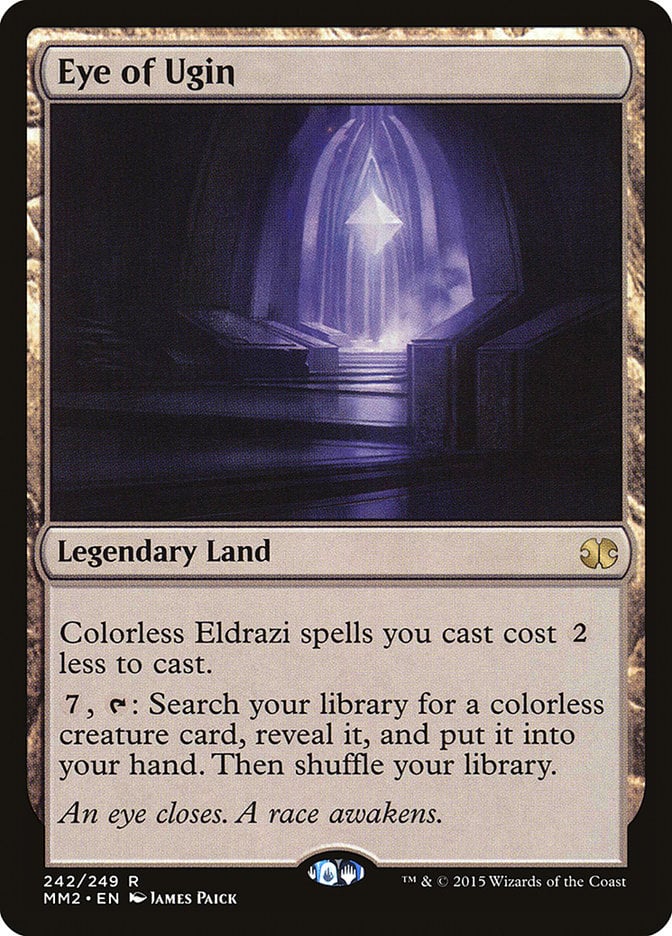
Eye of Ugin is one of the most infamous bans of all time. WotC intended for all the Eldrazi to cost upwards of seven mana when this card was designed. With the big titans costing , , and , reducing their costs by two mana just doesn’t seem too bad.
Enter Oath of the Gatewatch, a set that brought Eldrazi back. And that rule didn’t apply this time. Between 1-mana Eldrazi Skyspawners and Matter Reshapers and 0-cost Eldrazi Mimics, Eye of Ugin was no longer a somewhat fair land. Instead it was a land capable of the sorts of crazy plays that only Tolarian Academy or Gaea's Cradle are known for.
Pro Tour Oath of the Gatewatch was a bloodbath, with the players who figured out good Eldrazi lists crushing everyone who didn’t. Hall of Famer Luis Scott-Vargas made the Top 8, one of ten to his name, claiming it was the most broken and powerful deck he’d ever played in his career. The hits didn’t even stop there.
This happened at a time when banlist updates happened on to a strict schedule, so WotC didn’t ban Eye of Ugin until after three more Grand Prixes had been played despite knowing how powerful it was. Across that one PT and three GPs, Eldrazi decks claimed 20 of the available 32 Top 8 slots and three out of the four titles. This makes it one of the most dominant showings of any Modern deck in the format’s history, one which earned the season the infamous name of “Eldrazi Winter.”
Field of the Dead
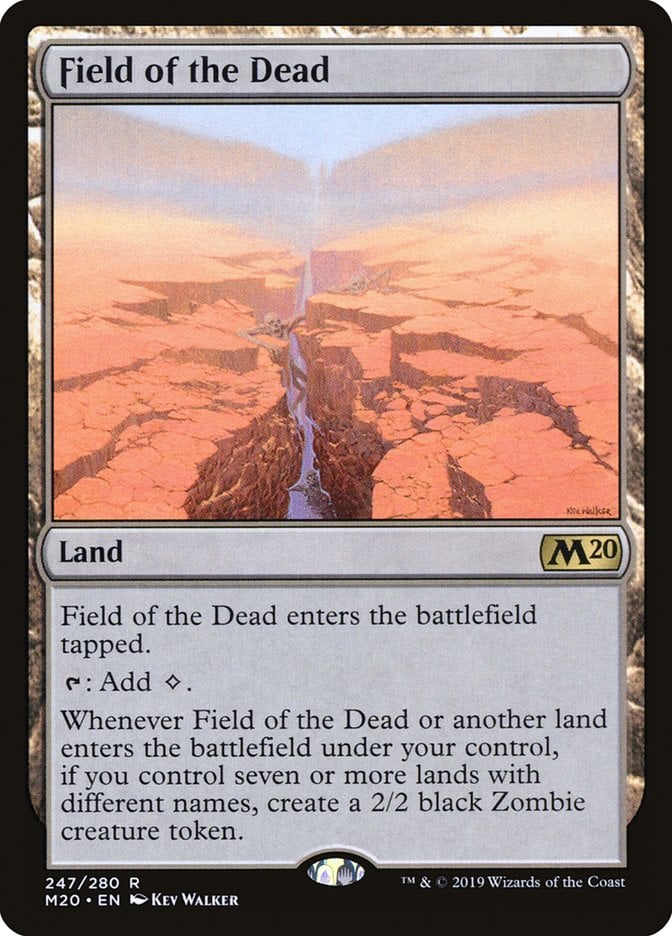
Field of the Dead is a surprise addition to this list that players never expected to end up here. Having done a number on Standard, Historic, and Pioneer, it looked too slow for Modern, a format that almost never gets up to as many as seven lands.
But the card gave a huge boon to Amulet Titan decks with yet another angle of attack that was too hard for other decks to interact with. The same went for Scapeshift decks which could win longer games far more effectively, something that was historically been a big weakness for the deck.
It was far too easy to get these lands out of the deck and start creating free tokens between Golos, Tireless Pilgrim and Primeval Titan. Above all else it meant that a lot of games were reduced to the same battle between 2/2s, and this just became repetitive too quickly.
Fury
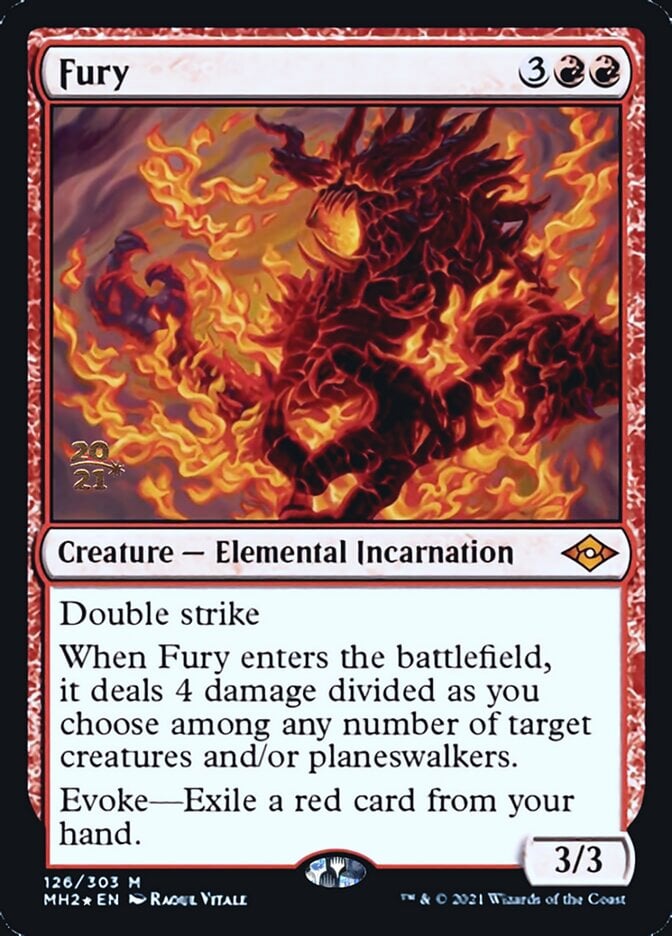
Fury was so good at removing creatures and played a key role in top decks like Rakdos Evoke and 4-color Omnath. This ability to cut down on a variety of opposing strategies led to fewer creature-based decks since knowing that Fury can be evoked at the cost of two red cards for up to four creatures. An excellent target for Not Dead After All in decks made for oppressive play.
Wizards aimed to increase deck diversity with the ban of Fury.
Gitaxian Probe
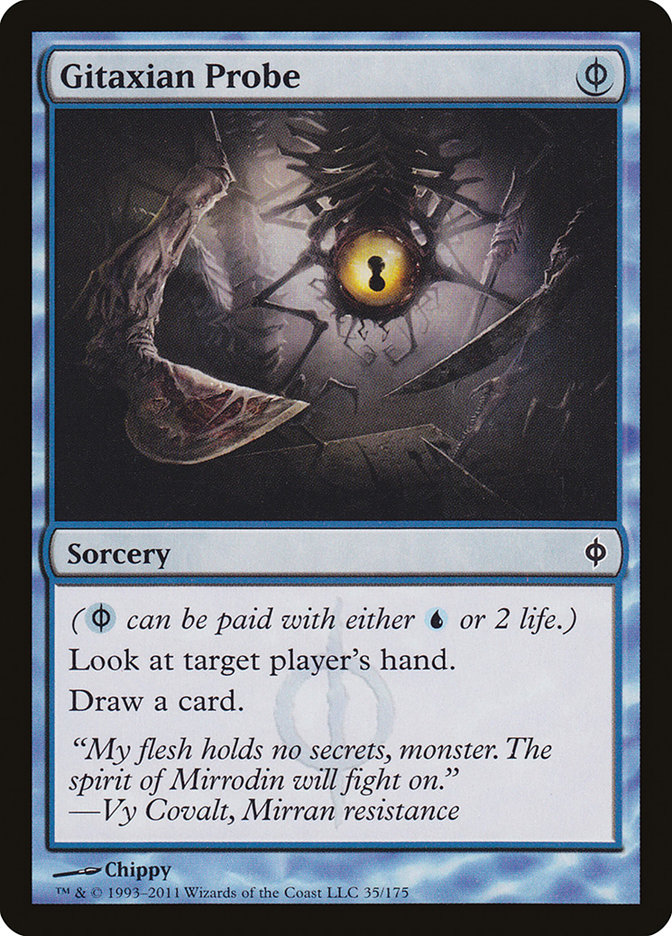
Say it with me again: free spells are too good.
Gitaxian Probe is definitely too good since knowing what your opponent is working with while replacing itself and not costing you any mana is a ridiculous prospect. What finally got this card banned was the power level of Death's Shadow decks in the format, which actually turned the cost of two life into a huge advantage rather than a disadvantage.
The card had to go at that point, and it wasn’t doing any particularly fair things in the first place.
Glimpse of Nature
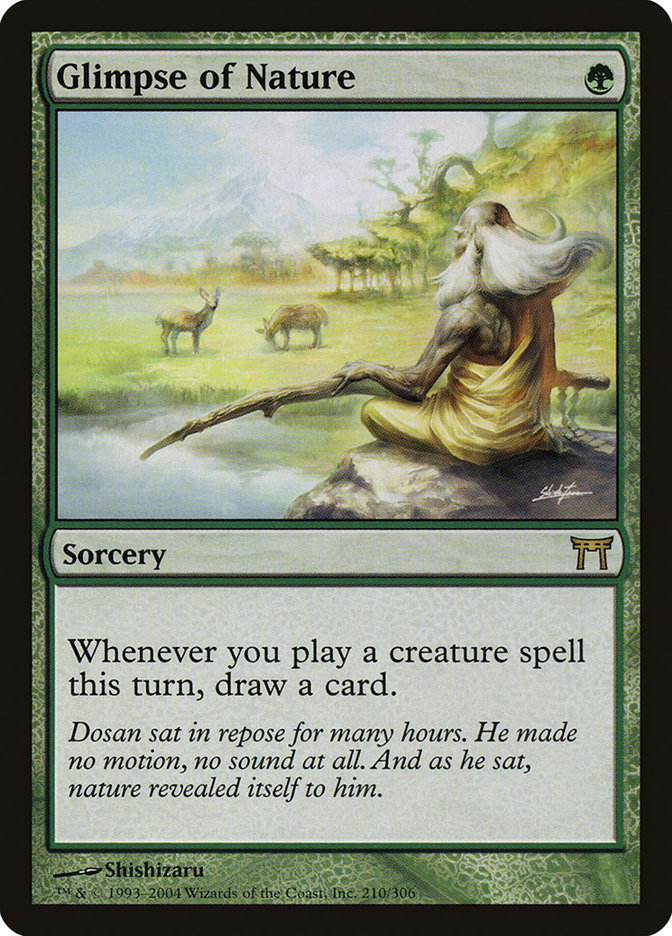
Glimpse of Nature never got a moment to shine in Modern for very good reason. Glimpse was the key piece of Elf combo decks since they appeared after Lorwyn and Shadowmoor. One of the best card-draw effects in green, Glimpse of Nature allowed Elf decks to combo kill as early as turn 2 or 3 since each 1-drop Elf you played drew you another card while the Heritage Druid and Nettle Sentinel combo netted you mana each time.
We’ve seen watered down versions of Glimpse printed in the forms of Beck // Call and Rite of Harmony, but the original is still too powerful. It only costs one mana and doesn’t need a second color.
Golgari Grave-Troll
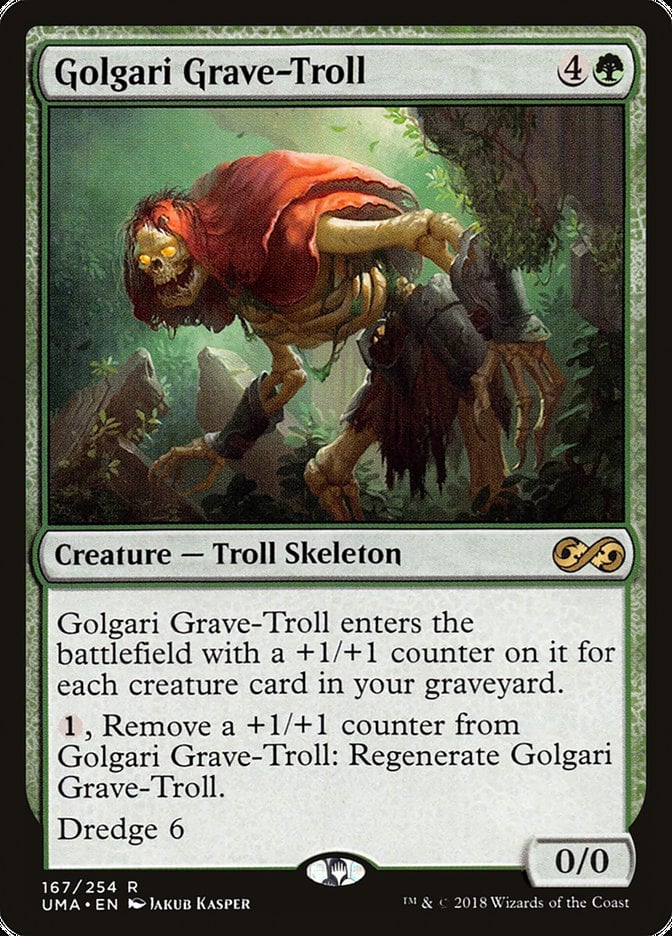
Golgari Grave-Troll owns an interesting accolade in Modern: it’s the only card to have ever been unbanned in Modern only to then get re-banned a year later.
WotC foresaw Dredge decks being too powerful when they created Modern and banned both the Troll and Dread Return in their initial banlist. When Dredge didn’t do a single thing in the format, they felt it was reasonable to unban Grave-Troll. But then they felt it had been a step too far after a year of Dredge ruining events for players.
Dredge decks are definitely still present nowadays, but they’re not top tier. They’re a slower and much more beatable deck with access to just Golgari Thug and Stinkweed Imp to turbo-mill themselves than if they had Grave-Troll. And that’s absolutely fine for where the format wants to settle.
Grief
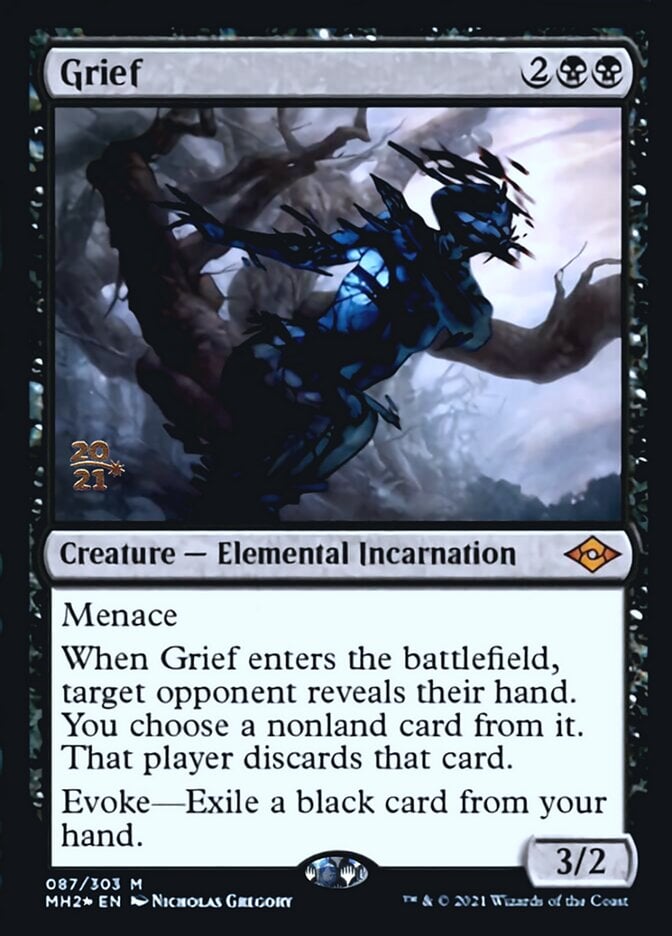
Grief is both a card and the feeling you get on the receiving end of this enters effect. It's common to mulligan down a card or two in Modern to get the key pieces you need, then you need to deal with Grief right away. It's brutal and unfun, plus WotC was able to pinpoint several decks that rely on it, so in the spirit of removing unfun play, this evoke elemental is banned.
Hogaak, Arisen Necropolis
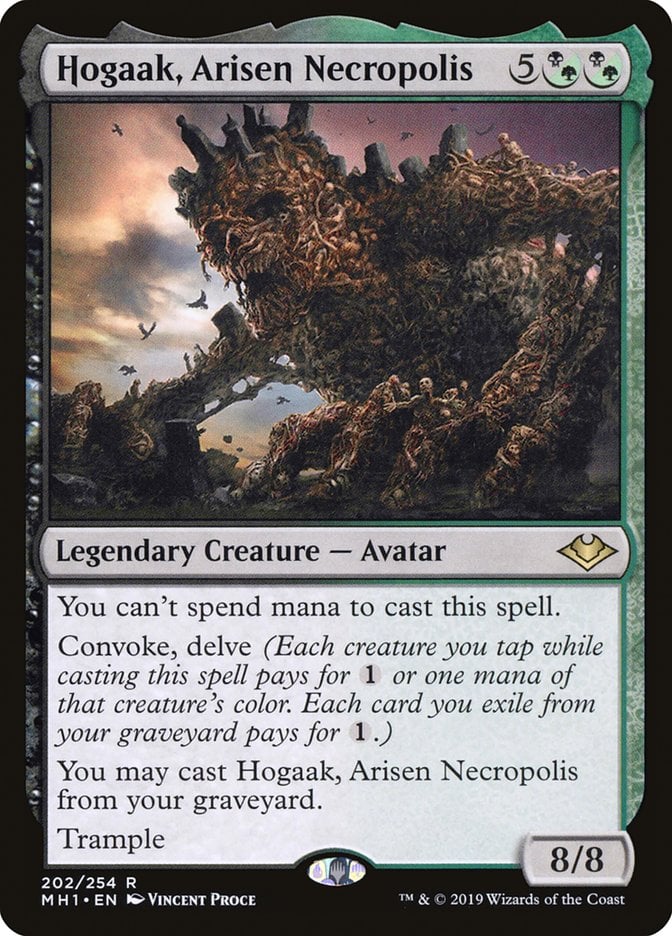
It turns out that WotC’s plan to ban Bridge from Below didn’t pan out, because the Hogaak menace remained just as dominant over the format as before. Wizards decided to go ahead and ban Hogaak, Arisen Necropolis and finally put a stop to its shenanigans just a month after banning Bridge.
I remember playing at Grand Prix Birmingham in August 2019, one of the most poorly attended Modern GPs ever. Players just didn’t want to deal with Hogaak all the time. I chose to not play the deck myself but made sure I was prepared and just about managed to pull off a 2-1 record against it in the tournament. It was still obvious that it had to go.
Hypergenesis
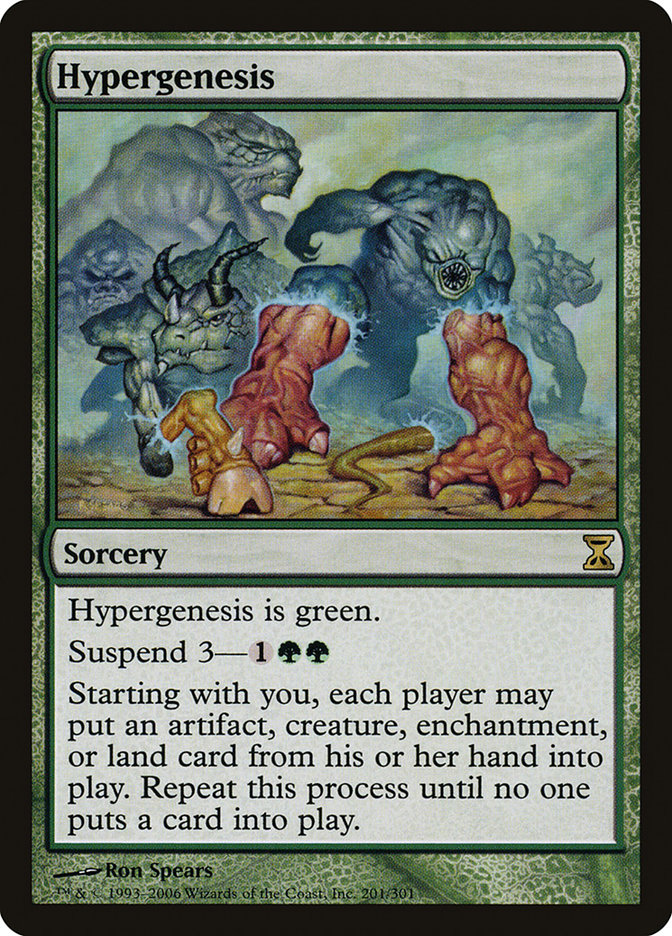
Temur Crashcade is making itself known in the current Modern metagame, and that’s a deck that only makes a pair of 4/4 rhinos whenever it plays a cascade spell. Imagine if your cascade spell put Emrakul, the Aeons Torn, Progenitus, and Terastodon onto the battlefield instead of the rhinos. At least this deck isn’t good enough against the slew of Force of Wills it’s likely to have to contend with in Legacy, but odds are this deck would be absurdly powerful in Modern.
We’ve never gotten a chance to see what Hypergenesis can do in Modern, but believe me when I say we probably don’t want to find out.
Jegantha, the Wellspring
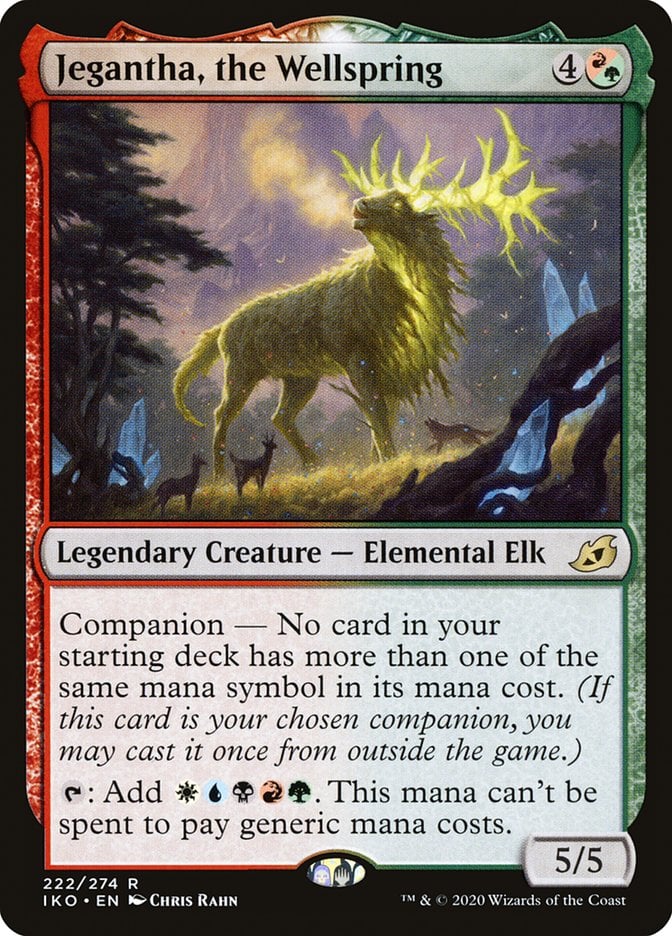
Jegantha, the Wellspring is a nice elk that got banned because it appealed to too many decks. It certainly maintains habitat in Commander and Arena's 100-card Brawl format as a 5-color card, but in Explorer, Pioneer and Modern, it simply worked its way onto too many decklists. Like your local ecosystem, too much of one thing is bad for the whole.
Krark-Clan Ironworks
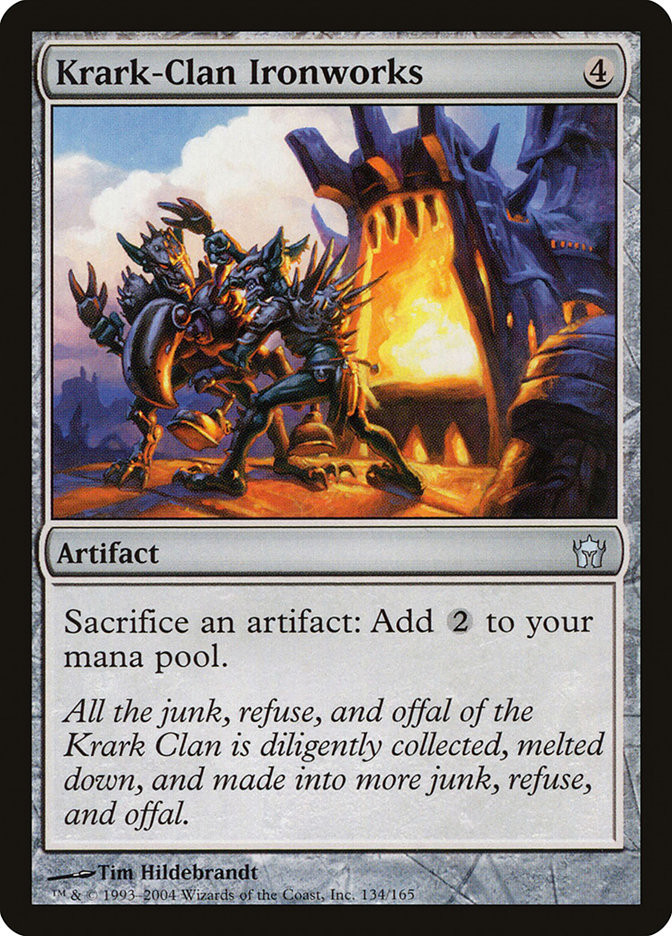
Krark-Clan Ironworks is one of the weirdest decks to have ever graced a Modern table. This incredibly weird combo deck made use of certain lesser-known rules interactions, which is ultimately what caused its ban.
The trick was to combine KCI with cards like Scrap Trawler and Myr Retriever to generate loops that get the artifacts you sacrificed for mana back while giving you more than enough mana to recast them. These loops let you generate infinite mana which you can then turn into a win through a mountain of card advantage or something more decisive like an Emrakul, the Aeons Torn.
The deck was almost unstoppable with the right pilot behind it, and the right pilots certainly pulled it off a few times. Expert combo pilots like Piotr Glogowski, Sam Pardee, and Matt Nass all picked the deck up and got great results with it until it was eventually banned at the start of 2019.
That said, this is definitely a card I could see making its way off the banlist at some point if Mox Opal does not overpower the format. It does have Urza things to make use of, but there’s still the possibility to make a return without some of the fast mana that originally made it good.
Lotus Field
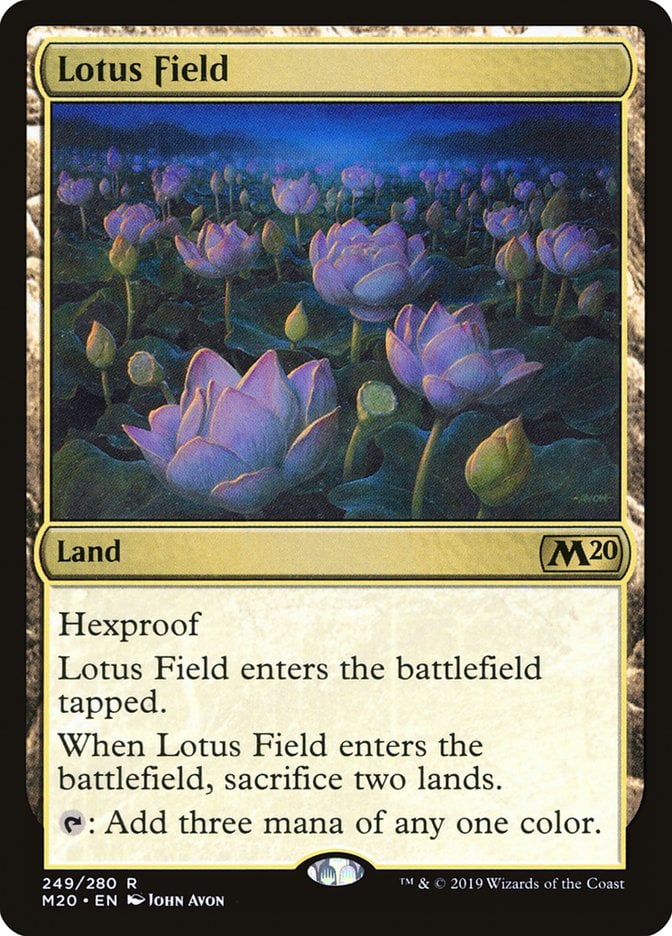
Lotus Field was banned in May 2026 as a knock to Amulet Titan decks, one of the long-standing dominant decks in Modern. The combination of Lotus Field with recursion tools like Shifting Woodland and Aftermath Analyst put a new spin on the archetype that made interacting difficult due to the hexproof on Lotus.
Those managing the banlist cited concern that Lotus Field allowed these decks to conduct combos with fewer resources than normal, and even without the infinite combo potential, Lotus Field was a strong part of the deck that facilitated power plays with other cards.
Lurrus of the Dream-Den
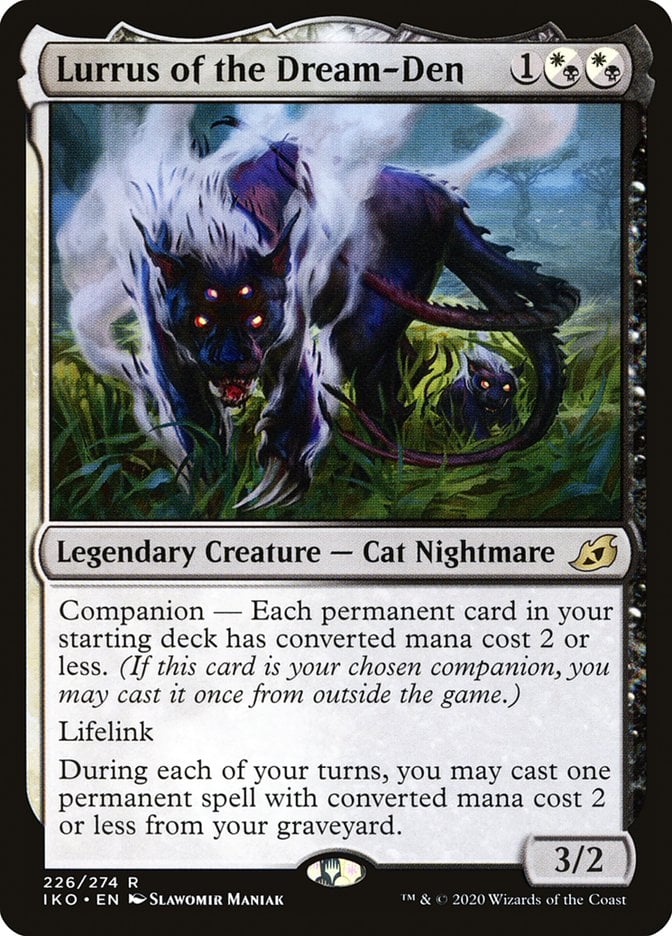
Well, Lurrus of the Dream-Den finally got the axe in March 2022, acting as a relatively large blow to already low-to-the-ground aggro decks, like Grixis Shadow. One of Magic's best creatures, Lurrus reduces consistency and late-game threat potential, reigning these decks in a bit, while also promoting the use of other three-mana-value spells that were being excluded due to the companion requirement.
Mental Misstep
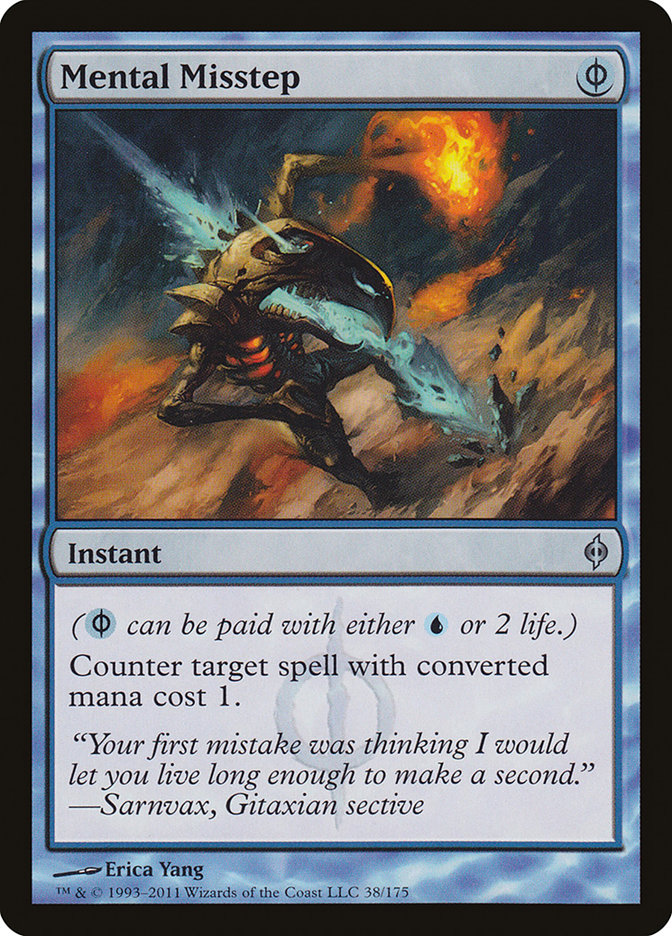
Free spells, something something something.
Like most free spells, Mental Misstep looks like it isn’t very powerful. But being free makes all the difference. It’s also fun when you point out that Misstep can target other Missteps. When this was briefly legal in Legacy you often had epic counter wars over resolving something like Aether Vial and having multiple Mental Missteps thrown at each other from both sides of the table.
The card is actually just dumb, doesn’t make for very fun play patterns, and is obnoxious to play against.
Mycosynth Lattice
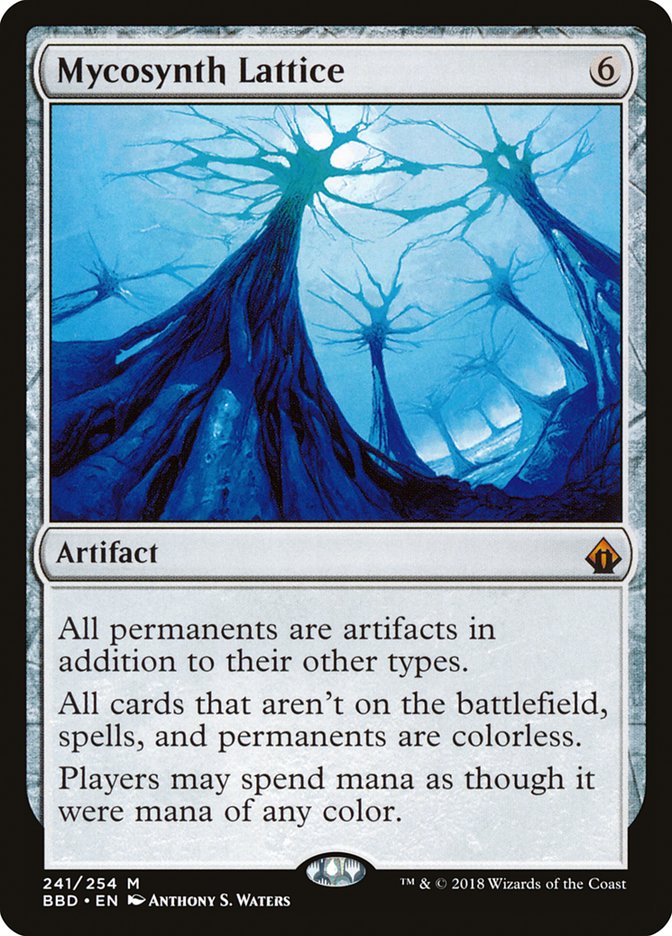
As Urza decks rose to prominence in the latter half of 2019, Commander all-star Mycosynth Lattice annoyed players at tournaments for quite some time. Karn, the Great Creator was printed in the same year and created a rather troubling interaction with the card.
If you happen to control a Lattice and Stony Silence, neither player can activate abilities on any of their permanents, which includes not being able to tap lands for mana. Karn not only let you fetch the single copy of Lattice out of your sideboard, it’s also a one-sided version of that Stony Silence ability. Karn was already a powerful card that gave any deck access to a bunch of silver bullet options in the sideboard, but having one of those options be an auto-win in many scenarios was a step too far.
Mystic Sanctuary

They really tried their best to make sure that none of them were too good with this land cycle. After all, if Mystic Sanctuary doesn’t get you a spell back to your hand, it can’t be that good, right?
Well, thanks to the teeny little word they added to the end of the card’s type line, it becomes silly all of a sudden if you’re able to fetch this using a Scalding Tarn or a Misty Rainforest.
Sanctuary also forms part of a repeatable loop where it gets bounced every turn by Cryptic Command and then replayed to return said Cryptic. This card is silly and probably a mistake that WotC should have seen coming, like with much of Throne of Eldraine if I'm to be honest.
Nadu, Winged Wisdom

Nadu, Winged Wisdom is recognized as a design mistake. The bit about the ability to trigger only twice each turn wasn't as limited as WotC thought, especially when you create new creatures for which it is counted separately. So in a complicated turn, a player would draw the entire library, and be able to respond to any interaction. Partners in crime are the free activated abilities like on Shuko, Lightning Greaves, and Outrider en-Kor, but those are less threatening and safe to use. Wizards gave us an explanation about Nadu's Modern ban, but I'll always remember the Pro Tour in which virtually every deck featured Nadu, never again.
Oko, Thief of Crowns
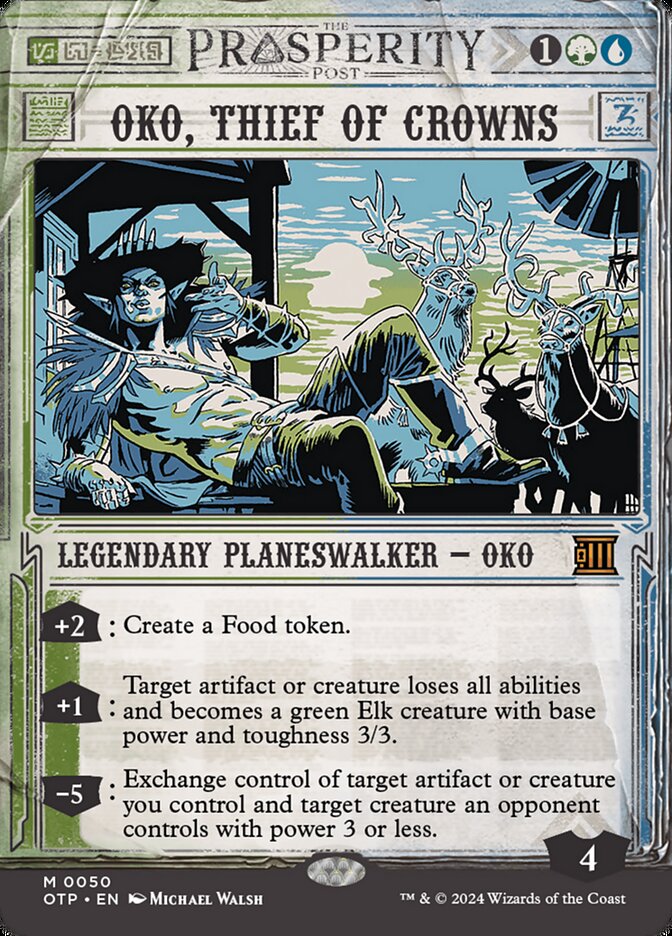
Speaking of Throne of Eldraine…
I never in my wildest dreams imagined that they’d print a planeswalker better than Jace, the Mind Sculptor. It took Wizards nearly ten years to do it, but by gods they did it. Oko, Thief of Crowns will most likely go down in history as one of WotC’s most ridiculous card design mistakes (hopefully it’s never beaten, but I wouldn’t get my hopes up too high on that).
What makes Oko so good? The main reason is that its +1 ability can nuke any annoying permanent you’re playing against. Annoying creatures and artifacts are nothing in the face of Oko. It can turn off a Chalice of the Void that’s locking you out of casting spells, stop that Reality Smasher from trampling over your blockers, and whatever else you can think of.
The 3/3 Elks that take their place aren’t big enough to take out Oko’s obscenely high loyalty and you’ll be able to make some of your own to block with in due time. There are a lot of other reasons why Oko is disgusting, but this is the main one that’s relevant to Modern. WotC claim they never realized that Oko could be used to target your opponents’ permanents which is why they made that mistake.
But whatever. Oko is dumb and banned in every format. Let’s move on.
Once Upon a Time
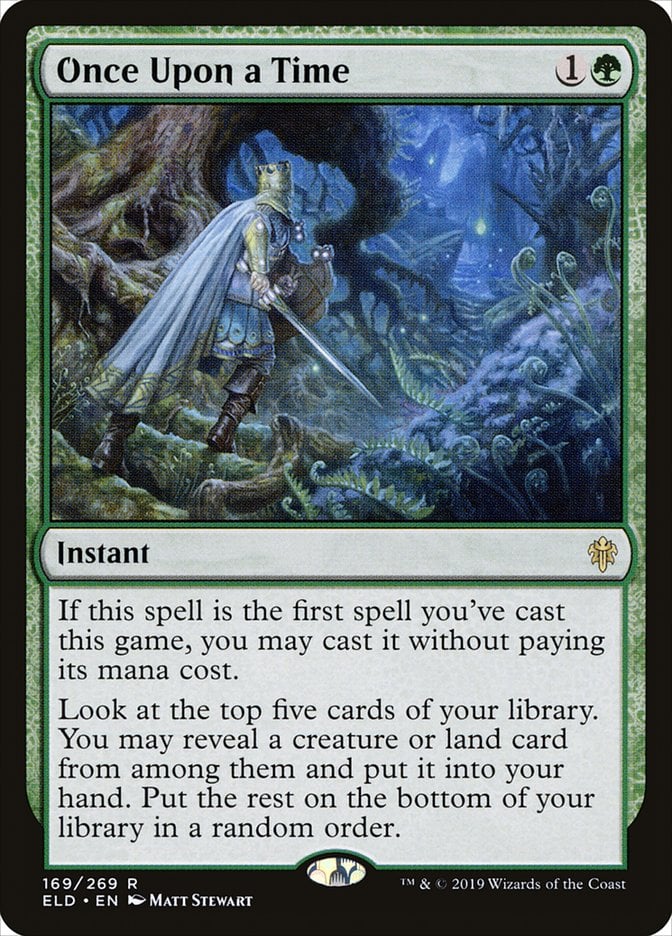
Free spells that do things are never a good sign for a healthy metagame, and Once Upon a Time has to be one of the most egregious examples of this. A lot of decks were able to run this to improve the consistency of their opening hands and make them too strong.
This is one card on this list and gives you some sign as to how good free spells are in Magic since it was eventually banned in every format.
Phlage, Titan of Fire's Fury

Oh man, now Kroxa's not going to have anyone to play with. Phlage, Titan of Fire's Fury was banned on May 18, 2026 to further nerf dominant RW Energy decks in Modern. While an excellent grindy tool on its own, Phlage had soul-crushing results when combined with Arena of Glory, which produced a 12-point swing that also gained you 6 life in the process, often clearing an opponent's blockers and leaving you way ahead on board and life.
As the capstone to a blisteringly fast deck that had already been knocked down a peg with the banning of Amped Raptor, Phlage's absense takes away one of the deck's easiest avenues to grind into the lategame.
Ponder
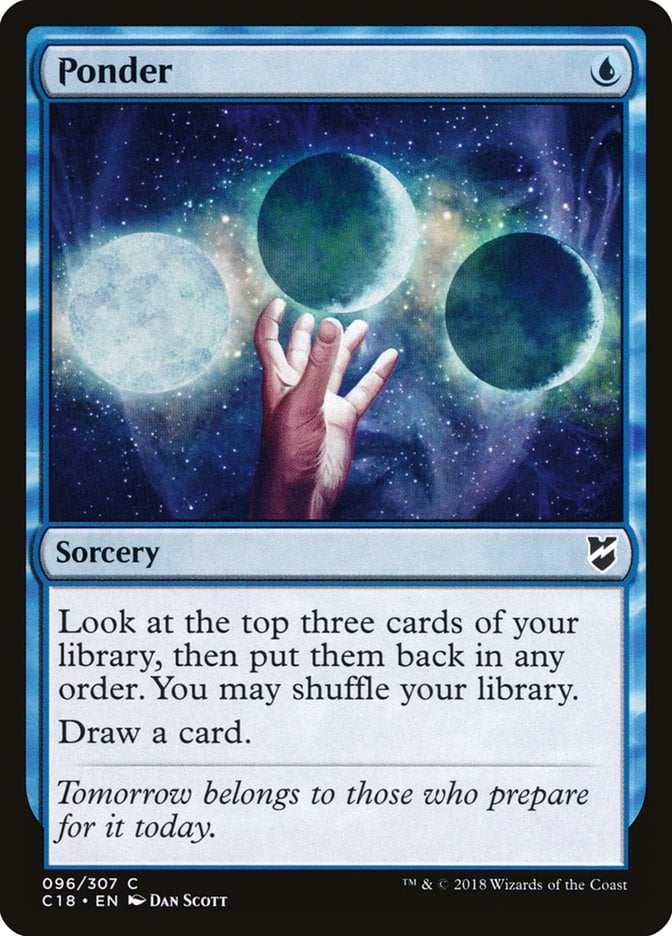
Ponder is one of those cards that was never given much time to shine in the format. Ponder had a number of applications in Modern, from making blue decks very consistent to being virtually essential to the game plan of Storm decks.
Anyone who’s played at least a little bit of competitive Magic is likely aware of just how potent 1-mana blue cantrips are in this game. Brainstorm and Ponder have long been the best of the best in this category and these cards were being played nearly everywhere in Modern’s early days. Storm, control, and Splinter Twin decks all benefited from streamlining their draws and casting cheap spells.
Serum Visions and Sleight of Hand were the only viable replacements when this card was banned, both significantly worse cards that helped to slow down these decks just enough to allow others to compete. With Preordain, Opt and Consider being added to the format since then, there are plenty of good options to replace Ponder.
Punishing Fire

I bet Wizards never expected Punishing Fire to be the incredible powerhouse that it is when they printed it. It looks like an innocuous and pretty bad burn spell, but you can trigger its ability and buy it back if you force your opponent to gain life.
Grove of the Burnwillows not only forces the lifegain, it also gives you the red mana you need to buy it back and lets you do this over and over again. This combo turns Fire into a repeatable source of damage that lets you pick off opposing creatures turn after turn. It even acts as a win condition that lets you deal two damage for every one life your opponent gains from your land. This engine is very strong in Legacy and was deemed to be far too powerful for Modern very early on.
Rite of Flame
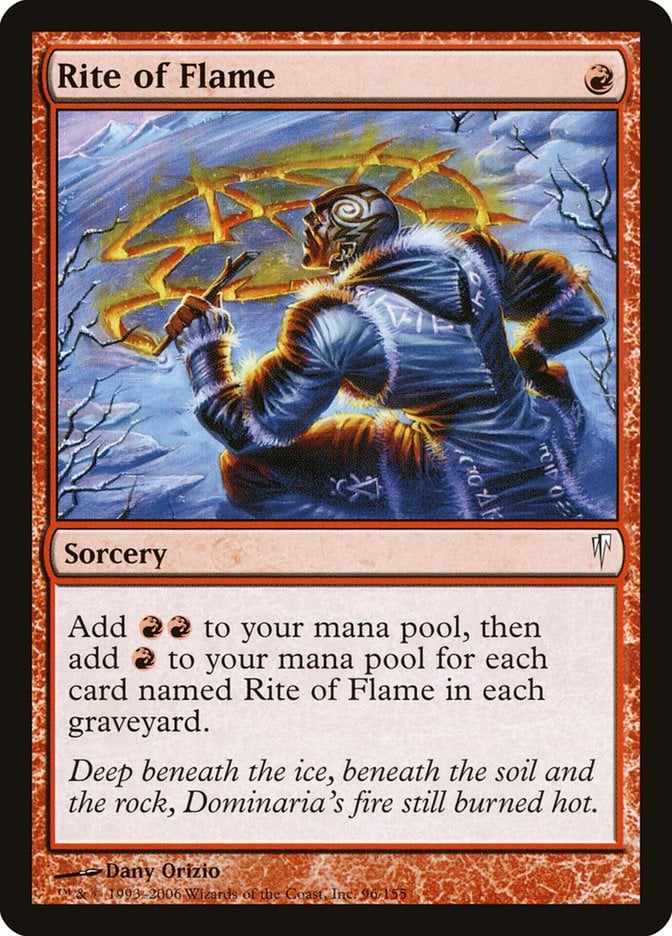
One of Magic’s most powerful ritual spells, Rite of Flame made waves in Modern’s early days by powering up Storm and other similar decks like ones built around Pyromancer Ascension. While it starts out no different than Pyretic Ritual and Desperate Ritual, it quickly gets bumped up to a red Dark Ritual and then soon surpasses it.
But above all else, costing one mana means this Rite breaks the fundamental rules of Modern. It allowed these decks to combo off with less starting mana and made them a lot faster than the turn 4 rule.
Second Sunrise
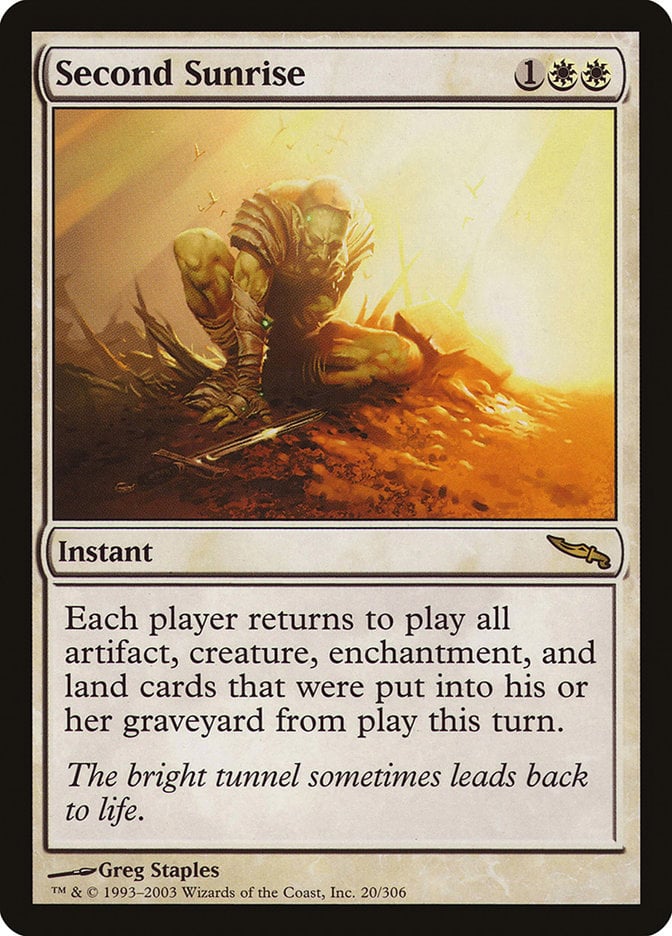
Another hit from Pro Tour Return to Ravnica, Second Sunrise is responsible for one of the greatest runs in Pro Tour History. Stanislav Cifka stunned everyone by winning the title and all but one of his nineteen rounds, a record that remains unbeaten to this day.
Cifka’s “Eggs” deck revolved around cheap artifacts that could sacrifice themselves to draw cards, then buying them all back in one go with Second Sunrise or Faith's Reward. Cifka had absolutely mastered and honed his deck to perfection. The deck cemented itself in the Modern metagame in the months that followed his historic win to the point where action needed to be taken.
Seething Song

The history of Storm decks has been a turbulent one to say the least. Storm has probably seen more individual cards banned to slow it down than any other deck in the history of the format. And yet despite all of these bans, it still manages to remain a steady force in Modern.
Seething Song was determined to be too powerful for the deck since the ritual spells putting you up by two mana rather than just one (like Pyretic Ritual and Desperate Ritual) made the deck too consistent. Even more so when you start reducing its cost. Like Rite of Flame before it, Storm became too powerful and consistent and yet another card needed to be banned to curb its dominance in the format.
Sensei's Divining Top
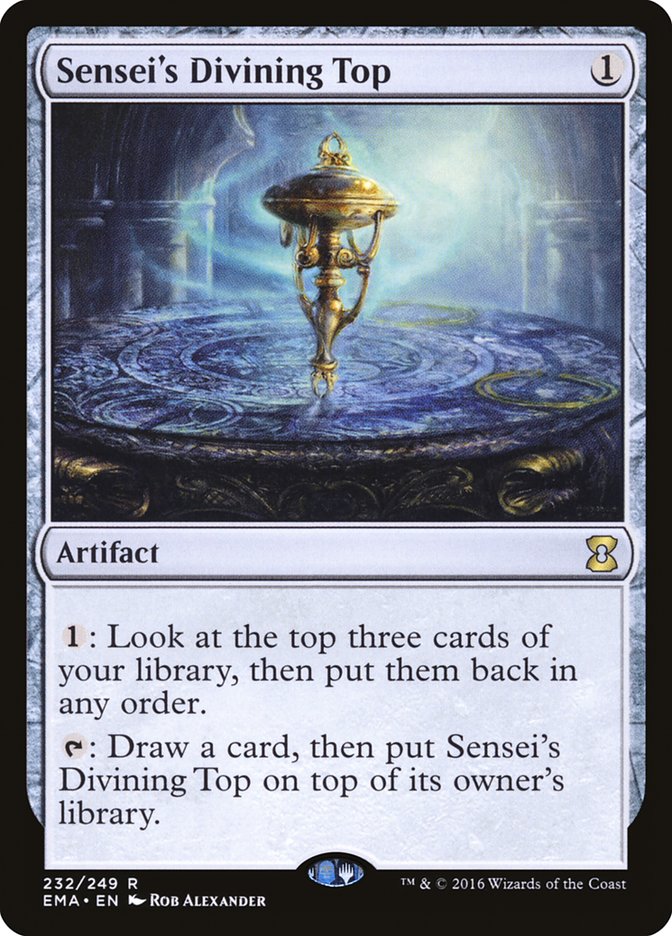
Much can be said about Sensei's Divining Top and its ability to slow down tournament play, with players activating it all the time and taking far too long to make each decision with it. This is ultimately what caused it to be banned in Legacy. But the main reason it was on the original Modern banlist is because of its very powerful interaction with Counterbalance.
Divining Top let you repeatedly rearrange the top cards of your deck to make sure you had the right mana-value card to counter your opponent’s spell. “Countertop” decks were legendary when they were legal in Legacy, and Wizards didn’t want this interaction present in Modern.
Simian Spirit Guide
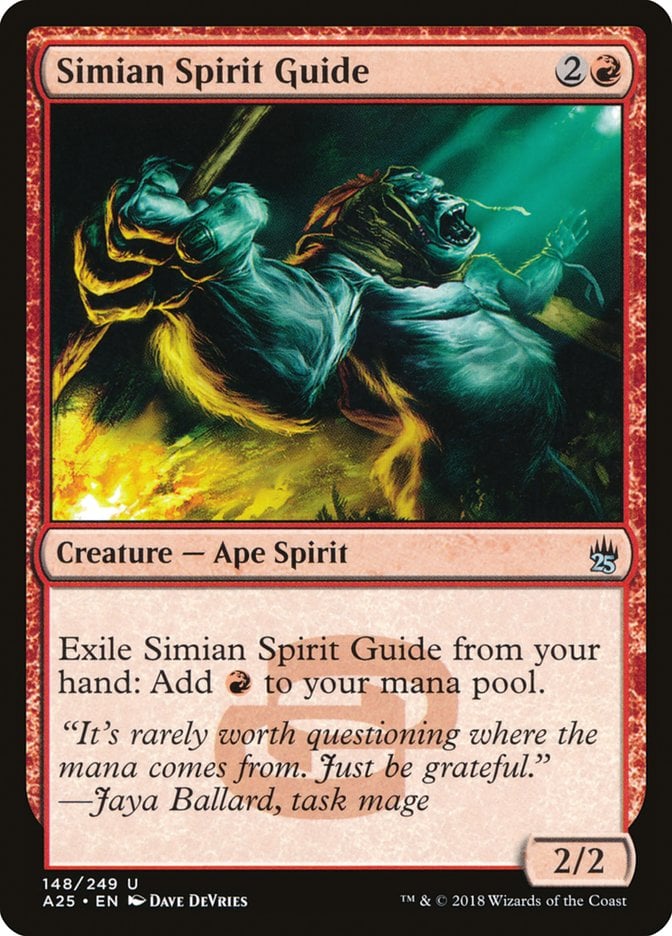
I’ve talked a lot already about how free spells and fast mana make for ban-able cards. Simian Spirit Guide was a fairly common feature in a lot of these interactions in Modern for quite some time. It was played in the Eldrazi Winter decks, in annoying Blood Moon decks, and all sorts of others before eventually getting banned in February 2021.
The mana monkey finally went one step too far as the double-faced land cards from Zendikar Rising created landless combo decks that Spirit Guide played a big part in helping make work. It’s a card that WotC was keeping a close eye on in the first place, and it used up all its strikes.
Skullclamp
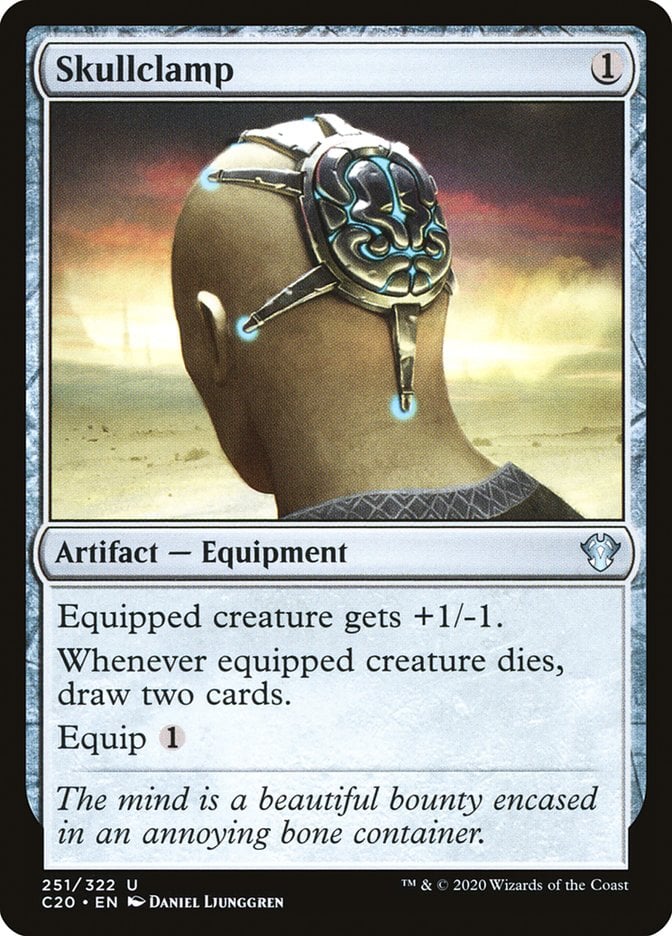
Skullclamp is still one of the most famous design errors ever made in Magic. So the story goes, WotC had this card in the file for Darksteel as the same card but granting +1/+1. They thought the card was too good as it was so they decided to change it to +1/-1 to nerf it.
The irony being that this made it stupidly broken since it now let you kill off 1-toughness creatures to draw two cards, and it only cost one mana to activate. I don’t know exactly how true that story is, but it’s what I was told when I first learned about the card.
Anyway, the card is dumb, has always been banned in Modern, and always will be.
Summer Bloom
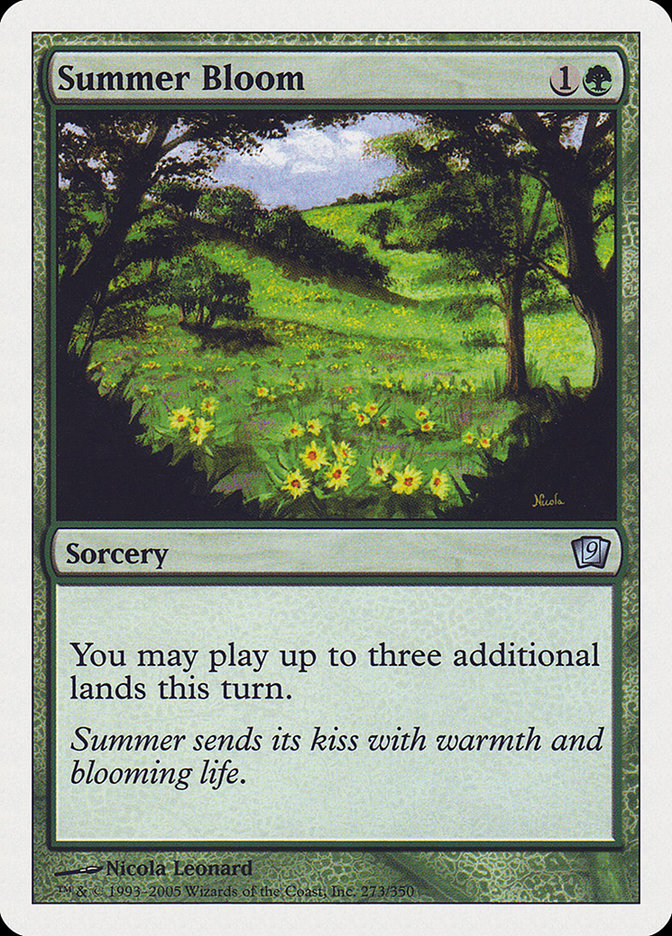
There’s a reason Amulet Titan used to be known as Amulet Bloom. Amulet Titan combines Amulet of Vigor with the bounce lands from Ravnica and multiple land drops to generate a lot of mana. Summer Bloom was the go-to way to get multiple extra drops, and it gave the deck the ability to make a Primeval Titan on turn 2.
You play a turn 1 Amulet of Vigor and then play a green bounce land on turn 2, untap it, float mana, and bounce it to its own ability to use your floating two mana to cast Summer Bloom. You can play the same bounce land three times with your three extra land drops, tapping it for two mana each time, and that six total mana lets you cast a Titan. There’s a number of different possible ways to combo kill from there, but it should be fairly trivial once you’ve made a turn 2 Titan to a good pilot.
This card’s existence broke WotC’s fundamental rule of Modern: that no deck should be able to consistently kill before turn 4. So the key card needed to be banned as the deck became more consistent.
The One Ring
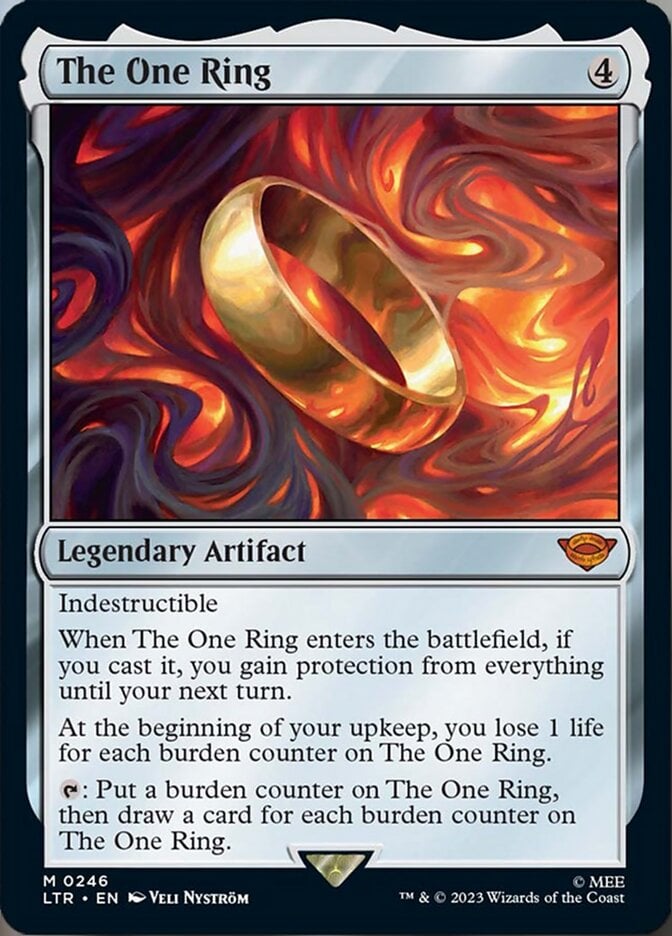
The infamous and all powerful, showstopper from The Lord of the Rings: Tales of Middle-earth, The One Ring is banned in Modern. ‘Bout time, said many a Modern player. It showed up a ton, was represented in 60% of Modern decks, and made for a huge part in the dominant Boros Energy deck. Is the Ring completely unmade? Certainly not since you're still tempted by the Ring in Commander, Legacy and Timeless.
Tibalt's Trickery
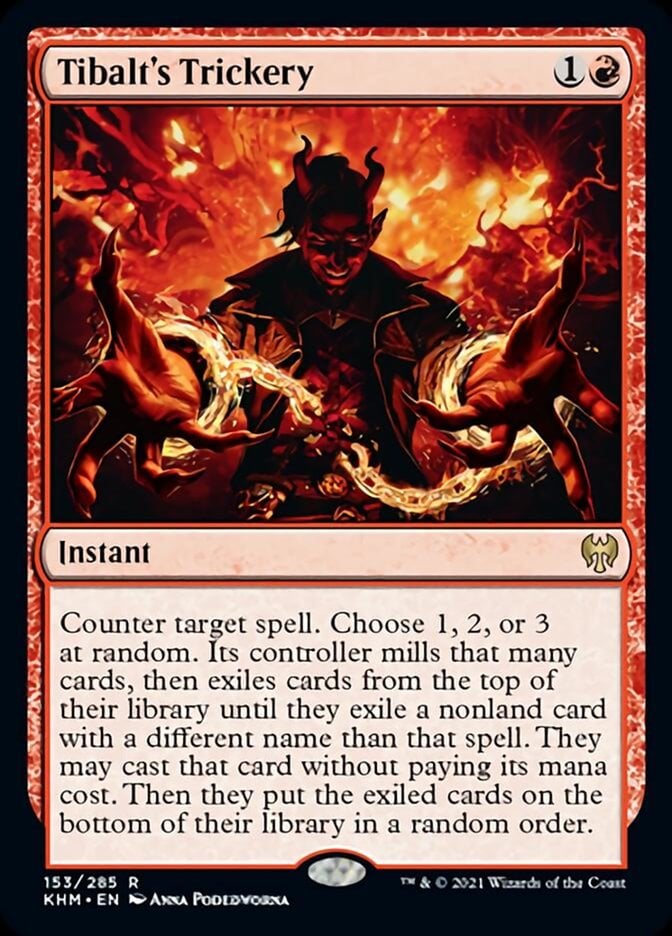
Four copies of Violent Outburst, three Emrakul, the Aeons Torns, 51 lands, and one Tibalt's Trickery are all you need for a Modern deck that can win games.
Even though this deck lacks an obvious amount of consistency, the ability to mulligan until you find a cascade spell mitigates that somewhat. It creates a horrible play pattern where the game is decided almost by pure luck. Some decks can interact with the combo and it’s still vulnerable to counterspells, but you have to leave up mana at all times since tapping means you lose on the spot.
Trickery is just a nonsensical card to keep around and was a very easy and deserving ban.
Underworld Breach
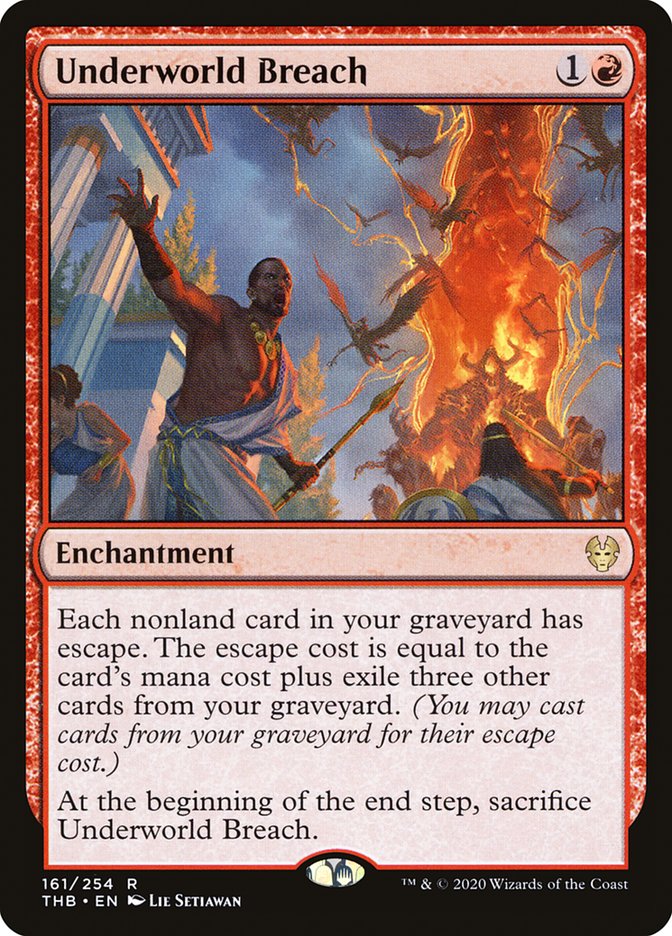
Underworld Breach is a strange red enchantment from Theros Beyond Death. What's not strange is how it took over entire tournaments, and ideal hands that win on turn 1. Grinding Breach is the name of the deck because (Underworld Station sounds like a harmless black land) Grinding Station is a key piece. You need to add a cheerio like Mox Opal or Mishra's Bauble to activate Grinding Station. Underworld Breach let's that artifact escape the graveyard, and you cast the Opal or Bauble again to deck yourself and win with an empty library thanks to Thassa's Oracle.
It adds up to Underworld Breach tagged as an EDH game changer, and banned in Legacy, Explorer, Pioneer and Modern.
Up the Beanstalk

The card advantage on Up the Beanstalk went through the roof. Its enters the battlefield text ensured it replaced itself immediately. It also became better than many free spells like Crashing Footfalls. The balance of the card is disrupted when you are not actually paying five to cast the big spells and trigger the beanstalk.
You often saw a free spell being cast on the same turn as Up the Beanstalk, and so it almost always felt bad to spend a card removing the enchantment. Up the Beanstalk has the honor of being the only card that is banned in Modern and legal in Standard.
Uro, Titan of Nature's Wrath
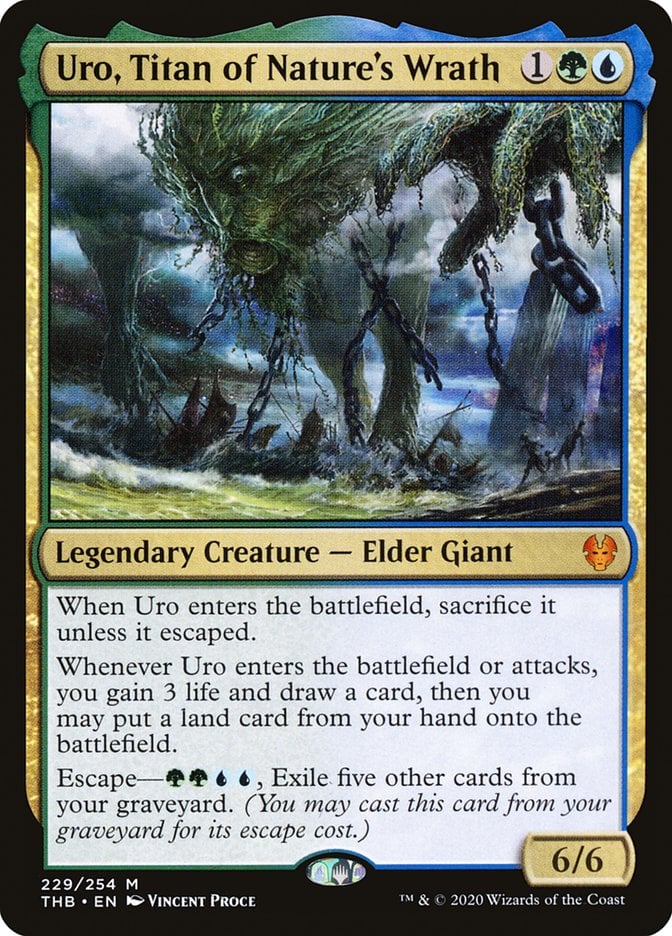
Uro, Titan of Nature's Wrath is a card that surely needs no introduction or explanation if, like me, you played a decent amount of MTG Arena during the pandemic.
Escape was a tricky mechanic for WotC to get right. The escape spells could be cast over and over again as long as the player has enough fodder to exile to it, unlike flashback. Both Uro and its counterpart, Kroxa, Titan of Death's Hunger, made an impact in Modern, but what made Uro extra busted was the fact that its ability to draw you a card often meant that it found you more cards to fill your graveyard for the next time evert time you cast it.
Giving you some extra life and an additional land drop also kept you in the game longer, so it was going to take over the game very quickly unless you had an easy way to exile Uro. Drawing cards is a good thing in any Magic format and having a Titan that draws you cards every turn and never really dies is a ridiculous thing to have access to. So Uro became one of Modern’s most needed bans.
Yorion, Sky Nomad
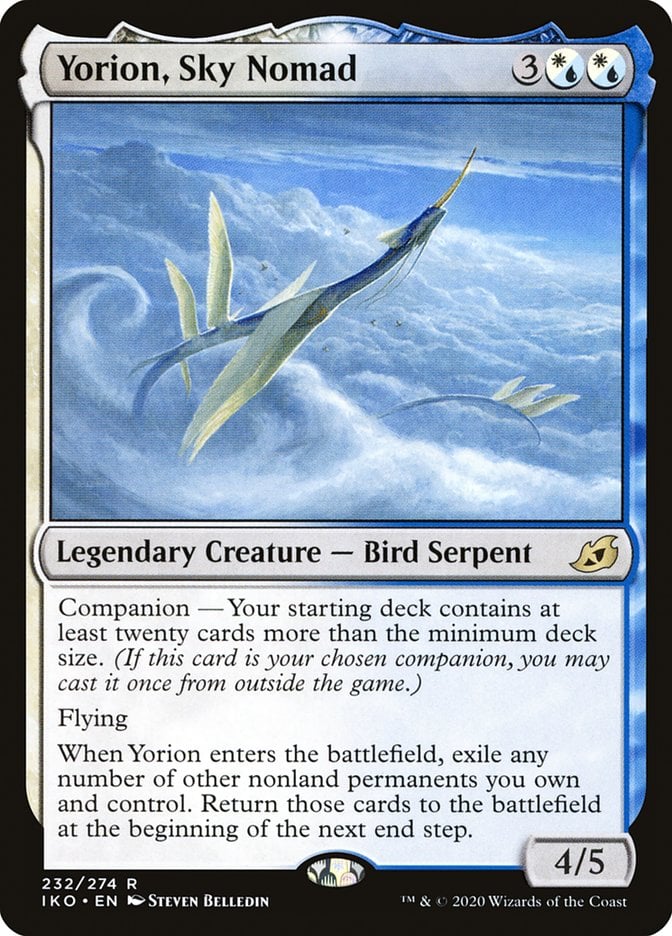
Finally, we have a banned companion card from Ikoria, Yorion, Sky Nomad. Interestingly, the reason given in the ban announcement wasn’t due to its power (although it was played in some top decks), but more that it led to some dexterity issues when needing to shuffle an 80 card deck.
Repetitive gameplay thanks to the nature of the companion mechanic was also referenced, but the problems with shuffling (particularly in a format like Modern which has lots of shuffling due to the legality of fetch lands) seemed like the main reason Yorion got the axe.
Are There Any Possible Unbans?
Yes, though unbans in Modern are unlikely. My heart jumped when I heard Ponder was unbanned and not longer restricted… then sank when I read the unban was only for Vintage. Magic players love speculating about banlist updates.
I personally think Modern is in a fascinating place right now and no changes are likely to be made any time soon. While possible cards to ban are always at the forefront of players’ minds, possible unbans are less easy to figure out. What’s difficult about unbanning cards is that there’s very little upside to doing so and a lot of potential downside if Wizards gets it wrong. We saw this happen when Golgari Grave-Troll was unbanned only to end up banned again just a year later.
That being said, reintroducing cards to the metagame might be just the kind of shake up the format needs as Modern and Magic evolve over time.
Are there any candidates to be unbanned? I reckon so, and here are my thoughts.
The Artifact Lands
The artifact lands have long been necessary inclusions to keep affinity at bay, but affinity needs a bit of help right now since the metagame shifted around and made it virtually obsolete. Even printing 11 new artifact lands, despite 10 of them entering tapped, didn’t do much to help the deck.
I’m not sure if Ancient Den and Seat of the Synod specifically will make the deck too consistent or not, but the deck could use a little bit of help. The removal of Mox Opal from the ban list pushes the artifact lands farther out in terms of an unban.
Krark-Clan Ironworks
The KCI deck had one very key weakness when it was around in Modern: it was extremely difficult to play. It even made use of certain rules manipulations that most players aren’t even aware of. It was extremely difficult to optimize plays with in my experience having judged a number of GPs with this deck legal, as well as having played against it at qualifiers.
Karn, the Great Creator got printed and became a popular card in Modern after Krark-Clan Ironworks was banned. With Karn out a KCI deck might have a weakened power level to allow a safe return.
Punishing Fire
Although there's definitely some combo potential to Punishing Fire, it seems like a strange ban in an age where ‘free’ removal spells like Fury and Solitude are running rampant. Yes, it can be bought back, but it’s still just a 2-mana Shock, and removal has come leaps and bounds since it was originally brought out.
While the ban probably made sense when it was first added to the list, I don’t think it would affect the format much if this was unbanned today.
When Was Preordain Banned in Modern?
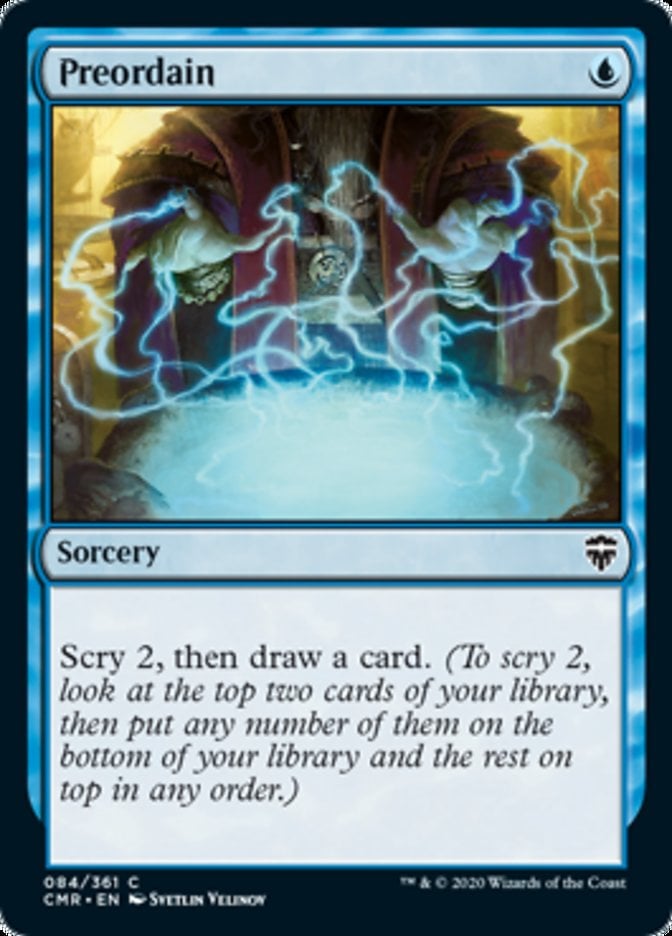
Preordain is no longer banned in Modern. It was banned in 2011 to reduce the consistency of combo wins before turn four in decks like Izzet combo. With Preordain re-introduced to blue decks there’s a little help to players facing Orcish Bowmasters. It is a good sign that an unbanning has not disrupted the balance of Modern.
When Was Splinter Twin Unbanned?
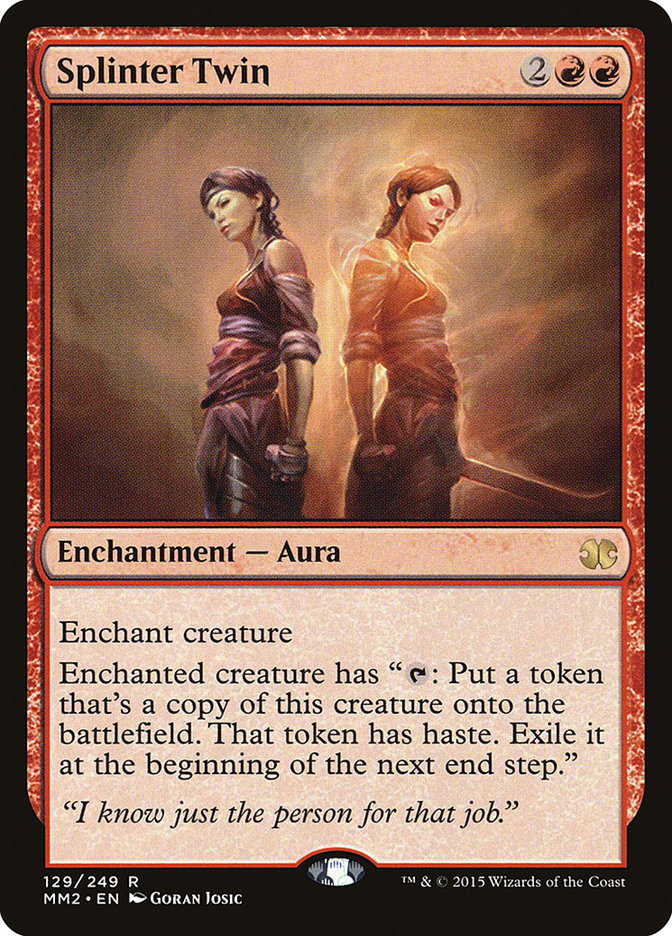
On December 16, 2024, Wizards unbanned my sweet, sweet Splinter Twin, along with Faithless Looting, Green Sun's Zenith, and Mox Opal. Wizards recognized that many years have passed and believes answers to these powerful cards are plentiful and won't hurt diversity and deck creativity.
Wrap Up

Paragon of Modernity | Illustration by Volkan Baga
I hope you enjoyed this little trip down what would be memory lane for some players. It used to be that you could just look at the frame of the card and know if it was a Modern card or not, but thanks to the retro frames featured in sets like Innistrad Remastered and Ravinca Remastered, it's not so easy. Modern is one of the most fun formats to play in Magic, and I sincerely hope it stays that way going forward.
What are your thoughts on Modern’s history with bans? Do you agree with my unban suggestions? Do you think one of my selected cards should stay banned, or is there another contender you think should be reinstated? Let me know in the comments or find us over on Draftsim’s Twitter.
That's all from me for now. Stay safe, stay healthy, and wash your hands!
Follow Draftsim for awesome articles and set updates:












1 Comment
Very fun article to read! I’ve been thinking about a few of these cards myself. Very fun to see where these go in the future! Thanks!
Add Comment