
Last updated on November 28, 2024

Ral, Crackling Wit | Illustration by Scott M. Fischer
Greetings planeswalkers! Bloomburrow has been out for a bit over a week now, so you know what that means: It’s time for another Ultimate Draft Guide!
Going off of social media buzz, Bloomburrow’s Limited environment seems to have received a mixed response so far. Everyone loves the theming, but I’ve heard complaints concerning the format’s pacing, color balance, and linearity. I’ve personally enjoyed Bloomburrow and plan to continue drafting it but also find these complaints accurate and want to address them.
Let’s Hop to It and master Bloomburrow drafts!
Mechanics Revisited

Hop to It | Illustration by Eelis Kyttanen
Let’s touch on how the mechanics actually play out, now that I’ve experienced this MTG set!
Offspring


Offspring has been fun but somewhat uneven. There’s a noticeable gulf in quality between cards like Intrepid Rabbit and Finch Formation, so despite the diversity of offspring cards, I find myself mostly gravitating towards the same ones. Offspring has also made cards like Downwind Ambusher and Conduct Electricity better than they seemed in a vacuum.
Valiant


Valiant has played well in Boros () Mice, but it rarely matters anywhere else. Occasionally I’ll find myself playing “Mouse packages” in other archetypes though, particularly if I have premium mice like Whiskervale Forerunner and Manifold Mouse.
Forage


Forage has been excellent in Golgari () Squirrels, which has been one of the better archetypes in the format. It also has more play in other archetypes than most mechanics, since you can always play 1-2 forage cards as though they were “delve” cards. The main archetype that needs to be wary of this is Dimir () Rats, as threshold is usually more important.
Expend


Expend is a simple mechanic that any deck can make use of. Building around expend is mostly a matter of including 4-drops, since every single expend card has expend 4 on it. Another thing I’ve liked doing with expend is playing pseudo-kicker cards like Steampath Charger, which can act as 4-drops when needed without making your curve too high. Expend arguably asks the least of you of any Bloomburrow mechanic.
Gift


Gift is my favorite Bloomburrow mechanic from the point of view of gameplay. There are some interesting choices to make with gift cards that go beyond the obvious. Here are some examples:
- Longstalk Brawl obviously merits a +1/+1 counter when you’re winning the fight this way, but what if you’re winning anyways? Is a Battlegrowth worth a 1/1 Fish? And what if your opponent could have Crumb and Get It? Should you give them a Fish to cover the risk you’re taking?
- Mind Spiral is similar in that the upside for your opponent is low enough that you can justify stunning in a variety of situations. It’s not a complete free roll though, as cardboard is cardboard.
- While it’s probably going to be obvious when you want to kick Coiling Rebirth in game, actually setting that up in Bloomburrow is a fun deckbuilding challenge. Your best bet is big nonlegendary ETB creatures like Daring Waverider and Wick's Patrol (with Rottenmouth Viper being the money shot).
Jolly Gerbils has been great as well, particularly in WB where you can Nocturnal Hunger plus draw a card.
Pawprint Seasons


Going off stats online, every single one of the Pawprint Seasons is an obvious p1p1 bomb except for Season of the Bold, which has underperformed a bit. I still like it and wonder if that could be due at least in part to misplays. The main modes I’d expect to use are:
- 1 paw in the Treasure mode, 4 paws in the exile cards mode (for when you're out of gas but not behind on board),
- 2 paws in cards, 3 paws in extra damage until next turn (when out of gas and behind), and
- 2 paws in Treasure, 3 paws in extra damage (when you have a stocked grip and one turn to untap).
Threshold


Rats’ signature mechanic has been… fine, I guess?
These cards are all great on rate if you can get seven cards in the yard, but the journey there often takes quite a few turns, unfortunately. This means Rats can be stuck with “hits” like Maritime Guard, Horned Turtle, and Wishcoin Crab until turn 7 or so. It’s not insurmountable, but this setup cost has led to Rats being one of the more mediocre archetypes.
Changeling


Finally, both changeling commons have been better in Sealed than Draft. You’re more likely to splash and have multiple typal payoffs in Sealed, so occasionally you’ll get to live the dream with Three Tree Mascot as a payoff for Salvation Swan, Clement, the Worrywort, and Valley Questcaller at the same time.
I’ve also been partial to Barkform Harvester as a 1-of in () Squirrels and () Frogs if you can fit it, as both archetypes can find themselves milling out if you aren’t careful.
Colors Ranked
The color balance in Bloomburrow isn’t its strongest quality. I’d rank the colors as follows:
- Green
- White
- Black
- Red
- Blue
The gap between each color in Bloomburrow is marginal, but cumulatively I’d say the gap between blue and green is quite notable. Here’s how each color plays out in Bloomburrow Limited.
White


White is primarily an aggressive color, though it also has some of the best removal spells in the format (Banishing Light and Repel Calamity, mainly).


White’s best commons tend to be rabbits (Carrot Cake, Intrepid Rabbit, Warren Elder, and Head of the Homestead) and kill spells. The rabbits are so good on rate that every archetype wants them (not just GW).
Blue
Blue in Bloomburrow is in the worst spot it’s been in a long time. Blue doesn’t have any common hard removal (Sugar Coat is close, although at uncommon), and it also suffers from poor sizing on most of its creatures. Blue has some great rares and uncommons in Bloomburrow, but it has easily the worst commons of any color.


I’d only want to be base blue if I had great reasons like Season of Weaving and Kitnap. As a support color, blue is less dire thanks to great uncommons and card draw spells like Pearl of Wisdom and Mind Spiral.
Black


Black’s trademark strength is its removal, which is of course well-represented in Bloomburrow. Savor and Nocturnal Hunger are great reasons to jump into black in draft. It also has some nice value creatures like Daggerfang Duo and Glidedive Duo which play well in several archetypes.
This is my personal favorite color in Bloomburrow, as green rarely feels open to me on Magic Online. For example, I had a draft where I p1p1’d a Fecund Greenshell, forced Gx, and ended up nearly mono-black!
Red


Red is of course an aggressive color, and its best commons are the usual removal spells we’ve come to expect, which in Bloomburrow are Take Out the Trash and Agate Assault. Those are my usual reasons to get into red early, though being base red is fine in this format and works for Rakdos (), Boros (), or Gruul () aggro decks. Izzet () Otters also leans on red heavily, as it really wants multiple copies of the best red removal spells.
Green

Lastly, green is the best color in the format by a decent margin. This color’s strengths are numerous and include its creature sizing, green removal (both are actually quite good), and of course its ability to splash other colors. Another thing green has going for it is its depth at common.
Top Commons Revisited
So how’d I do last time? Now that we’re armed with the wisdom of experience and online stat aggregators, let’s take a look!
White

I listed Banishing Light, Intrepid Rabbit, Warren Elder, and Crumb and Get It as the best white commons. This wasn’t a bad attempt, but I missed an innocuous-looking morsel of food that some players are calling the best common this week: Carrot Cake!
Though mediocre-looking on rate, Carrot Cake is excellent for a number of reasons:
Bloomburrow is a low-consistency format. The sheer number of non-games I’ve seen is unfortunately higher than any format in recent memory besides Murders at Karlov Manor. Given that most of this is just owed to having too many, too few, or the wrong mix of lands, Carrot Cake fights this directly. Scrying land #3 to the top wins games, as does bottoming two useless lands later on.


There are some great token payoffs in Bloomburrow drafts (Caretaker's Talent, Finneas, Ace Archer, Tangle Tumbler, Rabbit Response, etc.) but there aren’t actually that many token generators. The few good ones like Carrot Cake, Hop to It, and Head of the Homestead have been premium cards.

Carrot Cake is also an essential partner for a couple of build around cards in the format, like Builder's Talent.
Finally, Carrot Cake is also a food, which gives GW and WB an unusual edge at using forage cards without being BG Squirrels.
My revisited list for white’s top four commons is:
- Intrepid Rabbit (best in GW/RW, good in all archetypes)
- Banishing Light (good in all archetypes)
- Carrot Cake (best in GW/WB, good in all archetypes)
- Warren Elder (best in GW, good in all archetypes)
Carrot Cake should bounce between #1-3 depending on your archetype and support cards. If you have cards like Caretaker's Talent or Builder's Talent, it’s a clear #1, but I’d put it behind the others in an archetype like RW Mice.

Crumb and Get It and Sonar Strike are solid runner-ups that almost made the top 4.
Blue
Oh, poor blue. Blue’s commons in Bloomburrow just don’t deliver, it turns out.


I listed Dazzling Denial, Dire Downdraft, Lightshell Duo, and Bellowing Crier as my top four blue commons.
I was basically right, although I’d now chop Bellowing Crier for Pearl of Wisdom and switch Dire Downdraft with Dazzling Denial. To review, that looks like:
- Dire Downdraft (good in all archetypes)
- Dazzling Denial (best in UW, can play one anywhere or 2-3 if you have Birds)
- Lightshell Duo (best in UR/UB, decent in all archetypes)
- Pearl of Wisdom (best in UR, playable in all archetypes though)
Blue should mostly be a support color in this format, though it can be a fine base color if you have powerful rares/uncommons. There’s no compelling common reason in Bloomburrow to be base blue; even Dire Downdraft is completely outclassed by other removal spells like Banishing Light, Take Out the Trash, and Nocturnal Hunger.
The main niche blue has at common is probably its raw card-draw spells; Mind Spiral and Pearl of Wisdom are both great cards when you aren’t getting your face punched in immediately.
Black

I listed Nocturnal Hunger, Savor, Diresight, and Glidedive Duo as black’s best commons.
I was too high on Diresight, which can be a fine one-of in WB Bats/UB Rats but is too punishing to prioritize. I’d instead replace it with Daggerfang Duo (an excellent blocker/filler card for BG Squirrels and UB Rats) and be on my merry way. Revisited black looks like this:
- Nocturnal Hunger (good in all archetypes, though it does have “lost life this turn” synergy for WB Bats)
- Savor (best in BG and WB, good in all archetypes)
- Glidedive Duo (best in WB and BR, good in all archetypes)
- Daggerfang Duo (best in BG and UB, decent in all archetypes)
Red


I listed Take Out the Trash, Agate Assault, Alania's Pathmaker, and Raccoon Rallier as red’s best commons.
Raccoon Rallier was a miss; it’s good in RW with valiant, but otherwise inferior to other common 2-drops like Steampath Charger. Instead, I’d recommend Roughshod Duo, which has been excellent in just about every red deck. It’s a great source of valiant triggers and evasion that plays well whether you’re big and midrange-y or lean and aggressive. As such, my revisited red looks like:
- Take Out the Trash (good in all archetypes)
- Agate Assault (good in all archetypes)
- Alania's Pathmaker (good in all archetypes)
- Roughshod Duo (best in RW and RG, good in all archetypes)
Green


To no one’s surprise, green is arguably the best color in Bloomburrow. I listed Three Tree Rootweaver, Treetop Sentries, Longstalk Brawl, and Stickytongue Sentinel as green’s best commons.

This is the color I was most off on, as I missed gems like Bakersbane Duo and Treeguard Duo while overrating Three Tree Rootweaver. My revised list would be as follows:
- Bakersbane Duo (best in BG and RG, good in all archetypes)
- Treeguard Duo (best in GW and GU, good in all archetypes)
- Polliwallop (best in GU, decent in all archetypes)
- Longstalk Brawl (good in all archetypes)

Green is a very deep color at common, so I’d consider Stickytongue Sentinel and Cache Grab to be close runner-ups. My picks were mostly chosen for being not only good but also flexible; you can play these four cards in every Gx archetype and be happy with them. Cache Grab has the highest ceiling of any green common, but of course this only applies to decks with forage cards and squirrels.
Hybrid


I listed Seedpod Squire, Pond Prophet, Moonrise Cleric and Head of the Homestead as the top hybrid commons.
Seedpod Squire was a poor choice for #1; it’s solid in UW and RW, but merely filler everywhere else. Most archetypes have other common 4-drops that they’d prefer to Seedpod Squire, which means you’re rarely picking it all that highly. The rest of my choices were great though. I’d replace Seedpod Squire with Corpseberry Cultivator and reorder the list as follows:
The strength of these cards is that they’re excellent in their respective archetypes, while being playable in any other deck. Thus, Pond Prophet should be one of the most picked commons in Bloomburrow drafts, since it’s essential for UG Frogs and solid anywhere that can swing or .
Bombs Revisited
This is another brief section that revisits my evaluations of certain cards from my initial review, and updates/recontextualizes where necessary.
Mythics

Helga, Skittish Seer isn’t a card I’ve seen often. The format skews faster and smaller than what Helga, Skittish Seer wants you to do, and getting 3 colors can be a chore. It’s not unplayable or anything, but far from the power level of Glarb, Calamity's Augur (which is more than worth splashing for).

The Infamous Cruelclaw has been surprisingly manageable in Bloomburrow Limited so far. The potential to run away with games is definitely there, but it’s quite killable and you might not always hit the most impressive cards off the top. I’d still be willing to p1p1 this, but it isn’t at the level of most true bombs.

Hugs, Grisly Guardian represents a really strong commitment to () in Draft. I’d be careful locking into this early, as it has the potential to trainwreck you if you end up getting cut hard on RG cards.

Ygra, Eater of All is better than I gave it credit for. There are a couple of practical ways to give it trample (Hunter's Talent and Overprotect), and even without it, this elemental cat just dominates almost every board I’ve seen it played on. I was already high on it, but it’s an absolutely top shelf mythic and worth splashing, too.
Rares

Starfall Invocation is great, but “best rare in the format” was probably an excessive boast. White is primarily an aggressive color, so it can take finesse to use this well (without being too obvious that you have it). I still love playing it/drafting it, but I’d prefer other white bombs like Valley Questcaller or Salvation Swan over this.

Valley Rotcaller doesn’t attack for 2 damage on its own. I missed that the card said “other.” It’s still pretty good in most black decks but vulnerable to double blocks and slow to get going.

Mabel, Heir to Cragflame has been better than expected. It’s best in RW Mice, but strong enough on rate that I’d consider splashing it in various decks. Cragflame is just an awesome piece of equipment!

Baylen, the Haymaker is a pretty narrow card that requires you to draft mana fixing for it. It’s not a bad payoff, but I wouldn’t recommend p1p1’ing and committing to it.

Scavenger's Talent is less bad than I gave it credit for. It’s not much good in the average deck, but it can make for an interesting win condition in a grindy BG or WB shell. Key cards to pair it with are forage squirrels, Savor, Builder's Talent, and the like. You’re looking to block, durdle, and eventually win by milling your opponent out (while getting value from doing so).

Artist's Talent is an even more niche class enchantment, but it might be playable in the right UR deck. The key card you’re looking for is Kindlespark Duo, which can absolutely go off once you reach Level 3. You’ll need a lot of removal and blockers to get there, but that’s typical of UR in this format.


I have yet to play either Wishing Well or Festival of Embers. This is just not the format for this kind of effect, so even in my pessimism, I was likely too optimistic!
Uncommon
All the ones I listed originally have been great, but I wanted to give a shoutout to two more uncommon overperformers: Downwind Ambusher and Shoreline Looter.

Shoreline Looter is the best blue uncommon and one of the best 2-drops in Bloomburrow drafts.

Downwind Ambusher has overperformed everywhere. -1/-1 is the primary mode of the card, but the combat mode also lets it finish off fatties if needed, too.
Archetypes Revisited

Pond Prophet | Illustration by Simon Dominic
In my Bloomburrow Sealed Guide, my archetypes section is always pretty barren and mostly just expands on WotC’s official mini-guide they give out now with every set. But with the benefit of experience, it’s much easier to confidently talk about how to build each archetype, as well as which ones are the best. My rankings for Bloomburrow are as follows:
- Tier 1 (the best of the best)
- Tier 2 (great decks)
- Tier 3 (decent decks)
- Tier 4 (weaker decks)
One nice thing is that there’s no deck in Bloomburrow that’s strictly unplayable; there’s no archetype in Bloomburrow nearly as bad as UW was in Wilds of Eldraine, for instance. Instead, the power level is mostly owed to the strength of each color pair at common, as well as the general quality of most payoffs and their accompanying support cards.
GW Rabbits
GW Rabbits wins the title of best deck in the format, which makes this a repeat performance as GW Mounts was #1 in Outlaws of Thunder Junction. GW’s strengths are numerous:
- It has some of the best payoffs of any archetype in the format.
- All the common rabbits are surprisingly good, so its best cards are naturally the best cards in its colors.
- It doesn’t depend on higher rarity cards much and can crush pods with just commons/uncommons.
- It does the best job of leveraging powerful commons like Carrot Cake and Intrepid Rabbit. Carrot Cake in particular makes GW less likely to have non-games than other color pairs.
- It’s aggressive without being low on card quality, so it can play a proactive game without immediately feeling hopeless if it floods a bit.
Payoffs


Harvestrite Host, Hop to It, Burrowguard Mentor, Patchwork Banner, Caretaker's Talent, and Finneas, Ace Archer are exceptional cards for this archetype.
Harvestrite Host is easily one of the top uncommons in Bloomburrow drafts in general; you’re always looking to play it with multiple Rabbit-generating cards, so prioritize Carrot Cake, Intrepid Rabbit, and Head of the Homestead highly!


GW also does the best job of leveraging all-around excellent rares like Valley Mightcaller, Valley Questcaller, and Season of the Burrow. Lesser token payoffs like Hazardroot Herbalist and Tangle Tumbler are also at their best here.
Key Cards
Carrot Cake, Intrepid Rabbit, Warren Elder, Head of the Homestead, Treeguard Duo, and removal spells form the bulk of what this deck wants at common. Druid of the Spade hasn’t been a priority for me but is another card clearly aimed at this archetype. Feel free to play non-rabbit creatures to complete your curve, as most of the rabbit payoffs do just fine with a few copies of the commons above anyways. Rabbit Response is also great in this archetype, so try to snag a copy or two if you can.
Trophy Example

Playing Against It
Sweepers would be ideal, but there aren’t many in the format; just Wildfire Howl, Starfall Invocation, and Season of Loss. Instead, you’ll usually have to manage Rabbits with a combination of blockers, spot removal for threats, and card advantage to grind them out.
Rabbit Response is fairly obvious to see coming, although I can’t say that knowing about it will always guarantee your survival. BR and RW might go under GW, while most other decks will find themselves taking a more controlling role.
BG Squirrels
BG Squirrels is an excellent midrange strategy that makes great use of its unique forage mechanic. Attrition is the gameplan with Squirrels, as you’re usually looking to draw games out and leverage incremental advantages. Green blockers, black kill spells, and ways to get value are the name of the game here.
Payoffs


Squirrels has some really exciting payoffs like Bonecache Overseer, Camellia, the Seedmiser, Ygra, Eater of All, and Vinereap Mentor. There’s also a handful of uncommons like Bushy Bodyguard and Curious Forager that are playable anywhere, but optimal in BG. Squirrels are also the only archetype you’ll ever play Honored Dreyleader in, which can be impressive if you have 10+ Squirrel/Food cards. If you have more of a mixed creature base though, I’d avoid it as it really needs to be 4/4 or better to break par.

Some other cards that can work great in BG Squirrels are Scavenger's Talent and Stocking the Pantry (which pairs well with Corpseberry Cultivator, which you’ll want anyways).
Key Cards
Cache Grab is the best common in this archetype by a considerable margin. Optimal Squirrels decks will have 2-4 copies, and getting one late can be a fair sign that BG might be open.

Treetop Sentries and removal spells should be your next priority, followed by Bakersbane Duo, Heaped Harvest, and then other solid playables.
Heaped Harvest plus Treetop Sentries is one of my favorite combos in this archetype and can help pull you ahead on cards and mana without falling too far behind on board.
Some other cards I’ve liked here are Glidedive Duo and Diresight. Glidedive Duo is a solid value card and wincon (as you’ll encounter a lot of board stalls), while Diresight can be a great way to avoid flooding out later on.
Trophy Example

Playing Against It
Get ready for a grind, especially if your opponent has the nut (get it?) Squirrels deck. Fliers can be decently effective, though you’ll of course need removal for Treetop Sentries. This is a good matchup to board in extra copies of Diresight and Mind Spiral that you were too conservative to start, as Squirrels rarely end games quickly. Aggressive decks are mostly just looking to execute their gameplan quickly before Squirrels' card advantage can take over, which involves a fast curve and key removal/tricks for blockers.
BR Lizards
BR is a solid color pair in this format that’s somewhere between aggro and midrange. It’s not as fast as RW Mice, but it tends to have higher card quality overall. Another strength of the deck is that it can close out games via burn, even if the board has been lost.
Payoffs


Gev, Scaled Scorch and Fireglass Mentor are incredible payoffs for the core Lizard gameplan. There’s also a couple of other hits like Valley Flamecaller, Flamecache Gecko, and Hired Claw. If you don’t have these cards though, Lizards enjoy a bit more freedom than other archetypes in terms of the creatures it can play.
Key Cards

You’re mostly just looking to build a great curve, plus removal spells and a couple of copies of Scales of Shale. Scales of Shale is an incredible combat trick when it costs 1 mana, and BR Lizards is reliably able to do this! You won’t need to prioritize it though, as it should table when BR is open.


Outside of Scales of Shale, your best Lizards are Glidedive Duo, Cindering Cutthroat, and Steampath Charger. Ravine Raider is also solid here, and another card that no one else will really want.
Trophy Example

Playing Against It
Get on board and protect your life total if you can, as the early turns can be pivotal against Lizards. The difference between having no play on turn 2 or Savor couldn’t be more stark against cards like Fireglass Mentor and Flamecache Gecko. If you can get through the early game, the main thing you’ll have left to do is to beat Glidedive Duo, which is the deck’s main late game. Save a kill spell or two for it if you can (especially if you are short on future ways to block it).
GU Frogs
I’m pleased to report that GU Frogs is not a bad archetype! I had my fears going into the format Day 0, but Frogs have generally overperformed relative to my expectations. It’s not the best deck to draft in Bloomburrow, but it’s a lot of fun to play with and still decent even if you don’t get the absolute best version.
Payoffs


Frogs is defined largely by its payoffs and bouncy play pattern. The best reason to be Frogs is Clement, the Worrywort, but there are also several other rares like Dour Port-Mage, Mistbreath Elder, and Dreamdew Entrancer that are almost as good here.


Lilysplash Mentor, Three Tree Scribe, Clifftop Lookout, and Long River Lurker are the best uncommons for this archetype, and Lilysplash Mentor is particularly excellent. A late Lilysplash Mentor can be the perfect signal to hop into this archetype.


There are also some support cards like Splash Portal and Gossip's Talent that work well in GU Frogs, though I’d never prioritize them over the above cards, Pond Prophet, or Polliwallop.
Key Cards
Pond Prophet is the best common for you, and there’s essentially no practical limit to the number you’d play. A late Pond Prophet should be taken as a signal that this archetype is open, as it’s so good here while only being fine elsewhere.
Polliwallop is the next best thing, though unfortunately you’re going to have to fight with other green drafters for it.

Stickytongue Sentinel and Treeguard Duo are good common frogs, while Sunshower Druid is merely okay. I like a copy of Sunshower Druid in most decks but will only play multiples if I have several great ways to bounce it (as it can feel like a mulligan on its own).

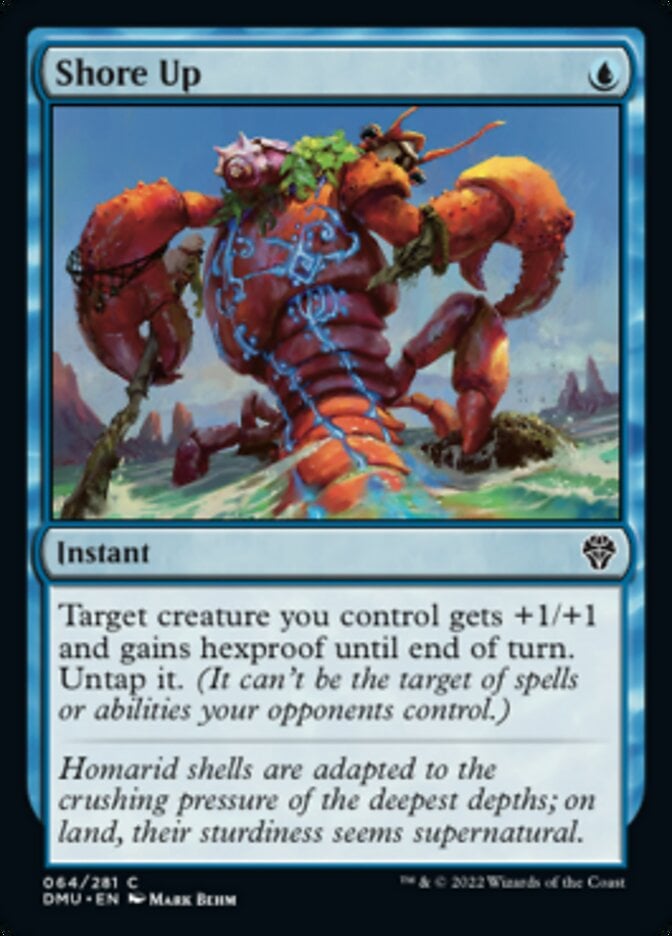
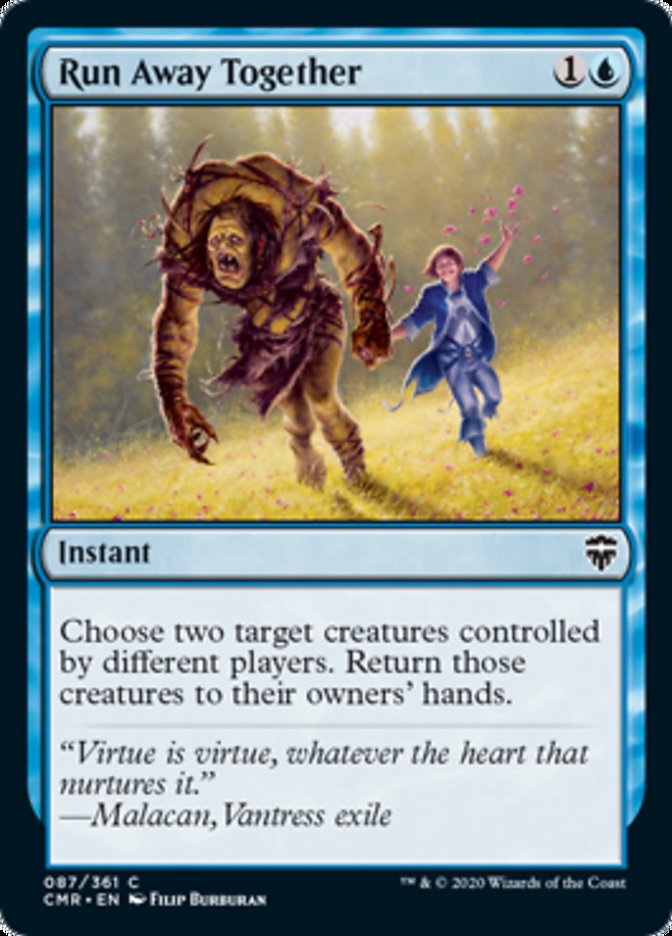
Skyskipper Duo is at its best in Frogs too, though it’s clunky enough that you won’t need to prioritize it. I like 1-2 copies at the top of my curve and find that it almost always tables anyways. Lastly, Shore Up and Run Away Together are great support cards for this archetype, so I usually find myself starting a copy of each when I can. Run Away Together is much better in GU Frogs than other decks (where it’s almost unplayable) thanks to Pond Prophet and GU’s general lack of interaction.
Trophy Example

Playing Against It
Removal is vital, as a well-timed kill spell can break up the Frogs engines nicely. Once Clement, the Worrywort bites the dust, your opponent can be left with nothing but a bunch of tiny, underpowered frogs.
You can also just try the novel strategy of quickly killing your opponent, as Frogs can be slow to set up.
It certainly has the tools to beat aggro though (Polliwallop in particular), so don’t underestimate it. Polliwallop is the main green instant you’ll need to play around, so pay close attention to how many frogs your opponent has and what mana they're leaving up.
One nice thing about Frogs is that they won’t usually have much removal (just 2-3 copies of Polliwallop and maybe Longstalk Brawl, Dire Downdraft, etc.). As such, this is one of the easier archetypes to stick a huge bomb rare like Kastral, the Windcrested against.
WB Bats
Bats is a solid midrange/fliers deck, and my most drafted archetype currently. It has a fun lifegain/life loss theme that powers a lot of its synergies. How much you lean into this varies from draft to draft, as it’s fully possible to play WB as more of a good stuff pile with dudes + kill spells.
Payoffs


If you’re trying to draft proper WB, Lunar Convocation, Zoraline, Cosmos Caller, and Starseer Mentor are obvious but excellent payoffs. Lunar Convocation in particular gets better the better your deck is, as the more bat synergy you have, the more likely it’ll spit out a token each turn.


There are also other excellent rares like Essence Channeler and Darkstar Augur for this archetype. Star Charter is the best uncommon for WB, while Moonstone Harbinger and Starscape Cleric have been merely solid.
Key Cards


Lifecreed Duo is a great synergy card for this deck that no one else really wants. Moonrise Cleric is less embarrassing in other decks while still being excellent here. Wax-Wane Witness has been a solid 4-drop too, though rarely a priority.
Outside of those, you’re mostly looking to build a solid curve.

Many of my Bats decks often end up with a Rabbit subtheme, as cards like Intrepid Rabbit, Warren Elder, and Carrot Cake frequently make the cut. I tend to take removal spells like Nocturnal Hunger and Savor over any of the common bats, as they should be going fairly late if the archetype is open anyways. Lastly, Starlit Soothsayer is frankly not a very good Magic card, but this is the one archetype I’m not completely embarrassed to play it in.
Trophy Example

Playing Against It
Bats can have a bit of a glass jaw, especially if it finds itself on the draw and/or deploying cards like Starscape Cleric early on. You might find yourself able to race the deck successfully if you can get a good start.
If you can’t, removal and reach blockers are key factors to staying alive. I also like enchantment removal against them for Banishing Light and Lunar Convocation.
RG Raccoons
Raccoons is a solid midrange strategy without much fanciness or specific payoffs. The deck can be somewhat aggressive but won’t usually have the same explosive starts as RW Mice or BR Lizards.
Payoffs


Muerra, Trash Tactician and Brambleguard Veteran are about the only reason to care about raccoons specifically. Both are excellent though, and great cards like Hugs, Grisly Guardian and Wandertale Mentor obviously belong here. Hoarder's Overflow also gets a nod as this is one of the few archetypes that actively wants the card. It overlaps with other expend incentives and provides you with a way to mitigate flooding out late game, which is one of RG’s greatest weaknesses.
Key Cards
Card quality is key here, though it’s worth noting that Take Out the Trash is even better in RG than it usually is (thanks to the free rummage).


You’ll want the best cards from red and green alongside a functional curve. Junkblade Bruiser and Rust-Shield Rampager make for nice curve toppers, while Bakersbane Duo and Three Tree Rootweaver are your best 2s. Since RG isn’t all that synergistic and likes extra mana sources like Three Tree Rootweaver, it can be a great shell in which to splash bomb rares.
Trophy Example

Playing Against It
Deathtouch, removal, and ways to out-grind RG are key. Most blue and black decks can easily out-card advantage Raccoons in the late game, so survival is key. If you’re the aggressor, the usual recommendations about curving out early and having the right removal spell for their big 4- or 5-drop applies. You likely won’t see Wildfire Howl from them, but don’t forget that it exists.
RW Mice
RW Mice is a fun and powerful aggro deck that can really shine when it comes together. The “when it comes together” part isn’t negligible, though, as a cut Mouse draft will usually feel pretty mediocre.
Payoffs


The deck shines brightest when you’re able to build around higher rarity payoffs. Cards like Manifold Mouse, Mabel, Heir to Cragflame, and Whiskervale Forerunner are amazing in this archetype. I’ve also been impressed by Heartfire Hero, and to a lesser extent Flowerfoot Swordmaster and Mouse Trapper as well.


Just about anything that says “mouse” is great in this deck, really, as even the lackluster ones like Thistledown Players and Veteran Guardmouse have been solid here. I’ve also loved Blacksmith's Talent in RW Mice, as it triggers valiant every turn and combos with other equipment like Starforged Sword and Short Bow (which RW would play anyways). One final card that you might consider in RW Mice actually isn’t a mouse at all; Shrike Force goes well with the pump spells and equipment you’ll want anyways.
Key Cards

Having a critical mass of valiant triggers is important in RW Mice. Your best options are Might of the Meek, Raccoon Rallier, Roughshod Duo, Intrepid Rabbit, and Thistledown Players.
The common valiant creatures are fine too, though it’s better to prioritize higher rarity payoffs and common enablers if you can.
Removal is nice to have in RW Mice as well for answering bombs/blockers, so the usual bit about taking Take Out the Trash and Banishing Light applies. Ideally, whatever non-mouse creatures you end up playing should work with your valiant gameplan.
Trophy Example

Playing Against It
This is the fastest deck in the format, so try to keep a stable hand and play as many removal spells as you can.
Blockers can help too, but it can be rather difficult to block this deck when it’s on its A-game. If you can’t stop valiant + payoffs like Whiskervale Forerunner, you’ll usually find yourself dead in a hurry.
One nice thing to know for combat is that valiant is only limited to the first time a creature is targeted. If your opponent attacks with a Nettle Guard, you block it, and then they play Might of the Meek on it, you can respond to the +0/+2 trigger with confidence that a second pump spell won’t trigger it again.
UB Rats
UB Rats is one of the more controlling archetypes in the format. The threshold mechanic almost demands that you drag games out, as most of the rats in this format tend to be underpowered without it. Even with a decent draw, you can’t expect to reach threshold before turn 5+, so prepare for the long haul with this archetype.
Payoffs


Vren, the Relentless and Wick, the Whorled Mind are excellent rat payoffs that don’t care about threshold. Almost everything else you’d want in UB does though: Tidecaller Mentor, Persistent Marshstalker, Shoreline Looter, and Mindwhisker all become substantially improved with the mechanic.
All these uncommons are pretty good and make for a great signal that Rats is open when they go late. I particularly like Shoreline Looter and Mindwhisker, as they do a good job of getting you closer to threshold themselves.


While not a true Rats card, this is probably the best archetype for Bandit's Talent. Rats is the only deck I’ve liked Psychic Whorl and Ruthless Negotiation in, so if you’re already playing a couple copies of those cards, Bandit's Talent becomes much more appealing. It’s basically a sluggish wincon that forces your opponent to sandbag lands/spells later in the game (which can just be Psychic Whorl’d anyways).
Key Cards


Removal spells are your #1 priority in draft, as a good Rats deck wants as many copies of Nocturnal Hunger, Savor, Fell, and Feed the Cycle as it can get. My next priority is usually Daggerfang Duo, which is one of the most practical ways to get threshold. I’ve also liked Lightshell Duo here, though the power gap between it, Mind Drill Assailant, and Thornplate Intimidator is somewhat negligible.


Most of the threshold commons are fine but not particularly amazing, so I rarely have trouble tabling Thought Shucker, Nightwhorl Hermit, and Mind Drill Assailant. These work well as curve filler but are best when taken after good noncreature spells. I always try to end up with a couple copies of cards like Diresight, Psychic Whorl, and Mind Spiral as well, as UB Rats is definitely the kind of archetype that wants raw card advantage.
One last thing to consider for this archetype is how threshold actually plays out. Consider the following curve for a timeline:
- Turn 2: Thought Shucker (0 cards in your ‘yard).
- Turn 3: Daggerfang Duo, self-mill 2 (2 cards), trade it off in combat (3 cards).
- Turn 4: Psychic Whorl, surveil 2 cards into graveyard (6 cards).
- Turn 5: Nocturnal Hunger (7 cards), activate Thought Shucker.
This is what running good looks like for UB!
On the other hand, there are also games where it’s turn 2 Savor, turn 3 Nightwhorl Hermit, turn 4 Mind Drill Assailant, which would leave you with only 1 card in the yard on turn 4. The key is to include as much surveil/removal/etc. as possible and be patient. You’re also going to face tough decisions early in the game with what cards to leave on top with surveil; if it’s not an essential game piece, consider binning it for threshold.
Trophy Example

Playing Against It
If you have Keen-Eyed Curator, you have the potential to make your Rats opponent very unhappy, as it’s the only raw graveyard hate in the format.
Given that you usually won’t, the plan instead is either to beat Rats before they can leverage threshold advantages or simply beat them through it. How much threshold matters varies from deck to deck, but even their commons go from “bad filler” to “definitely overstated” once it’s achieved.
Because Rats is such a slow deck out of the gate, this is an excellent matchup to board into raw card advantage spells like Diresight and Mind Spiral. The only way Rats can kill you early is with a Persistent Marshstalker nut draw, but even that can be slowed down with Rabbit tokens.
WU Birds
WU Birds is an archetype with a bizarre resemblance to an overly self-sacrificing spouse. Rather than seek personal glory, Bloomburrow‘s birds have decided to only boost non-flying creatures. This means a good UW Birds deck must necessarily seek out non-bird creatures, as there are no non-flying birds that aren’t filler changelings. The result is an archetype that isn’t unplayable but always feels awkward.
Payoffs


Jackdaw Savior, Salvation Swan, Kastral, the Windcrested, and Plumecreed Mentor are your direct hits, though Jackdaw Savior is just going in any white deck unfortunately.
Knightfisher is one of the few other cards directly aimed at this archetype, and it combines great stats with a useful ability. It’s not quite Plumecreed Mentor, but the quality gap between it and a common filler card like Pileated Provisioner and Skyskipper Duo is notable.
One strange wrinkle for Birds is that it actually makes great use of valiant creatures, as many of your best cards like Plumecreed Mentor and Plumecreed Escort freely target your stuff. You’d have to splash red valiant creatures, though, so I’ve mostly found in practice that this is limited to Whiskervale Forerunner (mega bomb), Mouse Trapper, Nettle Guard, and Veteran Guardmouse (all of which are solid).
Key Cards

Dazzling Denial is a key common and one of the better reasons to play WU Birds, as this is the only archetype that should regularly expect to boost it. I like a pair of those alongside the best ground creatures (Warren Elder, Intrepid Rabbit, etc.), Banishing Light, Dire Downdraft, and whatever good Birds you can find. The better ones are usually higher rarity, with Seedpod Squire and Pileated Provisioner being the better common ones.
Even though this is the Bird archetype, I still haven’t been impressed with lower quality birds like Finch Formation, which are merely filler even here. Even in WU, hitting a high bird count can be somewhat challenging; there aren’t many good, cheap birds, and most of the common birds aren’t great in general.

Expect your early curve to mostly be non-bird ground creatures, with your top-end being birds. One common creature that has been decent in aggressive WU builds is Waterspout Warden, as you can take advantage of its flying trigger timing (on attack) by boosting it with “non-flying” abilities before combat.
Trophy Example

Playing Against It
Similar to Bats, you’re either going to want to race WU Birds, or maximize your reach creatures and interaction.
WU Birds can still easily be raced by RW Mice and BR Lizards though, as flying creatures compensate for their evasion by being undersized. Big green decks can also sometimes just run it over on the play as well, although I hope you have Treetop Sentries and Longstalk Brawls ready if you can’t.
UR Otters
The final archetype is a fun one but definitely the hardest to pull off. UR Otters is very much doing its own thing in Bloomburrow, which is both good and bad news from a drafting perspective. While an open lane can mean great things, there’s also little cross-play between what UR and other decks want (besides removal spells/bombs/etc.). UB Rats is probably your best escape plan, but I’d only want to draft UR Otters if payoffs for it are consistently going late.
Payoffs


Your peak rewards for being UR are Ral, Crackling Wit, Stormchaser's Talent, Alania, Divergent Storm, Kitsa, Otterball Elite, Thundertrap Trainer, and Valley Floodcaller.


That’s a surprising number of great rares for this archetype, and there are also strong uncommons like Stormcatch Mentor, Coruscation Mage, Daring Waverider, Otterball Antics, and Harnesser of Storms as well. These are the kinds of cards you’ll want to see late before making the decision to go into UR Otters.
Due to UR Otters’ noncreature focus, this is one of the only archetypes that can occasionally justify playing cards like Artist's Talent and Festival of Embers. Most Otter decks are better off benching them and just playing more creatures, though, as they’re fairly specific in their demands. Artist's Talent needs a lot of removal plus multiple Kindlespark Duo, while Festival of Embers probably needs a good 10+ instant and sorceries to be worth including.
Key Cards
The three most important commons for this archetype are Take Out the Trash, Agate Assault, and Pearl of Wisdom. You’ll want as many copies of each as you can realistically manage.


For creatures, a mix of Kindlespark Duo, Tempest Angler, Alania's Pathmaker, and Lightshell Duo is your best bet. Kindlespark Duo has a poor stat line for combat but can win you the game on its own, given enough time and support. Tempest Angler and Lightshell Duo rarely win by attacking, but they can do a great job of beefing up your board and holding back big green attackers.
Most of the cards in your deck should be good non-creature spells or otters.

Outside of removal and Pearl of Wisdom, some noncreature spells I’ve liked include Dire Downdraft, Might of the Meek (even with few Mice), and Sazacap's Brew.
You can usually tell that a failed Otter deck has occurred if most of your creatures aren’t the right type. Your Pearl of Wisdom will be worse and there are few non-otter incentives to prioritize noncreature spells.
Trophy Example

This deck isn’t mine, and belongs to Dafore:
I would’ve used my own trophy, but I’ve yet to trophy with Otters at this point!
Playing Against It
Removal is essential, as most of UR’s strength comes from sticking a creature like Kindlespark Duo or Tempest Angler, then riding it to victory.
You can also try attacking their hand with cards like Psychic Whorl and Thought-Stalker Warlock, as UR Otters requires a critical mass of cards to be effective, too. Aggro decks can often go under UR before it's had time to set up its gameplan, while control decks are more pressed and will often need quite a few removal spells.
Format Tips
Now that the archetypes have been covered, what is there to say for the format overall? Let’s cover some overall points:
- Bloomburrow drafts are fast, but not the fastest. Good decks have a lot of 2-drops and 3-drops and won’t stumble early on.
- The format lacks much in the way of mana smoothing. I swear that I’ve seen more non-games in Bloomburrow than in most other Draft formats, so be careful with your mulligans, mana curve, and splashes.
- The format also lacks good mana sinks. It’s fully possible to go late and rip land, land, land, while nothing is happening. Compared to a format like Modern Horizons 3 (with its MDFCs and cycling tri-lands), your options feel rather pedestrian.
- You can compensate for this by including cards like Mind Spiral, Shoreline Looter, Carrot Cake, Warren Elder, and the like. If it sees cards, draws cards, or gives you an out when land-flooding, it’s probably solid in Bloomburrow.
- One odd thing about Bloomburrow drafts is that when games go long, they go really long. I’ve had multiple 15+ turn games already and expect to have many more until the format rotates. These are usually the kind of games that class cards shine in, as something like Blacksmith's Talent or Hunter's Talent can be unbeatable in a board stall.
- The goal of your archetype is often either to make this kind of stall happen (BG Squirrels, UB Rats) or prevent it from happening (RW Mice, WU Birds). This can be a bit simplistic, though, as I’ve had matches of RW where I was trying to stall out for my Blacksmith's Talent + Whiskervale Forerunner to take over.
- An important tip for the format is that you can play packages outside of their respective color pairs. Take this RW deck for example: Despite being RW, my card pool is much more like a GW Rabbits deck than the typical RW Mice shell. This is an important balancing act to figure out when drafting Bloomburrow, so keep an open mind and make sure your cards work well together!

Card Specific Notes
I want to cover specific cards that didn’t fall directly into the big 10 archetypes. These are mostly build-arounds that require specific things from you, and thus it’s good to know what they're looking for.

Coiling Rebirth is an odd rare really wants fat value creatures like Wick's Patrol, Rottenmouth Viper, and Daring Waverider. You’d also be best served having ways to loot them into the yard for this like Shoreline Looter and Diresight. I never prioritize Coiling Rebirth but have been blown out by this once!

Not really a build-around, but it’s worth noting how badly Sunspine Lynx can hose a WB Bats opponent. It’s mostly just vanilla filler, but I did get completely wrecked by this once.
Mistbreath Elder is a narrow but powerful GU Frogs payoff. Whether this is good in your deck comes down to the number of Pond Prophets and Sunshower Druids that you drafted.

I have yet to see a deck where the power of having it in the late game was worth Three Tree City being a Wastes for most of the rest of it. If that ever changes, I imagine it’ll be in a nutty GW Rabbits deck with multiple copies of Head of the Homestead, Intrepid Rabbit and Warren Elder (which leverages the Three Tree City to win the game).
Builder's Talent is a surprisingly great class enchantment that wants Fountainport Bell, Carrot Cake, Banishing Light, and Food tokens. Plays best in WB Bats and WU Birds, as both decks are already in the market for a 0/4 wall (which is the baseline of this card). Be sure to include every copy of Fountainport Bell that you draft when playing this (for both Level 2 and Level 3).

Jolly Gerbils is a powerful build-around that goes best in WB, but it can work in a variety of shells (or even as a splash in a bizarre deck). Nocturnal Hunger, Crumb and Get It, and Parting Gust are some of the best pairings for it.
I mentioned Gossip's Talent in GU Frogs, but it’s worth describing why here. Basically, this is your anti-board-stall value engine; it’ll eventually kill your opponent while drawing you many cards along the way if all goes well. It’s absolutely glacial, so I wouldn’t want it in every matchup.

Spellgyre is one of the best noncreature spells in the format, so UB Rats and UR Otters are highly interested on rate alone. I also love that Daring Waverider can draw cards off this after you’ve countered a spell.

Sinister Monolith is a strong WB Bats card, as it gives you the triggers you need consistently. It’s also excellent with Builder's Talent, as self-sacrifice makes this one of the best Level 3 targets in the format.
Mentioned in Mice, but it’s worth noting again how great Blacksmith's Talent is. Plays well on its own in anything base red, but it gets even better with other equipment (or multiple copies of itself). I often find myself trimming pump spells when I have this, as a high creature count is important for making this work.

Reptilian Recruiter is notable for its lack of support; there isn’t a single Bone Splinters or Nantuko Husk effect in the format, so don’t expect treason + sacrifice anytime soon. Instead, you’re just looking at a decent curve topper for an aggressive Lizards deck.

Hunter's Talent has a powerful combo with Forest, which can tap for green mana and let you cast it. Once you’ve cast it, you can use Forest again to activate it, which makes good things happen (I hate this broken class enchantment).
Stocking the Pantry is a good card advantage engine if and only if you can pair it with +1/+1 counter engines like Innkeeper's Talent, Tender Wildguide, Corpseberry Cultivator, and Longstalk Brawl.

Heirloom Epic provides surprisingly effective card draw in the right deck, usually GW Rabbits, though I’ve also had some experience playing it in GU Frogs. The key is to have creatures that often sit around without seeing combat like 1/1 Rabbits, Sunshower Druid, and Pond Prophet. It works great as a sideboard card versus grindy decks, too.
Tangle Tumbler is a strong tokens payoff that really needs cards like Carrot Cake and Head of the Homestead to be playable. I’ve only been happy to start it with multiples, but it can be quite strong when it works. The counter ability also gives you something to do in a board stall and makes triggering valiant a breeze.


The cycle of Village lands (like Lupinflower Village) aren’t so much a build-around as a point to be covered for optimizing the format. The drawback of these lands is that they can’t cast noncreature spells. If you have none in that color, they’re free, but usually you’ll have at least a couple. I like 1-2 copies of these in most decks but might avoid them if I had powerful double-pip spells like Spellgyre and Consumed by Greed.
Drafting the Format
Drafting Bloomburrow could merit an entire article in its own right, but here are some overall pointers!
Your goal is basically to stay open for the first Play booster to see which archetypes are open. Getting in the right one has big rewards in Bloomburrow, as many rares and payoffs aren’t good in every deck. There also isn’t enough fixing for everyone to splash them anyways.
Signals are usually going to be multicolor cards, great uncommons, or top commons that correspond to specific archetypes. A good example of a signal would be tabling a p1p1 Vinereap Mentor, as that means no player has taken the excellent gold Squirrel signpost.
The easiest way to stay open without missing quality cards is to take the best general card in a pack early on. This usually means a staple like Driftgloom Coyote, Nocturnal Hunger, or Agate Assault that can go in a variety of archetypes.
Ideally, your staples/good cards are in just one color early on if you can manage it. If you have nothing but good white cards, then any of the four non-white colors will be available to you; it’s just a matter of finding the right lane.
Occasionally if you’re mostly one color, your “right lane” can actually be provided by opening a bomb in pack two. Being nearly mono-black and then opening a Fecund Greenshell puts me into BG whether or not Squirrels is open!
Understanding archetype overlap is an important tool for drafting Bloomburrow well. Many archetypes want the same cards, like:
- UB and UR both want strong blue noncreature spells like Spellgyre. UR is also a decent candidate for playing threshold Rats as filler since it tends to fill up its graveyard.
- BG and UB both want Daggerfang Duo to mill themselves, so a Bx player with two early Daggerfang Duos is well positioned for either archetype.
- Most of the Duo cards in general have strong overlap between two archetypes, as both RW and RG can make good use of something like Roughshod Duo.
Splashing can happen in certain drafts, though it’s not common. Usually, it starts with taking a Fountainport Bell, Hidden Grotto, or Uncharted Haven out of a weak pack, then later getting something worth splashing.
You can also do this in reverse order with a bomb like Glarb, Calamity's Augur or Vren, the Relentless. This dramatically changes the value you place on fixing, but can be worth speculating on.
Example Draft
Here's one example draft from my latest 3-0 trophy I’ll cover a chunk of the draft to give you an idea of how this plays out.
- P1P1 was an easy Osteomancer Adept, which is one of my best cards in any black deck. It’s best in Squirrels, but I’m just “Bx” for now.
- P1P2 sees me attempting to ride the WB wave off the powerful enchantment.
- P1P3 has no great bats card, so I take a powerful blue rare to try and stay open.
- P1P4’s best card is Banishing Light, which also goes well with Lunar Convocation. If I was 100% sure I was in Bats, Lifecreed Duo could be considered, but that’s too early of a commitment for me here.
- P1P5 I take a Daggerfang Duo as WB filler and a hedge towards UB Rats (where the card is actually good).
- P1P6 rewards me with a Tidecaller Mentor. While I could’ve forced Bats with Wax-Wane Witness, I want to be open to Rats if the archetype is more open.
- P1P7 has Sonar Strike and nothing else, so I’m still very much at the Waffle House, trying to decide if I want to order Bat or Bird for dinner.
- P1P8 I don’t care for these creatures much in Bats, so I take a Psychic Whorl as a Rat hedge.
- The rest of P1 is unremarkable, but a late Dire Downdraft has me eyeing blue as open.
- P2P1 is an interesting one. I took Kastral, the Windcrested as a splash for UB/WB, as I had 0 valiant triggers and rarely get too many of them in Bats. Star Charter would’ve been the best WB card, but I had my doubts on WB from earlier.
- The rest of P2 sees me taking strong blue uncommons and black removal spells. There’s a notable lack of premium bats in these packs (other than the early Glidedive Duos).
- Finally, P3 rewards me for sticking with UB Rats with a late Shoreline Looter and Persistent Marshstalker. Though I know that Rats was definitely contested (given that the 2nd Tidecaller Mentor did not table), autopiloting WB Bats would likely have left me with a worse deck than I ended up with.
Wrap Up

Warren Warleader | Illustration by Zack Stella
And with that, we are done!
I hope you’ve learned quite a bit about drafting Bloomburrow today and continue to play the format and refer to this guide whenever you need help. Though not a perfect format, I have deeply enjoyed playing Bloomburrow, and look forward to another draft of it as soon as I’m done writing this paragraph.
What are your thoughts on Bloomburrow’s Draft environment? Let me know in the comments below or over on the Draftsim Discord!
Until next time, may you always be in the perfect seat for your draft!
Follow Draftsim for awesome articles and set updates:










6 Comments
Great guide, thanks for taking the time to make it.
No mention of Seedglaive Mentor at the WR Mice section is odd tho. I’d say that’s one of the staples of that archetype.
Not to speak for Bryan, but I think the intent is mostly to point out the mono-colored cards that excel in the 2-color pairs, since the multi-colored cards are just understood to be good in their archetypes.
the guide is great over all but leaves out quite a few card synergies which i deem pretty important, like builder talent+ artist talent in a r/w deck with otters to shoot dmg for non creature spells, the wall from builder talent is also great for stalling so u can ramp up ur trigger dmg.
to be honest i also thought warren elder and the racoon+mouse duo would make a good combo until i noticed that exert doesnt go off on abilities so jeah…
there are still several other combos with bombs like maha that got ignored or the squirrel talent that can actually self mill and solve tresh hold problems, not like there are quite a few other cards good for mill too…or looter in green blue with the tree duo for nice buffs if u have the board
There are definitely a few specific combos that could be mentioned here, and even a few hidden combos I’m not sure people have even discovered yet. That said, this guide is aiming for a snapshot of the format, with a quick emphasis on overarching deck strategies. The hope is someone can read through, join their first draft, and have a better idea of what to look for/avoid. Besides, some of the combos you mentioned are just fun things to discover on your own!
P1p5 I stead of hedging with daggerfang duo I would have speculated on Seedglaive Mentor, having noticed Take Out the Trash in P1p3. Plus, there are several more solid R cards in this pack, suggesting that R could be underdrafted upstream. Does my reasoning suggest a miscalibration anywhere? I would have ended P1 with a moderate bias towards RW and then snapped up the Whiskervale Forerunner.
Thanks for giving us your take Bob, hope you were able to get some BLB drafts in when it returned to Arena!
Add Comment