

Thunder Brute | Illustration by Phill Simmer
In Magic, tribute is a pick your poison mechanic that gives your opponent a say in how your creature enters, with both outcomes being bad (for your opponent!).
Tribute ended up being kinda bad (for Magic…), and it was never reprinted outside of its debut set, Born of the Gods. But if you happen to love forcing foes into tough choices, and your deck happens to love +1/+1 counters…
… or the above happens to be true about somebody in your pod, and you want to make sure you’ve read all the fine print before you have to face a tribute choice…
… let’s take an in-depth look at how tribute works in Magic.
How Does Tribute Work?

Nessian Wilds Ravager | Illustration by Richard Wright
In Magic, “Tribute N” means that, as your tribute creature enters the battlefield, you choose one opponent. They can either “pay tribute” and put N +1/+1 counters on your creature, or refuse to negotiate and not pay you tribute, which lets your creature enter the battlefield (ETB) and trigger an “If tribute wasn’t paid…” ability.
In other words: Pay up (with +1/+1) counters, or else.
Technically speaking, tribute is a static ability that functions during the “As this creature enters” window. Tribute itself is not a triggered ability. If your opponent doesn’t pay the tribute, then another triggered ability fires off when your creature enters; but tribute itself is not a triggered ability.
Two immediate consequences:
- No one can respond to the tribute choice: Since it’s a static ability (rather than a triggered ability), tribute doesn’t go on the stack, so it cannot be responded to. Players only get priority after the creature enters the battlefield (and after the “If tribute wasn’t paid…” trigger has gone on the stack, if applicable).
- If the triggered ability has a target, you choose that target only after the creature is on the battlefield and the trigger is put on the stack.

Let’s see an example: Say you cast Nessian Demolok (which has tribute 3). You choose me as the tributing opponent, and I agree to pay the tribute. In this scenario, your Nessian Demolok enters as a 6/6 (it’s normally a 3/3 creature, and in this case it will get three +1/+1 counters on it). Since I paid the tribute, the “When this creature enters…” ability will not trigger.
But if I decide three +1/+1 counters on your Demolok is too steep a price and prefer not to pay your tribute, then your Nessian Demolok enters as a 3/3 and in this case its ETB will trigger (“… destroy target noncreature permanent”) and that trigger goes on the stack.
Notice that choosing an opponent is not targeted. You choose an opponent, not a “target opponent”, so hexproof won’t help me here. On the other hand, if the “When this creature enters…” ability requires a target, it can be any legal target, even if controlled by a different opponent.

For example, say you cast Nessian Wilds Ravager and choose me to pay tribute. Since I have no creature on the board, I say “Nope, I ain’t negotiating under duress; I’d rather not pay.” In that case, your Ravager’s ability will trigger, and you could target a creature controlled by a third player to fight the Ravager.
The History of Tribute in MTG
Tribute debuted in Born of the Gods back in February 2014, and it was unpopular enough that the mechanic has never been reused in later Magic sets… and the tribute cards were never reprinted.
“We had high hopes for this mechanic, as players had shown a liking for punisher cards, that is, cards where you force your opponent to make a hard choice about how you get rewarded. It didn’t pan out,” wrote Magic’s Head Designer Mark Rosewater in a 2020 article rating the mechanics from the Theros block. “It didn’t pan out.”
To date, tribute has been a one-set experiment that’s very unlikely to ever return. In the 2020 article, Rosewater rates it as an 8 on the Storm Scale (an informal scale that Rosewater uses to gauge how likely a mechanic is to come back in a Standard set). And in a post from 2025 on his personal blog, he confirms that tribute has an “uphill climb” in order to be seen again. “It had a chilly reception,” Rosewater says.
Is Tribute a Triggered Ability?
No, it is not.
Tribute itself is not a triggered ability. It’s a static ability that gives one opponent a choice. The ability that follows (“When this enters, if tribute wasn’t paid…”) is a triggered ability, and that second ability uses the stack if your opponent doesn’t pay the tribute. But tribute itself is a static ability.
In other words: Tribute is a static ability that lets your opponent choose between a replacement effect (putting extra +1/+1 counters on your creature) if they pay the tribute, or a triggered ability (whatever happens when your creature enters if the tribute wasn’t paid).
Can You Counter Tribute?
Depends on what you mean by “counter.” You can use a Counterspell when the tribute creature is on the stack.
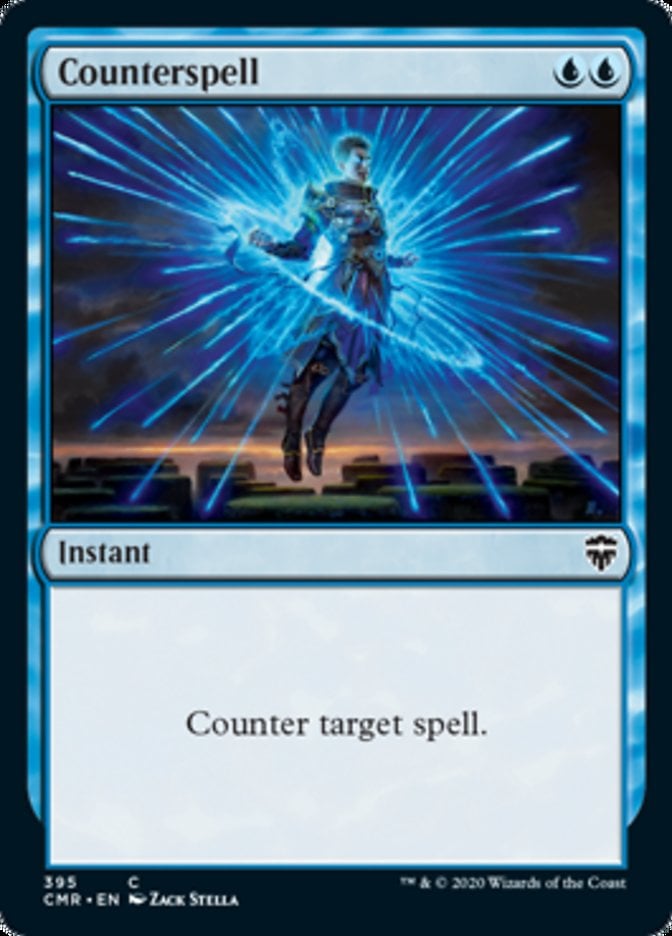
If I cast Nessian Demolok, and you cast Counterspell, then you’ll counter my Demolok while on the stack. That has nothing to do with the tribute mechanic, though – you’re countering my spell, that’s it.
If my Nessian Demolok resolves, there’s nothing anybody can do to stop the “Choose an opponent part.” There’s no way to stop me from choosing an opponent at this point, and there’s no way for that opponent to get out of making a choice. You can’t counter or respond to the choice to pay tribute; nothing is on the stack at that moment. The “choose an opponent” part doesn’t even target, so hexproof or “can’t target opponents” effects won’t prevent it.
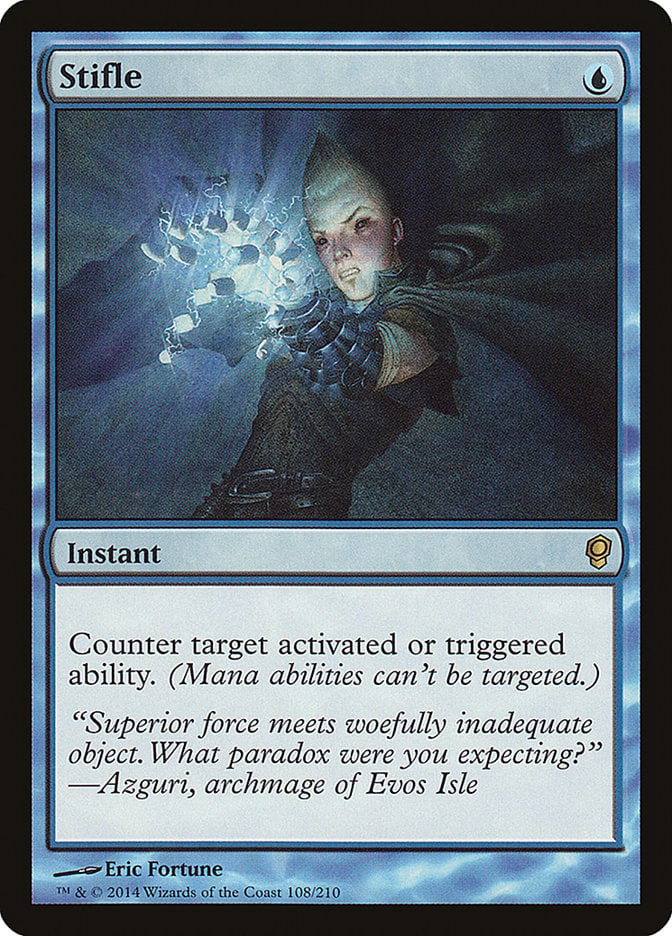
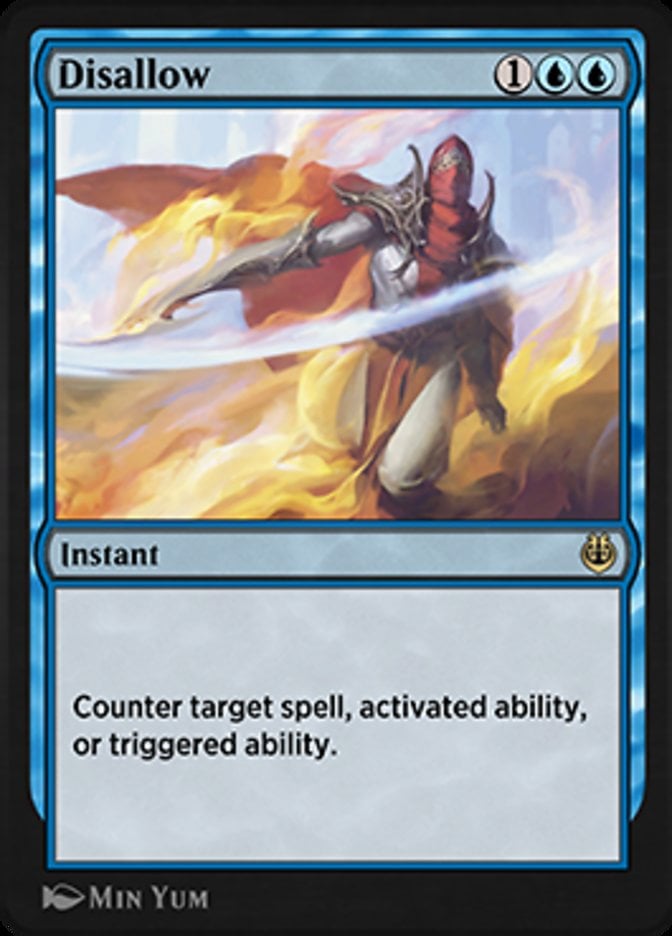
But, after you make the choice, then you can counter the triggered “If tribute wasn’t paid…” ability with effects like Stifle or Disallow.
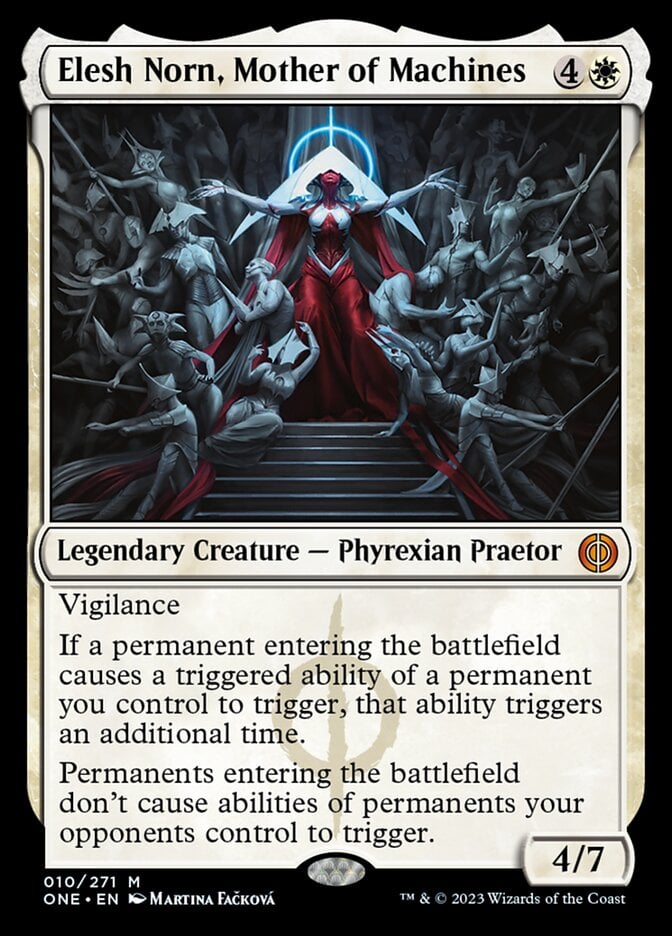
Alternatively, if you have an effect like Elesh Norn, Mother of Machines, then my Demolok’s ability won’t trigger even if you don’t pay the tribute. You still can’t stop me from choosing an opponent, and that opponent having to choose whether to pay tribute or not; but my creature’s ETB gets blanked by your Elesh Norn.
Last but not least, you can just point removal at the tribute creature. There are a couple of caveats in this scenario, though, so let’s look at what happens if you remove the creature if tribute was paid, versus removing the creature if tribute was not paid.
In the first case (when you remove the tribute creature right after tribute was paid), you won’t counter the tribute ability itself – in other words, the tribute creature will die with its +1/+1 counters on it. This may be relevant for cards like The Ozolith that care about cards dying with counters on them.
In the second case, the ETB ability will trigger, and the trigger will go on the stack. In general, removing a creature doesn’t stop its ETB trigger, but in some cases the ETB effect needs or target the original creature, and removing that creature may stop it.
Take, for example, Nessian Wilds Ravager: Technically speaking, killing Nessian Wilds Ravager doesn’t stop its ETB from going onto the stack and then resolving. But a fight effect needs the Ravager to still be on the board, so if you kill the hydra with the trigger still on the stack, the trigger does nothing when resolving.
Who Chooses for Tribute in Multiplayer Games?
If you control the tribute creature, then you choose a single opponent as the creature enters. And that player is who makes the pay/don’t pay decision. In team games like Two-Headed Giant, you still choose one player on the opposing team to make the choice. The key text is “choose an opponent” (singular).
Does Tribute Work with Counter Doublers?
Yes, it very much does!
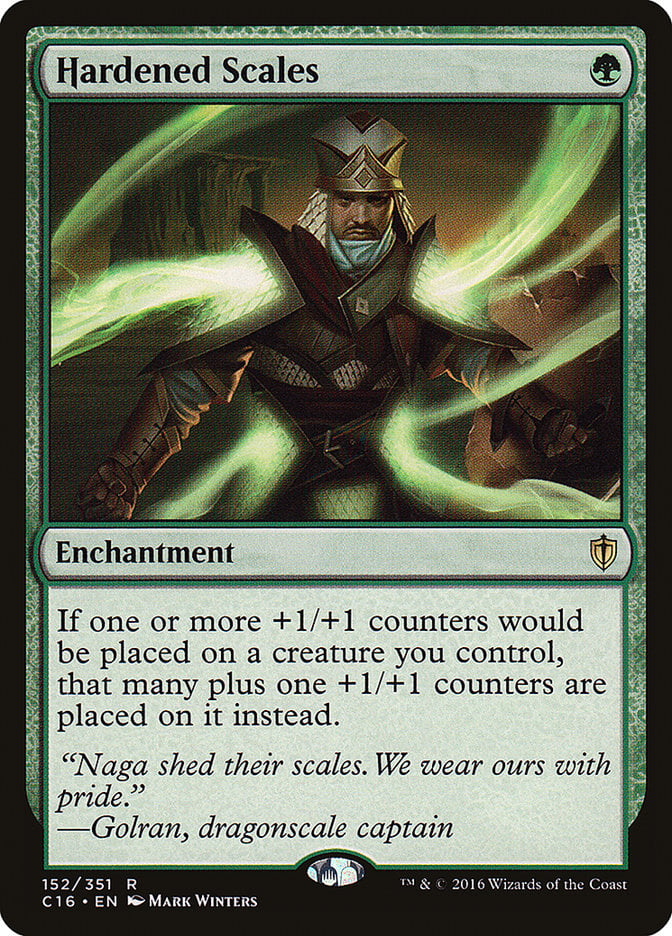
If your opponent chooses to pay tribute, effects that modify counters placed on permanents you control (like Doubling Season or Hardened Scales) apply to the counters as the creature enters.
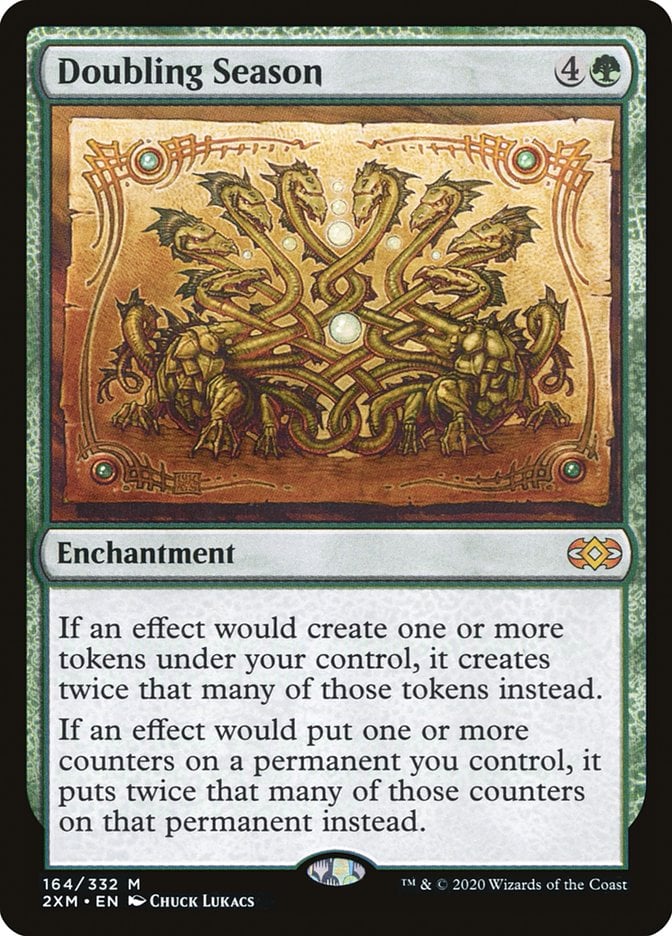
- Doubling Season doubles counters placed on permanents you control, including counters a permanent “enters with” or counters placed “as it enters”.
- Hardened Scales adds an extra +1/+1 counter in the same scenario.
There’s an important caveat here, though! The majority of counters doublers, like Doubling Season, do not care about who puts the counters – they only care about whether an effect would put one or more counters on a permanent you control. As long as the creature is under your control, who puts the counters is irrelevant.
But some other counter doublers, like Vorinclex, Monstrous Raider, do care about who’s doing the putting!
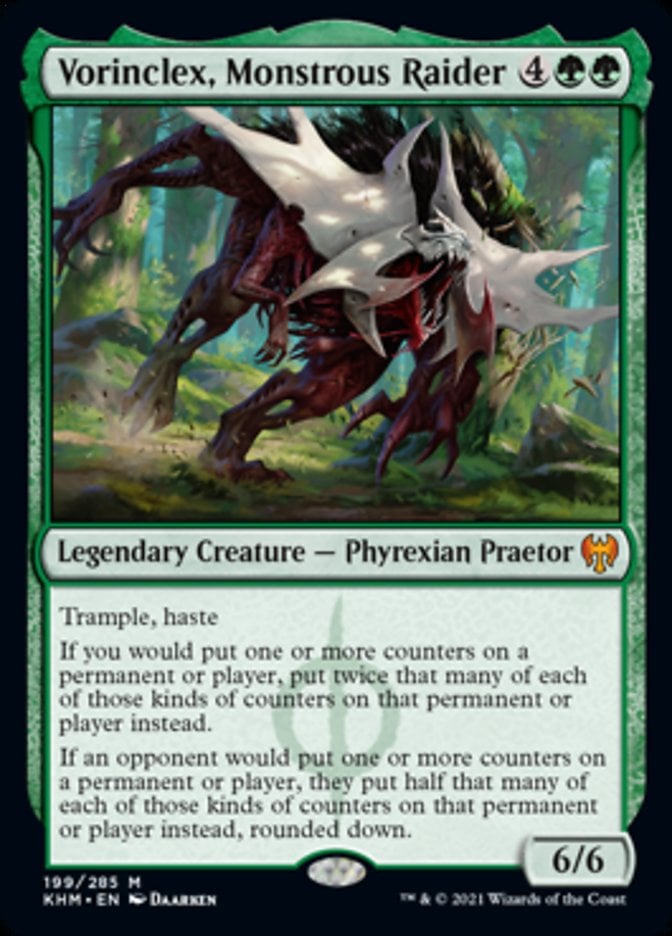
In those cases, it’s your opponent who’s putting the counters (on a creature you control). So if I have a Vorinclex, Monstrous Raider in play, I play Nessian Demolok and choose you to pay tribute, and you choose to pay, then you put just one counter (not three) on my Demolok since my Vorinclex rounds them down.
Why Hasn’t Tribute Been Used Outside Born of the Gods?
According to Mark Rosewater, the MTG designers don’t love “punisher/opponent-choice” mechanics; they either feel underwhelming when the opponent picks the “bad” side for you or too swingy when both modes are high. “We have not had great success with modal effects that the opponent chooses,” says Rosewater in his personal blog, generalizing from a player question about tribute. “Punisher spells (let me do X or take Y damage) are probably the best received and even those are polarizing.”
Do ETB Doublers Trigger Tribute Again?
No, they don’t.
Tribute itself is not a triggered ability, so cards like Panharmonicon or Elesh Norn, Mother of Machines that double triggers don’t “copy” tribute. They do double the triggered “If tribute wasn’t paid…” ETB ability, because that one is an ETB trigger.
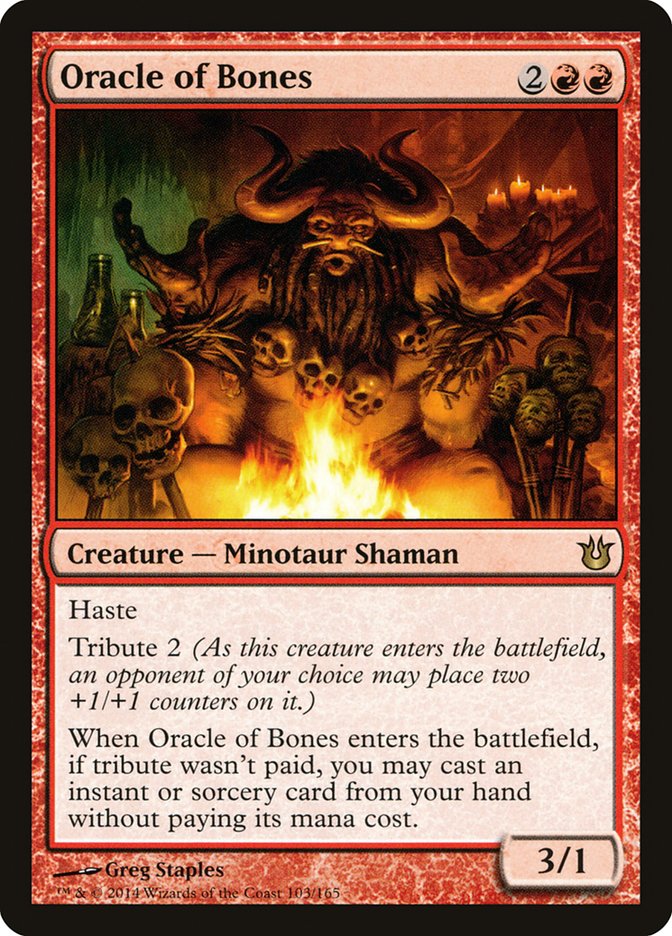
For example: Your opponent declines to pay your Oracle of Bones’s Tribute 2. With Panharmonicon in play, the Oracle’s “You may cast an instant or sorcery from your hand without paying its mana cost” ability triggers twice.
Gallery and List of Tribute Cards
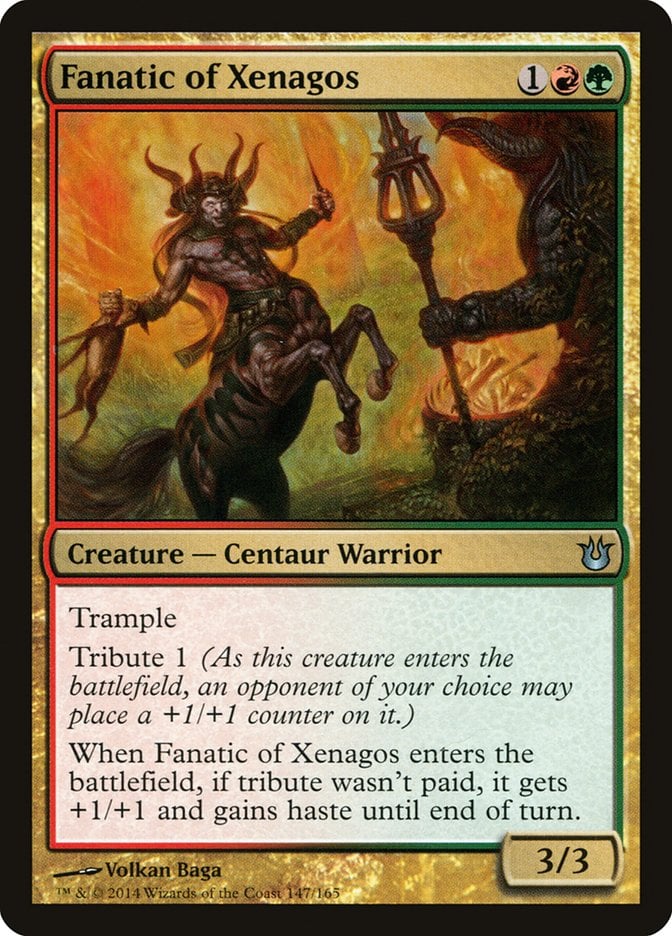
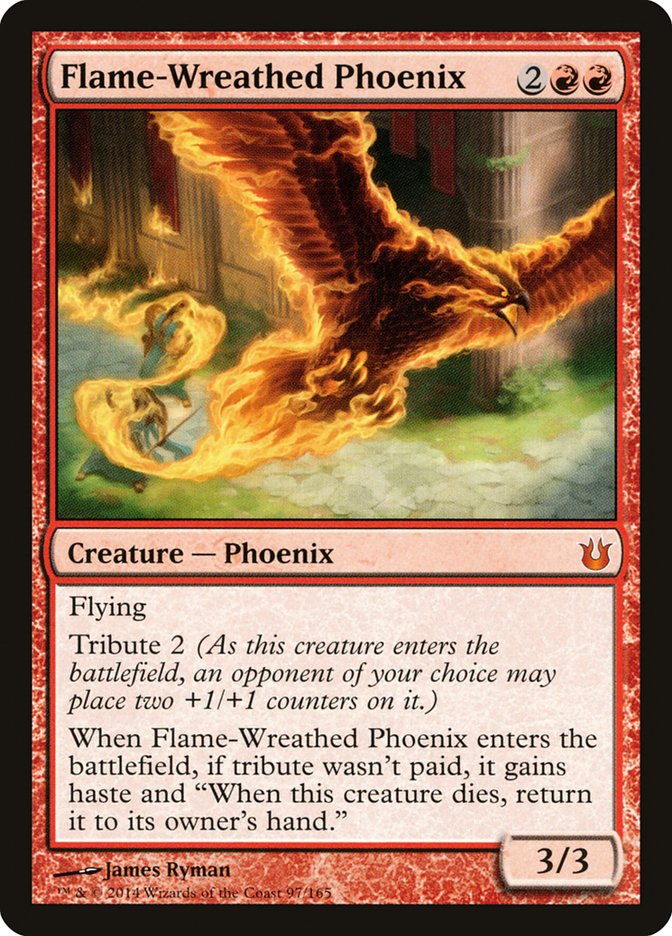
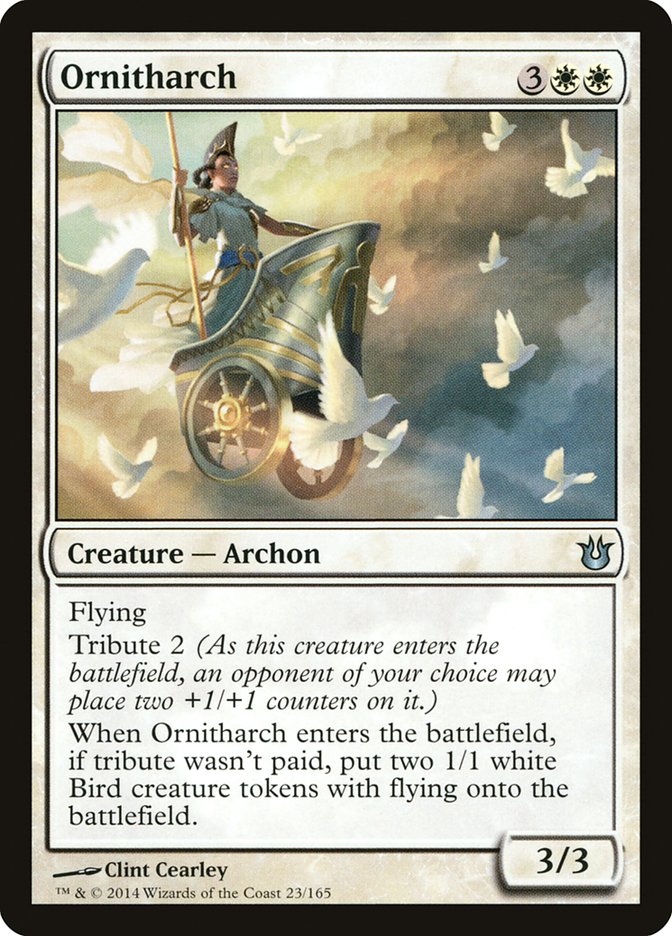


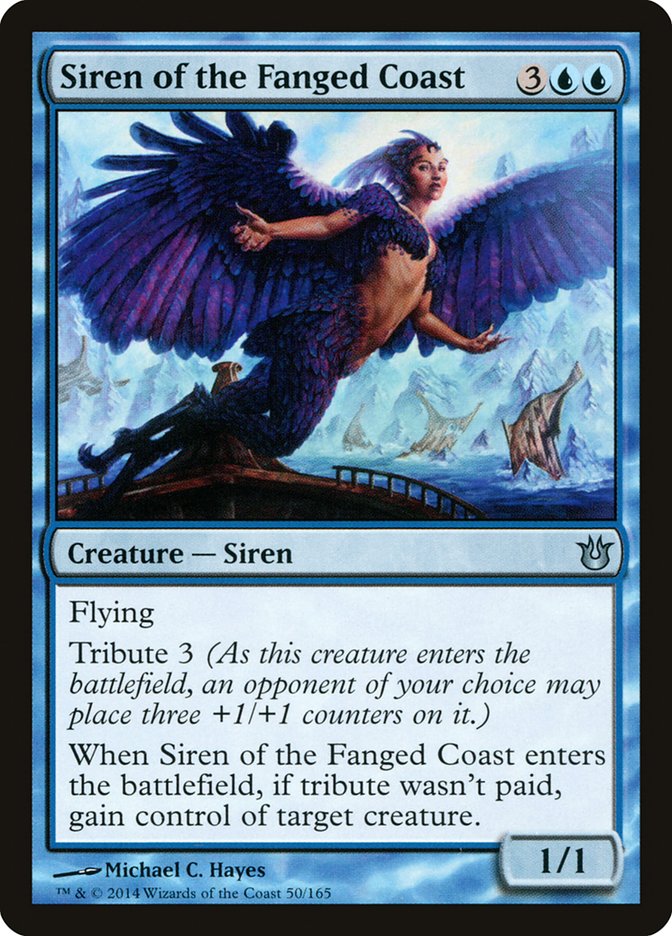


- Fanatic of Xenagos
- Flame-Wreathed Phoenix
- Nessian Demolok
- Nessian Wilds Ravager
- Oracle of Bones
- Ornitharch
- Pharagax Giant
- Shrike Harpy
- Siren of the Fanged Coast
- Snake of the Golden Grove
- Thunder Brute
Best Tribute Cards
Tribute cards are legal in every 60-card format from Pioneer to Vintage, but they see very little play. Their adoption even in casual Commander is modest. The best of this modest bunch are:
Nessian Wilds Ravager
The most popular tribute card in Commander, Nessian Wilds Ravager is a fairly fat body if tribute is not paid, and if unpaid is an okay-ish fight spell.
Oracle of Bones
Minotaurs are far from the strongest tribe in Magic, and even among them Oracle of Bones doesn’t rate too highly – but assuming your minotaurs are going spellslinger, an unpaid tribute gives you a free nonperment spell with mana value 4 or less.
Flame-Wreathed Phoenix
Back in 2014, you could play Flame-Wreathed Phoenix in Standard and not be laughed at. I doubt that would be the case nowadays even if it were Standard-legal but, well, if you’re going phoenix tribal in Commander I guess you could play this bird?
Wrap Up

Nessian Demolok | Illustration by Daarken
And that’s it for tribute, folks! You play your creature, you choose an opponent, they choose to either pay up in +1/+1 counters or let your creature enter with a triggered ability.
Just remember that tribute itself is not a triggered ability, and the rest is simple: Put counters if the tribute is paid, proceed as a regular triggered ability if the tribute goes unpaid. The only other caveat is that whoever is paying tribute is the player putting the counters; the majority of counter doublers won’t care either way, but a few cards like Vorinclex, Monstrous Raider are pretty picky about who’s putting what on what.
I hope you’ve enjoyed this mechanical deep dive about Magic’s tribute mechanic, and if you have comments or questions please drop a comment below, or stop by the Draftsim Discord for a chat.
And good luck out there!
Follow Draftsim for awesome articles and set updates:









Add Comment