

Yurlok of Scorch Thrash | Illustration by Jesper Ejsing
Jund () is synonymous with midrange strategies due to how grindy the combination of its colors is. The creatures that share its color identity are also incredibly grindy. Some of them provide tons of bodies to pressure removal, while others focus on sacrificing creatures.
What all Jund creatures have in common (besides their colors) is an emphasis on generating extreme value. From engines to enablers, Jund has some scary threats.
Let’s figure out which are best for your next deck.
What Are Jund Creatures in MTG?

Disa the Restless | Illustration by Jana Schirmer
Jund creatures have a black (), red (), and green () color identity. That often occurs because all three colors are present in the mana cost, but transforming cards with additional colors on the back or mono-colored creatures with different colored activated abilities qualify.
Many Jund creatures are creature-based themselves, often caring about when you sacrifice creatures and permanents or deal combat damage. Many of these cards are legendary creatures clearly designed for Commander, but several generic gems shine through.
#23. Broodmate Dragon

Broodmate Dragon was once a fearsome threat that ruled Standard, but power creep has ensured its best years are behind it. Still, decks that focus on red clone effects like Twinflame and Kiki-Jiki, Mirror Breaker could find worse targets than a dragon that makes dragon tokens.
#22. Indoraptor, the Perfect Hybrid
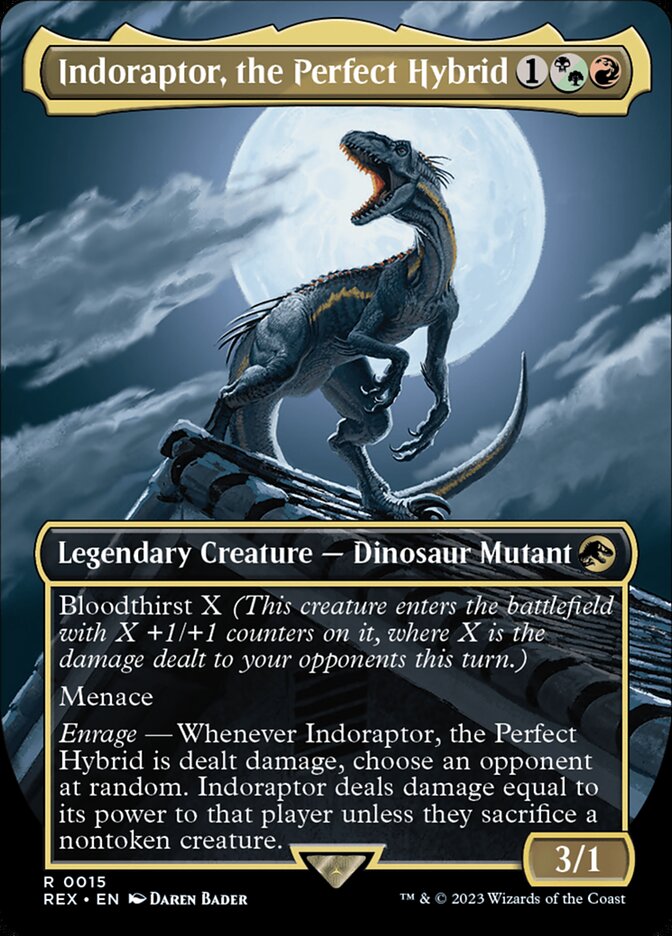
Indoraptor, the Perfect Hybrid has the most interesting enrage trigger in the game, even if it isn’t absurd; an ability that’s both random and lets your opponents choose the least impactful mode is rough. But it’s a novel, interesting card that stacks well with removal and other edicts effects.
#21. The Beamtown Bullies
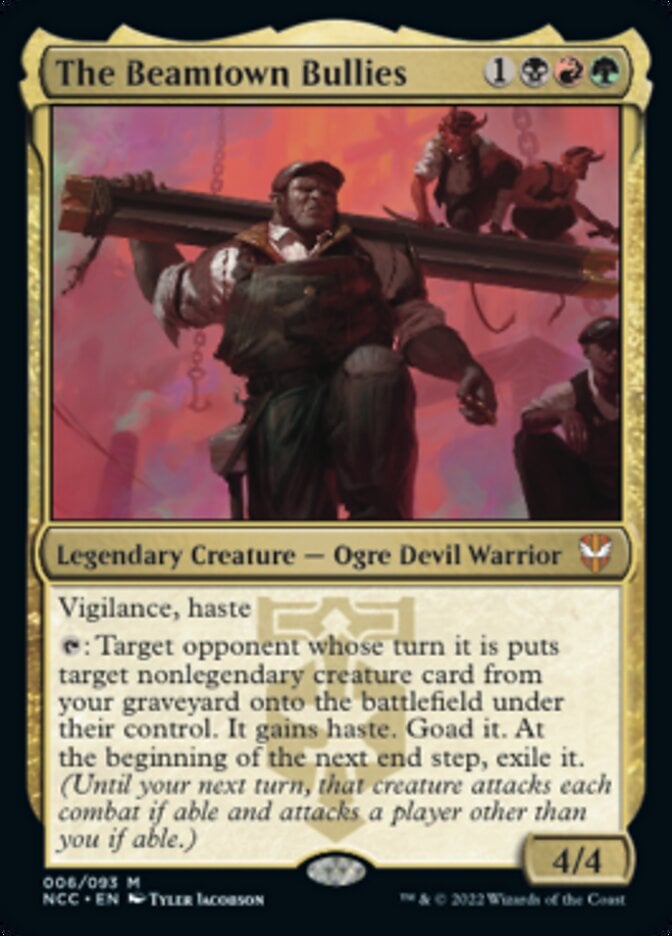
The Beamtown Bullies could be incredible, but it generally lacks support. Giving your opponents creatures can be interesting, but it never amounts to doing something good unless you draw on the very small pool of cards that punish your opponents when you cheat them into play, like Leveler and Phage the Untouchable. But it gets all the points for originality.
#20. Sprouting Thrinax

Sprouting Thrinax does work in the right deck. It can be pretty significant to get four bodies from one card in aristocrat-style decks. This is four activations of your Ashnod's Altar, four bodies to trigger Blood Artist, and so on. You need a synergy to justify this and likely still can’t play it at high levels, but it works nicely in chill Cubes and Commander decks.
#19. Yurlok of Scorch Thrash
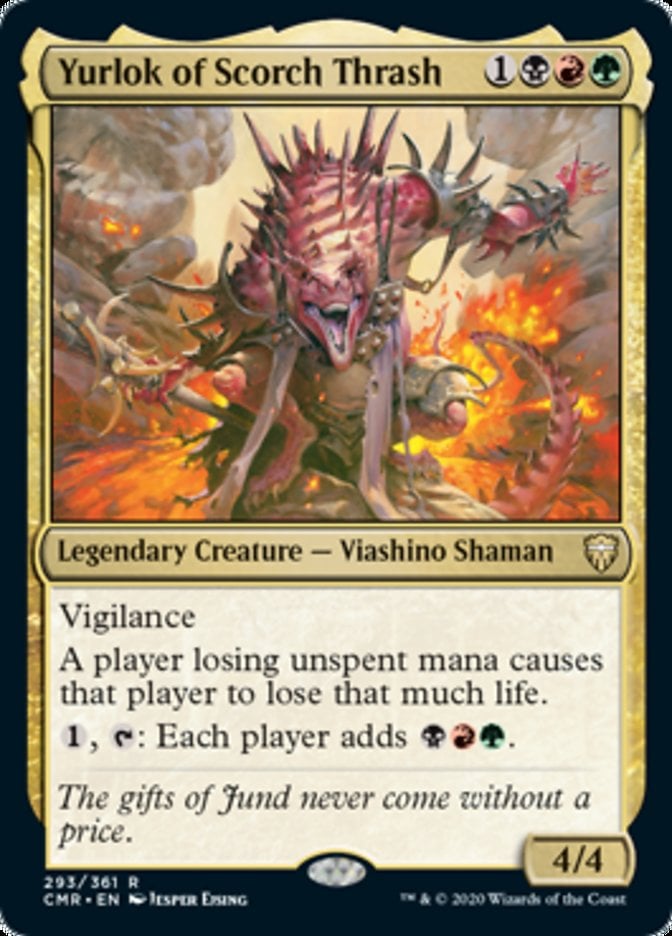
Once upon a time, Magic players had to manage mana burn, a rule that caused us to take damage for losing unspent mana. Mana burn was eradicated alongside the release of Magic 2010 due to unnecessary complexity, but Yurlok of Scorch Thrash reinforces this obsolete rule.
Baseline, it’s a funny mana dork that burns your opponents as you cast spells, but it often leads decks that blur the line between group hug and group slug with cards like Mana Flare and Belbe, Corrupted Observer that generate more mana than your opponents can (hopefully) spend. Giving your opponents mana, even at the cost of life, isn’t exactly good, but it ensures a chaotic game.
#18. Gyrus, Waker of Corpses
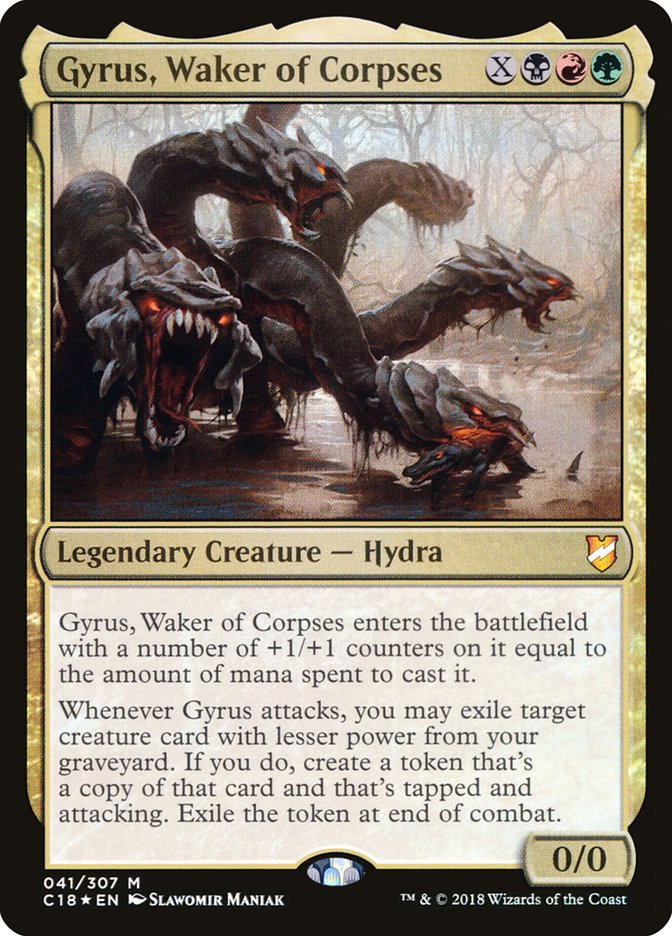
Gyrus, Waker of Corpses puts an interesting spin on reanimation commanders. You don’t keep the creature permanently or trigger any attack triggers, but in exchange you get a significant amount of damage since your reanimated creature comes in attacking. You still get the enters trigger, so cards with strong enters abilities like Vaultborn Tyrant and Kogla, the Titan Ape are prime targets—just avoid cards like Terror of the Peaks and Cityscape Leveler that need to stick around for maximum impact.
#17. Winter, Misanthropic Guide

Winter, Misanthropic Guide is the only staxy Jund creature. Its delirium ability constricts your opponent’s hand, which potentially prevents them from holding any cards past their turn. It also has one of the stronger Howling Mine variants; because everybody draws cards in your upkeep, you get the first chance to cast those cards, and your opponent can’t draw cards then kill Winter before you draw. It pairs nicely with discard payoffs like Tinybones, Trinket Thief to get more from the stax ability.
#16. Bhaal, Lord of Murder
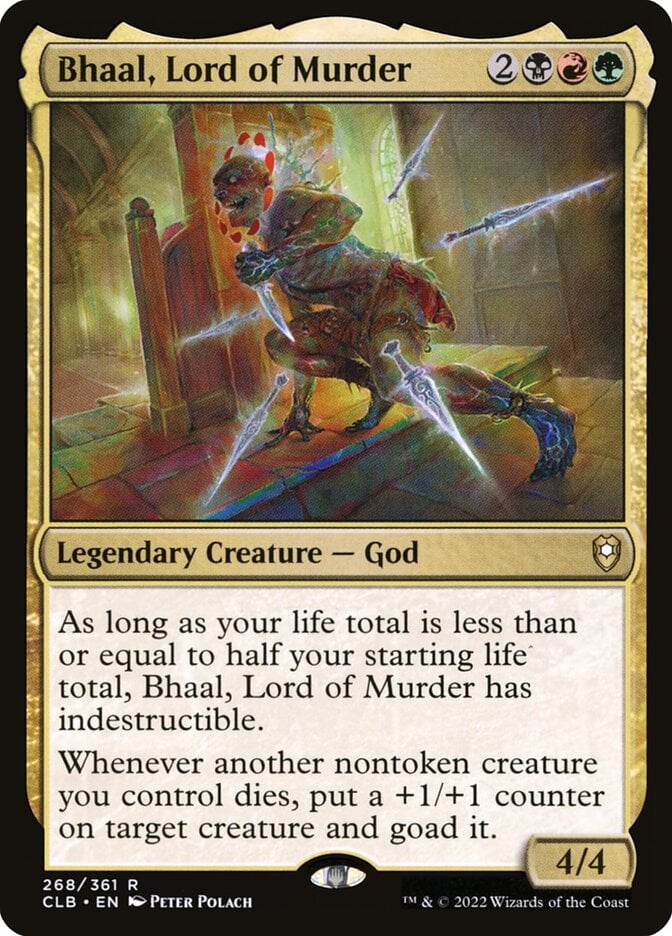
It doesn’t get more Commander-focused than a creature that goads your opponents. Bhaal, Lord of Murder fits perfectly in creature-centric pods to make your opponents attack each other while it becomes a nasty threat itself. It pairs nicely with creatures like Reassembling Skeleton and Forsaken Miner that recur themselves to sacrifice over and over since tokens don’t trigger Bhaal.
#15. Thantis, the Warweaver
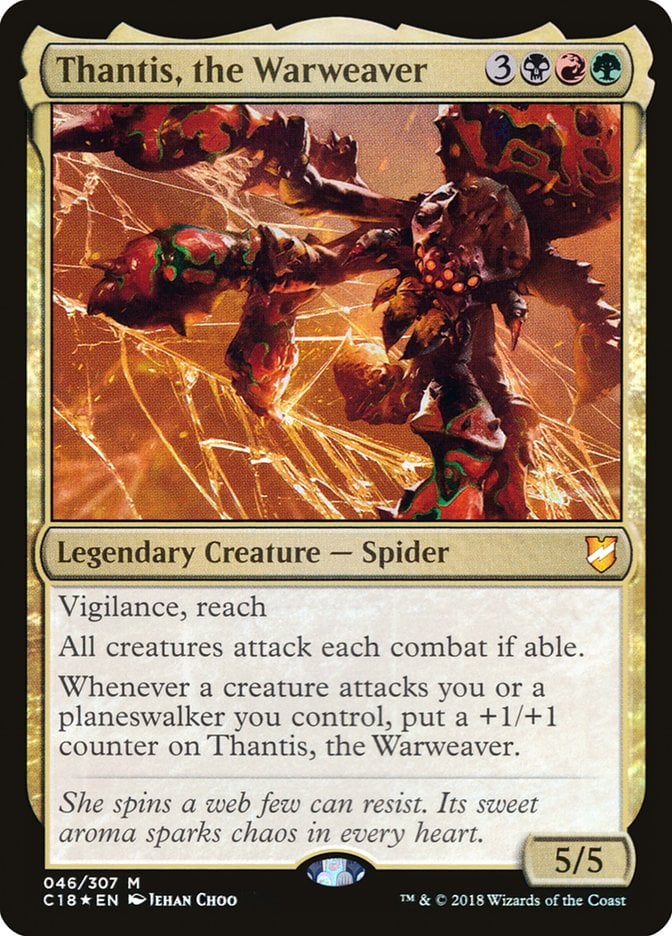
Thantis, the Warweaver stokes the flames of war, inspiring the table to chaos and aggression. Commander’s rule set typically discourages aggressive decks, but this commander seeks to subvert that by making everybody attack. It’s particularly good at messing with cheap value creatures like Esper Sentinel that accrue value outside of combat. Your opponents might try to take you out to stop the aggression, so play plenty of cards like Crawlspace that limit their ability to attack you.
#14. Korvold, Gleeful Glutton
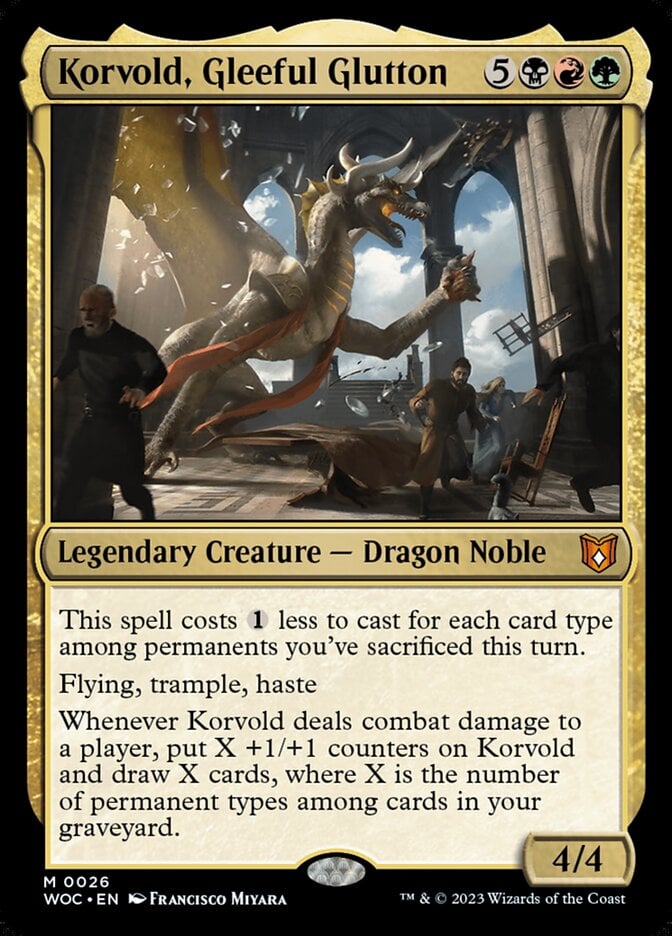
Korvold, Gleeful Glutton takes a stab at making the atrociously broken Korvold, Fae-Cursed King fairer while it retains the original Korvold’s identity as a sacrifice-based commander. Though it’s both weaker than its counterpart, I find it the more interesting commander. It ties sacrifice outlets and graveyard strategies together in an intriguing way; Jund commanders often do one or the other, but few do both.
#13. Prossh, Skyraider of Kher

Prossh, Skyraider of Kher is a classically powerful commander, in part because of its infinite combo with Food Chain. Though not the powerhouse it once was due to power creep’s inexorable advance, Prossh generates enough sacrifice fodder to remain a respectable threat at lower power level tables.
#12. Maarika, Brutal Gladiator
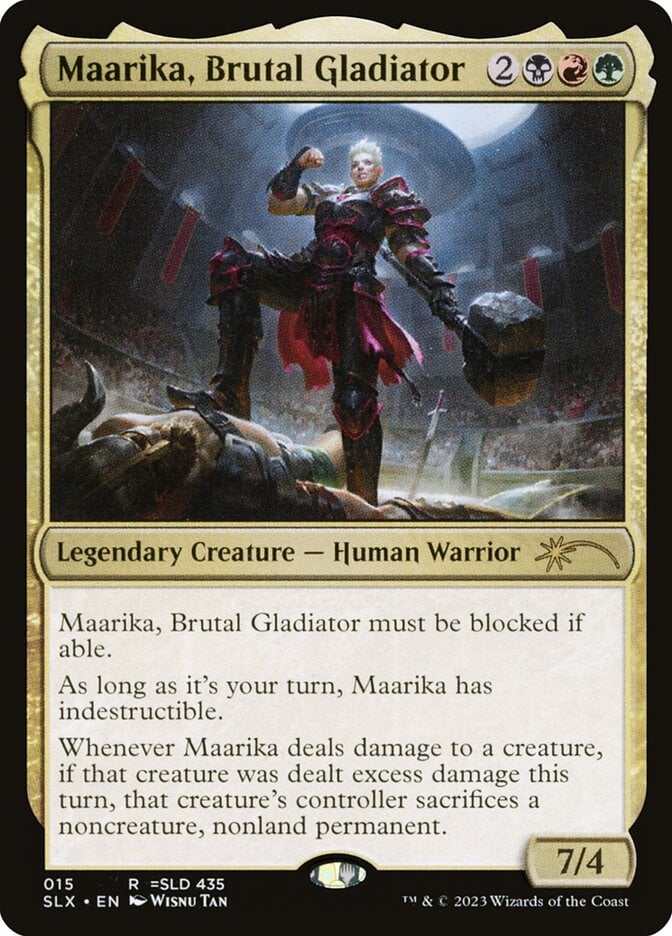
Maarika, Brutal Gladiator (Zangief, the Red Cyclone) forces your opponents into combat, then punishes them because it’s such a large creature. Its 7 power makes it a perfect Voltron commander; with double strike or a way to double its power, you can take out a player in two combats. The high power also makes it a natural pair with many cards that care about a creature’s power, like Gwenna, Eyes of Gaea and Gimli's Reckless Might. Don’t skimp on the fight effects!
#11. Ziatora, the Incinerator
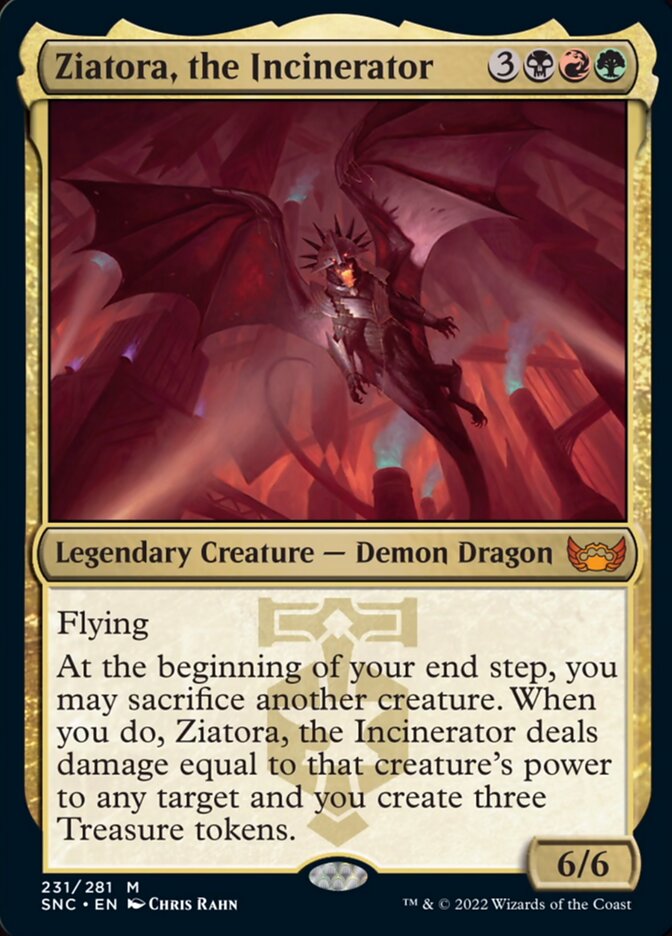
If you want to sacrifice big creatures for a bigger impact, Ziatora, the Incinerator turns random creatures that are lying around into a burst of mana, plus a grenade directed to the most annoying target. Combined with damage doublers like Solphim, Mayhem Dominus and massive creatures like Apex Altisaur, this swiftly brings your opponents to the ground. The Treasure gives you resources to make up for sacrificing creatures.
#10. Broodmate Tyrant

Broodmate Tyrant gives Broodmate Dragon a mild glow-up by increasing the numbers. One more mana nets you a larger dragon with a larger token, but the charm comes from encore—since you make a copy for each opponent, it makes up to three 5/5s. It rebuilds your board post-wrath or rewards you for milling and discarding it.
#9. Coram, the Undertaker

Theft cards have a natural weakness in Commander since you lose stolen permanents when the player dies, but Coram, the Undertaker has a built-in backup plan since its oft immense size relies on your graveyard. The combination of card advantage and pressure is appealing, and it could be a fine value engine in the 99.
#8. Eddie Brock / Venom, Lethal Protector


Venom, Lethal Protector has a pretty standard Jund text box: Sacrifice a large creature, get a large payoff. Green has excellent sacrifice fodder like Yargle and Multani to enable it and cards like The Gitrog, Ravenous Ride and Greater Good provide useful redundancy. Having Eddie Brock attached is nice, too—you can recur sacrifice fodder and cast it cheaply after Venom dies.
#7. Disa the Restless

Disa the Restless gives a niche creature type—lhurgoyfs—an ideal lord. A lhurgoyf deck needs to self-mill to feed the ‘goyfs, and this has a great reward that’s powerful without being broken since it’s restricted to your core creature type. Flooding the board with Tarmogoyf tokens makes it just enough of a threat on its own to be a respectable commander.
#6. Soul of Windgrace
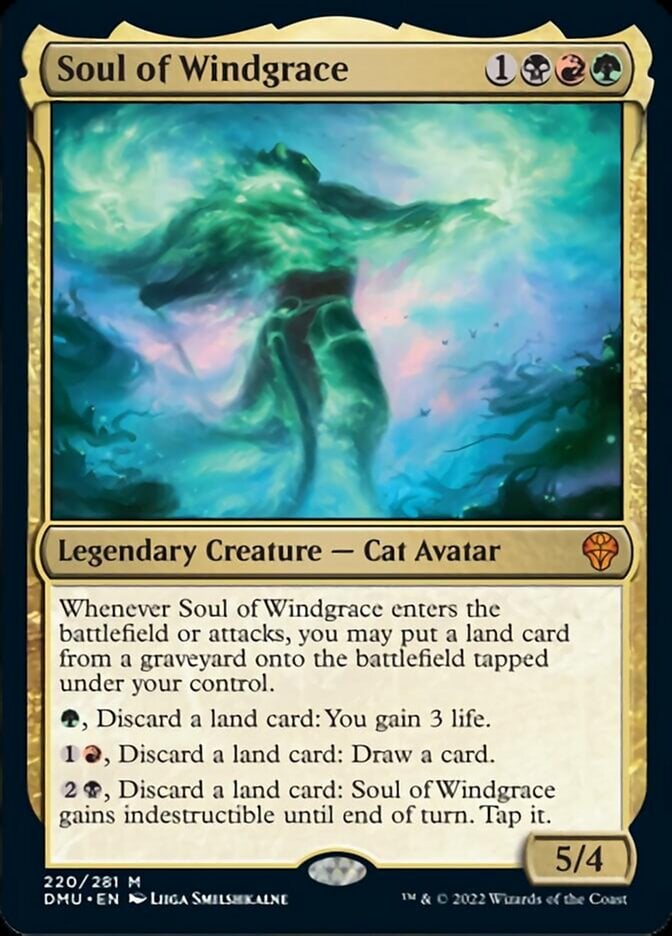
Lands decks typically focus on moving lands from zone to zone; playing them, sacrificing or discarding them, then returning them to play or your hand. Soul of Windgrace fits naturally into these strategies as both a reward for sacrificing/discarding lands, since it returns them to play, and as a discard outlet for other threats like Titania, Protector of Argoth and The Gitrog Monster. It’s a great example of what I’d call a glue card: It’s rarely the flashiest or most vital card in your deck, but it touches enough synergies to help hold your deck together.
#5. Slimefoot and Squee
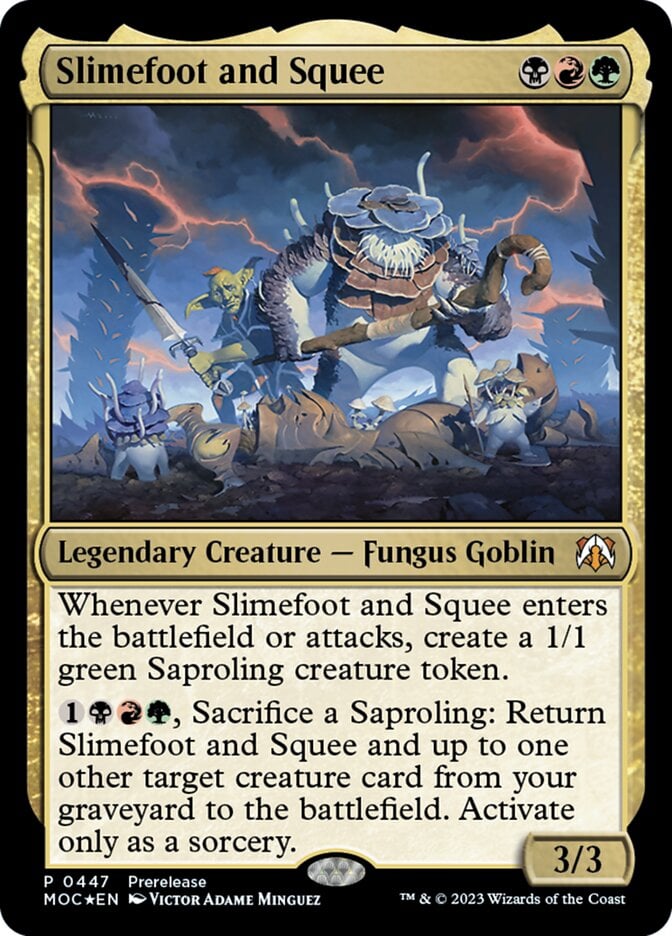
Though saprolings have been supported in Magic for a long time, they’re a weak archetype flooded with Limited-level cards that provide gradual value. Slimefoot and Squee attempts to power up the archetype with a strong reanimation ability that plays well with the innate aristocrat strategies saproling decks employ. It gives the archetype much-needed immediacy, though this pairing is plenty capable of grinding out long games with sacrifice engines that draw cards.
#4. Gluttonous Hellkite

I’m a sucker for a good edict creature. These are often cheap permanents that cost 2 or 3 mana, but Gluttonous Hellkite takes it way further, scaling in both size and the number of creatures players must sacrifice. With enough mana, this could be a creature-based board wipe! Or just a large creature that provides a mass-sacrifice trigger so your Blood Artists and whatnot blitz the table.
#3. Henzie “Toolbox” Torre
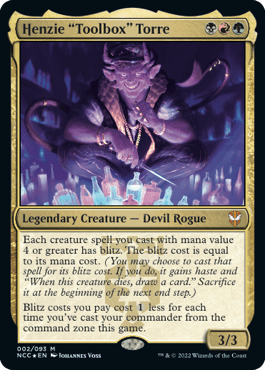
Everybody loves a good Sneak Attack, so it’s only natural that a commander would embody it. Henzie “Toolbox” Torre doesn’t offer a steep discount to start with, but casting any spell for 1 less mana and getting haste looks great. Since your blitzed creatures die into a fresh card, you keep the resources flowing. This popular commander works best with creatures that have explosive attack or death triggers, like Etali, Primal Conqueror and Junji, the Midnight Sky.
#2. Korvold, Fae-Cursed King
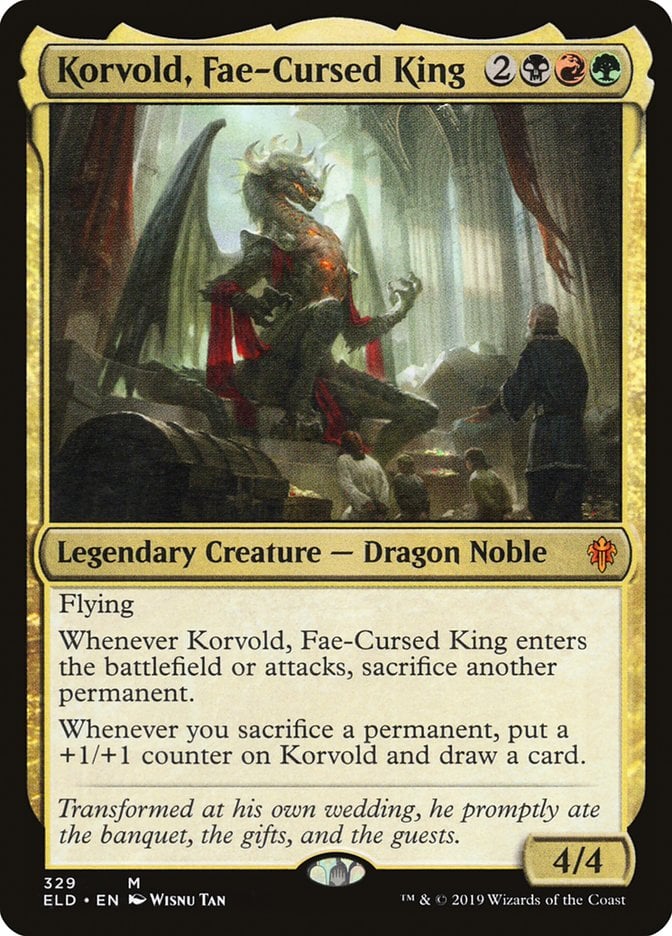
Oh look, a broken card from Throne of Eldraine. Who could have guessed that would happen?
Korvold, Fae-Cursed King’s power comes in part from the ease with which you can create Treasure. Every mana generated by a Treasure draws a card, which leads to ludicrous lines and explosive turns, especially with a Treasure engine like Prosper, Tome-Bound. Even without Treasure, this commander draws too many cards without a limit to be considered fair—just attack, crack a fetch, activate Carrion Feeder… really, any game action results in card draw.
#1. Ignoble Hierarch
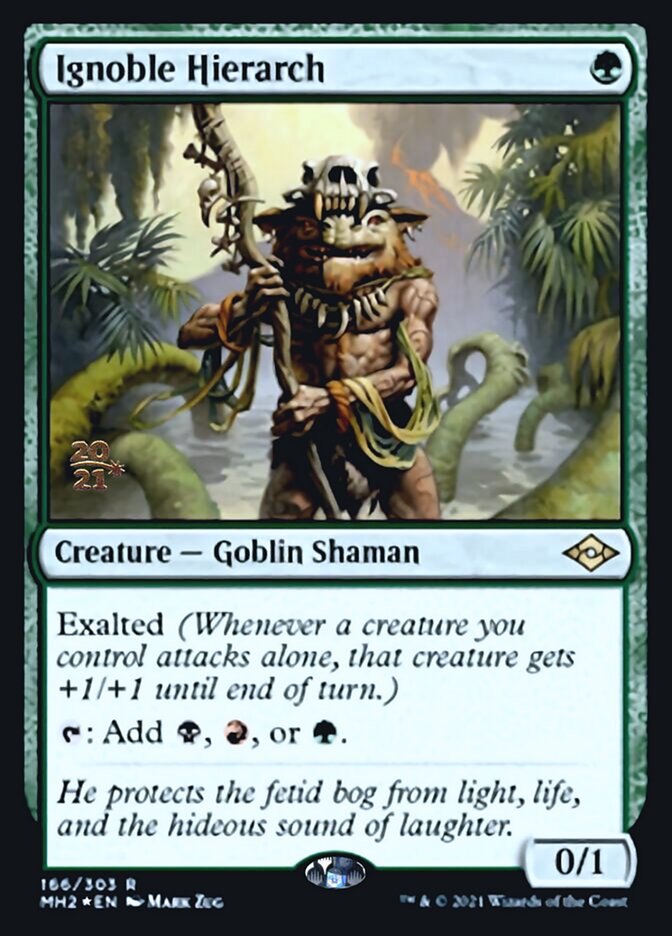
One-mana mana dorks are so, so good, especially when they fix your mana. Ignoble Hierarch takes it even further with exalted, improving every attack you take with a single creature. It’s especially compelling with red’s many 3-mana haste creatures, like Tersa Lightshatter or Screaming Nemesis.
Wrap Up
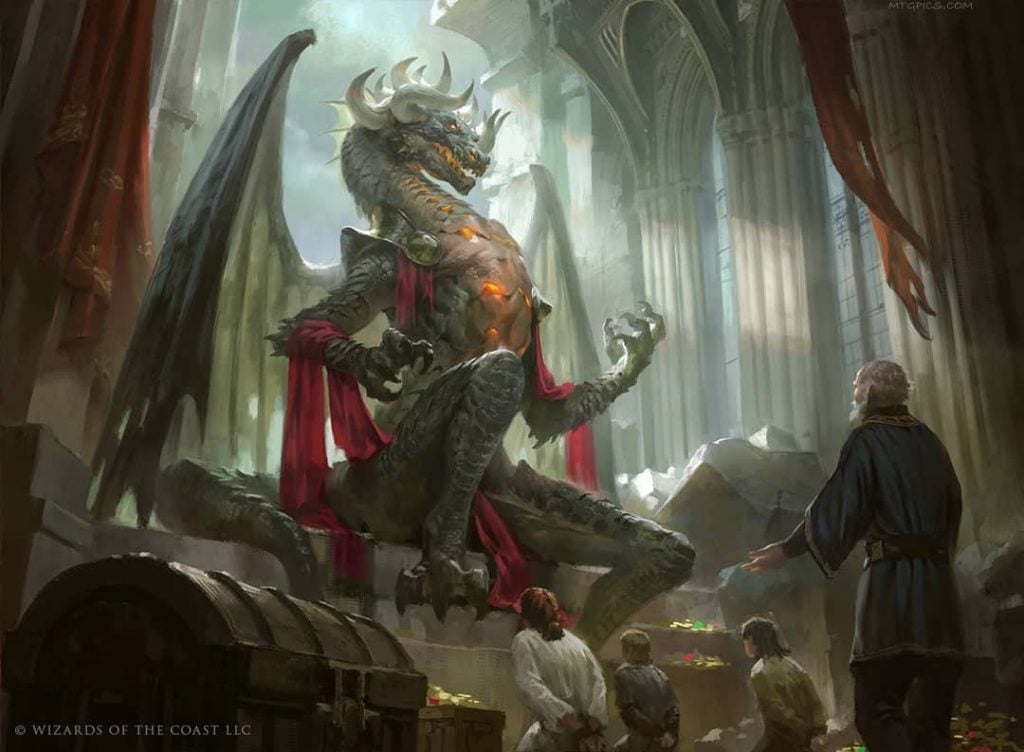
Korvold, Fae-Cursed King | Illustration by Wisnu Tan
Jund creatures are relatively narrow, with a strong focus on sacrificing permanents and the graveyard. They excel at grinding out your opponents and delivering powerful threats that reward you for going deep on synergy.
What’s your favorite Jund creature? How do you think they hold up to other 3-color creatures? Let me know in the comments below or on the Draftsim Discord!
Stay safe, and thanks for reading.
Follow Draftsim for awesome articles and set updates:










Add Comment