
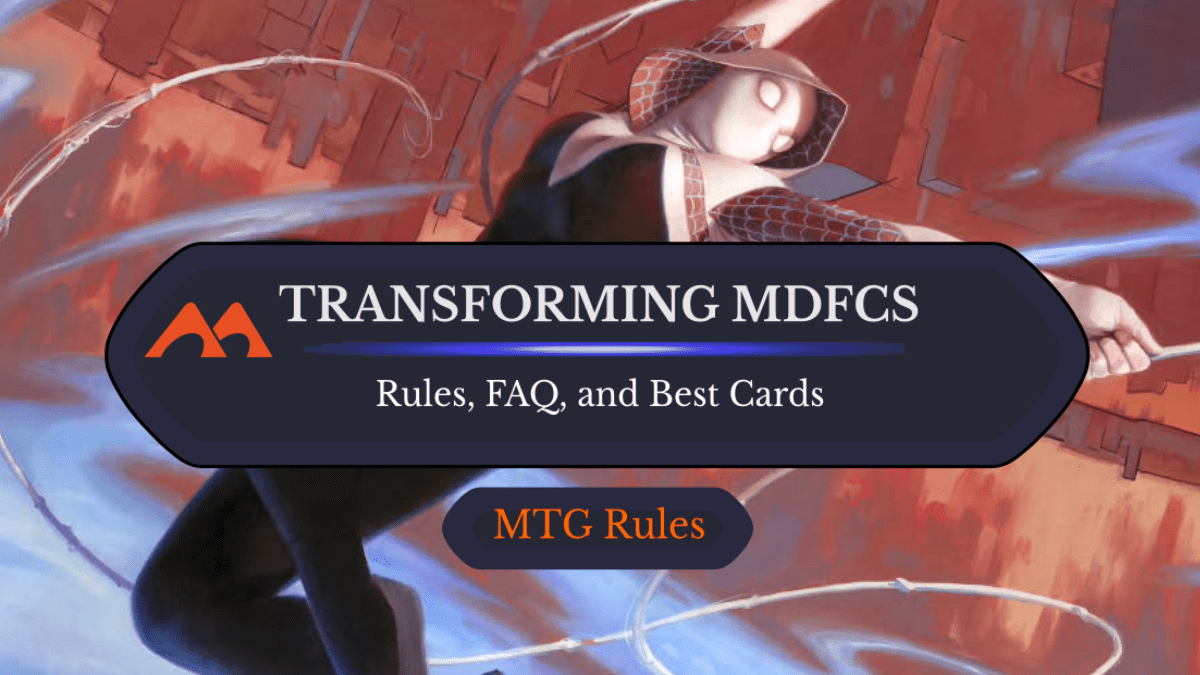
Ghost-Spider | Illustration by Victor Adame Minguez
Modal double-faced cards are one of the best things to happen to Magic. I especially love spells that are lands, but even cards with two spells are pretty sweet; extra options are rarely a bad thing in this game.
Universes Beyond has introduced a new twist on MDFCs: The Marvel sets have printed the first transforming modal-double faced cards, which have even more options because you don’t need to commit to one face or the other.
What Are Modal Double-Faced Cards?
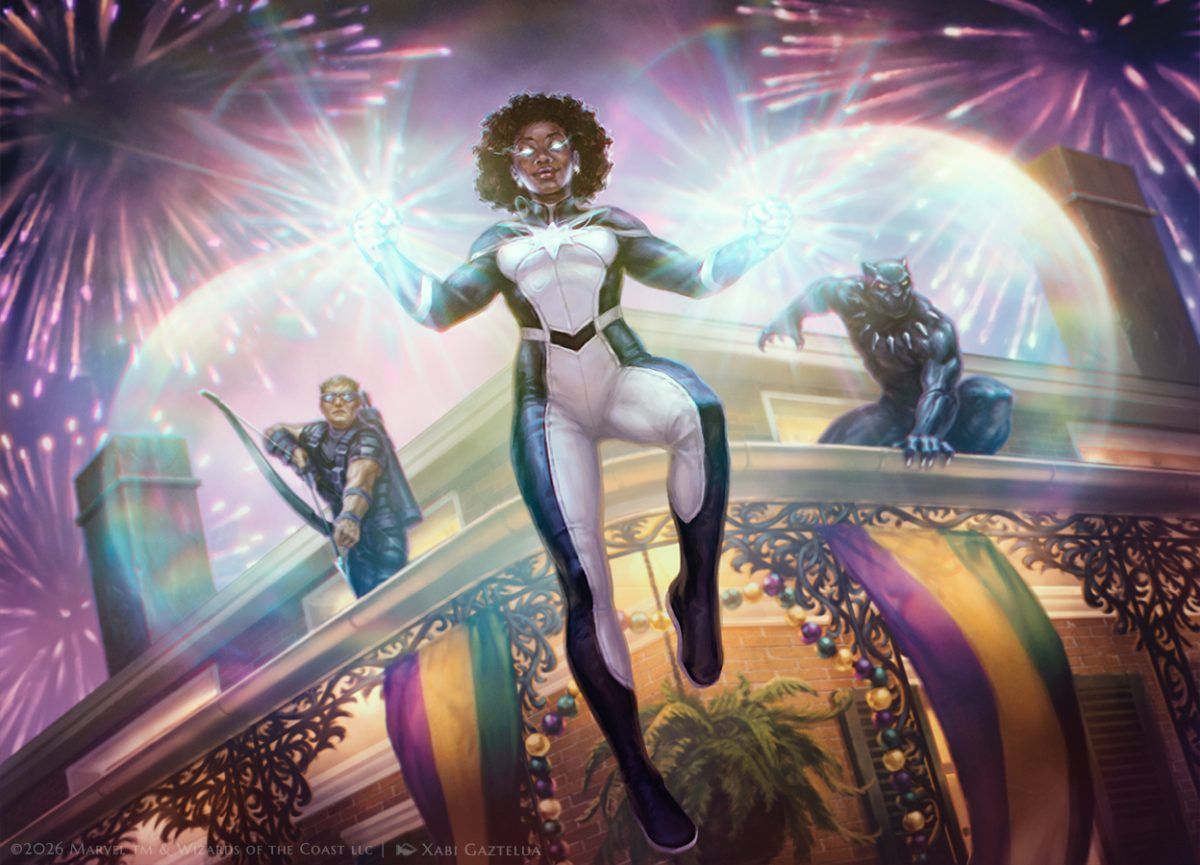
Monica Rambeau | Illustration by Xabi Gaztelua
Modal double-faced cards are one of two types of double-faced cards in Magic. A modal double-faced card is one with two faces, and you can play either face. For example, you can play the MDFC Witch Enchanter/Witch-Blessed Meadow as a creature or a land. Most MDFCs have a land on the back side and a different card type on the front, but there are plenty of examples of MDFCs with two spells.
The other type of double-faced card are nonmodal double-faced cards, formerly called transforming double-faced cards. You can only play these as their front half, and they always have an ability that transforms them into the back half, and sometimes back again. Werewolves are the classic example.
How Do Transforming MDFCs Work?


Transforming modal double-faced cards are a relatively recent type of card. As the name implies, these are modal double-faced cards with an activated ability on the front face that transforms them to the back face.
Transforming MDFCs get the best elements of both types of double-faced cards. Because you can cast either side, you don’t need to wait to transform them; but since you can transform them, you can play the cheaper front face without losing access to the back. Probably the most important thing to know about how these work is that you don’t need to transform them to get the back face. You can cast either face or transform them.
The History of Transforming MDFCs in MTG
Transforming MDFCs were first introduced in Marvel’s Spider-Man on five mythic rare creatures:
- Eddie Brock / Venom, Lethal Protector
- Gwen Stacy / Ghost-Spider
- Miles Morales / Ultimate Spider-Man
- Norman Osborn / Green Goblin
- Peter Parker / Amazing Spider-Man
The treatment plays with the idea of heroes and villains having secret identities, with a cheaper front face that transforms into a more powerful hero or villain once they lose their masks. Another five mythics were introduced in Marvel Super Heroes. It seems reasonable to assume this templating will be unique to Marvel crossover sets, like the Infinity Stones.
How Does Commander Tax Affect Transforming Double-Faced Cards?
Commander tax applies equally to both sides of a double-faced card because it’s a single card designated as your commander. “Commander” is a special designation given to the card you start the game with in the command zone. Even when another player gains control of it or it transforms into a noncreature permanent, it’s your commander.
The commander tax is tracked by the number of times you’ve cast your commander, the singular card, from the command zone. If you cast Miles Morales, you’ve cast your commander once. If it returns to the command zone and you cast Ultimate Spider-Man later, the game sees that you’ve cast your commander—the singular card—once before, and it applies a cost of additional mana, even though you cast Miles first.
Importantly, the commander tax only applies when casting your commander from the command zone. If you cast Miles Morales, you won’t have to pay any extra mana to transform it. If it bounces to your hand or is put into exile in a manner that lets you cast it (like airbending), there’s no tax for either side. It’s only casting either half from the command zone that tracks the tax.
How Is Commander Damage Tracked for MDFCs?
Being a commander is a special property of the individual card. Eddie Brock and Venom, Lethal Protector are equally your commander, so their commander damage is tracked cumulatively. If Eddie deals 3 combat damage to an opponent, then Venom deals 12, that opponent has taken 15 commander damage from your commander.
What’s the Color Identity of a Transforming MDFC?
The color identity of a transforming MDFC is determined by the sum of all mana symbols or color identity markers on both sides of the card. Though Miles Morales is technically a mono-green card, its color identity includes red and white because Ultimate Spider-Man has those colors in its casting cost.
Can You Transform These Cards at Instant Speed?
No. No currently printed transforming MDFCs can be transformed at instant speed with their own abilities because they have the “activate only as a sorcery” restriction. This doesn’t mean we can’t manipulate things.
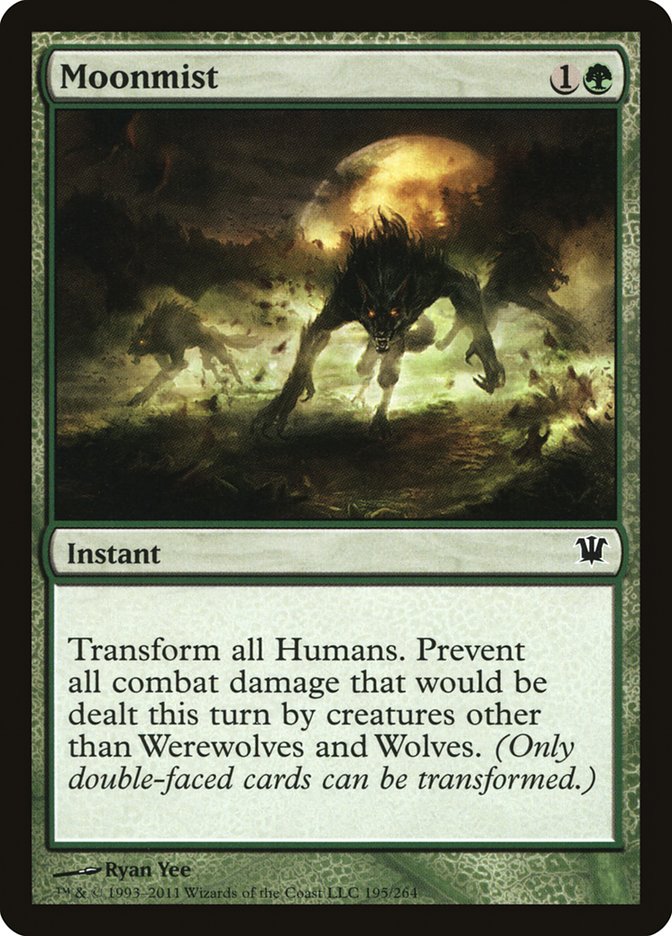
Moonmist can transform any human at instant speed, which includes the front face of all 10 transforming modal double-faced cards. It can transform most of the backs into the front face, too, though a handful of them lose the human type after transforming, like The Sensational She-Hulk and Photon, Living Light.
While this doesn’t technically count as “transforming”, if you flicker a transforming MDFC with the back face up, it re-enters as its front face. This could be relevant if a player casts The Battle of Bywater; Ghost-Spider dies to that, but you can flicker it into Gwen Stacy so it survives.
Can You Transform Back to the Front Face?
Yes, but no transforming MDFC currently has an ability to transform itself to the front face. There are a few ways to manage it, however; Moonmist transforms all humans you control and doesn’t care about which side is face up. This means you can transform most of the transforming MDFCs back to their front face. Additionally, flickering a transforming MDFC makes it enter as its front face. That doesn’t count as a technical transformation, but it achieves the same result.
Can You Copy or Clone a Transforming MDFC?
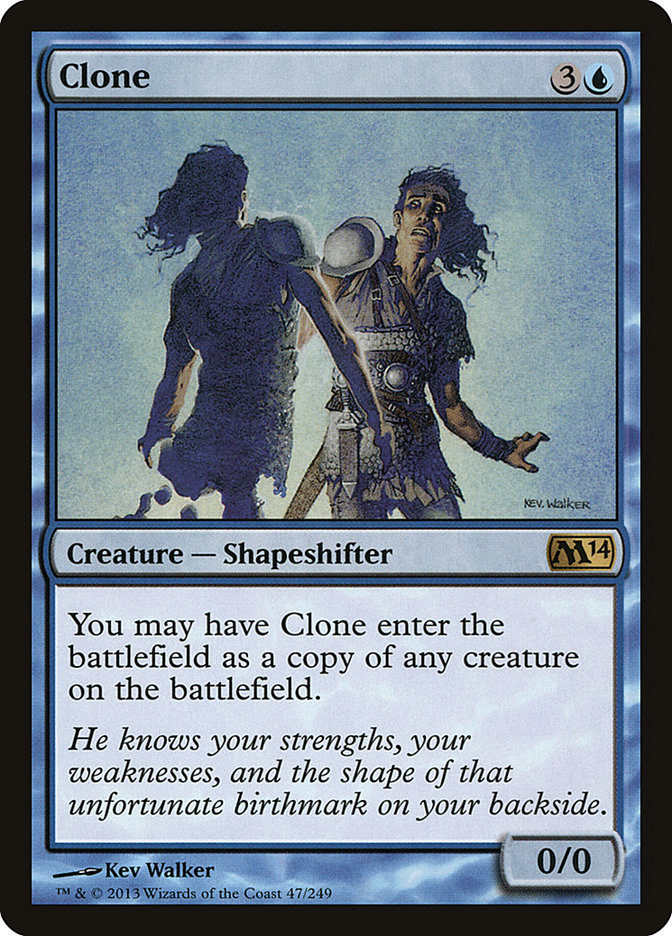
Yes, you can! The only copiable face of a transforming MDFC is whichever face is currently face-up. For example, if your opponent controls Bruce Banner, a Clone can enter the battlefield as a copy of Bruce Banner, but not The Incredible Hulk. Additionally, the value of the cloned permanent is locked in at the time of entering; this means that even if your opponent transforms Bruce, your copy remains the same.
Can That Copy Be Transformed?
This depends on the copy effect you use. If you make a copy with a regular Magic card like Clone or Phantasmal Image, you can’t transform it. But if you make a token copy with a card like Twinflame, that’s considered a double-faced token, and you can transform it.
What Is the Mana Value of an MDFC?
The mana value of an MDFC changes depending on the zone and which side of the card has been cast/is face-up. In the hand, library, exile zone, command zone, and graveyard, the MDFC has the characteristics of the front face, including mana cost.
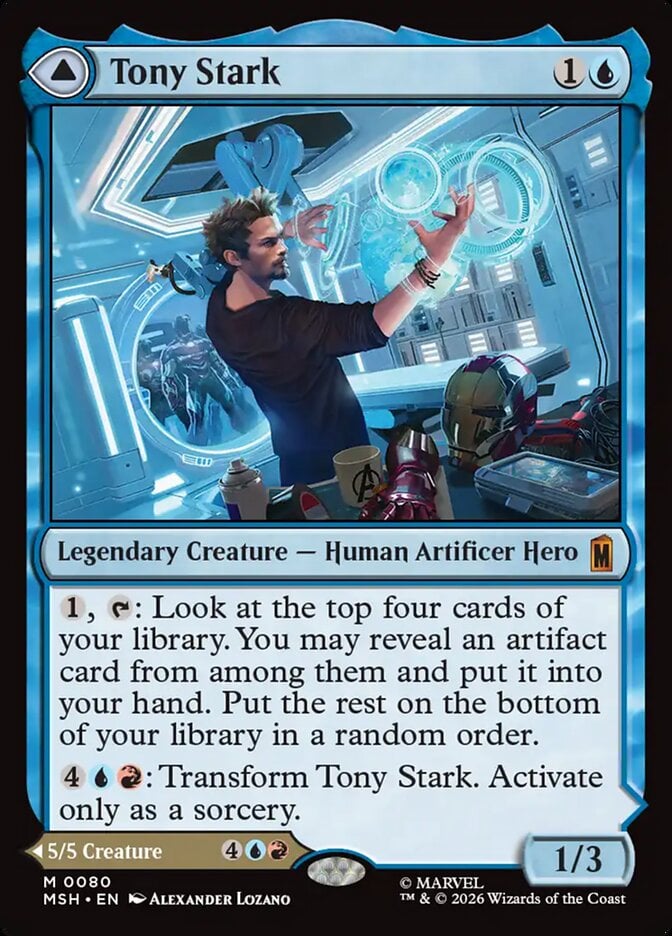
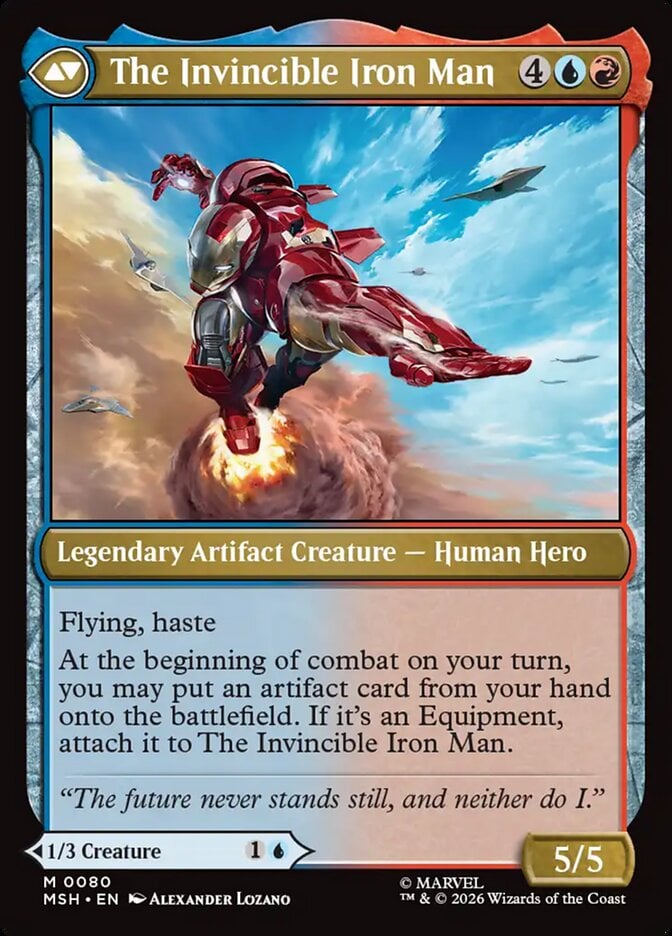
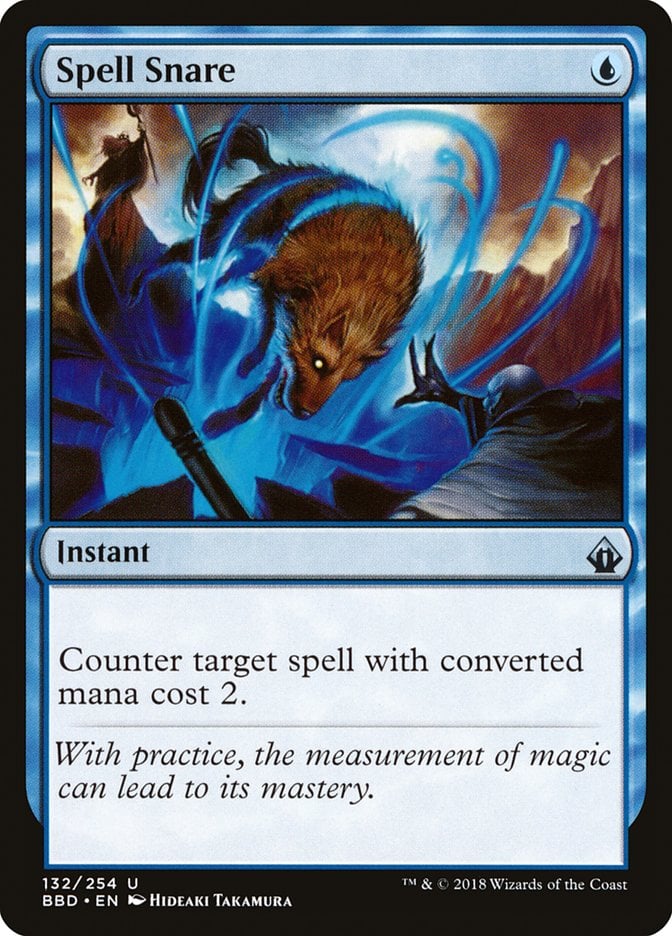
When on the stack and the battlefield, that changes. The characteristics become those of whichever side of the card is face-up or being cast. Let’s take Tony Stark / The Invincible Iron Man. If you cast Tony, it counts as a 2-mana spell, so your opponent can hit it with Spell Snare. But The Invincible Iron Man has a mana value of 6 on the stack, so your opponent can’t Snare it. The same goes for the battlefield: Tony has a mana value of 2, and Iron Man 6. This characteristic changes when the face-up face changes.
Do Alternative Costs Count Towards the Back Half of These Cards?

Yes! If you can cast a modal double-faced card for an alternative cost, that applies to either face. For example, if you airbend Norman Osborn, you can then cast Green Goblin for . The same quirk applies to casting them without paying their mana cost, with a card like Shiko, Paragon of the Way.
Gallery and List of Transforming MDFCs


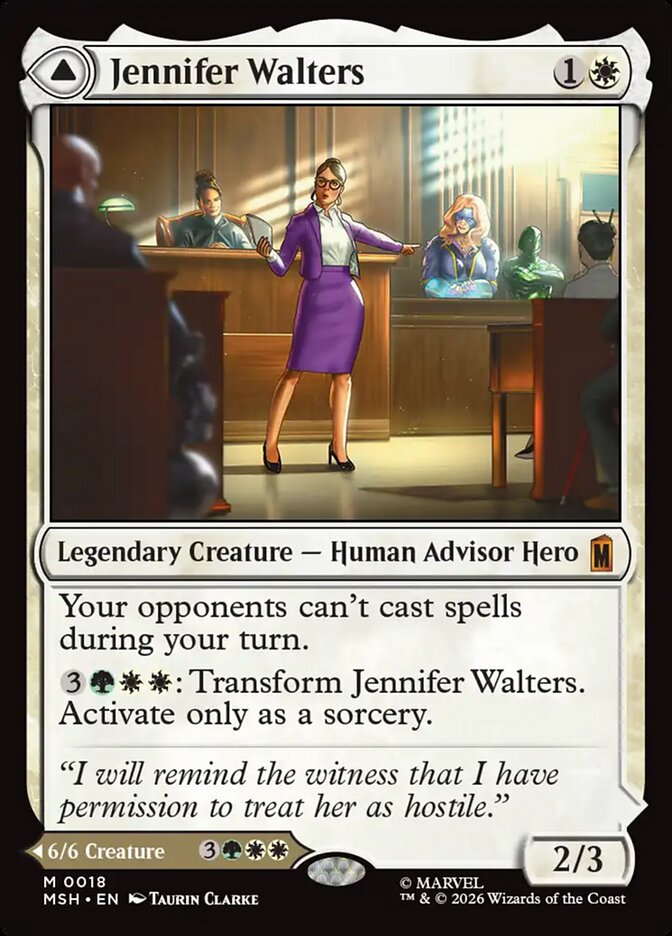
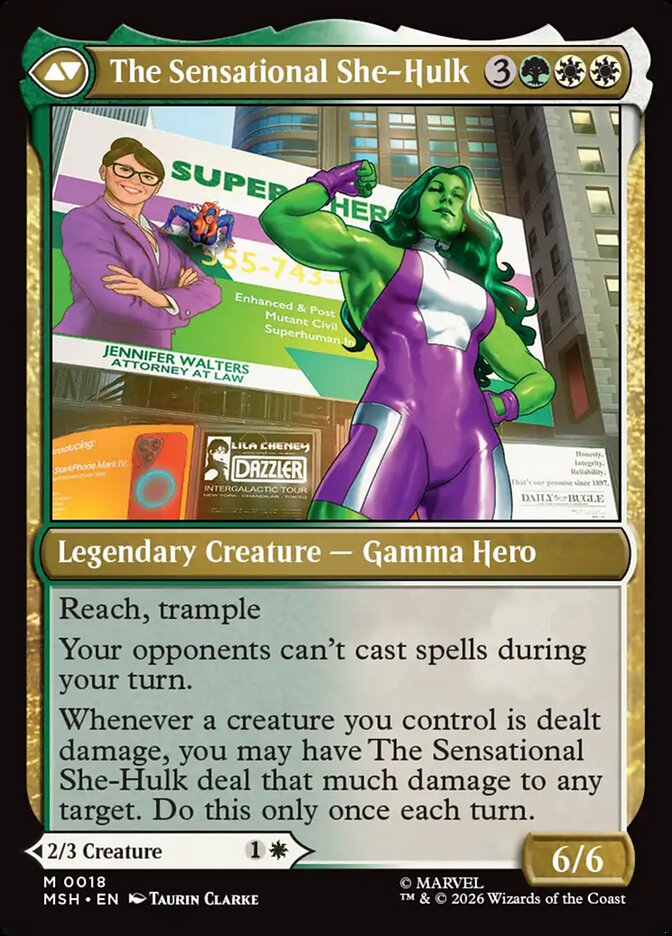
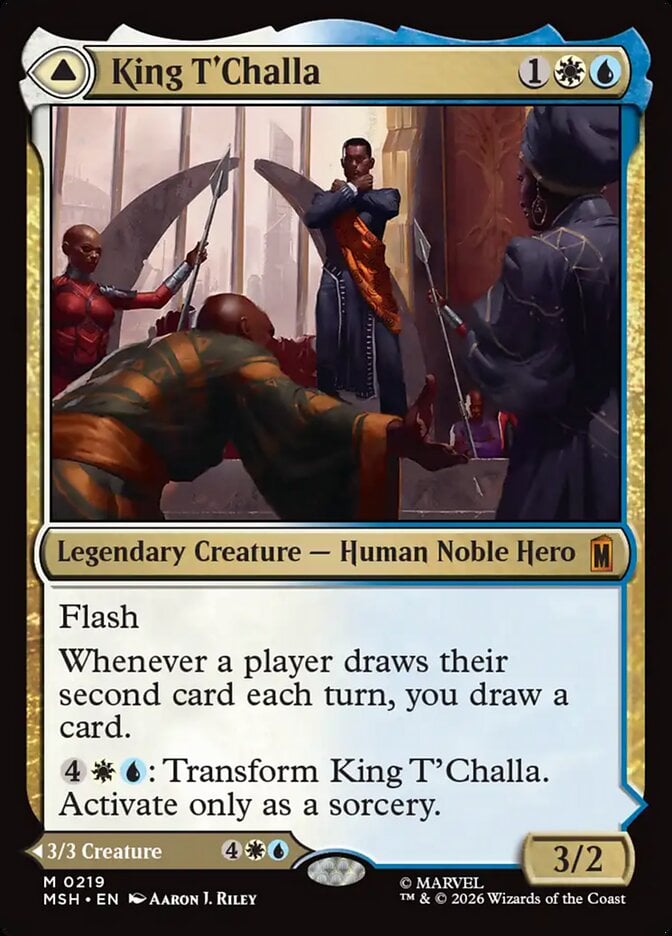
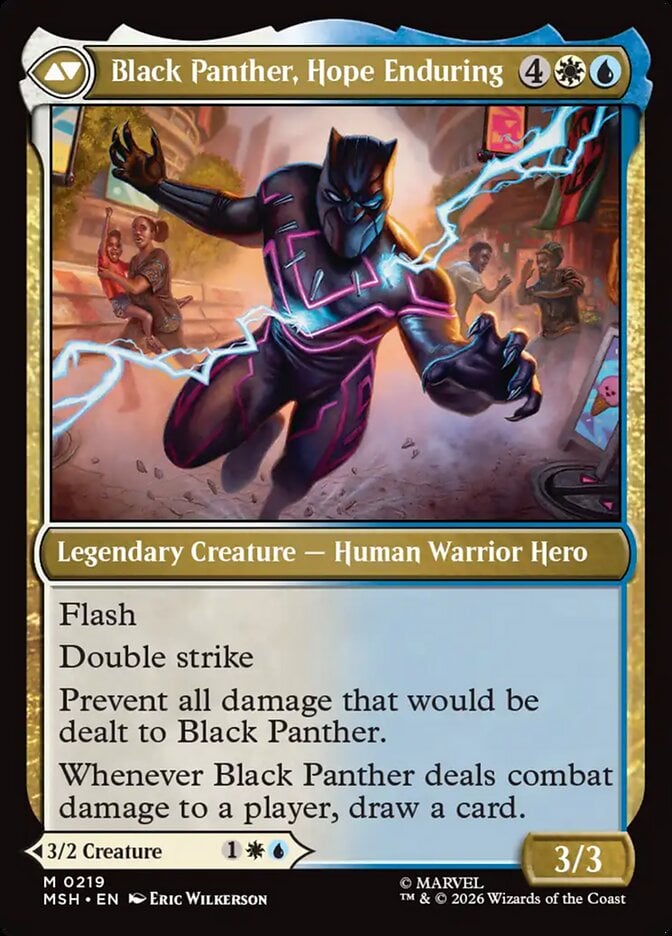
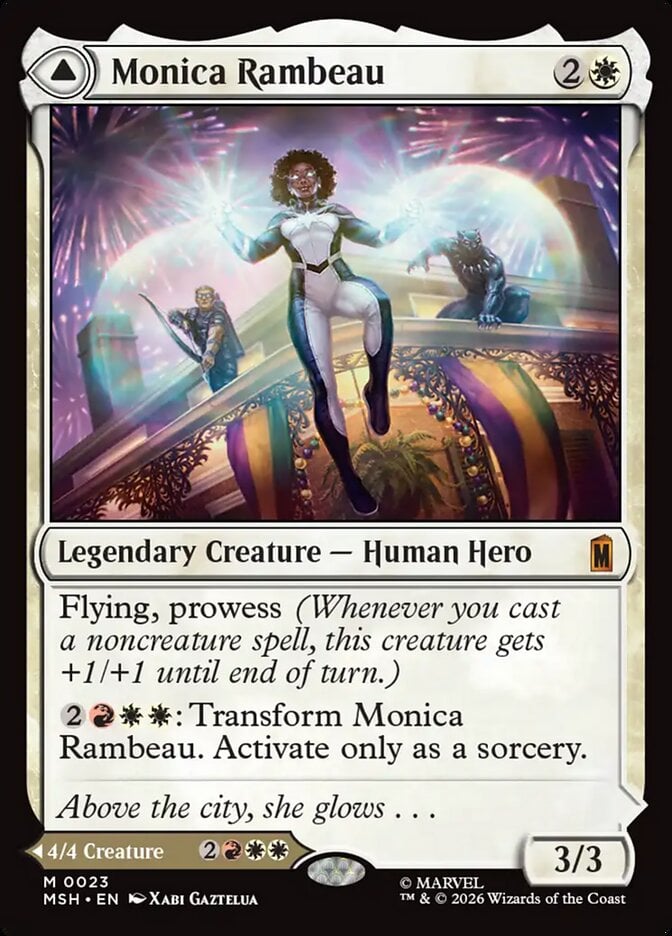


- Bruce Banner / The Incredible Hulk
- Eddie Brock / Venom, Lethal Protector
- Gwen Stacy / Ghost-Spider
- Jennifer Walters / The Sensational She-Hulk
- King T'Challa / Black Panther, Hope Enduring
- Miles Morales / Ultimate Spider-Man
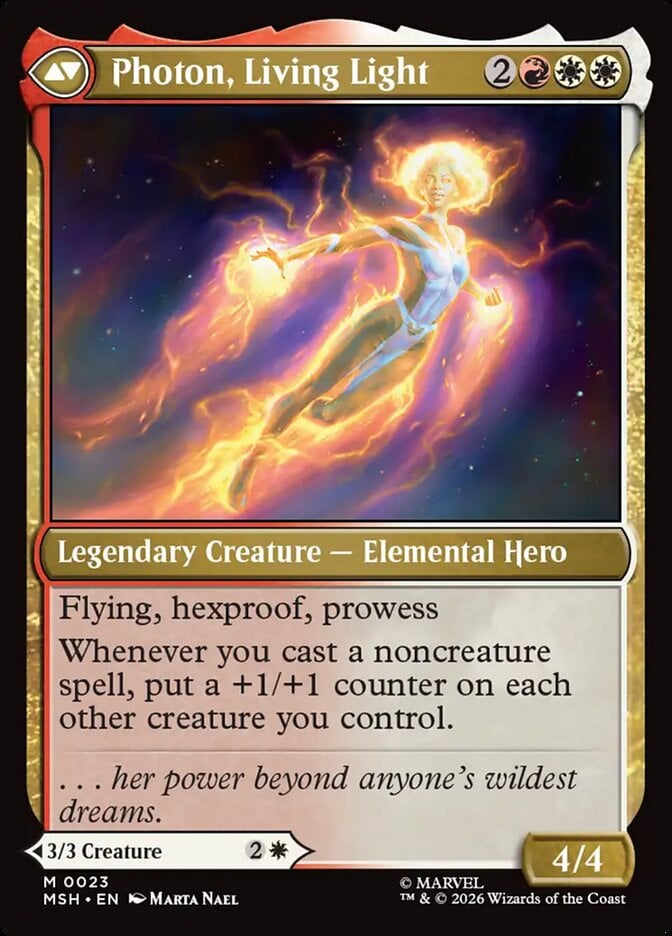
- Monica Rambeau / Photon, Living Light
- Norman Osborn / Green Goblin
- Peter Parker / Amazing Spider-Man
- Tony Stark / The Invincible Iron Man
Best Transforming MDFCs
#4. King T’Challa / Black Panther, Hope Enduring
King T'Challa probably has the strongest front face; I suppose that’s what happens when your secret identity is a king. Faerie Mastermind is already quite strong in Commander, and this one triggers when you draw two cards for even more card advantage. Black Panther, Hope Enduring is no slouch either, but this card’s all about the front face.
#3. Miles Morales / Ultimate Spider-Man
Miles Morales is an excellent commander because Ultimate Spider-Man can only get better. The twin influences of Universes Beyond and Commander have led Magic’s designers to print more legendary creatures than ever. Many of Naya () counter’s best cards are already legendary, so it takes little effort to strengthen that theme.
#2. Bruce Banner / The Incredible Hulk
Bruce Banner was one of the breakout commanders of Marvel Super Heroes, mostly because it’s so easy to make The Incredible Hulk go infinite with cards like Caltrops. Even if you don’t go infinite, a great Gruul () beater with blue protection is a nasty threat.
#1. Norman Osborn / Green Goblin
Norman Osborn is the strongest transforming MDFC we have because Green Goblin is an ugly threat. Using the graveyard as a resource has never been fair, but this commander takes it much further as a discard payoff and adding cost reduction, for some reason. This basically always ends up in storm.
Wrap Up

Amazing Spider-Man | Illustration by Thanh Tuan
As much as I love MDFCs, transforming MDFCs improve on the structure with near-total control over which face you get. Not needing to commit to one face or the other gives your curve a break and enables powerful turns. Now, can we get a creature that becomes a land?
What do you think of transforming MDFCs? Do you want to see more? Let me know in the comments below or on the Draftsim Discord! And check out The Daily Upkeep newsletter to stay up to date on all the latest MTG news.
Stay safe, and thanks for reading!
Follow Draftsim for awesome articles and set updates:










2 Comments
Ashling Rekindled can transform back.
Ashling isn’t an MDFC (modal double-faced card). It can’t be cast on its back-side, so it’s not the type of card being discussed here.
Add Comment