
Last updated on March 12, 2026

Opt | Illustration by Craig J Spearing
As much as I’d love to live in a world where Limited Magic is the only Magic that’s played (for free, obviously), I’ve heard whispers of this thing called “Constructed” where players build–dare I say–60-card decks?
That’s right, I give you a rare dose of Constructed content today. We’re talking land counts in 60-card decks. There’s a lot of established heuristics on this subject, and a few points I can toss in to help you construct an optimal mana base for Standard, Modern, Pioneer, or whatever MTG format you prefer.
Let’s hit our land drops!
How Many Lands Should You Play in a 60-Card Deck?

Consider | Illustration by Zezhou Chen
The general rule of thumb for most formats is that roughly 40% of your deck should be lands, which translates to 24 lands in a 60-card deck. Mathematicians much smarter than myself have done the analysis for us, and my experience tells me that it works out.
What Kind of Decks Run Lots of Lands?

Boundary Lands Ranger | Illustration by Pascal Quidault
Control decks usually want a very high land count. Typical control strategies want to extend the game as long as possible and inevitably take over in the late game. To get to that stage of the game, they need to hit every land drop every turn. These decks usually bump up to 26-28 lands and back their mana base up with cantrips and card draw to ensure they always hit land drops.
Companion (1)
Creatures (2)
Planeswalkers (8)
Narset, Parter of Veils x2
The Wandering Emperor x4
Teferi, Hero of Dominaria x2
Instants (18)
March of Otherworldly Light x4
Censor x2
Consult the Star Charts x4
Dovin's Veto x2
Get Lost x2
No More Lies x4
Sorceries (4)
Enchantments (2)
Lands (26)
Castle Ardenvale
Deserted Beach x2
Eiganjo, Seat of the Empire
Field of Ruin x2
Floodfarm Verge x4
Fountainport
Geier Reach Sanitarium
Hall of Storm Giants
Hallowed Fountain x4
Island x2
Meticulous Archive x2
Otawara, Soaring City
Plains x2
Restless Anchorage x2
Sideboard (14)
Change the Equation x2
Rest in Peace x2
Test of Talents
Knockout Blow x3
Kutzil's Flanker x2
Mystical Dispute
Elspeth, Storm Slayer
Regal Caracal x2
Above is a Pioneer Azorius Control deck, with a land count of 26. With cards like Castle Ardenvale and Restless Anchorage among plenty of places to sink extra mana, the high land count ensures the deck will usually play its impactful 4-drops on curve, and have plenty of uses for extra land drops in the late game.
When Should You Play Lower Land Counts?
If control decks want more lands, it stands to reason that aggro decks want fewer lands. Aggro decks want to end the game as quickly as possible, before you even have a need for lands number five or six. Granted, they still need to hit those first 2-4 lands to function, so they can’t go too low, but you’ll see aggro decks frequently run 20-22 lands.
Eternal formats like Legacy and Vintage also encourage lower land counts due to just how low the mana curves of those decks can get. When you cast nothing but 1- and 2-mana spells, you don’t really need to hit your fourth land for your deck to operate. You often see Legacy decks run as few as 5-6 lands that actually tap for mana and tons of fetch lands to find them. Vintage decks can run even fewer, relying on Power 9 mana rocks and Sol Ring/Mana Crypt to generate fast mana.
Creatures (12)
Dragon's Rage Channeler x4
Monastery Swiftspear x4
Slickshot Show-Off x4
Instants (14)
Lava Dart x4
Lightning Bolt x4
Mutagenic Growth x4
Unholy Heat x2
Sorceries (8)
Preordain x4
Expressive Iteration x4
Artifacts (8)
Mishra's Bauble x4
Cori-Steel Cutter x4
Lands (18)
Arid Mesa x3
Bloodstained Mire x2
Fiery Islet
Mountain x3
Scalding Tarn x2
Steam Vents x3
Thundering Falls
Wooded Foothills x3
Sideboard (15)
Consign to Memory x4
Into the Flood Maw x2
Meltdown x2
Soul-Guide Lantern x2
Spell Pierce x2
Unholy Heat
Blood Moon x2
This is Izzet Prowess in Modern and the land count is 18, with zero cards that costs more than 3 mana to cast. It slips in the green Mutagenic Growth with the Phyrexian mana cost of 2 life rather than try to splash green. Lava Dart is playable because of Modern Horizons, and joins Mishra's Bauble as no-mana noncreature spells that boost any of the creatures.
What Can Affect How Many Lands You Need?

Kav Landseeker | Illustration by Karl Kopinski
Curve
The lower your mana curve, the fewer lands you need. A 60-card deck with nothing but 1-drops and 2-drops, maybe even a 3-drop or two, doesn’t need to maintain the 24-land default. You see this in Eternal formats or Red-Deck-Wins aggro decks in Standard. These decks can function on just a few sources of mana and want to draw the bare minimum number of lands needed to cast a few cheap spells each turn.
Card Draw and Cantrips
There’s some contention about whether having excess card draw means you should play more or fewer lands overall. On one hand, general card advantage helps find your lands, so it’s easy to say you can skimp on your land count and rely on your card draw to hit land drops. On the other hand, drawing a bunch of cards rewards you if you already have a bunch of mana in play.
Obviously, it depends on your deck, but I believe players should look for reasons to play more lands, not fewer. People love cutting lands because it psychologically makes them feel like they’ll flood less (statistically true, but by a minor amount). However, mana screw is significantly worse than mana flood, and I must ensure I hit my first handful of lands than worry about how I will fight mana flood. That starts with an average or higher-than-average land count.
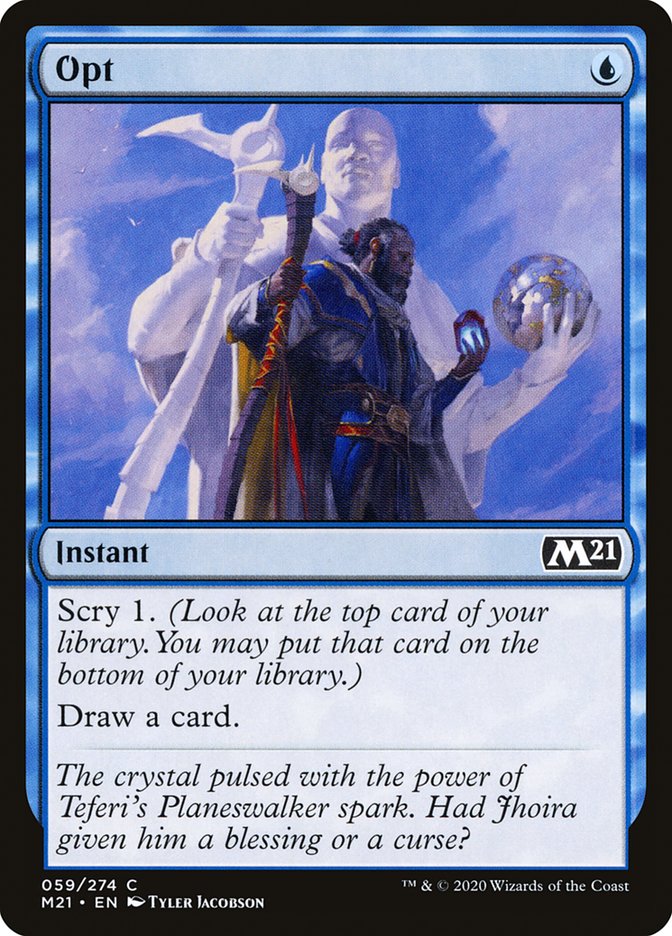
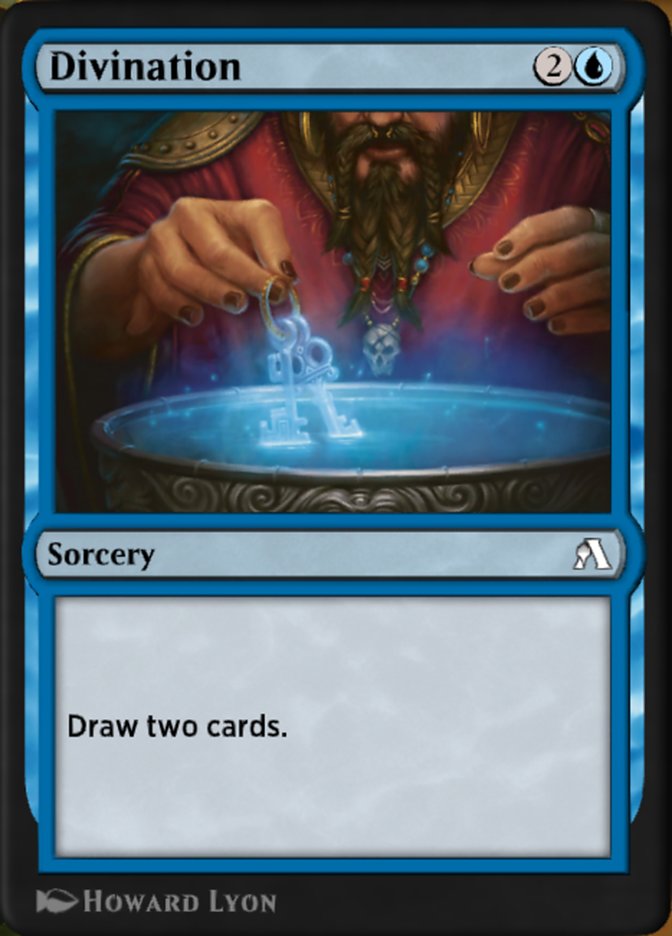
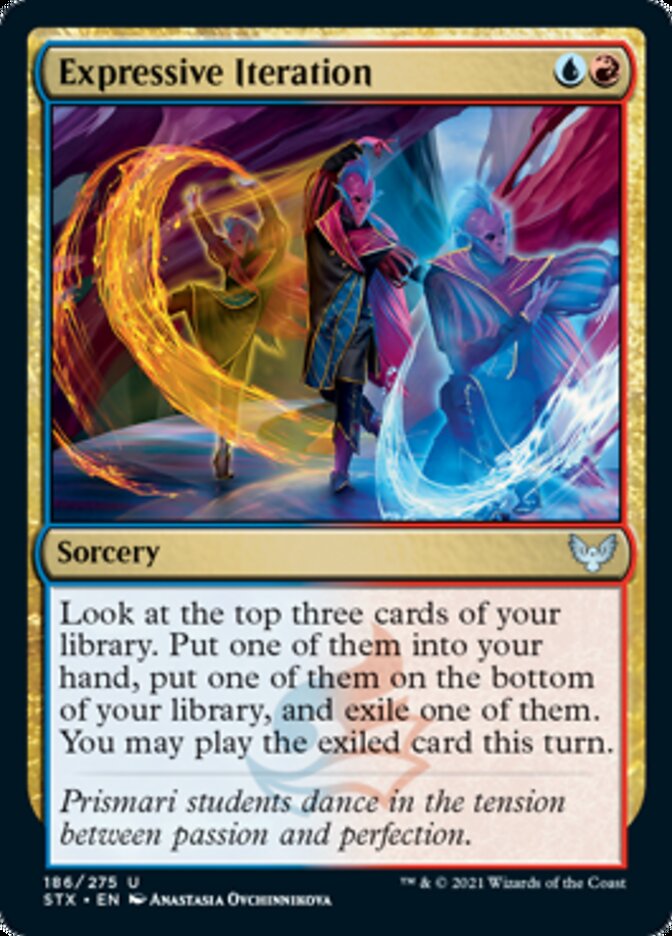
When I cast my Divination, Opt, or Expressive Iteration, I want to find impactful spells. I absolutely use them to find lands if necessary, but I’d rather hit my lands naturally and use my card draw to dig towards action. Access to tons of card advantage in your deck usually means you want a higher land count, not lower.
Cycling Spells and Lands
Cycling’s an excellent hand-smoothing mechanic and changes the way you build a mana base. The more cheap cycling lands you have, the more lands you can play since some of your mana base comes with built-in flood protection.
Conversely, you can play a slightly lower land count if you have access to non-lands with cycling. Presumably you still want to cast those cycling cards as spells if possible, so you shouldn’t cut too many lands.
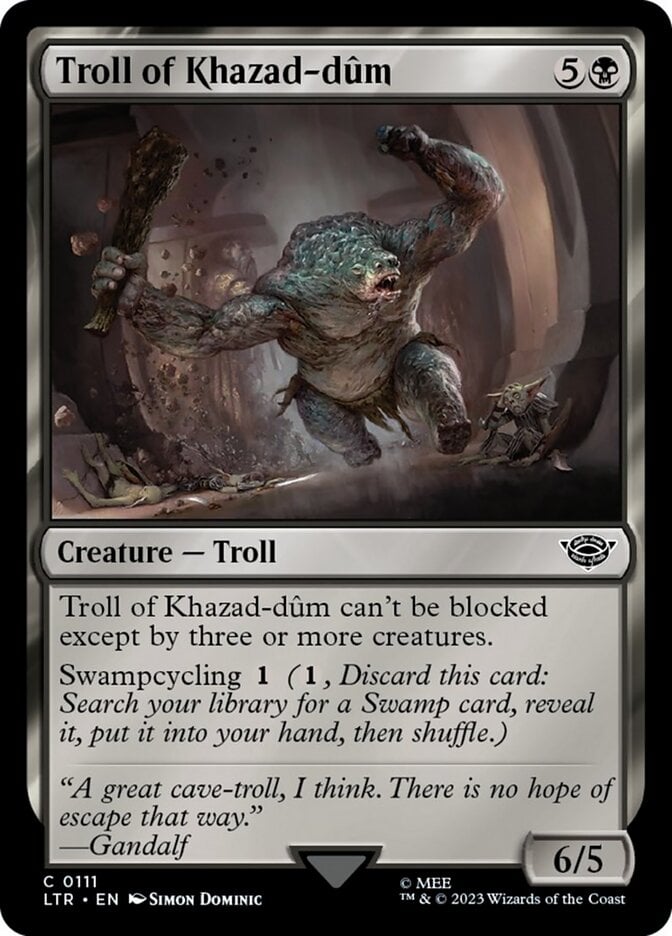
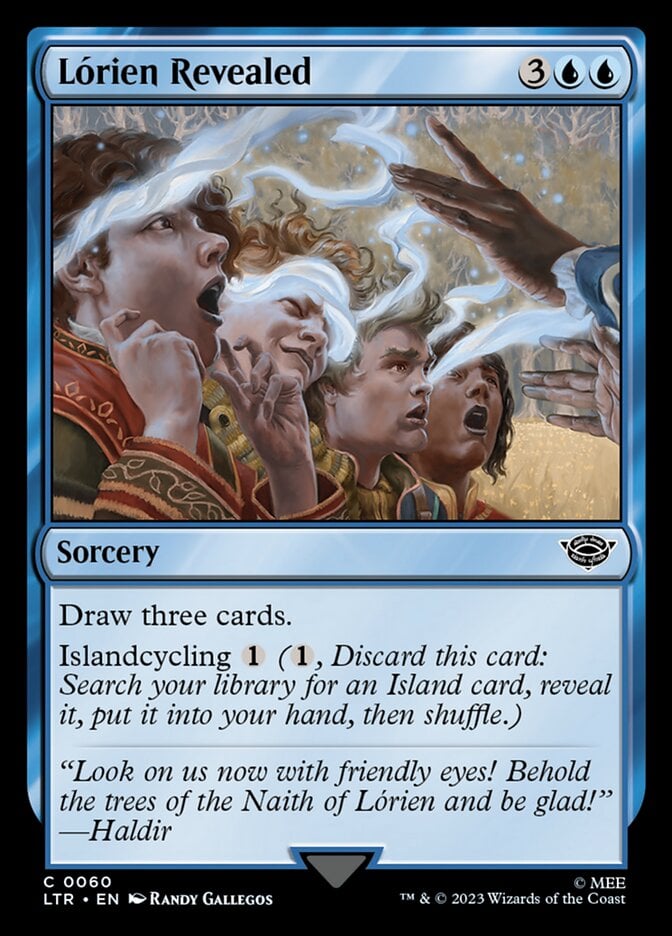

Word of warning: Cycling is a way different beast than cycling for 2+ mana. Two-mana cycling uses your entire second turn, which puts you significantly behind in a Constructed match. Cycling for 1 mana is much easier to squeeze in, especially on turn 1 if you have nothing else to do with your mana. This is why the Lord of the Rings basic landcyclers like Troll of Khazad-dûm and Lórien Revealed are so good: Cycling for basic lands trumps normal cycling when you’re looking for lands, and 1 mana is so easy to fit into your curve. The more typical cycling on Footfall Crater draws you a card and leaves you open to lots of plays.
Format Speed
Format speed shouldn’t factor into your land count too much. Even if you play in a heavy aggro meta, you still adapt to the needs of your own individual deck. If 75% of the meta is mono-red aggro and you play an Esper () control deck, you still need the appropriate number of lands a typical control deck would need, regardless of what your opponents are doing.
This changes a bit in glacially slow Constructed metas, where games are expected to last until turn 10+ on average. That doesn’t describe very many Constructed formats these days, but if you find yourself in such a meta, you should take a second look at your deck and ask yourself: “How many ways do I have to use mana beyond just casting my spells?” If your deck gets to the late game consistently, and you have plenty of mana sinks to pour mana into, it stands to reason you might want a higher land count.
A great example of this was around Ravnica Allegiance + War of the Spark Standard, when Sultai () decks flooded the meta and the breakout cards were things like Hydroid Krasis and Casualties of War. Decks like that basically never ran out of cards in hand, so they could increase their land count and ensure they always had the means to maximize their late-game haymakers.
Modal Dual Faced Cards (MDFCs)
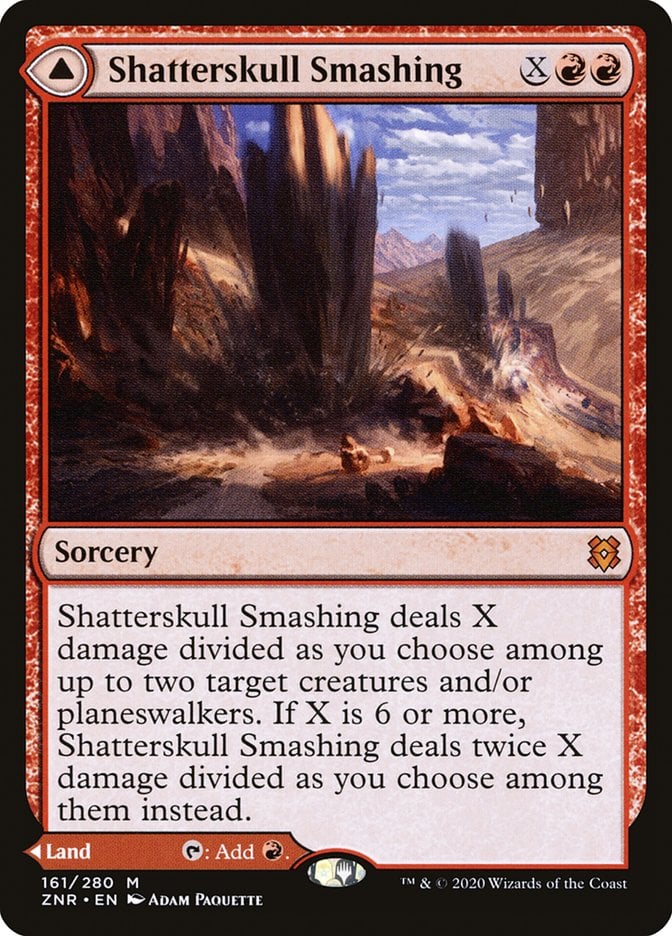
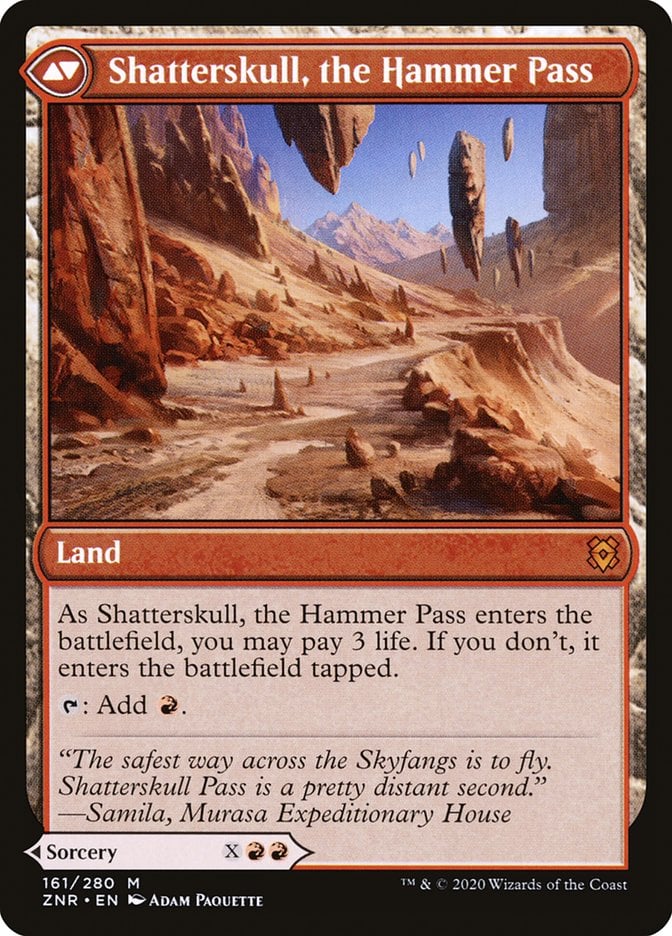


Modal double-faced cards are tricky to balance, especially with the inclusion of so many mono-colored MDFC lands from Modern Horizons 3 that allow you to pay life to have them enter untapped, along with hybrid cards that are a tapped dual land on the backside. There’s plenty of room to include them in nearly any deck’s mana base.
MDFCs allow you to increase your land count without compromising your spell count. What you don’t want to do is 1:1 cut lands for MDFCs, since you actively want to be casting the spell half of these cards if possible. My general rule of thumb is that for every two MDFC lands in my deck, I cut one land. The average 60-card deck with 24 lands becomes a 60-card deck with 25 mana sources this way, and the spell count remains untouched.
Arena Hand-Smoother

This Pioneer White Weenie deck got off to a great start. It features 23 Plains and an average mana cost of 2.4.
If you regularly play best-of-one on MTG Arena, you’re probably familiar with MTGA’s hand smoother. Without getting into too many details, this basically makes it more likely you’ll have an opening hand with an appropriate land-to-spell ratio and makes it less likely you’ll have the extreme one-landers or six-landers. There’s an argument for decreasing your total land count by one in most best-of-one formats, since the hand smoother evens out the odds of having a functional opening hand. I wouldn’t read too much into it, and it won’t help you at a paper tournament or FNM, so approach it how you please.
Wrap Up
The Deck of Many Things | Illustration by Volkan Baga
So 24 is the magic number. And of course, that number shifts up and down based on several different factors, including deck archetype, format, etc. And if you wonder about how many lands to run in Commander, or how many lands to run in Limited, I’ve found that the 40% rule is a great baseline for most formats, Draft and Sealed included. That means there are edges to gain from knowing when to play fewer lands and even when to play more (something people are averse to doing).
Clearly the 24-land rule isn’t a straightforward one-size-fits-all solution, so experiment and see which land counts work for you. Once you’ve got a number locked in, it’s all about finding the best distribution of lands, but that’s a deep dive for another time. If you have a land count you stick to no matter what, or any advice for constructing mana bases, let me know in the comments or over in the Draftsim Discord or on Twitter/X.
Thank you for making Draftsim your #1 stop for all things Magic!
Follow Draftsim for awesome articles and set updates:










Add Comment