
Last updated on August 29, 2026

Profane Transfusion | Illustration by Vincent Proce
In professional wrestling, a reversal is when a wrestler that started in the bottom position gains control over the wrestler that started in the top position. Great reversals are the best way for a wrestler to surprise an opponent with a scoring move when they’d otherwise be behind in points. The same style of surprise table-flip is also incredibly effective in Magic: The Gathering. A number of cards use the vocabulary “exchange” to swap life totals, control of creatures, and control of spells, creating a surprise upheaval that can cinch up the game.
When exactly are these effects useful? And which ones are the best? Today, we’re ranking the best exchange control cards in Magic!
What Are Exchange Control Cards?

Switcheroo | Illustration by Kev Walker
“Exchange control” cards fall into three broad categories: They exchange control of spells and permanents, they exchange the positions of objects in zones, or they exchange life totals.
Spells and permanents are the most common types of exchanges. You’ve probably cast Switcheroo or something similar – these cards work just as expected. Two permanents (or a permanent and a spell) are traded between two players, and each player gains control of the other’s game piece.
Objects can be exchanged in zones, as well. Occasionally, a card instructs a player to exchange the cards in their library with those in their graveyard, or swap their hands and graveyards, or hands and libraries. Only one of each type of these exchanges has been printed thus far.
Finally, there are numerical exchanges that can occur. Some cards, like Axis of Mortality and Evra, Halcyon Witness, instruct a player to exchange life totals with another number.
Honorable Mentions: Darkpact + Timmerian Fiends + Tempest Efreet
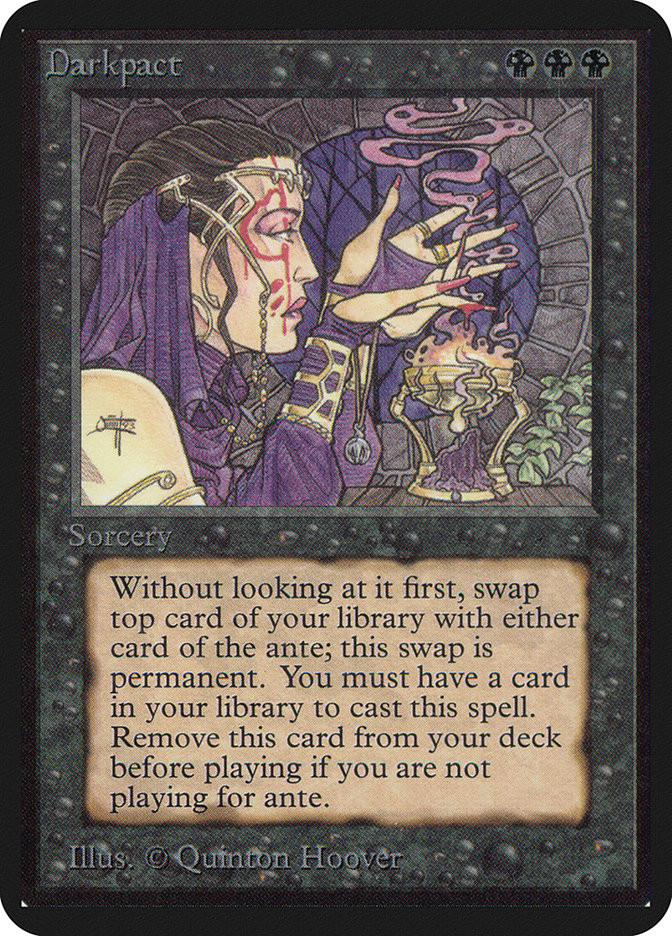


Three cards that mention exchanging control of cards are banned in all formats for their references to ante, a now-defunct mechanic that asked players to wager the cards from their libraries in games of Magic.
Darkpact is a 3-mana black sorcery that gives you ownership over target card in the ante, and exchanges it with the top card of your library. A playset of these plus a playset of Dark Ritual is a great way to just steal your opponents’ cards and walk off with them on turn 1.
Timmerian Fiends is a 3-mana black creature that can sacrifice itself as a form of convoluted black artifact removal – it not only destroys the artifact, but it puts that artifact into your graveyard and makes you its owner. The best part is the Timmerian Fiends is now legally your opponents’ card, too. They were trading cards before the game even ended back in the ‘90s!
Tempest Efreet forces an opponent to pay 10 life or exchange ownership of it and a random card from their hand, permanently. Luckily, the Tempest Efreet goes right into their graveyard; otherwise you’d have just given your opponent a free 3/3 on the board, something that almost nothing in Legends could stand up to on turn 4.
#33. Chromeshell Crab
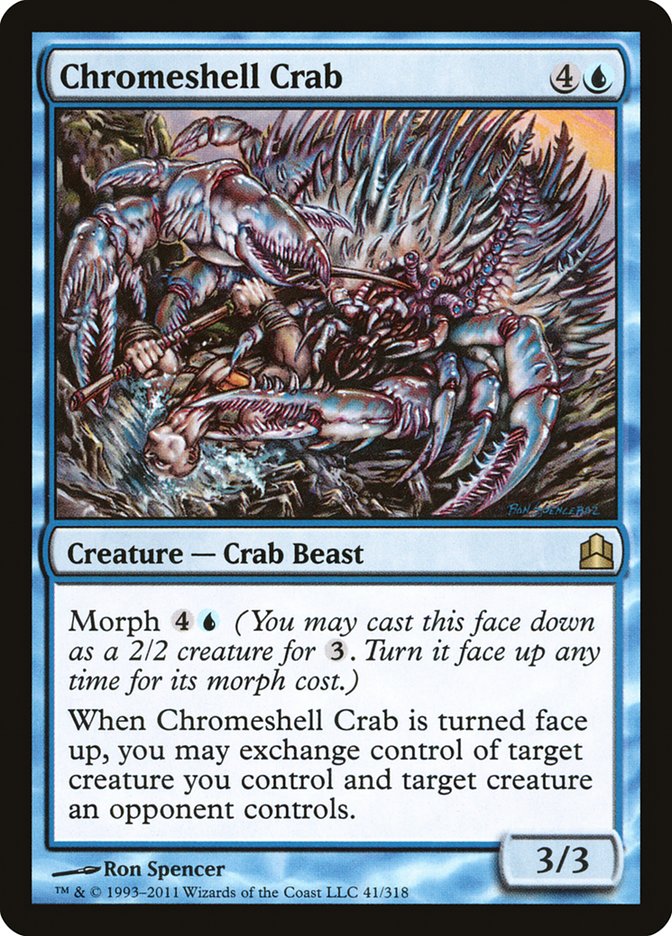
Chromeshell Crab needs to morph for its exchange control effect to trigger, meaning it’s at least an 8-mana investment before you’ll see one of your opponents’ creatures. Additionally, it only trades creatures, so you can’t steal those valuable enchantments and artifacts that are really causing problems.
#32. Vedalken Plotter
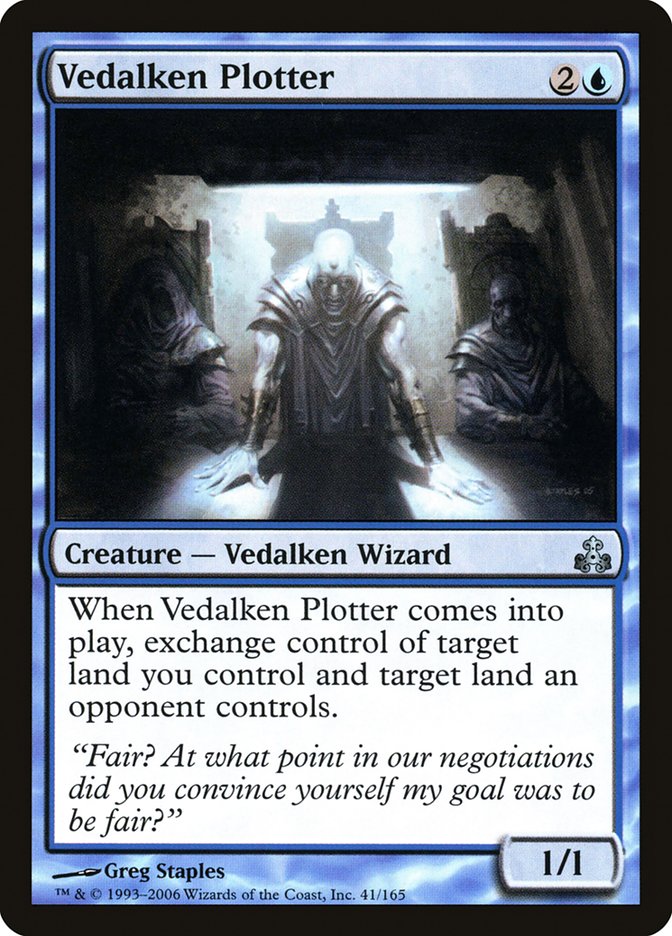
While cheaper than Shifting Borders, Vedalken Plotter must trade one of your lands for an opponent’s. You can’t just swap basics between opponents and ruin their mana bases.
#31. Psychic Transfer

Psychic Transfer is the only blue spell with a life-exchange effect, and not a very good one, either. A difference of only 5 life isn’t usually enough to warrant spending 5 mana on a one-time effect; you’d be better off casting a creature with 5 power to threaten the board rather than a simple swap of life totals.
#30. Perplexing Chimera
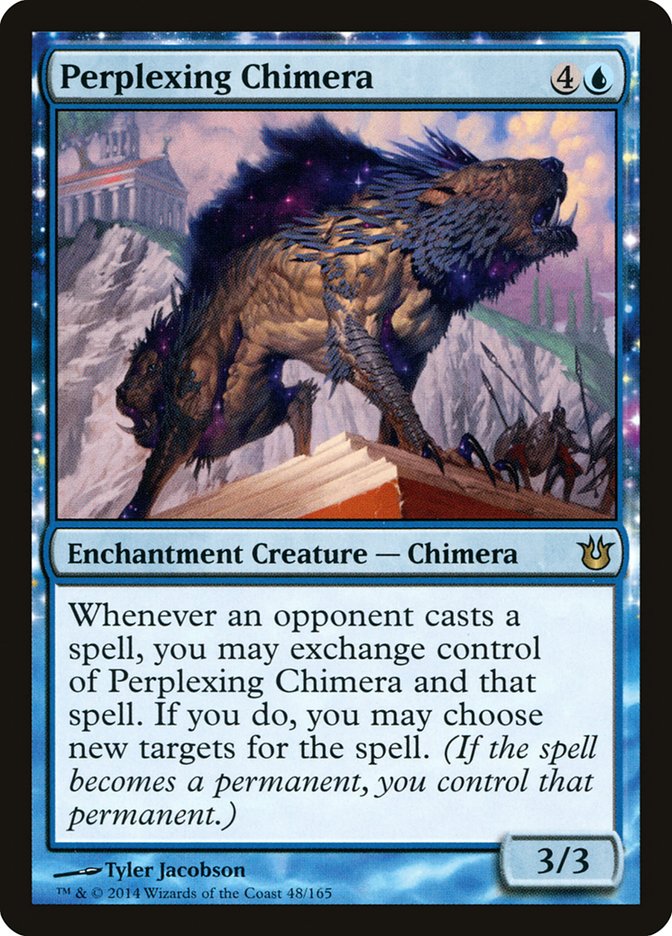
Perplexing Chimera trades control of itself and any spell your opponent casts, be it creature, artifact, sorcery, or planeswalker. The actual effectiveness of this creature as a deterrent is debatable – I want to believe it’s useful for a control deck without many huge threats of its own, but any semi-competent player can play around the Perplexing Chimera.
#29. Gauntlets of Chaos

Clearly the most cost-effective way to destroy a Pacifism, Gauntlets of Chaos from Legends is 5 mana to cast and 5 mana to activate. The Gauntlets can only exchange control of cards that share a type, so no trading a basic land for your opponent’s Autochthon Wurm.
#28. Kitsune, Dragon’s Daughter
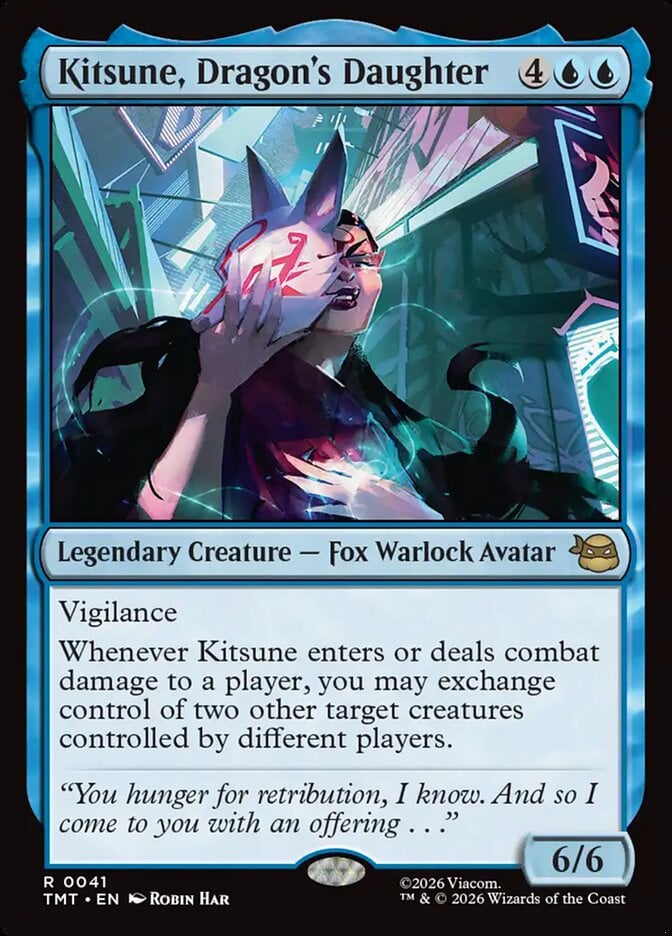
Repeatable exchange effects are a rarity, which makes Kitsune, Dragon's Daughter a fairly unique version of this effect. Though it’s pricey, you can do a lot with it. Perhaps you trade a random Fish token for your opponent’s best creature or mess with your opponents by stealing an opposing Drannith Magistrate so you can cast your commander without giving your opponents the same luxury.
#27. Confusion in the Ranks
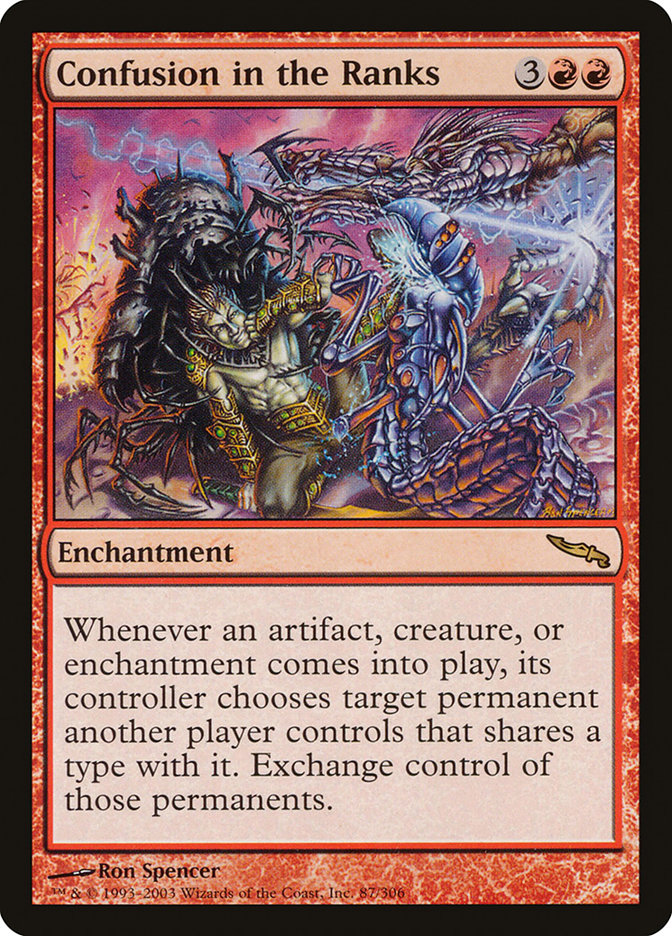
Confusion in the Ranks is a great card for the chaos player. As long as it’s on the battlefield, basically nobody actually gets to keep the creatures, artifacts, or enchantments they cast. After a turn or two of Confusion in the Ranks, players instinctively begin to hold their most valuable cards in their hands to prevent casting and immediately losing them.
#26. Conjured Currency
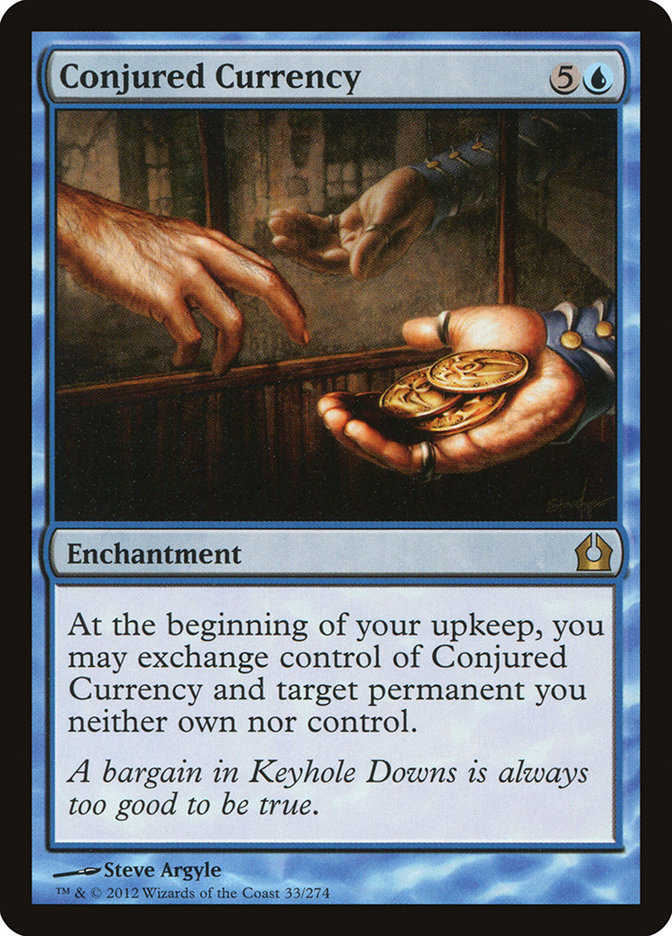
Conjured Currency’s reign of terror in Return to Ravnica Standard was mostly a fever dream created by me because I pulled one in my prerelease kit and desperately wanted it to be good in the Constructed format of the day. It was, of course, not so hot in practice. While this was an effective way to keep a certain creature from attacking (because summoning sickness still applies to a creature if it just “came under your control”), it wasn’t actually winning me any games.
#25. Trade the Helm

Trade the Helm, like other basic exchange effects, goes one-for-one on an artifact or creature an opponent controls. It’s notable for letting you exchange a creature for an artifact, or vice versa, letting you trade away an exhausted Pentad Prism for their creature.
#24. Visions of Duplicity

Visions of Duplicity comes from the Midnight Hunt Commander set and lets you exchange control of two target creatures you don’t control. These effects are fun for a laugh and to shake up the board state, but they rarely lead to your own victory. You can cast this spell with flashback for relatively cheap depending on your commander’s mana value, though, so it’s semi-useful in a deck that relies on exchanges like Zedruu the Greathearted.
#23. Legerdemain

Legerdemain is one of the most basic exchange effects in Magic. For 4 mana, you get to trade a creature or artifact for another creature or artifact at sorcery speed. It serves as a good weathervane for rating the other cards on this list, but it’s outclassed by several of them.
#22. Morality Shift

Morality Shift is a unique sorcery that exchanges your graveyard and library, perfect to save self-mill decks from decking out or to allow them to turn their recently Bojuka Bog’d graveyard into an instant win with Thassa's Oracle. Note that this is the only card in Magic with this effect, though Inverter of Truth is very similar.
#21. Tree of Perdition + Tree of Redemption
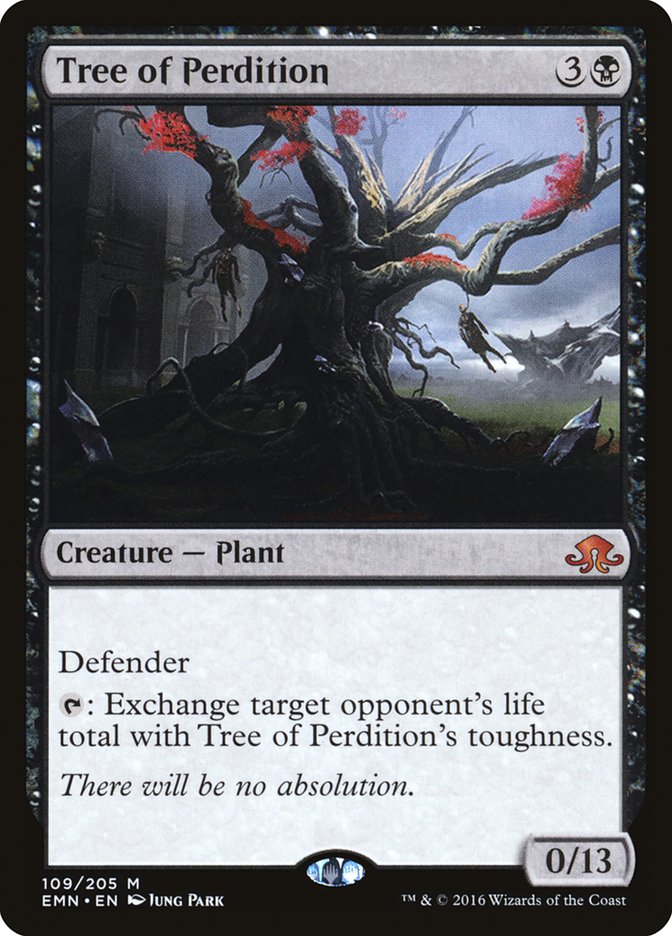
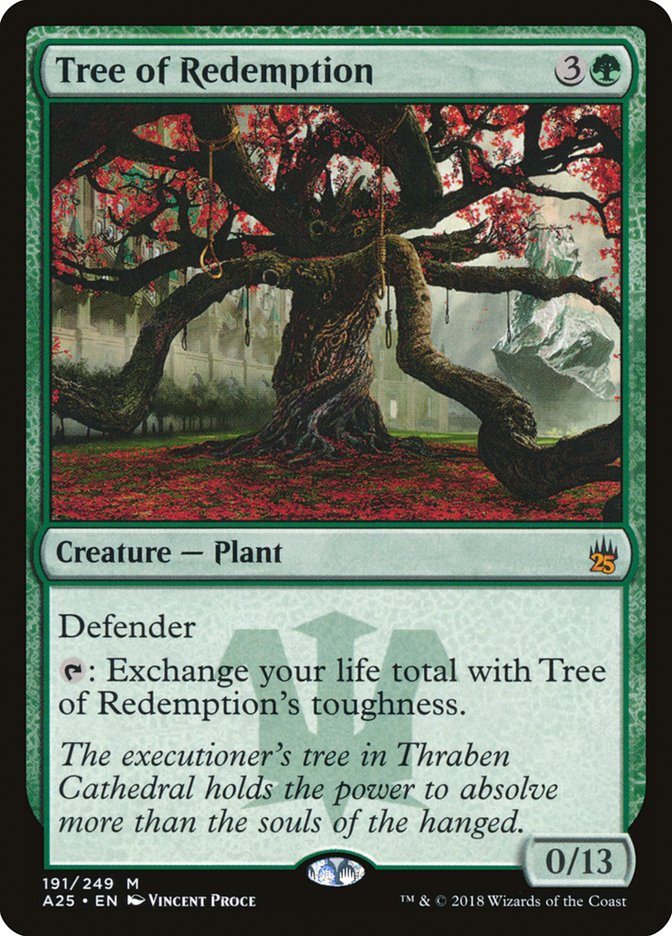
Tree of Perdition and its cousin Tree of Redemption are both 0/13 defenders that can trade either your opponent’s or your own life total with their toughness. These two have some fun space to play in; is it better to swap the green Tree’s toughness with your life total early (to make it the most effective blocker), or should you save it until your life total is less than 13 and you need to stabilize?
#20. Modify Memory

Modify Memory takes the ol’ Switcheroo effect and compensates you for choosing creatures that you don’t own. Swapping your opponents’ boards around and drawing three cards for your trouble ain’t too bad for 5 mana, especially if that exchange ruins their day.
#19. Volatile Stormdrake

Modern Horizons 3’s Volatile Stormdrake was an attempt to bring the Gilded Drake effect to Modern without breaking the format. Effectively, Volatile Stormdrake gets you any 4-mana or less creature from your opponent, or more if you’ve prepared by generating extra energy counters. While it’s inarguably worse than Gilded Drake, it still sees play in the format from time to time as an answer to threatening creatures.
#18. Serene Master

Serene Master has the unique effect of exchanging its power and the power of a target creature that it’s blocking until the end of combat. It wins most combats, since it gives the attacking creature a power of 0.
#17. Profane Transfusion
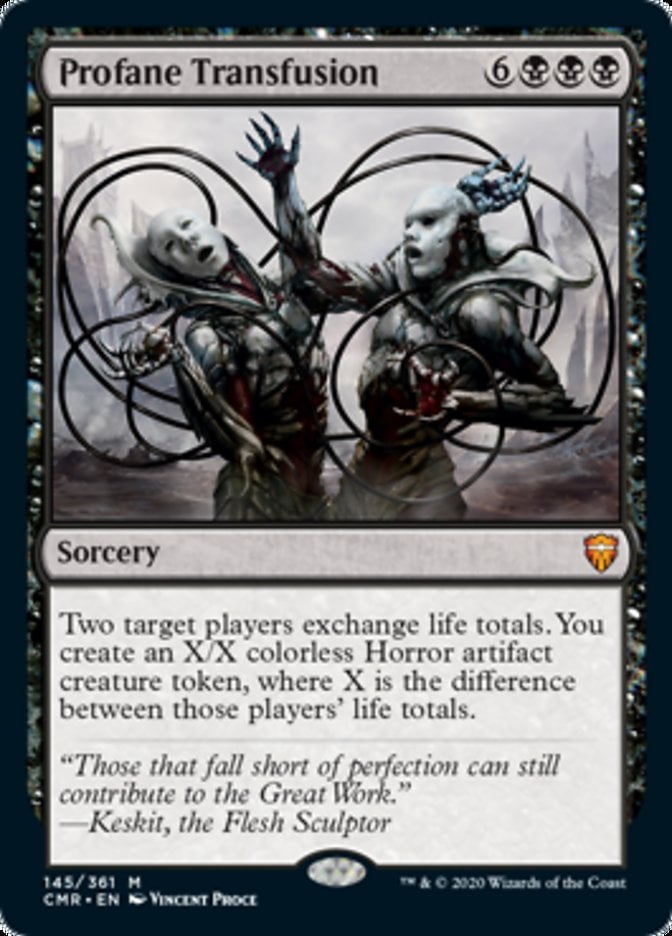
Profane Transfusion takes the life-total exchange effect and rewards you for swapping totals with a big difference. I’d frequently use Profane Transfusion in my lifegain decks to finish off one player and make a huge Horror creature token for finishing off the next.
#16. Mordenkainen
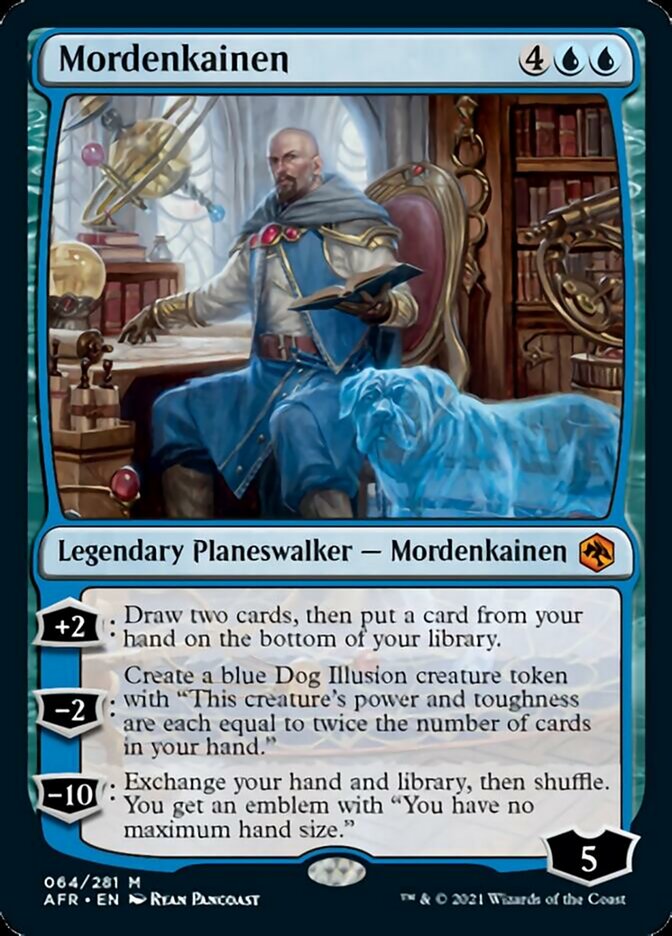
Famous D&D wizard Mordenkainen got the planeswalker treatment in Adventures in the Forgotten Realm, with an ultimate loyalty ability that exchanges your hand and library. You also get no maximum hand size for the rest of the game, preventing you from discarding the 40+ cards you just added to your hand. This effect is useful for the control deck that wants the game to go long, and Mordenkainen’s first loyalty ability can prevent you from decking yourself quickly after you’ve activated its third ability, but in practice this is a lot of hoopla to just draw a lot of cards.
#15. Mister Negative

Exchanging life totals isn’t anything new, but attacking it to a creature makes Mister Negative a fairly threatening commander. See, the trick is that you can flicker Mister Negative to exchange life totals multiple times. So, if you control, say, Wall of Blood, you can pay all but 1 life, play MN, exchange that life total for an opponents, then pay more life and use a flicker spell to do it again.
#14. Magus of the Mirror

Magus of the Mirror is a tough sell – I originally ran it as a win condition in my Queen Marchesa deck, wherein I’d do everything in my power to get to 0 or less life (keeping myself alive with various Lich effects) and then trade life totals with an opponent. The only problem with Magus of the Mirror is its cost, at 6 mana, and its lack of immediate impact on the board, since it needs to wait a turn before it can tap and activate. It’s a little too loudly broadcast to be the surprise kill I needed it to be, but it’s still a threat nonetheless when it hits the field and I’m at less than 10 life.
#13. Harness Infinity
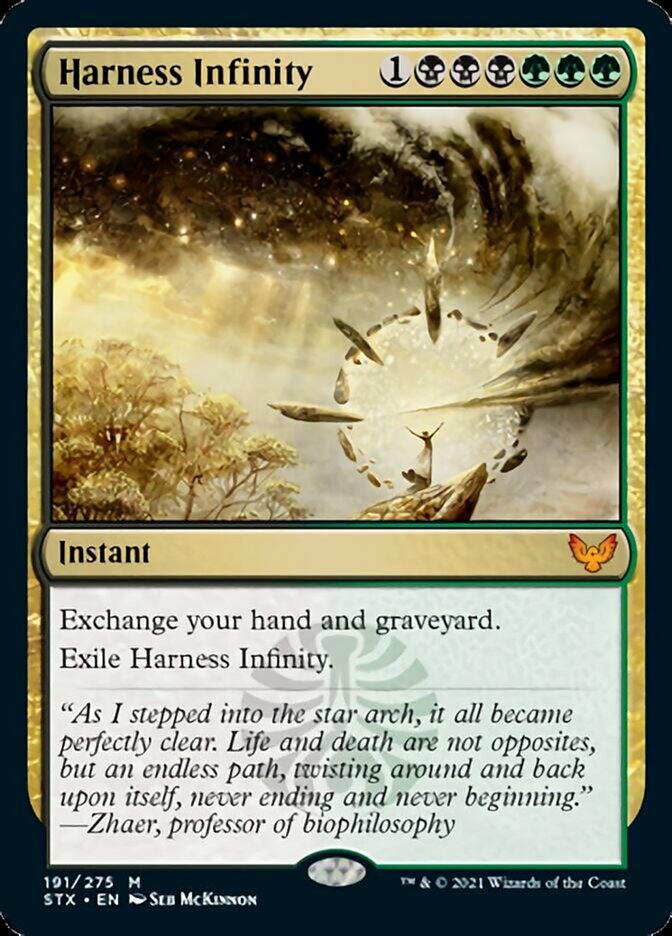
Strixhaven’s Harness Infinity swaps your hand and graveyard before exiling itself. For 7 mana, you’d better have a full graveyard before you cast this, and you’d better have a plan for those cards in your graveyard before your turn ends and you’re forced to discard them all again. Note that this is the only card in Magic that has this effect.
#12. Deadpool, Trading Card

The smarmy Marvel hero Deadpool, Trading Card exchanges text boxes with another creature when it enters the battlefield. In a similar vein to Xantcha, Sleeper Agent, this legendary creature makes an opponent’s creature an active detriment to their board state, and it incentivizes them to pay 3 mana to get rid of it and give the rest of the table a card. I’m not sure what the best text box Deadpool can steal is yet – my Timmy brain always wants to go straight to Akroma, Angel of Wrath.
#11. Shifting Borders
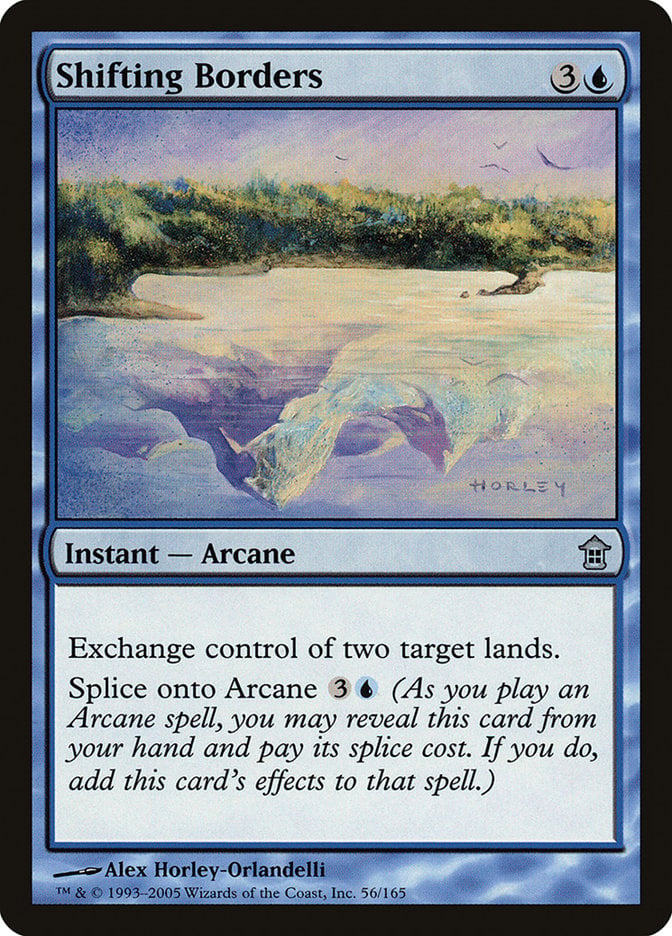
Shifting Borders is an arcane instant that allows you to exchange control of two target lands. Trading lands is usually only useful if your opponent has a particularly useful utility land on the battlefield, like Kessig Wolf Run or Reliquary Tower. It can also be useful for stealing their bounce lands before they get a chance to use them, swiping a Dimir Aqueduct for your regular Mountain can set that blue-black player back severely.
#10. Avarice Totem
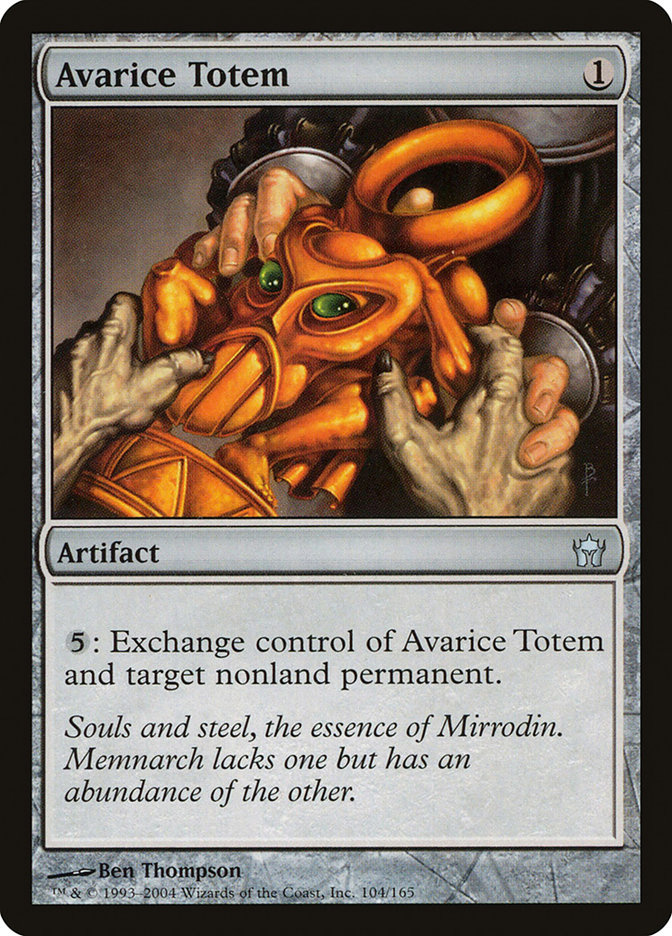
Avarice Totem is one of the most basic ways to trade a permanent with an opponent. As an artifact, its colorless mana cost and activation make it usable by all players, so the player you trade it to can most likely trade it back with their own 5 mana. Useful when you know your opponent won’t have the mana available to trade it back, or to force them to spend that 5 mana to reclaim their stolen permanent.
#9. Axis of Mortality

Axis of Mortality is one of my favorite cards for Commander games. Swapping life totals with players can reverse the entire game state after six or seven turns of being beaten down by your opponent, only to flip the board and finish them off with a Lightning Bolt. Alternatively, in multiplayer games you can use Axis of Mortality to trade two other players’ life totals, upsetting the balance of the game and making a new archenemy at the table.
#8. Shifting Grift
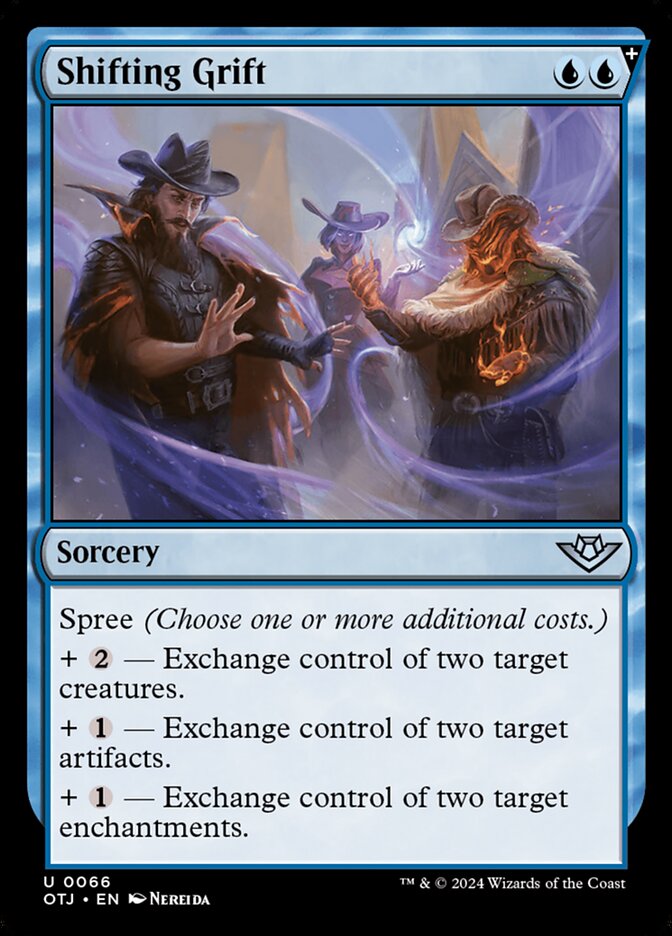
Shifting Grift’s utility lies in its variance. You can use this sorcery to trade creatures, artifacts, enchantments, or all three with the appropriate spree cost. Each individual cost is a fair rate for the effect, and all three together can be useful in multiplayer matches.
#7. Sudden Substitution
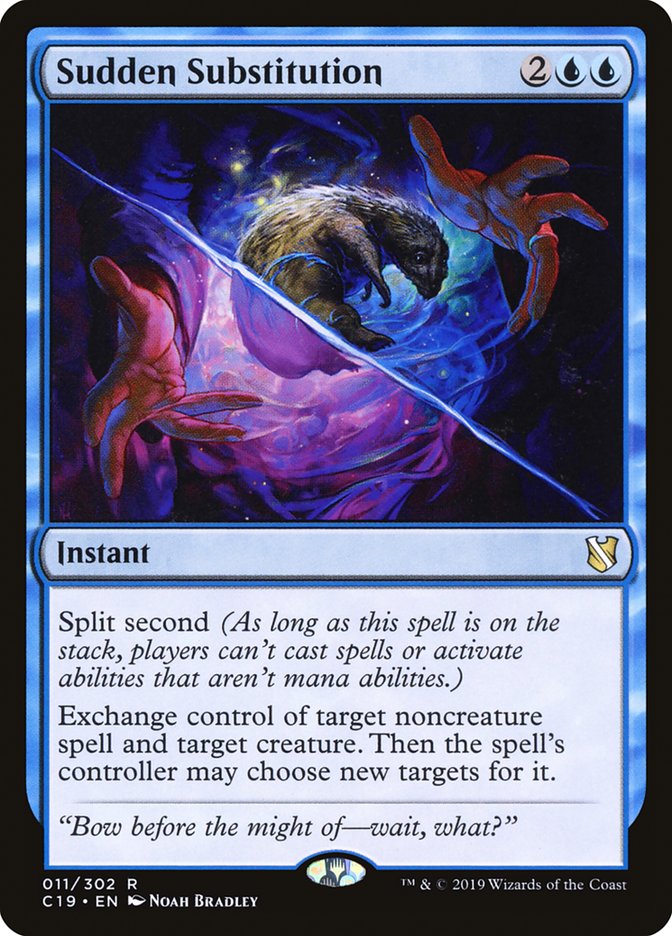
Sudden Substitution works like a 4-mana counterspell of sorts. Typically, you’ll use it to gain control of a noncreature spell as your opponent casts it in exchange for some weenie little mana dork or 0/1 Ornithopter. Its split second effect means it can’t be countered, either, so it’s useful as a Trickbind effect for noncreature spells.
#6. Djinn of Infinite Deceits
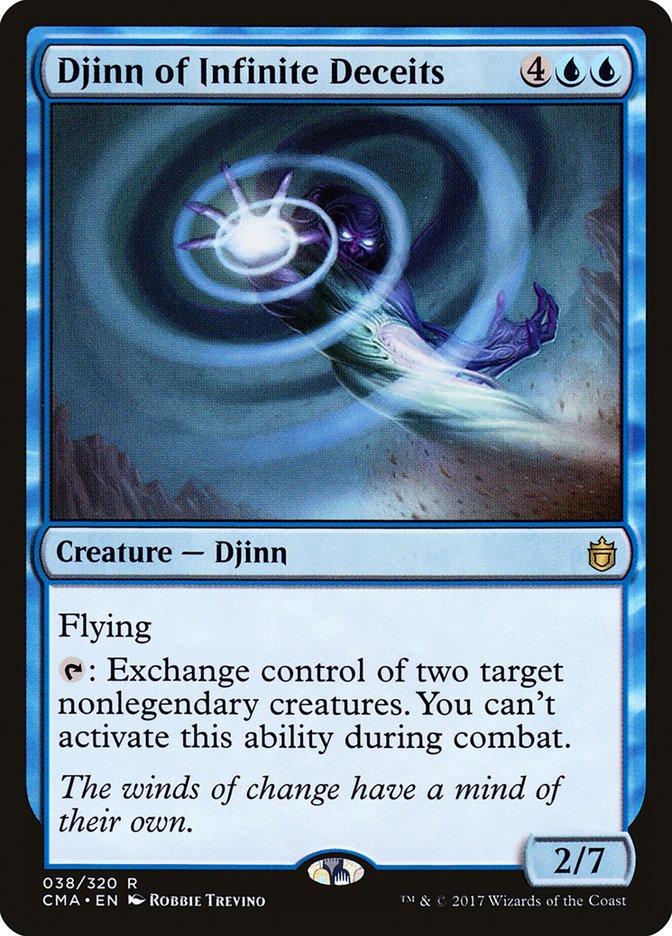
Djinn of Infinite Deceits was an early entry into the Commander format’s exchange control cards. As a 2/7 with flying, it’s an effective blocker with an ability it can activate at instant speed, allowing it to remain untapped during an opponent’s combat. It can’t trade your opponents’ commanders around the battlefield, but it can swipe a creature the turn after you cast it.
#5. Evra, Halcyon Witness
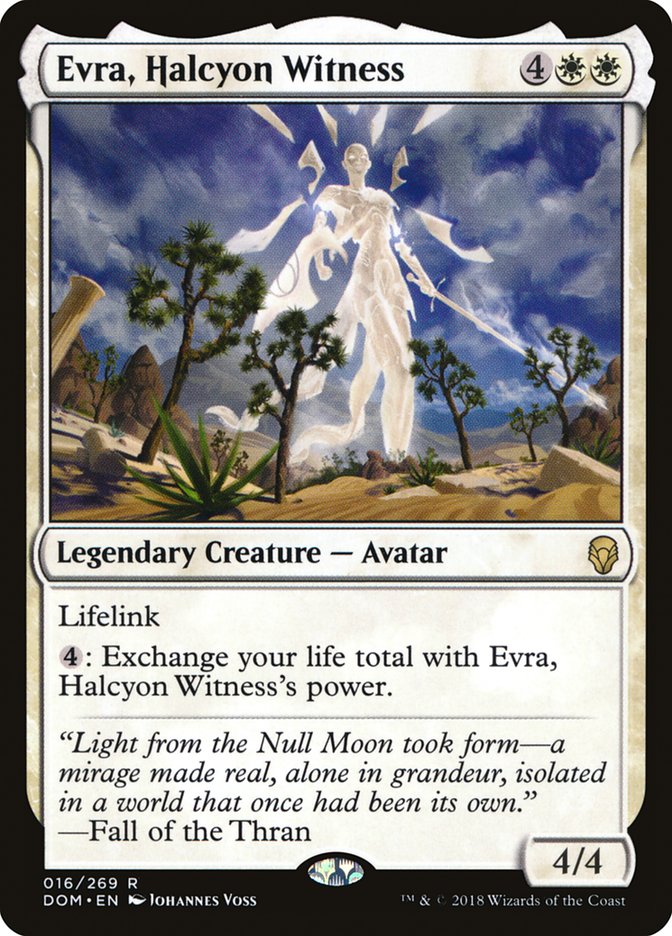
Evra, Halcyon Witness is every lifegain player’s dream. Finally, an actual win condition that goes along with all that life you’ve gained. Evra is great for two reasons: First, if you can even manage to hover around your starting life total, Evra is a powerhouse in combat that can swing for 20+ damage every time. Second, it has lifelink, so you can swap Evra’s power with your life total, deal damage equal to what your life total just was, then gain all that life back and end up 4 life above where you started.
#4. Exchange of Words

Unfinity card Exchange of Words swaps the text boxes on two creatures for as long as it remains on the battlefield. A basic combo using this card involves turning an opponent’s non-oil counter creature into an Archfiend of the Dross, forcing them to lose the game on their next upkeep.
#3. Mirror Universe
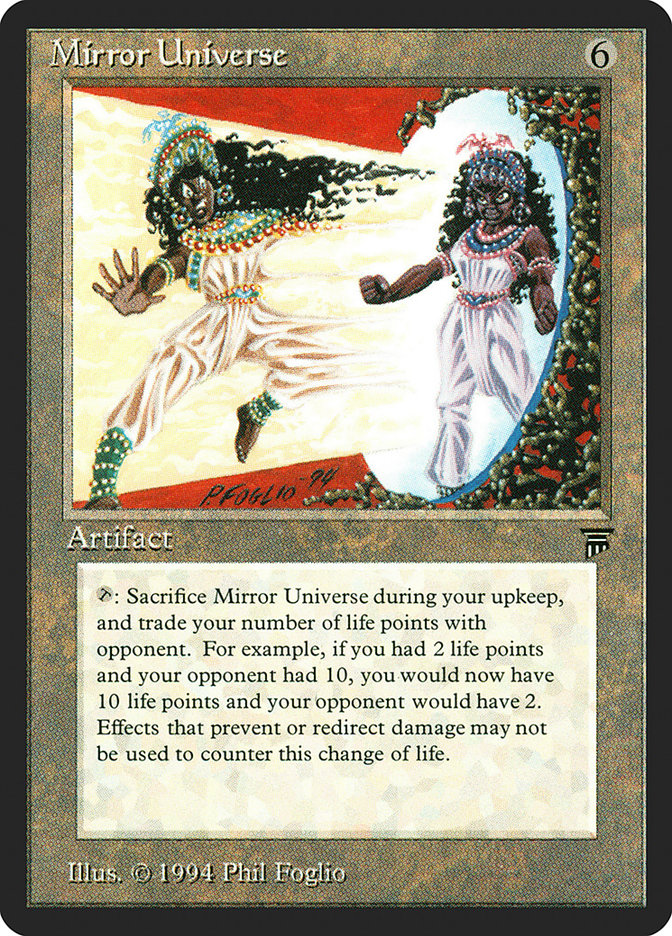
Magus of the Mirror’s namesake is Mirror Universe, a very rare Legends card that does everything the Magus does but faster and without the trappings of a creature’s body. It’s usually better, but good luck acquiring a copy. Mirror Universe runs for $300+ online right now.
#2. Soul Conduit
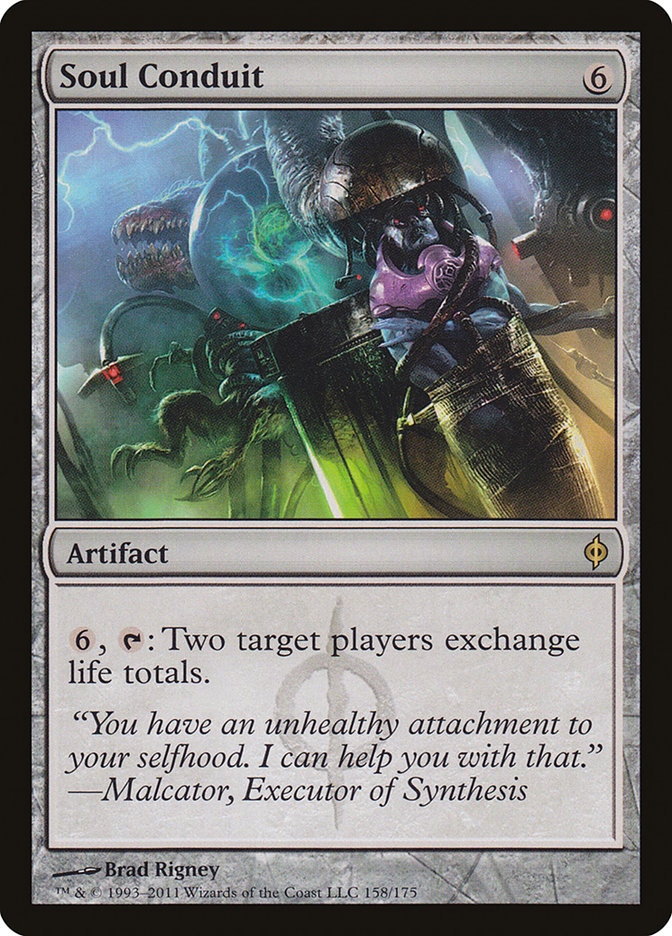
Soul Conduit is the bread and butter of my Lich-style deck, as one of the only repeatable life exchange effects. Six mana to cast and another 6 to activate is a hard bargain, but one that’ll ultimately play out in your favor if you’ve built around it.
#1. Gilded Drake
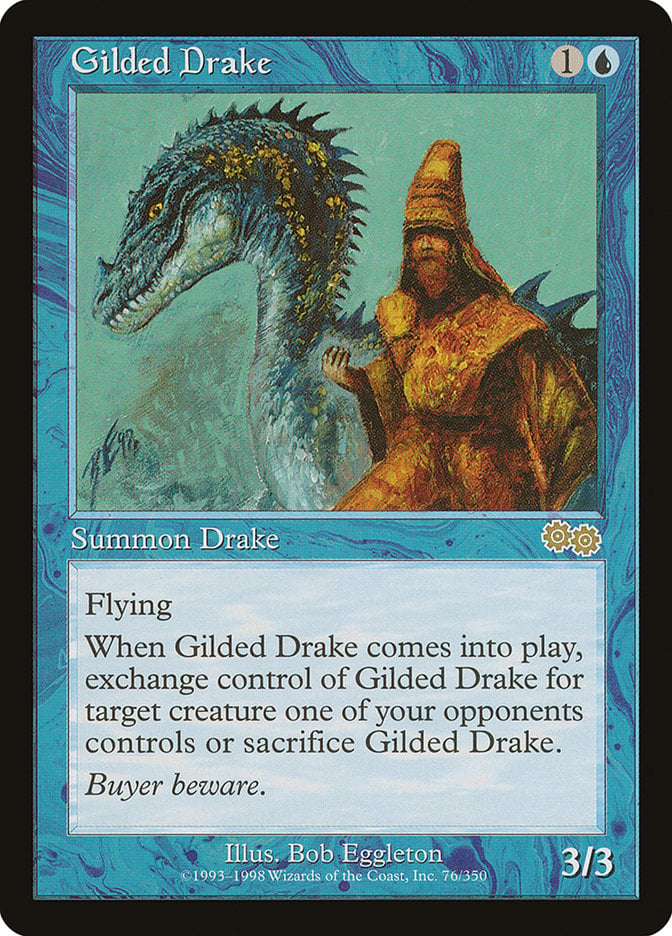
Gilded Drake is one of those crazy cards that must’ve been an oversight when it was originally printed in Urza’s Saga. For just 2 mana, you’ll exchange control of this 3/3 flier with any creature your opponent controls. This is a cheap, cheap, cheap price for an effect that usually costs around 5 mana. I could go on and on about the way Gilded Drake has warped the cEDH meta around itself, but let’s effectively summarize by saying that as long as WotC continues to print high impact creatures with no downsides, Gilded Drake will continue to be useful.
Wrap Up

Shifting Grift | Illustration by Nereida
The word “exchange” is used in several different contexts in Magic: The Gathering, but each ultimately boils down to a reversal of the board state. By either trading a big creature for a small one, swapping life totals, or suddenly drawing your entire library, these exchange cards are effective ways to flip the game on its head.
What are your favorite ways to exchange permanents, life totals, or other objects in game? What are the best targets for Exchange of Words and Deadpool, Trading Card? Let me know in the comments or on the Draftsim Discord!
Thanks for reading!
Follow Draftsim for awesome articles and set updates:










2 Comments
I think you were playing Conjured Currency wrong. Your opponent isn’t allowed to choose the card you stole, as it’s something they own even though they don’t control it. They would have to target one of your personal cards that tou control. You should give this card another try, it seems fun!
Good point. I’ve changed the wording to correct that (can’t change the writer misplaying it many years ago though).
Add Comment