
Last updated on May 17, 2025

Windfall | Illustration by Pete Venters
Urza’s Saga was released in 1998, and it’s an MTG set that changed Magic forever. After all, when MTG games can be decided on turn 1 by the player that won the coin flip, it ends up not being very fun. Imagine a world where many of the cards restricted in Vintage get four slots in your deck, and that’s very close to the Urza’s Saga Standard format.
Powerful cards were everywhere, in all colors and across all card types. This is the Magic set that gave us one of the coolest mechanics in cycling, and it’s also the set responsible for Yawgmoth's Will and Tolarian Academy, among many others.
With that in mind, let’s dig into Urza’s Saga to find what’s exciting, and what are its most egregious design mistakes.
Urza’s Saga Basic Information

Titania's Chosen | Illustration by Mark Zug
Set Details
| Set Symbol |  |
| Set Code | USG |
| Number of Cards | 350 |
| Rarities | 110 Common, 110 Uncommon, 110 Rare, 20 Basic Lands |
| Mechanics | Cycling, Echo |
Important Dates
| Previews Start | September, 1998 |
| Full Gallery Available | September, 1998 |
| Prerelease week | September 26, 1998 |
| Paper release date | October 12, 1998 |
About the Set: The Story
Lore-wise, the story of this set revolves around Urza’s obsession with destroying the Phyrexians and preventing a full-scale Invasion of his beloved Dominaria.
Now a planeswalker, Urza saw how the Phyrexian strength possessed his brother and supported Mishra during the Brothers’ War. Urza travels to Phyrexia alone but is overpowered by what he encounters there. He leaves Phyrexia with the help of Xantcha, but Gix and the Phyrexians are close behind. The story would unfold into the next sets, Urza’s Legacy and Urza’s Destiny.
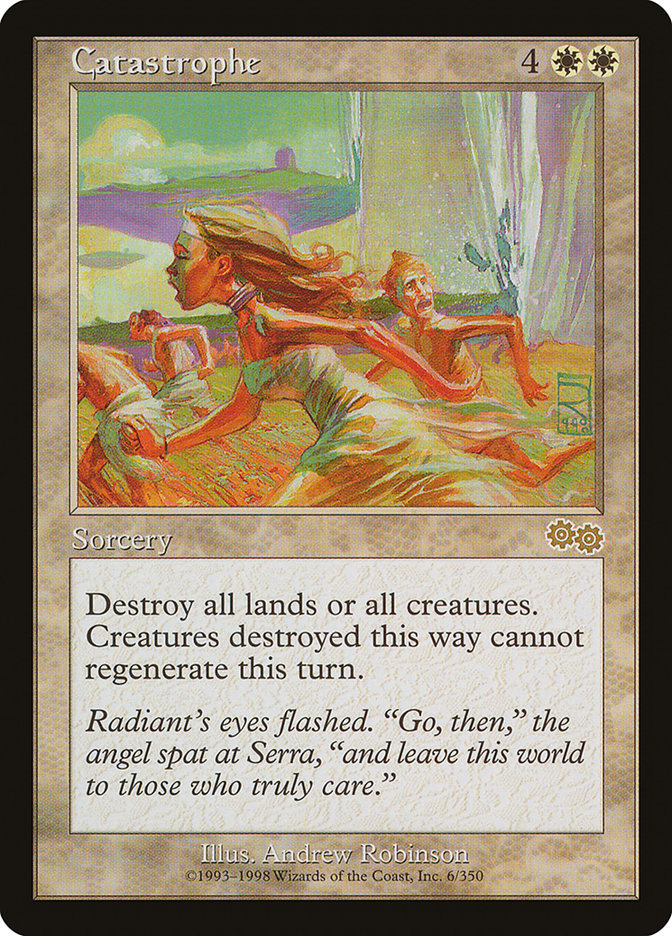
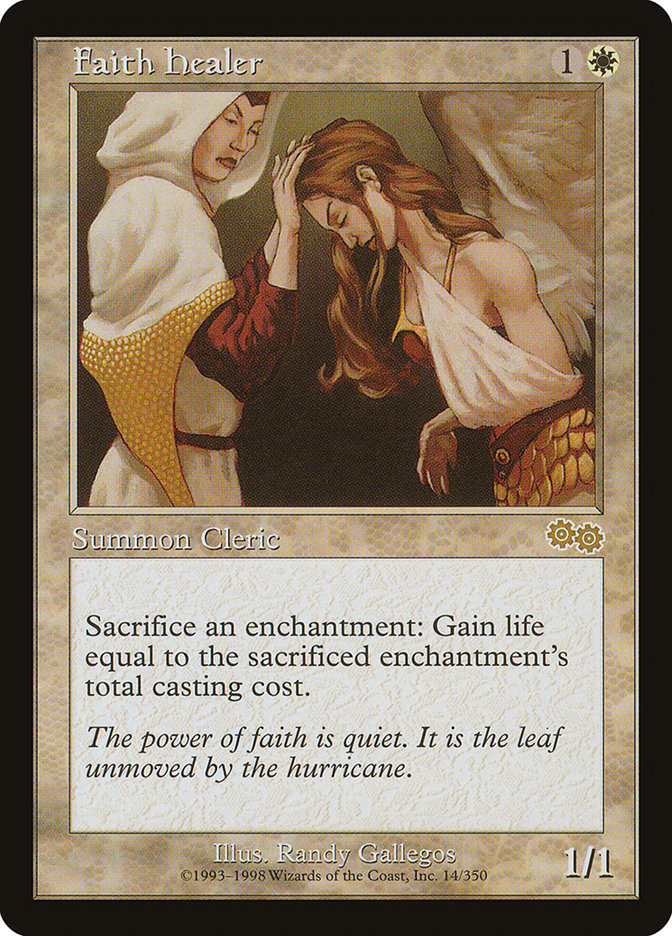
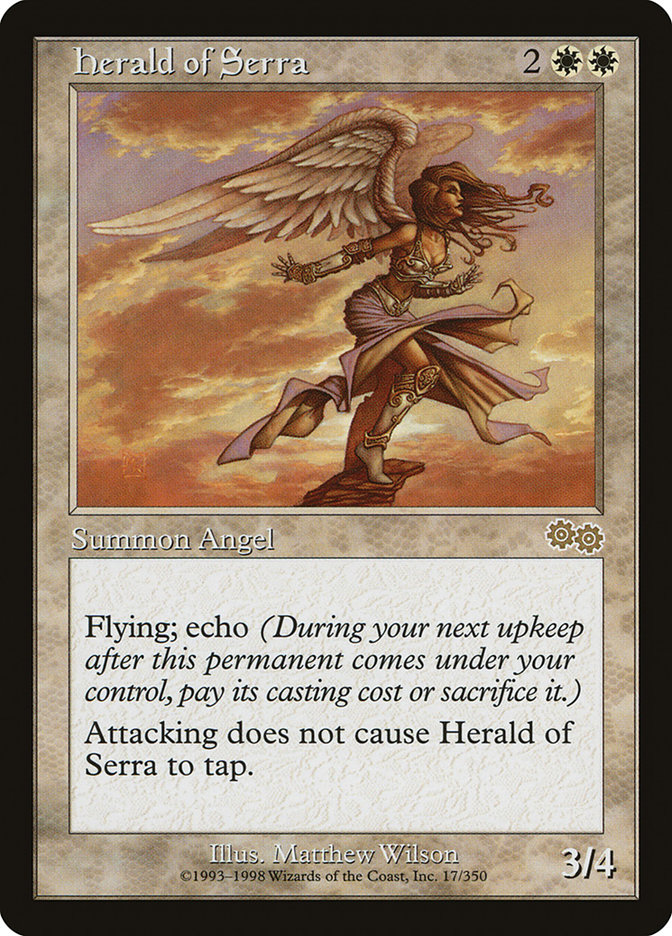
Design-wise, it’s interesting that each color focuses on a different place in the story. White cards focus on Serra’s plane, while blue cards focus on the Tolarian Academy wizards. Black cards show Urza’s travel to Phyrexia, red cards depict Shiv, and green cards show the Argothians.
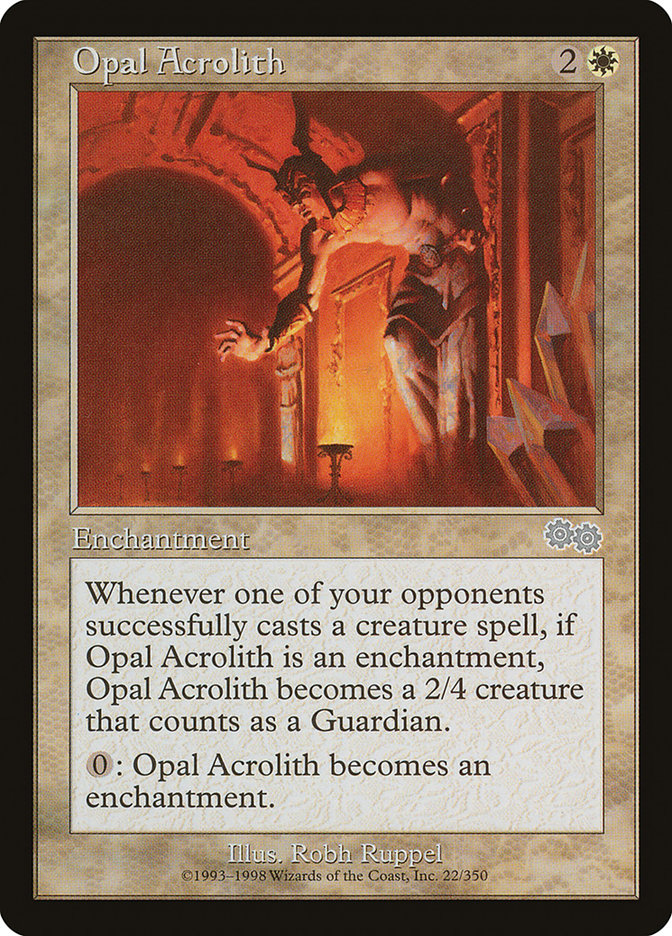
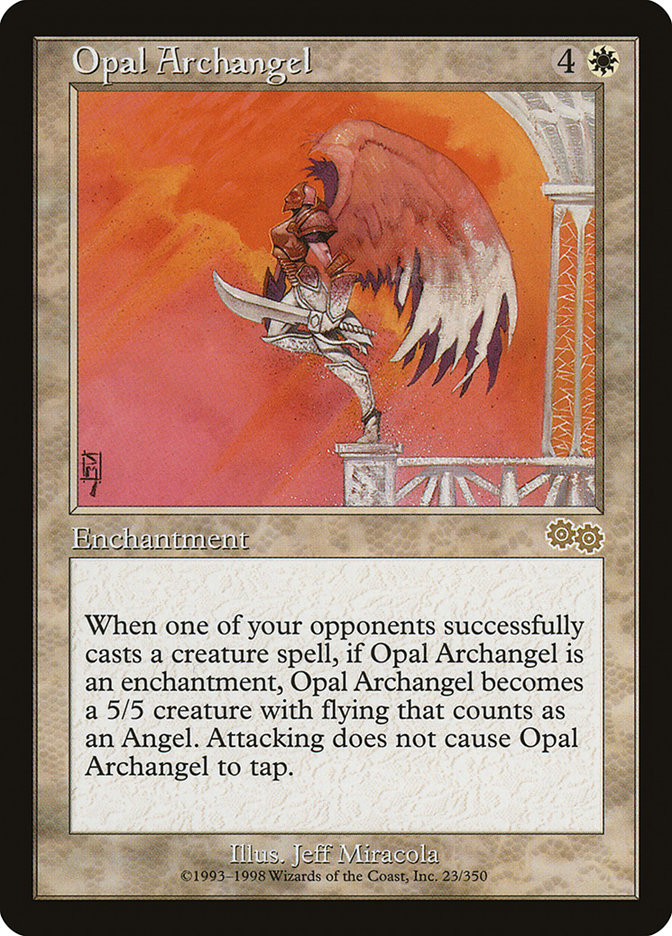
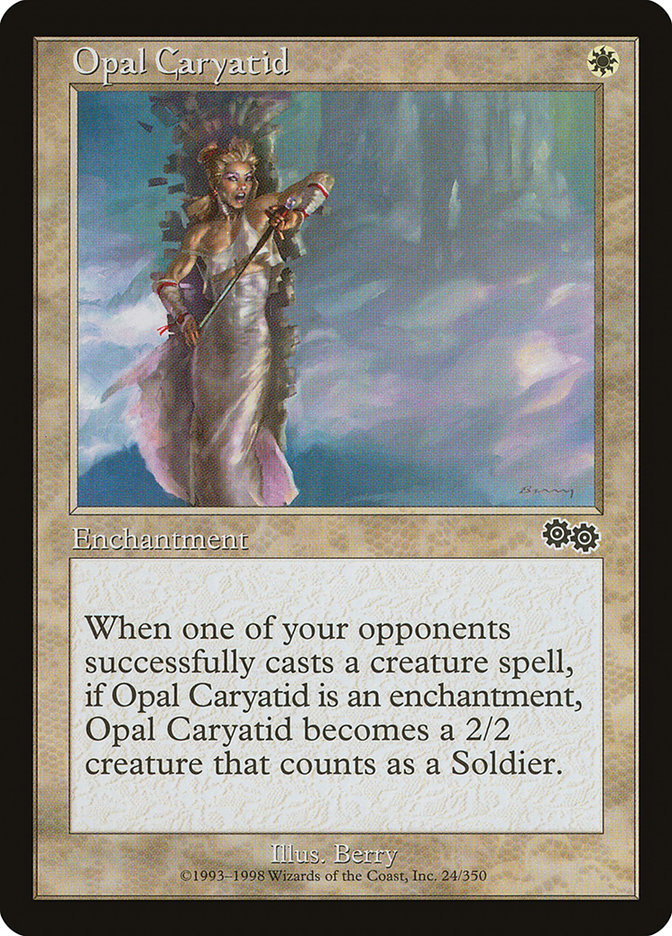
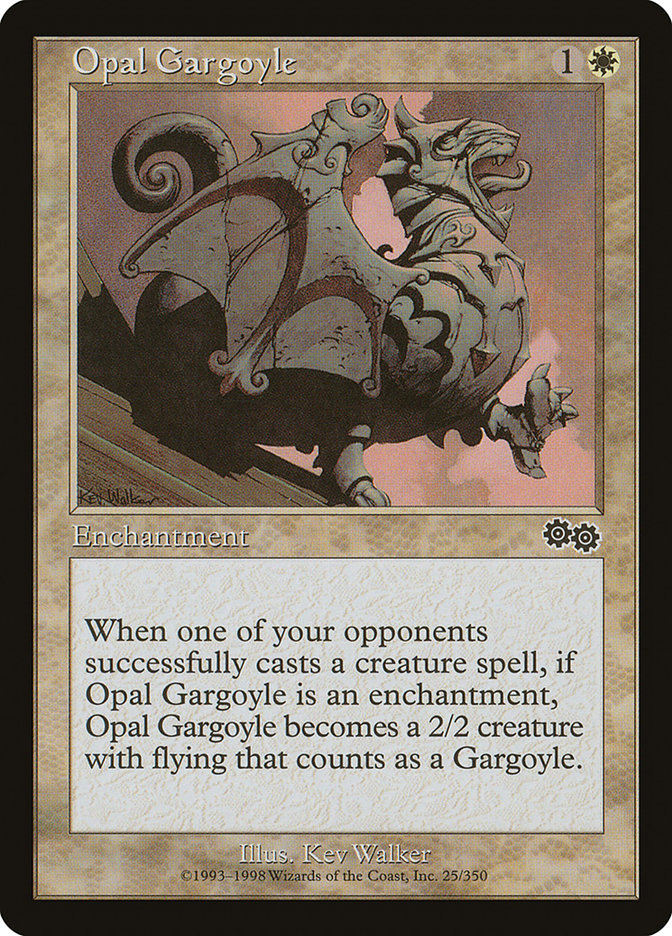
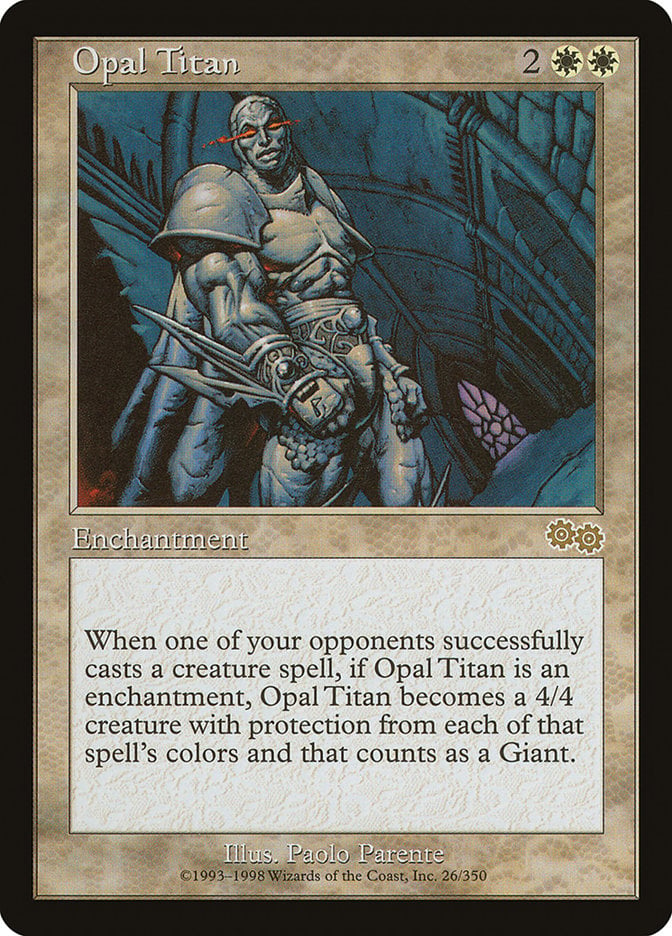
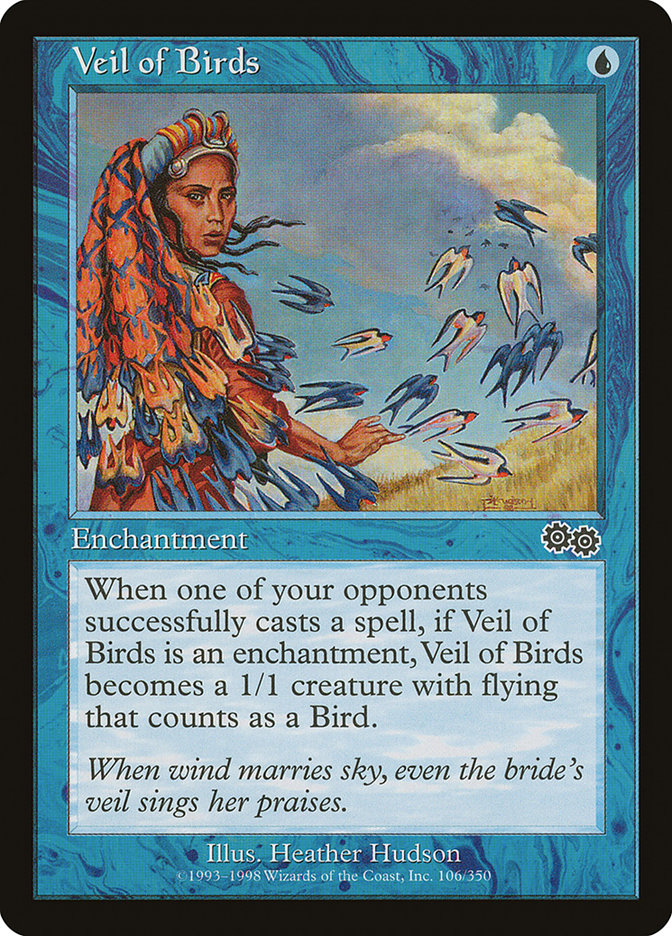
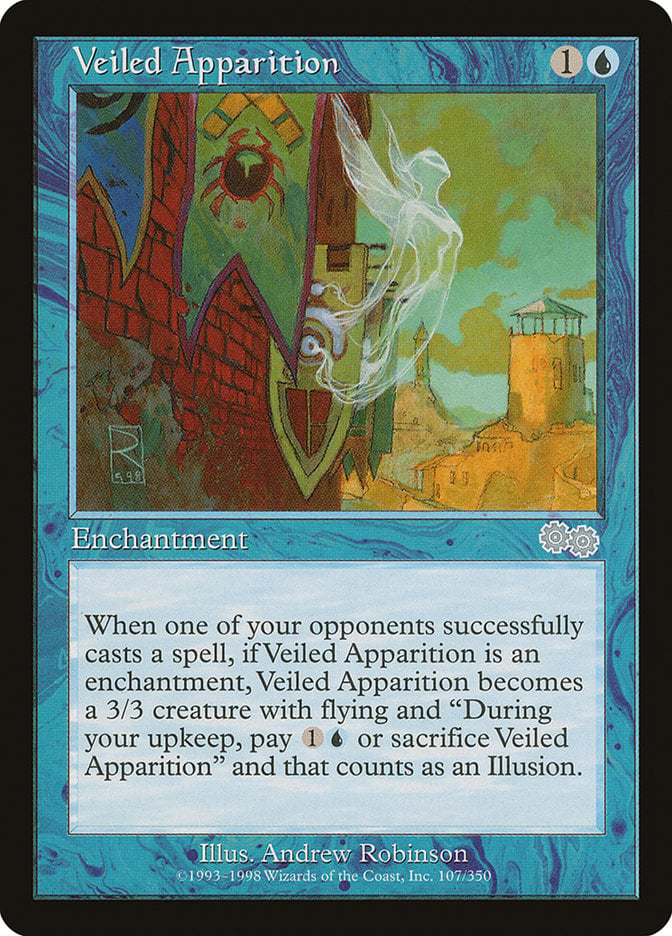
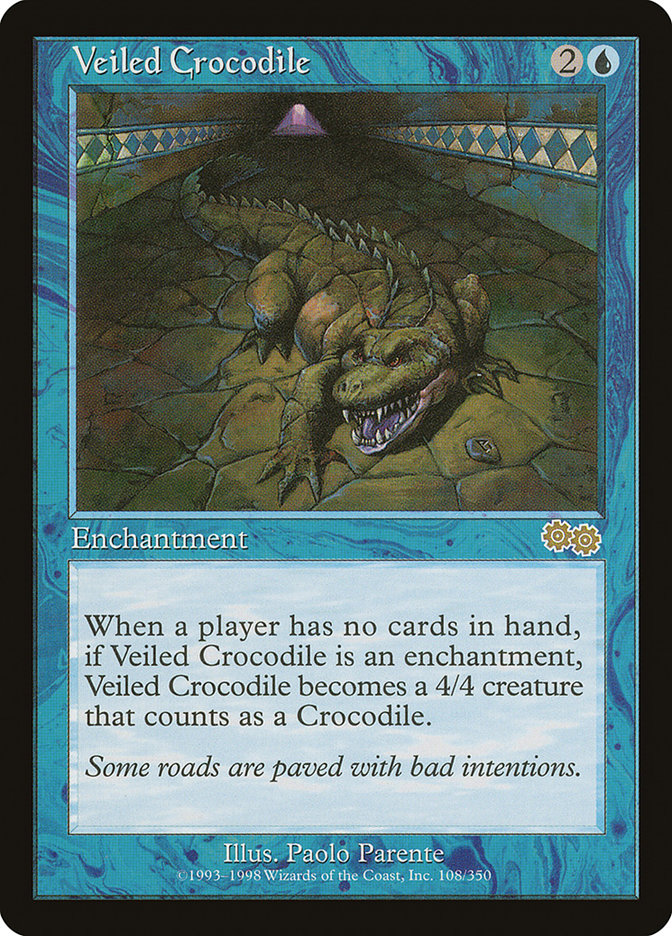
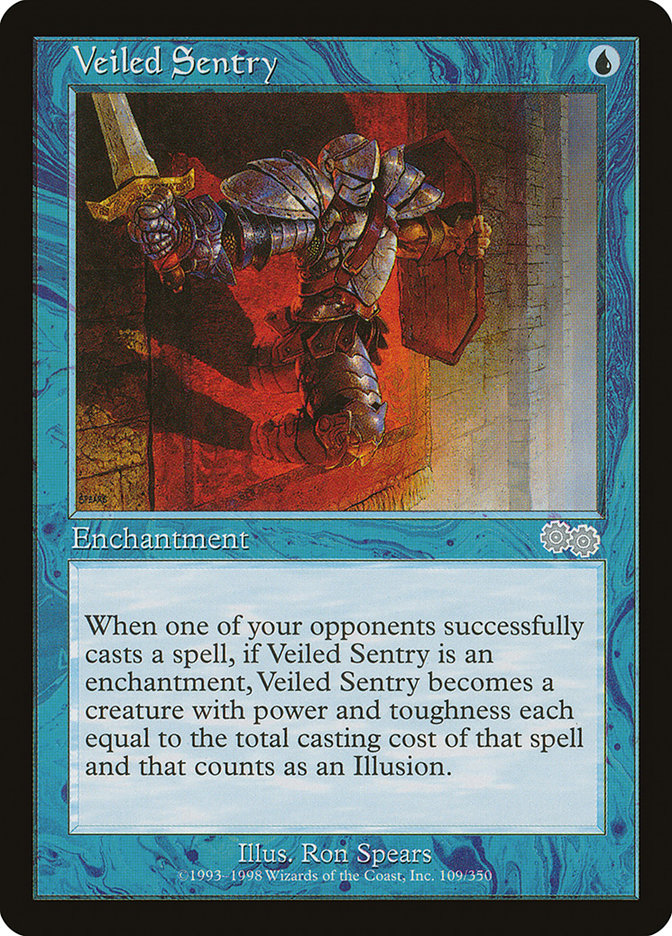
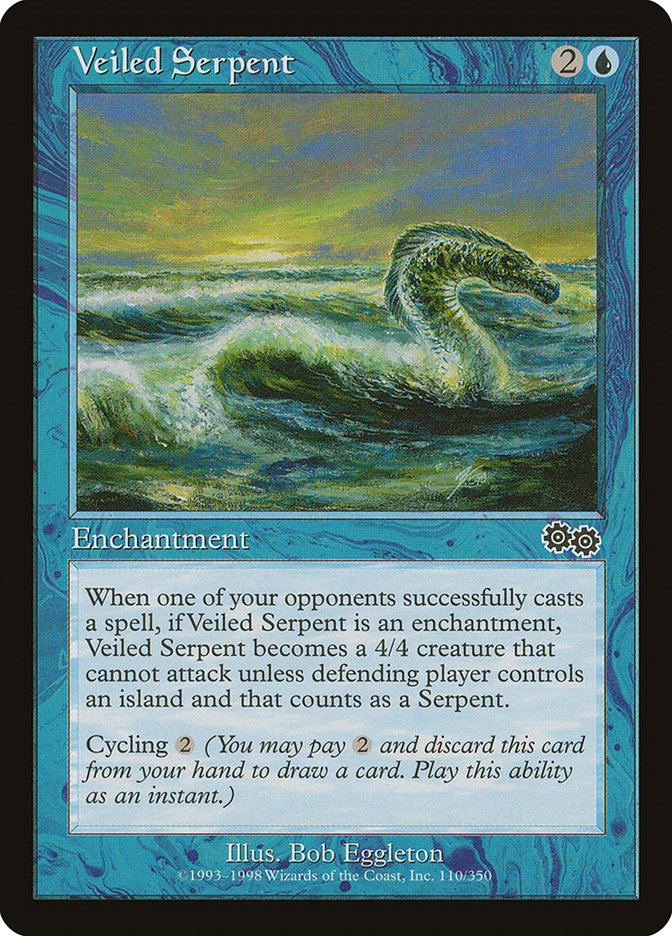
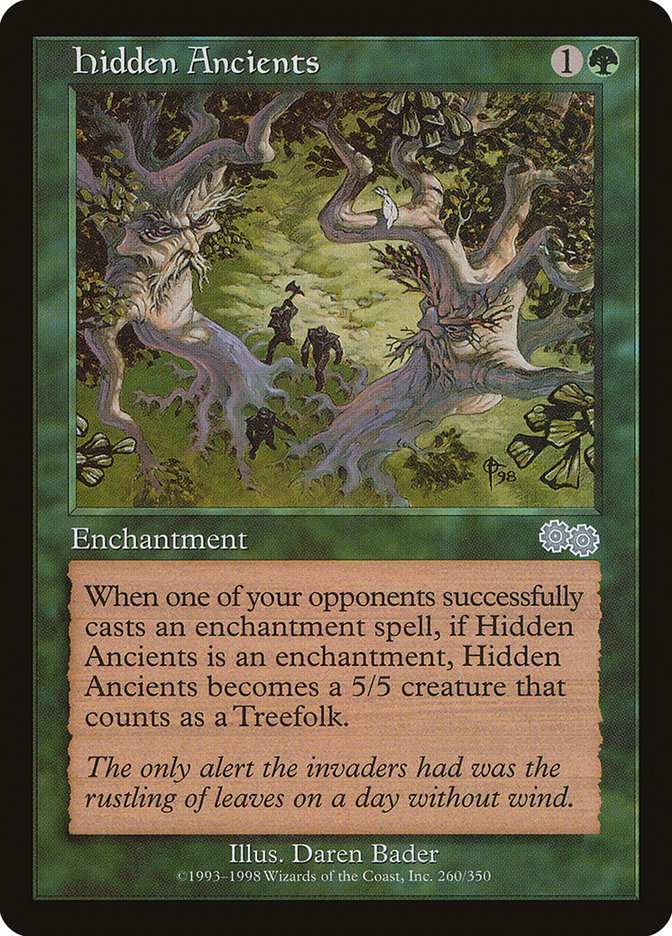
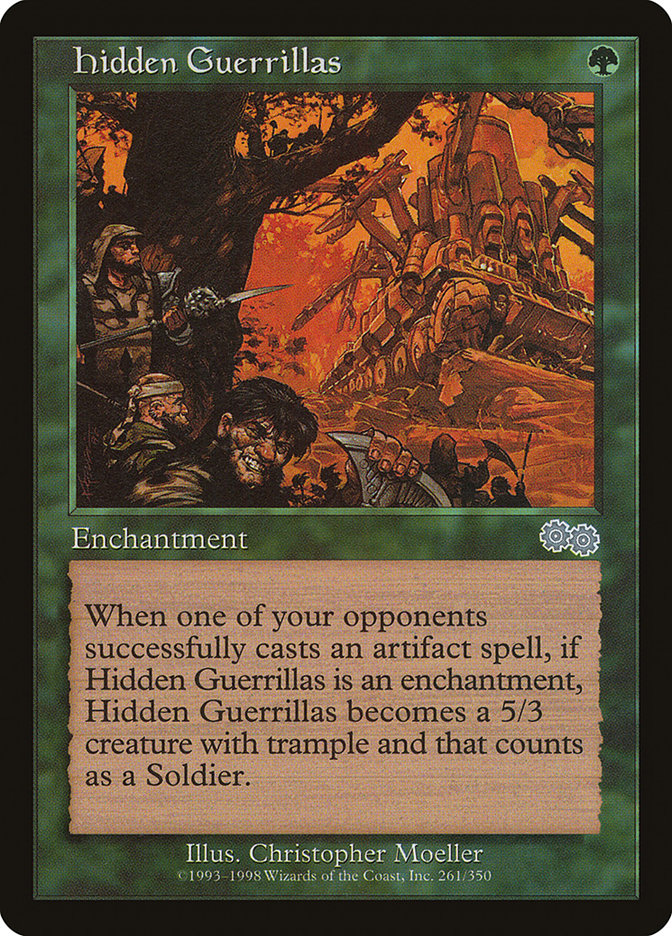
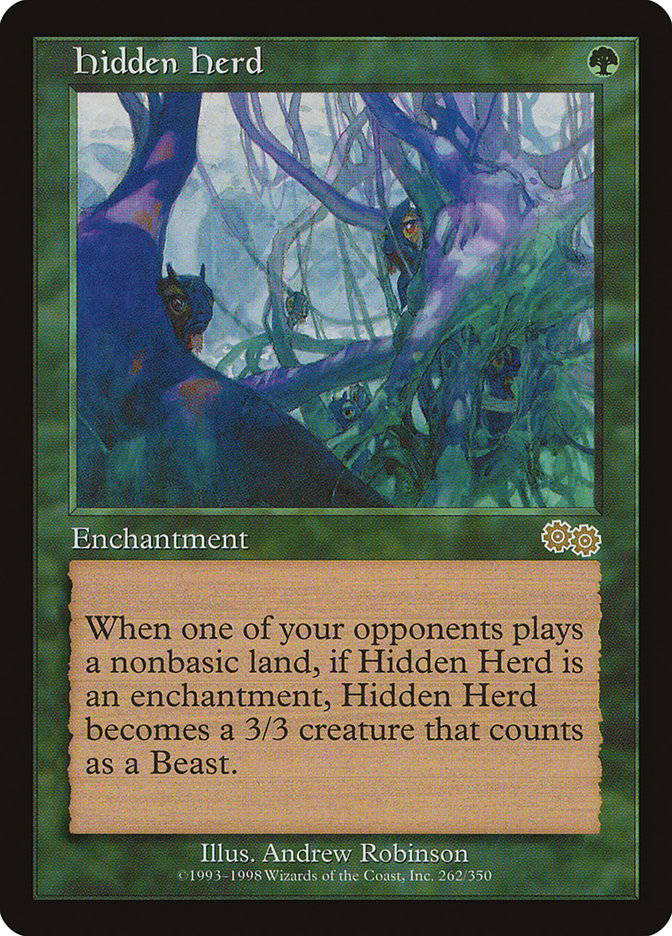
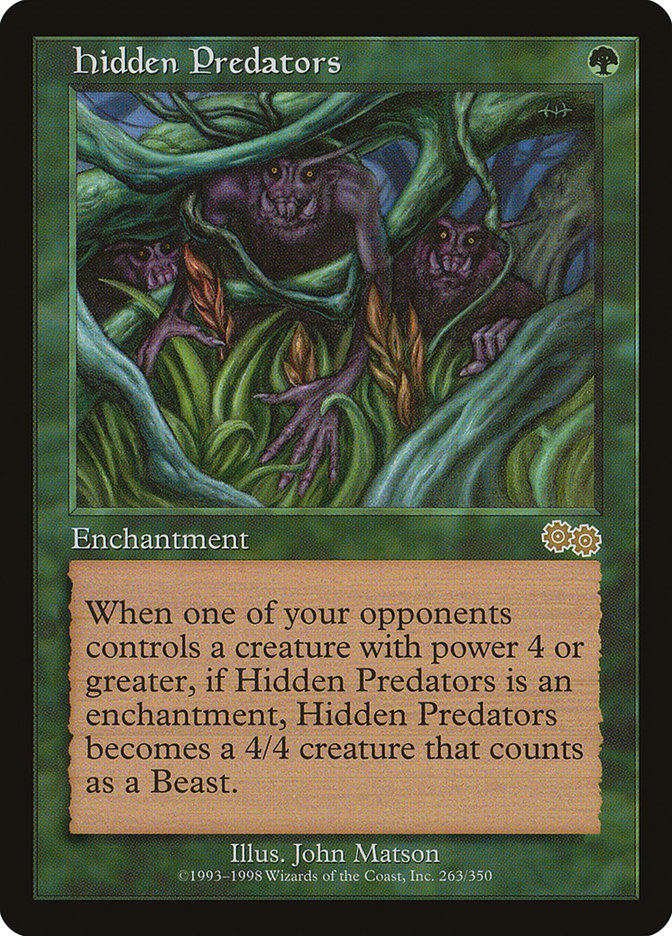
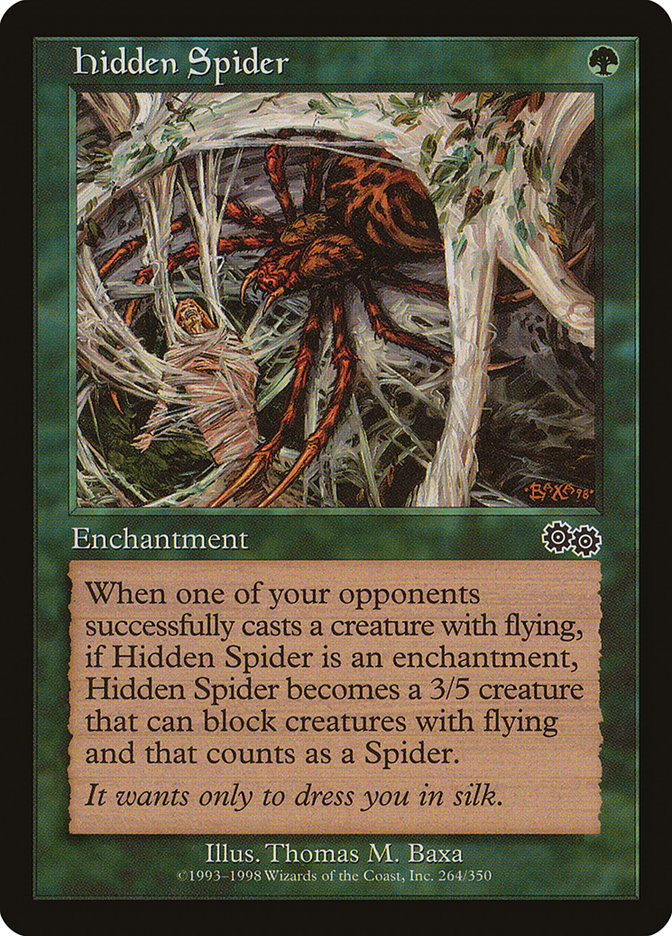
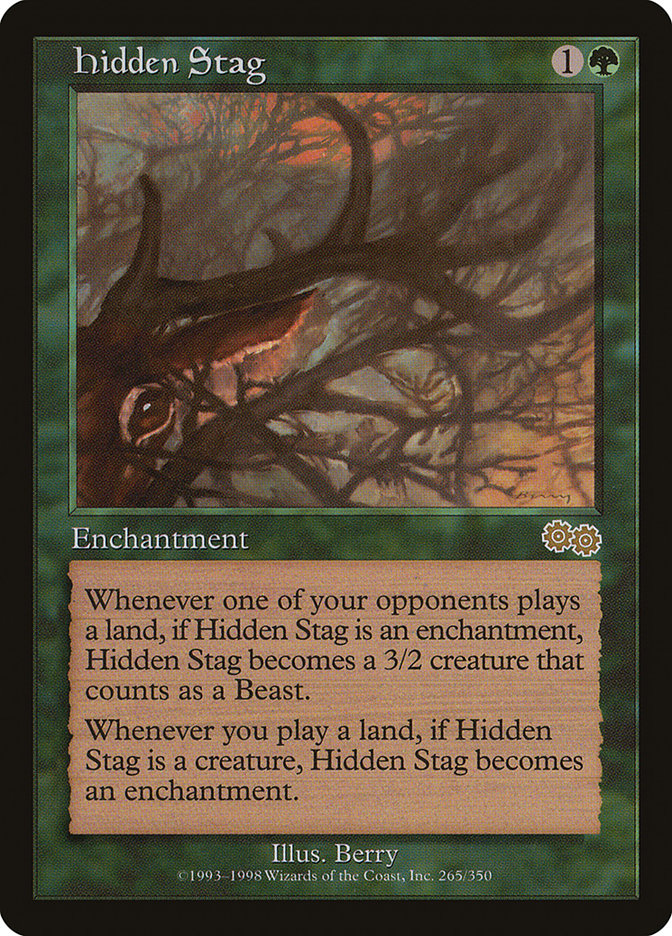
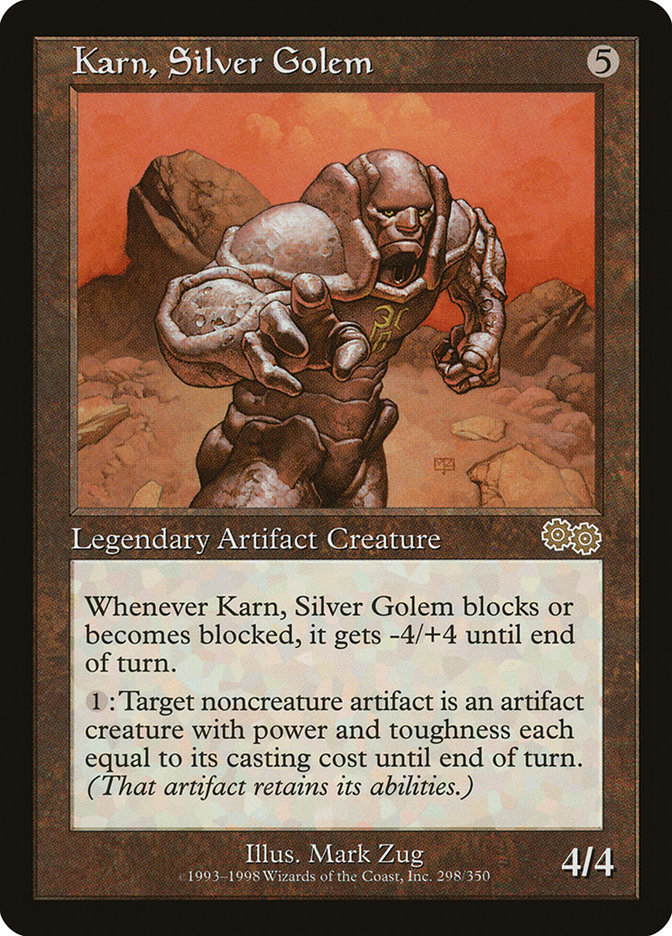
Another fun fact is that this was designed as an enchantment set, with many cards that are enchantments themselves or that make something when you play an enchantment, but it was actually perceived as an artifact set due to the sheer power or artifacts present. You have powerful enchantments like Back to Basics, Pariah, Pestilence, and Sneak Attack. You also have enchantments that turn into creatures under certain conditions so you can attack with them, or Argothian Enchantress, a card that rewards you for playing enchantments. The real power however lies in artifacts like Fluctuator, Karn, Silver Golem, Tolarian Academy, and Voltaic Key, just to name a few.
The most famous aspect of Urza’s Saga is the development standpoint. This set shows what happens when game designers get creative and push the boundaries of what cards can do in a game. It also showed WotC that they needed expert game testers and developers, which made them hire people from the Pro Tour scene like Aaron Forsythe and Randy Bueler. Outside of Alpha and the infamous Power Nine cards, there hasn’t been a single set or block with so many development mistakes.
Urza’s Saga Mechanics
Cycling
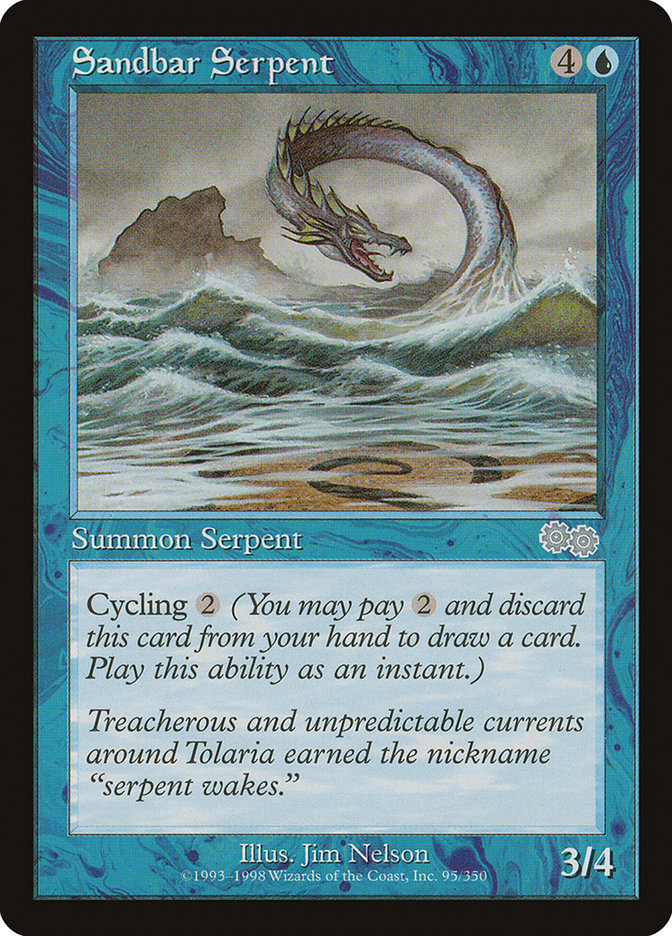
Here’s the first time MTG used one of the most famous and beloved mechanics: cycling. Cards with cycling can be discarded for the cycling cost, and you draw another card to replace it. It’s exceptionally good with situational cards, like very expensive cards, very cheap cards, or narrow cards like Disenchant effects or even spot removal against control decks.

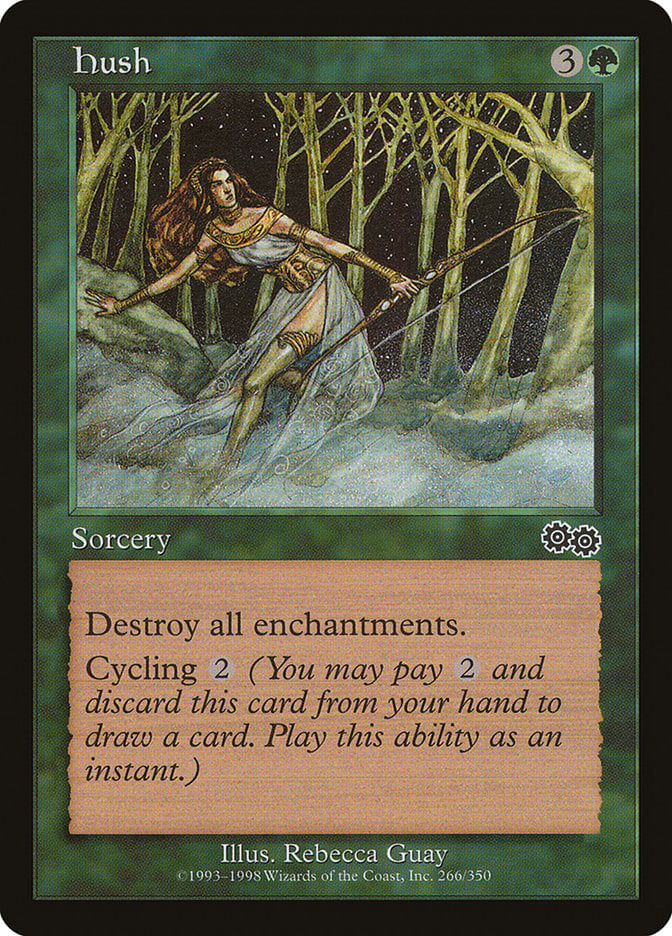
Good examples in this set are Lull and Hush.
Echo


Cards with echo are usually undercosted on the front, but you need to pay the echo cost on the next turn or sacrifice the card. Crater Hellion is a good example of how this works: You get a 6/6 tacked onto a sweeper, so you’ve already got a benefit. On the next turn, you need to pay 6 mana more to keep the 6/6 in play. This and Lightning Dragon saw heavy Constructed play.
Urza’s Saga Card Gallery
White












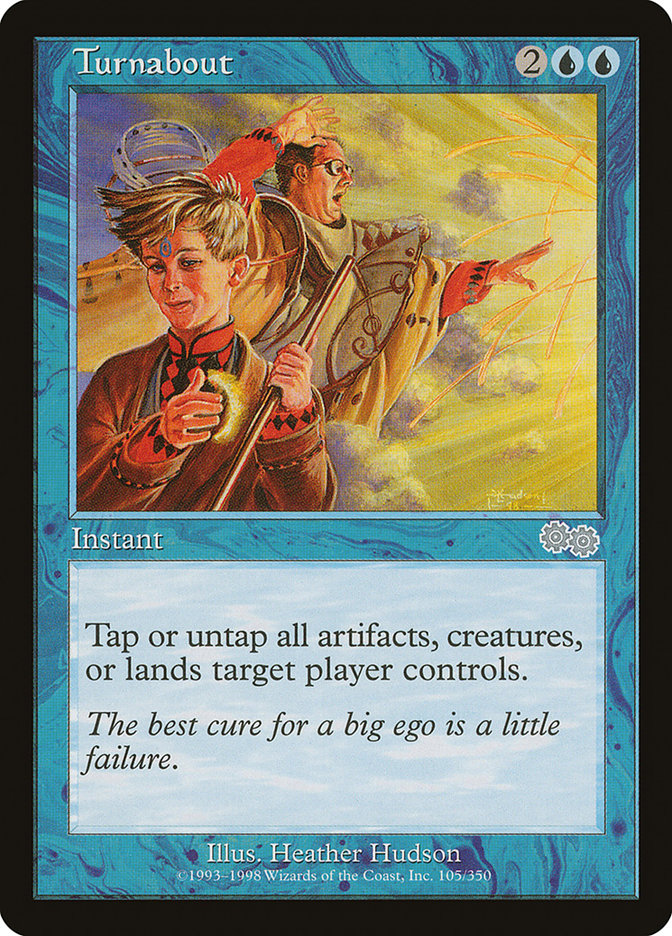
Blue






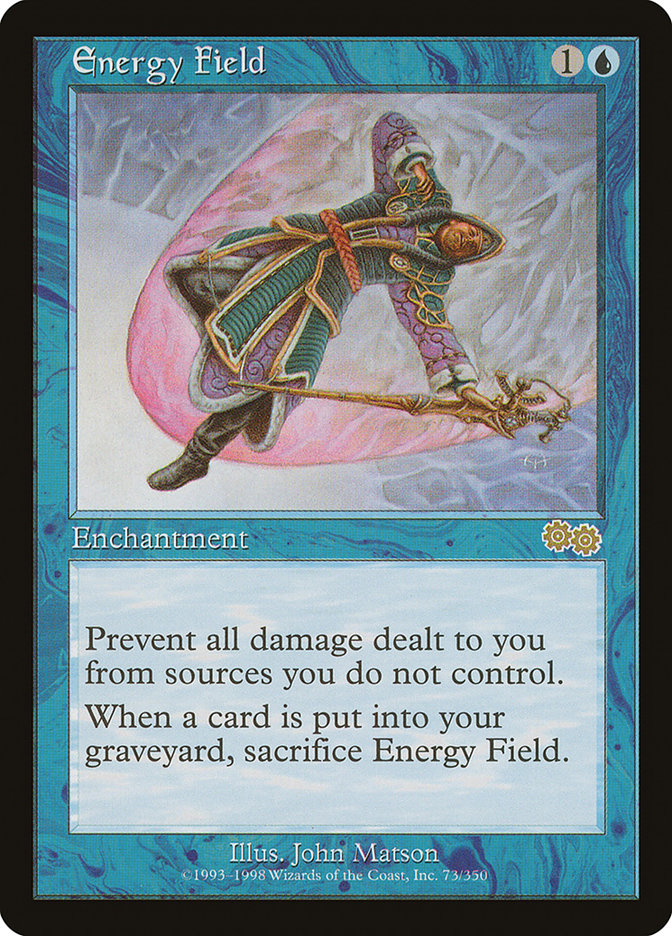


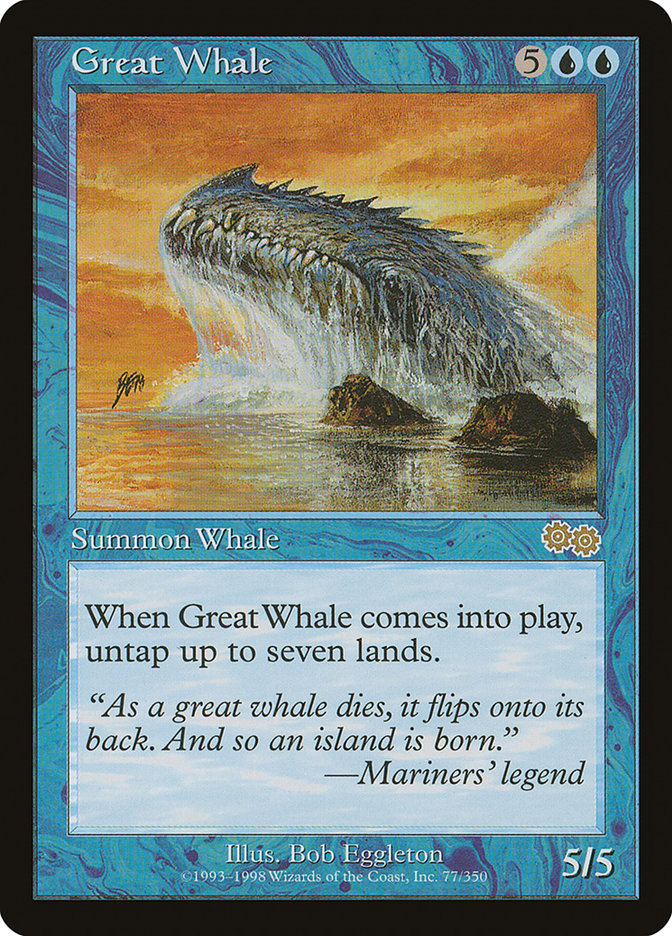


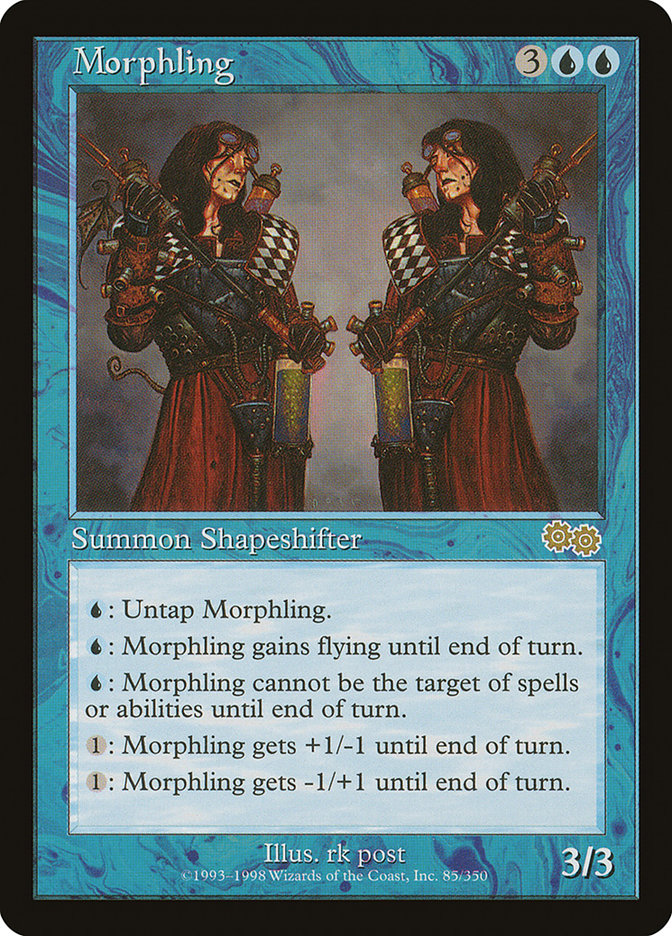









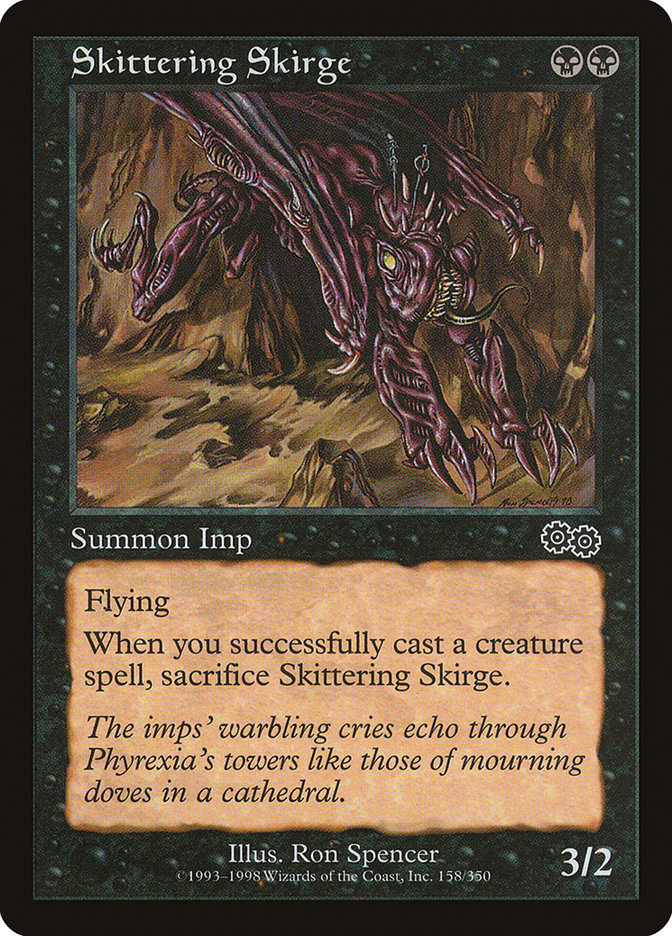
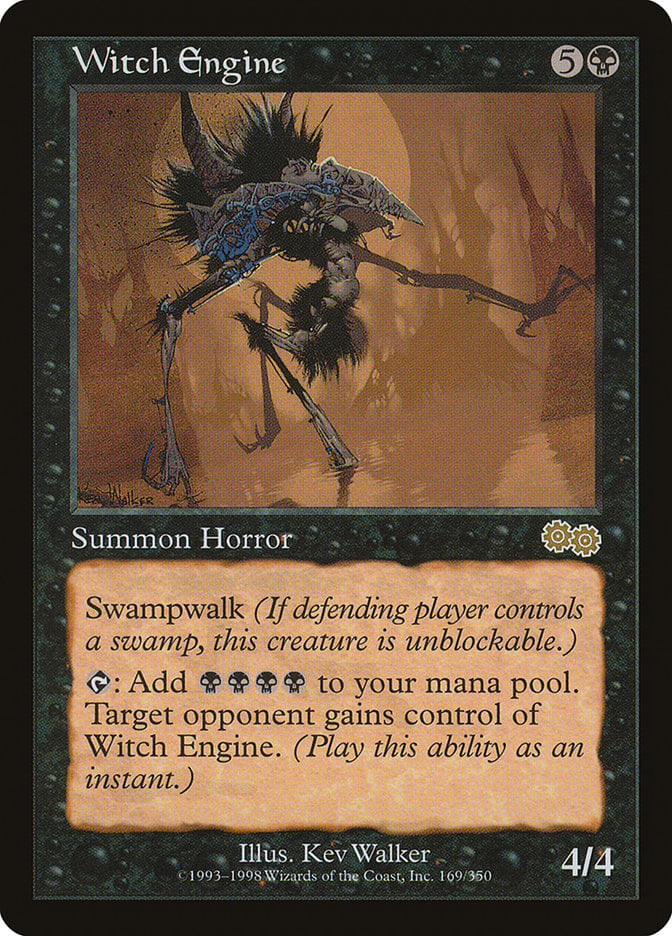
Black





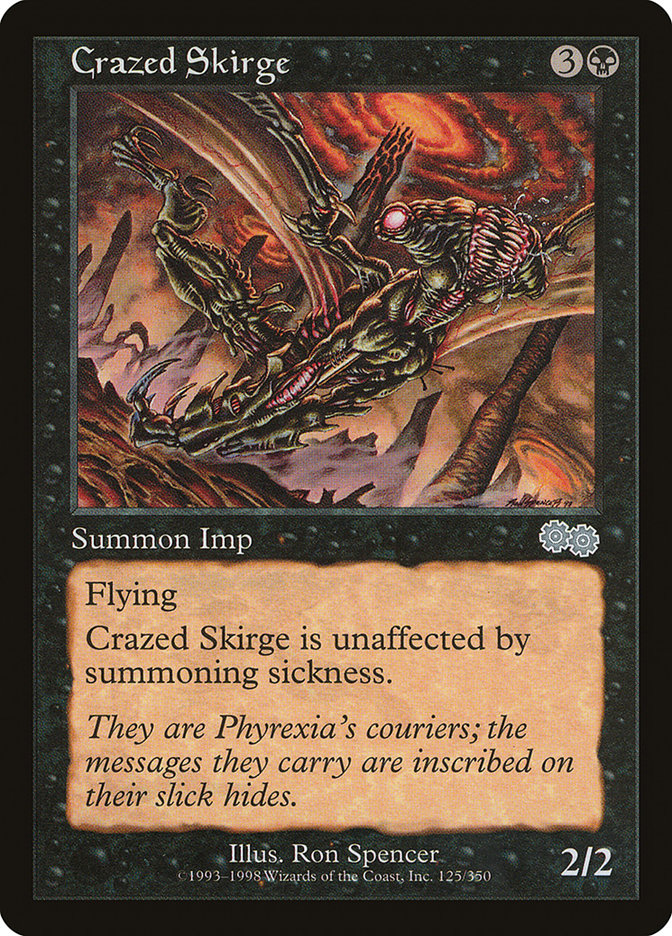
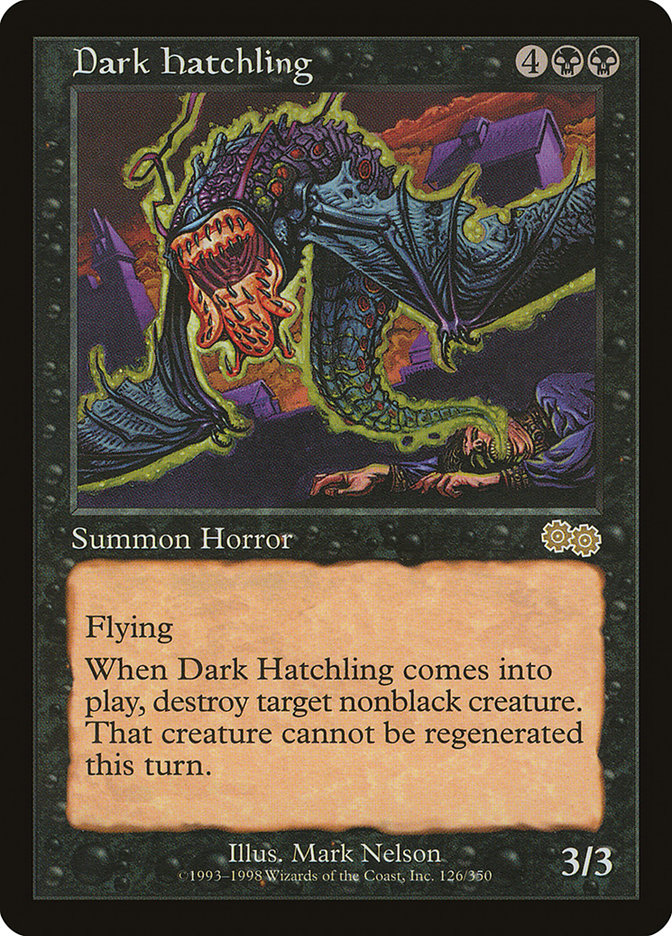


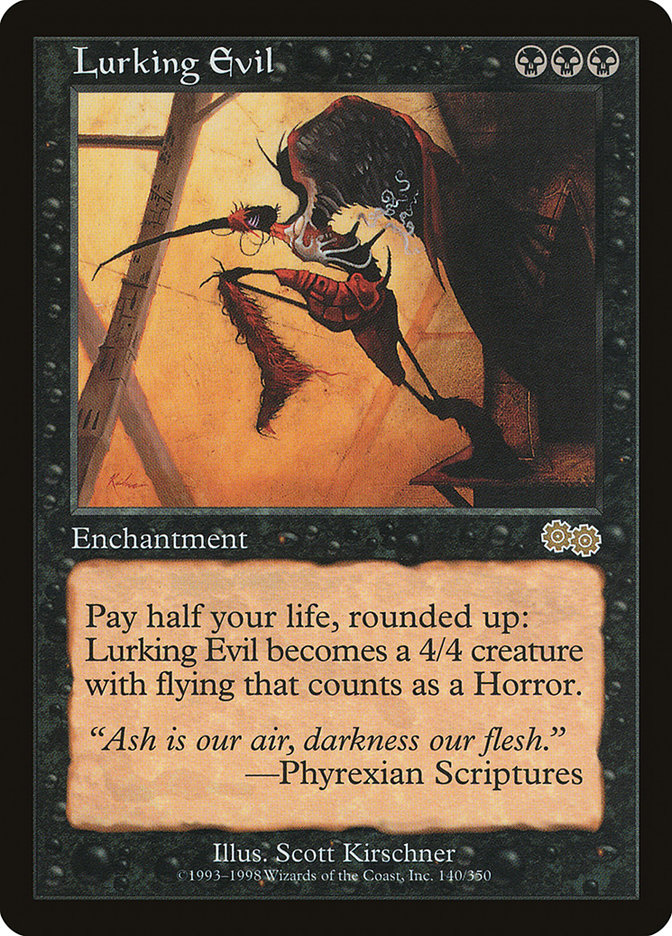
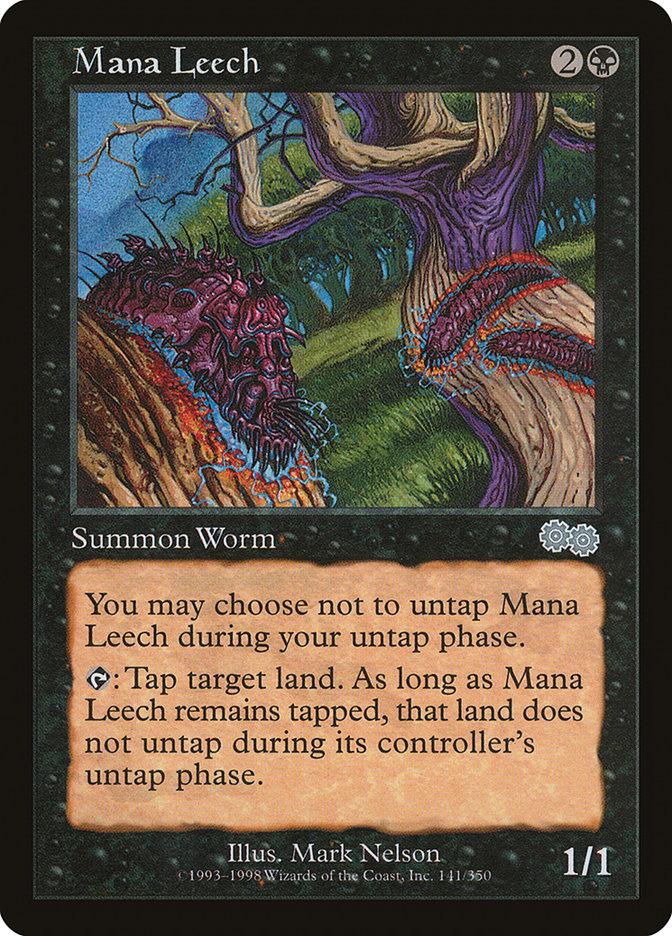


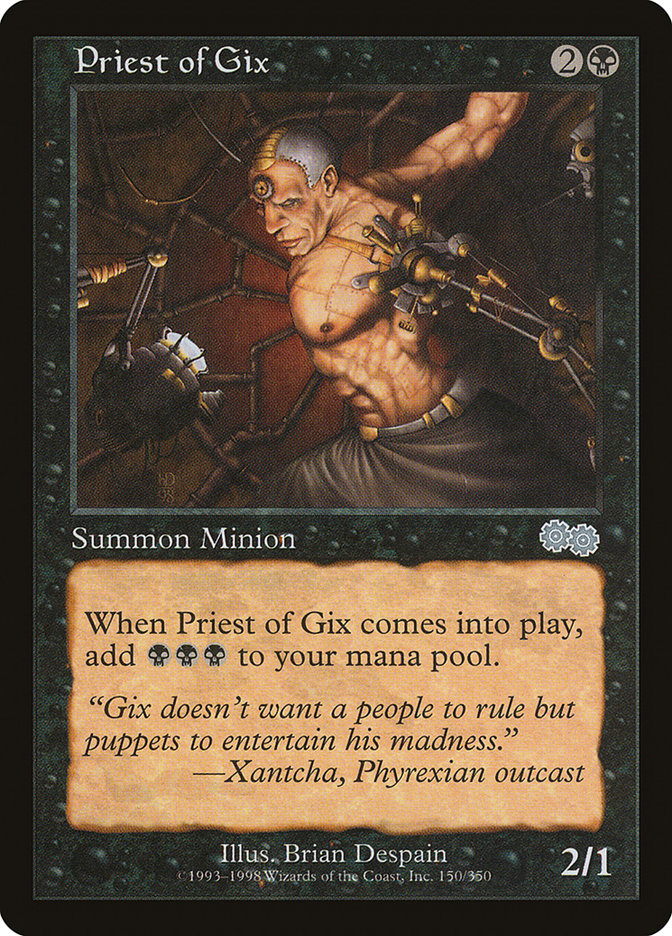
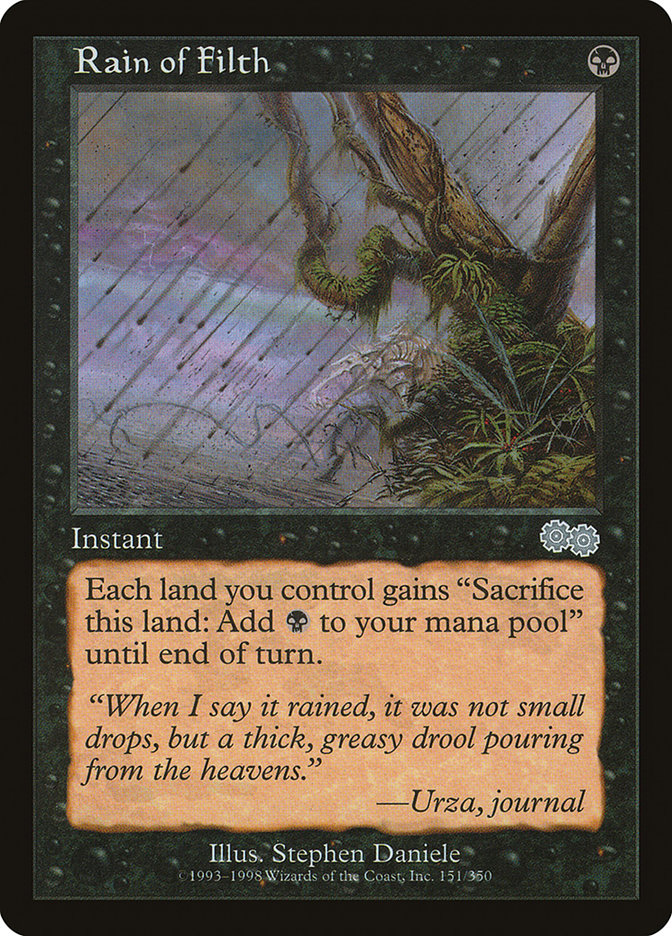
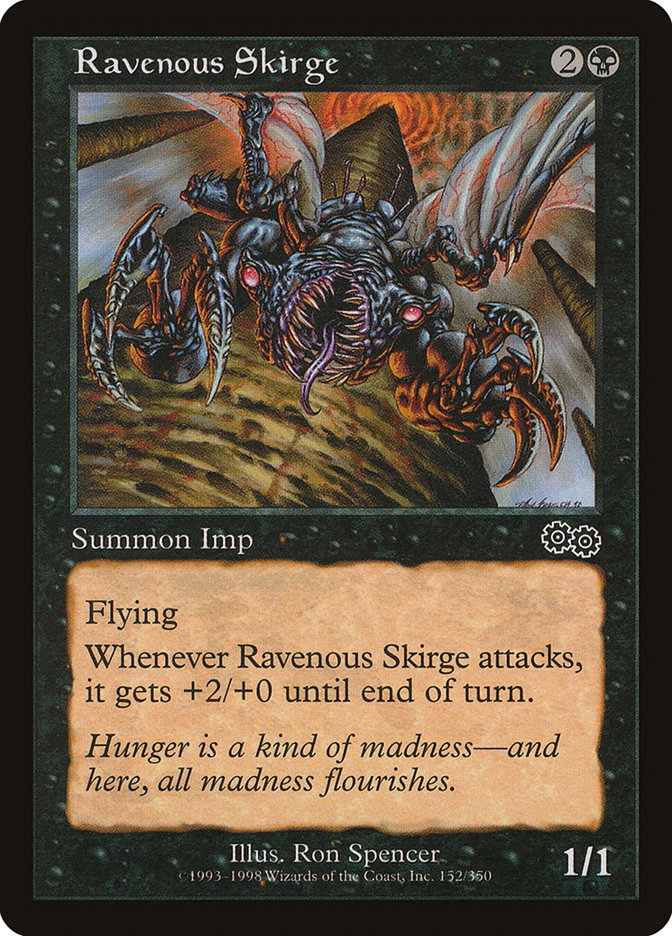


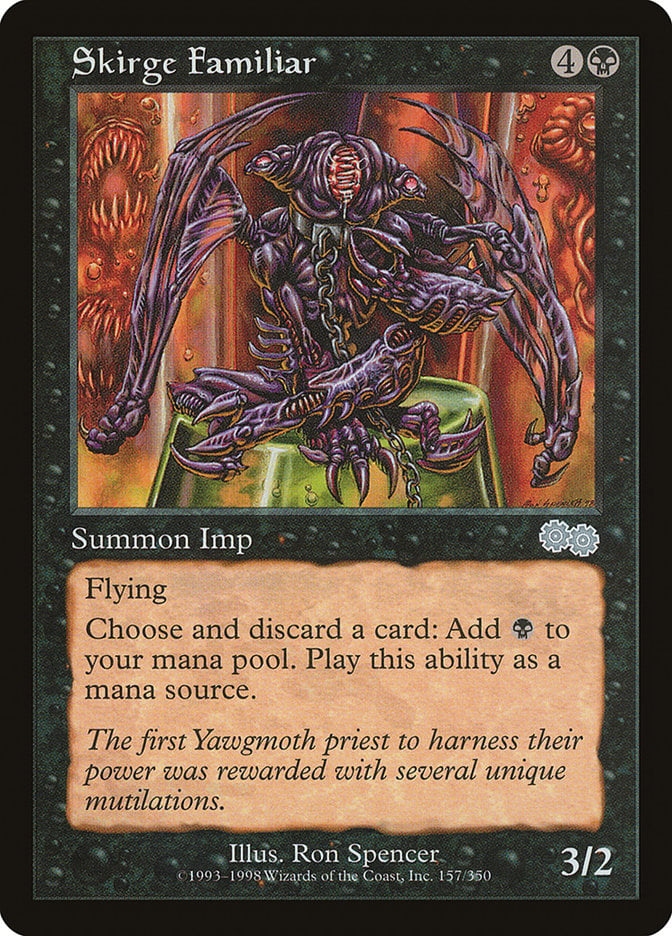



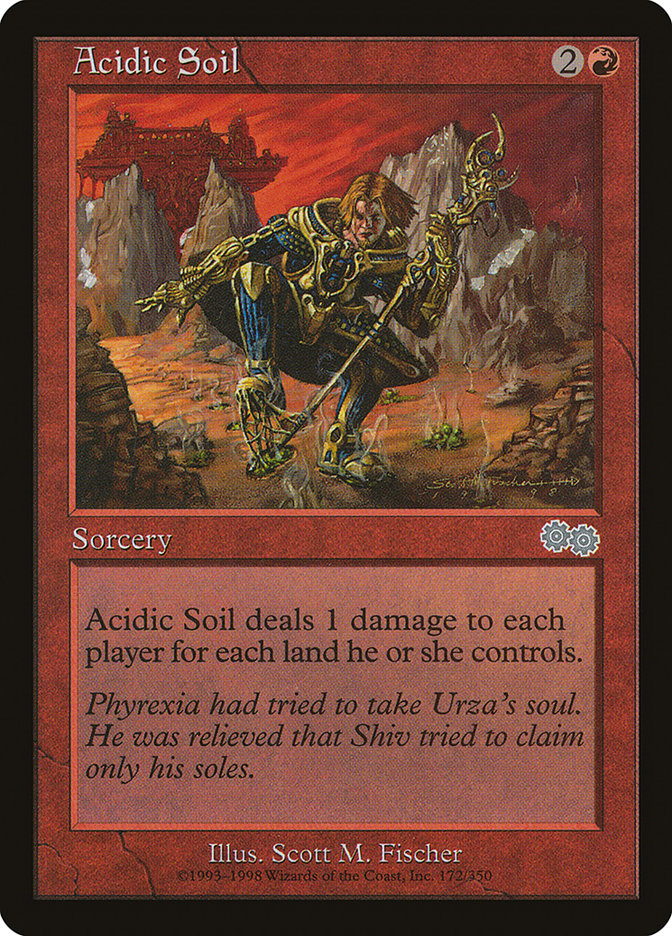
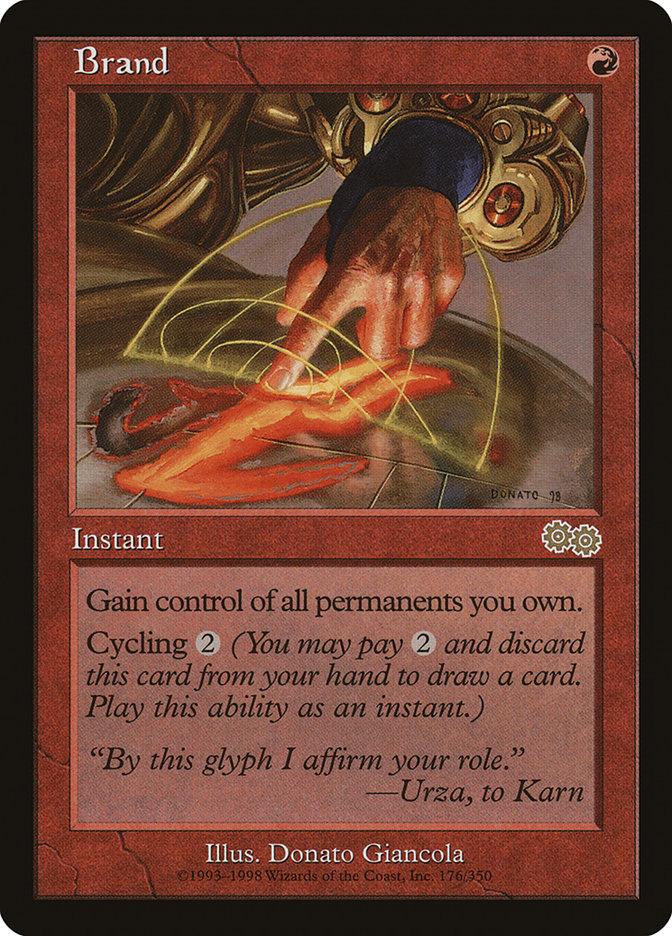
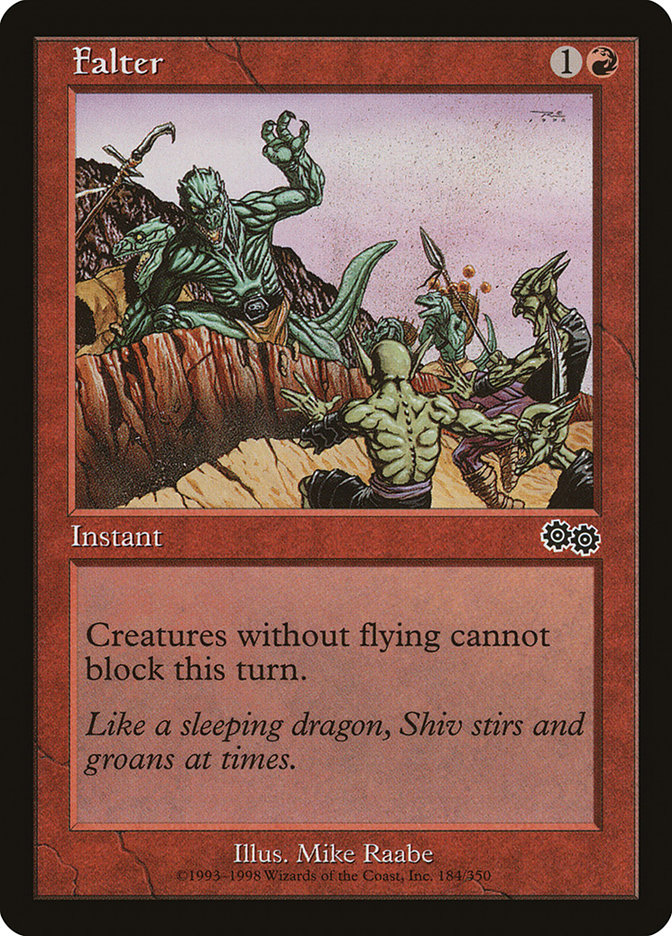
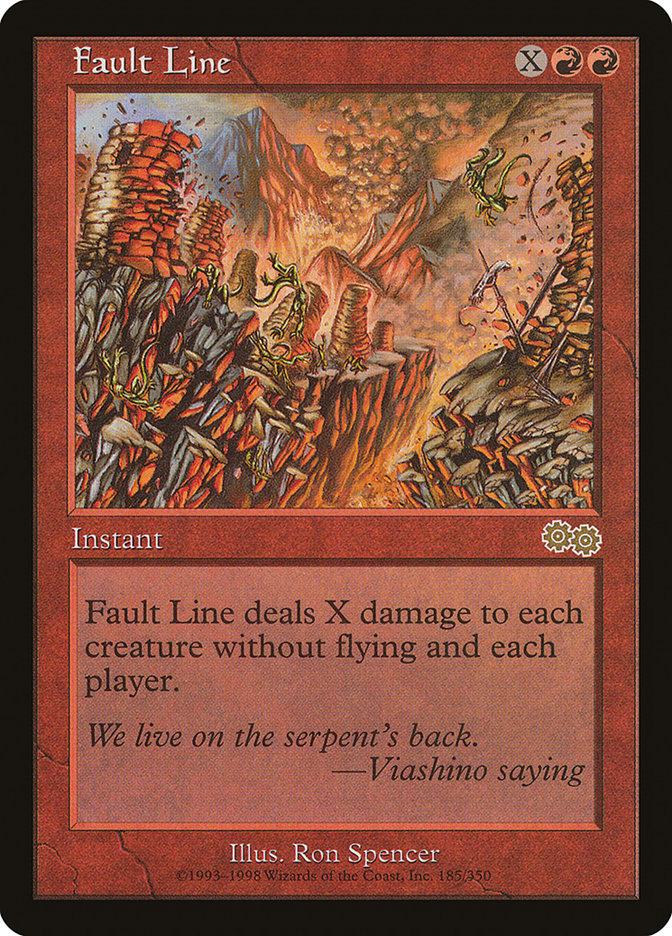
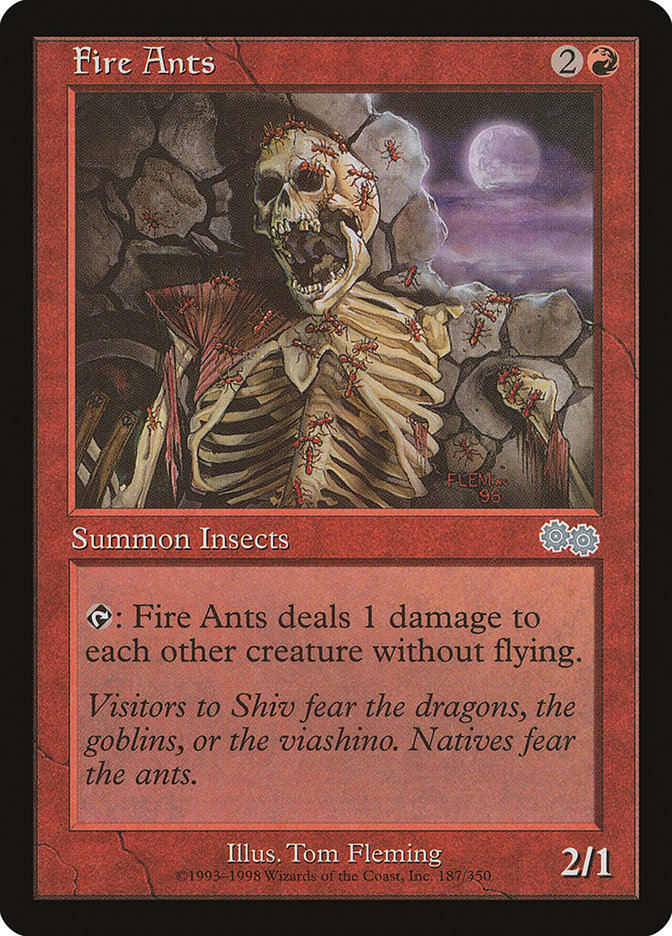
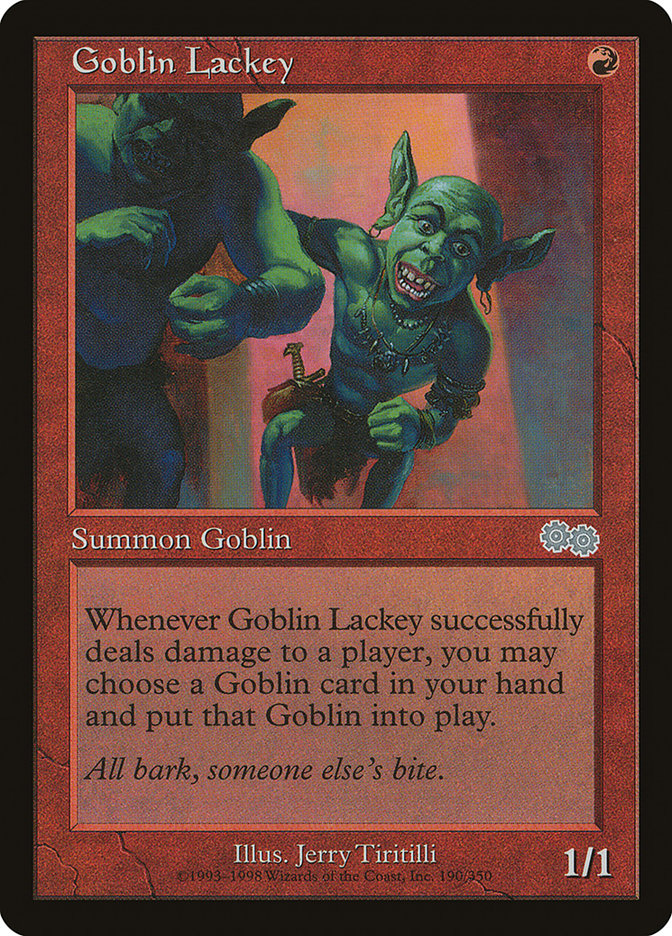
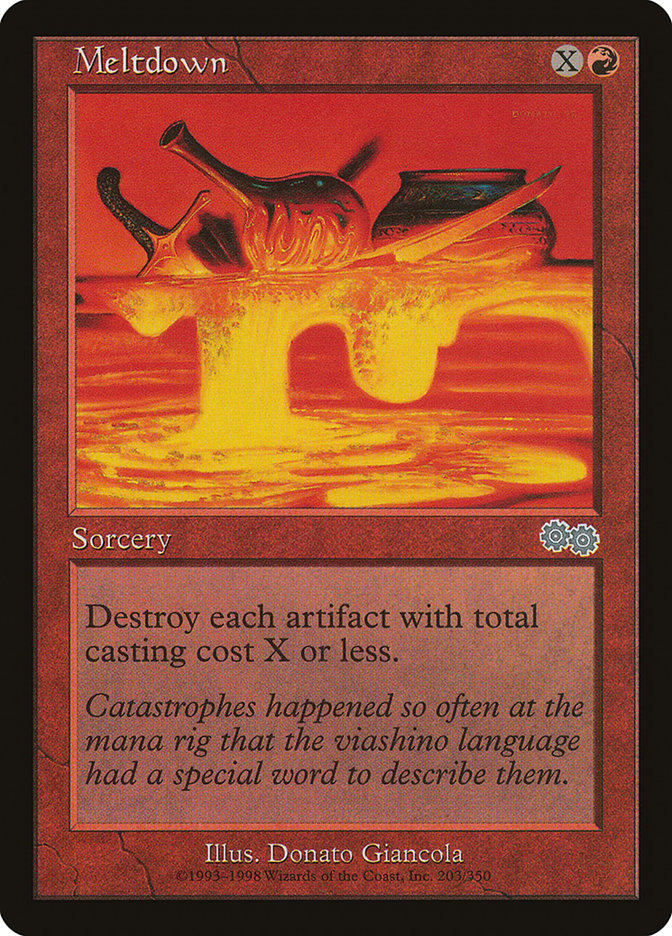
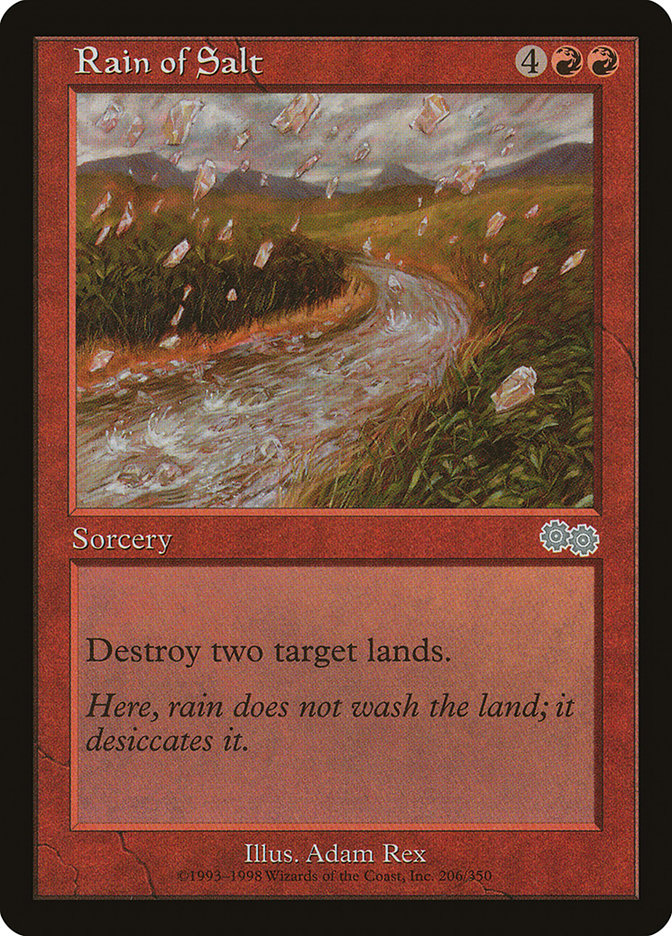
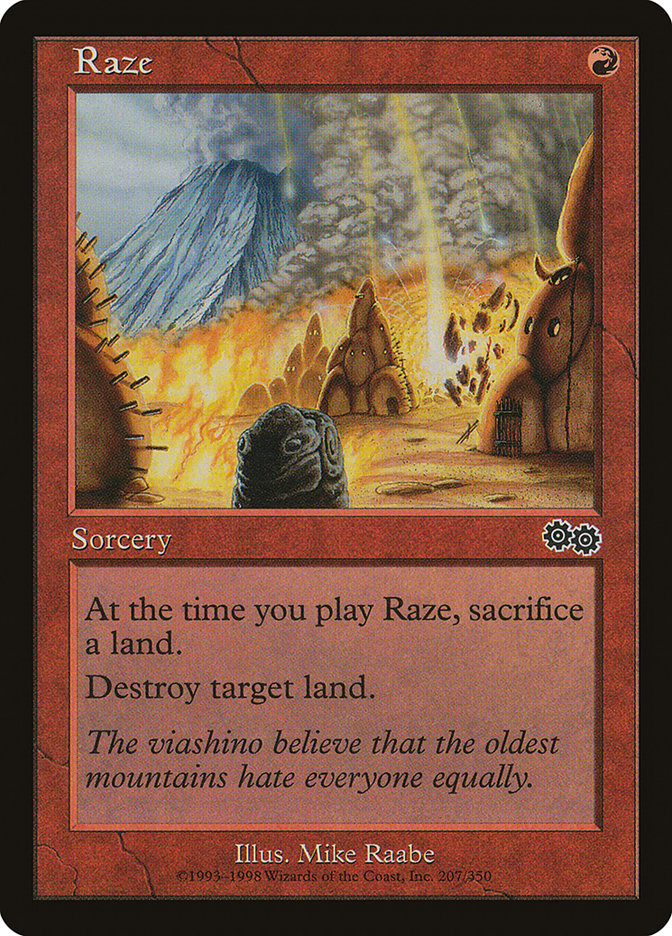
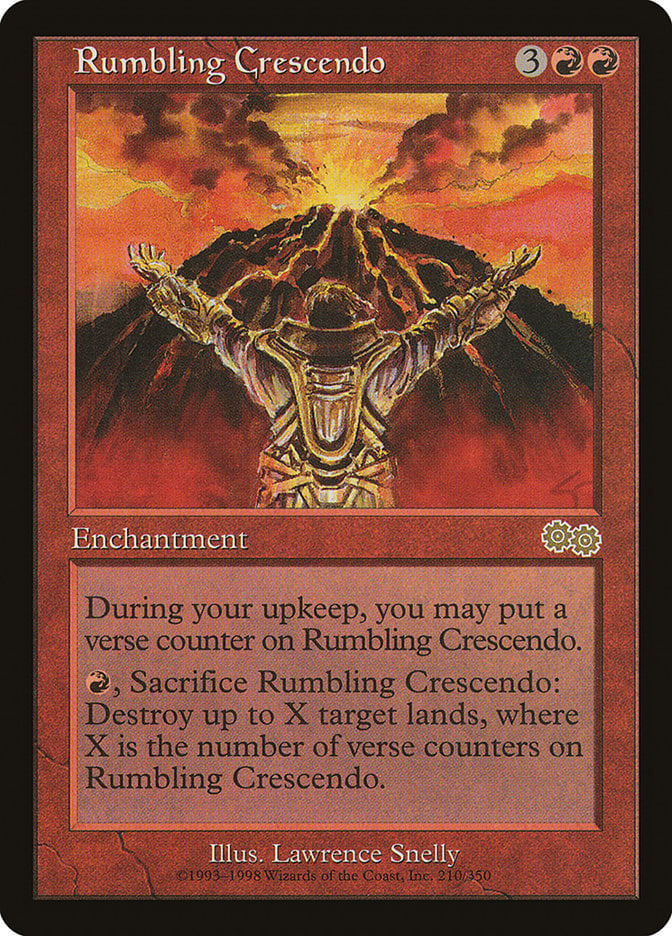
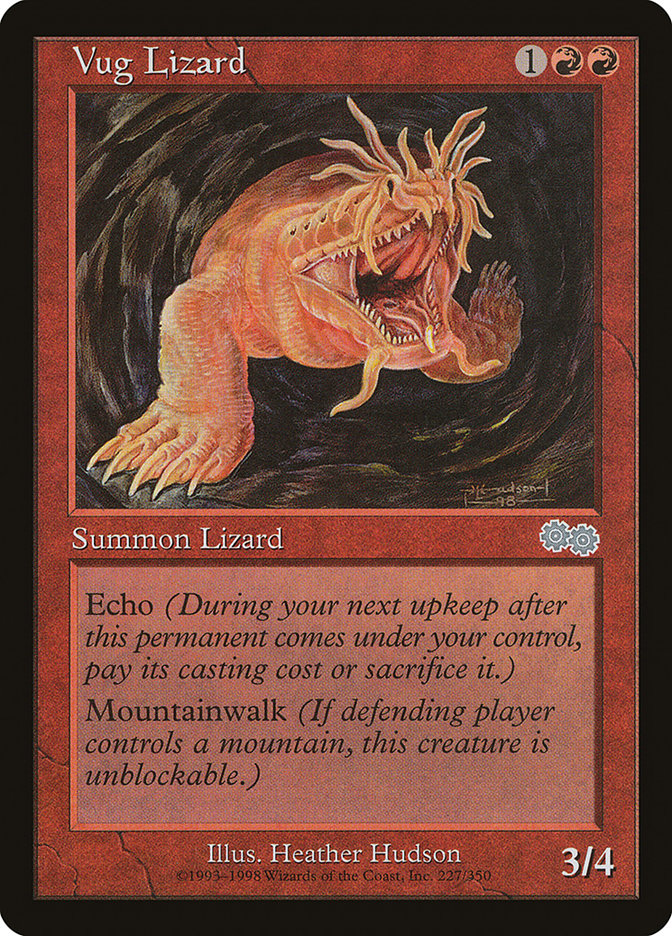
Red
















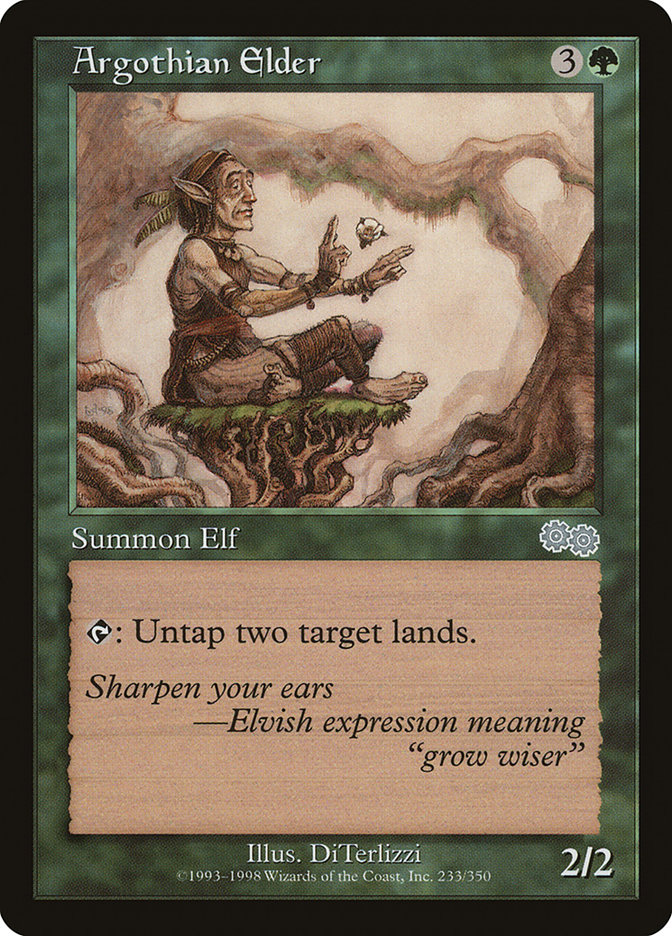
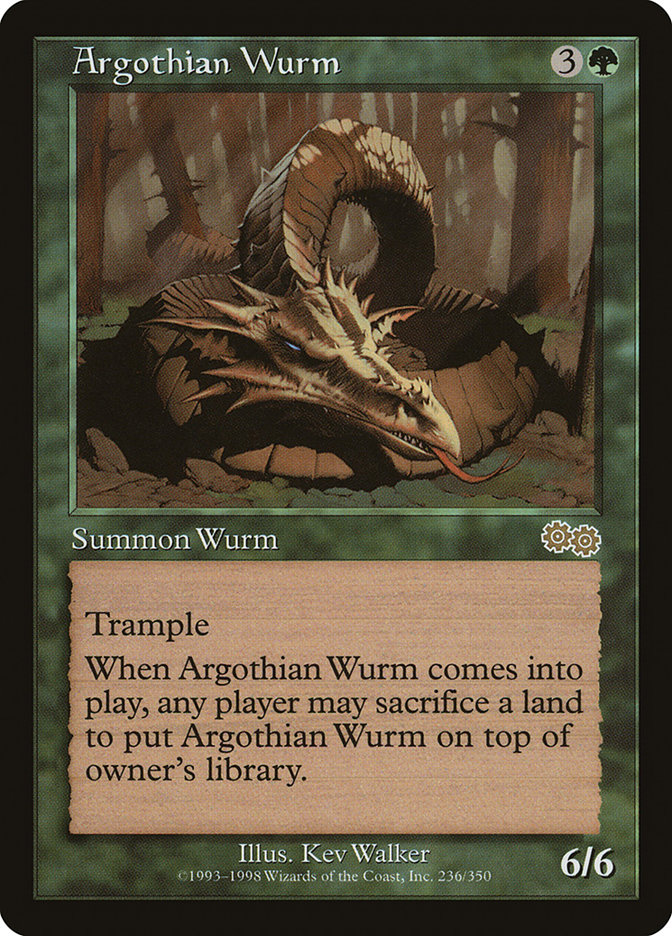
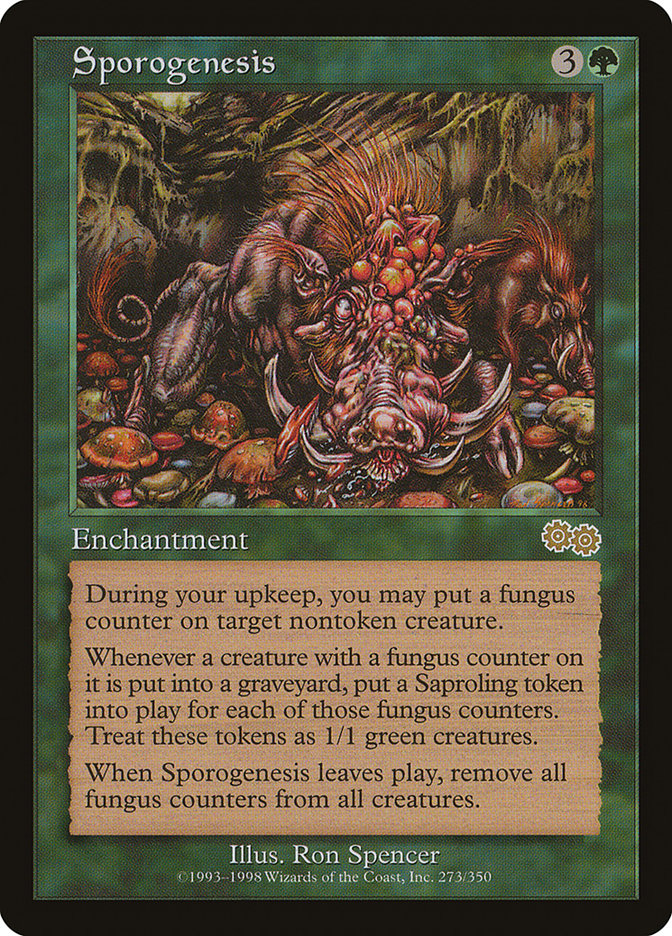
Green





















Colorless




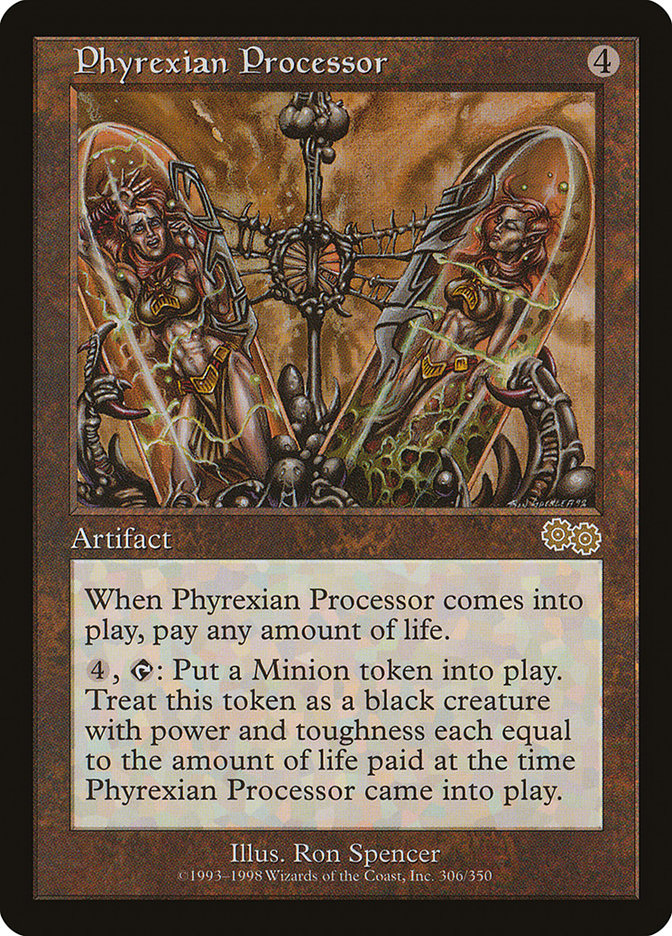


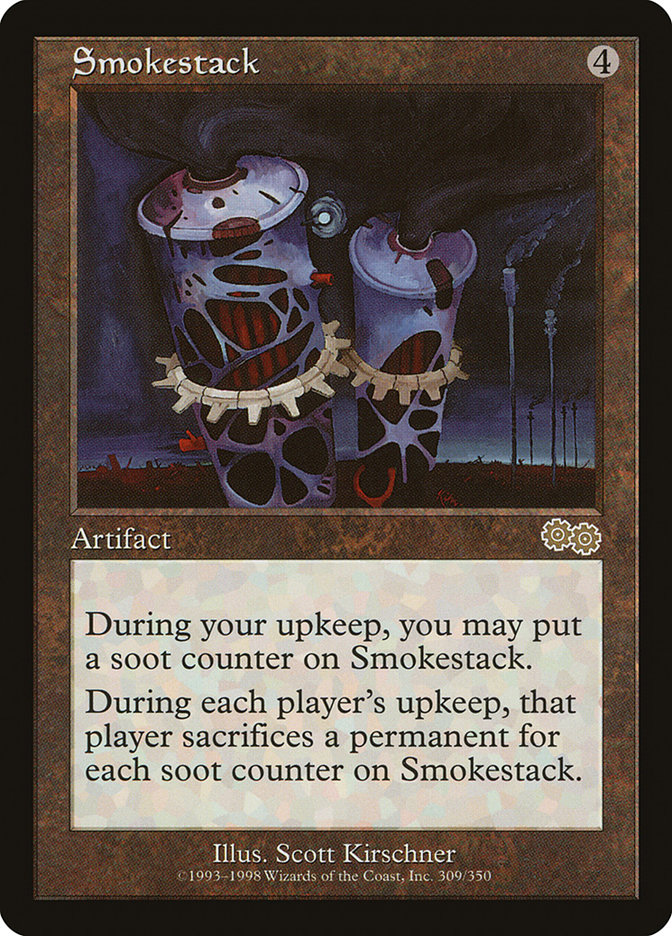


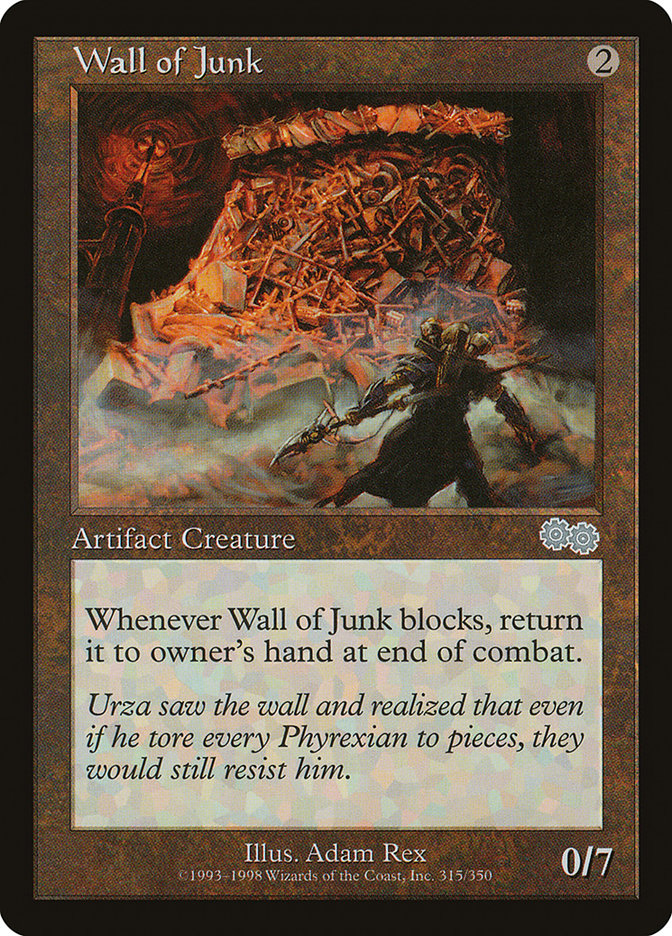


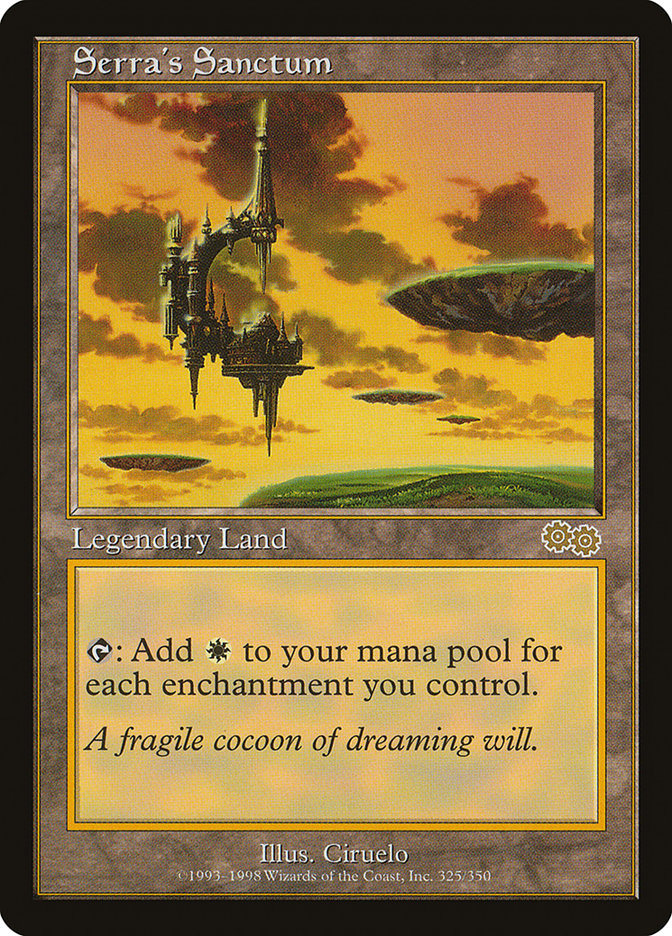
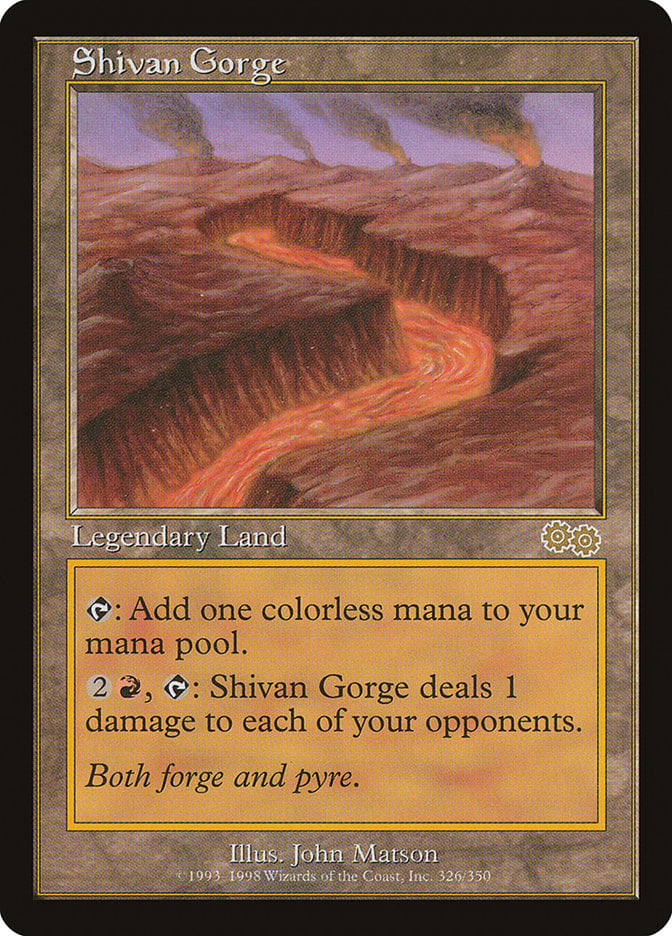
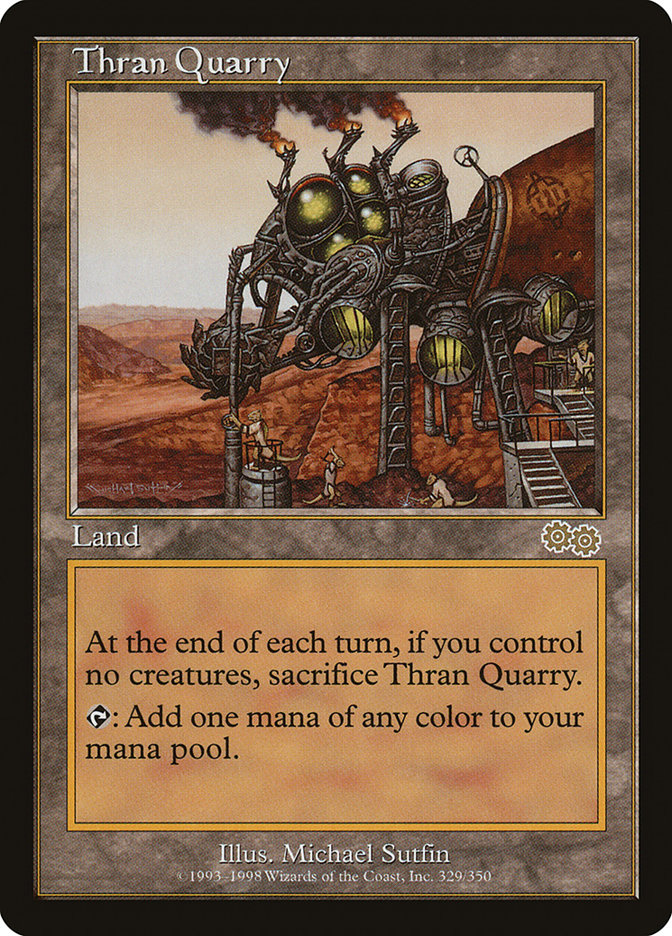
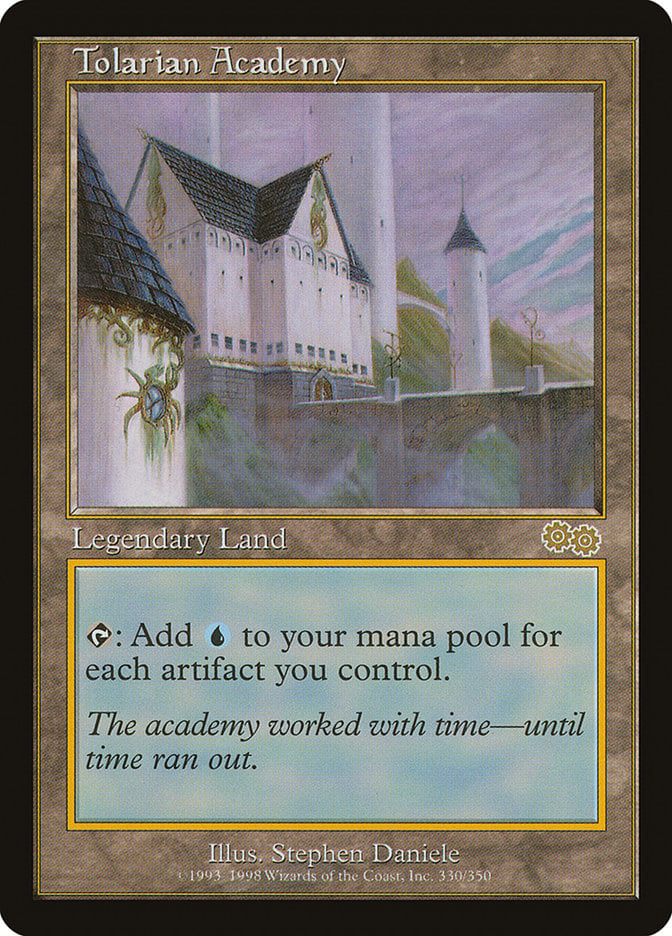
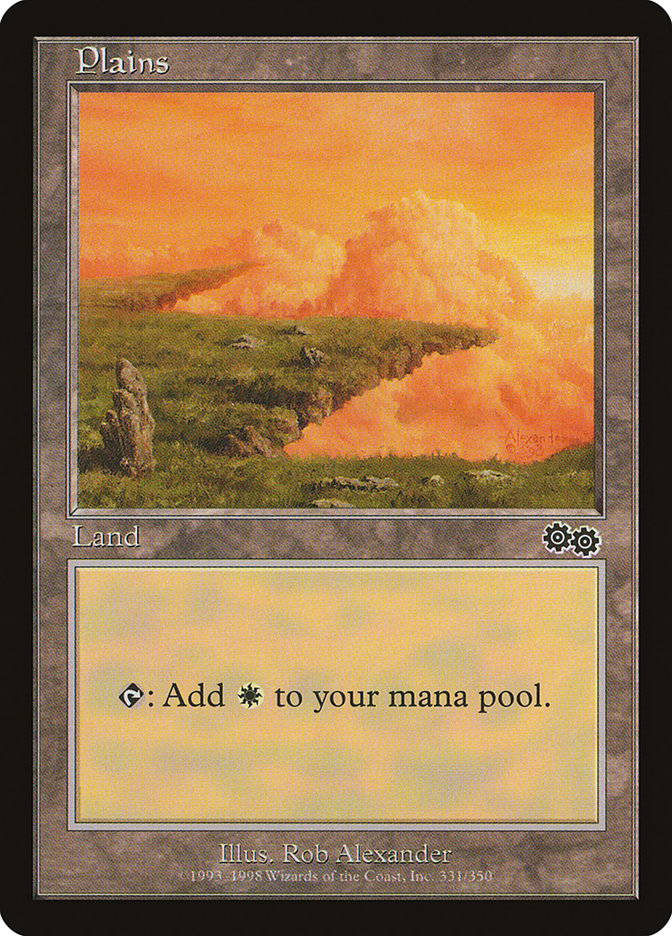
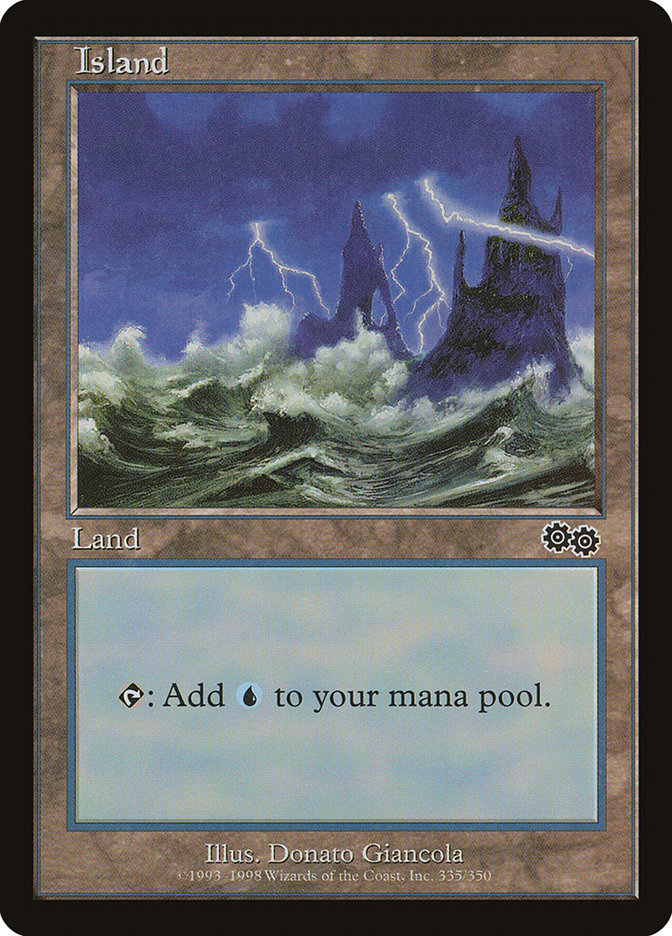
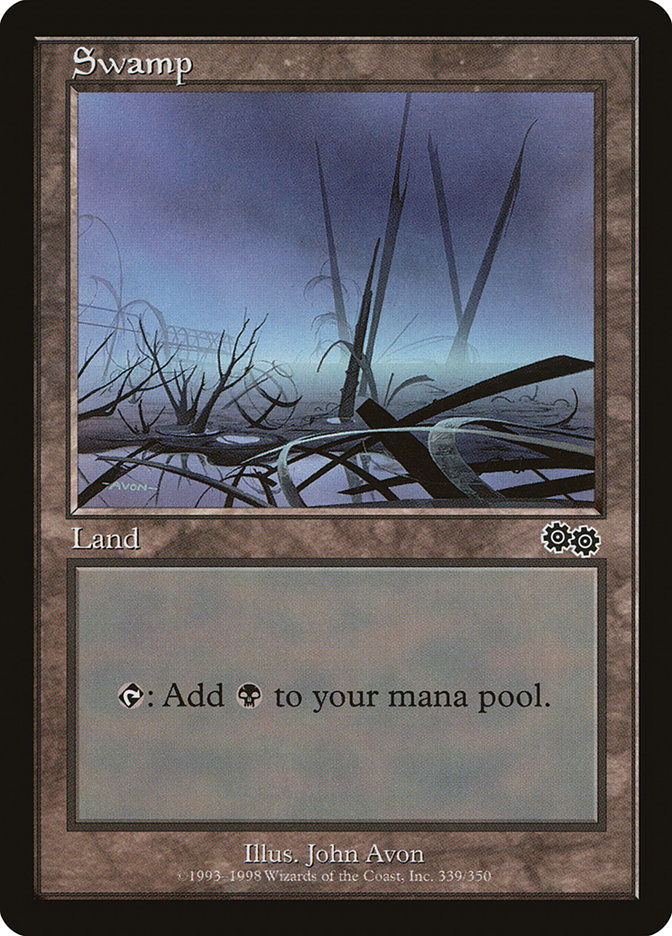
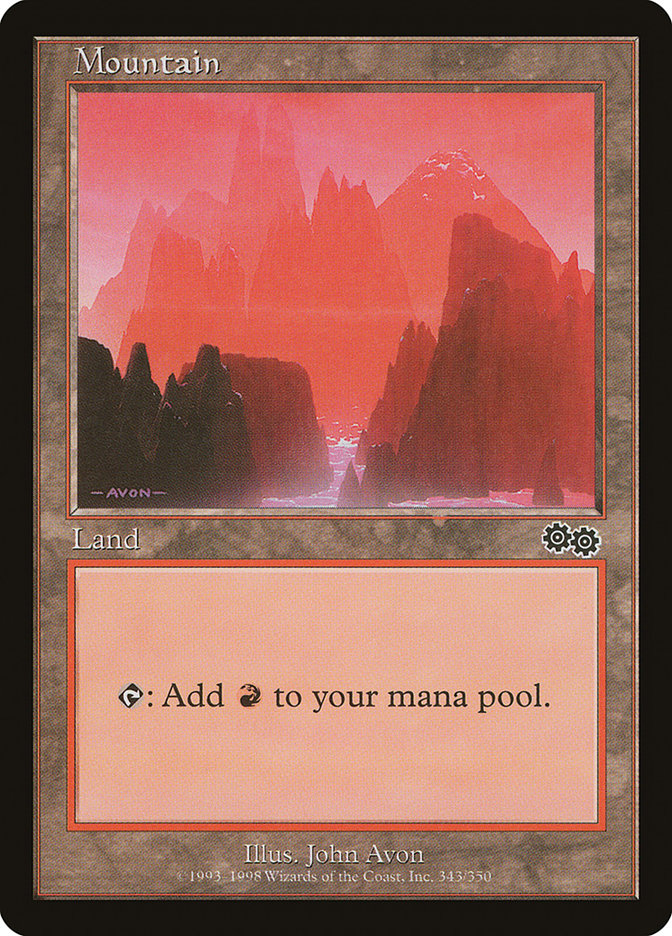
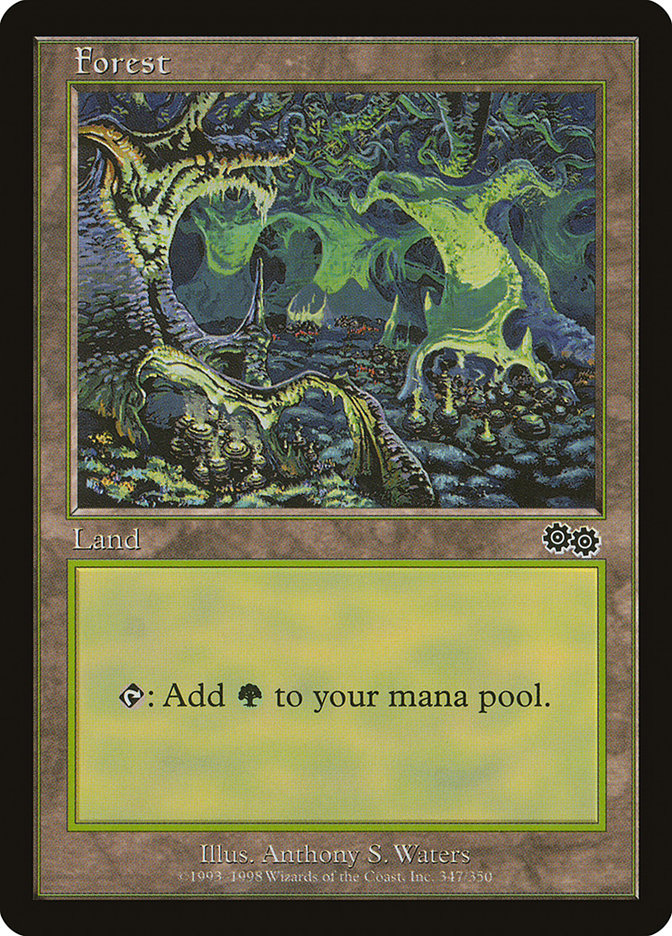
Lands


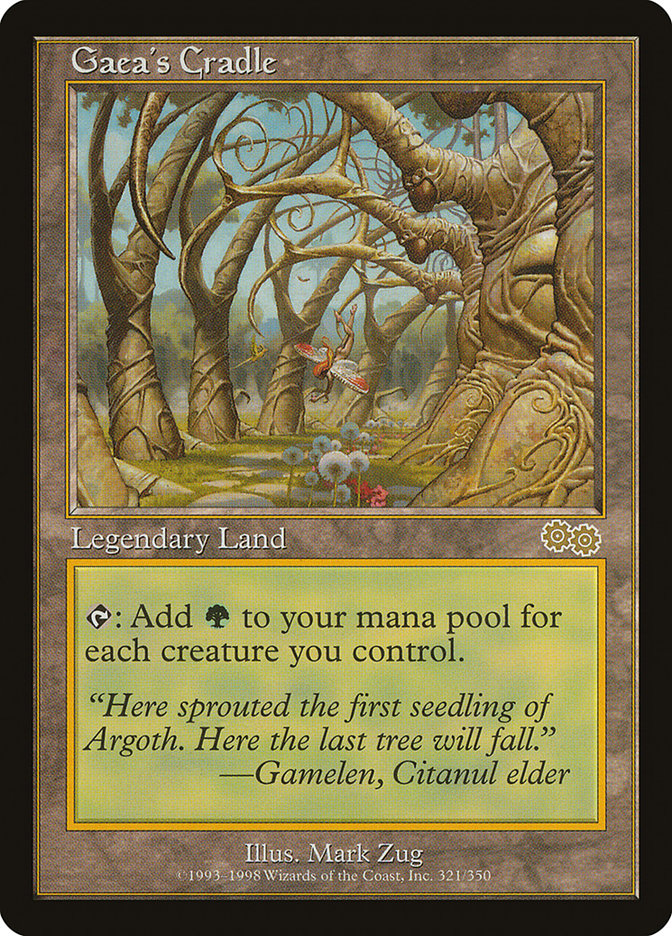




Notable Cards
If you’re a Vintage Cube regular, you’re probably well-versed in these cards. All these cards have development problems, and most of them are blue, contributing heavily to the “blue is MTG’s best color” issue.
The Cycle of Rare Lands
These cards taught WotC not to mess with lands, especially lands that can easily provide more than 1 mana without any downside. Tolarian Academy is banned in multiple MTG formats, including Commander, and it’s restricted in Vintage – it’s really easy to make a lot of mana because of all the 0-cost artifacts and artifact lands. Green land Gaea's Cradle sees play in Elf decks in many formats, and it’s one of MTG’s most expensive cards.
Serra Avatar
EDH is a format, and Serra Avatar can very well be a 30/30 or higher there consistently. Lifegain decks exist in that format too, and it’s a cool target to fling with Brion Stoutarm.
Back to Basics
Back to Basics is one of MTG’s best nonbasic land hate, and in blue, no less. This is a staple of blue decks in EDH, and an excellent reason to run-mono blue with many Islands while denying your opponents efficient access to mana. It’s also played in other formats like Legacy.
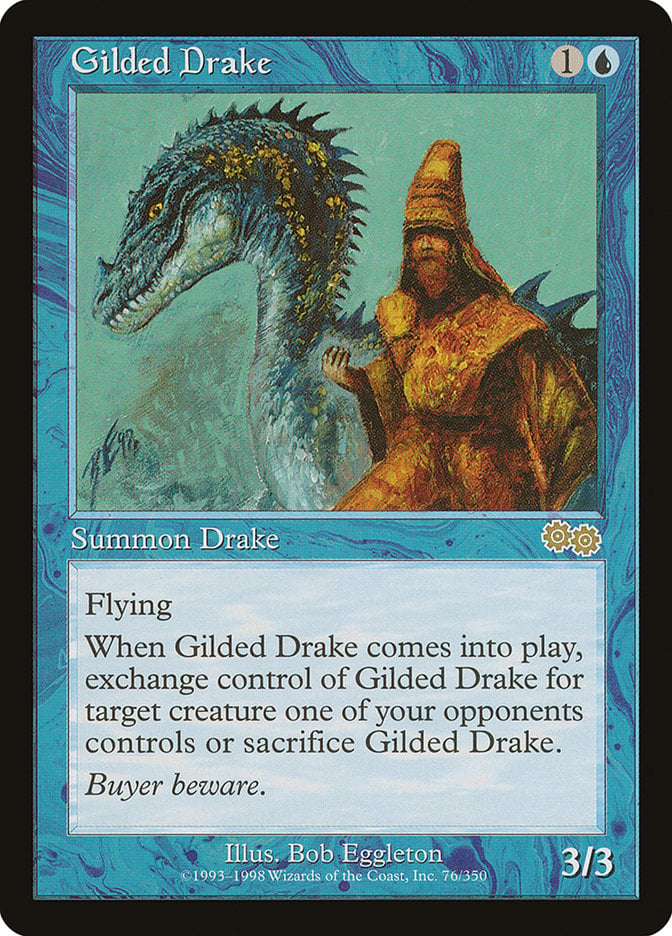
Gilded Drake
Gilded Drake’s playability soared high after EDH’s burst in popularity, as gaining control of an opposing commander is very strong, and giving them a 3/3 flier isn’t that strong. It costs only 2 mana, and it’s one of blue’s best removal spells in the format.
Show and Tell
The premier blue spell that allows players to cheat Emrakul, the Aeons Torn into play, Show and Tell is the driving force behind many successful Constructed decks, including the ever popular Sneak and Show deck.
Time Spiral
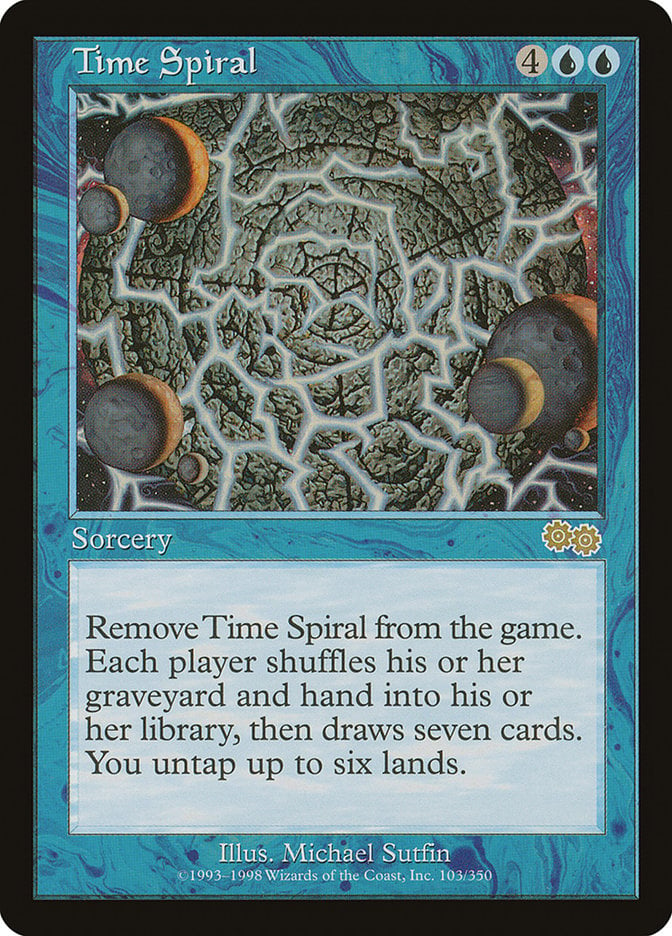
Provided that you reach 6 mana, Time Spiral is a free Timetwister. “Free spells” are good, and this card allows you to use the cards you’ve drawn right away or hold up mana for a counterspell during the next turn.
Windfall
Wheel effects are also very strong, and there are countless wheel decks in EDH. Windfall is one of these, and if you have a card like Narset, Parter of Veils in play, you get to also nuke their hands.
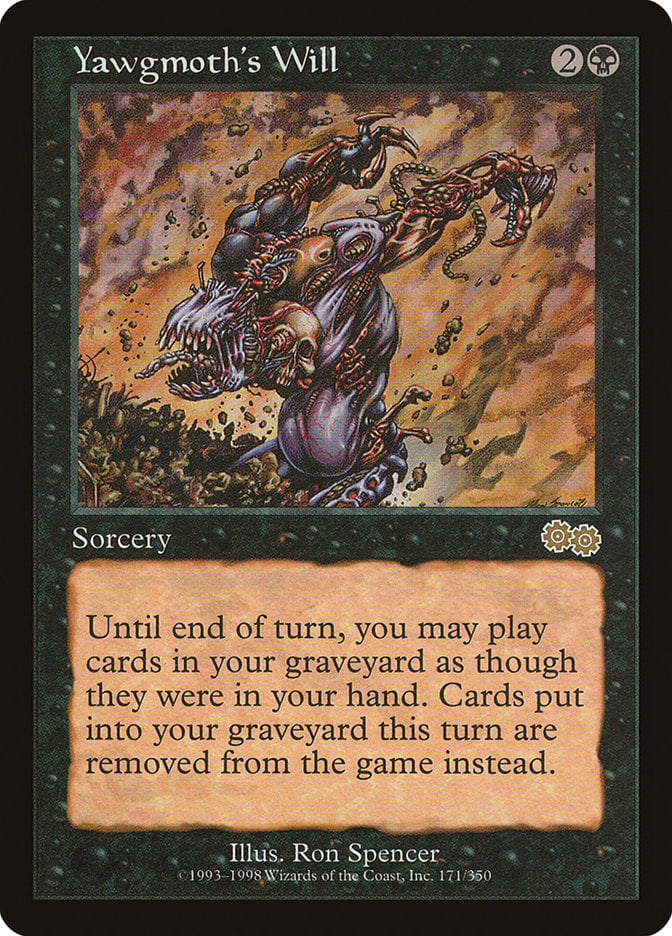
Yawgmoth’s Will
Yawgmoth's Will ranks as one of black’s top cards. Getting to play every card from your graveyard again for just 3 mana is a steal. There have been many “fixed” versions of this black sorcery, like Past in Flames or Underworld Breach, and these always break decks here and there. You can only play one copy of this card in formats like Vintage, or in EDH where you need to find it among your 99 cards.
Goblin Lackey
Goblin Lackey allows you to attack on turn 2 and hopefully drop a big goblin without paying its mana cost. Throughout the years, the best goblin options evolved from Siege-Gang Commander to Muxus, Goblin Grandee, but the broken effect still stands.
Gamble
Tutoring a card and putting it into your hand for just 1 mana doesn’t get any better. Except that you have to discard a card, so one way to fix this downside is to have many cards in your hand. Or to find a card with flashback or even madness. In some cases, you’ll also use Gamble as an entomb effect because you want to discard a card anyway.
Sneak Attack
Sneak and Show decks are called that for a reason. It’s the union of two strong and broken cards. Sneak Attack allows you to put your whole hand into play, simply by paying a red mana per creature. It’s also a red enchantment, so that tends to stay in the battlefield, and each card you draw may surprise your opponents.
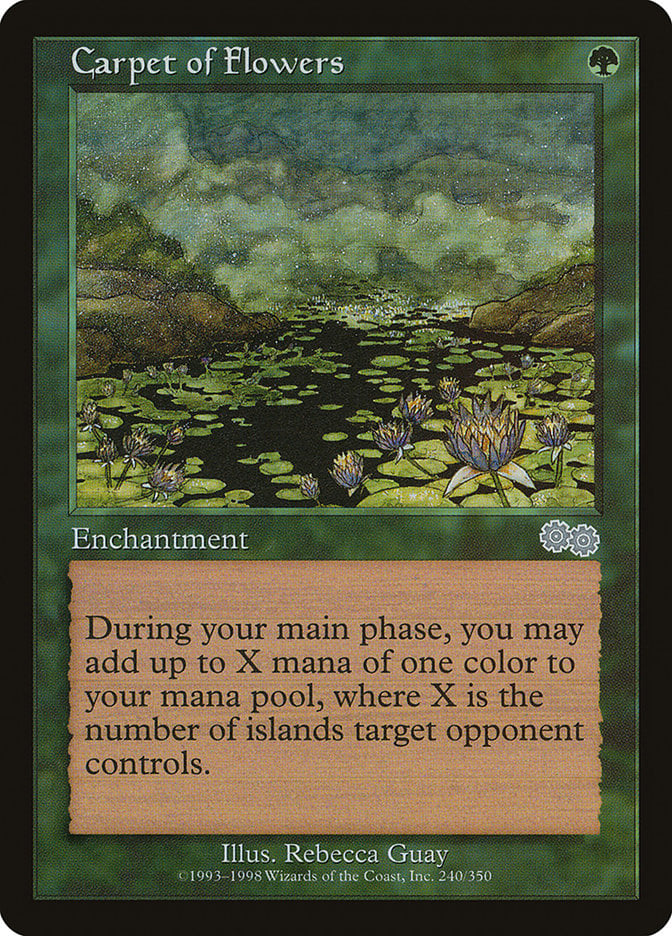
Carpet of Flowers
Carpet of Flowers is an excellent way to hate on blue, getting a lot of mana that you’ll most certainly use to cast giant green spells.
Exploration
Cards like Oracle of Mul Daya are good for a reason. Playing two lands a turn is huge, and with enough card draw or ramp, you’ll be so far ahead in lands. This green enchantment’s also a strong combination with cards like Crucible of Worlds.
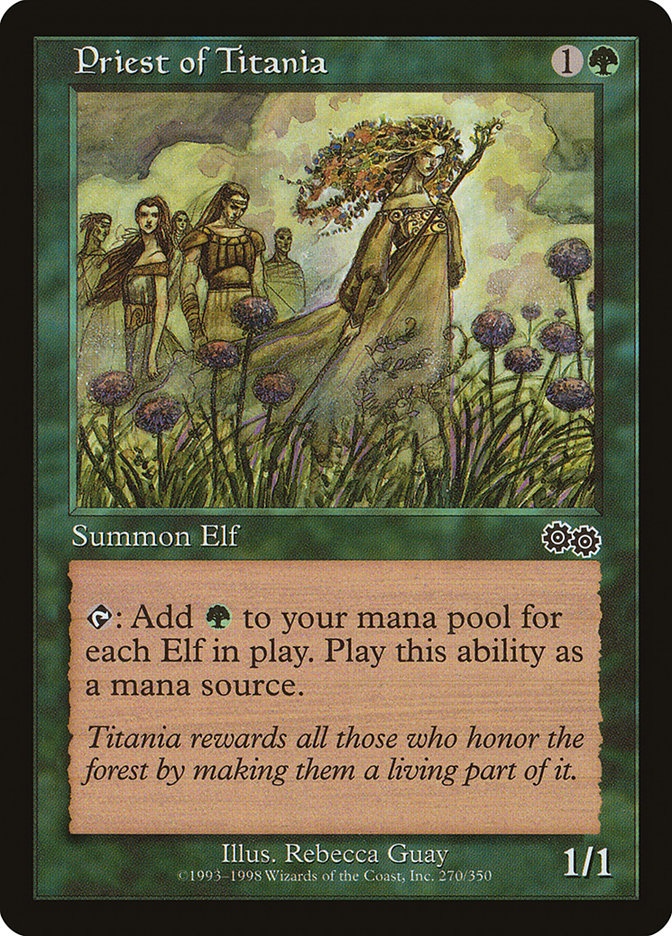
Priest of Titania
Funnily enough, Urza’s Saga is home to one of MTG’s best elf cards, and a key piece of strong mono-green combos, while not having a proper elf theme. It’s not hard for Priest of Titania to generate 3+ mana on activation.
Fluctuator
Most cycling cards cost or mana to cycle, so with Fluctuator‘s cost reduction, you can realistically cycle your whole deck.
Karn, Silver Golem
With Karn, Silver Golem, you can straight up kill 0-mana artifacts by turning them into 0/0 creatures. It’s also possible to get artifact lands or turn a land into an artifact and snipe them.
Smokestack
The classic stax card, Smokestack makes everyone around the table sacrifice stuff. Of course, you’ll be prepared with sac fodder and sacrifice/death payoffs. Mayhem Devil and friends say hello.
Voltaic Key
With Voltaic Key online, you can untap any artifact by paying 1 mana. That can create infinite combos with Time Vault, or simply produce more mana with cards like Mana Crypt.
Available Products
Urza’s Saga Booster

These Urza’s Saga boosters came with 15 cards, one rare, three uncommons, and 11 commons. No mythic rare because they’d only appear 10 years later!
Urza’s Saga Booster Box

Here we have a traditional Urza’s Saga Booster Box with 36 booster packs. These cost a small fortune nowadays and are very, very rare.
Urza’s Saga Tournament Decks

Sealed decks at the time used one of these 75-card Tournament decks plus a couple boosters. These contain 30 lands and 45 nonland Urza’s Saga cards.
Urza’s Saga Theme Decks
- Sleeper is a deck focusing on the power of sleeper enchantments, those that become creatures in special conditions like Opal Titan and Opal Gargoyle.
- Special Delivery is a deck built around strong echo creatures like Acridian, Pouncing Jaguar and Cradle Guard.
- The Plague is a Pestilence deck that can use Pariah and Rune of Protection: Black to protect you from the deck’s key enchantment.
- Tombstone is a deck that has a few options to reanimate creatures like Exhume and Victimize. You also have cycling creatures that naturally go into the graveyard to reanimate.
Wrap Up

Spined Fluke | Illustration by Mark A Nelson
The Urza’s Saga block, containing Urza’s Saga, Urza’s Legacy, and Urza’s Destiny, is certainly the most powerful block of MTG sets, and many of its cards are banned. Key changes were made in MTG’s design and development to make sure the game doesn’t break that hard anymore. It turns out that the game has resources, and getting a lot of fast mana or free mana or many cards consistently breaks the system.
This set has a lot of ways to put expensive cards in play, too. Urza’s Saga stands out today as a bunch of overpowered cards that are banned in Legacy and restricted in Vintage, and many powerful Vintage Cubes run these staples.
What are your favorite cards from Urza’s Saga? Were you playing MTG back then? Let me know in the comments section below or over our Draftsim Discord.
Thanks for reading guys, and stay safe out there.
Follow Draftsim for awesome articles and set updates:










Add Comment