
Last updated on October 9, 2026

Face Yourself | Illustration by Ekaterina Burmak
Greetings Jacewalkers! Reality Fracture has been out for about a week now, so it’s time for me to share everything I’ve learned about drafting this awesome new format.
If you’re interested at even more deep looks at the format, check out my earlier Sealed Guide and my initial thoughts of the format, plus The Daily Upkeep’s recent podcast episode on Tips, Tricks, and Trips for Reality Fracture.
Introduction

The Theorist, Jace Beleren | Illustration by Ekaterina Burmak
Reality Fracture is a set that revolves around card advantage and bombs. Games of this format go longer than any set in recent memory.

The most important thing you can do to increase your win rate in this set is never take your foot off the gas, whether it be to draw cards off of empower Jace, flashing back Twinned Vision, or even just having mana sinks like Shatterwing Pegasus and Tenured Tethermage. Most games are drawn out battles of resources that come down to the last card standing, although some of these standoffs tend to end violently when something like Ajani Unrelenting or Overwrite the Multiverse shows up….
Mechanics Revisited
Empower Jace
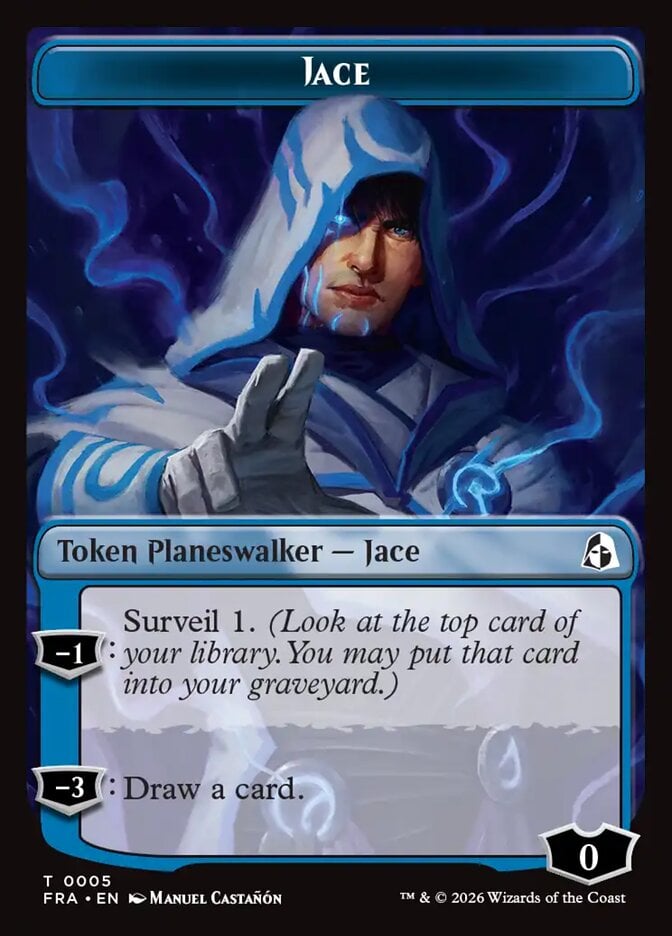
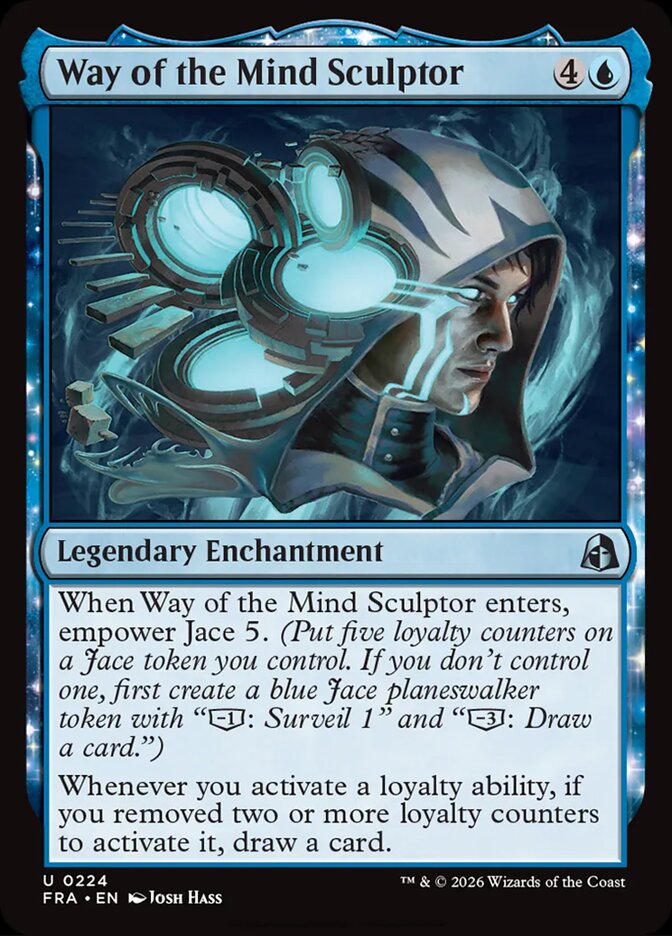
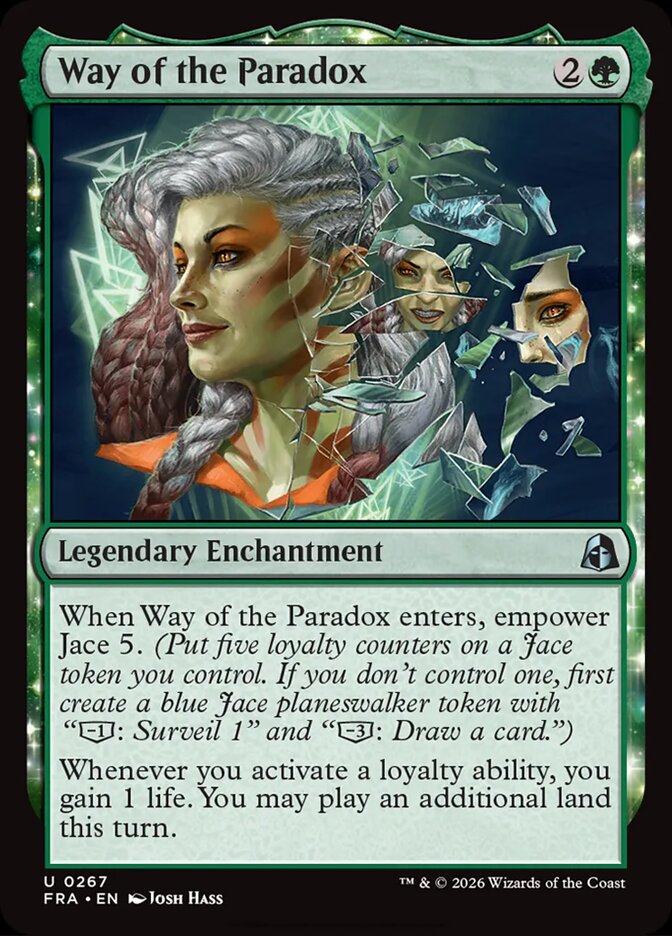
Empowering Jace tends to stack very well with itself in practice. While this is primarily a Draft guide, I often make use of “o:empower” search for my Arena Direct Sealed pools, as seeing how many empower cards you have lets you know how good your cards like Way of the Mind Sculptor and Way of the Paradox are likely to be. Here are some of the primary things empower does in the format.
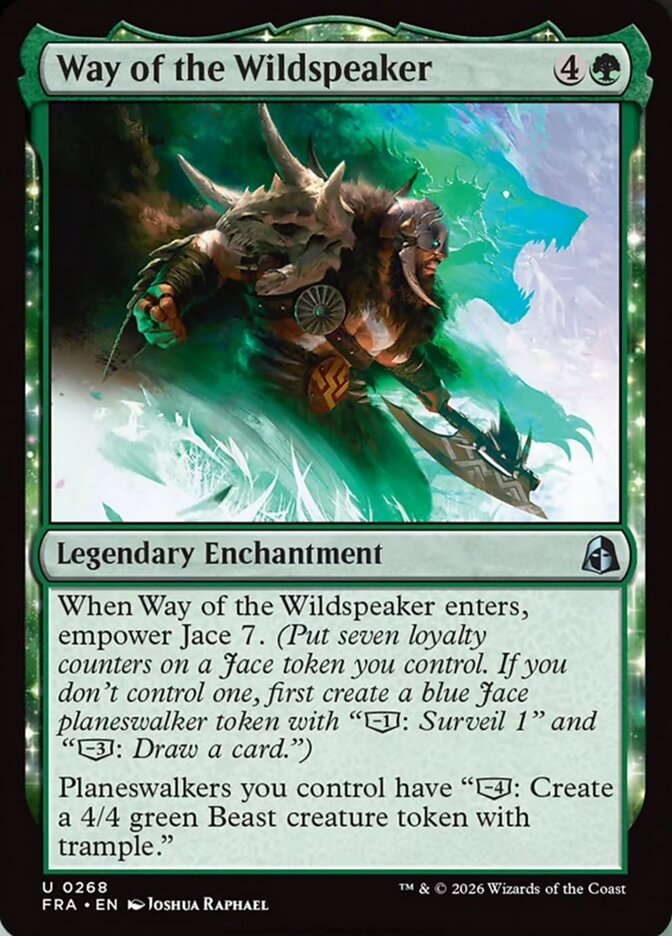
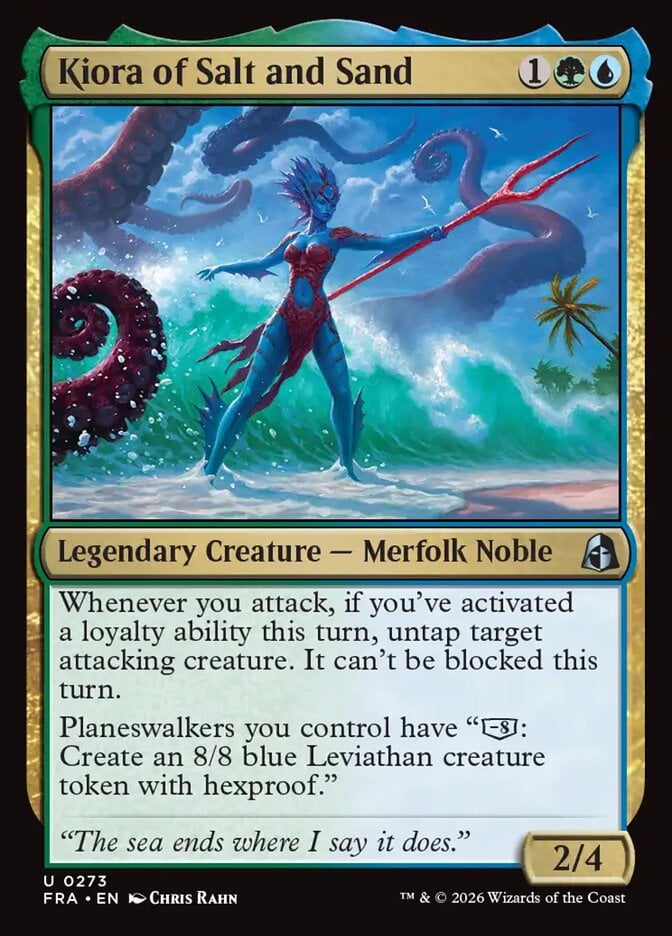
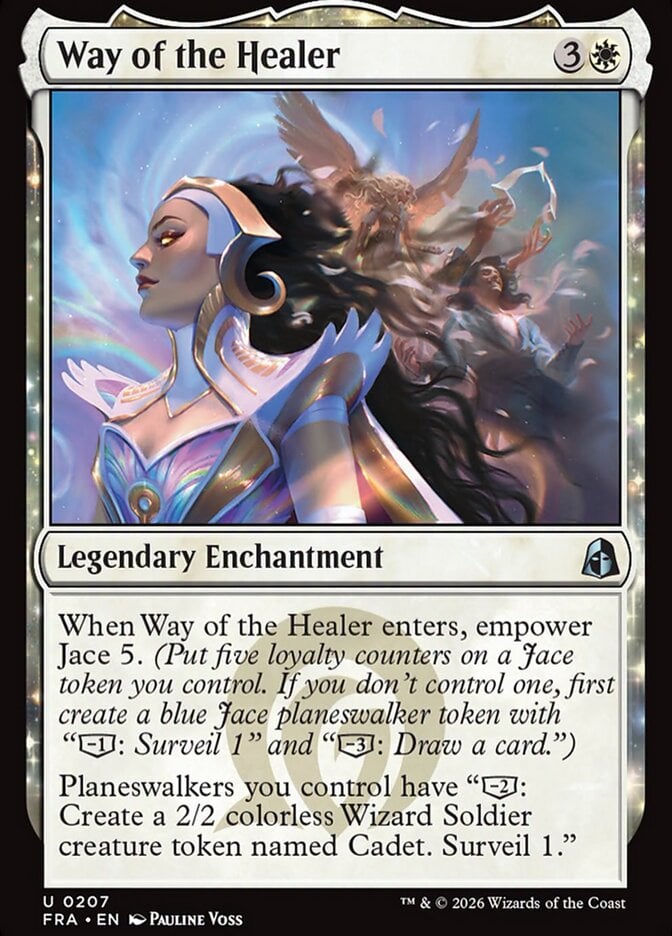
Empower is a primary focus for GUx decks, powering your long-term card advantage ambitions and funneling into a direct win condition with cards like Way of the Wildspeaker and Kiora of Salt and Sand. These kinds of decks tend to splash a lot of removal and the good “Way of” enchantments like Way of the Healer.
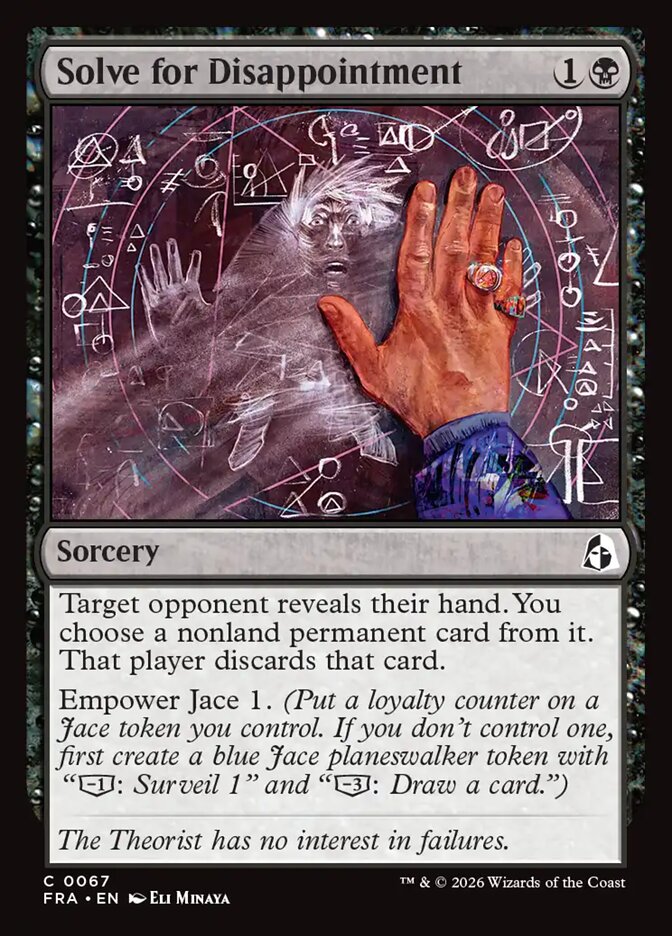

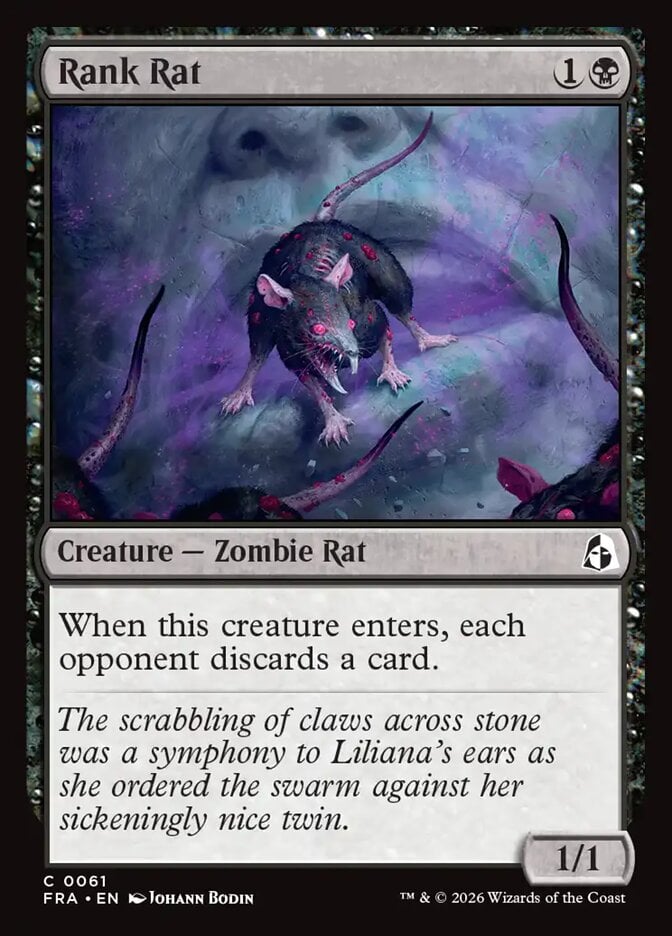
For black sacrifice decks, empower is a sneaky source of high quality fodder. Curving Solve for Disappointment into Winter, Tormented Loner is comparable to something like Rank Rat, provided you don’t waste the Jace on a surveil.
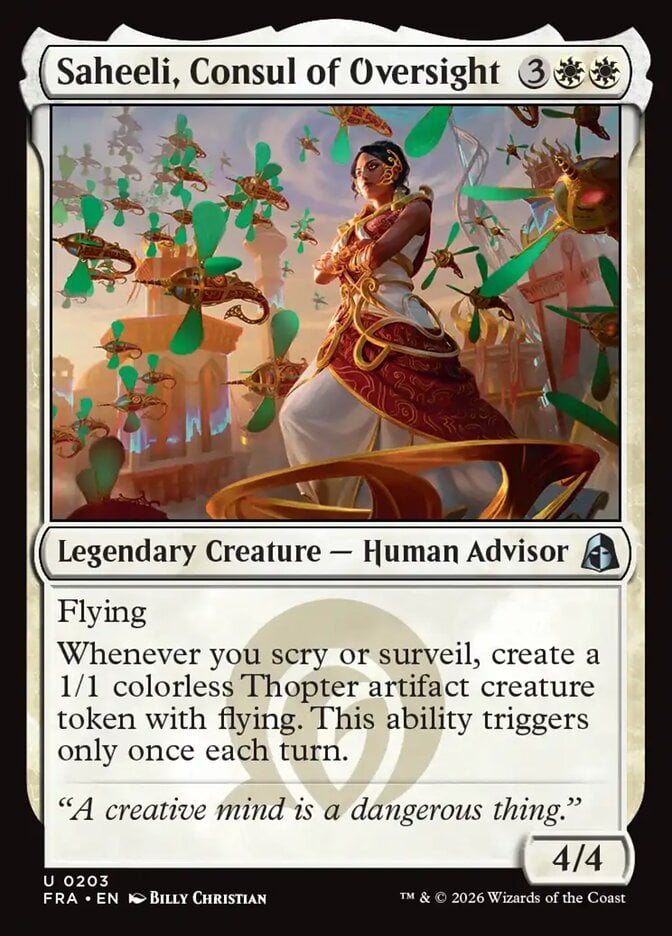
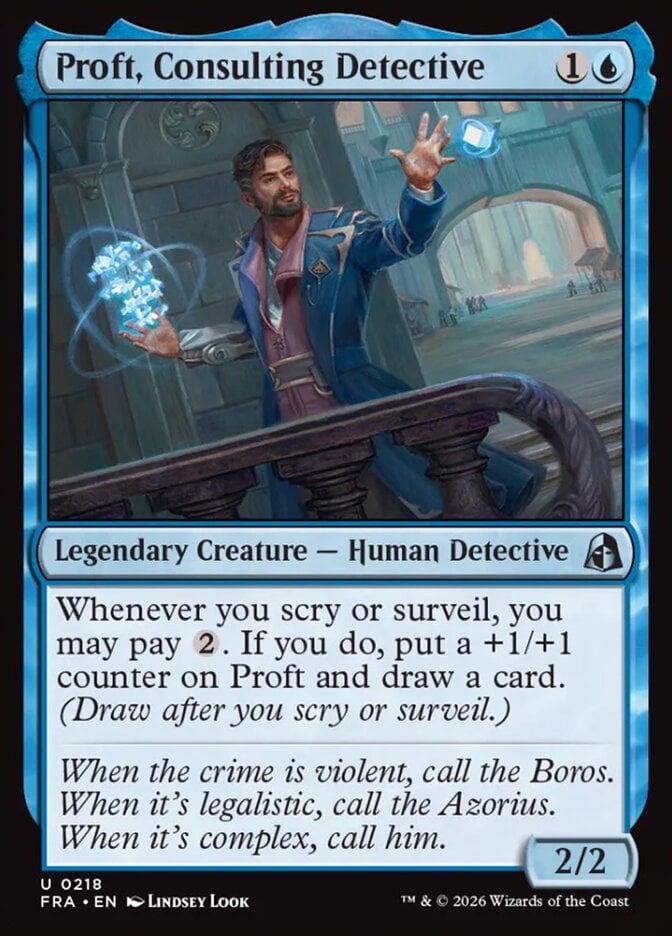
White decks tend to use empower primarily for surveil, and often get increments of empower 2 at a time (which falls just short of “draw a card”). Careful sequencing lets you get immediate value from cards like Saheeli, Consul of Oversight and Proft, Consulting Detective.
The more empower and Way enchantments you have, the more options you’ll have for how to use your Jace tokens. One common line I like to do is to leave a 1-loyalty Jace around in decks with lots of empower 2 cards to have access to a card later. Total resource count matters a ton in this format!
Heartwood Tokens
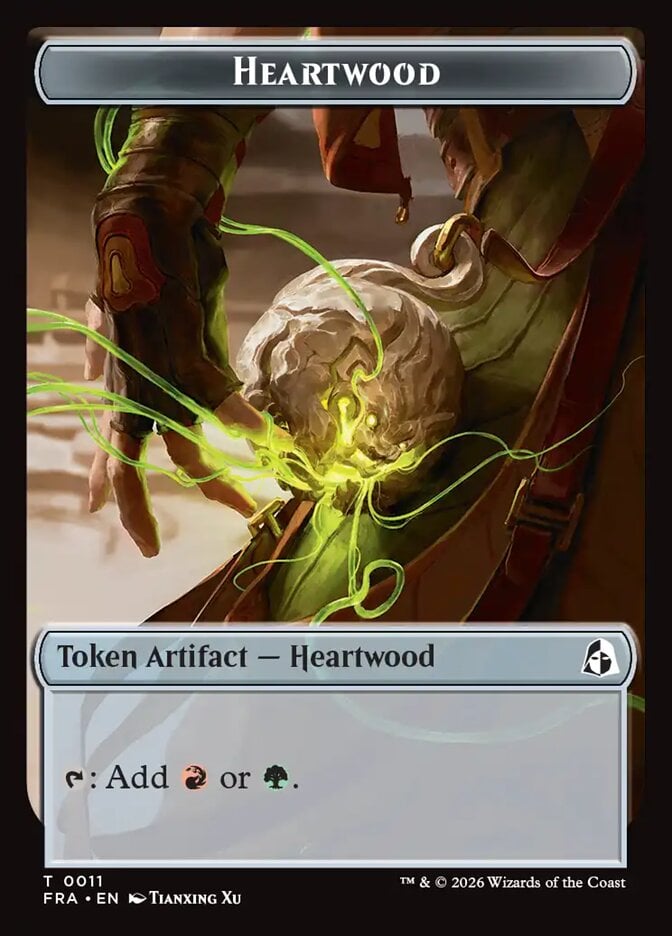
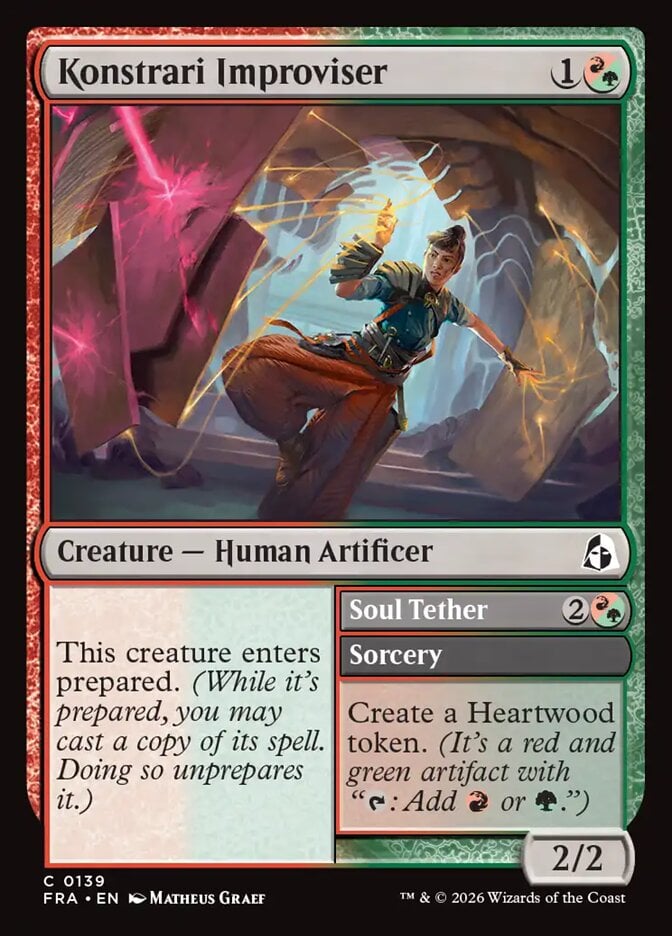
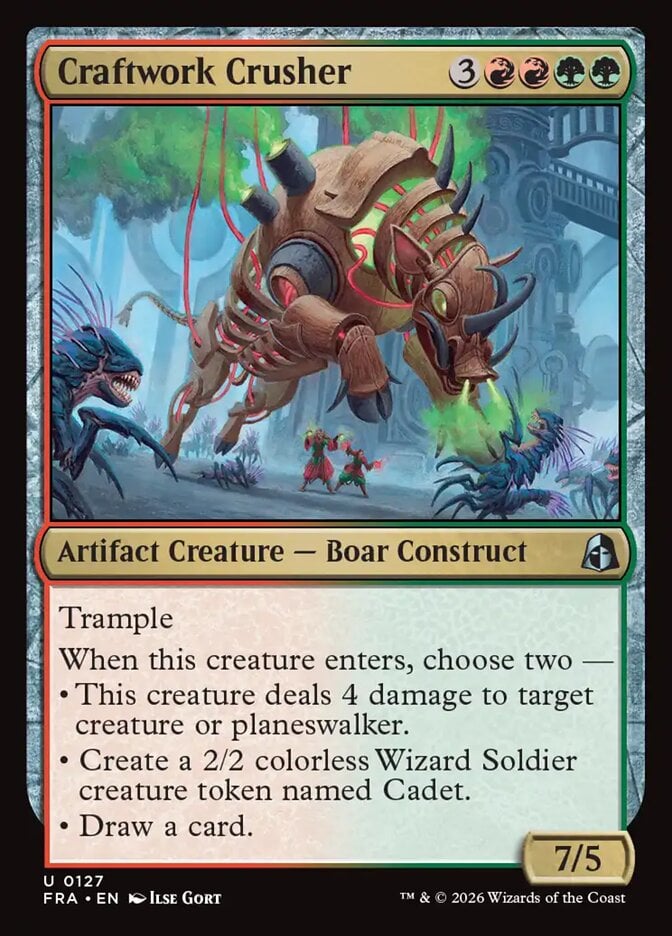
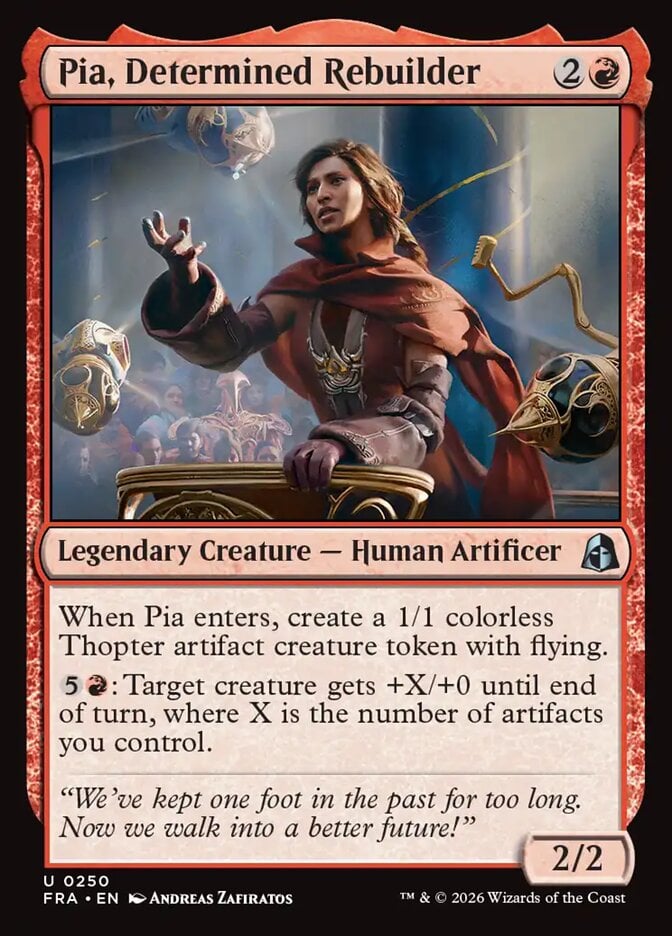
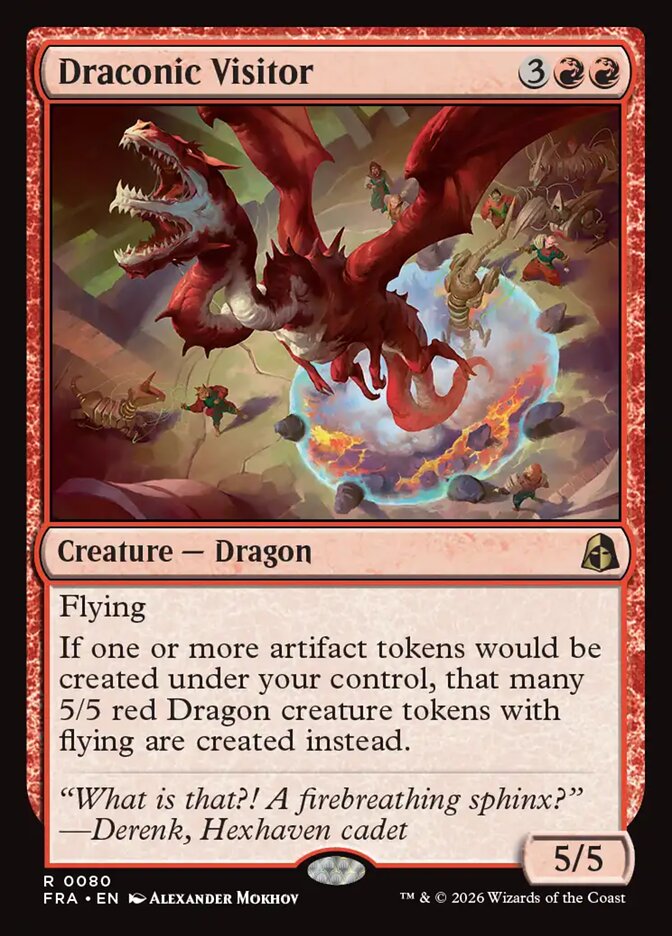
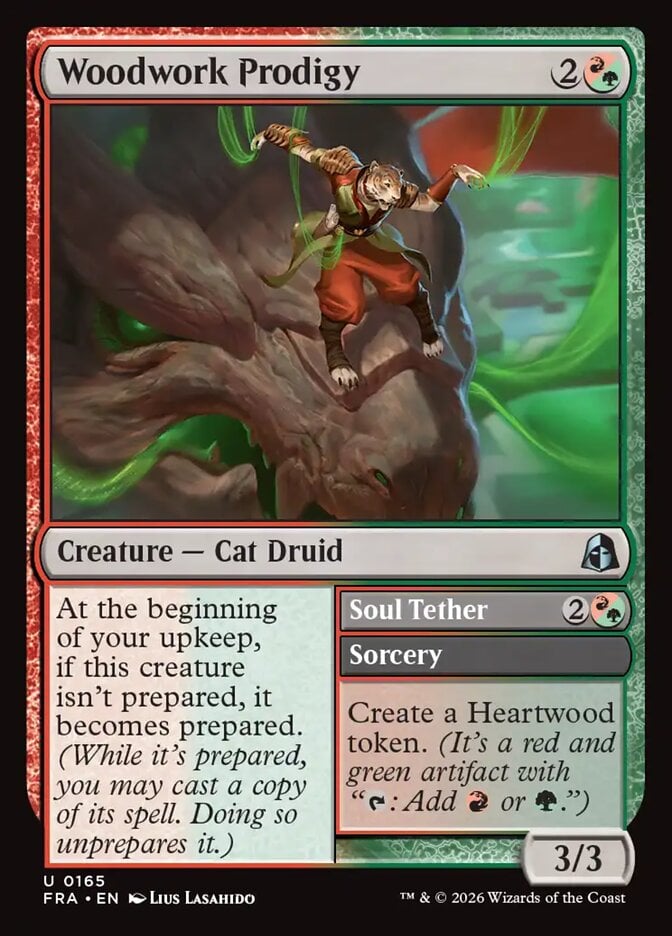
Here are two main tips I can give from having played with Heartwood tokens:
- They’re actually a great way to splash red or green cards. Using cards like Konstrari Improviser can let you cast Craftwork Crusher in decks that aren’t even Gruul.
- Heartwood tokens do a great job of enabling artifact synergies, which primarily comes up with Pia, Determined Rebuilder and Draconic Visitor. Repeat Heartwood creators like Woodwork Prodigy are unmatched for this kind of thing.
Prepare
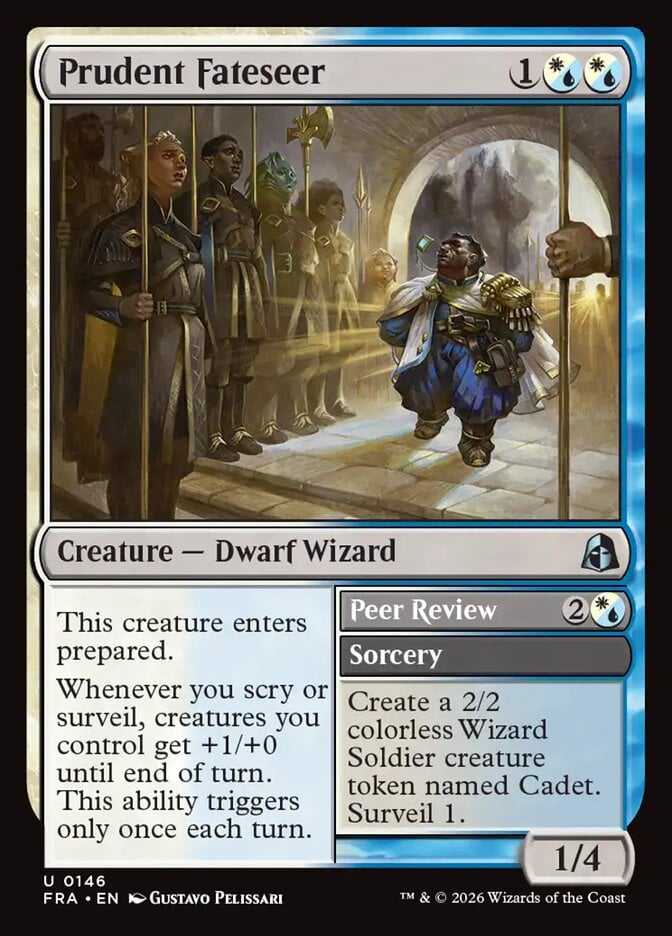
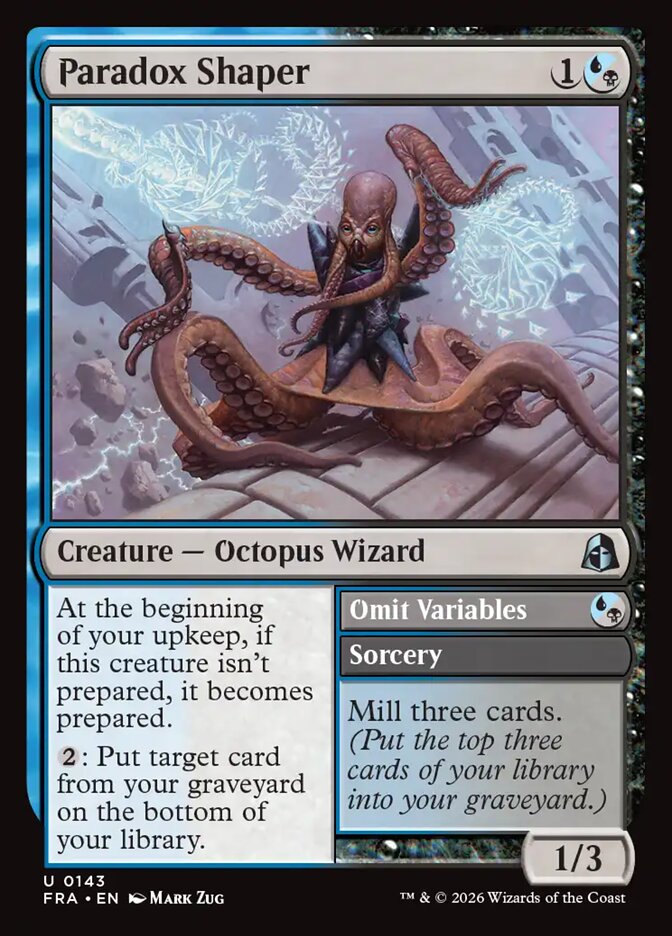
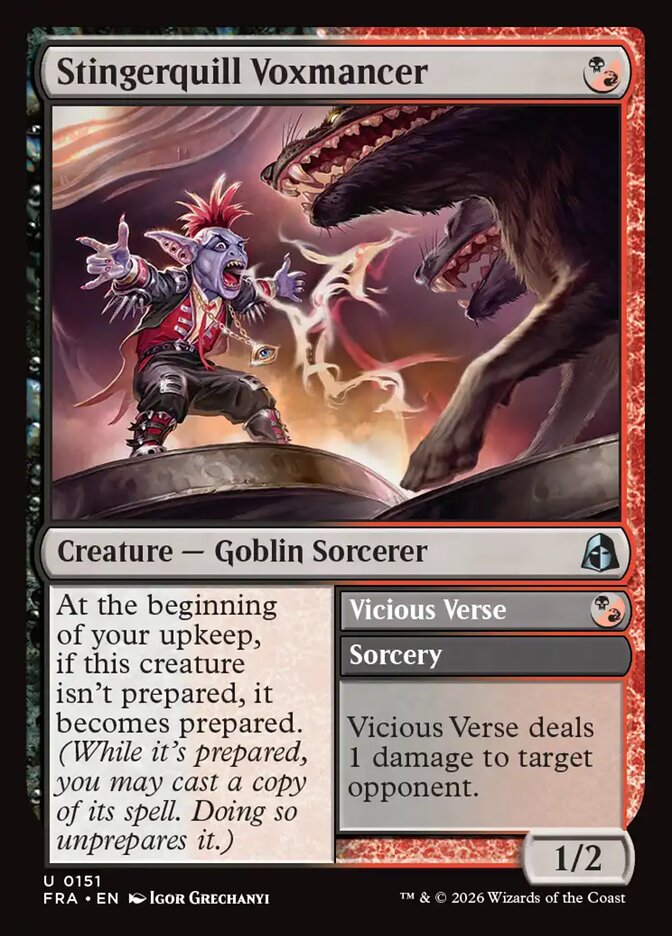
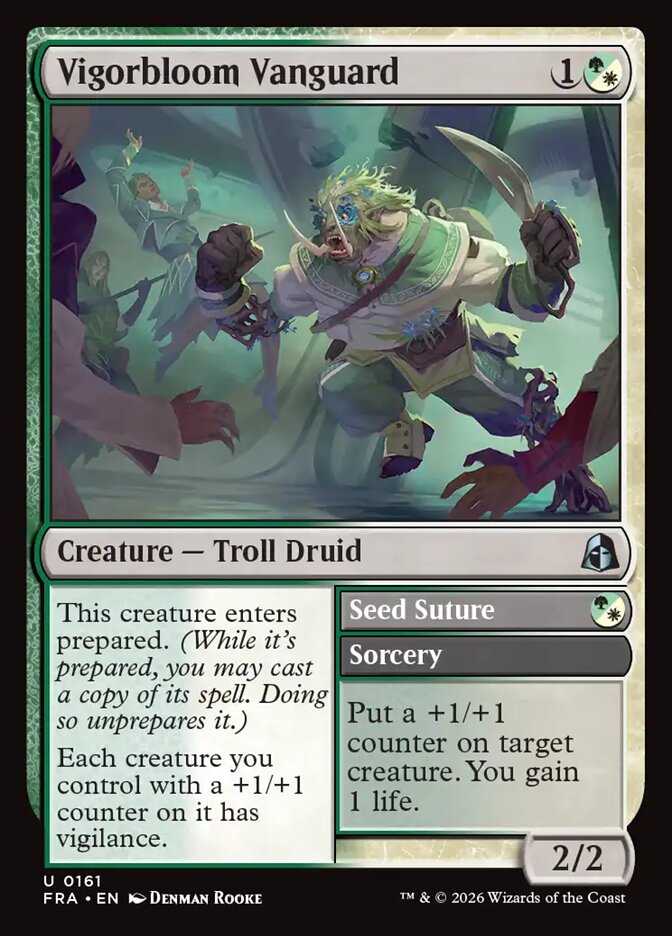
Prepared has felt less impactful in this set than Secrets of Strixhaven, although it’s still a useful role-player for making school synergies happen. Here’s a refresher on all the generic spells available:
- WU: Peer Review (“Create a 2/2 colorless Wizard Soldier creature named Cadet. Surveil 1.”)
- UB: Omit Variables (“Mill three cards.”)
- BR: Vicious Verse (“Vicious Verse deals 1 damage to target opponent.”)
- WG: Seed Suture (“Put a +1/+1 counter on target creature. You gain 1 life.”)
- RG: Soul Tether (“Create a Heartwood token.”)
These appear on all common/uncommon prepared creatures, and there are also rares/mythics with unique prepared spells. Most of these are just one-off spells with situational uses, though.
Archetypes
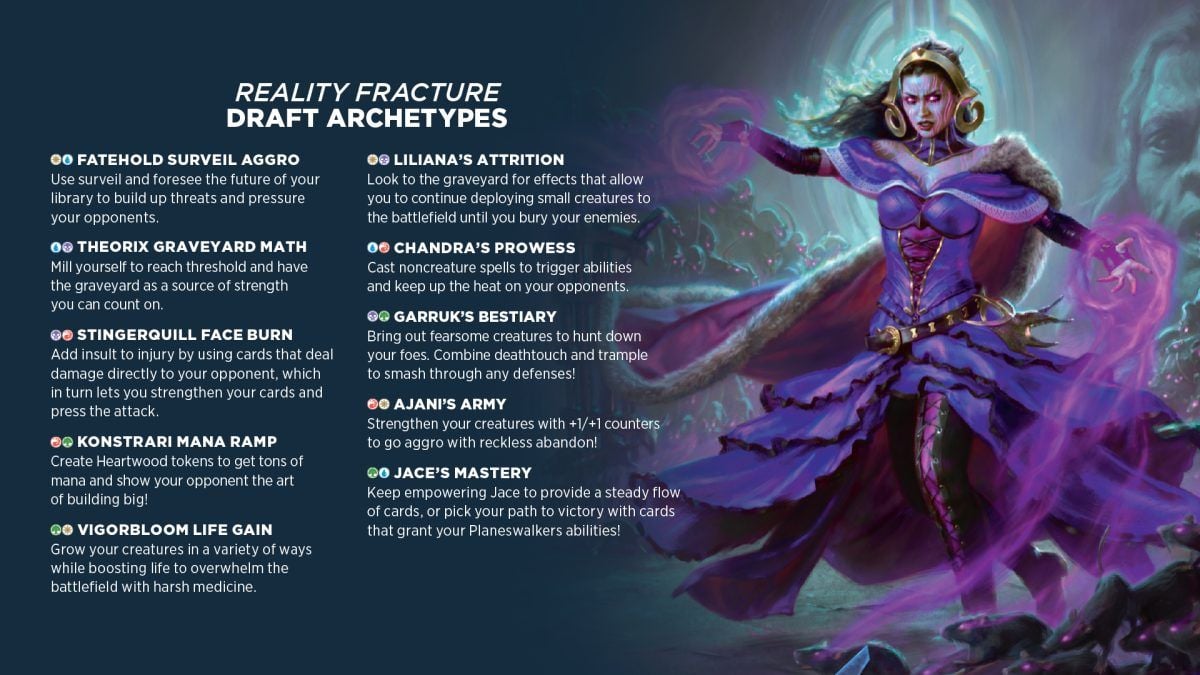
Reality Fracture’s 10 archetypes are all somewhat viable, although some are definitely better than others. Here’s a summary of all 10 archetypes for a recap:
- WU Surveil: Use “surveil” or “scry” cards to trigger payoff cards like Saheeli, Consul of Oversight or Prudent Fateseer. Plays out like a midrange creature deck, which is neither super controlling nor as aggressive as the format’s actual aggro decks.
- UB Threshold: “Omit Variables” is great for getting you threshold, which can power up cards like Null Summoner and Loot, the Anomaly. Milling yourself can also net you value from flashback spells or recursive creatures. Most UB decks will feel fairly controlling, as all of its cards require setup to do much.
- GW Lifegain: There’s a lot of incidental lifegain in Reality Fracture, which can support cards like Unflinching Hortimancer and Bloombrute. “Seed Suture” creatures will help you consistently get triggers. GW is very midrangy in this set, and the focus on lifegain should help it out versus BR.
- BR Burn: BR focuses on noncombat damage. By pinging your opponent with Vicious Verses, you can get extra value out of cards like Command the Stage and Grim Repriser, while slowly whittling down your opponent’s life total. It’s an aggressive strategy with a ton of synergies available, and tough to stabilize against without dedicated lifegain.
- RG Ramp: RG wants to use Heartwood tokens to ramp out giant monsters. Craftwork Crusher is truly a “mythic uncommon” for the ages, and easily the best reason to play this color pair. You may also be able to enable some artifact synergy in this color pair.
- WB Sacrifice: Sacrifice small creatures (and mostly spent Jace tokens) for benefits, such as growing Edgar, Ancient Bloodlord. An attrition style deck with a lot of play to it, and access to some great removal.
- BG Graveyard: BG is another flavor of graveyard deck, although it tends to care more about quality rather than quantity in terms of its graveyard. Cards like Hapatra, the Desert Fang and Rewrite Regrets reward you for binning fat 6-drops like Apex Witchstalker. Another attrition-focused deck.
- UR Spells: UR has two distinct flavors: low to the ground prowess beats, and durdly control decks. Saheeli, Jewel of Avishkar plays well in both.
- Boros Aggro: RW has a distinct +1/+1 counter theme in this set, as you can see with Mabel, Valley Hero and Warrior's Blades. Otherwise, it mostly just wants to turn creatures sideways (pretty typical RW stuff).
- GU Empower: GU is the archetype most focused on empowering big Jace tokens. It’s likely to splash for bombs and removal from other colors, and it often leans heavily on “Way of” enchantments like Way of the Cryomancer and Way of the Wildspeaker.
Tier List
And after a week of drafting, this is my ranking of the 10 archetypes:
- WU Surveil
- UB Self-mill
- BG Graveyard
- RG Ramp
- UR Spells
- GW Lifegain
- GU Empower
- BR Aggro
- RW Aggro
- WB Sacrifice
However, no archetype tier list is complete without the mention of splashing. I’m almost never two colors in this format, as you can see below in all of my drafts.
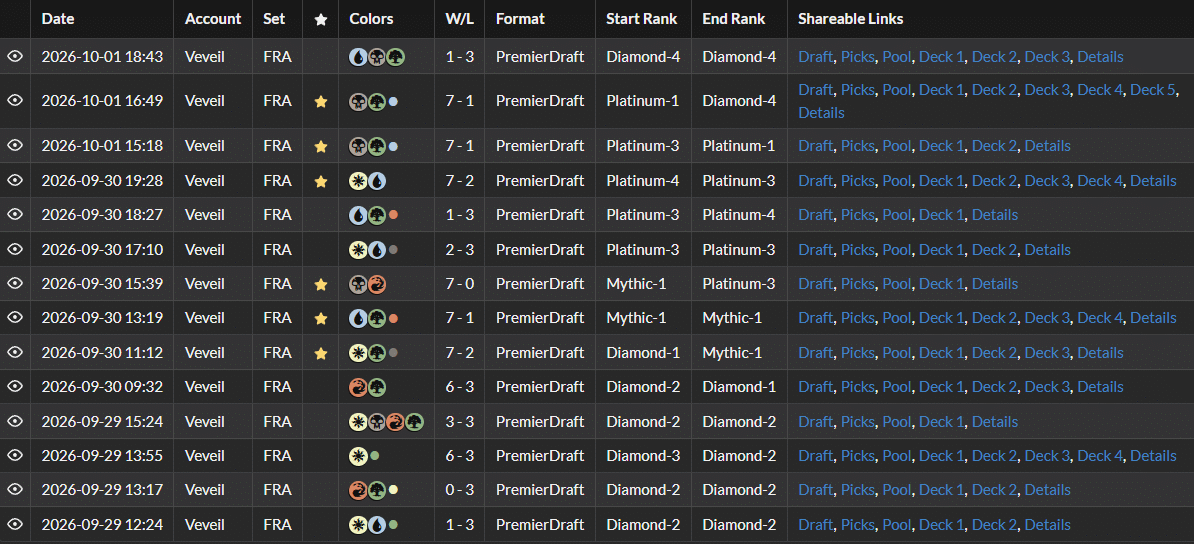
I completely misvalued splashing in the Reality Fracture Sealed Guide; splashing has proven easy and rewarding in both Sealed and Draft. There are many amazing bombs, removal spells, and value cards to grab, and the fixing to do so is far above average compared to sets like The Hobbit. Instead of having to muck around with junk like Giant's Boulder or Old Thrush, you get to play excellent universal landcyclers and Murmuring Volume (a fantastic Manalith variant).
Good stuff piles function as a secret eleventh archetype, although they usually play with at least one of the Big 10’s themes (if not multiple themes). Keep in mind that it’s possible to splash for synergy as well, rather than just raw power level. Generous Revival, for instance, could be a great fit in a deck with something like Proft, Sinister Mastermind, despite neither card being A+ individually. Bloombrute is another example of a card that I sometimes splash when I have synergy for it (i.e., Screeching Soulbreaker).
WU Surveil
WU takes the trophy in Reality Fracture for the best 2-color deck overall. WU is themed around payoffs for surveilling, which means getting rewards for doing something you already want to do! Most WU decks will feel like tempo decks, with lots of cheap creatures, some bounce spells, and a focus on incremental damage/value overtime. WU is one of the archetypes least likely to splash, since it has a low to the ground gameplan and lots of self-contained synergies in its two colors.
Payoffs
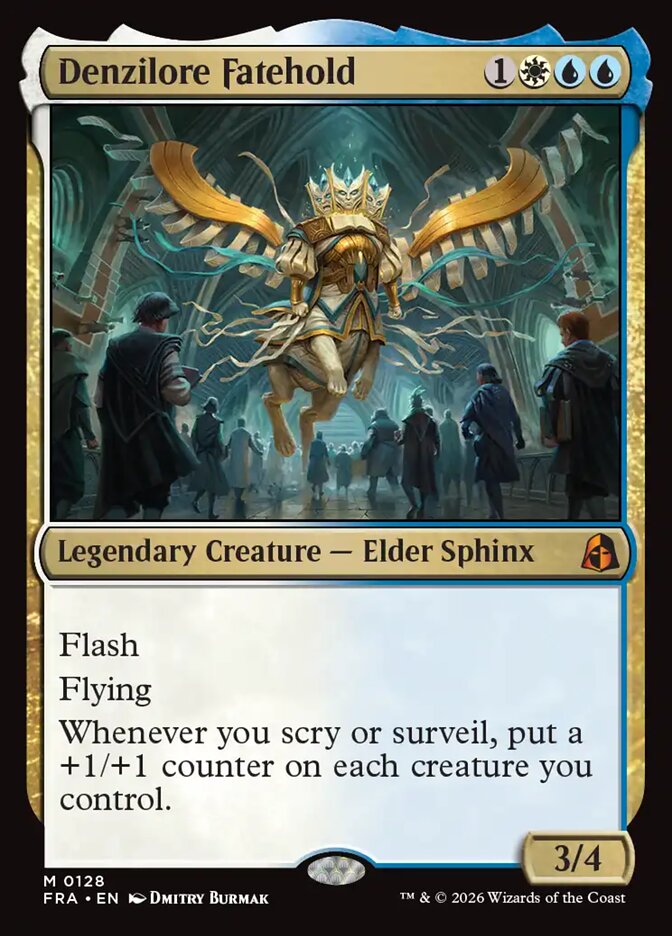
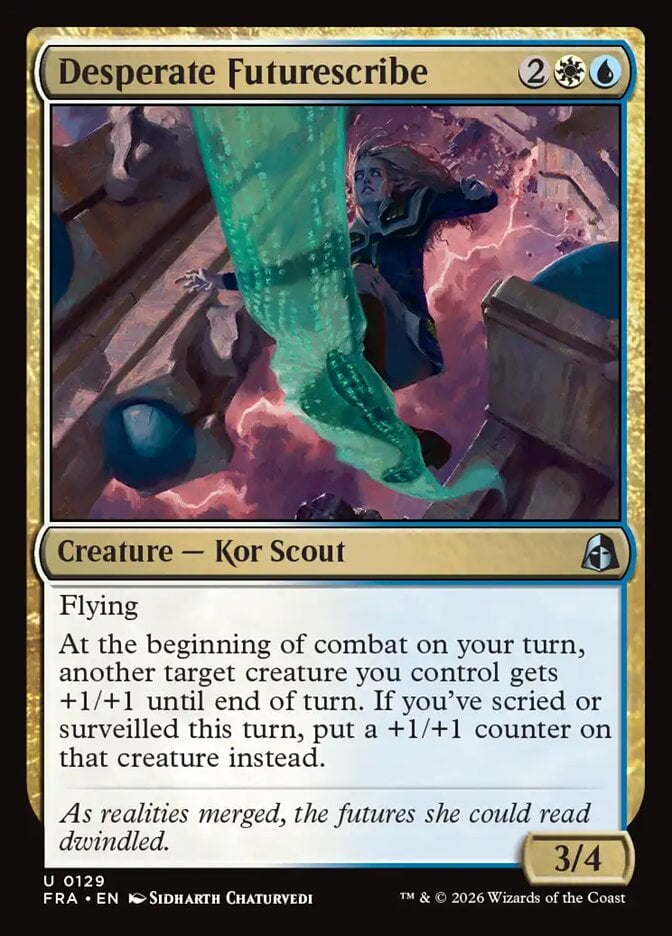
Denzilore Fatehold is absolutely nuts in this deck, but you don’t need it to play WU by any means. Proft, Consulting Detective, Saheeli, Consul of Oversight, Diviner of Victory, Desperate Futurescribe, and Prudent Fateseer are all strong reasons to care about surveilling. Surveillance Phantasm is the only common incentive available, and it doubles as an expensive enabler in a pinch.
Enablers
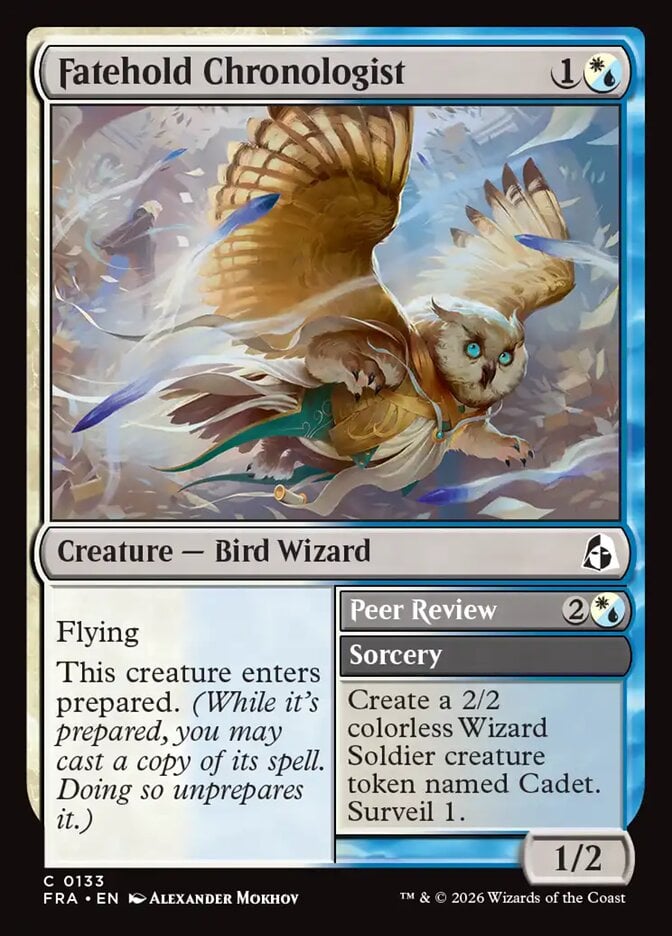
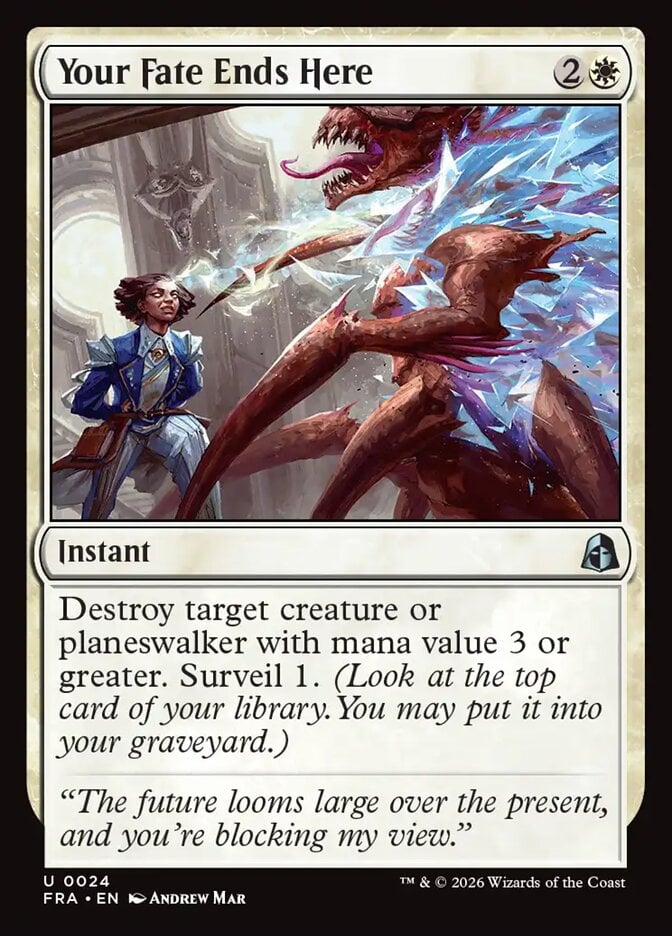
Don’t forget that every card with empower Jace is a surveil enabler! Otherwise, Fatehold Chronologist and Semester Foreseer get some extra points in this deck for obvious reasons. There are incidental surveil triggers to be found from cards like Way of the Healer and Your Fate Ends Here as well. Way of the Healer is particularly good in WU due to its synergy with go-wide payoffs like Prudent Fateseer and Denzilore Fatehold.
Archetype Tips
- Careful sequencing is vital with powerful but vulnerable cards like Denzilore Fatehold and Saheeli, Consul of Oversight. Try to protect a low loyalty Jace token and use it for an immediate surveil.
- Main phasing Surveillance Phantasm to attack really tips your hand to your opponent, so I’ll usually often give up 2 damage to be able to maintain some ambiguity.
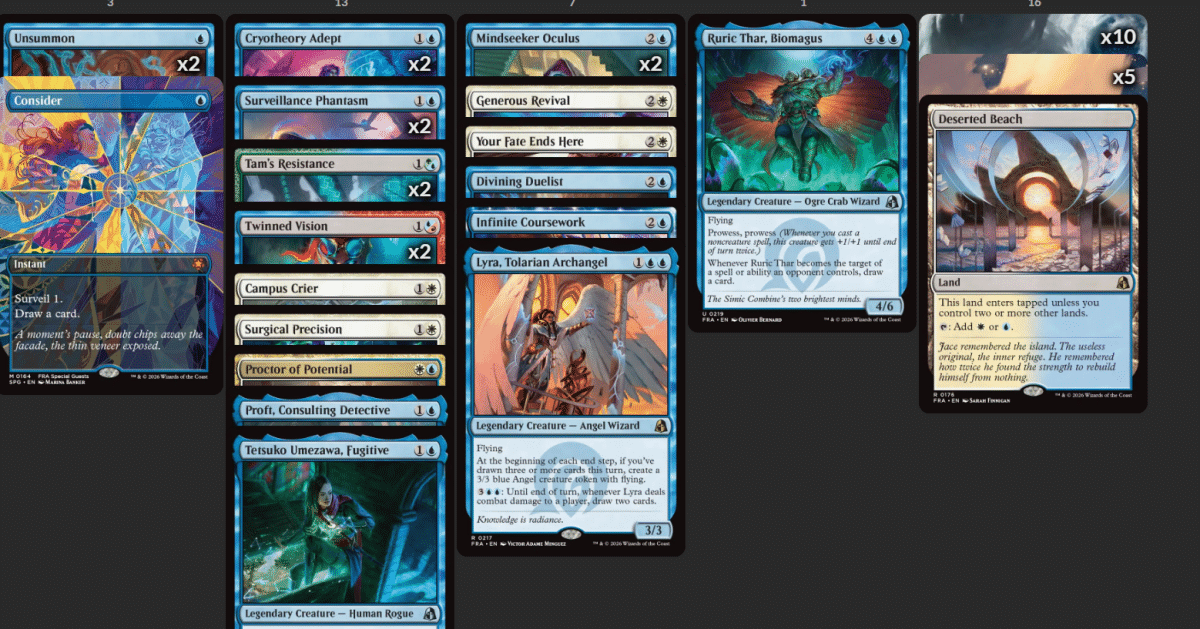
- WU makes great use of cards like Twinned Vision and Cryotheory Adept, since you can get additional value when surveilling them.
- I generally prioritize hitting my first 6+ land drops (which lets me cast two 3s in a turn), then ruthlessly bin all lands to my graveyard afterwards.
Trophy Example
UB Self-Mill
UB is a strong archetype that benefits from this format’s utter lack of graveyard hate. Afterthought Sentry is literally the only card available that can stop Recursive Recruitment from being cast later on, and it’s medoicre filler at best. As such, UB has an intricate and tough-to-disrupt gameplan that revolves around graveyard synergies.
Payoffs
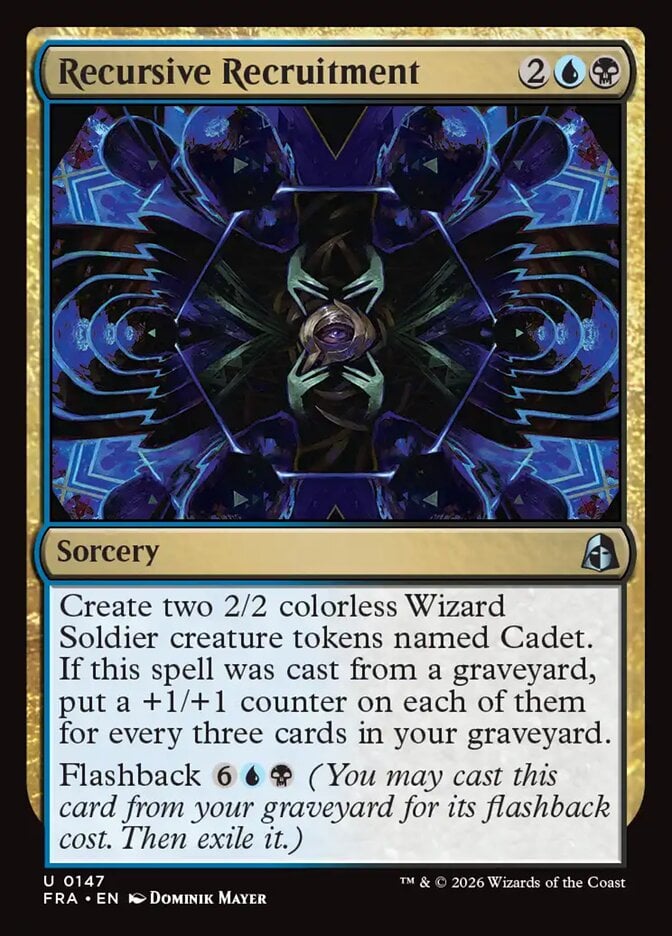
Recursive Recruitment is the #1 reason to care about milling yourself in this format. Its extreme power level is actually kind of unfortunate for Dimir, since it’s scooped up and splashed by BG players all the time. Thankfully, Recruitments isn’t the only game in town, as there are plenty of other nice graveyard bonuses including:
- Gallia, Tragic Host
- Proft, Sinister Mastermind
- Rewrite Regrets
- Theoretical Necromancer
- Null Summoner (hardly needs it, but even more broken with it)
- Uldaros Theorix (same with this)
- Blessed Ghoul
- Twinned Vision
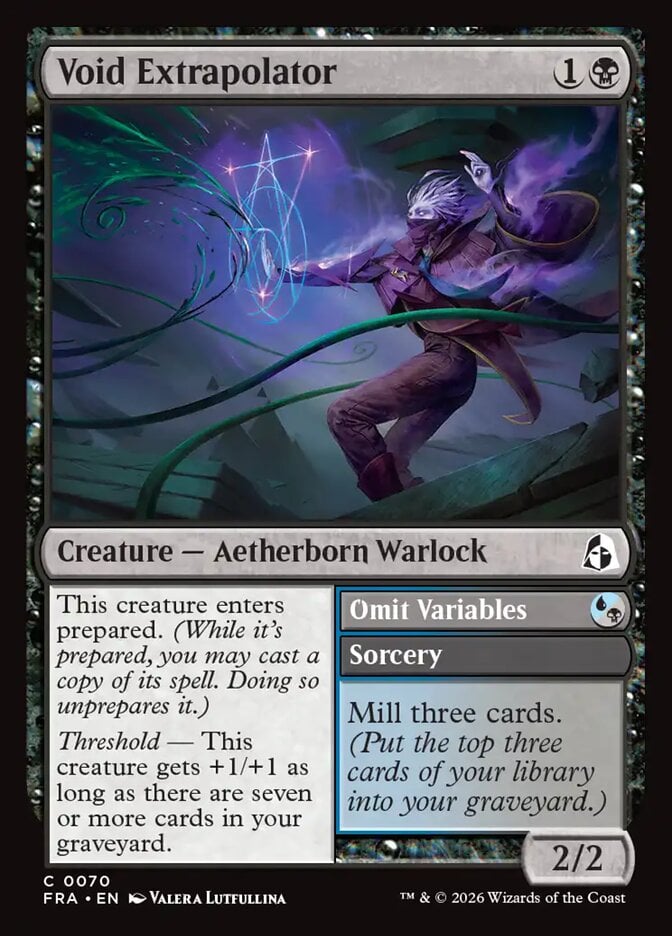
The more of these cards I have, the more willing I am to spam Omit Variables from cards like Paradox Shaper and Void Extrapolator.
Enablers
Paradox Shaper has to be one of my favorite cards for this archetype. While there’s thankfully no targeted mill in Reality Fracture (i.e., miserable cards like Riverchurn Monument), decking yourself is still a major concern when you omit too many variables. Paradox Shaper lets you circumvent this by being able to recycle your best spells, potentially letting you set up an unbeatable late game with careful planning.
Archetype Tips
- One payoff I didn’t mention was Fblthp, Impossibly Lost, a genuinely awesome win condition for self-mill decks!
- It’s possible to play Paradox Shaper in a deck that almost never wants to mill itself, such as this Sealed deck below. I was using the card purely as an “I can’t deck” piece/blocker here, and never cast “Omit Variables” once!
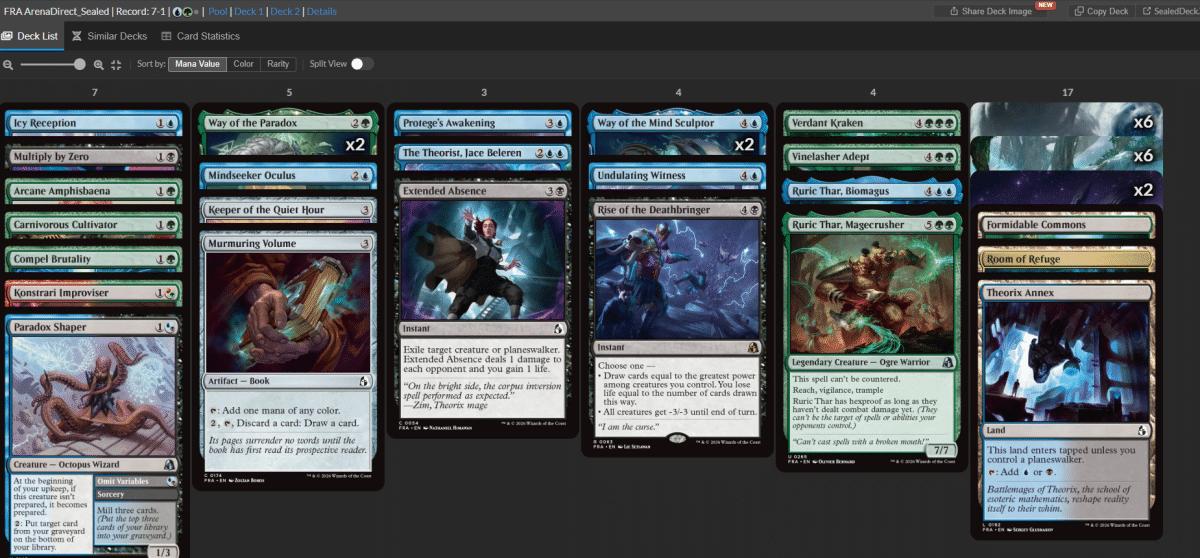
Trophy Example
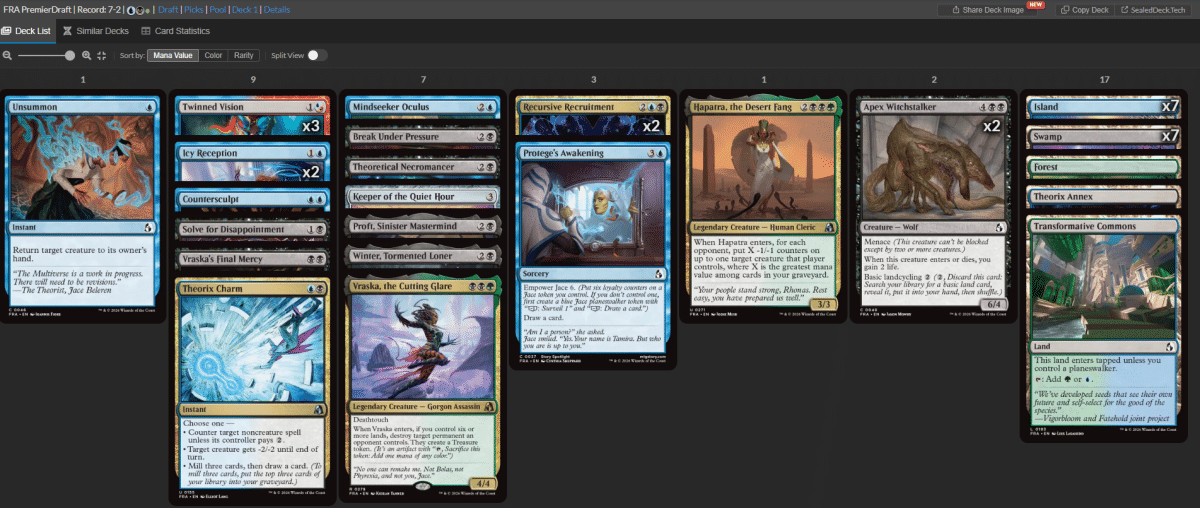
BG Graveyard
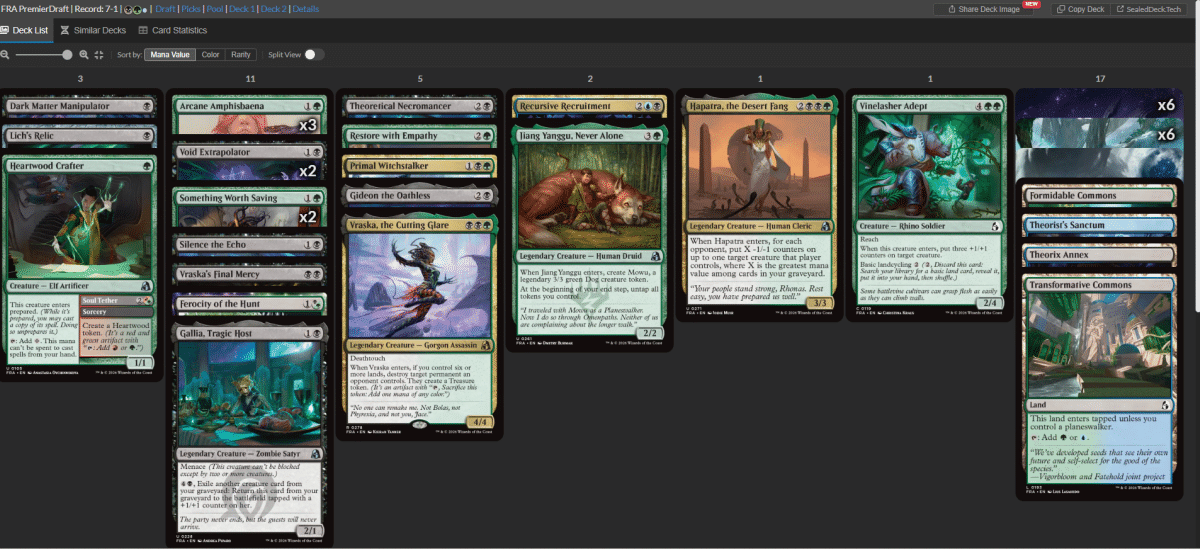
BG is the best of the non-Hexhaven archetypes, and like UB it benefits from Reality Fracture’s lack of counterplay to graveyard decks. BG’s graveyard also tends to be less demanding than UB’s, as cards like Hapatra, the Desert Fang barely need any support to be great.
Payoffs
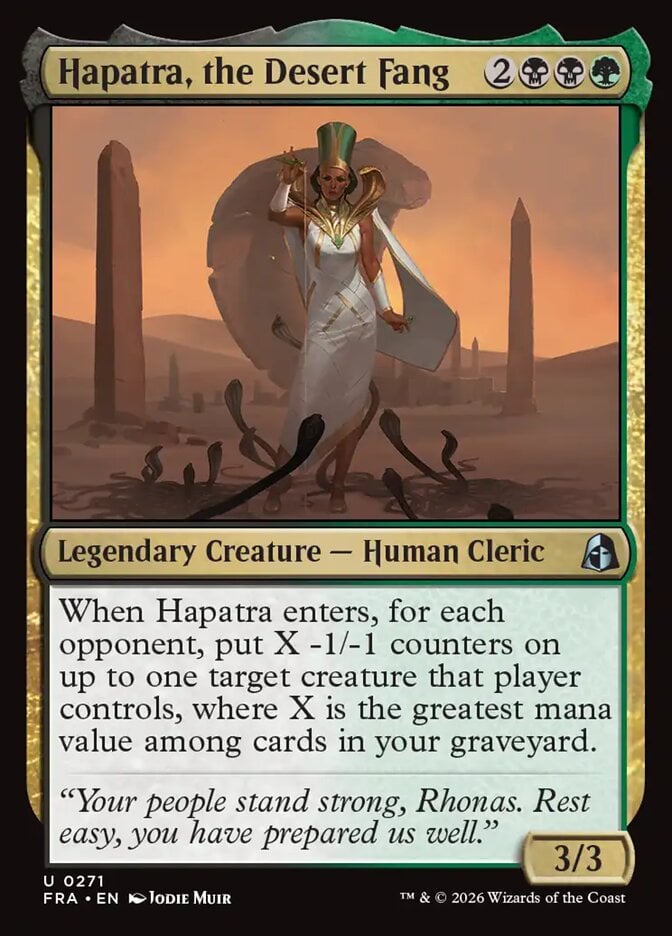
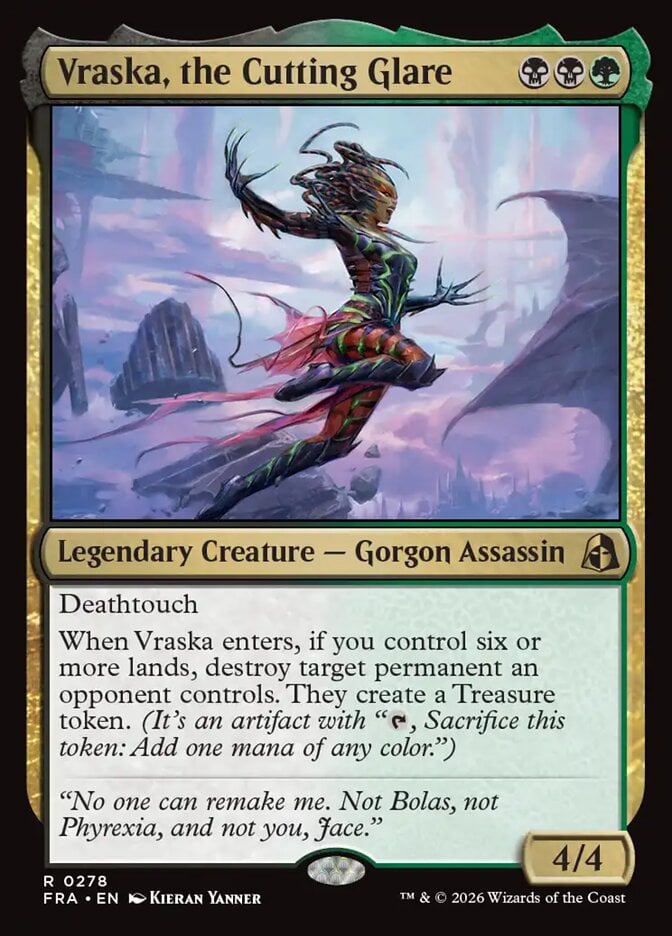
BG is fundamentally a “good stuff” deck that frequently splashes for the best cards from other colors. Synergies in this archetype are really unimportant compared to most archetypes in this set. Still, it doesn’t hurt to start with exceptional multicolor cards like Hapatra, the Desert Fang and Vraska, the Cutting Glare. Be sure to take and splash every Recursive Recruitment that you see too!
Enablers
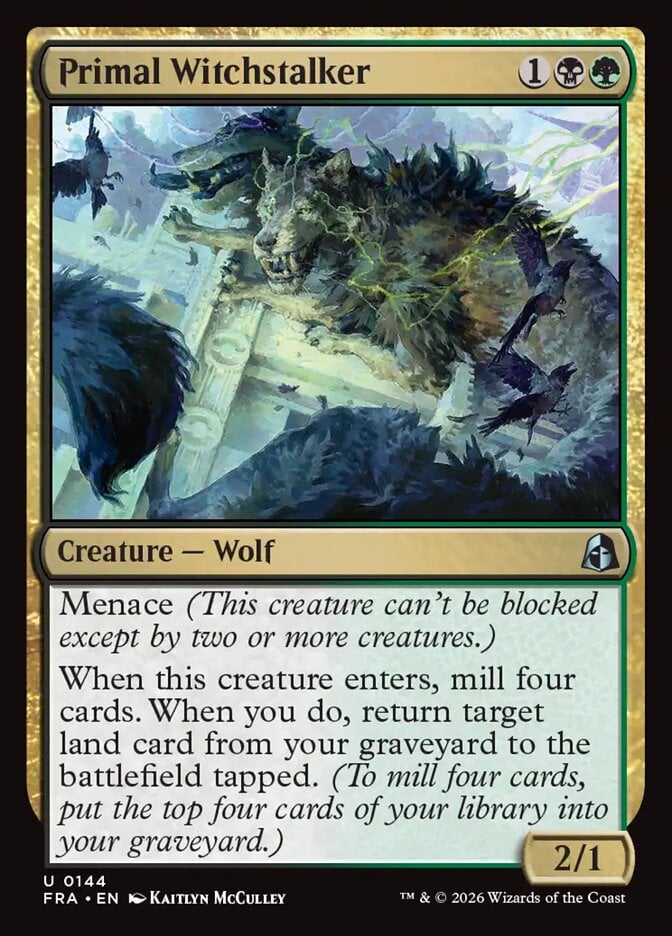
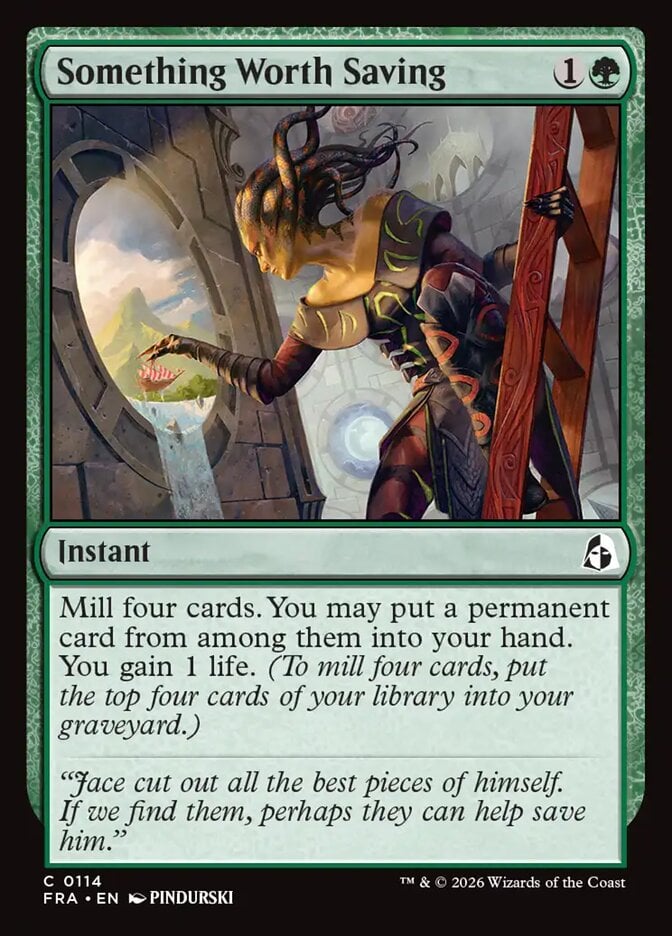
Primal Witchstalker will make your deck run buttery smooth and feels even better when you pair it with Something Worth Saving so that you never brick on lands, ever. The more of this stuff you have, the more you’ll want graveyard value cards.
Archetype Tips
- Ferocity of the Hunt can be a great trick in this archetype, as it’s very effective with “enters” value creatures like Rank Rat, Arcane Amphisbaena, and Primal Witchstalker. I even got someone with it on Vraska, the Cutting Glare in response to a removal spell once!
- As with UB, it’s possible to build BG decks without a ton of interest in their graveyard. Something Worth Saving is Impulse at worst though, and the graveyard synergies are completely safe to play in this format.
Trophy Example
RG Ramp
Giant creatures go brr! RG has a straightforward gameplan in this format, but it executes it with considerable effectiveness. It also has significantly more card advantage than it usually does, thanks to the empower Jace mechanic.
Payoffs
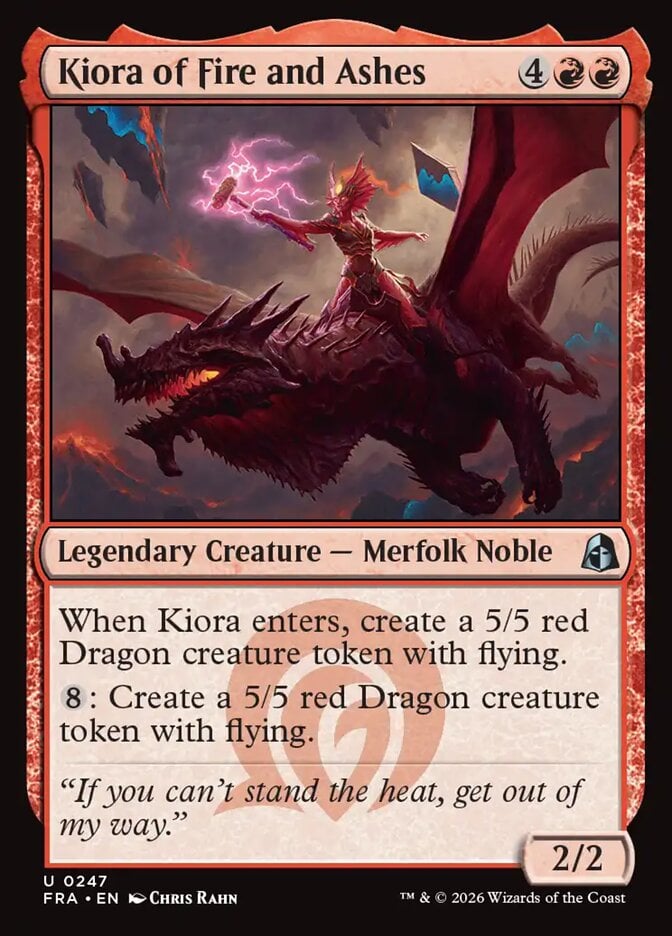
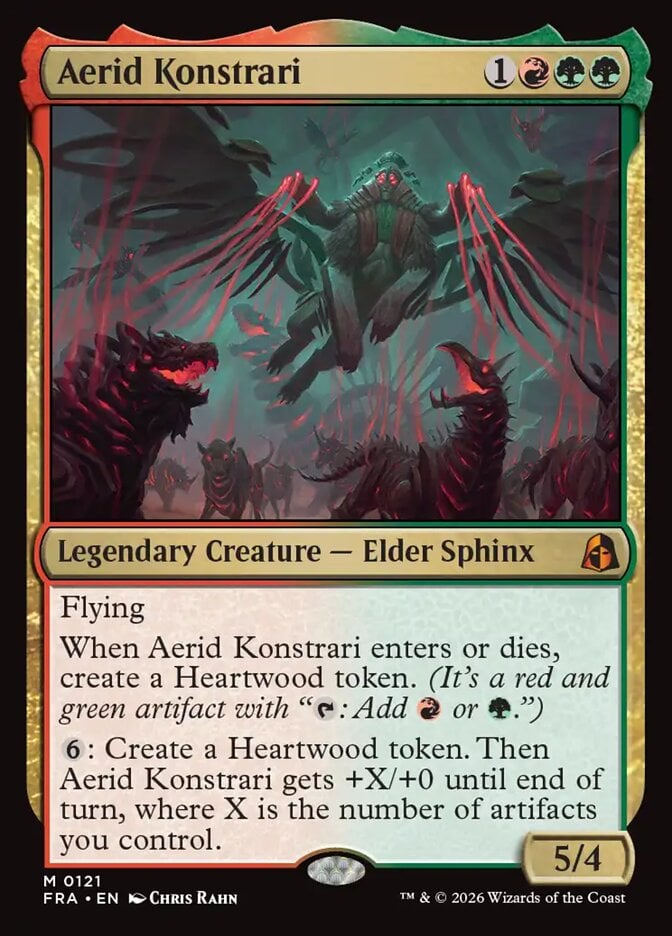
Craftwork Crusher has somehow felt even more broken than advertised, and it’s often flanked by Kiora of Fire and Ashes (the most mythic of mythic uncommons). Starting a draft with either of those often puts me into this archetype. Aerid Konstrari is even better if you’re lucky enough to see one, and it acts as a win condition and a guaranteed value spell all at once!
If you can’t find those, there are still some other good fatties available. Vinelasher Adept is solid (especially for a cycler), and Ruric Thar, Magecrusher often overperforms, too.
Enablers
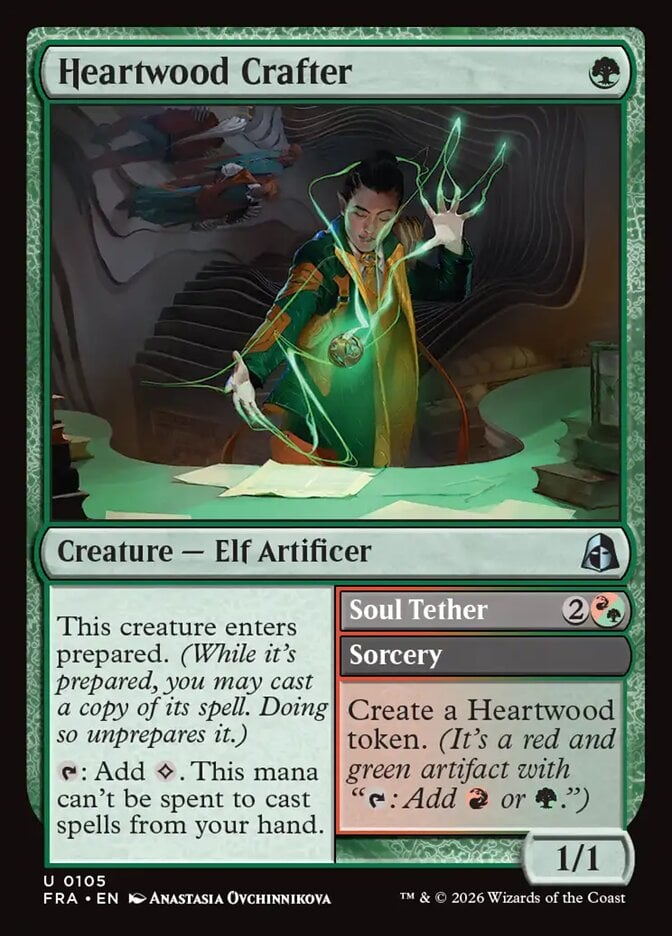
The chief enablers for this deck are of course cards that generate Heartwood tokens. Konstrari Improviser is the only common one, and it has played out well for me. Heartwood Crafter is even better, as Forest + Heartwood Crafter is arguably the best opening available in the entire format. Woodwork Prodigy is worth including too, but it’s slow enough that I prefer the other two over it.
Otherwise, focus on solid defensive creatures (Arcane Amphisbaena, Pia, Determined Rebuilder) and premium red removal like No Admittance and Wrath of the Bloodmane.
Archetype Tips
- Konstrari Charm has felt out of place in the average RGx deck. The mode isn’t worth a card, and RG is often playing from behind while it sets up its Heartwoods, making the efficient combat trick mode ineffective.
- Other than Tenured Tethermage, all Heartwood creators make create their tokens untapped. Take advantage of this to double spell with cheap removal spells and blockers so you don’t fall too far behind before Craftwork Crusher arrives.
Trophy Example
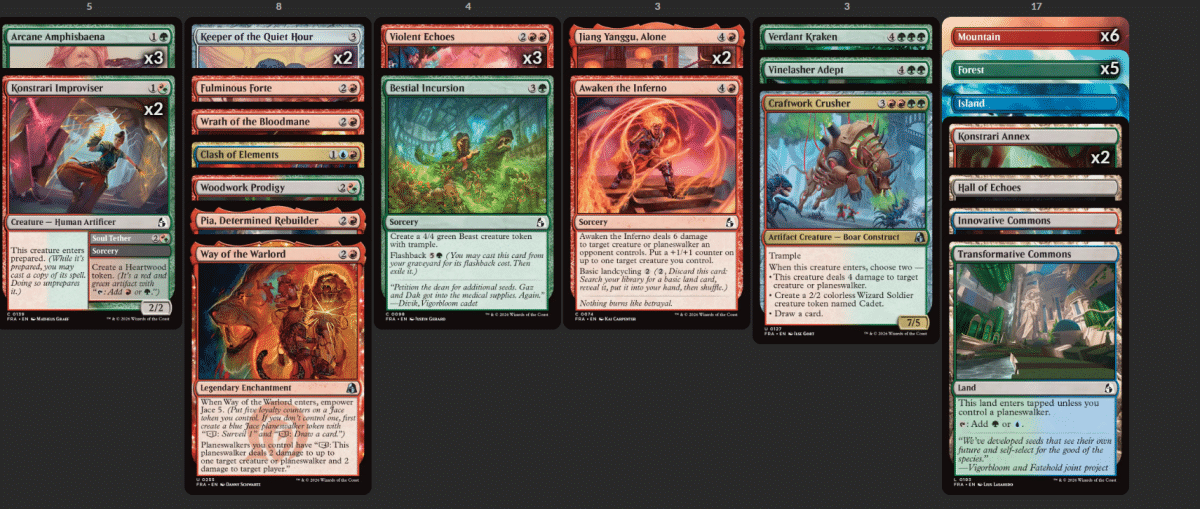
UR Spells
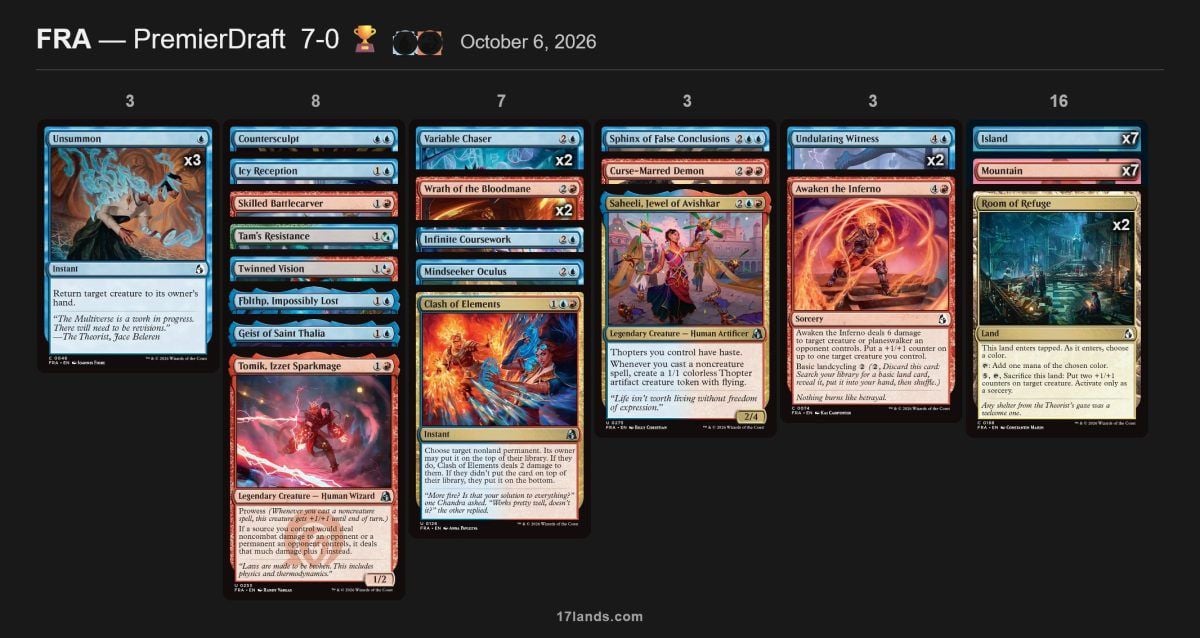
Izzet has pleasantly overperformed in this set. Noncreature spells in Reality Fracture and generally excellent, and it doesn’t hurt that both of Izzet’s hybrid uncommons have been quite good.
Payoffs
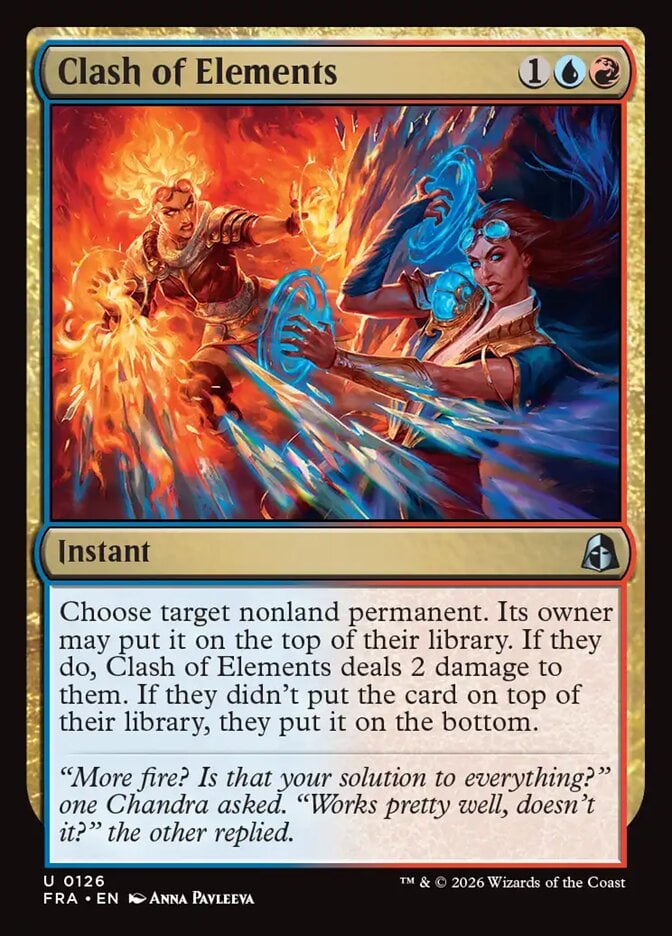
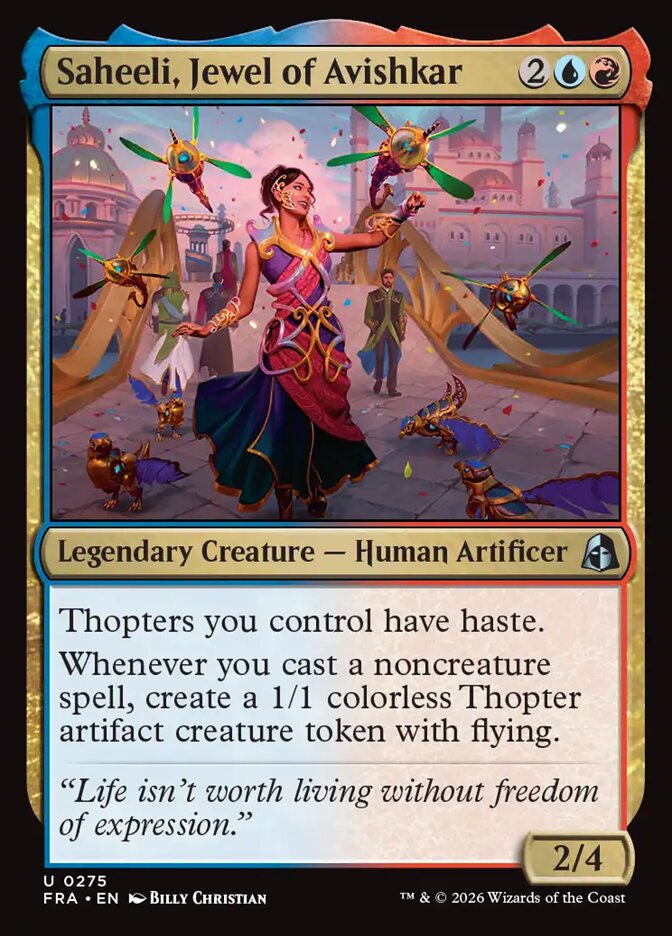
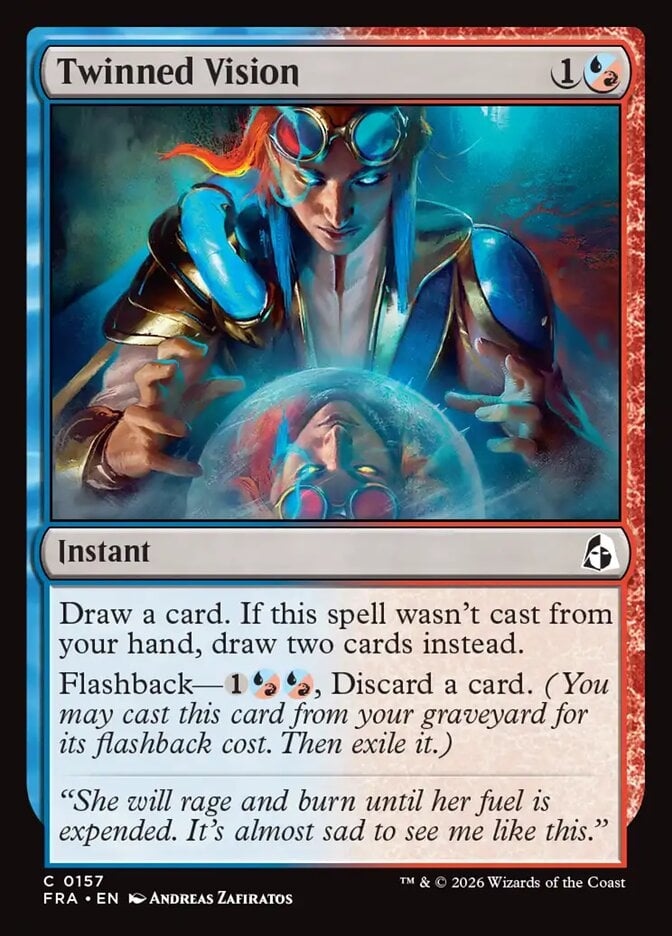
The best reasons to be Izzet specifically are blue/red bombs, Clash of Elements, and Saheeli, Jewel of Avishkar. Your typical UR deck is a fairly controlling deck with a strong tempo streak, that seeks to take control of the game early and then go on the attack at a key moment. Prowess creatures like Variable Chaser and Cryotheory Adept play well in this archetype, as do cheap spells like Unsummon and Twinned Vision.
Enablers
UR doesn’t really have a strict “payoff”/”enabler” format like other archetypes do, and it enjoys a great deal of flexibility as a result. Still, you could consider any good noncreature spell an enabler for this deck, especially as far as Saheeli, Jewel of Avishkar is concerned.
Archetype Tips
- Unsummon is the quintessential Izzet spell. It can save your own creatures, blow out combat tricks, buy valuable time against threats, and more.
- Twinned Vision is exceptional here too, since it’s a cheap cantrip, a source of long-term card advantage, and a great way to hit land drops.
- Never put a token on top against Clash of Elements, as you’ll take 2 damage for literally no reason!
Trophy Example
GW Lifegain
GW is a straightforward archetype with one of the simplest payoff + enabler loops in the format. Despite having impressive creature sizing through synergy, it often struggles against too much removal/card advantage.
Payoffs
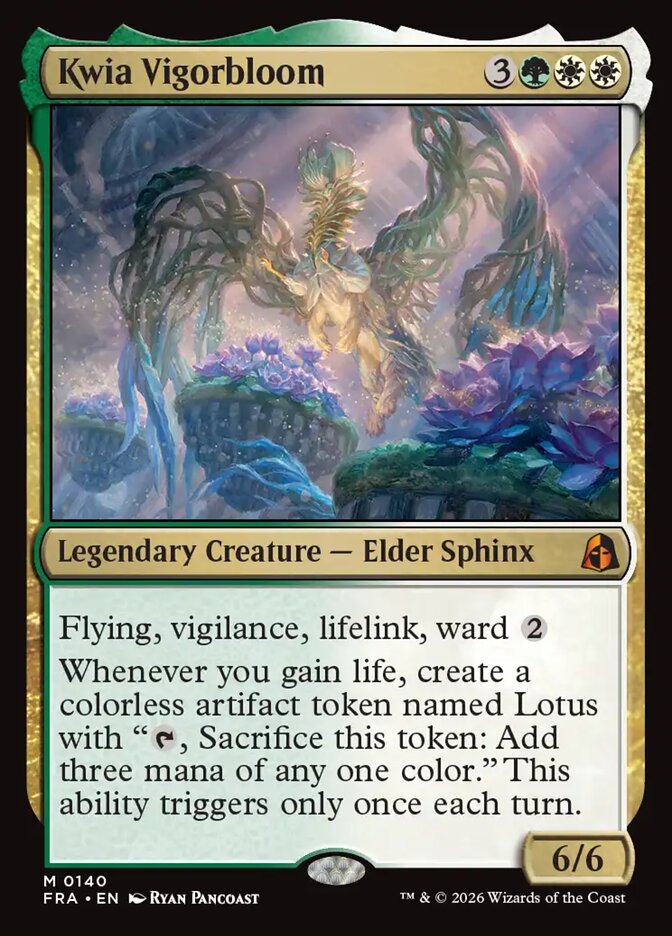
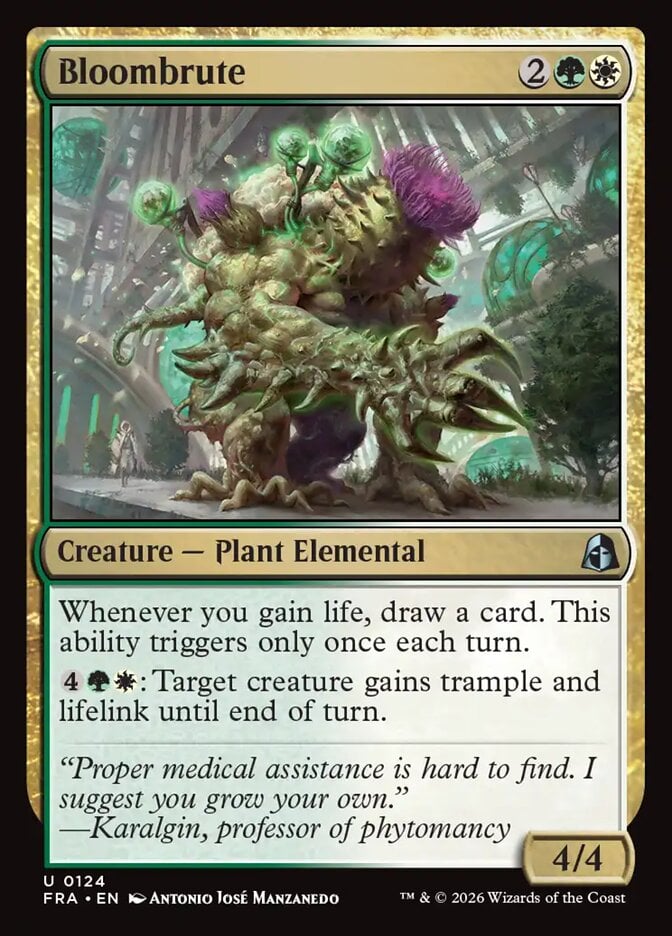
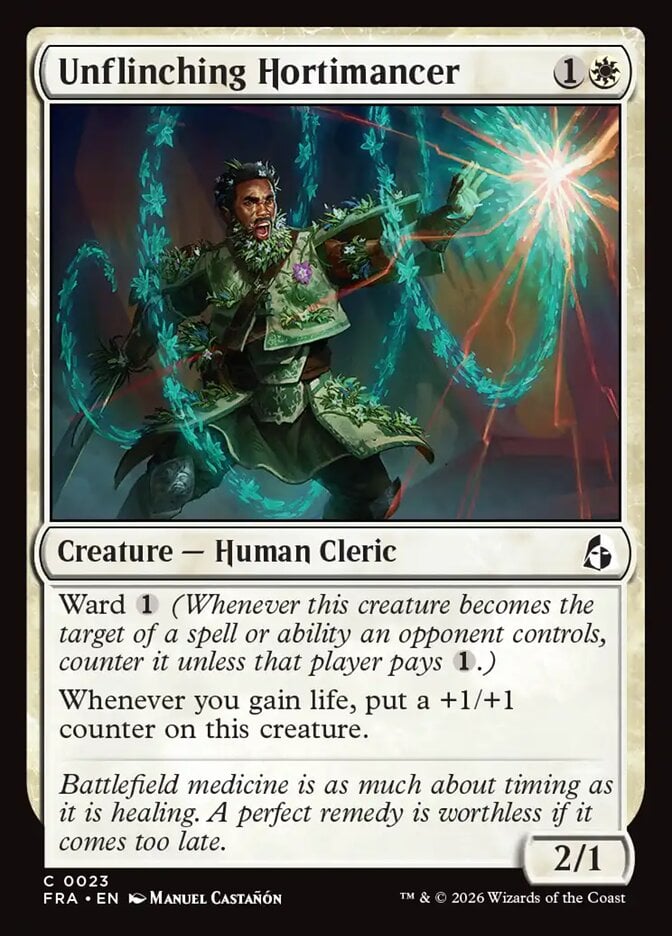
The crux of GW is of course lifegain payoffs. The primary ones that exist in this format are:
- Kwia Vigorbloom
- Ajani Resolute
- Enlightened Confidant
- Lyra, Archangel of Dawn
- Bloombrute
- Titanbones, Towering Heart
- Unflinching Hortimancer
Hortimancer and Titanbones are a bit vulnerable to justify forcing this theme, but they do great work once you’re already inside of it. I tend to move into GW primarily from the higher rarity cards and Bloombrute, or late excellent support cards like Vigorbloom Charm.
Enablers
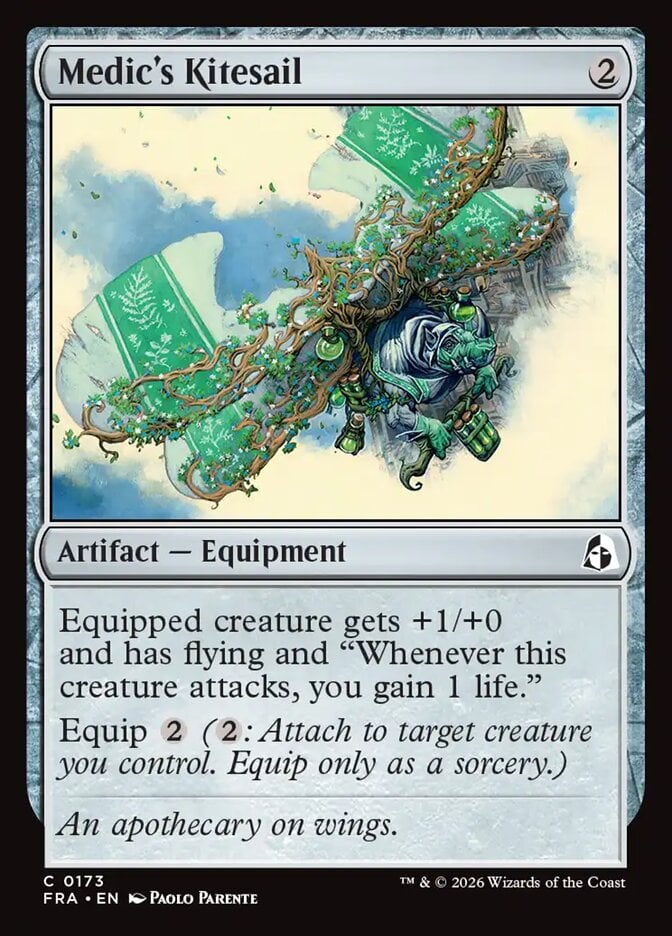
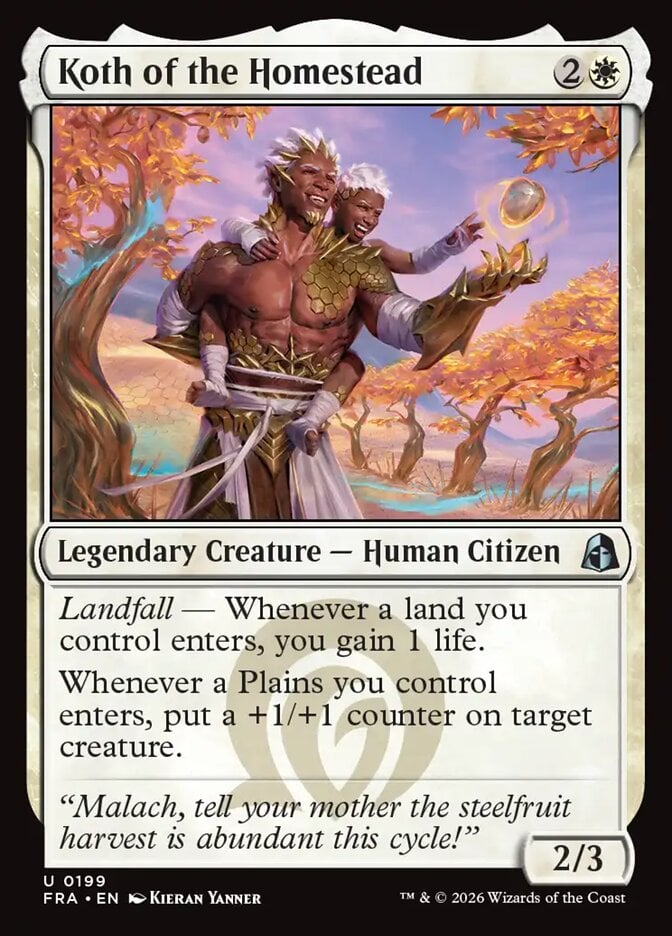
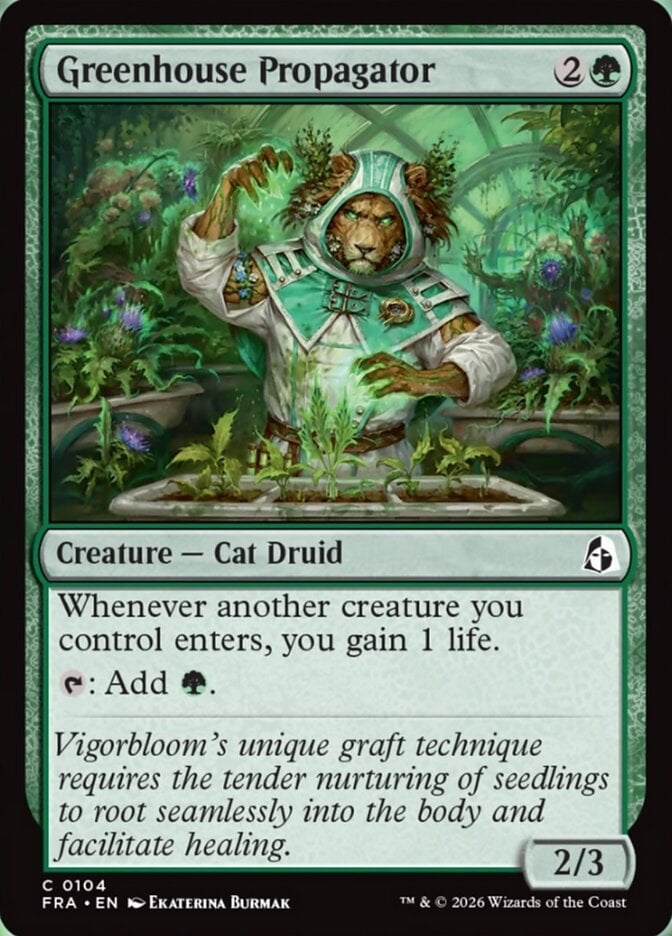
Lifegain is plentiful in Reality Fracture, which is part of the reason why games are going so long. You can get repeatable lifegain from many cards including:
Archetype Tips
- Medic's Kitesail is one of the best cards for GW. I’d always look to play at least 1-2 copies, especially when you have Hortimancer/Titanbones. Kitesail is your key inevitability tool versus removal-heavy decks, as it forces them to kill almost every creature you play long term.
- Careful sequencing is required with this archetype to get the most out of all your lifegain payoffs.
- While repeatable lifegain is definitely best, it also doesn’t hurt to have incidental lifegain for even more triggers! I often splash black in this deck for that reason. Sanctum Lurker and Extended Absence do excellent work with Bloombrute.
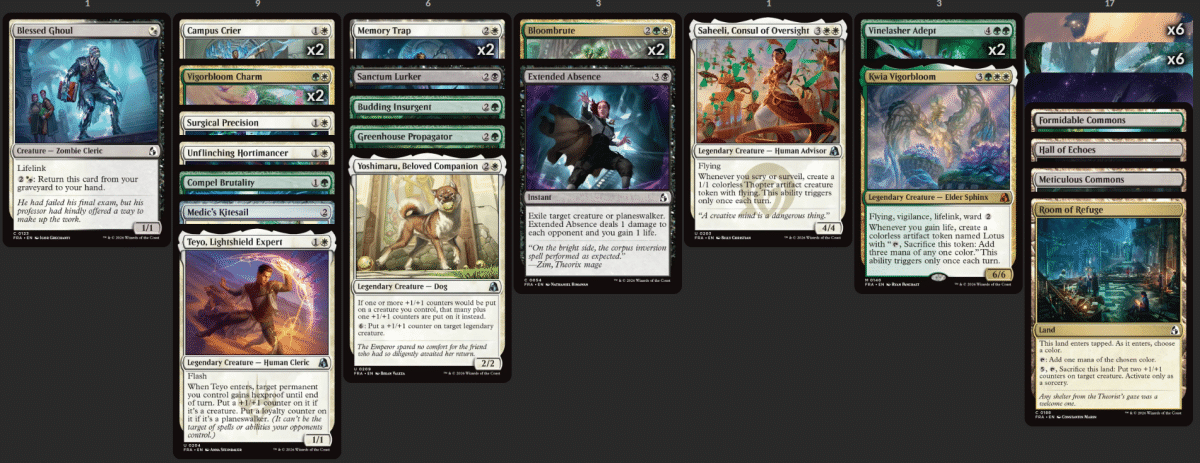
Trophy Example
GU Empower
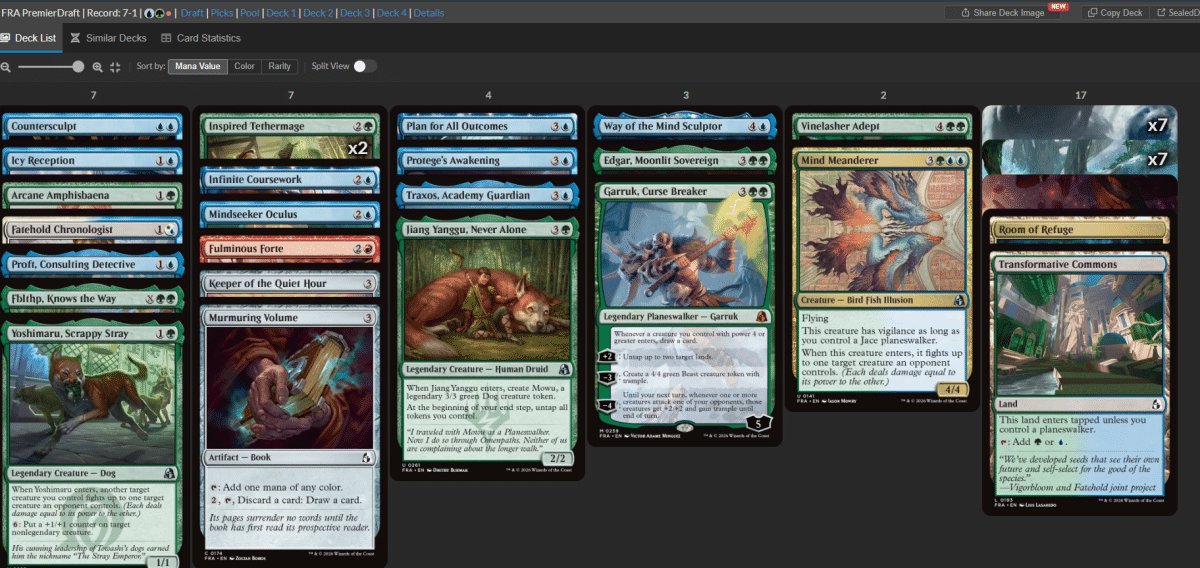
GU is doing normal Simic things in this set as primarily a “do-nothing” style of deck that loves to splash other colors. GU’s focus on the empower Jace mechanic is well placed, as frequently empowering Jace is an easy way to draw two cards every turn!
Payoffs
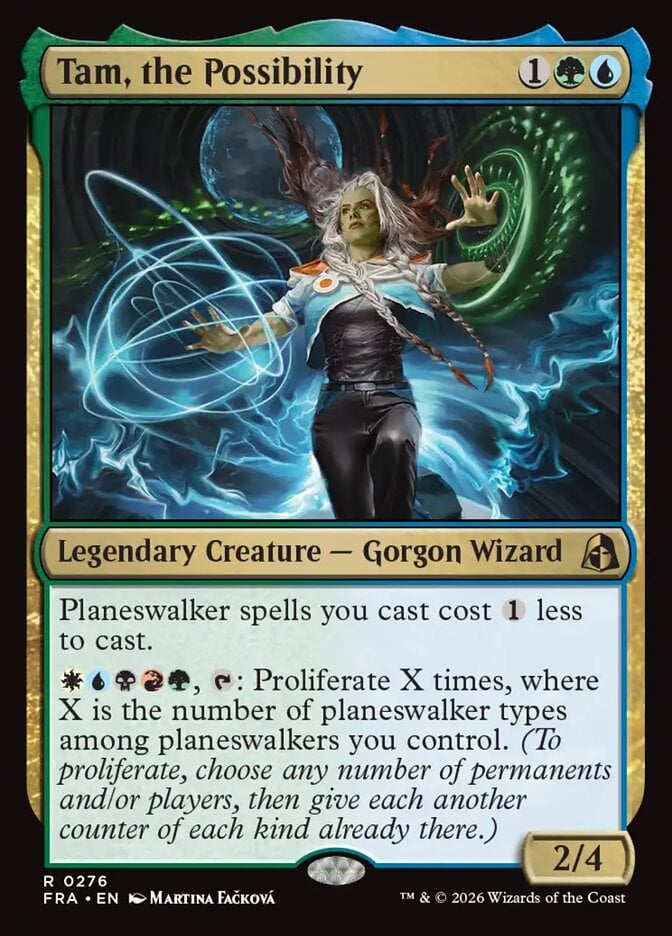
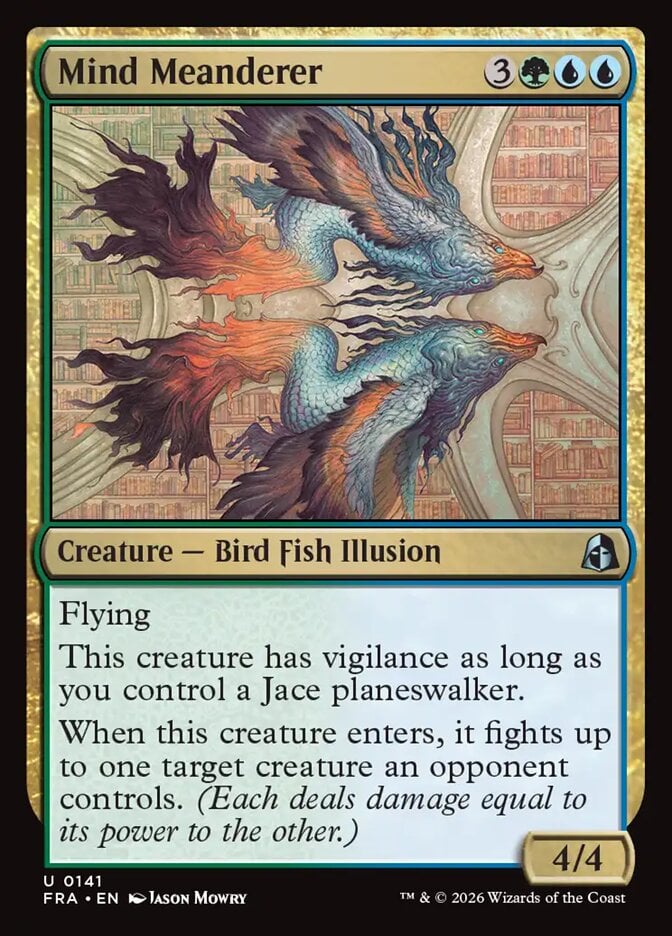
One unfortunate thing about this color pair is that its multicolored rares are among the worst in the set. Tam, the Possibility is a glorified vanilla 2/4, and Entrust the Spark is absurdly situational. Thankfully, it does has two solid multicolor uncommons in Mind Meanderer and Kiora of Salt and Sand, both of which I’ve liked in this deck. Meanderer is more generically powerful (and often gets taken to be splashed by other blue players), while Kiora is more of a hard empower payoff.
Speaking of empower payoffs, this is the deck most likely to splash a bunch of “Way of” enchantments. Not every Way is friendly to this approach though; I’d only bother with the following enchantments, and in this order:
- Way of the Mind Sculptor
- Way of the Paradox
- Way of the Healer
- Way of the Wildspeaker
- Way of the Warlord
- Way of the Cryomancer
Way of the Deathbringer won’t have the synergies it needs to be good, Way of the Pyromancer makes no sense on the splash, and Way of the Mentor/Way of the Necromancer are just rubbish.
Enablers
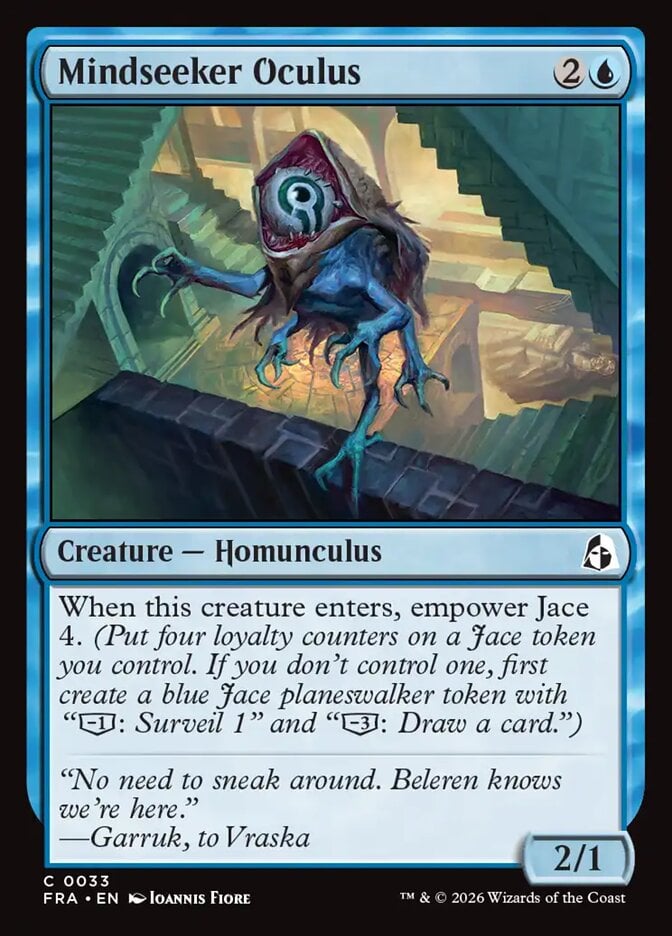
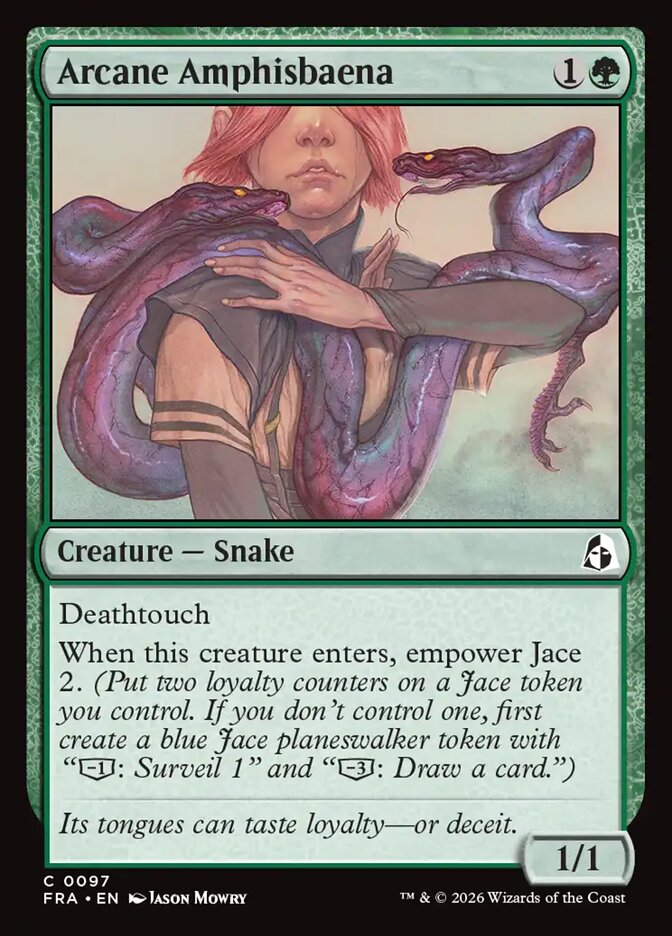
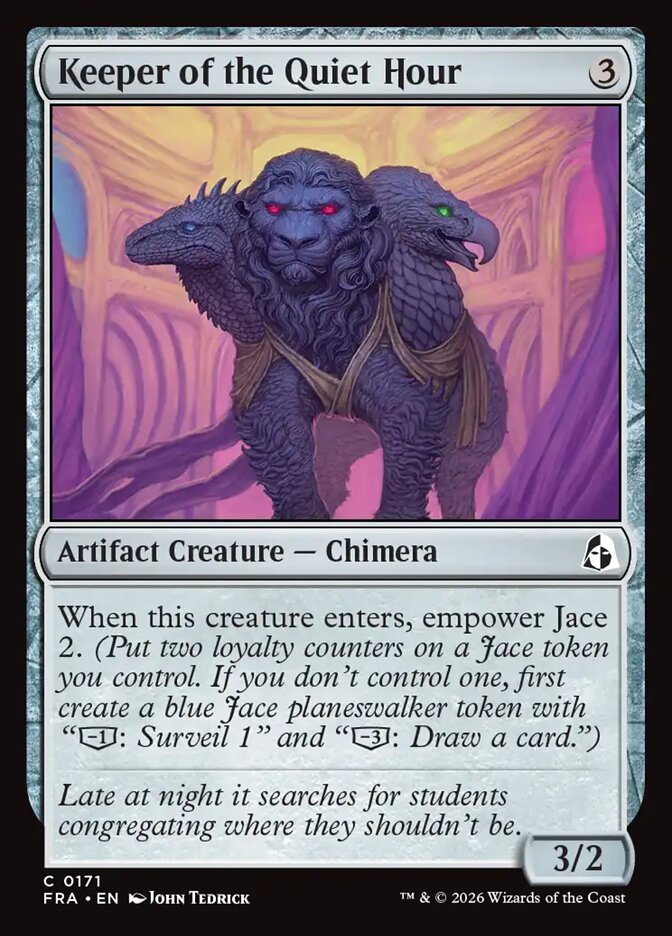
All of the common “empower” creatures are amazing here. Mindseeker Oculus is obviously the best one, but I’m never saying no to Arcane Amphisbaena or Keeper of the Quiet Hour either. Protege's Awakening also deserves a shoutout for being the beefiest empower common available. Try to sit behind a wall of deathtouchers and fodder creatures while you ride Jace to victory!
Archetype Tips
- Long-term planning is essential to maximize the empower Jace mechanic. Avoid surveilling if you aren’t desperately looking for lands/spells so that you can -3 as many times as possible!
- You’ll often need to do some simple math to figure out how much empower you’ll have for future turns. Look for common sequences like Arcane Amphisbaena, -1, then Keeper of the Quiet Hour + draw a card.
- Inspired Tethermage is a generally mediocre common that does its best work here, acting as both a mana sink and scaling threat.
Trophy Example
BR Aggro
And now we’ve arrived at what I call the aggro dead zone. I really haven’t loved attacking in this format, although it’s definitely an option if you have a wide open seat. BR faces a number of issues:
- There are very few Vicious Verse cards
- Many of the ping payoffs are lackluster
- BR exists in a format with a fair amount of lifegain, even outside of GW decks
- Jace tokens force you to split damage sometimes (or be punished for not doing so)
Payoffs
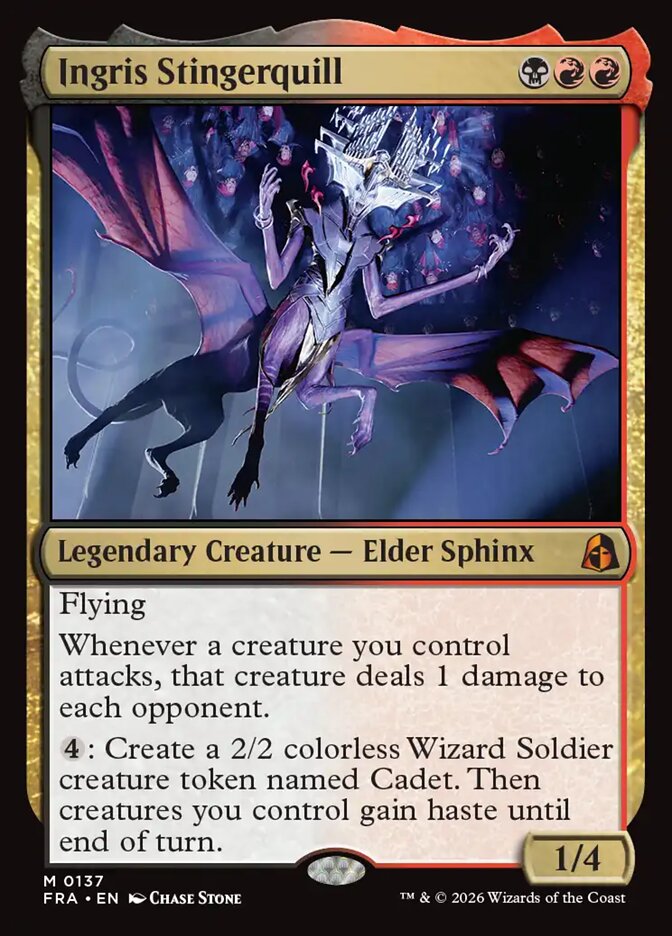
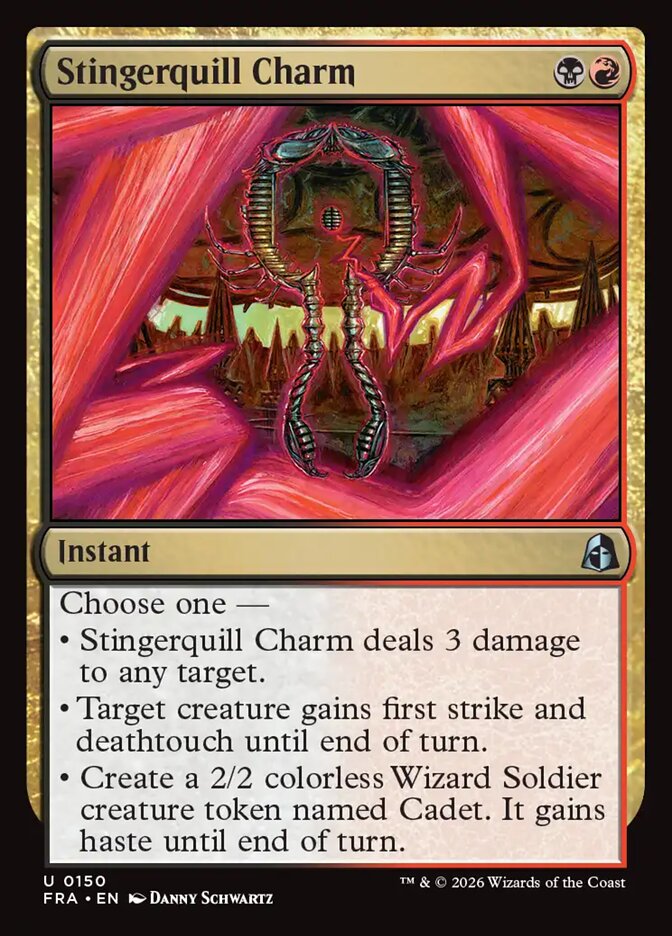
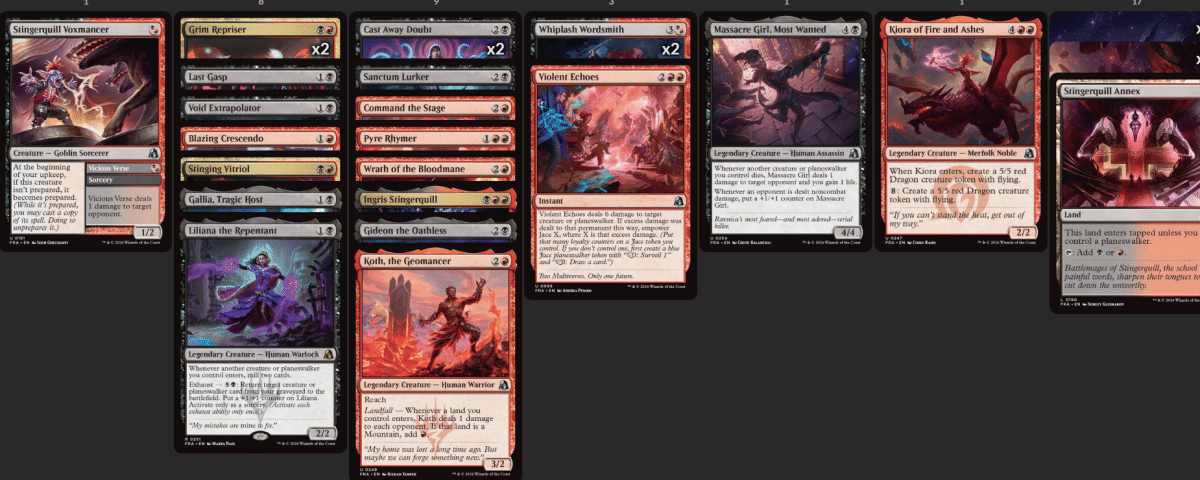
It’s not all bad news for Stingerquill though. Ingris Stingerquill is easily the best reason to be in this archetype, and if everyone is drafting value piles, you could see one surprisingly late! Stingerquill Charm is also excellent. As for the ping/payoff loop, here are your available ping payoffs:
- Master of Barbs
- Grim Repriser
- Tomik, Izzet Sparkmage
- Massacre Girl, Most Wanted
- Command the Stage
- Whiplash Wordsmith
Tomik is the most exciting payoff of the bunch. It goes off with Fulminous Forte and any repeatable ping effect, including busted rares like Gideon the Oathless and Sanctum Lurker. Command the Stage is also intriguing, both as a card advantage tool and a potential way to go over the top of value decks. I haven’t had great experiences yet, but try pairing it with Hallway Heckler (which is both a rummager and pinger) for best results.
Enablers
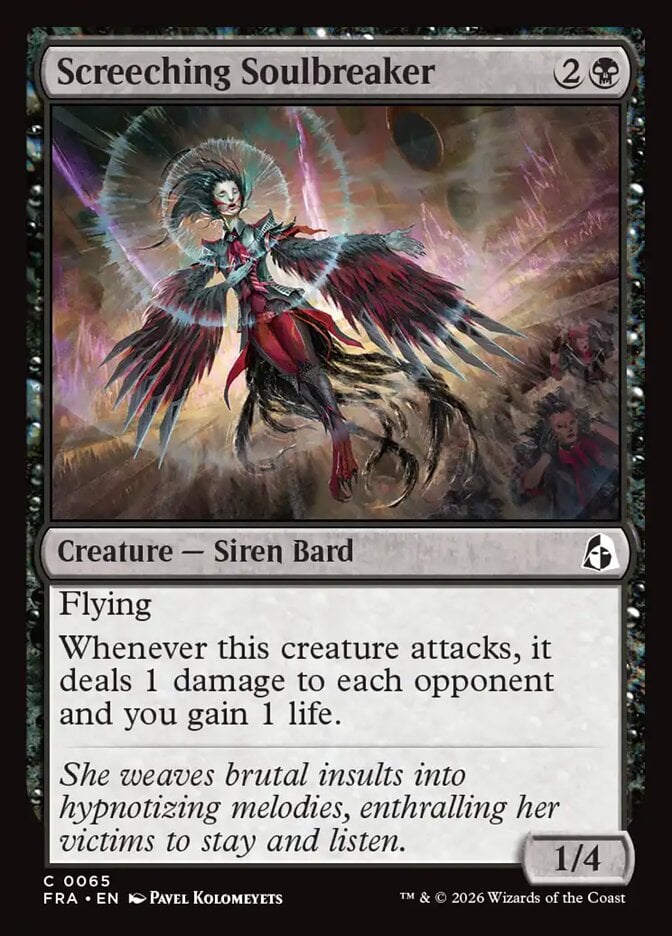
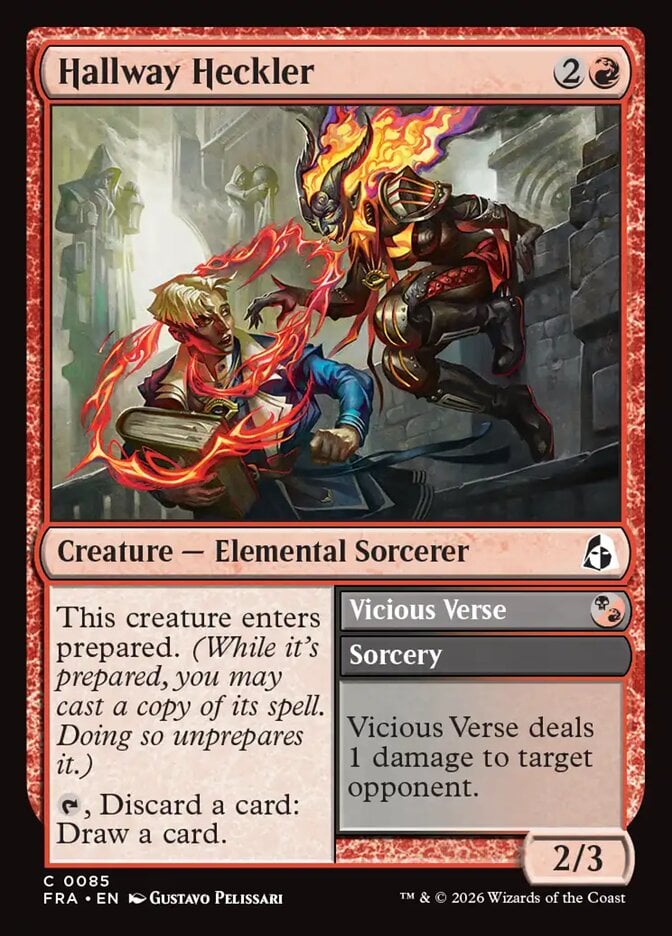
Pinging in this set has felt more difficult than expected, although it certainly isn’t impossible. Here are some cheap ways to deal little bits of damage consistently:
- Stingerquill Voxmancer
- Screeching Soulbreaker
- Koth, the Geomancer
- Cast Away Doubt
- Whiplash Wordsmith
- Extended Absence
- Hallway Heckler
Voxmancer is easily the best of the bunch, and a legitimate reason to consider drafting Stingerquill if you see multiples. Whiplash Wordsmith clearly isn’t an amazing card, but this is the only archetype that it’s ever felt playable in.
Archetype Tips
- Most BR decks make great use of the prowess mechanic, thanks to Vicious Verse and cheap removal spells.
- I haven’t drafted too much BR yet, but I was very impressed by Cast Away Doubt in the trophy deck below. Your life total will rarely be under duress, so take advantage of that and draw some cards while enabling your synergies!
- BR makes phenomenal use of cards like Gideon the Oathless and Sanctum Lurker, which are generically amazing anyway. If you start a draft with something like that and see late ping support cards, consider moving in.
- Skilled Battlecarver doesn’t have any direct ping synergy, but it’s one of the best 2-drops available for red decks that care about attacking.
Trophy Example
WB Sacrifice
WB is a failed promise of an archetype, for the most part. Reality Fracture is generally low on fodder and low on reasons to care about having fodder, although there are a couple of cool exceptions.
Payoffs
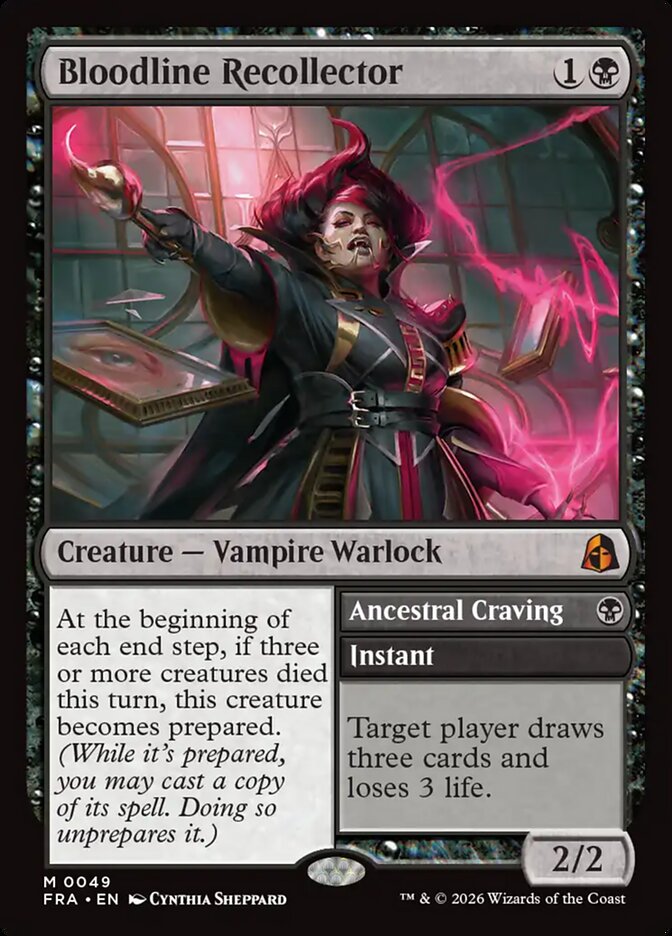
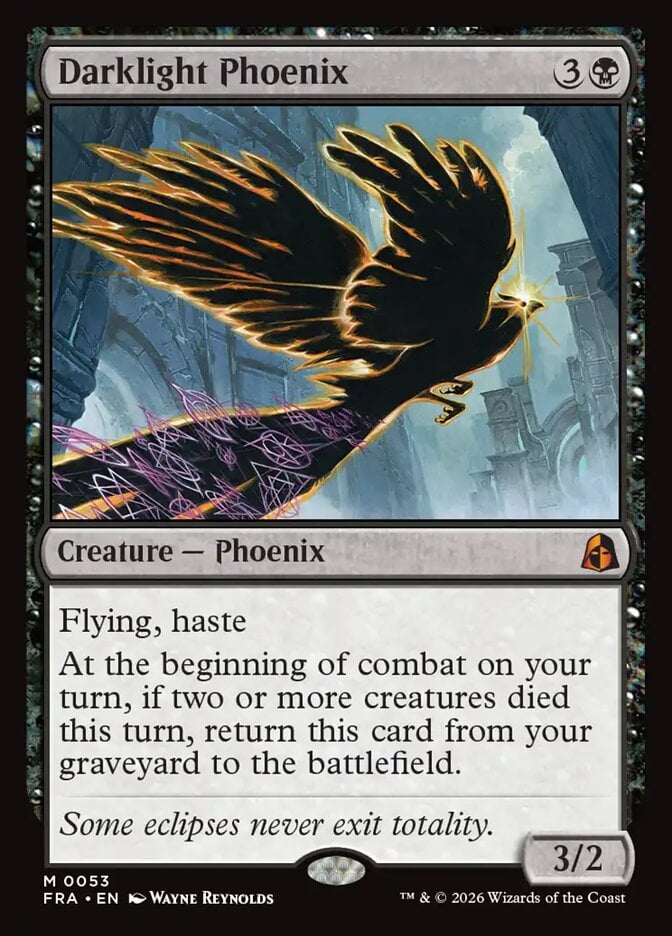
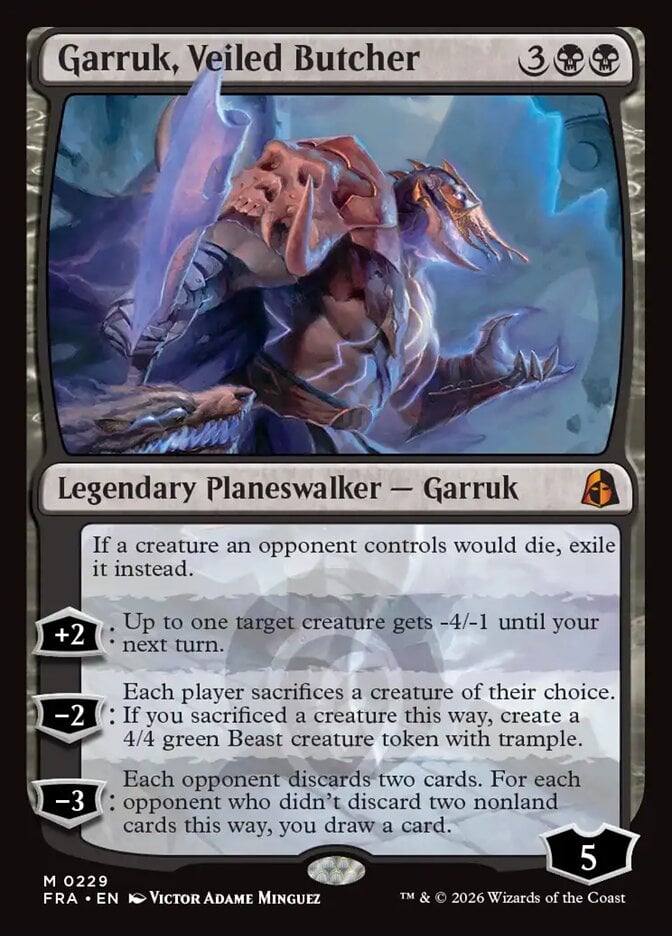
Bloodline Recollector and Darklight Phoenix are two mythics that are soft-tied to this archetype. The sacrifice subtheme is perfect for getting their death conditions online. You could also consider Garruk, Veiled Butcher a sacrifice payoff if you’d like, although it’s of course just a broken bomb rare that every deck will play.
Most of the more reliable payoffs for being WB are uncommons. Here are the primary ones:
There isn’t really too much to go off. I’ve liked Way and Winter more than Edgar, which I’d always try to table due to how narrow this archetype is. One card I haven’t mentioned yet is Twisted Fates, which is excellent but a little off-theme and often splashed by other white drafters anyways. I’d still always play it here of course, but you won’t regularly see it Pick 12 like Edgar, Ancient Bloodlord.
Enablers
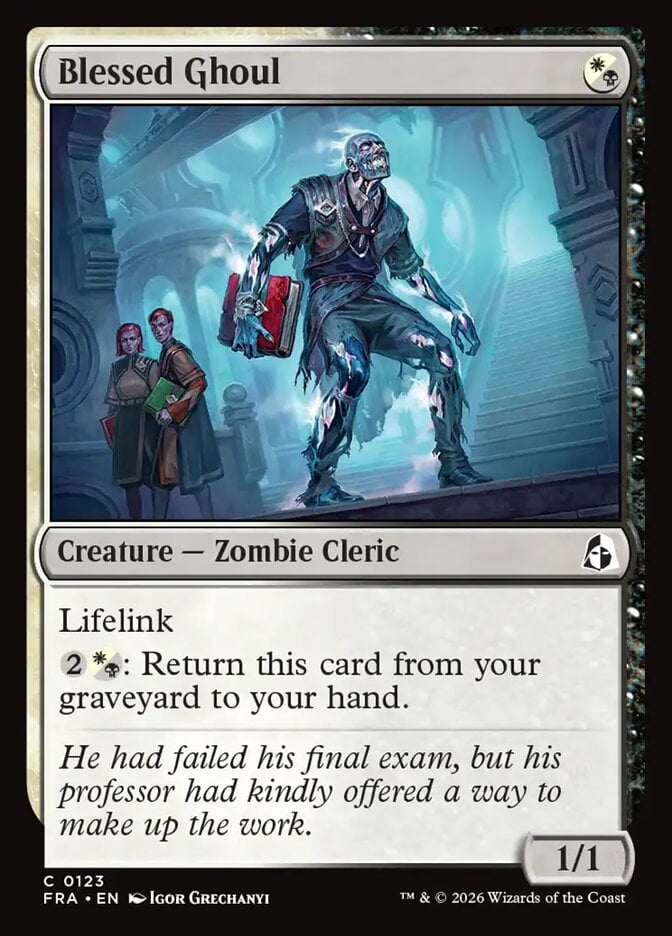
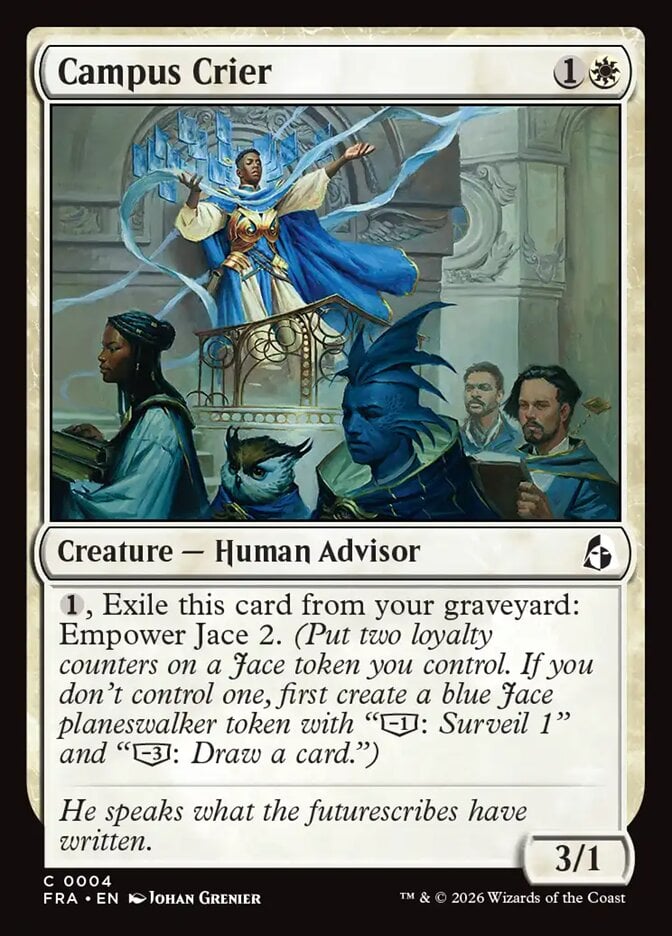
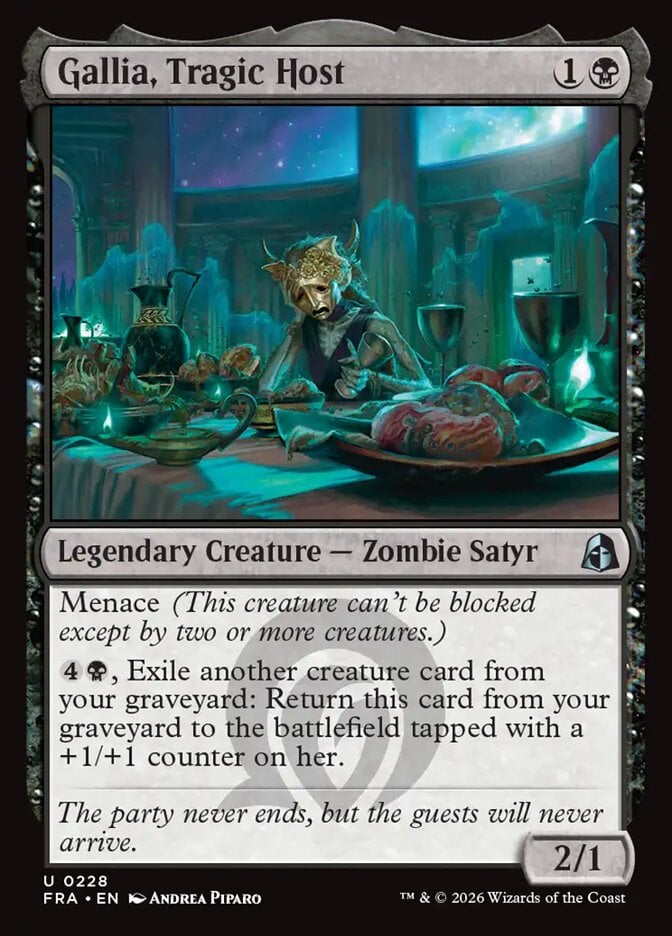
Quality fodder in Reality Fracture is tough to come by as well. Your best options include:
- Blessed Ghoul
- Rank Rat
- Campus Crier
- Fatehold Chronologist
- Gallia, Tragic Host
- Teyo, Lightshield Expert
Silence the Echo is the only sacrifice common available, and it’s the best enabler available for Darklight Phoenix in the set.
Archetype Tips
- Don’t forget that Winter, Tormented Loner and Silence the Echo can sacrifice planeswalkers! Use low-loyalty Jace tokens created by cards like Keeper of the Quiet Hour and Solve for Disappointment to your advantage.
- Winter only forces your opponent to sacrifice creatures, not planeswalkers too. You won’t have to worry about their 1-loyalty Jace token ruining your plans.
- WB does a great job of incidentally enabling this set’s lifegain synergies, so Bloombrute is a card I could see splashing frequently here.
- You can always ignore sacrifice themes in this deck too, due to how narrow they are. Simply playing your best white and black cards (while splashing the usual bombs/removal) may get the job done.
Trophy Example
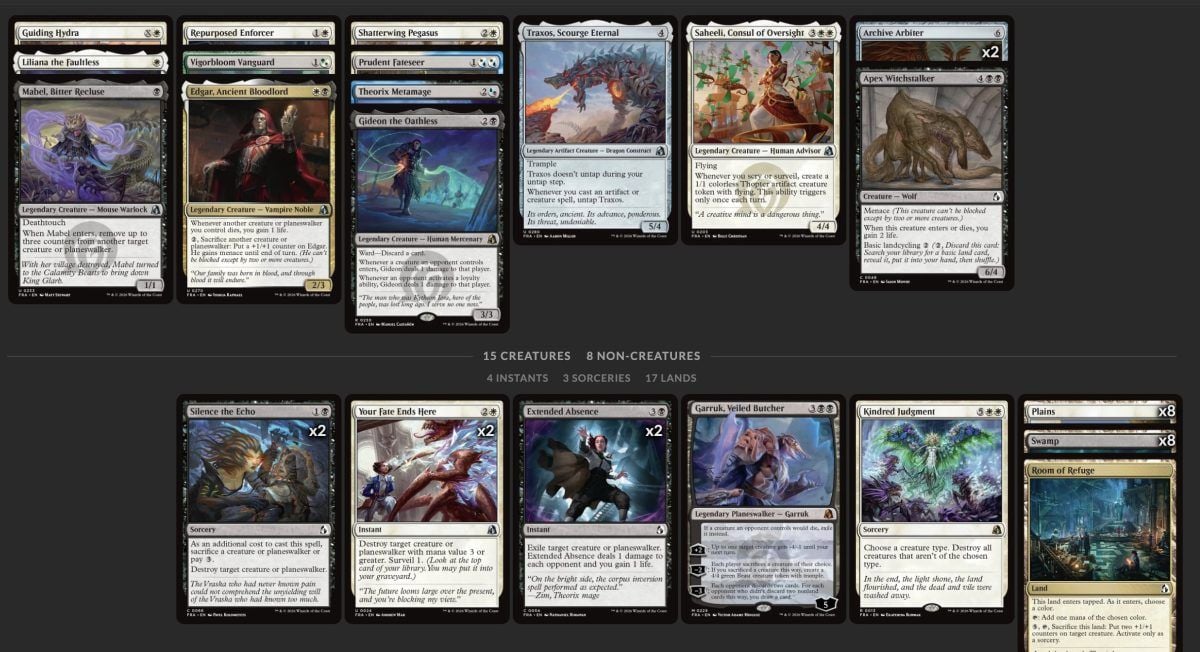
RW Aggro
RW’s aggro woes are significantly more pronounced than Rakdos. While BR’s ping/payoff loop feels a little underbaked, RW’s +1/+1 counters sales pitch is more or less totally fraudulent. +1/+1 counter synergies in Reality Fracture are severely unimpressive, and many of the enablers stink too.
Payoffs
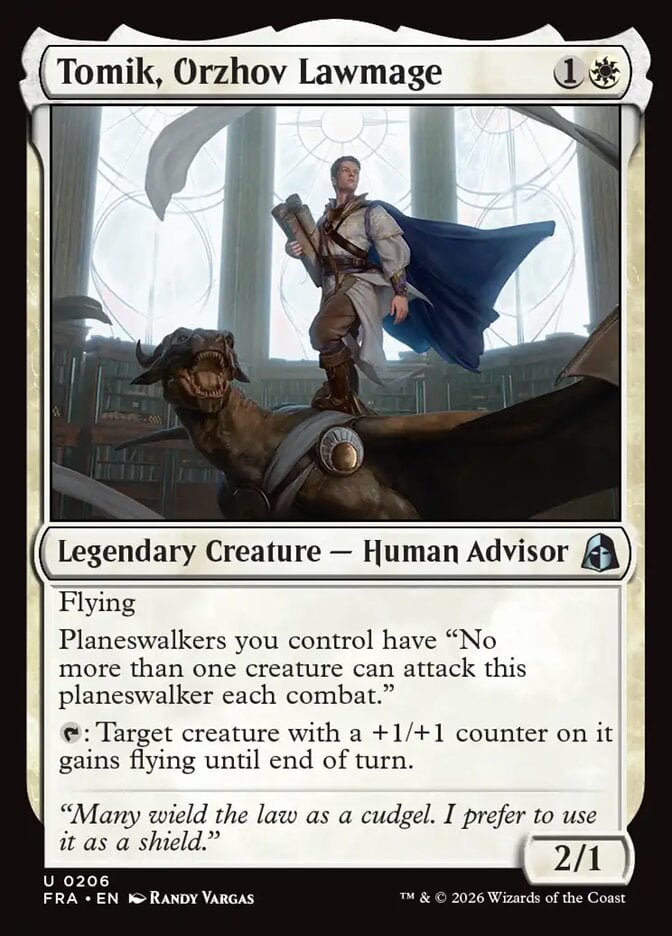

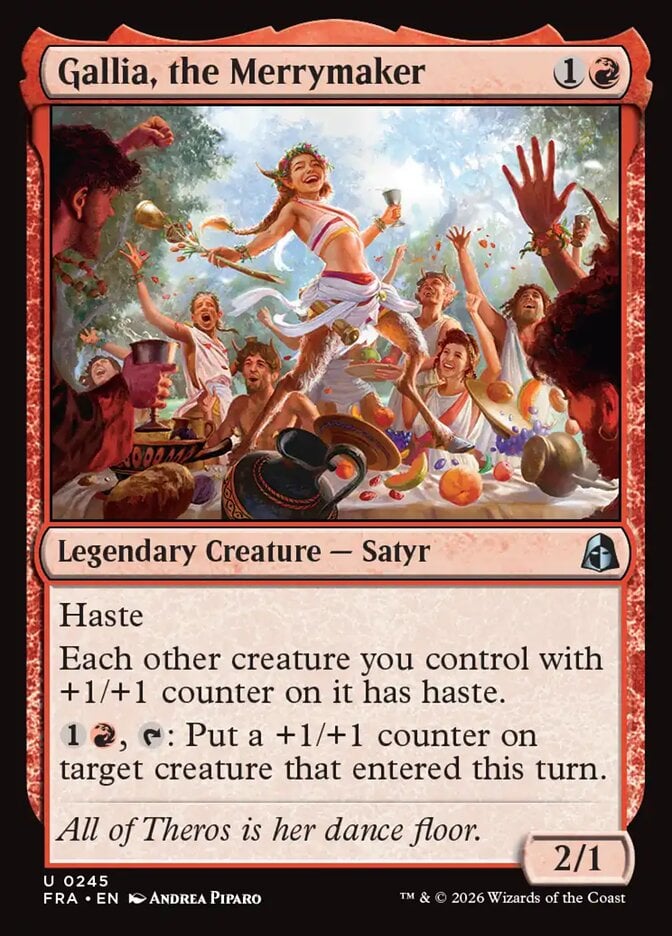
Let’s briefly cover the +1/+1 payoffs in Reality Fracture:
And… that’s all! Of these cards, only Warrior's Blades is actively great. Tomik is a decent aggressive 2-drop at least, while Gallia and Yoshimaru are generally pretty awful. Gallia has terrible sizing versus many cheap creatures in the format (including Blessed Ghoul, how embarrassing), and Yoshimaru is too slow/vulnerable to be a good aggro card.
Enablers
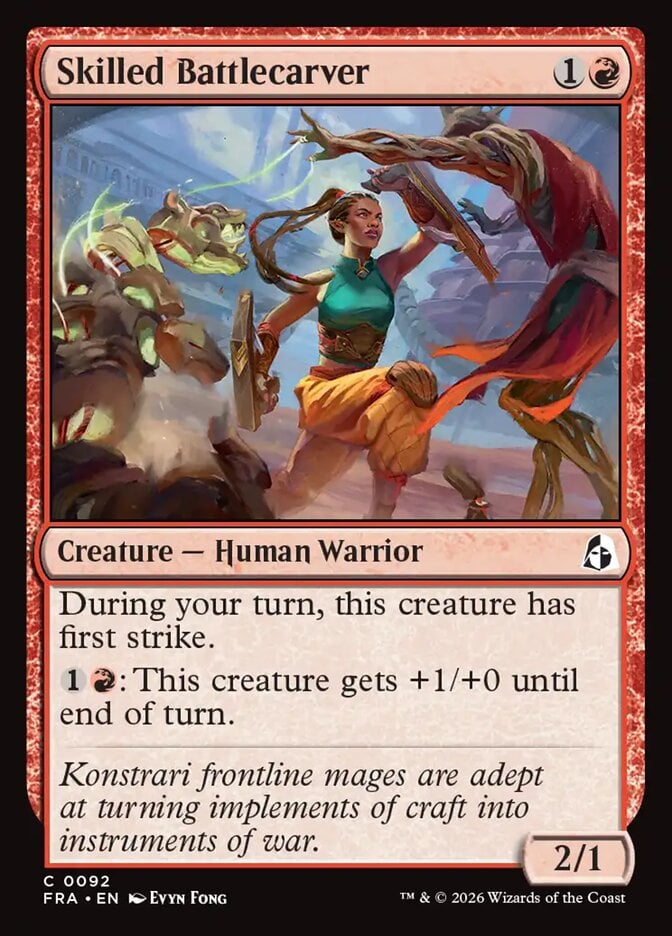
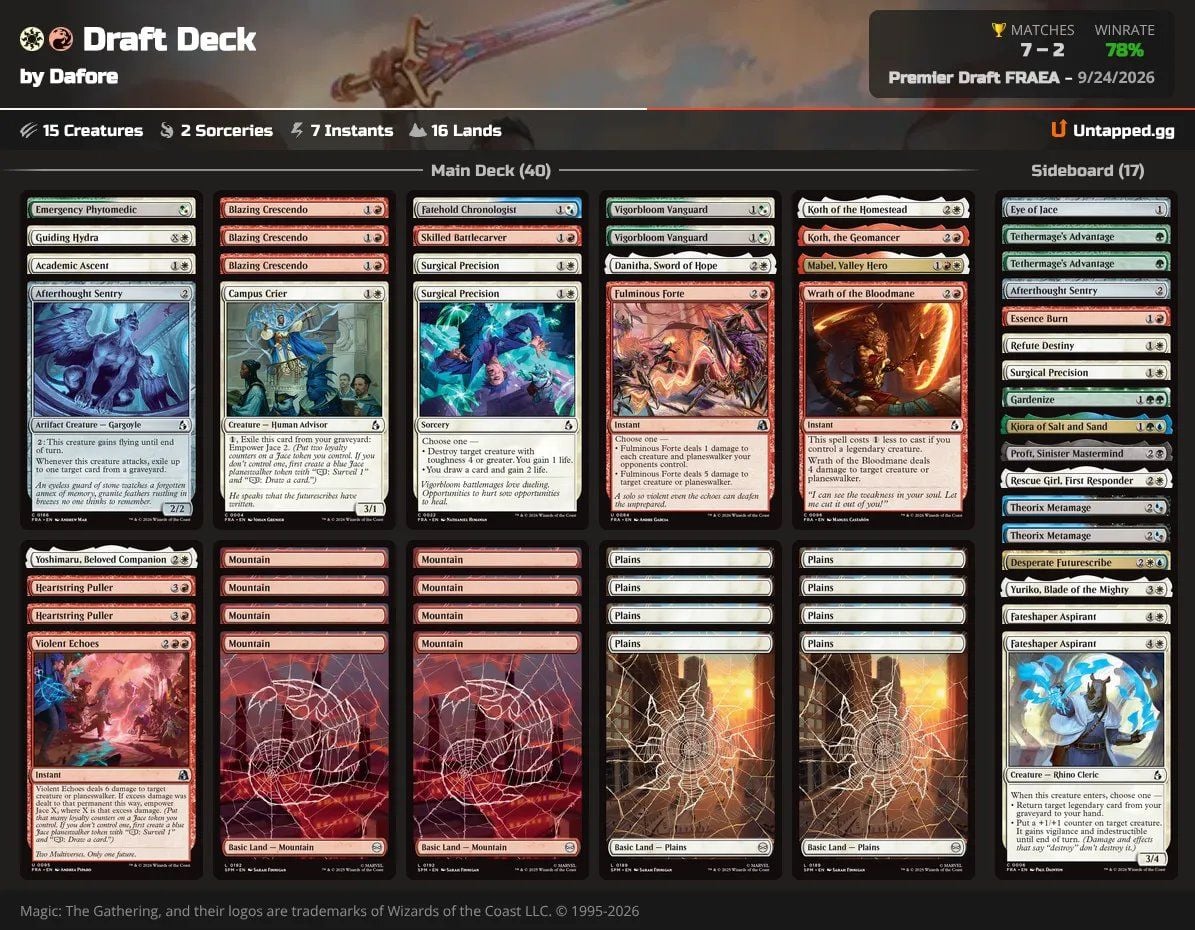
Since the +1/+1 counter angle barely matters, I encourage you to prioritize good cards and a good curve when building RW. Campus Crier and Skilled Battlecarver are my common 2s of choice. Lean into cheap removal, combat tricks, Medic's Kitesail, and 15 creatures or so, and try to run over all the greedy piles in this format. I’ve yet to draft it myself, but try watching Dafore sometime if you’re interested. He always finds a way to draft Boros, no matter the format!
Archetype Tips
- Predictive Preparations seemed like it would’ve been good in this kind of deck, but unfortunately it just hasn’t performed well at all. There’s too much efficient removal flying around for this pseudo-aura, and the flashback mode is clunky.
- You can also build RW as a midrange deck, which may come up in very particular Drafts. This tends only to happen when bombs control your colors, in which case you’ll end up RWx Good Stuff. Imagine a deck with Kindred Judgment and Ajani Unrelenting that isn’t super concerned with attacking early, for instance, which splashes Way of the Mind Sculptor and Protege's Awakening.
Trophy Example
Top Commons Revisited
Now let’s revisit my picks for the set’s best commons. I picked four commons for each color as the best of the bunch. After playing the set, do my predictions hold up?
White
My initial choices for white were:
I would revise the list as follows:
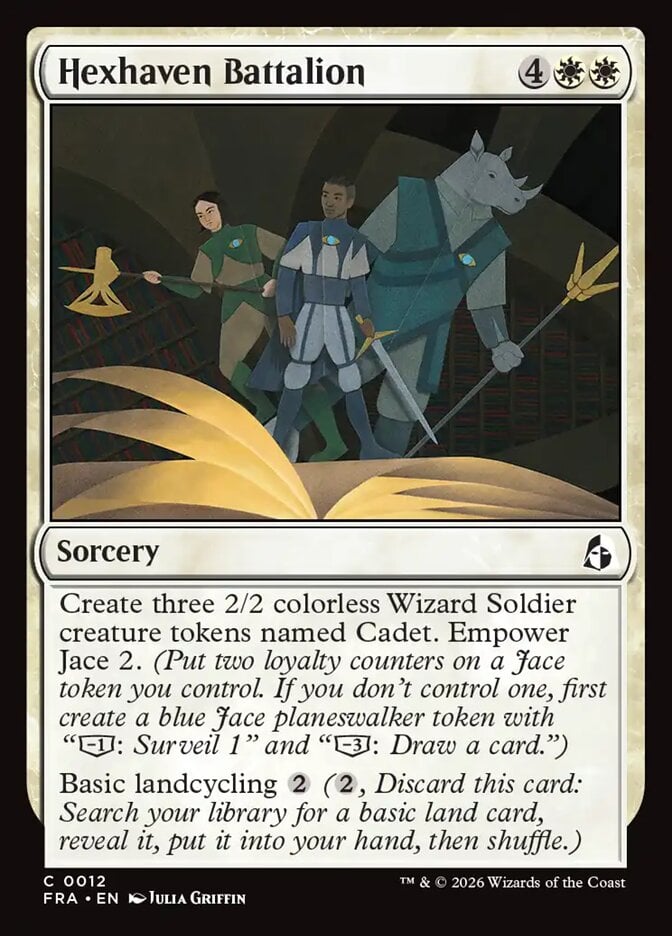
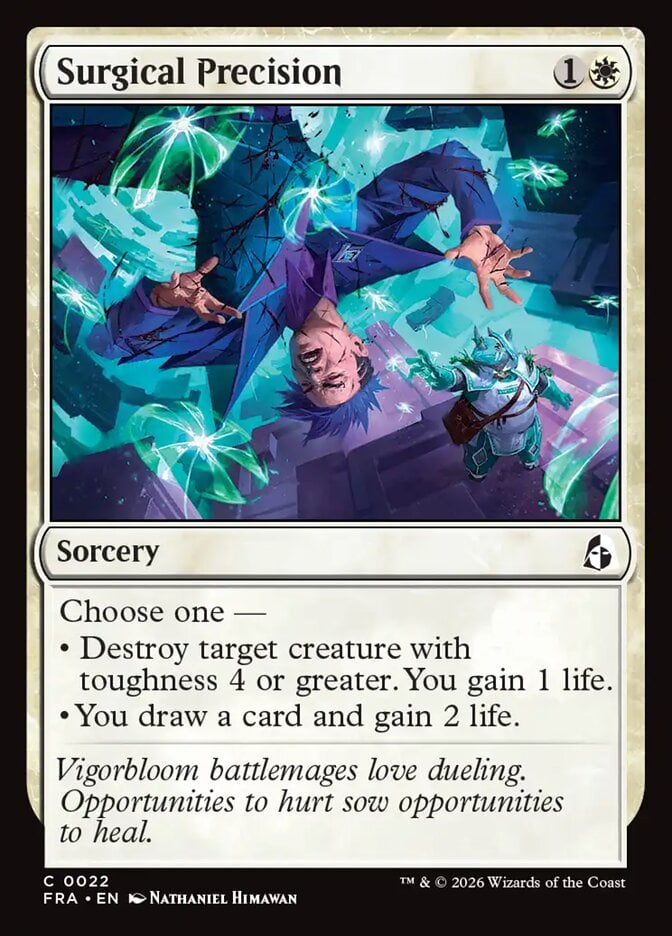
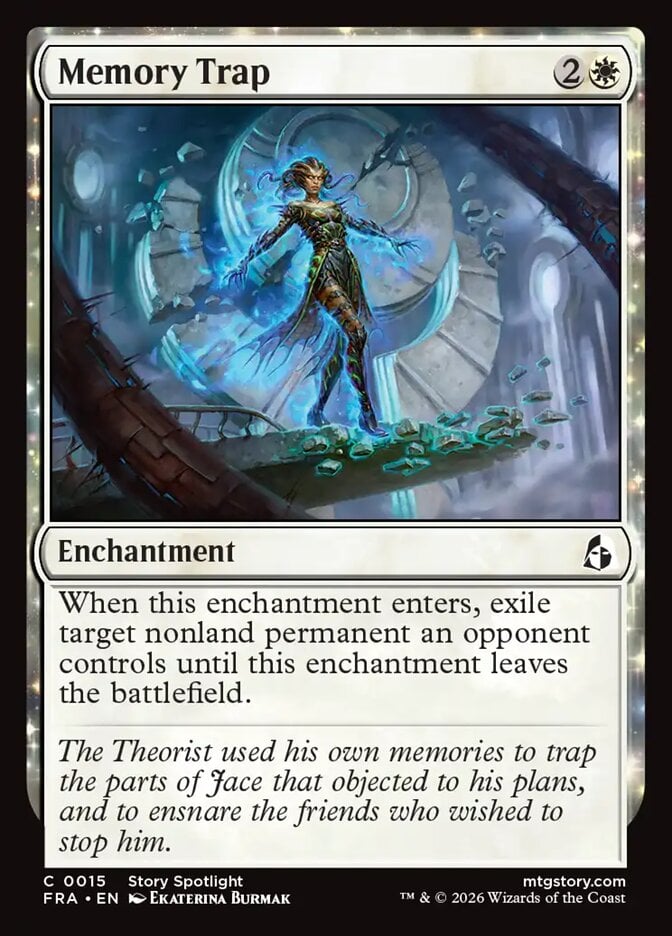
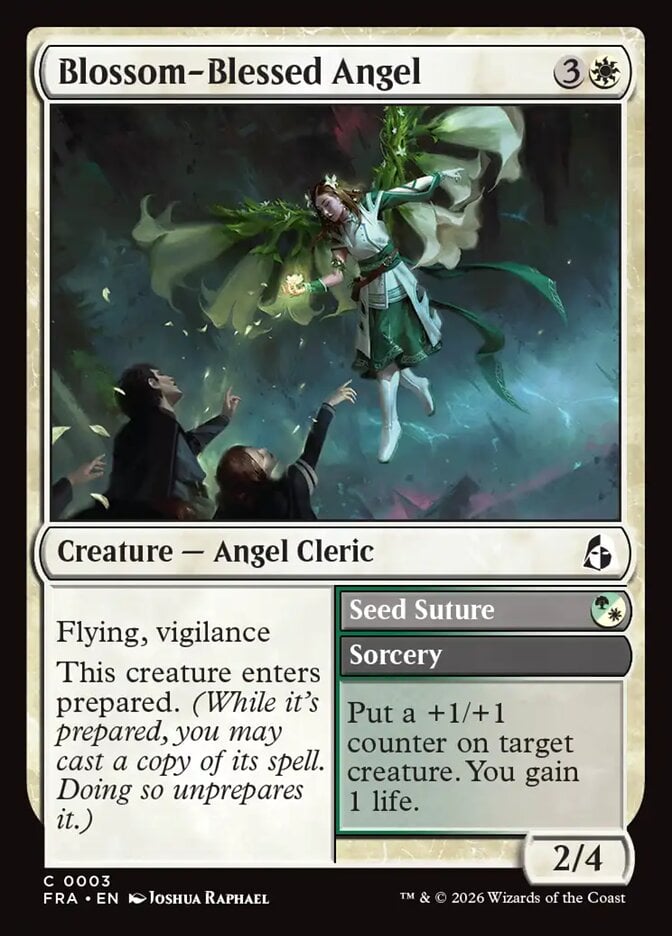
Campus Crier just barely missed the list, and it’s a very close #5 to Angel. Still, I have to give the spot to Angel, which has been an immense overperformer. I expected to only like it in lifegain decks, but instead look to play it in every white deck. I’ve even splashed the card a couple of times!
Memory Trap’s slight downgrade comes from the bevy of excellent other removal options in this format, as well as some unfortunate moments versus cards like Archive Arbiter.
Blue
My initial choices for blue were:
I would revise the list as follows:
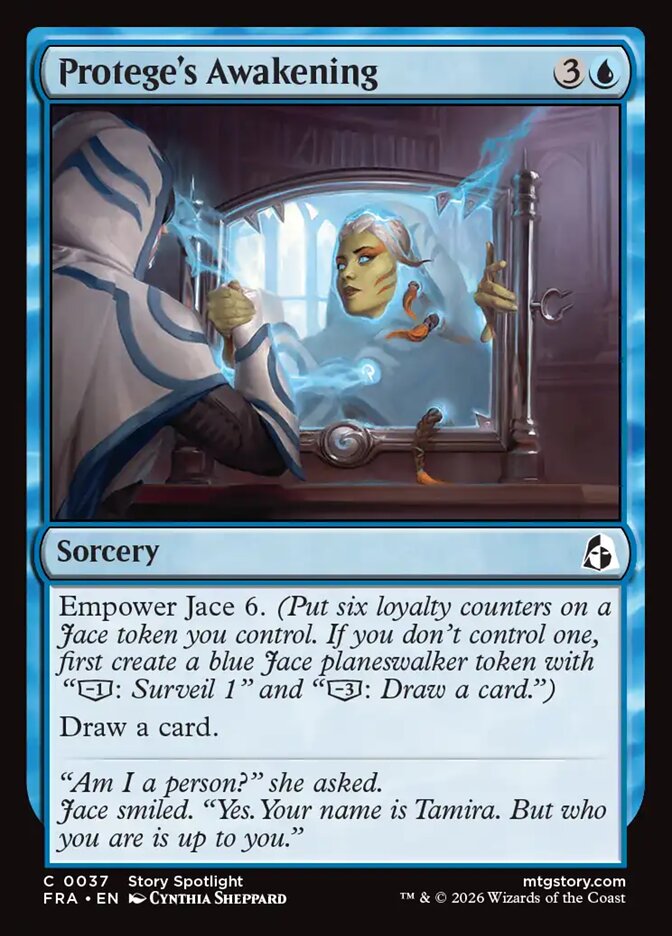
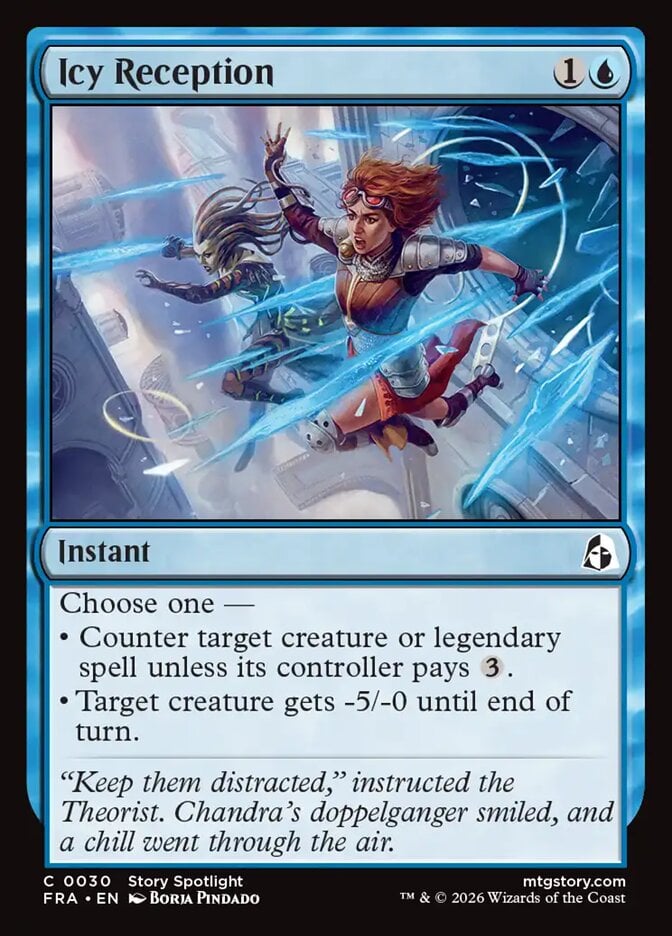
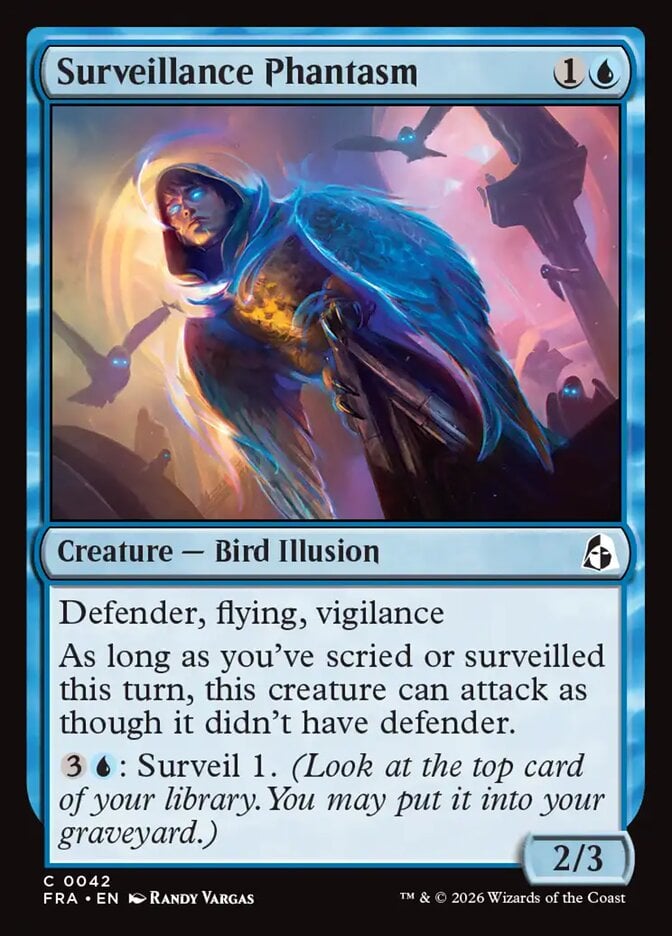
The sluggish speed of this format and the effectiveness of empowering Jace have made Protege's Awakening a smash hit for me. Every blue deck should want at least 1 copy, and I’d actively draft multiples if I had good “Way of” enchantments or other empower payoffs. Coursework has been decent, but it pales in comparison to black’s easily splashable removal options.
Black
My initial choices for black were:
I would revise the list as follows:
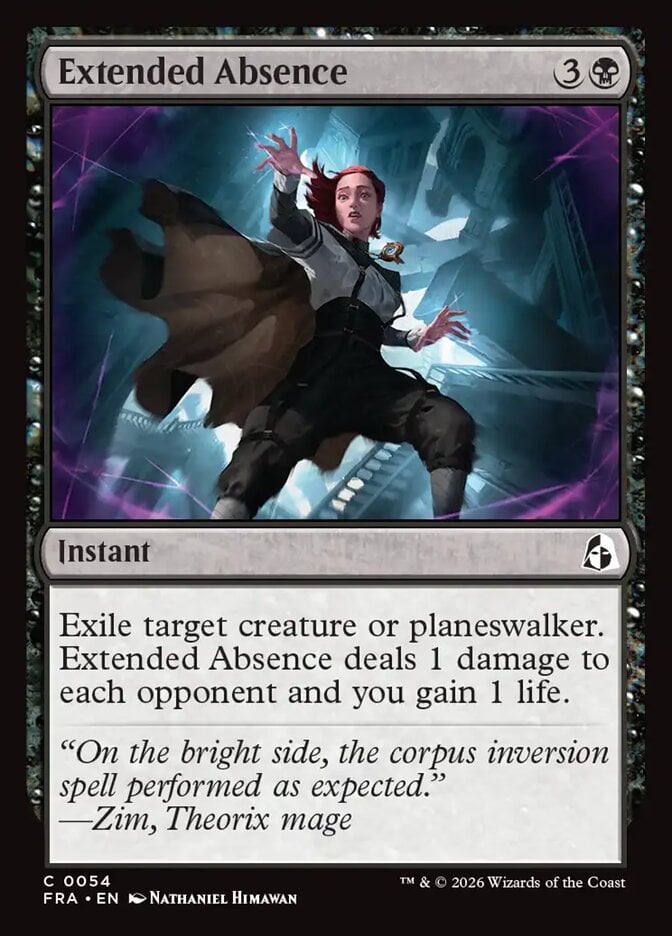
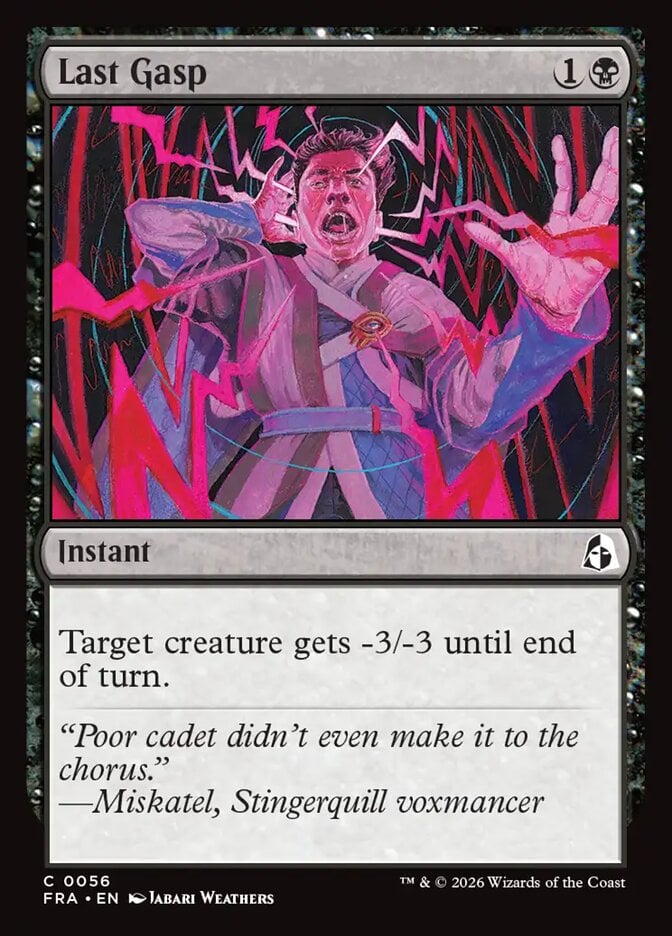
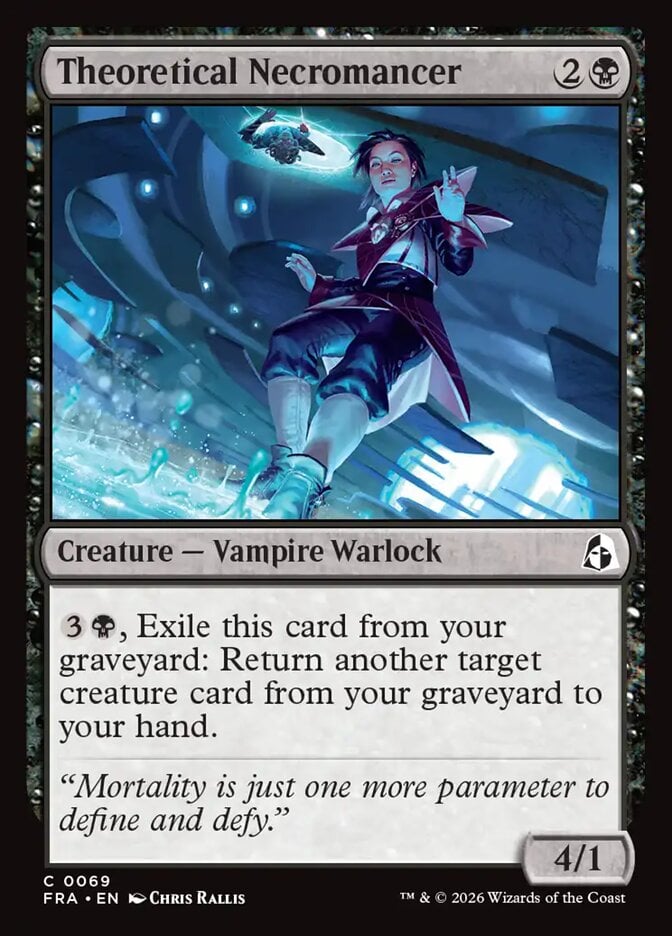
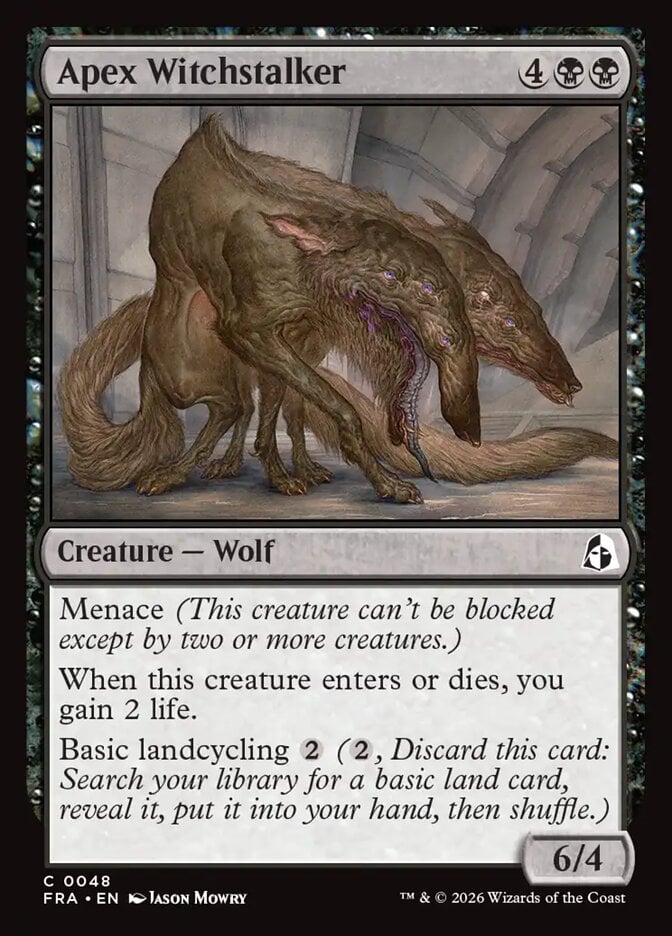
Screeching Soulbreaker has only felt good in BR decks, or Bx decks that care about lifegain synergies. There aren’t enough races in this format for it to have felt necessary otherwise. Solve for Disappointment has been great in Sealed and when you have Silence the Echo, but I’ve demoted it in favor of some cards that I’ve almost never cut from any black deck.
Red
My initial choices for red were:
I would revise the list as follows:
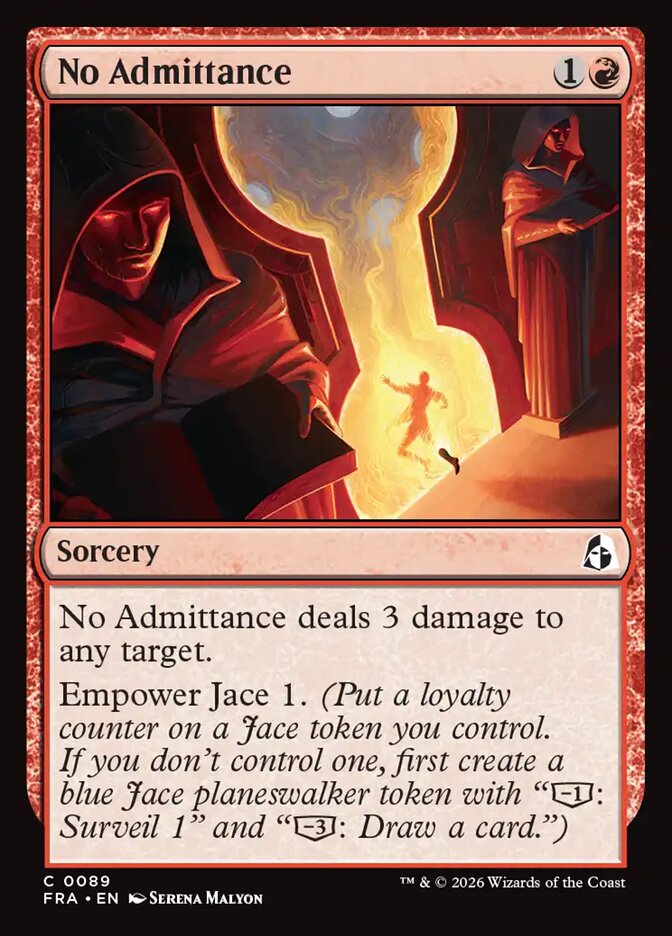
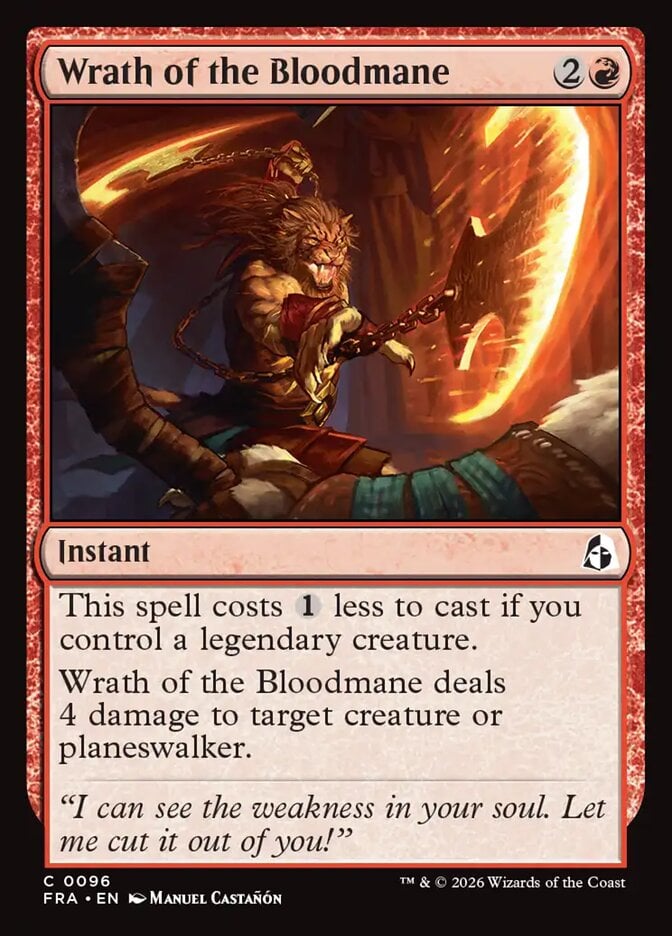
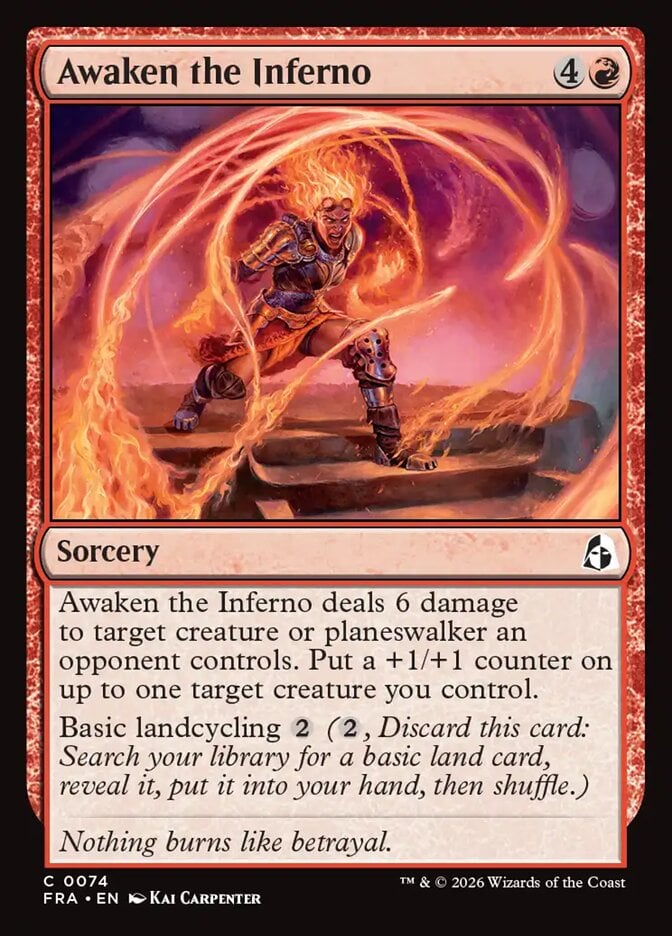
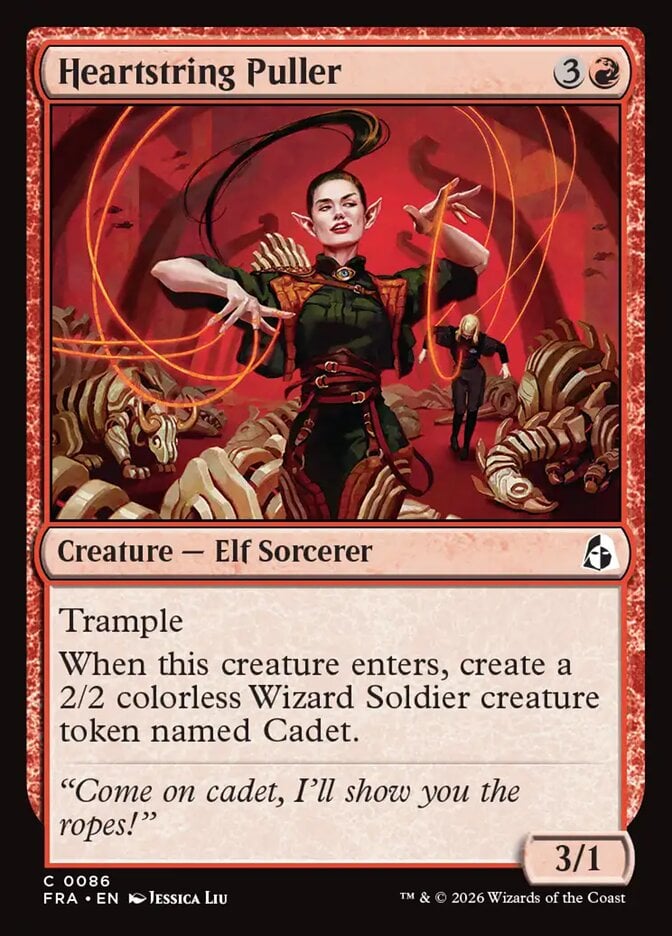
Skilled Battlecarver has performed well in dedicated aggro decks, but why attack when you can just get value anyways? Awaken the Inferno has also been among the best cyclers in the set for me, as 6 damage kills just about everything (including fat rares like Verdant Kraken). The +1/+1 counter is a nice bonus too, and being just lets you play it in all sorts of decks (including those barely touching red).
Green
My initial choices for green were:
I would revise the list as follows:
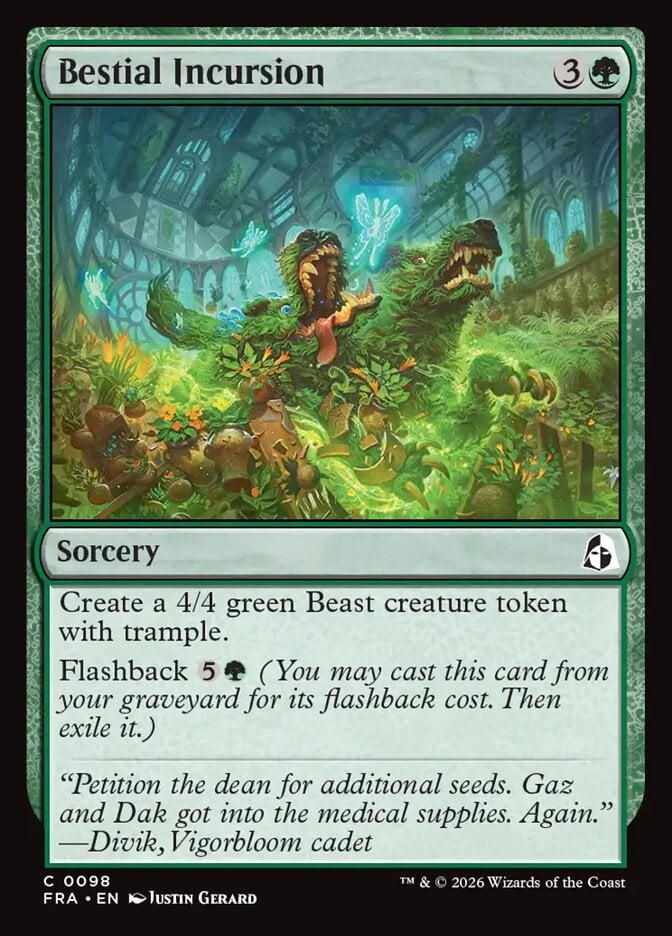
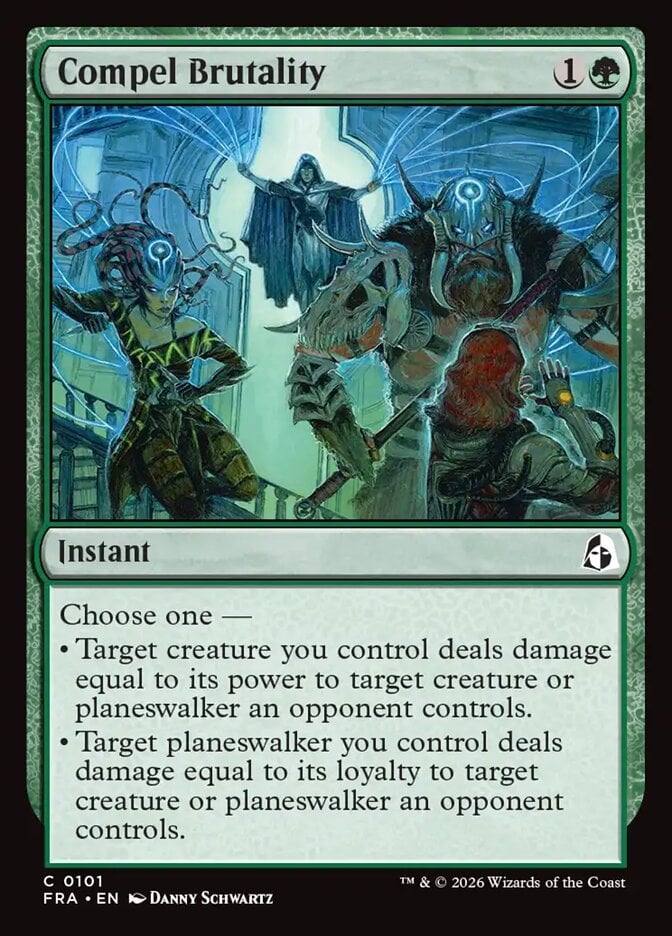
Vinelasher Adept barely misses the list at #5; it’s another great common cycling creature. I’ve demoted Greenhouse Propagator due to it only feeling great in lifegain decks. Compel Brutality has moved down due to how easy it is to splash safer removal spells like Wrath of the Bloodmane and Extended Absence. There’s a lot of instant speed removal in Reality Fracture, so even a great bite effect like this will still get blown out occasionally.
Card-Specific Notes
Lastly, this is a catch-all section for tips and tricks tied to specific cards.
Mythics
Ajani Resolute
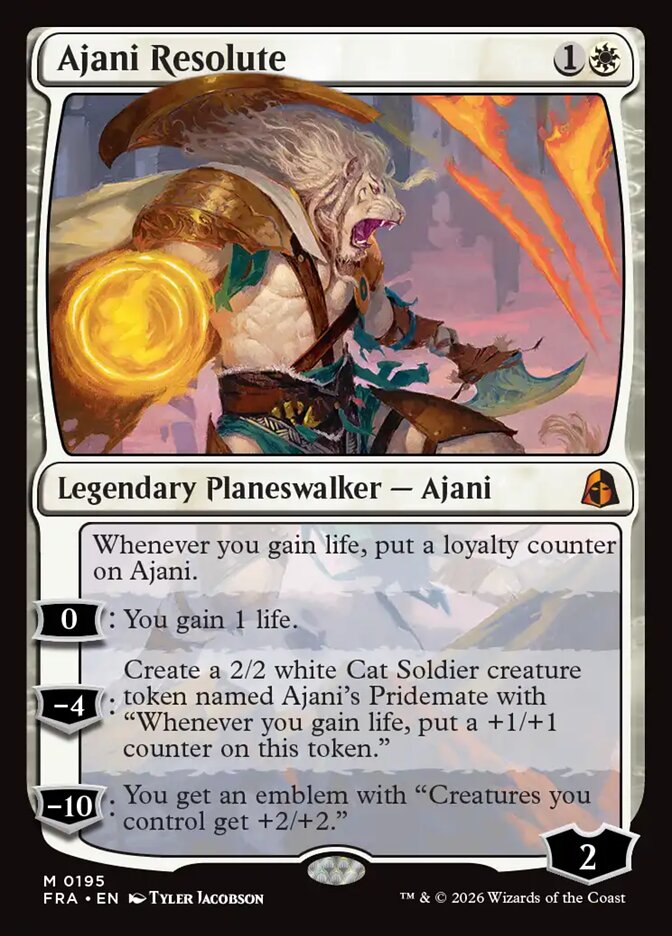
The struggle with Ajani Resolute is to get the first Pridemate. If you can do that, Ajani’s 0s will start to matter much more, and you may be able to ride your way to a second Pridemate later on. The key is to have a deck almost entirely of lifegain cards, including repeatable ones like Greenhouse Propagator and Blessed Ghoul.
Enlightened Confidant
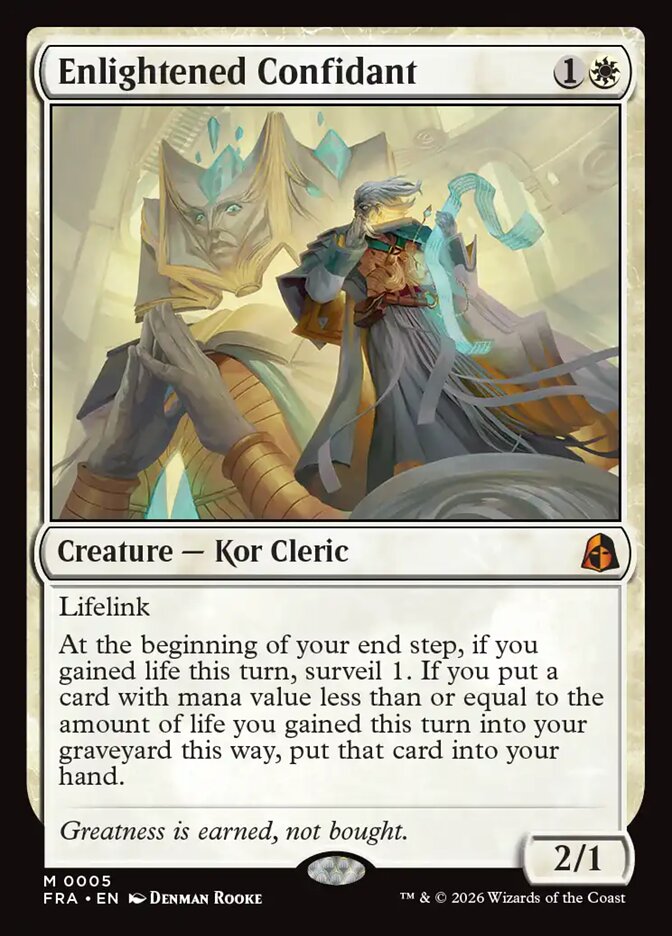
Medic's Kitesail is an essential companion for this card. Small lifegain ticks like Seed Suture won’t allow you to draw most spells off Enlightened Confidant, but swinging for 3 in the air with lifelink (plus 1 life from the trigger) certainly will!
Return to the Light Realms
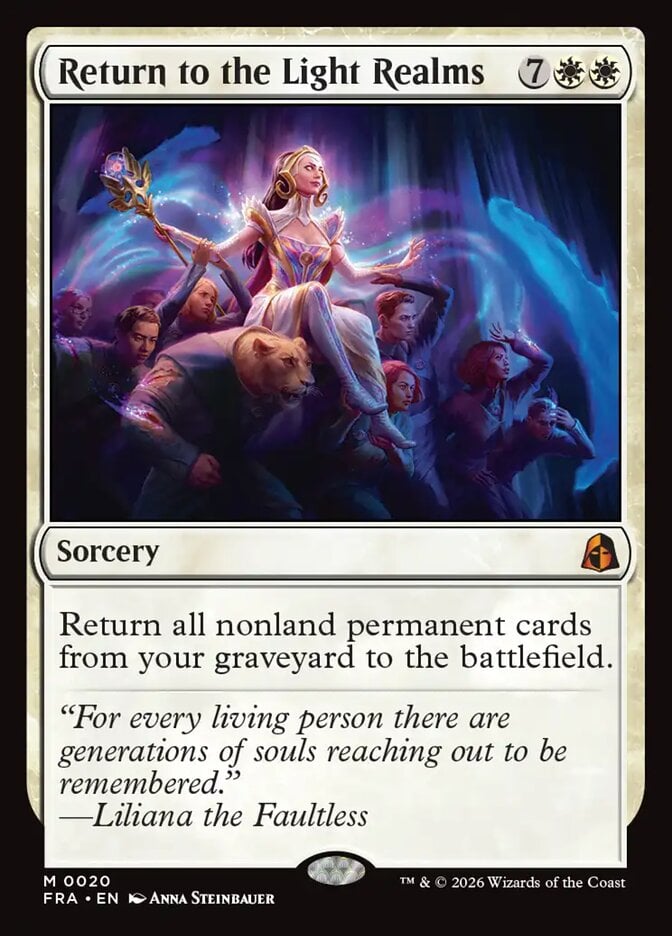
I must admit that I lost to Return to the Light Realms once in an Arena Direct. I’m not convinced it’s worth it in 99% of cases, but the format is slow enough that you could maybe try it with Paradox Shaper or something.
The Theorist, Jace Beleren
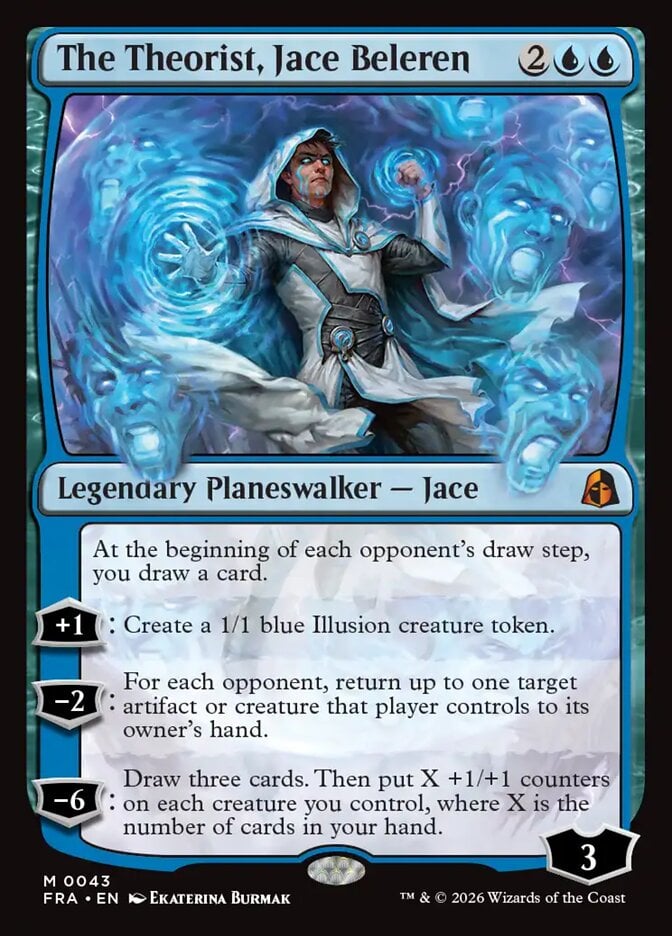
Killing The Theorist, Jace Beleren on upkeep may prevent it from two-for-one’ing you. Always add an upkeep stop for cards like Wrath of the Bloodmane, Violent Echoes, and Extended Absence to answer The Theorist, Jace Beleren cleanly.
Bloodline Recollector
Bloodline Recollector and Darklight Phoenix really love Silence the Echo.
Garruk, Veiled Butcher
-2 is the primary ability you’ll activate the turn you play Garruk, Veiled Butcher, but -3 is even better if you have a clear board. +2 tends to be used only after -2’ing or if there’s a juicy X/1 to exile like Theoretical Necromancer. Including fodder cards like Rank Rat in your deck will make Garruk even better.
Ajani Unrelenting
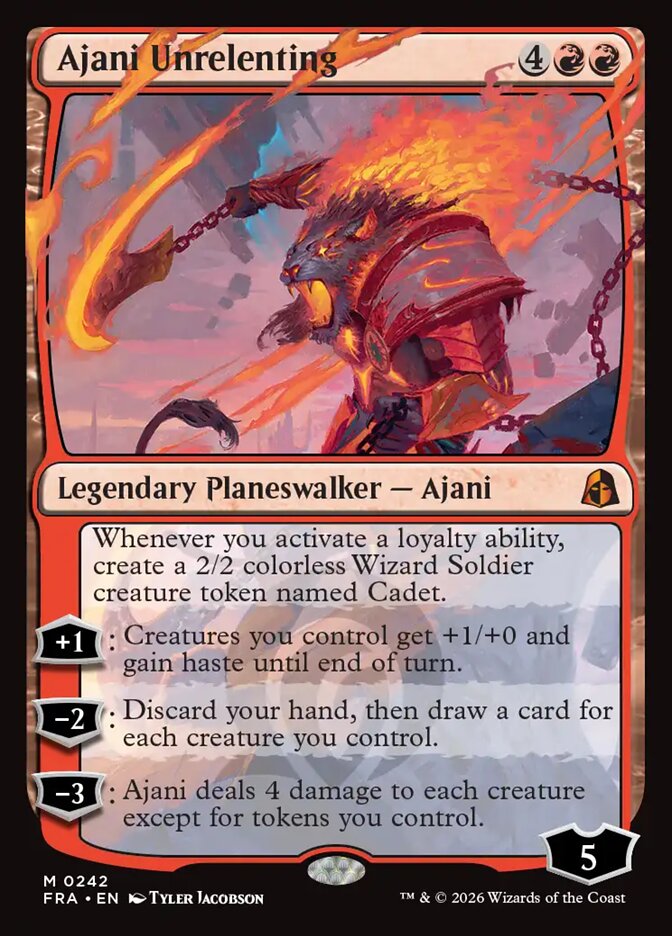
Lol. Lmao even. What else can I say about Ajani Unrelenting?
Craterclaw Colossus
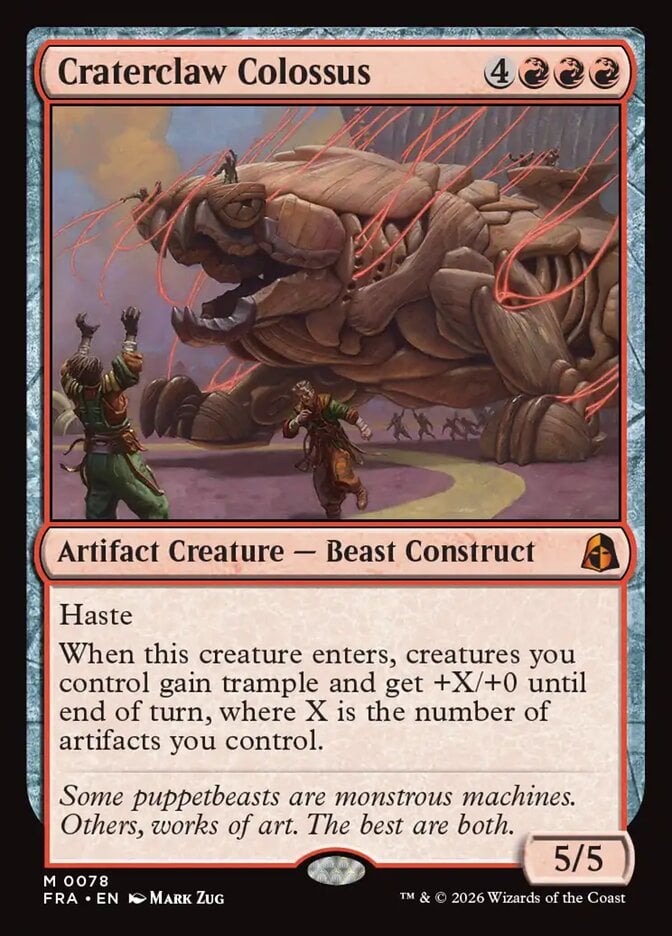
3+ artifacts is the sweet spot, so try to pair Craterclaw Colossus with Heartwood makers, Saheeli, and Pia.
Garruk, Curse Breaker
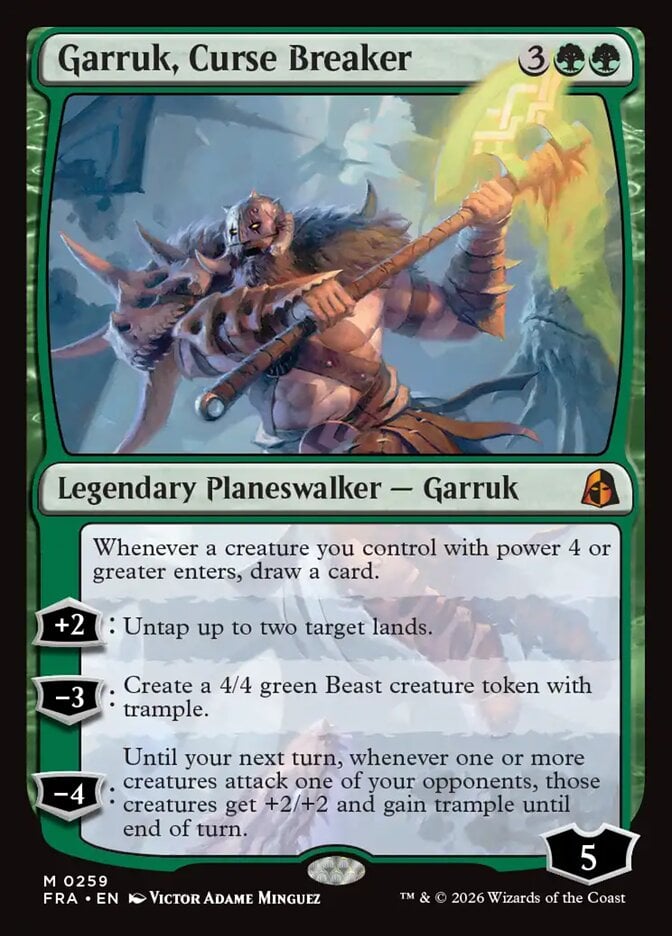
-3, +2, +2 is the normal play pattern, or -3, +2, -4 for lethal. +2’ing immediately is a major risk versus Extended Absence, while -3’ing could leave Garruk, Curse Breaker vulnerable to Wrath of the Bloodmane and No Admittance.
Hexhaven Invigorator
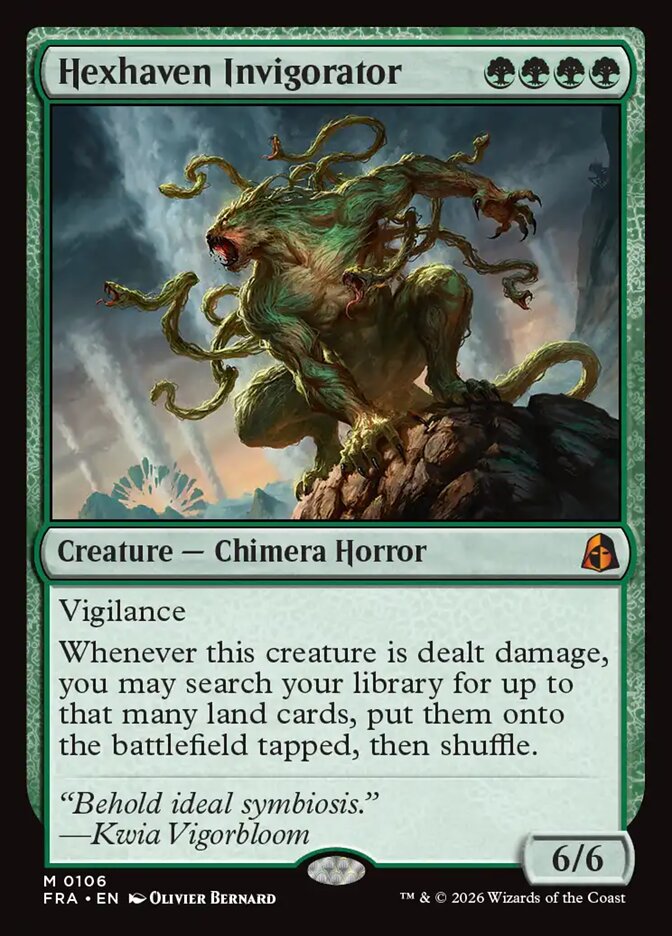
Hexhaven Invigorator has a janky infinite with Avatar of Burgeoning Echoes and Roiling Canopy. If you can assemble that, you probably don’t need to be reading this guide!
Tarmogoyf
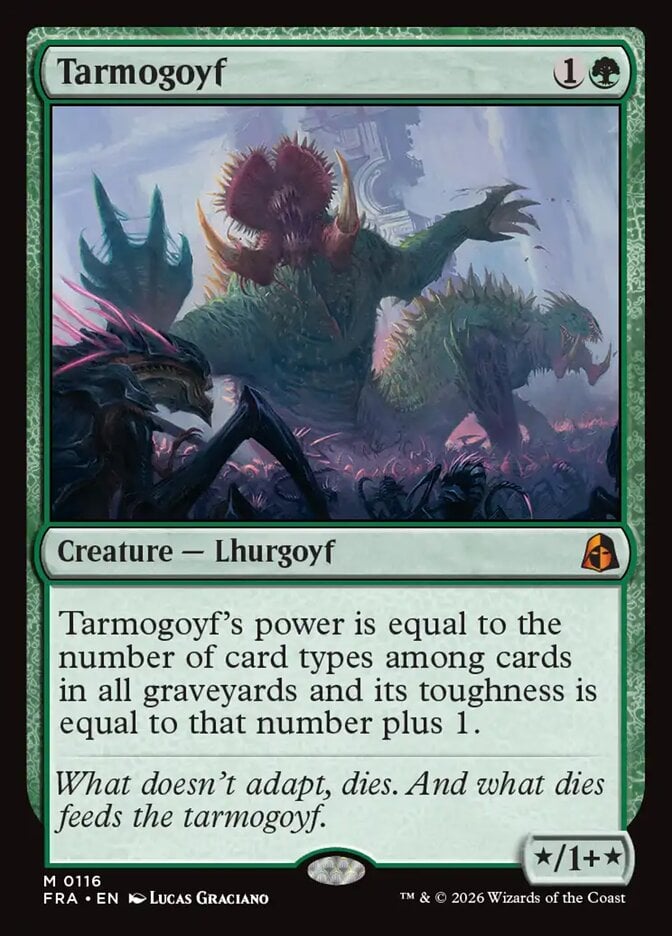
Something Worth Saving is an essential friend for everyone’s favorite has-been. I’d still play Tarmogoyf in any green deck though, as it tends to grow naturally anyways.
Uldaros Theorix
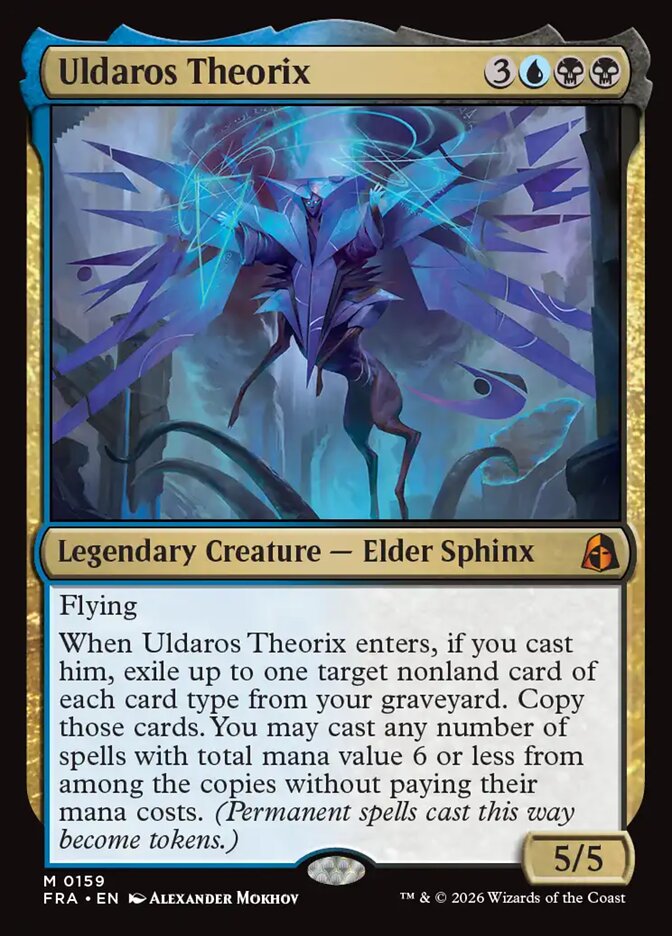
Uldaros Theorix says “cast”, so you’ll probably regret getting it with Rewrite Regrets.
Ingris Stingerquill
The bear mode on Ingris Stingerquill has proven very good. If you suspect a sweeper, just keep pumping out Cadets and watch your opponent squirm. This is also a way to create card advantage with your aggressive finisher.
Aerid Konstrari
Other Heartwood creators let Aerid Konstrari kill much faster, and they may let you cast it even if you aren’t playing any other red cards.
Kwia Vigorbloom
The immense scale of this format has made Kwia Vigorbloom’s Lotus tokens a bit more useful than expected, especially since you can get them off of Greenhouse Propagator immediately. Shatterwing Pegasus is a great outlet for the mana.
Emrakul, the Exigent Doom
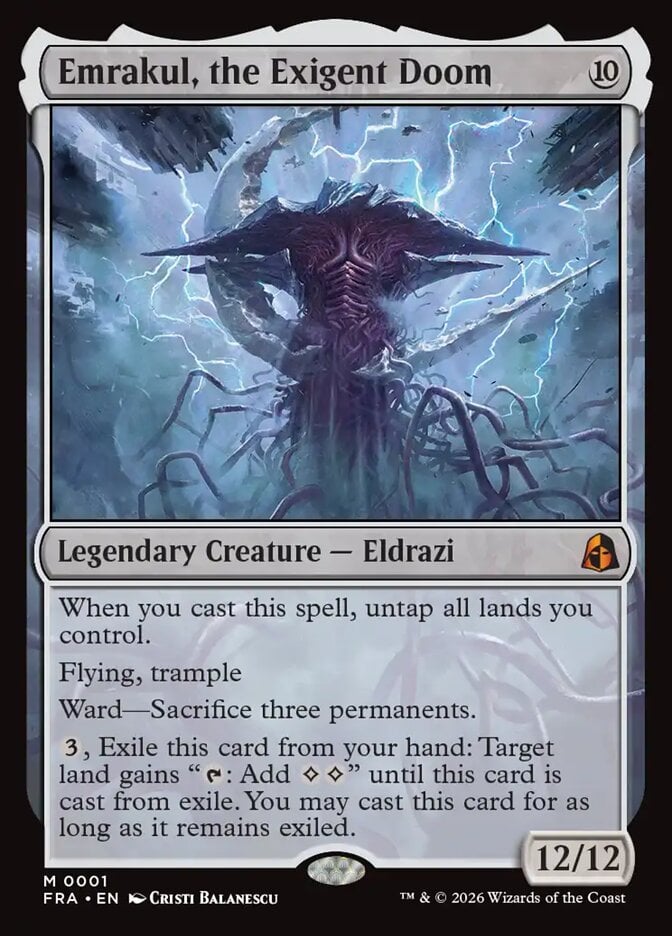
An overperformer relative to my expectations, which plays best in very controlling decks. You can play Emrakul, the Exigent Doom and then immediately have Countersculptavailable. Another really cool thing to do is pair it with Hall of Echoes; play Emrakul, untap all your lands, then immediately create a copy with Hall to swing for a 12-power flampler out of nowhere!
The Echoverse Fulcrum
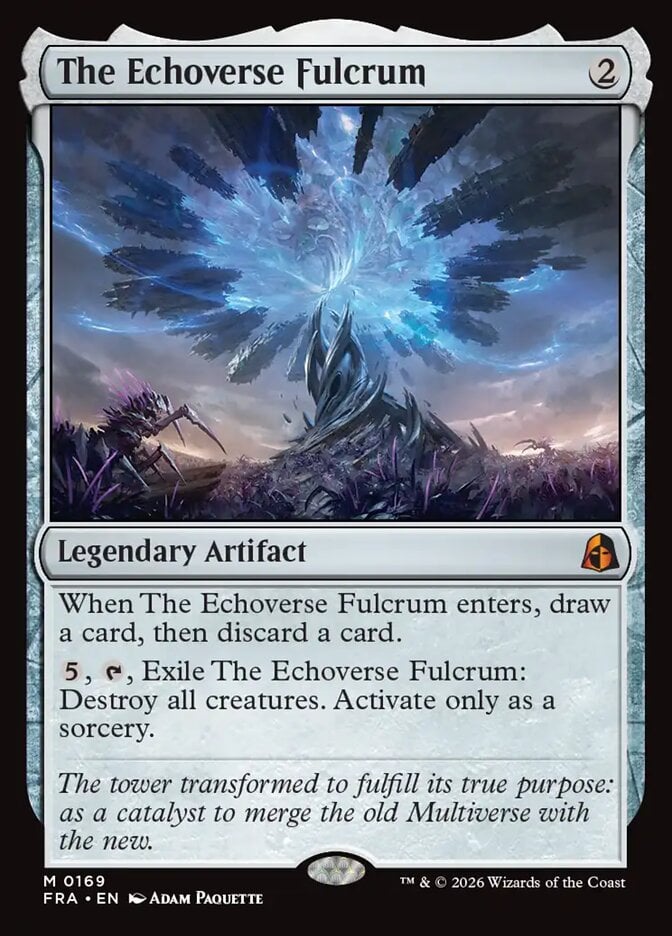
Playing The Echoverse Fulcrum early has led to mixed results, as you end up forcing a bizarre game of chicken. This can sometimes work out, but I prefer to play this as a 7-drop if possible (which usually comes down to whether I’m hitting all my land drops).
Rares
Flickering Hound
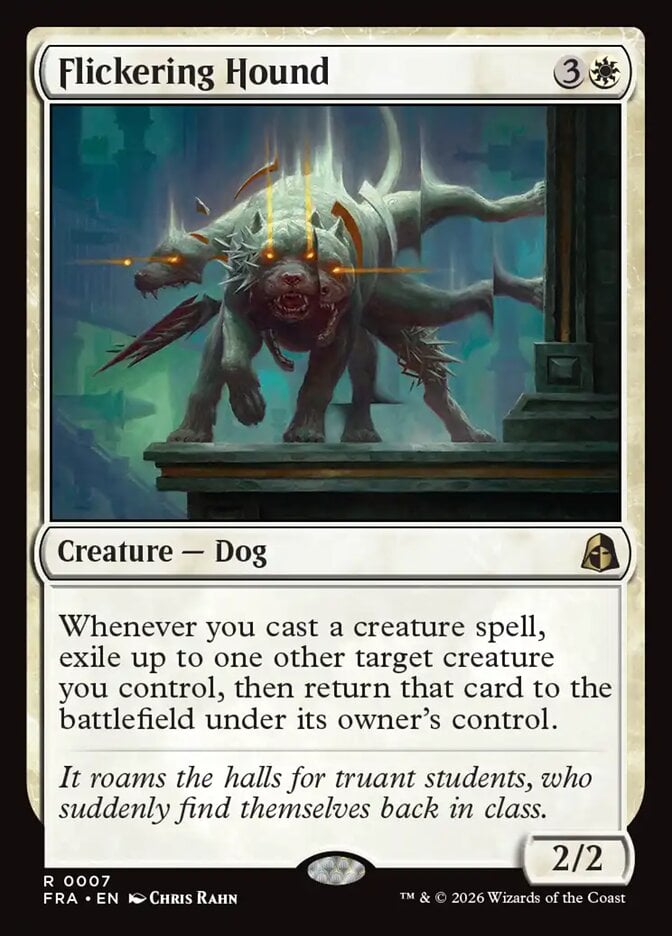
This dog just stinks. I’ve never seen Flickering Hound be good against me, and I’ve yet to put it in a deck. Even if you have “enters” creatures, usually those or this will die before Hound does anything good.
Gideon’s Memorial
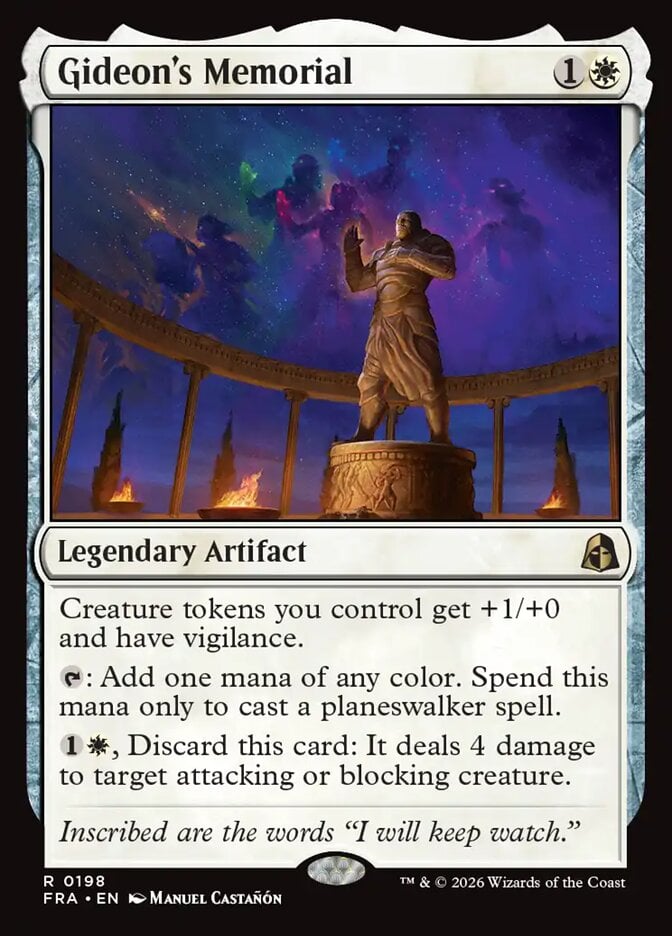
Divine Arrow is passable, and you can get this back with Fateshaper Aspirant if you want. Gideon's Memorial is never an A+ card, but removal is removal. You could also theoretically ramp into a The Theorist, Jace Beleren or Chandra, Torch of Defiance on turn 3 with this.
Guiding Hydra
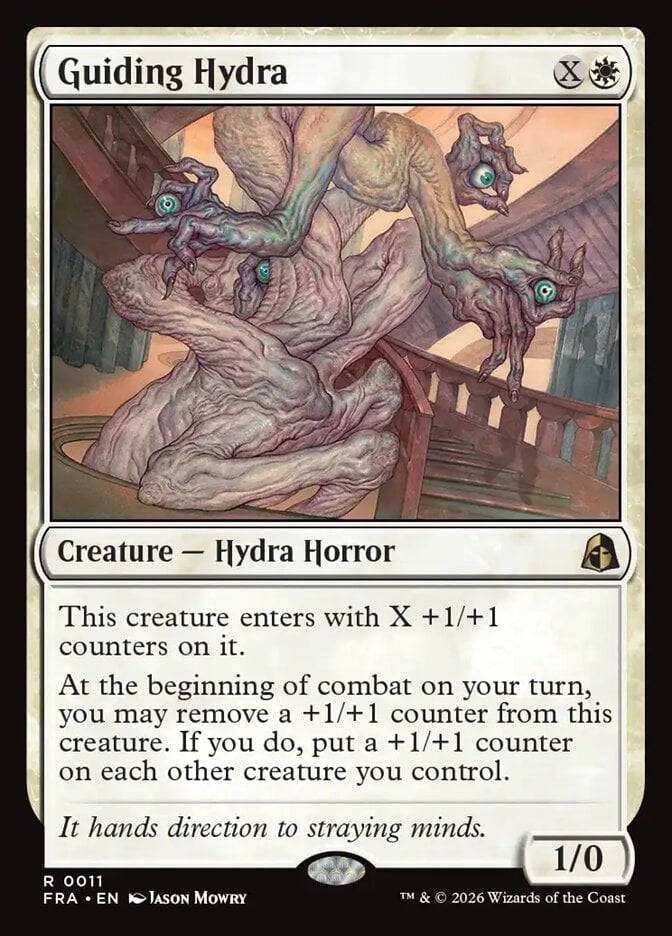
Hexhaven Battalion is usually what you’re trying to combo this with. Whether you want to play Guiding Hydra first or second depends heavily on your current game state; I’m usually content to get 2+ counters off a mid-sized Hydra.
Kindred Judgment
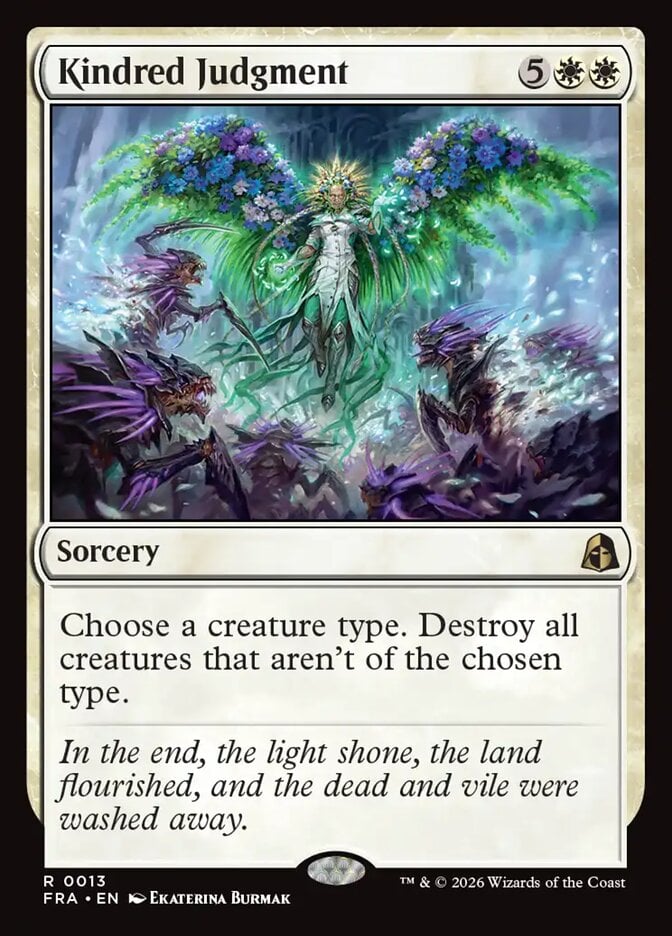
My pick for the rare I was most wrong about, as Kindred Judgment is just a straight up mega bomb. You can often Plague Wind with it, so pay close attention to creature types in decks that have it. I always try to consider this if I’m ahead too, although there often isn’t much you can do with types (since your opponent will almost always have an odd man out).
Liliana the Faultless
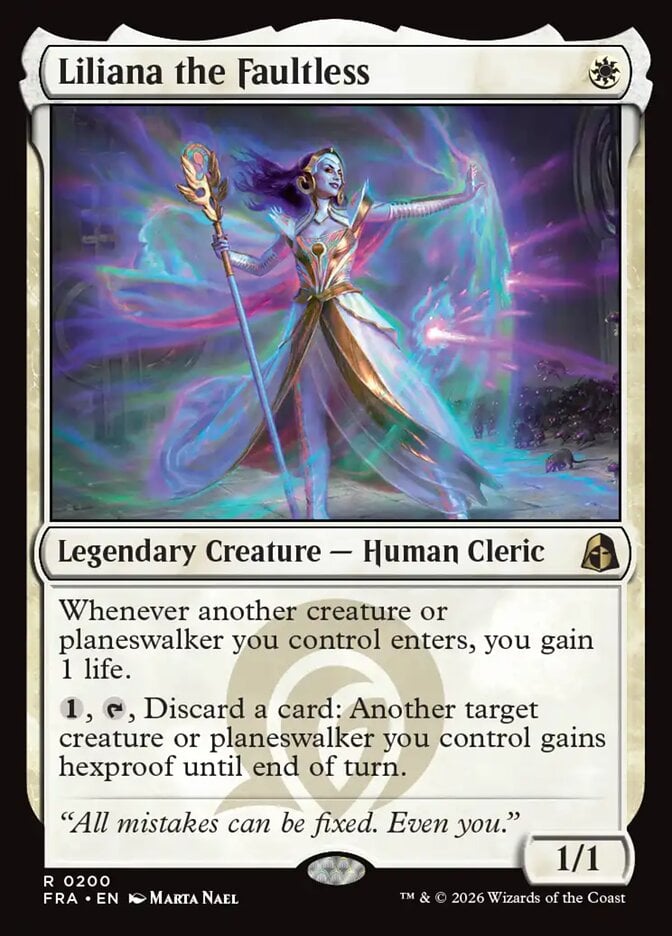
I dreamt once of using Liliana the Faultless with Kiora of Fire and Ashes and Rewrite Regrets. I’ve only actually played this in lifegain decks though, where it’s obviously awesome.
Loyal Tutor
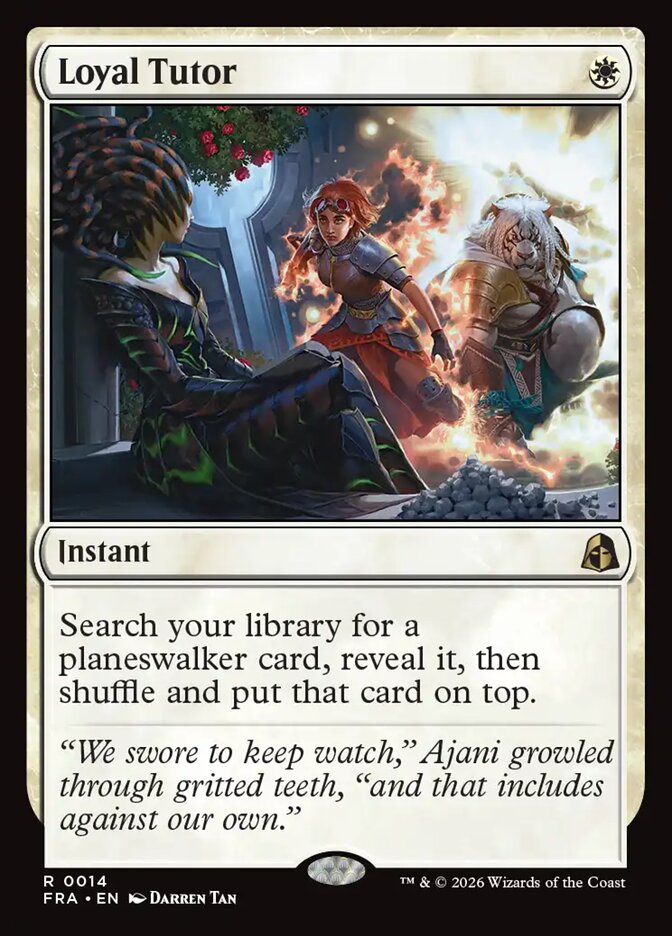
Even with Ajani Unrelenting, I have yet to play Loyal Tutor. I could be wrong!
Lyra, Archangel of Dawn
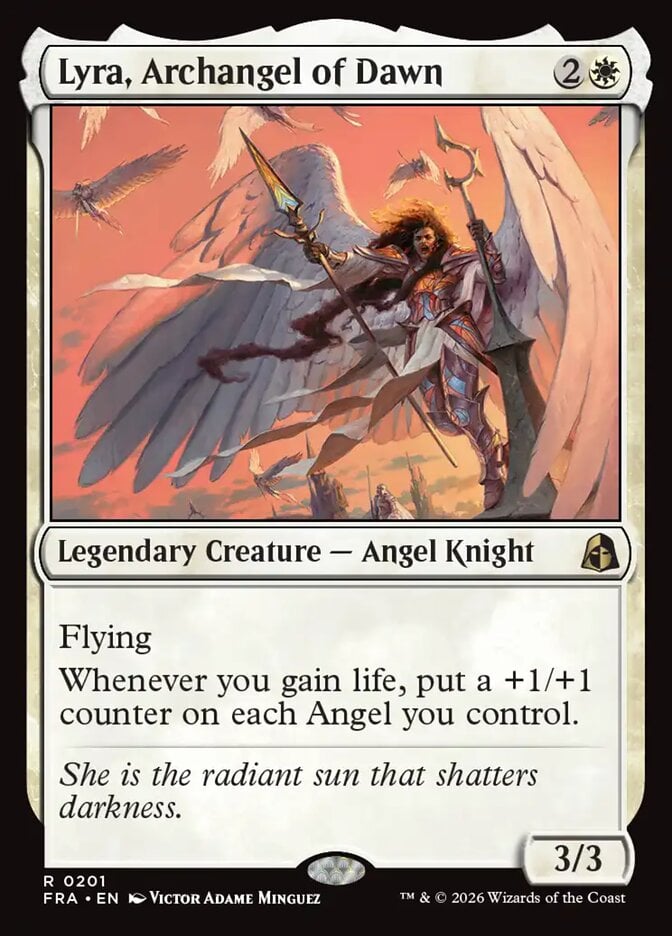
The only two other angels are Lyra, Tolarian Archangel and Blossom-Blessed Angel. Lyra, Archangel of Dawn is still good though, and the fact that Blossom-Blessed Angel is an enabler and an angel makes it even better.
Cruel Calculations
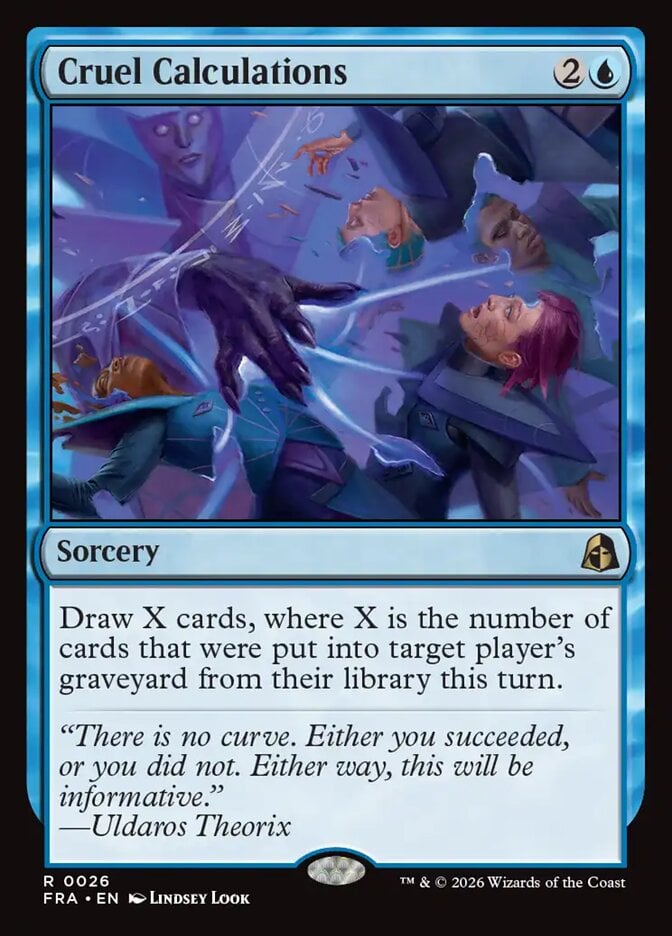
I’ve yet to play Cruel Calculations, as 3-4 “Omit Variables” cards hasn’t felt worth the risk of doing absolutely nothing.
Jace, Reality Sculptor
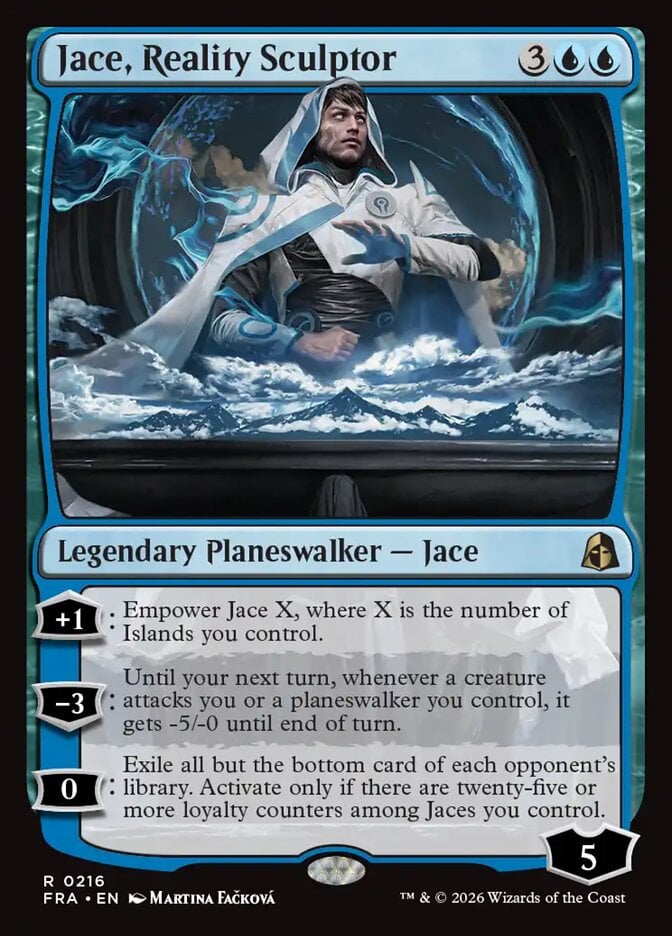
8+ Islands is the sweet spot for Jace, Reality Sculptor, as having three Islands in play lets you essentially draw a card off its +1. You don’t need to be mono-blue or anything, but it does help to be base blue. Try to avoid blue dual lands if you can, since they won’t add to your Island count.
Jace’s Machinations
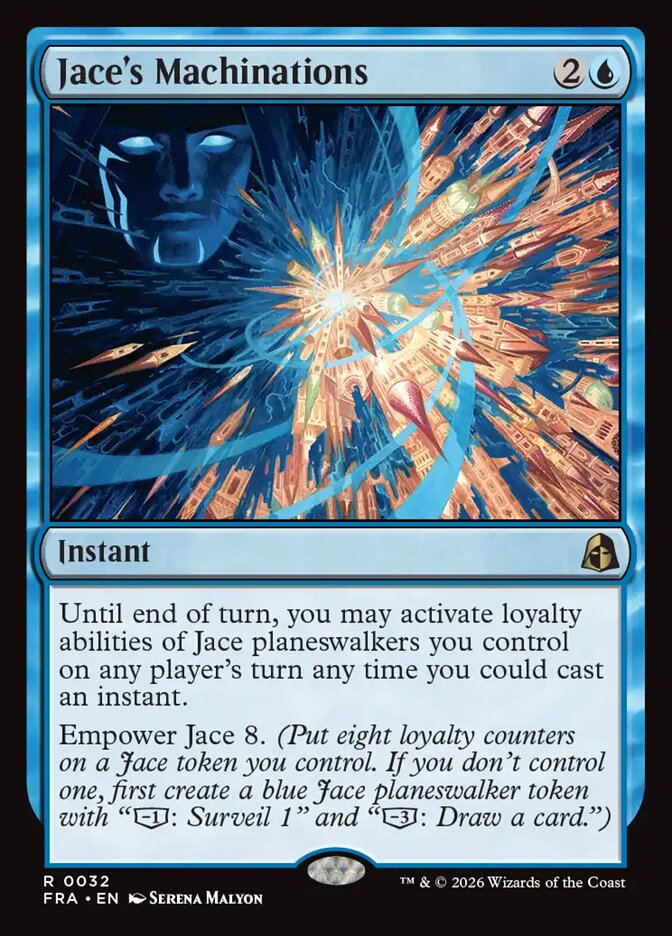
I love the combo of Jace's Machinations and Kiora of Salt and Sand, which lets you ambush your opponent with an 8/8 kraken token out of nowhere. All of the “Way of” enchantments play well with this too, potentially giving you access to instant 4/4 beast tokens, Shocks, and more.
Lyra, Tolarian Archangel
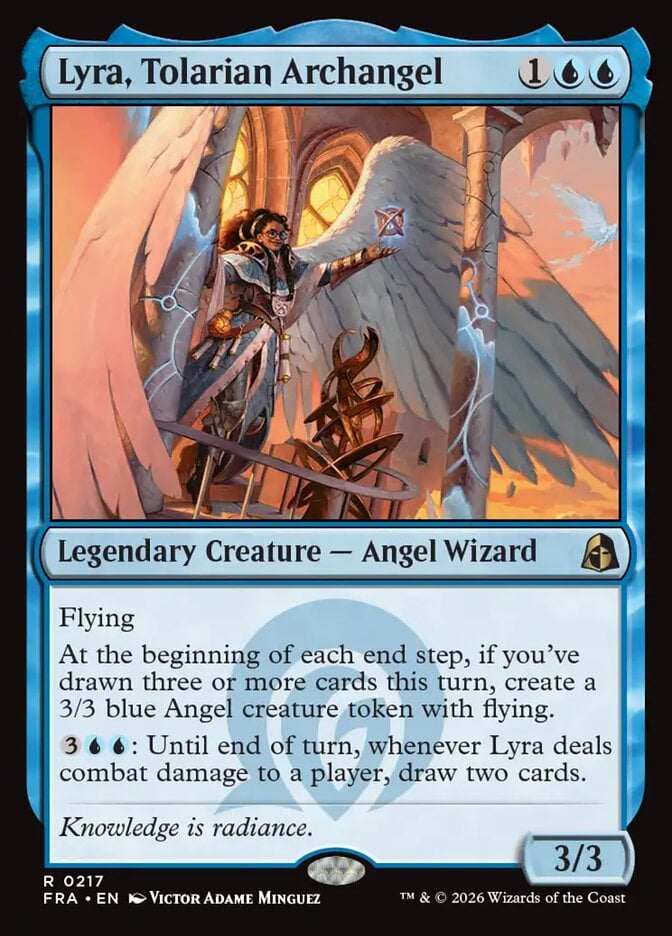
Flashing back Twinned Vision provides an easy way to trigger Lyra, Tolarian Archangel’s angel mode the turn you play it.
Samut, Tyrant of Naktamun
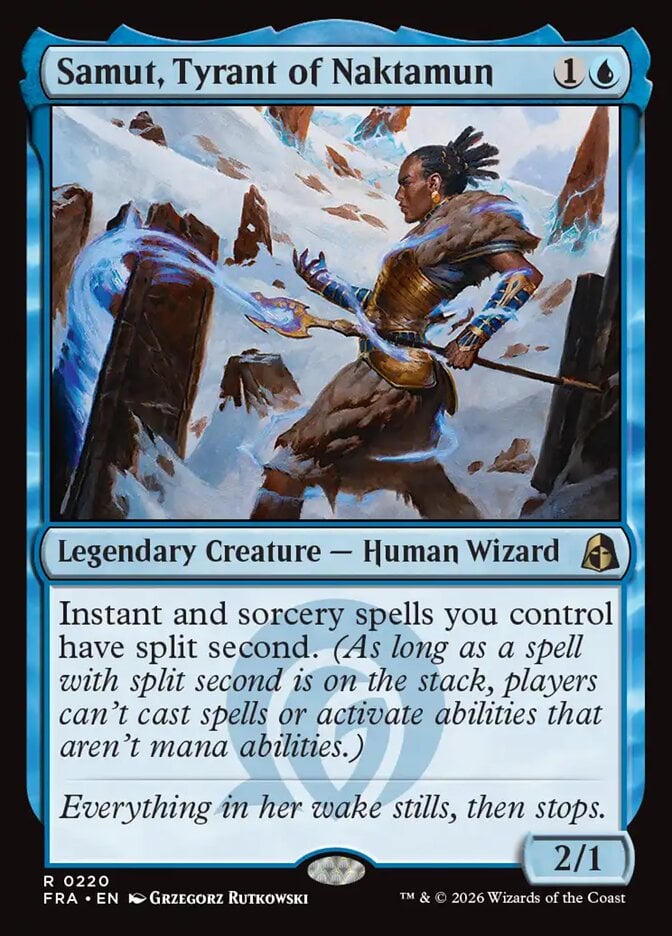
Samut, Tyrant of Naktamun’s just a Coral Merfolk in Limited, but you could draft it if you need something for your trade binder or your cEDH decks, I guess.
Sphinx of False Conclusions
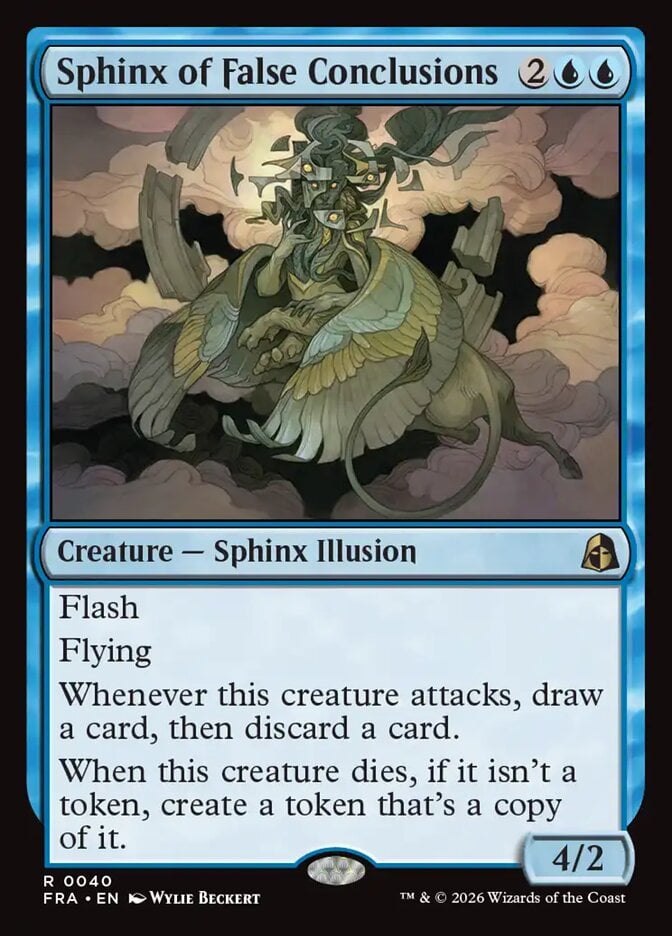
Wow, do I hate this disgusting rare! is red alert in this format, so try to save your Icy Reception and Extended Absence until the coast is clear. I even had a game once in which I Ajani Unrelenting’d after having Sphinx of False Conclusions die, and swept while keeping the token….
Theorist’s Proxy
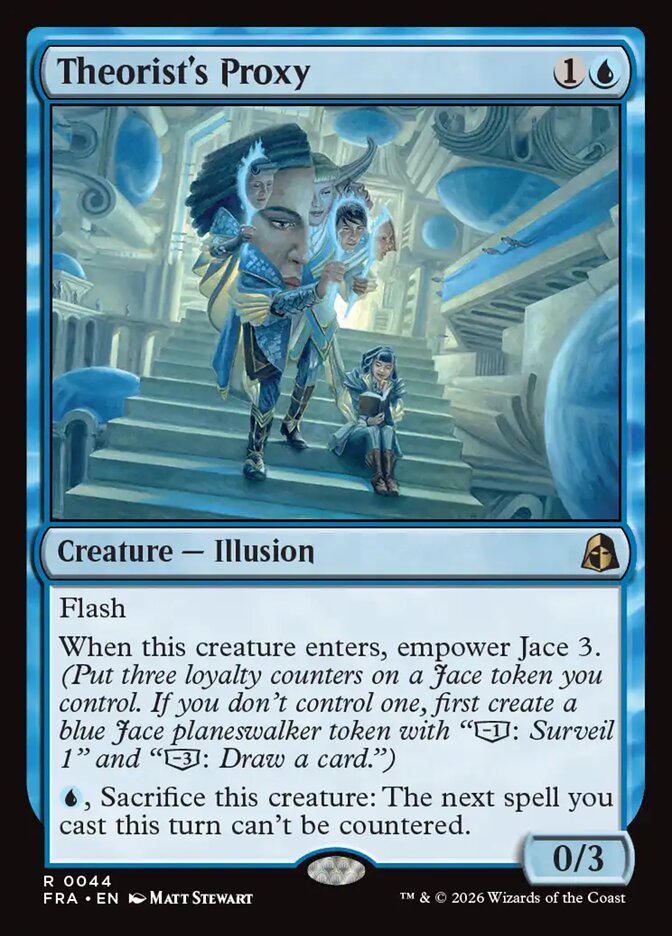
Theorist's Proxy is one of the smoothest Rescue Girl, First Responder cards in the format, and a great blocker/cantrip in its own right.
Variable Chaser
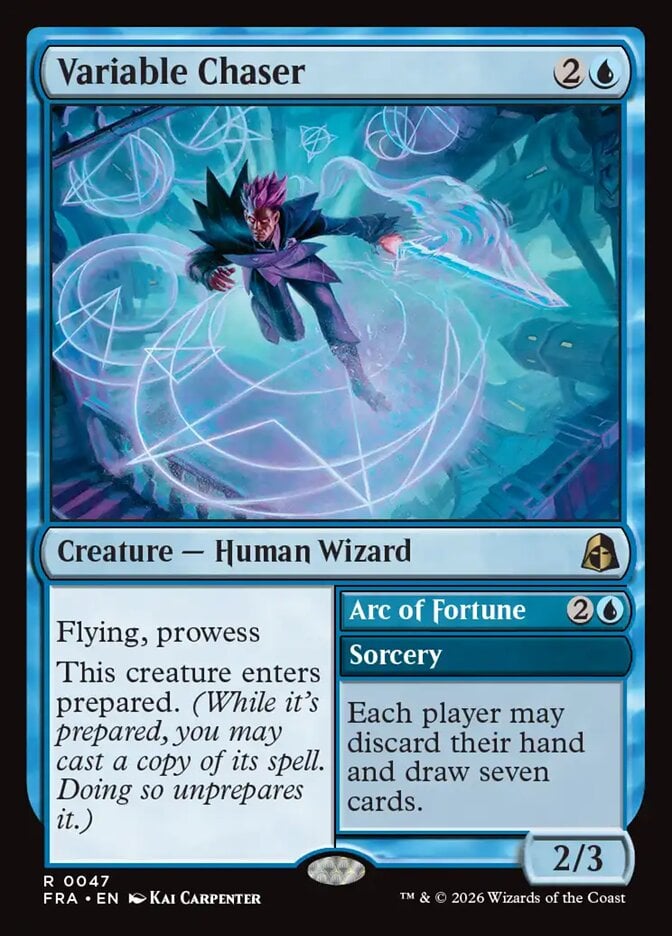
Don’t forget that the wheel is a “may” spell for both players. Even excellent players like TheHamTV have missed Variable Chaser!
Extrapolate the Impossible
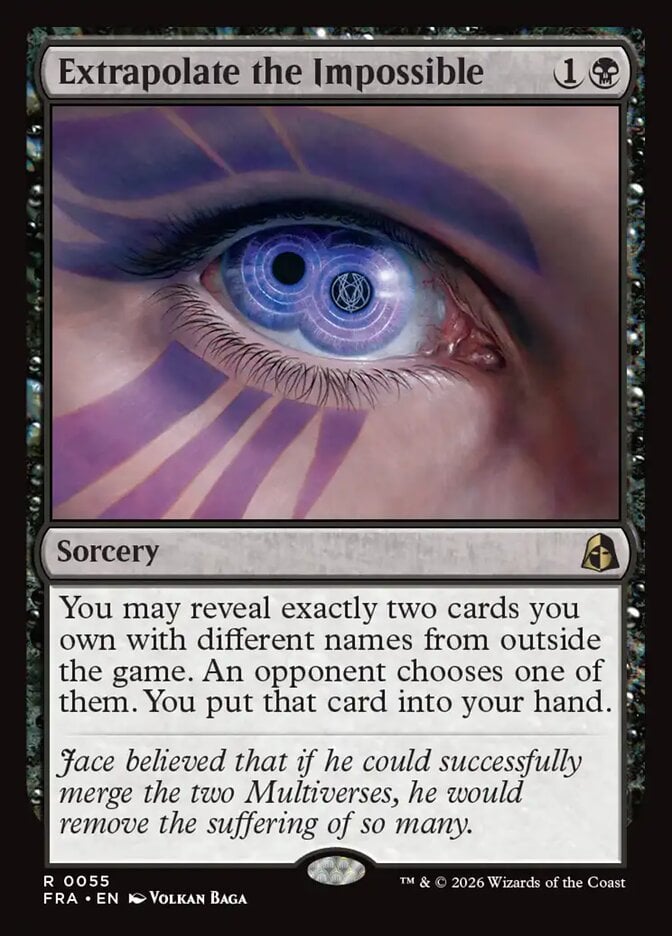
I could write an entire essay on this wacky card. It’s not exceptionally good or anything, but one unintuitive perk it has is the ability to grab basic lands. That means that Extrapolate the Impossible is effectively a bizarre landcycler with upside.
However, it’s unlikely to do much in Draft specifically, as I’ve only ever played it in Sealed. It does its best work there in 5-color piles, which can wish for mid-game removal spells or color hate cards that weren’t maindecked, while leaning on this as an additional land source.
Gideon the Oathless
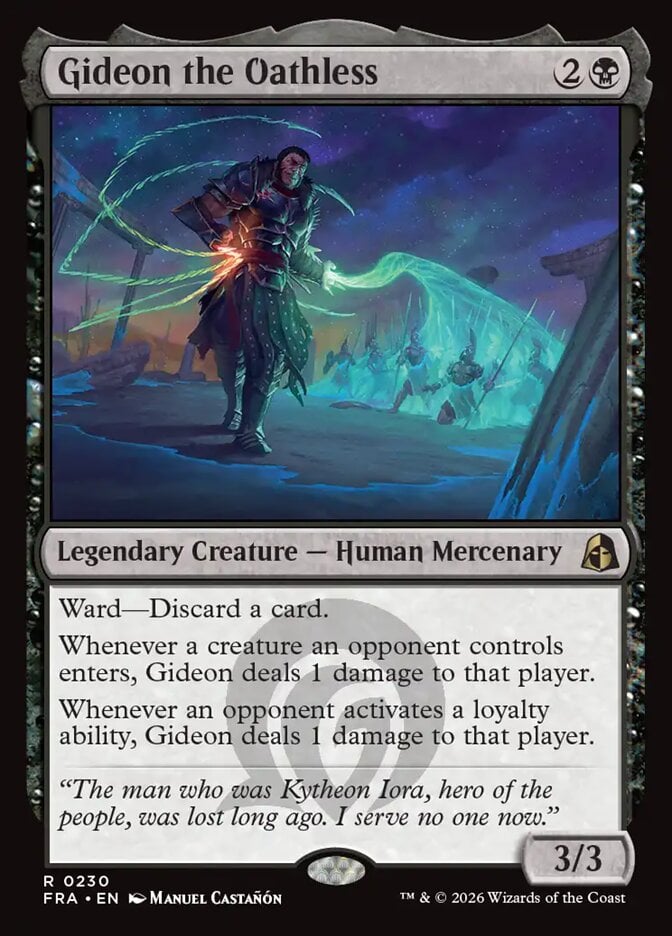
Gideon the Oathless is bar none the most frustrating card in the format sometimes, especially if you have the misfortune of playing Saheeli, Jewel of Avishkar against it. I recommend eating the 2-for-1 early if you have something like Last Gasp, although the urgency of this will vary from game to game (some decks don’t have that many creatures and only -3 their Jaces).
Lich’s Relic
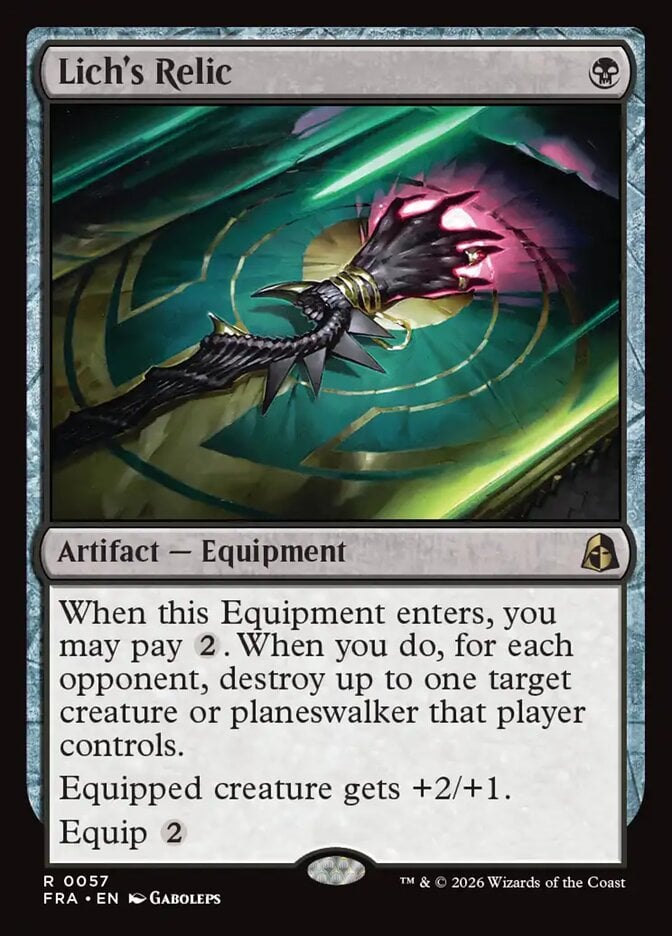
Lich's Relic is even more broken than advertised. It’s Crude Bent Blade all over again, but even better and with an appropriate rarity.
Liliana the Repentant
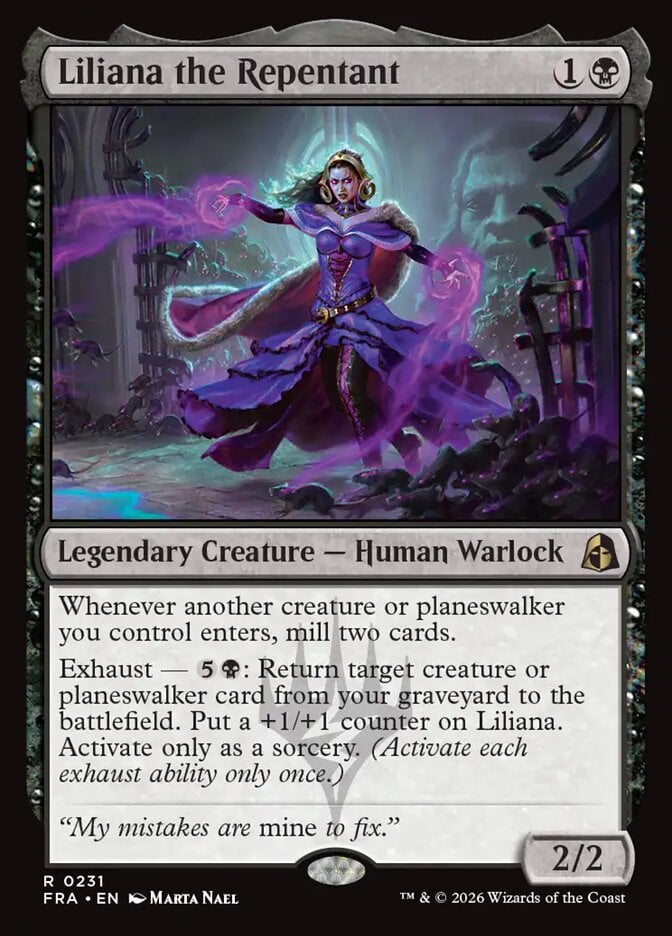
The strong graveyard theme in Reality Fracture has made Liliana the Repentant better than expected. There are some drawn out games you may just want to play it as an 8-drop though, where you can safely cash it in for value.
Rise of the Deathbringer
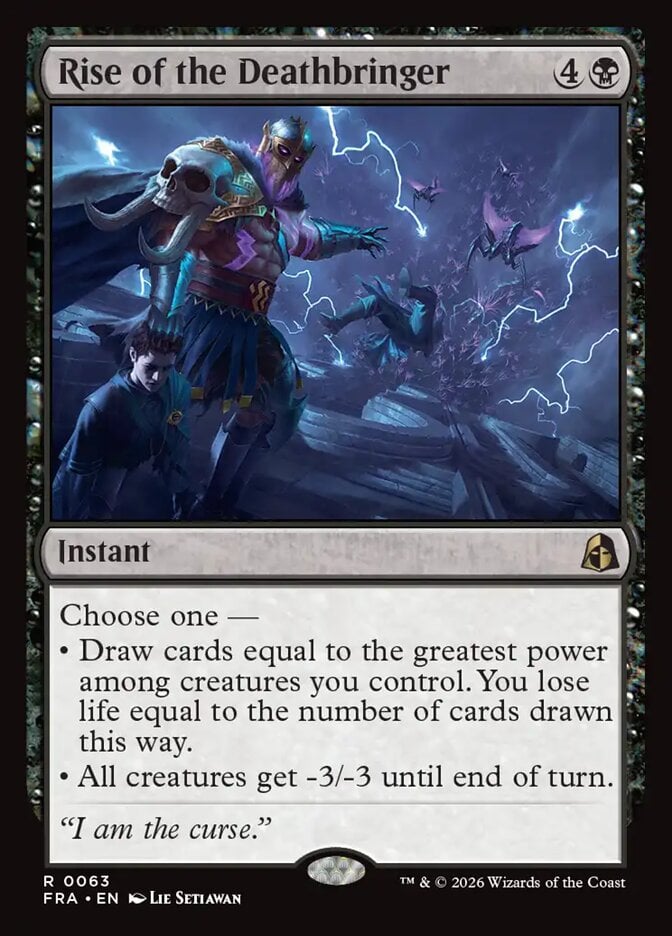
Another scary rare to play around when your opponent passes with “nothing” up. The single in the mana cost is particularly paranoia-inducing. Thankfully Rise of the Deathbringer misses X/4 creatures like beast tokens, which are safe to play into it.
Sanctum Lurker
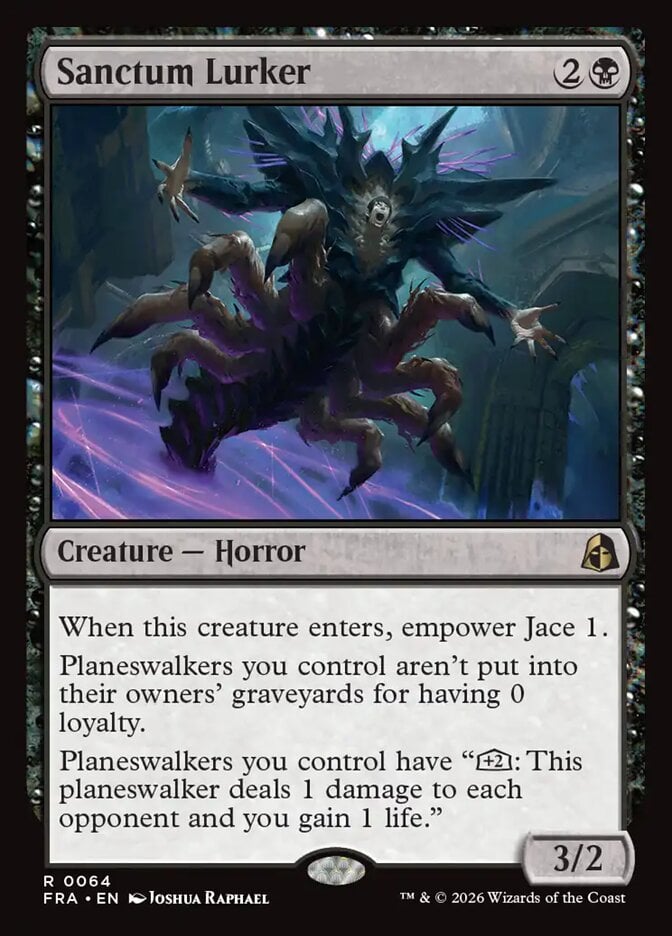
A grotesque rare that either wins the game or 2-for-1s your opponent, with few exceptions. You can immediately +2 the Jace that Sanctum Lurker creates after playing it, which means you’ll be +1 from the token even if this dies on the spot. The only way to prevent this is killing it on sight before empower 1 resolves.
Ajani’s Anguish
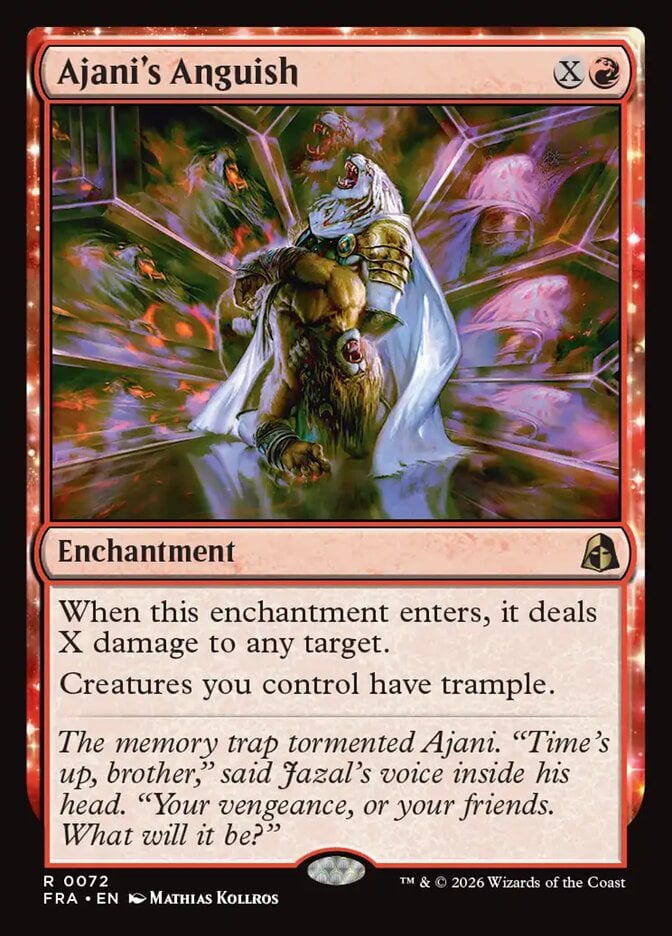
Rescue Girl, First Responder dreams aside, Fireball is still a great Magic card. Ajani's Anguish tacks on a trample-enabling enchantment, because why not?
Curse-Marred Demon
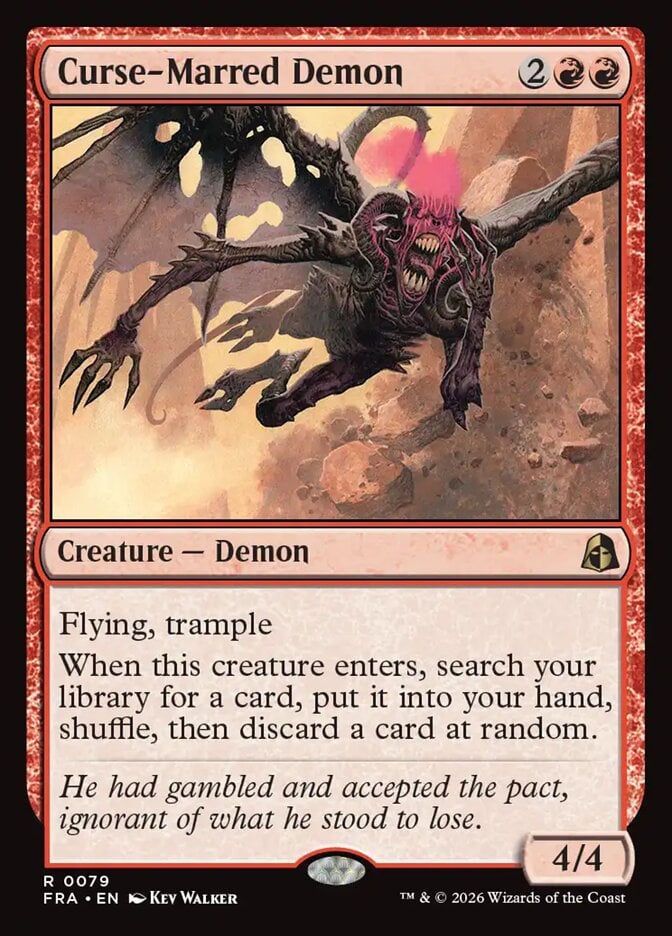
The safest cards to grab with Curse-Marred Demon are Recursive Recruitment and Twinned Vision. If you’re tutoring something you don’t want to discard, try to hold as much junk in your hand as possible.
Draconic Visitor
Draconic Visitor goes off with Woodwork Prodigy, Saheeli, Jewel of Avishkar, and Vraska, Soul of Stone.
Face Yourself
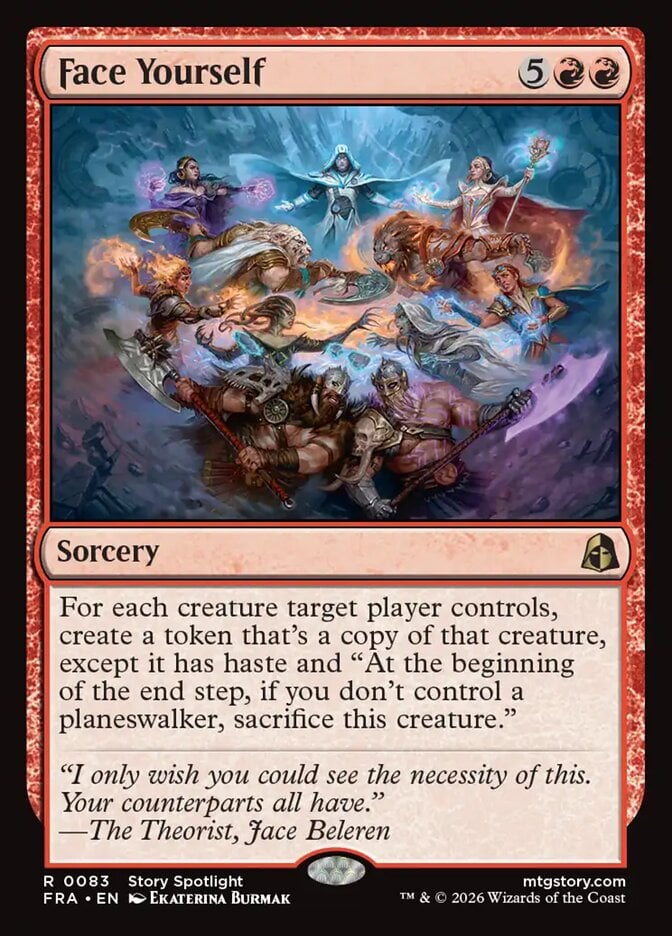
I still have no clue if Face Yourself is good. I didn’t realize that this can target either player in my original guide, so it plays best in decks with cards like Craftwork Crusher. I’d always play another copy of Crusher over this of course, but it’s still potentially worthwhile to ramp into.
Carnivorous Cultivator
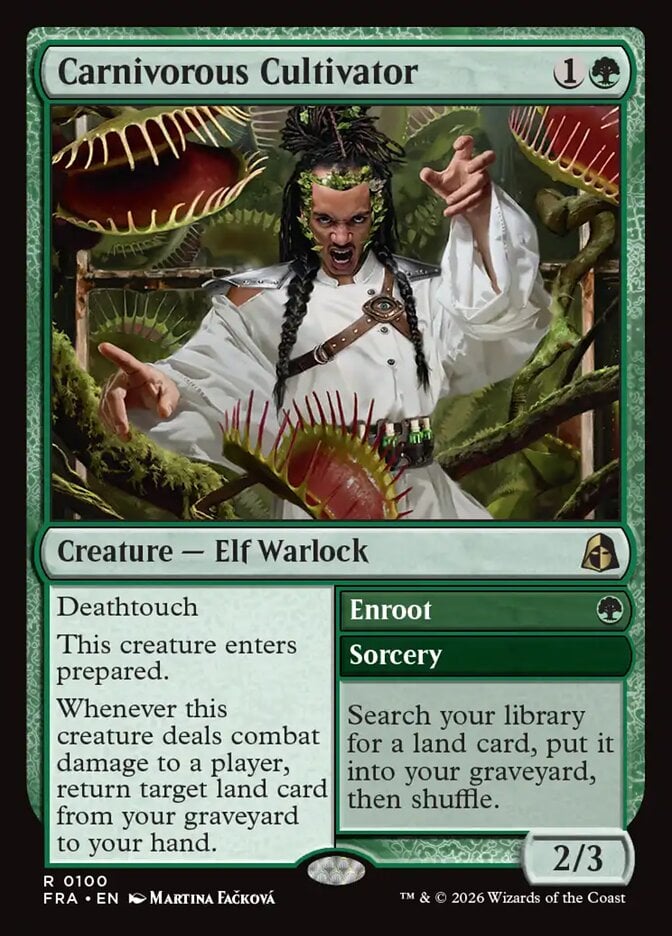
You don’t need to “Enroot” with Carnivorous Cultivator if you already milled a land to something else. Pay close attention to your surveils and past mills so that you don’t waste a mana needlessly.
Hungering Puppetbeast
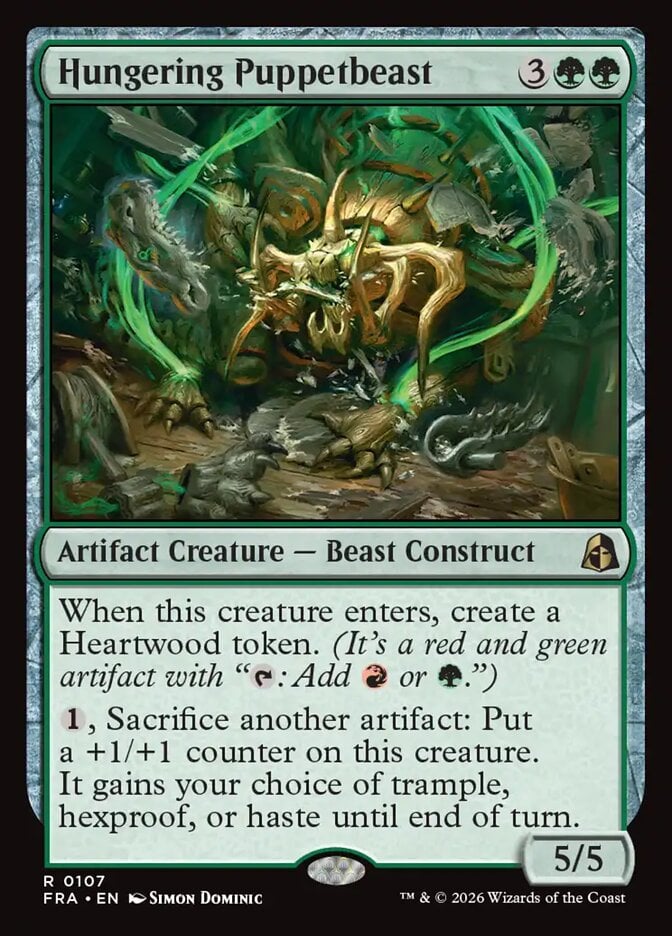
Hungering Puppetbeast and Puppet Crafting give all green decks access to 5+ power of haste out of nowhere. I lost a Chandra, Torch of Defiance to this once for not leaving a Thopter back, so consider playing around them when possible.
Puppet Crafting
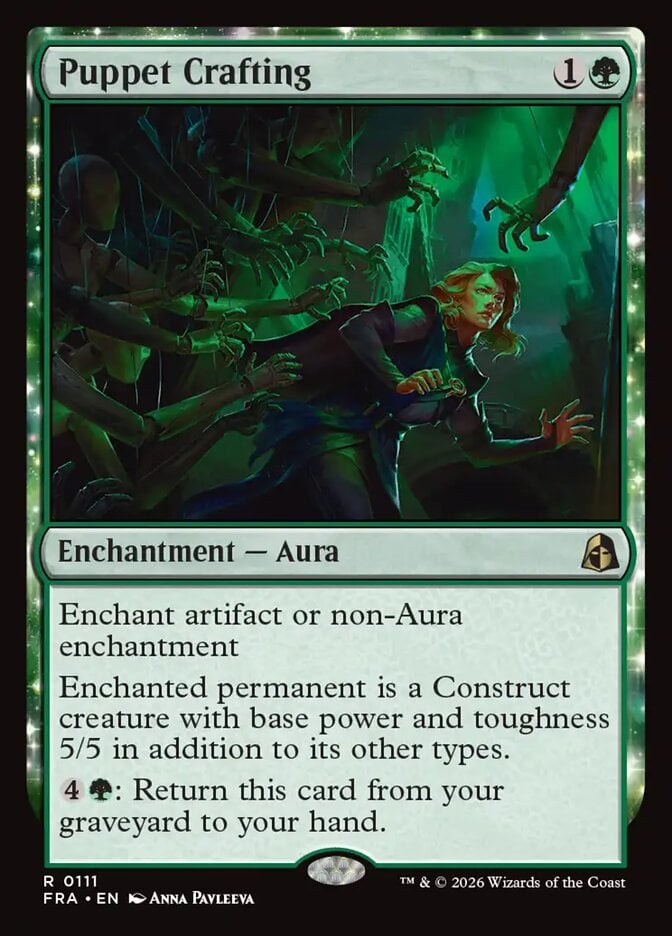
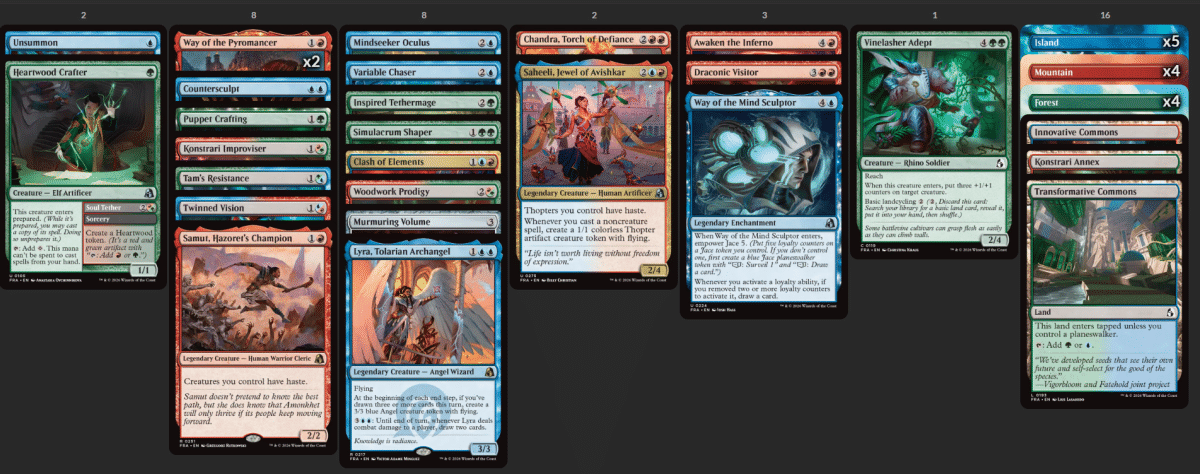
Puppet Crafting is exceptional with the cheaper “Way of” enchantments. It was excellent in the Arena Direct Sealed deck below, which fell just short of winning me a box (6-2).
Null Summoner
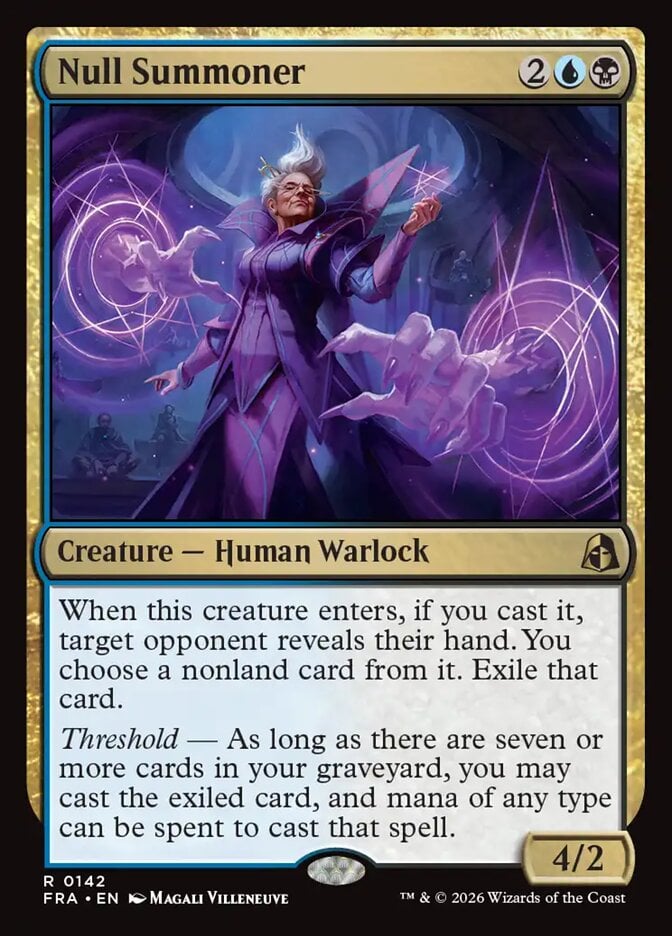
The “cast” restriction prevents Null Summoner from getting you again with Rewrite Regrets and Ferocity of the Hunt. I still detest playing against this thing though.
Tenured Tethermage
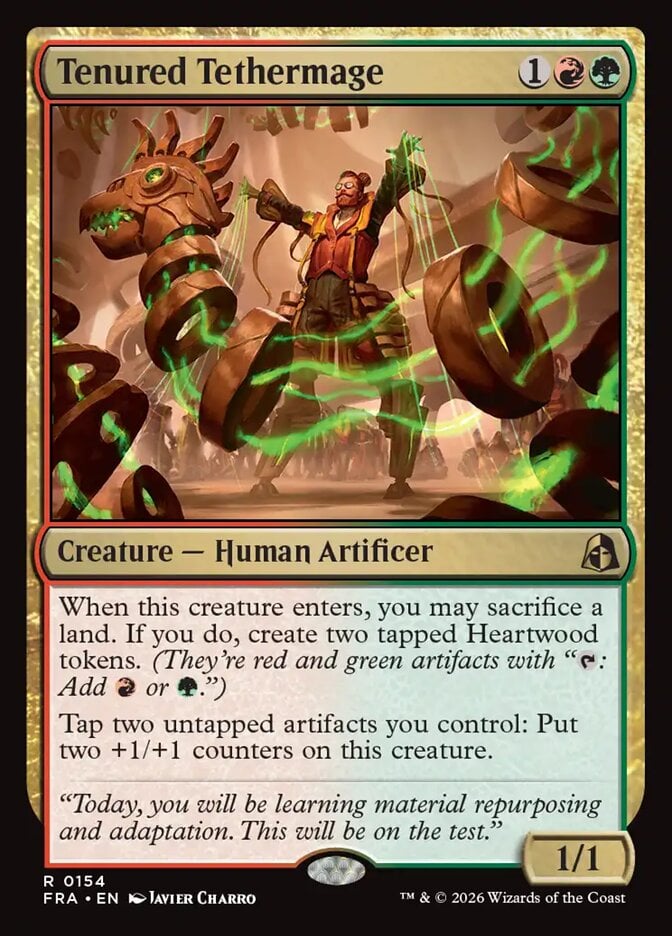
As with so many RG cards in Reality Fracture, the more Heartwoods you have, the better Tenured Tethermage gets.
Vindictive Triumph
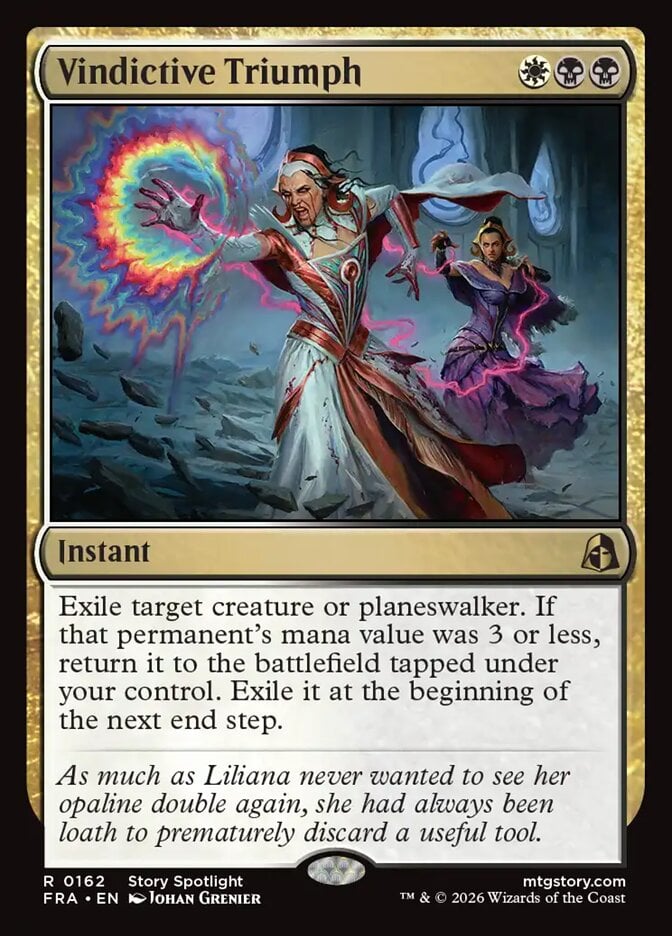
“Tapped” means you can’t ambush a blocker with Vindictive Triumph, although it does a great job of answering value creatures like Mindseeker Oculus and Pia, Determined Rebuilder.
Frostbite Pyromental
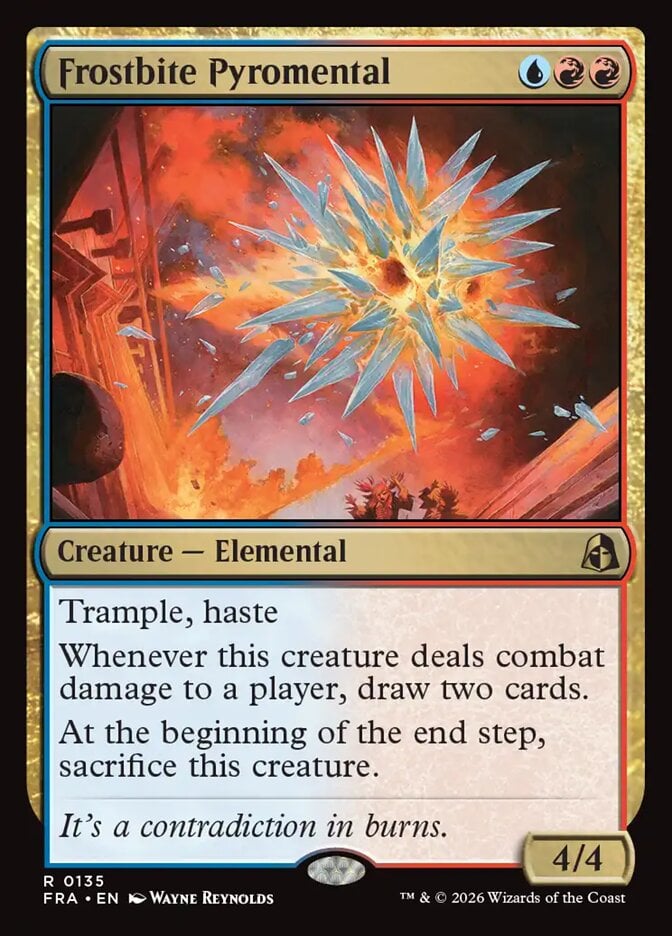
I had somewhat low expectations for Frostbite Pyromental, but it has felt even worse than I imagined. Don’t bother, I’d say.
Entrust the Spark
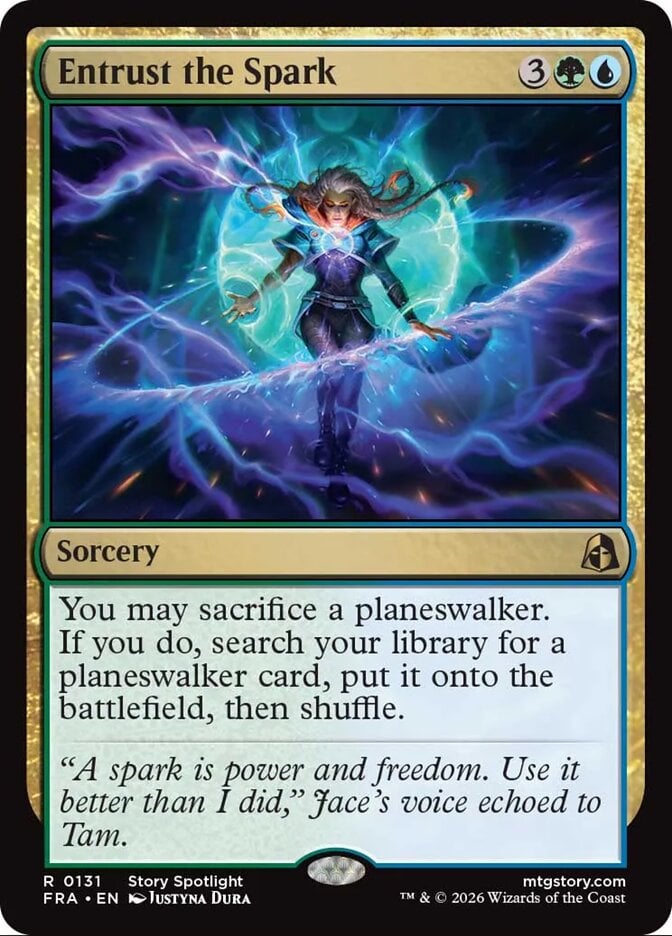
Unlike Loyal Tutor, I could actually see playing Entrust the Spark with Ajani Unrelenting. You’d need a ton of cheap empower Jace cards like Arcane Amphisbaena to get started, but still, the dream is there. You could also plan on including looters for it late game like Twinned Vision and Murmuring Volume (in case you naturally draw your Ajani first).
Karn, Gilded Guardian
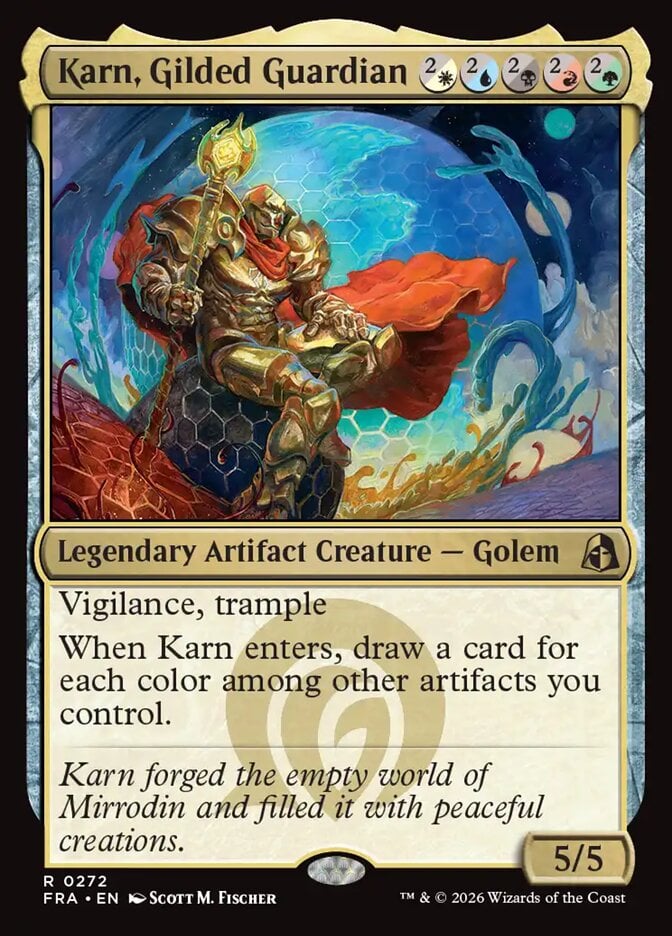
The dream with Karn, Gilded Guardian is to play it with Lich's Relic, Traxos, Academy Guardian, Warrior's Blades and a Heartwood token out. I haven’t been impressed with it yet, but I want to draw 4+ cards off it someday!
Codie, Ravenous Codex
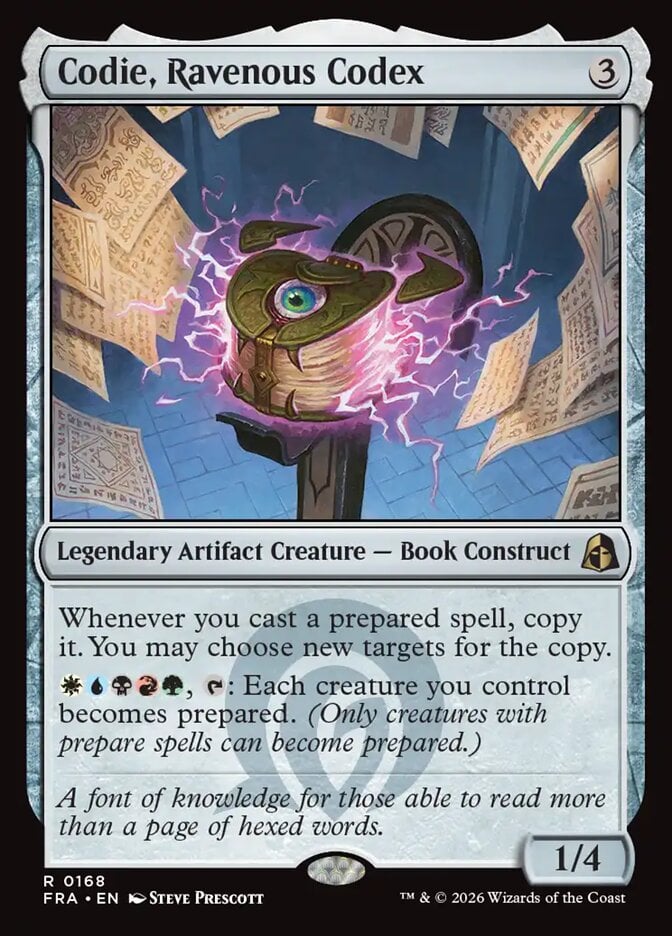
I have yet to play Codie, Ravenous Codex in any deck. The common prepared spells aren’t really that exciting to copy, and the rare ones are generally too situational. Throw in Codie’s underwhelming body, and you have a generally useless rare.
Karn, Argent Defender
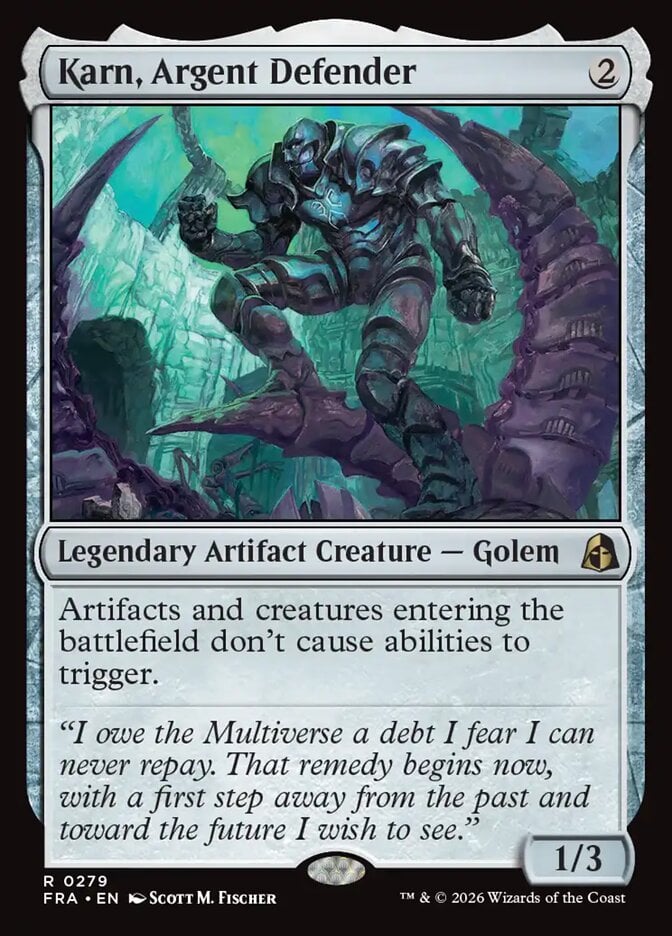
Karn, Argent Defender may be somewhat slept on, provided you have ways to get value without your own “enters” creatures. If your opponent can’t remove Karn, it severely nerfs a number of amazing cards, including Craftwork Crusher, Kiora of Fire and Ashes, and Mindseeker Oculus.
Theorist’s Sanctum
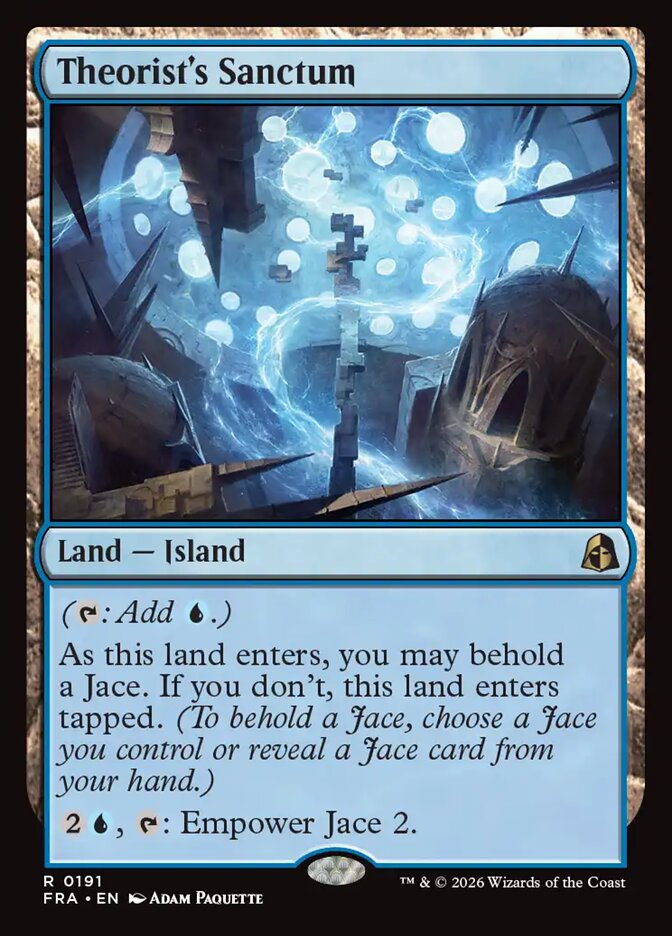
For Arena players: Theorist's Sanctum’s activated ability is on the left… for some reason Other lands like Room of Refuge put their activated abilities on the right. This has lost me multiple games in the Arena Direct….
Uncommons
Danitha, Sword of Hope
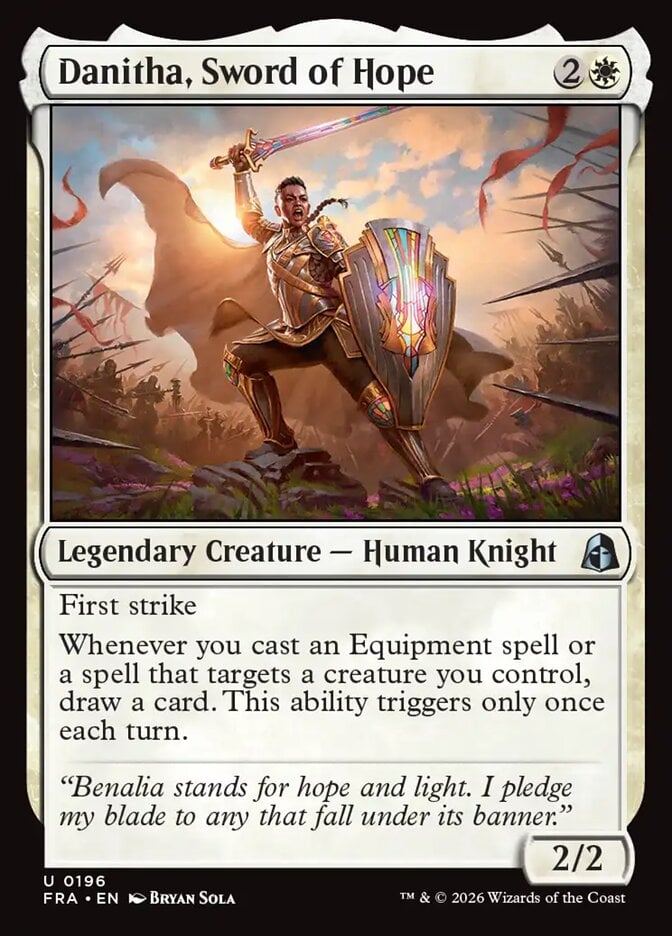
Danitha, Sword of Hope’s potential rests on “Seed Suture” cards, Medic's Kitesail, Warrior's Blades, and Tam's Resistance. If your deck has 6+ of those, give it a try. Otherwise, no thanks.
Generous Revival
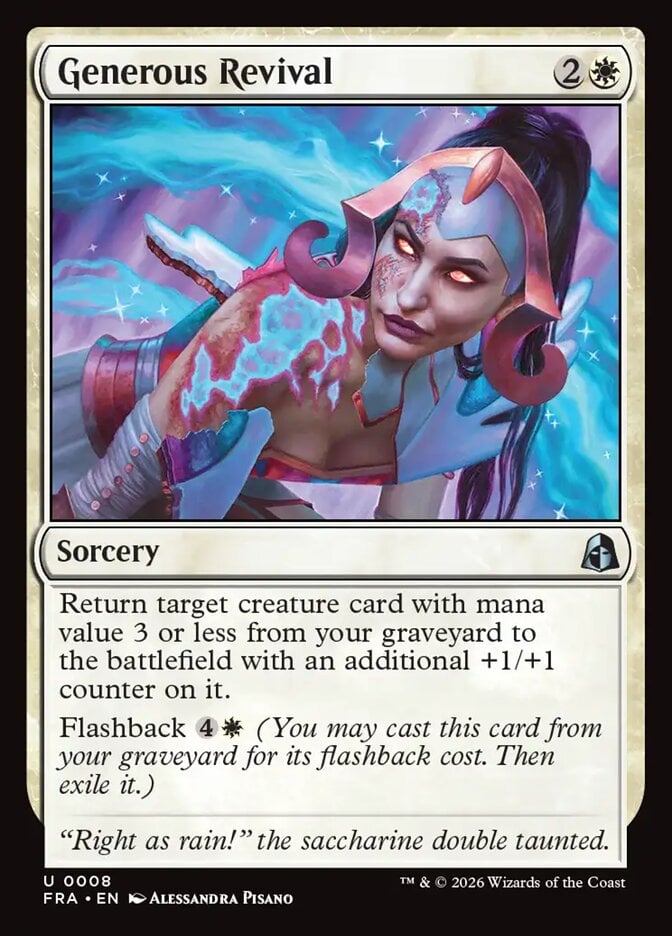
An excellent splash, provided you have sexy 3-drops like Vraska, the Cutting Glare and Mindseeker Oculus to rebuy. I love that you can surveil or discard Generous Revival for value.
Ghalta the Immovable
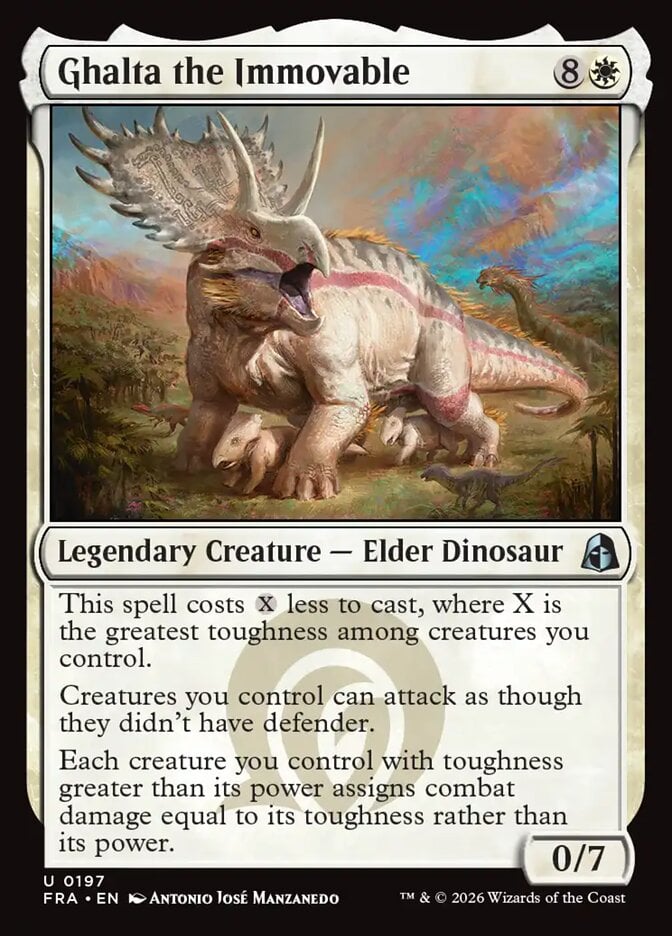
Butts.dek hasn’t felt remotely real in this format, although I did lose a match to it once. I’d only bother if I already had Traxos, Academy Guardian and kept seeing Ghalta the Immovable go late (having multiples makes the deck way more consistent, so ideally you’d have 3 copies).
Prophesied End
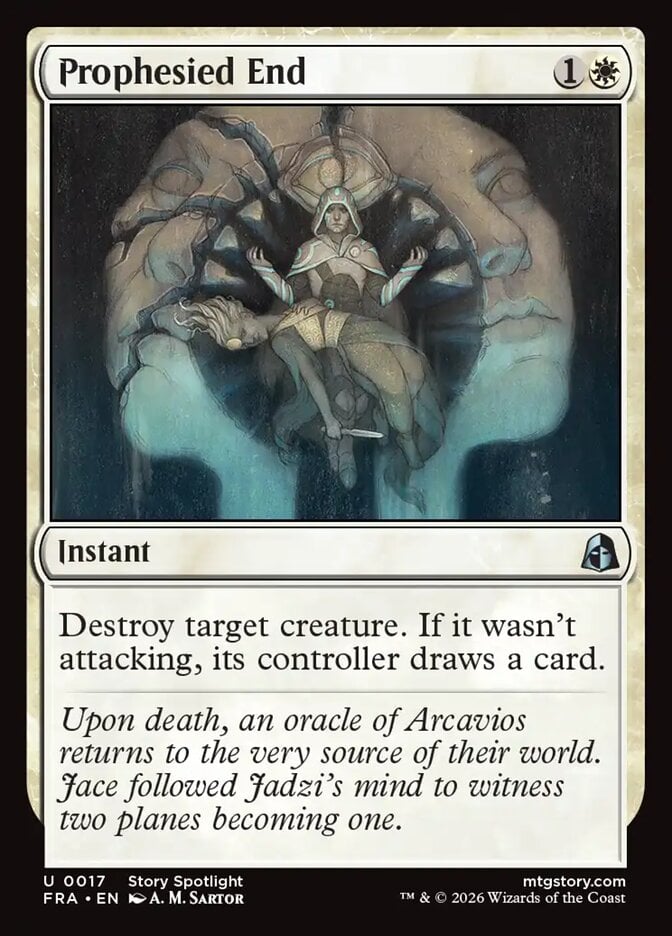
Opponents have been running into Prophesied End a lot, as there aren’t many other effects in the format that specifically punish attacking. Be prepared to sometimes make miserable exchanges like killing Kiora of Fire and Ashes with this (although you’d usually just hope to tag the dragon).
Rescue Girl, First Responder
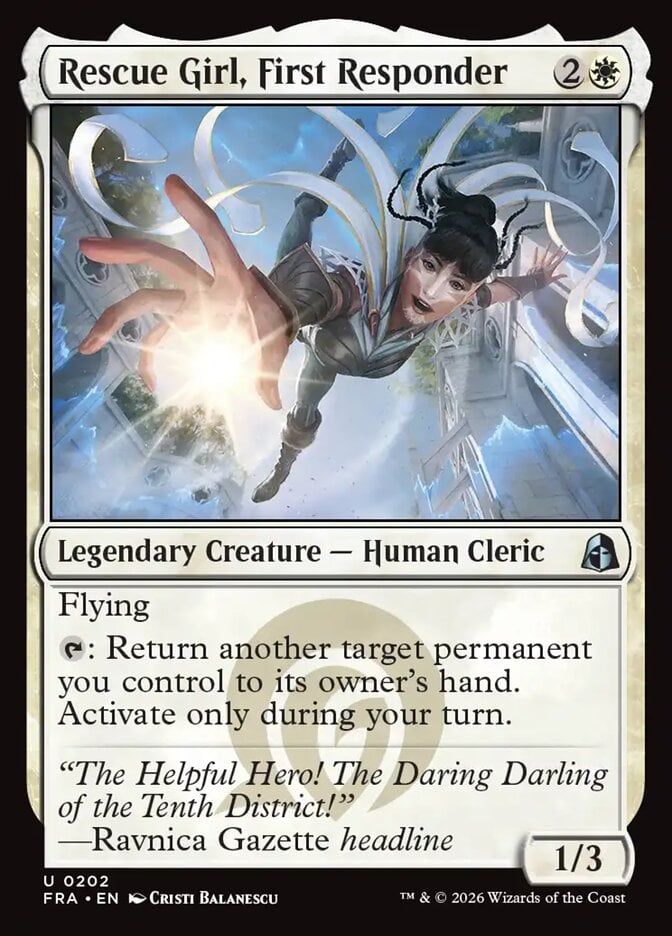
There’s a bit too much removal in this format for Rescue Girl, First Responder to be great, I think. I’m still playing it in decks with good combos, but don’t be surprised if it eats a timely kill spell before you get to do anything cool.
Teyo, Lightshield Expert
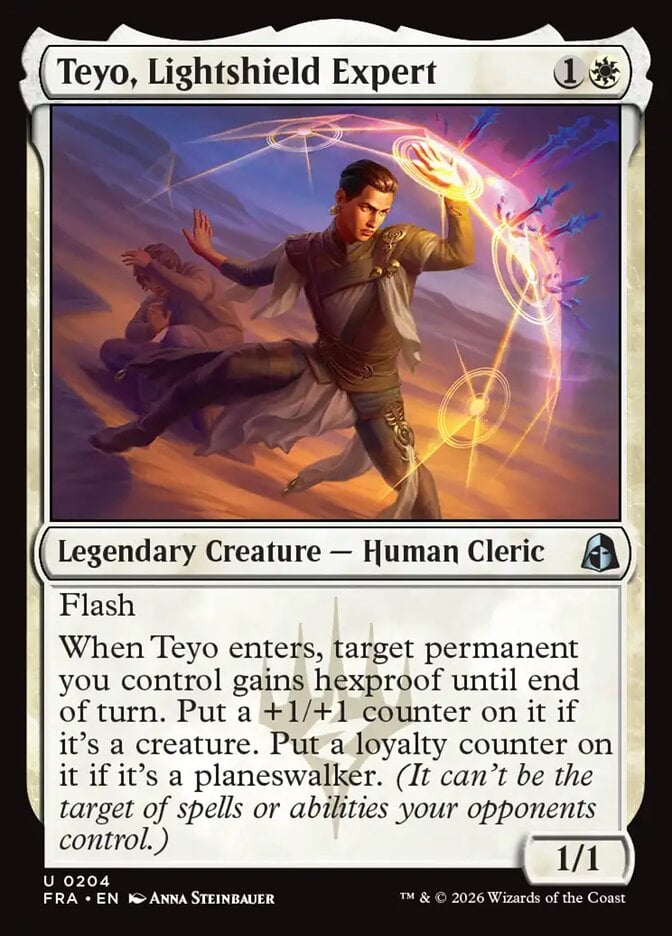
One of the most important cards to play around versus white decks, and an excellent card all around. The flash bear mode also lets Teyo, Lightshield Expert ambush small creatures like Heartwood Crafter and Blessed Ghoul sometimes.
Thalia, the Survivor
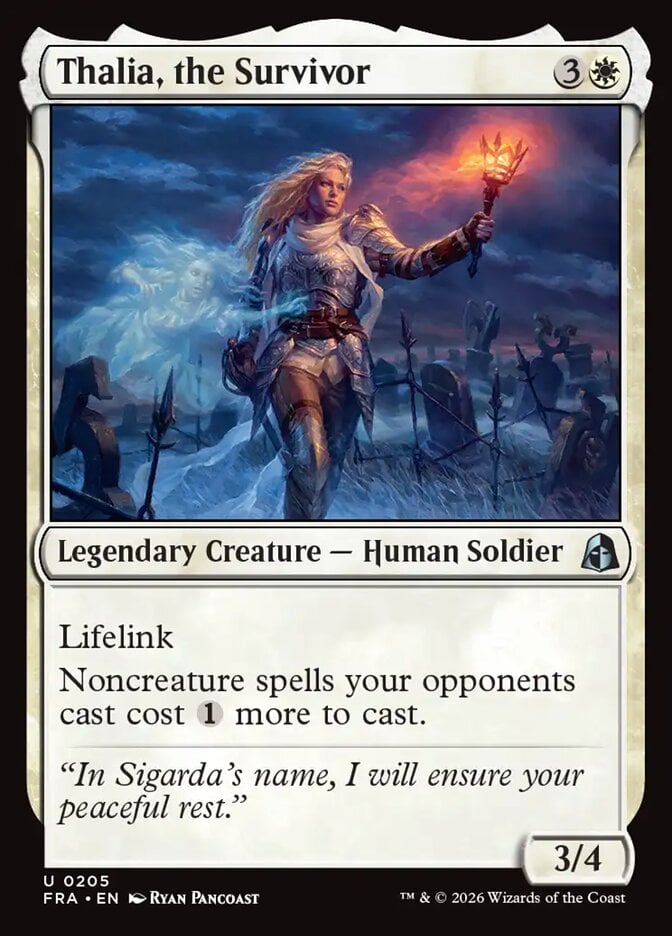
This affects only your opponent! I slightly prefer Blossom-Blessed Angel to Thalia, the Survivor, but it’s a solid 4-drop for any white deck.
Tomik, Orzhov Lawmage
Tomik, Orzhov Lawmage is mostly a 2/1 flier for 2, although both abilities have weird use cases. You can occasionally jump larger ground creatures using something like Room of Refuge for lethal out of nowhere. The planeswalker ability is occasionally good for protecting your Jace tokens, too.
Way of the Mentor
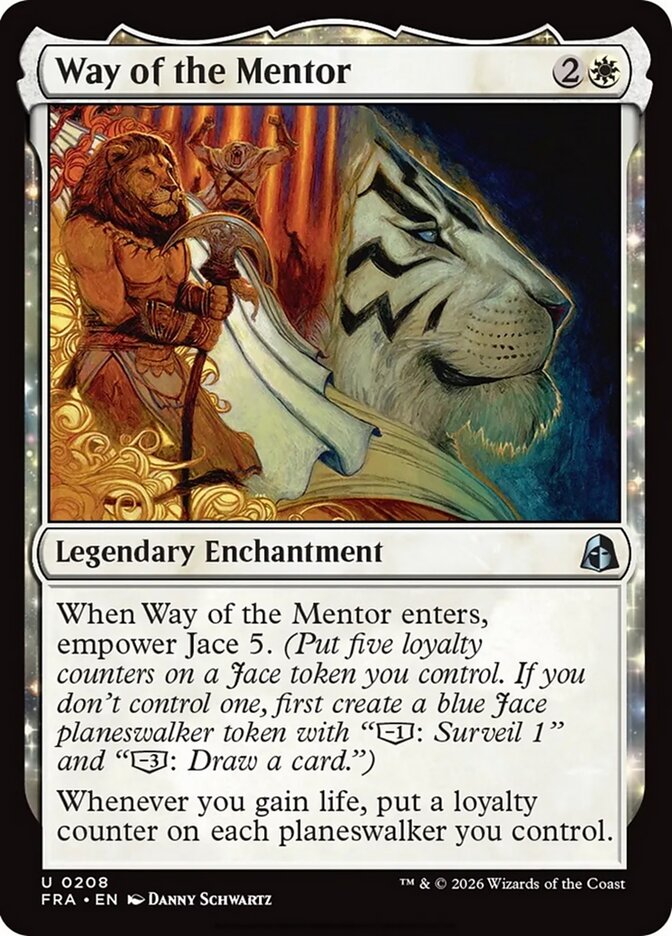
One of the weakest “Way ofs” in practice. Lifegain decks don’t make much use out of empower Jace, so what often happens is your token dies or you cash it in for cards, and then you suddenly can’t get value with Way of the Mentor.
Yoshimaru, Beloved Companion
Beloved as it may be, Yoshimaru, Beloved Companion (and really the entire +1/+1 counter theme in Reality Fracture) is kind of a dud. Tam's Resistance and Seed Sutures are probably your best bet, as I’ve hated cards like Predictive Preparations.
Your Fate Ends Here
Don’t forget that Your Fate Ends Here hits planeswalkers, too!
Yuriko, Blade of the Mighty
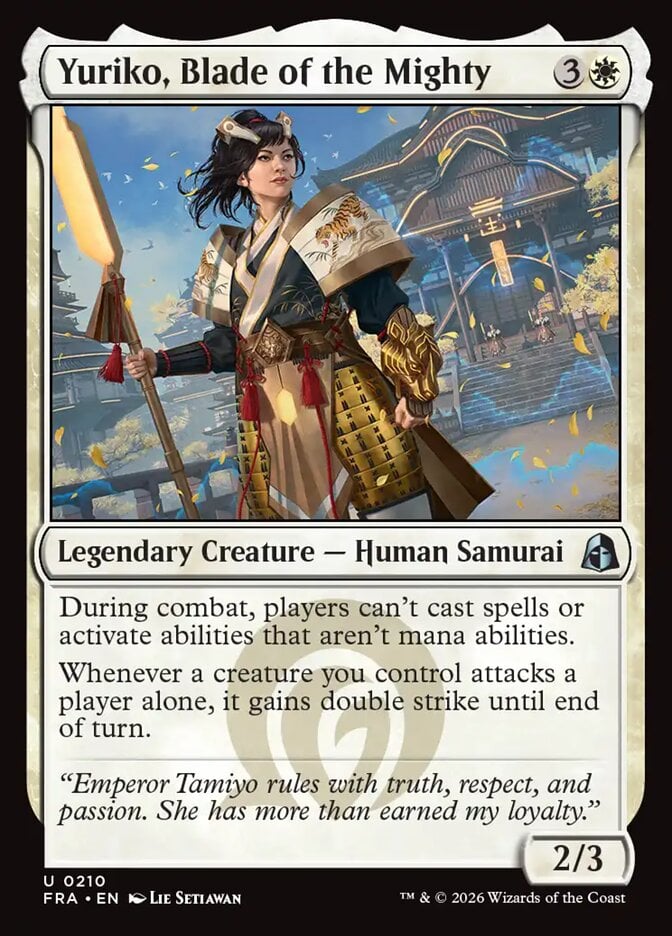
Thanks to its specific wording, you can attack a player alone for double strike with Yuriko, Blade of the Mighty on the board while still attacking a planeswalker with other creatures.
Arni, Humble Scribe
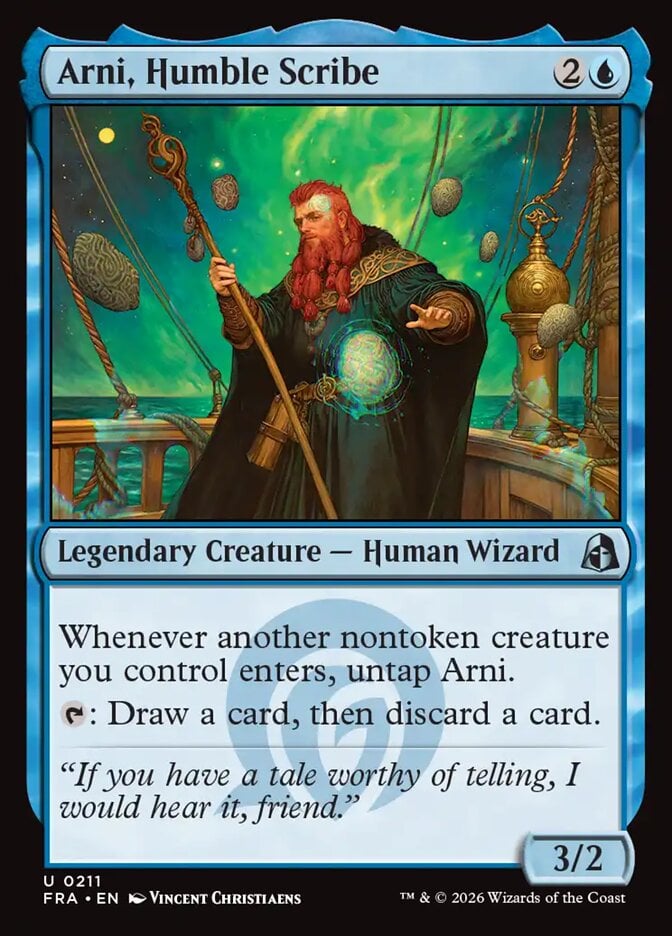
Arni, Humble Scribe gets some nice value with all the graveyard synergy in this format, but it’s unfortunately rather vulnerable to cheap removal. Don’t neglect the “nontoken” restriction here, which caught me once.
Countersculpt
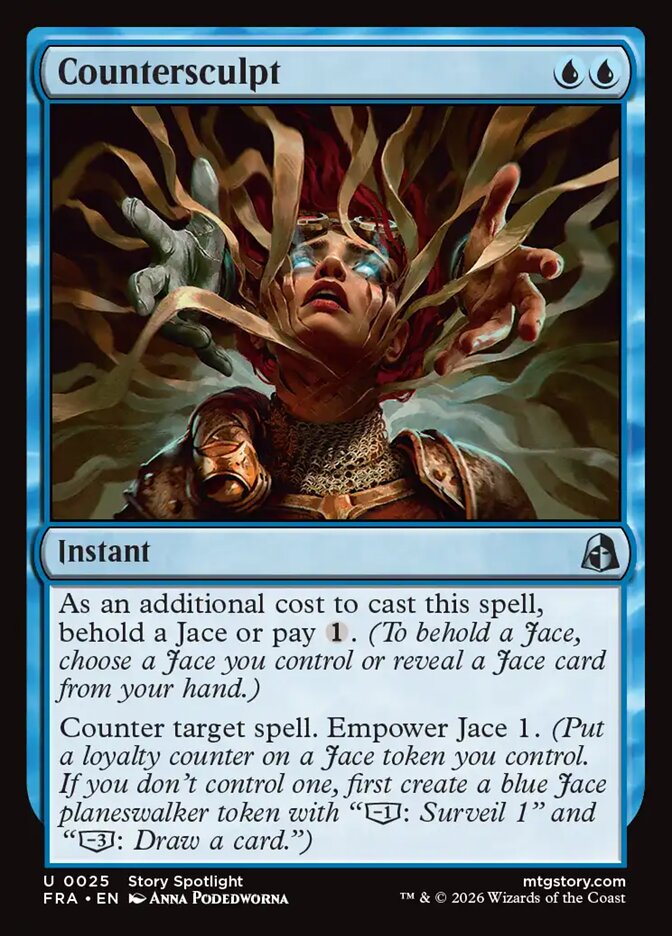
One of the best late game cards in the entire format, as nothing else can answer bombs like this can. Try to weight your mana base to be as blue as you can so you can cast your Countersculpt when needed.
Fblthp, Impossibly Lost
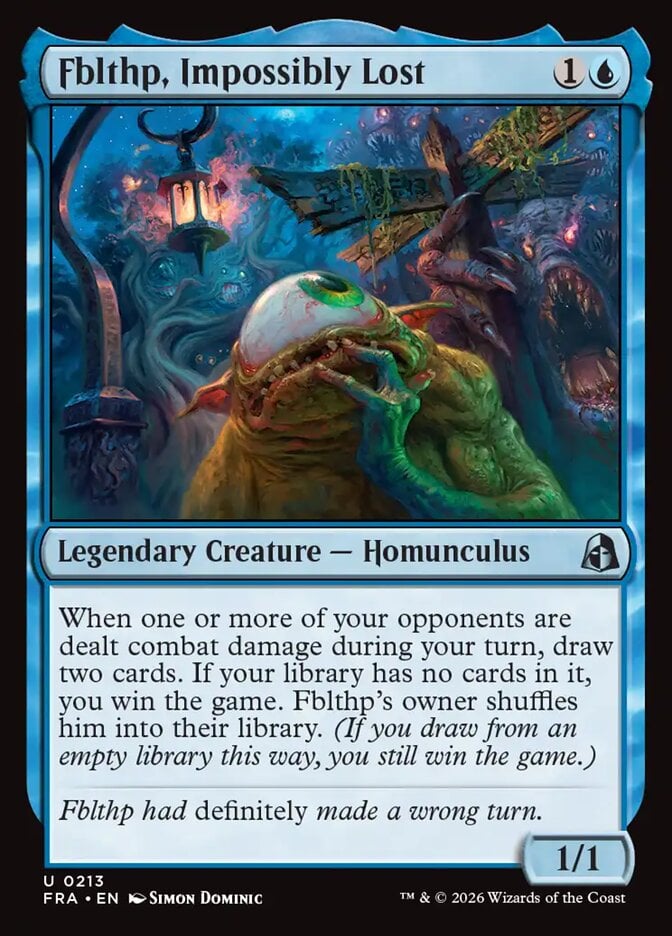
And here we come to the sleeper uncommon of this set. Fblthp, Impossibly Lost is deceptively an exceptional Magic card that does two primary things:
- This is a Divination on legs with a fairly easy use condition. Cheap fliers like Geist of Saint Thalia, evasive creatures like Tetsuko Umezawa, Fugitive, and so on will let you immediately draw two for just . You can then draw Fblthp later and keep the cards flowing.
- Fblthp is also an exceptional self-mill win condition! Draw/mill your deck as quickly as possible, then play this onto a developed board and sneak in with a flier or something to cinch a win.
If you’re trying to accomplish #2, Tetsuko is excellent there too. I also love to include some ways to get Fblthp back if needed like Generous Revival, Theoretical Necromancer, and Rewrite Regrets.
Geist of Saint Thalia
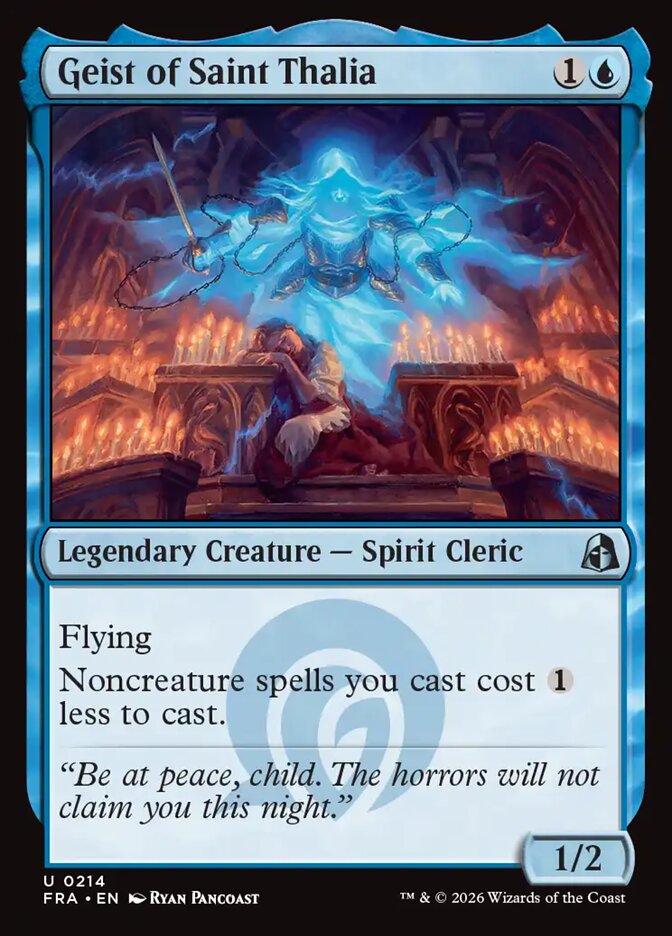
Tam's Resistance is a great way to get more out of this card. You can cast it very cheaply and then turn Geist of Saint Thalia into a decently sized flier.
Hapatra, the Desert Frost
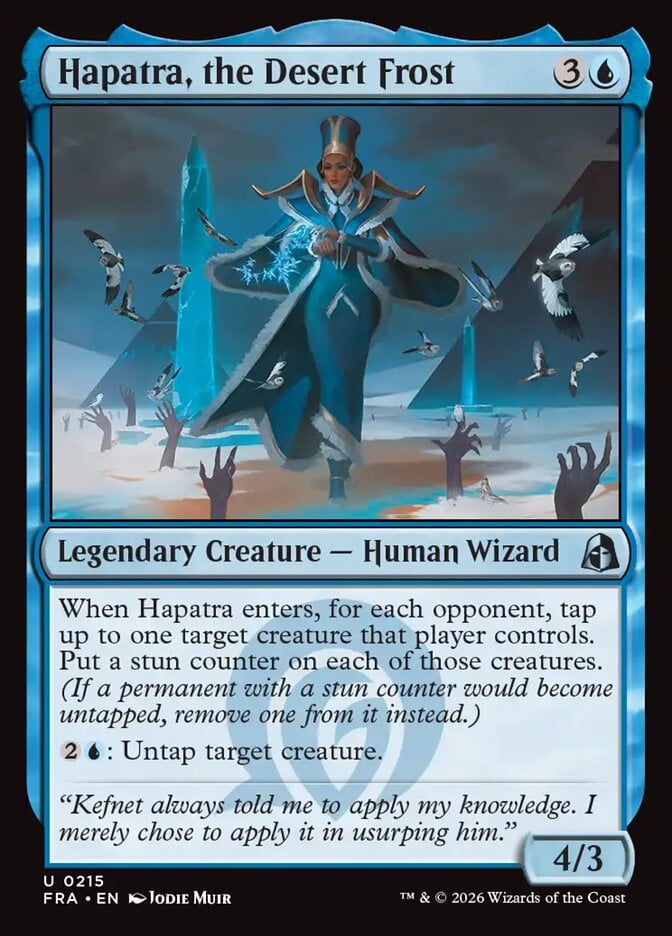
I overrated Hapatra, the Desert Frost a bit on its own, as most games of Reality Fracture have been too grindy for this to feel great. I’m still trying to pull it off with Loot, the Nexus in a Draft sometime….
Plan for All Outcomes
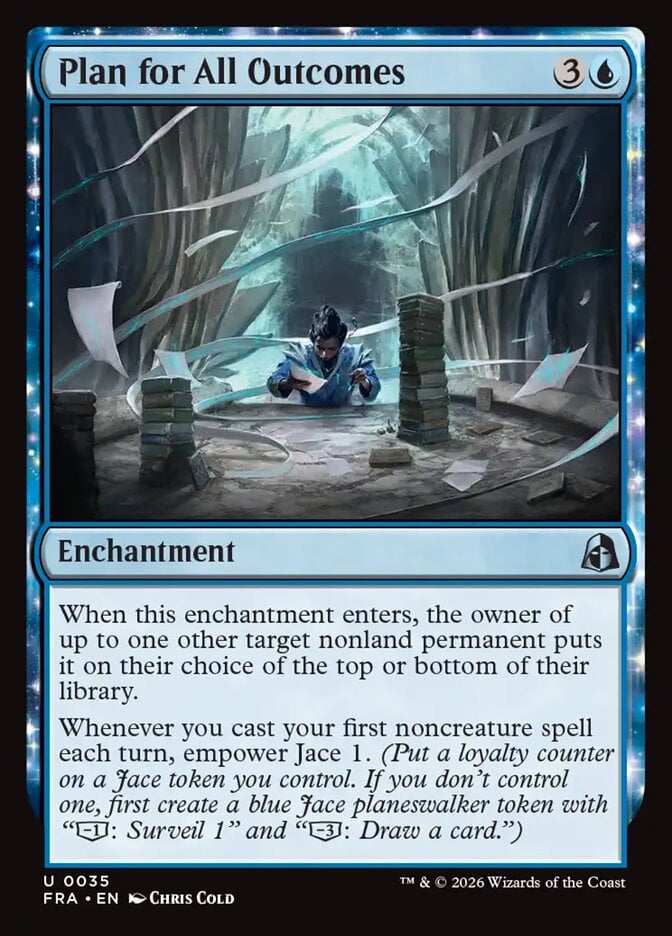
A premium uncommon for any blue deck. You don’t even need to lean into empower at all for Plan for All Outcomes to be amazing, as WU Surveil decks can repeatedly cash in the 1-loyalty Jaces for triggers!
Way of the Cryomancer
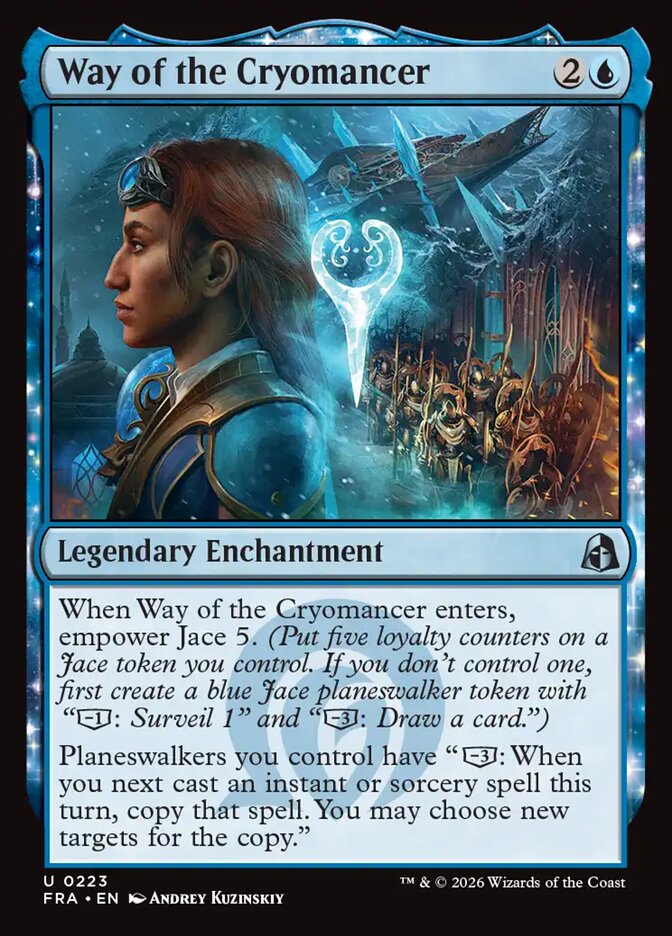
Much more finicky to play with than most of the best Ways, although I do respect its potential with cards like Extended Absence. I’ve only liked Way of the Cryomancer so far in decks with substantial empower support and several great spells to copy.
Way of the Mind Sculptor
Pure gasoline. No card rips through your deck like Way of the Mind Sculptor does, and even killing the Jace tokens won’t save your opponent if you have more empower to draw into. This is an easy P1P1 for me at this point, and it’s often worth splashing too.
Yuriko, Hope from the Shadows
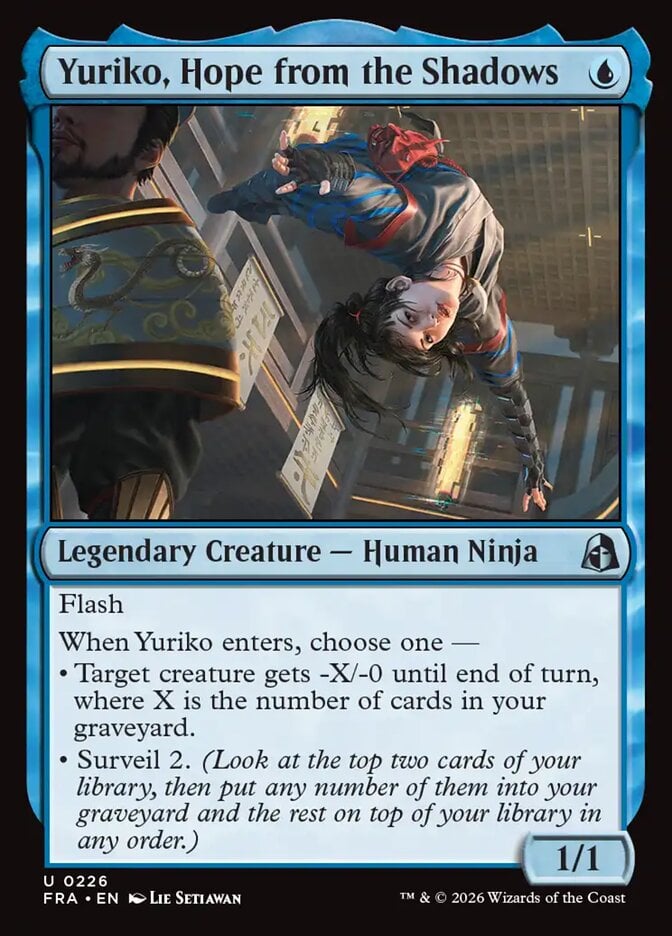
It’s easy to be flush on cards in this format, which lets Yuriko, Hope from the Shadows shine sometimes. Double or triple spelling with this late game could lead to great things, as it’s tough to play around this for just 1 mana.
Break Under Pressure
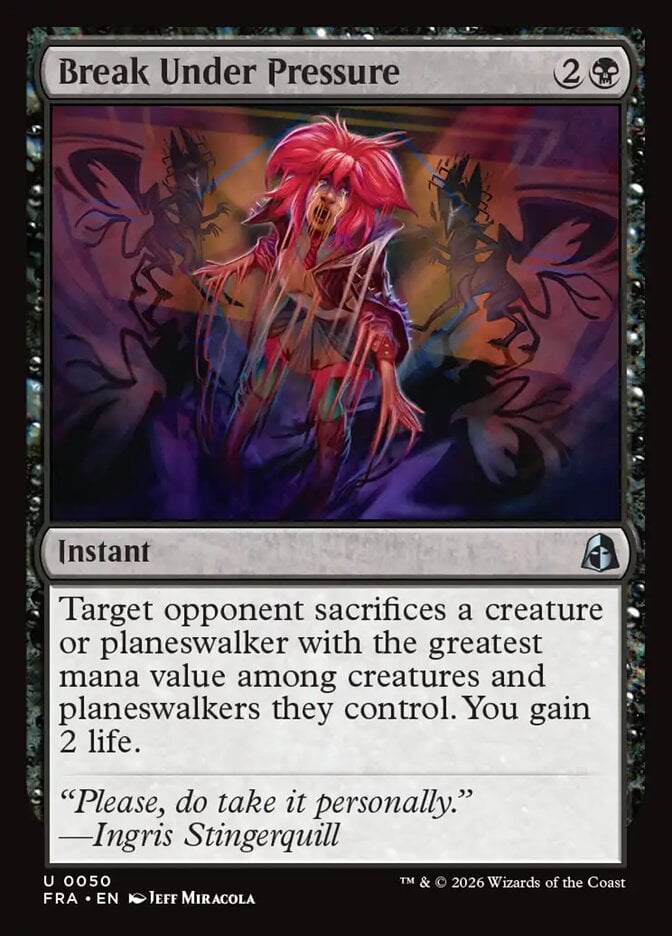
Break Under Pressure is an excellent removal spell that happens to be the best answer in the format for Hungering Puppetbeast and the two Ruric Thars.
Danitha, Spear of Agony
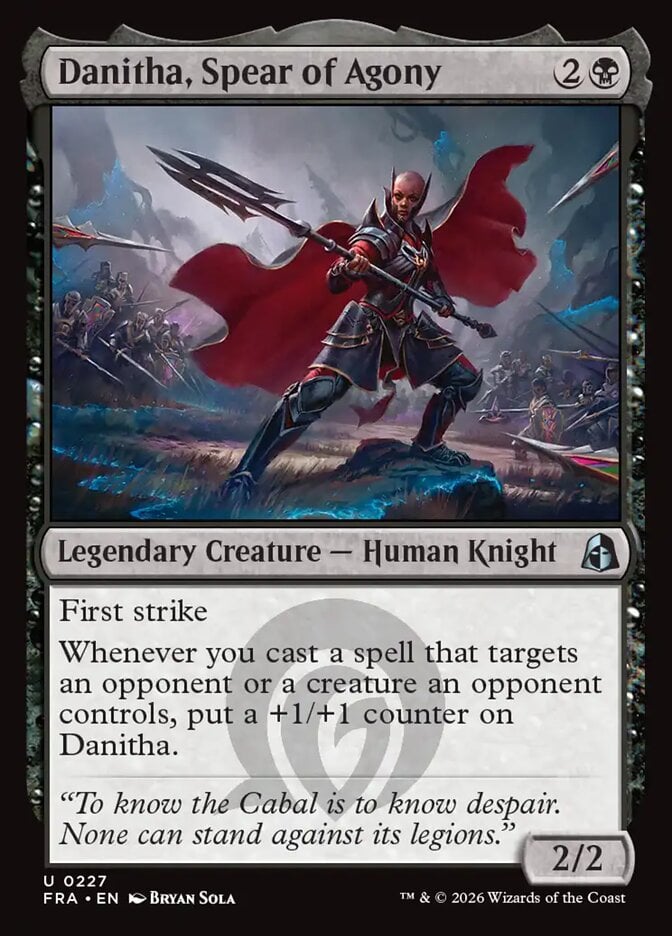
Like the white Danitha, this requires dedicated support to do much. Danitha, Spear of Agony depends heavily on removal spells and Vicious Verse cards, so play it only if you have many of those.
Loot, the Anomaly
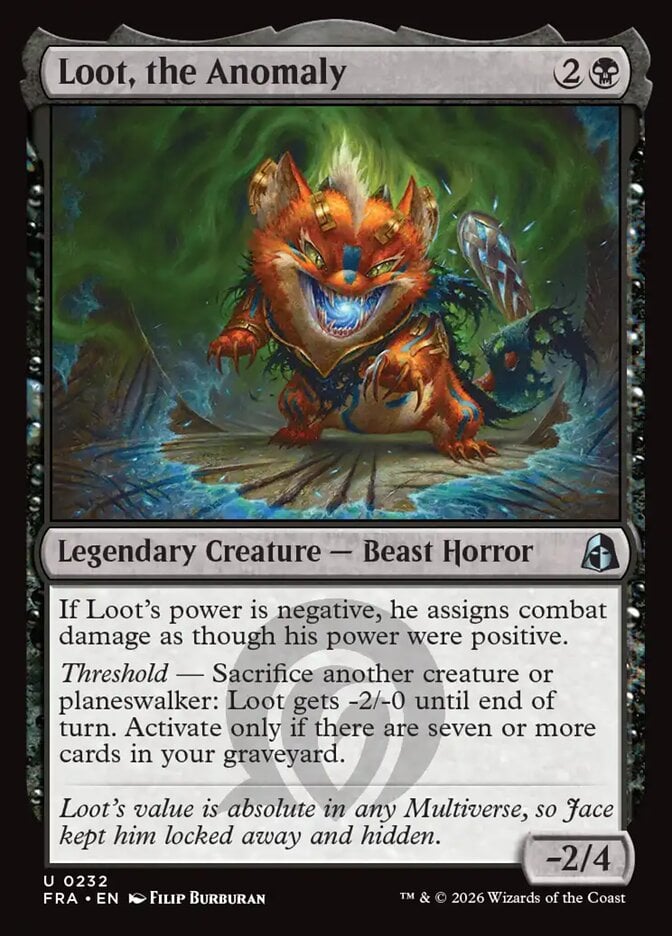
Loot, the Anomaly hasn’t been very good at all, but it does have a neat dream with Tetsuko Umezawa, Fugitive that you could attempt. Make it unblockable, swing, and sacrifice your entire board for a crunchy lethal.
Mabel, Bitter Recluse
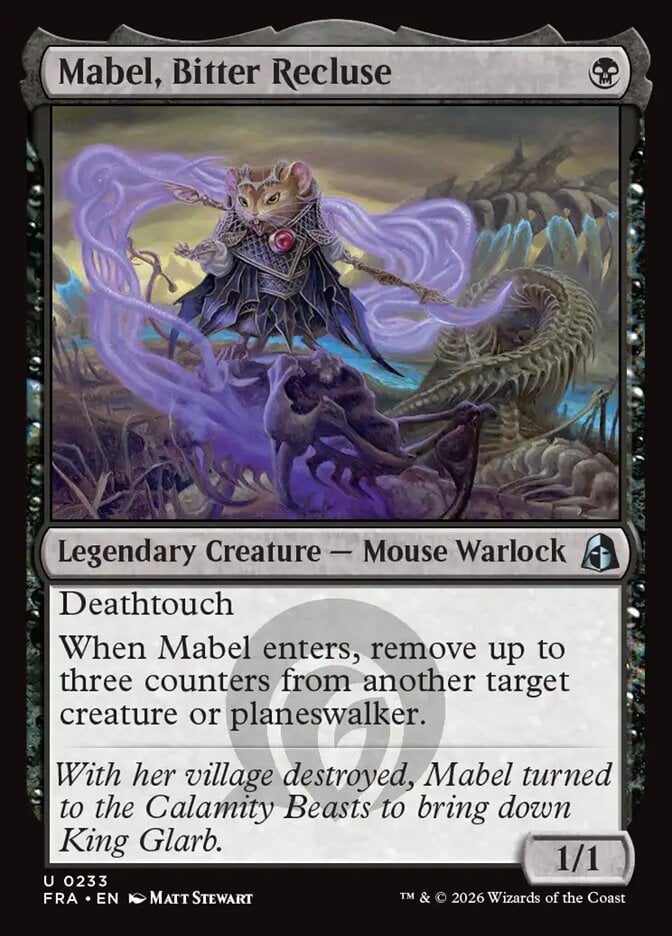
I love this little utility Typhoid Rats in defensive decks, and often try to hold it to snipe a Jace token if I can. The damage you get from playing Mabel, Bitter Recluse early is generally negligible anyways.
Massacre Girl, Most Wanted
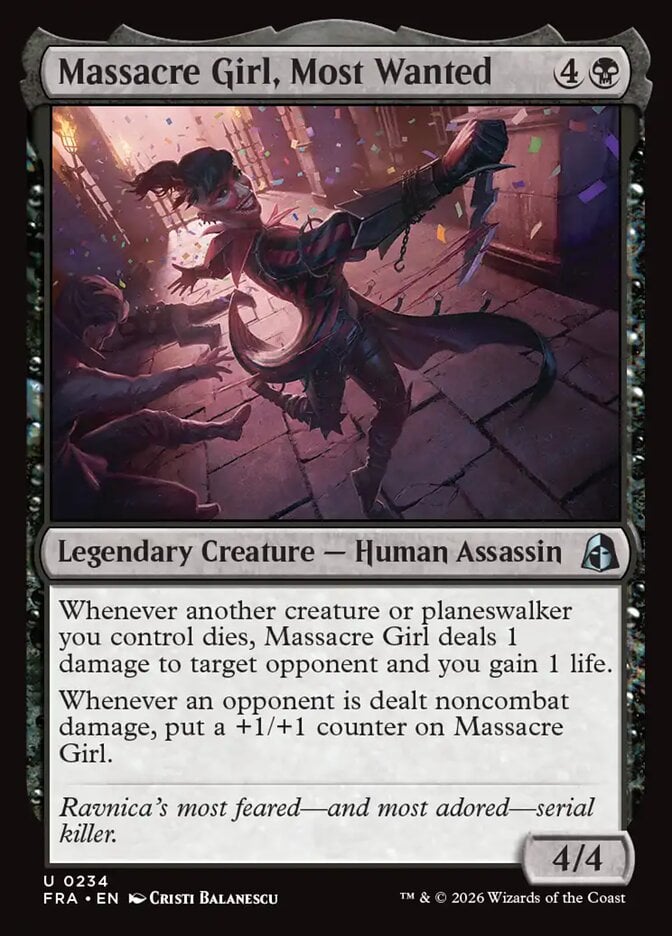
Massacre Girl, Most Wanted will never be “most wanted” in drafts as a 5-mana creature with no “enters” value. I wish this said either player, as the sacrifice decks in this format have felt rather underbaked.
Multiply by Zero
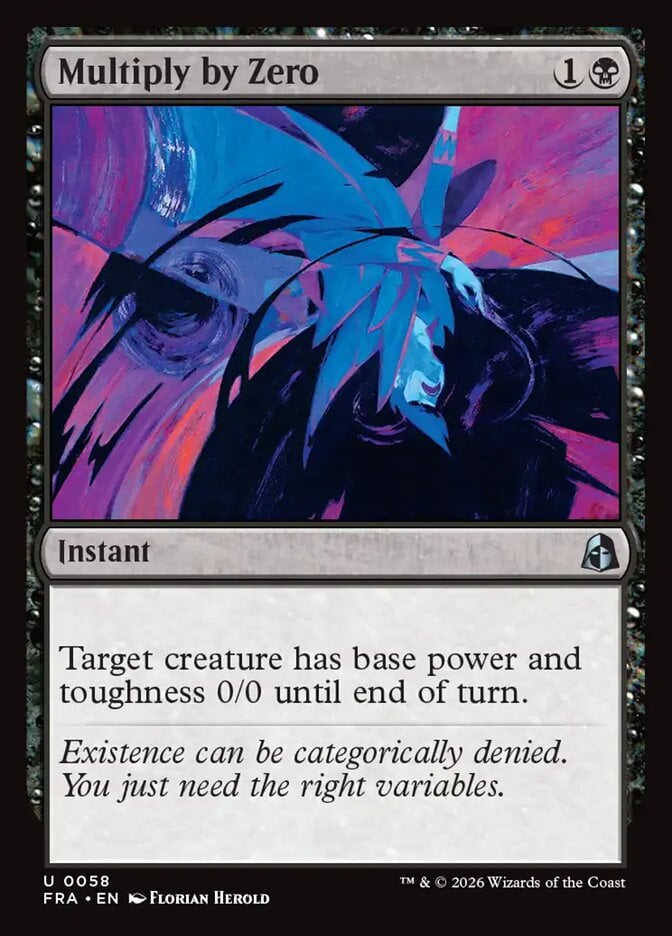
I encourage you to main phase Multiply by Zero if possible, as it’s punished by all combat tricks and many +1/+1 counter cards. I’ve still largely had great experiences, though.
Proft, Sinister Mastermind
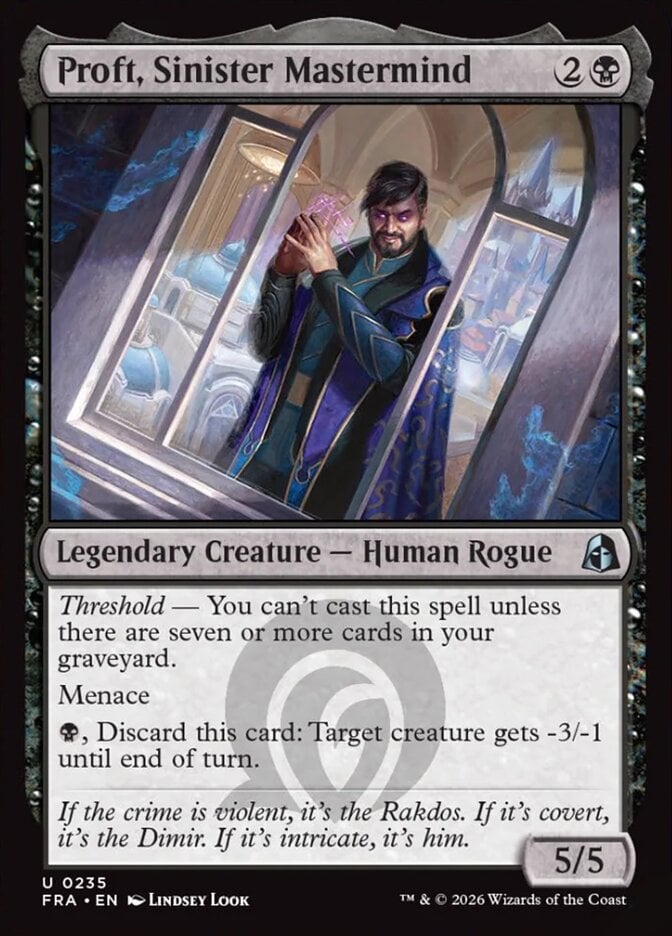
The discard mode is a decent fail safe for Proft, Sinister Mastermind and helps enable it with Generous Revival and Rewrite Regrets too.
Rewrite Regrets
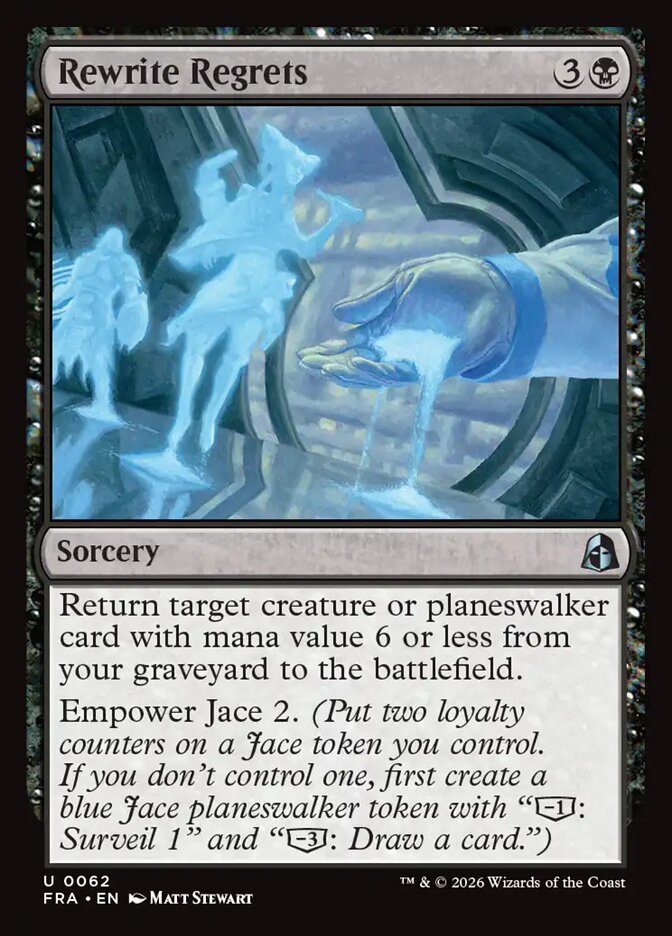
All of the common cycling creatures make Rewrite Regrets even better!
Tinybones, Pocket Nuisance
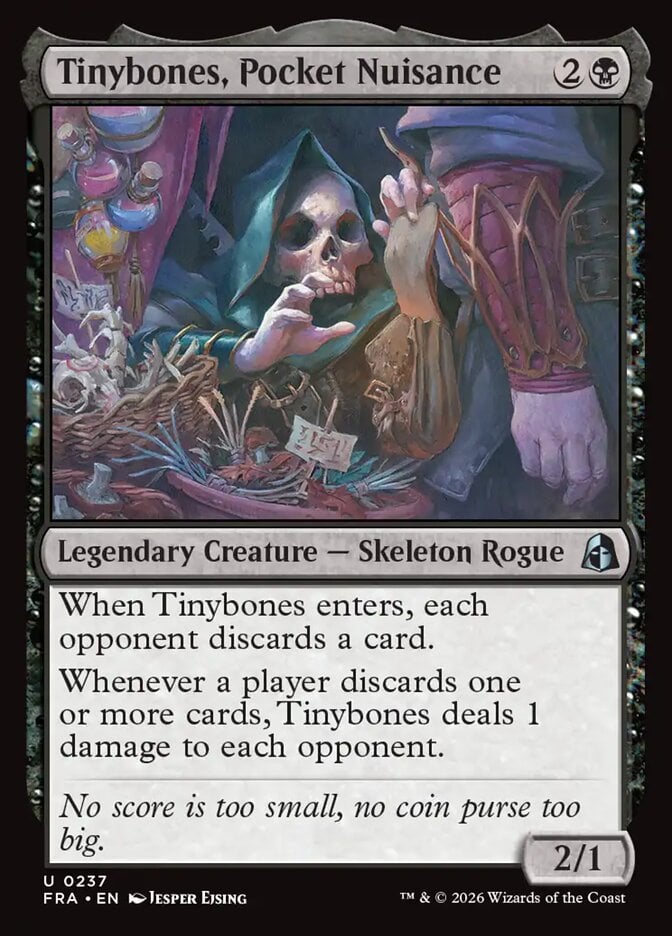
A decent little Rank Rat spin-off, which notably triggers from any discard from either player. Arni, Humble Scribe is a nice little combo with Tinybones, Pocket Nuisance.
Way of the Deathbringer
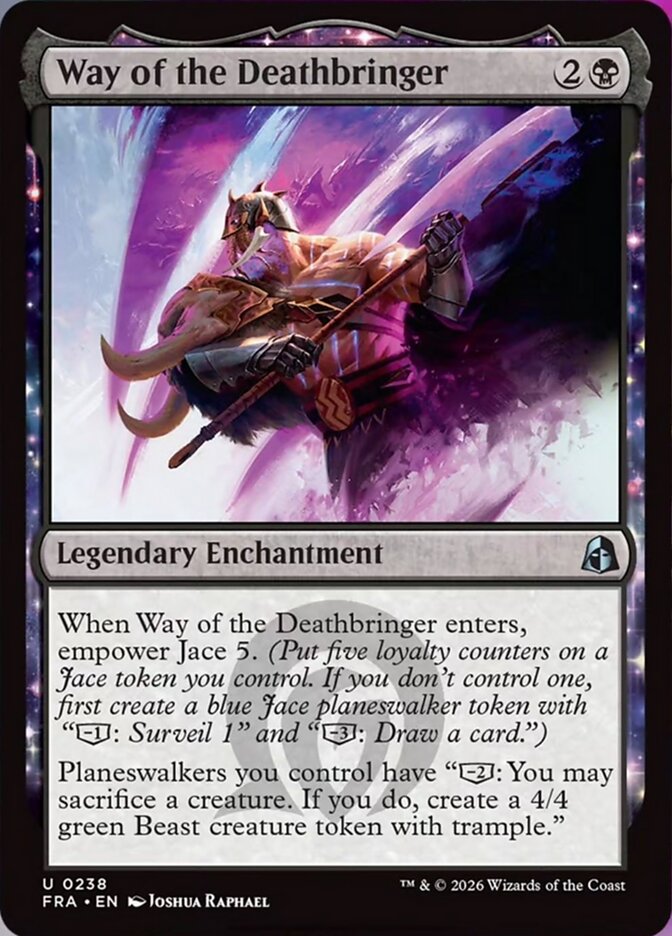
Another situational “Way of”, which depends highly on fodder creatures like Blessed Ghoul and Rank Rat to be good. Ghoul + Way of the Deathbringer + Theorist's Sanctum means an unending stream of 4/4 beast tokens late game.
Way of the Necromancer
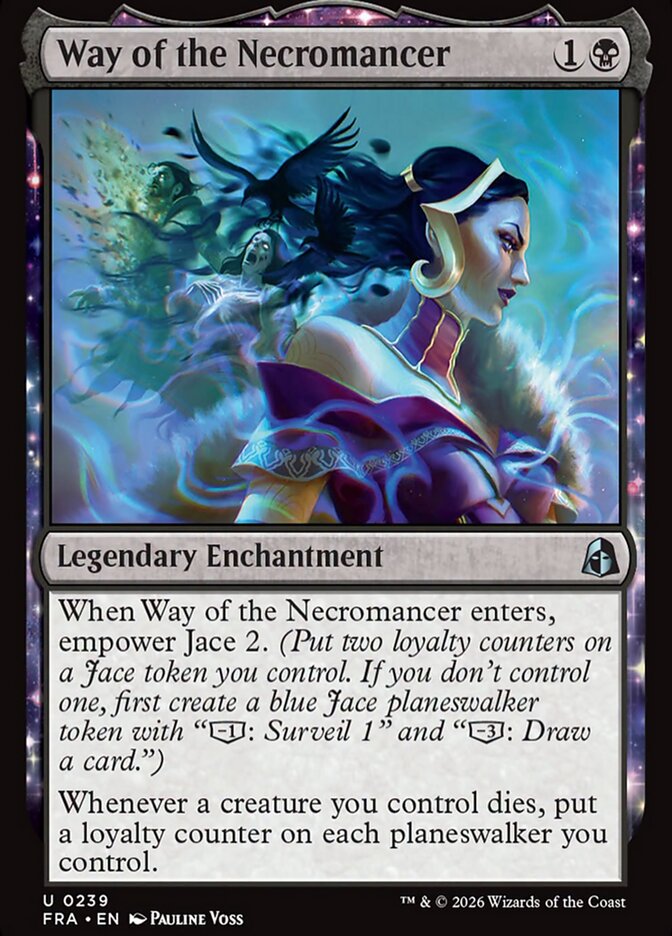
Even in WB Sacrifice, Way of the Necromancer is sadly just utterly useless. Avoid!
Fulminous Forte
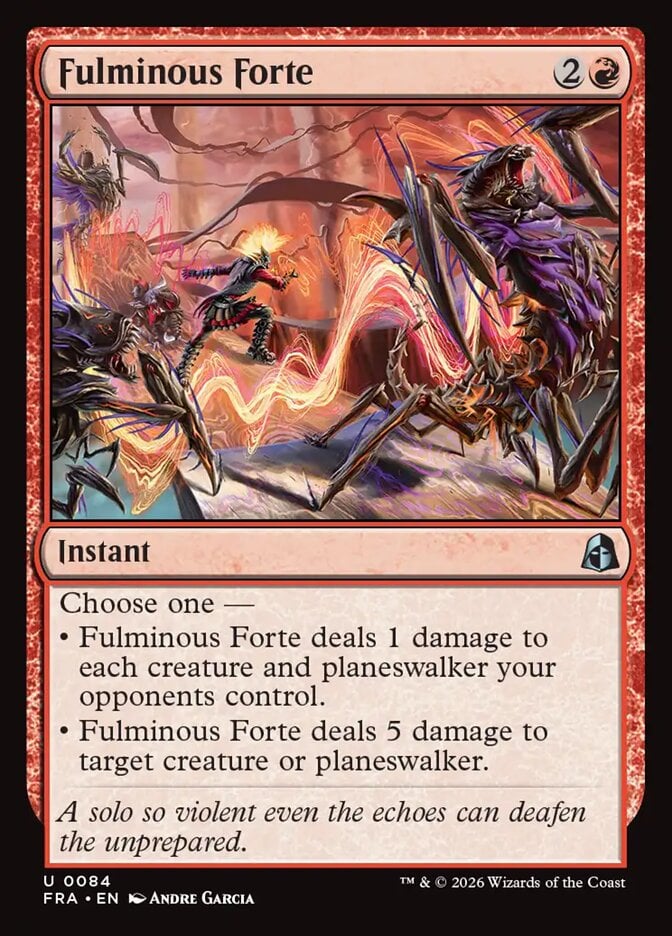
One of the best cards in Reality Fracture to pair with Tomik, Izzet Sparkmage, as you can mass clear Cadets this way. Fulminous Forte is also just a plain great removal spell of course.
Jiang Yanggu, Alone
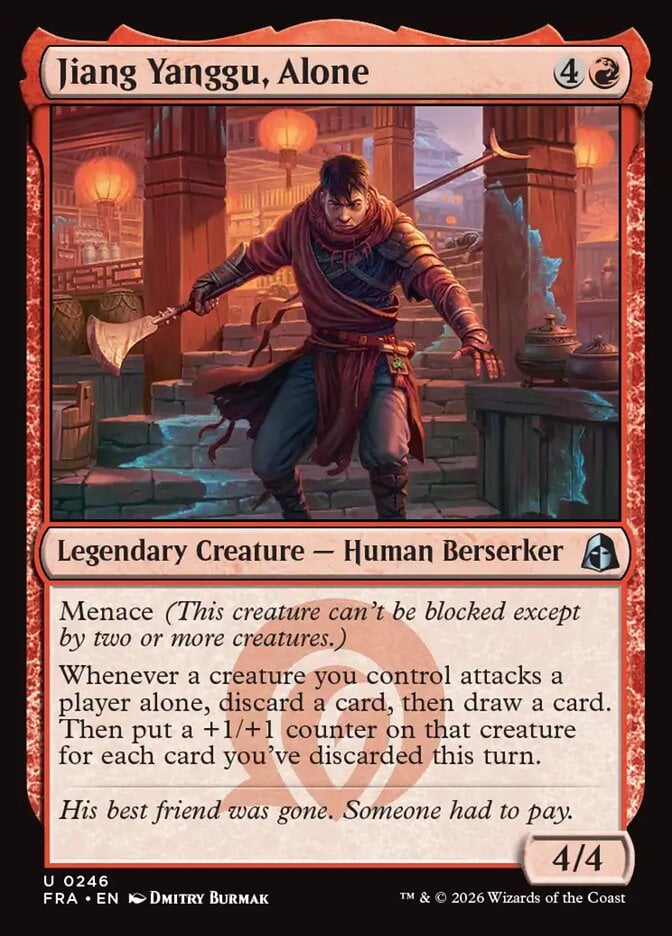
Not the best 5-drop, but at least Jiang Yanggu, Alone does something immediately (unlike Massacre Girl, Most Wanted). You can even flat out draw a card with this by attacking empty handed, although you won’t get any +1/+1 counters.
Kiora of Fire and Ashes
Do I even need to say anything at this point? Kiora of Fire and Ashes, Craftwork Crusher, and Recursive Recruitment are just way better than all of the other uncommons.
Violent Echoes
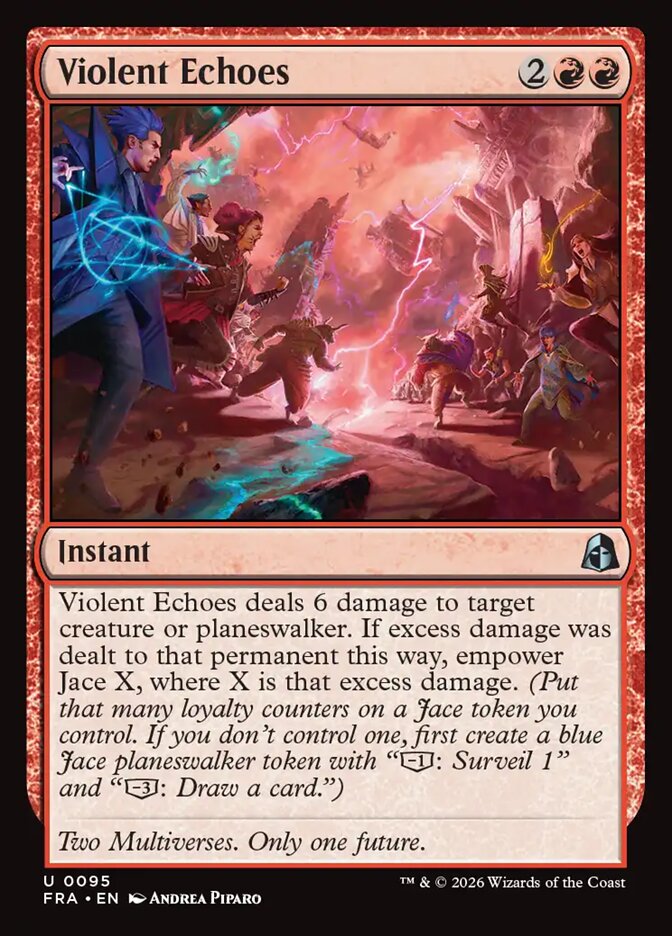
It can be reasonable to kill your opponent’s Jace with Violent Echoes, since you’ll often be refunded a card by your own Jace.
Way of the Pyromancer
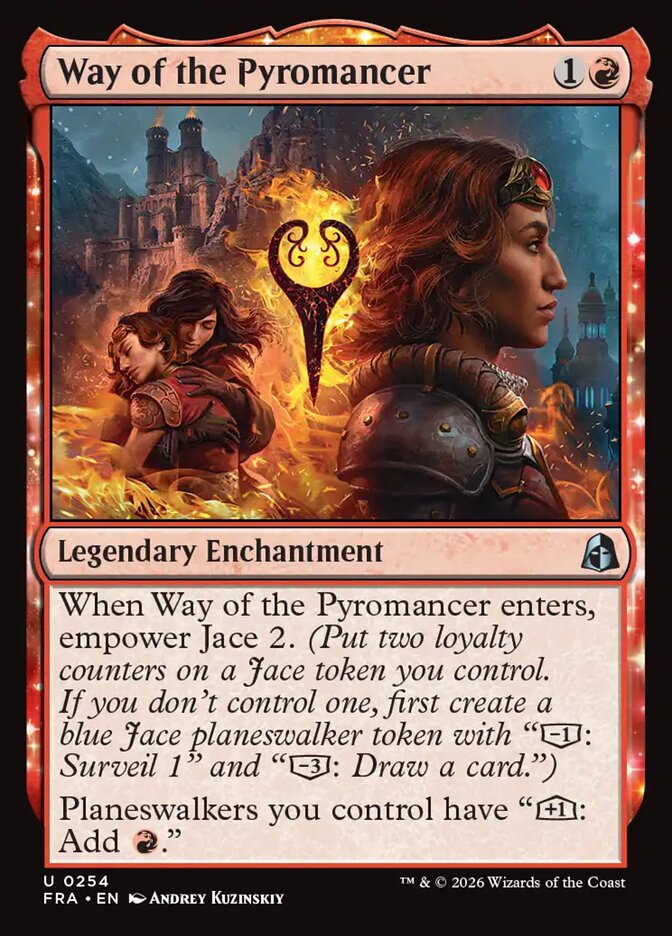
Protecting the Jace token Way of the Pyromancer creates is tough, especially on the draw. It’s great if you can keep the token around, but risky.
Winter, Team Player
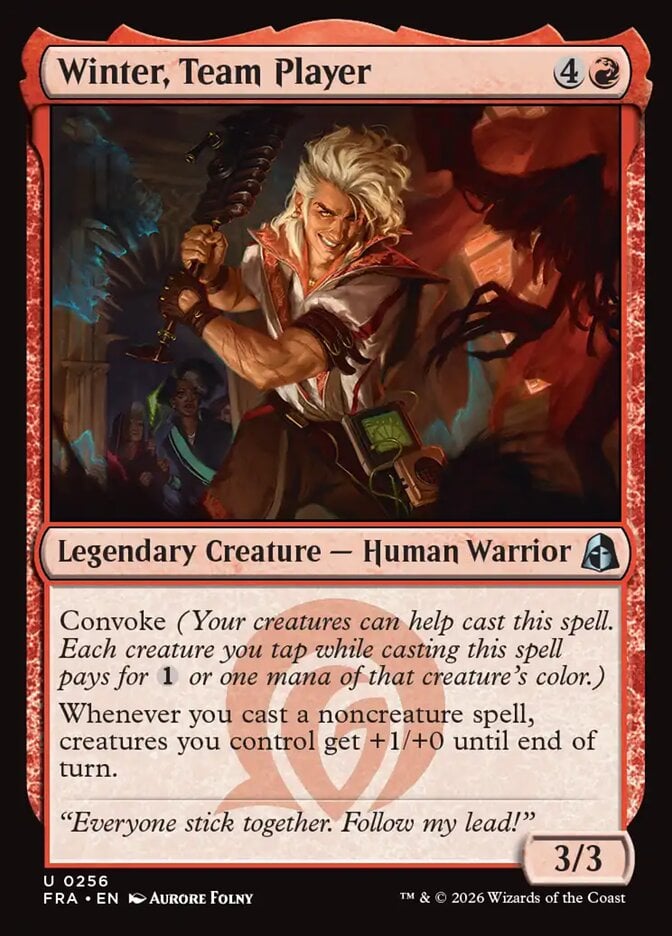
I have yet to find a use for Winter, Team Player. Stingerquill Voxmancer is probably where I’d start, since it lets you convoke Winter out faster and then repeatedly trigger it.
Twisted Fates
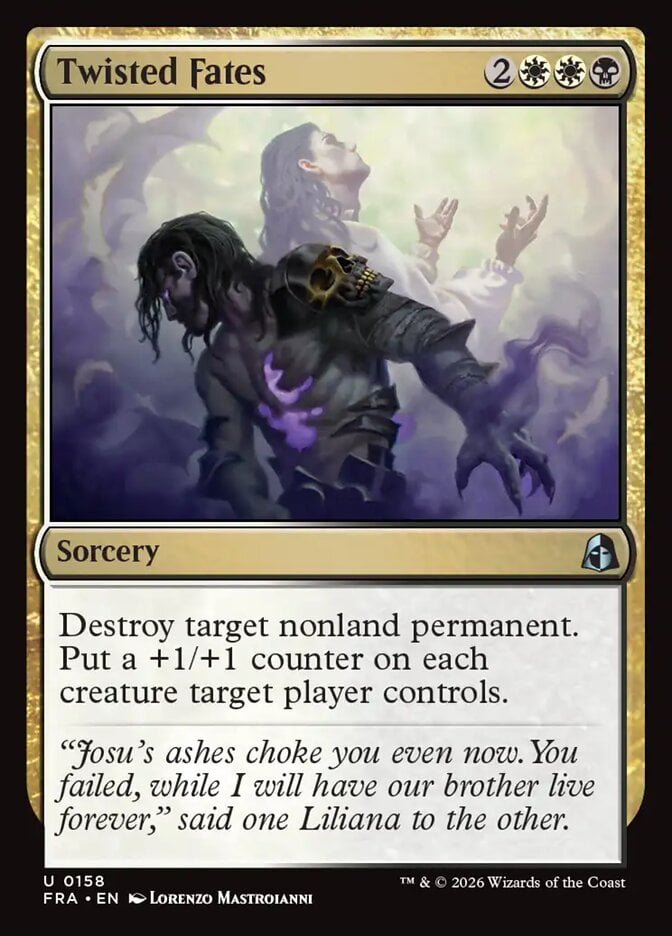
Twisted Fates targets you and the permanent, so you never need to worry about it fizzling.
Mabel, Valley Hero
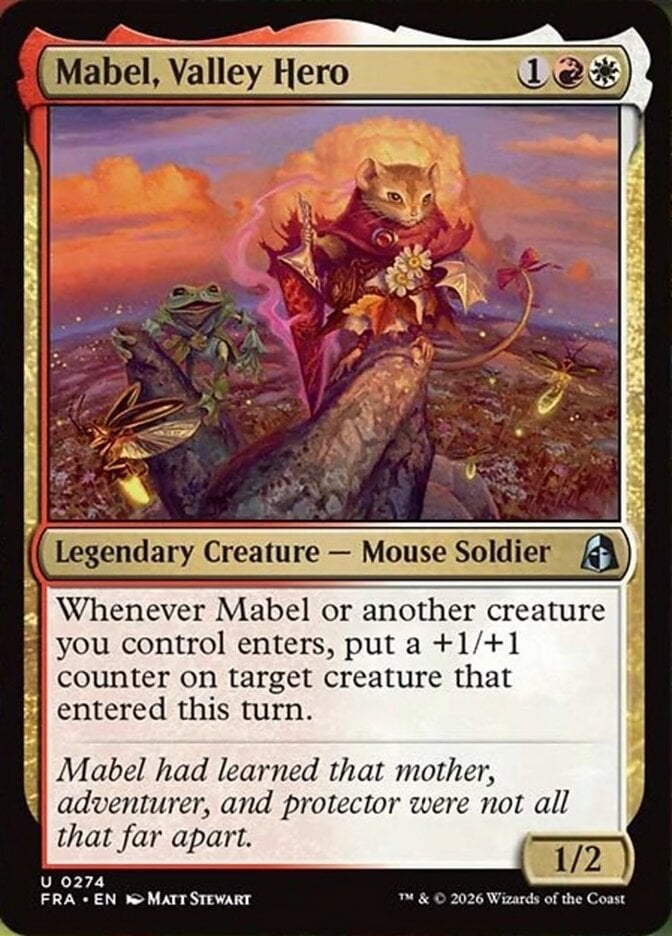
The templating on Mabel, Valley Hero is utterly bizarre. When you play Hexhaven Battalion with this, you can make three 3/3s, one 5/5 and two 2/2s, or a 4/4, a 3/3, and a 2/2.
Warrior’s Blades
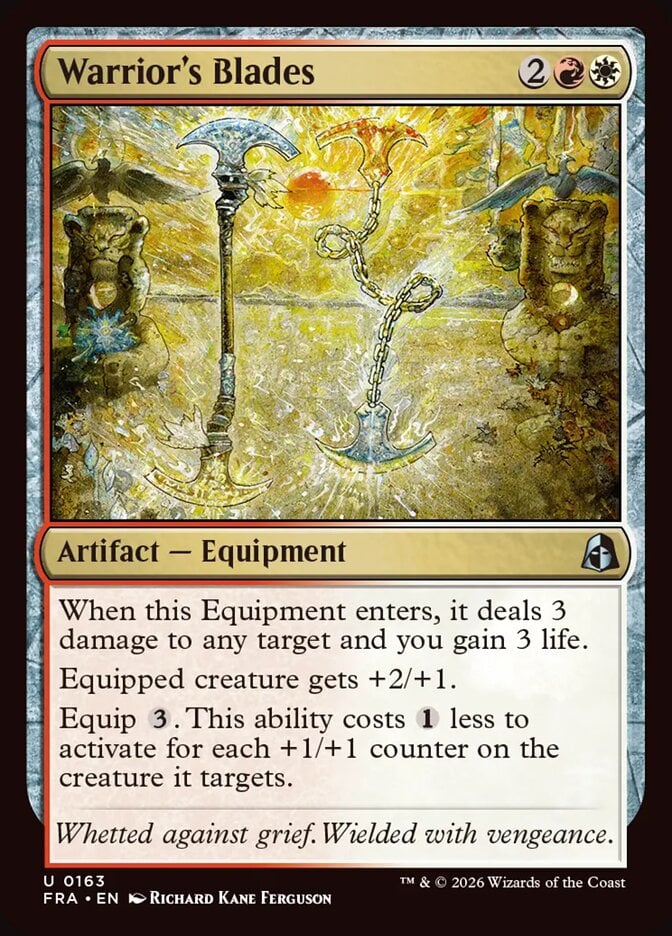
I often splash Warrior's Blades in GW lifegain decks, as it’s a great removal spell with upside that has a ton of synergy with the Hortimancer/Titanbones/Kitesail plan.
Hexhaven Dueling Arena
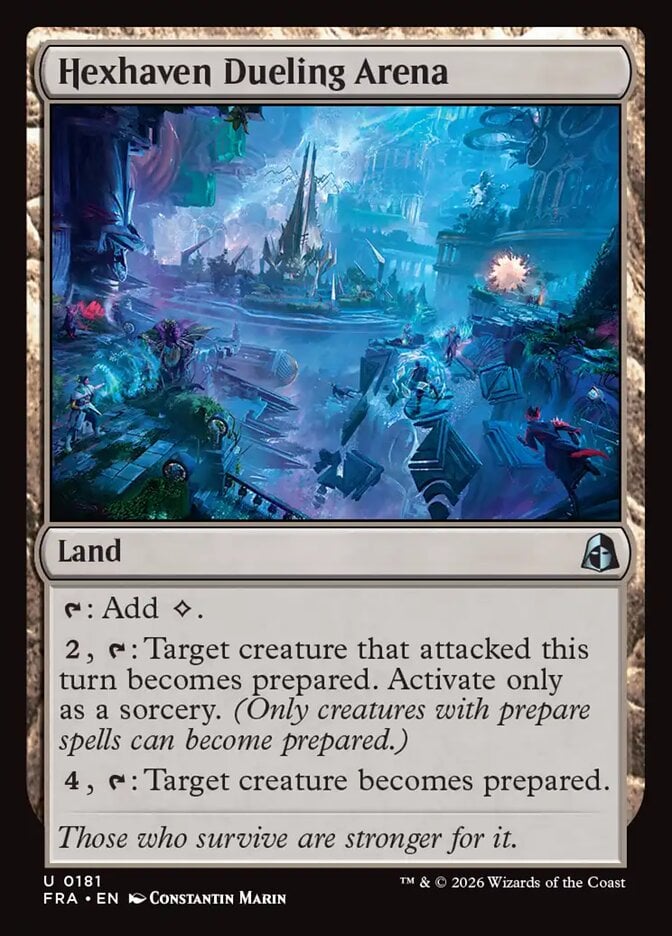
Given the light role of prepared in Reality Fracture, I have yet to find a deck where Hexhaven Dueling Arena is worth risking a Wastes for.
Wrap Up
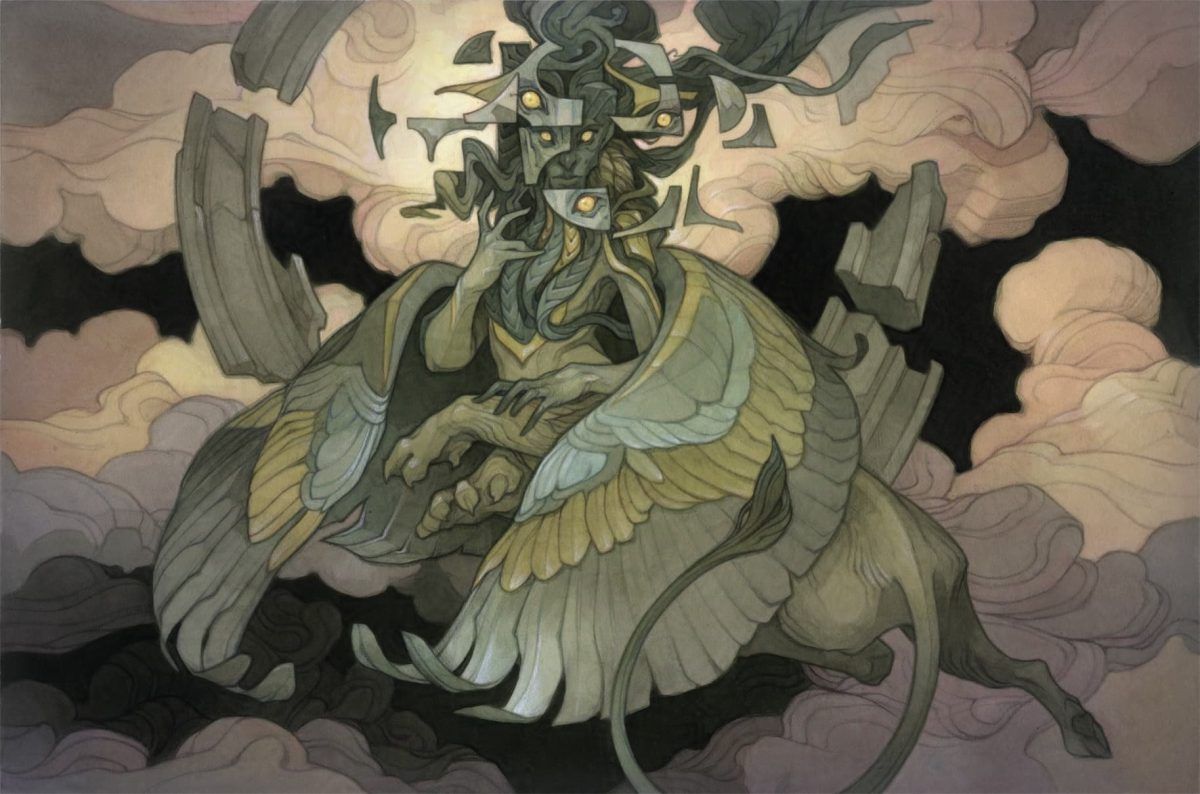
Sphinx of False Conclusions | Illustration by Wylie Beckert
And with that, Emrakul has finally eaten what remains of this guide.
Have you enjoyed drafting Reality Fracture? Which cards and archetypes have you enjoyed the most, either for how competitive they’ve been or just their fun factor? Let me know in the comments below or over on the Draftsim Discord. For more from us, don’t forget to subscribe to our newsletter, The Daily Upkeep.
Thanks for reading, and hopefully this guide has proven useful to you!
Follow Draftsim for awesome articles and set updates:










Add Comment