

Michelangelo, Improviser | Illustration by Narendra Bintara Adi
The mythic spoilers for Teenage Mutant Ninja Turtles dropped a little early, and as usual, we felt we had to take a closer look. We’re going to break down each card, share our first impressions, and, of course, rank them along the way.
Curious what this set has to offer? Let’s dive in!
How Many Mythic Rares Are in Teenage Mutant Ninja Turtles?

Leonardo, Sewer Samurai | Illustration by Ryan Pancoast
There are 15 mythic rare cards in the Teenage Mutant Ninja Turtles set, highlighting the Turtles, major villains, and a few big moments of the franchise. That said, it’s a little disappointing that Master Splinter isn’t anywhere on the mythic lineup, since he feels like one of the most iconic characters who should have been front and center.
#15. Krang, Utrom Warlord
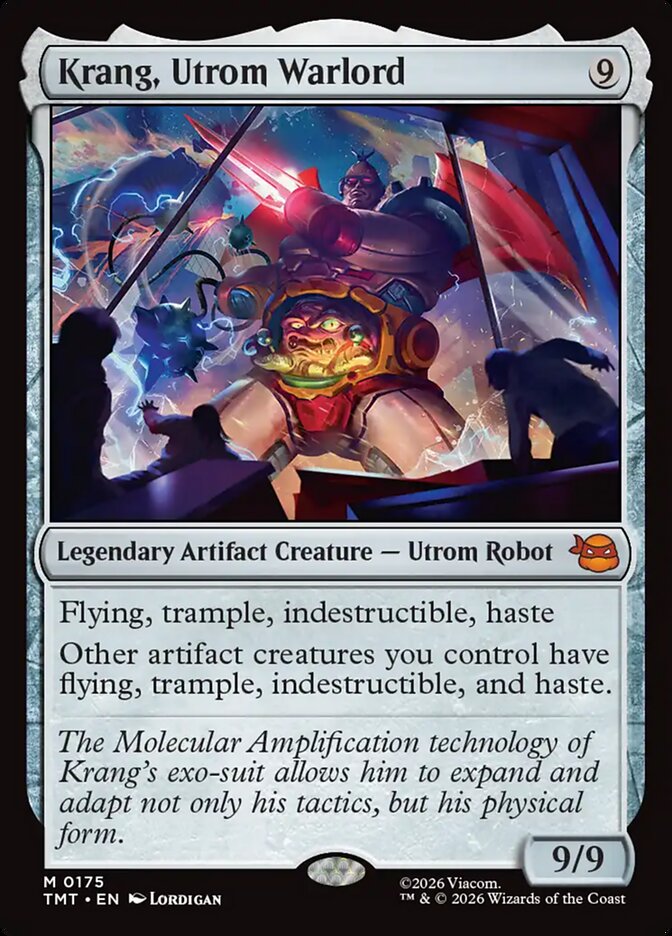
Casting Krang, Utrom Warlord usually means you’re ready to slam the door. It comes down as a huge 9/9 with flying, trample, indestructible, and haste, so it attacks right away and shrugs off most answers. On top of that, it spreads those same keywords to your other artifact creatures, which turns a board of metal bodies into a full-on demolition team.
#14. Mondo Gecko
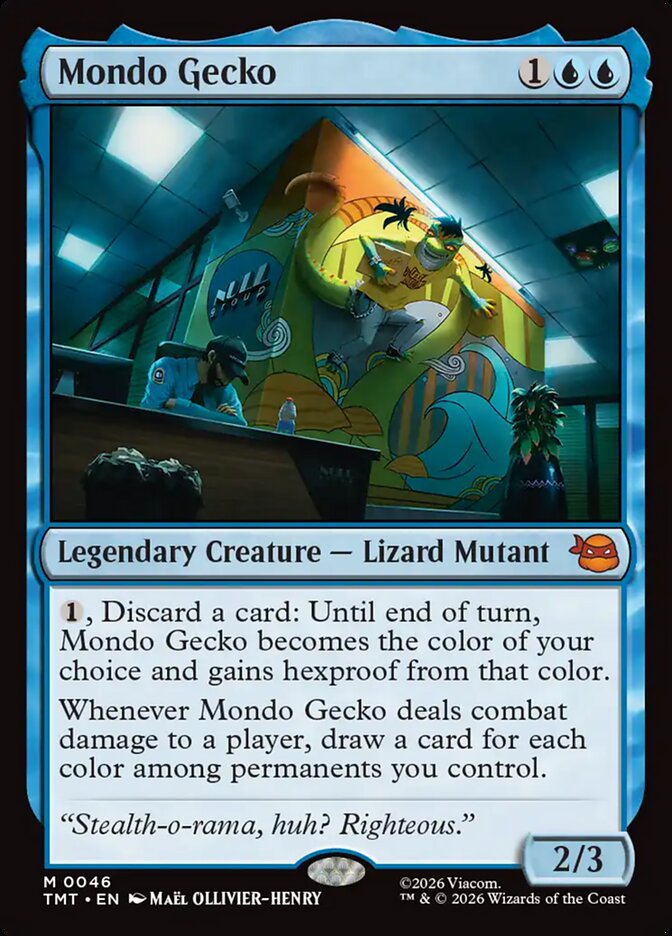
Mondo Gecko feels like a modern twist on Wild Mongrel: a cheap creature that turns discarding into real upside and makes removal awkward. You can pitch a card to shift its color and gain hexproof from that color, which often blanks the most common targeted answers. The payoff is different, though. Instead of just winning combat with pump, it wants to connect and then refill your hand by drawing cards based on the number of colors you have on board.
#13. Turtles in Time
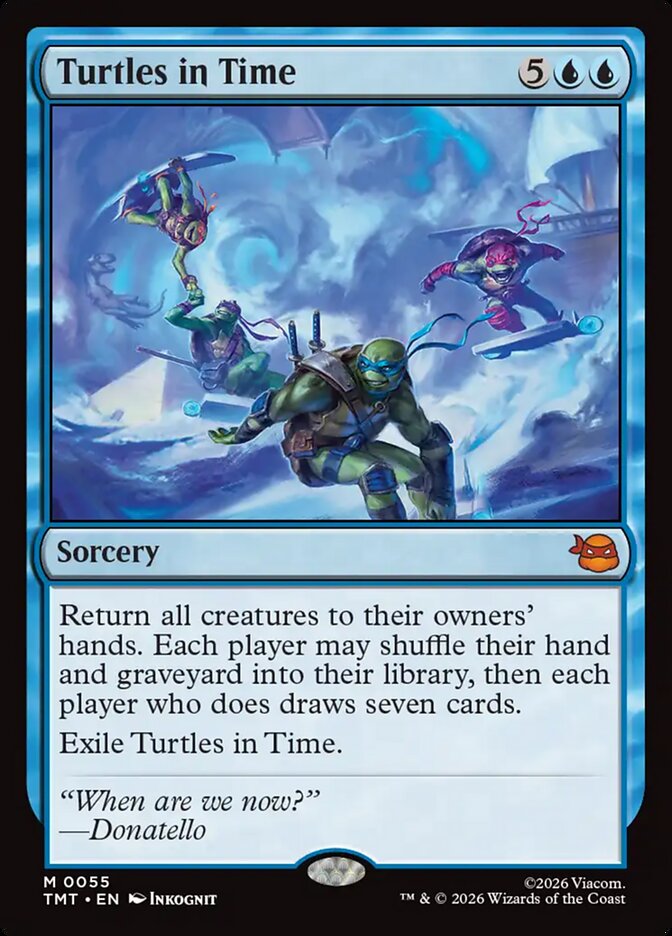
When the board is clogged and everyone’s hand is stacked with useless cards, Turtles in Time hits the emergency reset button. It returns all creatures to their owners’ hands, instantly clearing the battlefield. Each player can then choose to shuffle their hand and graveyard into their library and draw seven new cards, which can completely rewrite the game’s direction. After resolving, the card exiles itself, making it a one-time wheel. Use it when you truly need a clean slate.
#12. Michelangelo, Improviser
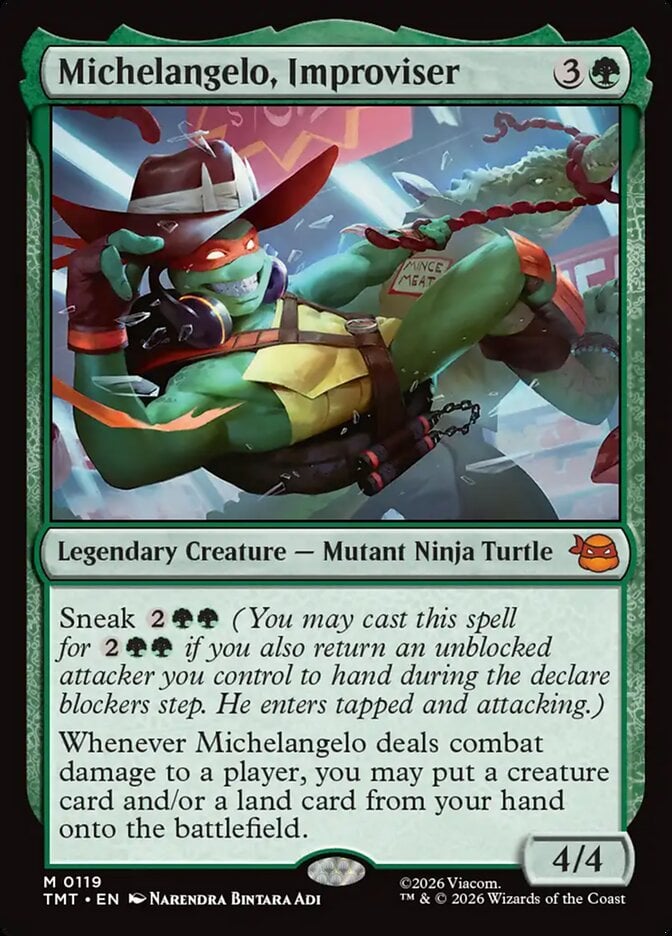
Michelangelo, Improviser is built for those games when one clean hit turns into a full-on avalanche. Sneak lets it jump into combat out of nowhere, and if it connects with a player, you get to drop a creature and/or a land from your hand straight onto the battlefield. It’s not quite a Natural Order-style shortcut, but it still creates those swingy turns when one attack suddenly upgrades your whole board.
#11. North Wind Avatar
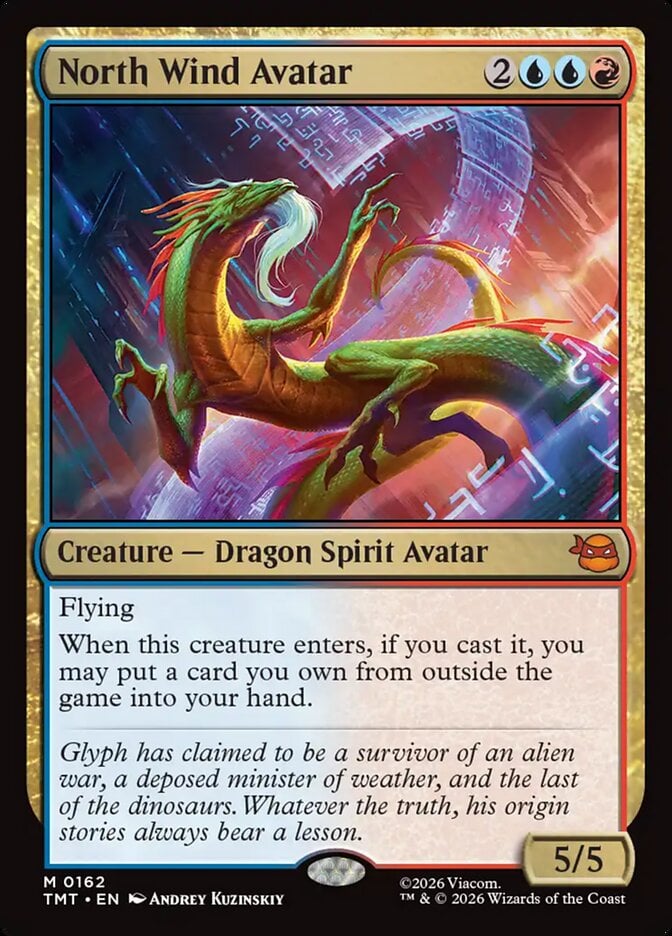
North Wind Avatar is a big flying body, but the standout feature is that when you cast it, it lets you grab a card you own from outside the game and put it into your hand. That’s the same core idea as cards like Wish: You’re turning your “outside the game” options into a flexible toolbox, except this one comes stapled to a 5/5 flier.
#10. Raphael, Ninja Destroyer
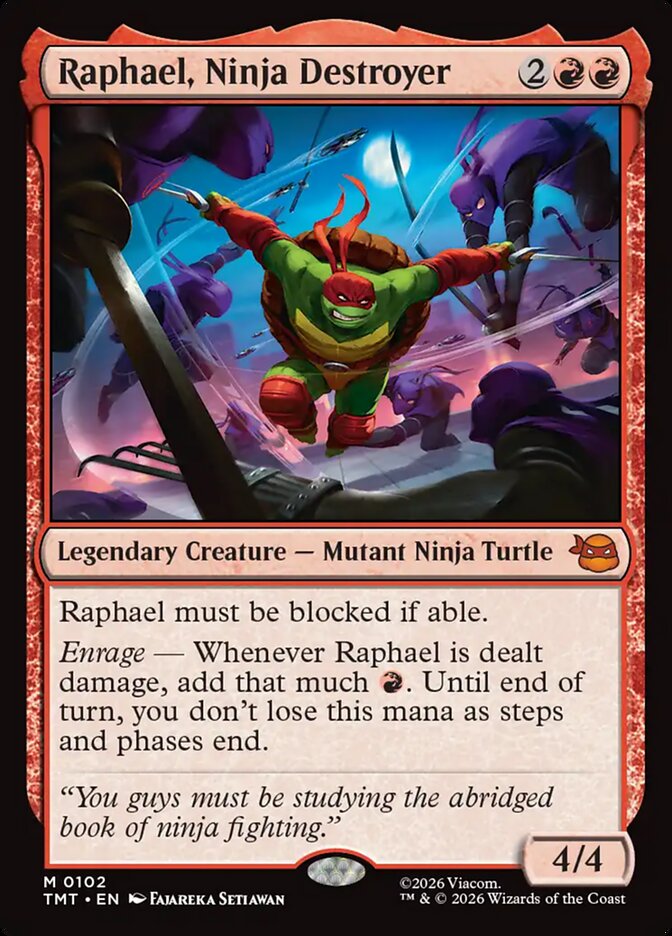
Raphael, Ninja Destroyer plays like pseudo provoke, since it has to be blocked if possible and it pulls defenders into combat whether your opponent wants them there or not. The cool part is that the blocks are exactly what you’re fishing for. Whenever it takes damage, it makes that much red mana, and you keep that mana as the turn moves through steps and phases. A forced block turns into fuel for a huge second main phase, surprise interaction, or a strong follow-up play.
#9. Technodrome
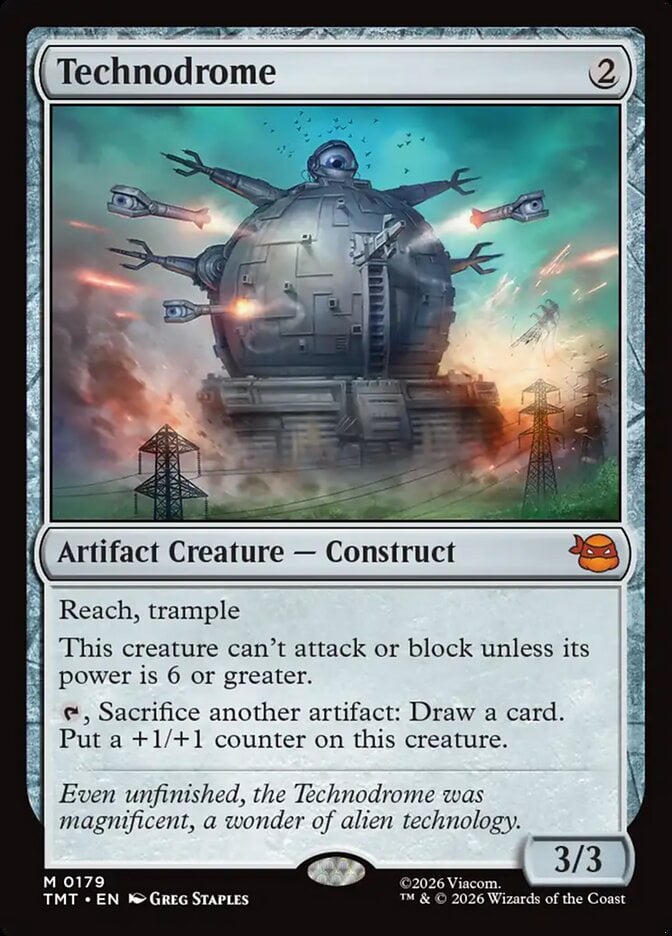
Technodrome looks like a chunky artifact creature, but it makes you earn the right to fight. It can’t attack or block until its power hits 6, so early on it’s more of a build-around than a beater. The engine is solid, though: Tap it, sacrifice another artifact, draw a card, and put a +1/+1 counter on it. Over a couple of turns, it turns spare artifacts into cards while powering itself up into a real threat.
#8. The Cloning of Shredder
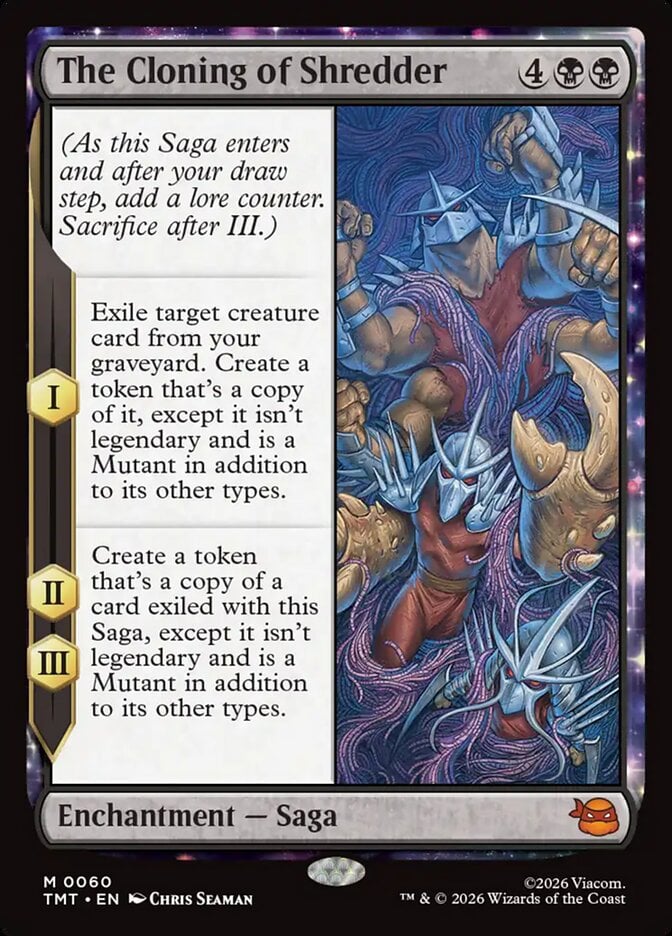
Graveyard decks get a lot of mileage out of The Cloning of Shredder. This saga begins by exiling a creature from your graveyard, then it creates a token copy of it that isn’t legendary and also counts as a mutant. After that, chapters II and III repeat the trick by making additional copies of the same exiled card. If you exile the right creature, one good target quickly turns into multiple threats, giving you a steady stream of value and board presence.
#7. The Last Ronin

The Last Ronin is a saga that sequences a wipe straight into a potential wincon. Chapter I clears every creature off the battlefield, so everyone has to start over. Chapter II then mills four cards and picks a creature from your graveyard back up to your hand, which helps you rebuild faster than the rest of the table. Chapter III closes the door by rewarding a solo attack, pumping your lone attacker with a big stack of counters and giving it trample, lifelink, and indestructible for the turn.
#6. Triceraton Commander
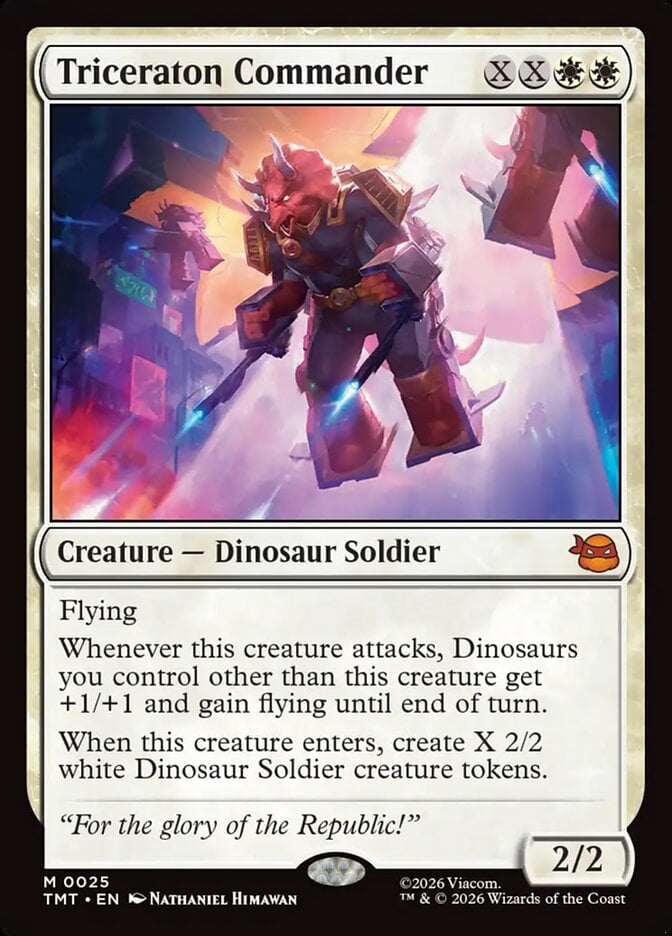
Triceraton Commander is basically Dinosaurs: Air Force Edition. You choose X on the way in, and it arrives with a squad of X 2/2 white Dinosaur Soldier tokens, which is already a solid board. Then whenever it attacks, all your other dinosaurs get +1/+1 and gain flying for the turn, which turns a ground stampede into a surprise sky swarm.
#5. Donatello, Mutant Mechanic
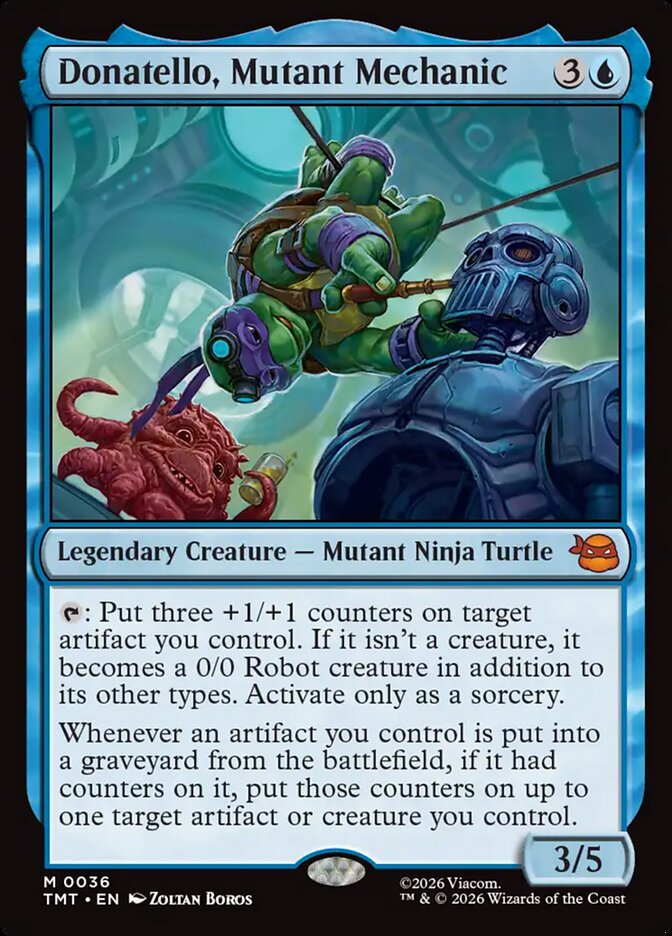
Artifacts are basically the entire game plan with Donatello, Mutant Mechanic. It taps to put three +1/+1 counters on an artifact, and if that artifact isn’t already a creature, it turns into a robot that can jump into combat. What really makes it shine is how it preserves your progress, pretty much resembling what modular does: When one of your artifacts dies, it can pass its counters to another artifact or creature. Instead of losing all your investment, you keep rolling those upgrades forward and scaling your board over time.
#4. Broadcast Takeover
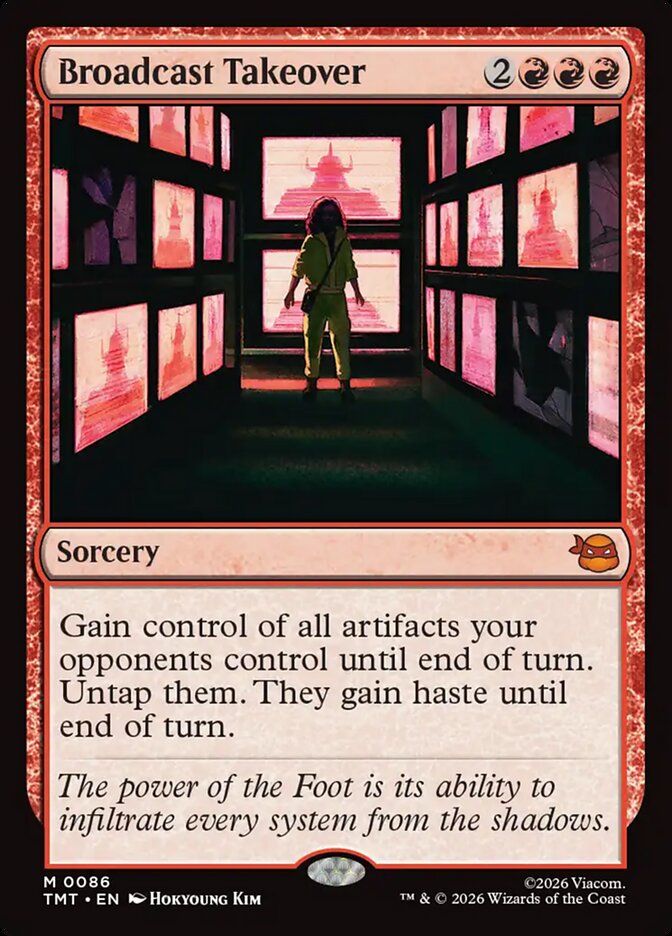
If your pod is swimming in mana rocks, equipment, or any other random artifacts, Broadcast Takeover can feel like flipping the table in the funniest way possible. It snatches every artifact your opponents control for the turn, untaps everything, and even gives them haste, so you can swing, tap, or sacrifice those borrowed toys right away. It’s a one-turn heist that turns other players’ setups into your big finish.
#3. Dark Leo & Shredder
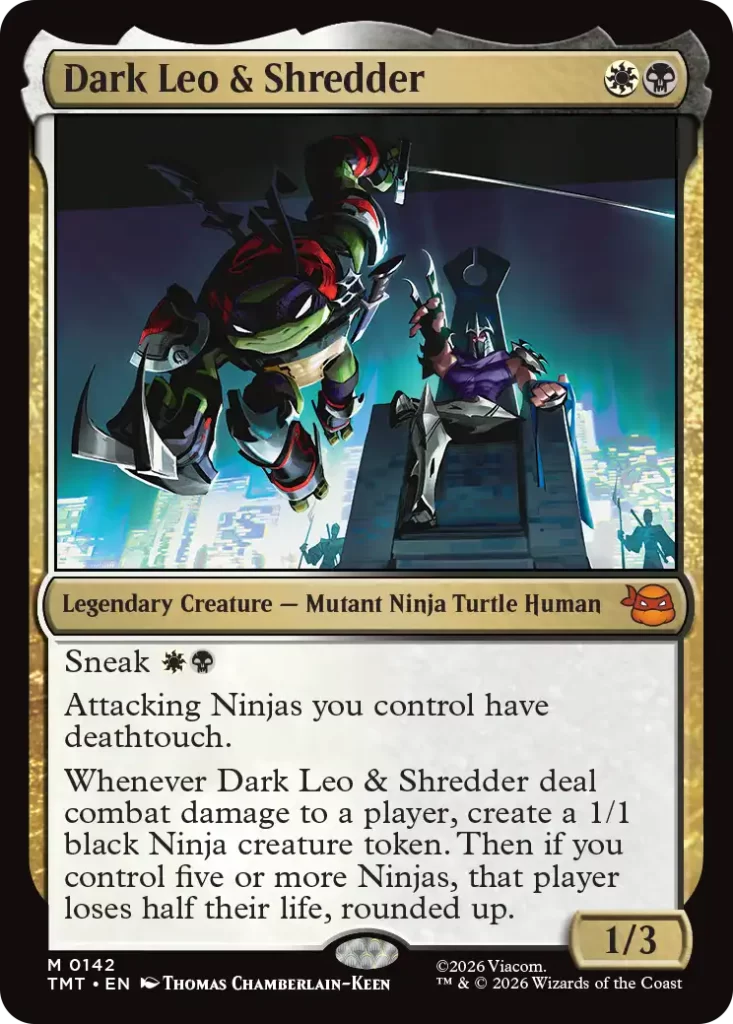
Dark Leo & Shredder may not look huge on paper, but it hits way above its weight in a ninja-focused deck. Sneak lets it jump into combat at the perfect moment, and it gives your attacking ninjas deathtouch so blocking becomes a nightmare. When your ninjas connect, it also helps you build the board by creating extra Ninja tokens. If you keep the pressure up and grow a big enough squad, one good hit can cut an opponent’s life total in half and put the game on a short timer.
#2. Leonardo, Sewer Samurai

At first, Leonardo, Sewer Samurai looks like a straightforward combat threat, but it has real staying power, too. Double strike makes it scary in a hurry, and sneak lets it show up at just the right moment to mess with blocks. Where it really gets interesting is the graveyard value: During your turn, it lets you cast small creatures with power or toughness 1 or less from your graveyard. That turns tiny utility creatures into repeatable tools, even if each one only gets a short second run. Selfless Savior and Selfless Spirit are the first cards that come to mind when it comes to this version of Leonardo.
#1. Super Shredder

If you want a threat that naturally scales as the game progresses, Super Shredder fits perfectly. It starts small, but menace makes it awkward to block, and it picks up a +1/+1 counter whenever any other permanent leaves the battlefield. That means fetch lands, Treasures, sacrificed tokens, and destroyed pieces all power it up. In a typical Commander-style game where stuff is constantly coming and going, it can grow fast and turn into a serious finisher without you having to build around it too hard.
Wrap Up
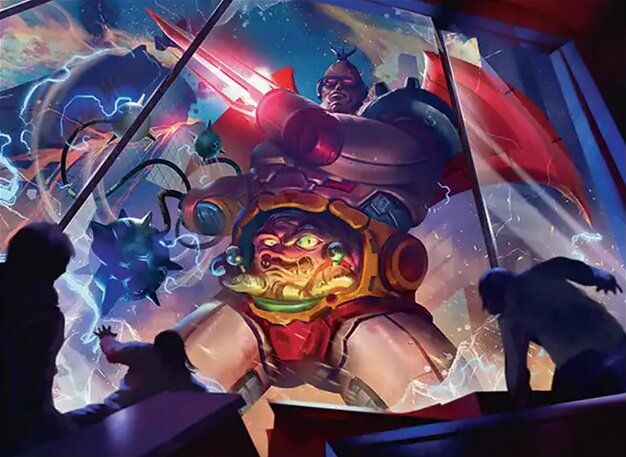
Krang, Utrom Warlord | Illustration by Lordigan
Overall, the mythic rares in Teenage Mutant Ninja Turtles feel solid, but not outright game-breaking at first glance. None of them immediately scream that they’ll warp the format, though I’m totally open to being proven wrong once people start testing and tuning lists.
Even though the headline theme here is clearly ninjas, meaning the Turtles, the thing that might end up mattering more for bigger formats is the pseudo affinity, artifact-leaning angle. The mythics don’t fully advertise that plan, but a few rares definitely do. Cards like Krang, Master Mind look borderline absurd in the right, er, shell.
What do you think? Which mythic rare was your favorite? Let us know in the comments or on the Draftsim Discord.
Thanks for reading, and if you enjoyed this, follow us on social media so you never miss an update.
Take care, and I’ll see you again next time.
Follow Draftsim for awesome articles and set updates:










Add Comment