
Last updated on September 30, 2026

Ashiok, Nightmare Muse | Illustration by Raymond Swanland
Planeswalkers often align with the ideals of a control player. They want a long game, to sit around and accrue as much value as possible and overwhelm players unfortunate enough to lack a permanent that draws a card or makes a token each turn. This is especially true of Dimir planeswalkers, which unite two of Magic’s most controlling colors.
Dimir planeswalkers represent just a few characters in the lore, which helps to give them a defined identity. While some are on the aggressive side, they largely want to grind, to win after you take the time to control the board and make sure your opponent has had enough.
What Are Dimir Planeswalkers in MTG?
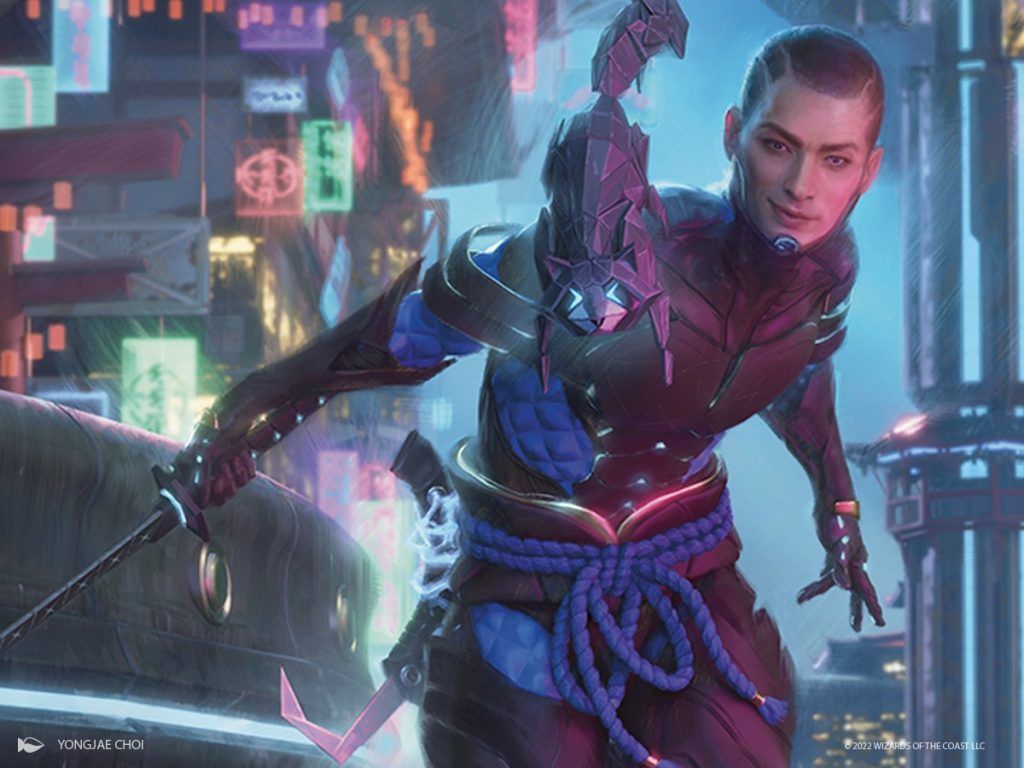
Kaito Shizuki | Illustration by Yongjae Choi
Dimir () planeswalkers often combine controlling elements like card draw and removal into planeswalkers that tend to excel in grindy matchups, though some of them have a more aggressive bent. Most Dimir planeswalkers represent three characters, with distinct niches:
- Ashiok planeswalkers are the prototypical control planeswalkers that focus on disrupting your opponent, stealing their stuff, and milling or exiling their library.
- Tezzeret’s planeswalkers are decisively artifact-focused. They draw artifacts and reward you for controlling large numbers of them.
- Kaito is a much newer character but still has a few planeswalkers. A ninja hailing from Kamigawa, Kaito’s planeswalkers are more aggressive in nature, though they’re often better suited to a tempo-aggro deck than something akin to Red Deck Wins.
#13. Ashiok, Sculptor of Fears

Another planeswalker ranking, another Planeswalker Deck planeswalker at the bottom. Wizards never designed these cards to be good. They were designed to be over-costed and underwhelming, just like the exclusive rares from the old Starter Deck products.
Ashiok, Sculptor of Fears is a perfect example of this design philosophy. Six mana and it doesn’t even protect itself; you can only draw a card the turn it enters and mill some cards. Can I introduce you to Mental Note?
#12. Tezzeret, Master of Metal
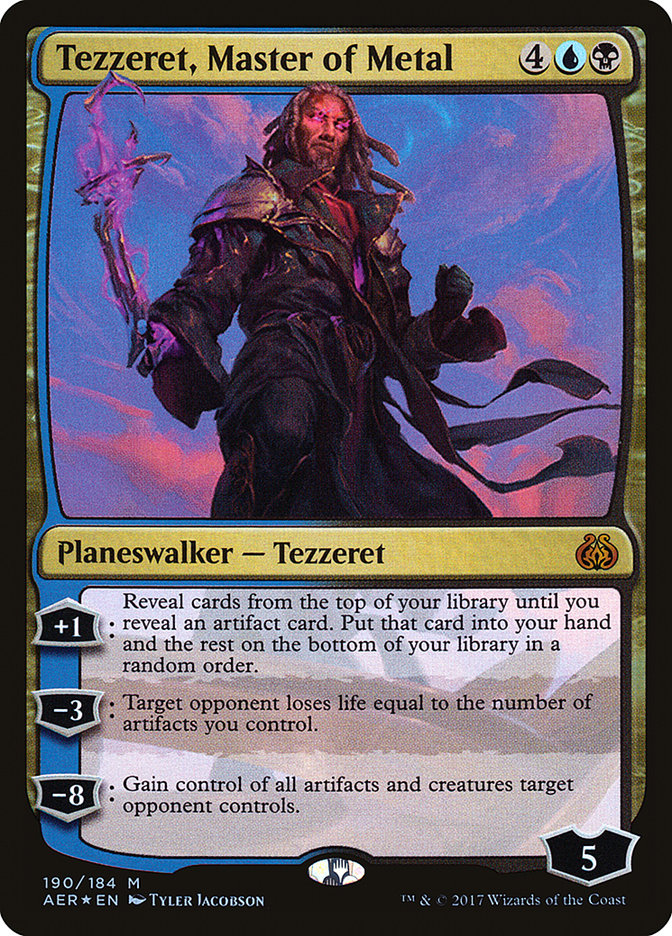
Tezzeret, Master of Metal is closer to being playable than most Planeswalker Deck planeswalkers because it’s only over-costed. The abilities are actually decent. It’s a shame it doesn’t protect itself, but the downtick could enable a lethal strike, and the uptick is generally better than drawing a random card since it won’t wiff into a land. This could be acceptable top-end for an aggressive artifact creature deck, even if it costs too much to be exciting.
#11. Sivitri, Dragon Master
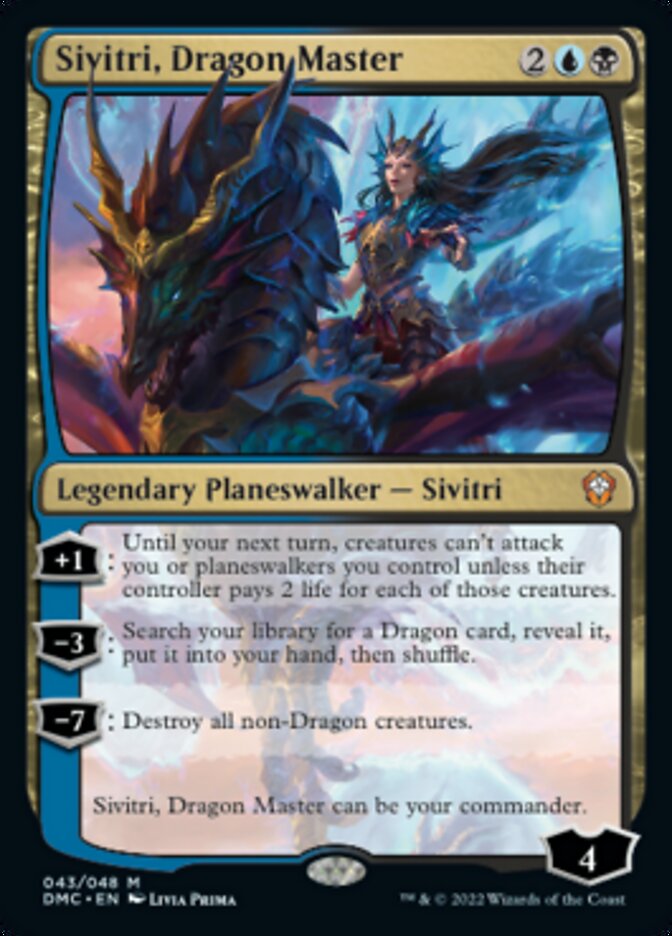
Sivitri, Dragon Master mostly suffers from a clash between its colors and its text box. Dragons and Dimir don’t go together outside highly niche builds or 5-color piles lead by the likes of The Ur-Dragon. Beyond that, it’s fine. The uptick is cute in Commander since boards get wide and a dragon tutor could be pretty impactful. It just doesn’t jive with how dragons are designed in Magic.
#10. Tezzeret the Schemer
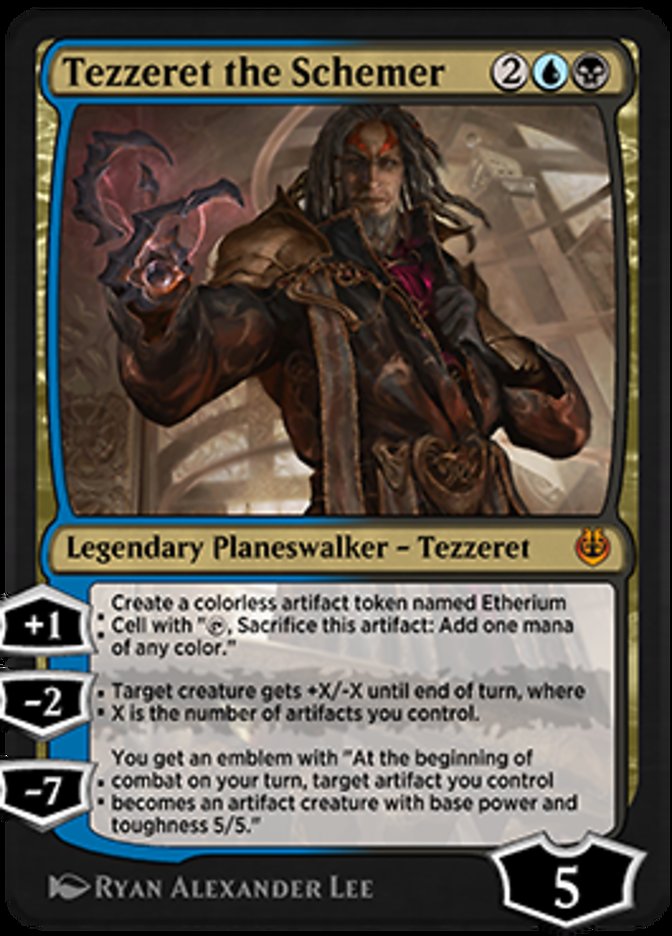
Tezzeret the Schemer is just… bland. It makes a knockoff Treasure, which is good for casting artifacts or cards that want you to amass them, the protection is decent, and the ultimate wins a long game. It pales in comparison to pretty much every other Tezzeret but still has a home, if only in casual builds.
#9. Tasha, the Witch Queen
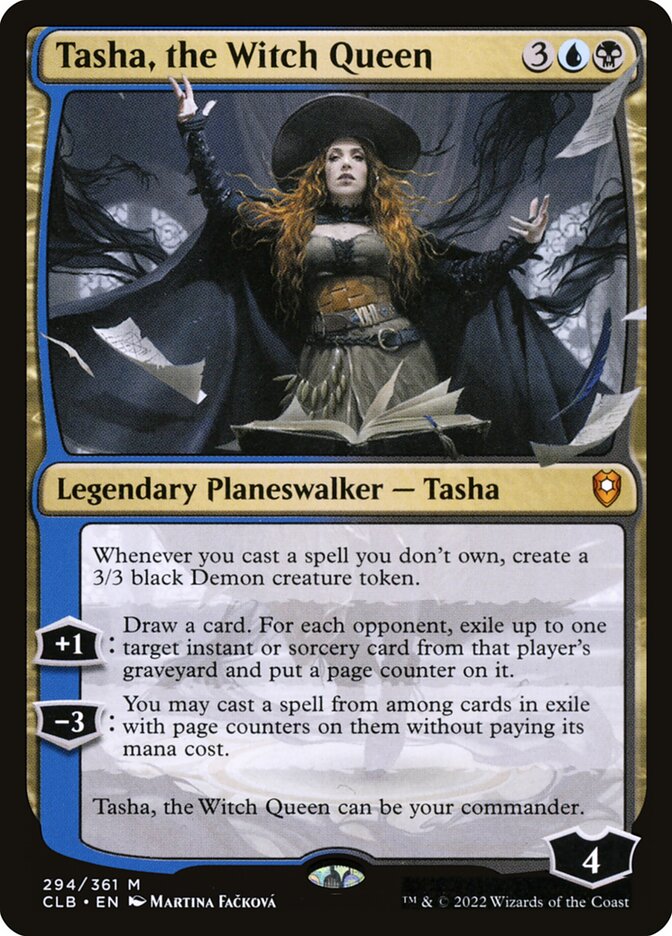
Tasha, the Witch Queen provides a powerful theft payoff. The tokens are a useful form of insurance in Commander; theft has the distinct weakness of losing whatever it stole when its owner leaves the game. A fleet of demon creatures keeps the impact.
The interaction with page counters is also cool; they aren’t tied to any one instance of Tasha, so you can flicker it or recast it after it dies and still reap the rewards from a previous instance of the card. Tasha’s great as a theft support piece, though I find it lacking as a commander as Sultai () theft commanders like Gonti, Canny Acquisitor and Maralen, Fae Ascendant become more prominent.
#8. Ashiok, Dream Render
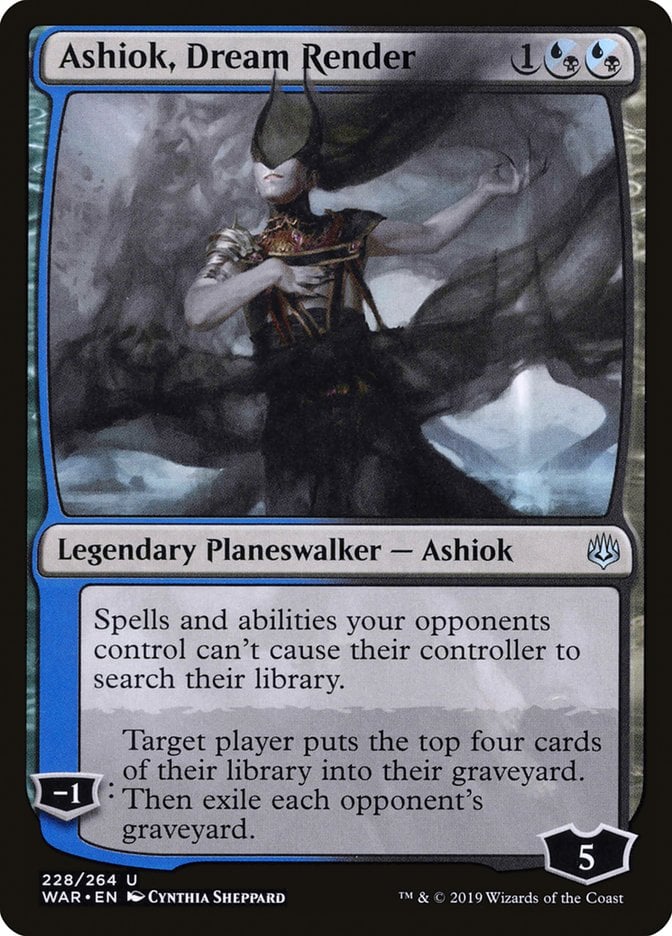
Some of my fondest memories in Limited are of milling my opponents to death with Ashiok, Dream Render in War of the Spark. But the planeswalker has merit outside that Limited format or Peasant Cubes interested in providing control decks a painfully slow win condition. Stopping your opponents from tutoring shuts down lots of effects—not just your traditional Demonic Tutor but fetch lands, Rampant Growth variants, and so on.
It also has great utility as a graveyard hate piece since it hits all opponents’ graveyards, not just the player who milled. It’s the rare self-mill piece that functions as graveyard hate; you can mill four cards yourself, then hurt your opponent.
#7. Kaito Shizuki
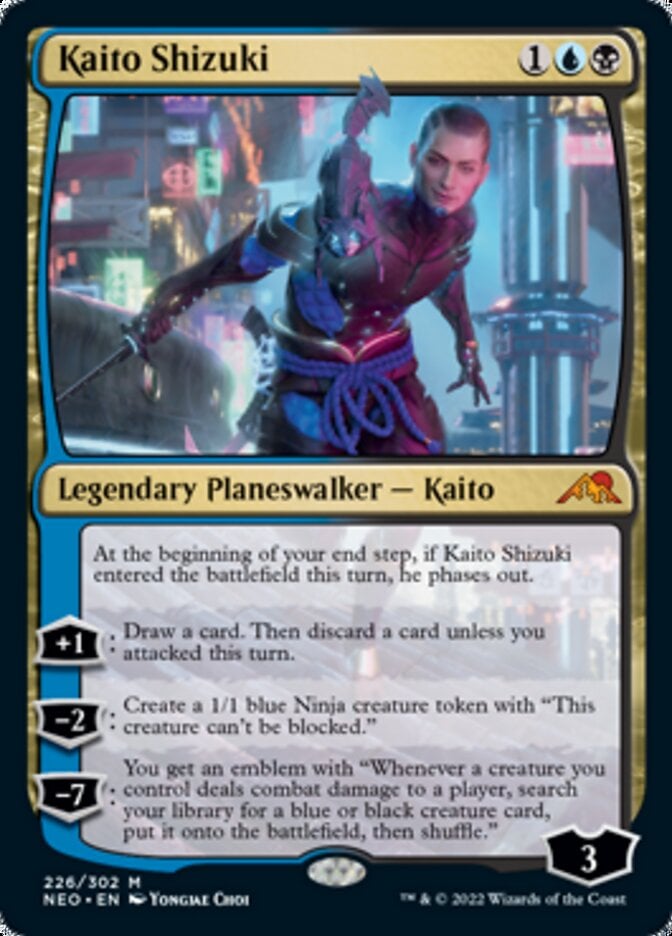
The first representation of Kaito Shizuki is the least, but don’t mistake that for it being a bad card. You can see the aggressive bent in its first ability that loots or rewards aggression with card draw, and the card continues from there. It has a marvelous emblem, should you reach it.
I love this design because this Kaito feels like the perfect 3-mana planeswalker: It’s powerful, it can protect itself with phasing (appropriately themed for a ninja, I might add), and it promises long-game value, yet it doesn’t have the immediate, broken presence of a Teferi, Time Raveler or Oko, Thief of Crowns.
#6. Ashiok, Nightmare Muse
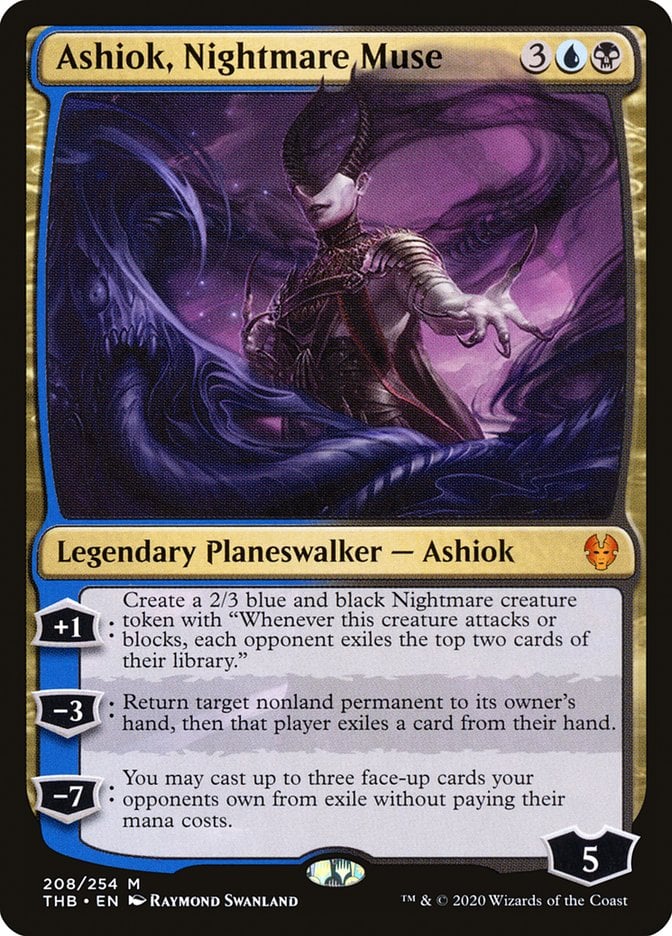
Ashiok, Nightmare Muse is a beast in Cube and Limited because its nightmare tokens exile cards whenever they get into combat. That adds up fast when your library only has 40 cards—less, if we factor in drawing a hand and a couple draw steps, plus you can have multiple nightmares triggering at once.
Even in formats where decking isn’t possible, this Ashiok still poses a problem. 2/3s are pretty substantial tokens, as most planeswalkers make 1/1s, maybe 2/2s. The bounce ability handles anything that would pressure Ashiok or attack past the tokens, and the ultimate is… fine. Depending on context, the unstoppable torrent of tokens works better than free spells. Package this up with decent removal, maybe a touch of ramp to get it out, and you have a decent threat—this Ashiok is actually one of my go-to commanders in Brawl.
#5. Kaito, Dancing Shadow
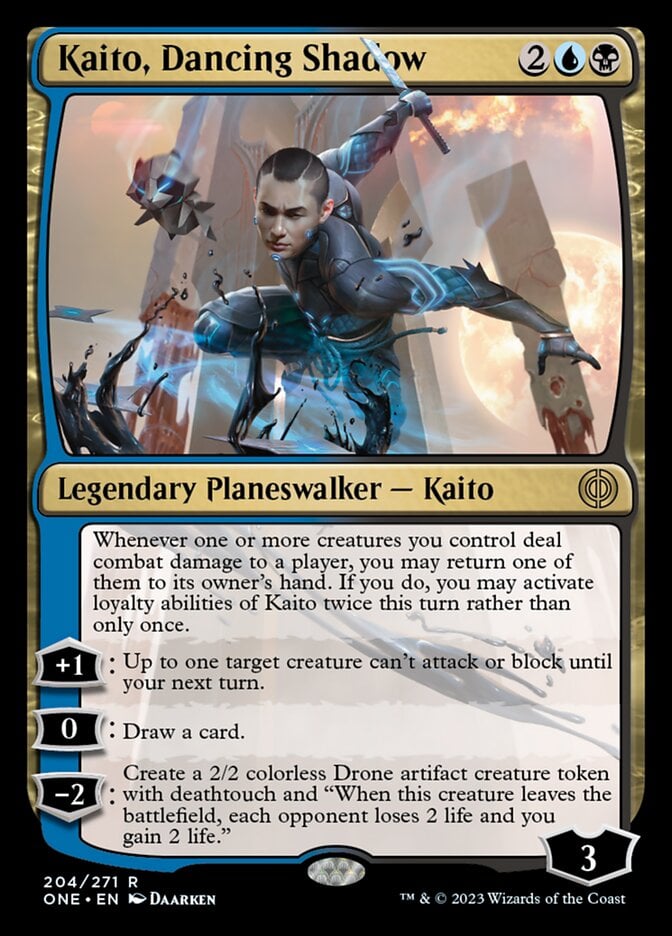
Kaito, Dancing Shadow has one of the most interesting static abilities of any planeswalker, even if it’s not the strongest. It applies the ninjutsu template (bounce an unblocked creature to hand, get a boon) to the planeswalker’s abilities. And the abilities on Kaito are pretty good. A deathtouch creature defends the planeswalker well, and the first ability has incredible synergy with the static ability since Kaito can eliminate a blocker. Getting the first ability twice doubles as an aggression enabler and protection, two abilities most planeswalkers don’t get.
#4. Tezzeret, Master of the Bridge
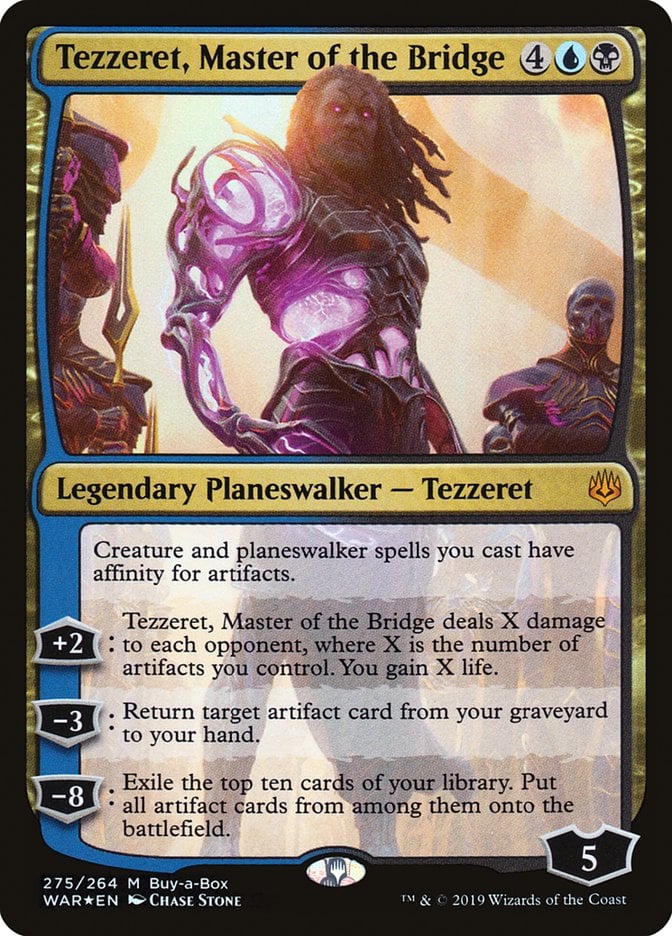
Tezzeret, Master of the Bridge demonstrates where Planeswalker Deck planeswalkers fail. For the same mana cost as Tezzeret, Master of Metal, we get a busted static ability, two abilities that can win the game, and a fine recursion ability. It even scales to Commander since it deals damage to all opponents.
It’s important to acknowledge that this Tezzeret fails to protect itself, something that’s always risky on a planeswalker, especially one of this high a cost. But it’s reasonable to assume that the affinity for artifacts ability does something, be it a free artifact creature or making it possible to sequence a turn with Tezzeret and another card. It verges into glass cannon territory, but Commander welcomes such high ceiling, low floor cards with open arms.
#3. Tezzeret, Agent of Bolas
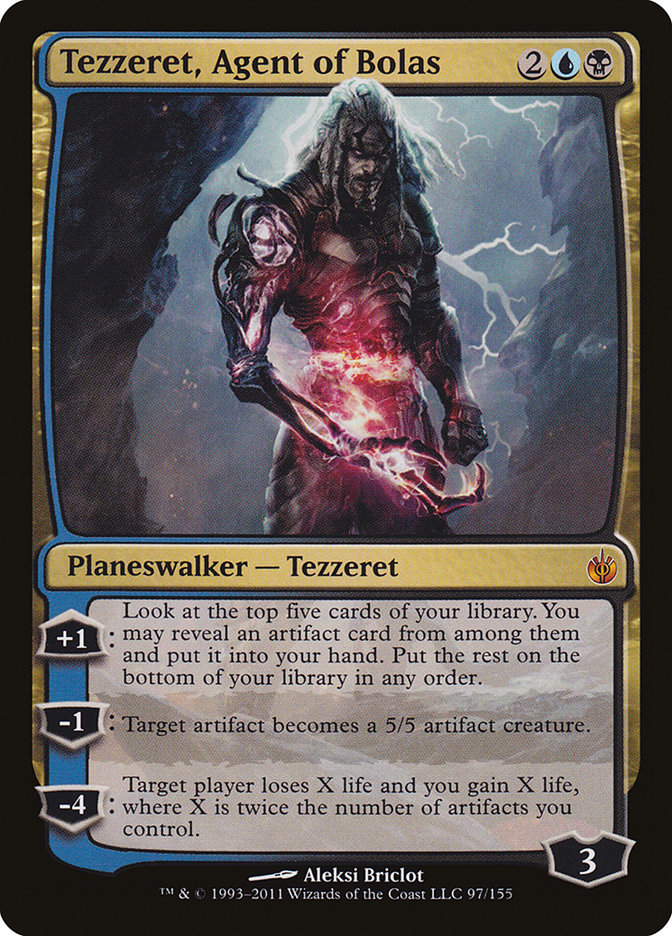
While Tezzeret, Agent of Bolas misses the ceiling of the Master of the Bridge variant, this more compact iteration on everybody’s favorite Bolas lackey works better in Cube, where its smaller effects have greater impact. This Tezzeret often comes in with a 5/5 thanks to the downtick, which ensures it has a lasting impact even if your opponent takes it out. The card advantage on the uptick is good, and it has the most achievable ultimate ability that can one-shot a player with the right setup.
Remember when I said Tezzeret, Master of Metal would be good if it cost less mana? That’s Tezzeret, Agent of Bolas.
#2. Ashiok, Nightmare Weaver
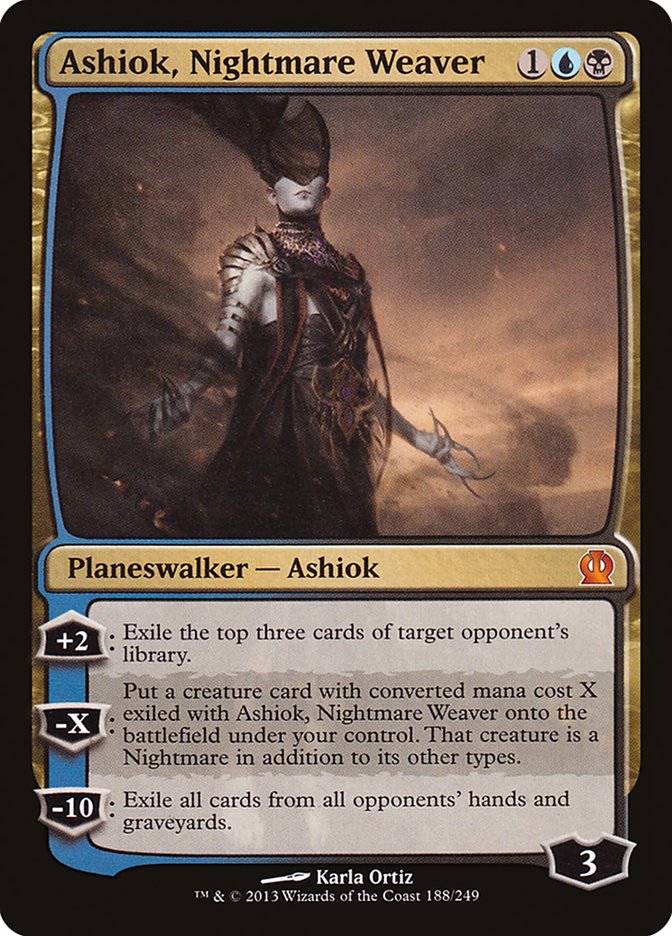
Ashiok, Nightmare Weaver is the control planeswalker, in Dimir at least. It’s a devastating threat in Cube due to the 40-card libraries and the ease of playing it into an empty board, especially with a 1-mana dork like Birds of Paradise. It feels similar to Liliana of the Veil in how devastating it is when it hits play.
The value decreases outside Cube, where exiling three cards a turn isn’t a meaningful clock and power creep has pushed the speed of formats beyond a 3-mana card that wins eventually without an immediate impact on the board. But this planeswalker has a legacy, and it’s one of the few ‘walkers that inspires a chill similar to Oko, Thief of Crowns when it hits the stack.
#1. Kaito, Bane of Nightmares

Kaito, Bane of Nightmares devastates players. It plays best with cheap, evasive creatures that have enters abilities, like Spyglass Siren and Baleful Strix. Planeswalkers often want to extract lots of value over a long game, a tricky goal in modern Magic. Kaito just smacks your opponent. None of these abilities would be spectacular alone, but in the context of a 3/4 creature that puts a clock on your opponent and rebuys a good enters ability? It’s a dream.
The card draw backs Kaito up, the stun counter mode becomes extremely relevant when the permanent doing the tapping uses that to get in. It’s a Standard staple for a reason, and it’ll stay relevant in Cubes for a very long time.
Best Dimir Planeswalker Payoffs
Dimir’s planeswalker payoffs are scant; most blue and black cards that reference planeswalkers do so with phrases like “exile target” and “destroy target”. That doesn’t mean there’s nothing, though.
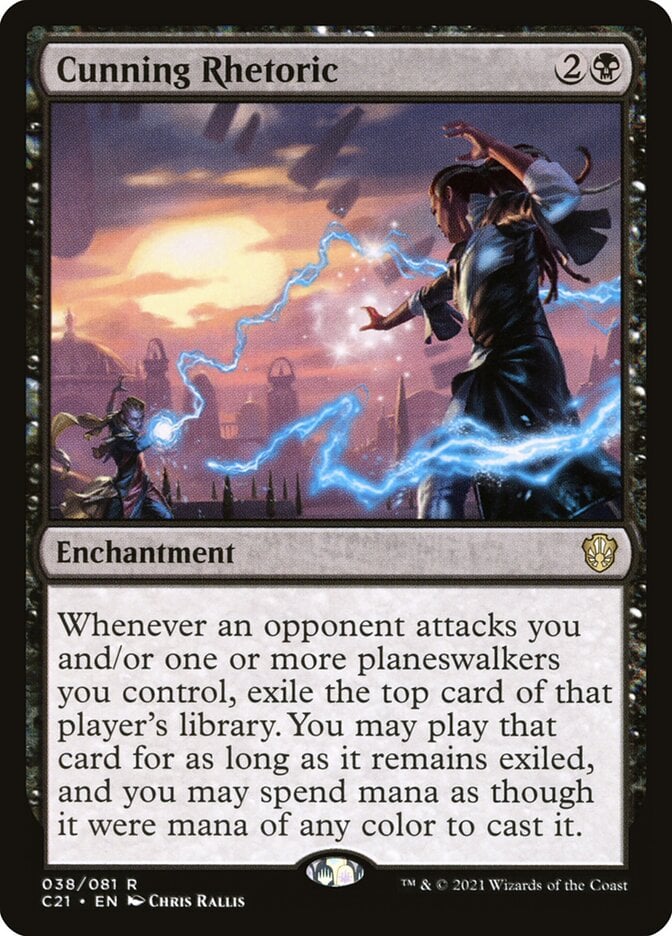
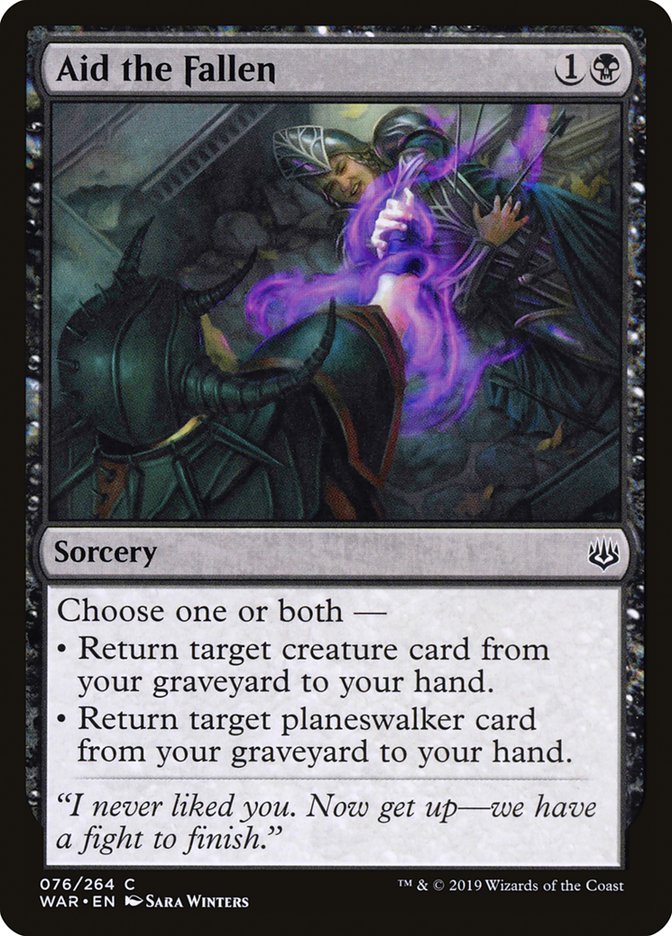
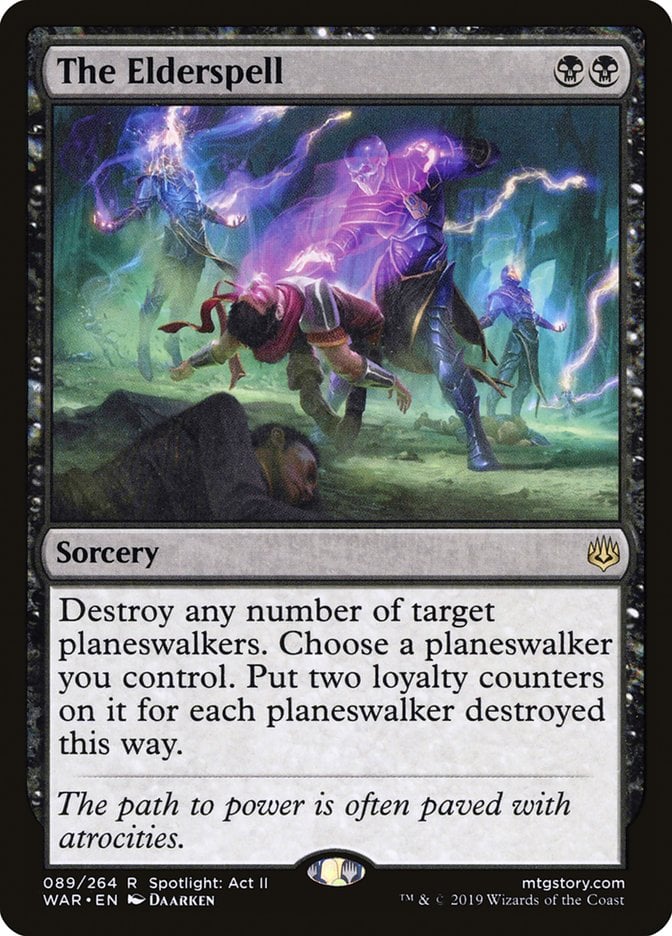
Cards like Sivitri, Dragon Master and Cunning Rhetoric dissuade opponents from attacking planeswalkers. Aid the Fallen is a rare planeswalker Regrowth. Probably the most significant of these support pieces is The Elderspell, a cheap sorcery that supercharges one planeswalker at the expense of several others.
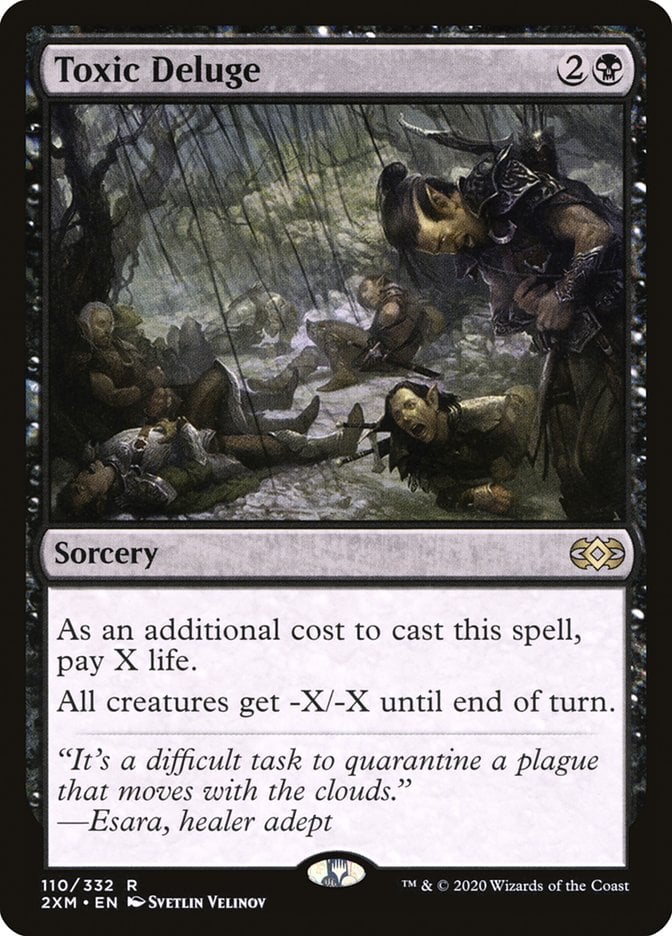
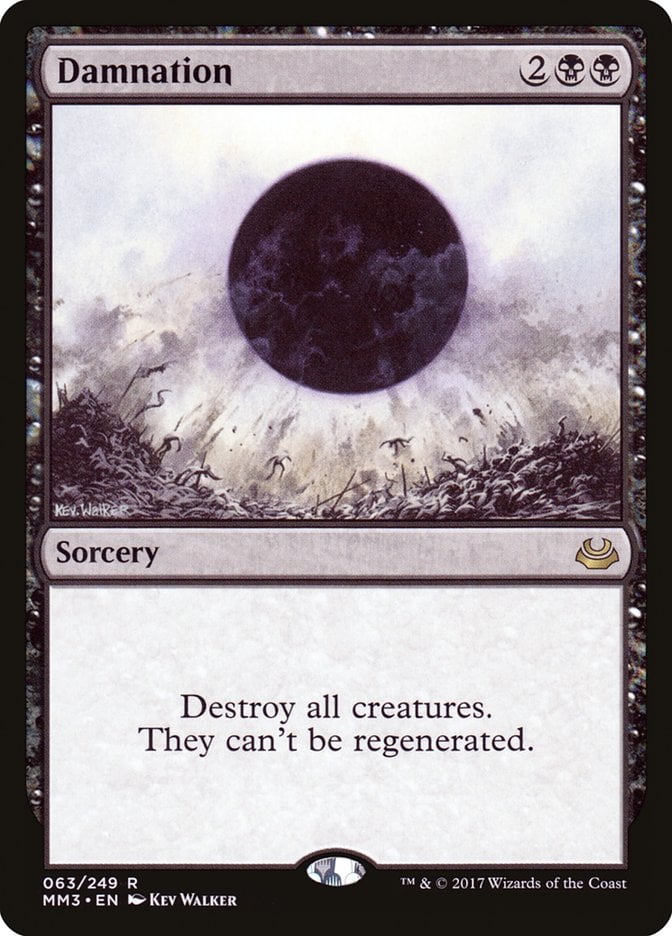
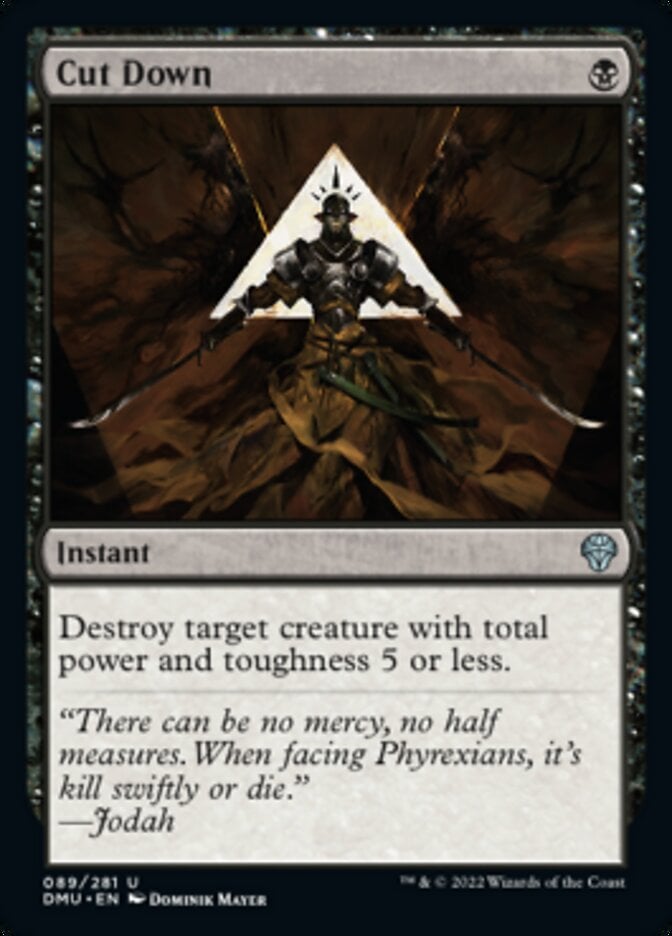
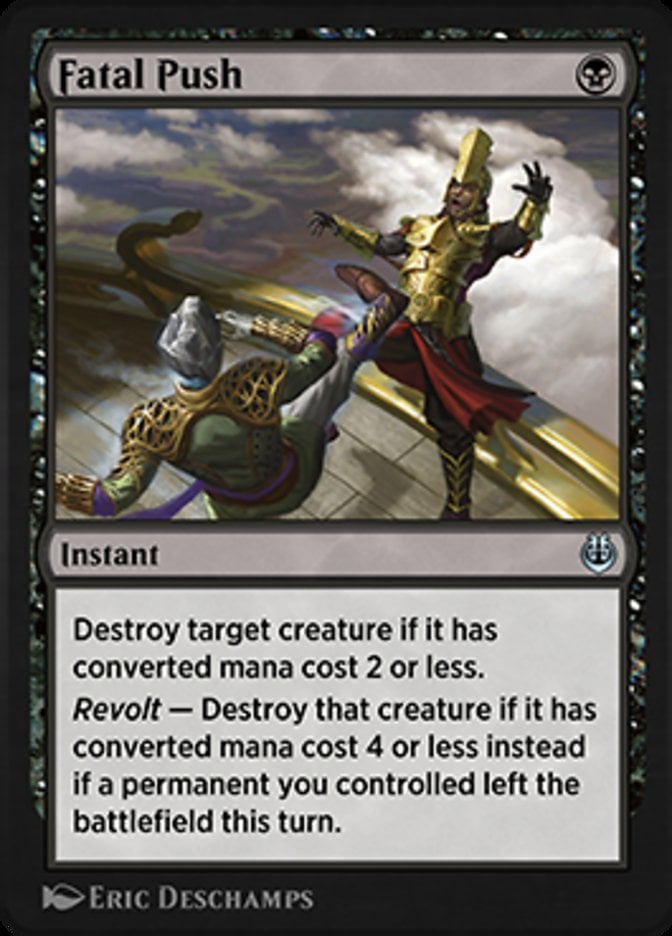
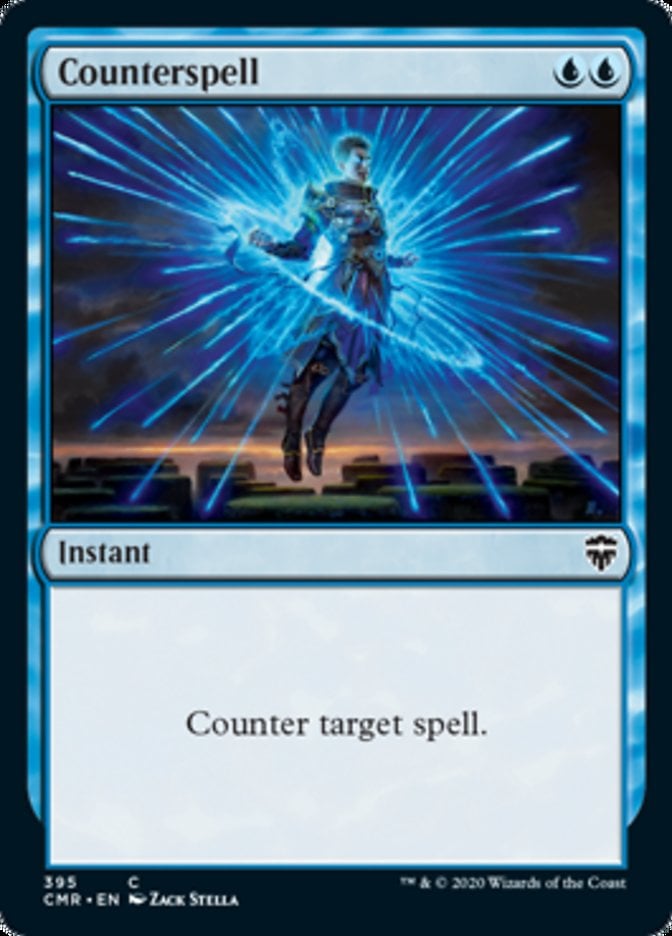
Moving beyond cards that directly reference planeswalkers, we find a wealth of support. Board wipes like Toxic Deluge and Damnation generally synergize with planeswalkers in the sense that they defend them—though they have anti-synergy with the aggressive Kaito. Turn-4 Damnation into an Ashiok, Nightmare Muse that bounces whatever your opponent played wins games. Beyond the board wipes, cheap interaction like Cut Down, Fatal Push, and Counterspell keep opposing boards under control to protect your planeswalker.
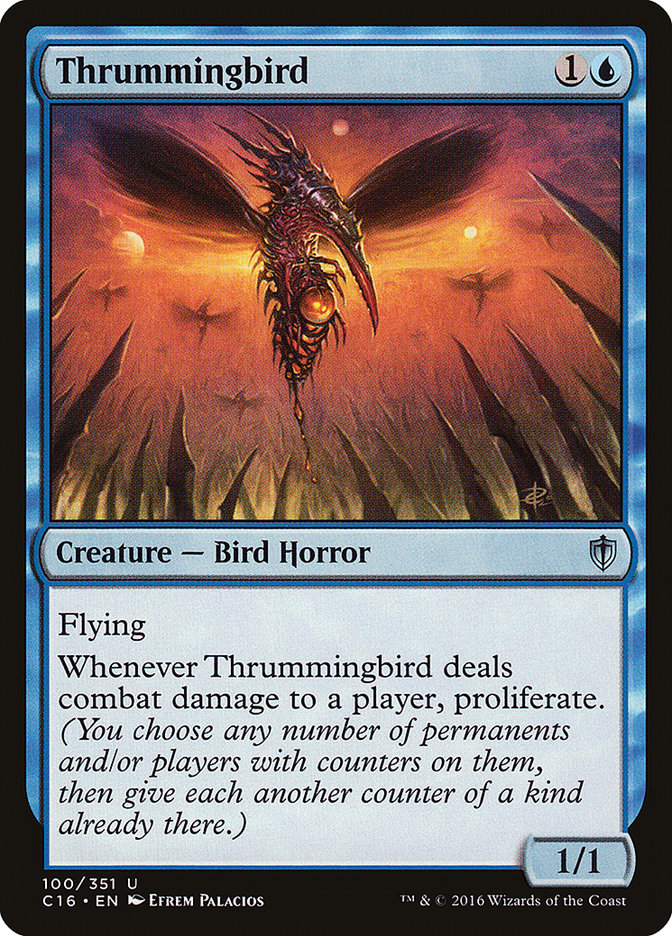
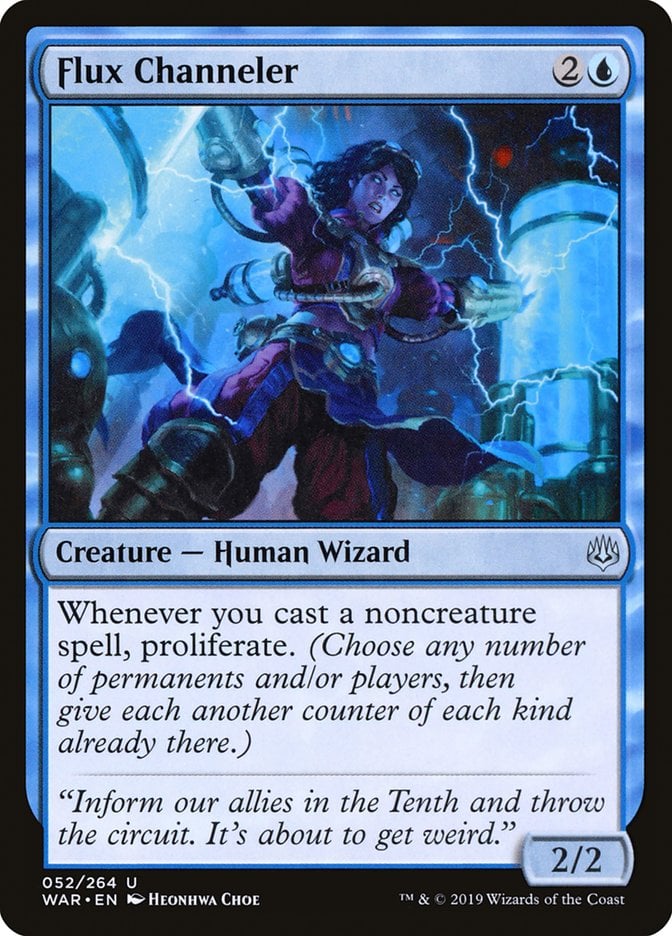
Dimir also has access to lots of proliferate effects, largely in blue. Cards like Thrummingbird and Flux Channeler can extend the lifespan of your planeswalkers and make distant ultimate abilities much more achievable.
Wrap Up

Tezzeret, Agent of Bolas | Illustration by Aleksi Briclot
Dimir’s planeswalkers feel well balanced. Among the three recurring characters, we see distinct facets of the color pair: bits that attack, those that control, even caring about artifacts. The non-typical planeswalkers flesh the color out more. These planeswalkers look particularly good given how well Dimir’s often controlling strategies support the long-term value they offer.
Which Dimir planeswalkers are your favorite? Do you play any of them? Let me know in the comments below or on the Draftsim Discord!
Stay safe, and thanks for reading!
Follow Draftsim for awesome articles and set updates:










Add Comment