

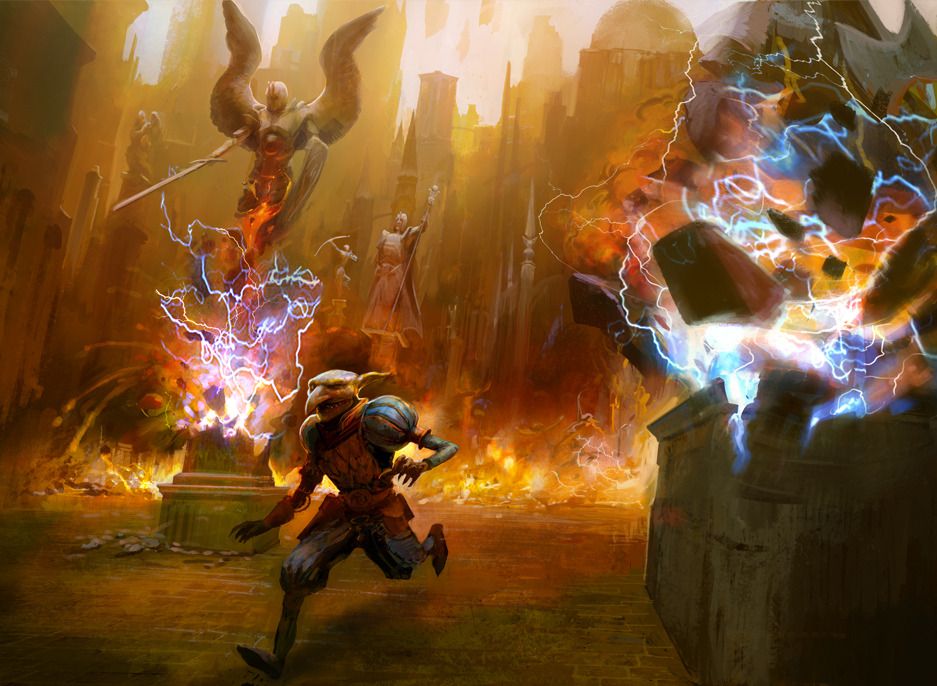
Wrath of the Skies | Illustration by Alexandre Honoré
Artifacts are easily Magic’s strongest card type; between historically powerful cards like two-thirds of the Power Nine to more modern threats like Smuggler's Copter, Bolas's Citadel, and Cori-Steel Cutter, artifacts get up to some nonsense in whatever format they enter.
Wouldn’t it be nice to handle every nasty artifact all at once? Well, Magic has ample artifact board wipes that sweep everything aside, clearing the table so quickly even Lord Windgrace would be impressed.
Let’s find the best for your sideboard or EDH deck!
What Are Artifact Board Wipes in MTG?
Vandalblast | Illustration by Seb McKinnon
Artifact board wipes remove all or most artifacts in play. How they do this varies; destroying all artifacts is common, but you can also exile them, bounce them, or even make your opponents sacrifice all their artifacts. Cards that can deal with other card types were also eligible; the critical criteria was specifying that they handled artifacts.
These cards are pretty strongly concentrated in Naya (), though blue gets in on the action here and there. Black just doesn’t interact with artifacts (outside of Gate to Phyrexia), though you could always use Nevinyrral's Disk as a colorless option.
Honorable Mention: Artifacts Have No Abilities
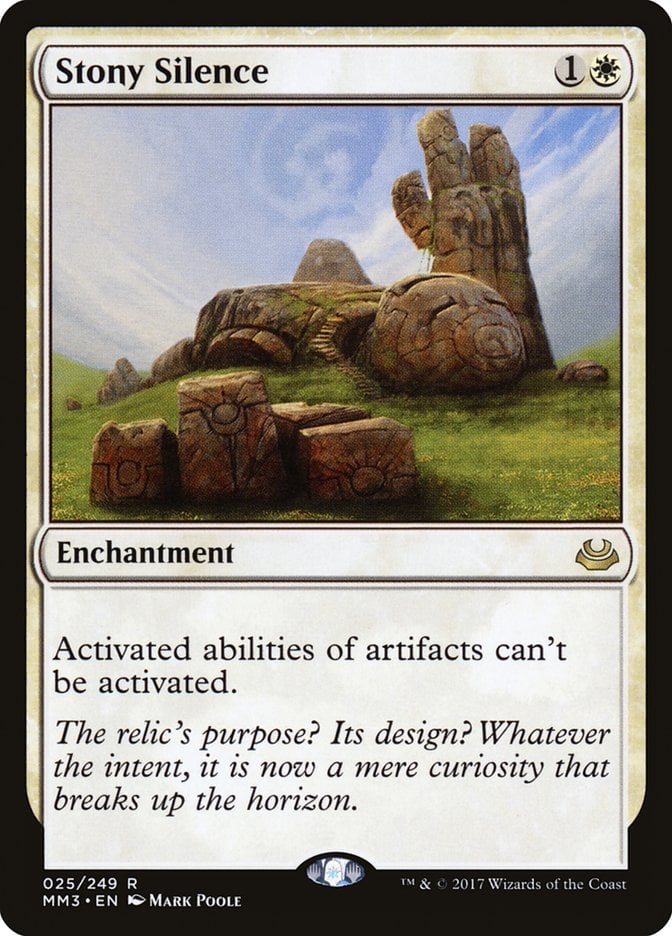
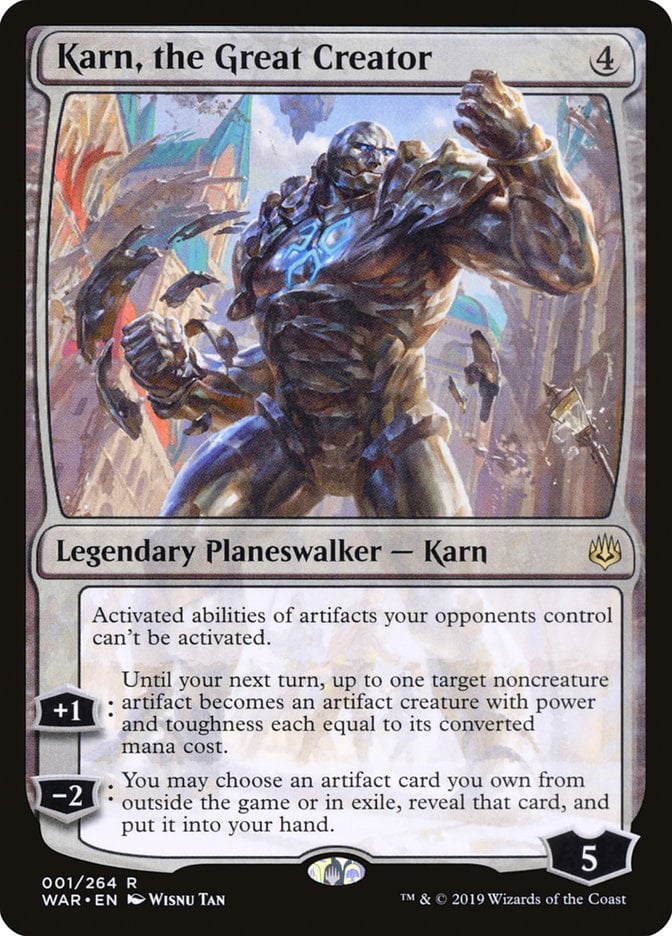
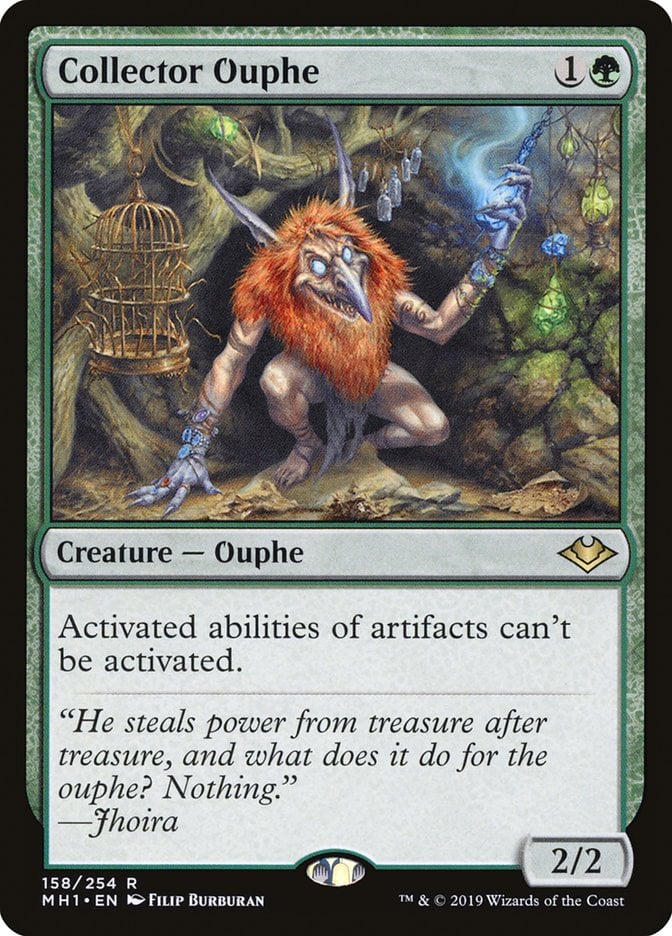
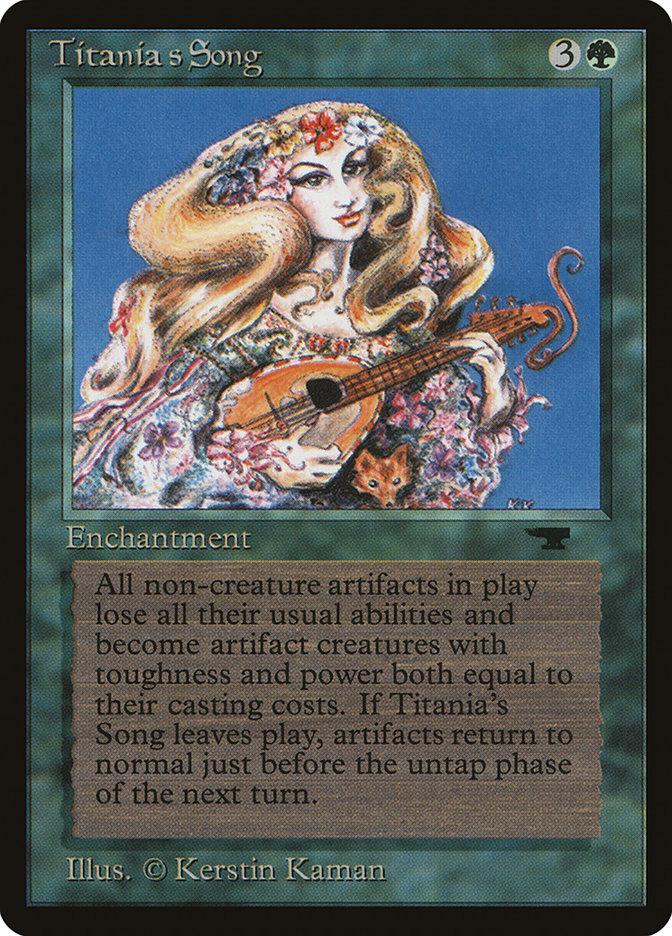
Magic has a handful of cards that prevent artifacts from activating their abilities, with Stony Silence and Karn, the Great Creator being among the most iconic. These cards have a similar use to artifact board wipes—they prevent the artifact player from functioning—but they fall outside the matter at hand. They’re still worth considering, as they could be more useful for your strategy; the right deck absolutely wants Collector Ouphe or Titania's Song more than the cards in this ranking.
#32. Anzrag’s Rampage
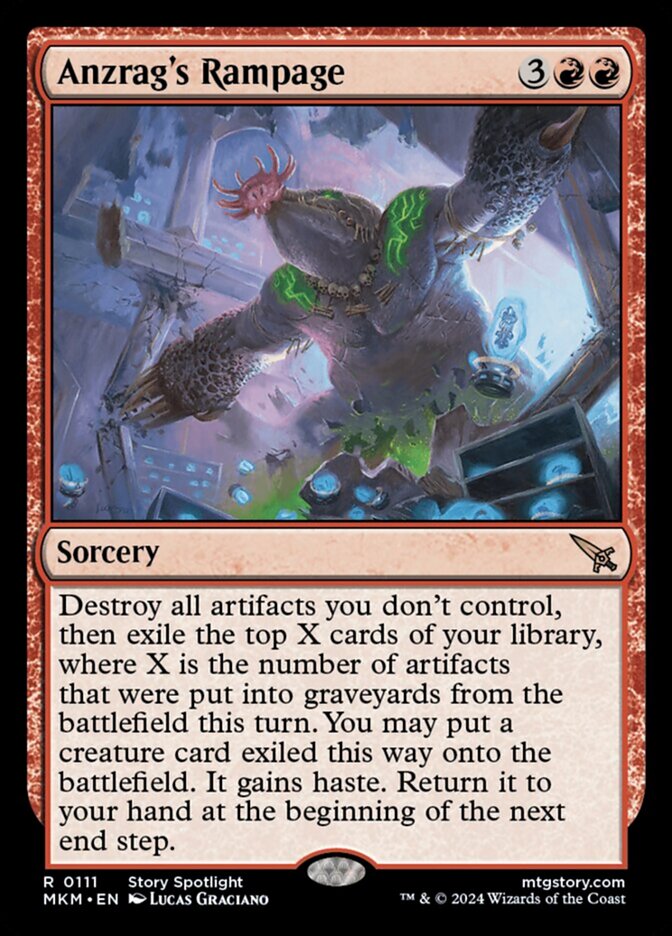
Anzrag's Rampage can be useful, if you meet two criteria: Your deck has big creatures worth cheating into play for a turn, and your opponents have enough artifacts to make X a substantial number, at least six. If you meet those conditions, it can be incredibly impactful; if you fall short on either, you should look for a better board wipe.
#31. Subterranean Tremors

If you have the mana to pour into Subterranean Tremors, it provides a comprehensive board wipe that leaves behind a large creature. Even if you can’t reach the hefty 8 mana required for the Lizard token, killing creatures and destroying artifacts gives you lovely board control.
#30. Creeping Corrosion
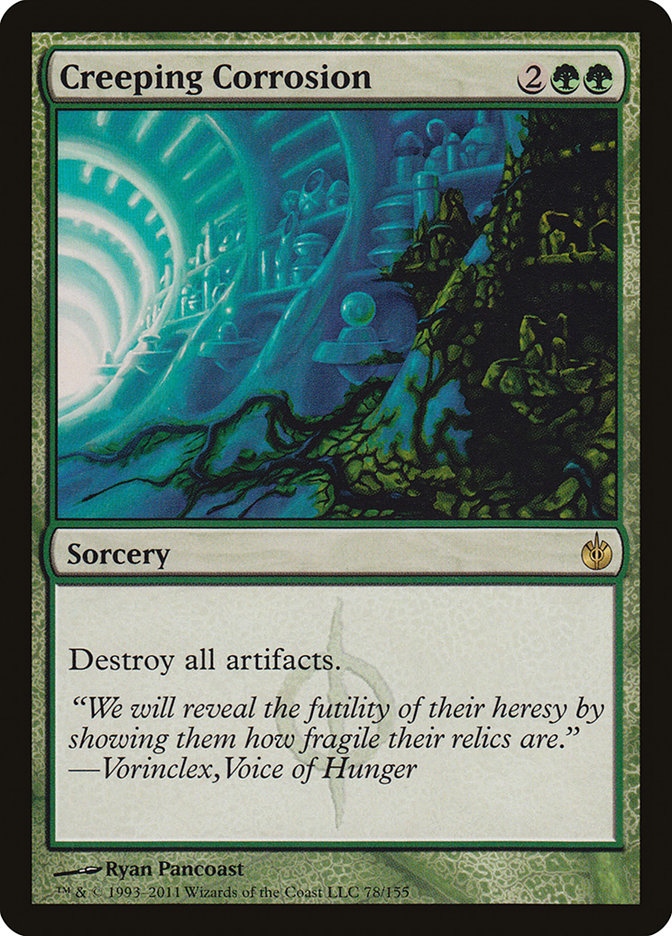
Creeping Corrosion is Wrath of God but for artifacts, and it does the job. You need to be absolutely sure that your meta’s overrun by artifact decks before adding something with so little utility to your deck, but it works miracles in the right situation.
#29. Kalemne’s Captain

Kalemne's Captain asks a huge amount of mana for its wipe, but it’s always better to exile permanents than destroy them, so I could see this being a great option for the Timmy in all of us.
#28. Everything Comes to Dust
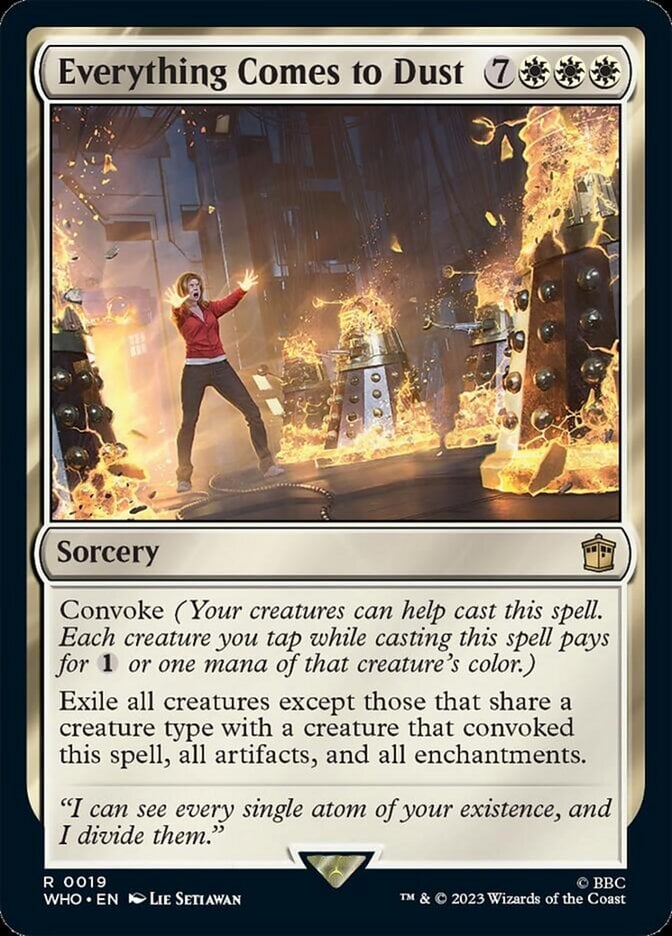
Everything Comes to Dust suffers from narrowness; this isn’t worth running if you aren’t a creature-heavy deck, and even then you probably need a strong typal theme. But the card has an incredible ceiling, leaving your creatures untouched while razing everything else to the atomic level.
#27. Cease // Desist

Cease // Desist packs tons of answers into one card: You get graveyard hate or artifact/enchantment destruction. It’s rather costly, but most modal effects are. Cease is critical to the card’s playability as the cantrip ensures it’s never truly dead.
#26. Pulverize
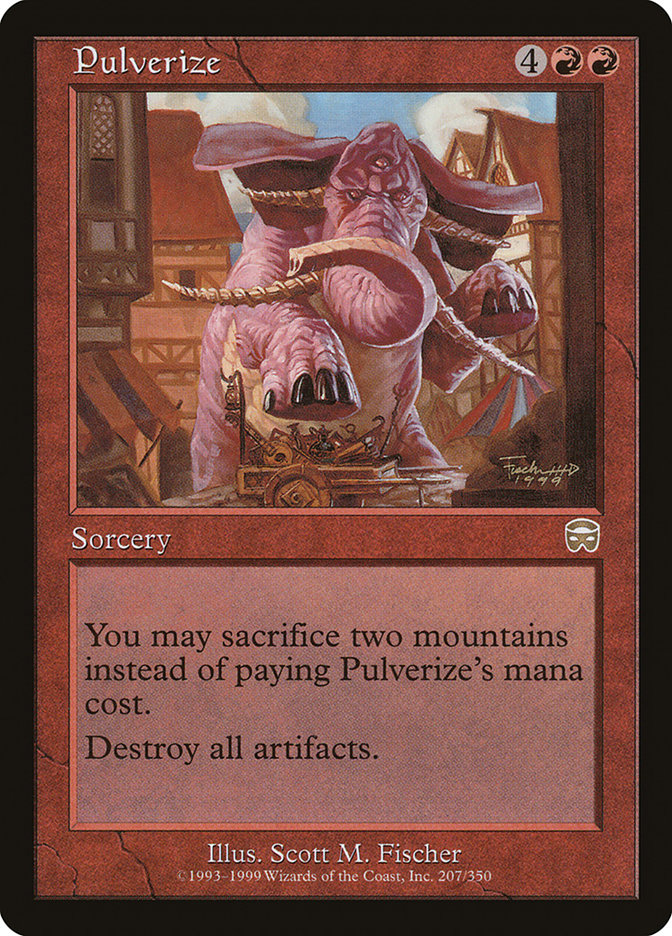
Free spells are very powerful, though sacrificing two mountains pushes the limits of alternate costs worth paying. Pulverize might not have a place in every deck, but it could be a devastating meta call.
#25. Wave of Vitriol
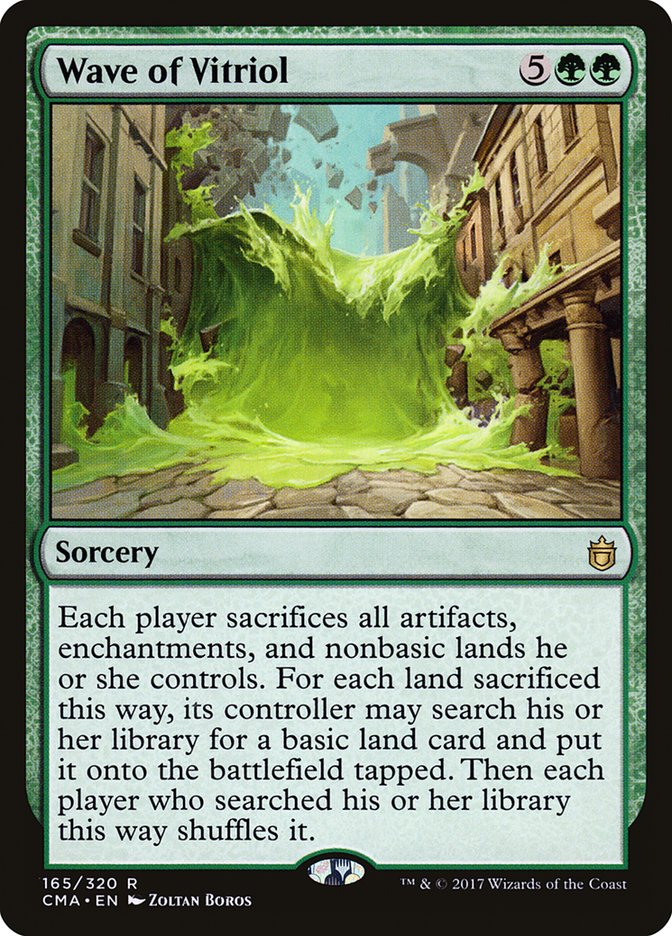
Wave of Vitriol does its best work in mono-green decks due to hitting nonbasic lands. It’s most effective at punishing greedy multicolor mana bases. Forcing your opponents to sacrifice their artifacts gets around common protection spells like Dawn's Truce and Heroic Intervention, which is another point in this card’s favor.
#24. Consulate Crackdown
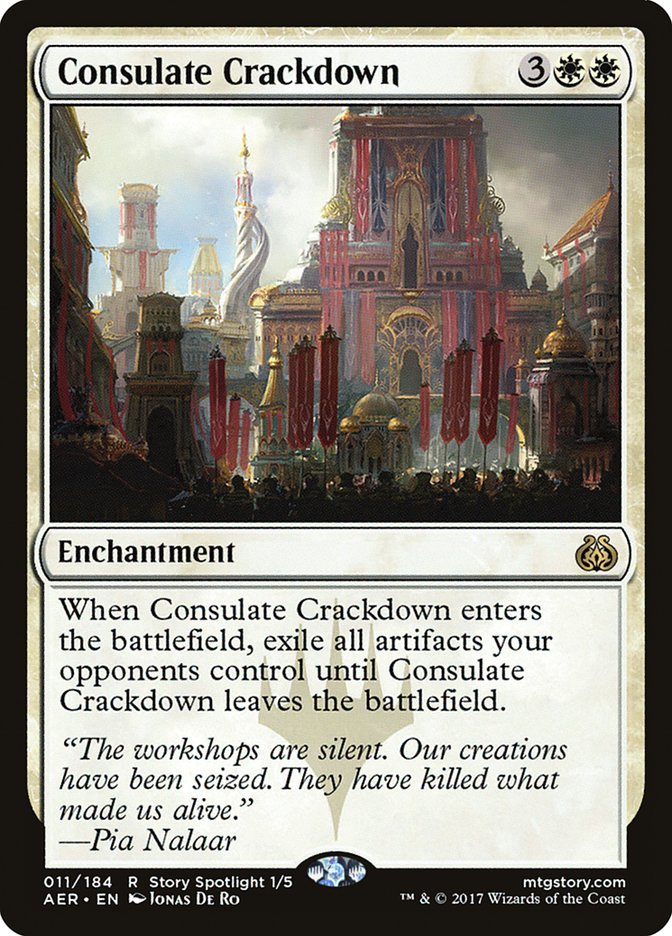
Consulate Crackdown takes the classic Oblivion Ring and blows it up to board-wide artifact banishment. It works particularly well against artifact token decks since tokens can’t come back from exile, and having an option that gets around indestructible broadens your deck’s ability to win.
#23. Austere Command
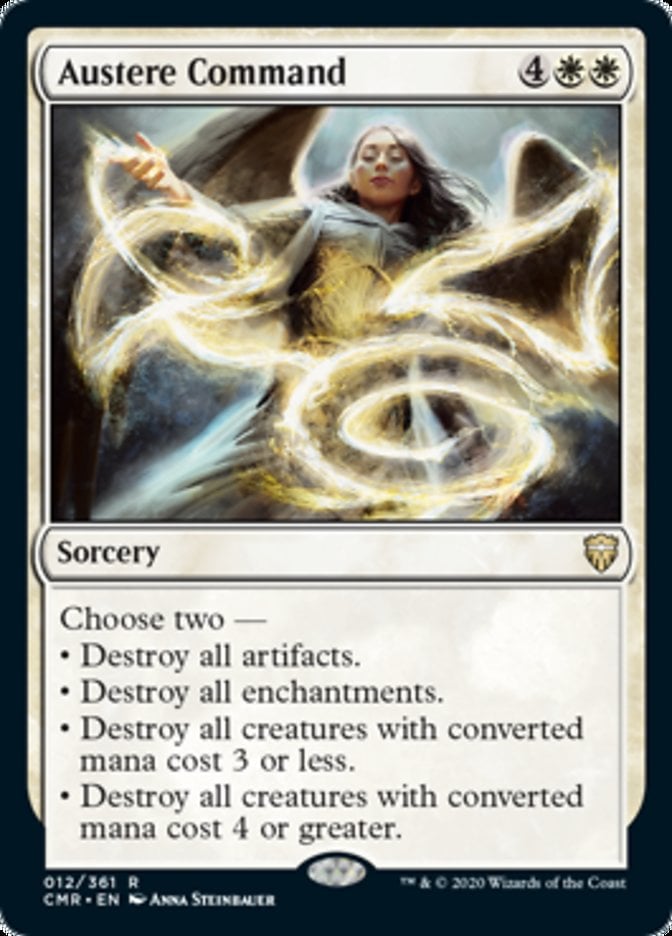
Austere Command has lost some power with the printing of Farewell, but the modality still makes it worth running in budget decks looking to handle multiple classes of threats. It works best in decks that focus on small creatures so you can destroy everything large, plus catch some artifacts on the way out.
#22. Seeds of Innocence
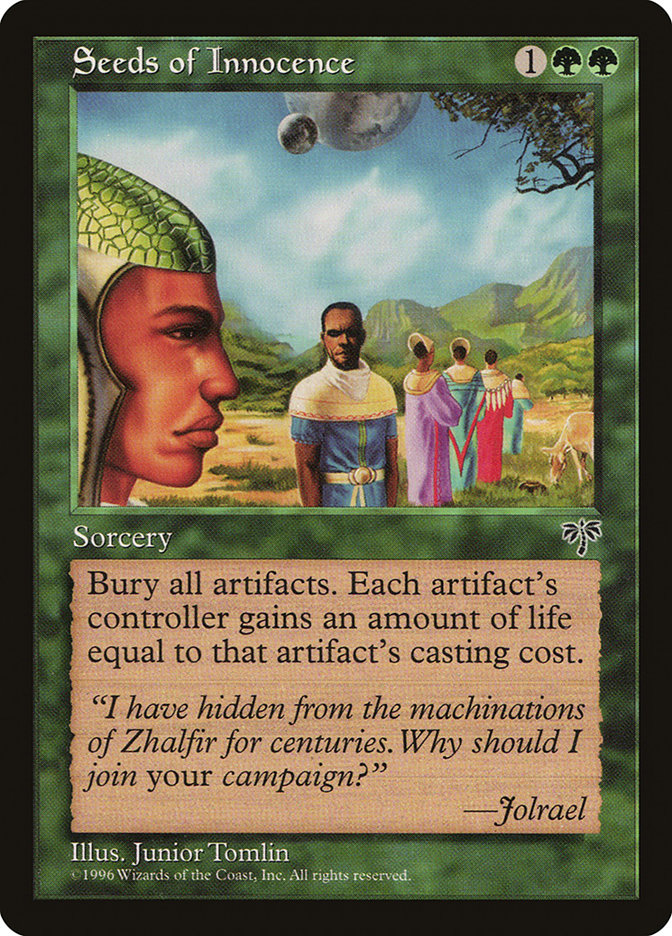
Seeds of Innocence is incredibly efficient. Giving your opponents a burst of life is unfortunate, but far from the biggest downside in the game. This card’s low mana cost more than makes up for it in my experience.
#21. Season of Gathering

Season of Gathering always does something. The ideal scenario destroys all your opponents’ artifacts while drawing four or more cards off the triple paw mode, but pretty much every combination has merit.
#20. What Must Be Done

A downside to these artifact board wipes is their narrowness; what use is a Vandalblast if your opponents have no artifacts? What Must Be Done combats this by flexing between a board wipe and a broad reanimation spell. That modality makes it a pretty safe inclusion in your white decks.
#19. Bane of Progress
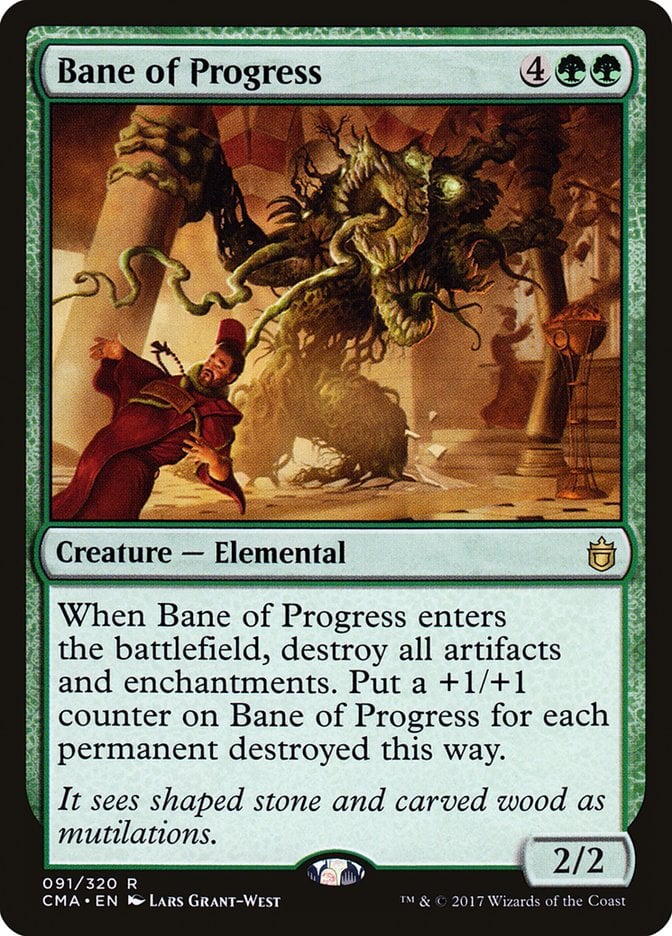
Bane of Progress is a Commander classic that shines when you yourself don’t control any artifacts or enchantments, which isn’t a hard ask in green decks that can rely on lands and creatures for mana ramp. I love adding this to decks with Natural Order and Chord of Calling as a situational tutor target.
#18. Hammer Mage
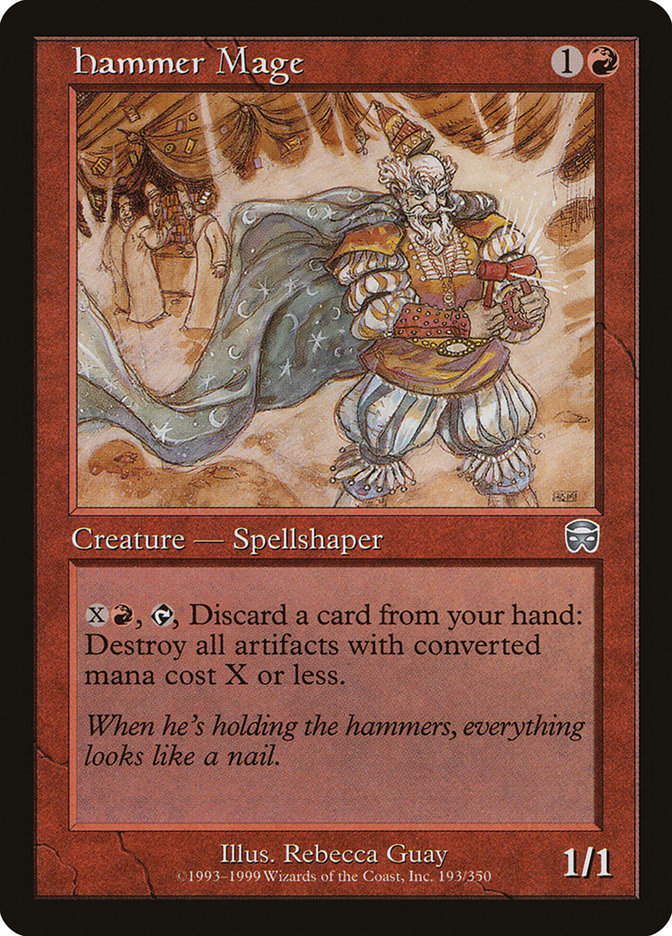
Hammer Mage offers incredible flexibility. Sweeping aside specific mana values makes this an artifact board wipe even an artifact deck could leverage. The repeatable board wipe makes this a massive nuisance for any deck trying to assemble a board of artifacts.
#17. Cataclysmic Gearhulk
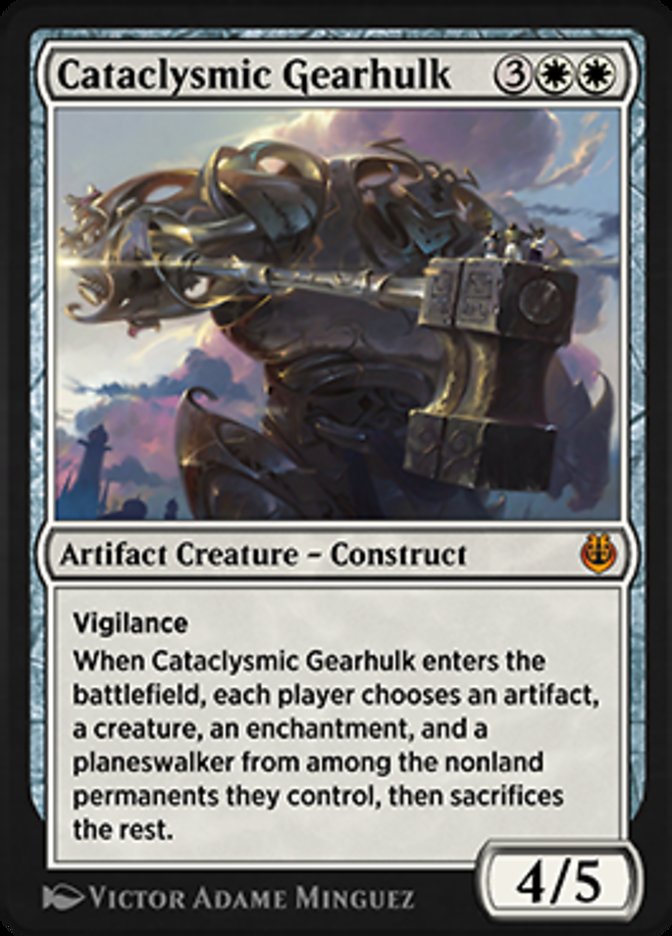
Cataclysmic Gearhulk makes Cataclysm far friendlier for your local casual table. Attaching a board wipe to an enters ability provides ample synergy; uniting this with Teleportation Circle or similar effects prevents your opponents from ever maintaining a board state.
#16. Fracturing Gust
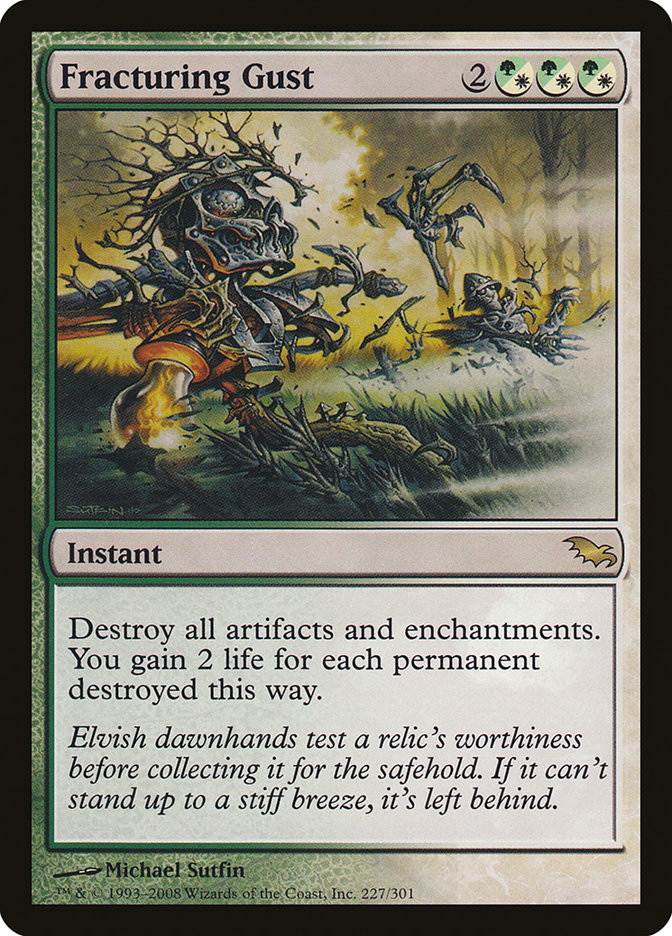
Instant speed board wipes are fairly rare, which sets Fracturing Gust a little ahead of its peers. The lifegain can be immense at a Commander table; I can easily see casting this during combat to wreck an opponent’s attacks.
#15. Wrath of the Skies

You generally need to be running energy for Wrath of the Skies to work, though X=0 still clears away artifact lands, moxen, and Urza's Saga, so it has some utility. If you make this work, it’s highly flexible and potentially quite cheap.
#14. Shattering Spree
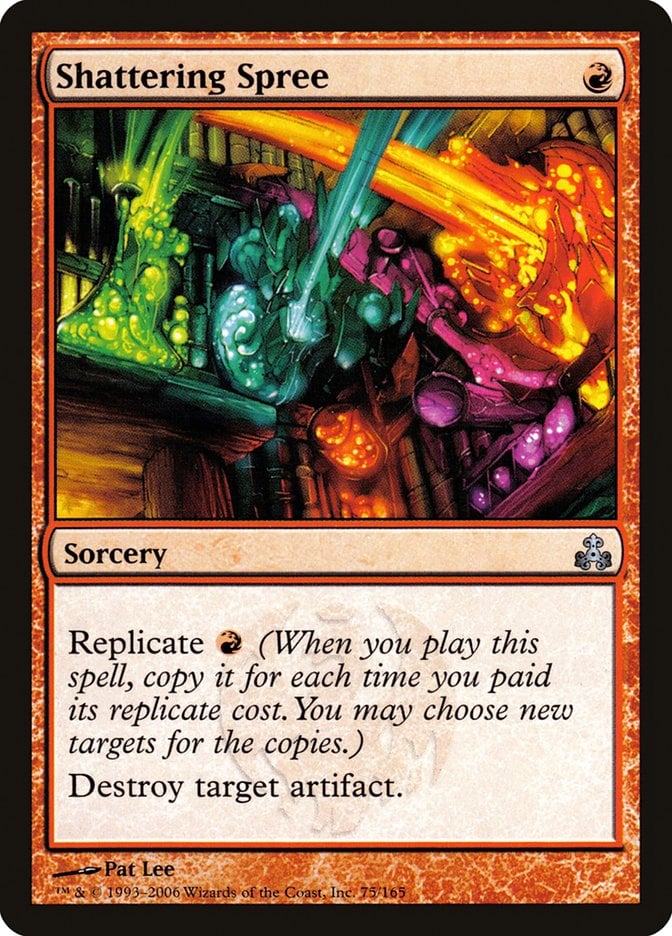
Shattering Spree is to artifact board wipes what Fire Covenant is to creature board wipes: It’s unlikely to kill everything, but more than capable of dealing with the threats that matter. It performs poorly against artifact token decks, but it works wonders against decks trying to land impactful ones like Bolas's Citadel or Portal to Phyrexia.
#13. Mythos of Snapdax

Mythos of Snapdax makes Cataclysm super friendly by ditching the land sacrifice, but it has its own devastating potential. Leaving your opponents with their worst permanents while retaining your best swings the game massively in your favor. Tragic Arrogance offers similar utility with a less restrictive color identity.
#12. Nevinyrral’s Disk
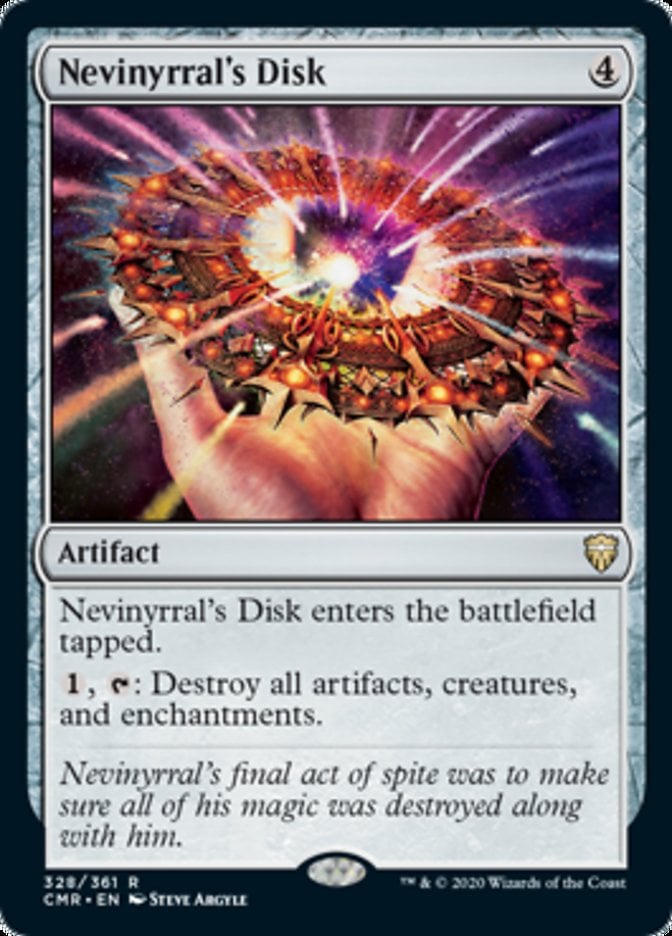
Nevinyrral's Disk is the OG artifact board wipe. It can be slow since it has to untap; your opponents see it coming and have a turn cycle to either sandbag threats or destroy the Disk itself, but it could be pretty spicy in a deck that recurs artifacts.
#11. Serenity
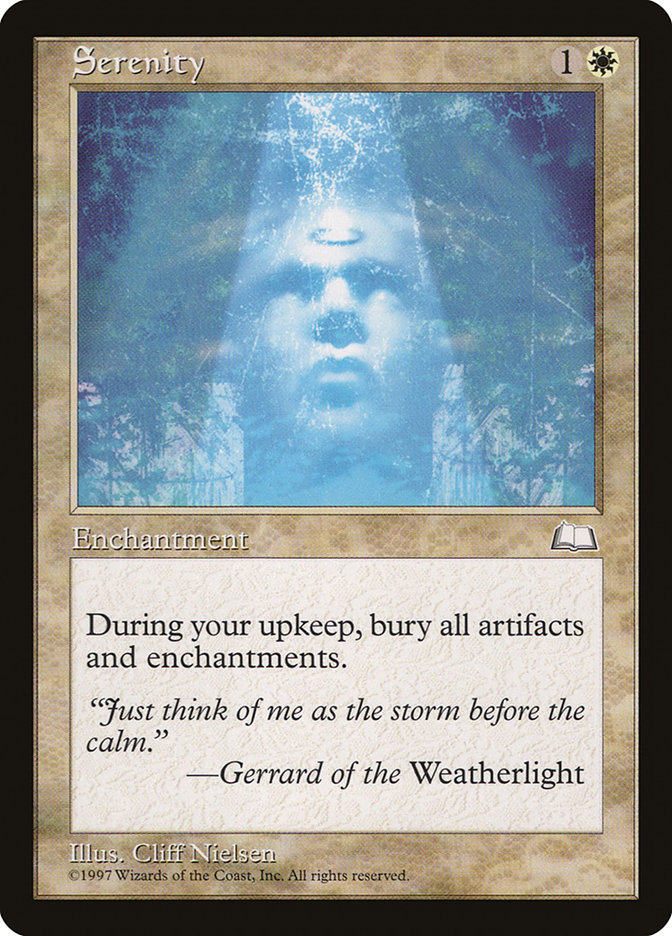
Serenity wins major points for its efficiency. It’s a bit risky; you and it need to survive a turn cycle, so it can’t save you from a combo the turn after you play it. But if your opponent’s don’t have the means to win the turn after you play it, they’re practically forced to do nothing for a turn, then lose everything. That’s practically Time Walk, if you squint and don’t know what Time Walk does.
#10. Dismantling Wave
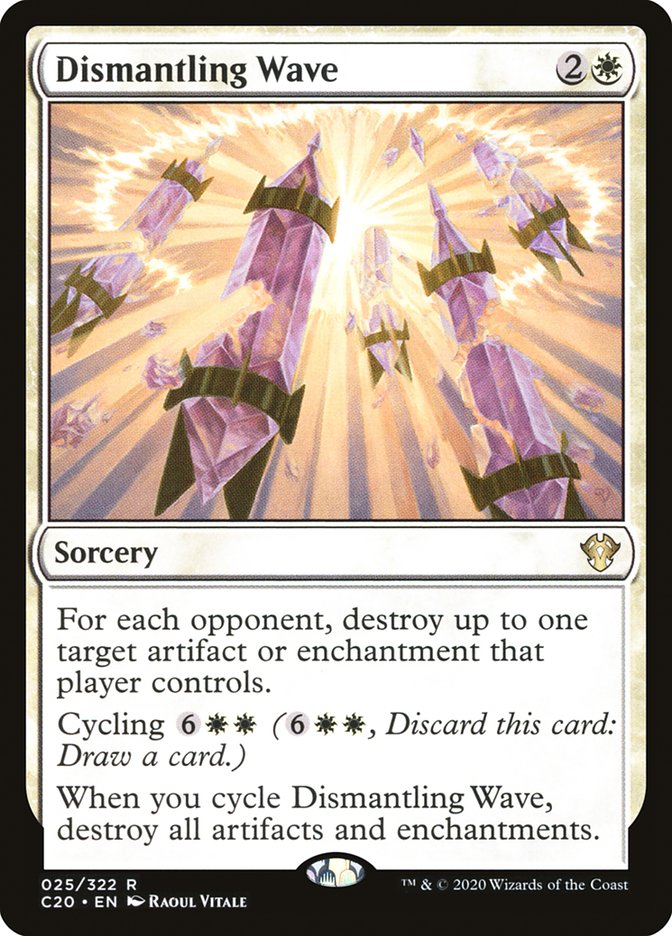
Whenever I come across Dismantling Wave, I question why I don’t run it in more of my white decks. Three mana to blow up three permanents is an exceptional deal—I sing the praises of Soul Shatter often, and this applies that form to artifacts and enchantments. You need this sort of multitarget removal in your Commander deck. Throw in the modality of obliterating everything while drawing a card, and I suspect that this ought to be a white staple.
#9. Brotherhood’s End
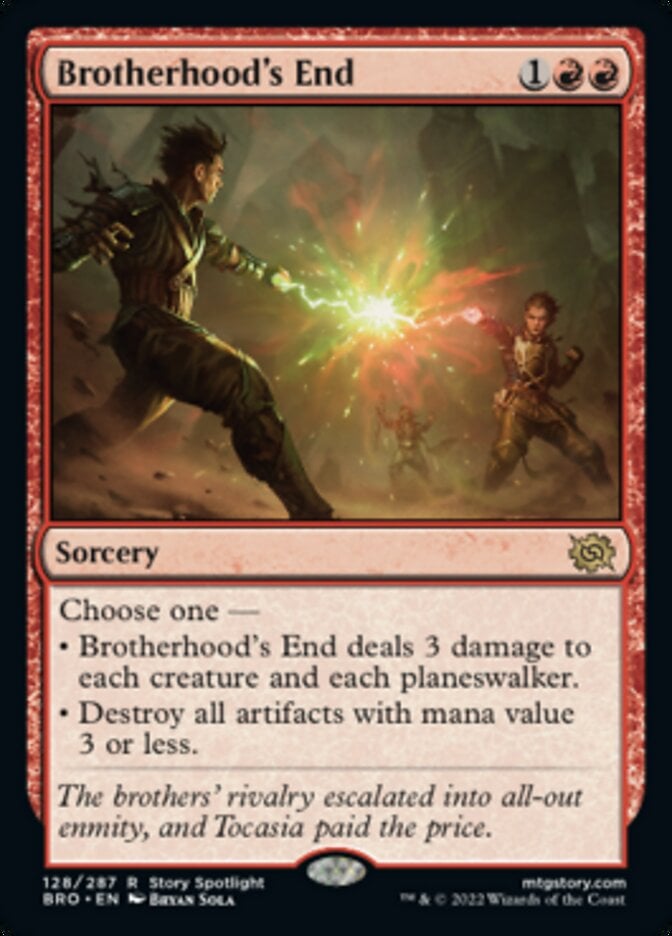
Brotherhood's End thinks small. It has great utility in EDH; a deck that ramps via lands and creatures can blow up opposing Signets, while the deck running Signets clears out mana dorks. It also sets the players piling up Treasure and Constructs behind, which are two of the more prominent artifact-based threats in the format.
#8. Fade from History
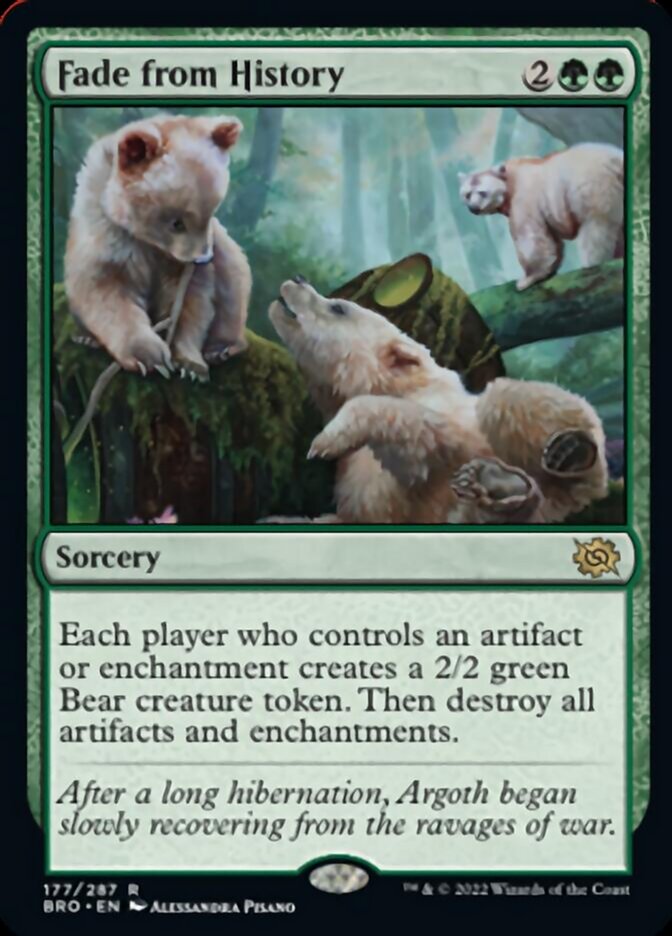
Fade from History can’t be played outside of Commander, as giving your opponent a 2/2 incurs a real cost. But Commander players give away 3/3s to destroy a single permanent with Generous Gift and Beast Within, so throwing your opponents a Bear to obliterate all artifacts and enchantments seems like a worthwhile trade.
#7. Energy Flux
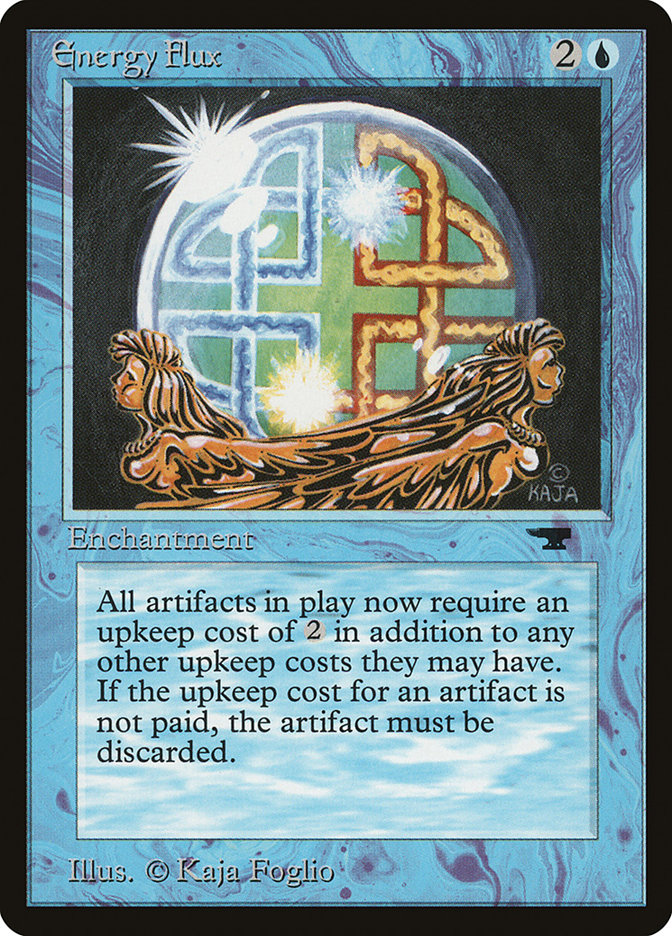
Energy Flux is… very barely an artifact board wipe given that your opponents can theoretically keep their artifacts around, assuming they pump enough mana into it. But that becomes untenable with wide boards or token-heavy boards, and you still get a substantial advantage if your opponents spend their entire turn maintaining their board rather than developing it. Lastly, this gets around most forms of protection—indestructible, hexproof, shroud, even phasing can’t do much against Energy Flux.
#6. Farewell
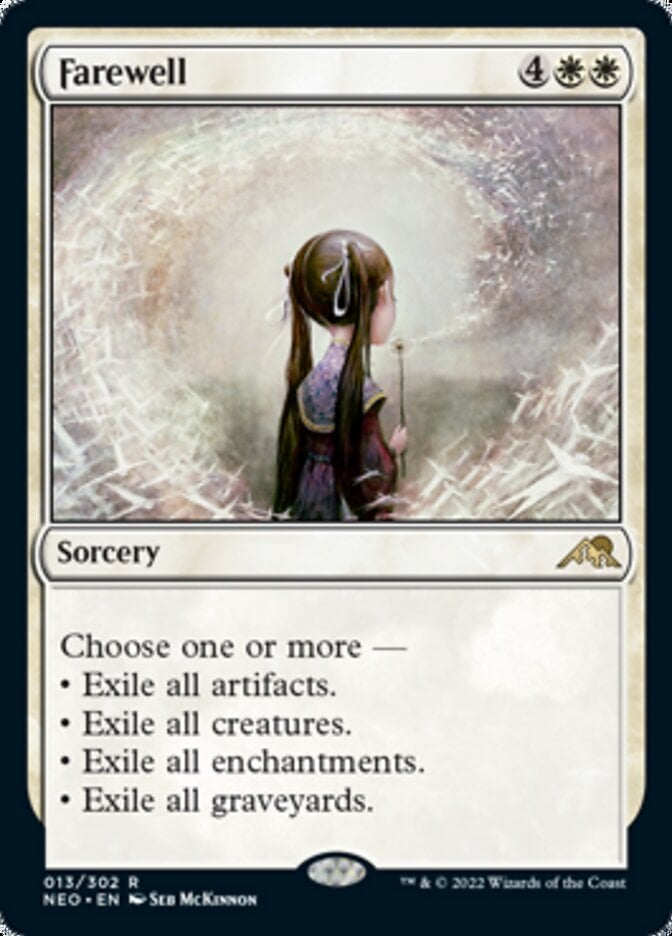
Board wipes are meant to reset the game state, and none do it better than Farewell. If you select all modes, the table has nothing more than the lands on their field and the cards in their hands—though I must say that choosing all modes isn’t always advisable. Farewell works best when you’re selective, likely because your deck focuses on one card type and removes the rest.
#5. Cataclysm
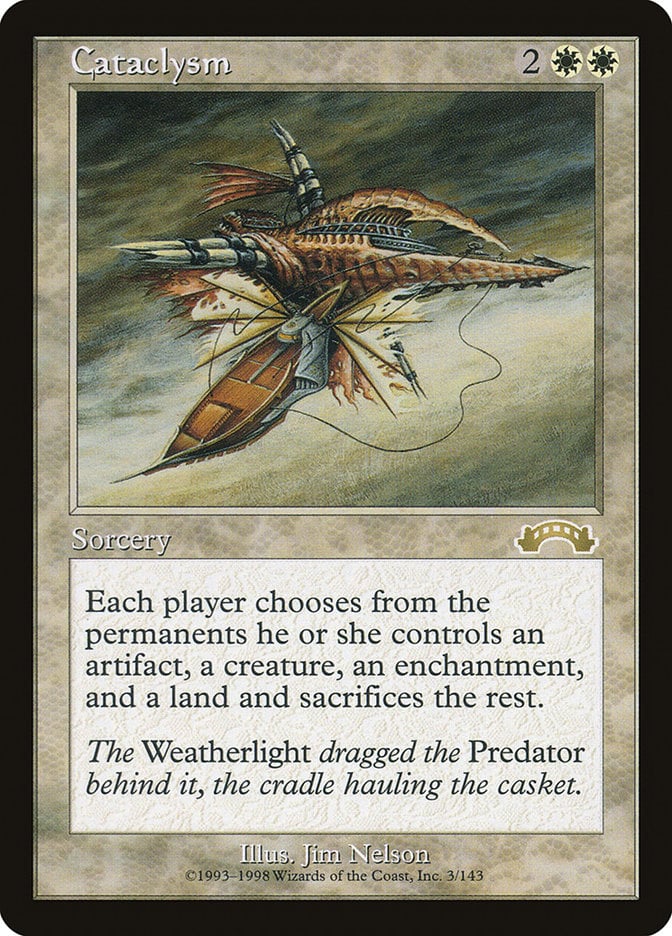
Cataclysm doesn’t see tons of play given that it’s mass land destruction, but the right deck turns this into a devastating sweeper that removes any hopes your opponents have of winning, or even taking another game action.
#4. Dauntless Dismantler
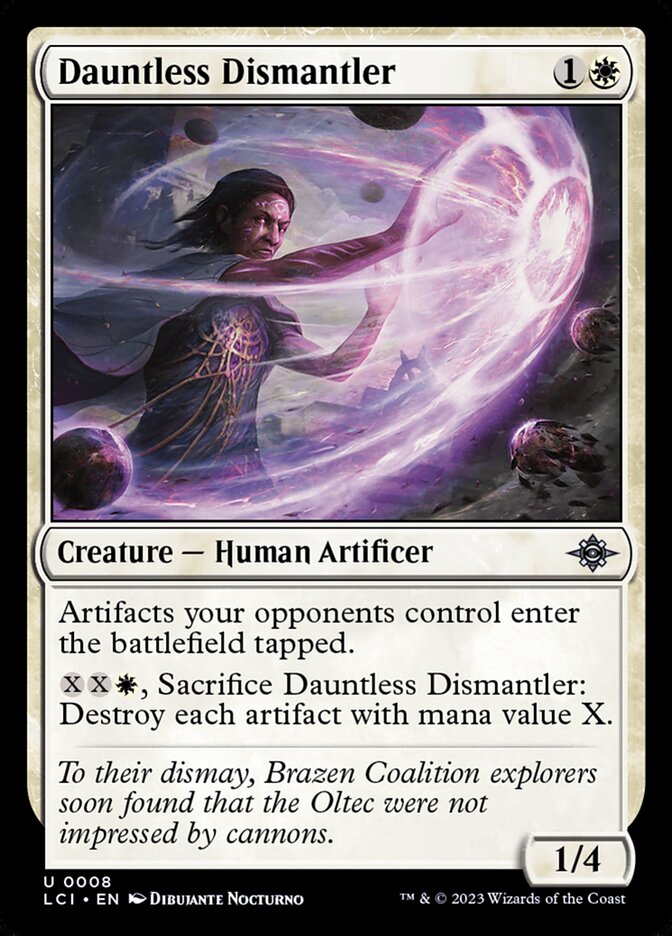
Dauntless Dismantler throws a massive wrench into the plans of any artifact deck. Treasure and mana rocks become much weaker when they enter tapped, and you can eventually crack it to deal with a stax piece or strip an opponent of their mana. Toss in a bit of recursion with a card like Lurrus of the Dream-Den, and you have a potent artifact hate spell.
#3. Hurkyl’s Recall

Hurkyl's Recall doesn’t remove artifacts forever, but it often buys several precious turns at an incredibly efficient cost. It’s perfect against tokens, and even artifact decks can leverage it if they want to bounce their cards for whatever reason, like a discount Paradoxical Outcome. I particularly appreciate that this handles the indestructible Bridges from Modern Horizons 2.
#2. Meltdown
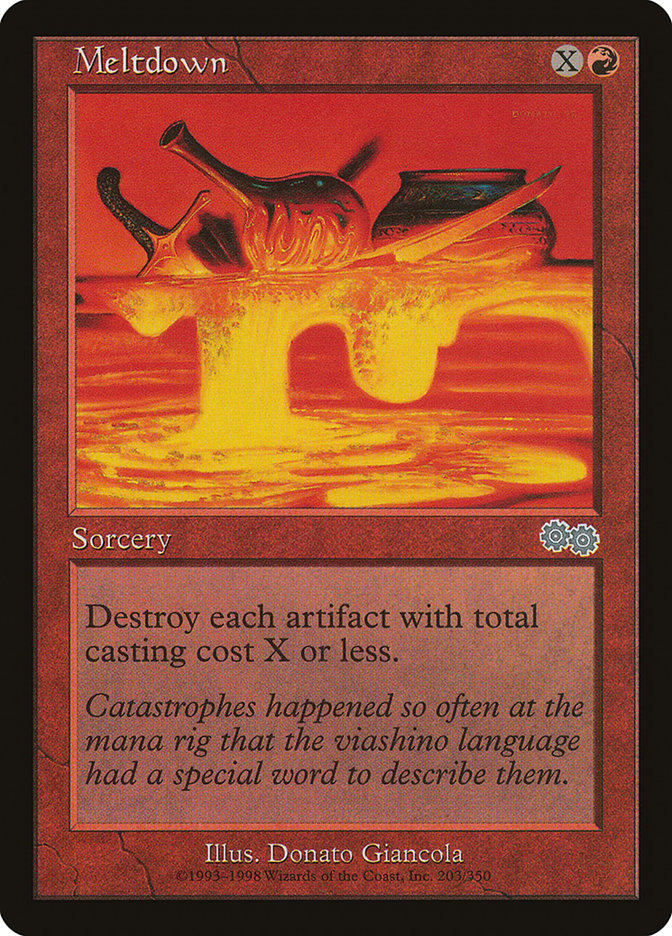
Legacy players likely recognize Meltdown out of their sideboards. Meltdown becomes stronger as the power level of the format increases, which naturally forces the mana value of permanents down. It can be devastating in cEDH, where decks often run the full gamut of fast mana available to them.
#1. Vandalblast
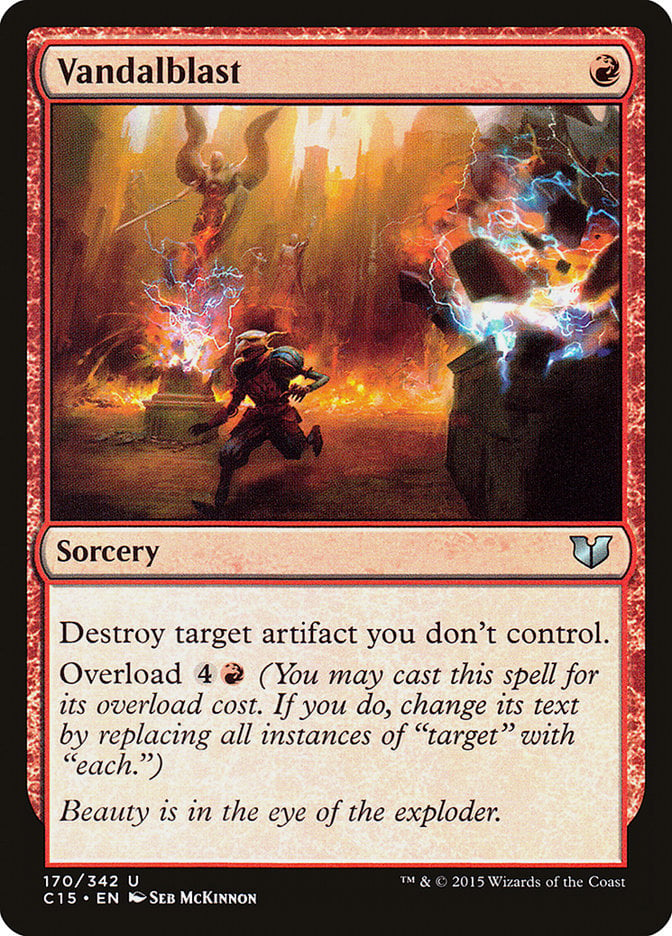
A Commander classic, Vandalblast offers clean, simple modality. to destroy a single artifact is reasonable, and 5 mana to blow up all opposing artifacts is devastating. This staple holds up to the tests of time and power creep quite well.
Best Artifact Board Wipe Payoffs
While removing your opponents’ cards in a reward in and over itself, you might be wondering if you can exploit these cards further. And you can!
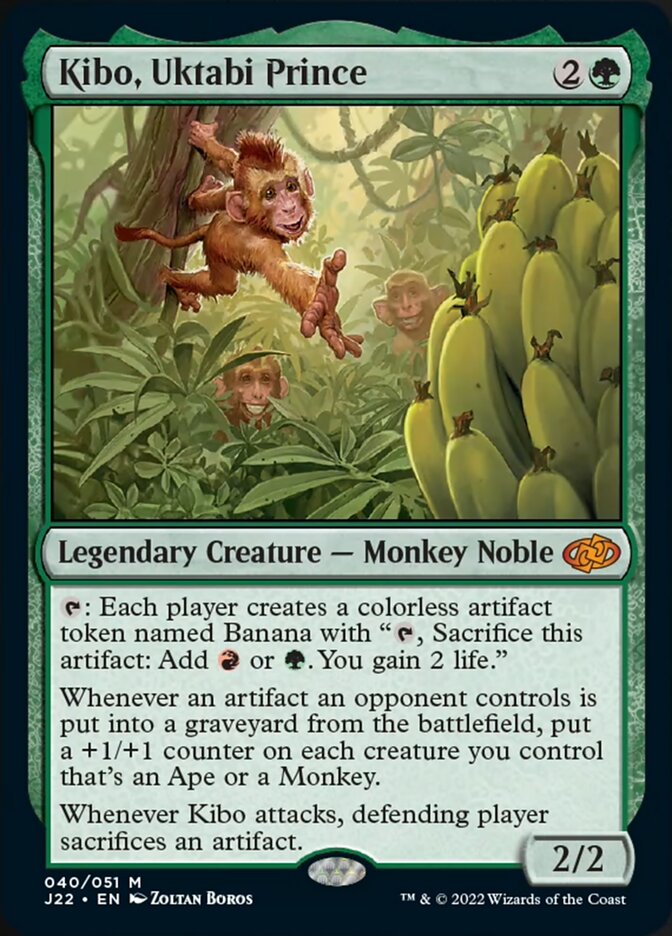

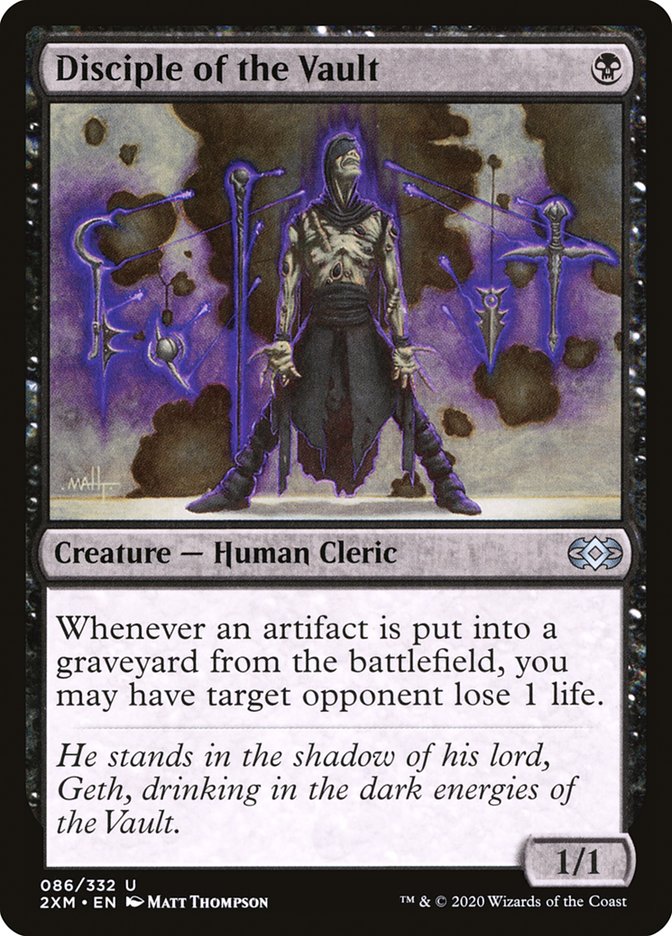

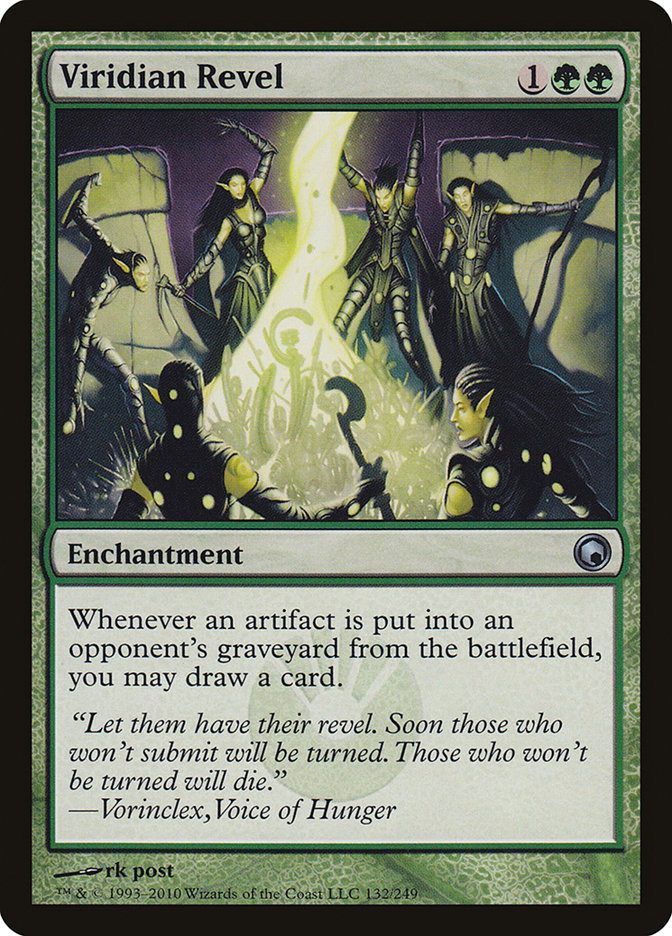
Like pretty much all permanent types, there are cards that reward you when artifacts go to the graveyard. Kibo, Uktabi Prince and Ygra, Eater of All might be the best known, and they even give your opponents fodder. But you can also drain your opponents out with Disciple of the Vault, gain life off Fangren Marauder, and even draw cards via Viridian Revel.
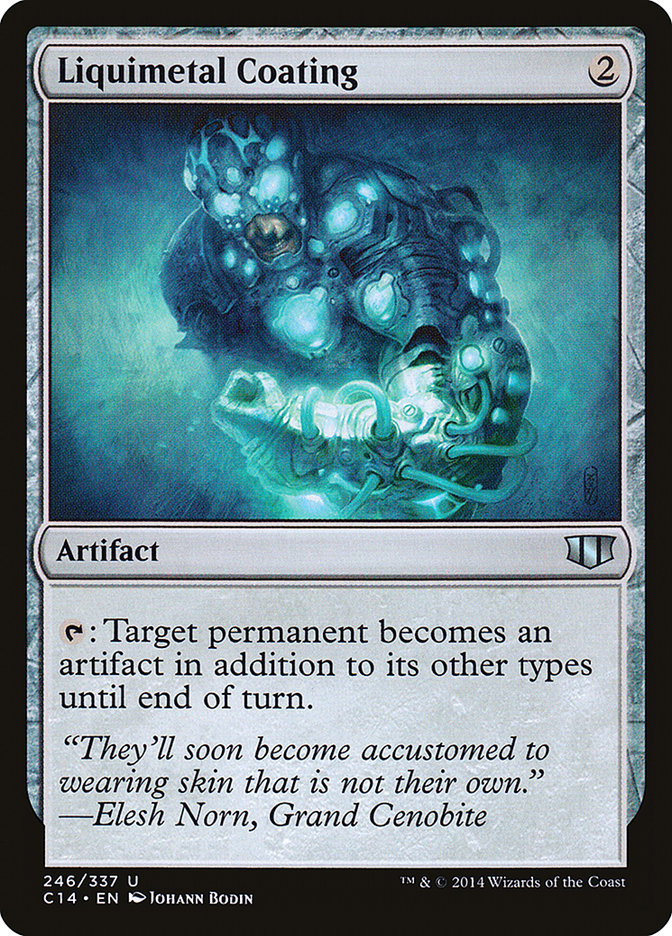
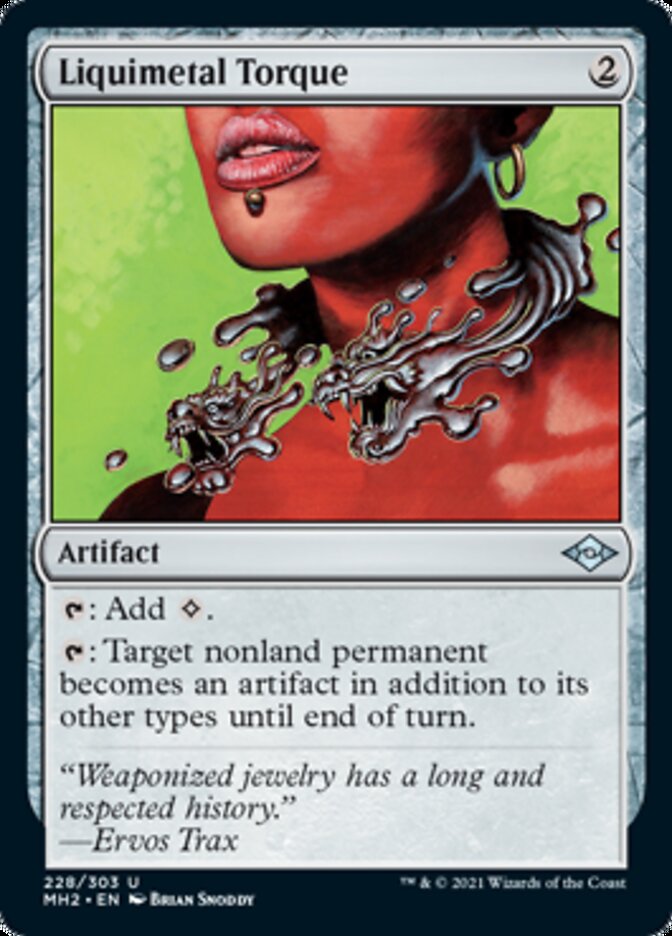
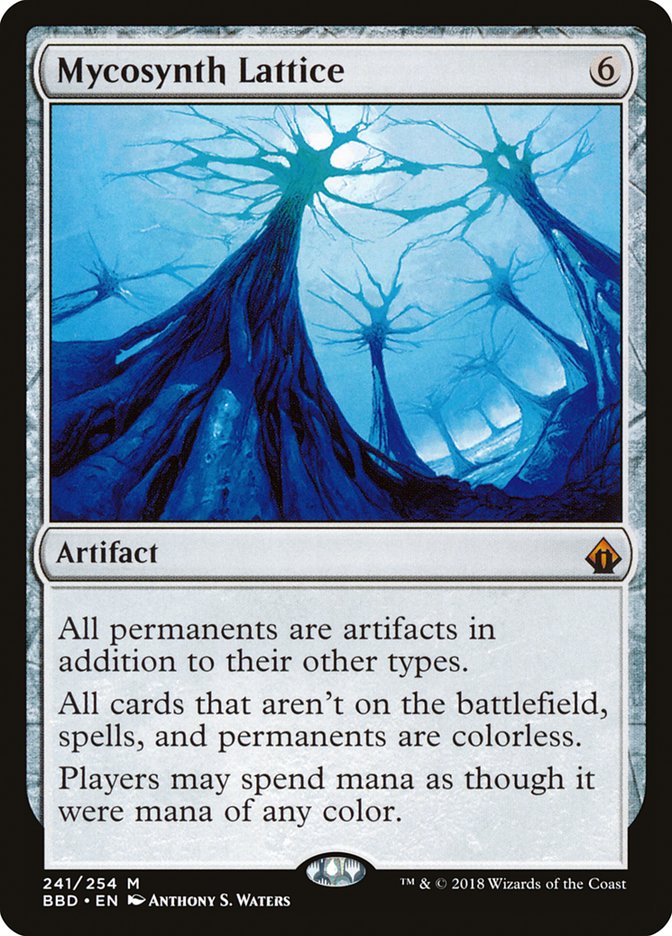
Another cool trick you can do is to make opposing cards into artifacts. Liquimetal Armor, Liquimetal Torque make individual, problematic permanents into artifacts so Vandalblast catches them. You could get even crueler with Mycosynth Lattice, which gets your opponents lands for a makeshift, one-way Armageddon.
Do Artifact Board Wipes Hit Artifact Lands?
For the most part, yes! Artifact lands count as both artifacts and lands, so cards that affect either card type affect them (including honorable mentions like Collector Ouphe, which stops them from tapping for mana).
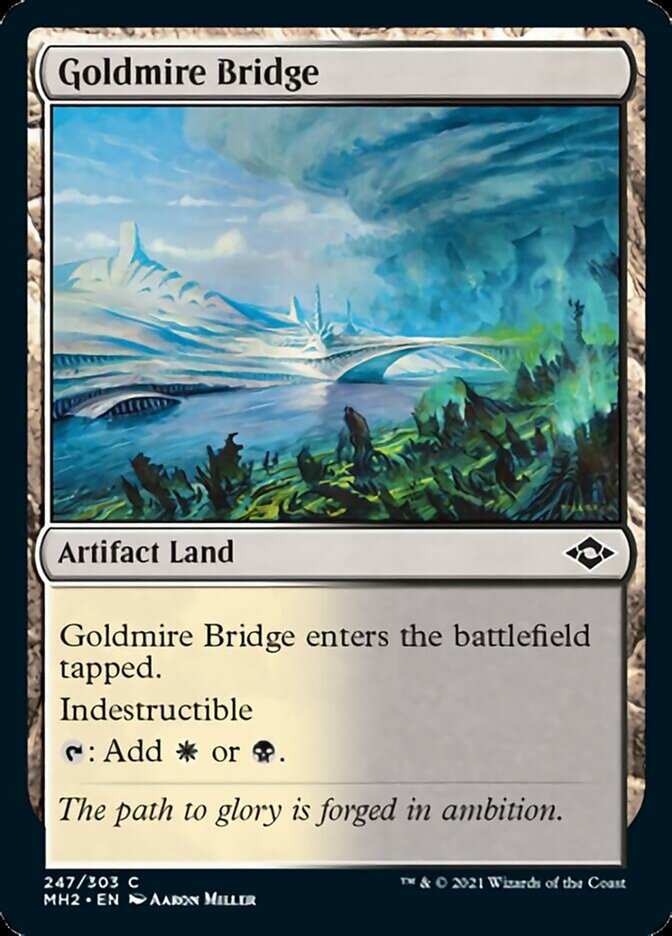
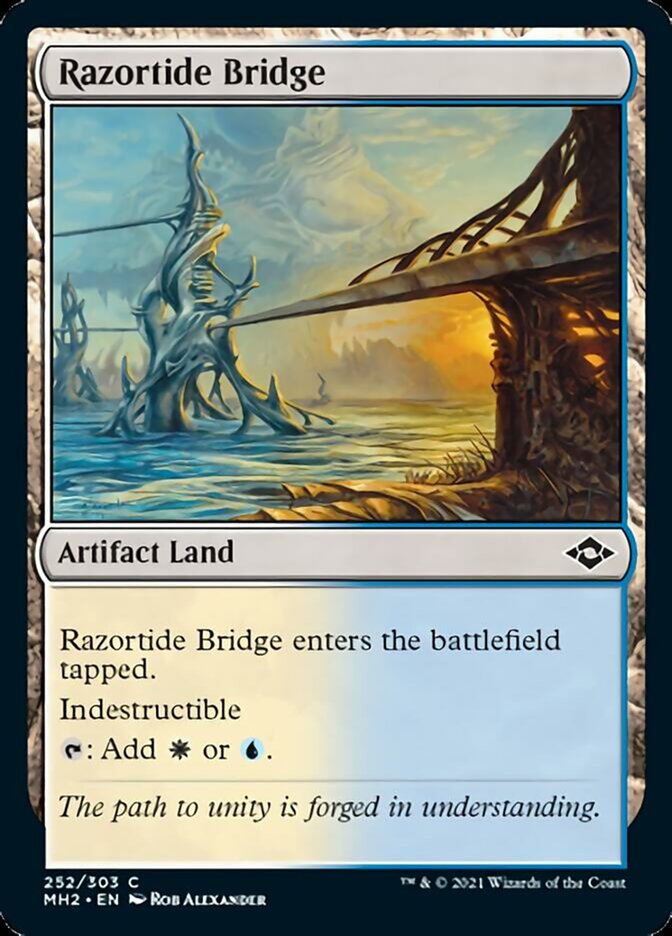
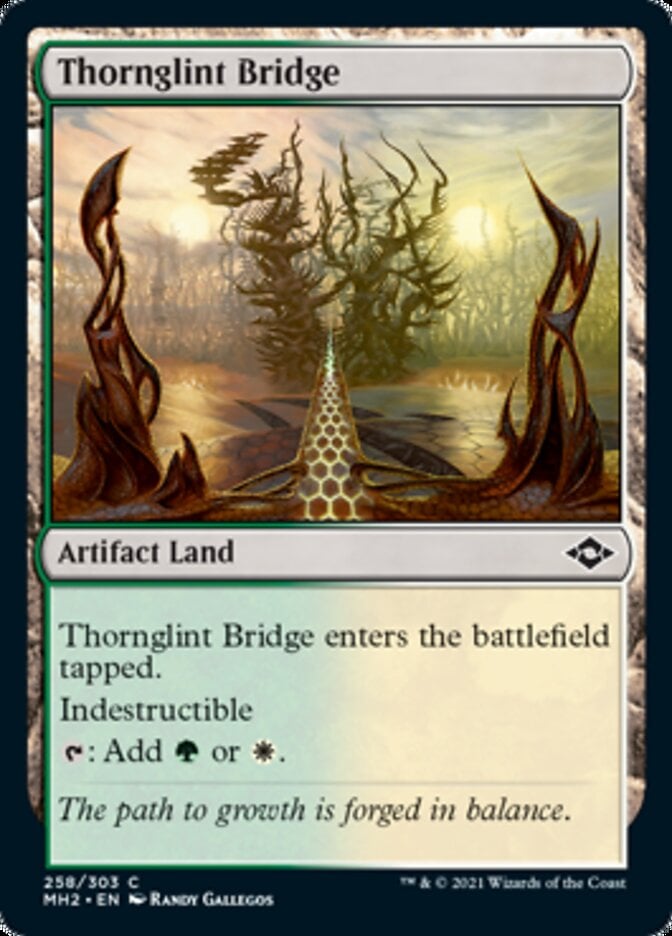
The main exception are the Bridges from Modern Horizons 2, which have indestructible. That lets them survive the “destroy all artifacts” style board wipes—though they’re plenty vulnerable to Farewell and Energy Flux.
Wrap Up

Fracturing Gust | Illustration by Michael Sutfin
Mastering the intricate dance between threats and removal is core to playing Magic well, and I find it comforting that every potential threat has an answer. Artifacts might be the strongest card type, and frequent fliers on ban lists, but at least you can handle them en masse when needed thanks to these cards.
Do you run any artifact board wipes? Did I miss any cool examples? Let me know in the comments below or on the Draftsim Discord!
Stay safe, and thanks for reading!
Follow Draftsim for awesome articles and set updates:










Add Comment