
Last updated on May 29, 2026

Chain of Vapor | Illustration by Svetlin Velinov
Does anybody else get an unpleasant, itchy feeling when their opponents control permanents? From the humblest mana rock to the most terrifying battlecruiser, Magic sure would be easier if they just… didn’t.
While all colors have access to some form of removal spells, blue mages make do with bounce spells that provide only a temporary reprieve from the horrors of your opponents playing Magic, but that can be all the time the right deck needs.
Let’s check out the best bounce spells in Magic!
What Are Bounce Spells in MTG?
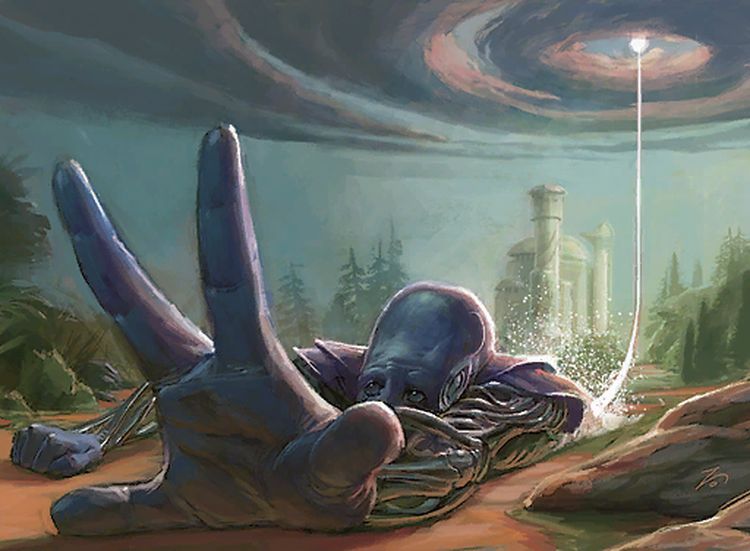
Unsummon | Illustration by Izzy
Bounce spells send a card from the battlefield, or in some cases, the stack, back to its owner’s hand. You might also consider “tuck” effects like Time Ebb a form of bounce, though we'll be focusing on returning to hand here. This is a predominately blue effect and the color’s primary means of interacting with resolved permanents.
This list considers anything that bounces opposing permanents, including creatures and planeswalkers. We'll also count cards that interact with spells on the stack, and there will be a focus on Commander and Cube.
#42. Boomerang Basics

Boomerang Basics almost made it in with the Unsummon variants, but sorcery speed is a drawback. Turns out cantrips and lessons in the graveyard mean a lot. The decks that love to use lessons really like early cards that turn into great card advantage. Sokka's lesson is particularly handy with Stormchaser's Talent, and both are common early plays in Standard blue decks.
#41. Clutch of the Undercity
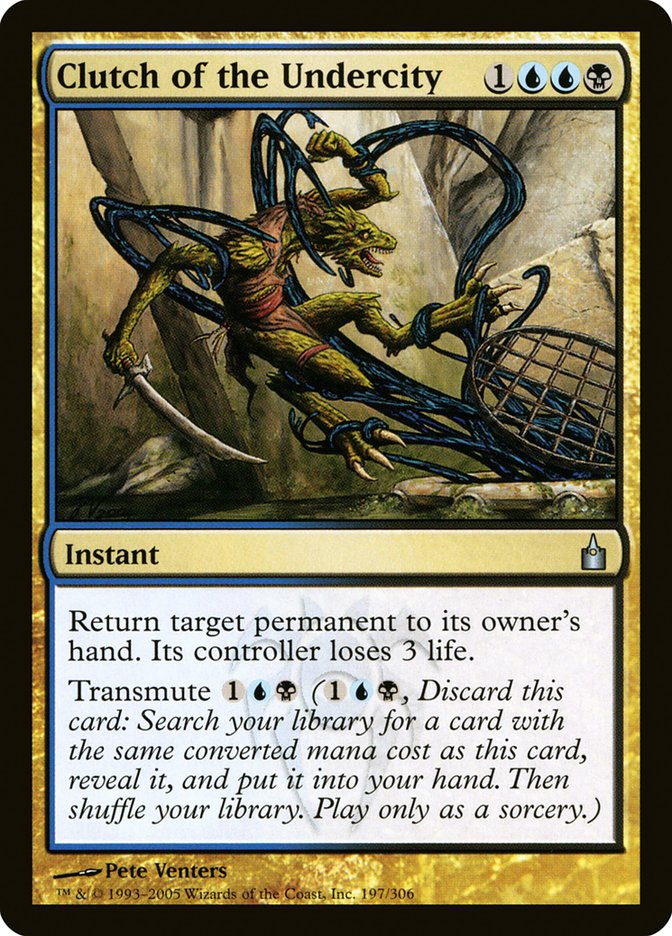
Four mana’s a staggering amount for a bounce effect, though hitting any permanent softens the blow. But let’s be real: This only works in decks that transmute this Dimir instant into crucial combo cards like Felidar Guardian or Jace, Wielder of Mysteries. As far as tutors go, it’s a pretty friendly one for lower-power tables.
#40. Run Away Together + Peel from Reality
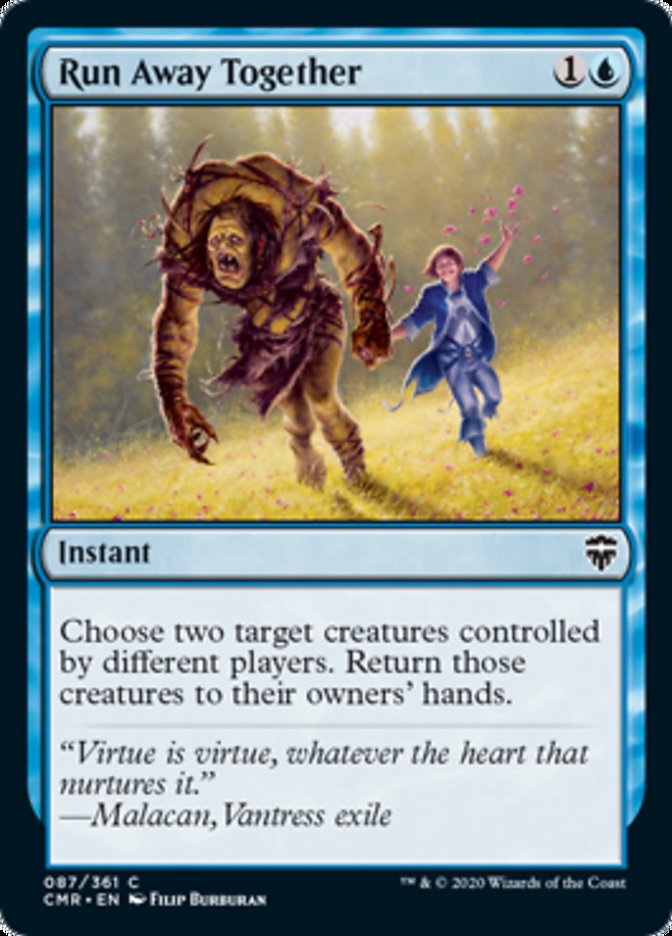
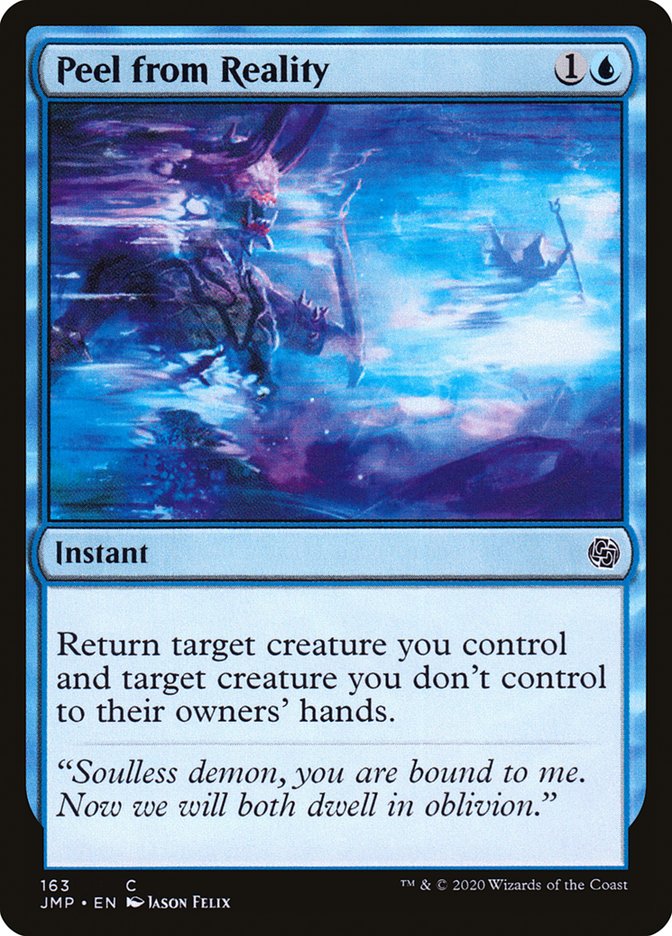
Run Away Together and Peel from Reality work best alongside cheap creatures with strong ETBs. Think Helpful Hunter, Reclamation Sage, even Man-o'-War. The goal is to bounce these cheap creatures while sending your opponent’s chonkier cards back to their hand for incredible tempo.
#39. Storm of Forms
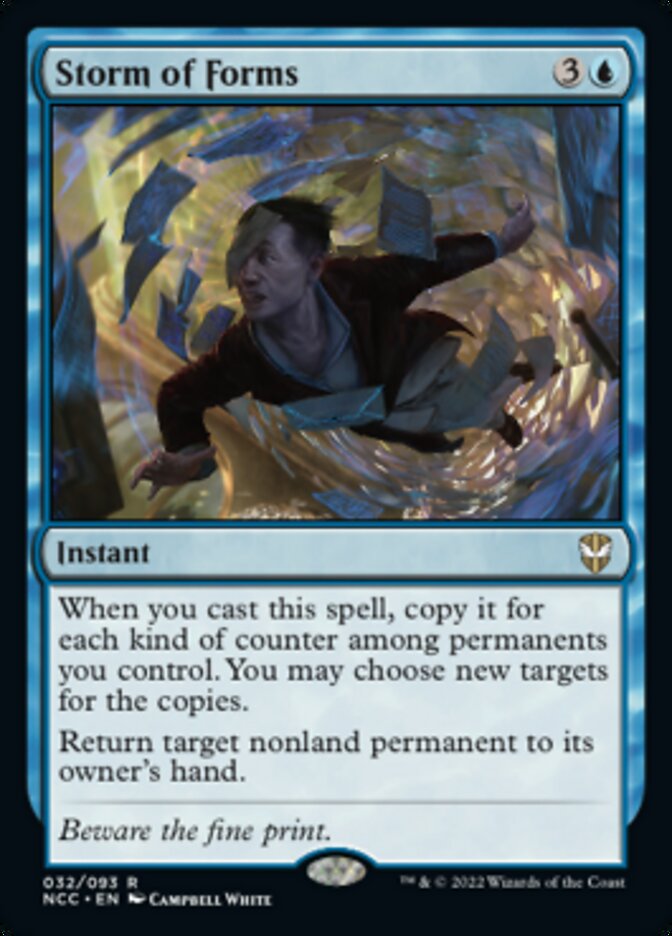
Storm of Forms is pretty slick assuming you’re playing a counters deck. Even if your deck just distributes +1/+1 counters, bouncing two creatures for 4 is… fine. You want three or four copies before this gets really exciting, which makes it a bit narrower.
#38. Scourge of Fleets
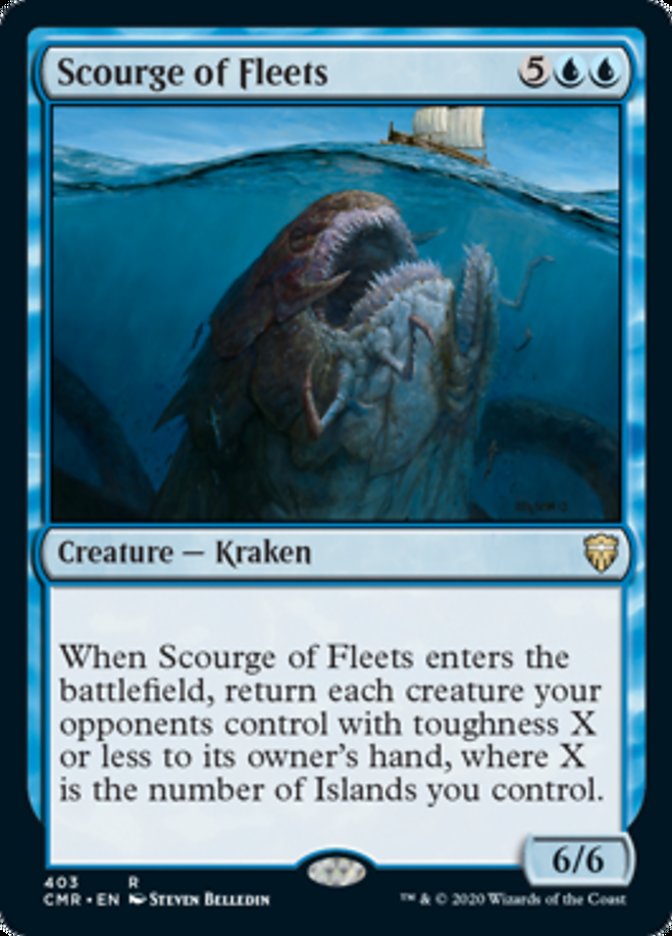
Scourge of Fleets works best—almost exclusively—in mono-blue decks, where it soft locks your opponents with cards like Thassa, Deep-Dwelling or Conjurer's Closet to prevent them from maintaining a board state.
#37. This Town Ain’t Big Enough
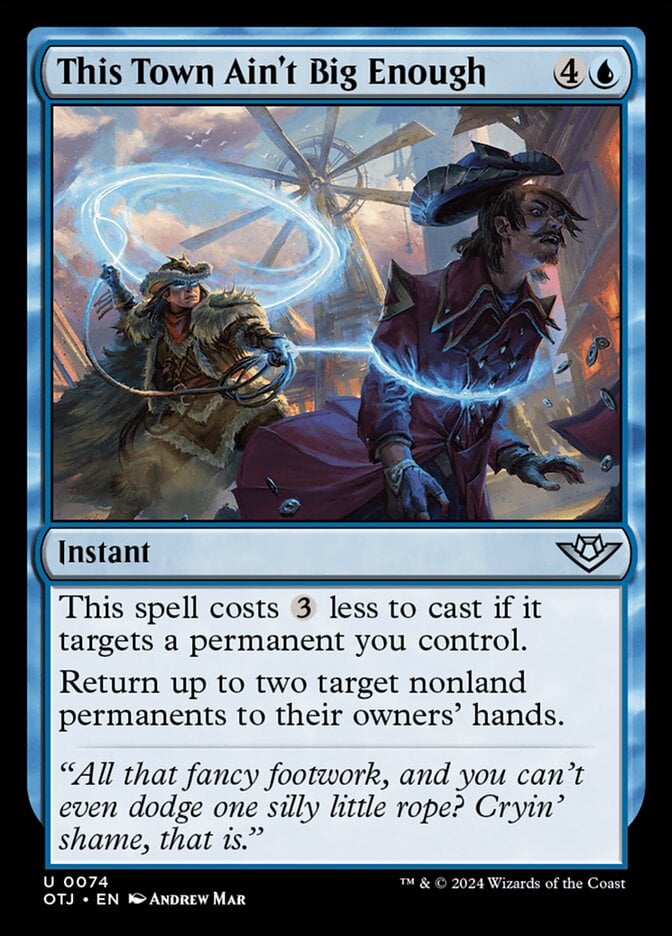
If you cast This Town Ain't Big Enough with its cost reduction ability, you get the best Peel from Reality variant because it hits any nonland permanent. It also opens the door to sneaky synergies since you’re casting a 5-mana spell for 2—this crops up a lot in Standard with Simic decks () combining this with Up the Beanstalk. If you pay full price, bouncing two blockers easily opens the door to a good alpha attack or saves you from one.
#36. Temporal Fissure
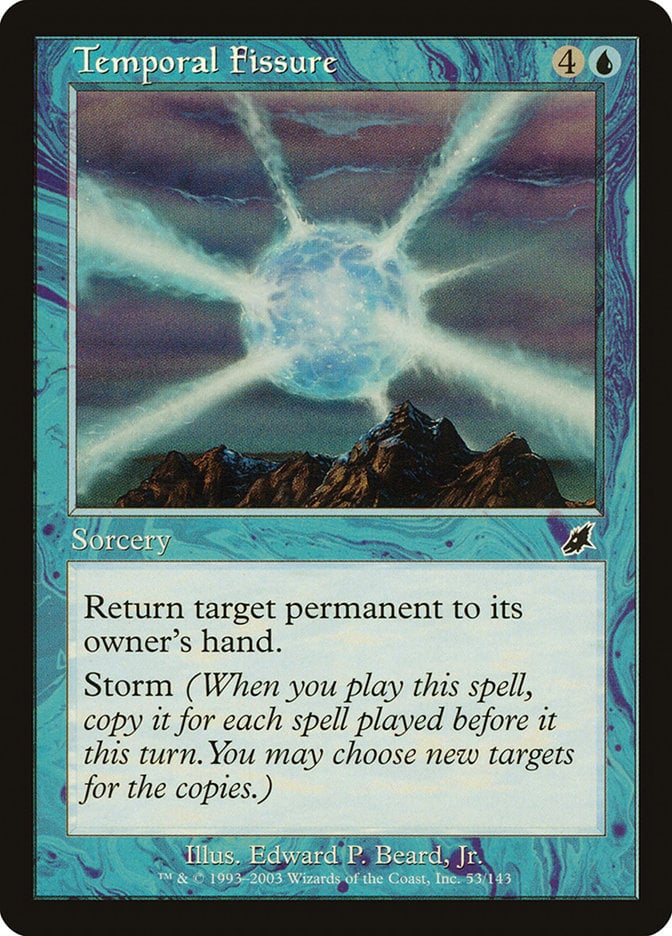
Who doesn’t love bouncing every permanent your opponent controls so that they can’t play Magic? Temporal Fissure might not literally win the game the way Tendrils of Agony or Grapeshot do, but it certainly kills your opponent’s enthusiasm and desire to keep playing. That’s the same thing, right?
#35. Banishing Knack + Retraction Helix
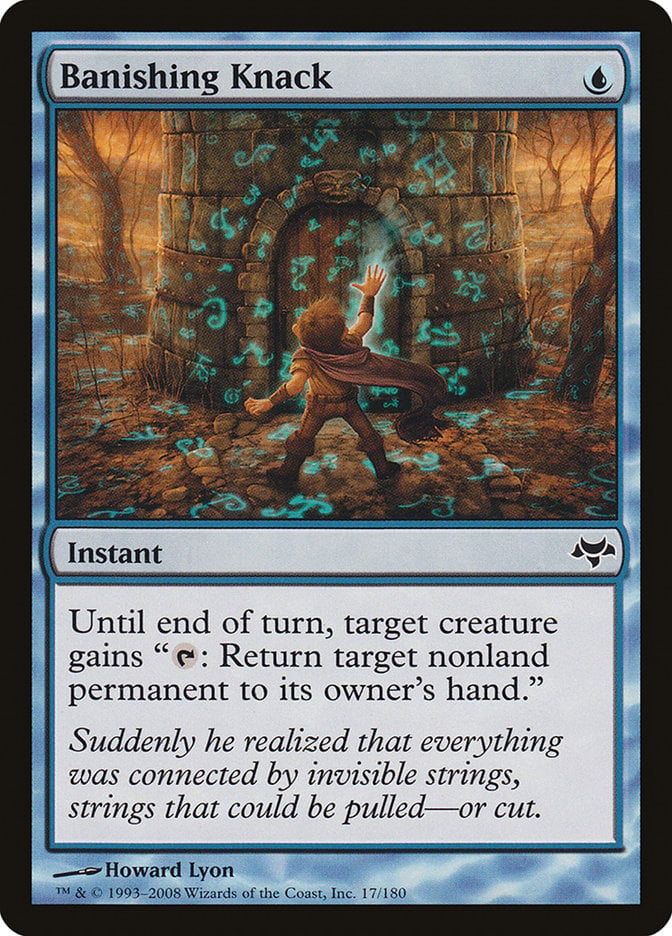
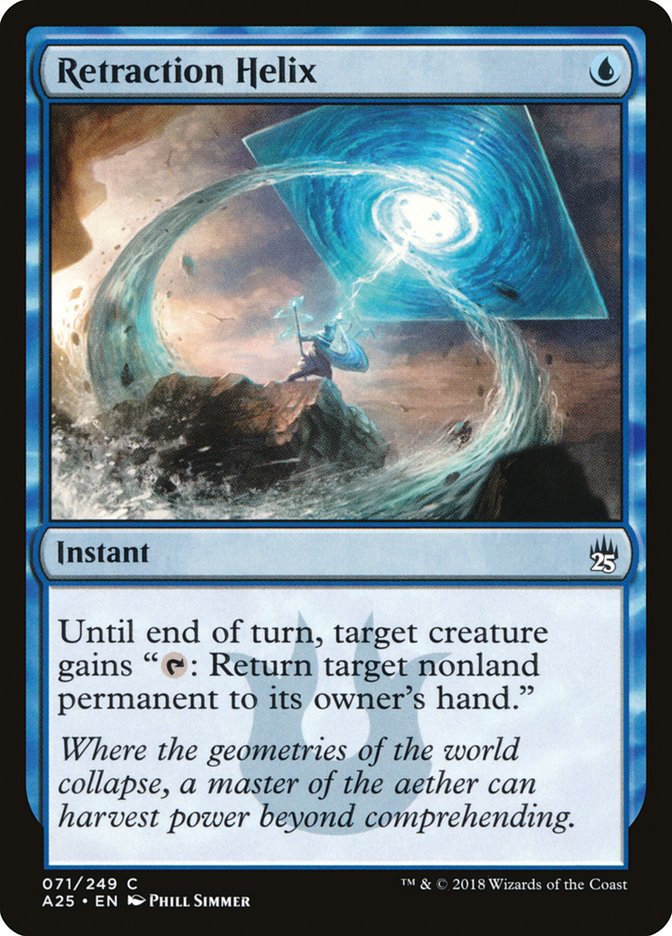
Banishing Knack and Retraction Helix typically appear as combo elements—one famous example aims for infinite mana with Mox Amber and Rona, Herald of Invasion. You need a way to break these so they aren’t the world’s clunkiest Unsummon, but you have plenty of options to do so.
#34. Riftwing Cloudskate
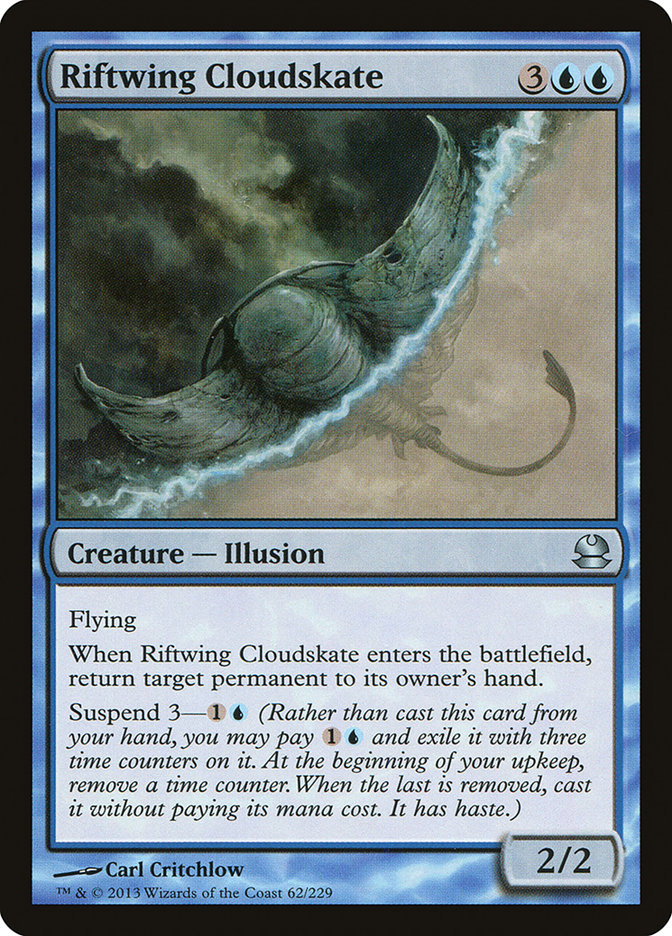
Riftwing Cloudskate was once a heavy-hitter in Cube. Modern Magic design has lessened its impact in the strongest Cubes, like Vintage Cube, but it still works beautifully in mid-power Cubes or casual Commander pods that want a solid flicker target for a mere 2 mana.
#33. Hammerhead Tyrant

Hammerhead Tyrant can nearly lock cards out of the game after it hovers over the battlefield. Of course if you're chaining multiple spells per turn, there's almost no way for opponents to catch up.
#32. Summon: Leviathan

Summon: Leviathan has an incredible first chapter to its saga and will bounce everything except in the mirror match. Then you throw in card draw and the summon has ward? What a monster!
#31. Desynchronization

Desynchronization has an incredible ceiling where it mimics Cyclonic Rift for a fraction of the cost. On paper, it’s great. In reality… well, I’m always high on historic payoffs since the focus on Commander has led to Wizards printing loads of random legends. While that makes cards like Jodah, the Unifier much better, it seems detrimental in this case. The playability ultimately hinges on how you build your deck and what shows up in your Commander meta, with it being a notable strong token hate card.
#30. Perplexing Test
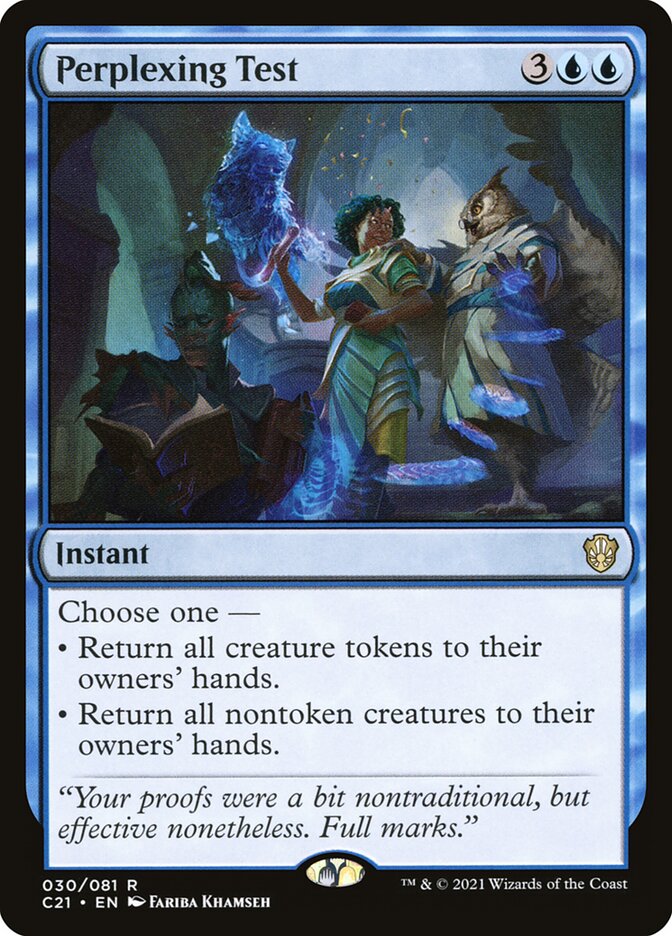
Perplexing Test’s a funny card as a modal spell that manages to work as a token support card and a token hate piece. You commonly find it in token decks that use the second mode to clear the way for an army of Beast or Octopus tokens, but a control deck could just as easily play it to punish that one Ghired, Conclave Exile player who doesn’t understand relative power levels.
#29. Aetherize
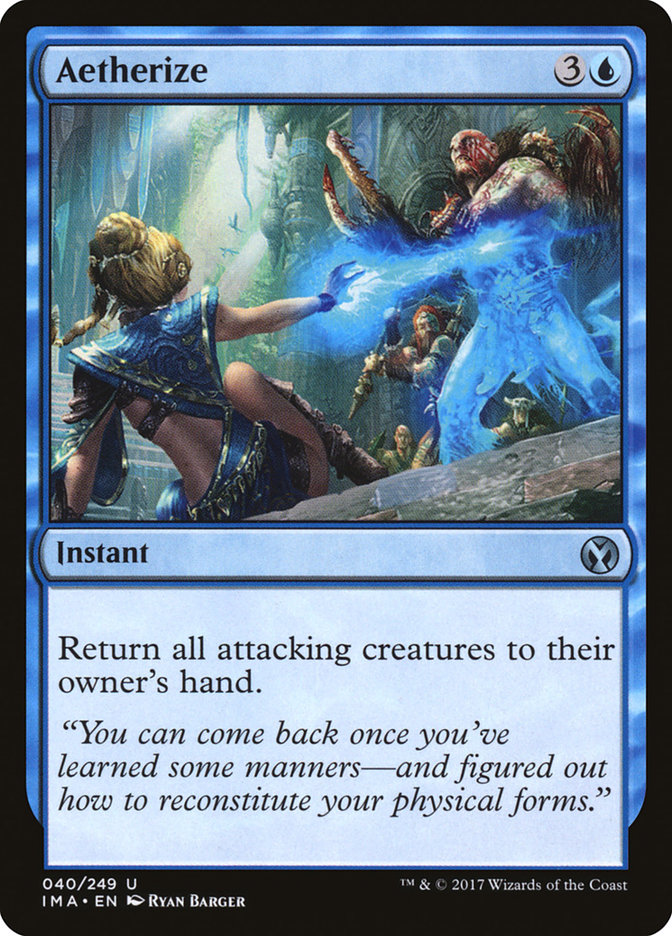
Since Aetherize doesn’t care who the creatures it bounces are attacking, it works as a powerful political piece in Commander. The default’s likely protecting your face, but you can always negotiate a deal with somebody staring down the business end of Ghalta and Mavren.
#28. Snapback
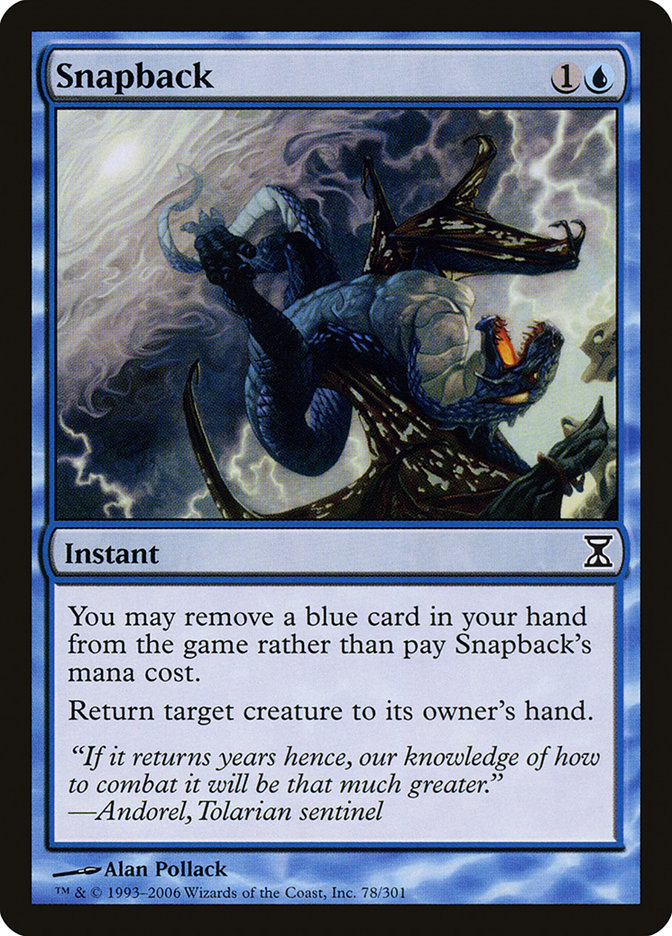
Free spells are good… right? Snapback doesn’t ask for mana, but two-for-oneing yourself just for a bit of tempo really strains the limits of an acceptable cost. I won’t call it unplayable, but don’t go looking at this having the same alternate cost as Force of Will and thinking they’re equivalent.
#27. Dinrova Horror
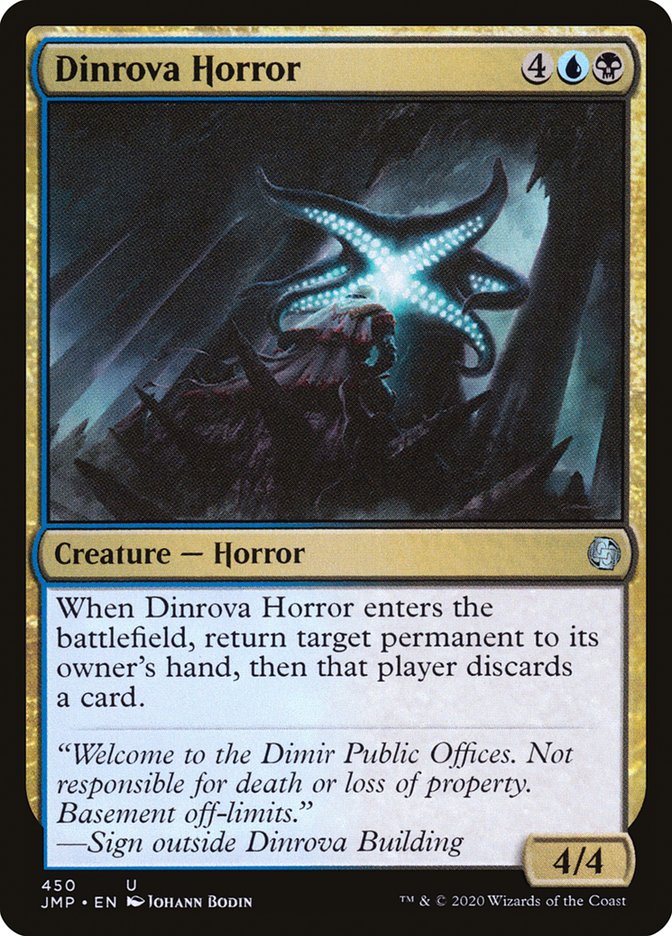
I always know I’m in for a good Limited format when Dinrova Horror shows up. This is among the best cards to flicker in a Pauper or Peasant Cube and pulls weight in the right Commander pod as well, especially if you want to teach your opponents that Karoo lands do have a downside.
#26. Recoil
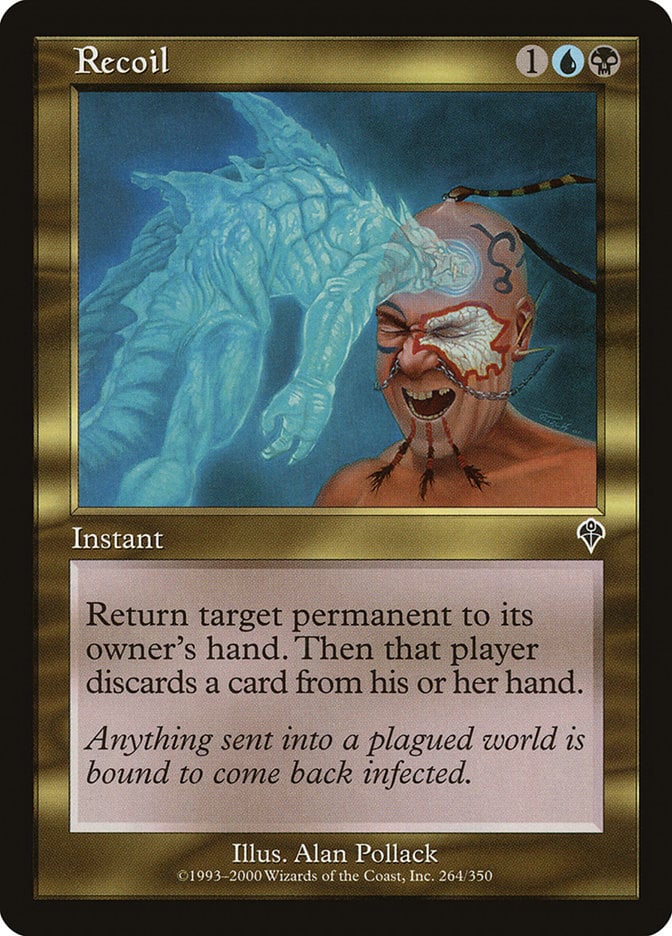
Recoil plays best in Pauper, where plenty of players run Karoo lands to punish. Hitting lands distinguishes this from other, lesser bounce spells that only interact with creatures. You always get a decent two-for-one, and it’s functionally Murder against hellbent opponents.
#25. Capsize
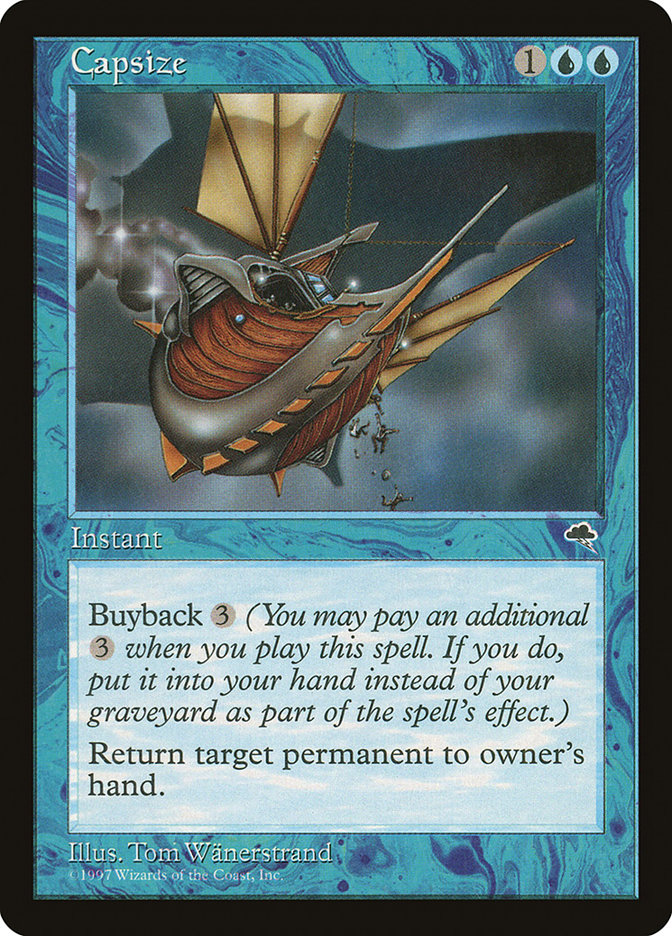
Capsize largely sees play as an infinite mana payoff that puts your opponents so far behind that they’ll never win. There’s not much reason to run it outside of combo shells where it excels because it can be a win condition or a way to interact with combo inhibitors like Rule of Law or Liesa, Shroud of Dusk.
#24. Unsubstantiate
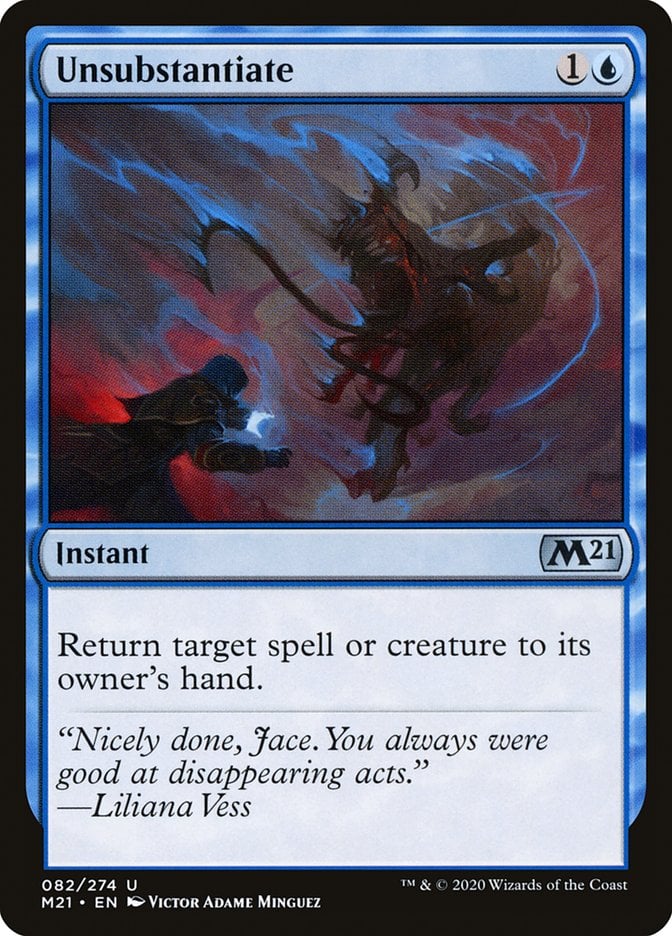
Unsubstantiate would be a terrible Unsummon at 2 mana, but it makes up for it by interacting on the stack. This critically gives blue a way to interact with uncounterable spells since the targeted spell isn’t actually countered. The flexibility is the main reason to play this.
#23. Jeskai Revelation

Jeskai Revelation is a massive spell and payoff for being able to afford it's cost. This is a case where the bounced permanent probably used nearly all your opponent's mana for the turn. If there is another turn after this resolves you're so far ahead it's elimination time.
#22. Wash Out
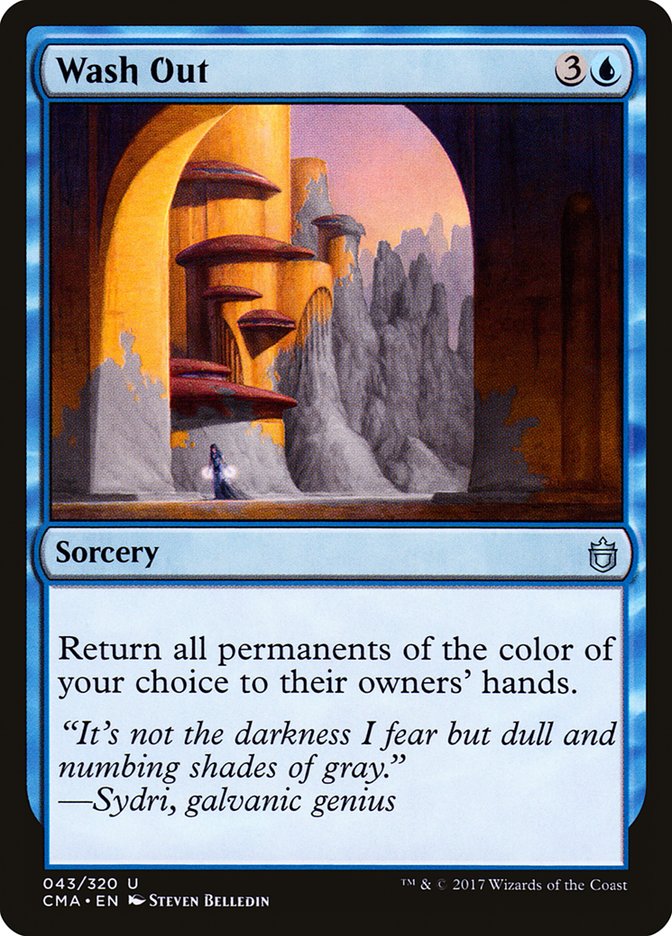
Wash Out rarely hits every threat on the board, but it messes with the most prominent threats. It works incredibly well against decks like enchantress that amass a large board; when you bounce everything, they’re unlikely to replay all their cards and often must discard to hand size.
#21. Consuming Tide
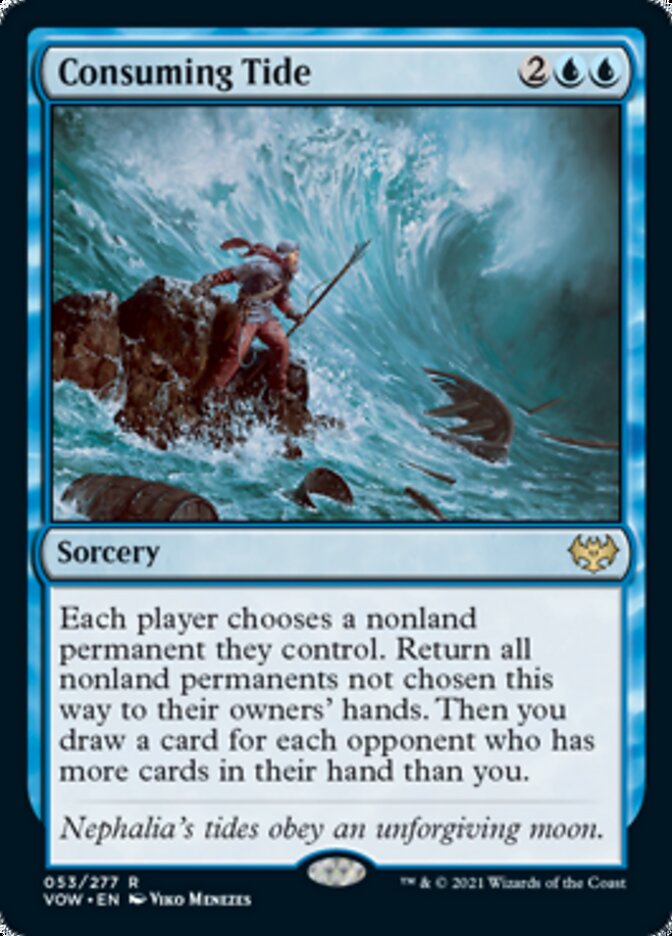
Consuming Tide’s a critical inclusion for some mono-blue and Simic decks because those colors have so few board wipes. This one works particularly well with commanders like Niv-Mizzet, Parun that are so pushed they’ll be the strongest permanent in play.
#20. Hullbreaker Horror + Tidespout Tyrant
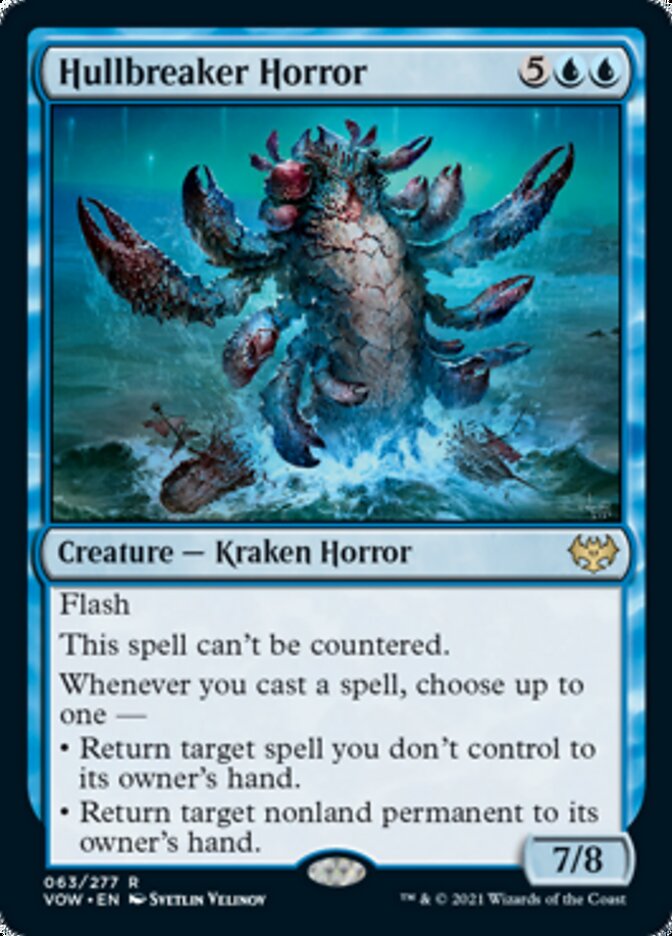
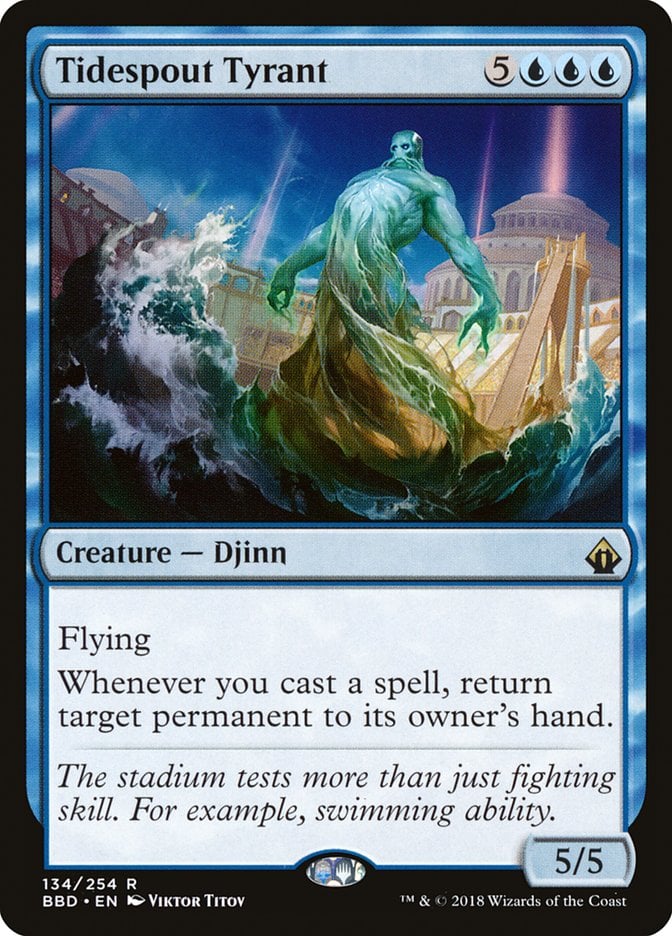
While Hullbreaker Horror and Tidespout Tyrant often draw hate for their combo potential, they’re also devastating when played fairly. These are practically Temporal Fissure on a stick that doesn’t require going all-in to function. They're an incredible top-end for a variety of blue decks—especially the Horror since you can hold up interaction.
#19. Snap
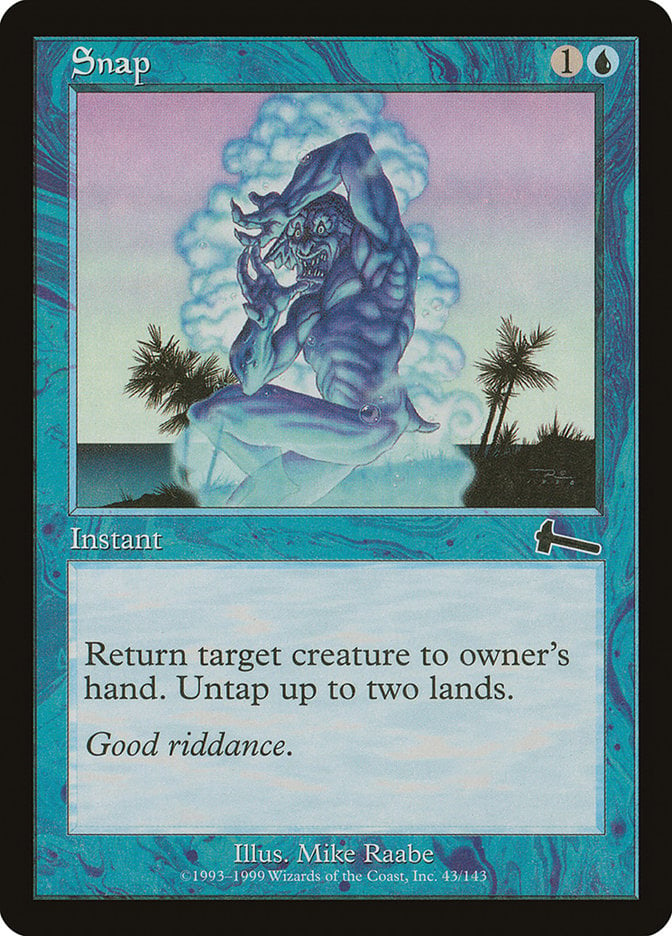
Snap provides a much cleaner free spell than Snapback, even if we must put “free” in quotes. It’s excellent for decks that want to bounce their own creatures to replay and is a lovely spell to copy since it takes very little for it to go mana-positive.
#18. Hurkyl’s Recall

Hurkyl's Recall typically comes out of the sideboard to handle artifact-centric decks like Affinity and Lantern Control. Artifact-based Storm decks go the other direction, using this to pick up cards like Chrome Mox and Mishra's Bauble to replay and bolster the storm count.
#17. Evacuation
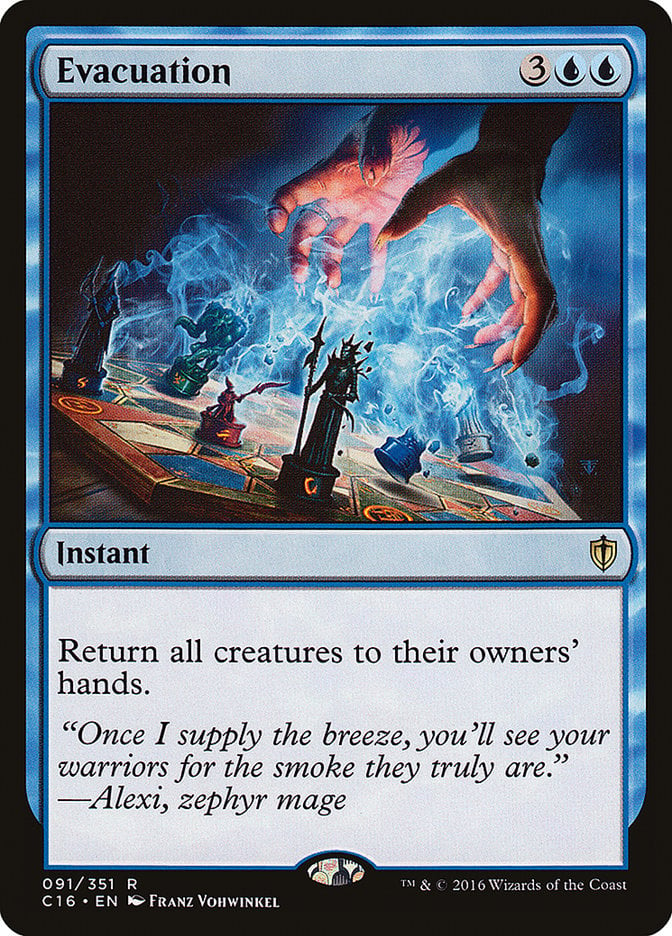
If you want to handle your opponents’ boards without access to white or black, Evacuation’s the card for you. You lose the political leverage of Aetherize in favor of universal demolition and it’s one of the few instant-speed board wipes in the game, giving you even more control over the game’s pace.
#16. Karn’s Temporal Sundering
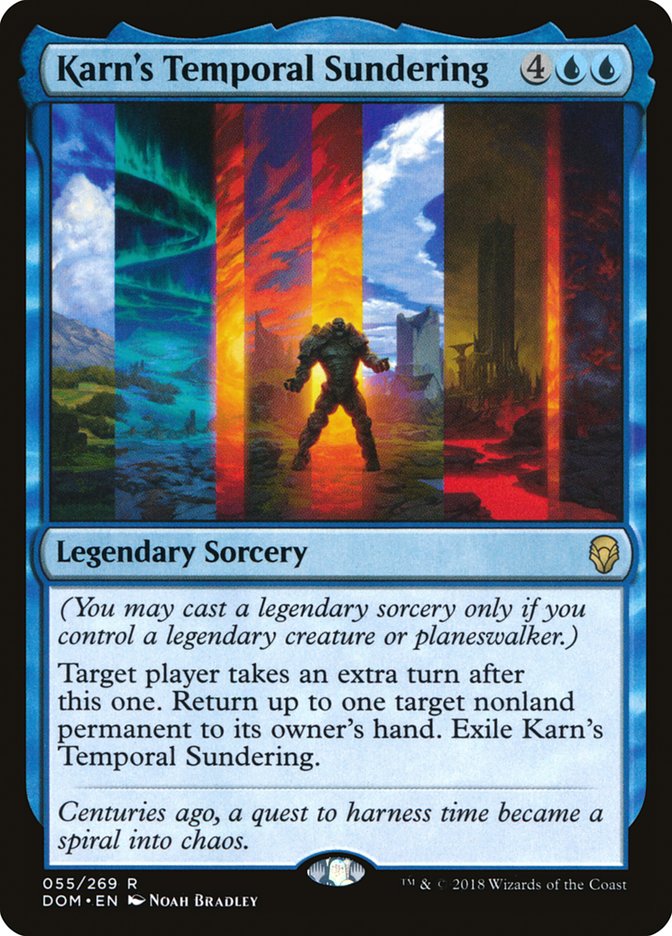
Adding Karn's Temporal Sundering to this ranking might be cheating since you play this sorcery for the extra turn, but you could think of this as the biggest Unsummon around. An extra turn and a bit of tempo are a nasty combination. This sets up great combo turns by bouncing stax pieces, then giving you an unfettered turn after.
#15. River’s Rebuke

If you wanted to smack a player down, River's Rebuke’s your card. This puts down the most threatening player in most Commander pods, which can make a friend or two, and is one of the most effective cards Brawl players can ramp to.
#14. Venser, Shaper Savant
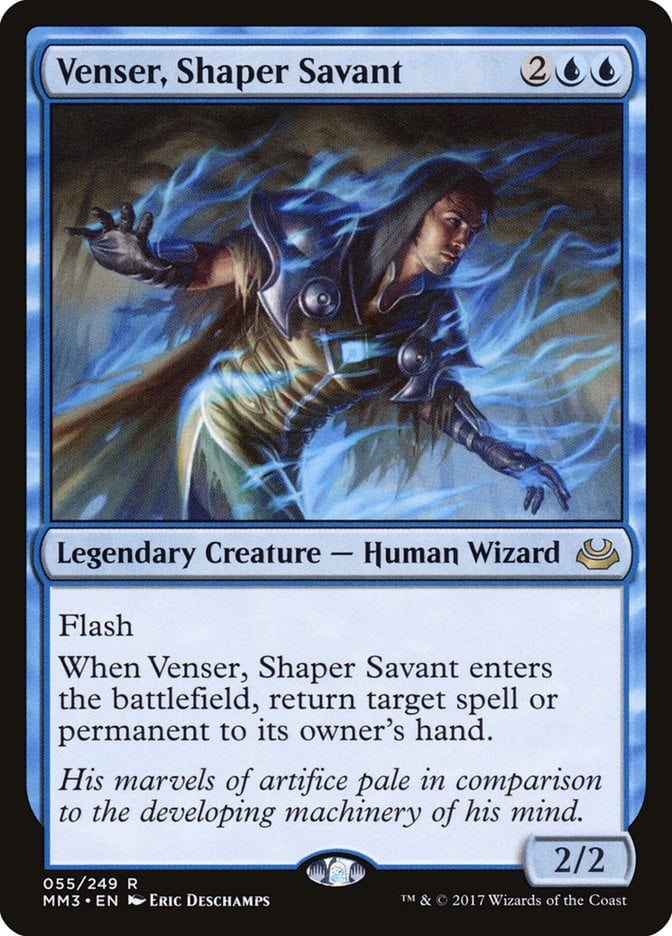
What would happen if you put Unsubstantiate on a stick? You’d get Venser, Shaper Savant, a particularly annoying legendary creature that serves best in flicker decks to prevent your opponent from playing the game.
#13. Eye of Nowhere + Boomerang

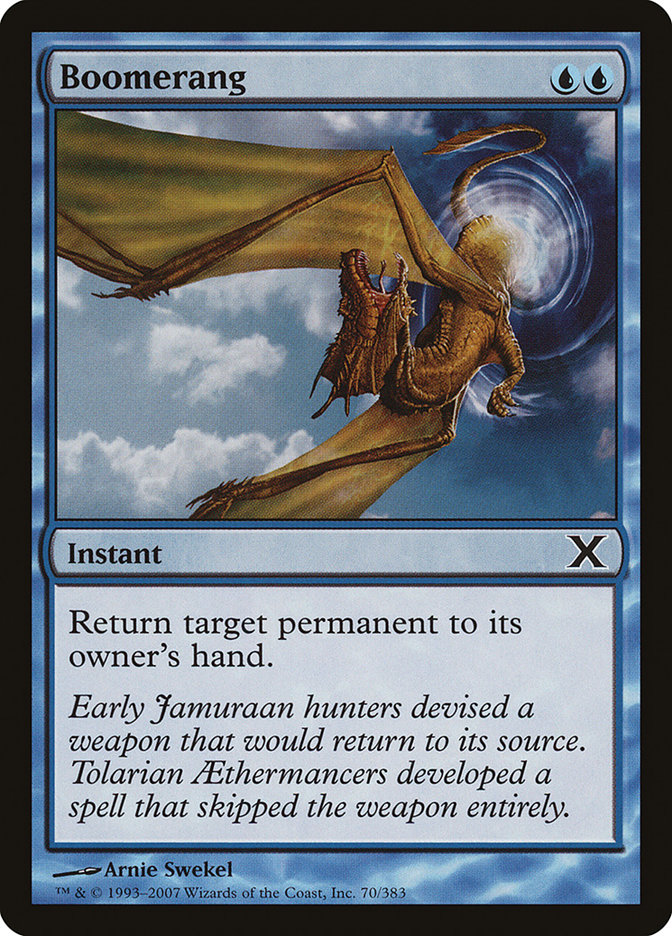
The main reason to play Eye of Nowhere and Boomerang over Unsummon and friends is the ability to hit lands. It’s not quite Stone Rain, but bouncing an opponents’ first land on the play feels like an instant win, and these cards impact the board later in the game.
#12. Unsummon Variants
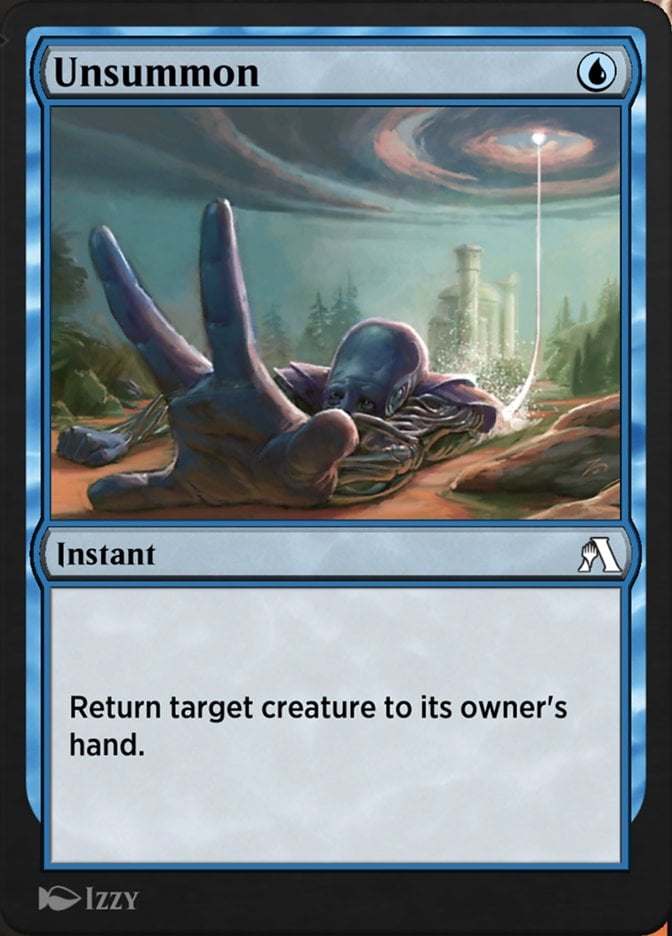
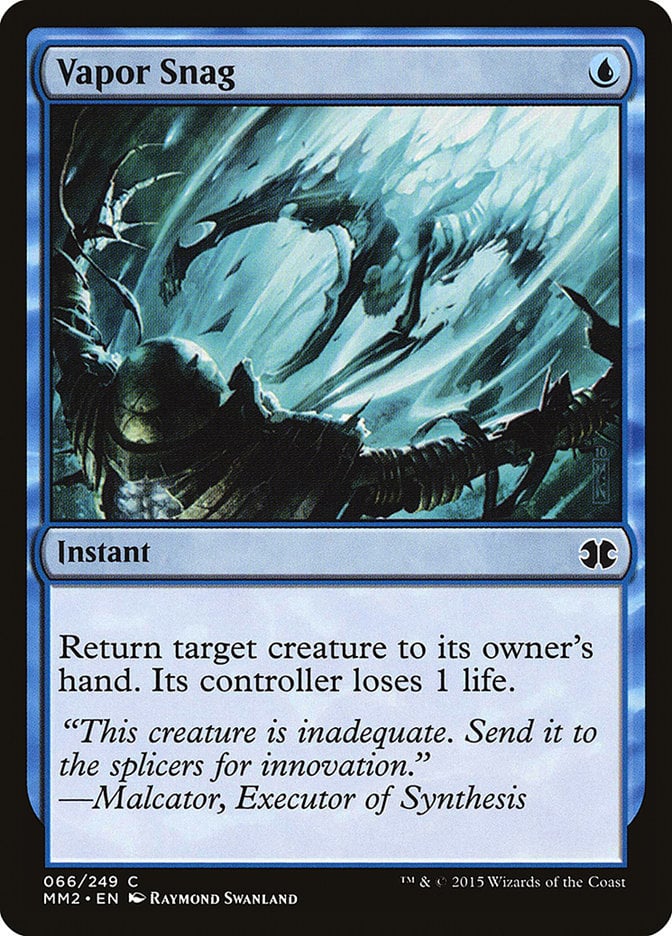
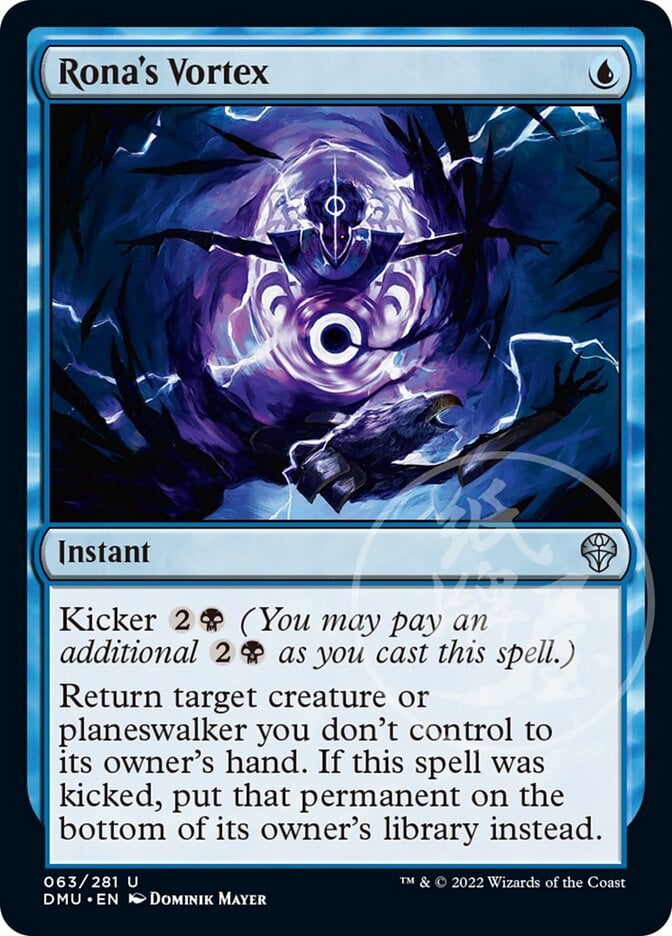

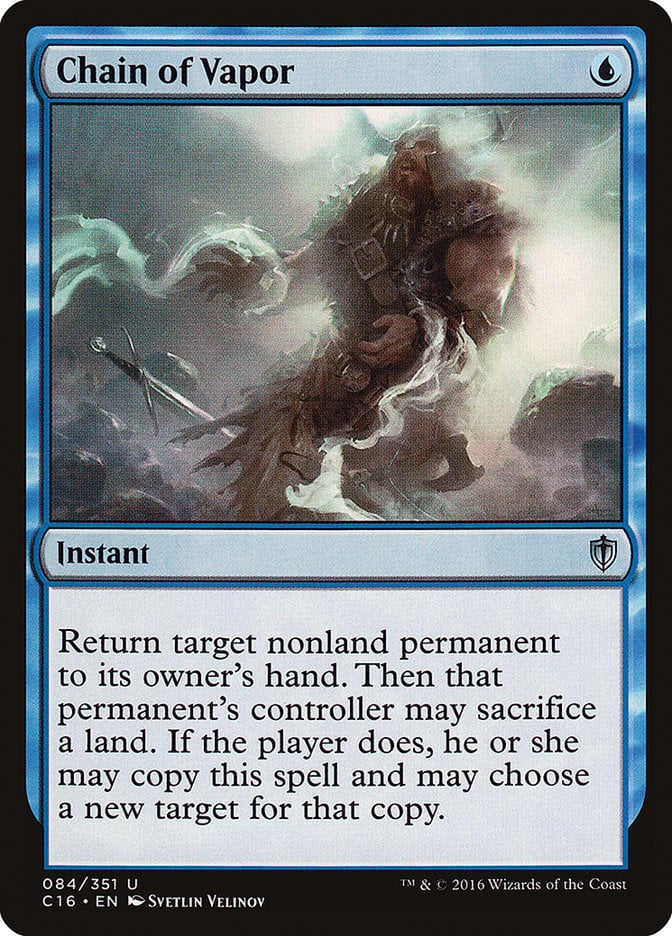

The classic bounce spell is Unsummon, which has seen various iterations over the years, from Vapor Snag, which dominated during the era of Standard Delver, to entries like Rona's Vortex (notable for its Murder impression) and Into the Flood Maw. A prominent variant is Chain of Vapor due to its ability to bounce any permanent and set up unique lines when you chain it together.
The trouble with Unsummon effects is the tempo loss. Bouncing a creature slows your opponent down, but next turn they have the same threatening board state and you’re down a card. The best way to use the tempo—or temporary advantage—these cards offer is with a clock. In the days of Vapor Snag, that was Delver of Secrets; these days, tempo decks leverage Haughty Djinn and Tolarian Terror alongside Into the Flood Maw to punish their opponents for spending two turns casting the same card. The clock you use doesn’t matter, just make sure you have one or play real removal.
#11. Deceit

Deceit pretty much has a Boomerang built in as long as is included in the mana you pay for it. So on top of a fiesty 5/5 you can also Thoughtseize without paying anything different. But, if you're really strapped for interaction, evoke lets you choose one.
#10. Jace, the Mind Sculptor
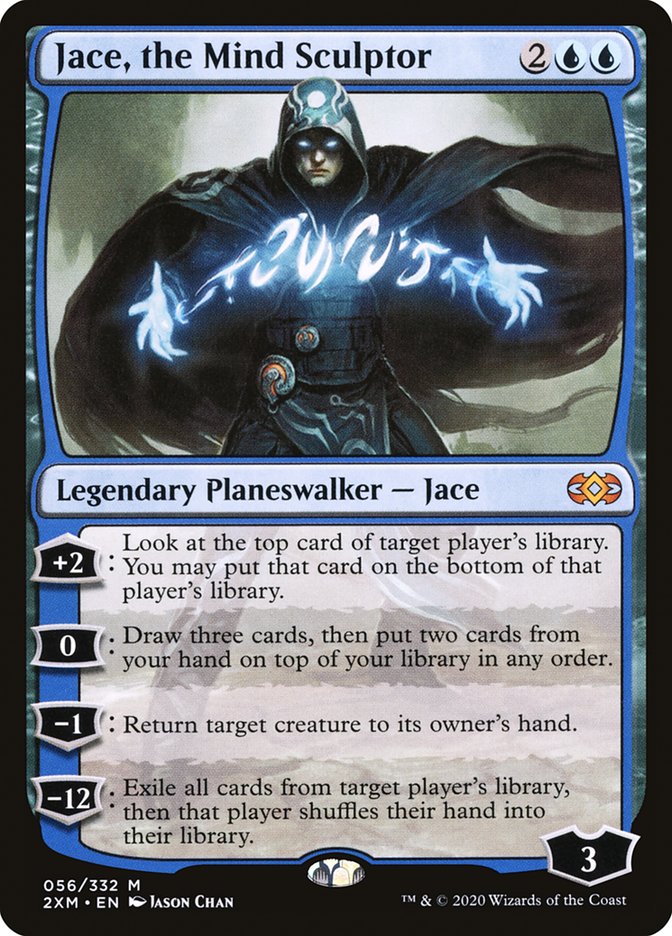
One of the greatest planeswalkers ever printed… doesn’t quite hold up in this era of modern Magic, does it? Still, if you want a bounce spell, you could do much worse than having the other three abilities attached to it, especially if your deck cares about the top deck manipulation from a repeatable Brainstorm.
#9. Displacement Wave
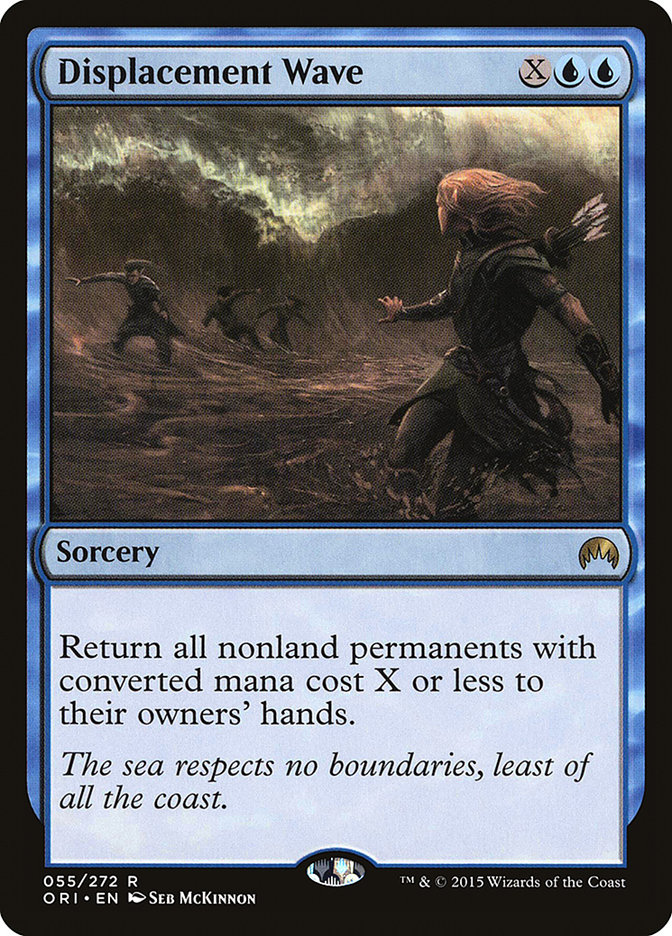
Displacement Wave’s quite flexible and can be pretty high-impact as Commander gets sleeker and slimmer, requiring less mana to wipe everything away. This X spell devastates token decks since it only costs to displace any number of tokens, from Beasts to Clues and Treasure.
#8. Quandrix Command
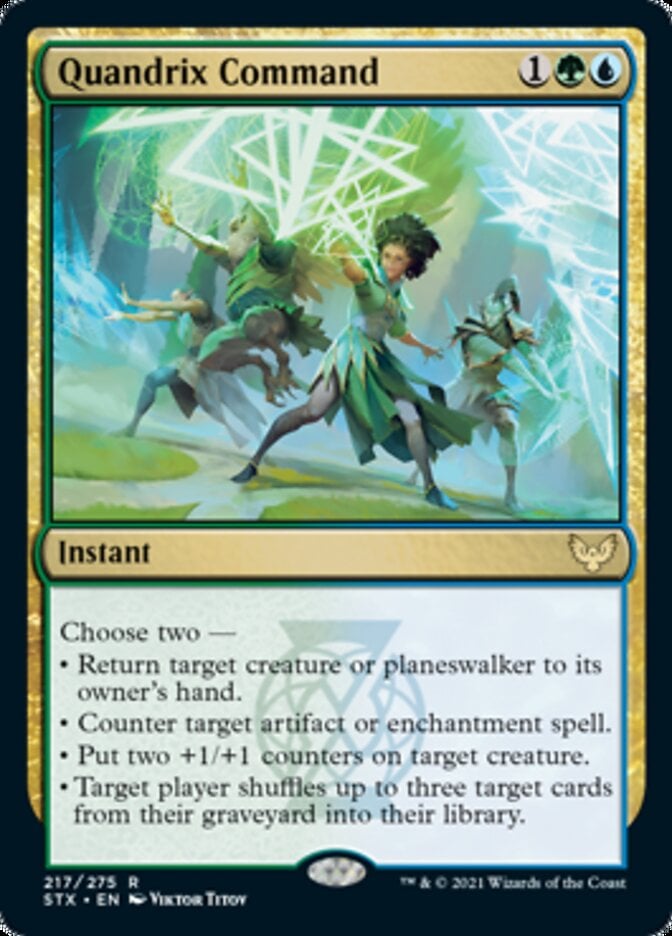
Quandrix Command has three great modes and one that prevents you from decking, which comes up in the right Cube environment. But for Commander and other formats, you’re interested in the first three modes, which are pretty decent. You can leverage this as a two-for-one quite easily, either as a surprise combat trick that eats a creature or a counter-bounce spell that mimics Cryptic Command.
#7. Aether Channeler + Man-o’-War & Friends
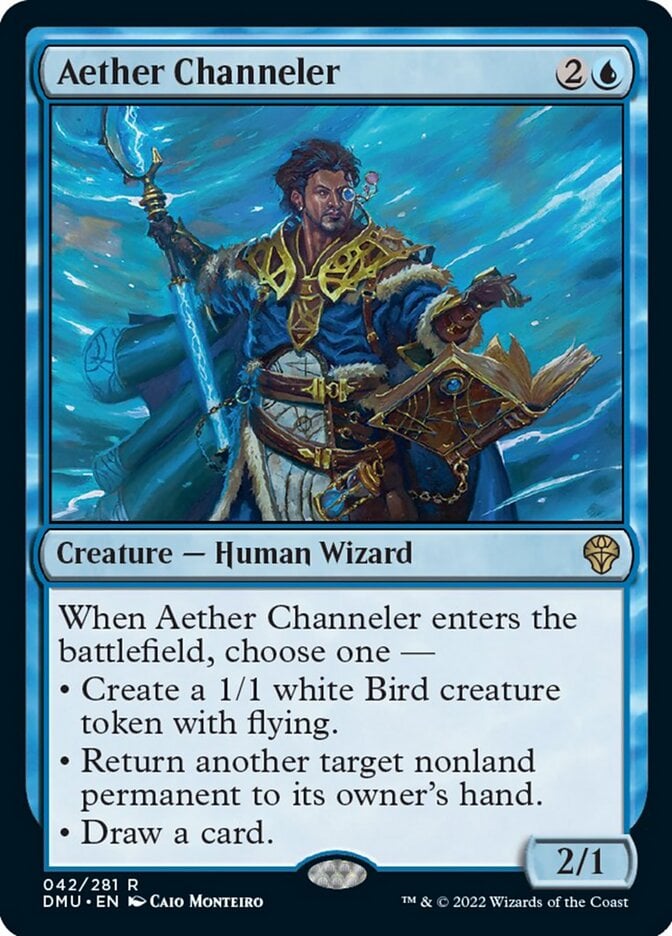
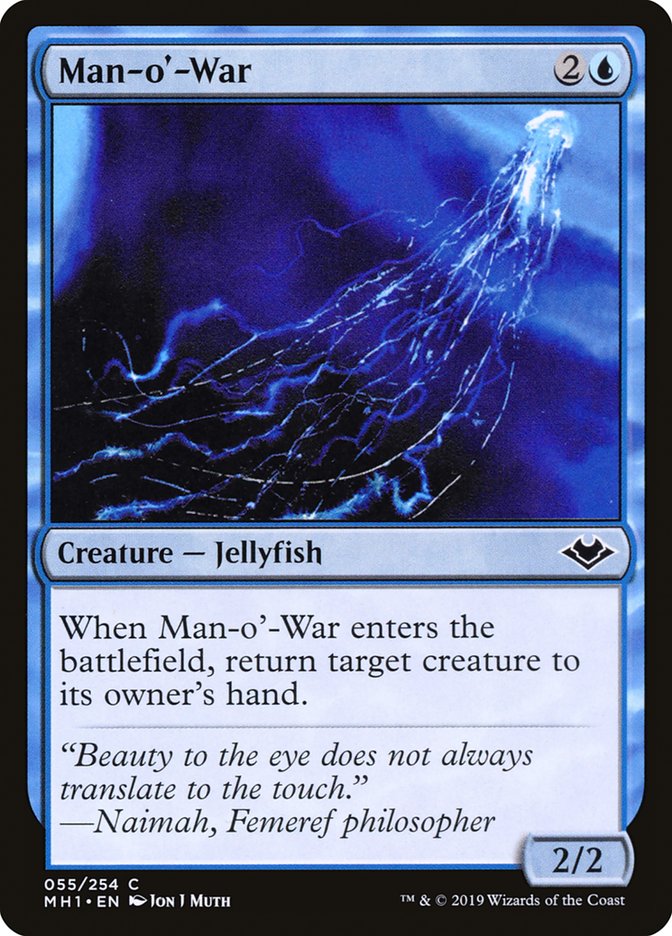
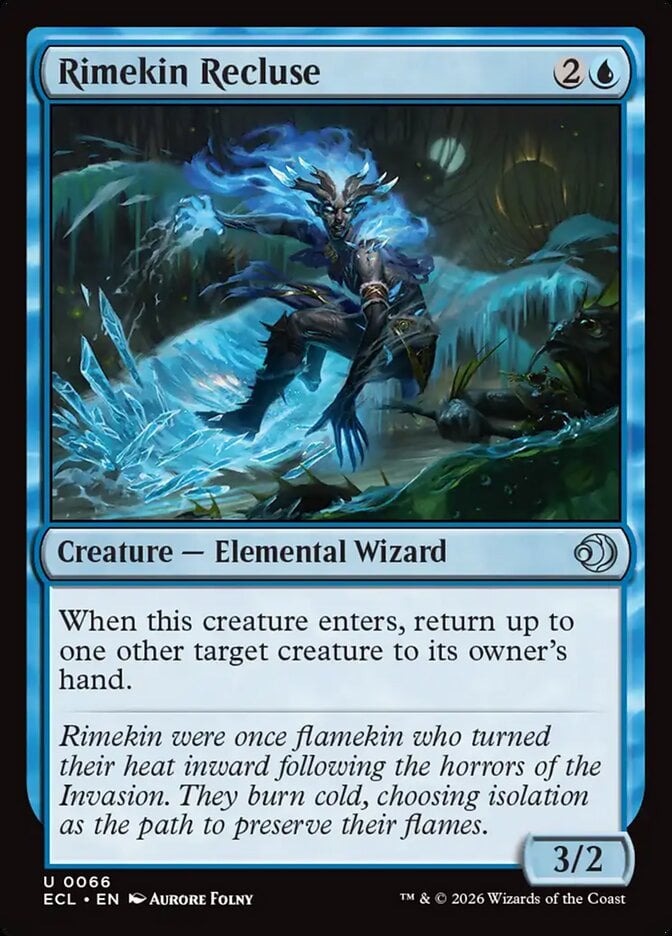

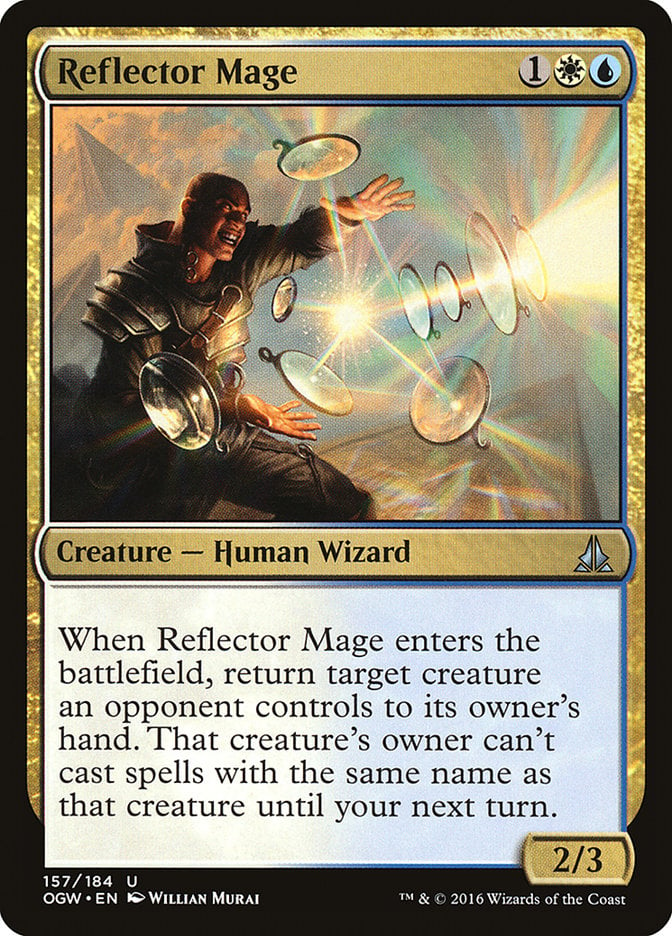
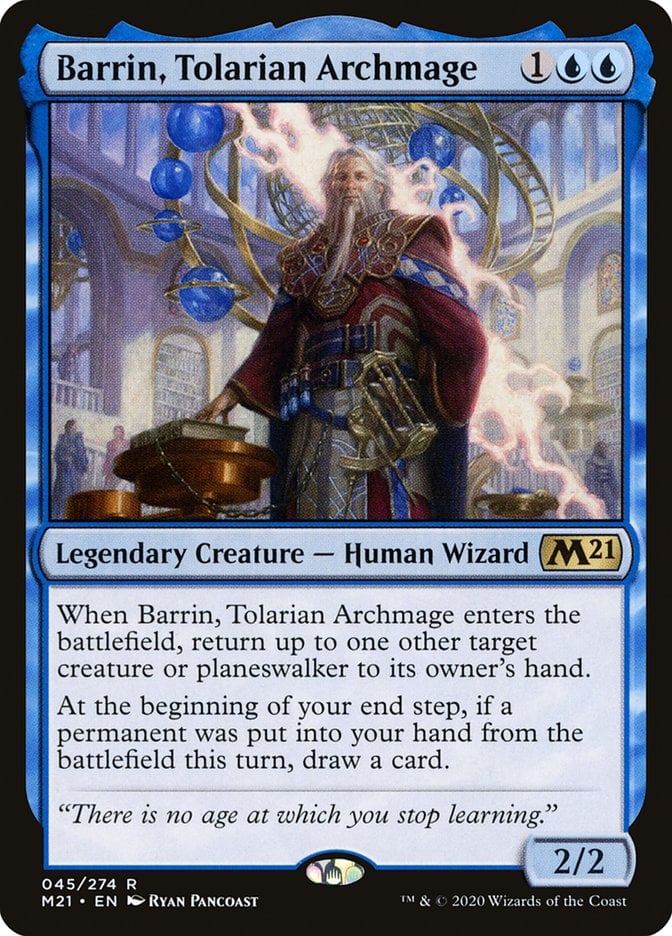
Aether Channeler stands in for all those Man-o'-War variants that bounce opposing creatures or permanents on ETB. Other notable iterations of the card include Reflector Mage and Barrin, Tolarian Archmage as a draw engine.
These cards primarily see play in flicker decks alongside cards like Ghostly Flicker and Teleportation Circle to give you control over what stays on the battlefield and what doesn’t. They’re also great creatures to copy and fine two-for-ones to slip into your Cube if you find that blue needs an extra creature or two.
#6. Devastation Tide
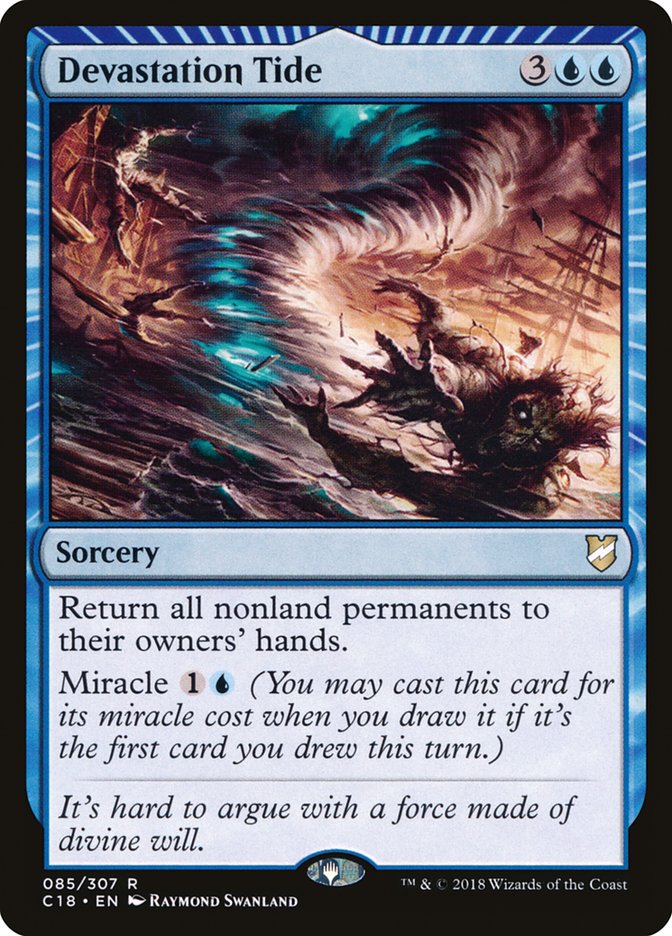
The big pull to Devastation Tide is the ease with which you can enable the miracle. Cards like Mystic Sanctuary, Mystical Tutor, and Brainstorm make the miracle incredibly achievable, almost like you’ve rigged the game in your favor.
#5. Cryptic Command
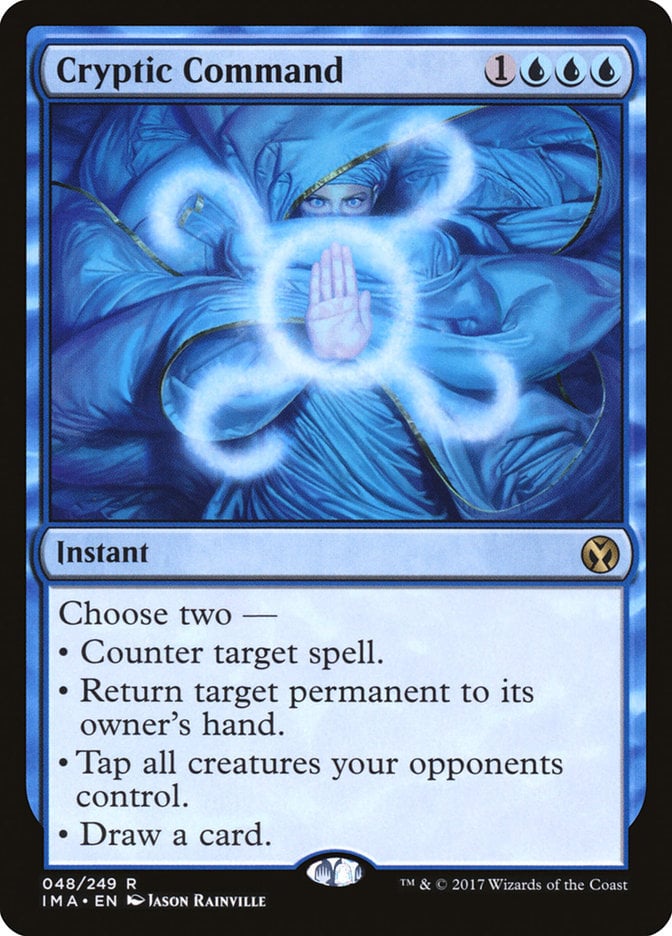
Cryptic Command ranks among the most iconic blue instants, right up there with Counterspell and Brainstorm. It makes the cut here because any combination of modes with the bounce portion is incredible, especially considering we can bounce any permanent. This card’s only drawback hangs out in the upper-right corner with a formidable mana cost.
#4. Sink into Stupor / Soporific Springs


I haven't stopped raving about Sink into Stupor since Modern Horizons 3 released, and I likely won’t until a trip to the Soporific Springs scrubs it from my mind. This is always among the first cards I add to my blue decks; an Island that sometimes acts as a flexible interactive spell is always welcome.
#3. Mystic Confluence
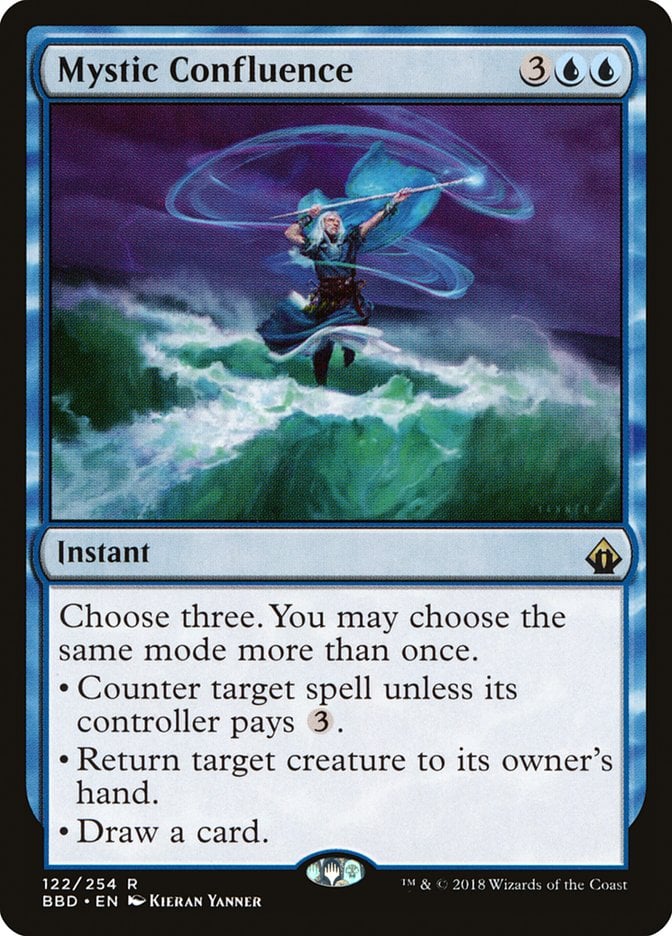
The trick to making a good Command or Confluence is giving it modes that are great in any combination. Mystic Confluence manages this handsomely. This great blue card almost always gives you a two-for-one or better and in those rare situations where you must triple Mana Leak, you still had a counterspell for a devastating threat.
Bouncing a creature and drawing two cards or flipping those numbers gives you a massive tempo advantage. It’s not quite the same as a clock, but drawing cards almost makes up for it. And most situations that involve bouncing three creatures leads to a win within a turn or two.
#2. Teferi, Time Raveler
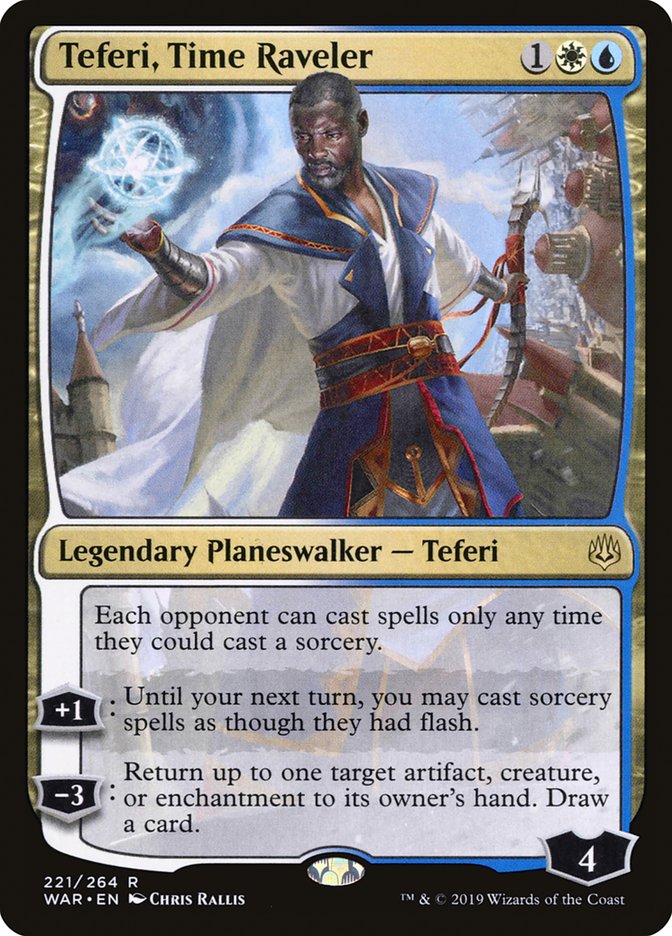
Teferi, Time Raveler holds the impressive distinction of being among the most obnoxious planeswalkers ever printed, largely due to that static ability that doesn’t just kill countermagic but shuts off a variety of strategies.
But we’re here for the bounce effect, and it’s devastating. Bouncing something and drawing a card plus keeping a planeswalker around is a massive tempo play. The ability hits a wide enough range of permanents to destabilize nearly any strategy—I can’t tell you how many games of Vintage Cube I’ve lost because I played a Talisman on turn 2 only for my opponent to bounce it.
#1. Cyclonic Rift
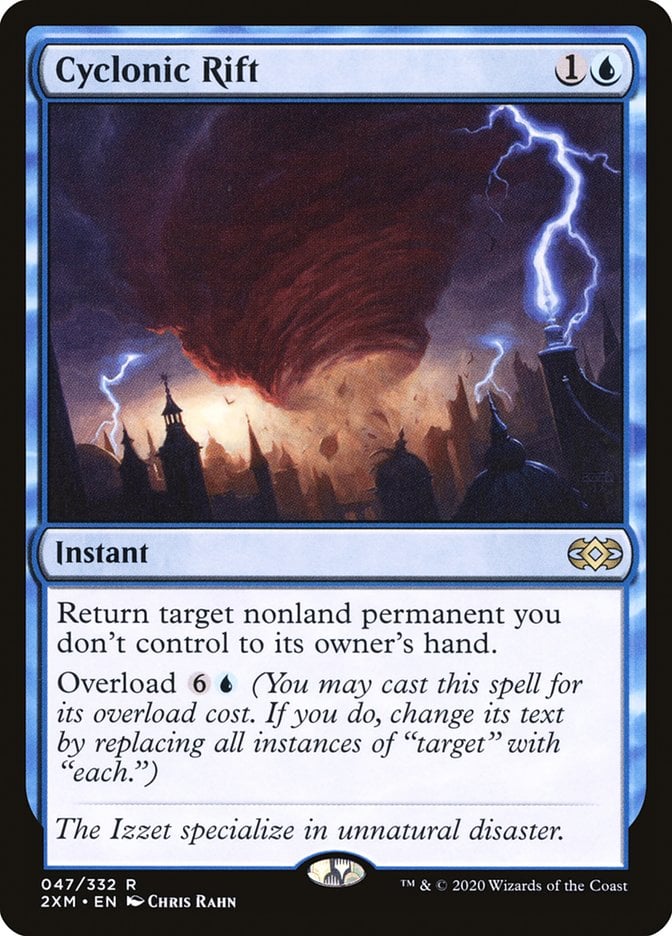
You could reasonably rank Teferi over Cyclonic Rift outside of Commander, but this is an EDH staple for a reason. People decry it as a card that slows the game down, but the same can be said of any board wipe that blasts the table back to the opening turns.
What can’t be said of Wrath of God and Toxic Deluge is their potential as a finisher. Cyclonic Rift opens the path to a clean victory in a turn or two while your opponents scramble to put their hands back into play. All that would be plenty good, but we even have the flexibility of casting this as a cheap bounce spell if we can’t afford the full sweeper!
Best Bounce Spell Payoffs
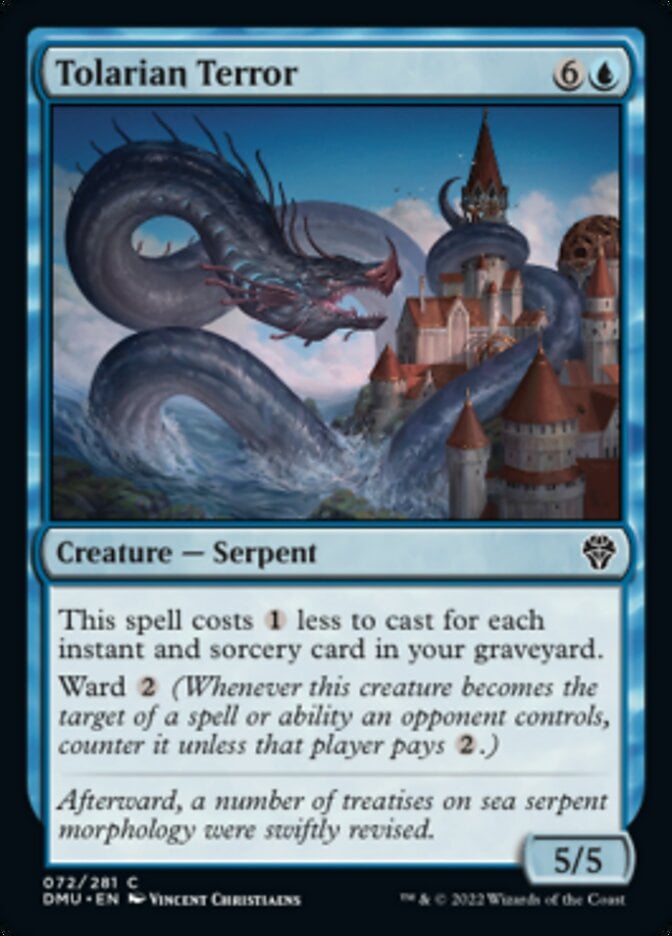
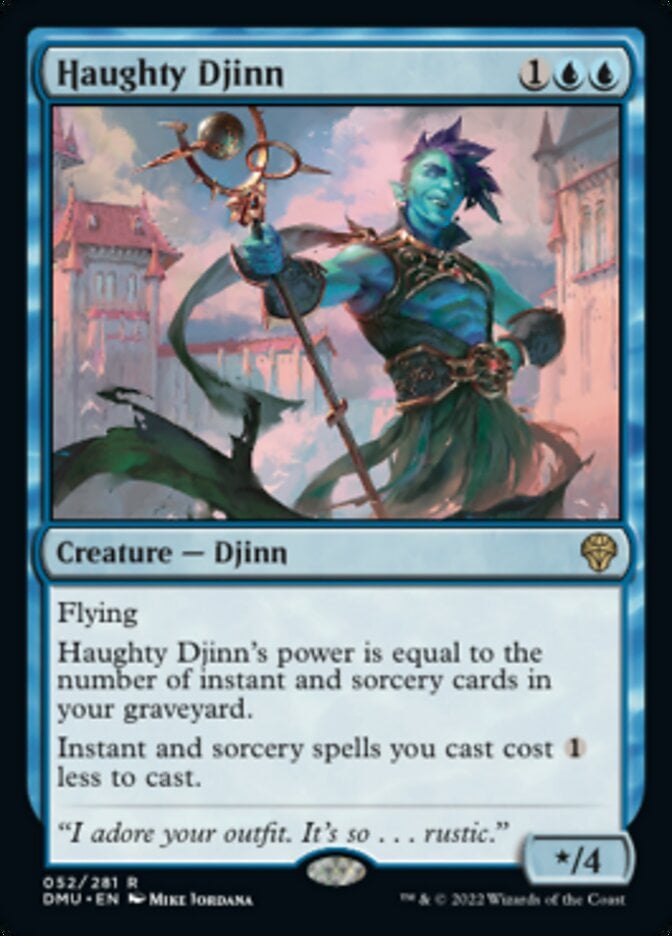
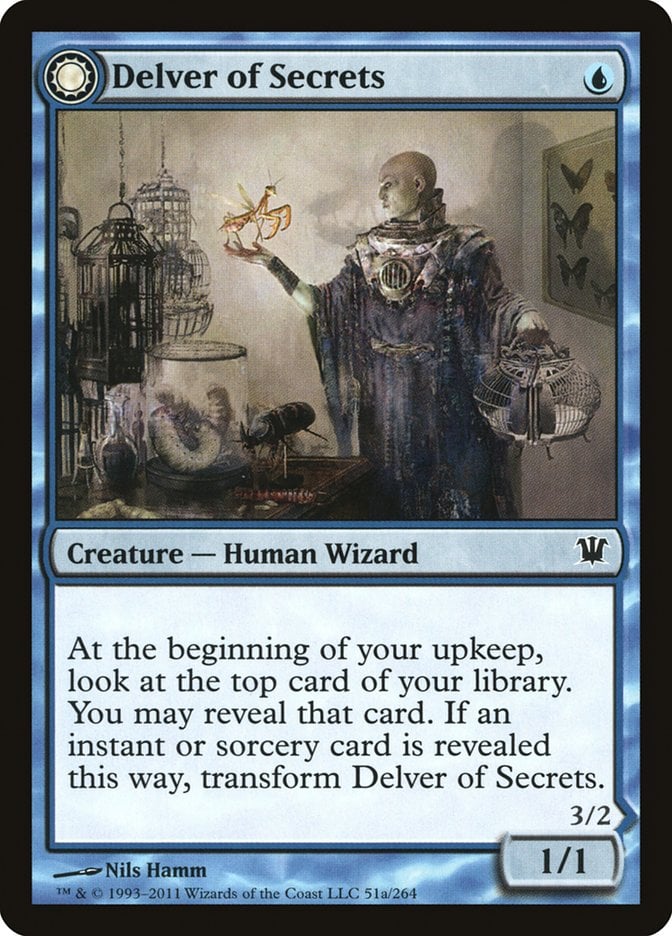
The big downside to bounce spells is their impermanence. Your opponent gets to play the card you bounced again, so you’ve trading one card for nothing more than a bit of tempo, or a temporary advantage. The best way to leverage this tempo is with a fast clock. Blue has a variety of creatures that care about instants and sorceries and are quite large relative to their mana costs—think Tolarian Terror, Haughty Djinn, and Delver of Secrets/Insectile Aberration. These cards are often the core of blue tempo strategies because they provide a clock to go with your bounce spells and countermagic. Forcing your opponent to spend two turns casting Questing Beast becomes way scarier if they take 8 damage in the meantime.
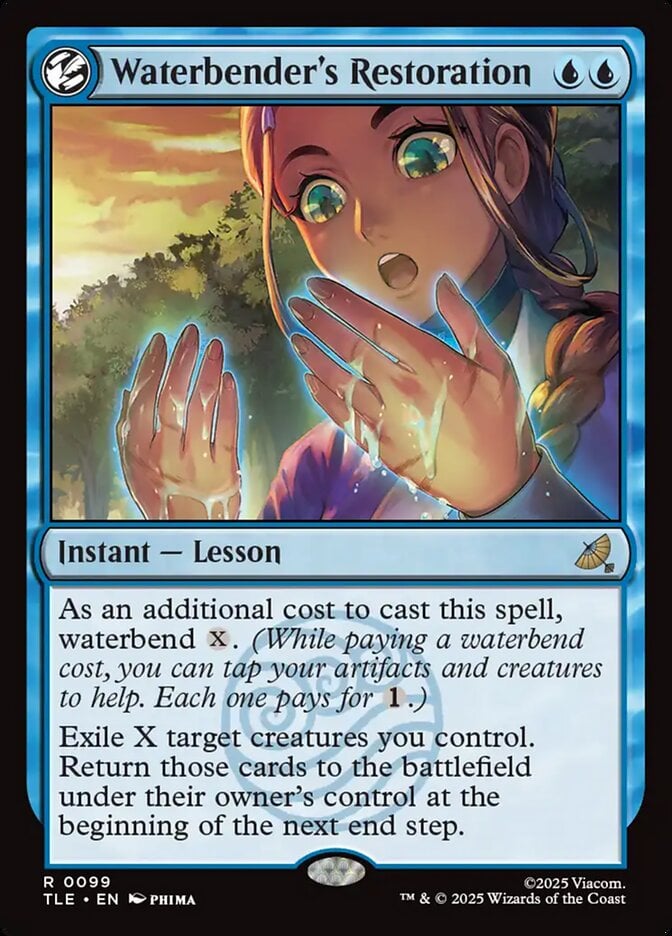
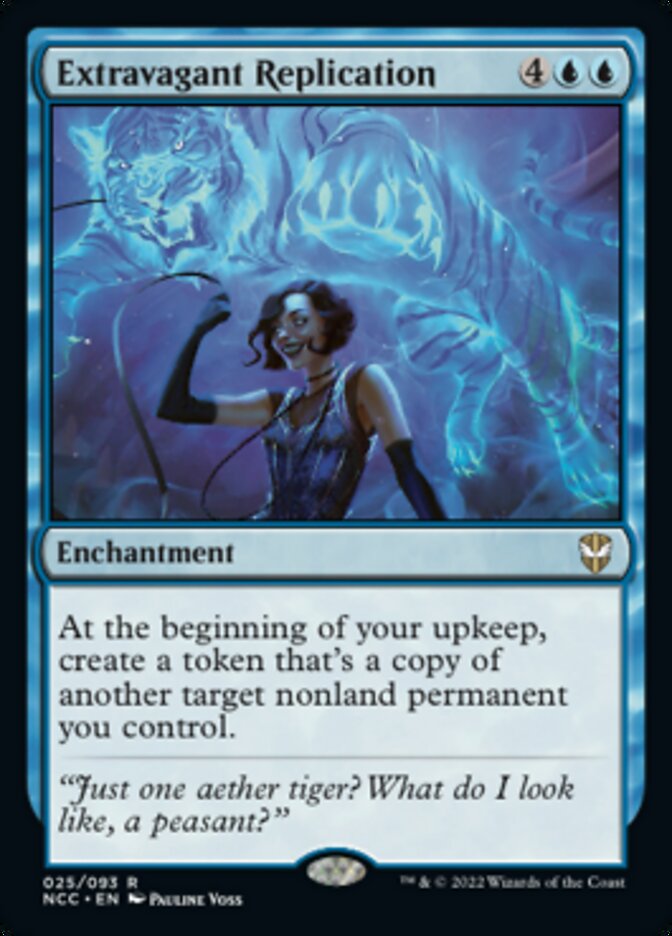
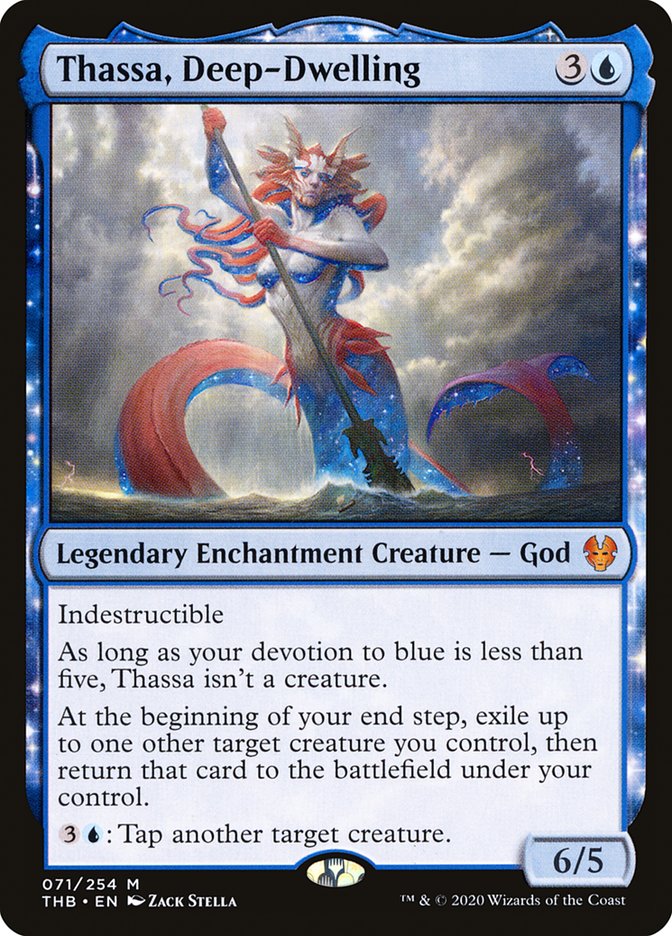
If your bounce spells are of the Rimekin Recluse variety—that is, attached to creatures—flicker and copy effects become great payoffs. Cards like Waterbender's Restoration, Extravagant Replication and Thassa, Deep-Dwelling repeatedly flickering your Aether Channeler and Riftwing Cloudskate gives you an incredible advantage because your opponents have to recast the same creature over and over (this is trickier in our era of powerful enters abilities, but still works).
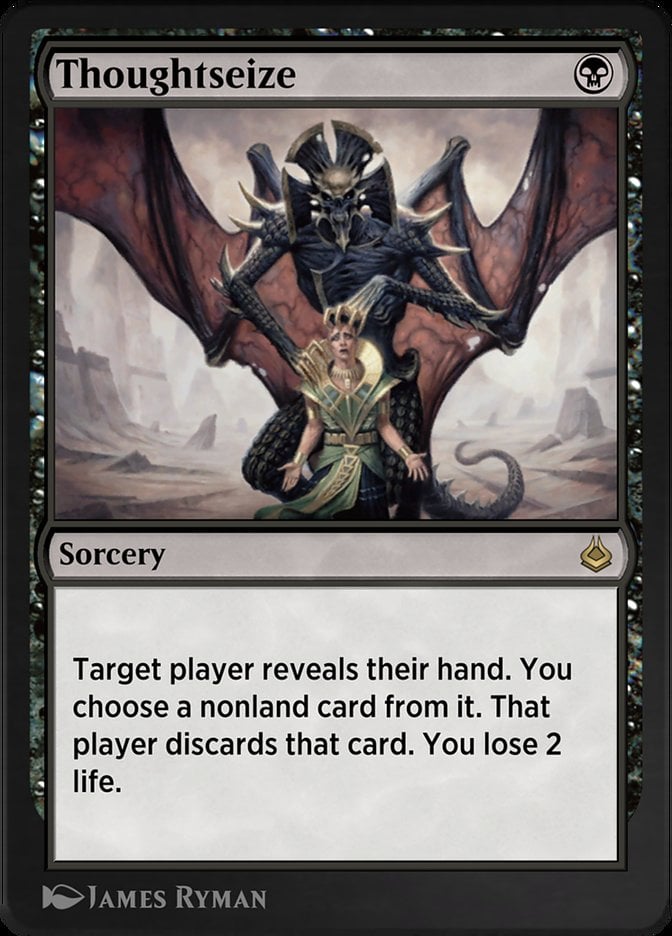
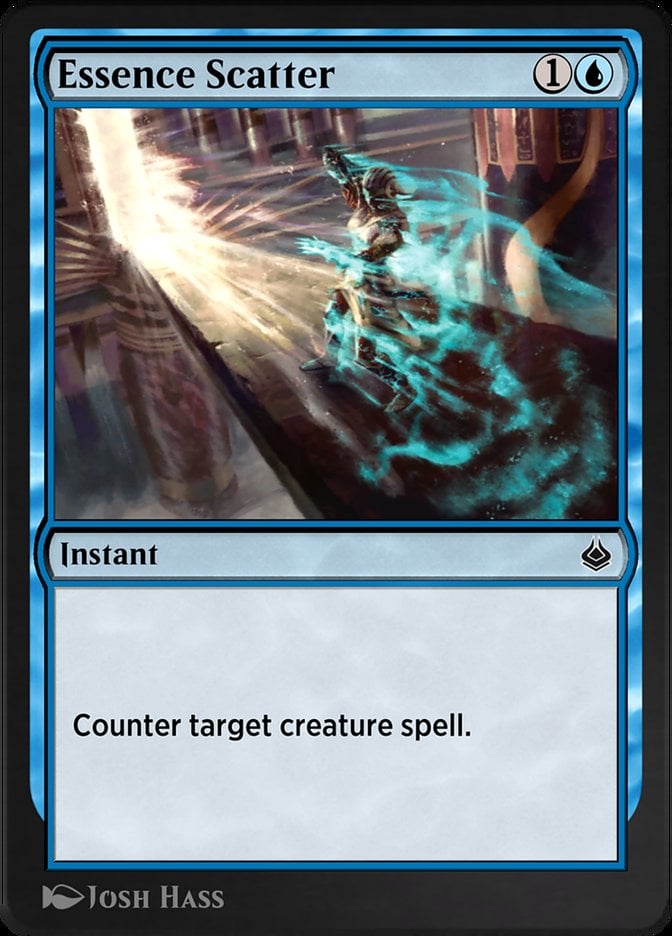
Lastly, you can pair bounce spells with countermagic, or less commonly, discard spells to truly deal with a card by bouncing it then removing it before it hits the board again. Hitting a creature with Unsummon then using a Thoughtseize or Essence Scatter is far from ideal as it’s card disadvantage, but you gotta do what you gotta do. Just don’t do it too often.
Wrap Up

Mystic Confluence | Illustration by Kieran Yanner
Bounce spells are far from the cream of the crop in terms of removal due to the temporary status, but they’re critical for blue decks to interact when they play a mono-colored shell or don’t pair themselves with colors that have strong removal. Learning to leverage bounce spells is an important step in becoming a better Magic player.
What’s your favorite bounce spell? Do you enjoy tempo strategies or do you prefer a more conventional midrange or control deck? Let me know in the comments or on the Draftsim Discord!
Stay safe, and thank you for reading!
Follow Draftsim for awesome articles and set updates:










Add Comment