
Last updated on August 31, 2026

Overlord of the Hauntwoods | Illustration by Tiffany Turrill
One of Brawl‘s most interesting features is the ability to play with Alchemy cards designed with digital-only mechanics you can only use on Arena. Of these mechanics, conjure is one of the strongest.
While many commanders in Brawl conjure permanents, few are quite as powerful as Mythweaver Poq, a fierce mono-green legend that rewards you for playing lands. But what are the best lands to conjure up, and how can we use them? Let’s dig into it.
The Deck

Mythweaver Poq | Illustration by Todd Lockwood
Commander (1)
Planeswalker (3)
Nissa, Ascended Animist
Nissa, Who Shakes the World
Ugin, Eye of the Storms
Creature (39)
Acidic Slime
Aftermath Analyst
Allosaurus Shepherd
Arboreal Grazer
Ashaya, Soul of the Wild
Birds of Paradise
Bristly Bill, Spine Sower
Cityscape Leveler
Delighted Halfling
Dryad of the Ilysian Grove
Elvish Mystic
Fanatic of Rhonas
Gilded Goose
Icetill Explorer
Kami of Bamboo Groves
Kazandu Mammoth
Kogla, the Titan Ape
Llanowar Elves
Lotus Cobra
Lumra, Bellow of the Woods
Manglehorn
Nissa, Resurgent Animist
Outcaster Trailblazer
Overlord of the Hauntwoods
Questing Beast
Reclamation Sage
Scute Swarm
Scythecat Cub
Sentinel of the Nameless City
Six
Sowing Mycospawn
Springheart Nantuko
Tenacious Pup
Tifa Lockhart
Timeless Witness
Tireless Provisioner
Tireless Tracker
Tranquil Frillback
Ulamog, the Ceaseless Hunger
Instant (5)
Archdruid's Charm
Collective Resistance
Heritage Reclamation
Once Upon a Time
Veil of Summer
Sorcery (13)
Analyze the Pollen
Animist's Might
Bala Ged Recovery
Bridgeworks Battle
Bushwhack
Chocobo Kick
Coordinated Clobbering
Cultivate
Flare of Cultivation
Hard-Hitting Question
Malevolent Rumble
Sylvan Scrying
Traverse Valley
Artifact (3)
Expedition Map
The Great Henge
World Map
Enchantment (1)
Lands (35)
Ancient Tomb
Blinkmoth Nexus
Boseiju, Who Endures
Brokers Hideout
Cavern of Souls
Fabled Passage
Faceless Haven
Misty Rainforest
Mutavault
Nykthos, Shrine to Nyx
Prismatic Vista
Riveteers Overlook
Shifting Woodland
Snow-Covered Forest x16
Strip Mine
Terramorphic Expanse
Urza's Cave
Verdant Catacombs
Windswept Heath
Wooded Foothills
This deck falls into the simple category of mono-green landfall to get as much value from Poq’s ludicrous trigger as it can. It has a pretty simple plan: Ramp to establish threats like Questing Beast and Ulamog, the Ceaseless Hunger super early.
This deck puts a strong foot forward, but it’s not without weaknesses. The main one is that it’s light on removal, at least for a Brawl deck—but that’s the price you pay for being in mono-green.
There’s a rather hefty wildcard count, with the following breakdown:
- Common wildcards: 12
- Uncommon wildcards: 20
- Rare wildcards: 34
- Mythic wildcards: 18
The Commander: Mythweaver Poq
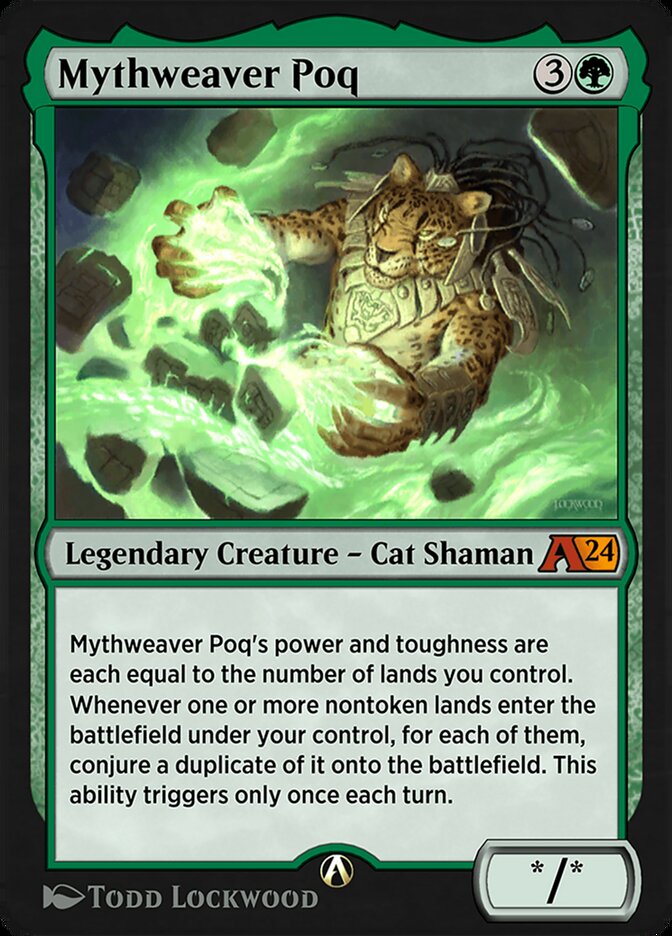
Mythweaver Poq is a beast of a commander due to its powerful conjure ability. For the unfamiliar, conjure is a digital-only mechanic found on Alchemy cards on Magic: Arena. Conjuring is similar to creating a token, except a conjured card exists in zones other than the battlefield. If you conjure a Strip Mine and sacrifice it, it goes the graveyard, you can bounce a conjured Snow-Covered Forest to your hand, etc.
So Poq’s more than a little broken. One land drop becomes two, and the conjured card comes into play untapped because… well, we didn’t learn from Nadu, Winged Wisdom, did we? The deck’s built around that power, with a load of landfall cards that get double value and solid threats to ramp into. Oh, and Poq’s also massive because you get like eight lands in play with no issues.
Keep in mind that you should consider Poq a 5-drop so that you can cast it and make a land drop instantly to trigger the ability right away. Since Poq creates two mana sources, you can recast it next turn even if it eats a removal spell.
Interaction
For my money, the most important part of most Brawl decks is the interaction suite, so let’s start there. As a green deck, much of the creature-based interaction relies on fighting and biting with your creatures, or ramping into large threats.
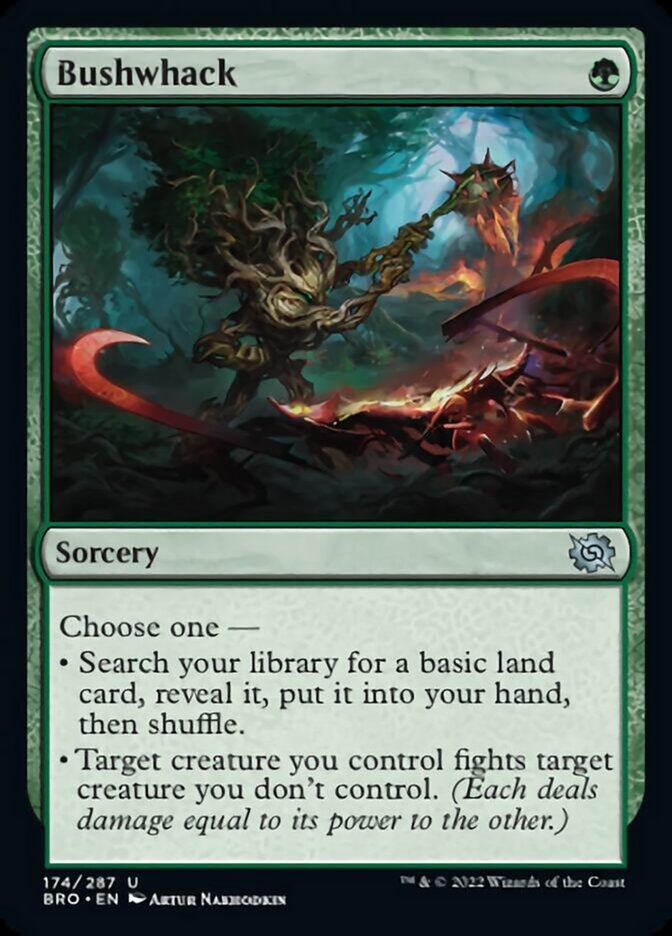

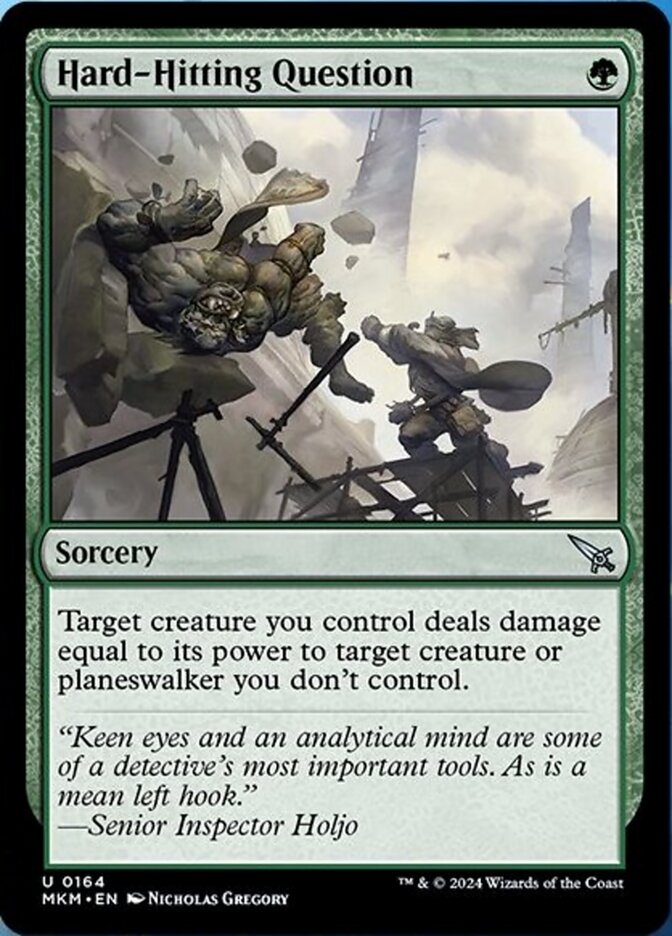
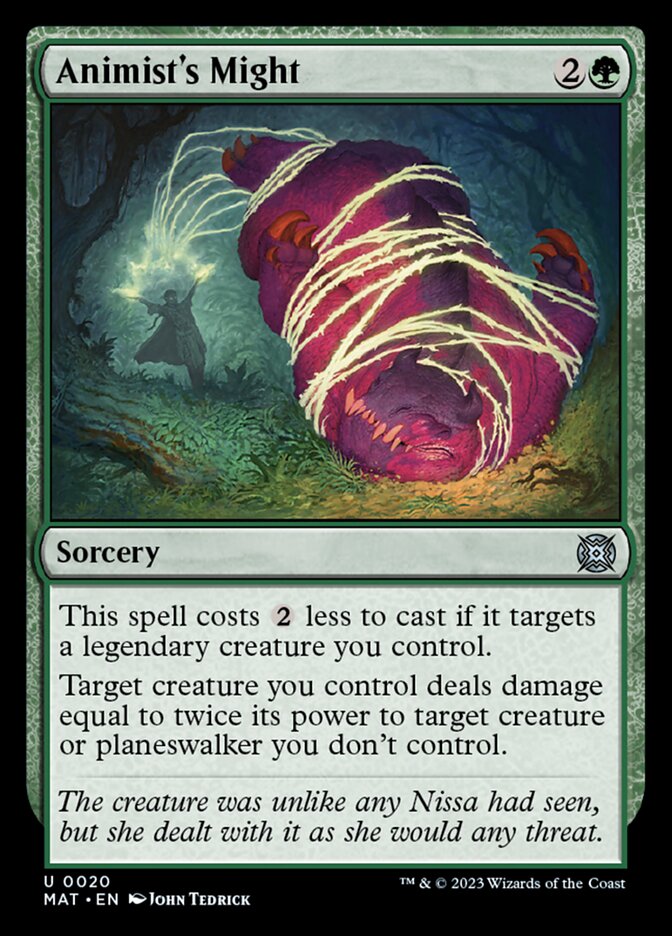
You have a few ways to fight for 1 mana, like Bushwhack, Coordinated Clobbering, and Hard-Hitting Question. Animist's Might often costs 1 mana since Mythweaver Poq is a constant target.

Bridgeworks Battle goes in virtually every green Brawl deck due to the utility inherent to MDFCs.

Chocobo Kick has an excellent kicker cost. You can bounce a land to trigger landfall, ensure you have a land drop for Poq, or reset a modal-double faced card to “draw” a spell.
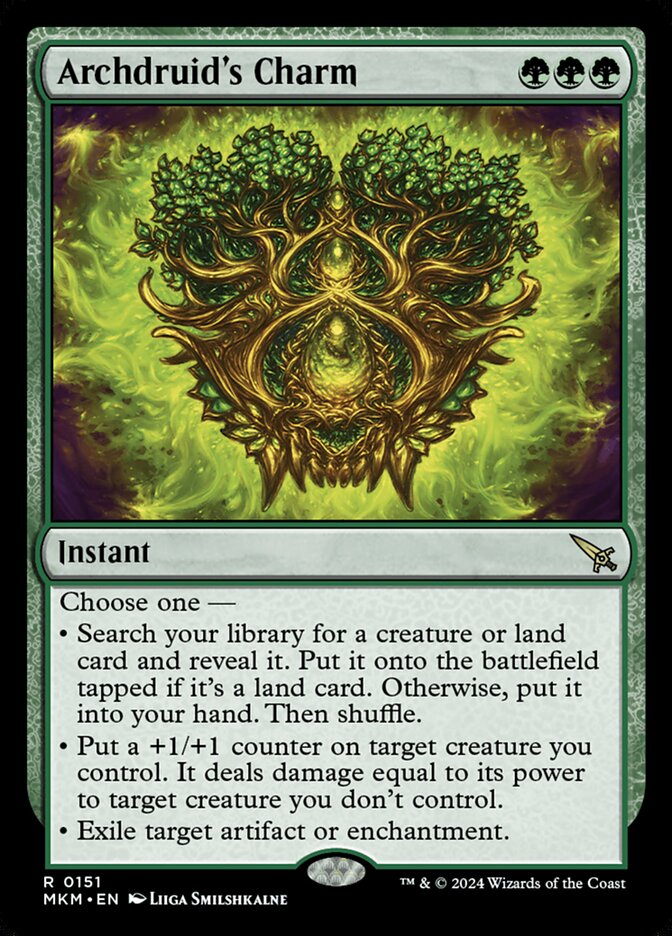
Archdruid's Charm is an all-star that interacts with your opponents or finds a significant threat, be that a big creature or something like Strip Mine.
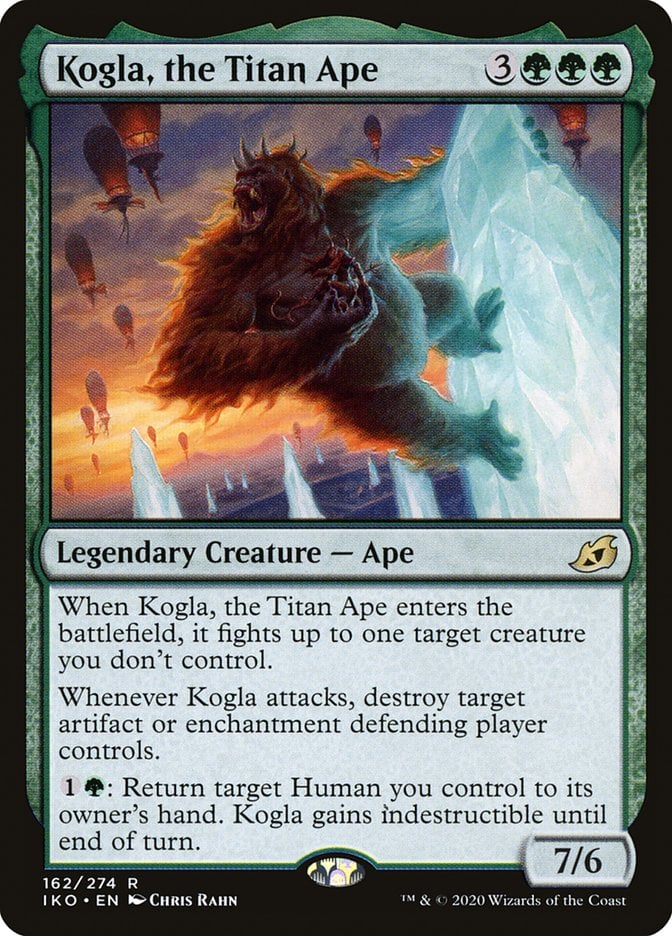
Kogla, the Titan Ape does a ton of work in decks that power it out early and don’t fear the triple green in its mana cost; thankfully, this deck is mono-green, so it doesn’t matter.
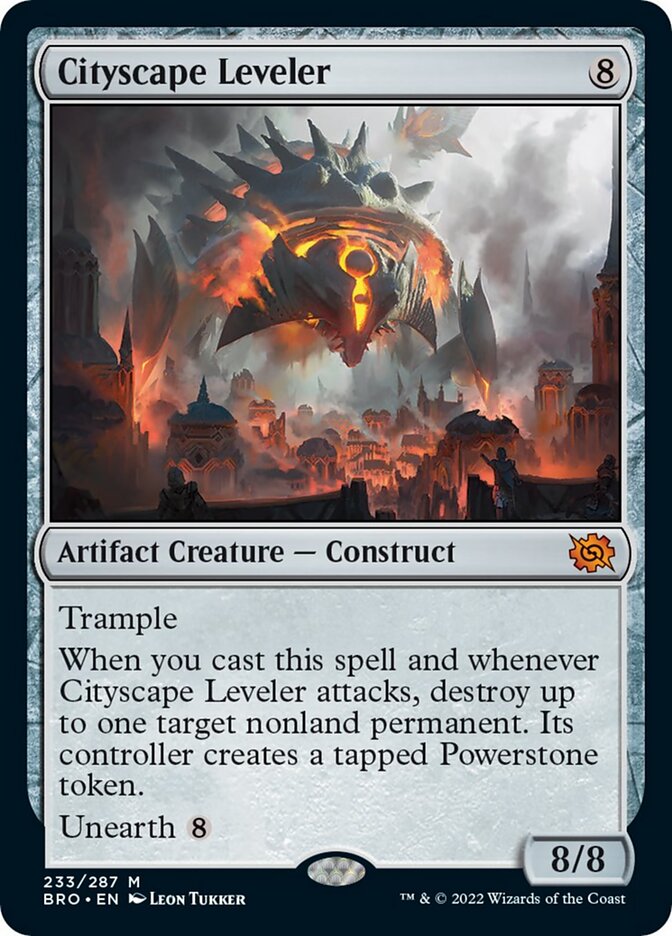

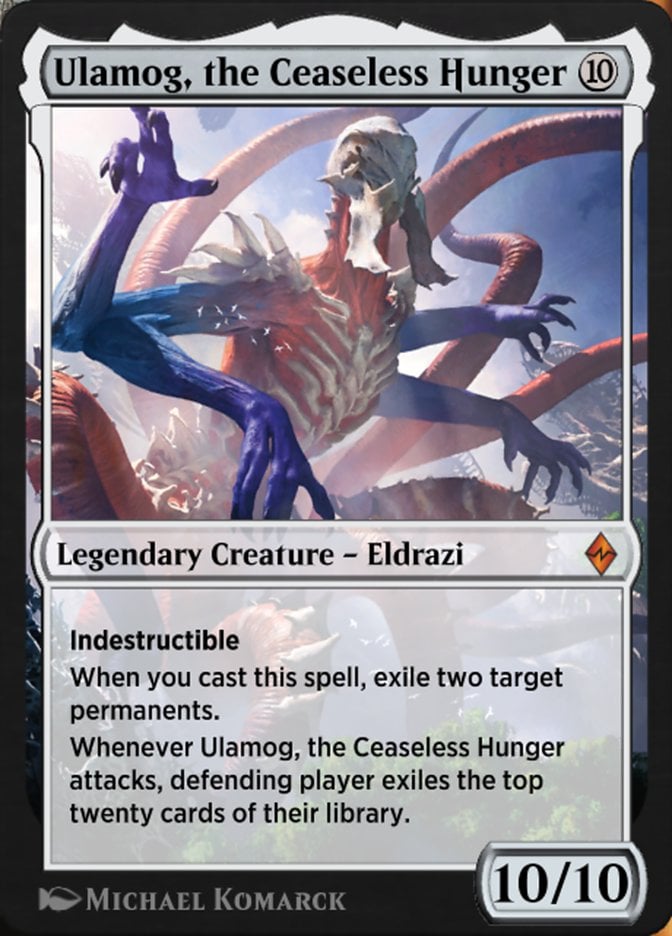
Cityscape Leveler and Ugin, Eye of the Storms handle any threat directly from the stack, without the need to resolve. Ulamog, the Ceaseless Hunger does the same, but better since it hits two permanents.
Green decks have less trouble destroying artifacts and enchantments, so you can handle plenty of noncreature artifacts.
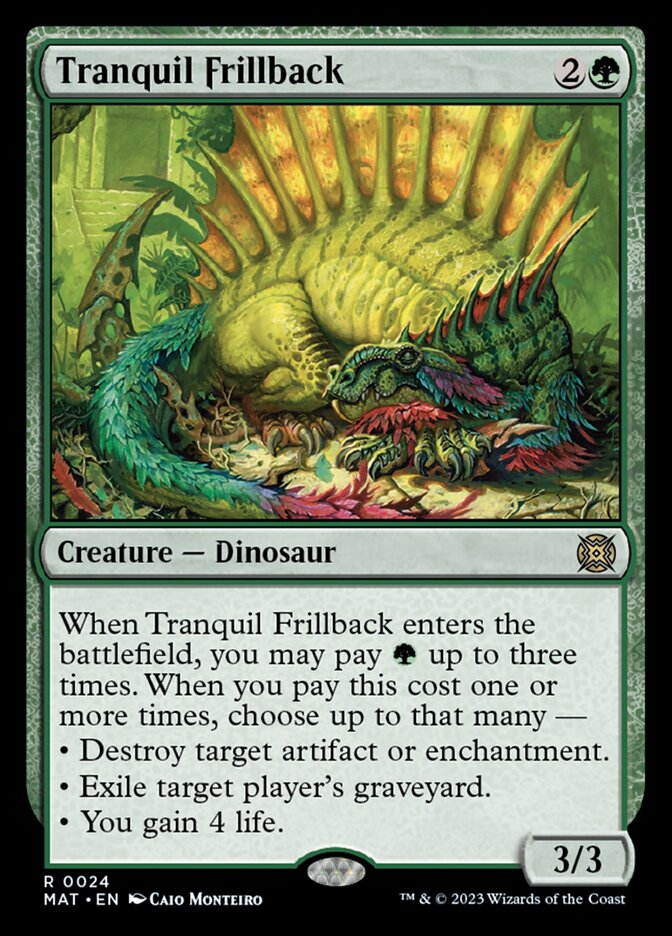
Tranquil Frillback offers a variety of useful options, even if you’ll blow up artifacts and enchantments most often.

Heritage Reclamation has a suite of useful effects. Don’t be afraid to exile a random card to cycle it if things look dire!

Collective Resistance just adds additional flexibility to this area, and it serves as both a Naturalize effect and a protection spell.
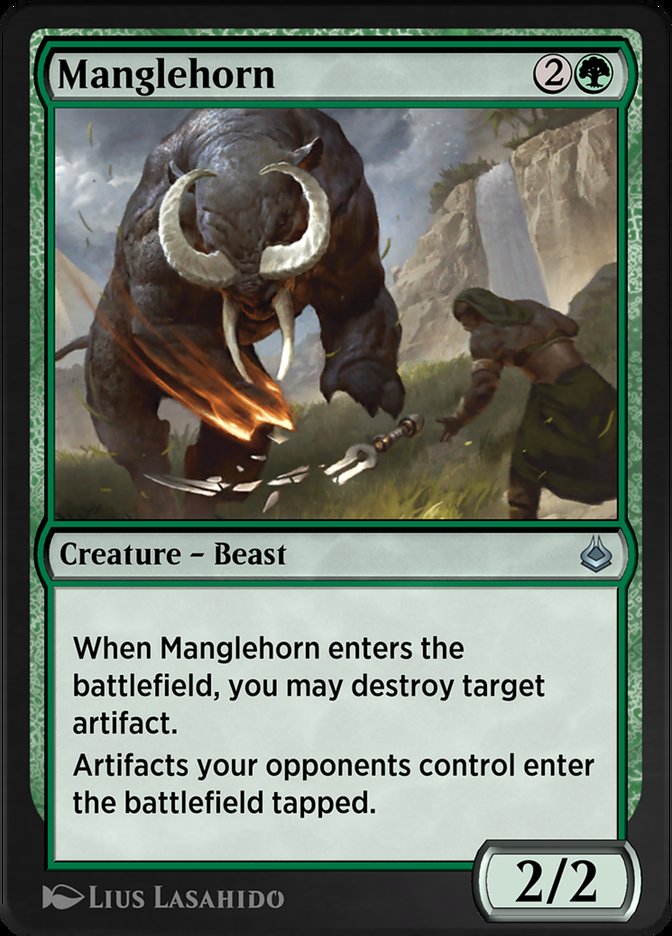
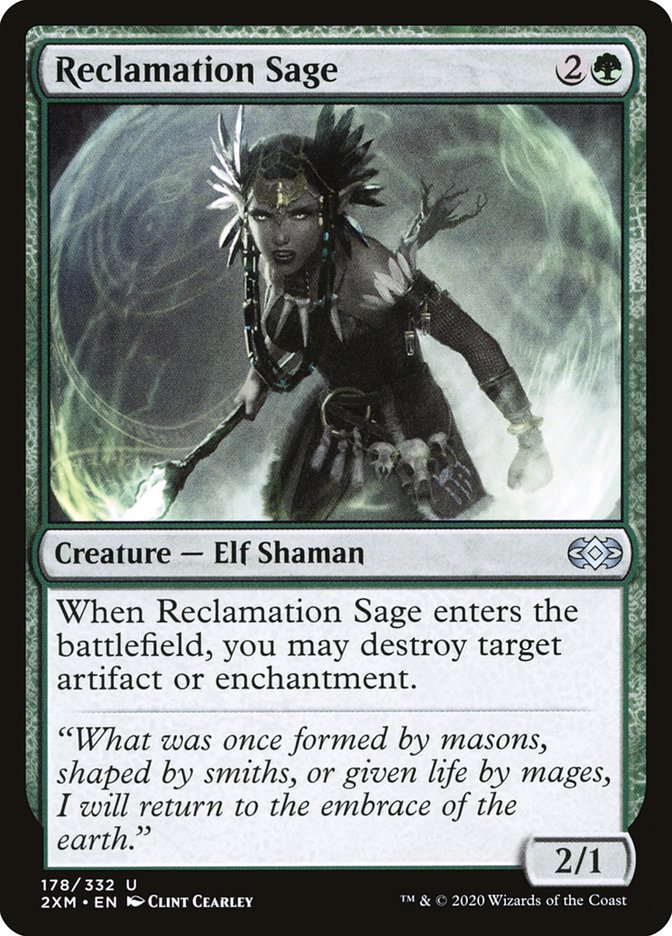
Manglehorn and Reclamation Sage offer cheap two-for-ones attached to creatures. Manglehorn is a little less flexible, but it makes up for it by punishing Treasure and artifact decks in a wholly unique manner.
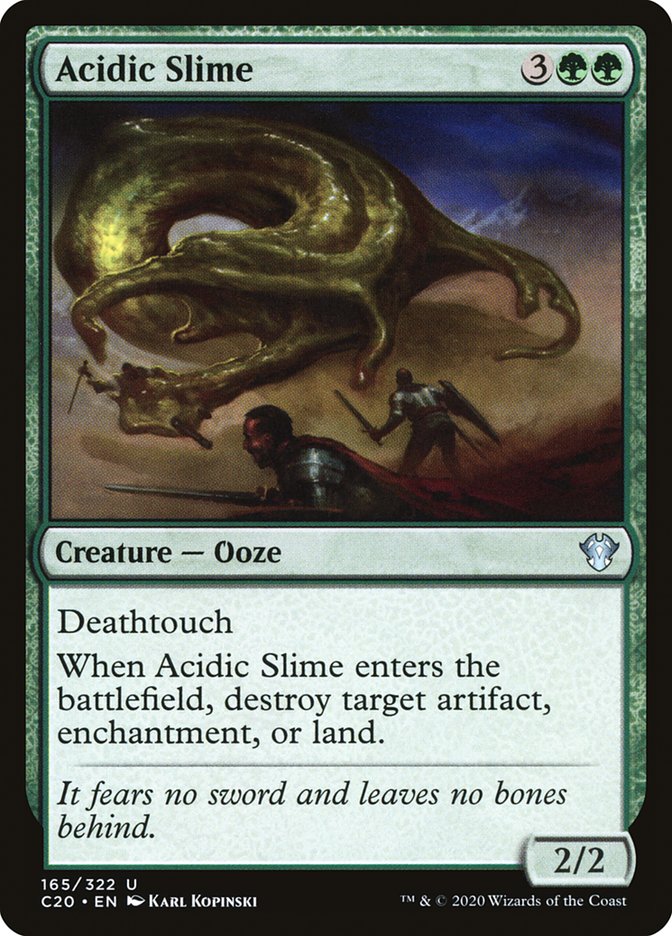
Acidic Slime has a useful enters ability, especially in a deck like this that ramps it out fast enough to really maximize the Stone Rain.
Landfall Cards
Landfall cards are the easiest way to exploit Poq, and they give you plenty of powerful yet cheap threats to complement the top-end cards like Ulamog and Cityscape Leveler.
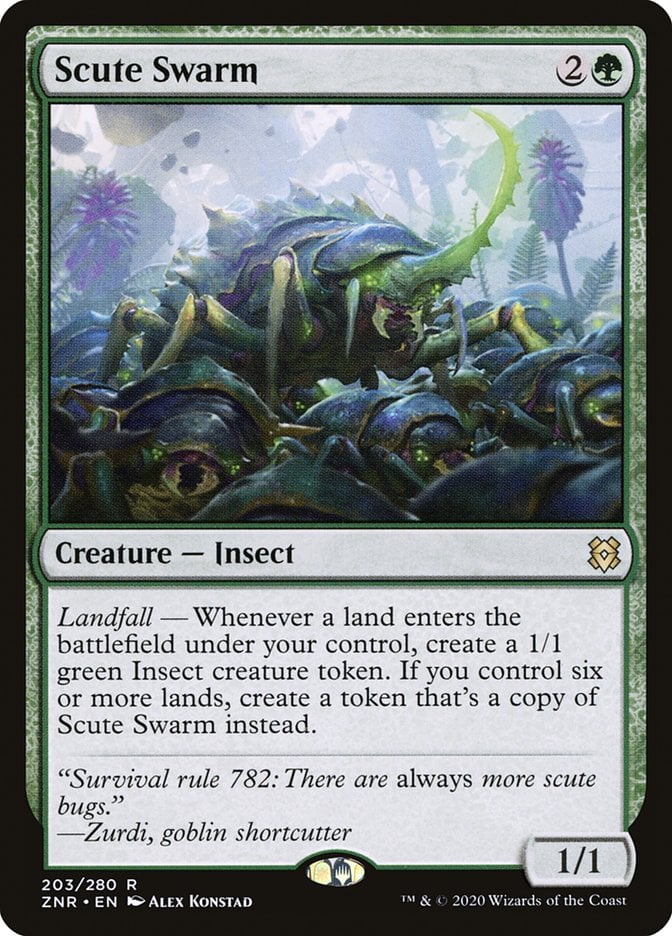

Scute Swarm dominates games, especially with Poq reaching the six-land threshold in a heartbeat. Springheart Nantuko also floods the board with tokens, though not as quickly.
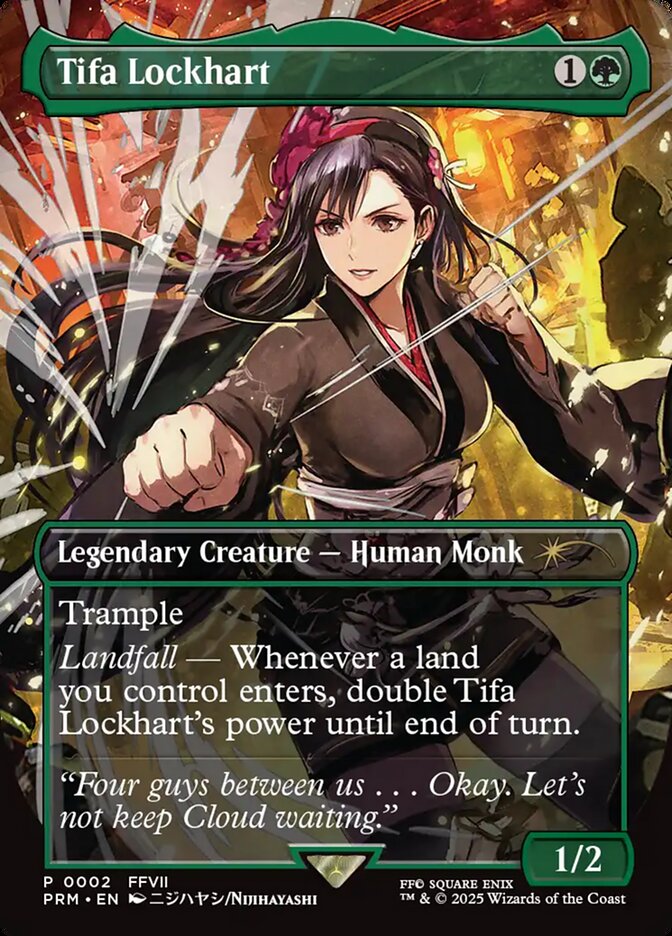
You don’t have the pump spells to go for a one-shot, but Tifa Lockhart still serves as a cheap threat that punishes slow draws from the opponent and attacks for 4 or even 6 damage in the late game, trading off with a creature and still dealing damage.
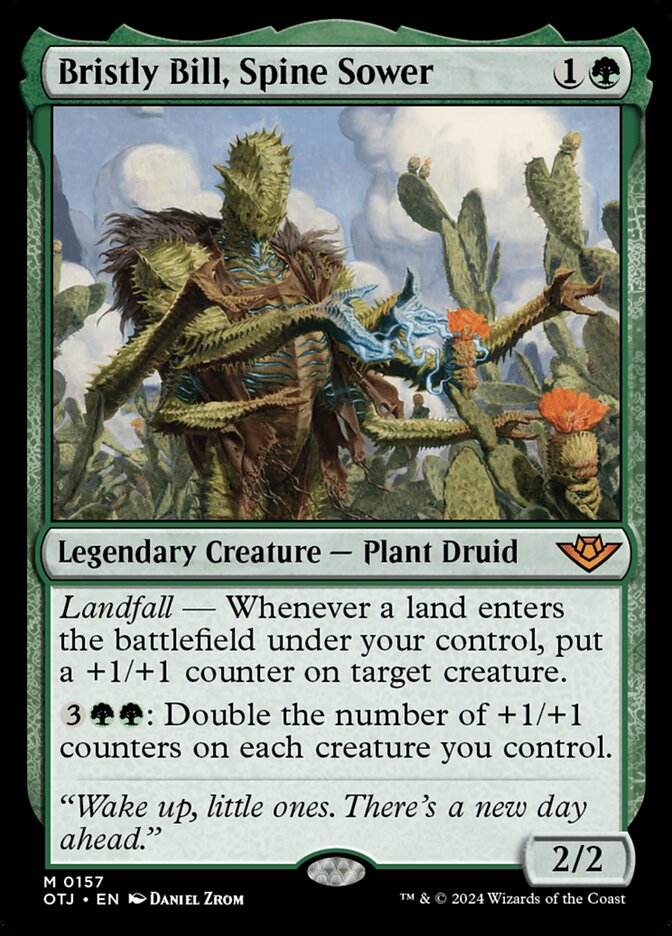

Bristly Bill, Spine Sower and Scythecat Cub are two of the best landfall threats in the game, and both are perfectly capable of running away with the win when you land them on turn 2 with a few fetch lands.
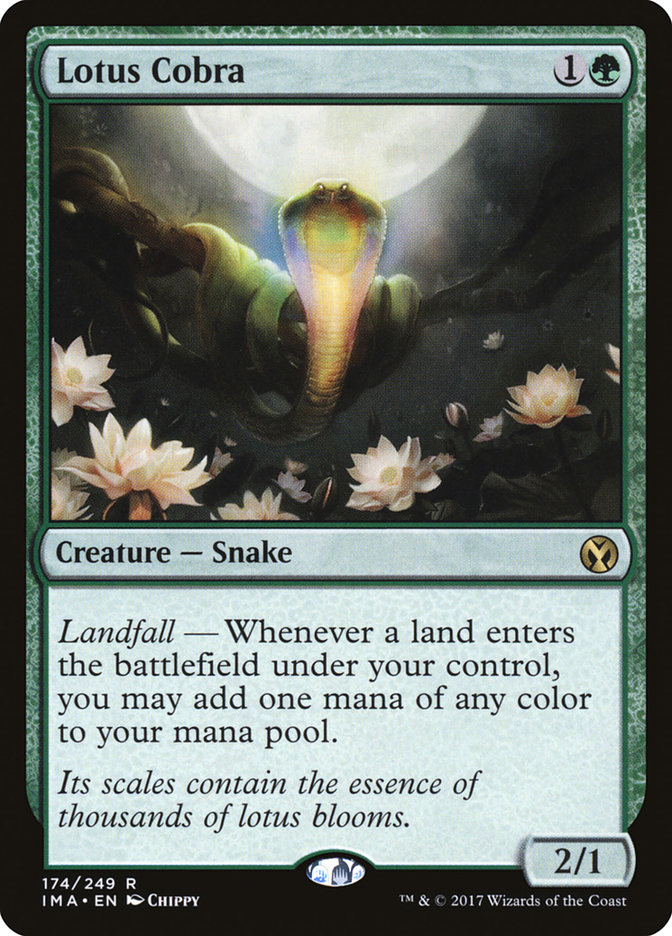
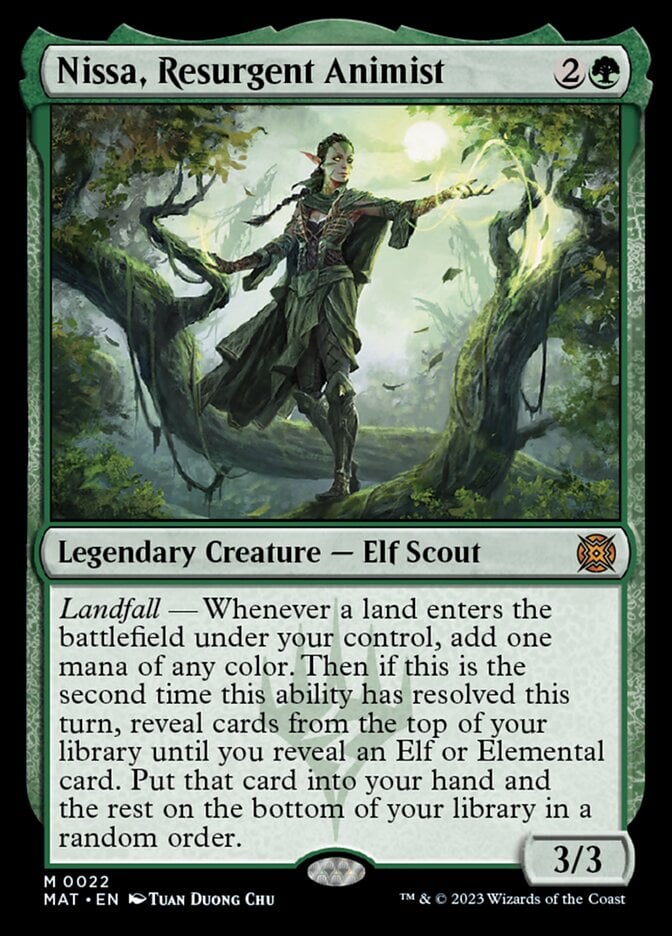
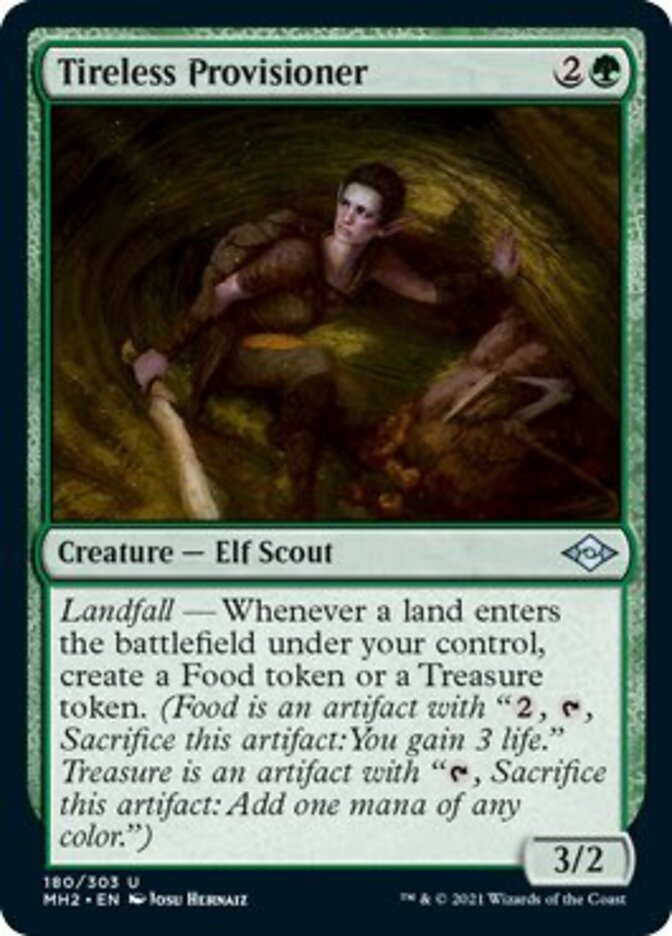
Lotus Cobra, Nissa, Resurgent Animist, and Tireless Provisioner all effectively do the same thing: They make your land drops produce even more mana. This powers out your threats quite quickly, with the added benefits that Nissa draws cards and the Provisioner offers you lifegain to stabilize against more aggressive decks.
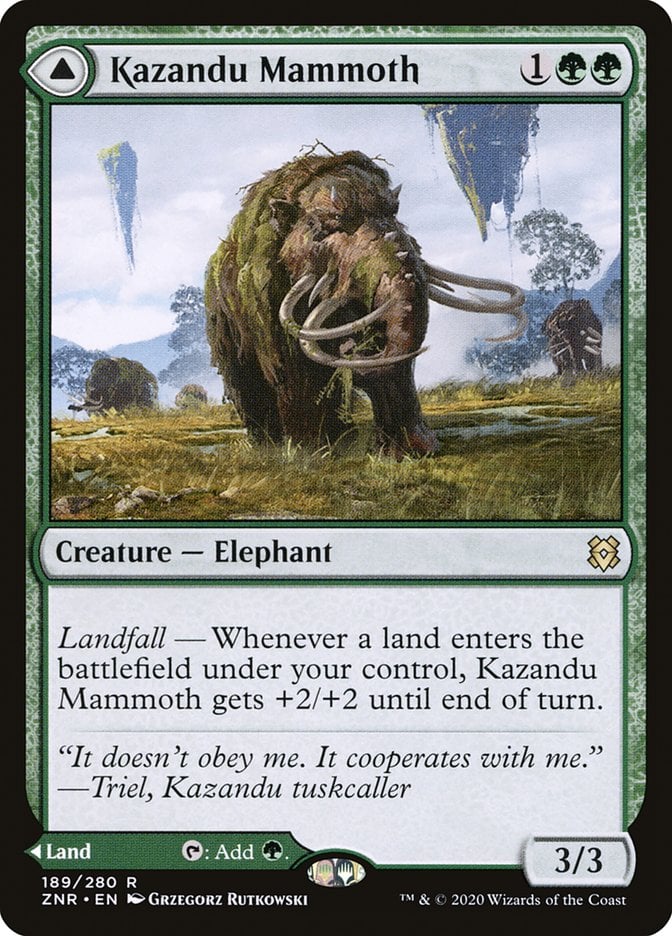
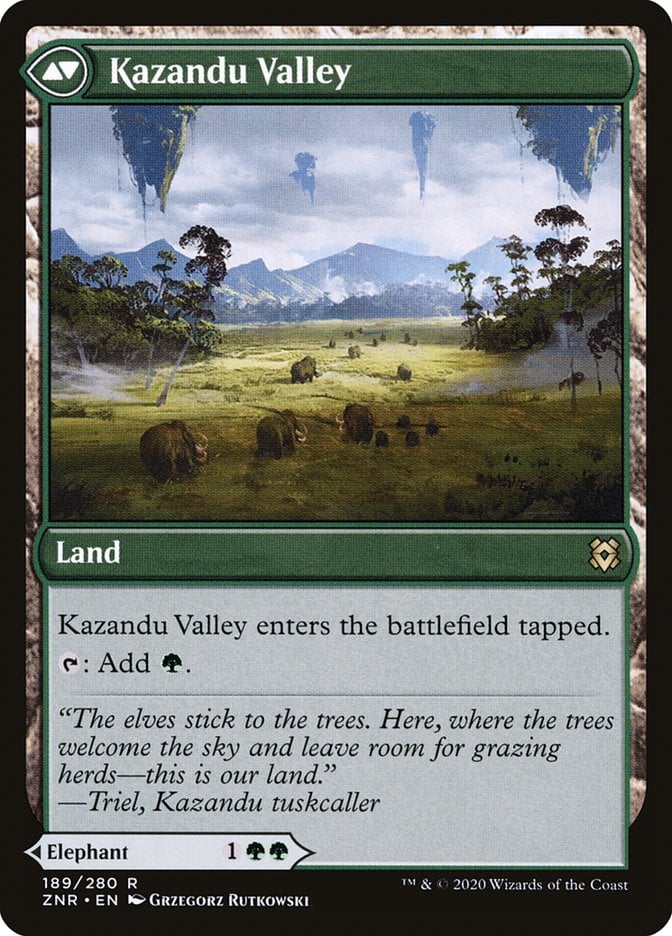
Kazandu Mammoth doesn’t look like much, but it hits hard, offers great flexibility, and has a potent combo with Mythweaver Poq.

Poq got many upgrades from Edge of Eternities, and Icetill Explorer is just the first of them. Putting Exploration and Crucible of Worlds onto the same card is a disgusting example of power creep. One fetch land in the graveyard allows you to get four landfall triggers in a single turn!
Threats
These cards provide much of your pressure and help to win the game, though they fail to fall into other categories of the deck.
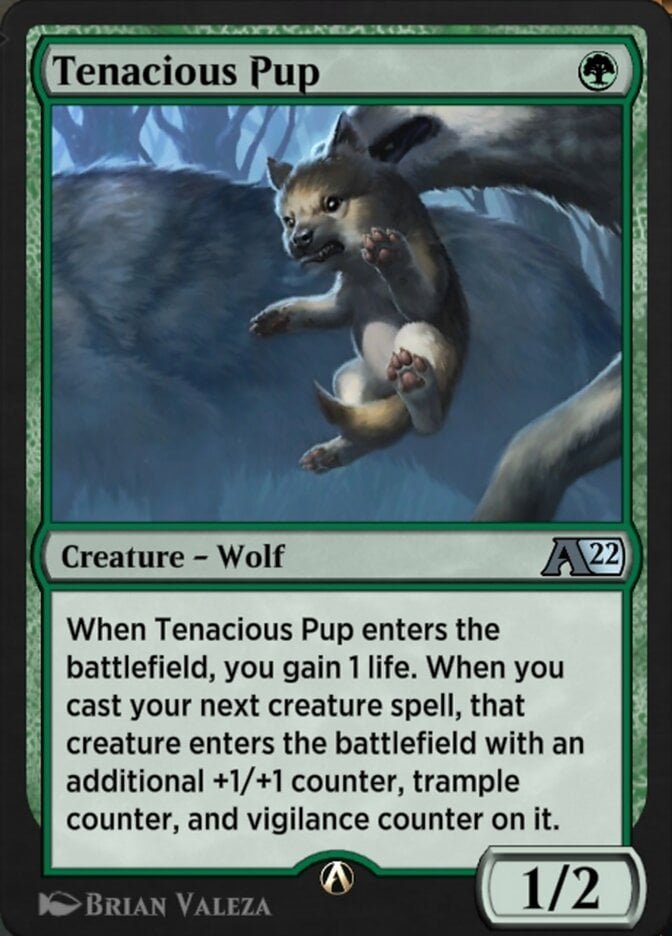
Tenacious Pup just makes Outcaster Trailblazer better. It’s fine on turn 1 before a Bristly Bill, but don’t be afraid to hold it until you can play it in the same turn as something really good. A +1/+1 counter on an Aftermath Analyst looks pretty subpar.
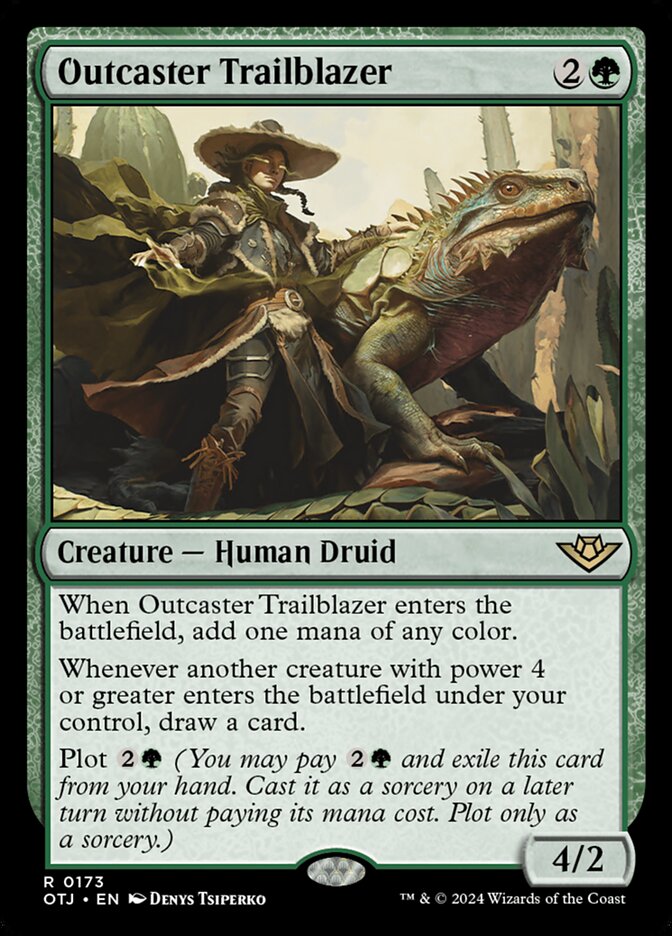
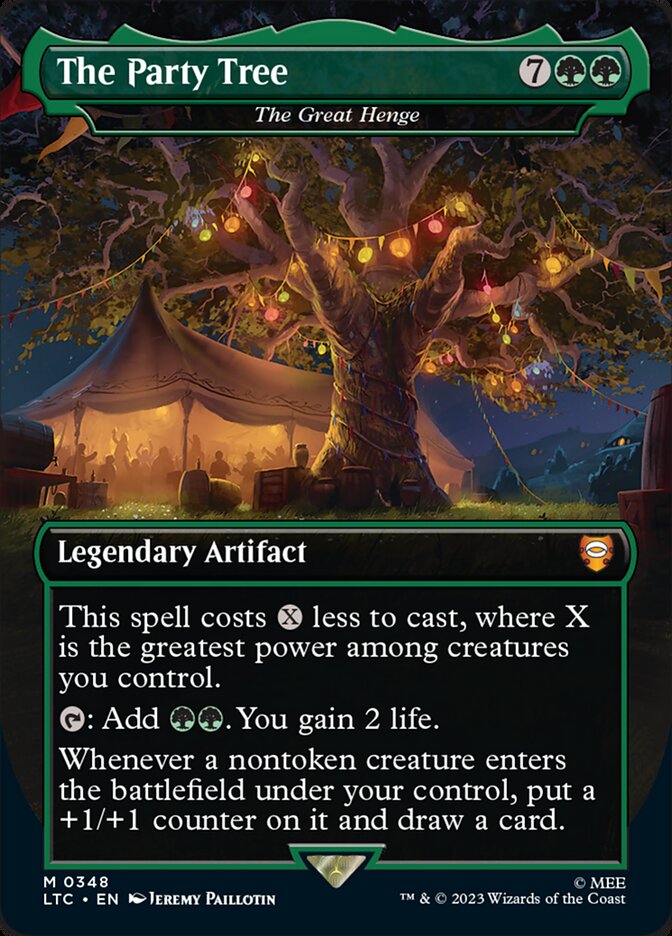
Outcaster Trailblazer provides much-needed card draw on a fairly aggressive body; The Great Henge also draws cards and adds pressure, though it lacks a body itself.

Six and Timeless Witness provide crucial recursion, and they even have a little synergy together. Six fills the graveyard, and it can potentially even mill the Witness to eternalize later.
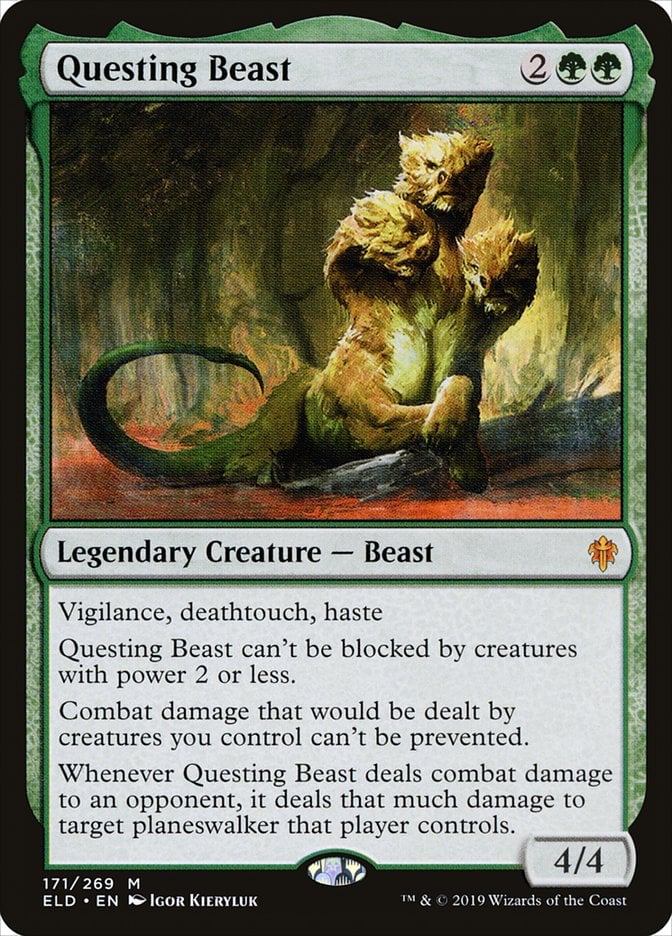
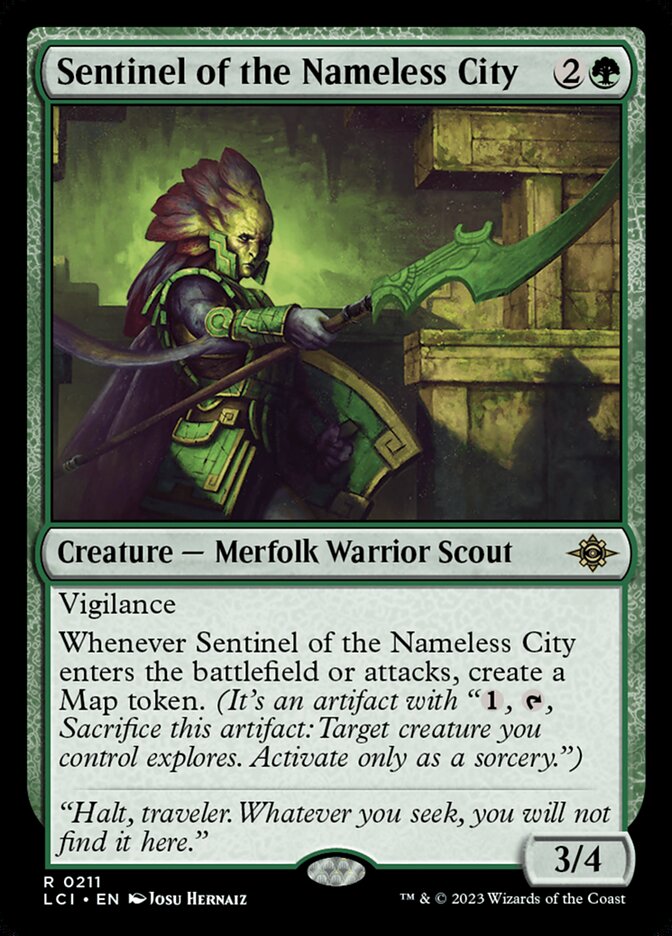
Questing Beast and Sentinel of the Nameless City just have excellent stats and hit really hard. They provide an excellent clock when you play them ahead of schedule.

Overlord of the Hauntwoods is perfect in this deck. Playing it on turn 2 or 3 as a ramp spell is just as good as slamming it turn 4 or 5 (or turn 3, with an exceptional draw) as a massive threat. Note that Everywhere does not trigger Poq, as Poq specifies nontoken lands.
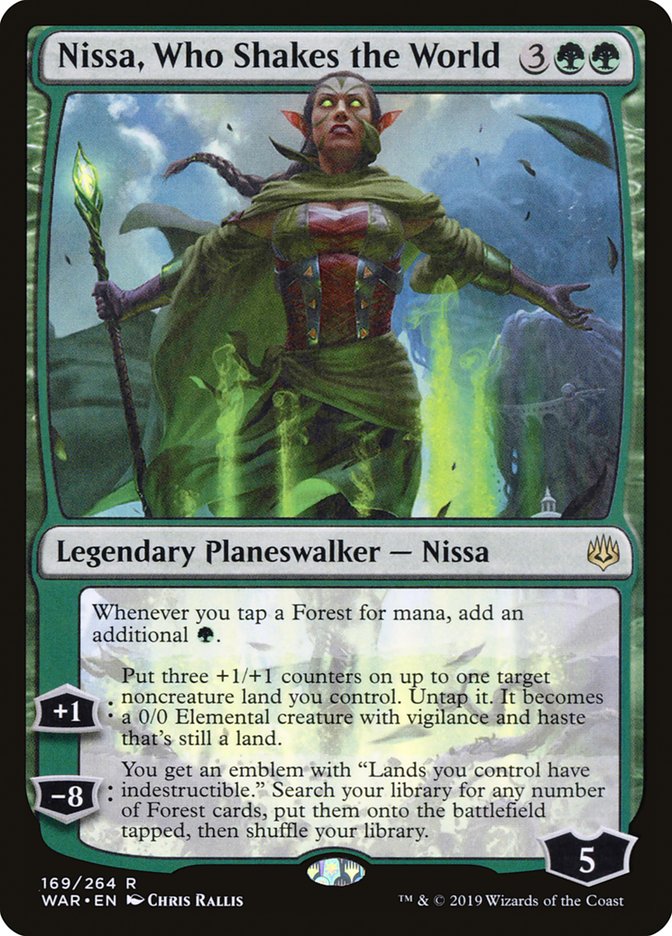
Nissa, Who Shakes the World is a simple mana doubler that also provides endless pressure from 3/3 lands. It just hits really hard, and it was the mono-green Brawl commander of choice before Mythweaver Poq came along.
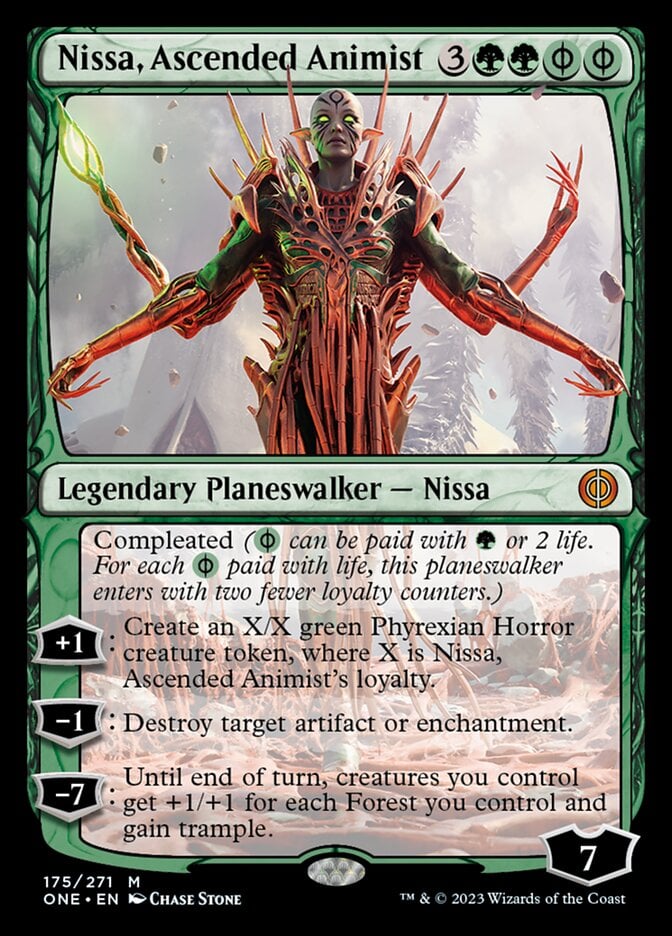
Nissa, Ascended Animist is one of the most pushed planeswalkers in recent years. The concept of a planeswalker with Phyrexian mana in its cost that gets weaker as you pay life is genuinely interesting card design, but they missed the mark with this one because it’s just as good at 5 mana as 7.
Land Tutors
This is a small but meaningful section, in large part because Edge of Eternities introduced a slew of powerful non-basic lands to Brawl via the Stellar Sights bonus sheet, and you need to find those cards!
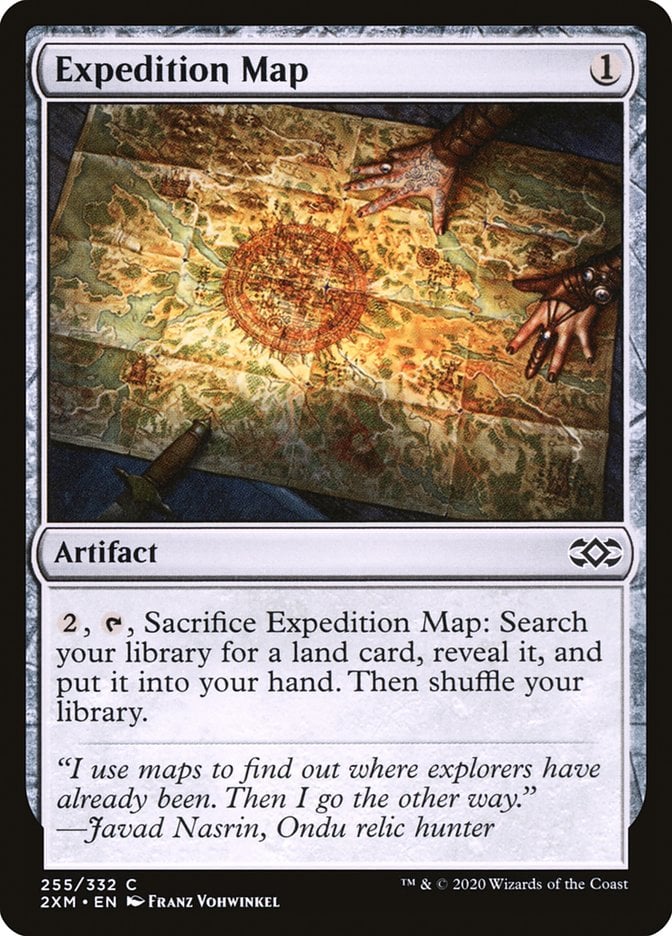

Expedition Map is the gold standard here, and World Map from Final Fantasy isn’t all that far behind.
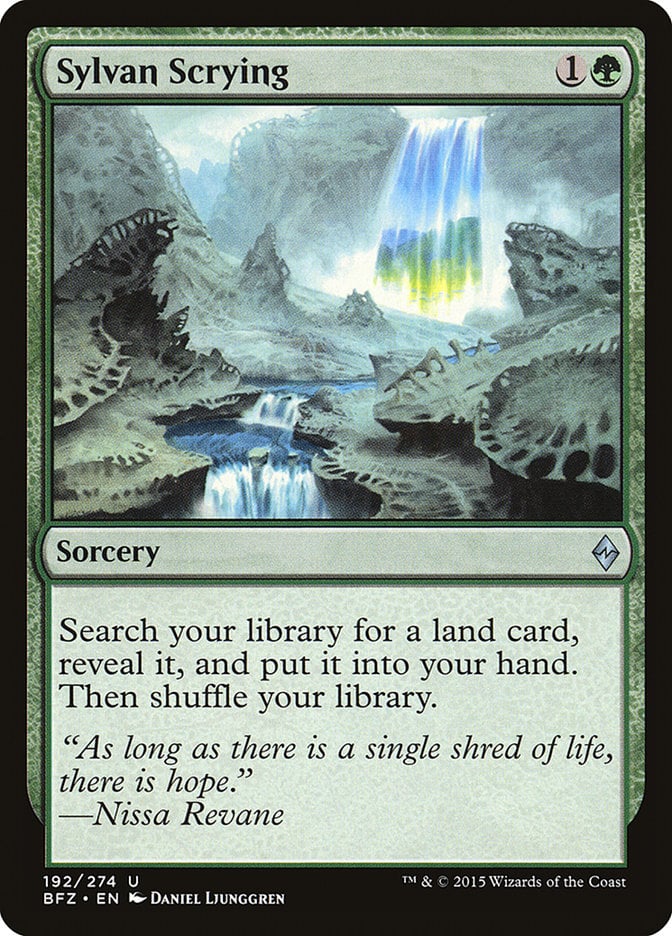
Sylvan Scrying is simply Demonic Tutor for lands, so, pretty good.

Sowing Mycospawn finds any land you like, and it gets extra utility once you hit 6 mana. Kicking it looks great when you can tutor Strip Mine, as few decks bounce back from the double land destruction.
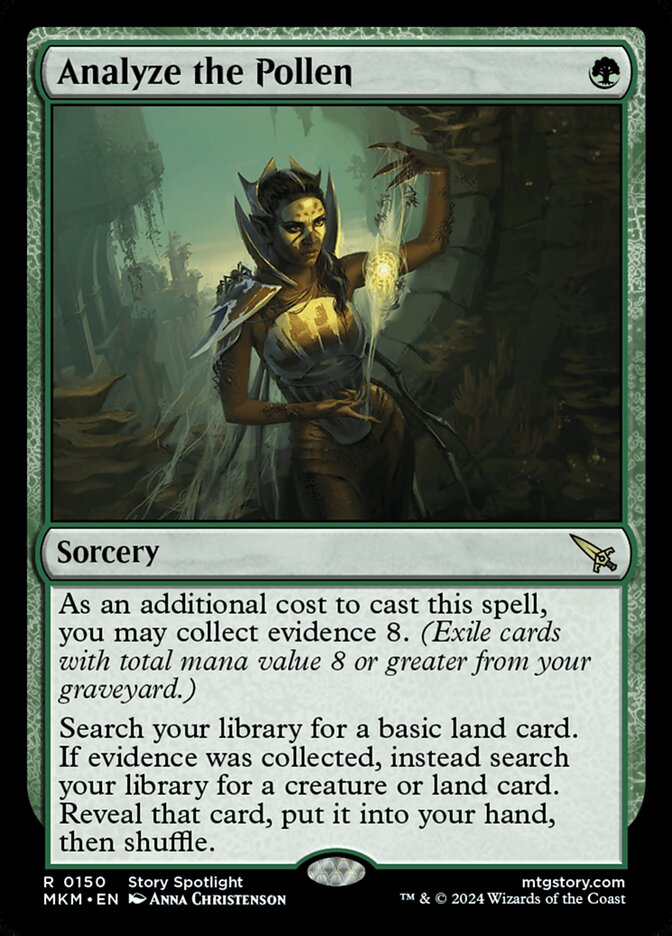
Analyze the Pollen is yet another beautifully flexible card. You’ll often cycle it early to hit a land drop, but you can rely on it in the late game to tutor up your best creature or land for any given situation.
The Mana Base
The mana base has two important parts: the ramp spells and the actual lands.

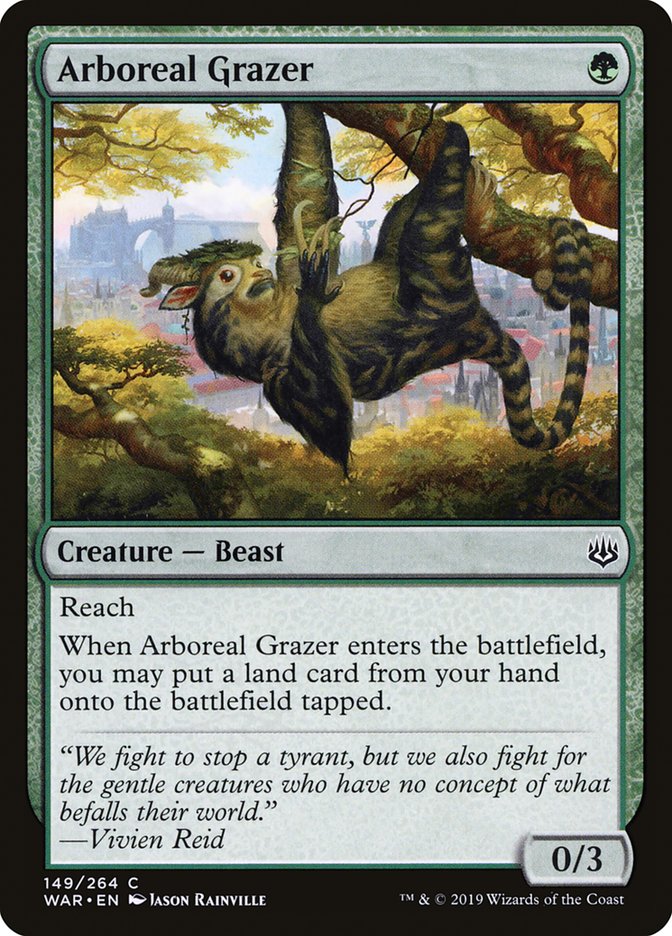
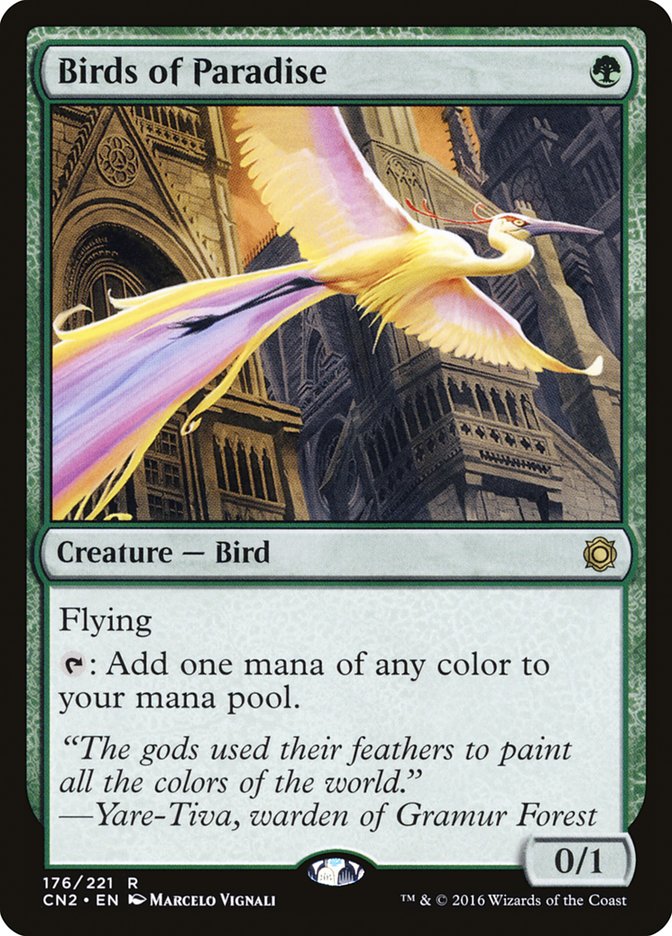
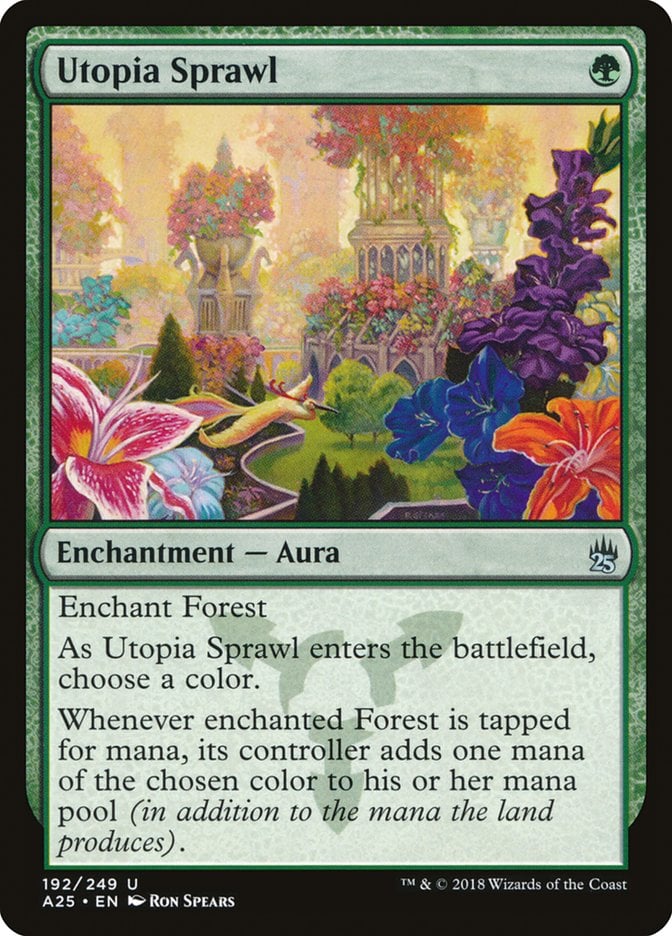
For ramp, let’s starting off classy with as many 1-mana accelerates as this deck can support—even slightly mediocre ones like Gilded Goose and Arboreal Grazer. They might not be as ubiquitously powerful as, say, Birds of Paradise or Utopia Sprawl, but accelerating from turn 1 is one of the strongest game actions you can take in Brawl, so they’re worth the slot.

Fanatic of Rhonas is a stellar mana dork. Poq almost always enables ferocious alone, and even if your opponent kills it, it comes back for more. You also have a mild self-mill subtheme, so milling this yourself turns it into a threat.

Traverse Valley should be foraged whenever possible so that it puts the land directly into play as a ramp spell rather than a tutor.
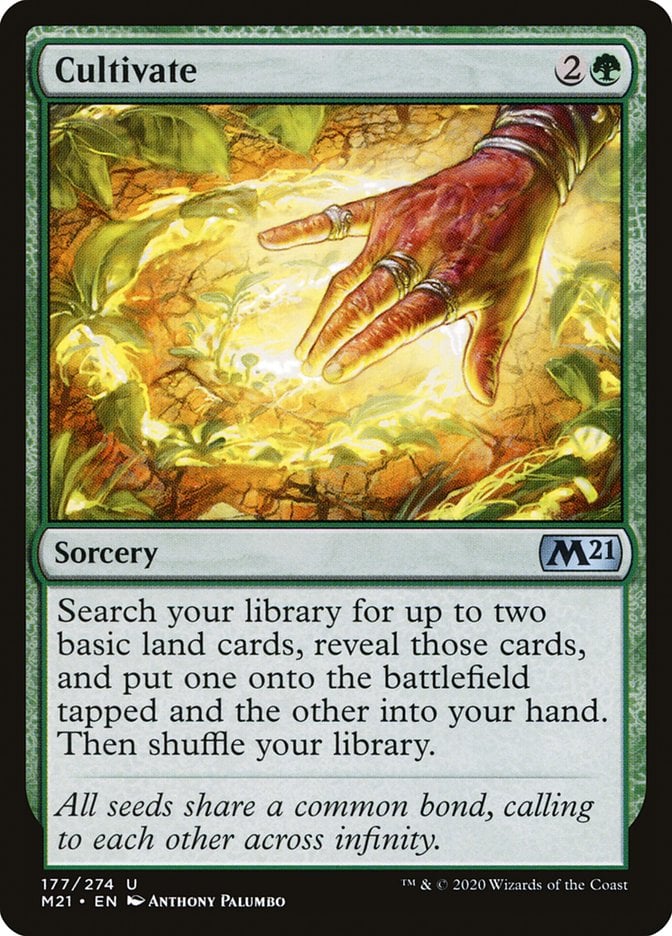

Cultivate is a fine 2-for-1, especially with all your 1-mana accelerants. Flare of Cultivation is simply busted, and a great reminder of why free spells aren’t okay; many of your best starts involve casting something like Tenacious Pup or Arboreal Grazer on turn 1, then sacrificing it to Flare of Cultivation.
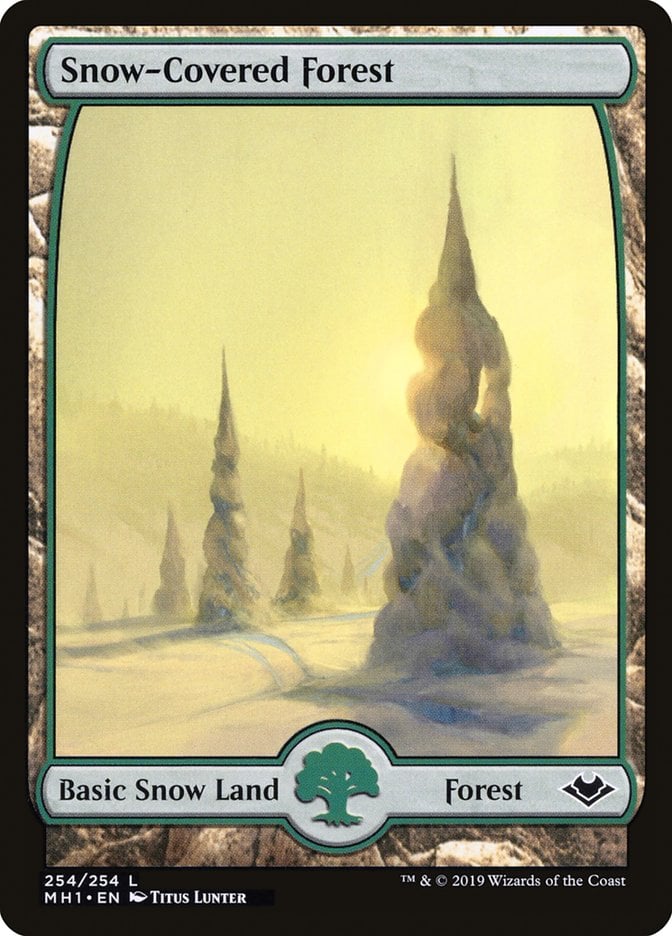
As for the lands, you actually have quite a few non-basics, despite being in mono-green. Of the 35 lands (38, counting MDFCs), a mere 16 are Snow-Covered Forests, with the remainder divvied up across many valuable plots.
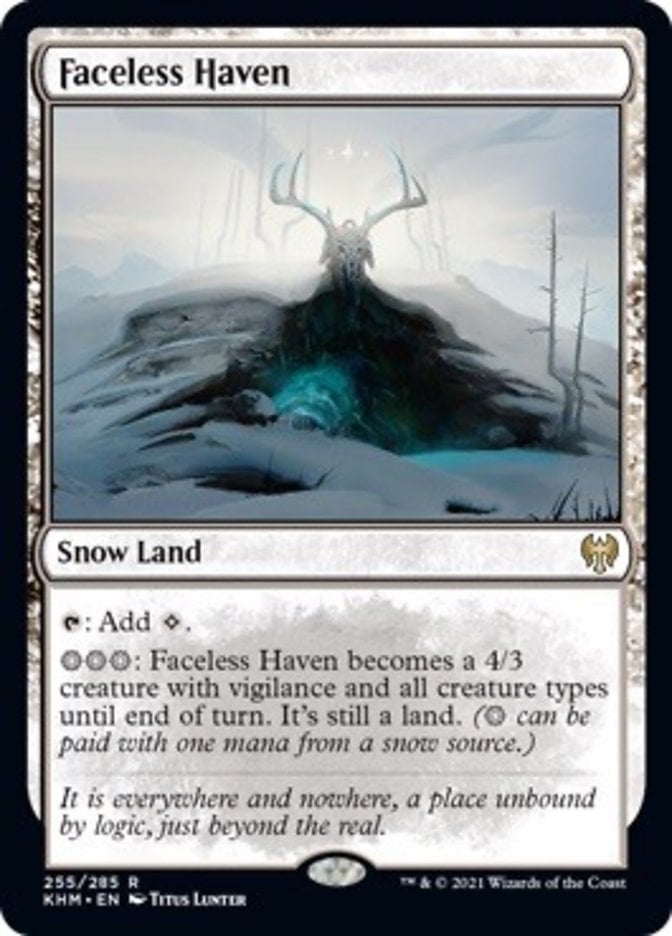
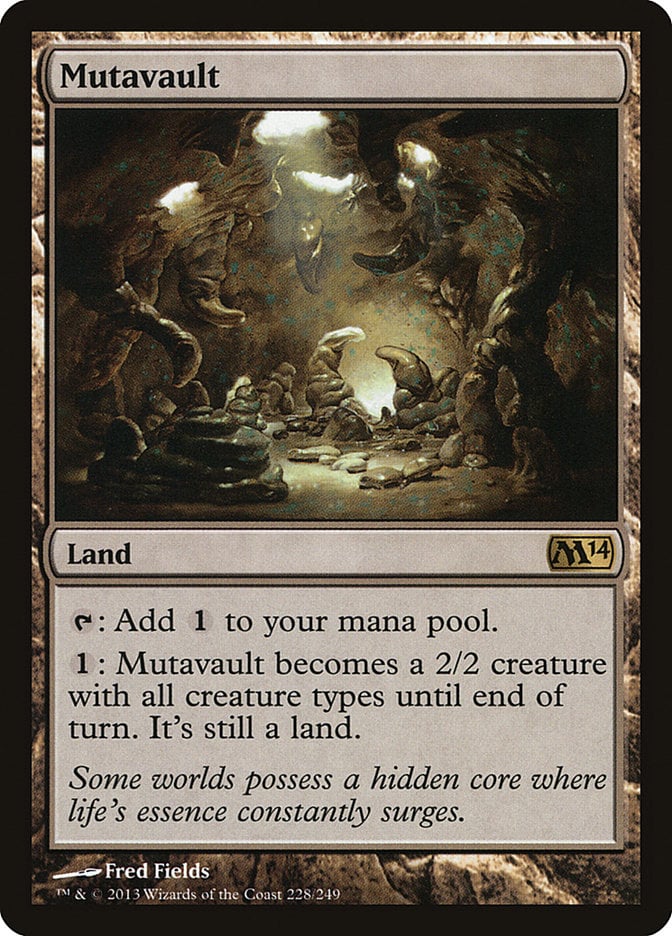
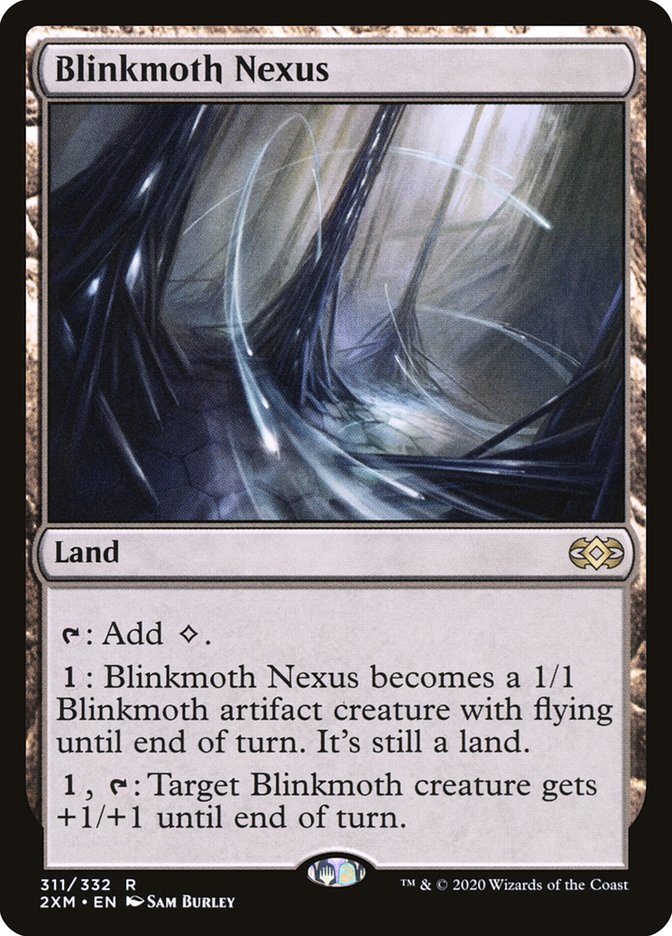
First and foremost, I’m running snow lands because of Faceless Haven, a stellar threat that looks even better when Mythweaver Poq copies it. There are additional creature lands in Mutavault and Blinkmoth Nexus.


Courtesy of EOE, we have some of the most busted lands to ever tap for mana in Brawl now. Ancient Tomb produces a truly unfair amount of mana and gets you off to astonishingly strong starts. Strip Mine goes the opposite direction and throws your opponents behind. Thanks to all your acceleration, you hardly feel the impact of losing a land. And if Poq ever copies Strip Mine, you simply win.
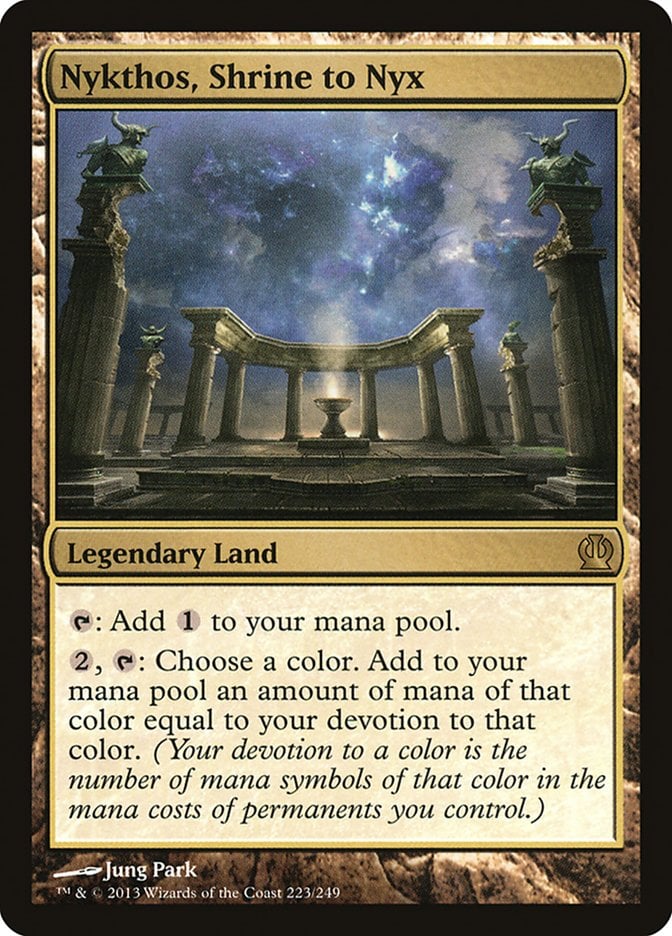
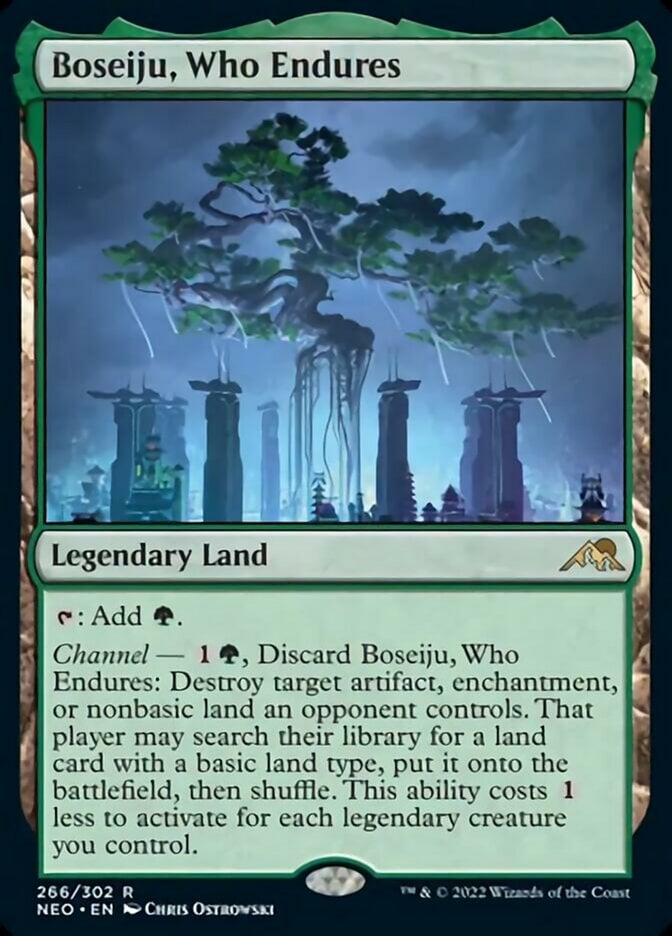
As a mono-color deck, Nykthos, Shrine to Nyx is a must-include; similarly, you’re playing green, so of course you have Boseiju, Who Endures for versatility (but don’t copy these with Poq, as they’re legendary).

Shifting Woodland often ends up as a pseudo-creature land, but don’t be afraid to make it into The Great Henge or even Strip Mine or a fetch land if the moment seems right.
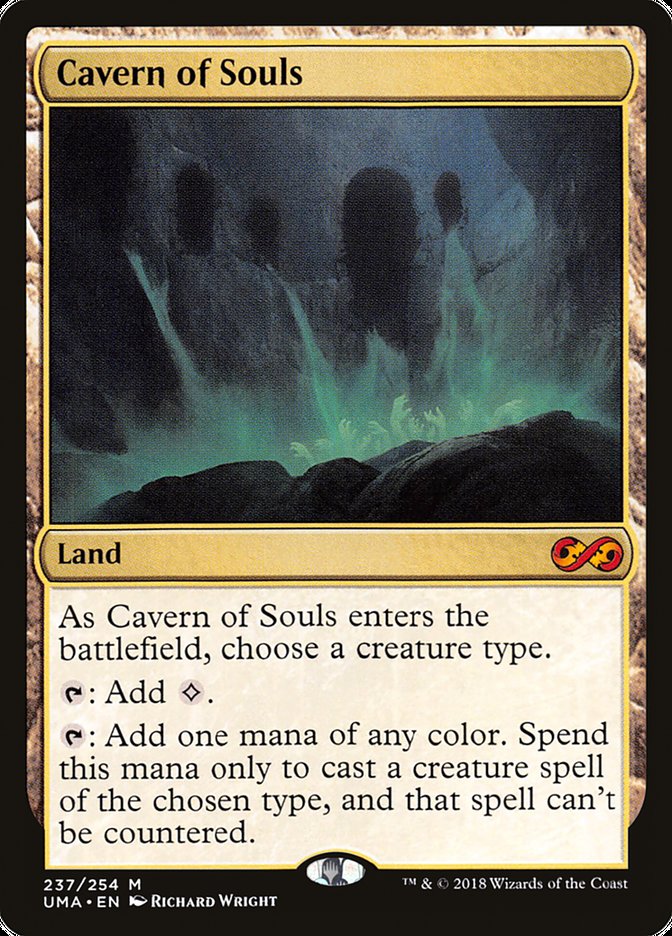
Cavern of Souls feels necessary in Brawl, so it’s here.
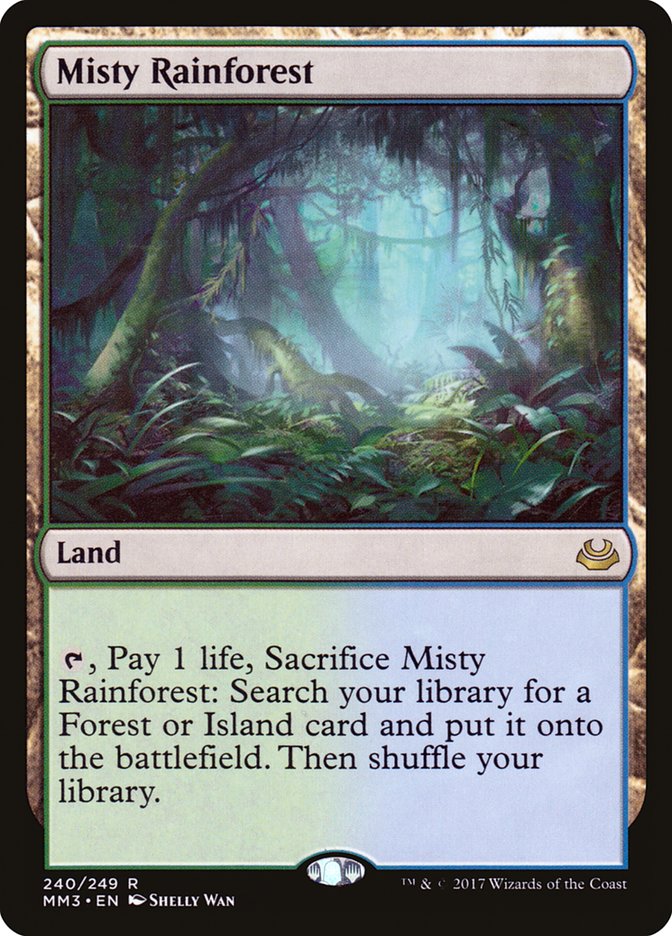
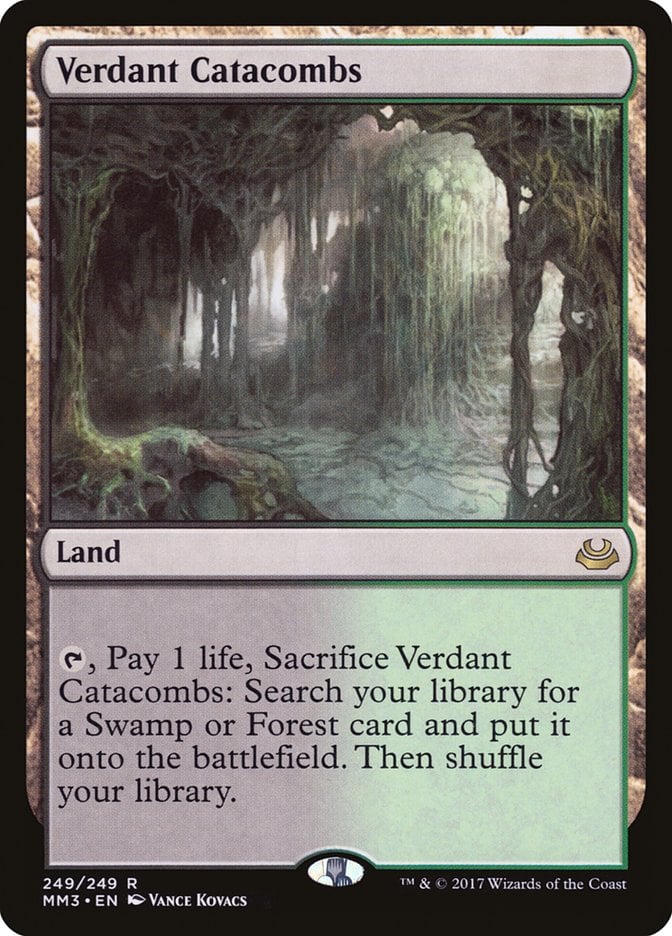
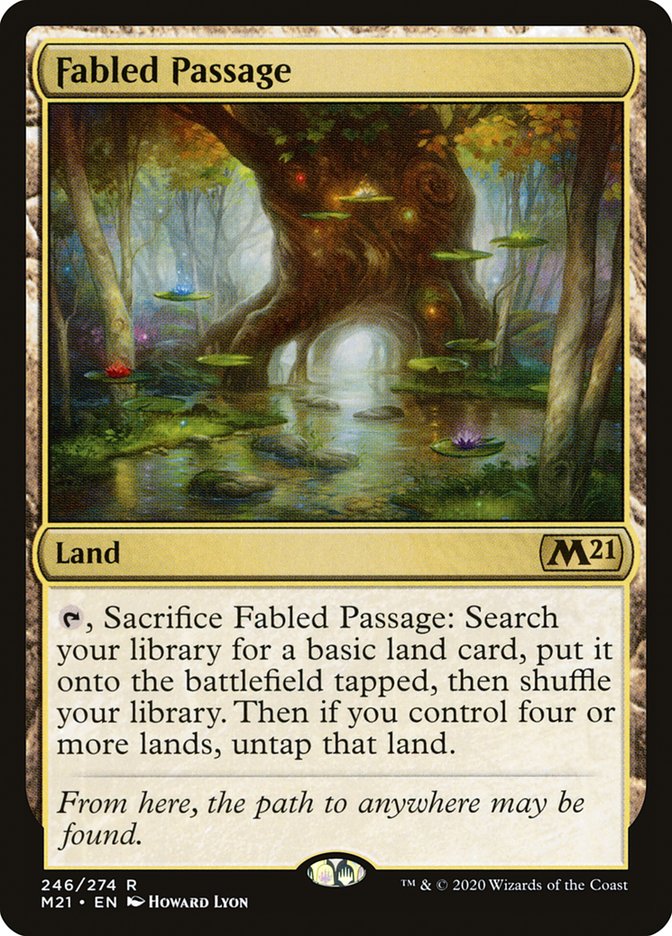
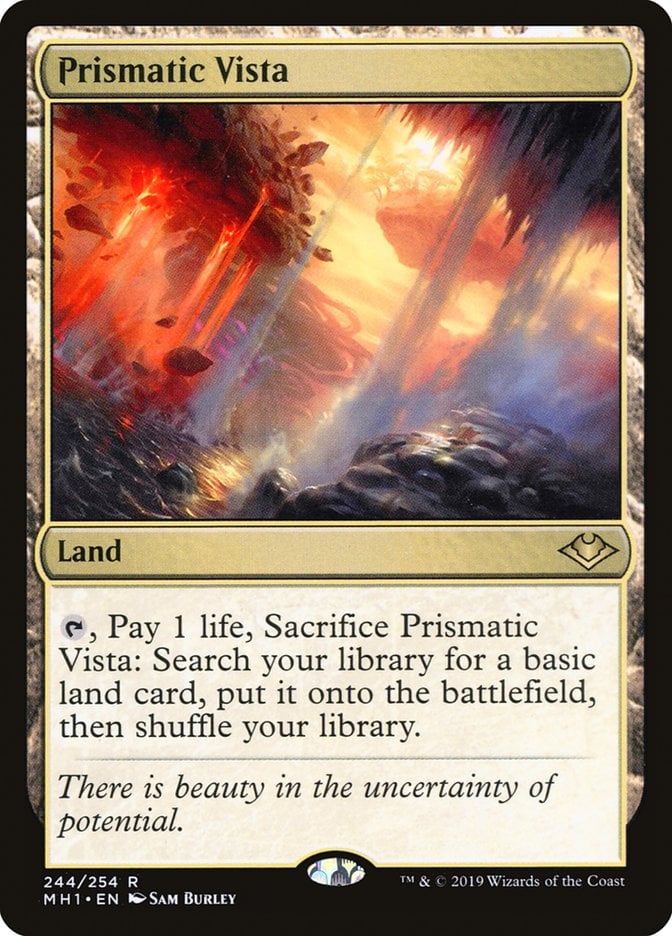
You also have a full slate of fetch lands to go with Poq and your landfall cards, including the good ones (Misty Rainforest, Verdant Catacombs, etc.), the basic fetches like Fabled Passage and Prismatic Vista, and even the on-color fetches from Streets of New Capenna. You really want to make multiple land drops a turn in this deck.
The Strategy
This deck has an awfully straightforward strategy: Land some mana accelerant and profit. It really isn’t a complex deck, but you need to be aware of its weaknesses when you mulligan.
The lack of cheap interaction, or at least interaction that works without creatures like Lightning Bolt or Cut Down, means that there’s no such thing as a reactive hand with this deck. I mean, maybe if you queue into something like Ugin, Eye of the Storms you know will be packed with mana rocks you can keep a hand of Naturalize effects, but that doesn’t work in most scenarios. You need to mulligan to something proactive. A turn-1 accelerant is preferable, but dropping Bristly Bill into a fetch land with a 3-mana threat works just as well.
This deck does a great job of going over the top of midrange decks. Between aggressive threats and big ramp targets, anybody fumbling around with a bunch of tapped lands and mana rocks won’t know what hit them. You also handle the aggressive decks pretty well, simply because your creatures tend to be large enough to block well early. The biggest struggle you’ll face are control decks, the kind often commanded by Nicol Bolas, God-Pharaoh or Sauron, the Dark Lord. You just aren’t fast enough to stop them from developing, and you often play a single threat a turn, which looks great for decks loaded with removal and counterspells.
Combos and Interactions
The deck’s most notable combos all revolve around Mythweaver Poq and how it interacts with your lands.
First and foremost, fetch lands. Poq triggers once each turn—not just your turn. So, if you play Misty Rainforest, you get an additional copy. Pass the turn, and crack one on your opponents’ turn to fetch a Snow-Covered Forest, and get two of them again. Then, on your next turn, you can crack the other fetch, get another SCF, and trigger Poq again. That’s a total of four lands from a single land drop.
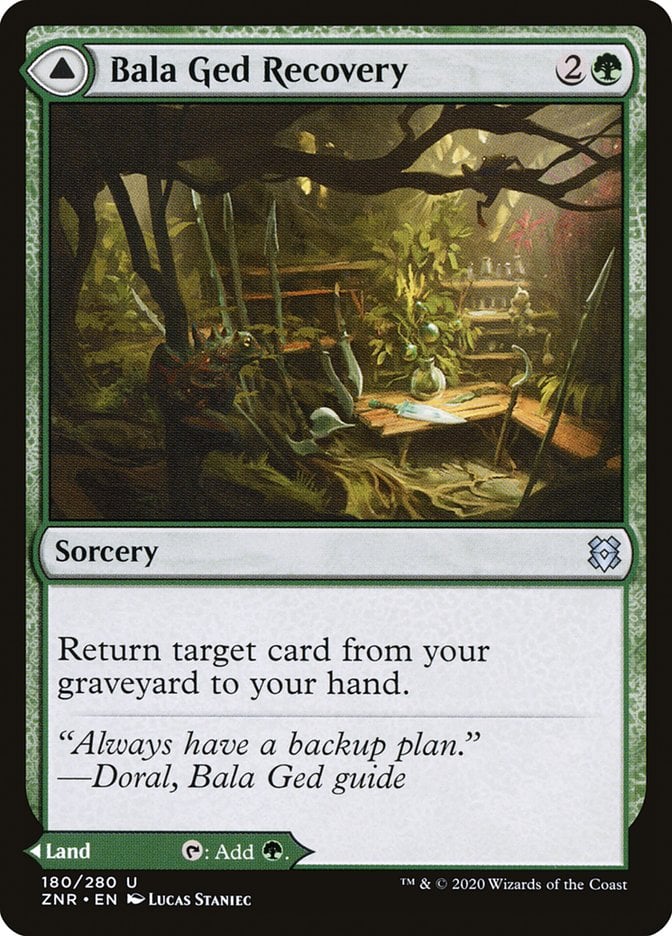
The deck also has a suite of modal-double faced cards that are lands on their back. When you copy a permanent via conjuring or other means, you copy the front of the card. That means that playing Kazandu Valley and triggering Poq doesn’t get you a second land: It conjures a Kazandu Mammoth into play. The flipside of this is that Bala Ged Recovery and Bridgeworks Battle don’t do anything when you play the land side; you can’t put instants or sorceries onto the battlefield, so Poq simply won’t trigger.
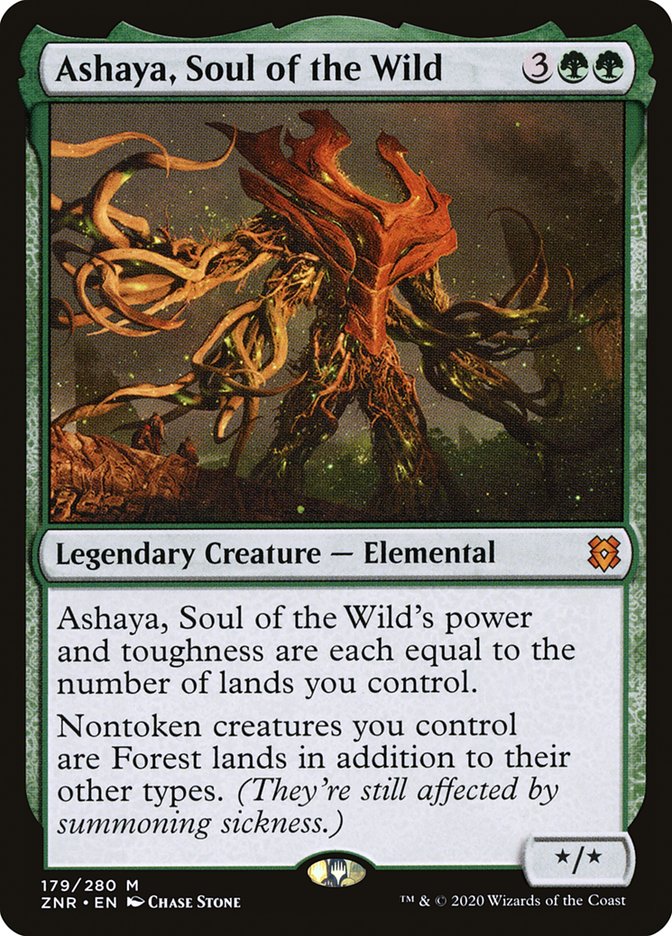
Another super notable interaction comes from Ashaya, Soul of the Wild, which makes all your nontoken creatures into lands. If you control both permanents, you simply make a copy of the first creature you play every turn. It’s pretty busted.
Wildcard-Friendly Alternatives
This deck draws on a lot of wildcards, as often happens in mono-colored decks. A good starting place to cut rares is the mana base; while many of the utility lands add to this deck’s power, it would be fine running 35 Snow-Covered Forests (or regular Forests, if you cut Faceless Haven). That also lets you scrap rares like Sowing Mycospawn and Icetill Explorer since you don’t have the lands that break them.
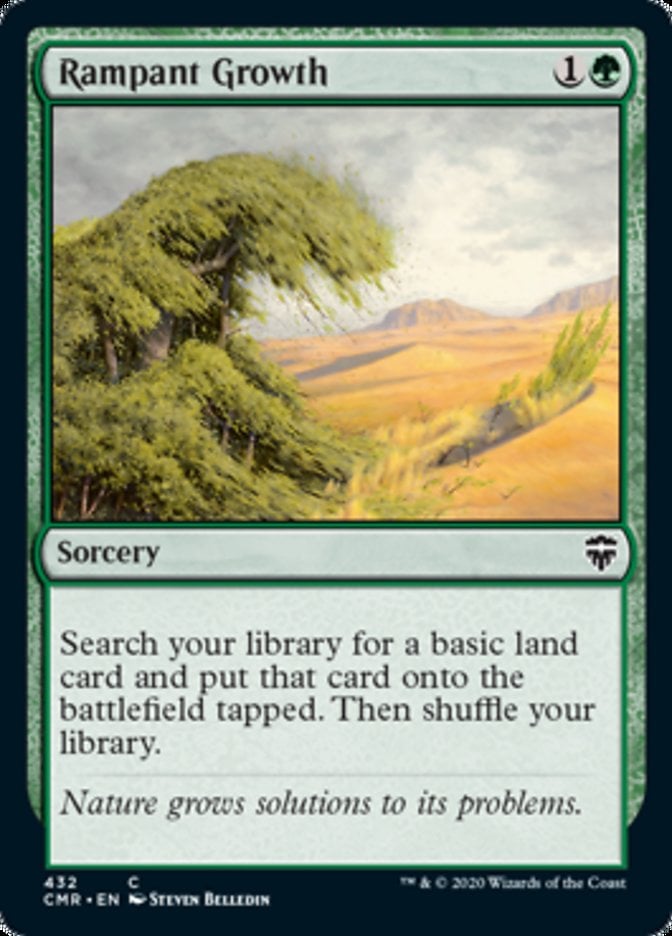
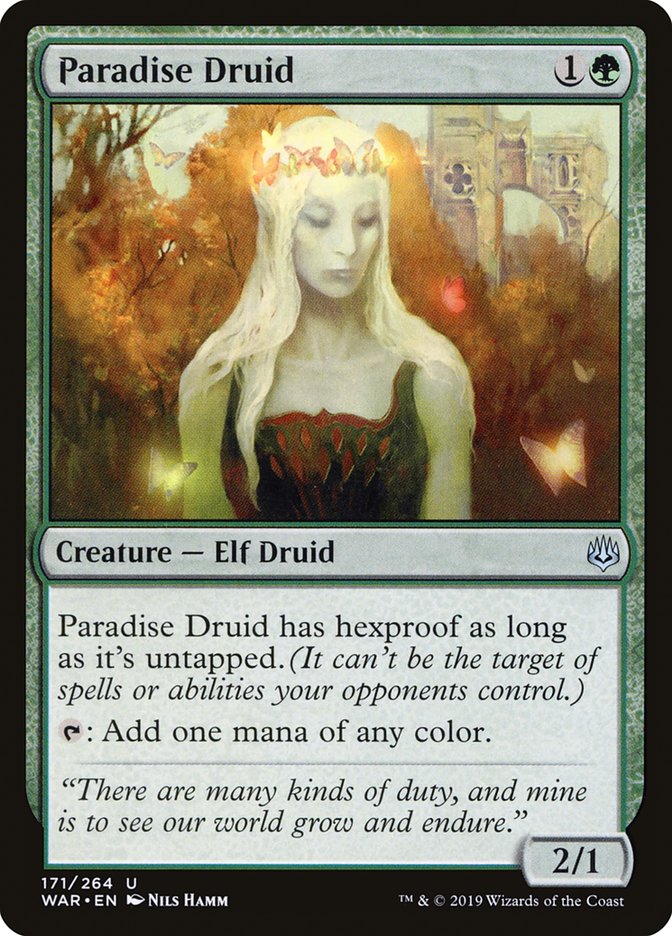


That said, the best way to go cheap on wildcards is to home in on the ramp side of the deck. Get rid of cheap, high-rarity threats like Bristly Bill, Spine Sower, Tifa Lockhart, and Deeproot Wayfinder in favor of additional ramp like Rampant Growth and Paradise Druid that are common or uncommon, then fill out the top-end with big beaters like Autarch Mammoth and Glacier Godmaw. Try to reserve your wildcards for big, interactive creatures like Kogla, the Titan Ape and Ulamog, the Ceaseless Hunger; these are hard to replace.
Other Builds
This deck straddles the line between a stompy list with its cheap threats and a ramp list with some top-end, and it’d be perfectly reasonable to build the deck such that it goes into one or the other.
For example, you could cut some top-end and a little ramp for more aggressive threats like Pawpatch Recruit and Webstrike Elite and rely on Mythweaver Poq as a massive beater for the top-end of your curve.
Going the other direction would cut cheap, aggressive creatures like Tifa Lockhart and Tenacious Pup for more ramp spells and expensive top-end, like Eldrazi and Cultivator Colossus. Leaning harder into ramp also makes it easier to trim wildcards.
Adapting for Commander
While Mythweaver Poq uses a digital-only mechanic, that doesn’t mean you can’t try to bring it to Commander with a proxy with the help of a Rule 0 conversation. Instead of attempting to enforce the rules of conjure, I recommend offering to alter the text to “create a token copy”; it’s a simple swap that retains most of Poq’s power while keeping things in line with the regular rules of Magic.
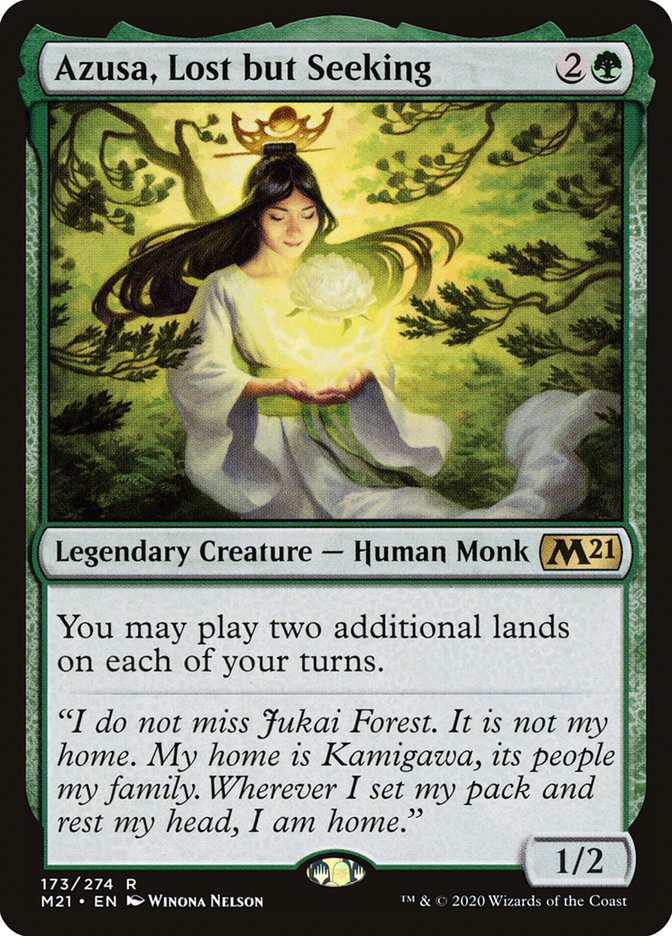
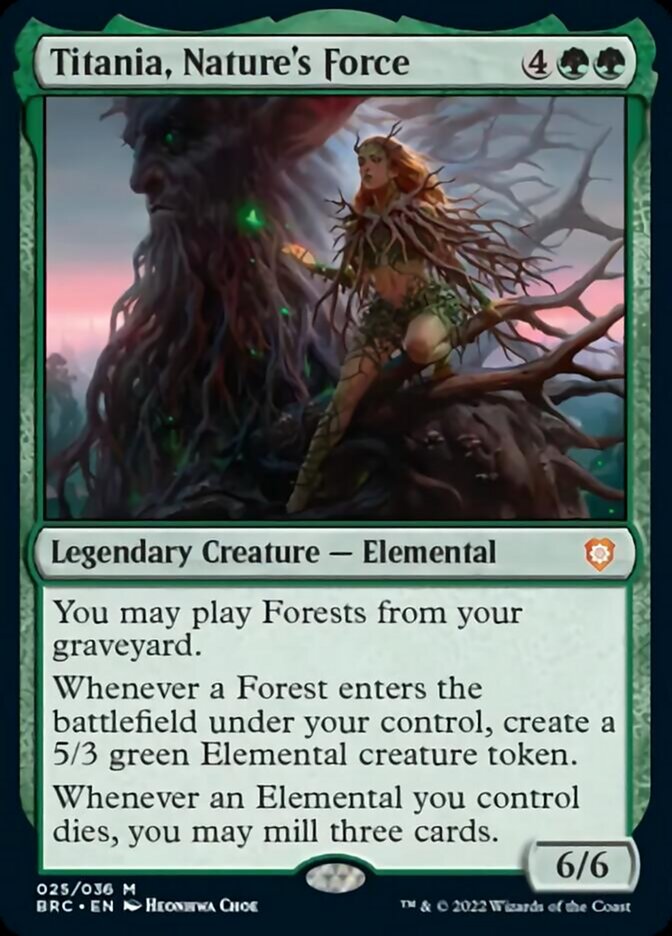
I also recommend having a backup commander in case the table doesn’t want to Rule 0 in your Alchemy card; Azusa, Lost but Seeking or Titania, Nature's Force are good options.
Commanding Conclusion
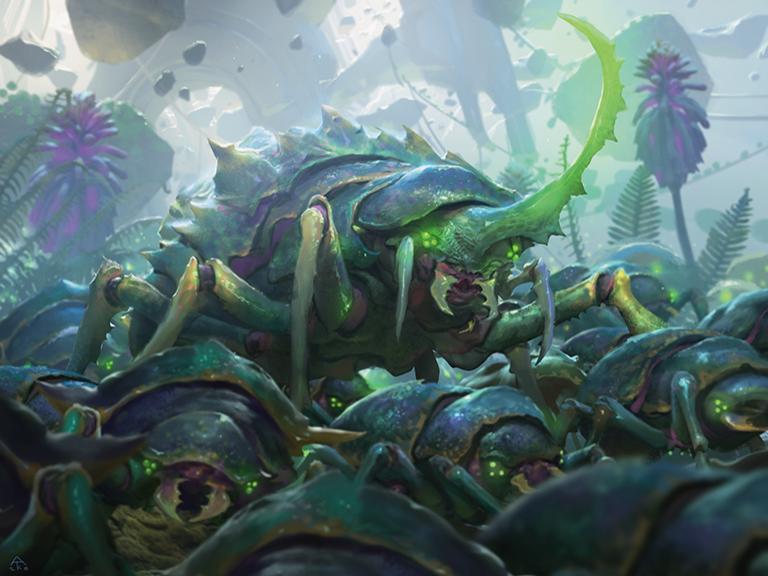
Scute Swarm | Illustration by Alex Konstad
Conjure is one of the stronger and splashier digital-only mechanics Wizards has introduced via Alchemy, and Mythweaver Poq serves as an excellent example of how busted it can be. Poq makes landfall shine and ramp a breeze—what more could you want from a commander?
Do you enjoy conjure? Would you ever try adapting Poq to Commander? Let me know in the comments below or on the Draftsim Discord!
Stay safe, and thanks for reading!
Follow Draftsim for awesome articles and set updates:










Add Comment