
Last updated on May 19, 2026
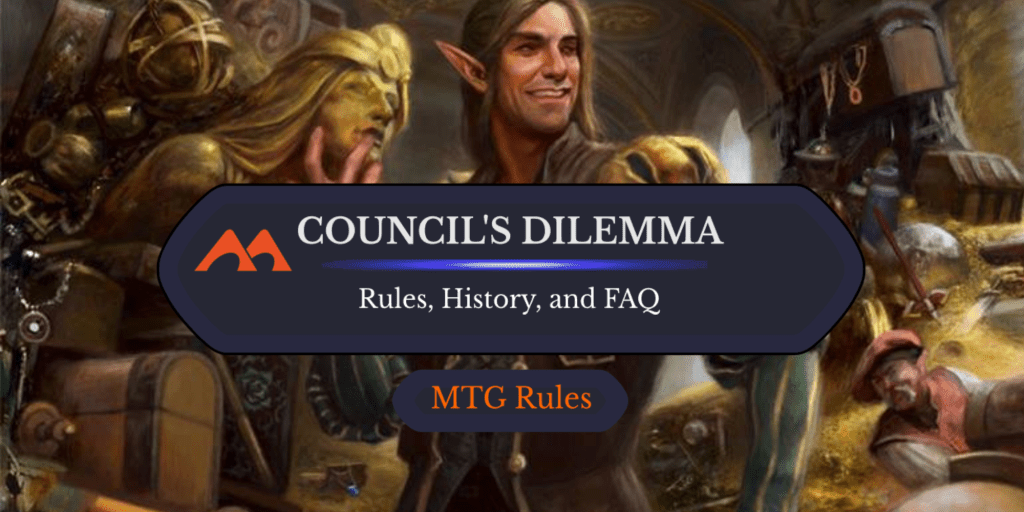
Expropriate | Illustration by Zack Stella
Voting for a certain effect to happen is pure politics in multiplayer games, and MTG adapted the idea for Conspiracy and Commander games. Multiplayer games naturally involve discussion of which spell should be countered, or which player should be attacked in a given turn.
Today, we’re looking at council’s dilemma, a voting mechanic that has only a few cards, but has a big impact on the game. Let’s dive in.
How Does Council’s Dilemma Work?
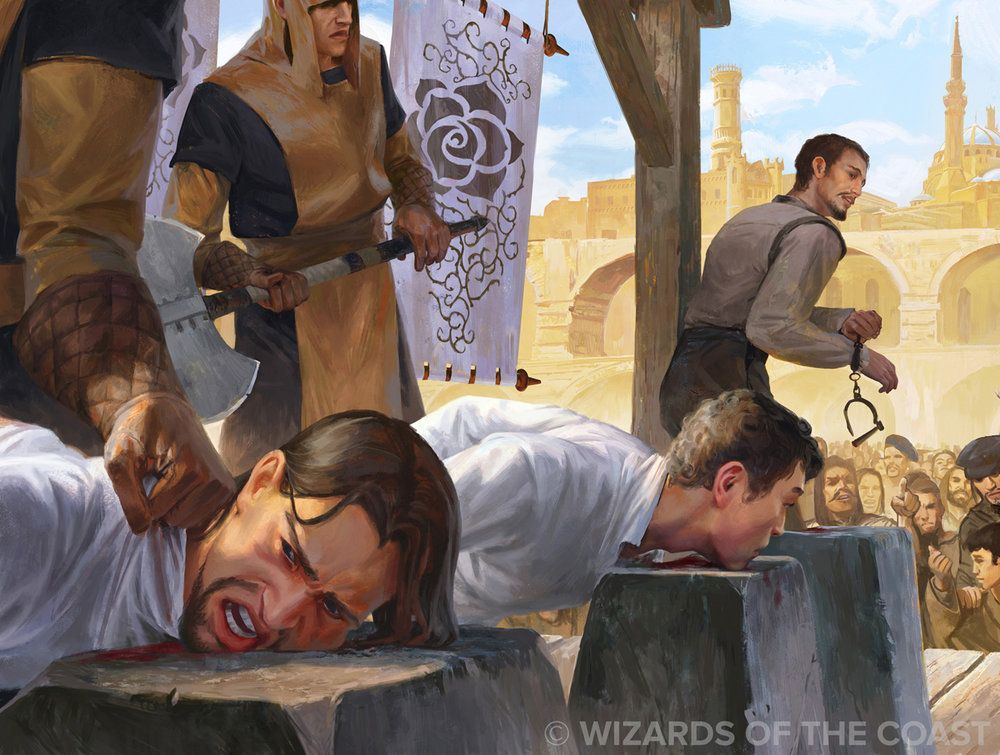
Capital Punishment | Illustration by Lake Hurwitz
Council’s dilemma cards cause each player to vote for effect A or effect B, starting with the player who cast the spell and going in turn order. Each vote will give the spell’s controller a certain benefit.

Let’s take a simple card, Messenger Jays. When this creature enters, each player will vote for feather or quill. Each feather vote puts a +1/+1 counter on the bird, while each quill vote makes Messenger Jays’ controller draw and discard a card. So, if three players voted for feather and one for quill, Messenger Jays will be a 5/4 flier that draws and discards a card.
It’s not as effective in a 1v1 game since council’s dilemma scales with the number of players. If you’re playing a 6-player format for some reason, then you’ll get six different benefits. There are also cards like Brago's Representative that give you another vote.
The History of Council’s Dilemma in MTG
Council’s dilemma was designed for Conspiracy: Take the Crown (CN2) in 2016, the second Conspiracy set. It’s a variant on the voting mechanic from the first Conspiracy set, will of the council. Council’s dilemma appears on six CN2 cards, and it got reused twice, in New Capenna Commander (2022) and in Tales of Middle-earth Commander (2023), bringing the total to eight.
In Which Direction Does Voting Happen?
Voting starts with the player who controls the spell and follows turn order. According to MTG rules: “if the votes aren’t secret, each player will know the votes of the players who voted before them.” If players get an extra vote, they’ll vote twice in a row, and they can vote for two different effects if they choose to.
Do Players Get Priority While Voting?
They don’t. Priority doesn’t change during voting because it’s part of the spell’s resolution. In other words, players can’t respond to voting or play instants once voting begins. They also can’t change their votes based on previous votes.
Will of the Council vs. Council’s Dilemma
Will of the council was Magic’s first voting mechanic, followed by council’s dilemma later. The major difference is that will of the council cards unleash an effect the majority of players voted for.
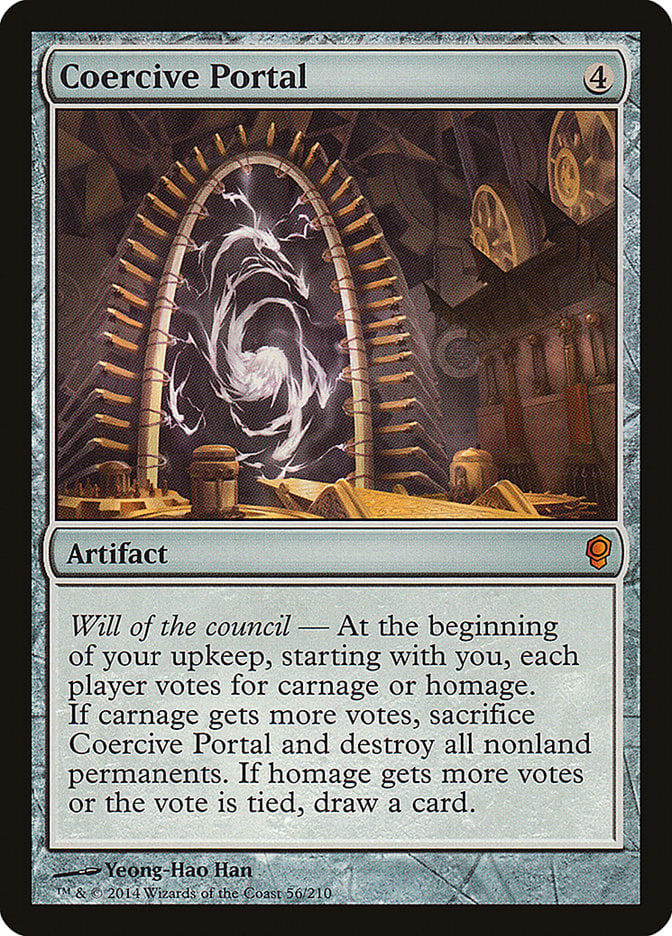
For example, Coercive Portal has players vote for carnage (sacrifice the Portal and destroy all nonland permanents) or homage (Portal’s controller draws a card). Whichever gets more votes happens, and only once for each vote trigger. There’s also a pre-determined effect in the case of a tie vote.

However, with council’s dilemma, each vote gives you a benefit. In a simple example, Travel Through Caradhras gives you a Rampant Growth effect for each “Redhorn Pass” vote, and it gives you a Regrowth effect for each “Mines of Moria” vote.
How Does Council’s Dilemma Work in Two-Headed Giant?
In a Two-Headed Giant game, where two players are battling two other players, it goes like this: The team whose player casts the council’s dilemma spell votes first, and both players vote once each. The votes can be different between team members. Then, players from the opposing team vote once each.
Gallery and List of Council’s Dilemma Cards

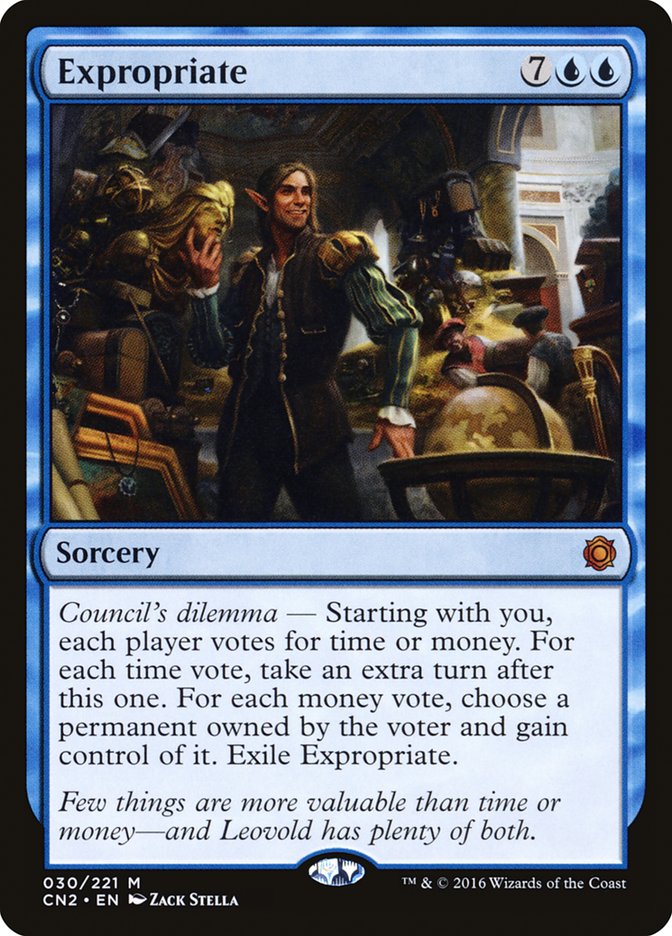


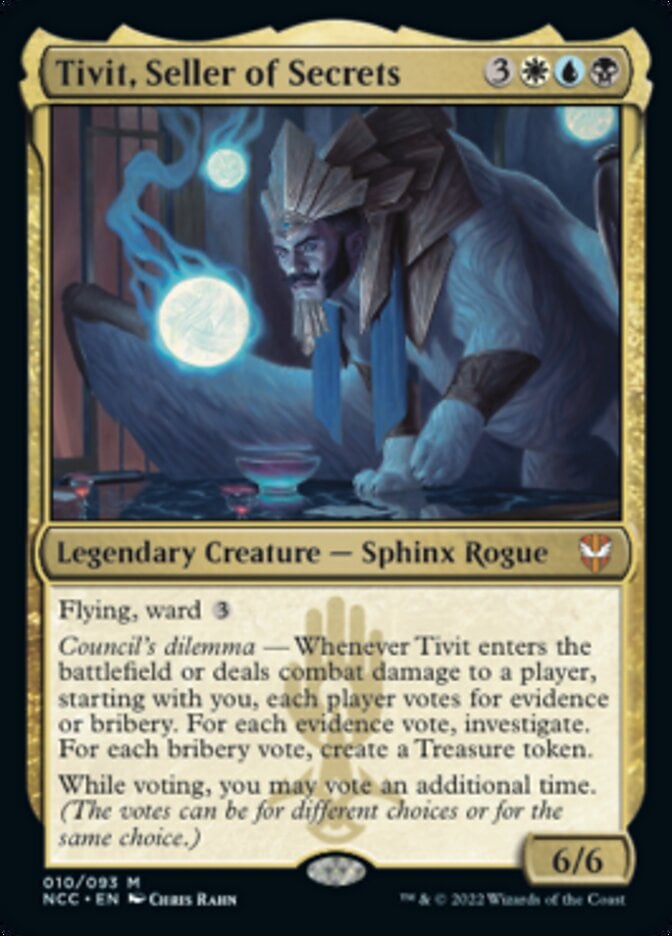
- Lieutenants of the Guard
- Expropriate
- Messenger Jays
- Capital Punishment
- Orchard Elemental
- Selvala's Stampede
- Travel Through Caradhras
- Tivit, Seller of Secrets
Best Council’s Dilemma Cards
#8. Orchard Elemental
Orchard Elemental isn’t great. A giant vanilla creature without evasion isn’t good, nor is the lifegain. A 6/6 that gains 6 is your typical Draft common, like Honey Mammoth or Ravenous Lindwurm. Good only in Conspiracy drafts.
#7. Lieutenants of the Guard
Let’s see what we can get with Lieutenants of the Guard. a 2/2 and four 1/1 creatures, or a 6/6 creature, or something in between, like a 4/4 that makes two 1/1 tokens. None of these is spectacular on a 5-mana creature, but this is a common, so play it if you have extra votes, or some +1/+1 counter synergies.
#6. Messenger Jays
As far as Conspiracy commons go, this is one of the better ones. Messenger Jays can be an ok-sized flier that loots once or twice. If you have two votes, this gets a lot better, as you’re getting at least a 3/2 flier that loots once just with your votes. We’re still in the “voting-matters” or “rarity restricted” decks territory, though.
#5. Travel Through Caradhras
This card has a high ceiling, but it can also be frustrating at 6 mana. Travel Through Caradhras offers ramp or a Regrowth, but problems arise when you don’t have anything good in your graveyard. Paying 6 mana for a Rampant Growth is really bad, so to max out on this card, you’d better have a filled-up graveyard. The best scenario is when you have landfall creatures in play and 2-3 good Regrowth targets in your graveyard.
#4. Capital Punishment
Capital Punishment offers you an edict mixed with a discard effect. Other than this card screaming Tegrid, God of Fright, players with no cards in hand will choose discard, while players with small creatures will choose to sac. A mix of both effects often sees your opponents collectively down a bunch of resources.
#3. Selvala’s Stampede
Selvala's Stampede offers a free creature from the top of your library with the wild vote, or a free creature from your hand with the free vote. The only downside with this card is that if you don’t have many cards in hand, it’s safer for your opponents to vote for free. You’ll usually play this card in decks that have expensive creatures, in the 6-8 range. From a strategic standpoint, it’s almost always right to choose wild for yourself, as your opponents are already highly incentivized to make you use the cards from your hand instead of giving you free creatures from your deck.
#2. Expropriate
Expropriate is expensive at 9 mana, but it’s totally worth the effort. It’s choices are ridiculously powerful. Do you want me to take an extra turn or your best card? If I have okay cards, I’m more likely to vote for money, and if other players voted for time, I’m probably forced to choose money, because a player playing two or three extra turns is very strong. And they will play extra turns using the “stolen” cards as well.
#1. Tivit, Seller of Secrets
Tivit, Seller of Secrets gives you an extra vote, so you can get extra benefits from council’s dilemma, or have a bigger say in will of the council cards. That on top of a big 6/6 flier with ward 3. And just casting Tivit creates Treasure tokens and/or Clue tokens. Your votes alone create two tokens. A common combo involving this card is to get five artifact tokens, sacrifice them to Time Sieve, and do it again on the extra turn. You can also get a lot of tokens with Academy Manufactor, or sacrifice them to deal damage to your opponents using cards like Mirkwood Bats.
Wrap Up
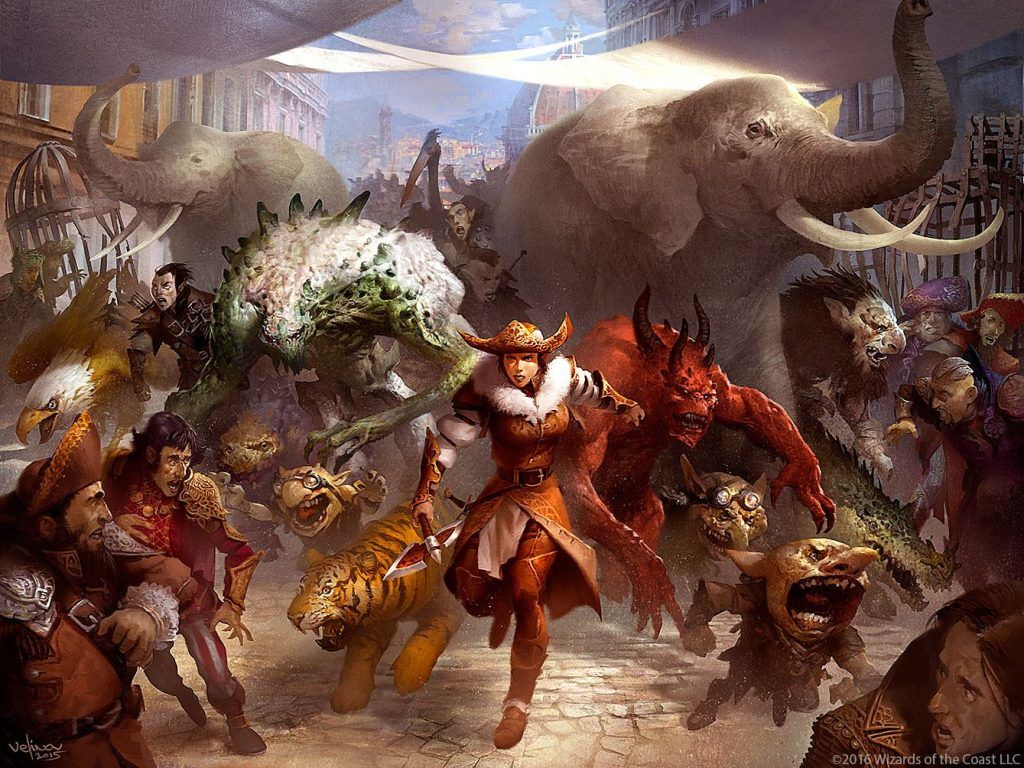
Selvala's Stampede | Illustration by Svetlin Velinov
That’s about it for council’s dilemma, folks. It’s one of my favorite voting mechanics. I don’t see a Standard set using voting any time soon, but Commander precons are another matter entirely.
If I were to take a guess, I’d say voting comes back in Star Trek, at least in a Commander product. There’s a lot of voting going on in the show, though we can’t be sure if this mechanic specifically will return, because WotC is more likely to design a different voting mechanic altogether.
What’s your take on voting? Is council’s dilemma one of your favorite voting mechanics? Let me know in the comments section below, or over in our Draftsim Discord.
And next time, be sure to get the most out of your voting cards.
Follow Draftsim for awesome articles and set updates:










Add Comment