

Glen Elendra's Answer | Illustration by Sam Guay
Blue has always been about playing the long game, and Lorwyn Eclipsed stays true to that identity with a clear typal subtheme in mind. As is mandatory for each set, we’ll go over the best cards of the color that are likely to make an impact across various formats.
Intrigued by what ECL has to offer blue mages? Let’s dive into it!
What Are Blue Cards in Lorwyn Eclipsed?
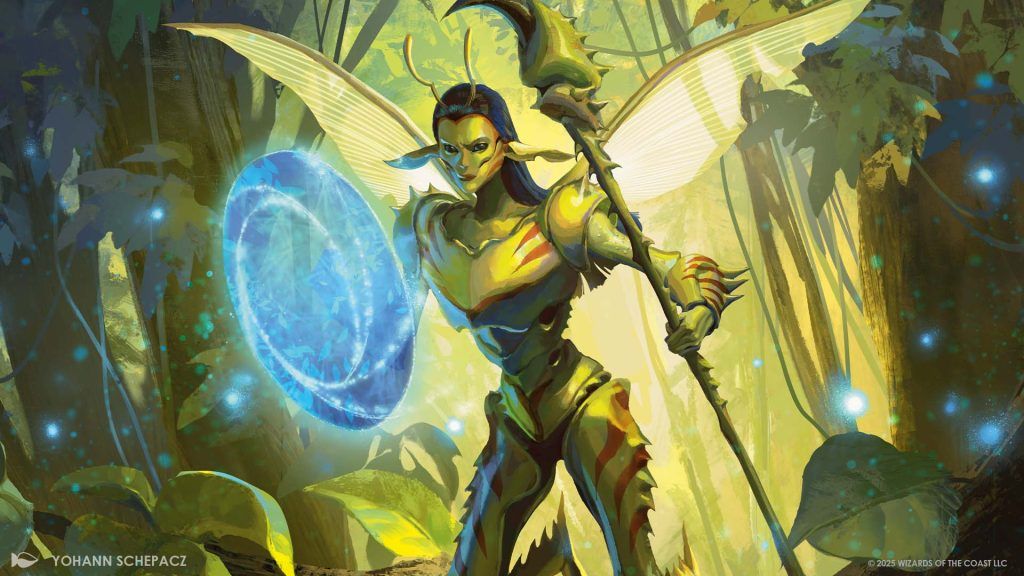
Glen Elendra Guardian | Illustration by Yohann Schepacz
Blue cards in Lorwyn Eclipsed are all about gaining value through drawing cards and keeping the board in check instead of trying to win as fast as possible. A lot of these are designed to work with familiar Lorwyn creatures like faeries, merfolk, elementals, and changelings, so typal decks get plenty of support.
Flash and convoke are the common overlapping themes, which encourage you to keep mana available, play on the opponent’s turn, and use creatures as resources, not just attackers.
Best Reprints and Special Guest Cards
Blue has its fair share of reprints from the regular set, Lorwyn Eclipsed Commander, and the Special Guests. Here are the familiar faces that make a return for Lorwyn Eclipsed.
#7. Slithermuse
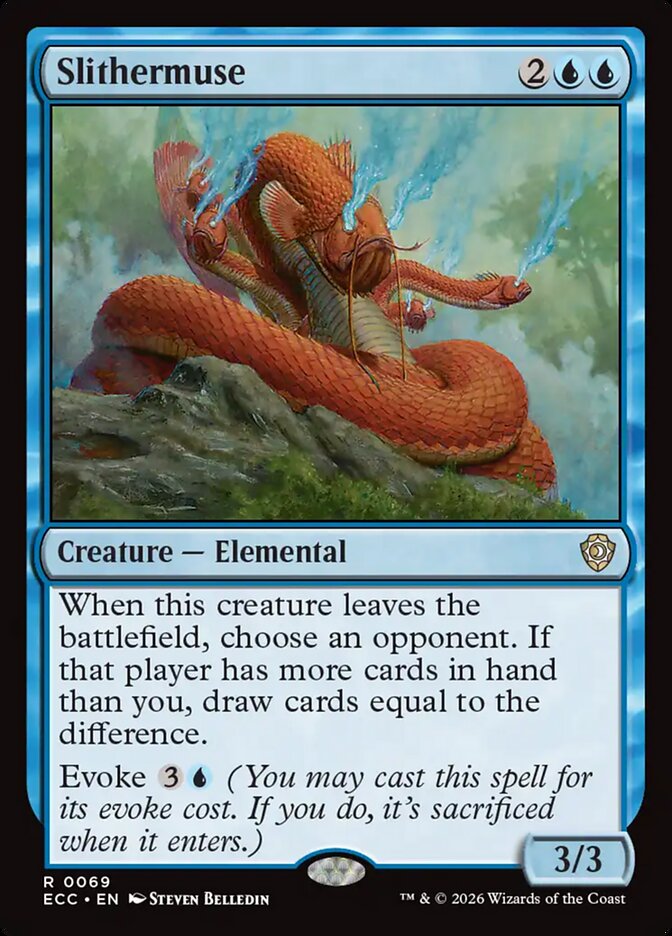
When an opponent sits on a full hand, Slithermuse can turn that gap into a major refill the moment it leaves the battlefield. Evoke at 4 mana makes this reliable on its own, letting you trigger the draw without the need for a sacrifice outlet, while blink effects still give you control over timing. It excels against slower, card-heavy decks, but against low-curve aggro, it often draws very little, so it’s a metagame-dependent choice.
#6. Distant Melody
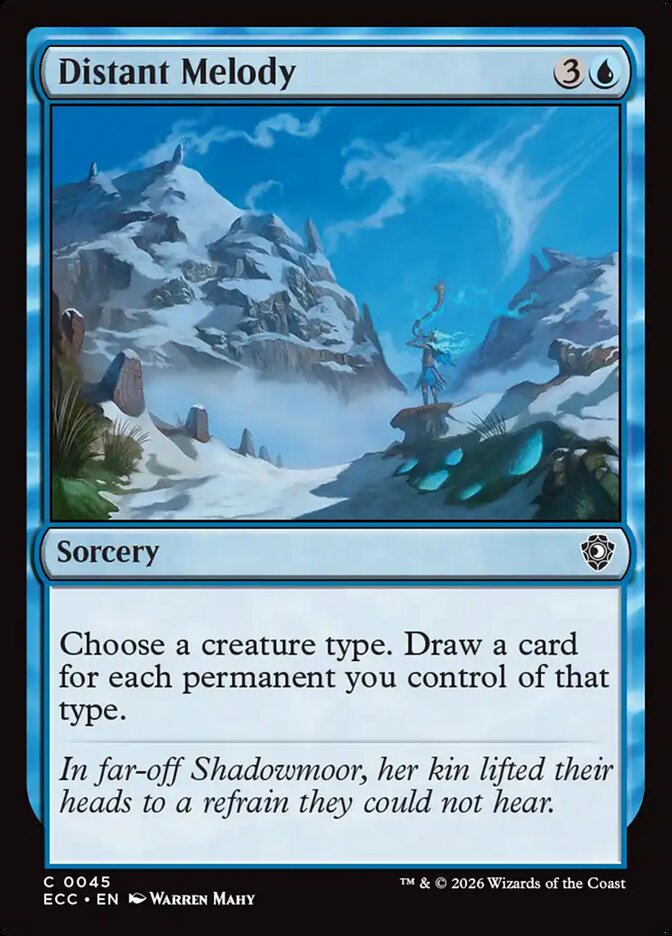
Once a board is established, Distant Melody becomes a pure payoff for going wide. This is most commonly seen in Pauper Elves, where mana filtering from Birchlore Rangers makes splashing blue trivial and essentially free. After dumping their hand onto the battlefield, Elves uses this to draw a massive chunk of cards and keep chaining threats. It does nothing when you’re behind, but in decks built to flood the board, it functions as a reliable reload rather than a comeback tool.
#5. Spell Snare
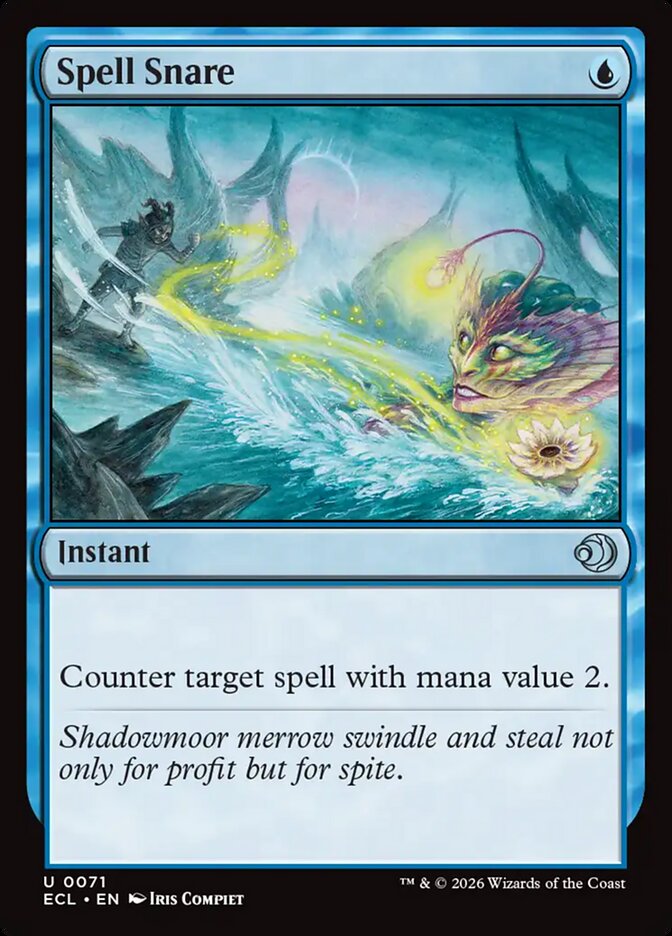
The opening exchanges often set the pace of a game, and Spell Snare helps control decks to keep up when they’re on the draw by trading a single blue mana for a key 2-mana spell without falling behind on development. With this reprint entering Standard and Pioneer, slower strategies gain a more consistent way to interact in the early game and make it to the point when their long-term plan can take over.
#4. Mulldrifter
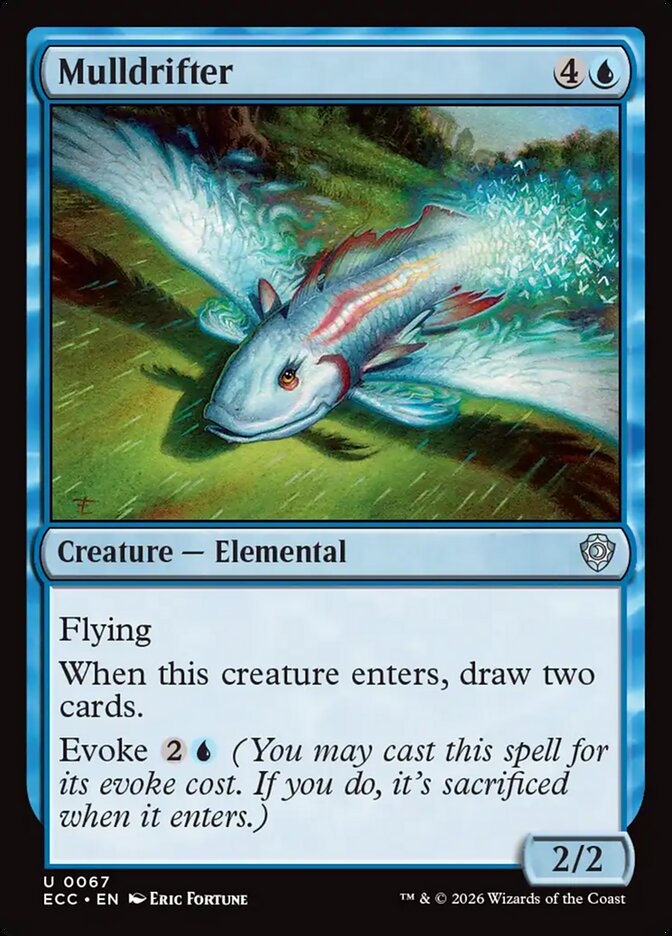
Modal choice is what makes Mulldrifter one of Pauper’s most iconic cards. Evoke turns it into a cheap draw-2 when you need to hit land drops, while hard-casting leaves behind a body that replaces itself and blocks in the air. It shows up most often in Familiars and other blue grindy shells, where blink and recursion turn the enter trigger into a steady engine.
#3. Reality Shift
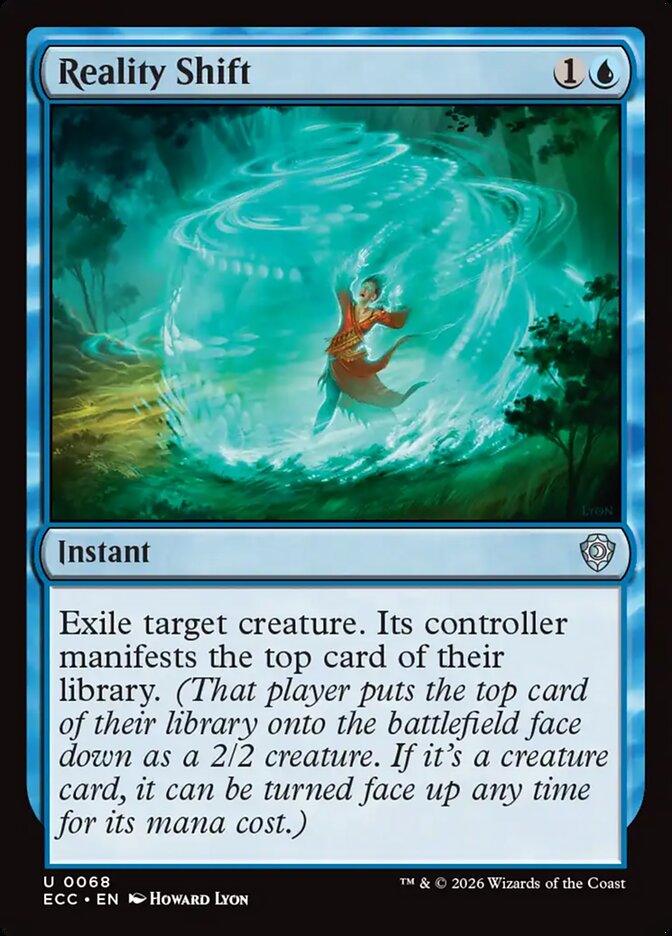
Blue doesn’t get many clean exile answers, so Reality Shift fills a real role. This removes commanders, recursive threats, and death trigger creatures in a way that most blue interaction can’t. The manifested card is the price, but in multiplayer formats, this extra downside is almost nonexistent.
#2. Mistbind Clique
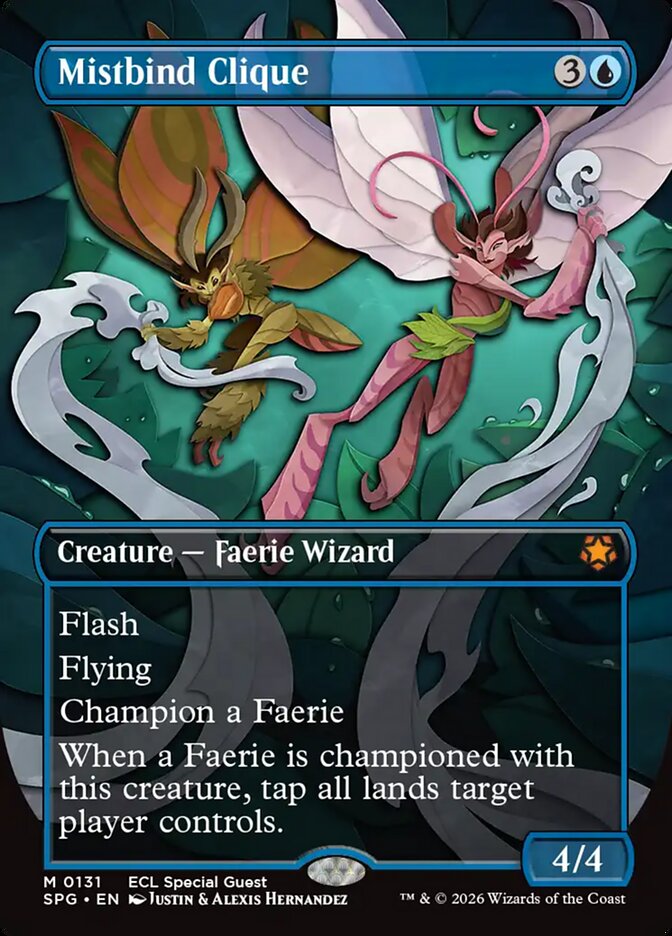
The real strength of Mistbind Clique comes from timing rather than raw stats, since flashing it in on upkeep to champion a token and tap all of an opponent’s lands can completely disrupt their turn. That play fits faeries decks that pass with mana open and apply pressure while the opponent stumbles, though it requires careful sequencing to avoid losing the advantage to a well-timed removal spell.
#1. Wanderwine Prophets
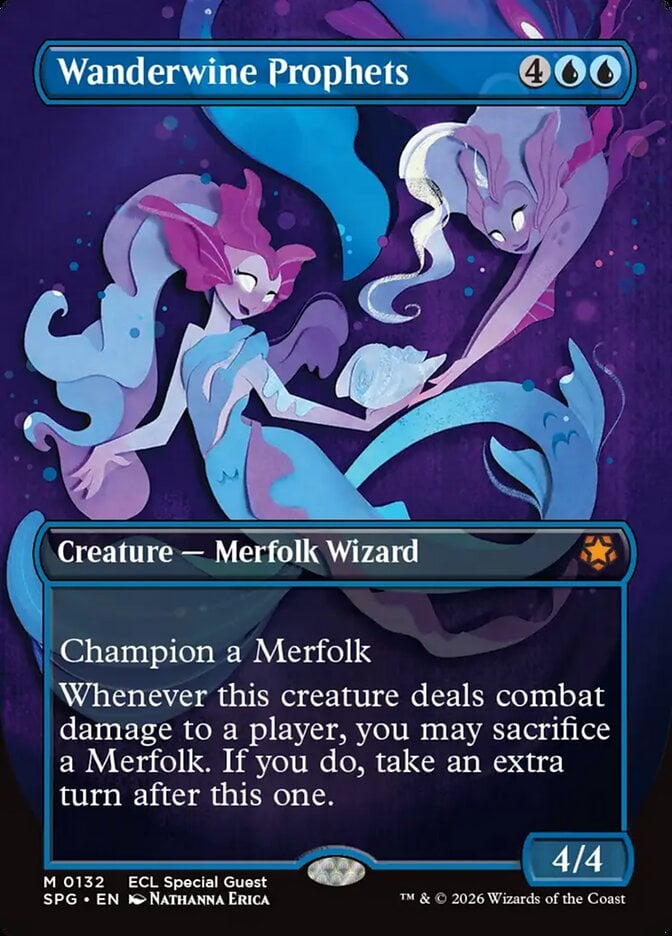
Wanderwine Prophets can quickly take over a game if you let it set up and get through. Effects like Deepchannel Mentor make attacking safe by turning off blockers, while Deeproot Pilgrimage keeps a steady supply of merfolk tokens to sacrifice for extra turns. Because it costs 6 mana and needs a clear attack, this works best as a finisher after your board is already set up. What I like about this reprint is that regular copies have been sitting in the $6–$15 range, so bringing it back should improve availability and ideally lead to a price drop.
#19. Stratosoarer
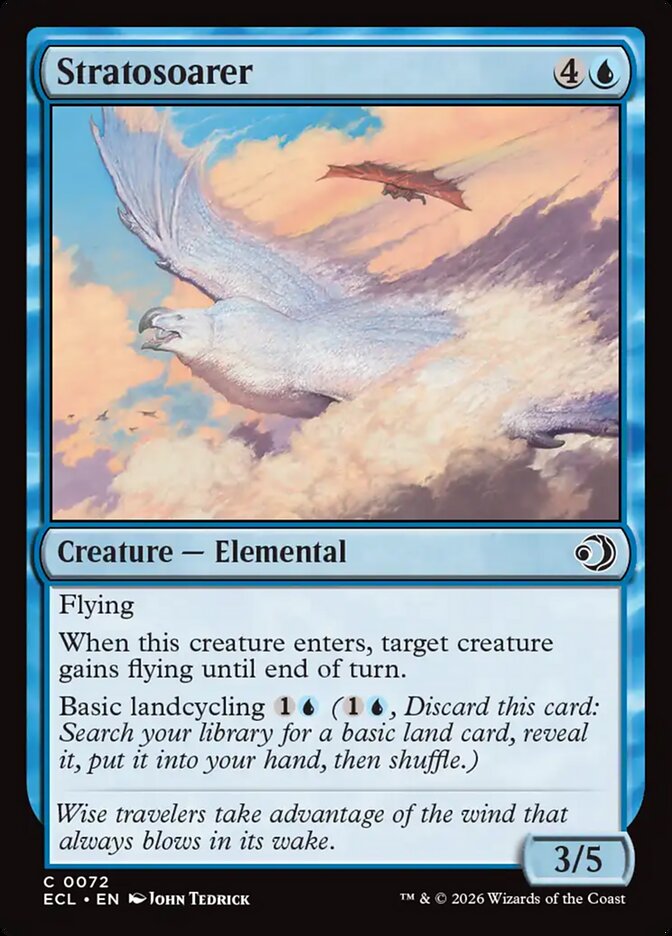
Landcycling keeps hands functional, and Stratosoarer is built around that consistency. Early, this is a land drop when you need it. Later, it becomes a solid 3/5 flier that stabilizes and applies pressure. The enter trigger that grants flying can also push through a key attack or let a creature dodge ground stalls for a turn. It isn’t a bomb, but it smooths games and gives you a respectable body when you don’t need the land. It might be appropriate for low-powered Cube environments.
#18. Shinestriker
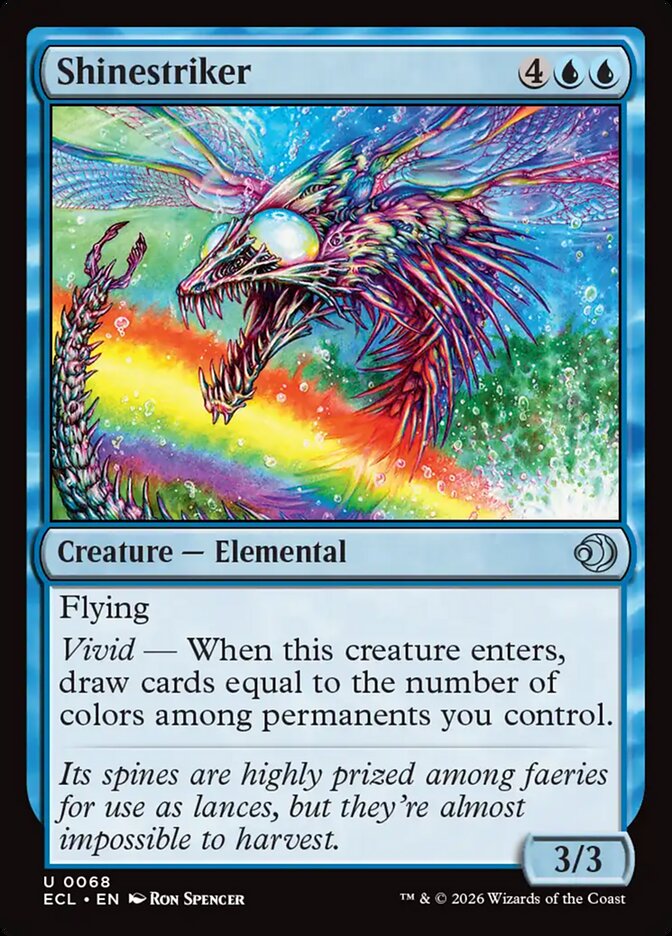
Six mana is a real cost, but Shinestriker is only 1 mana more than a hard-cast Mulldrifter, and it can draw far more cards in the right shell. On 5-color or color-dense boards, drawing four or five cards on entry makes the rate much easier to justify it, especially when you pair it with blink effects like Thassa, Deep-Dwelling to repeat the trigger. This plays less like a generic value creature and more like a payoff for decks already committed to color diversity.
#17. Thirst for Identity
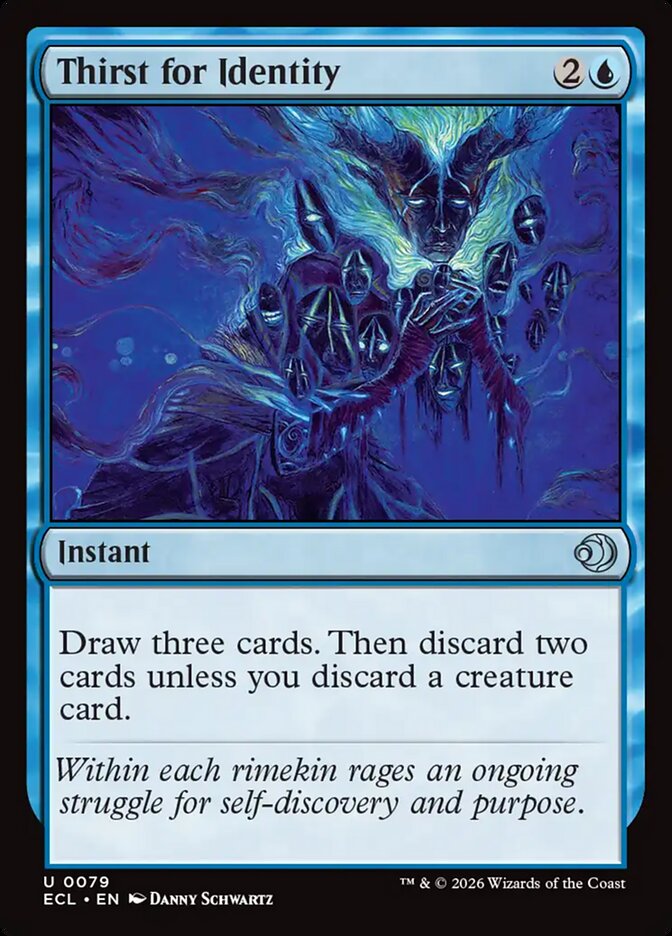
A quick way to see lots of cards, Thirst for Identity draws three and usually discards two, unless you pitch a creature, which often makes it closer to a normal card selection tool. It fits control, reanimator-style setups, and any deck that wants to sculpt a hand at instant speed and wants to put the right reanimation piece into the graveyard at any time.
#16. Unwelcome Sprite
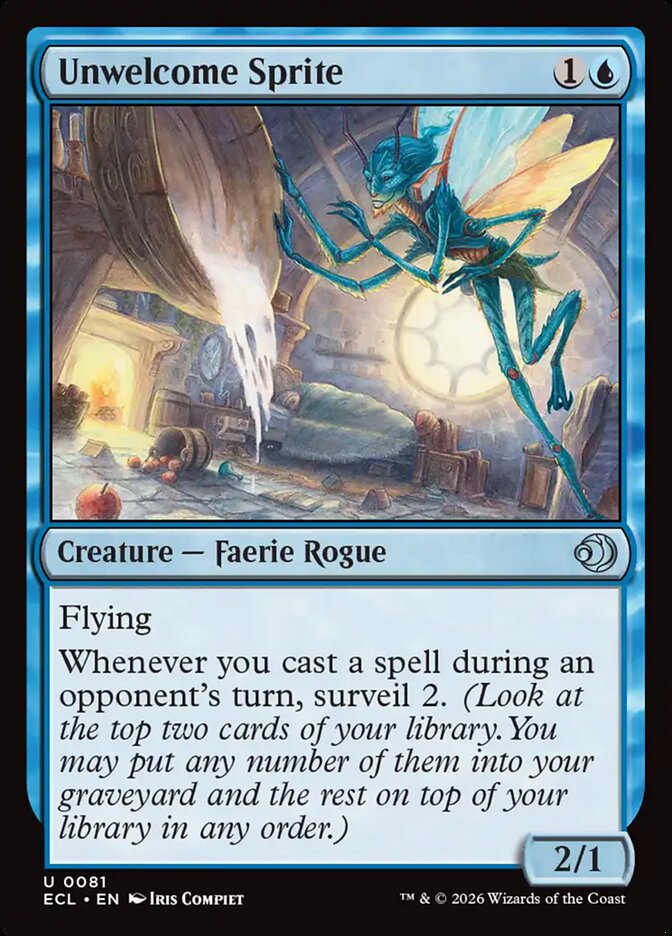
Flash-heavy decks get steady card selection from Unwelcome Sprite. Surveil 2 every time you cast a spell on an opponent's turn smooths draws and helps you to line up the right mix of lands and interaction as the game progresses, all while it keeps your deck from flooding or stalling.
#15. Tanufel Rimespeaker
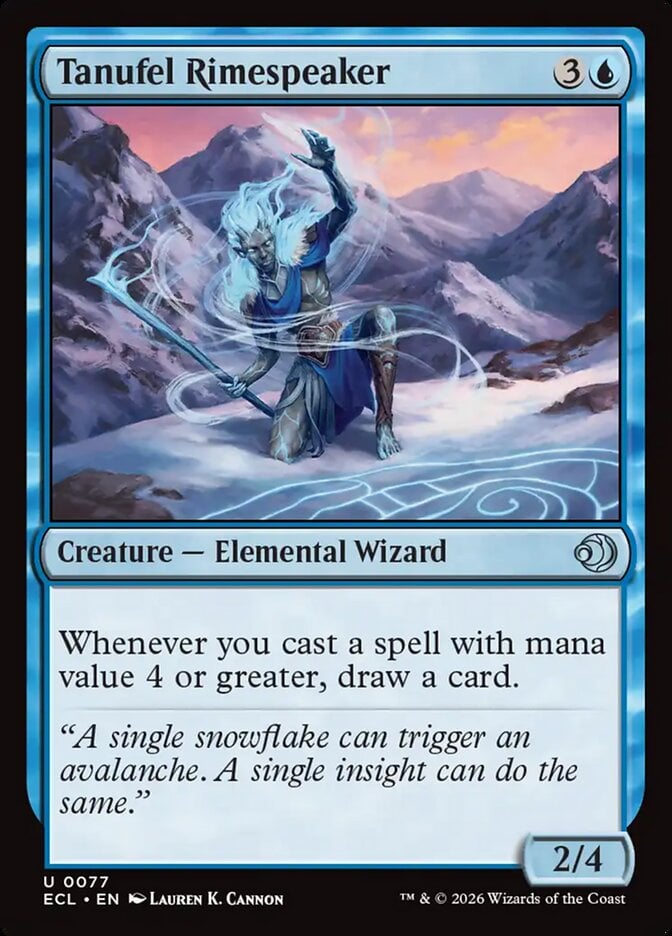
Decks that plan to cast a steady stream of 4-mana spells want Tanufel Rimespeaker. Having each larger spell replace itself helps midrange and ramp strategies avoid running out of gas in drawn-out games where resources are traded back and forth. Since it doesn’t generate value when it enters, it performs best when the board is already stable or when you can protect it long enough to untap and start drawing.
#14. Unexpected Assistance

Sometimes you just need to see more cards, and Unexpected Assistance does that while it lets your board pay part of the cost. Drawing three, then discarding one is more about smoothing than raw advantage, but it digs deep enough to find your next land or key answer.
#13. Omni-Changeling
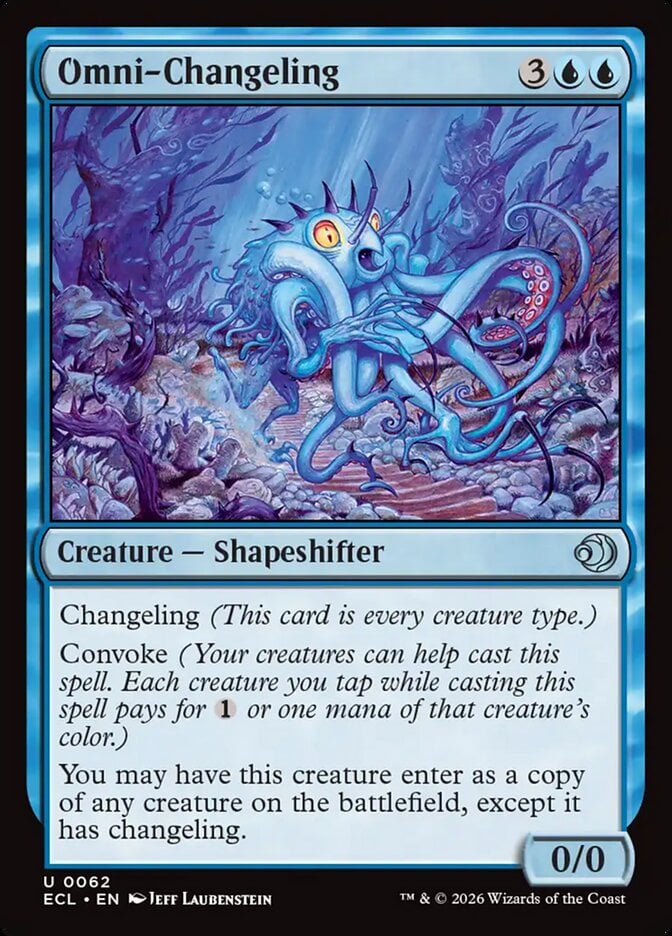
A typal deck can make good use of a copy effect that still counts for their core synergies, and Omni-Changeling delivers that. Convoke can speed it out, then this enters as the best creature on the battlefield while keeping changeling for lords and type-based payoffs.
#12. Silvergill Mentor
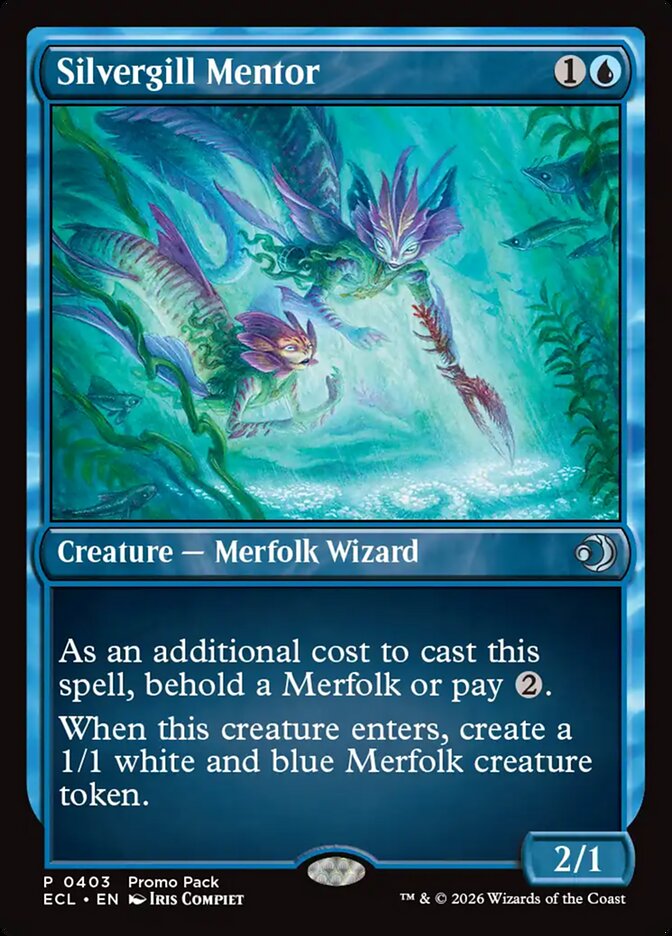
Two bodies from one card is a real way to keep pressure up, and Silvergill Mentor provides that for merfolk. Beholding a merfolk is easy in dedicated typal lists, and the extra token makes your lords and convoke cards better immediately.
#11. Loch Mare

Loch Mare starts as a modest blocker and gradually turns its counters into cards or tempo as the game goes longer. This role fits best in slower blue decks that can afford to hold up extra mana, since it needs time to pay off and doesn’t keep up well in fast, aggressive matchups.
#10. Champions of the Shoal
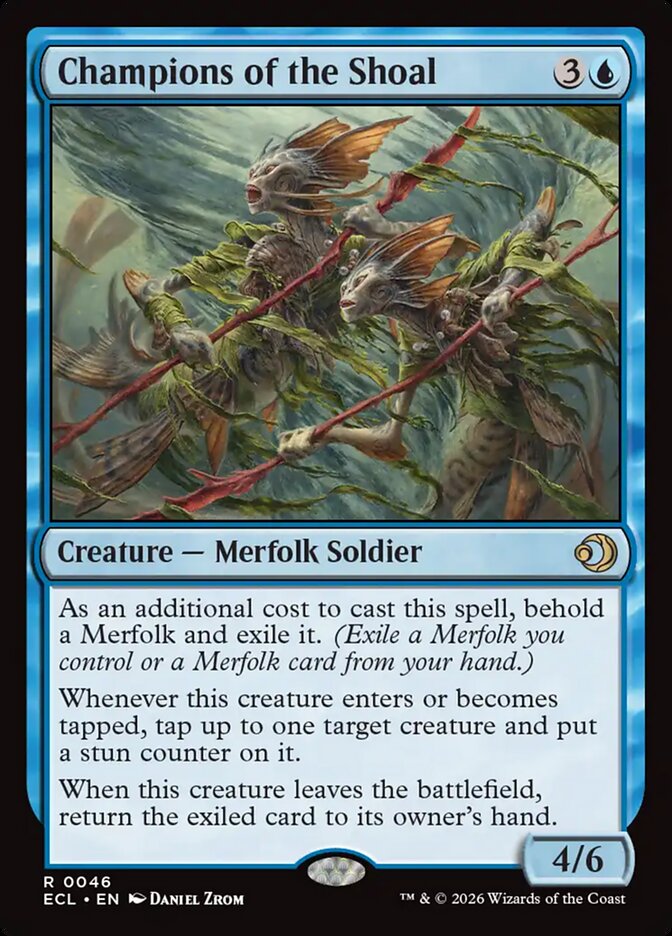
Repeatedly locking down opposing creatures while presenting a massive body is what Champions of the Shoal does best. Beholding a merfolk turns extra cards or tokens into immediate control, and getting that resource back later softens the cost.
#9. Disruptor of Currents

What really stands out with Disruptor of Currents is how often it turns combat into a blowout. Flash lets you bounce a large attacker mid-combat, then block and trade with a smaller creature, completely flipping the exchange. Convoke makes this even harder to play around, since you can deploy it while tapped out of mana.
#8. Flitterwing Nuisance
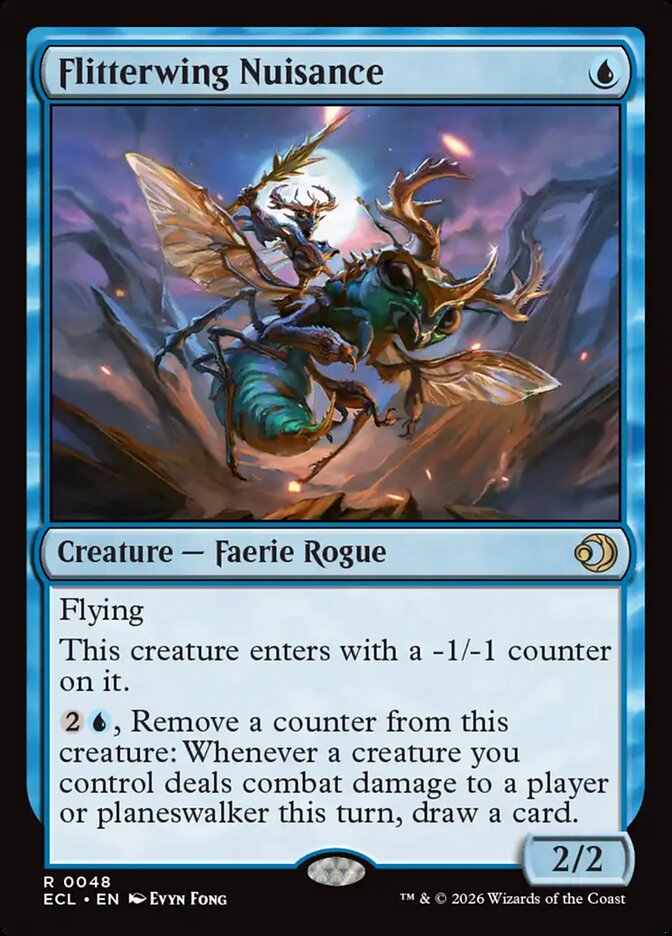
In practice, Flitterwing Nuisance plays a lot like a one-shot version of Enduring Curiosity. You get evasive pressure for 1 mana, then later upgrade the stats and get some one-shot card draw. That makes it strong in faeries and other decks built to connect safely, but unlike a true engine, the effect is temporary and asks for careful timing to get full value.
#7. Glen Elendra Guardian
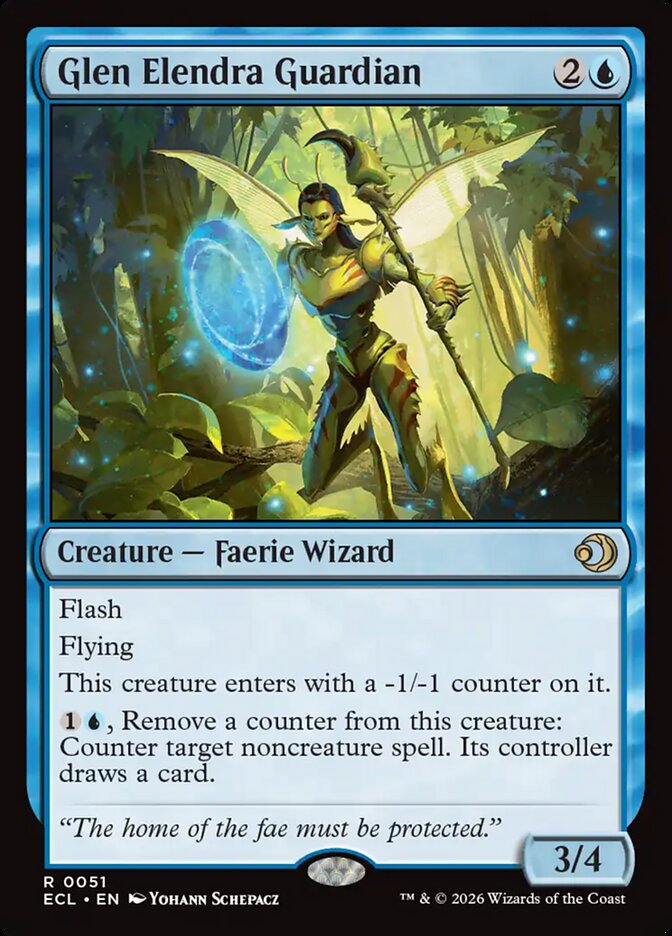
Flash and flying make a great team, then Glen Elendra Guardian can cash in counters to stop noncreature spells that would swing the game, like sweepers or engines. The opponent drawing a card keeps it fair, but the tempo is still real when you counter the spell that mattered most.
#6. Sunderflock

Elemental decks get a true payoff in Sunderflock. If you already control a high mana value elemental, this can come down for much less than 9 mana, then bounce all non-elementals and clear the way for attacks. The effect is huge in the right shell because it resets opposing boards while leaving yours intact.
#5. Rimefire Torque
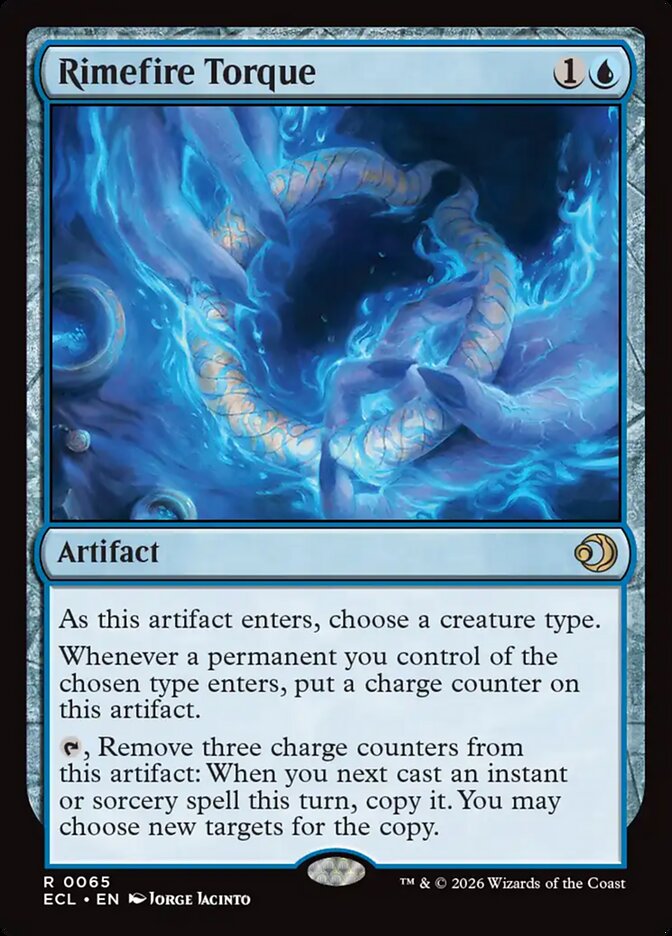
Rimefire Torque is an investment piece that pays you for doing what typal decks already do: Play creatures of one type over and over. Once charged, copying your next instant or sorcery can swing a key exchange, especially when the copied spell is removal, card draw, or an extra turn.
#4. Subterfuge
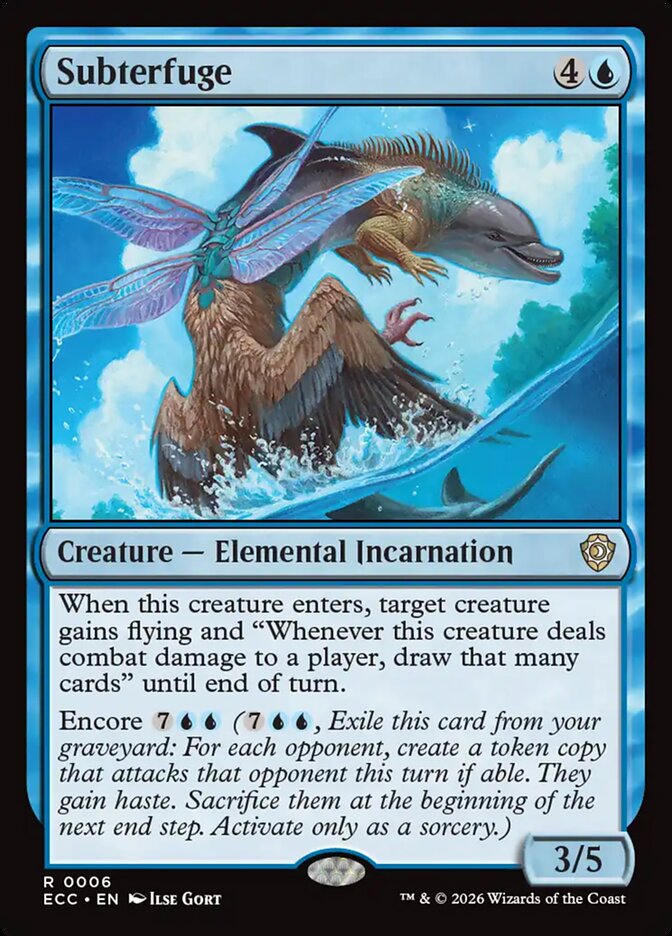
This card is about one explosive combat step, and Subterfuge is at its best when you already have an attacker that can connect safely. Giving flying and drawing equal to damage turns one hit into a new hand, which often puts you way ahead in the game. Encore adds late-game reach in multiplayer by scaling the threat across opponents.
#3. Harmonized Crescendo

Convoke and instant speed sets Harmonized Crescendo apart from similar typal draw spells. While it costs 2 more mana than options like Distant Melody, tapping spare creatures often covers much of that cost and lets you refill without tapping out. Being an instant also matters, since you can pass with interaction and draw if nothing happens.
#2. Glen Elendra's Answer
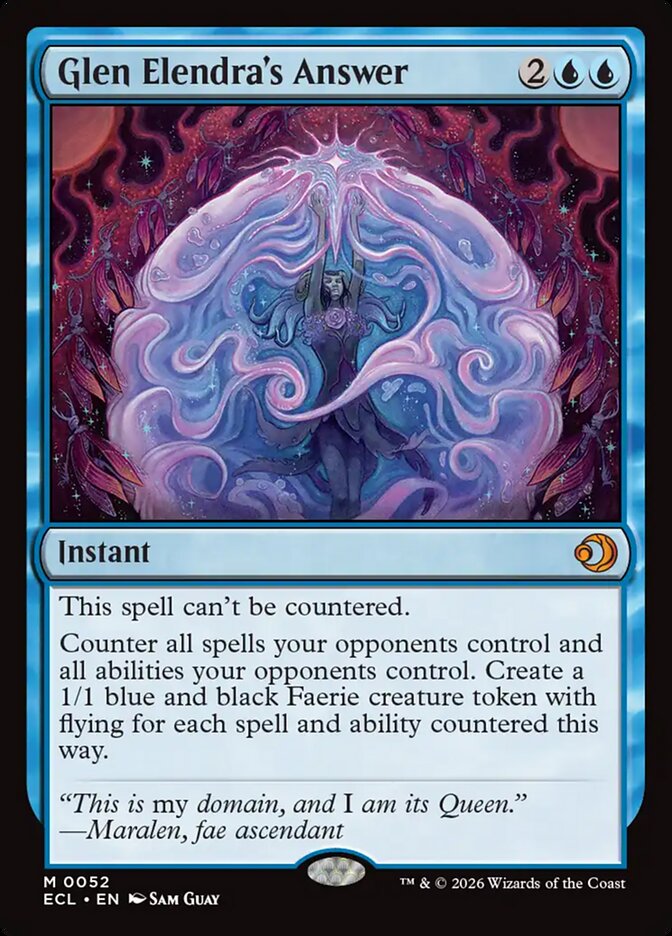
When stacks get complicated, Glen Elendra's Answer flips the table by countering everything at once and turning that exchange into flying pressure. It shines most in multiplayer or counter-heavy games, but in straightforward matchups, you can use it as a regular counter that leaves you with a creature behind.
#1. Mirrorform
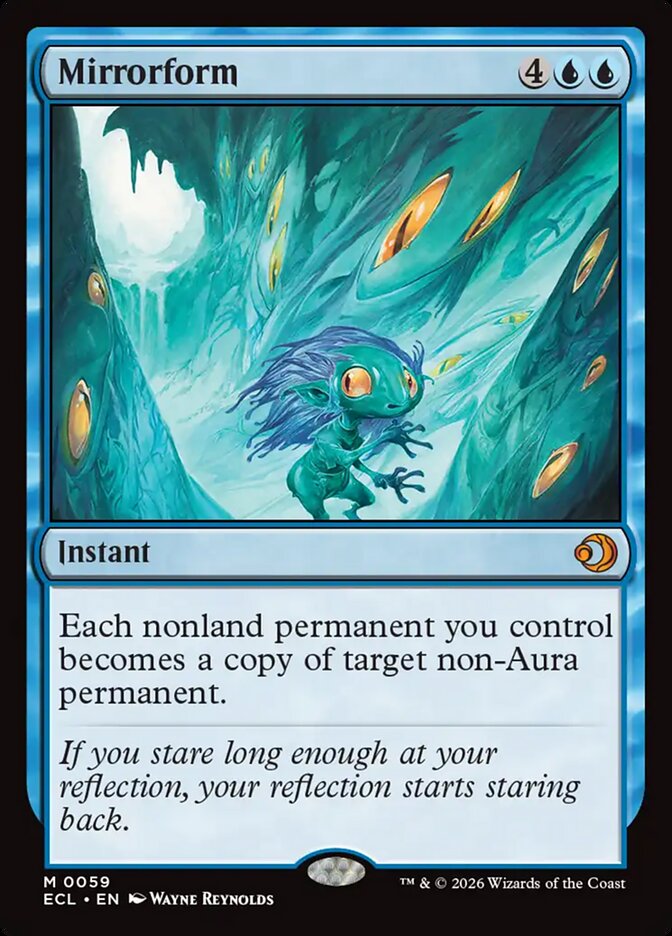
If you can build a wide board, Mirrorform turns that board into whatever the best permanent on the table happens to be. It’s strongest in token-heavy builds and artifact-heavy setups where copying one premium threat across all your nonland permanents can end the game immediately.
Wrap Up
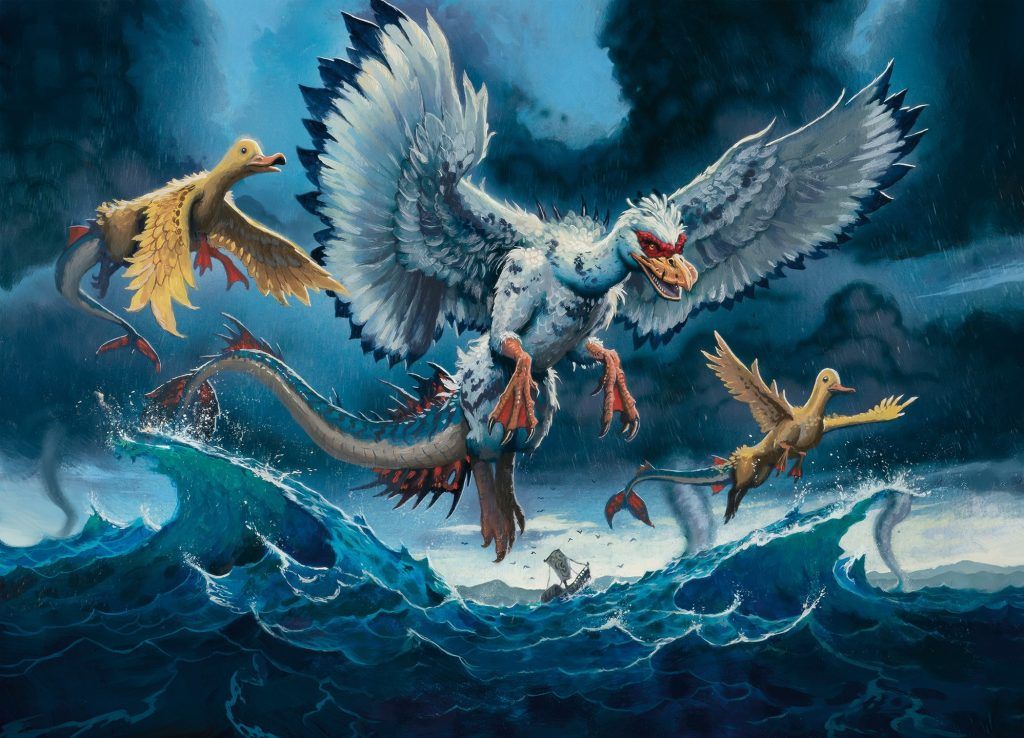
Sunderflock | Illustration by Caio Monteiro
Merfolk and faeries weren’t the only winners in blue this set. Other archetypes also picked up solid support through a mix of new cards and strong reprints. That said, I’d prioritize grabbing Mirrorform and Glen Elendra's Answer as soon as possible, especially if you enjoy multiplayer games.
Compared to the other colors, blue ends up with a stronger overall lineup than most, sitting just behind red and placing it near the top among the best colors in Lorwyn Eclipsed. You can check out the other colors here:
What do you think? Which cards in ECL caught your interest? Let us know in the comments or on the Draftsim Discord. Thanks for reading, and if you enjoyed the content, remember to follow us on social media so you never miss an update.
Take care, and see you next time.
Follow Draftsim for awesome articles and set updates:










2 Comments
2 summers ago when i was looking at bloomburrow cards as a mono blue player and i saw azure beastbinder, i thought how is this card even possible? I think it will get a ban now, what with all the 4/4-7/7 creatures in llorwyn with -1/-1 counters. My point is azure is the best blue card in llorwyn, until and if it receives a ban.
It was pretty useful when Vivi was dominant, good point about beating -1/-1 counter creatures. Definitely not banworthy though.
Add Comment