

Wish | Illustration by Ekaterina Burmak
With the popularity of MTG Arena, many players are introduced to MTG through best-of-one matches. You find an opponent, play a match, and that’s it – win or lose.
I get it, MTG Arena is my go-to for MTG nowadays, and I play a ton of best-of-one. But the oldest and more enfranchised players out there are more used to the best-of-three format, where you get a sideboard with 15 cards strategically chosen to alter your deck between games to try to get an edge on your opponent. That’s why this best-of-three is called Traditional format on MTGA.
Sideboard games add a different layer to MTG strategy because both players are more prepared to face each other and can be a wonderful way to improve your game skills and get better. Today I’ll be answering all your questions about this not-so-explored feature of the game in Magic Arena, step-by-step.
Let’s dive in!
What Is Your Sideboard in MTG Arena?

Consider | Illustration by Zezhou Chen
In MTG Arena, your sideboard consists of 15 cards that you can switch between games. That applies mostly for matches if you’re playing the traditional way, and that’s best-of-three. That said, you can access 7 of your 15 cards in your sideboard in best-of-one matches using special cards like Invasion of Arcavios, Fae of Wishes through the Granted mode to look for cards “outside the game” – cards in your sideboard are considered to be outside of the game – and similar with special mechanics like lesson and learn from Strixhaven. The sideboard is also where you put your mighty companion cards like Lurrus of the Dream-Den or Yorion, Sky Nomad.
Why Should I Have Cards in a Sideboard?
Your sideboard typically has very narrow cards that can be at their best in a specific matchup. For example, a card like Path of Peril is very good against Boros () Convoke and White Weenies in general because they mostly play 1-drops and 2-drops. Knockout Blow excels against Mono-Red Aggro/Burn since you’ll destroy an attacking creature for just 1 mana and gain 2. Rest in Peace destroys graveyard-based synergies. Duress is excellent against Azorius () Control. If you’re playing blue, you’ll want Negate against blue control players, and so on.
The main idea is that you’ll have catch-all cards or more flexible cards in the main deck because you don’t know what you’re up against while having silver bullets in your sideboard when you do know.
How Many Cards Can Go in a Sideboard?
You can have up to 15 cards in your sideboard. MTG Arena has a separation between the first seven cards and the eight remaining ones. The seven first ones are only applied in best-of-one games. In a traditional game, best-of-three, you can have access to any of the 15 cards.
How Do Sideboards Work in MTGA?
Sideboards are important in best-of-one (BO1) and best-of-three (BO3) formats, but mostly in BO3. When you play a best-of-three match, you’ll play at least two games, one without using your sideboard and one with access to it. The main goal is to switch cards that you think are bad against the opponent’s deck while putting more effective cards in the matchup. You can add all cards from your sideboard to your main deck, even going up the 60-card limit, but you can’t go down. Ideally, for each sideboard card you introduce to a deck, you take another from the main deck to keep your deck at 60 cards and thus keep it efficient.
There are many ways to play best-of-three (BO3) – both in Limited (Draft, Sealed) and Constructed. Look for the word Traditional in Arena, which means BO3. You can have Traditional Draft, Standard, Explorer, Timeless, Historic, and so on.
Even using a sideboard, you’re limited to four copies between your main deck and the sideboard. You can’t play four copies of a card in the main deck and two more in the sideboard, as that would be utterly broken. Even in BO3 formats, you’re not required to submit a deck with a full sideboard. Of course, the more cards and alternatives you have between games, the better. You won’t be punished by having a full sideboard, so you don’t need to play around that.
Where Is My Sideboard on MTG Arena?
When you play a traditional best-of-three match, you’ll go to your sideboard screen in between games. In the deck editor, there are two layouts: the horizontal split and the vertical split. The first image shows the horizontal split, and your sideboard is in the right corner.

In the second image, we can see the vertical split, and in this case, you’ll have to change between deck and sideboard by clicking. I’ve marked the spots with yellow X’s on both images.

Does My Brawl Commander Go in My Sideboard?
Actually, it doesn’t. Brawl is a format that doesn’t have a sideboard, as we can see in this image. There’s a special slot to put the commander, and once you choose it, MTG Arena only allows you to put cards with the correct commander’s color identity.

How Do Companions Work with the Sideboard?
When you have a companion in your deck, no matter if it’s best-of-one or best-of-three, it’ll occupy one of your sideboard slots – the last one, to be more precise. Remember that you can have multiple companions in your main deck as regular cards, but if you want to use the companion mechanic, the card must be in your sideboard. In best-of-three games, it’s possible to board out your companion. This can be done if I play Lurrus of the Dream-Den as my companion but want to sideboard a 4-MV card. In this case, I’ll have to take Lurrus out of the companion slot. Here’s my Explorer best-of-three deck that uses Yorion, Sky Nomad as the companion, note that it’s currently occupying the first sideboard slot.

What’s the Purpose of a Sideboard on Arena in BO1?
Even when you’re not sideboarding between games, many cards and mechanics use the sideboard as a toolbox. Cards like Invasion of Arcavios, Fae of Wishes, Karn, the Great Creator, and Mastermind's Acquisition allow you to search “outside the game” for a card. This lets you get one of the seven first cards in your sideboard. Here’s a BO1 Control deck that uses Invasion of Arcavios to get specific cards in the sideboard like Witness the Future, Devious Cover-Up, or Farewell.

Why Can’t I Put More than 7 Cards in My Sideboard on MTG Arena?
You can put up to 15 cards, but in best-of-one you’ll only have access to 7 cards. That’s one difference between best-of-one and best-of-three. In best-of-one, your sideboard is limited to 7 cards, while in best-of-three, your sideboard expands to 15. So, even if your deck has 15 cards in your sideboard, in best-of-one, only 7 cards are accessible.
Bonus Interactions
How Do Wish Cards Interact with MTGA’s Sideboard?
Wish cards like Fae of Wishes and Wish allow you to get a card from your sideboard, reveal it, and put it in your hand. Here I’m showing what happens when we cast Wish. Note that Arena gives you this ability, and when you activate it, you’ll choose a card from your sideboard and then cast if you have enough mana.

How Do Learn and Lesson Cards Use the Sideboard in MTG Arena?
Learn is a mechanic that allows you to either draw and discard, or to get a lesson card from your sideboard. You have 7 sideboard slots in best-of-one, and 15 sideboard slots in best-of-three.
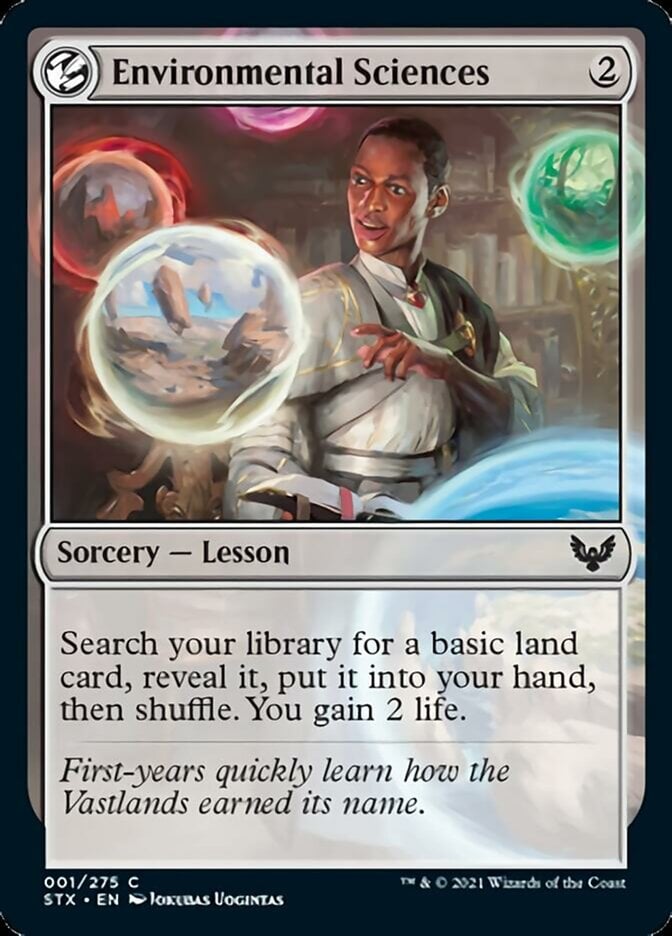
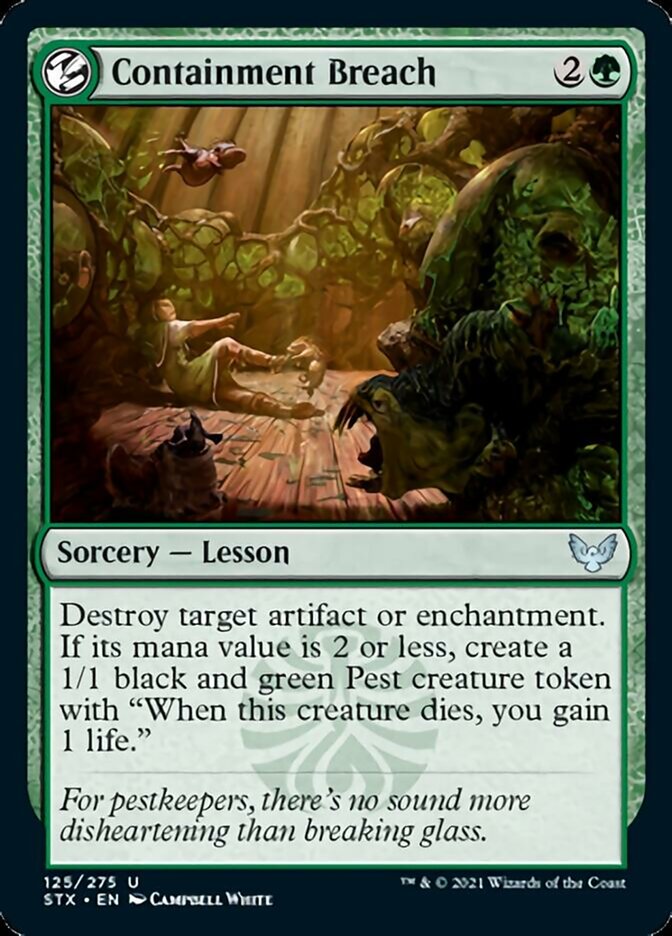
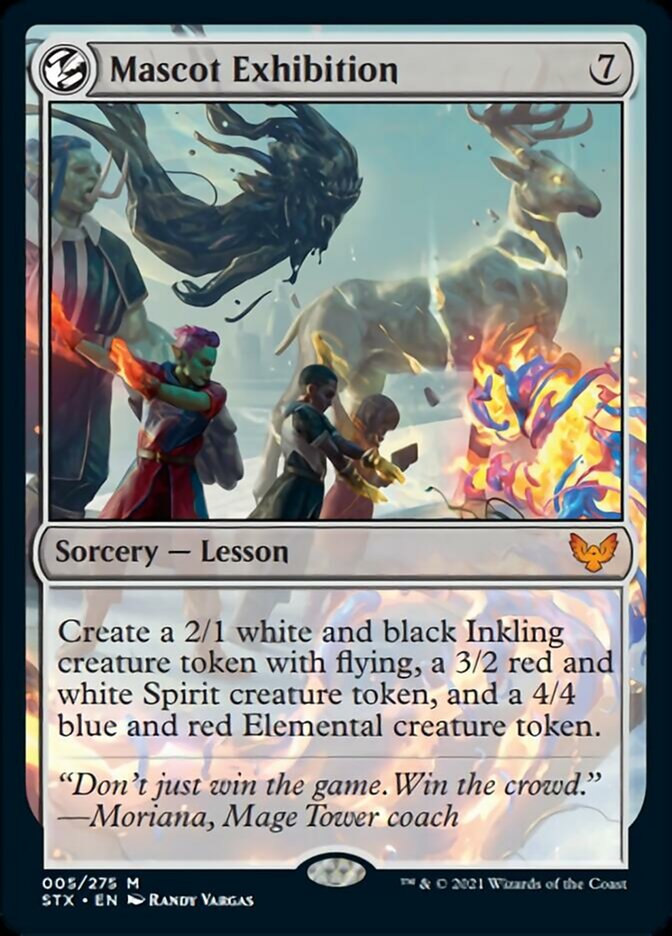
Let’s say I have the following lessons on my sideboard: Environmental Sciences, Containment Breach, and Mascot Exhibition.

I then cast Cram Session, which allows me to choose one of these lessons from my sideboard and put it into my hand. I can only get the lessons that are in the first seven slots, because, at the time, players put 14-15 different lessons without any downside in their sideboard, so WotC limited it to 7 slots in best-of-one to reduce this strategy’s effectiveness.
Wrap Up

Spell Pierce | Illustration by Vance Kovacs
Using your sideboard in MTG Arena can be a daunting task at first, but as you get more familiar with it, it becomes second nature. Playing in the Traditional queues is the best way to learn, and you don’t even need to play it ranked.
And if you play mostly in MTG Arena like I do, you need to use Draftsim’s own Arena Tutor. It’s free, and it’ll give you meta decklist suggestions complete with main deck and sideboard cards, track your collection, help you in draft, and much more.
What about you? BO1 or BO3? Let me know in the comments section below or on the Draftsim Discord.
Thanks for reading, and stay safe!
Follow Draftsim for awesome articles and set updates:










Add Comment