
Last updated on August 29, 2026
Delighted Halfling | Illustration by Inka Schulz
Halflings in MTG basically come from two sources: the D&D-related sets, because halflings are one of the main playable races in tabletop RPGs; and the Lord of the Rings sets, our beloved hobbits, since there’s no hobbit creature type in MTG.
There are quite a few halflings in MTG, and although The Hobbit focuses more on dwarves/goblins, we’ve got some new hobbits to talk about. Now’s a good time to expand our list of the best halflings, and see which of these you should be jamming in your decks.
What Are Halflings in MTG?
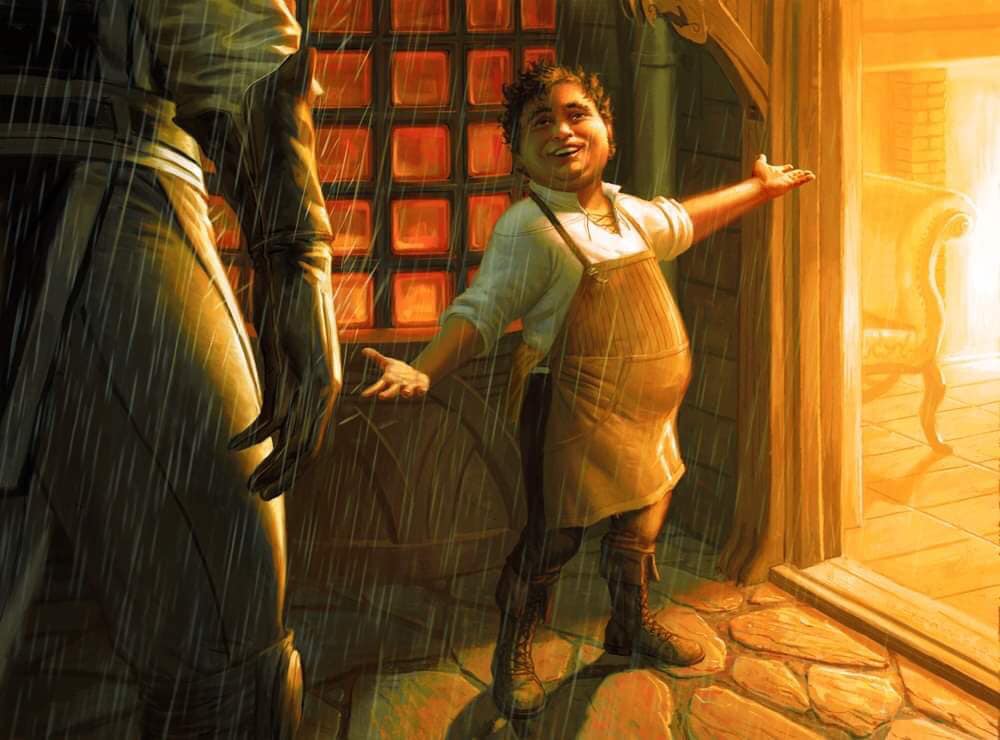
Prosperous Innkeeper | Illustration by Eric Deschamps
Notoriously known for their love of food, the wilds, and smoking pipe-weed, halflings are one of MTG’s many official creature types, and they’re usually small white creatures, with a touch of green, blue, and black. They’re usually small and evasive, and many halflings are tied to food and lifegain. Some halflings are rogues to reflect their preferred D&D class and their tendency to be tricky.
#31. Gretchen Titchwillow

Gretchen Titchwillow is a solid ramp card as an early defender and an excellent mana sink. Each time you spend 4 mana, you can effectively Explore, and in the late game, casting this card with an immediate activation or two is a good use of your mana.
#30. Peregrin Took
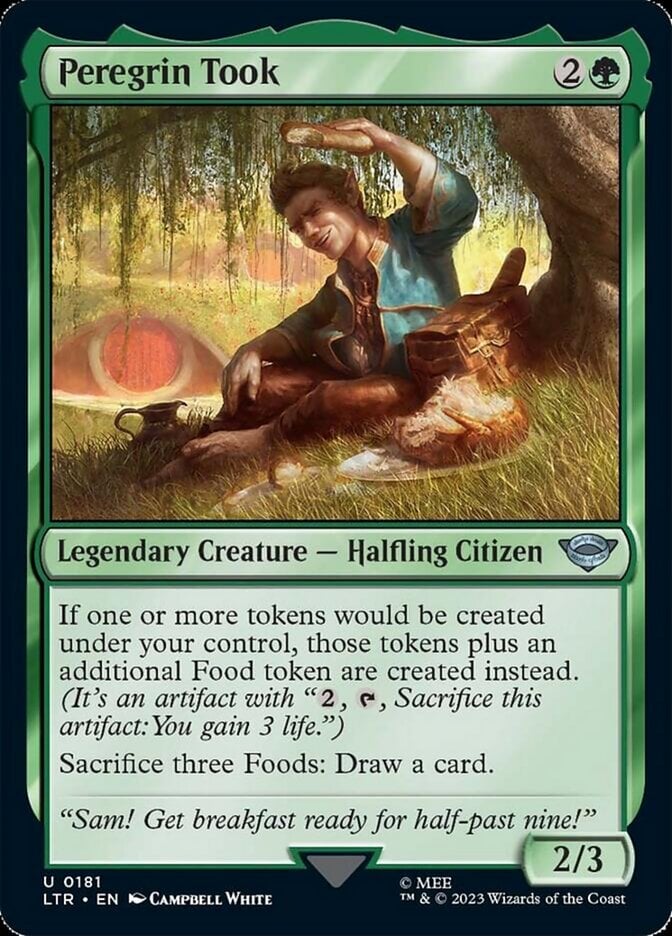
Peregrin Took is a nice little engine, turning tokens you control into that same token plus a Food token. In a deck that cares about food and lifegain, it’s a solid role-player. I like that you can turn excess food into cards when gaining life won’t be a big difference.
#29. Frodo, Adventurous Hobbit
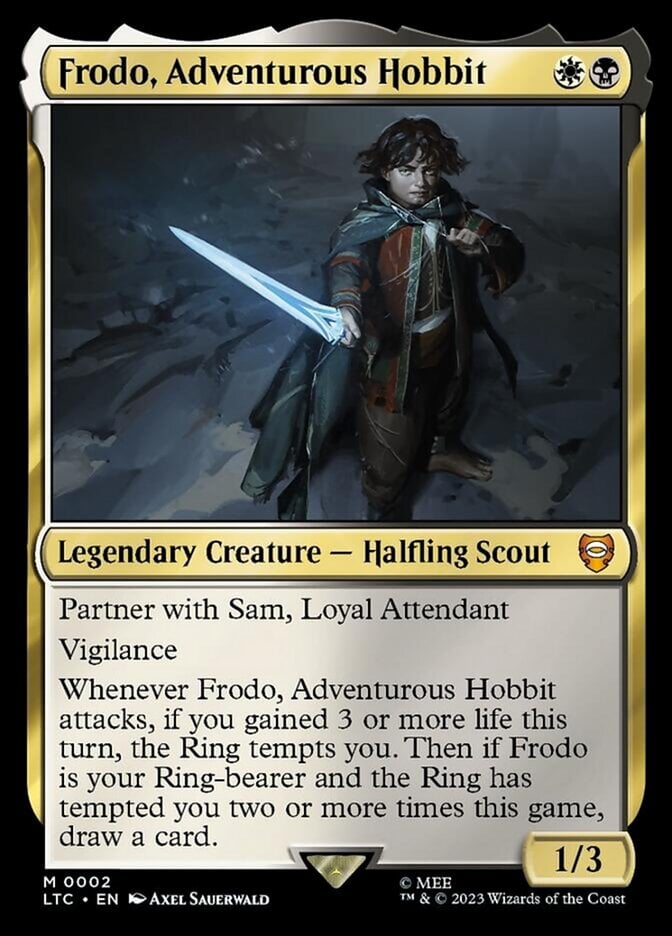
I’m rating this card more on its partnership with Sam, Loyal Attendant because it’s a good duo on the battlefield. Frodo, Adventurous Hobbit needs some building around, but this partner pair allows you to eventually gain 3 life and draw a card when Frodo attacks, which is a very solid use of food and lifegain.
#28. Bilbo Baggins, Burglar
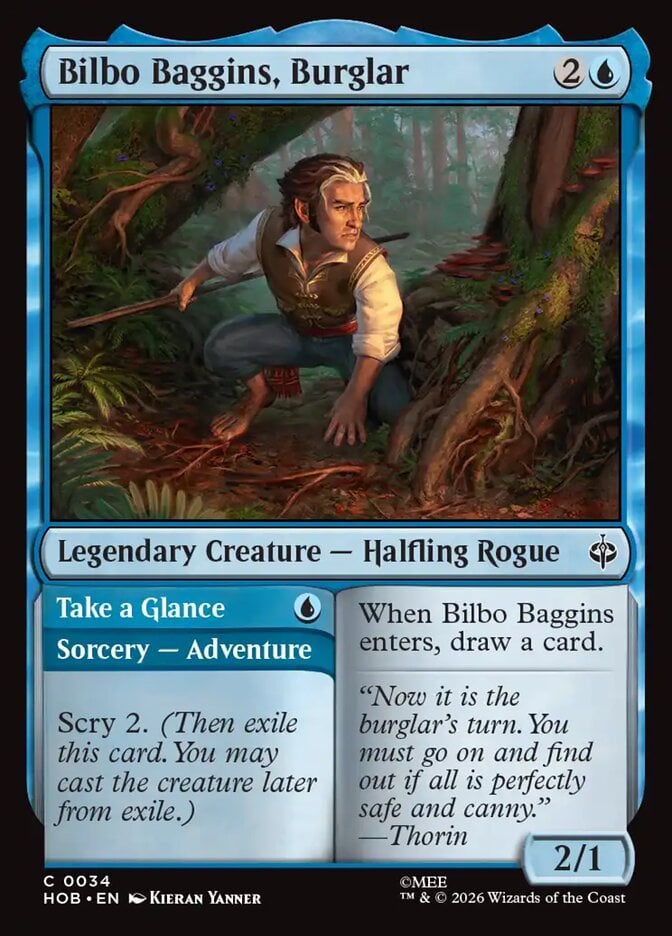
Bilbo Baggins, Burglar is a simple creature design, but a creature that cantrips usually sees play somewhere, whether in Pauper formats or elsewhere. This card is interesting because the adventure essentially gives you a creature that Preordains while triggering mechanics like flurry and prowess.
#27. Merry, Esquire of Rohan
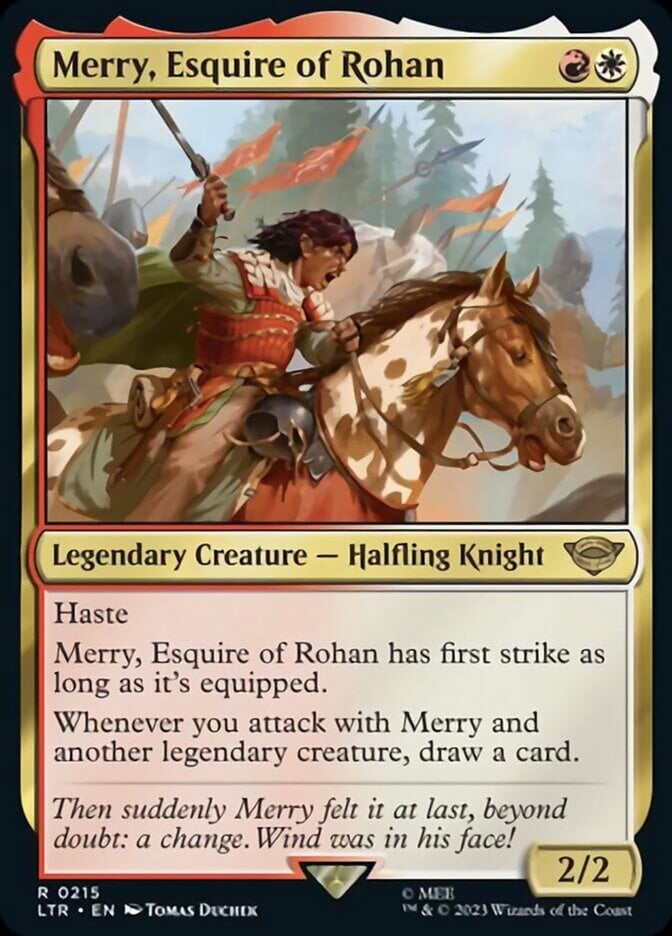
One of the very few aggressive hobbits, Merry, Esquire of Rohan requires an aggressive deck with equipment and legends to be good. If you need more historic permanents in a Boros () deck, this card can be a good addition. Your aim should be to play a legendary on turn 1, and follow with this one to attack and immediately draw, but this can work in the late game as well.
#26. Banquet Guests
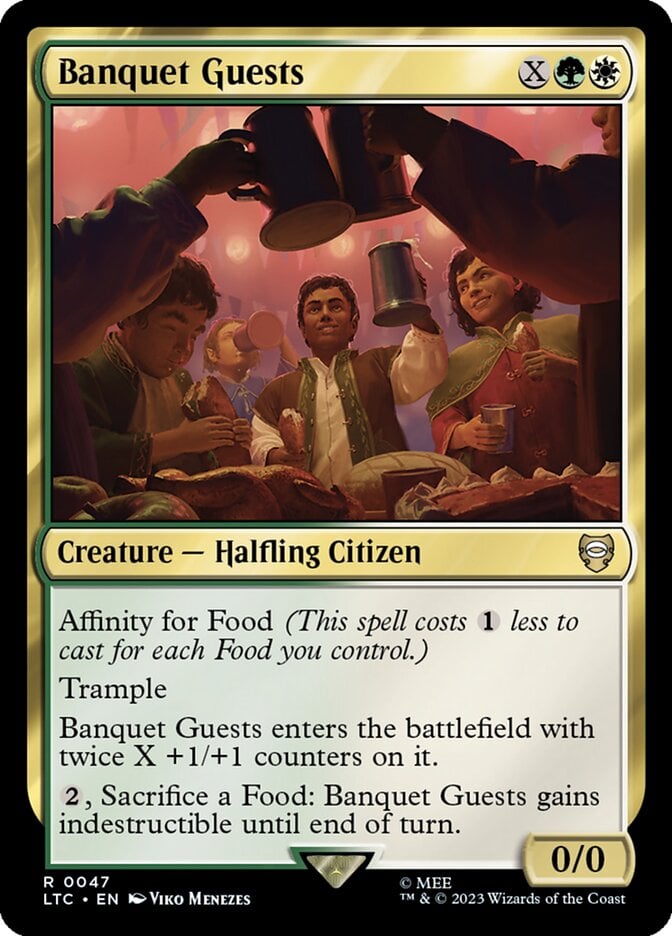
Banquet Guests have affinity for food and X in their mana cost, so this is one of the better cards to have in a Food-producing deck. They love a massive trampler that can use Food tokens to become indestructible.
#25. Rapacious Guest
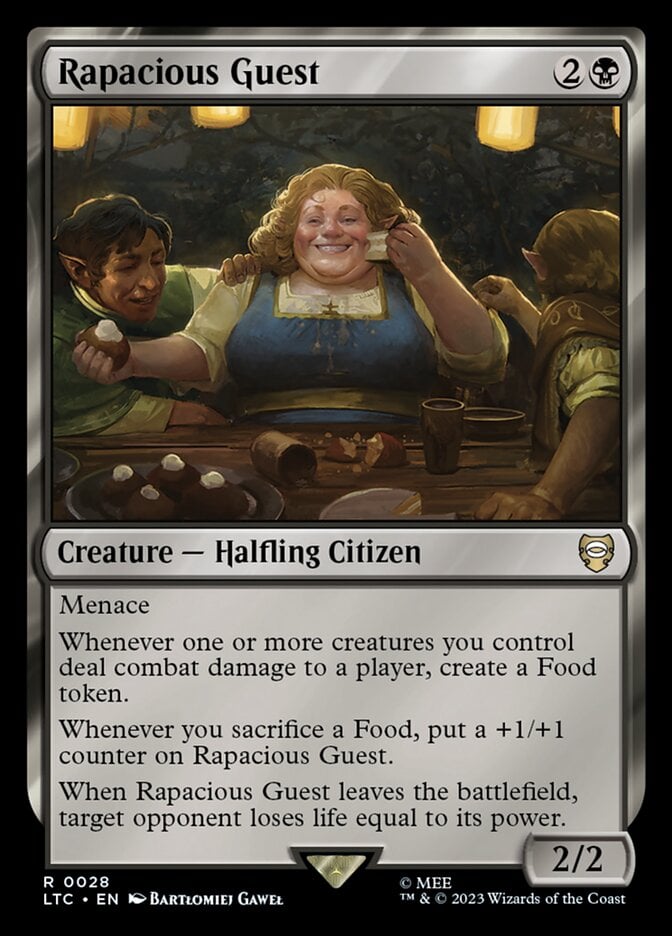
Rapacious Guest is an enabler and payoff for the food strategy, giving your creatures the ability to create more Food, and getting big when you sacrifice one. In the late game, your opponents will have to deal with a big menacing creature that has a powerful death trigger.
#24. Feasting Hobbit
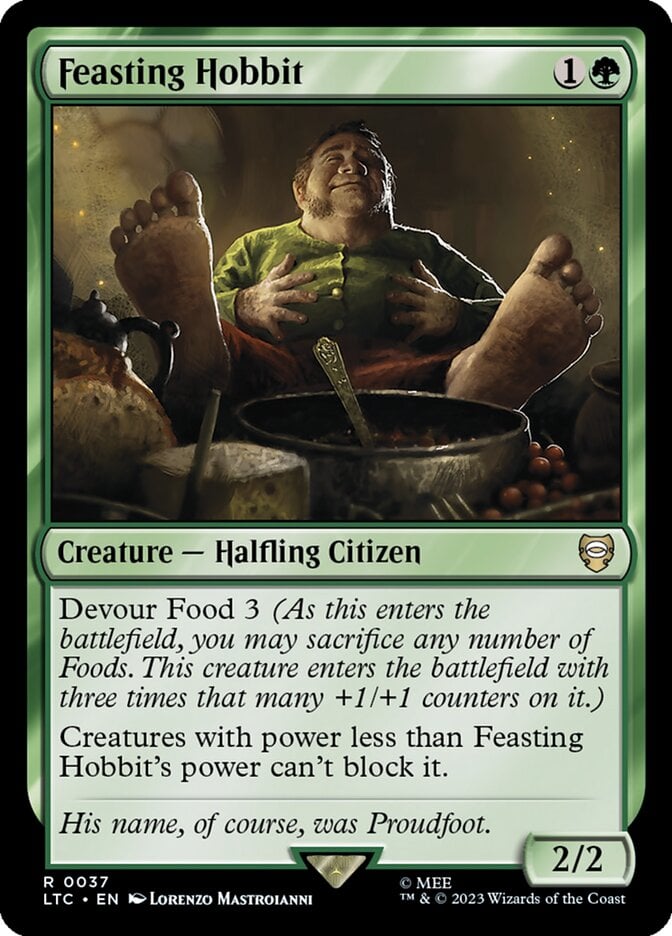
Feasting Hobbit can consistently be a 5/5 for 2 mana, or even larger. If you have a deck or a commander that can consistently generate Food, it’s easy to include this creature. Although it’s going to be a big vanilla beater, it has a pretty nice evasion against chump blockers.
#23. Lobelia Sackville-Baggins
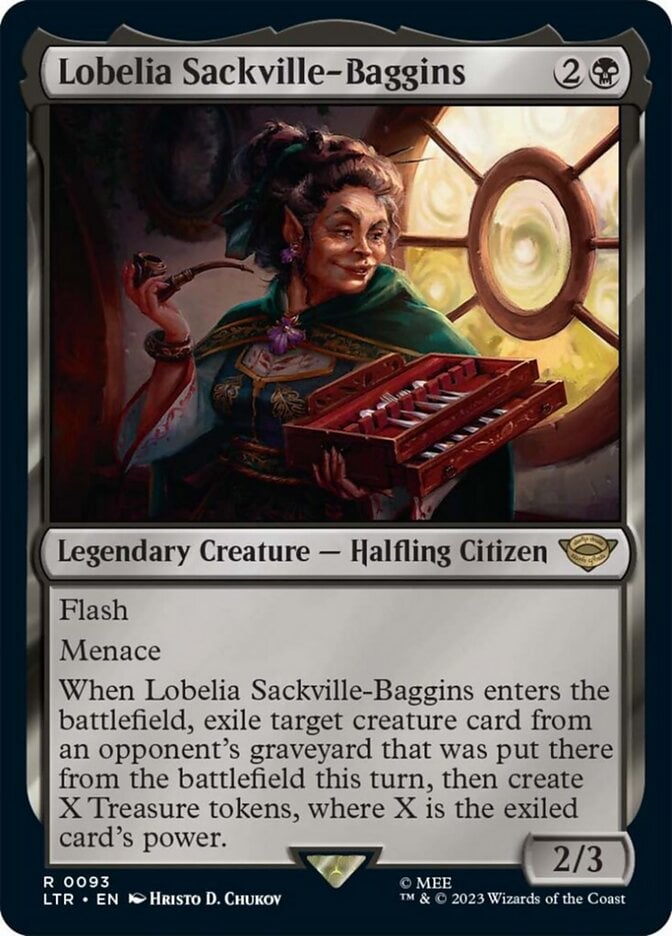
Lobelia Sackville-Baggins wants something that a few cards care about: creatures with big power dying. If you can flash this card in response to a 4-power creature dying, that’s four Treasure tokens you get from your 3-drop right away. It has some downsides, considering that it doesn’t work against exile and the window to use it is small, but sometimes you’ll hit the jackpot with this one.
#22. Saradoc, Master of Buckland
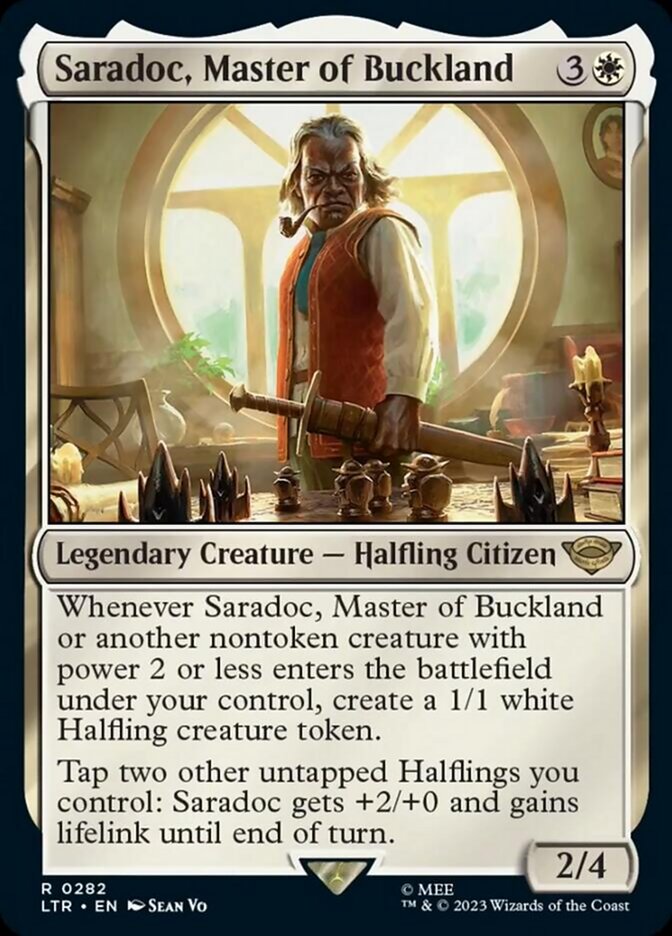
Saradoc, Master of Buckland is a take on Cloudgoat Ranger, in that you can use your lesser 1/1 halflings to make a bigger threat. It’s also a reason to cast creatures with power 2 or less, a theme that’s being used consistently in white and black, and most halflings will fit that bill. This card is one of the few that can truly care about halflings as a creature type.
#21. Samwise the Stouthearted
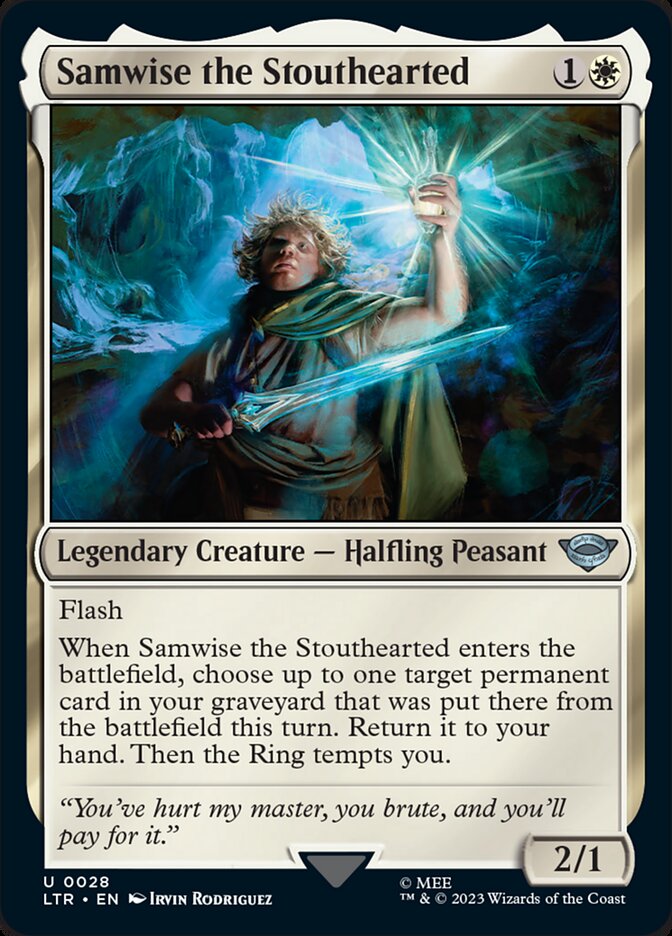
Samwise the Stouthearted is a very flexible flash creature that can recover your best threat that was destroyed, or a land you’ve sacrificed to fetch another land. It also works well with cards like Chromatic Sphere, in that you sacrifice them to get a benefit, and you can recover them right away. It’s a nice creature to flash after a wrath to start rebuilding right away, and I’m sure you can figure out other ways to use it.
#20. Sméagol, Helpful Guide
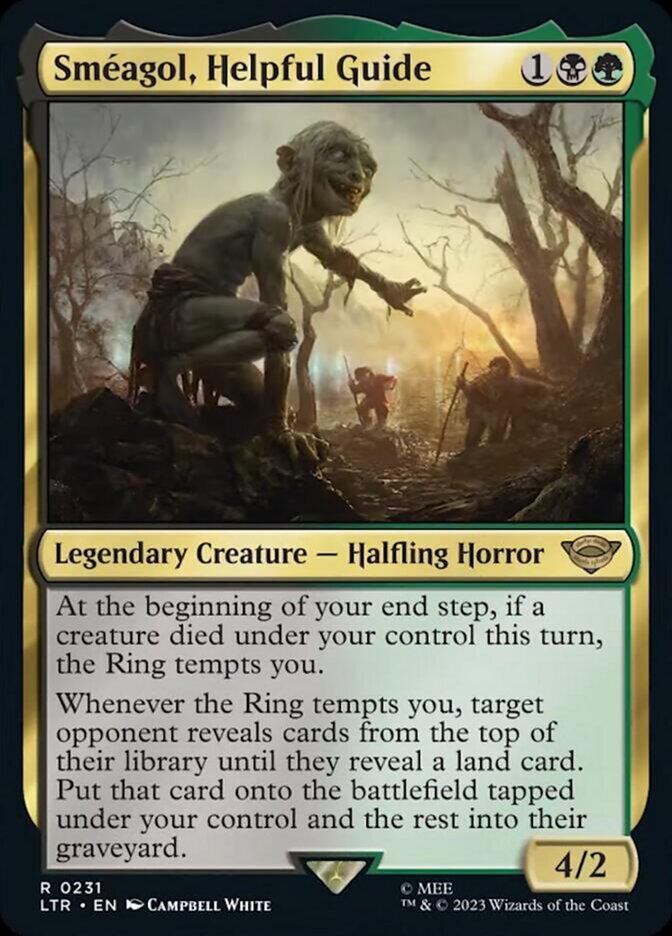
Sméagol, Helpful Guide is an enabler and a payoff for the Ring tempts you strategy. It’s basically a guaranteed ramp effect with morbid at the end of your turn, on top of the 4/2 creature you’re adding to the board. Play this card if you need to get tempted often, or if you have ways to trigger this card reliably. Another interesting aspect is that the lands come from your opponent’s decks, so you can set up interesting theft interactions by controlling their permanents.
#19. Mazzy, Truesword Paladin
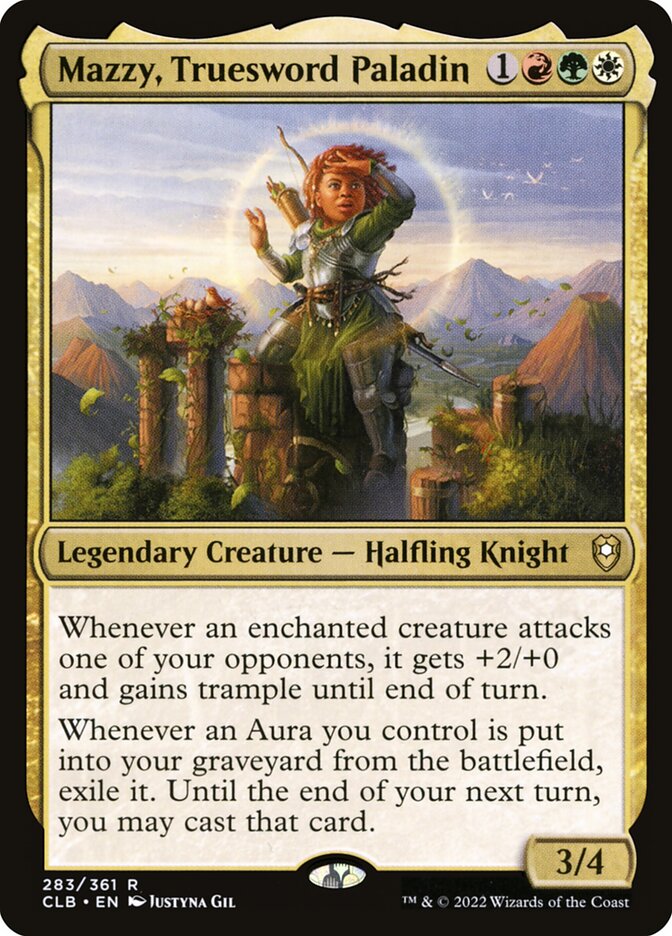
Mazzy, Truesword Paladin is a weird entry as a Naya () aura commander. It basically gives a variation of Rancor on your auras, giving your enchanted creature +2/+0, trample, and the ability to reuse them. It works well with cheap auras that draw a card when they enter, and even the most innocuous aura can give the enchanted creature a strong benefit.
#18. The Notary Hobbits
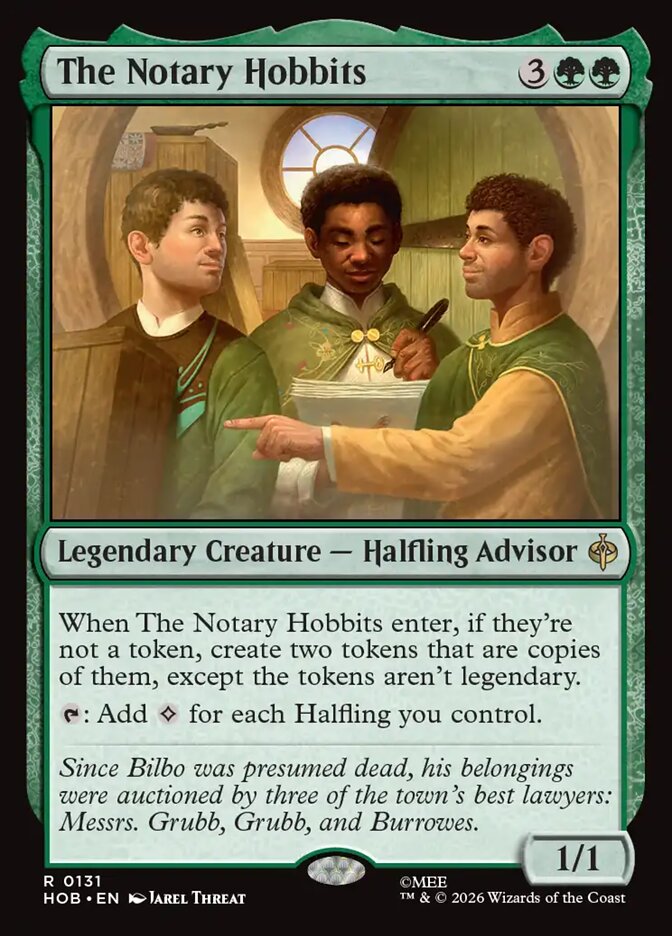
The Notary Hobbits are expensive, but they can also generate an enormous amount of mana. You get three creatures for one card, and each of these can generate 3 mana with just those creatures in play, or more if you have other halfling creatures or tokens. These are fragile creatures, but powerful mana dorks in halfling-dedicated decks, and outside of a sweeper, I’d say one will usually survive for you to untap with.
#17. Samwise Gamgee
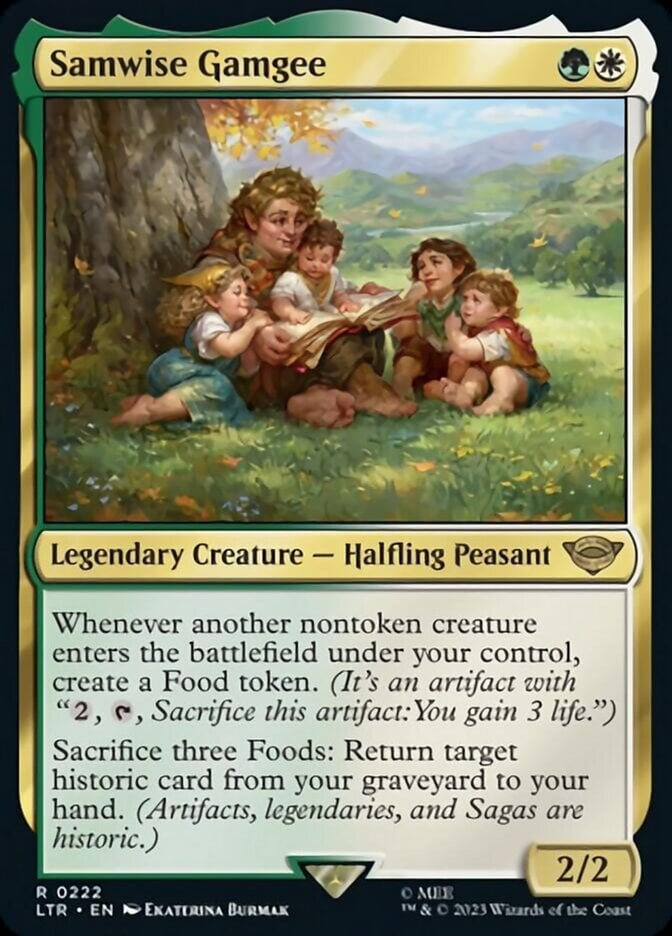
Samwise Gamgee is a role-player in a food deck, giving you free Food tokens when you cast or blink creatures, and it’s not hard to create at least a Food token each turn in creature-heavy decks. It also offers you something to do with all the excess Foods.
#16. Pippin, Guard of the Citadel
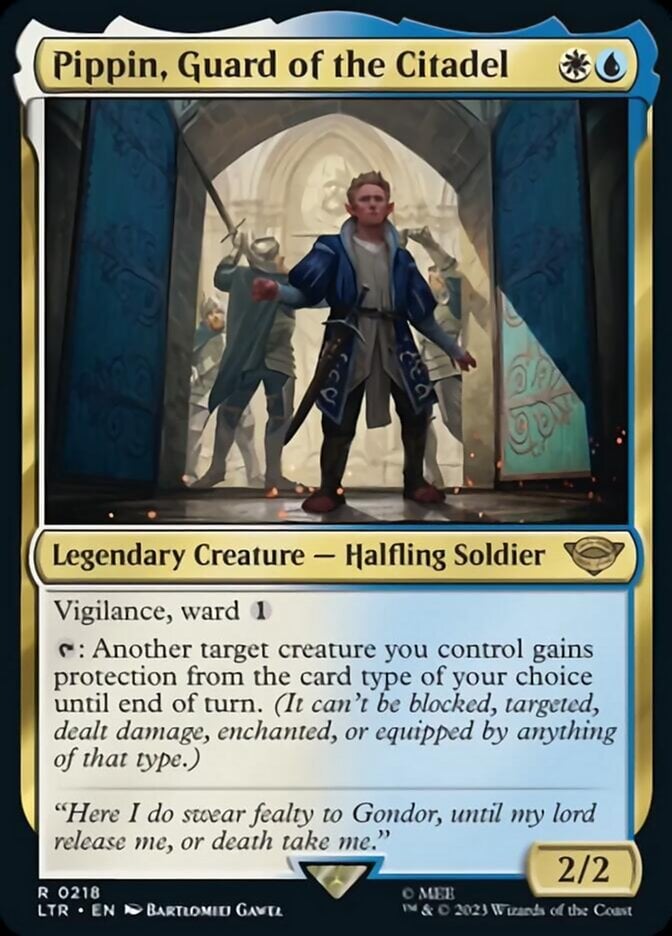
Pippin, Guard of the Citadel is a riff on Mother of Runes, an exceptionally powerful white card. It’s a 2-drop in two colors, so it’s a little harder to fit into decks, but giving a creature you control protection is excellent, as it blanks removal spells, makes combat go your way, grants evasion, and more.
#15. The Gaffer
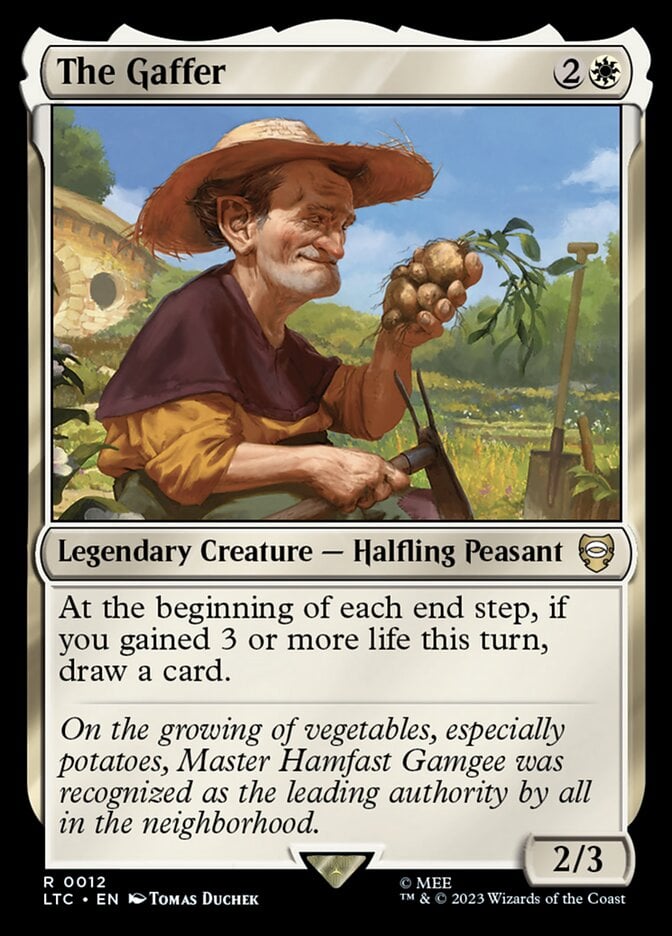
The Gaffer basically reads: Sacrifice a food, gain 3 life, draw a card in your end step. You can add this card to most white-based lifegain decks and it’ll be solid, or in decks that generate Food constantly (mostly ). This is one card that holds the food/lifegain plan together with strong card draw.
#14. Sam, Loyal Attendant
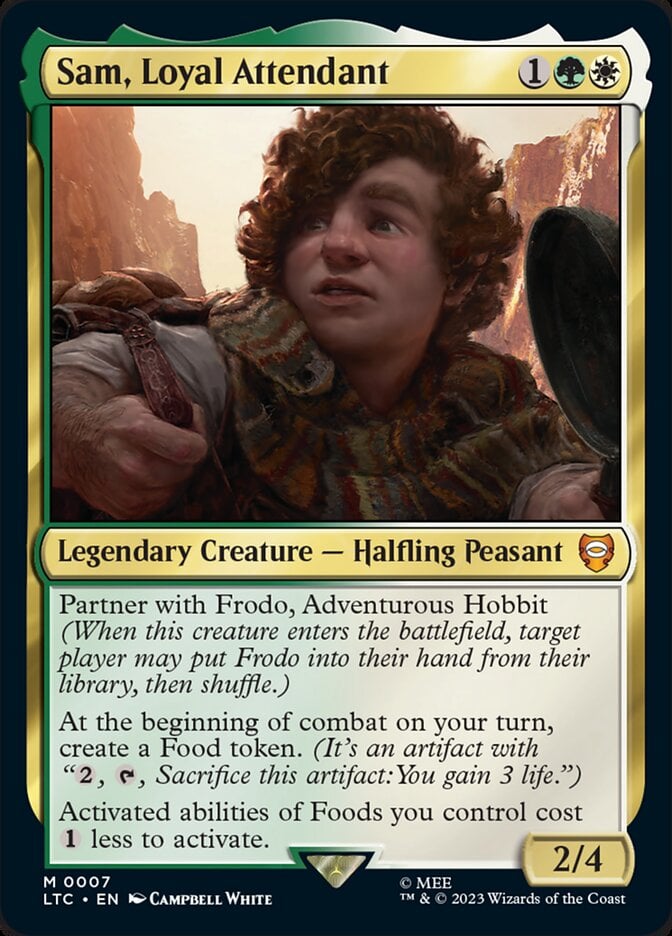
Sam, Loyal Attendant is a defensive 3-drop that already creates a Food token each turn, and it has more combo potential since you can reduce the activation of Food tokens you control. It’s interesting that many cards are also foods (like Gingerbrute) and have activated abilities that can be discounted.
#13. Farmer Cotton
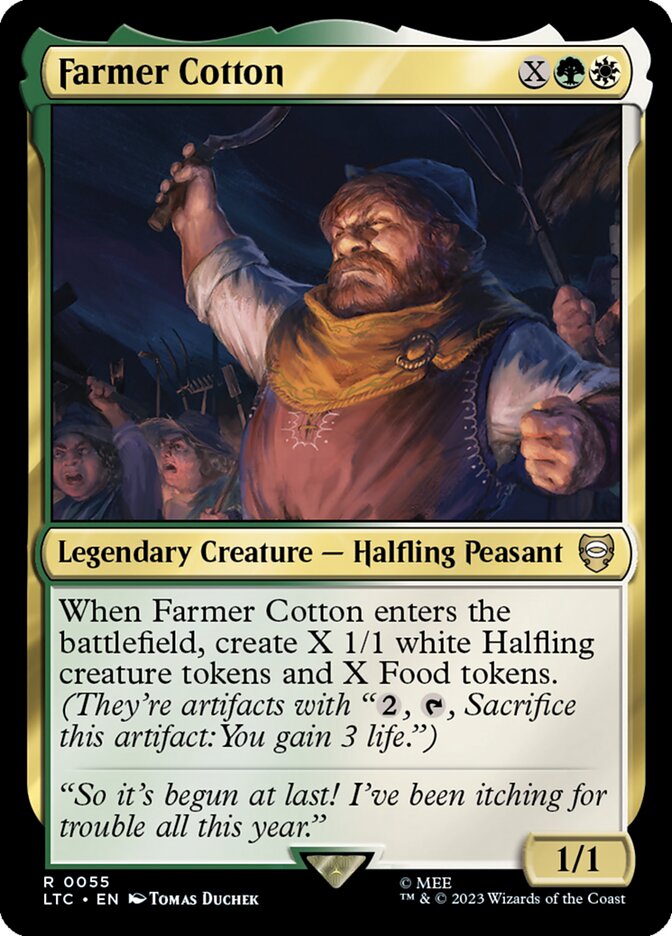
Farmer Cotton is a flexible card that can go into various green and white go-wide decks, as it’s a creature that enters play with another X creatures. It’s also on of the only ways to generate a lot of halflings at once if you need to, although this creature type doesn’t have that many incentives besides The Notary Hobbits.
#12. Frodo, Sauron’s Bane
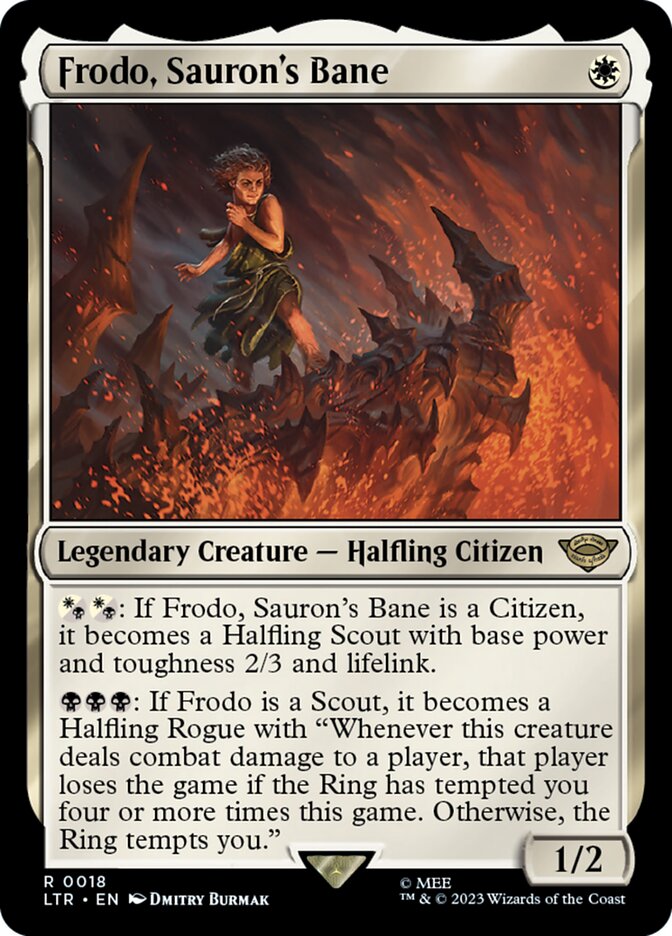
Frodo, Sauron's Bane is an early creature that you can invest your mana into to make it stronger, much like Figure of Destiny. Just having a 2/3 lifelinker isn’t bad. It can also win the game on its own based on the Ring tempts you mechanic, and it’s not hard to build a deck around that. If this card is your commander, you can invest some mana into it and start getting Ring tempts you triggers, but your deck can also help with other cards that have the same mechanic so that Frodo has some inevitability as a late game wincon.
#11. Rosie Cotton of South Lane
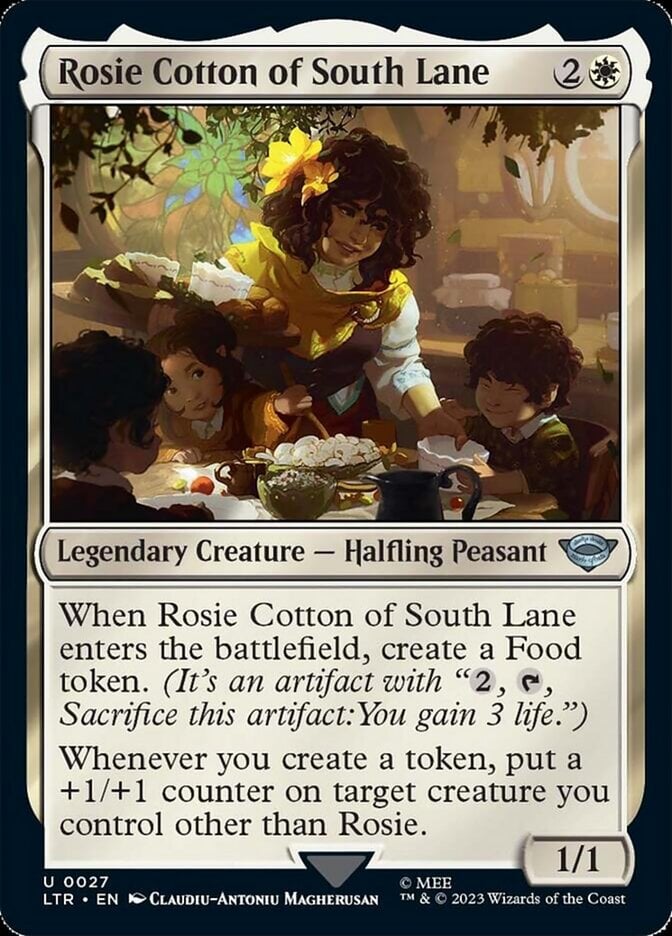
Rosie Cotton of South Lane sees a lot of play as an interesting combo piece, especially in Peasant environments. You can easily combo this card with other cards that make tokens when they get +1/+1 counters, and Cube owners frequently debate whether the two-card combo should be easily attainable or not. It’s also a part of many EDH combo decks.
#10. Bilbo, Unexpected Adventurer
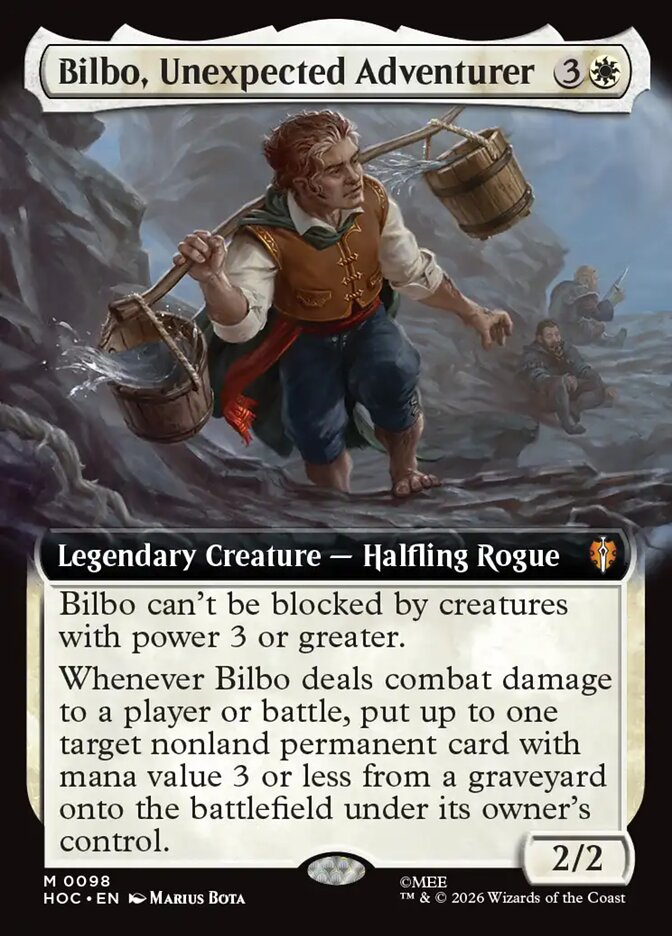
Bilbo, Unexpected Adventurer is small for a 4-drop, but it has useful evasion from bigger creatures and a powerful combat damage trigger (it even works for battles, which could be important in a future meta). Getting cards from your opponent’s graveyard is always nice, because it opens more possibilities and your deck becomes more versatile.
#9. Gollum, Riddle Master
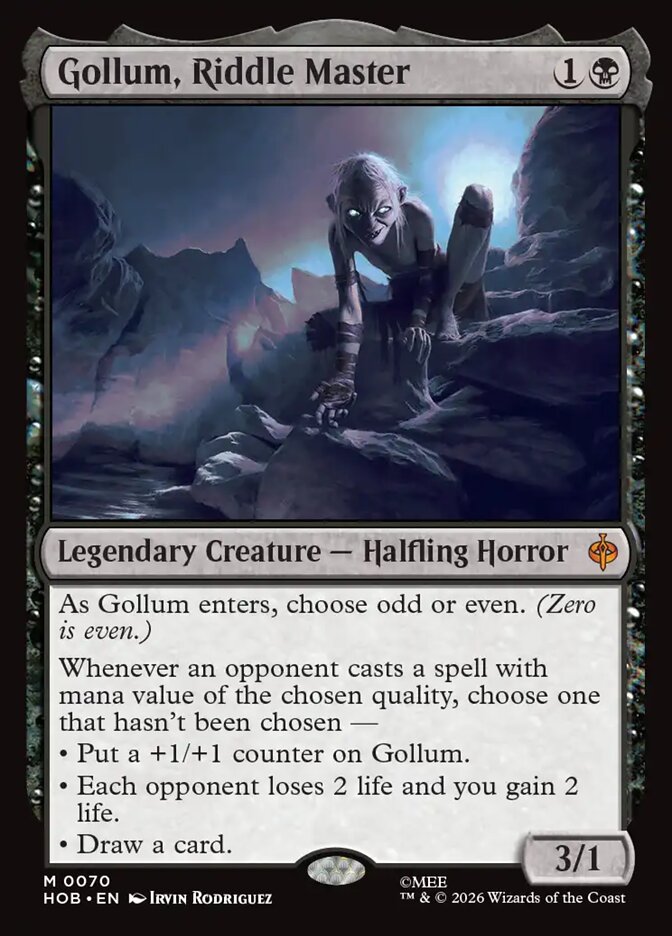
Gollum, Riddle Master can be a very strong card if you know your opponent is heavy on 1- or 2-drops. If they’re chaining 1-mana cantrips or playing aggressive 2-drops, you can recover some life, make a decent-sized threat, or just draw a card. I find it interesting that none of the choices are ever dead.
#8. Prosperous Innkeeper
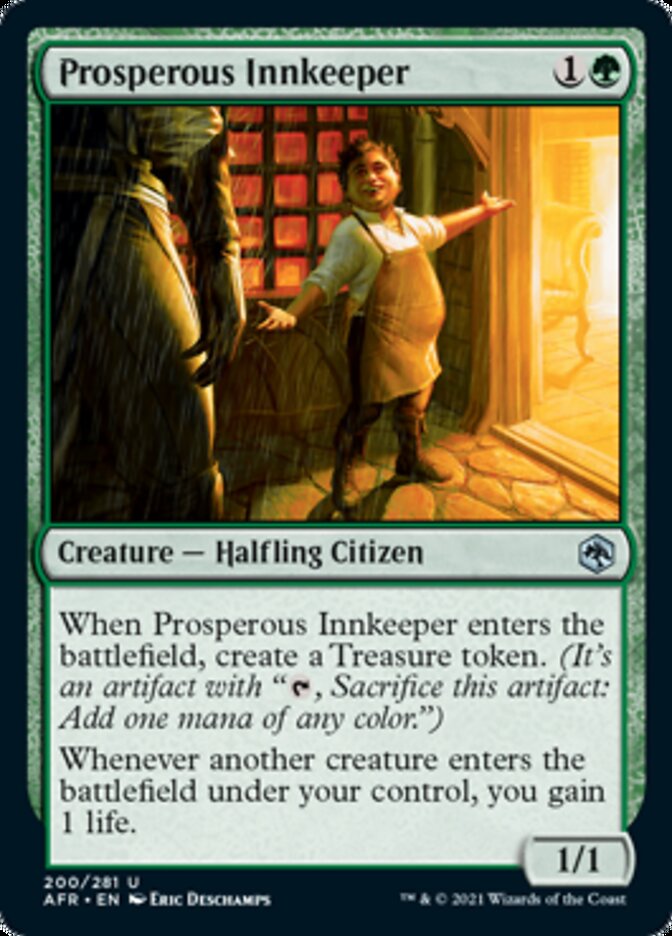
Prosperous Innkeeper saw a lot of play in formats like Standard and Pioneer just because it’s a flexible 2-drop. A 1/1 that comes with a Treasure is ramp, and you can blink it for value. It’s also redundancy for the Soul Sisters deck, so this is a great speed bump in aggressive metas.
#7. The Sackville-Bagginses
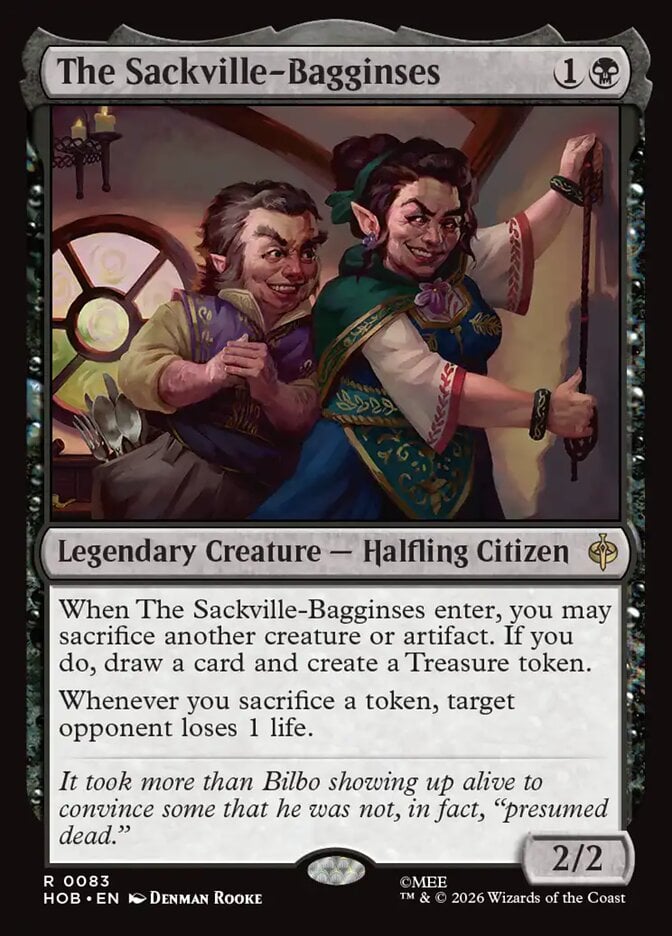
The Sackville-Bagginses are well-positioned to see play in aggressive decks. Getting to sacrifice something and draw a card when it enters is great in aristocrats deck as a payoff for having weaker creatures on the battlefield, and the added damage from sacrificing tokens adds up. That’s very relevant with all the Treasure and Food around, and you can use this card as a part of a combo that loops and sacrifices tokens.
#6. Lotho, Corrupt Shirriff
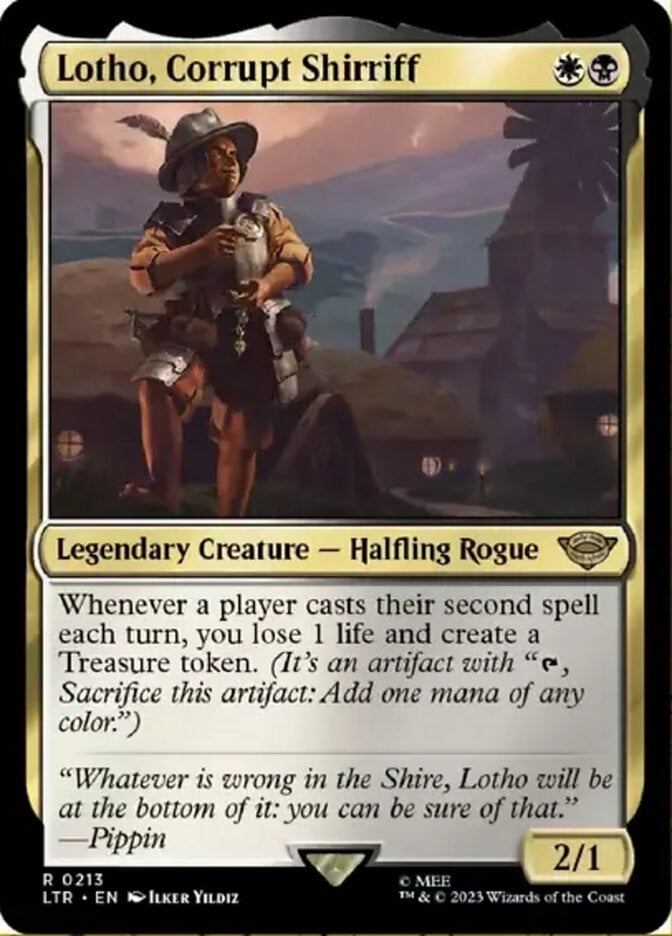
Lotho, Corrupt Shirriff is a beloved “tax” creature, giving you a free Treasure token when your opponents double-spell. Just having this card on the battlefield changes a bit of their sequencing, because giving you a free Treasure is bad, and players would rather cast one big spell than two smaller ones. And untapping on turn 3 or 4 with a lot of free Treasure is enticing, to say the least.
#5. Bilbo, Fellow Conspirator
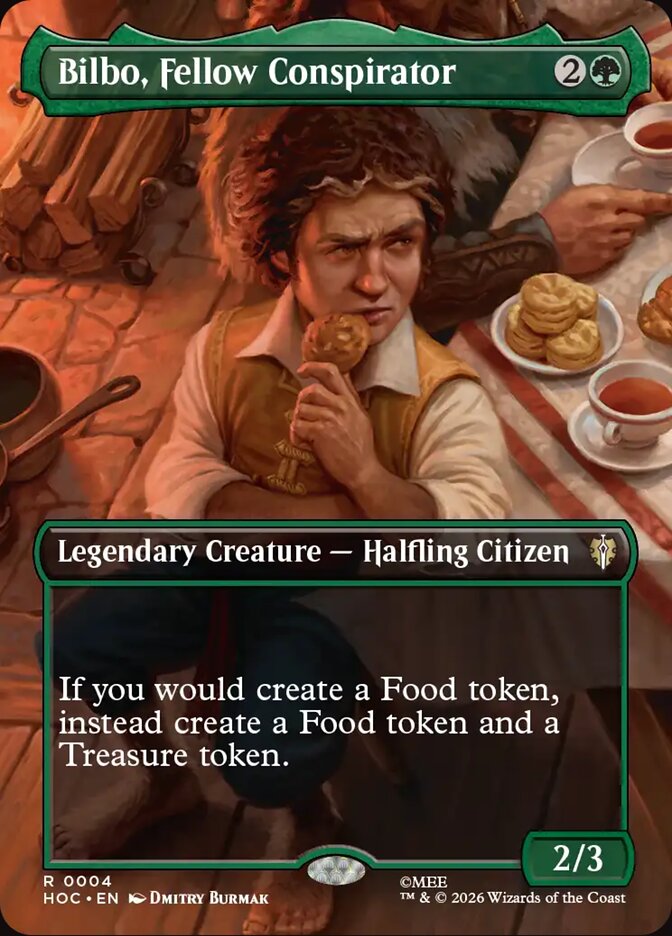
Food players in EDH are very enthusiastic about Bilbo, Fellow Conspirator, because creating a Food token is kind of on the low-power end of artifact tokens. Food essentially just gains life, but when it also comes with a free Treasure, we unlock a much higher power level that’s worth building around. Each creature that comes with a Food token can now generate mana, not to mention all the Treasure synergies in MTG.
#4. Archivist of Oghma
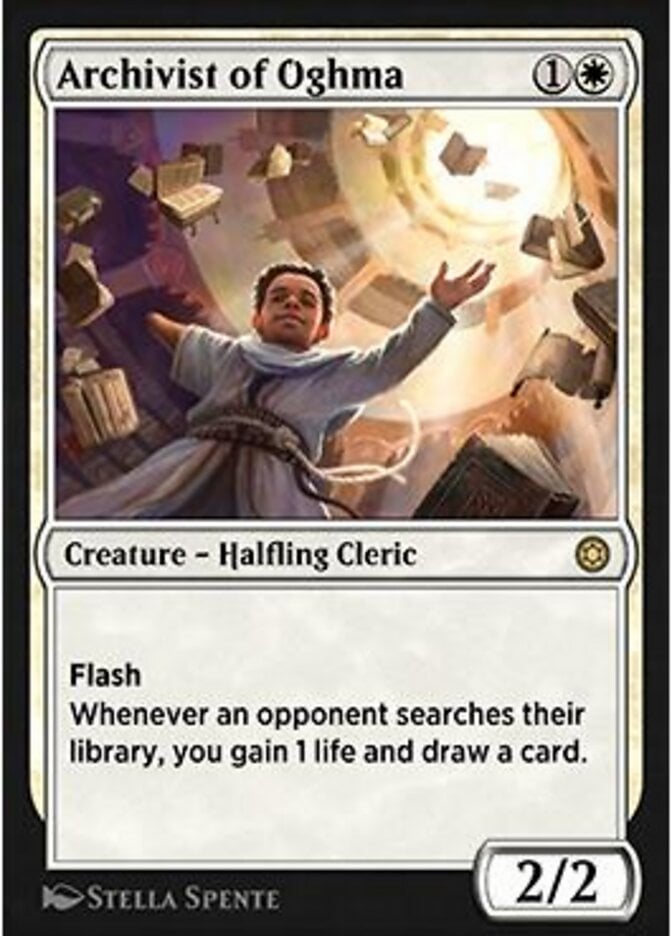
2/2 flash is good for 2 mana. Drawing a card and gaining 1 life when your opponents search their library is also fine. Archivist of Oghma is one of those cards that grants you additional benefits while it stays on the battlefield, especially in formats where players constantly fetch their lands and tutor for their best threats.
#3. Bilbo, Birthday Celebrant
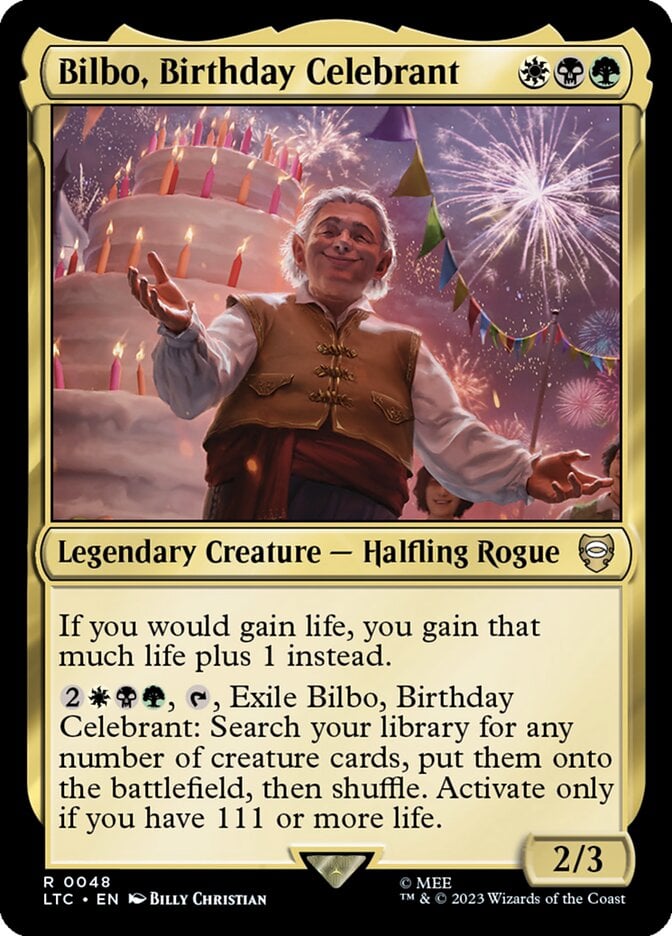
Bilbo, Birthday Celebrant is one of the best typal halfling and hobbit commanders around. It’s in the halfling colors, it sports a cheap 3-mana cost, and it’s a lifegain engine and payoff. It’s hard to get to 111 life, but in a dedicated food deck with the right incentives, it’s not impossible, especially with effects that double your life total.
#2. Bilbo, Thief in the Night
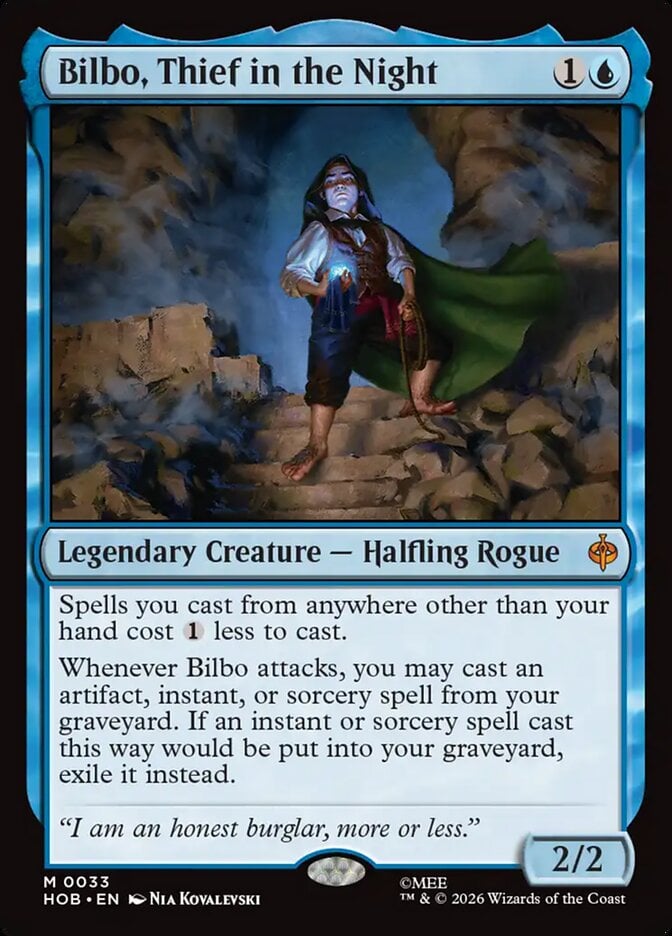
Bilbo, Thief in the Night combines cost reduction, which is always a good thing, and the ability to recur key cards from your graveyard. It’s very strong with cards like Mystic Forge that let you cast spells from the top of your library, and your artifacts that cost 1 or 0 can be cast for free. Add in a Sensei's Divining Top to manipulate the top of your library, and you can already see a combo going. And just attacking and getting another use at your good spells like Thoughtseize or Flow State is already strong enough.
#1. Delighted Halfling
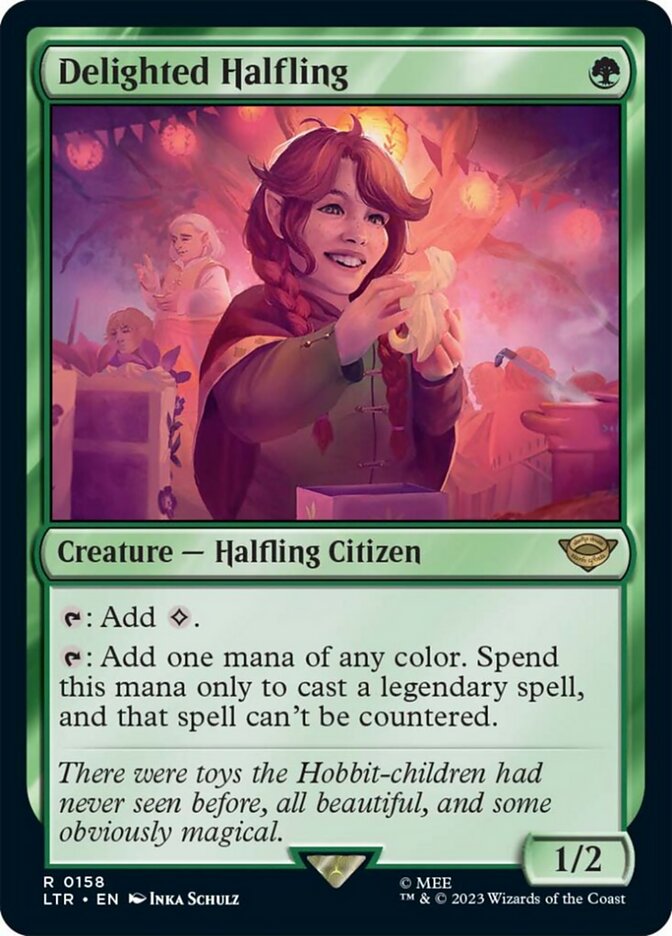
With the increasing number of legendary creatures in MTG, Delighted Halfling is positioning as one of the best Birds of Paradise variants. This card is especially good in decks that need to cast their tri-color commanders early and consistently. Add that the creature can’t be countered, and this dork is a safe way to fight against blue counters, or to help your commander resolve, or your key threats in the Modern/Legacy formats. And it also adds colorless mana in case you’re not playing any legendaries.
Best Halfling Payoffs
Halflings aren’t the most supported creature type in MTG, but there are some cards that reward you for playing them.
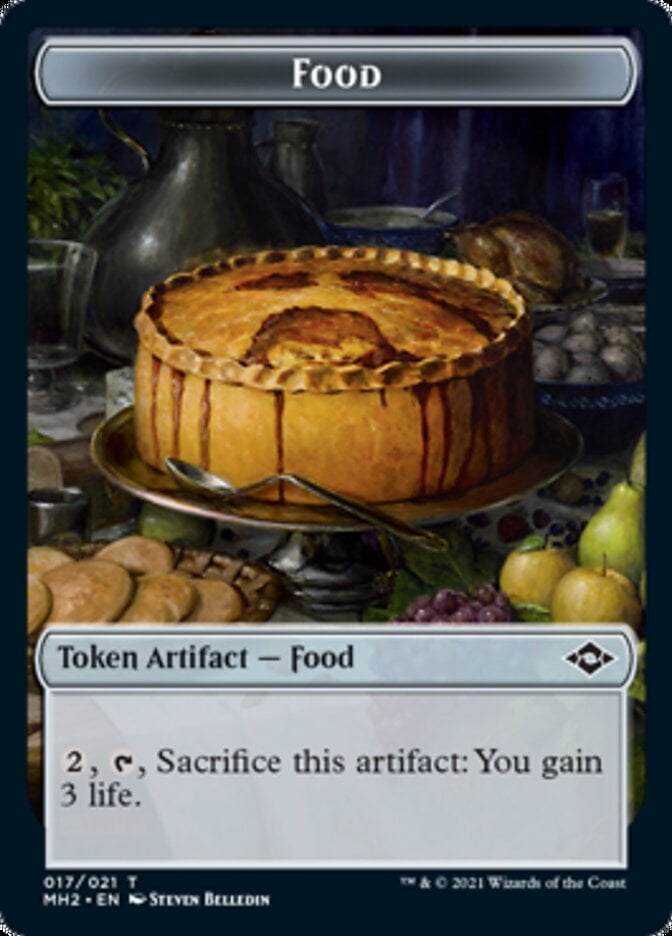
There’s a theme that ties the halfling folk together, and that’s Food tokens/lifegain. Many halflings do something strong when you create Food, sacrifice them, or gain life in increments of 3, which is what you get by sacking Food tokens anyway.
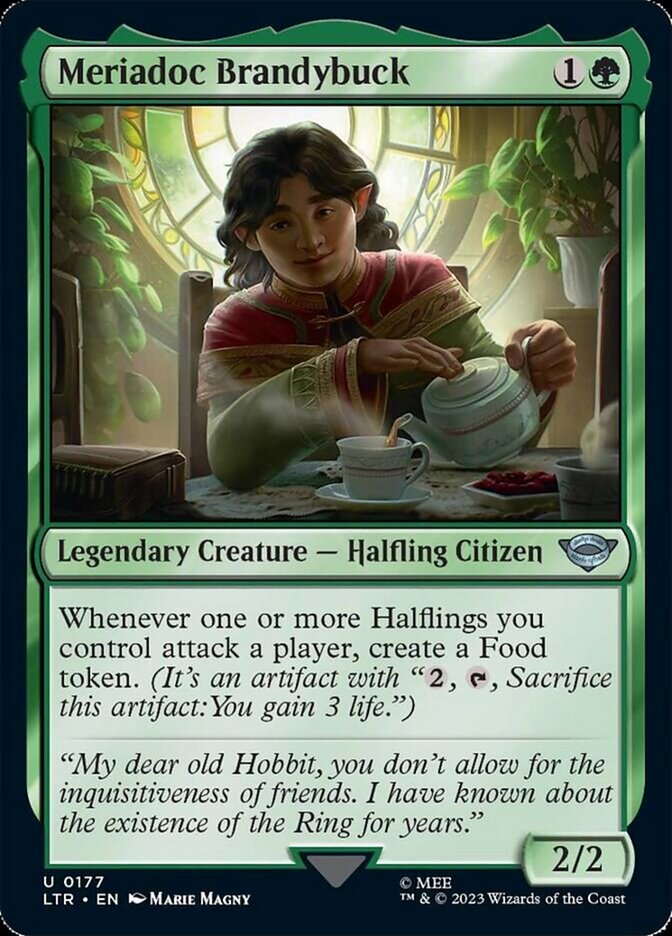
Meriadoc Brandybuck creates a Food token whenever you attack with halflings.

Ygra, Eater of All is a fun one, turning all your creatures into food. Combining this with Sam, Loyal Attendant and other creatures with activated abilities is an interesting combo, and it’s also good with cards that generate mana whenever you sacrifice a creature.
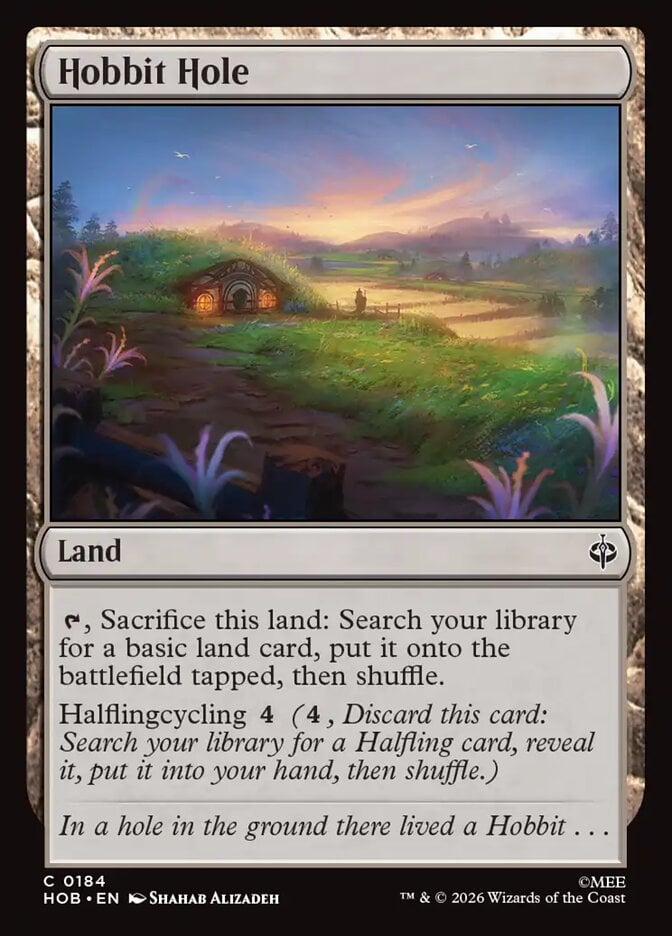
Hobbit Hole helps finding a specific hobbit you need, which can help to enable Rosie Cotton of South Lane combos.
Academy Manufactor is a staple in decks that create Food tokens, so pair it with some halflings.
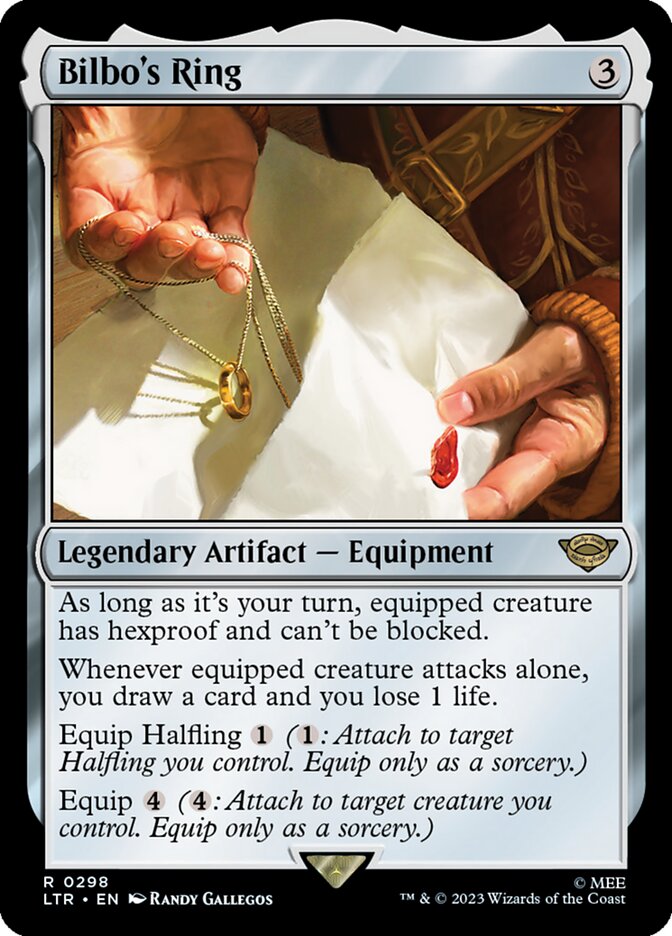
A card like Bilbo's Ring is especially strong with the reduced equip cost for halflings.
The Notary Hobbits can generate a lot of mana if you’re into halflings, or if you made a lot of tokens using Farmer Cotton.
Wrap Up

Zhentarim Bandit | Illustration by Cristi Balanescu
And that finishes our take on the best halfling cards, guys! Like in J.R.R. Tolkien’s books, halflings aren’t the most powerful creatures, and you’d “miss them for children.” But even the smallest creatures can make a difference in this world, and that’s also true in MTG, with these small, evasive creatures and Food token creators.
What are your favorite halfling creatures, guys? Do you think The Hobbit delivered some strong ones? Let me know in the comments below or over in the Draftsim Discord. And for more rankings like this, please check out Draftsim’s YouTube Channel, The Daily Upkeep.
Thanks for reading, and until the next time!
Follow Draftsim for awesome articles and set updates:










Add Comment