

Hell to Pay | Illustration by Liiga Smilshkalne
Magic is a war of resources. In general, whoever manages their resources better will win. This includes not killing rabbits with a cannon – you may need that cannon shot for a much bigger threat later on!
But, as it turns out, some rabbit-sized threats are really dangerous if left unchecked. One of Magic’s earliest rules of engagement is “Bolt the Bird”, meaning “Doesn’t matter if Lighting Bolt seems like overkill for Birds of Paradise; just shoot that bird down before it snowballs!”
And some MTG cards even reward going for the overkill, with different bonuses for dealing excess damage. So let’s leave finesse and efficiency aside for a bit, and deal with excess in this case!
What Is Meant by Excess Damage in MTG?

Rith, Liberated Primeval | Illustration by Victor Adame Minguez
Think of excess damage as “over-spill damage”, or “overkill damage”. Basically, work out how much damage it would take to kill or otherwise finish off the thing you want dead. Anything beyond that number is excess damage.
For example, if you need to deal 5 points of damage for a creature to die, then 6 and above is excess damage.
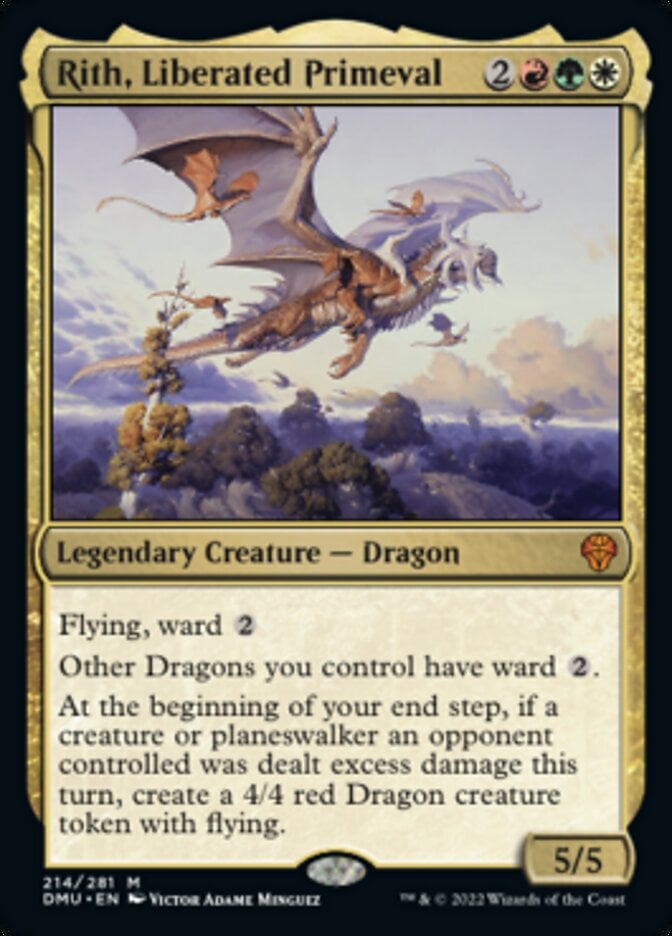
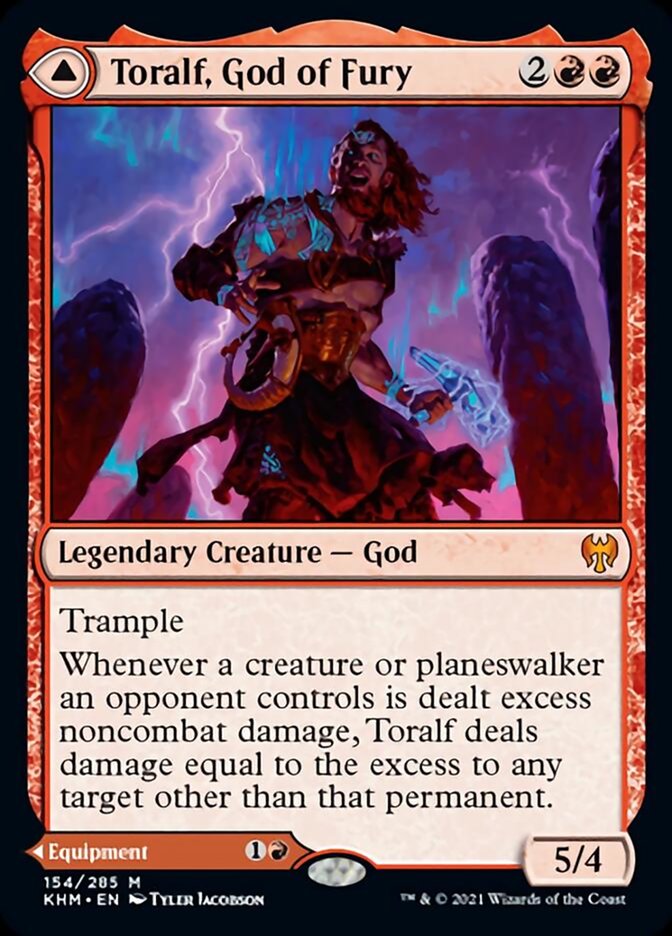
There are three subtleties that you need to keep in mind. The first is that while excess damage is any type of damage (be it combat damage or direct damage), some excess damage cards specifically care about combat or non-combat damage. Rith, Liberated Primeval doesn’t care about which type of damage, but Toralf, God of Fury only cares about noncombat damage.
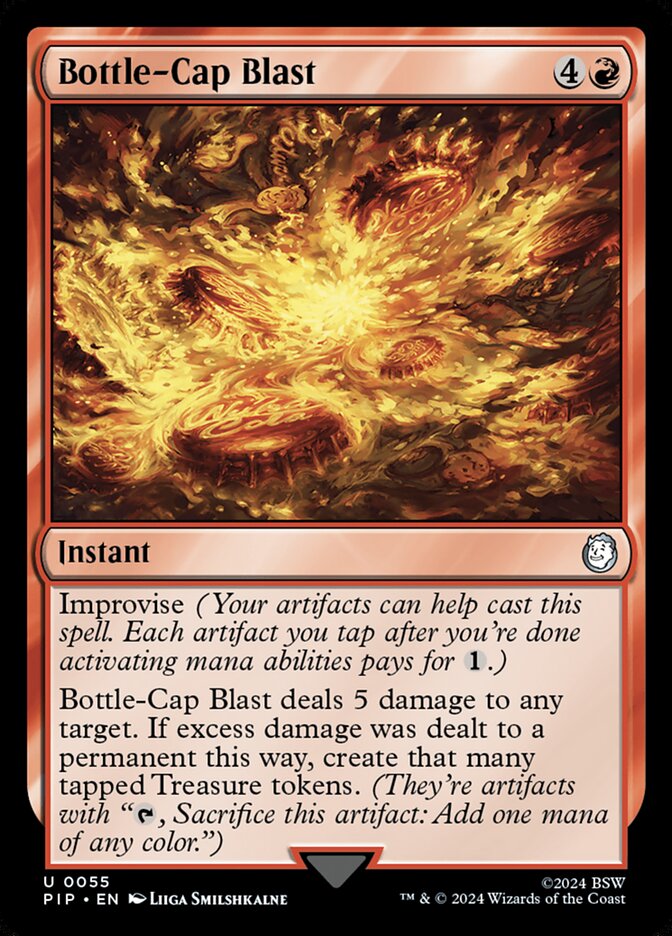
Another subtlety is that although excess damage applies to creatures, planeswalkers, and battles, some excess damage cards care about overkilling a specific type of permanent. Toralf, God of Fury‘s triggered ability doesn’t include battles, but Bottle-Cap Blast‘s trigger works for all types.
And then there’s a corner case for when there’s a permanent with several types, like being both a creature and a planeswalker. According to Aegar, the Freezing Flame‘s rulings: “If a permanent is both a creature and a planeswalker, the minimum amount of damage to be considered lethal damage is used to determine if excess damage has been dealt. For example, if a 5/5 creature that’s also a planeswalker with three loyalty counters on it is dealt 4 damage, it’s been dealt 1 excess damage and Aegar’s ability may trigger.”
The History of Excess Damage in MTG
The concept of excess damage is as old as Magic, since it’s baked into the trample keyword. If blocked, a creature with trample will “overspill” any excess damage to the defending player.
The exact “excess damage” wording took a while to show up, though.
Trample’s reminder text during Ninth Edition was: “If this creature would assign enough damage to its blockers to destroy them, you may have it assign the rest of its damage to defending player or planeswalker.”
The expression “excess damage” appeared in trample’s reminder text during Magic Origins in 2015.

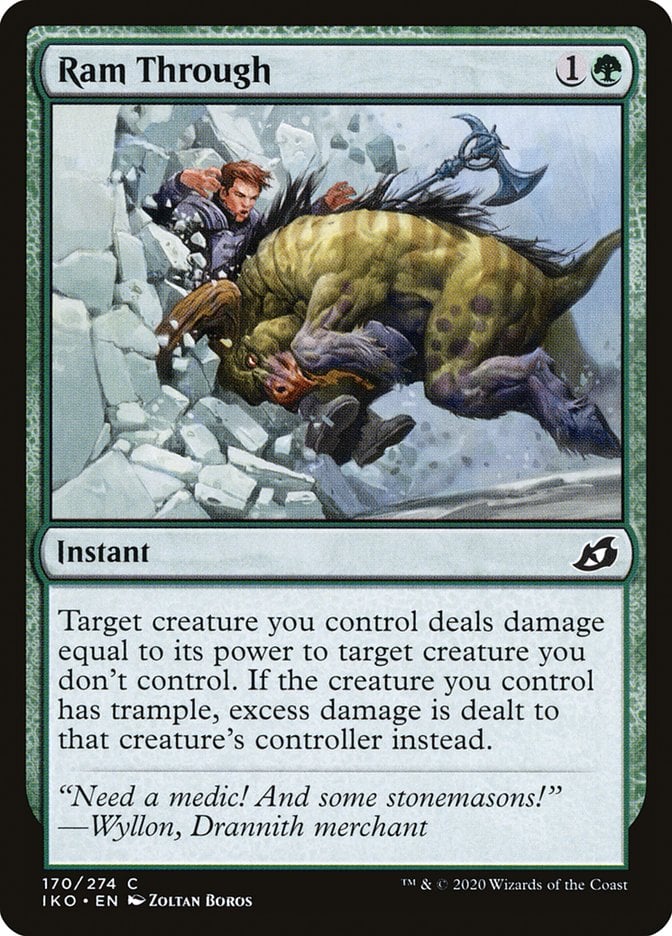
Flame Spill and Ram Through, from Ikoria: Lair of Behemoths, were the first two cards that included “excess damage” in their rules text, as a way to effectively give trample to instants. And, finally, excess damage was defined in Magic’s Comprehensive Rules in the Comprehensive Rules changes of February 2021, to clearly define how several excess damage cards from Kaldheim should work.
Lethal Damage vs. Excess Damage
Lethal damage is “the exact amount of damage you have to deal to kill a creature, planeswalker, or battle.”
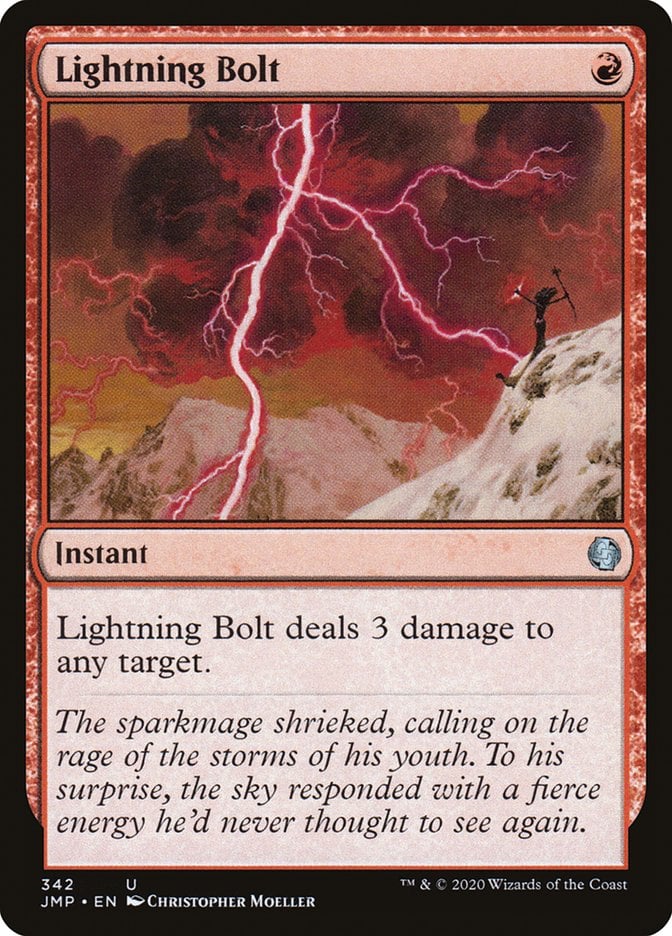
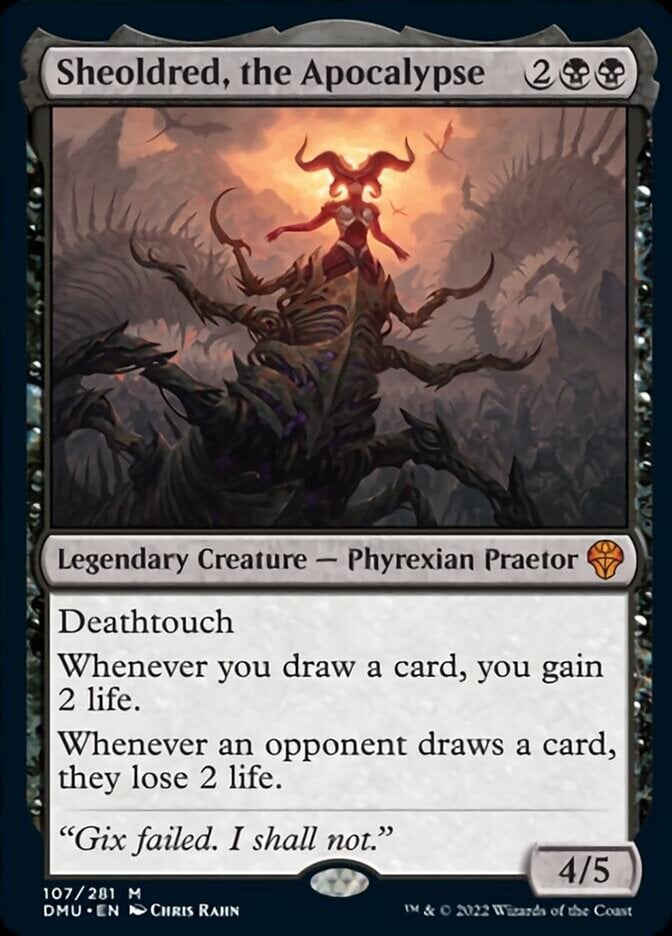
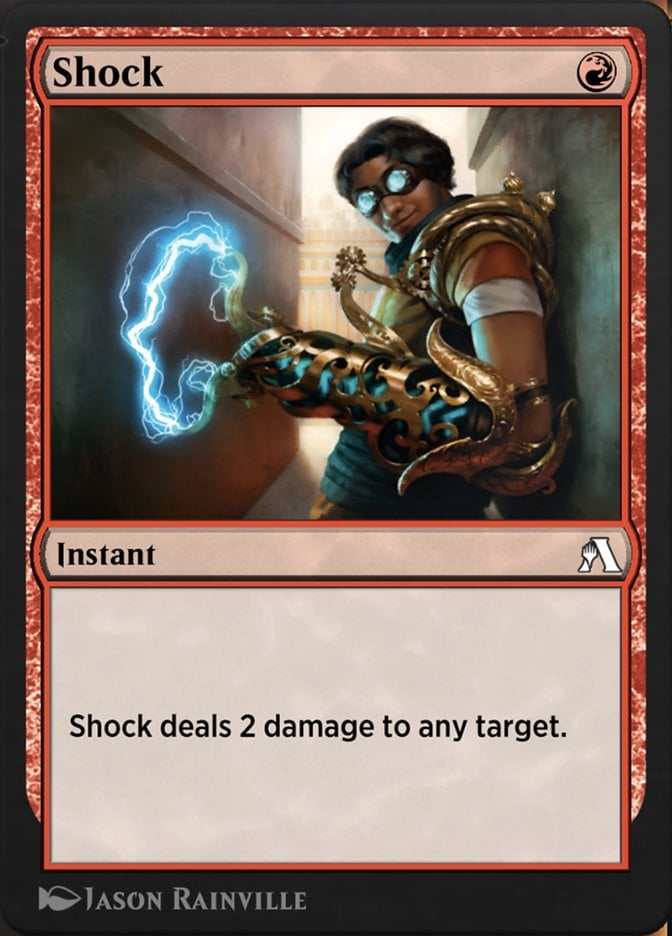
It takes into account previous damage dealt to the permanent during that turn, so if you Lightning Bolt my Sheoldred, the Apocalypse, then a Shock would be enough to deal lethal damage (and the same would be true for a planeswalker or battle with 5 counters).
Excess damage is any damage over lethal damage.
If my Sheoldred is currently untouched, then you have to deal at least 6 damage to it for it to be considered excess damage. If you chain two Lightning Bolts, then the second will cause 1 point of excess damage.
Excess damage usually, but not always, means: “More damage than the creature has toughness.” But the crucial threshold is lethal damage; any damage above lethal is excess damage.
Does Deathtouch Count as Excess Damage?
Yes! And it’s brutally efficient at that!
A single point of damage from a deathtouch source is lethal. Anything beyond that point is excess damage.
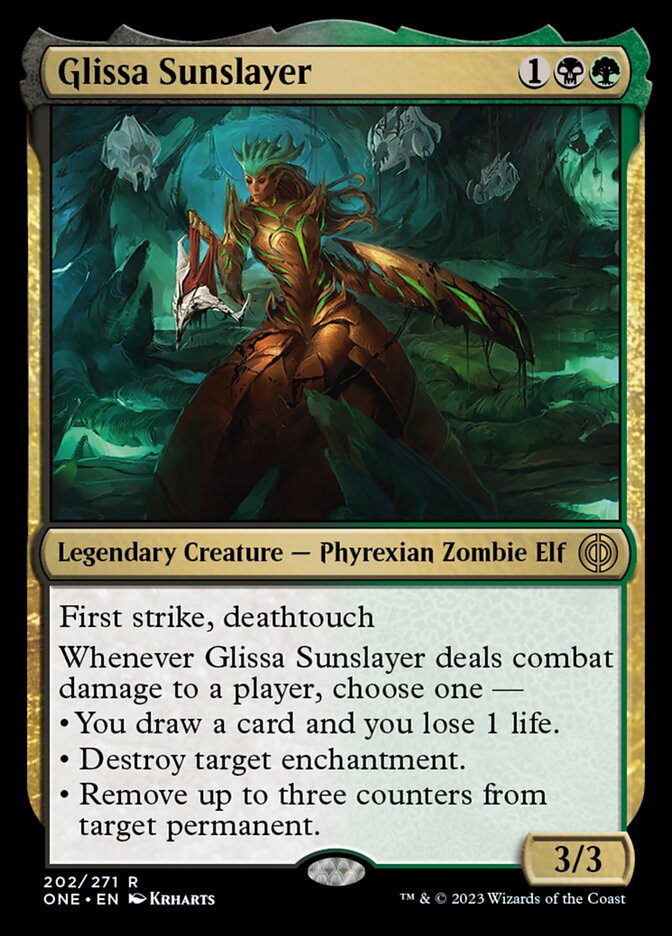
You attack with Glissa Sunslayer, I block with a vanilla 5/5. Glissa hits first, thanks to first strike; they will kill my 5/5 with a single point of damage, and will deal 2 points of excess damage.
Does Trample Count as Excess Damage?
This one’s a bit complicated, so let’s go to the rules.
As per rule 702.19b:
702.19b. The controller of an attacking creature with trample first assigns damage to the creature(s) blocking it. Once all those blocking creatures are assigned lethal damage, any excess damage is assigned as its controller chooses among those blocking creatures and the player, planeswalker, or battle the creature is attacking.
At quick glance, it would seem that trample damage is excess damage… but that’s not entirely precise when cards that care about excess damage are part of the equation.
Here’s the thing: Suppose you attack with a 5/5 with trample, I block with a 3/3, and you have Rith, Liberated Primeval in play. You could choose to assign 2 damage to me (the extra damage that my 3/3 can’t block), but in that case your 5/5 doesn’t actually deal any excess damage, and your Rith won’t trigger.
That’s because, if your 5/5 deals 3 damage to my blocker, and 2 to me, then your 5/5 deals exact lethal damage to my blocker. It didn’t deal any excess damage to my blocker.
If you want Rith to trigger and give you a 4/4 dragon, then you have to assign 4 damage (or more) to my blocker, instead of allowing all the overspill damage to hit me. In that case, your 5/5 attacker does overkill my blocker, and Rith will trigger.
Excess Damage vs. Indestructible
Although it may sound a bit counterintuitive, indestructible does not affect excess damage math.
The intuitive (and, per Magic’s rule, wrong) way of thinking about it would be: “If my creature is indestructible, then it can sustain an infinite amount of damage; therefore, even infinite damage is non-lethal; and since excess damage requires overkilling a creature, then there’s no way to cause excess damage to an indestructible creature.”
The thing is, as per Magic’s rule, an indestructible creature survives lethal damage, but the game still checks for lethal before damage is dealt. If I hit your indestructible 2/2 with my Bottle-Cap Blast (which deals 5 damage), then 2 is lethal damage, and 3 is excess damage (exactly as if your creature didn’t have indestructible!). Indestructible comes into play after I deal lethal damage, and prevents your creature from dying. But the lethal-excess damage math is exactly the same.
How Do I Know Which Source Dealt Lethal Damage?
For effects that go on the stack (like a sorcery such as Hell to Pay, or an instant such as Ram Through), it’s pretty simple: Whichever effect delivered the (over)killing blow, that’s the source that dealt lethal damage.
It gets a bit trickier when it’s combat damage and there are several creatures involved. For example, I attack with a vanilla 4/4, and you block it with a vanilla 3/3 plus Overclocked Electromancer. My 4/4 receives 5 damage in total, meaning there’s 1 point of excess damage… but since all combat damage happens at the same time, who did this extra damage? Was it your vanilla 3/3, or was it Overclocked Electromancer?
Luckily, the very few creatures that care about dealing excess combat damage are worded in such a way that the actual source does not matter:
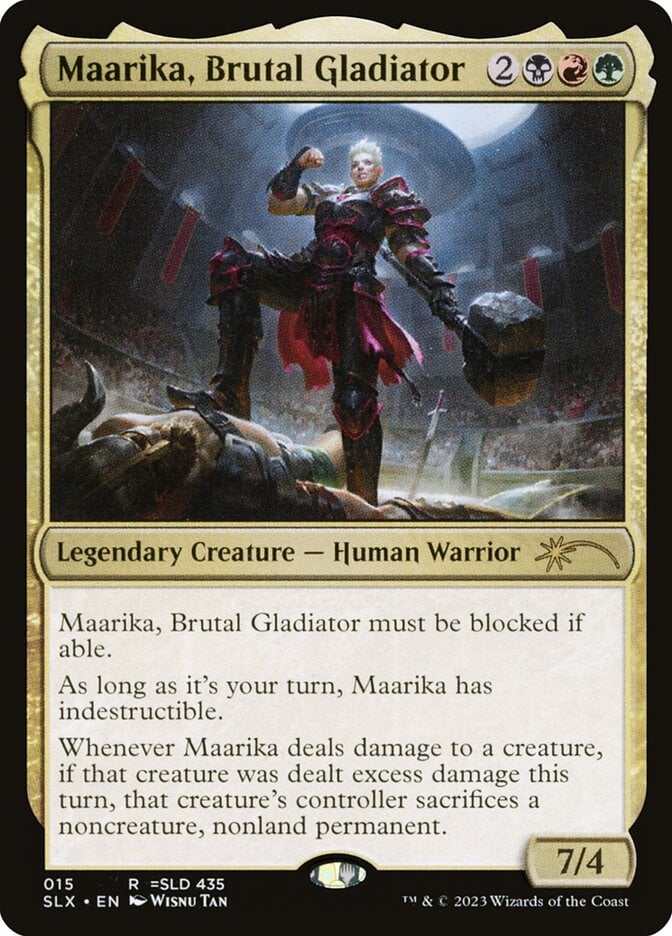

Maarika, Brutal Gladiator (AKA Zangief) and the Electromancer don’t care about doing the excess damage themselves – as long as the creature was dealt excess damage, their abilities will trigger. In the example above (where I attacked with a 4/4 and you blocked with a 3/3 plus the Electromancer), the Overclocked Electromancer will always trigger.
If you give one of your creatures first strike in the example above, then things change! If the Electromancer hits second, then it will obviously be the one overkilling my 4/4. But if it hits first, then my 4/4 won’t have received lethal damage yet, and your Electromancer won’t trigger.
Gallery and List of Excess Damage Cards
There are 29 excess damage cards: 24 available in paper formats like Commander, and 5 that are digital-only cards available on MTG Arena.
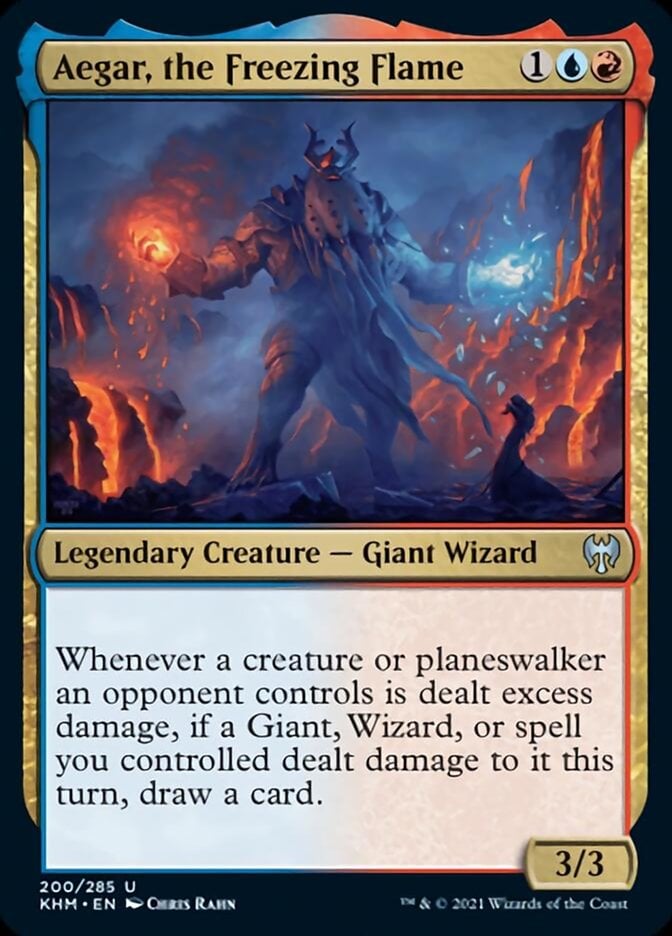
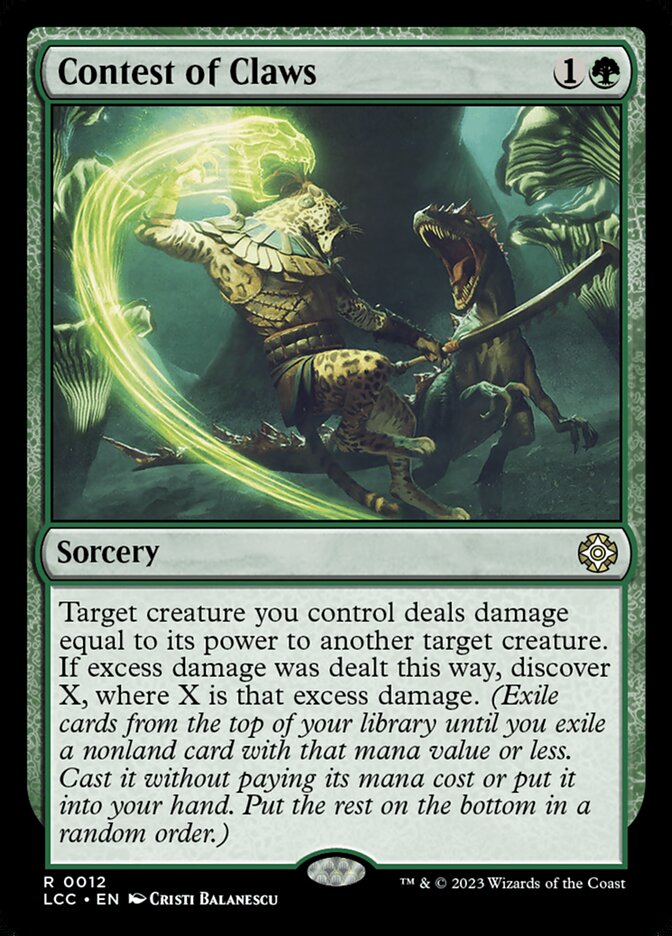

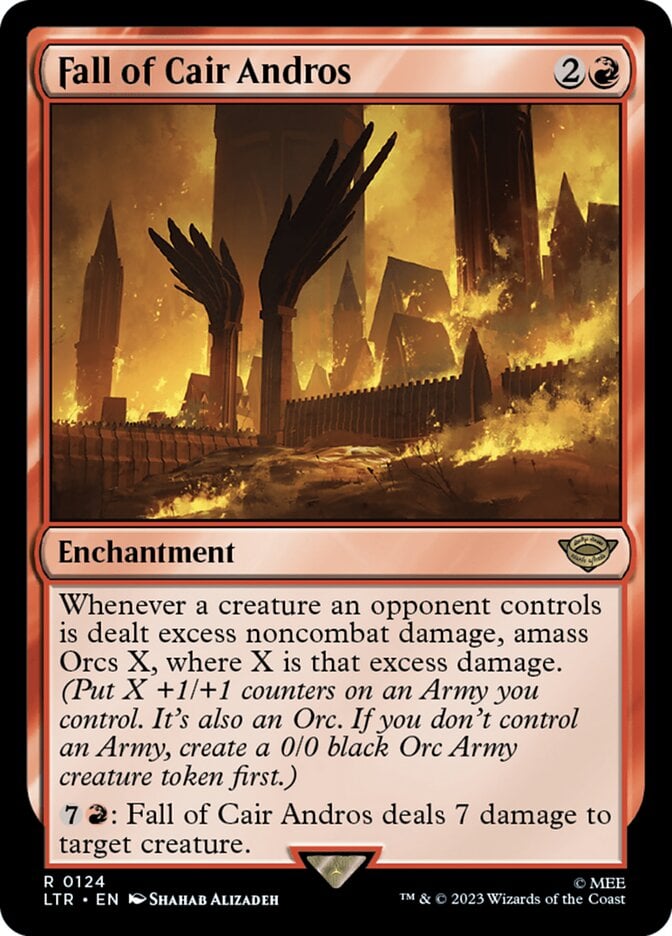
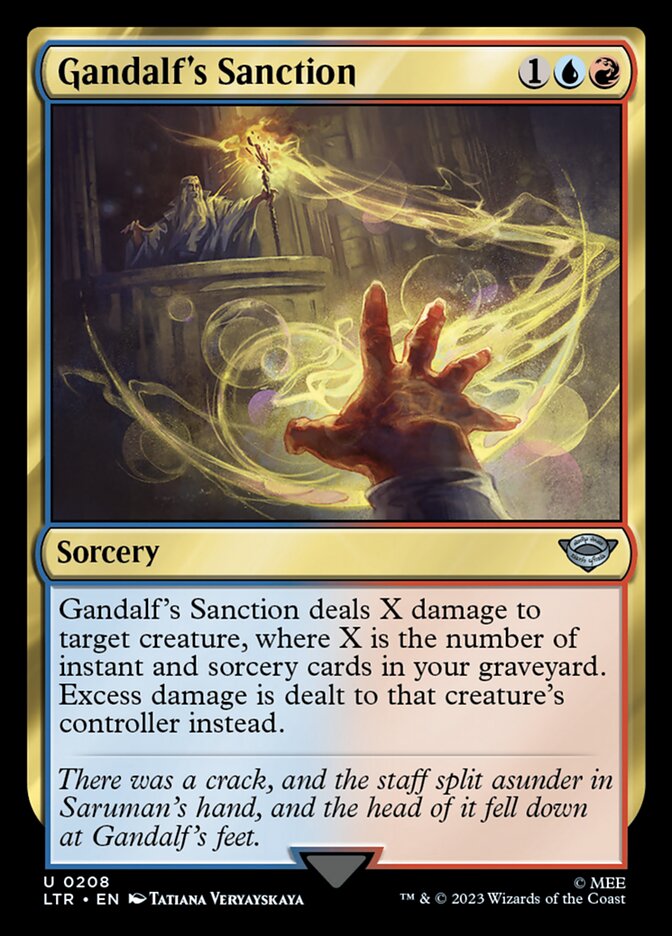

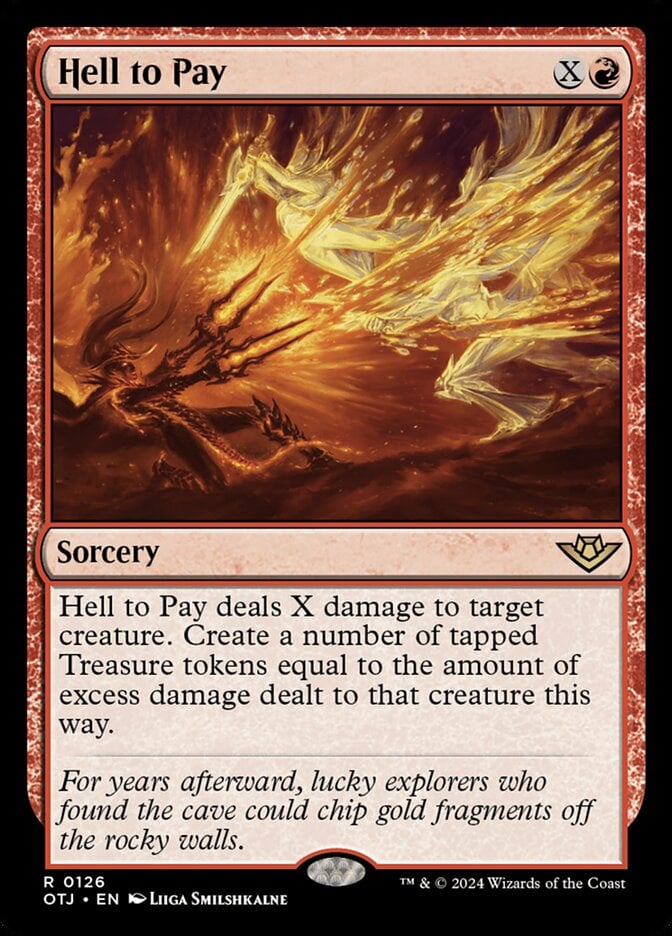
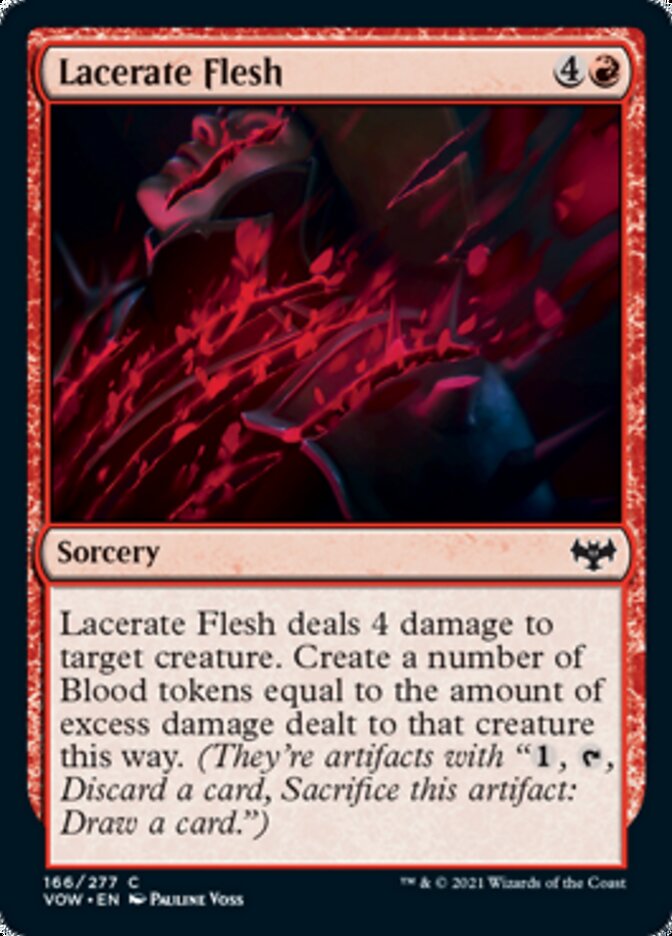
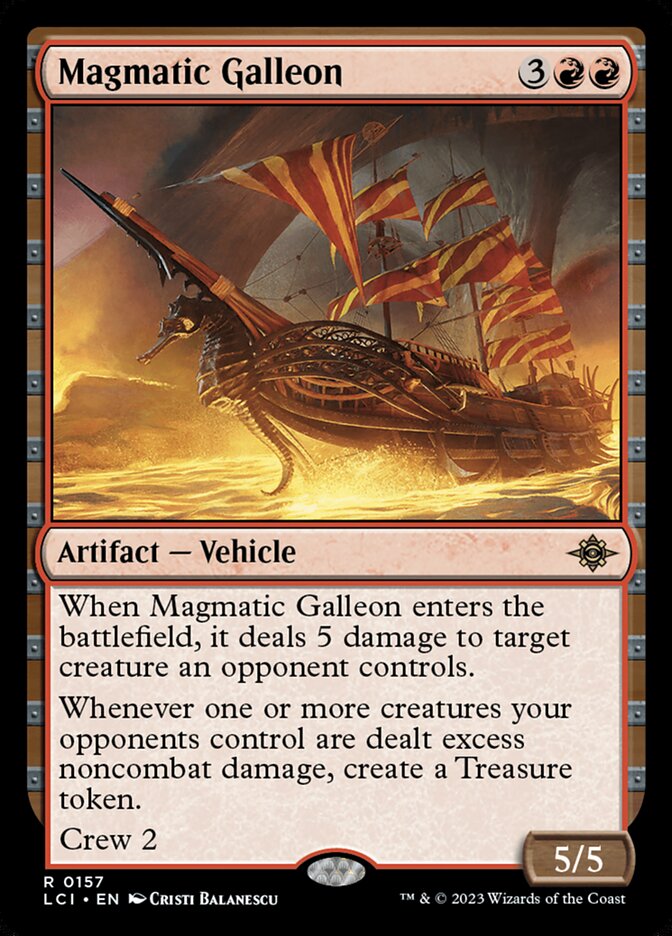
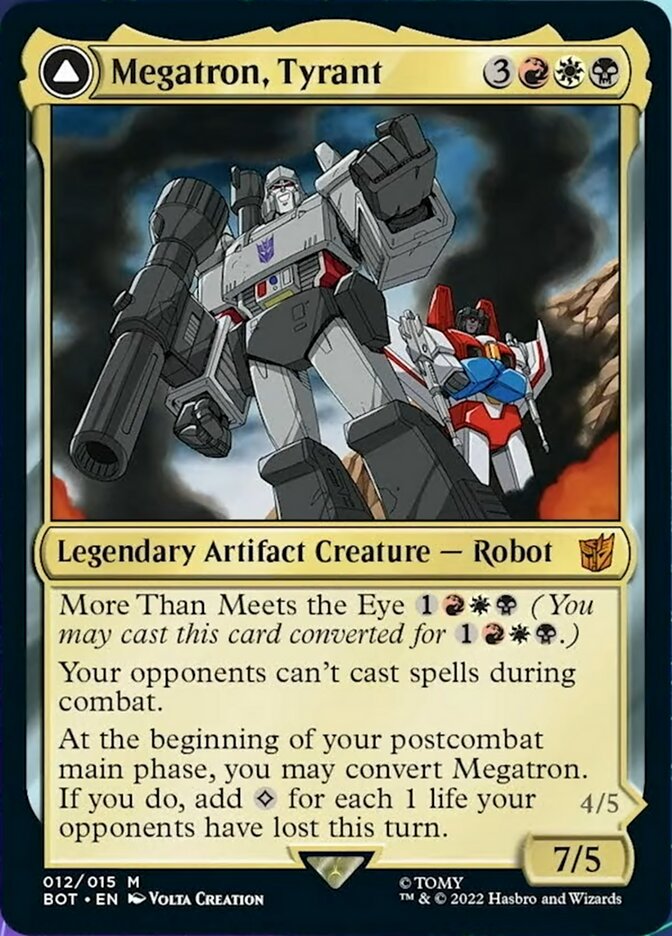
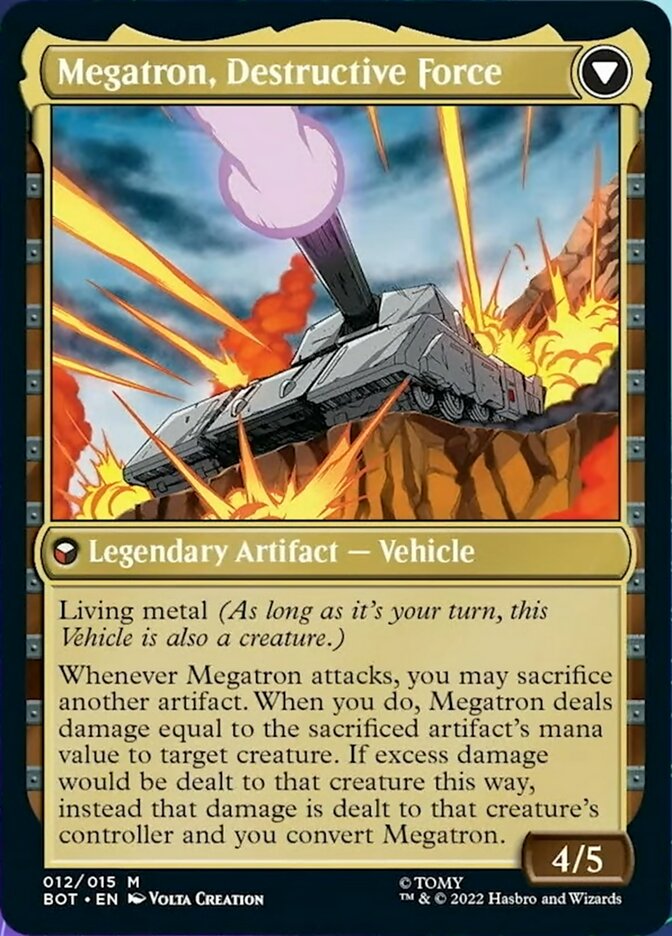
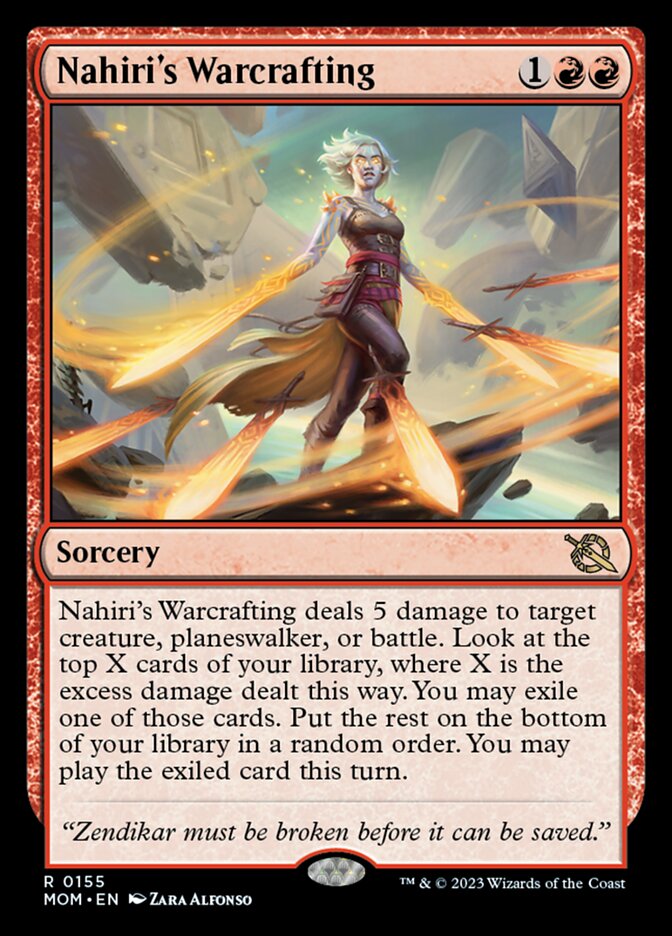

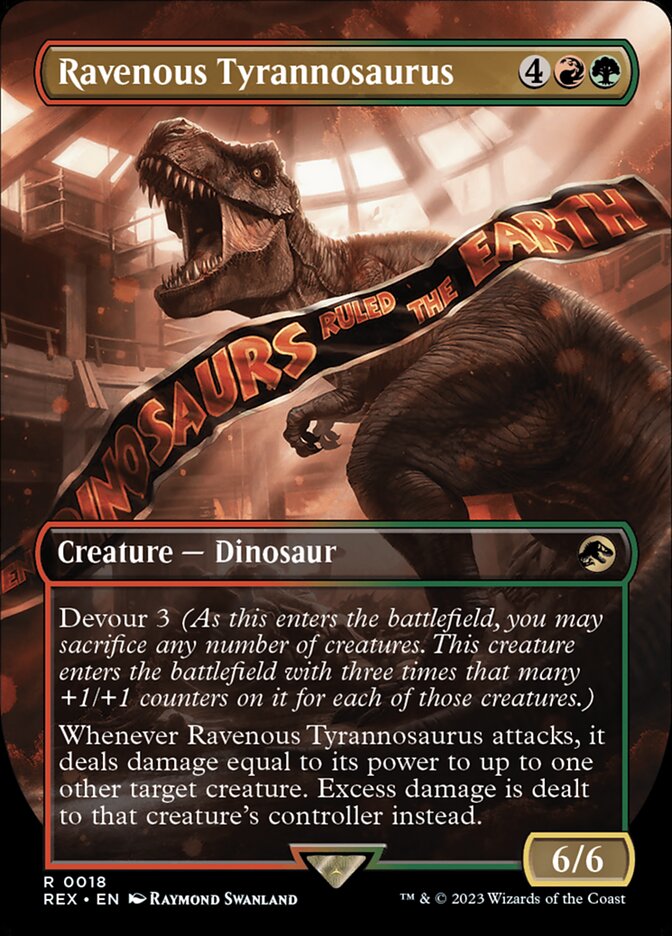
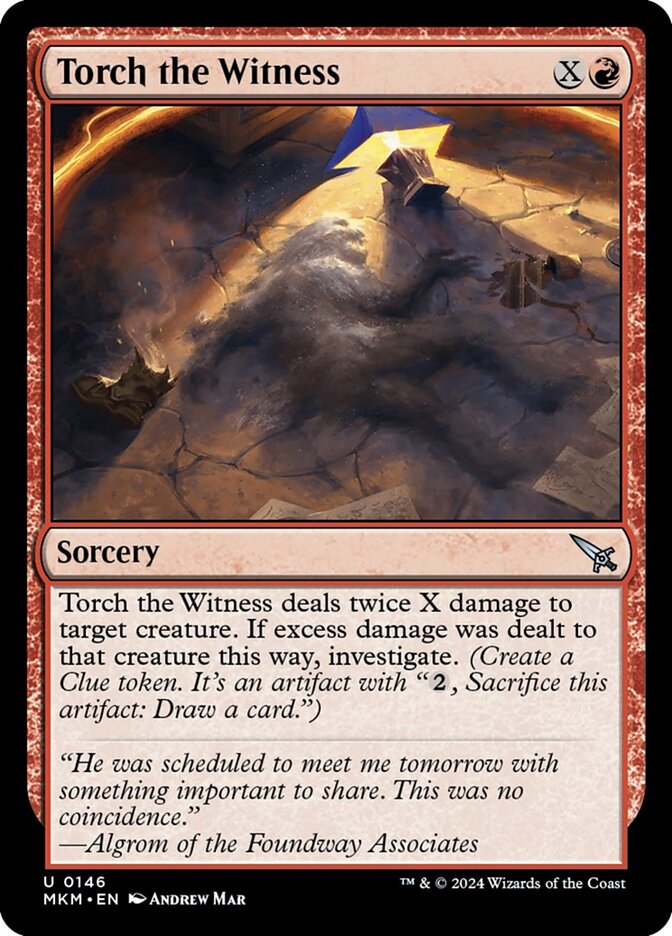
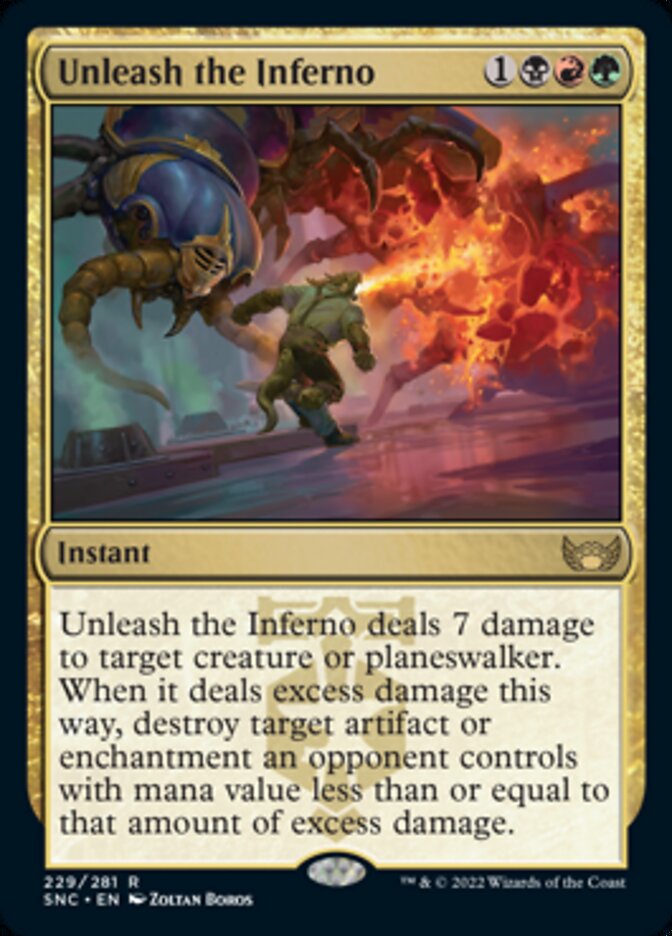
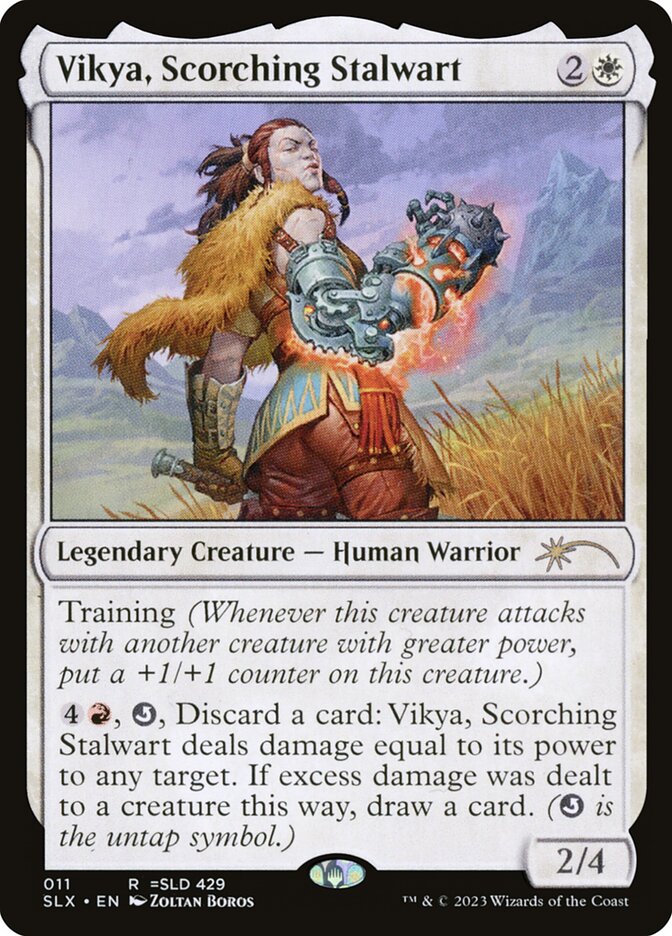

The 26 excess damage cards that you can play in Commander are:
- Aegar, the Freezing Flame
- Bottle-Cap Blast
- Contest of Claws
- Cramped Vents
- Fall of Cair Andros
- Flame Spill
- Gandalf's Sanction
- Goblin Negotiation
- Hell to Pay
- Lacerate Flesh
- Maarika, Brutal Gladiator
- Magmatic Galleon
- Megatron, Tyrant / Megatron, Destructive Force
- Nahiri's Warcrafting
- Overclocked Electromancer
- Pigment Storm
- Ram Through
- Ravenous Tyrannosaurus
- Rith, Liberated Primeval
- Toralf, God of Fury / Toralf's Hammer
- Torch the Witness
- Unleash the Inferno
- Vikya, Scorching Stalwart
- Windswift Slice


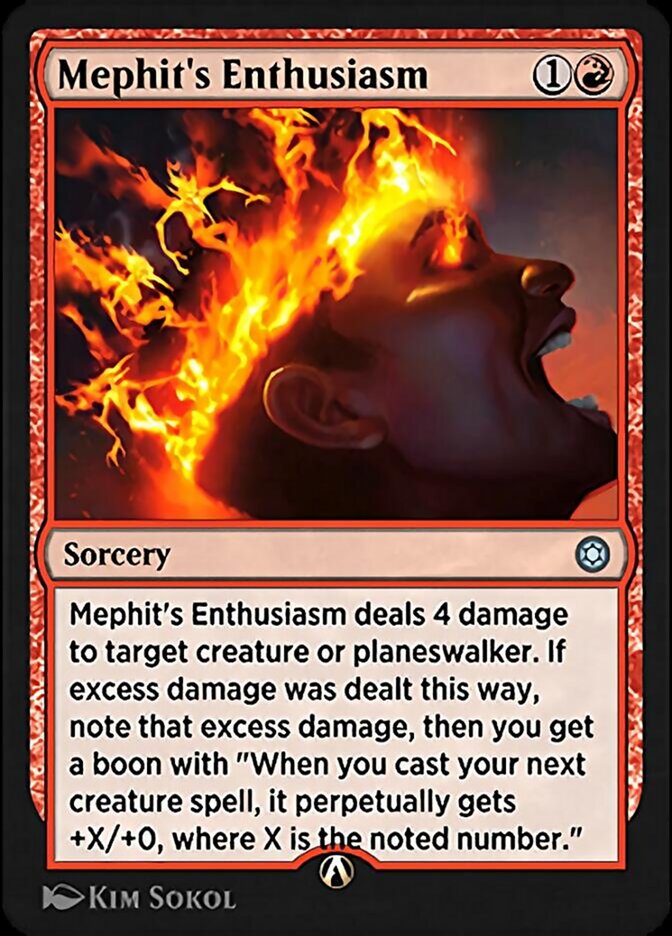
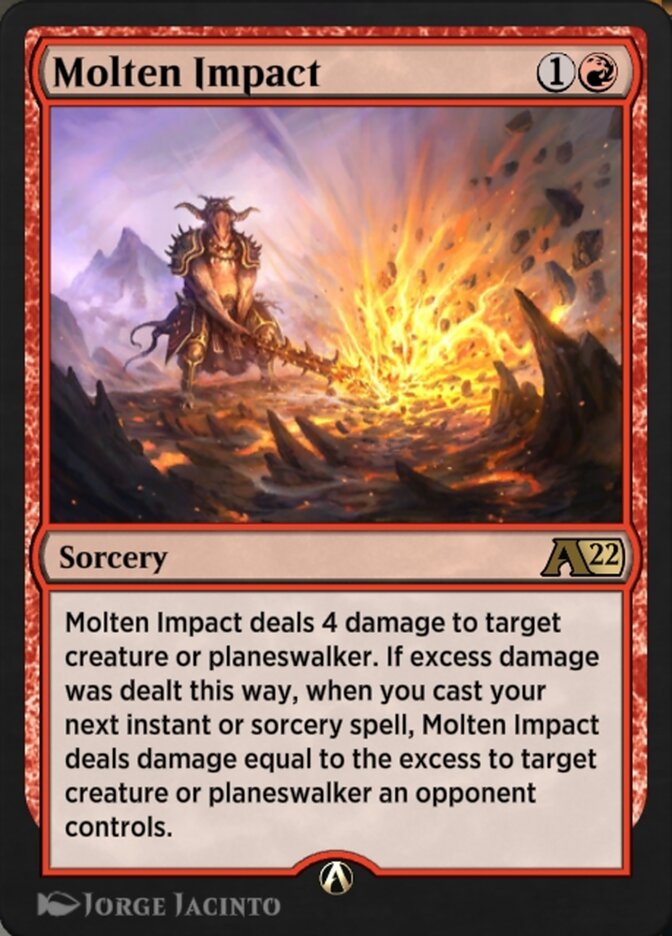

The five digital-only Alchemy cards are:
Best Excess Damage Cards
Ram Through
Ram Through, originally from Ikoria, was one of the first excess damage cards printed, and is the most popular in casual Commander decks. It’s trample, but at instant speed. Usually paired with Fynn, the Fangbearer, Ghalta, Primal Hunger, and Wolverine, Best There Is as commanders, it’s also a very frequent inclusion in Final Fantasy‘s Tifa Lockhart decks.
This green instant is also a Pauper staple, powerful enough to see play in competitive decks like Aura Hexproof.
Hell to Pay
Hell to Pay, from Outlaws of Thunder Junction, is the second most-popular excess damage card among casual Commander decks, but has enough punch to see cEDH play. Treasure commanders like Vihaan, Goldwaker and Magda, Brazen Outlaw just love this red sorcery!
Bottle-Cap Blast
Fallout‘s Bottle-Cap Blast works fairly similarly to Hell to Pay, turning excess damage into Treasure, and it’s not rare to see both cards in the same Vihaan, Goldwaker or Magda, Brazen Outlaw deck. And, like Hell to Pay, Bottle-Cap Blast is strong enough to make the cut into cEDH builds.
Windswift Slice
Hell to Pay and Ram Through had a baby – it’s trampleless and Treasure-less, but you’re getting a lot of elves for your trouble!
Another green instant that shines when you go for overkill, Windswift Slice is fringe-playable in cEDH, and very popular in casual elfball decks with Lathril, Blade of the Elves, Voja, Jaws of the Conclave, or Legolas, Master Archer in the command zone.
Rith, Liberated Primeval
Rith, Liberated Primeval works on a different axis than the three previous cards. Rather than causing the (excess) damage itself, this Naya card just cares that you deal excess damage at some point during your turn.
Notice that Rith, Liberated Primeva triggers at the end of your turn, but does not care who did the excess damage. If Opponent A Lightning Bolts Opponent B’s Birds of Paradise during your turn, your Rith, Liberated Primeval will trigger at the beginning of your end step.
Rith will also trigger if you team up with Opponent A, as long as somebody (doesn’t matter who!) overkills the target. If during your turn Opponent B has a Sheoldred the Apocalypse, you Lightning Bolt it, then Opp A bolts Sheoldred again and overkills it, then your Rith will trigger.
Ravenous Tyrannosaurus
Nothing roars “OVERKILL!!” louder than a huge, hungry dino, and Ravenous Tyrannosaurus is here to prove it: It’s a 6/6 (which can get much bigger thanks to devour 3) that fires off a Ram Through when it attacks.
Toralf, God of Fury
Toralf, God of Fury is a bit picky about what you do and to whom (Toralf doesn’t work when battles are damaged, and doesn’t care about combat damage), but it sure can spread the excess damage love.
Notice that, when it triggers, Toralf deals noncombat damage – and if that then deals excess damage, it triggers again.
For example, you kill my Llanowar Elves with Bottle-Cap Blast, which triggers Toralf. You then target my Birds of Paradise with Toralf, overkilling it and triggering Toralf again.
Wrap Up

Bottle-Cap Blast | Illustration by Liiga Smilshkalne
Well… I hope this long explanation wasn’t overkill!
Excess damage cards reward you for hitting something so hard that you overkill it. It’s a very old concept, since that’s how trample works – but remember that trample damage is not excess damage unless you’re overkilling a creature in the process.
I hope you’ve enjoyed this mechanical deep dive about Magic’s excess damage, and if you have comments or questions please drop a comment below, or stop by the Draftsim Discord for a chat.
And good luck out there!
Follow Draftsim for awesome articles and set updates:









Add Comment