

Night Nurse, Healer of Heroes | Illustration by Gal Or
Doctor, doctor. Gimme the news, I got a bad case of kickass brews. -Robert Palmer, if he were a Magic player.
Doctors are a relatively recent addition to the list of MTG’s creature types. And thanks to Doctor Who, the type has two completely separate identities, a Dr. Jekyll/Mr. Hyde problem that makes it really tough to try to compare them.
Well, I fancied myself mad enough for the task, so come with me as we discover which Magic doctors are exploring new frontiers and which ones are total quacks.
What Are Doctors in MTG?

Doctors are a creature type in MTG that’s split across two lines. The first doctors we saw were Doctor Who’s time lord doctors; “time lord” is one creature type, and “doctor” is a second type. Creatures with exactly those two subtypes are eligible to pair in the command zone with doctor’s companion creatures; for example, a Jeskai () Commander deck helmed by The Tenth Doctor and Rose Tyler.
The second class of doctor in Magic represents healers who use science rather than religion or mysticism primarily to heal, to foster growth, and to reanimate creatures.
#44. Sickbay Orderly

Sickbay Orderly is just a 3/2 Caitian (not a cat) with lifelink from the white Star Trek Welcome Deck. It only has a place if you’re building around doctors or the federation mechanic, and even then it’s a slot you can improve easily with actual Draft chaff.
#43. Photosynthetic Physician
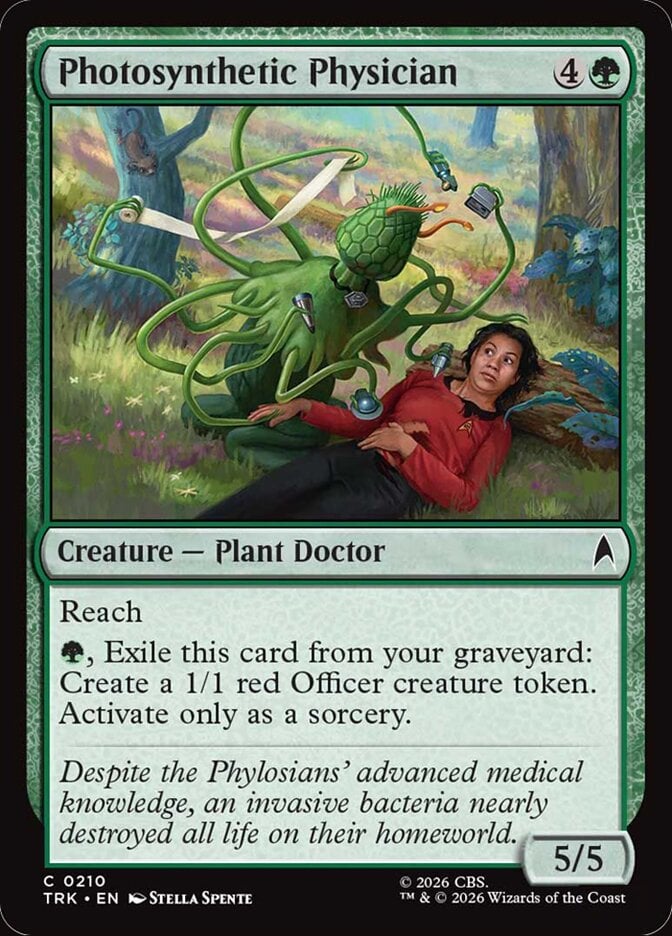
Nothing draws me to Photosynthetic Physician. And that’s saying something, because I’m basically Lilo with the way I try to find a home for every niche card out there. Kirri, Talented Sprout buffs this to a 7/5 and allows you to recur it to your hand, but the activated ability may as well not be there, unless you really need to trigger a gravebreak ability.
#42. Cult Healer

Cult Healer’s eerie trigger doesn’t stack, and locking lifelink behind it makes this a doctor a poor blocker. I don’t see why you’d play this outside Limited unless it’s as a synergistic placeholder.
#41. Donald Blake, Guise of Thor
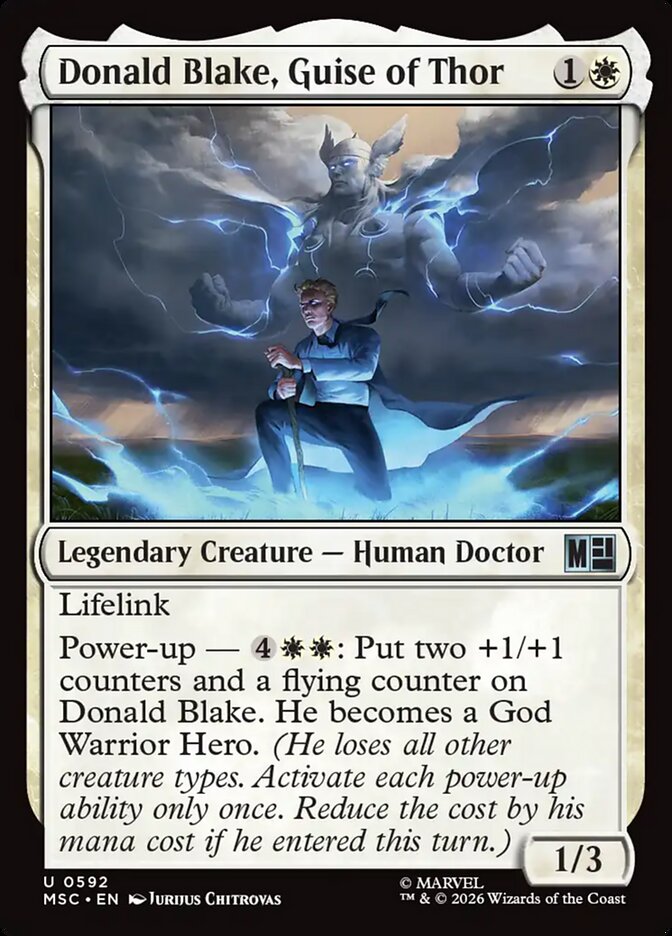
Definitely an uncommon from a Jumpstart product. Donald Blake, Guise of Thor doesn’t do enough to be worth a slot; it’s even questionable with McCoy, Not a Bricklayer.
#40. Federation Field Medic
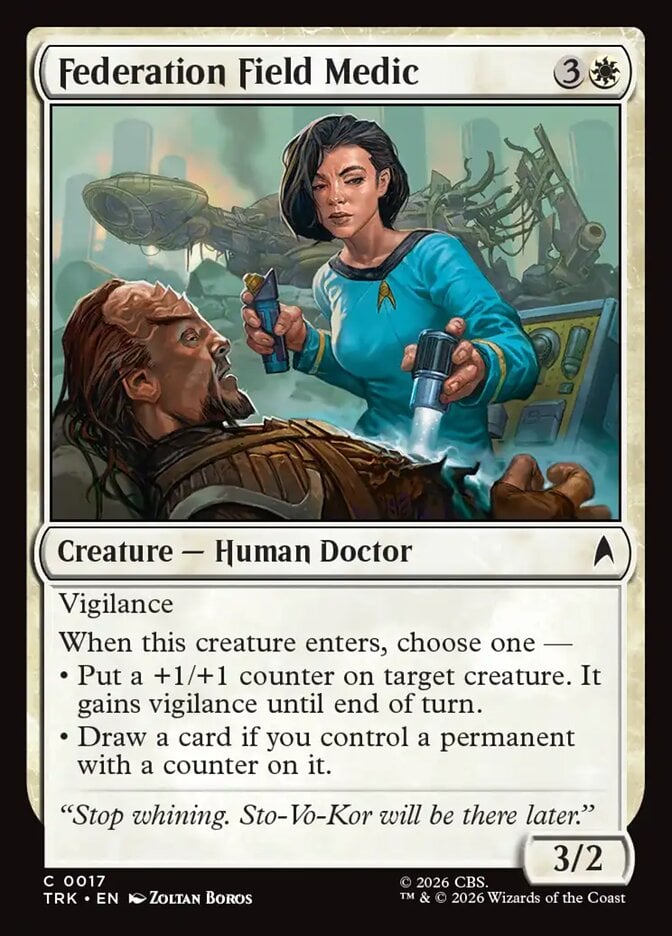
Doctors, dilemmas, or counters matter. Those are the only assignments to give Federation Field Medic. A modal enters trigger makes a potential blink target, I guess.
#39. Culber and Stamets, Star-Crossed
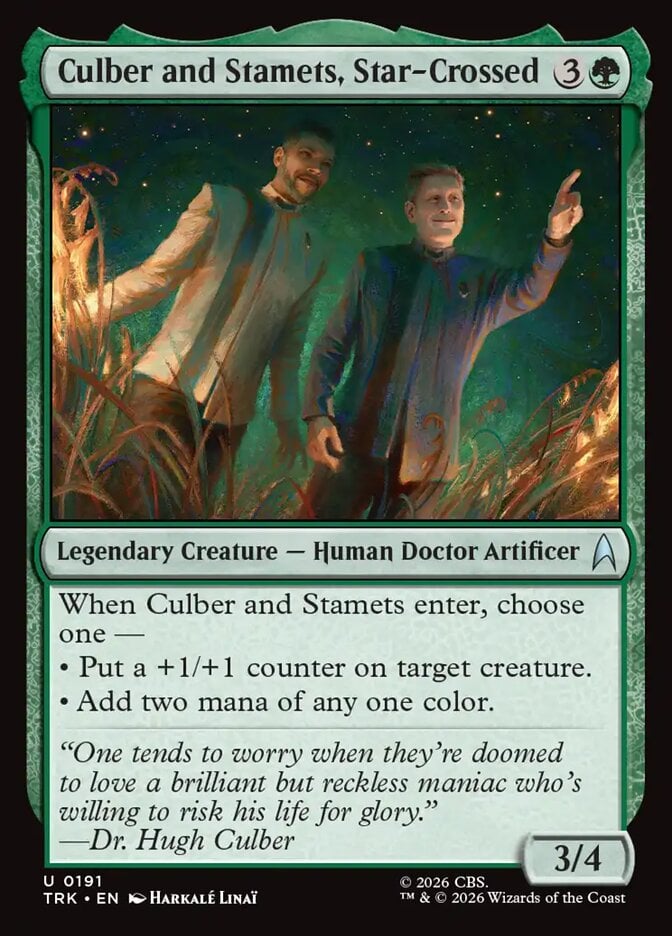
As a card that has to represent two characters and fit in a Limited environment with dilemmas and their payoffs, I get why Culber and Stamets, Star-Crossed is designed this way. Doesn’t mean I’m particularly inspired to play the card, though.
#38. Emergency Medical Hologram
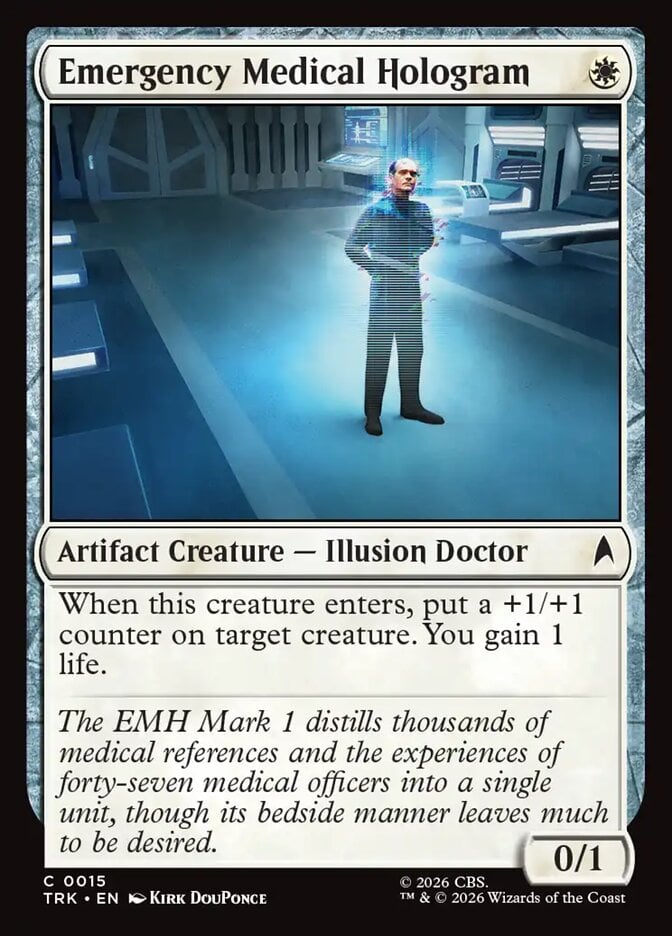
In any format other than Limited, Emergency Medical Hologram is a fine doorstop, but not much of a doctor. I suppose the enters ability, cheap mana value, low power/toughness, and dual artifact and creature types make it easy to blink, reanimate, or bounce for repeated value.
#37. The Fugitive Doctor

The Fugitive Doctor has a lot going on, but it locks you into a very specific path if you want to support it. The attack trigger lets you trade a Clue permanent to give a spell flashback for the rest of your turn, which is only advantageous if the spell didn’t have it already, and if it’s expensive. Forget being turned into an elk by Oko; it just takes an overloaded Vandalblast or well-timed graveyard hate to make this a vanilla 4/4.
#36. The Fifth Doctor

I’m annoyed that creatures that entered this turn are also exempt from The Fifth Doctor’s end step trigger, though I understand why. I just want to slap this in vehicle and spacecraft decks. Aside from those and Doctor Who-themed decks, I might slot this in with a commander that has a tapping activated ability, like Sokrates, Athenian Teacher.
#35. The First Doctor
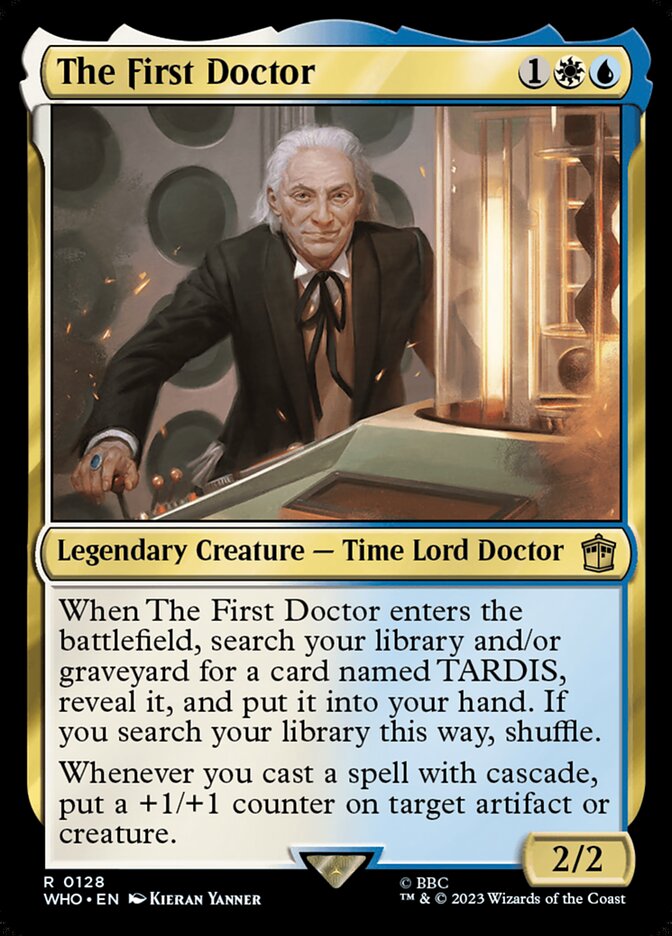
Get this: The only other card in the Blast from the Past precon that mentions cascade at all is… TARDIS. That’s it. The First Doctor sadly isn’t in a great color identity to be a good cascade payoff.
#34. Indelicate Healer

Indelicate Healer’s advantage over Cult Healer is both that it grants board-wide lifelink, and it triggers whenever your Klingons or warriors enter. Sometimes board-wide effects like this don’t hit creatures that enter after they’re applied; say you cast a sorcery-speed overrun effect and you’ve got creatures with myriad or mobilize triggers. Those tokens don’t benefit from something that triggered in your main phase, but Indelicate Healer mitigates that nicely.
#33. The Eighth Doctor

If you’re running a blink deck with lots of historic permanents, you can blink anything you reanimate with The Eighth Doctor to get around its replacement effect. Otherwise, you’re playing a Doctor Who theme (recurring, ain’t it?).
#32. The Seventh Doctor
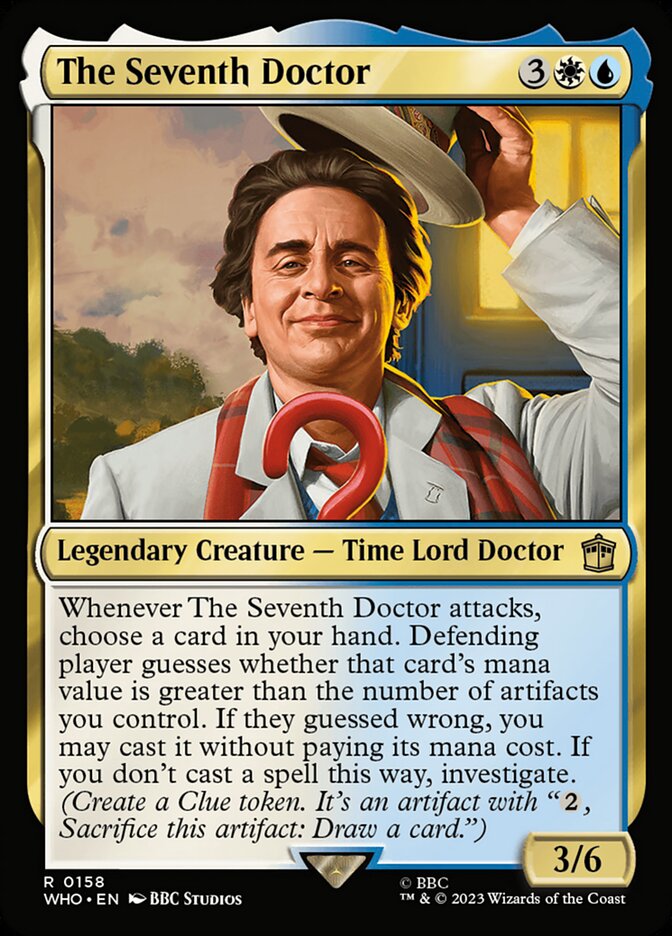
Aside from the various time lord decks built around The Fourteenth Doctor, The Seventh Doctor also got a new home thanks to The Celestial Toymaker, which pays you off for forcing your opponents to play guessing games.
#31. The Eleventh Doctor

The thing with a saboteur trigger that uses time counters like this is that we have so many cards that give you access to cards much more immediately. Coastal Piracy, anyone? The Eleventh Doctor at least has an ability that you can pump mana into to make creatures unblockable… as long as you aren’t pumping them with too many anthems.
Look, Kellan, the Kid has like 8,000 decks, and The Eleventh Doctor is in about 100 of them (according to EDHREC). If a commander that wants to cast cards from places other than your hand and has the right stats to make it unblockable wants neither of Matt Smith’s abilities, I don’t know what to tell ya.
#30. Chekov and McCoy
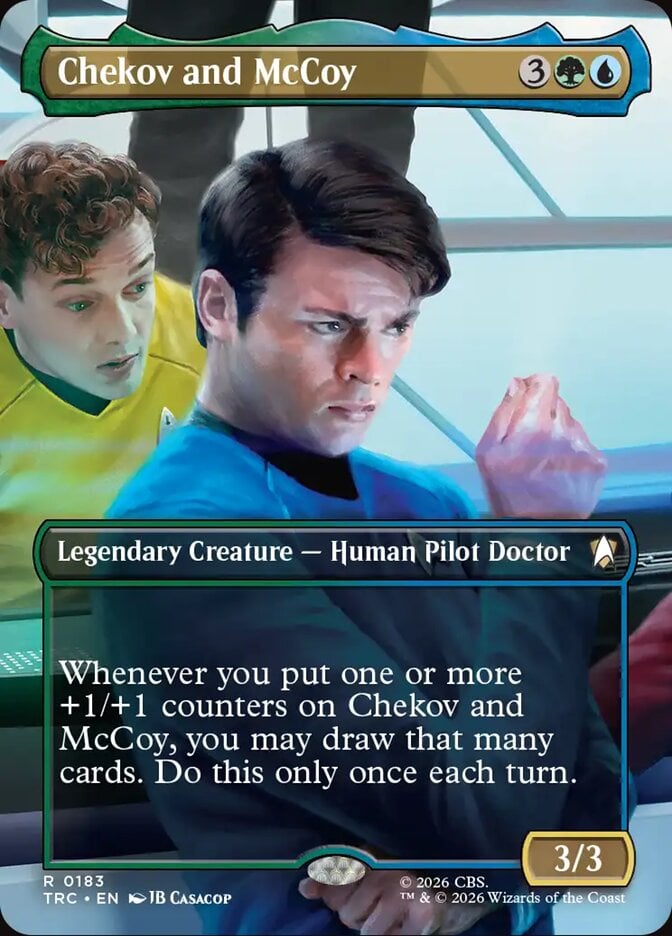
Definitely a “win more” card. With +1/+1 counter distribution online, Chekov and McCoy turns into a card draw engine. It works best when you either have counter doublers, or cards that drop a lot of counters onto a creature at once.
#29. Night Nurse, Healer of Heroes
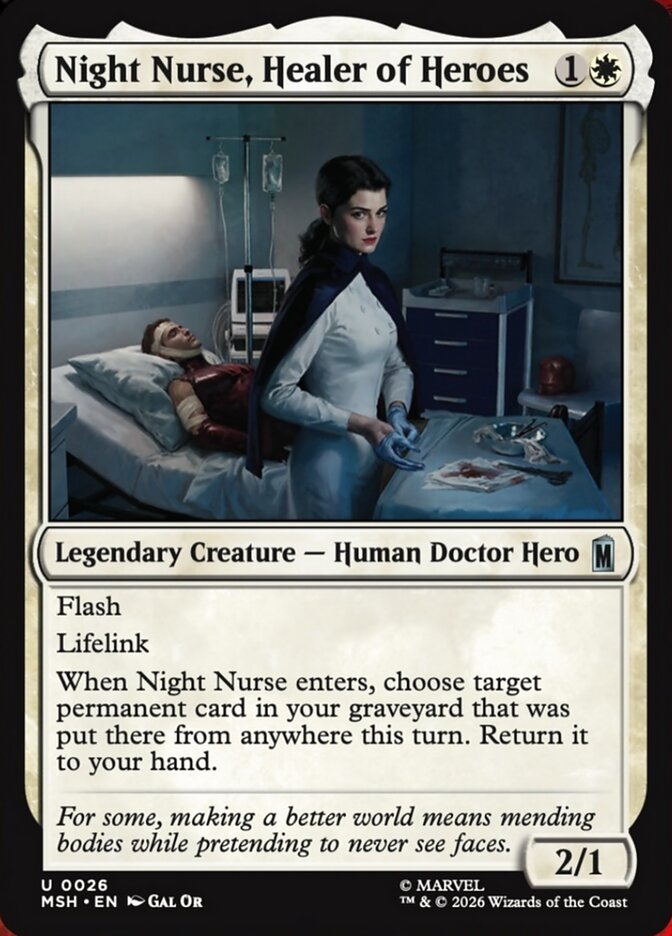
A 2-mana spell that brings something back to hand and leaves behind a 2/1 lifelinker is decent, but also highly situational. I could easily see myself not casting Night Nurse, Healer of Heroes, waiting for a perfect opportunity that never comes.
#28. Doctor Jane Foster
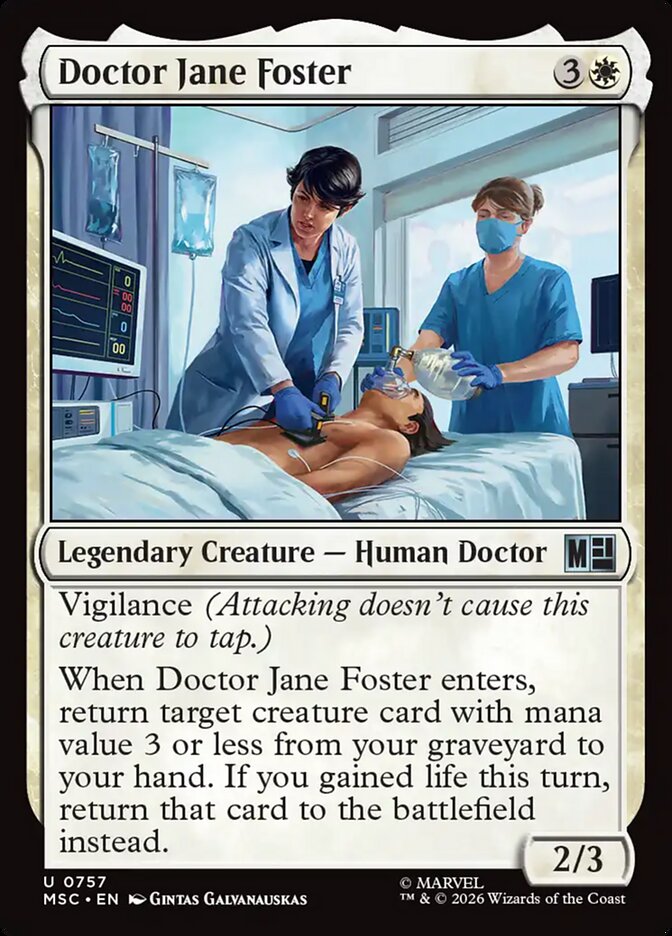
Doctor Jane Foster is just as situational as Night Nurse, just in a different way. Your reanimation target can’t go beyond 3 mana, but it should be easy to gain life at least once so that you bring it back to the board rather than your hand.
#27. Dominion Supervisor
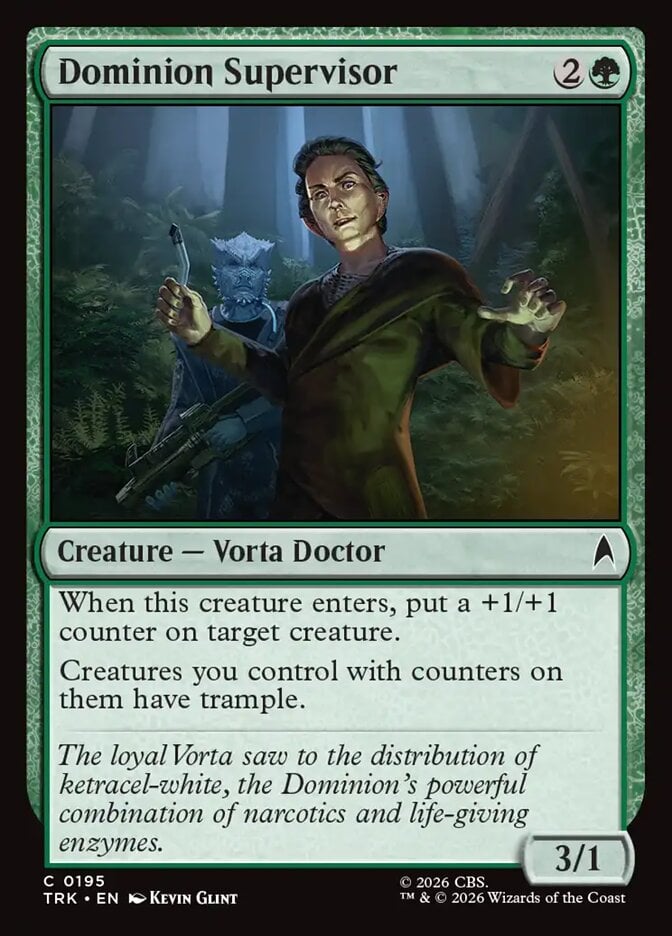
A trample enabler for your creatures with counters synergizes with lots of other Star Trek doctors. My one qualm is that as a 3/1, you need to stick some counters on Dominion Supervisor to get it out of range of pingers, let alone Lightning Bolts.
#26. The Doctor, EMH
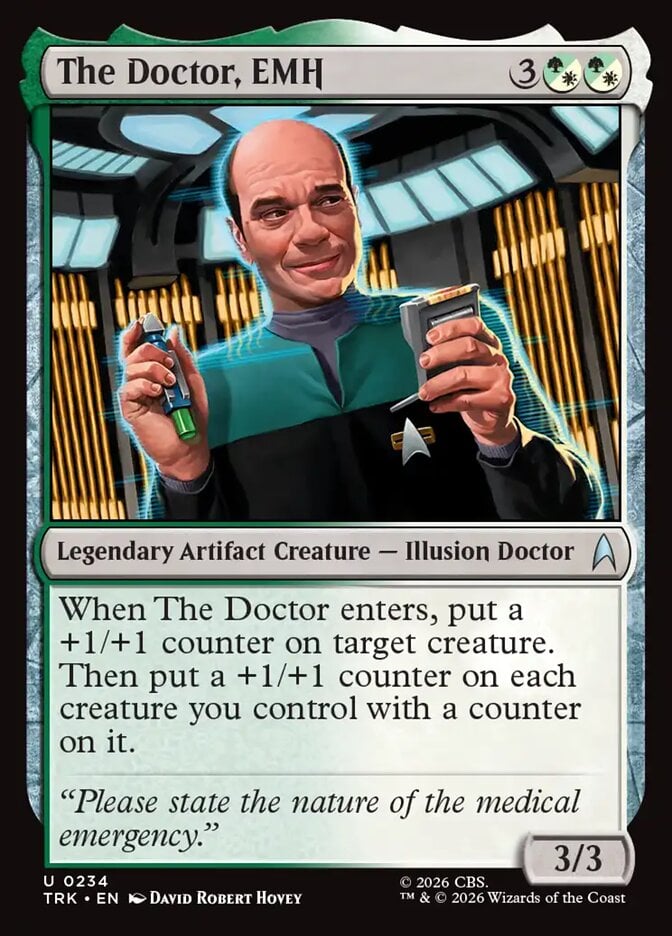
The Doctor, EMH is best used in the late game as an overrun. It interacts well with other counter payoffs, but this is a doctor whose only role is to give everyone steroids before you swing for lethal.
#25. Beverly Crusher, Ship’s Doctor
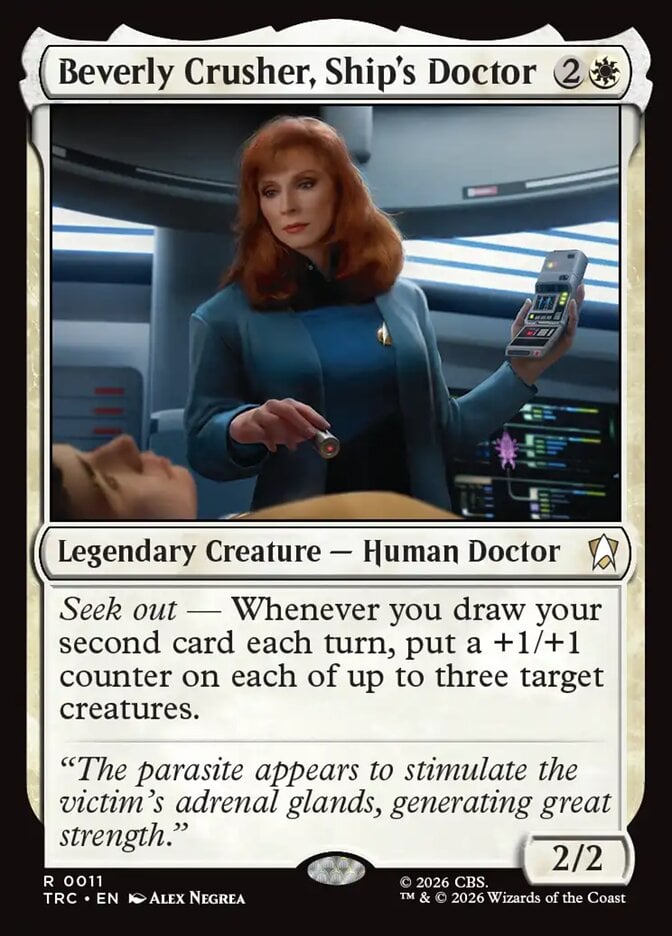
As with the other mono-white seek out doctors, Beverly Crusher, Ship's Doctor has a chance to see play in Princess Irulan Corrino decks, though second draw payoffs aren’t as good as triggers that go off with every single card drawn.
#24. The Fifteenth Doctor

I. What?
You can tell I’m not a Whovian, because I have no idea why The Fifteenth Doctor is built like this. Mill cards, recur an artifact of a specific mana value. And the first nonartifact you cast has improvise. It could enable specific win conditions, like tapping your artifacts to improvise an X-spell or other mana sink. But being a Secret Lair exclusive, at least for now, keeps supply low and prices high. Gimme an accessible reprint and then we’ll talk.
#23. Christine Chapel, Combat Medic
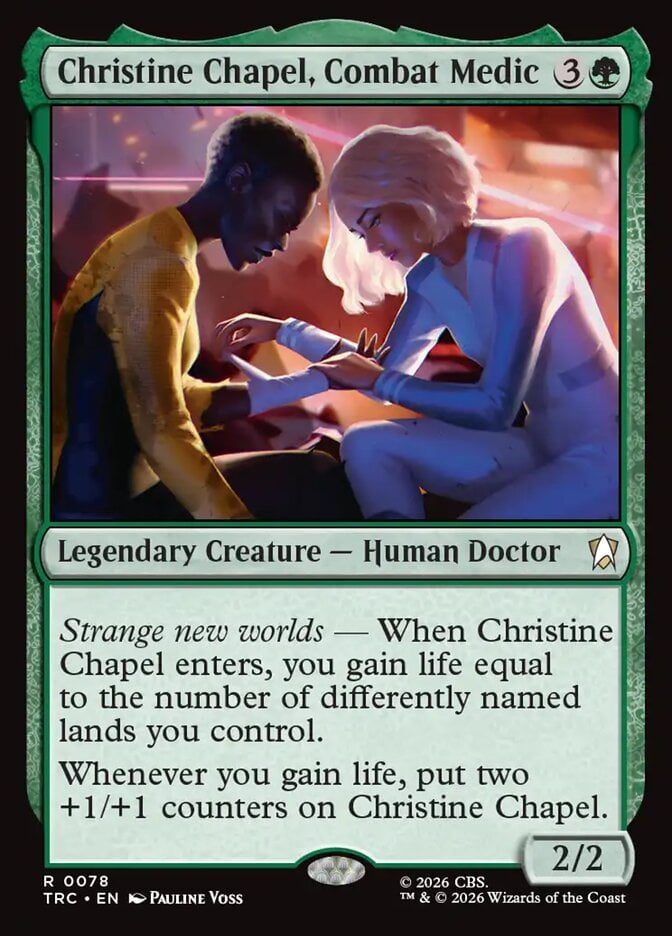
Christine Chapel, Combat Medic can enter as a late-game stabilizer, especially in strange new worlds decks and anything that gets weird with nonbasic lands (The Wandering Minstrel, Grizzlegom, Hurloon Hero). The lifegain trigger that grows it keeps it relevant if you cast it early, though you’ll want a keyword enabler like Dominion Supervisor to help it reach the red zone.
#22. Phlox, Unorthodox Doctor
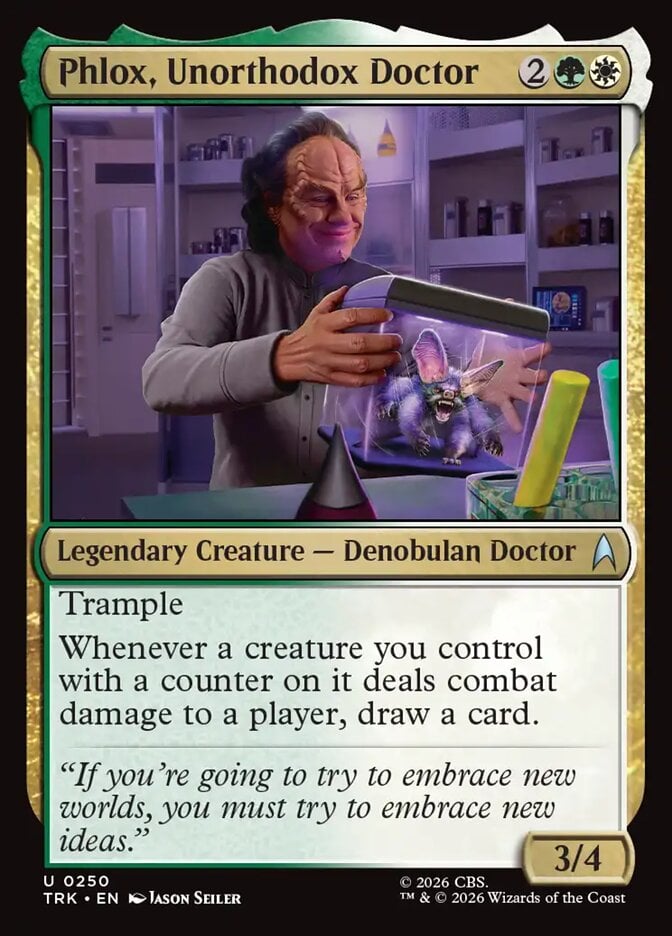
Phlox, Unorthodox Doctor offers counter-based decks a thematic budget alternative to Toski, Bearer of Secrets and Ohran Frostfang. It’s mandatory though, so watch that you don’t deck yourself by going too wide.
#21. Dr. McCoy, Surly Surgeon
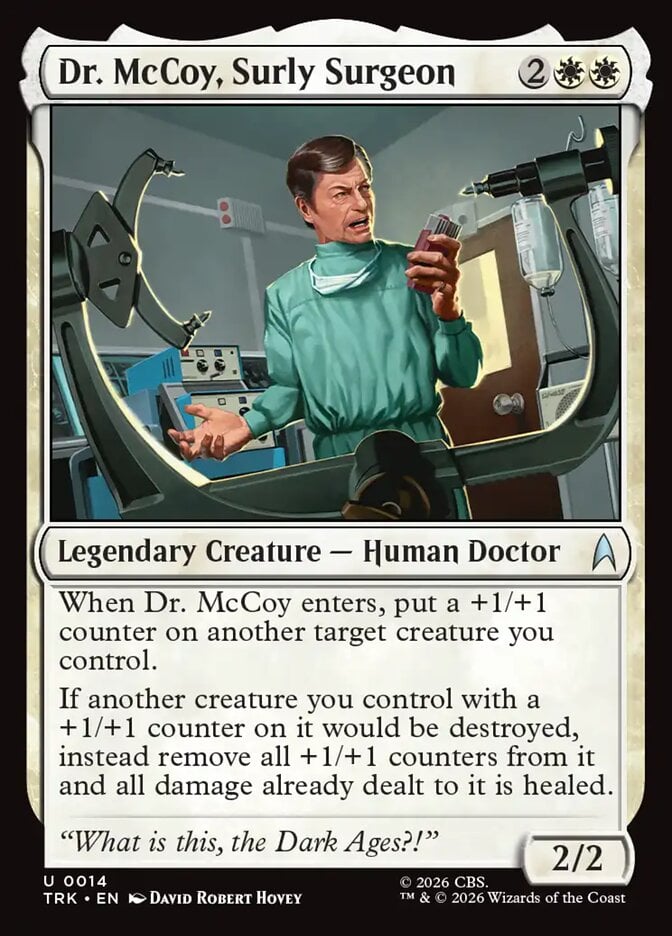
Not the payoff you’d want in a hydra deck, but Dr. McCoy, Surly Surgeon makes decks that rely on +1/+1 counters much more resilient. If you can’t afford to store your counters on The Ozolith (please let there be at least a box topper reprint in Kamigawa: Titanbreach), this doctor at least keeps your creatures around to fight another day.
#20. Dr. Pulaski, Cynical Clinician
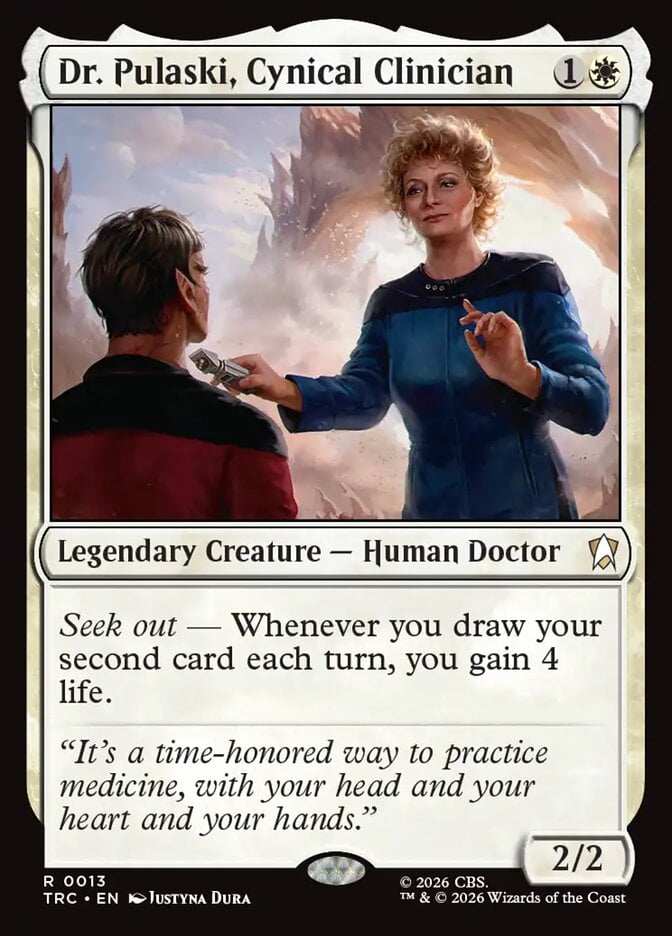
Any deck with the potential to draw cards consistently and that cares about the specific amount of life you gain should be interested in Dr. Pulaski, Cynical Clinician. It can take you from your second card drawn to your sixth in a Niv-Mizzet, Ghost Counsel deck or add four more cards to Hope Estheim’s end step milling.
#19. The Fourteenth Doctor
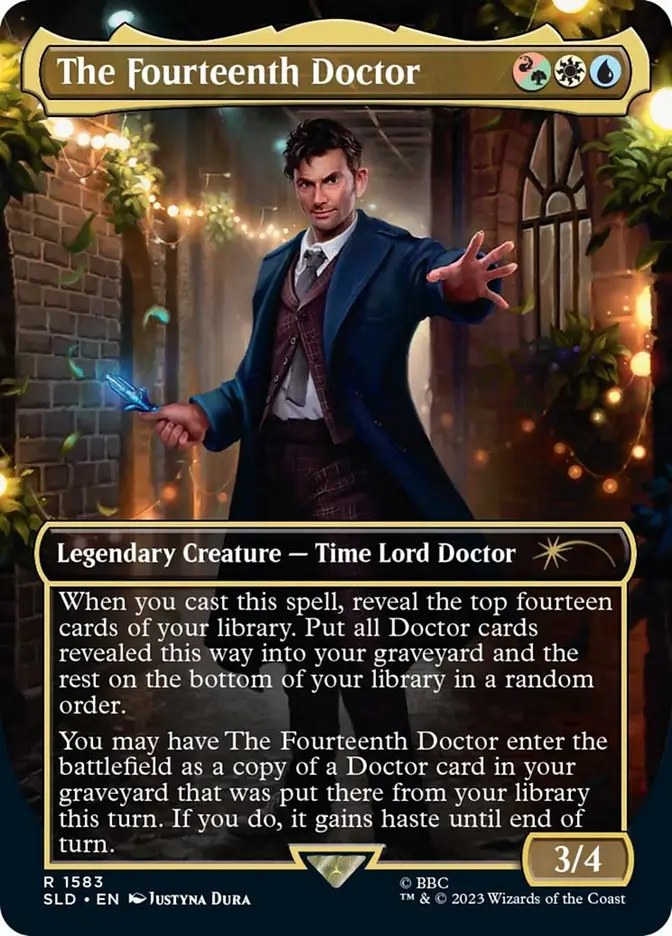
Pairing The Fourteenth Doctor with Clara Oswald is how you get a 5-color commander that runs all the Doctor Who doctors, though some Marvel Super Heroes and Star Trek doctors could edge out some of the weaker WHO ones. You’ll hardly ever run this card outside the command zone, though.
#18. The War Doctor
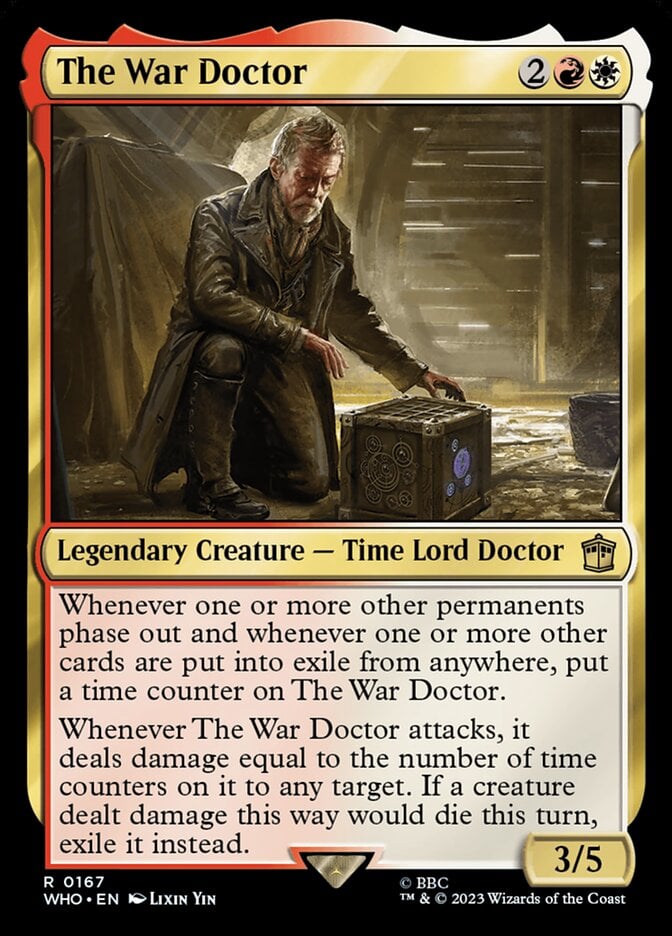
You’ll need to do some phasing or exiling for The War Doctor to do anything, but the attack trigger has significant burn potential if you can stack the time counters high enough. If you’re running it in the command zone, Clara Oswald is a good bet for the trigger doubling effect; you could add black if you want to run Isshin, Two Heavens as One in the 99.
For more direct synergy, Ryan Sinclair’s attack trigger exiles cards from the top of your library. If both attack, you can have this trigger resolve first, which in turn adds time counters before The War Doctor’s trigger resolves.
#17. Arcade Gannon

Arcade Gannon gives you card draw that also fuels its own reanimation ability. It’s fine and functional for its role in Bracket 2 decks; it’s especially fun with Captain America, Living Legend in Commander, and it’s that second card drawn for seek out and similar payoffs.
#16. Julian Bashir, Frontier Doctor
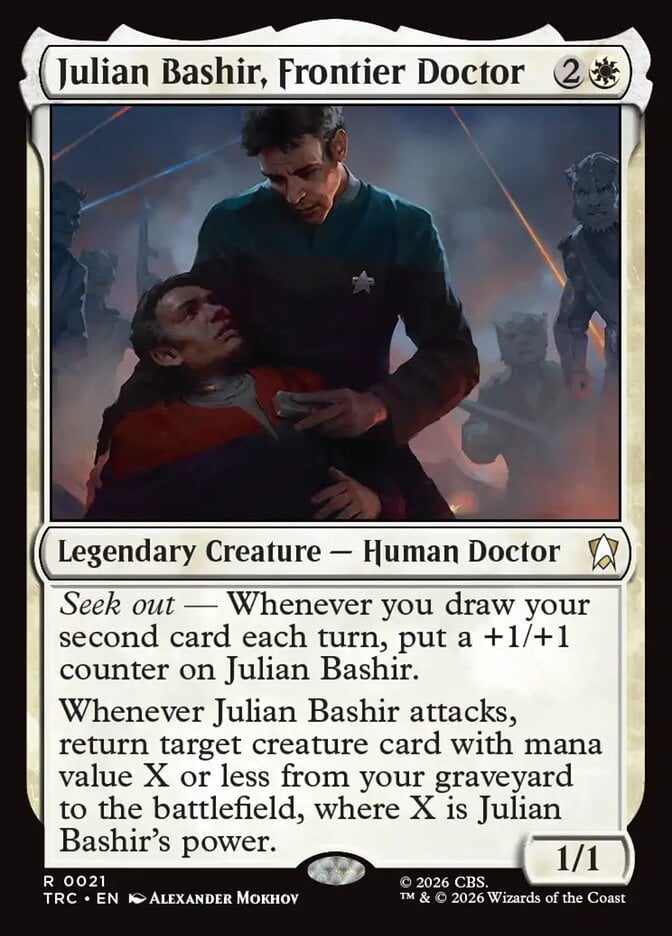
+1/+1 counter decks can always use a good reanimator, and Julian Bashir, Frontier Doctor’s ceiling is the number of turns your opponents let it stick around. I like the potential synergy with Kira Nerys, Firebrand in an aggro deck, where Bashir brings creatures back and Kira sends them to the front lines immediately.
#15. Doctor Strange, Surgeon
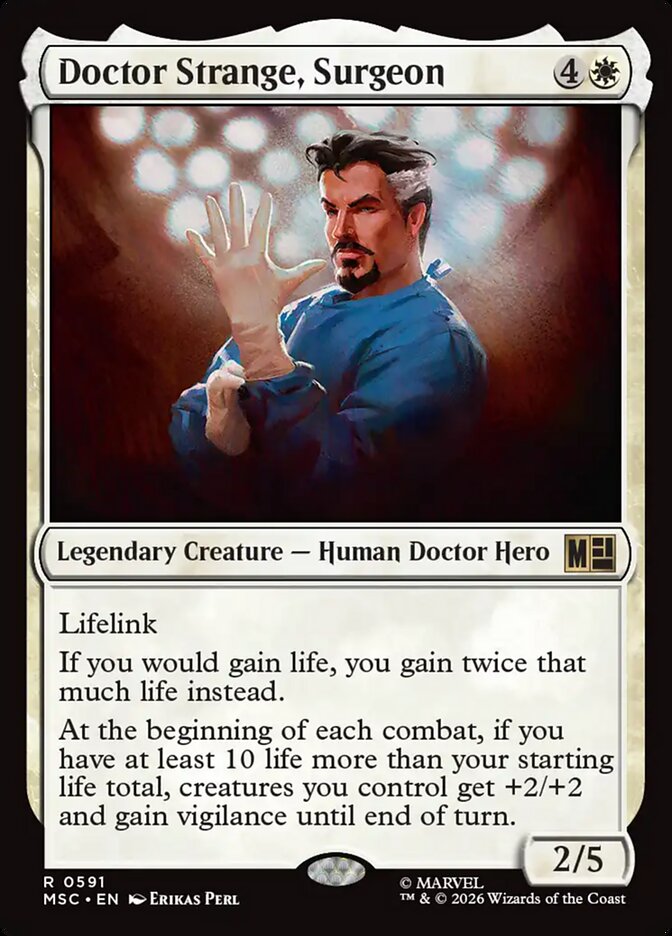
Our only Doctor Strange card from Marvel Super Heroes, Doctor Strange, Surgeon doubles life gained and acts as an anthem if your life total is high enough. Five mana means that this doctor isn’t breaking formats, but it might make Bilbo, Birthday Celebrant’s activated ability more reachable.
#14. The Fourth Doctor

Information is king, and peeking at the top card of your deck helps to set up future turns. The Fourth Doctor also allows you to play historic lands or spells from the top of your library, which fits in plenty of archetypes, especially as Universes Beyond sets print more and more legendary creatures. Sagas are showing up in UB sets regularly, too.
#13. Moonstone, Harsh Mistress

Moonstone, Harsh Mistress is already interesting as a mono-black doctor, and it fills a really neat (if niche) role by saving your discard fodder from graveyard hate by sticking it in exile. It’s not a replacement effect, so your cards still hit and then leave your graveyard, for abilities that care about that.
#12. The Third Doctor

The easiest way to support The Third Doctor is with a bunch of utility tokens, be they Clues, Foods, Treasures, what have you. We keep getting new noncreature tokens like Mutagens, and even Jace tokens from empower abilities, so there seems like there will always be something new to build around if you want to get weird with it.
#11. Doc Samson, Super Psychiatrist
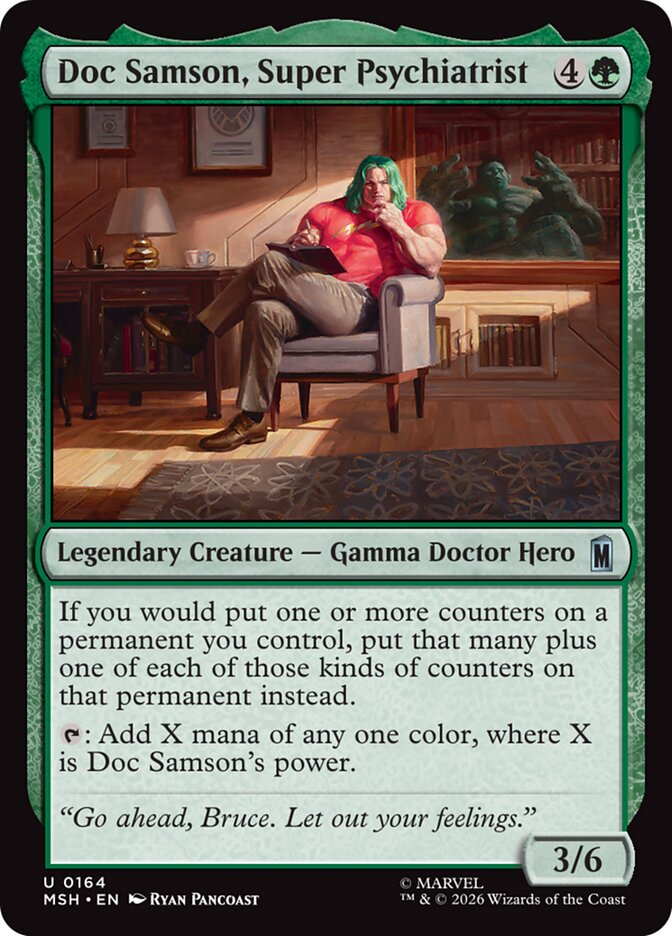
The combination of a mana dork that adds 3+ mana and acts as a Hardened Scales will always have a place, even if it’s a 5-drop. Doc Samson, Super Psychiatrist goes even further since it works with keyword counters, lore counters on sagas, and quest counters on the likes of Beastmaster Ascension.
#10. The Twelfth Doctor
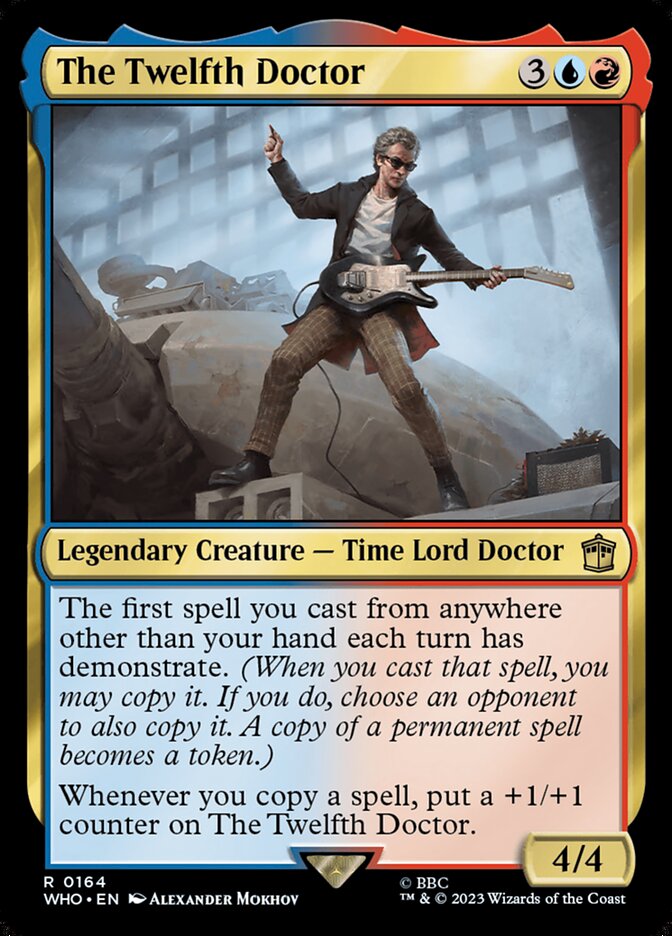
Demonstrate is a strange, interactive, and chaotic ability to grant your spells. The Twelfth Doctor also grows as you copy spells; it lacks any evasion to get through blockers, but if you’re copying spells anyway, a doubled or tripled Fling could do the trick.
One interaction that makes my inner gremlin grin is The Madcap Jester: How cheeky you are, demonstrating your opponents’ spells to them.
#9. The Ninth Doctor

I love a weird little card that finds its way into multiple homes. The Ninth Doctor’s additional upkeeps have utility in suspend decks, as well as with any commander with an upkeep trigger, including Itazura, Lingering Wick, Lynde, Cheerful Tormentor, and the queen of additional upkeeps, Obeka, Splitter of Seconds.
If it’s a commander with at least UR in its color identity and it has an upkeep trigger, the Christopher Eccleston doctor is worth a look. Just remember your beginning of turn sequencing: Untap, additional upkeep from The Ninth Doctor, then draw, and finally your regularly scheduled upkeep.
#8. McCoy, Not a Bricklayer

McCoy, Not a Bricklayer is a typal option for doctors, and fittingly in the exact Selesnya () colors that were the doctors’ theme in Star Trek Limited. Changelings like Realmwalker can fill out your medical practice, plus token generators to max out the effectiveness of McCoy’s trigger and other board-wide buffs you run.
The only issue I have is functional rather than thematic: So many doctors are lifelink enablers or have lifelink themselves that they all wind up stepping on each others’ toes.
#7. The Tenth Doctor
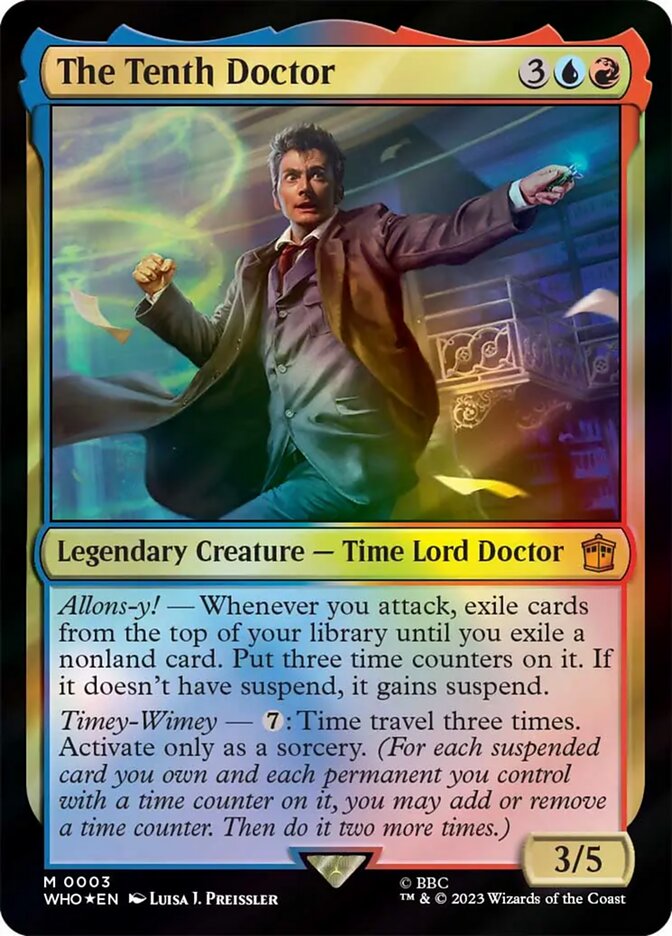
The first David Tennant doctor is the most played Doctor Who commander, though it’s also very tied to suspend and time counters. Unlike some of the other commanders from the set which have been slower to gain popularity but continue to receive support (ex: Sergeant John Benton, The Master, Multiplied), I think new builds for The Ninth Doctor are going to stay stagnant for a bit.
In the 99, it can be a slow way to cast cards from exile, but it’s a misfit anywhere that you aren’t playing to its strengths.
#6. Dr. Leonard “Bones” McCoy
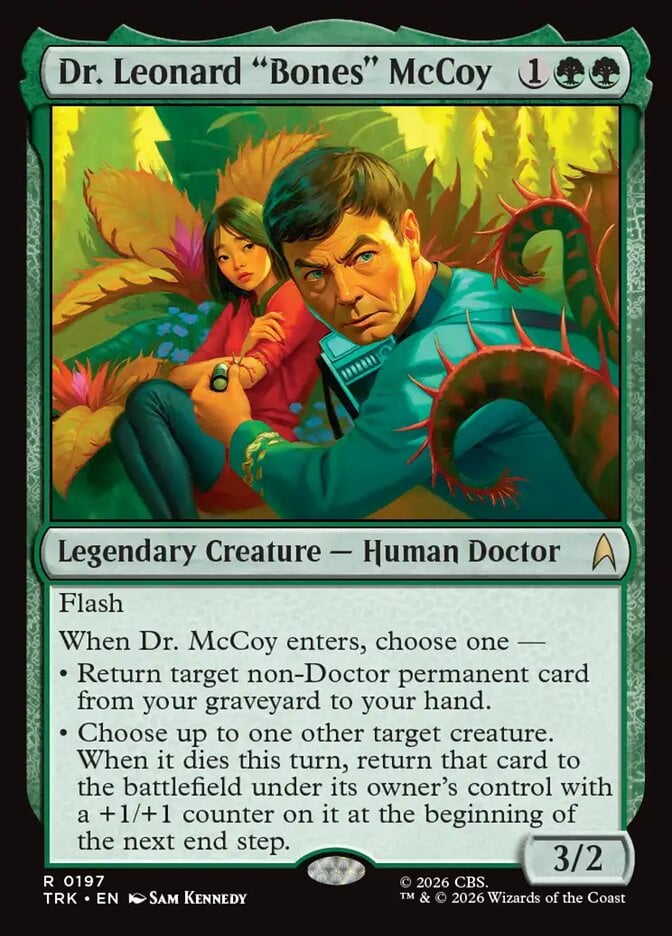
While some other McCoy cards play well with other doctors, Dr. Leonard "Bones" McCoy plays best when it’s the only one in your deck. It has some potential as a reanimator in legendary themed decks, or in something like Henzie "Toolbox" Torre. You could also use it as a protective spell in decks that run lightning rods in the command zone, like Bristly Bill, Spine Sower (especially if you use the Stardates printing).
#5. The Sixth Doctor

The Sixth Doctor typically pairs up with Romana II for a historic matters deck, where the Doctor copies your historic permanents, and Romona copies tokens. You could do all kinds of subthemes here, like vehicles, sagas, and legendary creatures; my silly side likes the idea of getting a head start on Bloodforged Battle-Axe copies. The Sixth Doctor can play support in the various historic themes too, and even copy planeswalkers in superfriends decks.
#4. The Thirteenth Doctor

The Thirteenth Doctor is one of my most used time lords from Doctor Who. The Jodie Whitaker Doctor sports two abilities that play into each other, spreading counters around the board and untapping your buffed creatures on your end step. The paradox or cast-from-exile space keeps expanding, so there will always be decks for it to support. As with many doctors, regardless of their original set, this card enhances your strategy when you’re already rolling, so support is its ceiling.
#3. The Second Doctor
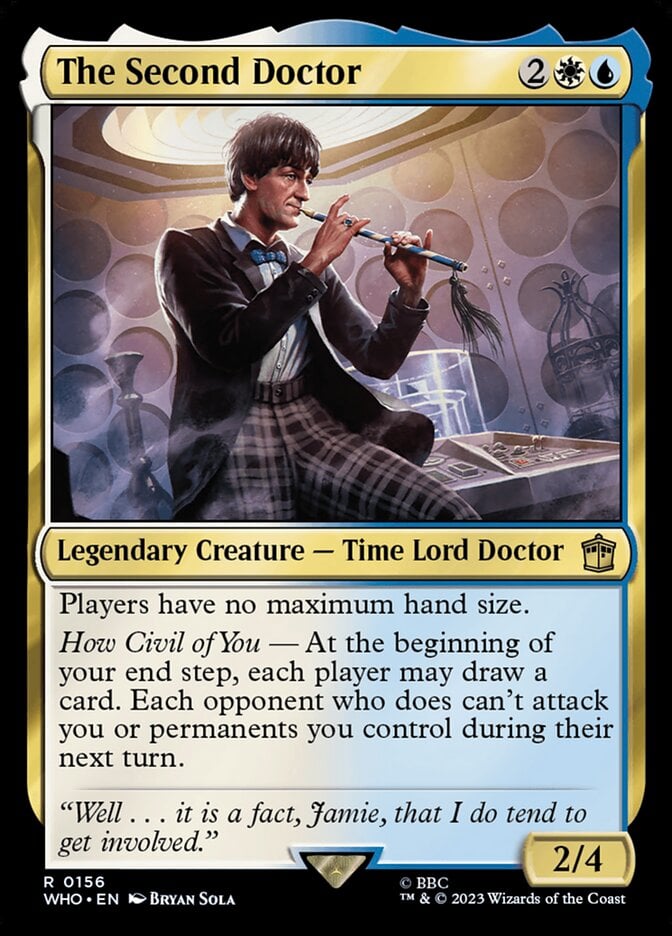
There’s a few doctor’s companion cards that make a respectable deck leader out of The Second Doctor, but it’s truly at its best supporting group hug commanders. I also like the idea of using it in an Esper () deck to help pump your opponents’ hands over a few turns before you sacrifice The Second Doctor and force your podmates to discard a bunch of cards all at once.
#2. Dr. Joseph M’Benga
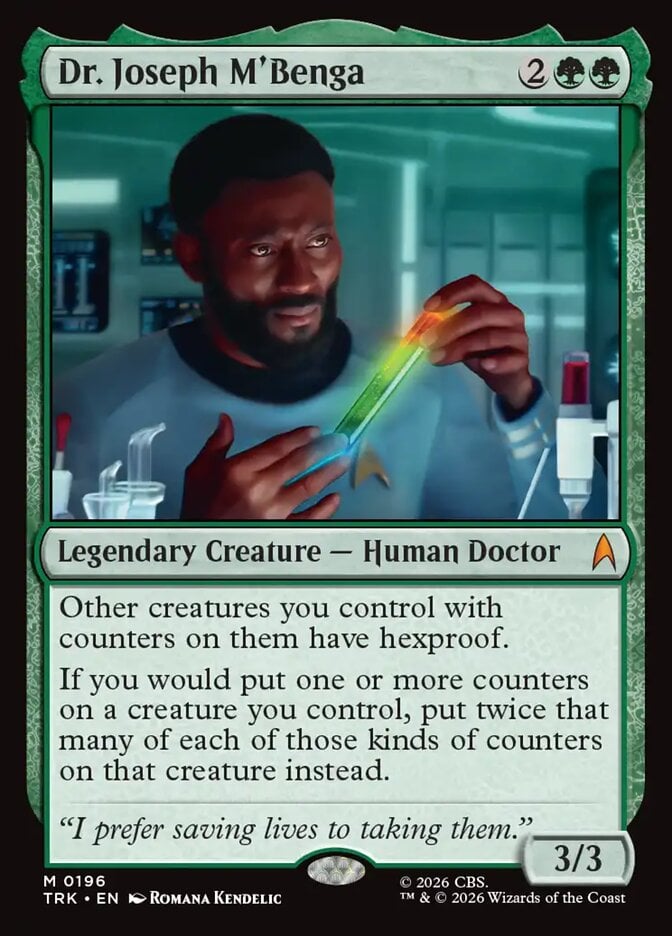
If Doc Samson is Hardened Scales, Dr. Joseph M'Benga is one half of Doubling Season, plus a hexproof enabler. Being mono-green means that it also fits into a lot more counters decks than one with a Selesnya color identity, too. Such a well-designed card.
#1. Dr. Beverly Crusher
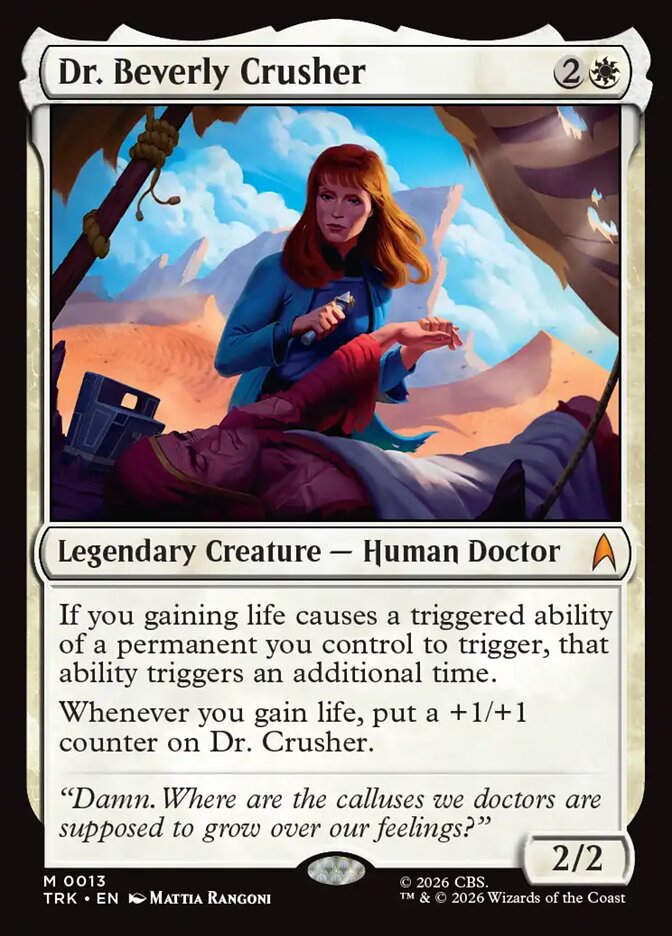
Trigger doublers on creatures with decent mana values always make for a good card. Dr. Beverly Crusher offers that for anything that triggers from lifegain, so your Ajani's Pridemate variants, Drogskol Reaver, what have you.
Dr. Beverly Crusher reminds me of a fair number of cards that has me comparing Star Trek to Murders at Karlov Manor: The set might not be your jam and many of the mechanics are parasitic, but there’s some good, useful cards in it, and you’ll be at a disadvantage if you ignore it outright.
Best Doctor Payoffs

The Fourteenth Doctor is far and away the best payoff for doctors, since its cast and enters trigger both work for any doctor, regardless of time lord typing. Paired with Clara Oswald for access to black, The Fourteenth Doctor is your best bet for a 5-color doctor commander that doesn’t run Jodah, Kenrith, or Morophon.

McCoy, Not a Bricklayer is another commander option with actual typal support, though limited to Selesnya colors. Kirk, Man of Action serves as a slop commander (affectionate) for a bunch of Star Trek subtypes, including doctors. Clara Oswald also doubles triggers in these builds.


The Five Doctors should become a mandatory tutor in the McCoy, Not a Bricklayer deck; there’s a few sagas from WHO like The Caves of Androzani that either tutor or filter your library for doctors.


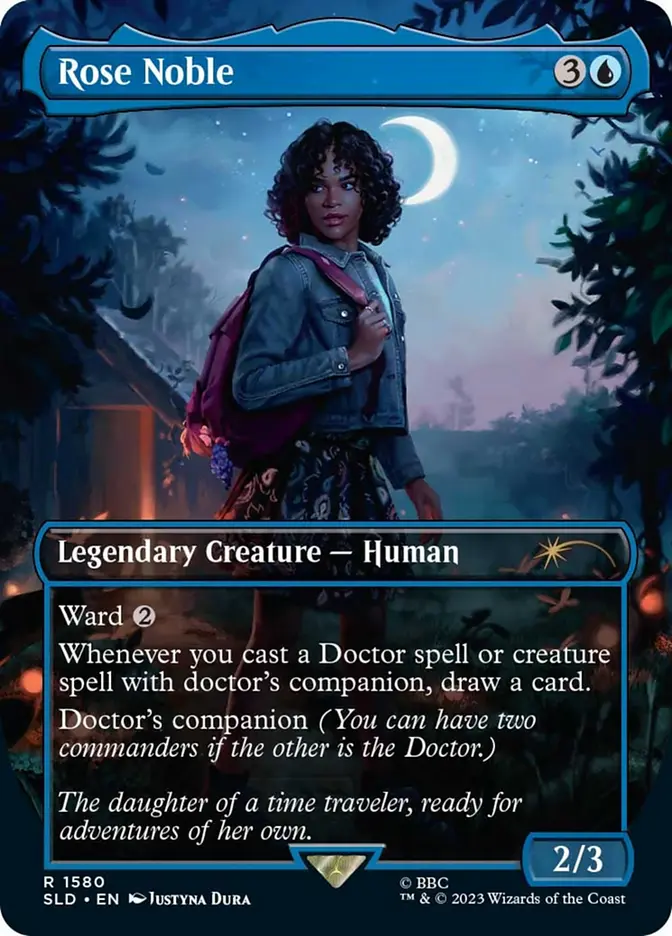
The Kirk, Man of Action deck and many WHO typal builds can use Gallifrey Stands as an alternate win condition, or Twice Upon a Time for an extra turn. Rose Noble makes all your doctors and companions cantrip.
Selesnya doctors tend to be focused on lifegain and +1/+1 counters, so support them with payoffs that play into their specific abilities. Doctors that spread counters or keywords across your entire board appreciate an army of tokens to enhance, for example.
Is There a Difference Between Doctor and Time Doctor?
Yes, though the difference is closer to the difference between rectangles and squares. All creatures with “time lord doctor” in their type line are included as doctors; you can’t reanimate The Thirteenth Doctor with Dr. Leonard "Bones" McCoy, for example, but Realmwalker will let you cast them both from the top of your deck if you choose “doctor” as the creature type.
“Time lord” and “doctor” are two separate creature types, but a creature must have both, and only both, if you want to pair it with a doctor’s companion creature in Commander.
Does Doctor’s Companion Work with Regular Doctor Creatures?
No. You can only partner a creature with doctor’s companion with a creature that specifically has “time lord doctor” as its creature subtypes, and no other. You can’t use Clara Oswald or Rose Tyler alongside Arcade Gannon, Doctor Strange, Surgeon, or Dr. Joseph M'Benga, for example.
Doctors vs. Clerics

In Magic, doctors and clerics fulfill similar roles with themes of lifegain, reanimation, and +1/+1 counter distribution. The mains difference lies in the source of their magic and power; those who use science to heal are doctors, while those who use faith, mysticism, and arcane magics are clerics.
Doctors mostly show up in science fiction settings, or settings that overlap more cleanly with the real world (Star Trek, Marvel Super Heroes), while clerics tend to show up in fantasy sets. It’s a bit reductive, though. Edge of Eternities has no doctors, but it has clerics that adhere to Monoism.
Wrap Up (in Bandages)

The Fifth Doctor | Illustration by Jake Murray
And so goes the tale of two doctoral approaches. The Doctor Who doctors are all over the place, and many of the clunkiest ones only see play in time lord builds. Meanwhile, the healers from sets like Star Trek have a better prognosis, with the potential to incorporate themselves into preexisting archetypes rather snuggly.
If you built a typal deck around doctors, who would you put in the command zone? What do you want to see from future doctor cards? Let me know in the comments below or over on the Draftsim Discord. For more from us, check out our YouTube channel, The Daily Upkeep.
Until next time!
Follow Draftsim for awesome articles and set updates:










Add Comment