
Last updated on April 29, 2026
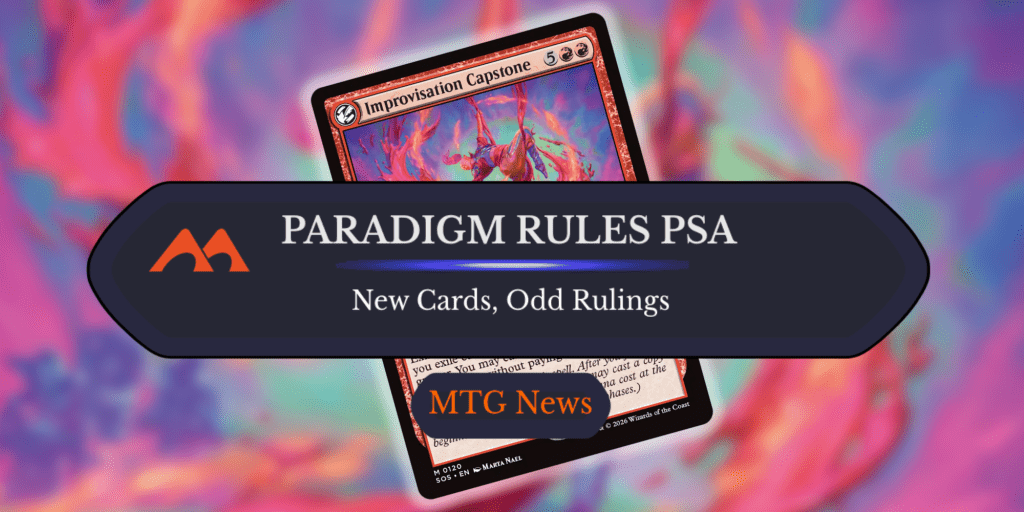
Improvisation Capstone | Illustration by Marta Nael
Secrets of Strixhaven’s paradigm mechanic fixes the classic epic mechanic, but also has unique rules interactions that lets you steal your opponent’s swipe paradigm spells.
Paradigm is a mechanic that appears on a cycle of five cards from Secrets of Strixhaven, with one in each color:
- Restoration Seminar
- Echocasting Symposium
- Decorum Dissertation
- Improvisation Capstone
- Germination Practicum
When you resolve your first copy of a paradigm spell, it establishes a delayed trigger on each of your first main phases for the rest of the game that let you cast a copy of the paradigm spell without paying its mana cost.
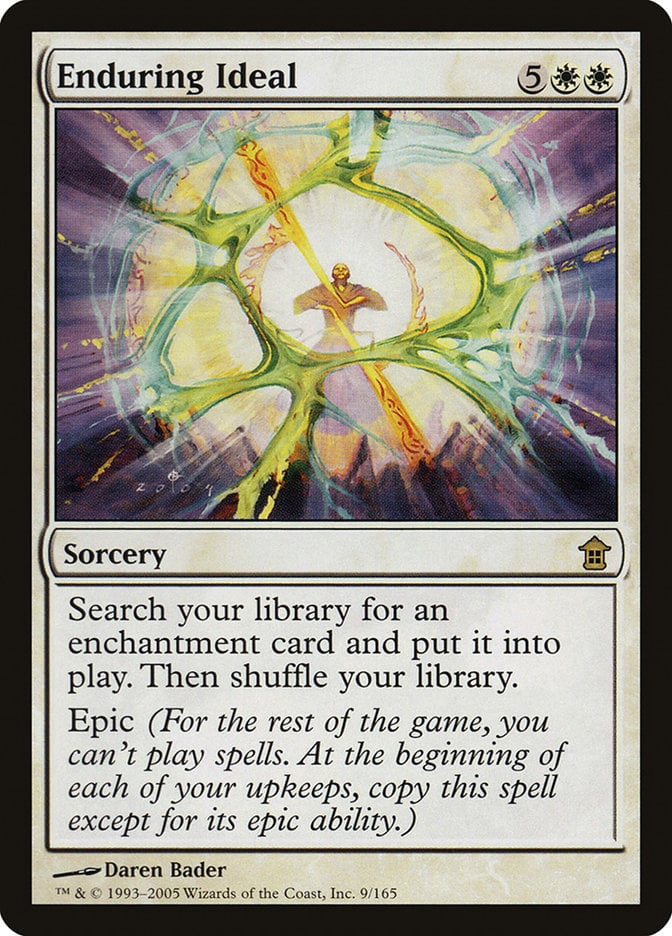
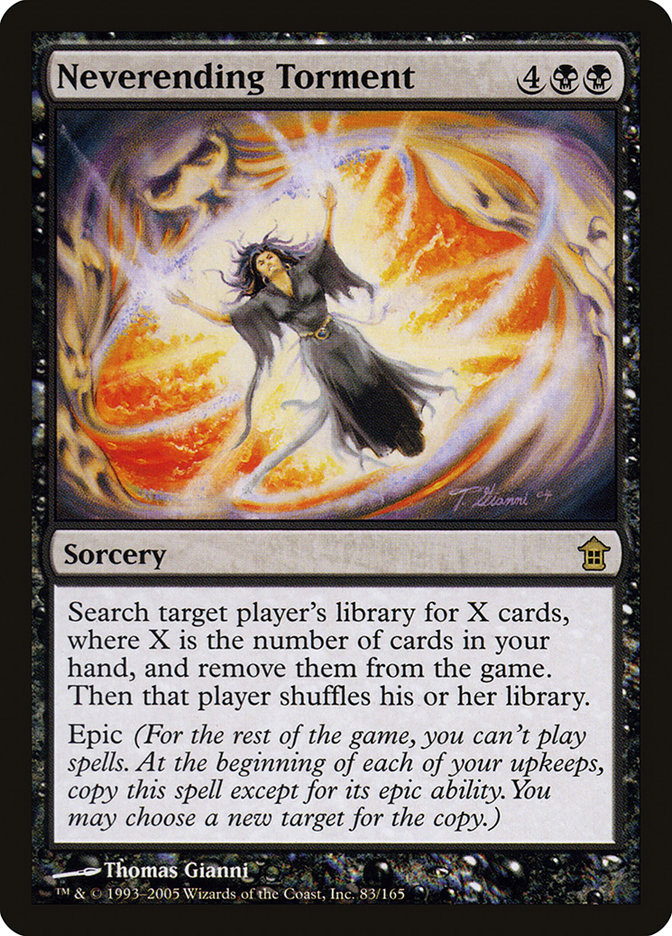
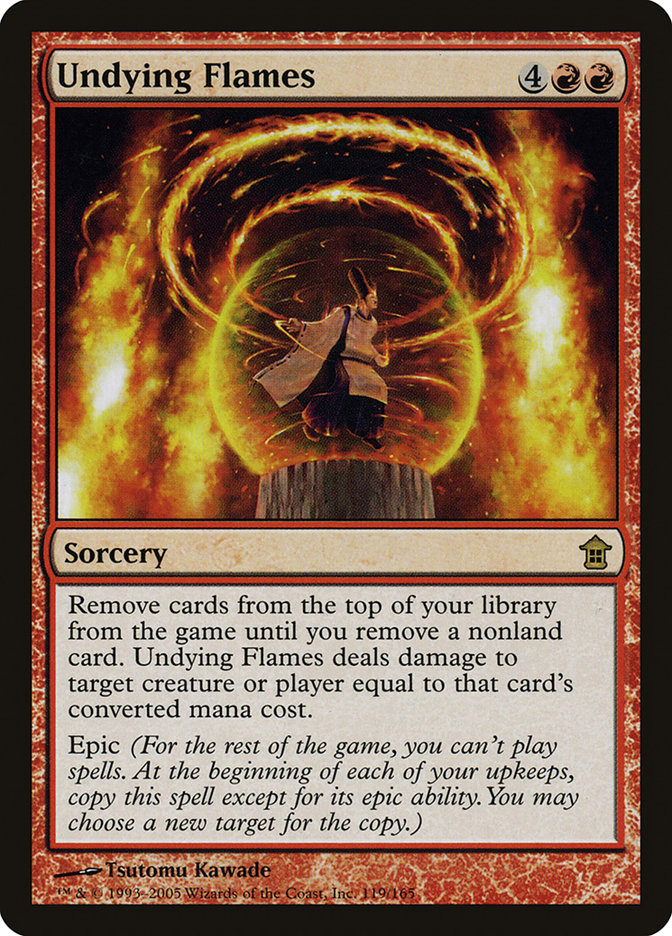
Paradigm improves on epic in a few ways. Firstly, these are just better spells. Drawing cards, reanimating permanents, or spreading +1/+1 counters, are all better than slowly milling your opponent or burning them each upkeep (though Enduring Ideal is pretty cool). Paradigm is also more flexible since it doesn’t restrict you from playing other spells, making it part of a deck rather than the entire gameplan. But, like any mechanic, paradigm gets fussy about the rules. It even has corner cases that allow one player to steal another’s paradigm card.
Steal Your Opponent’s Paradigm Spell

Jewel Thief | Illustration by Joe Slucher
Casting a paradigm spell that copies itself once on each of your turns is a potent card advantage engine, but it would be far too powerful if they scaled—for example, resolving two copies of Improvisation Capstone creating two delayed triggers. To fix this, the mechanic specifies that you only get a delayed trigger “after you first resolve a spell with this name.” In other words, the first Decorum Dissertation establishes a delayed trigger, but subsequent copies—whether created with paradigm or cast manually—won’t.
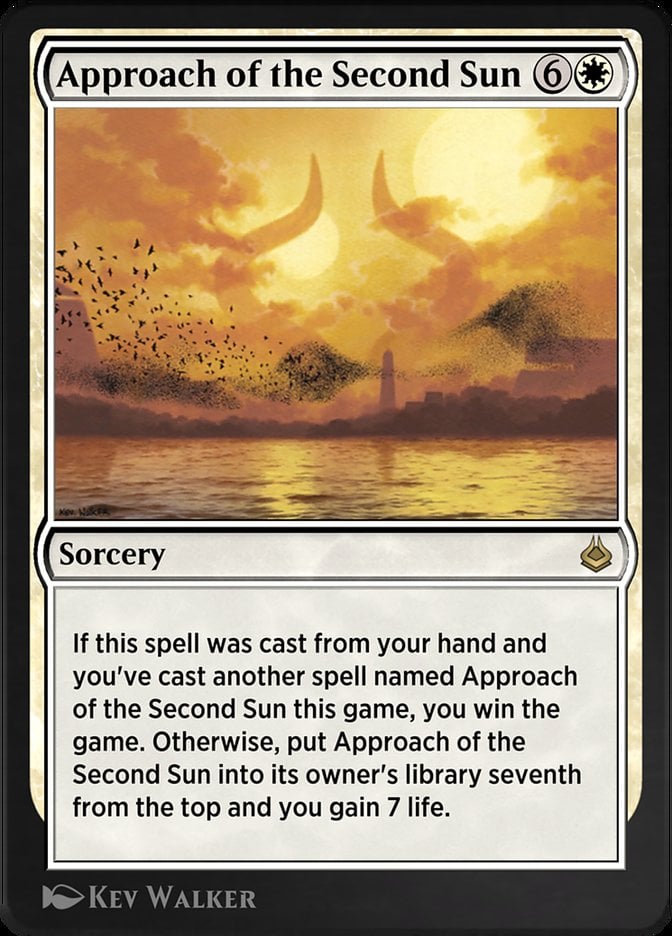
The funny thing is, paradigm says nothing about casting the spell. It only cares about whether or not you have resolved a spell with the same name. This is different then, say, Approach of the Second Sun, which checks to see if it was cast. Because paradigm doesn’t care about being cast, just being resolved, you can “steal” an opponent’s paradigm spell by copying it.

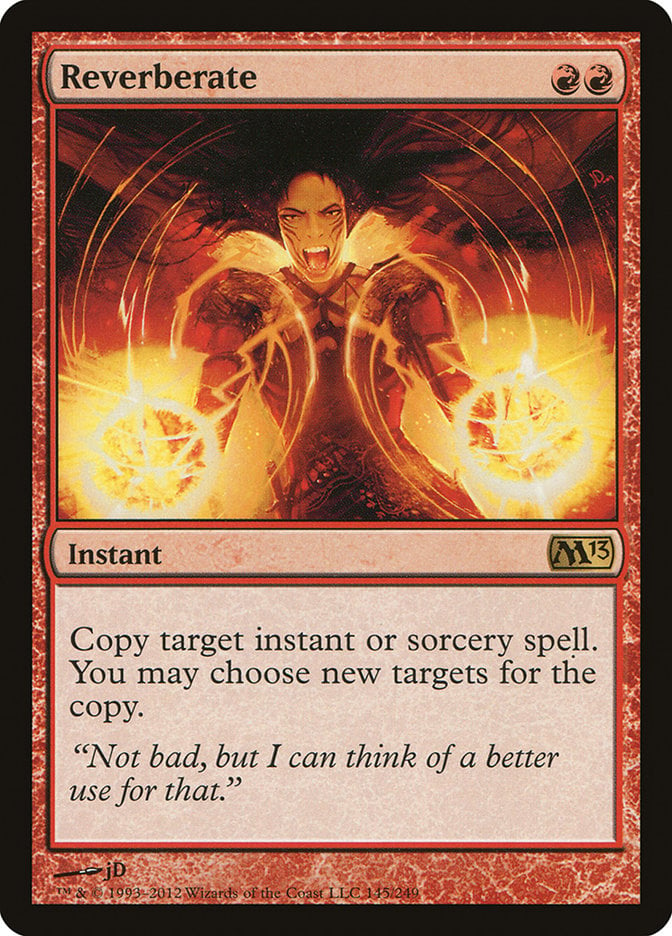
Let’s say your opponent casts Decorum Dissertation. If you target it on the stack with Reverberate, you’ll create a copy of the spell, and can choose new targets. When the copy resolves, paradigm checks to see if you’ve resolved another copy of a spell called Decorum Dissertation. If you haven’t, it sets up the delayed triggers, so you also get copies of Decorum Dissertation on each of your main phases.
How to Stop Paradigm Spells

Disdainful Stroke | Illustration by Deruchenko Alexander
Given how easy it is to steal a paradigm spell, it’s worth considering how to hate on them.. First and foremost, it’s important to highlight that though a paradigm spell exiles itself upon resolution, the copy doesn’t depend on the exiled object. The copy is created in and cast from exile, but doesn’t depend on the original spell. That means cards like Pull from Eternity and Riftsweeper can’t answer paradigm spells.
The inherent card advantage provides another hurdle; even the most dedicated blue mage can’t cast a counterspell every turn for the rest of the game. It’s more practical to look for permanent-based interaction that messes with your opponent’s ability to cast spells.
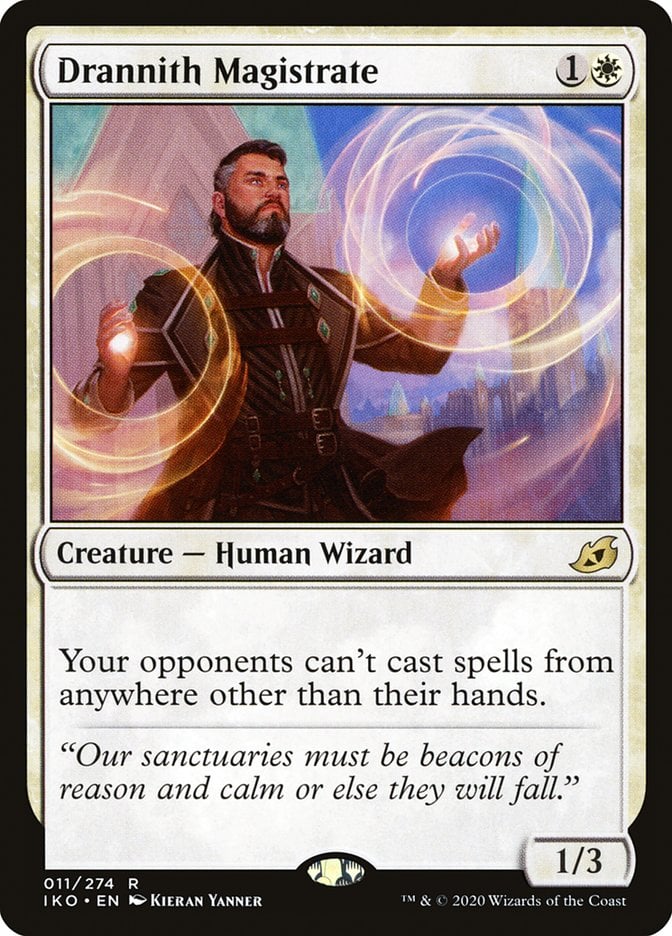
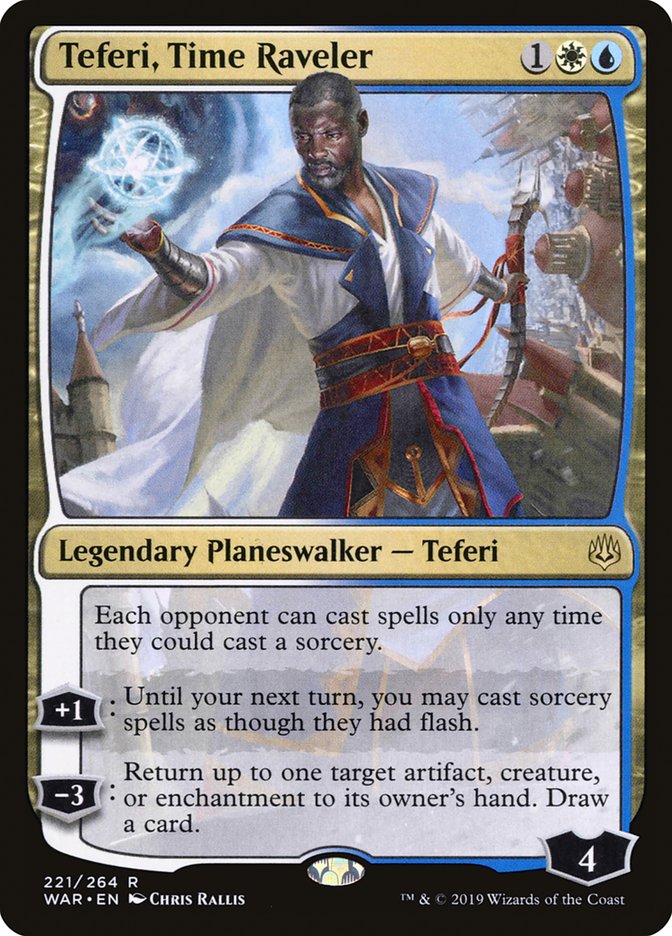

The best answer is preventing your opponents from casting the copies at all! Since paradigm copies are cast from exile, Drannith Magistrate stops them; since they’re cast with a trigger on the stack, they disobey Teferi, Time Raveler’s strict timing restrictions. Vexing Bauble simply counters the paradigm spell since no mana was spent to cast it. Other hate cards include Boromir, Warden of the Tower, Lavinia, Azorius Renegade, and Void Mirror.
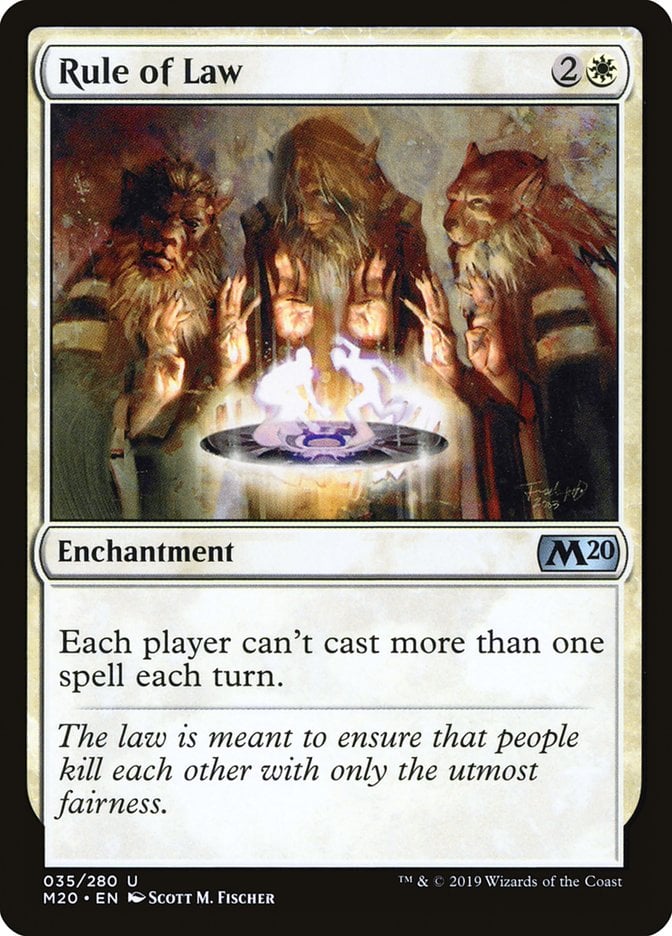
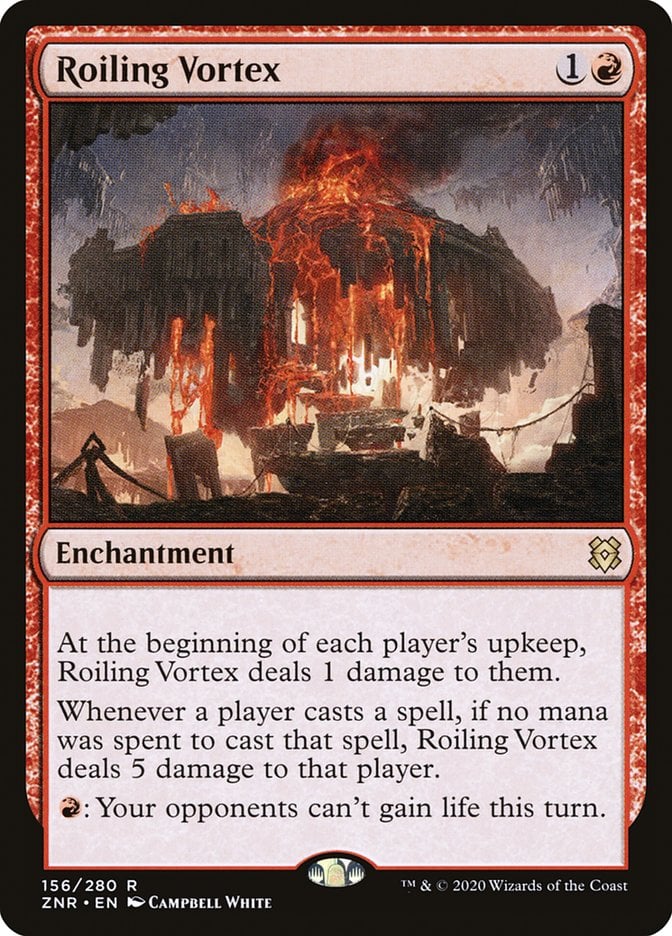
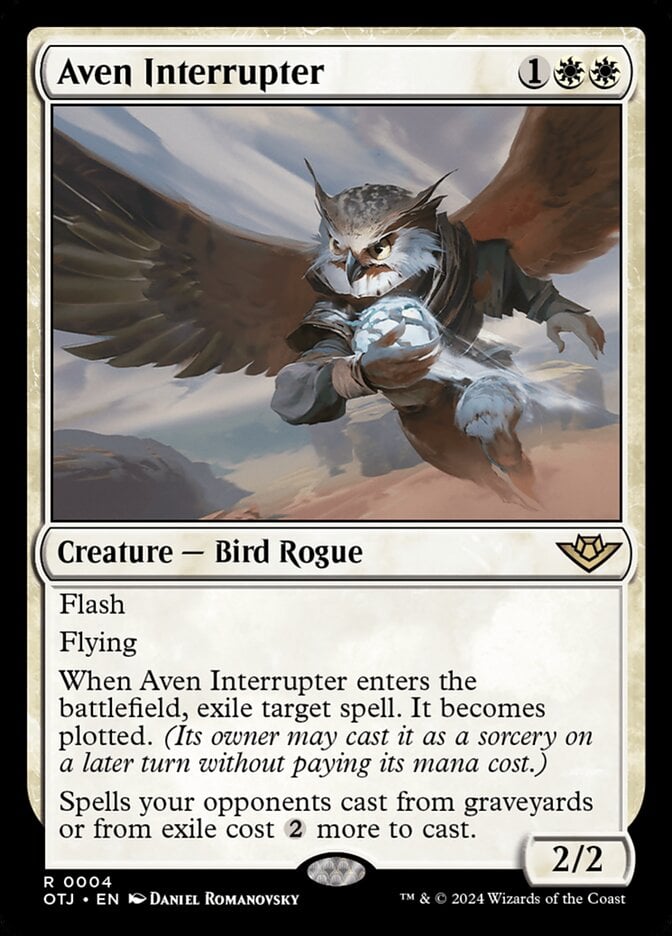
You can also use softer hate if stax isn’t your thing. Rule of Law effects don’t stop your opponent from casting the paradigm card, but they make it more costly since they can only cast one card. Roiling Vortex punishes your opponent for casting spells for free, and tax effects like Aven Interrupter and Thalia, Guardian of Thraben force your opponents to pay some mana, even if they don’t add up to the original mana cost. Spells like these help stop your opponents messing around with your paradigm spells so you can study in peace.
Follow Draftsim for awesome articles and set updates:










Add Comment