
Last updated on April 2, 2026

Improvisation Capstone | Illustration by Marta Nael
School is back in session at Strixhaven! It’s been a while since we last visited the plane of Arcavios and its five colleges, and there were lots of lessons to be learned the first time around. But a new school year means new mechanics, and what better way to start than to look at the biggest and flashiest new mechanic of all.
A Paradigm Shift
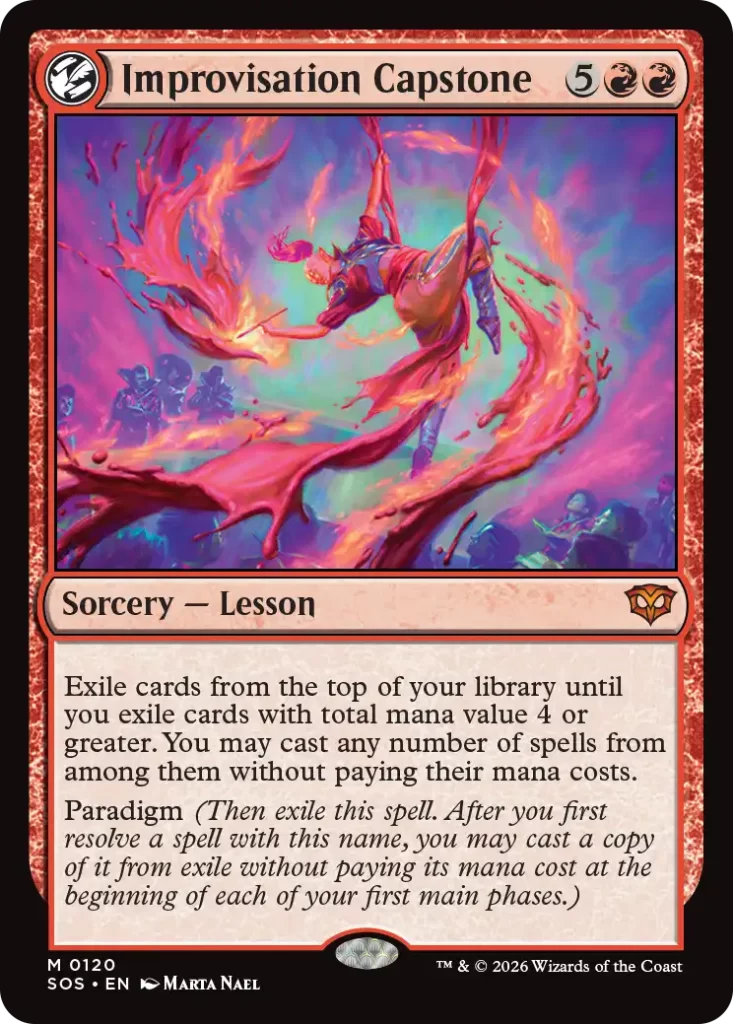
Improvisation Capstone | Illustration by Marta Nael
This set introduces us to the brand new Paradigm mechanic, but to those of you who were playing Magic all the way back in original Kamigawa block over twenty years ago, Paradigm might look a bit familiar. From time to time, Wizards of the Coast has done retreadings of past failed or flawed mechanics in hopes that a few tweaks here and there could bring out their potential.

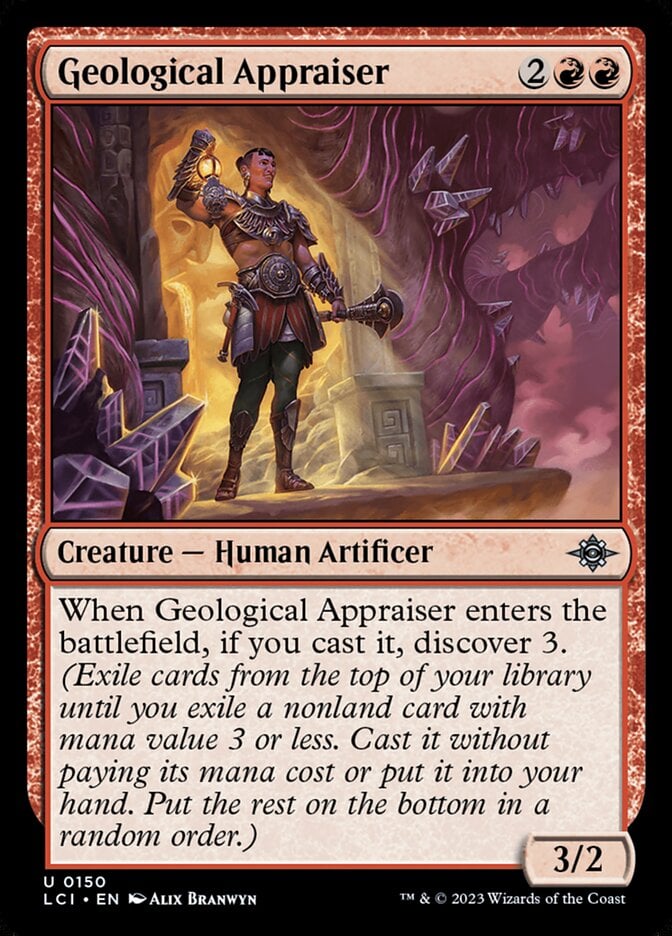
We’ve seen this somewhat recently with the discover mechanic in Lost Caverns of Ixalan, which was a retooled version of the cascade mechanic. It’s in that same vein that Paradigm seeks to be an amended version of the epic mechanic, as it was a very flawed execution of an admittedly interesting idea; Spells with epic would cast a copy of themselves at the beginning of each of your upkeeps for the rest of the game. The only downside was that it prevented you from casting any other spells. Given that Magic is a game where casting spells is kind of the whole thing, it resulted in a poor gameplay experience for everyone.
Learning From Epic
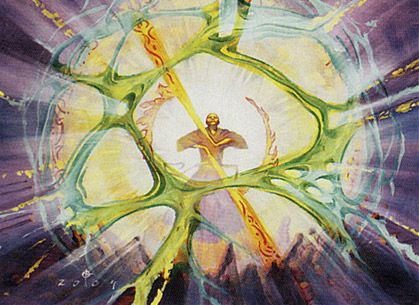
Enduring Ideal | Illustration by Daren Bader
But paradigm, as the name might suggest, is something else entirely. Much like epic, once a spell with paradigm goes into exile after it resolves, it casts a copy of itself on your turn, every turn, for the rest of the game. But there are a few differences here that are important to note.
1. The spell with paradigm exiles itself as it resolves. Not huge, but it is different from epic, and it does matter if you care about things in the graveyard.
2. Once exiled, the paradigm ability copies the spell at the beginning of your first main phase, not in your upkeep! This matters a lot, as you get to see the card you’ve drawn for turn first before the trigger.
3. You don’t have to cast the copies if you don’t want to! If, for whatever reason, you don’t want to cast the copy, that’s fine, as it’s a “may” ability, meaning you can always choose not to do it. Additionally, of note, Paradigm will still trigger on the next turn if you choose not to cast the copy; it doesn’t go away if you don’t use it.
The main difference here is choice. Of the five epic cards, Enduring Ideal, Undying Flames, Endless Swarm, Neverending Torment, and Eternal Dominion, Enduring Ideal was the only one that seemed to be playable, as you at least had the choice of which enchantments to put into play with it, and therefore allowed for some degree of control of the game after playing it. But the rest all struggled with this.
These changes turn what was a clunky, boring, hard to balance mechanic into something much more dynamic and powerful.
Life Lessons

Gran-Gran | Illustration by Arou
Aside from the mechanic itself, you may have also noticed that the lesson subtype is present on Improvisation Capstone. You can expect to see a total of five of these Paradigm cards released in Secrets of Strixhaven, each with the Lesson subtype, but it doesn’t seem like lesson/learn will be supported in this set. However, in other formats like Modern where you have access to Learn, or in Standard where, despite not having any cards with Learn, there is still a lessons deck thanks to all of the lessons and their support cards in Avatar: The Last Airbender (Love youGran-Gran), Improvisation Capstone and the other yet unrevealed cards in its cycle may be something to watch out for.
Follow Draftsim for awesome articles and set updates:










Add Comment