

Selvala, Explorer Returned | Illustration by Tyler Jacobson
Ahoy mateys! Sometimes, even pirates need to stop fighting and talk their way out of a battle. That’s when they call for parley. At least in Magic, everybody gets something good to take home from this negotiation, and you may walk away with something extra – or not.
Today we’re looking at the parley mechanic, its rules interactions, and its best cards.
How Does Parley Work?

Selvala's Charge | Illustration by Dan Scott
Parley makes each player reveal the top card of their library, and you get an effect based on the number of nonland cards revealed this way. Each player then draws the revealed card.
Parley is what’s known as an ability word: While all parley cards share a similar theme, each one has a specific effect that you need to check card by card. In some cases, parley may be an activated ability, in others a triggered ability, etc.
Each player benefits from the card draw, so it’s kind of a group hug mechanic. However, you benefit the most because you’ll get the parley benefit – although sometimes everyone reveals a land and you don’t get a bonus.

For example, Rousing of Souls gives you a 1/1 flying Spirit token for each nonland card revealed among all players, and after that each player draws a card.
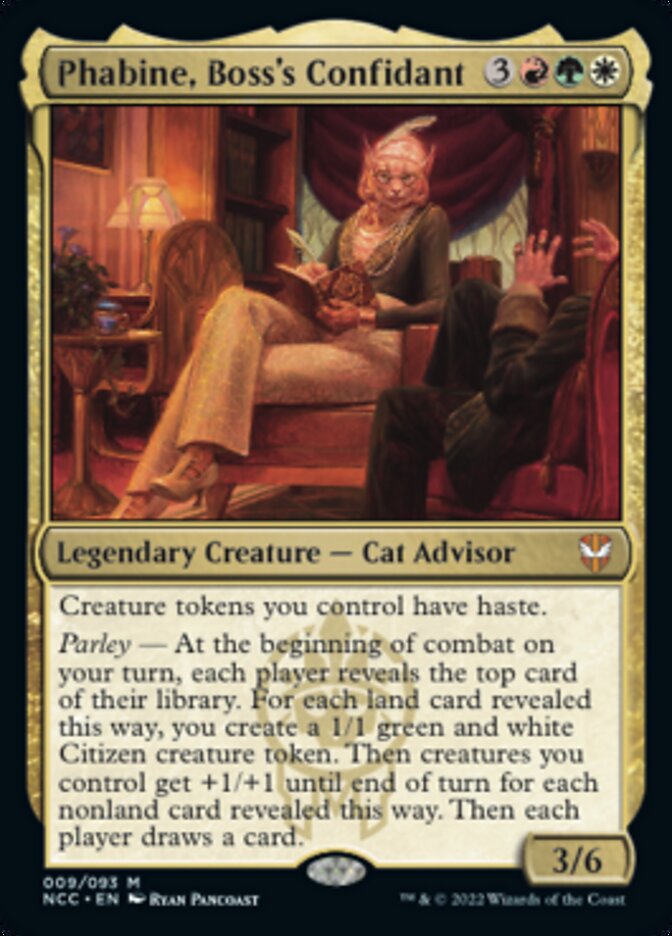
The exception is Phabine, Boss's Confidant, which gives you a benefit for each nonland card revealed and a different benefit for each land card revealed. It can never “miss,” so to speak.
The History of Parley in MTG
Parley was created in the first Conspiracy Magic set (CNS) as a mechanic for multiplayer matches. Conspiracy has five parley designs, all of them in green, white, or green-white.
The mechanic was then printed on cards in March of the Machine Commander, Lost Caverns of Ixalan Commander, and Murders at Karlov Manor Commander, branching into blue and red as well and upping the parley count to nine. There’s yet to be a black parley card, but that would be weird since black is the most selfish color in Magic.
Is Parley a Mana Ability?
Parley is a triggered ability on most of the creature designs. However, Selvala, Explorer Returned requires you to tap it to activate it, and you’ll produce mana similar to cards like Llanowar Elves, so in this case it’s a mana ability. As with all mana abilities, it doesn’t use the stack and can’t be responded to.
The rules can get a bit tricky when you want to cast a spell and rely on Selvala’s mana ability.
Imagine the following sequence: I want to cast a 5-mana spell, and I have Selvala, Explorer Returned in play and four lands. I put the spell on the stack, tapping Selvala for the mana using the parley ability, but failed to reveal any nonland cards. In this case, I don’t have enough mana to cast the spell, so the spell is reversed: I have to return it to whatever zone I was casting it from, be it my hand, library, or graveyard.
Also, since Selvala’s parley is a mana ability, it can’t be responded to. You can activate it when you have priority, and the parley effect will immediately happen. Players can’t take any actions, like using a Sensei's Divining Top to stack their deck before parleying.
Gallery and List of Parley Cards
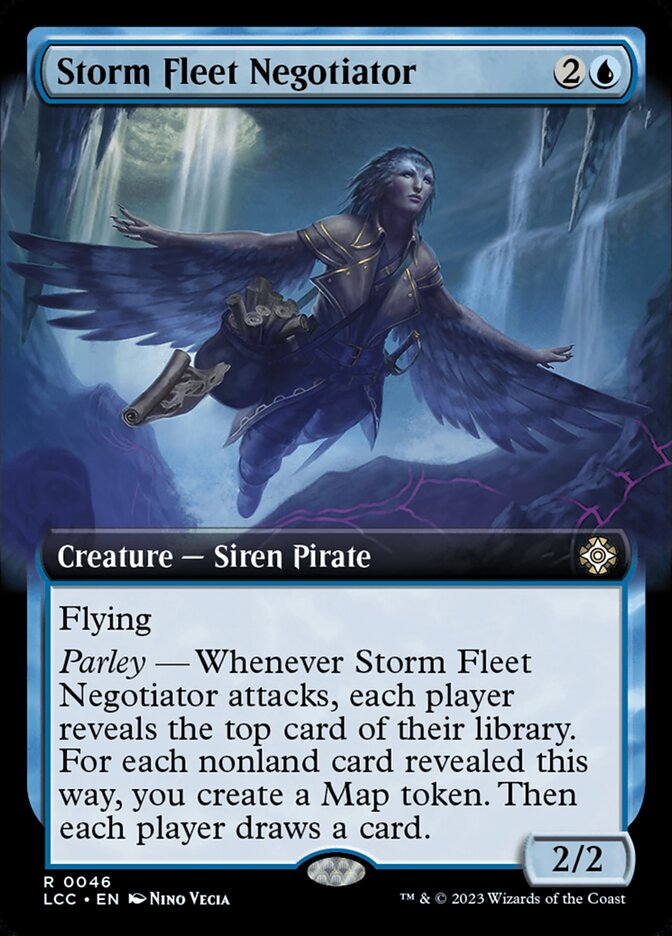


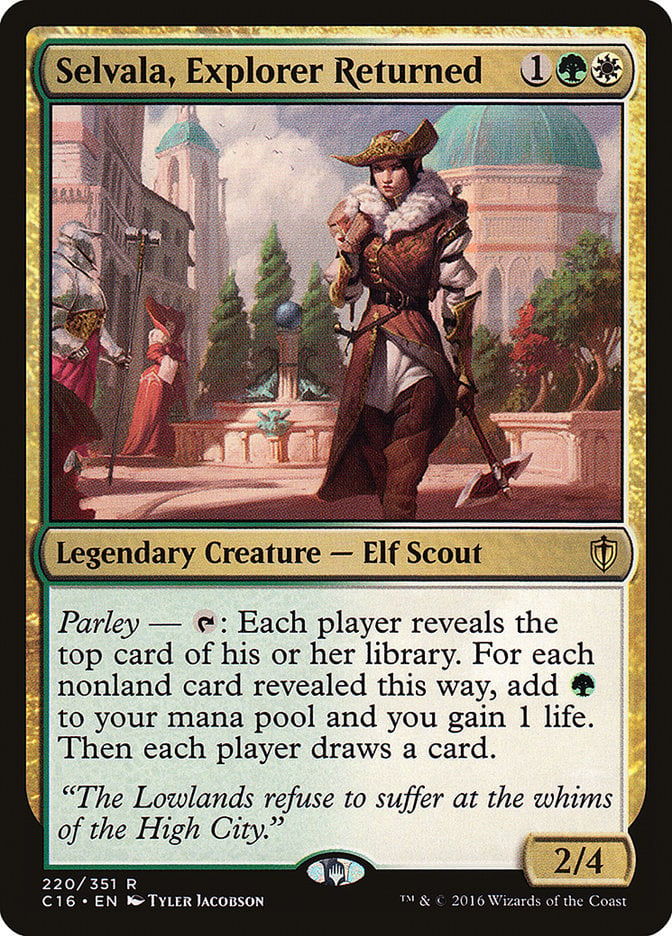
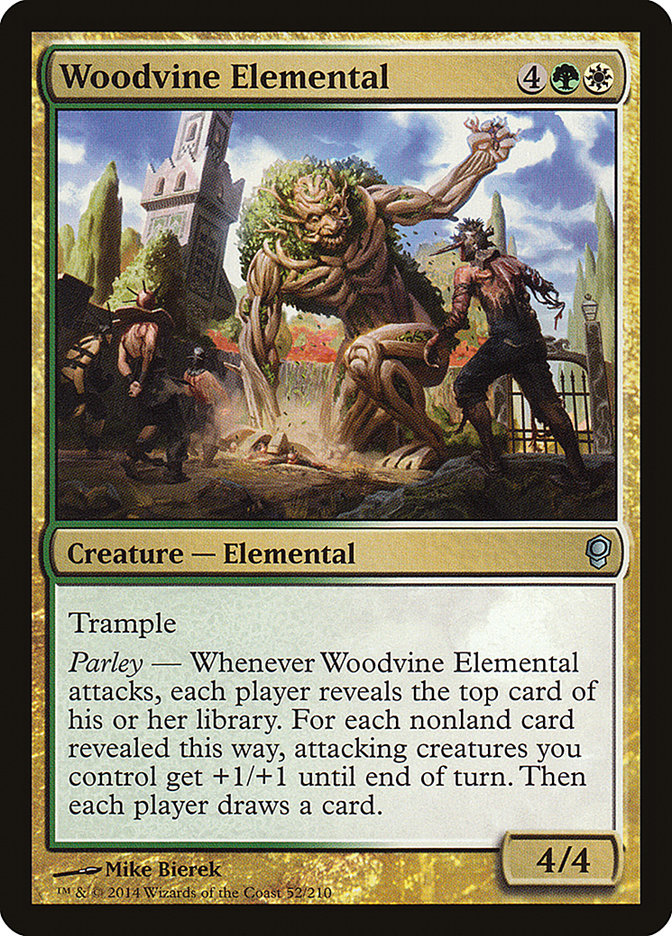
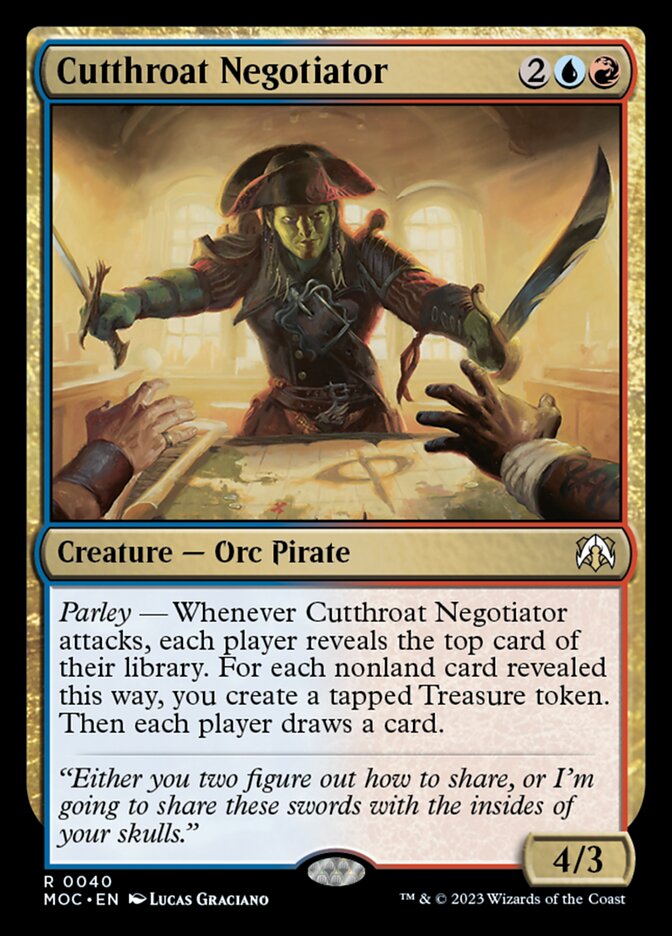
- Rousing of Souls
- Storm Fleet Negotiator
- Innocuous Researcher
- Selvala's Charge
- Selvala's Enforcer
- Selvala, Explorer Returned
- Woodvine Elemental
- Cutthroat Negotiator
- Phabine, Boss's Confidant
Best Parley Cards
#5. Storm Fleet Negotiator
Storm Fleet Negotiator has evasion, so it’s easier to start attacking and triggering parley than most creatures. That said, it’s just a little creature as a 2/2 that can get you some Maps. It gets better if you care about the number of artifacts you control, or if you care about exploring.
#4. Cutthroat Negotiator
Besides the parley ability, Cutthroat Negotiator‘s best trait is being a pirate or an outlaw for the decks that want those creature types. This parley card can create a burst of Treasure by itself, although unreliably. The best thing you can do is to use blue to manipulate the top of your library to make parlaying more reliable.
#3. Innocuous Researcher
Innocuous Researcher allows you to investigate via the parley mechanic, and you can get your mana back during your end step to crack these Clues right away. Innocuous Researcher gets better if you plan on only casting spells during your turn, or when you have good mana sinks to spend your mana on your opponents’ turns.
#2. Phabine, Boss’s Confidant
Phabine, Boss's Confidant is a 6-mana token commander, granting them haste at all times. Here, parley can help you generate more tokens or buff them, and you get a benefit no matter which cards are revealed.
#1. Selvala, Explorer Returned
Besides being an elf, which is already interesting for typal purposes, Selvala, Explorer Returned can generate between 0-4 mana any time you activate its ability. It also gains you life so you can trigger your lifegain payoffs while ramping quickly.
Wrap Up

Phabine, Boss's Confidant | Illustration by Ryan Pancoast
Parley is an interesting ability in multiplayer scenarios like Commander and Conspiracy drafts. But it’s also hard to find effects that are worth the ability, since giving your opponent a card isn’t always the best value proposition, even if you also get something.
There are other mechanics that explore this multiplayer design space, like council’s dilemma and join forces, and we can expect WotC to use these kinds of cards in supplemental MTG sets. I expect to see one card with parley every four or five supplemental sets, as well as some reprints.
What about you guys? Do you play cards with parley in your decks? What are your favorite multiplayer mechanics? Let me know in the comments section below or in our Draftsim Discord.
Stay safe, and avoid conflicts whenever you have a chance to parley.
Follow Draftsim for awesome articles and set updates:










Add Comment