
Huddle Up | Illustration by Magali Villeneuve
Paying for your own spells is one of Magic’s more fundamental responsibilities. But what if another player wants to give you a hand, perhaps to team up against the biggest threat?
That’s when assist comes in!
Let’s go through exactly how assist works, when another player gets involved in casting the spell, and what they can (and can’t!) pay for.
How Does Assist Work?

Bloodborn Scoundrels | Illustration by Mathias Kollros
Assist is a static ability that allows another player to help pay the generic mana in the total cost of a spell that you are casting. You still control the spell, make its choices, and have to pay any non-generic mana costs.

For example, Huddle Up costs and has assist. When you cast it, you can choose another player to help. That player can contribute as much as toward the generic portion of the spell’s cost, while you must still pay the . You could also split the generic cost between you: your helper might pay , while you pay .
You don’t have to choose a player to help you, if you don’t want to. And they can refuse to help you.
The History of Assist in MTG
Assist debuted in Battlebond (2018), an MTG set designed specifically with Two-Headed Giant in mind. Two-Headed Giant is a team format (two against two), which kinda solves the “Why would other player help me cast my spells?” part of the question… but assist cards are still playable in any MTG format, and in particular bring a nice political layer to Commander games.

Battlebond contained 16 cards with the assist keyword, spread across all five colors. To date, there’s been exactly one other assist card (Yume, Chronicler of Valor, from Mystery Booster Commander Edition), for 17 assist cards altogether.
When Do You Choose Targets for an Assist Spell?
You choose the targets for an assist spell before you choose which player you want to help pay for it.
MTG rules require that you make choices such as modes, additional costs, and the value of X before choosing the targets of a spell. The spell’s total cost is then calculated. Assist gets involved afterward, during the mana-payment portion of casting the spell. This means the potential assisting player knows exactly what they’re being asked to fund.
You may reveal an assist card and discuss the proposed play with the table before formally beginning to cast it. This lets you negotiate beforehand rather than blindly commit to a spell and hope somebody agrees to help.
Does Assist Target a Player?
No, assist doesn’t target players. Assist chooses another player; it doesn’t target them.
Other effects on the same spell could still target a player, though. For example, Bloodborn Scoundrels targets an opponent with its ETB ability. But the assist part doesn’t target while casting the spell.
Does an Opponent Have to Assist You If They Have the Mana?
No. Helping is entirely optional. They can choose to pay all the generic mana you’re asking them to cover, only part of it, or nothing at all.
Can More than One Player Assist You?
No; you can choose only one player to assist you. The wrinkle here is Yume, Chronicler of Valor, who could give a second instance of assist to a card that already has assist. Different players can assist you in each instance of assist.
What If No One Chooses to Assist You?
If you can pay the entire cost yourself, you can simply do that and finish casting the spell. If you can’t, or no longer want to, you can back up rather than complete the casting process. Wizards explicitly called out this possibility when assist was introduced in Battlebond.
In other words, another player refusing to assist doesn’t counter your spell. The spell hasn’t even finished being cast yet.
Can Another Player Pay the Colored Costs of that Spell?
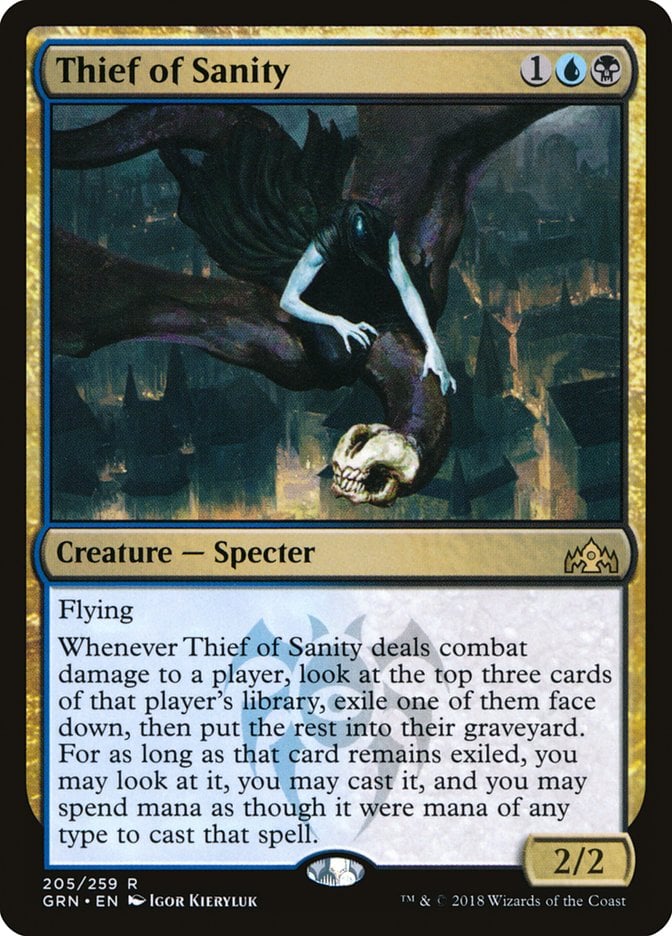
No. Assist only lets another player pay generic mana in the spell’s total cost. And you can’t circumvent this restriction even with an effect that allows mana to be spent “as though it were mana of any type.”

For example, say you “borrow” a Bloodborn Scoundrels with your Thief of Sanity. In this scenario, then you can use mana of any type (say, ) to pay for the Scoundrels’ ). But if another player assists you, they still can only help you pay the Scoundrel’s generic ; they can’t help you with .
Can the Assisting Player Pay for Additional Costs?
Yes, they can, as long as it’s generic mana. The assisting player can’t take over non-mana additional costs, though. If casting a spell additionally requires you to discard a card, sacrifice a permanent, pay life, or perform some other action, assist doesn’t let another player do that for you.
Suppose Yume, Chronicler of Valor gives assist to a spell with a mana cost of and a kicker cost of . If you kick the spell, its total cost becomes . Your assisting player could pay as much as the entire generic portion. You would still have to pay the yourself.
Does Assist Work in 1v1 Games?
Technically, yes, it does. In practice, though… Your opponent won’t have much reason to spend their mana helping you cast a spell. And most assist cards are only legal in Legacy or Vintage, so you can’t play them in most 1v1 formats anyway.
Gallery and List of Assist Cards
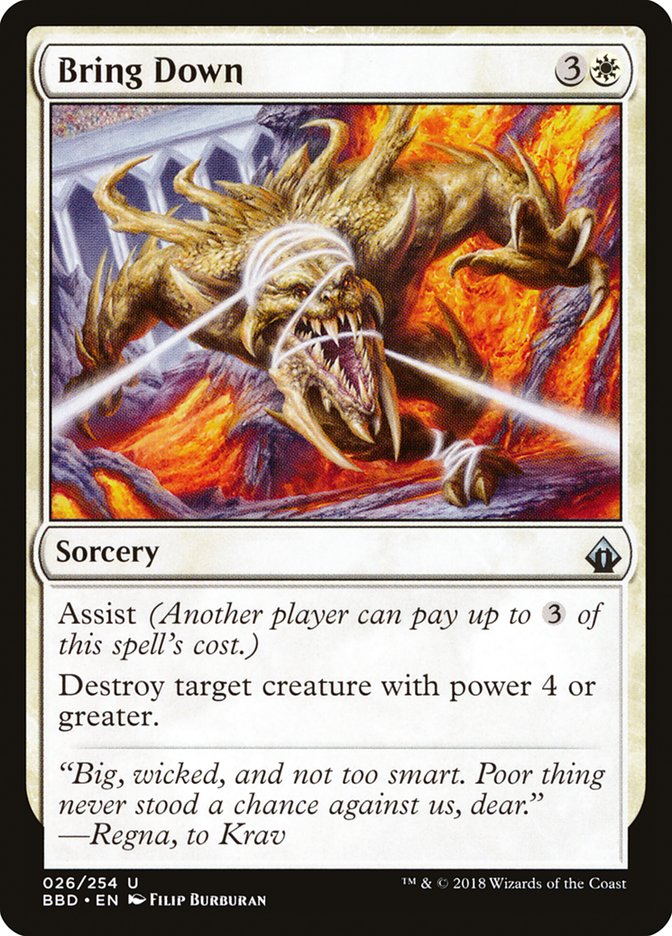
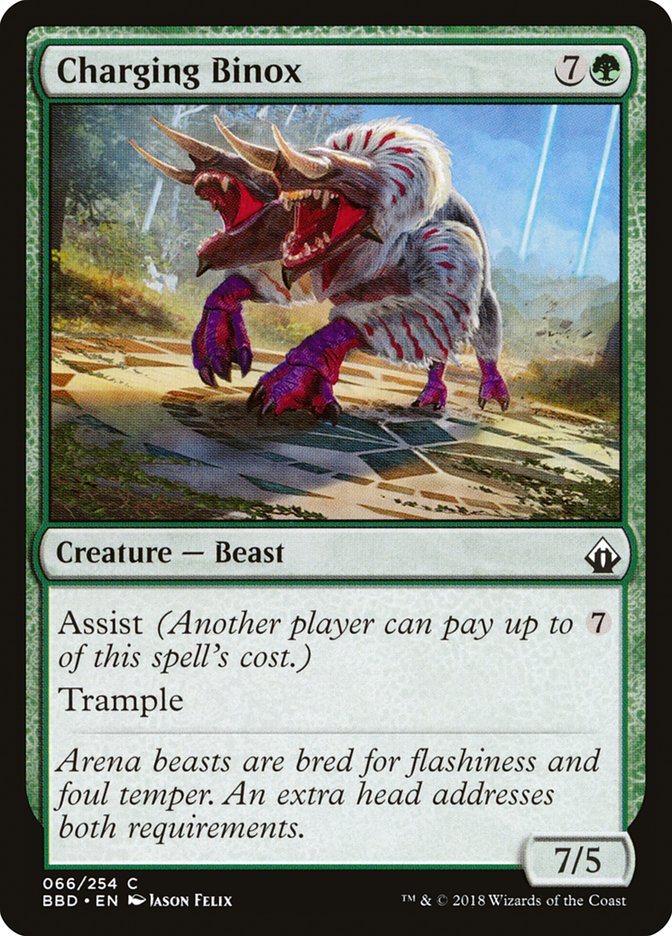
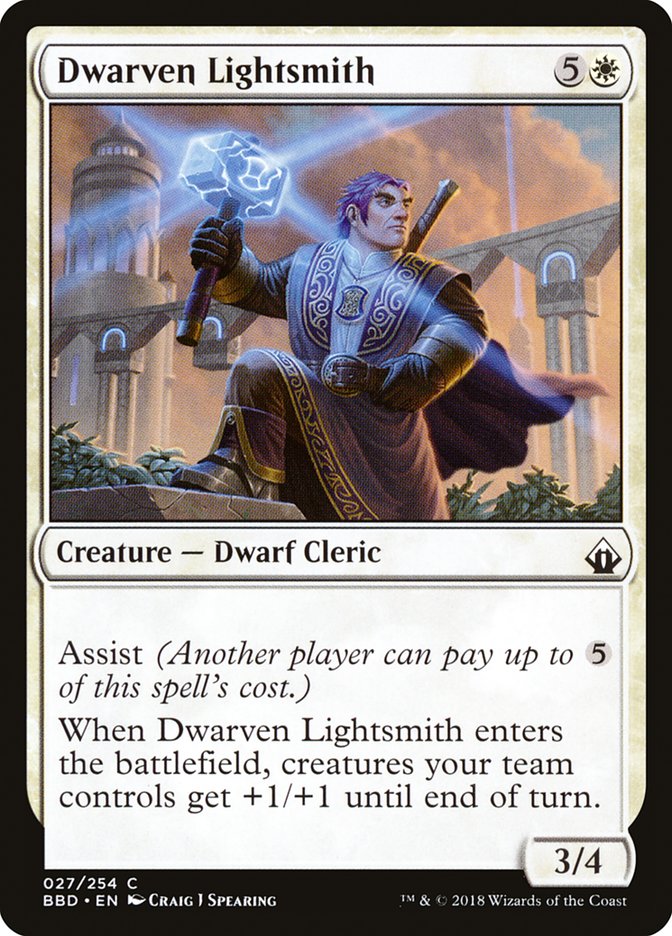
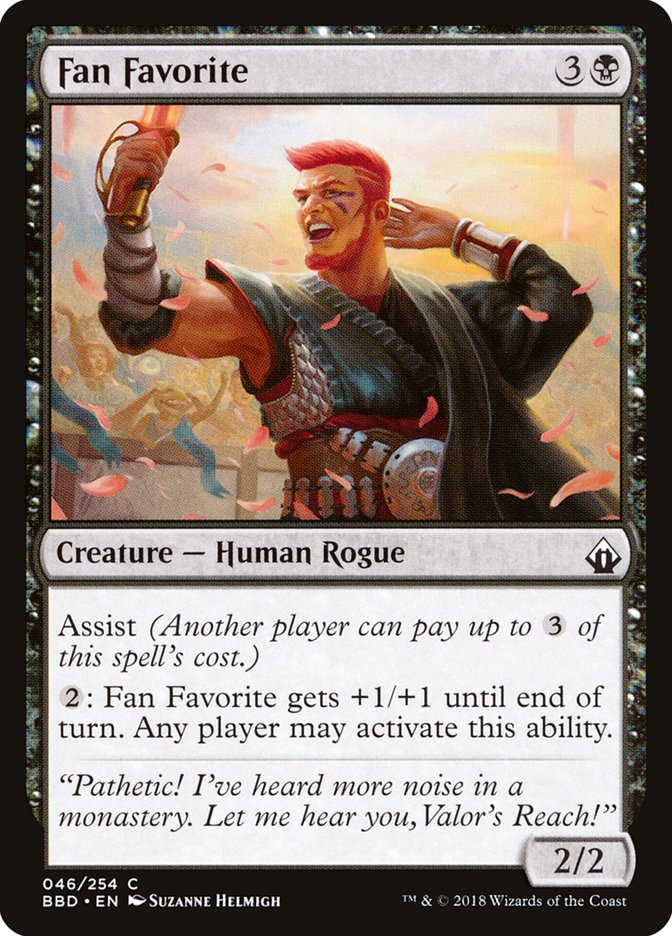
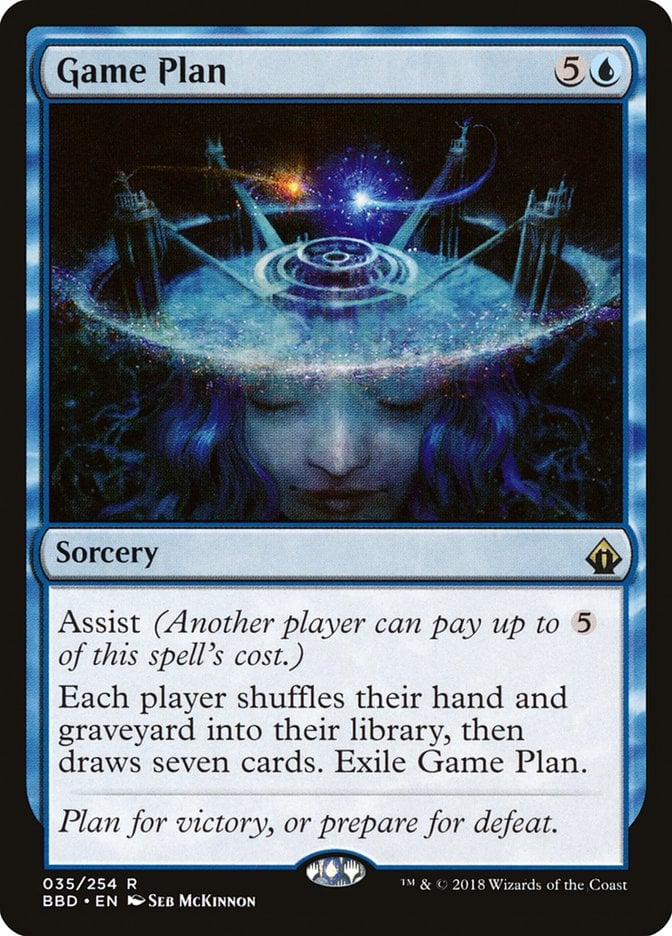
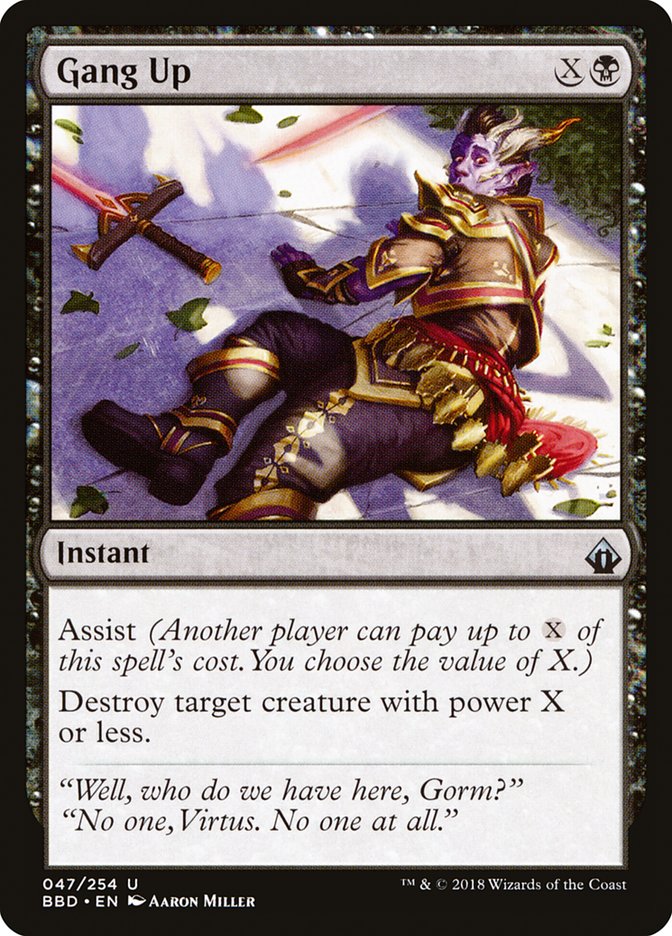
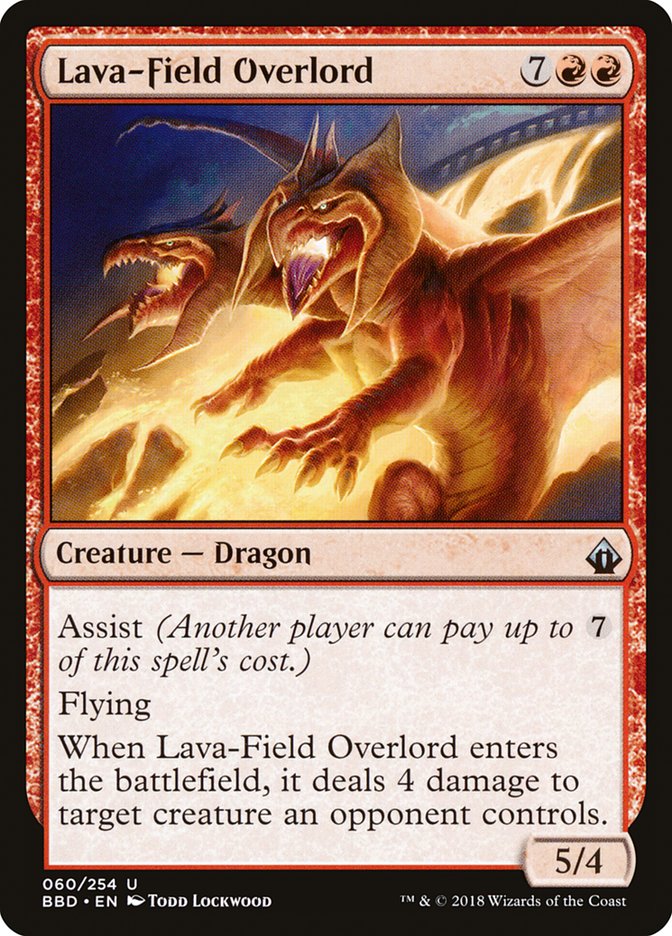
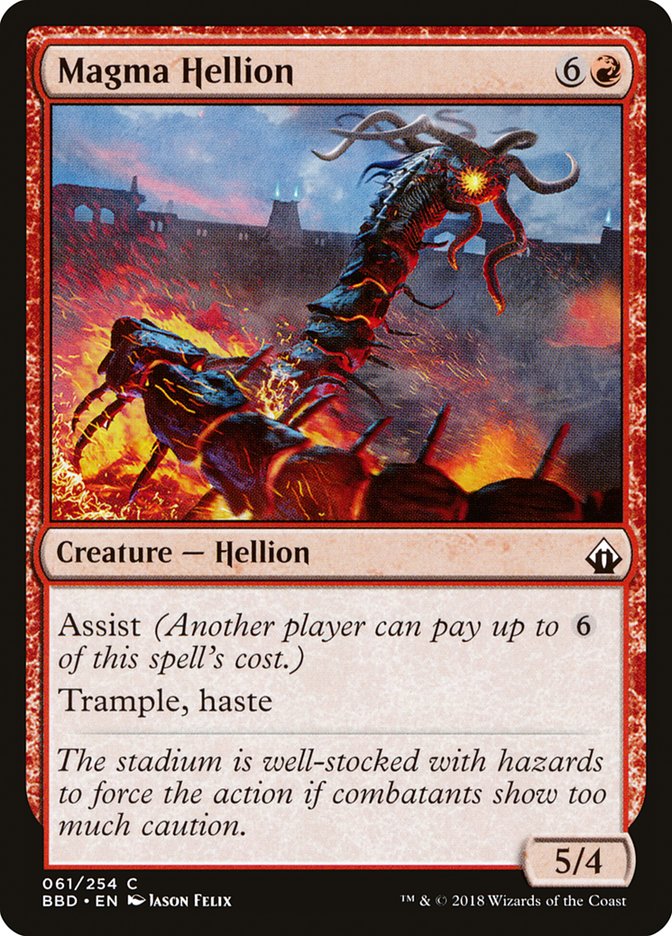

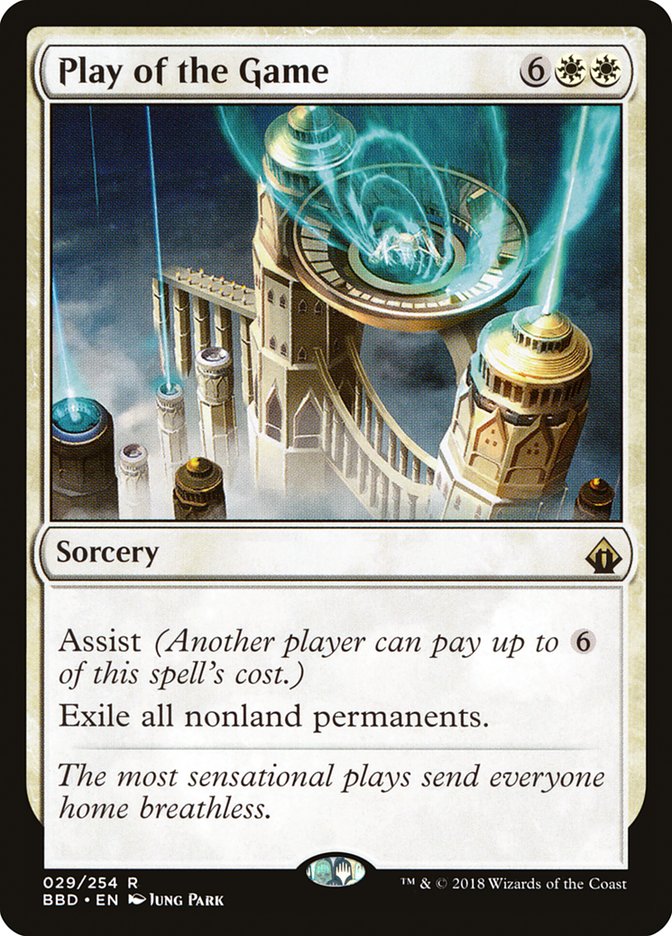
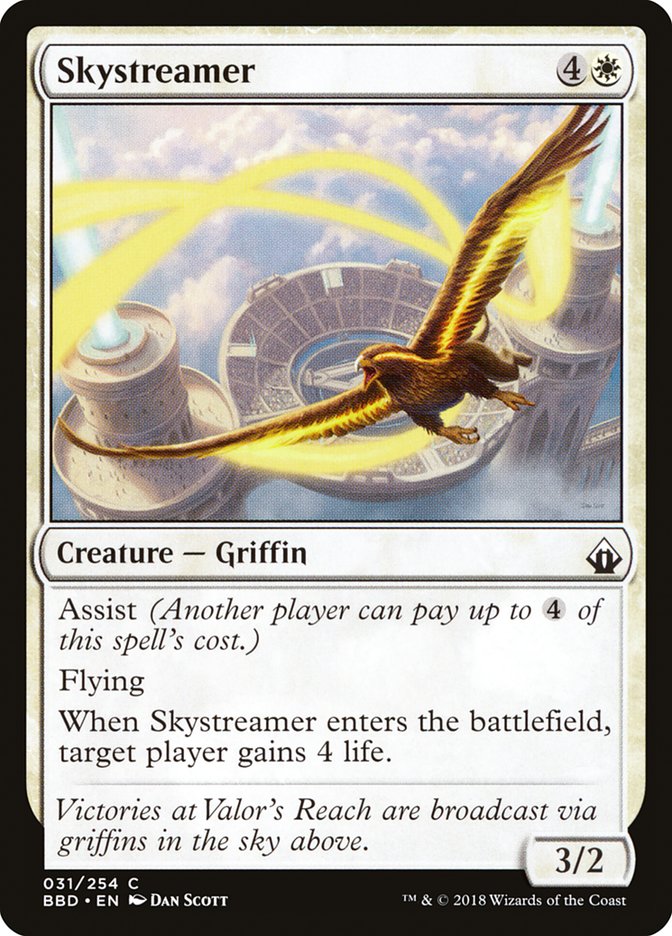
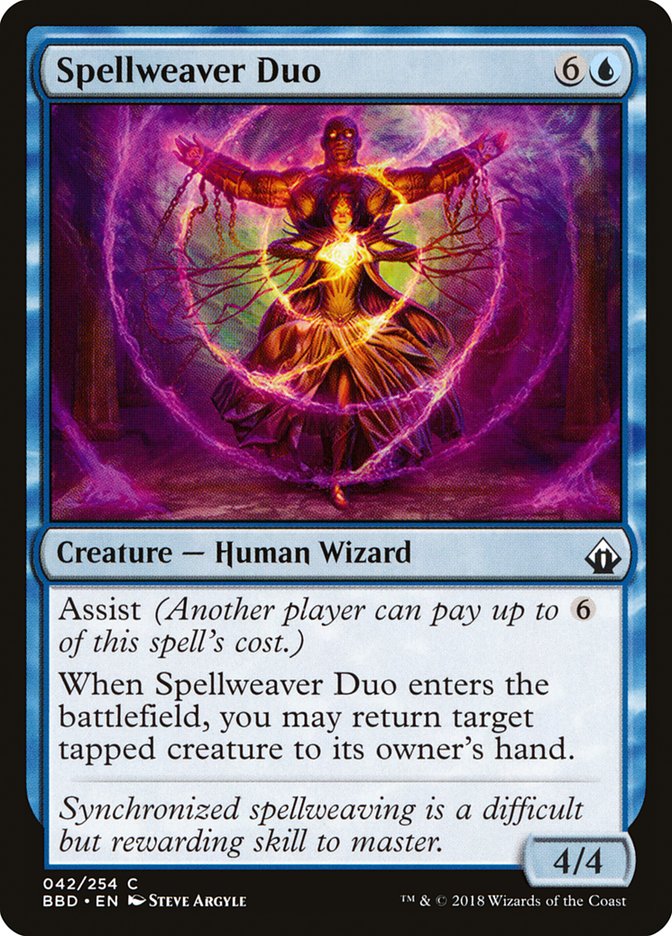

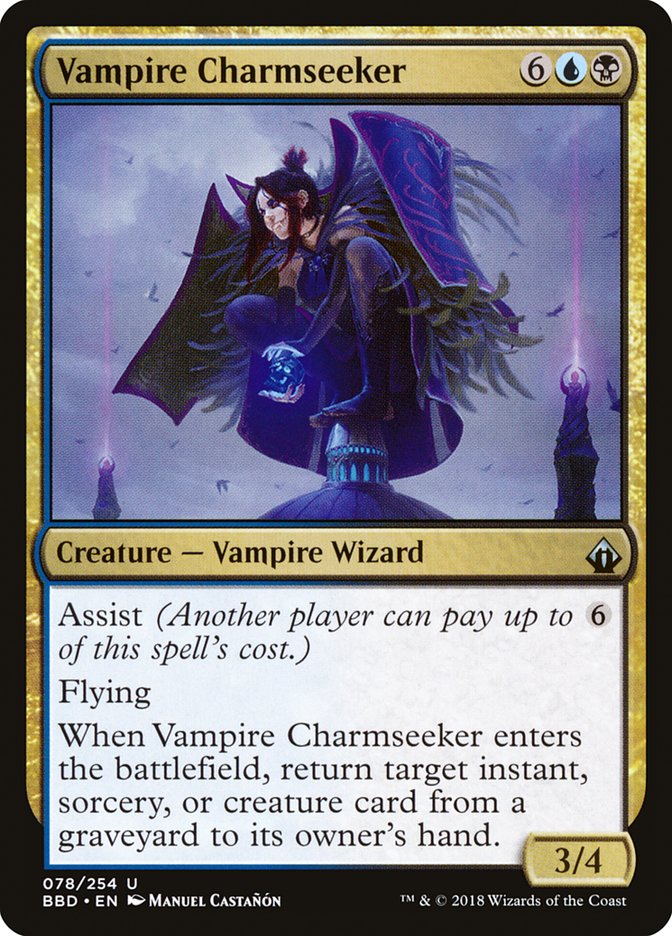
- Bloodborn Scoundrels
- Bring Down
- Charging Binox
- Dwarven Lightsmith
- Fan Favorite
- Game Plan
- Gang Up
- Huddle Up
- Lava-Field Overlord
- Magma Hellion
- Out of Bounds
- Play of the Game
- Skystreamer
- Spellweaver Duo
- The Crowd Goes Wild
- Vampire Charmseeker
- Yume, Chronicler of Valor
Best Assist Cards
Assist cards are fairly niche, even in casual Commander. Their main hurdle is convincing somebody else to spend their mana on your spell. Still, a few cards can produce interesting political plays!
#5. Yume, Chronicler of Valor
Yume, Chronicler of Valor is probably the most interesting attempt yet to make assist work outside a dedicated team format. The original Battlebond cards ask another player to spend mana for whatever benefit the spell happens to offer them. Yume, Chronicler of Valor gives your assistant a concrete reward: If they contribute mana toward your first spell of the turn, you both draw a card.
That opens up a lot of room for Commander politics. Sometimes a player may be willing to help just to gain an extra card… sometimes they’ll chip in to avoid somebody else getting that extra card!
#4. Game Plan
Game Plan is a 6-mana wheel that has every player shuffle their hand and graveyard into their library, then draw seven cards. Six mana for that effect is expensive, but assist creates some genuine negotiating room. A player with few cards in hand may be quite happy to contribute mana towards giving everyone a fresh seven.
#3. Play of the Game
Play of the Game costs a massive , but in return it exiles every nonland permanent. Eight mana is a lot for a board wipe… but when you and another player are clearly behind, Play of the Game can be a respectable catch-up spell.
#2. Out of Bounds
Out of Bounds is a 4-mana counterspell, which is well above the rate you normally want to pay for that effect. But, similar to Play of the Game, it can let you and another player counter something that threatens the entire table even if you only have up.
#1. Huddle Up
Huddle Up is probably the cleanest demonstration of the political idea behind assist… and also why, in general, assist cards are underwhelming.
On the one hand, you and your assistant both get something out of the card. On the other hand… paying (no matter how you slice it) for two cards at sorcery speed is hardly exciting.
Wrap Up

Out of Bounds | Illustration by Dmitry Burmak
Assist is arguably Magic’s most team-mate-y mechanic. You choose one player, and they can (if they wish!) help you pay for the generic mana costs of your assist spell; that’s pretty much it.
It was designed with Two-Headed Giant in mind, but it can still add a bit of political spice into a casual Commander game.
I hope you’ve enjoyed this deep dive into Magic’s assist mechanic, and good luck out there! Check out the Draftsim Discord if you have any questions, and find our newsletter, The Daily Upkeep, to stay up to date on all the latest MTG news.
Follow Draftsim for awesome articles and set updates:










Add Comment