

Terminus | Illustration by James Paick
If you’ve ever sat down at a Commander table, odds are that you’ve run into a board wipe. Or two. Or five. Almost everyone’s removal suite includes at least a couple of sweepers that destroy everything or exile everything or bounce everything—heck, some precons basically only have sweepers as removal.
But why does everybody pack board wipes in Commander? Are they actually that good, and how many should you run? I’ll answer those questions and break down which board wipes are the best for your deck!
How Many Board Wipes Should You Run in Total?
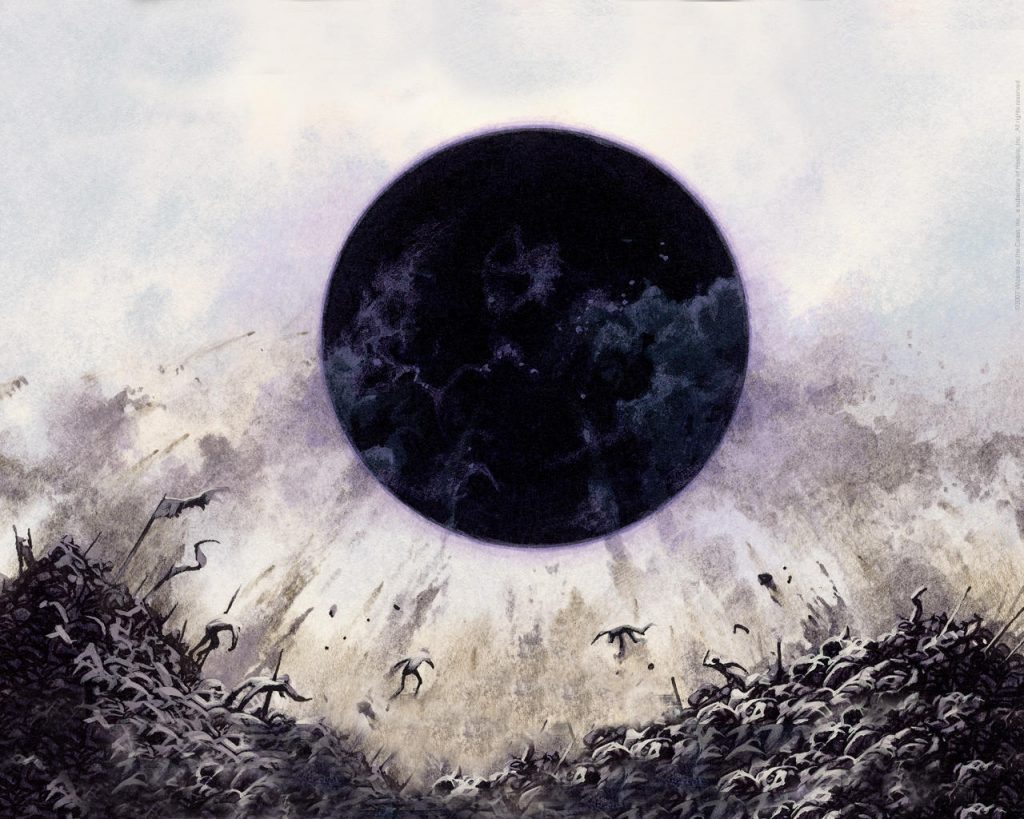
Damnation | Illustration by Kev Walker
Most Commander decks should run 3-5 board wipes. Commander is a highly contextual game (as is Magic as a whole) so I can’t give you a hard number, but this range should be good for the average deck, with the understanding that creature-based decks want fewer and controlling decks want more.
Board wipes are much more prevalent in Commander than any other format; for many Constructed formats like Modern and Standard, you should run 0 board wipes on average. The value of board wipes increases in Commander because they’re one of the few interactive spells that properly scale to a multiplayer format.
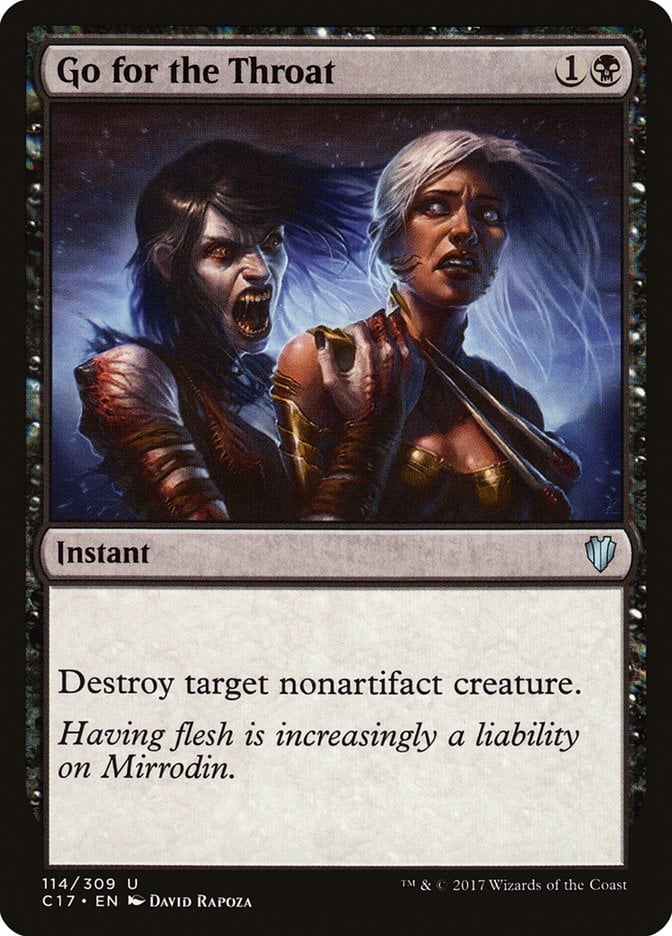
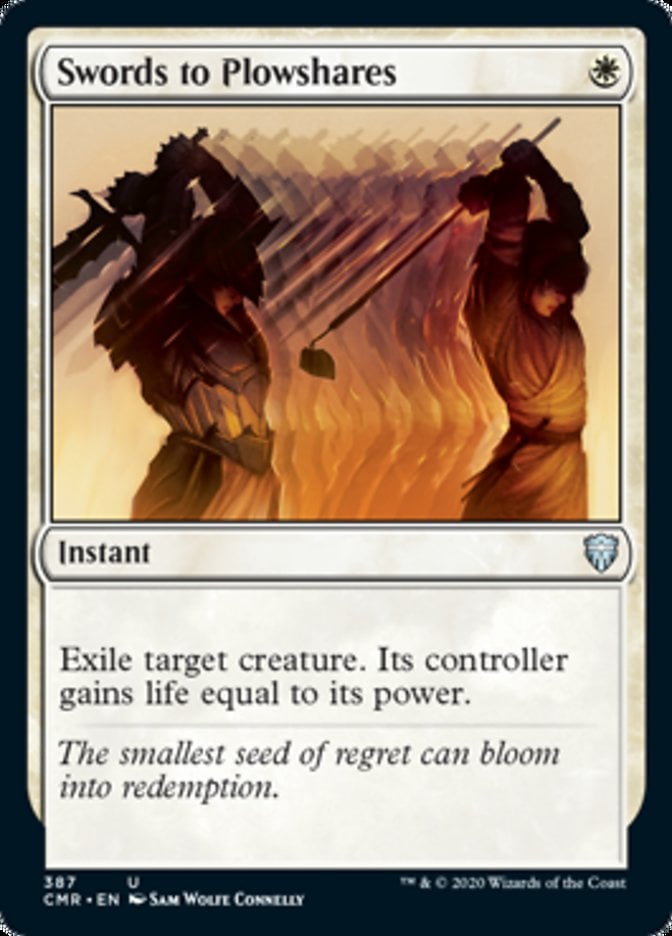
In a 1v1 setting, traditional spot removal like Go for the Throat and Swords to Plowshares and so on is perfectly adequate and quite desirable. It’s fine to trade one of your cards for one of your opponent’s. But that doesn’t scale well in Commander, with three opponents; if I Swords to Plowshares Player A’s creature, then we’ve both gone down a card, but Players B and C have not. I’ve put myself and Player A behind, but I’ve given an advantage to Players B and C. The efficiency of spot removal makes it worth running some, and countermagic is still great, but a deck full of one-for-one interaction falls behind.
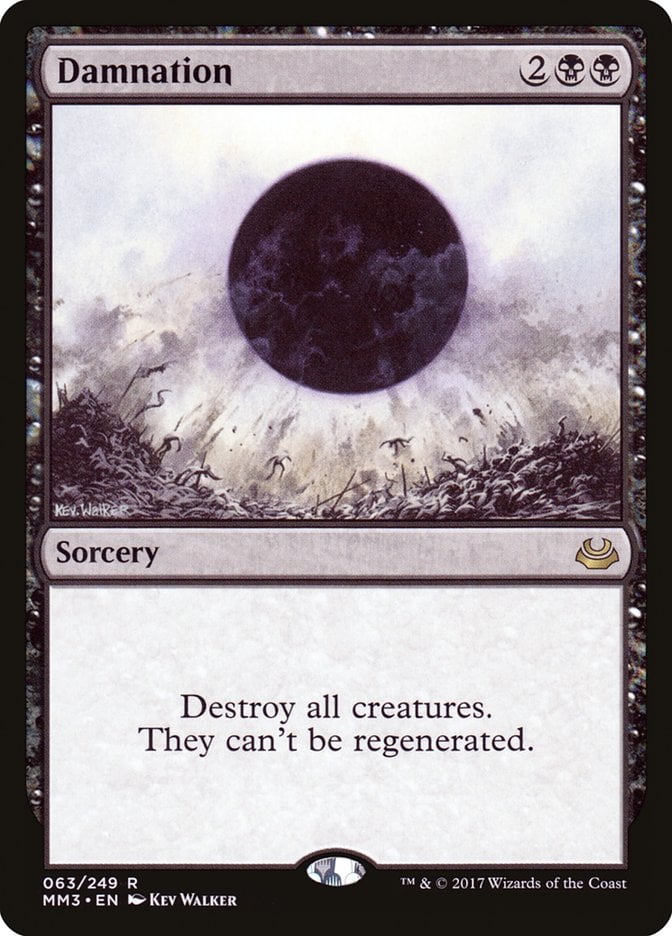
Board wipes don’t have this issue. Damnation destroys all creatures, regardless of how many players are at the table. In fact, it gets better. In the 1v1 setting, you can Damnation away three creatures for a three-for-one; the same scenario in EDH, where your opponents have three creatures each, becomes a nine-for-one. Even if you control some creatures, you’re likely destroying more of your opponents’ cards than your own.
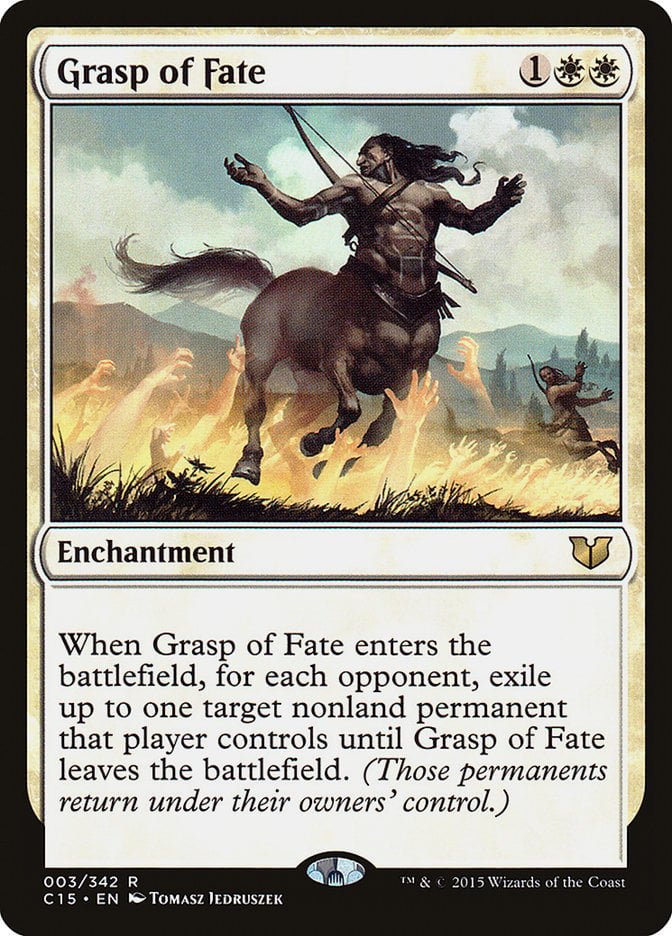


Because board wipes generate card advantage and are incredibly efficient for what they do, they’re one of the most common forms of interaction at Commander tables. They also have a long history in the format; we had board wipes long before Commander-focused sets printed cards like Grasp of Fate, Windgrace's Judgment, and Cloud's Limit Break to handle multiple threats at once.
That said, board wipes have a distinct weakness: They destroy your creatures as well as your opponents’. That’s why in traditional Constructed formats, you only really see board wipes played in control decks with few to no creatures, or maybe in the sideboard to handle the most aggressive decks in the meta. Playing too many board wipes is anti-synergistic with creature-based strategies, so most decks can’t just run 10 board wipes and call it a day. They’re a useful tool to have in some quantity, but you can easily overdo it. The best removal suite is diverse and interacts favorably with your game plan.
What Kind of Board Wipes Are the Best?

Blasphemous Act | Illustration by Daarken
Board wipes can be broken into many subcategories. I’ve listed the most common ones with their strengths and weaknesses so you can choose the best board wipes for your respective deck.
Destruction-Based Board Wipes
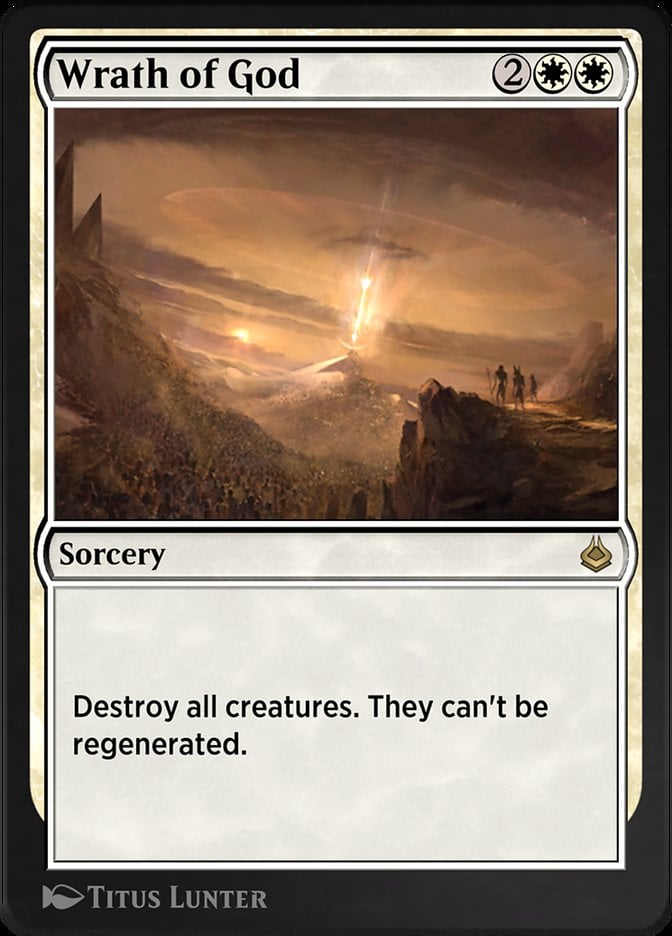
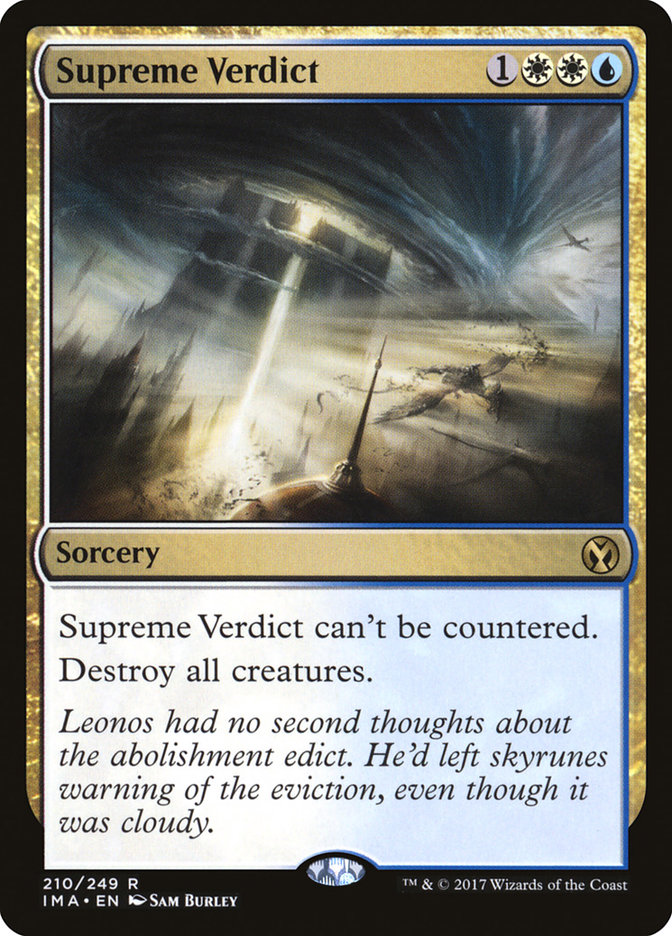
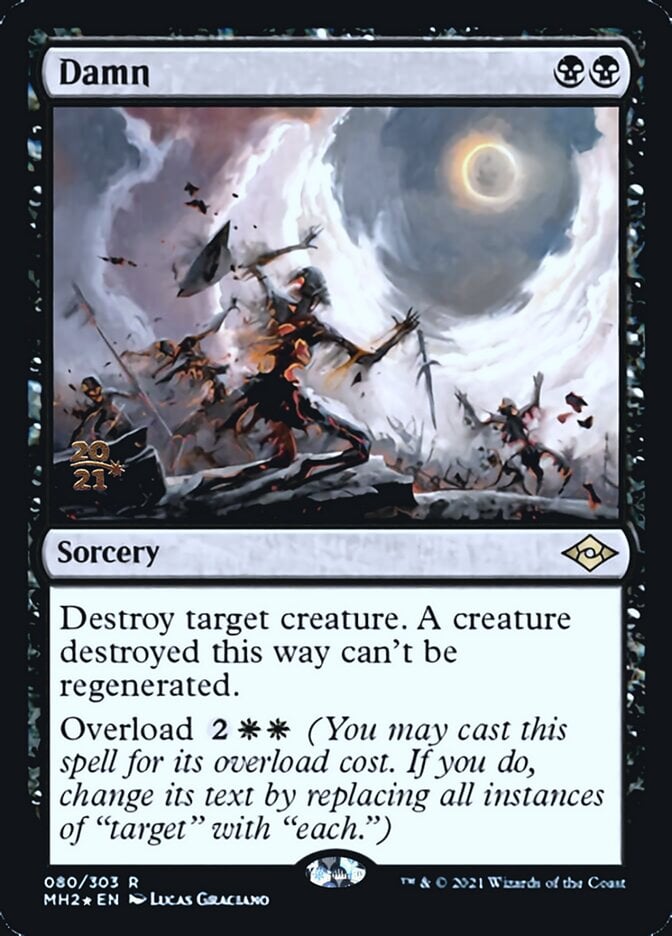
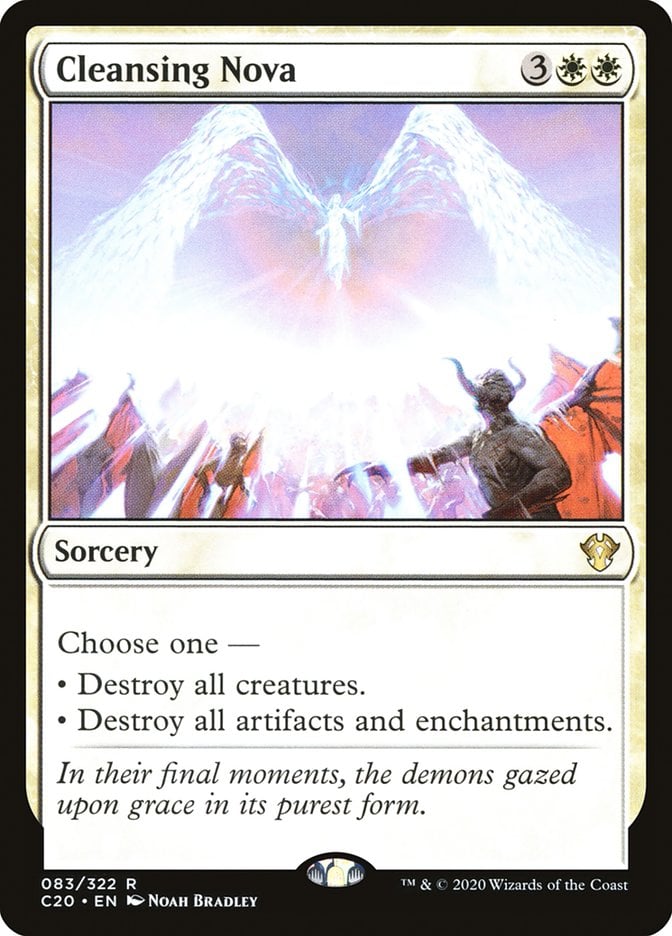
Destruction-based board wipes—those that say “destroy all X”—are by far the most common form of board wipe. They’re quite easy to leverage, as you can probably find a destruction-based board wipe that suits your needs. Do you need something expensive to trigger your synergies? Grab an Ondu Inversion. Are you looking to destroy only creatures? You can rarely go wrong with Wrath of God.
Probably the biggest downside to these cards is their commonality. Everybody plays board wipes in Commander, so everybody plays protection—which often gives their permanents indestructible, so Wrath of God can’t touch them. Despite the prevalence of cards like Heroic Intervention and Dawn's Truce, these are still super common and worth playing, especially without access to other types of removal.
Notable Options:

Exile-Based Board Wipes
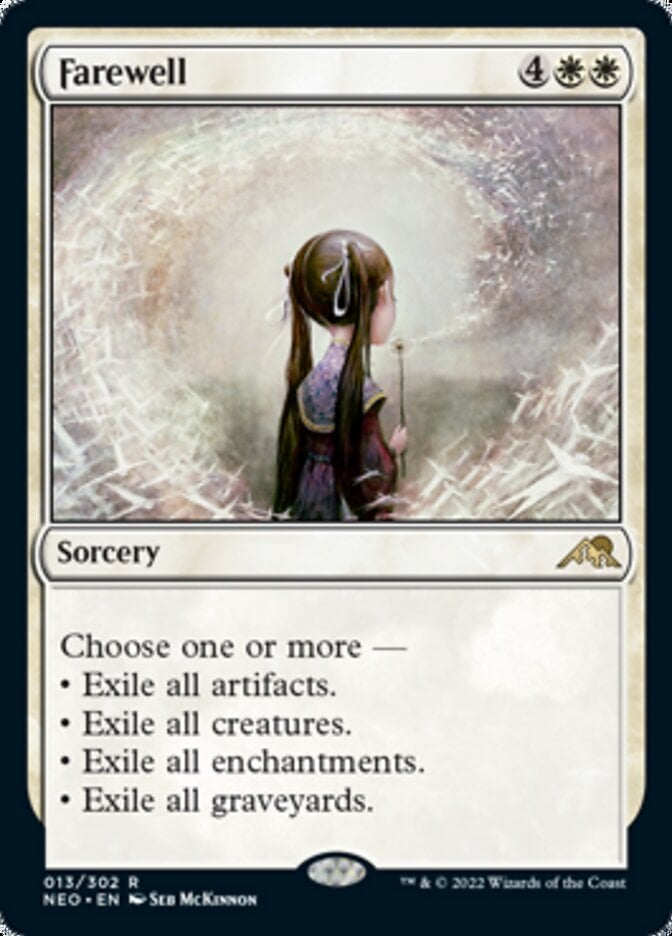
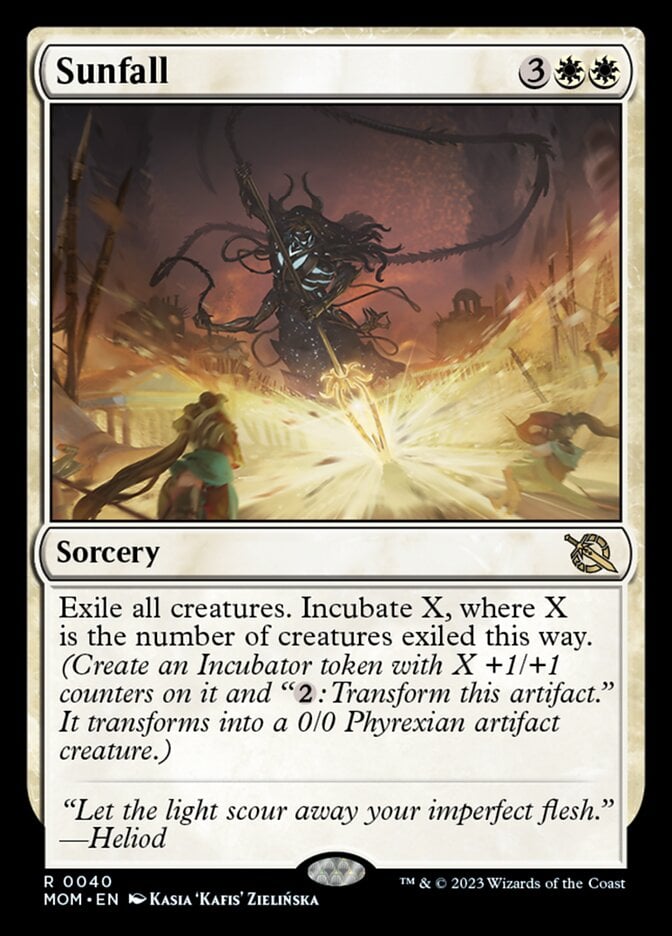
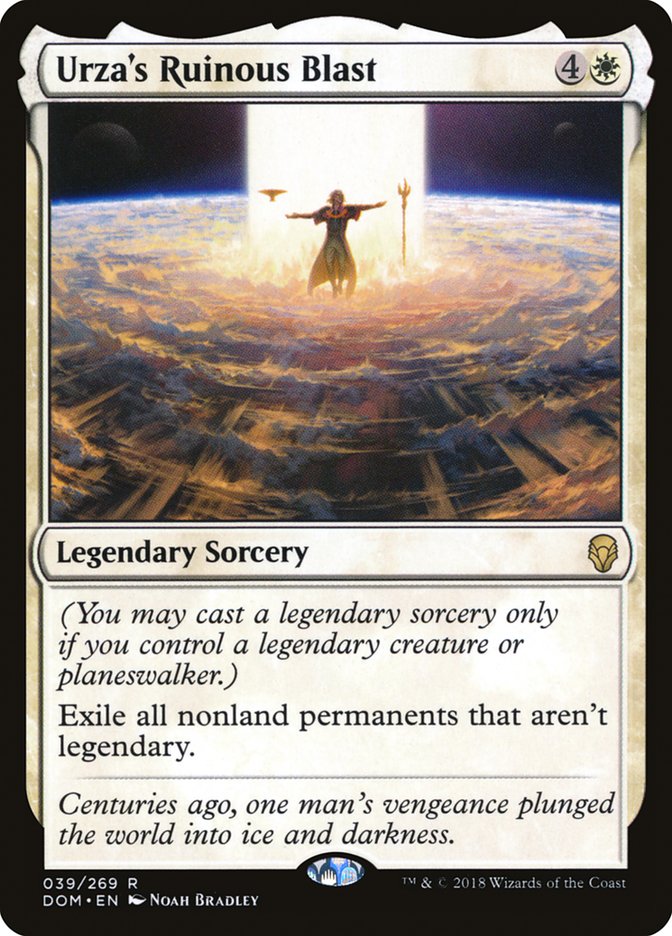
Exile-based board wipes have the most raw power because exiling is very hard to stop. Unless your opponents have a handful of protection spells like Teferi's Protection and Clever Concealment that phase out their creatures (and are largely restricted to white), they can’t stop Sunfall and Farewell and their ilk from depriving them of their board.
Additionally, cards that are exiled are gone in 99% of cases. Some cards like Riftsweeper can technically retrieve them, but exiled cards are much, much harder to recur than something that goes to the graveyard. If you just destroyed all permanents, you opponents could Regrowth them, Reanimate them, and so on. This combination of skirting standard protection spells and preventing graveyard recursion make these some of the strongest board wipes.
Notable Options:
Bounce-Based Board Wipes
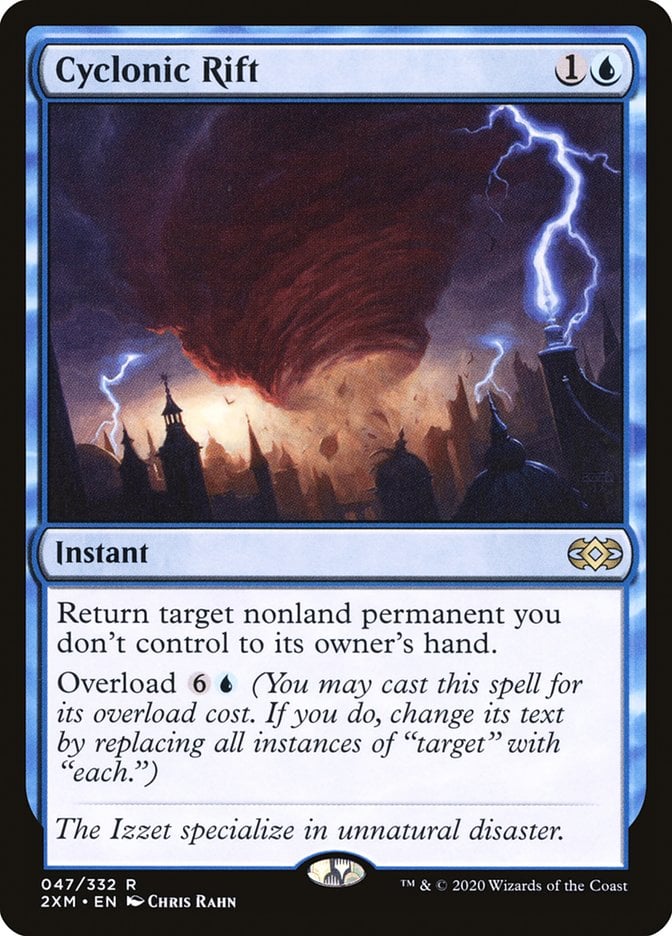
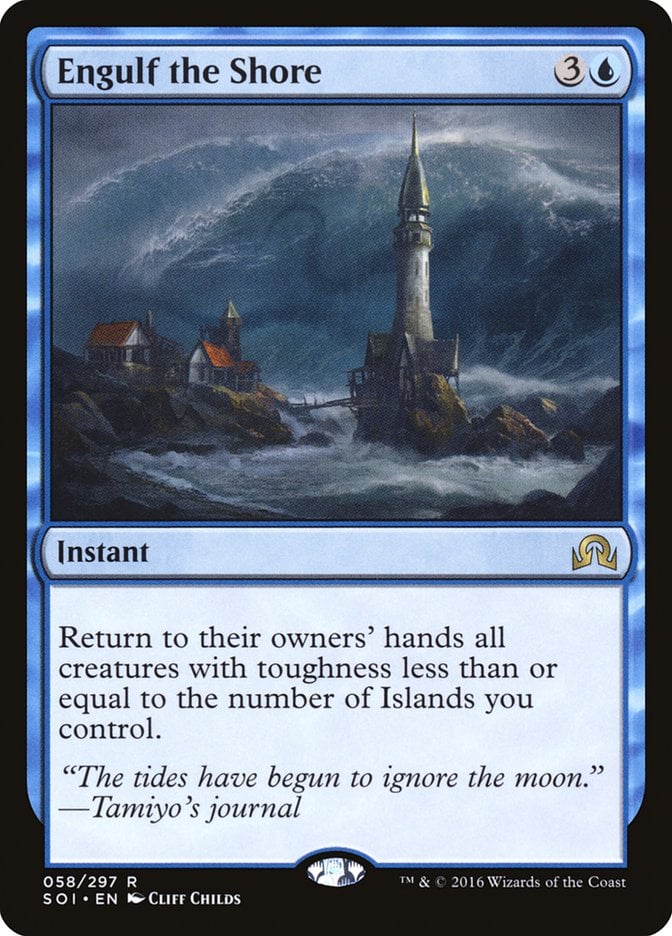
Bounce-based board wipes bounce everything, and they’re almost entirely relegated to blue. These can be very powerful—Cyclonic Rift is Commander’s best removal spell, after all—because it can be very tricky to bounce back from them. If I return eight permanents to your hand, I’ve probably bought myself two turns that you’ll spend rebuilding, unless we’re super late into the game and you have a ton of lands. In the best-case scenario (for me, at least), you’ll have so many cards in hand that you need to discard to hand size.
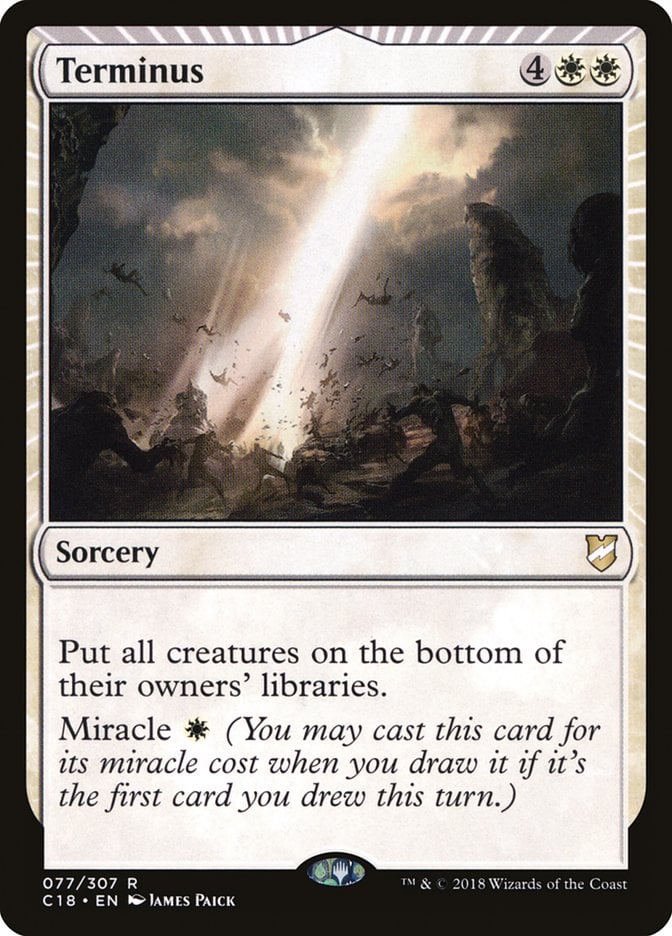
Mass bounce effects are also very powerful since they get around those really common indestructible protection spells, and bouncing a creature to hand doesn’t trigger death abilities since nothing dies. I also want to shout out Terminus here as a sort of honorary mass bounce effect—it technically tucks the creatures on the bottom of opposing libraries, which is better than returning them to hand, but it has many of the same benefits (getting around indestructible/protection, etc.).
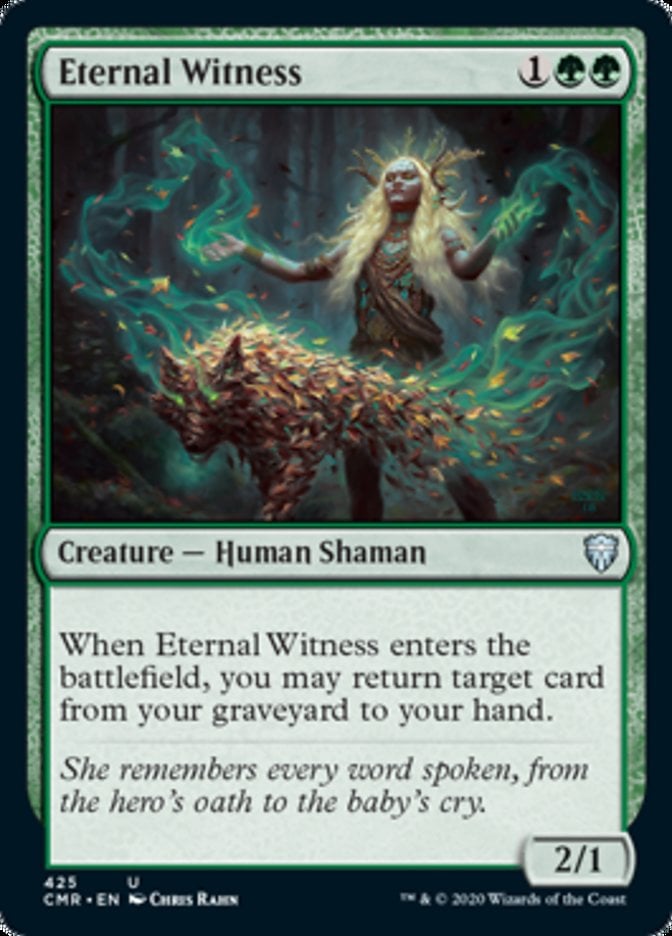
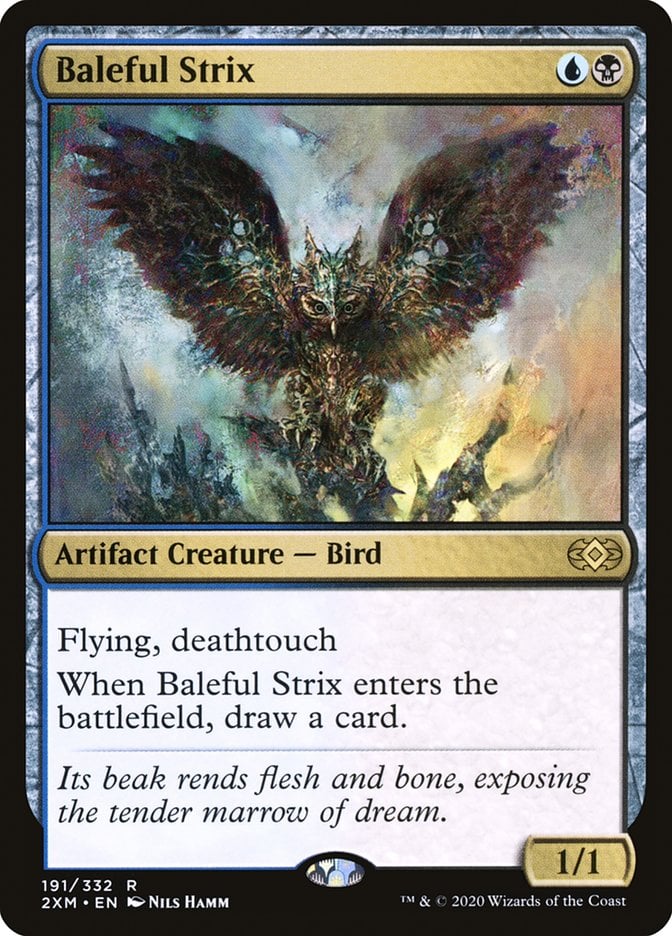
Of course, the downside to this class of sweeper is that the creatures or permanents go back to hand to cast later. That can be incredibly detrimental if the creatures have strong enters abilities like Eternal Witness and Baleful Strix. Your opponents also won’t have to worry about paying the commander tax if you bounced their commander. These mass bounce cards are tricky to leverage, just like any traditional bounce spell—you need a plan to break them, a way to exploit the tempo created, or you’ve pissed off the pod to no effect.
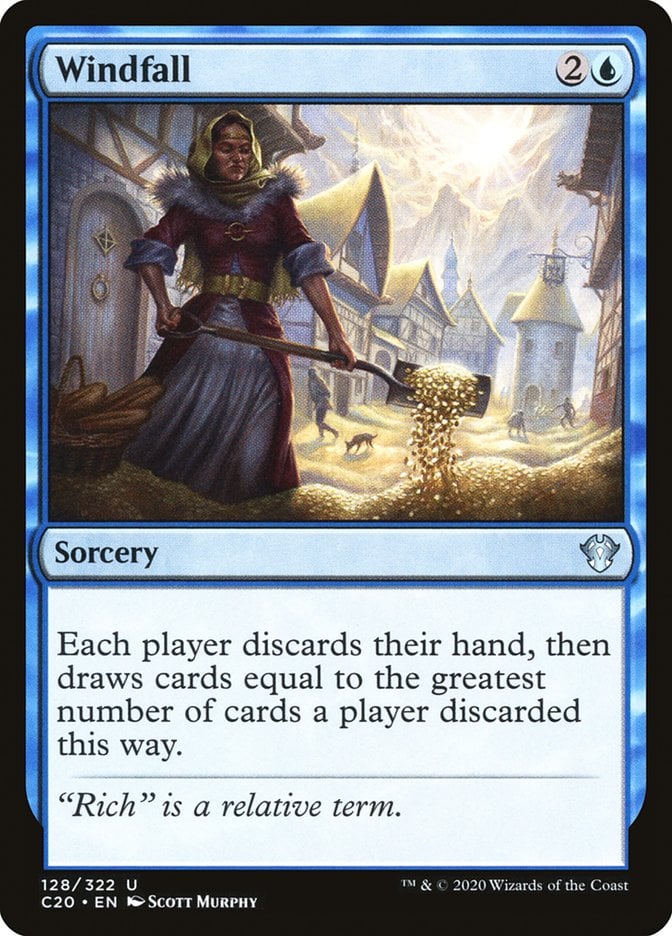
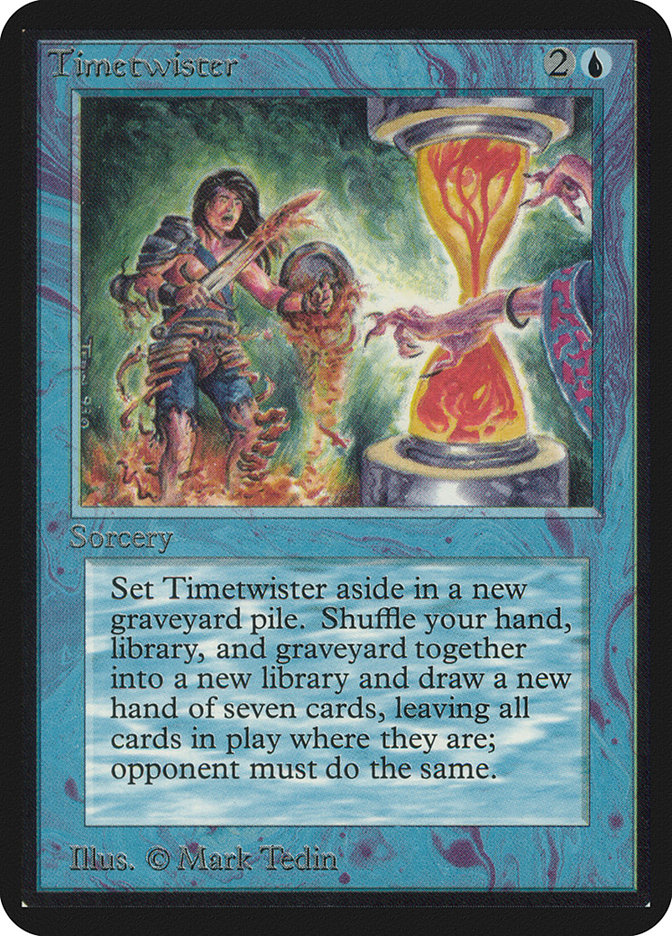
Wheels are one of the best ways to exploit mass bounce effects; if I bounce eight creatures to your hand, then Windfall or Timetwister your hand away, you don’t get to replay them.
Notable Options:
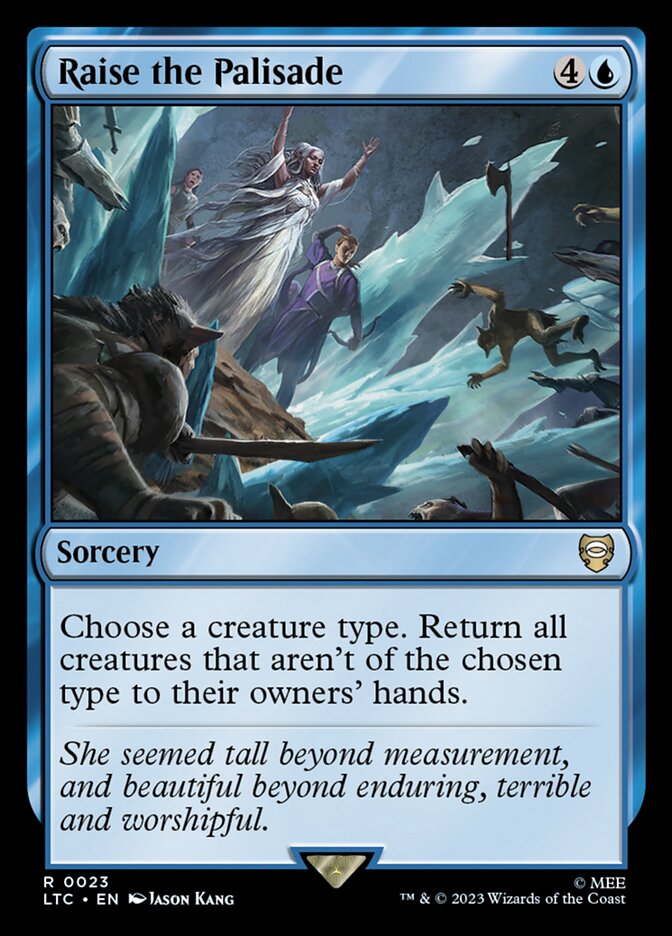
Damage-Based Board Wipes
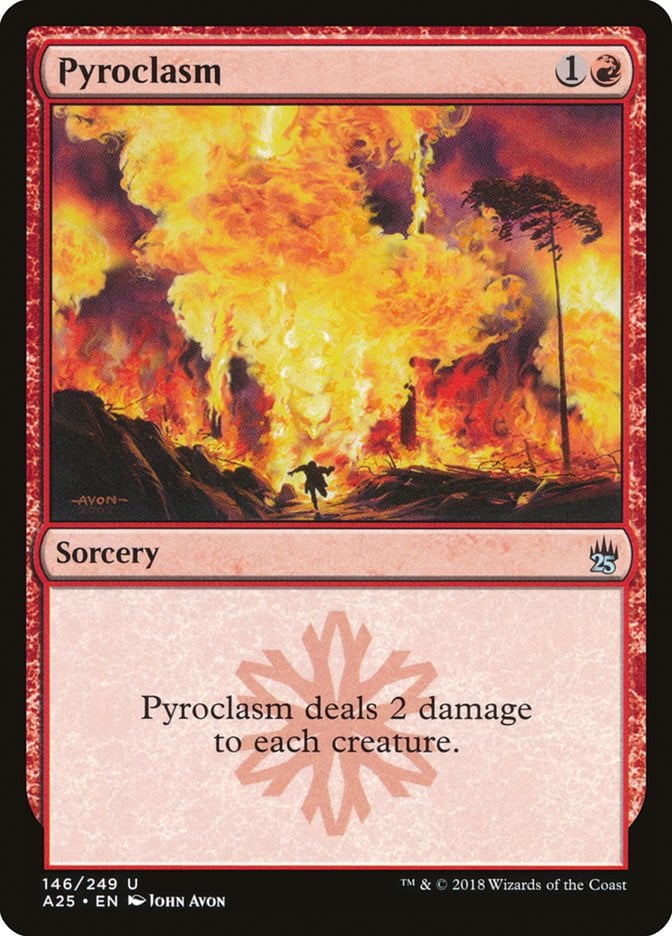
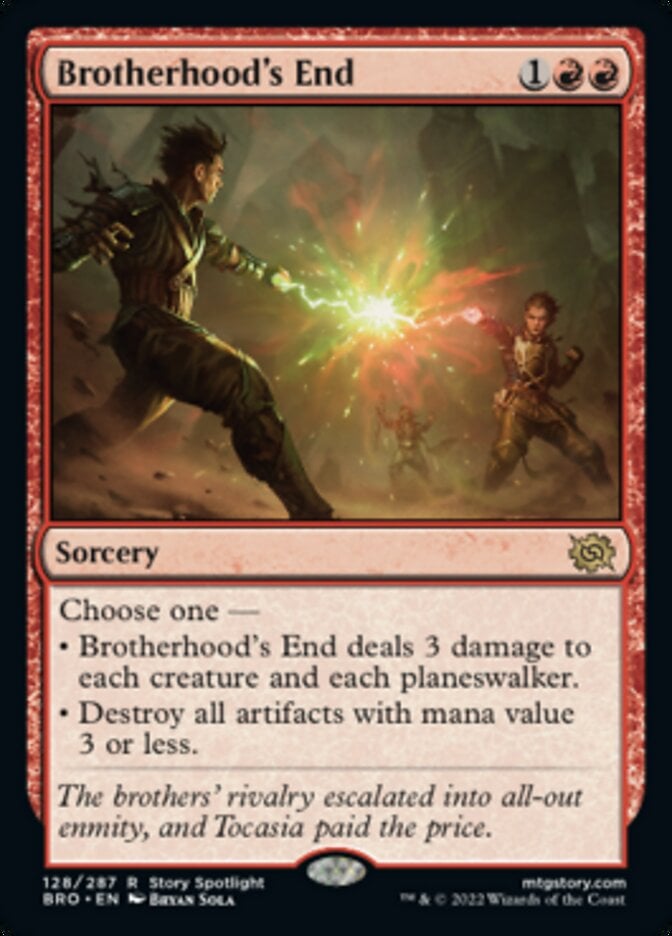
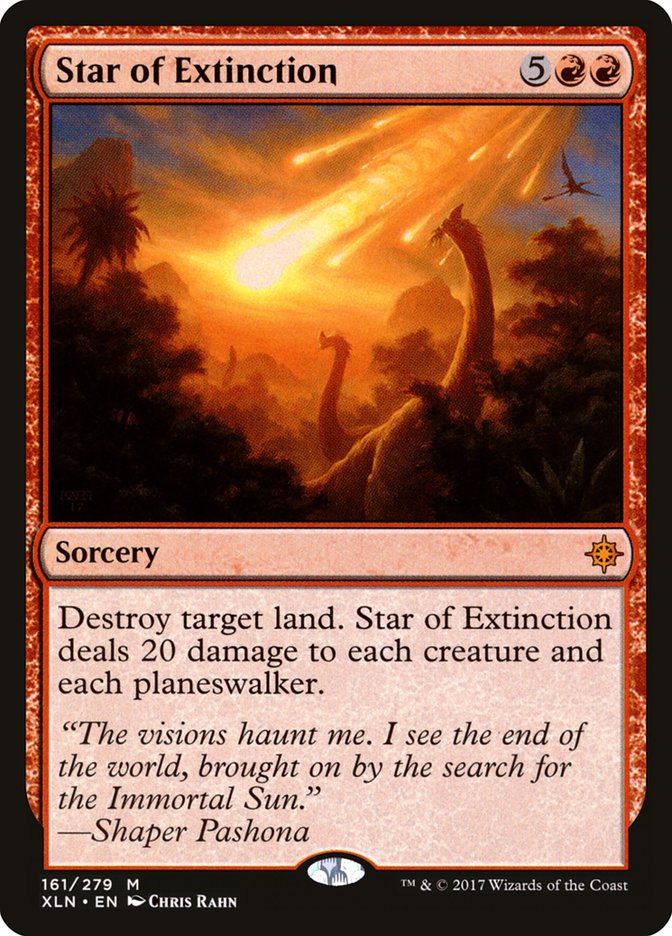
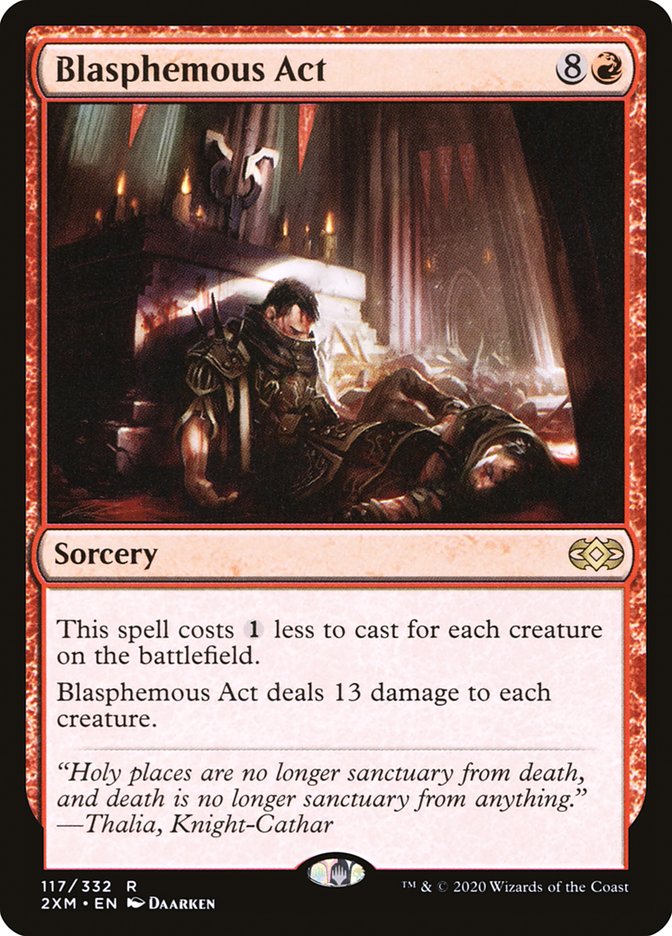
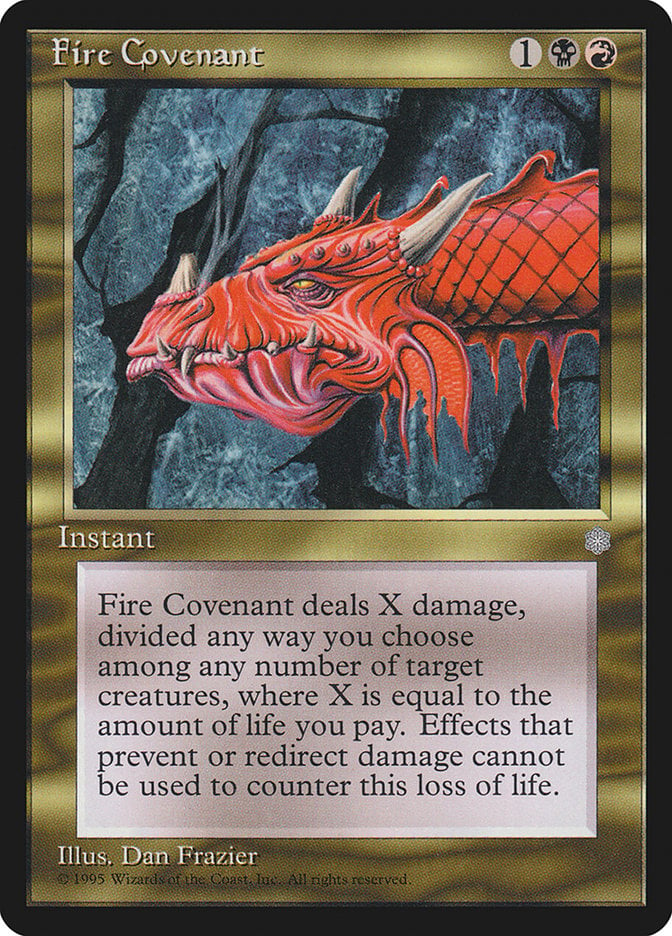
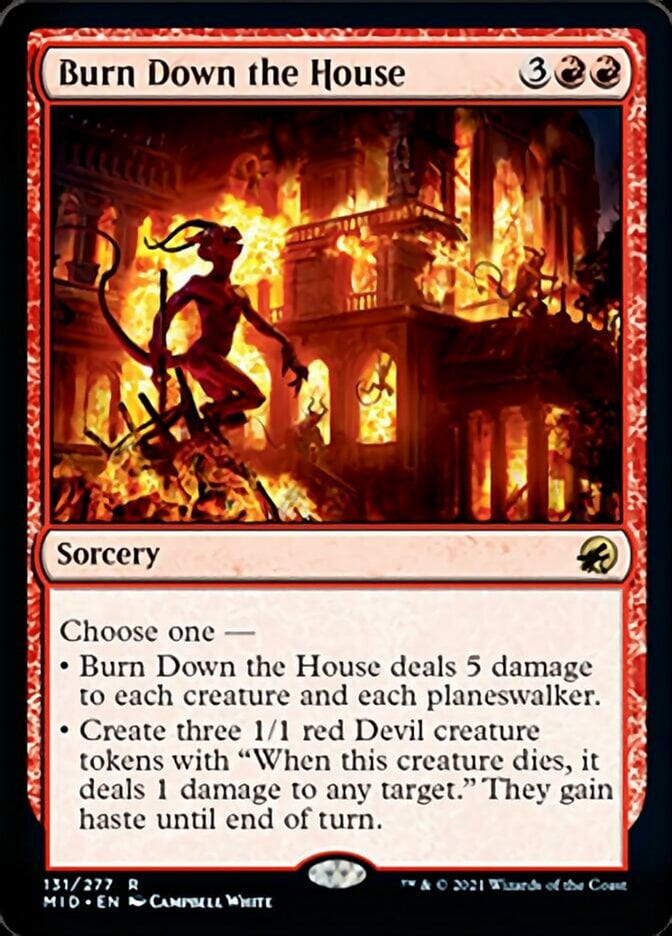
Damage-based board wipes deal damage to all creatures, are almost entirely restricted to red, and can be a bit fiddly. Some, like Pyroclasm and Brotherhood's End, deal small amounts of damage; others, like Star of Extinction and Blasphemous Act, deal so much damage that they’re effectively destruction-based board wipes. These are just as fallible to indestructible as their non-damage based cousins, so they have a similar weakness. But damage-based board wipes have another weakness: These are the only board wipes that are stopped by cards like Akroma's Will and Brave the Elements that give creatures protection from the appropriate color or card type.
These are best paired with decks that care about the damage. For example, cards like Brash Taunter, Jared Carthalion, True Heir, and Toralf, God of Fury make Star of Extinction a genuine win condition. These are also excellent with cards like Judith, Carnage Connoisseur or Firesong and Sunspeaker that give them lifelink or deathtouch. If your deck actively cares about these, or you don’t have other options, they can be pretty good. If it doesn’t, I prefer to stick to something more reliable. The only real exceptions for me are Blasphemous Act which, again, feels more like Wrath of God than anything else, and Fire Covenant, which notably gets around the issue of board wipes setting you behind.
Notable Options:
Sacrifice-Based Board Wipes
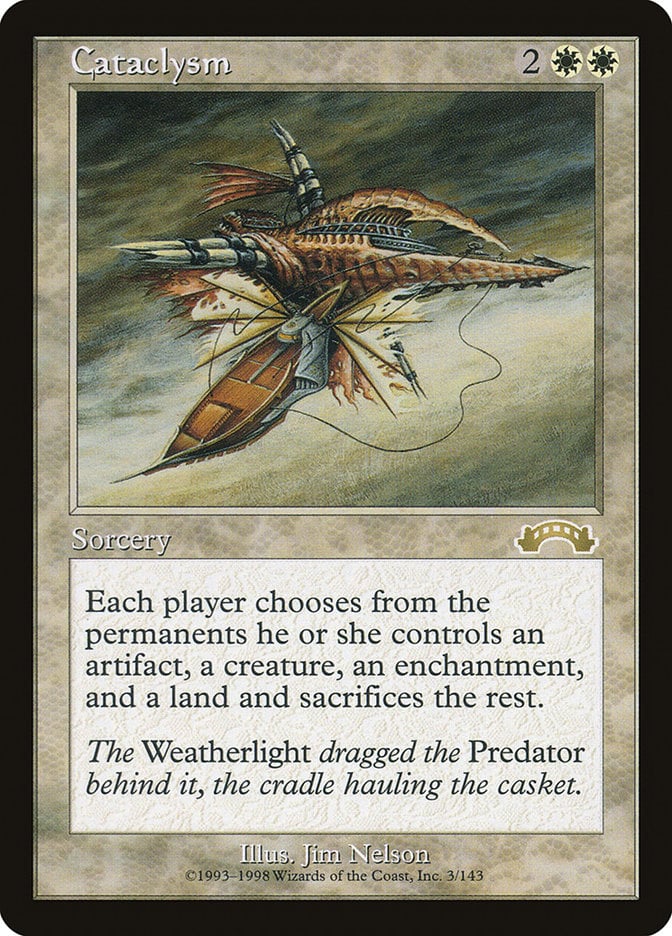
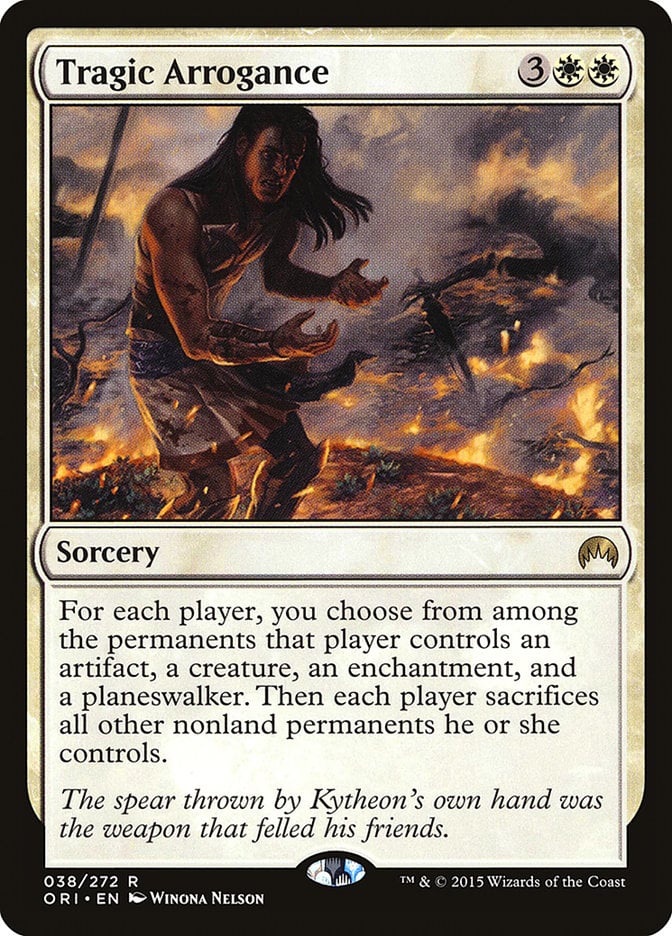
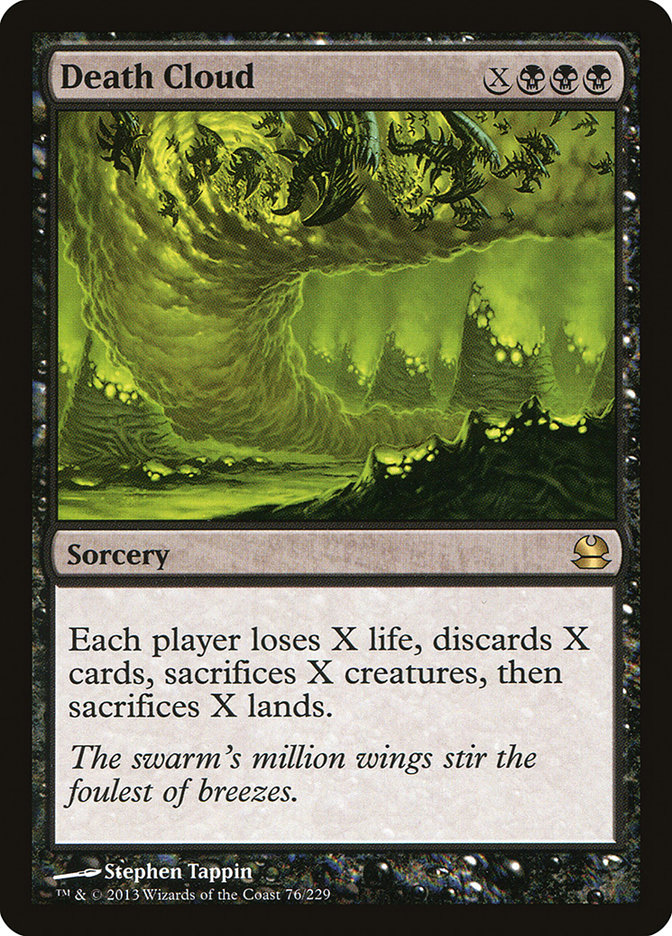

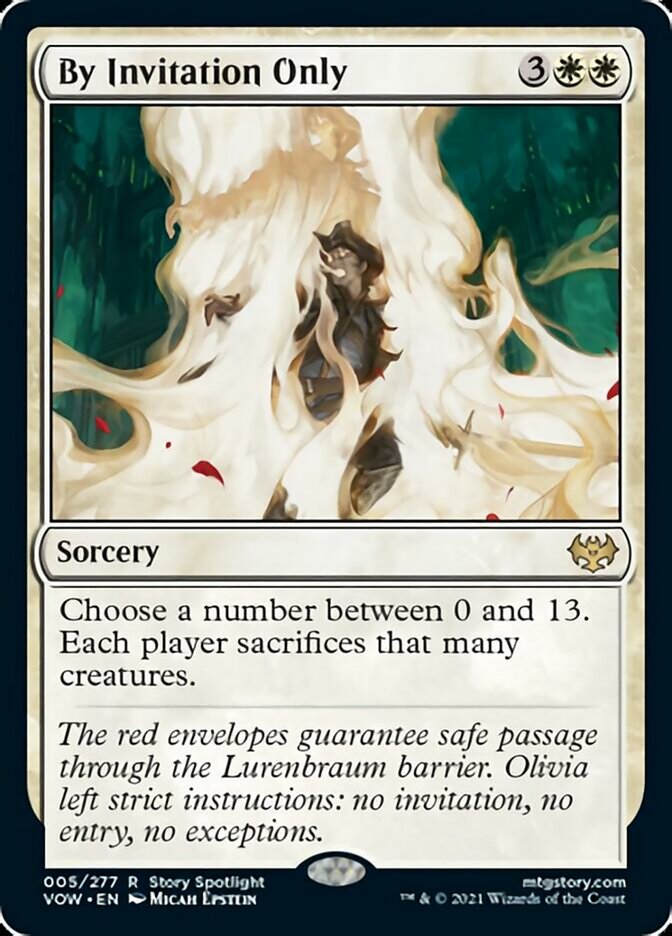
Sacrifice-based board wipes are largely regulated to black and white, and there aren’t many of them. White ones like Cataclysm and Tragic Arrogance are themed around equity, with the idea that everybody is reduced to the same number of permanents, while black’s are more general, like Death Cloud and Blasphemous Edict.
Mass edicts require more work to enable, especially white ones. They can be useful in battlecruiser decks that generally control the best permanents, but they’re useless in go-wide decks; of course, the reverse is also true, so they’re poor against battlecruiser strategies and back-breaking against token decks. Sacrificing gets around indestructible, something you should always consider. Another benefit to the white mass edicts specifically is that they often hit all permanent types. It feels great to cull an opponent’s mana rocks or auras alongside their creatures.
All in all, sacrifice-based board wipes feel very specific. Your average Commander deck might not want them, but they shine where appropriate.
Notable Options:
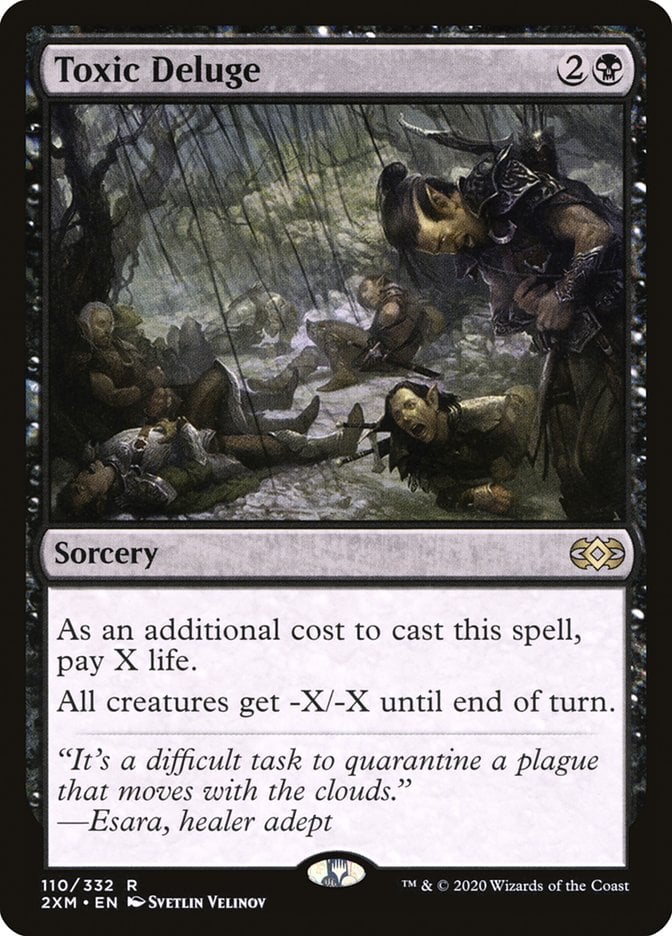
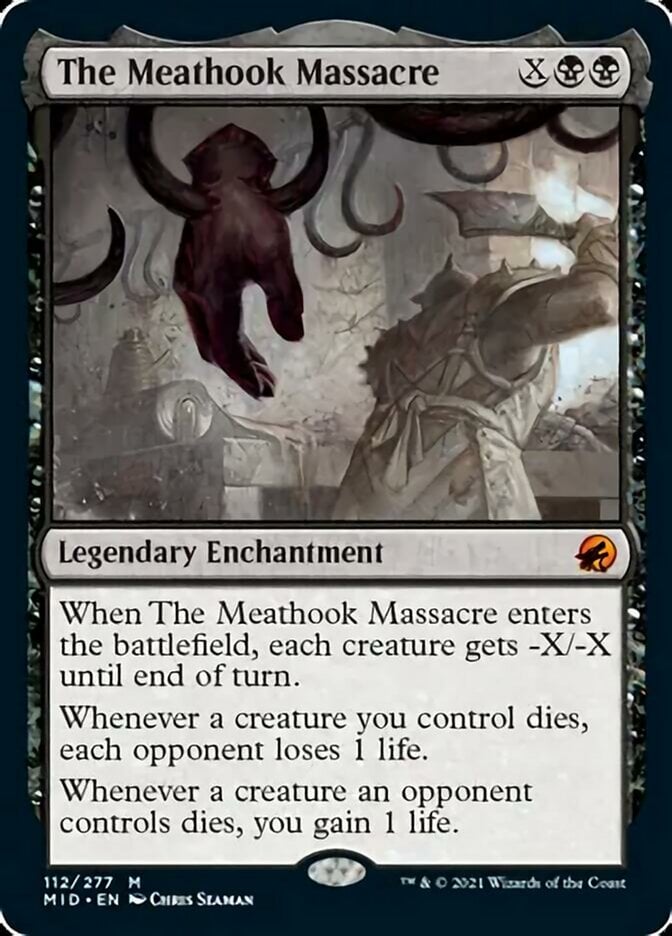
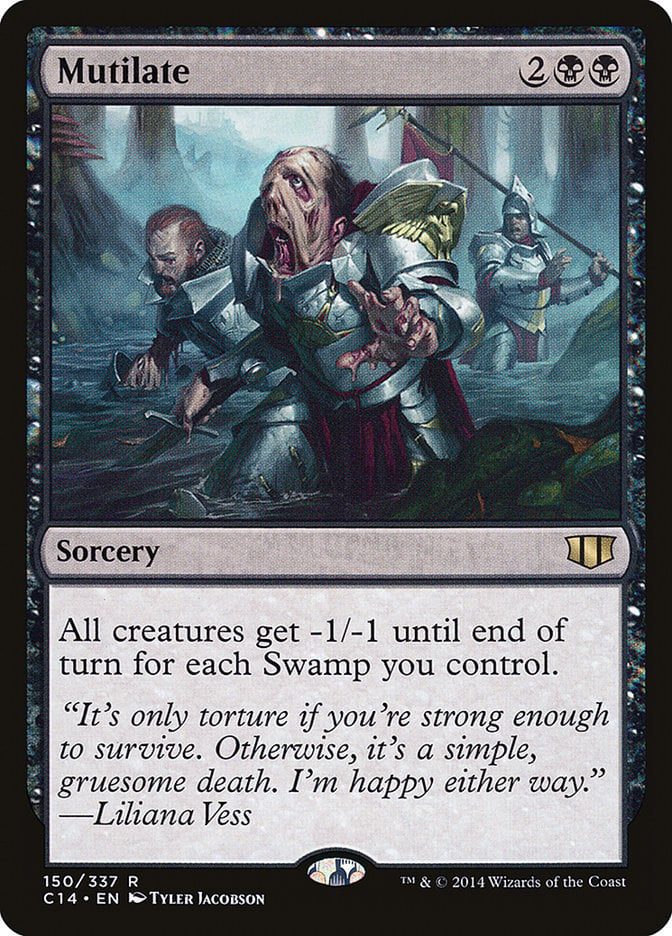
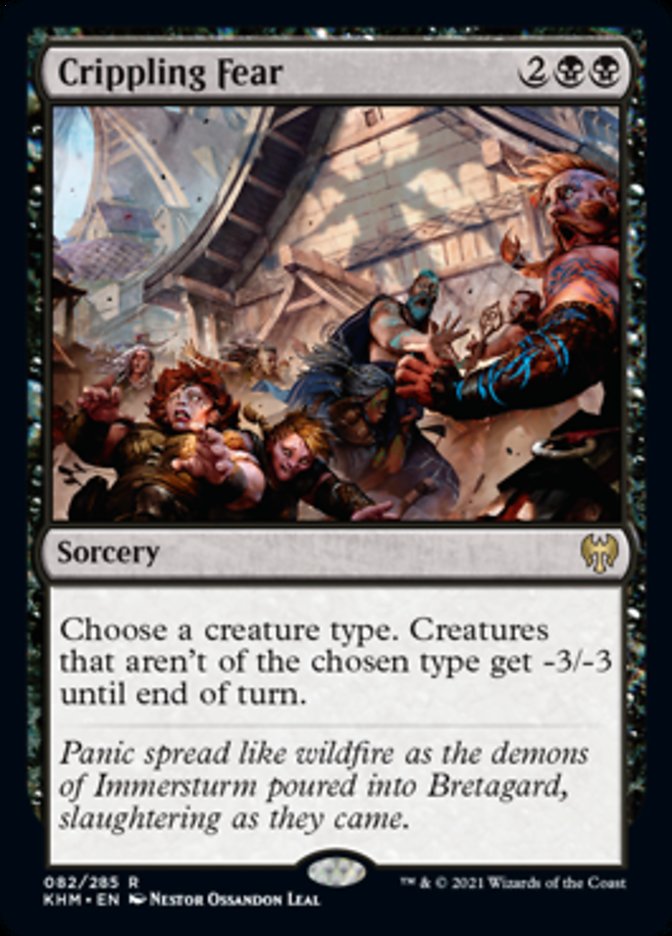
-X/-X Board Wipes
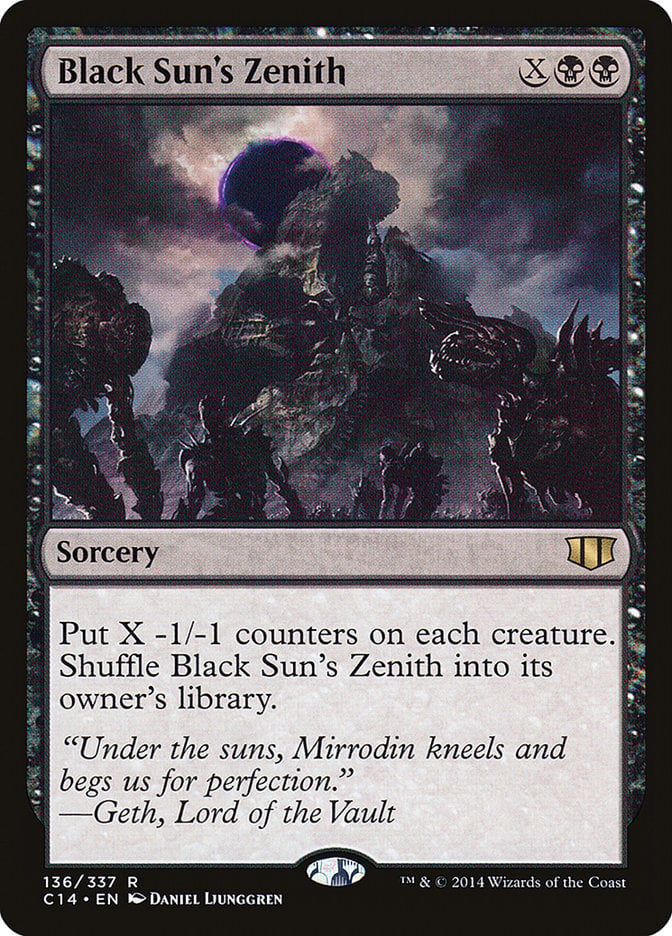
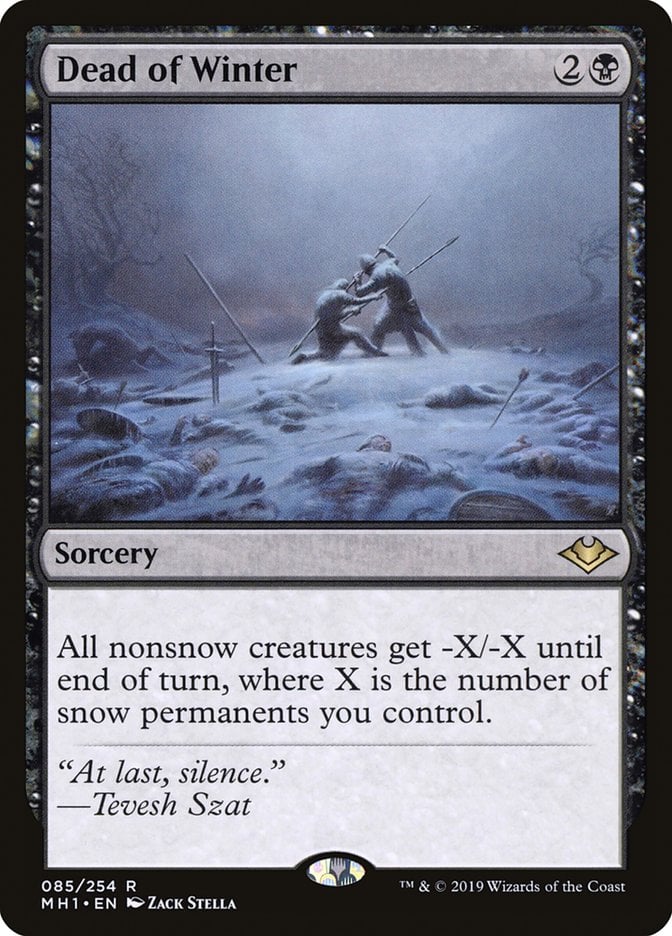
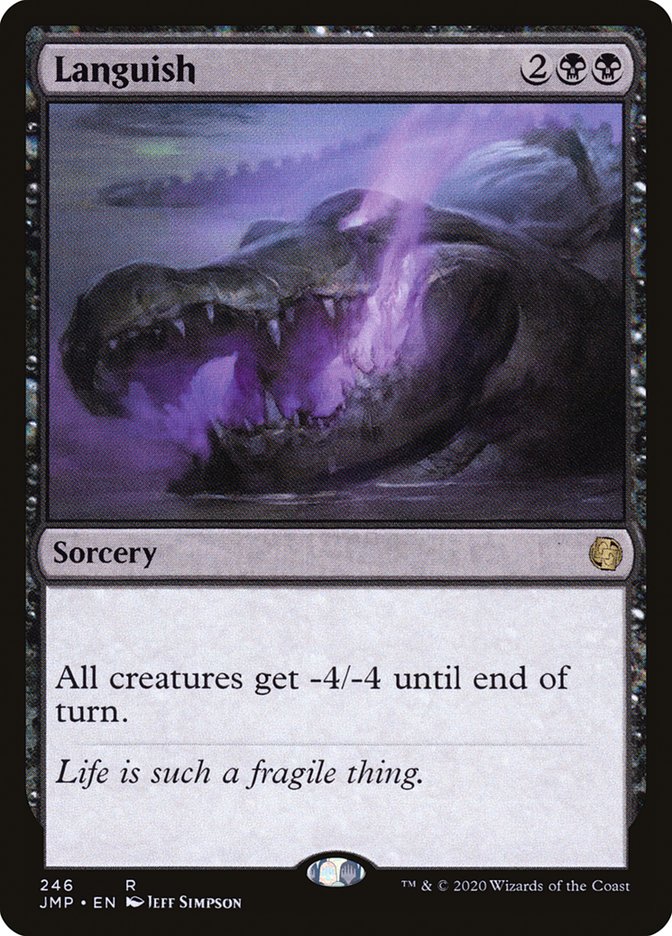
These sweepers reduce the power and toughness of creatures until end of turn (Black Sun's Zenith also counts here, though it works slightly differently). Some of these effects give -X/-X (Dead of Winter), or they have a flat value (Languish).
These are notable for their flexibility and their ability to get around indestructible. A creature whose toughness is reduced to 0 or below dies as a state-based action; once again, only phasing saves creatures from this.
These can be excellent options when you have large creatures. A deck that focuses on churning out large creatures can comfortably cast Languish to remove chump blockers, and Toxic Deluge in particular provides lots of flexibility over what lives and dies. These share the weakness with the damage-based board wipes that they might not have a high enough value to kill large creatures, but they’re more useful since they aren’t stalled out by indestructible or protection.
Notable Options:
Conditional Board Wipes
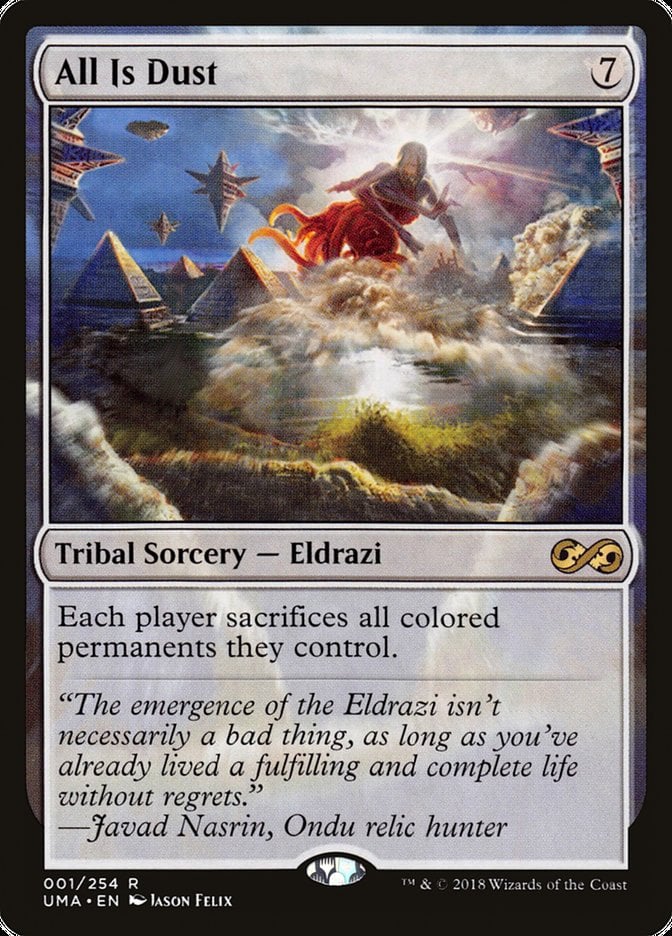
Conditional board wipes are the most specific class, because they only interact with permanents with qualifier X. Conditions might include a permanent’s mana value (Brotherhood's End), a creature’s power (Dusk/Dawn), or creature types (All Comes to Dust).
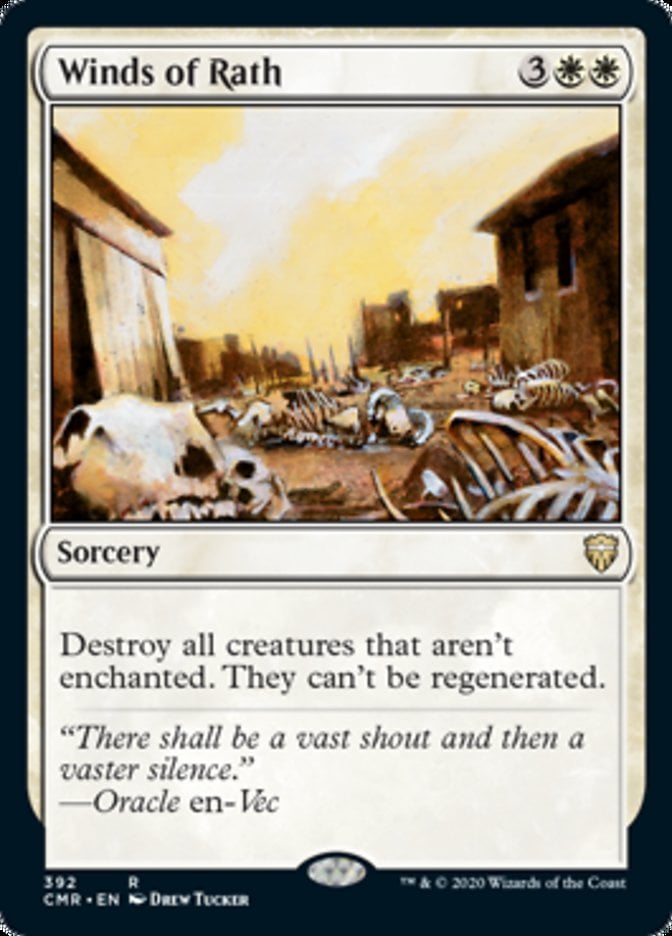
Conditional board wipes work best when you build your deck in such a way that you fail to meet the condition, effectively making them one-sided board wipes. That often looks like running The Battle of Bywater in a white weenie-style deck, Winds of Rath in your auras deck, and so on.
Notable Options:
Creature-Based Board Wipes
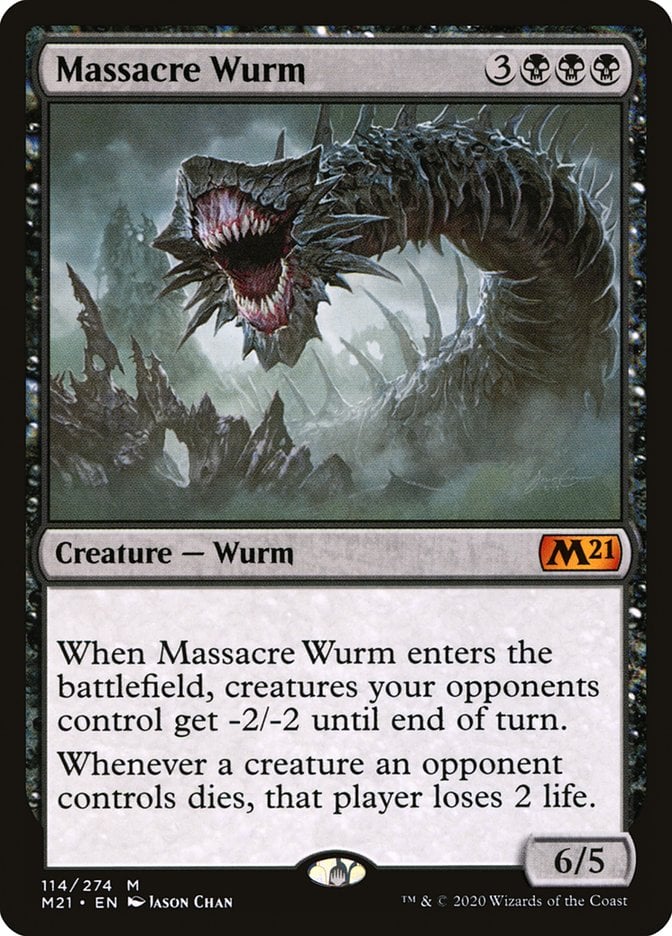
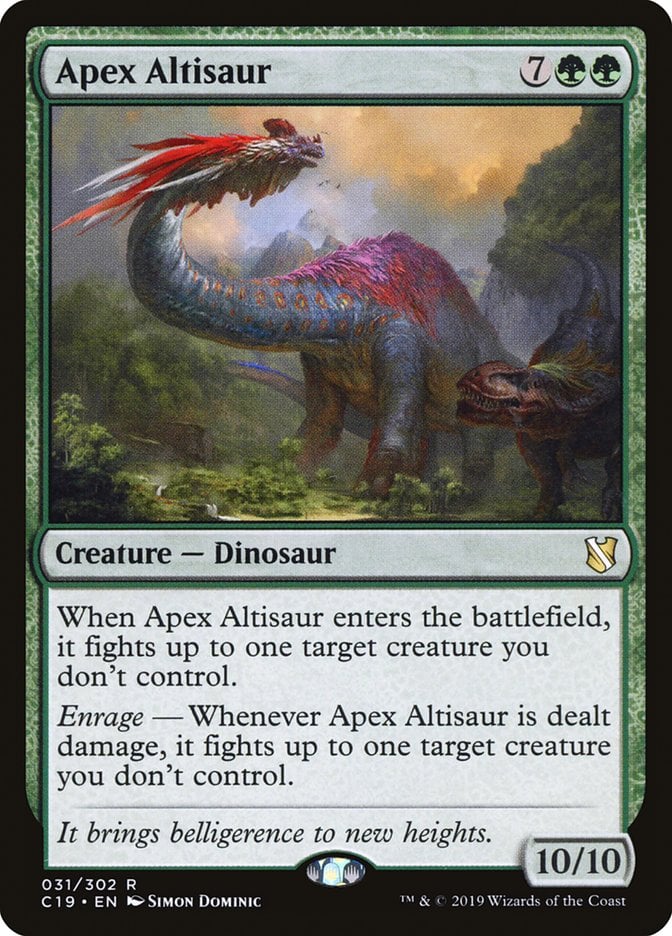
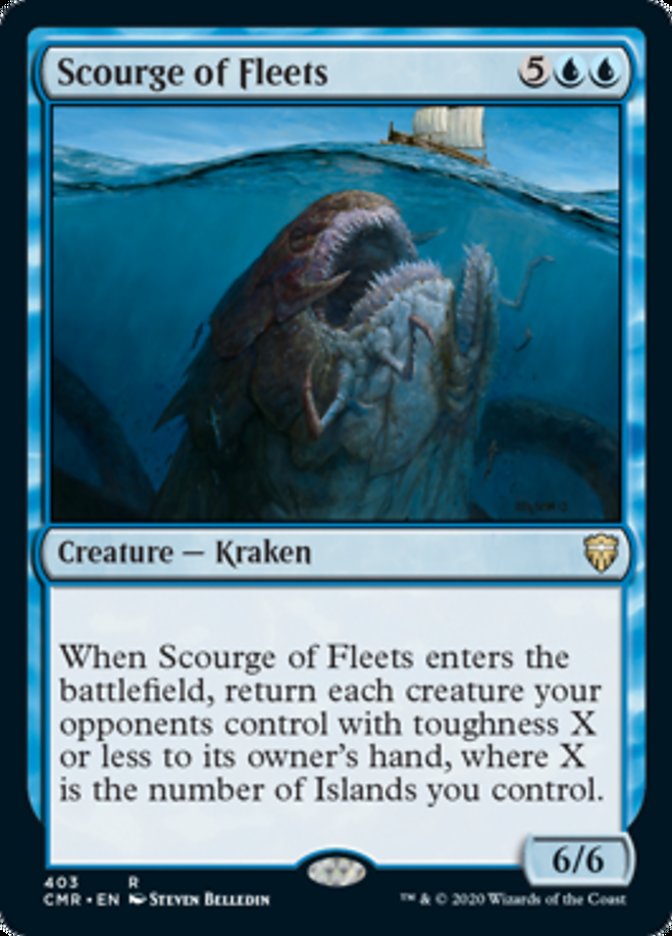
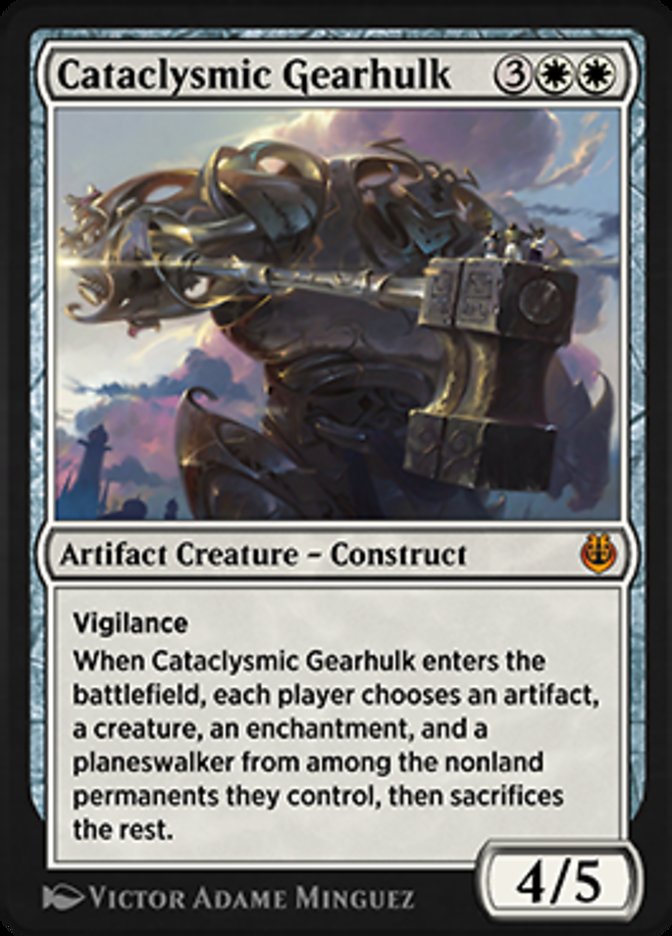
These are board wipes attached to creatures, and they can be any category of wipe. Think Massacre Wurm, Apex Altisaur (about as close as green gets to a board wipe, at least), Scourge of Fleets, or Cataclysmic Gearhulk. Baseline, these are almost always two-for-ones or better—Massacre Wurm is great top end because it kills a bunch of small things, provides lots of pressure with its death trigger, and so on. This often comes at high mana costs. Massacre Wurm needs to be a good creature, because -2/-2 for 6 mana is pretty mediocre as far as board wipes go.
What really makes these shine is how you can build around them. Pair Cataclysmic Gearhulk or Scourge of Fleets with a card like Teleportation Circle that blinks them each turn, and suddenly your opponents can’t get a board state. You can tutor them into play with cards like Finale of Devastation and Chord of Calling, or cheat them into play with the likes of Reanimate and Elvish Piper in a manner you fundamentally cannot with instants and sorceries.
Notable Options:
One-Sided (Asymmetrical)
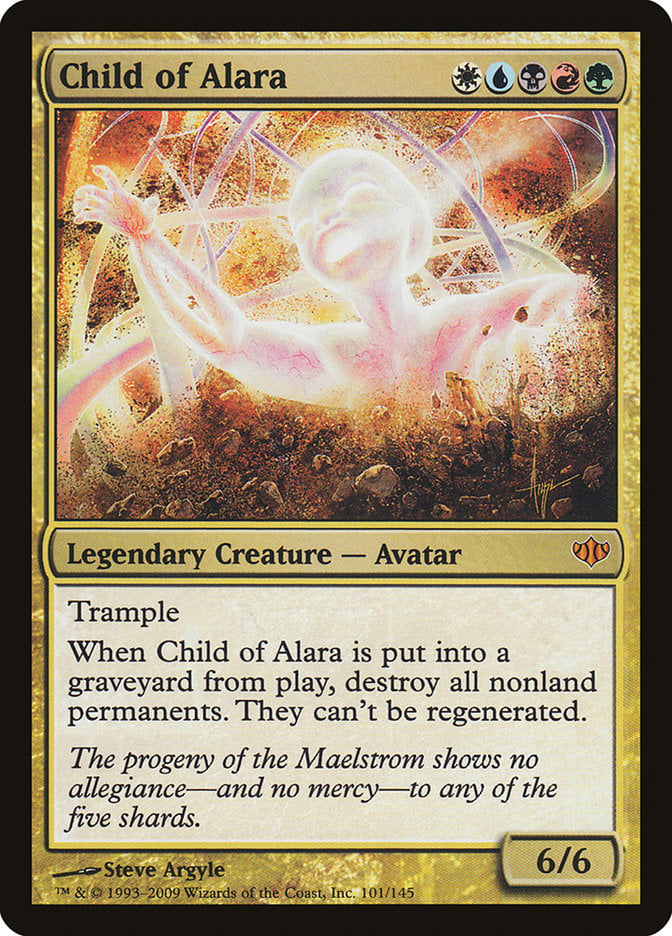
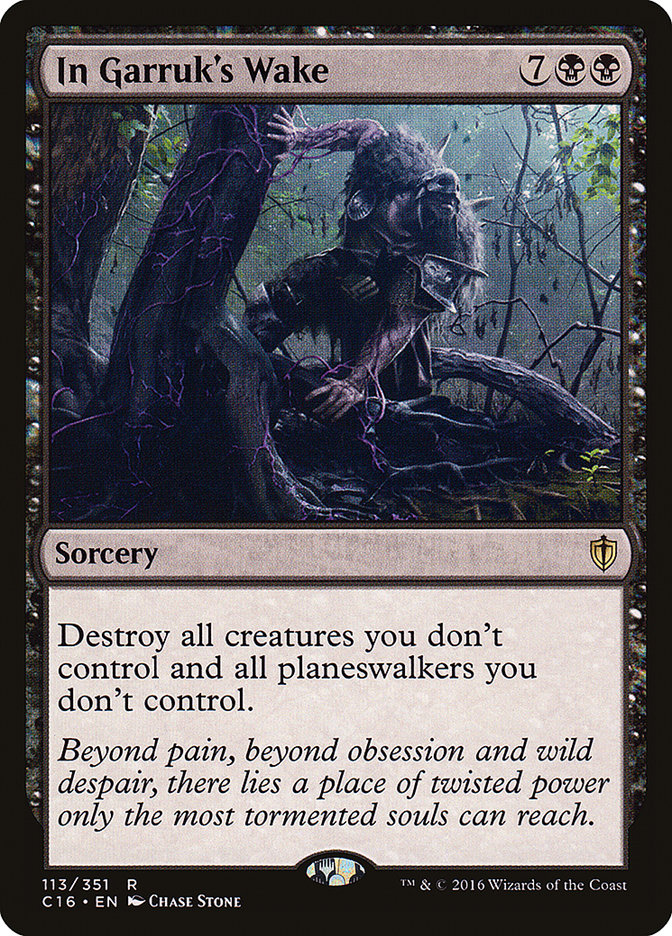
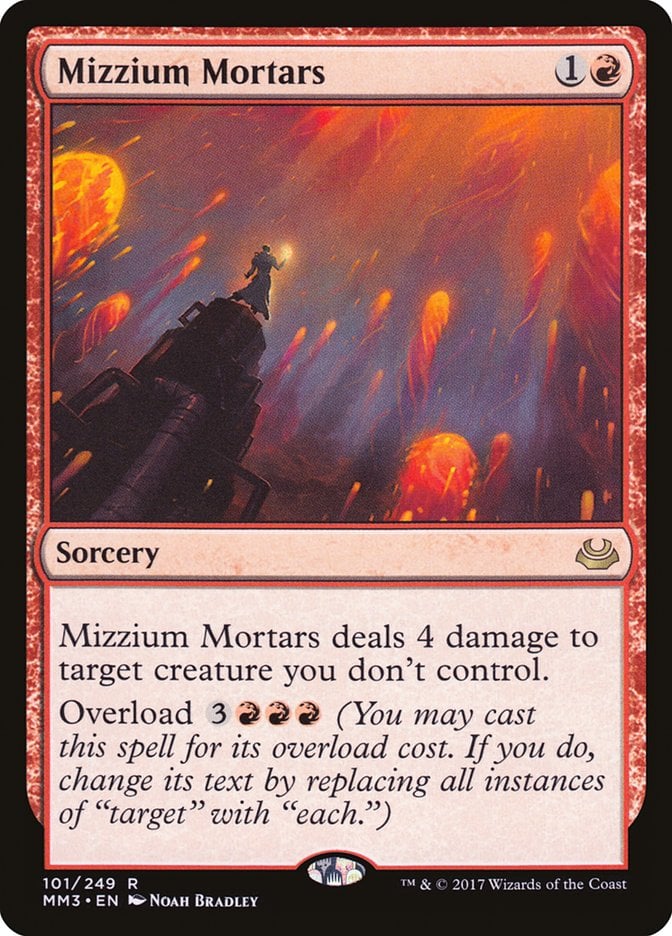
One-Sided board wipes generally refer to those that don’t remove your permanents, just opposing ones; there are more literal one-sided board wipes like River's Rebuke that obliterate one player.
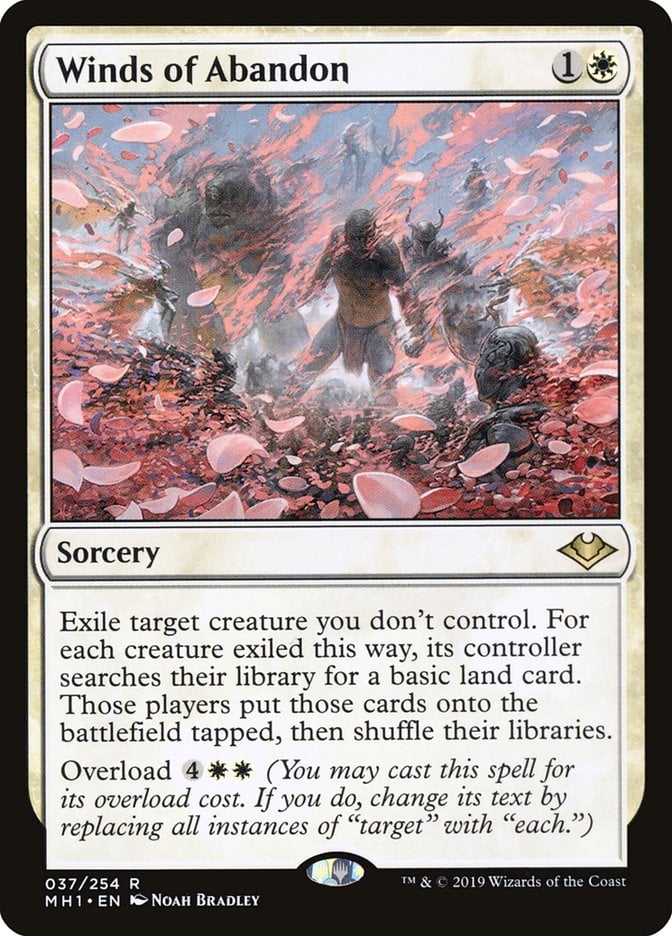
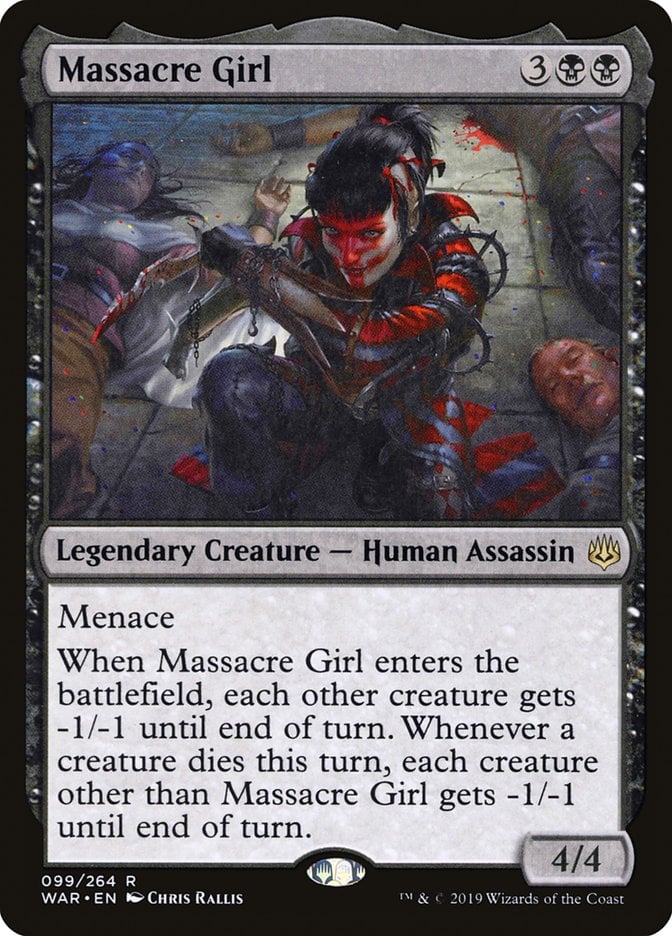
These are rare, and they’re often more expensive than other board wipes because they’re devastating. If your opponent casts Wrath of God, they set themselves behind. But if you’re on the receiving end of Plague Wind, Winds of Abandon, or Ruinous Ultimatum, you’re probably dead to whatever board state your opponents possess.
If you can add these to your decks, you should. Unless you’re a hard control or combo deck that doesn’t care about its board state, these are worth the price. Many decks lean into the conditional board wipes in an attempt to replicate the power of a one-sided board wipe.
Notable Options:
Instant-Speed Board Wipes
The vast majority of board wipes occur at sorcery speed, because these effects are very powerful and the tempo loss balances that. If you spend your turn casting Wrath of God, your opponents have a chance to play to the board before you do. They get the first chance to use their mana to rebuild.
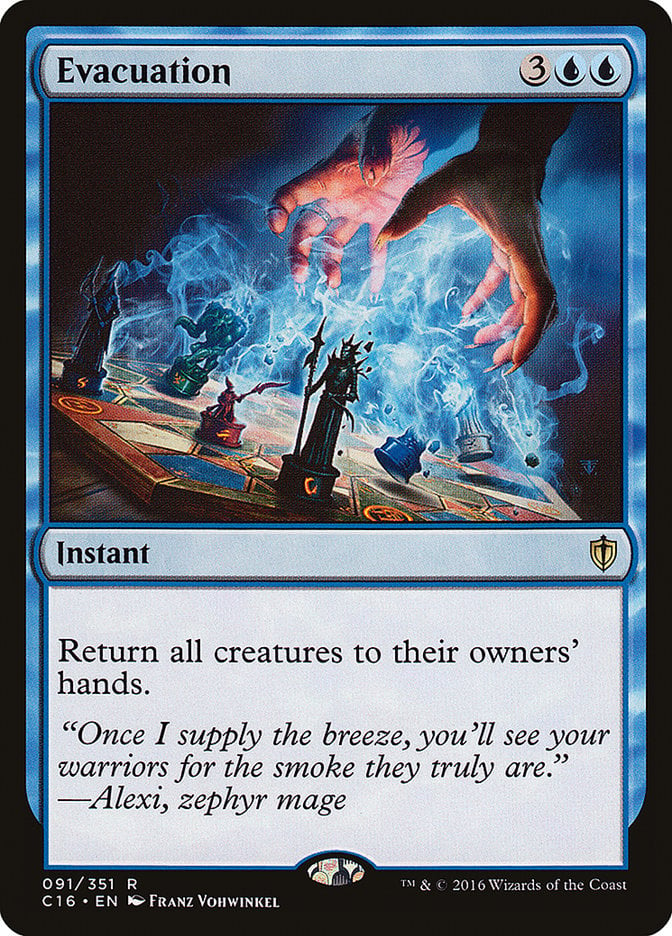
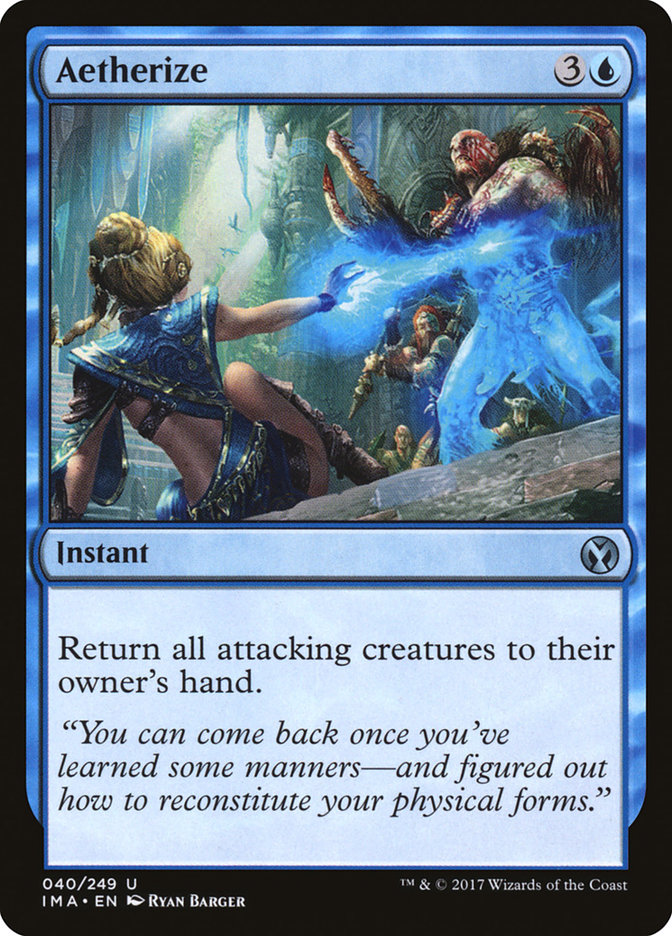
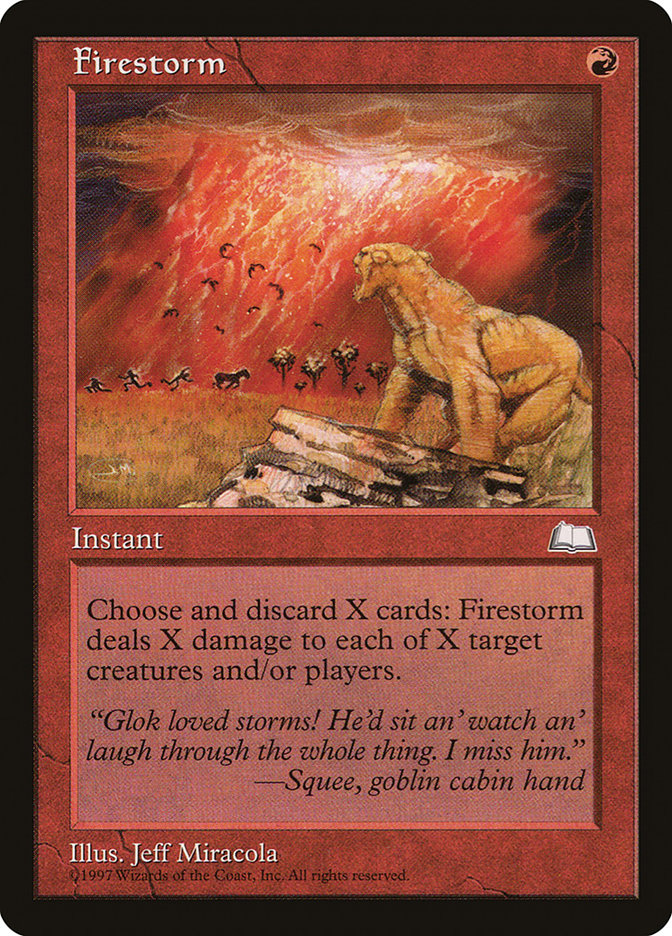
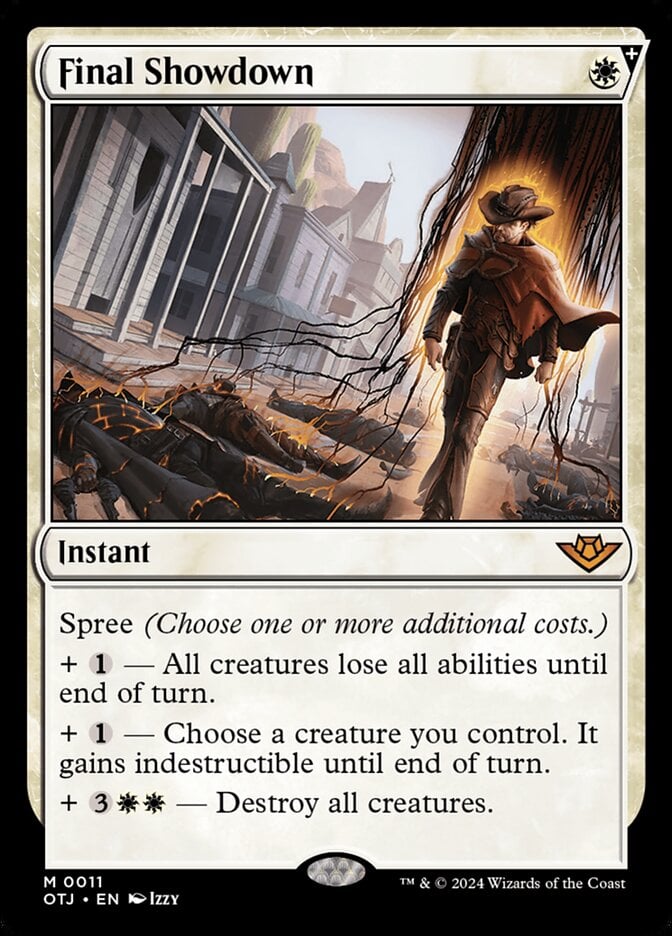
Instant-speed board wipes circumvent this. You can drop an Evacuation or Cyclonic Rift or Final Showdown on an opposing end step, then rebuild straight away. Kind of like creature board wipes, this incurs a higher cost and often comes with additional restrictions, like how Settle the Wreckage only deals with attacking creatures. That said, these are quite useful due to their flexibility, and you get bonus points for the unexpectedness—some players never consider the possibility of an instant-speed board wipe because they show up so infrequently.
Notable Options:
Modal Board Wipes
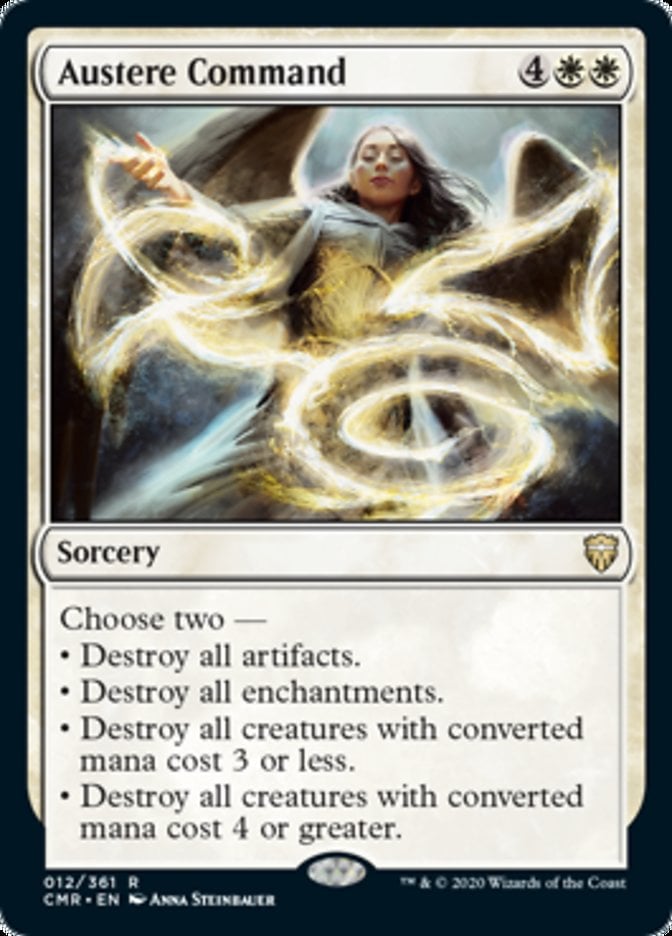
Modal board wipes give you options. That might be options on what they destroy, as in Farewell and Austere Command, or options on their effect—for example, Final Showdown can be a protection spell or a board wipe, and Winds of Abandon flexes between a board wipe and spot removal.
These cards always deserve consideration due to their flexibility, which is king in Commander. Flexibility often comes with restrictions like a high mana cost or options that are slightly over-costed. You might just want something cheaper than Austere Command, or you might not care about using Final Showdown as a protection spell when you could wipe the board for much less mana. Not every deck cares for that, but they should all consider it.
Notable Options:


What Can Affect How Many Board Wipes You Need?

Evacuation | Illustration by Franz Vohwinkel
Your strategy and the strategies you play against are the primary factors here. These factors impact not just the number of board wipes you should play, but the type of board wipe. As a rule of thumb, the more aggressive your deck is or the more it cares about playing to the board, the fewer board wipes you should run, while combo or control decks that don’t care much about amassing creatures get away with running more.
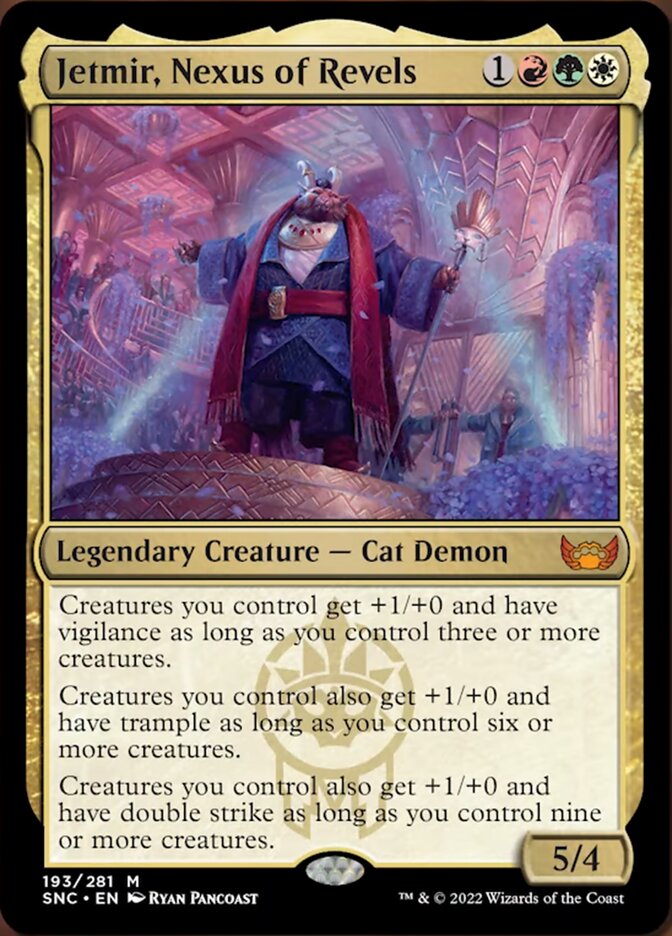
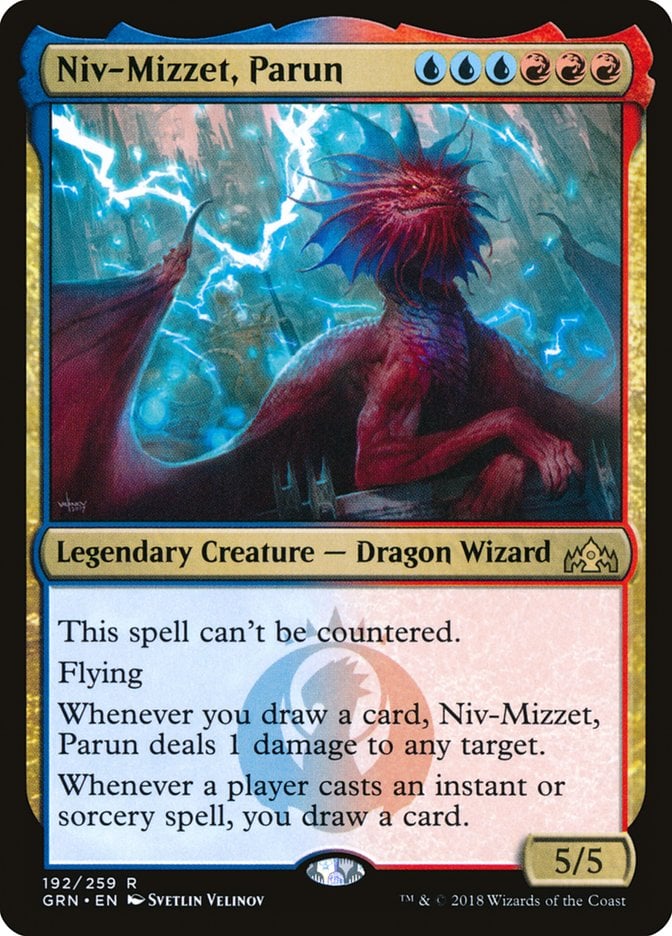
Your Jetmir, Nexus of Revels token deck almost certainly doesn’t want to cast Wrath of God and reset your board to zero along with your opponents’, while the Niv-Mizzet, Parun deck that bides its time until it establishes an infinite loop doesn’t mind letting lose a Blasphemous Act to make the game last for another two or three turns, especially because it probably has a low creature count.
An aggressive deck like Jetmir wants some board wipes—they’re the best way to interact in Commander. But it’s more content to run a Winds of Abandon and an Hour of Reckoning and leave it at that than the Niv-Mizzet deck, which could conceivably run 3-4 more board wipes alongside Blasphemous Act to ensure it has the time to do what it needs.
You can also factor in opposing strategies when you choose board wipes, though the value of doing so varies based on the regularity of your playgroup. Baseline, the lower power or Bracket your deck is, the more likely you are to play against creature-based decks that build to the board, and the more valuable board wipes are. At the higher brackets and power levels, where decks race to infinite combos and other instant kills off the back of fast mana and insane cards like Rhystic Study, interacting on the stack becomes more valuable than on the board (though, of course, some decks seek to exploit this, like Winota, Joiner of Forces).
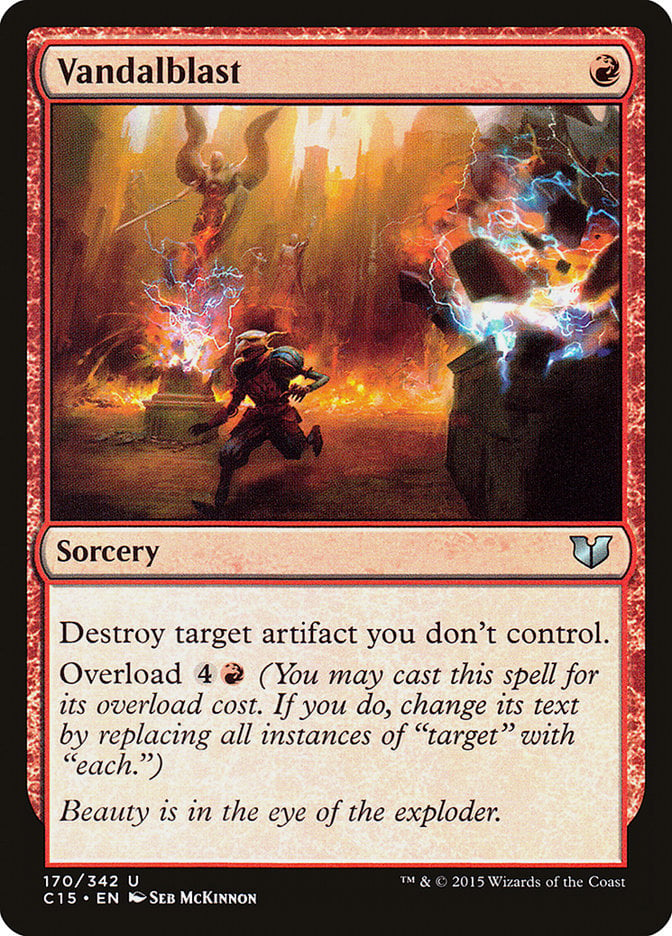
You can get even more specific if you have a regular playgroup with a defined meta. Do none of your friends play artifacts? Maybe avoid that Vandalblast. Are you the only white player? Then your friends might not have access to phasing-based protection, and exiled-based wraths like Sunfall become better. Of course, you don’t need to tune your decks against your pod and your playgroup might not be Spike-y enough to enjoy metagaming like this, but it teaches an important concept: Your interaction package must account for both what your deck wants to do, and how your opponents are trying to win.
Synergistic Board Wipes
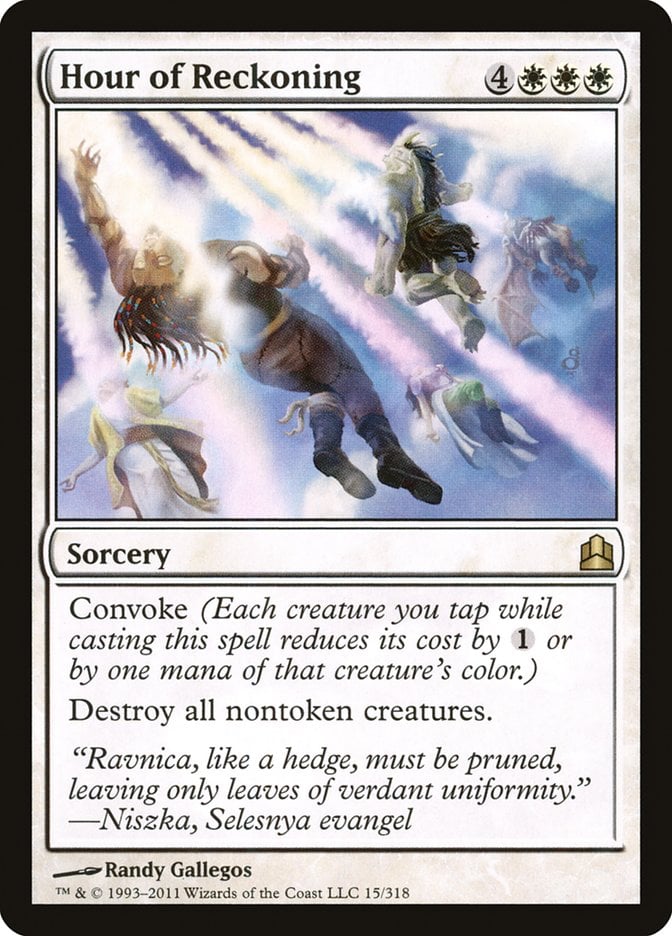
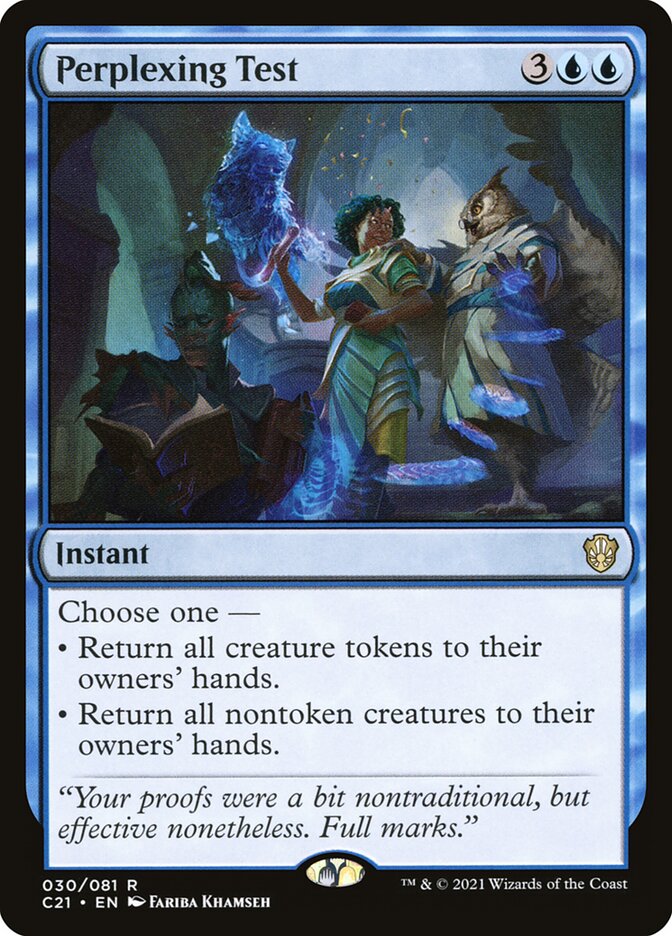
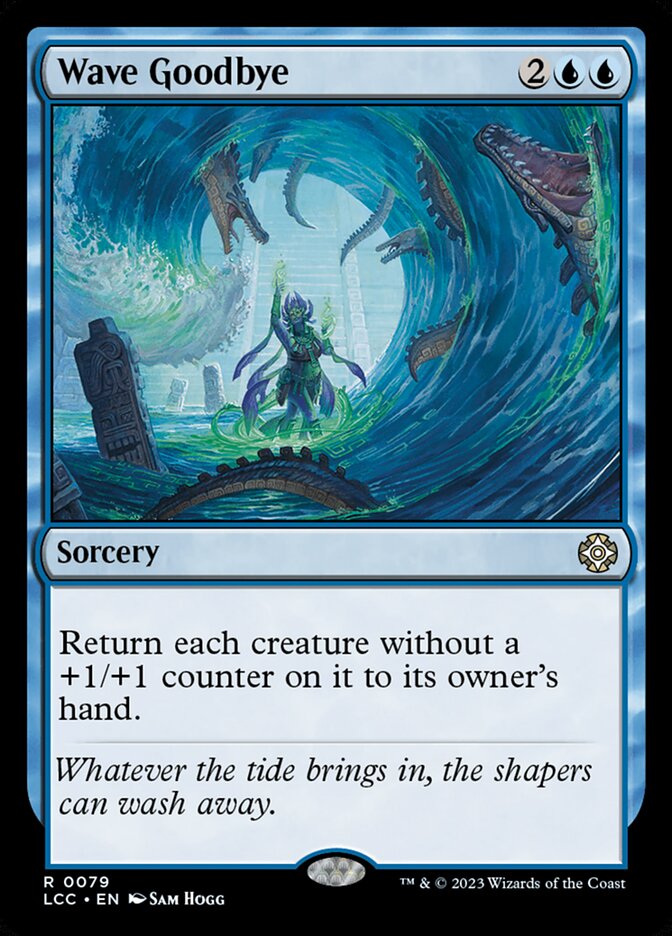
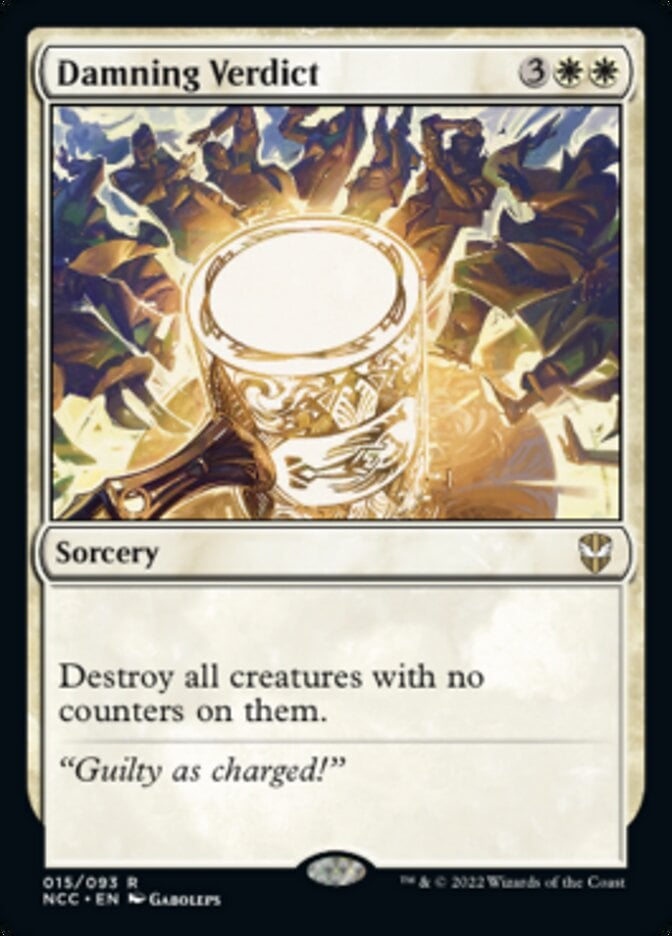
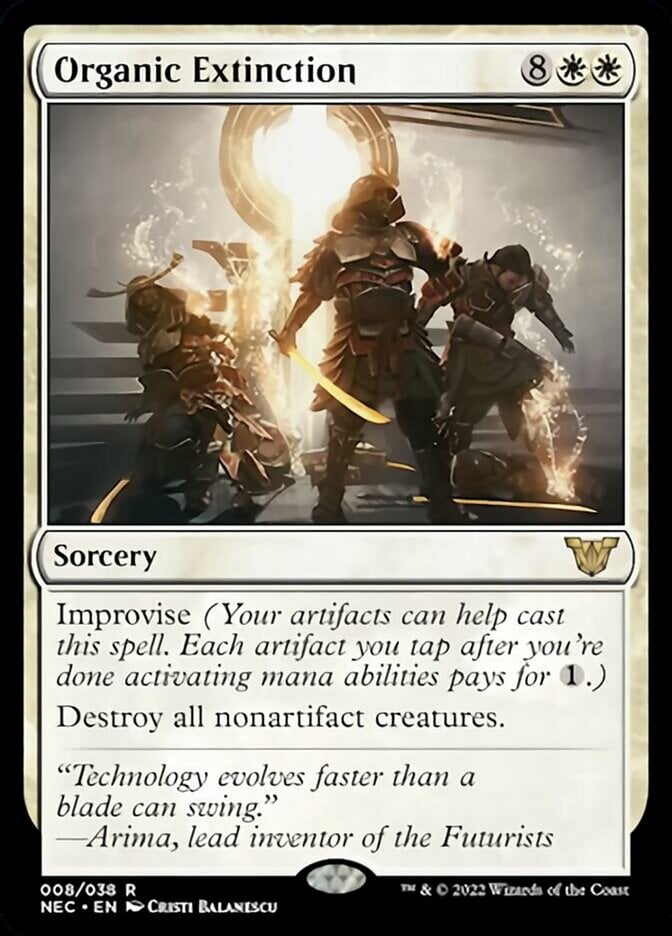
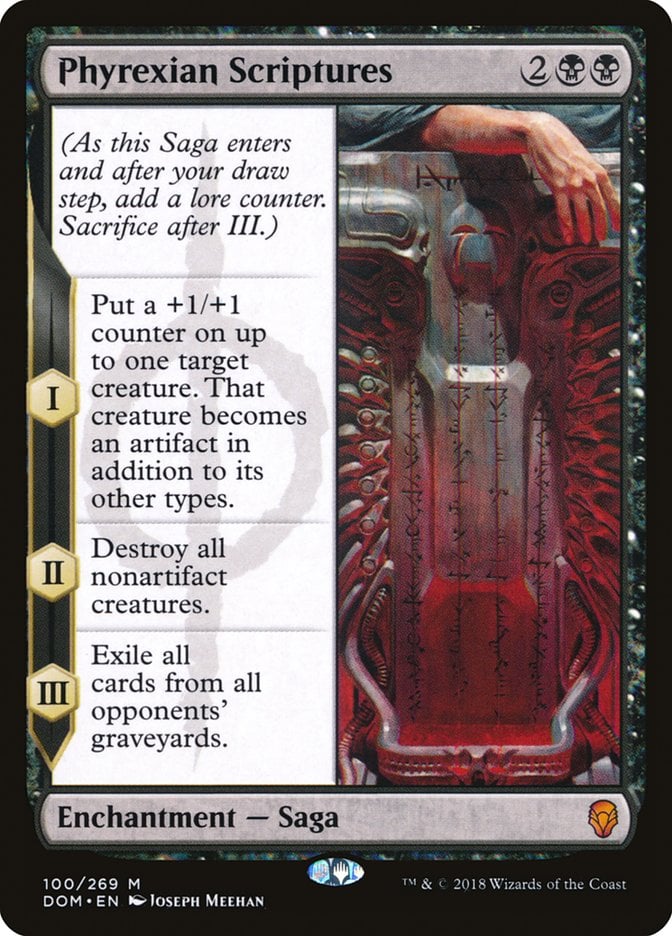
Synergistic board wipes are effectively conditional board wipes that your deck is built around to make them asymmetrical. Some great examples include token decks that run Hour of Reckoning or Perplexing Test, +1/+1 counter decks that run Wave Goodbye and Damning Verdict, or artifact creature decks that use Organic Extinction and Phyrexian Scriptures to destroy everything their opponents hold dear while they retain their forces. A good synergistic board wipe effectively becomes a one-sided board wipe in your specific deck.
These are the best board wipes in Commander, and you should strive to make all your board wipes fall under this category.
Board wipes are a double-edged sword. You play them because they reduce the game state to square one, but at the same time, they reduce the board state to square one. Your token aggro deck suffers from Wrath of God, regardless of who cast it. Sure, destroying three board states might be worth sacrificing your own, but that won’t always be true. Even if you relieved an opponent of their threatening board state, you’re no longer the threat yourself.
Synergistic board wipes change this, effectively forcing modality onto the sweeper. Yes, you can use Damning Verdict as a catch-up mechanic if you’ve fallen behind and your opponents have better boards, but it also becomes a game-winning card: If you have a wide board stacked with +1/+1 counters and destroy everything you don’t control, you can likely mop up the game a turn or two after the fact.
Pushing yourself to include synergistic board wipes doesn’t just make you more likely to win; it also creates better Commander games. Who hasn’t sat down at the table only to discover that every player has included multiple board wipes, and they keep drawing them? What was meant to be a lively game with friends drags, and drags, and drags. Somebody has cast the fourth board wipe, and you’re all rebuilding. It’s been four hours. The barista is telling you that the coffeeshop has been closed for 15 minutes, and wouldn’t you please hurry up? Meanwhile, nobody’s life total has dipped below 20.
Nobody wants to play that game. Run synergistic board wipes.
Please.
Commanding Conclusion
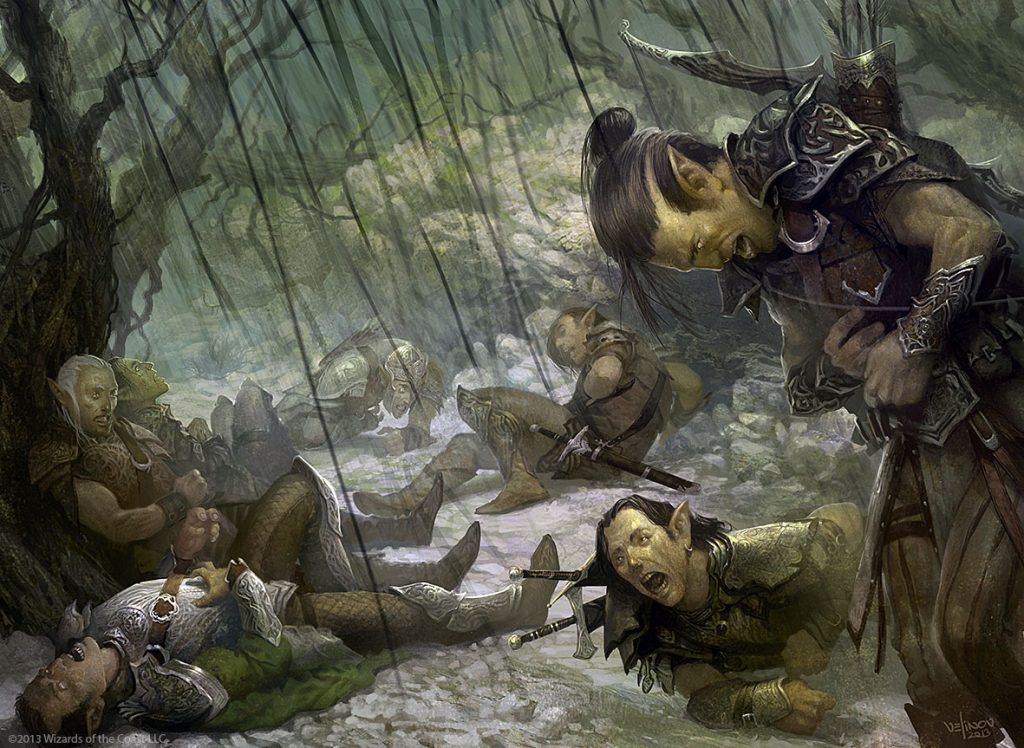
Toxic Deluge | Illustration by Svetlin Velinov
Board wipes are an invaluable way to interact with your opponents in Commander as they’re one of the few forms of removal that truly scale to the multiplayer format. They handle threats and generate card advantage, but they also have distinct downsides. Using board wipes well requires understanding which types of board wipes are the best, and how they interact with both your strategy and your opponents.
What’s your favorite board wipe in Commander? How many do you run? Let me know in the comments below or on the Draftsim Discord!
Stay safe, and thanks for reading!
Follow Draftsim for awesome articles and set updates:










Add Comment