

Jin-Gitaxias | Illustration by Ekaterina Burmak
Blue is often the color in MTG that’s considered the most powerful overall. Mythic rares are the splashiest cards in any given set, the ones that generate the most buzz and that usually bring something new to the table, or that enable a special deck built around them. These aren’t always the most powerful cards overall, but often the most interesting.
After many years of great blue mythic rares, it’s time to finally rank them to uncover the best blue mythics in Magic: The Gathering.
What Are Blue Mythics in MTG?
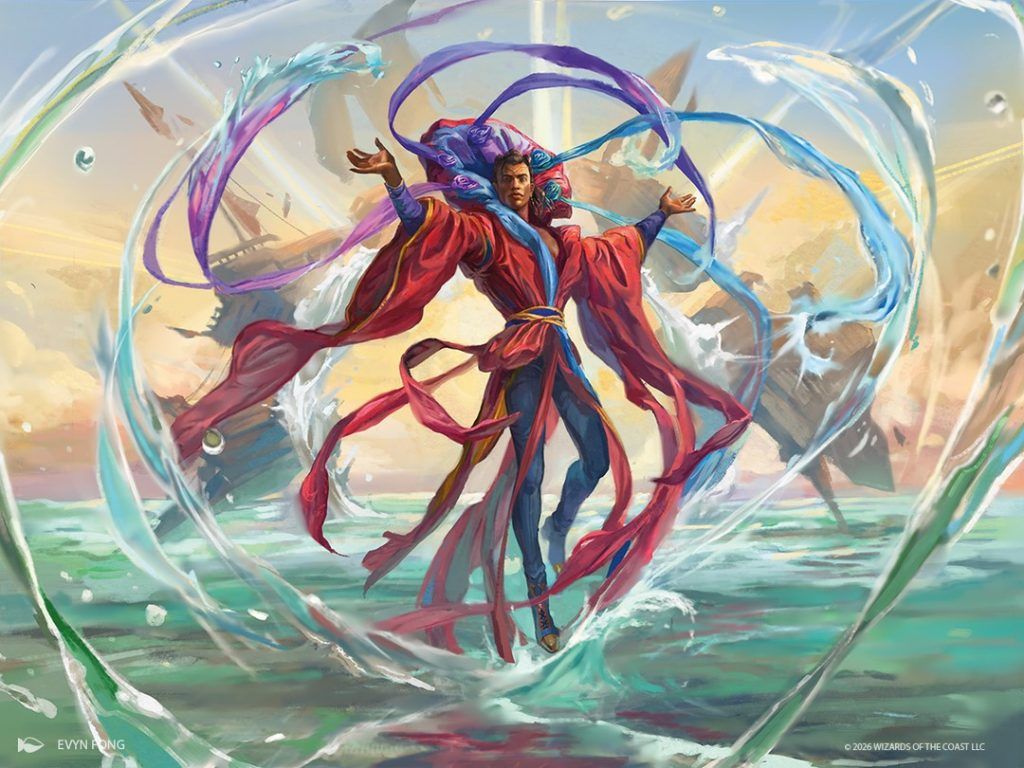
Emeritus of Ideation | Illustration by Evyn Fong
Blue mythics in MTG are mono-blue cards, or cards with a blue color identity, that have been printed as mythic rares. Force of Will was originally printed as an uncommon card, but almost all its reprints are mythic rare, so it makes the mythic rare list.
Then we have cards like Rhystic Study: It’s a rare in most reprints, but it’s a mythic rare card in bonus sheets like Final Fantasy: Through the Ages and Enchanting Tales, so I won’t consider them mythic rares in this list.
Also remember that some powerful cards were printed as rares because the mythic rarity didn’t exist at the time, like Ancestral Recall, Timetwister, and Time Walk. They’re still rares, and have only been “reprinted” as mythics digitally.
I’m ranking the best cards based on whether they see heavy play or not, and whether they’re impactful and powerful, regardless of what they actually cost on the secondary market.
#34. Tezzeret the Seeker
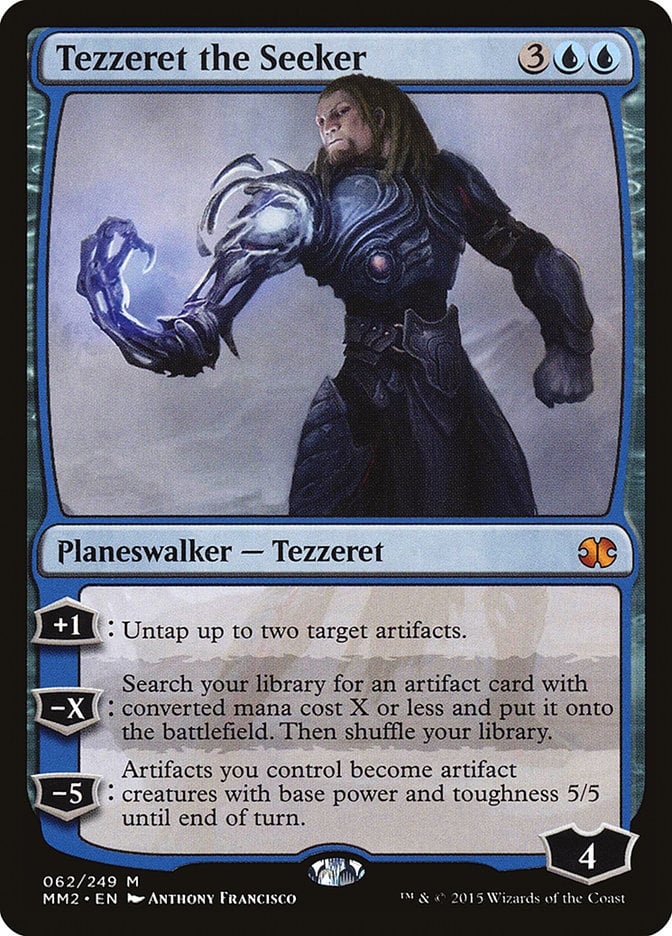
Tezzeret the Seeker combines two very relevant abilities that make for a great combo. The -2 ability tutors artifacts and puts them into play, while the +1 ability untaps two artifacts. You can do all sorts of stuff with these two cards: ramp with Basalt Monolith, tutor and untap Time Vault, go after Dramatic Reversal, and more. You can add this card to an artifact-heavy deck, and it’s also an interesting Cube build-around.
#33. Thassa, Deep-Dwelling
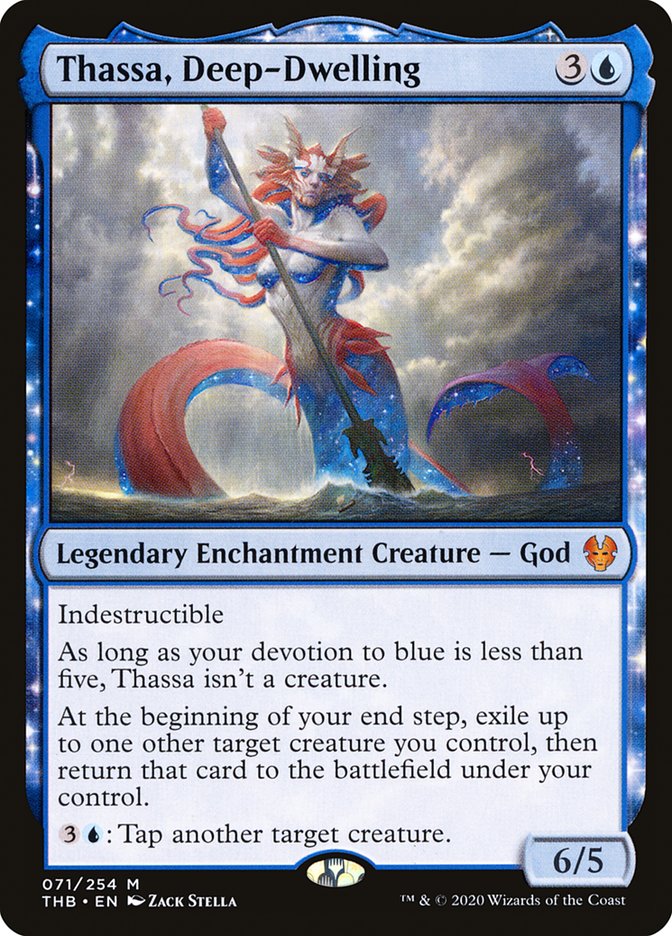
Thassa, Deep-Dwelling gets better as the effects from creatures entering the battlefield improve. It’s a 4-mana indestructible god whose best ability is to blink a creature every turn. It’s also strong as a 6/5 indestructible creature if you have enough devotion, but that’s the secondary ability.
#32. Tekuthal, Inquiry Dominus
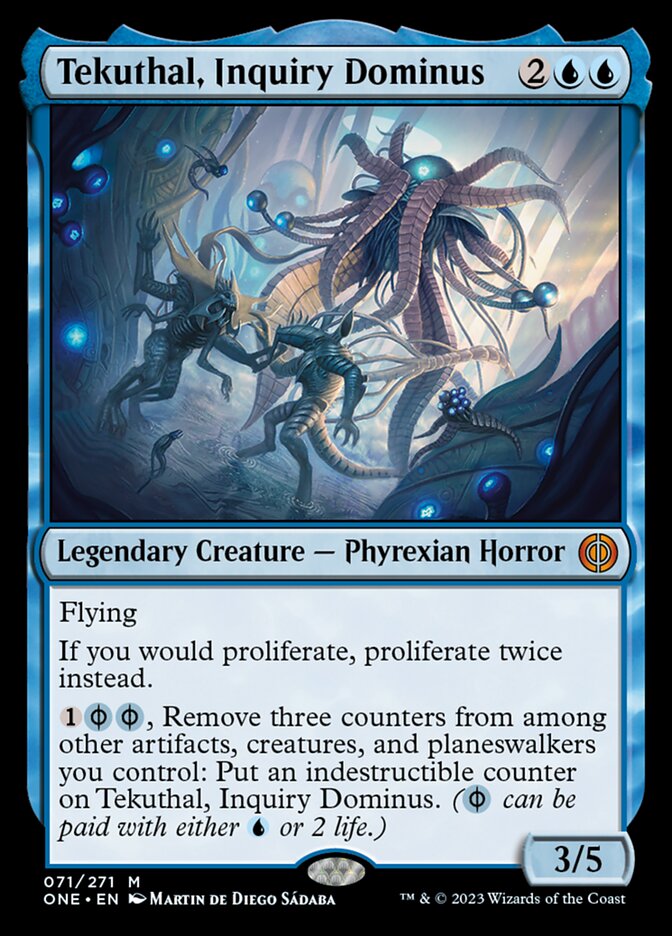
Proliferate is a fan-favorite mechanic in Commander, and it’s not news that one of the format’s most played commanders is Atraxa, Praetors' Voice. It that deck, Tekuthal, Inquiry Dominus is a solid creature that lets you proliferate twice. Proliferate has many synergies in MTG, including +1/+1 counters, planeswalkers, and poison, and it’s easy to add this card to a deck that has many ways to proliferate and good payoffs for it.
#31. Simulacrum Synthesizer
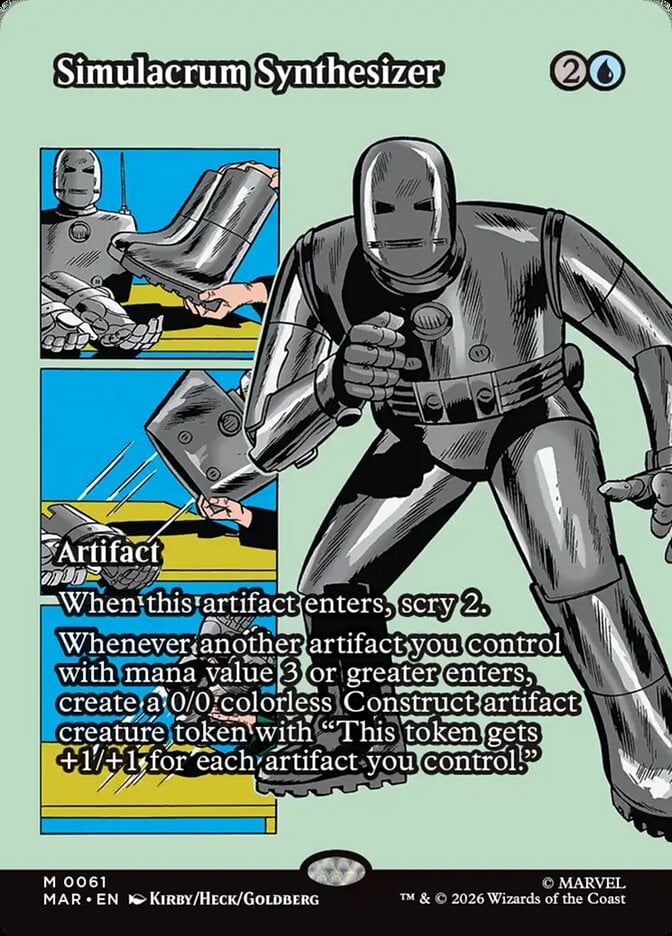
Simulacrum Synthesizer is a strong card to play in blue artifact decks, and it’s very good in multiples. This card has been making waves across many formats, creating giant Karnstructs as a payoff. When one card makes you face three 6/6 tokens across the field, you know it’s doing some business, and you can rebuild quickly against a wrath just by playing more artifacts.
#30. Expropriate
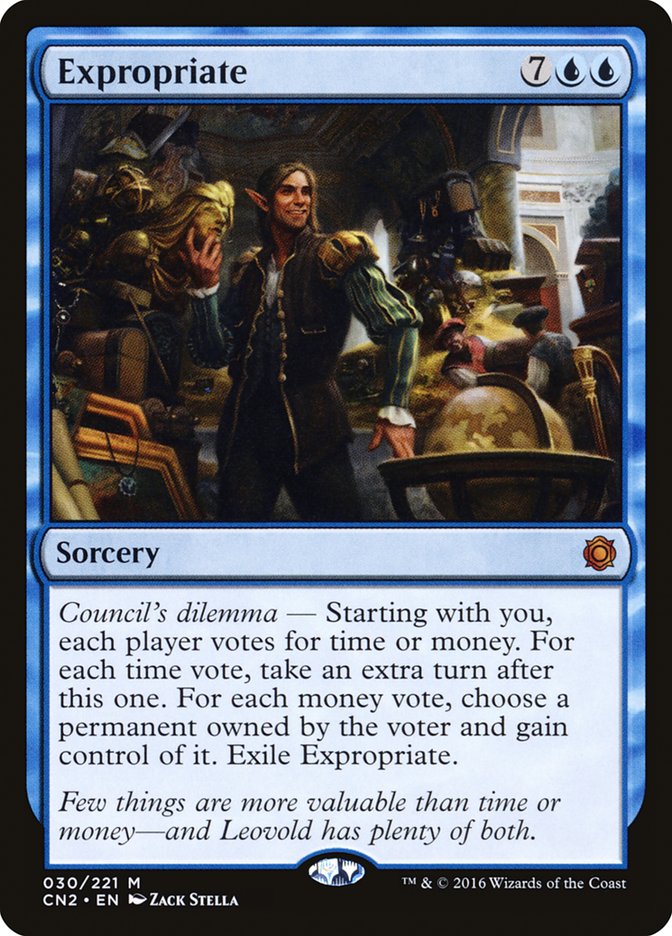
Expropriate costs 9 mana, but it's heavily played in formats like Brawl where you can let your opponent choose between you taking another turn or stealing your opponent’s permanents. And none of these choices are good for them; you’ll often take two extra turns or play an extra turn with a stolen permanent. In formats like Commander, you get more votes, but there’s more counterplay to it, so players try to cheat this card into play with commanders like Narset, Enlightened Master.
#29. Y’shtola Rhul

Y'shtola Rhul shines because you get two end steps each turn, and you’ll at least blink a powerful creature twice. When you add more cards to your deck that trigger on the end step, like Doctor Doom or Agent of Treachery, you can reap more benefits by blinking these creatures twice and getting twice as many end step triggers.
#28. Kiora Bests the Sea God
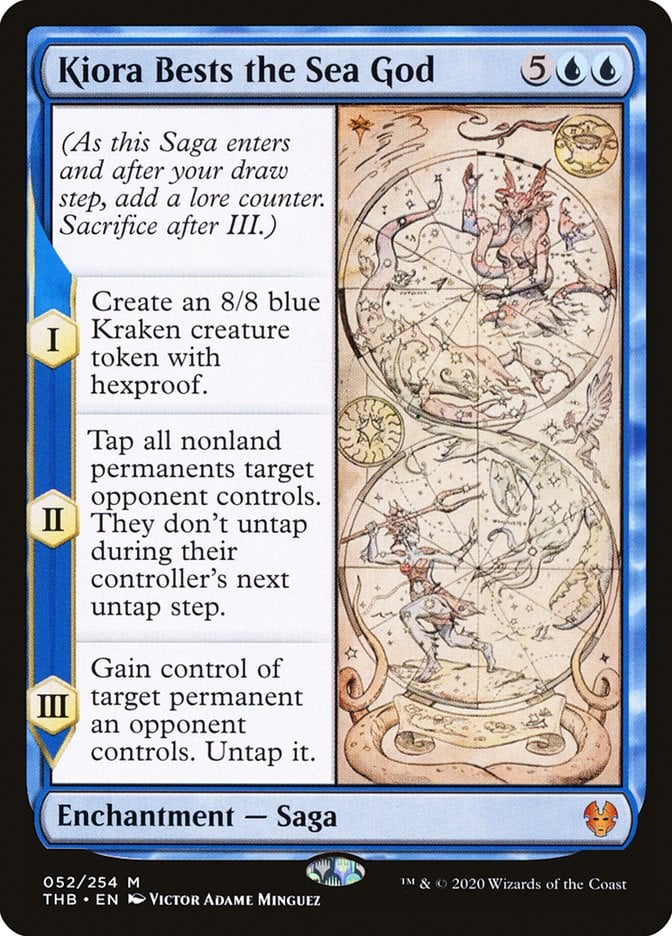
This 7-mana saga gives you a lot of value. When you resolve Kiora Bests the Sea God, you get an 8/8 hexproof creature right away. Then you can tap your opponent’s permanents, which allows you to get in with your 8/8 and other creatures. Since they don’t untap, you get to do it again next turn, too! And, last but not least, you also gain control of something your opponent controls. It’s very lethal in 1v1, and it can make someone’s life in Commander pretty miserable.
#27. Mathemagics

Mathemagics is a mix of a card draw spell and a win condition, depending on how much mana you pay on the X. If X is between 2 and 4, you’d rather draw a bunch of cards, but if you can get to an X of 6 or greater, then it’s time to make somebody else draw 64 and probably lose the game.
#26. Abhorrent Oculus

Abhorrent Oculus is way above the curve as a 5/5 flier that manifests a 2/2 every turn. But it has a pretty significant downside: You can’t cast it without exiling some cards. The key to making this card playable is to either have a lot of self-mill or to manifest it onto the battlefield so you can just flip it. Cards like Unearth and Recommission also work.
#25. Jace, the Perfected Mind
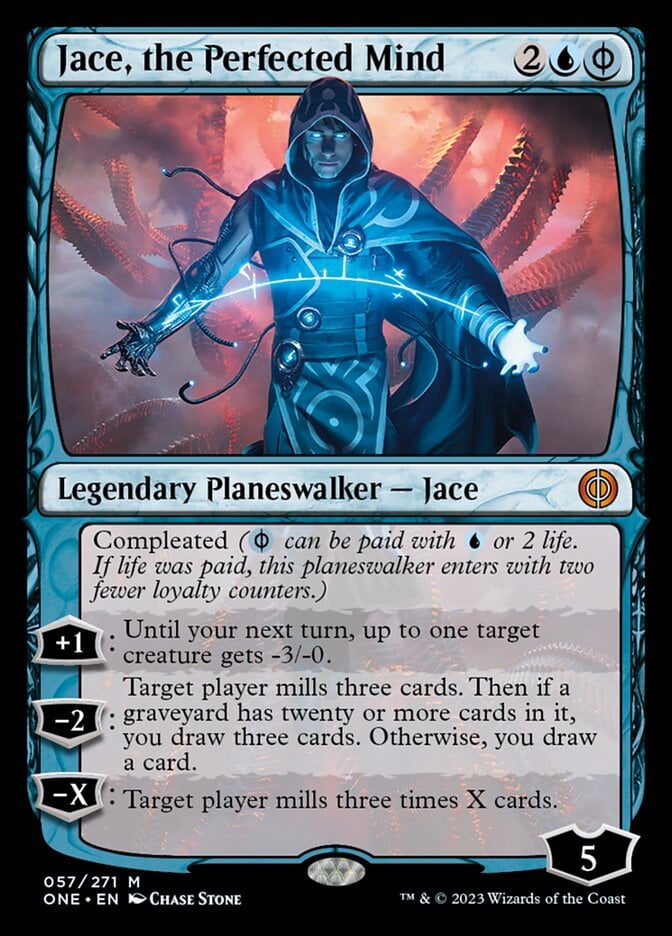
Jace, the Perfected Mind was a mainstay in its Standard format as a card that can win a game via milling through its -X ultimate. It’s actually a very balanced card in 1v1, considering that you can cast it for 3 or 4 mana, and it’ll enter with more or fewer loyalty counters. You have a +1 that protects you from a threat, and a -2 that draws you a card and mills. But the best part here is that sometimes you’ll cast a Jace, ultimate, make your opponent mill a lot of cards, and the second Jace comes and draws three cards on the -2 (or finishes the job).
#24. Teferi, Temporal Pilgrim
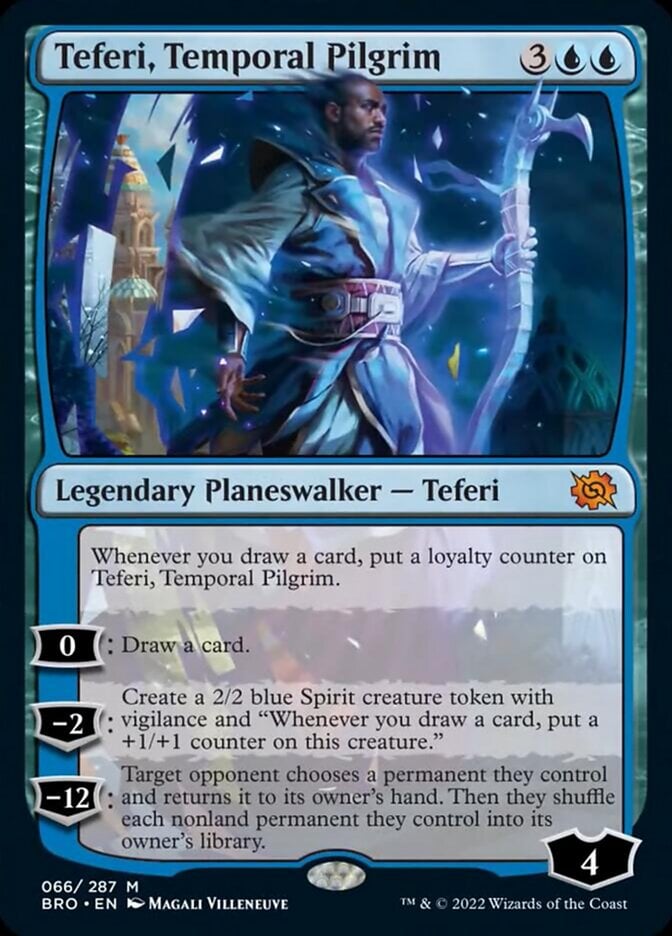
Teferi, Temporal Pilgrim synergizes with card draw, something blue is very good at. Each time you draw a card, you put a loyalty counter on it, and the tokens Teferi creates also get +1/+1 counters. It’s nice when you get to create a token, then draw and play a cantrip or mass draw spell next turn to have a giant creature at the ready. Of note, you can reach this planeswalker’s ultimate by drawing a lot of cards instead of waiting a bunch of turns with single activations.
#23. Alrund’s Epiphany
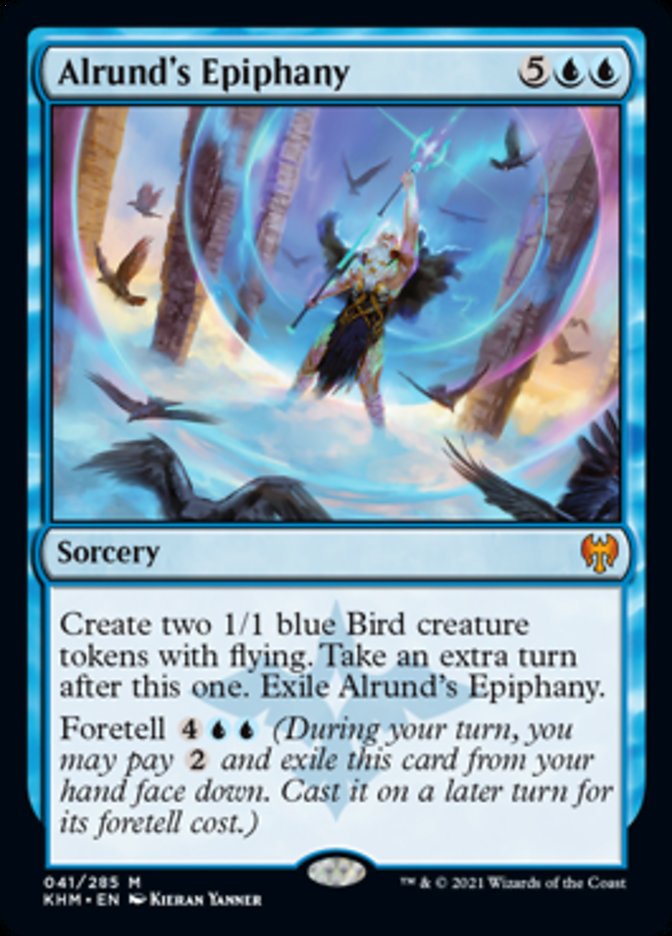
Alrund's Epiphany is an excellent Time Warp variant; if you foretell it, you also get two 1/1 fliers. The card saw plenty of play in its Standard format, and it's a strong addition to any deck with a “cast from exile” theme.
#22. Nexus of Fate
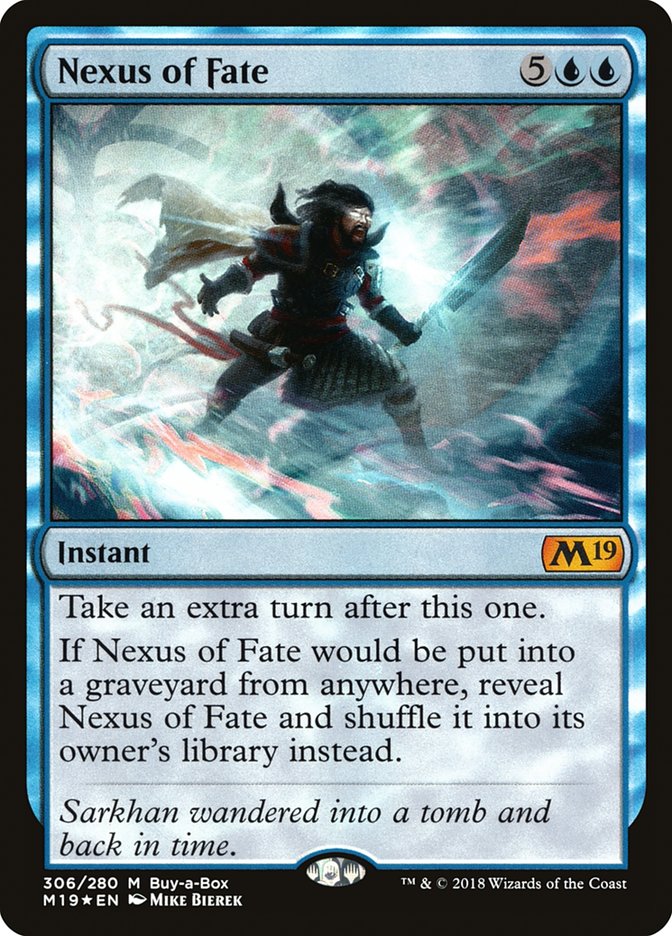
Nexus of Fate dominated many of the formats it has been legal in, like Standard and Pioneer, especially alongside its partner in crime Wilderness Reclamation. It’s a Time Walk effect that shuffles itself into your deck, so with a bit of card selection and filtering, you can play it every single turn, or at least very often. It’s a way to push your planeswalkers close to ultimate or find that combo piece you need.
#21. Torrential Gearhulk
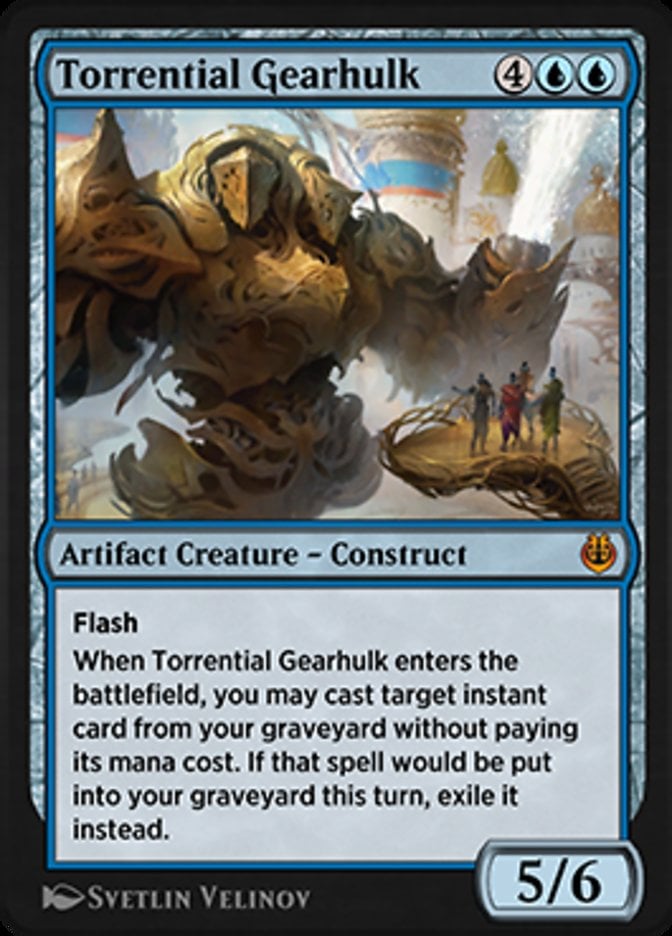
Torrential Gearhulk is a 5/6 flash creature, which is already a solid body for blue control decks to ambush a mid-sized creature and generate advantage. But what makes this card really shines is that you can cast any instant card for free from your graveyard. One of the best targets is Magma Opus, an 8-mana spell that you can cycle. Jeskai Revelation is also a strong target, but so are cheaper spells like card draw or counterspells.
#20. Brazen Borrower

Brazen Borrower is a very solid 3-power flier with a bounce effect on its adventure. Neither effect is very powerful alone, but having a creature with a bounce effect stapled onto it is totally different. Your opponent spent 5 mana on a blocker? You can send it back to their hand and add a 3/1 flier to the board. It’s a 2-mana kicker when you need to spend more mana, it has additional synergies with prowess cards, and it gives you an edge in races. This card is very good in faeries deck, considering that it’s a faerie and that you can cast two spells on your opponent’s turn, which is good for cards like Alela, Cunning Conqueror and Voracious Tome-Skimmer.
#19. Subtlety
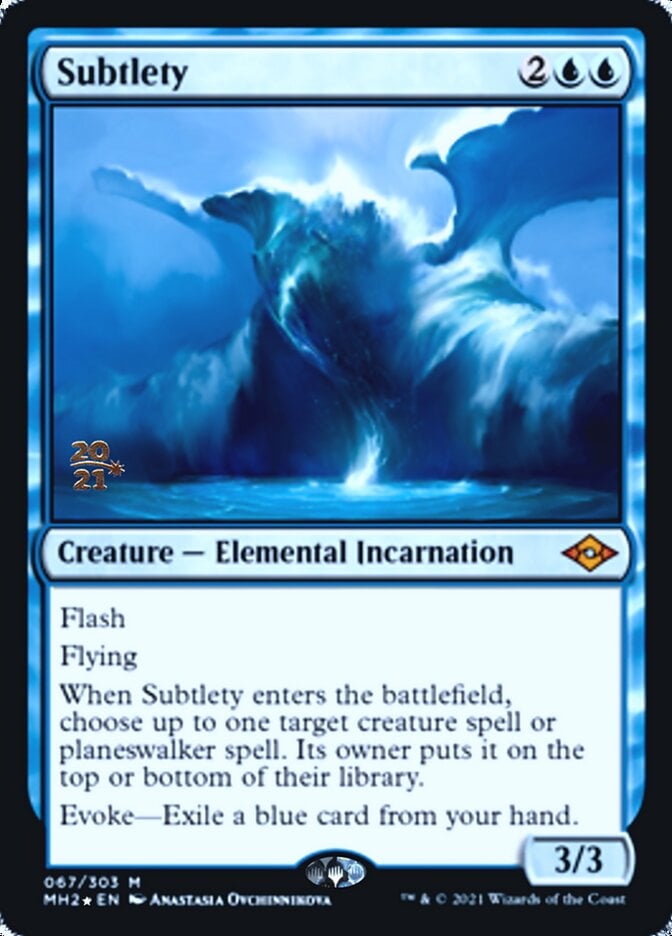
Subtlety is a great tempo card; you can evoke it for free by exiling a blue card from your hand (like Force of Will). It’s not a permanent counter effect, so your opponent can replay the target on the next turn, but late in the game, you can play this as a 3/3 flash creature that sets them back a turn while you add to the board.
#18. Jin-Gitaxias, Core Augur
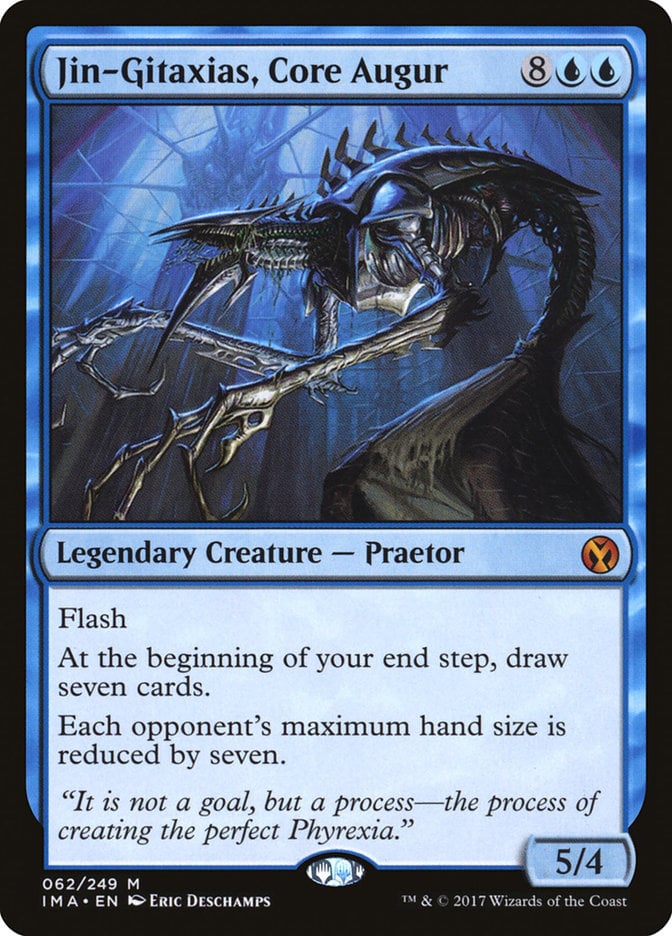
Jin-Gitaxias, Core Augur is a classic blue reanimation target in MTG. At the end of turn, your opponents must discard all cards while you draw seven. They have a small window of opportunity to answer it; otherwise, your card advantage will dominate.
#17. Jin-Gitaxias, Progress Tyrant
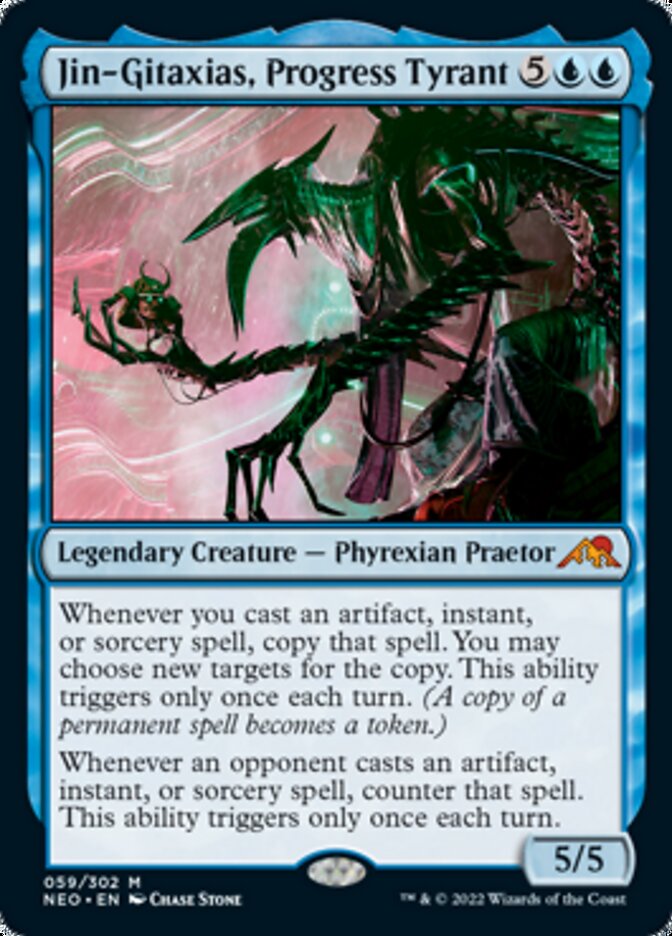
Jin-Gitaxias, Progress Tyrant isn’t a straight-up reanimation target like Jin-Gitaxias, Core Augur, but it’s also powerful. You counter your opponent’s first spell for free, while you get to copy the ones you cast. This card is more of a value engine in a long game, and players aren’t that likely to spend two spells to deal with this guy, and even a wrath effect needs to have a “bait” spell before it. Plus, you can still protect your Jin-Gitaxias with countermagic of your own.
#16. Sakashima of a Thousand Faces
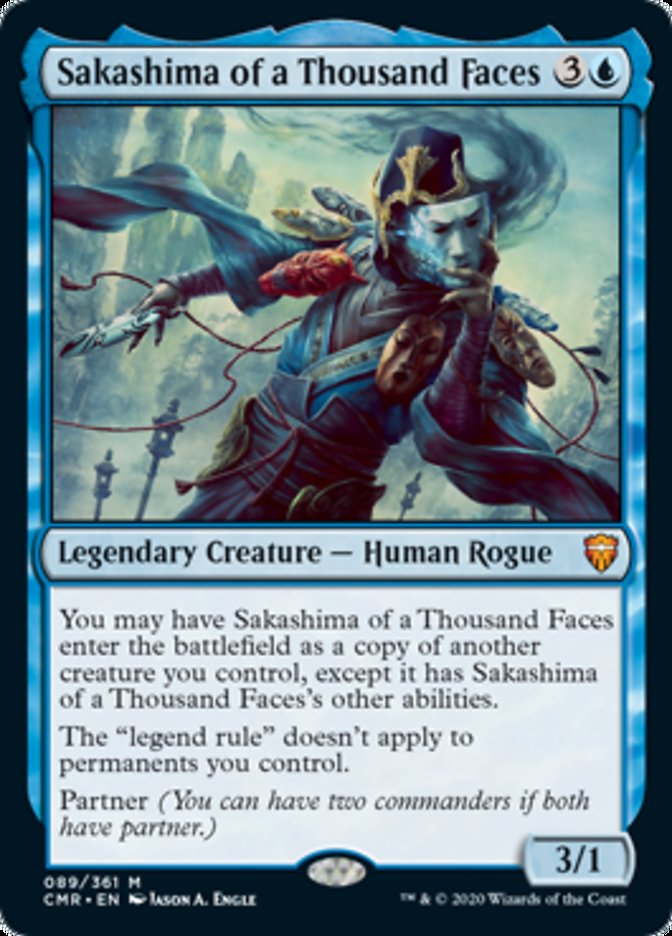
Sakashima of a Thousand Faces is basically a Clone effect you can use in the command zone, and it helps you to bypass the legend rule entirely. This card also has partner, so you can copy the other partner commander you’re playing and add more colors to your EDH deck, and there are plenty of partner possibilities to combine.
If you play Sakashima with Vial Smasher the Fierce, you can deal double the damage to your opponent and play a Grixis () Commander deck, which is usually stronger than just mono-blue.
#15. Emeritus of Ideation

Emeritus of Ideation is a 5/5 flier with an Ancestral Recall tacked onto it. The most common play pattern with this is to draw three cards immediately after you cast it, but sometimes you need to hold mana for other effects or cast it on turn 5. Still, ward 2 is a good way to ensure this card survives so you can use the draw-three effect. It’s also being used in the Standard format, not only as a control finisher, but also as a way to mill an opponent after Doomsday Excruciator leaves them with just a few cards left in their libraries.
#14. Bruvac the Grandiloquent
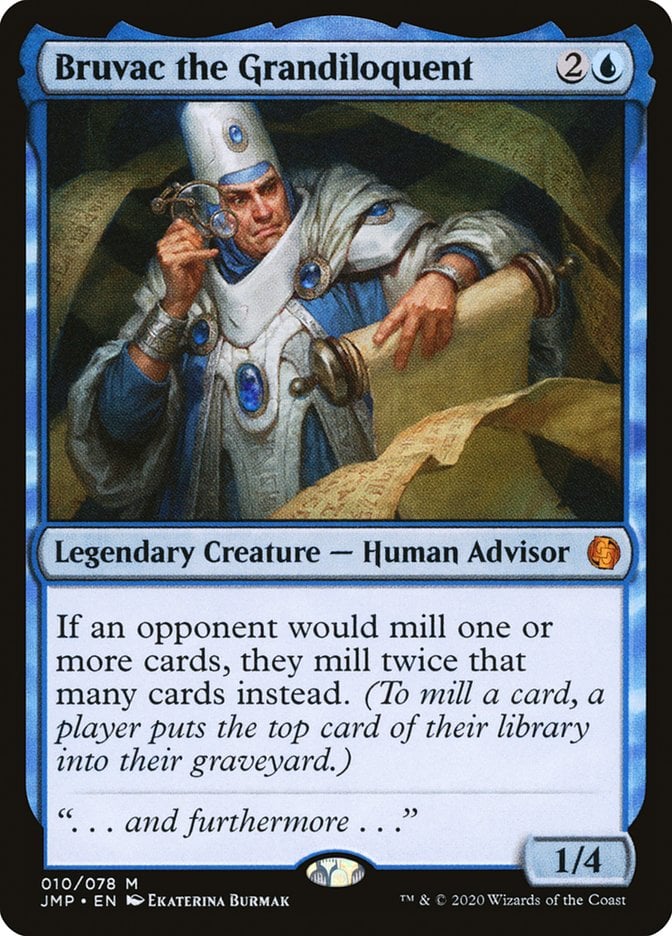
Bruvac the Grandiloquent is one of the best mill payoffs ever printed, and as a commander, it actually makes mill viable in a 100-card format. You can straight-up win after a Traumatize or a kicked Maddening Cacophony, which can mill entire libraries. But just the added mill goes a long way, so if you play Ruin Crab and a land, each player mills six cards instead of just three.
#13. Jace, Vryn’s Prodigy / Jace, Telepath Unbound
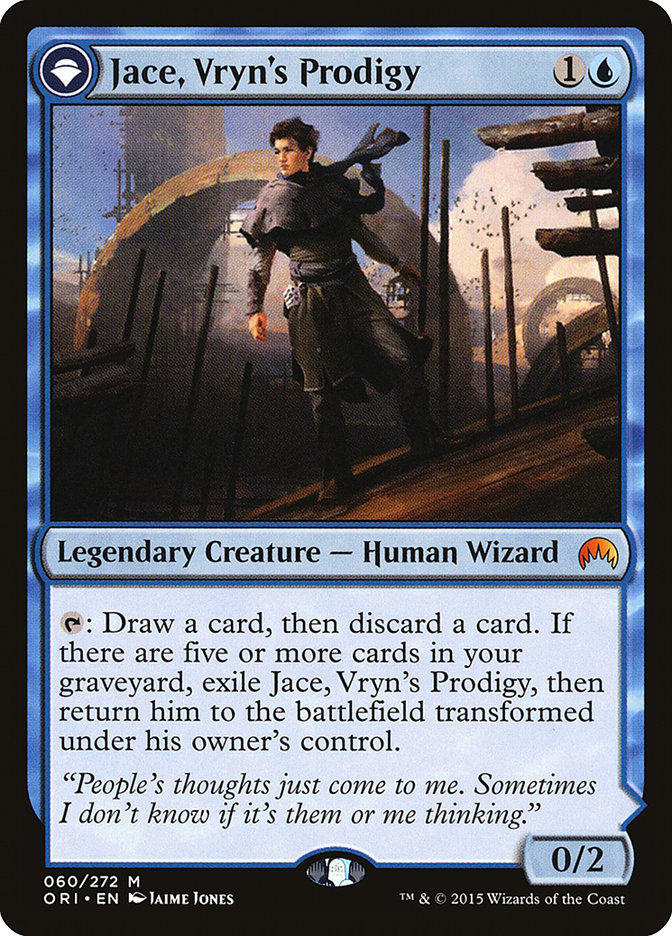
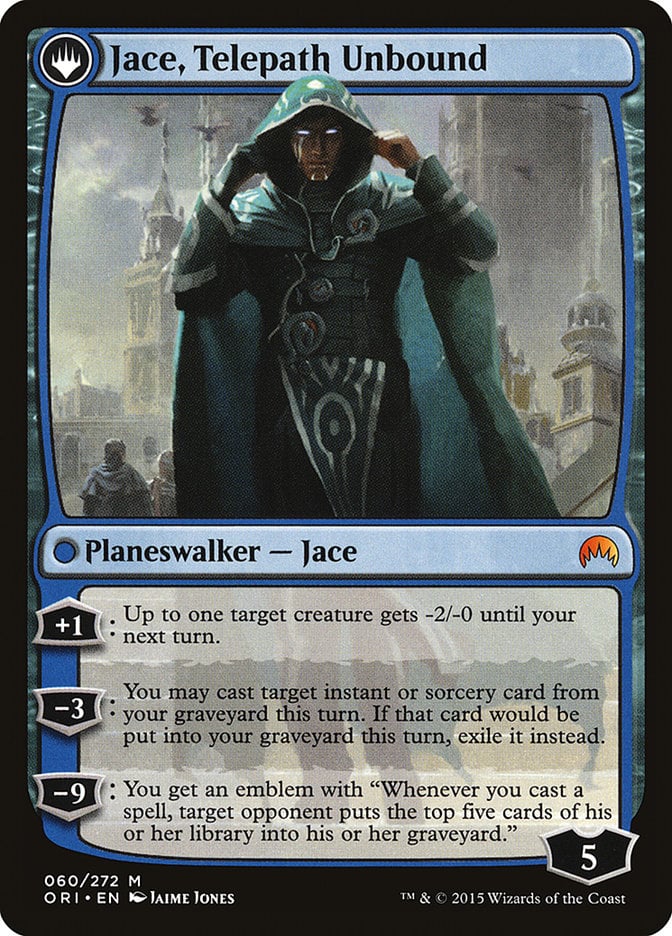
Jace, Vryn's Prodigy is one of those cards that was played in all of MTG’s 1v1 formats at a certain point. The duality between having a cheap looter in play that later can become a planeswalker is very strong. The planeswalker lets you cast a spell from your graveyard, so it works very well with cheap, powerful cards like Time Walk and Ancestral Recall, and it synergizes with the loot from the front side.
#12. Spellseeker
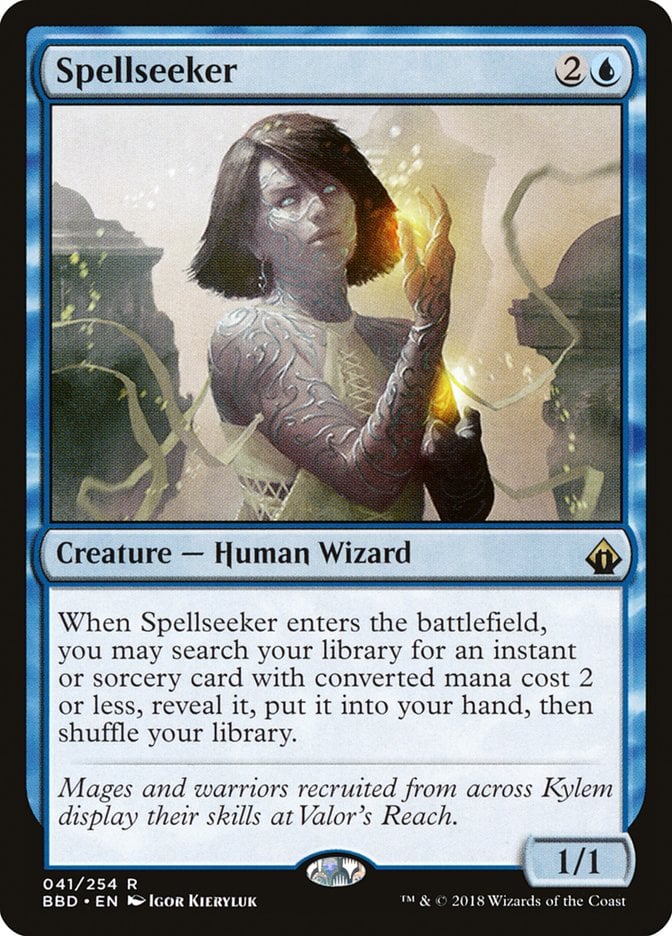
Spellseeker is strong because it can usually get you the most powerful spells in your deck, be they counterspells, discard, spot removal, or other tutors. It’s also a card you can use to fetch Ancestral Recall in formats like Cube and Vintage. Since it’s a creature and the card goes to hand rather than the top of your library, you can combine it with Ephemerate in a longer game.
#11. Wan Shi Tong, Librarian

Wan Shi Tong, Librarian is seeing a lot of play as a flash threat that also draws cards when your opponents search their libraries. It’s nice as a control draw-go finisher, and you can cast it when they fetch a land, tutor a card, and more. Consider the amount of fetching and searching that happens in a Commander game and you’ll get an idea about how much you can draw. Cards like Ghost Quarter become extra effective, too.
#10. Consecrated Sphinx
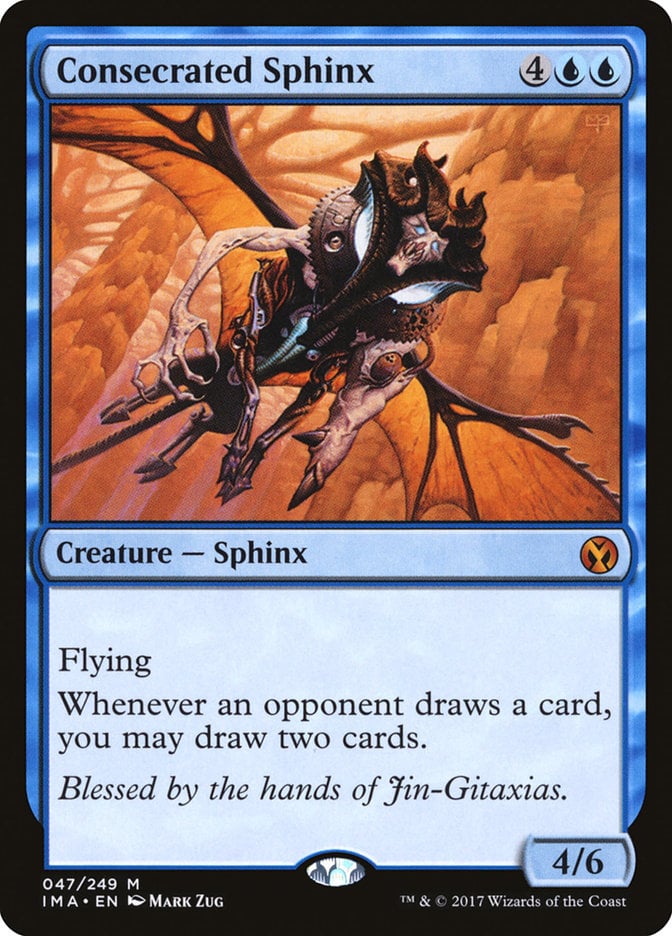
Consecrated Sphinx just needs an opponent’s draw step to do its thing and draw you a bunch of cards. It’s especially powerful in EDH where you can draw six cards across your opponents’ turns, which makes it a strong ramp payoff in GU. It’s a bit slow for 1v1 play since your opponent can answer it right away and you get nothing, but you can still find Cubes that play this card.
#9. Quantum Riddler

Quantum Riddler is similar to Consecrated Sphinx, in that it’s a big body that can draw you some cards, and it’s more powerful in 1v1 play where you can warp it early. The turns when you get to top-deck this sphinx, draw two cards, and still have a 4/6 flier are very powerful.
#8. Ancient Silver Dragon

Ancient Silver Dragon is a huge 8/8 flying creature that lets you draw an obscene number of cards when you deal combat damage. You’ll roll a d20, which means that on average, you’ll draw between 8-12 cards. You also have no maximum hand size for the rest of the game.
It’s best when you play it in decks that have dragon synergies, especially with cards that grant haste. This card is also very expensive due to a lack of reprints – WotC doesn’t like the idea of putting a card that you need to roll dice for in a random precon.
#7. Sea Gate Restoration / Sea Gate Restored
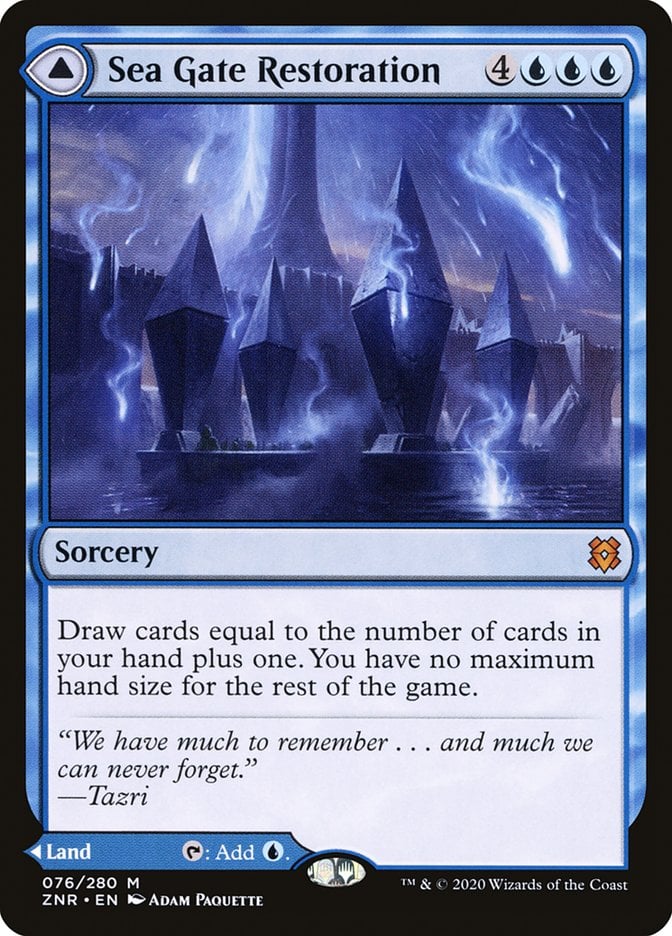
What makes Sea Gate Restoration so good is that you can simply add this card to any blue EDH deck by replacing one of your many Islands. The sorcery mode on this card might be a bit unreliable, but in a slower format like Commander, it’s common to draw like 4-5 cards and have no maximum hand for the rest of the game. And on the first turn, it’s your land drop.
#6. Jace, the Mind Sculptor
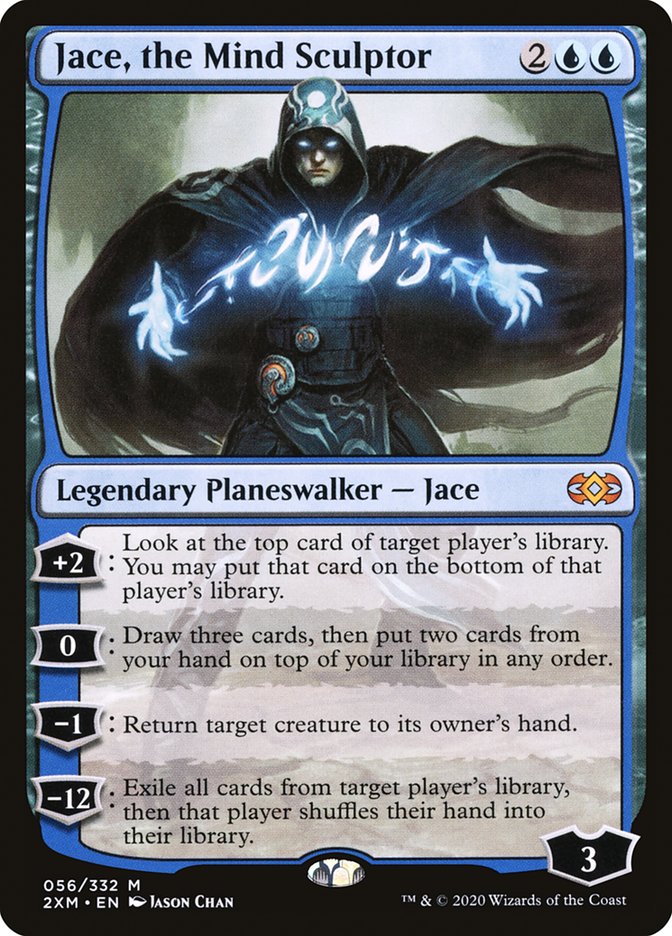
Once considered the best planeswalker in MTG and one of the best cards overall, Jace, the Mind Sculptor, or JTMS, is a strong planeswalker that covers all bases. If your opponent has creatures, you can bounce them. If the board is empty, you can Brainstorm every turn, and that’s already strong in a blue control deck, and even stronger with shuffle effects from fetch lands. And when you don’t need cards anymore, you can simply +2 and pump this planeswalker towards the lethal ultimate.
#5. Omniscience
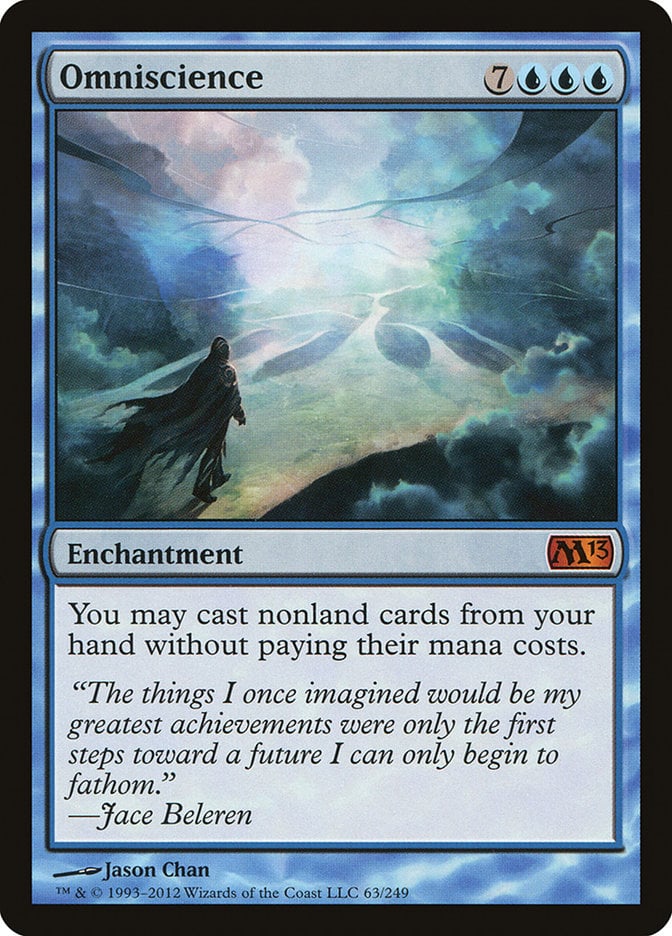
Omniscience is the staple enchantment worth trying to reanimate or cheat into play through other means. After this card lands, all the other cards you cast from hand are free, and you can do this via Show and Tell, Abuelo's Awakening, or other similar cards. It’s also currently legal in Standard, so some brews might want to try this.
#4. Urza, Lord High Artificer
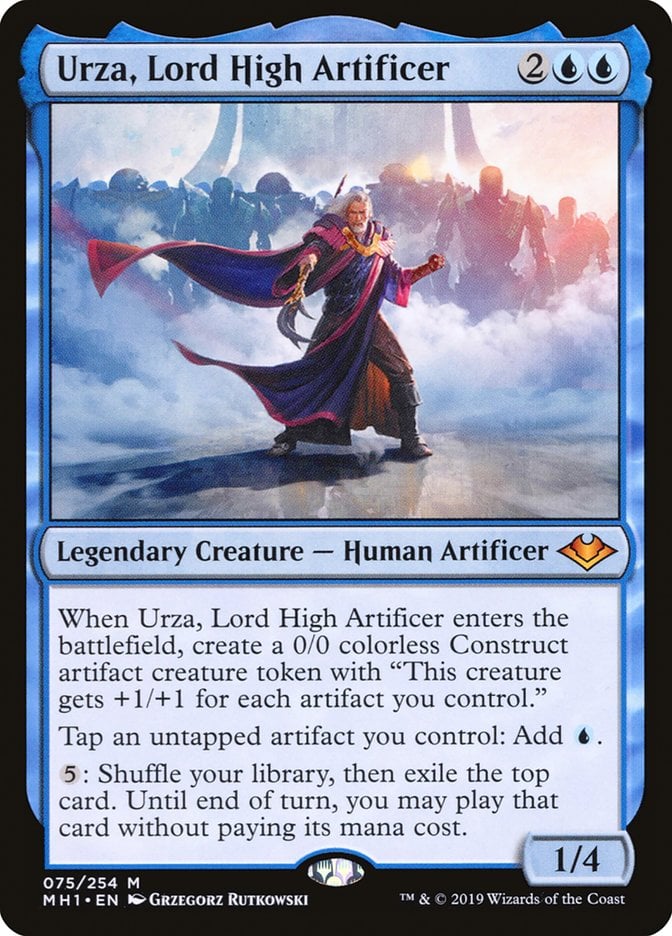
Urza, Lord High Artificer has been a staple of Brawl, Commander, Cube, and other formats ever since it was printed. It’s a perfect artifact build-around card that gives you a benefit for playing artifacts (tap to add blue mana), a creature that scales based on the number of artifacts you have, and even a mana sink to take advantage of all the extra mana you’re generating via artifacts or infinite combos. Few commanders scream “deal with me or lose” like this card.
#3. Mana Drain
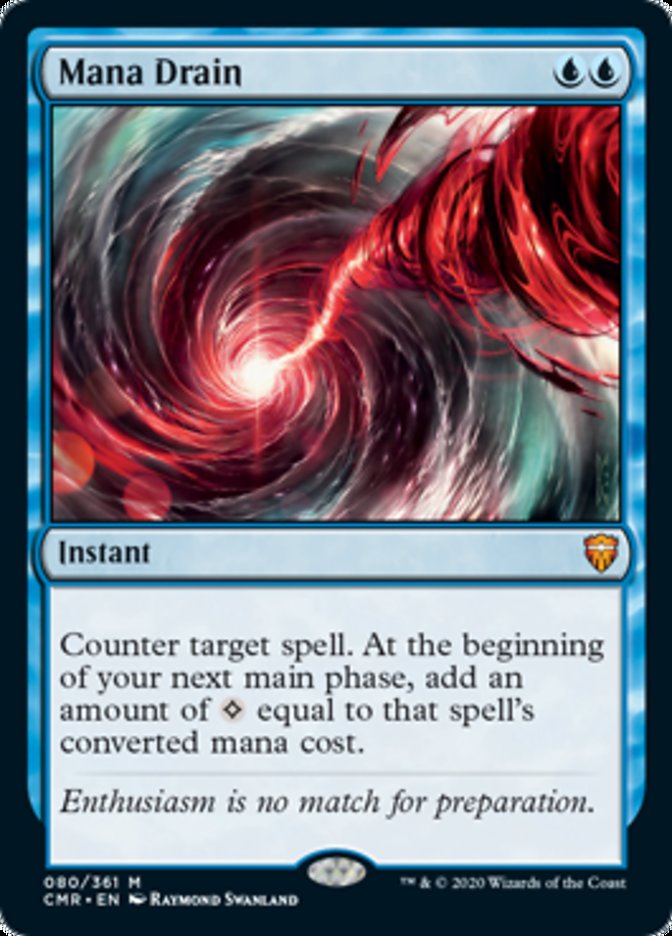
The classic Counterspell with upside, Mana Drain is a staple in formats like Cube and Commander and sees some play in Legacy and Vintage. In Commander, it’s even better because 2-mana counterspells aren’t considered slow, and the turns when you get to counter a 6-mana spell and follow up with your own 7+ mana spell are devastating.
#2. Cyclonic Rift
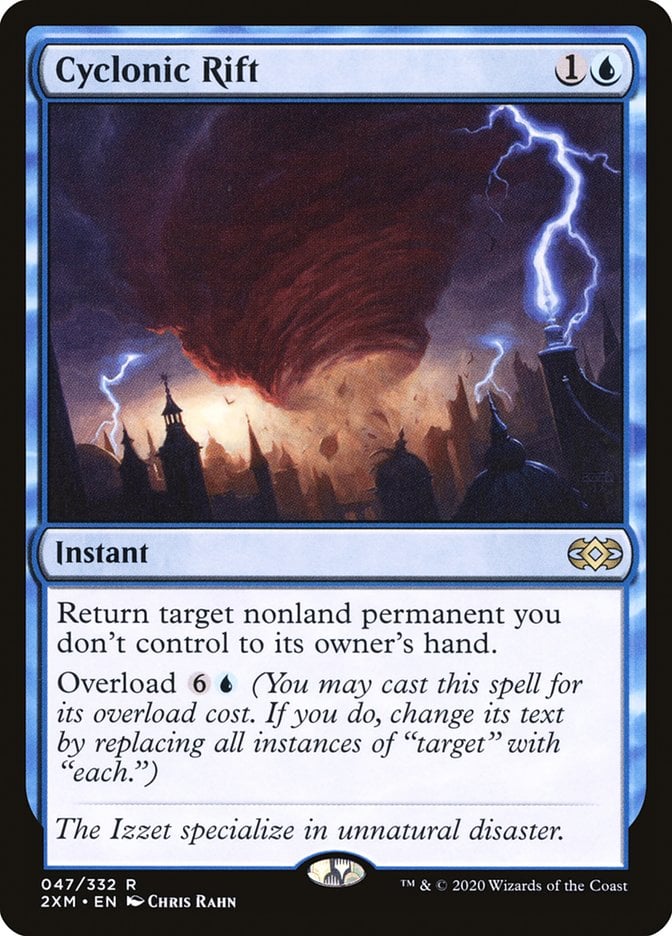
Originally a rare card reprinted as a mythic, Cyclonic Rift was an ordinary and mostly unplayable Return to Ravnica card until Commander became the most popular MTG format. In a 1v1 format, 2-mana bounce is an okay card. In the late game, it’s still a powerful card, but it acts more like an Aetherize than a wincon. Turns out, in a slower format, paying 7 mana to undo all that your opponents have done in the last few turns is devastating. Plus, since you keep your board, you can simply attack a player and remove them from the game. This is why this card is also considered a Game Changer in the format.
#1. Force of Will
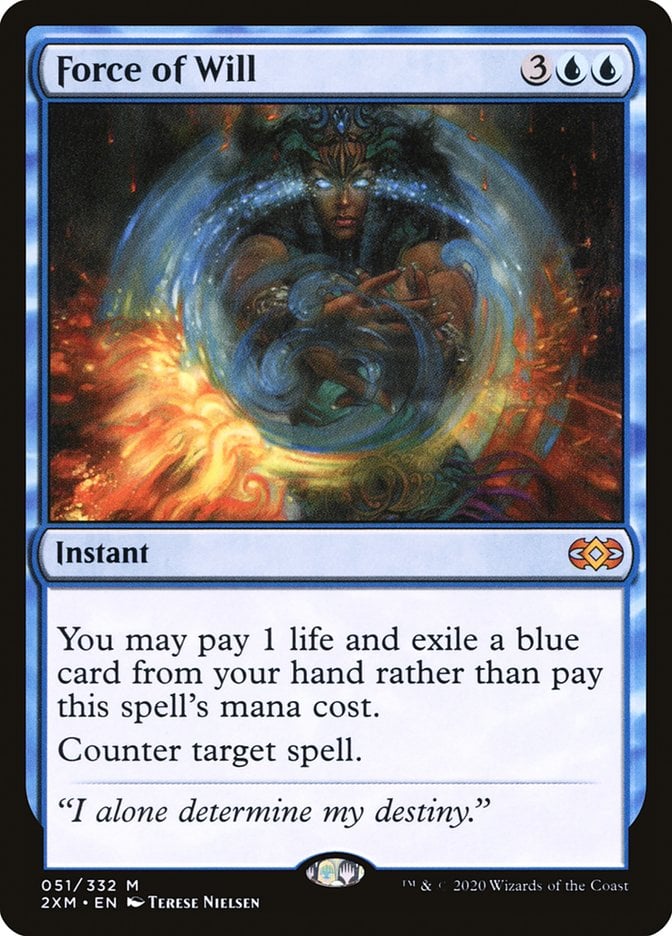
You can cast Force of Will for 5 mana as an unconditional counterspell, but most of the time, you’ll cast it for free via its alternate cost. Yes, you have to exile another blue card from your hand, but blue is also the color that gets the most card advantage, so it’s a relatively small cost. FoW is one of the best blue cards in MTG and sees a lot of play, besides also being a Game Changer in Commander. After all, countering spells for free can win you a game or ensure you don’t lose it to a broken card or combo.
What Are the Most Expensive Blue Mythics?
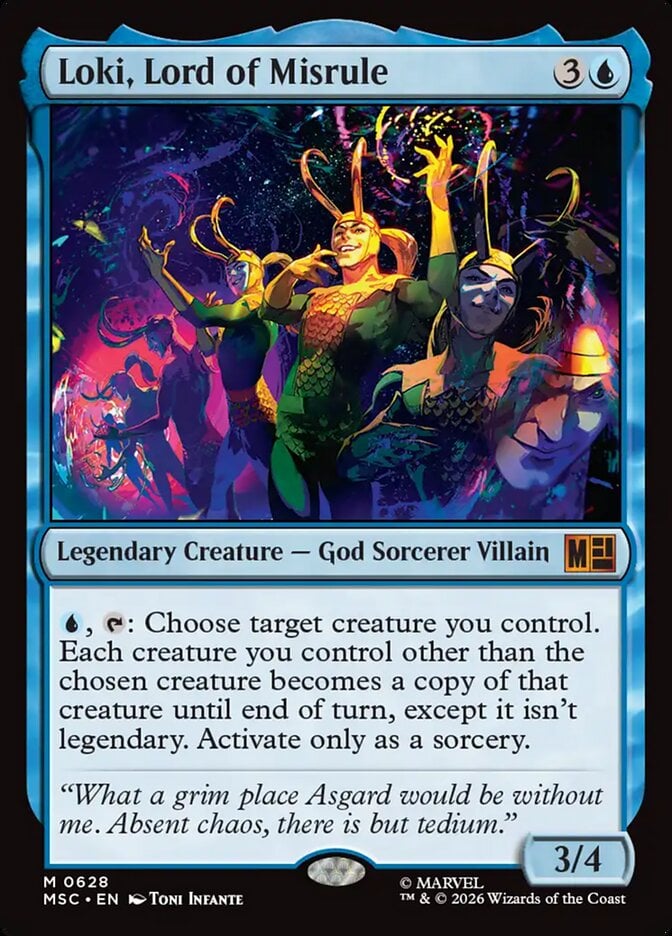
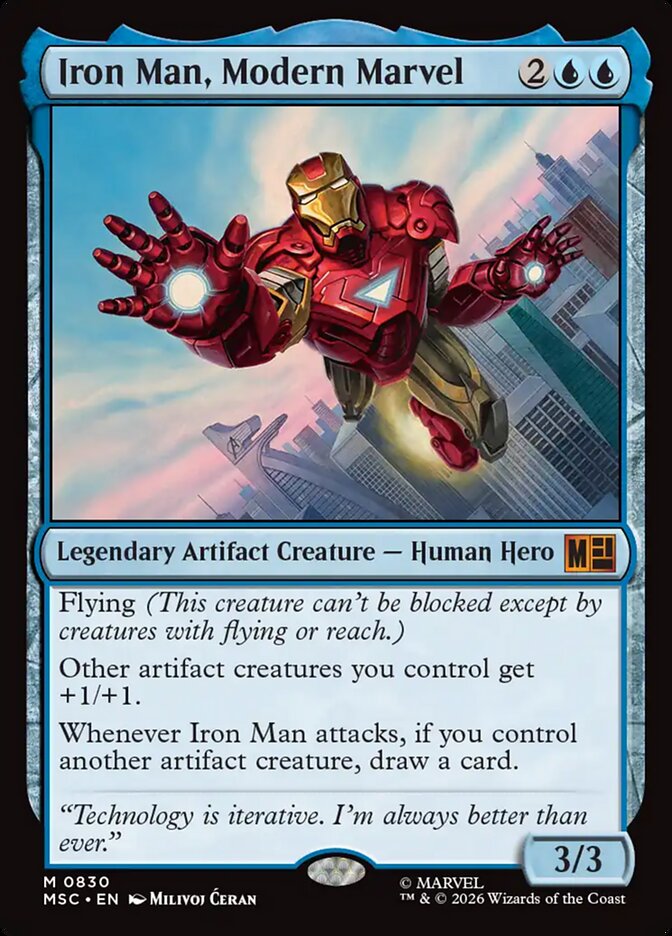
- Loki, Lord of Misrule – $76
- Force of Will – $63
- Ancient Silver Dragon – $57
- Iron Man, Modern Marvel – $55
- Mana Drain – $51
- Bruvac the Grandiloquent – $42
- Cyclonic Rift – $40
- Sea Gate Restoration – $38
These prices come from TCGplayer in July, 2026. Many cards in this list are either new cards that have a great impact on Commander, like Loki and Iron Man, or that are already staples in Commander that lack consistent reprints. Force of Will, originally an uncommon, has been reprinted many times as a mythic rare, and it sees play in any format where it’s legal, not just EDH.
Wrap Up

Subtlety | Illustration by Anastasia Ovchinnikova
And there you have it, the greatest blue mythic rare cards in MTG. There’s material for a Top 50, but that’s all we can fit for today. It’s also interesting to note that many great blue cards that see tournament play are actually rares, so mythic is often just a title. Many Time Warp variants and Jace planeswalkers are present, which makes sense since those sorts of cards are often reserved for mythics.
What are your favorite blue mythic cards, guys? Did I cover everything? Let me know in the comments section below or in our Draftsim Discord. And check out The Daily Upkeep newsletter to stay up to date on all the latest MTG news.
Thanks for reading!
Follow Draftsim for awesome articles and set updates:










Add Comment