
Last updated on September 30, 2026

Mortify | Illustration by Nils Hamm
Orzhov () is a color combination known for its awesome removal spells. It’s a big reason to play these colors in Limited, and a worthy reason to play these in a 3-color combination, like Abzan () or Mardu ().
The magic happens when we get black and white together, and we have access to arguably the best spot removal spells in the game. Today, we look at the best of the best removal in white/black and in MTG as a whole. These colors can get rid of almost everything for good, so let’s see which tools Orzhov players have at their disposal.
What Is Orzhov Removal in MTG?

Dire Tactics | Illustrastion by Daarken
Orzhov () removal in MTG refers to cards that work as removal with a black/white color identity. Removal spells can take a permanent off the board, incapacitate it, nerf it, or make it unable to work altogether.
To keep this a little different from sweeper effects, I’m focusing more on “spot removal” effects, usually targeted removal that takes care of a single card. Cards like Kaya's Wrath and Exterminatus won’t appear here.
What Kind of Removal Does Orzhov Have?
Orzhov is excellent at destroying and exiling nonland permanents as a whole. The idea is that white deals with enchantments and artifacts, while black is the king of creature and planeswalker destruction.
Combining both, we have excellent removal capable of destroying or exiling every type of nonland permanent, aside from a few exceptions like Vindicate, which also gets lands. MTG design as a whole shies away from land destruction or gives it to red; Orzhov can do it, but it’s infrequent.
Removal in Orzhov comes in the form of sorceries, instants, creatures’ enters triggers, planeswalker activated abilities, and more.
#35. High Priest of Penance

High Priest of Penance is an interesting creature, considering that if it receives any kind of damage, you get to destroy something on the board. Players won’t be too keen to attack you with this guy around. But it’s also just a 1/1 for 2 mana, so it needs synergies from other sources, like cleric payoffs.
#34. Pillory of the Sleepless

Pillory of the Sleepless combines the classic Pacifism effect in white with constant damage to the creature’s controller. It had its time in the sun, but this isn’t a super effective card anymore because 3-mana removal can be much better, and decks have more tools to sacrifice or blink creatures.
#33. Aryel, Knight of Windgrace
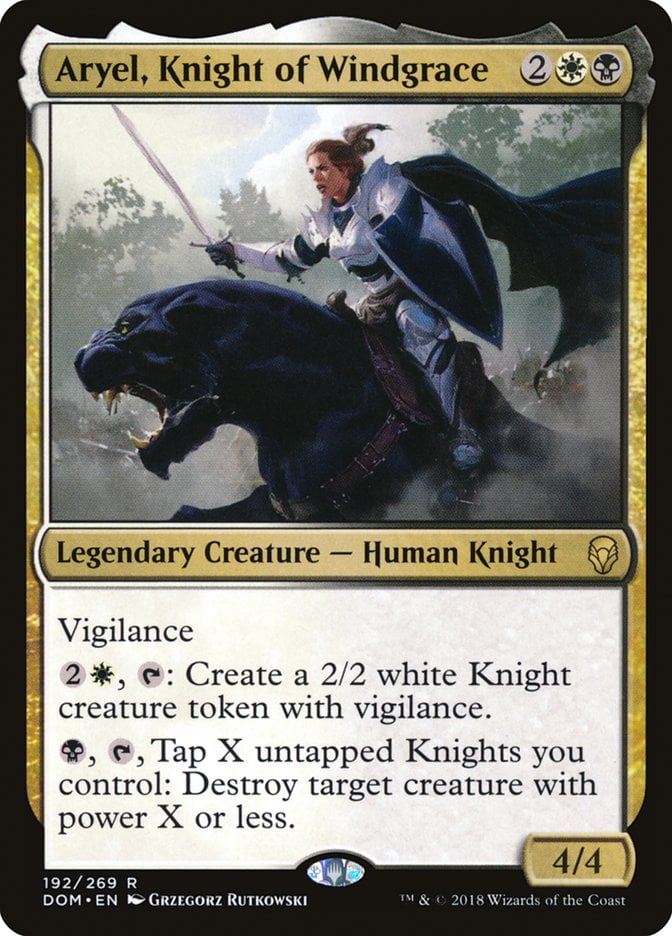
Aryel, Knight of Windgrace is an interesting card to build a knights deck around, turning your army into repeatable removal. It’s a slow creature engine, but given enough time, it gives you a lot of value. It’s nice to know your knight commander covers a few more bases than just attacking.
#32. Angel of Despair
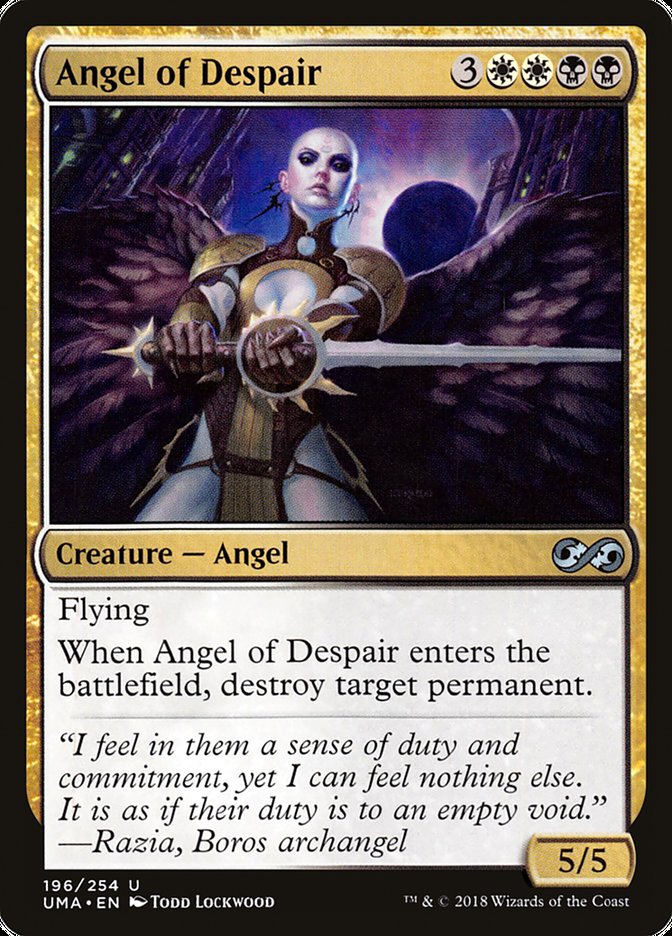
Angel of Despair is a classic reanimation target, and you get a big 5/5 flier with a Vindicate effect, the classic two-for-one. The ability to reanimate one of these and strike a land down is huge in the early turns. You’ll see this card sometimes in less powerful environments.
#31. Vivisection Evangelist
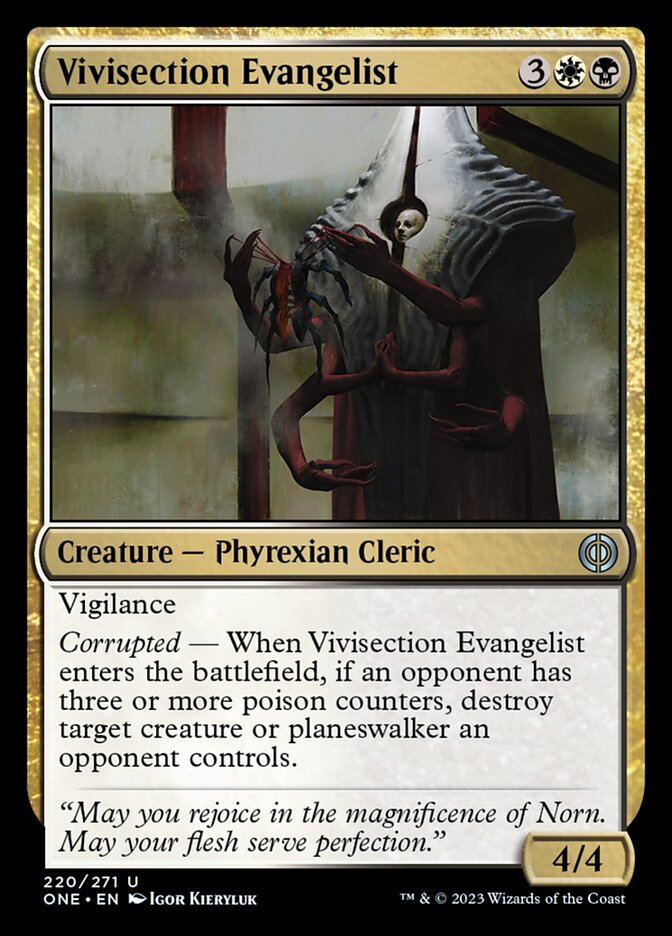
Vivisection Evangelist is an interesting card when you care about poisoning your foes, or when you can do that as a secondary effect. Getting a player to three poison counters is fairly easy in a dedicated poison deck, and when you do, a 4/4 that destroys a permanent on entering is a strong card.
#30. Kaya, Bane of the Dead

A card that sees more play in low-powered formats, Kaya, Bane of the Dead is essentially two removal spells on one planeswalker. It’s also slow, and sometimes your opponent attacks it and you only get one activation. I’d play this in x decks with a bit of planeswalker synergy or proliferation.
#29. Vona, Butcher of Magan
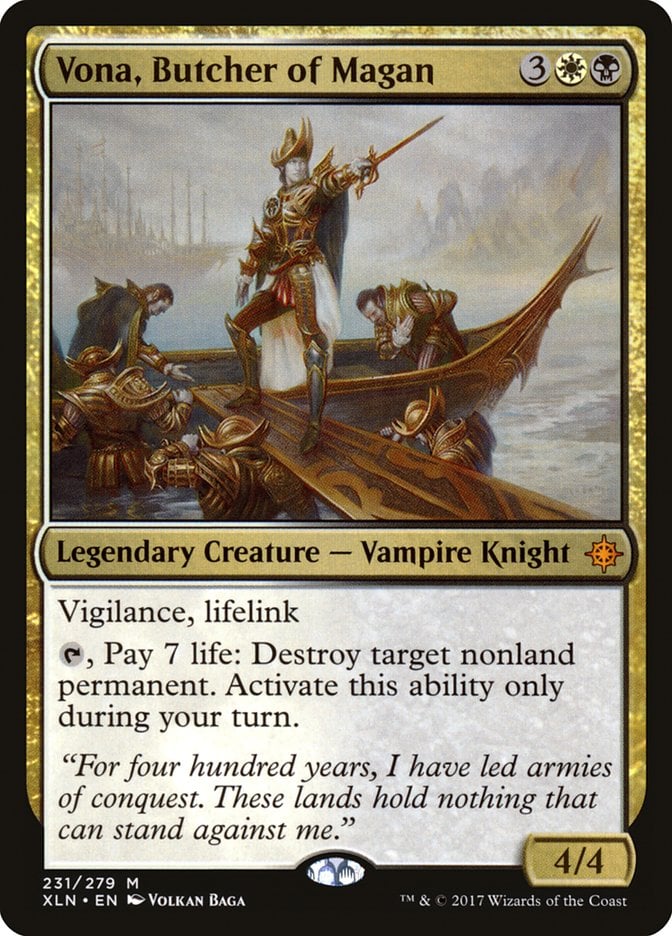
Vona, Butcher of Magan is a competent vampire/lifegain commander. Black has a lot of ways to pay life to get advantages, and here you can spend 7 life to use Vona as a killing machine. The typical pattern here is to buff Vona, attack, gain some life, and tap it to destroy something. Vampire typal synergies help a lot, especially since other vampires tend to offset the life payments.
#28. Kaya, Orzhov Usurper
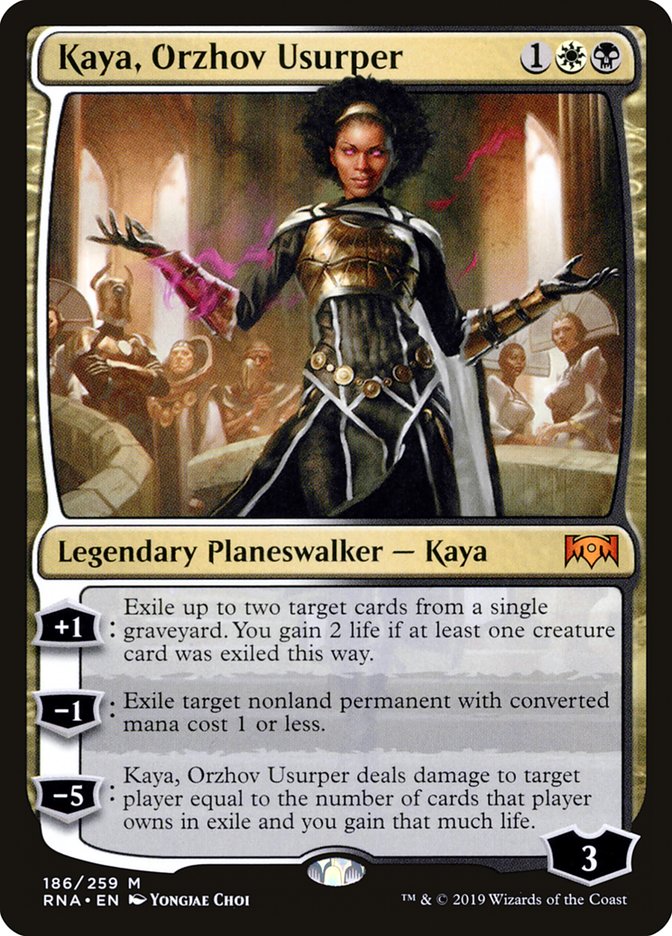
Kaya, Orzhov Usurper is a different planeswalker design, in that it’s more of a metagame support card than a protagonist. Its ability to gain life and exile small targets is good against aggressive decks, and it saw some play in formats where the best threats have a mana value of 1, like Delver of Secrets and Ragavan, Nimble Pilferer. Outside of that, it can get specific cards like Sol Ring, Mana Crypt, the Moxen, Chalice of the Void, and more.
#27. General Kudro of Drannith
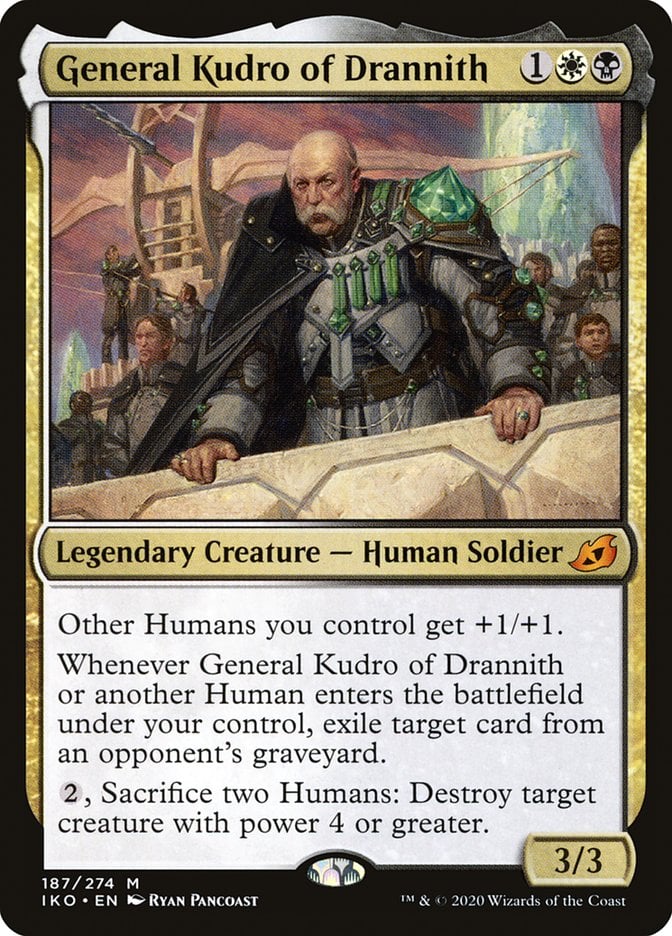
General Kudro of Drannith has removal tied to humans. The rate here isn’t great because you need to sacrifice two humans to get a big enemy creature, so you should use this with cards that create human tokens, like Gather the Townsfolk. Or picture it as a human lord that can use your creatures for different applications, especially if they’re going to die anyway.
#26. Fracture
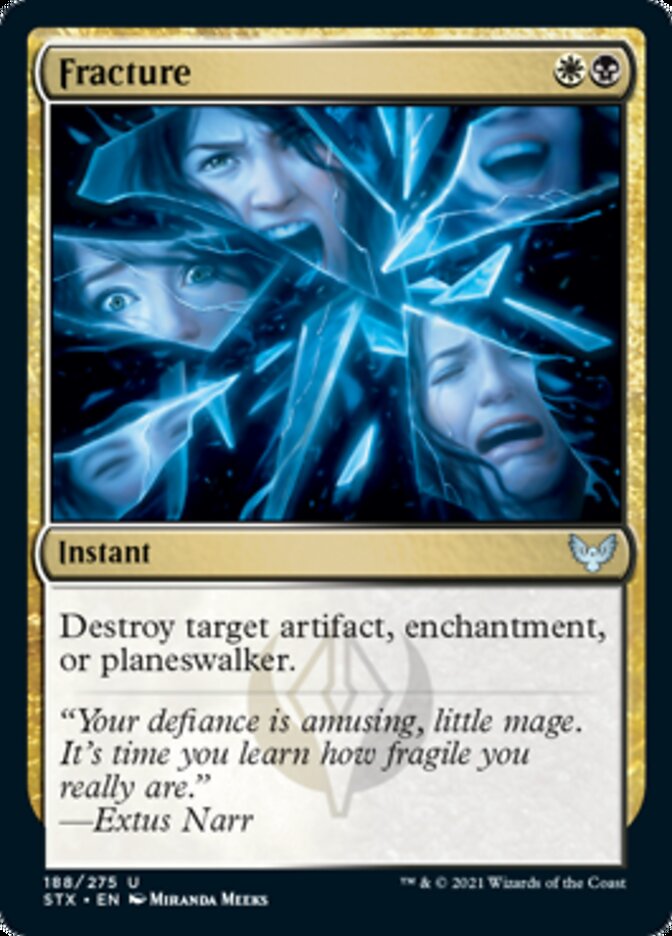
Fracture is often a sideboard removal spell that gets your traditional Disenchant targets plus planeswalkers. Its playability depends on the meta you’re facing, and not getting creatures is a big deal.
#25. Unmake

Like Pillory of the Sleepless, Unmake is an interesting, flexible, common low-power take on instant-speed exile removal for creatures, and that works either for mono-black, mono-white, or both. It’s not unplayable or anything; it’s just that the color combo has better options.
#24. Final Payment

Final Payment gets some points for being instant-speed unconditional creature removal. Black has cards like Infernal Grasp that are almost strictly better than this card, so you’d play this if you want more sacrifice outlets, or if the life loss is relevant.
#23. Consecrate // Consume
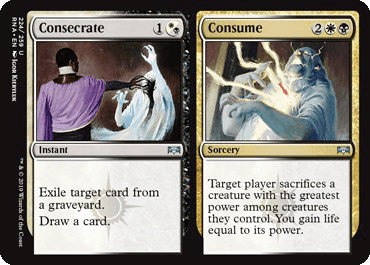
The Consume side of Consecrate // Consume is a competent removal spell, like Consumed by Greed. The fact that you also gain life is relevant in many scenarios, so this card is a removal spell that goes well in a dedicated lifegain deck.
#22. Invasion of New Capenna / Holy Frazzle-Cannon
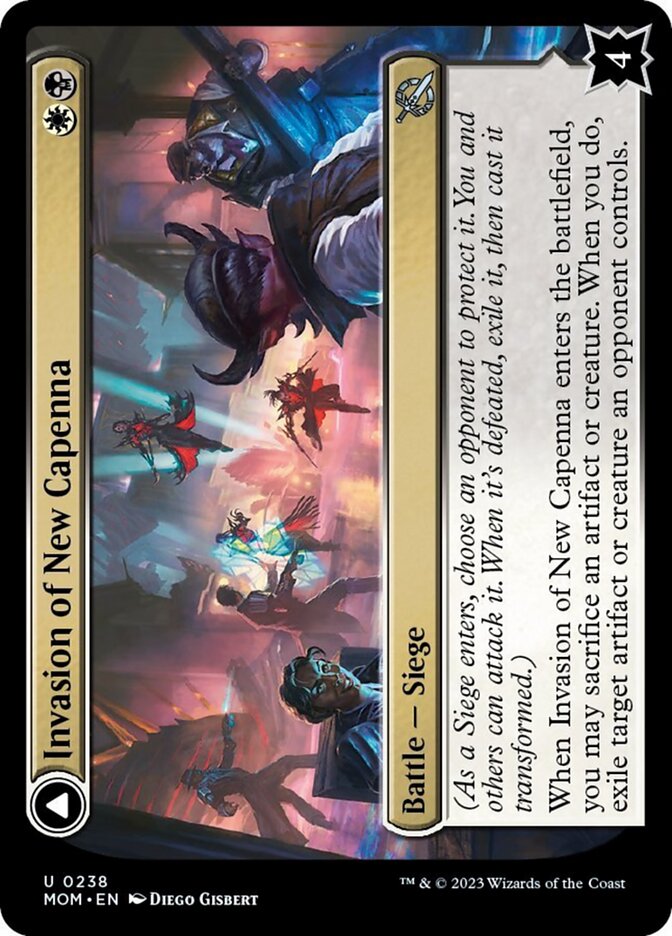
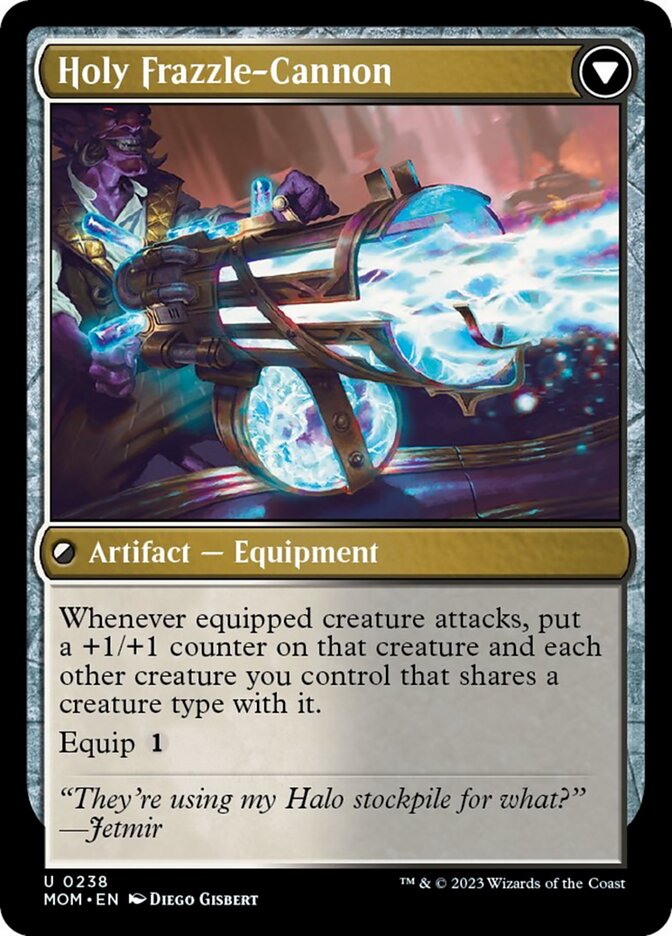
Invasion of New Capenna lets you trade an artifact or creature (ideally a token) for a juicier target. Its flipped side, Holy Frazzle-Cannon, is an excellent equipment for typal decks, so that gives you a clue as to which deck should include this card. Decks that produce many tokens of a certain creature type, like vampires, spirits, and humans, are a good place to start.
#21. Kaya’s Guile
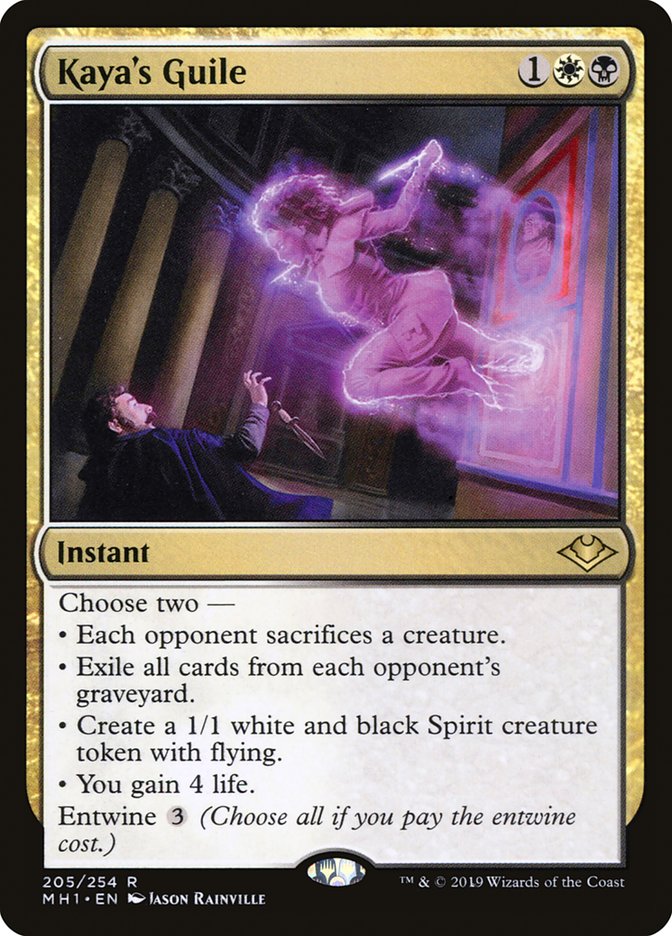
You’re playing Kaya's Guile as basically an edict effect with upside, in case your opponents don’t have good creatures or if you have more mana to spare. Even then, getting an extra 1/1 creature or life isn’t bad on top of an already solid effect.
#20. Sorin of House Markov / Sorin, Ravenous Neonate


Sorin of House Markov doesn’t offer any possibilities of removal, but its other face, the planeswalker Sorin, Ravenous Neonate, does. You still need to build around lifegain, but this is excellent for 2 mana, and you can at least sacrifice the Food token to gain 3 life and set up the -1 ability to remove a medium-sized creature.
#19. Ashen Rider
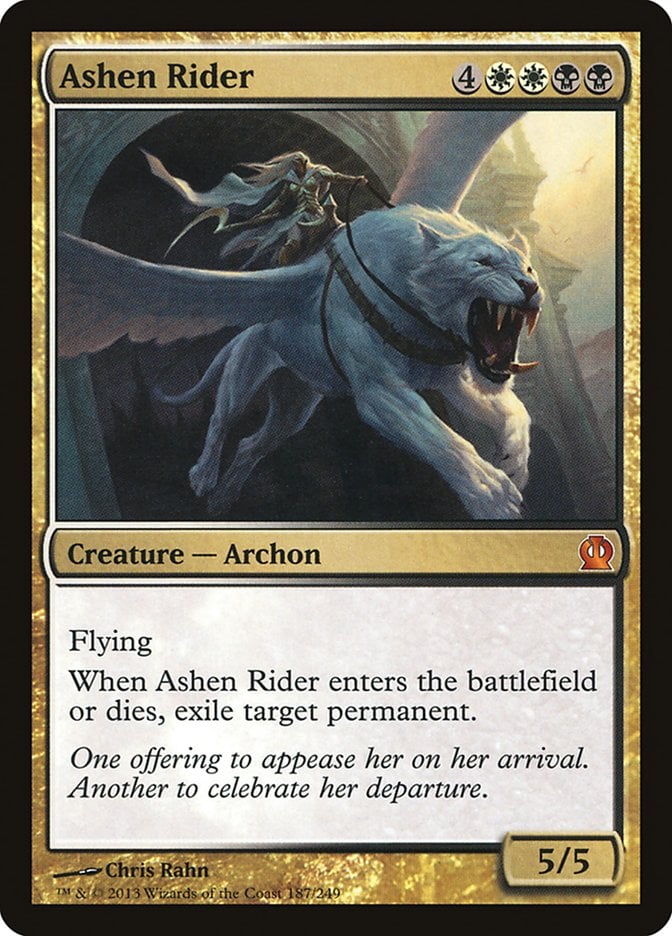
The evolution of Angel of Despair, Ashen Rider costs a little more to cast, but it exiles something when it enters and when it dies. It’s not a bad idea to hard-cast it, but the most common way this card enters the battlefield is via reanimation.
#18. Dire Tactics
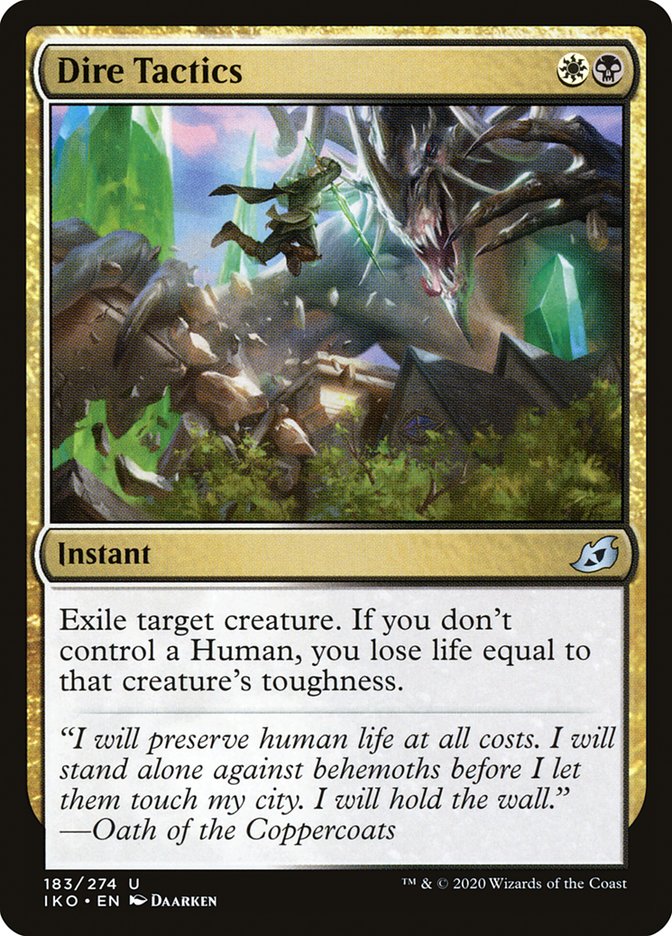
Dire Tactics is like a Vendetta that exiles. It’s nice if you control a human to mitigate its downside, and often bad if you don’t. Consider including this if you’re playing black and white and your commander is a human.
#17. Rite of Oblivion
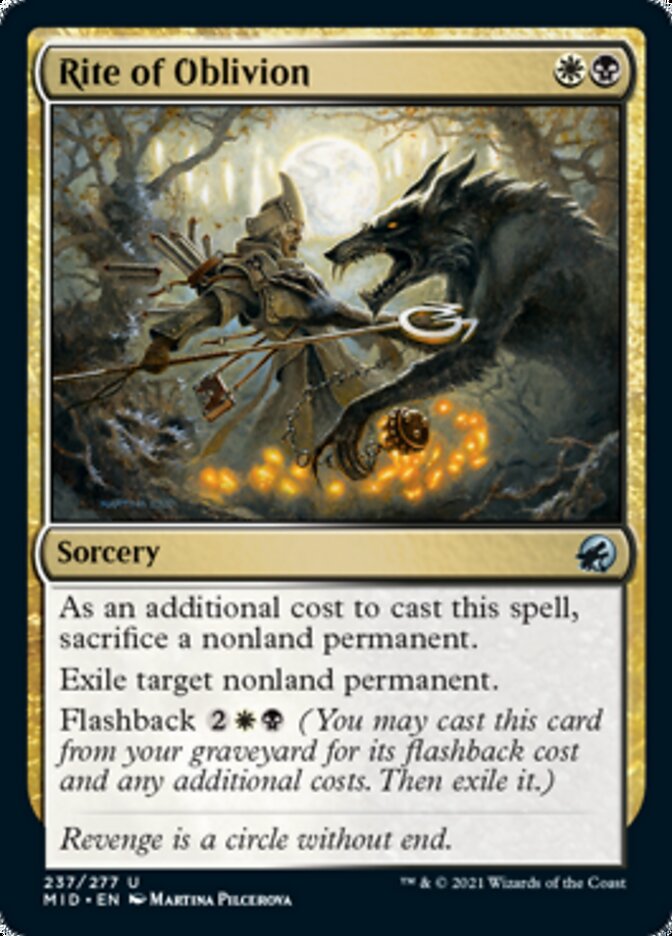
Many Orzhov removal cards lets you destroy or exile something if you sacrifice something, and Rite of Oblivion is one of those cards. It’s good that it’s cheap at 2 mana, and that you can do it again via flashback. Formats are usually better when they have these catch-all answers, especially now that we have so many game objects to sacrifice, like Treasure tokens, Maps, and more.
#16. Oath of Kaya
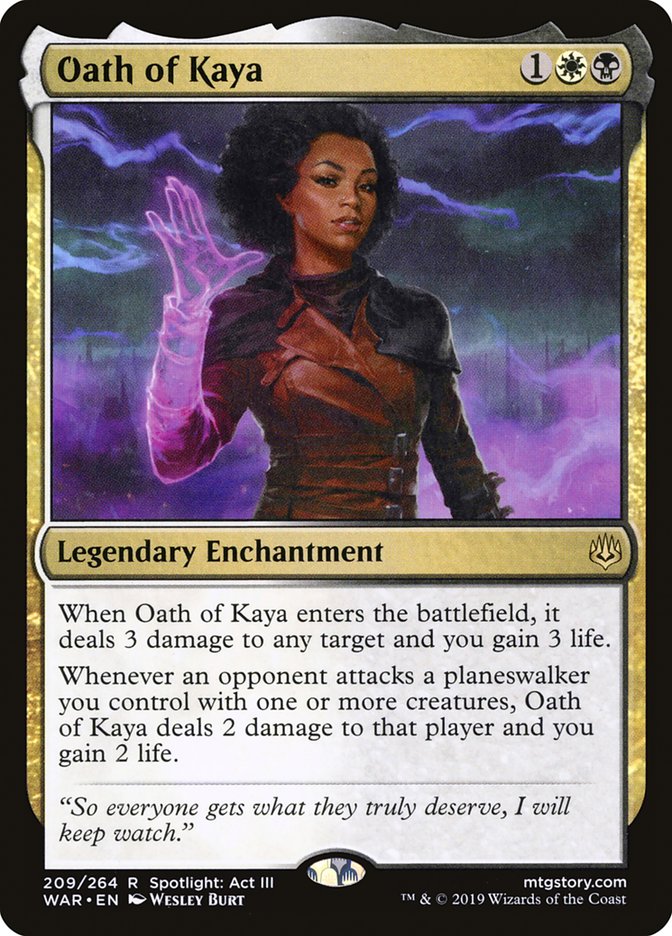
I love Oath of Kaya as a blinkable Lightning Helix. It’s strong without being oppressive; it helps to stabilize against aggressive decks, and it sees some play in formats like Pioneer where you can combine it with Yorion, Sky Nomad and Doom Foretold. The planeswalker clause is sometimes relevant, but you can play this card without any planeswalkers at all.
#15. Kaya the Inexorable
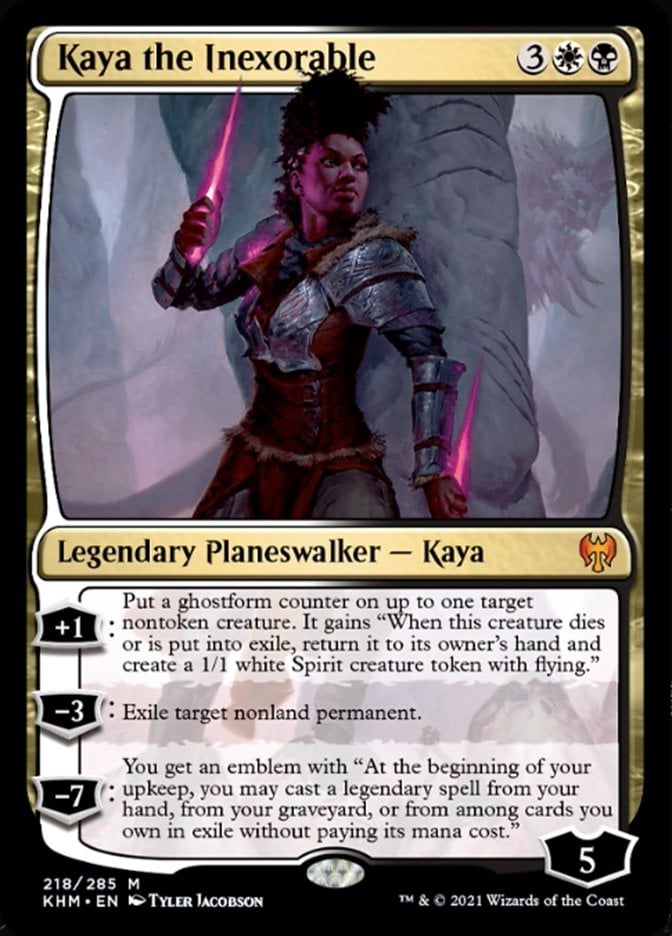
The classic 5-mana planeswalker that has removal on the downtick. Kaya the Inexorable’s uptick is good on creatures you control; otherwise, there are so many planeswalkers that offer you a better package (like drawing a card on the +1). Few planeswalkers exile on the downtick, so at least this Kaya has that going on for it.
#14. Ruthless Lawbringer
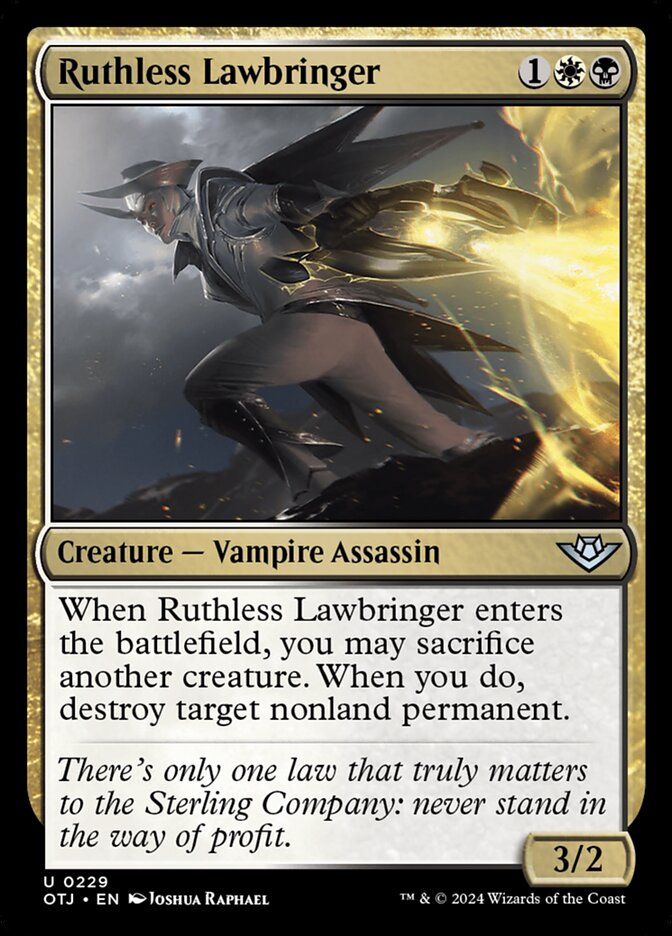
Ruthless Lawbringer is a 3-mana creature with good stats and the ability to destroy a nonland permanent. It’s blinkable and recurrable, but each time you have to sacrifice something. It’s an excellent sacrifice outlet and payoff for playing tokens.
#13. Ayli, Eternal Pilgrim
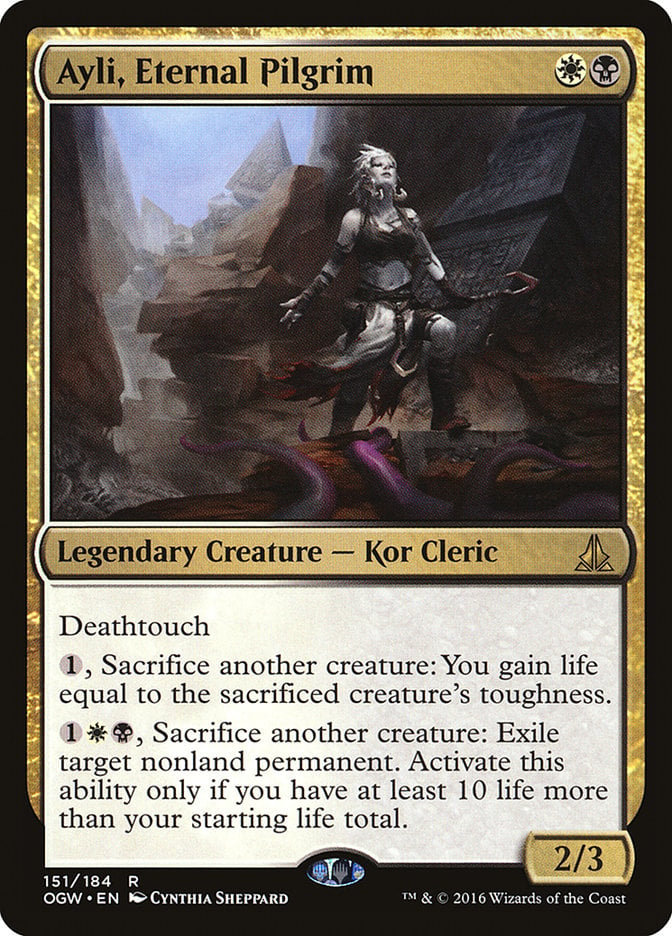
Ayli, Eternal Pilgrim offers you unlimited removal, so to speak, as long as you have mana, creatures to spare, and 10 more life than your starting total. It’s a nice sacrifice outlet for aristocrats decks, and as your commander, you can design a deck that gains a bunch of life and turns your tokens into Utter Ends.
#12. Cloak and Dagger, Entwined
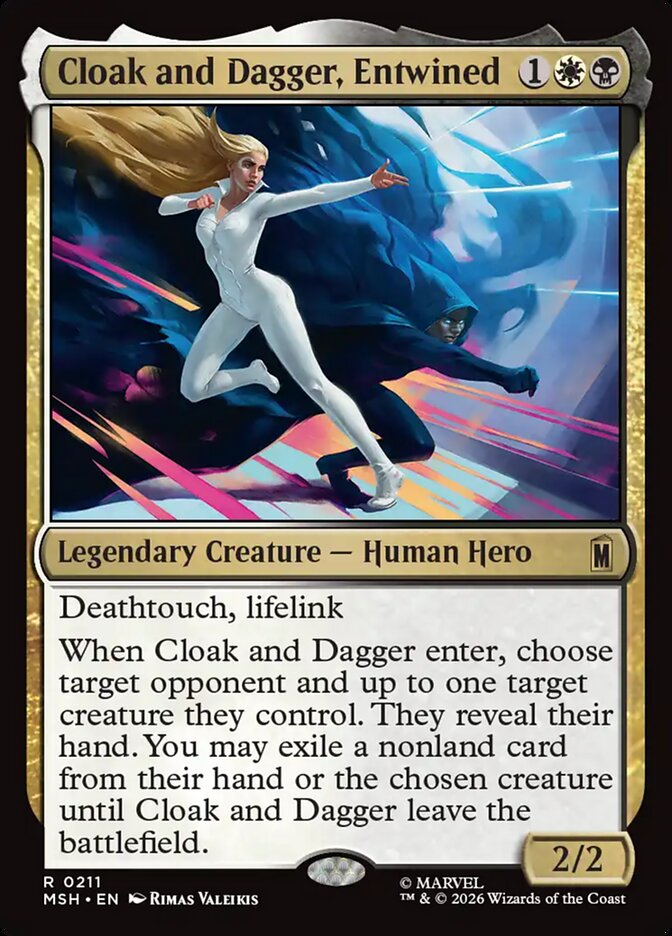
Cloak and Dagger, Entwined is a mix of a Fiend Hunter and a Tidehollow Sculler. If you’ve already played against this type of card, you know how annoying it is, and the nice aspect of this creature is that it deals with stuff on the battlefield or in your opponents’ hand. It’s excellent against decks that are light on removal.
#11. Vanishing Verse
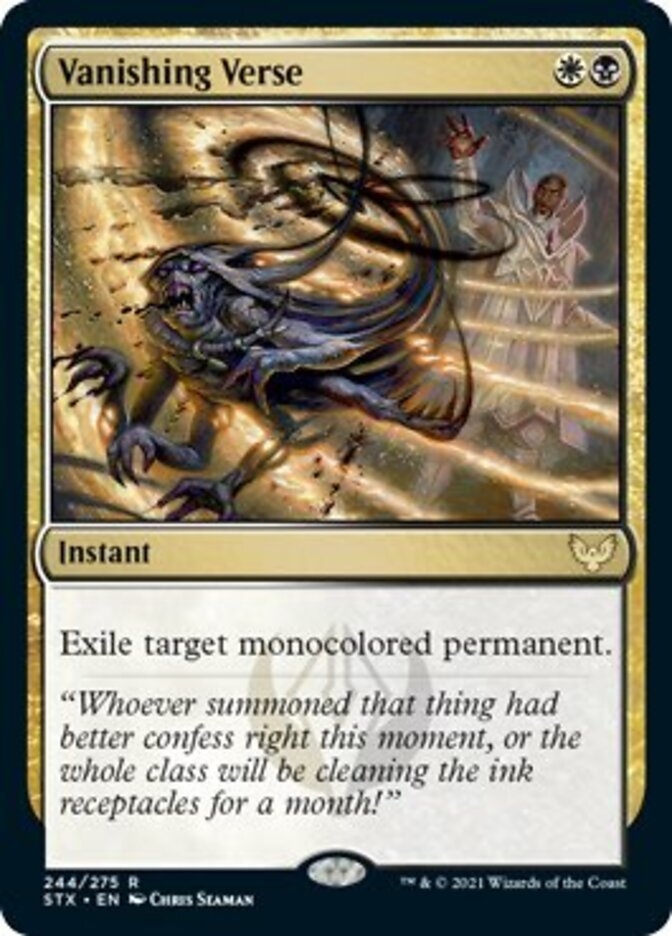
Vanishing Verse is very metagame-dependent, but when it’s good, 2 mana to exile any monocolored permanent is a steal. And in an EDH game, someone’s got to be playing a good monocolored threat or even a commander.
#10. Mortify
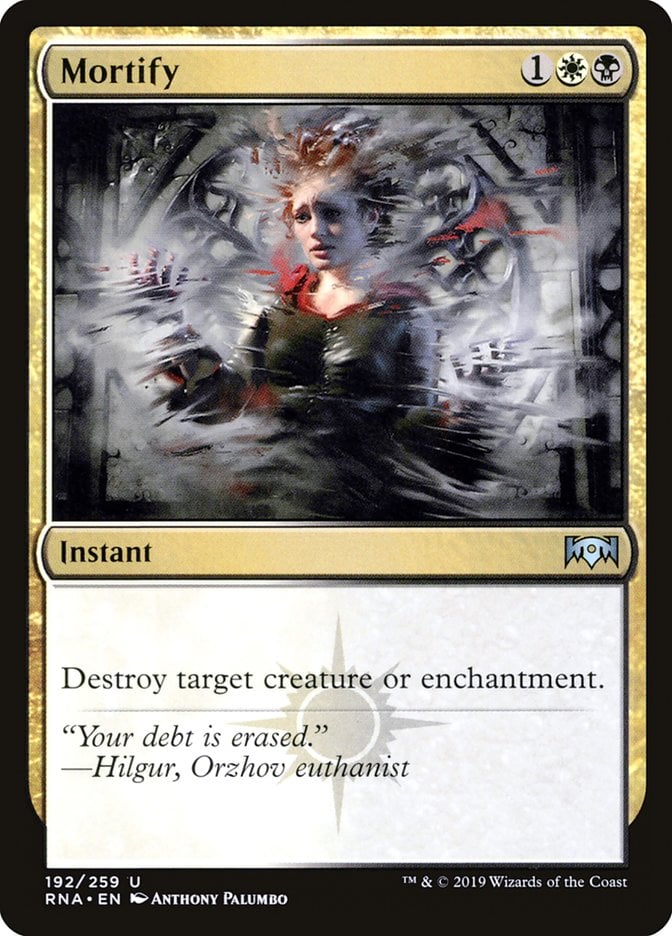
Mortify is a flexible removal spell that answers creatures or enchantments, or a main-deckable way to deal with enchantments. Like a lot of Orzhov removal, it’s not the auto-include that it once was because 3-mana removal is considered very expensive these days. Still, according to EDHREC, it’s one of the most played WB cards – you can’t play two Anguished Unmakings in your deck after all.
#9. Kaya, Intangible Slayer
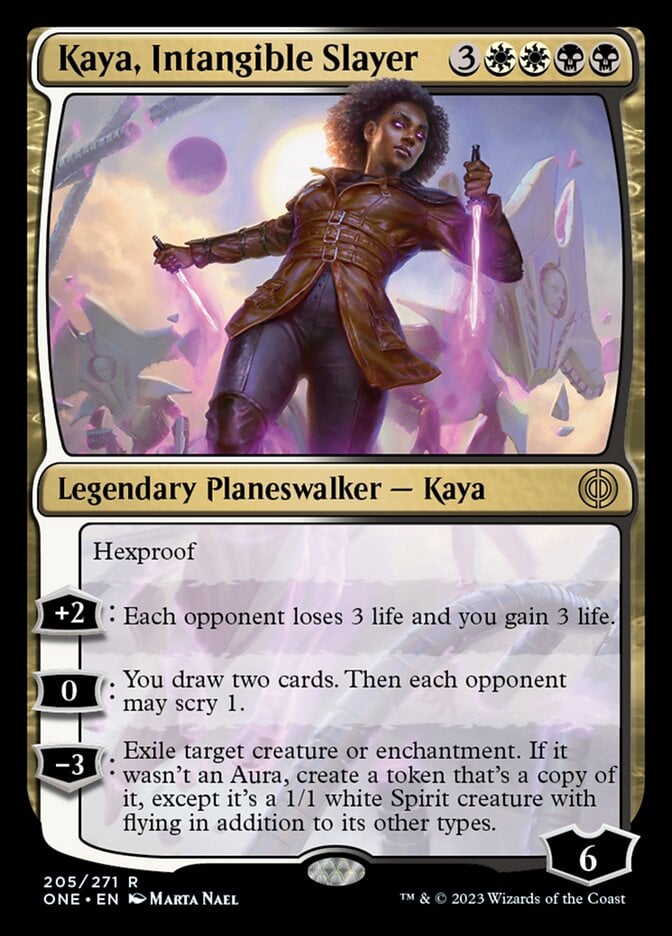
Kaya, Intangible Slayer is an excellent win condition in black and white midrange decks, as a hexproof way to get cards, drain life, and also remove problems. It’s interesting that you exile their threat and get a 1/1 version of what you exiled for yourself. This makes “spending” removal on a card like Baleful Strix a valuable proposition.
#8. Deathbringer Liege
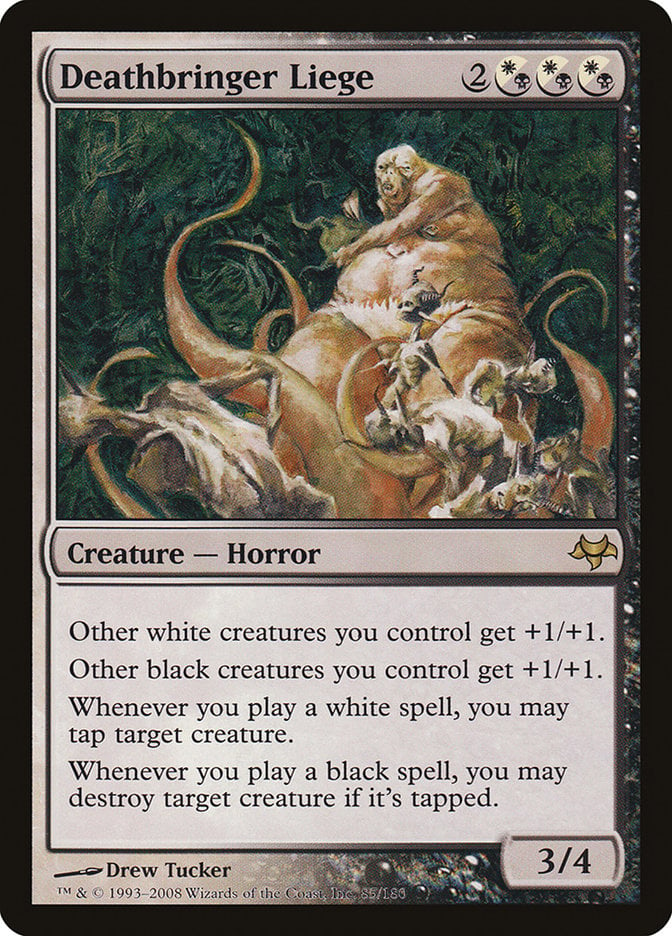
Deathbringer Liege is one big reason to be playing white and black cards. First, all your white and black creatures get +1/+1, and whenever you play a white and black card, you get to tap and then destroy any creature. Besides, the fully Orzhov creatures you play get +2/+2, so it’s a bigger incentive to run them.
#7. Utter End
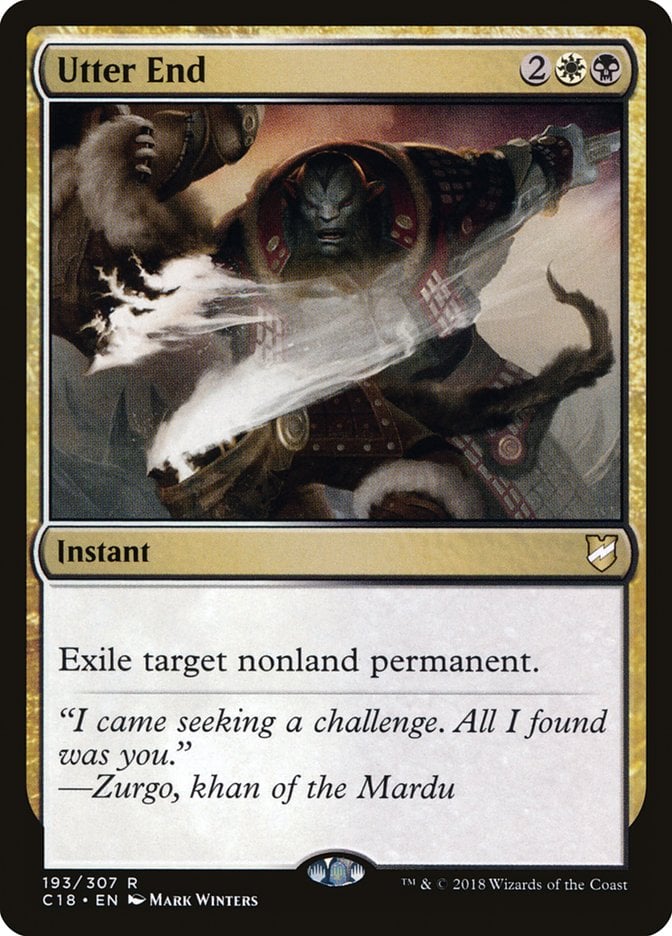
Although a 4-MV spell, Utter End exiles anything (nonland, of course) at instant speed, and it’s usually a good comparison to other slow cards. It’s good against anything that’s not really aggressive, especially against 5- or 6-mana planeswalkers and expensive, indestructible threats.
#6. Damn
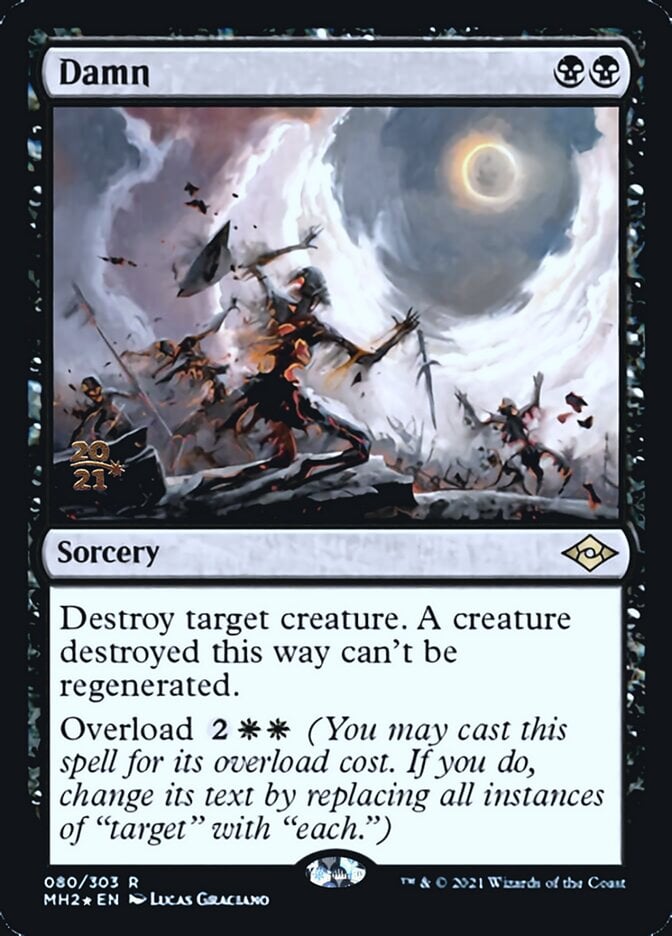
Damn is actually two cards: The black version which is like Fell, and the overloaded version, which costs , making a reference to Wrath of God. It’s a good include as a spot removal spell that can double as a wrath, and for that reason, it sees plenty of EDH play.
#5. Abstruse Appropriation

Abstruse Appropriation is a weird card. It was printed at a time when there was a fringe WB Eldrazi “death and taxes” deck. Though Utter End with upside is okay, it’s still a 4-mana removal spell. The part where you can cast the exiled card is much better, but you probably need ways to generate colorless mana. This card is better the more colorless sources of mana you have in your deck, like Basalt Monolith and Worn Powerstone.
#4. Vindicate
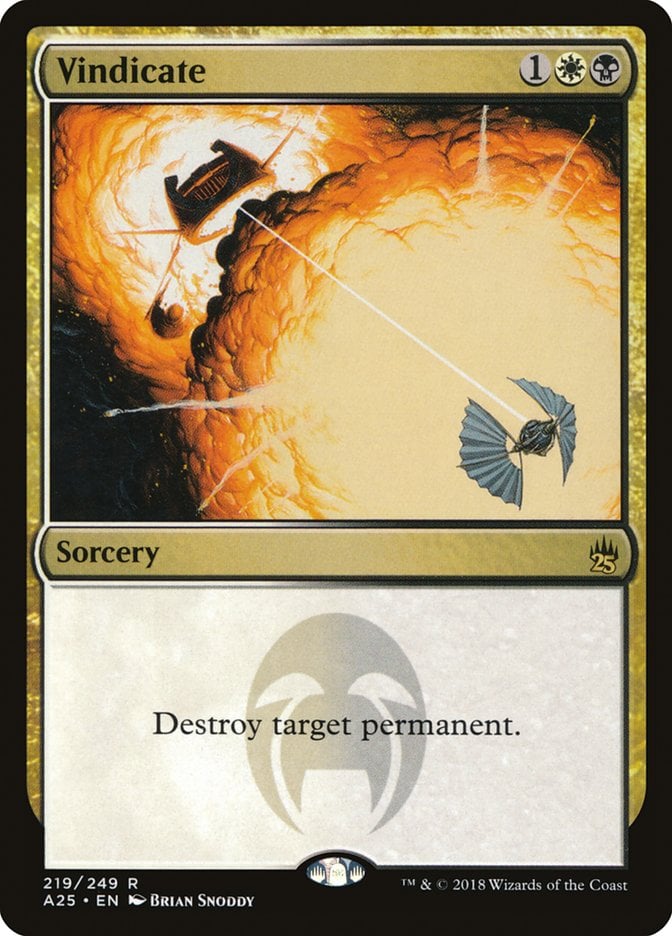
The OG “destroy any card” spell in MTG, Vindicate was extremely good at the time as a catch-all removal spell, and at only 3 mana, although at sorcery speed. An interesting nod to black’s early days as the color that could destroy lands with Sinkhole and friends, Vindicate saw some play in Legacy and Modern, but it’s often considered too slow for MTG’s present speed. People still use the term “Vindicate test” to refer to a threat that costs 3 mana and can be destroyed by this card without generating further advantages.
#3. Despark
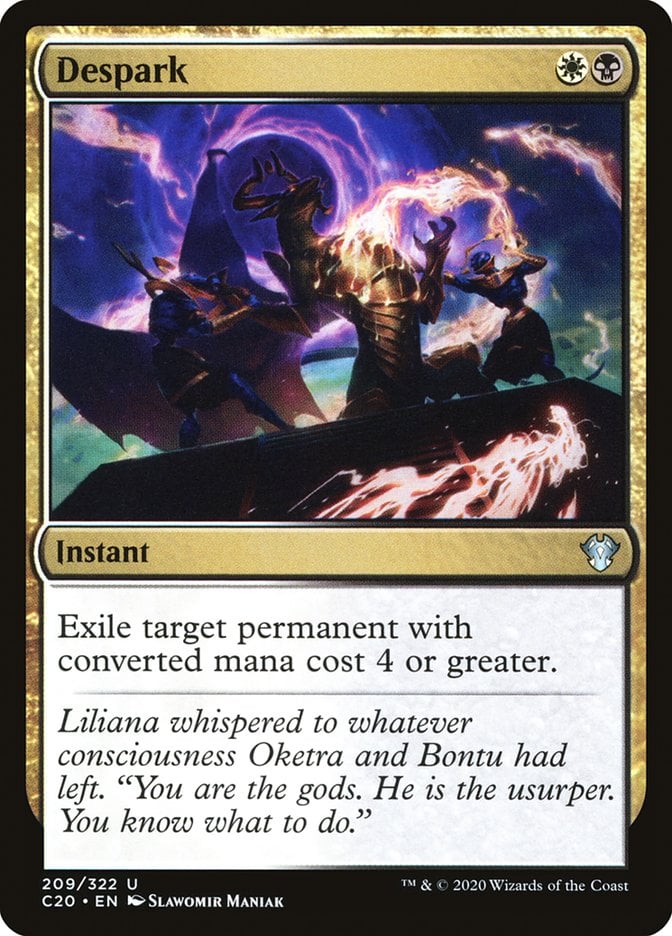
Despark is restrictive, but you’re always ahead on mana when you pay 2 mana to exile your opponent’s 4-drop or bigger. A sideboard card at best in 60-card decks, Despark is heavily played in Commander, the format where someone will inevitably ramp into big targets at some point in the game. It’s not a good option in formats with a low-to-the-ground curve, though.
#2. Legions to Ashes
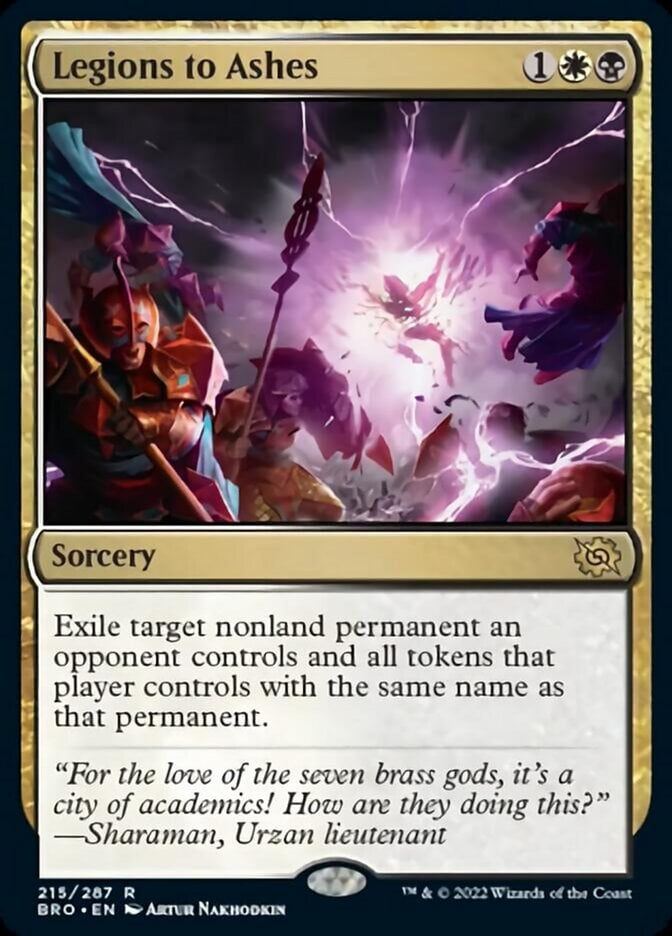
Legions to Ashes is basically a 3-mana sorcery-speed Utter End, which is fine, and sometimes you’ll get rid of a lot of tokens, or token copies of a given card. It’s an interesting removal spell in Commander considering that there’s always a guy running rampart with tokens, or cloning their own commander, especially now that we have so many copy effects that ignore the legend rule.
#1. Anguished Unmaking
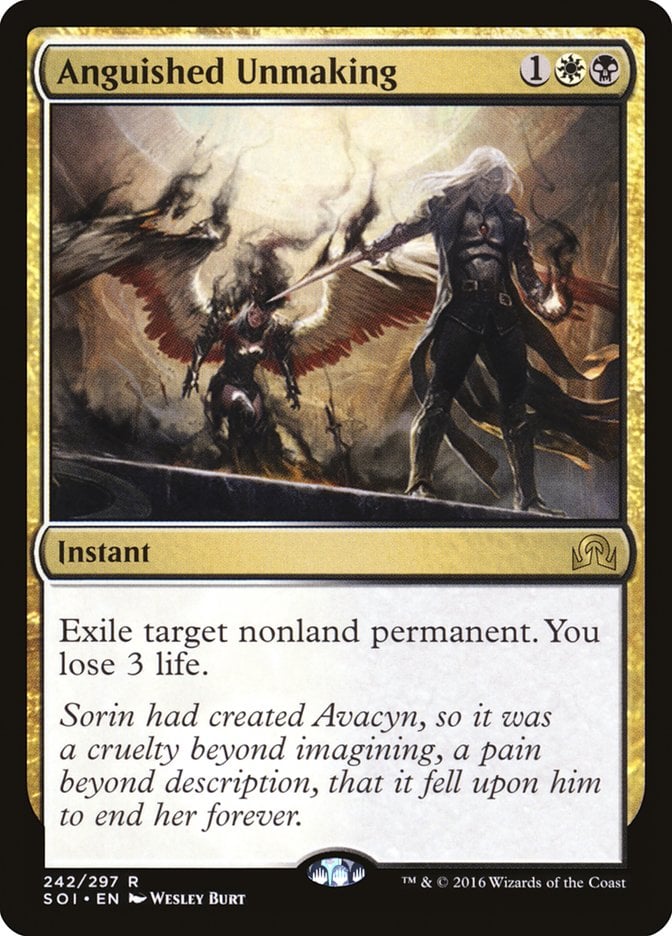
The defacto removal spell for white and black, most WB decklists start with Anguished Unmaking in the list, a staple just like Sol Ring and Command Tower. Three mana, exile anything you want at instant speed, and the 3 life loss is often irrelevant. This is the actual standard for spot removal that’s flexible in Commander; not so much in 20-life formats where it’s slow and the life payment is risky.
Best Orzhov Removal Payoffs
We usually play removal to get rid of a problem, to win a combat step, or to avoid straight up losing. But there are some ways to take advantage of it further.

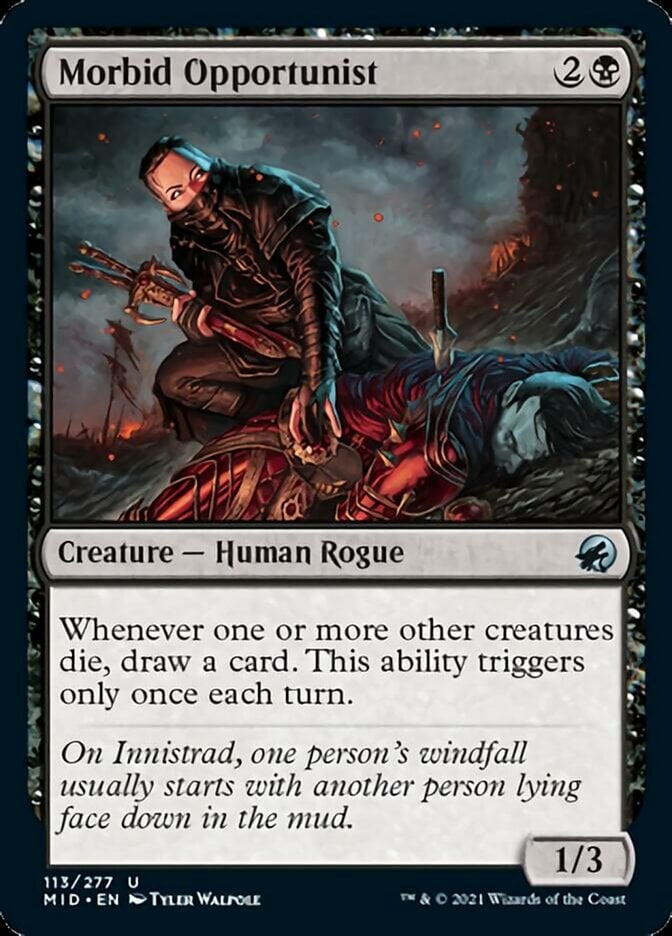
Considering that many Orzhov removal spells exile, Ketramose, the New Dawn gives you a direct payoff. Each time you exile a card on your turn, you’ll lose 1 life and draw a card. All your removal spells cantrip now. Morbid Opportunist can be used to draw some cards when the removal doesn’t exile.
Lifegain and life drain are common themes among Orzhov removal spells. With some cards you’ll gain life, others will pay life, but regardless, they fit the same “use your life as a resource” plan.
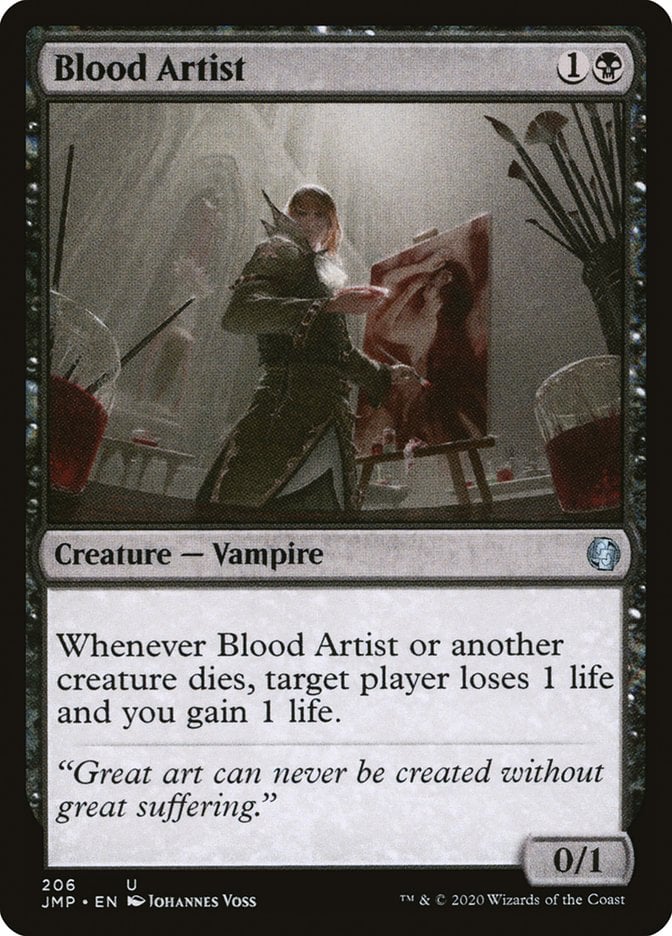
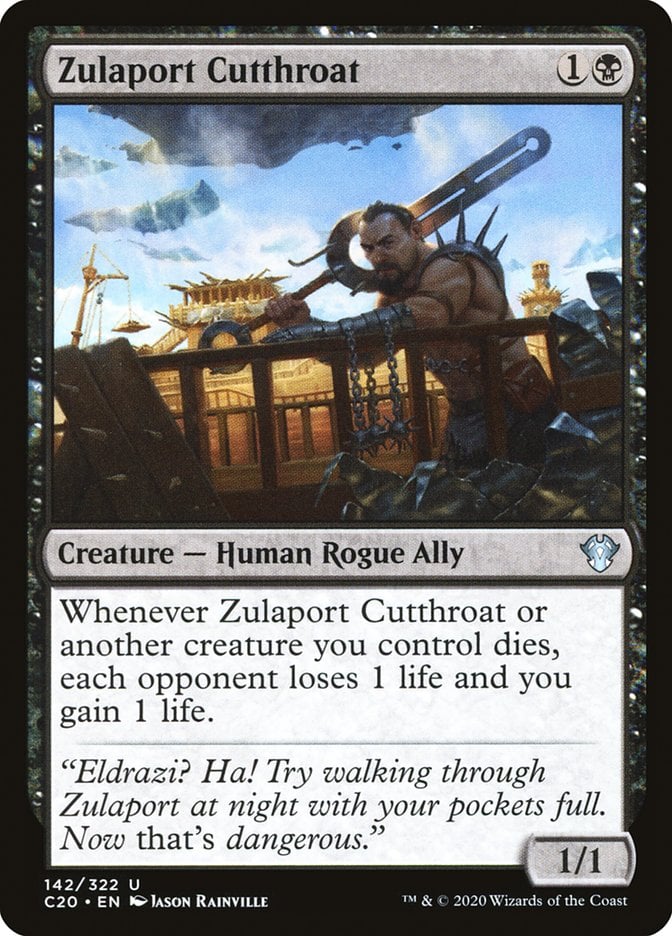
Aristocrats cards like Blood Artist and Zulaport Cutthroat benefit from all the creatures dying and being sacrificed here and there for Orzhov spot removal. You’ll also gain some life in small installments, fitting the lifegain plan quite nicely.
Wrap Up

Rite of Oblivion | Illustration by Martina Pilcerova
Orzhov is the best color pair at removal, with Rakdos and Golgari close behind. White removes practically everything, although at low efficiency; black is more efficient at removing creatures, and the two together are excellent. Since Orzhov exiles unconditionally, it often doesn’t care if creatures are big, small, or indestructible. And they’re excellent at dealing with pesky artifacts or enchantments people might be playing.
What do you think of Orzhov removal, guys? Which one is your favorite? Let me know in the comments section below, or in our Drafsim Discord. For more from Draftsim, follow us on YouTube at The Daily Upkeep.
Until next time, stay safe!
Follow Draftsim for awesome articles and set updates:










Add Comment