
Last updated on December 23, 2025

Quantum Riddler | Illustration by Cacho Rubione
As 2025 comes to a close, the Draftsim News team has reflected on the year in Magic:
- Best Commander Cards of 2025
- Best Commander Precons of 2025
- Best Commanders of 2025
- Hottest MTG News Stories of 2025
- All 2025 Magic Sets Ranked
Today, I’m reflecting on how the mechanics shook out. We’re only looking at new mechanics, not returning ones, and only named mechanics, so no villain typal or anything.
#19. Void


Void reskins revolt, and it’s…fine? It doesn’t break new ground, and it’s much less impressive since the mechanic specifies nonland, so it doesn’t work with fetch lands. Very forgettable.
#18. Renew


Renew embraces the circle of life by letting creatures in the graveyard enhance those in play, which is relatively unexciting in practice. The mechanic doesn’t do anything bad, it isn’t unfun…I just can’t remember any of the cards without Scryfall.
#17. Flurry


Flurry tacks a keyword onto an existing mechanic, which are cards that do something when you cast your second spell. It’s a pretty play pattern, but isn’t really ‘new.’ Still, I’d like more of this. Assuming Wizards reins it in a little.
#16. Omen


Omen is a cute play on adventure, though much weaker since it isn’t a guaranteed two-for-one; you might never see that Marang River Regent again. Still, the mechanic has promise, and modality always makes the game more interesting.
#15. Firebending


While there are individually interesting firebending cards, like Sozin's Comet and Fire Lord Azula, the mechanic itself fails to spark joy. It’s so hyper-narrow and hard to take advantage of, though that certainly appeals to the right player.
#14. Mayhem
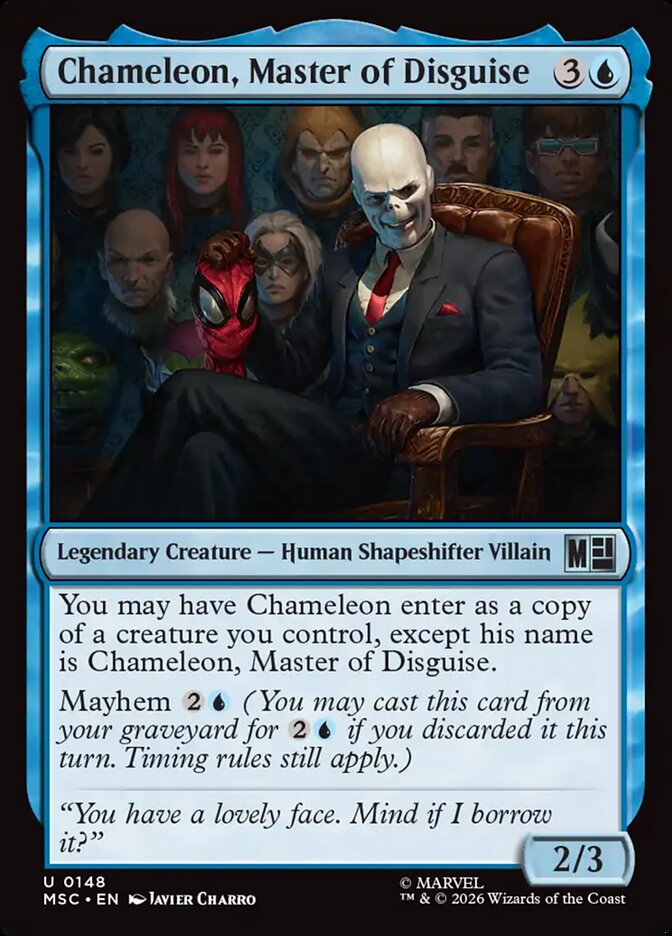


Mayhem is a sidegrade to madness, with its own benefits. It doesn’t trigger cast from exile effects, but it does work with cards that care about casting spells from the graveyard/outside your hand or cards leaving the graveyard. Pickings are presently slim, but the mechanic could bloom into something good with more support.
#13. Waterbending


Flexibility is rarely bad. Waterbending is a novel take on cost reduction that builds on convoke, and is fundamentally fairer since you don’t (currently) get free spells with the mechanic. But while there’s nothing bad to say, I can’t think of anything good besides enjoying Waterbending Lesson in Limited.
#12. Start Your Engines!


The flavor of start your engines! and Aetherdrift as a whole are wonky, but the mechanic’s cool. Anything that encourages aggro forces both players to participate in the game, and paying off aggression with a long-term gain is compelling design space. It’s a shame the flavor is so restrictive we’ll probably never see it again….
#11. Station


Station showed up on planets and spacecraft, and it’s incredibly interesting. Admittedly, I’m more interested in the design space it opens up; few current spacecraft or planets are super compelling, but future iterations could do a lot. I’d love a creature-adjacent version that modernizes level up.
#10. Harmonize


Flashback is a personal favorite mechanic, and harmonize is both weaker and more appealing due to its reliance on creatures. Achieving the proper balance of creature and noncreature spells to maximize these cards encourages deliberate deckbuilding.
#9. Web-slinging


Nobody’s gonna pretend Marvel’s Spider-Man was anything less than a dud, but web-slinging is very cool. You can construct interesting value chains based on bouncing creatures with strong enters effects, and alternative costs introduce novel play patterns. It might be nice to see the mechanic return in future Marvel crossovers.
#8. Job Select


Job select loses originality points as the third iteration on living weapon, but I would honestly welcome a fourth iteration. Maybe it’s just because I’m a Limited player, but these cards offer incredible value. Having an aggressive 2-drop that can be repurposed later if you flood out means you’re playing more Magic than without.
#7. Endure


Endure coasts on flexibility. The token is often the correct choice, but not always, and mechanics with options lead to more engaging gameplay. The more possible paths you can take, the more you think, and the greater skill expression you have.
#6. Mobilize


Mobilize opens the door to so many synergies. It’s an intrinsically aggressive mechanic, but savvy deckbuilding does much more than just attack. Perhaps you use them to fuel aristocrats, or crank up the pain with token doublers, or enable creaturefall cards. However you go about it, you won’t be disappointed.
#5. Exhaust


Since an exhaust ability can only be used once, they get to be stronger than the average activated ability. But! Since the “only activate once” clause is tied to that instance of the permanent, flickering or bouncing the card with exhaust lets you go another round. The fact that we’ve already seen more exhaust cards post-Aetherdrift suggests Wizards appreciates this design space, and I can’t wait to see it develop further.
#4. Earthbending


Earthbending’s flavor isn’t exactly on point, but the gameplay makes up for any gaps. Earthbending creatures has +1/+1 counter synergies, but, more importantly, lets you do neat tricks like ramp with fetch lands or get banned from the LGS for activating Strip Mine too much. It’s amazing, and I hope Wizards finds an excuse to print more. And that another LGS opens soon….
#3. Airbending


I dismissed airbending in spoiler season as backwards foretell, and would like to officially apologize. It has that flexibility I love: It lets you reset creatures with strong enters effects, serves as balanced protection, or tempo-oriented removal that gives you the turn it takes to close the game. It even enables infinite combos, as seen in Standard.
#2. Tiered


At its best, Universes Beyond produces a product of passion, using the framework of Magic to show adoration for a certain game, novel, or other form of art in a way that makes you appreciate both. Tiered did this, capturing the spirit of an RPG’s skill tree system in brilliant fashion. Though simple and sparse, these few cards translate an entirely different game system to Magic, if only for a moment, and that’s a triumph of game design. I won’t claim that Universes Beyond design peaked in 2025, but a record-breaking profit isn’t the only high bar Final Fantasy set.
#1. Warp


Players often use warp similarly to evoke: They cast a spell like Quantum Riddler for its warp cost, then flicker it to get the full creature permanently. But warp makes it way easier since you don’t lose the creature until the end of the turn, letting you use sorcery-speed or slower effects like Splash Portal and Phelia, Exuberant Shepherd. Even if you aren’t scamming people, the mechanic makes the game smooth: Your 5-drop can come down earlier if you need a spell, it uses up all your mana for two turns, and it’s perfectly respectable to cast solo. You can’t go wrong.
Follow Draftsim for awesome articles and set updates:










Add Comment