
Triple Triad | Illustration by Ben Wootten
MTG dominates the TCG world in sales and numbers, but the market is far from a 1-game monopoly. There are other heavy competitors, namely Yu-Gi-Oh! and Pokémon, the digital-only giant Hearthstone, recent newcomers like Disney’s Lorcana or Star Wars: Unlimited, and now there’s Riftbound.
Produced by Riot, the company behind League of Legends, it aims to be a good representation of the ever-popular Multiplayer Online Battle Arena (MOBA). I’ve watched the Arcane Netflix show, and it’s pretty interesting, so they’re doing something right with the marketing strategy, and now I’m also interested in the card game. What’s the next step? Graphic novels? Sign me up.
So follow me as I take a look at this game through the lens of a veteran MTG player who also knows a bit about other card games and board games.
What Is the Riftbound Trading Card Game?
Riftbound a trading card game that makes the League of Legends IP more accessible to people who aren’t exactly video game and MOBA fans.
Riot Games, a Chinese company that owns Valorant and League of Legends, previously developed the digital card game Legends of Runeterra, and they wanted a physical TCG.
The main idea of Riftbound is to translate the action of the MOBA into card game form, so each player has a base where the units and champions come from, and they’ll move between battlefields to conquer them, hold them, and score points. There are elements from different board games like Smash Up and King of Tokyo scattered across the design, too.
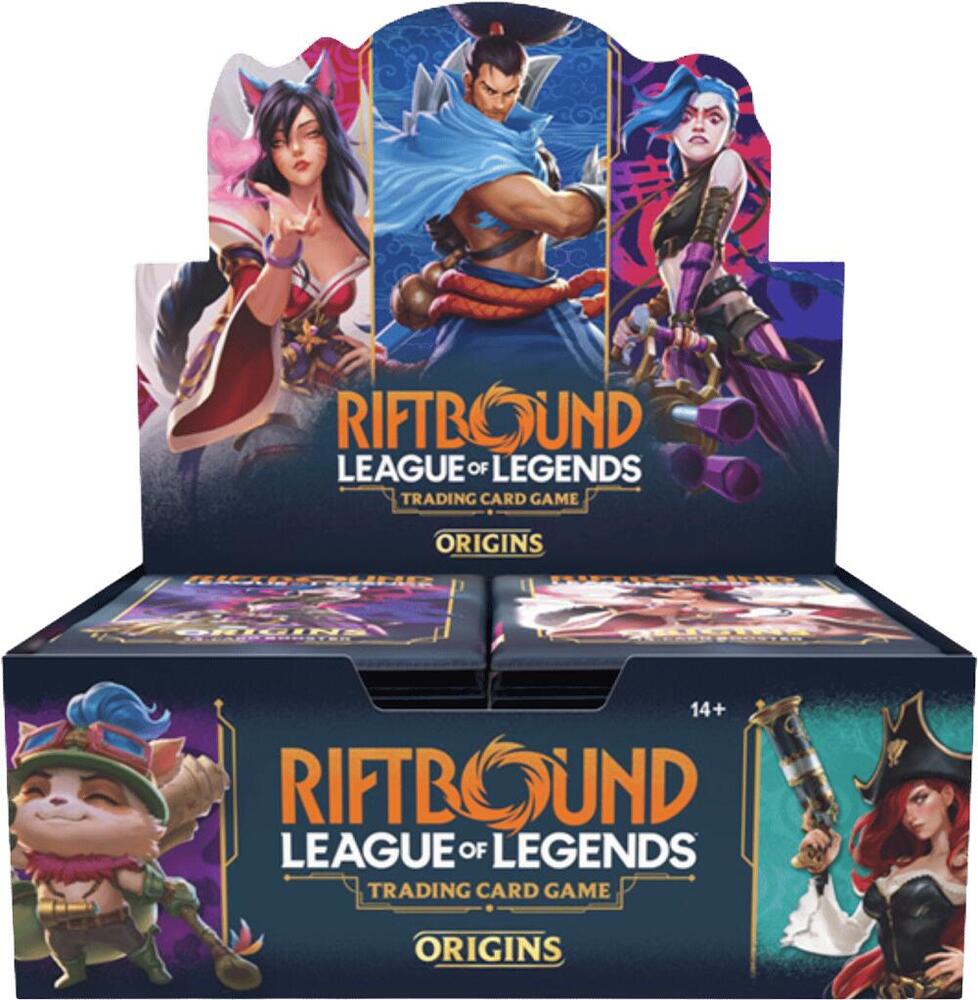
Riftbound Origins (the core set) was first released in China in August 2025 and in the Western world in October 2025. The Spiritforged and Unleashed expansions quickly followed.
Vendetta and Radiance will be released later in 2026, and Riot intends to release four expansions every year.
Riftbound is a huge success in China so far, with a large competitive scene, and Riot is bringing not only players from LoL to this game but from other competitive TCGs as well.
How Do You Play the Riftbound TCG?
Riftbound is played with two decks: a 40-card deck of actions and a 12-card deck of runes. Each player also has a champion legend that starts the game in the Legend Zone, and this champion dictates which dominions you can play.
The game can be played with 2-4 players, so the same deck can be used in a 1v1 duel or a 4-player free-for-all. Unlike MTG, there isn’t a 60-card Standard 1v1 deck or a 100-card EDH deck.
The Goal of the Game
To win, you need to be the first player to score 8 points. Each time you conquer a battlefield, you score a point. If you hold it for a round, you automatically get another point. There’s a special rule: When you have 7 points, scoring the eighth point requires you to hold a battlefield, as usual, or to conquer all battlefields at once in a round. That allows the other players to react to the lead player’s plans and prevent a cheap “I win” moment.
Basics
You start the game with four cards in hand, and you draw a card each turn. Each turn you’ll also channel two runes from the rune deck. Your 40-card deck usually has a mix of unit cards, spell cards, and other cards. You can play up to three copies of the same-named card. Each player has their trash area where used/spent cards go, an equivalent to the graveyard in MTG. You can mulligan by choosing up to two cards in your starting hand, setting them aside, and drawing that many cards. Cards set aside this way are recycled (put into the bottom of your deck).
To play a card, you need to pay its cost using your runes. Some cards only require you to tap the runes to pay the cost. Others require you to put a rune on the bottom of the rune deck, like you sacrificed it to play the card.
Deck Building Restrictions and Rarities
Your action deck in Riftbound has 40 cards, one of which is your Champion unit matching your Legend (like an MTG companion that starts in a different zone from which you can cast it). You can have up to three cards with the same name, besides the color restrictions. There’s no rarity restriction in a Riftbound deck.
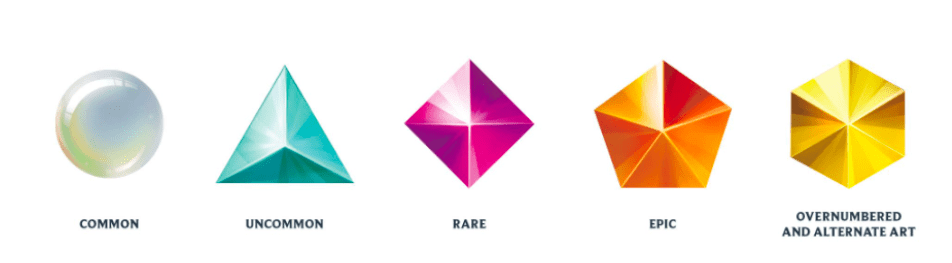
Riftbound has four card rarities: Common, Uncommon, Rare, and Epic, denoted by the symbols in the image above, which you’ll see in the bottom center of the card. Overnumbered and Alternate Art are just cosmetic treatments for existing cards.
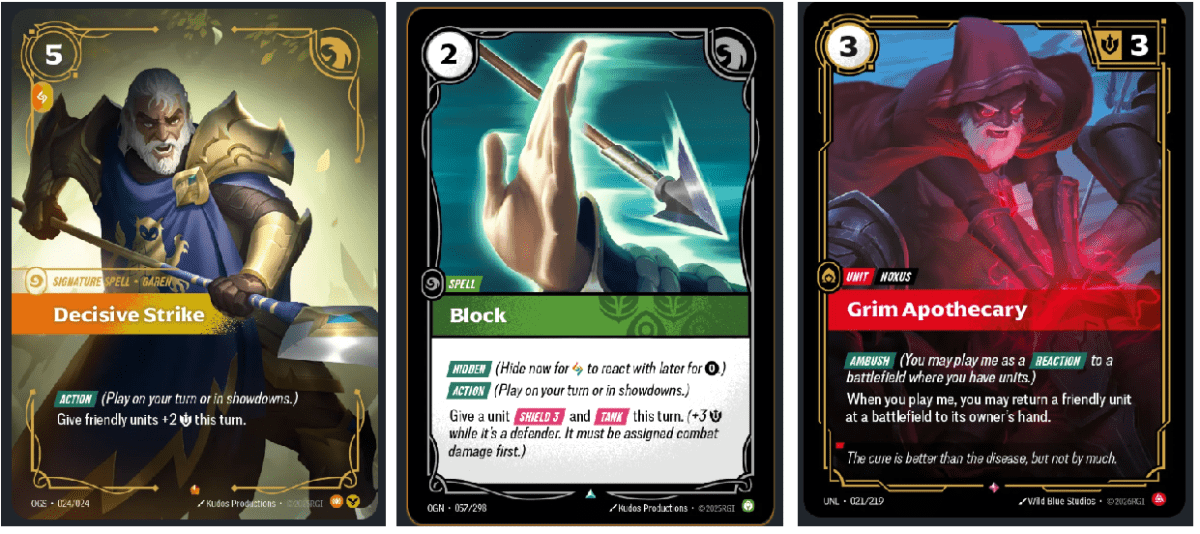
You can also tell the rarity by the frame. The bronze frame is for common, silver frame is for uncommon, and the gold frame is for rares and epics. One of these cards, Decisive Strike, is a signature spell for Garen. You can only have three signature spells total in your deck, and they all must match your commander. So, Decisive Strike only goes in Garen decks, and it’s a neat way to differentiate decks further – think about that implication in EDH if some spells were commander-restricted and number-restricted (Game Changers).
The Play Area
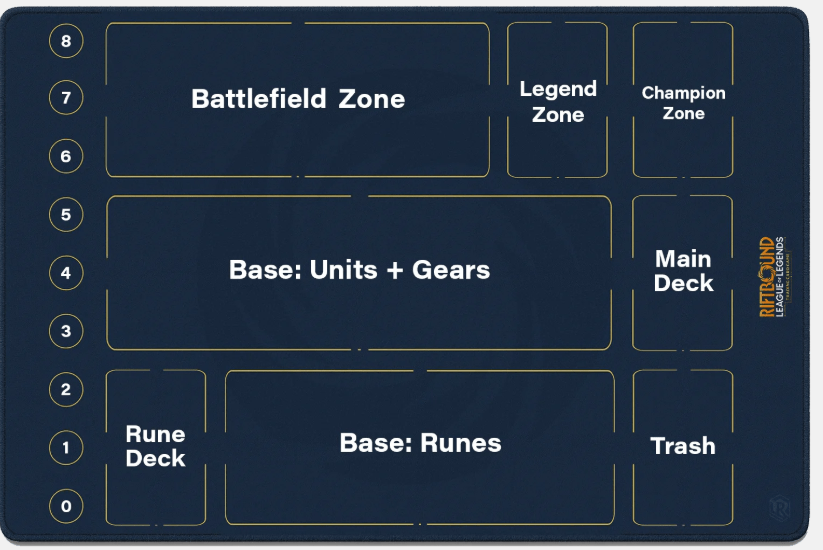
Now let’s see the play area in detail. On the left we have eight slots to show how many points you have by placing a marker there.
There are places to put your legend, your champion unit, your rune deck, and your main deck (spells, units, gears). Your trash is your graveyard. You have a special place to put the runes you channel each turn. There’s also a place in your base to put units and gears.
At the top, there’s a space for the battlefields, and you’ll move units there to contest those battlefields.
As a default, a card enters play in your base exhausted (tapped). Cards can only be attacked or the target of spells when they’re on battlefields, so your base is a safe zone.
The Dominions
Fury and Calm, Mind and Body, Chaos and Order. These are the 6 Riftbound dominions, and you’ll play a 2-dominion deck defined by your legend (similar to playing a 2-color Commander deck). Here’s how the R&D and creative director of Riftbound, Dave Guskin, defines each dominion.
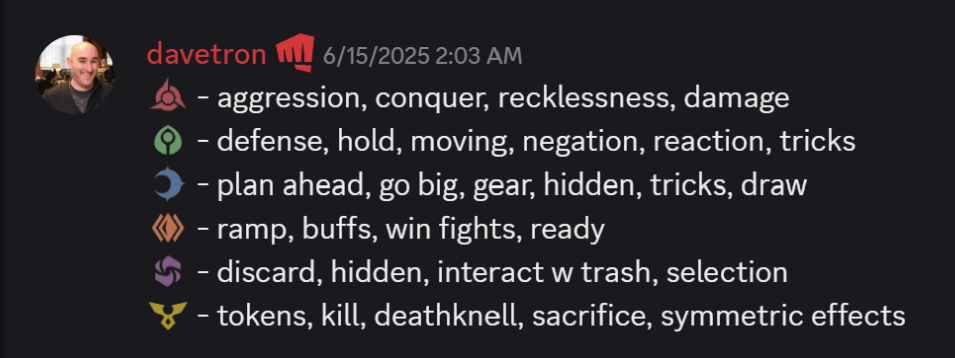
I’ve organized this info and made some MTG comparisons, but of course, that’s just scratching the surface:
| Dominion | Color in Riftbound | MTG Comparable |
| Fury | Red | Red aggro |
| Calm | Green | WU Control |
| Mind | Blue | Blue card draw |
| Body | Orange | Green ramp |
| Chaos | Purple | Black removal/recursion |
| Order | Yellow | Rakdos or Orzhov aristocrats |
Legend and Champion Cards
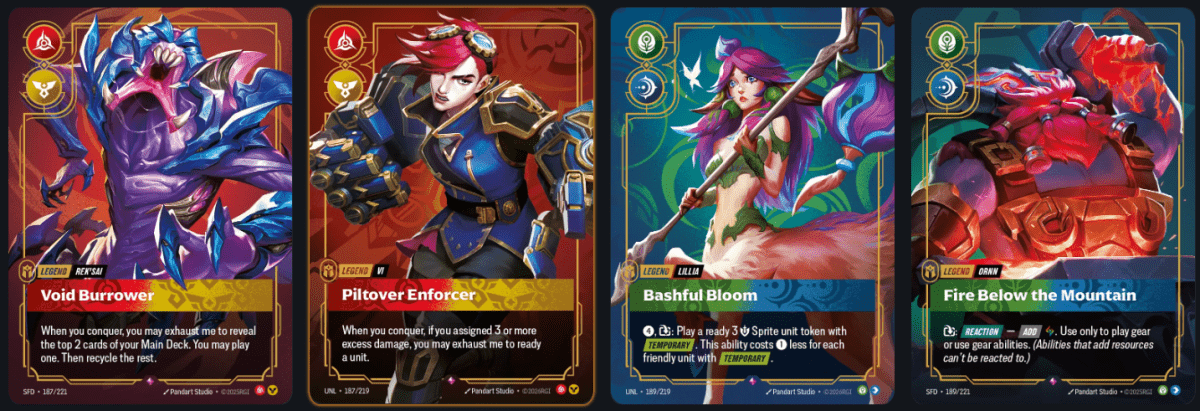
Like Commander, each deck is built around a legend card, and you must follow its “color identity”. This mechanic is already seen in TCGs like Hearthstone and Star Wars: Unlimited. It’s very clear which color each legend represents, and they have active or passive abilities you can use over the course of the game. These are the stars of the show, and they represent LoL champions.
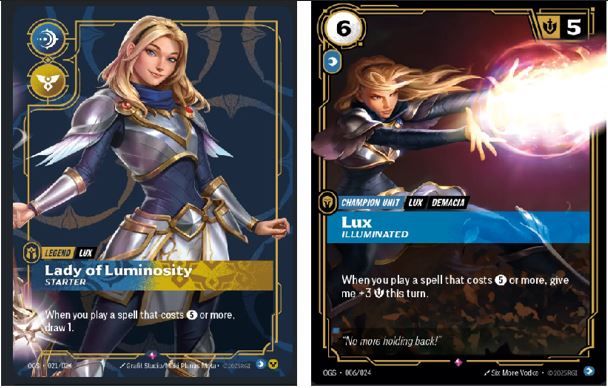
Let’s say my Legend is Lady of Luminosity (Lux) – It’s a blue and yellow legend (Mind and Order), which dictates the color of cards I can play. This card also has a passive: Whenever I play a card that costs 5 or more, I draw a card. That stays in play during the whole game. There’s also Lux, the Champion Unit. It’s a 5-might creature for 6 that also has an ability related to playing spells that cost 5 or more – It goes to might 8. A little difference here from Commander: If Lux dies, it goes to the trash, so I can only use it as a unit once. Lux – Crownguard is another related card, which can be exhausted to add 2 energy to play spells.
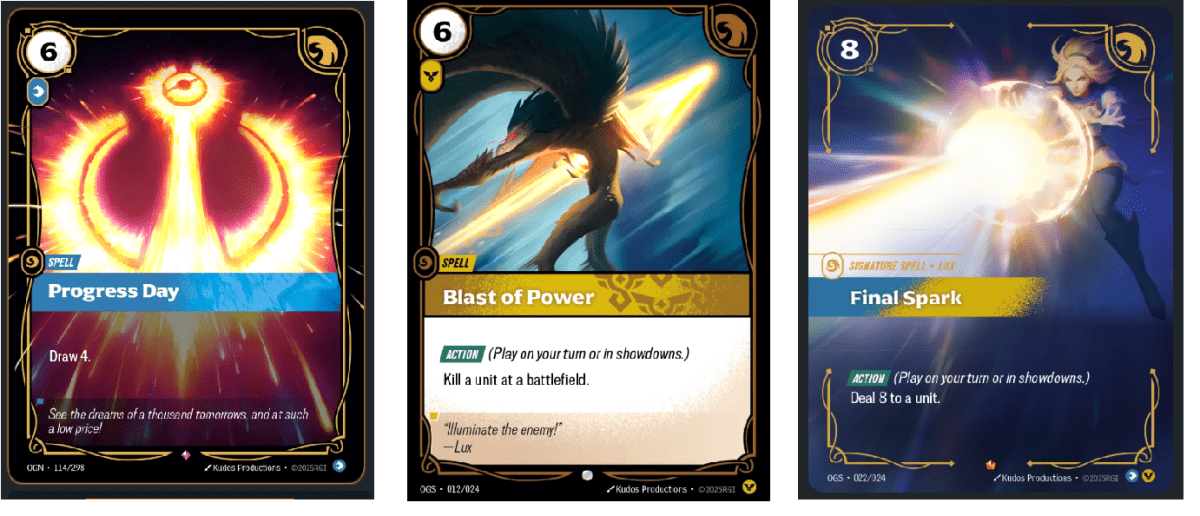
With some 5+ energy spells, we can see the beginnings of a control deck. Progress Day draws four cards, while Blast of Power is unconditional removal. We even have Final Spark as Lux’s Signature Spell.
What makes Riftbound’s deckbuilding fun is that like Commander, there are tons of legends in all color combinations, champion units, signature spells, and much more.
Rune Cards
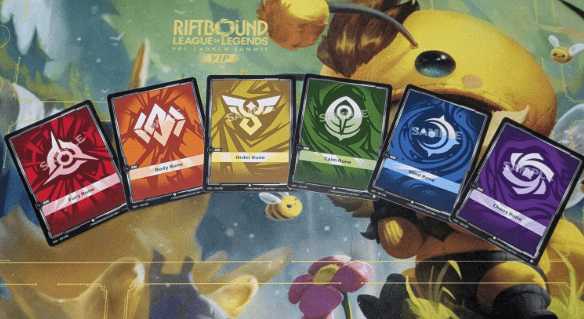
Rune cards are your lands. There are six colors in Riftbound, and your legend is always two colors. Since you need to put 12 runes in your rune deck, you can go with a 6/6 color distribution. Or, if your deck is heavier on a given color, you’d probably want to play a 7/5 ratio of runes or heavier.
Your runes stay in your rune deck, so you won’t draw them from your regular spells/unit decks. As a result, there’s no mana screw or flood as we’re used to in MTG. But it’s not like Hearthstone either, where you automatically get mana crystals each round.
To play cards in Riftbound, you’ll need Energy and Power. To get energy from your runes, you just tap one rune, regardless of color. Power is always colored, and you’ll need to recycle a rune (put it on the bottom of your deck) to pay for said power. Some powerful cards can require 3 power or more, so your mana base will take a hit. There’s a tension between playing cards that are power-intensive and having to recycle your runes or keeping them in the game to play more energy-intensive spells later.
Unit Cards
These are your creatures, and you’ll use them to take control of the different battlefields and score points. Each unit in Riftbound has a single attribute, and that’s might. Might is how much damage a creature deals in combat to other units, and how much damage it can take before it “dies”. Like MTG, some units and abilities create token units.
Units in Riftbound enter exhausted (tapped), so you need to wait a turn before using their abilities or moving them into a battlefield.
Let’s look at a few examples to see what else units get up to. MTG veterans should understand what units do in no time.
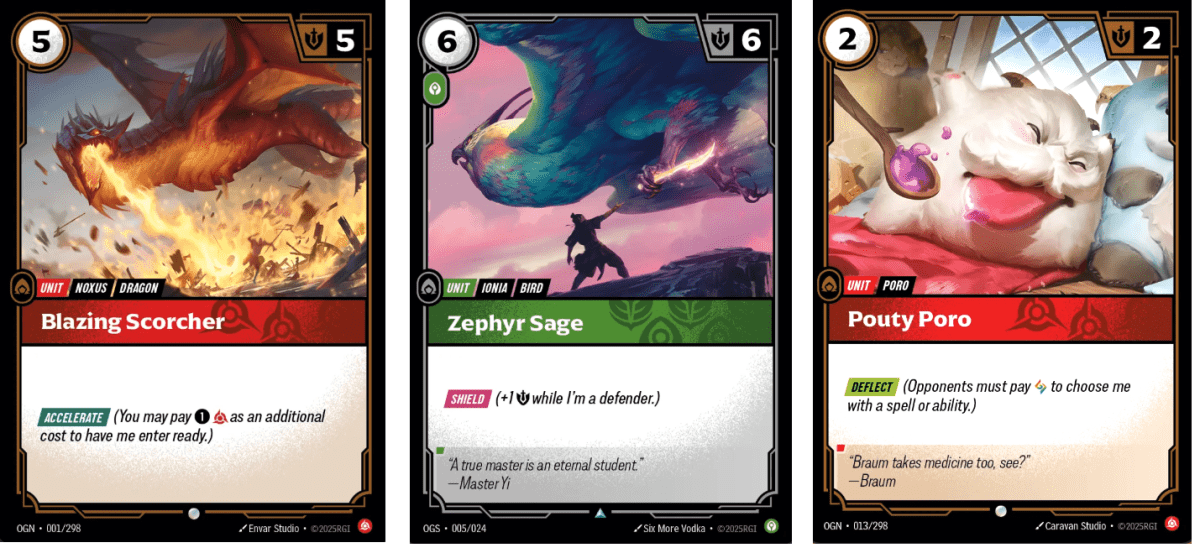
- Blazing Scorcher is a 5-cost card (the top left number), and it has 5 might (the top right corner). It also has accelerate, which most TCG players will associate with haste. For this unit to have “haste”, you need to pay a certain kicker cost.
- Zephyr Sage is like a 6-mana 6/6, so to speak. It gets an extra might when it’s defending in a showdown. Its cost has a green symbol, so you also need to recycle a green rune.
- Pouty Poro has an extra cost to be targeted by enemy spells (like ward).
Spell Cards
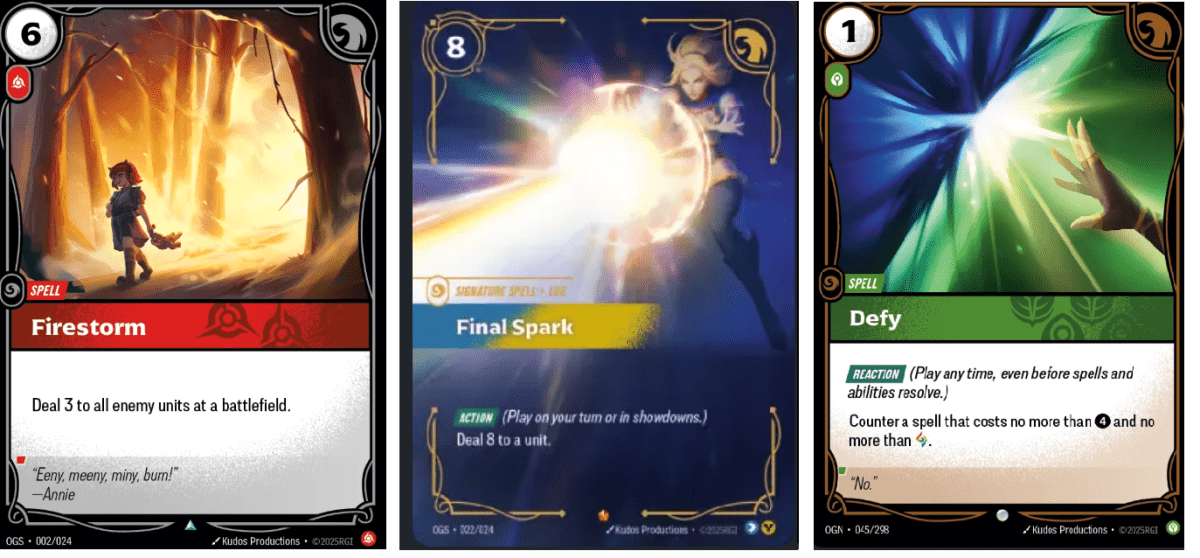
Spell cards are your equivalent of instants and sorceries. You can play spell cards on your turn or in showdowns (battles). There are three speeds to a spell. I’ve included three spells to show off different speeds.
- Firestorm has the slowest speed. You only play these cards on your turn, and you can’t play them during a showdown.
- Final Spark is action speed. You can play these cards during showdowns, but before players play any other spells.
- Defy is the reaction speed, akin to an instant. You can play reactions during showdowns and in response to an opponent’s spell. It’s good ol’ Counterspell, except that it only gets cards that cost 4 or less.
There’s an equivalent to MTG’s stack in Riftbound, the Chain, so spells played last resolve first.
Gear Cards
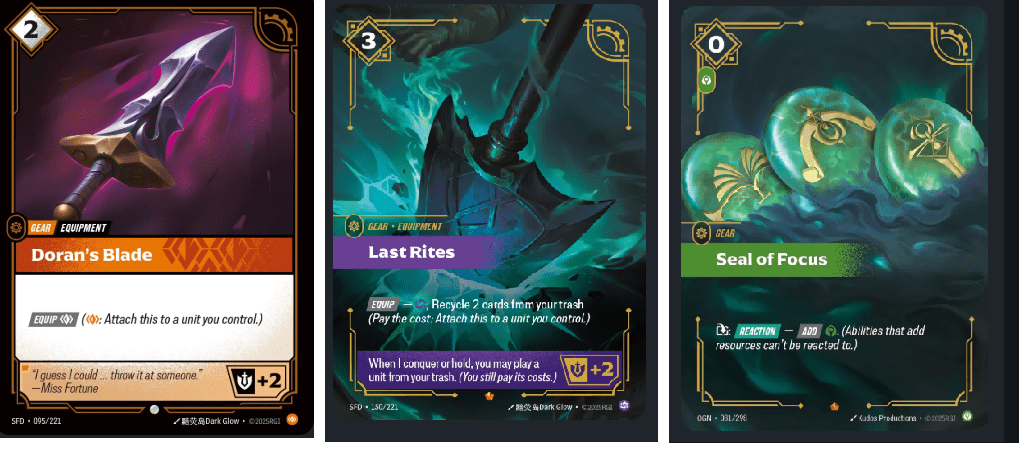
Gear cards are the equivalent of artifacts. They don’t take part in combat, but they don’t enter exhausted as a general rule, and you can use them right away. Some of these are mana rocks, like Seal of Focus. Gear Equipment like Doran’s Blade can be attached to creatures you control so they get extra might or other abilities. Last Rites allows you to play units from your trash, and so on.
Battlefield Cards
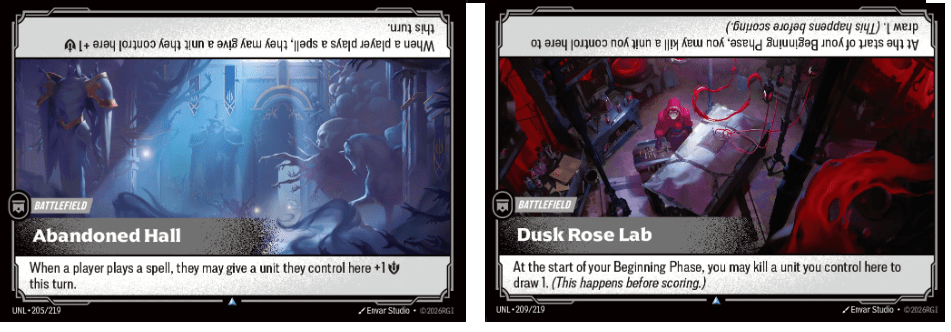
Each player brings three battlefields to a game, similar to how LoL works with the upper, mid, and lower lanes. At the beginning of each match, you’ll choose one of your three battlefields and put it face down, and your opponents will do the same. You can’t repeat battlefield cards in games 2-3, so you have to choose an unused battlefield card.
The objective of the game is to score points by conquering and holding battlefields, so players should choose battlefield cards that match their deck’s strengths. Dusk Rose Lab favors an aristocrats style of creating tokens and sacrificing them. Abandoned Hall favors a “spellslinging” deck, and so on.
MTG has an analogue in Planechase. If you’re playing fliers, you’ll want a plane in your planar deck that gives fliers an advantage, or if you’re playing red burn, you’ll want a plane that doubles red damage.
Showdowns
Showdowns in Riftbound are combat. It automatically starts when units move to a battlefield controlled by an enemy player. In a showdown, the player whose units have more combined might win. Creatures deal damage to each other equal to their might, and you can distribute damage as you would in MTG.
When you take control of a battlefield, you conquer it and gain a point. When you begin your turn and the battlefield is still yours, it’s said that you hold said battlefield and thus get an extra point.
Sideboarding
In best-of-three Riftbound matches, you can sideboard up to eight cards in between matches, which is a good chunk of your 40-card starting deck.
How Are Magic and Riftbound the Same?
In both Riftbound and Magic, players fight with creatures over battlefields, and there’s some interaction while the showdowns occur.
There’s the equivalent to creatures, sacrifice, spells, equipment, land, and more. Players can play combat tricks, enhance their creatures via buffs, and even counter their opponent’s spells.
There’s a color pie in the game with clear analogues to MTG – fury is the red aggro/burn player, mind is the blue control player, and so on.
Taking a clue from Commander’s success, decks have a leader and a color identity, and this is at the core of Riftbound’s gameplay and rules, enhancing replayability.
How Are Magic and Riftbound Different?
Riftbound looks like a new take on MTG that keeps some key aspects while innovating on others. The game scales from two to four players naturally, very similar to what happens in Smash Up, where players are fighting over bases to get points.
When playing a 3- or 4-player game, people need to choose which fights are worth entering and which ones aren’t. If a player already has 5-6 points, giving them continued control over battlefields means certain defeat, and if a given player has 2-3 points, it’s okay for them to have control over certain battlefields (until they take the lead and become the next target).
Organized Play
Riftbound has Constructed and Limited formats (only Sealed – no Draft yet), but the gameplay is the same, regardless of the number of players. There’s a small ban list of cards from the Standard Constructed format.
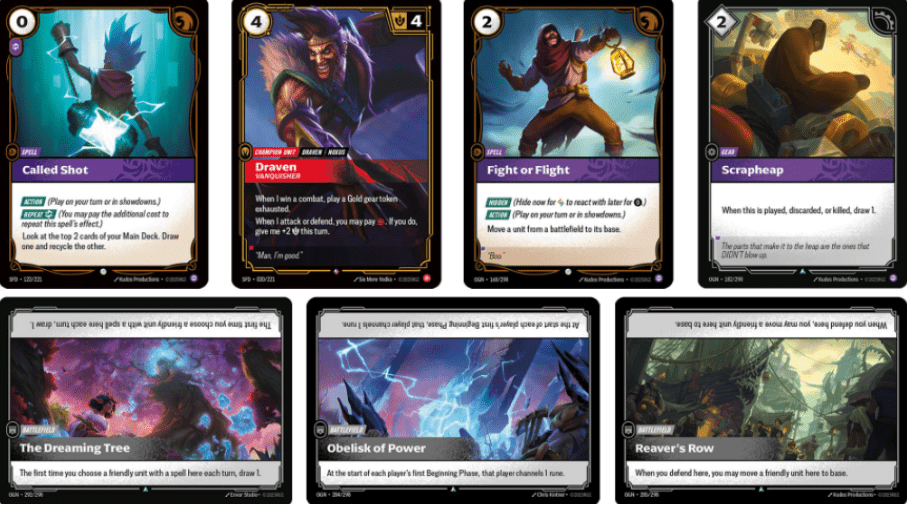
The cards above are banned in tournament play. It’s a small ban list with three spells, a champion unit, and three battlefields, effective as of March 31, 2026. One interesting aspect of the Constructed tournaments is that you can get extra rewards in a tournament for being the best deck for a given legend.
Are Magic: The Gathering or Riftbound Cards More Expensive?
The Reddit Riftbound community praises the game for its affordability, a common trait of newer TCGs. You can buy competitive decks for around $70-140 in singles, and there are cheaper competitive decks in the $50 range.
That said, some cards are already about $25-30, which is unfortunately a common reality in the competitive scene. If you buy into a Riftbound competitive deck, you’re probably paying like 80% of the total value in three cards, while the others are dirt cheap.
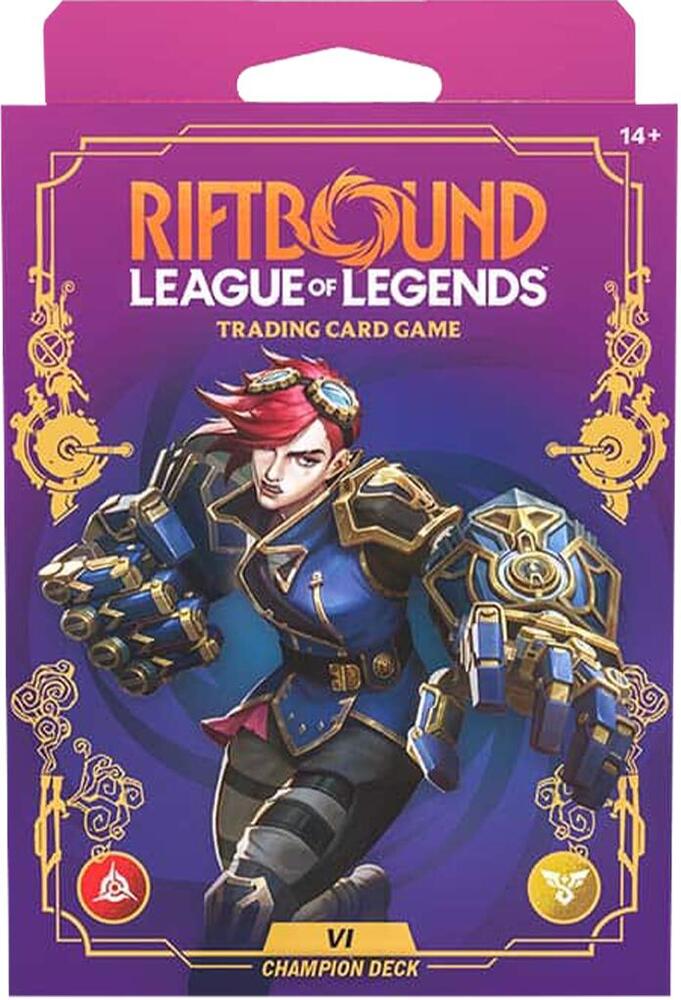
The MSRP for Riftbound products is as follows:
- Booster Pack – $5
- Booster Box – $120
- Champion Deck – $20
- Proving Grounds Box – $45 (with 4 beginner decks)
With any new TCG, it’s common that some Tier 0 and Tier 1 decks are much more expensive than the other options, as are the staples that go into these decks. The demand for the product is high while supplies are low, and many players complain that they can’t find sealed product available anywhere.
In these scenarios, it’s common to see a box being sold for $200. Some prices will spike until Riot finds the balance (just remember that early MTG product was printed in the thousands while today it’s in the millions).
Overall, Riftbound wants to take a more accessible approach for those who just want to play the game, while charging more for premium versions of the cards. If we start talking about MTG and finances, as great as the game is, we need to be constantly reminded that decks cost between $300-700 each in Standard, not to mention Eternal formats, which have a $1,000-3,000 barrier of entry. A playset of fetch lands and dual lands alone buys you a dozen competitive Riftbound decks.
How Do These Games Handle Reprints?
Currently, Riftbound has a reprint problem because the game is thus far very successful, and its first core set was released less than a year ago, while expansions are being printed. Riot is still calculating the optimal amount of sealed product required and reprinting the core set (Origins), so if you can get Riftbound product at your LGS for MSRP, consider yourself lucky.
MTG usually reprints staple cards via their precon decks, retail sets, and Master sets, and we don’t know for sure if Riftbound’s strategy will follow MTG’s or not.
Verdict: Which Game Should You Play?
Riftbound is a very solid game that MTG players should be able to learn with no difficulty. It’s an excellent time to join the Riftbound community because it’s a fairly new game that’s being printed to meet players’ demand, and it’s evolving, so the price of entry is low and there are viable, cheap Tier-1 strategies. New expansions continue to hit the market, and the competitive meta will surely change.
As the game evolves, we’ll surely get draftable sets, and the existing Sealed format is great. Who knows what the community will develop? Casual formats, singleton formats, and maybe even Cube?
Regarding MTG, I’ve seen many MTG digital influencers promoting Riftbound as a game, and it’s not like they’ll quit MTG forever. Sometimes it’s nice to have a change of pace. MTG is such a giant and “immortal” card game, and it’ll be played for quite a while, so it’s not being threatened by other TCGs.
As with all TCGs, the main problem is finding people to play with. Magic has withstood this test over time, while many TCG’s that were once labelled MTG killers have come and gone. I’ll always recommend that you test a lot of games and play whatever you want and what fits your budget.
Wrap Up

Cyclonic Rift | Illustration by Chuck Lukacs
I’m already a fan of the environment and gameplay of Riftbound. It’s a very solid game with deep gameplay, strategy, and cool avenues for deckbuilding. If there’s a solid Riftbound community at your LGS and sealed product isn’t very expensive, I’d encourage you to try and play the game. I hope they keep printing product and don’t cater that much to the secondary market outside shiny cosmetic stuff. People shouldn’t be priced out of their formats if they just want to play the game.
I hope you find this guide useful, and if you also get interested in this game, please let me know in the comments below or on the Draftsim Discord. As for me, I hope they implement some form of playing it online like MTG Arena.
Thanks for reading guys, until the next one!
Note: This post contains affiliate links. If you use these links to make a purchase, you’ll help Draftsim continue to provide awesome free articles and apps.
Follow Draftsim for awesome articles and set updates:










Add Comment