
Jace, Multiverse Architect | Illustration by Volkan Baga
When you’ve composed an entirely new multiverse, you’d probably use that to create incredible monsters to win your game of Magic. Maybe not the most altruistic use of omnipotence, but that’s more or less what Jace did in Reality Fracture, and we get to do it too.
Jace, Multiverse Architect is the most popular Reality Fracture commander, for good reason: It’s got an awesome ability that shows off the greatest threats you can find, in this multiverse or Jace’s Echoverse.
The Deck

The Theorist, Jace Beleren | Illustration by Ekaterina Burmak
Commander (1)
Creature (15)
Absolute Virtue
Archon of Cruelty
Ardyn, the Usurper
Armaggon, Future Shark
Avacyn, Angel of Hope
Elesh Norn, Grand Cenobite
Hullbreaker Horror
Jin-Gitaxias, Progress Tyrant
Nezahal, Primal Tide
Nissa, Leyline Tamer
Riptide Gearhulk
Serra's Emissary
Summon: Bahamut
Toxrill, the Corrosive
Valgavoth, Terror Eater
Instant (11)
Big Score
Faithful Mending
Grand Crescendo
Occult Epiphany
Prismari Command
Raise the Alarm
Secure the Wastes
Strix Serenade
Synthetic Destiny
Transpose
Unexpected Windfall
Sorcery (13)
Afterlife from the Loam
Breach the Multiverse
Chart a Course
Faithless Looting
Incarnation Technique
Lingering Souls
Martial Coup
Mass Polymorph
Polymorph
Reanimate
Shadow Summoning
Tempt with Bunnies
Winds of Abandon
Enchantment (8)
Animate Dead
Bitterblossom
Dreadhorde Invasion
Fable of the Mirror-Breaker // Reflection of Kiki-Jiki
Identity Echo
Necromancy
Scuttletide
Skrelv's Hive
Artifact (12)
Arcane Signet
Currency Converter
Monument to Endurance
Proteus Staff
Sol Ring
Staff of the Storyteller
Talisman of Conviction
Talisman of Creativity
Talisman of Dominance
Talisman of Hierarchy
Talisman of Indulgence
Talisman of Progress
Land (40)
Adarkar Wastes
Arid Mesa
Battlefield Forge
Blazemire Verge
Bleachbone Verge
Blood Crypt
City of Brass
Command Tower
Deserted Beach
Exotic Orchard
Flooded Strand
Floodfarm Verge
Glacial Fortress
Gloomlake Verge
Godless Shrine
Hallowed Fountain
Luxury Suite
Mana Confluence
Marsh Flats
Morphic Pool
Otawara, Soaring City
Polluted Delta
Raugrin Triome
Reflecting Pool
Riverpyre Verge
Sacred Foundry
Savai Triome
Scalding Tarn
Sea of Clouds
Shipwreck Marsh
Shivan Reef
Steam Vents
Sulfur Falls
Sulfurous Springs
Sundown Pass
Takenuma, Abandoned Mire
Training Center
Underground River
Watery Grave
Xander's Lounge
This deck fully embraces Jace’s identity as a polymorph in the command zone and builds around it with token producers and battlecruisers. There are no small creatures here.
I’d put this at a soft Bracket 3. It toes the line between bracket levels; the best draws are super explosive or powerful, but a lack of combos and reasonably light removal section make it possible to play at Bracket 2.
The Commander: Jace, Multiverse Architect
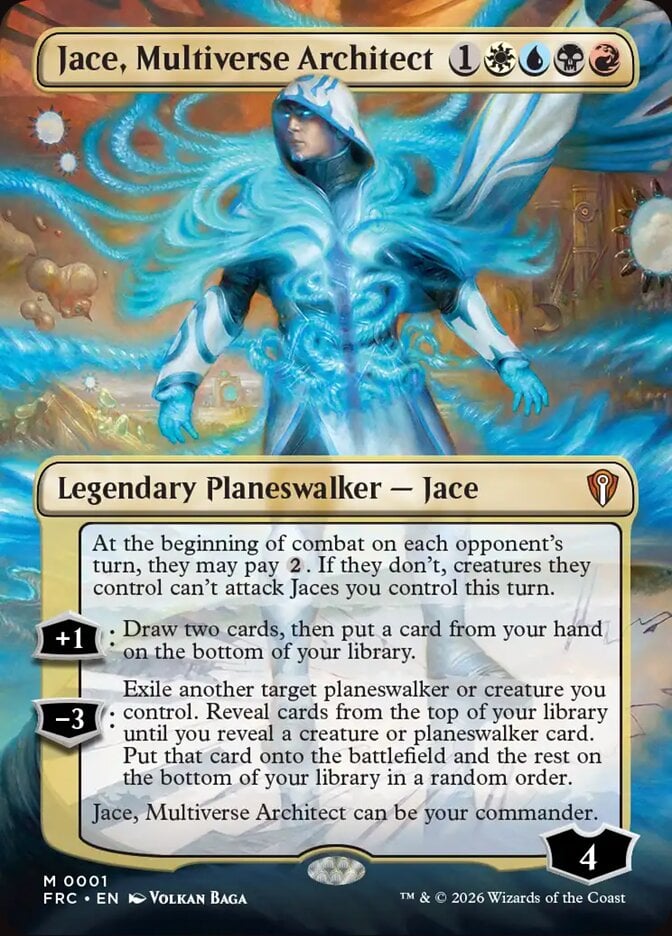
Jace, Multiverse Architect is the star of this deck. Everything revolves around the -3 ability to flip a creature or planeswalker into something bigger, though this deck focuses on creatures rather than planeswalkers.
The static ability provides effective protection, especially when Jace comes down early. If you polymorph on turn 4, your opponents are unlikely to have spare mana to pay the cost and attack through your battlecruiser.
As for the +1… if Jace survives the initial -3, it’s great card advantage. If you’re casting Jace to uptick it, start thinking about the next game.
The Big Hits
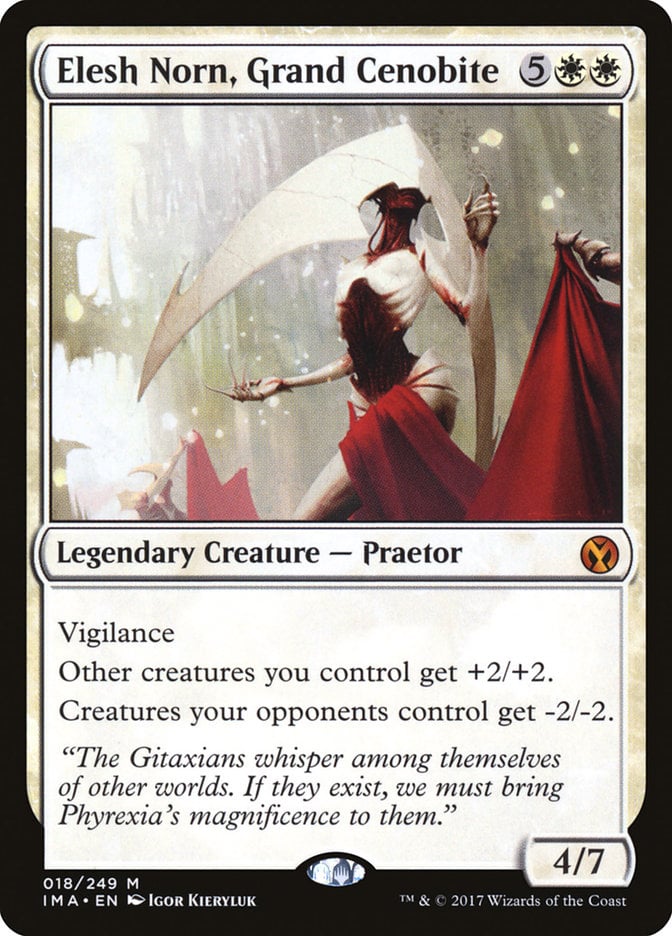
Elesh Norn, Grand Cenobite demolishes small creature decks with its inverse anthem. This plus token generation build a very scary board, no polymorphs needed.
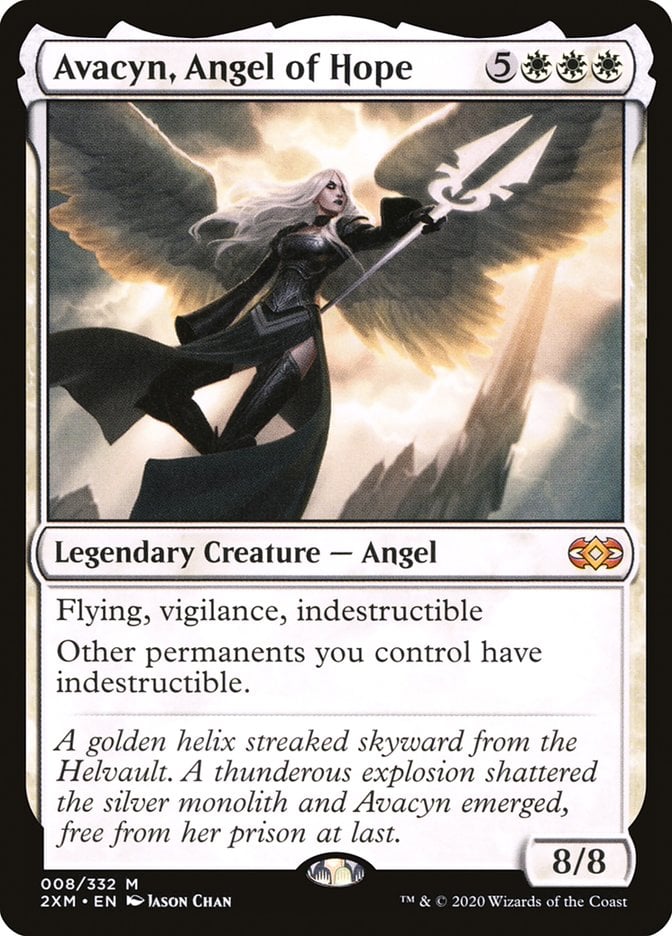
Avacyn, Angel of Hope keeps your board safe from most board wipes, though it admittedly gets slightly worse every time Wizards prints a new exile-based wrath like Overwrite the Multiverse.

Ardyn, the Usurper exists in a deck like this as both threat and recursion spell. A 4/4 is considerably smaller than most of the native bodies on these creatures, but their text boxes are still pretty sick. An Archon of Cruelty of any size causes huge issues for your opponents.
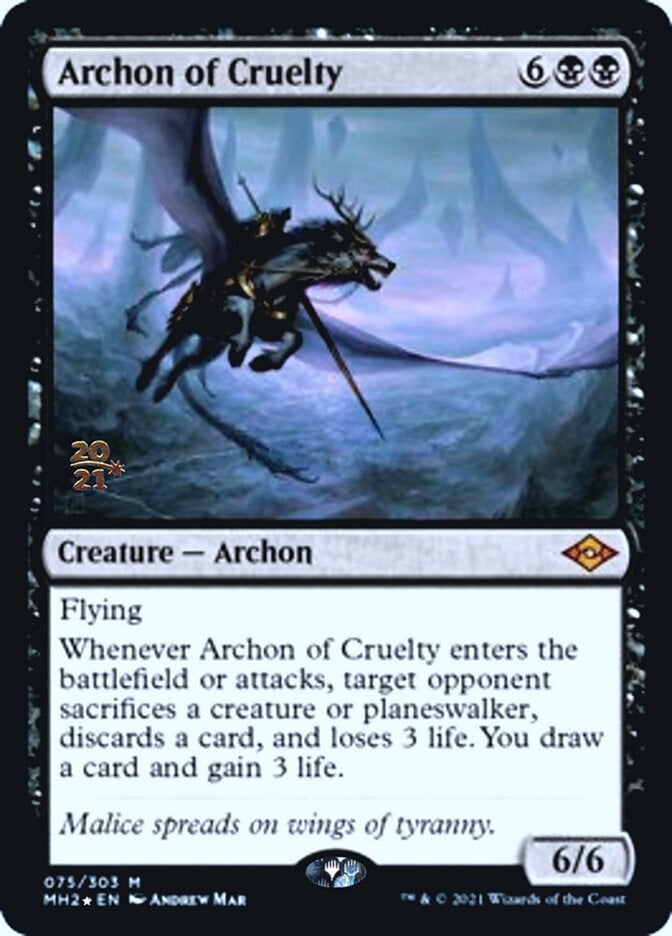
Speaking of, Archon of Cruelty has been a top-tier cheat target since its printing. It has an immediate impact that messes with an opponent’s resources, and its advantages are nearly impossible to overcome if it sticks around.
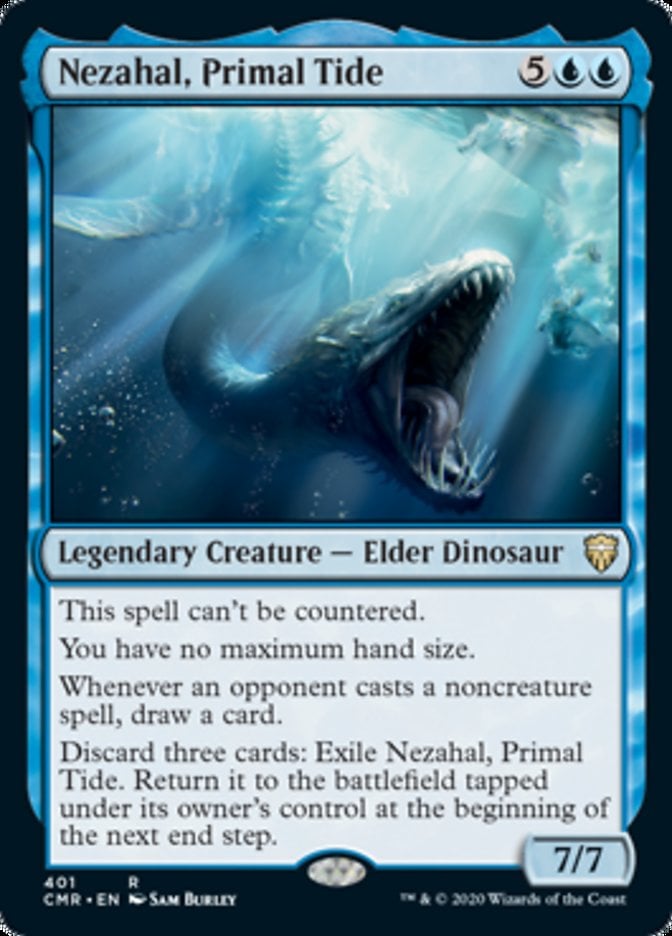
If my deck ever cheats anything into play (or just ramps into big creatures) I want Nezahal, Primal Tide on my side. It draws a ton of cards and has built-in protection, plus the body’s large enough to provide a meaningful clock. That protection even works as a discard outlet for the deck’s few reanimation spells.
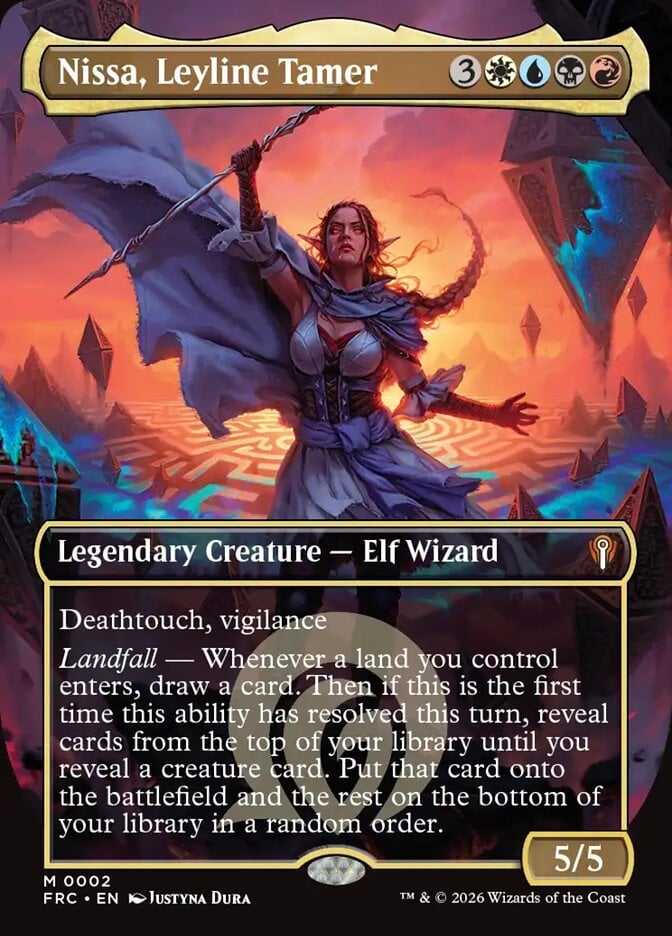
Nissa, Leyline Tamer might be the best battlecruiser to hit first. Its landfall ability putting another creature into play snowballs painfully fast.

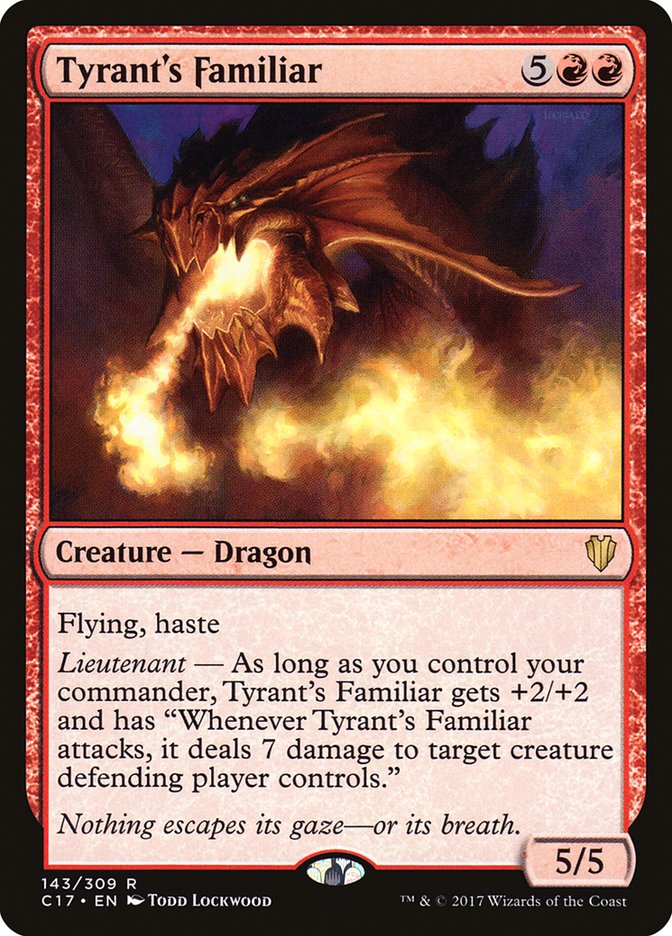

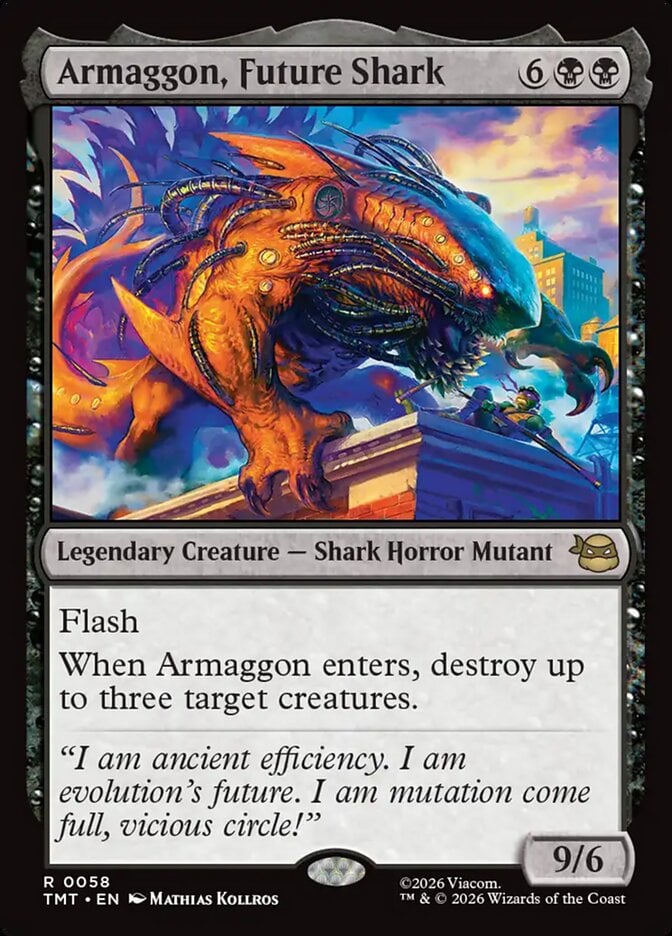
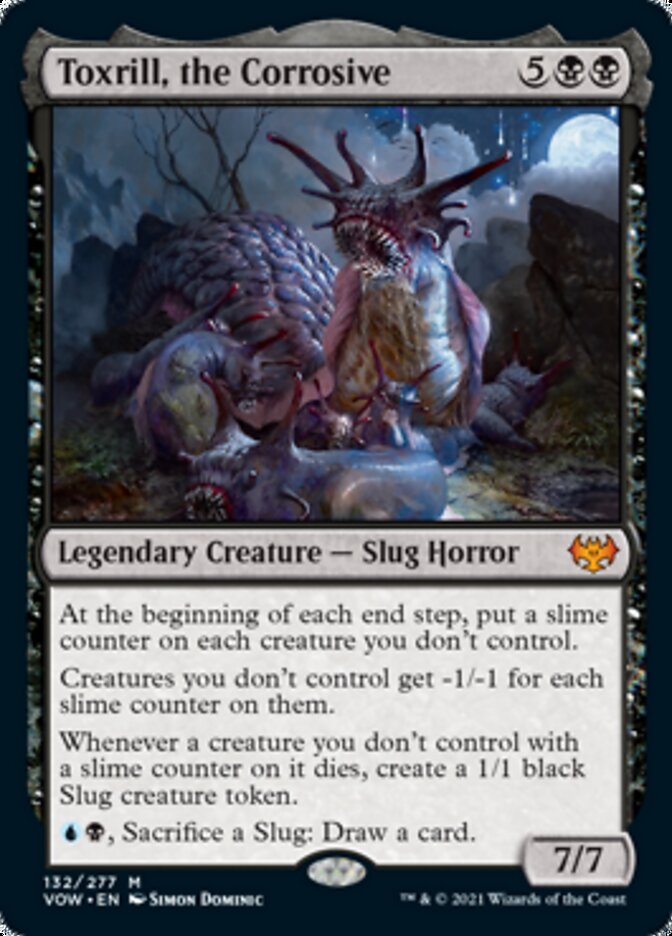
Summon: Bahamut and Tyrant's Familiar take out key threats while Riptide Gearhulk and Armaggon, Future Shark spread the love widely. Toxrill, the Corrosive provides board-wide control over time, plus tokens to polymorph later.
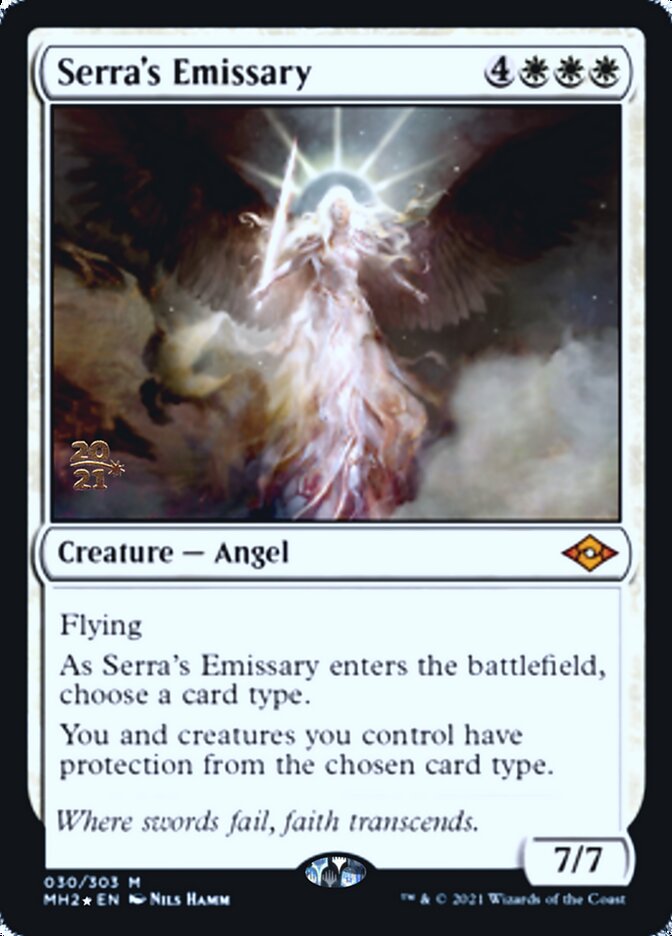

Serra's Emissary and Absolute Virtue put a clock on your opponents while making it hard for them to pressure you back. They’re extremely hard to race, especially when you come against creature decks.

Valgavoth, Terror Eater is also impossible to race, but that has more to do with it being a 9/9 with lifelink. Oh, and it draws lots of cards. And it severely punishes your opponents for removing it. What a pleasant card.
Token Producers
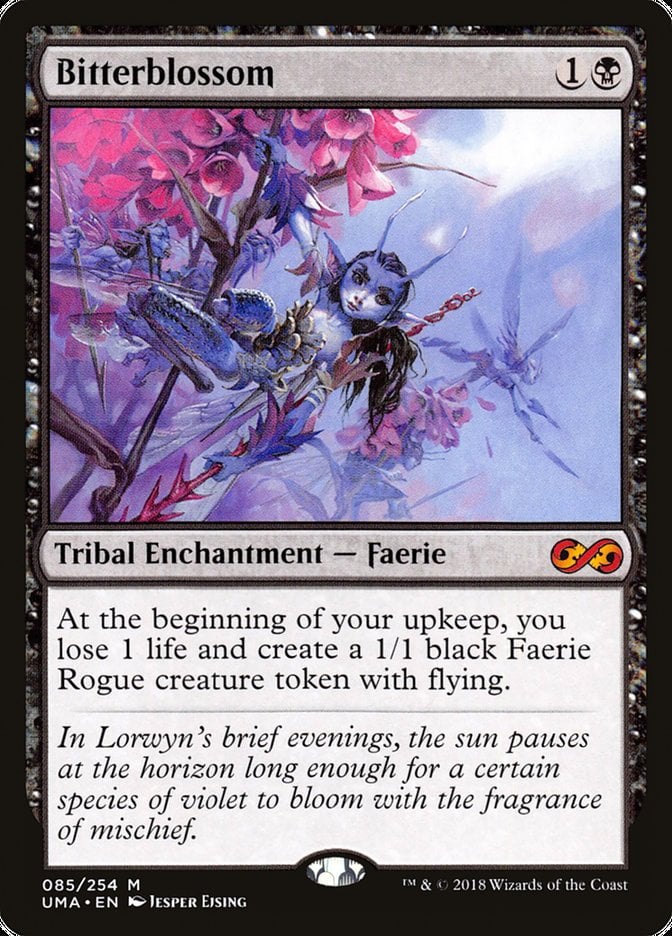
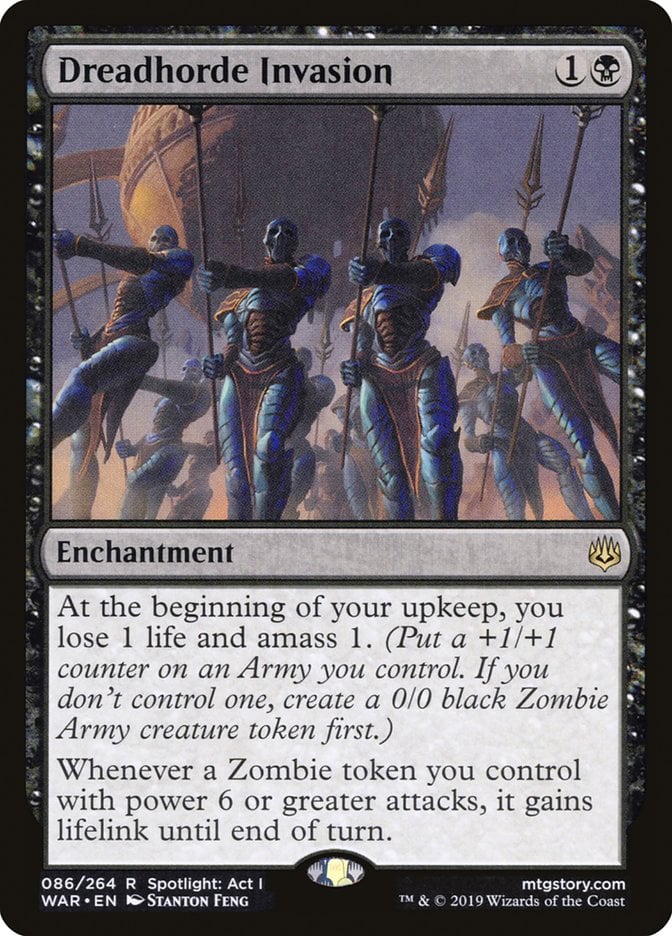
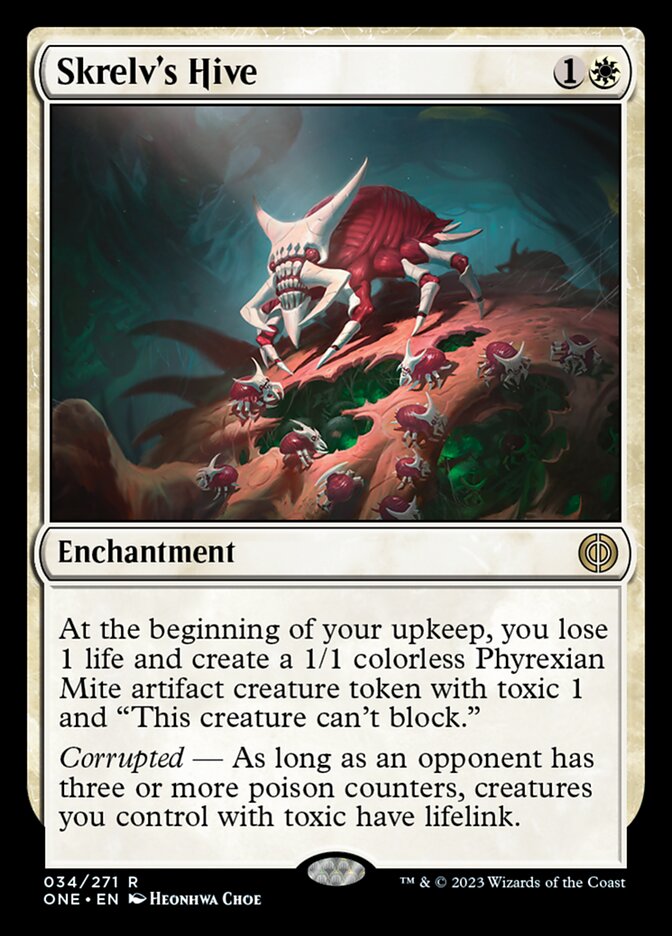

Bitterblossom, Dreadhorde Invasion, and Skrelv's Hive churn out tokens turn after turn so you have plenty of polymorph targets. Scuttletide is similarly productive while serving as a discard outlet.
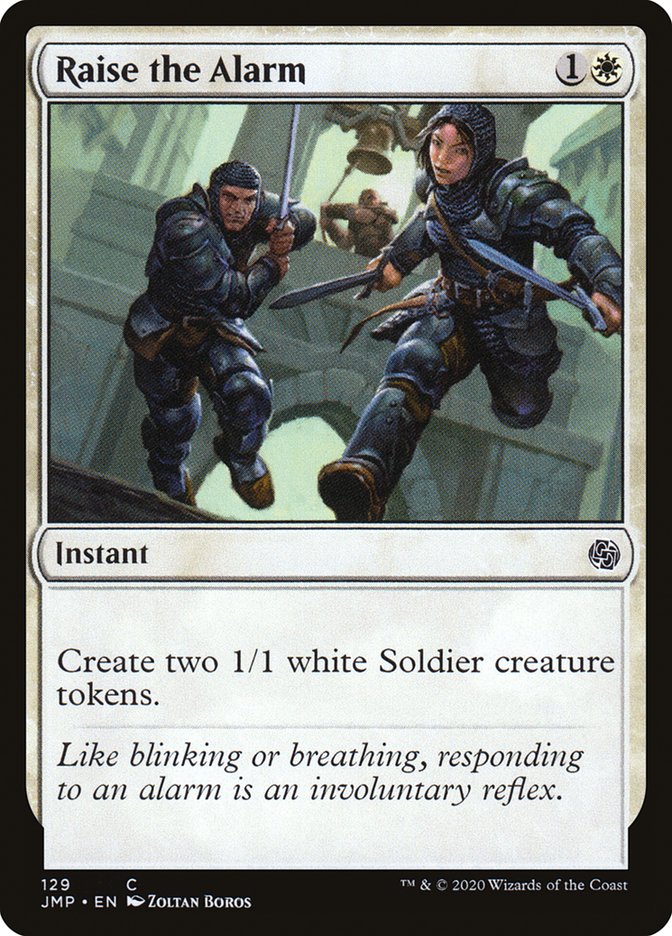
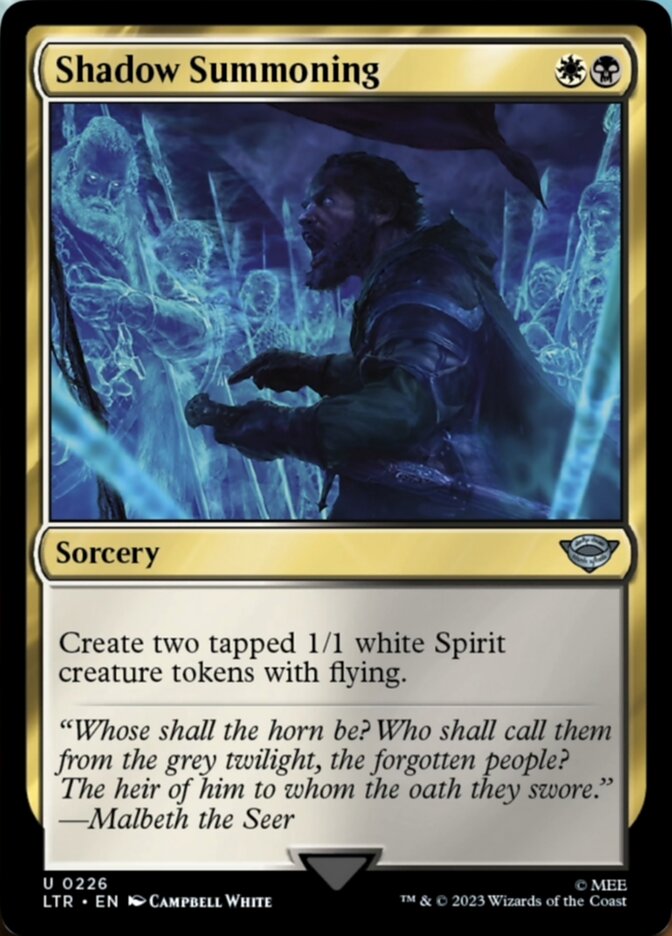
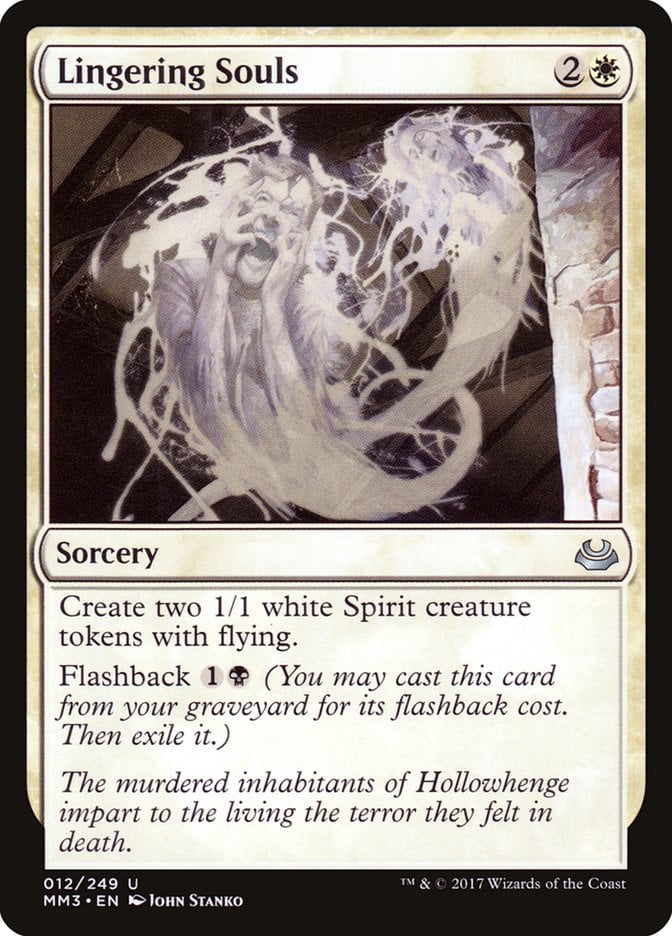
Raise the Alarm and Shadow Summoning provide cheap, on-demand bodies. Making two tokens is significant because of the mass polymorph effects. Lingering Souls gets an extra nod for mattering if you discard it.
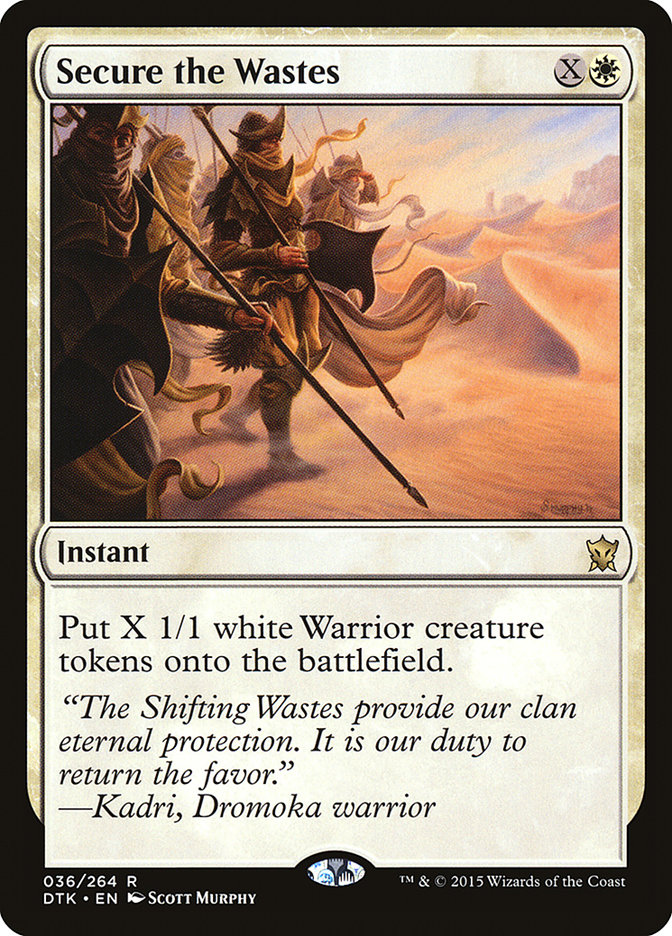
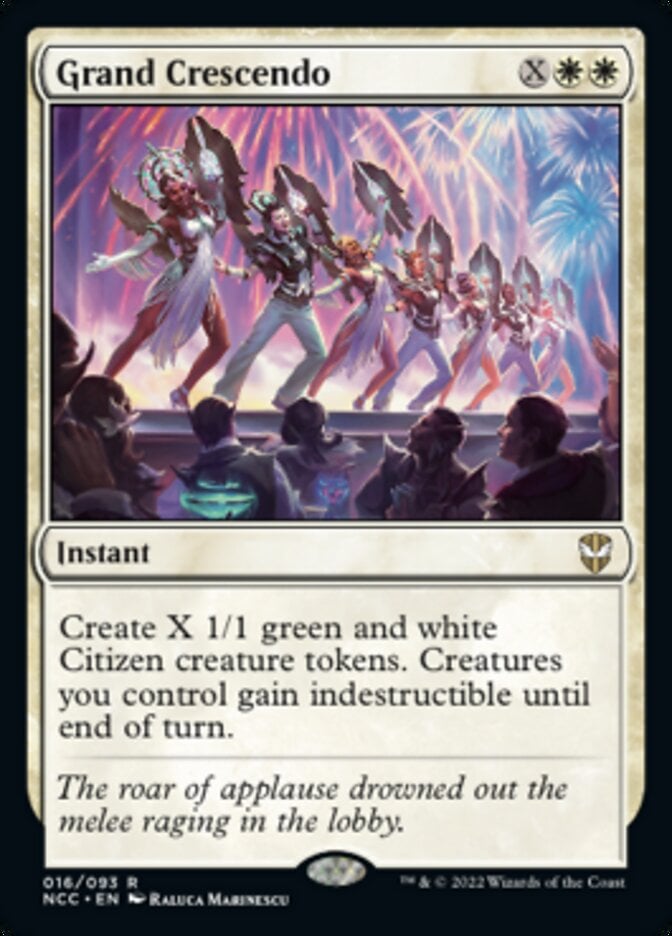
Secure the Wastes and Grand Crescendo scale fantastically. They can produce one or two tokens early or act as a mana sink later in the game to build a threatening board.
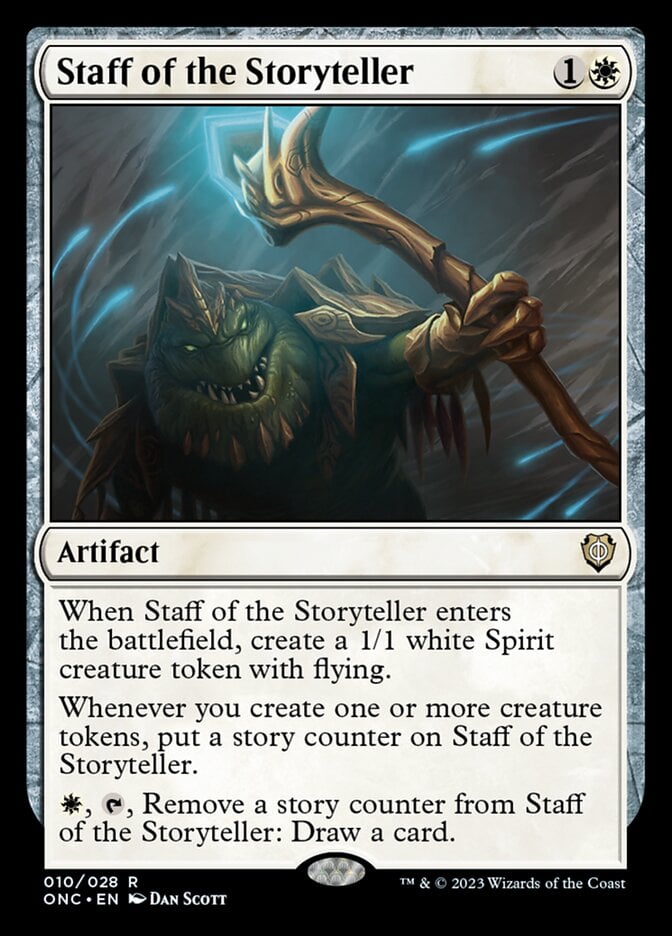
Staff of the Storyteller converts token production into card draw, which makes up for it only making a single token.

Tempt with Bunnies typically makes a single token and cantrips, which is honestly good enough when your deck makes such good use of the tokens. But if your opponents ever take the tempting offer, you end up way ahead; you’ll all be drawing cards and making tokens, but you get more of both and your plays are almost certainly more impactful thanks to your polymorphs.
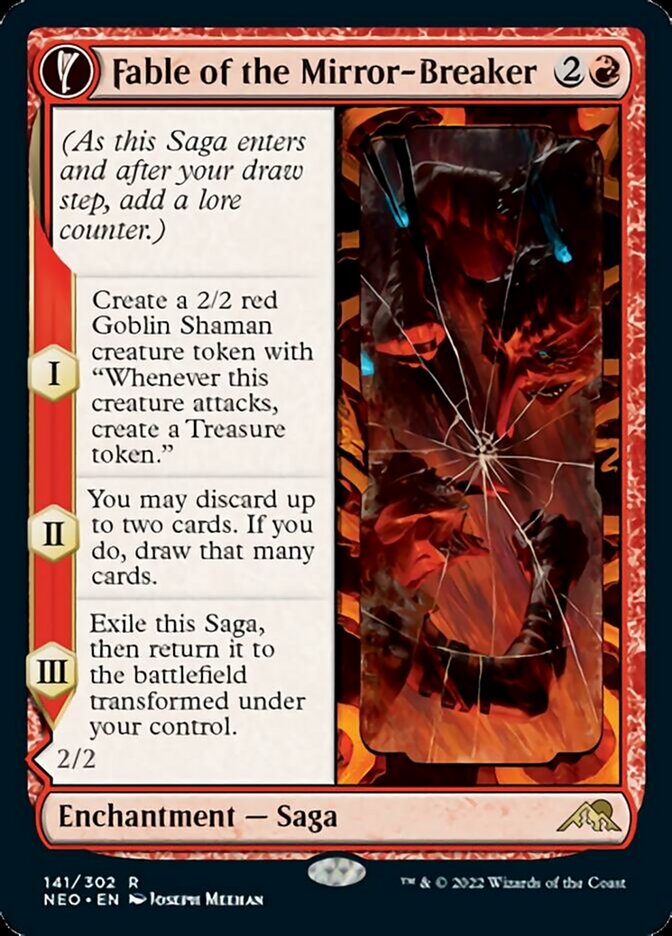
Fable of the Mirror-Breaker makes tokens twice over: First the Goblin Shaman, then token copies. You can feed both to the polymorphs. I also appreciate a token producer that makes mana to cast Jace or at least digs through the deck for another polymorph.
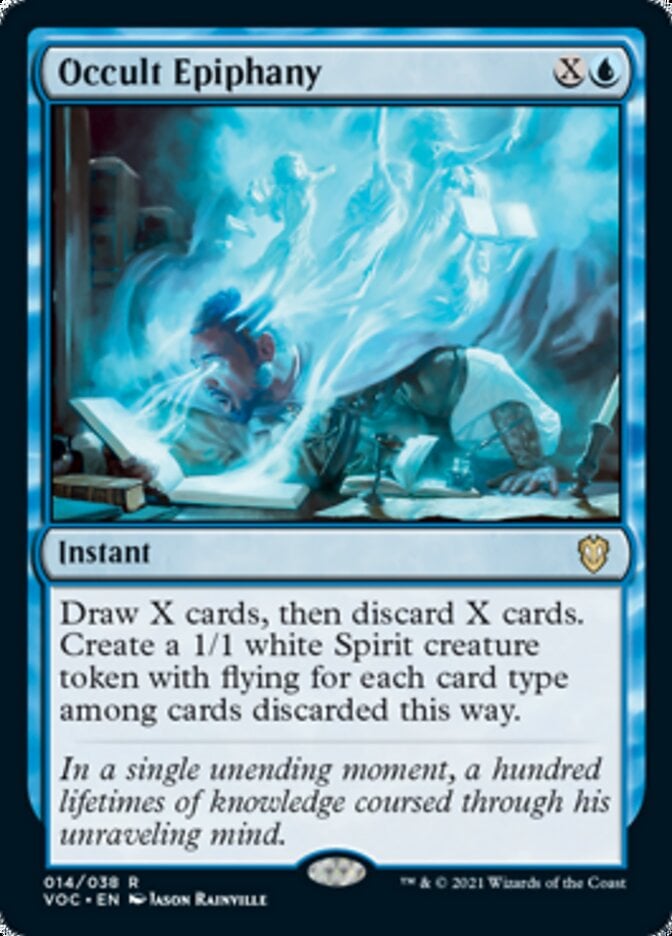
Occult Epiphany is pretty underrated. It just does so many things, and they’re all great here: It’s a mana sink for ramp, fixes your hand, makes a bunch of tokens… it lines up well here, but it truly belongs in more decks.
Polymorphs
Jace in the command zone means the deck basically always has its first polymorph, but one big creature doesn’t win a game of Commander, and you can’t count on casting it every game, so the deck has a few other options.
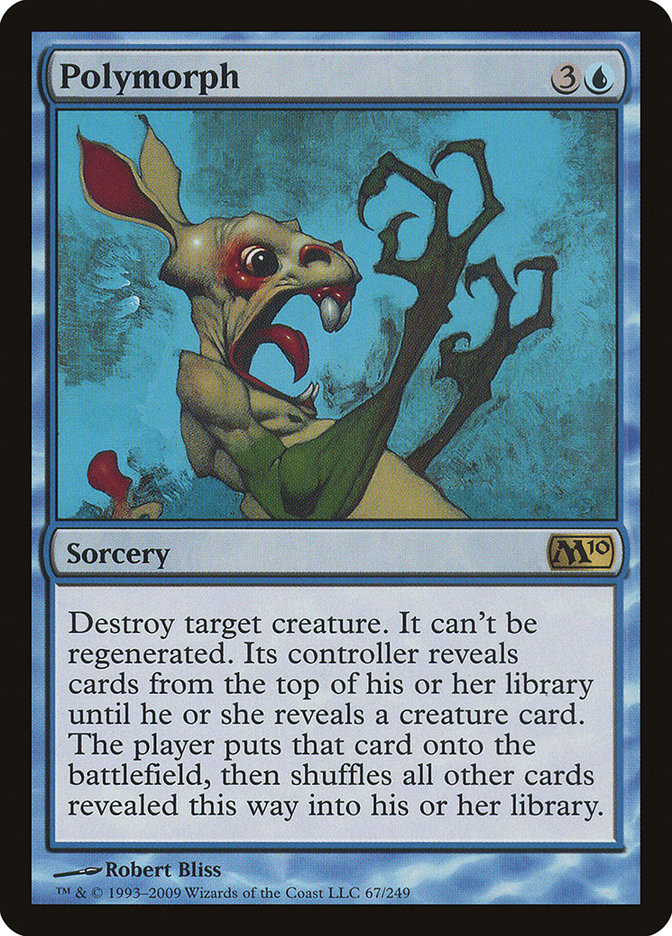
Polymorph itself, the namesake card, shows up as a cheaper version of the effect, even if you can’t hit Jace.
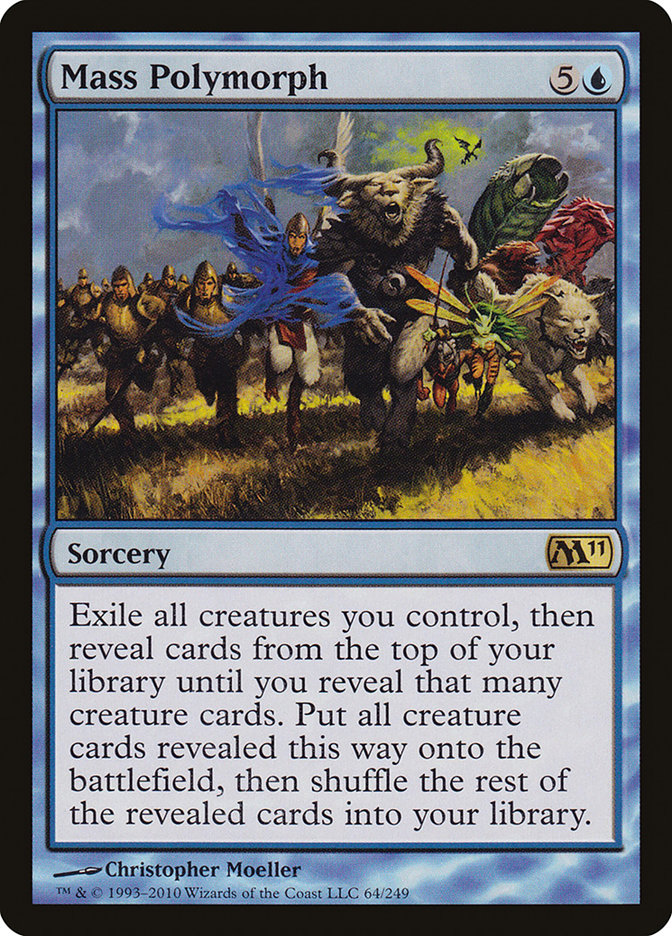
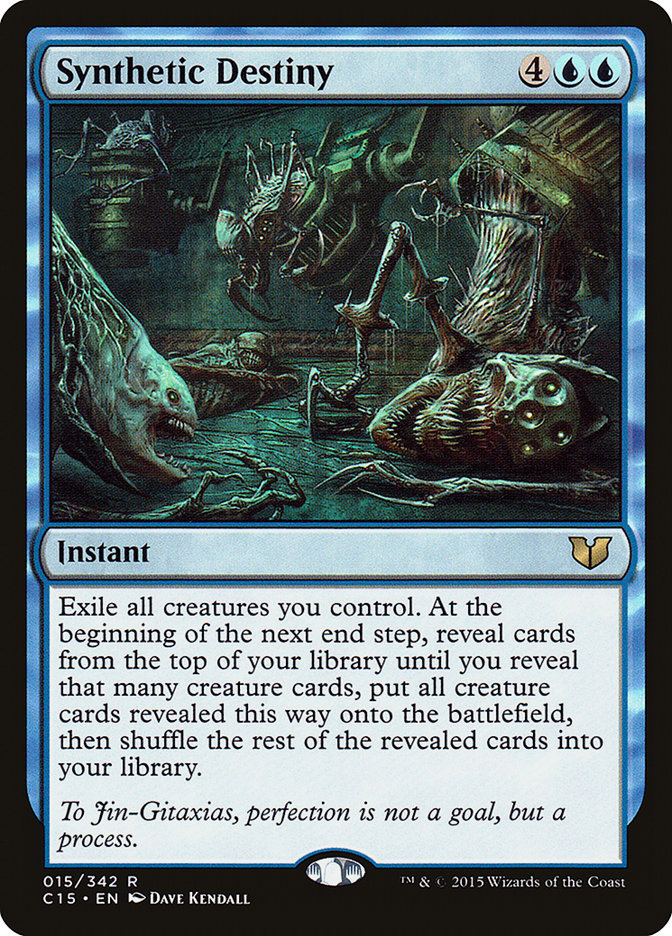
Mass Polymorph and Synthetic Destiny turn a wide board of tokens into quite a few creatures. These might sweep up a fatty or two, but the threats are interchangeable enough that it won’t matter too much.
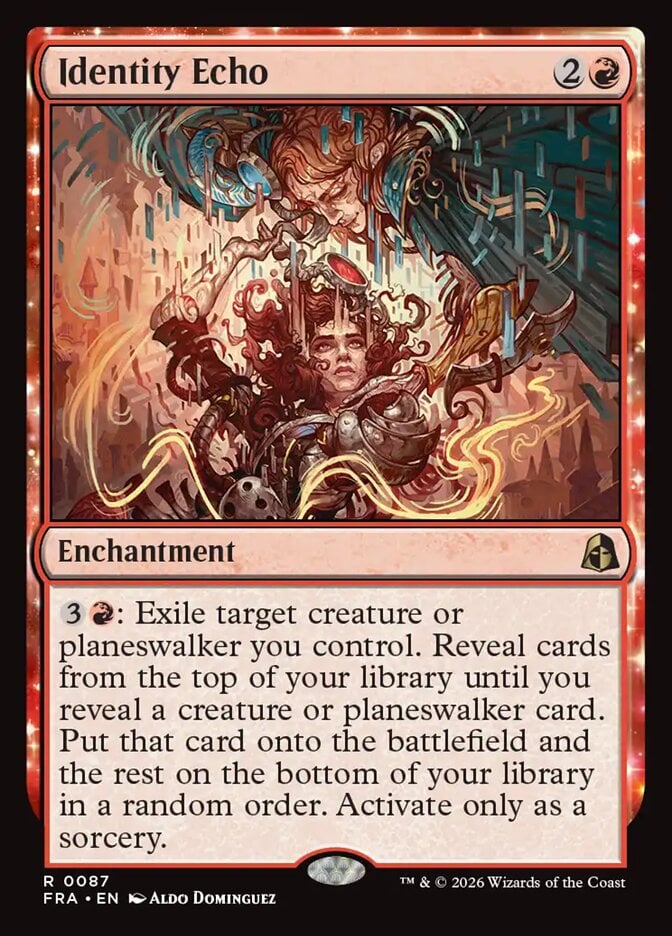
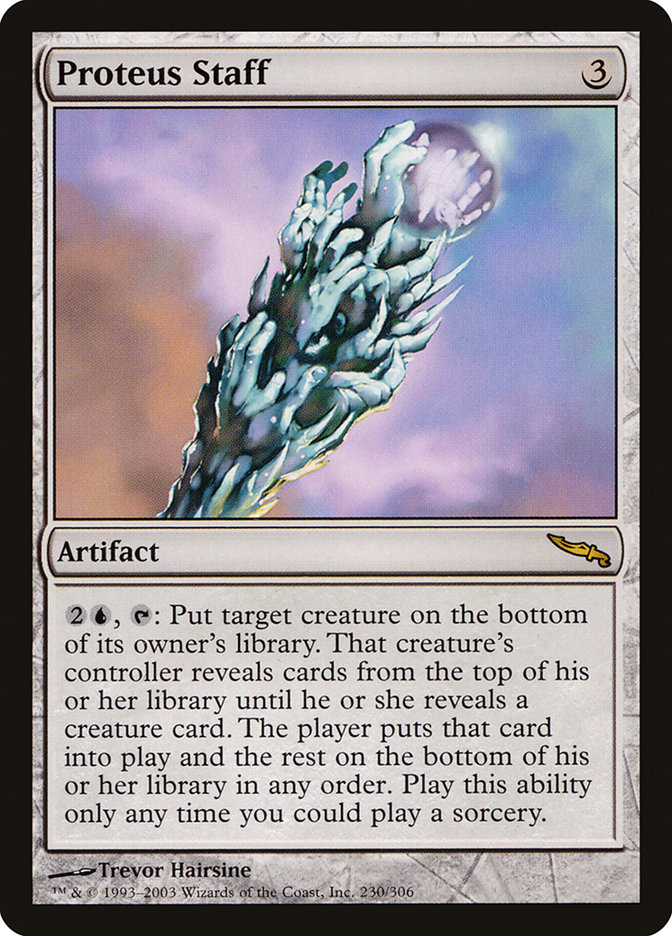
Identity Echo and Proteus Staff are repeatable polymorphs. These are more expensive but also provide enough impact that you could ride one of them to victory.
Reanimation
The reanimation package is relatively small but useful: These creatures have big targets on their back, plus they can be hard to cast, so another avenue to cheating them into play works wonders. This section covers both the discard outlets and reanimation spells.
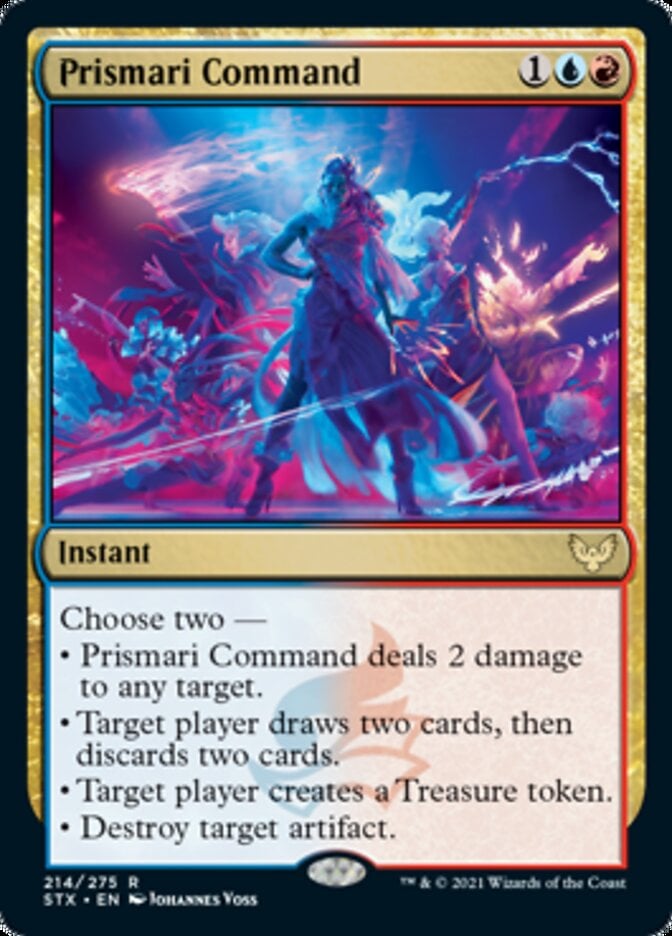
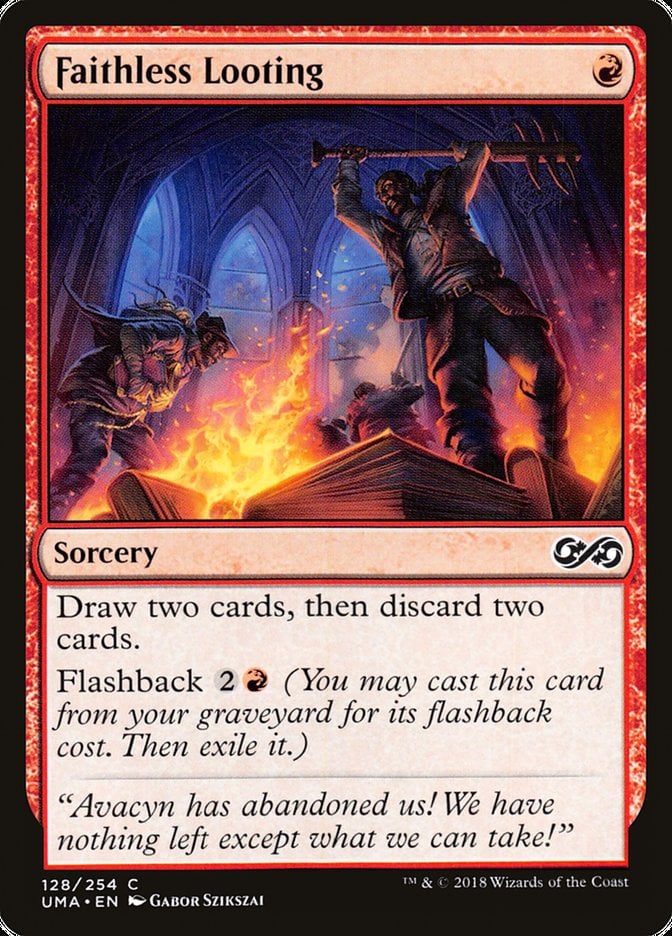
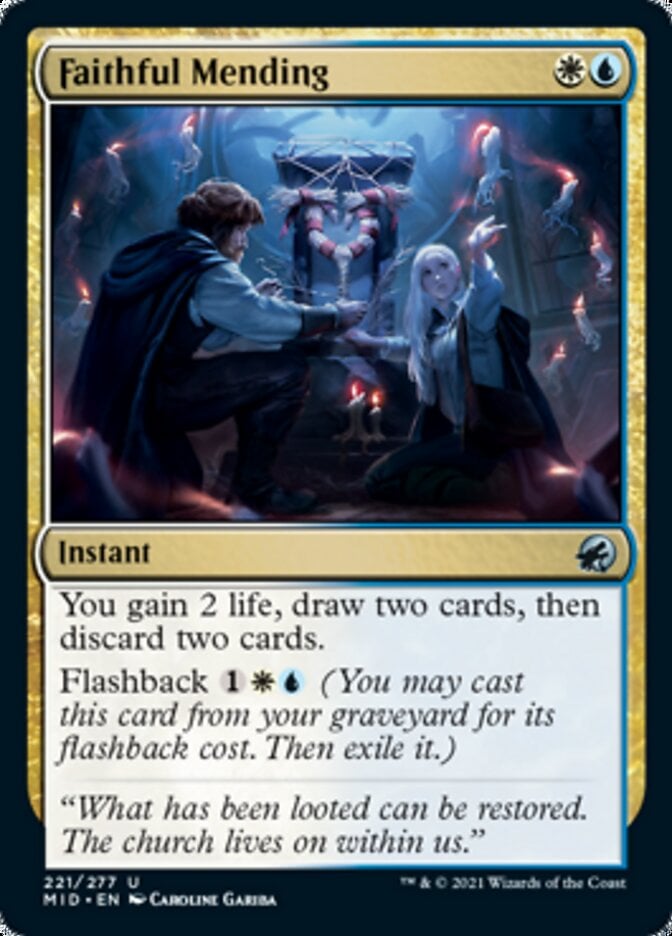
A few cards previously covered discard, and those are joined by the likes of Prismari Command, Faithless Looting, and Faithful Mending.
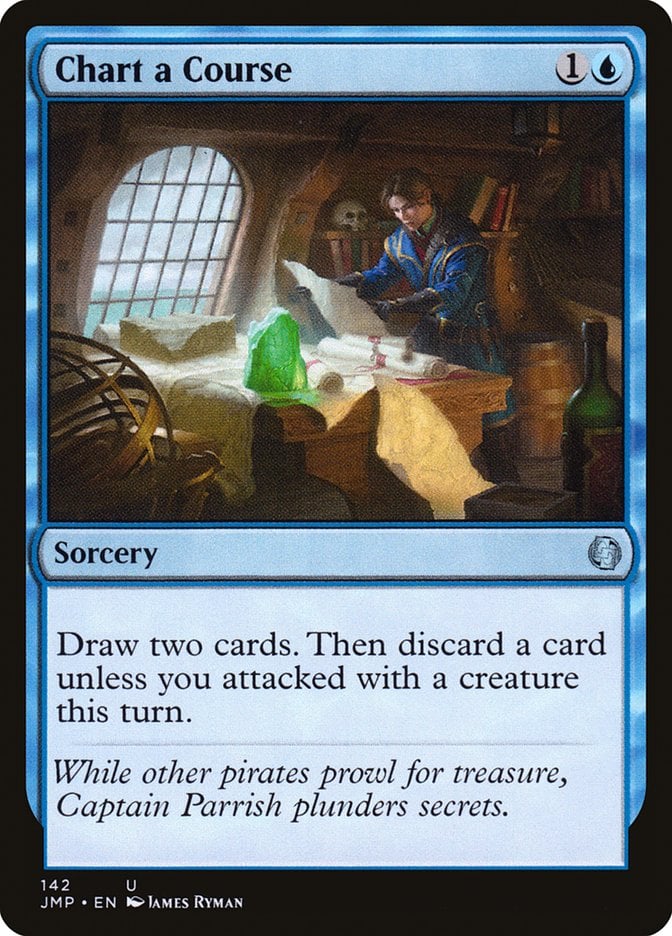
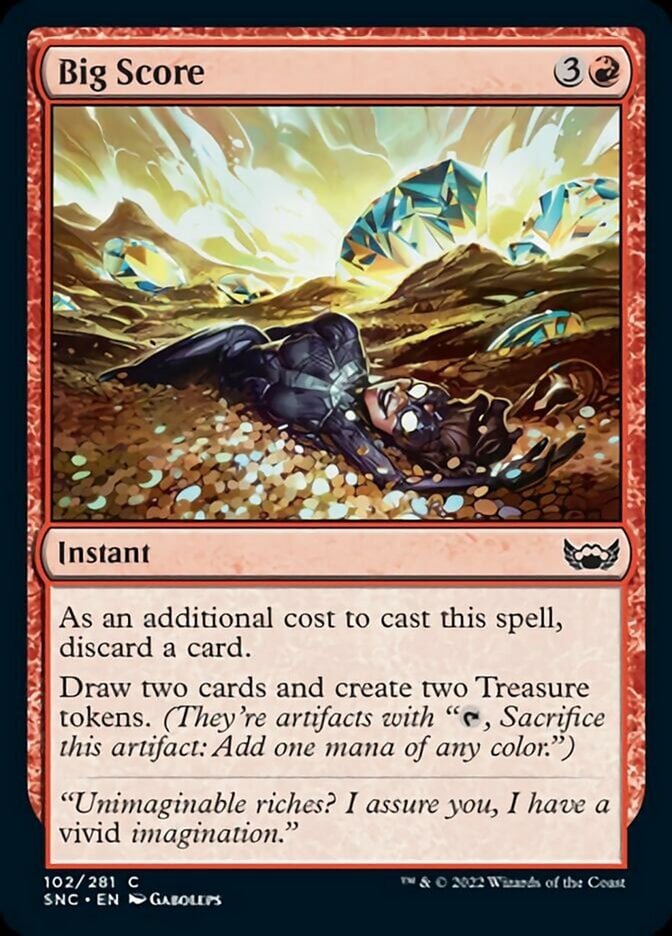
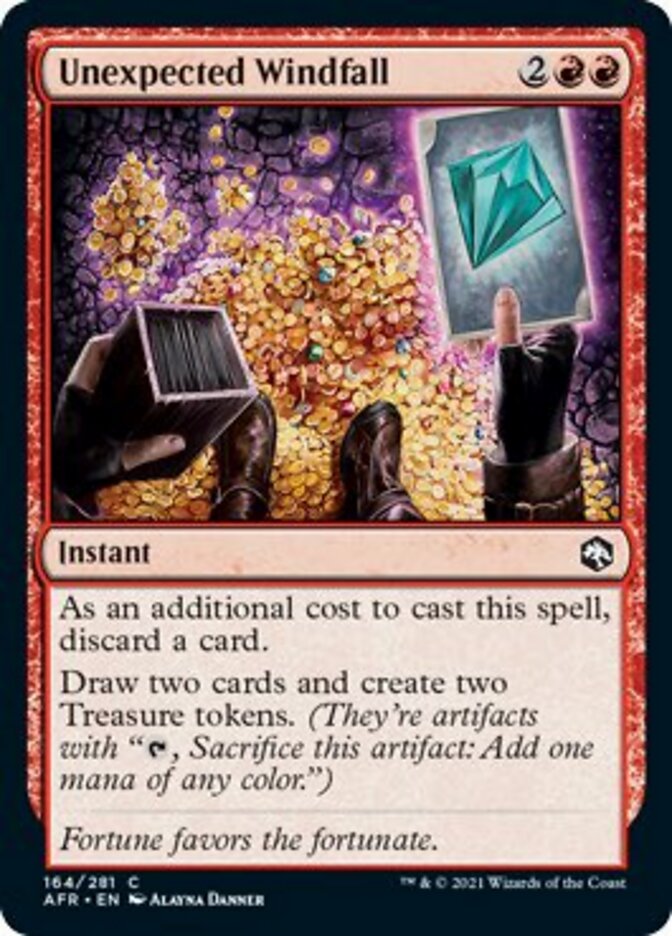
Chart a Course is pretty sweet because it doesn’t need to discard a card, and Big Score and Unexpected Windfall help to cast the spells they draw, even the battlecruisers.

Transpose does a little of everything since it loots twice and makes a wizard token, so it enables both the polymorph and reanimation lines.
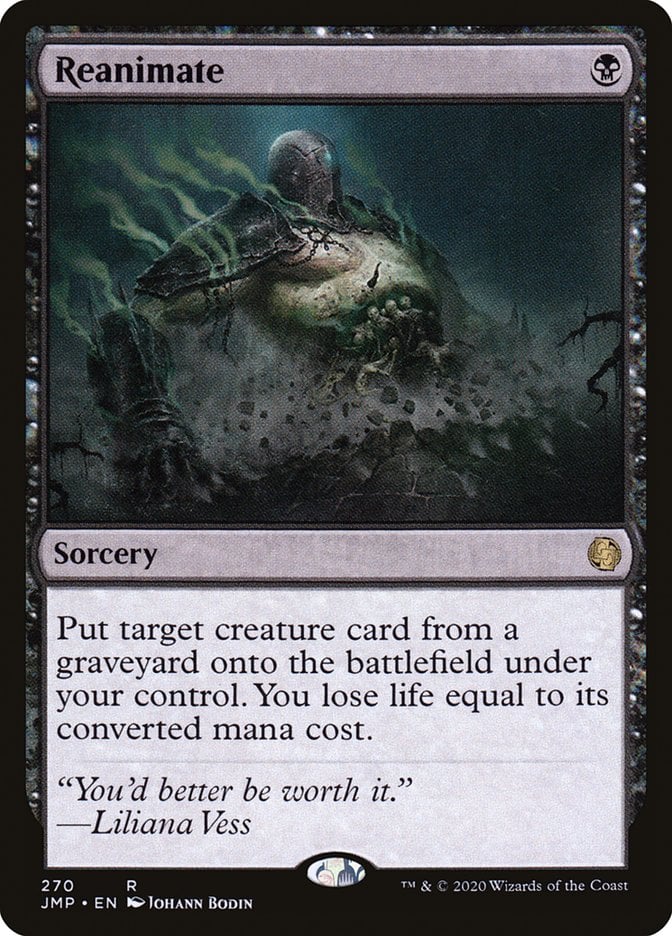
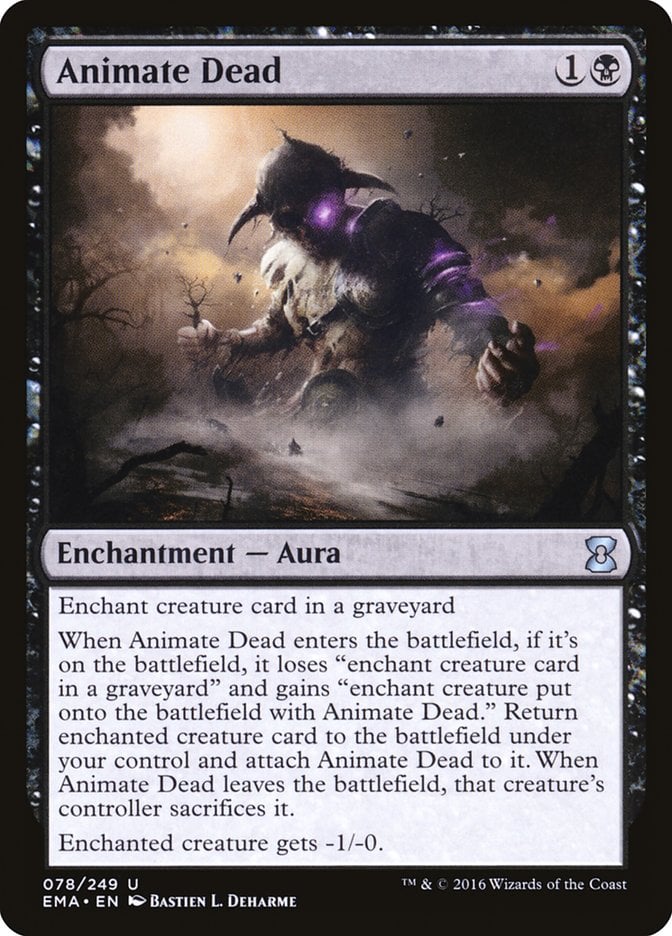
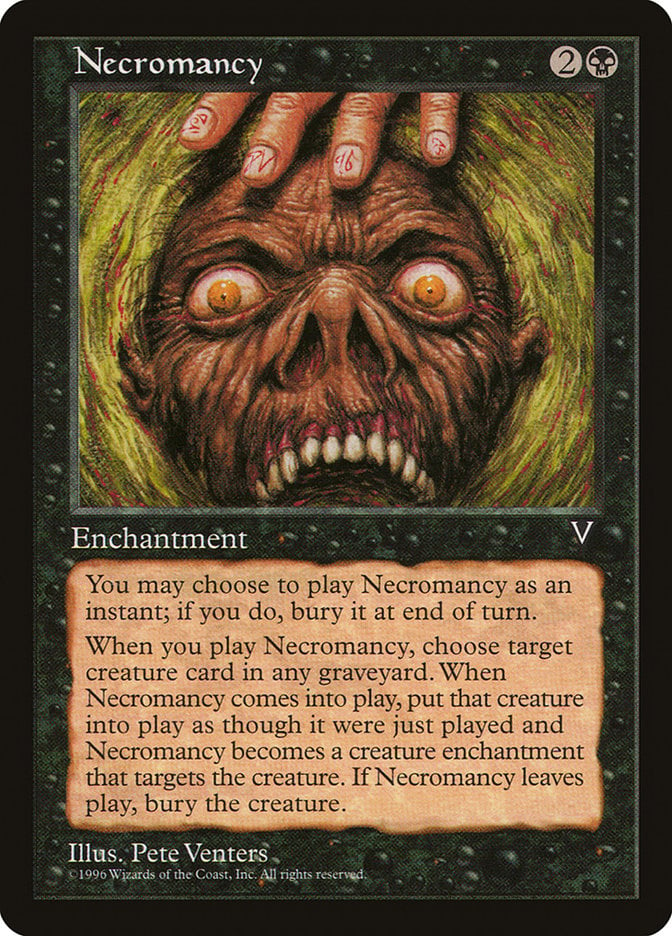
Moving to reanimation spells, we have the cheap classics in Reanimate, Animate Dead, and Necromancy. These are some of the most efficient reanimation spells ever printed, after all.
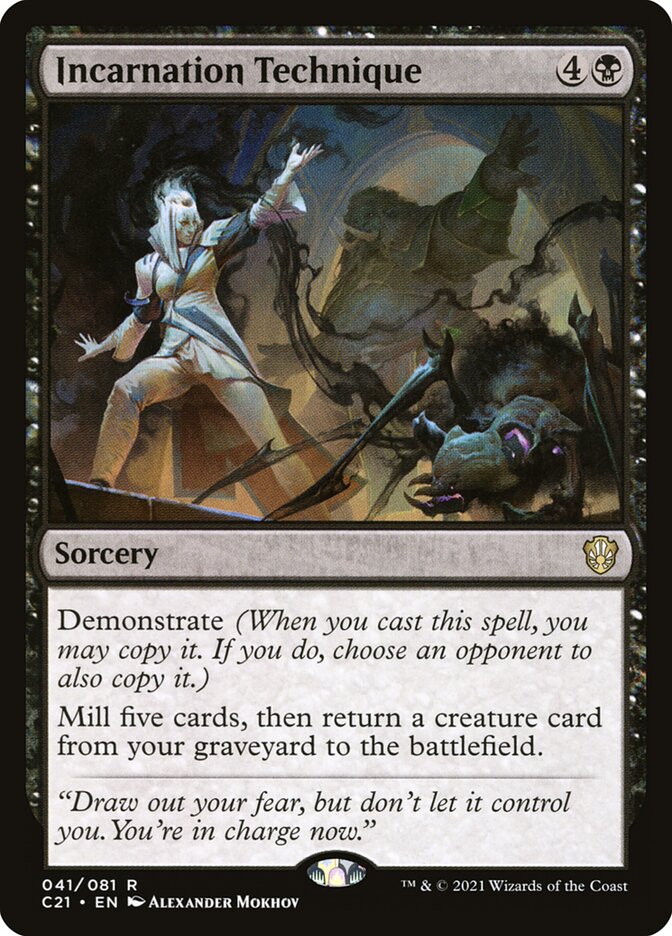
Incarnation Technique works hard because it fills the graveyard, so it’s not a horrid top-deck if everything’s going wrong. That also means it sets up the next animate. I generally recommend demonstrating this when you get the chance; your two creatures are often better than an opponents’ single creature as long as you choose your opponents wisely.

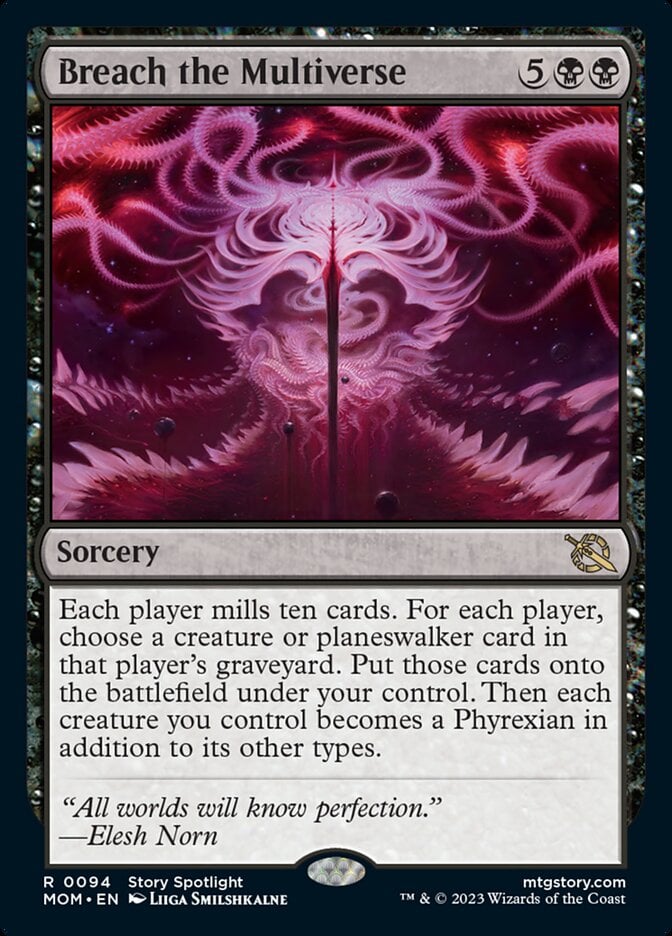
Afterlife from the Loam and Breach the Multiverse scale the reanimation play pattern to Commander and steal cards from your opponents. Four threats for one card does wonders at putting you ahead.
The Mana Base
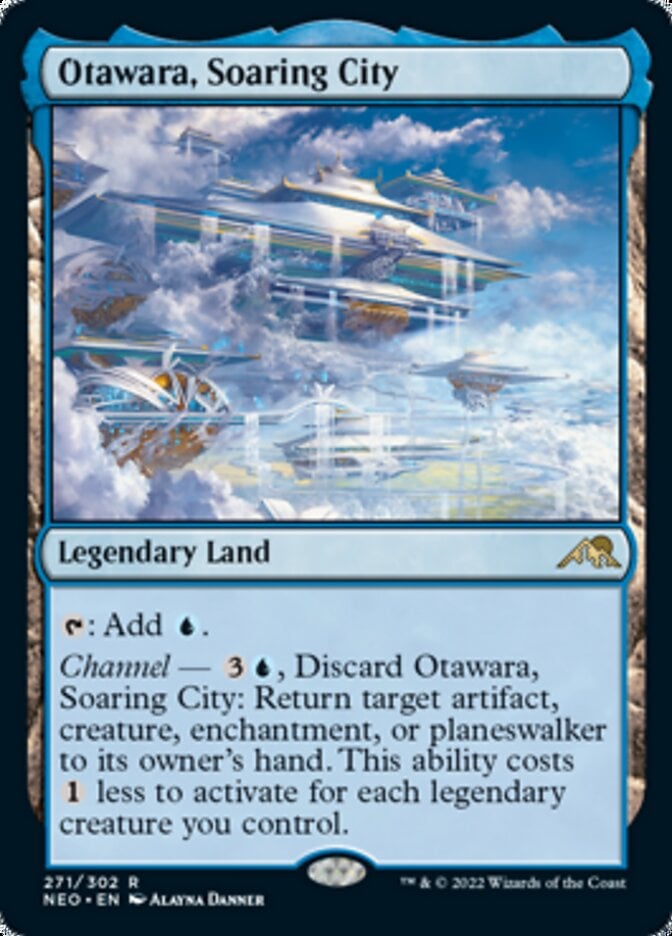
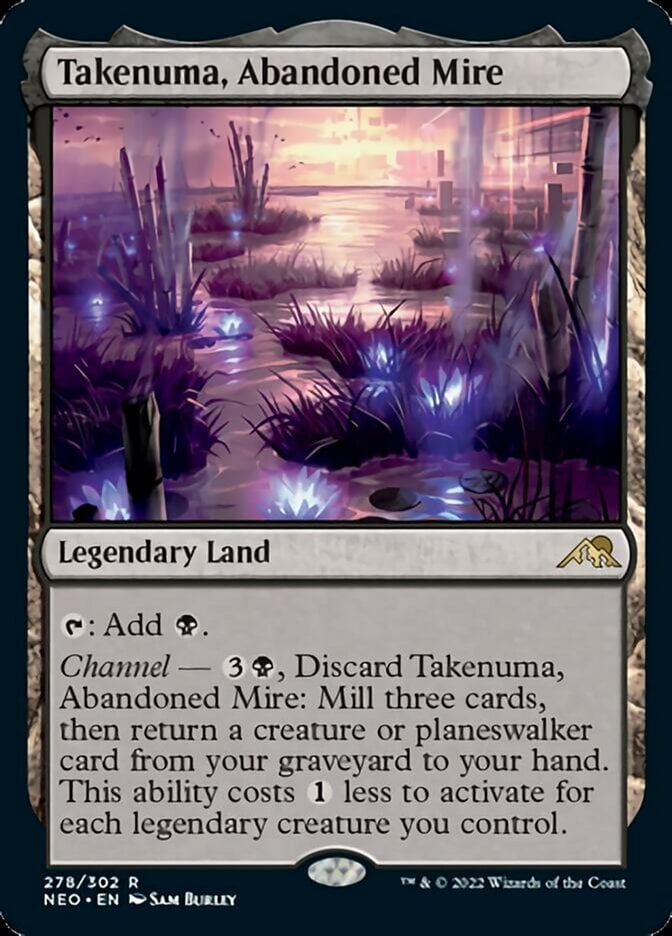
The mana base is extremely simple here, largely from necessity. I’m a devout believer in cramming the mana base with value lands and MDFCs, but that’s much harder to do when fixing for four colors. With this in mind, the land base is almost entirely fixing: There’s fetches and duals, and cards that reward lands with basic land types like the Verges… though there was still room for Otawara, Soaring City and Takenuma, Abandoned Mire.
The ramp package is basically just all the on-color Talismans. They’re cheap, they fix colors, and the life loss doesn’t add up that quickly.
The Strategy
At its heart, this is a three-part combo deck, similar to reanimation. Your three elements are:
- A polymorph
- A target for the polymorph
- A creature to polymorph into
Unlike reanimator decks, you don’t need access to all three. Since polymorphs unanimously flip cards off the top of your library, the first two elements are the only ones needed in your hand. And since Jace, Multiverse Architect is a polymorph, you can start with just a token producer.
As such, the token producers should be your highest priority when looking at an opening hand, but I also recommend looking for ramp. For one, you need to get Jace down fast; for another, these creatures might need to be cast.
Ideally, your opening hand should contain a token producer and something else to do with your mana that’s not all-in on the token producer. You don’t want your opening turns to be Bitterblossom, Secure the Wastes, then wait on Jace. Developing your mana’s great, and card draw’s even better. If I had to draw up the perfect hand, it would include some lands, a non-Jace polymorph, a token producer, and a talisman or two, maybe some interaction.
You also need to keep on eye on the reanimation package. Though it’s less consistent than the polymorphs, it’s considerably faster when it comes together.
Combos and Interactions
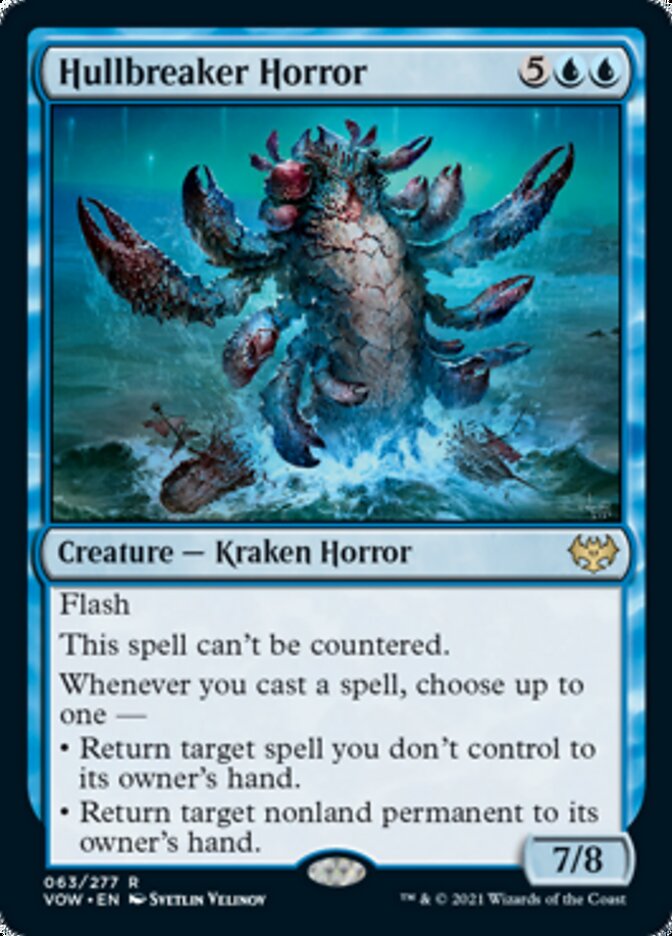
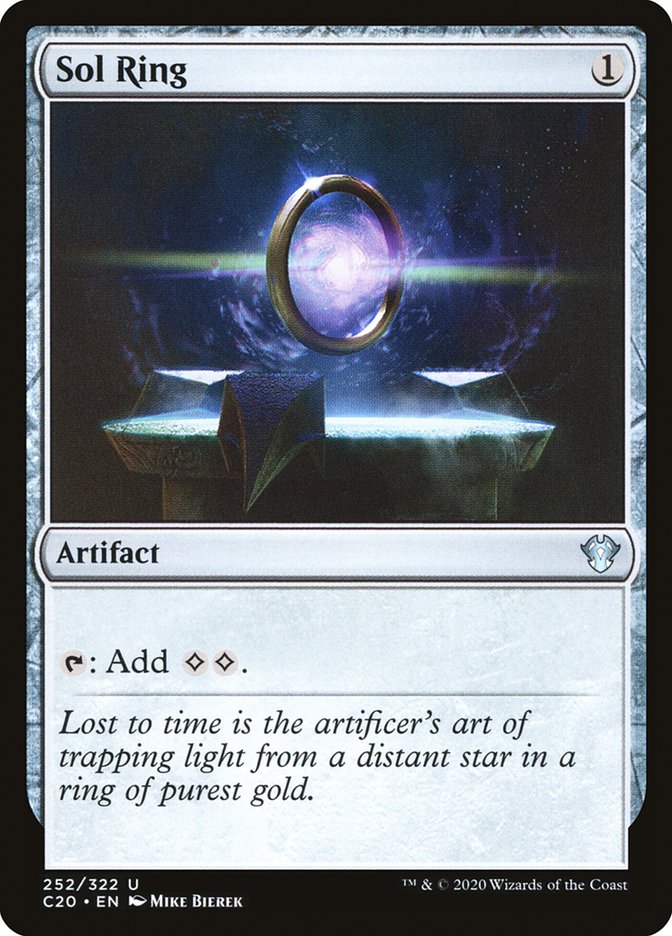

This deck contains an infinite combo but has no outlet for it. The combo requires the following cards:
- Hullbreaker Horror
- Sol Ring
- Any Talisman or Arcane Signet
With Hullbreaker in play, you can tap Sol Ring for , then cast your Signet. That bounces Sol Ring. You can then tap the Talisman for a color to re-cast Sol Ring, which bounces the Signet. Currency Converter can replace the Talisman since Sol Ring makes enough mana to cast both artifacts.
This is mana-neutral, so you just cast the Signet and the Sol Ring infinitely. Well, technically this can net exactly one Sol Ring token per turn with Jin-Gitaxias, Progress Tyrant. There’s no outlet because this deck wasn’t built around this combo, it’s just a side effect of putting Hullbreaker Horror in… basically any Commander deck ever. But it’s worth knowing because this deck can steal creatures. It’s not impossible that you Reanimate a Reckless Fireweaver or Third Path Iconoclast or something, though you can’t count on it.
Rule 0 Violations Check
Polymorph and reanimate can be salty for people playing in the lower brackets because you get threats out so early. Nothing in this deck is so powerful that your opponents can’t beat it if it comes down early, but they might not appreciate a Valgavoth, Terror Eater on turn 4. Still, since it relies on those big monsters as a clock and doesn’t find a combo, it’s a pretty fair deck.
Budget Options

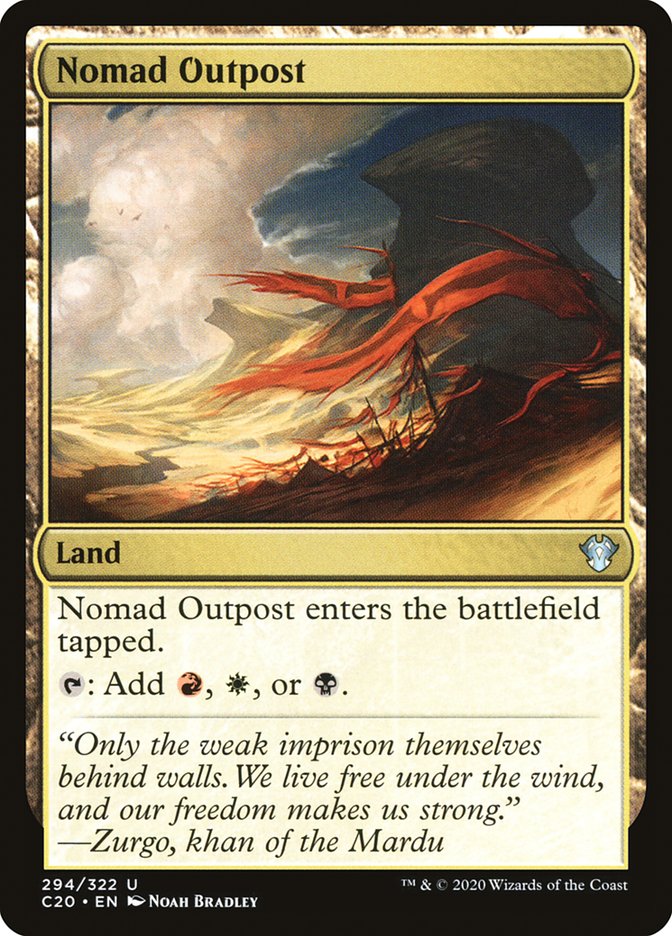
Budget options should always begin in the mana base, and this deck is no exception. Since you don’t have access to green, you’ll need to rely on tapped lands like Path of Ancestry and the tri-lands from Tarkir and Alara. The Thriving lands aren’t bad, either. Also, playing more tapped lands means the deck slows down, which might help with those Rule 0 conversations.
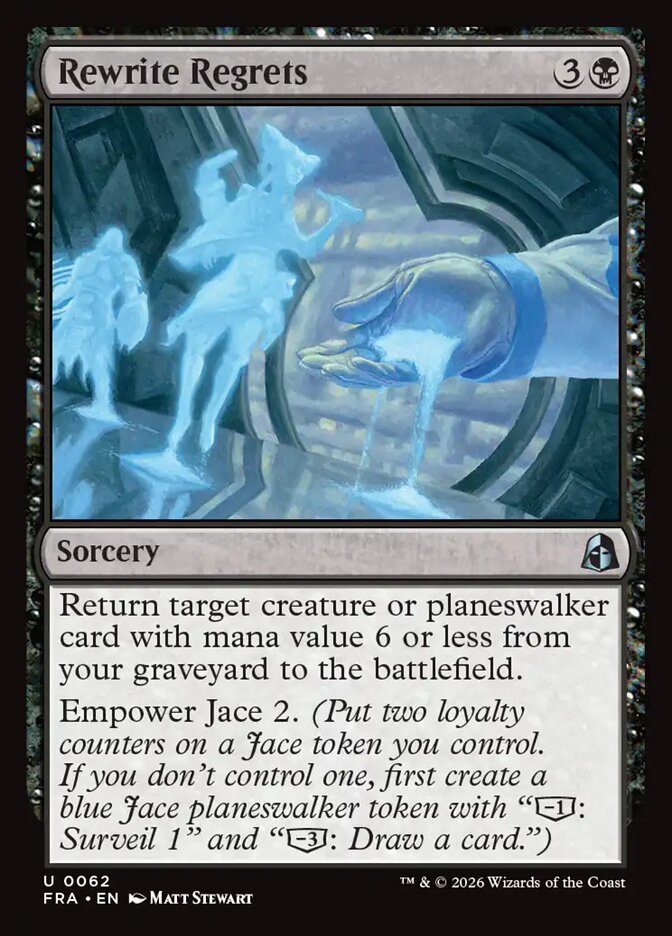
Reanimate, Animate Dead, and Necromancy bear the price tag of being the best reanimation. You can cut them for any of the million Zombify variants running around in the game, which powers the deck down—it puts the reanimation cards at roughly the same pace as the polymorphs. Rewrite Regrets is a thematic choice from Reality Fracture that even gives you a small planeswalker token to polymorph away.
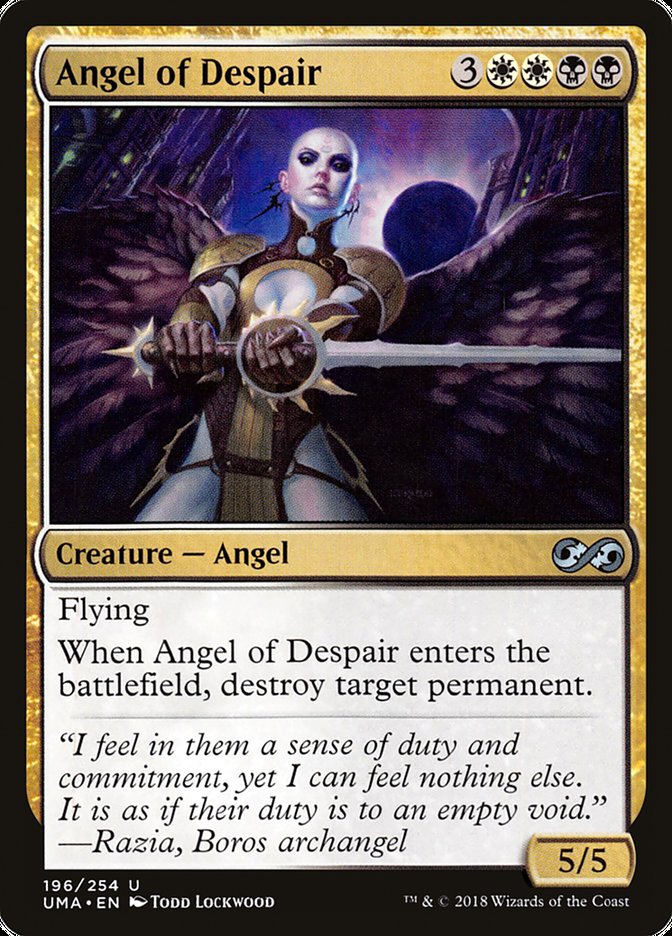

Many of the expensive fatties can be replaced with your favorite battlecruisers. Is Summon: Bahamut an awesome removal spell? Sure, but Tyrant's Familiar or Angel of Despair are a fraction of the price. Kefka, Dancing Mad doesn’t draw as many cards as Nezahal, Primal Tide, but it does a good impression for less than $1.
The only meaningfully expensive token producer is Bitterblossom, which you can swap for another cheap token maker. Maybe Song of Totentanz?
Other Builds
Jace, Multiverse Architect can go in several other directions, though they all look to the polymorph ability.
While this deck leans into all creatures, you can build Jace as a superfriends commander. The deck ethos would more or less remain the same, except creatures like Summon: Bahamut and Elesh Norn, Grand Cenobite swap out for planeswalkers like Ugin, Eye of the Storms and Nicol Bolas, God-Pharaoh. The superfriends variant would also be more controlling, as a deck with minimal creatures wants many, many board wipes.
You could also take a combo angle: If there’s only one creature or planeswalker in your deck, Jace will always find it. You could run just Hullbreaker Horror and Tidespout Tyrant so Jace sets up an infinite combo the turn you resolve it.
Another possibility that comes to mind is a self-chaos, flicker-adjacent deck that plays lots of small creatures with solid enters abilities. Once your Helpful Hunter or Ravenous Chupacabra have done their thing, Jace trades them in for something else with a reasonable enters ability. It’s less flashy and higher variance, but also more unique than the more traditional polymorph builds.
Commanding Conclusion
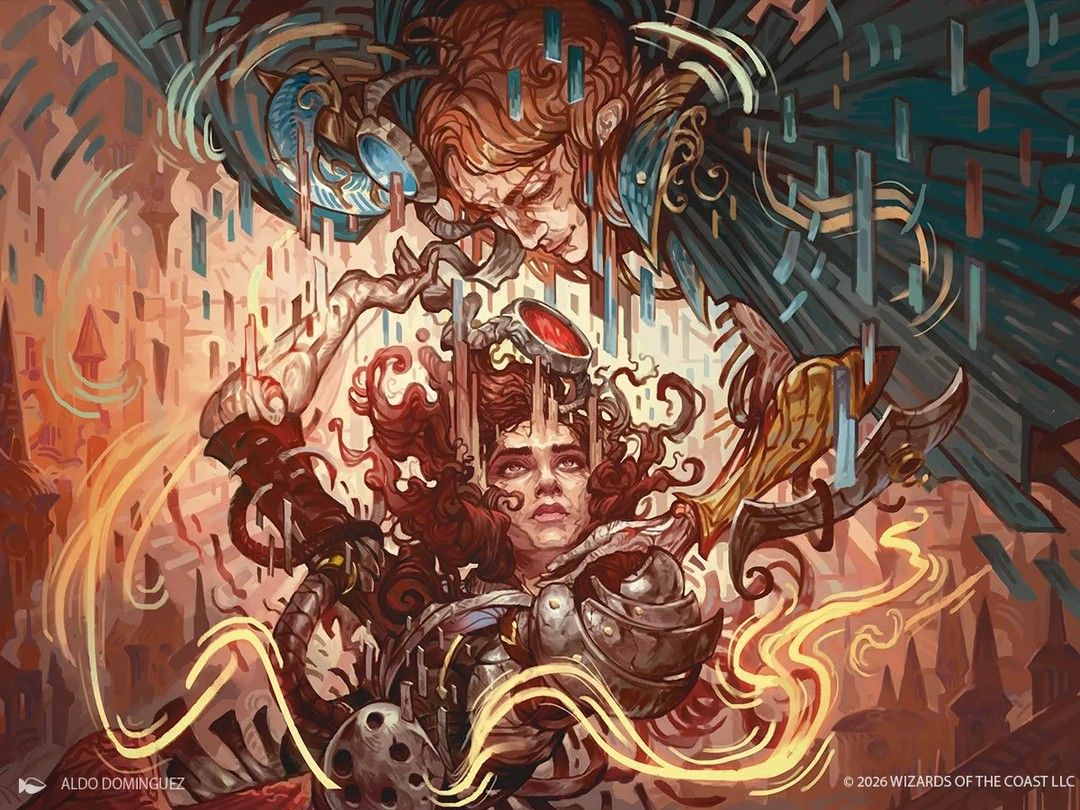
Identity Echo | Illustration by Aldo Dominguez
Jace, Multiverse Architect has earned its spot as the most popular Reality Fracture commander. It’s got lots of colors, encourages explosive plays, and headlines a relatively under-supported archetype, at least in Commander. It’s a ton of fun to play.
Which creatures or planeswalkers are you excited to cheat in with Jace? Are you planning to build this, or do you have your eye on a different FRA commander? Let me know in the comments below or on the Draftsim Discord! If you want more FRA coverage, check out our YouTube channel and newsletter, both called The Daily Upkeep!
Stay safe, and thanks for reading!
Follow Draftsim for awesome articles and set updates:










Add Comment