
Last updated on June 29, 2026

Dina, Soul Steeper | Illustration by Chris Rahn
Commander is my favorite format, and if you’re here then you’re at least interested in it. It’s a format about choice and promotes self-expression through your deck and commander like no other format in Magic. But knowing how to express yourself and what commander or colors to play is half the battle.
Golgari () fights dirty. It’s full of sacrifice, betrayal, and monstrosities that run over entire villages. And that sounds great if it’s your monstrosities and your opponents being betrayed. Which is why today I’m going over the benefits of playing a legendary Golgari card in your command zone, listing the top commanders, and providing a sample decklist in case you want to get started right away.
Let’s dive right in!
Why Go with a Golgari Commander?
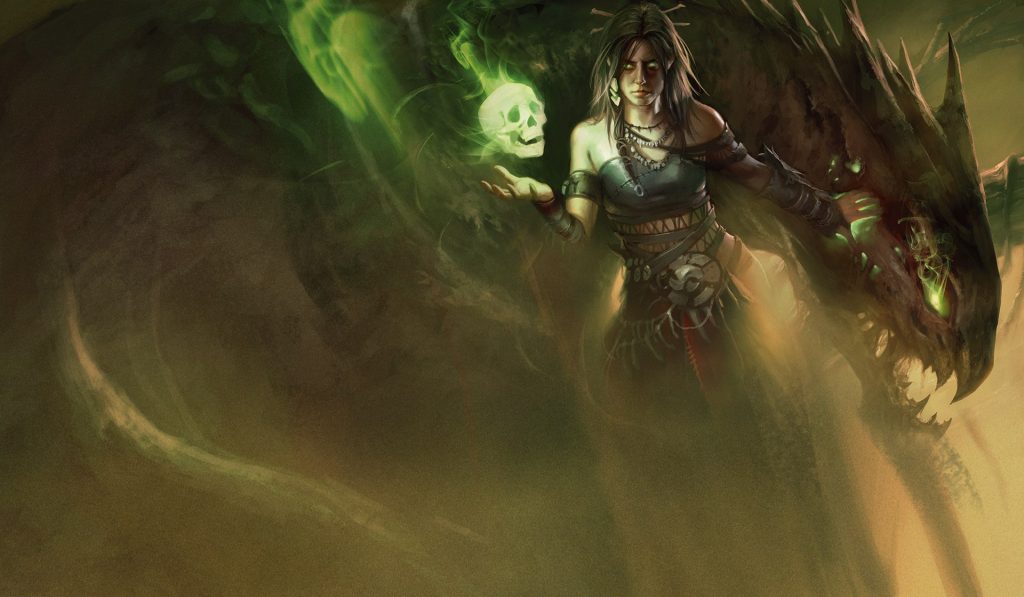
Meren of Clan Nel Toth | Illustration by Mark Winters
Golgari offers up power and strength like no other color combination as long as you’re willing to pay for it. Sacrifice is at the heart of Golgari, taking green’s natural strength and amplifying it using black’s sacrifice outlets and benefits.
Most Golgari decks also play pretty simply. They can easily be summed up as “big green creatures with black removal,” and that’s great. Both colors also have great access and synergy with the graveyard which is an exceptional strategy in Commander.
#46. Long Feng, Grand Secretariat
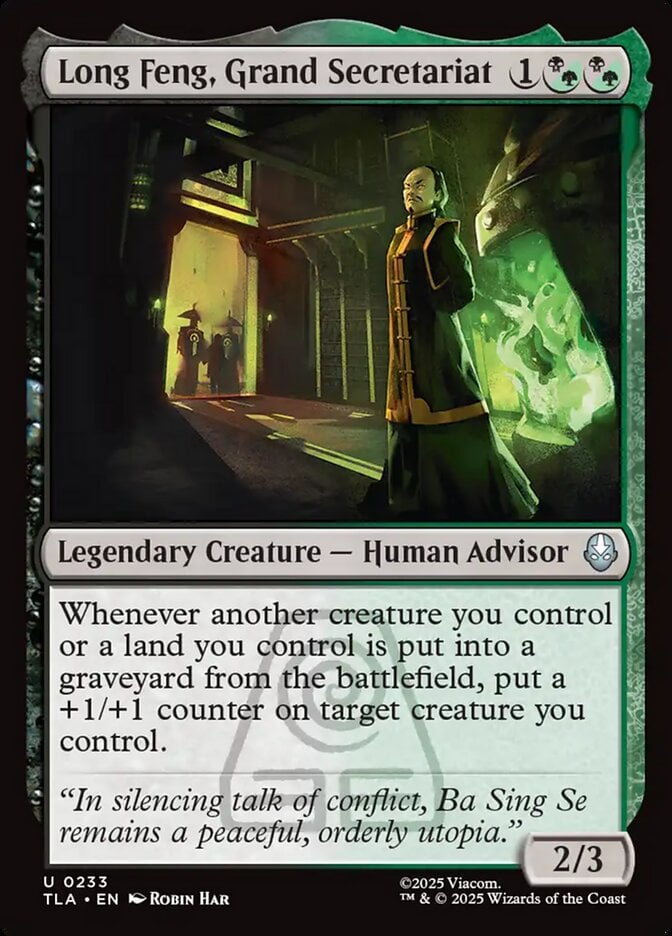
Long Feng, Grand Secretariat is a perfect advisor to remind you how easy it is to send your lands to the graveyard even without earthbending (ahem, fetches). The overseer of Ba Sing Se’s culture makes sure none of your creatures goes unnoticed either and with any sort of creature token engine like Fire Navy Trebuchet, the +1/+1 counters grow very quickly.
#45. Izoni, Center of the Web
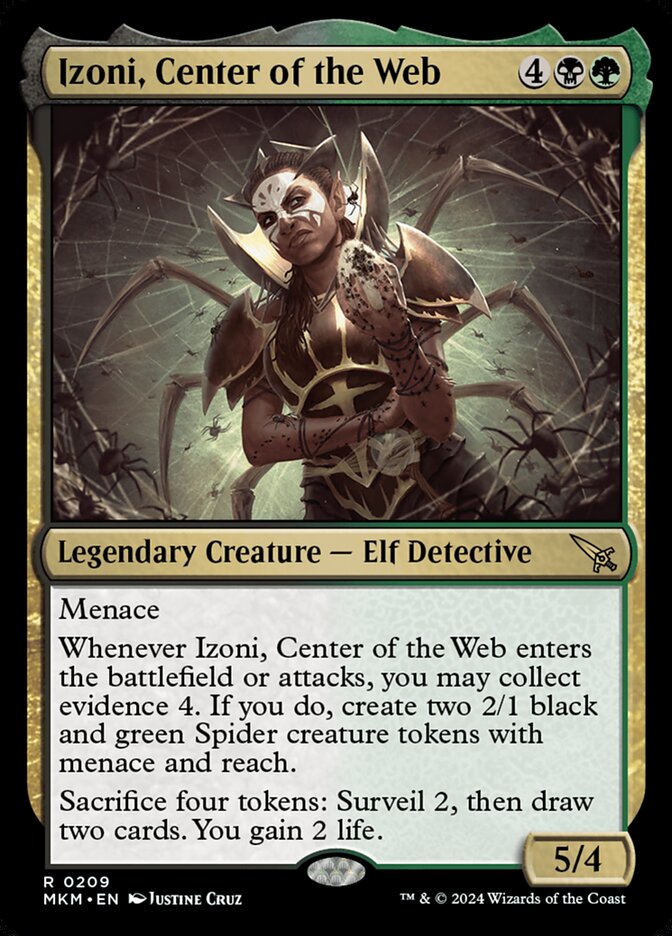
I really appreciate that Izoni, Center of the Web maximizes a repeatable way to collect evidence and give you two good bodies with relevant keywords.
While the casting cost is high at , the payoff for having lots of tokens is really good. The biggest thing in my mind for not ranking Izoni higher is that if you get behind on the board, and can’t attack or pull creatures from your graveyard, this commander has a hard time recovering.
#44. Jenova, Ancient Calamity

The triggered ability for the start of combat is a very strong one considering power-increasing cards like Fungal Fortitude, Haunted One and Rancor are easy to come by.Jenova, Ancient Calamity fits nicely with mutants such as Shambling Cie'th and combines with a sacrifice outlet to nearly give you a free sorcery-speed Village Rites
#43. Glissa, the Traitor
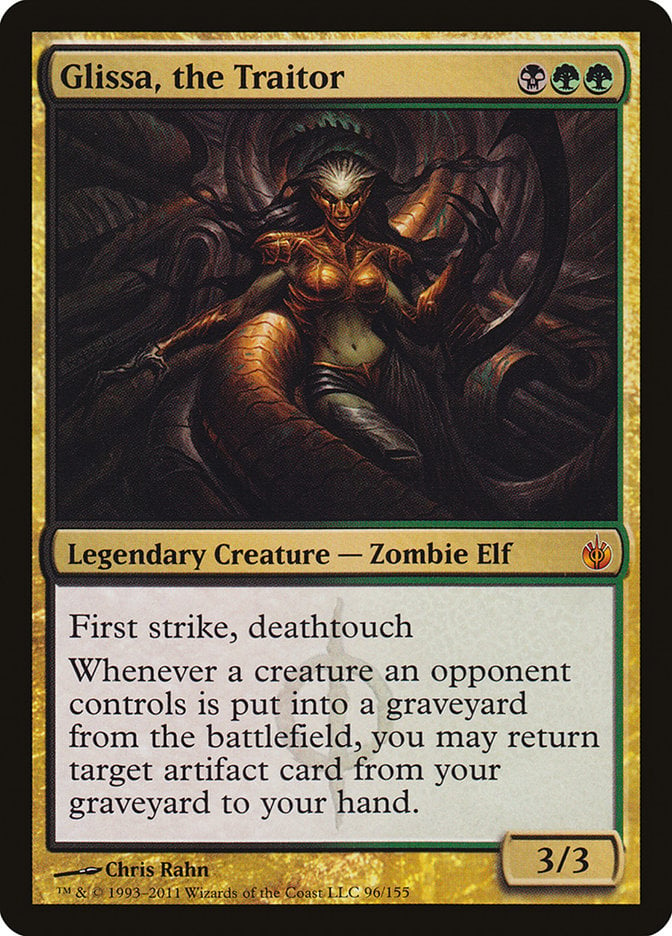
Glissa, the Traitor is a Golgari elf with some terrifying keywords. The combination of deathtouch and first strike basically makes this unblockable unless your opponent has four creatures with 3 power that they’re willing to put in front of and potentially lose to Glissa.
Glissa is a unique Golgari commander that cares about artifacts, specifically getting them back from your graveyard. It pairs well with other cards that want you to send artifacts to your graveyard, like Marionette Master and Myr Retriever, and the ample self-mill found in these colors like Grisly Salvage.
Edicts are your best friend for Glissa’s triggers. Cards like Innocent Blood and Soul Shatter are great on their own since they’ll kill three creatures with little investment and get way better, as Glissa gets a trigger for each of them.
#42. Tyvar the Bellicose
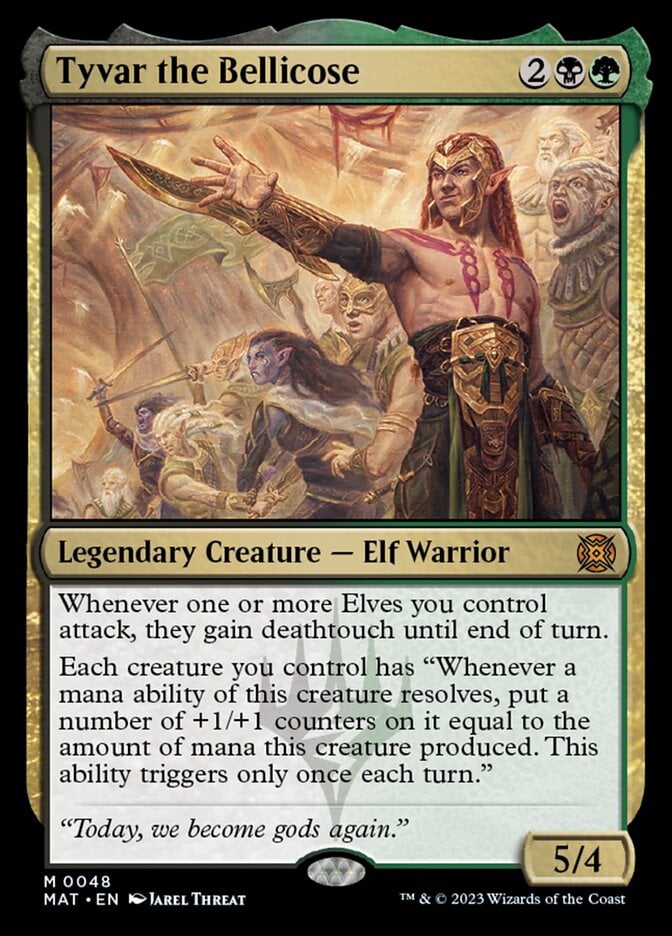
Elves are a classic archetype in Magic. One of their defining characteristics is their ability to generate obscene amounts of mana, which makes Tyvar the Bellicose an intriguing option as an elf commander since it makes your mana dorks bigger.
Classic options like Llanowar Elves and Elvish Mystic slowly growing are fine with Tyvar, but what about the elves that tap for lots of mana? Elvish Archdruid, Priest of Titania, Circle of Dreams Druid… it’s not uncommon to see these creatures tapping for 5 or more mana, which is a lot of power to add to a mana dork, and it can make them relevant threats later in the game.
The deathtouch clause shouldn’t be overlooked either. Elves are very good at making tokens, and getting to swing with those often and early helps force through damage and pressure planeswalkers since opponents aren’t likely to trade real creatures with deathouching tokens. Hallmark finishers for elf decks are cards like Craterhoof Behemoth and Overwhelming Stampede, which only get better with deathtouch in the mix.
#41. Sarulf, Realm Eater
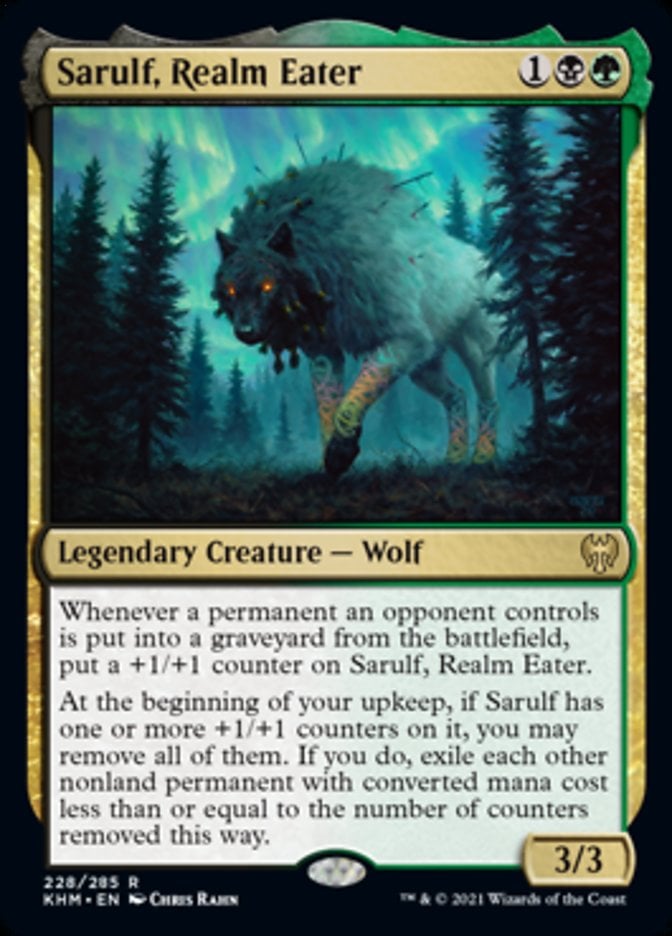
Sarulf, Realm Eater is truly a realm eater given its abilities, which allow it to exile nonland permanents equal to the number of +1/+1 counters on it during your upkeep. Throw Sarulf into a deck box with some +1/+1 counter synergy and you have a great creature deck with an easy way to threaten your opponents if they try to stop you.
This is also great removal since neither black nor green have easy ways to kill things with indestructible outside of sacrifice outlets. Just make sure to plan around this mechanic because you don’t want to end up wiping your own board in the process!
#40. Agent Frank Horrigan
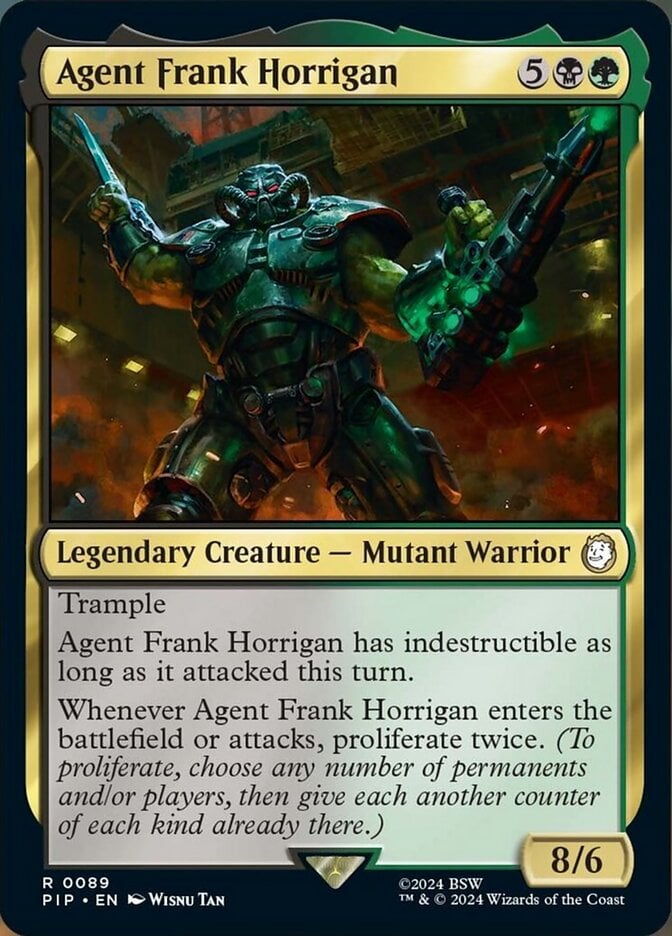
What do +1/+1 counter decks and poison decks have in common? A love, nay a need for proliferation.
That’s where Fallout‘s Agent Frank Horrigan comes smashing in as a massive Golgari commander with a double proliferate trigger. Frank’s primed to be a Voltron commander with those stats and trample, but that’s far from necessary. You can simply use cards like Infectious Inquiry and Vraska's Fall to spread poison around and sit behind your massive creatures while proliferate cards like Vraska, Betrayal's Sting and Evolution Sage slowly kill your opponents.
I actually really like the flexibility of a commander that can make an aggressive start and pivot to a slow, grindy game plan like this.
#39. Grist, Voracious Larva / Grist, the Plague Swarm


When building around Modern Horizons 3‘s Grist, Voracious Larva, I think you want to lean into a sacrifice deck using cards like Reassembling Skeleton, Forsaken Miner, and Bloodghast for sacrifice fodder.
These cards provide a simple way to flip this commander into Grist, the Plague Swarm. This iteration of Grist sticks out to me as a great Golgari commander for the “gravebreak” archetype Wizards started pushing with cards like Tormod, the Desecrator and Insidious Roots.
#38. Mazirek, Kraul Death Priest
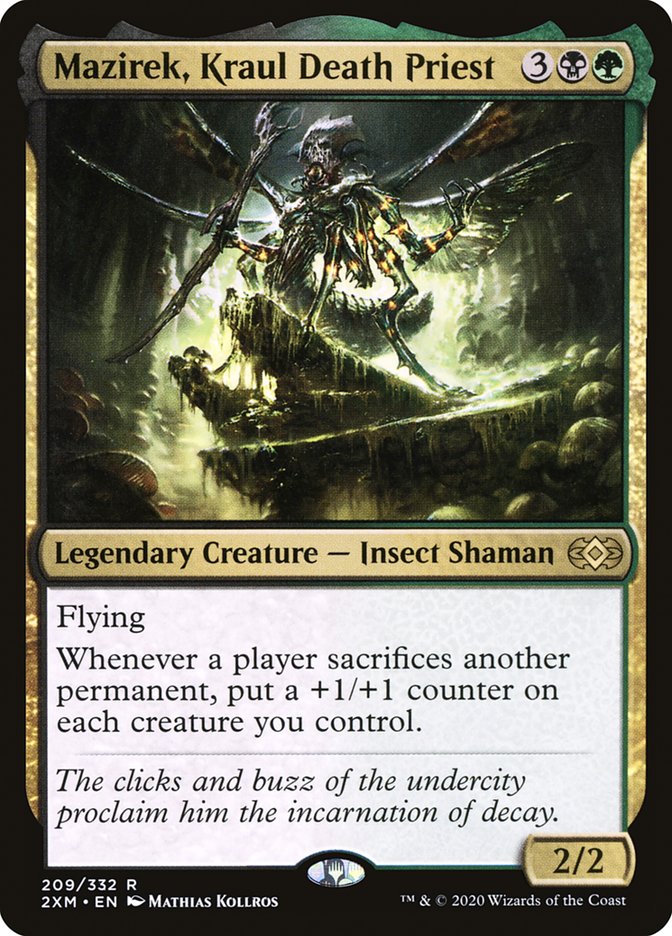
Up next is Mazirek, Kraul Death Priest from Commander 2015, a 2/2 flier that gives each creature you control a +1/+1 counter whenever a player sacrifices another permanent. This is pretty incredible given how strong sacrifice decks are in Golgari, and getting an extra board-wide buff from each trigger is too good to miss out on.
Make sure to include plenty of sacrifice outlets in your deck since Mazirek, Kraul Death Priest isn’t one itself. The best ones are Viscera Seer, Blood Artist, and Demon's Disciple, but I’m sure you could find more interesting ones with some digging.
#37. Grismold, the Dreadsower
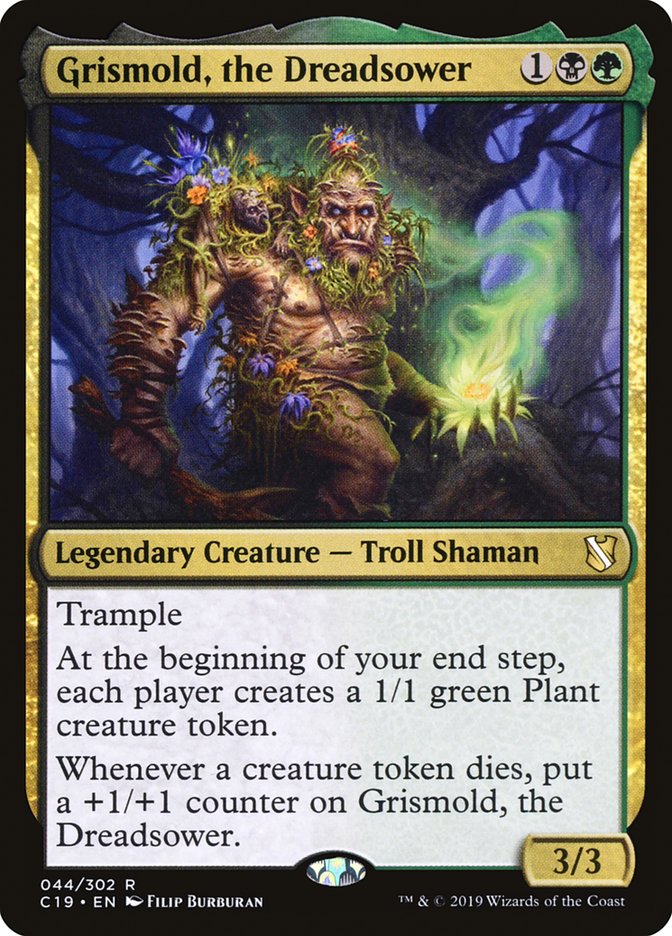
Grismold, the Dreadsower is a 3/3 trampling troll shaman that generates plant tokens and gets +1/+1 counters whenever a token dies. This is one of the more straightforward token commanders in Golgari colors.
Since Grismold, the Dreadsower also has synergy with creature death your deck doesn’t need to rely so heavily on green for token synergy. An aristocrats and tokens strategy works better and can more easily use some of black’s best cards, like Dictate of Erebos and Village Rites.
#36. Ygra, Eater of All

I’ve tried many times to make Food decks work. They inevitably hit a wall: I can never produce enough Food, at least not at an efficient enough rate. Ygra, Eater of All from Bloomburrow changes all that by turning all my creatures into food.
Not only that, it deepens the value of Food payoffs like Greta, Sweettooth Scourge and Peregrin Took by letting me mingle them with existing sacrifice synergies like Blood Artist and Morbid Opportunist. Not to mention Ygra becomes a massive threat while all this happens.
#35. Nemata, Primeval Warden
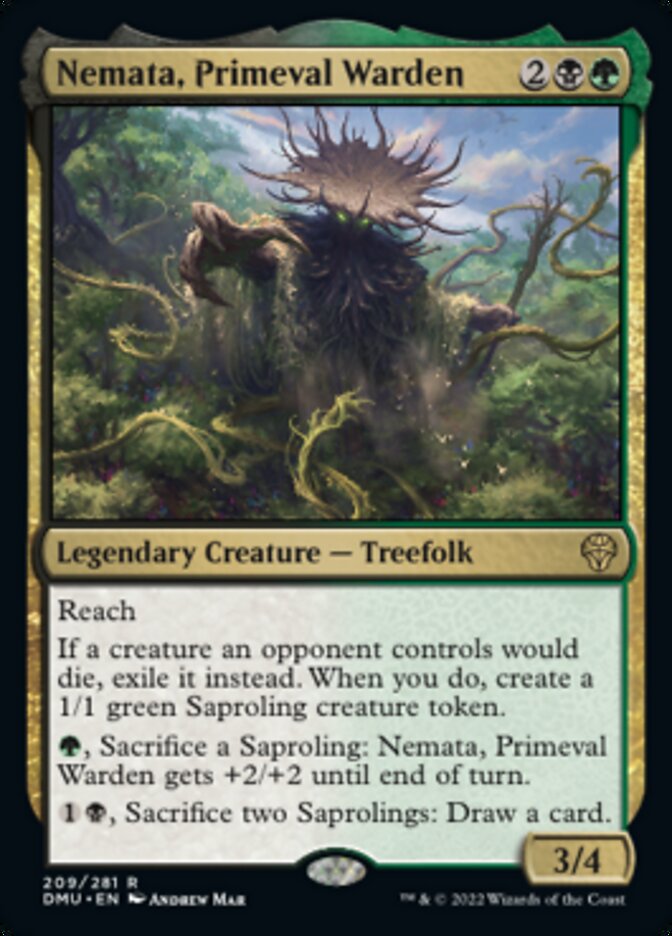
Most cards in sacrifice decks fall into two camps: sacrifice fodder and sacrifice outlets. The former are the cards that you want to be sacrificing. These can be cards that make tokens like Sprout Swarm or recursive creatures like Reassembling Skeleton. Nemata, Primeval Warden is notable as a commander that solves both sides of the equation.
Only sacrificing saprolings is a downside for the card, but saprolings have a fair amount of support. You can make Saproling tokens consistently through cards like Tendershoot Dryad and Mycoloth or in bursts with spells like Sprout Swarm and Scatter the Seeds. These tokens also work great with non-Nemata sacrifice outlets.
You can also make the Saprolings with Nemata’s ability. Nemata is another commander that plays great with cards like Fleshbag Marauder and Plaguecrafter to get a bundle of tokens. The exile clause also gives Nemata some control against other sacrifice decks trying to run a similar strategy.
#34. Honest Rutstein
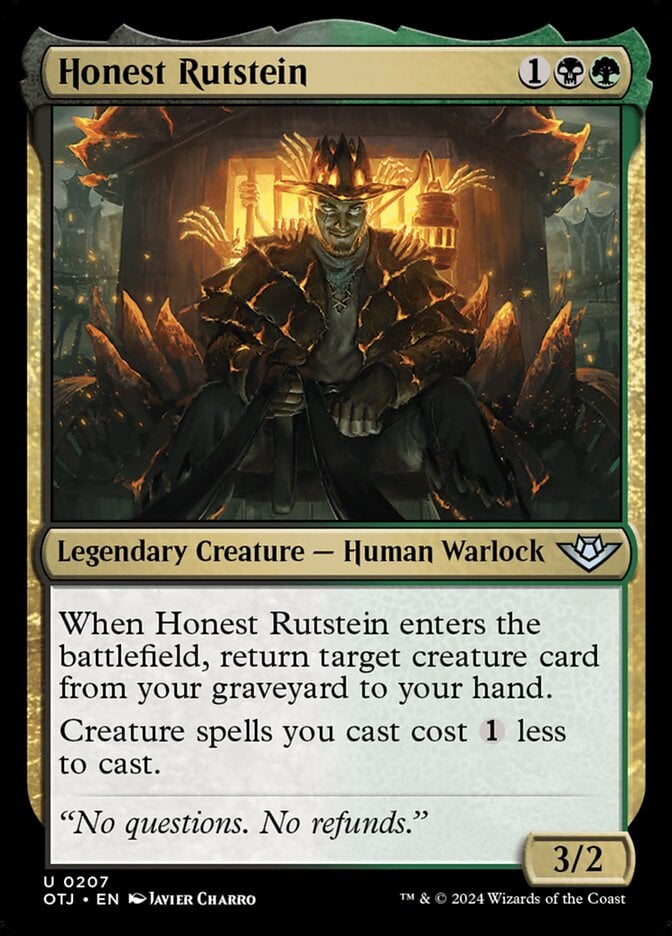
Though the flavor text would encourage you to think otherwise, Honest Rutstein lives up to its name as a fun, fair commander. Getting Gravedigger in the command zone along with a cost reduction ability lends itself well to a creature-based graveyard strategy. I’ve found a lot of success using this Golgari commander to repeatedly recur Plaguecrafter and other edict creatures to grind through my opponents’ resources.
#33. Glissa Sunslayer
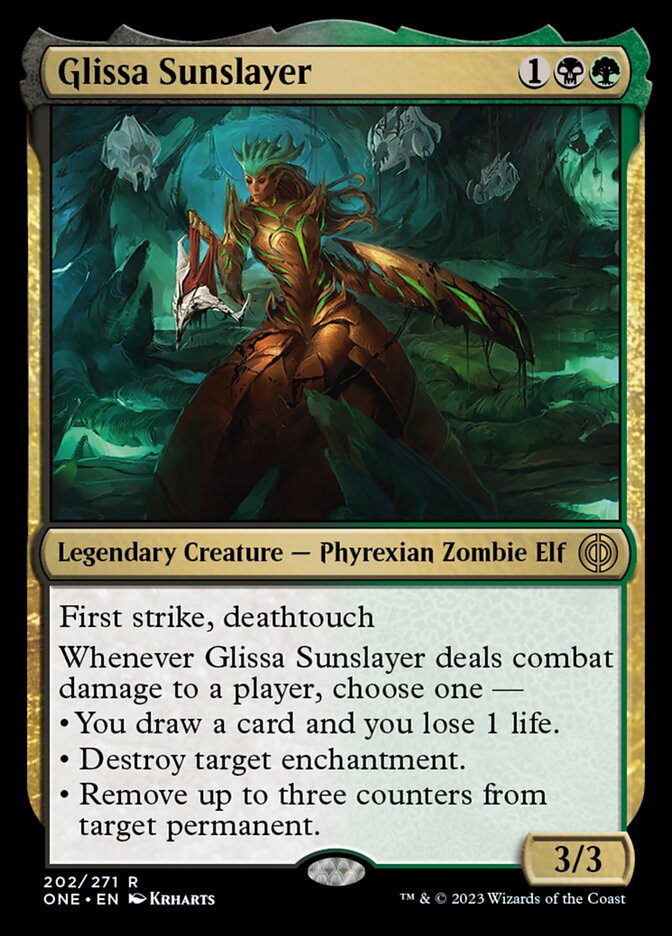
Glissa Sunslayer has the same lethal keyword combination as its predecessor but has a few more uses. This Glissa wants to deal combat damage to players for some incredible value. Card draw and enchantment destruction are well and good, but removing counters from a permanent offers some cheeky advantages with sagas.
Removing counters from a saga lets you control its chapter abilities. You can constantly remove the second counter from The Eldest Reborn to force your opponents to discard a card on every one of your turns, turn Binding the Old Gods into a repeatable Maelstrom Pulse each turn, or get a steady stream of card draw or +1/+1 counters from The First Iroan Games.
You’re interested in dealing tons of combat damage to manipulate these counters, so effects like Rogue's Passage and Whispersilk Cloak that let Glissa get in unblocked are fantastic. Don’t overlook the value of Lure effects; you don’t get the saga value, but forcing your opponents to put all their creatures in front of a creature with deathtouch and first strike cleans up opposing boards quite well.
#32. Cleopatra, Exiled Pharaoh

If you want to merge +1/+1 counters with the potential for a group hug strategy and a desire to sacrifice legendary creatures, look no further than Cleopatra, Exiled Pharaoh. If that seems like a wild number of themes, it is, but that makes this Golgari commander so intriguing.
How will you build your deck to maximize these abilities? Green decks can add group hug mechanics to go around with spreading counters. Of course, you can simply focus on +1/+1 cards like Winding Constrictor and Bristly Bill, Spine Sower. But how are you drawing cards without sacrifice outlets? This Assassin’s Creed commander screams “toolbox” and looks like the kind of card you can tinker around with to your heart’s content.
#31. Abomination of Llanowar
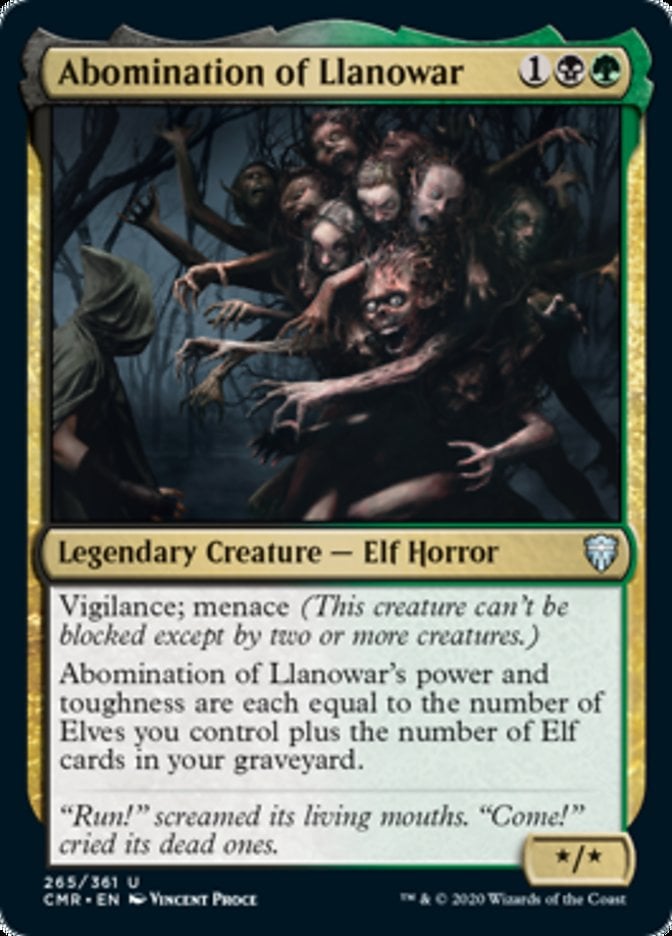
Next we have Abomination of Llanowar, which is just about the most Golgari name I can think of for a creature. Abomination has power and toughness equal to the number of elves in your graveyard plus those that you control, which means it’s elf time baby!
While you have direct reasons to put elves in the graveyard, you don’t want to stray too far beyond normal elf decks. Abomination of Llanowar isn’t so good that you want to run a sacrifice deck with elves as the creatures, plus the ability that looks at the graveyard also looks at the battlefield. Just throw in your elves along with Craterhoof Behemoth and Natural Order and call it a day.
#30. Kraven the Hunter

Capitalize on the power to mana cost ratio and you stand a good chance of staying on par with other competitors at the table. The payoff for Kraven the Hunter is for you and your table to do what they should be doing in a game of Commander, trying to defeat the biggest threats.
Any poor decks with 2/2s and 1/1s will be easy pickings for this prime hunter.
#29. Old Stickfingers
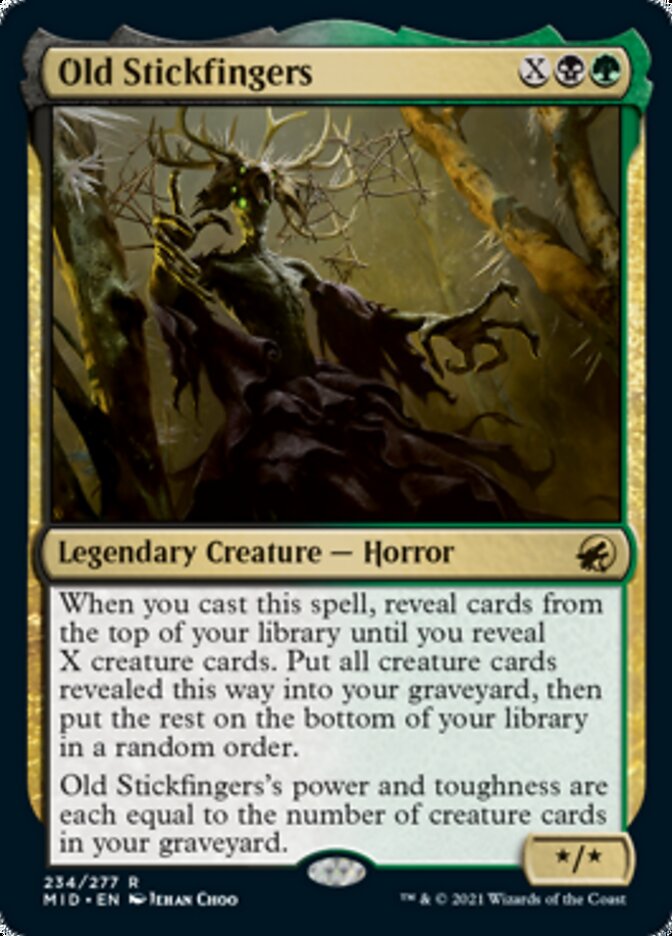
The infamous Old Stickfingers from Midnight Hunt wants to be your classic graveyard/reanimator commander, and it fulfills that role pretty well. It practically throws cards into your graveyard, and doing that just once should be enough to get the ball rolling.
Reanimator decks are pretty straightforward. Pick out your favorite creatures you want to bring back like Sheoldred, Whispering One, put in as many reanimation engines as you can, and you’re ready to go.
#28. Venom, Deadly Devourer

Is it wrong for me to think of Venom, Deadly Devourer as an upscaled Scavenging Ooze for your command zone? Yes, because Venom’s ability costs more and can only hit creatures. The size difference makes it very much a weapon, and for the record, there are a few playable symbiotes and they get along swimmingly with extra +1/+1 counters.
#27. Aatchik, Emerald Radian

Imagine how big Aatchik, Emerald Radian must be for it to cost six mana. That’s one mana for each limb. Thankfully, Aatchik brings a swarm with it right away if you’ve filled your graveyard properly. Then it’s just a matter of your bugs crawling all over opponents to make them lose life.
#26. Winter, Cynical Opportunist

The five toughness on Duskmourn‘s Winter, Cynical Opportunist goes a long way with deathtouch and makes it a nearly unblockable creature. Then, just for filling your graveyard, you get an opportunity each turn to pull a permanent back for free. Bet you didn’t think of Triplicate Titan, or Eldrazi Conscription.
#25. Nath of the Gilt-Leaf
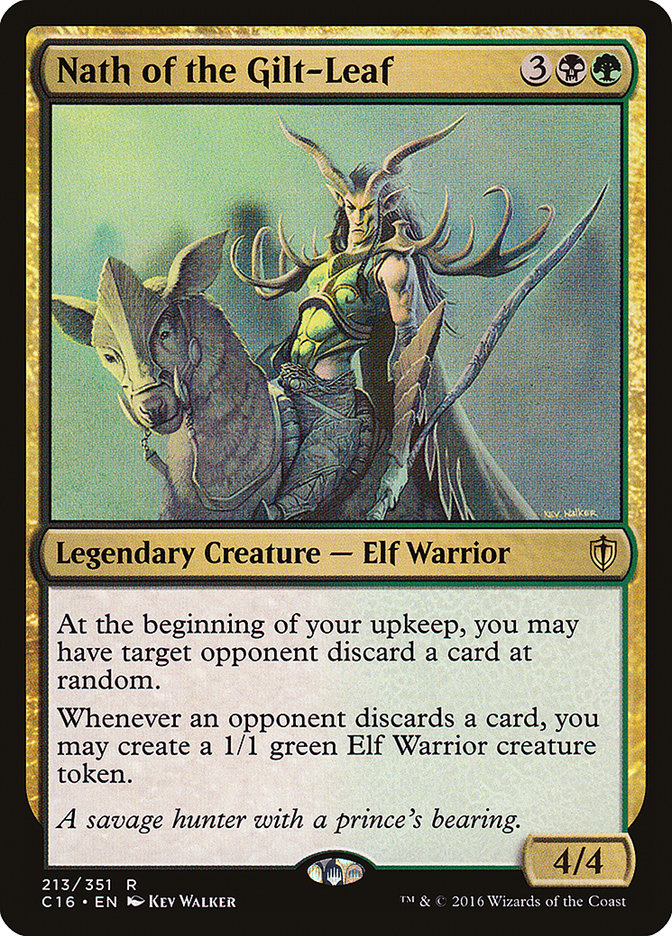
Golgari is a color pair that loves sacrificing things, but it’s also excellent at playing long, grindy games that slowly outvalue your opponents and strip them of their resources. A great way to attack resources in Commander is repeatedly forcing your opponents to discard cards, which is where Nath of the Gilt-Leaf shines.
It’s a bit slower as a commander but gives discard-focused decks lots of value. Once you’ve slowly but surely eaten away at your opponents’ hands with effects like Bottomless Pit and Liliana of the Veil, Nath’s token armies help close out the game alongside other spells that benefit you from making your opponents discard like Waste Not and Liliana's Caress.
Nath often slips into a midrange elf deck. It’ll produce plenty of tokens to work alongside the classic elf win conditions like Craterhoof Behemoth, though it looks to play a grindy game rather than an explosive one. The discard effects are what you want to zero in on here, with a notable one being the combination of Nath with Sadistic Hypnotist to Mind Twist your opponents.
#24. Rendmaw, Creaking Nest

Rendmaw, Creaking Nest operates moves right away on ETB. The goaded 2/2 crows are big enough that they’d eat Storm Crows for breakfast. Make pesky crows fly at your opponents, and all you need to do is play a stream of cards with two or more card types. Here are some of my favorites: Darkmoss Bridge, Nyx Weaver, and Roaming Throne.
#23. The Mycotyrant
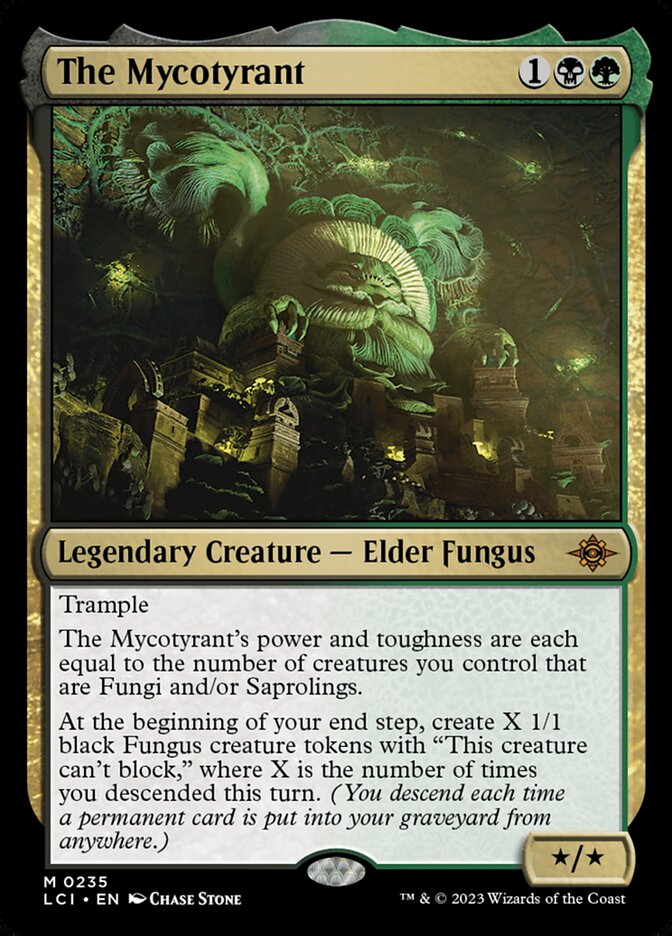
Commanders that cost 3 hit such a sweet spot; you’re not terribly off your game if it’s dealt with immediately, but they’re fast enough that wise-learned elders like The Mycotyrant can become a huge threat before some decks get going.
You look for a little self-mill to really control your descent each turn, and then when you’re ready to dive, dive, dive, this fungus can go on creating multiple tokens at each of your end steps for no extra cost. The drawback of not being able to block with your tokens is negligible since you’re Golgari, and you don’t let good creatures go to waste. You have sweet synergy with cards you’ve heard of, but maybe never optimized, like Nyx Weaver, Slimefoot, the Stowaway, and Mirkwood Bats.
#22. The Gitrog, Ravenous Ride
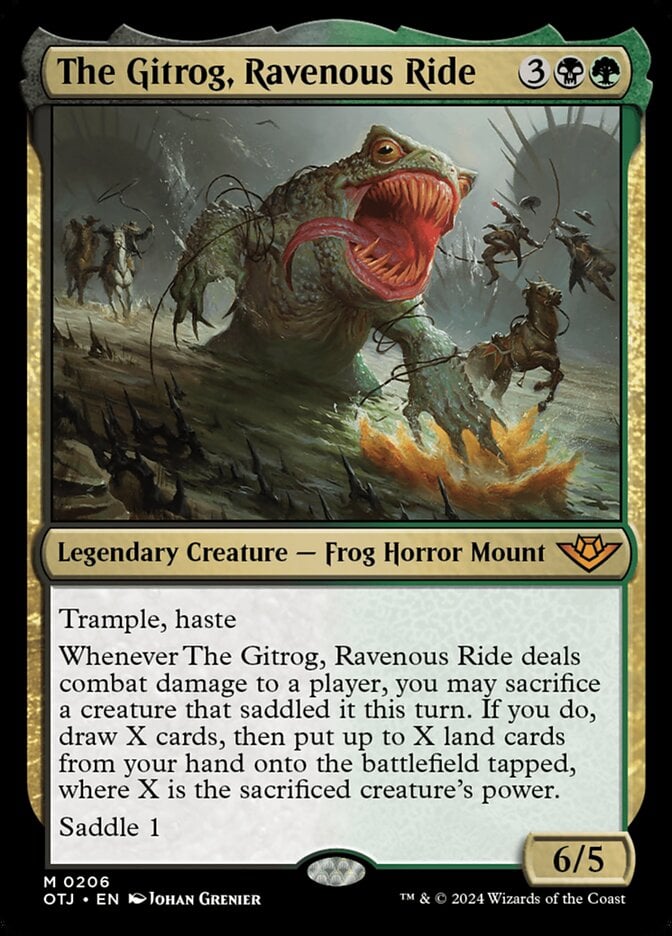
I love Outlaws of Thunder Junction‘s The Gitrog, Ravenous Ride because it encourages using weird cards like Phytotitan and Daemogoth Titan that you wouldn’t normally play. The deck is also quite resilient, as you can find plenty of cards that utilize your high-powered creatures, like Greater Good and Rite of Consumption, saving you from total reliance on your Golgari commander.
#21. Joel, Resolute Survivor
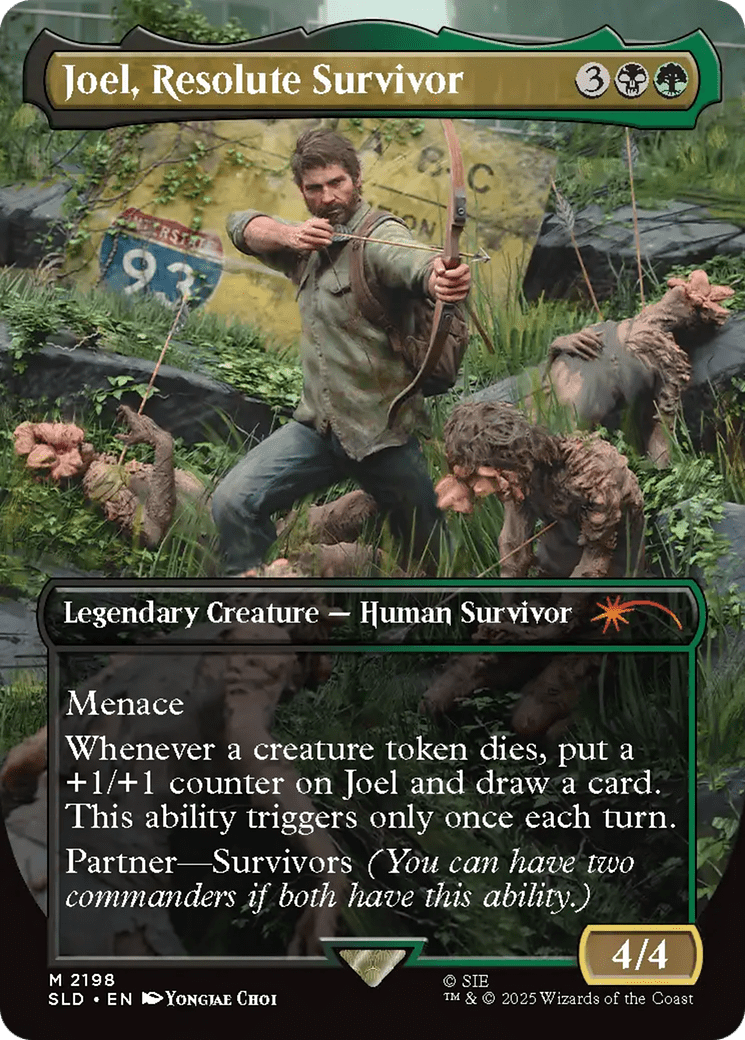
Joel, Resolute Survivor reminds me how powerful the word “a” is because this tracks any creature tokens for its trigger. Chances are that at least one or two of your opponents creates creature tokens. The best part is that those tokens are often the most expendable because they cost less than a card to create.
So, with the potential to add more colors through partner survivors, and no extra work to draw cards outside of my turn? I’m in.
#20. The Serpent Society
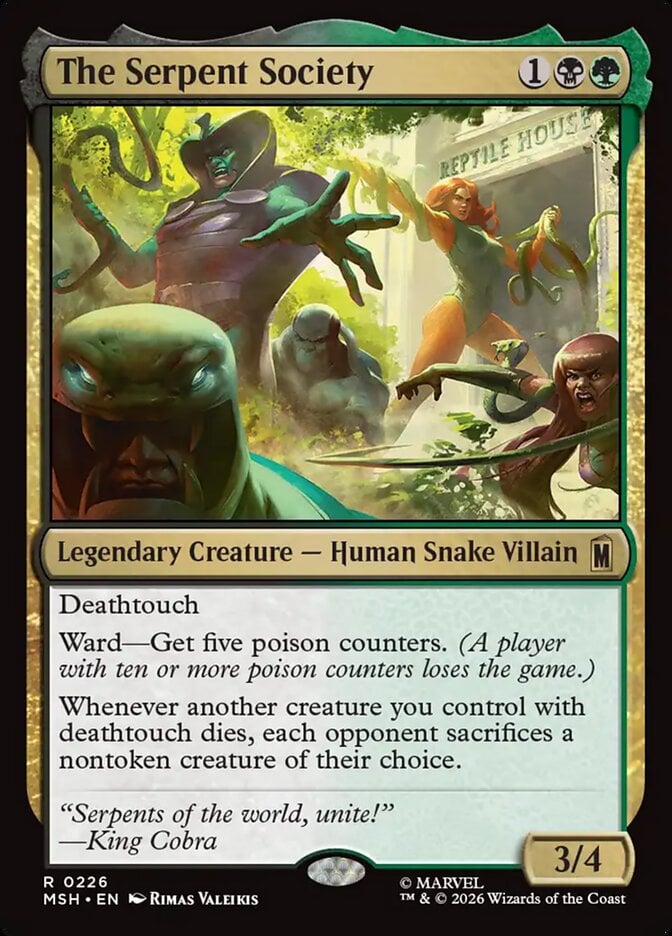
If you’ve ever wanted to punish your opponents for removing your creatures, you might be interested in The Serpent Society, which has one of the game’s most punishing ward costs. Of course, the rest of the card is nasty too: It’s as close as we’ll get to Grave Pact in the command zone. Even the deathtouch restriction won’t keep your opponents safe.
#19. Carth the Lion
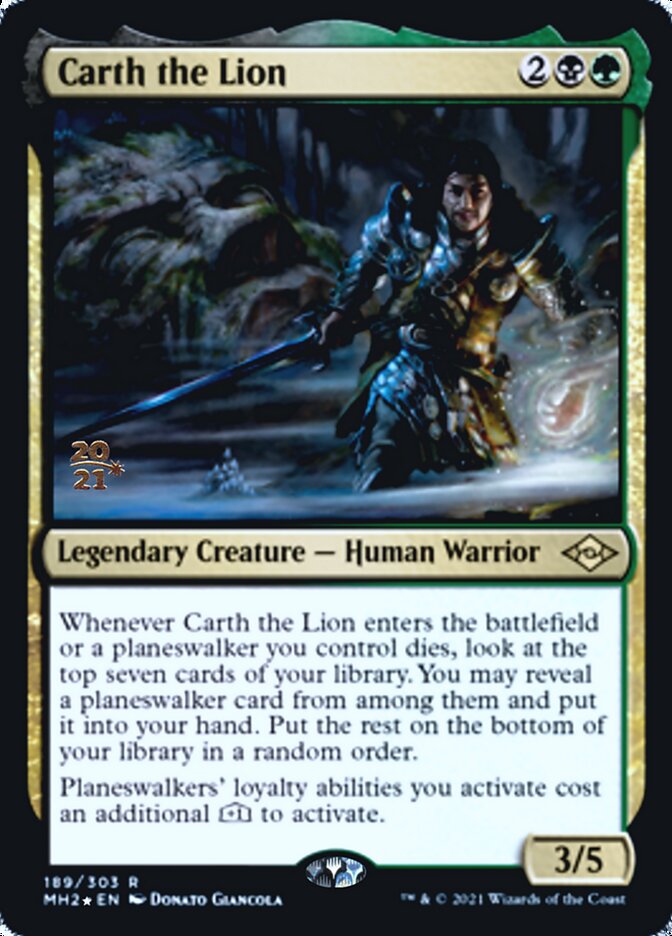
Carth the Lion is a 3/5 human warrior that generates card advantage whenever a planeswalker you control dies. Superfriends isn’t something you expect to see in 2-color decks, especially Golgari, but here we are!
When it comes to planeswalkers in such limited colors you’re basically playing the top 20. The deck’s real power comes from the synergistic artifacts and cards that interact with those planeswalkers. The Chain Veil is obviously the most important here, giving you double activations to further accelerate ultimate abilities. Proliferation effects are also important, as are counter-doubling effects like Vorinclex, Monstrous Raider and Doubling Season.
#18. Blech, Loafing Pest

Blech, Loafing Pest looks like a meme until your opponent starts killing your with it. There’s a surprising amount of overlap between Blech’s types and its abilities like Kazandu Nectarpot and South Wind Avatar. It basically makes all your creatures into Ajani's Pridemate, which is rather scary considering how easily Golgari gains life.
#17. Shelob, Child of Ungoliant
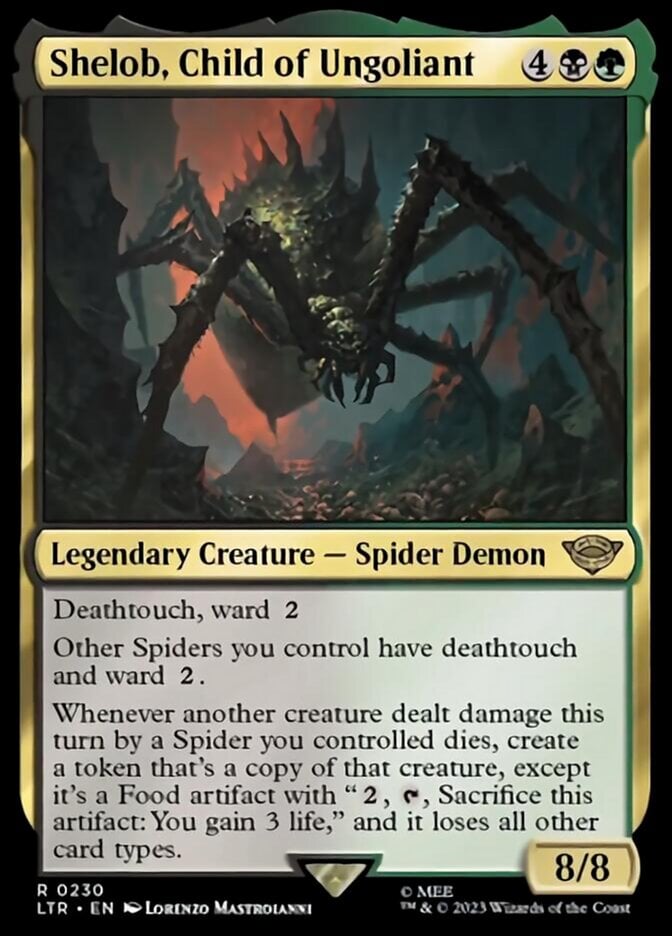
Who doesn’t love the idea of a fleet of spiders overwhelming your local Commander pod, wrapping everything in sticky silk and deadly venom? That’s the energy you get from Shelob, Child of Ungoliant in the command zone. Shelob, Child of Ungoliant is frankly a brilliant spider-typal commander with an incredibly unique ability.
Of course, you’ll want plenty of spiders to go with Shelob. Arasta of the Endless Web and Ishkanah, Grafwidow are excellent options to make even more spider tokens, as is Arachnogenesis for an absolute blowout when you’re getting attacked. Once you’ve amassed all these tokens, cards like Rotwidow Pack and Blex, Vexing Pest can close things out.
You also want to make ample use of the deathtouch ability, both as board control and value with Shelob’s second ability. Fight spells like Bushwhack and Tail Swipe help kill off opposing creatures in a pinch, but equipment like Viridian Longbow and Thornbite Staff are even better. You can also utilize Fynn, the Fangbearer, and Vraska, Swarm's Eminence for even more poisonous fun.
#16. Hazel of the Rootbloom

While I think Chatterfang, Squirrel General is the better Golgari tokens commander, Hazel of the Rootbloom makes a strong argument for going in the command zone thanks to the high ceiling on the mana ability, especially if you build around it with cards like Vitalize.
While the last ability encourages you to build around squirrels, I don’t think doing so is necessary.
#15. Zask, Skittering Swarmlord
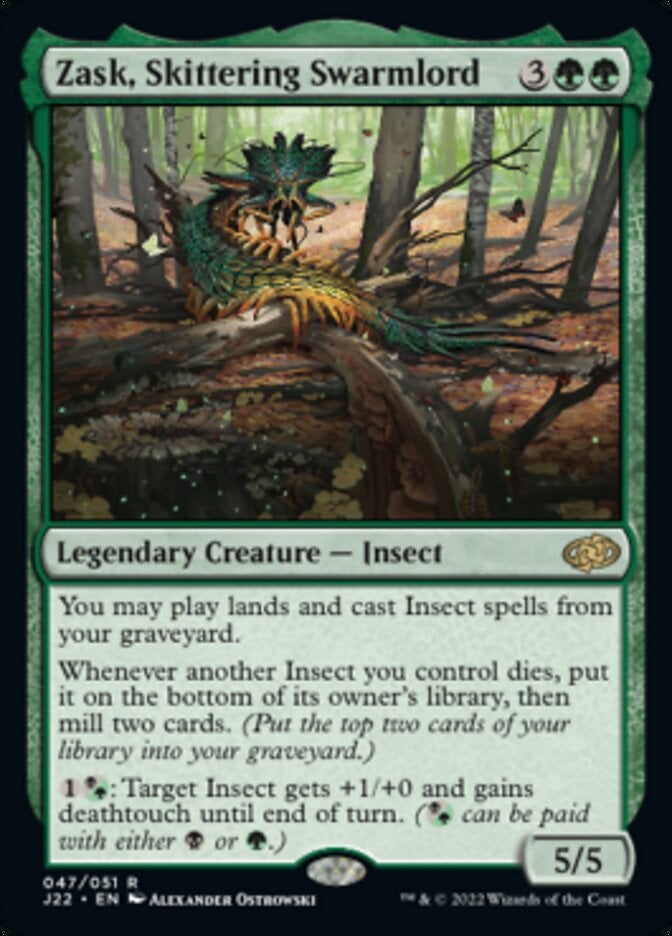
Zask, Skittering Swarmlord is a value engine in the command zone, provided you’re comfortable playing with the creepie crawlies of Magic. Zask makes ample use of the graveyard, letting you play with insects and lands while milling you. This commander wants plenty of bugs and sacrifice outlets.
Insects that sacrifice themselves, like Caustic Caterpillar and Haywire Mite, are great to get things rolling, though insects like Circuit Mender and Virus Beetle that offer some value before being sacrificed to effects like Grist, the Hunger Tide and Plumb the Forbidden are more than welcome!
Playing lands from the graveyard works great with fetch lands but is also strong with other lands that sacrifice themselves for value, like Strip Mine and Boseiju, Who Endures. There’s plenty of value to extract from this commander, which finishes things off as a combo piece with Verdant Succession and a free sacrifice outlet like Altar of Dementia.
#14. Skullbriar, the Walking Grave

Moving along we’ve got Skullbriar, the Walking Grave, a 1/1 zombie elemental that gets +1/+1 counters when it deals damage and keeps all its counters in most zones. This is a pretty massive ability because it means you can stack flying, trample, and other counters in addition to +1/+1 counters to make a one-shot monstrosity that doesn’t ever really go away.
Since +1/+1 counters are easy to come by you’re really just worried about giving Skullbriar trample and other keywords. Ring of Kalonia is pretty great for this because it hits both sides and won’t go away when Skullbriar does. Ring of Xathrid is also solid as regeneration lets you keep Skullbriar around through some basic kill effects.
#13. Belbe, Corrupted Observer
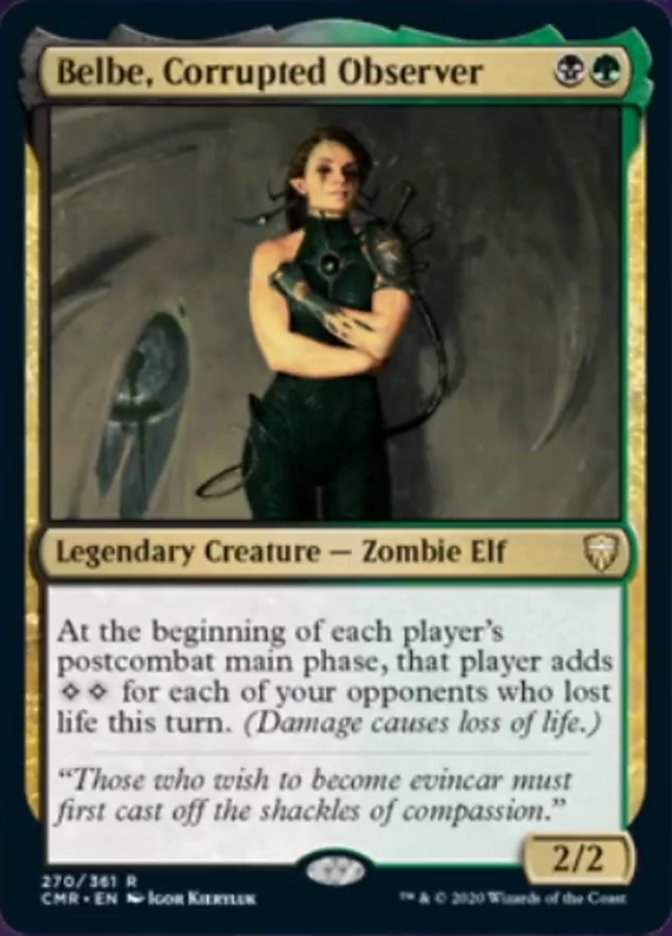
Belbe, Corrupted Observer gives out free colorless mana for people dealing damage, up to 6 for you and 4 for your opponents. This makes Belbe a great big mana commander that also offers some defensive measure by incentivizing your opponents to attack each other instead of you.
This is also a very fun strategy. Green is great at generating lots of mana and both green and black have plenty of places to spend it. And the Eldrazi are all colorless and great ways to dump 10+ mana in a single turn. Kozilek, the Great Distortion is a great example since it refills your hand in addition to being a massive body.
#12. High Perfect Morcant

Golgari elves got a cool update in 2026 with High Perfect Morcant, a nasty commander that combines elves, -1/-1 counters, and proliferate into a tricky deck. A marque interaction is Morcant and Flourishing Defenses, which obliterates opposing boards. Giving elves a controlling commander might have been a mistake, which makes it very fun to play.
#11. Grist, the Hunger Tide
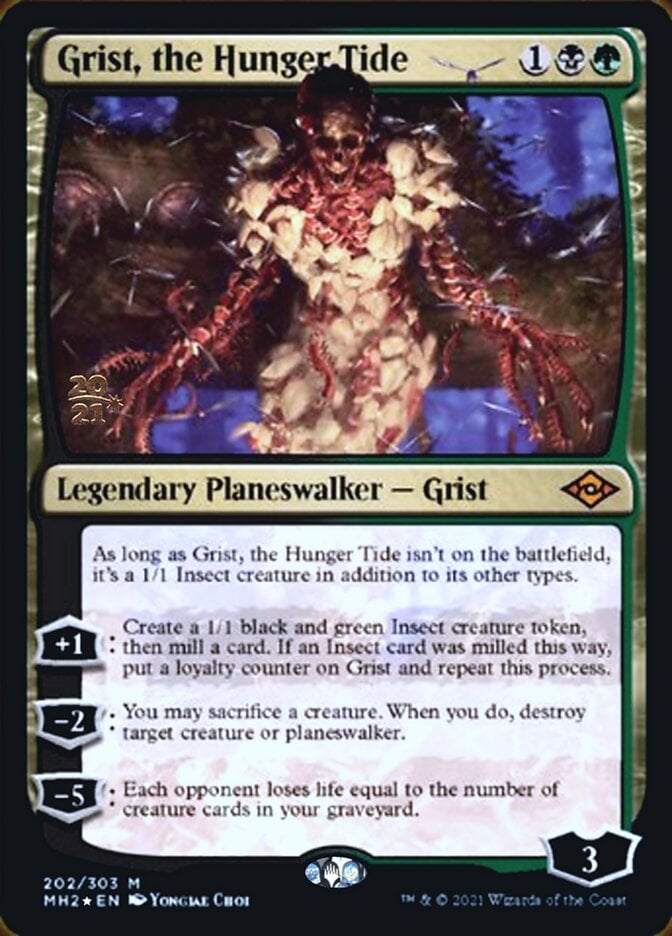
Grist, the Hunger Tide is here to meet us as the only planeswalker commander on today’s rankings. Grist is a creature when it isn’t on the battlefield which is what allows you to play it as your commander without the standard clause that most other planeswalker commanders have.
Insect typal is the name of the game when it comes to playing Grist, the Hunger Tide, which means you’ll need as many insect creatures (and shapeshifters) as you can get your hands on. There are actually some pretty great insects worth including, like Mazirek, Kraul Death Priest and Carrion Grub. And since we’re a typal deck you have to include Coat of Arms and Vanquisher's Banner. These cards are too good to pass up so you need to run them both 100% of the time.
#10. Jarad, Golgari Lich Lord
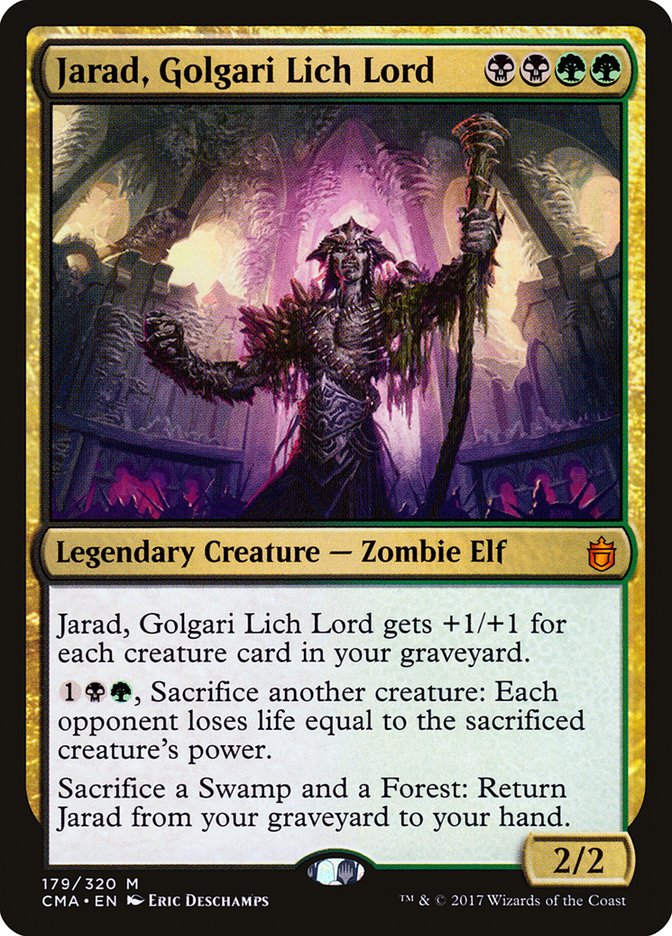
Jarad, Golgari Lich Lord was one of the first legendary creatures I ever interacted with, so it’s cool getting a chance to write about it. Jarad is a graveyard commander all the way which means you’re going to be leaning pretty heavily into a sacrifice theme to take advantage of its abilities.
Given the fact that Golgari Lich Lord is a sacrifice outlet in the command zone you want to make sure you always have something worth sacrificing. Even if the creature doesn’t have any on-death effects something else will ideally have a trigger for when something dies. Syr Konrad, the Grim, Disciple of Bolas, and Altar of Dementia love it when creatures die, making them perfect inclusions in any Jarad list.
#9. Hapatra, Vizier of Poisons
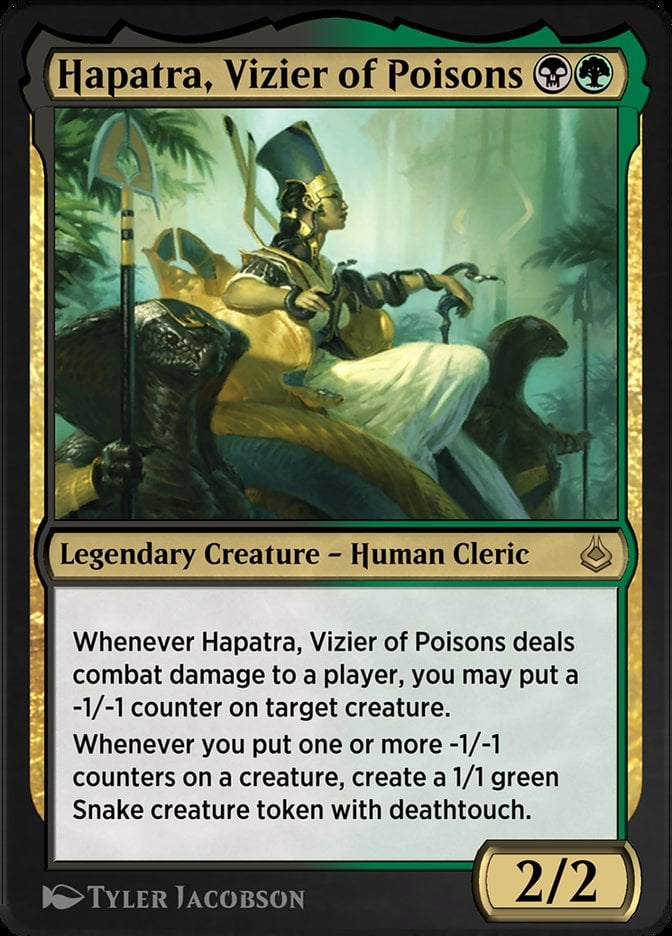
Hapatra, Vizier of Poisons is all about those -1/-1 counters, and its ability to create tokens and other synergies with them lands it pretty high. Golgari loves -1/-1 counters and there are just about infinite ways to produce them alongside green’s synergy with counter distribution.
There are plenty of ways to make -1/-1 counters and good creatures to put them on, but it’s important to know what cards empower the strategy the most. Skullclamp is an auto-include given most of your creatures will be in the 1-toughness range anyway. Zulaport Cutthroat helps pull some extra value out of your creatures’ demise, and Contagion Clasp is proliferate on a stick which helps your -1/-1 plague spread even further.
#8. Slimefoot, the Stowaway
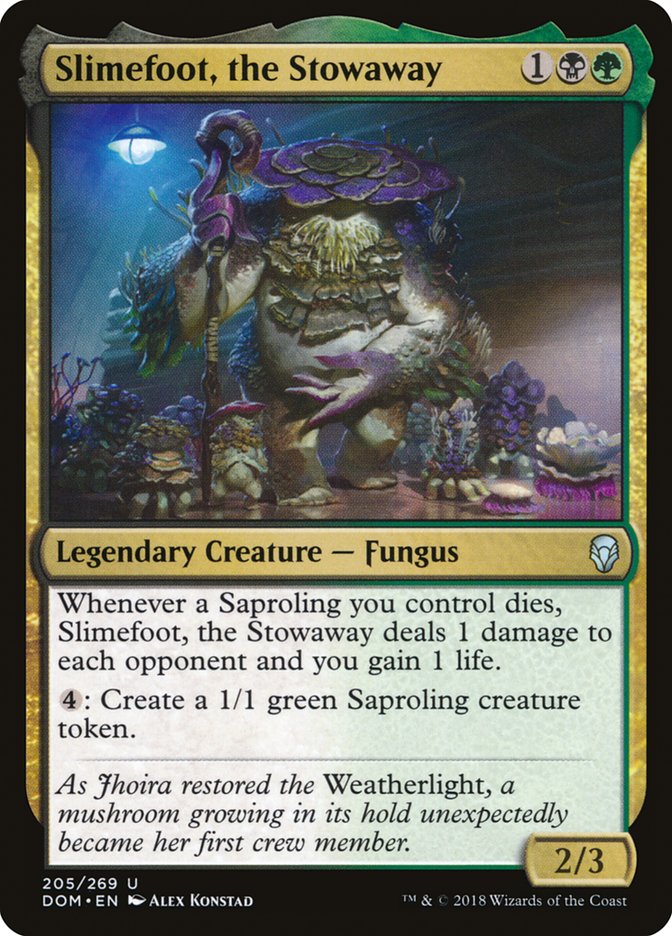
Slimefoot, the Stowaway snuck into the top 10 and is interestingly only ever really used for Saproling-based decks. Slimefoot makes a Saproling for and deals 1 damage to each opponent while gaining you 1 life whenever they die.
There are surprisingly a lot of ways to make Saprolings in Magic, even in black. Tendershoot Dryad consistently makes plenty. Deathspore Thallid makes them along with giving you a way to kill them for free. Continue with Slimefoot’s uncommon rarity theme in Zulaport Cutthroat and Moldervine Reclamation which provide more value whenever one of your Saprolings kicks the bucket.
#7. Beledros Witherbloom
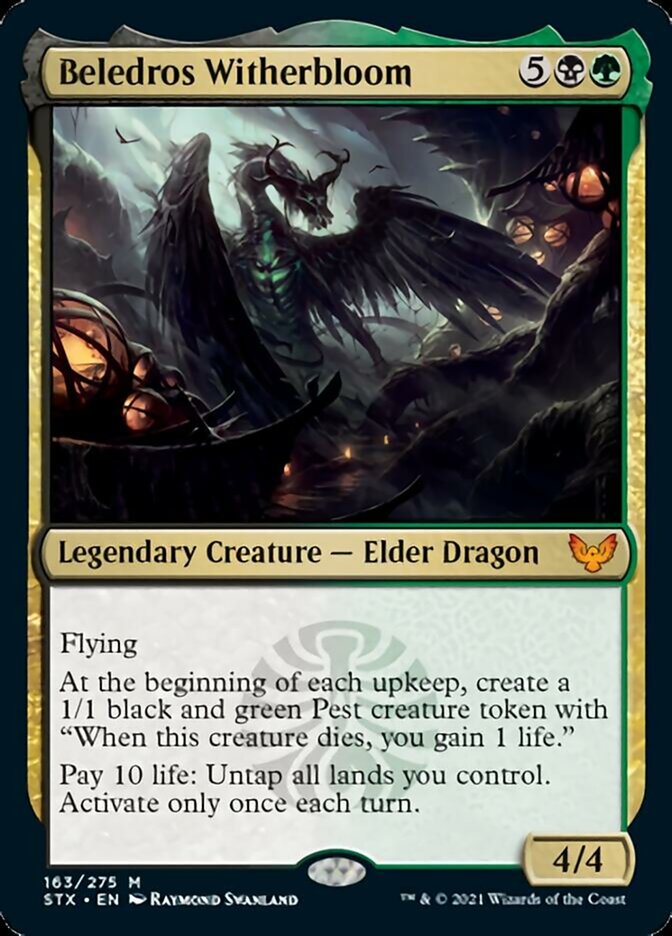
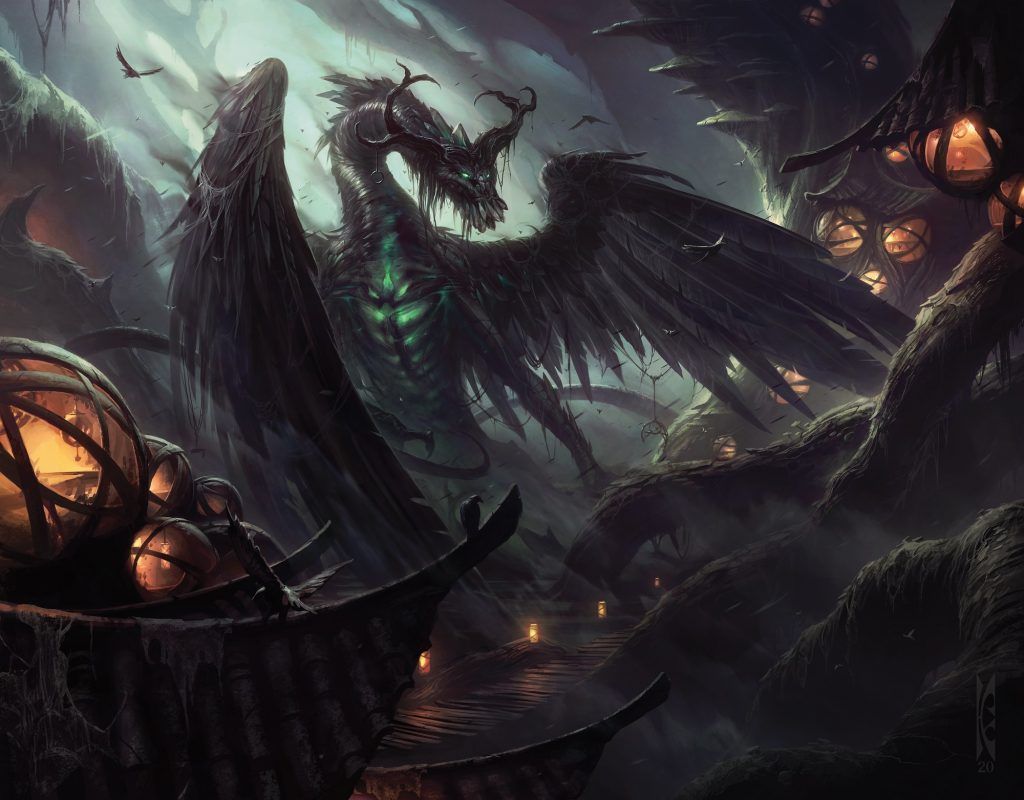
Next we have none other than the infamous Beledros Witherbloom itself! A whopping 4/4 flier for 7 mana, Beledros generates 1/1 tokens that gain you life while giving you the option to pay 10 life to untap all your lands.
You want as much life as possible to make use of the Seedborn Muse on a stick that’s in your command zone. Green has some good ways to gain life but black’s sacrifice-for-life engines are the way to go. Dina, Soul Steeper, Vito, Thorn of the Dusk Rose, and Ayara, First of Locthwain are the good ones here. You’ll already have plenty of tokens that are dying so you might as well capitalize on it.
#6. Chatterfang, Squirrel General
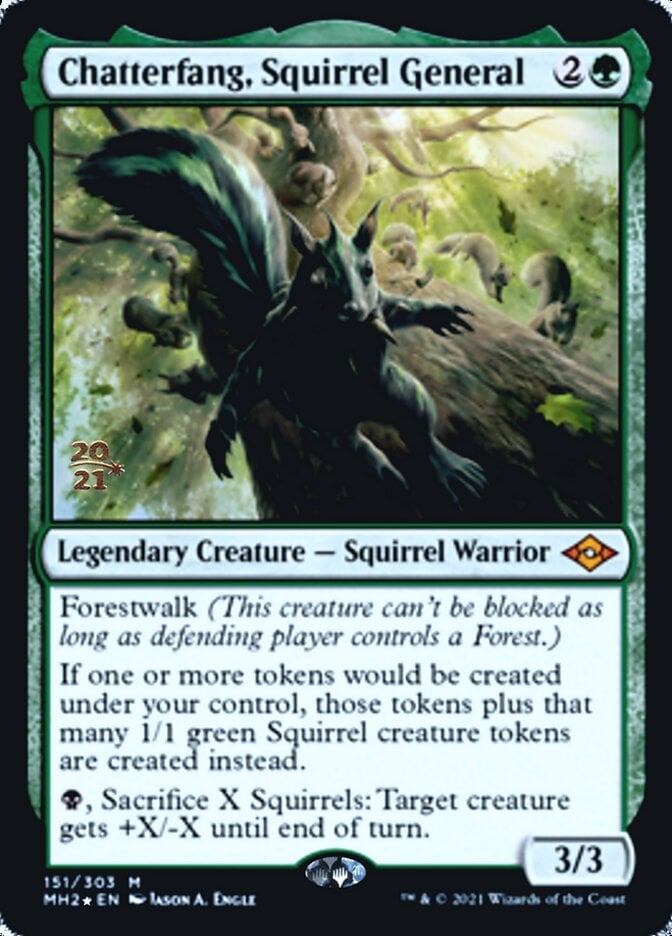
Starting off the top five is… Chatterfang?
Chatterfang, Squirrel General is surprisingly powerful despite what the creature type “squirrel warrior” may suggest. The 3/3 squirrel creates an equal amount of tokens whenever you make tokens, and then lets you sacrifice squirrels to kill creatures.
Tokens is by far the best strategy to properly put this Squirrel General to use. That’s going to be a lot of work done by green in the deck, but black brings a lot of creature death triggers that you’ll love to use. Bastion of Remembrance, Zulaport Cutthroat, and Blood Artist are by far the best cards and should be automatically included in any list you run.
#5. Dina, Soul Steeper
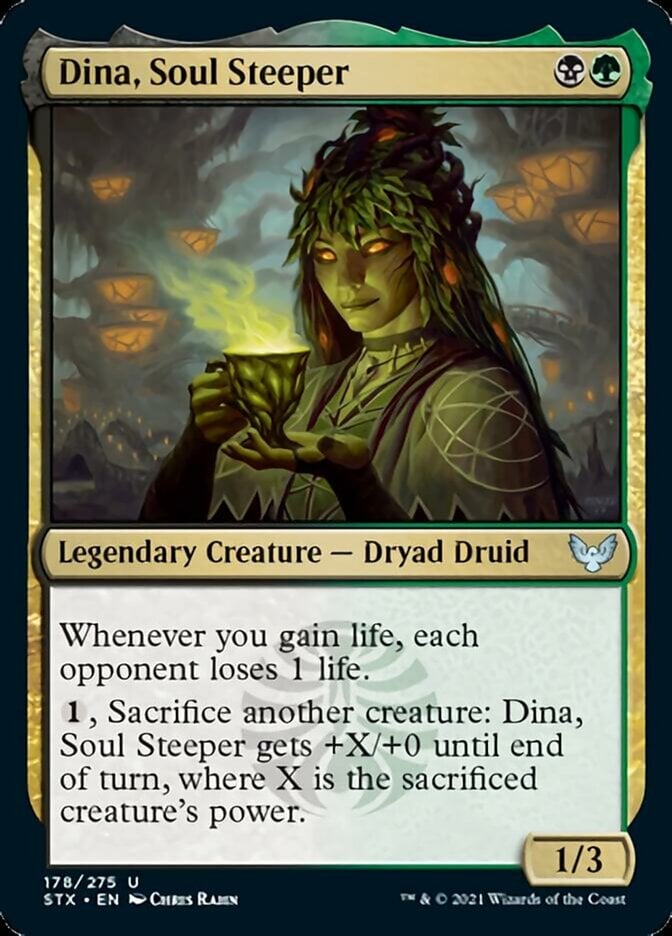
Dina, Soul Steeper is a 1/3 dryad druid that drains each opponent for 1 whenever you gain life while also being a sacrifice outlet. In this case the lifegain mechanic is far more relevant than sacrificing a creature for , and that means that Dina is actually a lifegain commander (in black no less!).
When I first realized that Soul Steeper is a lifegain commander I was instantly confused as to what cards supported that strategy. Aren’t all the best lifegain cards in white? Apparently not, because there are a lot of lifegain-empowering cards in black! Marauding Blight-Priest, Deathgreeter, and Vito, Thorn of the Dusk Rose are all incredible. Black has plenty of lifegain support, it just needs some poor creature to die to turn it on.
#4. Witherbloom, the Balancer

I can’t help but chuckle when I read the name of Witherbloom, the Balancer because this card is anything but balanced. A commander with affinity is already annoying because its hard to kill but extending that ability to your instants and sorceries makes you unmanageable. Golgari doesn’t get spellslinger commanders often, but this is one of the better ones across all colors.
#3. The Gitrog Monster
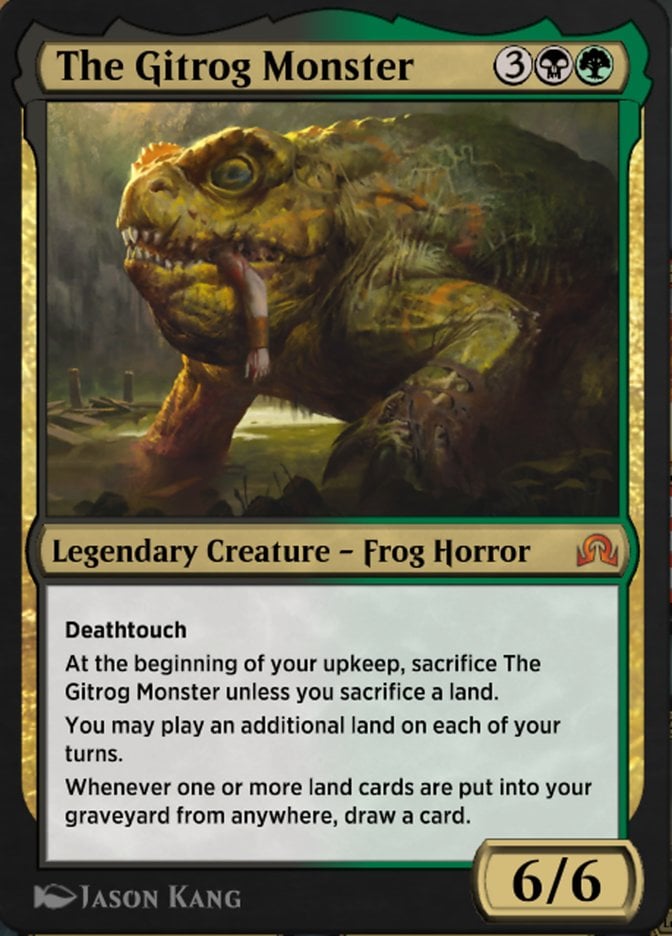
The Gitrog Monster is an all-time classic Golgari commander. Gitrog is your typical lands commander that lets you play an extra land per turn at the expense of having you sacrifice one on your upkeep. On the plus side you draw a card whenever a land enters the graveyard from anywhere.
All the support for land strategies in Golgari comes from green which is a surprise to nobody. Scapeshift, Avenger of Zendikar, and Courser of Kruphix are some of the greenest cards you can get. Black is just kind of here to give better removal and some discard outlets.
#2. Meren of Clan Nel Toth
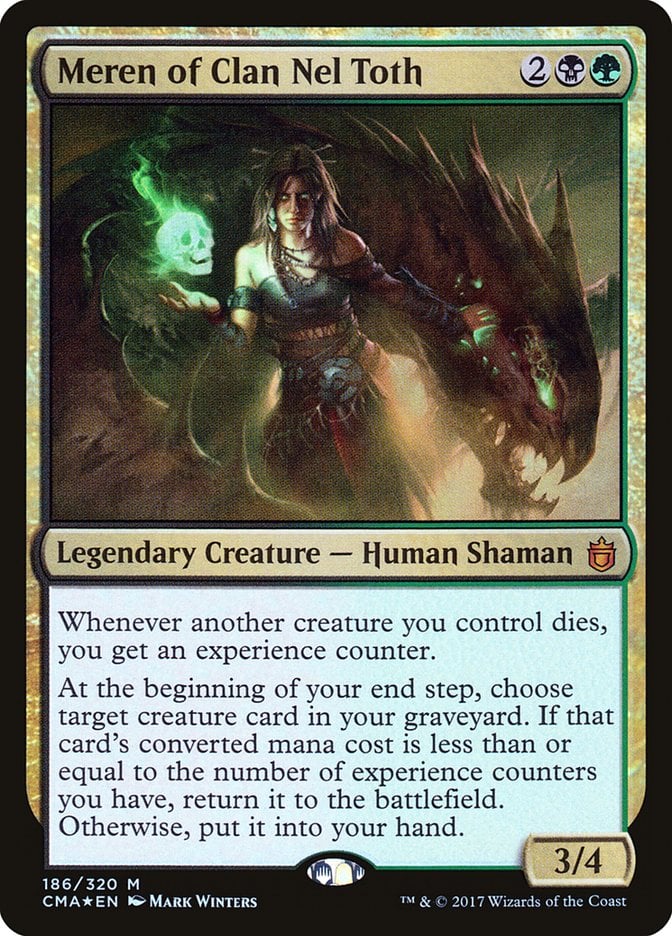
Up next is Meren of Clan Nel Toth, another commander from Commander 2015 that’s all about those experience counters. Meren grants you an experience counter whenever another creature dies under your control and then reanimates a creature in your graveyard with mana value less than the number of experience counters on it. This calls for classic Golgari aristocrats.
Since you greatly benefit from having creatures dying you want more than the average number of sacrifice outlets. In any given Meren sacrifice deck you should include Plaguecrafter, Victimize, Caustic Caterpillar, Viscera Seer, Accursed Marauder, and any other cheap way to get sacrifice triggers. If they do something in addition to dying, like Caustic Caterpillar, then that’s even better.
#1. Lathril, Blade of the Elves
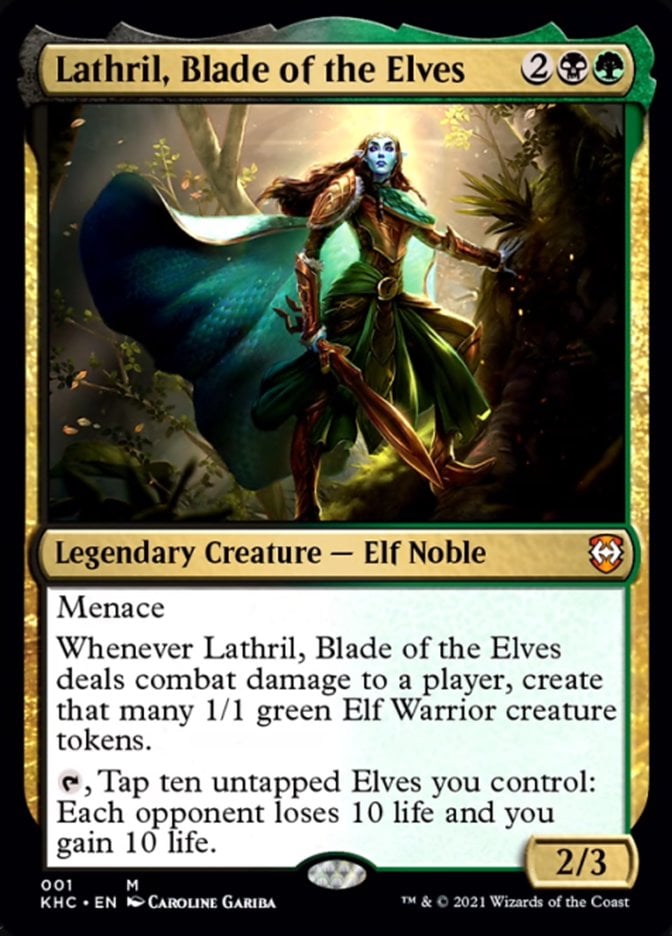
In first place is Lathril, Blade of the Elves, which is by far the strongest Golgari commander. Elves are a mechanic that’s as fun to play as it is simple. You start off with some early acceleration, generate some card advantage mid-game to keep the creatures flowing, and then close it out with Craterhoof Behemoth or some other trample effect. It’s an ancient strategy but it works fantastically well.
For acceleration, the classic mana dorks will do (Elvish Mystic, Llanowar Elves, Fyndhorn Elves, Circle of Dreams Druid, etc.). Creatures like Beast Whisperer and Elvish Visionary excel for card advantage. You don’t want to miss out on going wide whatsoever.
Craterhoof Behemoth is king for a reason. You can wipe the table with just 8-12 creatures and it’s easy to get consistent Craterhoof ETBs with things like Natural Order and Finale of Devastation.
Decklist: The Gitrog Monster in Commander

The Gitrog Monster | Illustration by Jason Kang
Commander (1)
Artifacts (2)
Creatures (31)
Avenger of Zendikar
Baloth Prime
Bloodghast
Caustic Caterpillar
Demon of Dark Schemes
Fang, Fearless l'Cie
Golgari Brownscale
Golgari Grave-Troll
Golgari Thug
Lotus Cobra
Necrotic Ooze
Noose Constrictor
Rampaging Baloths
Ramunap Excavator
Reclamation Sage
Rumbleweed
Sakura-Tribe Elder
Satyr Wayfinder
Scute Swarm
Skirge Familiar
Smothering Abomination
Spore Frog
Springbloom Druid
Stinkweed Imp
Syr Konrad, the Grim
Terastodon
Tireless Tracker
Titania, Protector of Argoth
Viscera Seer
Whisper, Blood Liturgist
Zulaport Cutthroat
Instants (5)
Elemental Teachings
Grisly Salvage
Harrow
Roiling Regrowth
Windgrace's Judgment
Sorceries (10)
Dread Return
Exsanguinate
Gaze of Granite
Jarad's Orders
Life from the Loam
Living Death
Spider Spawning
Splendid Reclamation
Tempt with Discovery
Worm Harvest
Enchantments (6)
Ayula's Influence
Burgeoning
Dictate of Erebos
Spelunking
Tectonic Split
The Mending of Dominaria
Artifacts (4)
Cauldron of Souls
Conduit of Worlds
Hedge Shredder
Swiftfoot Boots
Lands (41)
Barren Moor
Bojuka Bog
Command Tower
Cryptic Caves
Dakmor Salvage
Drownyard Temple
Evolving Wilds
Field of the Dead
Forest x9
Geier Reach Sanitarium
Ghost Quarter
Golgari Rot Farm
Grim Backwoods
Hissing Quagmire
Llanowar Wastes
Lotus Field
Mortuary Mire
Myriad Landscape
Slippery Karst
Swamp x8
Tectonic Edge
Temple of Malady
Terramorphic Expanse
Thespian's Stage
Tranquil Thicket
Witch's Cottage
The Gitrog Monster is a towering example of how Golgari decks get built from the graveyard out. The truly hungry frog munches on your mana sources, but lets you spit them out from your hand at twice the rate as normal. If you crack land searchers, even the cheap ones like Myriad Landscape you turn the deck into a festering pool of card draw.
Black and green so happen to have access to the best self-mill and replay lands from the graveyard effects to drown opponents in value. Avatar: The Last Airbender gave Gitrog the amazing Elemental Teachings that is close to a single tutor for four cards. Dial up extra value with the triggered abilities on Titania, Protector of Argoth and the land untapping effect on Spelunking. Some nasty players put dredge to work to prove just how lost you can get in the swamp that belongs to The Gitrog.
Commanding Conclusion
Beledros Witherbloom | Illustration by Raymond Swanland
That concludes everything I’ve got for you today! I love making these different Commander rankings and I hope you enjoy reading them. Elves is an excellent creature type for players of all skill levels and it’s great here in Golgari, but there’s also room for insects, horrors, graveyard, lifegain and sacrifice strategies.
What did you think of my rankings? Were there any you’d change around or remove altogether? Let me know in the comments or over in the Draftsim Discord.
Until next time, stay safe and stay healthy!
Follow Draftsim for awesome articles and set updates:










5 Comments
Where is Nath of the Gilt-Leaf?
surprised Aphelia didn’t make it.
Well, convince me why it should be on the list, it’s not a very well-known card~
No Savra?
Hey Dustin, make a case for why we should add it!
Add Comment