
Last updated on May 19, 2026

Esika, God of the Tree / The Prismatic Bridge | Illustration by Johannes Voss
I really like commanders that let you build in multiple directions. I love Alela, Artful Provocateur’s flexibility with enchantments and artifacts, and you can specialize into sagas or vehicles. Atraxa, Praetors' Voice’s proliferate ability works naturally with poison counters, but there’s all kinds of counters you can proliferate with Atraxa like planeswalkers’ loyalty counters in a superfriends EDH deck.
Kaldheim’s Esika, God of the Tree is one such commander. It’s an MDFC with two sides’ worth of value, but it’s also a 5-color commander that gives you access to any god you want. Why not go all in and live the Percy Jackson fantasy?
This build has gods from across many of Magic’s planes, so let’s dive in and see whether they all get along!
The Deck

Kolvori, God of Kinship | Illustration by Grzegorz Rutkowski
Commander (1)
Planeswalkers (1)
Battles (1)
Creatures (34)
Aclazotz, Deepest Betrayal
Anzrag, the Quake-Mole
Athreos, God of Passage
Athreos, Shroud-Veiled
Djeru and Hazoret
Ephara, God of the Polis
Erebos, God of the Dead
God-Eternal Rhonas
Havi, the All-Father
Heliod, God of the Sun
Heliod, Sun-Crowned
Heliod, the Radiant Dawn
Ilharg, the Raze-Boar
Inga and Esika
Iroas, God of Victory
Jorn, God of Winter
Karametra, God of Harvests
Klothys, God of Destiny
Kolvori, God of Kinship
Kruphix, God of Horizons
Mogis, God of Slaughter
Nylea, God of the Hunt
Nylea, Keen-Eyed
Obeka, Splitter of Seconds
Ojer Kaslem, Deepest Growth
Pharika, God of Affliction
Phenax, God of Deception
Purphoros, Bronze-Blooded
Reidane, God of the Worthy
Rhonas the Indomitable
Sab-Sunen, Luxa Embodied
Thassa, Deep-Dwelling
Thassa, God of the Sea
Xenagos, God of Revels
Instants (7)
Anguished Unmaking
Counterspell
Crop Rotation
Heroic Intervention
Negate
Path to Exile
Swords to Plowshares
Sorceries (8)
Cultivate
Farseek
Kodama's Reach
Nature's Lore
Primevals' Glorious Rebirth
Supreme Verdict
Three Visits
Urza's Ruinous Blast
Enchantments (6)
Enchantress's Presence
Flowering of the White Tree
Leyline of the Guildpact
Maelstrom Nexus
Sphere of Safety
Sterling Grove
Artifacts (8)
Altar of the Pantheon
Arcane Signet
Chromatic Lantern
Herald's Horn
Heroes' Podium
Relic of Legends
Sol Ring
Timeless Lotus
Lands (34)
Alpine Meadow
Arctic Treeline
Command Tower
Crumbling Necropolis
Exotic Orchard
Frontier Bivouac
Glacial Floodplain
Hall of Heliod's Generosity
Highland Forest
Ice Tunnel
Jungle Shrine
Mystic Monastery
Nomad Outpost
Opulent Palace
Plaza of Heroes
Reliquary Tower
Rimewood Falls
Sandsteppe Citadel
Savage Lands
Seaside Citadel
Snow-Covered Forest x2
Snow-Covered Island
Snow-Covered Mountain x2
Snow-Covered Plains x2
Snow-Covered Swamp
Snowfield Sinkhole
Sulfurous Mire
The World Tree
Tyrite Sanctum
Volatile Fjord
Woodland Chasm
This Commander deck is a full-on typal build: Every creature in this list except one is a god, and the only exception has a really fun interaction with Anzrag, the Quake-Mole and The Prismatic Bridge. This deck looks to win through combat, with a few creatures that have good abilities when they attack or deal combat damage and other gods that grant keyword abilities to your creatures. It’s a bit of a stealth Anzrag deck honestly, since many of the most interesting interactions (to me) have the mole god at the center.
I’ve excluded Commander Game Changers from this list, and there are only two tutors besides ramp spells. I personally thought that this was more of a Bracket 2 deck, but one of the websites I use to evaluate EDH power levels recommends calling this a Bracket 3 deck. This definitely isn’t cEDH, but the commander and the creature base make it tough to call it a budget Commander deck. It’s strong when it goes off… the key word being “when.”
The Commander: Esika, God of the Tree / The Prismatic Bridge
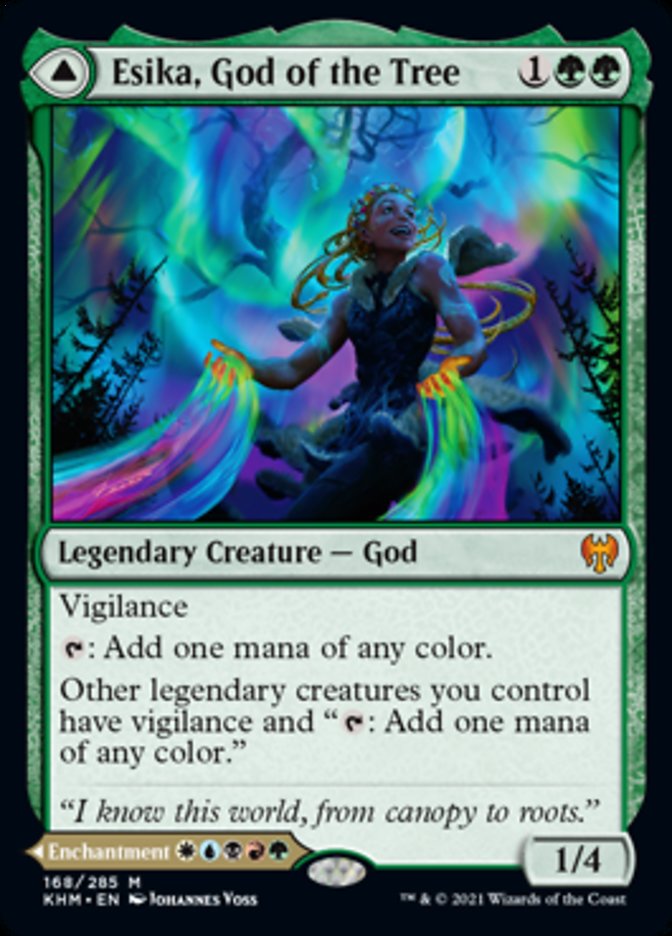
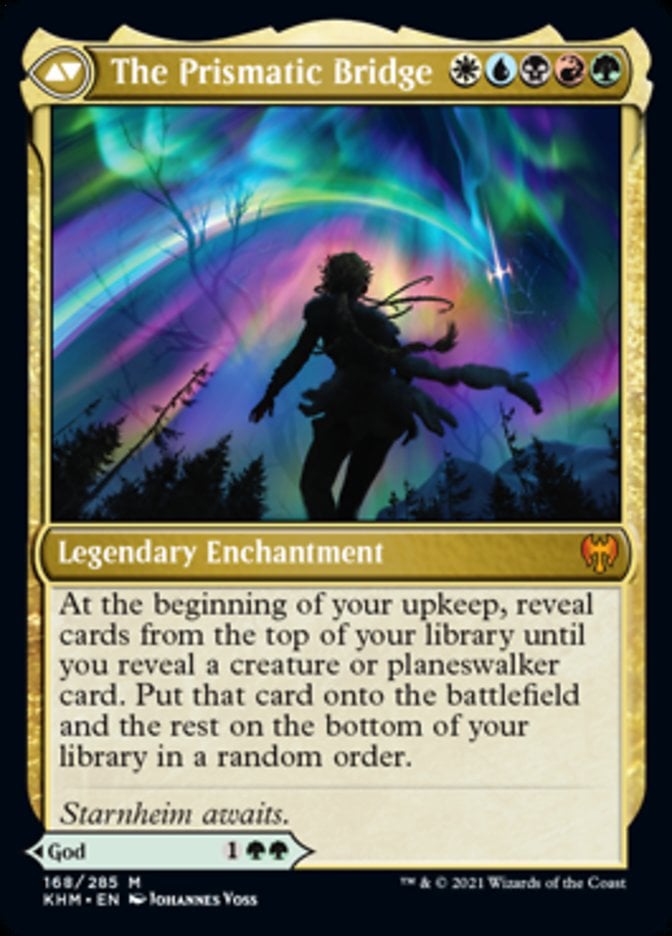
Your commander has two sides to offer you flexibility. Esika, God of the Tree is a color-fixing mana dork that’ll share its ability with all your other creatures.
On the flip side, The Prismatic Bridge churns through your library to cheat creatures onto the battlefield, no strings attached! I’m more interested in this legendary artifact because gods often have high mana values, plus I really want to see it go off with Obeka, Splitter of Seconds and Anzrag, the Quake-Mole.
The Pantheon
This deck assembles gods from across the many planes of Magic’s multiverse, and one from Universes Beyond. There’s some Ixalan gods, devotion gods, MDFC gods, and others.
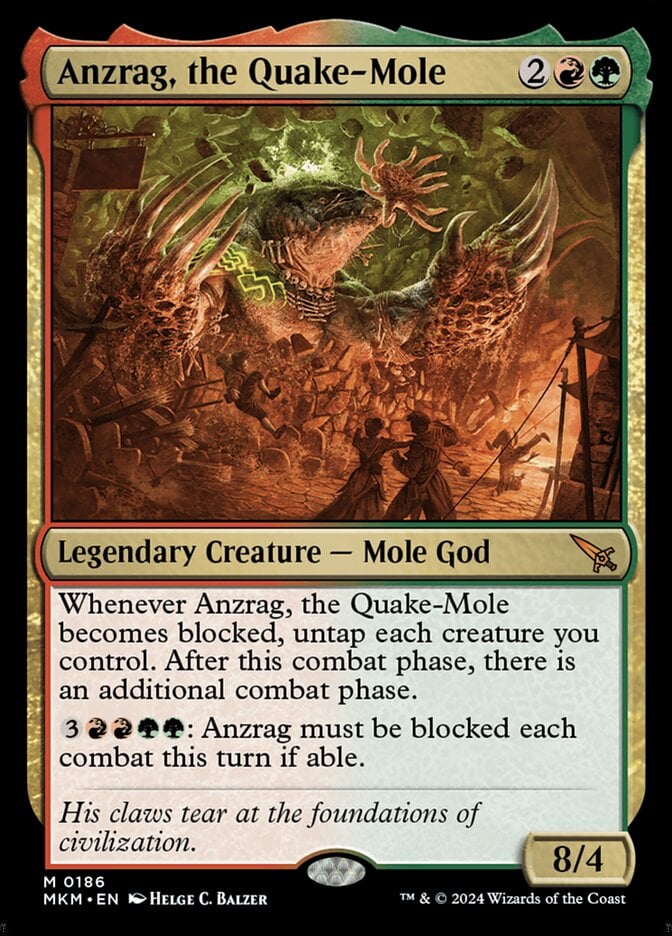
The star is Anzrag, the Quake-Mole. The dream scenario allows you to generate near-infinite extra combats with Anzrag, and you’ve got plenty of creatures that can attack alongside it for value.
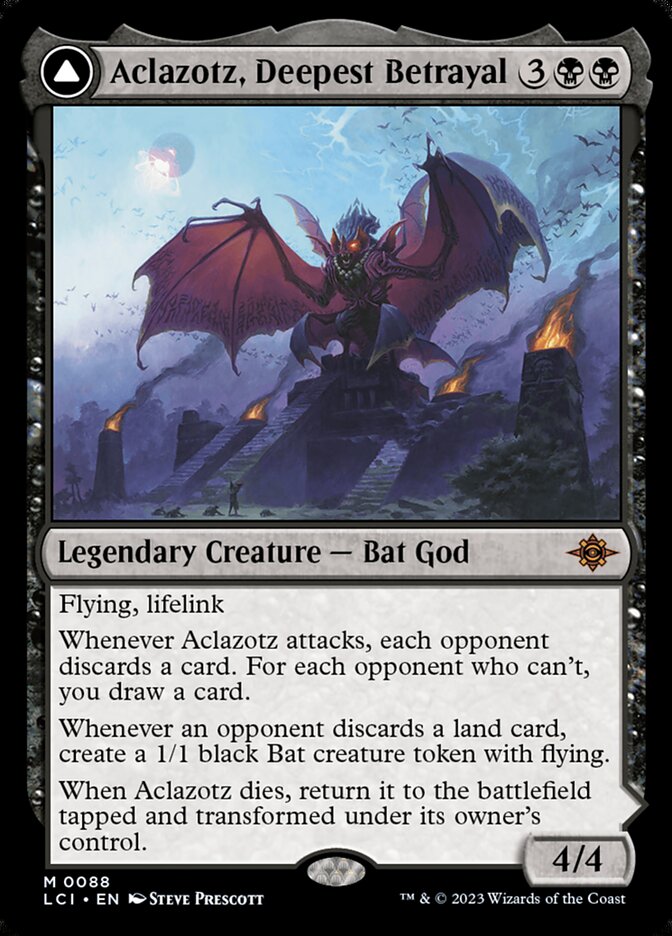
Aclazotz, Deepest Betrayal’s attack trigger forces your opponents to discard cards. Sometimes you’ll draw cards, and sometimes you’ll gain Bat creature tokens.
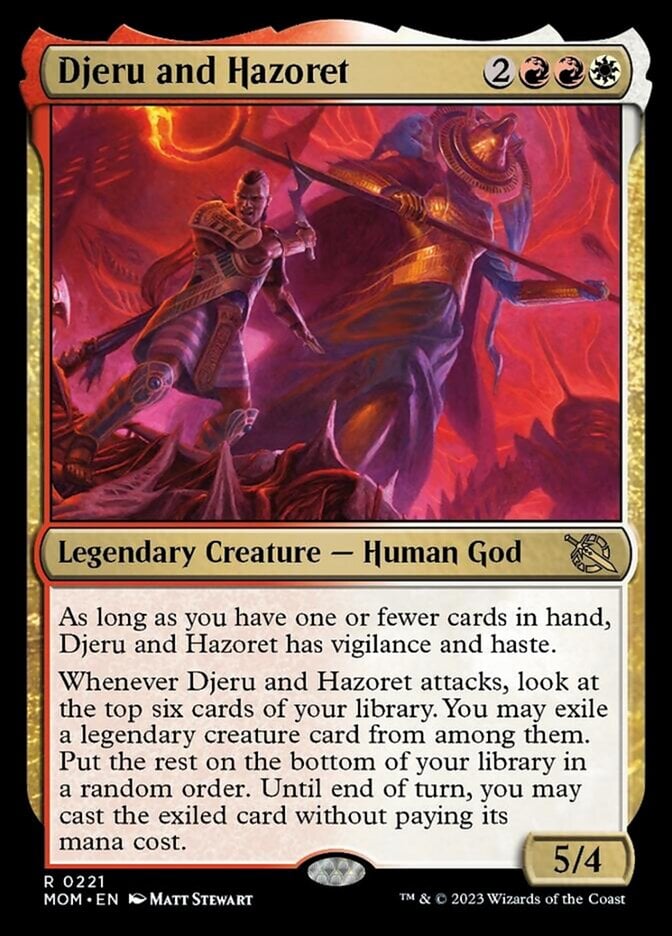
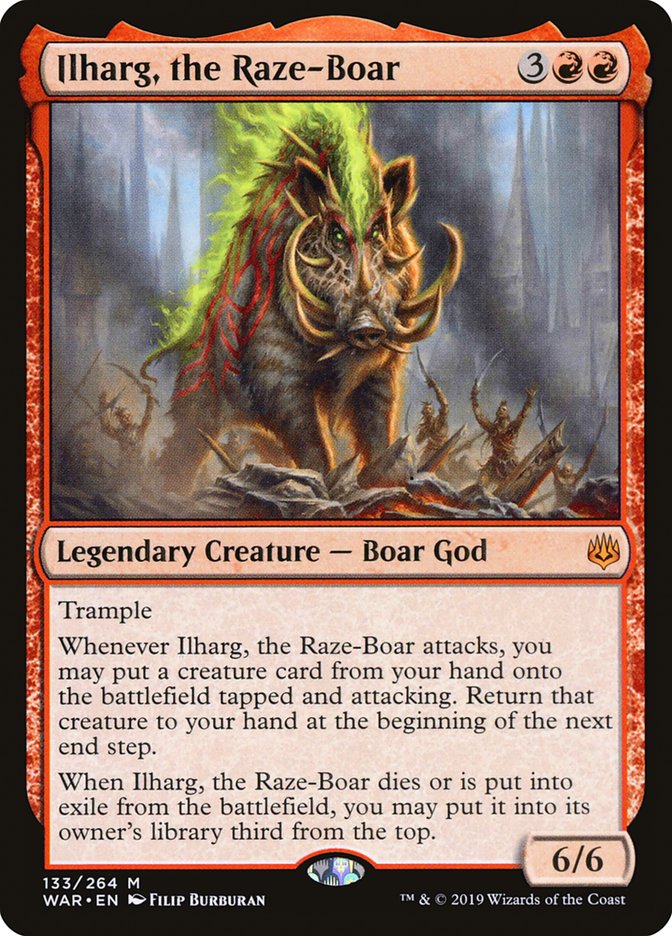
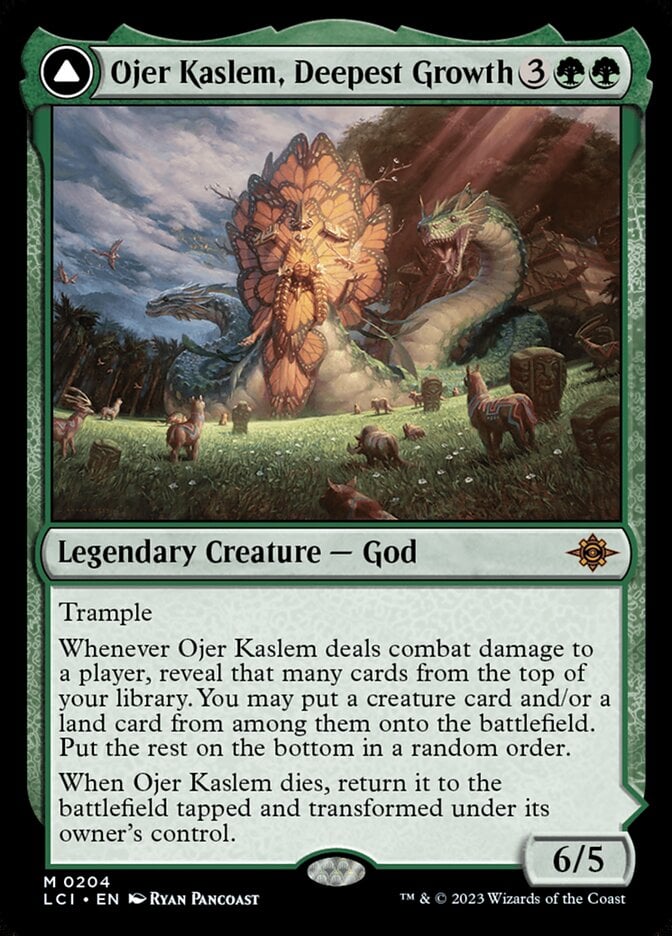
Djeru and Hazoret can dig creatures out of your library and cheat them into play. Ilharg, the Raze-Boar lets you cheat creatures from your hand; they’ll join your offensive, but you’ll have to return them to hand at the next end step. Ojer Kaslem, Deepest Growth gets in on this game too, but it’s with a combat damage trigger instead.
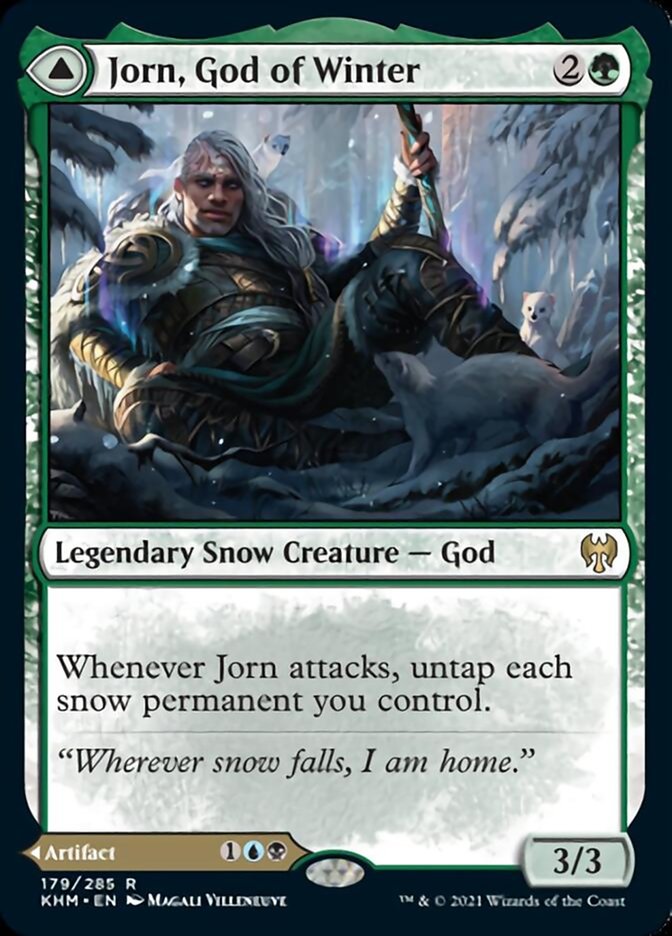
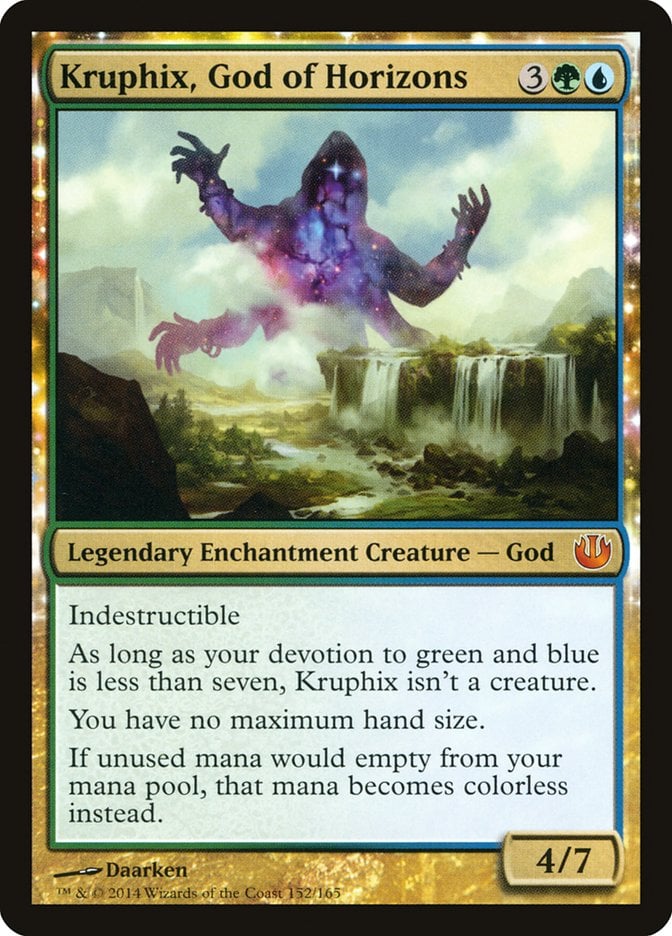
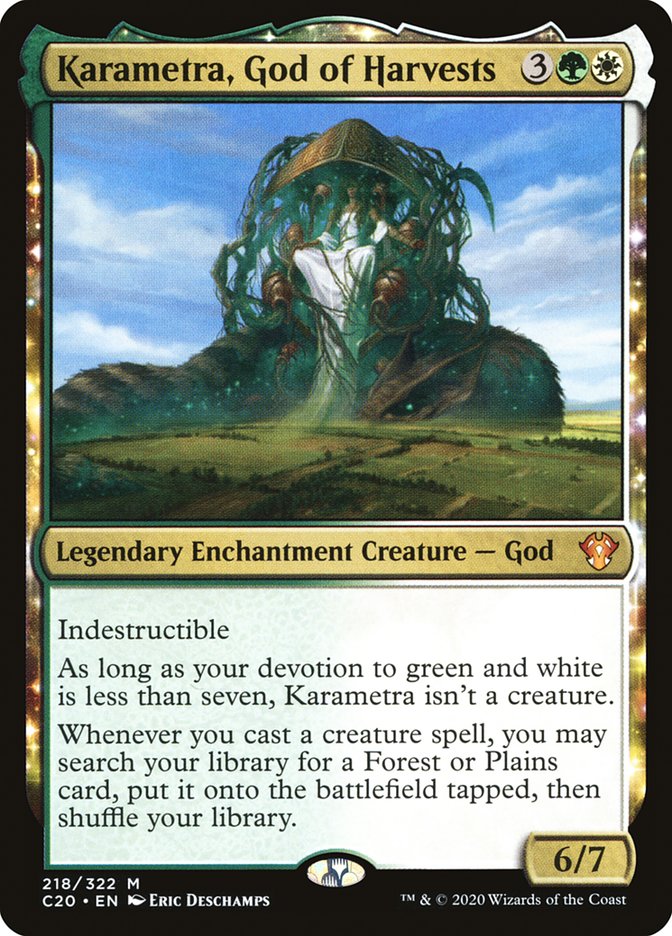
Jorn, God of Winter is here to improve the snow lands that I’ve used to trim the deck’s budget. Kruphix, God of Horizons gives you no maximum hand size, but it lets you stockpile mana. Karametra, God of Harvests has a land tutor ability, though many of the lands in this deck don’t qualify, sadly. But the snow lands do!
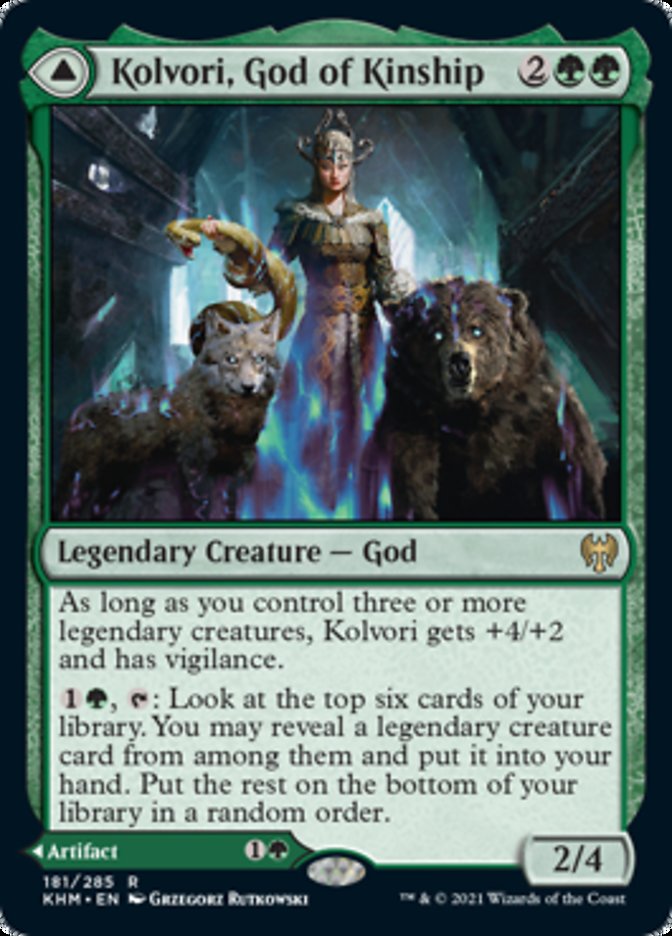
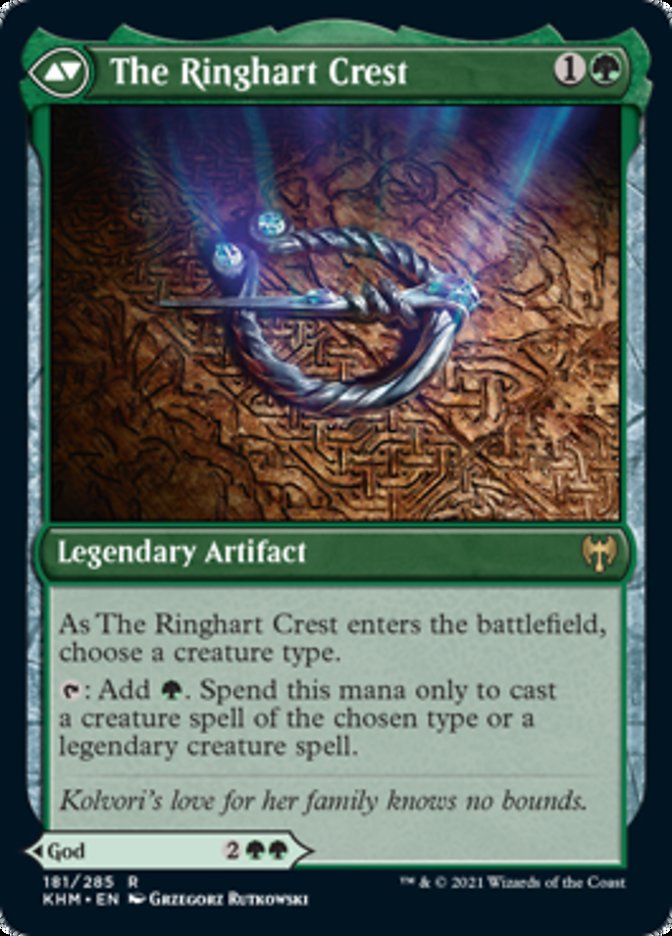
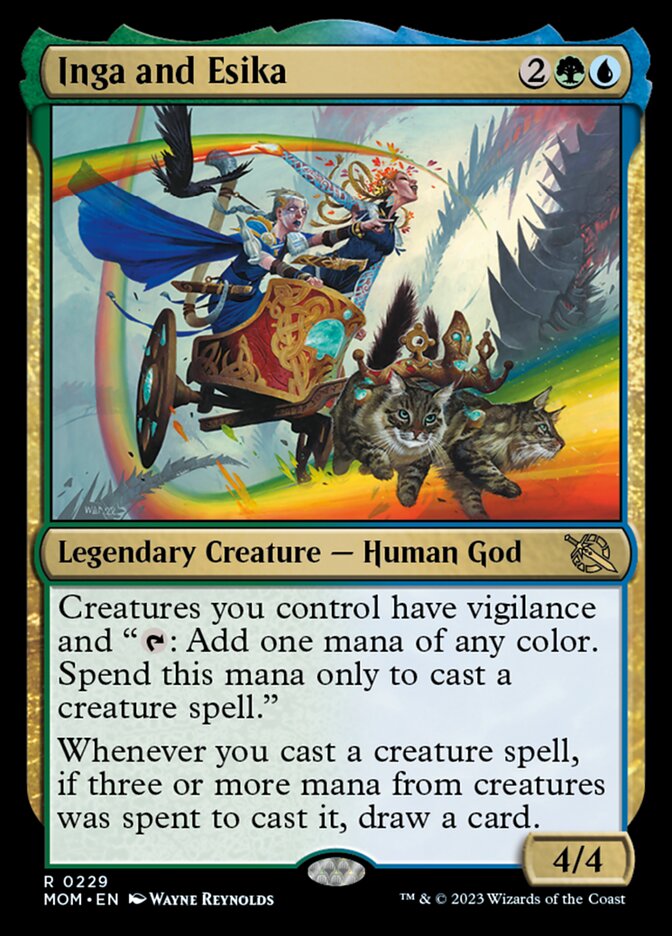
Kolvori, God of Kinship / The Ringhart Crest is like a backup version of your commander: Both of its sides do similar things to Esika, just differently and more restricted. Inga and Esika grants vigilance, but its main purpose is to give you another reason to prioritize The Prismatic Bridge out of the command zone.

Aetherdrift‘s Sab-Sunen, Luxa Embodied would work better in a superfriends Esika build if you’re using proliferation, but I’m slotting it in because I happened to pull a Graffiti Giant showcase printing and wanted somewhere to play it.
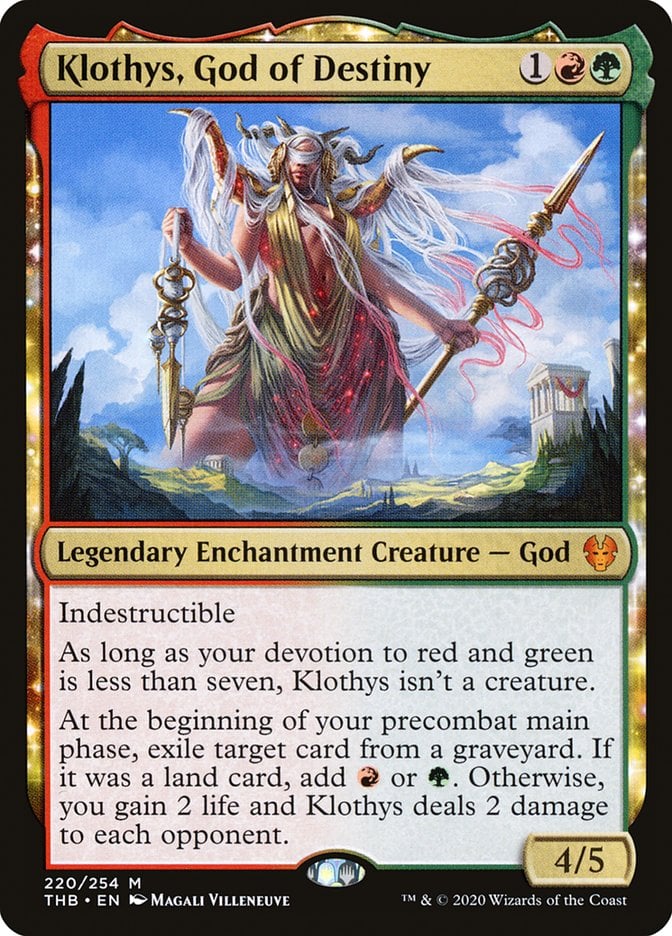
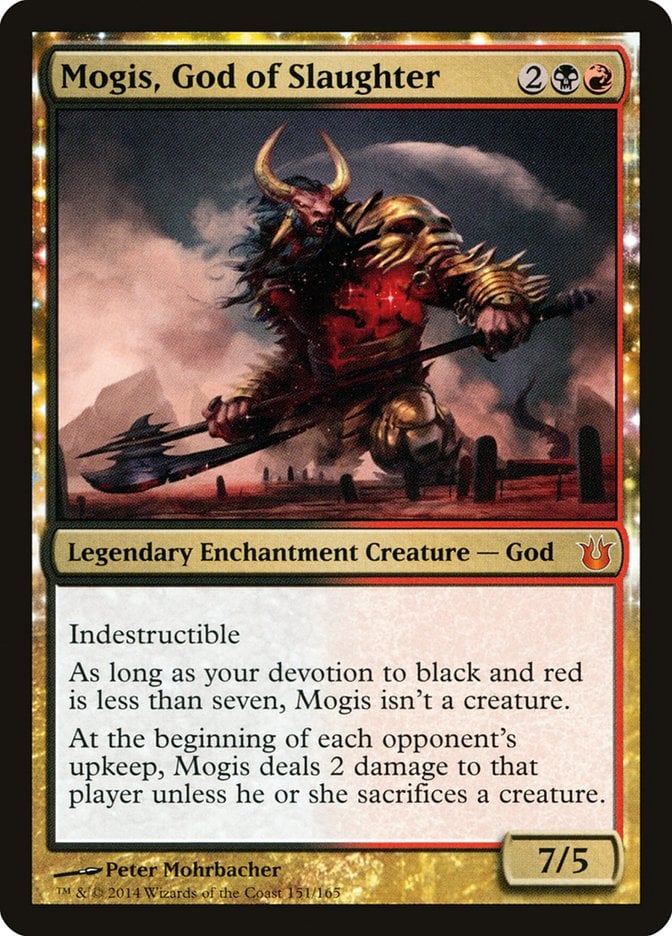
Klothys, God of Destiny fits nicely in your mana curve for a little bit of graveyard hate every turn. Unless there’s someone playing lands out of their graveyard, it’ll usually be a source of lifegain and burn. Mogis, God of Slaughter is similar, though it’ll hate on your opponents’ board state with an edict instead. Do I wish that this card said “every upkeep?” Yes, yes I do.
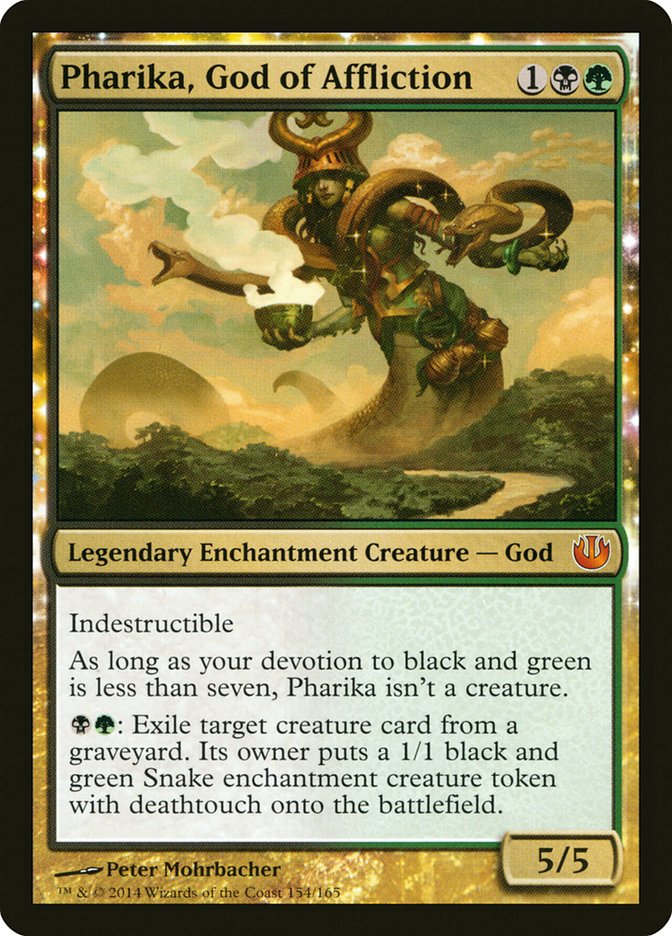
Pharika, God of Affliction gives you more graveyard hate, though this time the payoff is Snake tokens. A wider board gives you chump blockers, and it’s a repeatable ability that can be a mana sink for you if you ever need one.
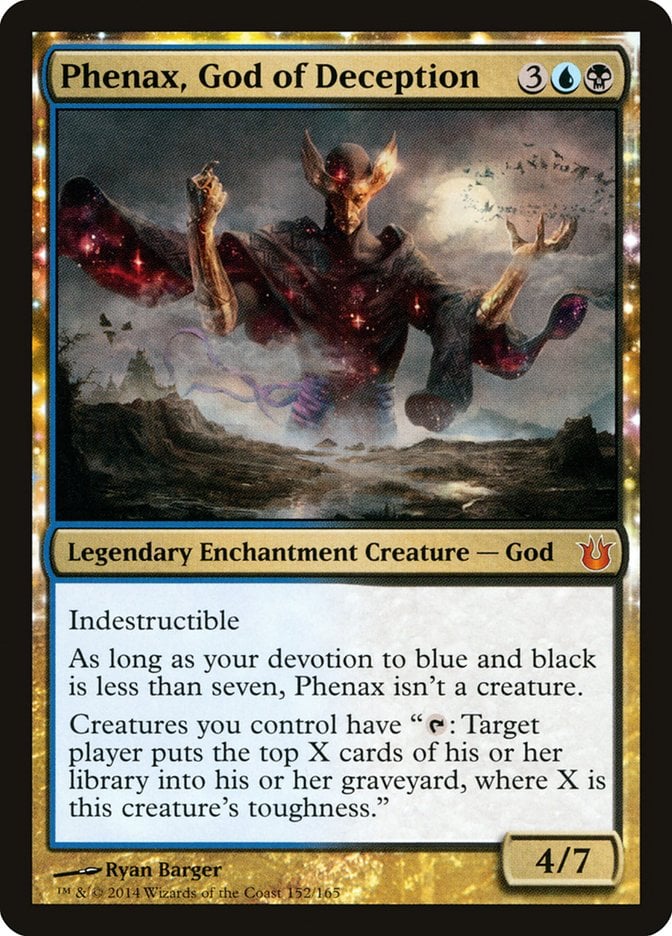
Phenax, God of Deception is just fun. You’ll have all your creatures declaring, “We’re the Millers,” and this deck has a lot of high-toughness creatures that you’ll be keeping out of combat anyway. And if you have Phenax out when you go off with Anzrag? Milling can become an actual win condition.
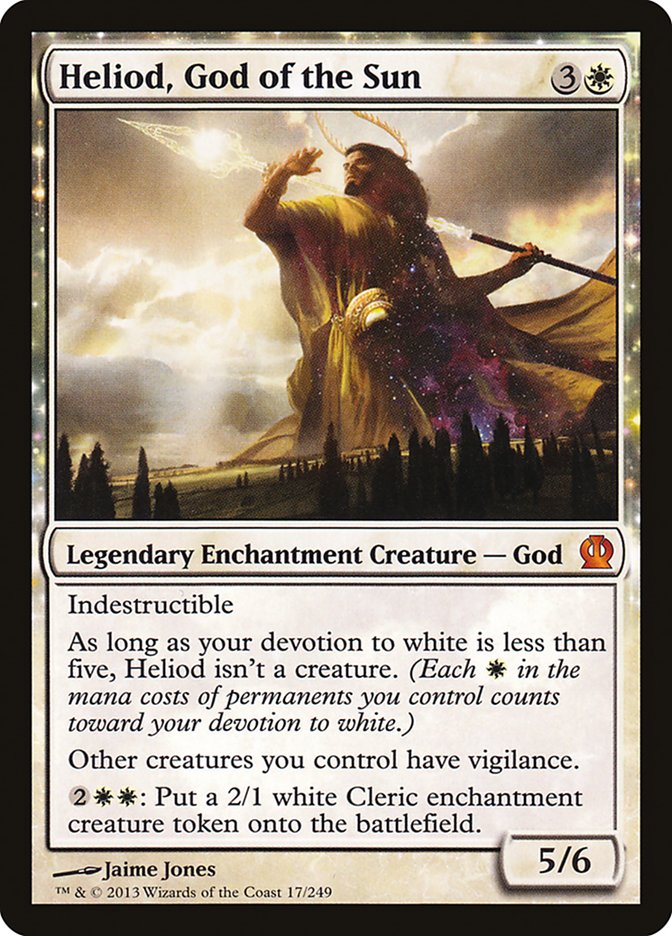
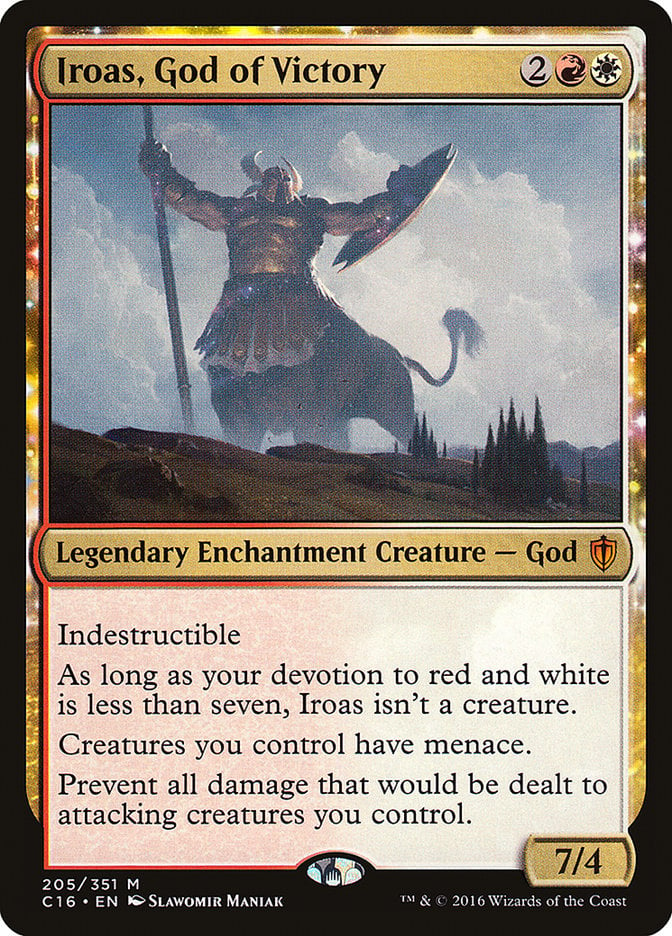
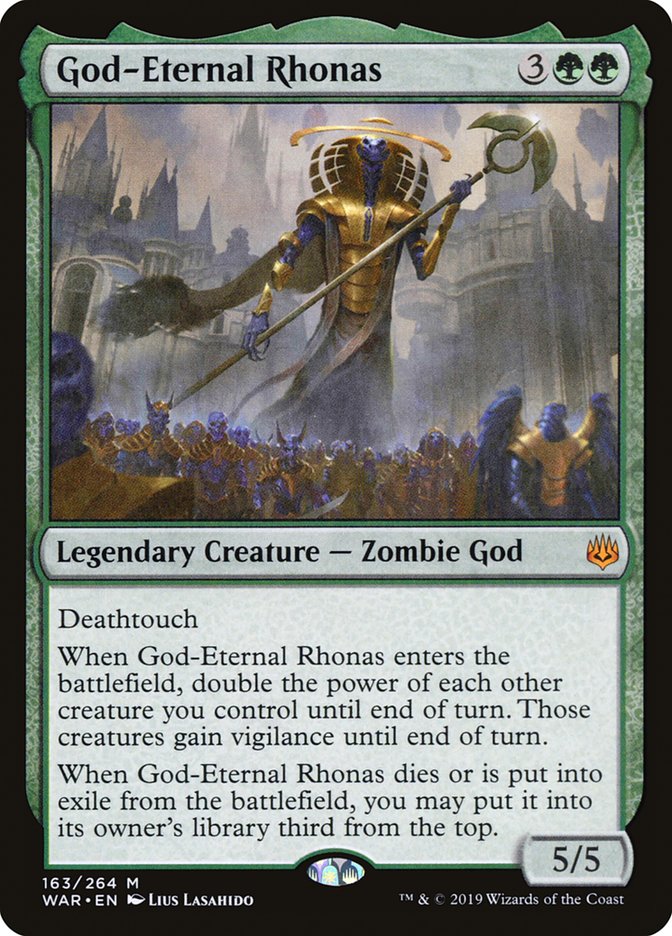
Some gods are mainly here to give your other creatures evasion abilities during combat. Heliod, God of the Sun gives your creatures vigilance, letting you keep them as blockers or use them for mana if your mana dork enablers are on board. Iroas, God of Victory gives your creatures menace, but it’s really here to protect your attackers from all damage. God-Eternal Rhonas has a good enters ability if you cheat it in or play it before combat, especially if you’re about to get infinite extra combats.
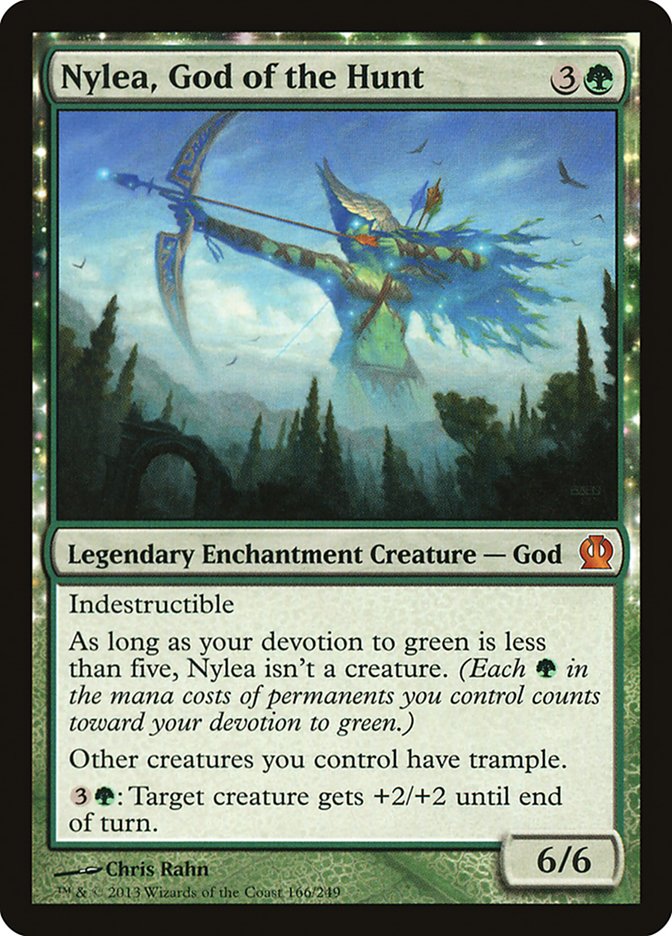
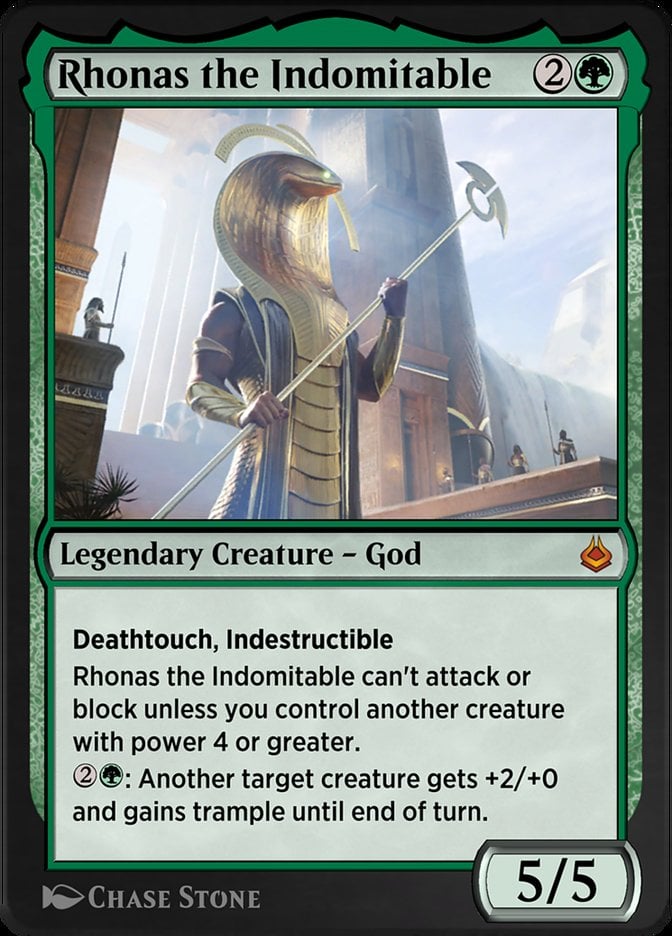
Nylea, God of the Hunt is an overrun on a body. It grants trample with a static ability, while its activated ability is a mana sink to pump up your creatures. Rhonas the Indomitable is very similar, though trample only comes when you pay mana to activate its ability.
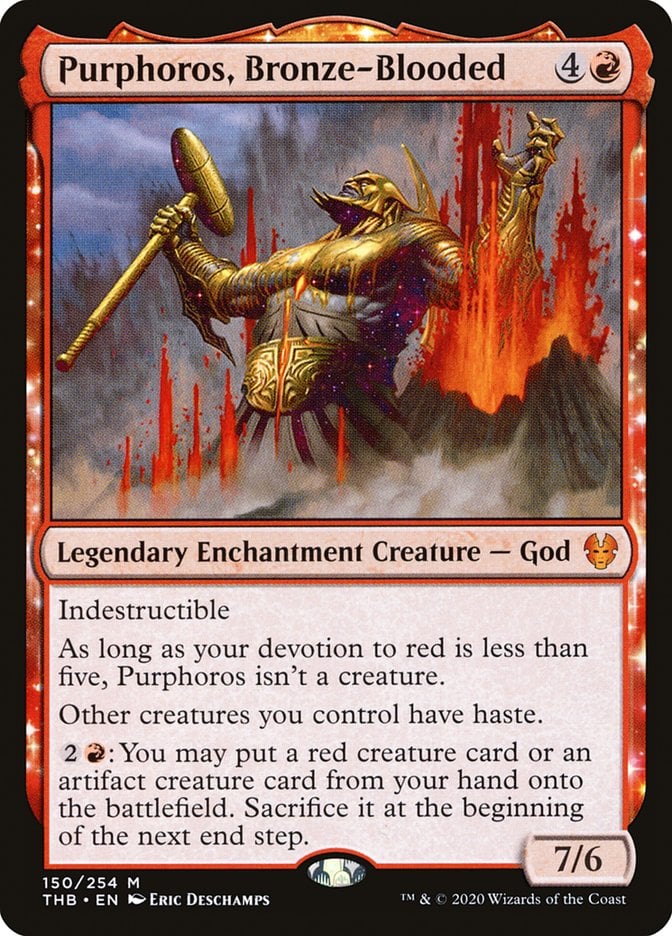
Purphoros, Bronze-Blooded is mainly here as a haste enabler. You can use its activated ability to get your red gods out easily, but I’d be cautious with that because there’s not a whole lot of reanimation in this deck.
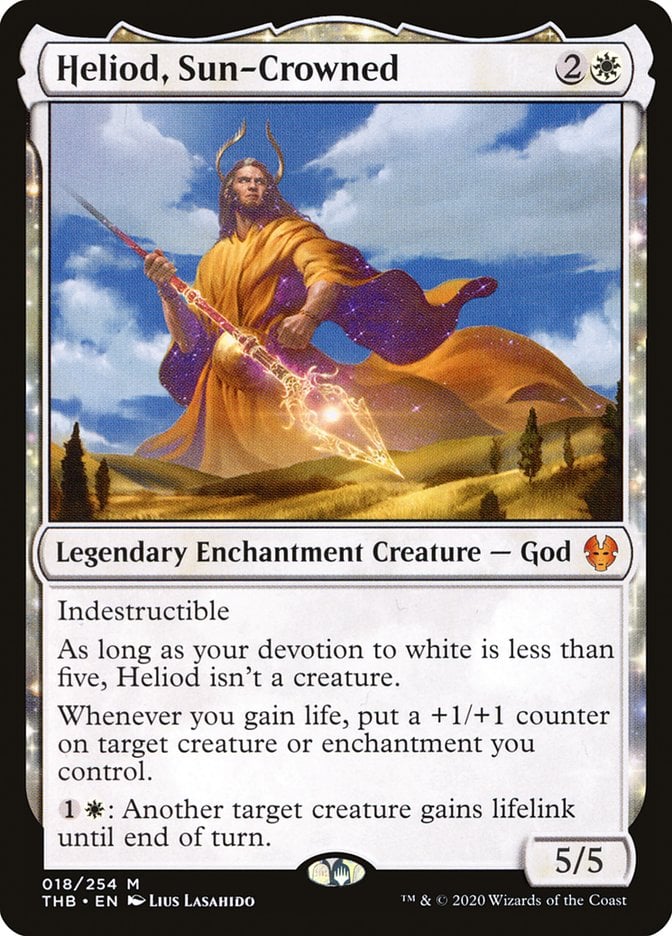
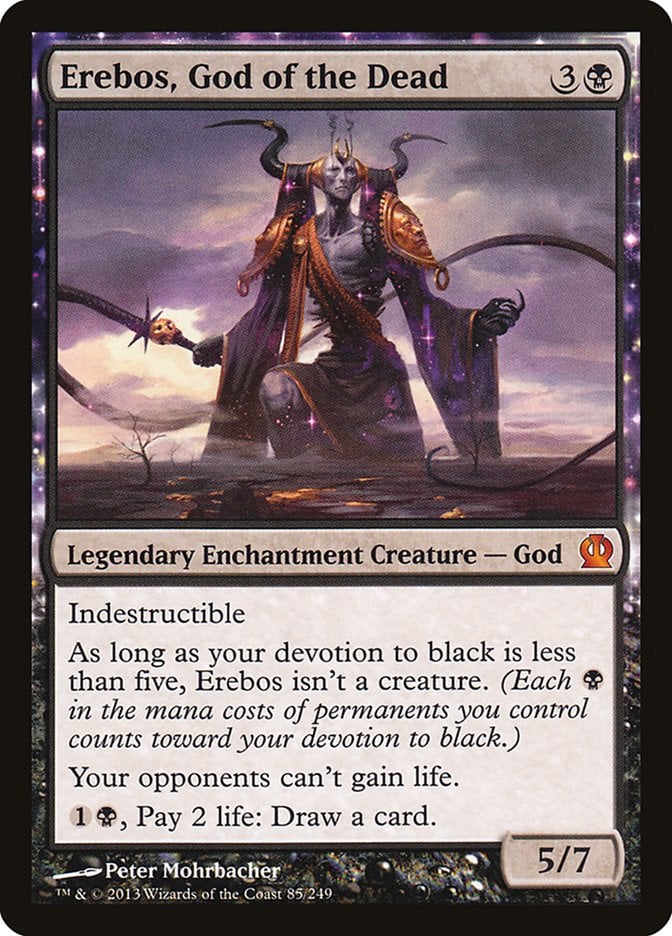
Gods like Heliod, Sun-Crowned need you to pay mana to grant abilities to creatures. This Heliod grants lifelink, and it puts +1/+1 counters on creatures as a lifegain payoff. Erebos, God of the Dead shuts off your opponents’ lifegain, and you can pay mana and life to draw cards with it.
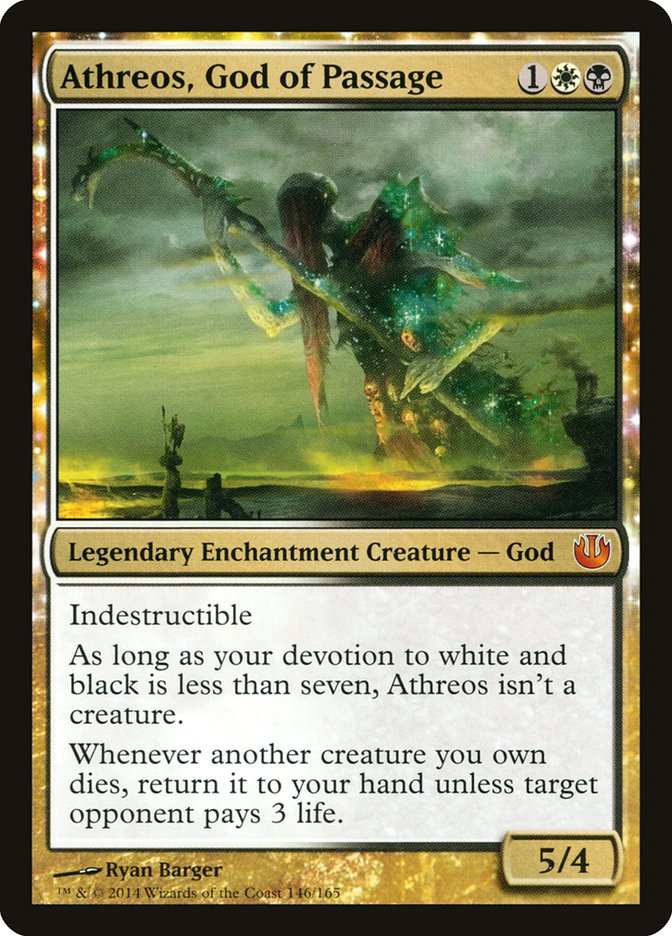
Athreos, God of Passage gives your creatures some resilience, while Athreos, Shroud-Veiled can play a similar game… or steal your opponents’ creatures!
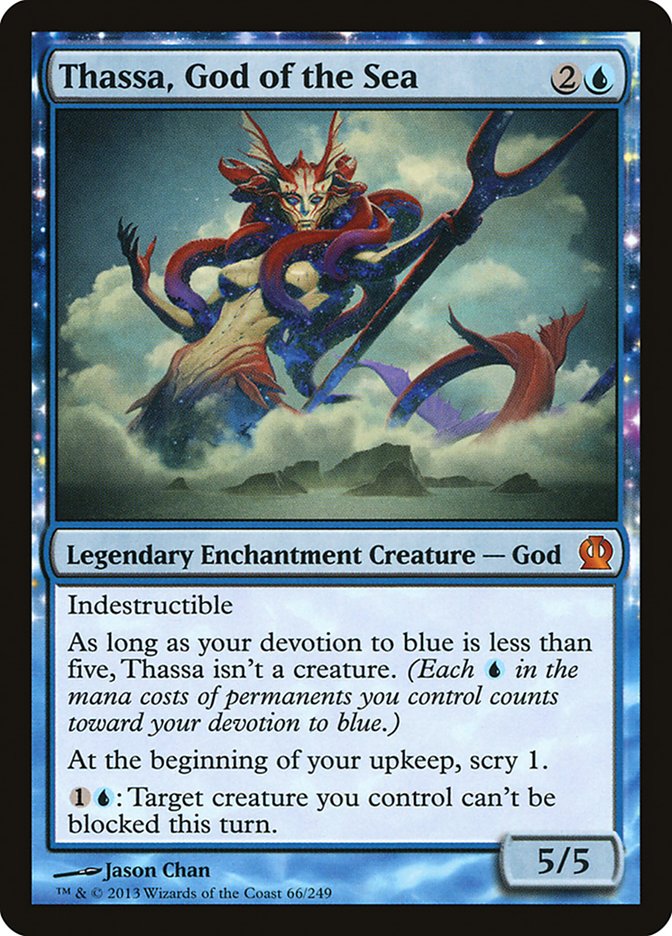
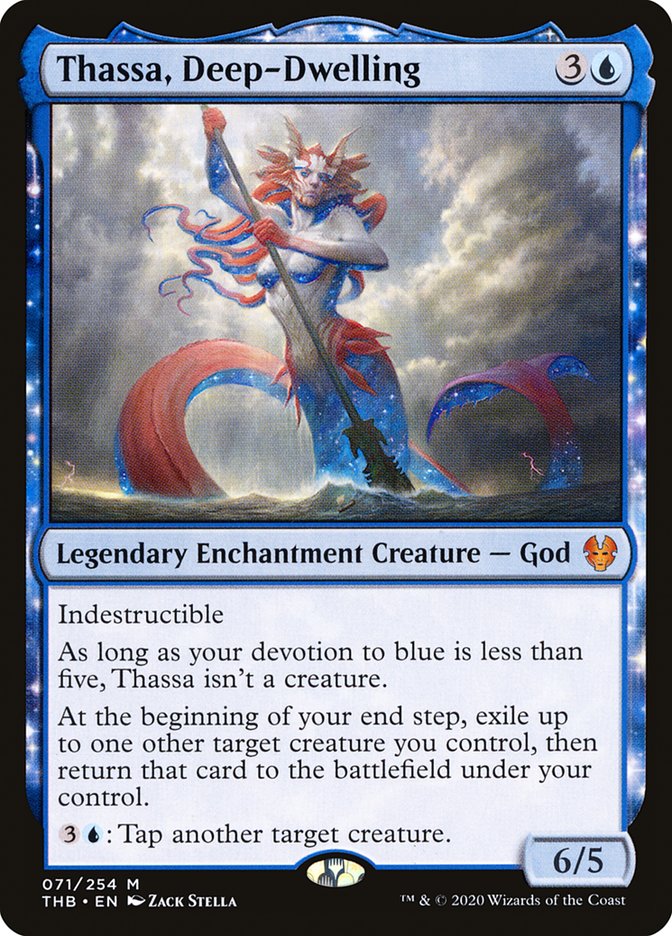
Thassa, God of the Sea’s scry ability is useful to filter the top of your deck, and its activated ability helps you to connect with some of your heavier hitters. Thassa, Deep-Dwelling is a bit of a reach and is honestly inefficient in this deck. You can tap down opposing creatures, but you don’t have many good targets for its end step trigger. You can’t blink your MDFCs to reset them because they aren’t creatures on their second side, but you can flicker a tapped creature to have it available as an untapped blocker.
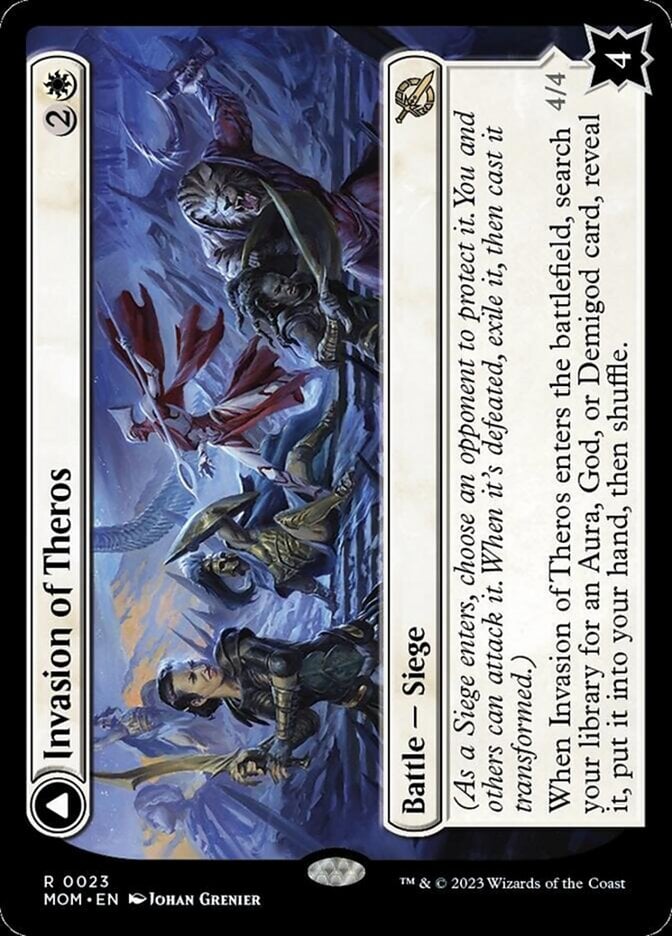
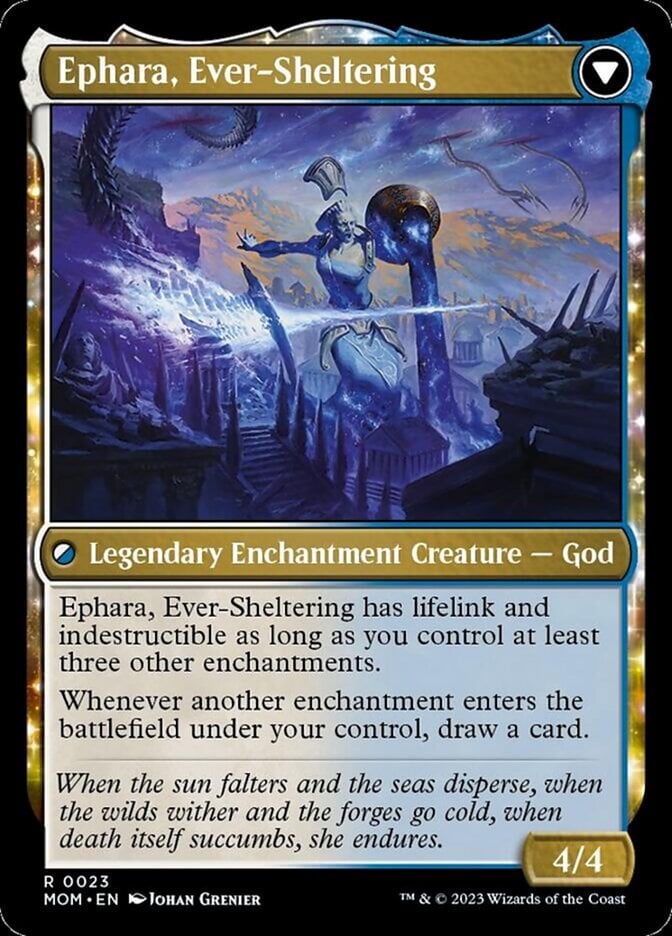
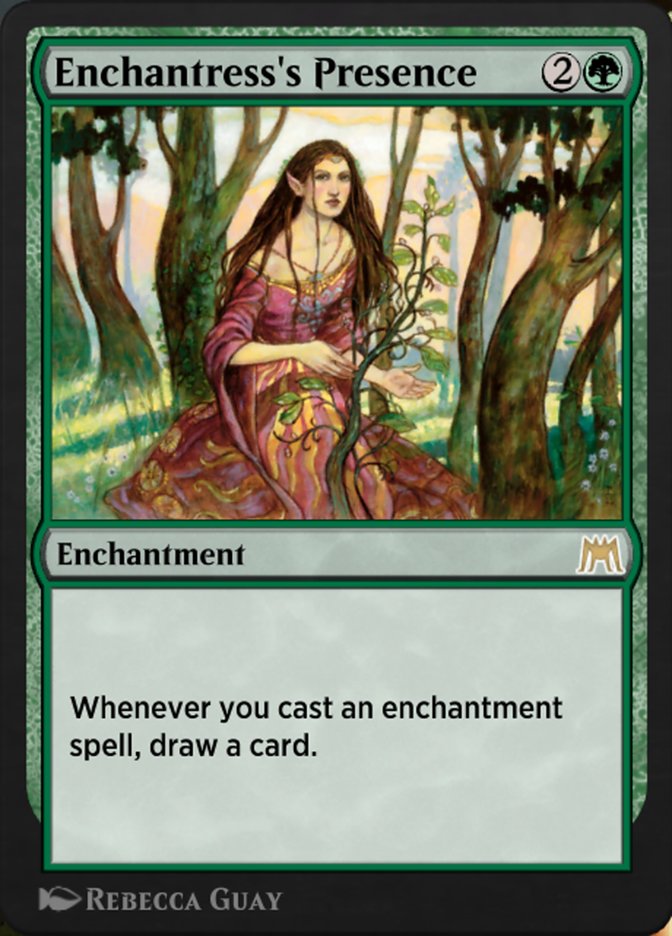
Invasion of Theros is a god tutor for you (cough, Anzrag, cough), and its flipside adds Ephara, Ever-Sheltering to your god count and gives you cards when your enchantments enter, basically another Enchantress's Presence.
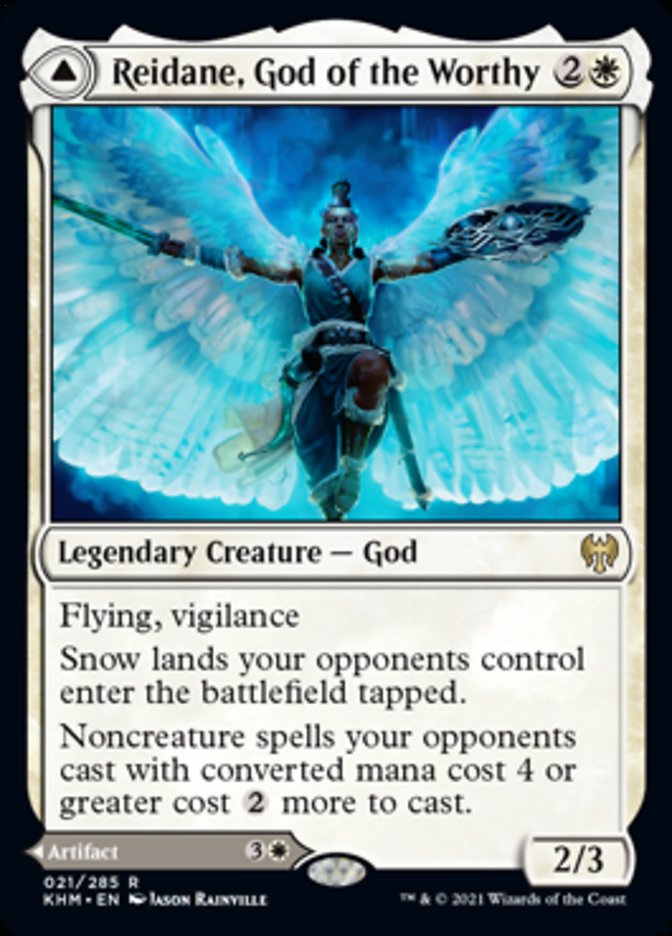
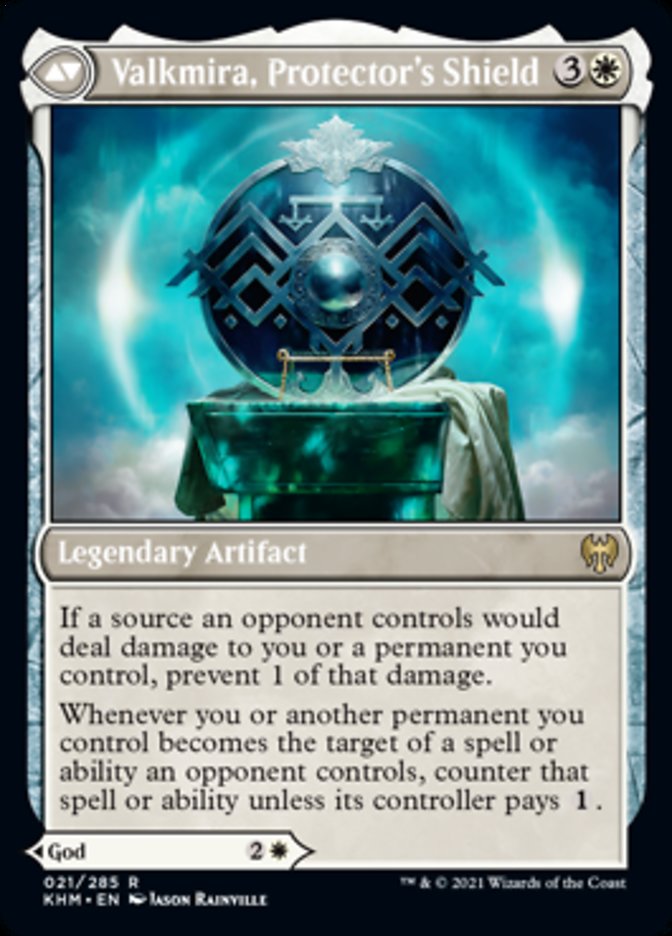
Reidane, God of the Worthy has two sides that offer different forms of protection and taxing, making some spells more expensive for your opponents.
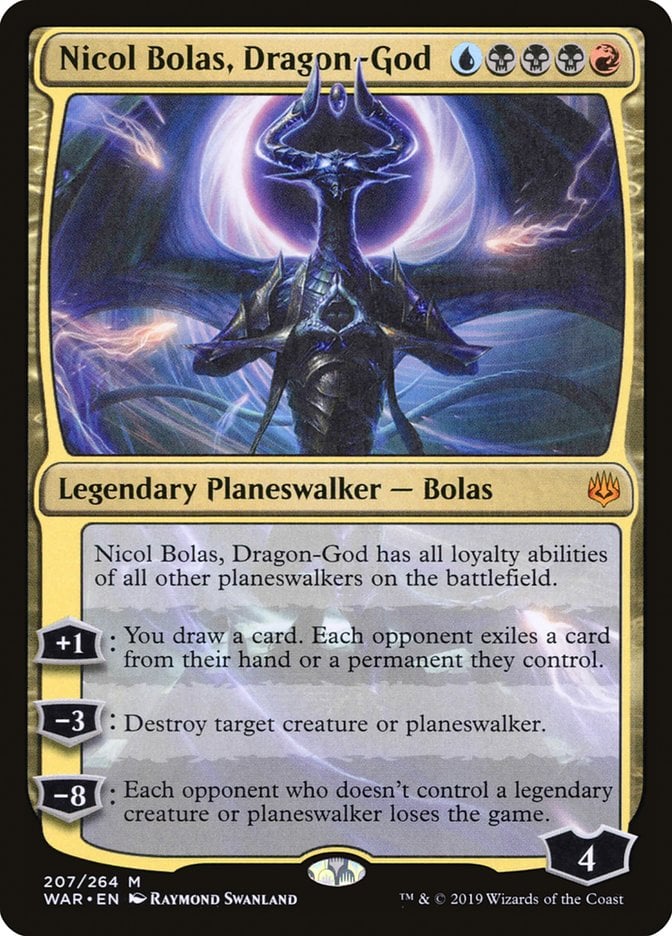
While it’s a god “in name only,” Nicol Bolas, Dragon-God gives you a trio of good abilities, and it can borrow your opponents’ planeswalkers’ abilities. Card draw and creature/planeswalker removal are a good start, but the ultimate ability is a good panic button to hit after you’ve cast a sweeper.
Ramp and Interaction
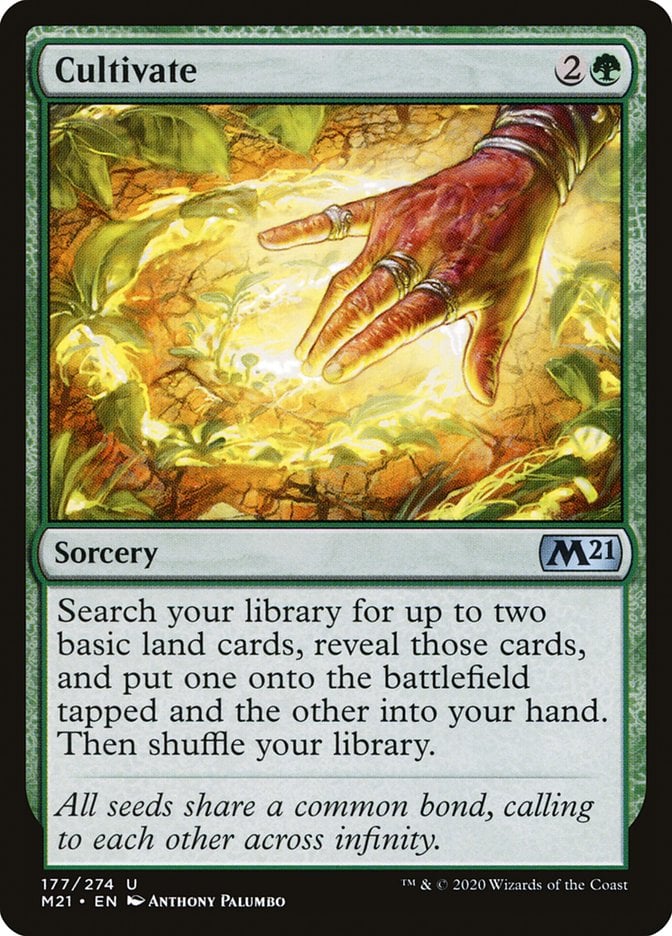
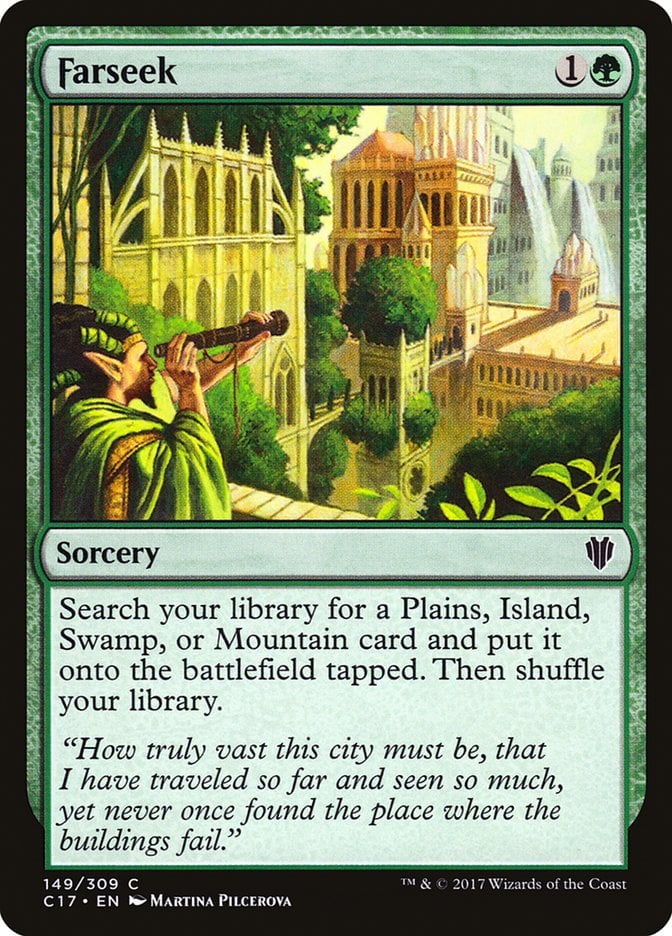
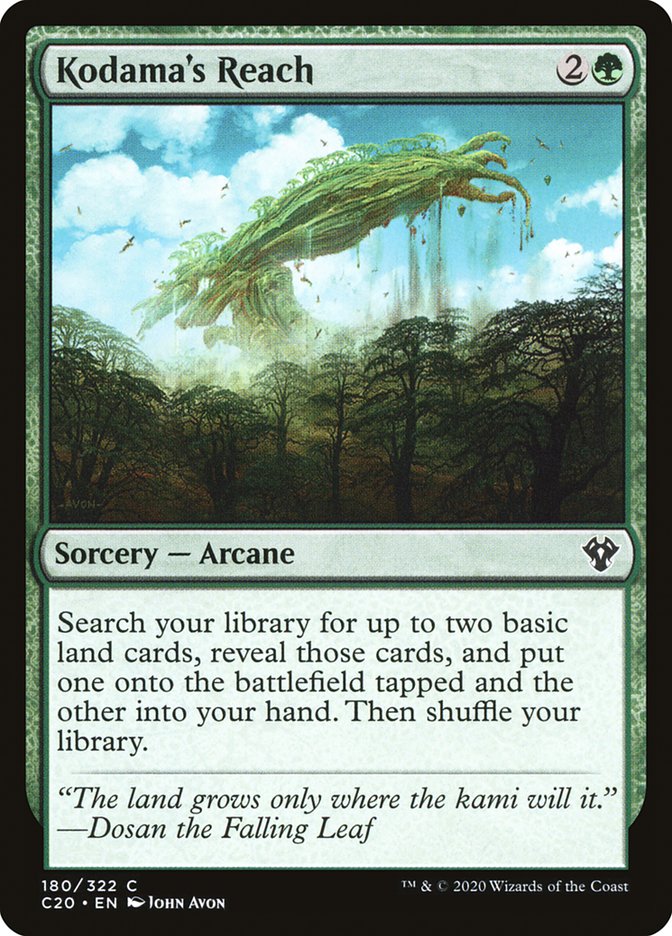
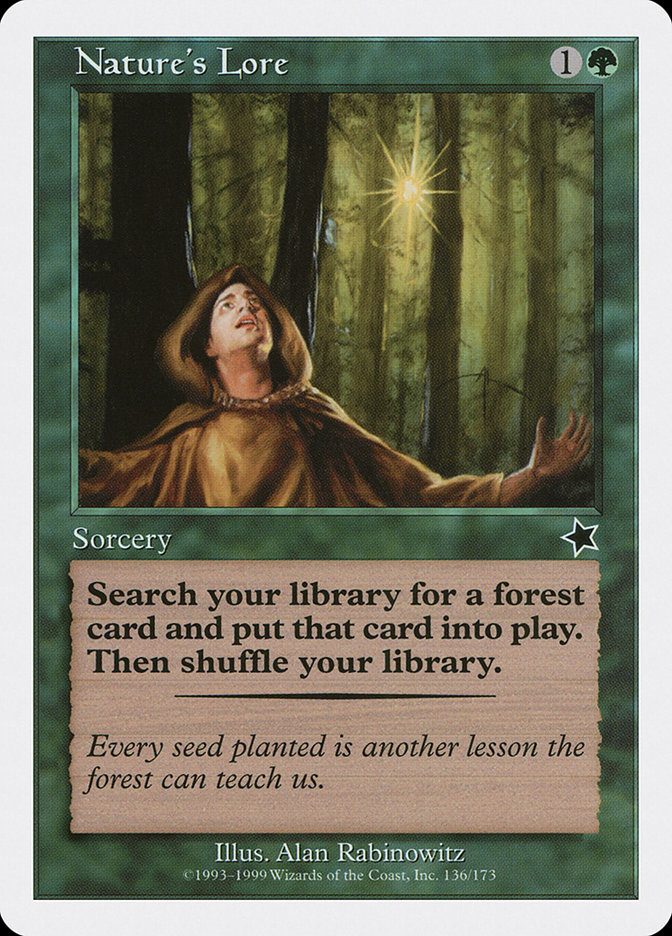
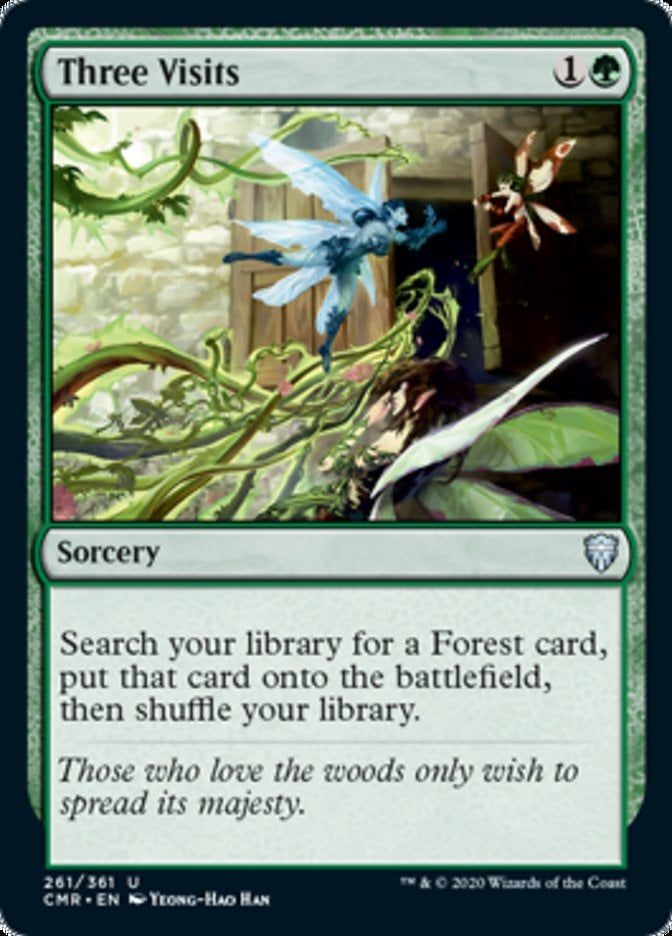
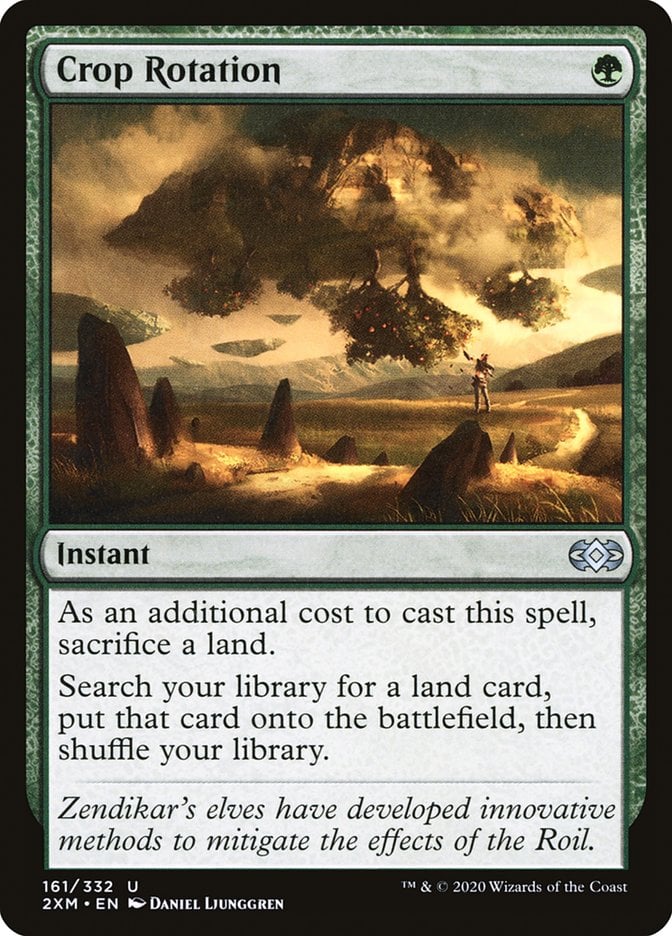
Cultivate, Farseek, Kodama's Reach, Nature's Lore, and Three Visits comprise the main ramp package. Crop Rotation lets you search for any of your lands, though you’re usually only fixing colors, not ramping.
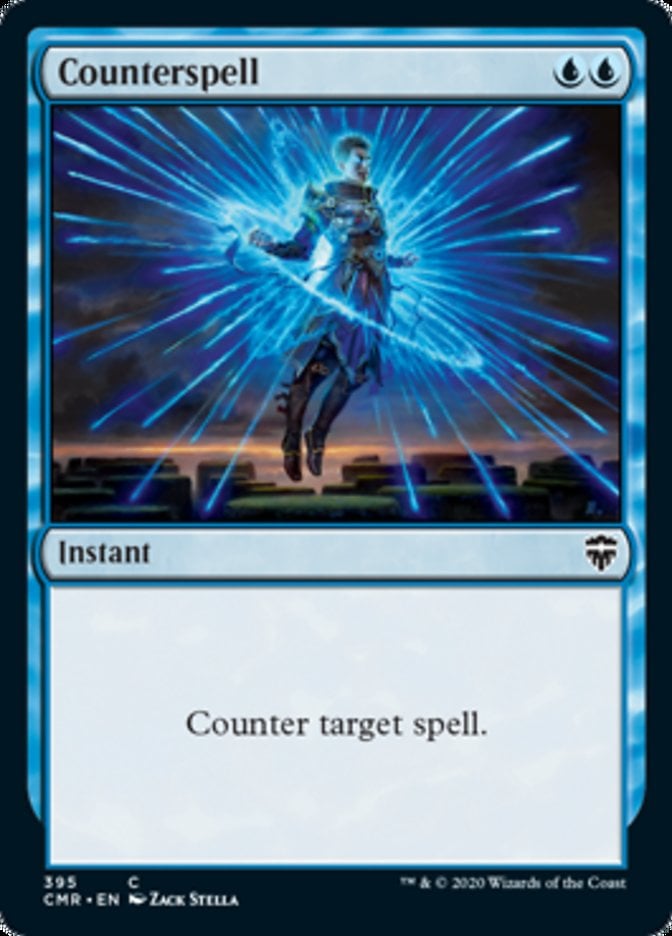
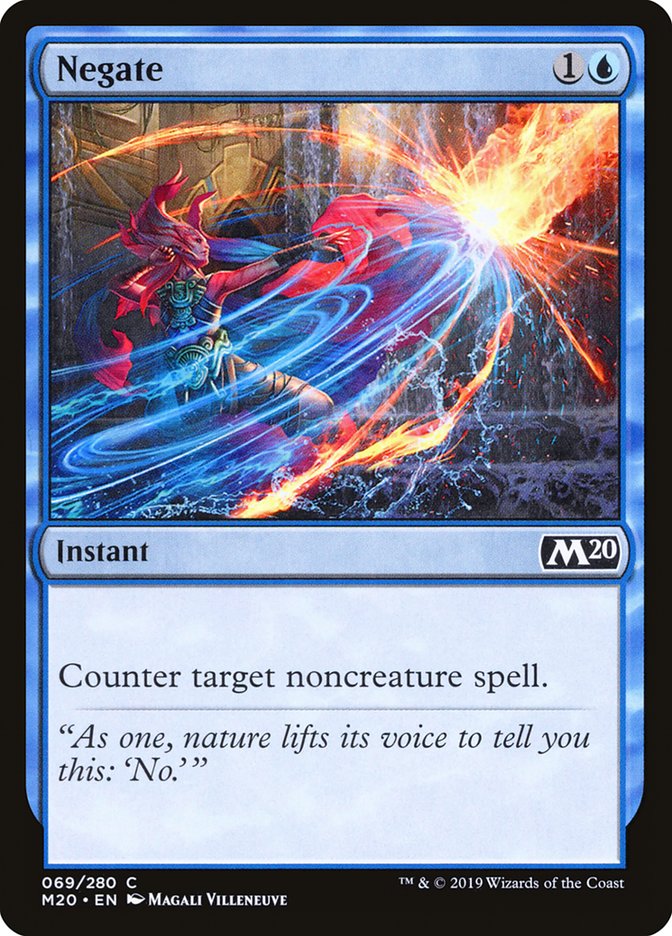
For countermagic, I’ve included Counterspell and Negate, but I’d save these to protect my win condition if I thought I could go infinite.
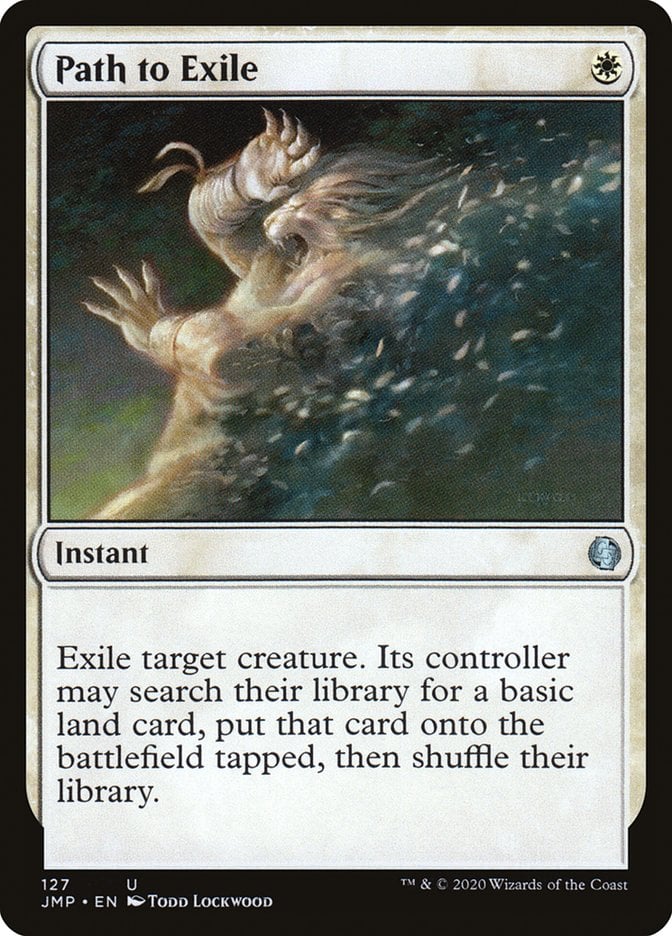
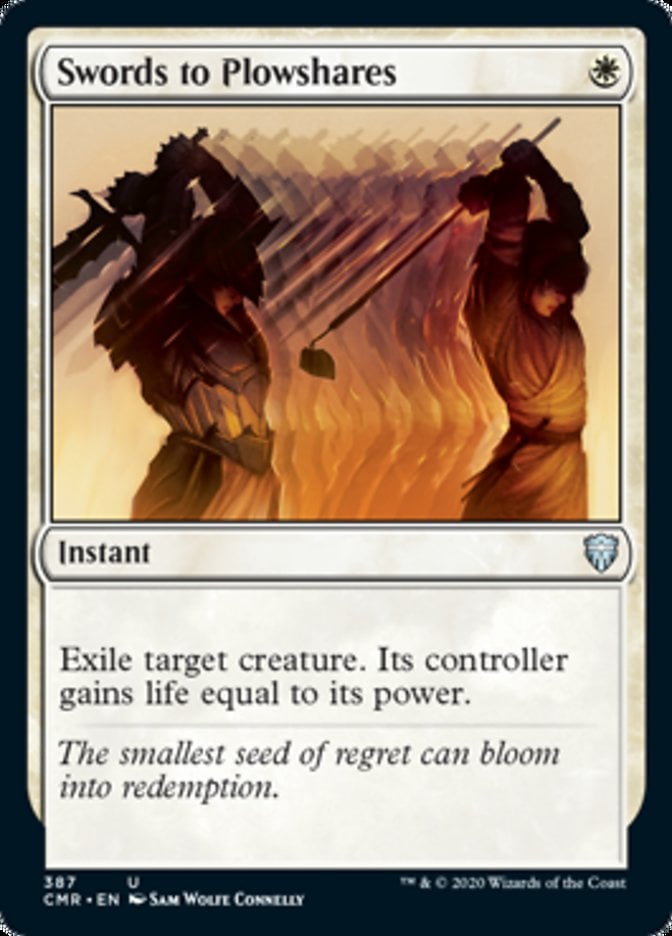
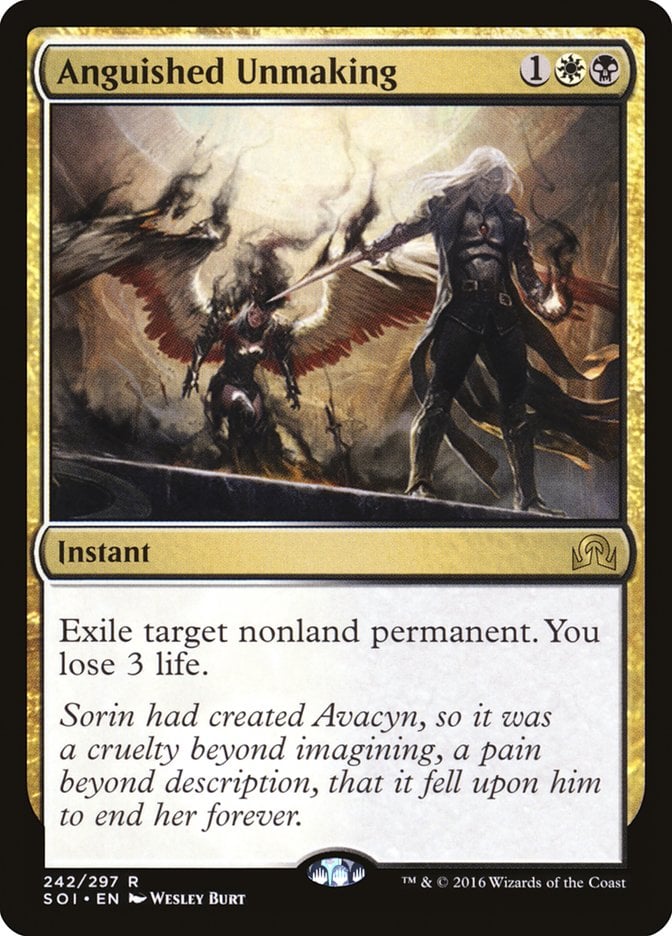
You’ve got a fairly basic group of spot removal spells: Path to Exile, Swords to Plowshares, and Anguished Unmaking.
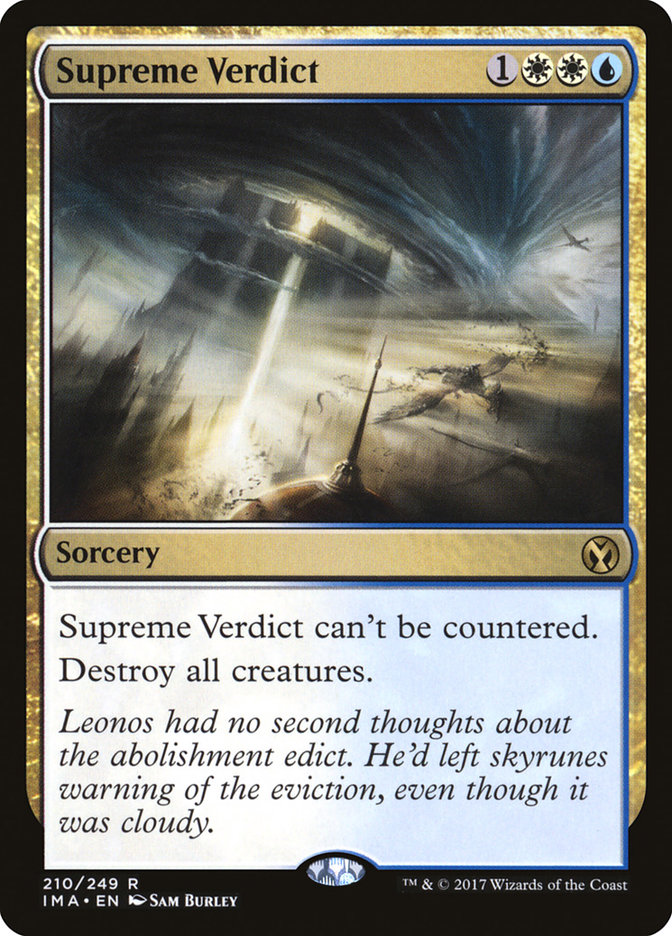
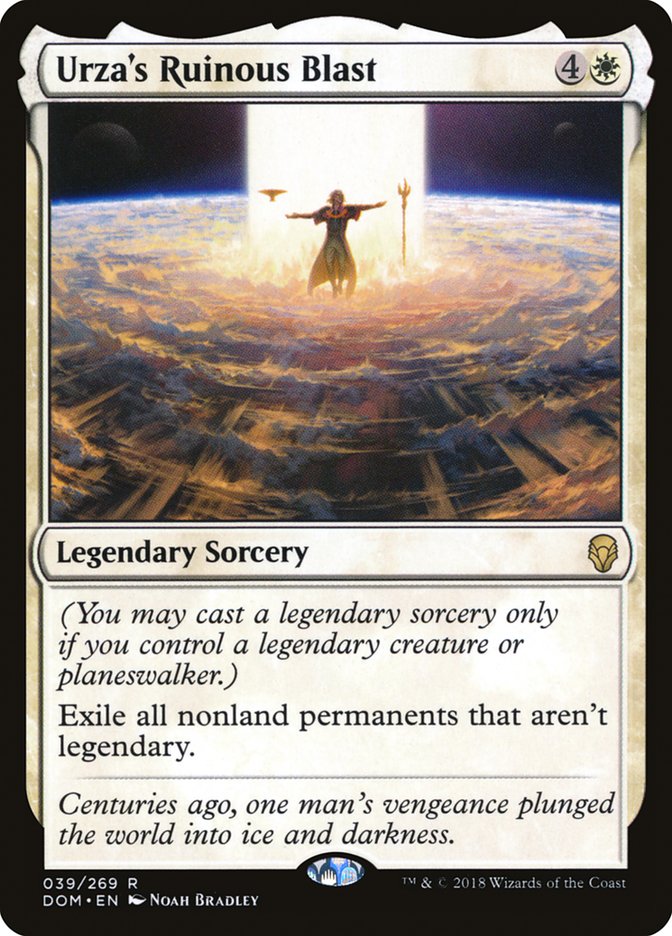
For sweepers, this deck runs Supreme Verdict and Urza's Ruinous Blast.
Utility
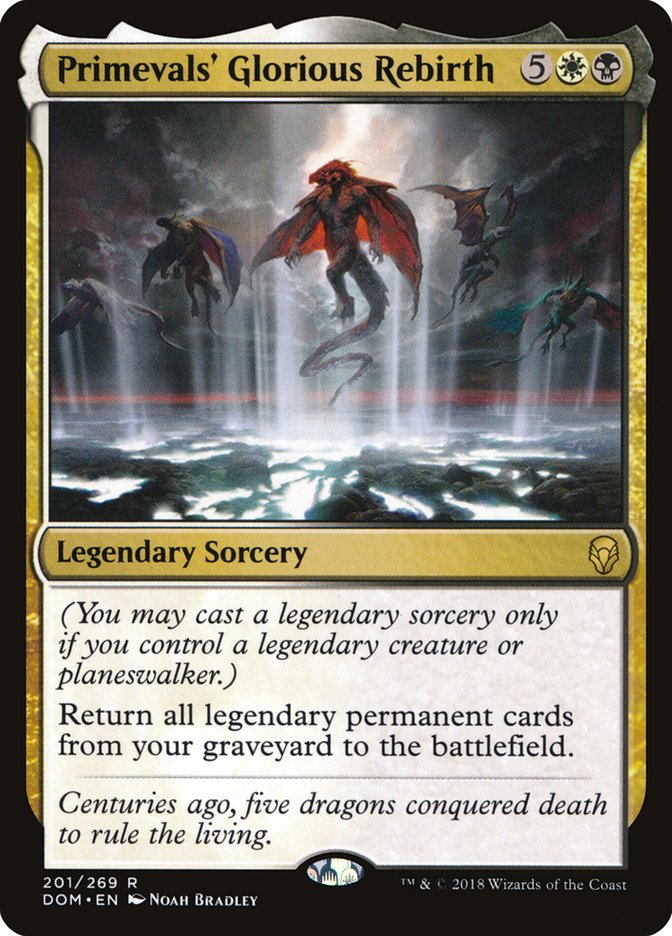
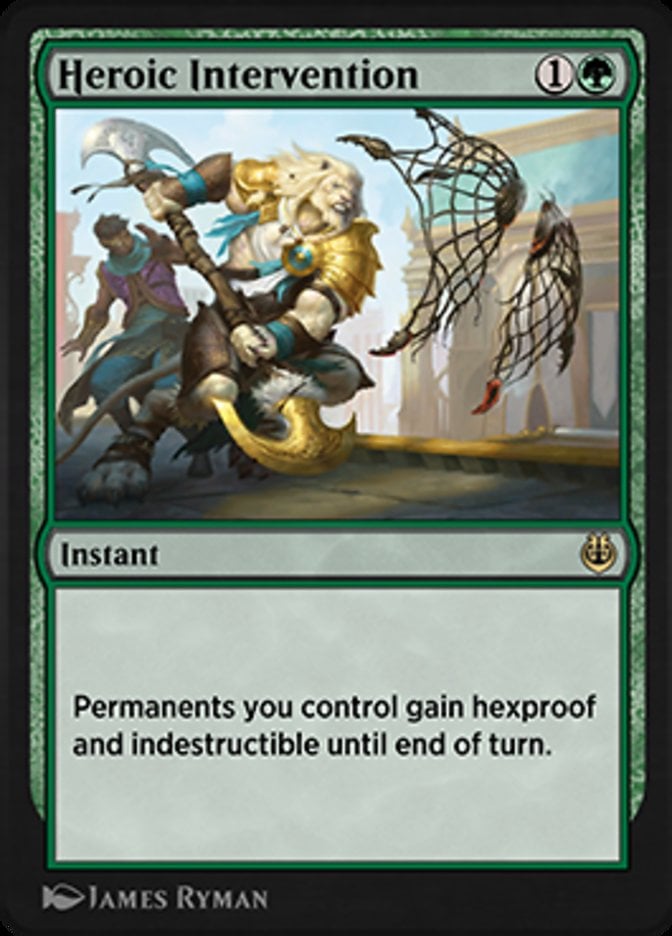
Only two instants and sorceries don’t really fit with the ramp and interaction. Primevals' Glorious Rebirth gives you mass reanimation, while Heroic Intervention’s general protection can help to set you up for a combat win.
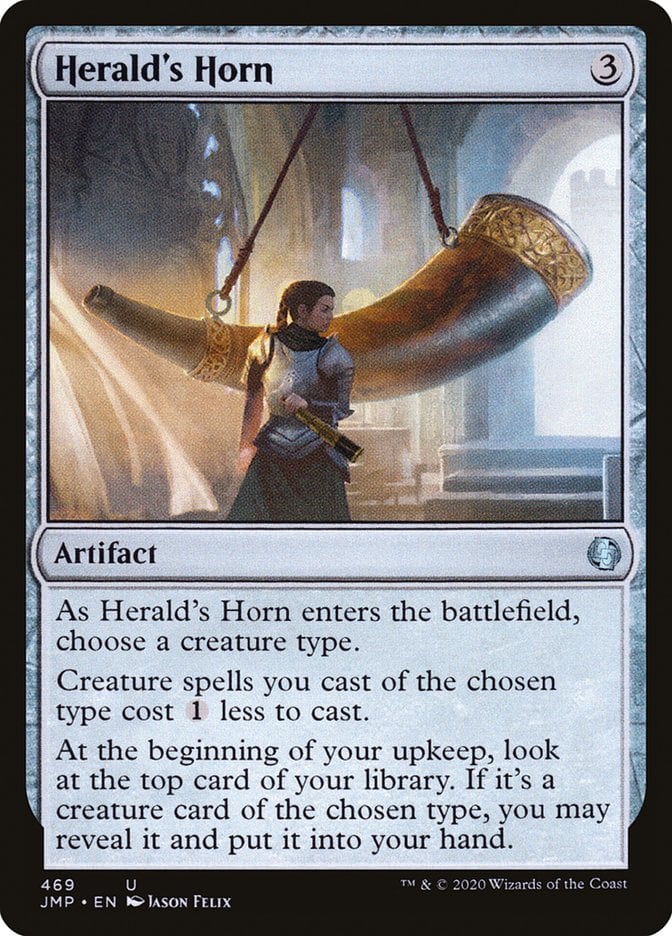
Herald's Horn starts off as typal cost reduction, then it adds on an upkeep trigger that grabs creatures from your library and puts them into your hand.
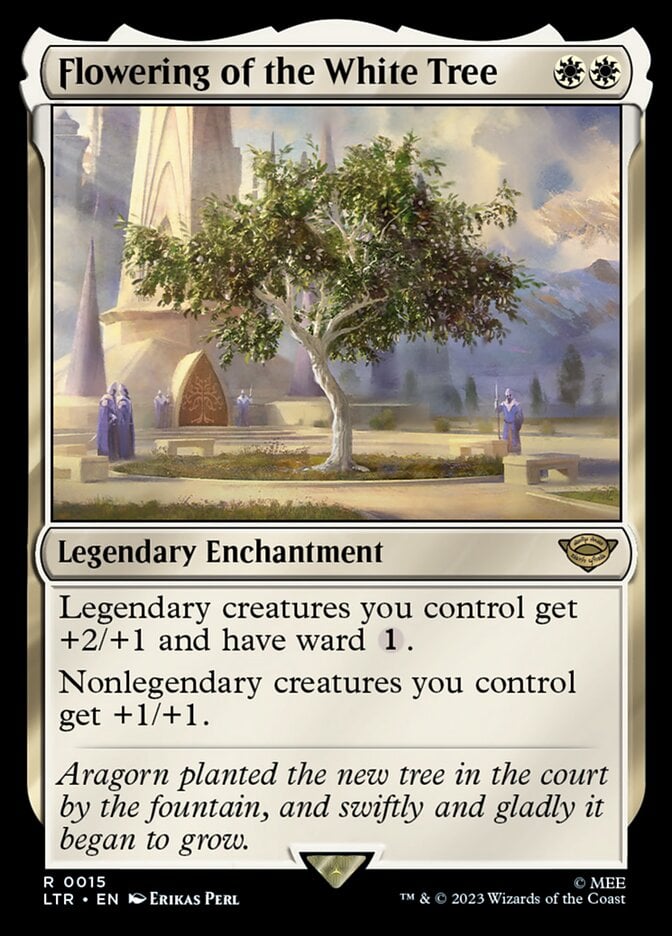
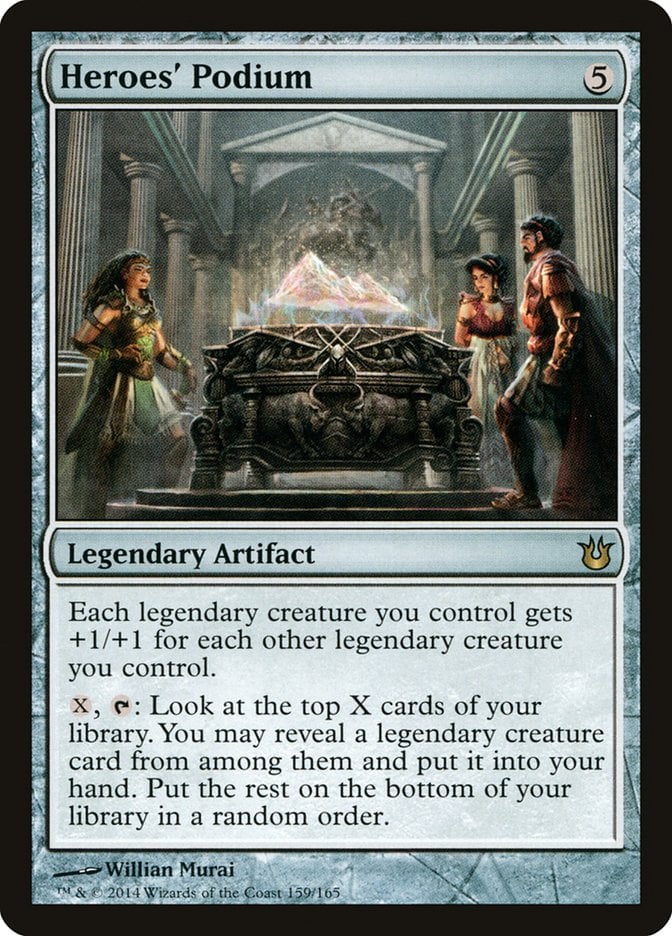
Flowering of the White Tree is a perfect anthem for this deck. Heroes' Podium is an anthem that gets better as you add creatures to the battlefield, and it’s another effect that lets you dig for creatures.
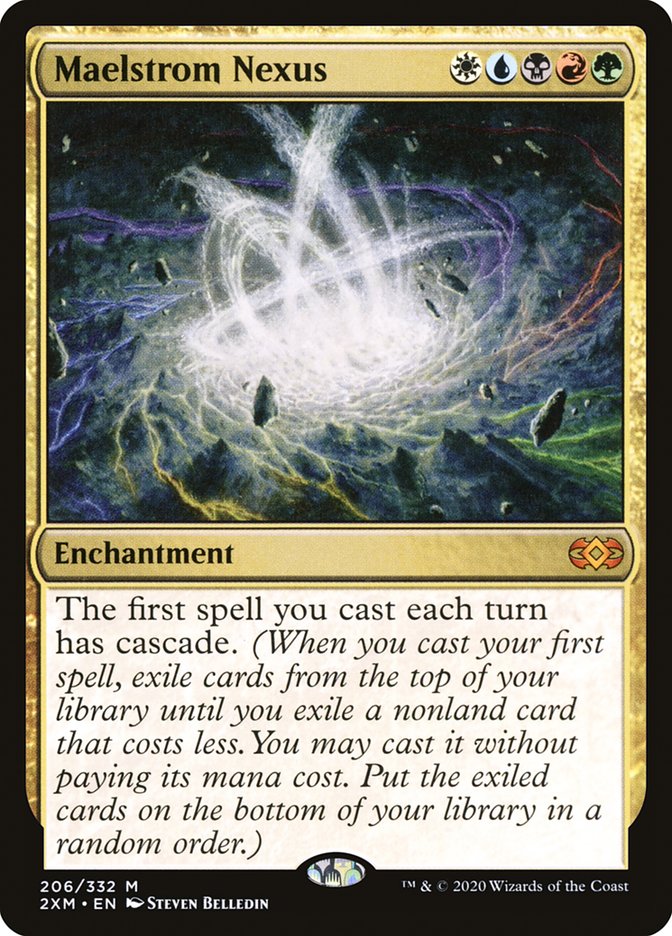
Maelstrom Nexus helps to cheat on high mana values thanks to cascade.
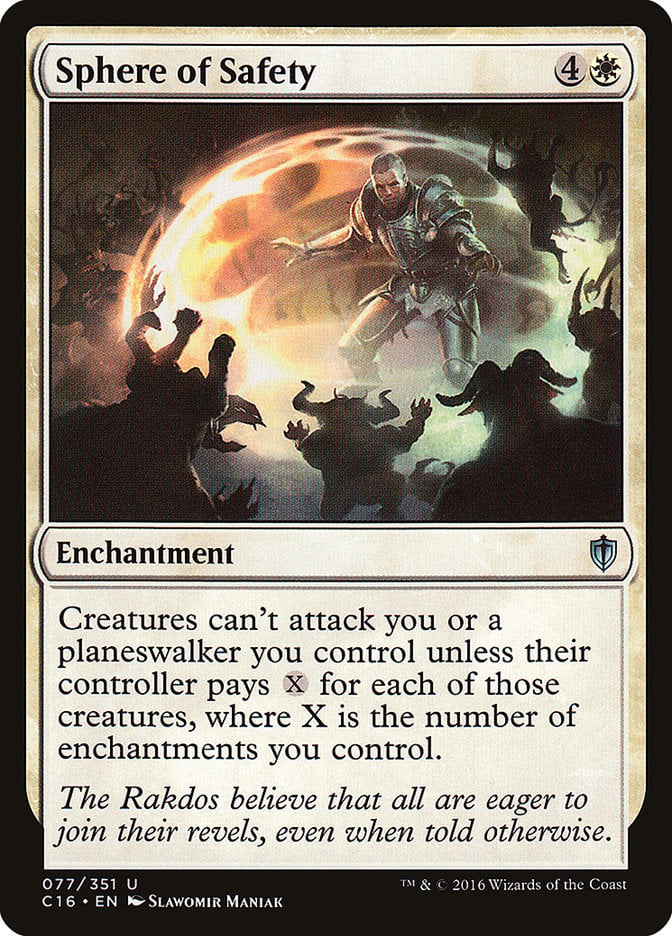
Sphere of Safety is a pillow fort card that’ll prevent opponents from attacking you as you add enchantments to the board.
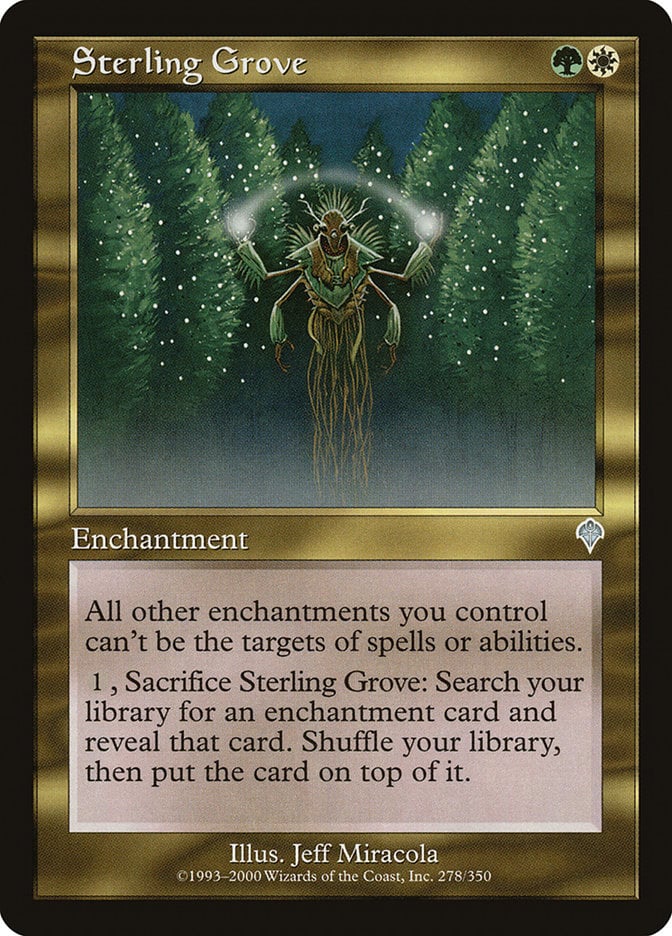
Sterling Grove protects your enchantments including many of your gods with shroud. In a pinch, you can trade it to tutor for another enchantment.
The Mana Base
Rather than a fully optimized mana base, I wanted a more budget-friendly set of lands. There’s a full cycle of Kaldheim snow duals, which you can untap whenever you attack with Jorn, God of Winter. All the basic lands are also snow lands too, though snow basics increase the deck’s budget.
There’s a full set of budget tri-lands here. I wanted to invest more money into the creatures than the lands; my first draft of this deck came in over $800, and that felt excessive (for me) considering that I don’t tend to proxy anything. These tri-lands unfortunately aren’t fetchable, but they won’t break the bank. Feel free to play whichever lands fit your budget or whatever you have on hand.
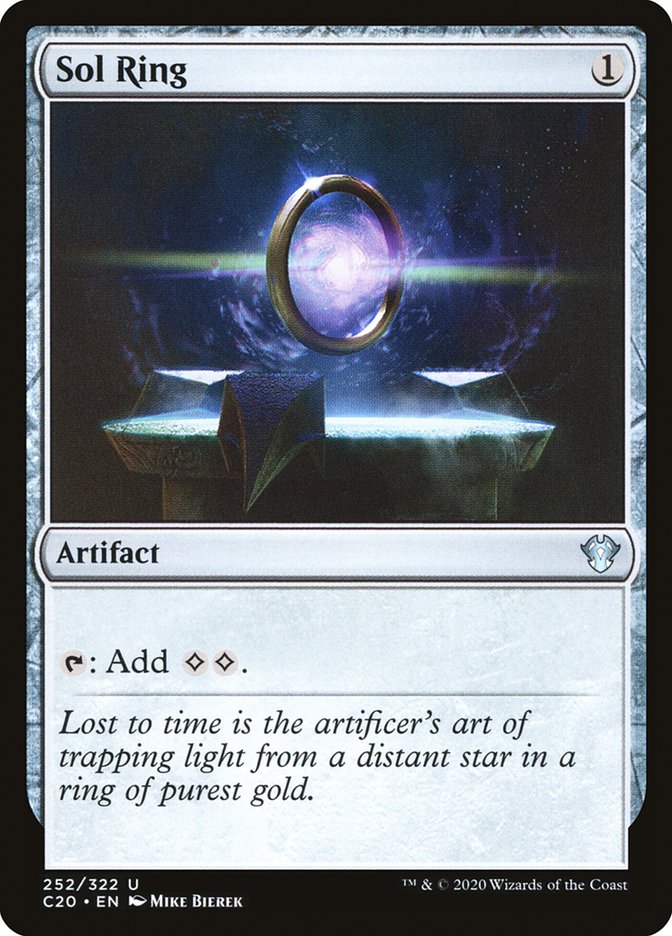

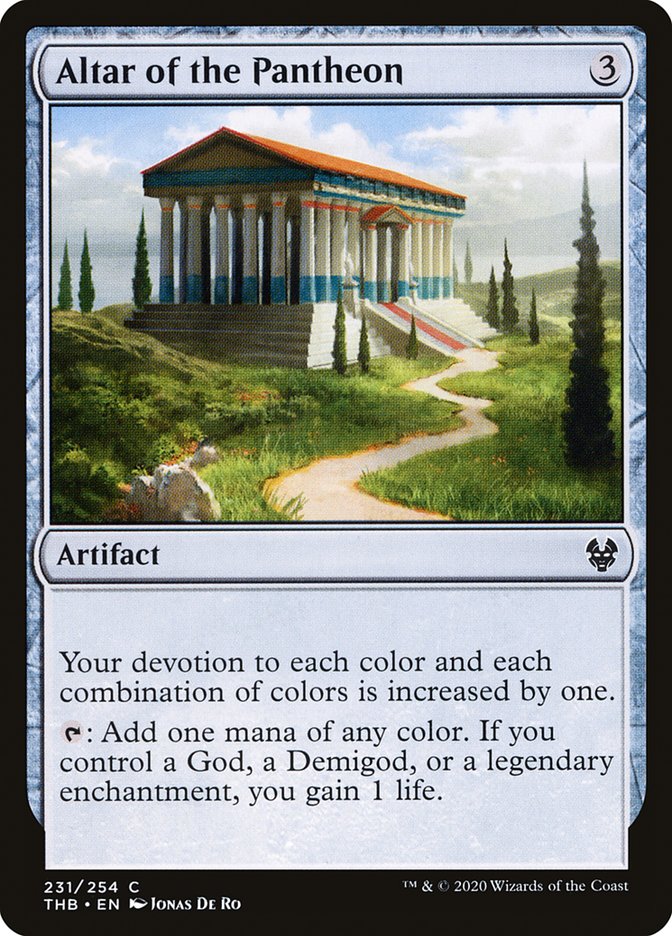
As a 5-color deck that doesn’t care about artifacts, it’s not really good to stock up on extra mana rocks like Signets and Talismans. Sol Ring and Arcane Signet are mandatory, and Altar of the Pantheon is flavorfully (and budget) appropriate.
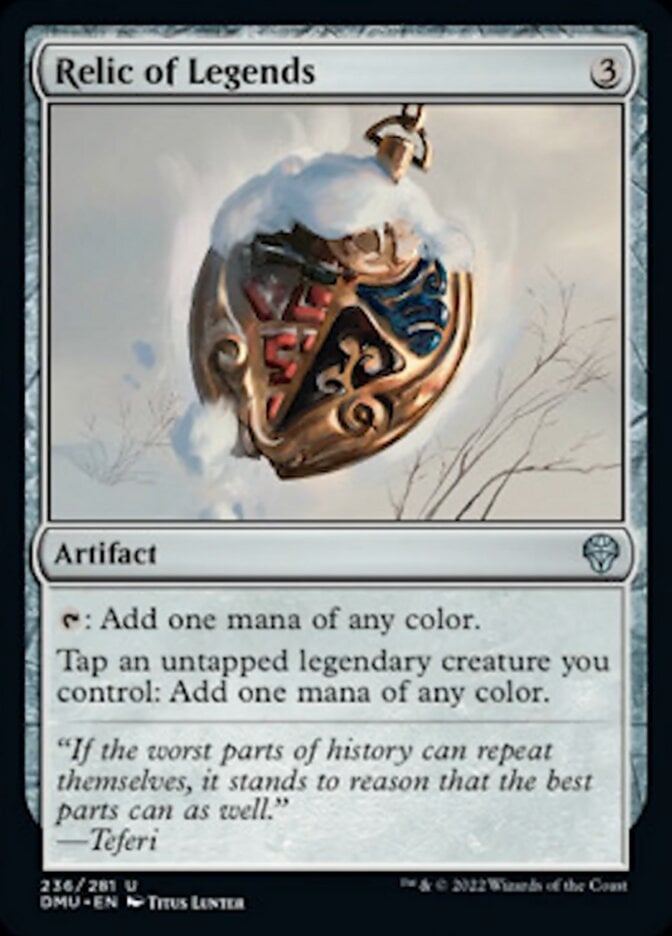
Relic of Legends has one of many abilities that lets you use your creatures as mana dorks.
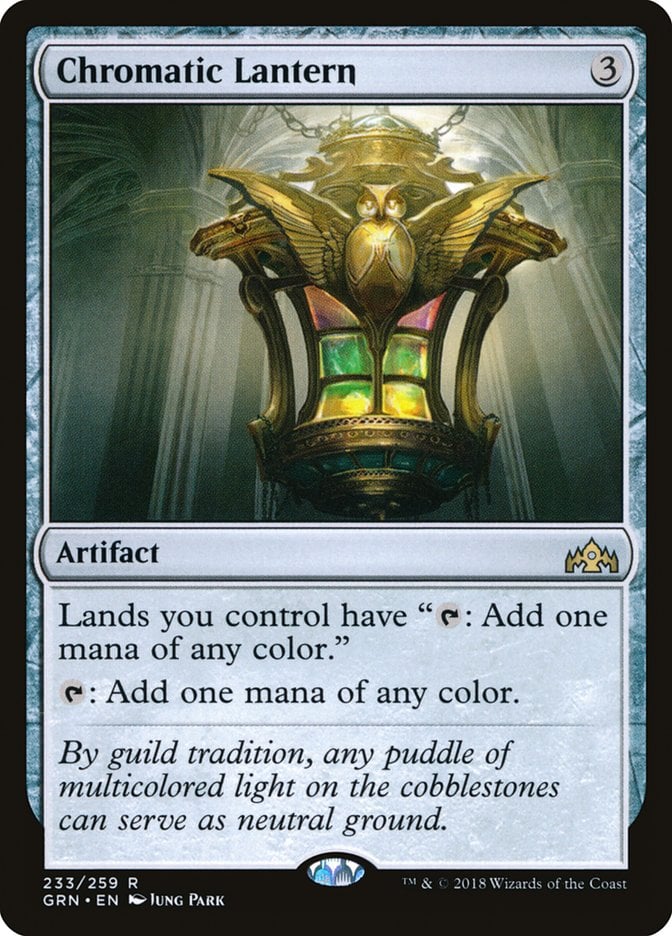
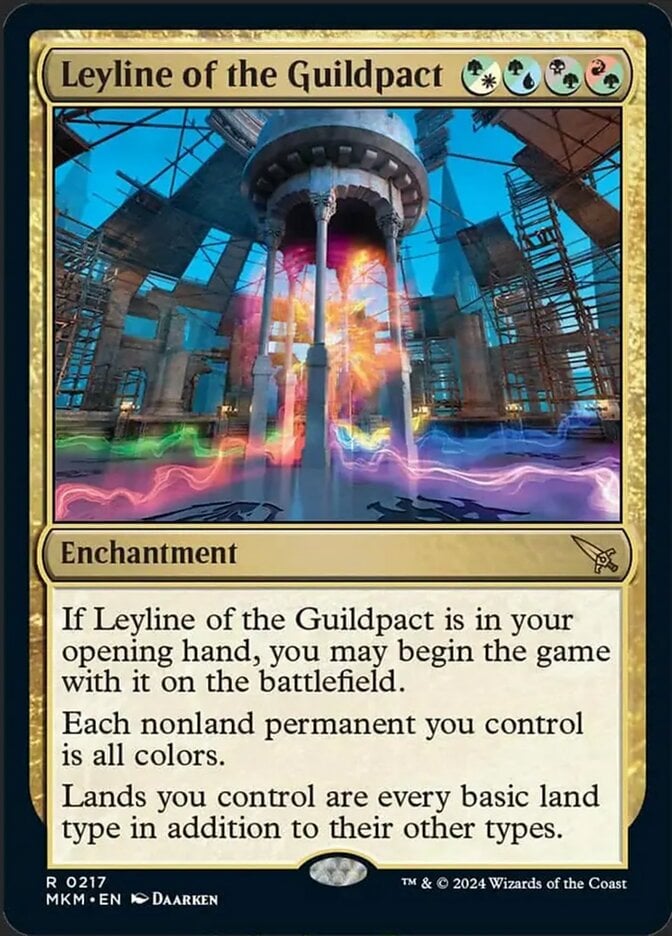
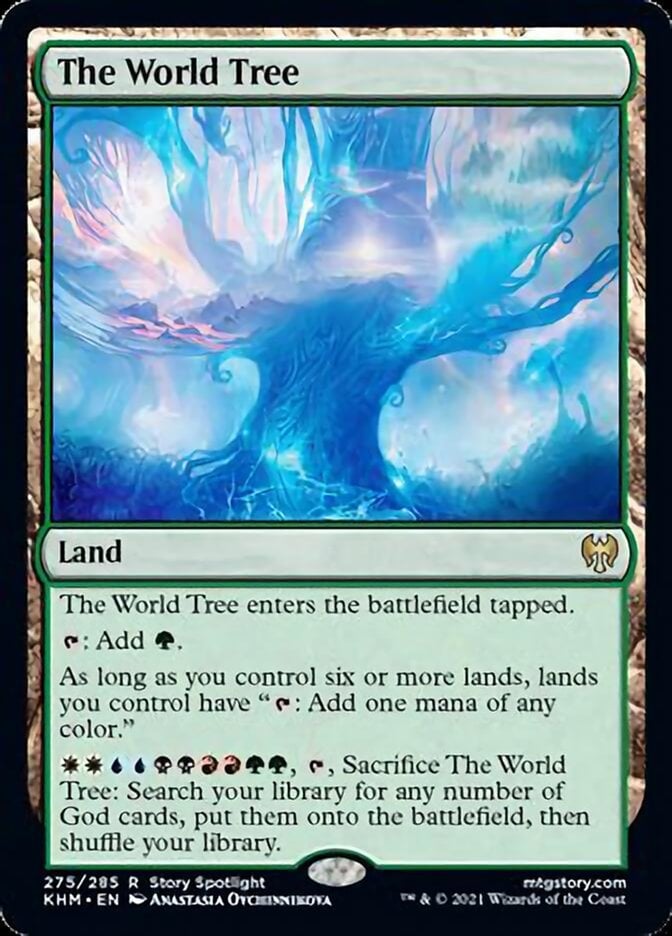
Chromatic Lantern and Leyline of the Guildpact each help with color fixing by interacting with your lands. The World Tree can do a lot of fixing later in the game, and you can trade it in later to push all your gods onto the battlefield at once.
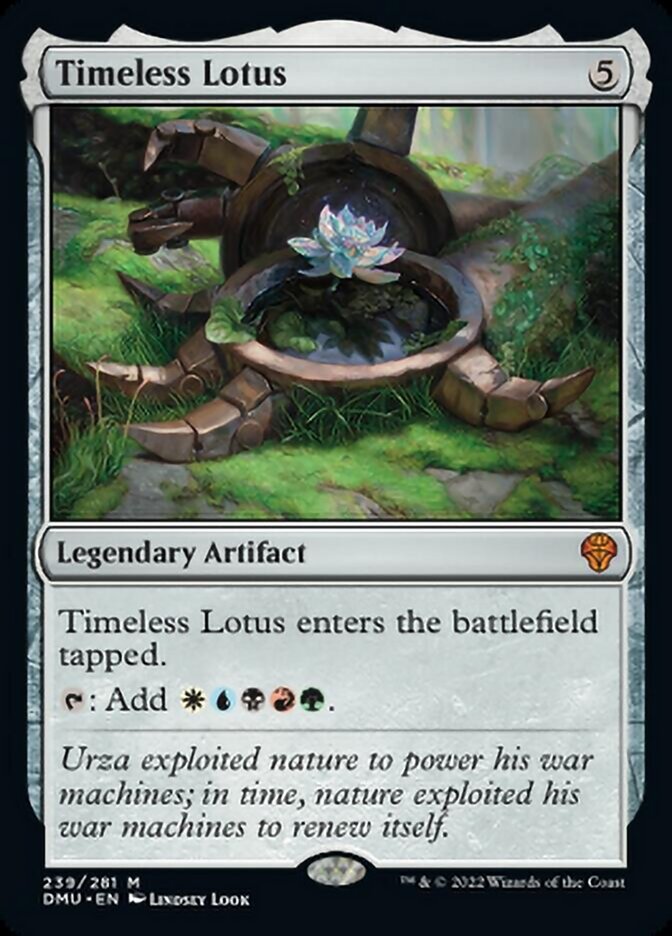
The only real splurge here is Timeless Lotus, but you need all the mana help you can get.
The Strategy
This god deck is aggressive and wants to win through combat. You can’t really use Esika, God of the Tree to attack, especially if you use it as The Prismatic Bridge (highly recommended), so commander damage is a no-go. There are a few gods in this deck that really want to get down and dirty (chief among them: Anzrag, Aclazotz, and Ilharg,), and other gods that’ll grant your attackers relevant abilities.
You’ll want to ramp early, and ramp often. Most lands in this deck come in tapped, so they’re rather slow. You’re going to be vulnerable to attacks if you can’t afford to cast or cheat your gods into play somehow, and some of them can’t even block for you unless you meet their devotion or other conditions.
You’ll want to get at least one of your attacking gods down as soon as you can. You may have to play a little political game to get advantages from it to start, but some combinations of gods on the field will make you a problem for everyone else.
I totally have Anzrag tunnel vision, but you don’t have to wait for the mole god. You can trade in The World Tree to pull all your gods out of your deck, and you’ve got a pair of haste enablers among them so that you can attack with them immediately. Nicol-Bolas, Dragon-God is your fireman’s axe that you’ll grab in case of emergency.
Combos and Interactions
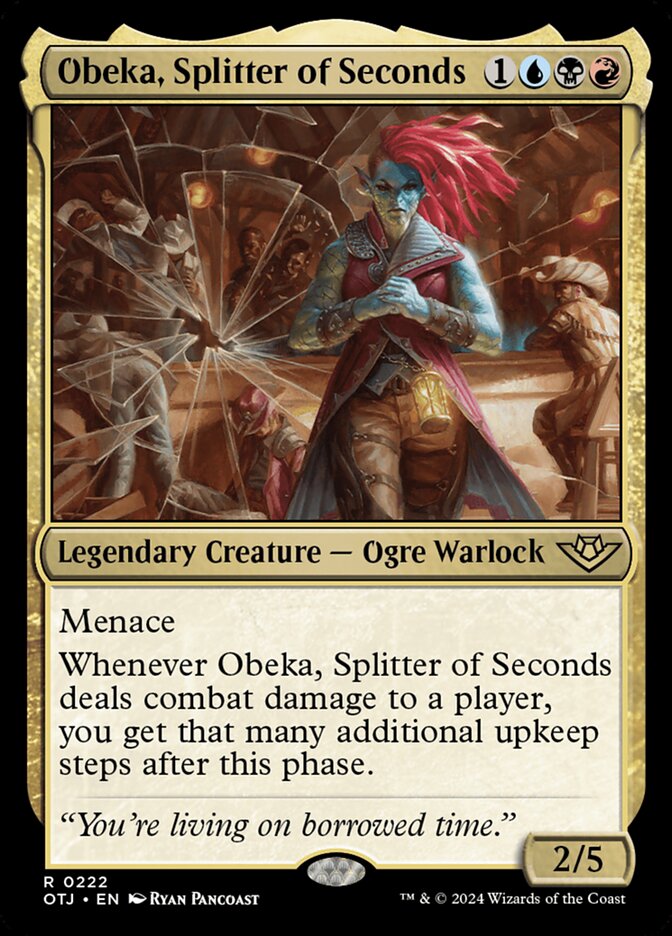
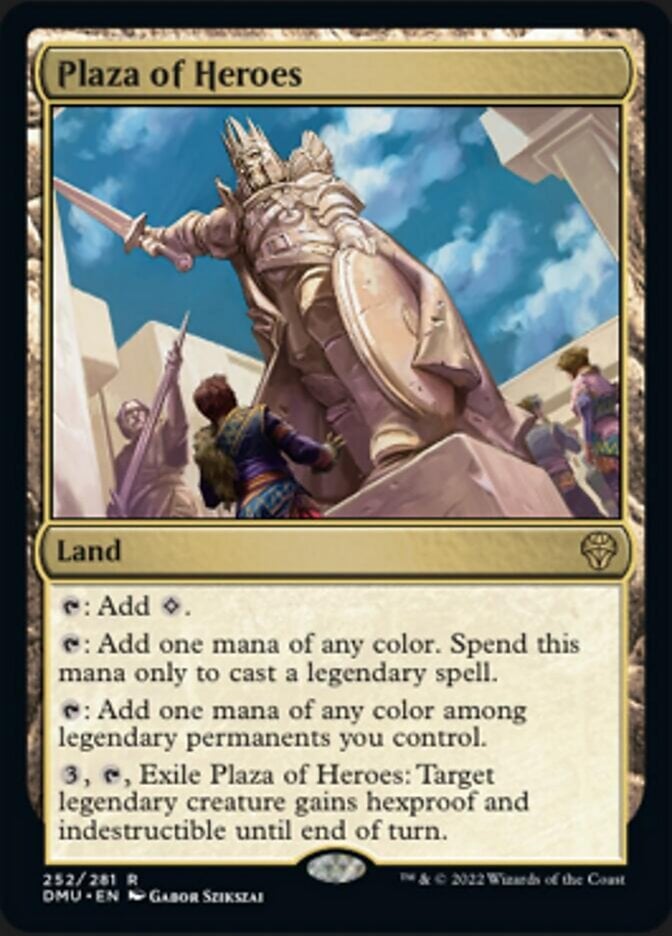
I built this with a slightly janky interaction in mind. It starts with The Prismatic Bridge on the battlefield, along with Anzrag, the Quake-Mole and Obeka, Splitter of Seconds. You have enough mana to activate Anzrag’s ability, and neither creature has summoning sickness. Maybe you have enough mana for Heroic Intervention or to activate and exile Plaza of Heroes.
The idea is to activate Anzrag’s ability, make it indestructible, then attack a player with the mole god and Obeka. Anzrag acts as a lure to make sure that you get extra combats and that Obeka connects with your opponent for extra upkeeps. Those upkeeps allow you to dig through your library to add two gods to the battlefield. I’d recommend only assigning damage to one of your opponents’ creatures per combat to maximize the value.
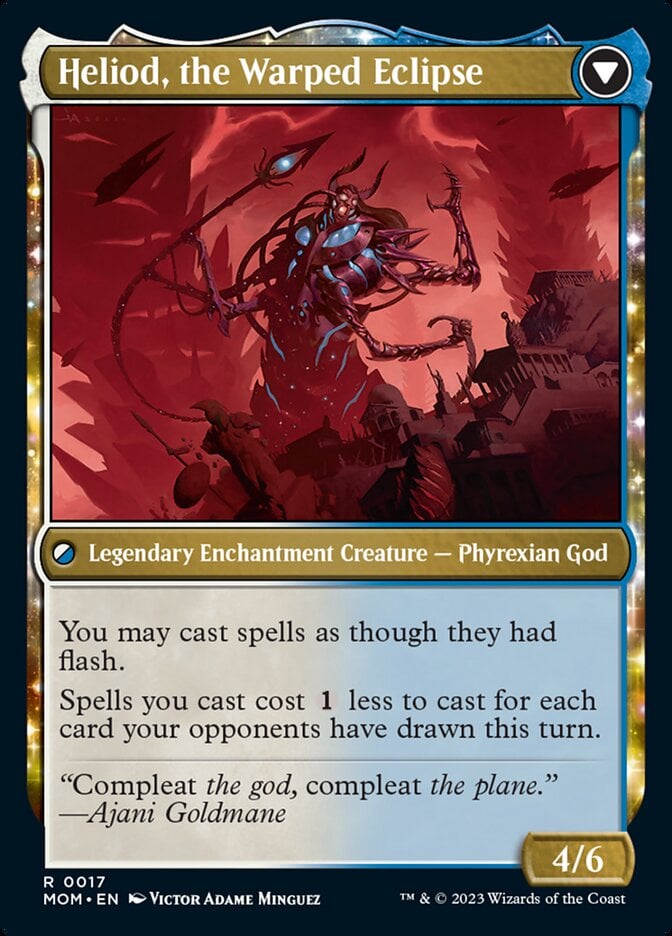
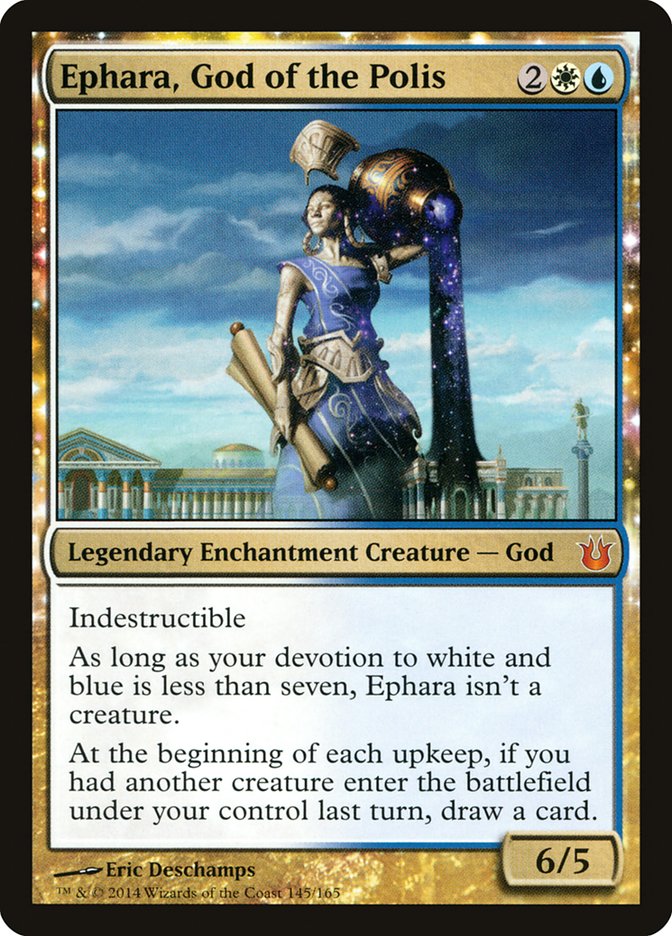
This interaction gets better with a little setup. If you have Heliod, the Warped Eclipse on the field, you can cast a creature on the opponent’s turn before you go infinite. With Ephara, God of the Polis in play, those extra upkeeps also draw you cards.
You can also pair Anzrag with other creatures. Jorn, God of Winter can attack each of those combats to untap all your snow lands.
Ilharg, the Raze-Boar’s attack trigger adds creatures to the battlefield from your hand, tapped and attacking.
Djeru and Hazoret attacks to exile creatures and let you cast them for free. If you want to take advantage of this with Anzrag, I’d recommend having Heliod, the Warped Eclipse on the field as a flash enabler.
One negative interaction to watch out for: Anzrag, the Quake-Mole and menace. I mentioned that you should assign combat damage to blockers one at a time to maximize the number of extra combats you get. But when you have Iroas, God of Victory on the field to grant it menace, that gets a little more complicated. Menace will prevent individual creatures from blocking Anzrag if they’re the only one left, which breaks your loop. It’s usually avoidable assigning combat damage so that the last two creatures an opponent has die together.
If an opponent has an indestructible creature, you can wind up in a situation where you’re intentionally soft-locking the game. You don’t have to attack with Anzrag, but you can keep swinging an indestructible creature at another indestructible creature that you’ve lured for an endless game loop. I personally don’t recommend it.
Rule 0 Violations Check
No Game Changers, no extra turns, fast mana… heck, I’m running snow lands and budget tri lands in here! The only card that really shuts down an opponent’s game plan is how Erebos, God of the Dead denies lifegain, but you’ll have multiple opponents who should each be running enough removal in their Commander decks to handle one indestructible enchantment creature.
Budget Options
For once, the mana base isn’t the worst offender in this decklist. If you need to cut here, The World Tree, Hall of Heliod's Generosity, and Plaza of Heroes can come out in favor of cards like Rogue's Passage, Evolving Wilds, or Modern Horizons 3 Landscapes.
There are other gods that you can play in this deck if you want to cut some of the more expensive creatures. You can also just run whatever you happen to have on hand to guide your deckbuilding decisions; that’s part of why I’m building a list that focuses on attacking with creatures like Anzrag. The gods from Commander Legends: Battle for Baldur’s Gate are mostly cheap, though you’ll need 20 or less life to make them indestructible.
You can swap your Three Visits for a Bushwhack, which isn’t the worst given that it’ll give you some modality. I have Heroic Intervention to protect Anzrag and the rest of your board when you’re trying to go infinite, but you can also protect Anzrag alone with 2-mana combat tricks like Mortal's Resolve or Gaea's Gift.
Given some of the enchantment matters effects in this deck, Rhythm of the Wild is a somewhat viable replacement haste enabler for Xenagos, God of Revels.
Other Builds
You can build Esika, God of the Tree in many directions, including a superfriends deck and legends matter deck. Here’s a few ideas for decks that still focus on gods.
Some gods put cards into exile or care about having cards in exile, notably Ketramose, the New Dawn. I’d actually run Cosima, God of the Voyage on its front face, for once.
Many gods are also enchantments or care about enchantments, so you can focus your Esika god build around that card type.
For something that’s themed around gods and their acolytes, a token build is a viable option. You get to use gods that generate the tokens, gods that grant abilities to your creatures, and gods like Hazoret, Godseeker that care about smaller creatures.
If you really want to get into the weeds, you can try to build a deck around keeping a low life total to satisfy those Baldur’s Gate gods like Bane, Lord of Darkness. Plenty of cards let you pay life to gain advantages, and you can drag your opponents down with you if you set it up just right.
Commanding Conclusion
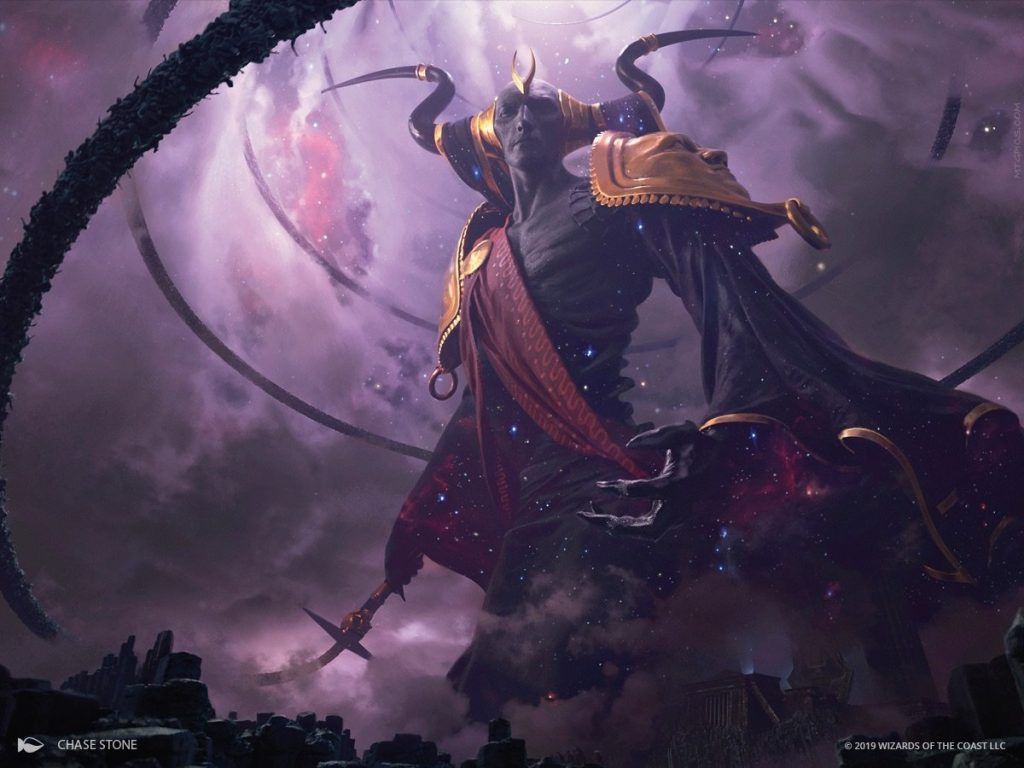
Erebos, Bleak-Hearted | Illustration by Chase Stone
So… have I made you a believer? Maybe not. I aimed for a janky, fun combo rather than the most powerful combination of gods that I could, but I like how I found a place to run snow lands where there’s an actual reason for it.
Which gods do you run in your Esika god typal deck? Do you prefer when your gods show off raw power or behave in silly ways like we do? Let me know in the comments below or over on the Draftsim Discord.
Until next time, keep the faith!
Follow Draftsim for awesome articles and set updates:










8 Comments
This deck looks really interesting, unfortunately the list is incomplete, there are two Nylea Keen-eyed, and 2 sacred foundry
Thanks, we’ll get this fixed.
The World Tree is mentioned 7 times and is key to multiple combos but is not part of the deck list.
Thanks for pointing this out. It was missing from the list, so I added it.
the card that is missing from the list is metallic mimic, mentionned in the article
Thanks for spotting that. I’ve updated the list!
would a rhystic study fit in this deck?
Hey Justin. Rhystic Study, in my experience, fits in just about every blue deck minus the absolute fastest ones.
Add Comment