
Last updated on July 6, 2026

Branch of Boseiju | Illustration by Zezhou Chen
Sagas might be the most exciting card type in all of Magic. They’re a wonderful blend of flavor and mechanics, plus how can you not adore a card type that inherently slots into multiple synergy packages, like sacrifice, recursion, and enchantments?
Green sagas are particularly meaty with a variety of effects that tend to make your creatures bigger, better, or faster. They also mess around with lands, and the graveyard… if your deck touches green, you should keep an eye on these cards to enhance your current project or next brew.
What Are Green Sagas in MTG?
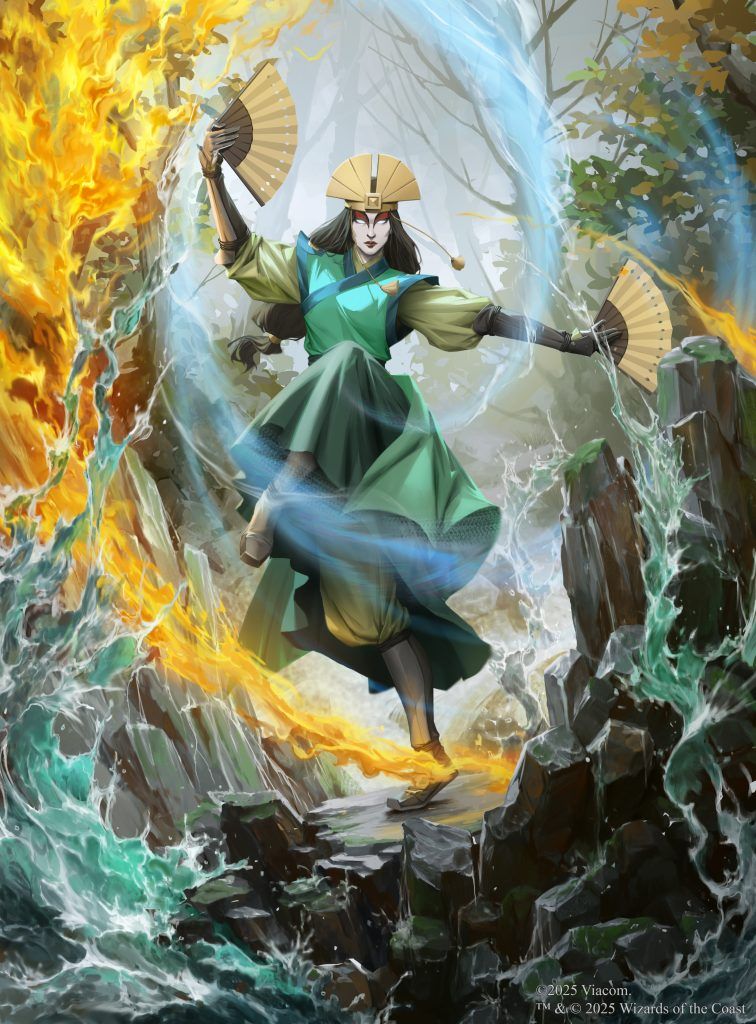
Green sagas are enchantments with the saga subtype on either side of the card and that have a mono-green color identity. This list includes regular sagas, sagas that transform into creatures, and non-enchantment cards that transform into sagas.
Green sagas are a very broad category; much like enchantments, instants, or sorceries, they touch on everything green can do, including but not limited to ramp, lands, self-mill, recursion, and creature synergies. This scope means they don’t have a defined mechanical identity beyond sharing their color, but all sagas are card advantage engines that accrue value over several turns.
#32. Welcome to Sweettooth
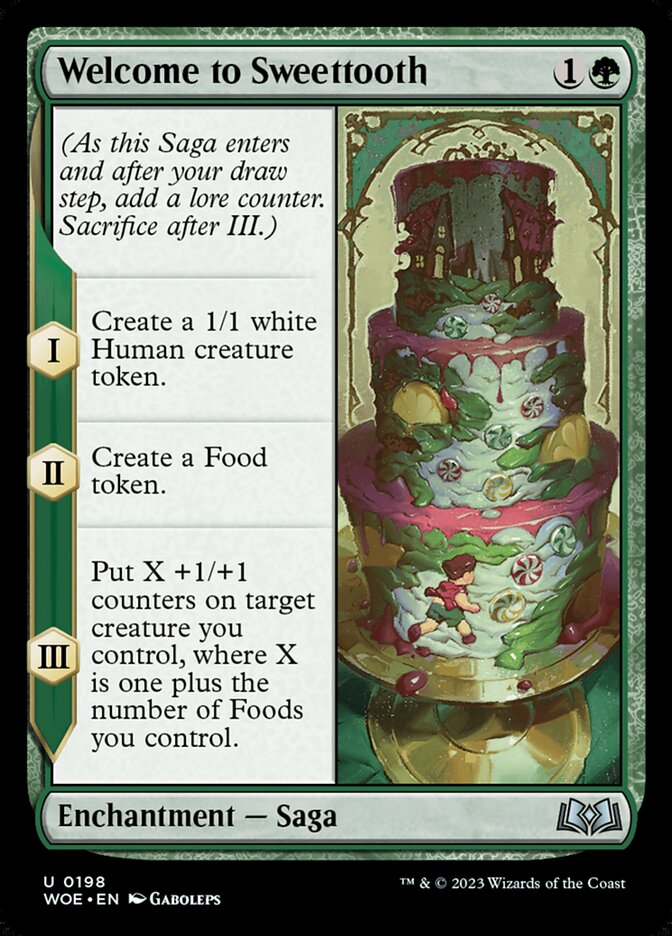
Welcome to Sweettooth gets cute with Ygra, Eater of All because it can produce an absurd number of +1/+1 counters, but it’s realistically too low impact for anything but a flavorful Greta, Sweettooth Scourge deck.
#31. Leaves from the Vine
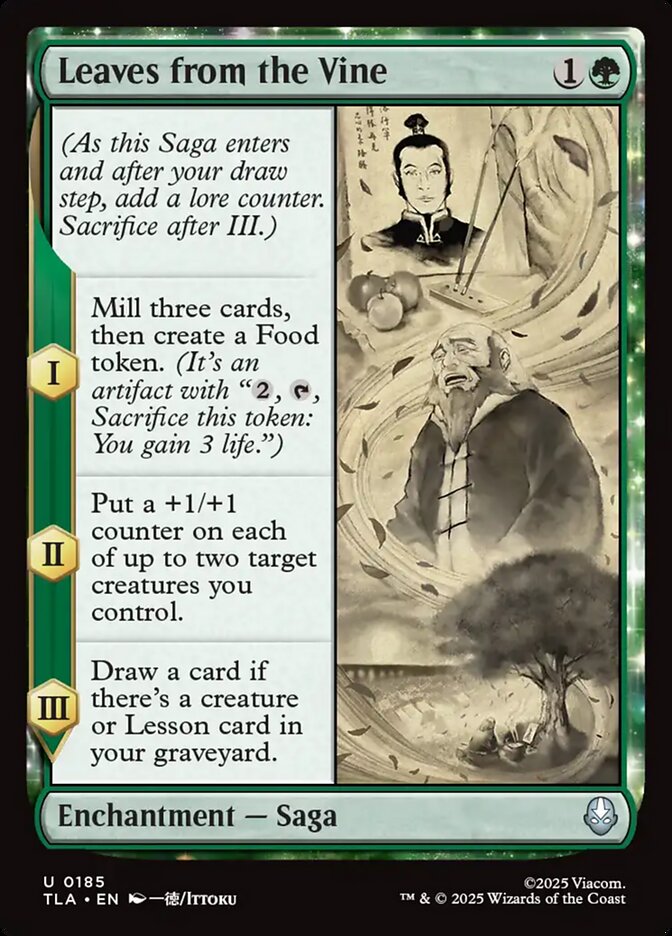
Leaves from the Vine is too low-impact to be exciting. Two mana to mill three cards is roughly the standard, but the saga is inferior to similar spells like Grapple with the Past or Malevolent Rumble. They immediately draw a card, unlike how Leaves from the Vine makes me wait two turns and sticks a condition onto the cantrip. There are just too many better versions of this effect for the saga to be exciting.
#30. Boseiju Reaches Skyward / Branch of Boseiju
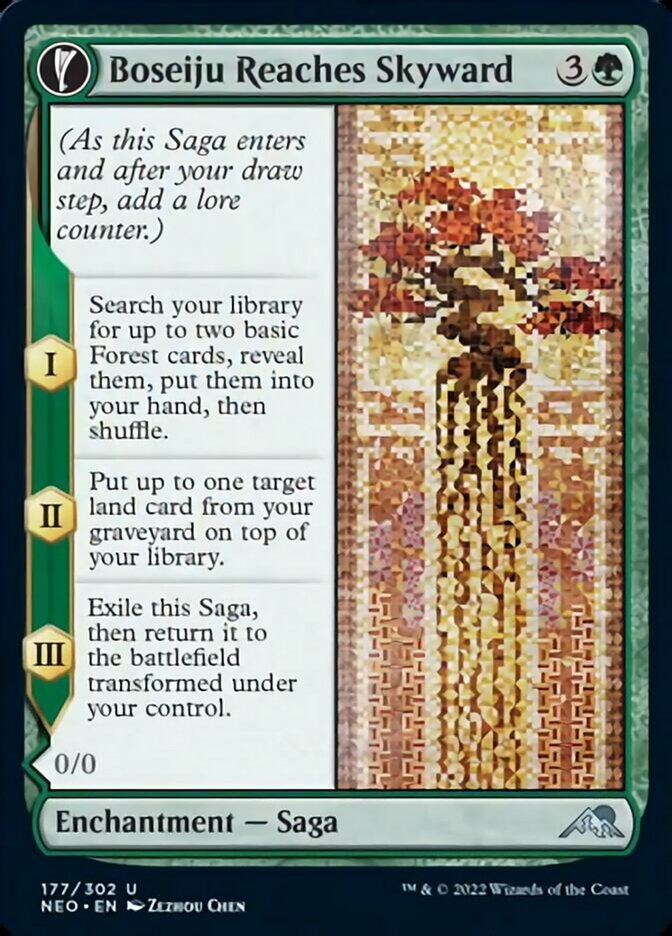
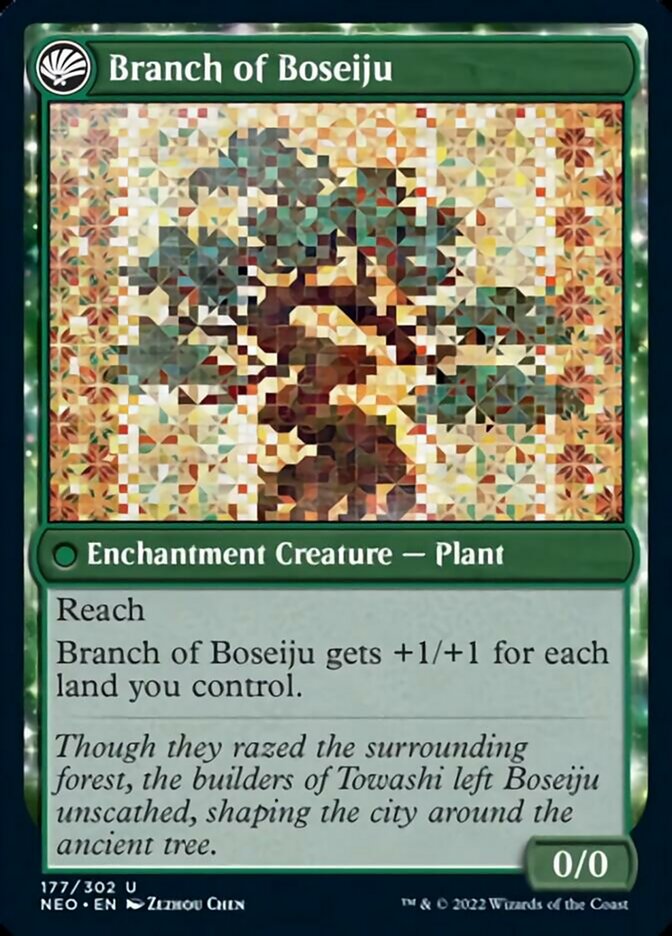
Boseiju Reaches Skyward was one of the better sagas in Kamigawa: Neon Dynasty Limited, but it can’t transcend the format. Four mana for an enchantment that draws two lands and eventually becomes a threat doesn’t keep up with most Constructed formats. If the second chapter reanimated a land rather than replace your next draw we could be talking, but this is just a Limited card.
#29. Tales of Master Seshiro / Seshiro’s Living Legacy
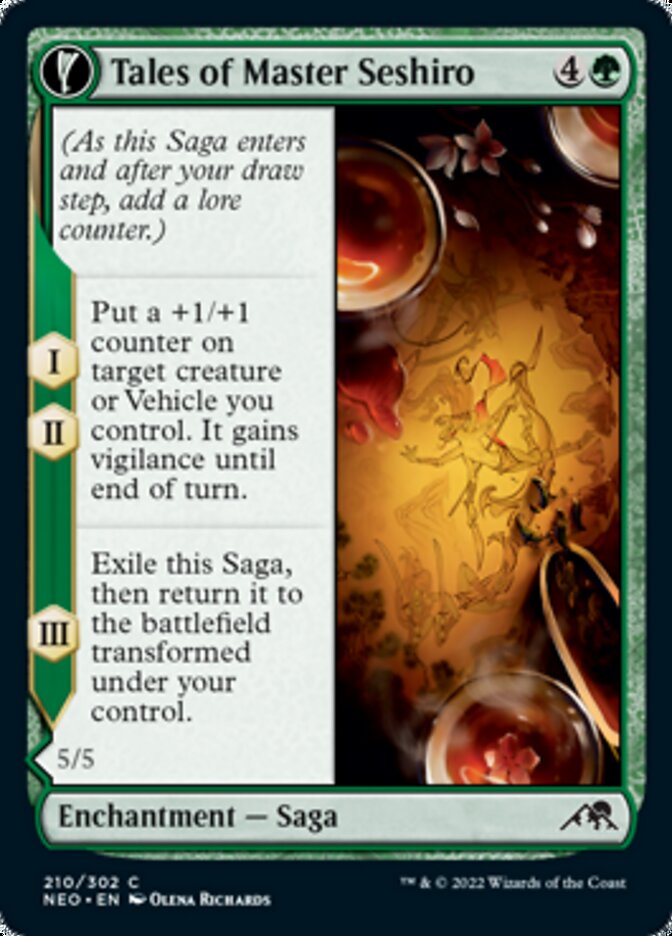
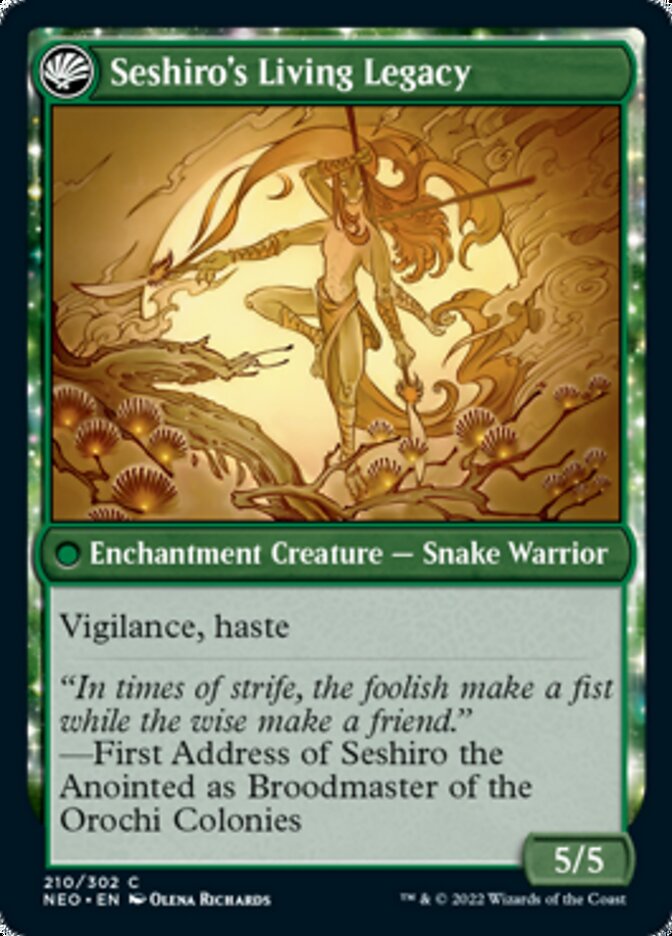
Tales of Master Seshiro falls into the same category as Boseiju; a solid Limited performer with little application elsewhere due to cost and slowness.
#28. Azusa’s Many Journeys / Likeness of the Seeker
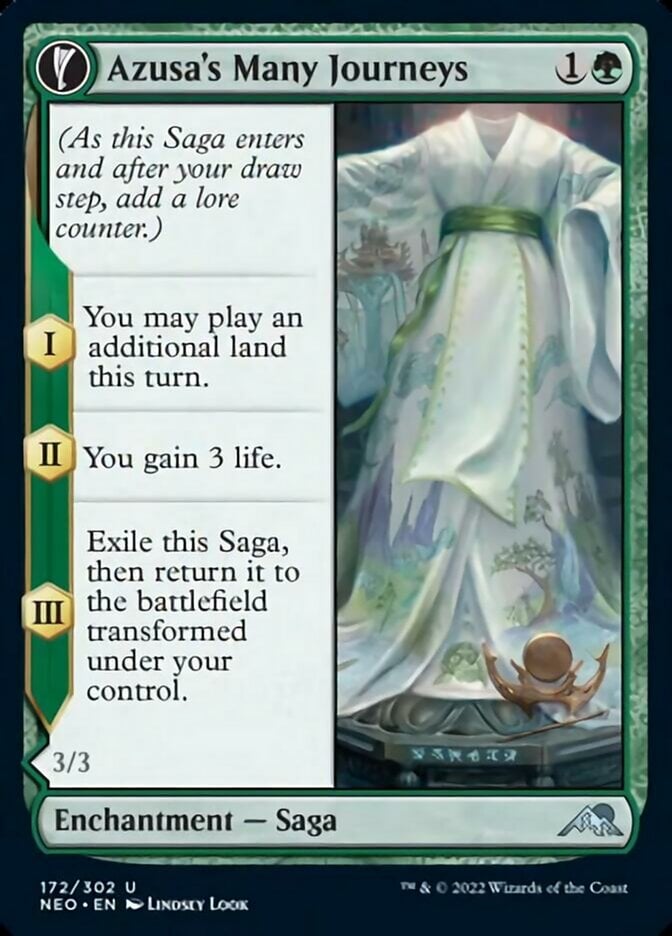
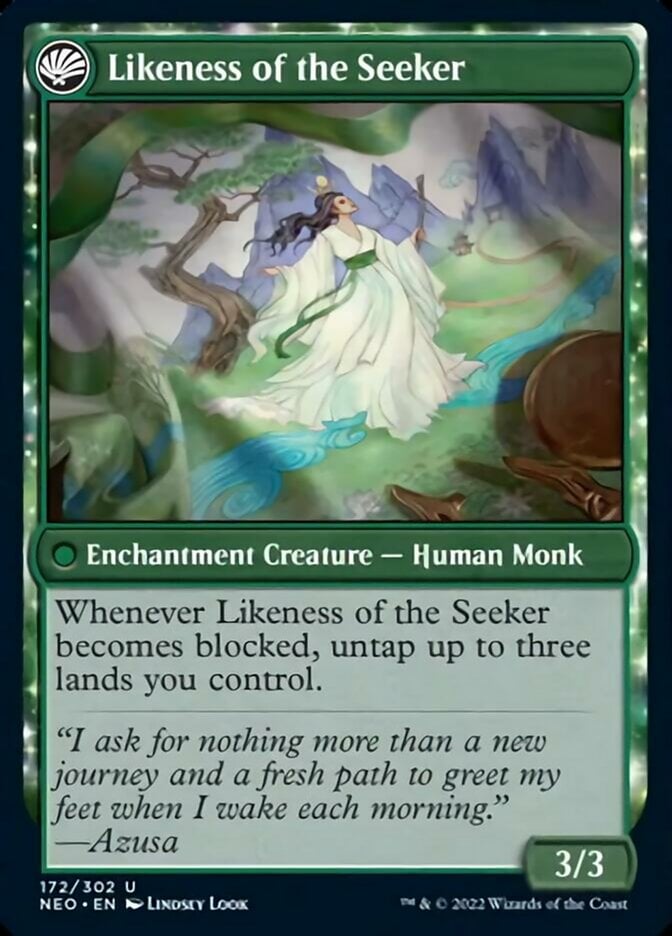
Azusa's Many Journeys verges towards the Limited side of things, with a cheap additional land drop that builds into a few other small effects. You could probably do something cute with Lure effects and Likeness of the Seeker to untap lands, but that’s so slow.
#27. The Dragon-Kami Reborn / Dragon-Kami’s Egg
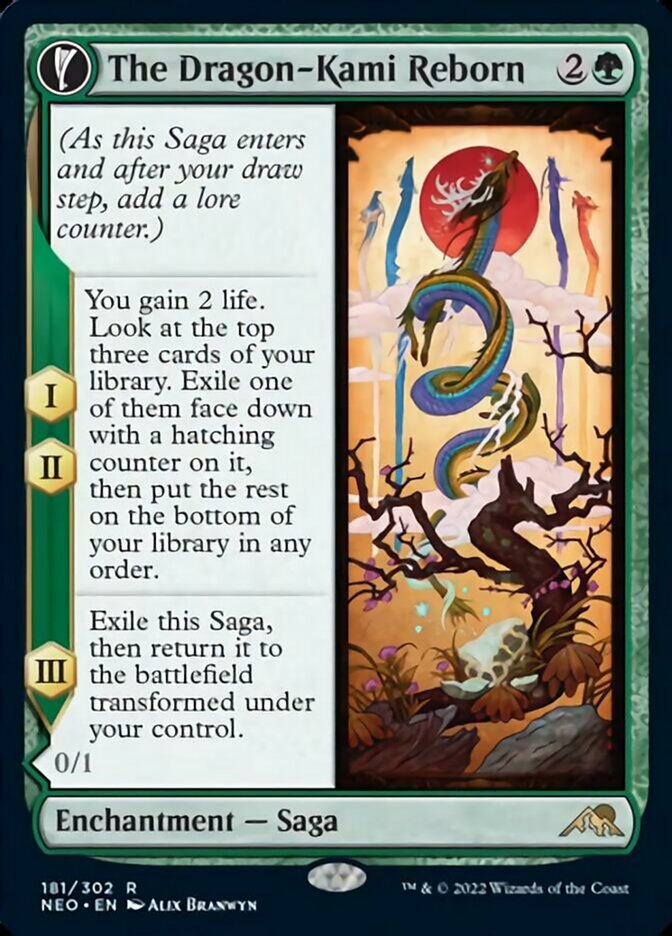
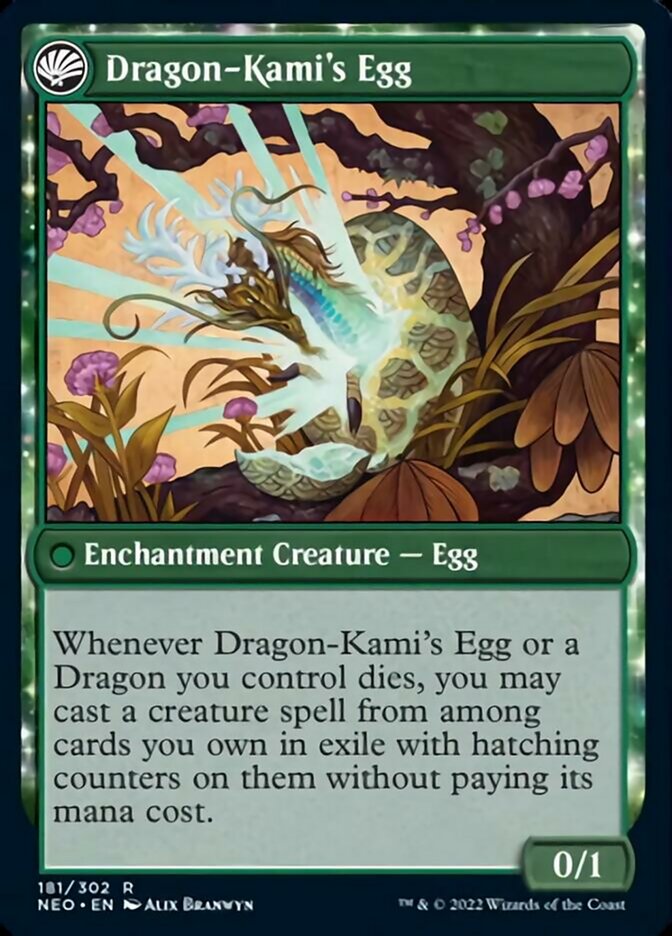
The Dragon-Kami Reborn is just a miss. You spend two turns hoping to exile a good card, then you need dragons to sacrifice or a way to kill the egg to get those spells. Green has way better ways to cheat creatures into play than this clunker.
#26. The Weatherseed Treaty
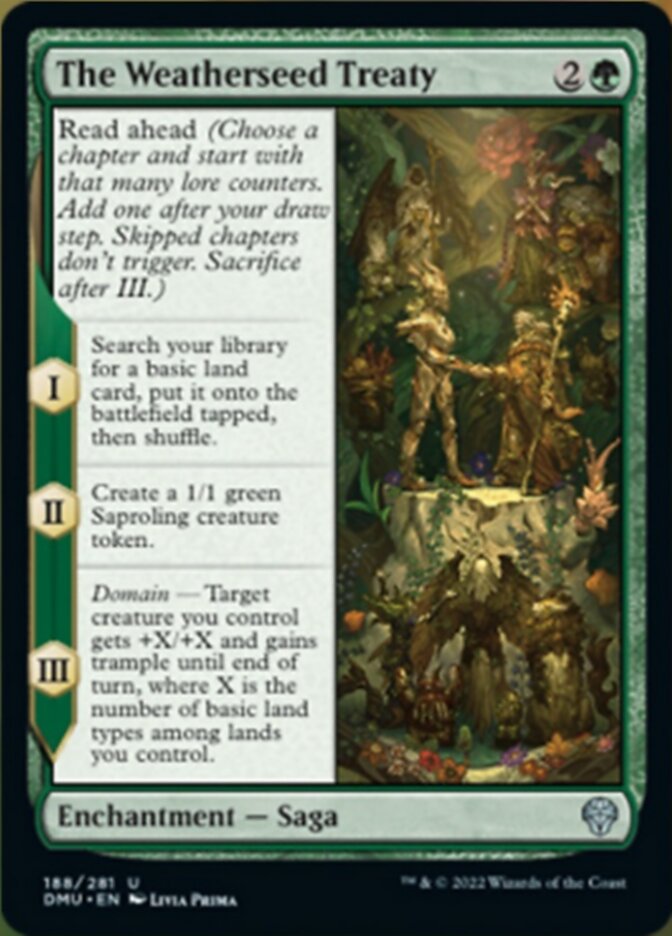
I can get behind The Weatherseed Treaty as a domain payoff/enabler in a Peasant Cube that wants to give 5-color decks some spice, but I don’t see it working anywhere else.
#25. Summon: Fat Chocobo

Summon: Fat Chocobo is mostly a Limited card, though I could see running it in a Pauper Cube that wants green to have some two-for-ones to compete with the hyper cheap removal of other colors.
#24. Long List of the Ents
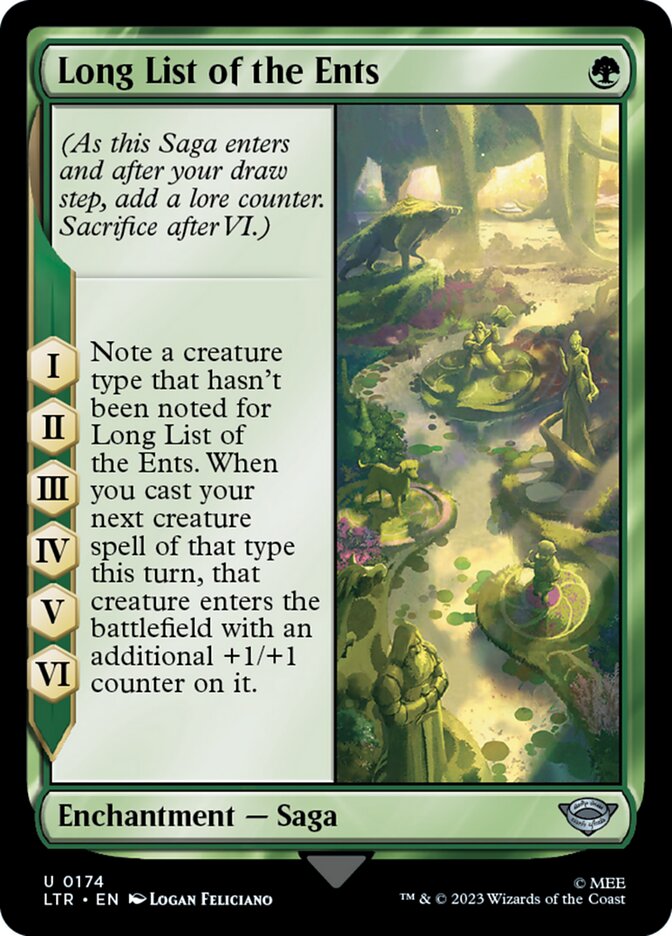
Long List of the Ents manages to be the perfect card for Volo, Guide to Monsters and any other deck that wants you to accrue a gathering of diverse creatures types… which is an application so niche you can’t really call it a good card.
#23. Welcome to . . . / Jurassic Park


Welcome to . . ./Jurassic Park might be the most flavorful green saga. The backside in particular is very strong, and I wouldn’t call this weak, but it’s hyper narrow: You’re not playing it outside of dinosaurs in EDH.
#22. Summon: Magus Sisters

Summon: Magus Sisters is very cute, and I appreciate the unique textbox; no other saga offers this level of chance, which makes it a fun Commander card. That said, it’s kind of disappointing that it’s a 5-mana creature that requires other creatures to be useful; you’d rather avoid putting +1/+1 and shield counters on this since it has an expiration date.
#21. Song of Freyalise
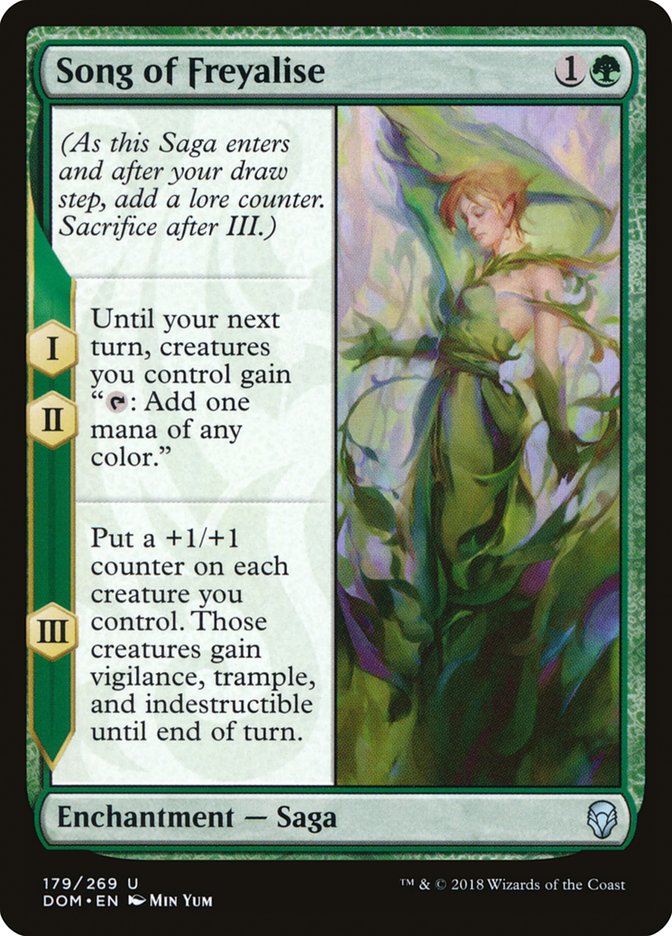
Song of Freyalise works best in token decks because its chapters want as many creatures in play as possible to reach their full potential. With the right board, it’s a mono-green ritual of sorts, an effect the color rarely gets in favor of permanent mana sources.
#20. The Sea Devils
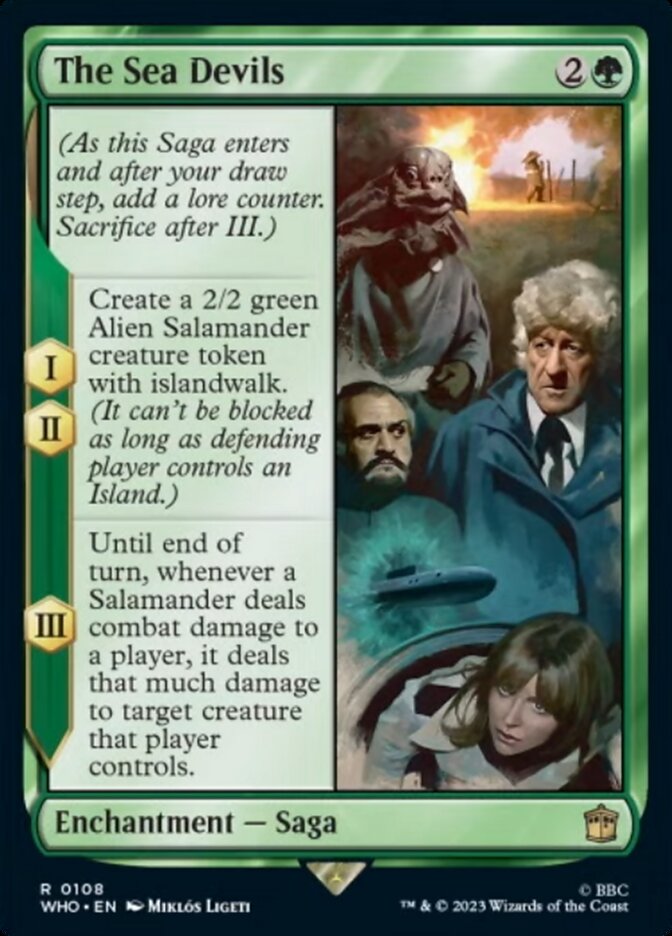
The Sea Devils is pretty whatever. The concept is cool, but the third chapter requires additional investment because a 2/2 kills next to nothing. If you put in the work to grow your Alien Salamander tokens or run bigger salamanders, you could get something going, but that effort seems worse than playing big creatures and a real fight spell.
#19. The Hunger Tides Rises

A weakness of sagas is their speed, or lack thereof; while they often offer powerful abilities, they need to stay in play for a few turns to reach their potential. The Hunger Tide Rises showcases this weakness especially well: Your opponents get a timeline to dig for a board wipe or Disenchant before the formidable fourth chapter becomes a threat.
#18. The First Iroan Games
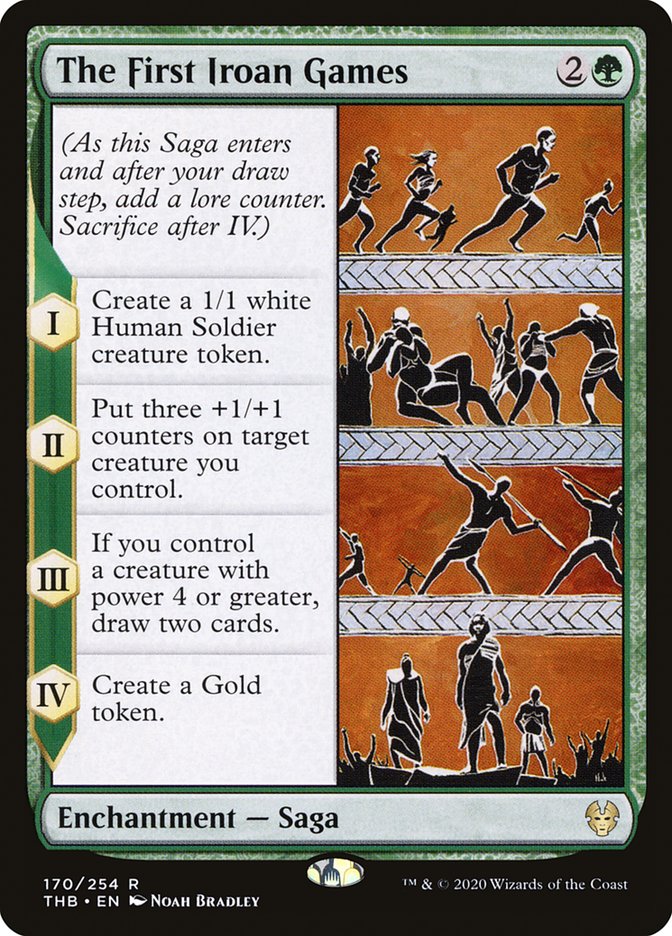
The First Iroan Games slowly builds to ramp, card draw, and a threat. It’s rather slow, but perfect for casual play and Cube because it acts as enabler and payoff for green (and often red) 4-power matters decks.
#17. Fall of Gil-galad
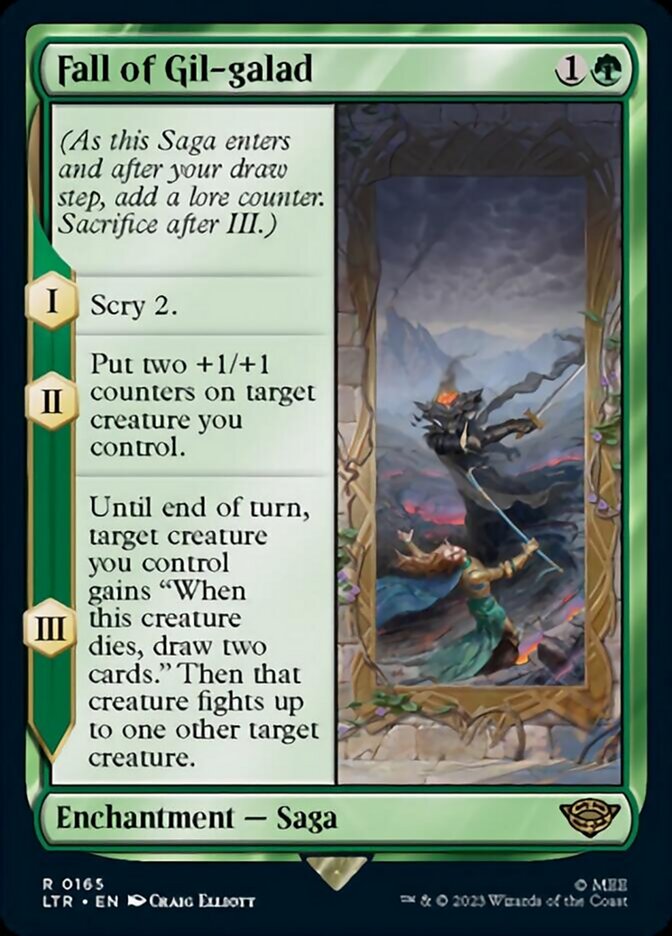
Fall of Gil-galad employs lots of cute tricks. It’s important to note that the creature you put counters onto with the second chapter doesn’t need to be the one you target with the third chapter, so you could make a big creature then fling a token at a random card to draw two cards. Or you can make a big creature and just kill an opposing threat without losing anything. There’s lots of good play patterns.
#16. Fugitive of the Judoon
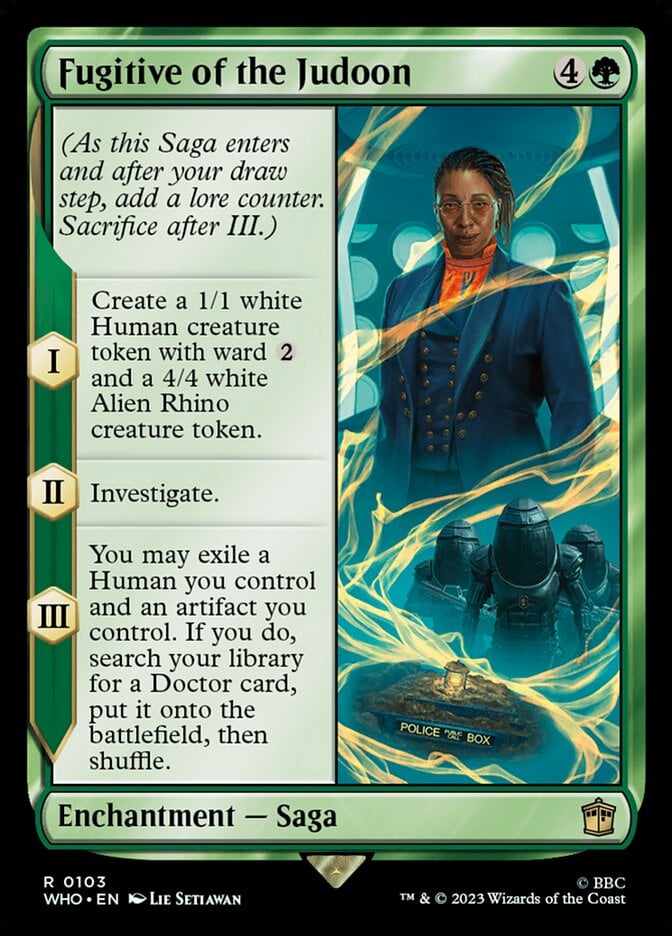
Fugitive of the Judoon is an okay card that has some issues, namely in the third chapter: It does absolutely nothing without doctors in the 99. That said, it probably has merit even without that; it creates three tokens over two turns, which more than a few decks can work with. It probably doesn’t overcome the weakness of no third chapter, but it’s still worth considering.
#15. Teachings of the Kirin / Kirin-Touched Orochi
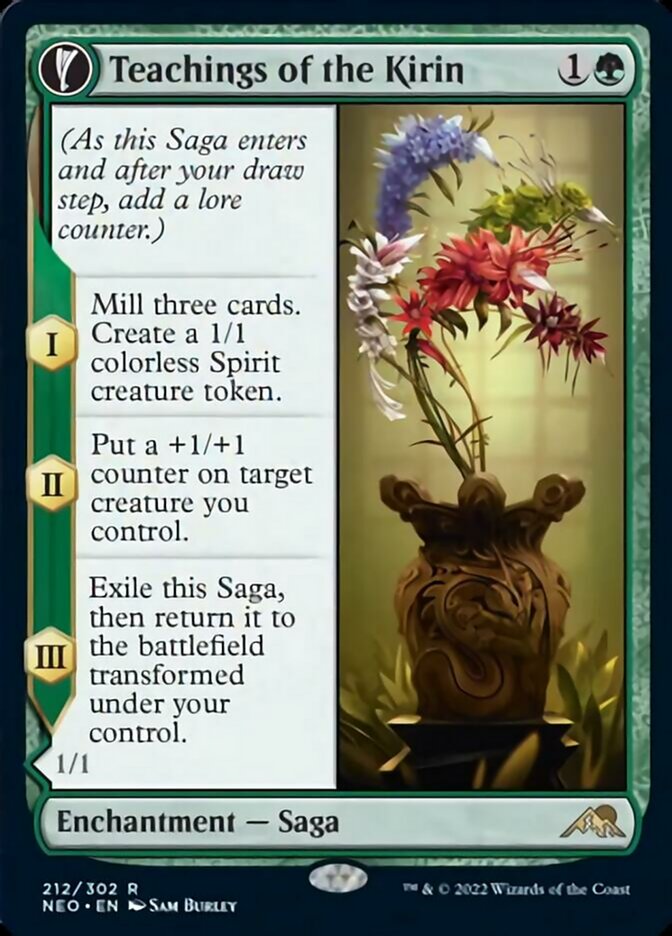
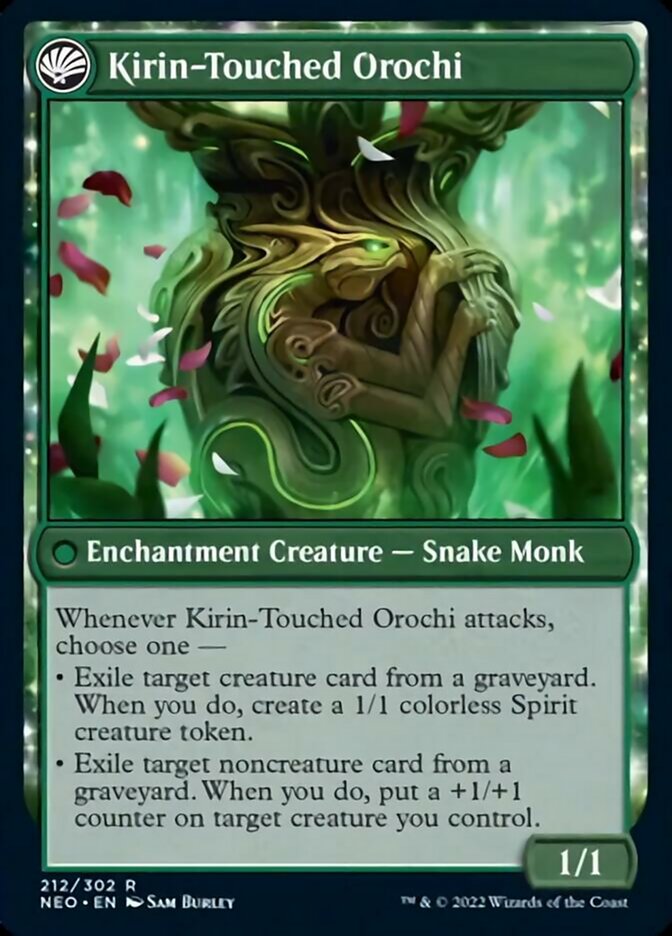
Teachings of the Kirin is the classic saga with lots of little abilities that add up to a decent card. A 1/1 that mills cards for 2 is already playable, so getting the counter and Kirin-Touched Orochi is a pretty decent deal. The Orochi can be graveyard hate or enable your graveybreak abilities, as you see fit.
#14. The Aesir Escape Valhalla

The Aesir Escape Valhalla is perfect for slow, grindy decks that use their graveyard. The lifegain from the first chapter gives you time to capitalize on the counters and card advantage from the second and third. It plays very well with landcyclers like Generous Ent and Oliphaunt that put themselves in the graveyard for next to nothing.
#13. The Binding of the Titans
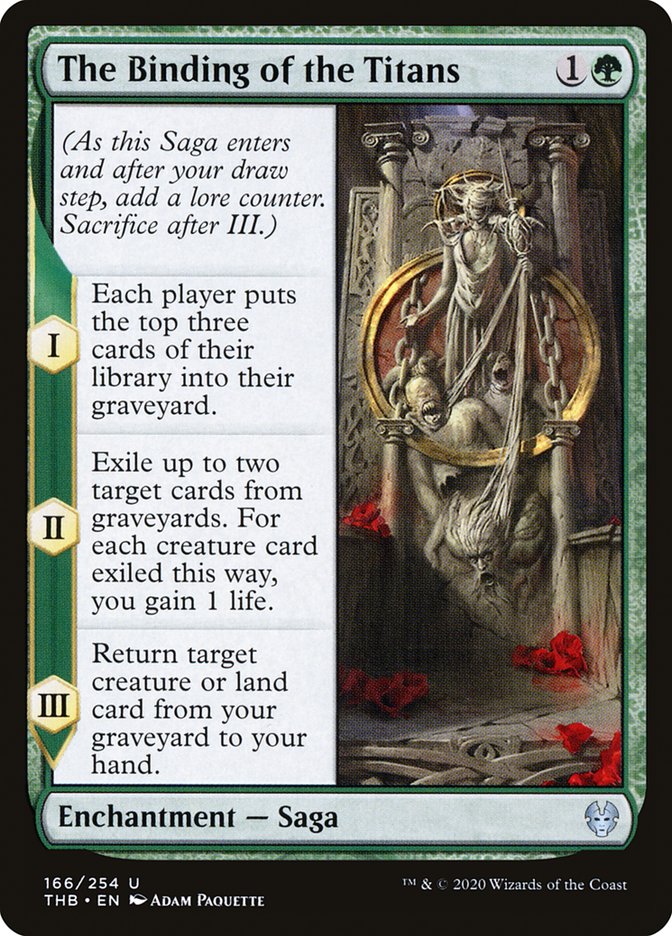
The Binding of the Titans is a simple role-player. Mill some cards, draw something later. It offers up to two gravebreak triggers if you exile a creature from your graveyard with the second chapter, which can be handy.
#12. Vorinclex / The Grand Evolution
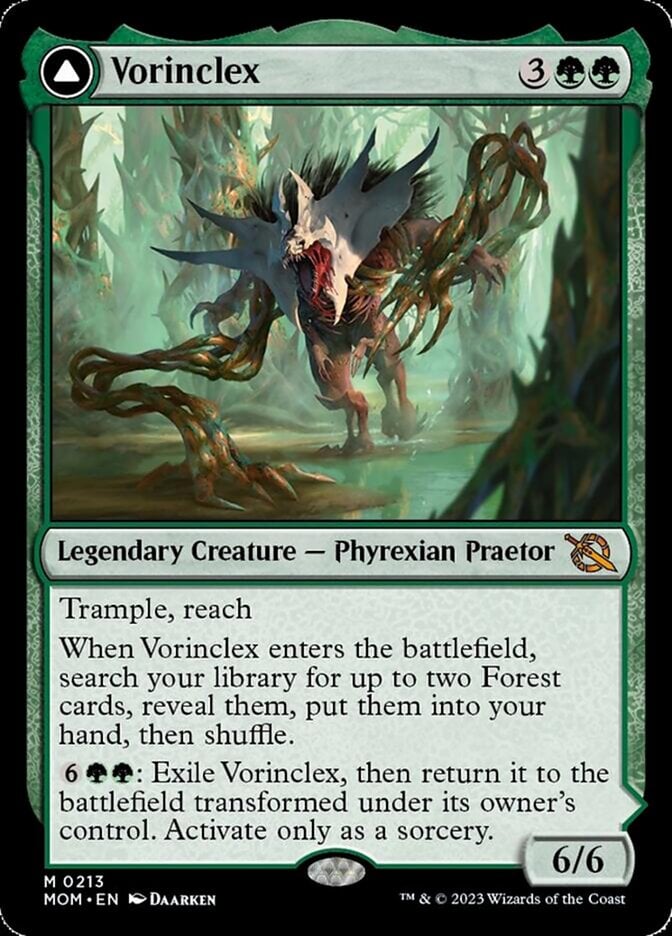
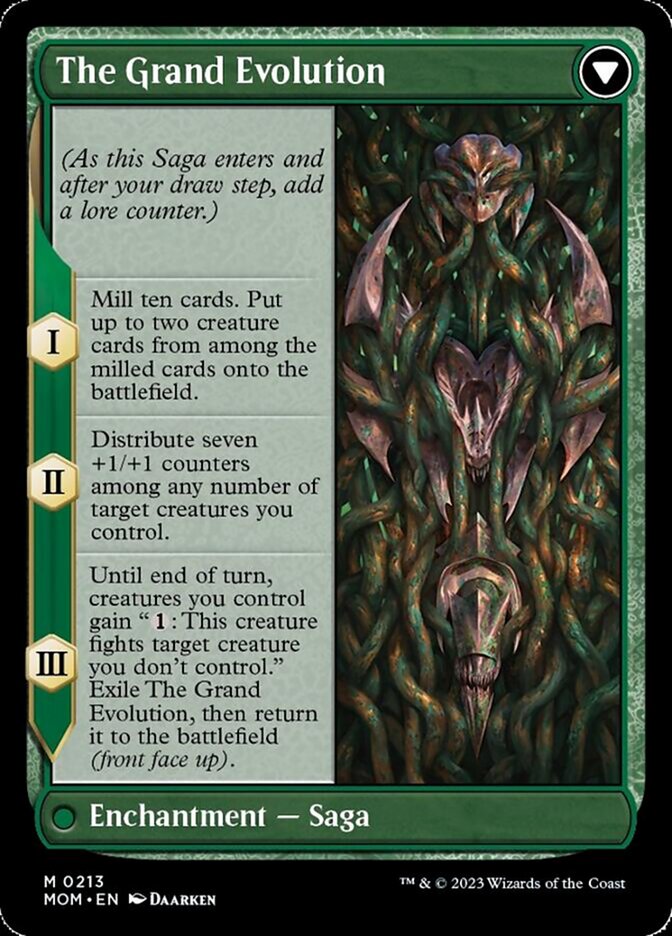
Vorinclex hits pretty hard. Importantly, it finds forests, not basic Forests, so it can pick up a Dryad Arbor or fixing, but most of the power lies in The Grand Evolution and its ability to cheat monsters into play. At 13 total mana to cast and flip, it’s one of the most expensive ways to do this, but Vorinclex being a threat in its own right smooths that a lot.
#11. Jugan Defends the Temple / Remnant of the Rising Star
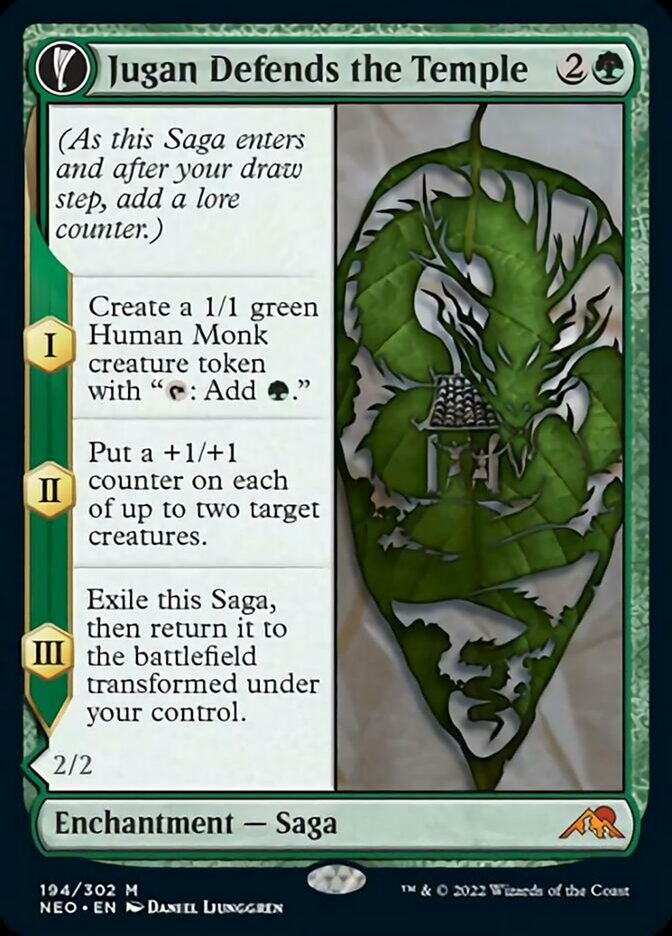
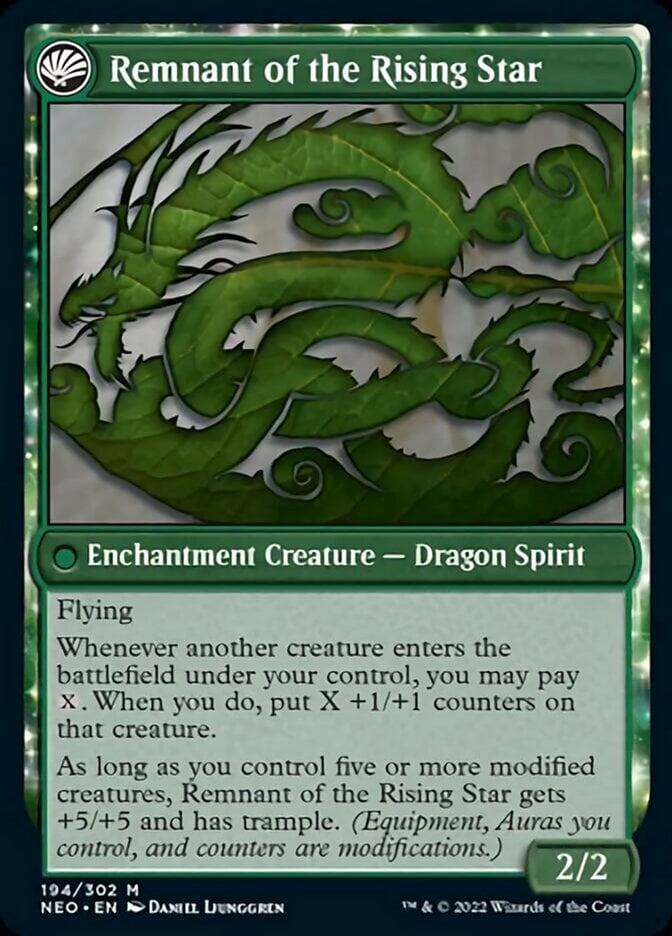
Jugan Defends the Temple has great counter distribution on top of coming with a mana dork, but this is one of the transforming sagas with all the power on the backside. Remnant of the Rising Star offers additional counters, but it’s much more interesting as a mass pump effect. It takes very little to modify five creatures in Commander, so it becomes a fairly cheap (if telegraphed) win condition.
#10. The World Spell
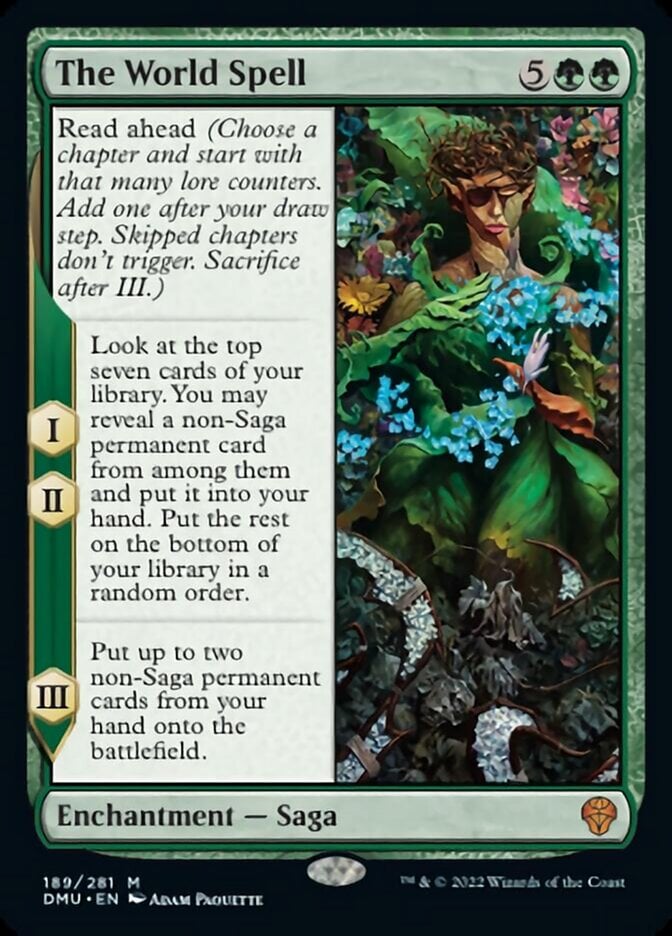
Seven mana to cheat in two creatures puts The World Spell on par with other cards that cheat creatures into play, like Tooth and Nail, Kindred Summons, and a tricked out Smuggler's Surprise. The flexibility to play it as a cheat spell or a slow draw spell is pretty nice because it’s not a horrid top-deck.
#9. City of Death
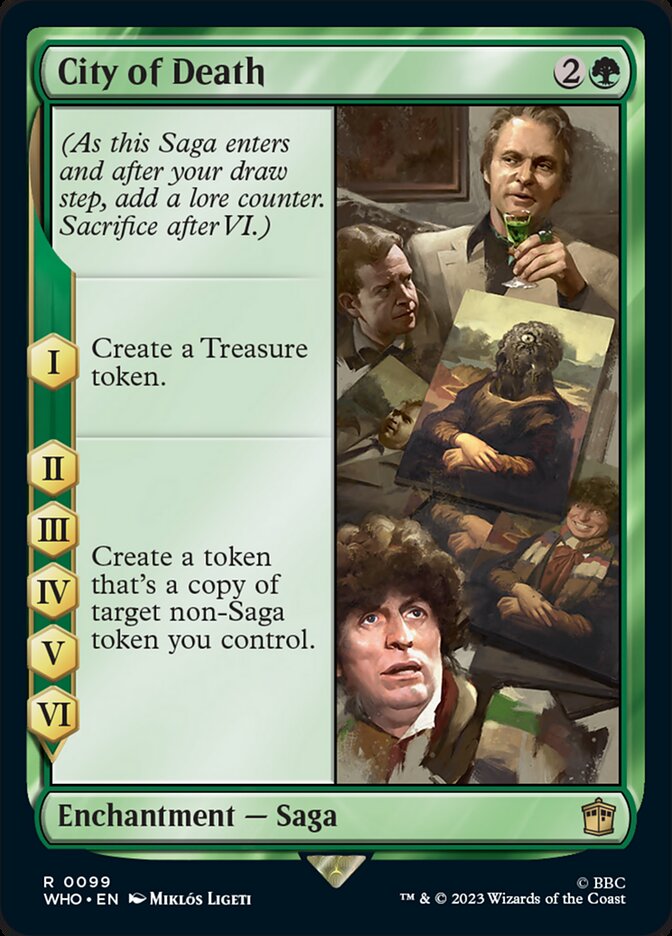
The first chapter does lots of heavy lifting for City of Death because it provides a token to copy, and it makes it a slow ramp engine plus the source of many artifact tokens for cards that card about them, like Displaced Dinosaurs and Korvold, Fae-Cursed King. It’s also great with cards like that make large tokens, like Ulamog's Dreadsire and Ezuri's Predation. There are plenty of ways to turn it into a great spell.
#8. Esper Origins / Summon: Esper Maduin


Esper Origins works best in self-mill decks. Casting the sorcery gets cards in the graveyard, and you’re more than happy to mill or discard it for additional value. Summon: Esper Maduin has a host of decent, small abilities, especially since surveilling often sets up your library so it cantrips.
#7. Kraven’s Last Hunt

Kraven's Last Hunt is narrow since it only hits well in self-mill decks, but what a card it is there! At 4 mana, you mill five cards—practically drawing five in a graveyard deck—and kill something, then get to draw a card later. That’s a ton of card advantage, even if the second chapter is unimpressive.
#6. Summon: Titan

Summon: Titan is fantastic for self-mill decks because it functions as both enabler and payoff. It’s also nice to have a massive creature in the colors that care about big creatures.
#5. Summon: Fenrir

Summon: Fenrir is a great ramp spell that offers a little card advantage on the way out. It has popped up from time to time in creature-heavy Standard decks; it’s best friends with Llanowar Elves as a powerful 3-drop.
#4. The Huntsman’s Redemption
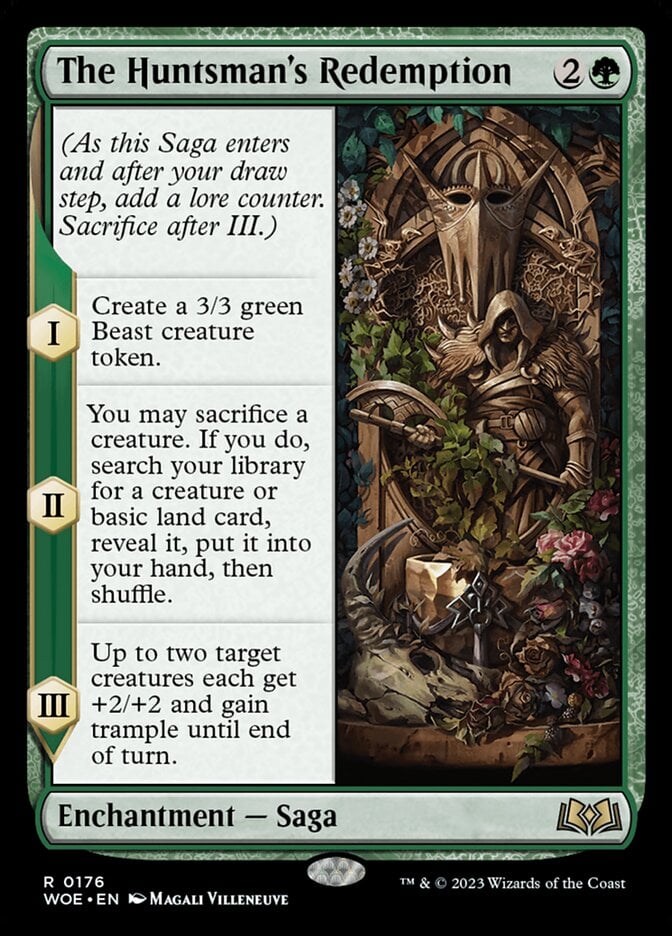
I’m a huge fan of The Huntsman's Redemption, mostly because the tutor is very strong. I generally pretend this is a Golgari card () because it works best when sacrificing a random creature triggers Blood Artist and other death triggers, but green gets in on the sacrifice game, too. You ideally don’t sacrifice the beast token, but the option makes it harder for this to be a dud.
#3. The Mending of Dominaria
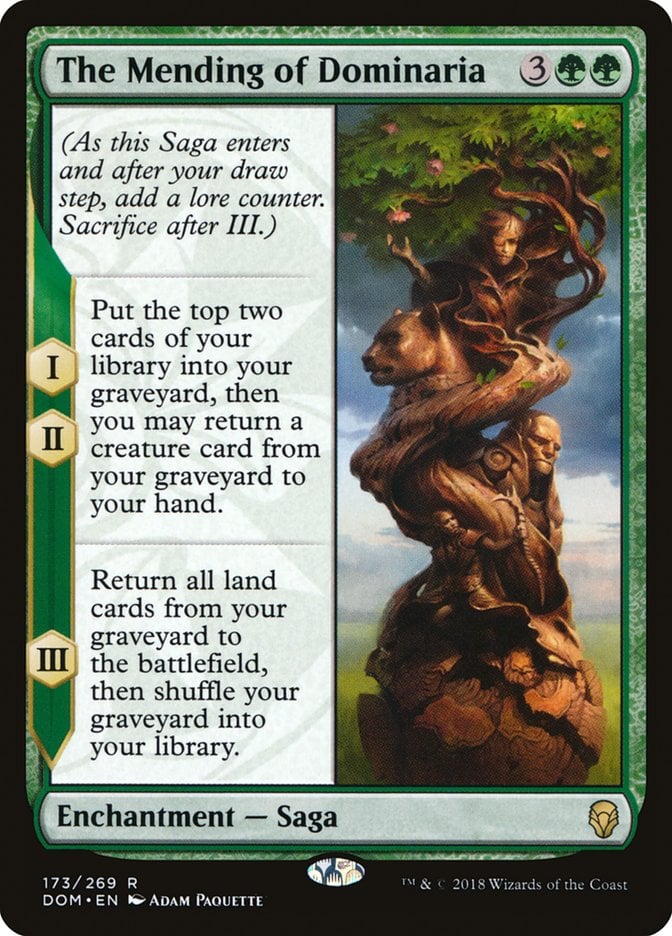
The Mending of Dominaria offers excellent card advantage for self-mill decks. If your deck uses the graveyard well enough, milling two is similar to drawing two, and returning a card from your graveyard is definitely card advantage. Importantly, it doesn’t need to recur creatures it milled, so you have lots of flexibility.
#2. World War Hulk
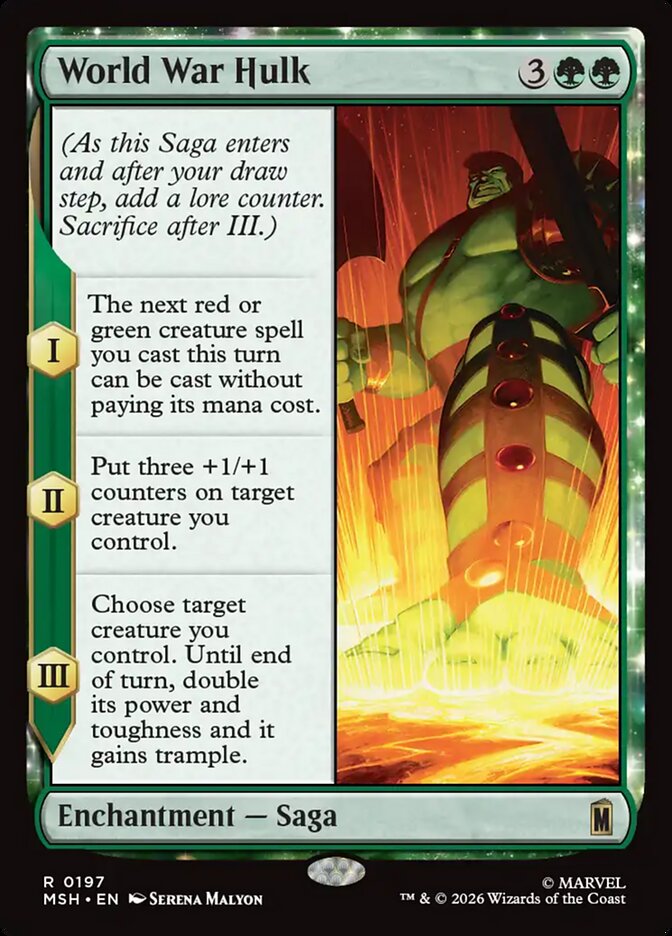
Most of the excitement surrounding World War Hulk is appropriately focused on the first chapter, which lets the Etali, Primal Conqueror players cast their commander on turn 3, or even earlier with a little fast mana thrown in. Yay….
Realistically, it’s one of the stronger ways to cheat threats into play since it catches cast triggers, which matters for cards like Hideous Taskmaster and Helga, Skittish Seer that don’t trigger off Tooth and Nail.
#1. The Legend of Kyoshi / Avatar Kyoshi


The Legend of Kyoshi gets full marks as a great spell. Green EDH decks are already happy with cards that base card draw on your biggest creature (Return of the Wildspeaker, Rishkar's Expertise), and I love the idea of my draw-5 also delivering two exceptional threats to tax my opponents’ removal even more.
Best Green Saga Payoffs
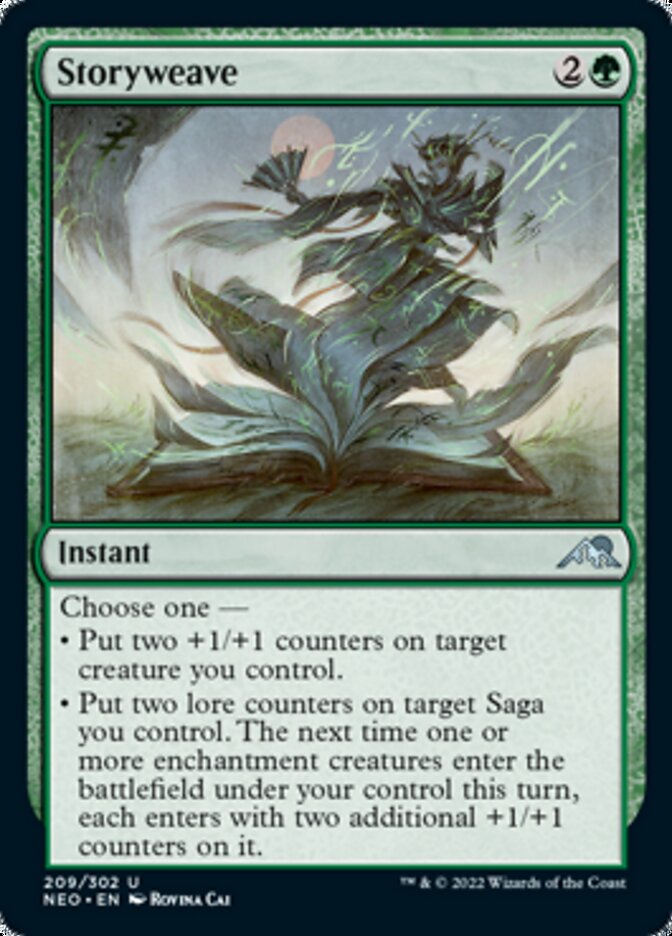

Mono-green has very little that directly interacts with sagas; it’s basically just Storyweave and Clash of the Eikons, which manipulate the number of lore counters on your sagas. But the color has other payoffs that work with sagas in general.
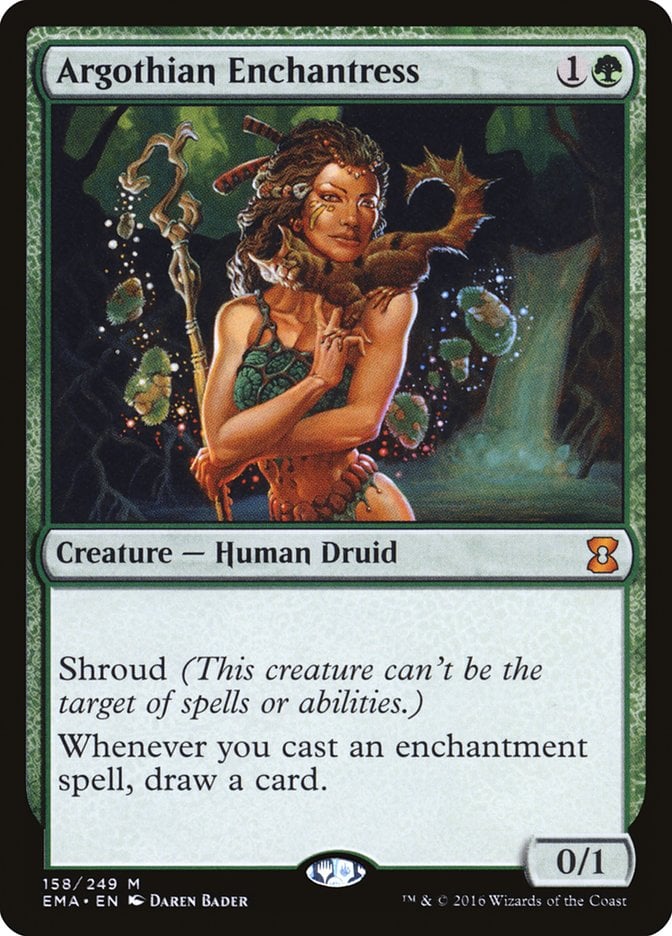
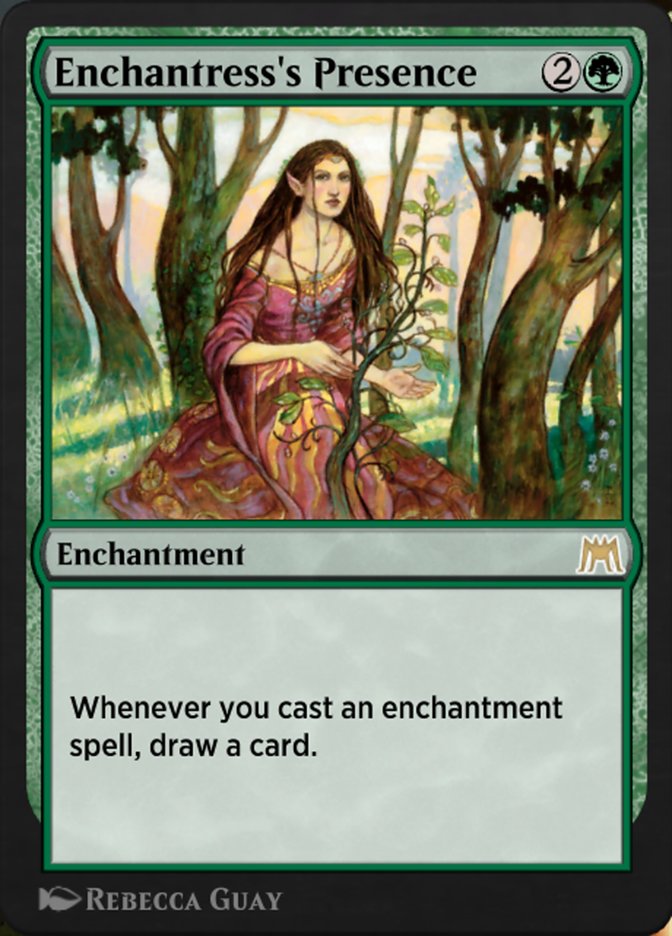
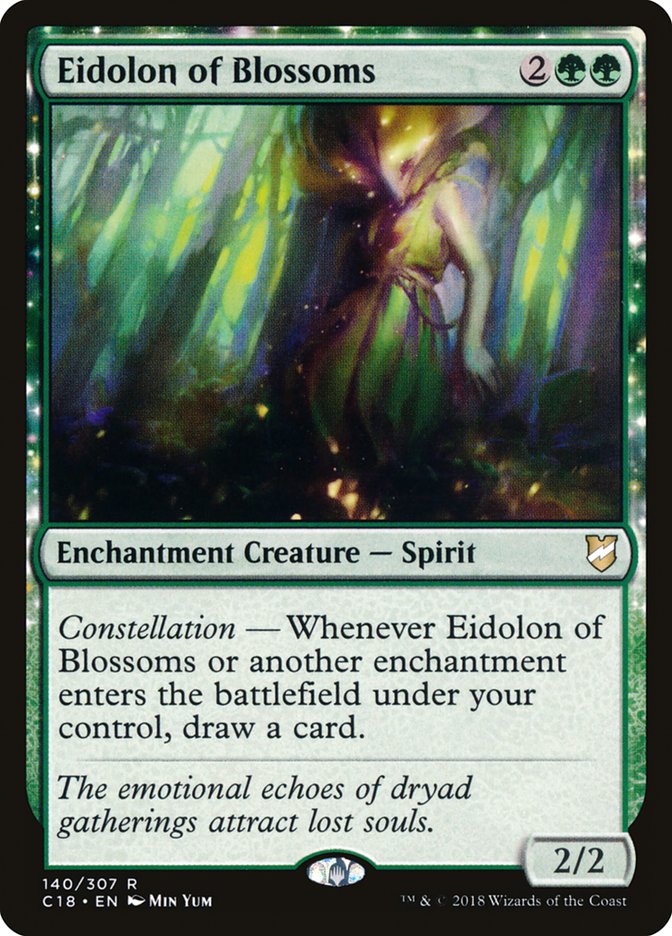
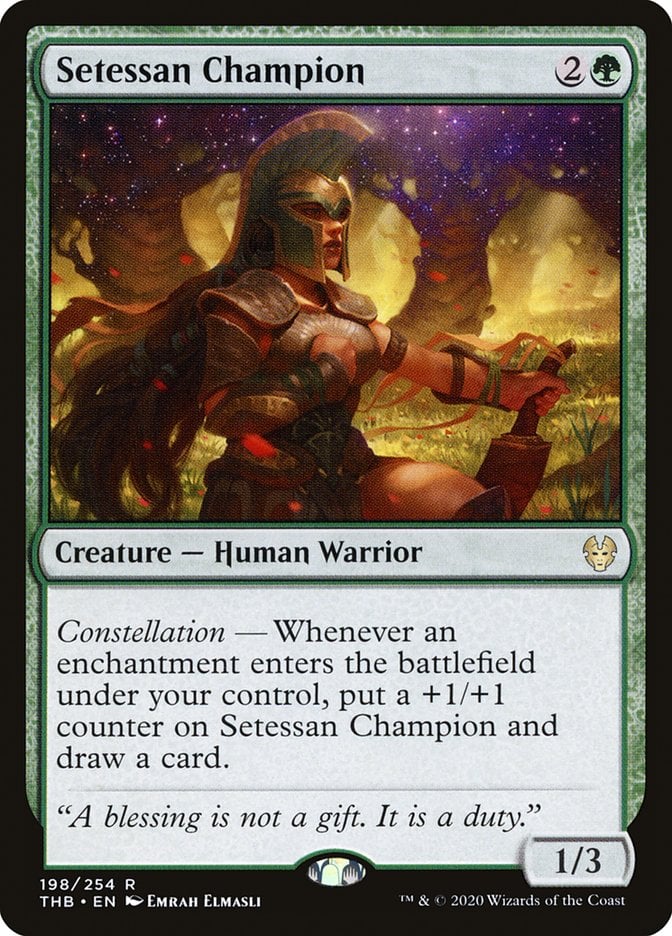
Green is home to plenty of enchantresses that care about all enchantments, not just sagas. Argothian Enchantress is one of the strongest due to its low cost and protection, Enchantress's Presence and Eidolon of Blossoms rock because they’re enchantments, and Setessan Champion becomes a serious threat alongside the card draw.
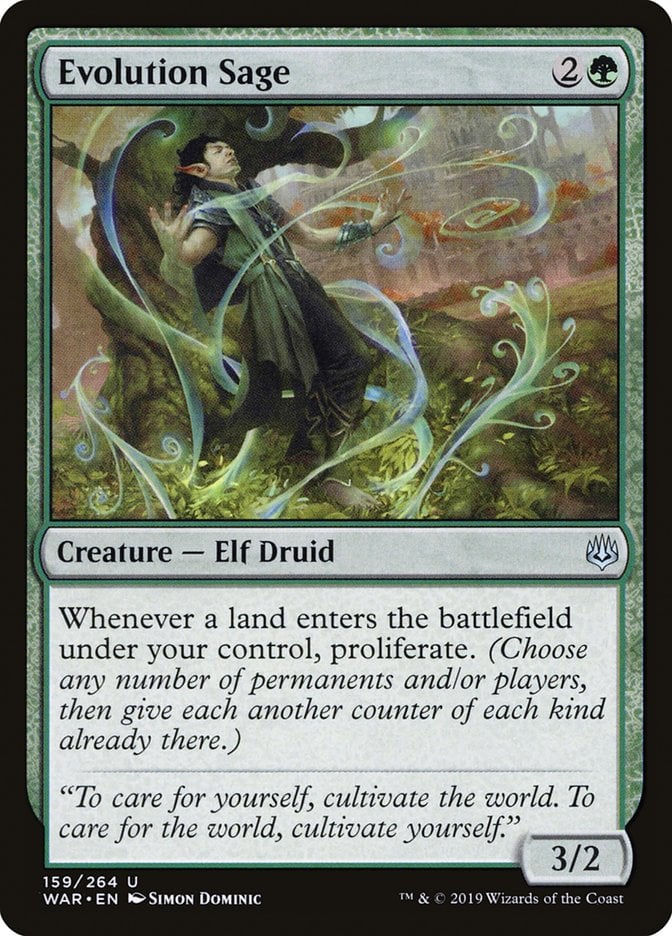
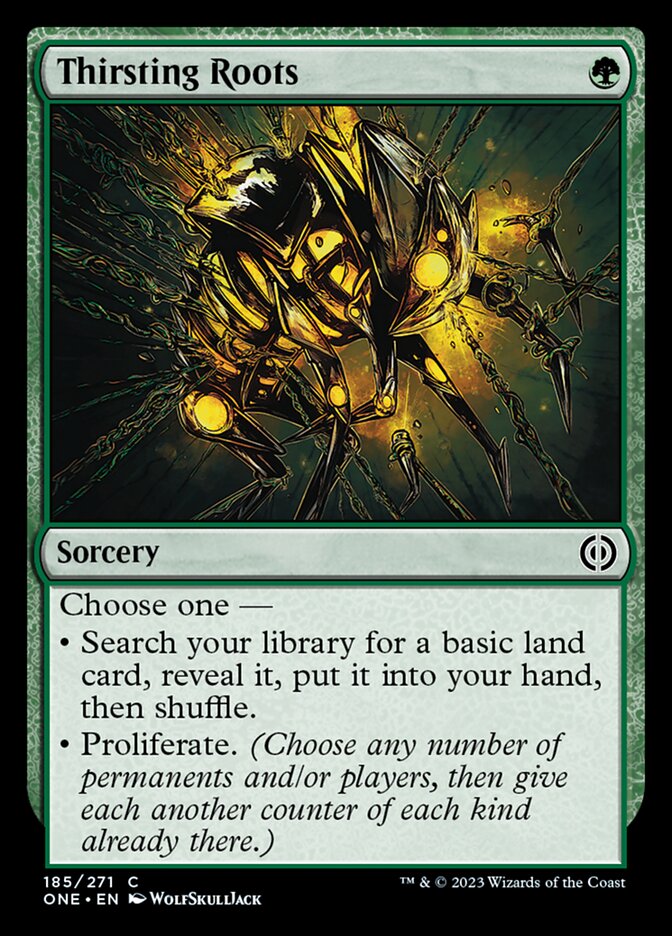
Proliferate cards like Evolution Sage and Thirsting Roots work well with sagas because proliferating lore counters lets you get multiple triggers from a saga; that really helps some of the slower ones become relevant.
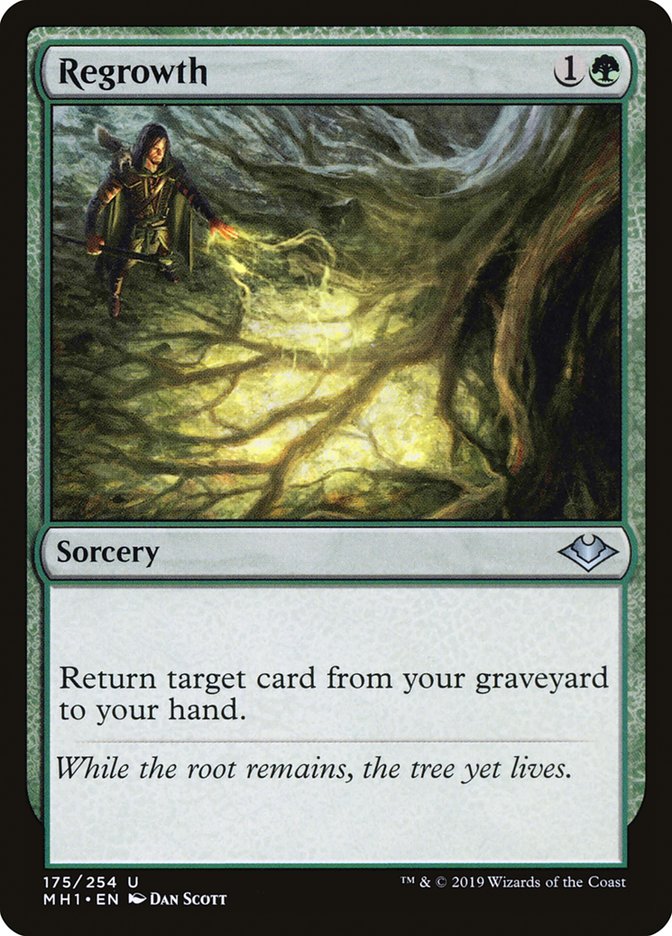
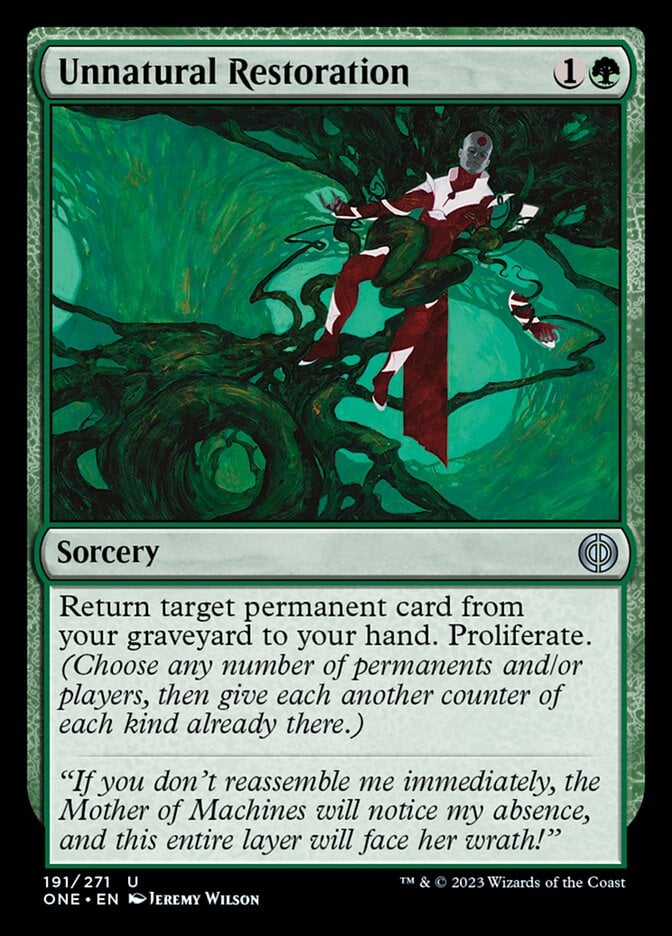
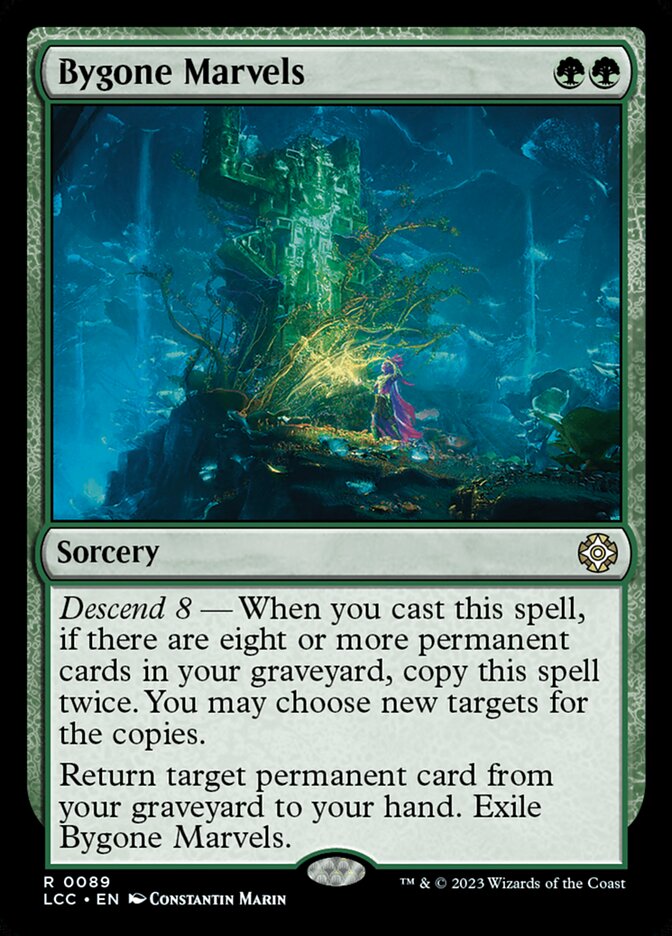

Green also has a bunch of Regrowth effects that return permanents to your hand, like Unnatural Restoration, Bygone Marvels, and Evolution Witness. They work well with sagas since they put themselves in the graveyard, which lets you start the value chain all over again.
Wrap Up

Likeness of the Seeker | Illustration by Lindsey Look
Green sagas touch on everything green can do, though they seem particularly biased towards creating excellent self-mill cards. Whether your deck needs a little card advantage or you want to lean into some kind of sacrifice or enchantment synergy, you might want to play one of these!
Which green saga is your favorite? Do you play any of them in EDH? Let me know in the comments below! If you want more Draftsim, check out our YouTube channel, The Daily Upkeep!
Stay safe, and thanks for reading!
Follow Draftsim for awesome articles and set updates:










Add Comment