
Last updated on August 21, 2026
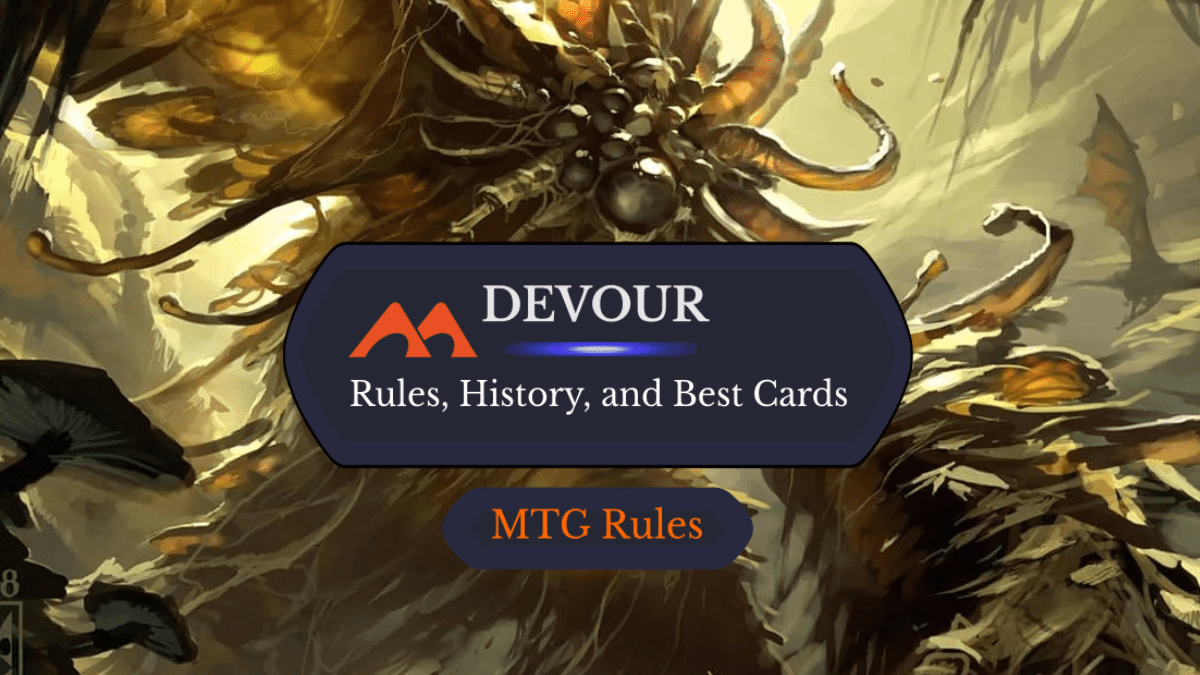
Mycoloth | Illustration by Raymond Swanland
Jund () is synonymous with midrange decks that grind out your opponents and have good planeswalkers or two-for-ones. There was a time when Jund was only one shard in the plane of Alara, one of the most savage and competitive parts of the plane.
This was the kind of place where creatures would devour each other. The aptly-named devour mechanic was developed as a result, and it’s a literal representation of the strong preying on the weak.
How does devour work, what does it brings to MTG, and which are its best cards? Hope you’re hungry!
How Does Devour Work?
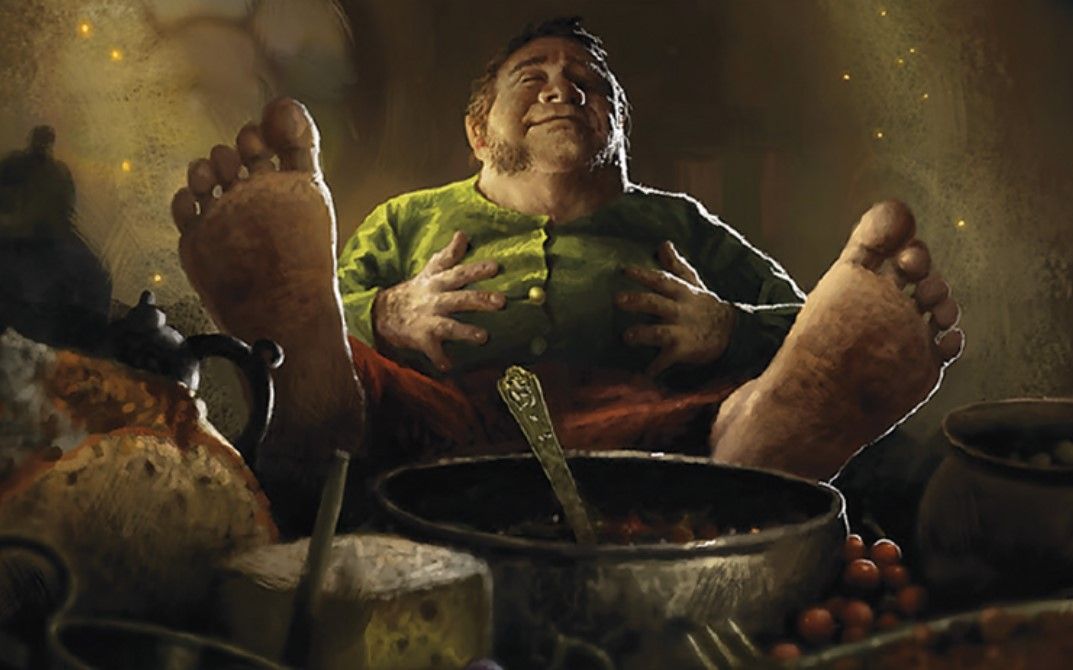
Feasting Hobbit | Illustration by Lorenzo Mastroianni
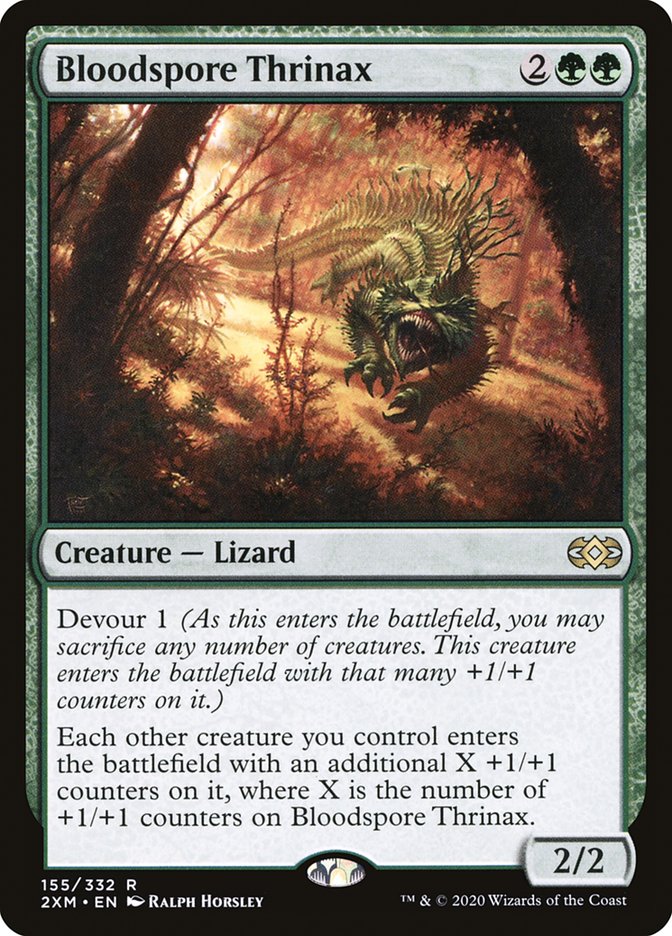
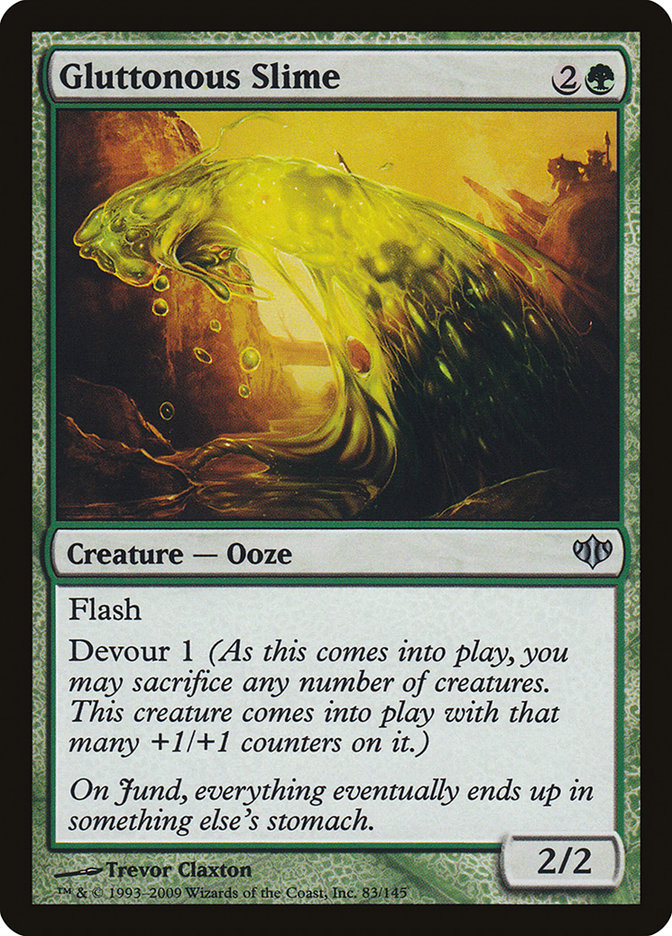
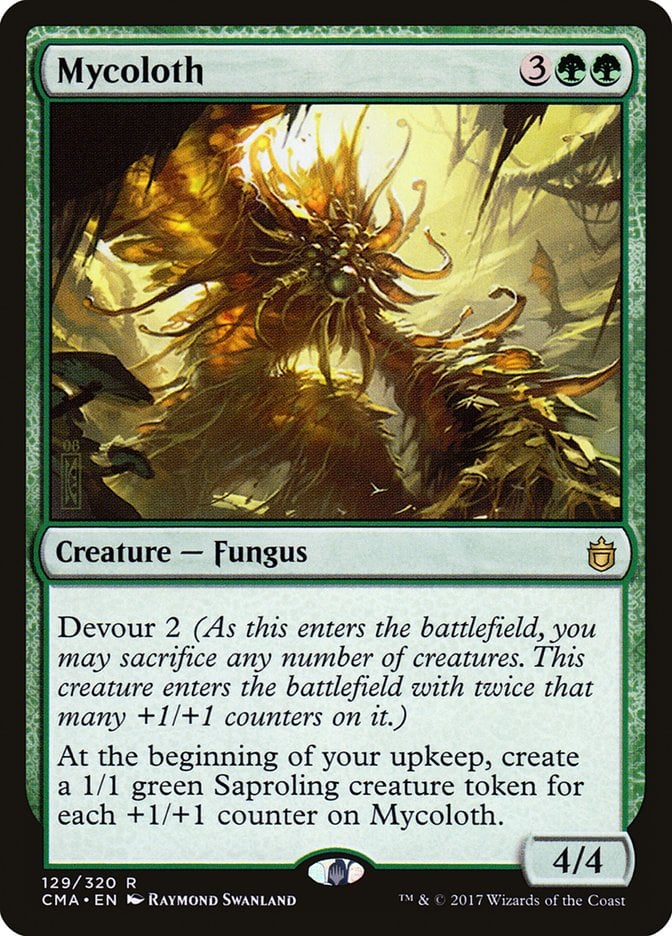
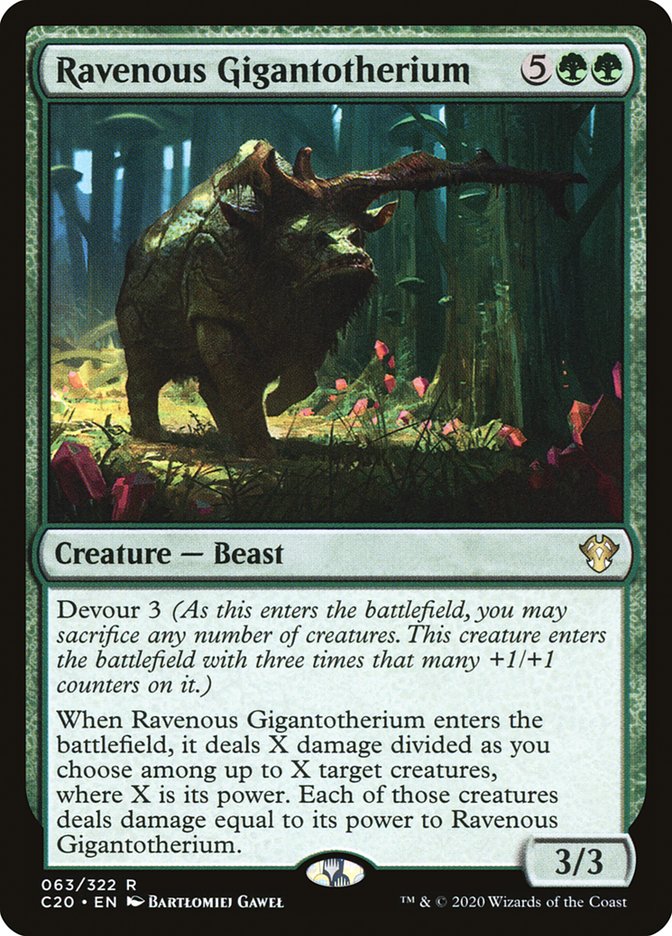
Devour is a replacement effect that modifies the way a creature enters the battlefield. As the creature enters, you may sacrifice any number of creatures, and the devour creature enters with a number of +1/+1 counters for each permanent devoured this way. Devour always has a number attached to it to specify how many +1/+1 counters you get per devoured permanent.
The History of Devour in MTG
Hatchling HellkiteDevour was created in 2008 for the Shards of Alara block. There were 13 cards printed with the mechanic at the time, and it's been used in places like Commander precons and Modern Horizons sets for a few designs.
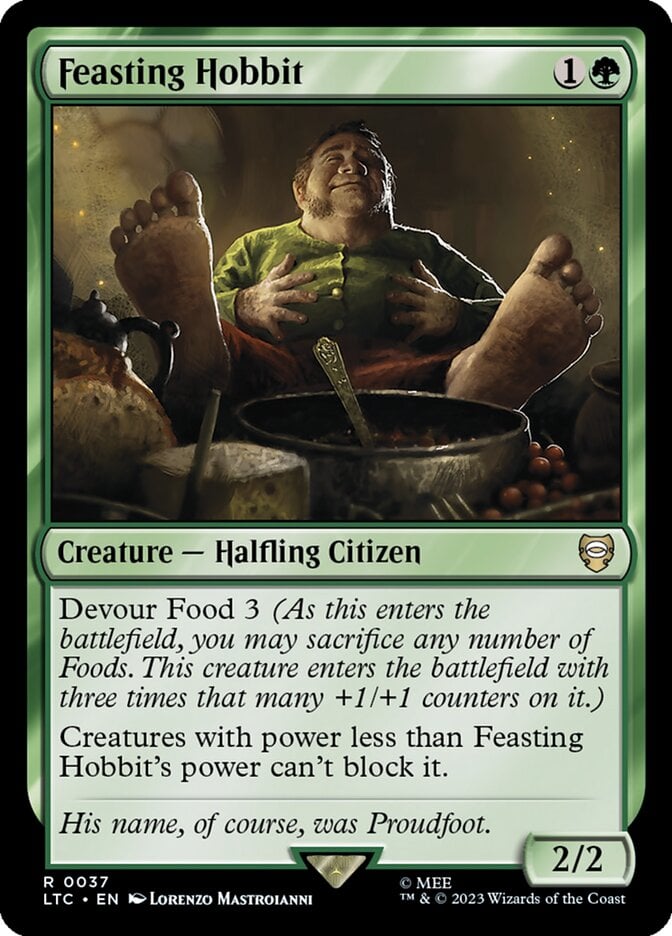
A couple variations of devour have been included on cards, such as devour artifact on Caprichrome and devour food on Feasting Hobbit. These work exactly like a normal devour ability but specify a type or subtype of card that can be devoured by the creature as it enters.
What Is Devour X in Magic? What Is Devour 2?

Devour X is a devour ability that has some other qualifier on the number of +1/+1 counters you get. This ability only appears on Thromok the Insatiable, who gains an exponential number of counters based on the number of creatures it devours. Other instances of devour use a number that determines exactly how many counters each devoured creature is worth. Devour 2 gives your creature two +1/+1 counters per devouree, for example.
Is Devour a Triggered Ability?
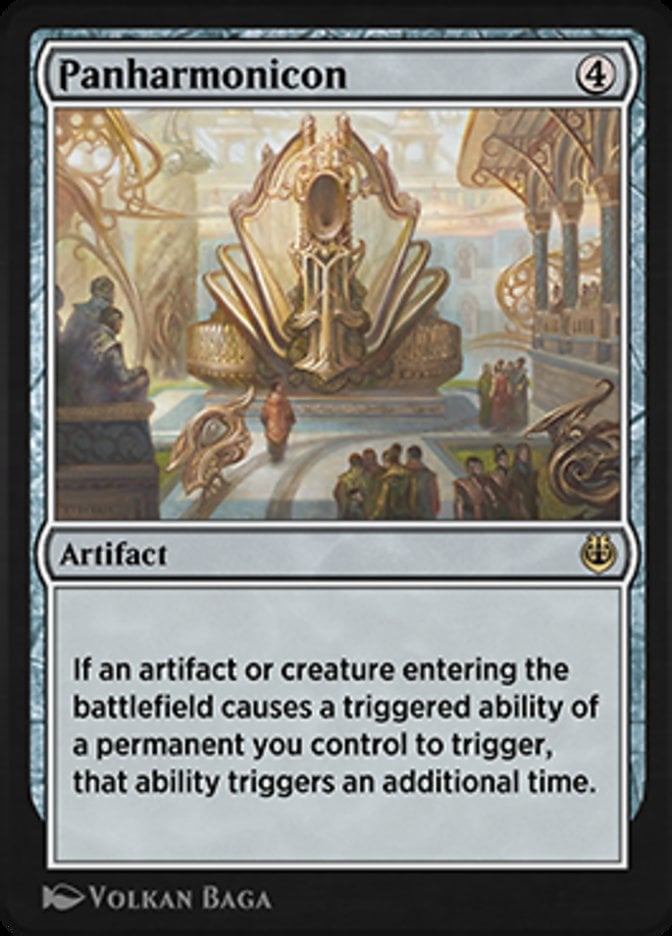
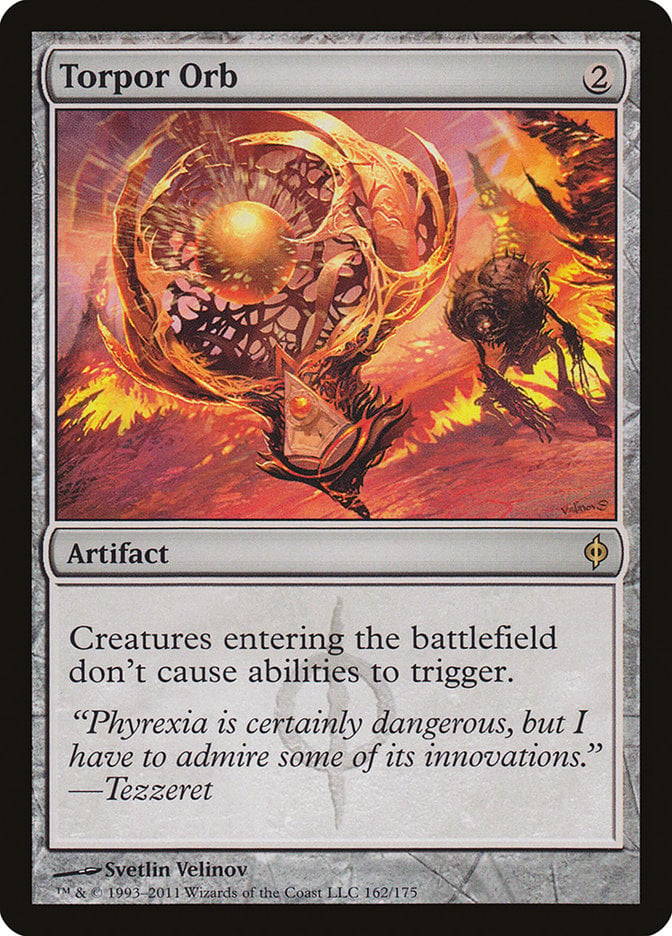
Despite feeling like an enters-the-battlefield effect, devour isn’t a triggered ability. It’s a static ability that takes effect as the creature enters, not when it enters. That means your opponent can’t interact with the devour creature before it enters with +1/+1 counters, since devour doesn’t use the stack. For the same reason, ability doublers like Panharmonicon don’t interact with devour, and Torpor Orb doesn’t stop the ability from happening.
Can a Creature Devour Itself? What About Other Creatures That Enter at the Same Time?
No. Creatures can’t devour themselves. The reminder text doesn’t say you can only sacrifice “other” creatures, but the devour creature isn’t actually on the battlefield at the time you select which permanents you’re going to devour.
A creature also can’t devour anything that enters at the same time. Again, there’s a small window as the creature is entering, before it’s actually on the battlefield, and the creature entering at the same time won’t be there to devour at the time you need to select permanents.
Can You Counter Devour?
No. The devour ability itself can’t be countered since it’s not an ability that uses the stack. You can of course counter the permanent that has devour before it resolves or remove all the potential creatures it could devour, but once it resolves, devour just happens as the creature enters play.
Can You Devour a Creature with Protection from a Color?
Since devoured creatures are simply sacrificed and not targeted, you can sacrifice whatever creature you want unless there’s an effect that says that you can’t sacrifice permanents (Angel of Jubilation comes to mind). Creatures with protection and shroud can be devoured with no complications.
What About Creatures with Indestructible?
Indestructible simply stops being destroyed, but an indestructible creature can still be sacrificed, and therefore can be devoured.
Can You Choose Not to Devour any Creatures with the Devour Ability?
Devour is totally optional. Many of these creatures are pretty poor if you don't devour anything, but it's clearly better not to sometimes.
Can You Devour a Token Creature?
Creature tokens are just as eligible to be devoured as creature cards. In fact, tokens are a part of any devour creature's well-balanced breakfast.
What if a Creature Has Two Instances of Devour?
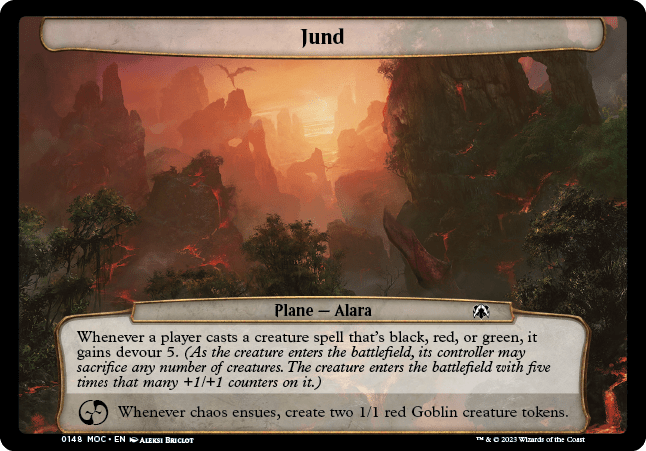
If a creature has two instances of devour then the player chooses one of those instances to apply. This is currently possible via a Planechase Anthology card called Jund, which can give creatures devour 5.
If you cast a creature with devour 1 and this ability gives devour 5, you get to choose one of them (probably the 5 since there’s almost no downside to it). It won’t combine both instances into a “devour 6”.
What Is Devour Artifact? What About Devour Land?


Magic has experimented with subcategories of devour, which allow a creature to sacrifice a specific type or subtype of permanent for counters. Caprichrome devours artifacts, which lets you sacrifice any number of artifacts as it enters for +1/+1 counters (these could be artifact creatures or noncreature artifacts). Devour land shows up on Famished Worldsire and works the same way, just for lands you control instead of creatures (you can devour land creatures, if you control any).
Gallery and List of Devour Cards
Normal Devour Cards
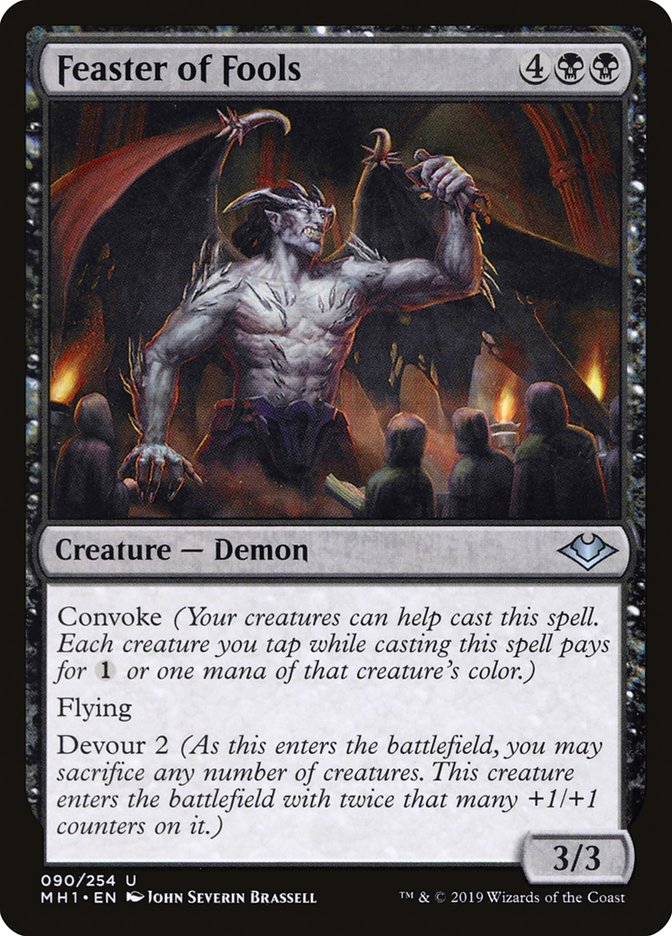

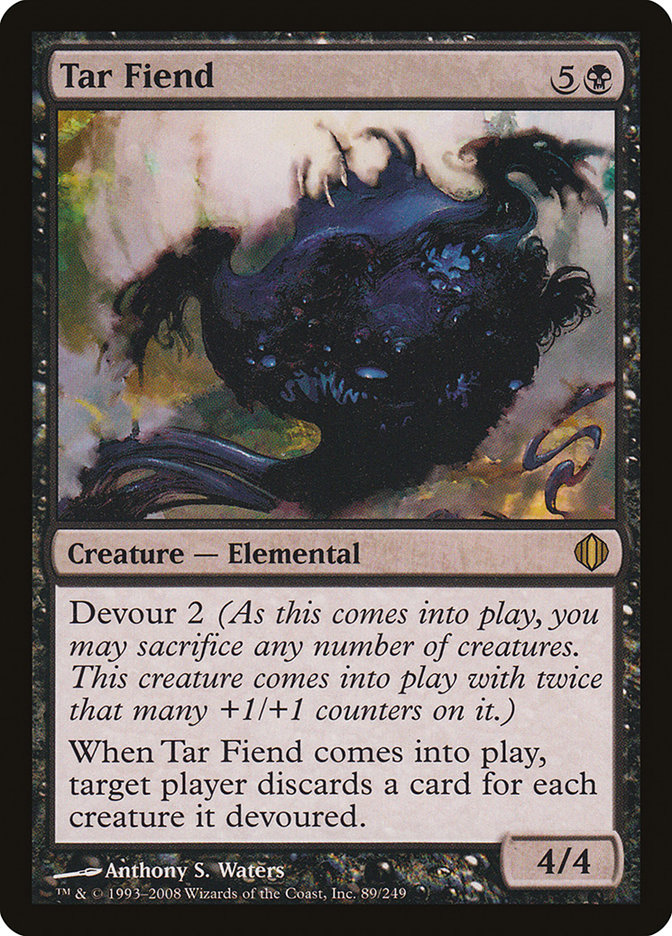
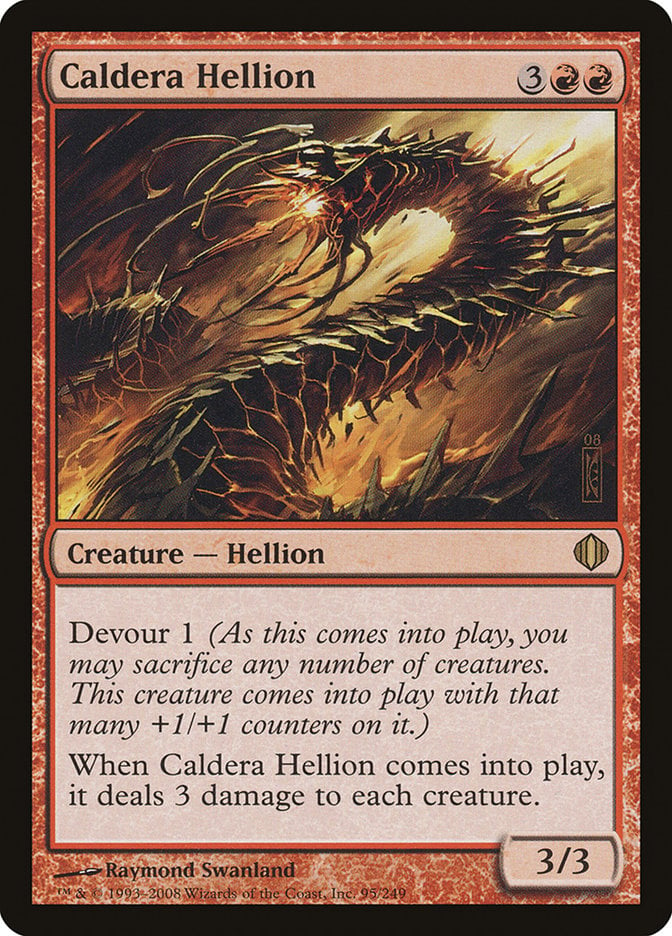
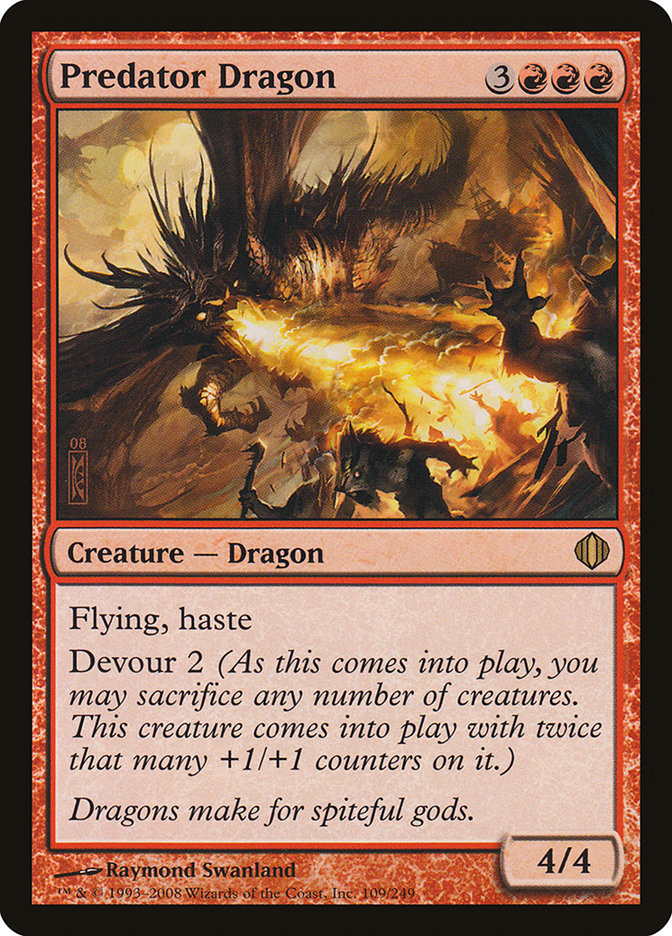

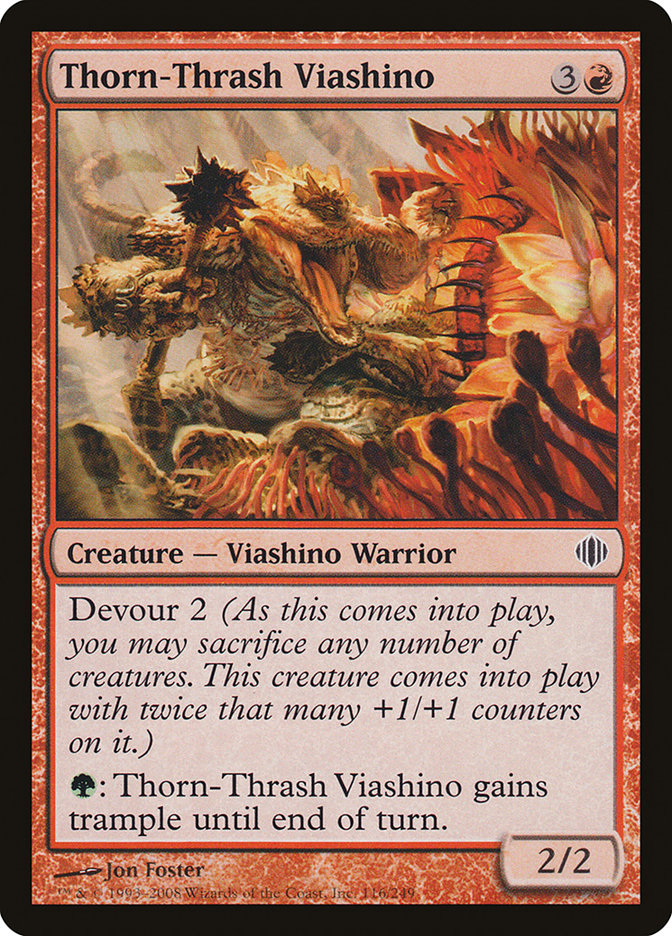
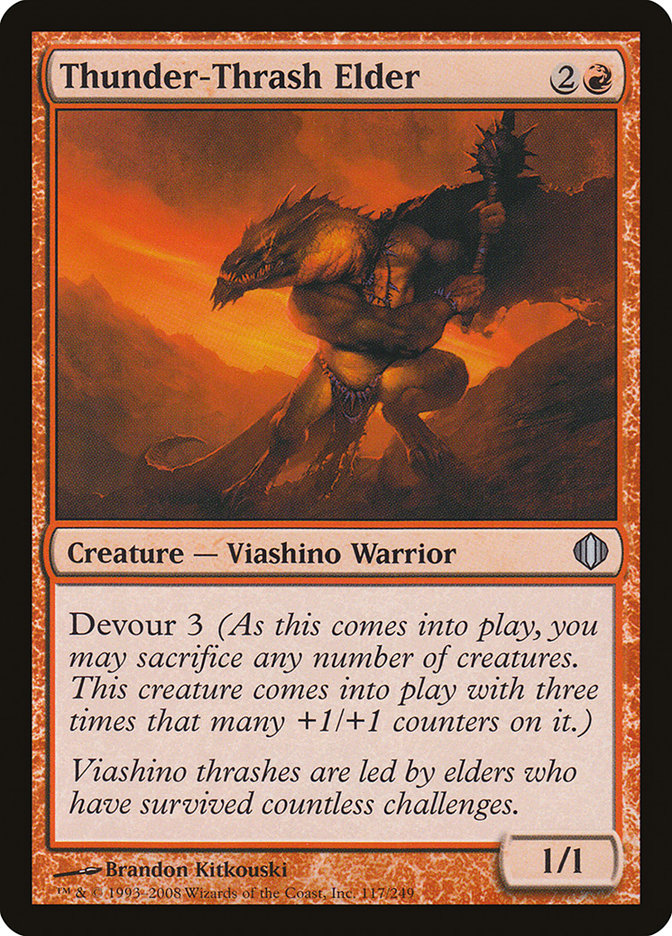
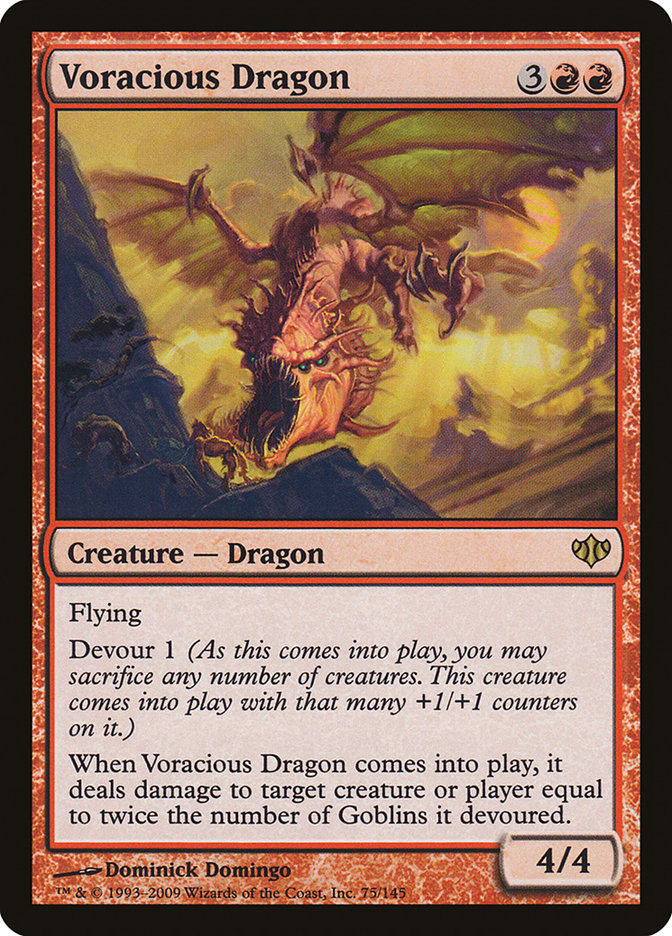


- Feaster of Fools
- Fell Beast of Mordor
- Tar Fiend
- Caldera Hellion
- Predator Dragon
- Preyseizer Dragon
- Thorn-Thrash Viashino
- Thunder-Thrash Elder
- Voracious Dragon
- Bloodspore Thrinax
- Gluttonous Slime
- Mycoloth
- Ravenous Gigantotherium
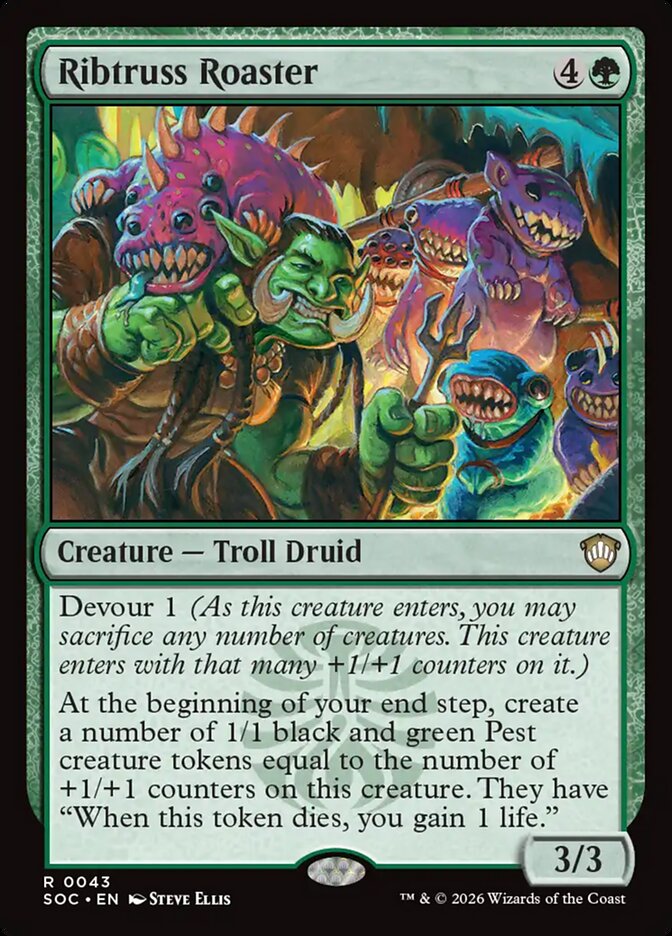
- Ribtruss Roaster
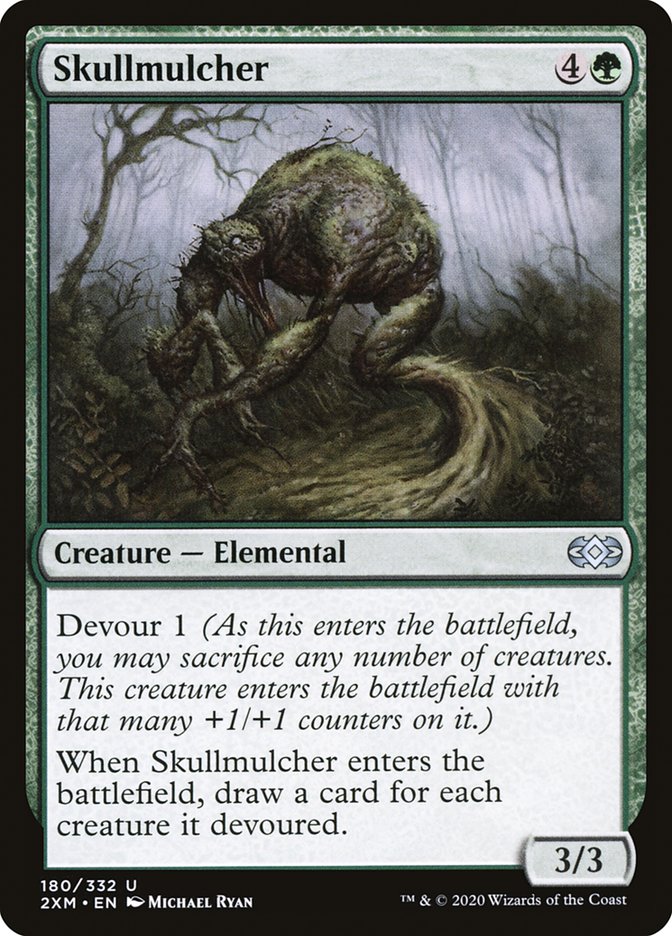
- Skullmulcher
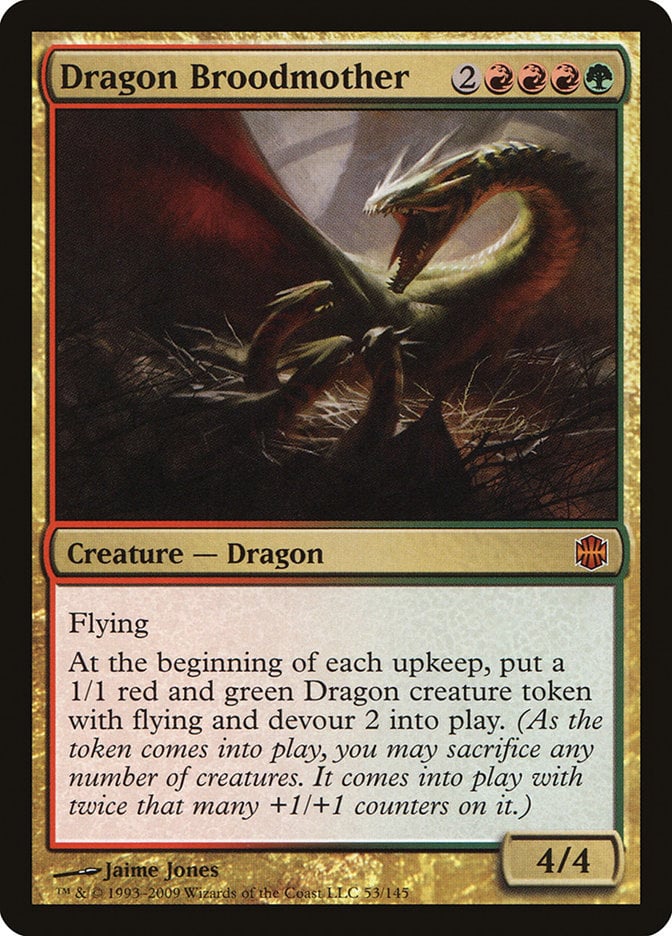
- Dragon Broodmother
- Gorger Wurm
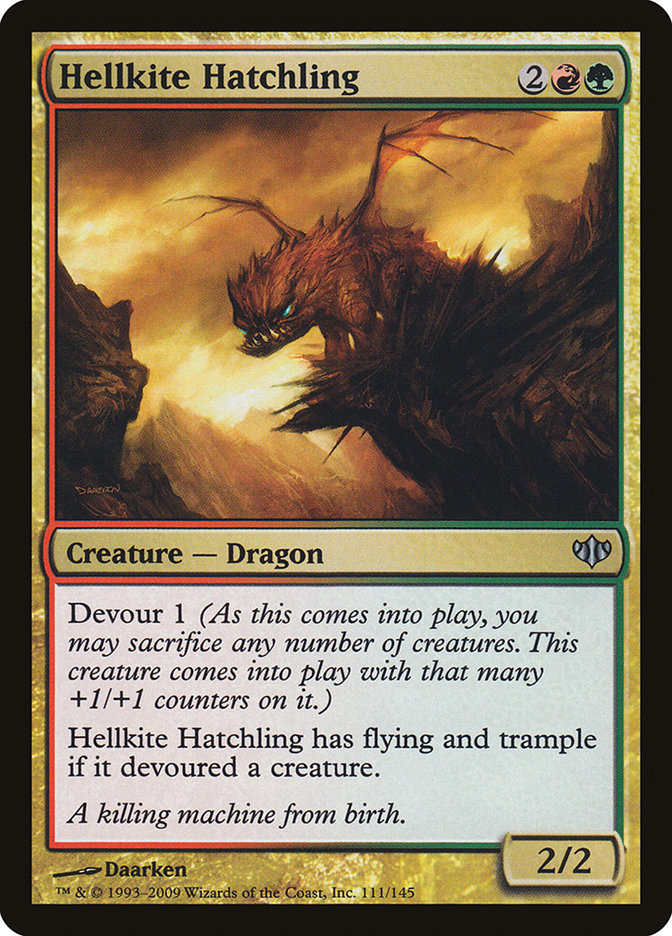
- Hellkite Hatchling
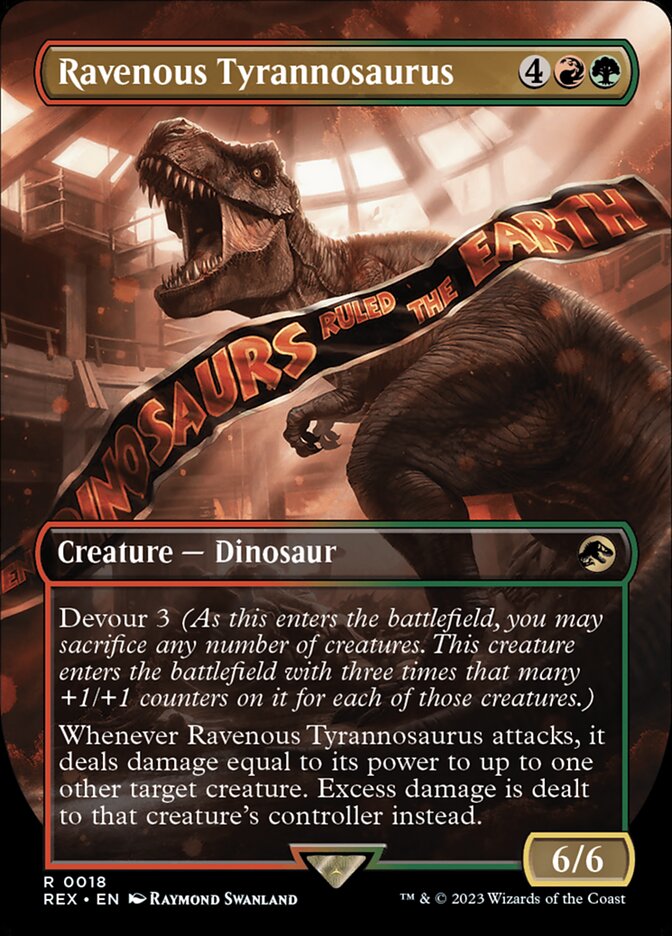
- Ravenous Tyrannosaurus
- Thromok the Insatiable
- Marrow Chomper
Alternative Devour Cards
- Caprichrome – Devour artifact
- Famished Worldsire – Devour land
- Feasting Hobbit – Devour food
Cards that Grant Devour

Best Devour Cards
#6. Mycoloth + Ribtruss Roaster
Both of these creatures work to repopulate the board you just devoured. Mycoloth’s return is a good bit larger after its meal, but waits until upkeep to make tokens, which often means it just doesn’t get to make tokens at all. Ribtruss Roaster is much more likely to give you the first wave of tokens since it has an end step trigger, and those pests are better than saprolings in a vacuum.
#5. Ravenous Gigantotherium
Ravenous Gigantotherium has the potential to be very big, even acting as a two-for-one or even a sweeper in a tokens deck. You’re paying seven mana, but it’s worth the effort.
#4. Feasting Hobbit
Leave this one for the dedicated food decks, but in those builds, Feasting Hobbit can very easily be a 2-mana 8/8 or greater with a bit of evasion built in. It’s the type of 2-drop you never really play on turn 2, but it makes for some potent double spell turns in the midgame.
#3. Ravenous Tyrannosaurus
This dino picks off a creature with every attack, and while Ravenous Tyrannosaurus is missing trample, it gets a “pseudo-trample” ability with its excess damage trigger. Run it in every dinosaur deck ever. Better yet, just play it in all your RG+ decks.
#2. Dragon Broodmother
Dragon Broodmother technically doesn’t have devour, but it makes 1/1 tokens with devour soit’s fair game. Making tokens every upkeep is very good in EDH. These tokens are dragons in dragon colors, and one token can even devour another. Add anything that cares about creatures dying and you have a little engine going.
#1. Famished Worldsire
Edge of Eternities gave us a banger with Famished Worldsire, an appropriately gigantic world-eating leviathan that eats up all your lands for counters and (hopefully) replaces them with a new set of lands off the top of your library. Being a base 0-power creature works wonders with cheat effects like Meek Attack and Graceful Restoration.
Wrap Up

Gluttonous Slime | Illustration by Trevor Claxton
Devour has inspired several sacrifice-related mechanics, and it can be an interesting addition in the right decks. Unfortunately, the power level of the mechanic has rarely exceeded its 2009 origins, and you need to build around it very hard to be rewarded. It fits more casual EDH decks and Limited/low-power Cubes. Big creatures still die to removal after all and you get incur card disadvantage when that happens, which is often a warning flag for Constructed success.
What cards do you play with the devour mechanic in EDH? What interesting sacrifice engines do you use? Let me know in the comments below or in the Draftsim Discord. Check out The Daily Upkeep newsletter to stay up to date on all the latest MTG news.
Thanks for reading, and I'll see you next time!
Follow Draftsim for awesome articles and set updates:










Add Comment