

Farseek | Illustration by Martina Pilcerova
The guilds of Ravnica may seem like an inseparable part of Magic: The Gathering these days, but that wasn’t always the case! We had no shorthand for the 10 2-color pairs in Magic until 2005, when Ravnica: City of Guilds was released. Ravnica was Magic’s first premier set on Ravnica, a plane completely engulfed in an expansive cityscape, and featured 10 guilds representing each of the 2-color pairs in Magic.
How did Magic roll out the original Ravnica: City of Guilds set? Which guilds were featured? Jump back in time with me to 2005 as we dive into the very first Ravnica set!
Ravnica: City of Guilds Basic Info

Boros Garrison | Illustration by John Avon
Set Details
| Set Symbol |  |
| Set Code | RAV |
| Number of Cards | 306 |
| Rarities | 110 commons, 88 uncommons, 88 rares, 20 basics |
| Mechanics | Hybrid Mana, Convoke, Dredge, Radiance, Transmute |
Important Dates
| Event | Date |
| Release on MTGO | October 7, 2005 |
| Prerelease | September 24-25, 2005 |
| Paper Release | October 7, 2005 |
About the Set: The Story
Ravnica: City of Guilds is the first set to take place on the cityscape of Ravnica, a plane covered in a metropolis ruled by 10 guilds. The guilds each represent two of Magic’s colors and heavily feature cards and mechanics unique to those colors.
The 10 guilds are split between the three sets released during the overarching Ravnica block. Ravnica: City of Guilds featured the green/white Selesnya Conclave (), the green/black Golgari Swarm (), the red/white Boros Legion (), and the blue/black House Dimir ().
The 10 guilds of Ravnica have coexisted in relative peace for the past 10,000 years – ever since the 10 paruns signed the Guildpact, putting an end to active warfare on the plane. But now, something sinister stirs on the 10,000th anniversary of the Guildpact, and it threatens all of Ravnica’s survival.
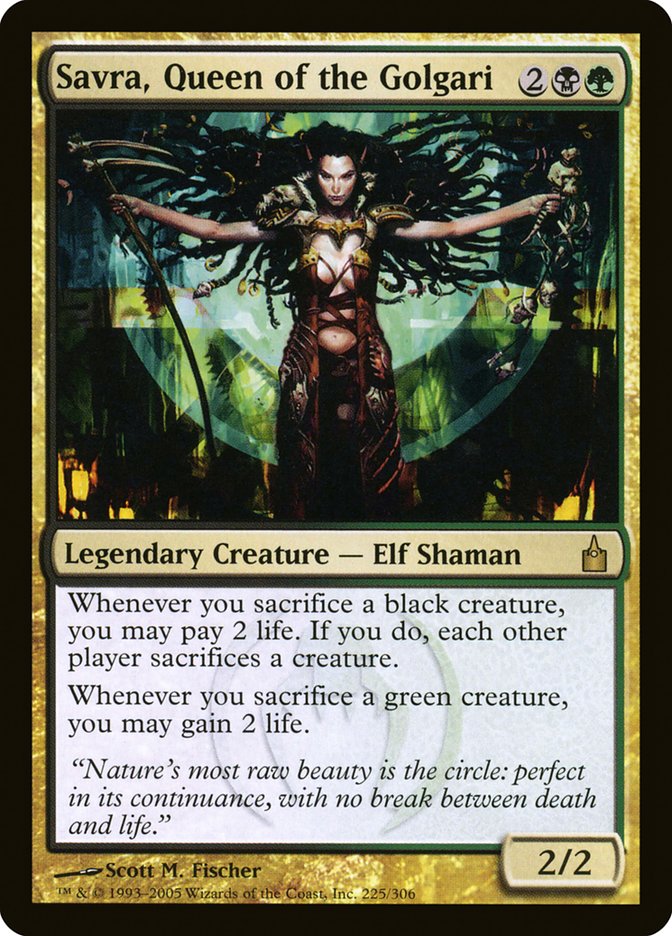
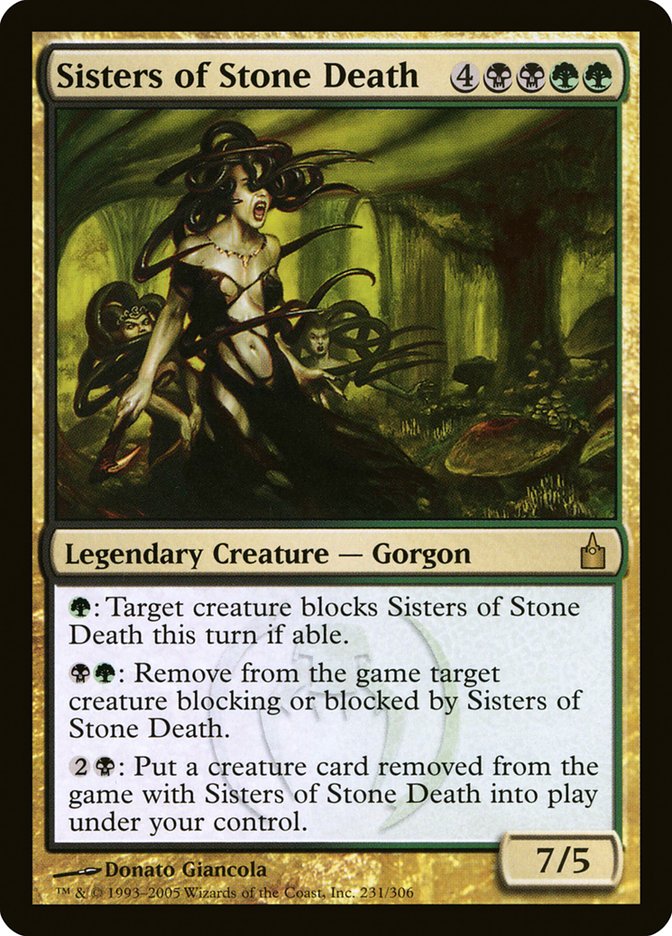
The main Ravnica novel follows Agrus Kos, Wojek Veteran and his partner Bell Borca (of Bell Borca, Spectral Sergeant fame) as they investigate crimes and introduce the world of Ravnica. Throughout their adventures, they meet with several prominent members of the guilds of Ravnica, including Savra, Queen of the Golgari and Jarad, Golgari Lich Lord. Savra and Jarad hatch a plan to remove the current Golgari leadership, the Sisters of Stone Death, while also annexing control of the Selesnya Conclave. Unbeknownst to them, the Dimir leader Szadek, Lord of Secrets has orchestrated a grandiose plot to bring about the end of the Guildpact. Szadek kills Savra as soon as she’s assimilated into the Selesnya Conclave, and an epic battle ensues between Szadek, Argus Kos, the Dimir Lupul wurms, and the Selesnya quietmen (an army of silent warriors that would become outlawed at the end of the first Ravnica series). The book ends with Agrus Kos arresting Szadek for crimes against the Guildpact.
Ravnica is by far my favorite plane. As far as uniquely Magic: The Gathering IP goes, it’s one of the most unique fantasy settings out there, and it draws from the real world in smart and mature ways. The setting is a great vehicle for storytelling in a pseudo-modern way, with just the right amount of grimdark to keep its edge (for example, murder isn’t illegal on Ravnica).
Ravnica: City of Guilds Mechanics
Ravnica: City of Guilds introduced four new mechanics, one for each of the featured guilds, with an overarching mechanic used in all guilds.
Hybrid Mana
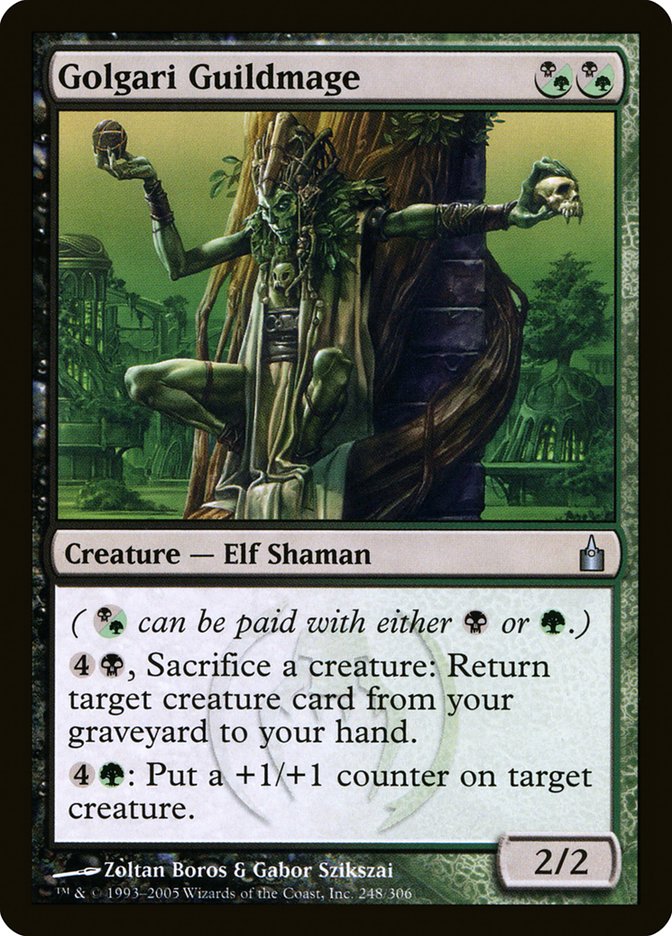
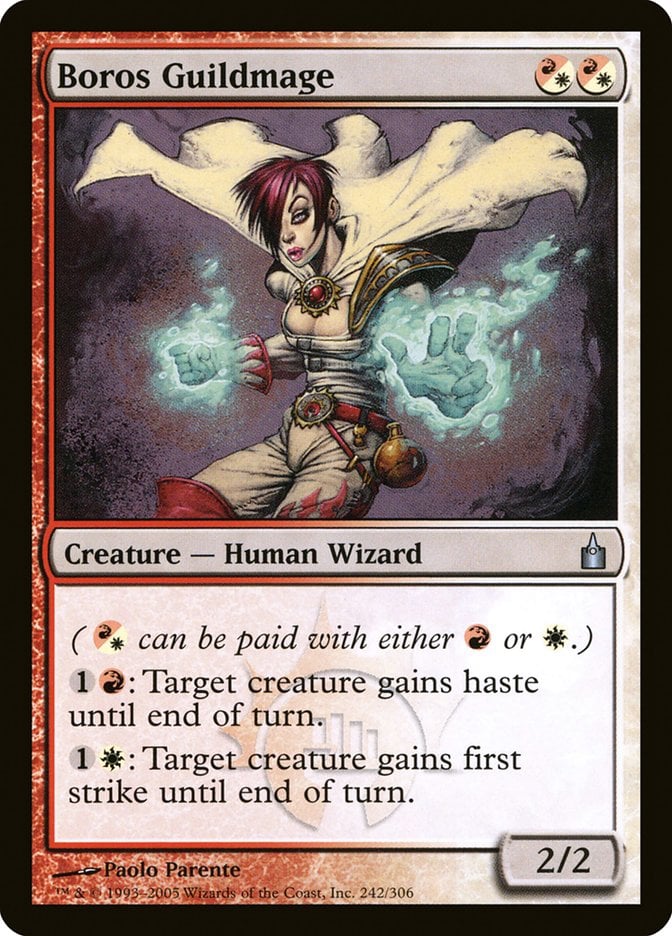
Ravnica: City of Guilds was the first set to introduce the hybrid mana symbol. Each hybrid mana symbol represents a cost which can be paid with either color. For example, you could cast Golgari Guildmage with 2 green, 2 black, or a green and a black. This makes 2-color creatures easier to cast and plays into the multicolor theme of the set.
Convoke

Convoke was the green-white Selesnya mechanic. Creatures can help cast spells with convoke. Tapping creatures as you cast the spell pays for one generic mana or one mana of that creature’s colors when casting the convoke spell. Convoke received a bit of a wording update in Magic 2015 to help smooth out its interactions and timings with the Eldrazi Spawn tokens created by Pawn of Ulamog and the like.
Dredge
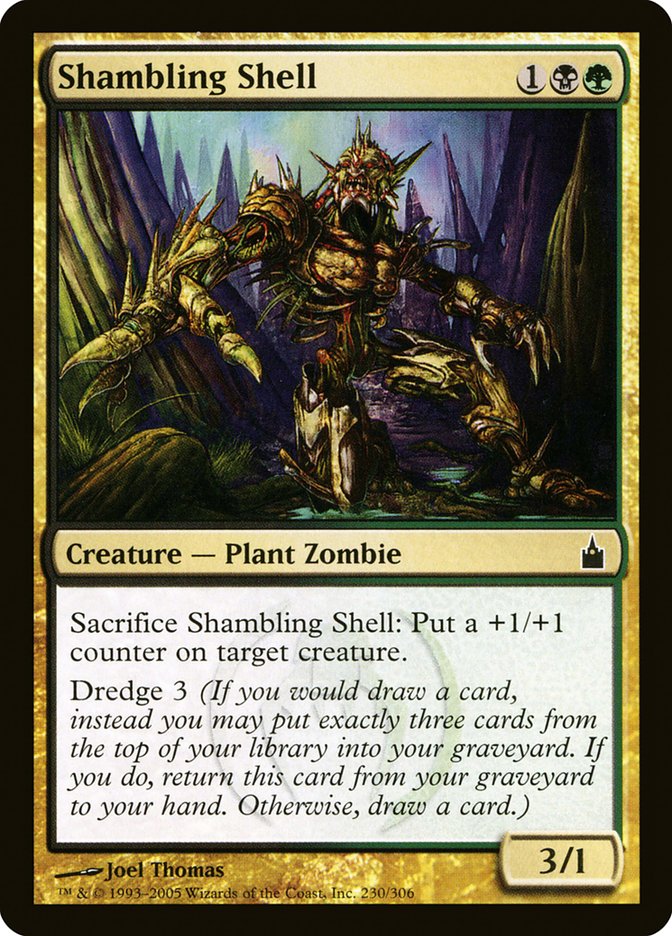
Cards with dredge can be recurred to your hand from your graveyard by milling a number of cards and returning the card to your hand instead of drawing a card.
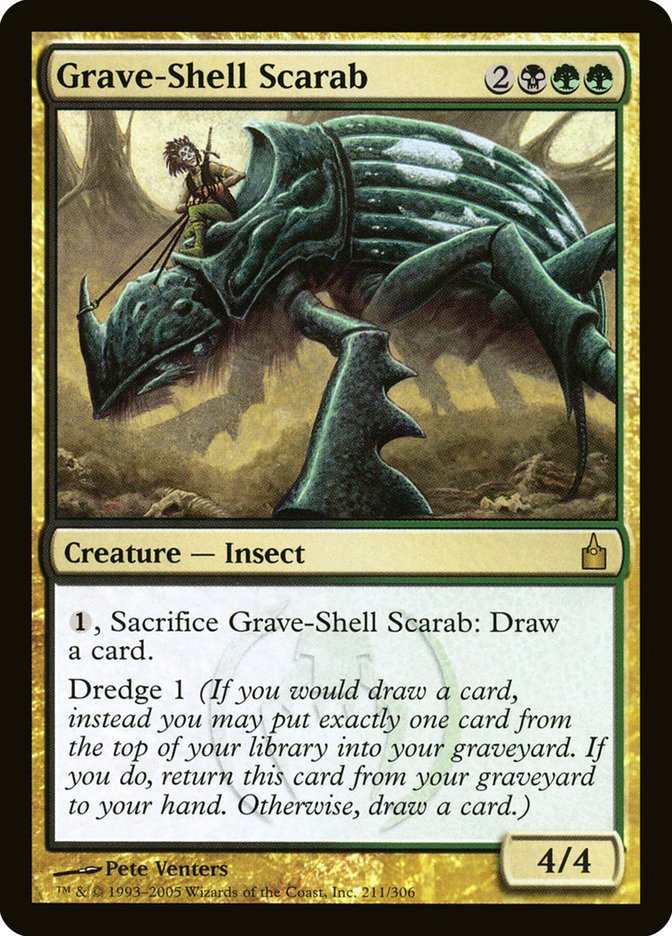
Dredge has developed a reputation as one of Magic’s worst balanced mechanics. Originally, the idea behind dredge was that the dredge number would scale with the power of the relative card. Instead of players using the high-dredge costs to return powerful cards, players took the mechanic in the opposite direction; eternally recurring the cheapest dredge cards while only using the high-numbered dredge cards to enable a self-mill strategy.


Some of the most popular dredge cards are Life from the Loam, Stinkweed Imp, and the infamous Golgari Grave-Troll.
Radiance
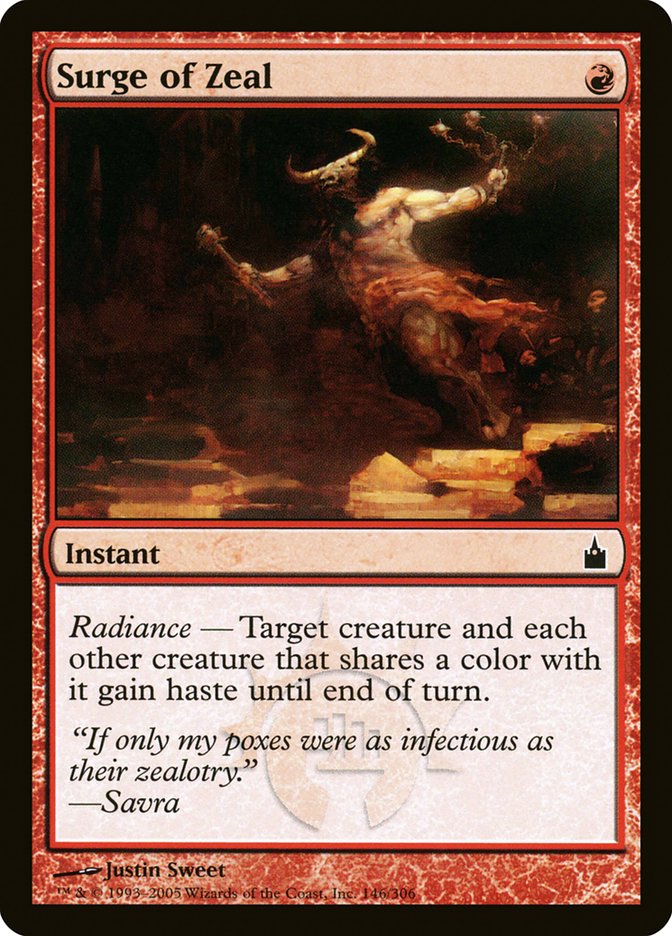
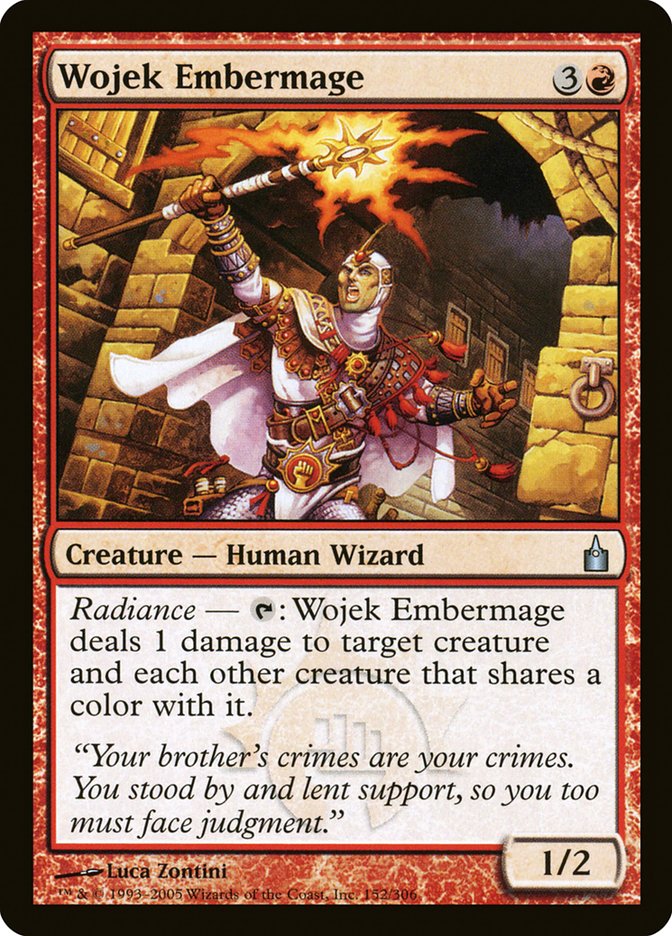
Radiance was the Boros mechanic introduced in Ravnica: City of Guilds. Poor radiance was mostly a flop on release, and now barely any of its cards see play. Radiance played off the multicolor theme of the Ravnica set; radiance cards would affect a target and all [somethings] that share a color with it. Radiance was considered a miss due to its lack of flavorful connection to the Boros and its difficulty in power scaling.

Bathe in Light sees the most play of any radiance card I’ve encountered, basically a Brave the Elements that hopefully hits your entire field.
Importantly, radiance is not a keyword. Radiance is an “ability word” – italicized text in a card’s rules text that ties thematically to other cards but has no inherent mechanical text. Ability words from other sets include threshold, tempting offer, domain, and bloodrush.
Transmute
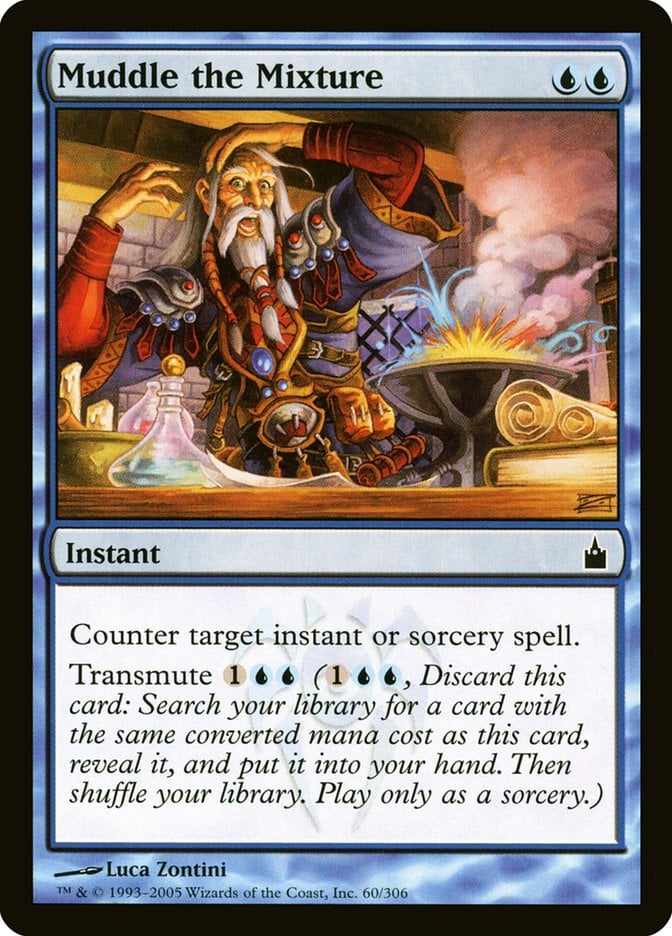
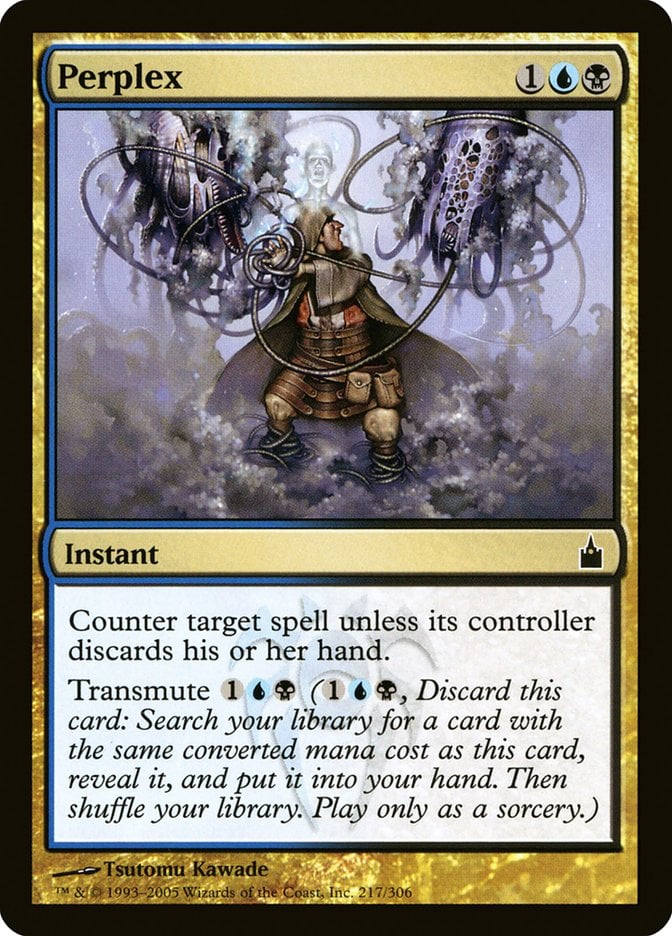
House Dimir’s sinister mechanic is transmute. Transmute cards allow you to pay their transmute cost and discard them to search your library for a card with the same mana value and put it into your hand. This can only be done at sorcery speed, but even then it gives Dimir decks some amazing consistency.
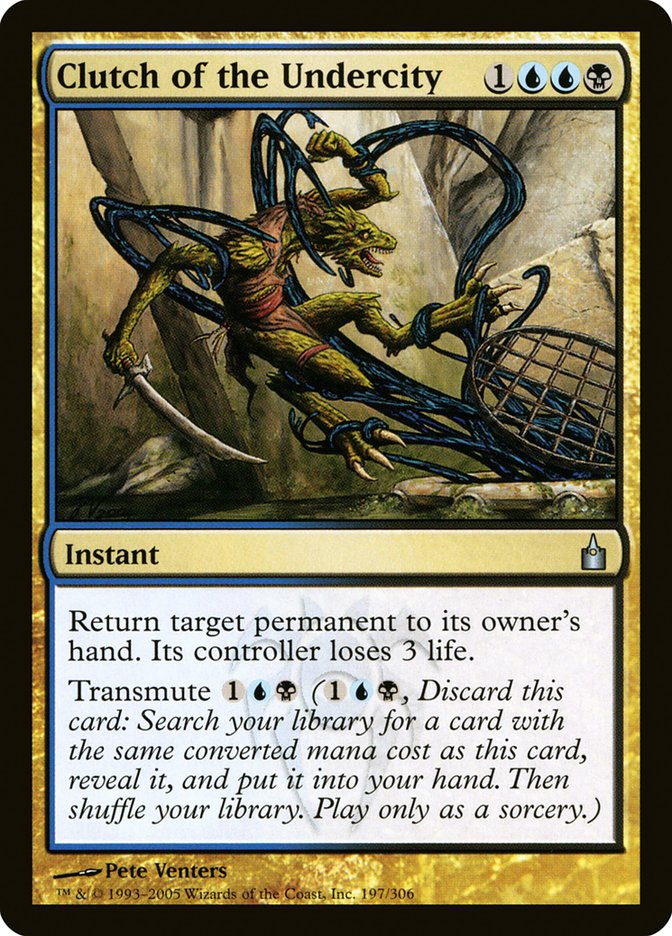
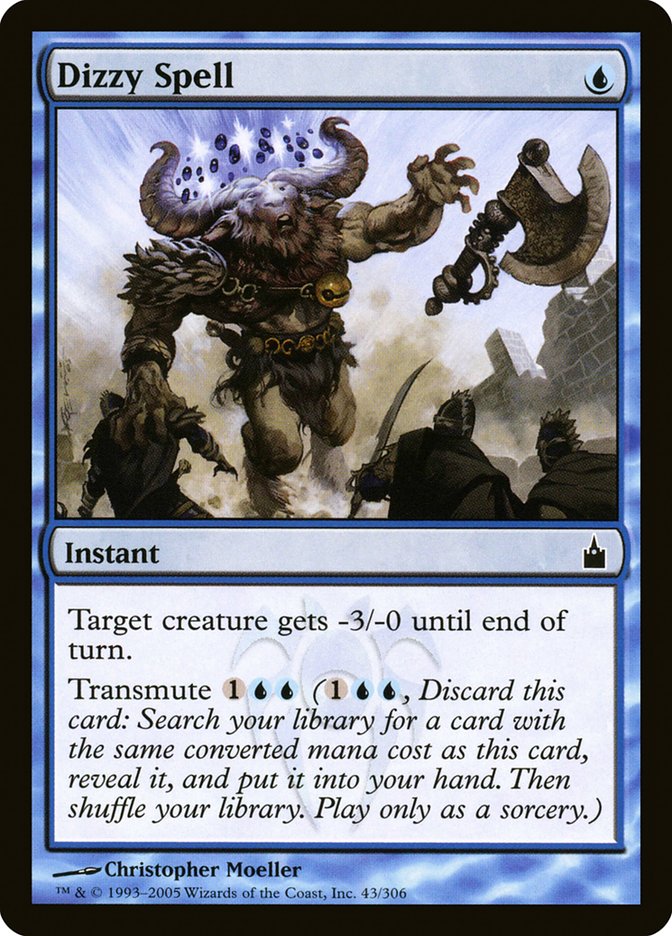
Cards like Clutch of the Undercity and Dizzy Spell are excellent ways to filter out unneeded cards from your hand and pull up just what you’re looking for.
It’s important to note that the card you tutor up with a transmute effect doesn’t need the exact same mana cost. For example, if you transmute Muddle the Mixture, you can find any spell with a mana value of 2, not just any spell with a casting cost of .
Ravnica: City of Guilds Card Gallery
White


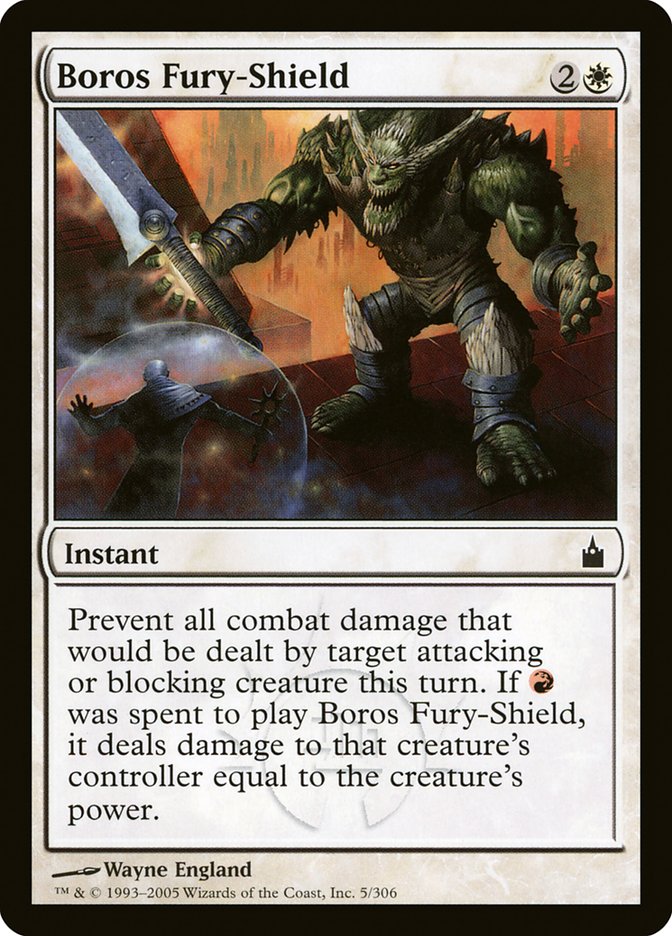

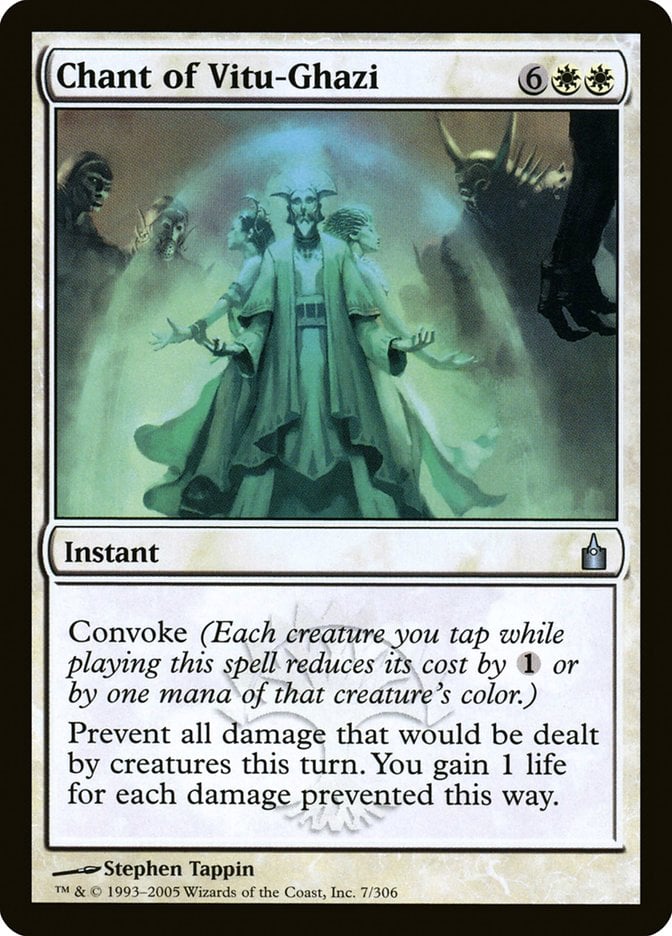

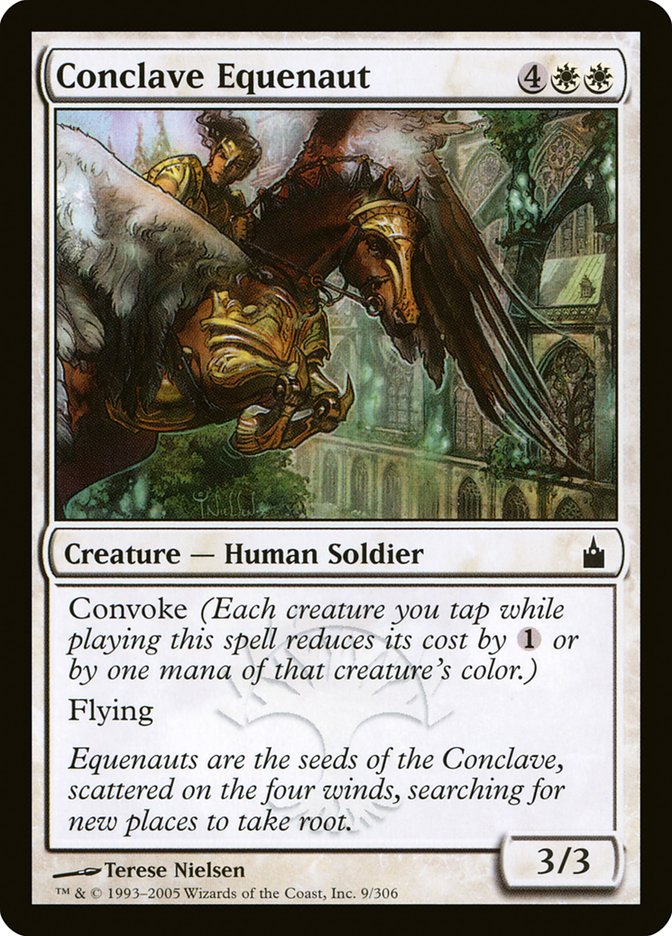
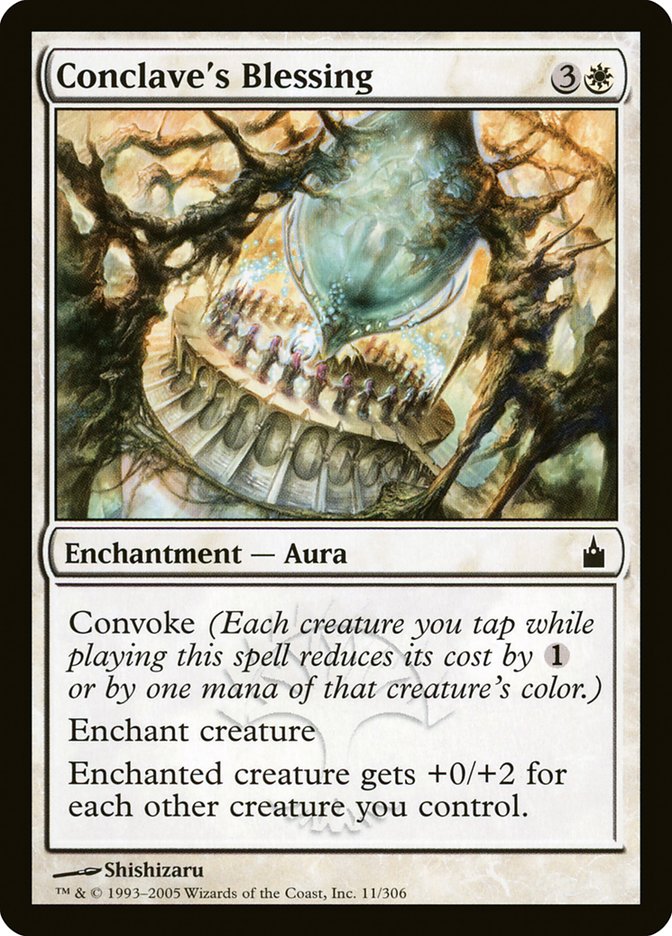


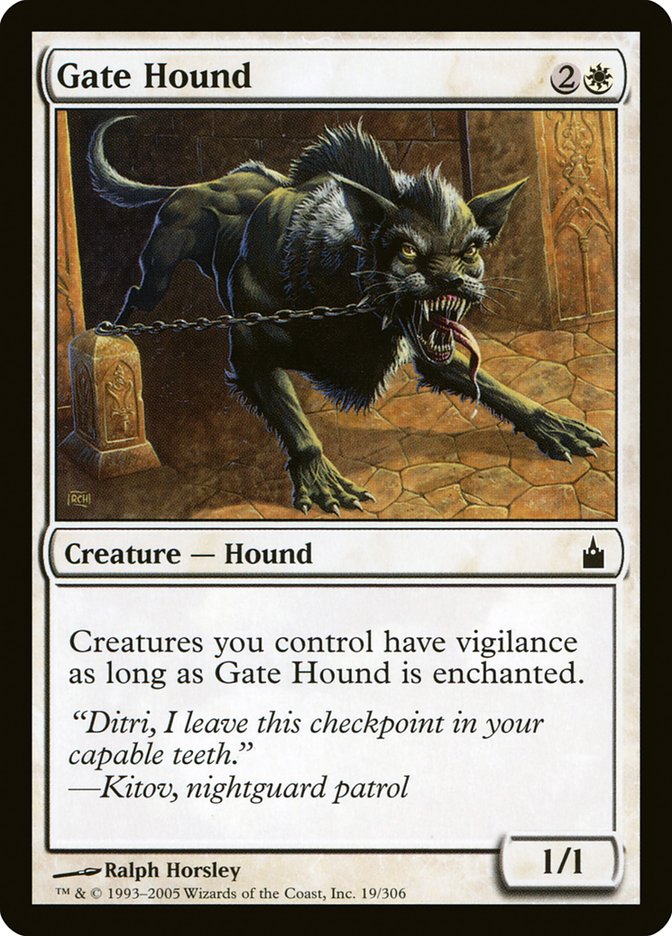


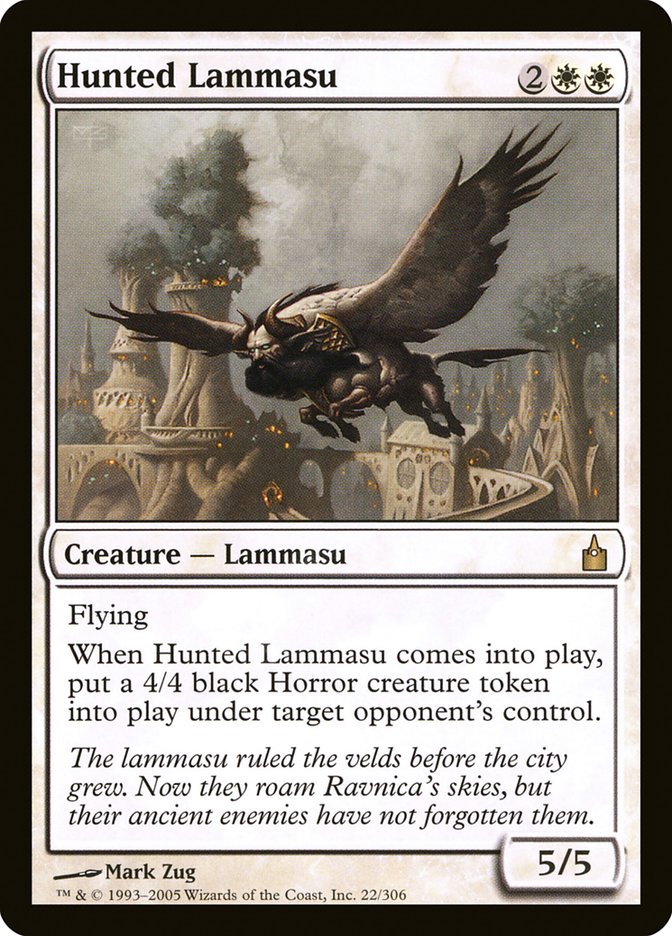
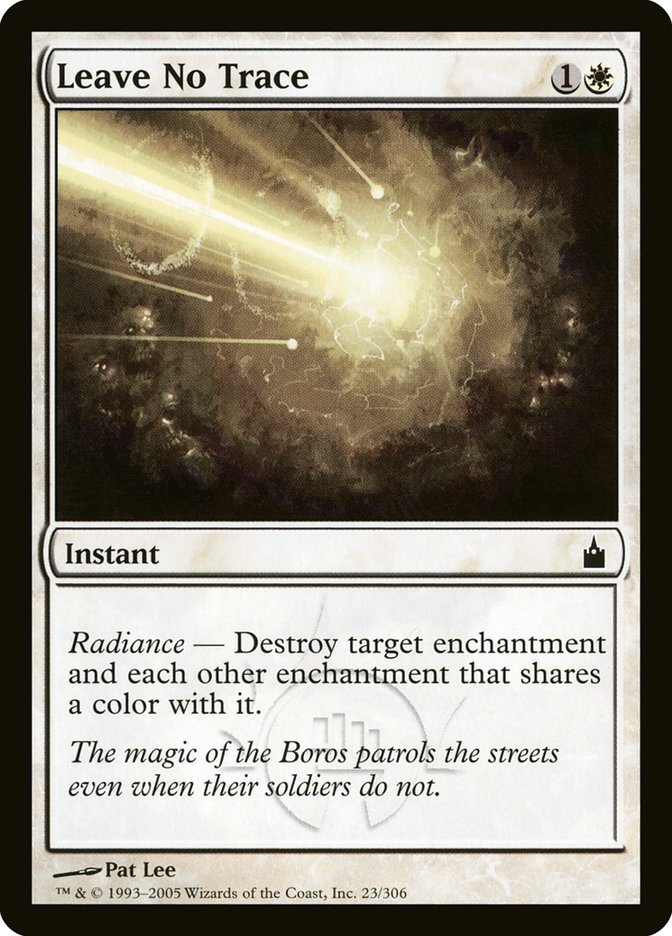


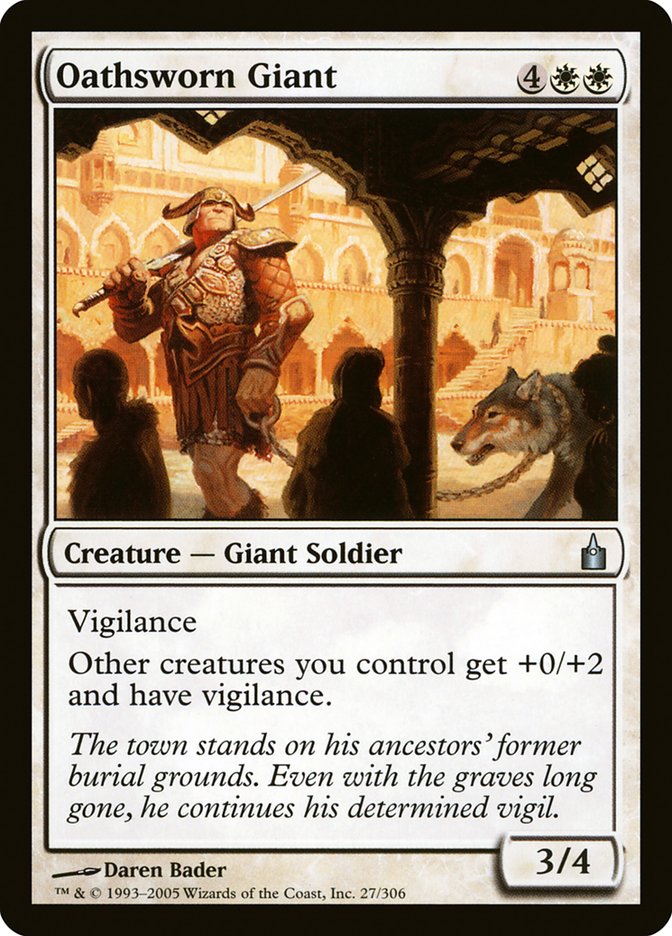


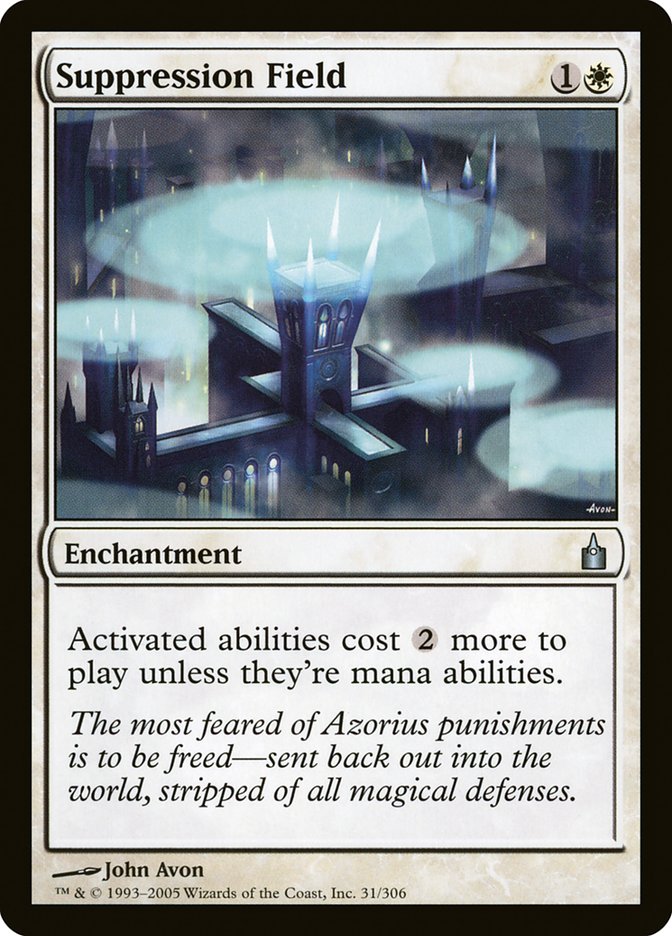
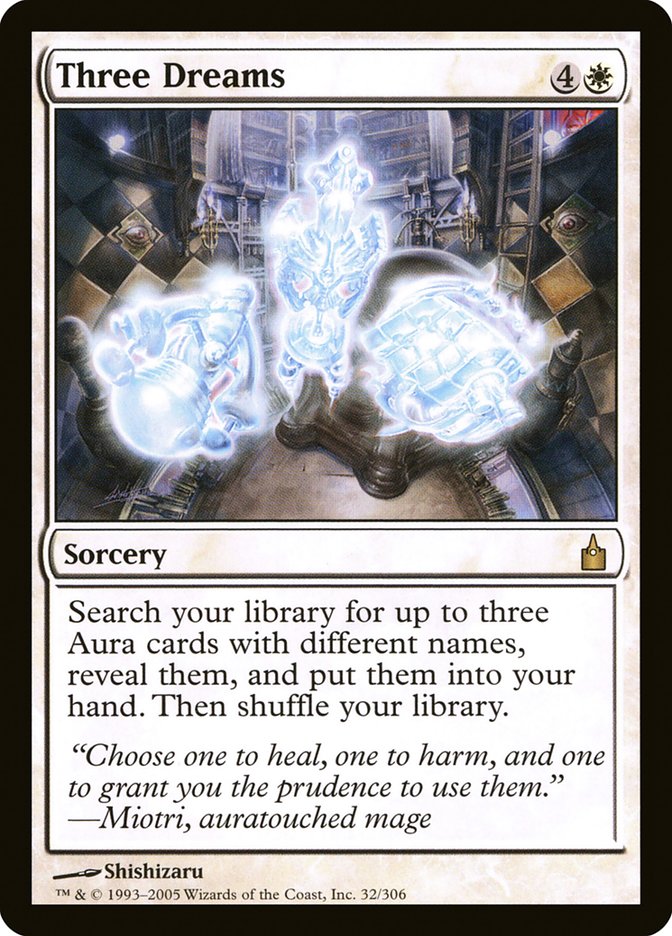


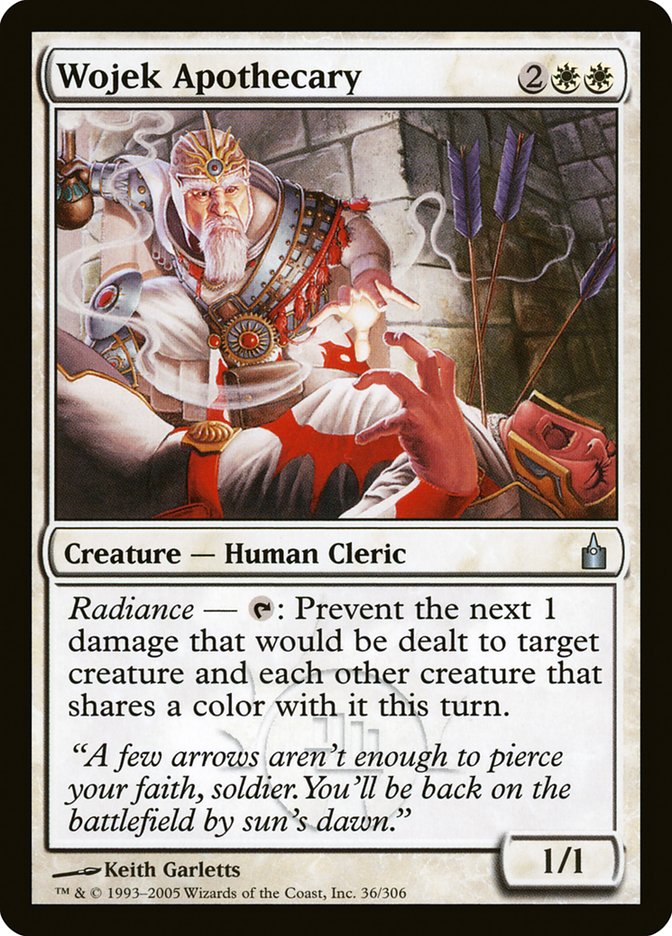
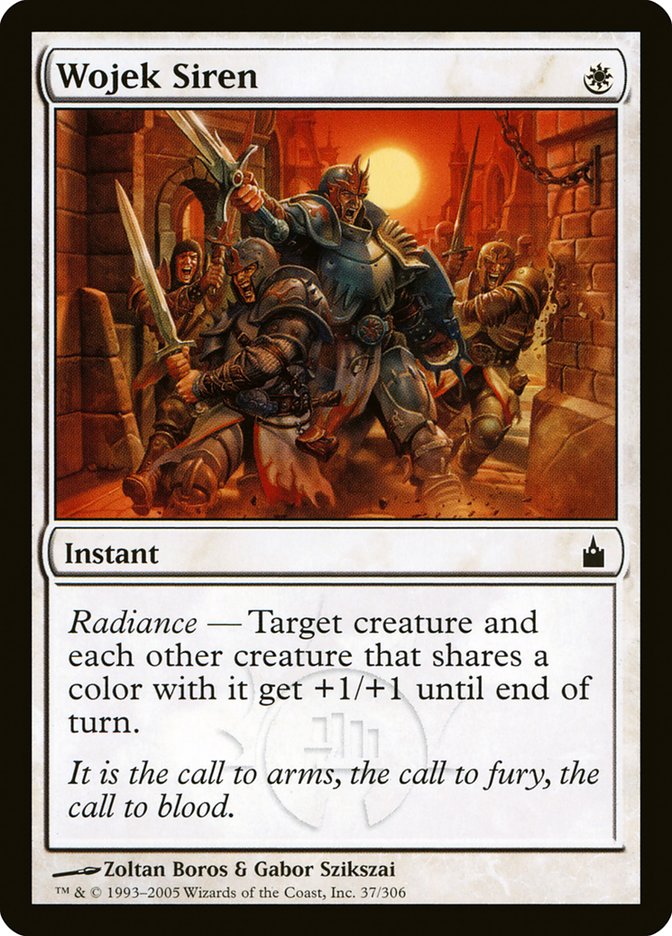
Blue


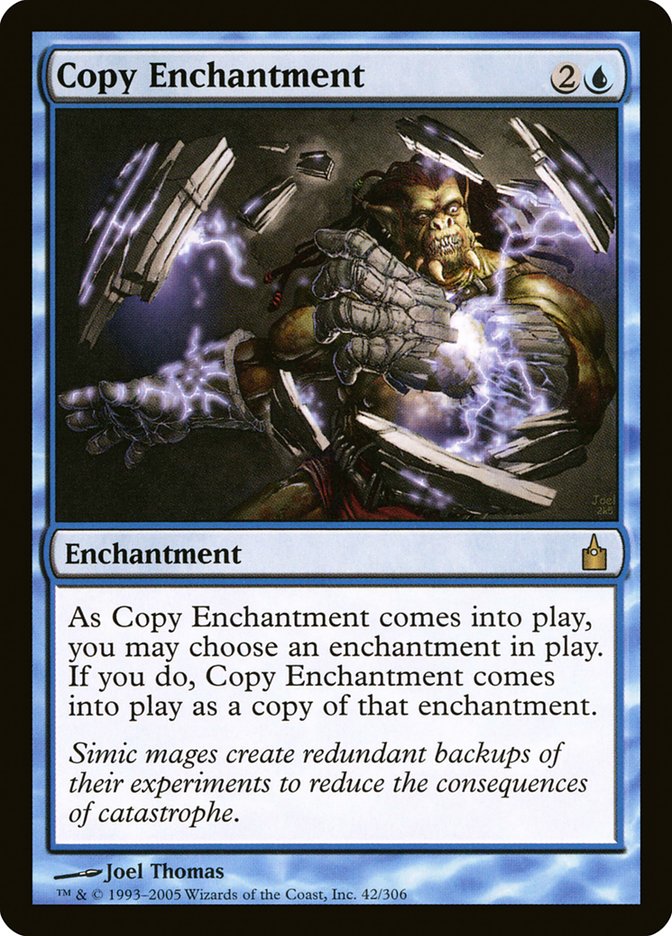


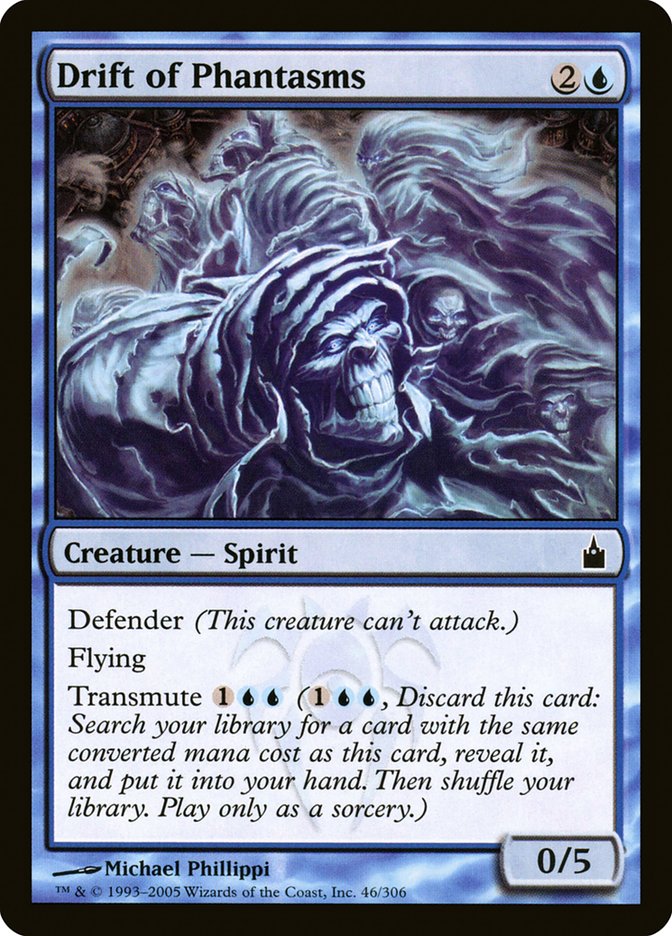

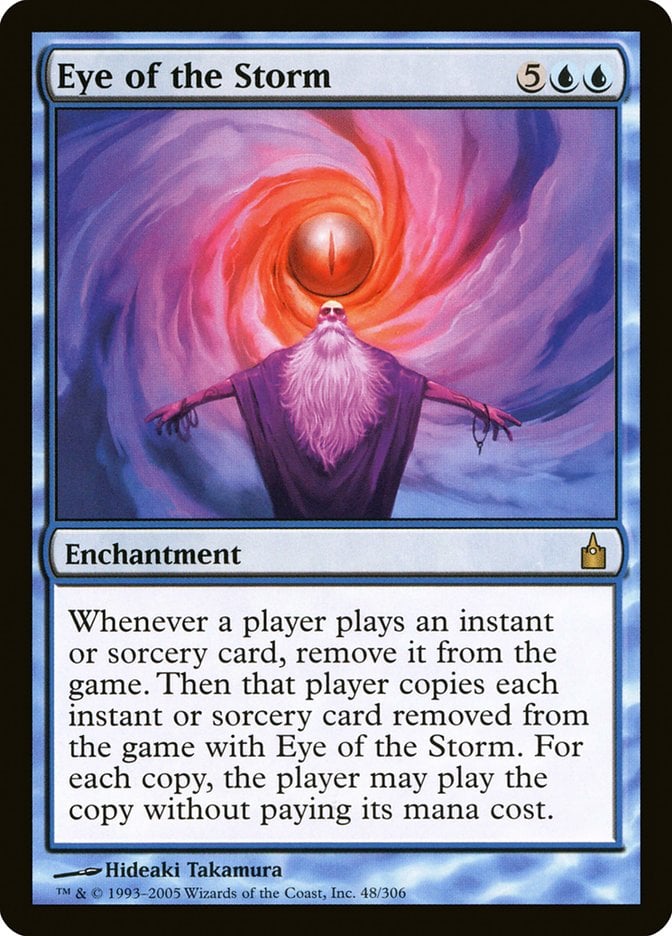


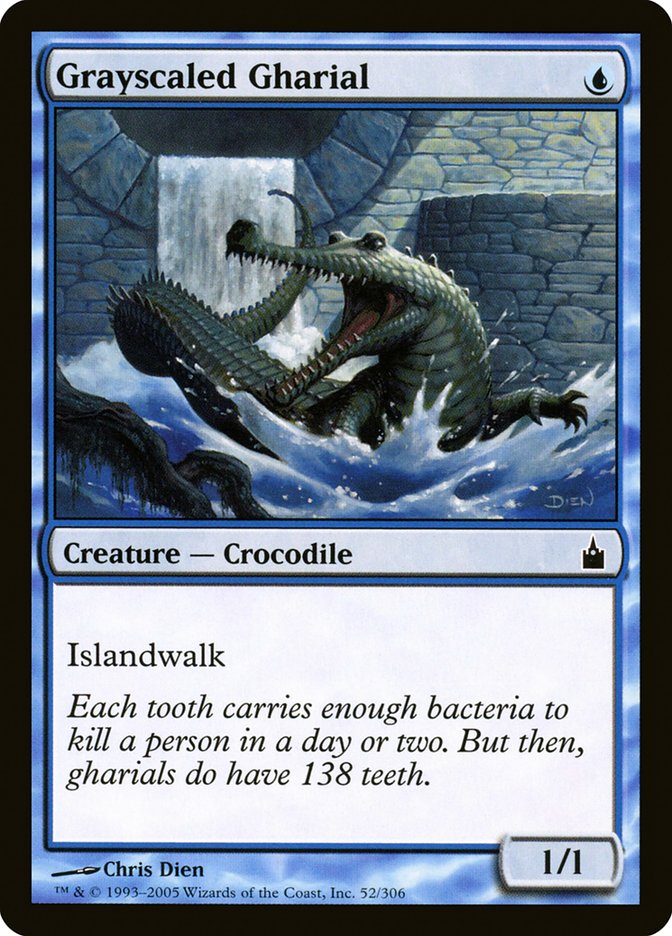
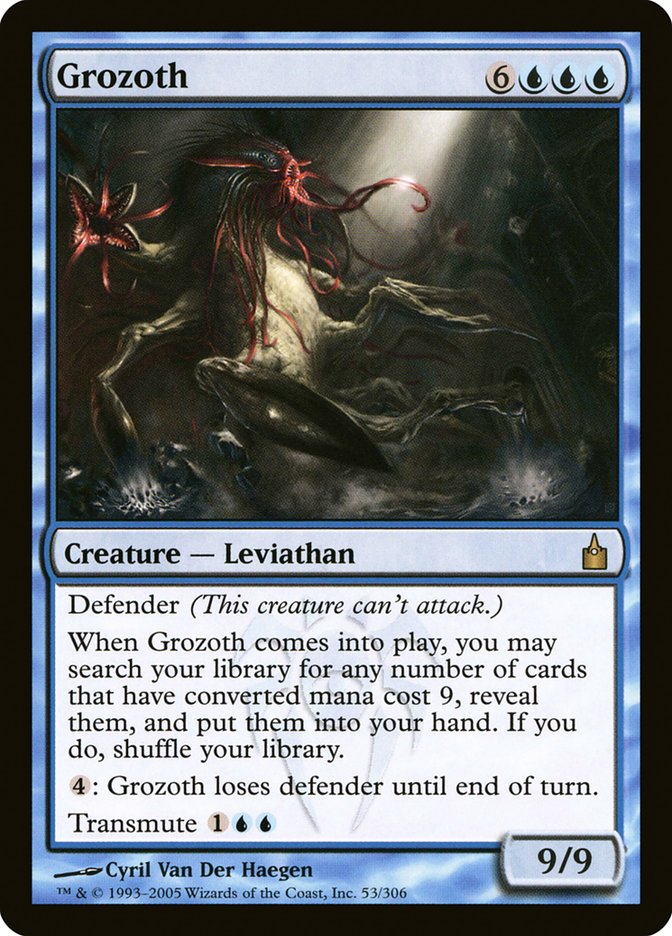
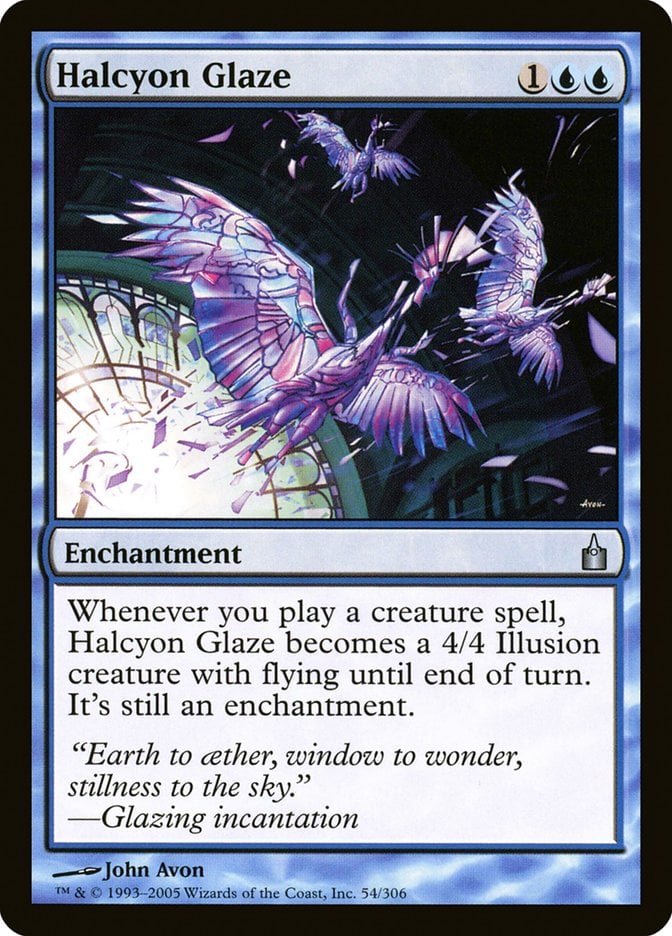
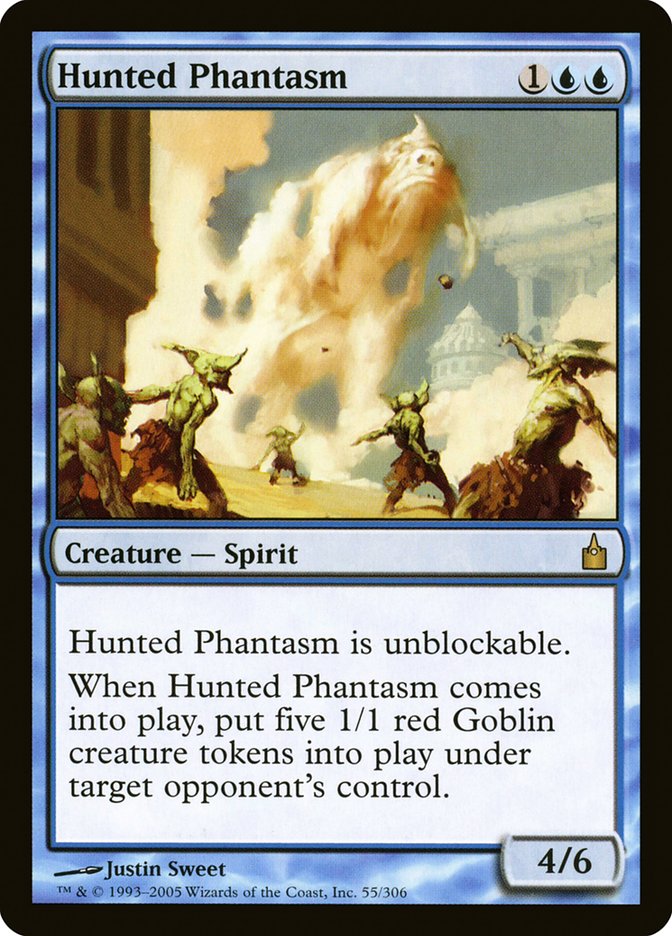

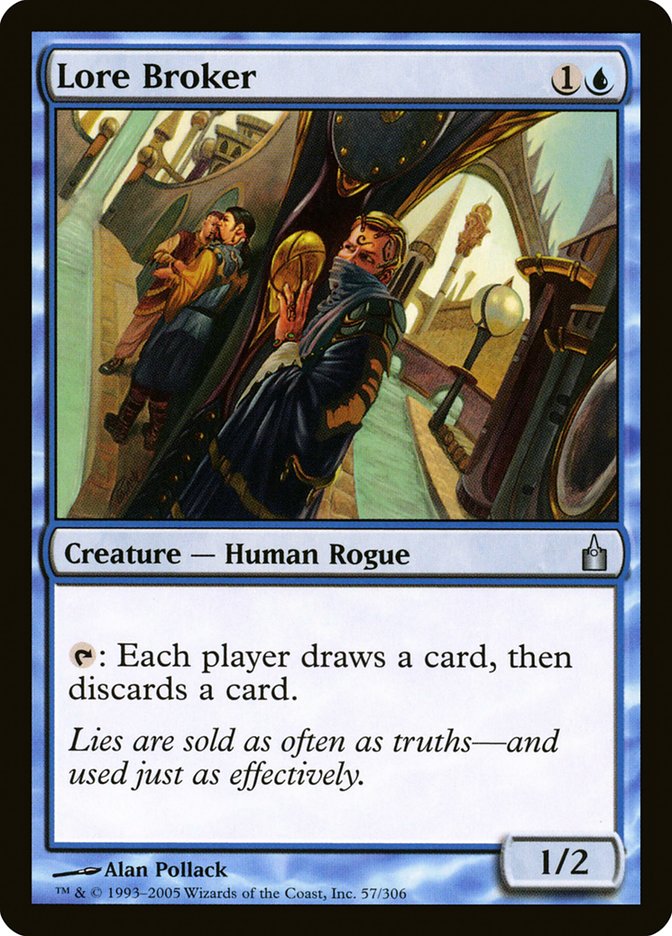




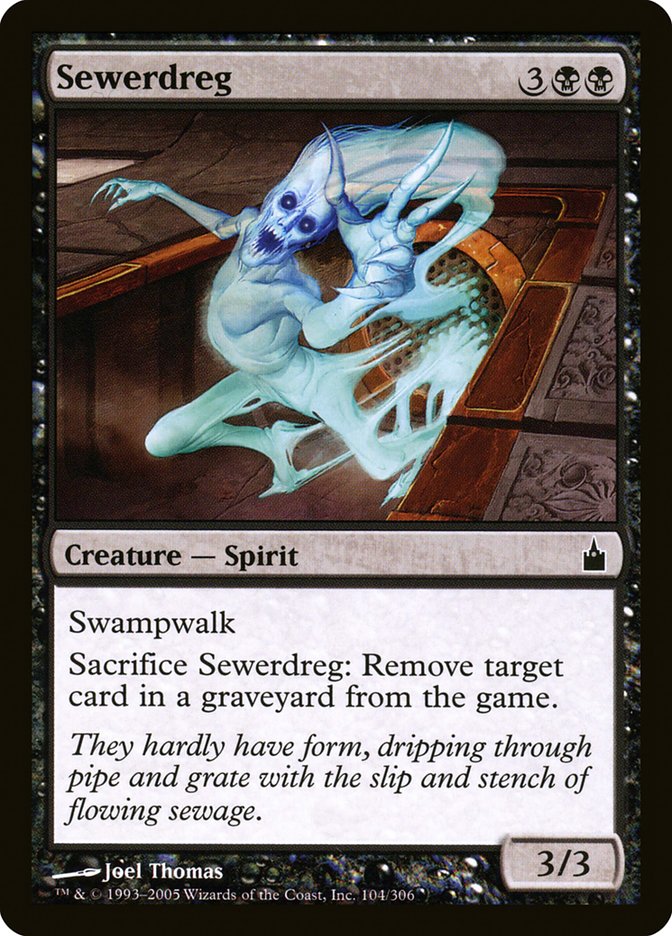
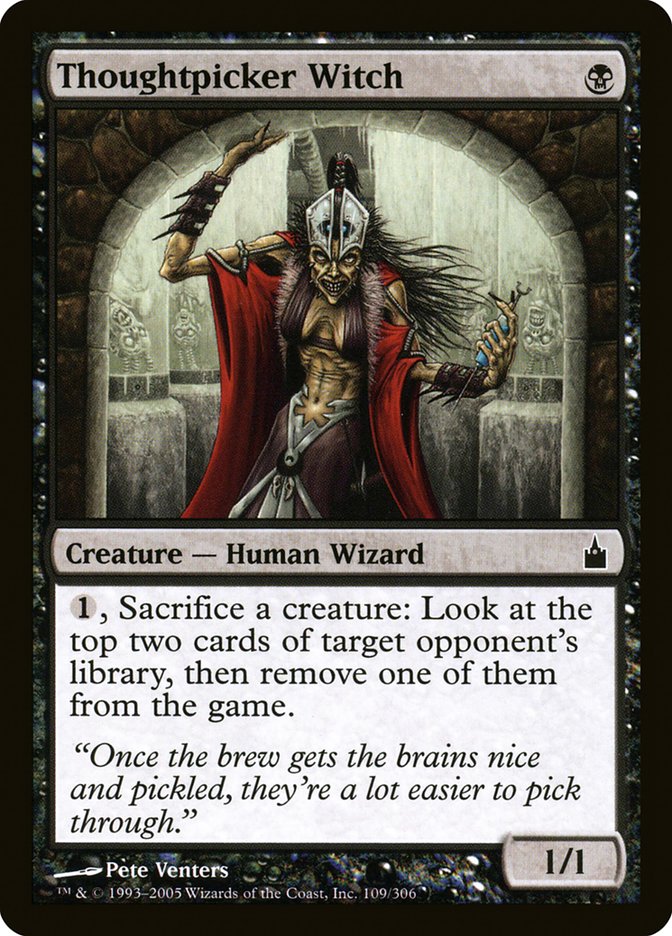
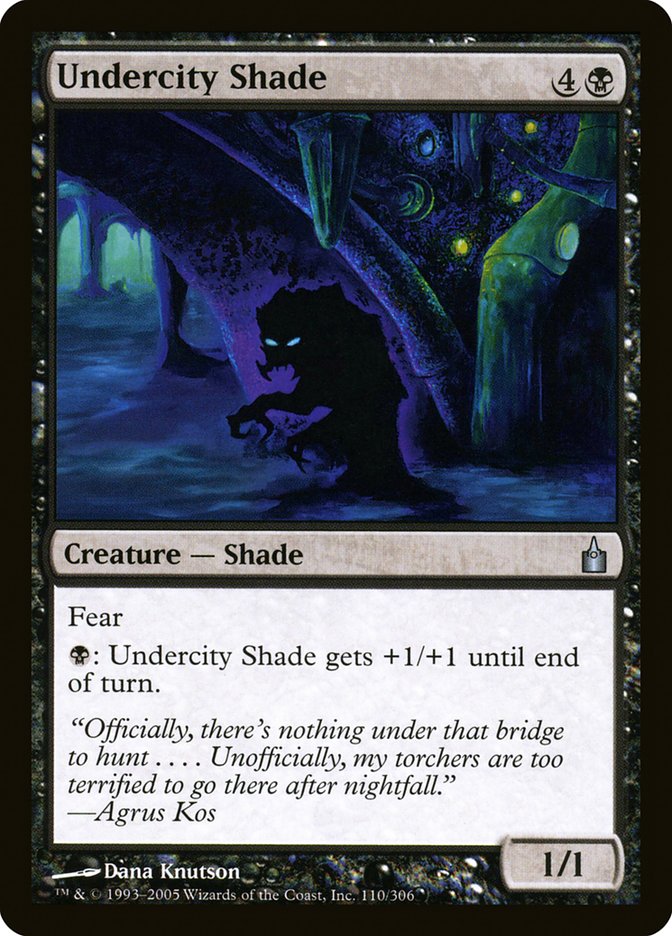
Black


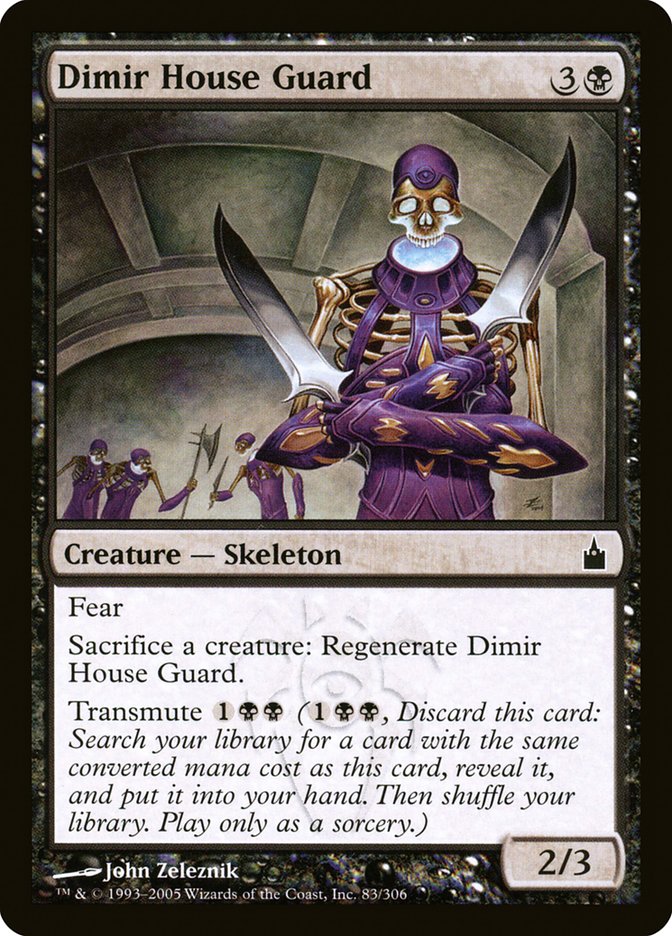


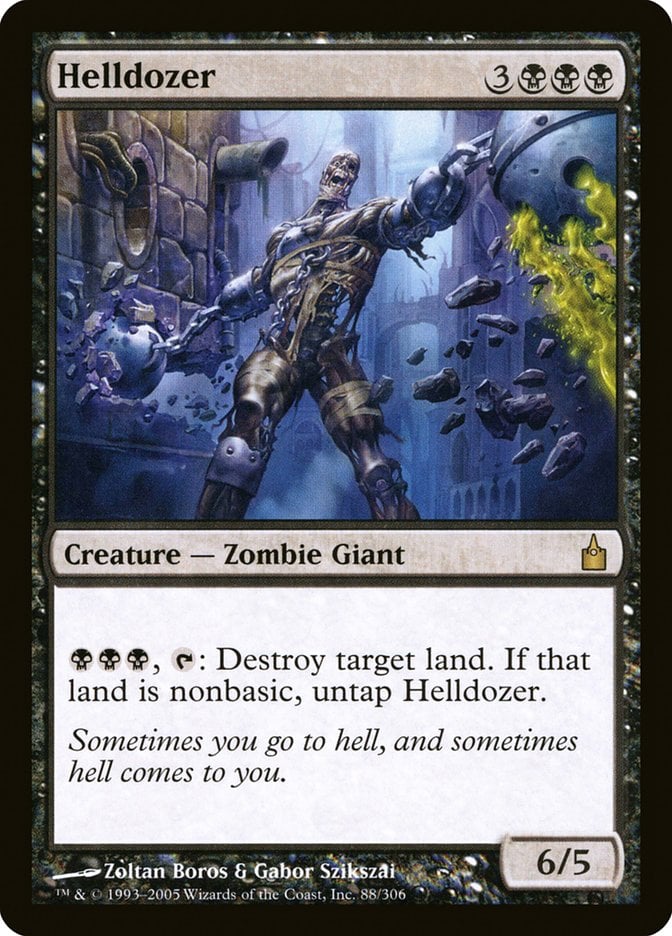


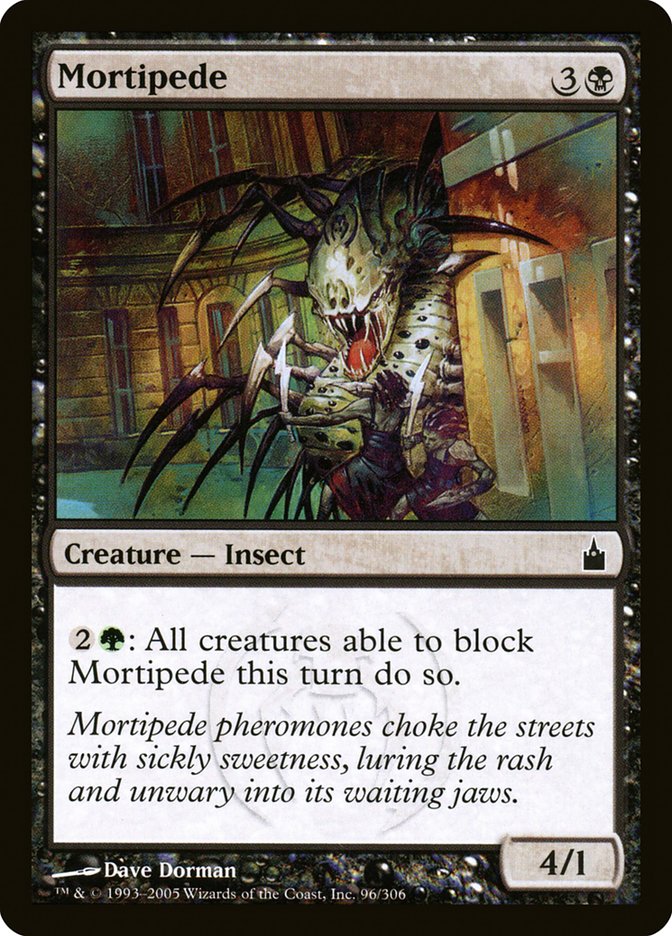


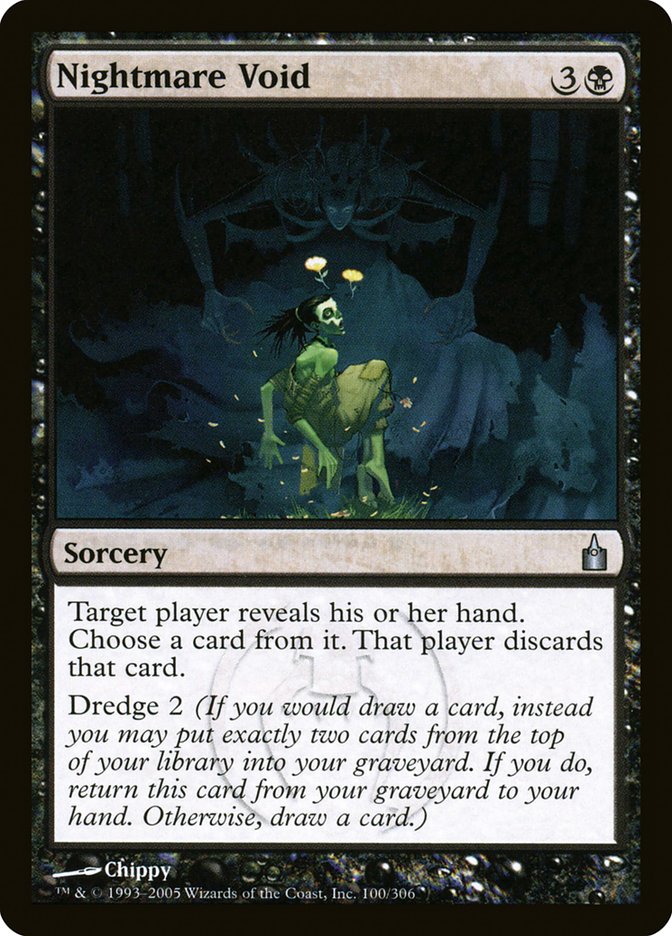






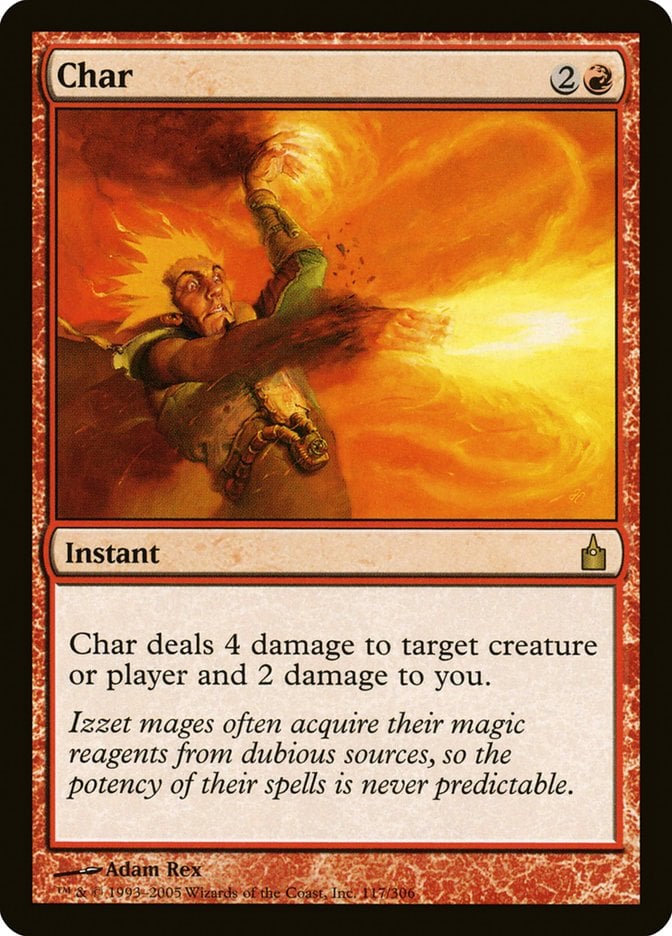
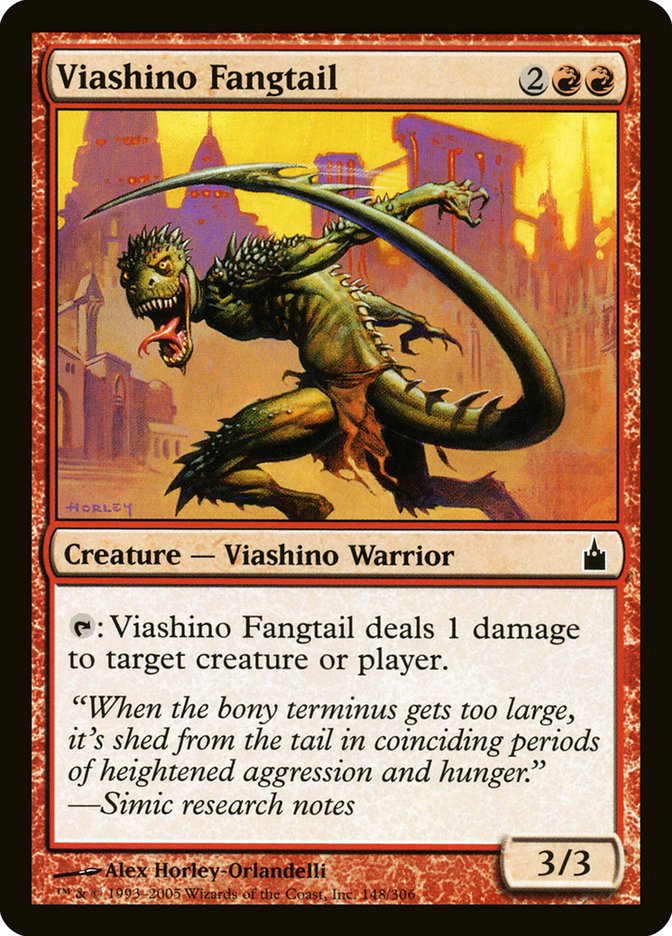
Red




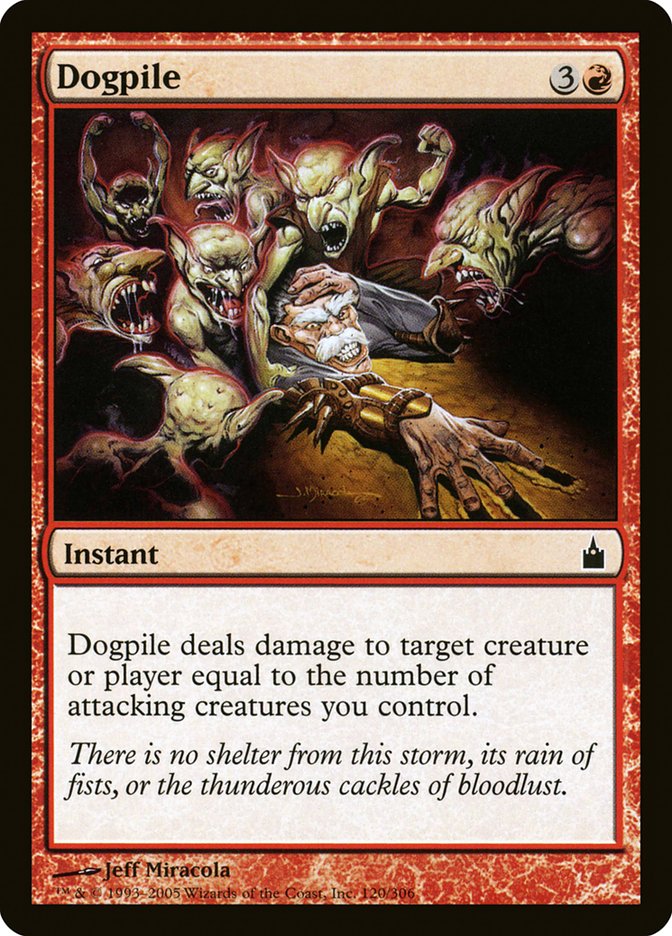


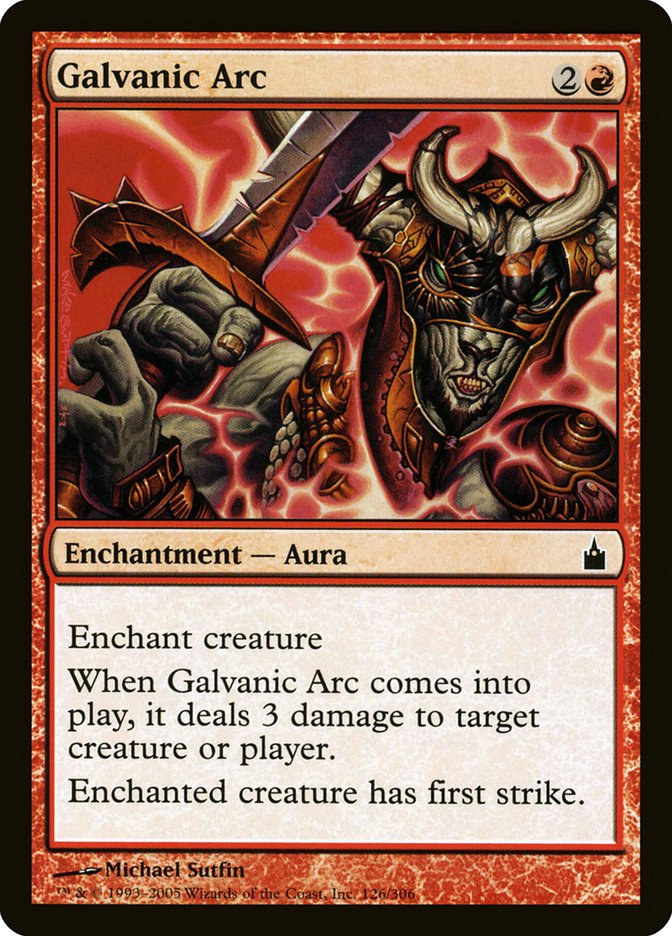

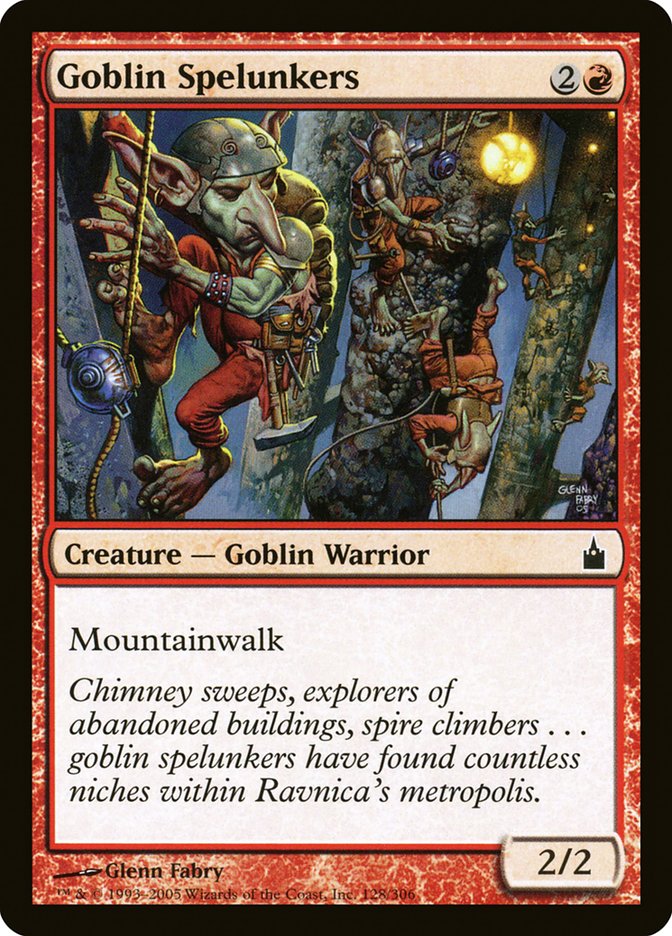
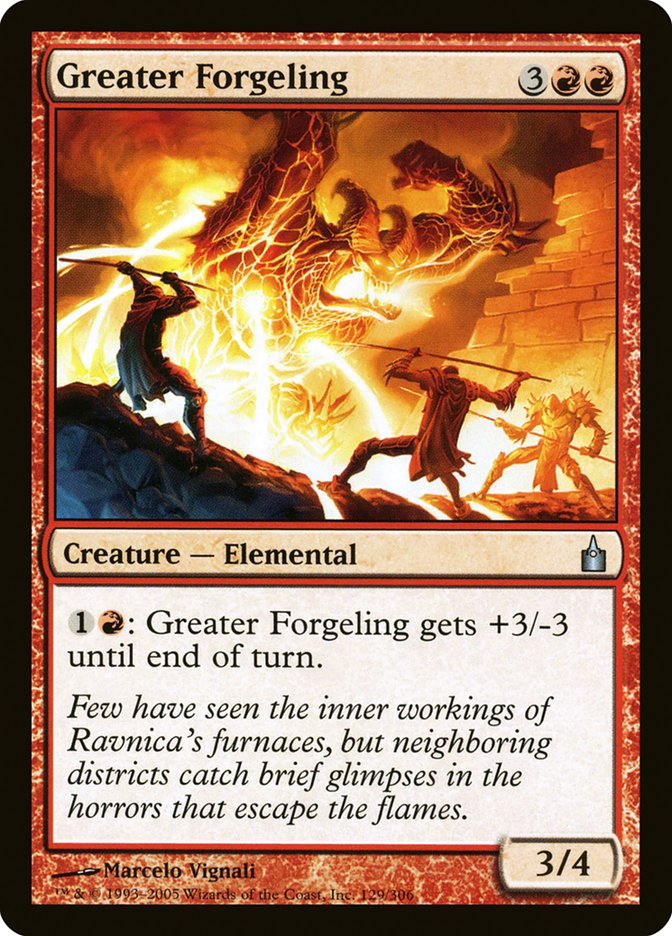


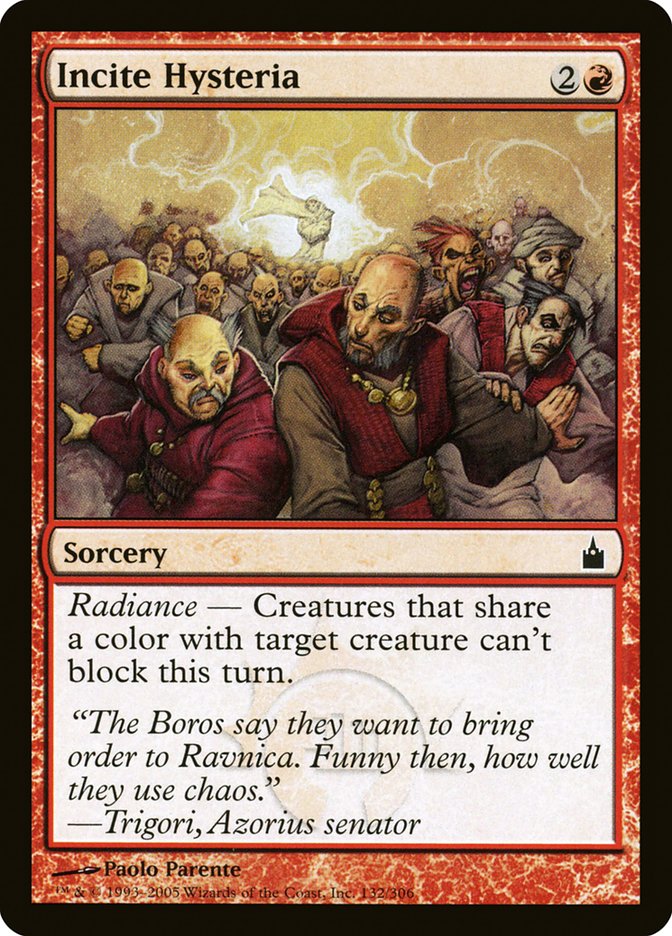


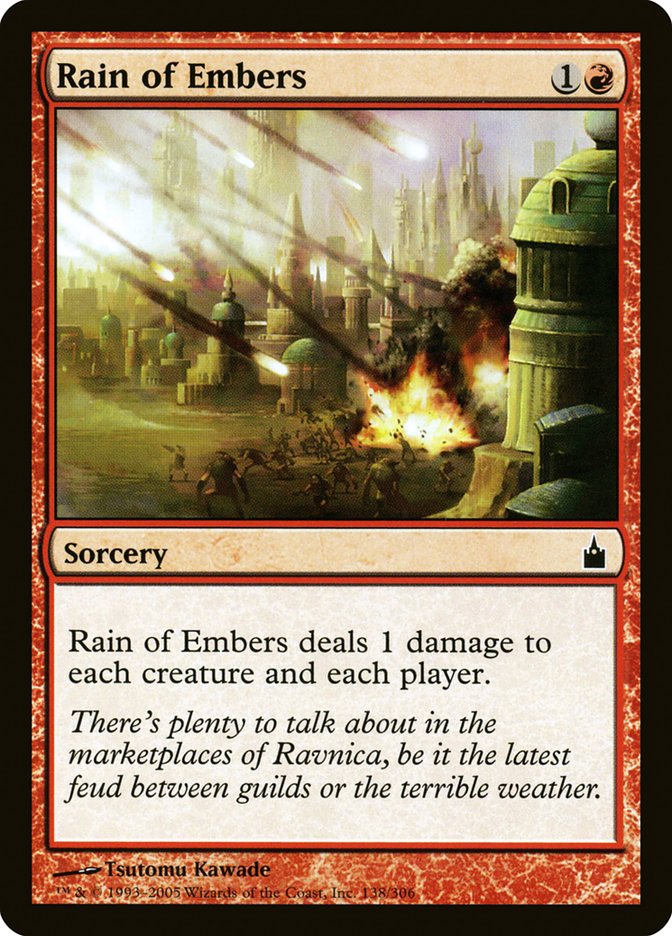
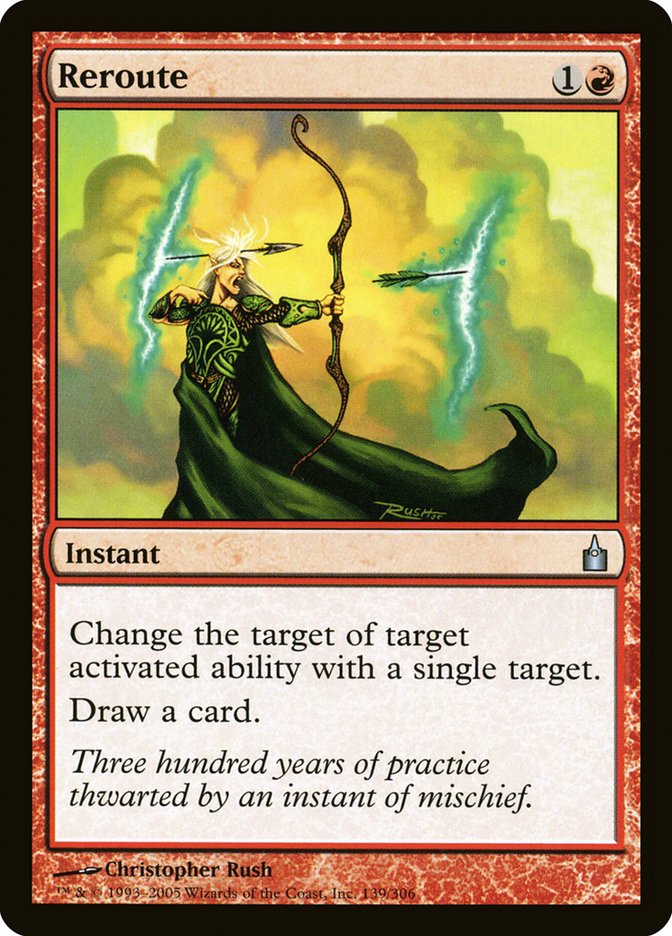

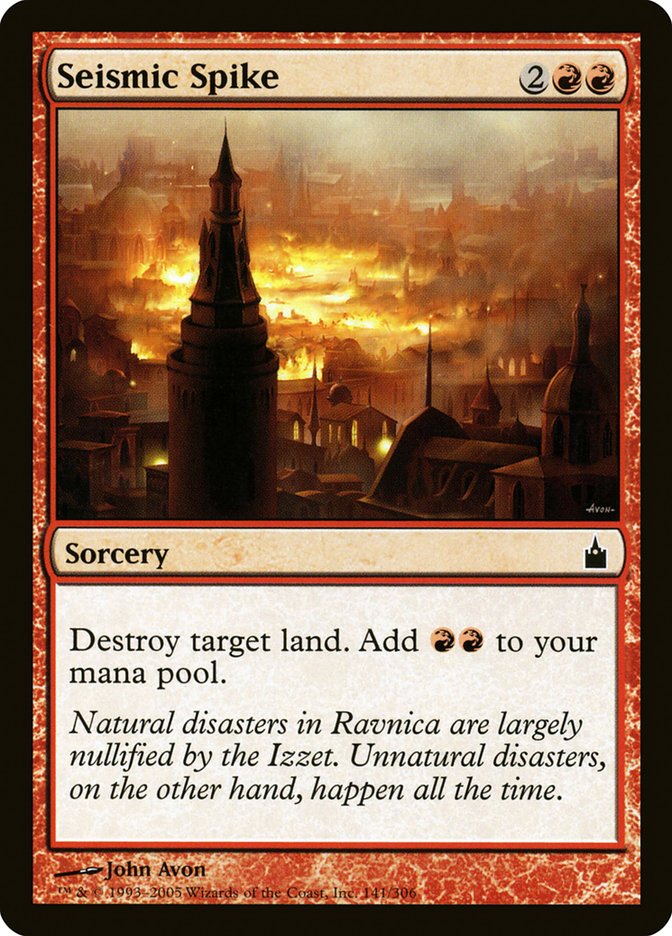





Green


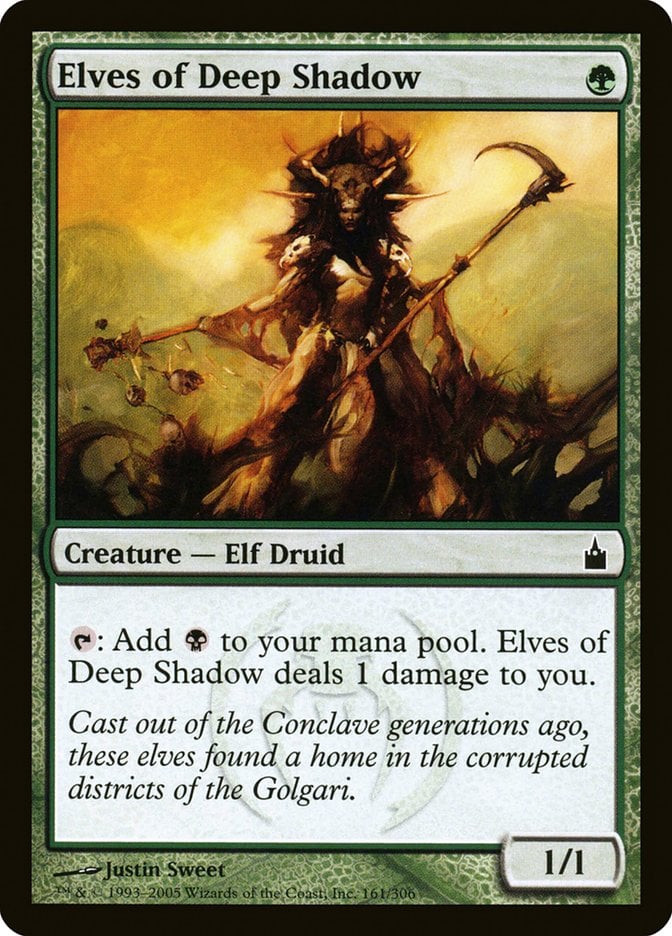


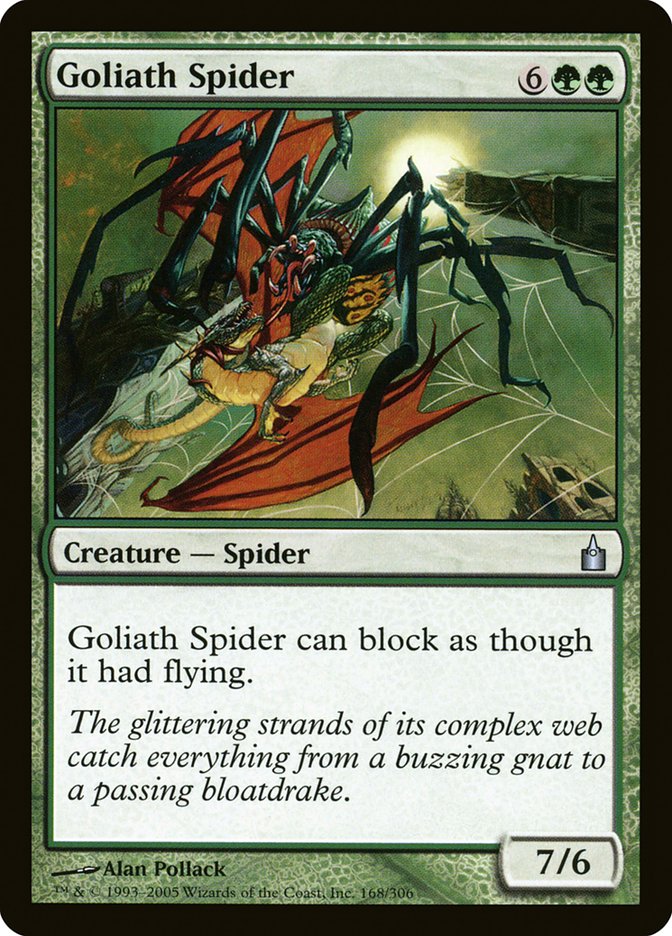


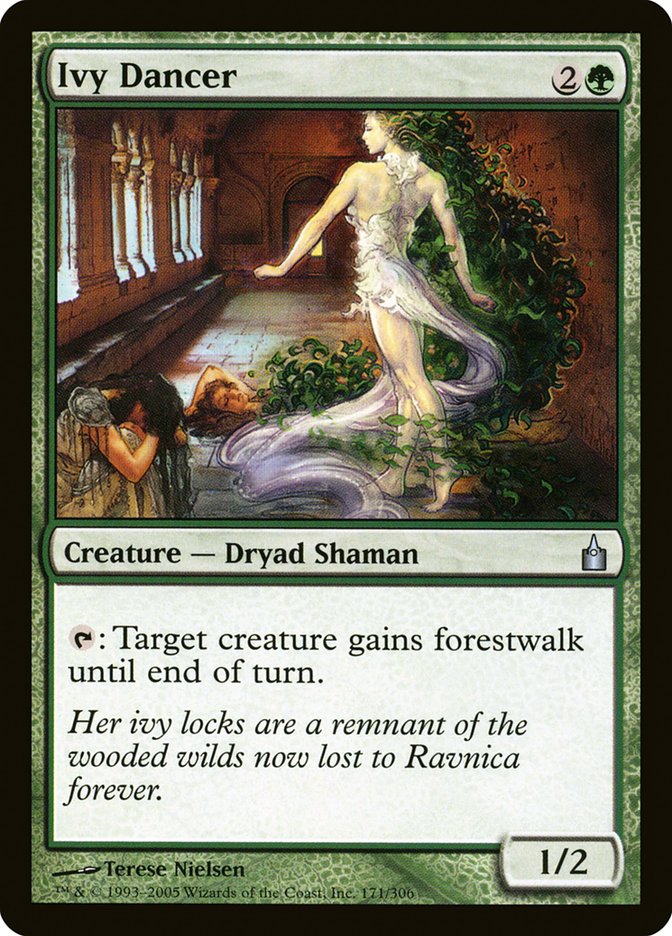


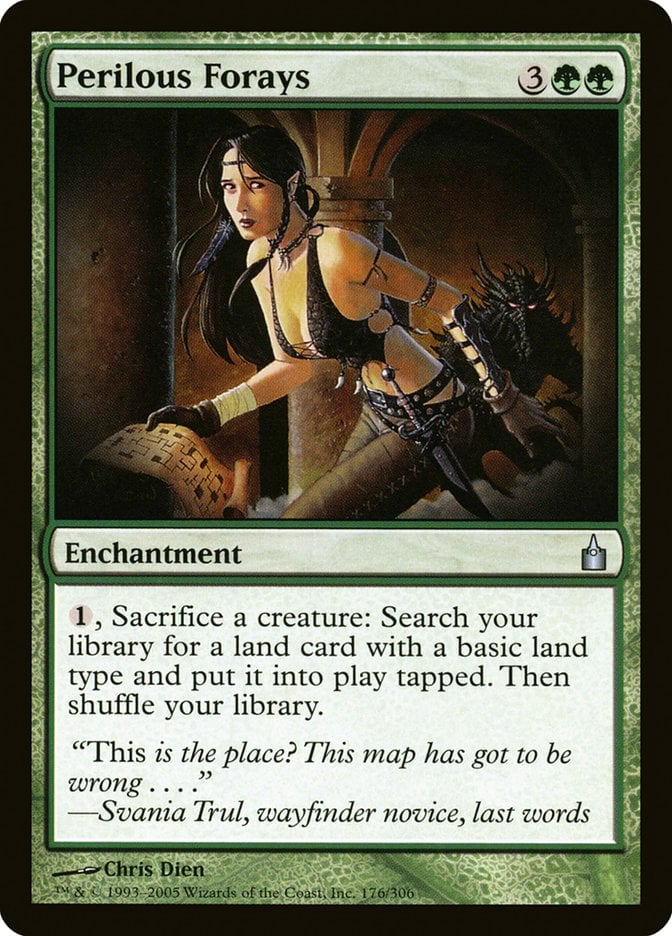


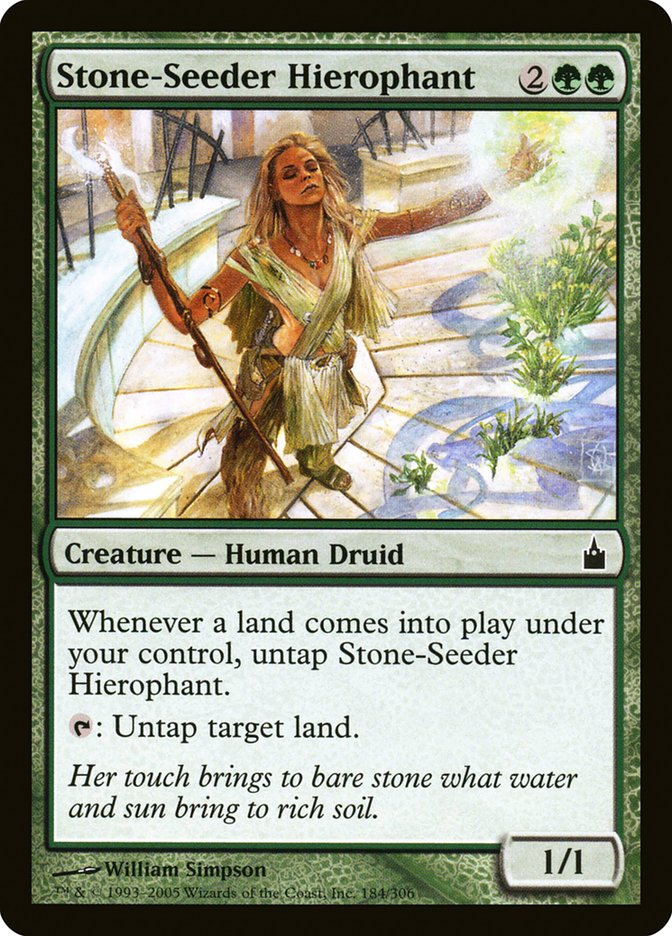

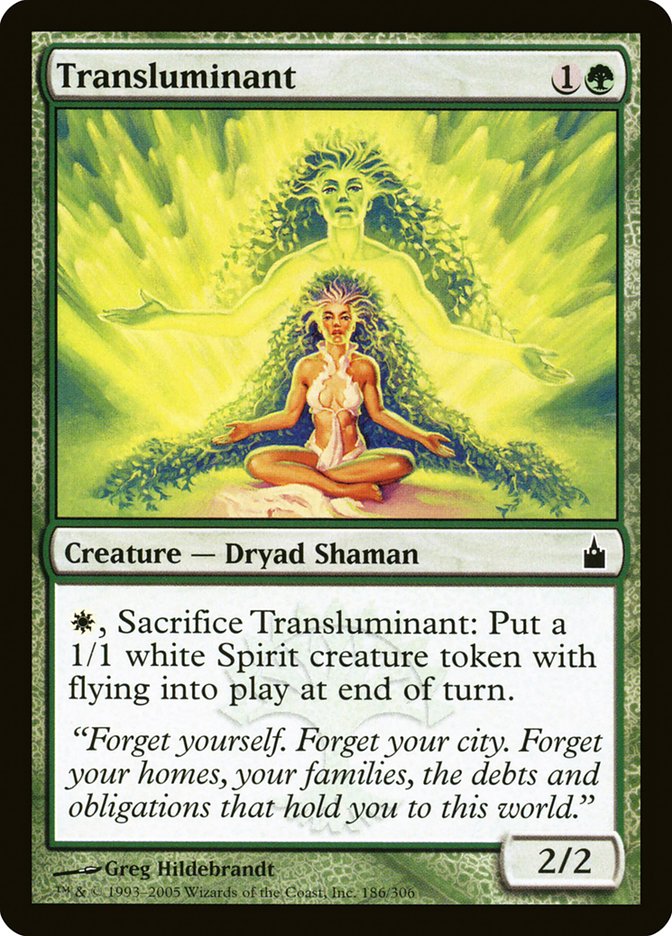


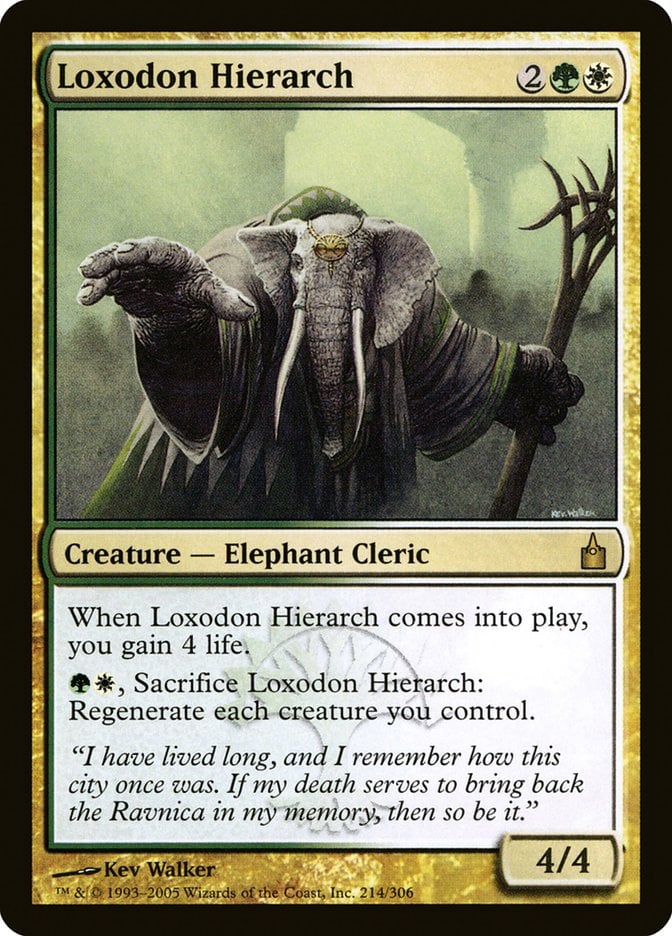
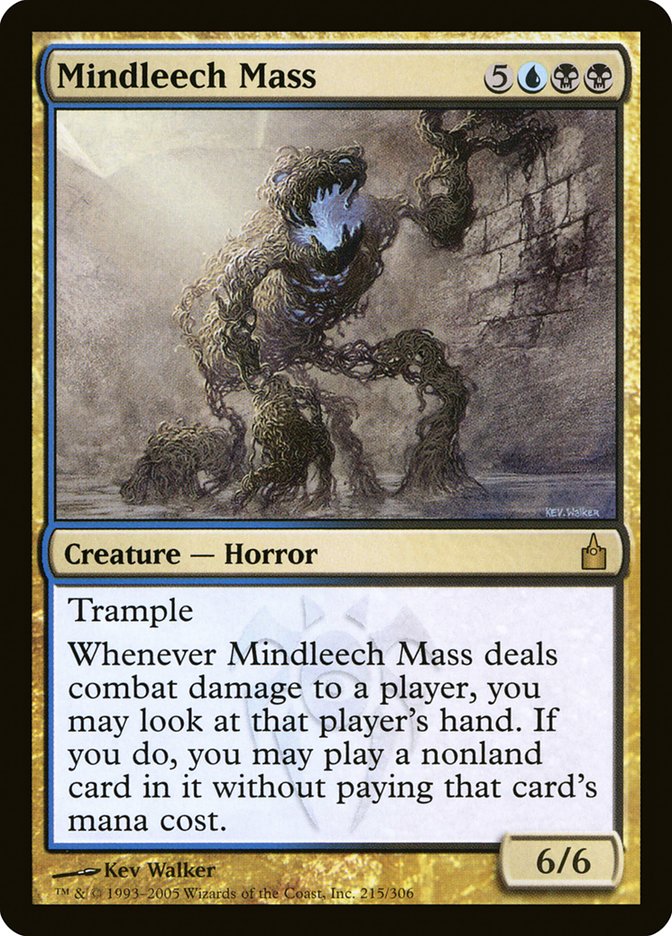
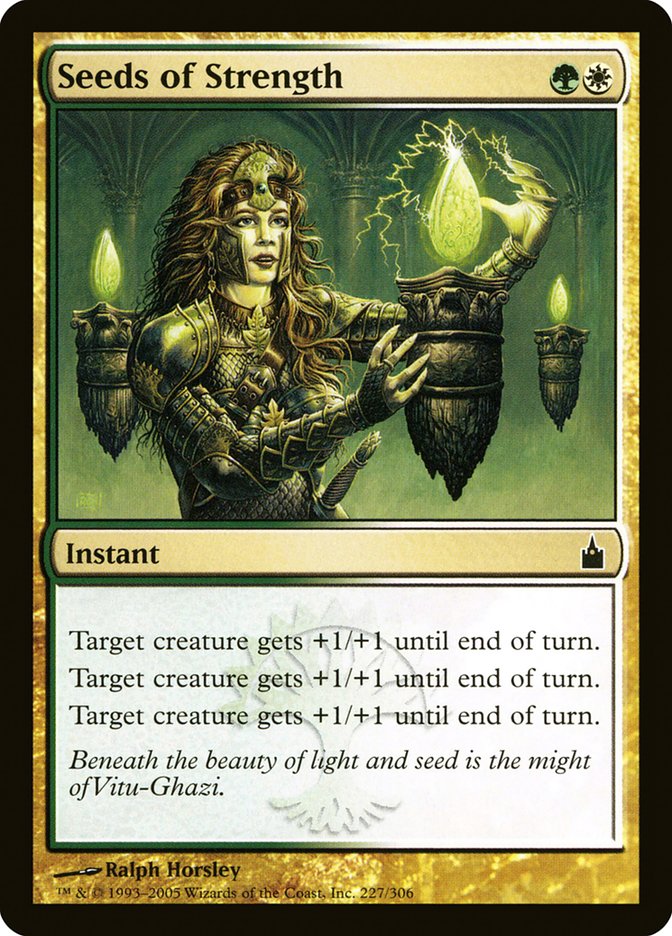
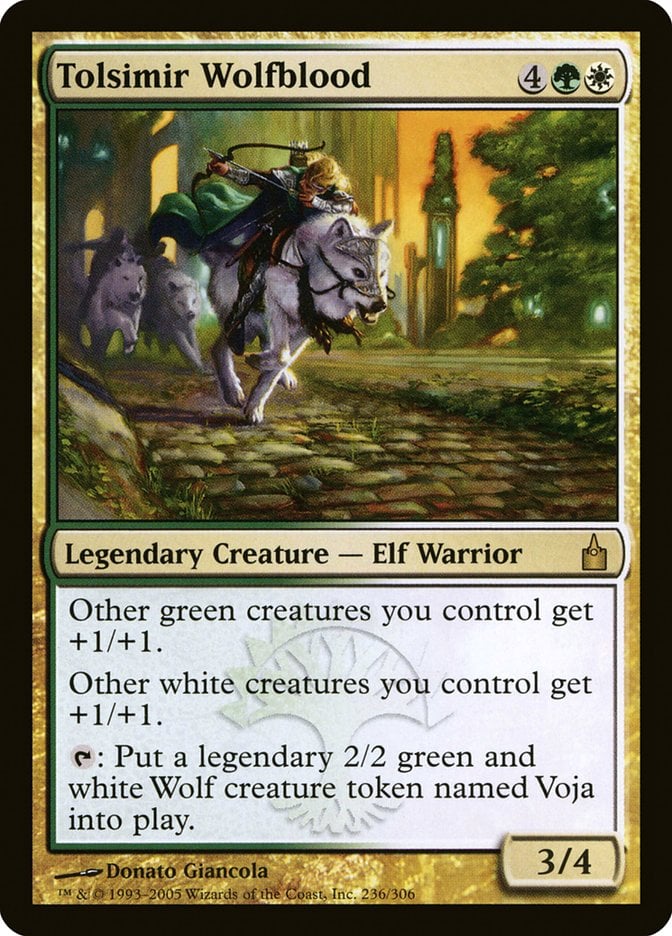
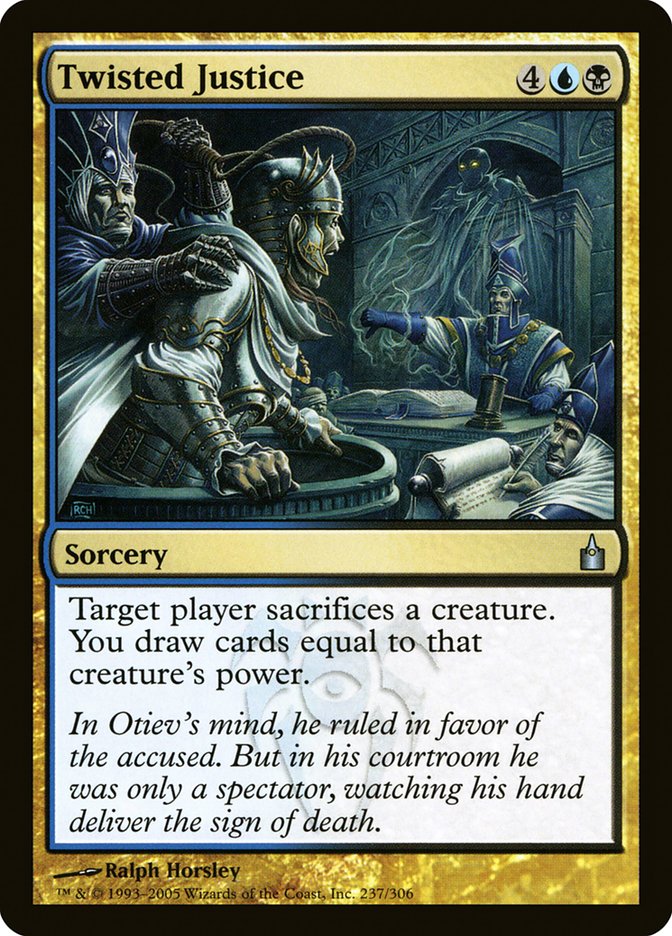
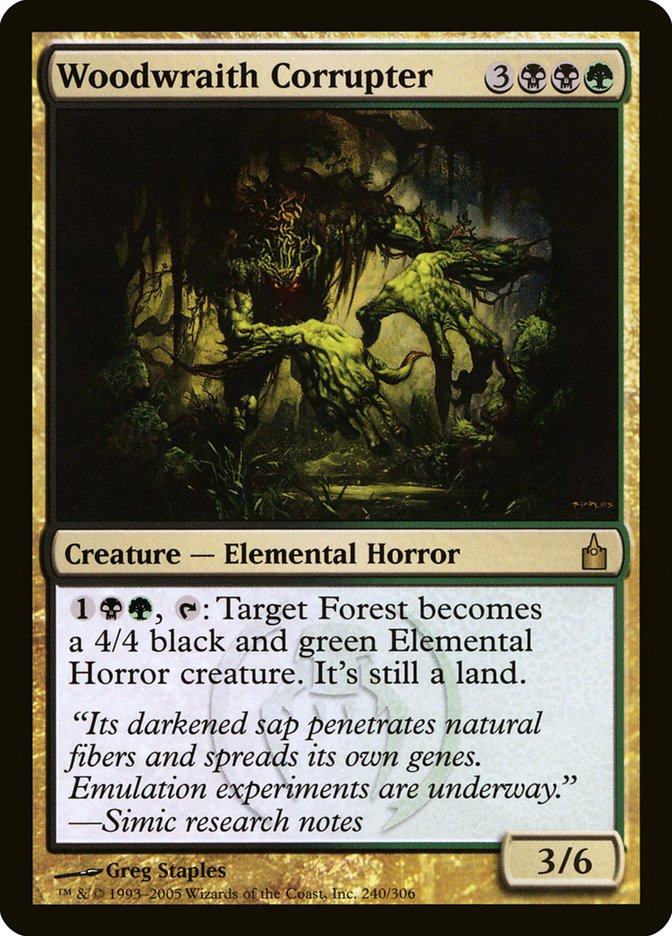
Multicolor

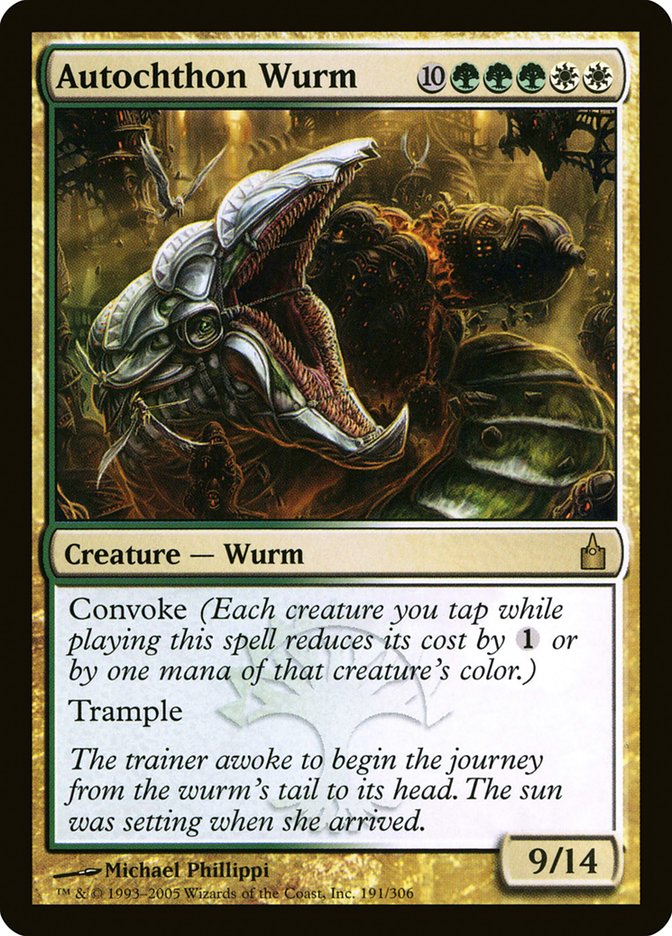


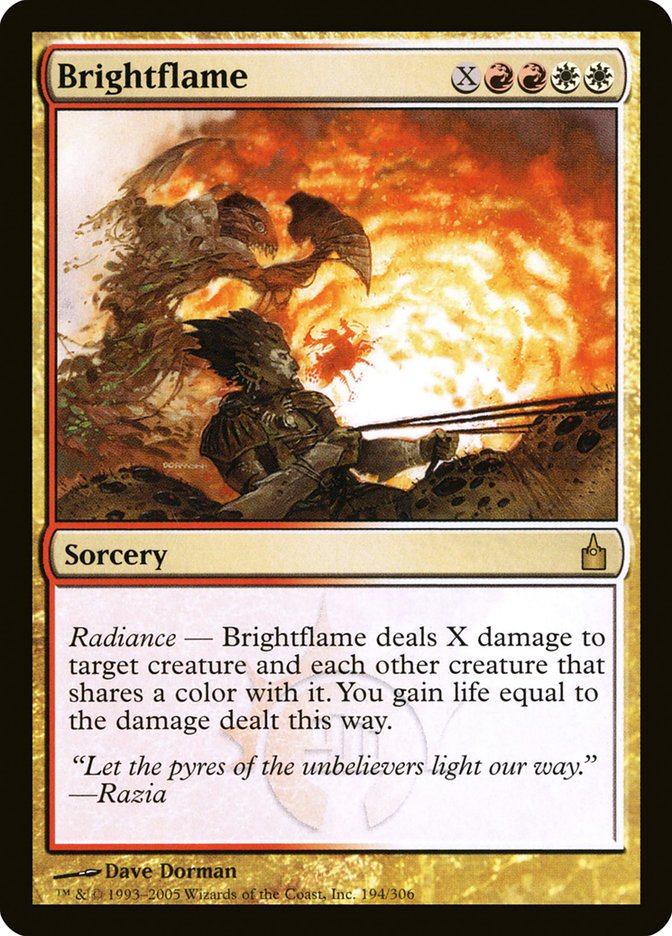
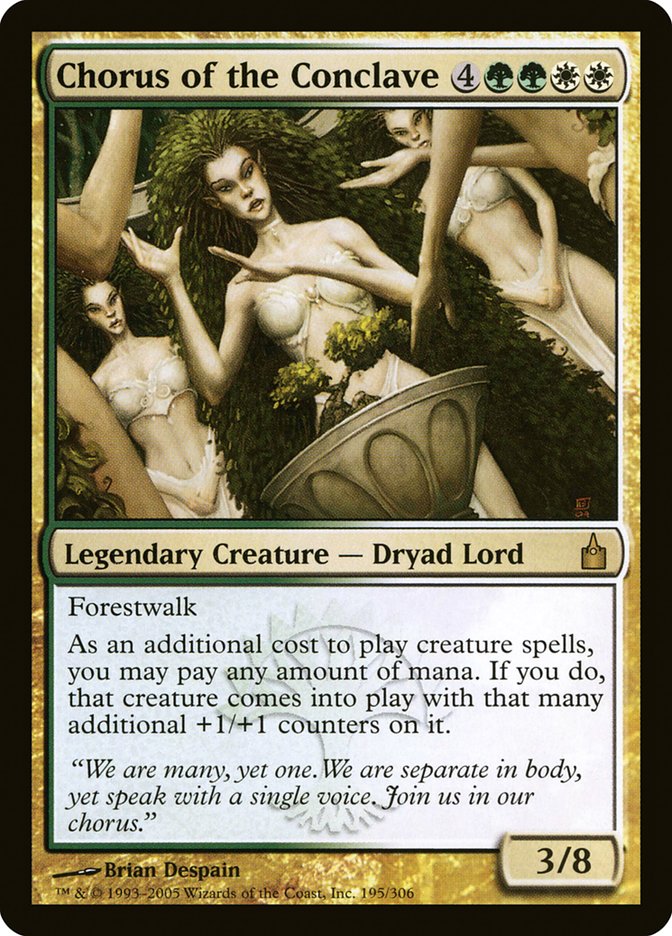
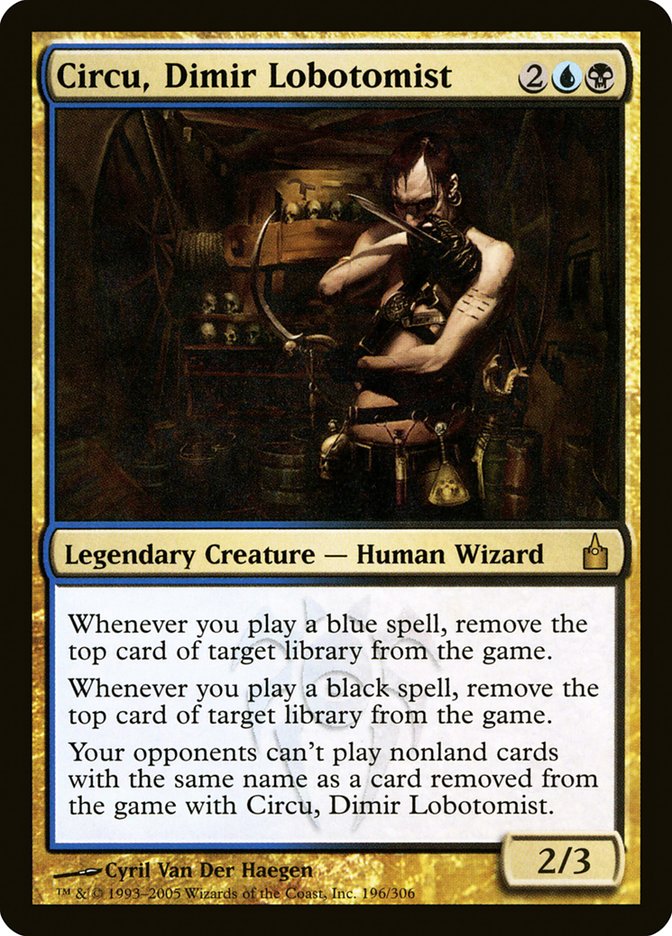
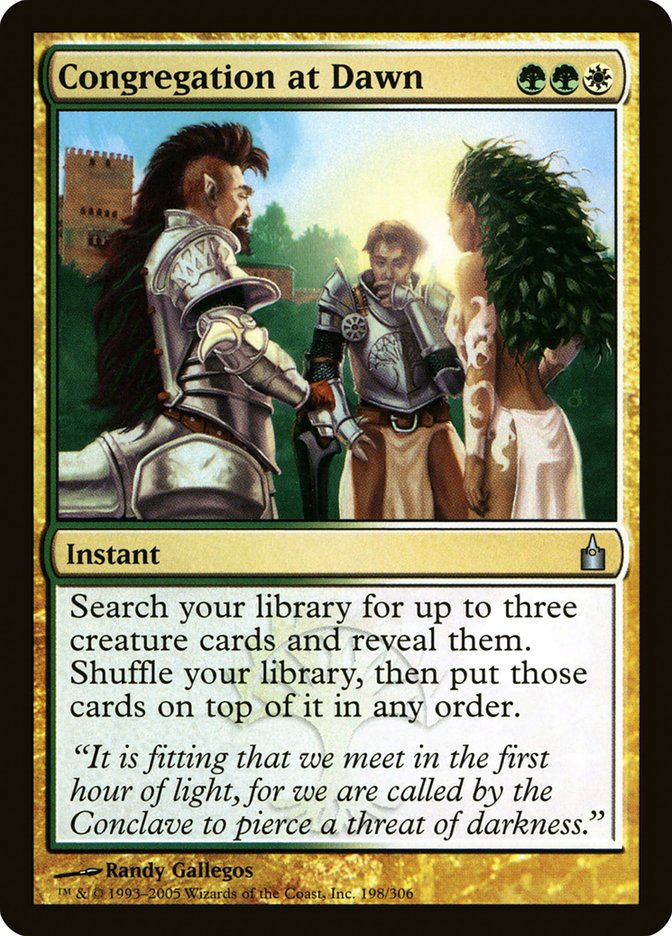

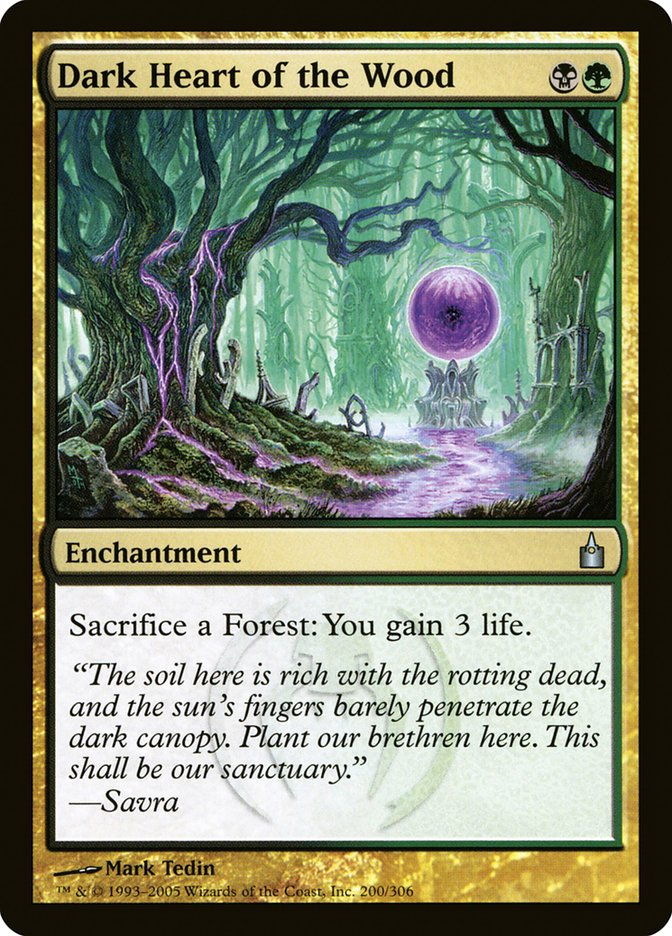


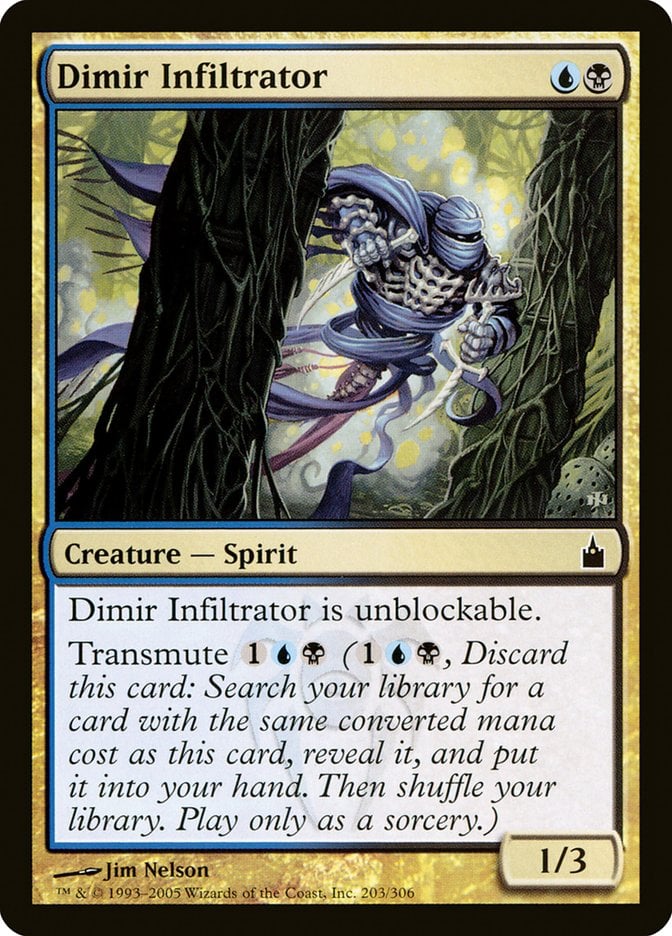




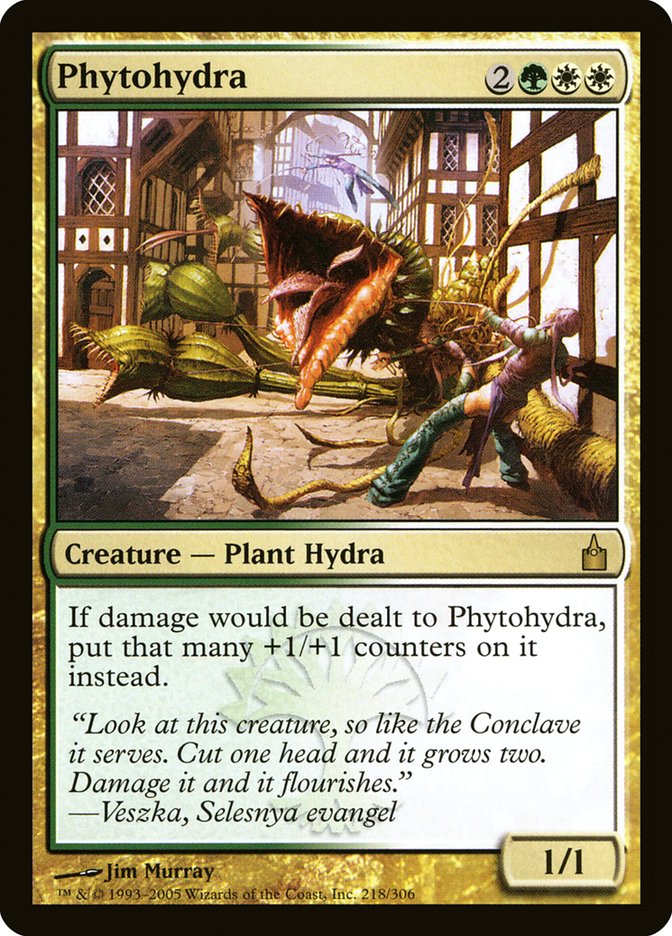
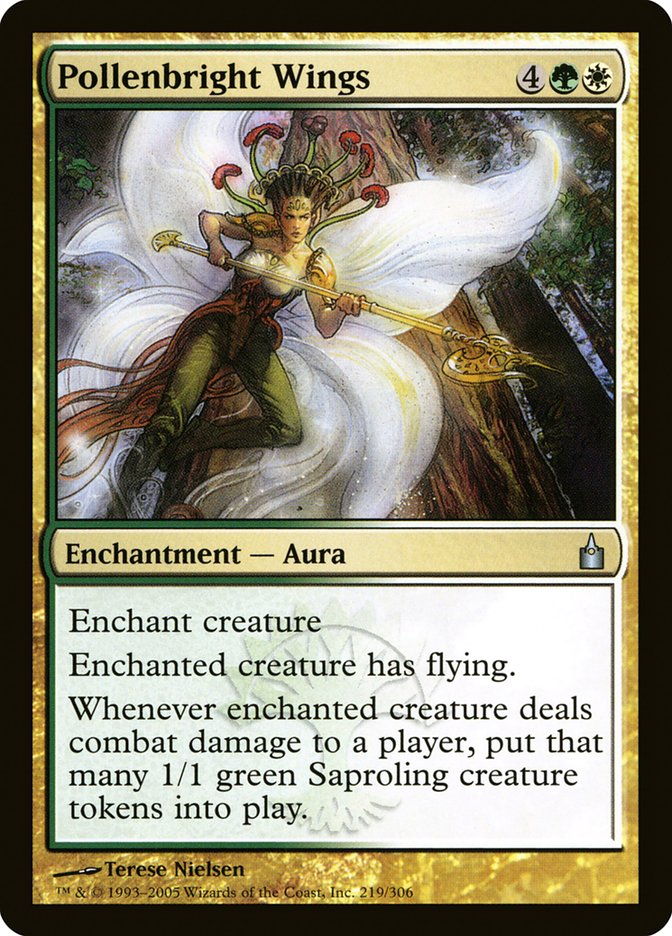


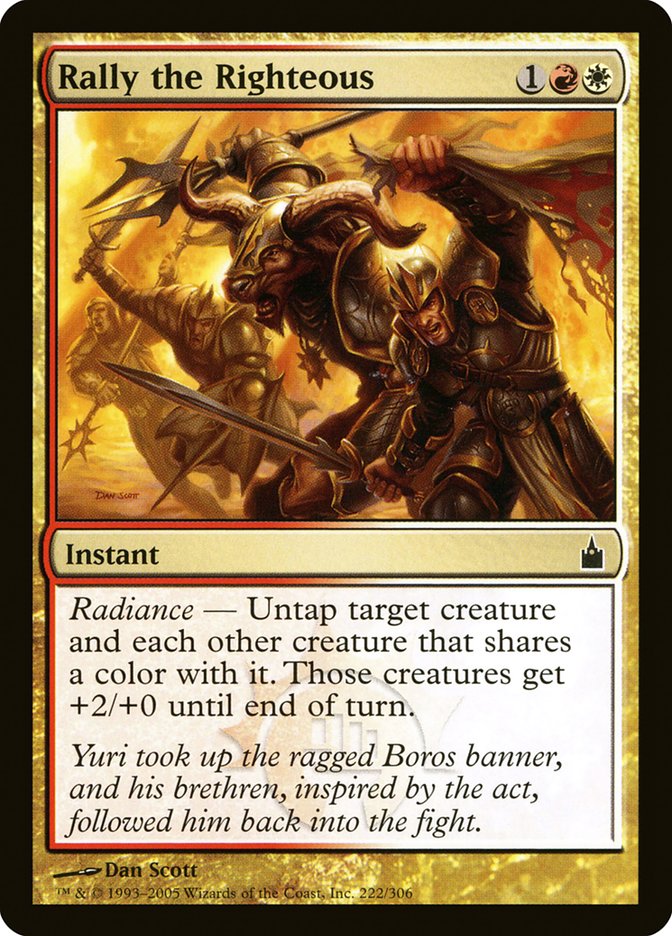
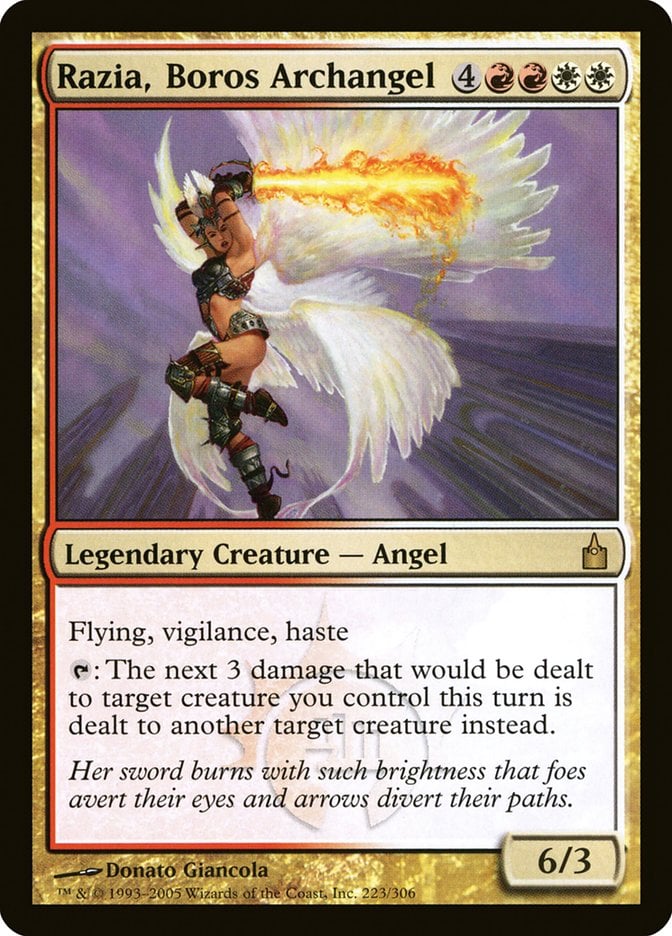











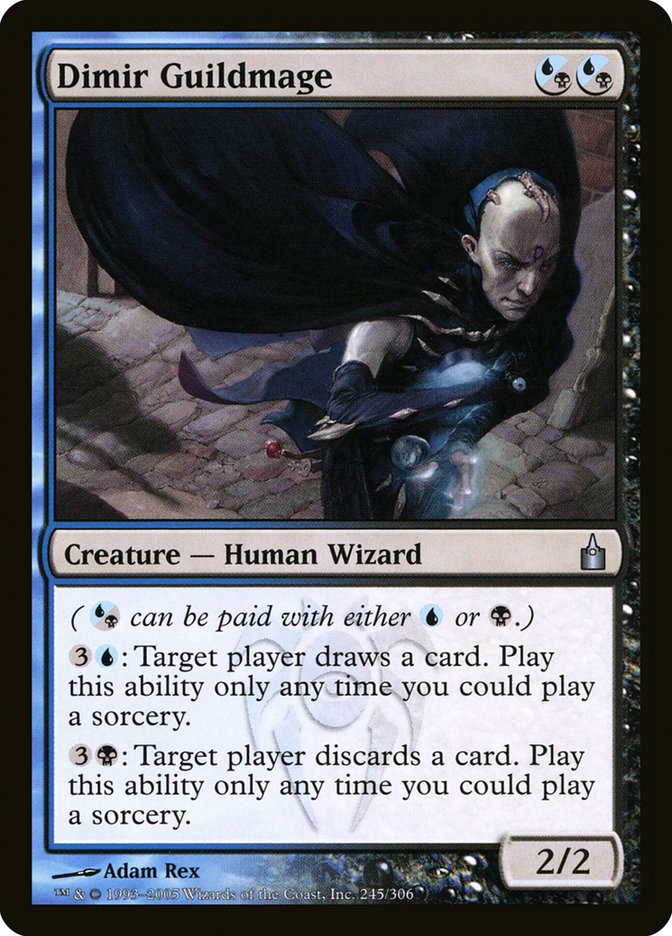

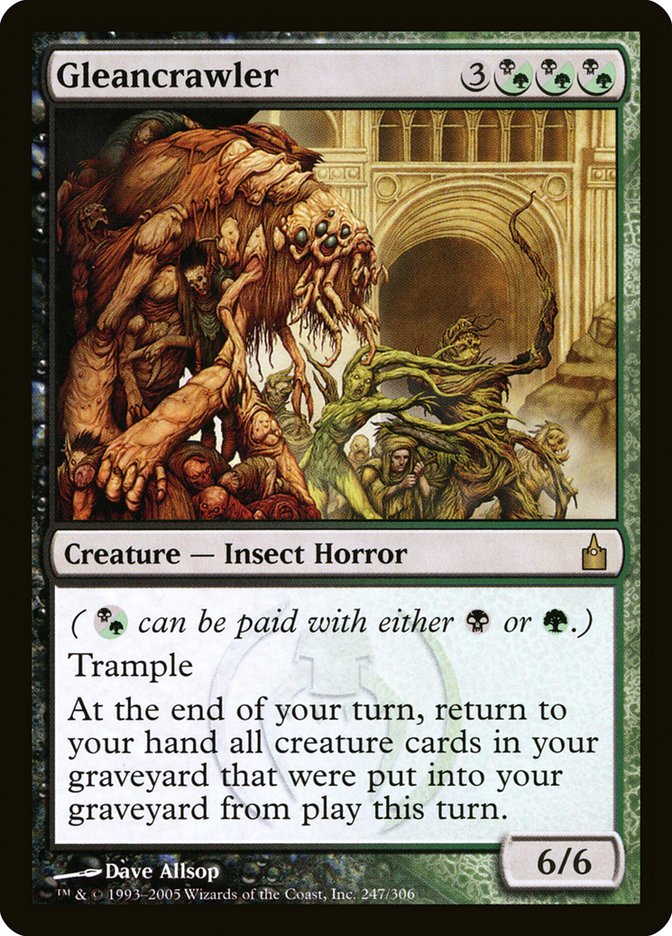


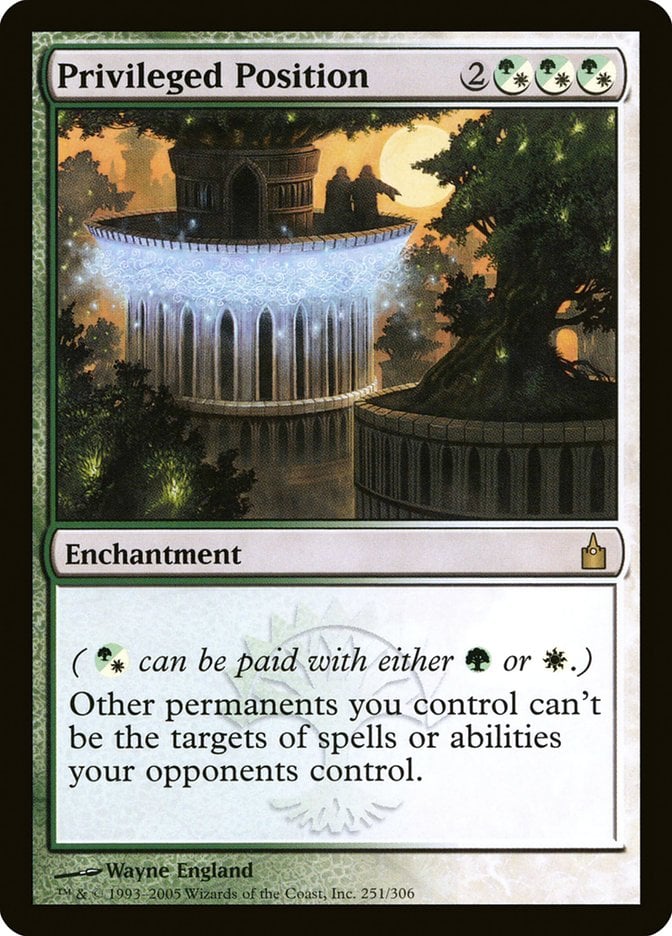
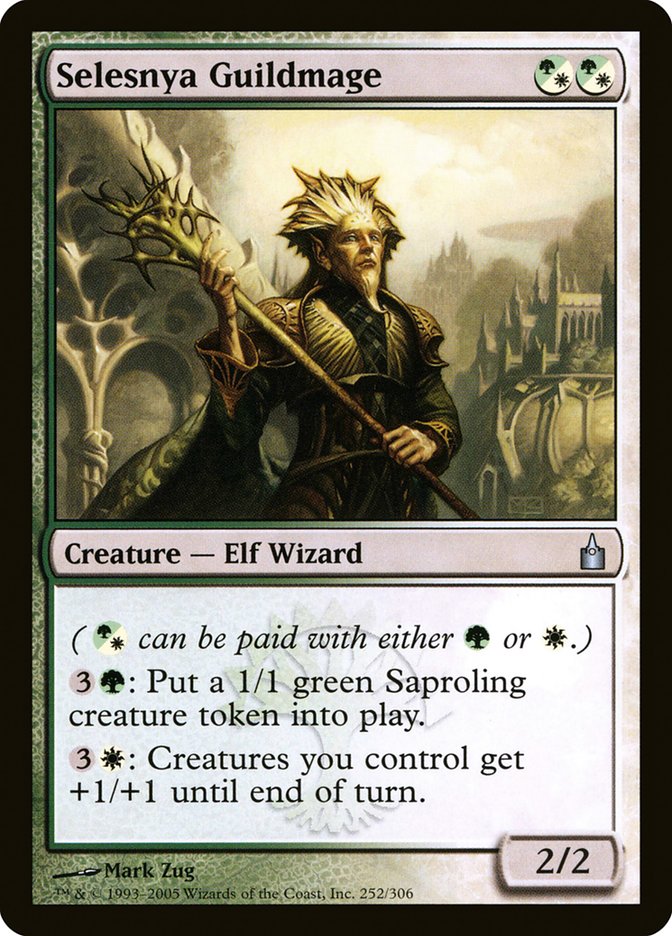

Colorless


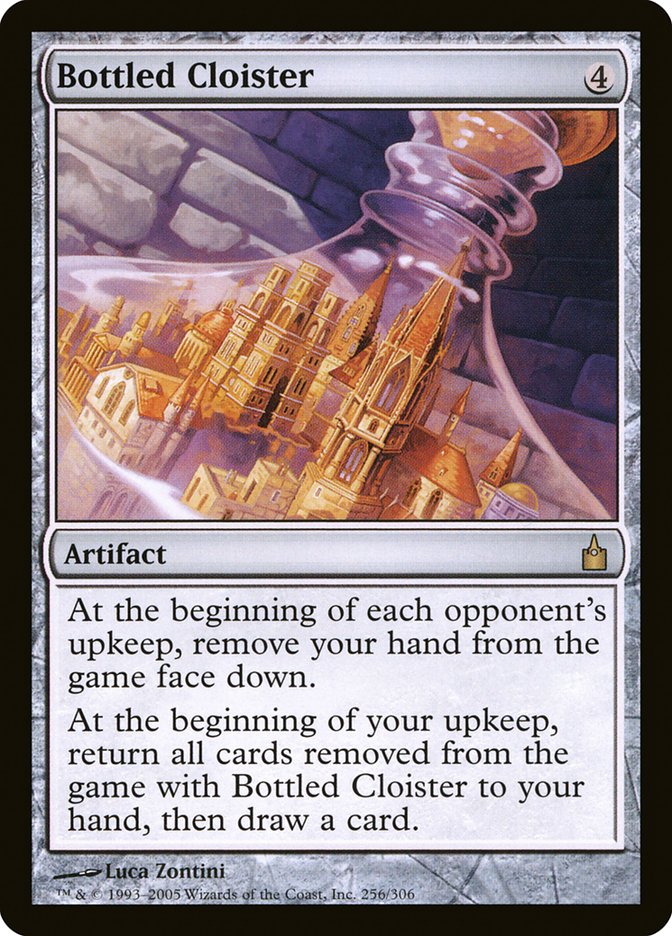
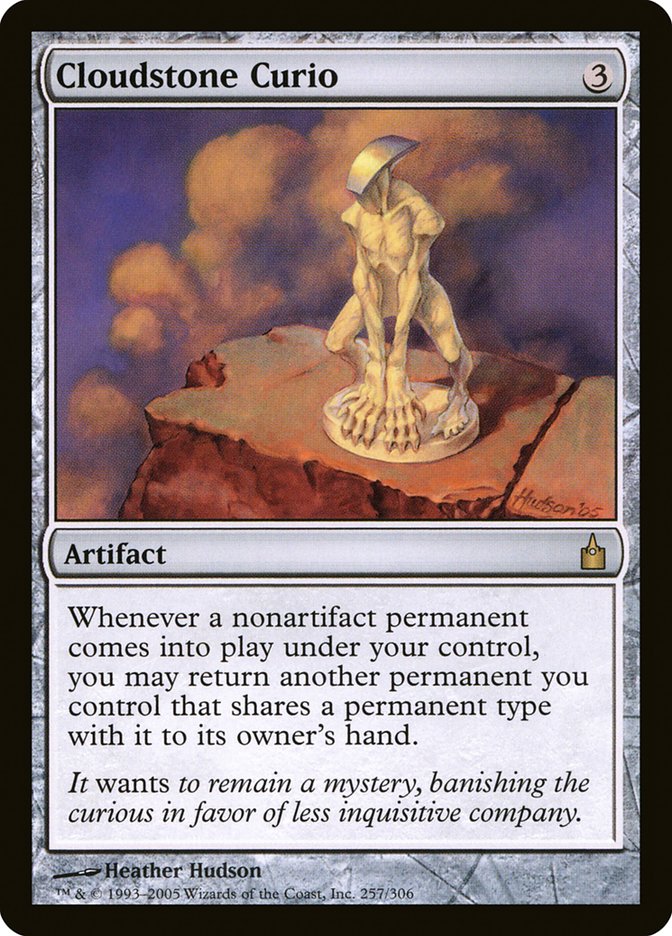


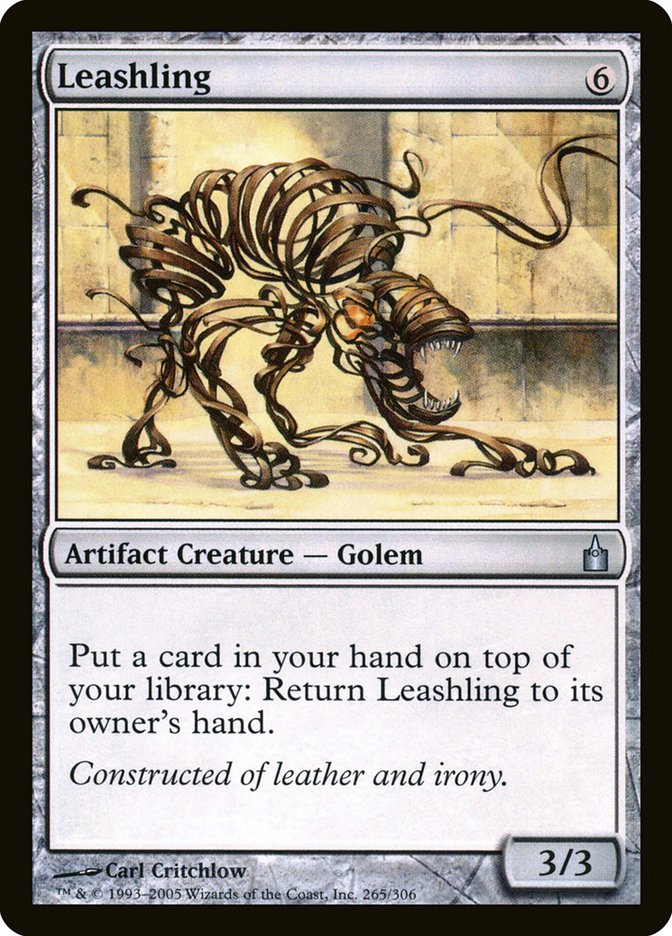

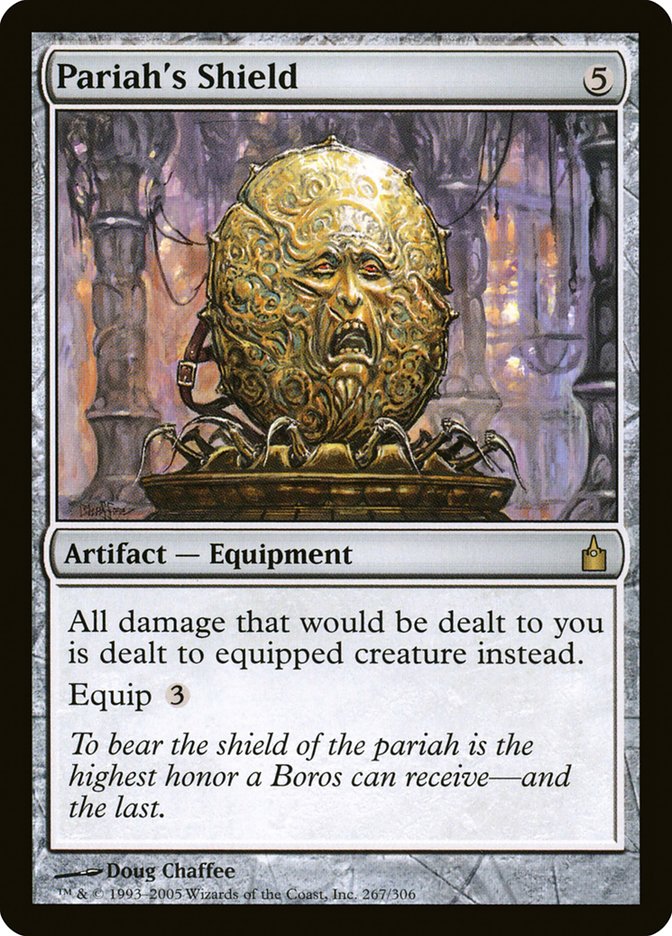


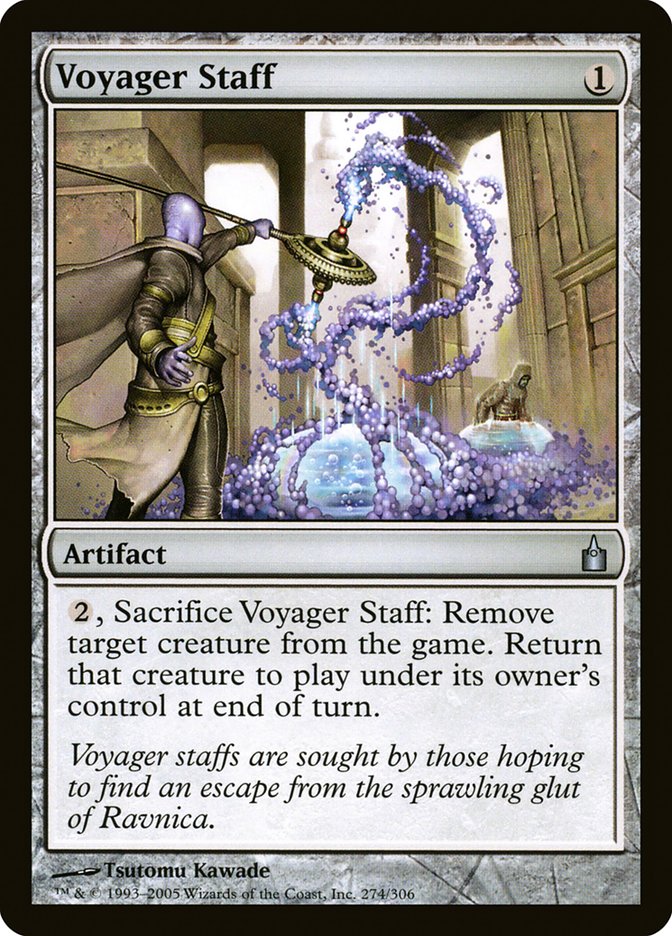
Land


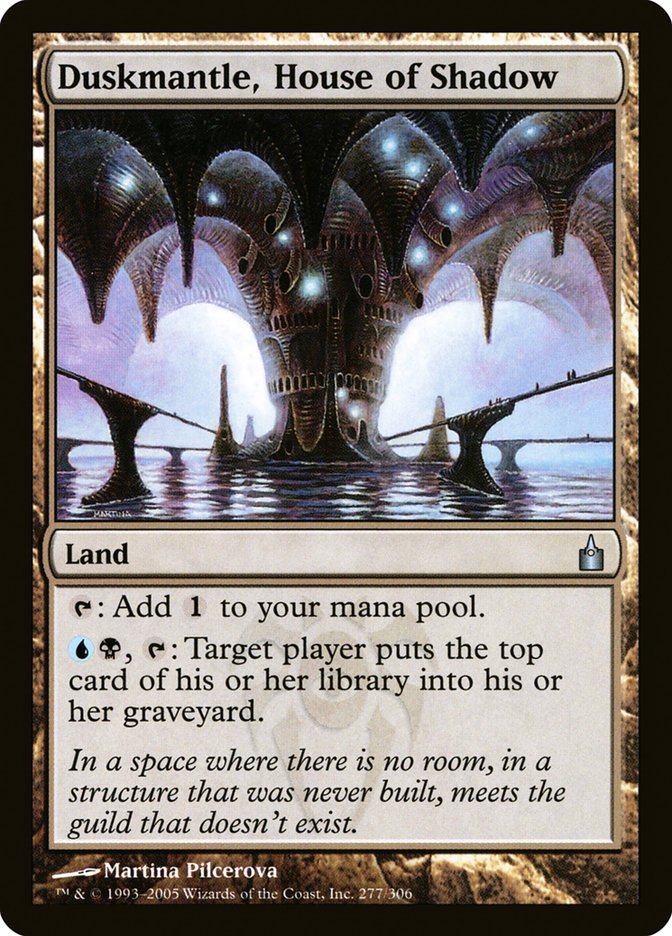


Notable Cards
Shock Lands
Ravnica: City of Guilds was the first set to introduce the shock land cycle. Each 2-color shock land has two of the basic land types associated with its guild and can enter the battlefield untapped if you pay 2 life (“Shock-ing” yourself). They’re generally regarded as some of the best 2-color lands in the game, since they’re tutorable with the fetch lands and Farseek (another card that debuted in Ravnica: City of Guilds).
Bounce Lands
Ravnica: City of Guilds also introduced a cycle of common-rarity lands colloquially known as the bounce lands. Bounce lands are 2-color lands that tap for 2 mana, one each of their associated guild colors. For example, Boros Garrison taps for a red and a white. The drawback is you must return a land you control to your hand when the bounce land enters (hence the name). Because of this, bouncelands have made a prominent appearance in Pauper as some of the best mana-fixers at that rarity.
Golgari Grave-Troll
The infamous Golgari Grave-Troll is the only card that’s managed to be banned twice in the same format. Because of its broken dredge ability, Golgari Grave-Troll quickly became one of the fastest ways to mill yourself out in Modern. Decks would rarely cast it (or Stinkweed Imp, which served as extra dredge insurance), and instead discarded it to fly through their library as they put more and more Golgari Grave-Trolls in their graveyard, milling six more cards at a time whenever they went to draw.
Golgari Grave-Troll was banned in Modern, then unbanned in January 2015, and then re-banned in January 2017. It’s currently restricted in Vintage.
Dark Confidant
Dark Confidant, also known as Bob, is a 2-mana 2/1 creature that draws you an additional card at the beginning of your turn, at the cost of losing life equal to that card’s mana value. It’s a wildly fast accelerator, drastically changing the curve of any deck for the better. Dropping a Confidant on turn 2 sees you casting eight spells on average by turn 5, whereas a deck without the Confidant would only cast one spell per turn up to turn 5. This was a meta-defining effect. Dark Confidant made an appearance in 17 of the highest-ranking competitive decks of the 2007 Pro Tour Season.
Dark Confidant gets its name from its designer, Bob Maher, Jr. Maher won the right to design and be immortalized in his 2004 Magic Invitational submission. The card’s flavor text alludes to Maher’s epithet “the Great One.”
Pro Tour Player Cards

Brian Kibler’s Pro Tour Magic card
One of my personal favorite marketing cards Magic’s ever included in booster packs were the Pro Tour Player Cards. Ravnica: City of Guilds was the first expansion to include these cards randomly inserted into boosters, theme decks, and fat packs.
Magic designer Aaron Forsythe had said that the Pro Tour should have more exposure, and so cards were printed with portraits and stats of various Pro Tour players. Stats included their country of origin, total career payouts, win/loss records, favorite decks and any nicknames. These were a fun way to learn about the pro players in the Magic world and had the same vibe as baseball cards.
The Pro Tour Player cards were discontinued in 2007 after Eventide.
Available Products
Booster Packs
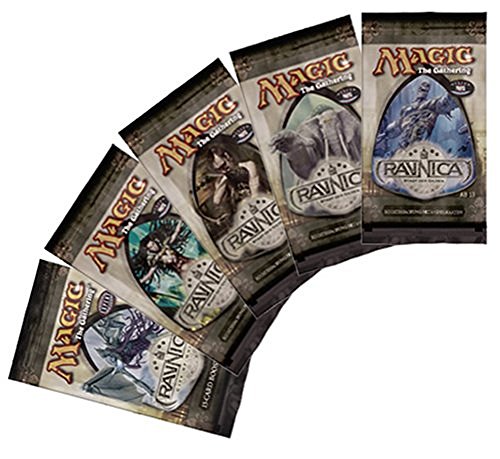
Ravnica: City of Guilds included the typical product cycle common to expansions at the time. RAV Booster Packs consisted of 15 cards, including a rare and three uncommons, with the rest being commons/basics/advertisement cards. Booster Boxes contained 36 RAV Booster Packs.
- Brand new in original factory-sealed packaging!
- Magic The Gathering Card Game - Ravnica: City Of Guilds Booster Pack - 15C
Tournament Packs

Ravnica Tournament Packs were essentially large 75-card randomized booster packs consisting of three rares, 10 uncommons, 33 commons, 29 lands, with a shot at random foil cards. These also came in “Tournament Boxes” which included 12 individual Tournament Packs.
Fat Packs

The contents of a Ravnica Fat Pack were a bit different than what we expect from present-day Bundles. These included six RAV Booster Packs, a player’s guild, a Ravnica-themed life counter, 40 RAV basics, and a Ravnica novel.
Preconstructed Theme Decks
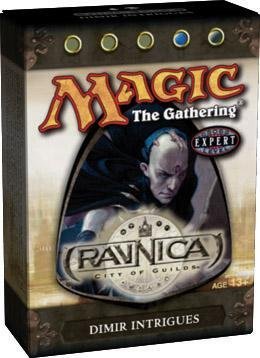
The four theme decks focused on each of the four guilds. Each was built to showcase the new mechanics but not necessarily play competitively. The four theme decks were:
- Dimir Intrigues
- Selesnya United
- Golgari Deathcreep
- Charge of the Boros
- The "Dimir Intrigues" deck will twist your opponent's head around and around .
Wrap Up
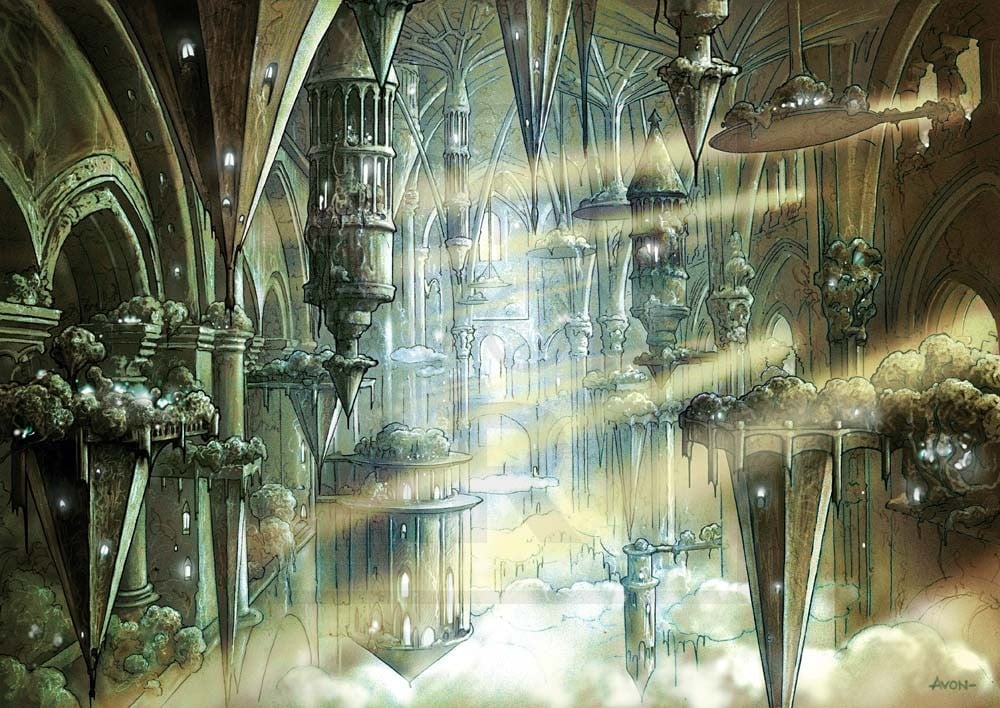
Selesnya Sanctuary | Illustration by John Avon
Ravnica: City of Guilds is one of the foundational sets of modern Magic: The Gathering. It set up themes and mechanics that we still see today; most notably convoke and hybrid mana symbols. We have to date 10 different MTG sets occur on Ravnica , making it more popular than any plane in Magic but Dominaria. It’s seen supplemental content released for D&D, as well as figurines depicting many of the famous characters from the set. Ravnica: City of Guilds set the pace for multicolor-themed sets for years to come.
I personally can’t wait until we go back to Ravnica again. I know, I know, we just got Ravnica Remastered alongside Murders at Karlov Manor, but I just can’t get enough of this setting. What are your favorite parts of the Ravnica setting? Would you like to see another plane as the focus of the 10 2-color pairs? Let me know in the comments, or over on Draftsim’s Twitter/X.
Thanks for reading! Fight for your guild!
Note: this post contains affiliate links. If you use these links to make a purchase, you’ll help Draftsim continue to provide awesome free articles and apps.
Follow Draftsim for awesome articles and set updates:










Add Comment