
Copy | Illustration by Le Vuong
When I first started to play Magic, reprints were both awesome (“Hey, more copies of Lightning Bolt!”) and baffling. I wasn’t sure if I could play those Revised Bolts in legal decks when the new prints with art by Christopher Moeller dropped in Magic 2010. I was afraid someone was going to tell me that was breaking the rules.
Well, certainly times have changed! We have many cards with so many reprints! It’s almost weird to pull up an old card on Scryfall and see only one version.
I think that’s worth celebrating, because it means more people are playing this great game. My version of celebrating is to count down the most reprinted cards in Magic history. Which land is at the top? How has the rise of Commander precons and additional sets changed things? This is another lens on the history of MTG.
I found a few surprises in my search, and maybe you will, too. Check it out!
What Counts as a Reprint?
Quasiduplicate | Illustration by Dmitry Burmak
A reprint in MTG is a subsequent printing of a card in a different set or product after a card’s first appearance.
The reprint can have repeated art or new art, a new frame, including specialty or art frames. The reprint can also be reskinned, as with cards in Universes Beyond that are legal versions of the card in question but with a different name for the other IP, like the Endwalker version of Brainstorm from Final Fantasy: Through the Ages.
All the different versions of a card in a single set also count as reprints, including promo and serialized printings, as with the 10 versions of Cavern of Souls associated with The Lost Caverns of Ixalan.
I’m not counting digital reprints because that gets us into deep waters across the many digital platforms Magic has been played on, and even the Through the Omenpaths Spider-Man reskins on Arena. For basic lands, that means culling about 50 digital prints from the total number of cards you can find on Scryfall!
Quick note: This list was compiled while Secrets of Strixhaven was the current Standard set, so the numbers may have shifted around even more by the time you’re reading this!
#21. Rampant Growth – 50 Cards
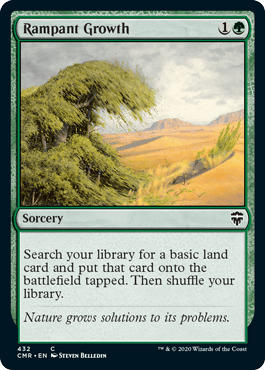
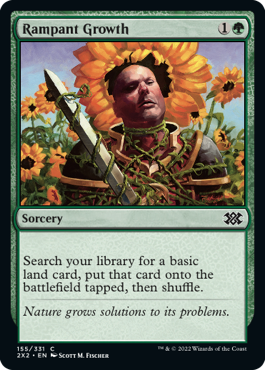
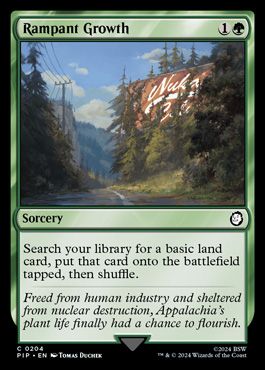
Would mana ramp be called ramp without Rampant Growth? I’d guess not. There are many other words that would fit that style of green deck, but it was a word that made sense and was a shortened version of this staple from Mirage that became a must-play card in Commander from the beginning. A powerful card that hasn’t been in Standard since Magic 2012, but you can now find a prepared version on Studious First-Year and a functionally identical lesson with Shared Roots.
#20. Serra Angel – 51 Cards


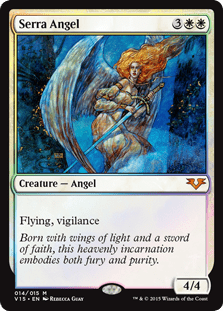
One of the best creatures in early Magic was Serra Angel. I’ve always found angels and devils and demons to be a weird inclusion in Dungeons & Dragons, which is likely where this came from when Richard Garfield was designing Alpha. This syncretistic grab from multicultural religious traditions was one of the quirky pieces of these games that made them a target of the Satanic Panic, and although I loved this card back in the day, I’ve always thought angels were an idea that broke the immersion for me. I have always had less sympathy for that brand of Universes Beyond critique.
Okay, off the soapbox, Serra Angel has been cleanly and clearly power crept out of the game. You can still field the original owner of the then un-keyworded vigilance mechanic thanks to Foundations, but no one does.
#19. Solemn Simulacrum – 52 Cards
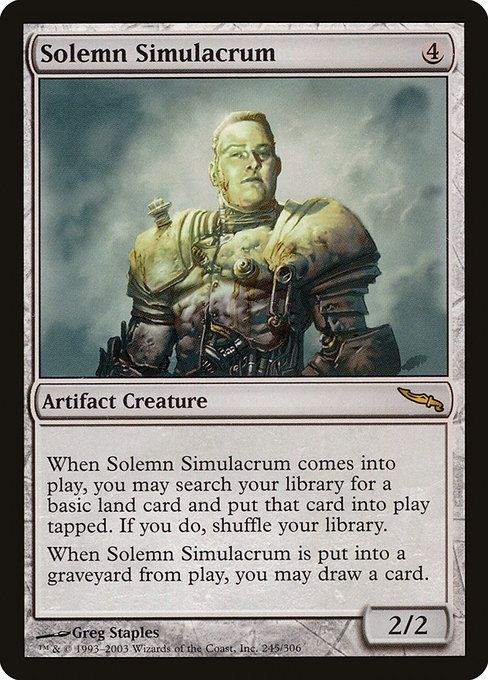
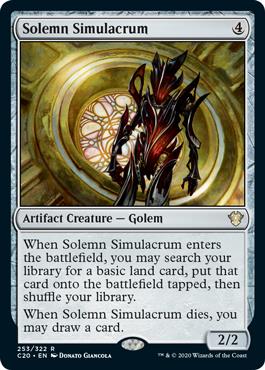

Jens Thorén won the 2002 Magic Invitational, and he was awarded the opportunity to design a Magic card. That process, recounted by Gavin Verhey, eventually shifted to the World Champion cards we have today, starting with the “Sad Robot” here.
Solemn Simulacrum is a good marker for the changing game of Commander. In many strategies in the early years of EDH, this was almost an auto-include. Now it’s likely one of the first cards we pull from the precons it’s almost always reprinted in. Power creep and speed have made this robot, once again, quite sad.
#18. Wrath of God – 52 Cards
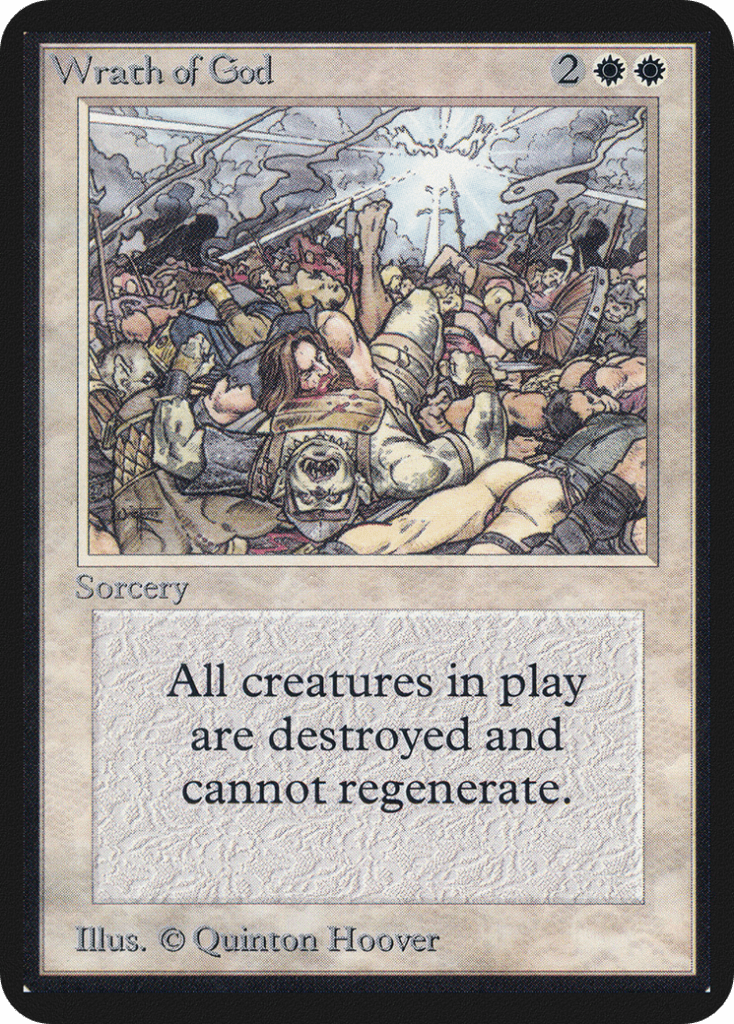
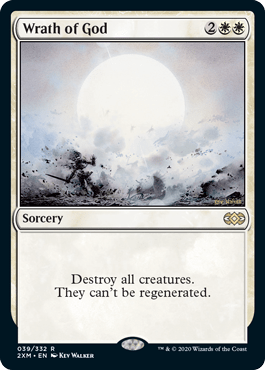
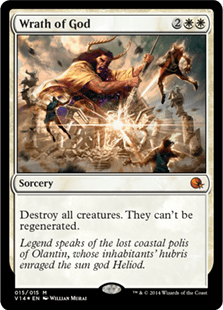
It was hard to play a creature deck in early competitive Magic. The creatures weren’t competitive on rate with the best spells and artifacts, and cards like Wrath of God were there to ruin your day. Although early Magic decks show that the full import of card advantage wasn’t yet grokked by the community at large, people did understand the value of a two-for-one, or perhaps a five-for-one?
A 4-mana wrath is still a good rate more than 30 years later.
#17. Dark Ritual – 52 Cards
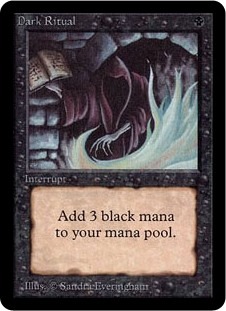
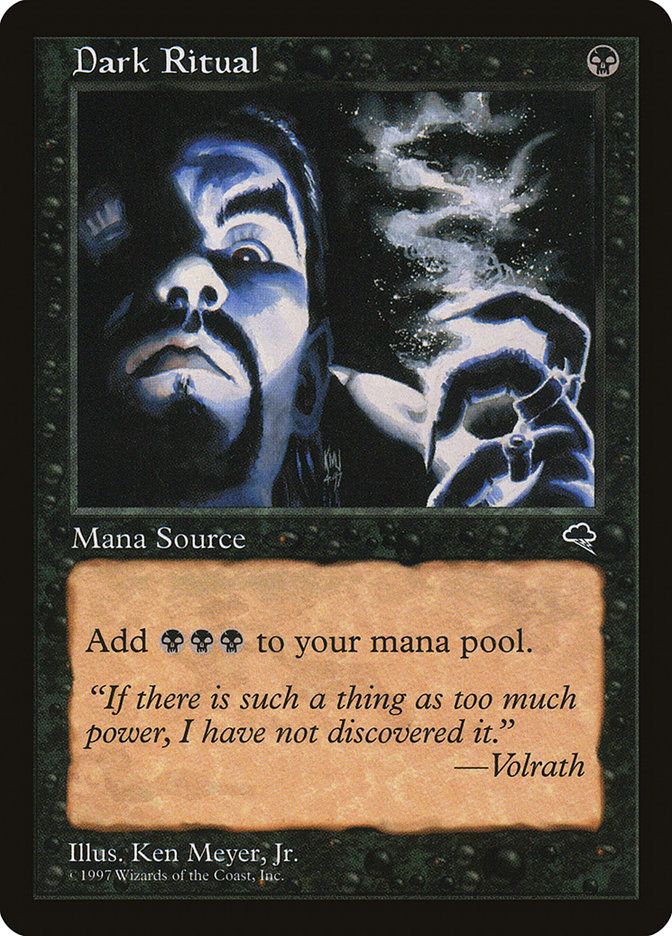
Busted in Alpha, using this to drop a Hypnotic Specter on turn 1 was lights out at the kitchen table. Dark Ritual is still a competitive staple to this day; it’s a very, very good rate on mana.
#16. Disenchant – 53 Cards
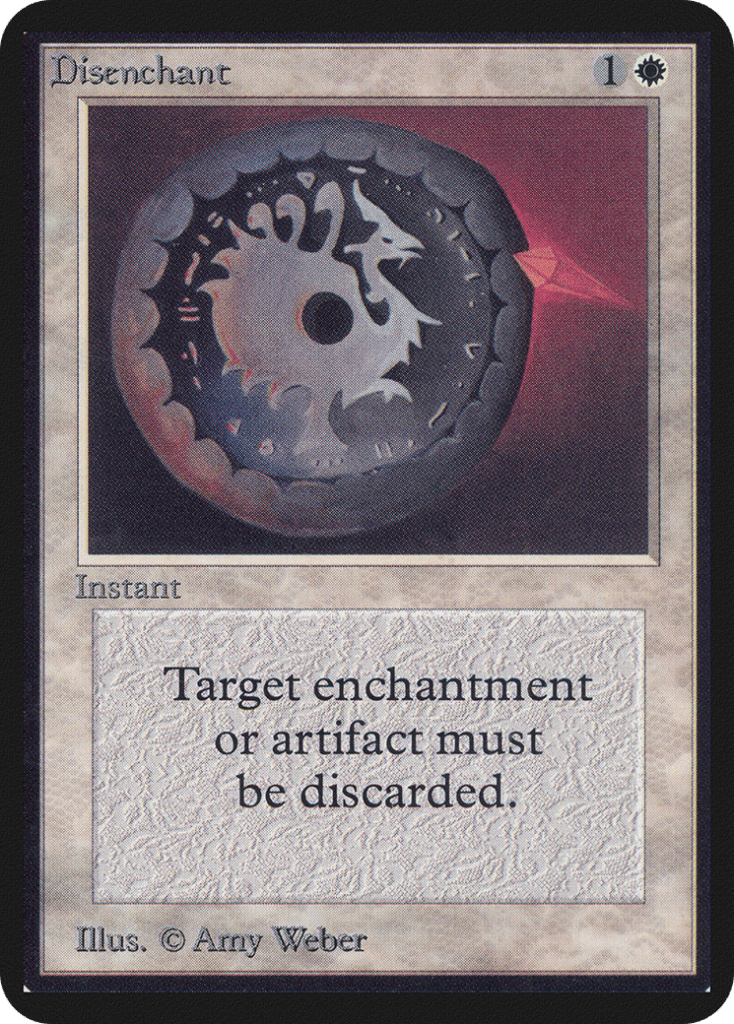
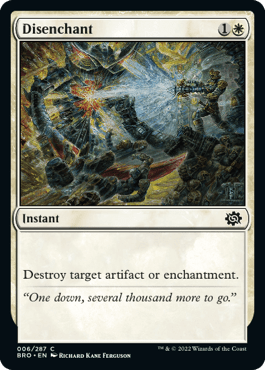
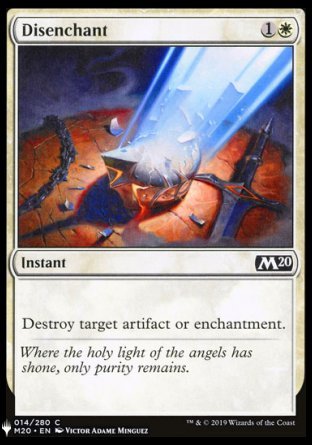
A staple from the beginning, Disenchant is still in Standard, but it has been crowded out of the game with cards that also hit creatures like Abrade or Get Lost, better rate green cards with more optionality like Heritage Reclamation, and even cleaner options in white like Requisition Raid.
#15. Llanowar Elves – 57 Cards
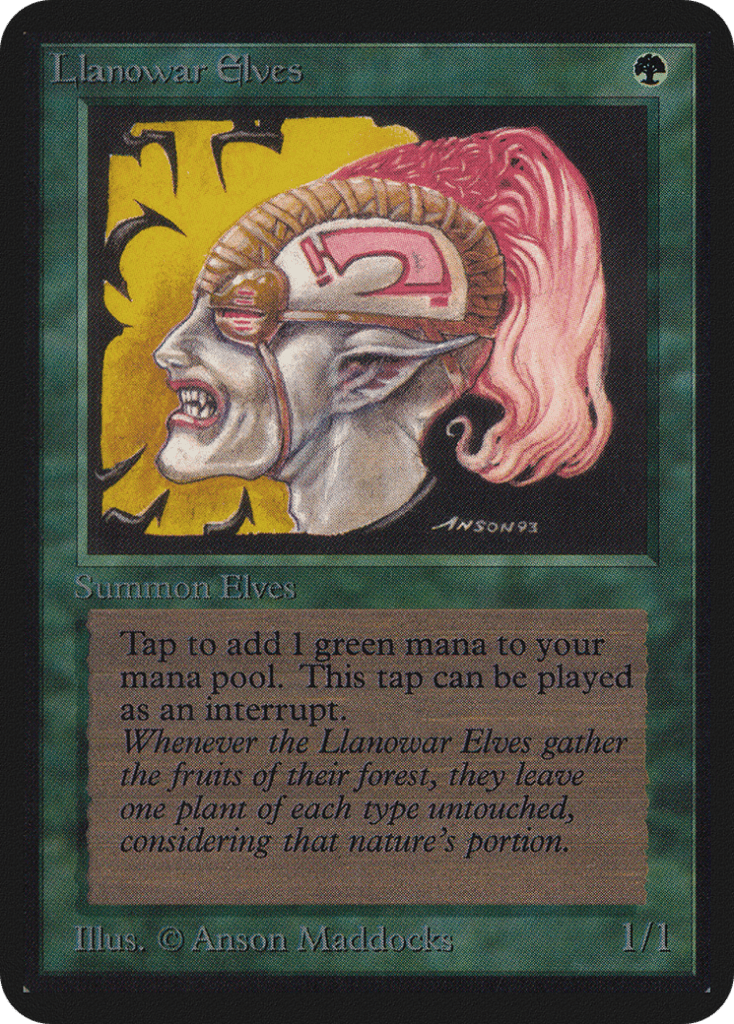
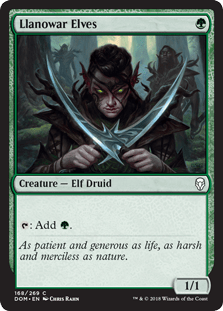

Turn-1 elf was a good idea back in the day, and Llanowar Elves is still a hallmark of a good green deck today. Reprinted more than the other powerful early mana dork, Birds of Paradise, for which the “Bolt the Bird” saying was created, killing the Elves ASAP is still important to stall out whatever the green player is going to try the next turn.
#14. Giant Growth – 60 Cards
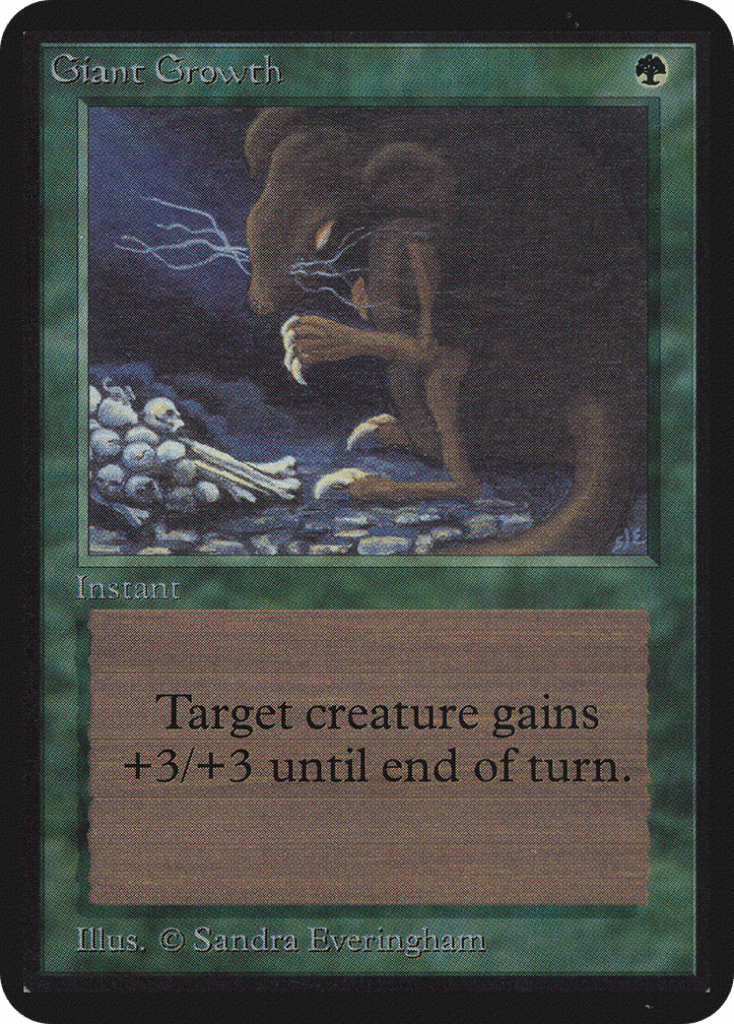
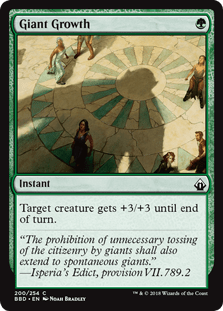
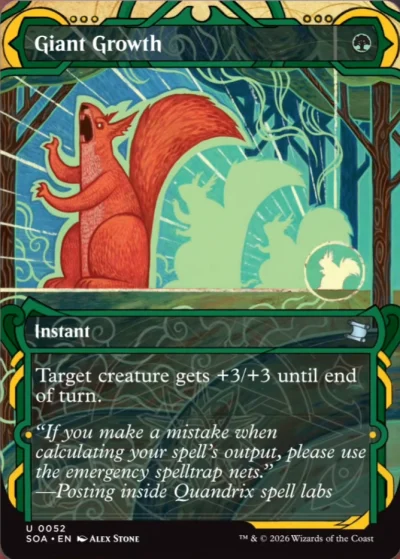
The classic combat trick has been power crept in Constructed formats, but it’s still functional in Limited, including its inclusion in the Secrets of Strixhaven Mystical Archive. The toughness boost means it’s pretty good at saving creatures from red spells, as well.
#13. Lightning Bolt – 62 Cards
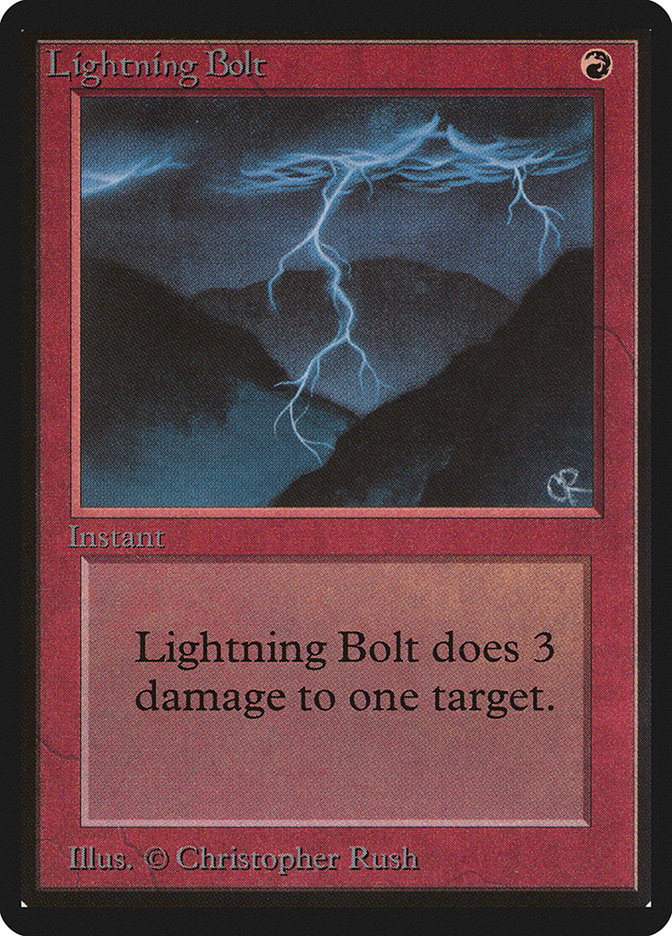
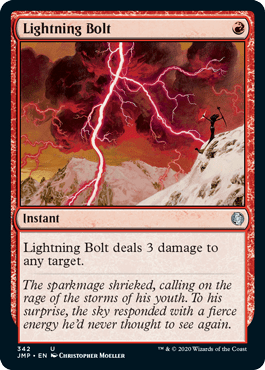
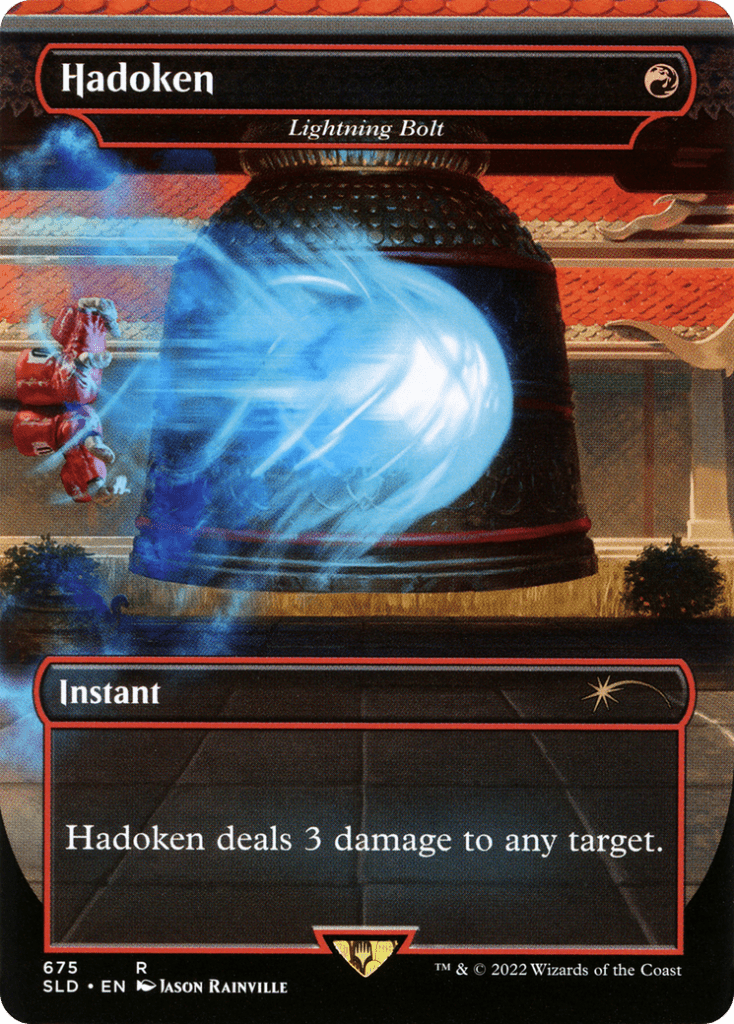
A card so good the closest it has gotten to a Standard reprint since Magic 2011 is Emeritus of Conflict, who has to go through a ton of hoops to get one. Honestly, that’s like the number of hoops it takes to get to things as a professor, anyway. Emeritus professors are retirees, and looking at this guy, he’s bailed early. Perhaps too much conflict? Too many Lightning Bolts thrown in faculty meetings?
Will we get back to the OG some day and move beyond Lightning Strike and Shock as the Standard cost-to-damage ratios? I’d guess yes, but not today!
#12. Terramorphic Expanse – 63 Cards
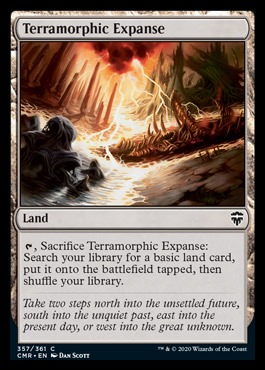
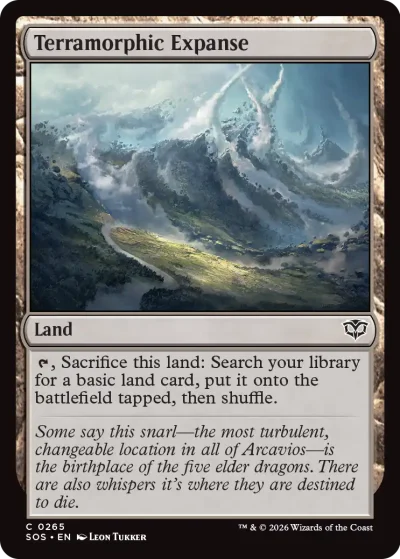
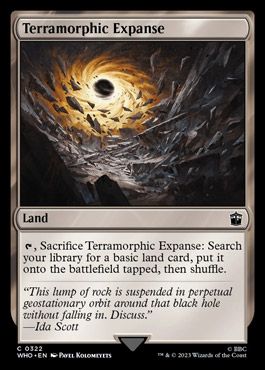
An Evolving Wilds variant from Magic 2010, Terramorphic Expanse is a staple in precons for a cheap mana fixer. Unfortunately, it’s a cheap land that fetches a tapped basic, so precon buyers have a pile of these in a box somewhere.
#11. Evolving Wilds – 70 Cards
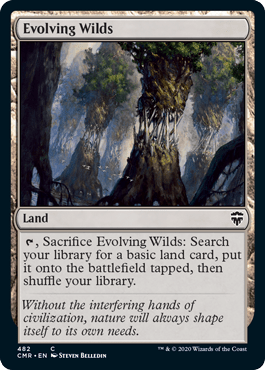
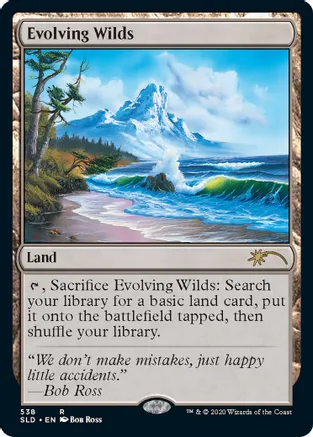
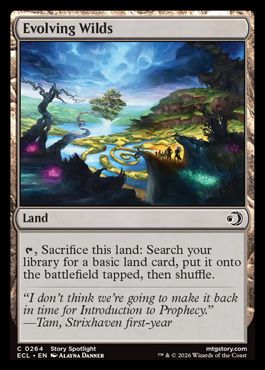
Ditto! Evolving Wilds and Terramorphic Expanse are both really good ideas for cards, and both excel in Limited, where mana fixing usually means tapped lands anyway. These are still good for triggers in big landfall formats. Less good when Fabled Passage is in print, but still.
#10. Counterspell – 74 Cards
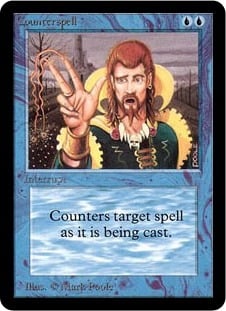
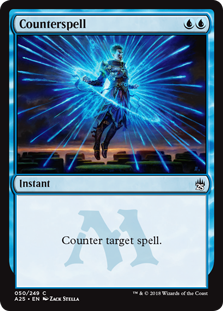
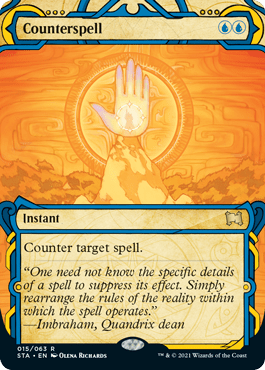
Holding 2 blue mana open and saying “go” is the ultimate baller move for a control player. Do I have Counterspell? Do I not? Do you feel lucky, punk? Well, do ya?
Counterspell is iconic. And although it’s too powerful for Standard, stepping aside for Cancel and variants that might fire for the 2 blue under the right conditions, like Ice Out, it remains important across formats.
#9. Arcane Signet – 78 Cards
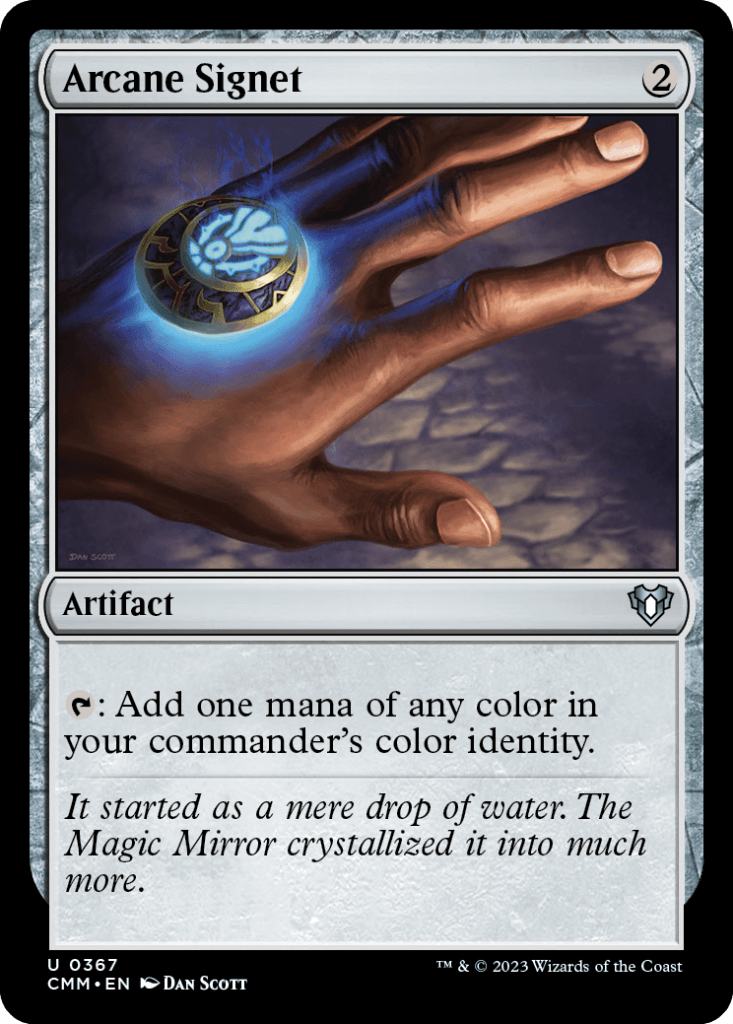

Introduced in the Throne of Eldraine Brawl precons in 2019, Arcane Signet became immediately ubiquitous in precons. This card immediately turned Commander into a game with 98 choices in the deck instead of 99 because it was so obviously always playable.
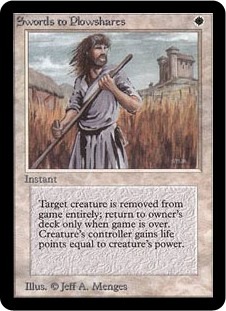
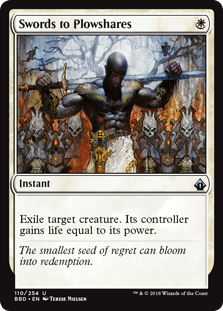
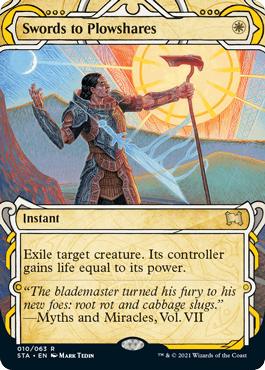
The best removal spell for most of the history of Magic, Swords to Plowshares is still awesome, and it’s arguably perhaps still the best. It’s played across formats and is the prepared spell on Emeritus of Truce.
The Secret Boomer History of this card is that back in the day, when casual players were terrible (unlike today, right?), we used to say things like: “I am packing Swords for emergencies, and also in case I need to get rid of my Force of Nature or Lord of the Pit!” I mean, you could do that, sure, but we were so worried about life we actively sought ways to play Stream of Life in our main deck. It was a more innocent age, one of myth, legend, and gas under a buck.
#7. Command Tower – 99 Cards
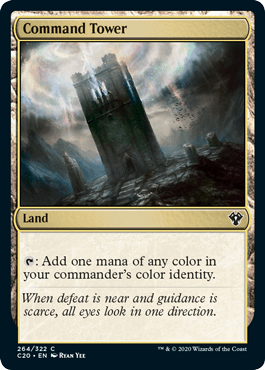
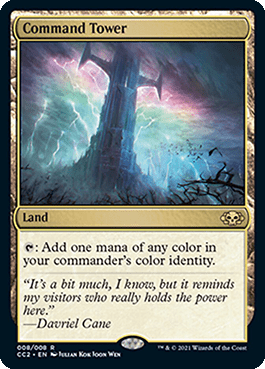
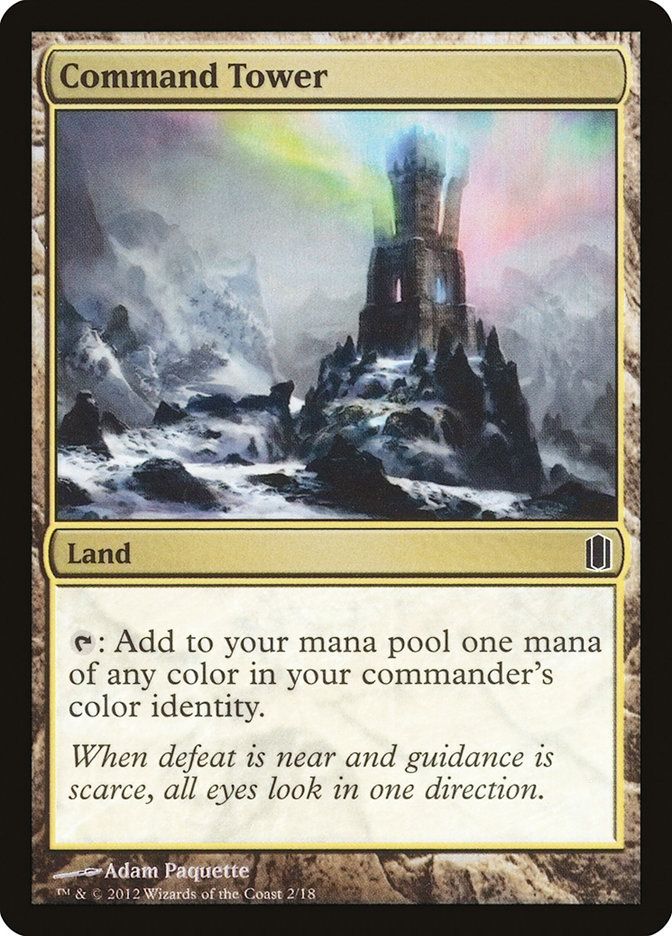
I kind of hate that Command Tower and Arcane Signet exist. I love them as cheap fixing budget players can use easily, but I hate that they’re just easy and inevitable and that they give them player with them in their opening hand a huge leg up. Commander 2011 gave us this, a sign of what was to come as WotC started to design for the format.
#6. Sol Ring – 125 Cards
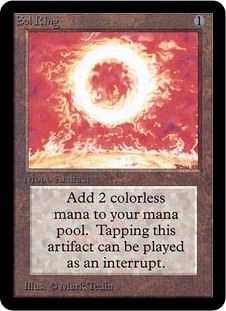
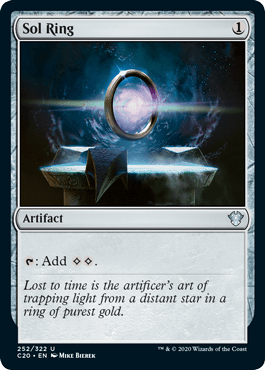
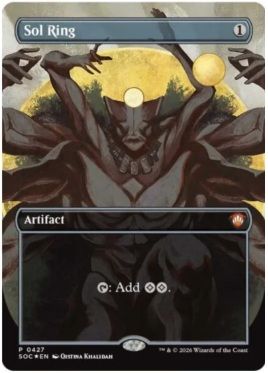
Power Ten anyone? That’s been a long debate. Sol Ring has always been nuts, and I feel like an angry boomer for suggesting this should have always been banned in Commander. Somehow, Sol Ring became the face of the format, one of the few places you could play it.
Of course this gives you nonsense fast starts, but the argument always seems to be that the table will punish that player for it. I mean, I guess, but I hate that philosophy of Commander. If you keep relying on politics to solve game balance problems, you tax the ability of the politics to do deeper things. It’s why we need mechanics like goad to fix the table, and it makes real strategy harder to come by. There’s a reason for the massive growth of cEDH.
I can take my invitation to the Commander Format Panel in the comments below.
#5. Plains – 817 Cards
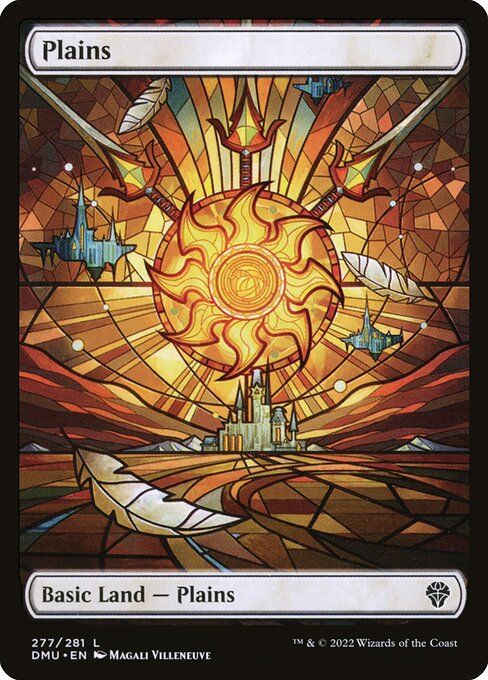
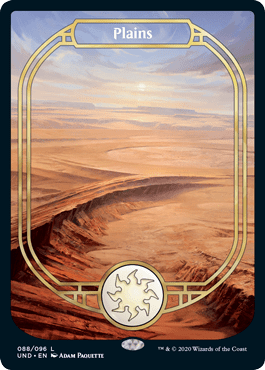

Of course the basic lands are the top! The order up here is the product of supplementary prints, Secret Lair drops, Duel Decks, Commander decks, and whatnot. I guess Plains don’t get no respect.
#4. Mountain – 835 Cards

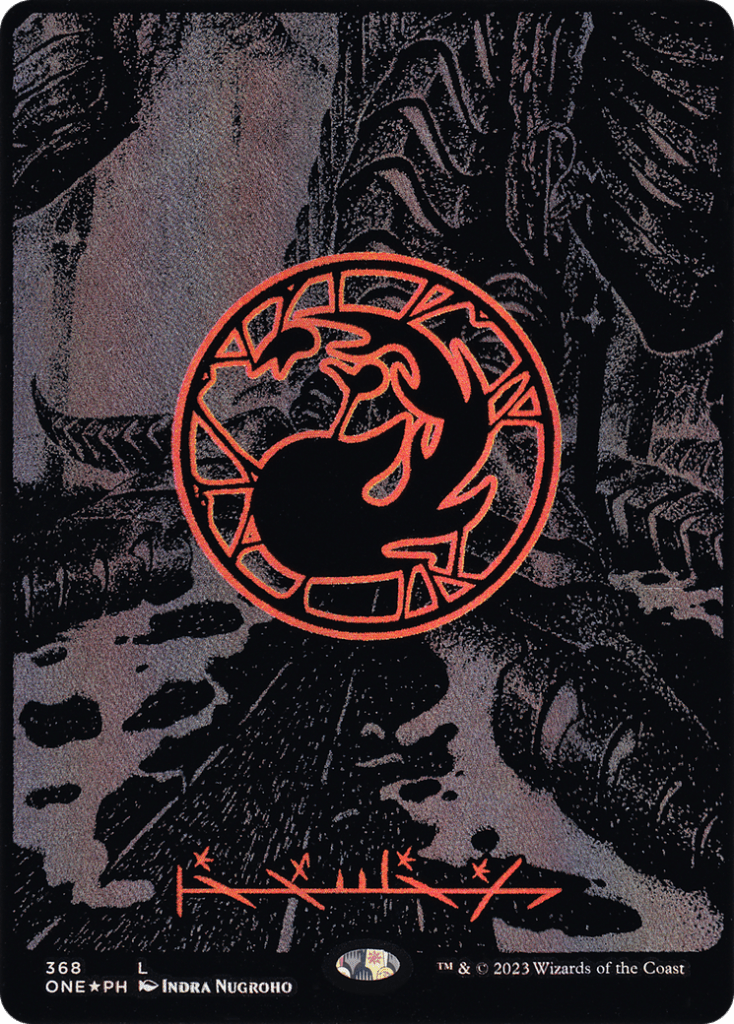
It’s a close race between Mountain and Island, but I think we can all agree that the best card wins.
#3. Island – 839 Cards
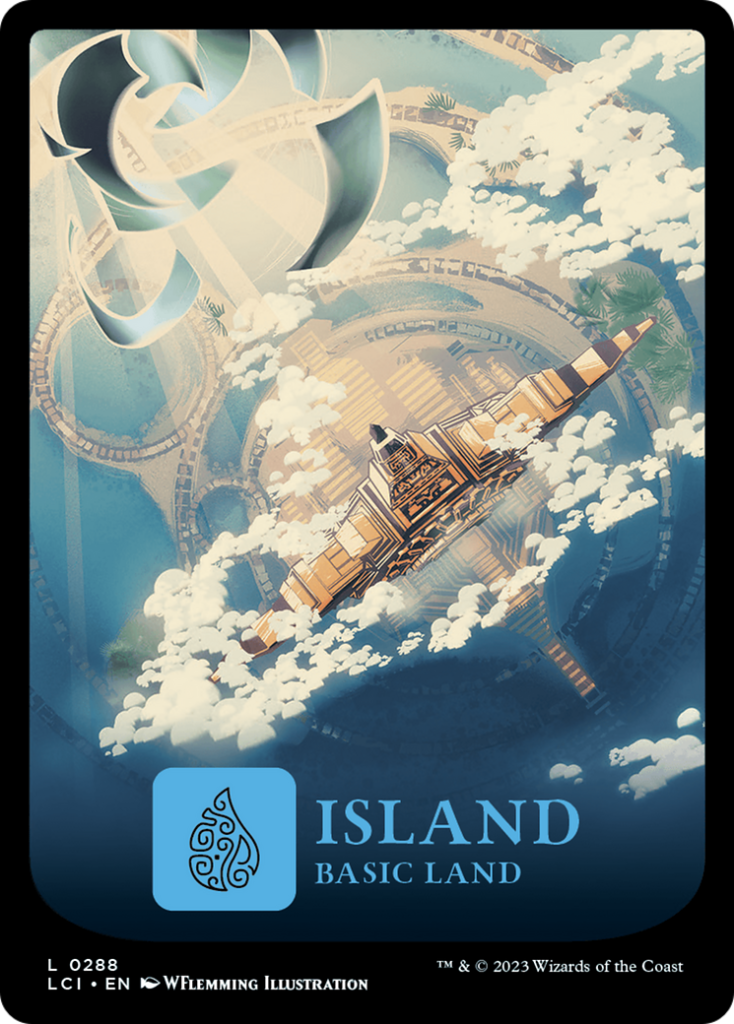
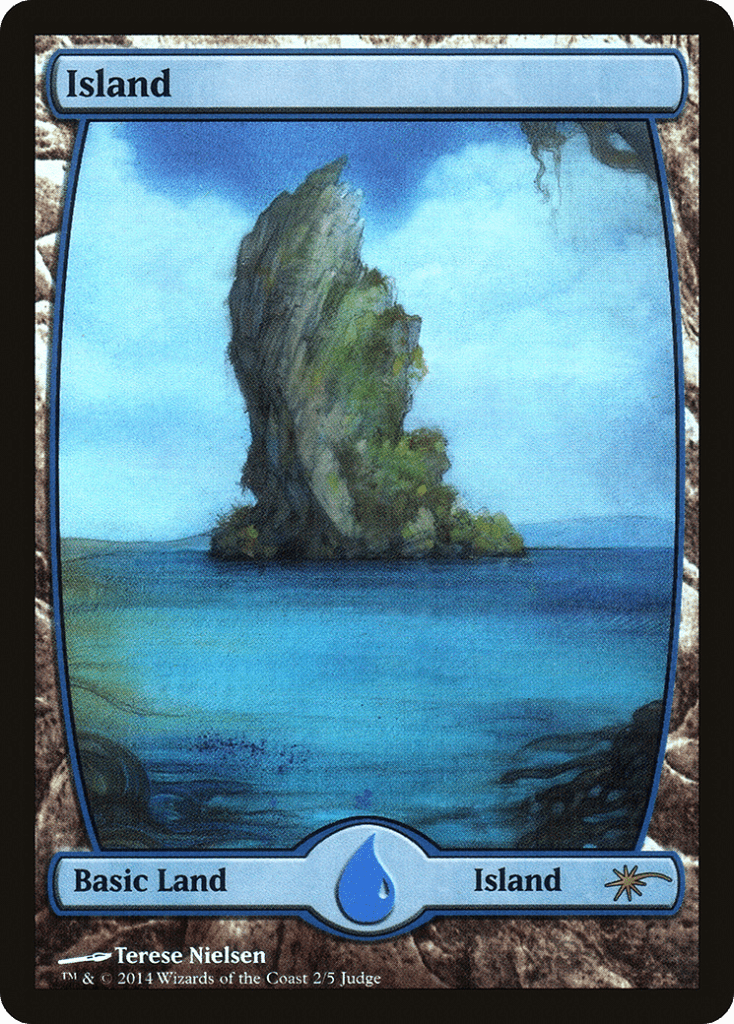
And that’s Island! Control mages like me, rejoice!
Sorry, that was really insensitive. We all know control mages lack the capacity for joy.
#2. Swamp – 843 Cards
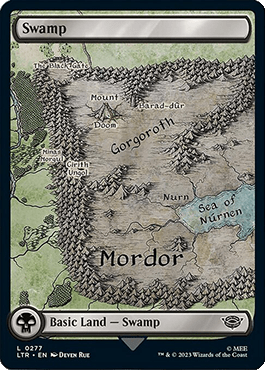
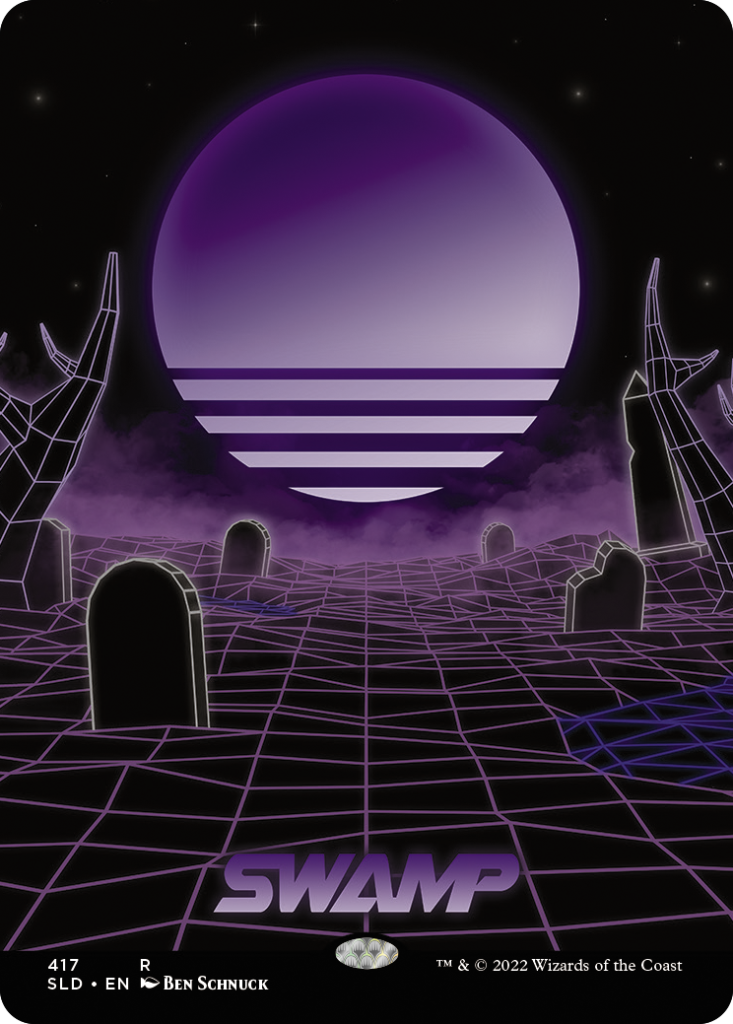
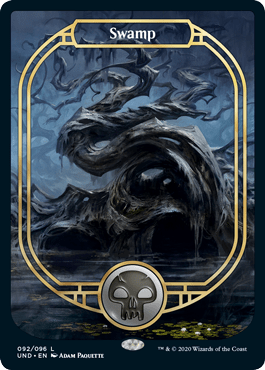
Black mana is all goth and metal and dangerous, plus Swamps are just cooler to paint than Plains. This has to be higher on the list.
#1. Forest – 878 Cards

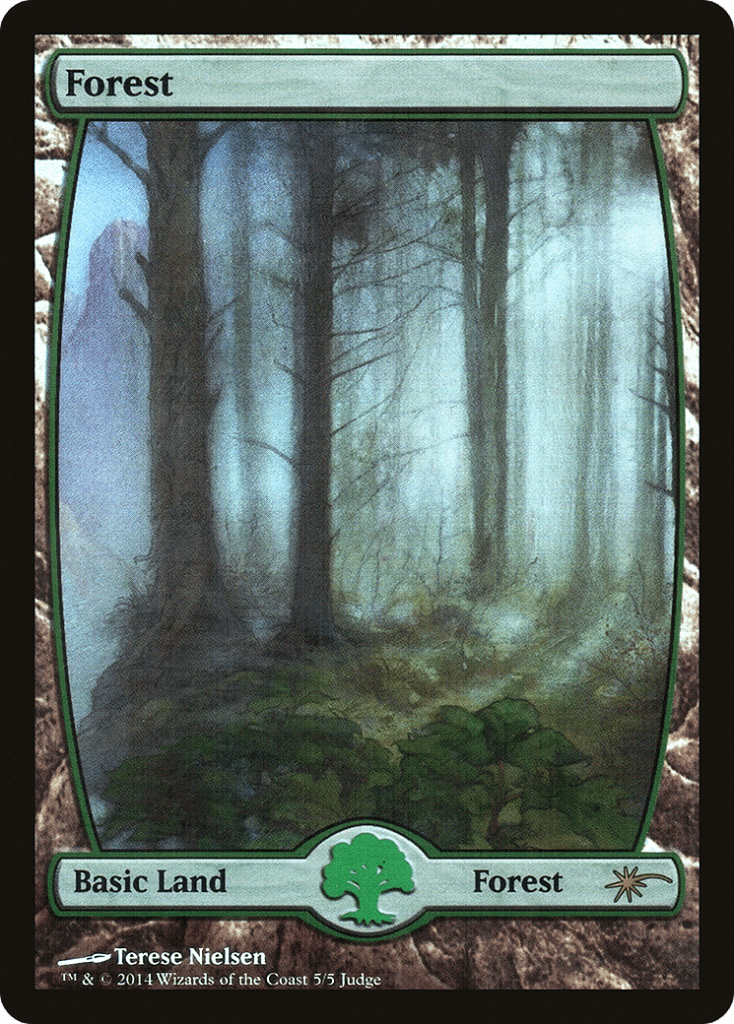
Baby’s first Magic color wins! Green feels like the de facto color of all introductory focused Magic releases. It’s also the pivot around so many multicolor Commander precons. I have very few cards left that were worn by unsleeved play from back in the ‘90s. But almost all of the ones I have are green, and there are a ton of Forests.
Those Christopher Rush Forests we had in the early game are ingrained so hard into my memory that I had a moment on a hike a decade later when I had a kind of déjà vu about the view. I took a picture, and it was years later still when I was sorting cards and saw one again (I mean, who plays basic lands anymore?). It was Rush’s Alpha Forest #295. And it struck me hard how much this game has textured my life.
And I was grateful.
Wrap Up
Doppelgang | Illustration by Chris Rallis
If you’d have told me how many Sol Rings there’d be 30 years ago when I first started to play Magic, back when there was literally one guy in my neighborhood who had one, I’m not sure I’d have believed you. Reprints mean the game is alive, and I love that.
I have taken breaks from the game over the years as life does life things. And I love to be able to rejoin. I also love to pick up a new set and see a few reskinned old favorites in the mix. The new and the old. Things change. Things stay the same. I get older. The game is renewed.
Which of the most reprinted cards surprised you? Which of the many, many cards that didn’t make the cut did you expect to see? Let me know in the comments below or over on the Draftsim Discord. For more daily Draftsim, subscribe to our newsletter.
If Magic is an important part of your life, as well, I hoped you enjoyed our trip today. Hope to see you at the LGS, fellow traveler.
Follow Draftsim for awesome articles and set updates:










4 Comments
Interesting to learn that Mountain is now the second-least reprinted basic land! For years in the early days of Magic it was the only basic land that was reprinted (once) more than all of the others. WotC apparently went back and forth on the decision to include basic lands in the first expansion (Arabian Nights), eventually choosing not to, but left in one version of Mountain by mistake.
I once started collecting every version of Mountain for this reason, although by the time I finally got the oversized, Summer Magic and Guru versions of Mountain to “complete” the collection in the early 2000’s, I believe the printing of World Championship decks had already begun to distort the balance of basic land reprints.
Yeah, definitely a cool fact. IIRC, the Arabian Nights is the most expensive Mountain in the game.
“…I feel like an angry boomer for suggesting this should have always been banned in Commander.”
You’re entitled to your opinion. You are, however, wrong.
its not a power 9, but frankly, one person having sol ring early at the beginning means a huge advantage. my playgroup has banned it.
Add Comment