
Fblthp, the Lost | Illustration by Jesper Ejsing
Jesper Ejsing has long been one of my favorite Magic artists. He finds ways to surprise and delight, which is hard! I’ve seen a lot of cards in my time, and Ejsing’s work always stands out.
How does he do it and why does it matter? Read on, fellow adventurers!
What Is Jesper Ejsing’s Art Style in MTG?
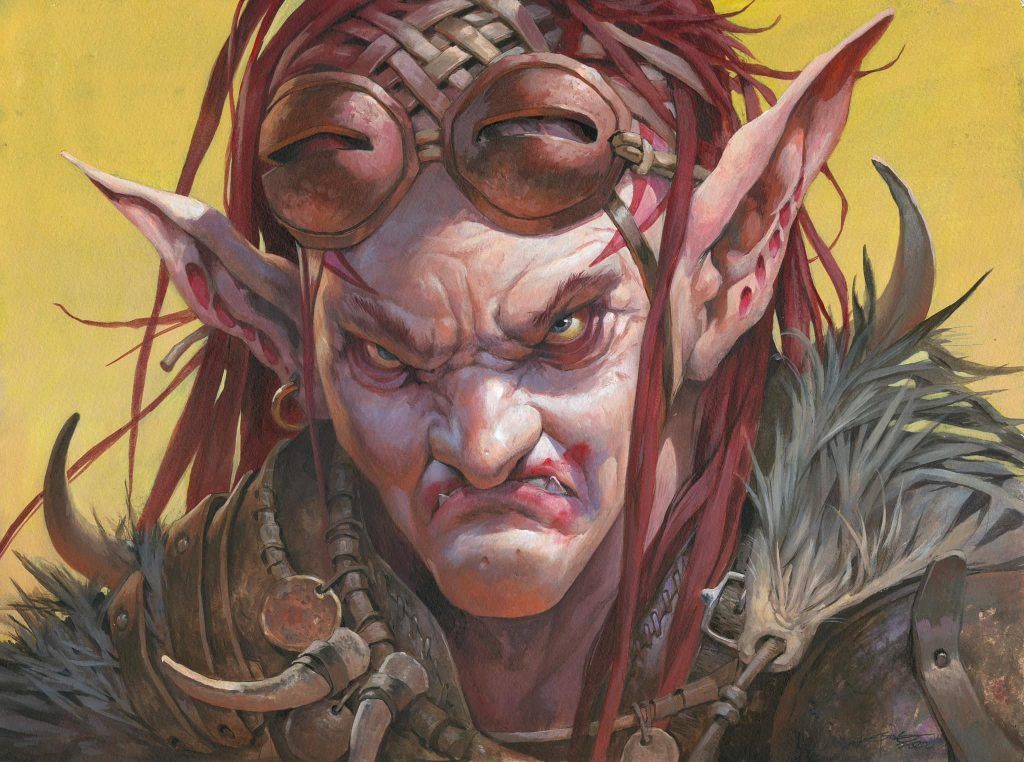
Llanowar Elves | Illustration by Jesper Ejsing
Ejsing’s website says that he found Dungeons & Dragons when he was 13 years old, and you can see the influence of that in the way he approaches MTG art, which are small fantasy images designed to focus on a specific character or bit of magic. Early D&D cover art and the interior illustrations memorialized in the Dungeons & Dragons: Adventures in the Forgotten Realms showcase frames seem like they’d be some key influences.
You can see the D&D influence in Ejsing’s work in the form of his liberal use of humor mixed with drama and the way he weaves some more illustrated or cartoonish techniques into what’s generally a fairly typical MTG fantasy realist style. It’s most clearly evident in his focus on the central character and action through the use of composition and muted background colors to make the foreground action pop.
But Ejsing is a lot more than those influences. Two wonderful things about his art that make it immediately distinctive in a crowded field of highly skilled artists is his mastery of facial and gestural expression. The arms and legs and posture are always interesting, but they always communicate emotionally, as do the faces. I also like the way Ejsing often packs detail into the compositions that reward a second or longer look at the art.
Ejsing details some of his thoughts about art and life in general, as well as some detailed breakdowns of some of his specific MTG work on his website.
How Many Cards Has Jesper Ejsing Illustrated for MTG?
Jesper Ejsing has illustrated approximately 280 cards as of Lorwyn Eclipsed. He’s in the top 20 of the most prolific Magic artists. He started with seven cards in the 2007 Lorwyn set.
#25. Hedron Crab
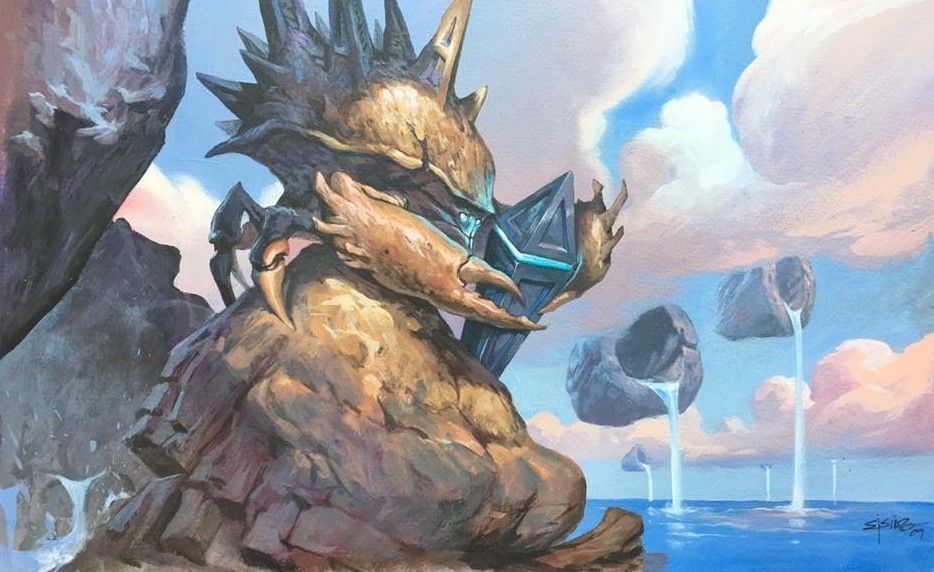
Hedron Crab | Illustration by Jesper Ejsing
Why do I like this crab? Why do I care that he seems so pleased to have yoinked this hedron from somewhere? How can I read that in his little crabby body, at all? It’s likely that left claw caressing the back of the prize the way Gollum may touch the Ring. Hedron Crab doesn’t display the full range of Ejsing’s tools as an artist, but it shows off what sets him most apart: his ability to invest every bit of a character’s body with purpose, meaning, and intelligence.
#24. Deep Analysis – “The Bolas Version”
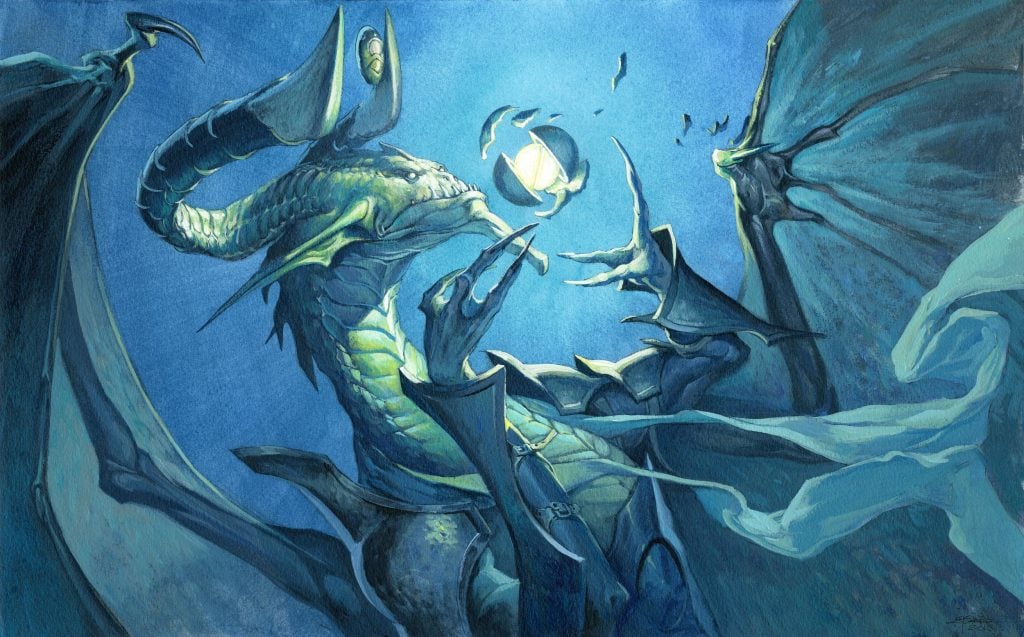
Deep Analysis | Illustration by Jesper Ejsing
There aren’t a ton of art pieces first used in Duel Decks that go on to become the standard for the card, but Ejsing’s Bolas-centric take on Deep Analysis has done so, achieving definitive status across so many reprints. The blue-dominated composition, showing Bolas at work, not looming over a landscape but curled under a mystery he’s bent on cracking, all sharp protrusions, danger folded in during a moment of calm, like a praying mantis, death in repose.
#23. Blackbloom Rogue / Blackbloom Bog
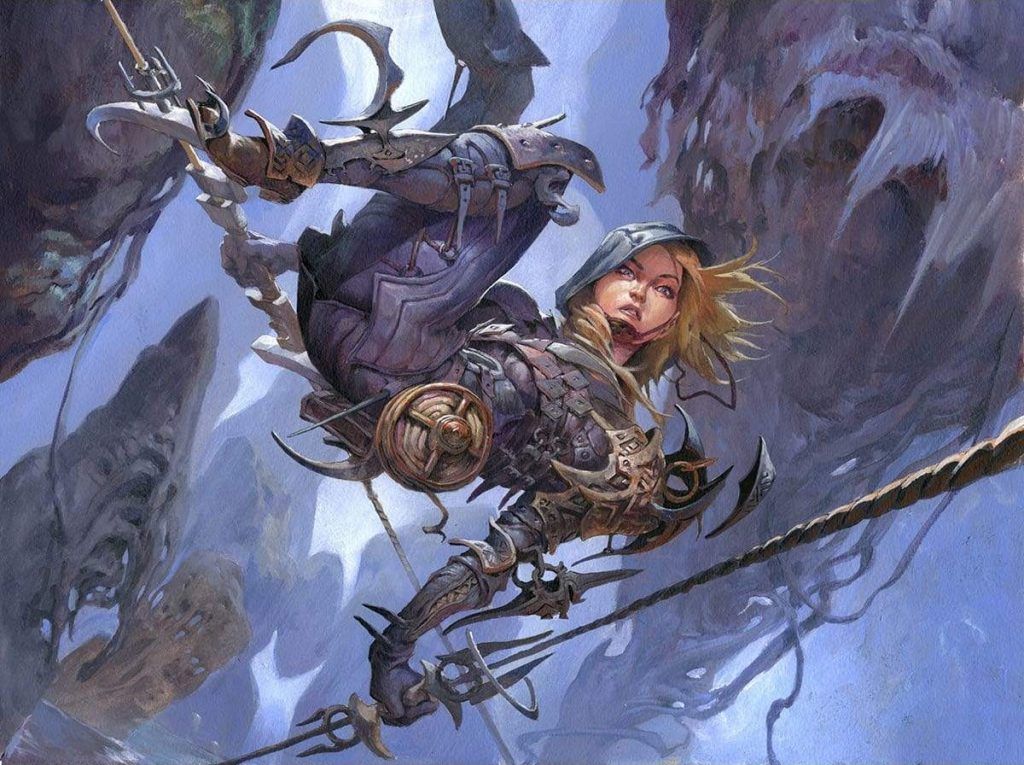
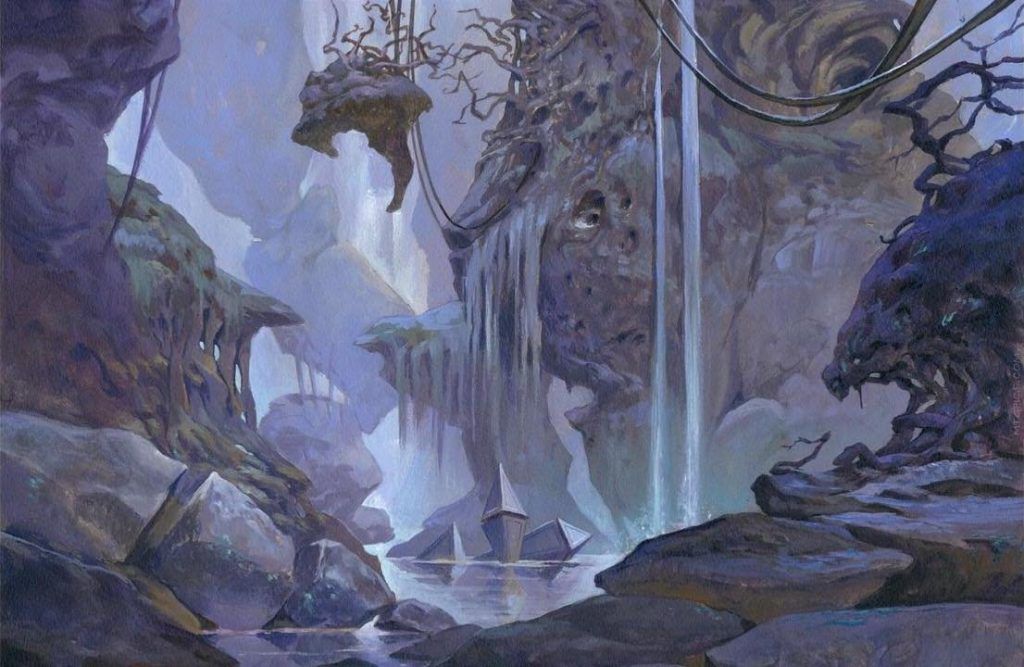
Blackbloom Rogue (left) and Blackbloom Bog (right) | Illustration by Jesper Ejsing
I like the Blackbloom Bog, mostly because I can’t not see a face between the leftmost edge of the right-side landform and the twin lines of the waterfall, peering off to the right, a zombie-ish rock face, with a moss curtain of hair. There’s even a whitish eye.
I’ll wait. You won’t be able to unsee it once you clock it.
But the star of this double-faced card is Blackbloom Rogue. Akiri gives us lots of dramatic hanging postures in the Zendikar skies, but I just really like the composition of this one. And it feels like they’re waiting there, arms flexed in a moment of strength, spying some threat or opportunity just over our shoulder.
#22. Rescue Retriever
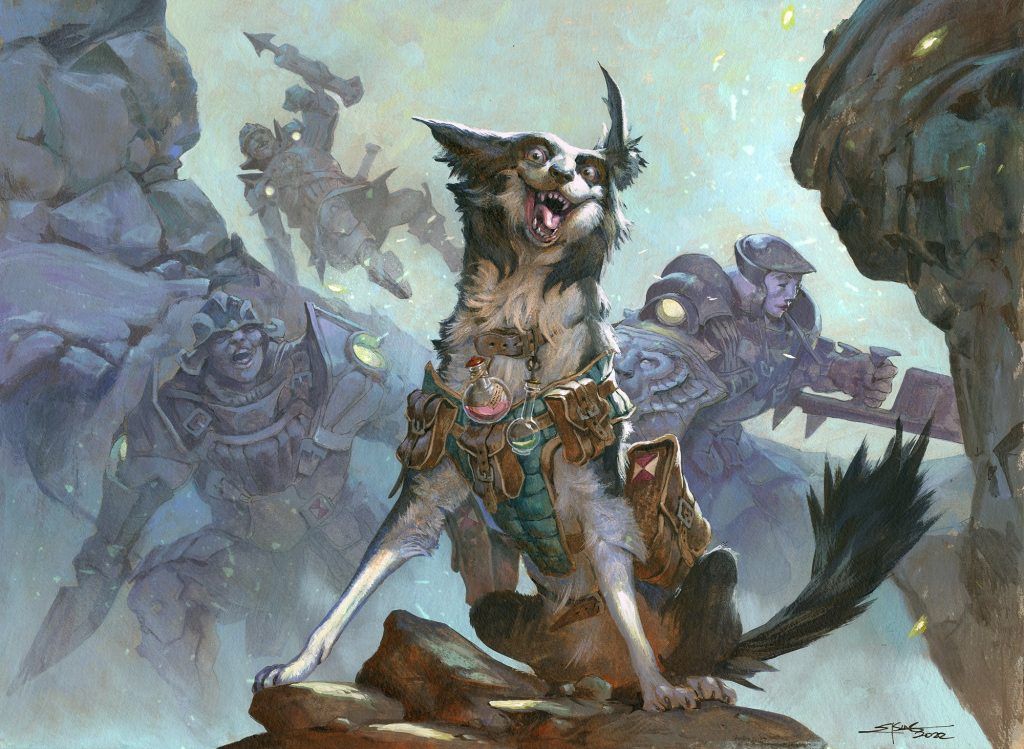
Rescue Retriever | Illustration by Jesper Ejsing
Insanely cute, Rescue Retriever is part of a mini tradition of Ejsing doing super adorbs beasties. What makes this more successful than the still awesome Teething Wurmlet, for example, is that the cuteness pays off in the signature Ejsing details in the card, a hallmark of his best Magic work. The bestest boy here is festooned with bottles and whatever else is stashed in the dapper vest pockets. And all the while he seems to have just popped in here, not yet noticed by the soldiers around him, and his ear is still askew, and he’s super pleased with himself, the way a flash creature should be.
#21. Enthusiastic Study
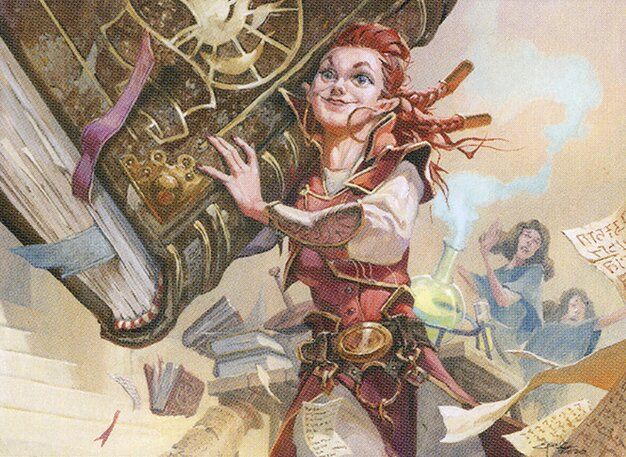
Enthusiastic Study | Illustration by Jesper Ejsing
The expression and posture sell Enthusiastic Study, as does its interestingly unorthodox composition as we zoom in to the small creature’s level. The weight of the book, from how it spans out the top of the frame to its well-worn leather, is such a contrast with the ease with which this creature not only carries it. But also, when you look at the background, it seems the book’s been stolen from another student’s table.
#20. Reliquary Tower
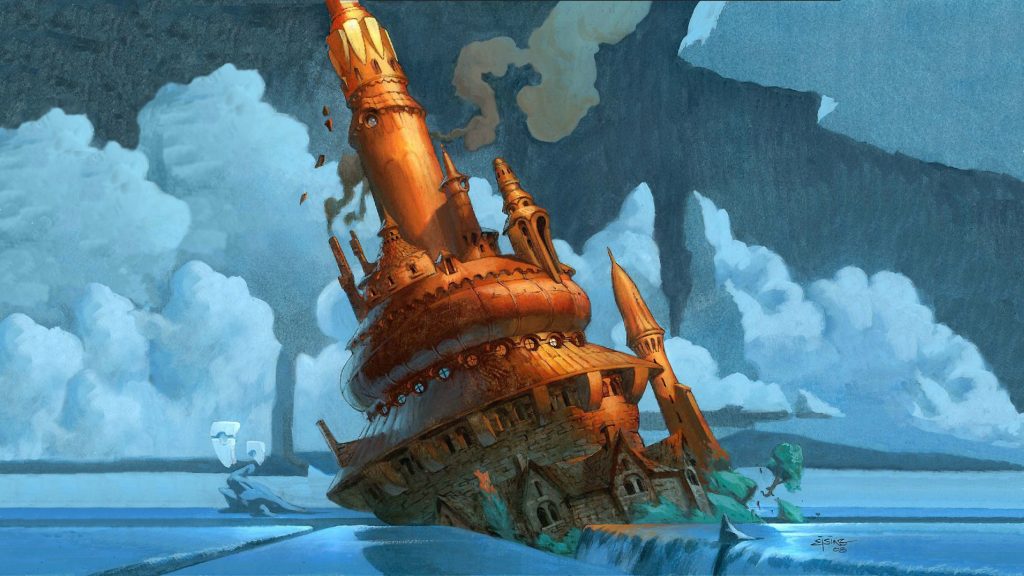
Reliquary Tower | Illustration by Jesper Ejsing
Whimsical and iconic, it’s as though Reliquary Tower is tapping itself. It seems to be destroying itself as we watch, bits falling from the Pisa-like tower, trees uprooted in the leading edge of the waterfall or chasm that seems to have appeared underneath. But that drama gives way to what looks to be houses at the bottom, stacked willy nilly over time, the bulbous and incongruous middle, with a series of small towers surrounding the large tower, made by seemingly different architects, or by some enthusiastic amateur, collecting more spells than they know what to do with while time drains away.
This card seems more and more an implicit critique of the playstyle that wants this card as much as any card I’ve seen!
#19. Soot Imp
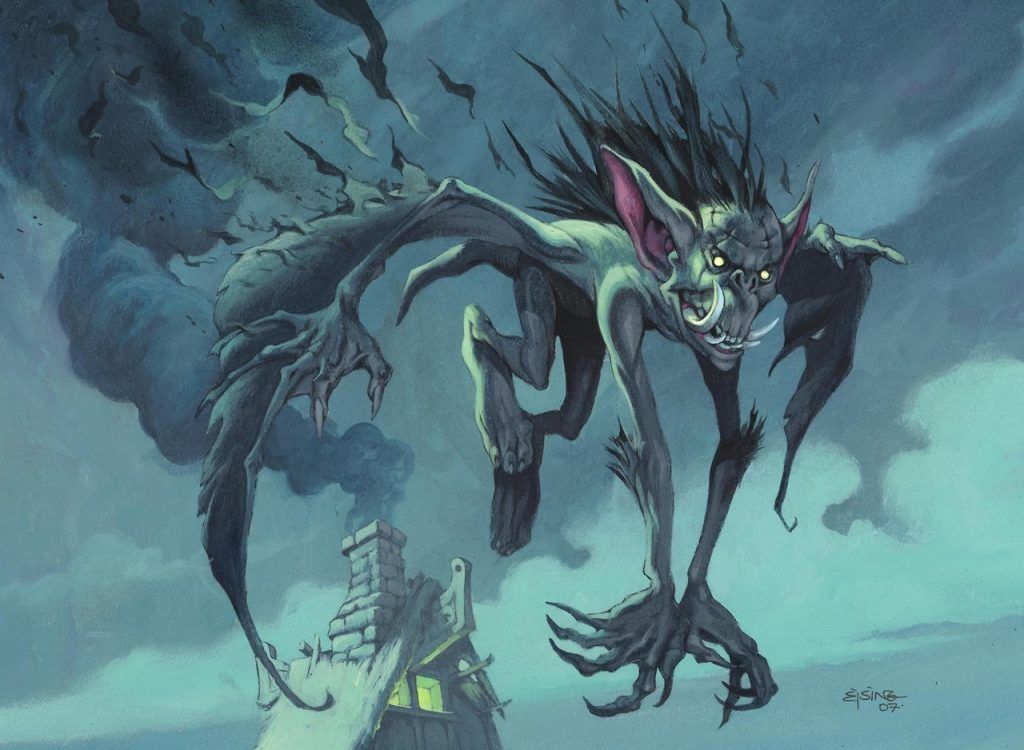
Soot Imp | Illustration by Jesper Ejsing
An early Ejsing classic, Soot Imp has the Ejsing hallmarks. The whimsy mixed with creepiness, the faded background that serves to make the star character pop, the feeling of verisimilitude in the articulation and gestures of the limbs, and that sense that we’ve just entered the story in Act II and await the climax.
I love the tatters of fabric or smoke or magic that fly off the back of the imp as it takes wing, and the way the front of the wing’s claw really feels like an extra, Vecna-style hand.
#18. Koma, Cosmos Serpent
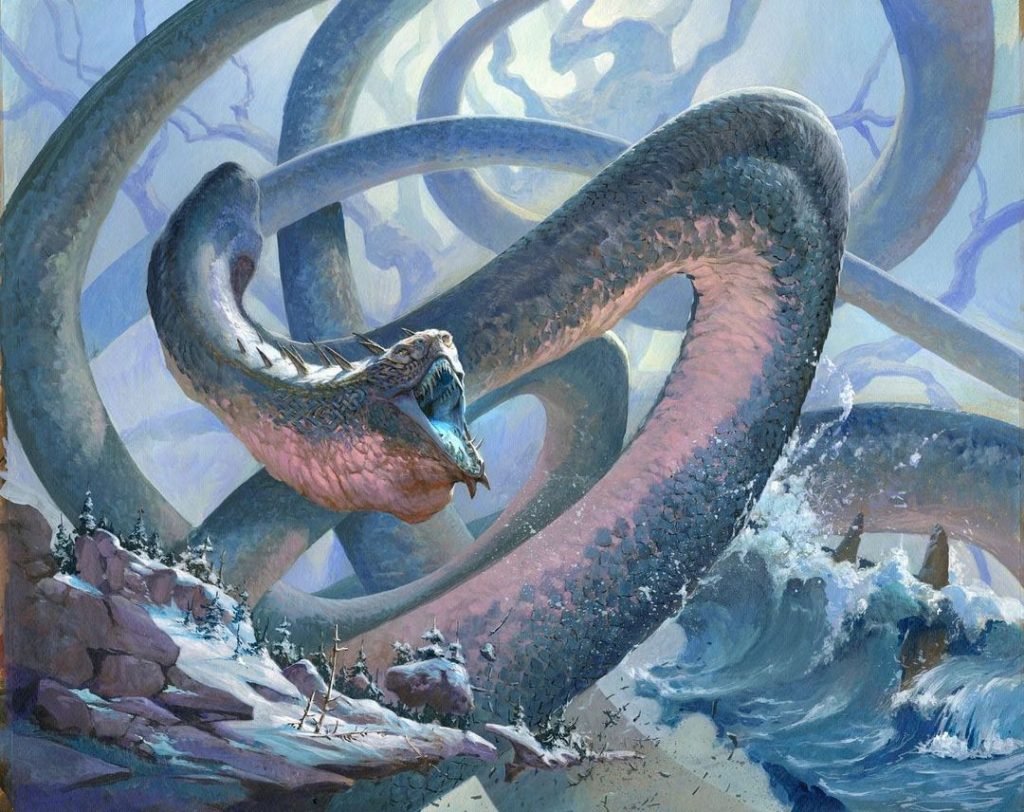
Koma, Cosmos Serpent | Illustration by Jesper Ejsing
There are a lot of Simic () kaiju cards out there, but I really like the way Koma, Cosmos Serpent feels different. The Ejsing faded background works in this case on the expanse of the serpent’s body, which gives a sense of its infinite size, like the world-spanning Norse Jörmungandr Koma is based on. The way Koma seems to hold the edges of the fragile landforms and the sea in suspension is an especially cool way to think about how that works.
#17. The Goose Mother
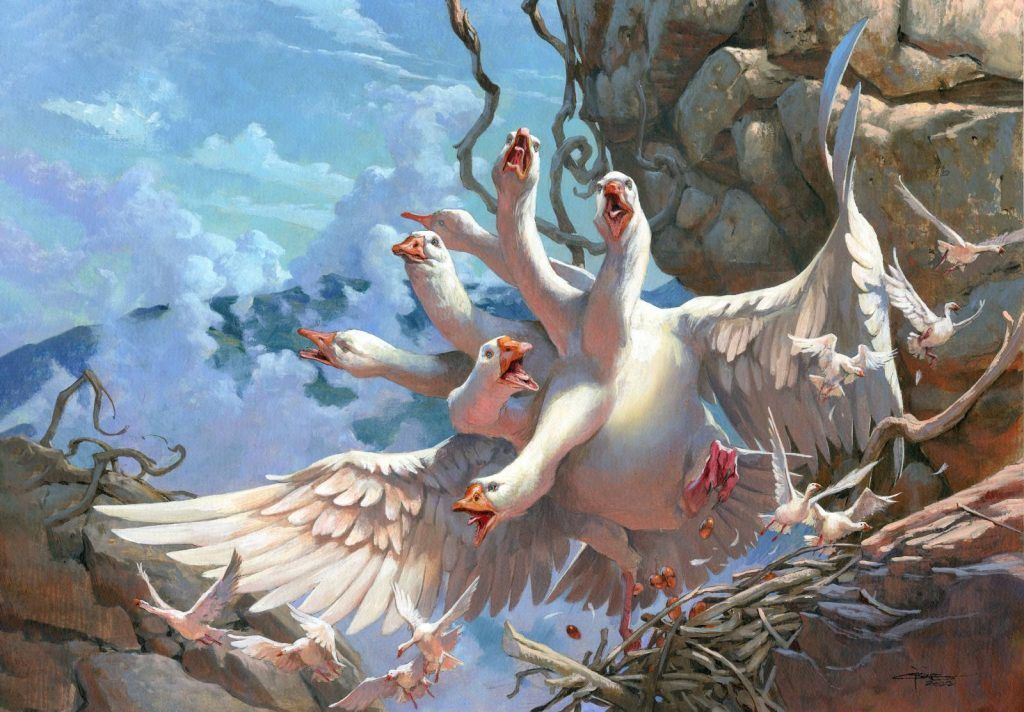
The Goose Mother | Illustration by Jesper Ejsing
The Goose Mother is both hilarious, in concept and artistic execution, and terrifying. Spend a minute with the card and you can see the feathers flying as mama lifts in alarm at our presence near her nest. Literally pulled in different directions, you know at least a few of these beaks are for you. And then you notice the smaller birds at the bottom aren’t fledglings but full-size geese, which makes this monster the size of a minivan, at least. Honk!
#16. Plains – Ikoria
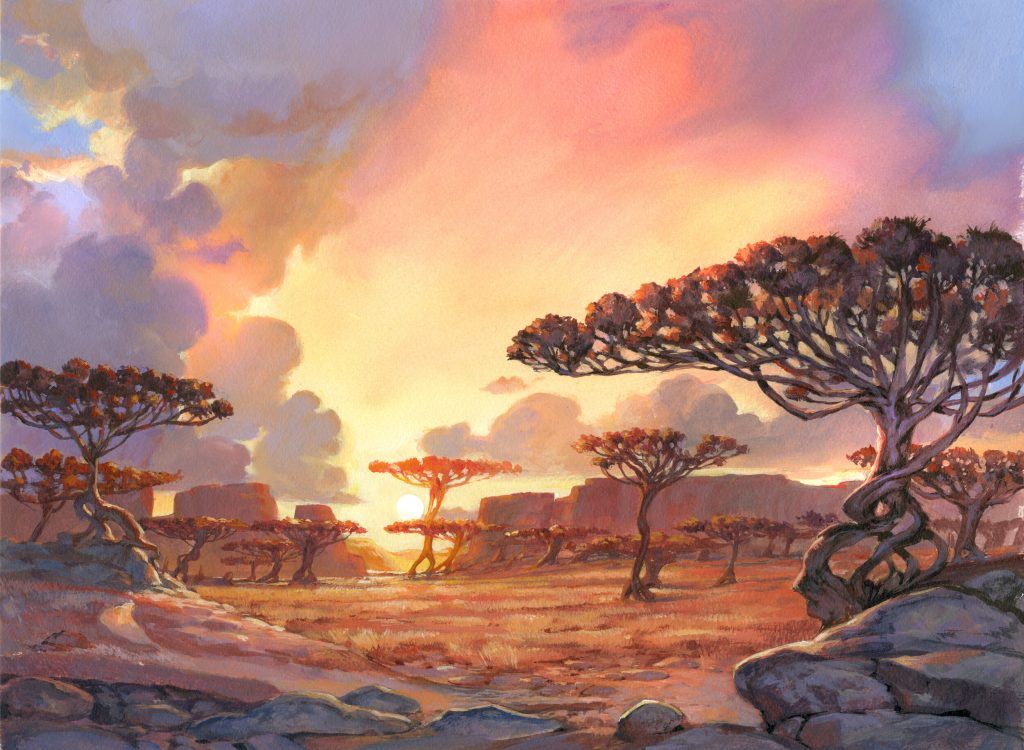
Plains | Illustration by Jesper Ejsing
Ejsing doesn’t do a ton of lands for Magic, but there’s a high proportion of bangers in the 13 or so in his portfolio. His best basic, for my money, is the Ikoria Plains. It lacks the glowing blue crystals in so many lands from that set, and that’s kind of a nice change of pace, whatever the art brief said. I love the trees, which feel almost like they’re cousins of Tolkien’s ents, looking for a watering hole. The sunset is beautiful, and the way the light splays onto every surface in the color bands, ground, bark, leaves, is a master class.
#15. Varis, Silverymoon Ranger
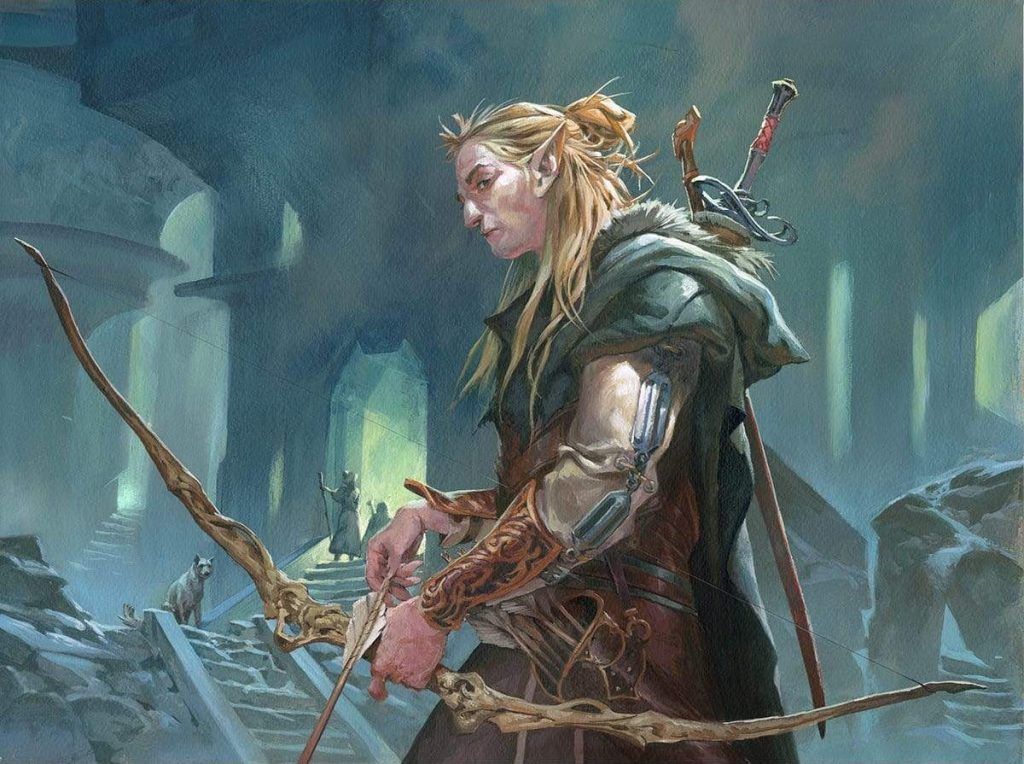
Varis, Silverymoon Ranger | Illustration by Jesper Ejsing
It’s hard not to imagine younger Jesper turning to a life of art in response to the visual impact of early D&D books when you see Varis, Silverymoon Ranger. The color differential in fore and background so often utilized by Ejsing here has another purpose: It contrasts our hero with the dungeon behind, with a geometry so aptly similar to the film version of the fellowship escaping the Mines of Moria in the Lord of the Rings. The wary side-eye toward the card viewer, as if we’re just the sort of bumbling fool that requires Varis to keep his arrow so deftly at the ready is the cherry on top here. His weary skepticism is palpable, and I can easily believe he’s faster on the draw than Legolas.
#14. Viashino Pyromancer
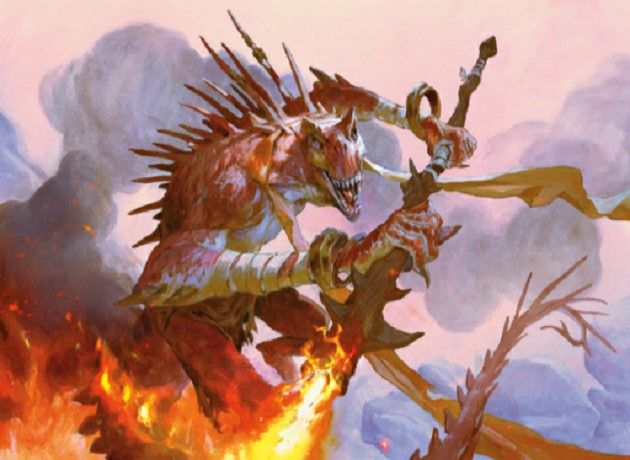
Viashino Pyromancer | Illustration by Jesper Ejsing
The Viashino are tough to paint, I imagine. With no central look, they span the lizard-like Viashino Weaponsmith to the dinosaur-like Viashino Spearhunter. Even when they’re armored and beweaponed, the reptilian soup of imagery often makes them seem like brutes who sometimes wear armor, like some of the early goblins in MTG. I think of cards like Viashino Sandscout.
But Elsing elevates the whole concept, with a mouthful of needly teeth and Allosaurus-style eye ridges, but he parlays that animalistic menace into a coherent personhood for Viashino Pyromancer. We see its glee in its fire magic, barbecuing whatever belongs to the flailing tail along the bottom. Ejsing’s skill with emotive body postures coupled with what’s been missing, clothing that serves only as decoration, the bracelets and the scarf, allow this Viashino to transcend its previous visual languages.
#13. Goblin Matron – Modern Horizons
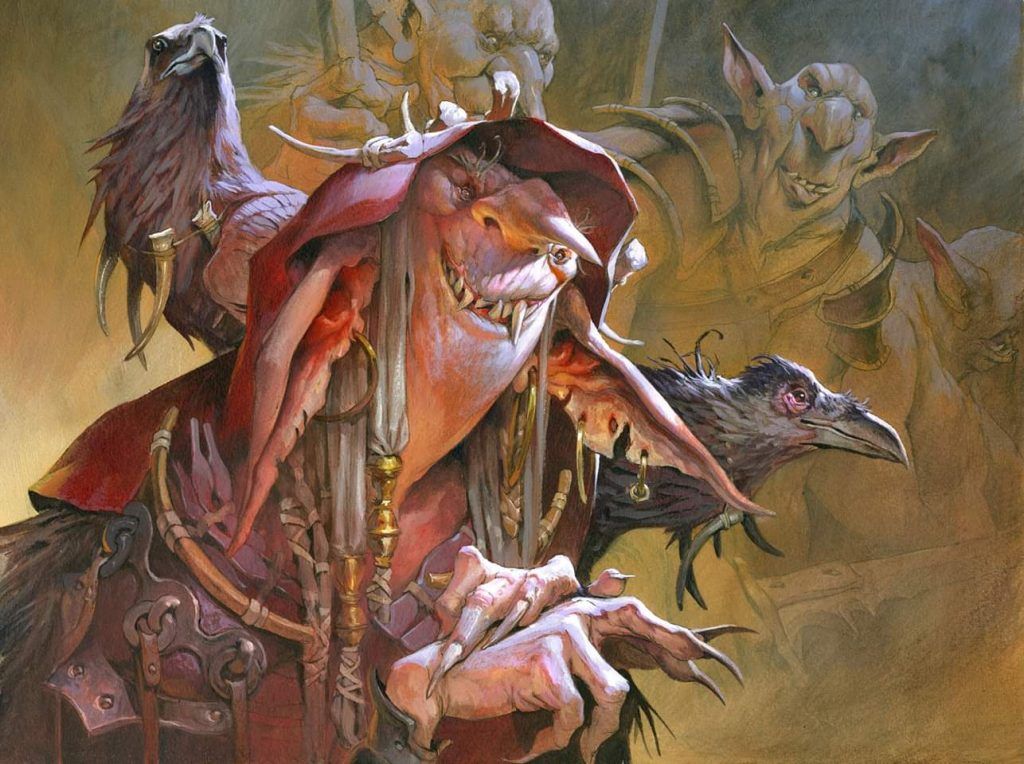
Goblin Matron | Illustration by Jesper Ejsing
The three earlier versions of this card veer into parody and problematic stereotype, but Ejsing’s Modern Horizons version of Goblin Matron immediately rights the ship. Ejsing’s signature spike of a nose for goblins and magic users animates this matriarch, who gives off more Odin vibes with her birds and one eye than anything else. From the shadows in the back emerge her goblin children, under the orders of her point. The gesture does double duty as she folds her hands in contentment, which matches her unique and powerful expression. She’s all spikes and fanged glee, nose, ears, beaks, fingers, almost as much as Ejsing’s excellent Munitions Expert. The Matron is winning, so thankfully we’re the sideways witness, not the target.
#12. Fearless Fledgling + Frantic Scapegoat
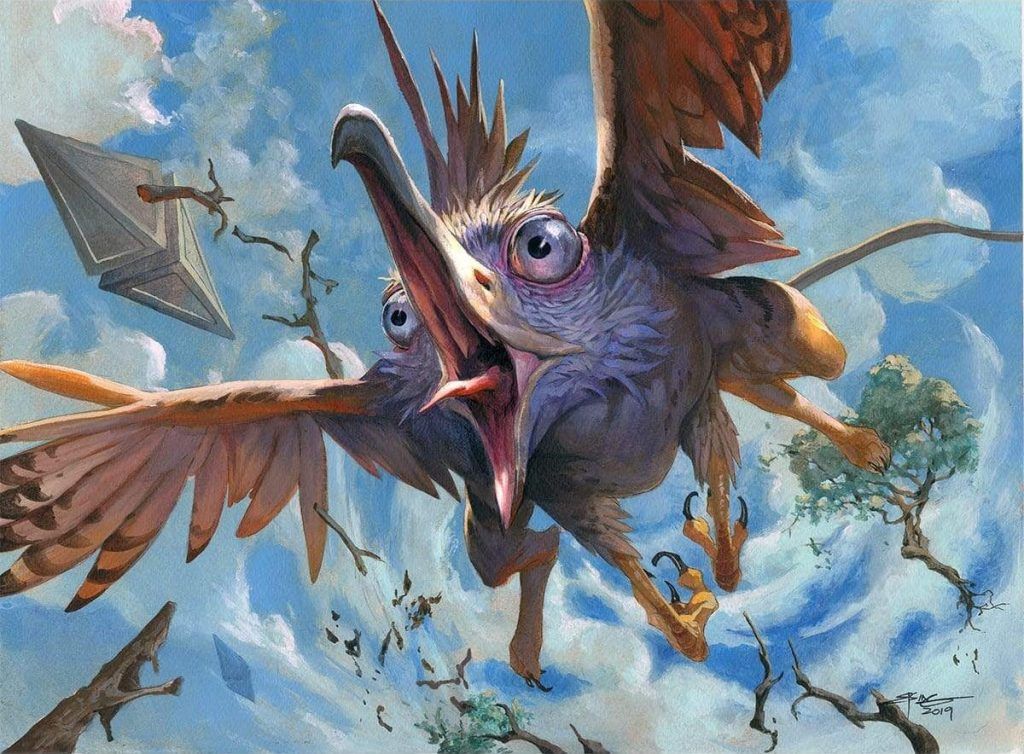
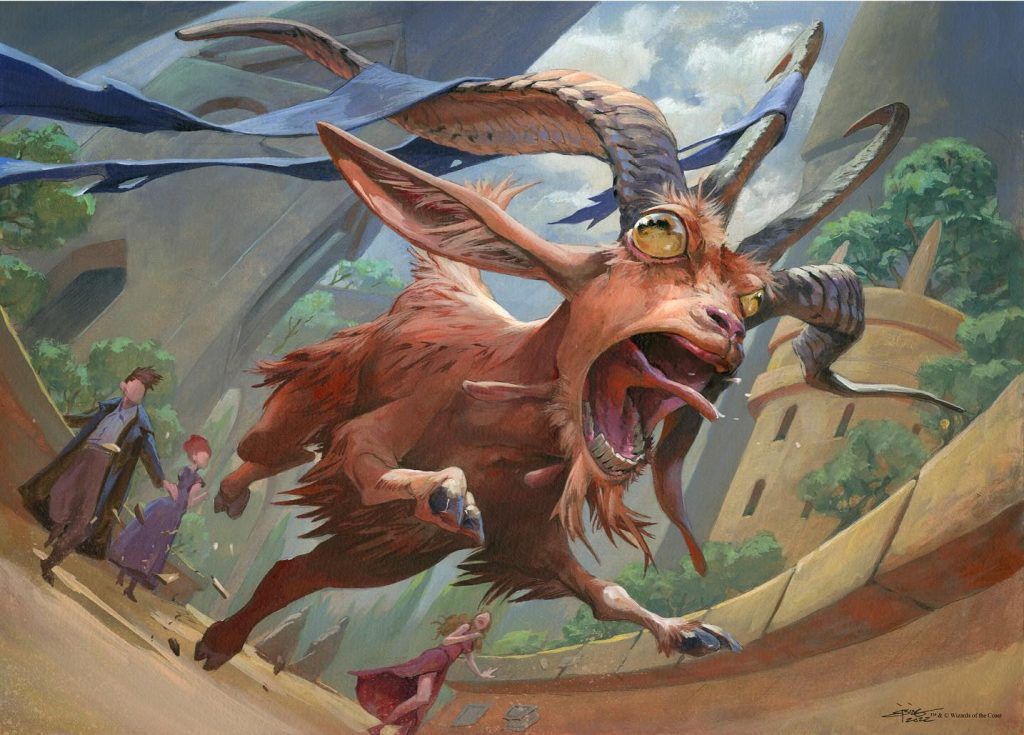
Fearless Fledgling (left) and Frantic Scapegoat (right) | Illustration by Jesper Ejsing
Clearly a matched pair, one brave and one not, each rushing in the opposite diagonal direction, Fearless Fledgling and Frantic Scapegoat are effective humor pieces. They remind me of the more fun-loving Foglio cards of the Magic of the ‘90s while using a kind of Looney Tunes-meets-manga exaggerated physical comedy in the general painterly tradition. That’s a lot! Humor that doesn’t pull too far into parody or satire and break the frame of the fantasy is really tough. Part of the key here is a level of textural detail on the feathers and hair, more than usual for Ejsing. The joke is sold in those details.
#11. Willowdusk, Essence Seer
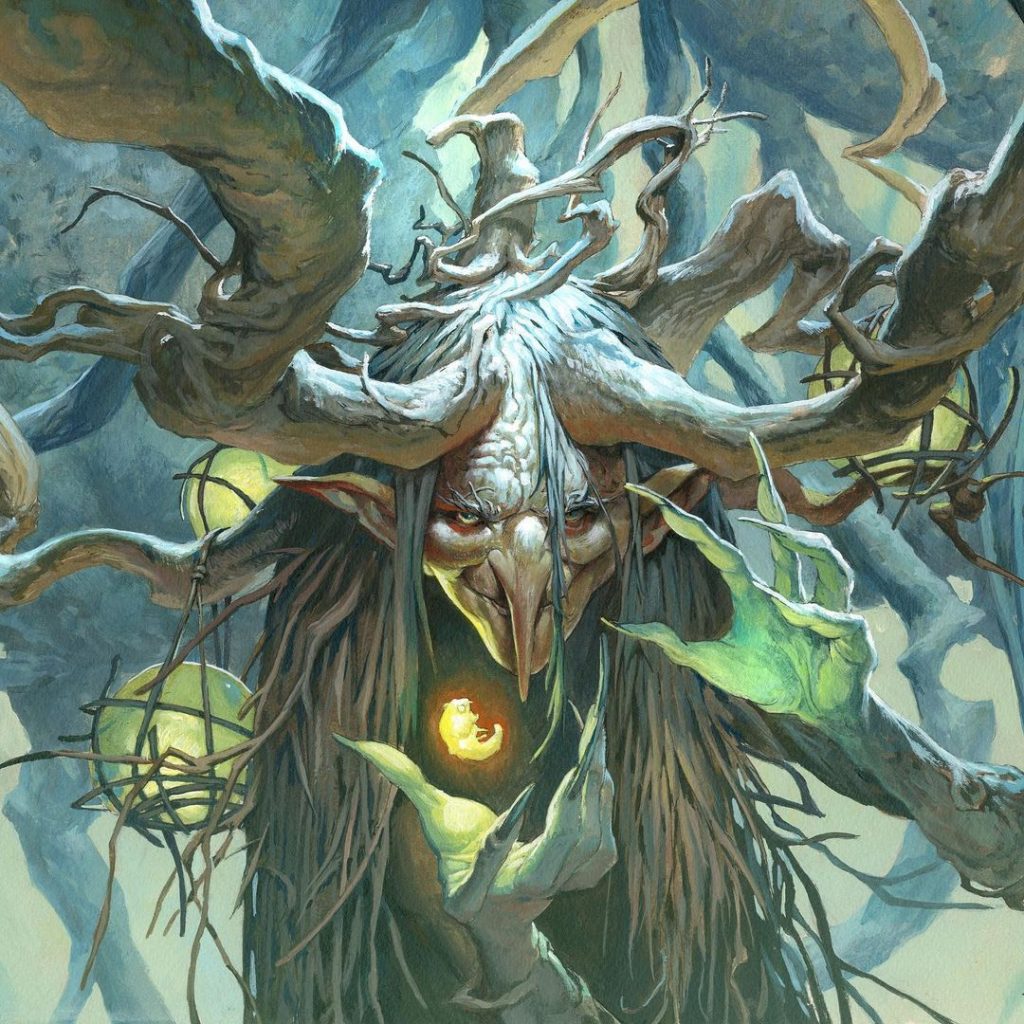
Willowdusk, Essence Seer | Illustration by Jesper Ejsing
This is the kind of thing that would scare me as a child, and I don’t think we ever fully get over that sort of thing. The hooded stare, the articulated fingers with the claw-ish nails, the tree/antlers all around, including some that are, at this distance, already over your head, pushing out the sides of the art, perhaps even encircling you. We might already be trapped! The best part of Willowdusk, Essence Seer is the light coming off the spell she weaves, which gives a sinister underhead glow to her features. That spell looks awfully fetal. And maybe, fatal.
#10. Thassa’s Oracle
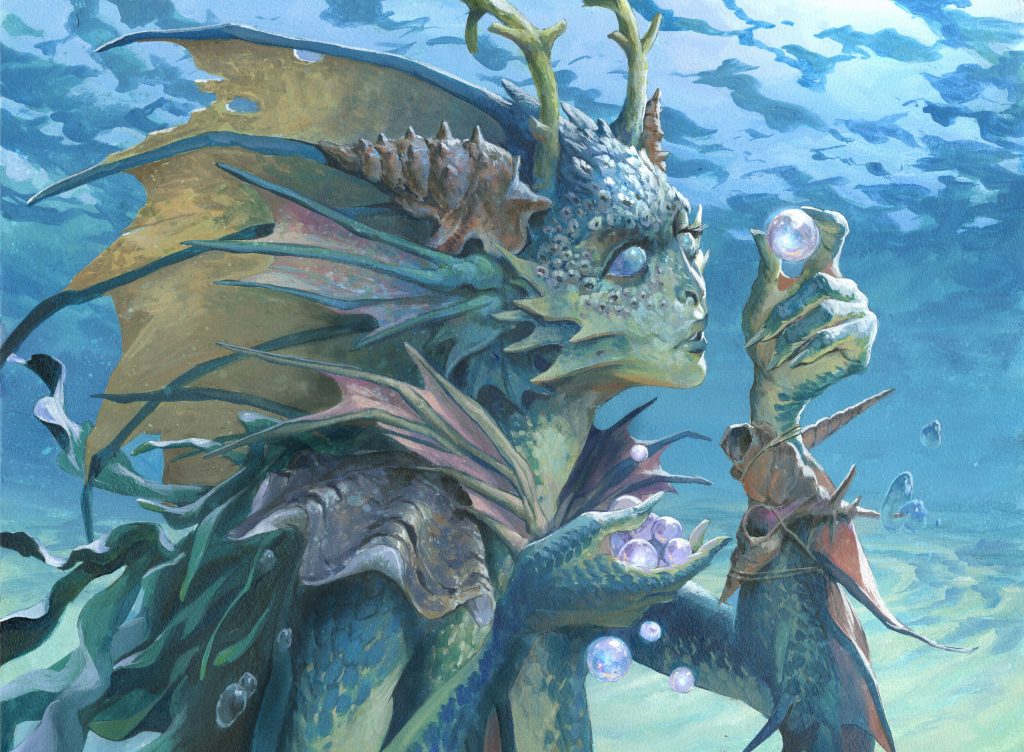
Thassa's Oracle | Illustration by Jesper Ejsing
Can a card as ensnared in the universe of cEDH finishers be beautiful? I’m a massive fan of merfolk and merfolk decks, but for me, Thassa's Oracle is the visual epitome of merfolk, even if it’s never really played in those decks. The different surfaces of its body, the shells on the ears and shoulders, the augury pearls being tossed aside like bones. Even as small a detail as the holes in the head fin give this image a tangibility that helps me ground myself in the fantasy universe.
#9. Yavimaya Coast – Dominaria United
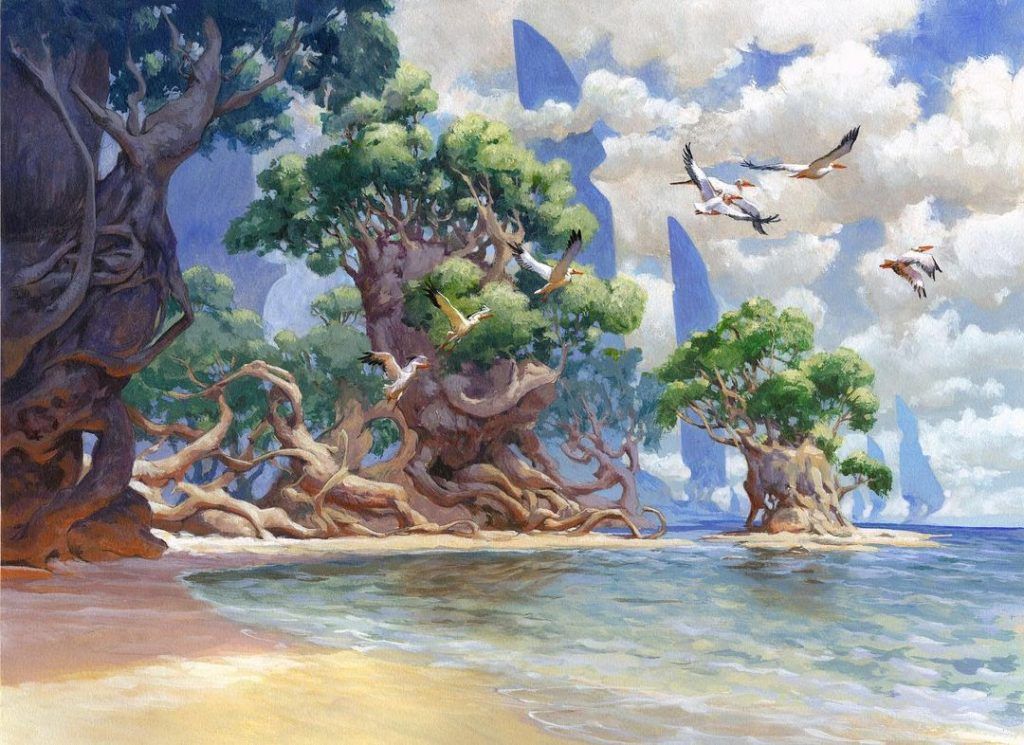
Yavimaya Coast | Illustration by Jesper Ejsing
The Anthony S. Waters original from Apocalypse is lovely, but the foreground snarl of roots or branches is tough to parse. I love the way Ejsing’s new version for Dominaria United pays homage to the much reprinted original while it crafts something monumental in scope. The same whirling trees occupy the shore, which almost feels like you could have rotated a camera from one version of the Yavimaya Coast to another. The waters are peaceful, the megaliths shadowy and serene in the background, but the bit I really like is the shadow of the mass of trees across the water. A small, but subtle hint of darkness to bear testimony to the cycle this is part of: “pain lands.”
#8. Dream Trawler
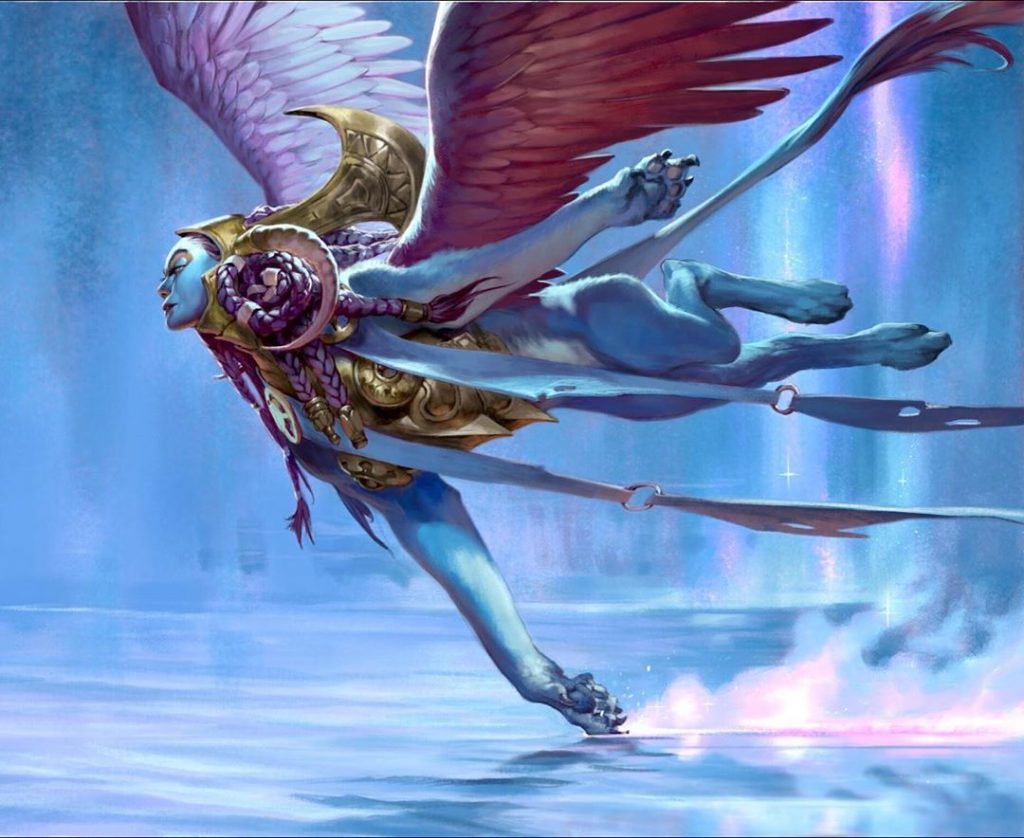
Dream Trawler | Illustration by Jesper Ejsing
I know, it’s hard to appreciate the beauty of this card when it caused you to scoop so many games to post-Theros Beyond Death Azorius () control piles. But Dream Trawler is just stunning. Somehow Ejsing conveys the sphinxian weight of this creature, mostly in the arms, while he also makes it feel light and free as it casually slides it paw through the water, awakening the misty dreams of some sleeper, the pink fire of the unconscious churning up past the surface.
#7. Slippery Bogle – Ultimate Masters
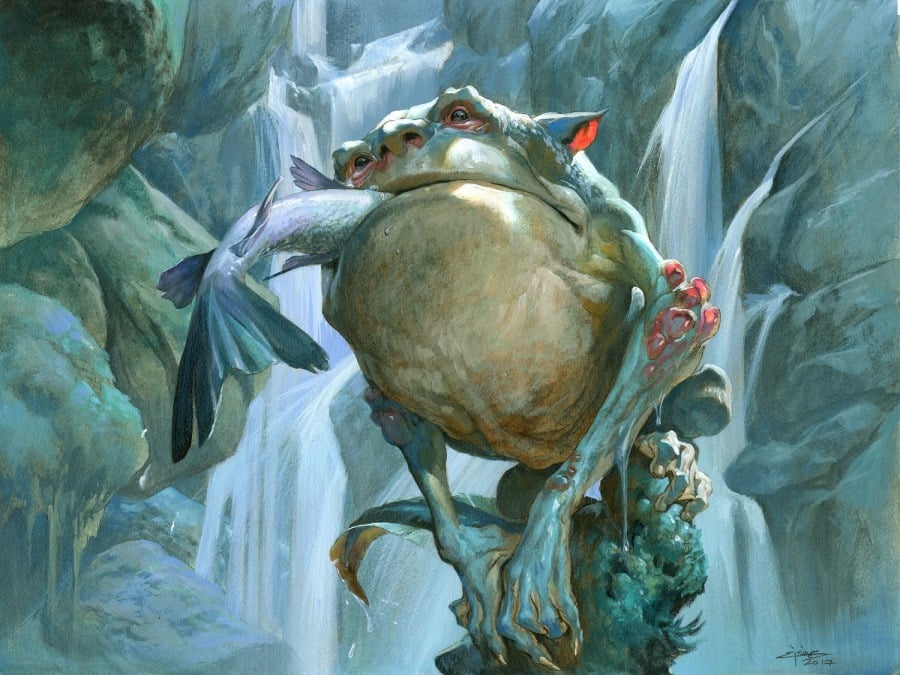
Slippery Bogle | Illustration Jesper Ejsing
I love Dave Alsop’s original Slippery Bogle artwork with the big feet and the tongue. But Ejsing’s revision, which cheekily replaces the tongue with a fish, is immediately iconic, hence Slippery Bogbonder. The more tadpole like appearance, complete with a more finlike revision of the tail and the loss of hair loses some of the monstrous quality of the Alsop Bogle, but it gains realism, important given that we’re creating a new type of creature that has whole decks named after it. And the simple shift of looking up at it instead of down, with the more heroic highlights and the color choices. Making it pop from the background makes it cuter and more likeable, and it feels like it has a story I’d like to learn about more.
#6. Breeches, Eager Pillager – Secret Lair
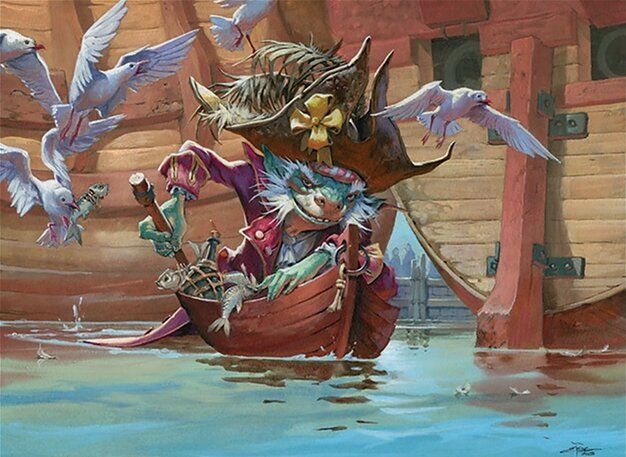
Breeches, Eager Pillager | Illustration by Jesper Ejsing
I loved all the cards in the Jesper Ejsing Secret Lair drop. The expression on the Llanowar Elves, the composition and energy of Deflecting Swat, the more lore-generating creativity of the Sun Titan. But for me, the gem of the set is Breeches, Eager Pillager. I didn’t get it for the first half a second I looked at it, until I looked again. Under what I thought was Breeches hiding in a mask (the golden bow has a bit of a Skull Island vibe), I found Breeches lounging at the bow of his little boat, looking smugly at us in the half shadow. He sees how we fell for his trick, and, if he’d been interested, he’d have already swapped in a grenade for our purse.
This is Ejsing at his best. This is the first Breeches art I’ve really liked. It’s the first that feels like a pirate the way movies do pirates, all swagger and double cross and vague menace, not like a goblin looking to ‘splode some stuff.
This is the first Breeches who is the main character. And the look on his face tells us he’s been the star the whole time. We just weren’t reading the story the right way.
#5. Jubilant Skybonder
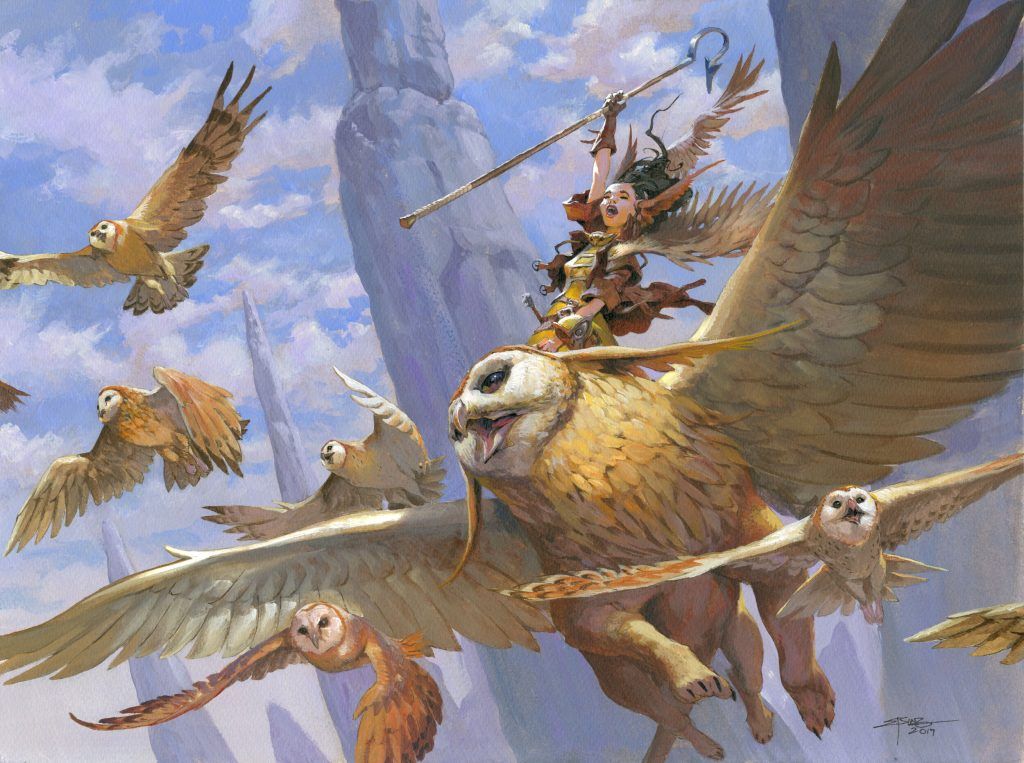
Jubilant Skybonder | Illustration by Jesper Ejsing
Brilliance. The emotion is so palpable on Jubilant Skybonder that it lives up to its name. I imagine this is, in fact, what it’d feel like to ride a giant owl as part of a parliament that’s too excited to stay in any kind of formation. The typical Ejsing choice to use a more muted background not only draws focus to the rider, who whoops back from the center of the card they might have occupied a second ago, but it gives a shadowy sense of how high up they might be.
#4. Kappa Cannoneer
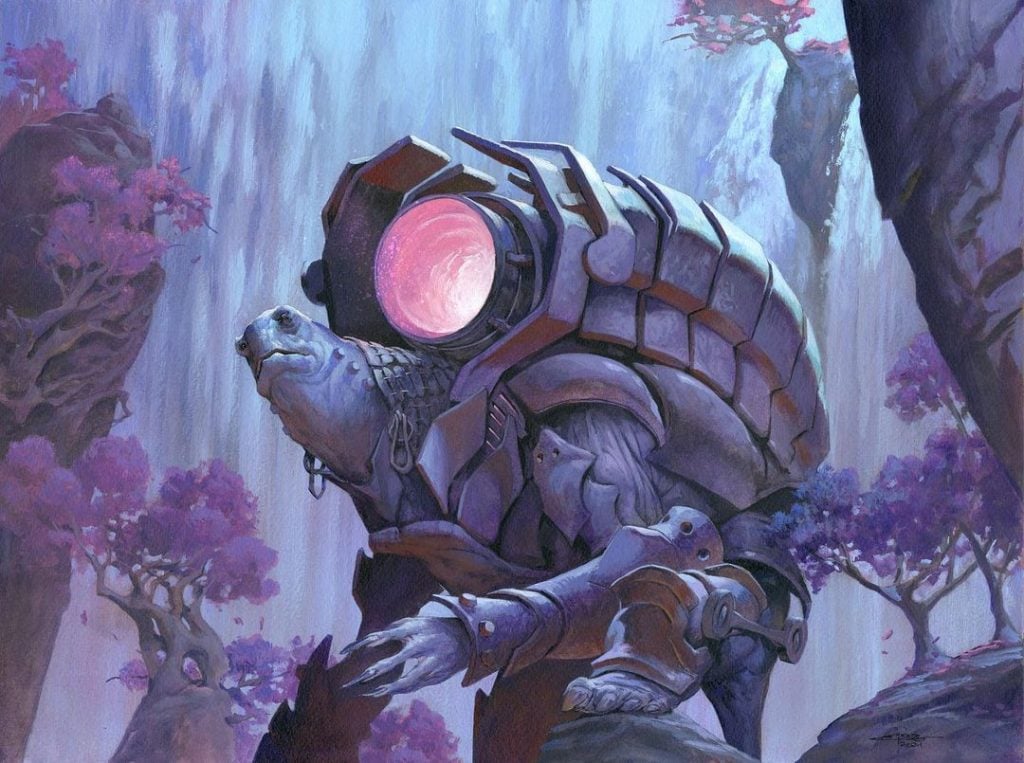
Kappa Cannoneer | Illustration by Jesper Ejsing
How do you imagine this piece from the presumed art brief, given the impossibility of not thinking about Mario and the Ninja Turtles? To me that is the achievement of this piece, that added level of difficulty. Ejsing solves the Kappa Cannoneer problem by finding the sadness in our turtle warrior, burdened by this cannon. Is it the turtle’s shell? Can it ever remove this heavy, murderous thing? Or is this all that it is, nothing more? The face, neck, and burdened posture remind me of Frog from Arnold Lobel’s books, tapping into the long children’s literature Eeyore-ish tradition of sad animals.
The warrior has just noticed us, by the way, raising its head to see or perhaps lowering itself to fire. It has already decided and is just keeping us in aim. Either way, it’s not all that happy about having to do its job. It’s that Ejsing magic of whimsy and sadness.
#3. Fblthp, the Lost
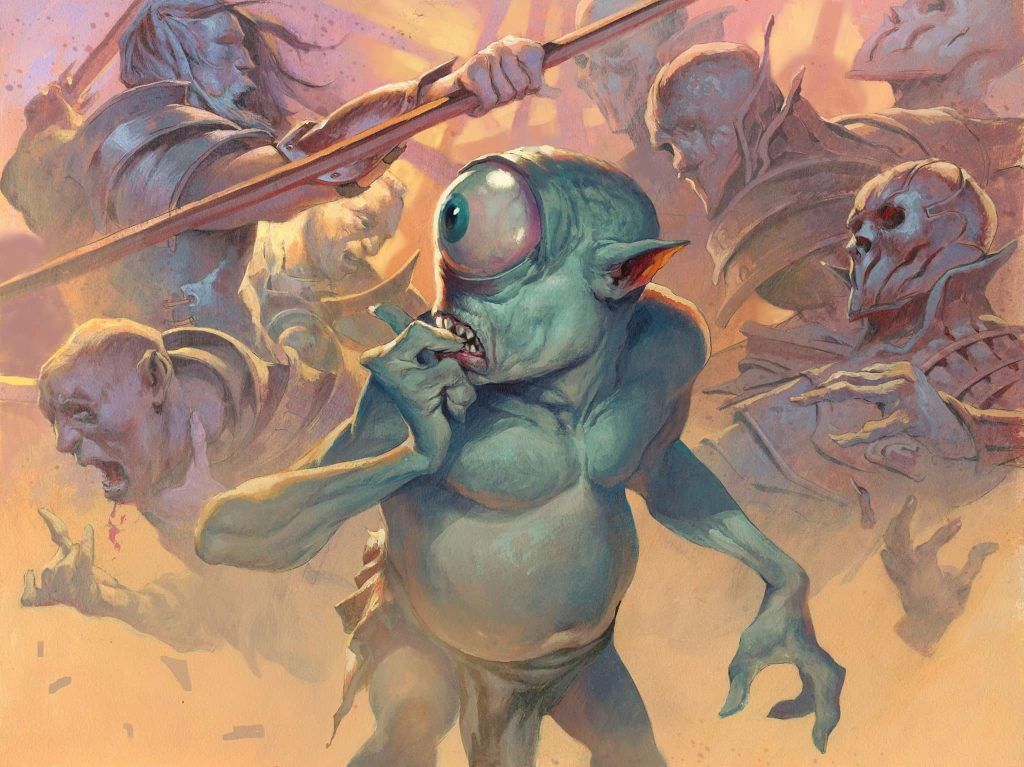
Fblthp, the Lost | Illustration by Jesper Ejsing
Although David Palumbo’s iconic art on Totally Lost is still so important that it’s a coveted avatar on Magic Arena, Ejsing’s Fblthp, the Lost gives our favorite homunculus a more interesting, palpable personality that provides the ground for continued popularity. He moves to the center of the composition compared to Palumbo’s art, which had given such a clear feel of disoriented panic. The crazed action around the character is now in faded sandy color, and our one-eyed haphazard adventurer is now more of a protagonist of some sort of odd story. The hand to the mouth, long a movie staple to indicate worry, is also being bitten in thought, another trope, and Ejsing’s subtle work on bringing out those emotive details is enduring.
#2. Restless Cottage
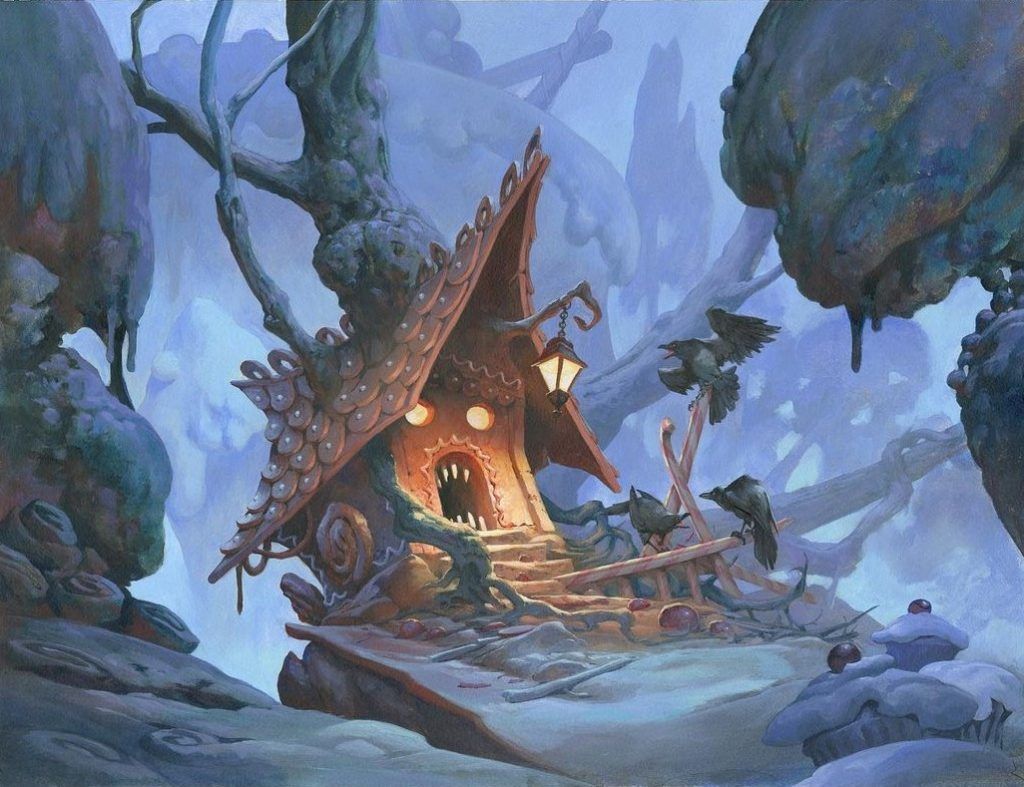
Restless Cottage | Illustration by Jesper Ejsing
It’s a trap! The foreground rocks and the house’s placement on a ledge create a sense of danger, of falling into this thing, a monster house you’d never approach of your own will. It feels like it wants to pop up onto Baba Yaga house chicken legs and go prowling as in Sergey Glushakov’s version of this concept, but the details in the art reveal a problem. The house is set into the tree, what looks like railings/hands are tree trunks, which emerge from the roof. It’s a Restless Cottage because it’s hungry for lost children, but it can’t escape its own nature. What looks like a simple monster becomes a tragic figure, screaming and alone in a haunted wood. Far, far deeper stuff is happening here under the nostalgic storybook style that suffuses the image. One of my absolute favorites!
#1. Colossal Dreadmaw

Colossal Dreadmaw | Illustration by Jesper Ejsing
My top five are iconic pieces of Jesper Ejsing art, but perhaps none more so than the iconic, and now meme-worthy Colossal Dreadmaw. It was literally breathtaking the first time I saw it in an Ixalan pack. The enormous head rising behind the dwarfed ship and the even smaller crew members, including one who seems to have thrown himself off the plank to flee, is enough to give the viewer wisps of megalophobia, even on the small card. The almost proscenium pillars of the rocks create a clear sense of the boat’s trapped doom.
But second glances tell a different sort of story. The sail bisects the body of what lopes toward the boat, giving another sense of speed and the dread of when you first saw Jurassic Park when it seems to emerge, moving in a kind of blink.
All the glances thereafter tell another story, of this fabulous dino preening in a shaft of sun, showing off those feathers like Carmen Miranda’s hat, and those proscenium pillars start to feel like the edges of a stage. And we, the audience, are just in time for the start of the show.
Where Can You Buy Jesper Ejsing Art?
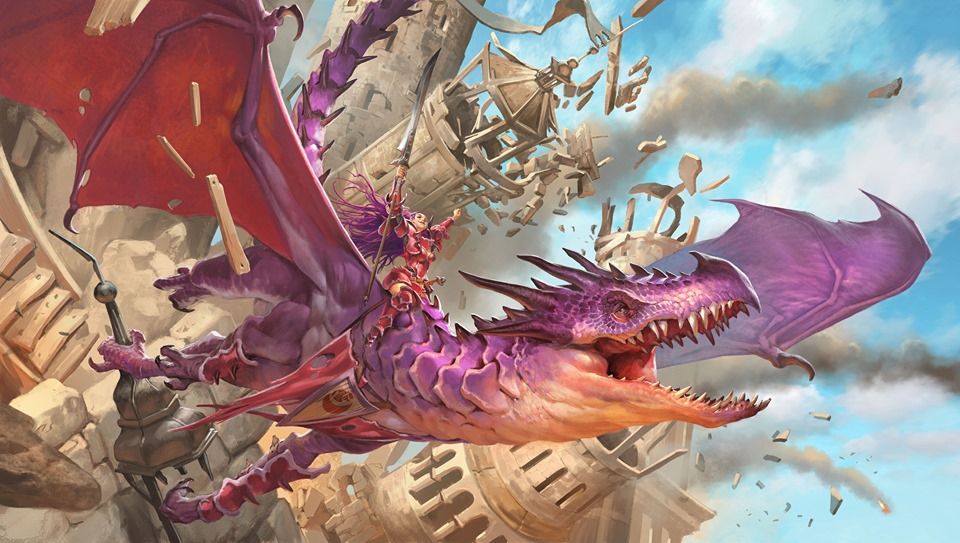
Jesper Ejsing Kickstarter playmat for The Command Zone
Jesper Ejsing’s website is the primary place to look for artist proofs and to buy prints.
Ejsing has also previously worked with The Command Zone to create a Kickstarter playmat, though that initivative has long since been over, and it’s difficult to find those playmats on the secondary market.
Wrap Up
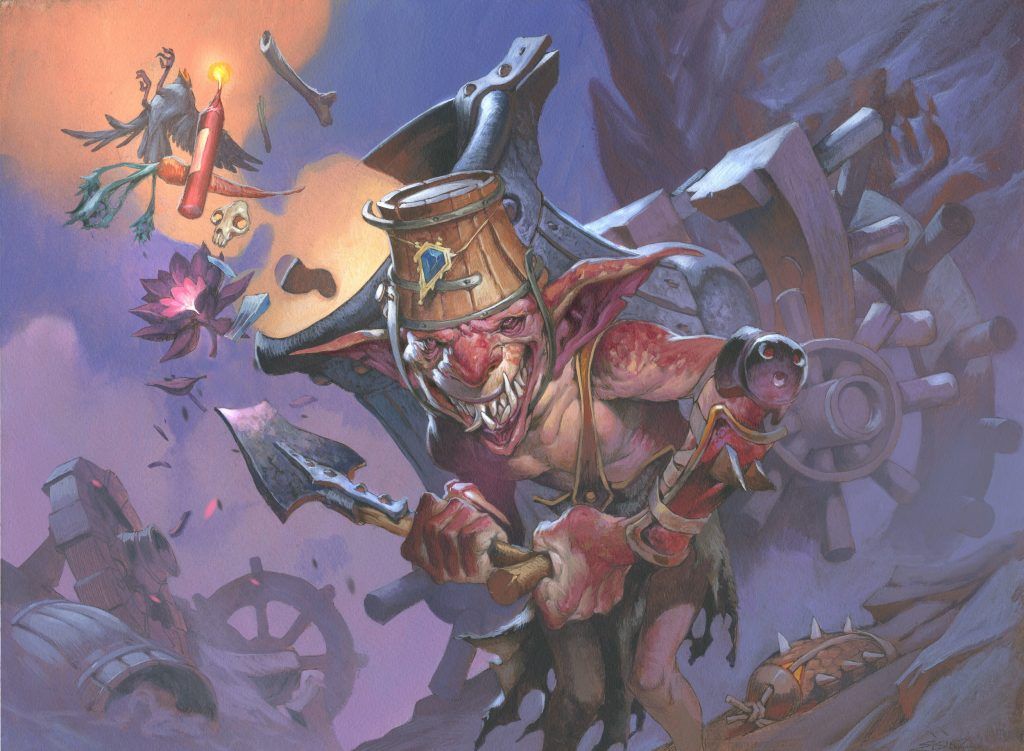
Goblin Charbelcher | Illustration by Jesper Ejsing
I could have gone another 50 cards, easily. Ejsing is a fabulous artist with a ton of great work and iconic characters.
I can think of no higher praise than to laud an artist on their own terms. Clearly a young Jesper was moved by the art he saw in his D&D manuals to choose an artist’s life. That choice makes sense because of the power of great fantasy art to make a game come alive as a narrative for the players. That’s often what separates games we continue to play from games we don’t. And Ejsing’s work has always done that for me in MTG. Often, his work is so strong, like Colossal Dreadmaw or Restless Cottage, that those pieces become tied in my mind to the set as a whole. The Cottage is the vibe of Wilds of Eldraine, for me, and it’s what I think of when I want to get in the mood for it. Same for the Dreadmaw in every Ixalan set.
How about for you? Do you have favorites that hit the same way that I missed in the list? Give the cards a shout in the comments or on Discord.
Thanks for reading about Magic art, y’all!
Follow Draftsim for awesome articles and set updates:









Add Comment