
Last updated on December 13, 2025
Deathcap Glade | Illustration by Sam Burley
Golgari () is and has always been one of my favorite color combinations to build and play. Black is my favorite color in Magic and green just brings out the best in it. Golgari cards often focus on swarming, reanimating, and sacrificing. Today’s lands will fit into a lot of these play styles, as well as in many of the tri-color decks that involve green and black.
Today I highlight Golgari lands. Think of this as a tool to help you in deckbuilding that gives you an idea of which green and black dual lands help individual builds.
Without further ado, let’s adventure into these dark Forests and overgrown Swamps!
What Are Golgari Lands in MTG?

Golgari Rot Farm | Illustration by John Avon
A Golgari land has an exact green and black color identity and the land card type. It can tap for or , preferably both, or it uses those symbols elsewhere in the rules text, usually on an activated ability. These are essentially lands that can be played in a Commander deck featuring at least green and black.
#35. Atzal, Cave of Eternity
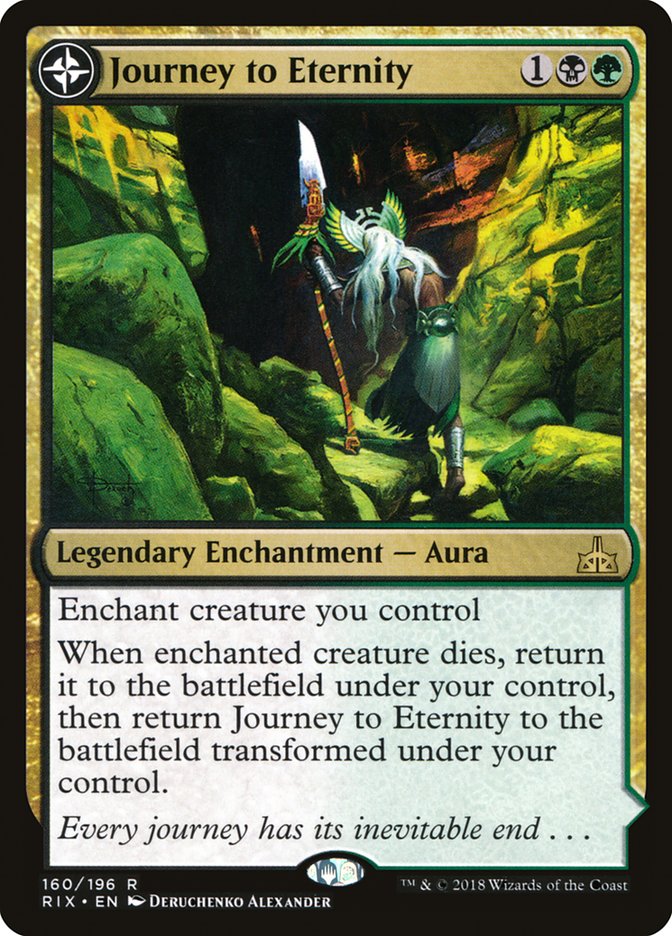
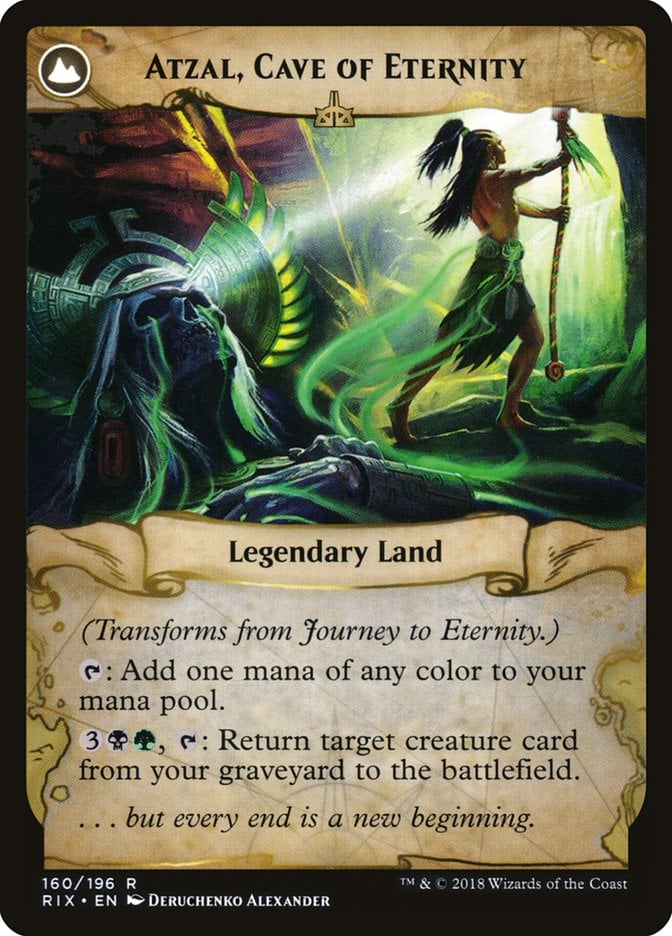
Atzal, Cave of Eternity takes last place on account of being here by technicality only. This transforming land from Rivals of Ixalan only counts as a land if you manage to finish the quest of flipping Journey to Eternity. We’re not here to evaluate enchantments, so I’ll leave this as a quick mention that fits our definition and move on.
#34. Golgari Guildgate
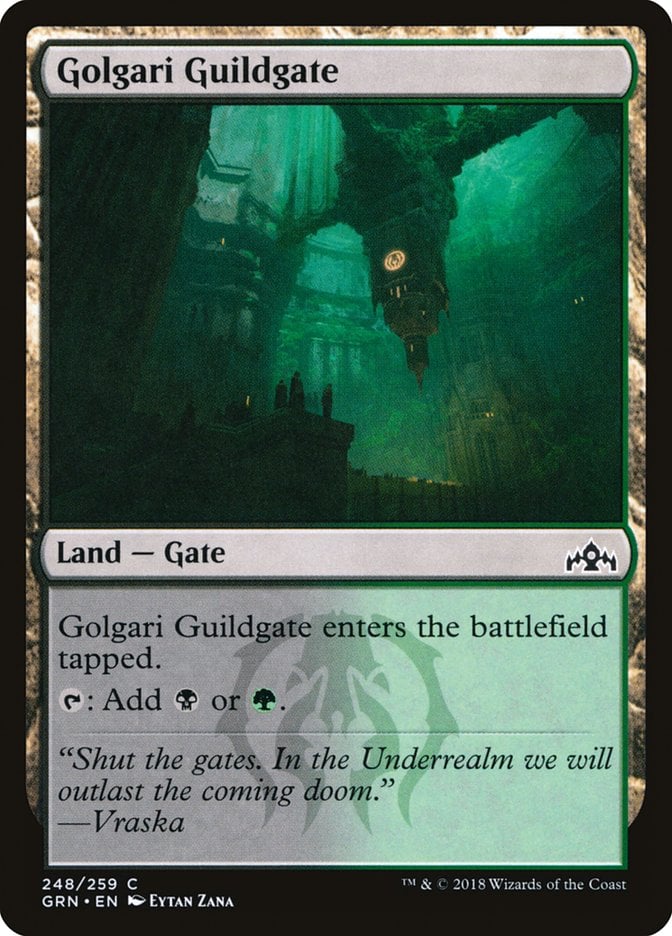
Here we have the Guildgate for the green and black colors. All the Guildgates give you two color options, but enter the battlefield tapped.
Golgari Guildgate doesn’t have much value in Modern and Commander. But it might be a good addition for Limited formats, and possibly Pauper. I love the guild storylines for MTG as a whole, but we can find better land cards for our decks.
#33. Festering Gulch
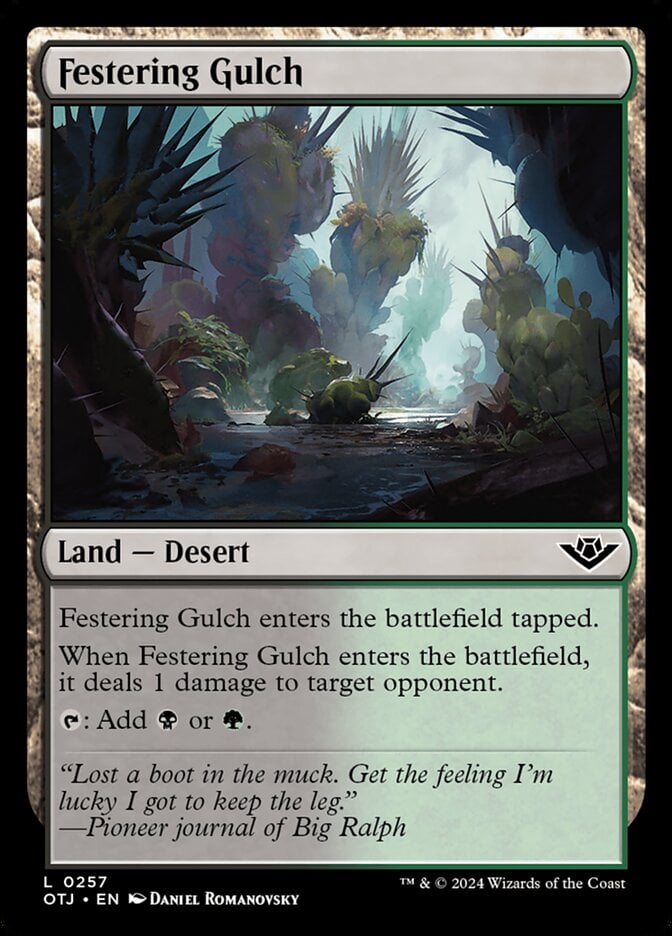
The difference between Festering Gulch and Jungle Hollow is marginal, but they’re both ever-so-slightly better than a basic tapland like Foul Orchard. If you can make the damage from this desert matter in some way, all the better!
#32. Jungle Hollow
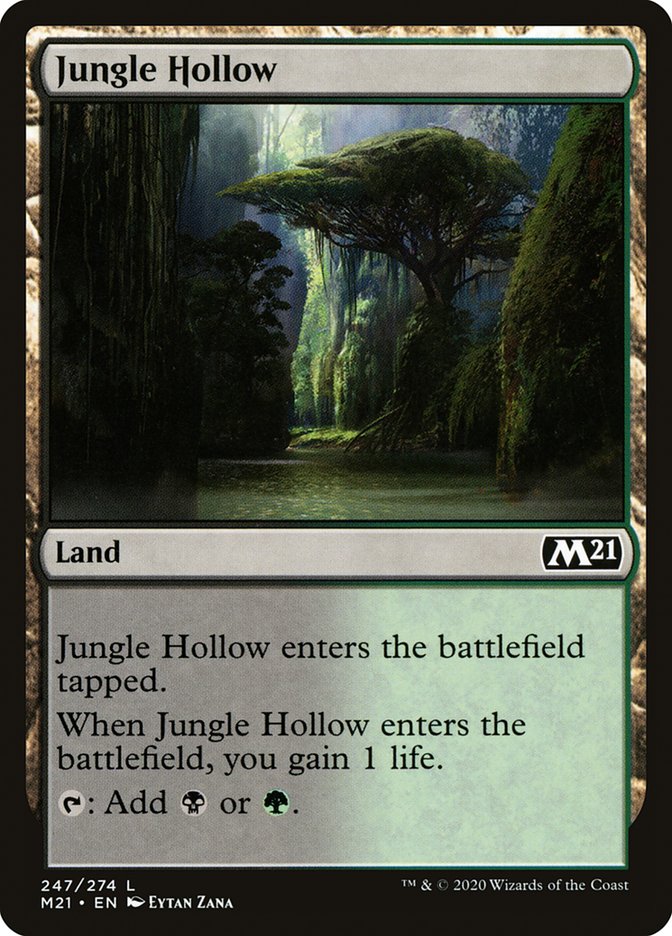
Jungle Hollow is legal in all formats, so we definitely need to talk about this dual land. It allows you to get the colors you need, and as an extra benefit, you gain 1 life. The downside is that it enters the battlefield tapped and doesn’t have any extra abilities like some of the other Golgari lands.
#31. Gilt-Leaf Palace
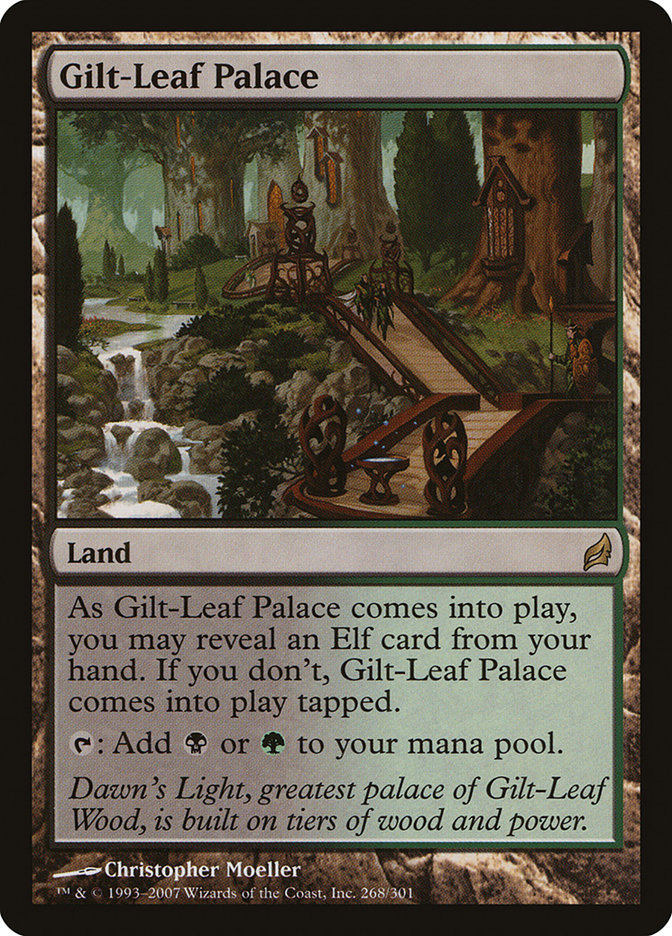
If you’re thinking of a typal build, can I suggest Golgari elves? The green and black colors go well with some of the elves’ combos and synergies. Gilt-Leaf Palace enters the battlefield tapped unless you reveal an elf card from your hand, so it doesn’t have much value outside of an elf deck. Not playing elves? No need to run this.
#30. Skemfar Elderhall
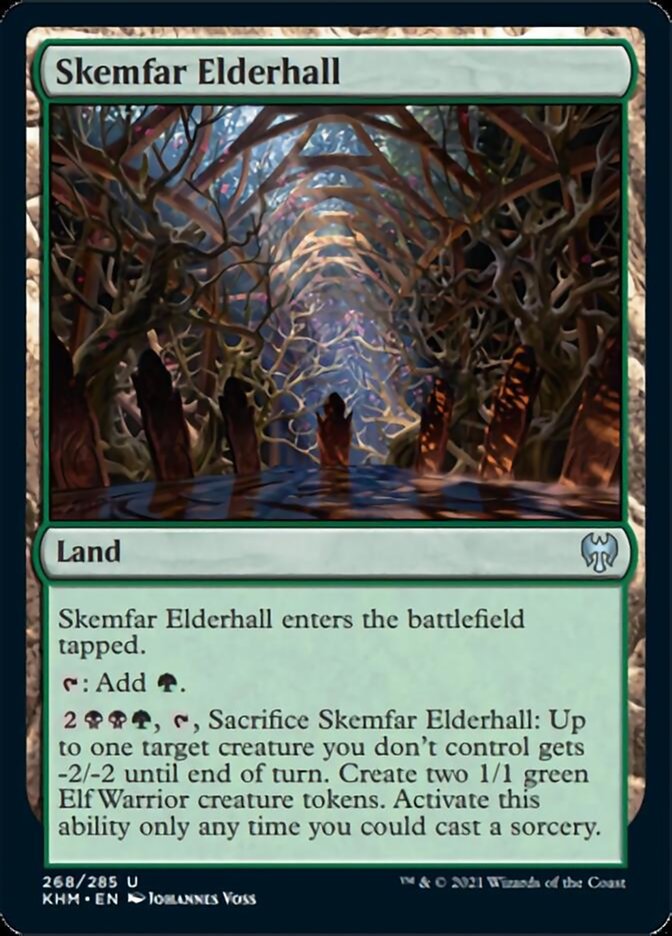
Skemfar Elderhall doesn’t provide you with the option of black mana, but its activated ability qualifies it for this list.
This ability might pair well with elf cards like Abomination of Llanowar or Skemfar Avenger. But it’s not a high enough payoff for the loss of a land and the amount you have to tap for it.
#29. Tainted Wood
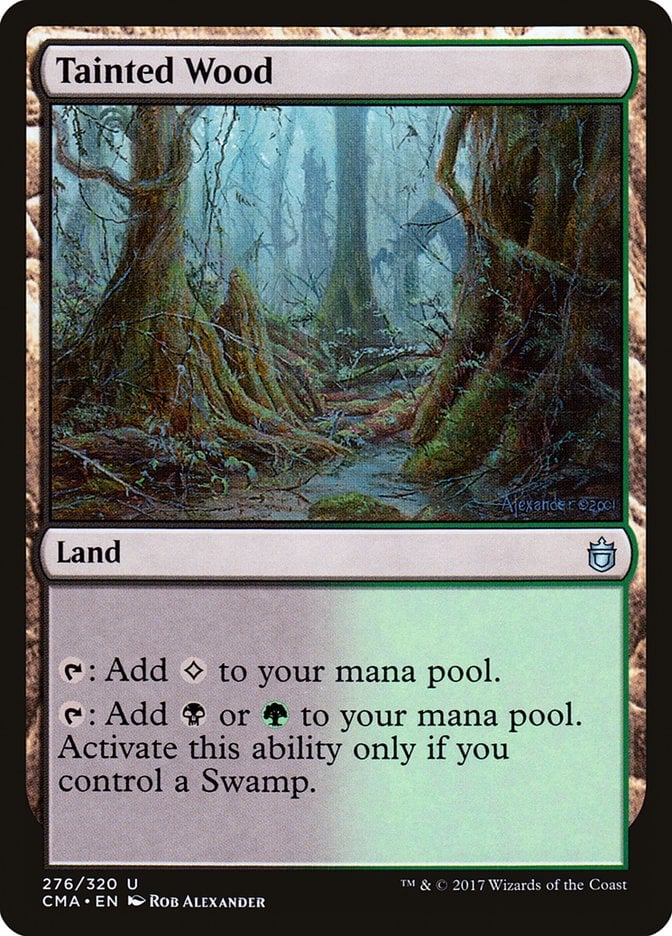
The stipulation for Tainted Wood is manageable, but it might be annoying at times. You can only tap this land for colored mana if you control a swamp. It’s very easy to make this happen, but why risk the potential stall to your tempo?
#28. Lounge

Does someone want to explain the logistics of why Lounge is a black-green card? Have you ever been hanging out in a sun-lounge and thought to yourself: “Wow, this is just like being in a Woodland Cemetery! Flavor aside, these Ravnica: Clue Edition lands are clunky, but occasionally useful. They get a bump up in decks that care about artifacts, but how many Golgari decks does that describe?
#27. Darkmoss Bridge
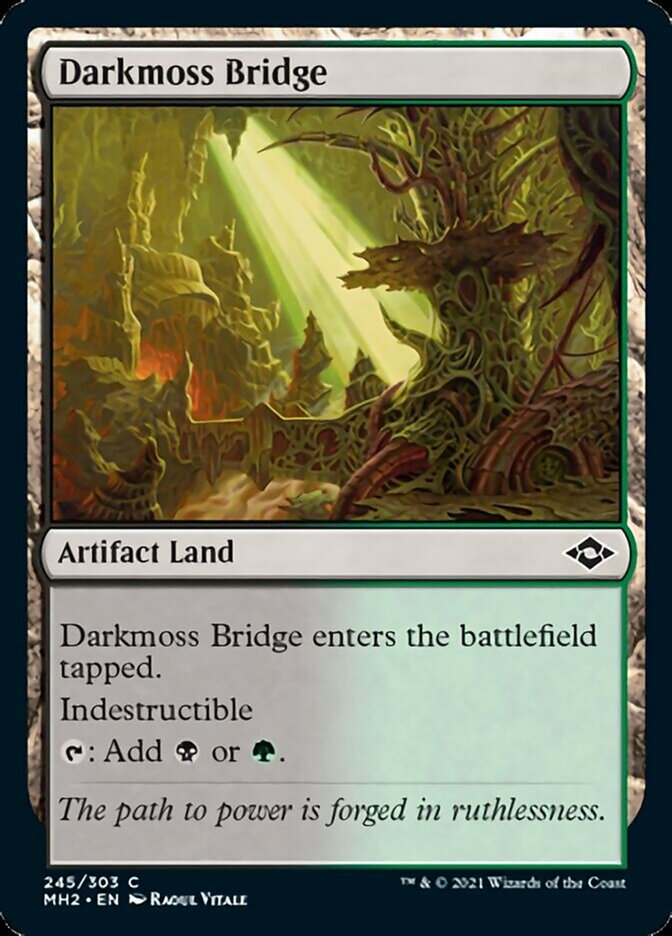
Darkmoss Bridge is a great addition to a Pauper deck moving into green and black. It always comes into the battlefield tapped, so it slows down your tempo.
The indestructible keyword on this card won’t be useful in the vast majority of circumstances. The redeeming part and value of this card is its common rarity.
#26. Golgari Rot Farm
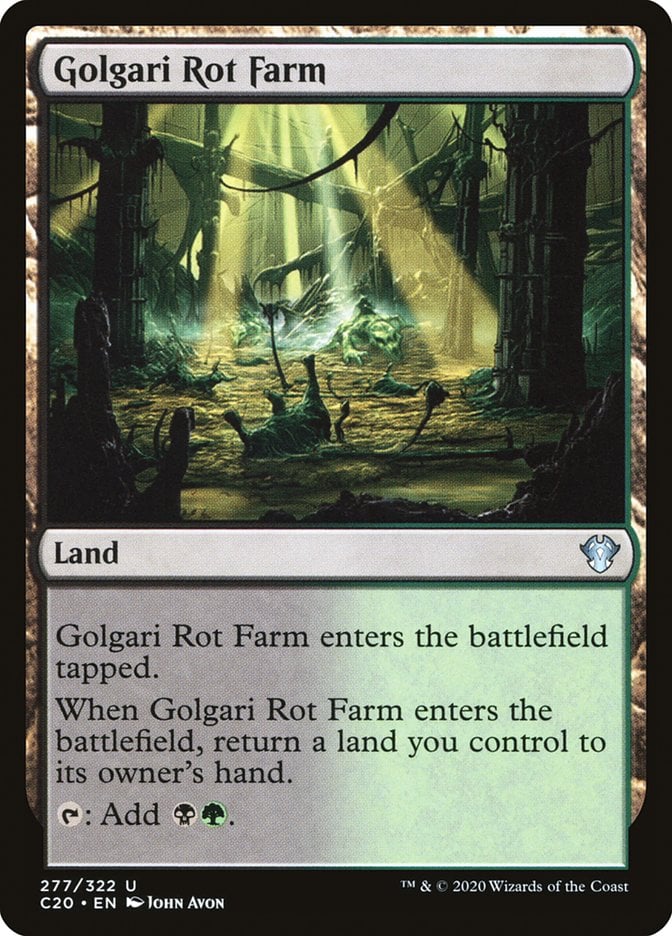
Golgari Rot Farm has some interesting interactions. It enters tapped and you also have to return a land to your hand when it does. This may seem like a bad interaction that slows down your tempo, but it has some interesting synergies.
You can return MDFCs to use the other side with cards like Agadeem's Awakening or Hagra Mauling. Landfall cards would also benefit from keeping your hand full of lands.
#25. Witherbloom Campus

Witherbloom Campus and the other scry lands from Strixhaven are a welcome addition to budget manabases. You get the benefit of scrying in the late game to set up the cards you need, though it’s a mana sink you’ll ignore until you have literally nothing else to do.
#24. Temple of Malady
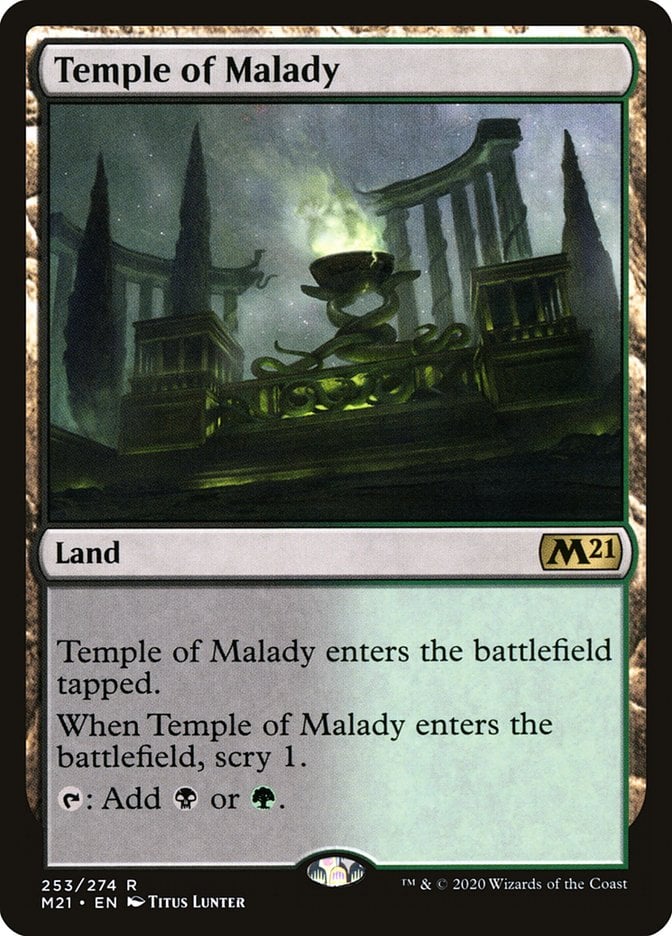
A straightforward card that’s legal in most formats isn’t a bad thing. You know exactly what you’re getting when you put Temple of Malady in your deck: You hope to get it early, and it helps you dig for your best cards.
#23. Llanowar Wastes
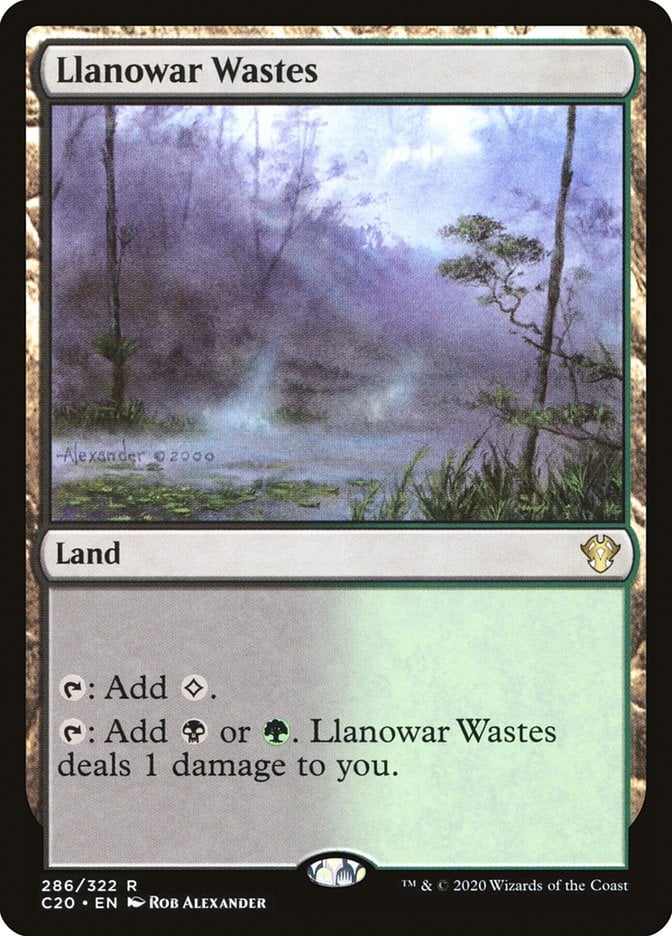
Llanowar Wastes can be tapped for colorless mana at anytime, and you can pay 1 life to get either a green or black mana. I don’t mind the loss of life to get the colors I need, especially in the early game, and especially with some of the lifegain abilities in Golgari.
You could easily make up for some of the lost life with cards like The Meathook Massacre or Essence Warden. This pain land doesn’t enter tapped and can get your tempo and curve to exactly where you need it.
#22. Viridescent Bog
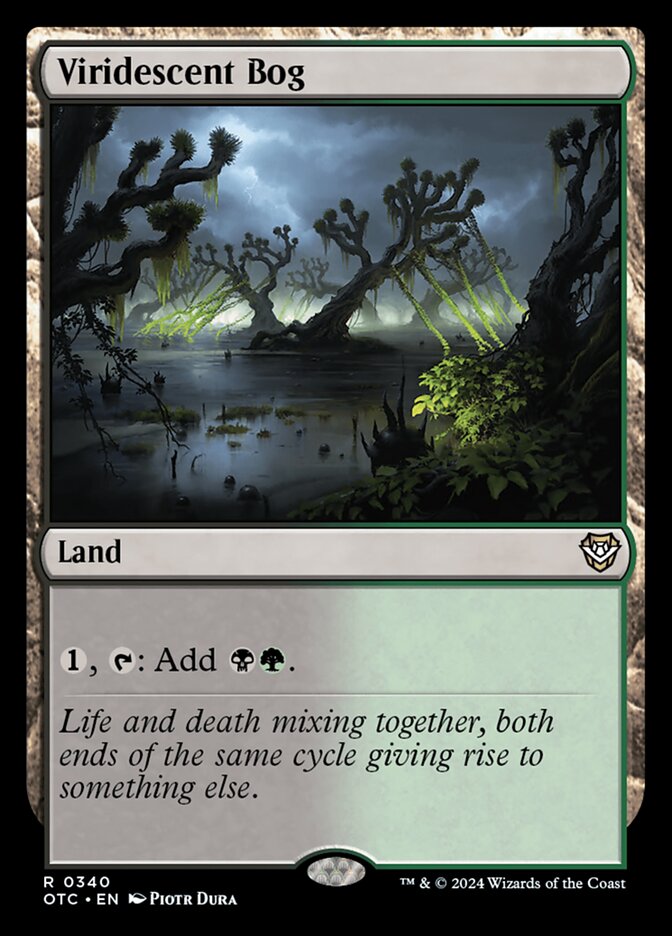
Originating from Fallout, Viridescent Bog is a basic filter land that works well in 2-color decks and drops off significantly the more colors you’re playing. It’s a bad turn-1 land that becomes reliable fixing at any point beyond that, making these sorts of lands dead-average duals for any color pair.
#21. Twilight Mire
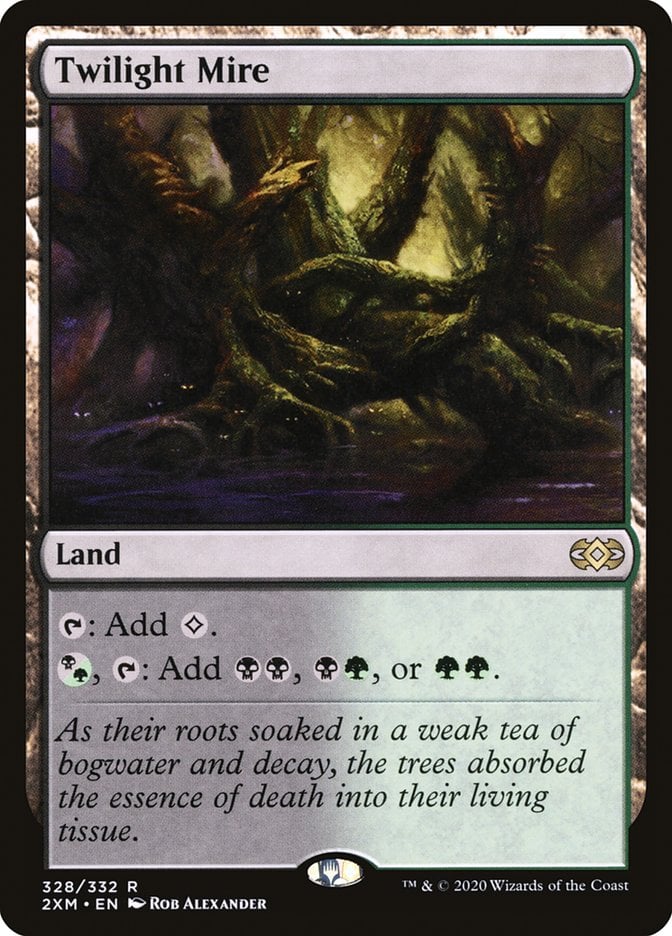
We’ll call Twilight Mire an insurance policy. The idea is that if you have a lot of cards that have two of the same mana symbol, you have a plan to play those cards. This enables you to quickly play some same mana symbol cards like Kalastria Highborn or Werewolf Pack Leader.
I like having ways to make sure I can always stay on my curve, but I don’t believe this card is necessary to achieve that. There are far too many draw spells and mana fixers out there to care about this card.
#20. Nurturing Peatland
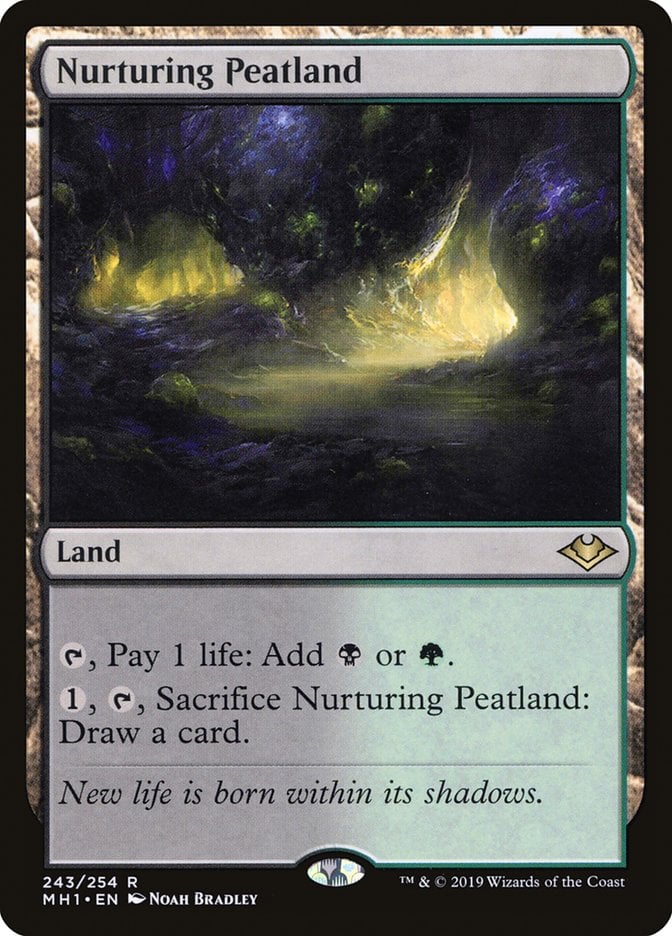
Here we have another card that’ll cost you some life to get the mana you need, but Nurturing Peatland also has a great activated ability to help you in the later game: You can sacrifice the land to draw a card. This has huge payoffs when you’re in a battle with your opponent to see who draws the card that will turn the tides of war.
I like this card a lot, but it’s only available in Modern, Legacy, Vintage, and Commander. It would be near the top of my list if it were available in all the formats I want to play.
#19. Darkbore Pathway / Slitherbore Pathway
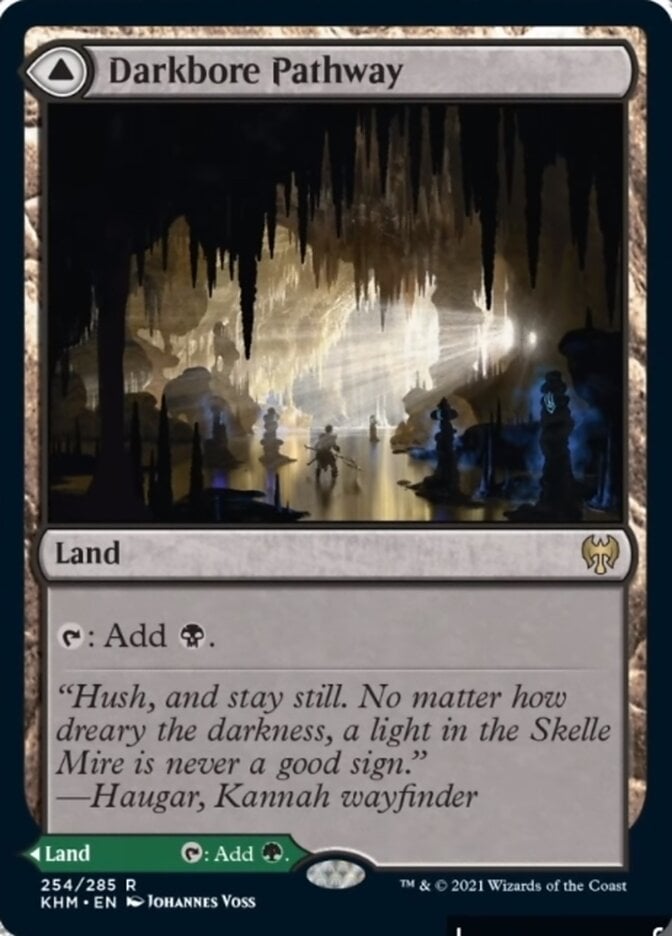
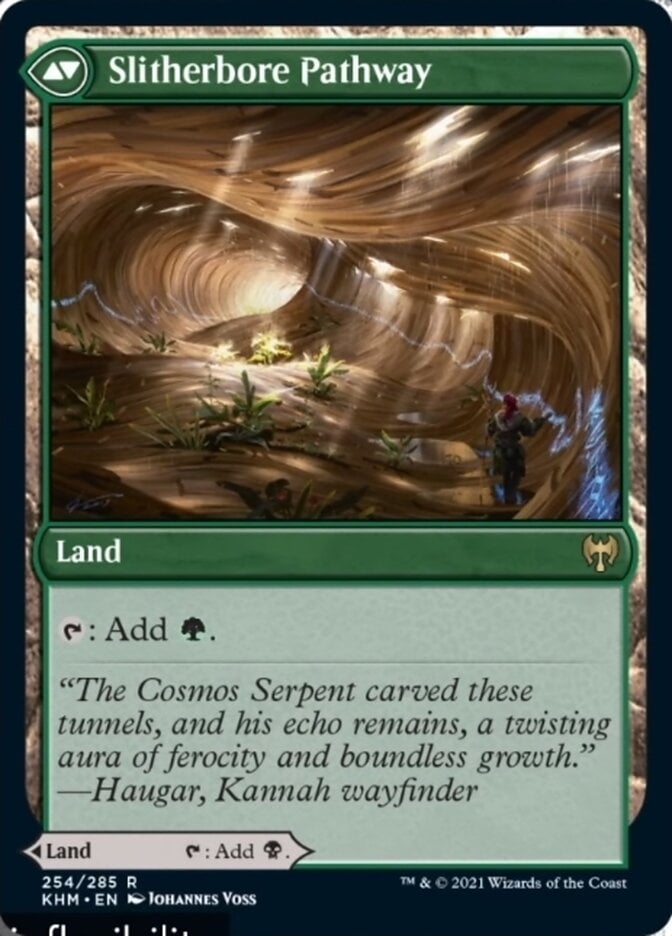
Darkbore Pathway isn’t a dual-color land, but it does give you the option to play the color you need. The great part of this land is that it isn’t slowed down by any constraints and comes onto the battlefield untapped.
Choosing a single color does give you a little less versatility, but the fact that it enters untapped and with the color you need makes this a great support piece for your next Golgari deck.
#18. Woodland Chasm + Haunted Mire
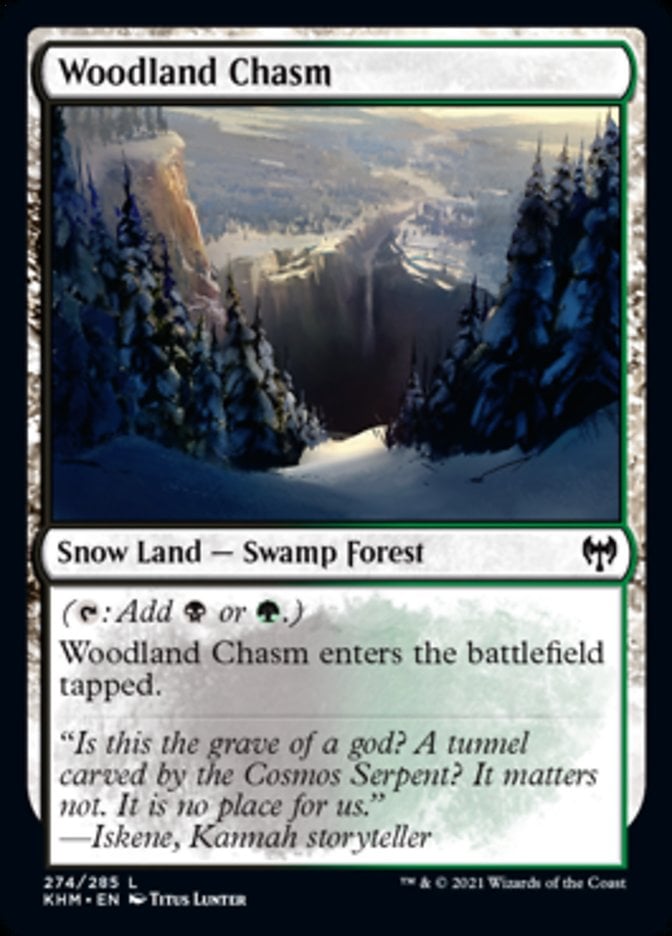
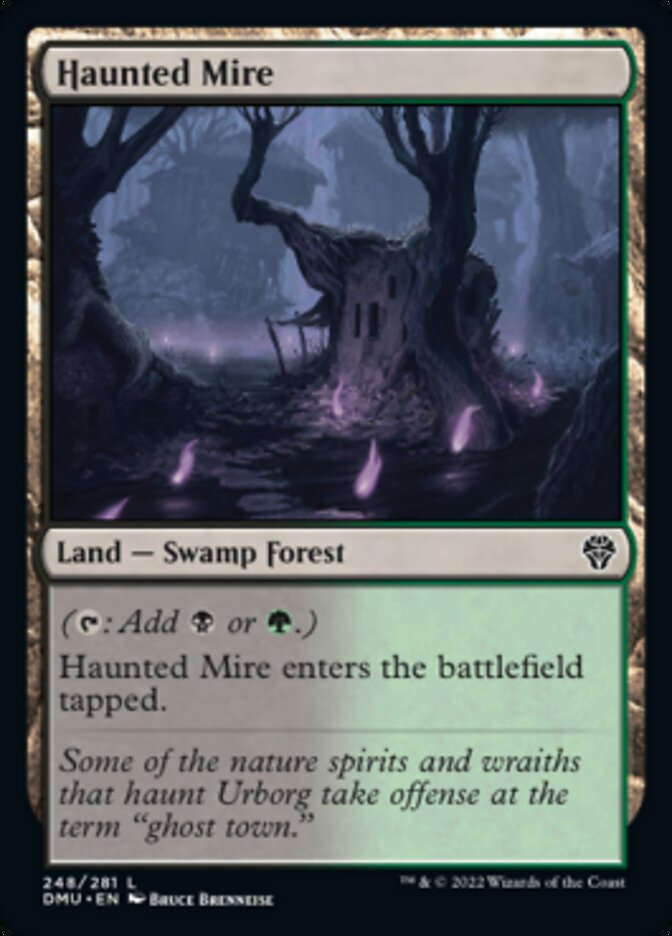
Like many of the dual lands on this list, Woodland Chasm and Haunted Mire enter the battlefield tapped. Being fetchable does a lot of work here. The snow bonus for Woodland Chasm can be a strong benefit for some decks, but it’s meaningless in most.
#17. Festering Thicket

The trade off of benefits for Festering Thicket entering tapped are decent. You get all those cards that care about Forests or Swamps, and a colorless option to cycle the land away. If you rock any of those replay lands from your graveyard cards, these are great since they don’t cost you a full card.
#16. Hissing Quagmire
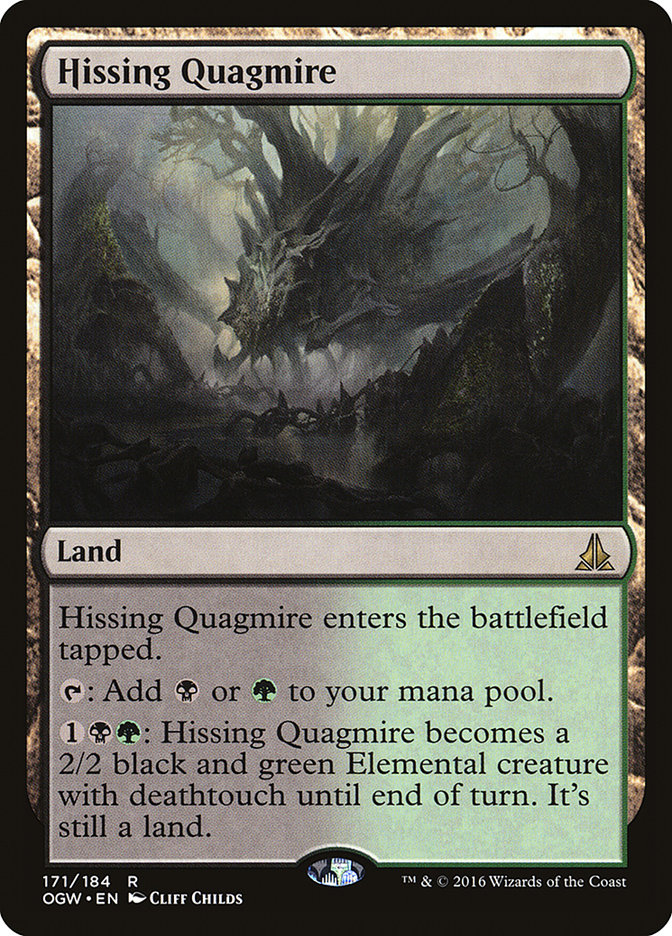
Before I get into Hissing Quagmire itself, let me tell you that I love the visual and skin-crawling feeling I get when I hear the name “Hissing Quagmire.” It has great art and wording to create emotions and a story.
Emotions aside, Hissing Quagmire seems like a lot of the dual lands that enter the battlefield tapped. What’s important about this land in particular is its activated ability. Turning a land into a creature is a bomb strategy for plenty of deck styles. Getting a creature with deathtouch for 3 mana will give you a massive defense that isn’t easily removed.
#15. Blooming Marsh
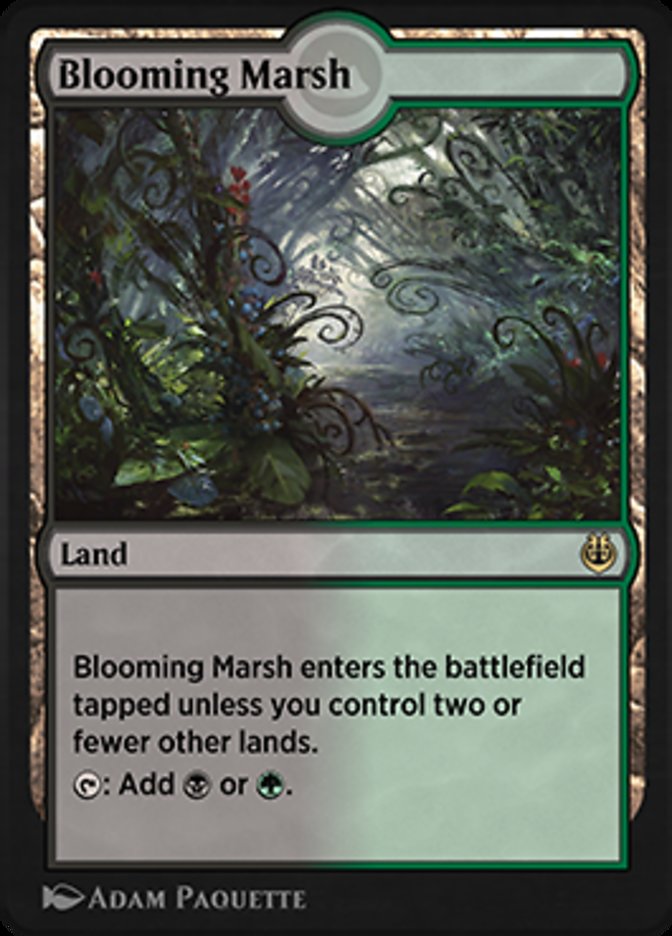
Blooming Marsh is a great dual-color land from Kaladesh. It enters untapped if you have two or fewer lands on the battlefield. Playing a dual-colored land untapped is a great advantage for you to use the exact color you need in the early game.
This is a great addition to any Golgari deck, or even some of the tri-color decks like Jund () and Sultai (). A flexible card that only gets a slight downgrade if it’s used on turn 4 and beyond.
#14. Grim Backwoods
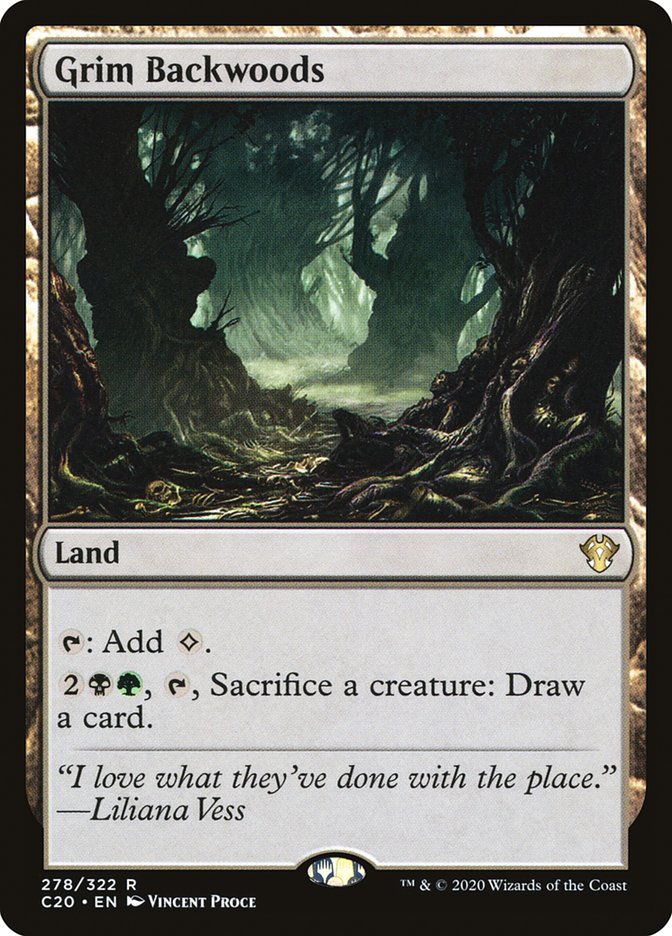
I got a chuckle from the flavor text of this card featuring Liliana Vess.
Moving on, Grim Backwoods doesn’t provide you with the colors of mana you may need, but it does offer up another advantage for you. Sacrificing a small creature in the later game to draw a card is a great ability from a land. An even better ability when you take into account that this may be done at instant speed to better use a chump blocker after blocks have been declared.
#13. Svogthos, the Restless Tomb

I love land cards that can become creatures. It’s such a good insurance to have against board wipes, planeswalker abilities, and sorcery-speed removal spells.
Svogthos, the Restless Tomb doesn’t provide you with any of the mana colors you may need, but its activated ability makes up for it. You can pay 5 mana for this land to turn into a potentially massive creature.
#12. Restless Cottage
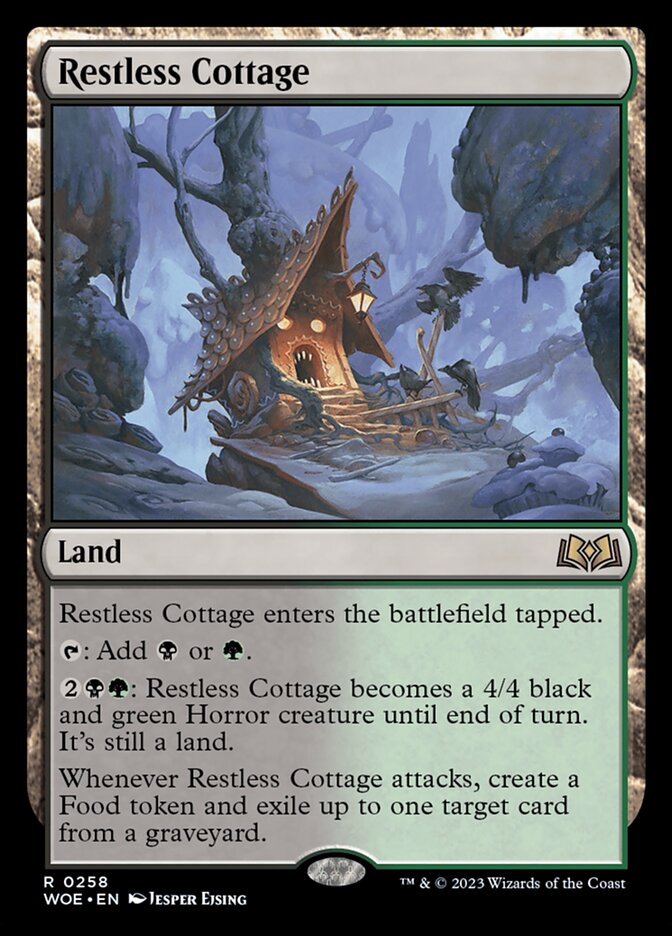
Restless Cottage is by far the best creature land out of Wilds of Eldraine. It’s big, it hits graveyards, and it gains you life! It’s also reasonably costed at , which is a great rate for this kind of 4/4. The extra bonuses also fit into many Golgari strategies, especially food. I really like this card, and you probably should too!
#11. Necroblossom Snarl
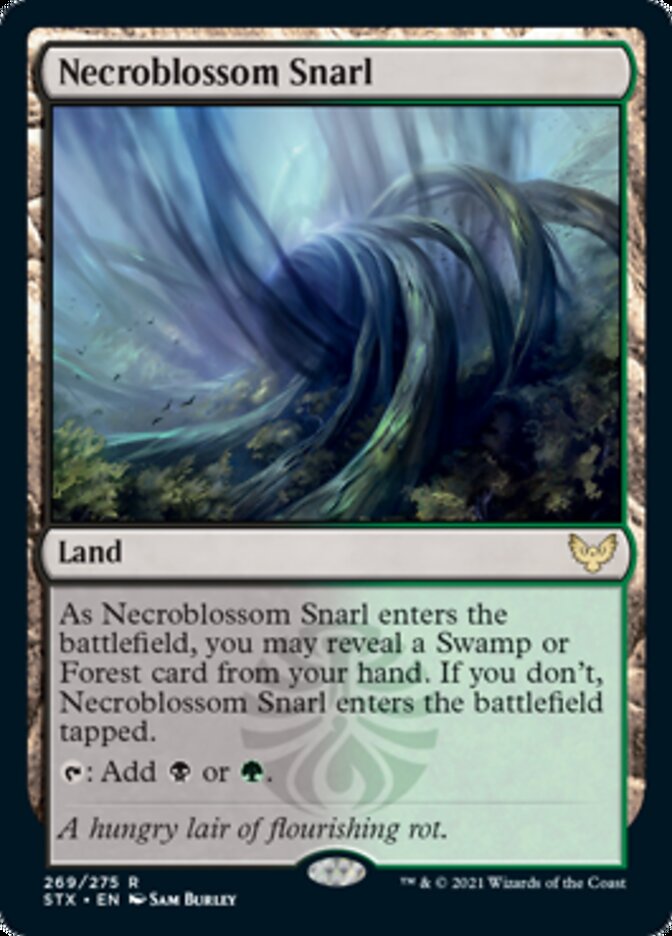
Necroblossom Snarl enters the battlefield untapped if you reveal a swamp or forest card from your hand. This isn’t too big of a deal as I think it’s safe to say that most opponents will assume you have at least three lands in your hand at the start of the game.
#10. Vernal Fen

Green drops basic lands onto the battlefield better than any color and Vernal Fen is fetchable. This makes this swamp/forest a great land that ideally sees two other lands in your starting hand.
#9. Old-Growth Grove


Revitalizing Repast is one of the best 2-color MDFCs to come from Modern Horizons 3. Protection spells are great, and sliding a Snakeskin Veil of sorts into your manabase is truly excellent. You might look at Old-Growth Grove and shrug it off for having no immediate upside, but remember the upside of an MDFC land is that it’s a land when you need it to be, and a spell when you’re all set on lands.
#8. Deathcap Glade
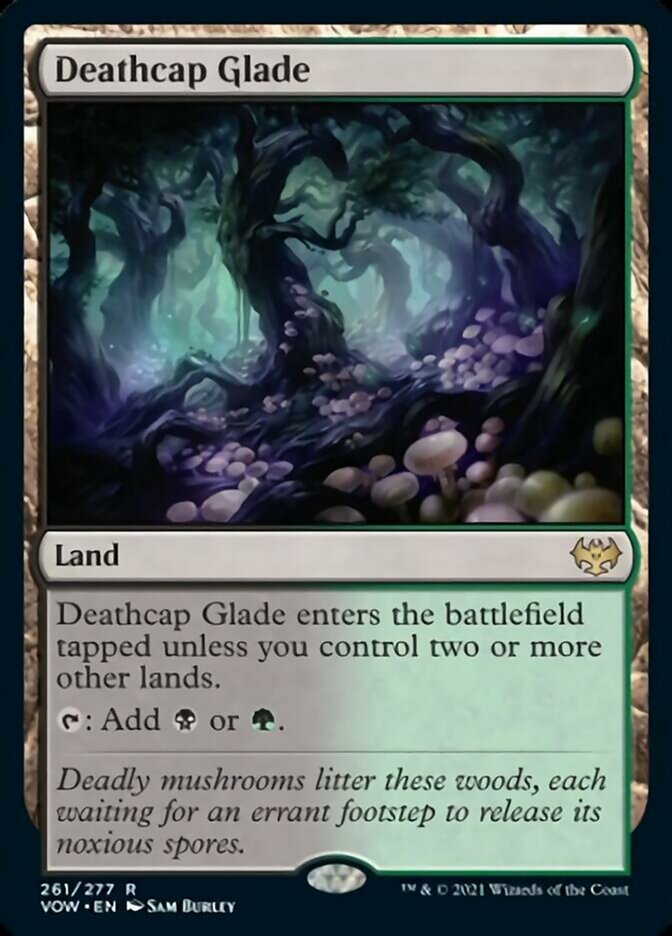
The dual-color lands from the most recent Innistrad sets are absolute staples for deckbuilding. They get the colors you need without too much of a hindrance. Playing Deathcap Glade tapped in the first couple of turns likely won’t hurt you, and after turn 2 it comes in untapped. It gives you all the versatility of getting the colors you need and the immediate ability to tap for those colors in the mid-game.
#7. Woodland Cemetery
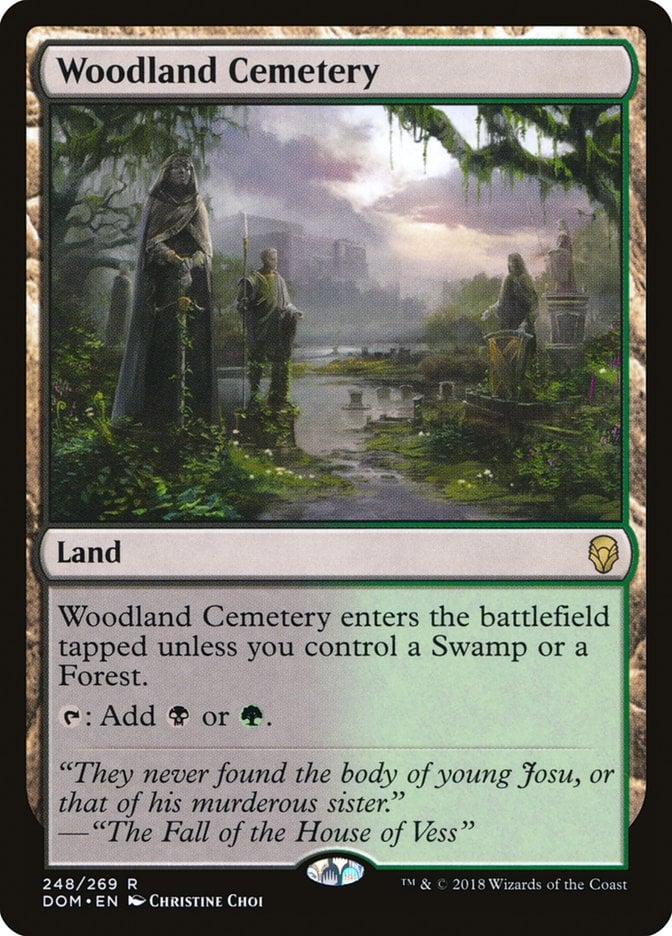
Woodland Cemetery is a generally better version of Tainted Wood. If you’re building a Golgari deck, then your first hand will almost certainly have a forest or swamp.
This allows you to have both or several of your colors by turn 2 and play some turn-2 creatures like Skullbriar, the Walking Grave or Chevill, Bane of Monsters. It’s a great dual land card that’s legal in all the non-Standard rotation formats.
#6. Wastewood Verge

Thank you Aetherdrift! Wastewood Verge works fast because it enters untapped, and chances are you only need one other land to help this Wastewood be equal to a Bayou.
#5. Underground Mortuary
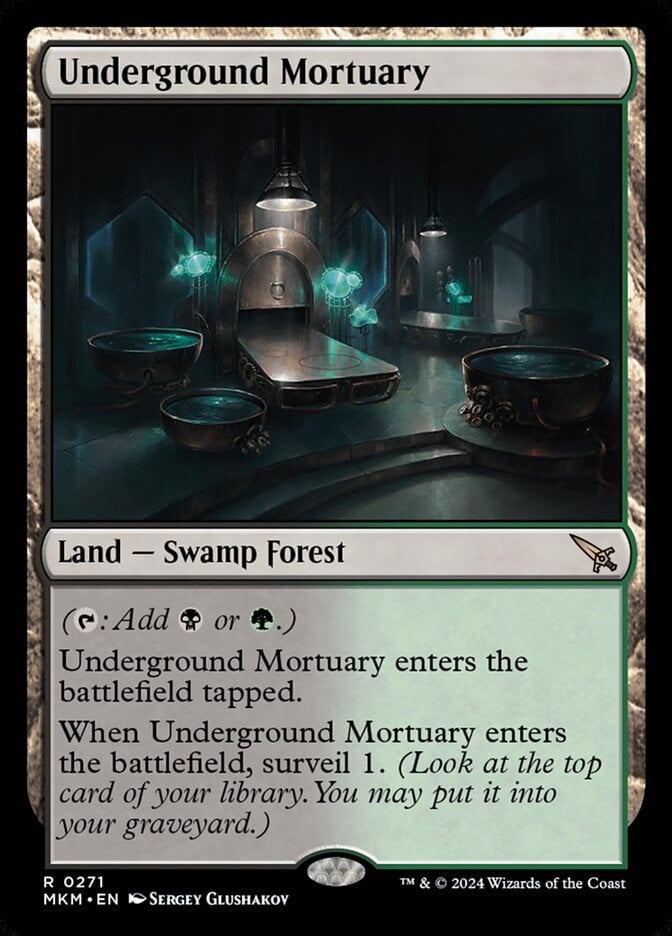
The surveil lands are awesome across the board, and Underground Mortuary might be the best one by virtue of being in the graveyard color pair. If you can get value from milling over a card at any point in the game, the Mortuary will often feel like a 2-color land that drew you a card. It’s also a great alternative to fetch with Verdant Catacombs when you’re not in need of the untapped mana from Overgrown Tomb.
#4. Undergrowth Stadium
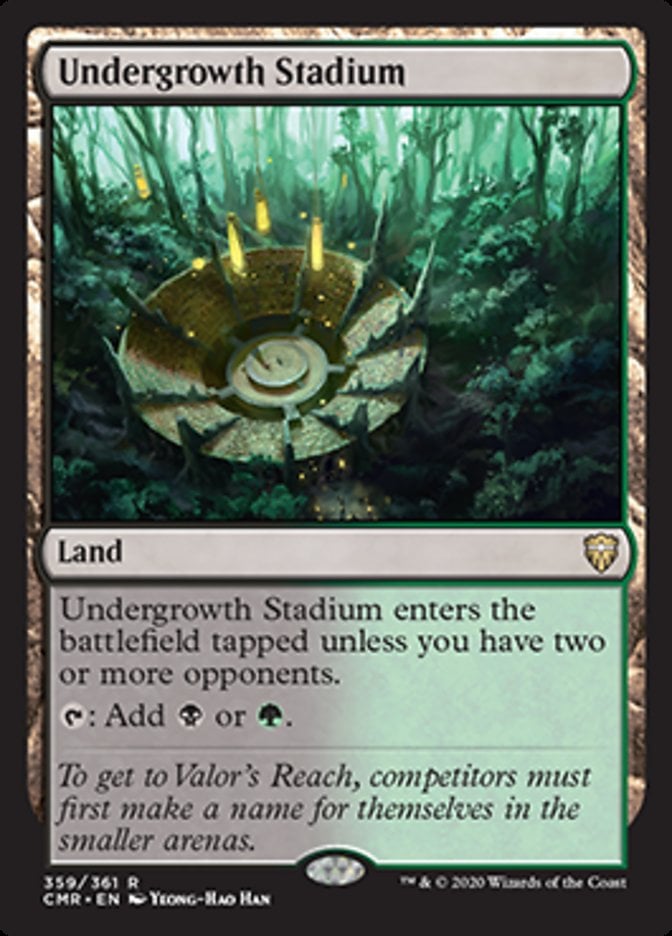
Here’s a great card for those Friday Night Magic events at your local card shops. It’s ideal for those 4-player Commander battles. I’d consider this in a Golgari Commander deck, though Undergrowth Stadium clearly has no home outside of multiplayer formats.
#3. Overgrown Tomb
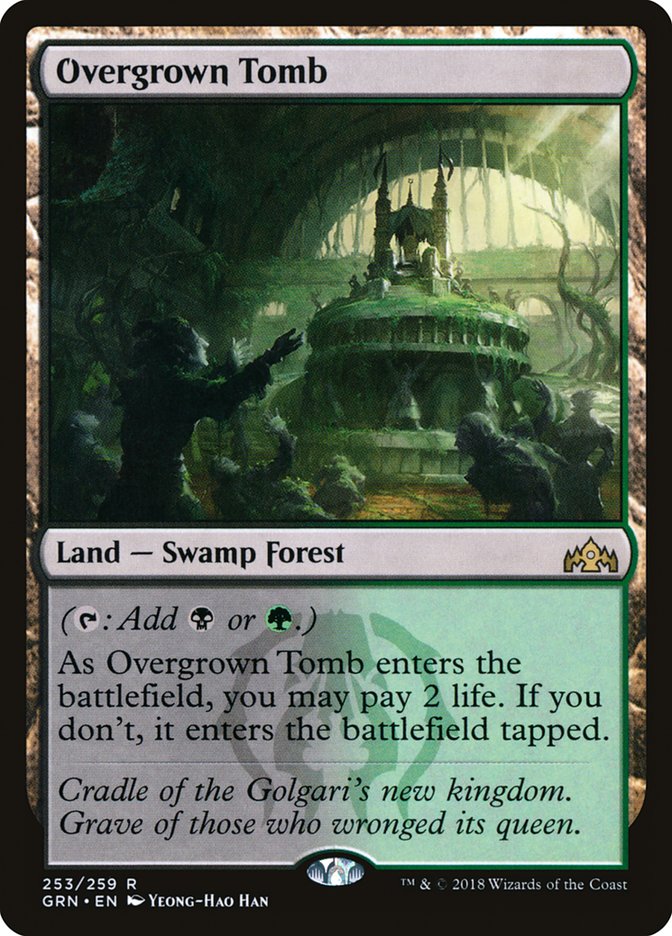
I love Overgrown Tomb, and all the dual lands from the Ravnica sets. It’s a versatile card that allows you to play to your deck’s tempo and needs. You have the option to have it enter tapped, or pay the 2 life if you need the mana to play your bombs right away.
This is a great addition to any deck in formats where it’s legal. The loss of life isn’t a back breaker and can be easily navigated around to get the mana you need. It’s a great option for your next Golgari build.
#2. Verdant Catacombs
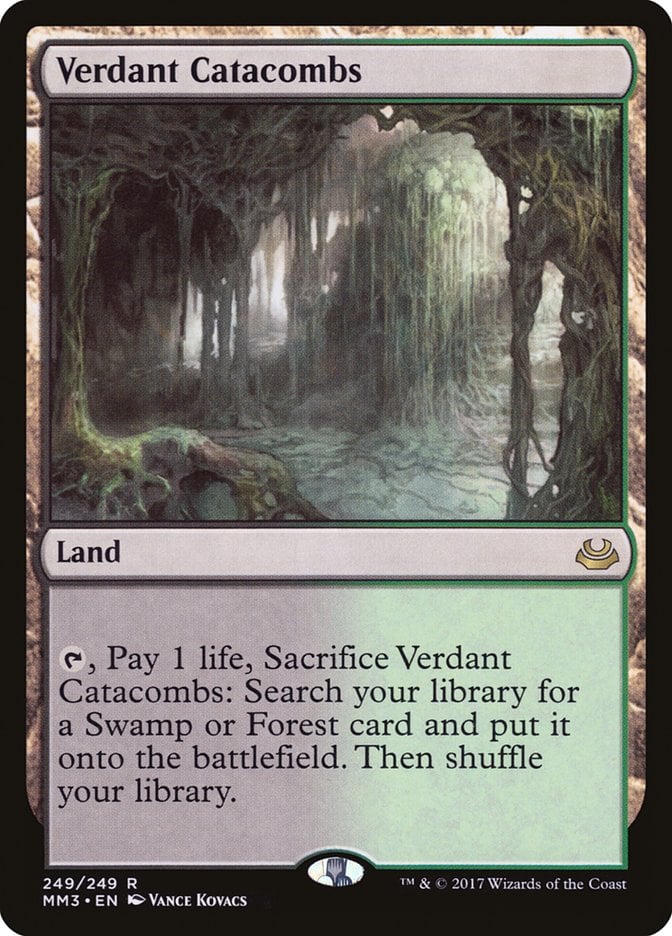
Verdant Catacombs is a nice fetch land to set you up in the early game. What sets this apart from lands like Evolving Wilds and Riveteers Overlook is that the land you fetch enters the battlefield untapped. This allows you to play a turn 1 card, or keep your tempo in the middle game.
#1. Bayou
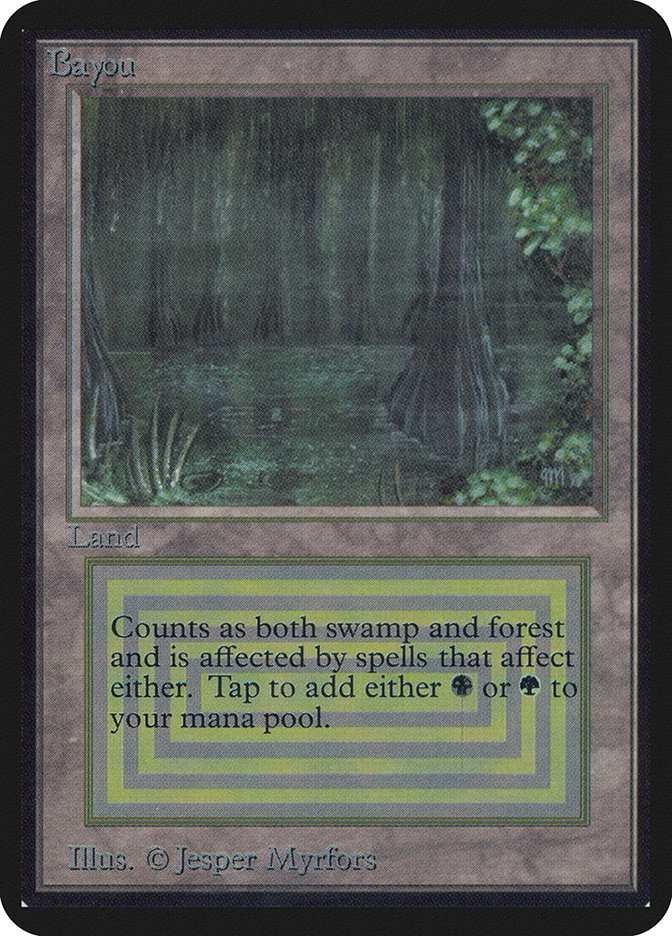
With dual lands you want to use the versatility of two different colors you need with as much ease as possible. It doesn’t get much easier than just playing and tapping a Bayou for green or black mana as soon as it’s played.
This is a must-have for any green and black deck. The only problem is that it isn’t legal in most formats. If you’re playing an Eternal format where it is legal, then take a trip on down to the Bayou.
Wrap Up
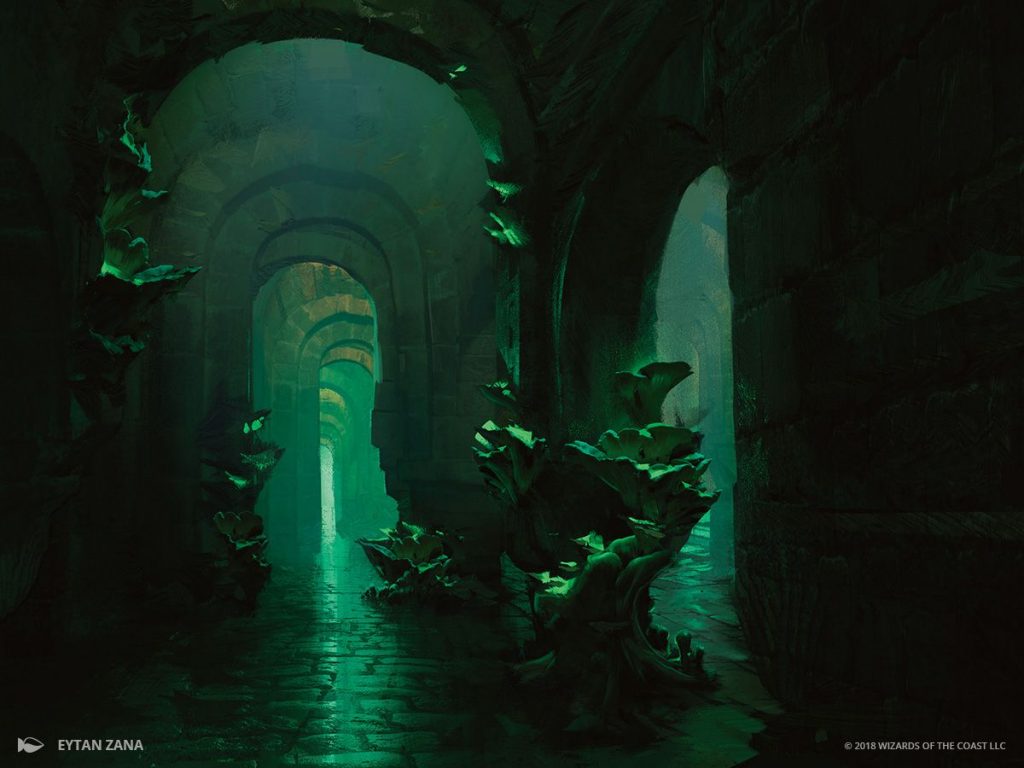
Golgari Guildgate | Illustration by Eytan Zana
There you have it, all the best lands that produce or require green and black mana. Dual-colored lands are an essential part of a good mana base, as you have to be able to get the colors you need as quickly as possible to compete. So choose your lands wisely depending on your desired format.
That’s all from me. I might just have to go build myself a Golgari deck now. If you enjoyed this or have any comments, please leave them below or over on Twitter.
Stay safe and keep traversing the planes, my friends!
Follow Draftsim for awesome articles and set updates:










Add Comment