
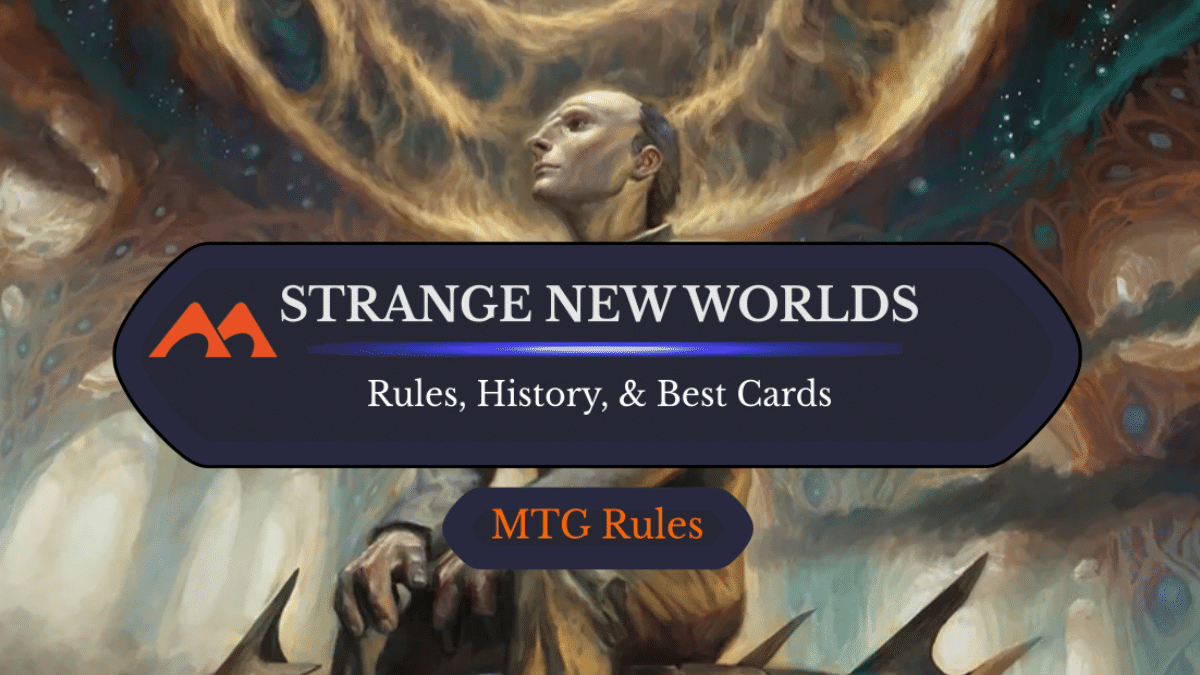
The Traveler | Illustration by Ioannis Fiore
Exploring distant planets, discovering new civilizations, and occasionally getting into trouble while doing so are pretty much what Star Trek is all about… and its Magic set brings that spirit of exploration to the game with the “strange new worlds” mechanic!
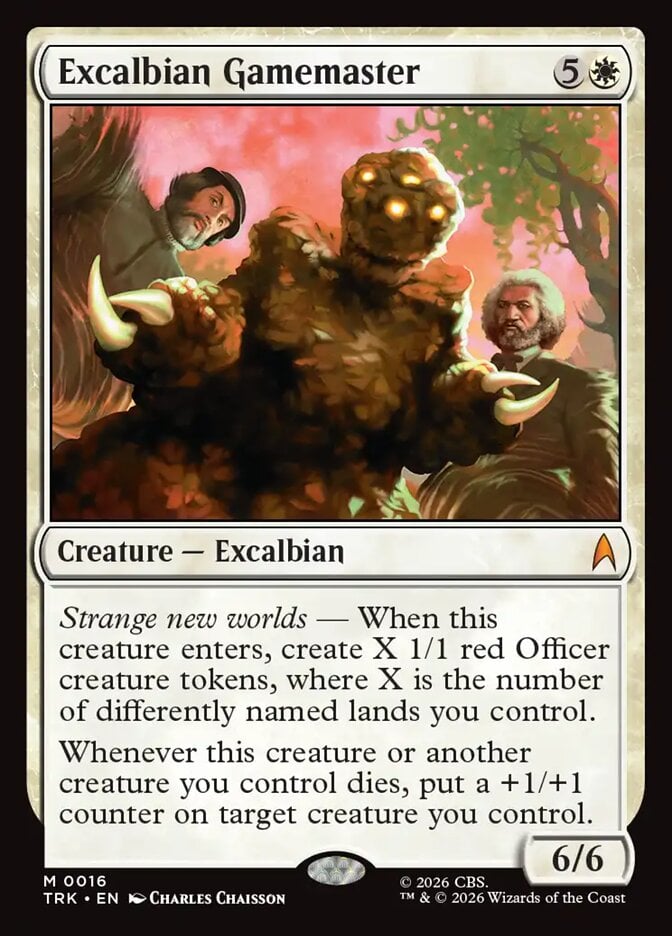
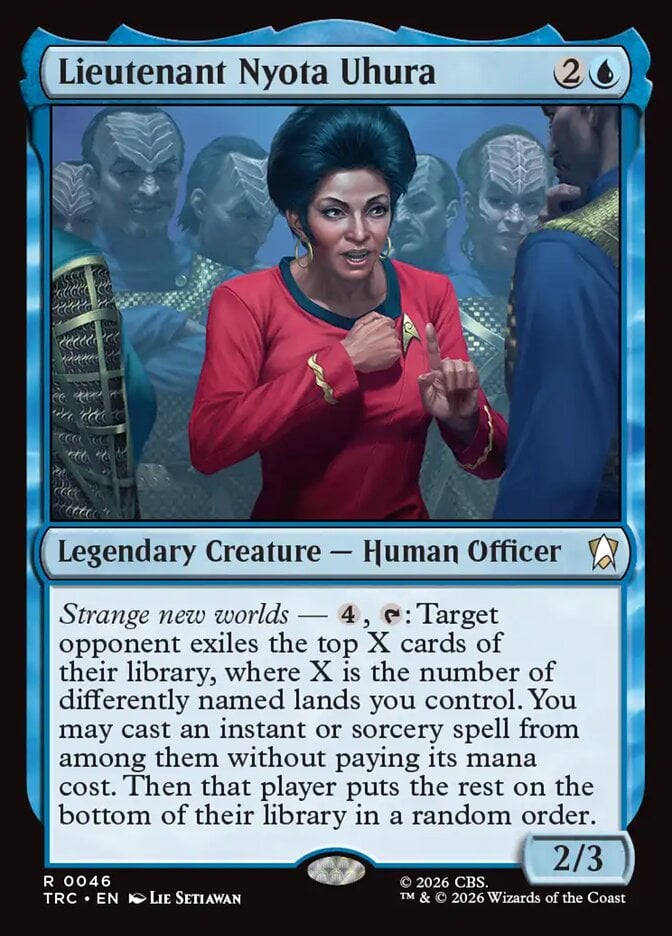
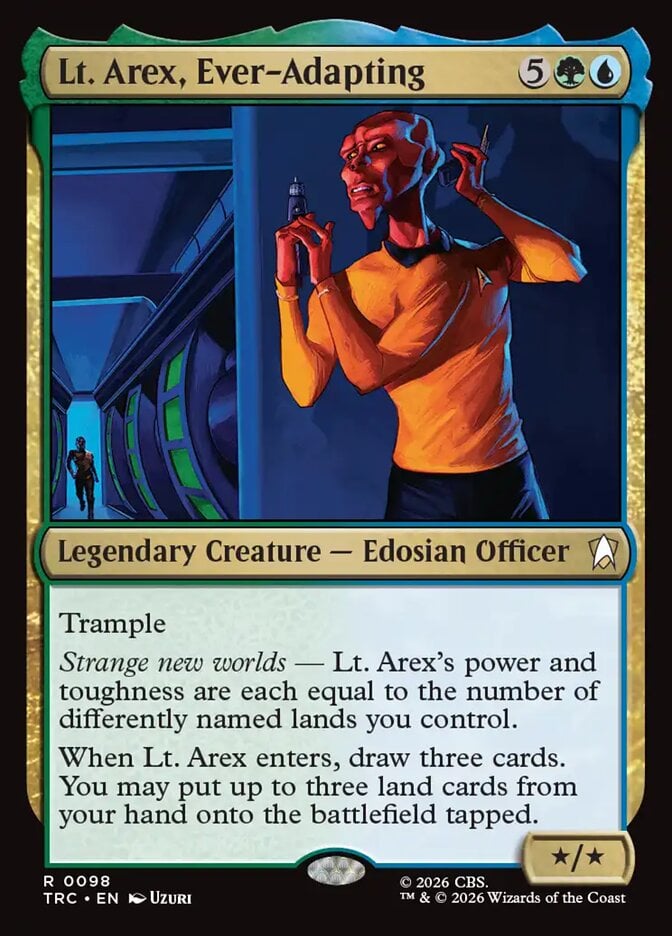
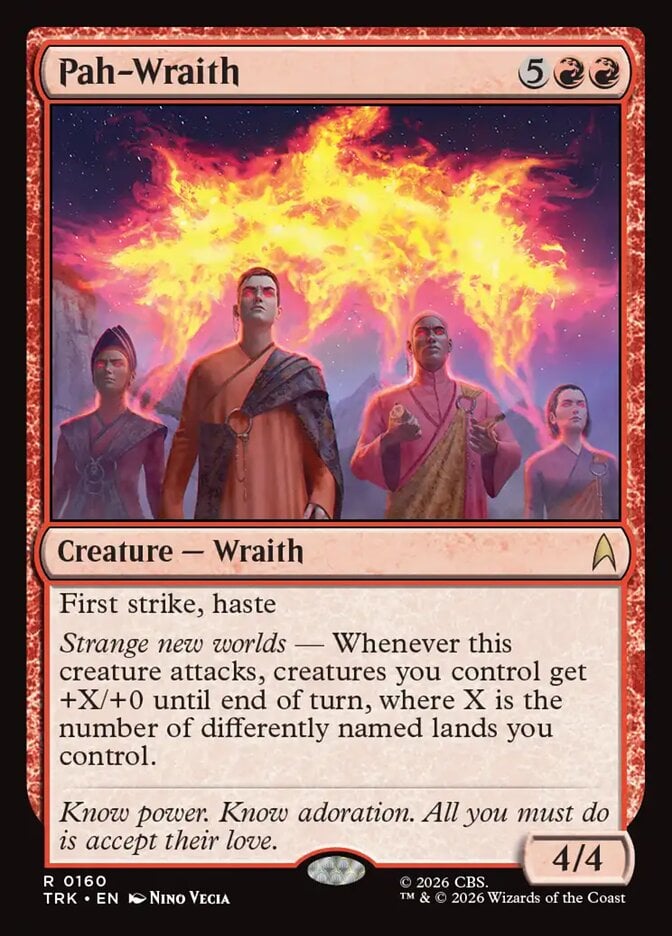
Strange new worlds rewards you for controlling lands with different names. Rather than encouraging you to play as many lands as possible, it wants you to explore a variety of locations.
But how exactly does Magic count differently named lands? Do basic and nonbasic lands count? What about snow lands, double-faced lands, or lands that can become creatures? Let’s go through all the rules and explore the best strange new worlds cards!
How Does Strange New Worlds Work?
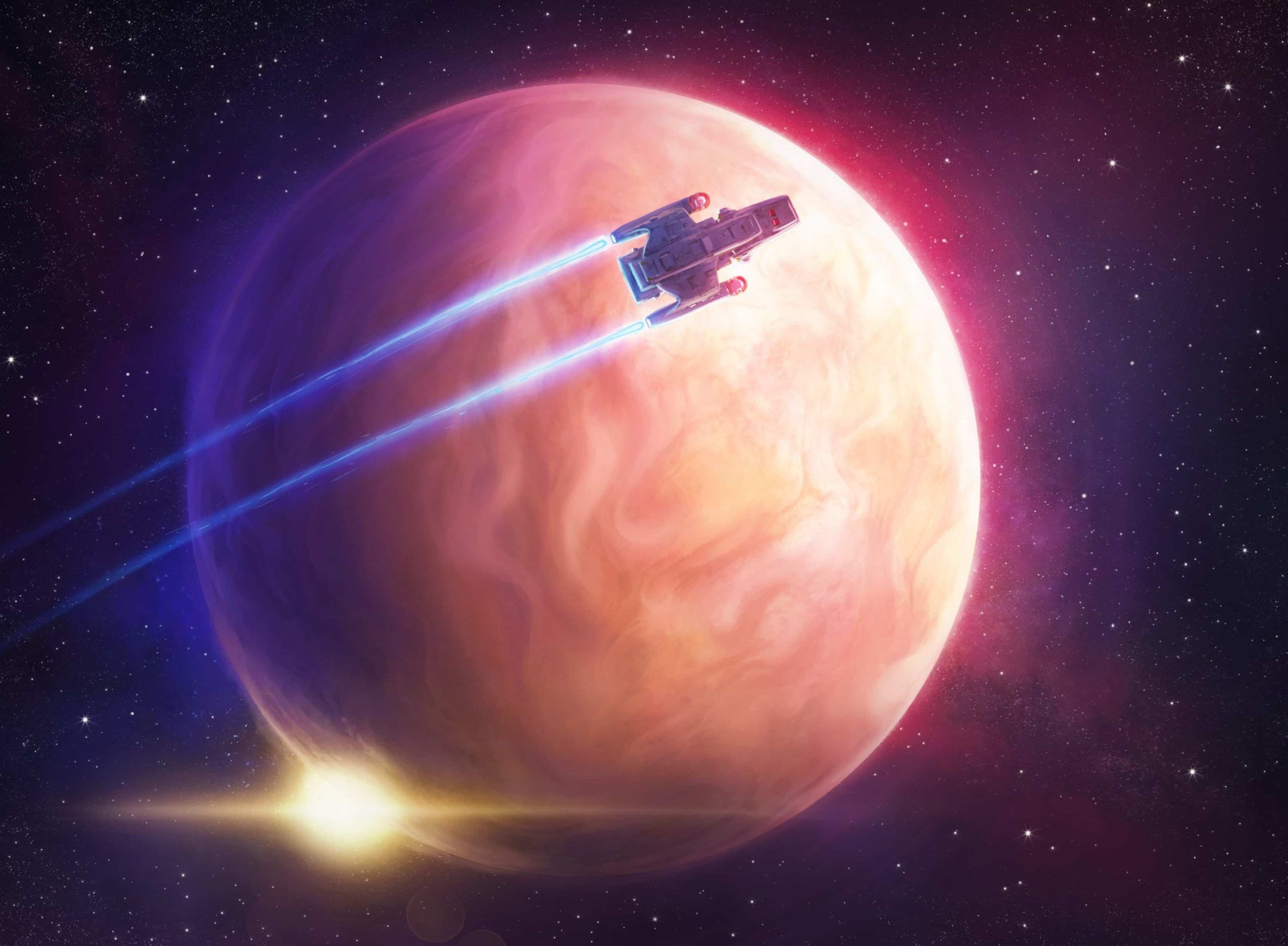
Ferenginar | Illustration by Colin Searle
Strange new worlds is an ability word that cares about the number of differently named lands you control. Variety is the spice of life, or so they say!
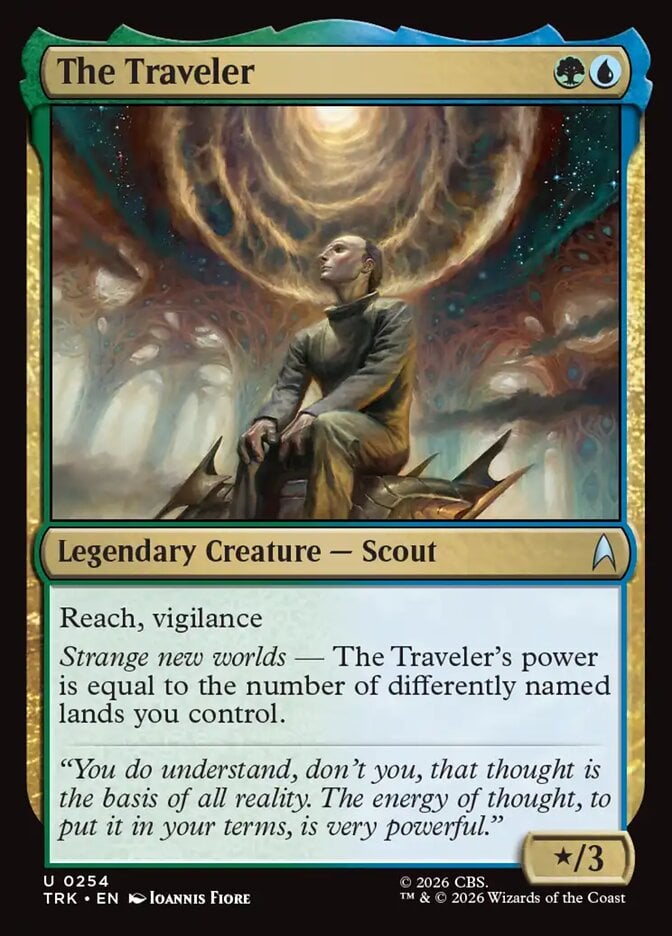
Let’s use The Traveler as an example. And suppose you have these five lands in play:
- Three Forests
- One Island
- One Breeding Pool
You have five lands, but only three differently named lands: Forest, Island, and Breeding Pool. That means The Traveler is a 3/3.
Now suppose you play Command Tower. You have six lands, but four different names, so The Traveler immediately becomes a 4/3. Simple as that!
The History of Strange New Worlds in MTG
Strange new worlds was created for 2026’s Star Trek MTG set, which released in November 2026. Strange new worlds takes its name from the original Star Trek‘s opening credits, which featured Captain Kirk’s iconic voiceover:
Space, the final frontier. These are the voyages of the starship Enterprise. Its five-year mission: to explore strange new worlds, to seek out new life and new civilizations, to boldly go where no man has gone before.
Playing lands is one of Magic’s core mechanics, and there a gazillion abilities that reward you for playing lands. Strange new worlds gives it a cool spin by rewarding variety, rather than going for a typical “the more the merrier” approach.
Thus far, we’ve only seen strange new worlds in Star Trek… and I have a hunch that we’ll never see it again, given how closely tied it is to this particular IP. Still, we may see a similar mechanic with a more MTG-coded name (strange new planes, maybe?), since it’s pretty cool and fits very well with Commander‘s “there can only be one” deckbuilding restrictions.
We’ve seen other cards across Magic’s history that care about the number of differently named lands you control, such as All-Fates Scroll and Fungal Colossus from Edge of Eternities and Awakened Amalgam from Rivals of Ixalan. Elemental Teachings from Avatar: The Last Airbender and Fblthp, Knows the Way from Reality Fracture specifically tutor for differently named lands.
Does Strange New Worlds Count Basics? Nonbasics?
Yes, and yes: Strange new worlds counts everything that happens to be a land. As long as it’s a land, every different name under you control is a +1 for strange new worlds.
An important detail is that land types and land names aren’t the same thing. Breeding Pool is a land with both the forest and island basic land types, but its name is Breeding Pool. It counts as one differently named land, not two.
Likewise, having Urborg, Tomb of Yawgmoth on the battlefield makes all lands swamps in addition to their other land types, but it doesn’t change their names. They still count separately for strange new worlds if their names are different. The mechanic fits like a glove with Commander, where you’re normally restricted to one copy of each nonbasic land anyway!
Cards that become lands also count, as long as they’re lands when a strange new worlds ability checks for them. If Toph, the First Metalbender is on the battlefield, every individual artifact you control with a different name adds to your strange new worlds count. A clone like Mirage Mirror can count, as long as the name it takes on is unique (usually if you copy an opponent’s land), or if it retains its own name, like Impossible Man.
Do Strange New Worlds Effects Change as You Play More Lands?
Sometimes they do, sometimes they don’t. It depends on the individual ability.
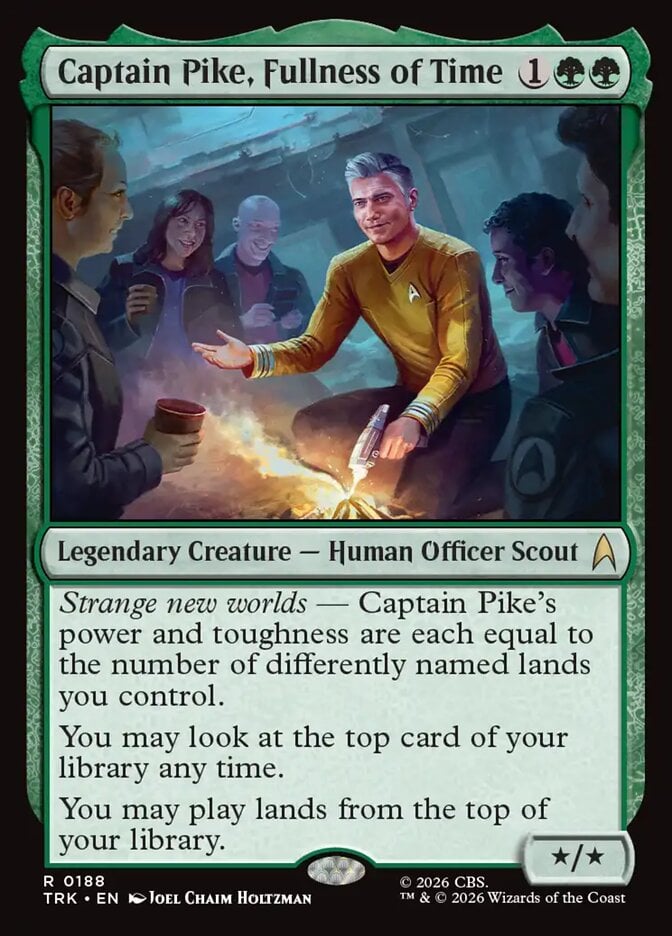
The Traveler has a continuous effect, so its power changes as your land count changes. If you control four differently named lands, it’s a 4/3. Play a fifth land with a new name, and it immediately becomes a 5/3. Something similar happens with Captain Pike, Fullness of Time.
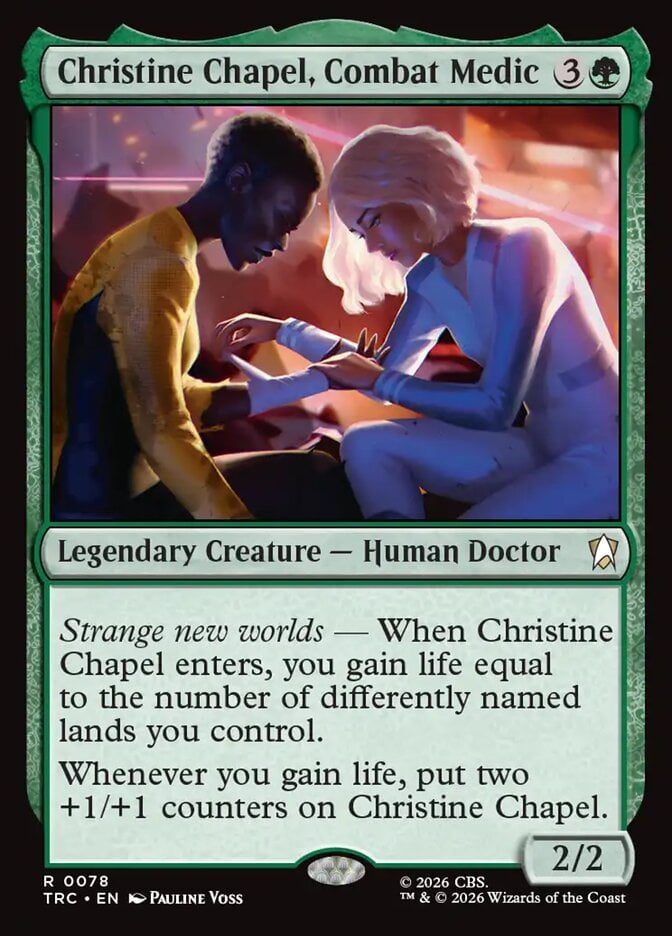
But Christine Chapel, Combat Medic‘s strange new worlds ability is an enters trigger. Once it’s in play, additional lands won’t do anything.
Do Snow Basics Count as Differently Named Lands?
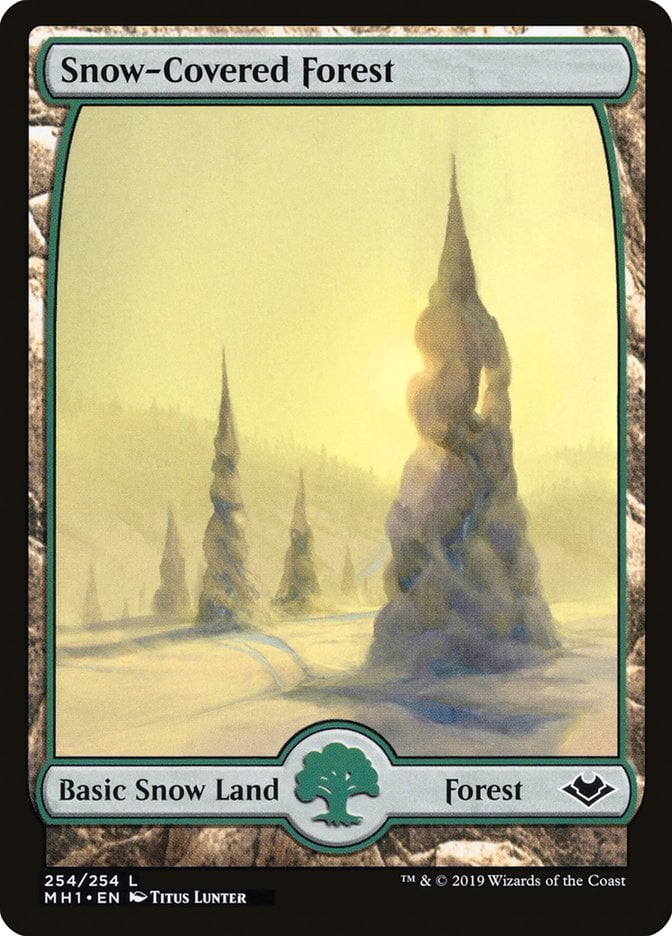
Yes, they do. Snow-covered basic lands have different names from their regular counterparts, so each version counts separately.
Do MDFC Lands Count Towards Strange New Worlds?
Yes, modal double-faced cards (MDFCs) count for strange new worlds as long as they’re lands on the battlefield. The name that matters is the name of the face currently showing.
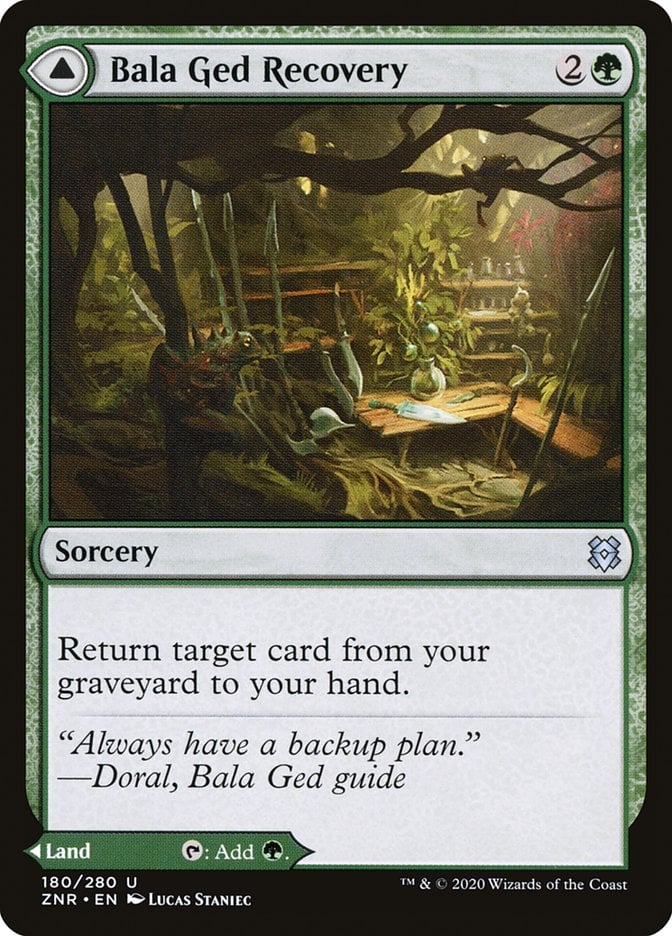
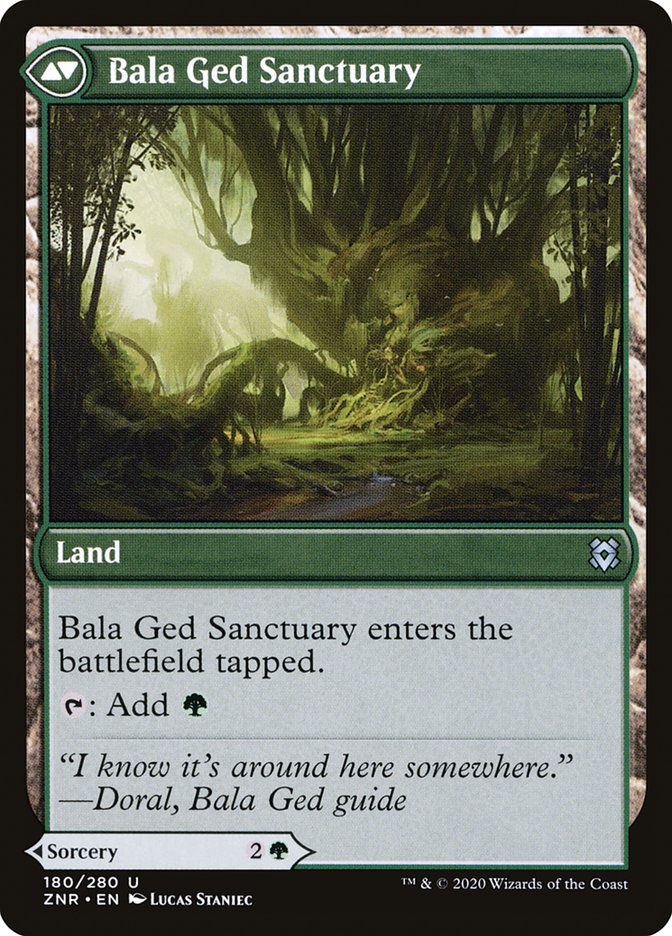
For example, Bala Ged Recovery is a green sorcery that returns a card from your graveyard to your hand. And its back face, Bala Ged Sanctuary, is a land that enters tapped and produces green mana. A Bala Ged Recovery you cast as a sorcery doesn’t count as a land, but your Bala Ged Sanctuary does when it’s on the battlefield.
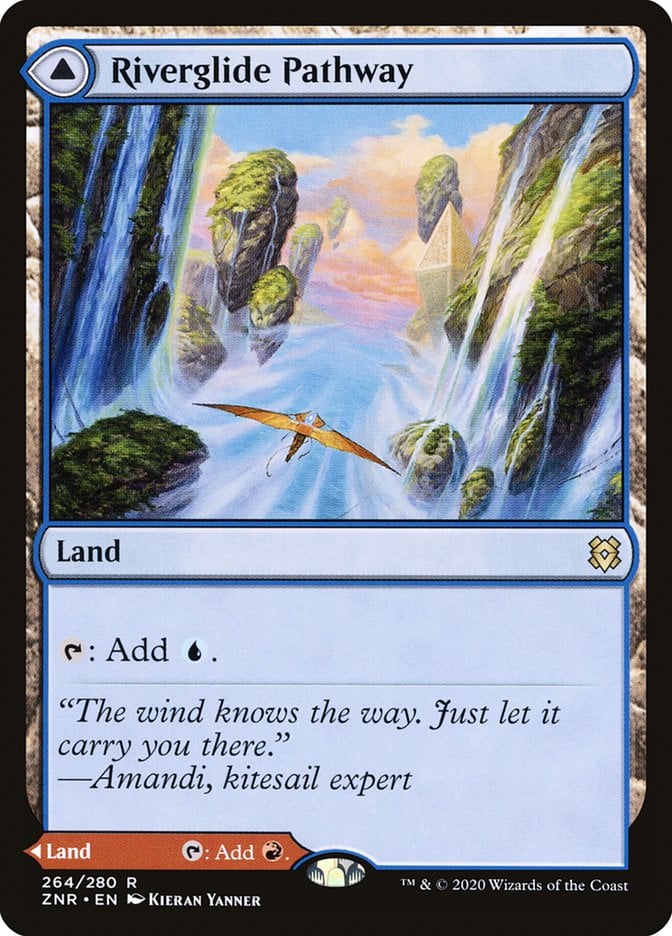
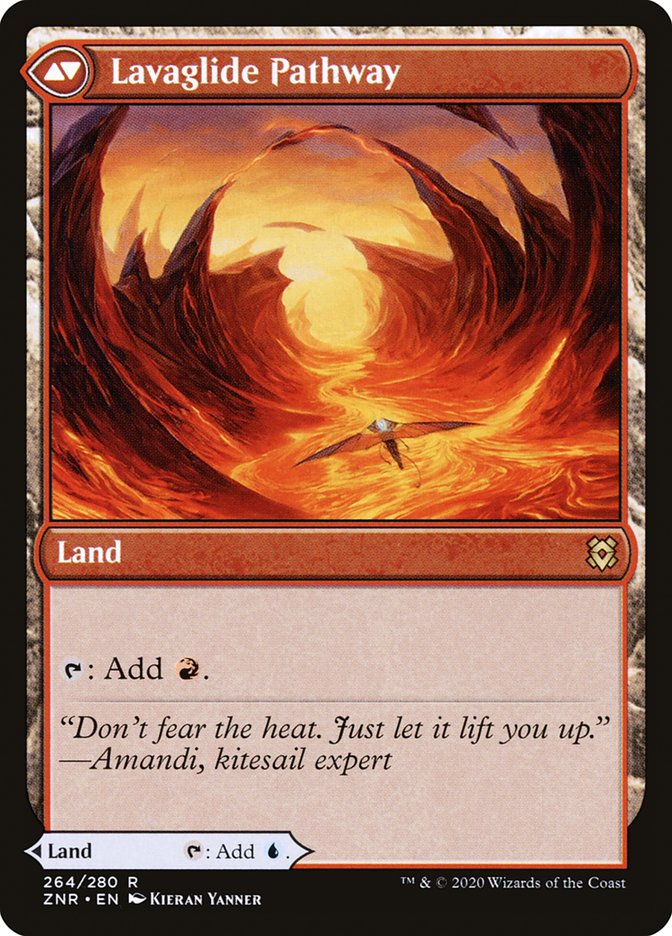
Something similar happens with MDFCs with lands on both faces, like Riverglide Pathway and Lavaglide Pathway. Only the face that’s showing on the battlefield counts. But if you control one copy of Riverglide Pathway, and another copy as Lavaglide Pathway, then they count as two different lands, and each contributes +1 to strange new worlds.
How Does Strange New Worlds Interact with Creature Lands?
Pretty simple: If it’s a land (no matter what other card types it may have), and it has a different name from other lands you control, it’s a +1 for strange new worlds.
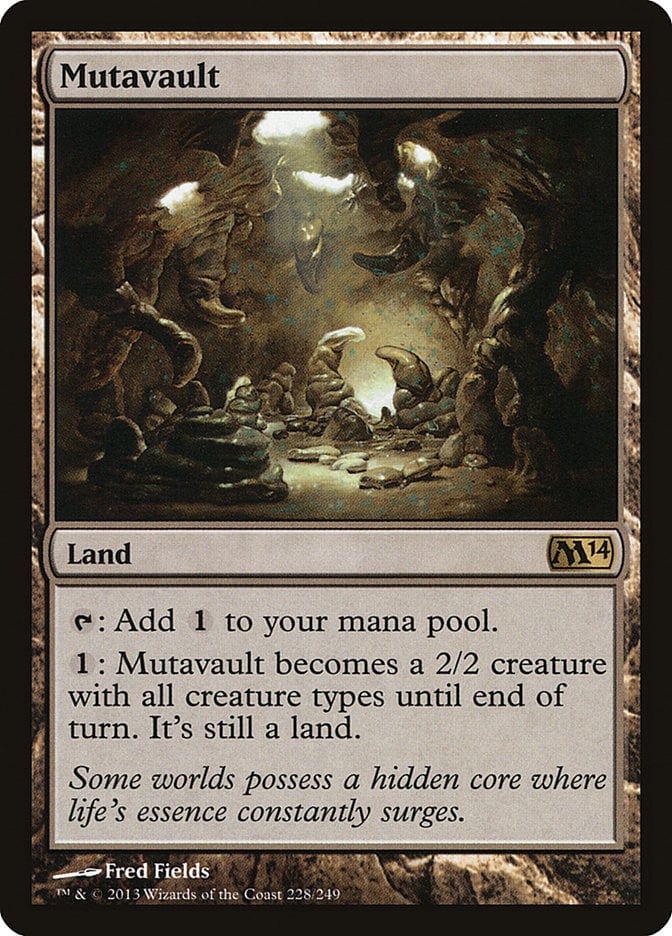
For example, Mutavault is a land that can become a 2/2 creature with all creature types until the end of the turn. Even while it’s a creature, it remains a land named Mutavault, so it continues contributing to your strange new worlds count.
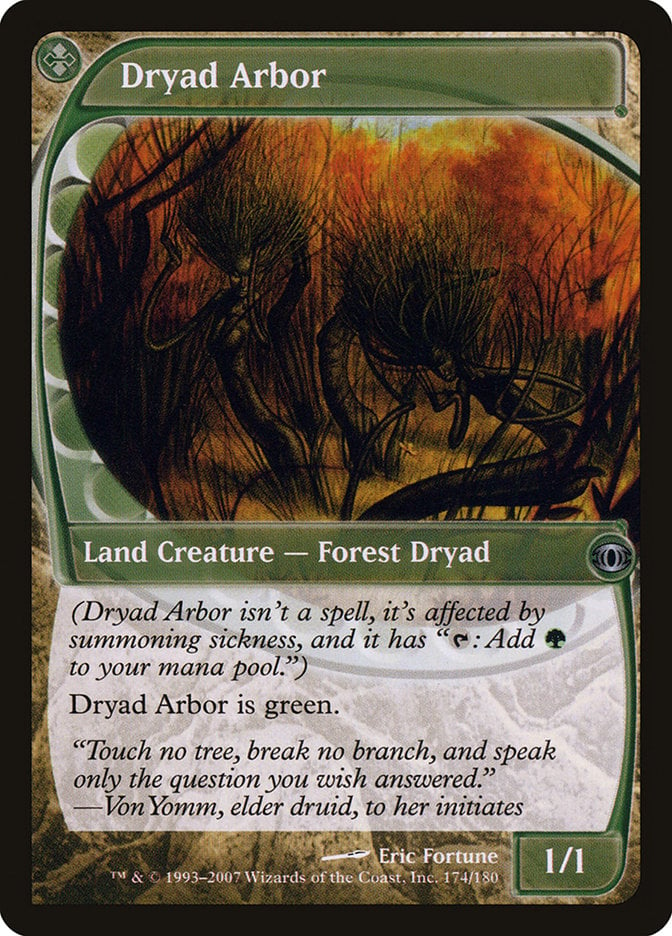
The same applies to Dryad Arbor, which is both a creature and a land naturally. You can even go wild with Ashaya, Soul of the Wild, which makes all nontoken creatures you control into forest lands, so they all suddenly start to contribute to your strange new worlds count, provided they have different names!
Do Artifact and Enchantment Lands Count for Strange New Worlds?
Yep! No matter what else it is, each of your lands counts as long as it has a different name.
Gallery and List of Strange New Worlds Cards
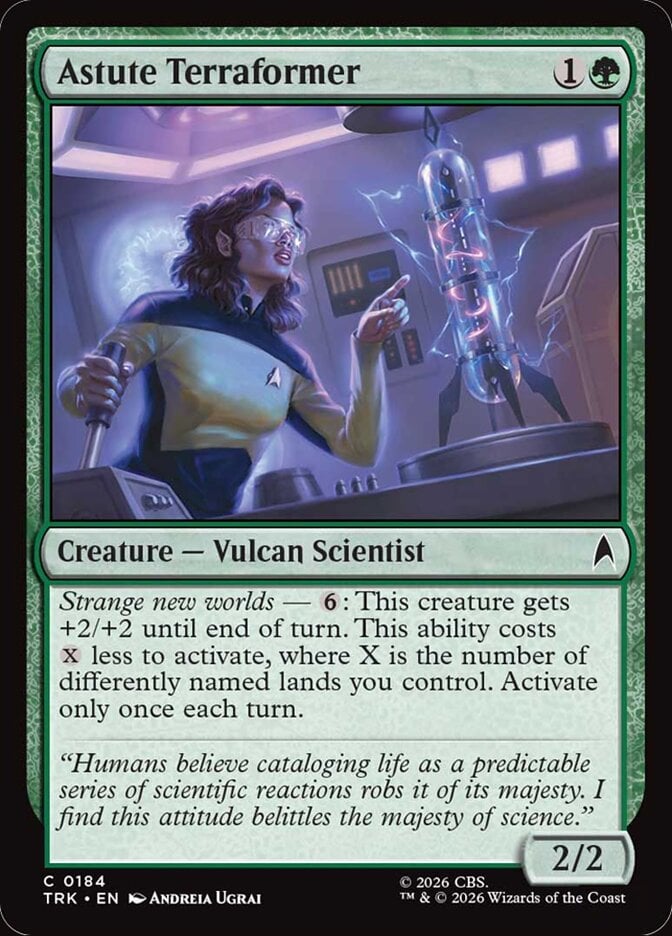
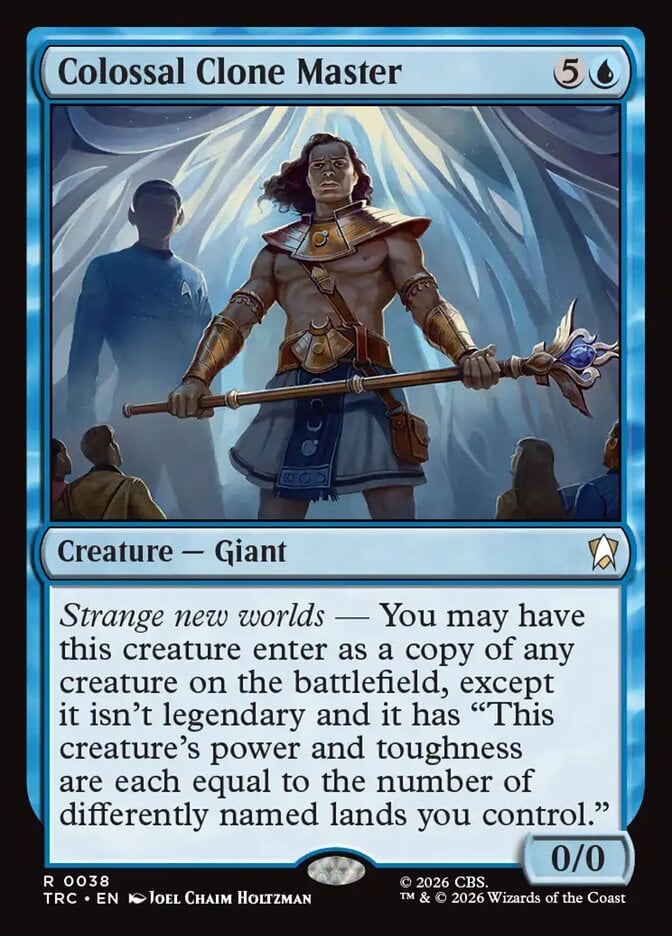
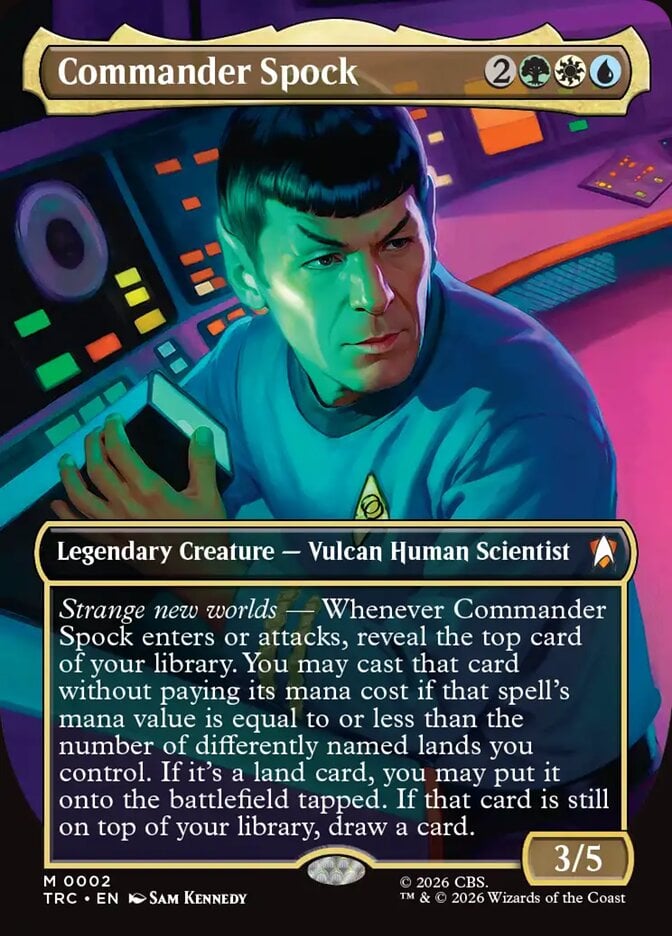
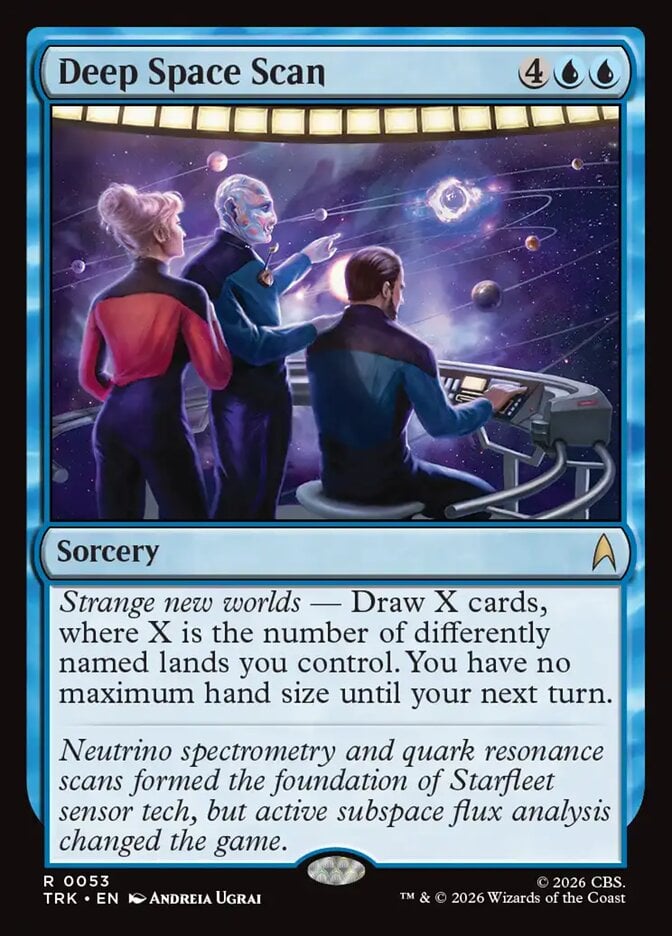
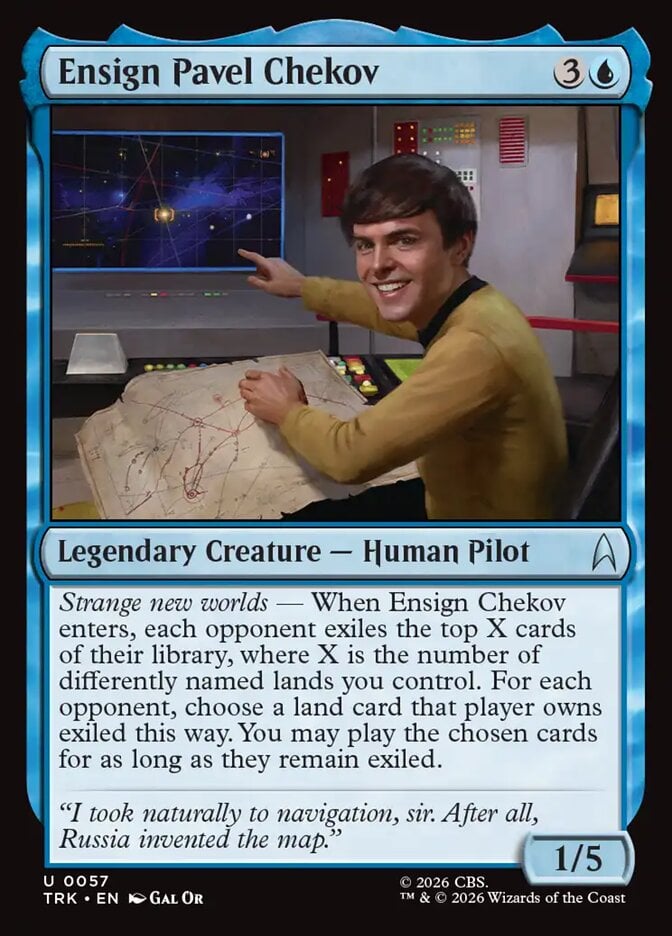
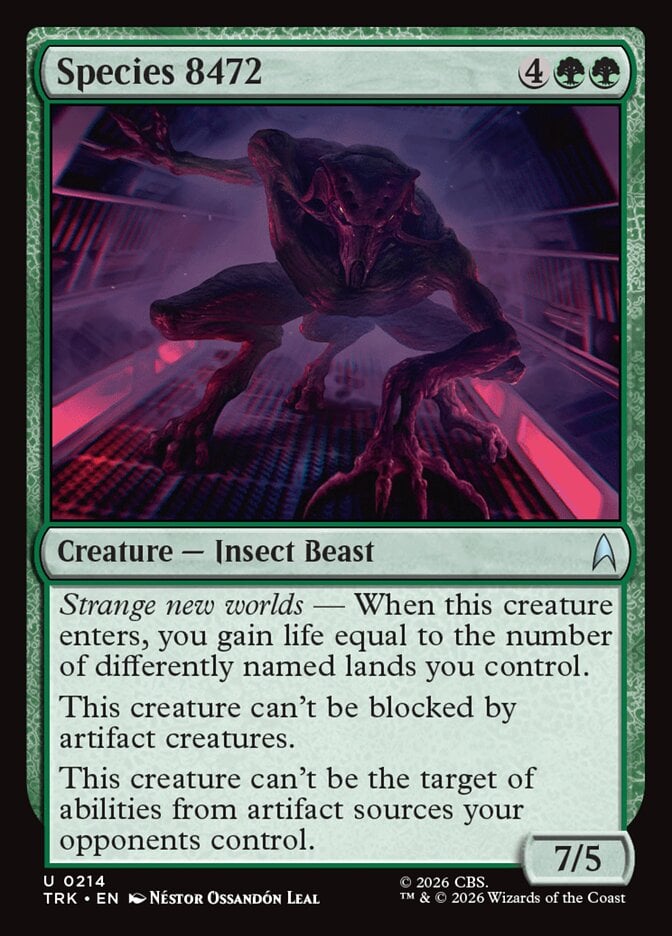
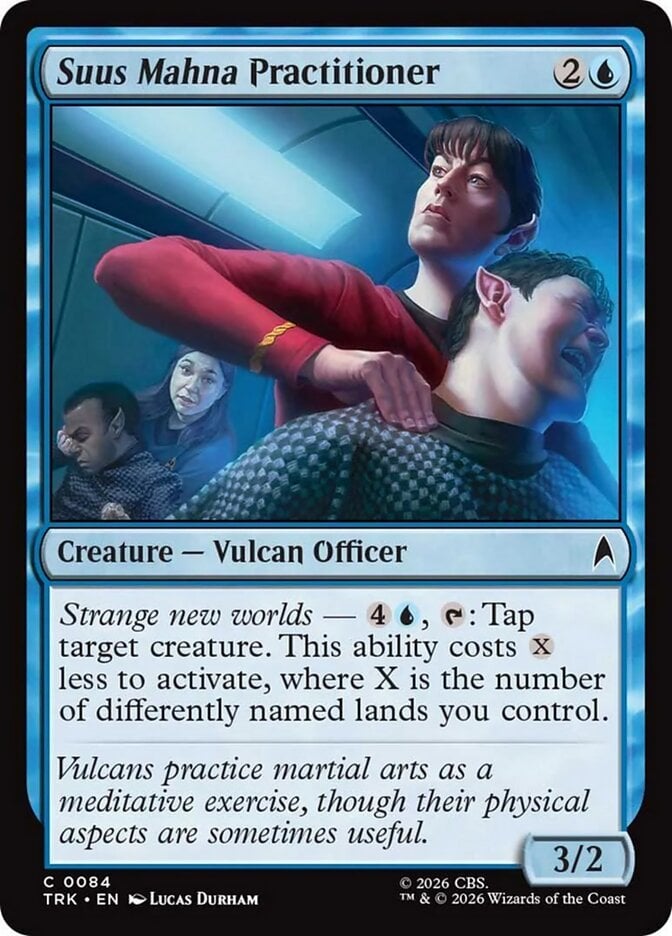
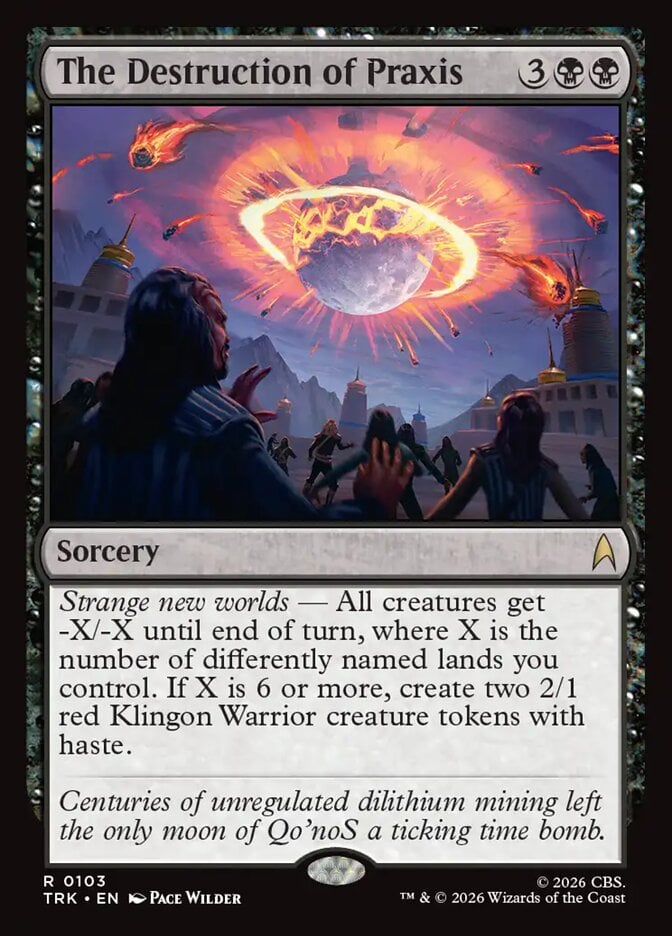
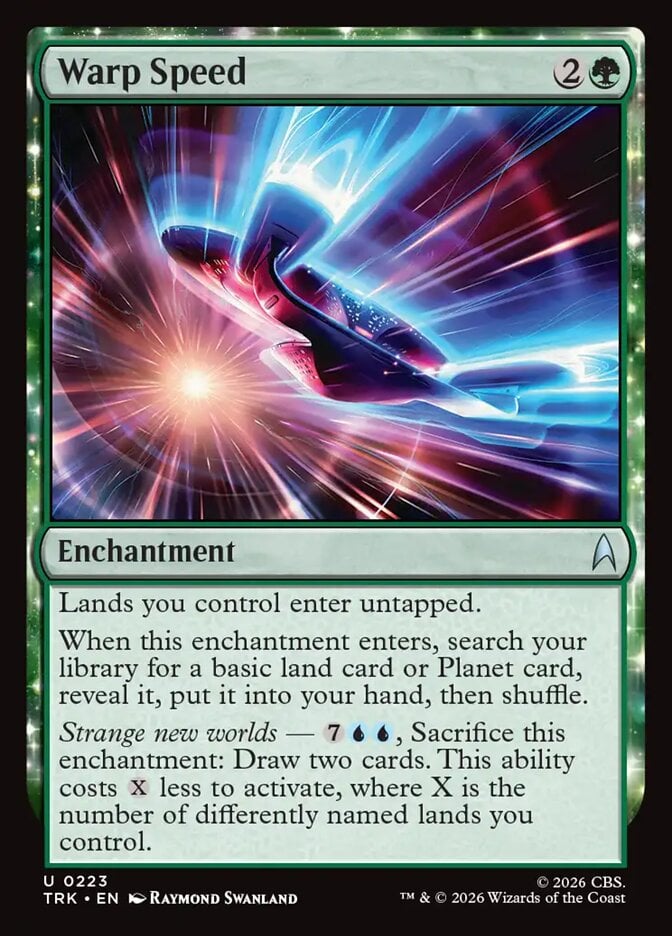
- Astute Terraformer
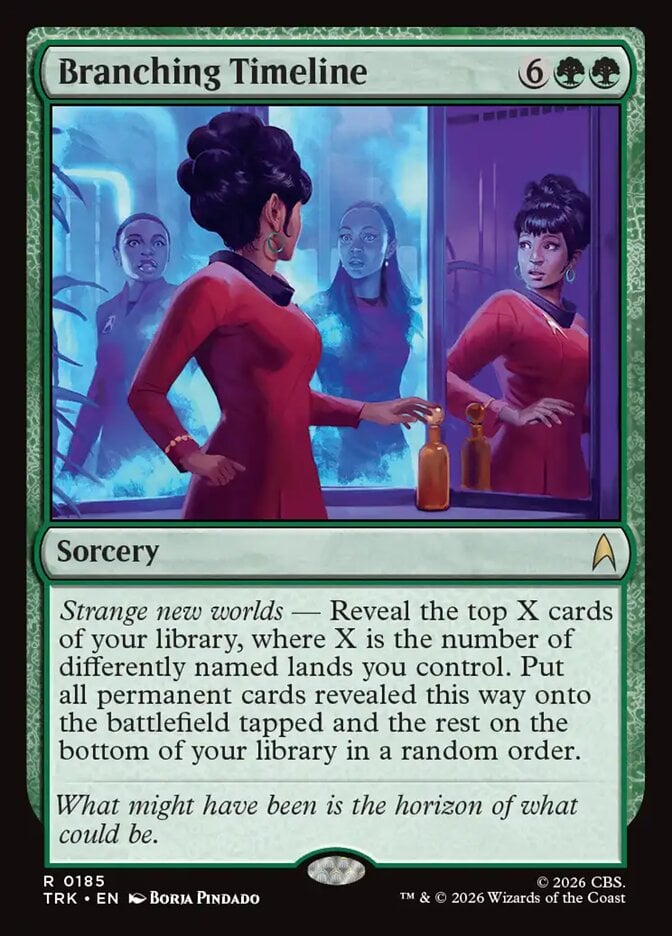
- Branching Timeline
- Captain Pike, Fullness of Time
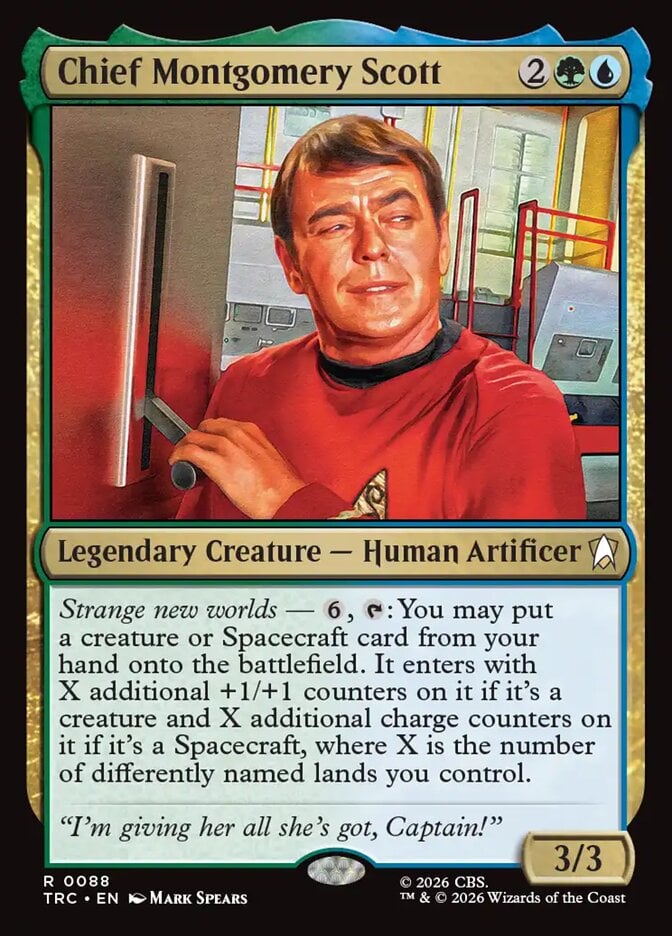
- Chief Montgomery Scott
- Christine Chapel, Combat Medic
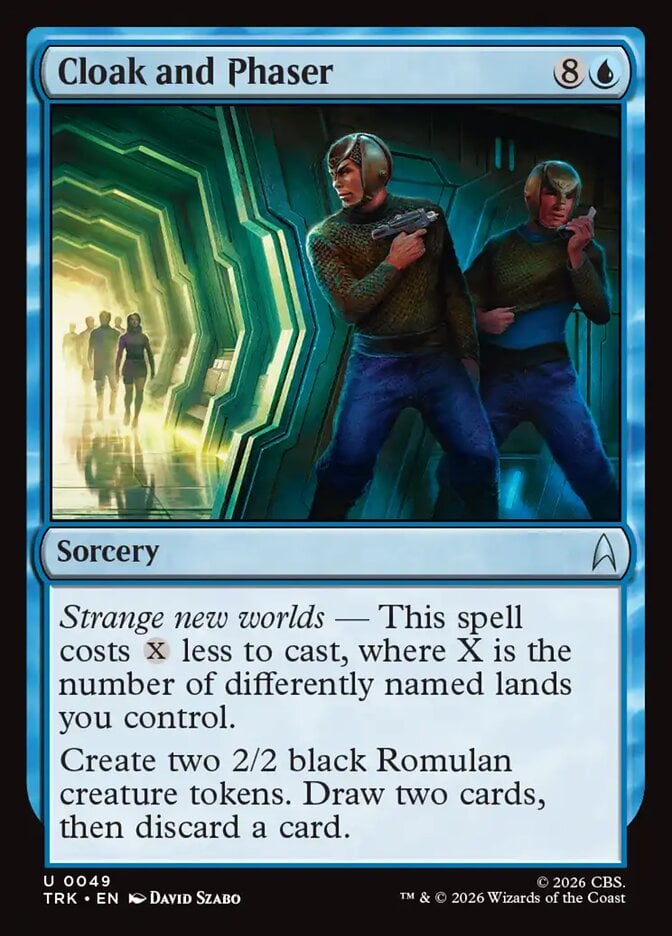
- Cloak and Phaser
- Colossal Clone Master
- Commander Spock
- Deep Space Scan
- Ensign Pavel Chekov
- Excalbian Gamemaster
- Lieutenant Nyota Uhura
- Lt. Arex, Ever-Adapting
- Pah-Wraith
- Species 8472
- Suus Mahna Practitioner
- The Destruction of Praxis
- The Traveler
- Warp Speed
Best Strange New Worlds Cards
#6. Branching Timeline
Branching Timeline lets you put every permanent from among the top X cards of your library directly into play, with X being your strange new worlds count. It’s expensive, and the permanents enter tapped, but the payoff can put you way ahead, especially if you’ve built your mana base around maximizing different land names.
#5. The Destruction of Praxis
Most strange new worlds cards lean Simic (), but here’s a black sorcery doing very black sorcery things: The Destruction of Praxis, a black board wipe.
Definitely not the best in class, and it usually won’t be able to take care of the bigger threats, but shrinking creatures works nicely around indestructible, which is always a plus.
#4. Warp Speed
Warp Speed is useful even without taking strange new worlds into account (which isn’t something many other strange new worlds cards can say). A lot of land ramp effects put the cards in play tapped, so making them enter untapped is nice.
The strange new worlds ability is nothing to write epic poems about, but it isn’t a bad way to sink some spare mana in the late game.
#3. The Traveler
The Traveler is a cheap legendary creature that becomes more threatening as you play differently named lands. For just , you get a creature with reach, vigilance, and power equal to your strange new worlds count.
Seems a tad tiny for Commander, but I wouldn’t be surprised to see this Simic scout find a home in Standard.
#2. Captain Pike, Fullness of Time
Captain Pike, Fullness of Time is another green legendary creature that rewards you for controlling differently named lands. It costs , and both its power and toughness are equal to your strange new worlds count.
And Pike also lets you look at the top card of your library at any time, and play lands from the top, which is a great effect (while having direct synergy with its strange new worlds ability). For 3 mana, Pike looks like one of the more efficient strange new worlds payoffs.
#1. Commander Spock
Naturally, our top spot goes to the commander specifically designed around strange new worlds! Commander Spock is a Bant commander () who lets you reveal the top card of your library and cast it for free whenever it enters or attacks, provided the spell costs the same as (or less than) your strange new worlds count.
If it’s a land, you can put it into play tapped. And you even have the option to just draw the card if you can’t (or don’t want to) play it.
Wrap Up
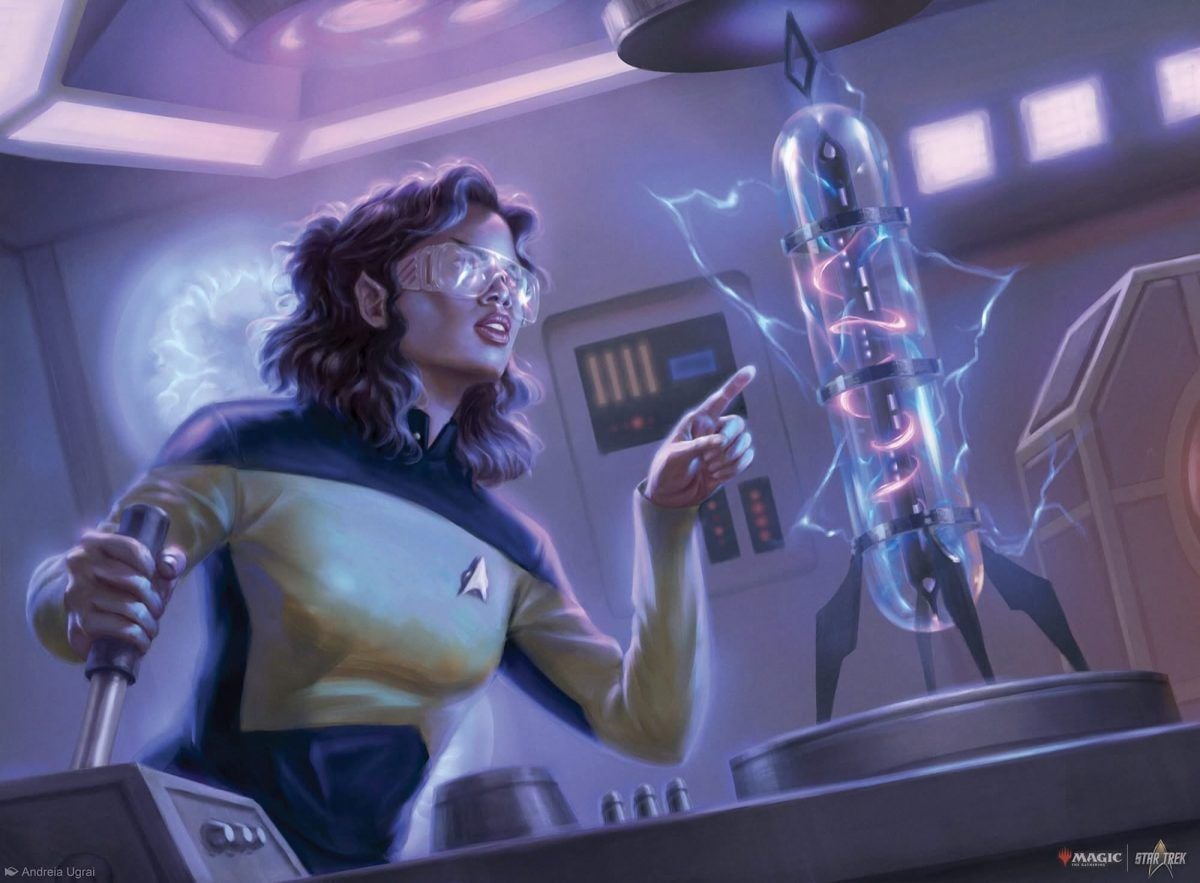
Astute Terraformer | Illustration by Andreia Ugrai
I think strange new worlds is a pretty neat way to represent Star Trek‘s spirit of exploration. In Magic, playing lands is often its own reward, and there are tons of mechanics that allow you to play even more lands… but rewards for “visiting” different worlds are a super cool twist that totally nails the flavor.
I wouldn’t mind seeing Wizards revisit the concept in future sets. We’ve seen these kinds of abilities without the ability word, so it’s not completely alien to in-universe sets.
What do you think of strange new worlds? Are you planning to build a deck around Commander Spock, or do you have another favorite card? Let me know in the comments below or over on the Draftsim Discord, and don’t forget to subscribe to our newsletter, The Daily Upkeep.
I hope you’ve enjoyed this deep dive into Magic’s strange new worlds mechanic, and good luck out there!
Follow Draftsim for awesome articles and set updates:









Add Comment