
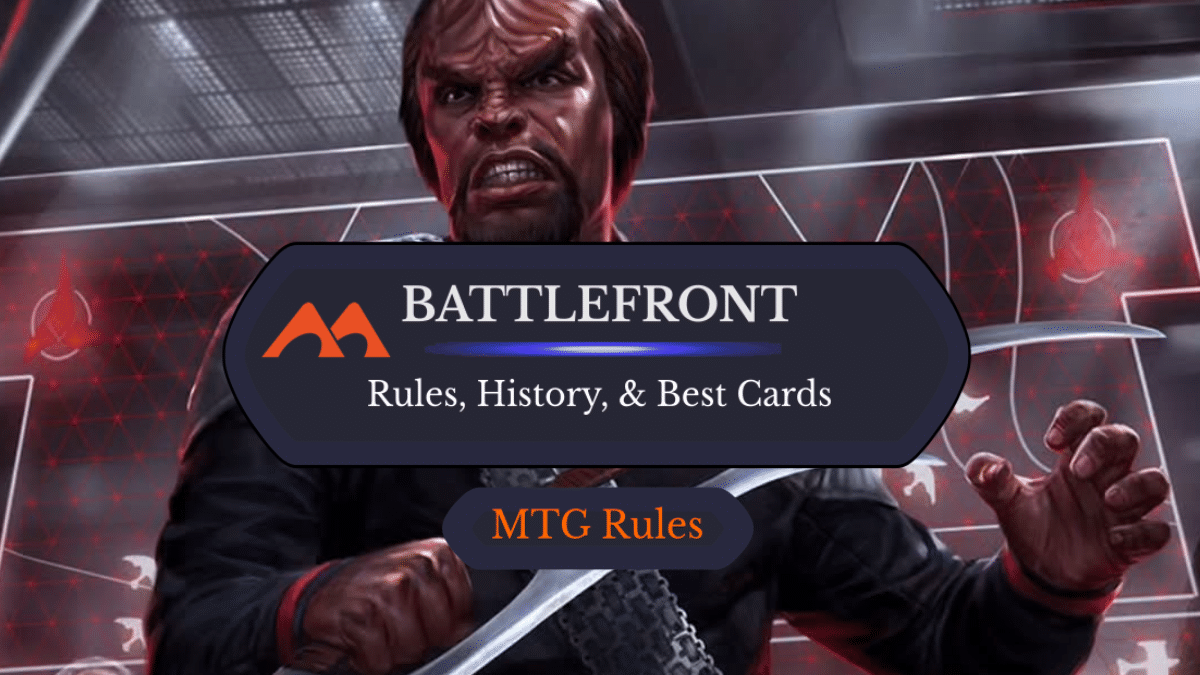
Worf, Defiant Commander | Illustration by Flavio Greco Paglia
Aggressive mechanics can be the easiest to design because you simply need to tie them to aggressive game actions like attacking or dealing damage to your opponents. It’s also an exciting play pattern because attacking means that things are happening.
Star Trek found the perfect way to express this design: With the Klingon warriors, whose culture is built around combat. The battlefront mechanic is exclusive to the Commander products, specifically the Klingon Fury precon led by Worf, Defiant Commander.
Let’s figure out how to use this mechanic honorably and well to win your next Commander night.
How Does Battlefront Work?
Direct Hit | Illustration by David Szabo
Battlefront is a mechanic that counts the number of opponents you’ve attacked in a turn, which different cards use in different capacities. For example, Worf, Defiant Commander uses it to calculate how many cards to impulse draw. As it scales with the number of opponents you attack, it works best in multiplayer formats.
The History of Battlefront in MTG
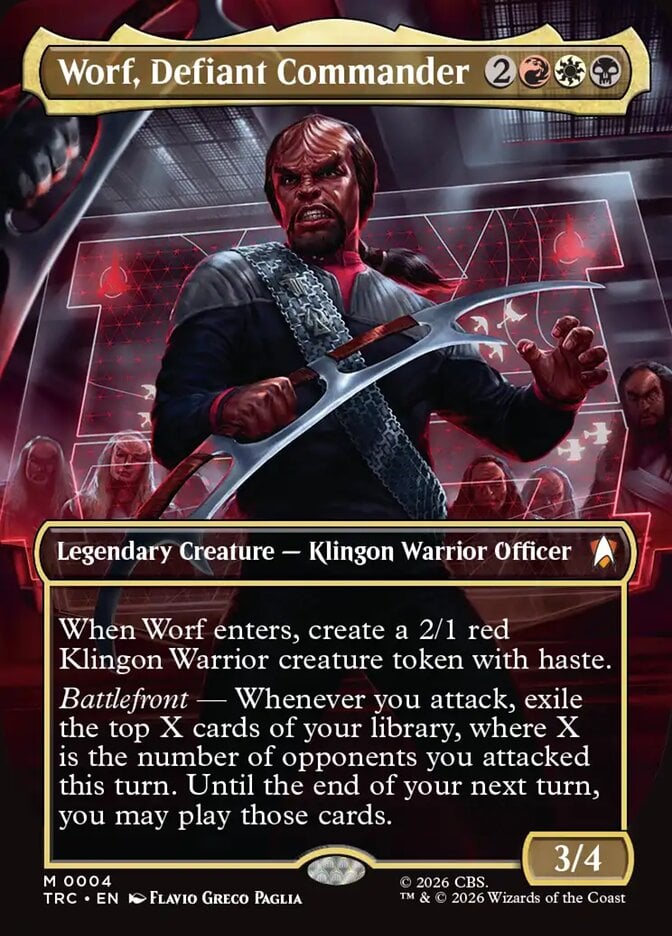
Battlefront debuted in 2026 with Star Trek. It was exclusive to the Klingon Fury precon, which was led by Worf, Defiant Commander. All eight battlefront cards appeared in the precon. The mechanic is flavor-neutral enough to see it appearing in future precons (it’s unlikely to appear in a non-multiplayer oriented product).
Does Battlefront Work with Only One Opponent?
Yes! Battlefront counts the number of opponents you attack. It works best with multiple opponents to scale the abilities better, but one opponent is still an opponent.
Does the Battlefront Creature Have to Be Attacking?
No. Some specific battlefront cards might need to be attacking, but nothing about the ability demands that the battlefront creature itself attacks.
Do Creatures That Enter Attacking Work with Battlefront?
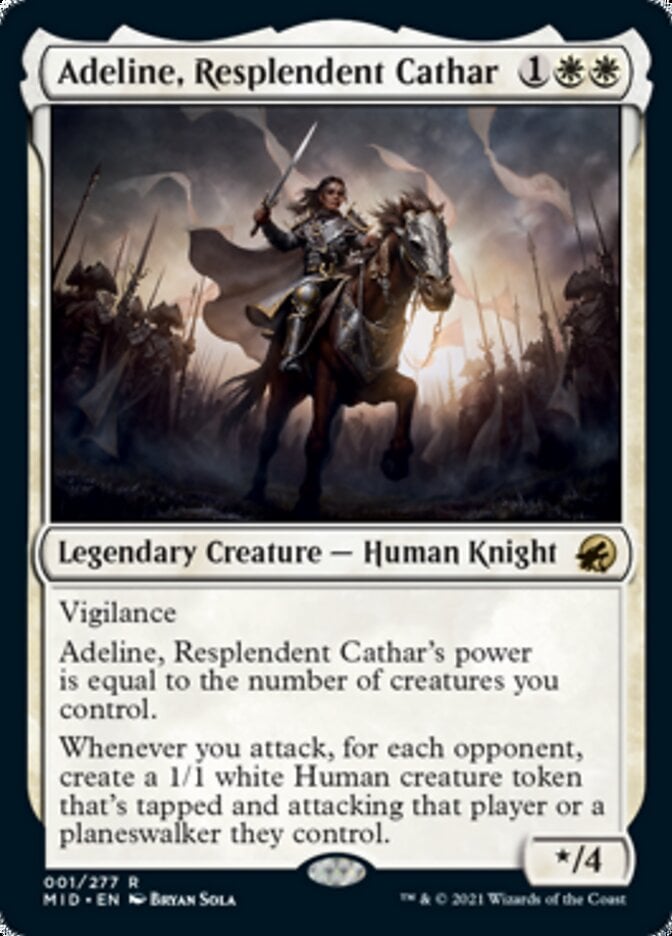
No. Battlefront counts the players you attacked, but to “attack a player”, you need to have declared attackers at that opponent.
Take Adeline, Resplendent Cathar. If you attack player A with Adeline, it creates tokens attacking each of your opponents. But because the tokens attacking B and C weren’t declared as attackers in the declare attackers step, battlefront abilities won’t count them as players you attacked.
How Does Battlefront Work with Extra Combats?
This is a little convoluted. Let’s start with the baseline: Each opponent you attack over extra combats, no matter how many combats you take, only counts once towards battlefront. If you have three opponents, then battlefront’s count will never exceed three.
But it still counts opponents attacked in a previous combat step. Let’s say you control Worf, Defiant Commander, and you get an extra combat. In your first combat, you attack Player A. Battlefront triggers, and sees that you’ve attacked one opponent this turn, so you exile one card. In the second combat, you attack Player B. Battlefront triggers again, and this time sees that you’ve attacked Players A and B, so you exile two cards, even though you only attacked one player in each combat.
How Does Battlefront Work in Two-Headed Giant?
The opposing team in Two-Headed Giant share a life total, but they count as separate players. To count battlefront for both opponents, you’d need to declare attackers at both players individually. The mechanic doesn’t care about life totals, but the number of players you’re attacking.
Notably, battlefront also only counts the creatures you attacked with, not anything that your partner attacked with.
Do Battlefront Abilities Work with Isshin, Two Heavens as One?
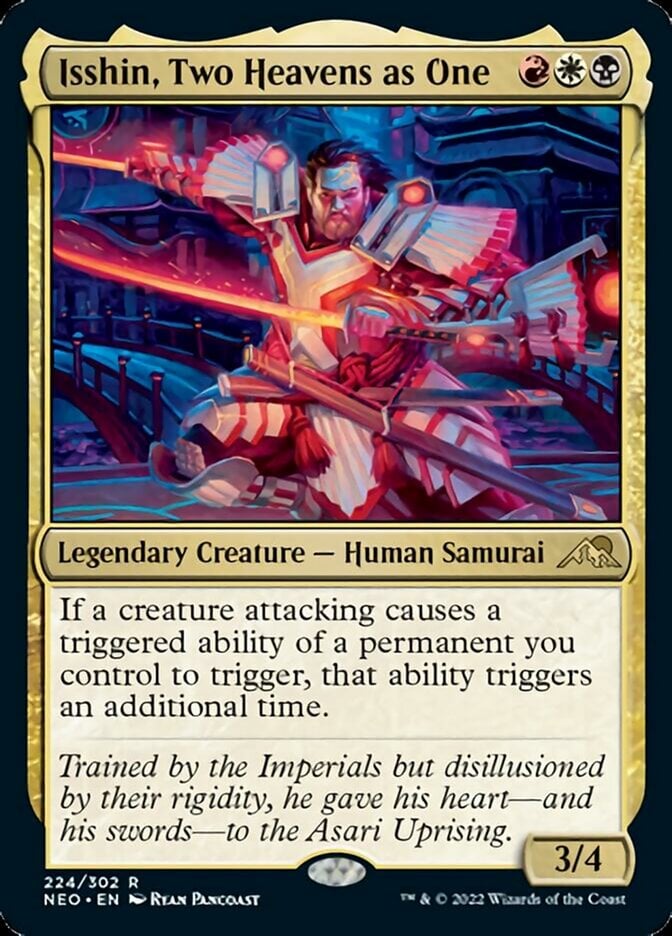
This depends on the battlefront ability. Worf, Defiant Commander’s battlefront ability is tied to an attack trigger, so it would trigger twice with Isshin. But if you have a card with a battlefront ability that isn’t tied to an attack trigger—say, something that triggers on the end step, or an instant or sorcery that uses the mechanic—then Isshin won’t affect those. Also, Isshin has no way to double the value of battlefront. You’re still capped at three, or however many opponents you have available to attack.
Battlefront vs. Melee
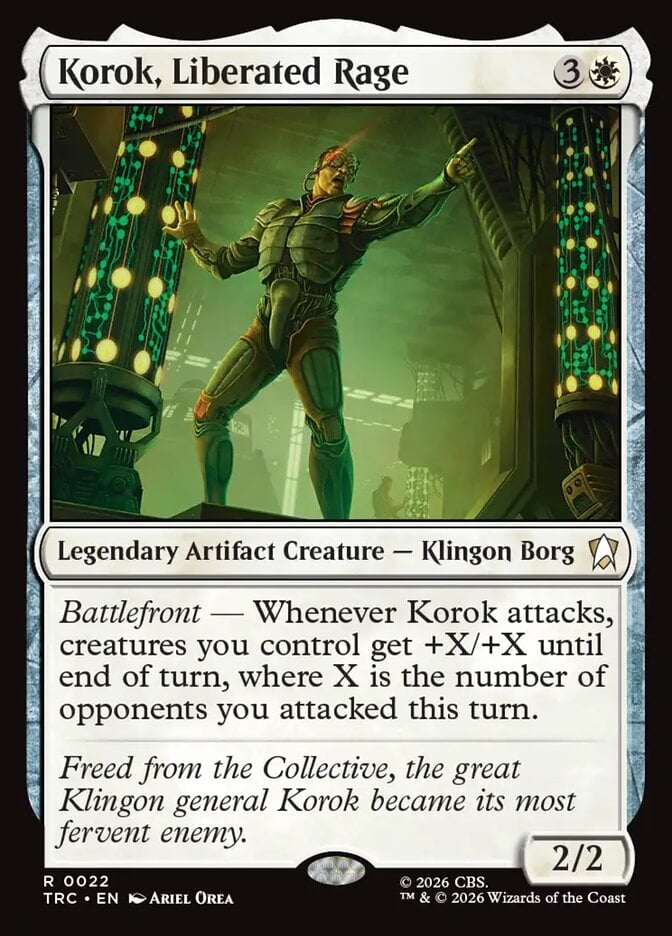

Battlefront and melee are very similar mechanics in that they care about the number of opponents you attack each combat. The primary difference is that melee is vastly more restrictive. It’s only an attack trigger, and it only results in buffing the power of creatures with melee that attack.
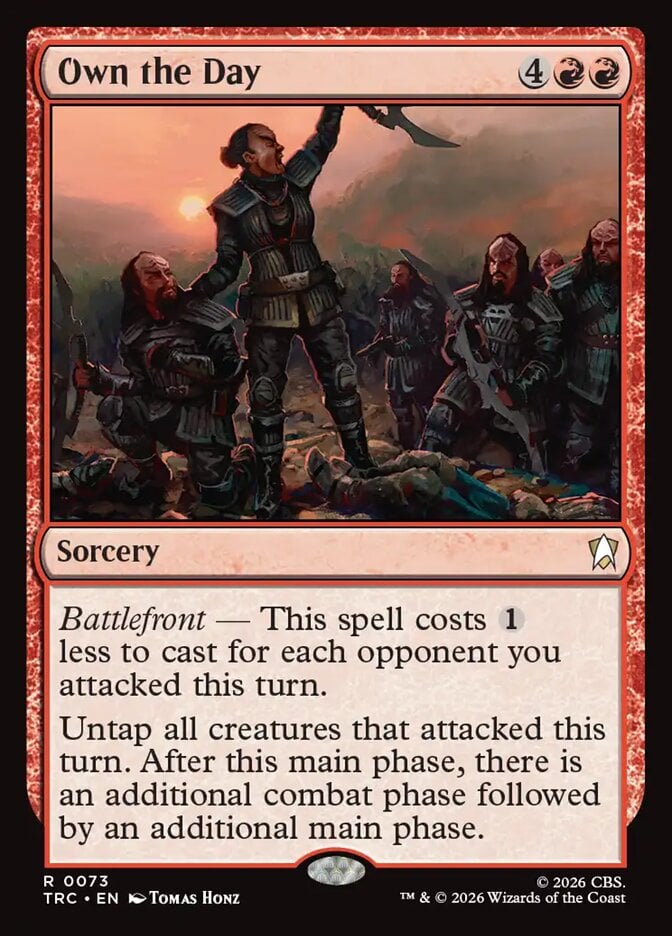
Battlefront is far more open-ended. It can provide, in theory, any sort of benefit that can scale (for example, Worf draws cards, and Own the Day gets cost reduction). The creature with battlefront also doesn’t have to attack to enable the ability—though some cards with battlefront abilities only trigger if they attack. It’s handled on a card-by-card basis.
Gallery and List of Battlefront Cards
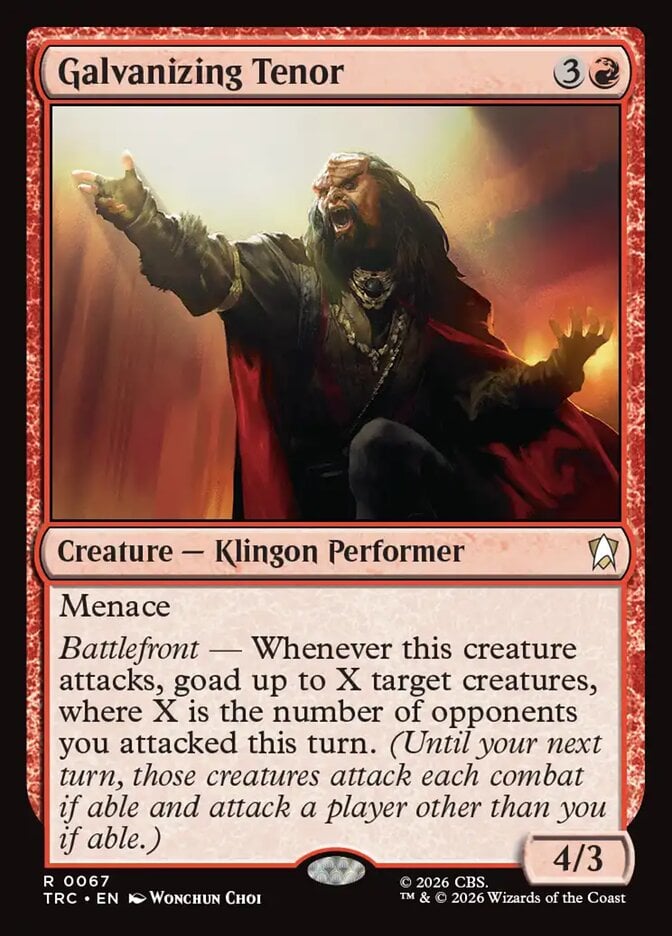
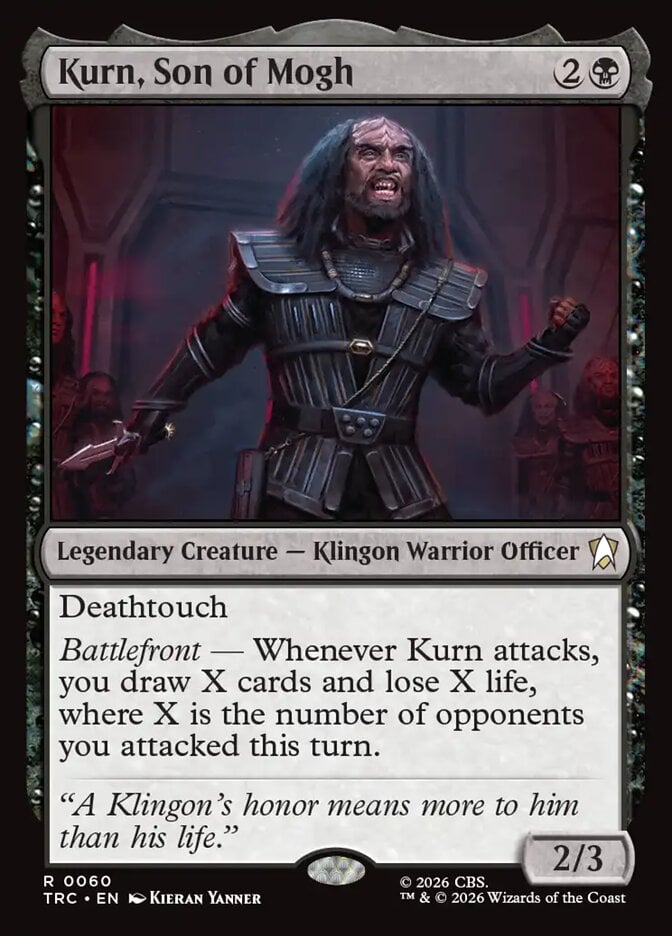
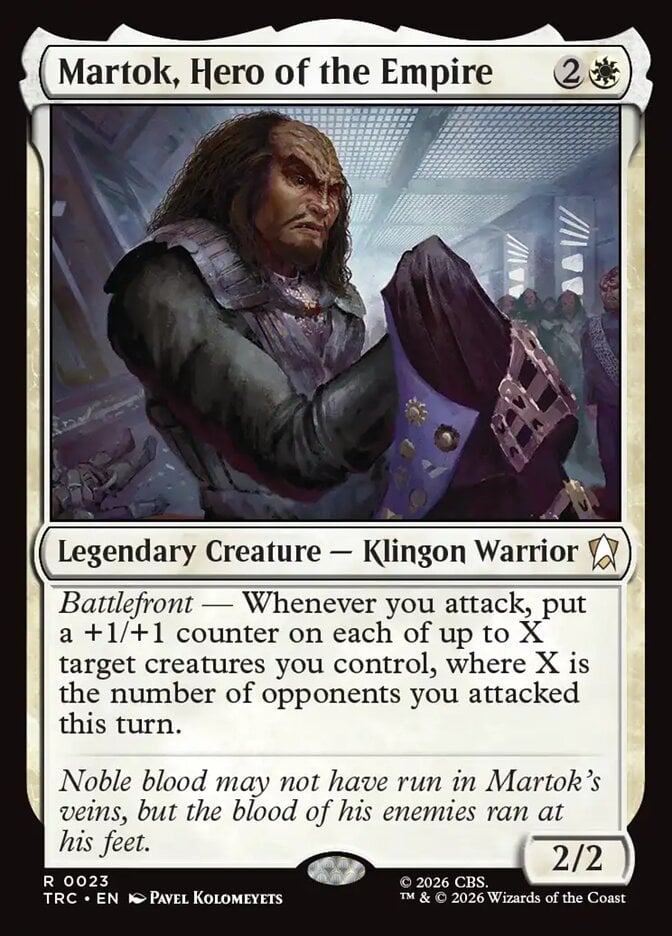
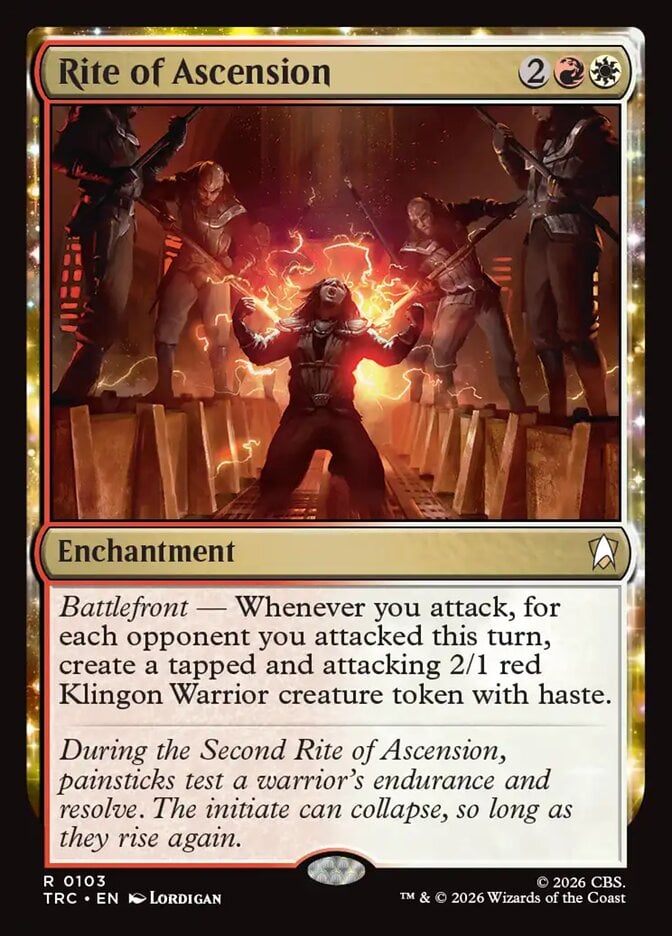
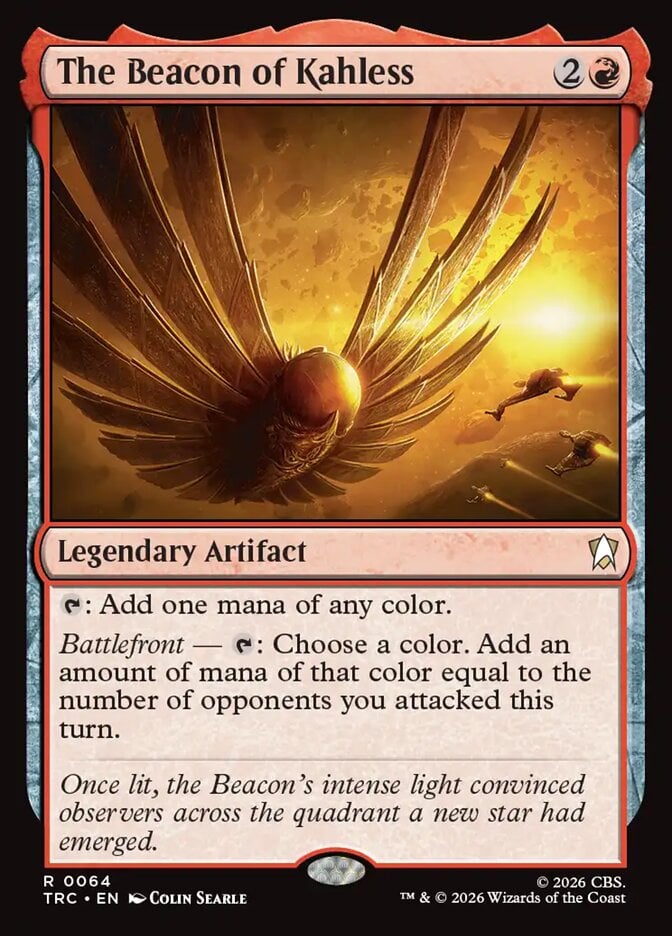
- Galvanizing Tenor
- Korok, Liberated Rage
- Kurn, Son of Mogh
- Martok, Hero of the Empire
- Own the Day
- Rite of Ascension
- The Beacon of Kahless
- Worf, Defiant Commander
Best Battlefront Cards
Kurn, Son of Mogh
Hey, card draw’s always a great reward for anything. You might not always get the ideal three cards off Kurn, Son of Mogh, but I still like it, especially if you have lots of disposable bodies, like decayed zombie tokens from Jadar, Ghoulcaller of Nephalia, to attack alongside Kurn. Also, since this is an attack trigger, you can do some funny stuff with cards like Maze of Ith or Reconnaissance.
Own the Day
Relentless Assault is the baseline for an efficient extra combat, and Own the Day meets that easily, and exceeds it, too. A 3-mana extra combat is a great way to close out a game in an aggressive deck.
Rite of Ascension
Battlefront encourages token making, so Rite of Ascension should be right at home. An interesting quirk of this card: It doesn’t need to make tokens attacking each opponent you attack; in theory, you could attack all three opponents, but send the three tokens at one particularly troublesome planeswalker. Sounds like a great way to try and bargain with some opponents to gang up on another.
The Beacon of Kahless
The Beacon of Kahless isn’t broken, though I’m tempted to say it comes close. It takes very little work to make this a 3-mana rock that taps for 2 mana, which is an excellent rate. In the best-case scenario, it’s mana-neutral since it costs 3 and taps for 3, though that’s a much harder situation to reach. All in all, this looks very strong considering the base mana ability always works, so it’s at worst an average 3-mana rock.
Worf, Defiant Commander
Worf, Defiant Commander is a strong impulse draw engine. Card draw is super important for aggressive decks in Commander; they can’t risk petering out after one board wipe. There’s also a host of cast-from-exile synergies to draw on. This is easily one of the better commanders from the set.
Wrap Up
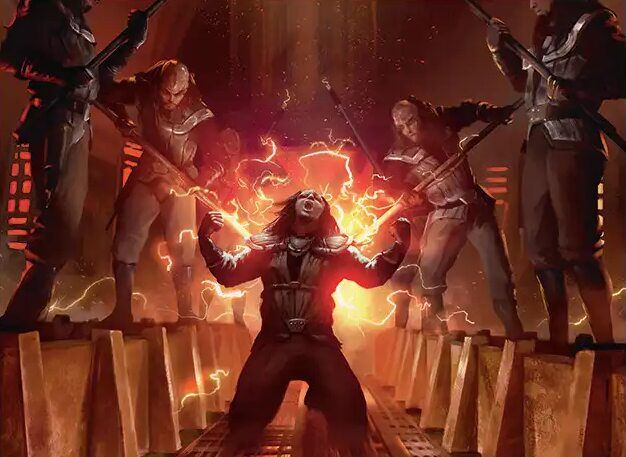
Rite of Ascension | Illustration by Lordigan
I’m very much in favor of battlefront. Commander could always use more aggressive mechanics that incentivize gameplay happening instead of just ramping. Hopefully, it’s flavor-neutral enough to return without waiting for a subsequent Star Trek set.
What’s your favorite battlefront card? Do you want it to come back? Let me know in the comments below or on the Draftsim Discord! If you want more TRK coverage, check out Draftsim’s YouTube channel and newsletter, both called The Daily Upkeep!
Stay safe, and thanks for reading!
Follow Draftsim for awesome articles and set updates:










Add Comment