
Last updated on May 7, 2026

Imperial Seal | Illustration by Milivoj Ceran
Limited is, for my money, the best way to play Magic. It’s also an extremely popular one. Limited crops up at the highest levels of play; the Pro Tour has a Draft portion, and many of the paths to qualify for the Pro Tour involve Limited play, including Regional Championship Qualifiers, Arena Limited Championships, and various MTGO events.
But casual players encounter Limited as well. Each set’s Prerelease is Sealed, and stores often run Draft for Friday Night Magic once a week—and sometimes even more events; an LGS I attended did Draft on Friday and Sealed on Monday. Of course, you can always find Limited on the digital platforms, too.
What’s the Difference Between Draft and Sealed?

Seal Away | Illustration by Joseph Meehan
Sealed and Draft are both Limited formats, which means that players build 40-card decks from a number of sealed booster packs, plus lands provided by the host of the event. The primary difference is the pool of cards from which you build your deck.
In Sealed, you receive six booster packs, open them, and build your deck from those cards.
In Draft, you bring three boosters and sit down with seven other players for a pod of eight. Each player opens a booster pack, picks a card, then passes it to the next player. The first and third packs are passed clockwise, and the second counterclockwise. When a player receives a pack, they pick another card and pass it on. Once all cards from a pack have been depleted, the next pack is opened. Also note that there’s a variant designed for 4-player pods called Pick-Two Draft, in which you pick two cards every time you’d usually pick one.
A few basic highlights between the formats are:
- It’s easier to splash in Sealed than Draft.
- Sealed tends to be slower than Draft.
- Draft events tend to have lower entry fees since you pay for three boosters rather than six.
- Bombs are much more prevelant in Sealed.
Deckbuilding Differences
Because you assemble a Sealed deck from the contents of six random booster packs, they tend to be less streamlined than a good Draft deck. You’re more likely to play curve-filler and other subpar cards because you’re working with what you have.
Draft gives you much more control over what you pick. If you start a Draft with some good aggro cards, you’re more likely to sculpt a deck around them and end up with an aggressive strategy whereas a Sealed deck might end up with those cards but fail to have the curve to support them. You also open more cards in a Draft; eight players bring 3 packs for a total of 336 cards opened compared to a measly 84 in your average Sealed pool. When more cards are opened, you’re more likely to see powerful cards come your way, even if you don’t see all 300+.
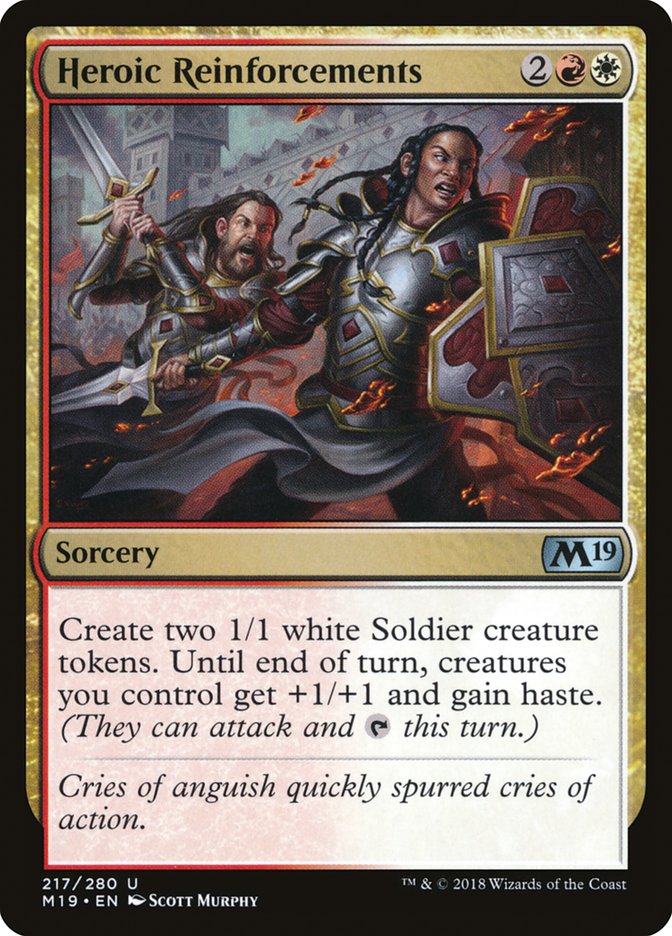

Overall, Sealed decks tend to be clunkier than Draft decks because you need to work with what you get rather than sculpt an open strategy from a bunch of cards as they come around. Something to keep in mind is that Sealed tends be slower than Draft because of this clunkiness—you don’t get to first-pick Heroic Reinforcements or Catharsis, then sculpt your deck into a perfect aggressive shell. You need to work with what you have.
Rares and removal are extremely important in Sealed because the slower game pace means you’re more likely to see additional cards, plus rares tend to represent a higher spike in power because synergies are less present in the smaller card pool; cards with high floors and good standalone potential shine in Sealed.
Another benefactor of the slower format is that splashing becomes easier. Because you don’t need to worry (as much!) about getting run over by a sleek aggro deck, you can afford to play a few extra taplands to maximize the number of good cards in your deck. This doesn’t mean you can ignore basic rules for splashing—don’t splash cards that need to be played early or have multiple off-color pips, make sure you have enough sources, etc.—but the downside is smaller.
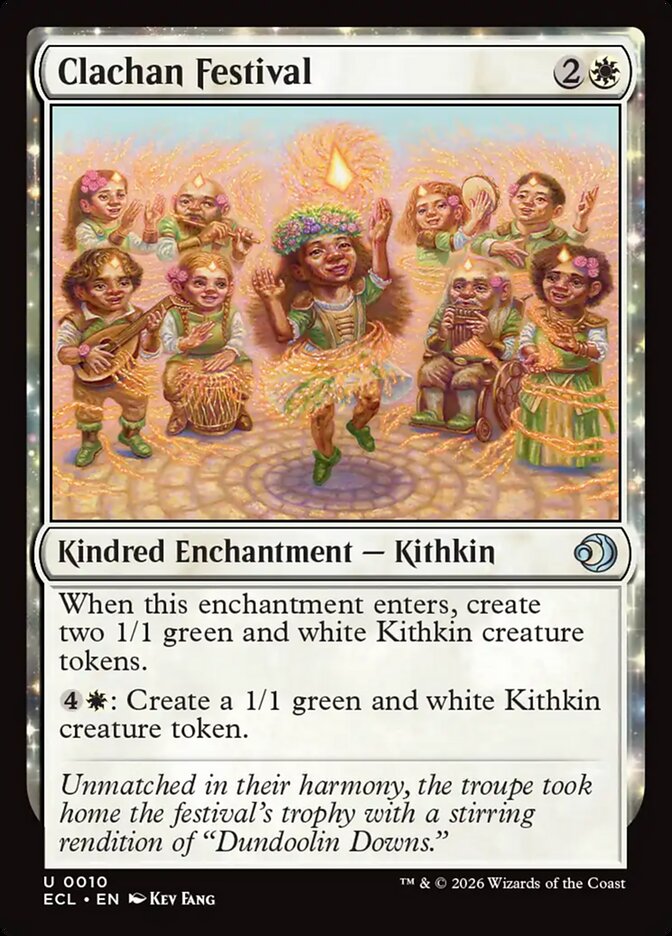
Looking to Draft, decks become sleeker and more powerful because you see more cards and have greater control over what you put in your deck. Instead of surrounding Catharsis with random red and white cards, you get to pick it then focus on sculpting a lean curve and prioritize cards like Clachan Festival that make tokens specifically to enhance your bomb rare.
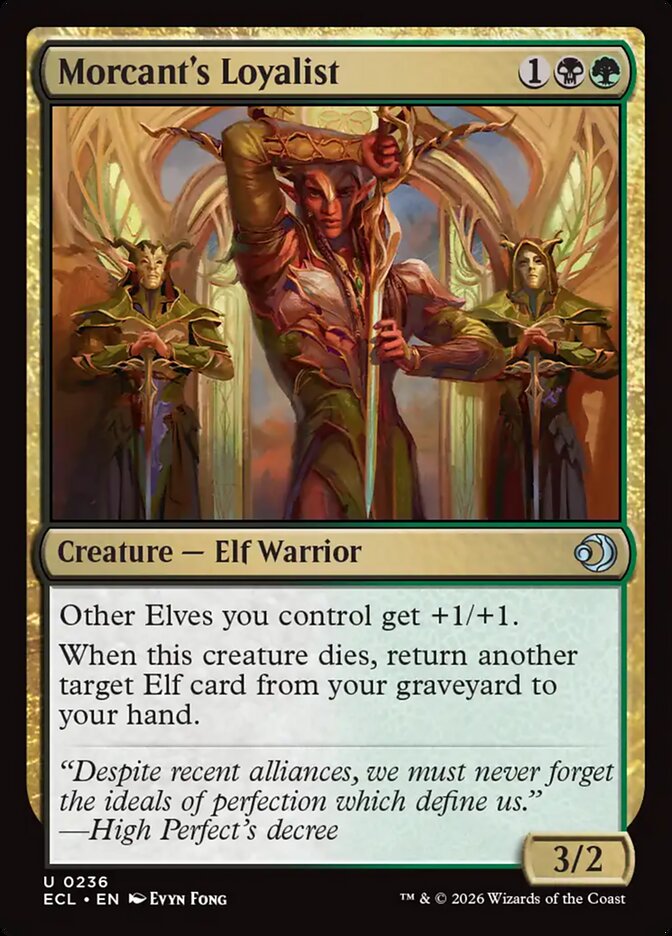
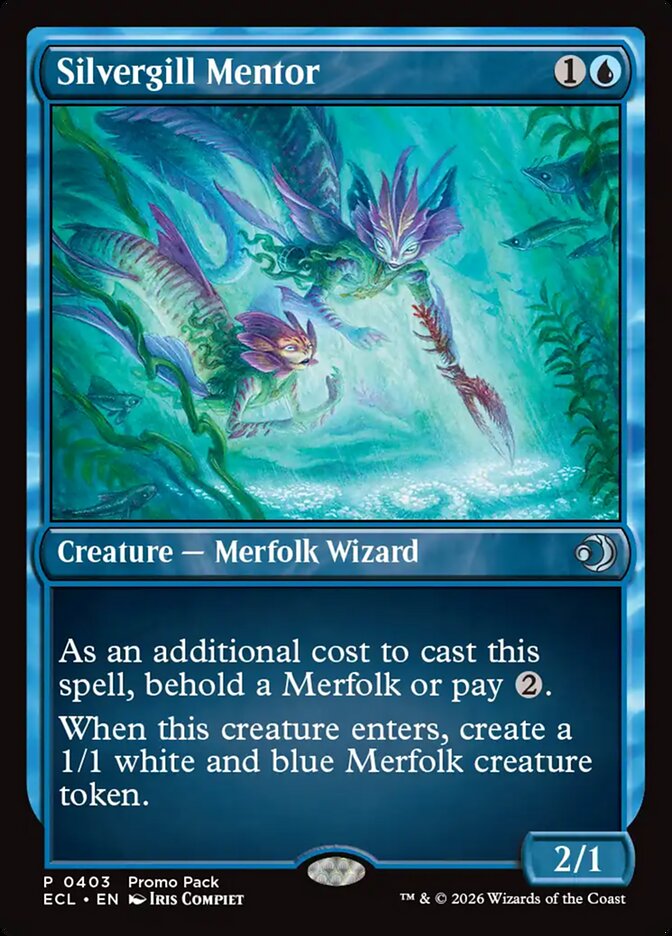
This also means synergies become easier to exploit; you can first-pick a card like Morcant's Loyalist or Silvergill Mentor and bias your picks towards cards that work with them as opposed to Sealed, where you might give up these strong synergy pieces simply because your pool doesn’t contain the right cards. Of course, you aren’t guaranteed to see the appropriate support in Draft; cards opened are still random and other players might want the same cards you do. But synergistic decks with lean curves are more achievable in Draft whereas those result only from the best Sealed pools.
To sum it up, Sealed decks tend towards being slow, and individual card quality matters greatly whereas Draft decks get to be more put together, with stronger curves and deeper synergies.
Gameplay Differences

Spinning Wheel | Illustration by Aaron Miller
The primary gameplay difference between Sealed and Draft is the speed. Sealed decks are often clunkier and slower than Draft decks, and they tend towards being more midrangy, with fewer control or aggro strategies.
Sealed games go a little longer, and as a result, card draw tends to be extremely strong because you have time to exploit all the extra cards. This also makes cards like Spinning Wheel that are a little costly or have expensive activated abilities more playable; it's a great example of the kind of slow play you would get punished for in Draft but get to play in Sealed.

Because Draft decks tend to be faster, the opening turns become extremely important. Depending on the speed of the format, you might not be able to sequence things so you don’t have a play on turn 2. Recent examples of these fast formats include Bloomburrow and All Will Be One. Even those aggressive Draft formats don’t always lend themselves to the same level of aggression in Sealed. This speed difference is also reflected in the removal options; more expensive removal like Narset's Rebuke performs worse against lean decks.
Sideboarding Strategies
In principle, the idea of sideboarding in both Sealed and Draft is similar to that of sideboarding in Constructed: You want to take out cards that are bad in the matchup and replace them with good cards. But “good” and “bad” looks a little different in Limited since you’re unlikely to have clearcut silver bullets and instead must look at smaller advantages. Most of what I discuss here is applicable in Draft or Sealed, so I’ll say “Limited” unless there’s something specific to discuss.
A Constructed sideboard often contains cards that are clearly meant for one match up or another—for example, Torpor Orb sees a fair bit of sideboard play to shut down Elementals and other decks with strong enters abilities. Sometimes Limited decks get these clear sideboard cards, commonly with artifact or enchantment hate. You can often bring in cards like Heritage Reclamation and Chomping Changeling to combat white’s enchantment-based removal; sometimes your opponent has a bomb dragon or angel, so you grab Unforgiving Aim or whatever Plummet variant is in vogue.

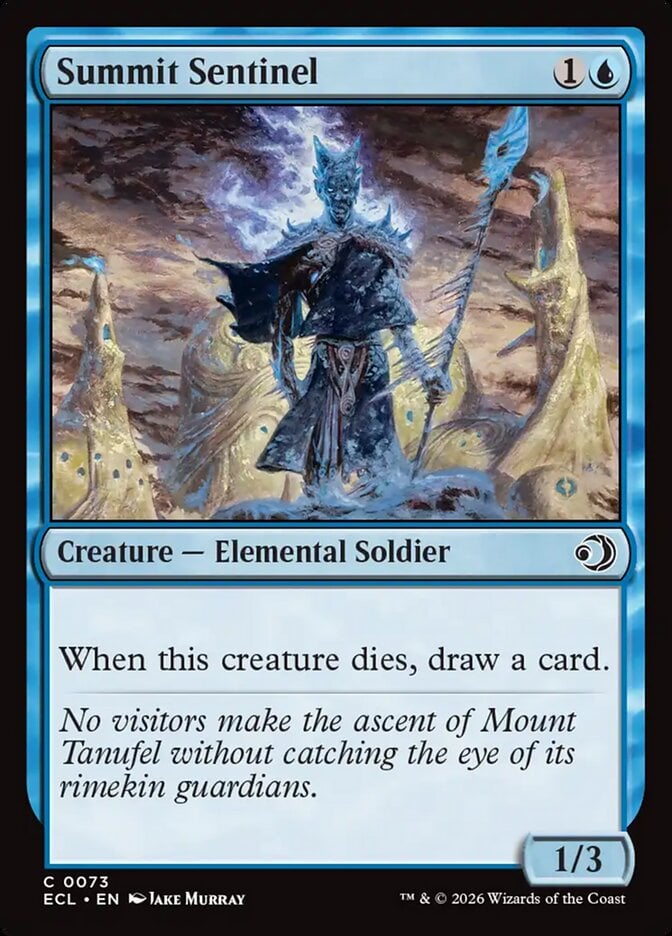
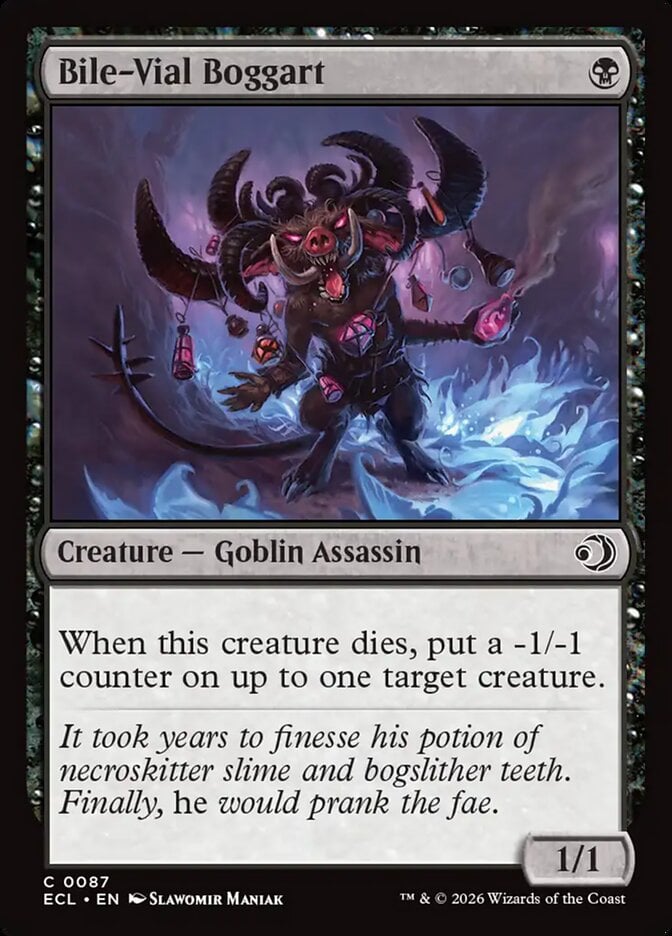
Other times you need to consider how your creatures line up against your opponents; Limited is very creature-focused, after all. If you’re against an extremely aggressive deck with lots of cheap 1/1s and 2/1s, you might have a silver bullet like Fire Magic or Cast into the Fire to bring in. That’s definitely ideal, but what about a good blocker? Say, a Summit Sentinel that didn’t make the main deck but suddenly looks like very good defense? There are also cards like Bile-Vial Boggart and Dynamite Diver that ping creatures when they die and line up well against a slew of x/1s. These aren't the quality or type of answers you would look for in Constructed, but they’re tools available in Limited.
Oftentimes it’s easy to point out a card that looks useful in a matchup, but it can be tricky to decide what to take out; after all, the 23 cards you put in your main are the best 23 cards in the pool, otherwise you wouldn’t have played them. The easiest way to do this is to reverse your thinking; picking cards to bring in means you identified ways to inhibit your opponent’s strategy, but what about their ability to mess with yours?
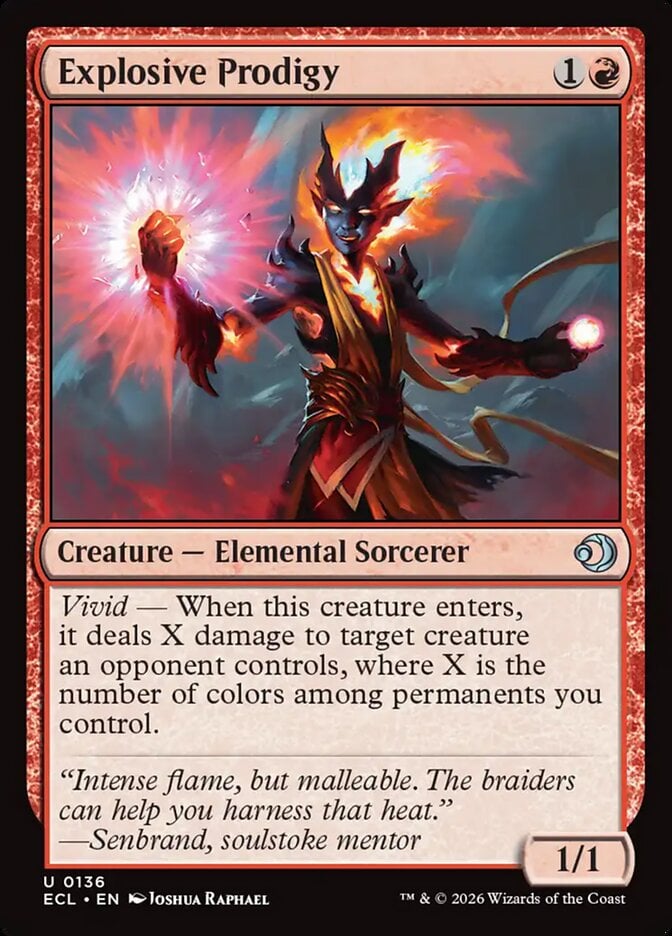


Here’s a simple example: If your opponent shows you multiple copies of 1/1 creatures with strong enters abilities or death triggers like Explosive Prodigy, Virus Beetle, or Infestation Sage, you should seriously consider cutting x/1s from your deck, especially if they lack the same immediate impact. If my opponent plays a Lys Alana Informant I can trade my Explosive Prodigy for after it’s already killed another threat, I feel like I’ve already won. Or maybe you have a couple auras in your deck, but your opponent presented you with enough cheap interaction to make it risky to run them.
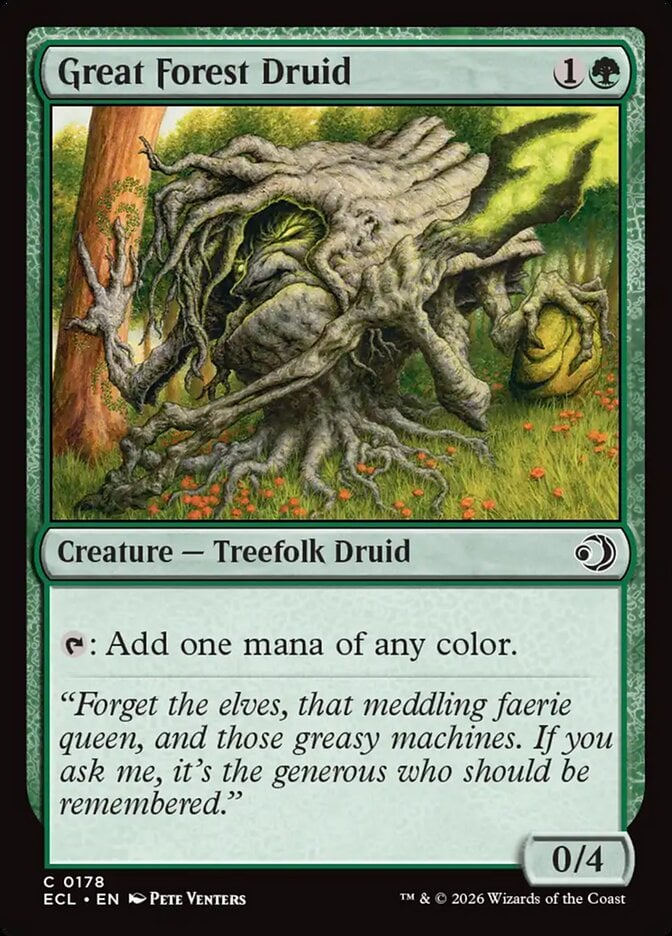
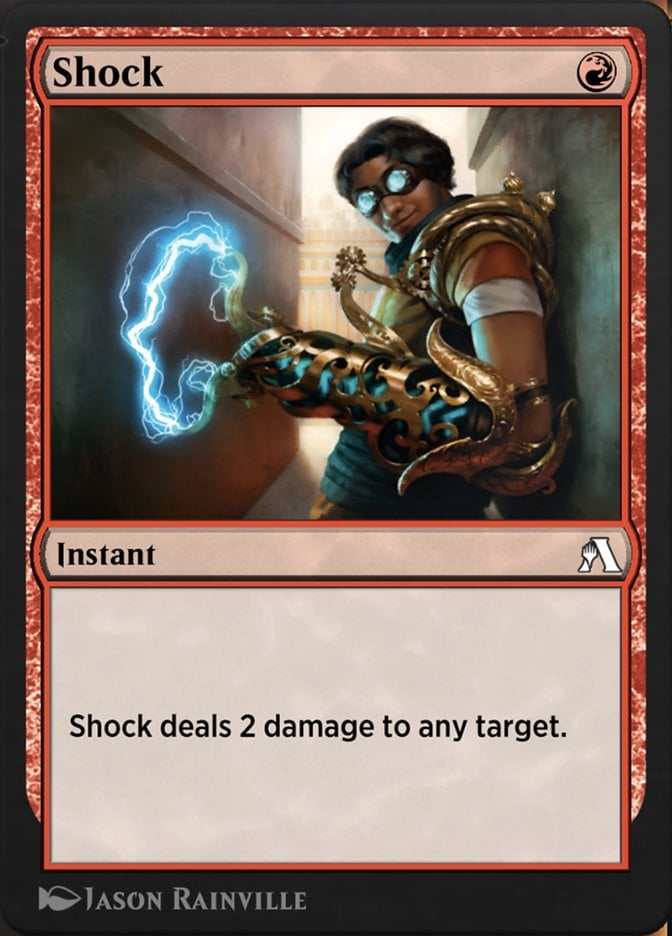

You should also consider the pace of the game overall, and not just individual cards. For example, if your opponent presents you with a slower deck that doesn’t have many cheap creatures, and the cheap creatures that are around are good blockers like Great Forest Druid, you can consider removing interaction like Shock or Stab that only impacts small creatures in favor of something more impactful, like extra card draw to keep up with the longer game. Of note, this strategy comes up more in Sealed than Draft, and it might not be feasible at all in certain formats.
These little disadvantages that might mess up Game 1 can be addressed in sideboarding. It’s also worth noting that while sideboarding often means bringing in the good cards, sometimes you settle for taking out the bad cards for fine options.
As an aside, Sealed gets an extra sideboarding strategy due to how large your pool of unplayed cards is: Sometimes you can sideboard into an entire extra deck. Not every pool can support this, but when you can do it, it might change your entire tournament.
The first step is to identify your best aggro deck and your best midrange or control deck. These will probably overlap to some degree. Let’s say for simplicity’s sake that you end up with a Sealed pool with a very strong core of red cards—a good curve, some rares, decent removal—and your secondary color can be either white or green. Adding white would keep the curve low, maybe add a little token production so you can utilize a mass pump effect like Leonardo, Leader in Blue or Goblin Surprise. Green, on the other hand, would add better top-end, maybe a rare, and a Regrowth effect to help grind. In other words, choosing one color over the other meaningfully changes how the deck plays.
You pick green and go for the most rares and the biggest curve, then in your first match, you’re paired against a player with the same plan but their deck is just a little better—maybe their top-end is all bombs instead of solid uncommons, or they have better cards, or whatever. What matters is that they have a better long game than you. What do you do? Take out the green, bring in the white, and try to go under them, winning before those expensive but powerful cards can come online. This could push a bad matchup in your favor. It also has the advantage of messing with your opponent’s sideboard; if they bring in cards to further advance their long game, you can catch them off guard with sudden aggression.
Again, not every Sealed pool supports this, and I don’t think I’ve ever seen a second deck come together in Draft, but it’s useful to know about it, especially if you want to take your Sealed play beyond your local prerelease.
Is Sealed or Draft Harder?

Seal from Existence | Illustration by Anato Finnstark
While Sealed and Draft test different skills, I consider Sealed more challenging because the deck quality goes down. Since the card quality is so restrictive, you often need to balance it out with better play, making sure you squeak out each and every little advantage possible, from holding removal to deal with a real threat to a keen understanding of combat math.
It doesn’t always happen like that, of course; variance is a thing, often connected to the number of bombs in a pool. Sometimes one of the two players opens a good pool with good removal and five on-color bombs and the decks just play themselves, but you often have to work hard to get it out in Sealed.
But because Draft decks are smoother and more powerful, sometimes you just blow through it; a good deck has a great curve and the games go really easily. Or you hit all the synergies and have a monstrous elf deck that parallels the same points above. I’m not saying Draft isn’t skill intensive, of course. But I do find Sealed more skill testing overall.
Is Sealed or Draft Better?
For my money, Draft is “better” as in more fun, but that’s a very subjective answer. I prefer the level of control Draft provides in the deckbuilding stage, the ability to sculpt a list from a greater pool of cards. Draft deckbuilding provides higher agency than Sealed deckbuilding. You also need to read signals in Draft, which is one of my favorite elements of Limited and completely absent in Sealed since players aren’t passing cards to you. I also feel like Draft has lighter variance since a synergistic build (in an ideal format) competes with high-powered bombs that might warp Sealed.
That said, Sealed has its charms. Every pool you open is a puzzle to solve, and because the gameplay is so much slower and tighter it requires different card evaluation. There’s also a level of consistency to Sealed deckbuilding since you’re always working with the same cards and playing by yourself. Sometimes a Draft can go off the rails because weird signals are getting passed or another player suddenly pivots and cuts one of your colors; in Sealed, it’s just you and the cards.
It’s also worth noting that you need way more players to fire a Draft pod. You can draft with six or seven players, but it’s not quite the same and any less feels pretty bad. But Sealed is easily played with two or more players. An even number is ideal, but I’ve had fine nights of Sealed with two friends where we pair off to play against each other once.
How Can You Practice and Get Better at Limited?
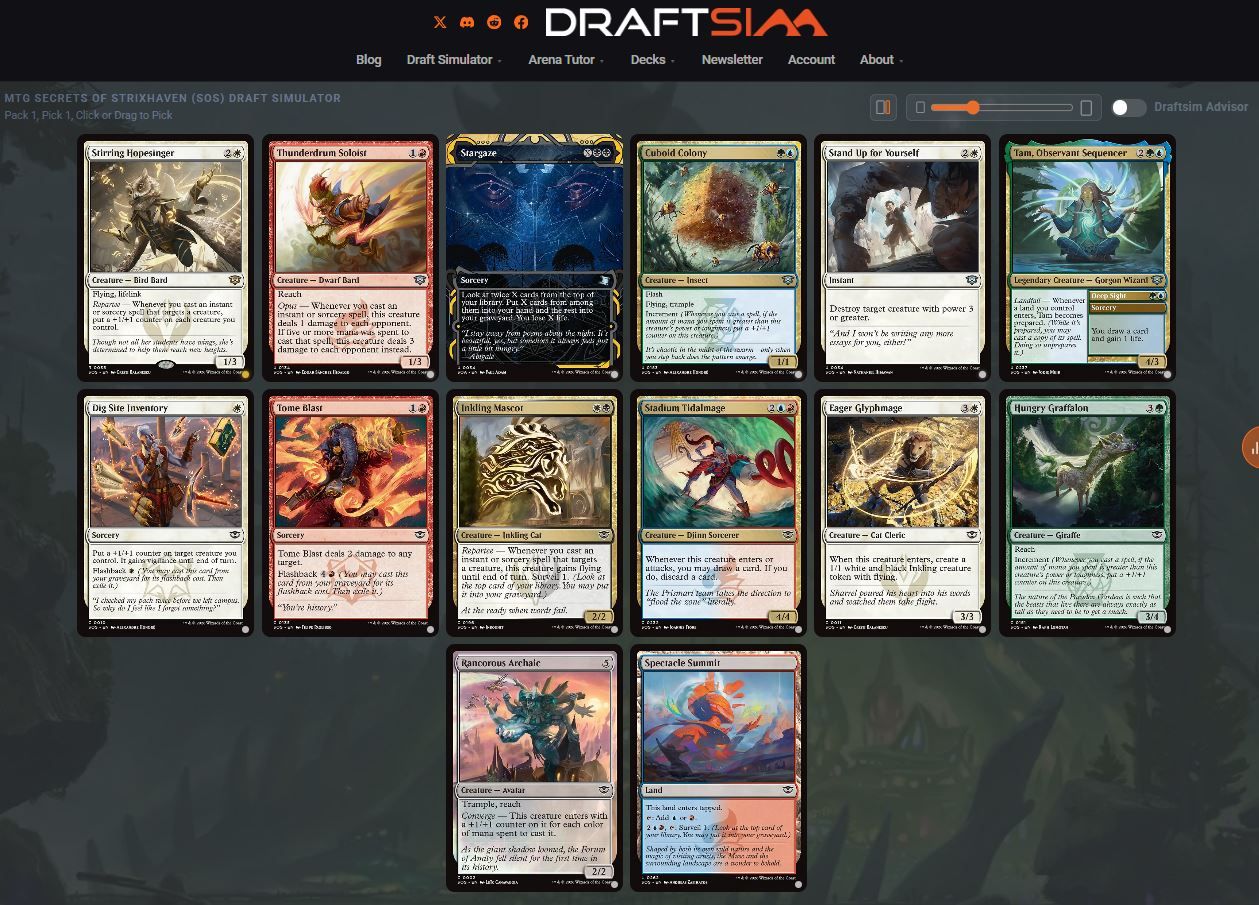
An easy way to improve is with Draftsim’s Draft Simulator. The simulator lets you practice both Draft and Sealed deckbuilding to familiarize yourself with the process. I find it especially useful for new sets to familiarize myself with the card pool.
As an additional tip, try to record most or all of your games. You can easily screen record with OBS and take screenshots of your deck to review later. When you come back to games after a few hours or a day, you view them in a different light and often pick up on mistakes that you missed in the heat of the game. Reviewing your gameplay with a critical eye is one of the easiest ways to improve at any game, not just Magic.
Use Arena Tutor
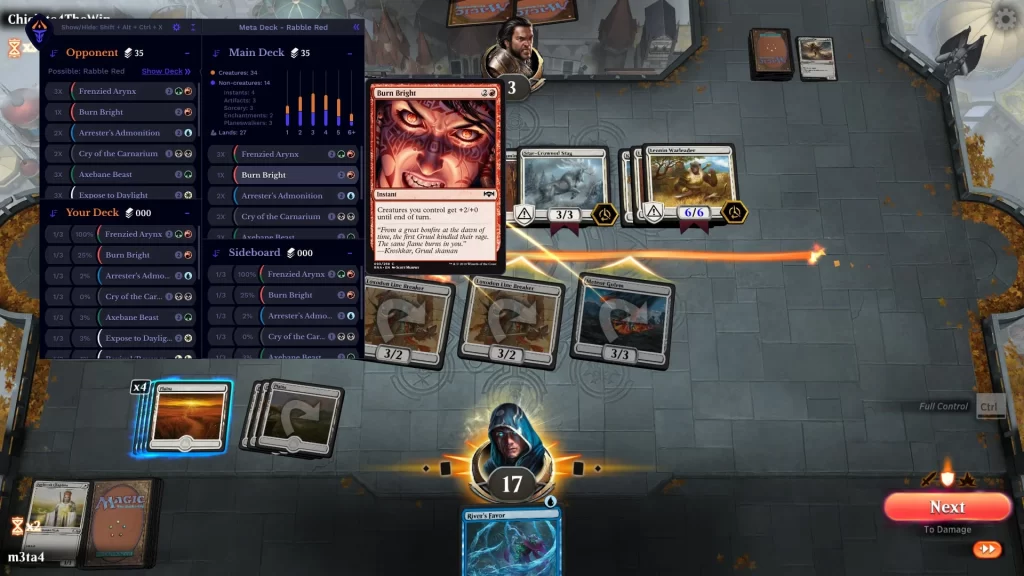
Draftsim also offers the Arena Tutor tool, which tracks your win rate and lets you peek at those Tier Lists while drafting to help smooth out the drafting process.
Draftsim Tier Lists
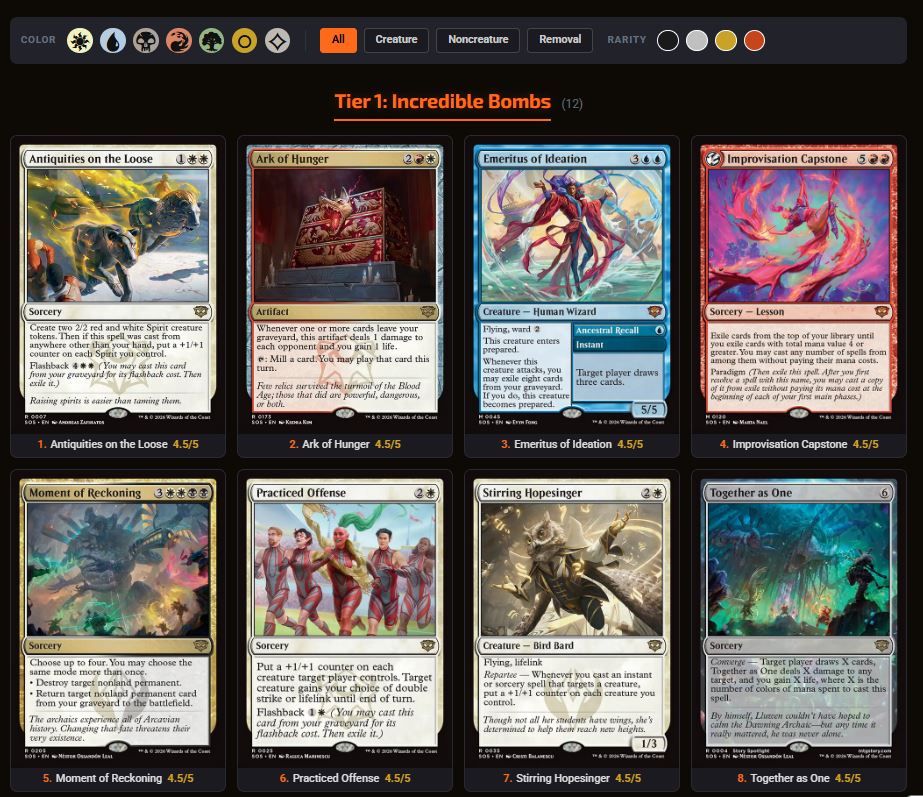
Take a look at Draftsim' tier lists to learn about how the cards in each Magic set rank based on power level. They're also very well maintained throughout the set's lifetime, being updated from week to week as the format develops.
Spikes Academy

You can also find coaching courses at Spike’s Academy, which offers a Limited course taught by Hall of Famer Ben Stark.
Limited Communities
Another great way to improve at Limited is to engage with other players of the game and watch Limited content made by better players.
For communities, I recommend the LRcast subreddit, connected to the Limited Resources Podcast. The podcast itself is also a great resource, and I’m also a fan of the Lords of Limited podcast and Limited Level-Ups.
As for channels to watch for Limited gameplay, I heavily recommend Numot the Nummy and Paul Cheon, two excellent content creators who post Limited drafts virtually every day.
Wrap Up

Updraft Elemental | Illustration by Raf Sarmento
I love Limited, and I consider myself a Limited player above anything else. While the formats are complex, they’re also extremely fun and rewarding, especially if you find Constructed a little stale as power creep rampages onward. They’re also excellent formats for players trying to improve because they teach basic fundamentals of the game, and they’re essential for anybody reaching for the highest levels of play.
Do you enjoy Limited? Would you rather play Draft or Sealed? Let me know in the comments below, and find more Magic coverage at The Daily Upkeep, Draftsim’s YouTube channel!
Stay safe, and thanks for reading!
Follow Draftsim for awesome articles and set updates:










Add Comment