

Planar Bridge | Illustration by Chase Stone
Rarity is a vital tool in the MTG designer’s kit. The higher the rarity goes, the stronger and/or more complex a card can be. These tend to be the cards with high-impact abilities, dense textboxes, or cameo mechanics, and they often feature headliner characters such as gods and praetors.
But colorless mythics tend to be different because the colorless identity places another restriction on them. These cards are often extremely expensive and high-impact or very cheap and rather broken; many of Magic’s best cards (and arguably worst designs) have been featured on artifacts with that orange symbol. Let’s find the ones appropriate for your next deck.
What Are Colorless Mythics in MTG?
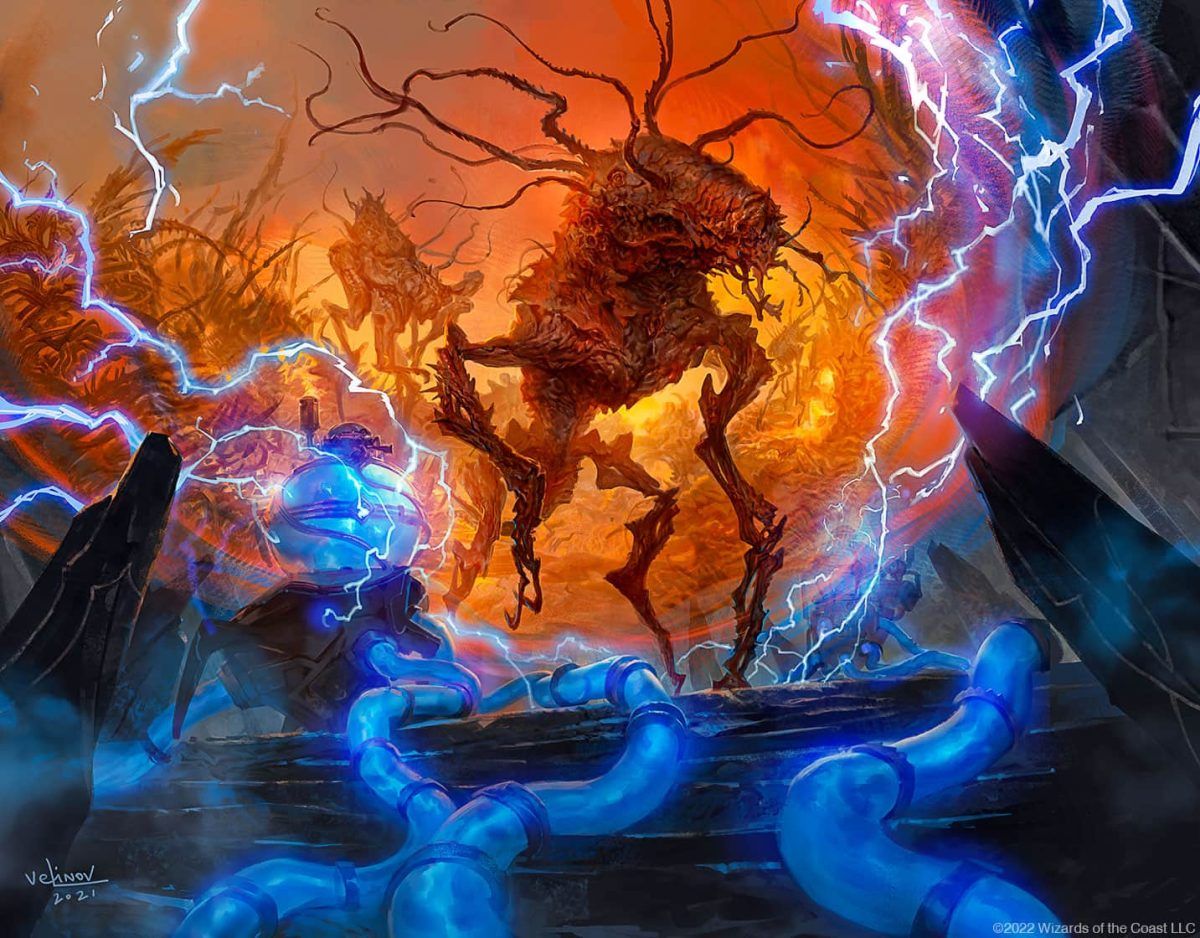
Portal to Phyrexia | Illustration by Svetlin Velinov
Colorless mythics are colorless cards with the mythic rarity, though I’m being particular about what makes the cut. Lots of cards get the mythic orange symbol to denote a special treatment—for example, Arid Mesa and the other enemy-color fetch lands were featured as Special Guests for Tarkir: Dragonstorm, but every base printing has been at rare. Cards that receive a mythic symbol for a treatment aren’t eligible for this list. I’m looking for cards with a mythic rarity in a base set or product like a Commander deck.
Note that some of these cards exist with a normal rare version before mythic rares existed, but I’ve included cards that have only been printed as mythics since the introduction of that rarity.
#33. Buster Sword

Buster Sword just has great stats. Your creature hits hard and you often end up drawing and casting lots of spells. A lack of protection makes it significantly weaker than the Mirrodin sword cycle, even if it mimics their costs, but this is still a respectable equipment to bring to the Commander table.
#32. Cloudstone Curio
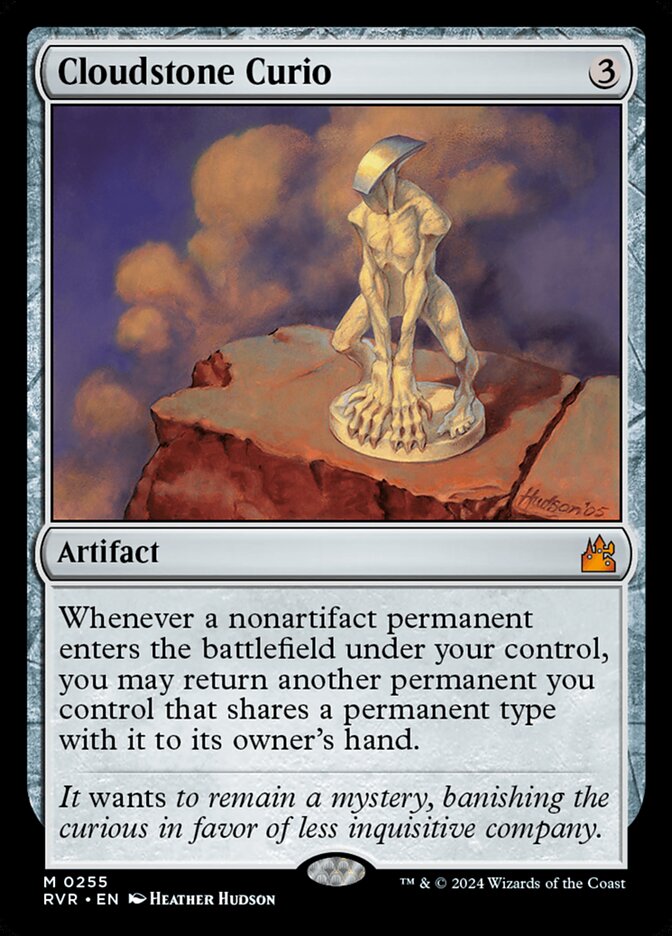
Cloudstone Curio is famous for enabling many infinite combos because it bounces permanents back to hand. If casting those permanents is mana neutral or, better, mana positive, it results in a variety of infinite combos. There are more efficient combo lines these days, but it’s still a respectable card players don’t run fairly.
#31. Dark Depths
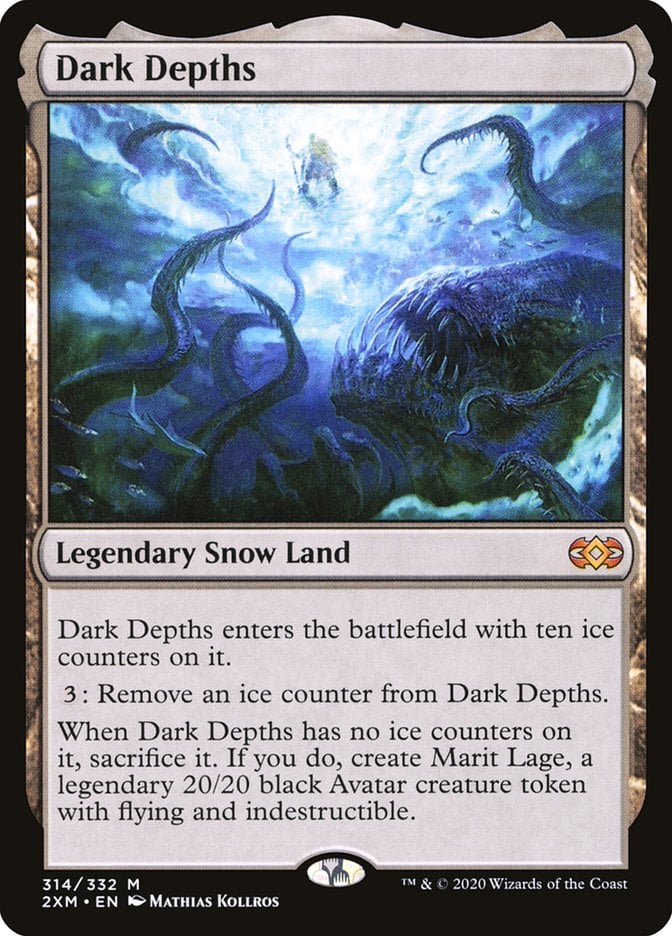
Dark Depths is one of the most famous lands in the game thanks to its combo with Thespian's Stage. A quick 20/20 indestructible creature with flying ends games in a snap, especially in 20-life formats.
#30. Orcrist, Goblin-cleaver
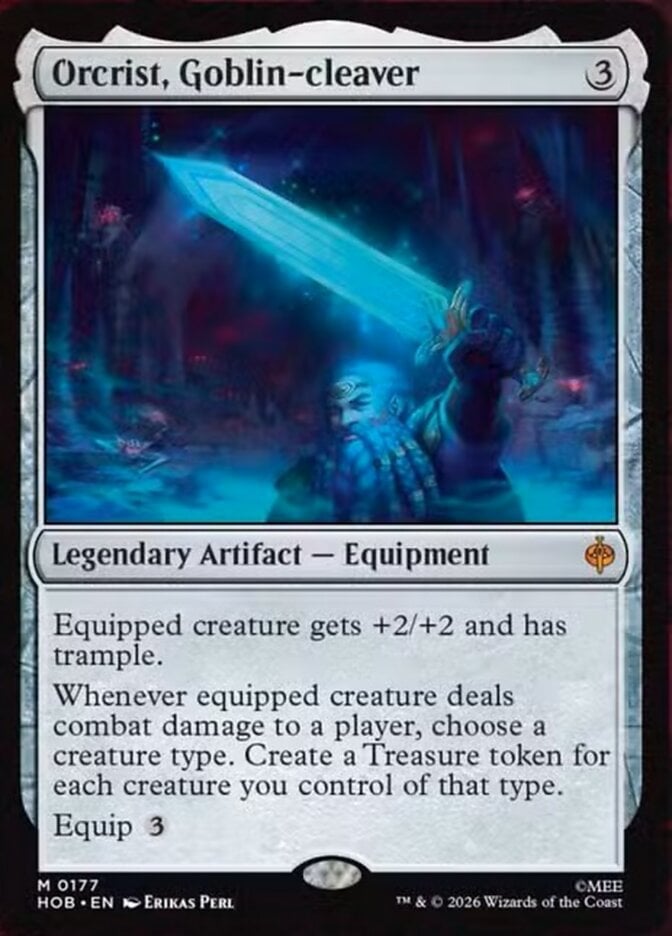
Orcrist, Goblin-cleaver gives typal decks a fantastic mana engine. Typal decks already want to go wide and are typically in the market for combat buffs, so they have little reason not to run Orcrist, with the exception of archetypes like dragons or angels that focus on landing several high-profile threats instead of developing a wide board.
#29. Extraplanar Lens

Extraplanar Lens rewards mono-color players for sticking to one basic land type as a super-cheap mana doubler. It’s a bit risky since you lose the imprinted land to Vandalblast or other artifact hate, but the reward is often worthwhile. It plays especially well with blue and green because they have land untap effects.
#28. Emrakul, the Promised End
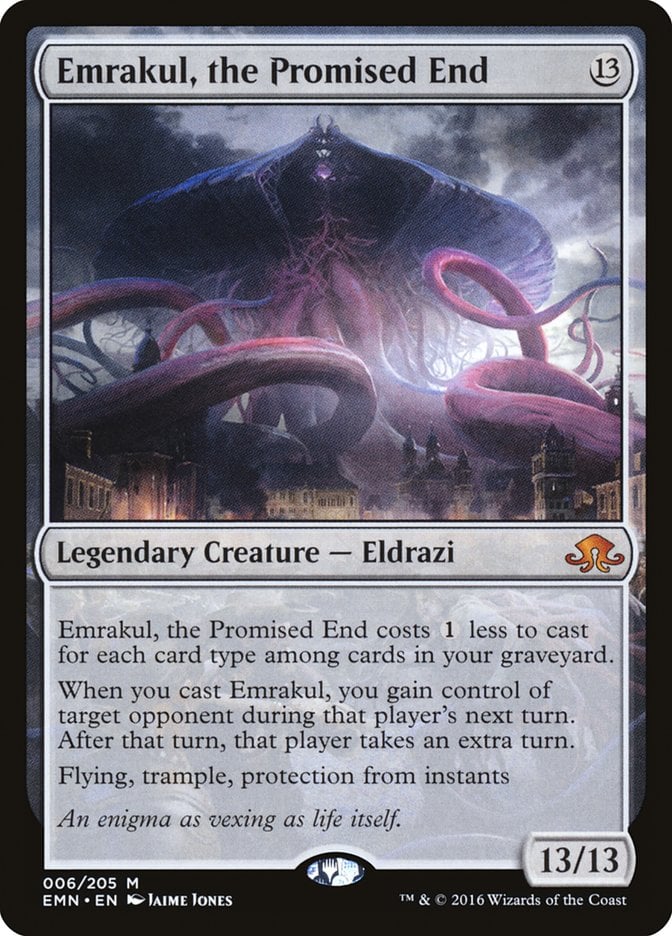
Emrakul, the Promised End is often easier to cast than other Eldrazi because of its built-in cost reduction. You can expect to cast it for about 8 mana and get a massive creature with a Mindslaver tacked on. At the very least, you can run your opponent’s best creature into a 13/13, but the ceiling is often much higher. You haven’t lived until you’ve used an opponent’s Swords to Plowshares on their commander.
#27. Kozilek, Butcher of Truth
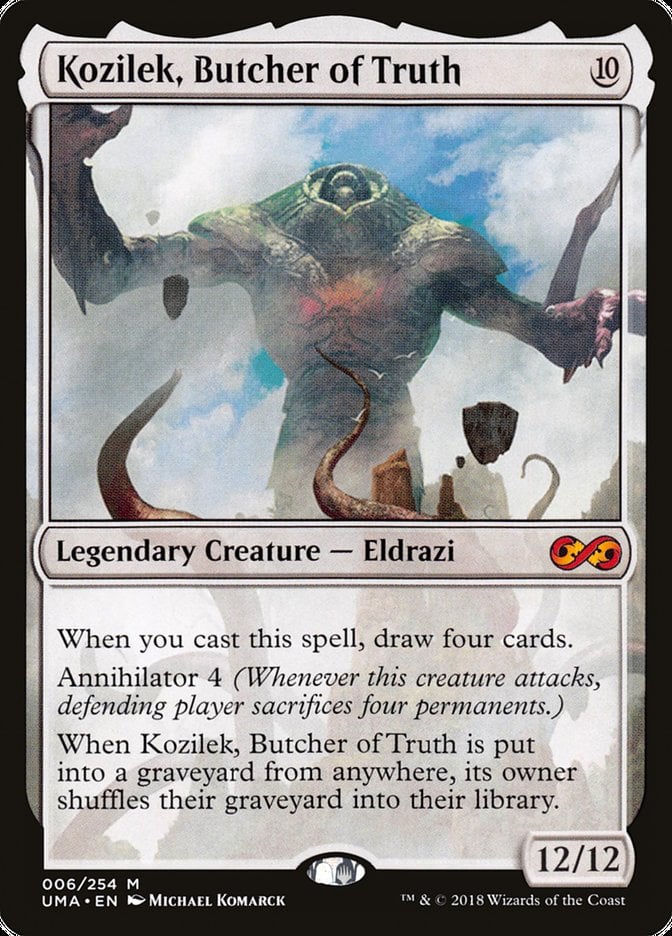
Kozilek, Butcher of Truth is just a great battlecruiser. A major threat that comes with card draw is super annoying to deal with; even if it eats removal, you’re up several cards. And if your opponents fail to answer it, they probably lose to annihilator eating their board.
#26. Staff of Compleation
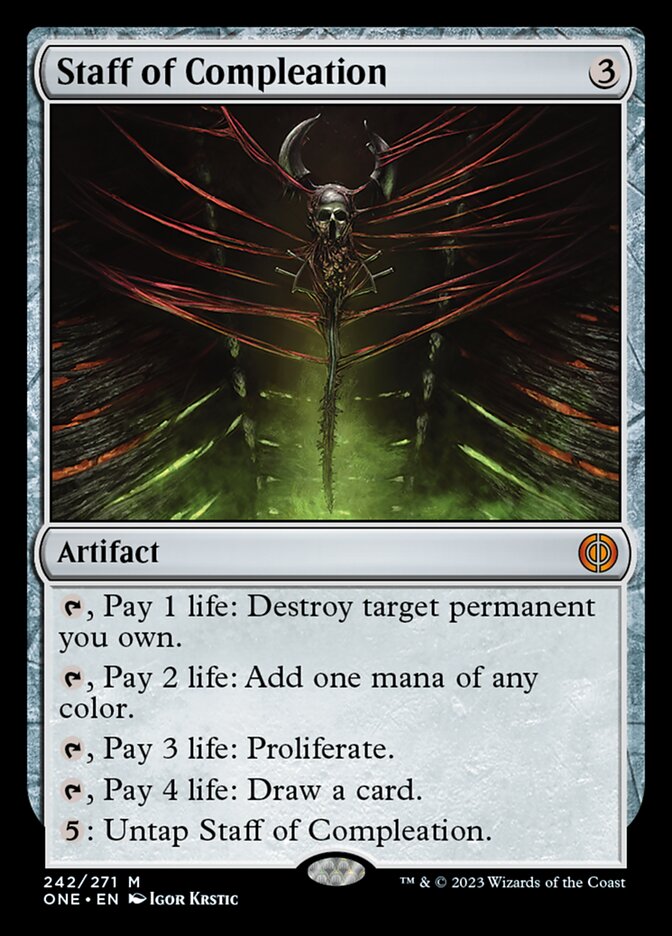
Staff of Compleation asks a heavy price to activate its abilities but they’re very strong. Card draw, ramp, on-demand proliferation… it’s hard to go wrong with any of these abilities. You get bonus points if you can make destroying your permanents a plus. Maybe Demonic Pact?
#25. Lost Jitte
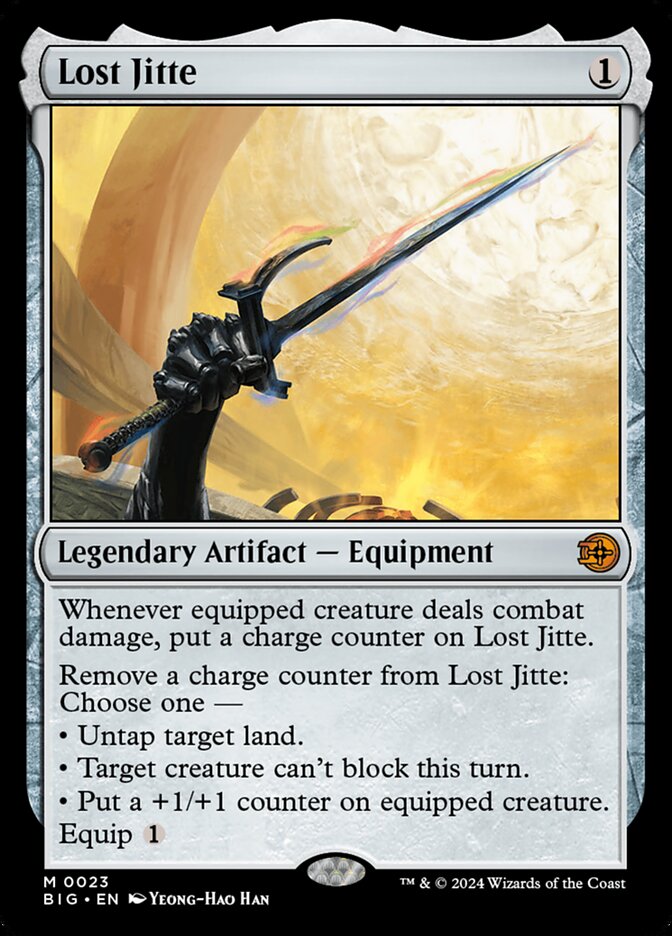
Lost Jitte has nothing on the original, but it’s still an extremely respectable equipment. Even if you only use it to ramp an extra mana each turn, that’s a serious advantage. I also like building up counters for a massive swing later by making multiple creatures unable to block.
#24. Ensnaring Bridge
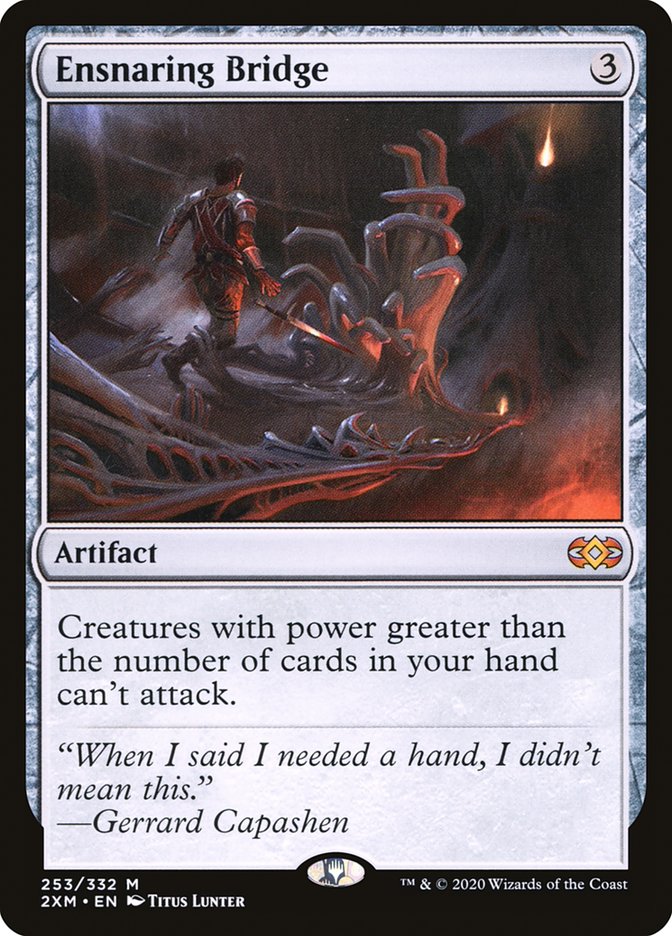
Ensnaring Bridge is a nasty stax piece that kills combat. It’s symmetrical, so the trick is often to play it in decks without creature-based win conditions, with Lantern Control being its most infamous home. I also like it with very small creatures like Thopter tokens; you can hold one card in hand, attack, then play the last card to lock your opponents out of combat.
#23. Karn Liberated
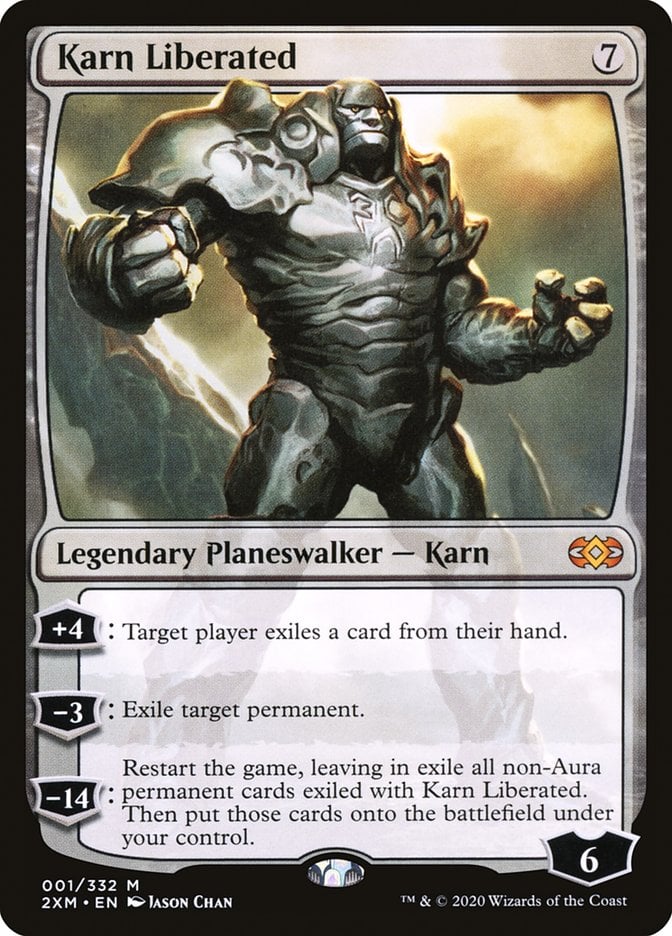
If you’ve ever faced Tron in Modern, you’ve probably been on the receiving end of Karn Liberated. Tron still clings to a copy or two, though recent planeswalkers like Ugin, Eye of the Storms and Karn, the Great Creator get more attention.
It’s often slammed turn 3 to nuke a land and cement your mana advantage, but a colorless Liliana of the Veil (sort of) provides a unique form of card advantage. It also has one of the most interesting planeswalker ultimates.
#22. Lithoform Engine
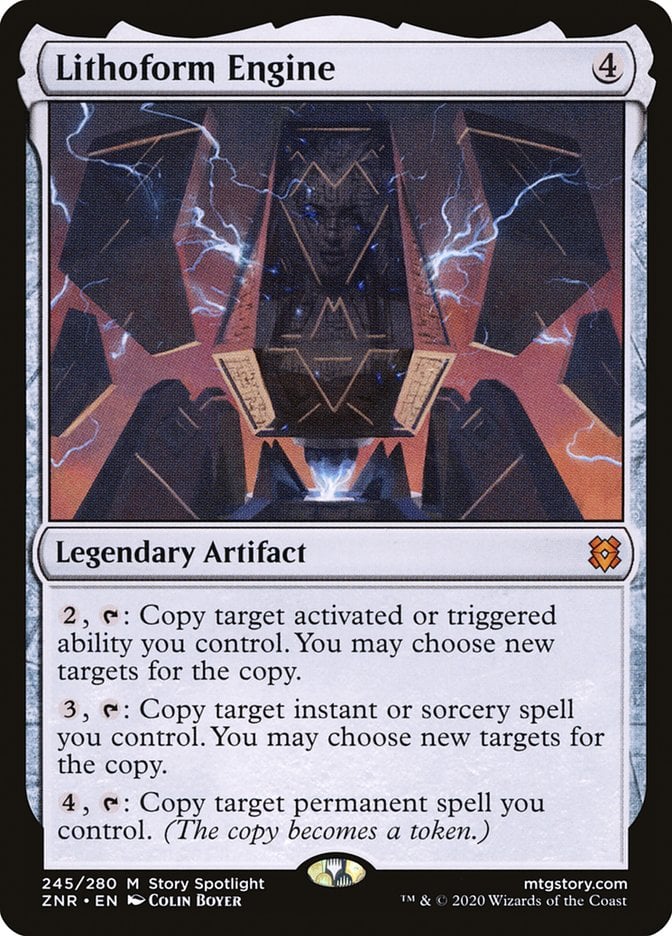
Lithoform Engine does many things. It’s an ability copier, or a spell copier, or a way to make tokens. There are also plenty of ways to make it into a combo piece with cards like Dramatic Reversal and Unstoppable Plan.
#21. Nexus of Becoming
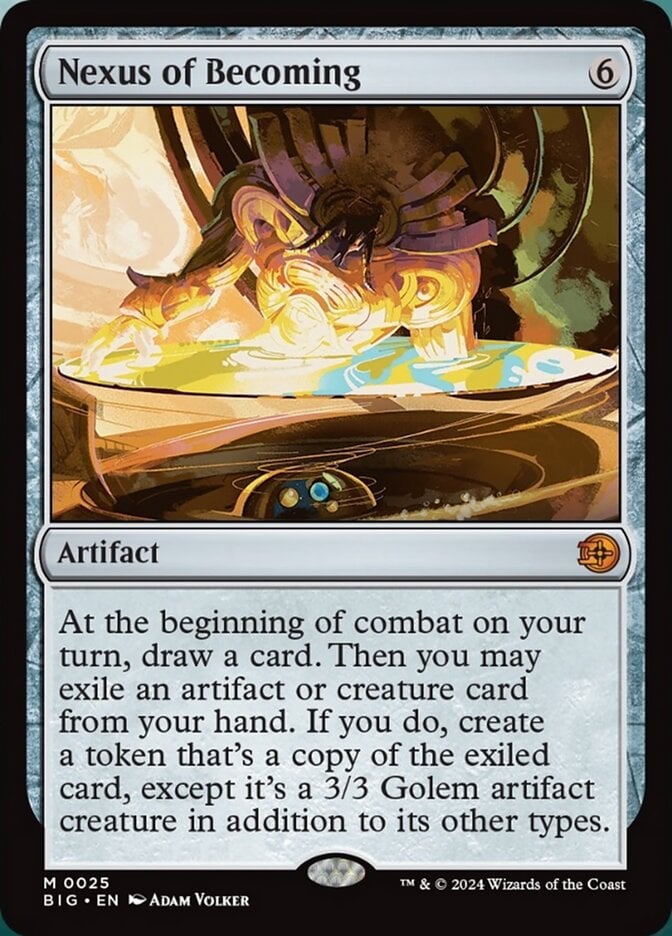
Nexus of Becoming is a cool card draw engine that cheats things into play. Avoid cards that rely on high power or toughness since Nexus only makes 3/3s, but that doesn’t matter for cards like Portal to Phyrexia or Valgavoth, Terror Eater with pushed textboxes.
#20. Scroll Rack
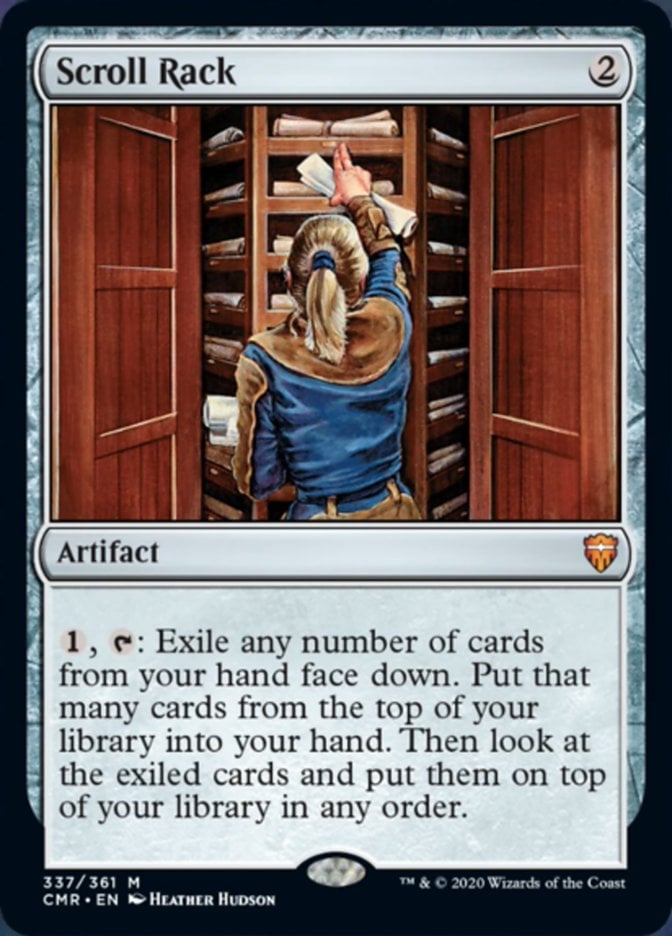
Scroll Rack can be a messed-up draw engine. It really needs shuffle effects to get rid of dead cards, but if you can reliably shuffle away cards you don’t want (it’s best friends with Land Tax) or just care about setting up your library for miracles or cards like Rashmi, Eternities Crafter, it’s hard to beat this as a manipulation engine.
#19. Summon: Bahamut

Summon: Bahamut exists in a similar space to Eldrazi titans as a large colorless creature, but it distinguishes itself in a few ways. Its enters ability to destroy permanents makes it a better reanimation target than Eldrazi that rely on cast triggers to be impactful, plus it synergizes well with any way to flicker or otherwise reuse enters abilities. The enchantment synergies are also pretty nice.
#18. Sword of Fire and Ice
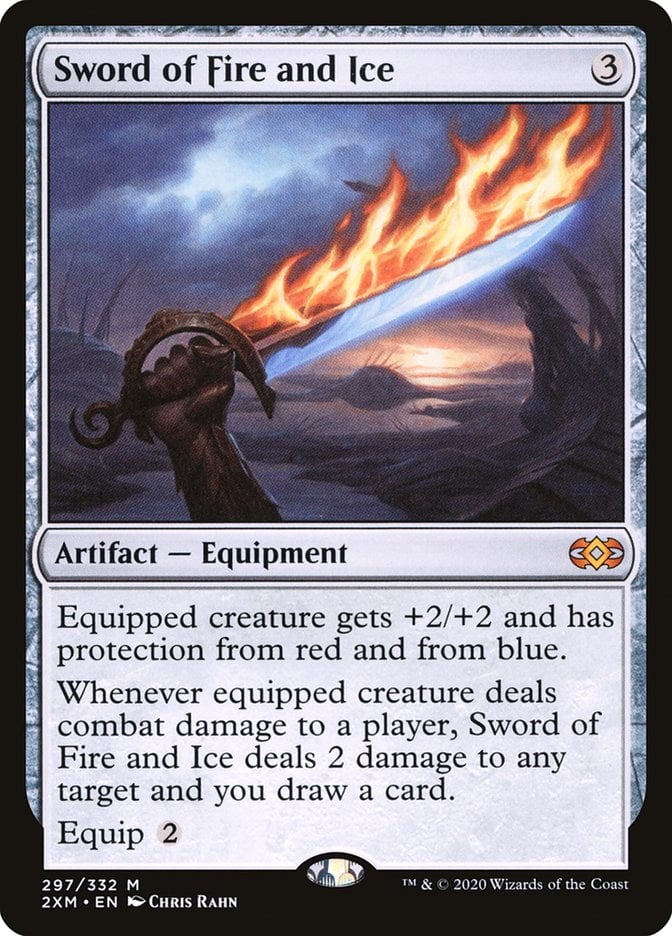
Passive card advantage is really hard to pass up, and Sword of Fire and Ice throws in a clock to boot. Drawing a card and either Shocking your opponent or sniping small creatures is a fantastic engine that’s tough to beat.
#17. Ulamog, the Ceaseless Hunger
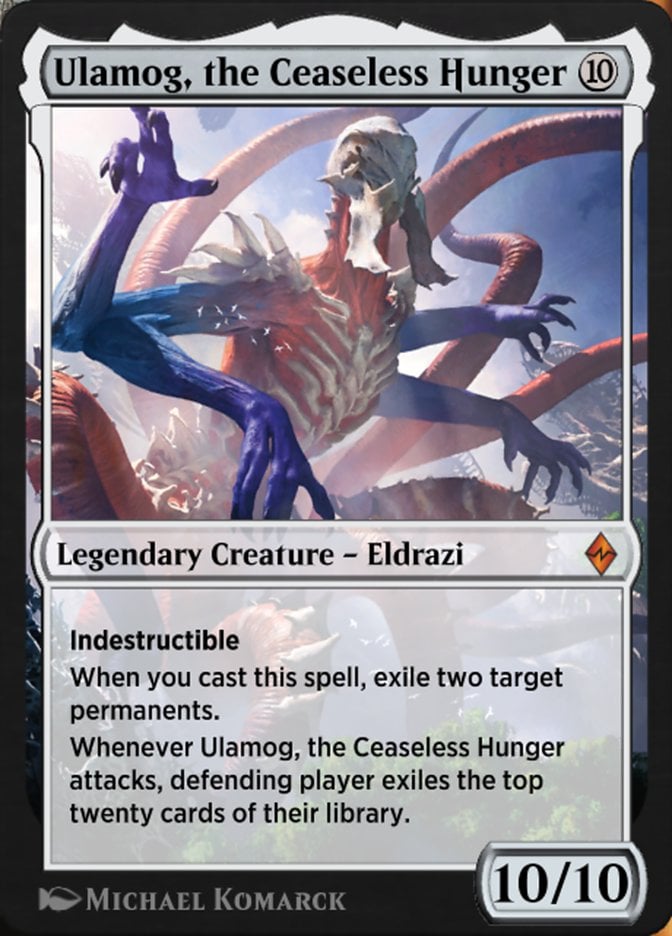
Ulamog, the Ceaseless Hunger has my favorite cast trigger of the Eldrazi titans. A giant threat your opponents will struggle to remove that also tags two threats on the way in is super messed up. Even when it eats a counterspell, you get a three-for-one. I’ll acknowledge that this might be the weakest to cheat into play, but it’s amazing to ramp into fairly.
#16. Sword of Feast and Famine
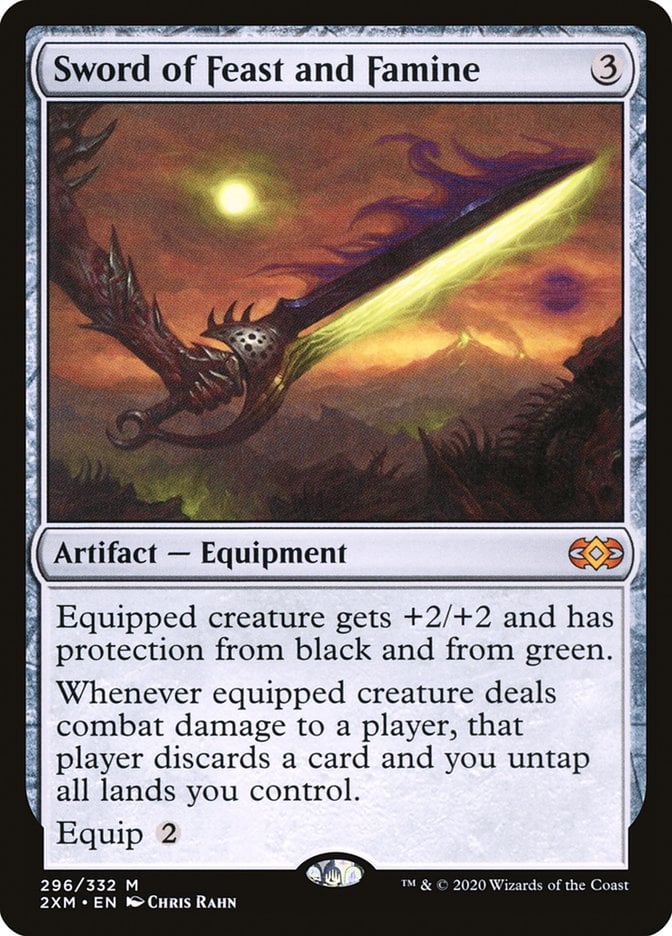
Perhaps unsurprisingly, the best of the Swords is the one that doubles your mana. Sword of Feast and Famine almost feels like getting a second turn every turn because you get to tap all your lands twice. Even if that just means this becomes effectively free to cast and equip, you’re getting ahead of your opponent, before you factor in the discard trigger.
#15. Ugin, the Spirit Dragon
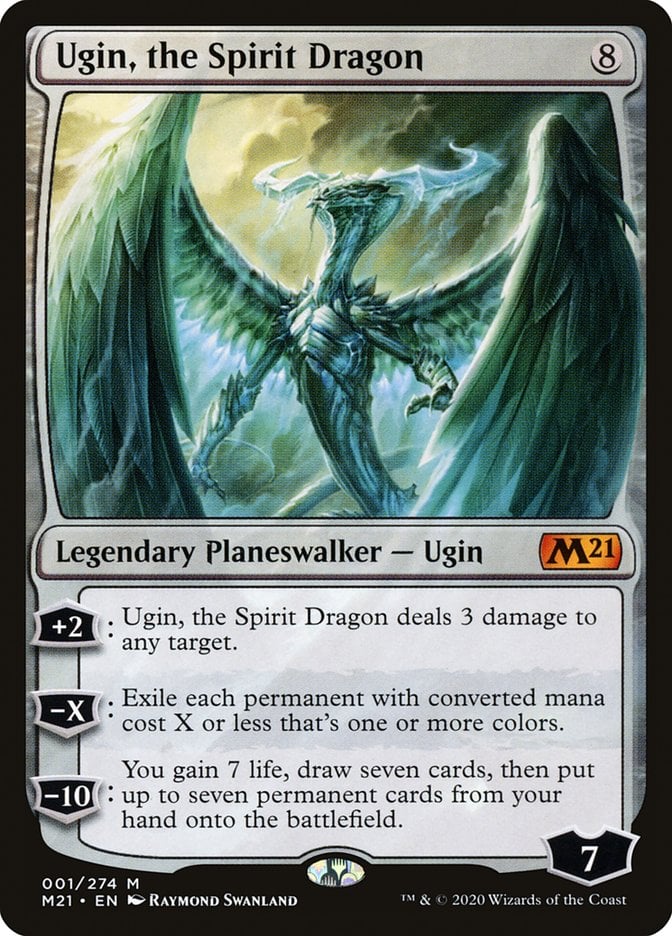
Ugin, the Spirit Dragon is often deployed as a colorless board wipe that also sits in play and wins the game. Sometimes your opponent can have a board state dominant enough that Ugin isn’t good enough, but that’s a rare occurrence.
#14. Agatha’s Soul Cauldron
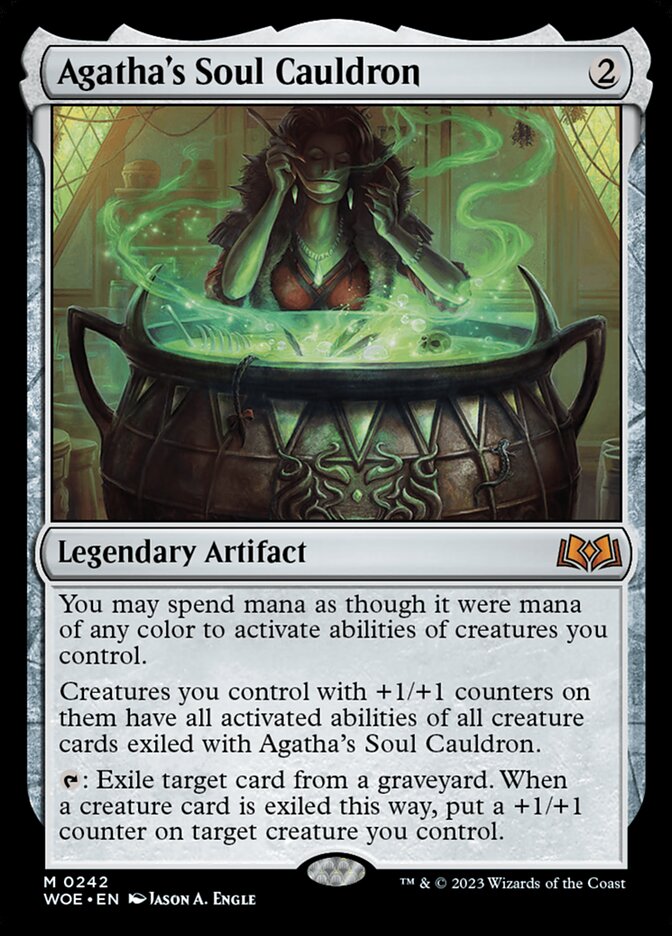
Agatha's Soul Cauldron holds down combo decks in quite a few formats thanks to giving your creatures abilities. It’s also just pretty pushed as graveyard hate that develops threats. Even without a combo, enabling +1/+1 counter synergies while annoying the reanimator play does a fair amount of work for only 2 mana.
#13. Cityscape Leveler
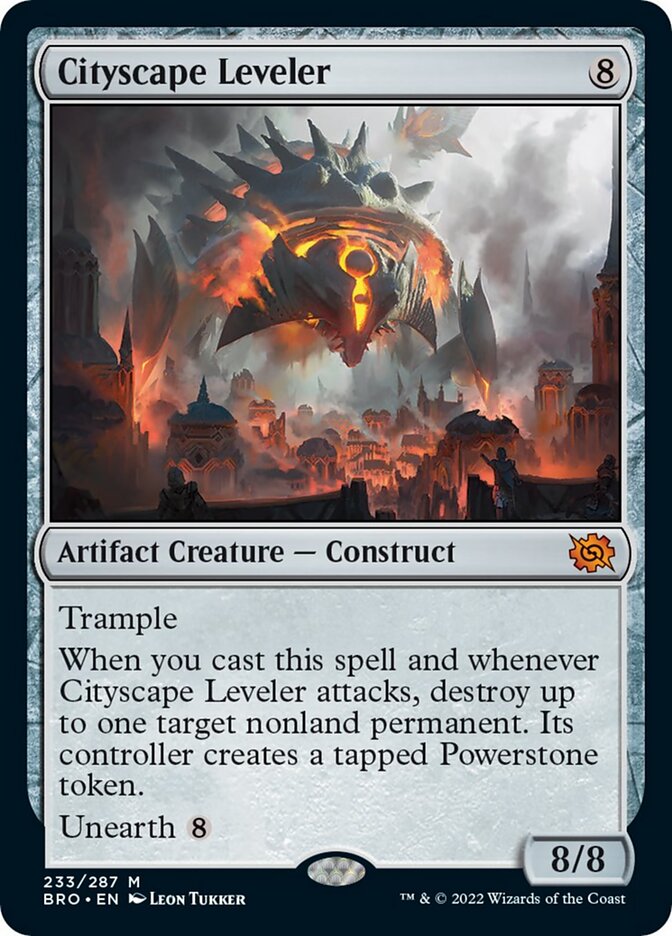
Cityscape Leveler gets the nod over Summon: Bahamut despite being a similar card for two reasons. First, you always get something with the cast trigger, even through countermagic, and it’s often easier to sneak an artifact into play than a regular creature. There’s also something to be said for the flexibility and inevitability unearth provides.
#12. Palantír of Orthanc
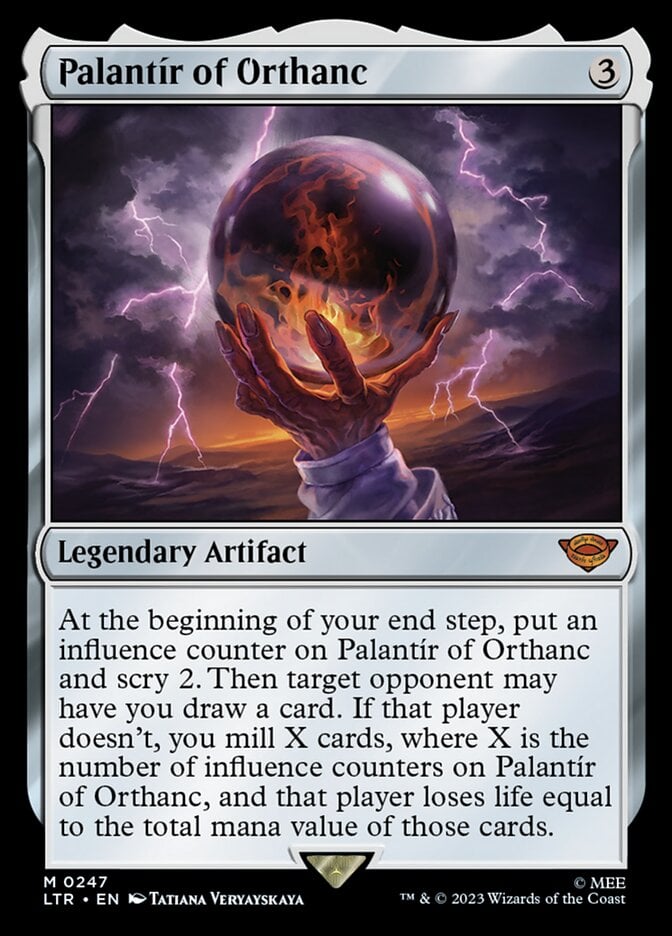
Palantír of Orthanc is unfortunately slow, but it plays nicely with artifacts since artifact decks often have the mana acceleration to play it early, plus support from big cards like Cityscape Leveler to really punish your opponents for milling you. Overall, its best home is probably Commander since the format runs slow enough for it to really cook.
#11. Ugin, Eye of the Storms

Ugin, Eye of the Storms can be very problematic with little effort. A planeswalker that kills a permanent then usually either draws a card or kills something else because you can cast another colorless spell off the mana it produces sends you very far ahead. All those exile abilities are cast triggers, too, so you always get a little something, even through countermagic.
#10. Gemstone Caverns

A lot needs to happen for Gemstones Caverns to pop off, but it’s basically a Chrome Mox your opponents struggle to interact with if you start on the draw. That’s especially pertinent in Commander because with three opponents, you’re more likely to be on the draw than not.
#9. Jeweled Lotus
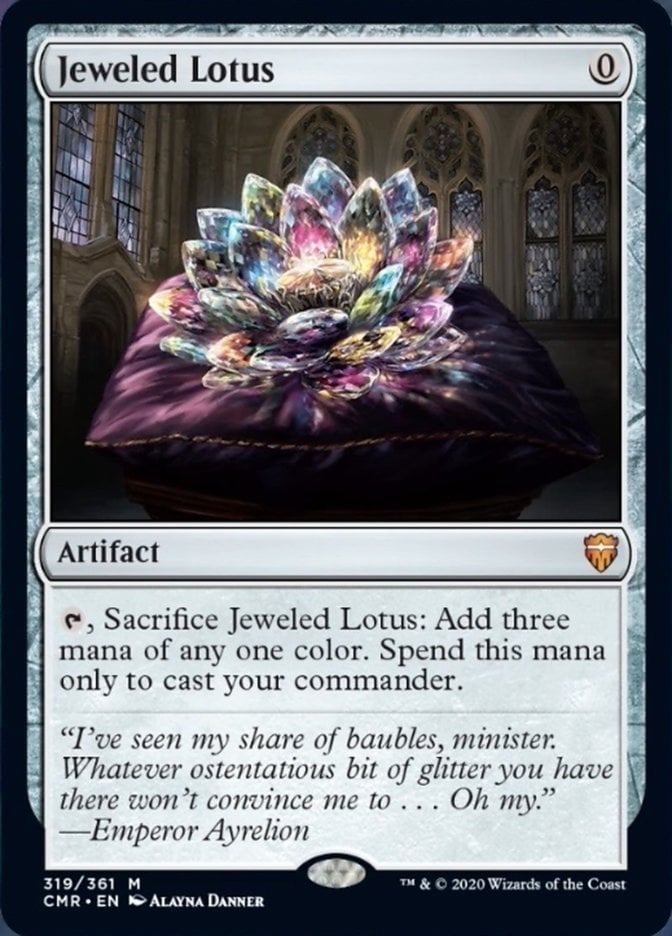
Jeweled Lotus is a tricky one because it’s banned in the only format it has any realistic relevance in, but we gotta respect a Lotus, right? Three mana, even if it’s only for your commander, is a major jump in power, and it deserved the ban.
#8. Portal to Phyrexia
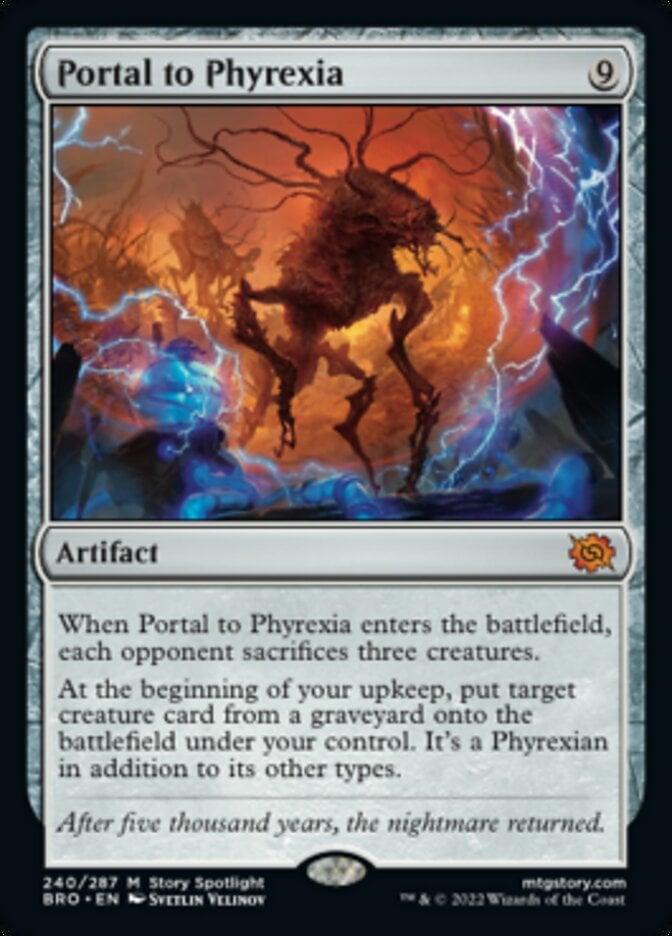
Portal to Phyrexia is often my artifact, or generally permanent of choice to cheat into play. The triple edict is backbreaking for your opponents, and the disruption is followed up by pressure from reanimated permanents. If you’re ramping into big artifacts or trying to get the most from cards like Trash to Treasure or Master Transmuter, this should be towards the top of your list.
#7. Emrakul, the Aeons Torn
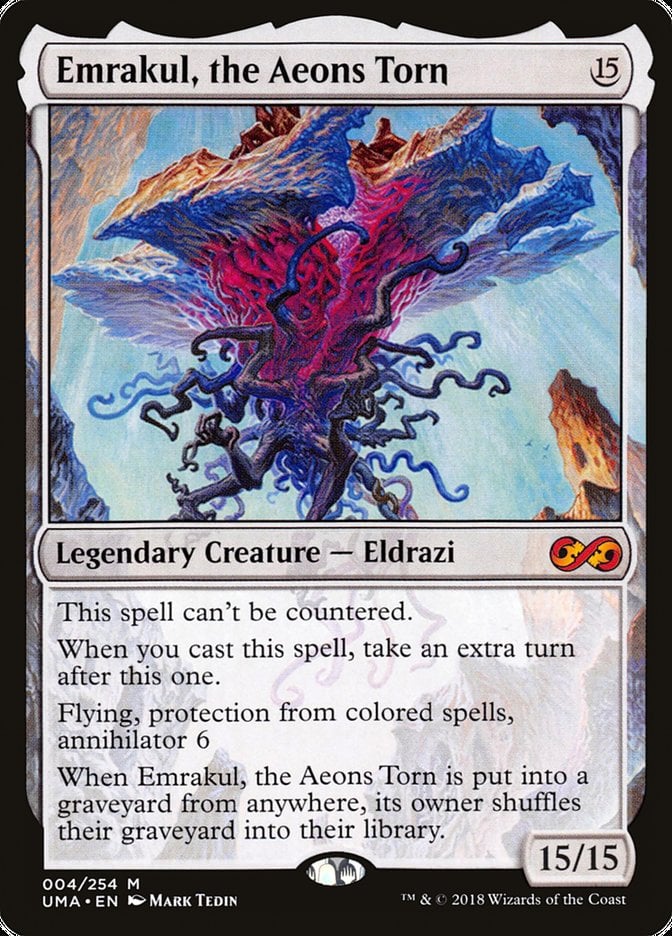
If you’re cheating creatures into play, you can rarely do better than Emrakul, the Aeons Torn. Even as other nasty battlecruisers like Atraxa, Grand Unifier are printed, players with Sneak Attack and Show and Tell can’t overlook a 15/15 that’s hard to kill and effectively wins the game with a single attack thanks to annihilator 6.
#6. Mox Opal
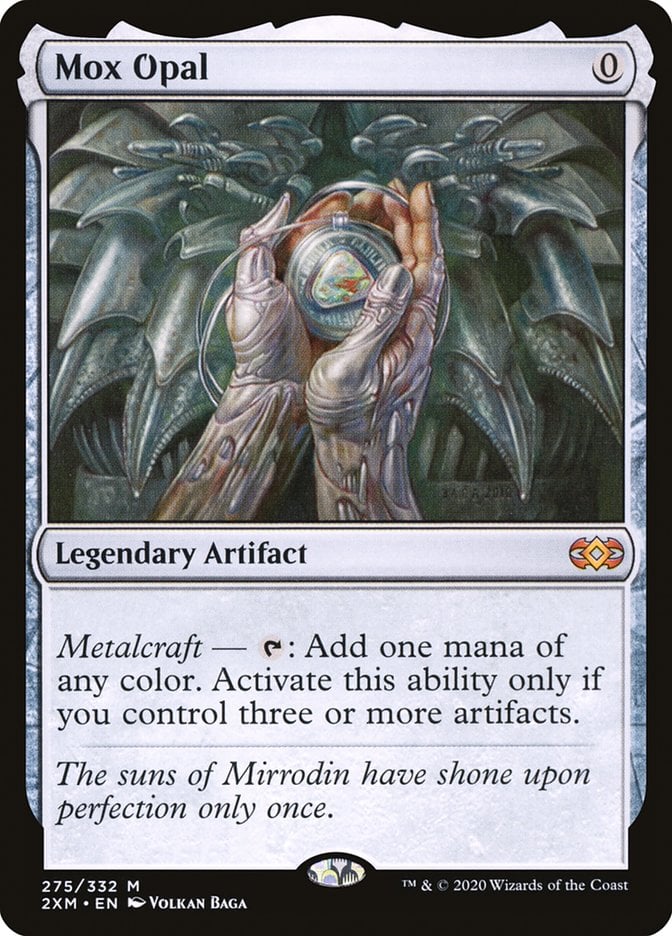
Mox Opal takes considerably more setup than other moxen because it requires metalcraft, but it being a 0-mana artifact itself helps considerably. It’s not hard to enable this turn 1 with an artifact land and another 1- or 0-mana artifact. The kind of decks that want Mox Opal, like affinity, are more than capable of enabling it by turn 2, and it fuels artifact synergies.
#5. Mox Amber
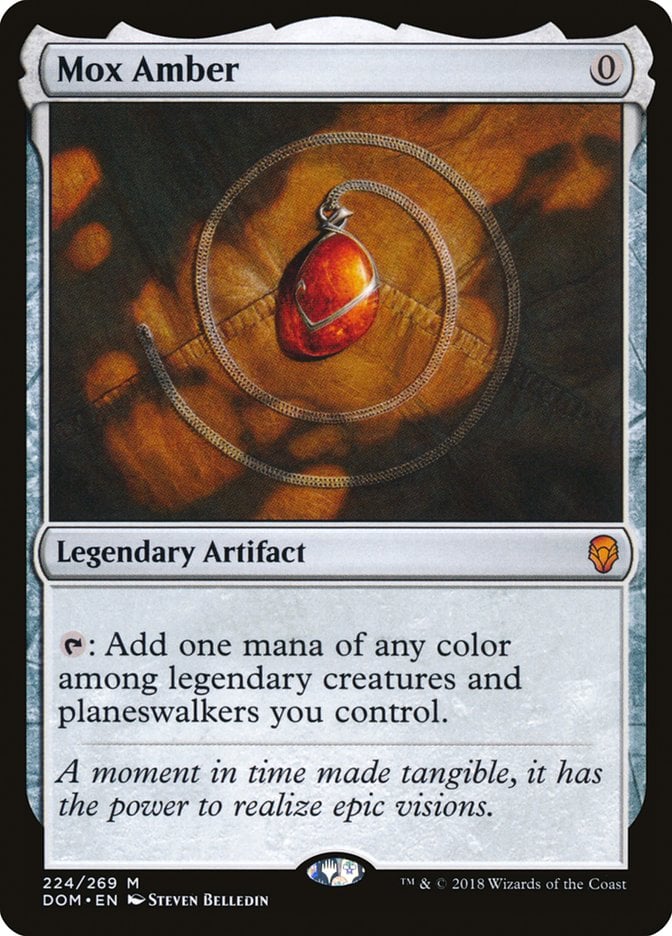
Mox Amber also needs a little work since it requires a legendary creature or planeswalker, but there are so many of them running around, and every Commander deck eventually controls one of those permanents. Being legendary itself, it can enable infinite loops, but you really don’t need a mox to go that far to be busted.
#4. The One Ring
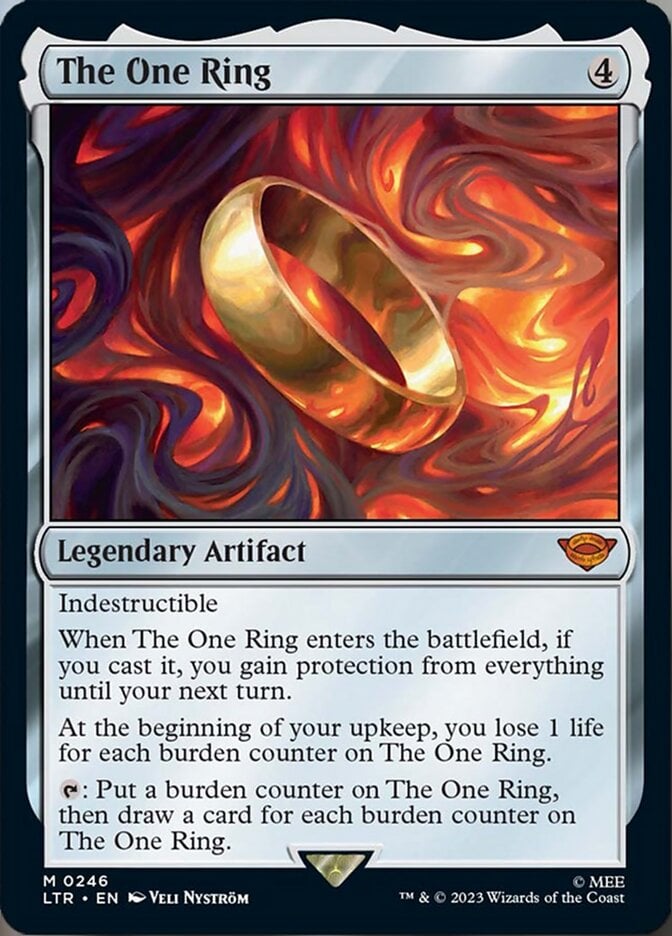
Card draw has rarely been stronger than The One Ring, be it colorless card draw or otherwise. Drawing a scaling number of cards leaves the player without The One Ring in the dust, and you can often win faster than the burden counters catch you. Especially since it’s legendary, so some formats let you play multiple copies of it and legend rule a threatening one away. Oh, and that enters trigger is broken because you get a turn free from consequence for… casting one of the best card draw spells ever printed. The scales in R&D must have been broken.
#3. Chrome Mox
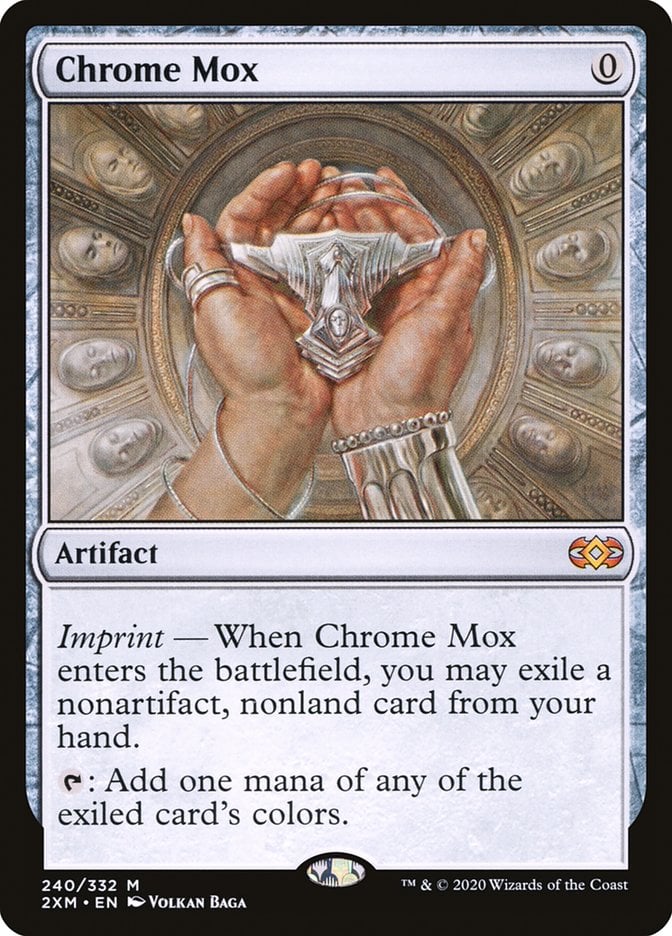
Going down a card is unfortunate, but Chrome Mox still sees a ton of play because access to extra mana is just that good. It’s a staple in high-power formats of all flavors that want to get to the busted stuff as fast as possible.
#2. Mana Vault
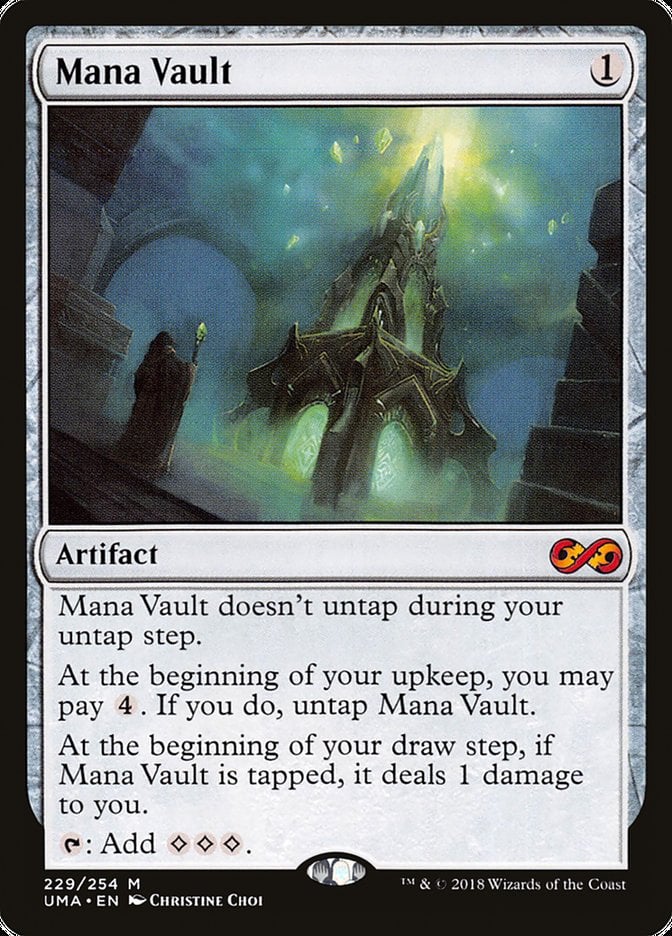
Mana Vault often plays more like a delayed ritual than a mana rock since players rarely want to invest into untapping it, though it works extremely well with untap effects like Tezzeret, Cruel Captain. Most players are just content with a quick 3 mana they can use to win faster than their opponents or the small clock the Vault provides. Something that makes it more notable than Dark Ritual, besides the build-around potential, is the storage: You can play this, then save the 3 mana for a future turn to maximize your mana.
#1. Mana Crypt
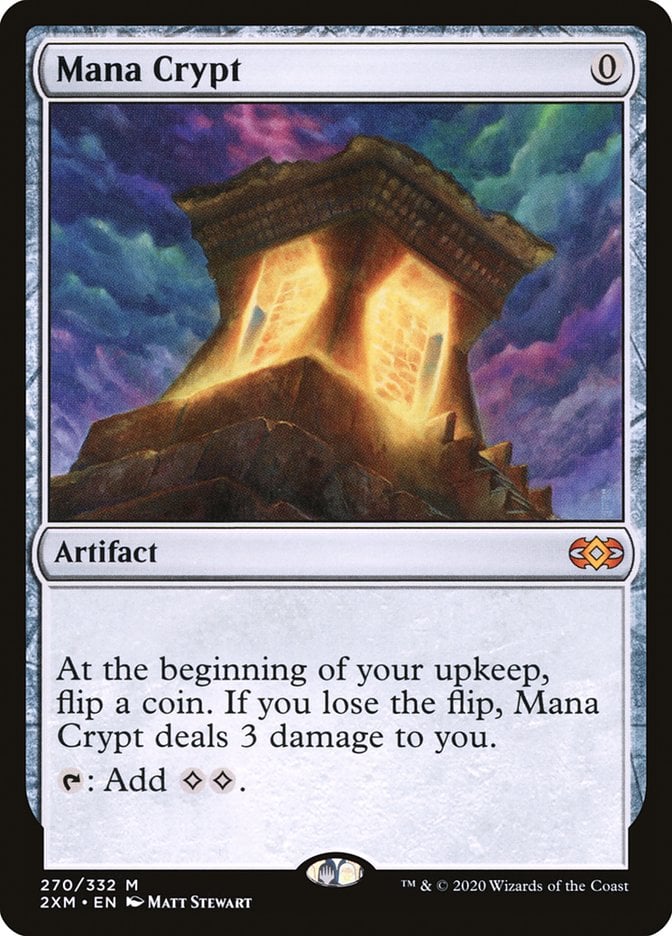
Mana Crypt wins out over Mana Vault because it functions like a true mana rock, producing an unfair amount of mana each turn for its cost. Zero is also far less than 1, so you can rip out of the gate. If the sheer mana advantage weren’t enough, a 0-mana artifact works as a combo piece under many circumstances, too.
What Are the Most Expensive Colorless Mythics?
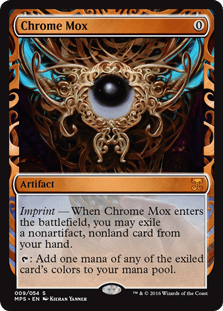
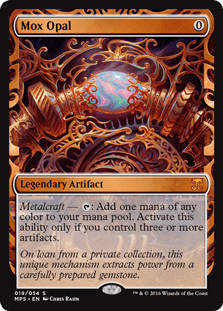
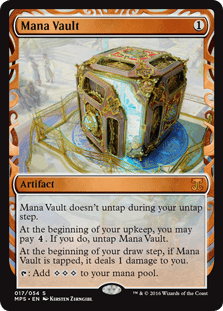
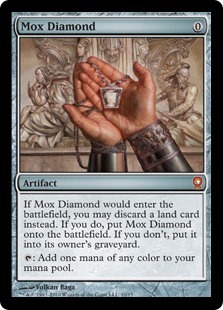
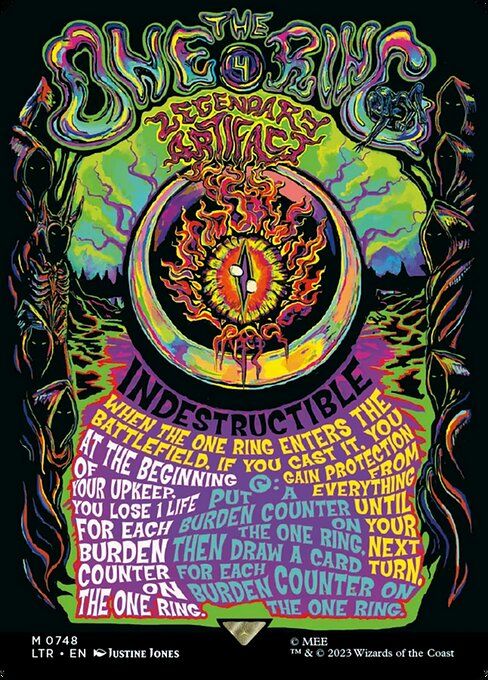
These are the most expensive colorless mythics, with the asterisk that any card with a mythic symbol qualifies here. I also want to give an honorable mention to Post Malone’s 1/1 The One Ring that’s valued at some $2 million.
- Chrome Mox (MPS #9) – $719
- The One Ring (LTR #747) – $856
- Mana Vault (MPS #17) – $1,050
- Mox Opal (MPS #19) – $1,124
- Mox Diamond (V10 #10) – $1,496
Wrap Up
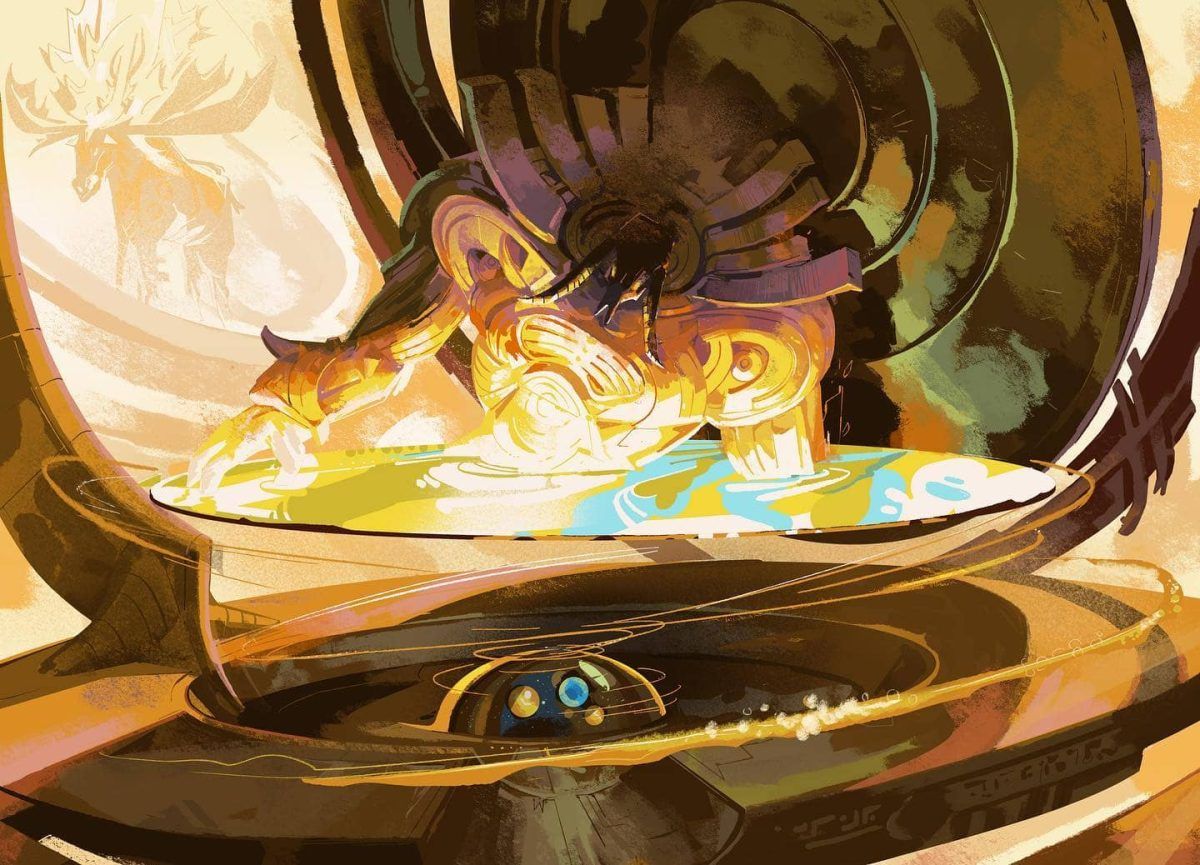
Nexus of Becoming | Illustration by Adam Volker
Designing a good colorless mythic is tricky because it’s so easy for them to be broken. Make the mana acceleration too strong, or the card draw too powerful, and suddenly every deck’s bending over backwards to cram it in. The best colorless mythics are among the game’s most infamous cards, but there’s a good middle ground there.
Do you run any of these colorless mythics? Can you think of any rares that should have been upgraded? Let me know in the comments below or in the Draftsim Discord! If you want more Draftsim, check out our YouTube channel, The Daily Upkeep!
Stay safe, and thanks for reading!
Follow Draftsim for awesome articles and set updates:










Add Comment