

Ruhan of the Fomori | Illustration by Raymond Swanland
I was joking with a friend the other day about how Magic: The Gathering always seems to bring back the same big bad guys, whether it’s the Eldrazi, the Phyrexians, or Nicol Bolas. I said the only real twist left would be to add actual aliens. Turns out I wasn’t far off. My friend said “Fomori are on the rise,” and I had to ask what that even meant.
So I looked into it. Today, we look at who the Fomori are and why they suddenly matter in Magic’s story. Intrigued? Let’s dive in!
What Is a Fomori in MTG?
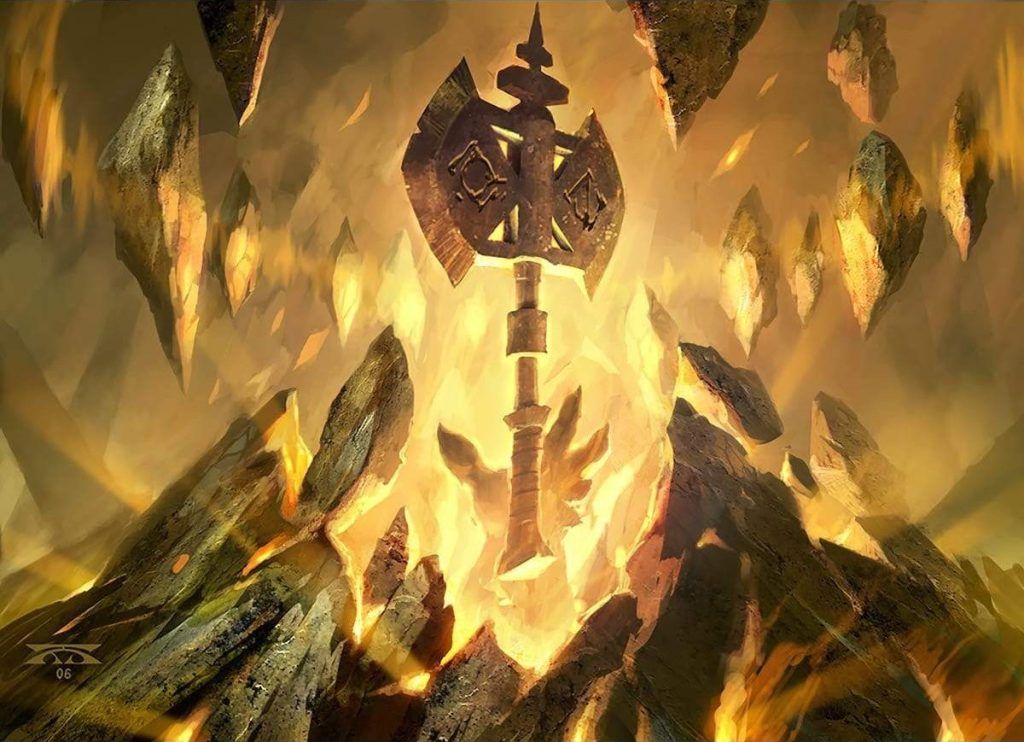
Pact of the Titan | Illustration by Raymond Swanland
The Fomori are an ancient race of giant, horned beings that has recently become much more important to the game’s story. They were first shown as massive gray-skinned humanoids with curved horns, powerful bodies, and clawed hands. For many years, the Fomori were almost a forgotten idea. Early MTG mentioned them on only a couple of cards, describing them as barbaric giants from the little-known plane of Ir. Because of that, players had almost no information about them, and they stayed a mystery for a long time.
That changed with The Lost Caverns of Ixalan and newer lore, which reintroduced the Fomori as a once-great civilization with its own rich mythology. In the current story, the Fomori were part of a powerful interplanar empire known as the Coin Empire, which existed thousands of years ago and expanded across many different planes. The Fomori were aggressive colonizers with incredibly advanced technology, including giant cosmium starships that let them travel between worlds. These ships were said to be even more impressive than anything created by the Thran or the Phyrexians. Although the Fomori were brutal and warlike, they were also intelligent builders who understood machines and magic at a very high level.
Today, the Fomori are viewed as ancient world-traveling conquerors who left behind ruins, myths, and warnings throughout the Multiverse. Recent sets have brought them back into focus and suggest that the Fomori may play a much larger role in Magic’s story in the future.
MTG Cards That Reference Fomori
Even though the Fomori have become a secretive part of Magic’s modern lore, they appear surprisingly rarely on actual cards. Their presence is scattered across a few names, a handful of artworks, and some key flavor text. When we piece all of these together, we get our first clear view of who the Fomori were and how the Multiverse remembers them.
Fomori in Card Names
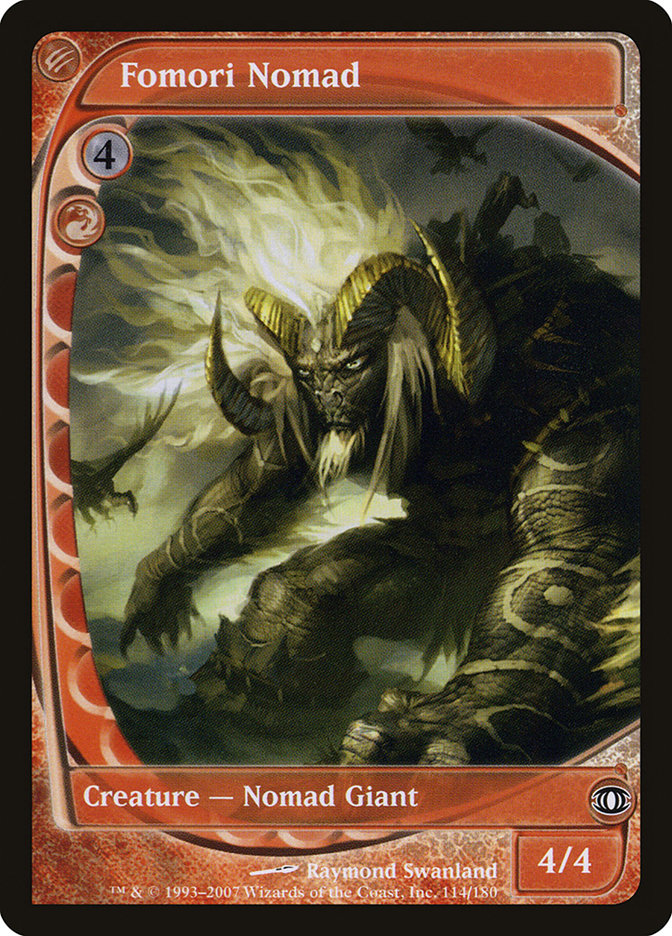
Only a few cards actually use the word “Fomori”, but each one reveals something important about the race.
The first glimpse came with Fomori Nomad in Future Sight (2007). At the time, it looked like a random red nomad giant wandering alone across a harsh landscape. Players didn’t know it then, but this was our very first look at a giant from Ir, long before the plane or its people had any story behind them.
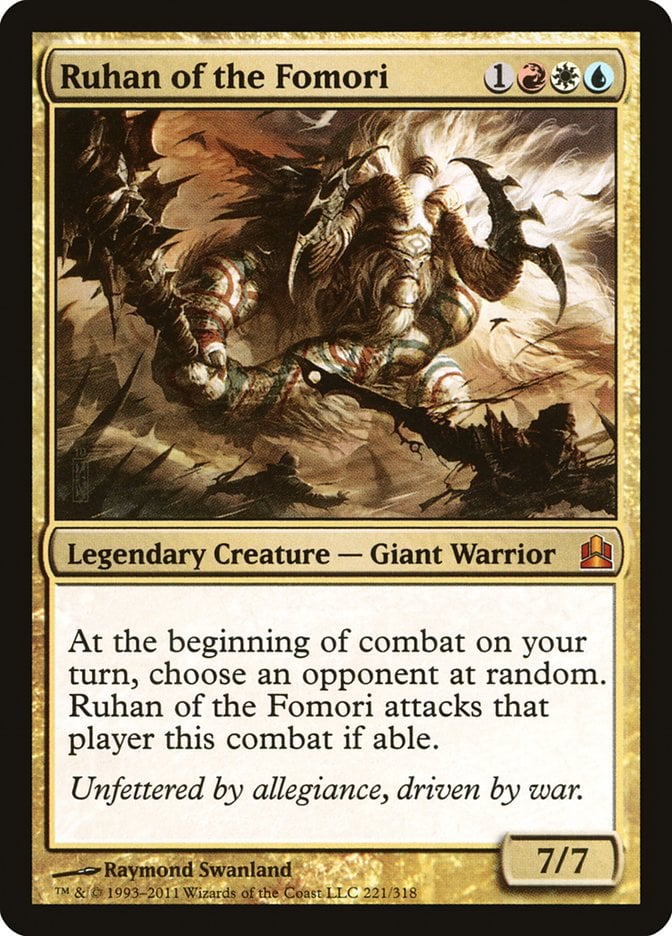
Our next clue arrived with Ruhan of the Fomori in Commander 2011. Ruhan’s chaotic, unpredictable attack pattern and imposing warrior identity hinted at a fierce, battle-driven culture. The card name confirms that Ruhan was part of this ancient race, even though the creature type line still labeled the card as a giant warrior.

The most recent and revealing entry is Fomori Vault from The Big Score (2024), one of the bonus sheets in Outlaws of Thunder Junction. This land represents an ancient vault left behind by the Fomori, filled with relics from the old Coin Empire, and it even contained a preserved Fomori survivor. It shows that the race didn’t just exist on Ir—they left traces of their empire scattered across multiple planes.
Fomori in MTG Art
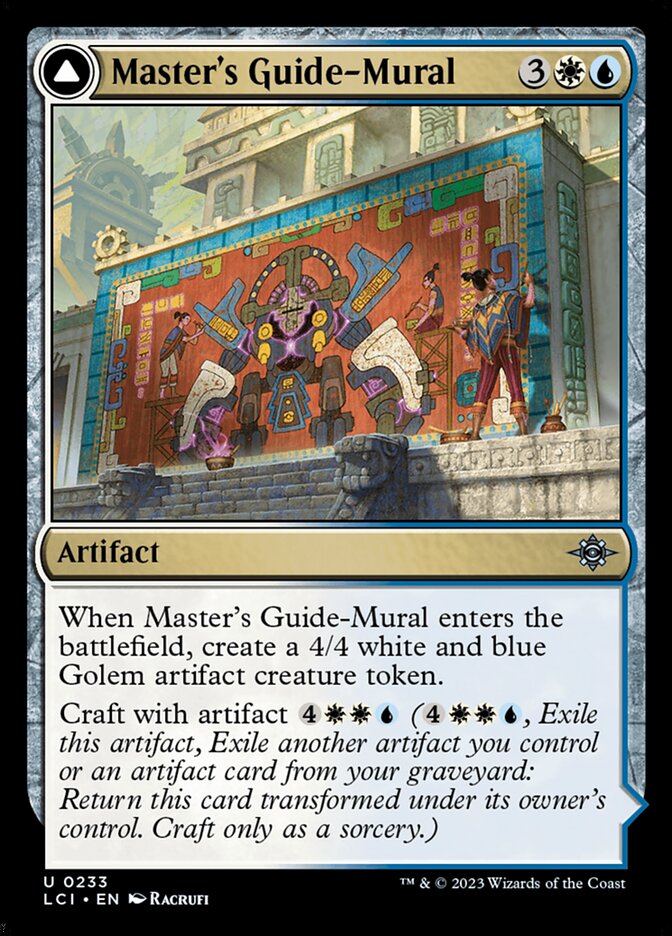
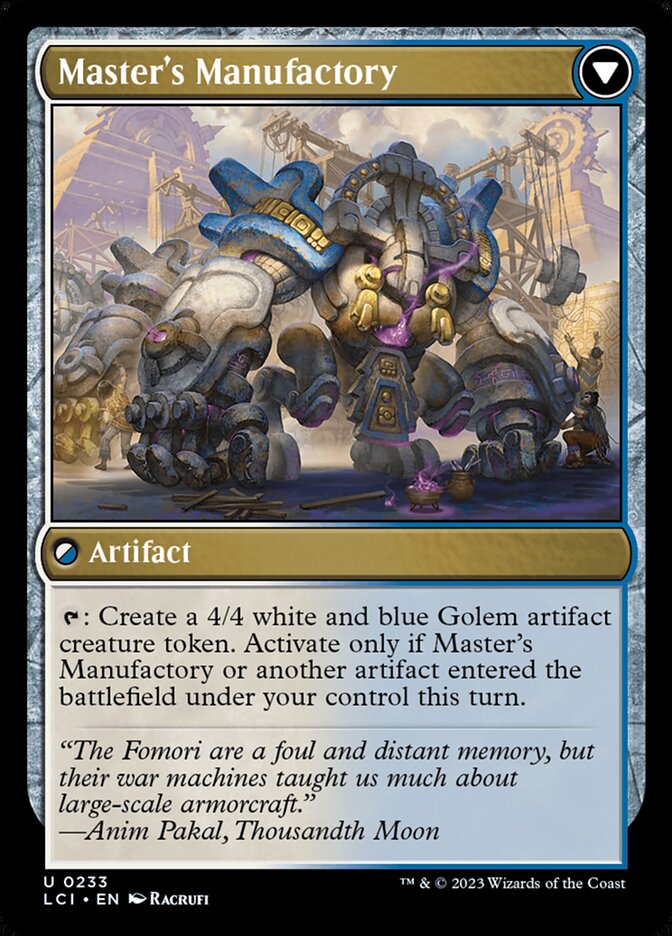
Master's Guide-Mural, a transforming artifact from from The Lost Caverns of Ixalan, presents stylized images of the ancient Fomori invasion. It doesn’t focus on one specific giant but captures the scale of their arrival, their machines, and the battles that followed. The reverse side, Master's Manufactory, expands on this by showing an Oltec workshop filled with remnants of Fomori engineering—proof that their technology was studied long after the invaders were gone.
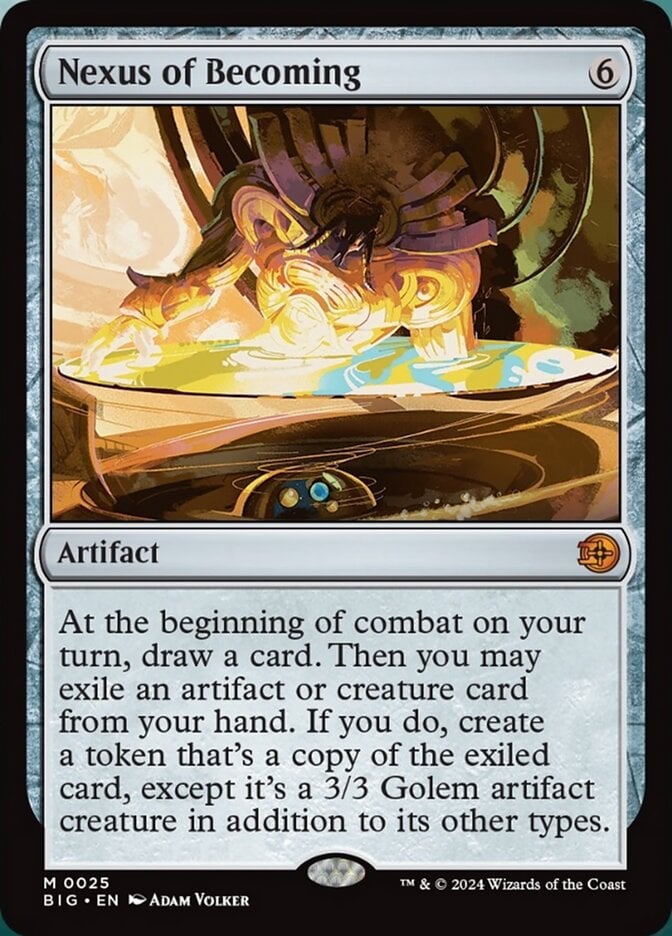
We also see hints of their influence on artifact cards. Nexus of Becoming includes design elements tied to the Coin Empire. These artistic details reinforce the idea that the Fomori weren’t just gigantic warriors but also brilliant builders with advanced knowledge.
Fomori in Flavor Text
Flavor text gives us some of the clearest insights into how different cultures remember the Fomori and the impact they’ve left behind.
On Master's Manufactory, Anim Pakal describes the Fomori as “a foul and distant memory,” yet acknowledges that the Oltec learned much from their war machines.
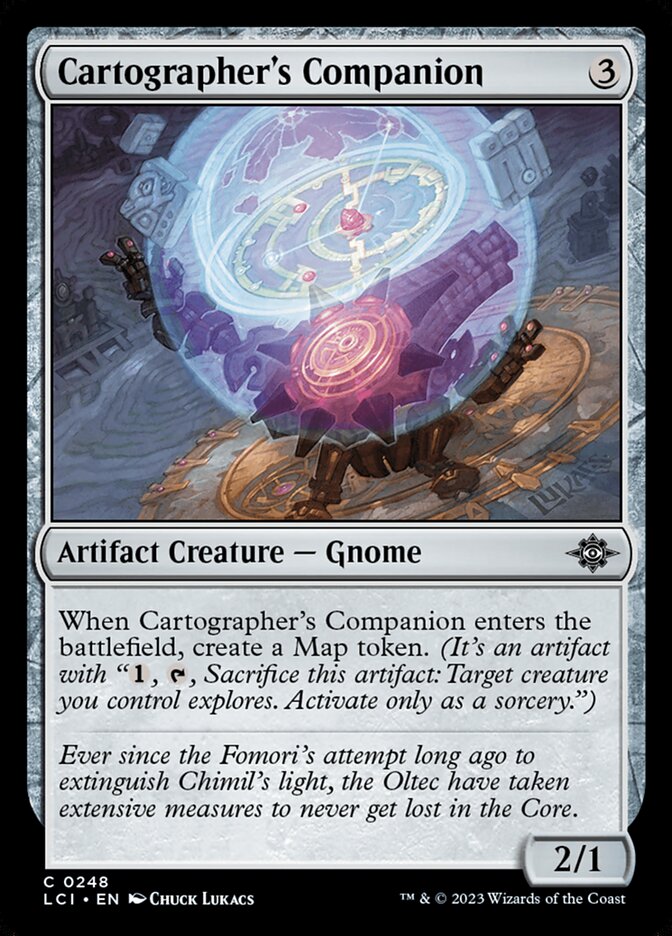
Cartographer's Companion recalls the moment the Fomori tried to extinguish Chimil’s light during their invasion of Ixalan, a moment so traumatic that the Oltec changed how they navigated the Core to avoid ever being caught unprepared again.
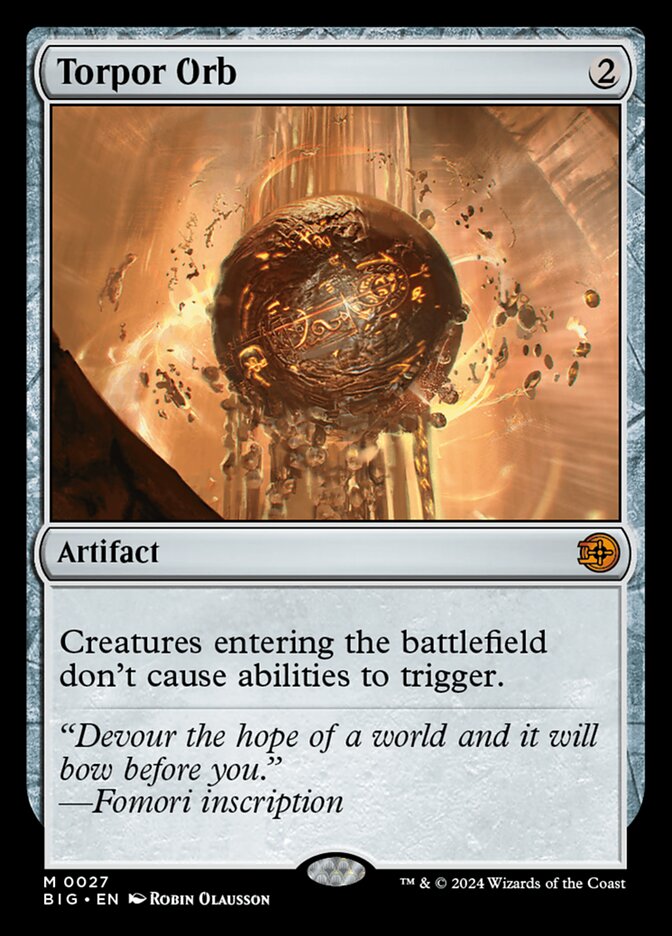
A few supplemental cards offer subtle nods as well. For example, the Torpor Orb reprint in The Big Score mentions one of the Fomori’s inscriptions.
Is Fomori a Creature Type?
No. “Fomori” isn’t an official creature type in Magic. Even though the word appears in card names and lore, cards featuring Fomori use existing creature types like giant, nomad, warrior, etc. For example, Fomori Nomad is a nomad giant, and Ruhan of the Fomori is a giant warrior.
This is similar to how “Phyrexian” used to just be descriptive before it became an official creature type, but as of now, Fomori remains purely a lore term.
What Planes Do Fomori Appear On?
The Fomori may be new to the spotlight, but their fingerprints are spread across several planes in Magic’s history. Some are places they ruled, some are worlds they invaded, and others simply hold the ruins of their collapsed empire.
Ir (Turri Island)
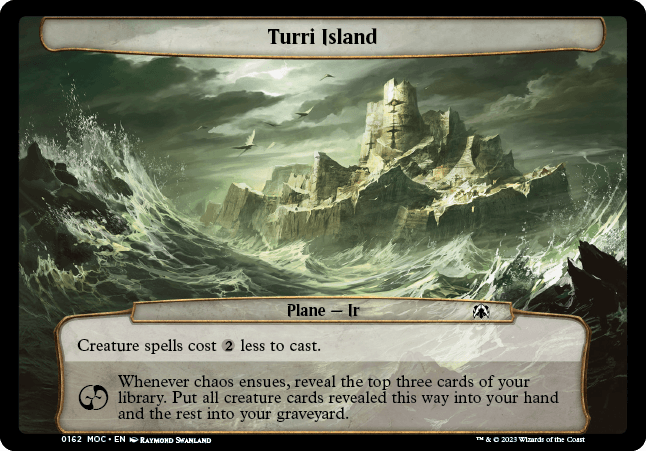
Ir is the confirmed home plane of the Fomori, and most of what we know about it centers on Turri Island, which we’ve seen on a Planechase plane. This rocky island holds a massive stone fortress built by the Fomori, and it sits on top of an unusually powerful mana well. That energy source is so strong that planeswalkers often travel there hoping to tap into it, only to be chased off by the Fomori who guard it fiercely.
Ixalan (the Core)
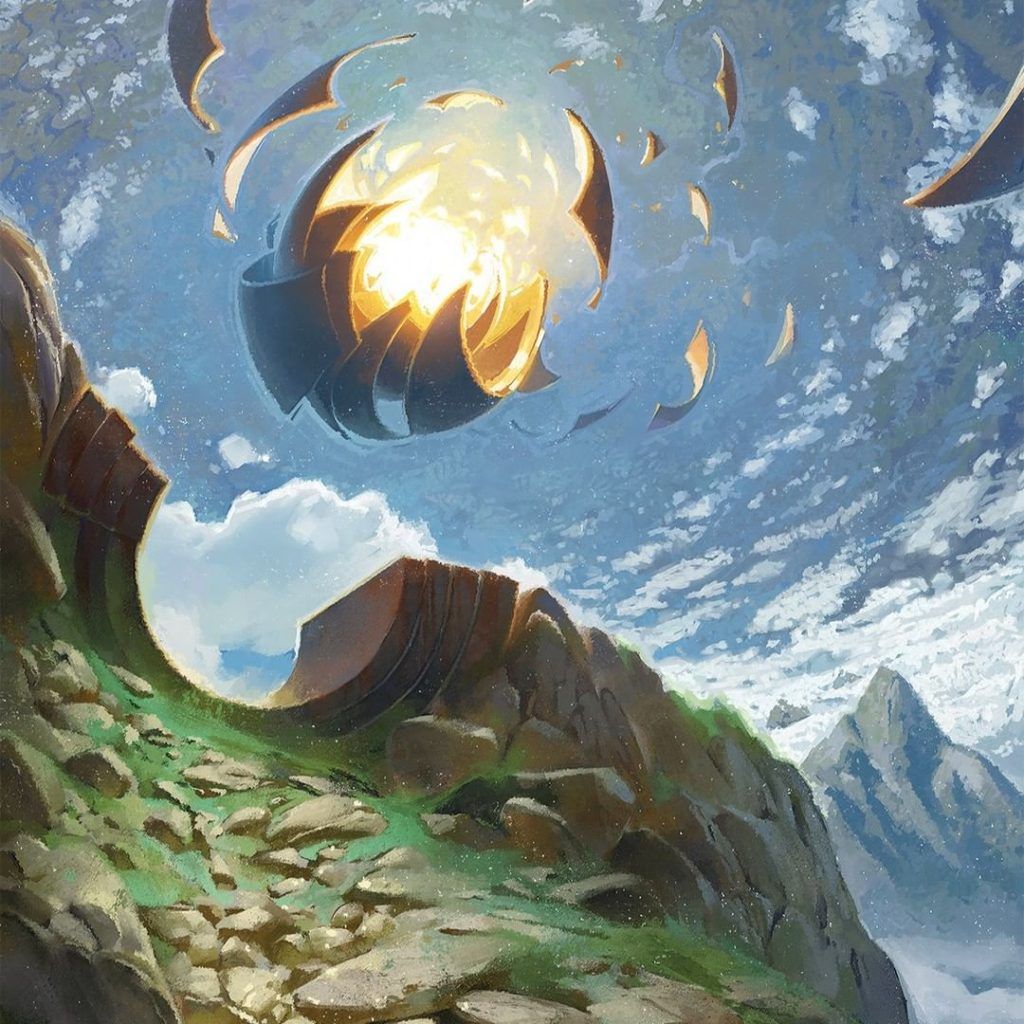
Chimil, the Inner Sun | Illustration by Gaboleps
Long before the events of The Lost Caverns of Ixalan, the Fomori invaded Ixalan’s inner world, a place known as the Core. The native Oltec people remember them as the “Kisik”, or colonizers, which gives us a sense of how aggressive and disruptive the Fomori were.
They arrived in enormous metal ships and attempted to seize the Core by imprisoning Chimil, the plane’s living inner sun, inside a shell made from their fleet. This plunged the world into darkness and triggered a 320-year conflict called the Night War. Eventually, Chimil broke free in a massive burst of energy, destroying the Fomori ships and driving the invaders out.
The aftermath of the invasion is still visible. Cosmium shards from the shattered fleet form a ring around Ixalan’s sun, and abandoned Fomori structures remain buried in the Core. Ixalan is one of the clearest examples of a world permanently shaped by the Fomori’s failed attempt at conquest.
Thunder Junction
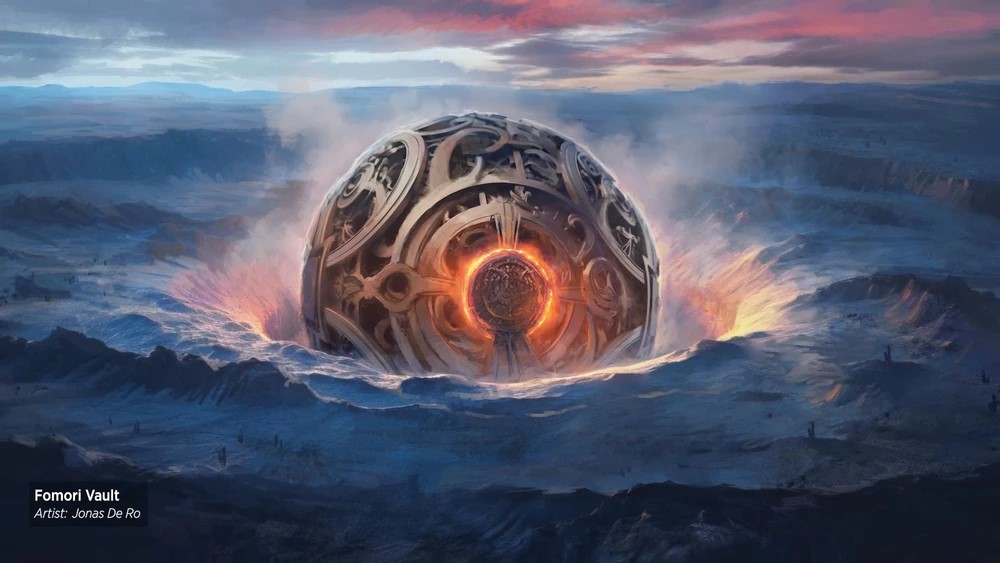
Fomori Vault | Illustration by Jonas De Ro
The Fomori never marched across Thunder Junction the way they did on Ixalan, but one of their vaults was hidden there. This vault, known as Maag Taranau, was sealed during the collapse of the Fomori empire and contained both powerful relics and a “Fomori infant” preserved in stasis. That child, Loot, becomes a major character in the Outlaws of Thunder Junction story.
When the vault was cracked open, its contents scattered across the plane, spreading Fomori technology far from its original home.
Other Planes Through Relics
The Fomori left traces across many worlds beyond what’s listed aboce. The fall of the Coin Empire scattered coin-marked vaults, ruins, machines, and strange artifacts throughout the Multiverse. Characters like Tamiyo and Quintorius Kand have discovered these structures on planes that have never been named, suggesting the Fomori once had a reach far wider than we have fully seen.
Fomori and The Lost Caverns of Ixalan
In The Lost Caverns of Ixalan, the Fomori aren’t just background lore. They’re the force that shaped one of the most dramatic eras in Ixalan’s ancient history. The Oltec people still tell the story of the Fomori invasion as though it happened yesterday. In their language, they call the Fomori the “Kisik”, which means colonizers or invaders. Their arrival brought an end to the Age of the Sun and changed the Core forever.
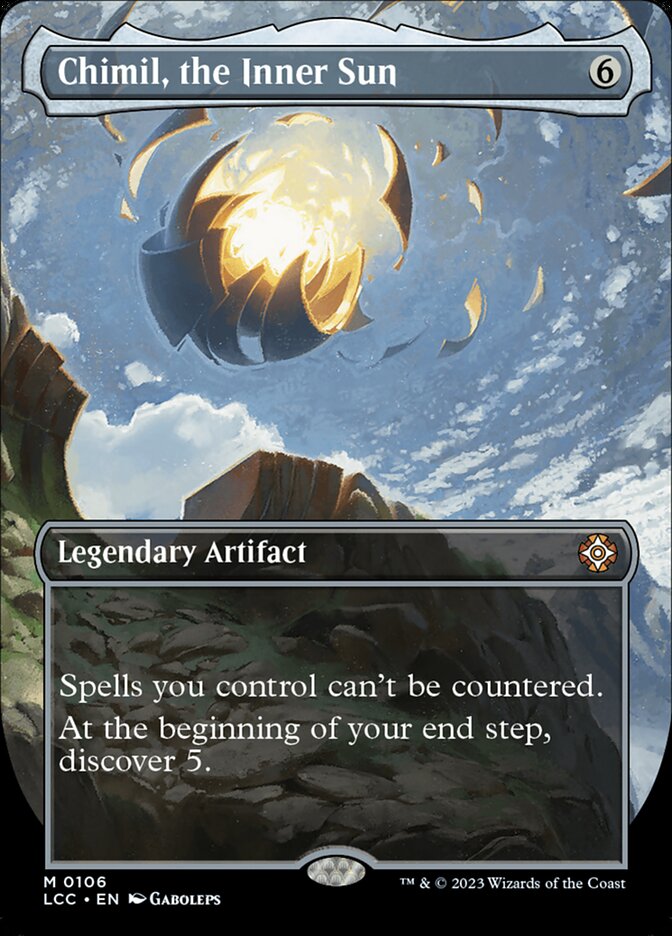
In a way, the Fomori were to Ixalan’s ancient past what the Phyrexians became in more recent years. They were a danger to the entire plane and pushed its people to the edge. Their invasion even gave rise to Ixalan’s first angels, warriors empowered by Chimil’s light during the final battle. The conflict also shaped Oltec history, splitting their traditions into different cultural paths that still exist today.
The Lost Caverns of Ixalan took a race that appeared only a few times in older Magic cards and turned them into a vital part of the plane’s mythology. It shows that long before the modern age, Ixalan survived its own version of a war of the worlds.
Is Loot a Fomori?
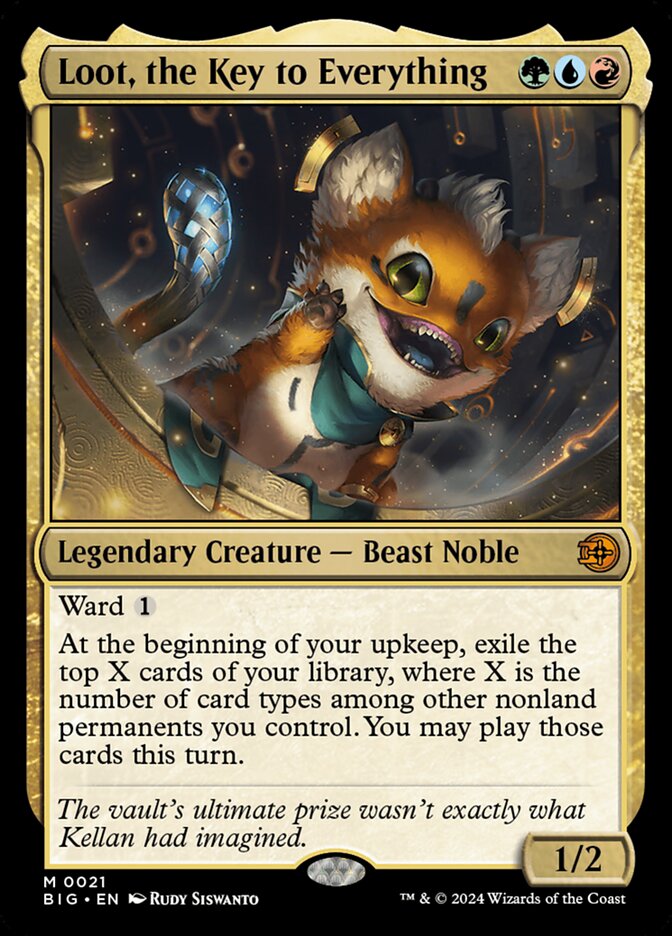
Loot might be connected to the Fomori, but there’s still no real confirmation that he is one of them. In fact, the more we look at the details, the more it seems like he probably isn’t.
Every Fomori we have seen so far, like Ruhan or Fomori Nomad, has the same look: huge, gray skinned, horned, and very similar in body shape. Loot, on the other hand, looks nothing like them. He’s small, orange-furred, bright-eyed, and almost puppy-like. The only features he shares with the Fomori are his horns and a strange, glowing orb on his tail, which makes him feel magical, but not necessarily related to the giants.
What we do know for sure is that Loot was found inside a Fomori vault on Thunder Junction. The vault was ancient and sealed, which made many fans assume the creature inside must be a Fomori child. But the story never says that. It only says that Jace discovers a small creature preserved in stasis. The vault could have held anything the Fomori wanted to protect, not just one of their own.
Loot also has the rare ability to sense Omenpaths, and while that ability lines up with what we know about the Fomori and their history of traveling between planes, it could also mean the Fomori designed or trained him for a purpose we don’t understand yet. He could be a guardian species, a companion creature, a magically engineered being, or even something tied to Fomori technology rather than their biology.
How Are Fomori Related to Eldrazi?
One of the most surprising twists in the newest lore is that the Fomori were once involved in a full-scale war with the Eldrazi. This comes from the Planeswalker’s Guide to Edge of Eternities, and it completely changes how we look at both groups. Until now, we had never heard of any civilization that stood up to the Eldrazi on equal ground. But according to the guide, the Fomori actually fought them in the distant past, long before the Eldrazi were trapped on Zendikar.
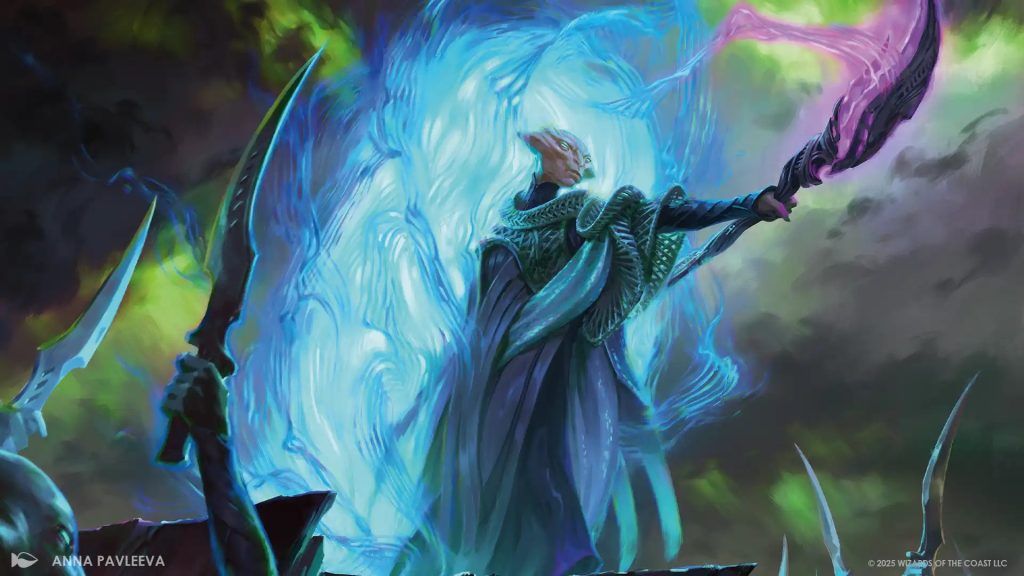
Drix Fatemaker | Illustration by Anna Pavleeva
The Fomori had allies called the Drix, nomadic wanderers who traveled through space and specialized in hunting Eldrazi. The Drix carried a powerful artifact known as the Fabric of All Being, which held knowledge older than the war itself and helped them to track and fight these cosmic monsters. Together, the Fomori and the Drix pushed back what the guide describes as an Eldrazi tide, suggesting the conflict was huge and spread across many worlds.

The Eldrazi eventually retreated, at least for a time, yet the Fomori empire later collapsed or vanished. The lore never says this was because of the Eldrazi, but it’s hard not to wonder if the cost of the war played a role. Whatever happened, the Drix ended up carrying on the fight alone, using the Fabric to find emerging Eldrazi and destroy them before they could grow into world-eating threats. This is why we saw a one-off Eldrazi creature, Anticausal Vestige, in Edge of Eternities.
This new lore also adds a possible twist to the Fomori’s arrival on Ixalan. When the Fomori first appeared in the Core, they claimed to be seeking safety from some great danger. The story never explains what they were running from, but the new Eldrazi connection makes it easy to imagine what that danger might have been.
Wrap Up

Loot, the Pathfinder | Illustration by Ernanda Souza
Now that we know a little more about the Fomori, what do you think? To me, it really feels like Loot could be some kind of path or gateway that lets the Fomori return or reach other worlds. Maybe I’m reading too much into it, but based on everything we’ve seen so far, and speaking as someone who has watched way too much anime, it honestly seems pretty possible.
Thanks for reading. And if you enjoyed the content, remember to follow us on social media and join the Draftsim Discord so you never miss anything.
Take care, and see you next time.
Follow Draftsim for awesome articles and set updates:











Add Comment