
Last updated on January 26, 2026

Curious Colossus | Illustration by Raoul Vitale
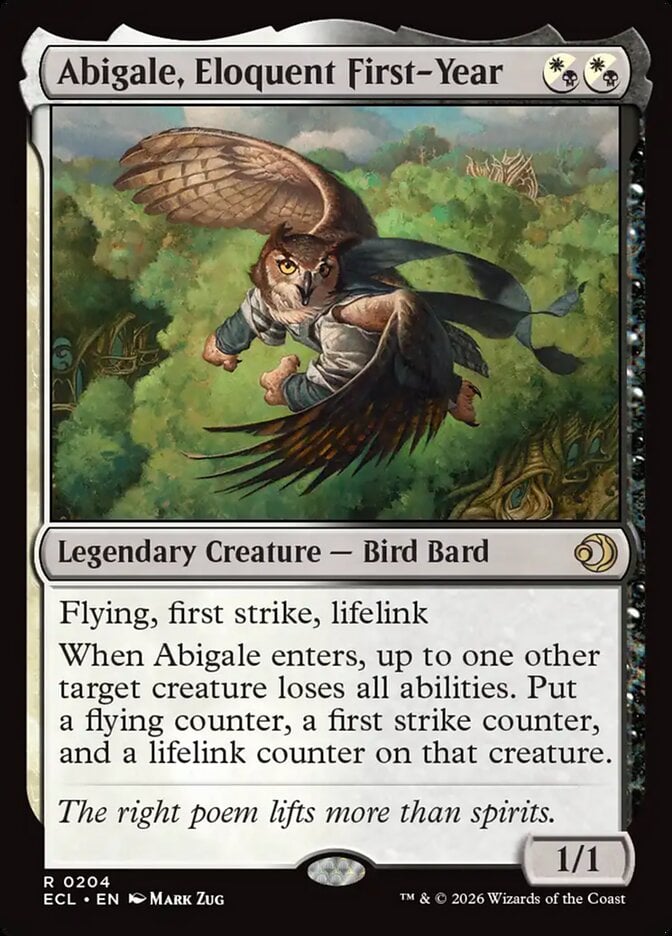
Lorwyn Eclipsed has introduced two marquee cards that remove all abilities from creatures: Abigale, Eloquent First-Year and Curious Colossus. While this effect is hardly new in Magic (Humility is nearly 30 years old), it’s almost always tied to a permanent or other condition. But these creatures remove the abilities forever, similar to the Alchemy-only mechanic perpetual.
With these unique, powerful cards, it’s worth considering what happens when your creatures lose all abilities and how this interacts with, say, keyword counters and saga creatures from Final Fantasy.
Abilities Are Gone Forever
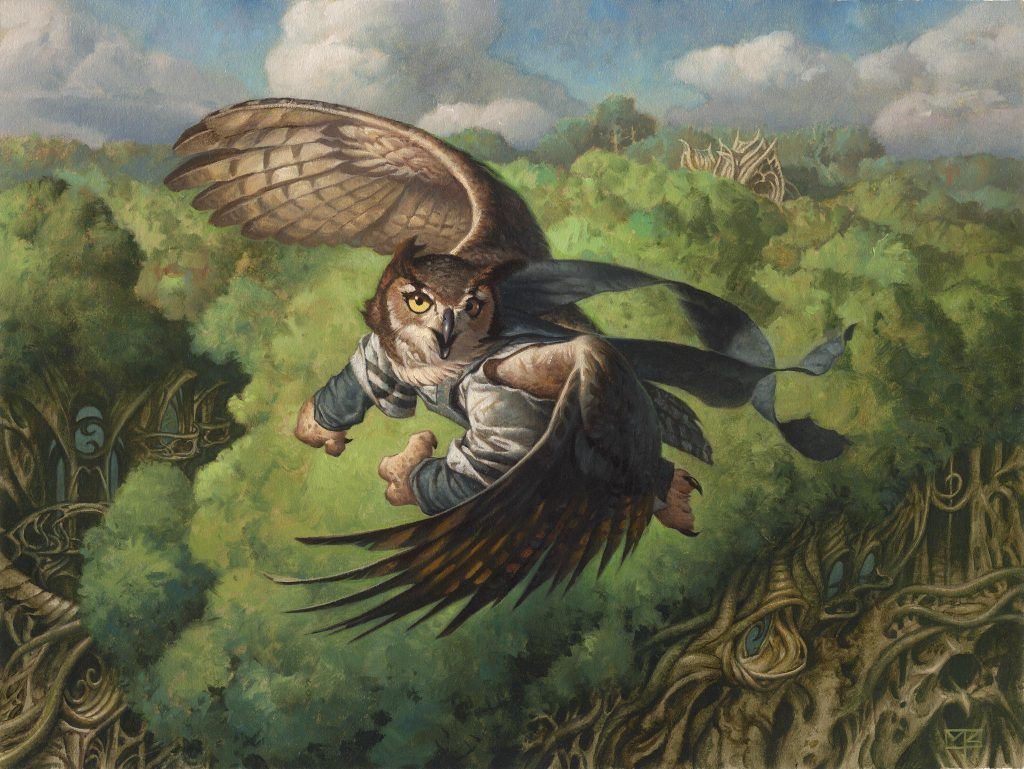
Abigale, Eloquent First-Year | Illustration by Mark Zug

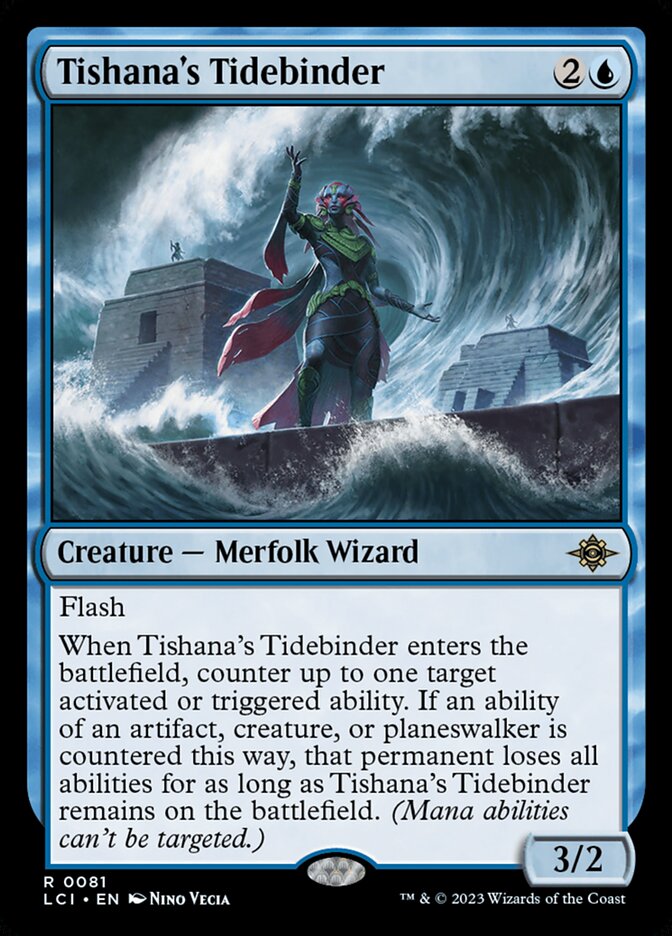
Firstly, let’s reinforce an important point: Abigale and Curious Colossus make creatures lose their abilities permanently (and, in the case of the Colossus, most of their power/toughness). This effect is not tied to Abigales’ or CC’s presence in play, as it is with, say, Tishana's Tidebinder. Magic doesn’t have enough Murders to bring those abilities back.
This makes these creatures quite strong, as they become premium flicker targets: Abigale can consistently boost your team while the Colossus keeps your opponents from building a meaningful board state.
I compared the mechanic to perpetual previously. The main distinction is that creatures that have lost their abilities to these effects get them back when they move between zones. If your Rashmi, Eternities Crafter gets locked down, you can flicker it or bounce it to your hand, then replay it to get your commander back in full force.
It’s All Layers

Curious Colossus | Illustration by Raoul Vitale
Layers are a fundamental part of the rules system in Magic that regulate how continuous effects—such as “target creature loses all abilities” — are regulated. These are often daunting, but simple once you get under the hood. Magic has seven layers total, but this discussion only requires layer 6, which covers “Ability-adding effects, keyword counters, ability-removing effects, and effects that say an object can’t have an ability are applied,” per the Comprehensive Rules. This is how they get applied:
“Within layers 2–6, apply effects from characteristic-defining abilities first (see rule 604.3), then all other effects in timestamp order (see rule 613.7). Note that dependency may alter the order in which effects are applied within a layer. (See rule 613.8.)“
Source: magic.wizards.com
Keyword Counters & Timestamps

Crystalline Giant | Illustration by Jason Rainville
Timestamps are key to understanding how these cards interact. Consider Abigale, Eloquent First-Year: If these creatures could never gain abilities, why give them keyword counters?
Timestamps essentially pay attention to when an effect was applied. In the example of Abigale, its ability proceeds in order: The targeted creature loses all abilities, and then it gets the keyword counters. Each of these actions is timestamped. Think of losing all abilities as stamp A, and gaining the abilities from the keywords stamp B. Any abilities the creature had prior to A, regardless of if it was from the creature itself or came from an outside source, are removed. But abilities added after A, including B, get put on the creature. This also matters for things like lords and buffs from cards like Craterhoof Behemoth that provide trample or other temporary abilities.
In short: Once a creature loses all abilities to Abigale or the Colossus, it will lose all abilities it had prior to that ability resolving, regardless of their source. But additional abilities can be added after the fact.
Saga Creatures And You
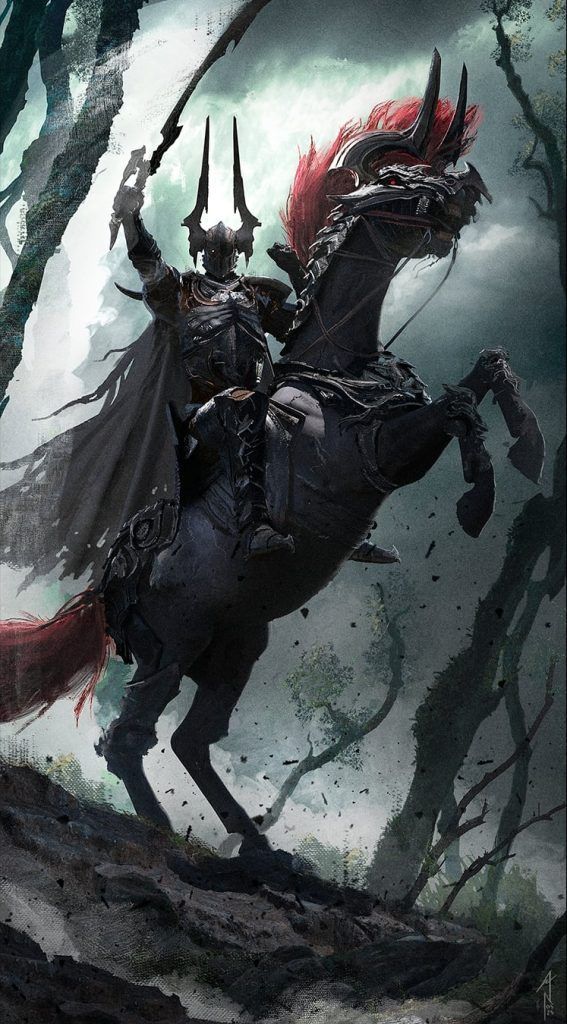
Summon: Primal Odin | Illustration by Nino Is
Okay, what about saga creatures? When discussing them, it’s important to note that Wizards recently changed the rules for how sagas worked. Prior to Final Fantasy, sagas would die if they lost all abilities because the number of lore counters on them exceeded the highest chapter (which defaulted to 0). That no longer happens; a saga that loses all its abilities just becomes a vanilla creature, beholden to the same rules as anything else. That doesn’t mean there aren’t tricks you can use, however.

Let’s say you control Summon: Primal Odin and the second chapter ability goes on the stack. If you play Abigale at instant speed (or, more likely, blink it), you can resolve its ability first, removing all abilities from SPO. Then the second chapter ability resolves, giving it player deathtouch—alongside flying from its new keyword counter.
While these creatures and layers look daunting, the rules are pretty intuitive once you start stripping them down to look closer. One of the most interesting elements of Abigale, Eloquent First-Year and Curious Colossus is that similarity to perpetual and Alchemy. If Wizards is willing to push this boundary, what other Alchemy-esque effects could future sets hold?
Follow Draftsim for awesome articles and set updates:










4 Comments
the solution: MORE STICKERS!
Please no!
There’s a key difference between these new abilities and perpetual. A perpetual critter that has lost its abilities continues to have them lost between zones.
If you blink a creature that has lost its abilities via the Colossus or Abigail, when that creature returns, it will gain its abilities back (and lose Abigail’s counters).
Yup, I know there’s a difference, just making a comparison between similar abilities. The same way conjuring a Mutavault has different implications than creating a token. Definitely feels like they’re trying to “adapt” digital-only mechanics in paper form with these.
Add Comment