
Last updated on September 29, 2026
Forbidden Alchemy | Illustration by David Rapoza
Picture if you will, a mad scientist or wizard brewing up a solution, tweaking this and that, adding pinches of bits and turning down the heat. What concoction is coming from this laboratory? Who will test it you ask? Let’s stop there and get into the topic for today: Alchemy. It is only on Magic Arena, and relatively young as far as formats go. It was a fast format that changed often. Yes, I speak in the past tense because it’s slated for retirement, so read on to fully appreciate its last season.
There are a lot of messy implications when it comes to a digital-only format, especially one that impacts other digital-only formats like Historic and Timeless. There’s quite a bit of confusion and controversy, and things that are only possible with a digital card game.
Let’s take a close look!
What Is the Alchemy Format?

Discover the Formula | Illustration by Joshua Cairos
The Alchemy format is a Magic Arena play mode, like Standard, except that it adds digital-only cards and has a smaller card pool.
Why Will Wizards Retire Alchemy?
Wizards retires Alchemy largely due to lack of need and lack of player base. The 2026 State of the Formats on Arena reveals data with Alchemy play far below that of Pioneer, Timeless, Standard Brawl, or the relative newcomer, Competitive Brawl.
Why Was Alchemy Created?
Alchemy was made to create a fresher, still rotating format like Standard that benefits from the ability to make direct changes to digital-only cards.
WotC said they design for Alchemy with a new perspective on older challenges and want it to stay fresh and adaptable.
This gives players a sort of alternate Standard to play where most of the cards they already own are legal, but with some tweaks to powerful build-arounds. It essentially gives you a break from Standard because you can play in a format where the most powerful decks likely aren’t as popular thanks to changes to their key pieces.
It also allowed Wizards to make changes to Standard that aren’t possible in paper, like rebalancing cards instead of outright banning them. There was cause for concern with this since it created some confusion among players and caused digital players to have to buy into the format to get new cards.
What Will Happen to Alchemy Cards?
The existing Alchemy cards that have digital versions and no paper printings will continue to exist for their formats on Arena like Brawl, Historic, and Timeless. Some cards became banned in their format as rebalanced cards revert back to their original state.
Alchemy-Legal Sets

Galvanic Alchemist | Illustration by Svetlin Velinov
Any Standard set from Bloomburrow onward is legal in Alchemy. Sometimes, new supplemental sets become legal in the format. The Alchemy sets are generally as small as 30 cards and feature some unique mechanics designed specifically for digital play.


All of the base set, Arena-exclusive cards are also playable, including cards like Goblin Gang Leader, Hallowed Priest, and Siege Dragon.
Here’s a list of all the sets that are legal in Alchemy, in addition to the Arena Base Set:
- Reality Fracture
- The Hobbit
- Marvel Super Heroes
- Secrets of Strixhaven
- Teenage Mutant Ninja Turtles
- Lorwyn Eclipsed and Alchemy: Lorwyn
- Avatar: The Last Airbender
- Through the Omenpaths / Spider-Man
- Edge of Eternities and Alchemy: Edge of Eternities
- Final Fantasy
- Tarkir: Dragonstorm and Alchemy: Tarkir
- Aetherdrift and Alchemy: Aetherdrift
- Foundations
- Duskmourn: House of Horror and Alchemy: Duskmourn
- Bloomburrow and Alchemy: Bloomburrow
Alchemy Format Rules

Alchemist's Assistant | Illustration by Eelis Kyttanen
There are a few rules that are specific to Alchemy, and they mostly pertain to set legality and Arena’s ban lists. Alchemy has a different range of available cards than Standard thanks to the inclusion of the base set and supplemental Alchemy set cards, and it doesn’t adhere to the Standard ban list.


Alchemy also allows for new mechanics that aren’t available in Standard, including the spellbook mechanic. This mechanic allows players to draft a card from a “spellbook” when a condition is met, like a creature entering the battlefield with Dragon Typhoon, Scalespeaker Shepherd, or proliferating on your turn with Contagion Dispenser.
Alchemy has occasional events as well as its own queue on the MTG Arena play blade that offers both best-of-one and traditional match modes, ranked and unranked play. This is like how Standard and Historic operate in terms of working off of your single Constructed ranking.
Rebalancing in Alchemy
Rebalancing cards was a main driver of Alchemy’s creation. It’s what made the format unique and allowed for it to be a consistently fresh format for players to enjoy. Rebalancing cards worked in an intuitive way. The most important thing to know is that rebalanced cards reverted to their original cards on September 22, 2026.
A huge issue that caused controversy in the community when it cames to Alchemy and its ambitious rebalancing was the fact that these changes also impacted Historic and Brawl. Cards that dominated in Standard get nerfed, and were also nerfed in Historic. Since the cards are playable in multiple formats, Wizards opted not to refund any wildcards for these cards.
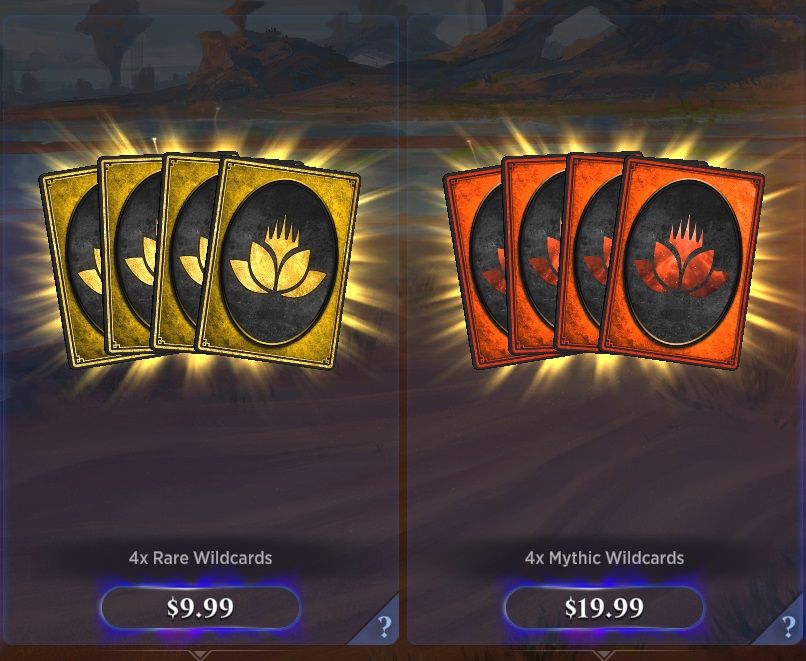
Those wildcards are quite valuable, but to the tune of $2.50 for a rare and $5 for a mythic is steep for most cards.
This caused many content creators in the Magic community to speak out and express concern that their cards got nerfed without compensation.
This was definitely a cause for concern for the average MTG Arena player who doesn’t have the ability to spend hundreds of dollars on the game to keep an up-to-date deck in multiple formats.
Alchemy Banned and Suspended List
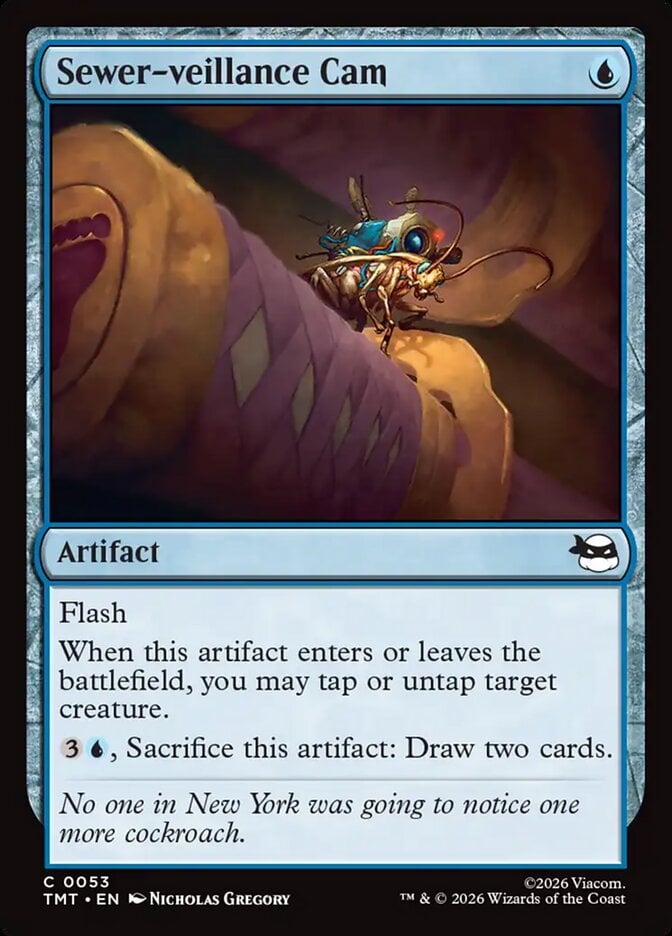
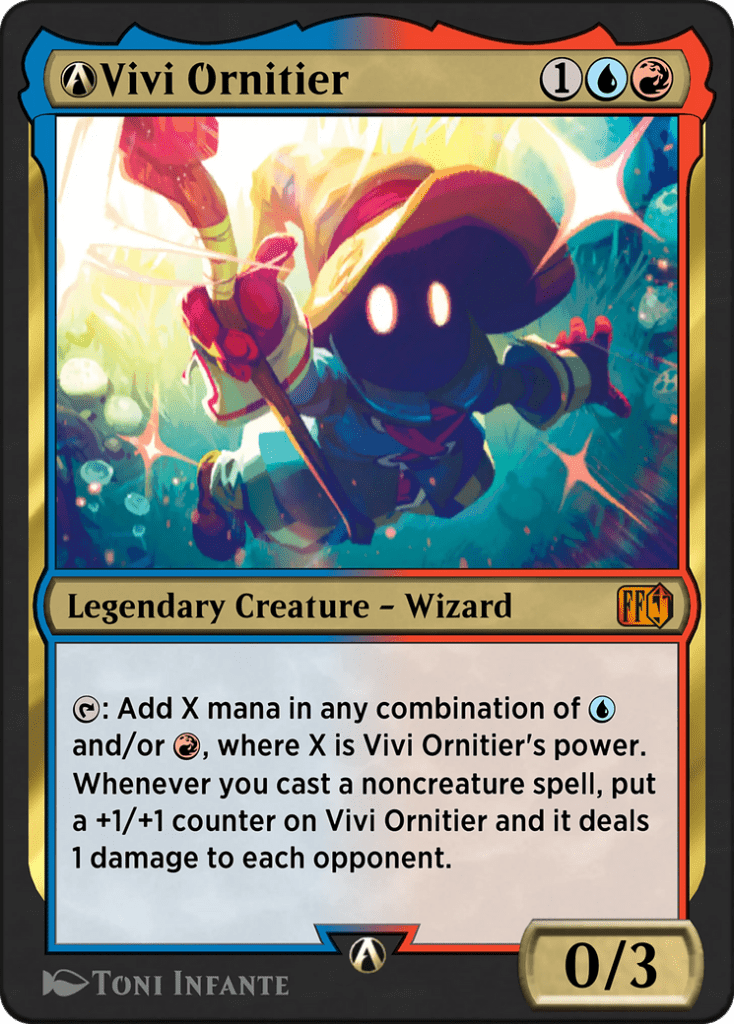
Sewer-veillance Cam brought a resurgence to the rebalanced A-Vivi Ornitier which created mana with a effect rather than a activation. Throw in Boomerang Basics and the mana generated went nuts.
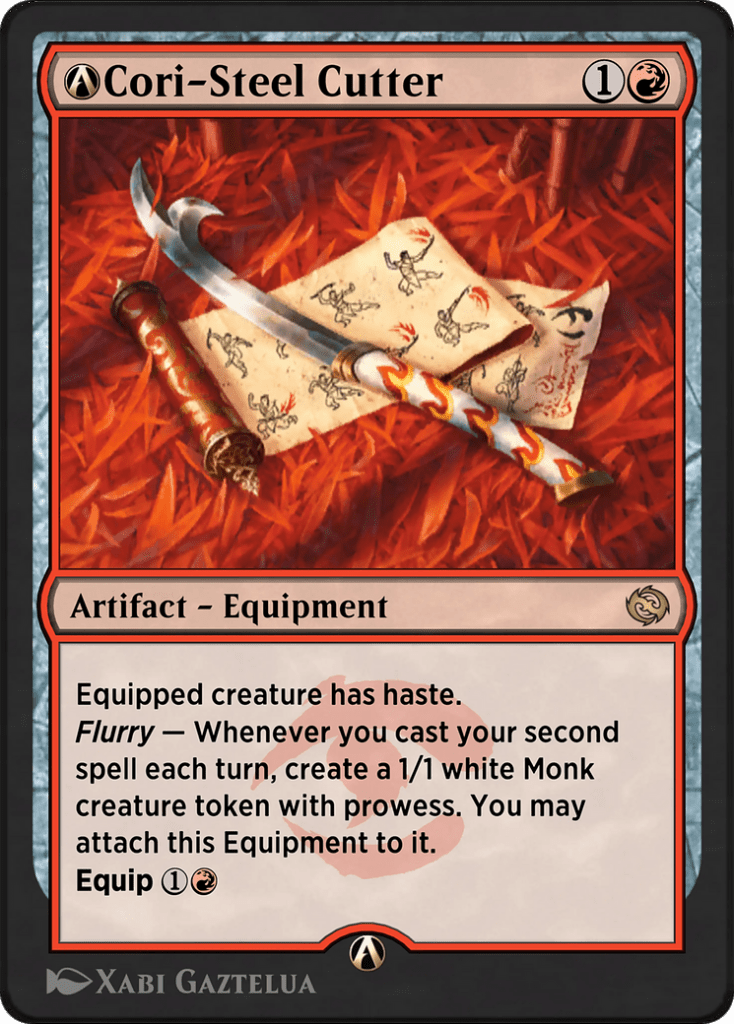

Cori-Steel Cutter was banned and later given a rebalanced version without trample or the +1/+1 boost. Leyline of Resonance got a rebalanced version with an additional cost to copy spells.
When Will Alchemy Next Rotate?

Arena gives you a front and center display of what rotates out. They followed it up with new starter decks in 2024.
There is no planned rotation of Alchemy because it will be retired with the first set of 2027. With Alchemy rotated as of the Edge of Eternities digital release on July 29, 2025, the next rotation would have followed the footsteps of Standard. Instead the last set will be Alchemy: Reality Fracture.
The evergreen MTG Arena base set remains the eternal core set for the digital platform.
Alchemy vs. Standard


Since Standard needs to be consistent across paper, MTGO, and Arena, there are key differences between it and Alchemy. First and most importantly is that Standard doesn’t get card “rebalances” since you can’t retroactively change what a card does in paper like you can in a digital-only format. Wizards has done this with mechanics like interrupts and other errata text, but never to the scale or frequency in which they do it with Alchemy.
Standard also doesn’t have access to the Arena base set or the supplement Alchemy sets, which means a narrower range of top-tier decks.
This is the worst part about the format. The fact that players don’t get wildcard refunds for rebalances is absurd and unheard of in terms of other digital card games. There’s also a certain level of risk and cost for non-whale Arena players with Alchemy that Standard doesn’t have.
Finally, if you already own a copy of a card in Standard, you also own it in Alchemy, even if it’s rebalanced. If you own a copy in one format, you own a copy in the other. This is how it should be considering they’re effectively the same card until rebalanced.
Alchemy Unique Mechanics

Since Alchemy is a digital-only format, WotC expands on digital-only mechanics. There are a few you need to know before you dive into deckbuilding, so be sure to learn about all the digital-only mechanics, beyond what we go through here. Some mechanics are not named, and still only possible on the client like Desert Cenote, no paper cards care about colors among cards in your hand without revealing cards.
Boon
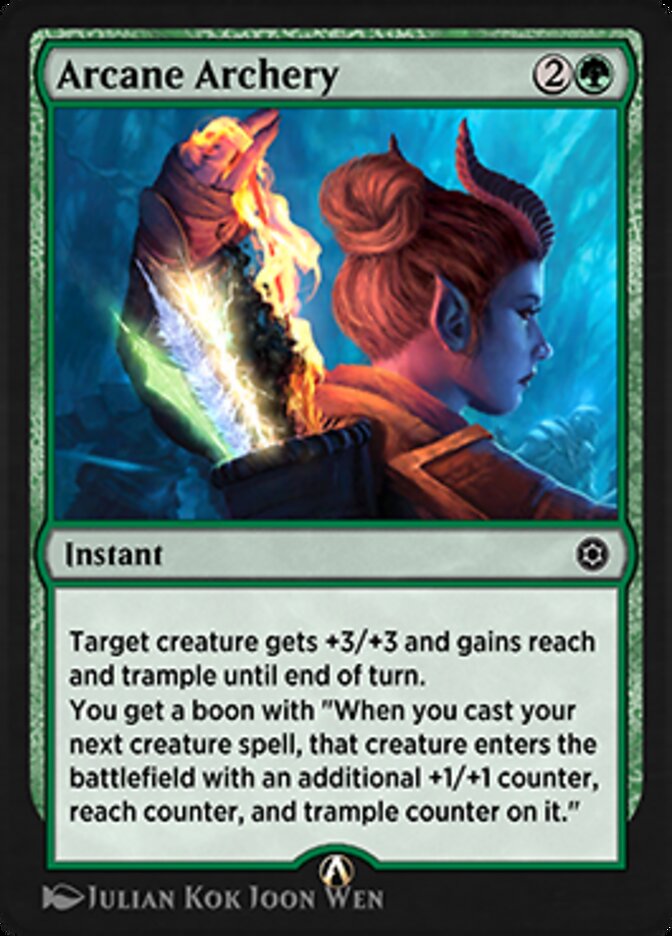
Boons are very similar to emblems in MTG, but are instead temporary and originate as an effect of another card, rather than something you gain from a planeswalker ability. One example is Arcane Archery, which gives you a boon that buffs your next creature. It’s most commonly used to set up chain effects to get additional value out of cards, but it’s also very easy to play around.
Conjure
Conjure was first introduced in Jumpstart: Historic Horizons. It works as a way to generate entirely new cards in your hand.

Let’s take Sarkhan, Wanderer to Shiv as an example. This planeswalker’s 0 ability conjures a Shivan Dragon card into your hand out of thin air. It doesn’t grab it from your sideboard or your library, just puts it into your hand. This means it can be bounced, go to the graveyard, etc.
This obviously can’t be done in paper Magic, which is why it’s exclusive to digital. The closest analog is tokens, but conjured cards don’t disappear from the game when switching zones like a token does.
Double Team

Double team is a simple, digital-only mechanic that allows you to essentially get two creatures in one. Whenever a creature with double team attacks, as long as it isn’t a token, you conjure a duplicate copy into your hand. Then, both copies lose the double team mechanic. Overall, it requires a decent amount of setup, and since it doesn’t chain multiple times, it just isn’t that great.
Draft / Spellbook

A “spellbook” is a subset of cards (usually around 15) tied to cards that have the spellbook mechanic. The mechanic allows players to draft a single card from three randomly determined choices out of the larger subset when a certain condition is met. Some spellbooks are smaller and give you the same choices every time, as seen with Razor Demon and its 3-card spellbook. This mechanic is meant to be like learn without need for sideboard and with a much wider range of options per card.
For example, Faithful Disciple gives you 15 cards with an enchantment theme to choose from when it dies. Your spellbook options include things like Banishing Light, Teleportation Circle, and even Cathars' Crusade.
Intensity

Intensity is a fairly straight-forward mechanic. Your creature starts with a certain intensity, has an effect that depends on its intensity level, and then grows in intensity after certain effects take place. On Bellowsbreath Ogre, for instance, you get to deal direct damage to any target equal to its intensity, and that number goes up whenever it attacks. It’s very similar to any sort of continuous +1/+1 counter effect but can make use of Alchemy’s digital-only mechanics like perpetually.
Heist

One of the key reasons heist works as an Alchemy: Outlaws mechanic is that it counts as a crime. It’s an upgraded impulse draw and worth at least one card in terms of card advantage.
Here’s your reminder text:
Look at three random nonland cards from target opponent’s library. Exile one of them face down. You may cast that card for as long as it remains exiled, and you may spend mana as though it were mana of any type to cast that spell.
Perpetually
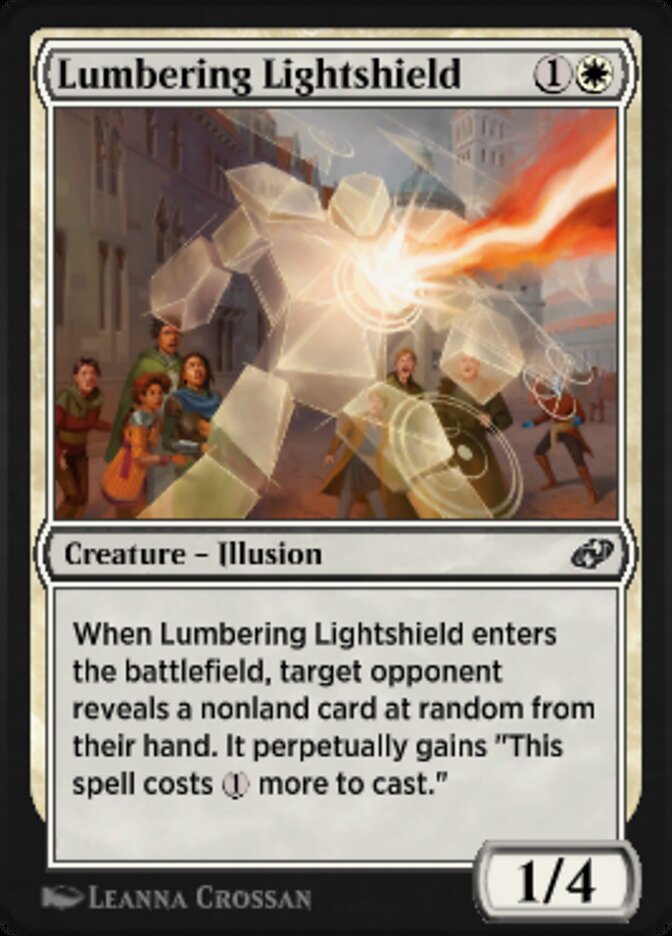
Perpetually does exactly what you assume it does; it permanently alters a specific card for the duration of the game, regardless of zone changes. The mechanic itself isn’t impossible to employ in paper play, but it is vastly easier to do (and track) on a digital platform.
Lumbering Lightshield is a good example of the keyword in use. This creature randomly makes a nonland card in your opponent’s hand cost 1 extra mana for the rest of the game. This doesn’t hit every single copy of the card, just the specific one that you reveal with the spell.
Seek
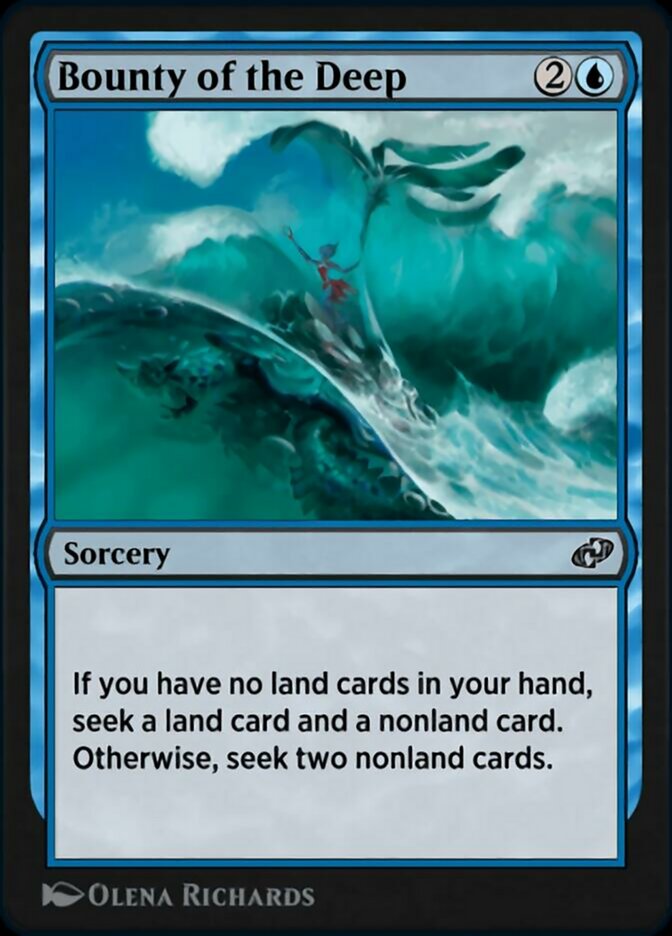
Seek is a mechanic that randomly tutors out a specific card or type of card from your library when its condition is fulfilled. The fun thing is that it does not require the library to be shuffled since you’re not looking through your library to find the tutored card yourself. The game automatically resolves the actions for you.
Seek is meant to be a mechanic that’s consistent but not repetitive. Wizards wants you to be able to reasonably build around seek without having a guaranteed choice every single time.
Bounty of the Deep is an example of a card with seek. This card seeks either a nonland and a land card or two totally random nonland cards depending on your current hand.
Specialize


Specialize is another mechanic designed specifically for Alchemy. It allows legendary creatures to add to their color identity and abilities based on which selection you make when activating the ability. Each color variant of the original also has its own parallel art background.
How Does Duplicate Protection Work in Alchemy?
Duplication protection works a little differently for boosters of Alchemy supplemental sets than regular packs. Each set is tied with an existing Standard set. For example, Alchemy: Tarkir is tied with Tarkir: Dragonstorm.
When you open a pack of Alchemy: Tarkir and you’ve collected a full playset of all rares in the supplemental set, you won’t get the 20 gems that duplicate protection promises. Instead. you’ll get a Tarkir: Dragonstorm rare. This continues until you’ve collected full playsets of both sets. Then you get your gems. The same goes for mythic rares, except you’ll get 40 gems once you’ve finally collected full playsets of both Alchemy: Tarkir and Tarkir: Dragonstorm mythics.
What About Crafting Wildcards for Alchemy?

Use a wildcard to craft any version of an Arena card and you get all the existing versions. It doesn’t matter which version you craft first; there’s no need to collect them separately.
This is great because it lets players use the lowest number of wildcards possible. If you used an uncommon wildcard to craft Kheru Goldkeeper to put more of the renew mechanic in your Standard deck, the same card becomes available in Alchemy. Alchemy-exclusive cards are crafted at the normal wildcard rate, so this could potentially end up burning more of your wildcards.
Where to Play Alchemy

Alchemy is exclusive to MTG Arena and won’t be on MTG Online. This can be attributed to a few things. The first is that WotC put a lot of support behind Arena to reach a broad audience, and part of that is more MTGA-exclusive content including consistent ranked matches, best-of-one and best-of-three events. The second is that Alchemy includes cards from the Arena base set, which isn’t available on MTGO. There’s also no way to rebalance cards on MTGO, which completely defeats Alchemy’s purpose.
Top Alchemy Decks
The Alchemy metagame is fairly open, and it rewards deckbuilders that are nimble as this is the Constructed format with the fastest rotation.
Mono Red Aggro
Shock | Illustration by Dominik Mayer
Creatures (25)
Burnout Bashtronaut x4
Hexing Squelcher x4
Hired Claw x4
Howlsquad Heavy x4
Magebane Lizard x4
Nova Hellkite x3
Sunspine Lynx x2
Instants (11)
Burst Lightning x4
Lightning Strike x3
Shock x4
Lands (24)
Mountain x19
Rockface Village x2
Soulstone Sanctuary x3
Sideboard (15)
Ghost Vacuum x2
Nova Hellkite
Sear x3
Soulstone Sanctuary
Slickshot Show-Off x4
Sunspine Lynx x2
Zhao, the Moon Slayer x2
If red aggro Shocks anyone as a viable Constructed deck, welcome to Magic. Fire off cheap red creatures, and keep the pressure on. Hexing Squelcher gets opponents to help push damage, Sunspine Lynx keeps your opponent’s life total low and direct damage spells make this a fan favorite.
Izzet Prowess
Vibrant Outburst | Illustration by Eelis Kyttanen
Creatures (8)
Slickshot Show-Off x4
Eddymurk Crab x4
Instants (12)
Burst Lightning x4
Opt x4
Prismari Charm x2
Vibrant Outburst x2
Sorceries (13)
Boomerang Basics x4
Flow State x4
Sleight of Hand x4
Wild Ride
Enchantments (6)
Roaring Furnace x2
Stormchaser's Talent x4
Lands (21)
Island x5
Multiversal Passage x3
Riverpyre Verge x3
Steam Vents x4
Spirebluff Canal x4
Stormcarved Coast x2
Sideboard (15)
Spell Snare
Spell Pierce x2
Soul-Guide Lantern x2
Long River's Pull x2
Ral, Crackling Wit
Slagstorm
Fire Magic x2
Quantum Riddler x2
Sear x2
Izzet Prowess comes at no surprise to many Magic players as cards like Slickshot Show-Off and Stormchaser's Talent have led many decks in recent years. Load up on instants and sorceries for a few furious blasts and there’s often no answer to the big chunks of damage this deck puts out.
Golgari Midrange
Professor Dellian Fel | Illustration by Lie Setiawan
Planeswalkers (4)
Creatures (7)
Mosswood Dreadknight x3
Unstoppable Slasher x3
Scavenger Regent
Instants (7)
Assassin's Trophy
Bitter Triumph x2
Requiting Hex x2
The End x2
Sorceries (11)
Deadly Cover-Up x4
Duress x2
Maelstrom Pulse
Strategic Betrayal
Withering Curse x3
Enchantments (3)
Unholy Annex x3
Artifacts (4)
Lands (24)
Ba Sing Se
Blooming Marsh x3
Deathcap Glade x3
Demolition Field
Fountainport
Overgrown Tomb x4
Realm of Koh
Restless Cottage x2
Swamp x4
Wastewood Verge x4
Sideboard (15)
Maelstrom Pulse
Duress x2
Soul-Guide Lantern x2
The End
Outrageous Robbery x2
Torpor Orb
Ancient Vendetta x2
Ugin, Eye of the Storms
Heritage Reclamation x2
Vicious Rivalry
There’s value and answers all over this midrange list. Professor Dellian Fel, Mosswood Dreadknight, or Unstoppable Slasher can single-handedly take over games in the right matchups. Small enough to get under the control decks, and sturdy enough to take on aggro decks, this is a solid archetype that plays well with little tweaks as new cards get introduced. It does removal by mana cost, discard, or sacrifice, so there’s very little this deck can’t handle.
Alchemy Products and Boosters
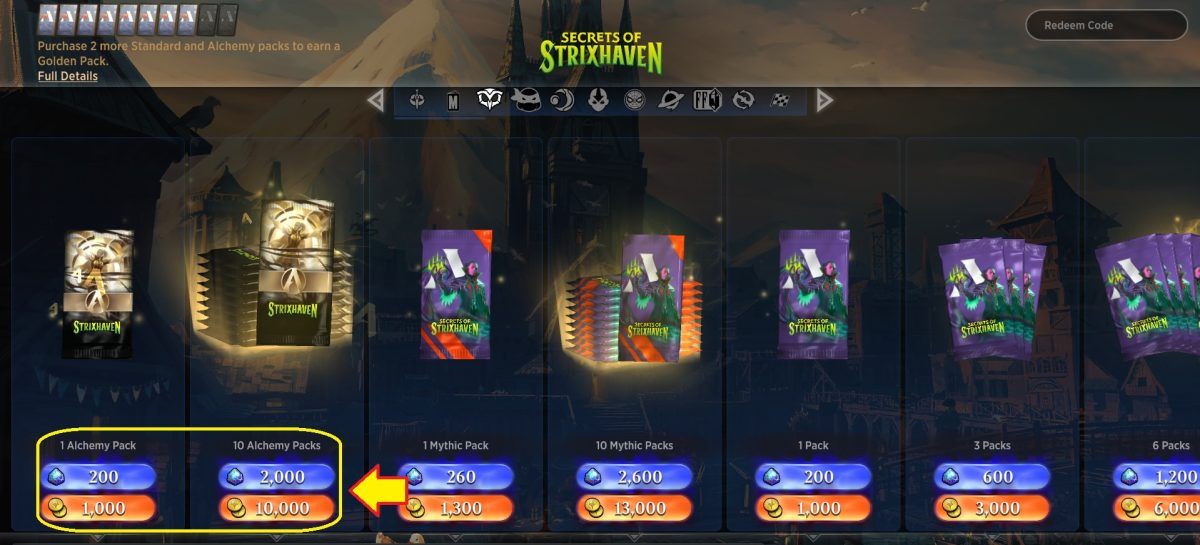
Most cards that are legal in Standard are also legal in Alchemy, but there are still some Alchemy-specific cards that you may need to get your hands on. Boosters can be bought directly from the MTGA store at the same rate as Standard packs.
Alchemist Bundle

The Arena Store offers a one-time purchase, “Alchemist Bundle” with 20 boosters for 3,000 gems or 15,000 gold; this Alchemist bundle updates with the latest Alchemy set on Arena.
Alchemy Communities
Many of the same Magic communities where you can talk about Standard or Historic are also open to Alchemy. Here are a few options if you’re not sure where to start:
- Our very own Draftsim Discord has a dedicated Alchemy channel where players discuss the format and what they’re finding the most fun!
- r/MagicArena is a great place to discuss Alchemy since it’s an Arena-only format.
- Besides MTG Arena, Reddit has its own subreddit to talk about Alchemy: r/MagicAlchemy.
- The official MTG Arena Discord is another great place to find like-minded deckbuilders and theory crafters. You can find channels for casual and competitive Alchemy over there.
Wrap Up
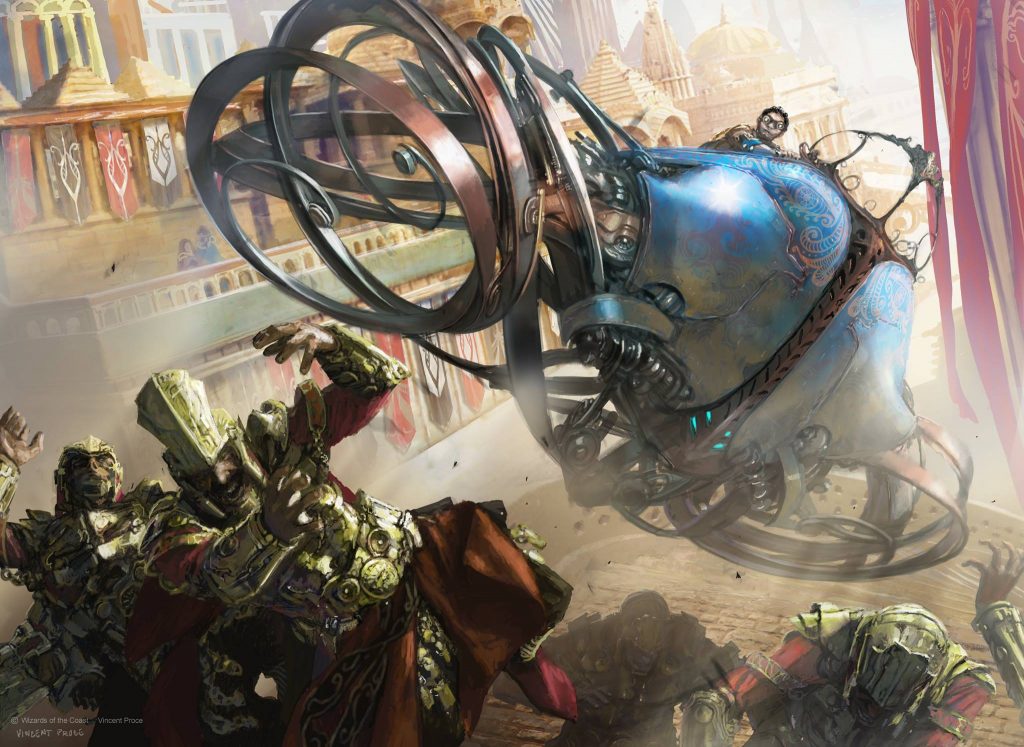
Leave in the Dust | Illustration by Vincent Proce
This is everything you need to know about Alchemy. It’s fresh and creative and a good outlet for me to stretch my skills and return to the foundation of deckbuilding.
What do you think of the format? Do you think more digital-exclusive cards and formats are healthy for the game? Does it bring the end times for Magic, is it thrusting us into a prosperous future, or is it mostly irrelevant? Let me know what you think in the comments, and don’t forget to grab Arena Tutor before you head to MTGA. All of your cards get locked and loaded, and the software is ready to track your matches and help you improve your games.
Find on Draftsim on Twitter, and until next time, keep improving, and stay healthy!
Follow Draftsim for awesome articles and set updates:










2 Comments
This is great information. But I do have a question. I have 3 decks that I cant play in the alchemy format because each deck has one card that I cannot remove one card from so I was wondering how to remove those specific cards so that I can play them in the alchemy format??
I would just export the deck, edit the list, re-copy it, then import it into a new deck with a different format.
Add Comment